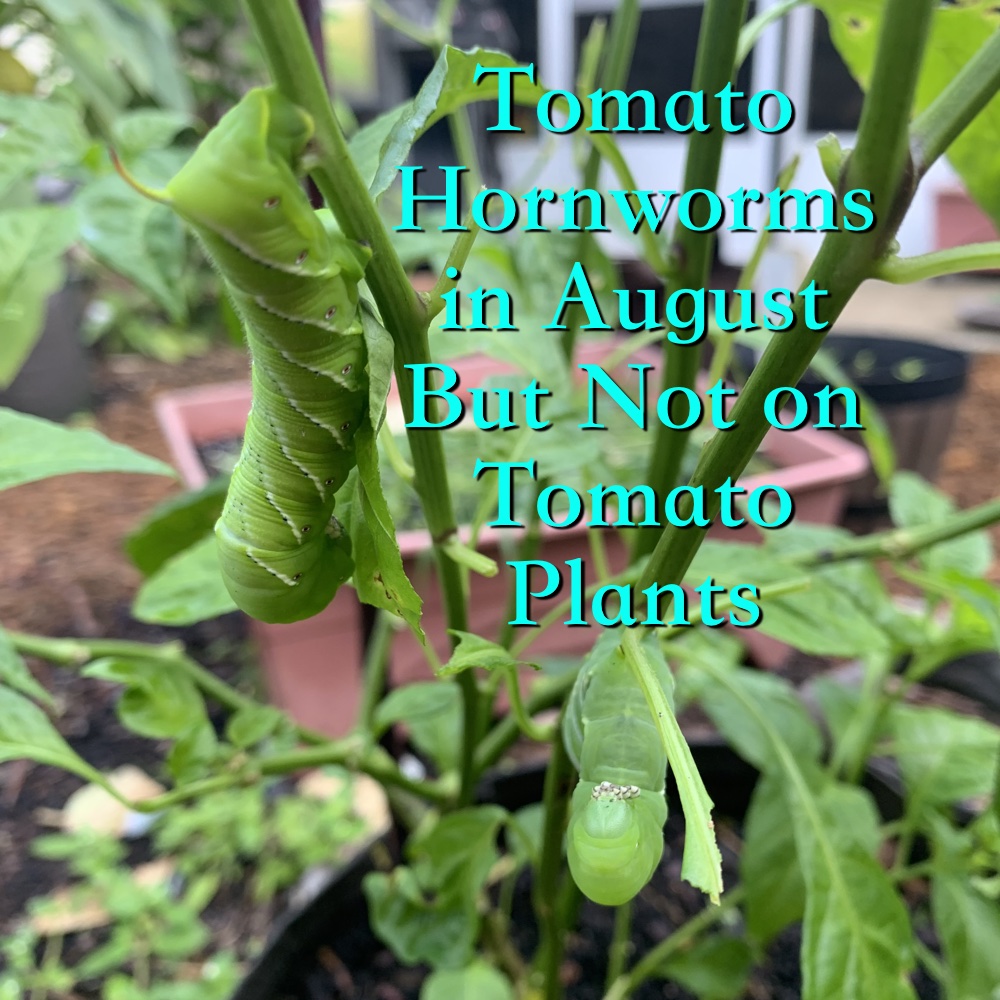
Over the past few days, I’ve found tomato hornworms in the garden. Not on tomato plants – I can’t seem to grow those, and especially not in August – but they are happily eating eggplant and Aji Dulce pepper leaves.
Hornworms love all the nightshades it seems. I found three hungry caterpillars on the eggplant, but by the next day they were gone. I didn’t see what got them, but my best guess would be cardinals.
Hornworms are hard to miss. From their big brown turds all over the leaves (eggplant), to the bare stems, they leave proof of their presence. Their green bodies are the only thing that help them to blend in, but they are good size once you see these signs.
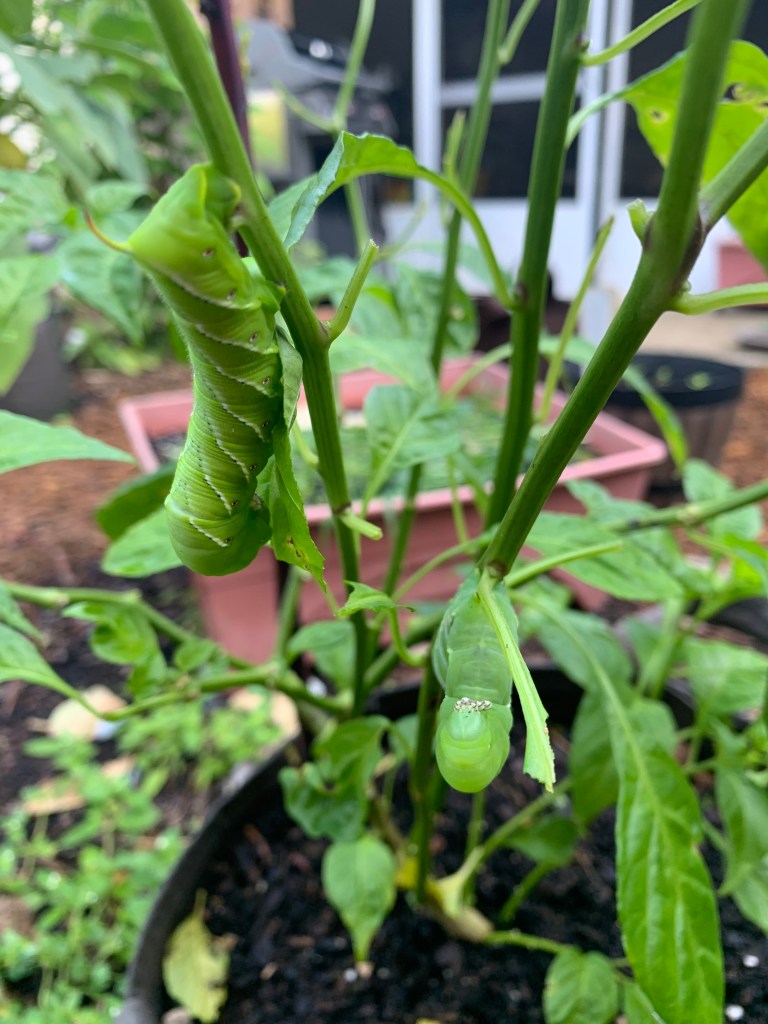
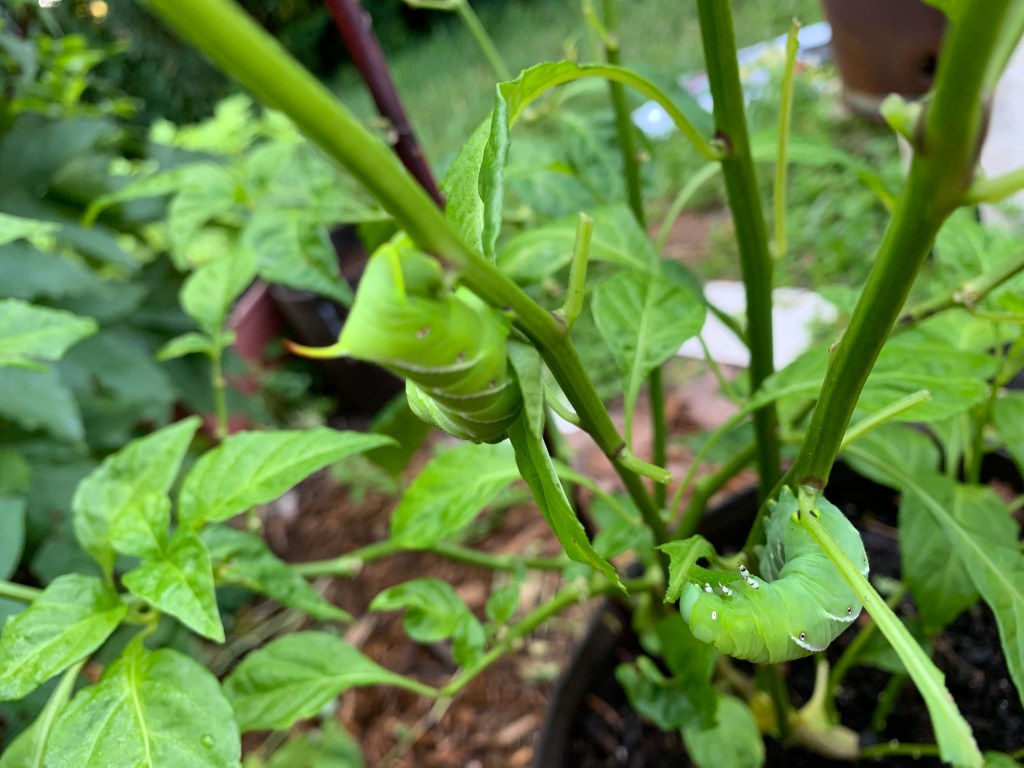
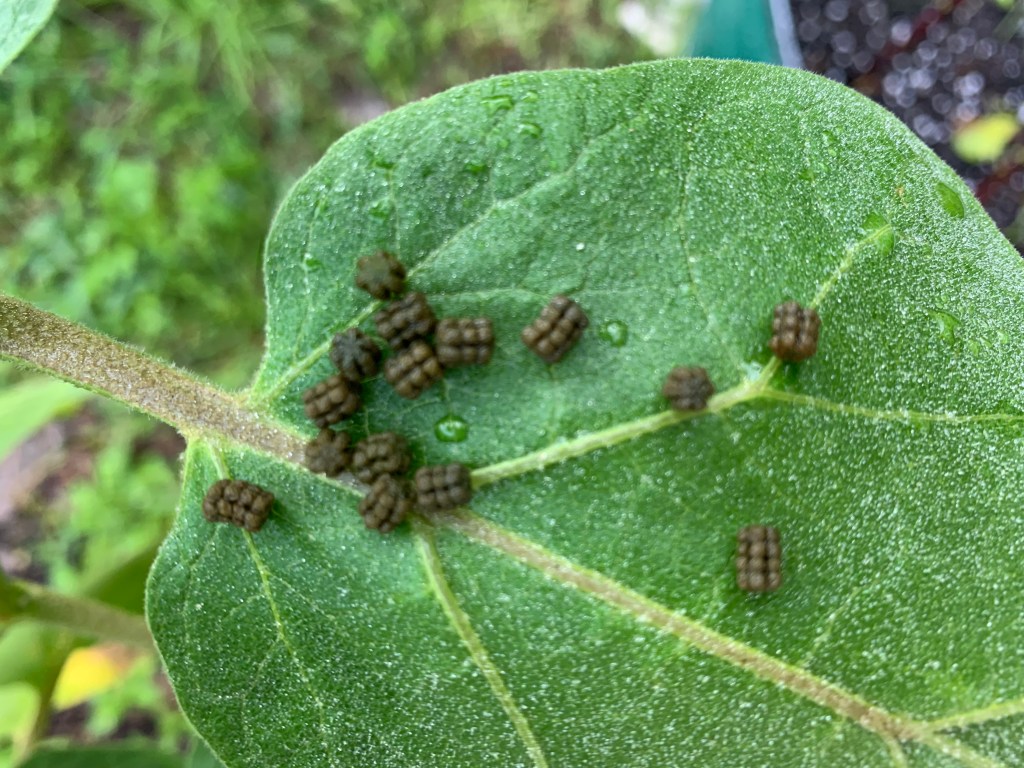
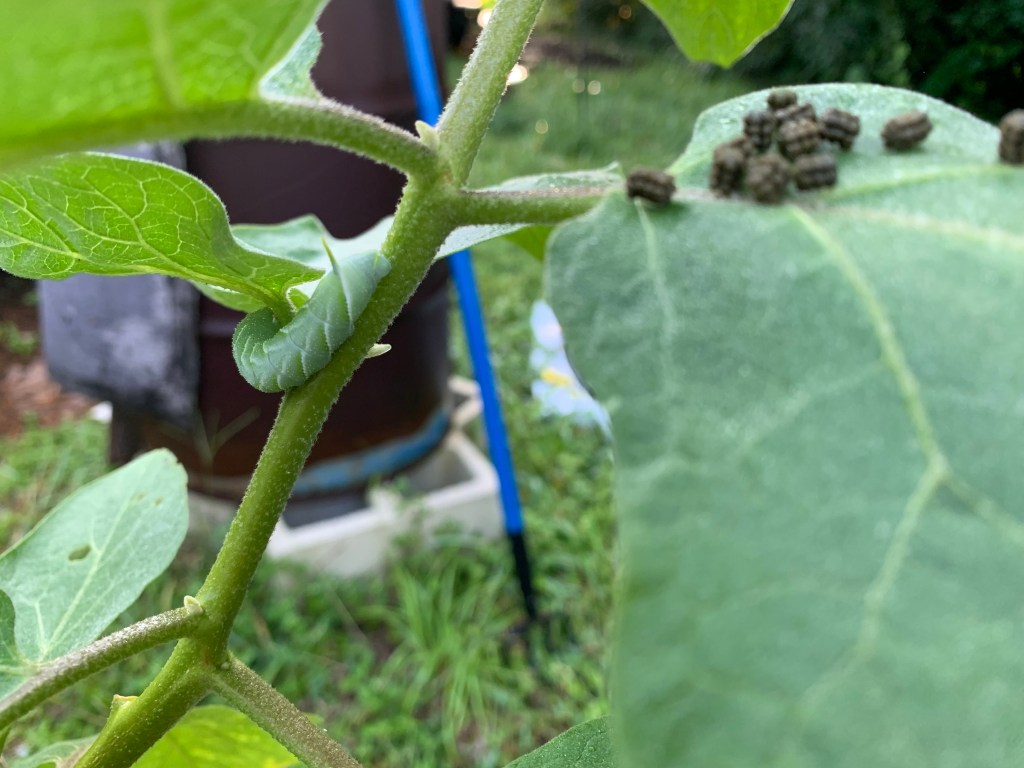
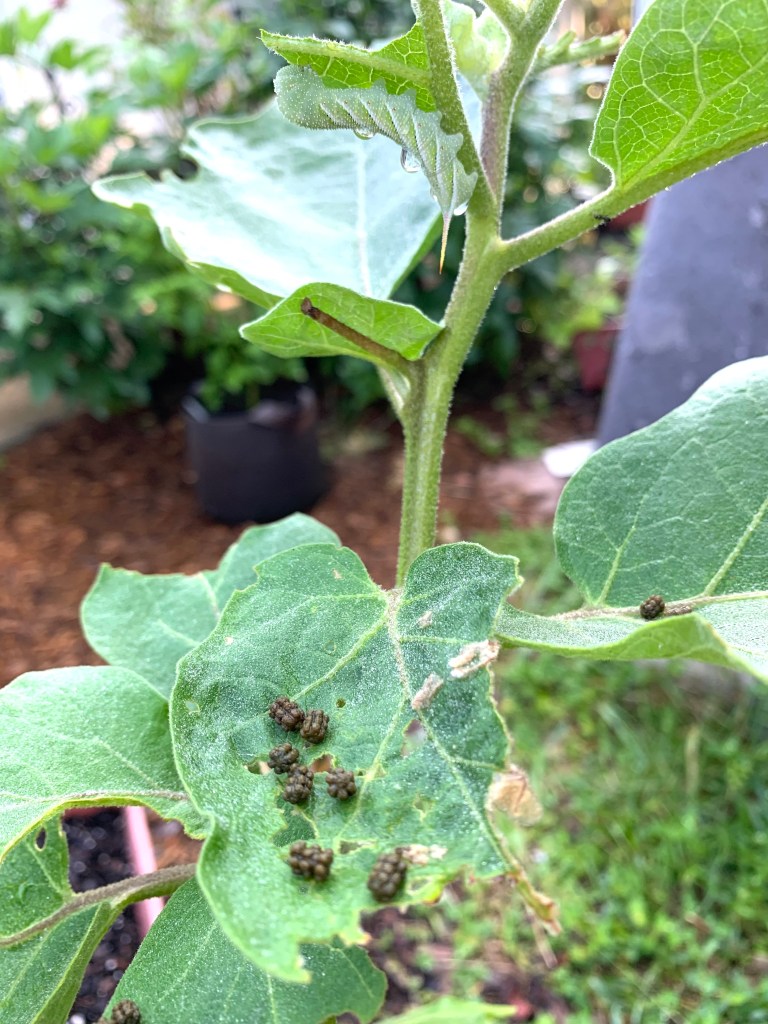
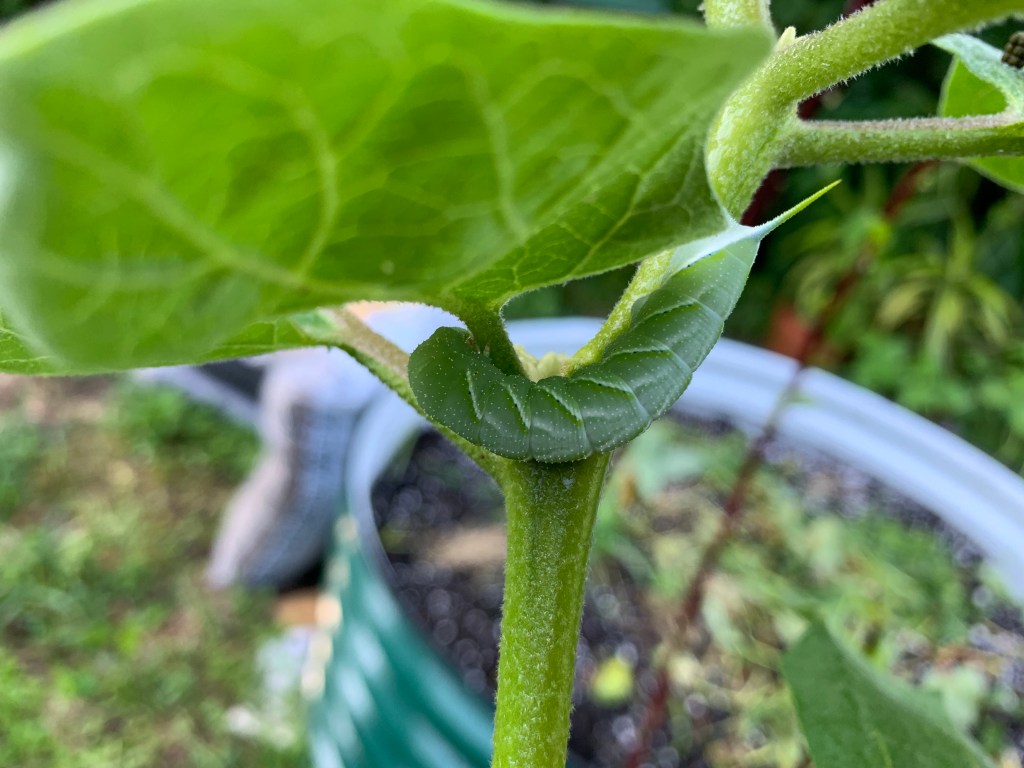
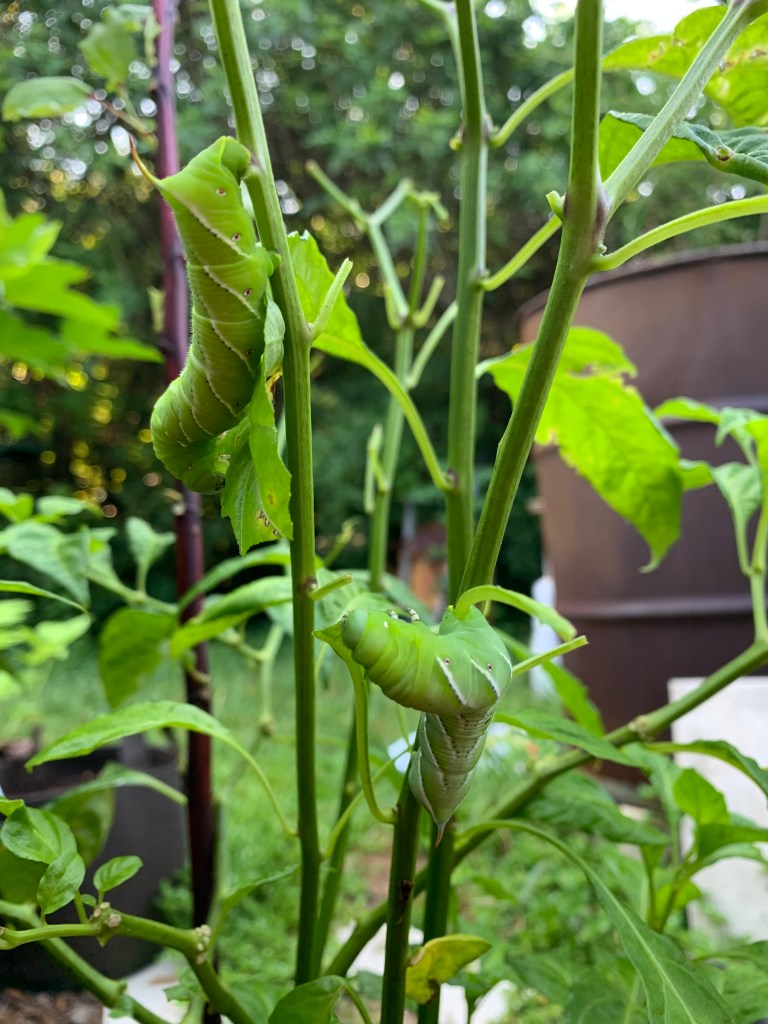
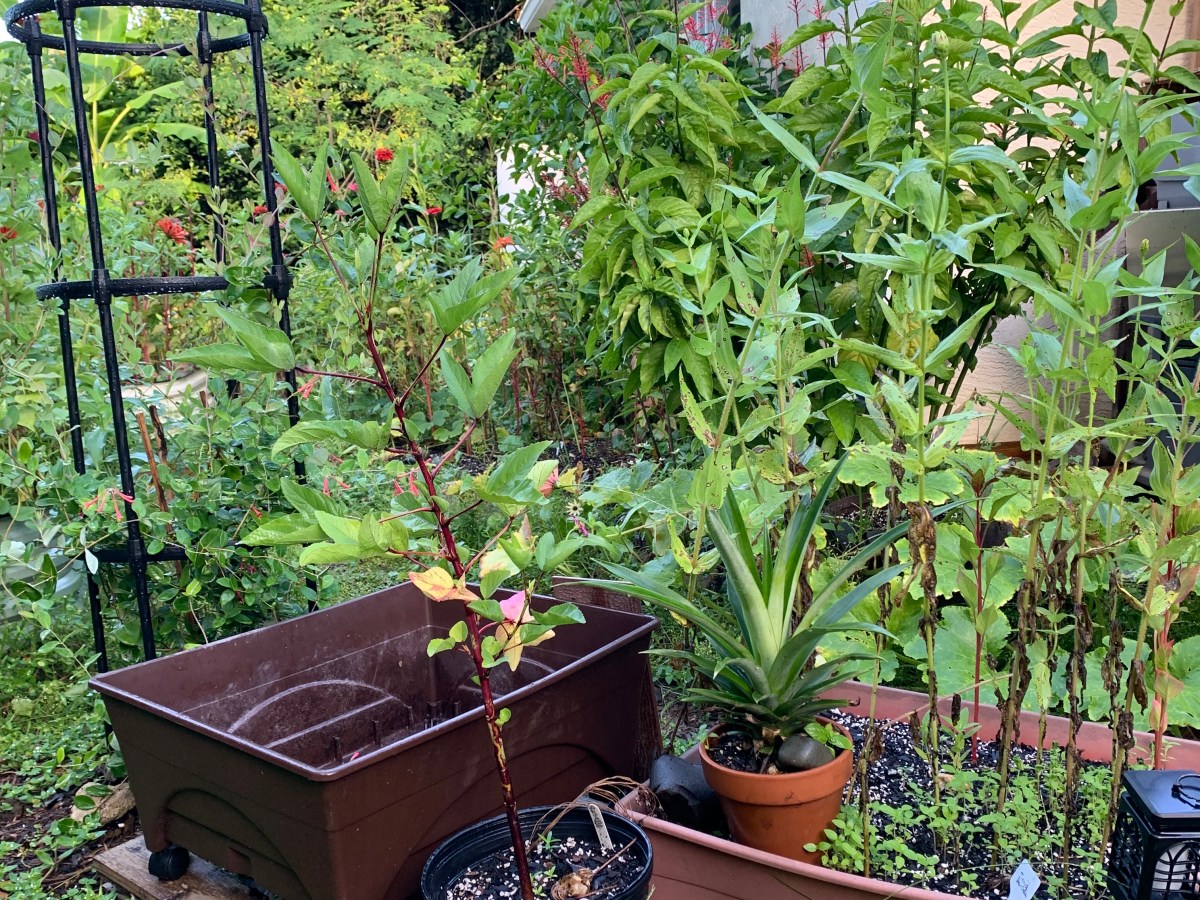
Now, I have two more hornworms on the Aji Dulce pepper plant. I have only three nice pepper plants left, and now this one has lost a bunch of leaves to chewing.
The plant was somewhat sheltered among the Roselle so I dragged it out into the open. I’m hoping this way the cardinals will see the worms easier and have a nice meal.
I checked the plant a few hours later and found only one worm left. He was hiding under a leaf. I decided to put him, along with his leaf, into the tray feeder. He won’t last long.
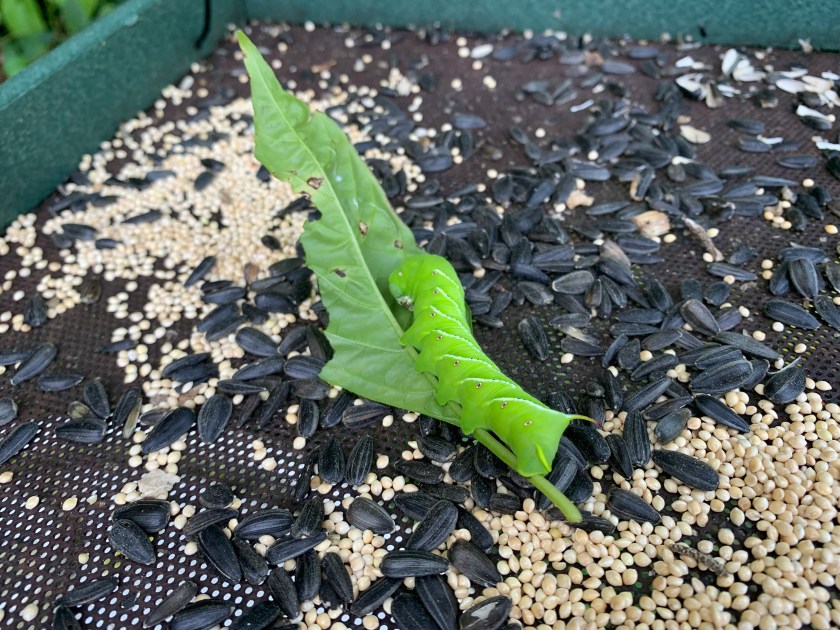
In my yard, caterpillars of all kinds become food for the birds, eventually. It’s a matter of deciding how much of the plant I am willing to lose before that happens. Nothing gets past the keen eyes of the cardinals, and they come in groups of 5 or 6 every day. However, I believe a blue jay ate this worm off the tray feeder.
I’d love to have enough plants to shelter hornworms and allow them to turn into the beautiful sphinx moth. Instead, I have to let nature take its course, maybe with a little help, to save my plant.
Next time you want to get rid of a hornworm, consider letting it become a bird’s meal. Where I live, I can feed the birds year round. Sunflower seeds bring birds to the yard, who will then naturally look for food in the garden. Tray feeders (paid link) are perfect for depositing unwanted grubs and worms.




Something went wrong. Please refresh the page and/or try again.
Thank you for sharing!


 Hydrangeas Blue