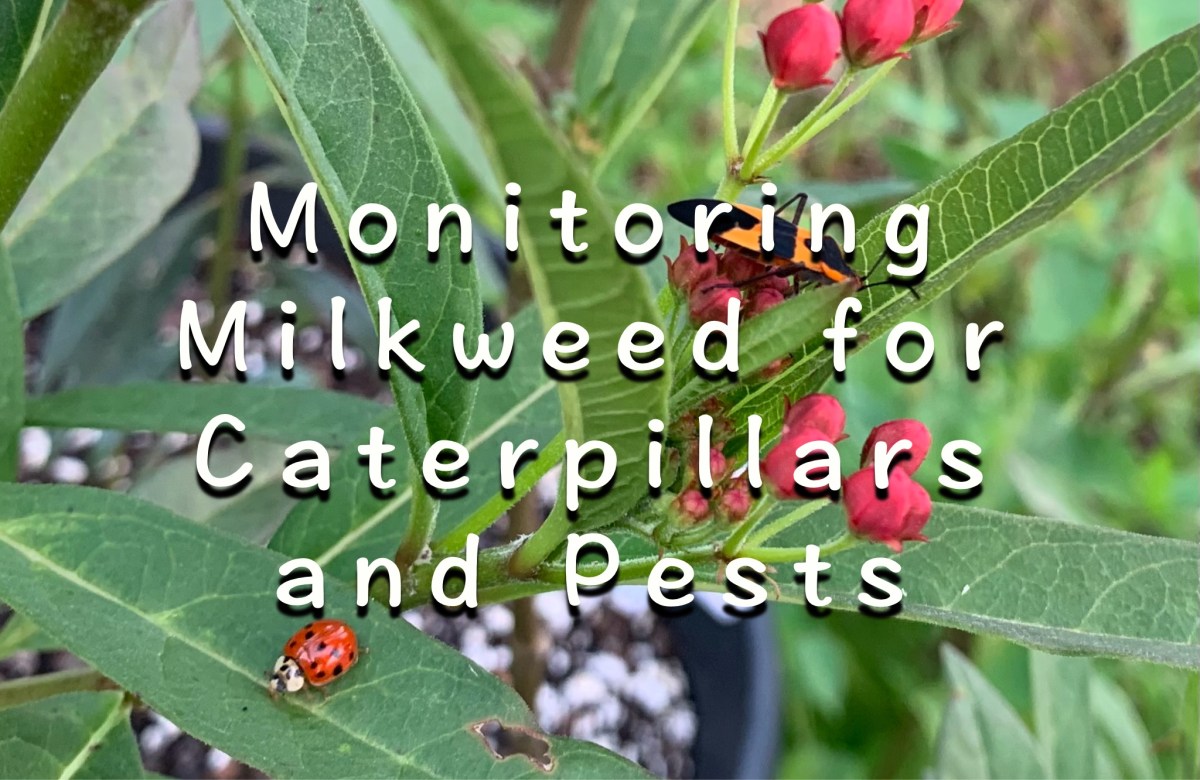
Each day I check the milkweed for caterpillars. Although there have been some spotted, I’m seeing other bug activity.
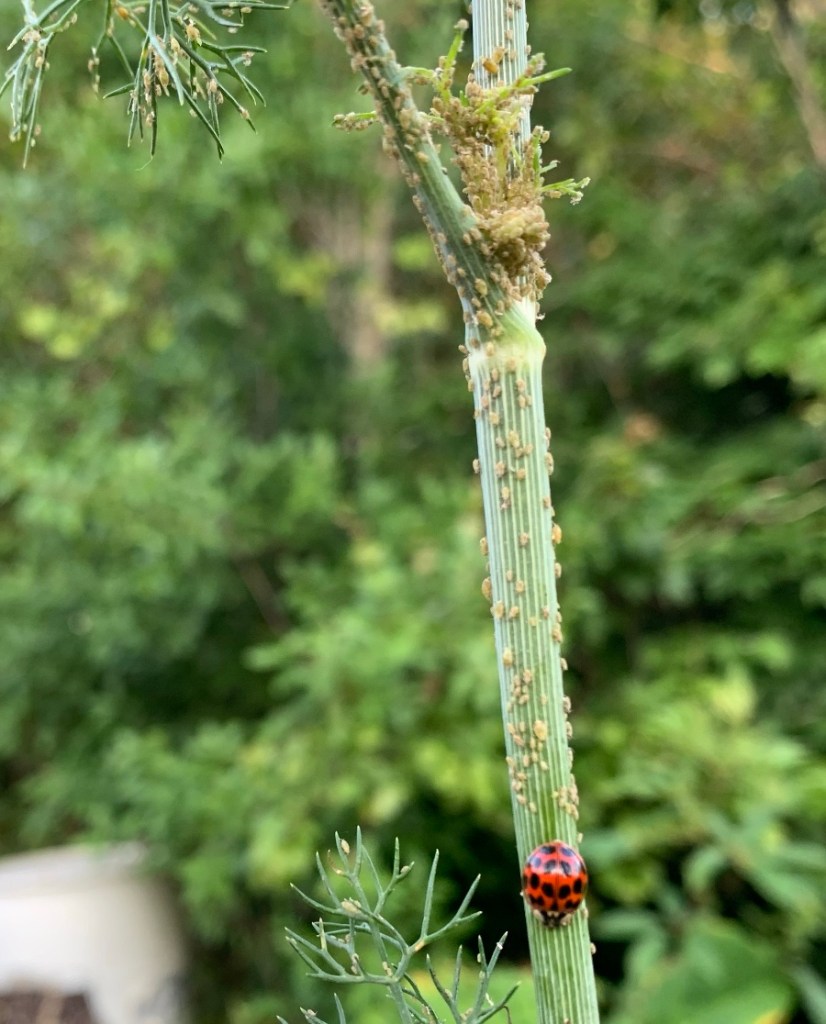
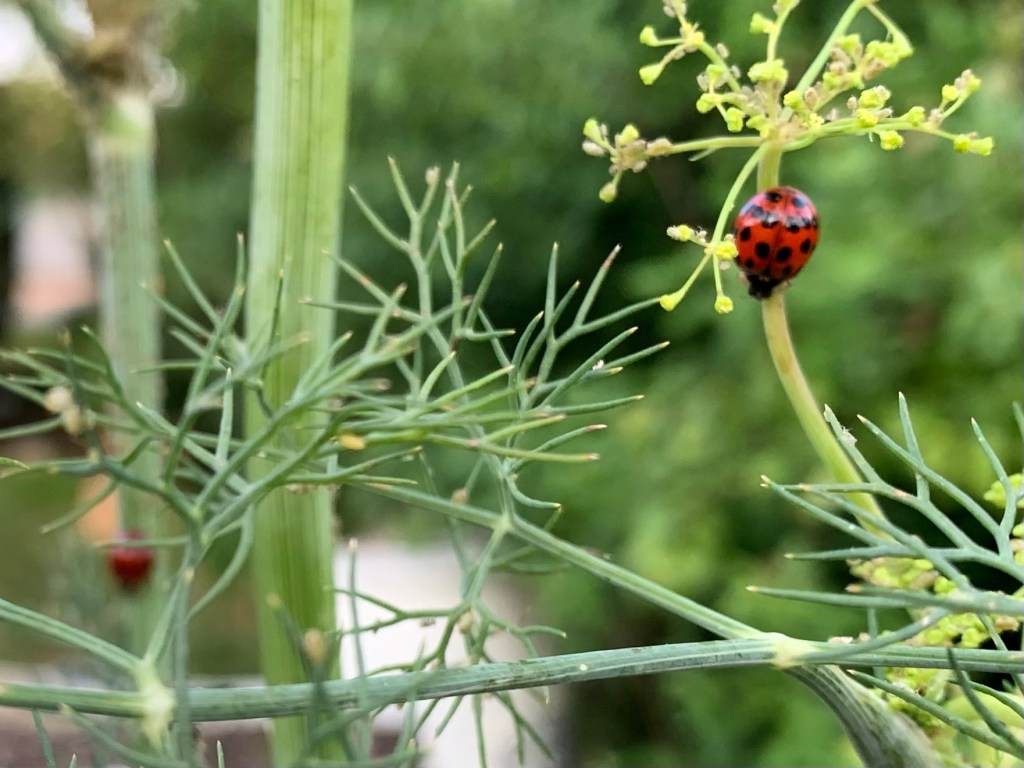
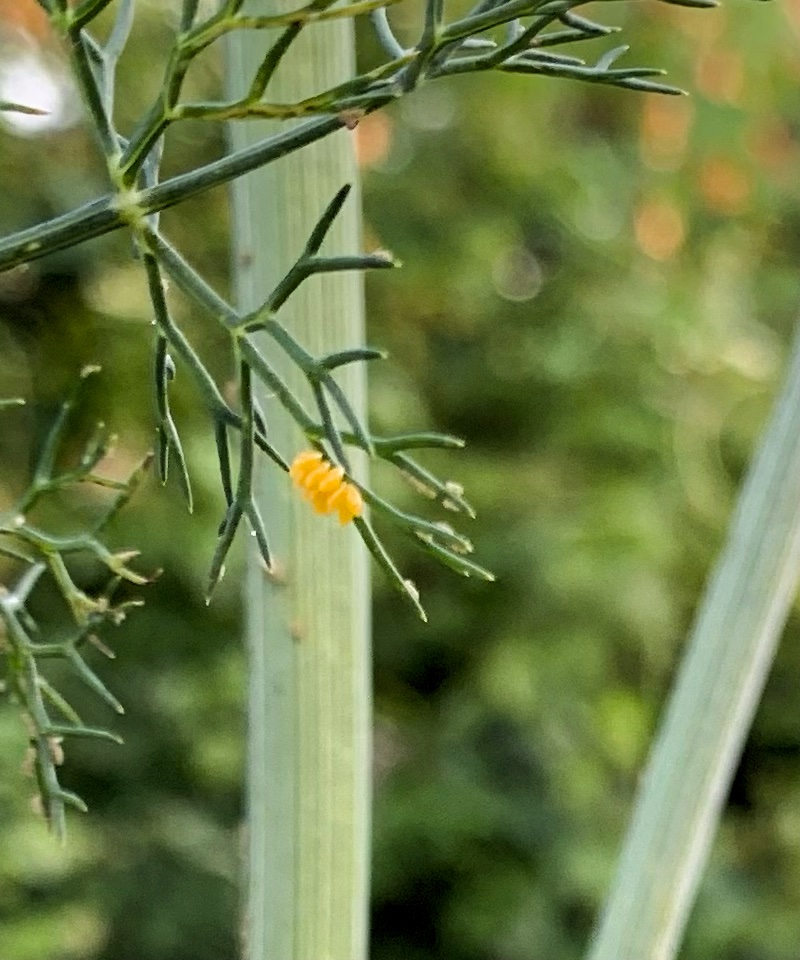
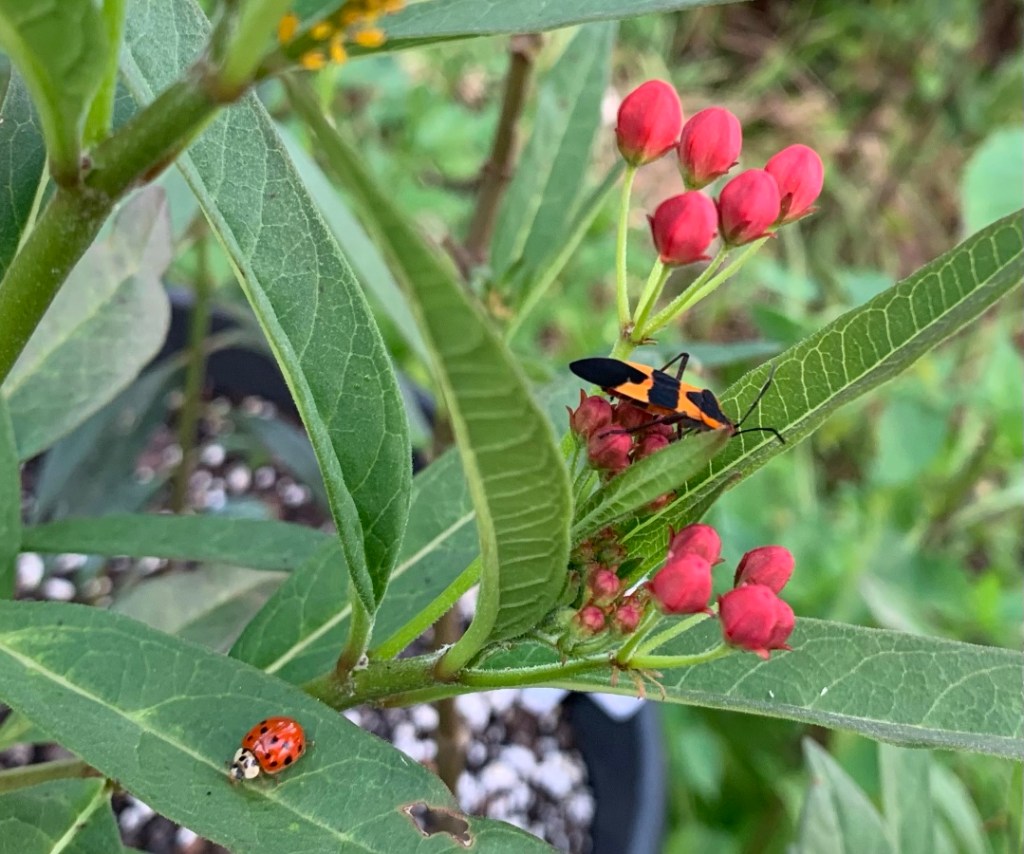
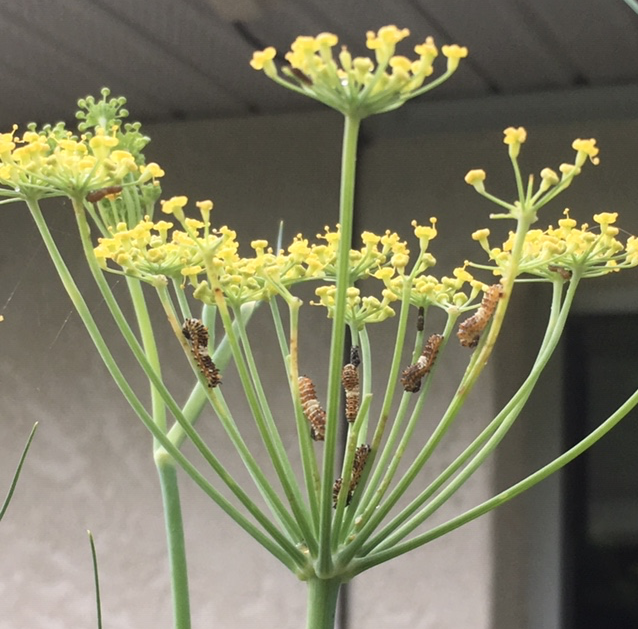
One, tall dill plant is growing next to the milkweed and it is covered in tiny pests. I only just realized how bad it is. These little critters look like aphids. The milkweed has a few yellow aphids also. Last night I counted four ladybugs in the area, with some little yellow ladybug eggs on a dill leaf.
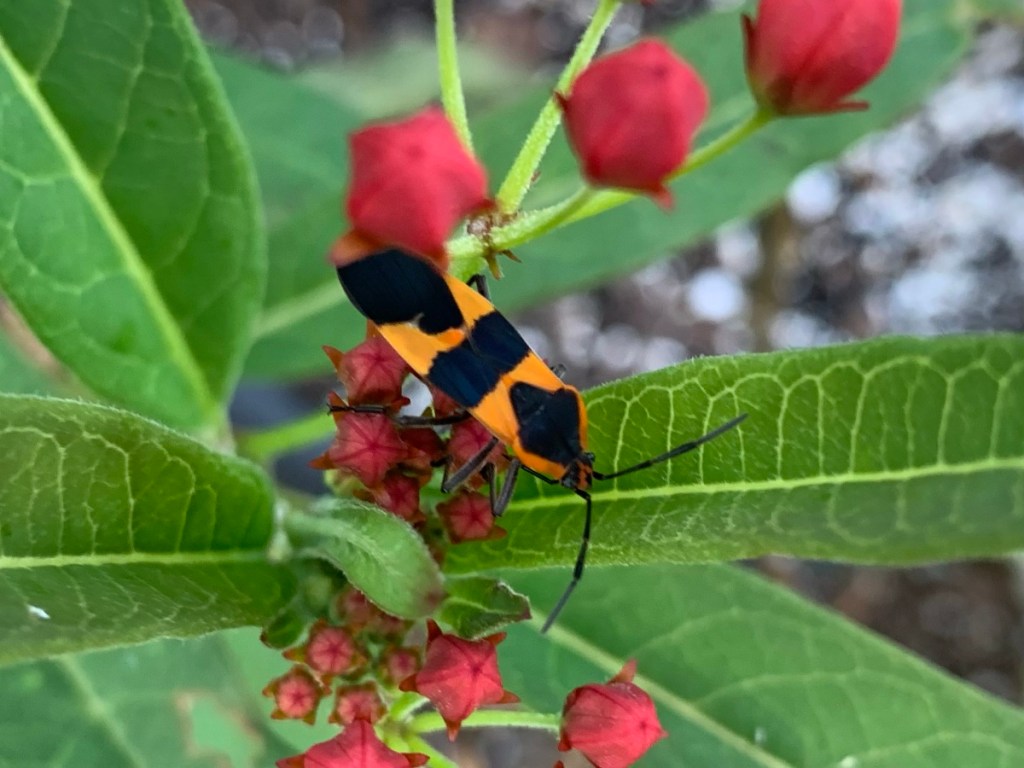
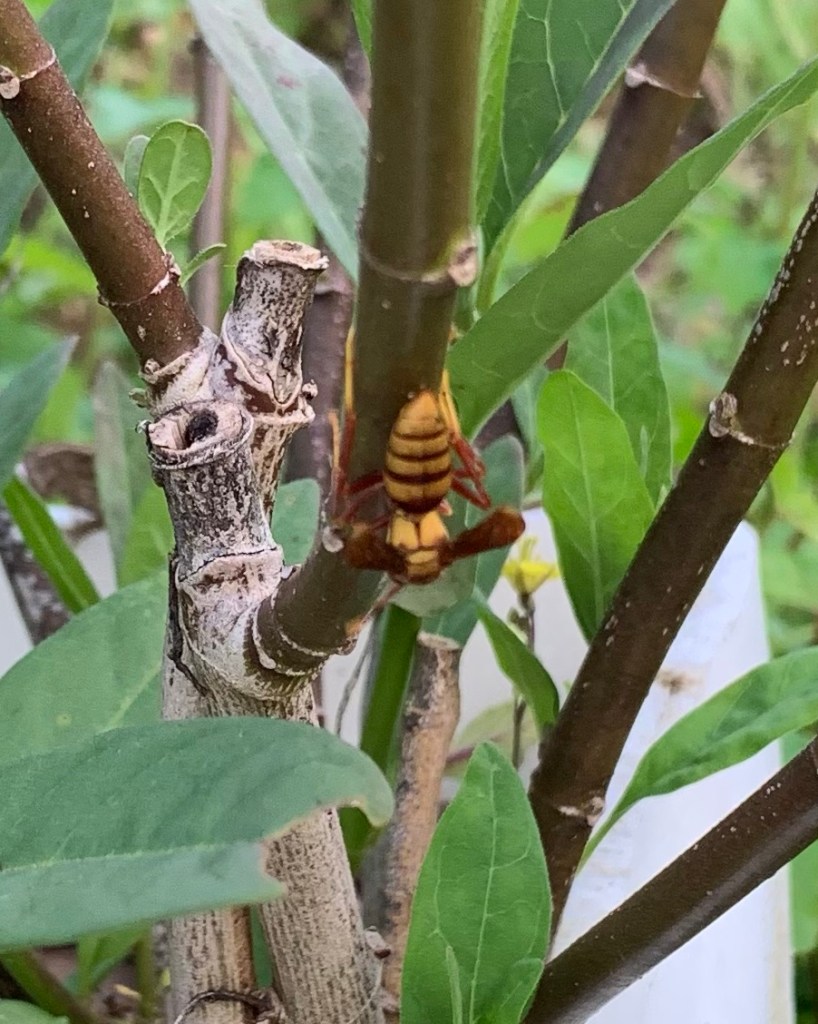
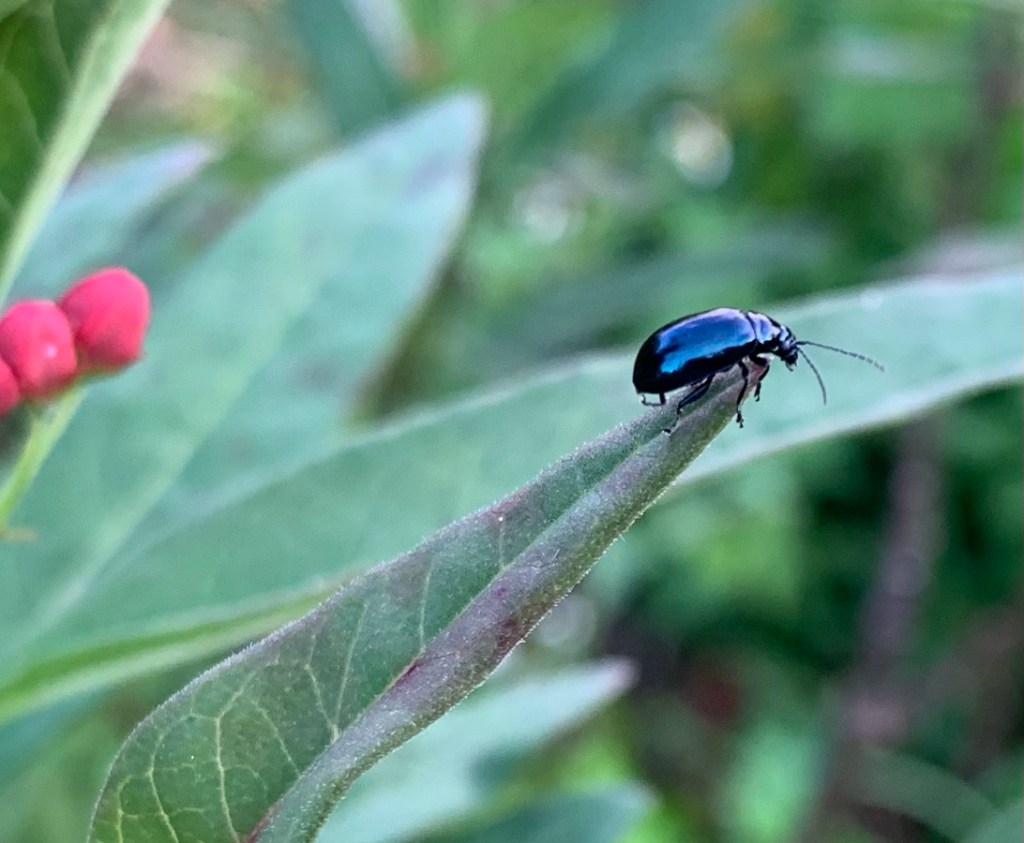
Also, in the same area, I spotted a milkweed bug and shiny blue leaf beetle on the tropical milkweed plant. A yellow paper wasp was also spotted, and I need to check for a nest in the vicinity. With an increase in stinging bugs, I’ll have my Apis Mel (paid link) handy.
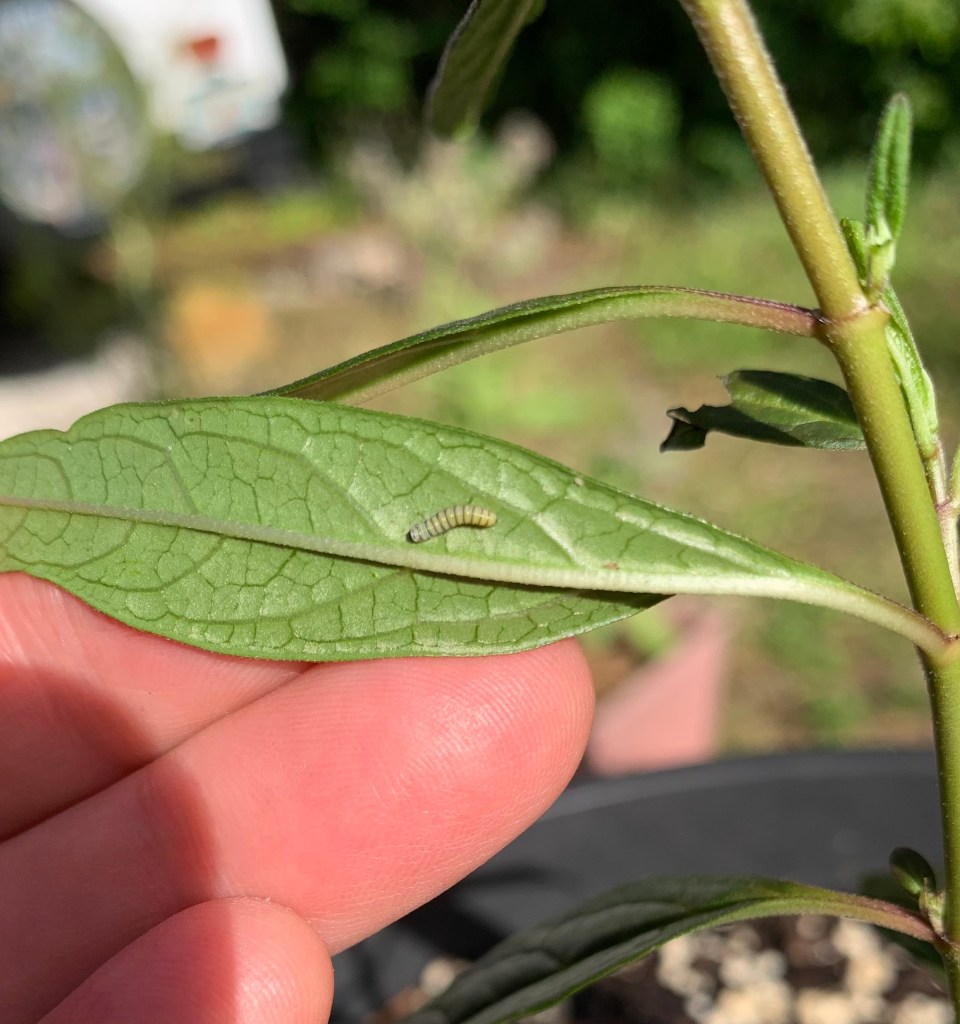
When tiny caterpillars were on my new white Swamp milkweed plant, I transferred them to the tropical milkweed. I don’t like to mess with nature, but the original plant was too small to accommodate any caterpillars. I think the eggs may have been there when I bought the plant.
I ended up putting three tiny caterpillars onto the bigger milkweed plant. I’ve seen only one caterpillar that had grown larger, and now that one seems to have disappeared. I think the lizards are eating them.
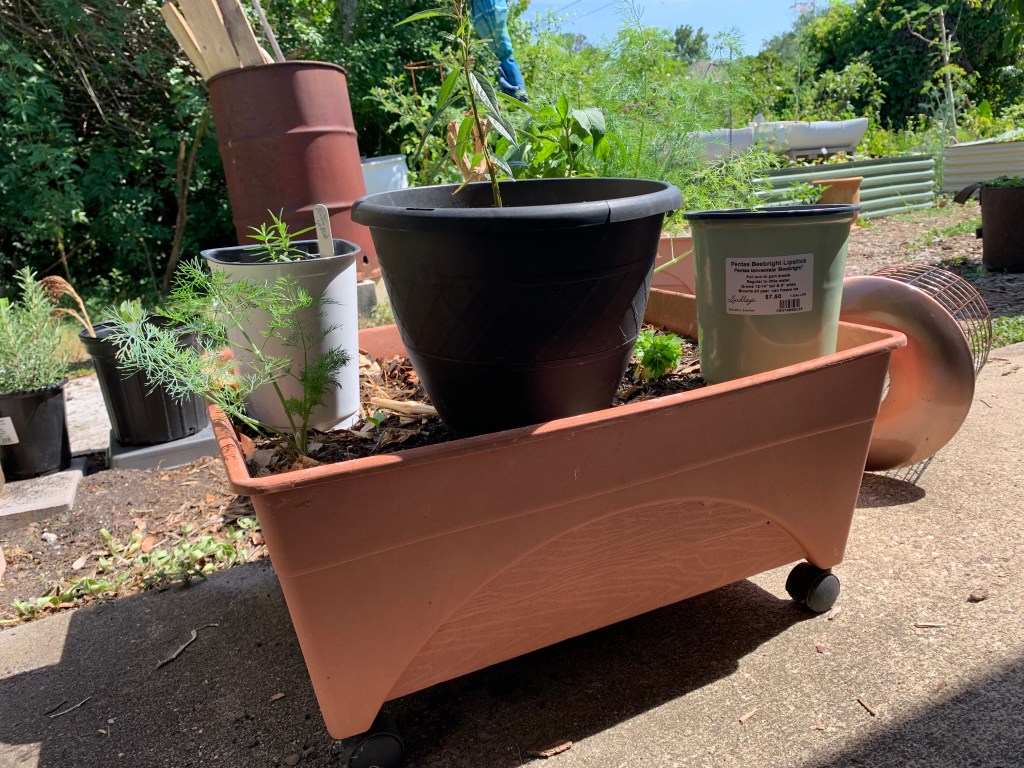
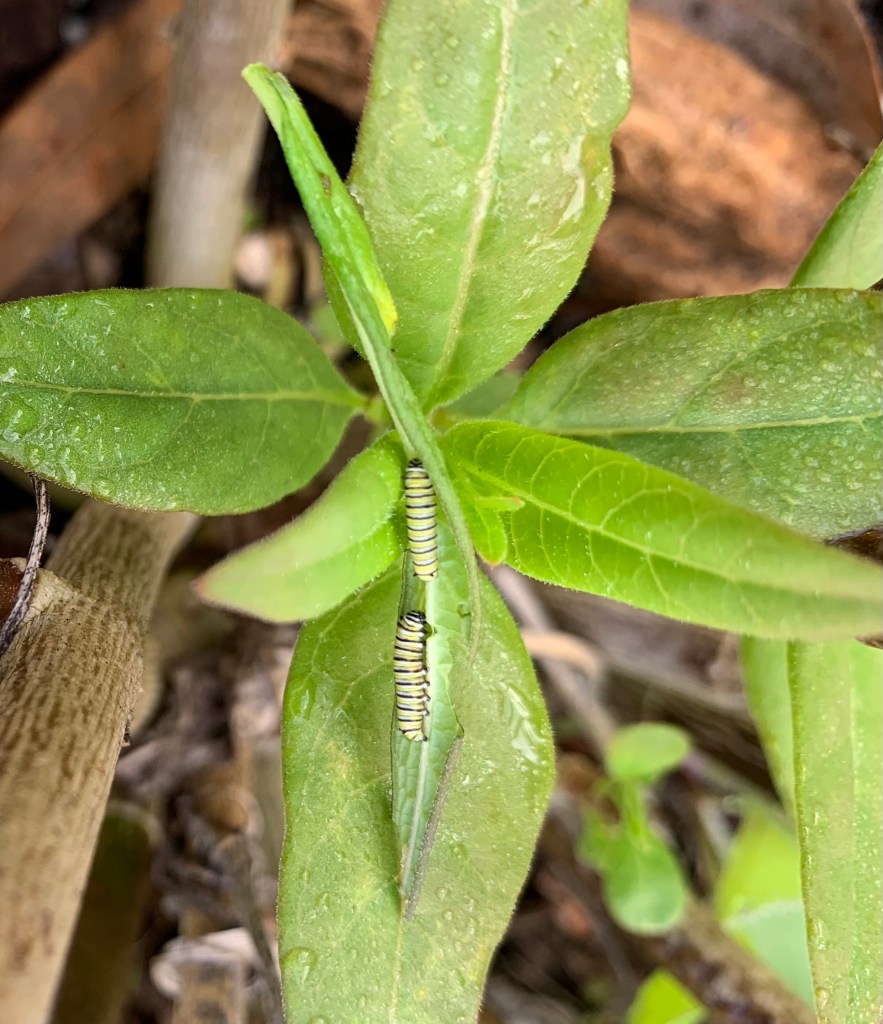
Sure enough, I searched for info and found that lizards – both invasive (brown) and the green anoles – will eat the caterpillars and butterflies. So now I have a new problem. I want to feed the Monarchs, but my yard is full of lizards.
Are These Bugs Good or Bad?
I’m no bug expert, but I do know ladybugs are good guys. They eat aphids and when the eggs hatch, the ladybug larvae will also eat the aphids. I’ve seen red ladybugs with lots of black spots and also orange ladybugs with no spots.
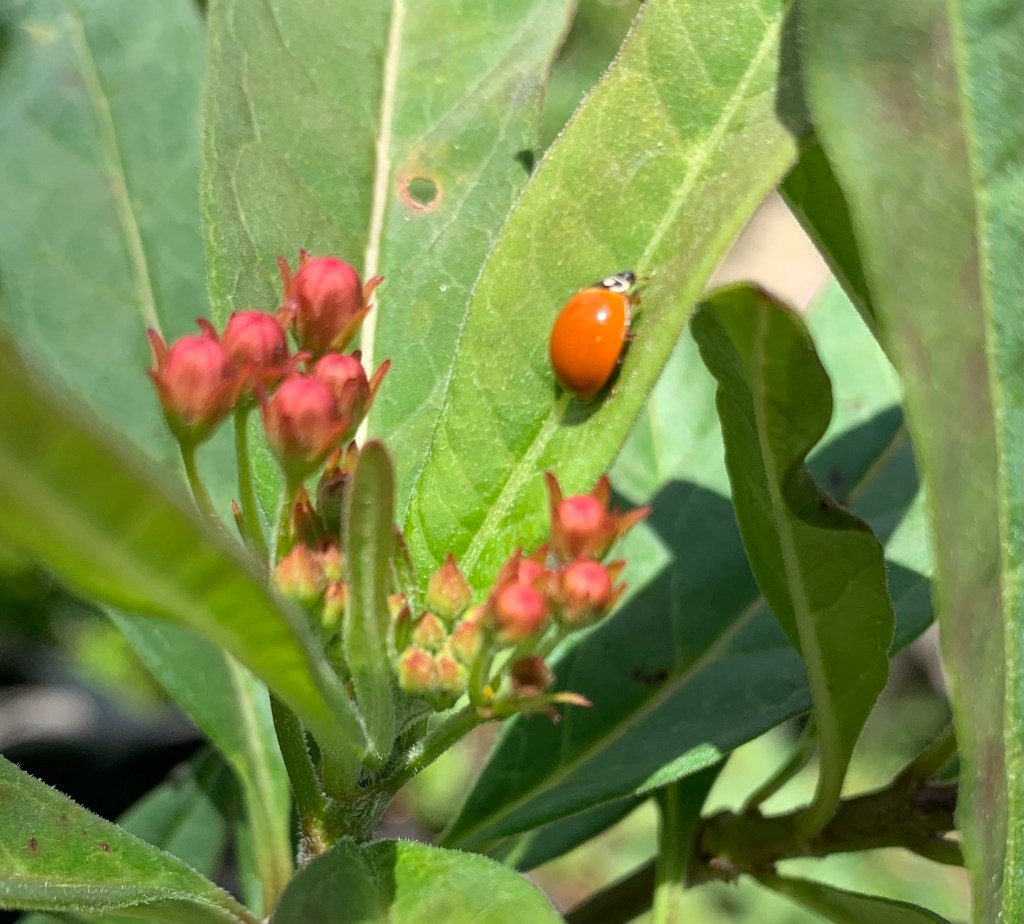
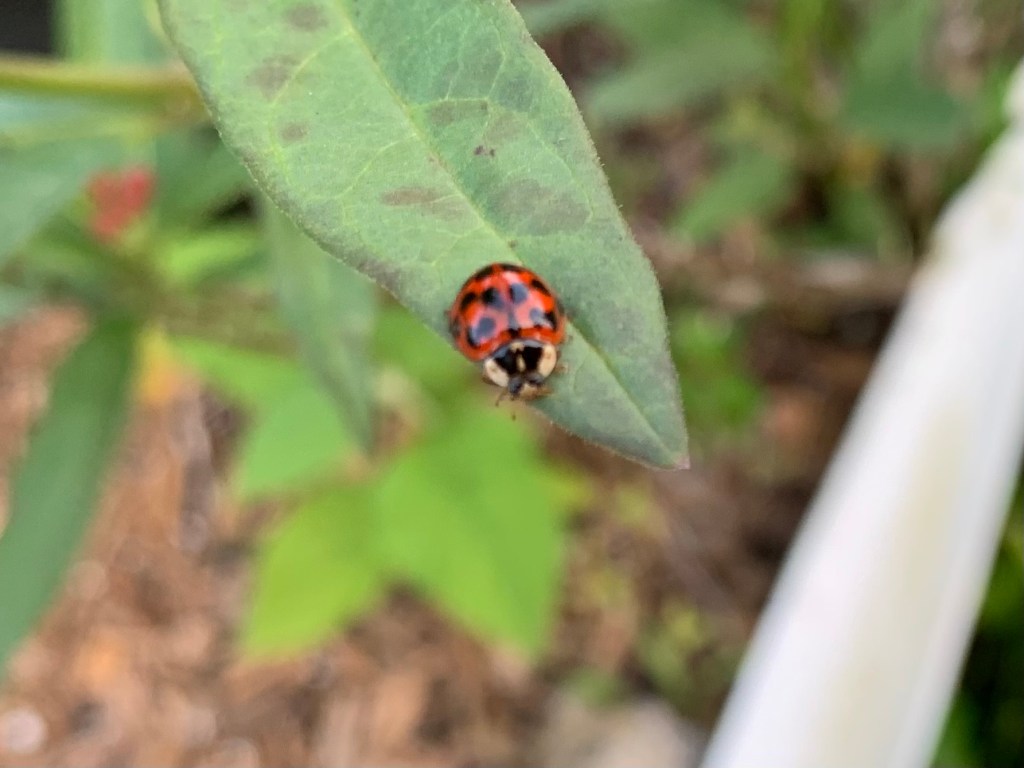
The milkweed bug feeds on flowers and seeds of the milkweed plant. The milkweed assassin bug looks similar, and is a beneficial that will not feed on the plant, but kills unwanted pests. I haven’t seen one of those yet. As far as that pretty blue beetle, I have no information.
The dill plant is one of many that I have all over the garden. Dill is very easy to grow where I live, and I always save seeds each year. As summer closes in, the dill flowers turn to seed and often the plants get infested with aphids. Each year I hope for ladybugs, but never seem to have enough to deal with all the pests.
The dill plants are also good for attracting black swallowtails. Fennel is another plant where I’ve found lots of caterpillars in the past. I rarely get a butterfly as the lizards eat Swallowtail caterpillars too.
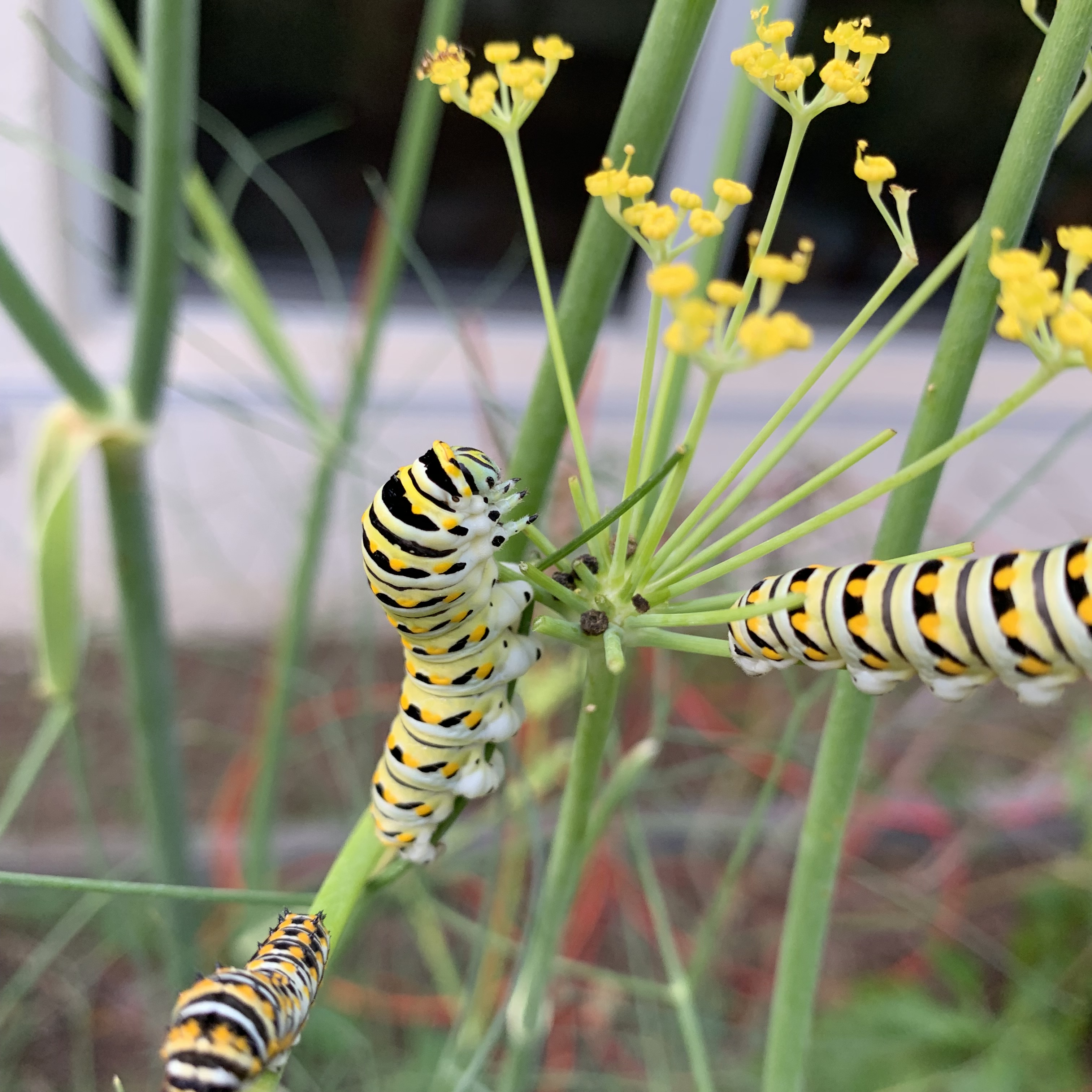
For now, I am simply observing the happenings. Without caterpillars, the tropical milkweed is growing like mad. The Monarch butterflies are still around and laying eggs, so we’ll see what happens.
Welcome fellow gardeners…


Thank you for sharing!


 Hydrangeas Blue
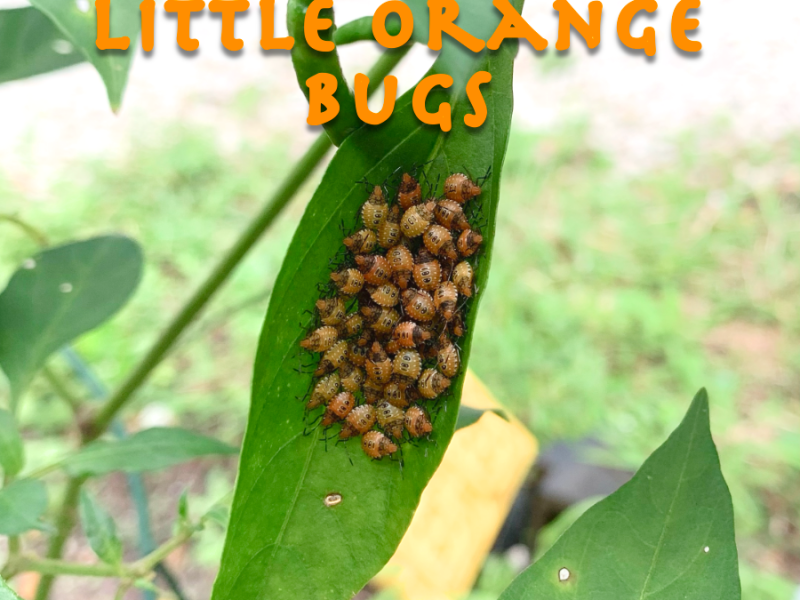
Wow, this is so exciting! I love seeing the caterpillars and the beneficials. I wonder if you’ve found out any information about that blue beetle. It is pretty! The milkweed bugs look just like the leaf footed bugs and assassin bugs that I get on my tomatoes. Very interesting! I learned with those, that in the nymph stage, the good guys are loners, but the bad guys congregate together. So I splash them down when I see them but leave the loners alone 🙂
I’m thinking about keeping my caterpillar friendly plants in pots, and if they hatch on them, moving them inside my lanai. I do get a few lizards in there too though, if they can escape the cats!
LikeLike