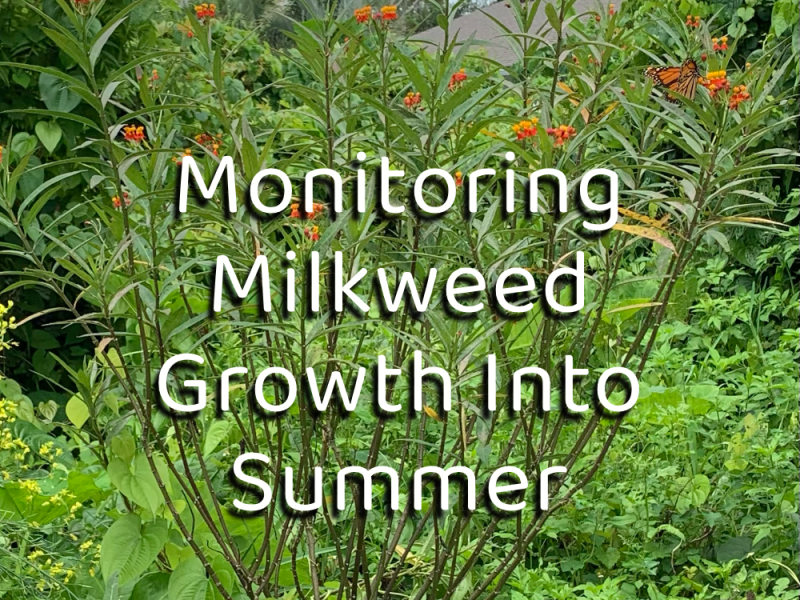
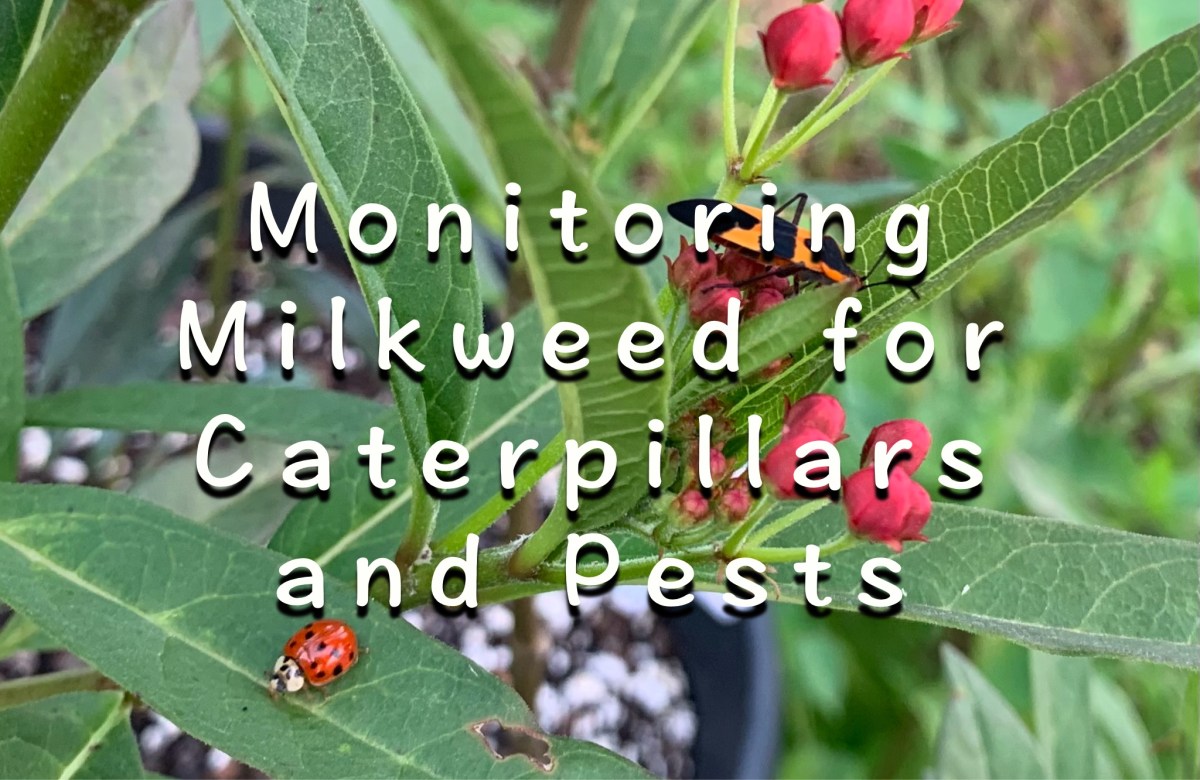
Monitoring Milkweed for Caterpillars and Pest Activity

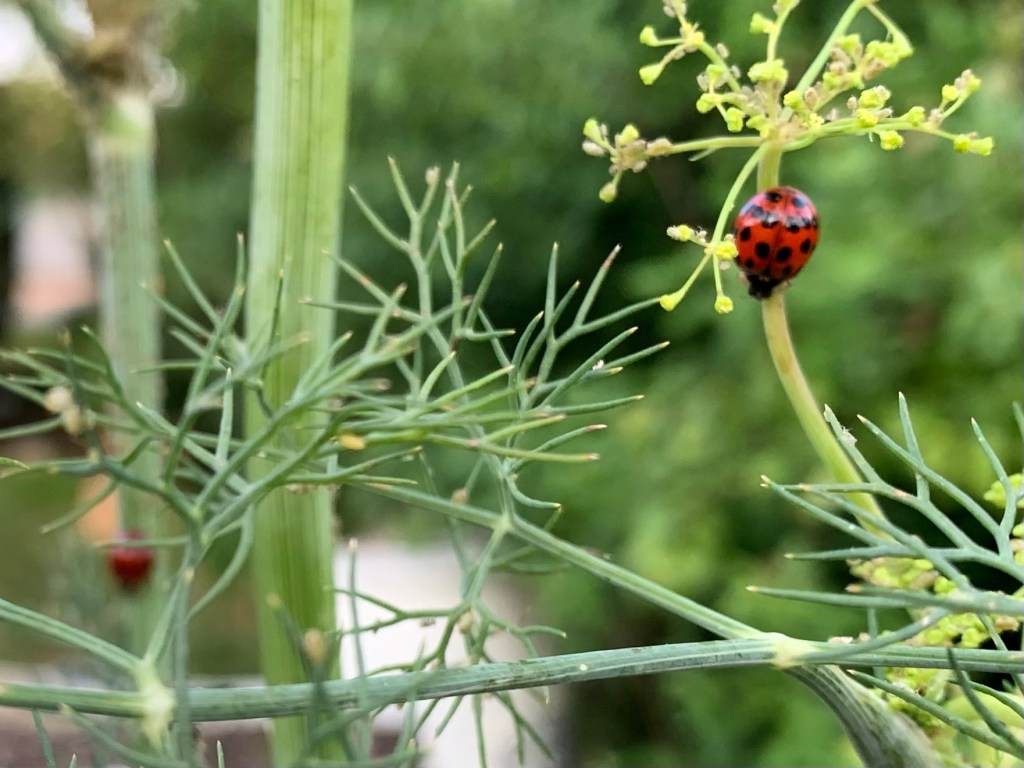
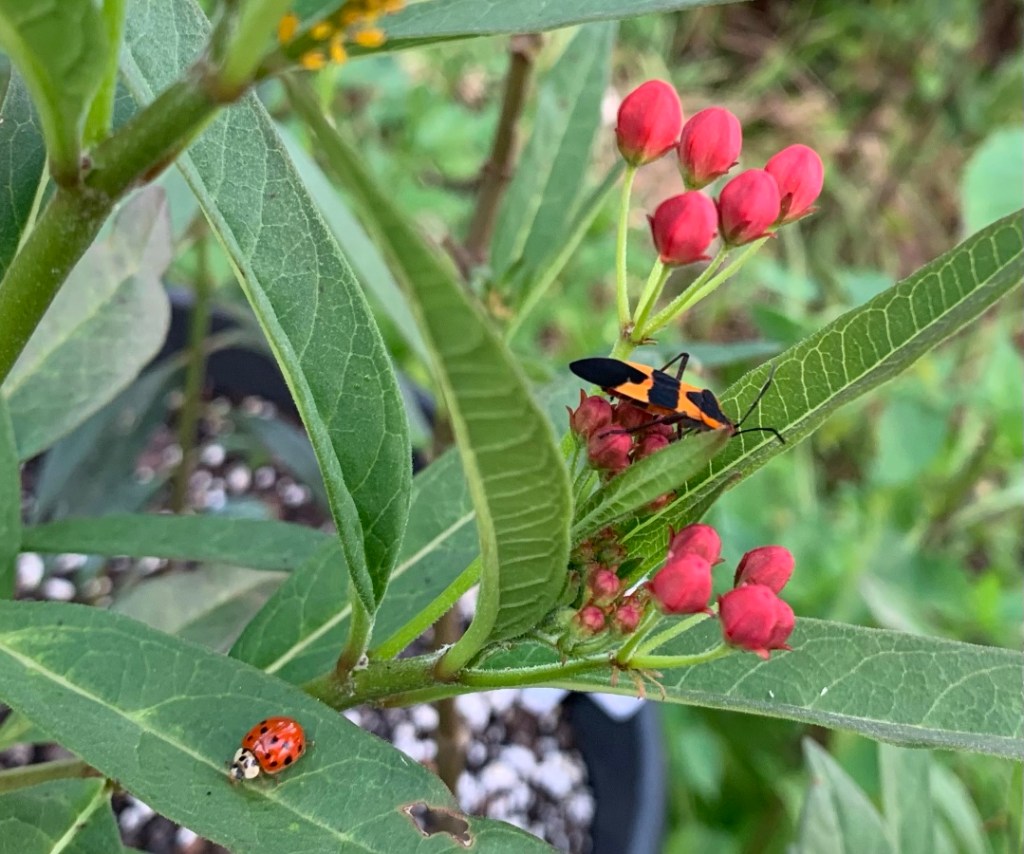
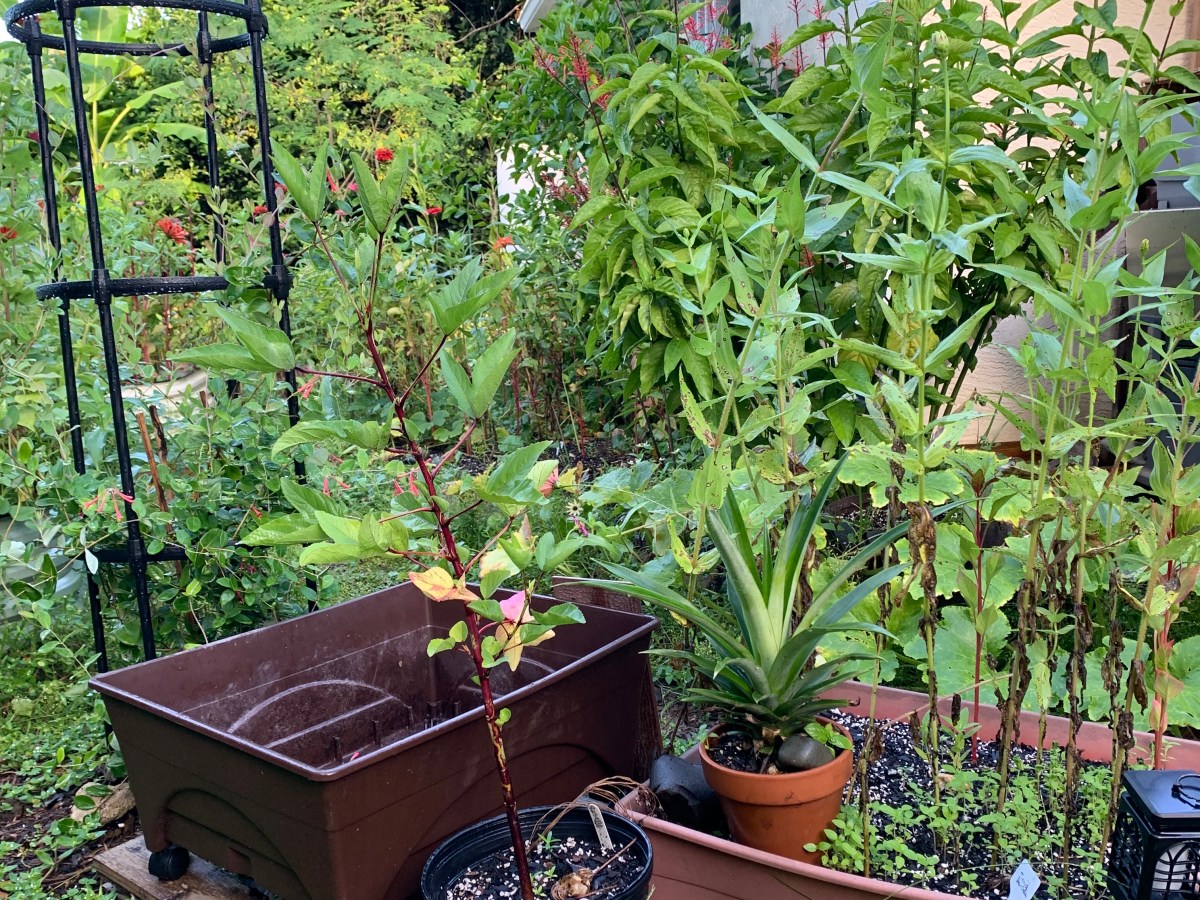
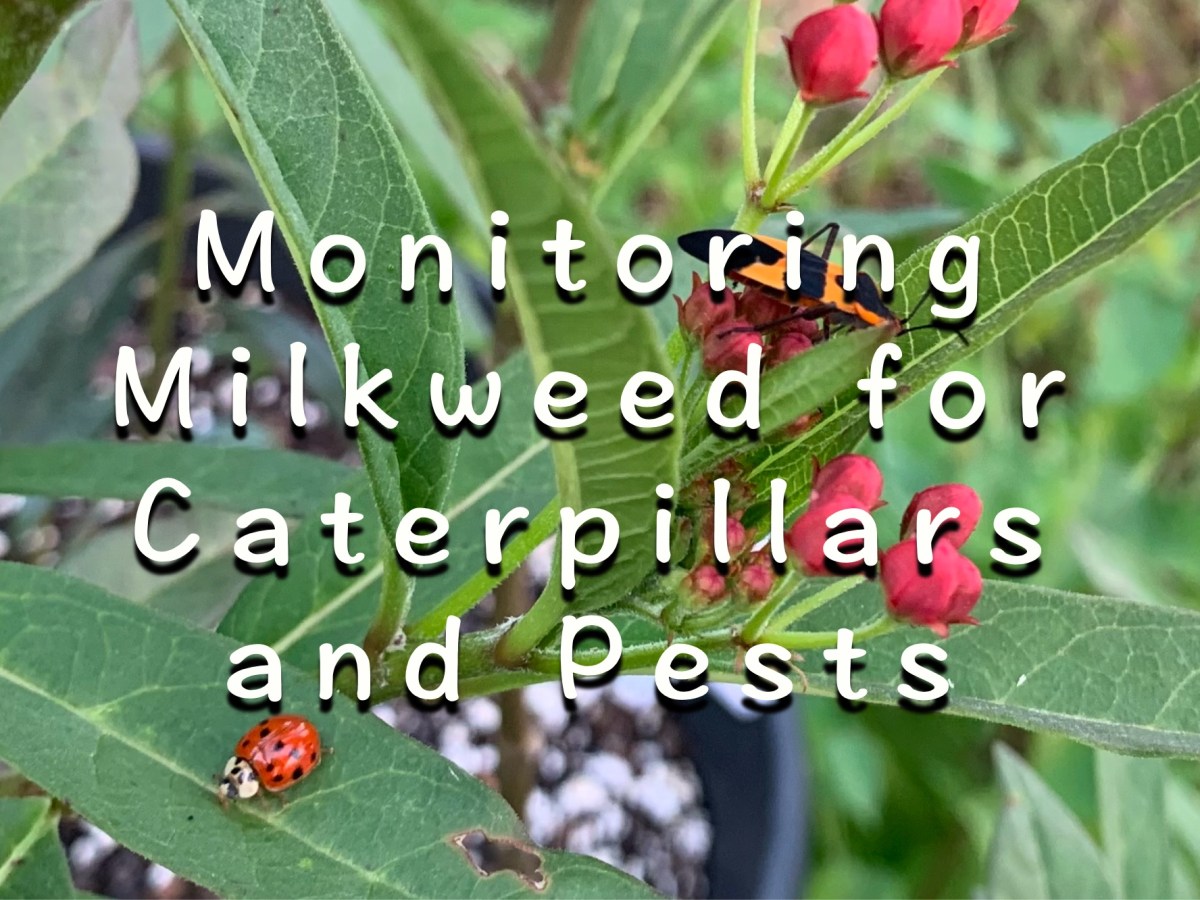
A daily check on the milkweed revealed interesting bug activity. It appears that the aphids are bringing the ladybugs.

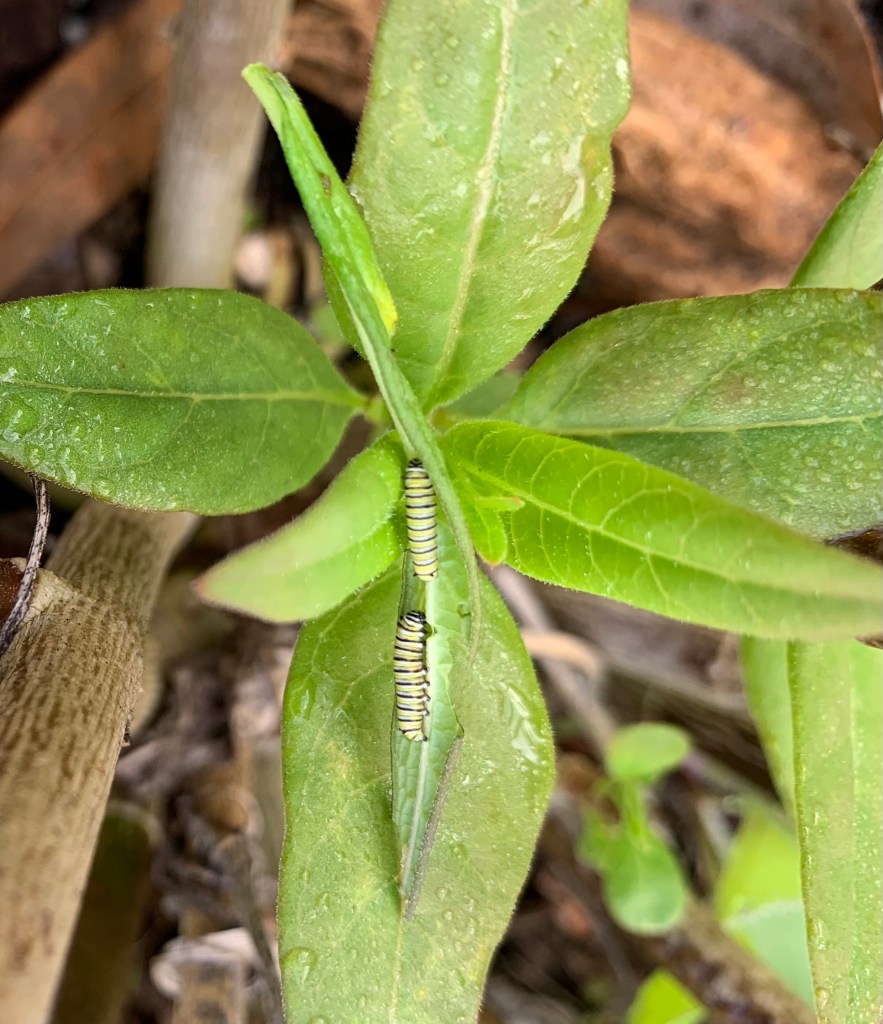
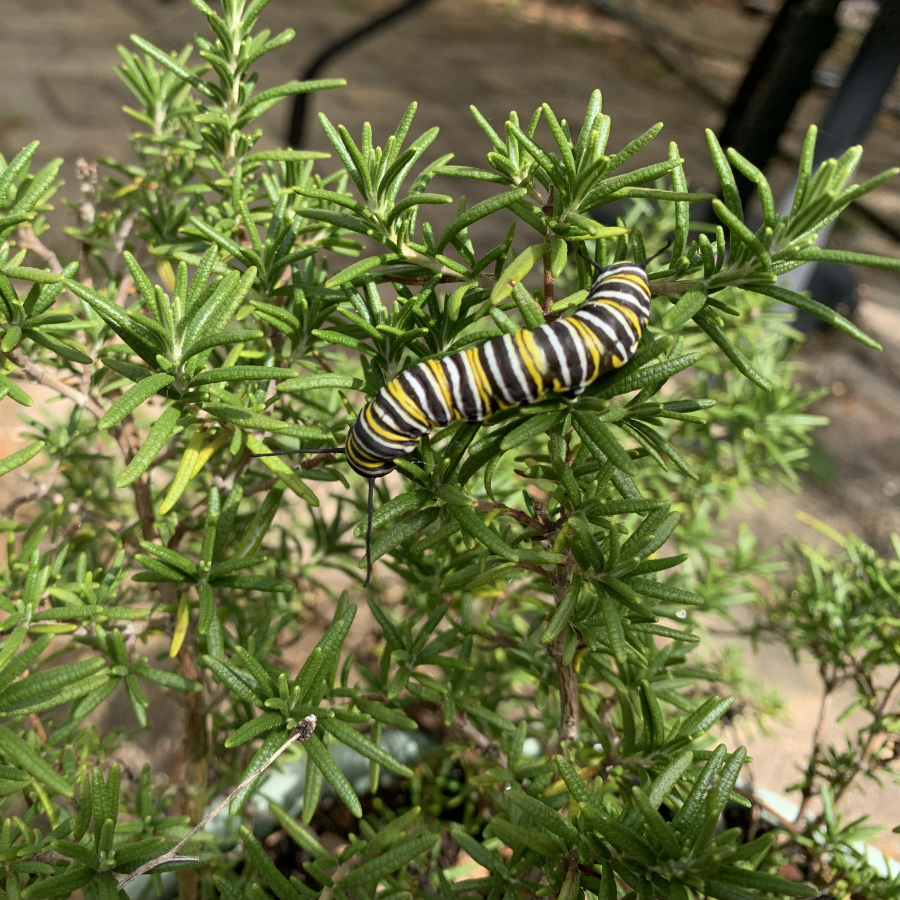
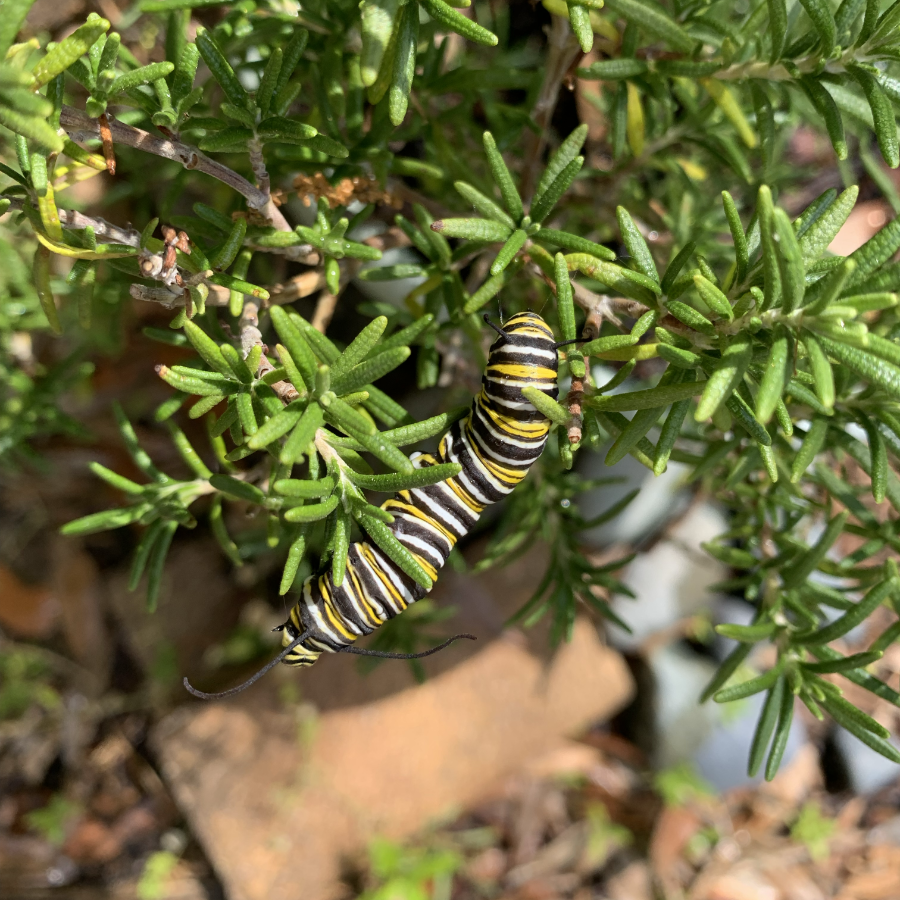
Each day I check the milkweed for caterpillars. Although there have been some spotted, I’m seeing other bug activity.

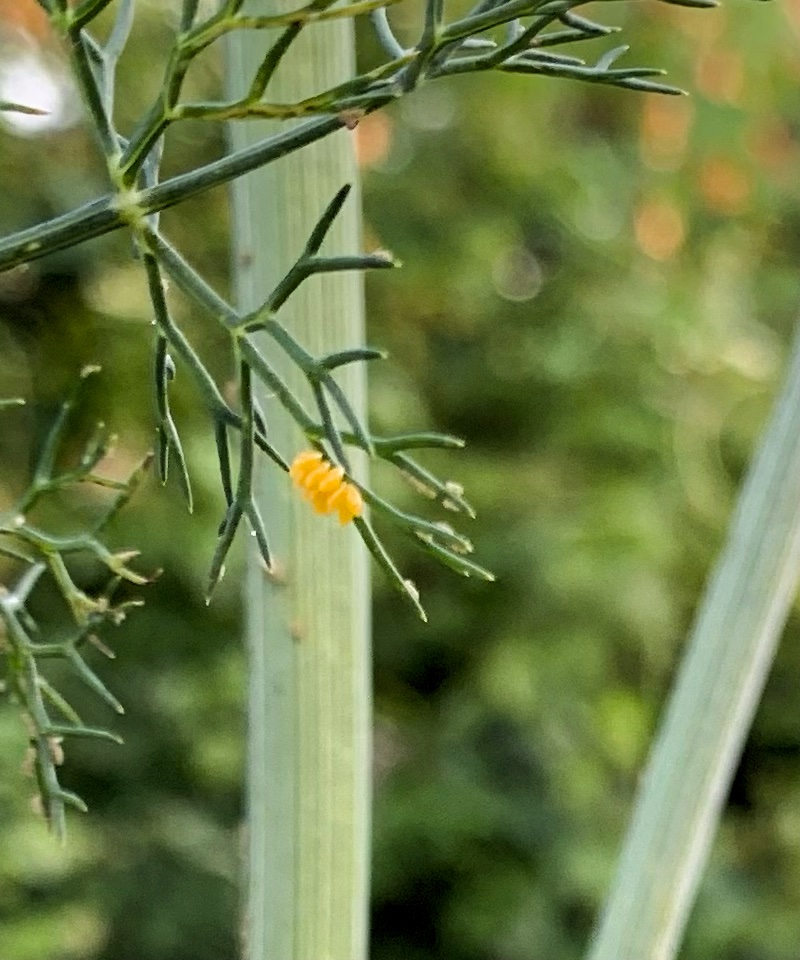
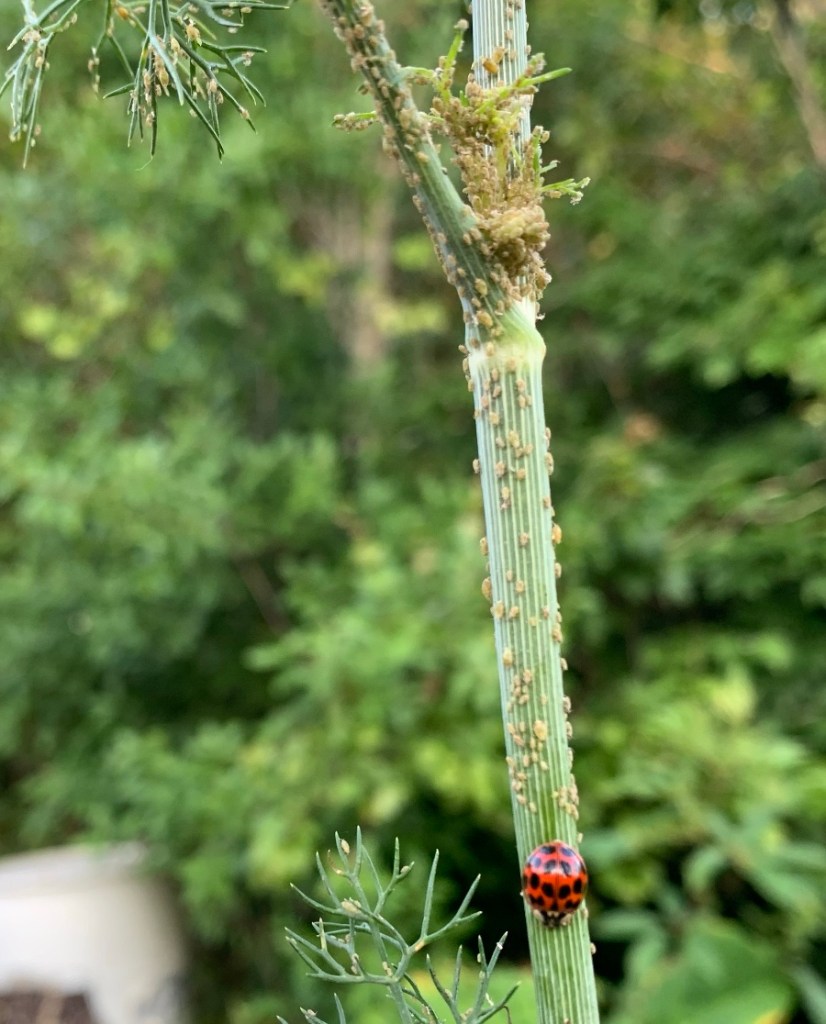
One, tall dill plant is growing next to the milkweed and it is covered in tiny pests. I only just realized how bad it is. These little critters look like aphids. The milkweed has a few yellow aphids also. Last night I counted four ladybugs in the area, with some little yellow ladybug eggs on a dill leaf.

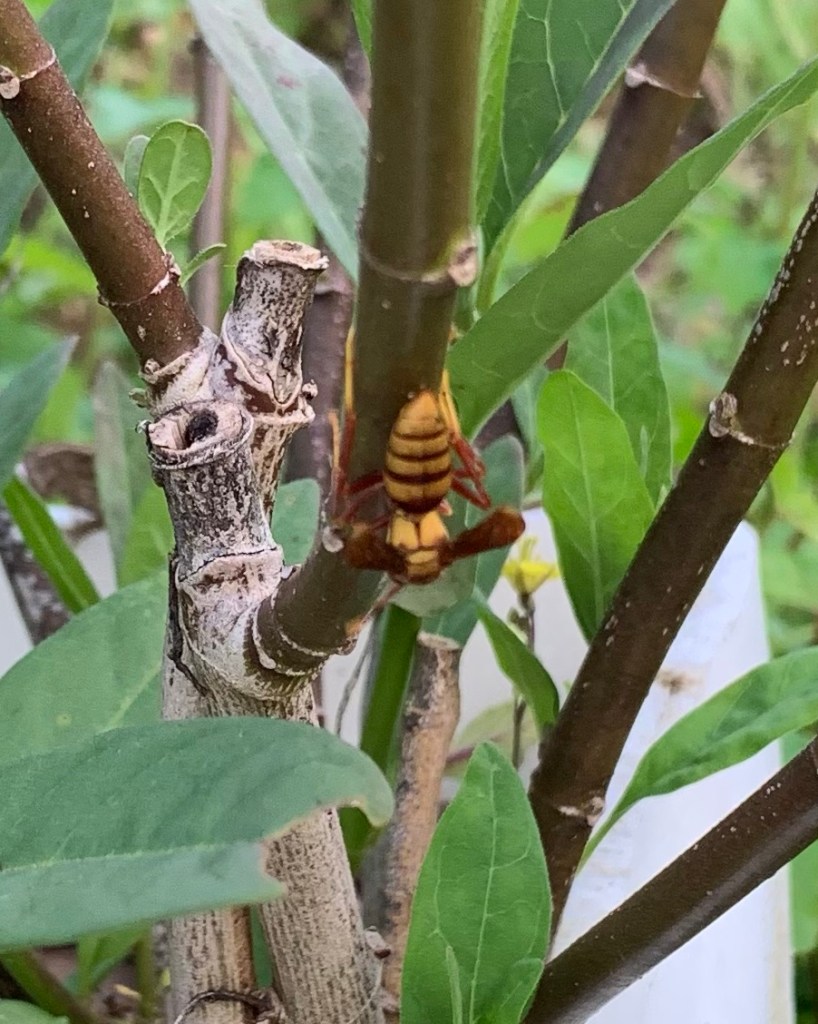
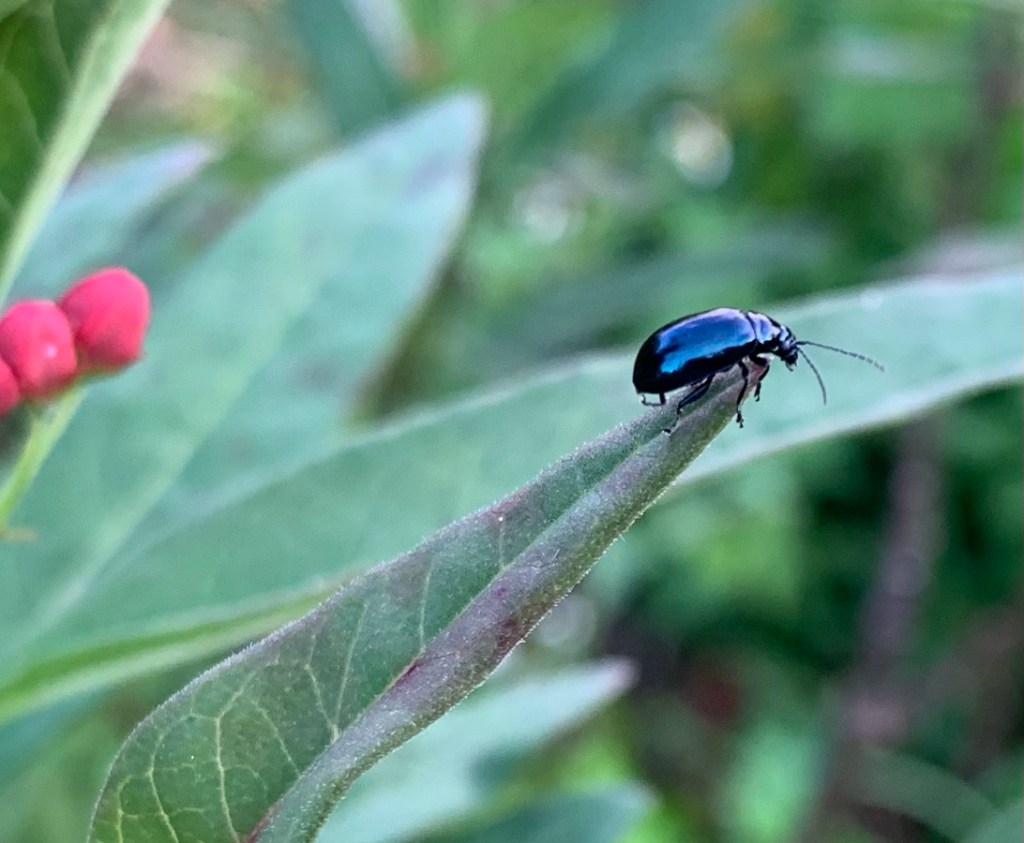
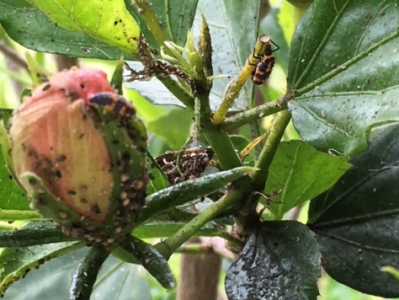
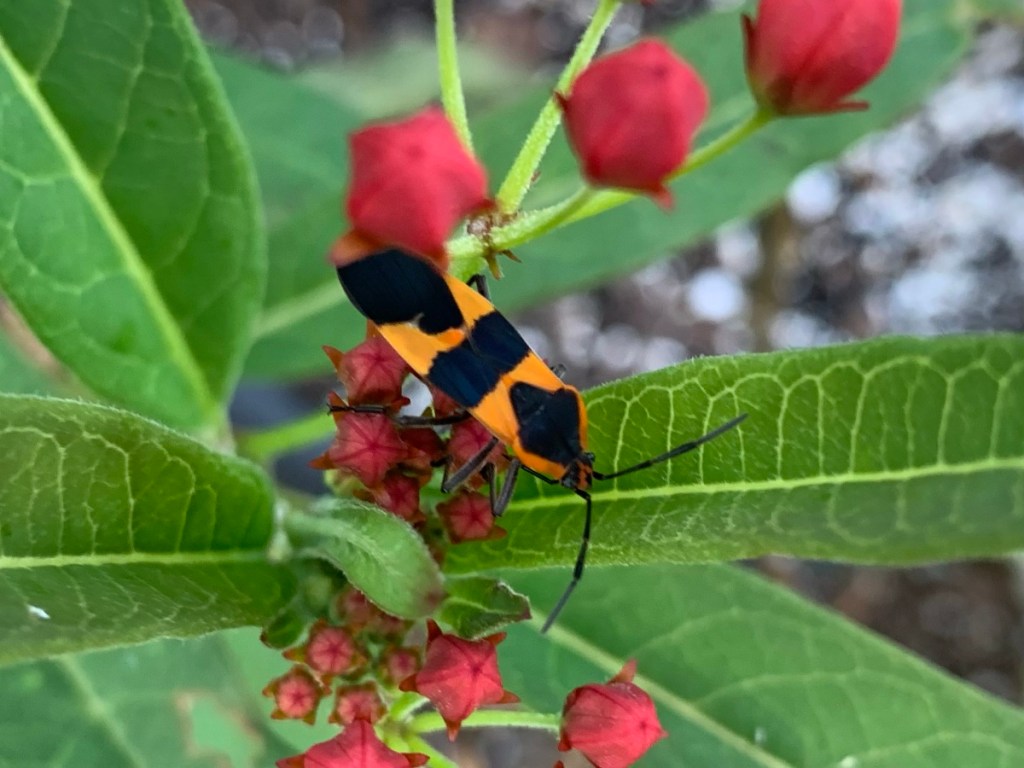
Also, in the same area, I spotted a milkweed bug and shiny blue leaf beetle on the tropical milkweed plant. A yellow paper wasp was also spotted, and I need to check for a nest in the vicinity. With an increase in stinging bugs, I’ll have my Apis Mel (paid link) handy.
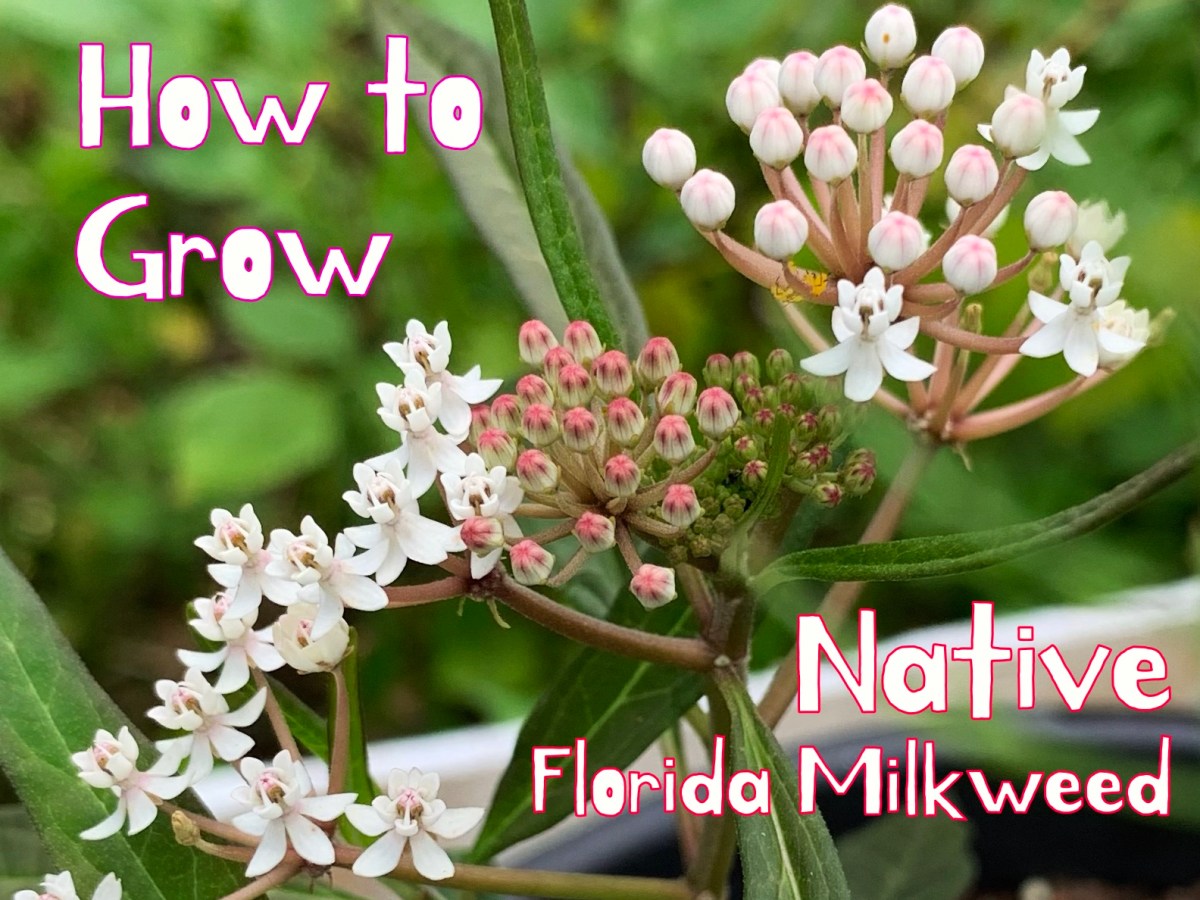
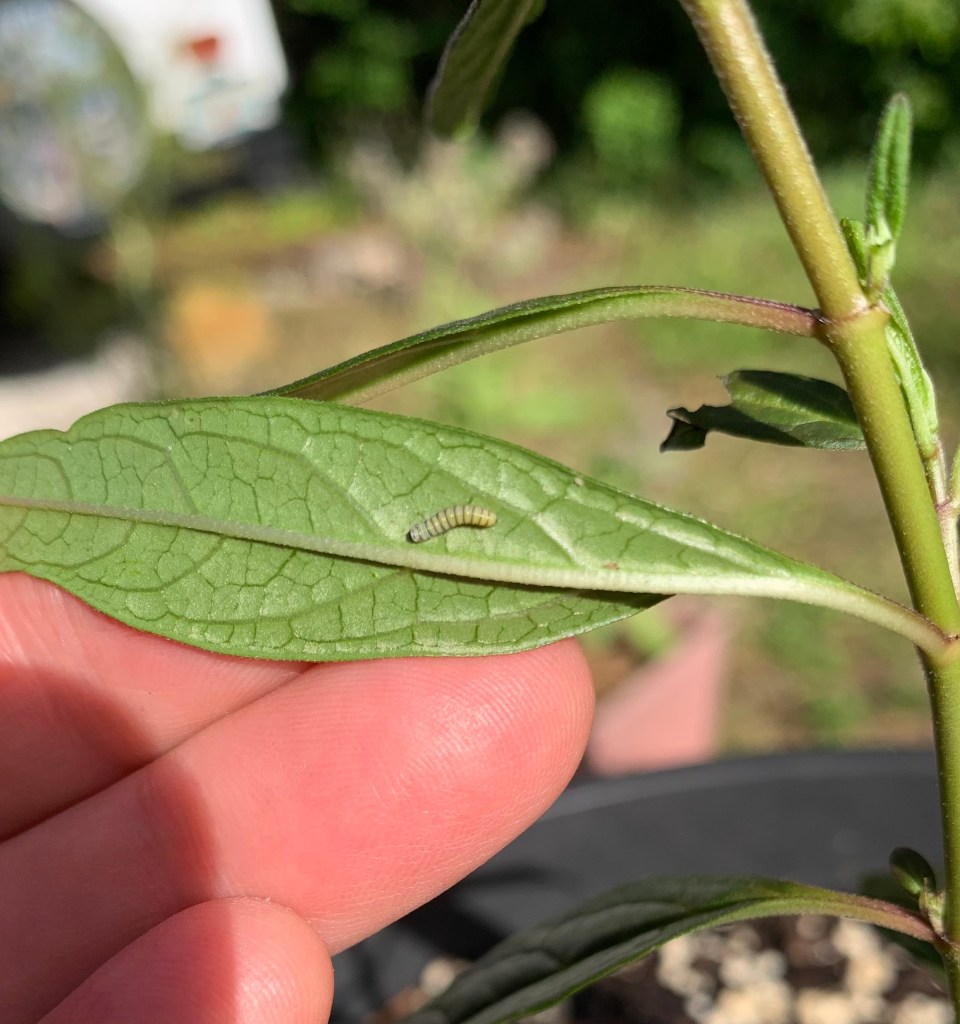
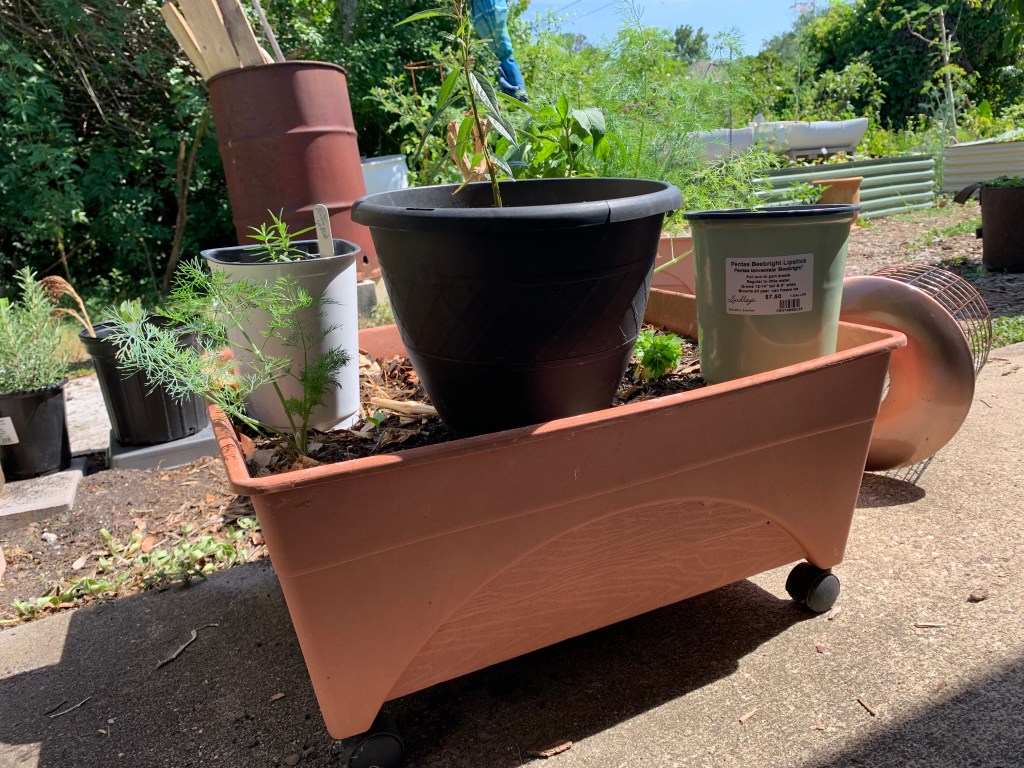
When tiny caterpillars were on my new white Swamp milkweed plant, I transferred them to the tropical milkweed. I don’t like to mess with nature, but the original plant was too small to accommodate any caterpillars. I think the eggs may have been there when I bought the plant.

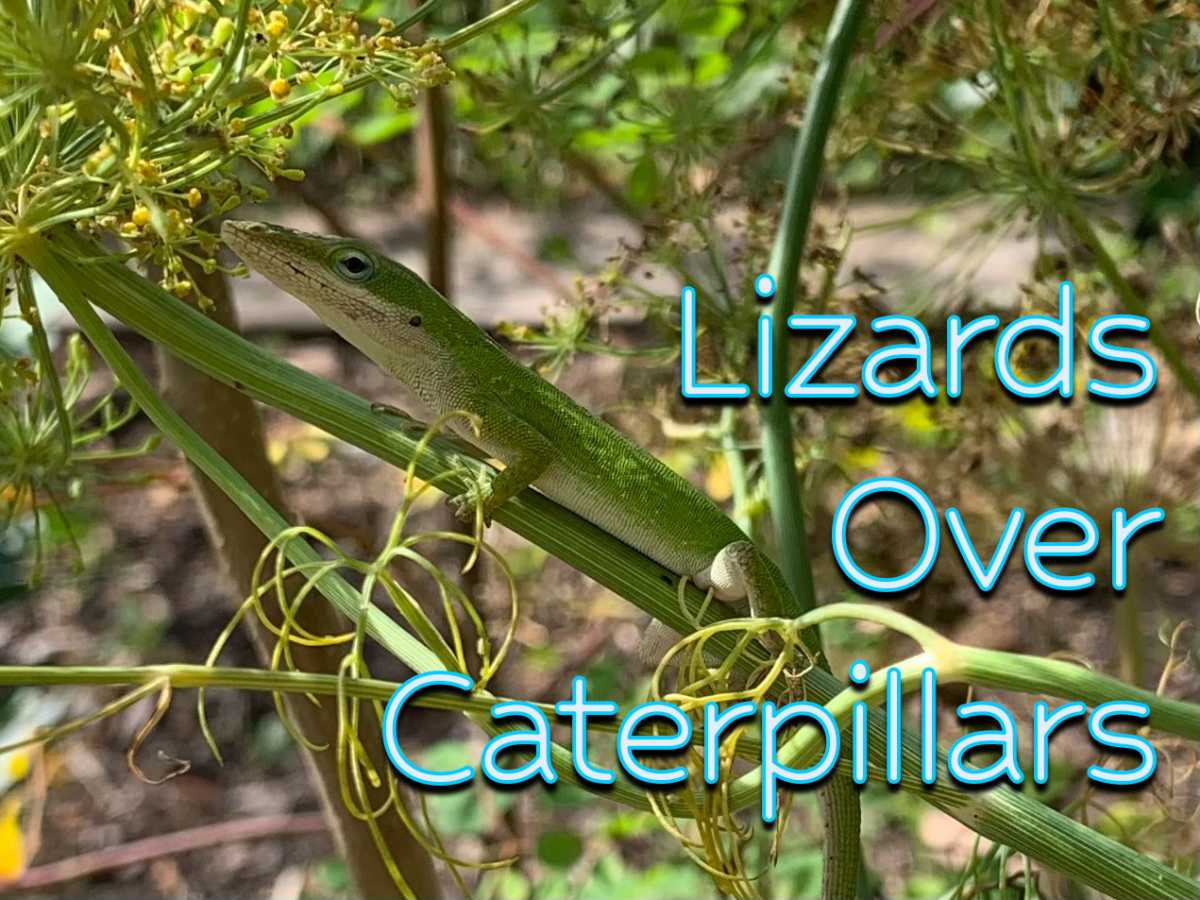
I ended up putting three tiny caterpillars onto the bigger milkweed plant. I’ve seen only one caterpillar that had grown larger, and now that one seems to have disappeared. I think the lizards are eating them.
Sure enough, I searched for info and found that lizards – both invasive (brown) and the green anoles – will eat the caterpillars and butterflies. So now I have a new problem. I want to feed the Monarchs, but my yard is full of lizards.

Are These Bugs Good or Bad?

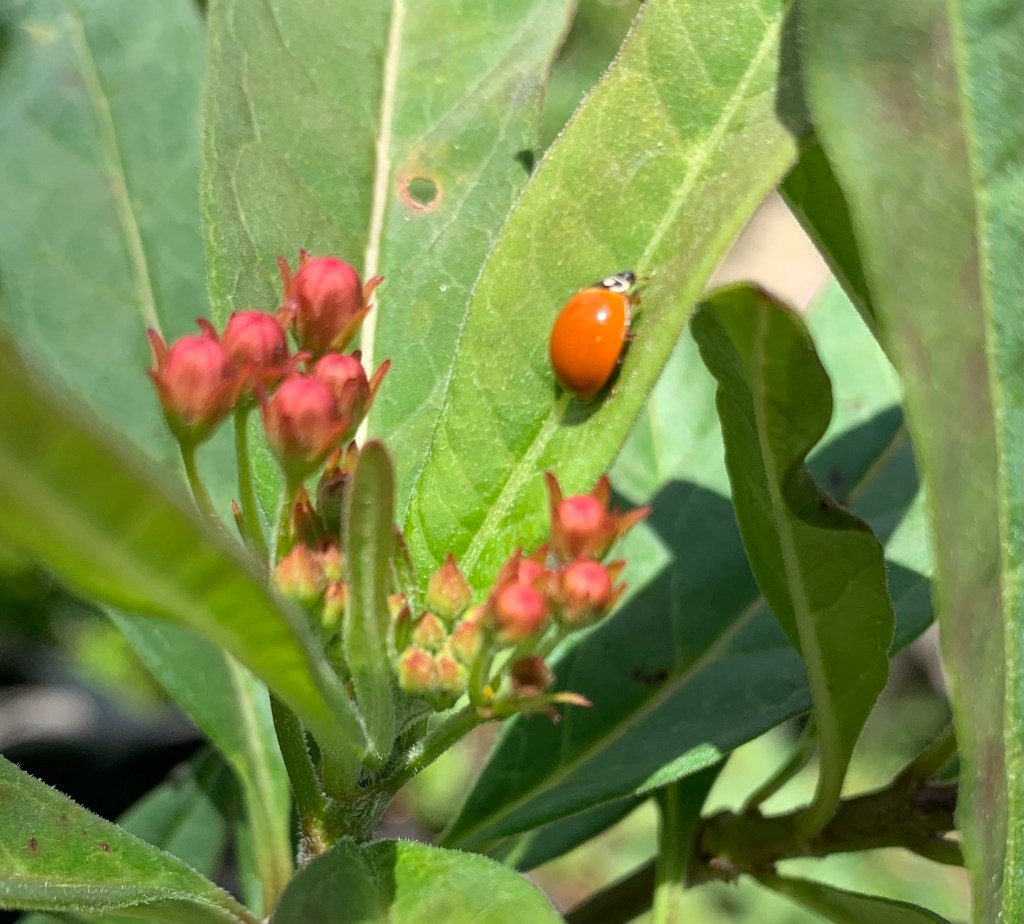
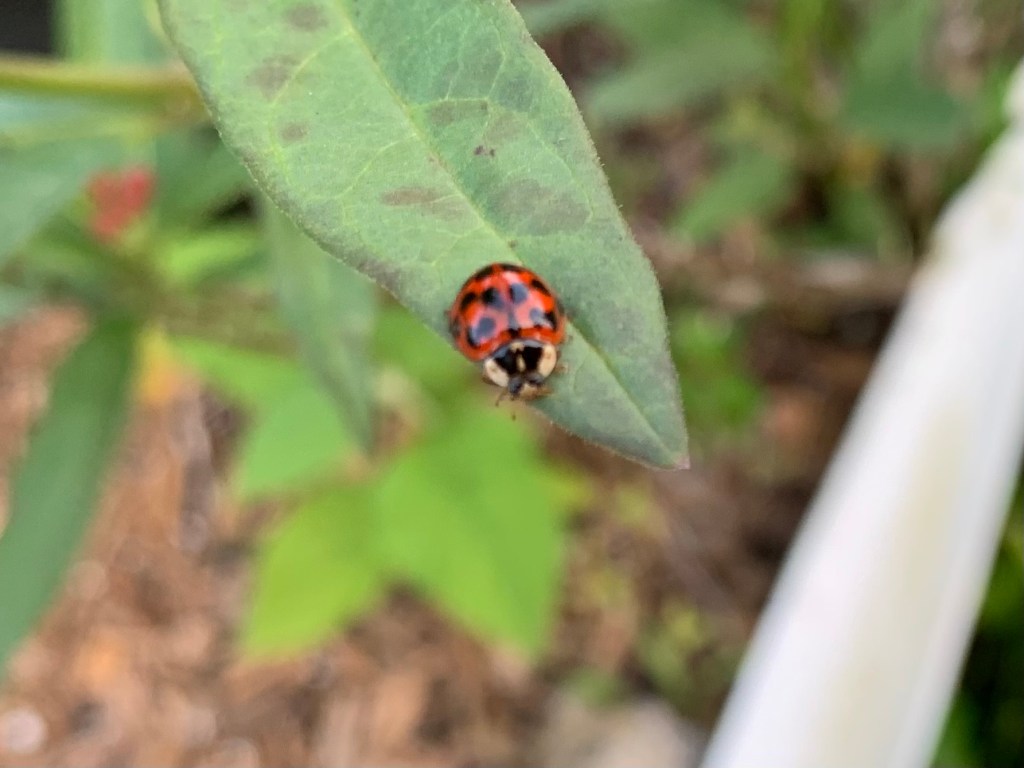
I’m no bug expert, but I do know ladybugs are good guys. They eat aphids and when the eggs hatch, the ladybug larvae will also eat the aphids. I’ve seen red ladybugs with lots of black spots and also orange ladybugs with no spots.
The milkweed bug feeds on flowers and seeds of the milkweed plant. The milkweed assassin bug looks similar, and is a beneficial that will not feed on the plant, but kills unwanted pests. I haven’t seen one of those yet. As far as that pretty blue beetle, I have no information.

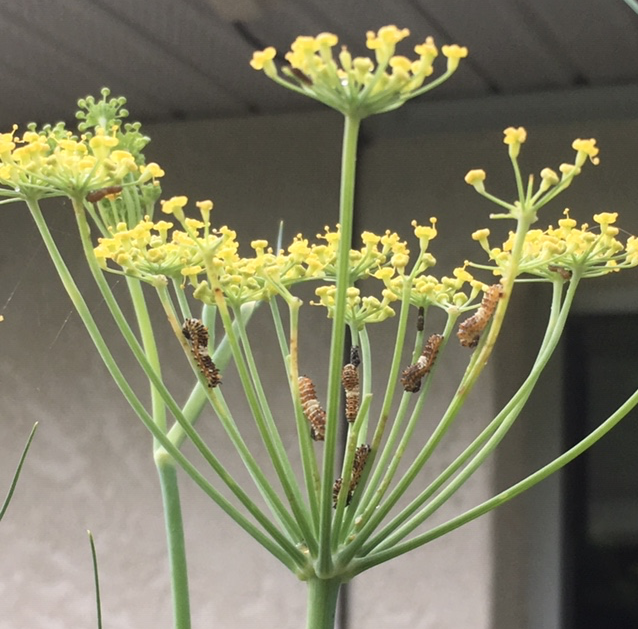
The dill plant is one of many that I have all over the garden. Dill is very easy to grow where I live, and I always save seeds each year. As summer closes in, the dill flowers turn to seed and often the plants get infested with aphids. Each year I hope for ladybugs, but never seem to have enough to deal with all the pests.

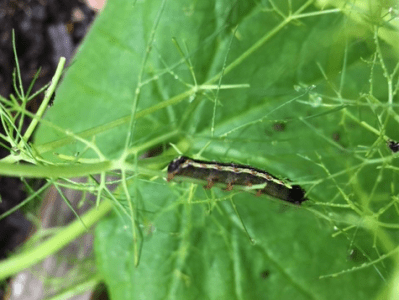
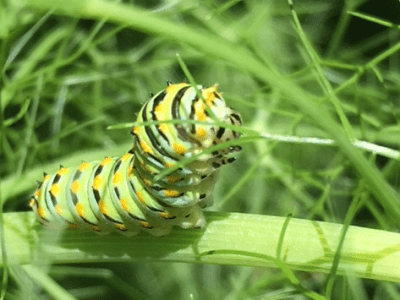
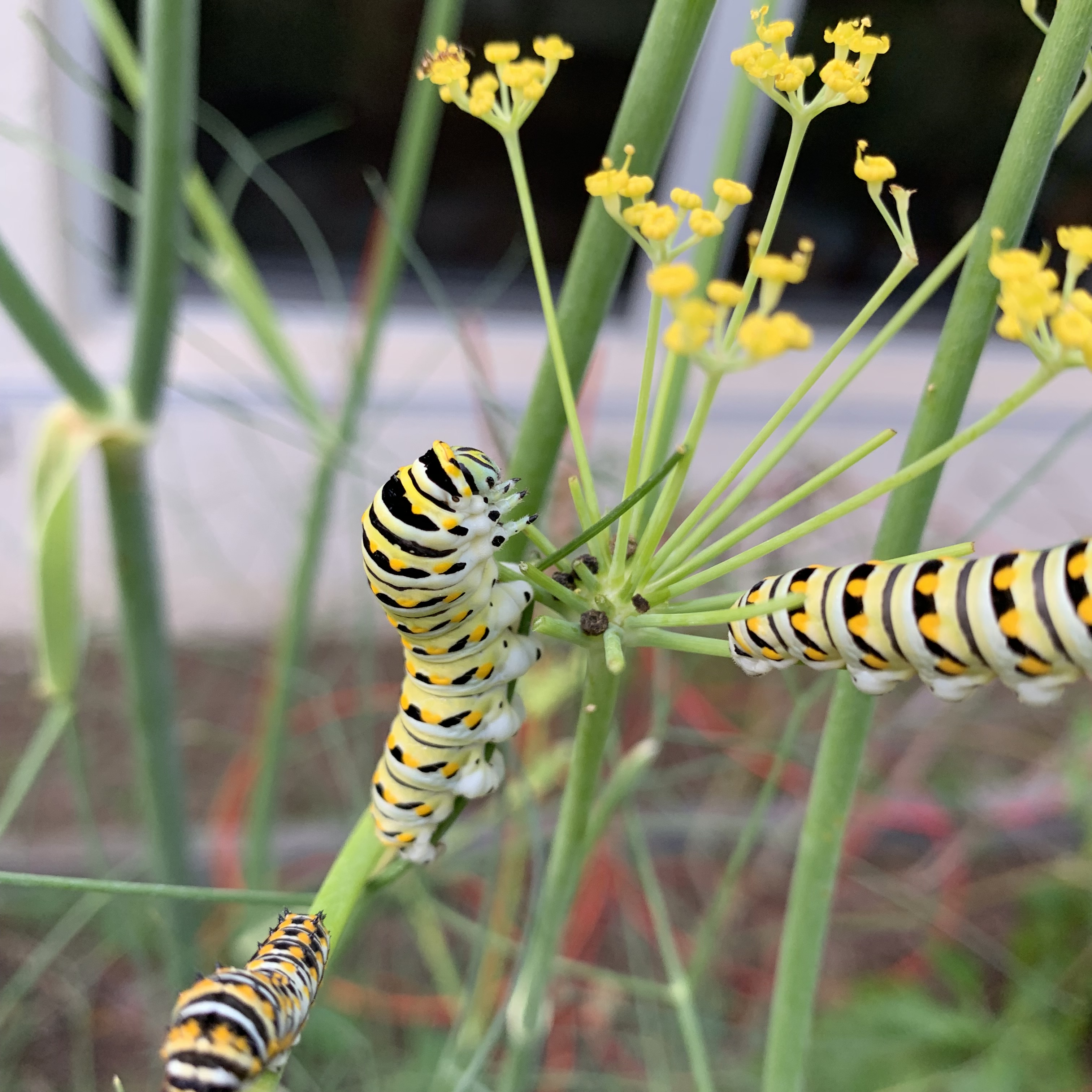
The dill plants are also good for attracting black swallowtails. Fennel is another plant where I’ve found lots of caterpillars in the past. I rarely get a butterfly as the lizards eat Swallowtail caterpillars too.
For now, I am simply observing the happenings. Without caterpillars, the tropical milkweed is growing like mad. The Monarch butterflies are still around and laying eggs, so we’ll see what happens.

Welcome fellow gardeners…

Monarch Caterpillar With Strange Black Thing

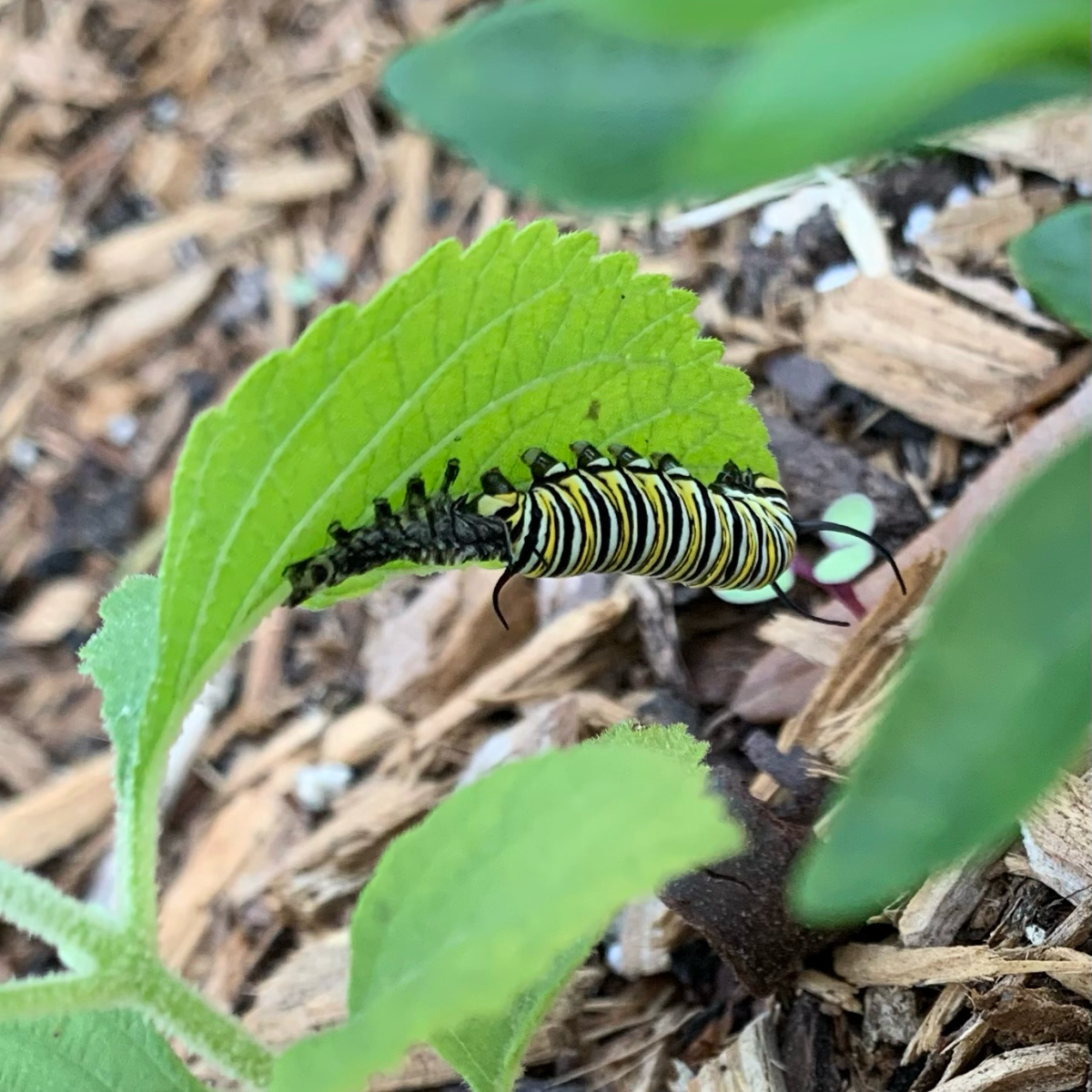
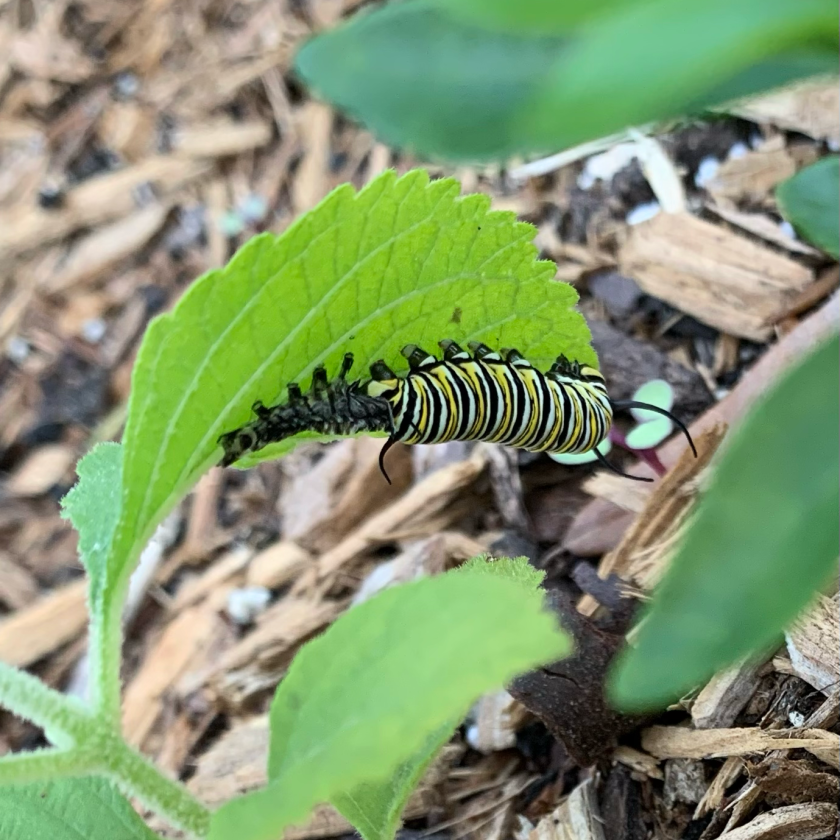
I found a strange black thing next to one of the Monarch caterpillars. I need help identifying this.

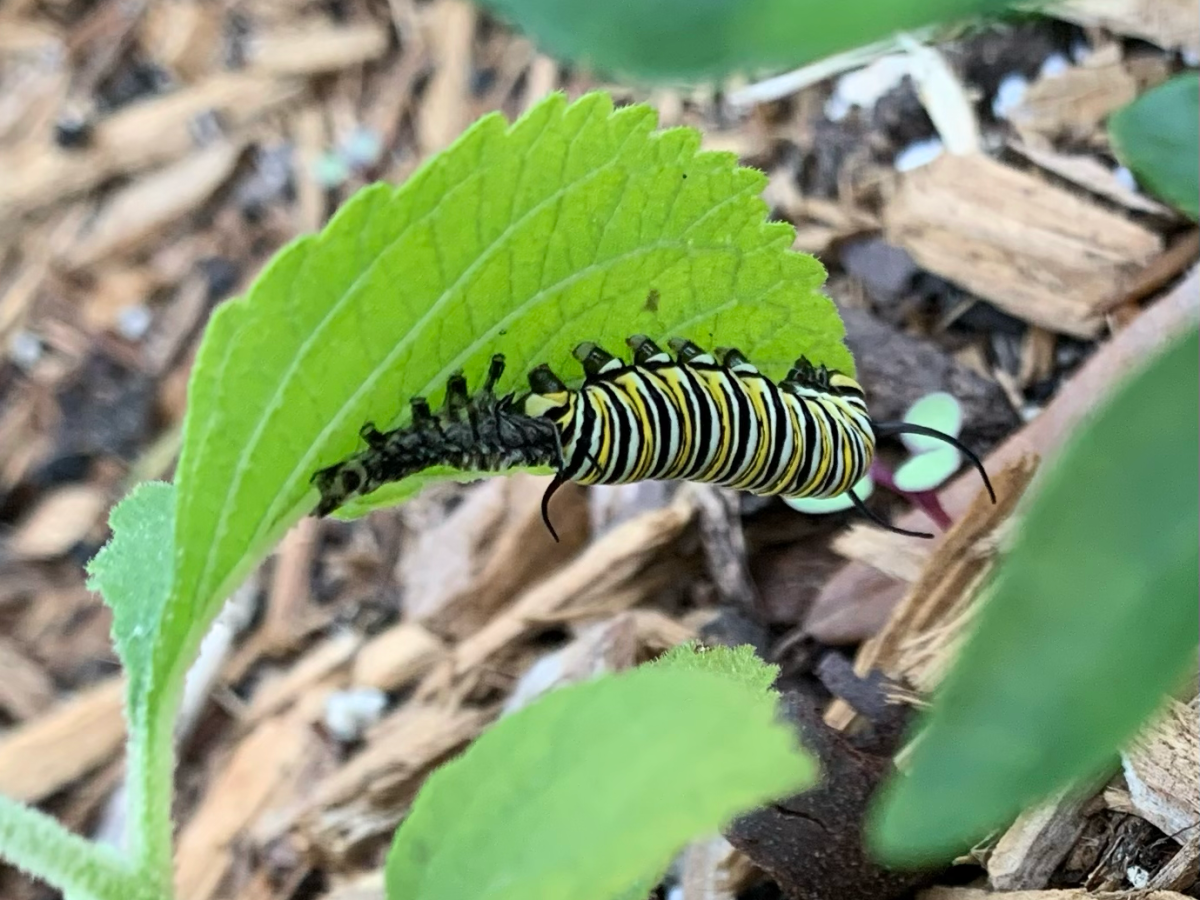
I don’t know how to describe this image. I found the Monarch caterpillar on the underside of a Beautyberry bush leaf. This little Beautyberry is a small plant that sprang up next to the milkweed.

As I was checking for caterpillars the other morning, I found this one with a strange black thing. It looks like a shell or skin and the caterpillar was crawling out of it! This caterpillar was fairly good size, and I’ve never seen anything like this on my milkweeds.

If you know what is going on here, I’d love to know. And thank you for your input!

So one of my faithful readers said to look into caterpillar molting. I found this page at Naturedigger where they explain. Monarch caterpillars shed their skin, and eat it, five times before they become a chrysalis. I’ve seen many Monarch caterpillars and have never seen them shed their exoskeletons!

Monarch caterpillar on leaf with black thing

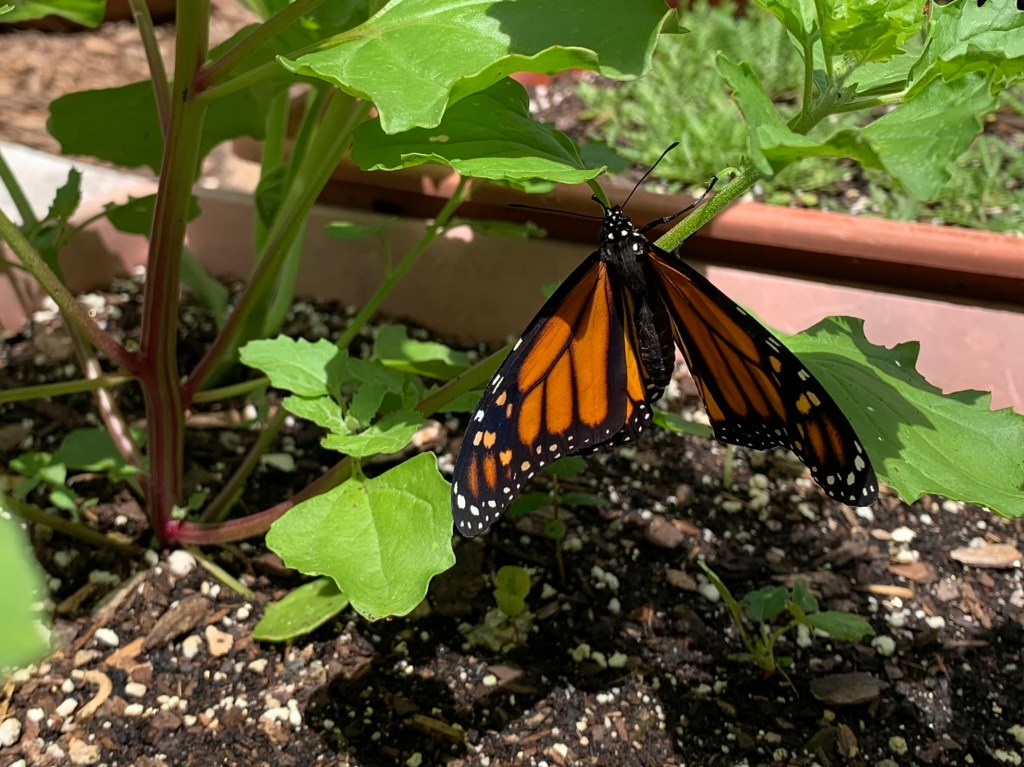
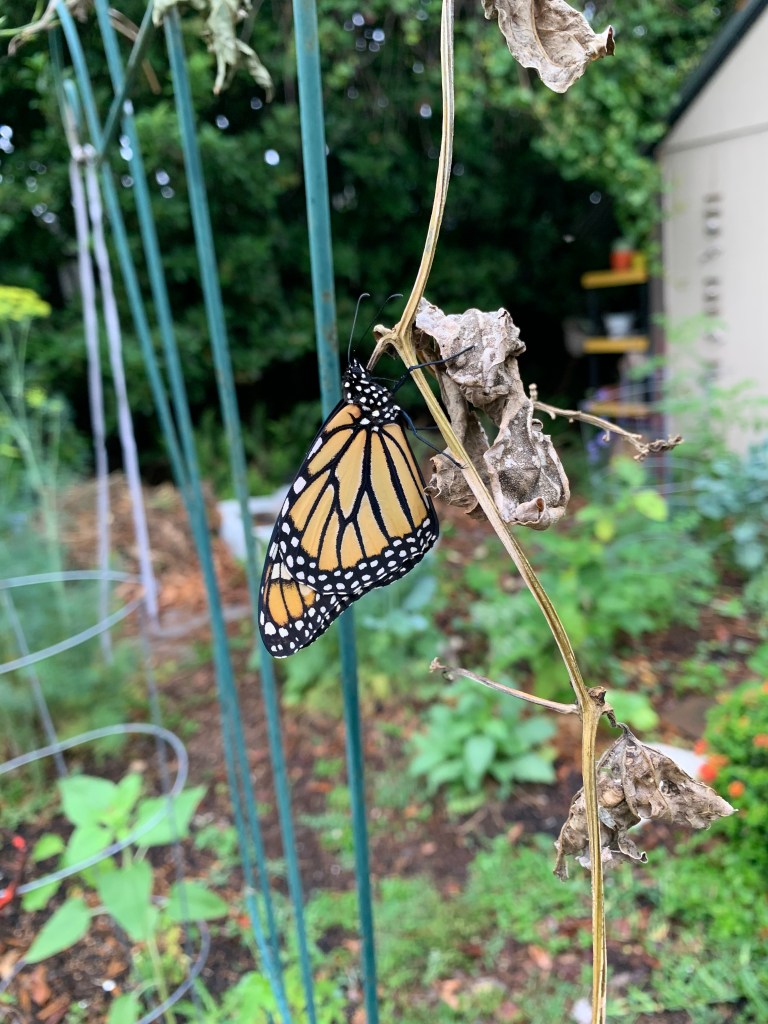
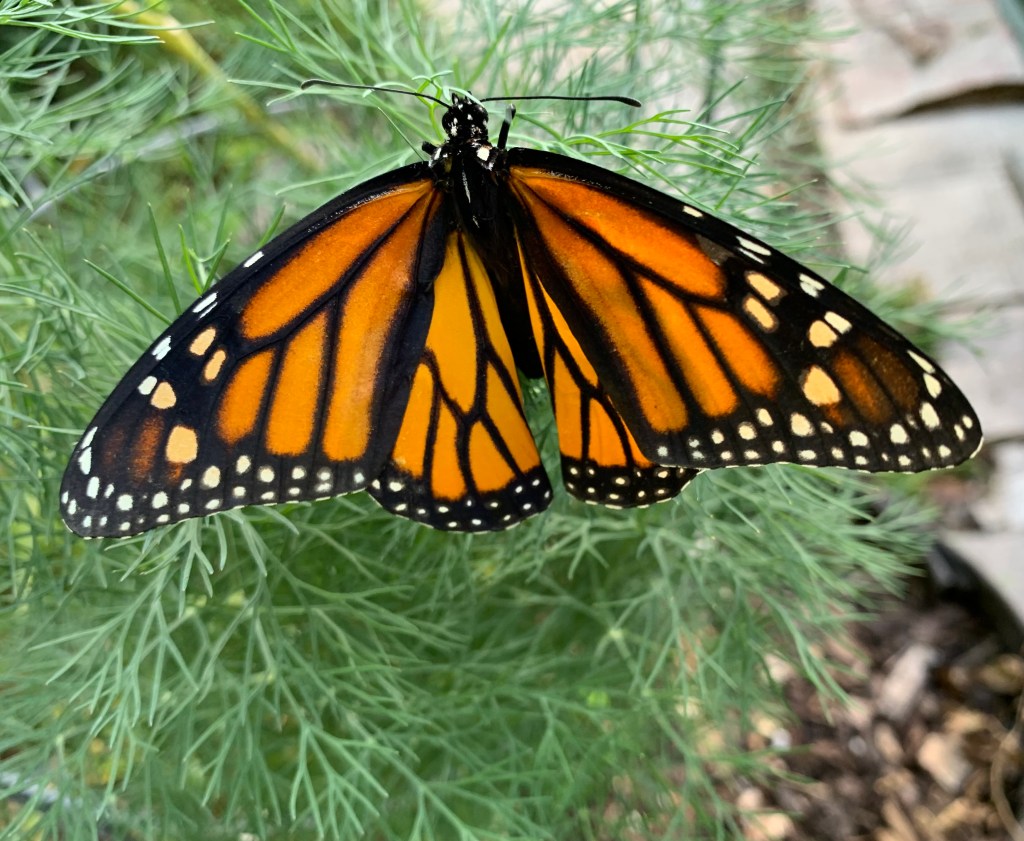
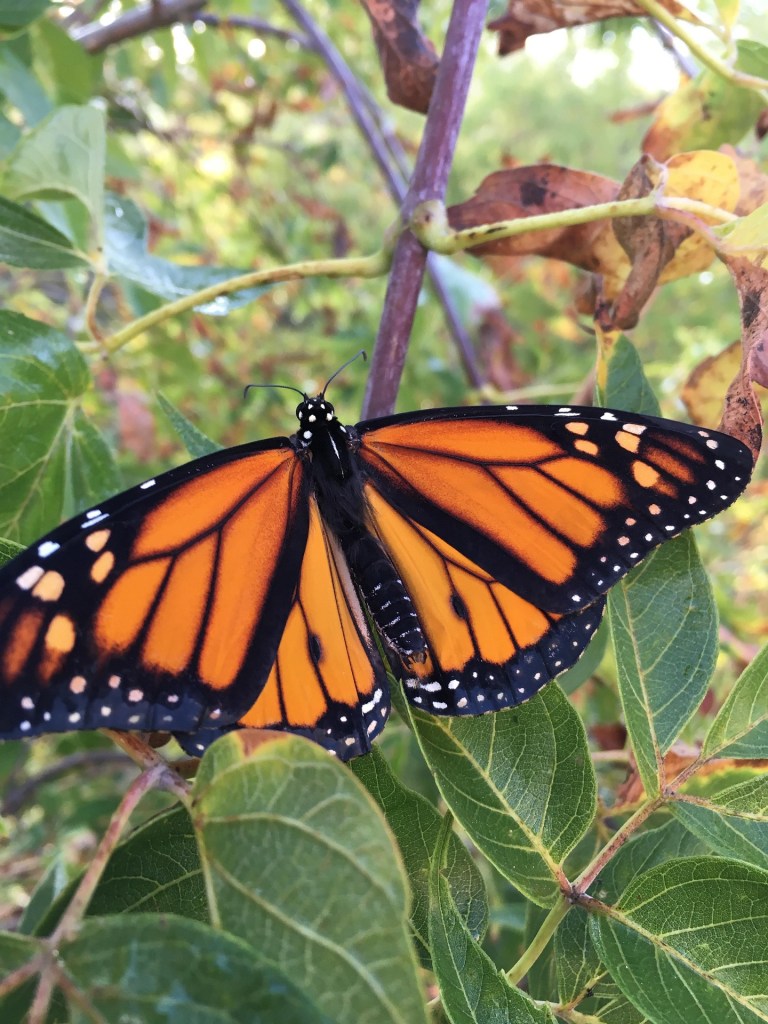
To date I have found three monarch butterflies, freshly hatched, in my yard. I can tell they are new when they don’t fly as I approach. A strong, healthy adult Monarch seems to never land, and will fly away if I approach. The only time I see them stop is when they lay eggs on the leaves.

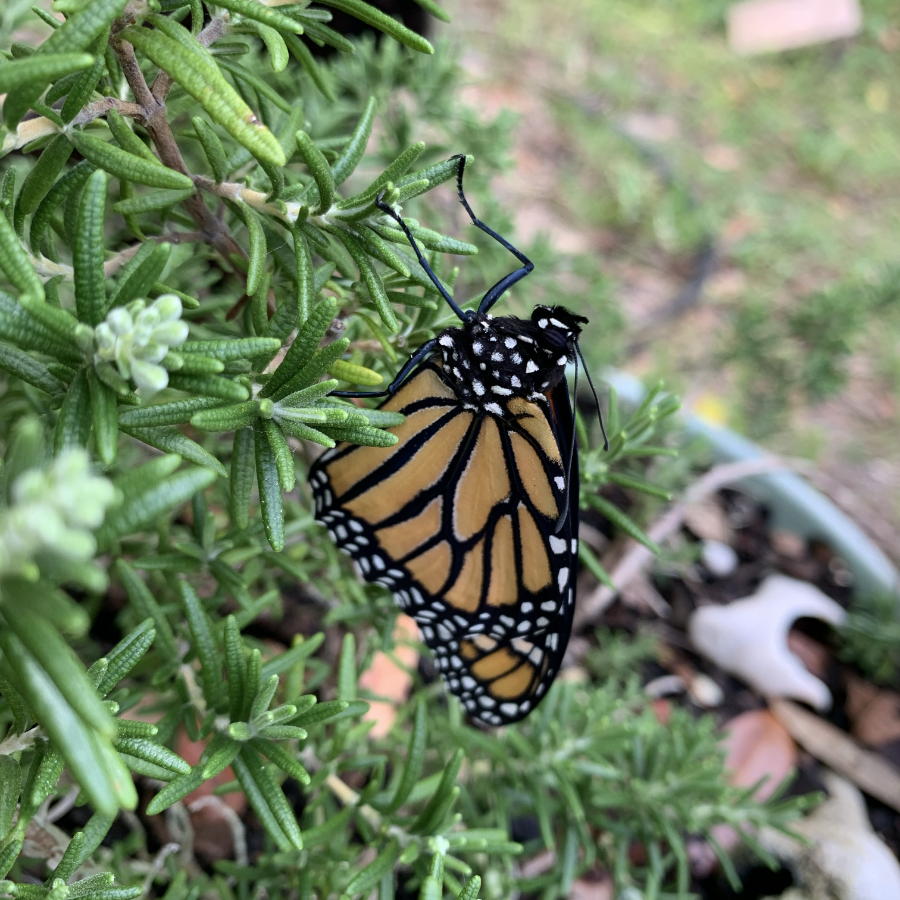
Monarch #1 had a pretty chrysalis on my Rosemary. Butterfly #2 was seen one morning attached to an old Loofah plant vine. Monarch #3 was holding onto some dill.

When I sit outside and simply enjoy my garden, I see them flying over the yard. Sometimes two fly together, and once I saw three together. Was it these three? I like to think so.

I recently learned that male Monarch butterflies have two black spots on their wings. They can be seen when the wings are wide open.

The photo below is not mine, but shows the spots a male would have.

Male monarch Butterly
Image by Graham Gladstone from Pixabay

Taking Care of the Monarchs

I need some good flowering plants to feed these butterflies. Although the caterpillars are only found eating milkweed, butterflies get their food in other places as well.

A lot of information can be found about feeding the caterpillars. I guess people will raise them inside and feed them stalks of milkweed. What I am looking for is information about planting to feed the butterflies without relying on milkweed flowers. I’ll write a new page about that.

Please keep reading…

One Summer Morning

July is nearing an end and the garden is teeming with living things.

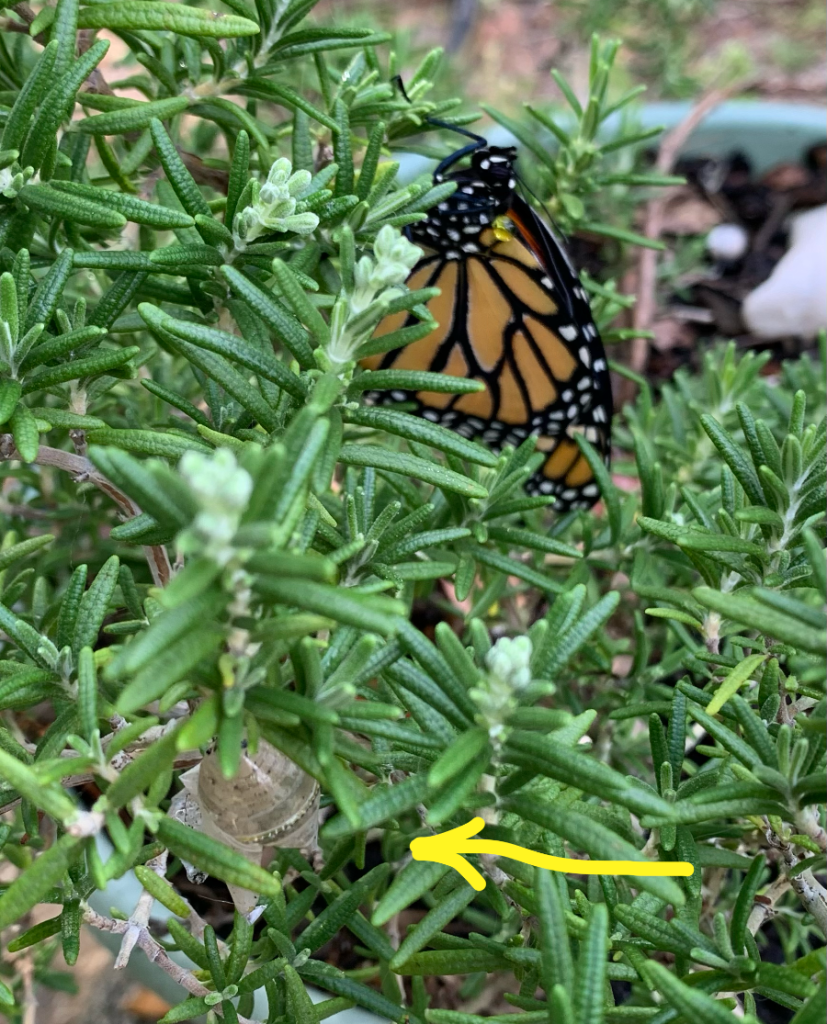
Discovering a Monarch Chrysalis on Rosemary

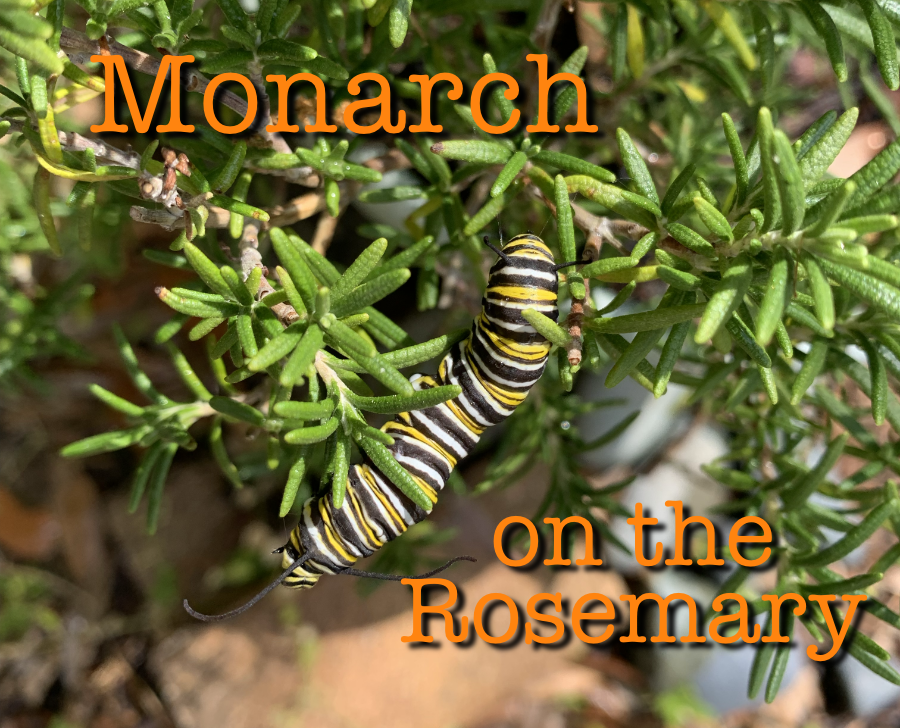
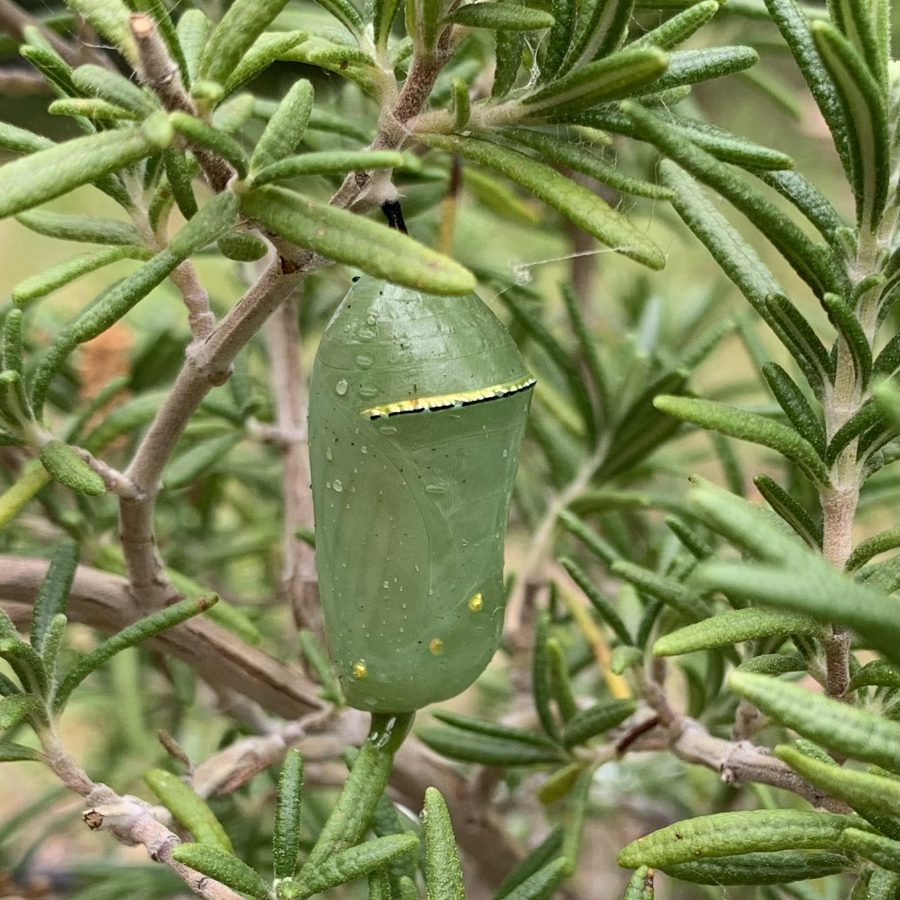
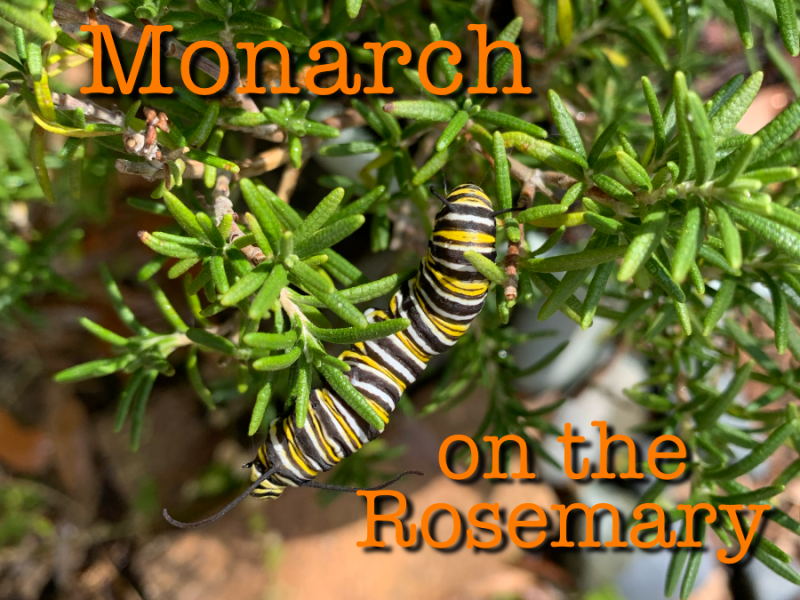
It is not usual to see a Monarch caterpillar on a Rosemary plant. Monarchs like Milkweed. But this one had a purpose, and had traveled quite a long way to be there.

I have one Rosemary plant in a pot on my back deck. On March 24th I noticed this caterpillar climbing all over it. I recognized it as a Monarch caterpillar and wondered what it was doing on the rosemary.

My first thought was, “You poor thing, you must be lost.” I know he needed milkweed to eat. But, I also know that some caterpillars crawl away from the host plant to create their pupa. I left him alone, and didn’t see him the next day. I figured the birds got him.

I worry about cardinals eating the caterpillars, but I guess birds don’t like the taste. I do see lots of caterpillars, and then they disappear. I always figure something ate them.

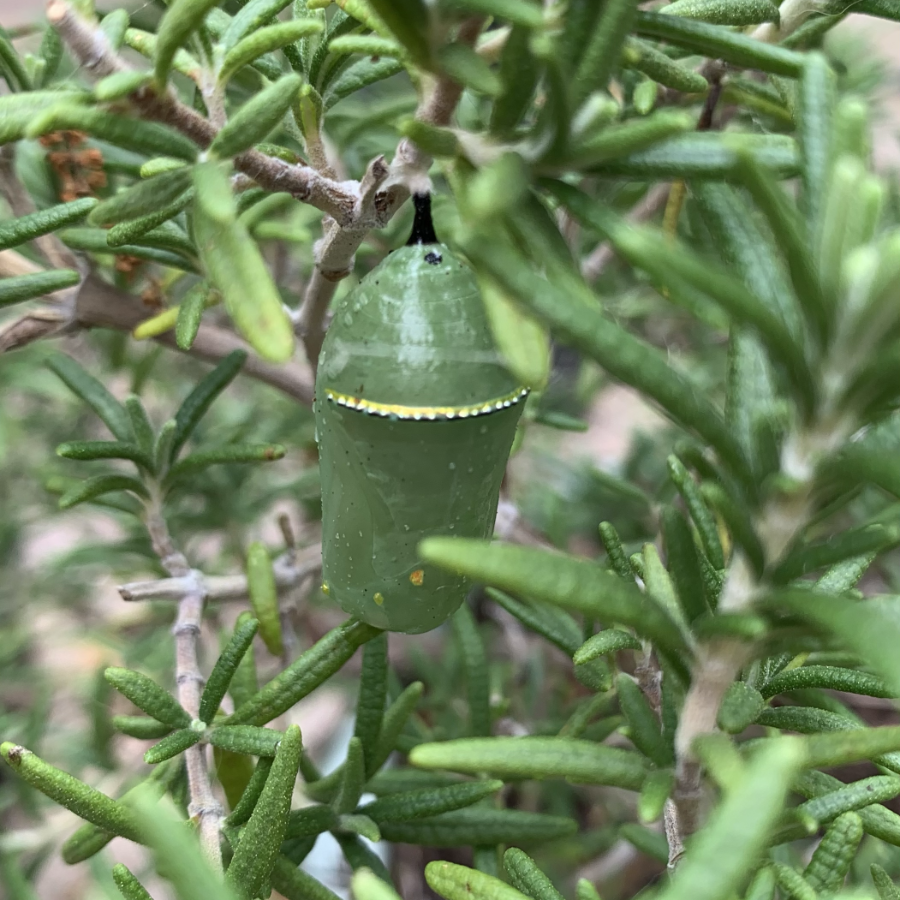
A day or two later I was at the Rosemary plant to cut a piece for my tea. And there it was. A beautiful green chrysalis! It had what looked like a gold band near the top and little gold specks. The caterpillar chose a spot down under a branch, which makes it difficult to see. The caterpillar had not disappeared. He, or she, had morphed and was no longer a caterpillar.

Although I do have some milkweed in my yard, it is pretty far away from the rosemary. It is a long way for a caterpillar to crawl!

I had to look this up. One notation mentioned they will crawl as far as 30 feet from the host milkweed! I don’t know how this little guy made it to the rosemary. My best guess is that it is 20 to 30 feet, from my milkweed.

The day after I found the chrysalis, we had a huge, windy rain storm. The wind blew hard, from all directions and I was a bit worried. The attachment was good and the chrysalis remained.

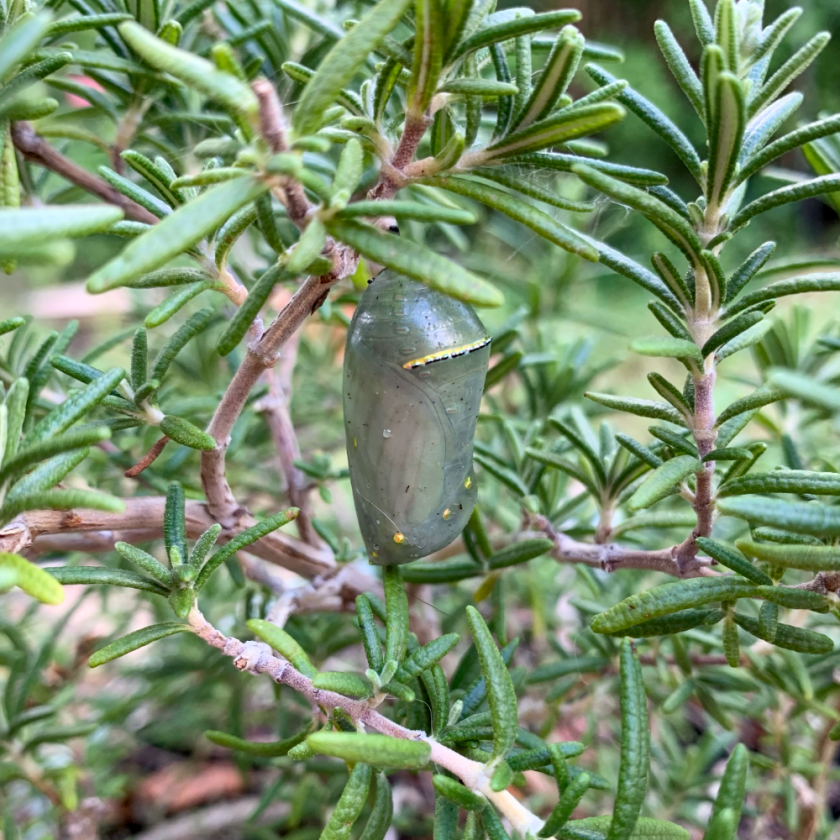
Today is April 5th and the chrysalis is darker in color (see photo below). I can see a wing inside! It has been 11 days since I saw the caterpillar. The Life Cycle, Monarch Joint Venture page says this stage can last 8-15 days.

I should expect to see a butterfly soon!

monarch chrysalis is getting darker
Can you see the wing?

Even if I miss the butterfly emerging, I’m happy to have had this chrysalis in my garden. I might get more rosemary and put it nearer the milkweed. The sturdy branches might be what drew him all this way. It makes me wonder if the caterpillar somehow knew the rosemary was here and purposefully headed to it.

I’ll be watching this one closely.

*Update – The next day…

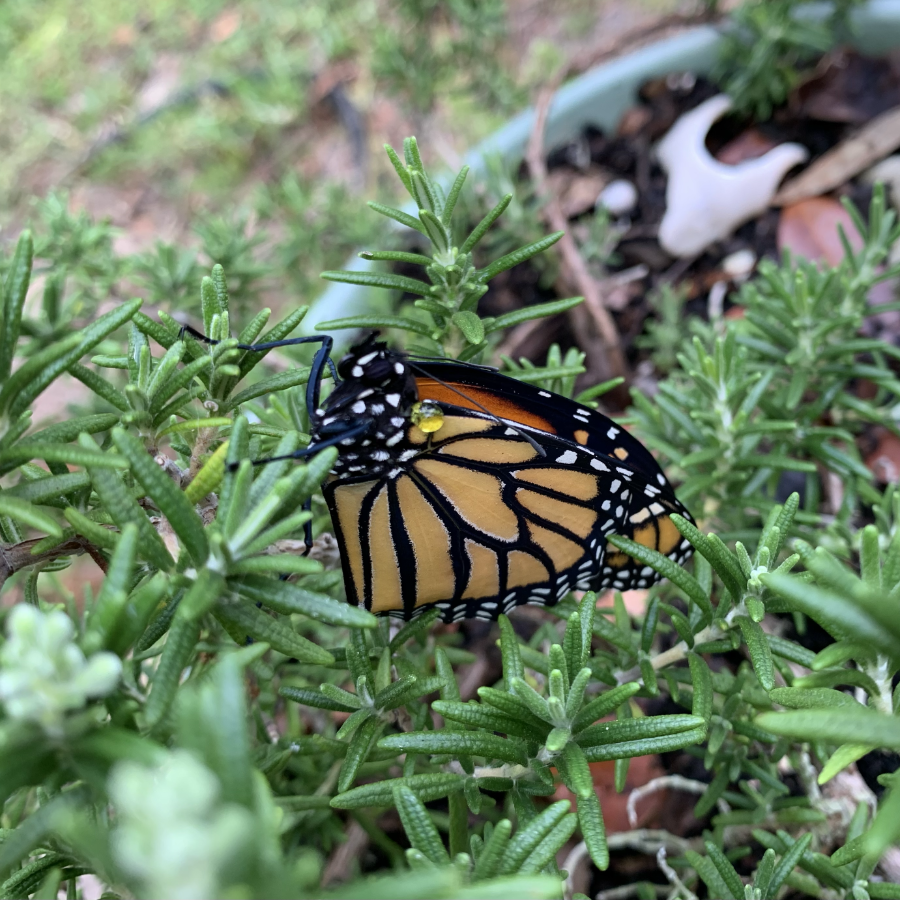
The chrysalis was very dark the next morning. I had some vegetable plant watering to do, but finally went to get my iPhone for a picture. I was too late! The butterfly was already out and on the Rosemary.

If you see a very dark colored chrysalis, sit and watch! It wasn’t long at all. I’m sorry I missed his emergence, but I got to see him before he flew away.

In fact he has been sitting on the plant for hours now.

Freshly hatched, Monarch butterfly near open chrysalis.
butterfly divider flowers

Pros and Cons of Roselle Hibiscus Gardening

After growing Roselle Hibiscus for a year, I have decided that one plant is enough for me.

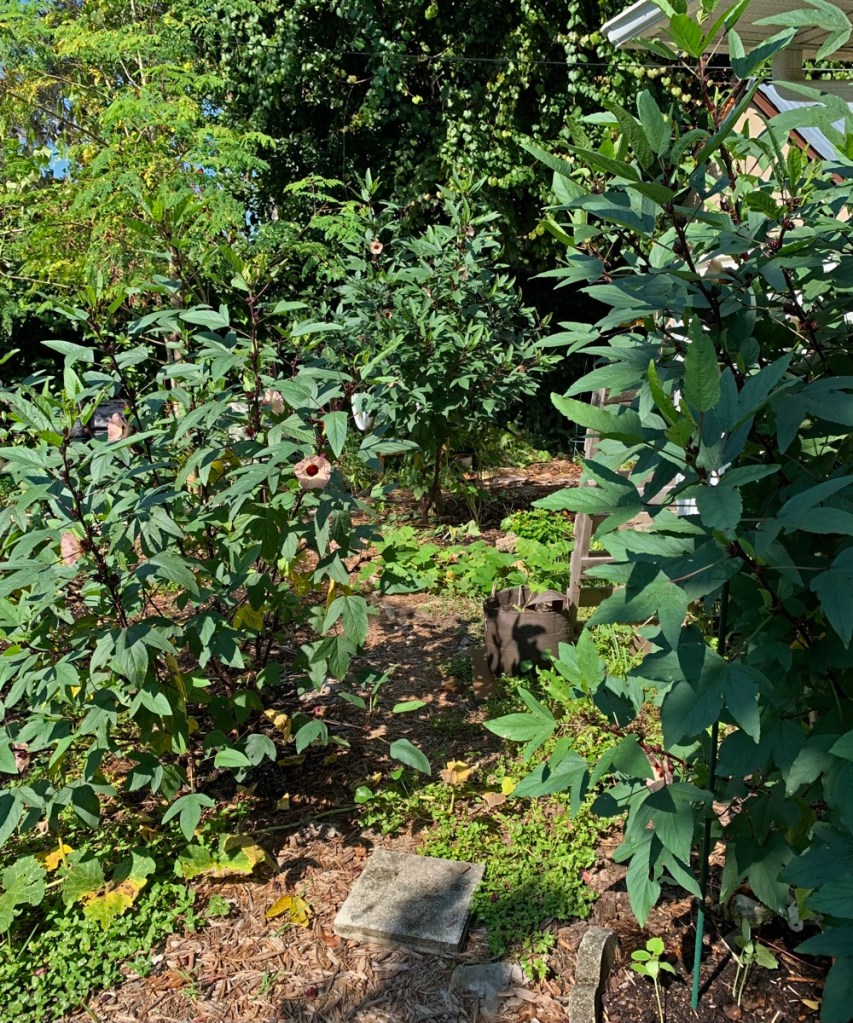
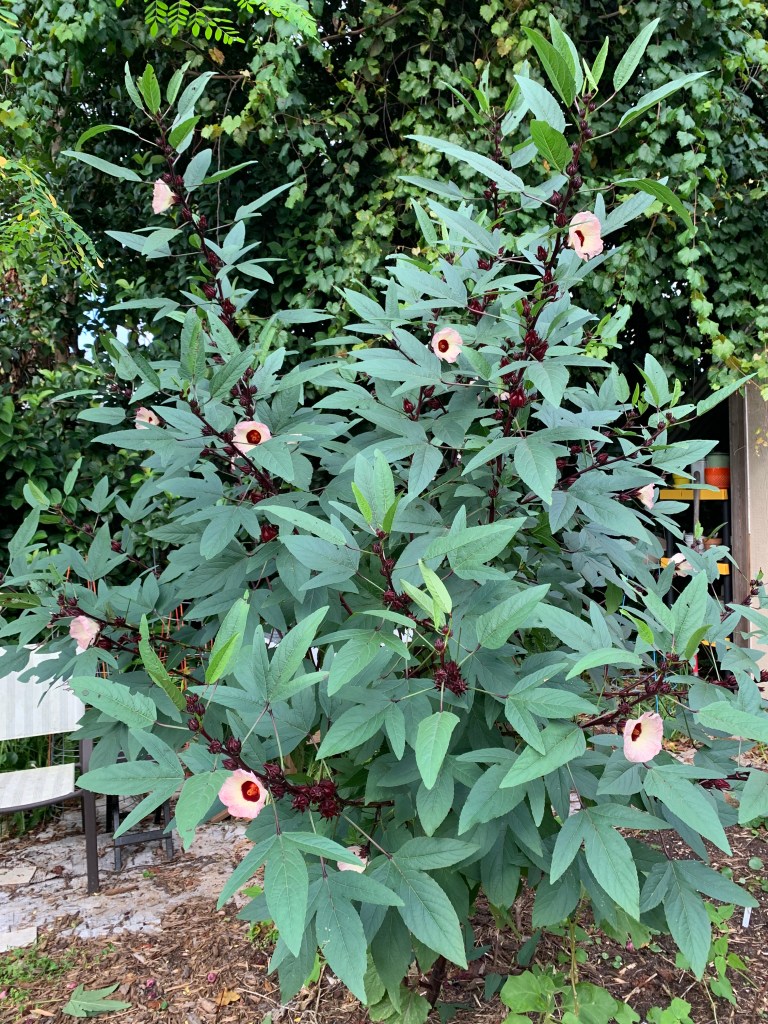
This was my first year growing Roselle hibiscus. I was very happy to have bushy, big plants that would give me lots of tea to drink. But there are problems with this plant.

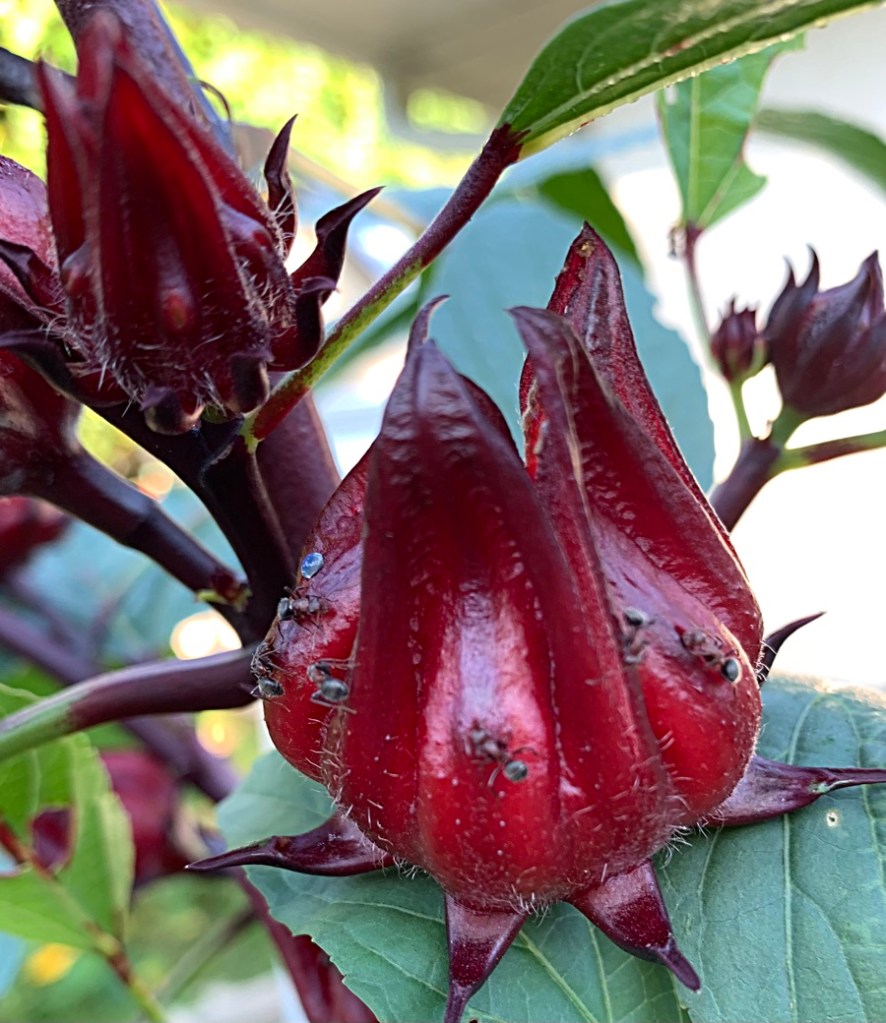
Growing Roselle was an experiment. I didn’t know much about it, but the tea is good for the heart, blood pressure and other things. It is grown for the red pods, called calyces that form after flowering. They are peeled, and the red petals are used for tea. The tea is delicious and healthy. The center of the pod is where the seeds form. Where I live, the bush is very easy to grow. I had no idea how much Roselle would love my yard. It took over.

Pros

Roselle is one of the easiest things I have ever grown. Plant seeds, or simply cut a small branch from an existing plant and stick it into the ground. It will grow! The plants are beautiful, with big dark green leaves. The flowers don’t last long, but new ones bloom every day – in the Fall. Then it’s time for saving the calyces to have tea in the months to come. I simply peel and freeze mine – if I can pick them before the ants come.

Cons

The beautiful bushes are not very strong. Strong wind catches the leaves and the whole bush will split down to the ground. Or, branches will break off. I lost one of my biggest bushes over the summer during a storm. Then Hurricane Helene damaged the others.

Roselle shrubs are huge. In a year they grew taller than me. They took over, blocked sun to parts of the gardens, and made navigating my yard more difficult. I didn’t know, and now I do.

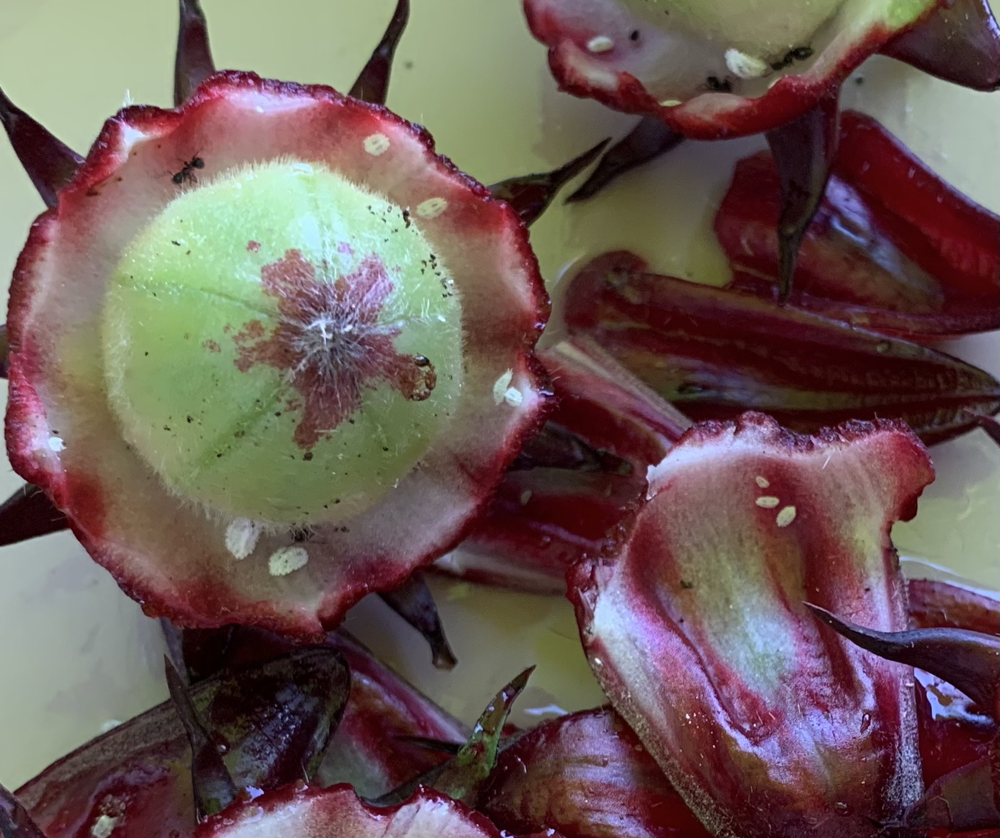
These problems are manageable, and it’s all part of gardening. What I really don’t like about the Roselle is the ants. Once the red calyces began forming, ants were all over them. Maybe I have an excessive amount of ants in my yard, or maybe this is normal, I don’t know. No one warned me of this.

Also, inside each calyx are mealybugs – little white things. It just wasn’t worth the trouble to save these pods.

I have rinsed, set outside in the sun, rinsed again. The ants were everywhere. It was so bad, in this last batch of roselle I picked, that I gave up and threw them into the woods. It is possible the mealybugs cause the ants to come. I know ants show up when aphids appear too.

I did get an early set of pods, which had many fewer ants. I managed to clean and freeze those without much problem.

Another thing that is annoying is the flowers that drop become mushy and stick to my shoes. They make a mess. I’m certainly not a neat freak, but it feels like dog poop stuck to my crocs.

If I had lots of land, I would grow Roselle in a big area away from the house. They could expand and do their thing without getting in the way. Dropped flowers would be wiped from my shoes before I got back to the house. But this is not the situation I have.

One Roselle Hibiscus plant is enough for me. I’m going to cut them all down except one. Many broke and fell due to Hurricane Helene, so I’m already in the process of removing them. It is possible they will die over the winter anyway.

Solution

It is possible that my yard is not yet balanced with beneficial bugs to clean up this mess. I rarely see ladybugs. Even though I’ve had aphids on a number of plants, the ladybugs don’t stick around.

I read somewhere that it might take a few years to bring the beneficials to a garden, so I’m hopeful things will improve over time.

Read the blog…

Need Help Identifying Mysterious Orange Garden Bugs

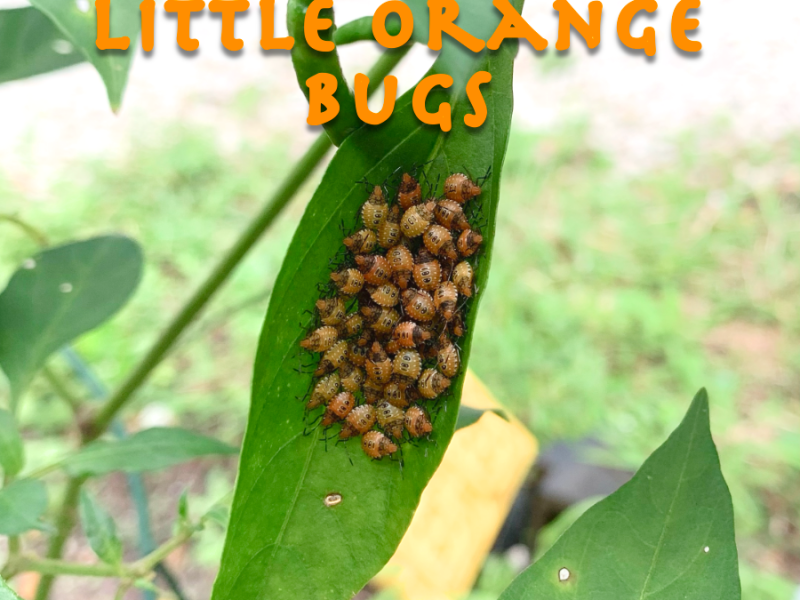
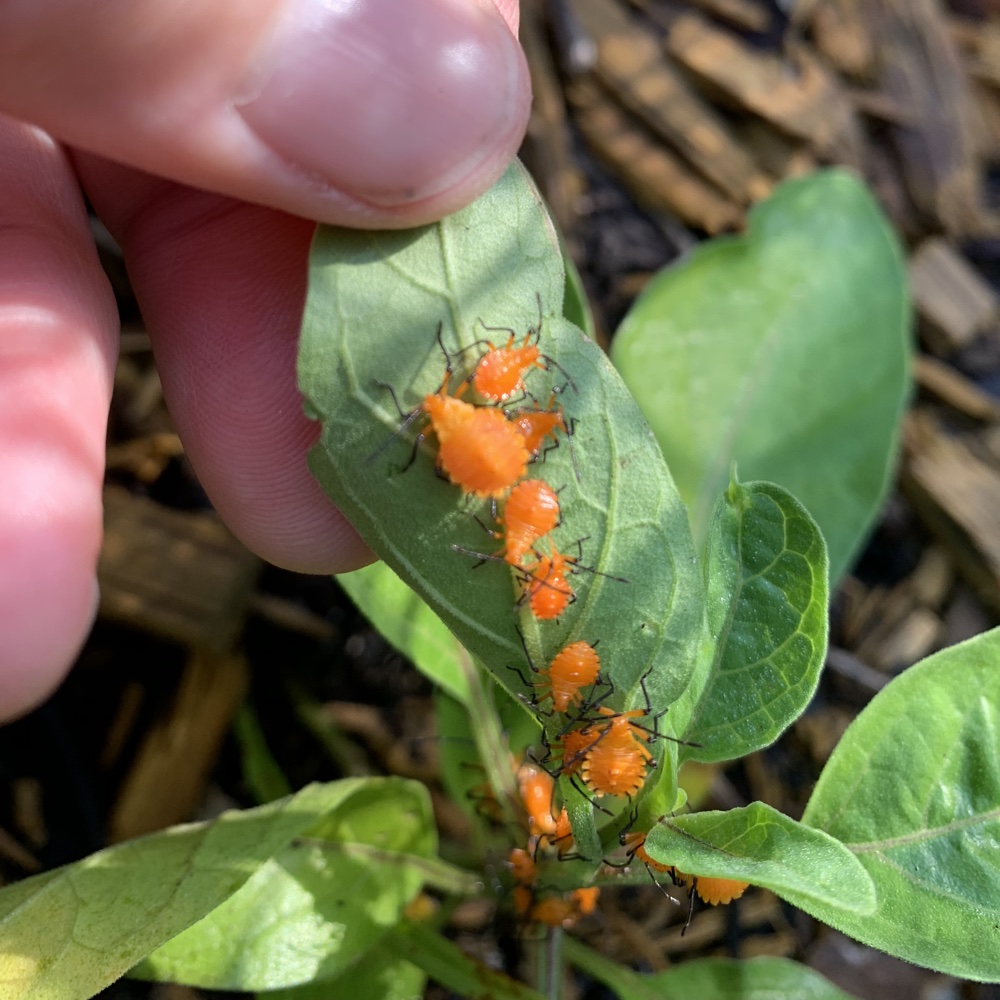
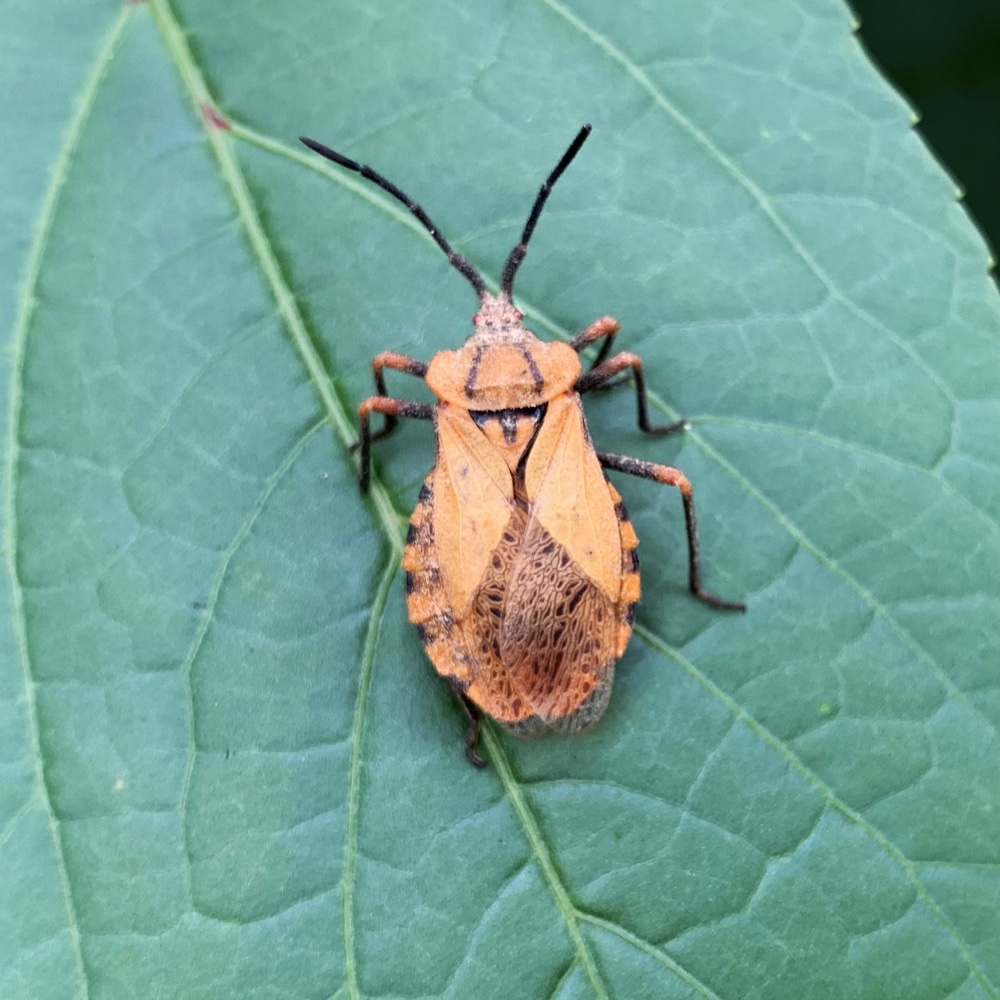
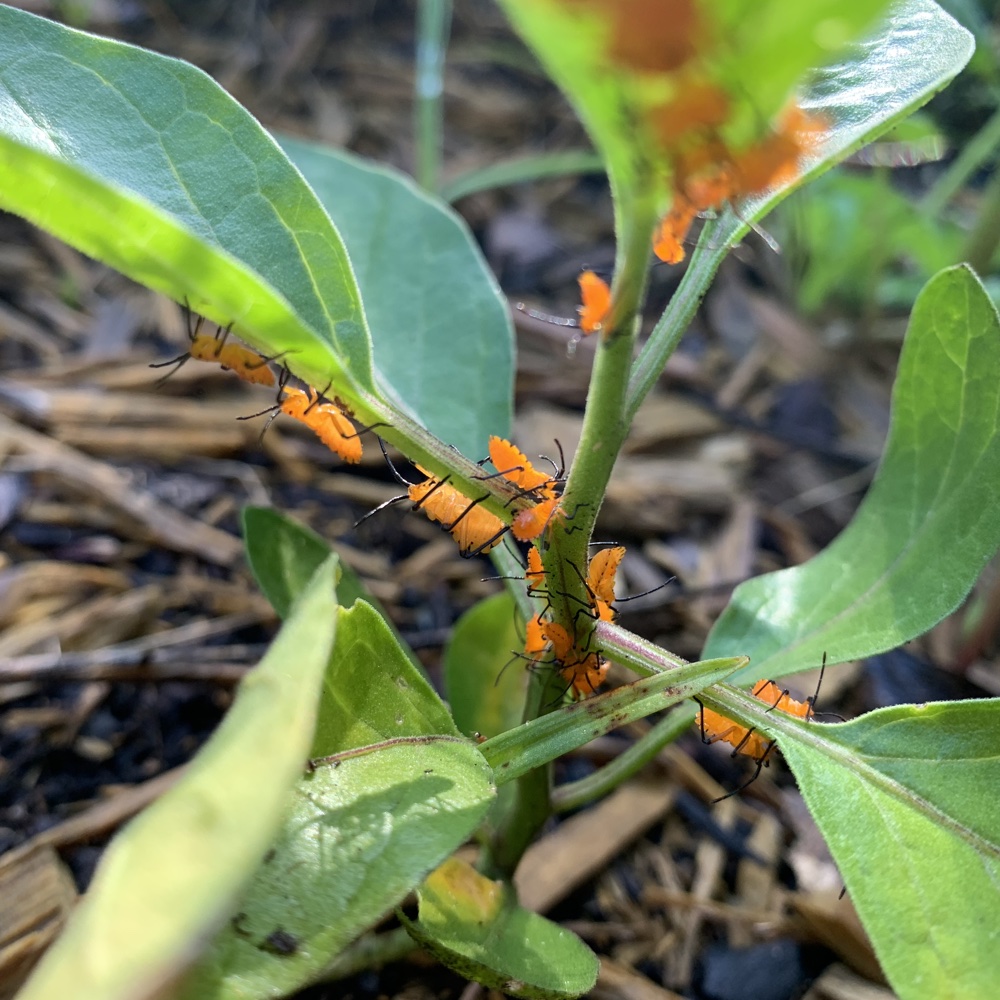
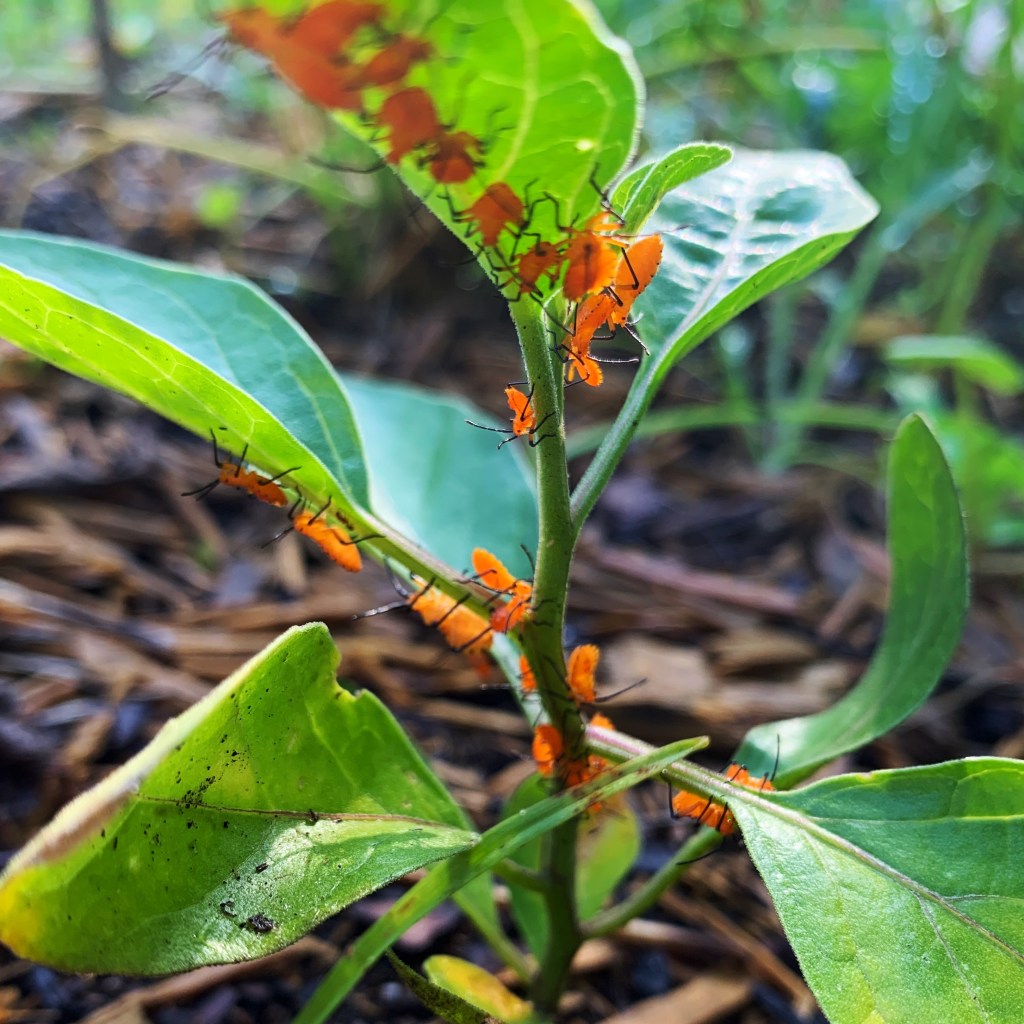
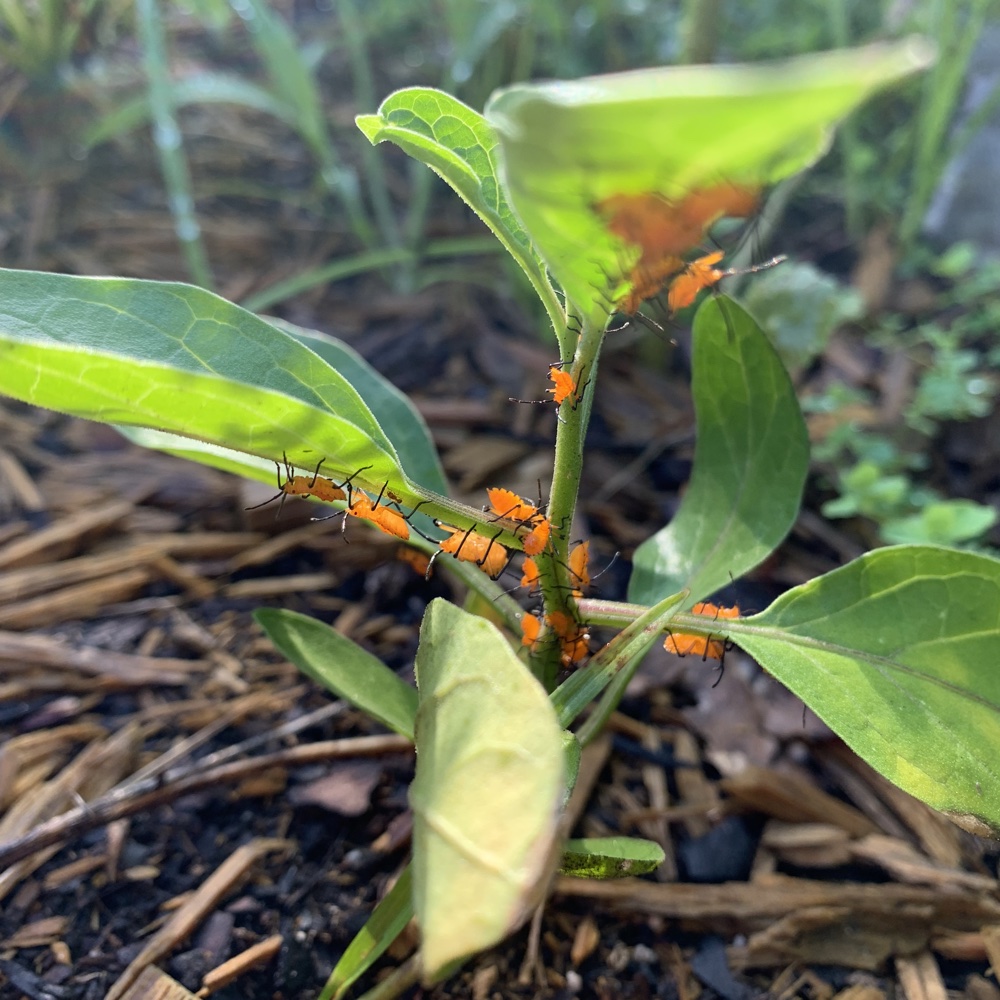
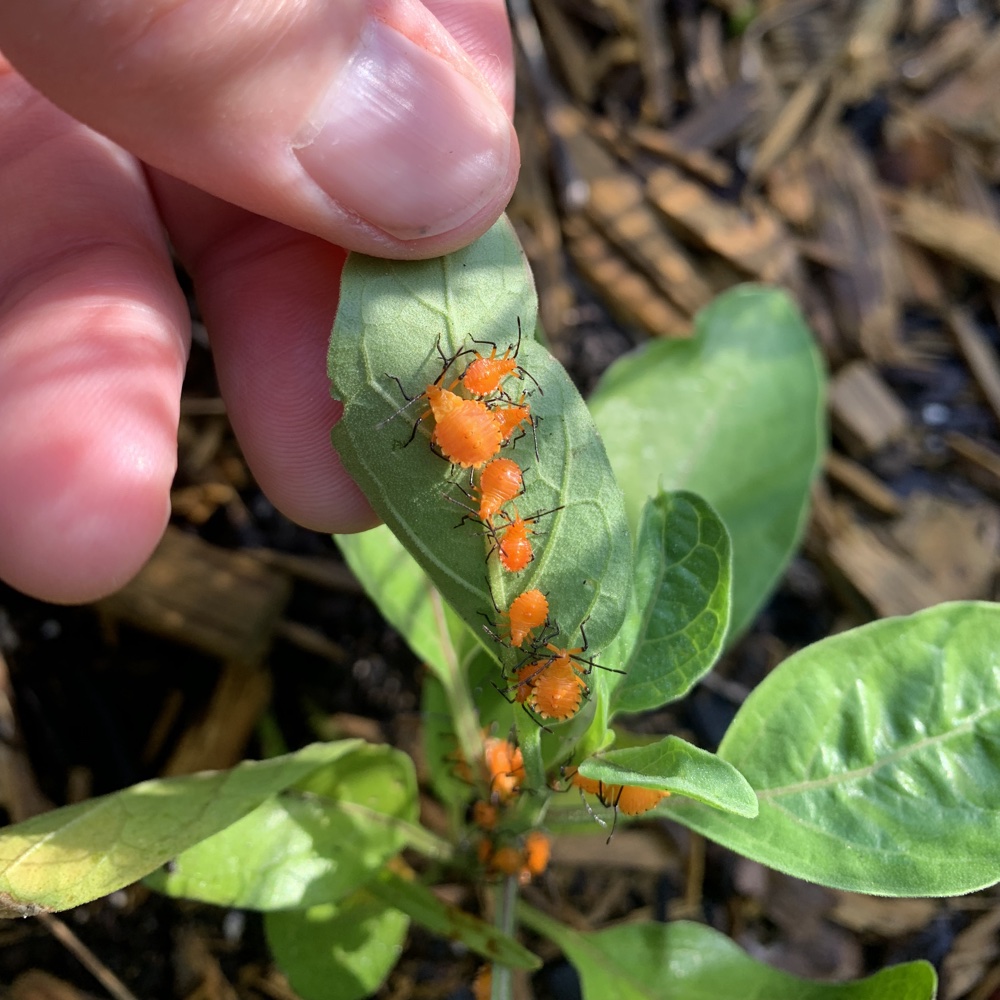
After beginning this post, I realized I was wrong about being able to identify this bug. It is not the leaf-footed bug, but I’m not sure what it is. The nymphs are bright orange and my best guess it is some type of stink bug.

Well, I thought I had identified this bug at last. Now, I don’t think so. I’ve found them occasionally on the ground near Walter’s ground cherry plants. At the time, the ground cherry was covered in tiny, bright orange nymphs.

The nymphs don’t seem to eat the ground cherry, but just gather all over it.

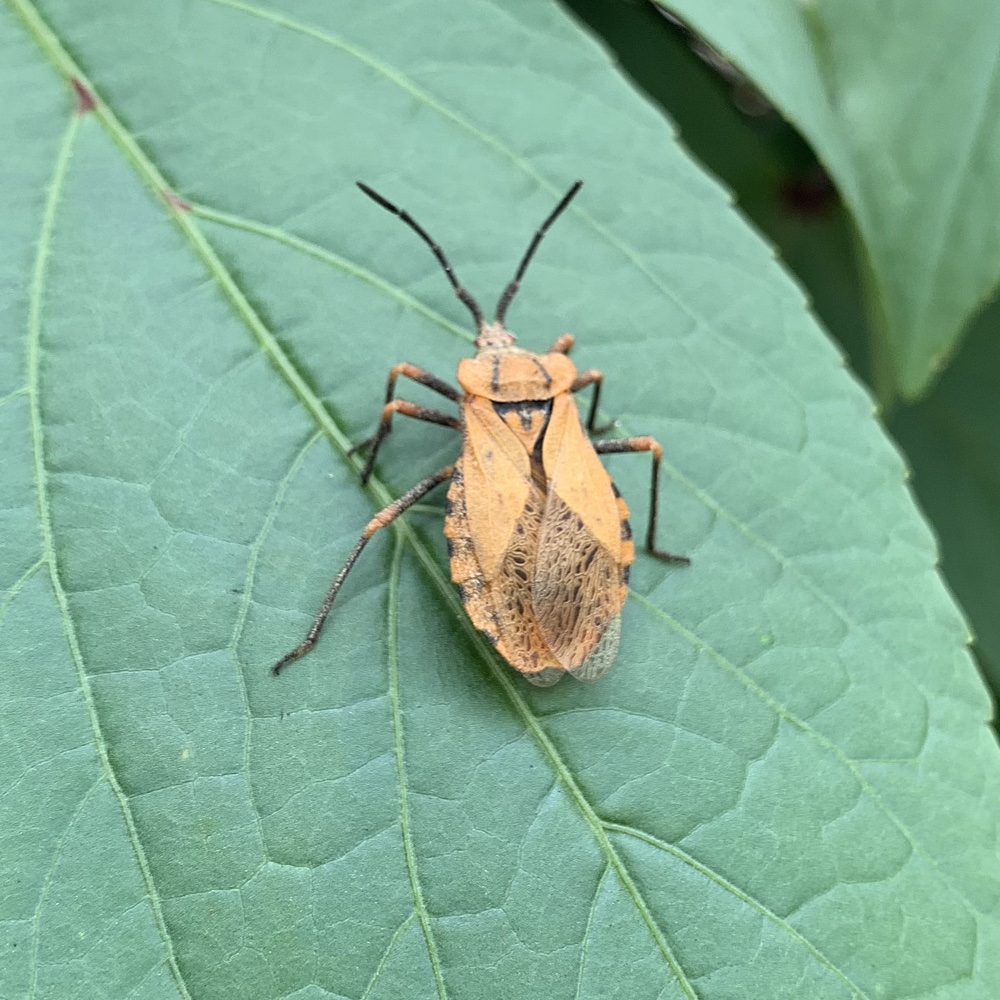
Here is an image of the Leaf-footed bug, which I thought it was at first. But the leaf-footed bug has wide “leaves” on its hind legs. The bug in my photos does not.

Is it some kind of stink bug? I’m still baffled. Other than seeing all those orange babies, I really never see this type of bug in the garden. The nymphs of the assassin bug are also orange, but have long legs. So, is this another type of assassin bug?

I’m quite sure the above photo is an adult and the bottom (nymphs) is the same bug. As you can see the little ones are very bright orange. The legs are orange at the top, and black the rest of the way. The back end is rounded and has tiny lines around the edge. This matches the lines seen around the body of the adult. It resembles the stink bug.

I’m still unable to find any photos online that look like these orange bugs. I’m tired of looking. Hopefully one of my readers will know and be kind enough to leave a comment. I’d love to know if it is a beneficial.

green divider leaves long

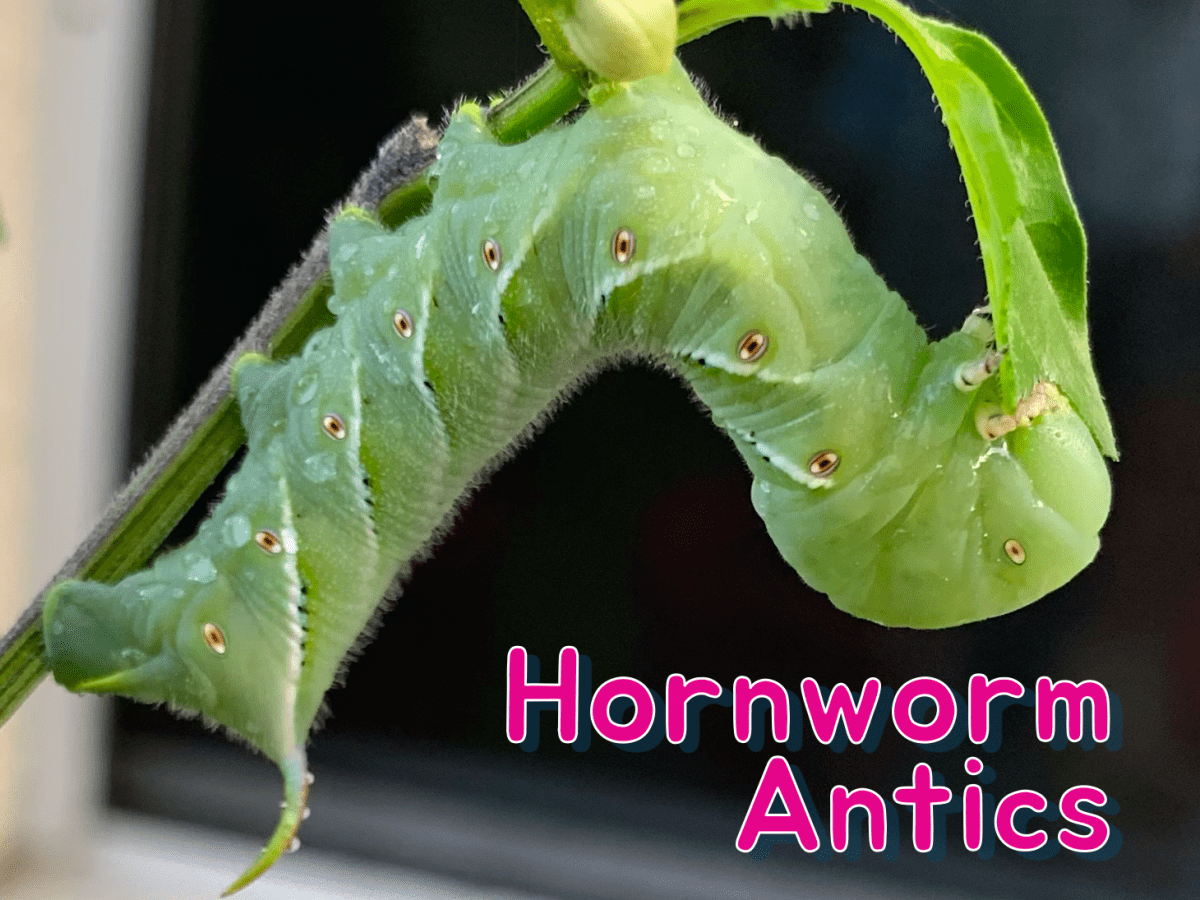
The Tomato Hornworm Doesn’t Need Tomatoes To Be Happy

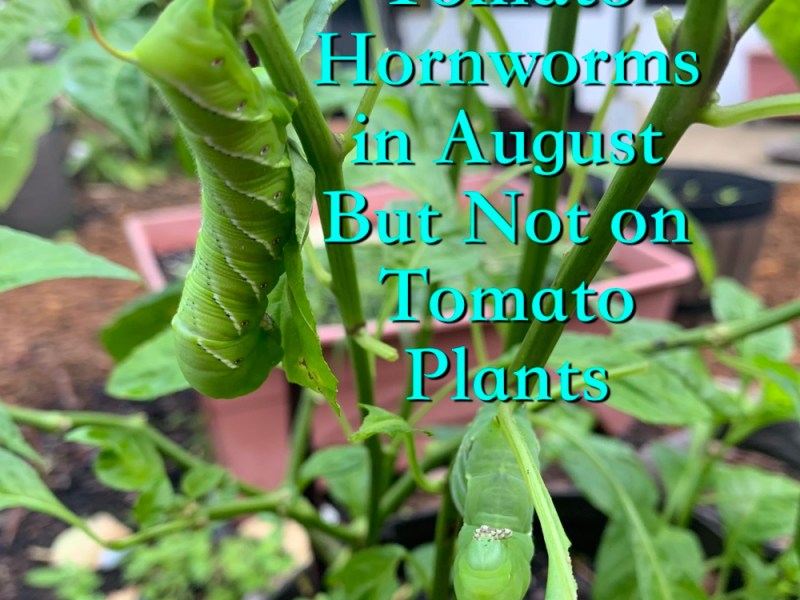
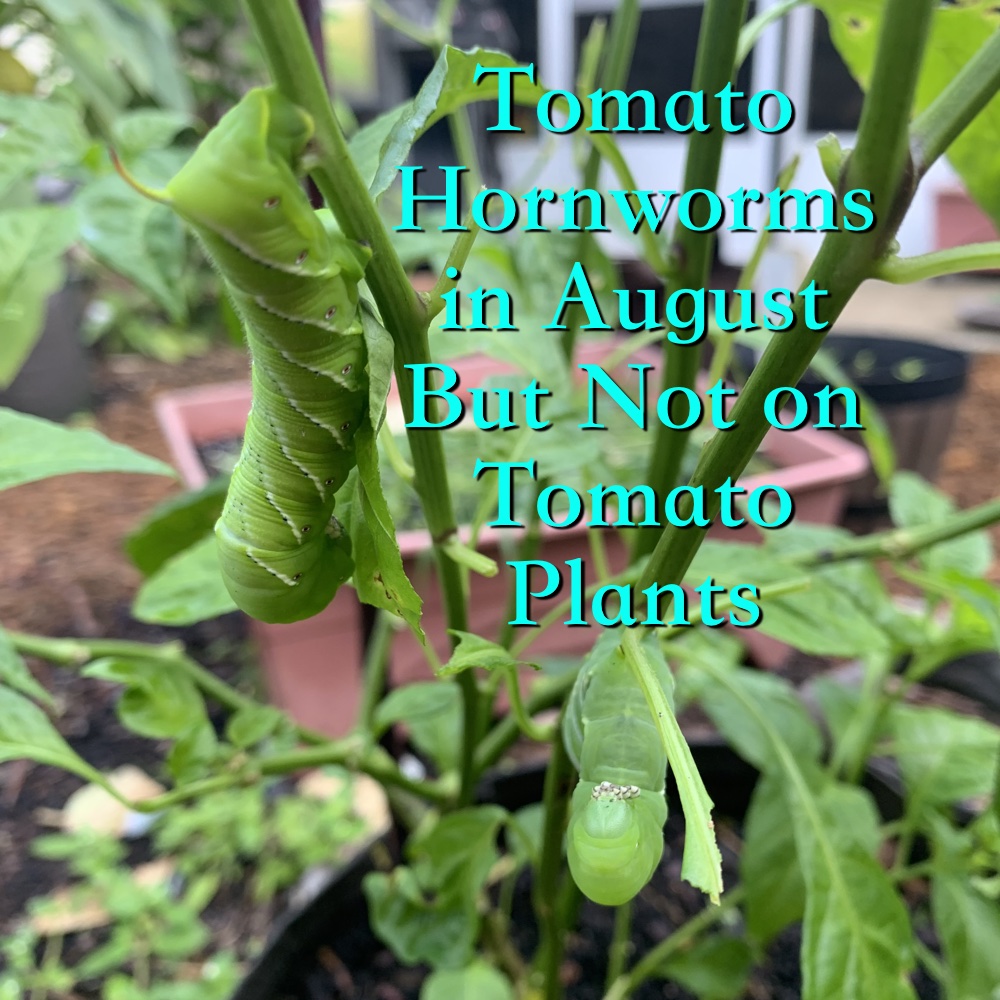
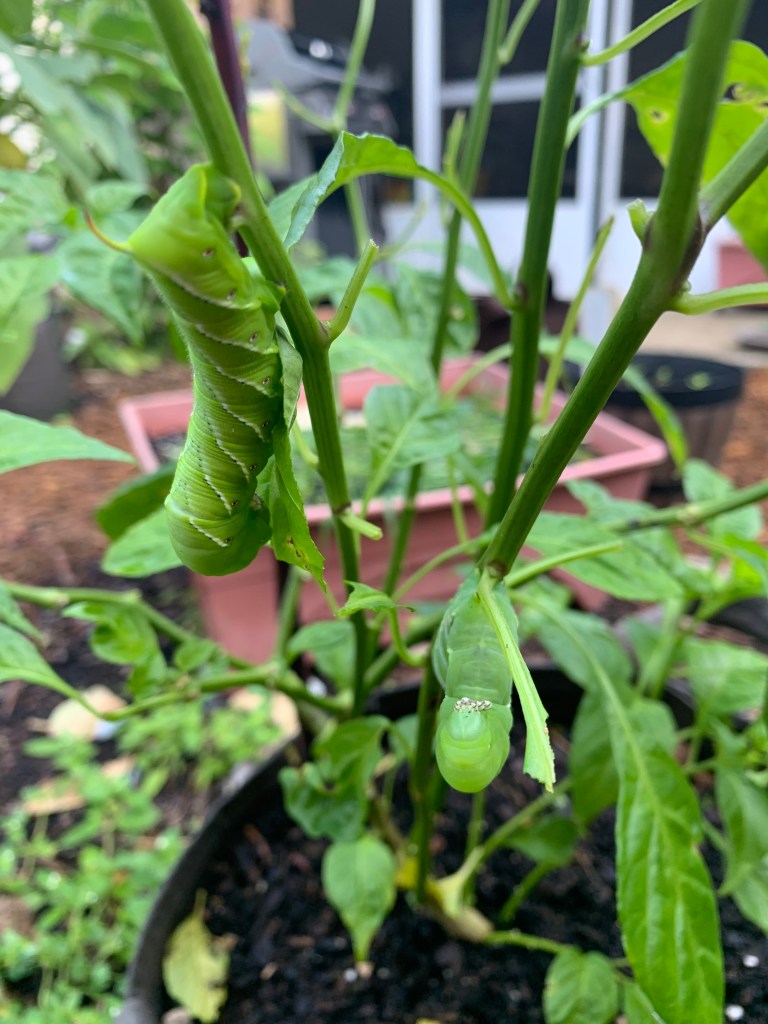
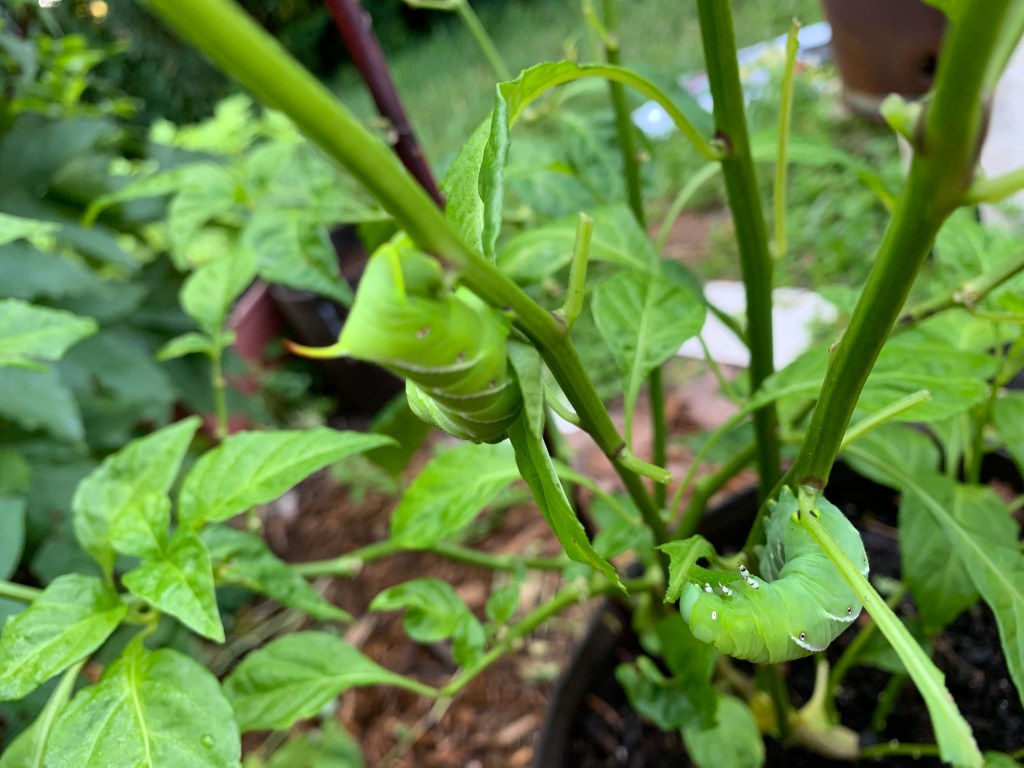
It is August and hornworms are showing up in my Florida garden. There are no tomato plants, but they also like the eggplant and peppers. Eventually the birds find the worms and have a nice feast.

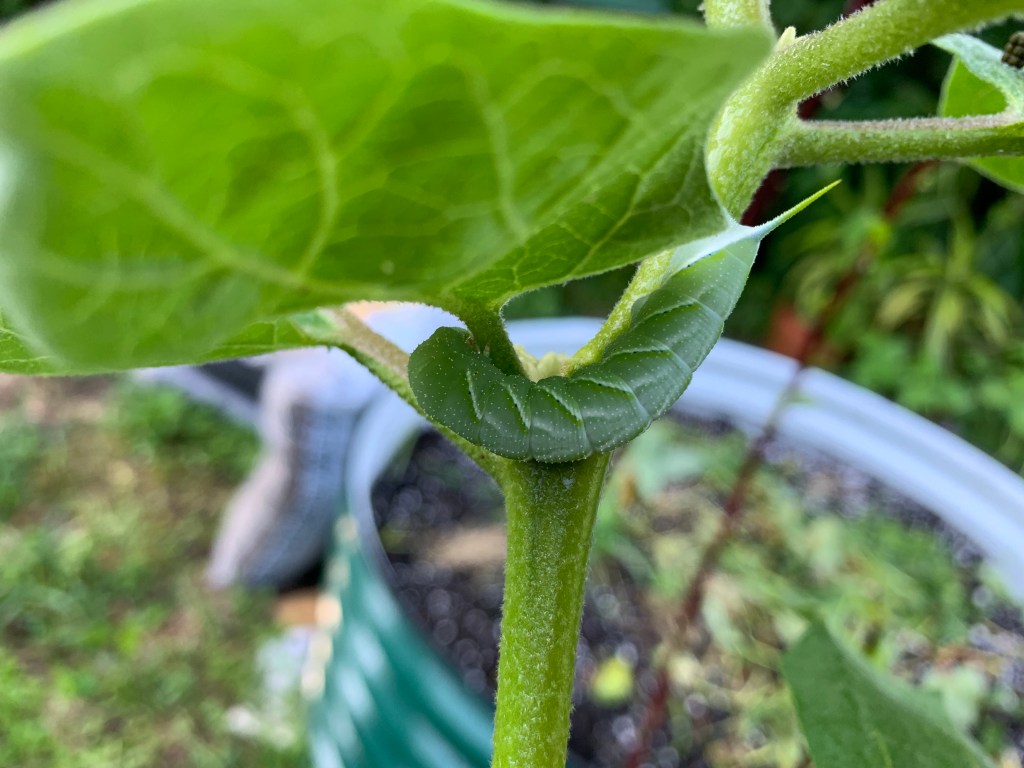
Over the past few days, I’ve found tomato hornworms in the garden. Not on tomato plants – I can’t seem to grow those, and especially not in August – but they are happily eating eggplant and Aji Dulce pepper leaves.

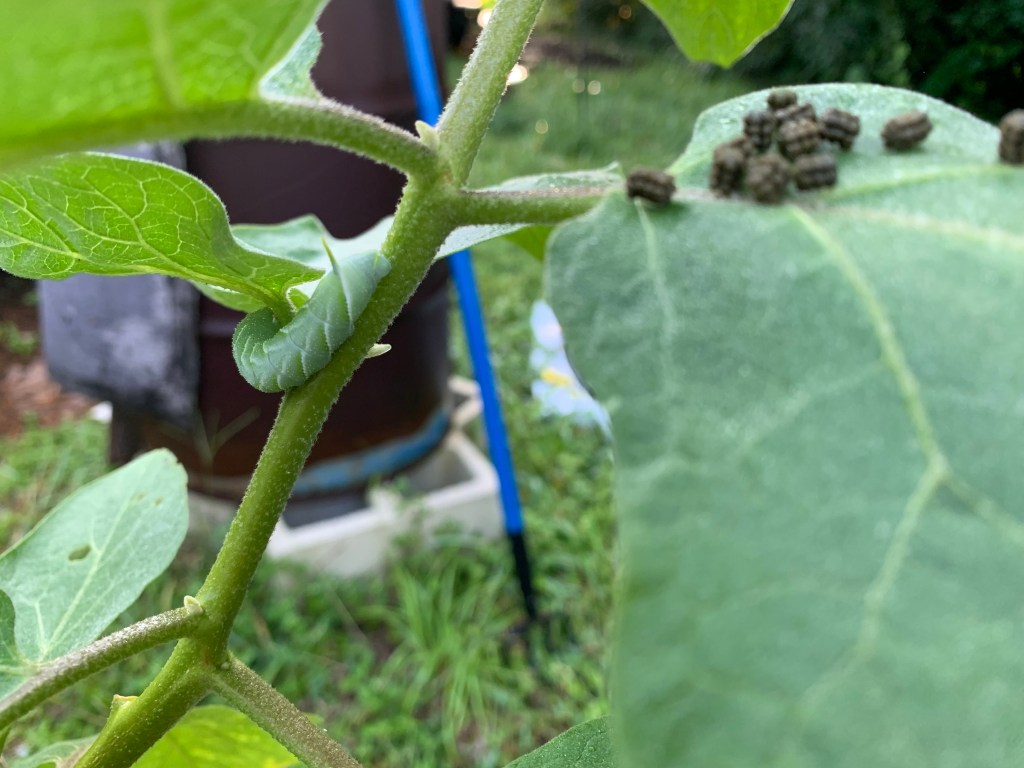
Hornworms love all the nightshades it seems. I found three hungry caterpillars on the eggplant, but by the next day they were gone. I didn’t see what got them, but my best guess would be cardinals.

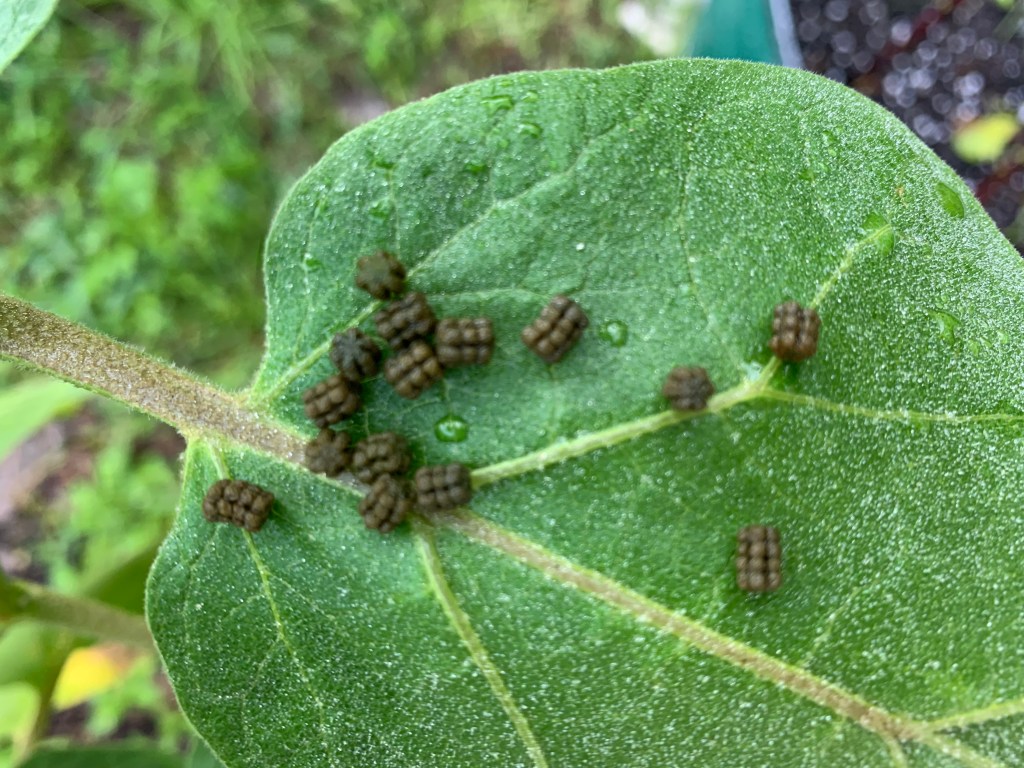
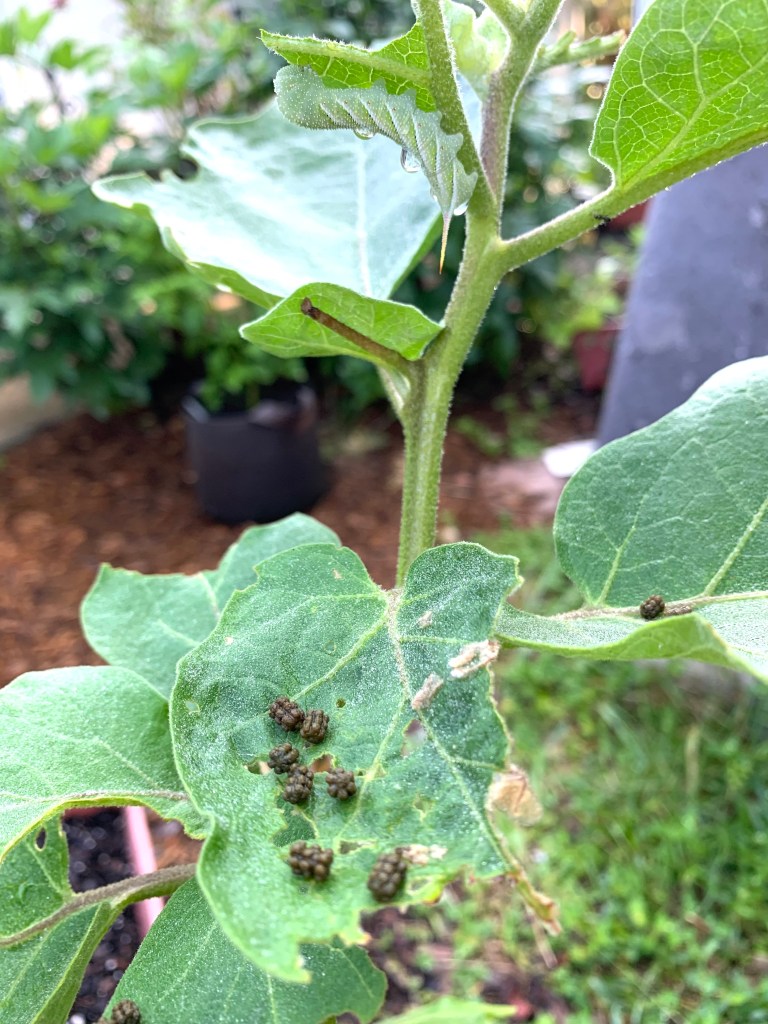
Hornworms are hard to miss. From their big brown turds all over the leaves (eggplant), to the bare stems, they leave proof of their presence. Their green bodies are the only thing that help them to blend in, but they are good size once you see these signs.

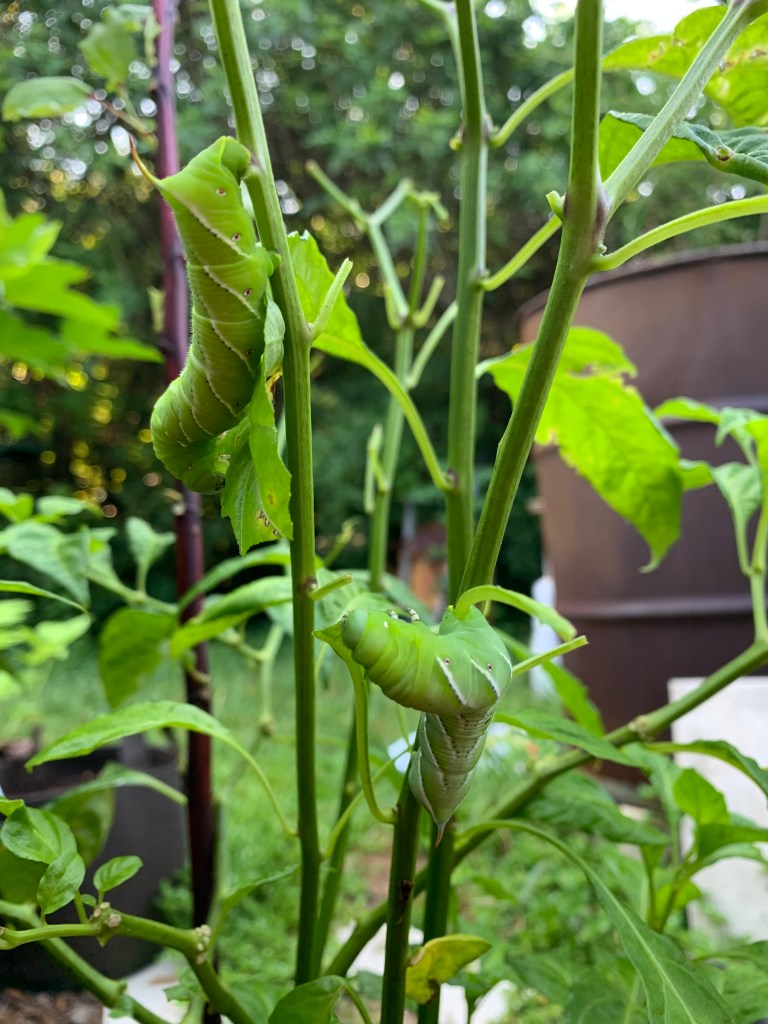
Now, I have two more hornworms on the Aji Dulce pepper plant. I have only three nice pepper plants left, and now this one has lost a bunch of leaves to chewing.

The plant was somewhat sheltered among the Roselle so I dragged it out into the open. I’m hoping this way the cardinals will see the worms easier and have a nice meal.

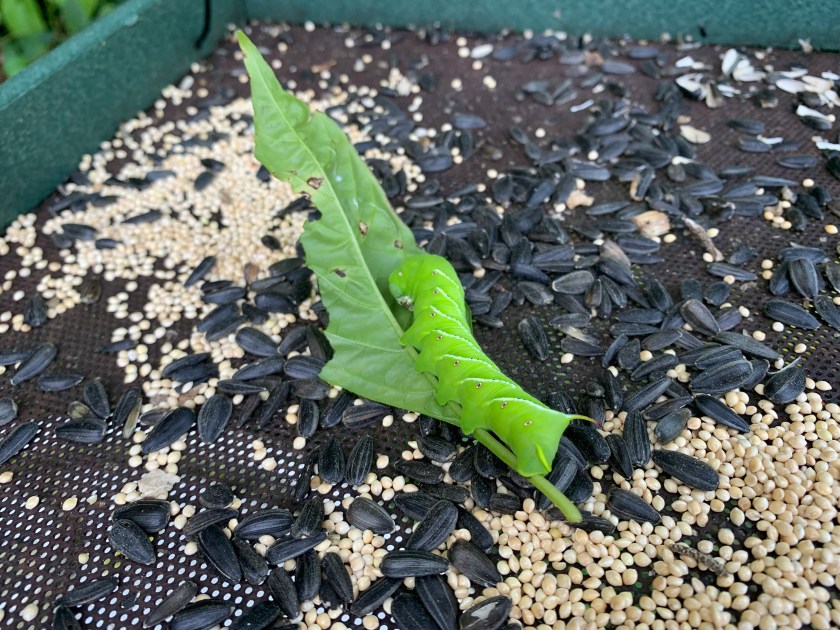
I checked the plant a few hours later and found only one worm left. He was hiding under a leaf. I decided to put him, along with his leaf, into the tray feeder. He won’t last long.

tomato hornworm in a tray feeder

In my yard, caterpillars of all kinds become food for the birds, eventually. It’s a matter of deciding how much of the plant I am willing to lose before that happens. Nothing gets past the keen eyes of the cardinals, and they come in groups of 5 or 6 every day. However, I believe a blue jay ate this worm off the tray feeder.
I’d love to have enough plants to shelter hornworms and allow them to turn into the beautiful sphinx moth. Instead, I have to let nature take its course, maybe with a little help, to save my plant.

Next time you want to get rid of a hornworm, consider letting it become a bird’s meal. Where I live, I can feed the birds year round. Sunflower seeds bring birds to the yard, who will then naturally look for food in the garden. Tray feeders (paid link) are perfect for depositing unwanted grubs and worms.
green divider leaves long