One of my favorite garden plants is the bell pepper I planted over a year ago. Apparently here in Florida vegetable plants just go on and on. The pepper survived some pretty cold nights (below freezing temps) over the winter, and has come back stronger than ever.
Besides giving me some nice juicy peppers to eat, it is home to some special “beasts” that are common to this area.
I see lizards all the time scampering around my garden. Skittle the cat catches them, but seldom kills them. She simply likes to play with them. Often I see them without tails (which grow back) and figure they lost it when Skittle pounced.
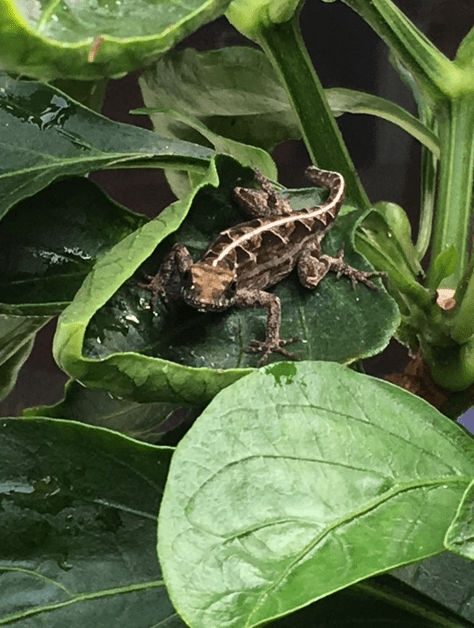
This one is a brown anole, and I see them much more often than the green anole. After reading the Wikipedia article, I guess I know why. The brown one is an invasive species and eats the green one!!This thing really is a beast. It used to be that all I ever saw were the green lizards, but come to think of it, I don’t see them any more. I don’t see many green tree frogs either, so what has happened to those?
Florida is always changing, and usually NOT for the better.
lizard on the green pepper leaf
There is a tree frog that seems to change sleeping spots from the garden to the umbrella to the hose holder. Is it the same frog? I only ever seem to see one at a time. Usually he sits on the bars beneath my table umbrella. The other day he spent the whole day tucked between the hose rolls on the garden hose holder. Each time I watered I was careful not to squish him.
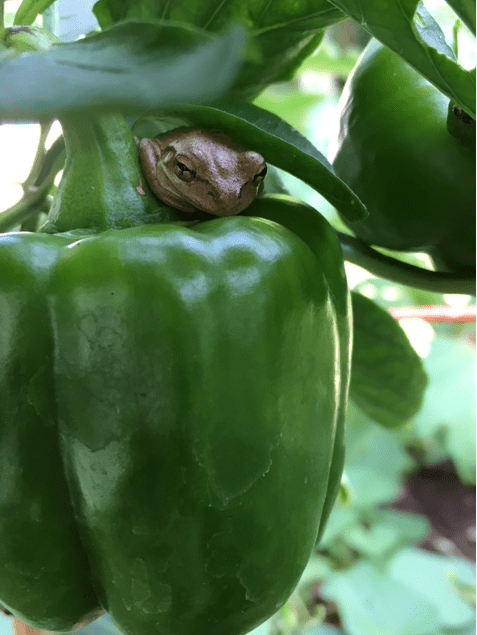
As I was checking out my peppers the other day, there he was. Tucked in under a leaf and sitting on top of a big pepper. I think he is a Pine Woods Tree Frog. But it could be the Cuban Tree Frog… hope not. I’ll have to get a better look at him.
Tree frog napping on my pepper
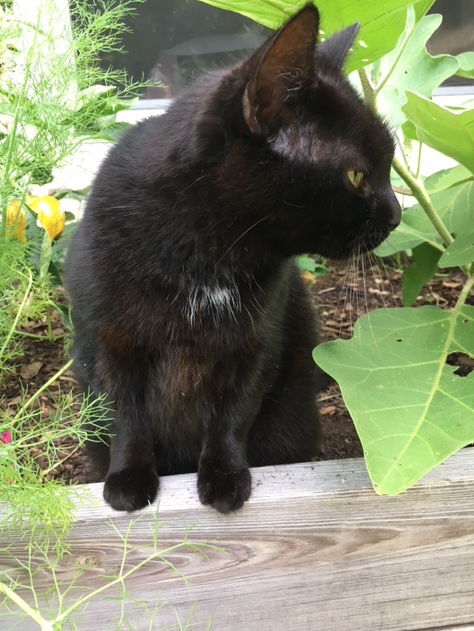
Skittle the Cat is not hanging out on the pepper plant, but she has always loved snooping through the greenery of a garden. Her happy place these days is sleeping beneath the big leaves of the eggplant. It’s where she takes her cat naps between hunting lizards and getting into other mischief.
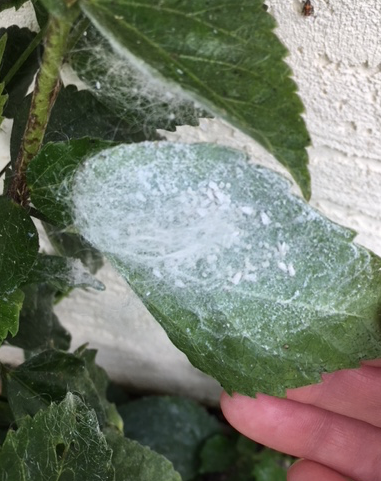
Found fuzzy white infestation of aphids and white flies on my hibiscus plant.
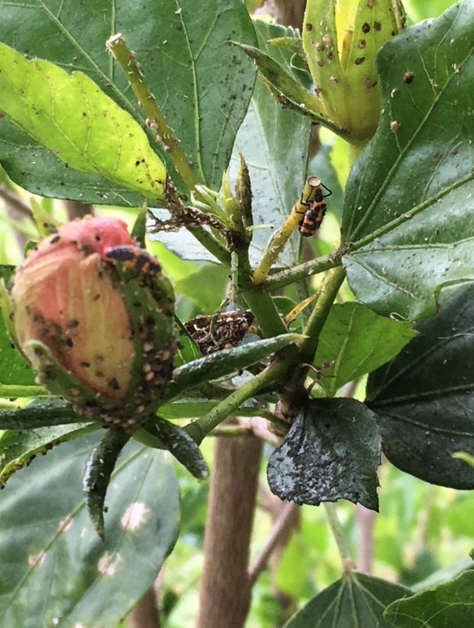
After writing a recent post about finding aphids on my pepper plant, I realized that I need to be vigilant about accidentally removing ladybug larvae and eggs. One plant that is sure to have aphids in the hibiscus. It is not unusual to find them all over the buds and new growth.
I haven’t paid much attention to my orange hibiscus plant over the winter, and imagine my surprise (and disgust) to find not only aphids, but long, white fur on the leaves! I don’t know what else to call it, but fur. It’s long enough to blow in the breeze and is attached to the underside of some of the leaves.
Beneath all that “fur” is a colony whitefly eggs and nymphs. How do I know this? I finally found a super helpful page at Hidden Valley Hibiscus, which talks about this exact type of manifestation, which comes from a southern whitefly called the “Giant Whitefly“. Here is how they describe the fur, “After hatching, the nymphs produce long, hairlike filaments of wax up to 2 inches long that give a bearded appearance to affected leaves.” Exactly, little white beards attached to sticky leaves.
It was not easy to get these photos. Any time I touched a leaf with white, little moths or something flew off. Also the leaves were very sticky. It was pretty gross.
This will never happen to your hibiscus if you are vigilant about checking for unwanted bugs. Whiteflies can be sprayed off with water, just like aphids.
The majority of the white fur was on the stems at the back of the plant. A secluded, less windy spot seems to be the preference for this type of infestation.
I plan to cut off the nasty stems from the back of the plant, and maybe spray off the rest. But I will keep an eye on all that ladybug larvae because I don’t want to disturb them.
Ladybugs are wonderful to have, but they need something to feed on. Somehow they know when to show up to kill an invasion of the bad guys.
The underside of the leaves have white spiraling lines, which is from the adult whiteflies.
I found lady bug larvae on the same leaf as the white fuzz. I had to trim up the hibiscus plant and spray it a few times with the hose to reduce the white fly population. I’m still seeing lots of ladybugs (in many forms) on the plant.
Fuzzy white aphids and lady bug larvae
Hibiscus plants are very hardy. They can be cut way back, trimmed and left without water and still grow fine. I made the mistake of planting this little shrub too close to the house. The stems in back don’t get enough air circulation and hence the problem.
Ladybugs will eat aphids, but ladybugs appear in various forms. Know the larvae stage and let it live to eat those aphids.
Not only are ladybugs cute, but they are beneficial to gardeners. Often gardeners wonder how to bring ladybugs to the yard? The simple answer is to hope for garden problems in the form of pests that feel ladybugs.
Ladybugs, or lady beetles as they are sometimes called, are helpful in vegetable and flower gardens mainly because they love to eat aphids and other garden pests. Aphids are one of the worst pests gardeners deal with. When aphids begin to show up on leaves, flowers and buds, they ring the dinner bell for ladybugs.
Unfortunately as gardeners, we have to have unwanted bugs in order to get these beneficials to the yard. It makes sense. Ladybugs (and other beneficial insects) go where the food is.
A while ago I had aphids on my lime tree. I simply sprayed them off and they went away.
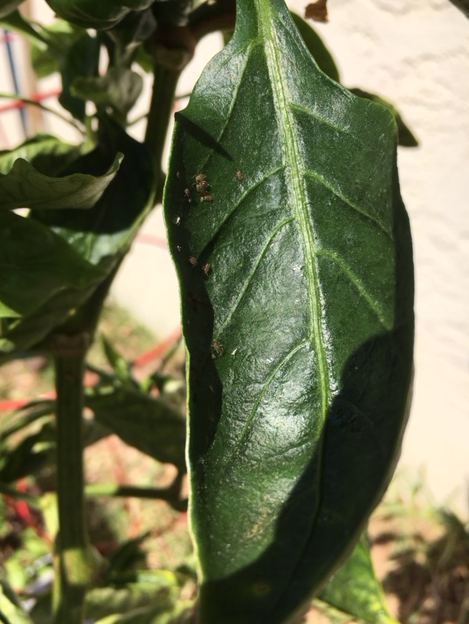
Now I am dealing with aphids on my pepper plant and eggplant. I’m doing the same thing – spraying them off with water. Also I wipe them off with my fingers. I never spray insecticides on anything in my yard.
But, the key here is to check for the presence of ladybugs – in all their life stages. I don’t want to get rid of those. And, in order for ladybugs to choose your garden to lay her eggs, she wants to see some aphids for her children to eat.
So maybe I should be leaving the aphids there and see what happens? A large aphid infestation can kill plants. (Update: by May, every aphid was gone!) Aphids suck the juice from the greenery. They excrete a sugary substance which then attracts ants, but ladybugs eat lots of aphids every day.
Aphids on my pepper plant
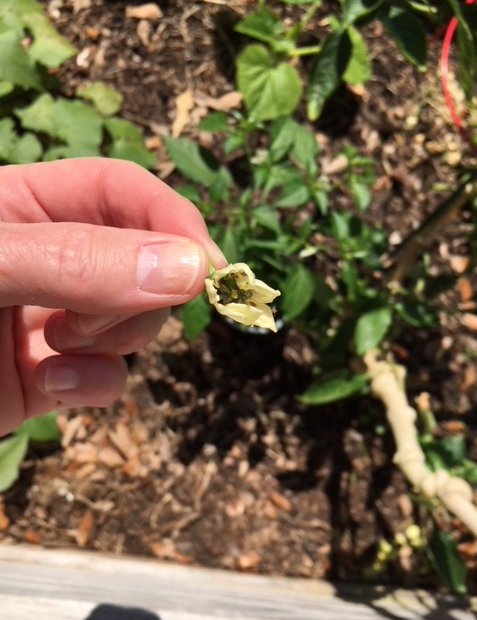
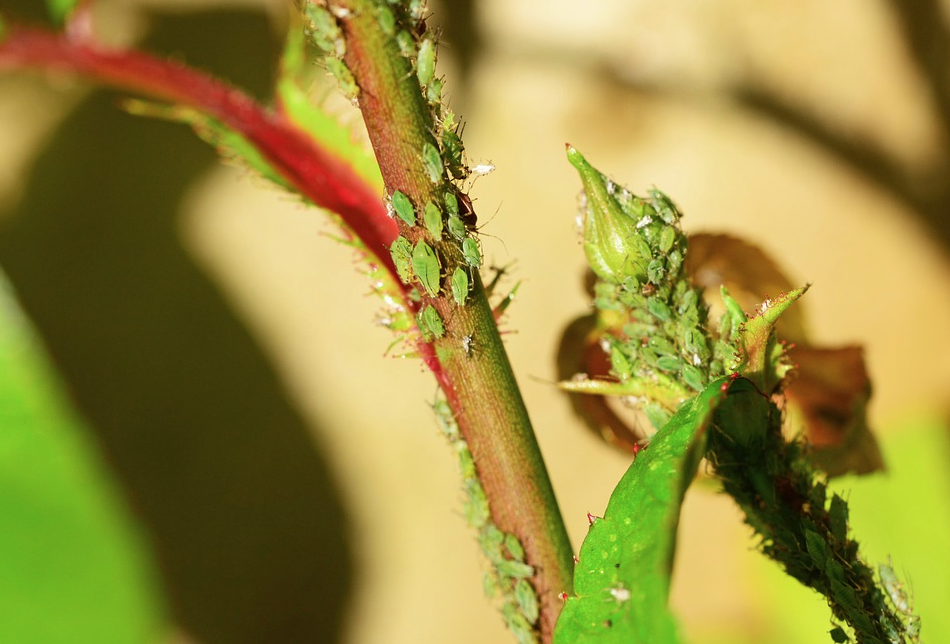
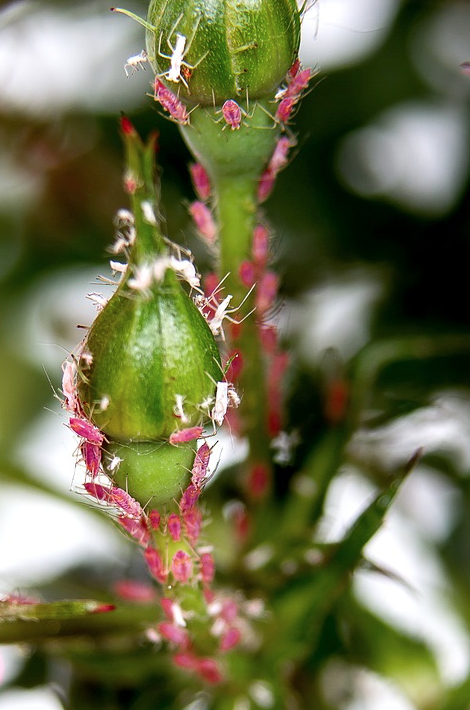
These aphids were brown in color. Aphids can be many colors, such as green, black, brown, pink, yellow, white, and blue (really?) and even furry (wooly aphids). The little buggers are even inside the white flowers on the pepper. And I recently purchased a hot pepper plant and noticed they were also on it.
Aphids inside pepper flower
Aphids in Their Many Colors
black aphidsgreen aphids
pink / red aphids
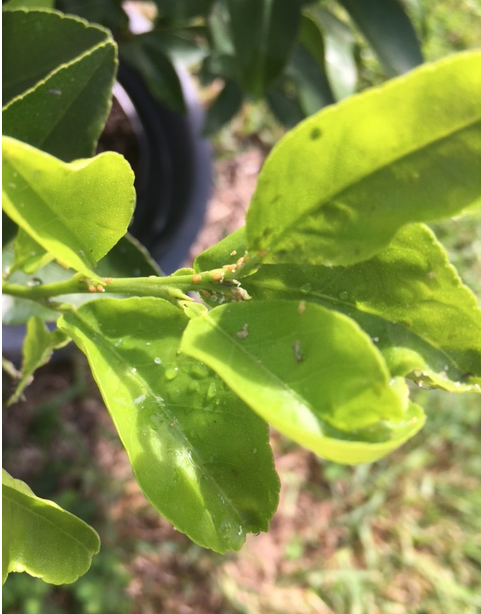
Yellow aphids on my Persian Lime tree
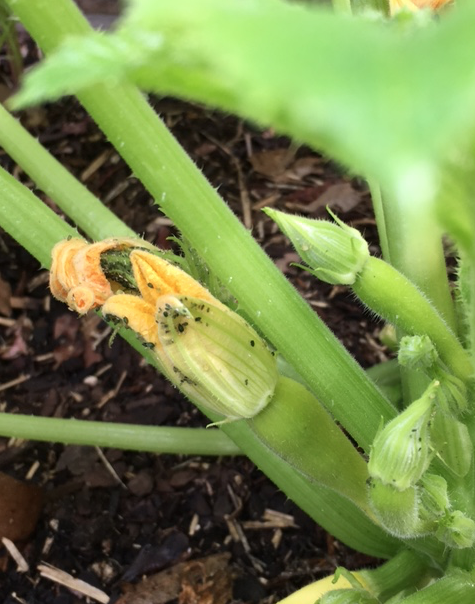
Aphids on squash flower
Because I have a small garden with only one or two plants containing aphids, I can easily control them with a spray of water. Or wait patiently for lady bugs to show up.
A natural way to destroy aphids is to have ladybugs eat them. Unfortunately the beautiful spotted ladies never seem to show up at the right time, or in large enough numbers. Or could it be that the garden is not welcoming enough? Or I am not patient enough!
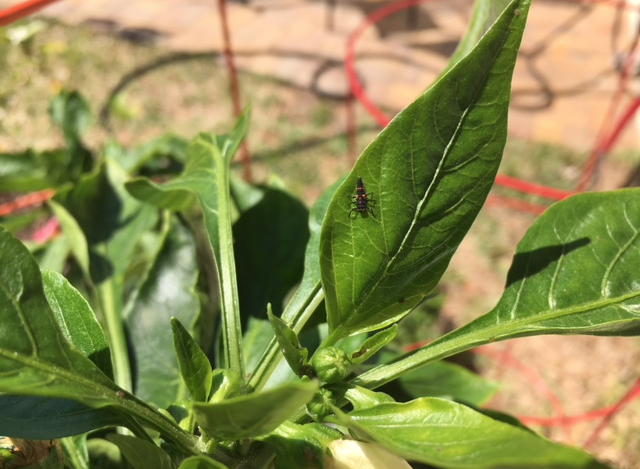
Black bug on pepper plant could be ladybug larvae? The clue: black bug with 6 legs and red to yellow markings, so I say “yes”
I will begin paying better attention to the eggs, bugs and pests in my garden. In fact after writing this post, I went outside to check on my hibiscus.
Hibiscus plants are notorious for attracting aphids. I figured there may be some and possibly some lady bugs or eggs. Wow, was I in for a surprise when I saw my hibiscus infestation!
I’ve given it a lot of thought and I really don’t have time to continue writing on this blog. My efforts need to go into starting a new online business. My knitting blog gets a lot of views and that is where I need to write. Not many people grow vegetables in Florida, and the…
Wildlife is abundant in Florida. Birds are everywhere so getting them to come to the backyard is not difficult. They enjoy the same things here as they did when I lived in the North. If you’d like them to visit regularly, give them a proper welcome. They need food, water, trees and places to land and hide.
Birds Love Water
Like us, birds need water to drink. Birds also love to play in the water. It looks like playing, but they are cleaning their feathers. They dip their heads and swiftly shake from head to toe while fluffing out their plumage.
In the north cardinals are more rarely observed than they are in Florida. It was a wonderful sight when they landed in my snowy winter yard. Here they are everywhere. But they are still just as afraid and skittish. Any movement will scare them off.
I captured (not so great) video of this red cardinal splashing around in my makeshift birdbath. I have a good view from my home office area and with the windows open, I can hear the birds land in the birdbath. He stayed there preening for a good five minutes, but the video is short.
This cheap “bird bath” was thrown together one day using a large plastic plant saucer with a brick in the center (or a rock would work). The brick helps hold the saucer in place and gives the birds a place to stand. Birds don’t like deep water and I don’t like the price of real birdbaths, so we are both happy! Sometimes birds will line up waiting for one bird to finish for the next to have his turn – like these gray catbirds waiting for the cardinal to finish up.
The Gray Catbird waits for the cardinal to be finished.
I’ve also seen robins, mockingbirds, goldfinches, a thrush, brown wren, and bluejays at the water. Change the water daily, and put it in the sun to remove mold in summer. The water can get pretty hot in summer, so it needs to be changed more often.
Feed the Birds
A winter ritual for me when I lived in New Hampshire was to stock my big metal barrel with sunflower seeds. I had to keep a heavy rock on top so the black bears wouldn’t get into it. Feeding the birds in winter was a nice thing to do. Here in Florida I will not feed them, except to provide plants that may have berries or fruit they eat.
In the North I would make my own suet, which the birds LOVED. Suet is not used in summer (unless you buy the non-melting kind), nor is it used in Florida where it will go bad quickly. If you decide to make your own, you’d better make a lot – it goes fast.
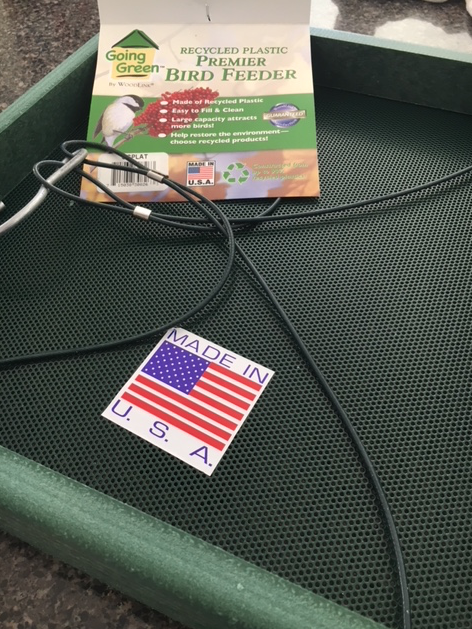
Going Green, recycled tray feeder for birds
The tray feeder is something I will try in my Florida backyard. I don’t plan to buy seeds for it. Seeds will draw squirrels and the birds don’t need feeding here.
The tray feeder will be used for old bread and fruit bits that some birds may like. When pulling worms from garden vegetables (think big juicy tomato hornworms) or grubs from the grass they can be plopped into this feeder and birds will swoop down and scoff them up! I already have the shepherds hooks .
Trees and Bushes
Birds like to have a place to hide, or land, which is up off the ground. I have two cats, but they have never caught a bird in this yard. I had a cat once that was an absolute killer, but these cats are not. The birds seem to know this because they come to my yard even when the cats are sleeping near the garden.
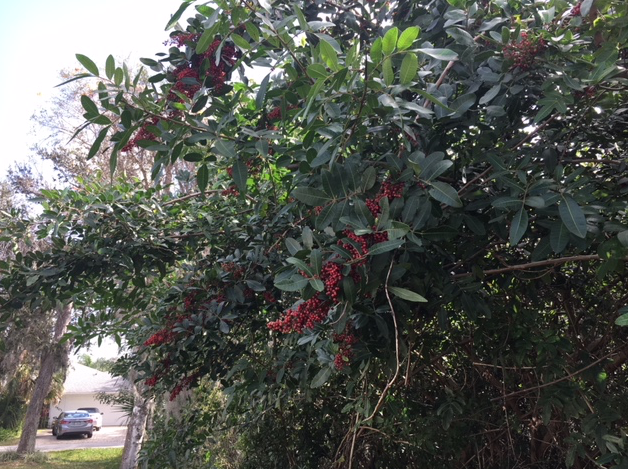
Trees, like the Dahoon Holly which grows next to my property, are perfect places for birds to gather. My yard has scrawny oak trees and a few palm trees, but the birds love the tangled mass of branches right next door.
The Dahoon Holly treeis not something I was familiar with. This wild specimen grows hanging berry clumps and draws the birds to feed. It’s maze of branches give the birds a great place to rest and feel safe.
Dahoon Holly
Bird Houses and Shelter
The previous section pretty much covers shelter in my opinion, but some people like to add a birdhouse to the yard.
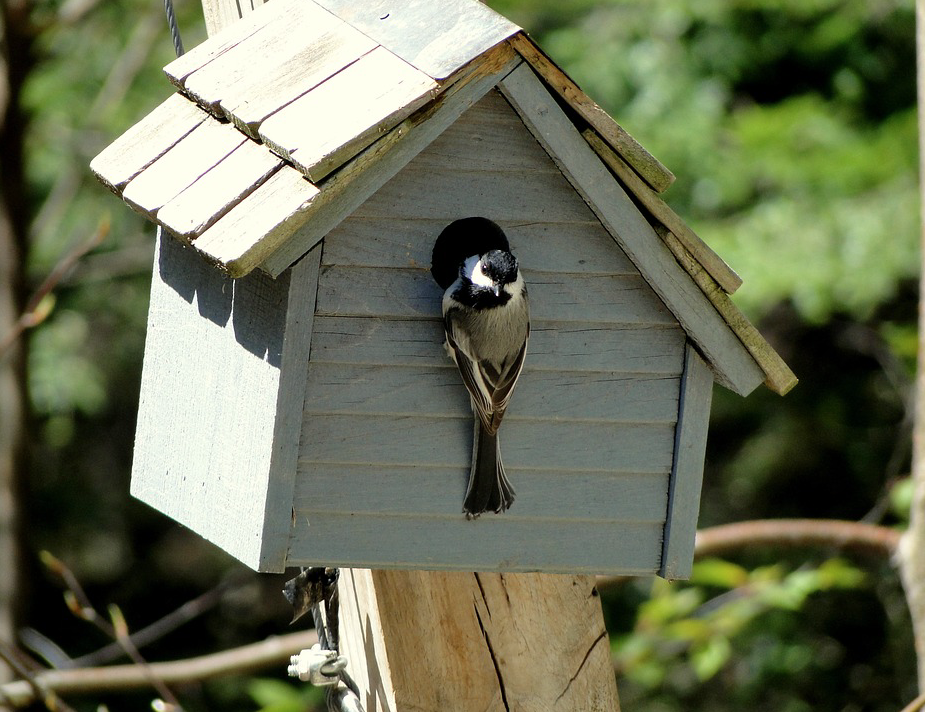
I used to have one and watched the chickadees build a nest inside. If I see a chickadee in Florida it won’t be the northern Black-capped chickadee (in my photo), it will be the Carolina Chickadee.
New Hampshire – Black-capped chickadee at birdhouse
Then there are the curious big birds that stroll through.
Don’t you love the Sandhill Cranes? They are the coolest birds. These three come strolling through the yard regularly, and they are not afraid!
(For great photos of backyard Florida birds visit the CatandTurtle blog. It’s how I discovered that the gray birds in my photo were catbirds.)
In the heat of the Florida summer months, I have done little gardening. But the plants I began growing in Spring, are continuing to grow. Even though I am not getting much, if any, produce from them, they serve a purpose. They can be food for worms; give bugs a place to crawl, which in turn feeds the birds, (mostly, I have cardinals); and provide a playground for the lizards.
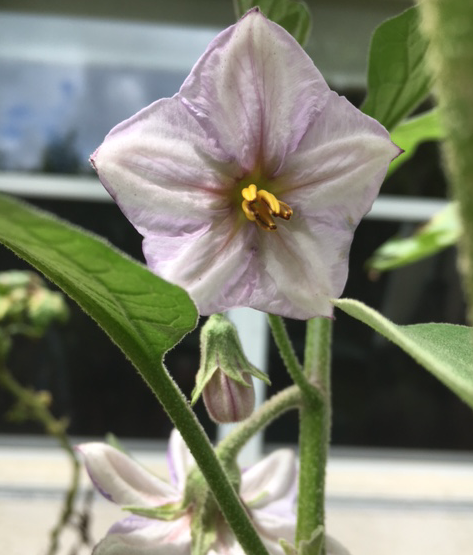
The two eggplant plants I have in the garden have grown tall. They have continued to produce pretty purple flowers, but have never given me a single eggplant! It’s either the poor soil, or the heat, or both.
Purple Flower of the Eggplant
The plants themselves are interesting with their big leaves. I have trouble tearing up and throwing out a perfectly healthy plant, even if it’s not giving me the food I’d hoped for.
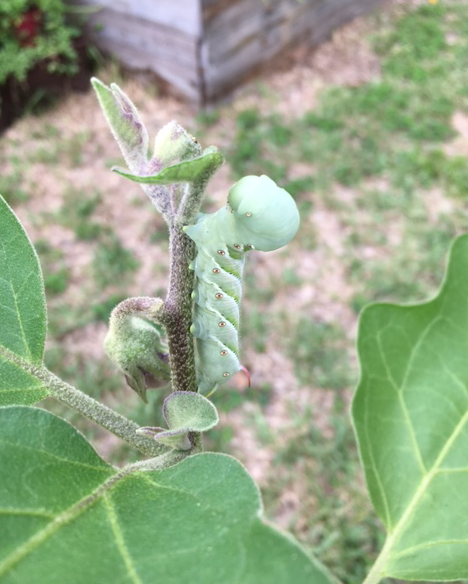
I’m glad I left the eggplants growing, and continued to give them water, just because I couldn’t NOT do so. I noticed missing leaves and found a big, juicy, tomato hornworm chowing down on the leaves. The hornworm can eat a tremendous amount, and it’s apparent they have arrived when you notice entire leaves missing on the tomato plants! Stalks can become completely bare in a matter of a days time.
Tomato Hornworm on Eggplant
One summer I was visiting my sister in Massachusetts, and she said that something was eating her tomato leaves. Sure enough, there it was – a big green worm. So I pointed it out to her! She was astonished, but hadn’t looked close enough to see the worm.
Tomato hornworms often show up near the end of summer – at least in the north, that was how it happened in my garden. The one eating my eggplant here in Florida was lucky. I did not care that he was destroying the plant, it was useless to me anyway. He ate and ate and grew bigger over the course of about 2 days.
I find these pretty green worms quite interesting. Often, a wasp of some kind lays it’s eggs on the worm, which kills it. There were no eggs on this guy. He was doing quite well for himself.
Then he was gone… eaten by a bird maybe? I don’t know. Most of the eggplant’s leaves had been eaten by then, and I felt like I had given him a meal at the very least. If the worm lives, it becomes the Sphinx Moth.
Most gardeners don’t allow the hornworm to live… it is too detrimental to vegetable plants, like the tomato, eggplant, pepper, and potato plants, as you can see in my photo below!
Bare eggplant after tomato worm ate the leaves
On to the parsley worms.
In the North, I always grew parsley, and it lasted well into the winter months. But eventually, it did die. Deer used to come into my backyard and nose through the snow looking for greens to eat, and sure enough, they would find the parsley still going strong at the beginning of winter.
Since I’ve been in Florida – over a year now – the parsley I planted last summer is still growing fine! I use it daily in my omelets, salads, and other home-cooked food.
The parsley is planted in two separate containers, and I’ve noticed that both areas have parsley worms munching on the leaves. They will turn into Black Swallowtail Butterflies. One has already made a cocoon.
So the plants that are simply growing for … what, fun? in my garden have served a useful purpose to help nature continue. Whether the worms change into butterflies or are food for the birds, it’s all nature doing it’s thing.
Parsley Worms Become Black Swallowtail Butterflies
Here I have a photo of my Fall garden. It is hard to tell what is growing, and honestly not much in the way of food just yet. The seeds have all been planted except for Kale and dill. I will also grow more green beans along the way when I find space. (I’m already…
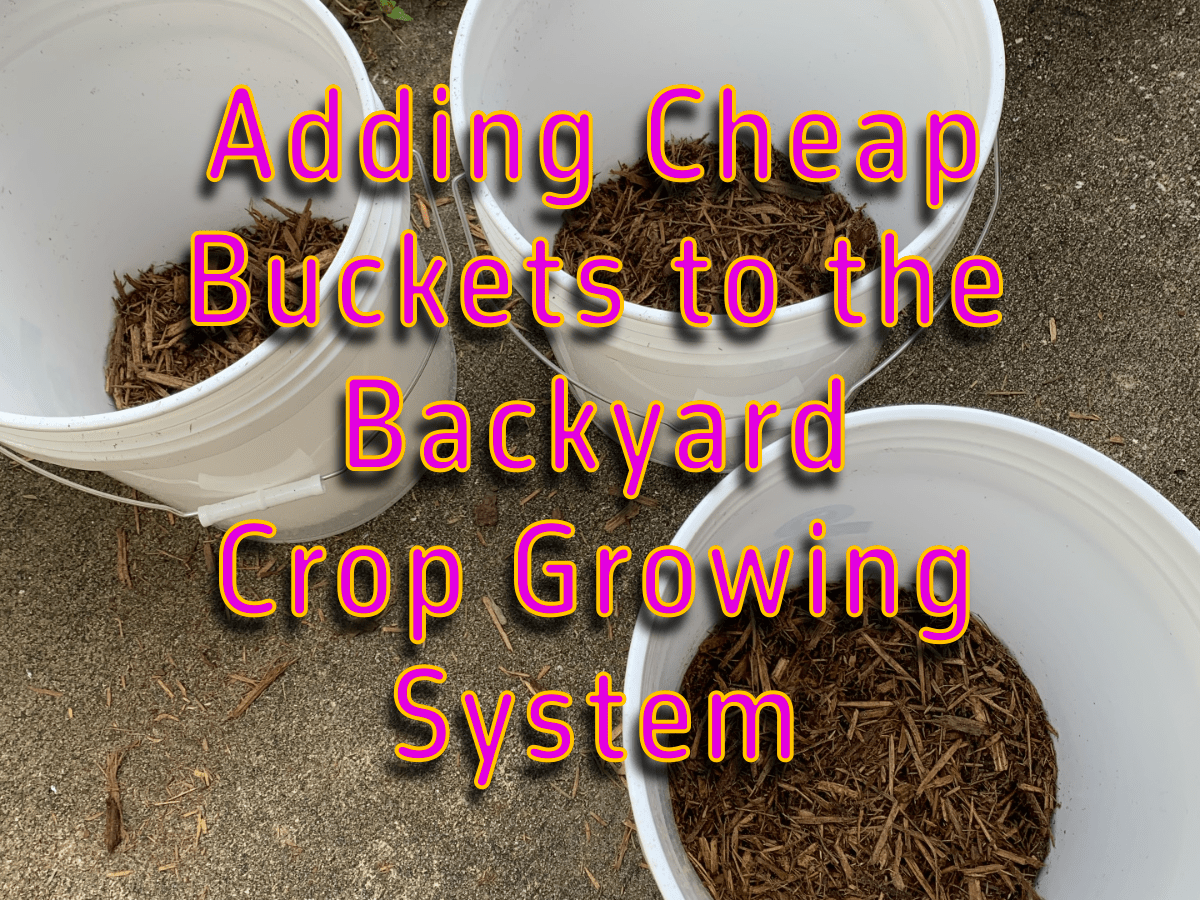
I’m trying a new way to grow larger individual vegetables in my small garden space. Tall buckets may serve well as pots for tomatoes, peppers and eggplant.













 Hydrangeas Blue