We all want to feed the bees by having bee-loving flowers in the yard. But another good reason to have the bees come to your plants is to entice them to pollinate the vegetables growing in your garden. I would not be eating eggplant, tomatoes or watermelon (soon!) from my garden without the bees coming to pollinate the flowers.

If you are wondering which flowers to plant to attract bees, I know the feeling. The general answer is to simply plant things that will flower, and that includes vegetables and herbs. I have an excellent link that goes to the UF site, at the bottom of this page, for Florida residents who want to start planting for pollinators.
Bees like open type flowers that contain pollen. They also have flower color preferences. Read on…
All photos on this page are my own of bees visiting plants in my yard
Herbs
Don’t overlook herbs, which are quite simple to grow, when it comes to having flowers in the yard.
Dill is an excellent choice for the yard because it has big yellow flowers that do attract all kinds of things. Once the flowers are done, you will have a head full of seeds. Dill is easy to grow and needs very little attention. It also serves as a nursery for black swallowtail larvae. Fennel is very similar and just as good.
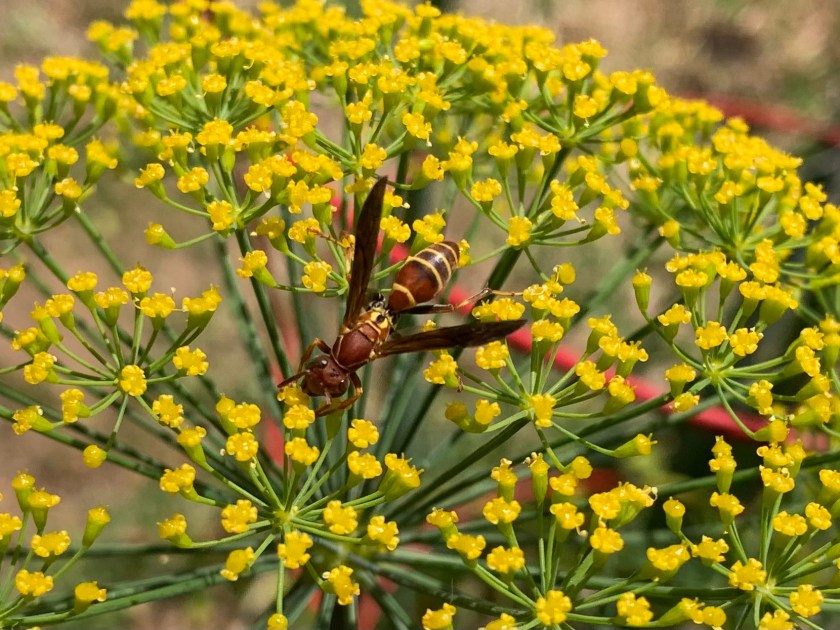
Dill flower 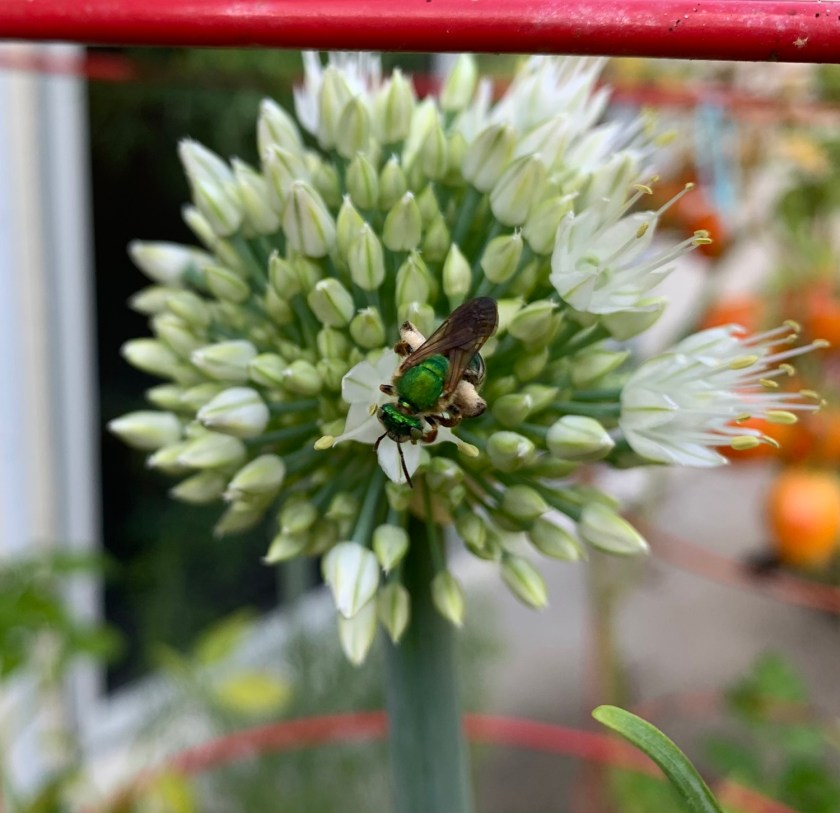
Onion flower 
Spiderwort
Naturally Growing “Weeds”
Spiderwort (the purple flower above) is everywhere near me, and it easily invades the yard. It is tough to remove because it grows in clumps, but the purple flowers are loved by insects. If you already have it, maybe let some grow around the vegetable garden.
We also have a lot of the white flowering weeds and many other things growing at the edge of the lawn. I’ve noticed how the naturally occurring growth is a big attractor. So why are we always removing it?
The green bee on the scallion flower (above) is probably the Sweat Bee, which is a common Florida green bee. I’m no bee expert and I am guessing. The striped bee on the dill is a paper wasp.
Rudbeckia For Garden Beauty and Bee Happiness
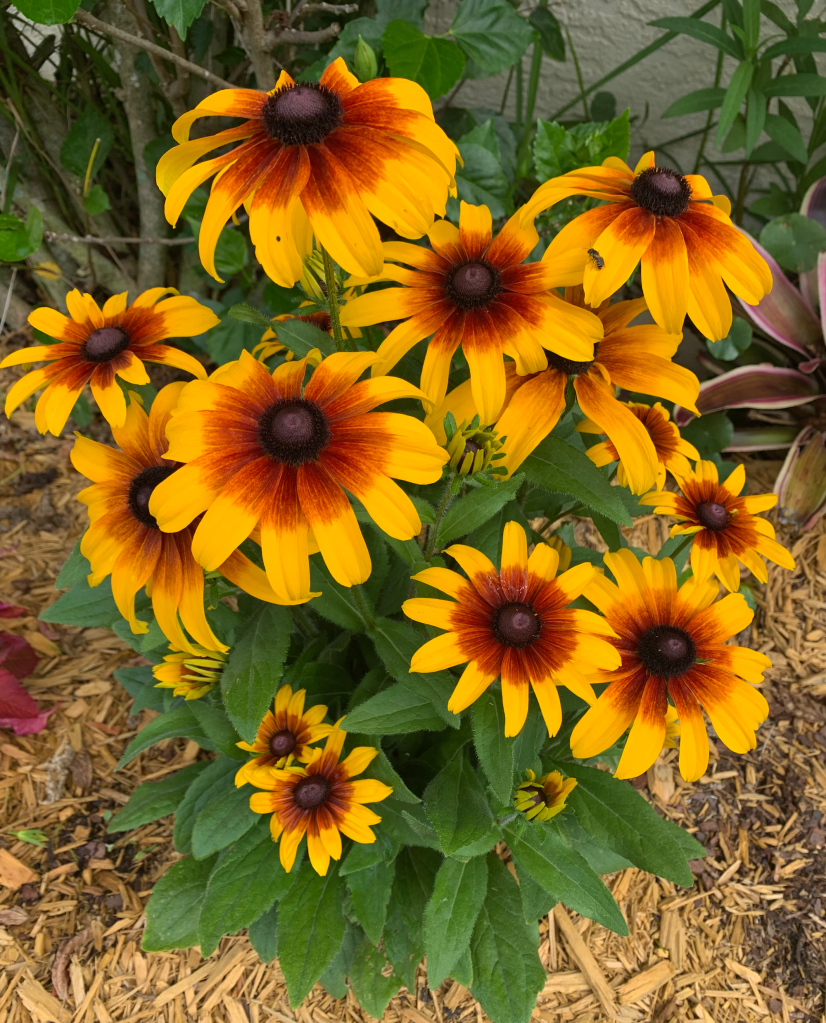
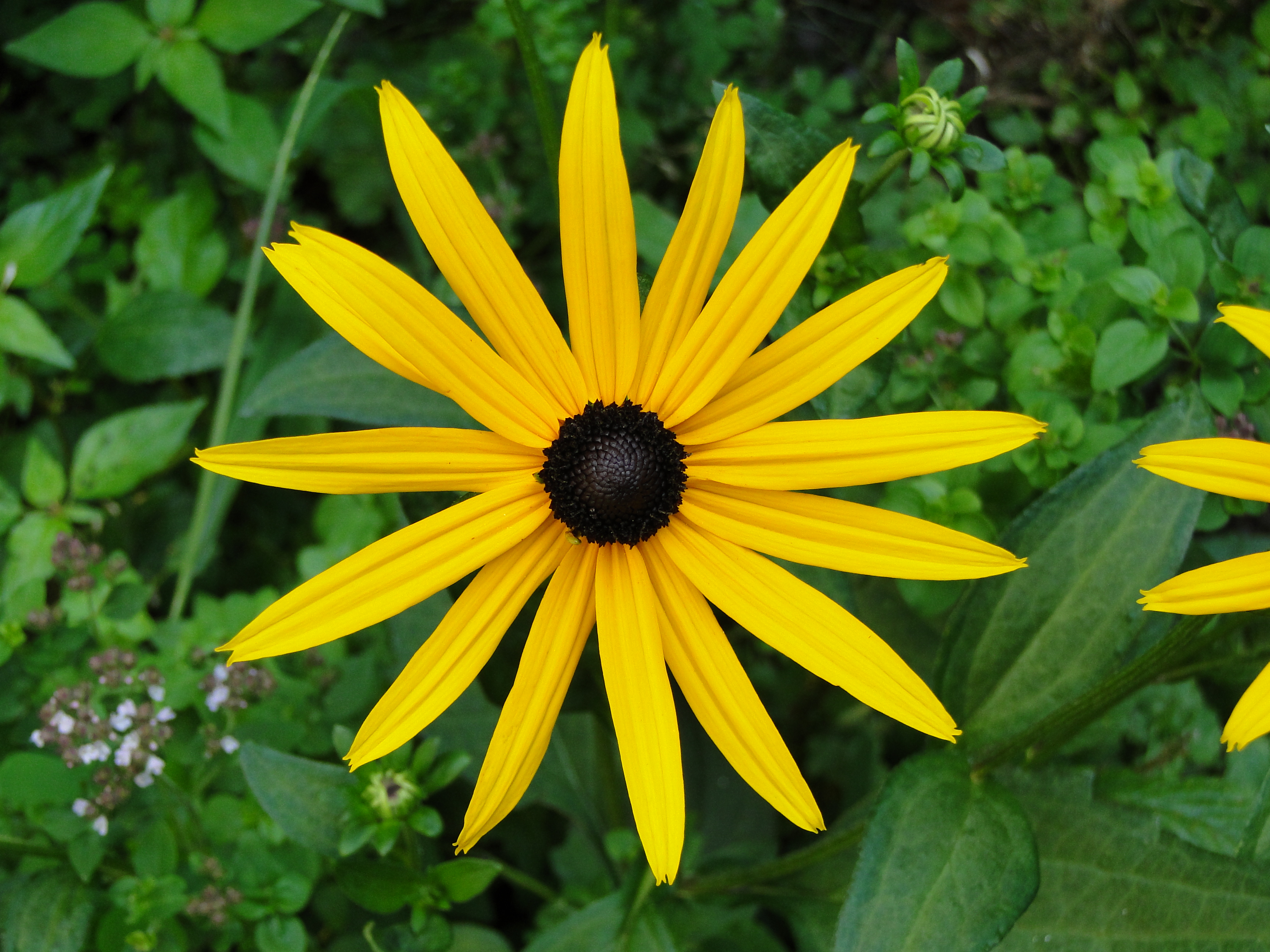
The “Rising Sun” Rudbeckia plant (aka black-eyed Susan) began small with only a few flowers and now it has twenty, with more buds opening! I love this plant. And the bees like it too. There is a little bee crawling on a yellow petal in the photo below. I also found one sleeping on one of the big petals. The flowers are long-lasting. I need to find out how to propagate this plant. This one came from Lindley’s Nursery in New Smyrna Beach.
While shopping at the plant nursery, I’m drawn to plants that already have bees all over them. It doesn’t mean that bees will immediately come to the same plant in my yard, but at least I know it’s possible. It can take a while for the bees to appear when the yard has been relatively bare of flowering things.
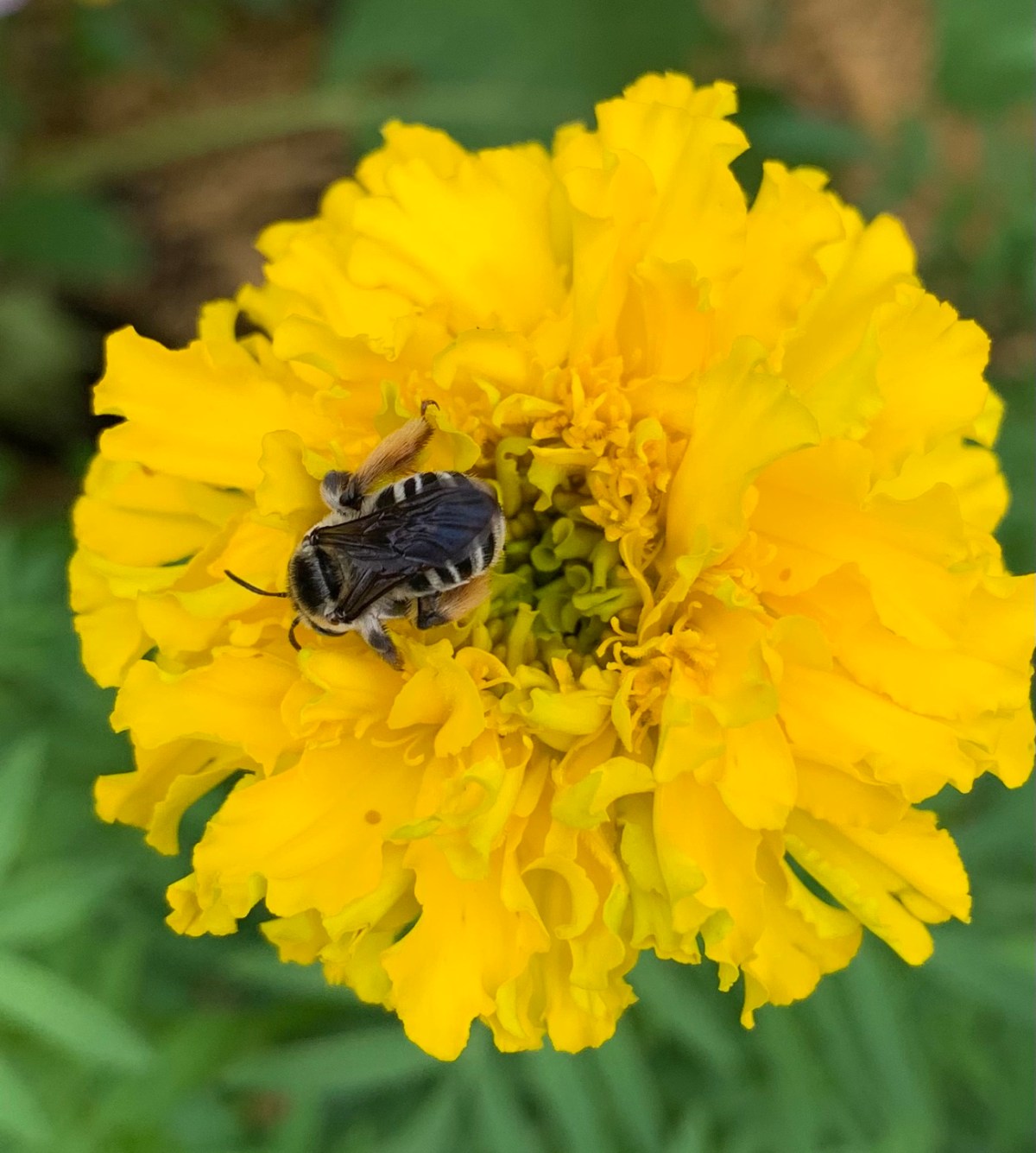
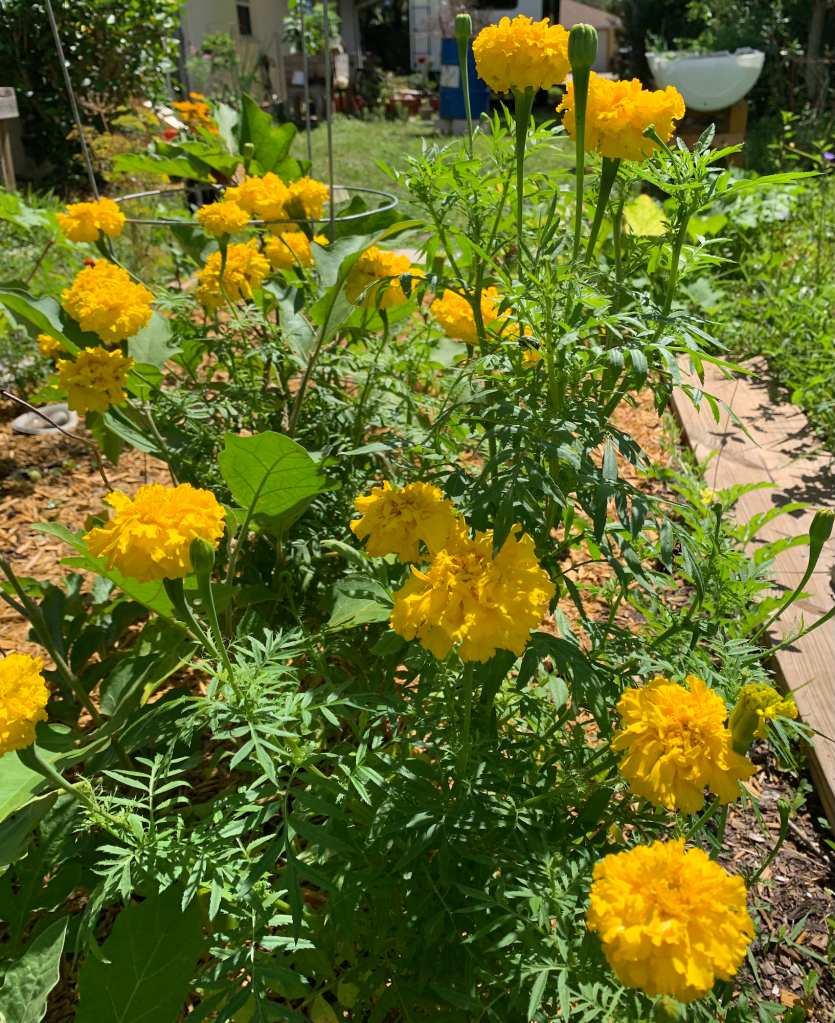
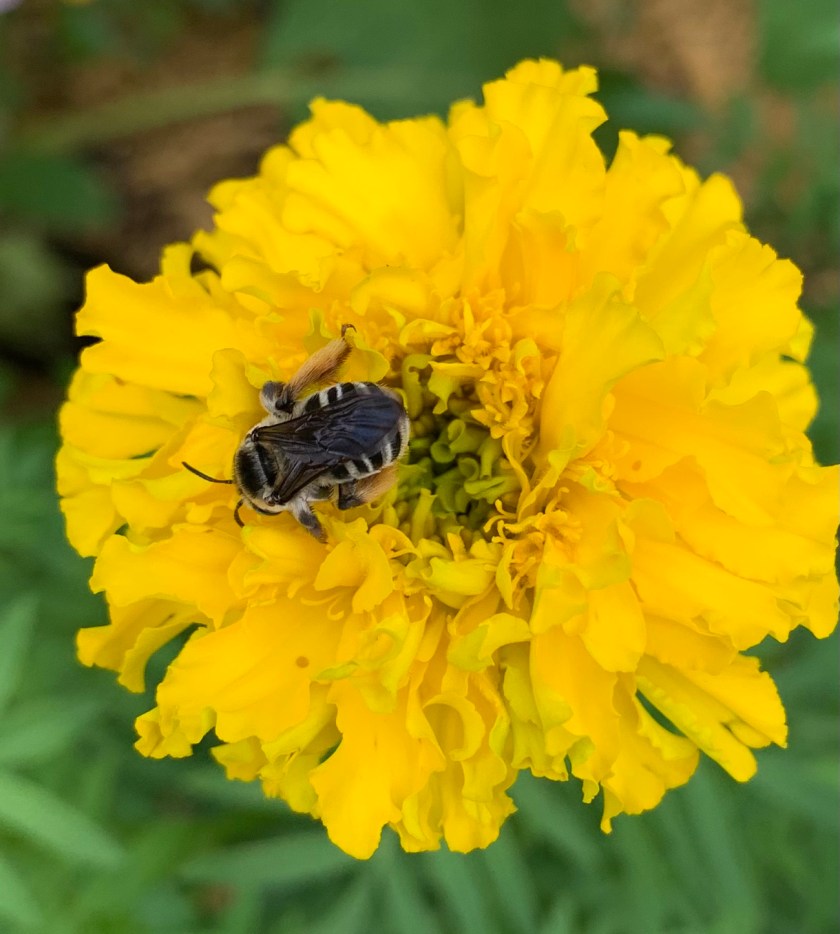
Last Spring I bought Marigold seeds and had quite a few flowers growing. I saved the seeds and planted them in my vegetable garden (and elsewhere) to have these beauties spring up. Marigolds are not big attractors, but I do see bees and butterflies on them. They are better known for their usefulness in keeping garden pests away – and that includes mosquitoes.
This pink flower is blooming on a Cosmos plant grown from seeds saved last season. I wish I had more of these growing in the landscape.

What Florida Bees Need
The University of Florida IFAS Gardening Solutions page “Gardening For Bees” has a wealth of information. Florida has a lot of bee species and some (29) that are only found here.
I learned that to keep bees happy year round, my yard should have at least three plants flowering at all times! This should not be difficult when trees, shrubs, weeds, and vegetable flowers are included. And of course we are talking about organic gardening where no pesticides are used.
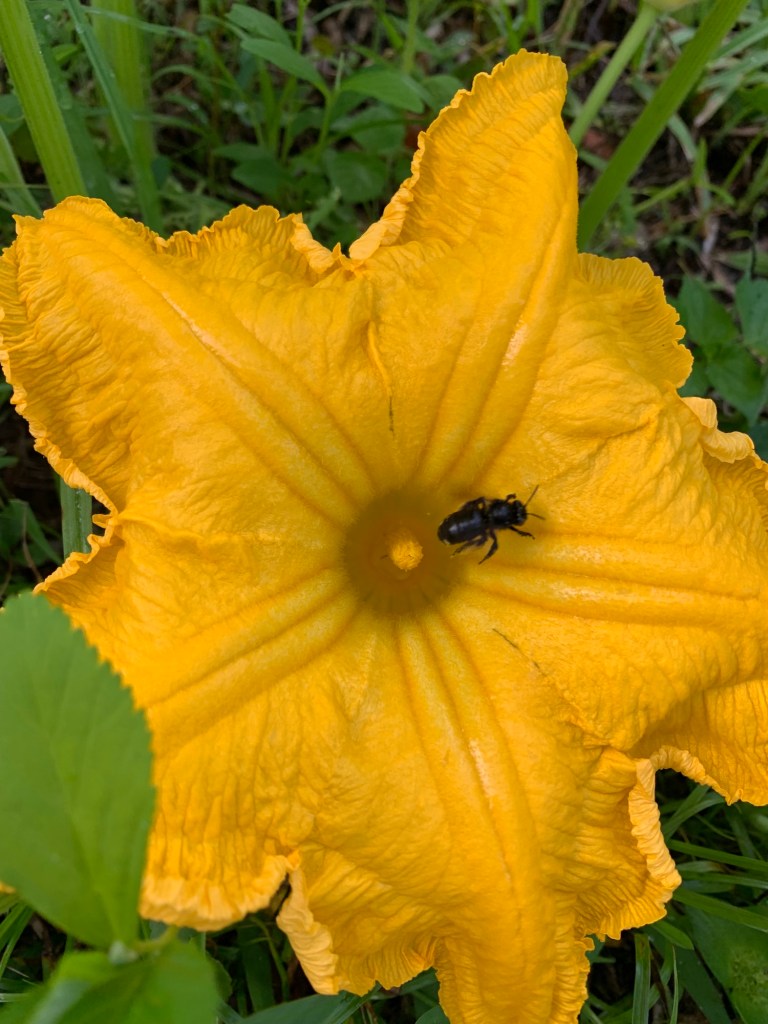
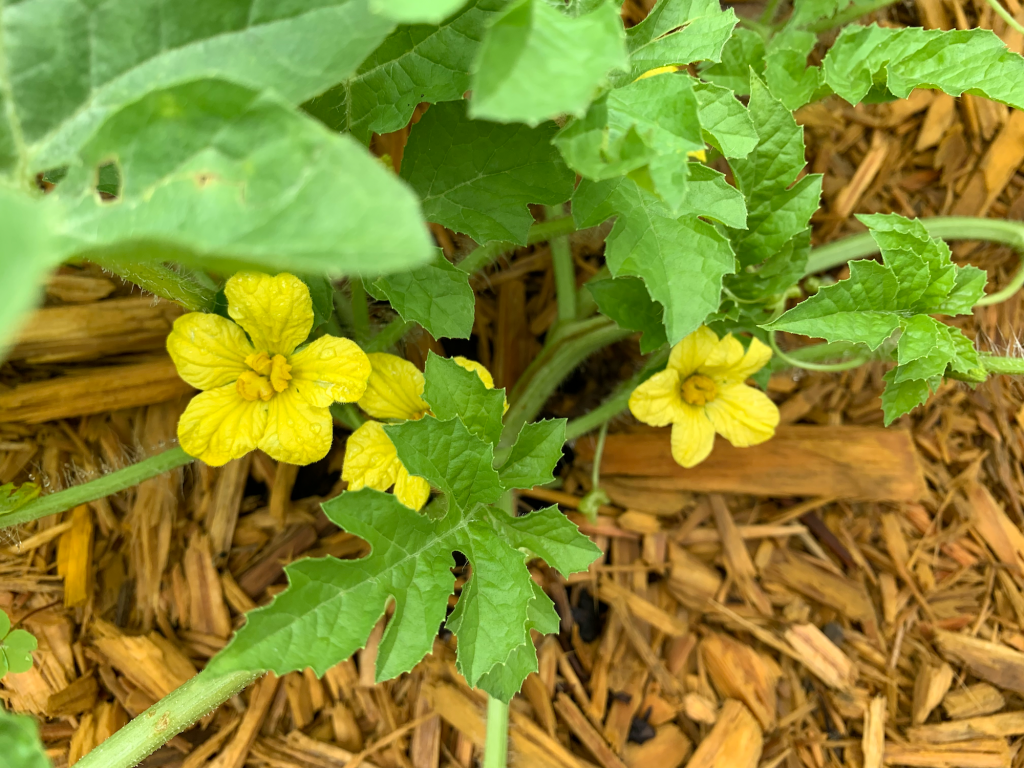
According to the section about choosing plants to attract bees, the Florida article notes that bees prefer specific flower colors. Yellow, white, blue and purple flowers are best for attracting bees. This makes sense when you think about vegetables – yellow flowers on tomatoes, watermelon and squash, with white flowers on peppers, blueberries, and onions. You will notice that most of my “bees on flowers” photos on this page are yellow!
Each morning I can hear bees buzzing among the watermelon vines in search of the little yellow flowers. I do have a few watermelons growing on each of the vines, so the bees are doing their job. They are too quick and busy for me to get a photo!
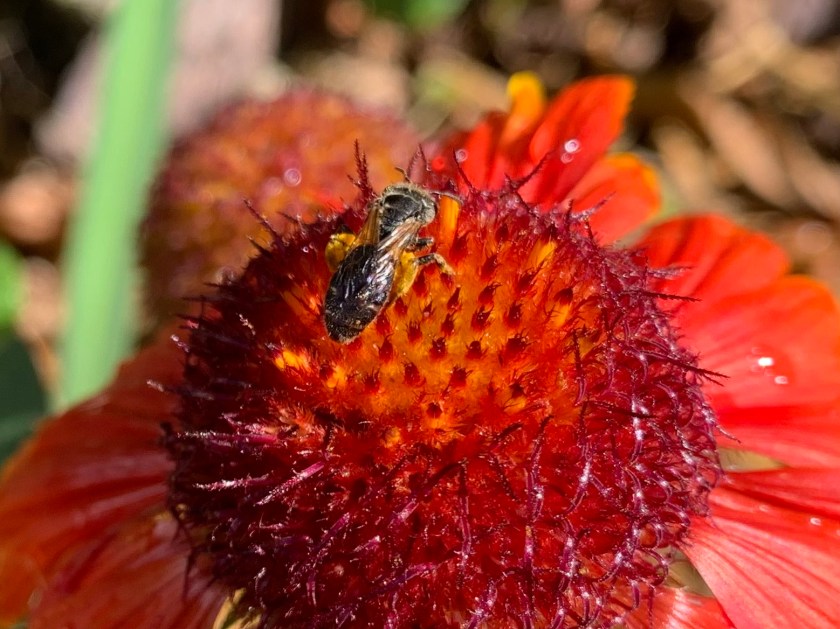
This little bee was having a rest on top of the puffy red-orange Gaillardia flower. He was not moving which helped me get this close up shot. According to the UF gardening site, bees can’t see red! What does this bright, puffy flower look like to the bee then?
I am only just beginning to fill my yard with pollinator plants. See the link below for more ideas.
I’m also learning about the plants and flowering weeds already growing nearby. My new philosophy is to let some of those weeds grow, like the prolific Richardia ground cover shown below.

When I look at all these bee photos, which were taken over the past months in my yard, I’m amazed at the different varieties of bees. I need to begin paying closer attention as my flower offerings increase. There is always more to learn.







 Hydrangeas Blue