
While dashing through the local nursery, I spotted this pretty yellow flowering plant. It was a Rudbeckia called “Rising Sun”. It had a couple of flowers and a few more buds. It went into my new little flower garden.
In a Nutshell
Rudbeckia is a perennial. It should be dug up and divided, once it is large, to propagate. It is easy to grow, after making sure it has plenty of water in the beginning. Grow in full sun, deadhead old flowers, and enjoy watching bees visit the flowers.
When planting, I added some bone meal and fish fertilizer along with compost to the hole. I do that generally for all transplants. I planted the new garden in May, so it was hot, but not horrible. I made sure to water the new plants every morning because we were getting no rain back then. I added mulch to help.

Because I went out every morning to water, it gave me the opportunity to view changes. It seemed to bloom with at least one new big yellow bloom each day! The plant grew and bloomed like mad, and is now just gorgeous.
Bees Love Rudbeckia
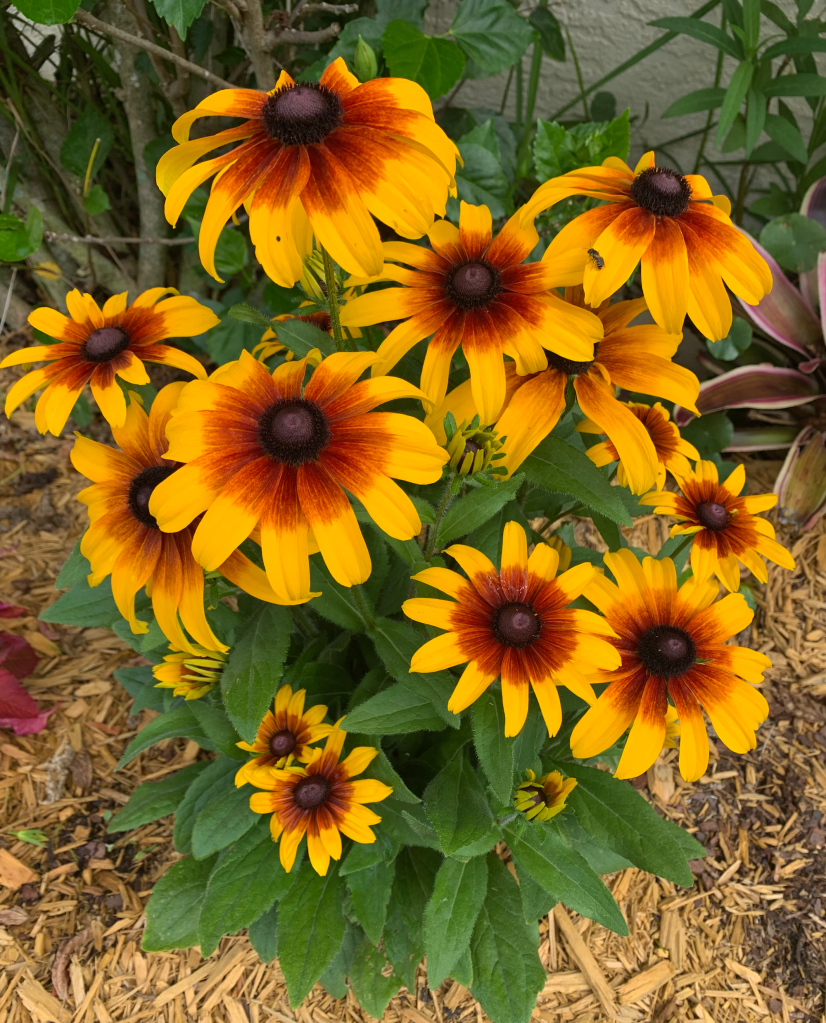
I was hoping to attract bees and butterflies and this plant is perfect. Each morning I see little bees crawling around the flowers. One day I saw a bee sleeping on one of the petals! He was resting or something because he was not moving, but he was not dead. On the photo above you can see a bee on one of the big flower’s petals.
Deadheading and Propagation
Rudbeckia needs to be deadheaded. As soon as I read this, I went out and cut off the old blooms. I brought them inside to see if I could get some seeds from the center when they dry fully. Deadheading helps the plant put energy into creating new blooms and not caring for the old, wilting ones. Many flowering plants benefit from this.
My Rudbeckia even survived us having a new roof installed. If you have ever gone through roof replacement, you know what a mess it makes. I was so worried about my garden and yard, but most things came through okay.
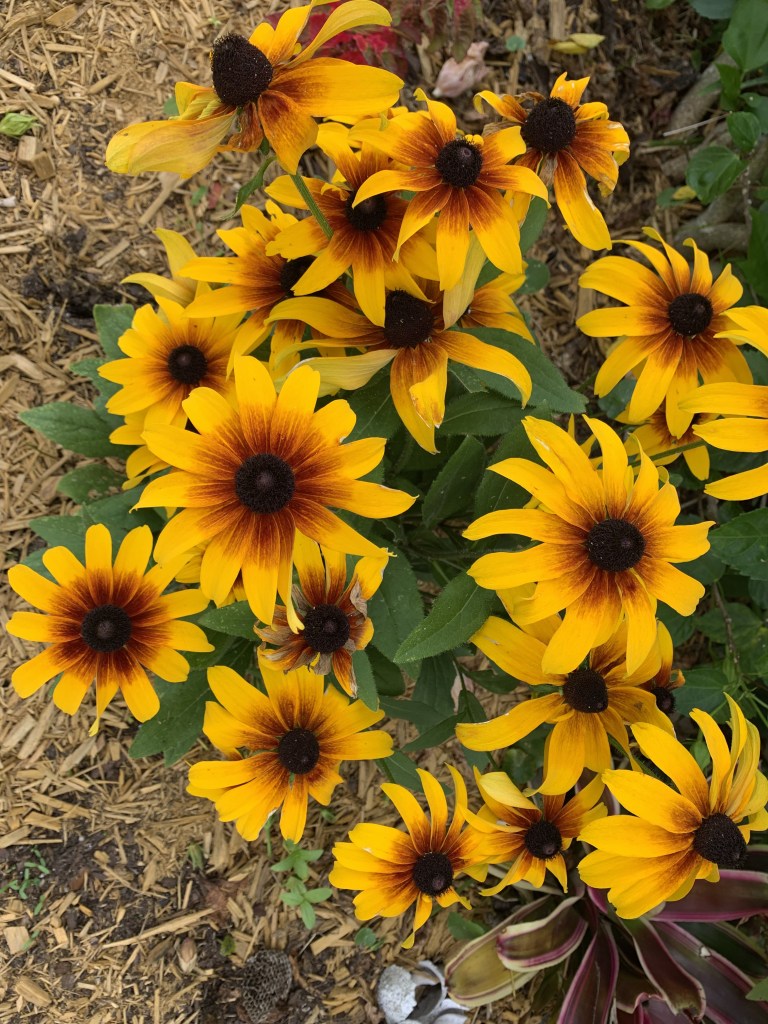
Rudbeckia spreads by rhizomes underground. In other words, when it gets too full, it can be dug up and split into two or more plants. This is one way to propagate. Every 4-5 years or so, or when the plant is really full and not growing as many flowers, it means it needs to be divided. This is similar to peonies. I remember doing just that to divide my beautiful peonies when I grew them in New Hampshire.
Also, apparently the rudbeckia can grow from seed. Each flower will drop little seeds from that center brown “eye”. So the flowers I cut will be saved to see if I can get seeds.
I would love to link to this info, but all the sites I visited had WAY too many ads! I won’t send my readers to them, but if you search for this info, you will find it elsewhere.
I’ve never grown the rudbeckia before, but I truly love it. At some point I will buy more of them to put into the landscape. This plant came from Lindley’s Nursery in New Smyrna Beach.




 Hydrangeas Blue