When I wrote this blog post, over two years ago, I had read an article about Tropical milkweed being horribly bad for Monarchs. It seems that is not completely true. As I’ve continued to learn about growing milkweed, I think the Tropical variety can be used as a good stand in if native milkweed is not available. But it must be cared for correctly.
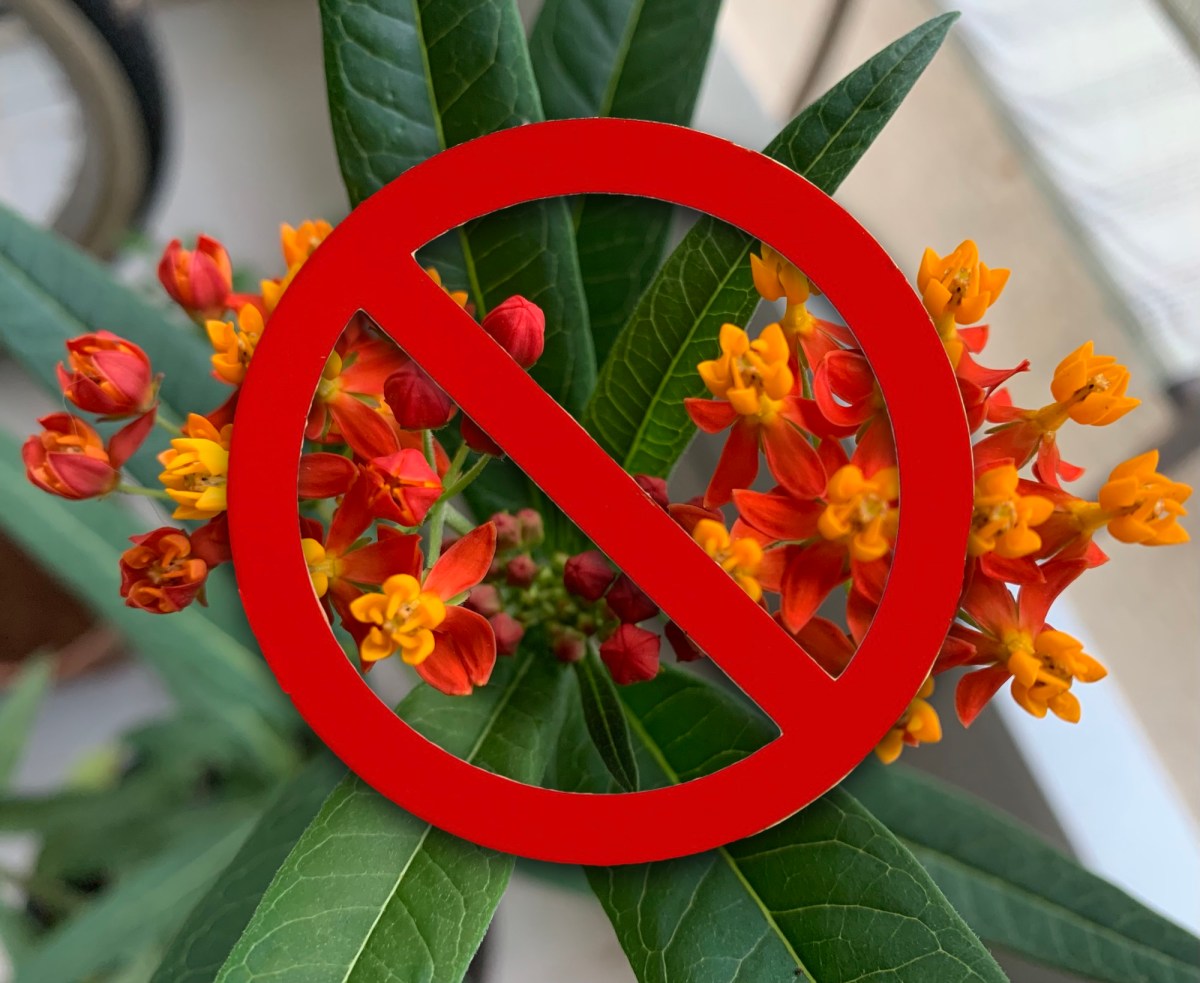
Back then: On a trip to the Farmer’s Market, we found some plants for the yard. I was happy to find this plant at the market. It cost me $15.00 but I was very excited to find such a wonderful, big plant to help the monarchs. What I didn’t realize is that it is NOT native. I bought Tropical Milkweed which is becoming a problem in the south.
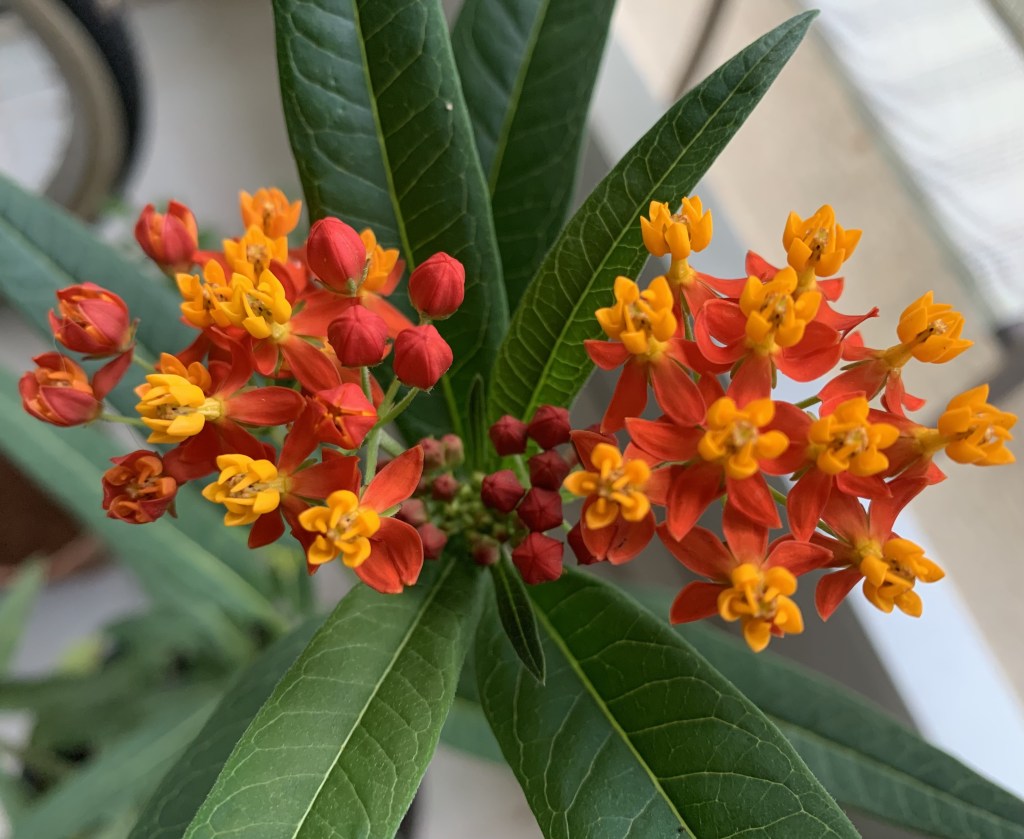
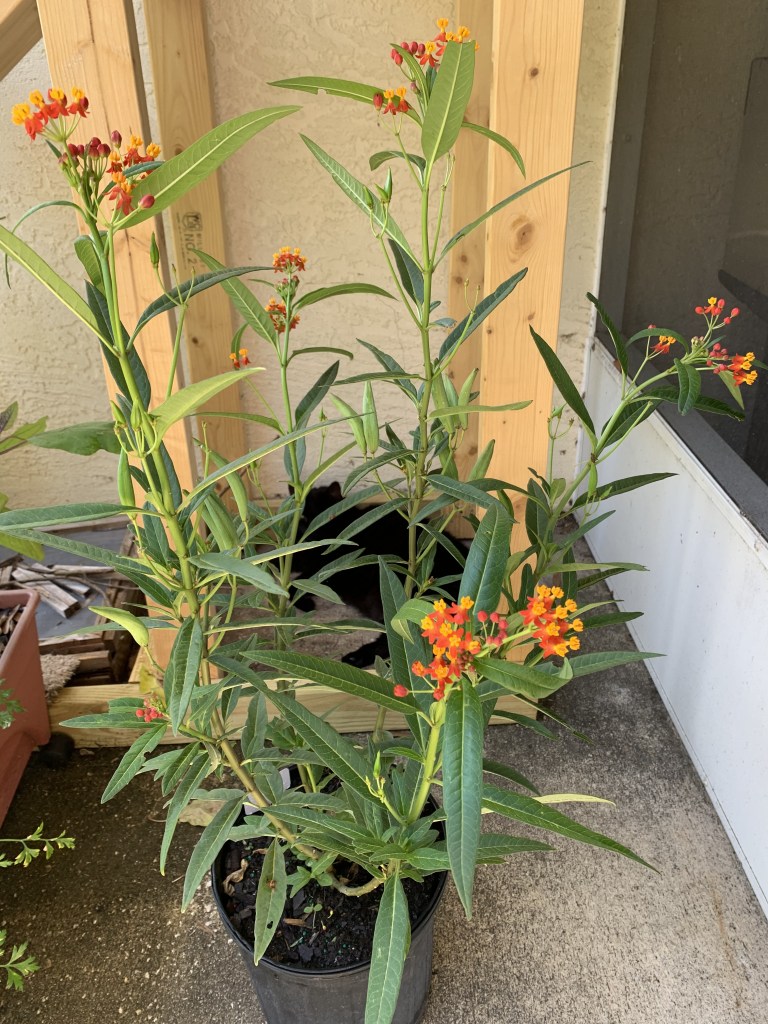
Two-colored flowers (red and orange/yellow) with pointed leaves – this is the non-native Tropical Milkweed. But, the only reason it seems to be a problem is that it does not die back in Fall / Winter.

Good Intentions
I want to fill my yard with food for the bees and butterflies (namely Monarchs)… BUT… this is not the right kind of milkweed for my area. When this milkweed plant began to drop its seeds, I looked for information about planting them. I’m so glad I searched for information. BUT, now there is more information.
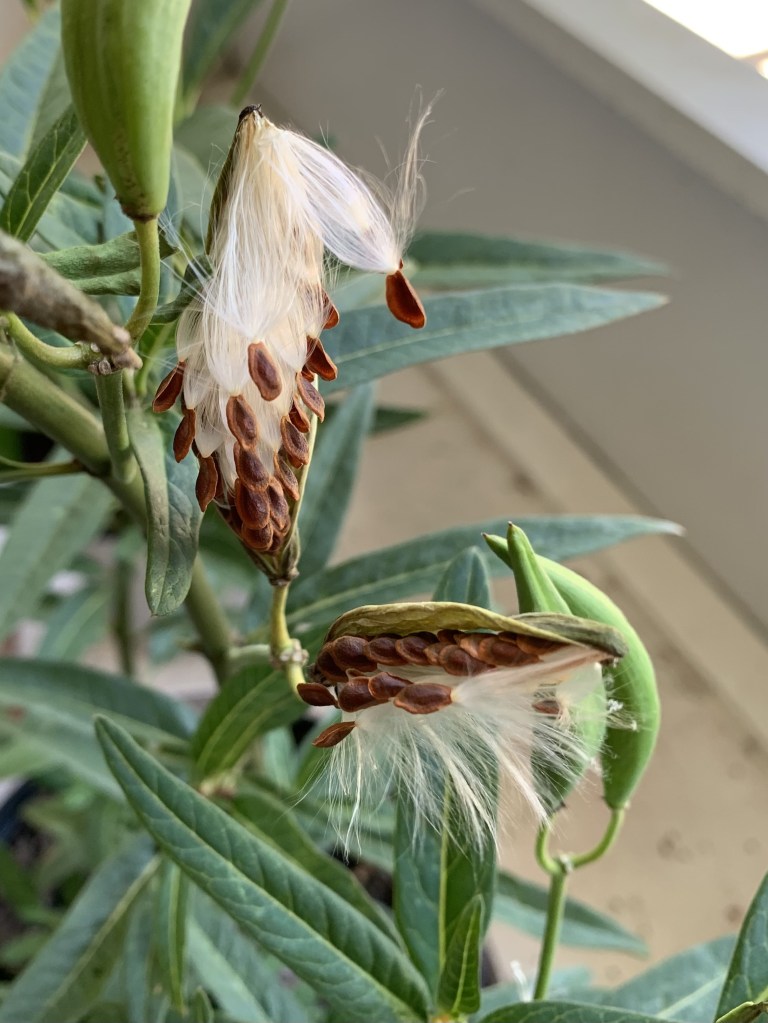
This is when I realized that I have the wrong type of milkweed. Wrong meaning not native. It was time to learn more about milkweed.
Updated Info on Tropical Milkweed
Tropical Milkweed (Asclepias curassavica) is NOT a native Florida plant. It is native to Mexico. It’s always best to plant native. However, I have not easily been able to find nice, native milkweed plants at local nurseries and garden shops. Tropical milkweed is easy to grow, and it grows fast. No wonder plant sellers prefer this one.
If you have tropical milkweed, the most important thing is to cut it back by December. It won’t die back on its own in many locations. This keeps the Monarchs from migrating. If they stick around and continue to breed, the caterpillars can develop a lethal parasite (OE). Read the article about this at IFAS for more info.
I doubt that many sellers of the tropical milkweed even realize it is not native to Florida. And many probably don’t understand the need for cutting it down.
If you are willing to cut back the plants in winter, and remove the seed pods so the plant won’t spread outside the yard, Tropical Milkweed should be okay to grow.
When is it Okay to Plant Tropical Milkweed?
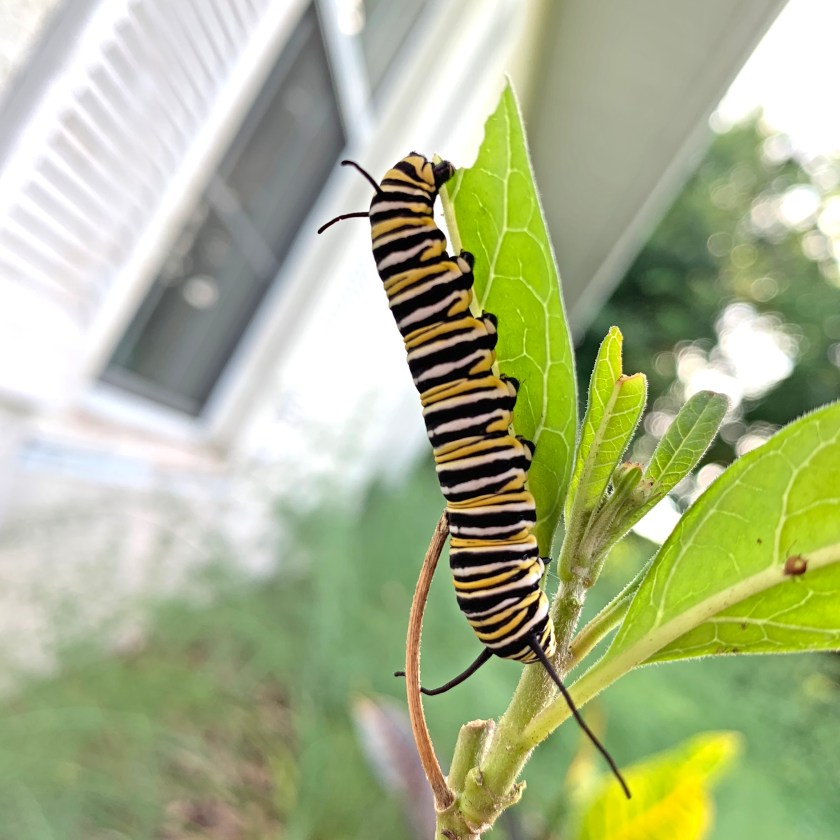
So what if you have this milkweed growing in your yard? After I removed my Tropical milkweed plants, two more plants grew – 2 years later. Right away I began to see caterpillars. I knew this was the wrong milkweed, but it was feeding those hungry caterpillars. So, is it better to help the Monarchs even if the milkweed is not native? I say yes.
I now believe that having some tropical variety can be good to supplement the native types. Native milkweed is hard to find to buy. Certain types need sun and lots of moisture (swamp variety). Others need sun and dry conditions (Sandhill). Milkweed is meant to grow in Florida’s diverse ecosystem, which is vanishing. It should not be grown in a yard that is sprayed with chemicals.
All these things make native milkweed hard to find. With roadsides mowed, and lawns taking the place of fields, butterflies are now endangered. If we can help by providing some plants – native or not – I say let’s do it.
Right now I am trying to grow native milkweed for my yard. I have planted seeds, and purchased milkweed seedlings online. My goal is to have a variety, with many native plants (mainly) for the butterflies.
Florida Native Milkweed Links
- Sandhill Milkweed – Big, dark leaves and pink flowers. Likes to grow in sand and doesn’t need lots of water.
- Orange Butterfly weed – Not preferred by monarchs (so I’ve read) but great for butterflies and other insects.
- Swamp Milkweed, white / pink – Moist, well-drained soil. Full sun to part shade.
- Whorled Milkweed – blooms longer, into Fall, and can supplement if other native milkweed has died back.
Find Milkweed Seeds and Plants Online
You may find what you want, along with other Florida native plants, from this list of growers / nurseries on the Plant Real Florida site.
I have purchased seeds from Johnny Butterfly seed. They have sprouted at this stage, but are still tiny.
- Plant Real Florida
- Gardening Solutions – University of Florida
- Florida Native Plant Society
The Monarch Story – IFAS
Keep reading the blog…
Thank you for sharing!


 Hydrangeas Blue
7 thoughts on “Fill the Yard With Milkweed – The Right Kind!”