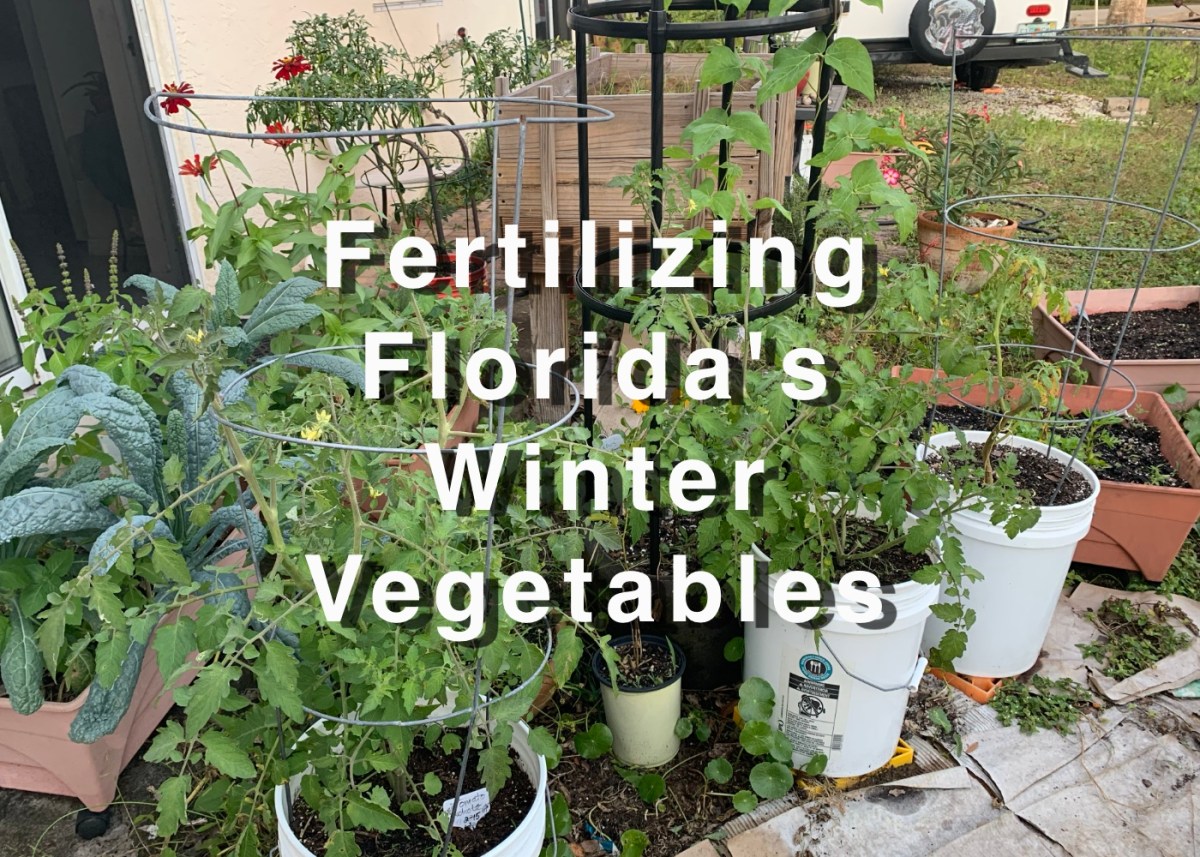
Here in central, east coast Florida I am a bit behind on the Fall harvest. This means that I am harvesting (sweet potatoes) and planting at the same time. During the upcoming winter growing season I need to up my game when it comes to fertilizing the vegetables.
Adding fertilizer is usually a random afterthought in my yard. I know a little about fertilizing, but not enough to know exactly what each plant needs and when. This could be why my carrot and onion crops always turn out to be less than what I had hoped for.
Preparing the Soil for Planting Seeds
I do work to prepare my beds before planting seeds, and I grow almost everything from seed. To do this, I usually add some bone meal, along with my homemade compost to an existing bed. Also, coco coir is added if I have it. This year I do.
Now that I have some larger raised beds all crops are being planted in them. No more vegetables will go into the ground. Well, some herbs (dill) will go in the ground, but my carrots and onions are going into raised beds. It is much easier to control the soil. Also, I won’t accidentally step on them.
Growing Carrots in Florida
According to this article about growing carrots using organic fertilizer, some compost or bone meal should be mixed into the soil two weeks before planting. During growth (3-4 weeks later), a liquid fertilizer will help. Later, as the plants grow some more, add another fertilizer application. This is a bit late to learn for me, but I will fertilize my carrots as they grow.
This year some of my carrots will grow in fabric bags. Space is limited as I am also growing a rotating crop of green beans. As the bean plants die, it will free up the beds for more planting.
Bone meal will work to enhance the root system of the plants and I honestly like to add it whenever I plant anything. When I add my own compost, it is full of small earthworms. I enjoy thinking of a new family of worms crawling throughout the roots of my veggies.
Living in Florida means I have to ignore all suggestions about when to plant, because we do not plant at the same times and the northern folks. In my location, Fall (October and November) are good times to get the carrot seeds into the ground.
Growing Bulb Onions
The bulb onions were planted before I left on my trip north and when I returned the beds were full of weeds! Grass to be exact, and I know it was my own fault this happened. I added some grass clippings to my compost and some of the grass had seed heads. This is a big mistake, so don’t do it! I managed to pull up all the weeds and tuck the small onions back into the dirt. I’ve found that the onions will still grow even if the roots are disturbed.
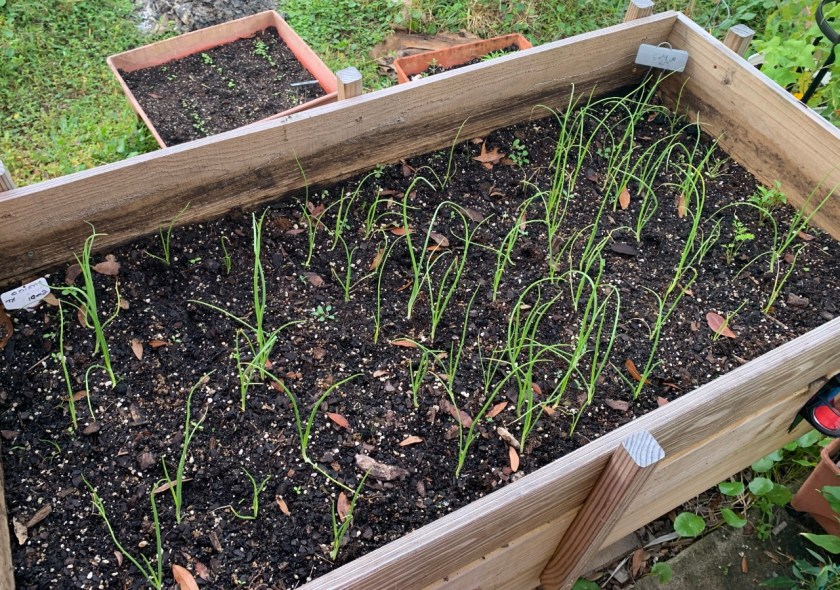
Onions need green growth that will in turn create nice big onions (hopefully). In order to make that happen, the tiny seedlings will need some nitrogen rich fertilizer.
Last year my onion crop was sad. This year I will do better.
Figuring Out Numbers on Fertilizer
Bags of fertilizer often have the three numbers listed prominently on the package which represent Nitrogen (N), Phosphorus (P), and Potassium (K). The first number (N) is for upward, green growth. The middle number (P) is for enhancing the root system. The last number (K) is for general all around help for the plant. These are ratios of amounts in this bag.
First you need to know what the plant needs at the specific time the fertilizer will be used. When planting seeds, there is obviously nothing happening except for sprouting. I use plain bone meal (paid link) at this point.
As the plant grows it’s best to try to accommodate each type of vegetable. Tomatoes always get more fertilizer in my yard because I know they are hungry plants. My pepper plants also get good doses of fertilizer especially when they have flowers and peppers on the plants. These large plants get a lot of water because they need it with the blazing sun drying things out each day.
Knowing what a plant needs and when, is the trick. For instance, I know that too much nitrogen is bad if I need vegetables to form. Instead I will get a plant full of great greenery and few veggies. But I also need great leaves, so I would buy a good ratio of N and P.
My bulb onions on the other hand need to form nice green stems. This way the plants have a way to create a big, healthy onion. So I need a high nitrogen fertilizer.
Special Fertilizer Needs and Fixing Problems
Some plants need an acidic fertilizer. I used to have a blueberry bush and that is one that needs acid. Azalea bushes, camellias, and gardenias also need this type of fertilizer. I used to grow them all.
Now my yard contains mostly vegetables. This is what I focus on so I’m interested in the right types of fertilizer for the main bulk of the veggies I grow.
Sometimes if leaves turn yellow or fruit falls off, it can be fixed with the right fertilizer. It might be worth a try.
Tomatoes
Tomatoes are not really a winter veggie, but they are not a summer plant here either. I have yet to figure out how to succeessfully grow tomatoes where I am. Advice is to plant them in February or March, but I can’t start them from seed at that time of year – it’s too late.
So, I planted seeds at all times of the year. Recently I bought new tomato seed varieties from Cody Cove Farms and they are doing well. In fact they were doing really well until I noticed the leaves getting spots. It turns out this is early blight!
Both tomato plants below are ESA tomatoes grown from seeds purchased at Cody Cove Farm in Florida. They will give me yellow cherry tomatoes.
The tomato plants below were planted in September. It is now November 9th. The plants look very healthy although growth is sporadic where some plants remain smaller than others.
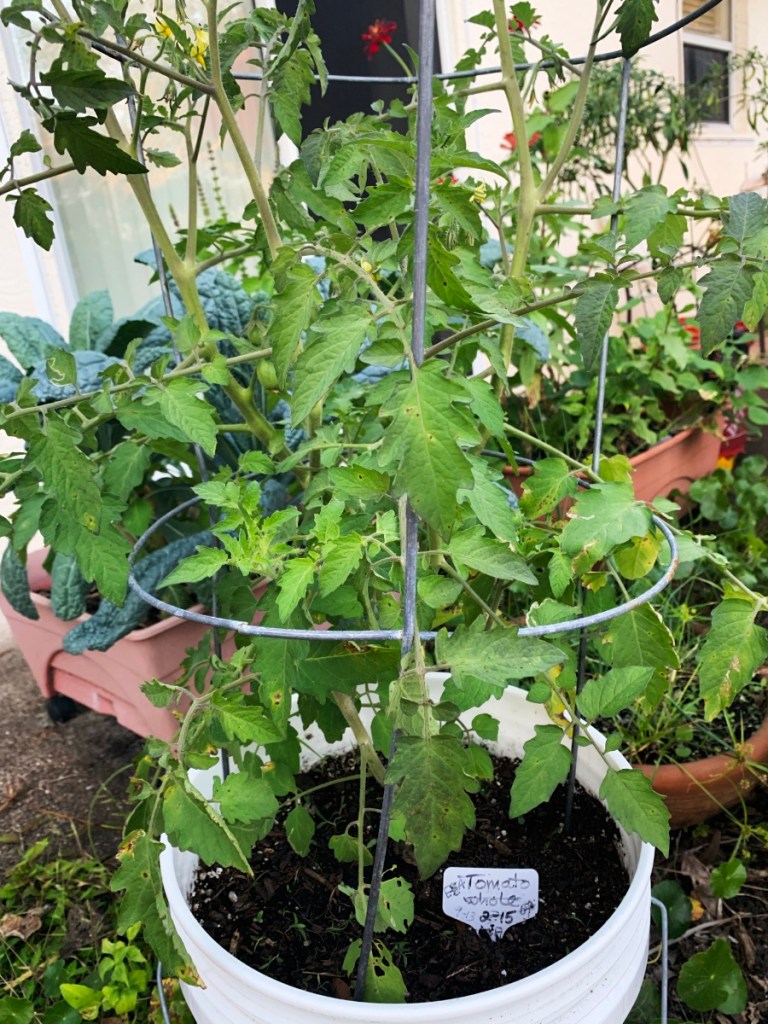
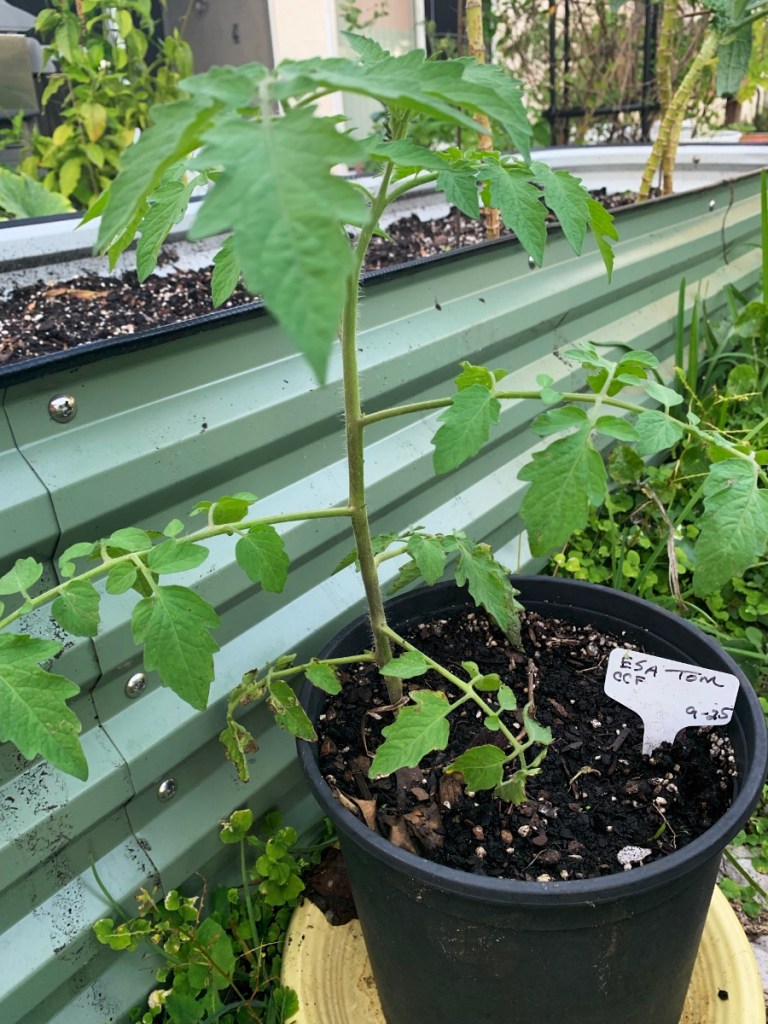
Here is the problem: The tomatoes like this fall weather but colder days are coming. I may have to move the tomatoes into the porch in January. That means I have to clean the porch and make space.
They really want to grow in Spring – which is months away. But Spring passes quickly and turns to heat which they don’t love either. My plan is to have a few already growing – keeping them alive over winter and hoping they will grow like crazy in February. I also have more ESA seeds which can be started in December to grow indoors.
Fish Fertilizer Is a Quick Fix
Take a look at a plant and try to figure out what its problem is. Yellowing leaves on tomatoes is a big problem I have. Since nitrogen benefits leaves, adding more of a nitrogen rich fertilizer may fix that problem. A liquid fish fertilizer is great for quickly getting the nutrients to a tomato plant. I was in the habit of using this type of fertilizer regularly when I live in New Hampshire, but raccoons were always prevalent in my Florida yard, and they love fish! So, I got away from using it.
Now that the raccoons no longer have woods to visit next to my yard, I don’t see or hear them. I don’t know where they have gone because there is no wild space left in my neighborhood. Maybe I can begin to use the fish emulsion fertilizer again. I just bought a bottle of Neptune Harvest (paid link) and I’ll see what happens.
I don’t worry too much about overwatering tomatoes where I live. Each day is very hot, and without rain the soil will dry out quickly. When in doubt, I use my trusty water meter. I love this thing.
Thank you for sharing!


