
Getting Ready to Grow It

"Grow It" Gardening Postage Stamps
“Grow It” Gardening Postage Stamps

After the super mild winter (thank you God!) we are already seeing signs of Spring here in the northeastern US. That mean getting ready to grow our veggies. Many people will be starting their seedlings soon, if they haven’t already. I believe most people wait until April since our last frost date is June 1st. Of course after having temperatures of 60 and even 70 in early March, gardeners will be chomping at the bit to get the ground planted.

It’s going to be tough to wait if this fabulous weather sticks around for long. Already I see my tulips poking up from the ground. Last week I noticed that the Lenton Rose has lots pink buds down among the leaves!

Usually the ground is still covered in snow at this time of year. But the ground was barely ever totally covered in snow.   That is very unusual.  So the plants are most likely ahead of themselves with the soil soft and moist instead of frozen solid.

I will not be able to do much gardening this year because I am selling my house. I can’t move until at least June, so that will give me time to see most of the perennials bloom (Peonies!) before I have to say good-bye to the yard I have worked on for the past five years. And there are never guarantees that a house will sell quickly, but I am hoping the good price I am asking will mean a quick sale.

I’ll miss my northern yard, but I’ll have pictures to remind me of the fun I’ve had watching my hydrangeas bloom each year.  And I will still blog about gardening, but it will be from the south, where gardening is a bit different.

But I will still be thinking of gardening, and creating garden related products for my DustyFarmPaper store at Zazzle. The garden peppers postage stamp up top is one of the new products. And have you heard that the price of postage will actually drop soon? I don’t’ know about you, but I still use snail mail quite a bit. I will be making more vegetable themed stamps and other products too. In fact I have begun a collection just for gardeners.

Once I get settled into a new place in Florida, I will be writing more, but until then I have the fun job of packing to keep me busy.  Thanks for reading!

Pinky Winky Photos to Cheer Us in January

What better time to share my end-of-summer flower photography than in the freezing cold month of January?  I began this post back in September but got side-tracked.  So now I can post my photos of one of my favorite flowers.

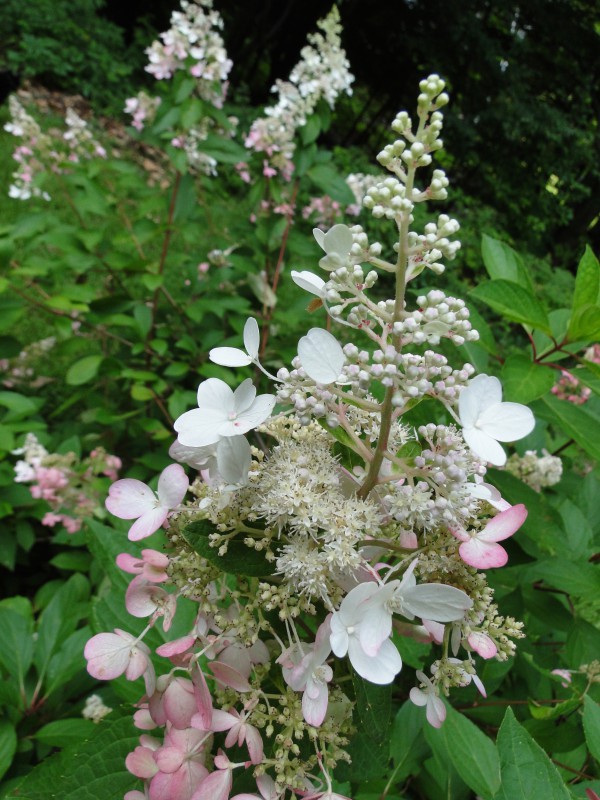
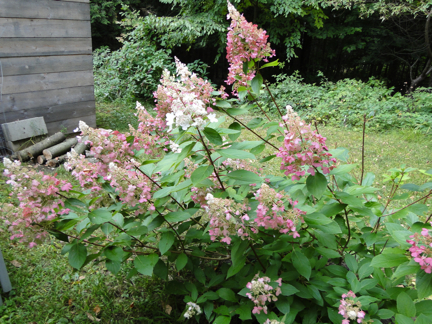
I happen to love the bloom of the Pinky Winky shrub. The flower is so interesting with it’s combination of open and closed petals in colors that range from dark pink to white. The cone shape grows longer and longer as the coloring changes.

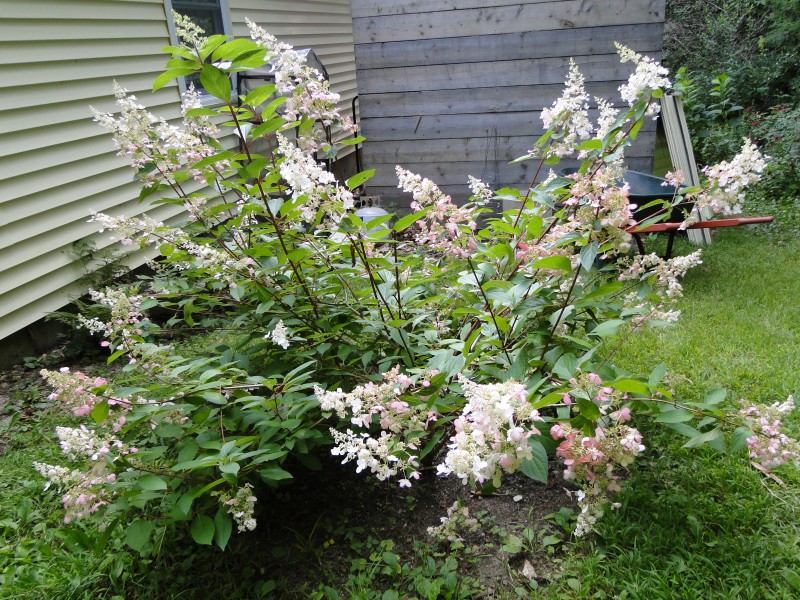
This perennial has consistently created the most blooms of all the types I grow. We’ve had a bit of a drought here in the northeastern US over the summer, but the plant never wilts. Bees love the flowers of the Pinky Winky too. For this reason it might be best planted away from sitting areas. I don’t mind bees, but some people like to avoid being near them. I feel good having such a lovely bee-feeder in my yard.

pink hydrangea
Pinky Winky Flower

I had a tree fall and get stuck up in neighboring trees and I had to have it taken down for safety reasons. It was near my driveway, and when the guys cut it and pulled it down, it landed partially on my Pinky Winky! A branch broke off, and a few flowers, but otherwise the perennial survived. This poor plant always seems to be in the wrong place.
hydrangea paniculata pinky winky
Now that summer is behind us and we’re in the midst of winter, it’s nice to be reminded of what waits for us in spring. Seeing the first green stems burst through the ground, and early flowering plants like the Lenton Rose, remind us of the big hydrangea blooms to come.

pink hydrangea macro

Stages of the Limelight Hydrangea Flower

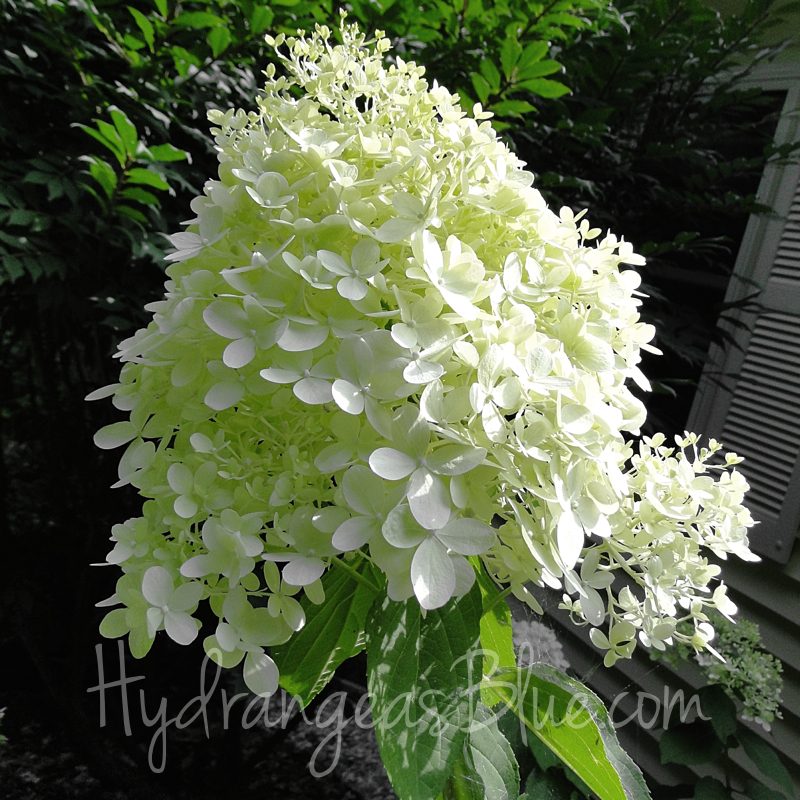
The huge blooms of the limelight hydrangea change from white to pale green to pink.

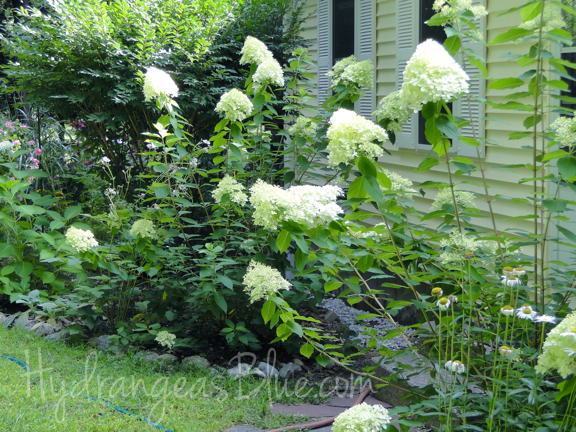
One hydrangea that has cone-shaped, panicled flowers is the limelight variety.  I’m using my own photos on this post to show the stages of the limelight hydrangea flower, as it grows from spring through the fall season.  All pictures on this page were taken from the same flowering shrubs in my front yard, but throughout their growth period.

Hydrangeas can produce some of the most spectacular light green flowers, and the limelight does not disappoint. Brides love this flower to accent any wedding theme, and it’s often chosen to create stunning centerpieces.

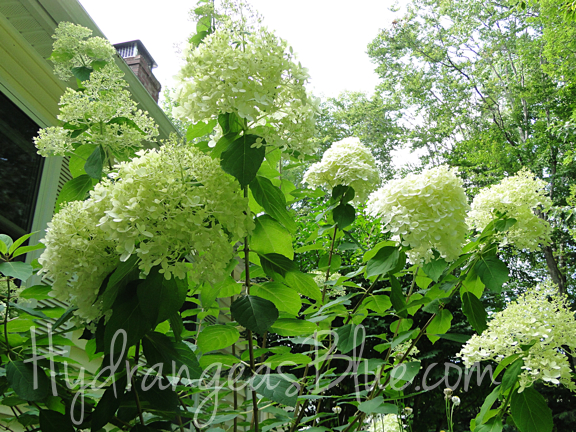
In spring, this perennial sends out tall stems.  Eventually buds form, with many little clusters of flowers shooting out along the end of the branch. This is the panicle, which makes this a hydrangea paniculata.   These tiny clusters will each grow and merge to form a resulting, huge single bloom.

panicle hydrangea limelight
Panicle Hydrangea Buds

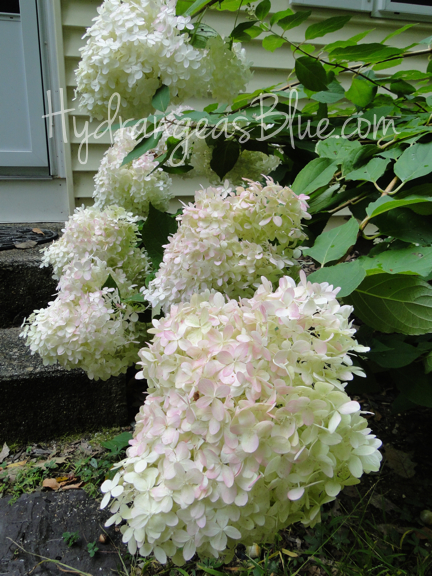
The flowers are the greenest when they are first growing. The buds open from the bottom to the top, creating a flower that is a combination of soft white to light green.

limelight hydrangea flower
Filling In, The Flower Expands

My limelight shrubs are fairly new to the yard. They were planted in 2012, and I am still learning about how to prune and grow them successfully. Fortunately hydrangeas are very hardy, and even if you do something ‘wrong’ they will continue to grow nicely.

white limelight hydrangea
White Hydrangea Flowers

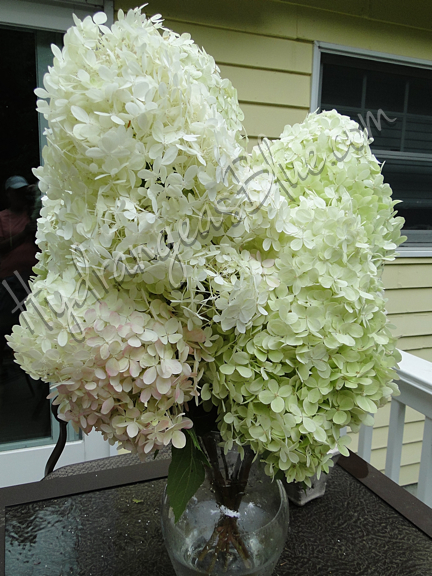
Once the blooms fill out they are mostly white, and big and puffy looking. This hydrangea creates some of the most stunning blooms you’ll ever see.

As summer passes, the white flowers begin to turn pale pink and become darker during the autumn months. They can be cut to use in an inside arrangement, or left to dry on the bush (see my last photo on this page).

white hydrangea bouquet
Big White Limelight Bouquet

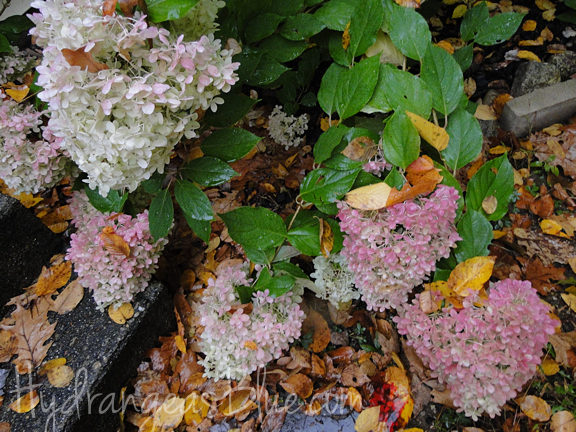
My photos above and below show the pink-tinted hydrangea flowers as they appear in the fall season. The flowers are massive, and the petals that were once a creamy white are now turning partially pale green and mauve pink.

limelight fall flowers
Fall Limelight Blooms

My plants are fairly young. As the plants age, the stems will fill in and become stronger. I’ve seen them staked to hold the flowers upright, as they are heavy and tend to flop downward.

The Limelight hydrangea can be pruned into a little tree, but that takes skill and patience. I have never tried to create a hydrangea tree, but they are stunning accents to any landscape. The flowers hold up well into fall and become dried garden decor.

fall hydrangeas - limelight
October Limelight – Dried Flower With a Late, White Bloom

Hydrangeas are fun to grow.  You just never know what they may do, like pop out a new bloom in October!  When all the other flower heads were dried and brown, suddenly a new white flower emerged from my Limelight (photo above).

I hope you have enjoyed my photos, and maybe I have inspired you to grown one (or more) of these lovely hydrangea shrubs.

Now, would you like to see the stages of the Pinky Winky blooms?

Hydrangeas With Cone-Shaped Flowers

Hydrangeas with cone-shaped flowers are of the paniculata variety.  In my yard I grow the ‘Limelight’ and ‘Pinky Winky’ which are both paniculata grandiflora.  This type of hydrangea can be grown as a bush or shaped into a tree over time.

The flowers are long and sometimes really huge in size.  My limelight bushes have produced some amazing white to pale green blooms that are stunning.  And they did this the first year after they were planted!  Hydrangeas are very hardy and fast blooming.  You won’t have to wait for years for them to produce showy blooms.  The exception to that may be fewer and later blooms after a hard winter.  I have that happening in my yard this year.  (See Pictures of My Hydrangea Plants 2015)

limelight hydrangea flowers
The Limelight Hydrangea in Summer

Last year the blooms on the Limelight hydrangea were huge, and as the Fall season approached, the blooms began to turn light pink. They were just gorgeous.
Because this type of hydrangea flowers on long stems, many people trim them into trees, with one or a few main branches that grow tall with hanging branches.
Do a Google search for the paniculate grandiflora and you’ll see many lovely images. The picture below shows the same flowers shown in the picture above, just later in the season.

cone shaped limelight hydrangea flowers
Late Summer Limelight Flowers Turning Pink

Possibly my favorite, the Pinky Winky is also a paniculata variety which produces white flowers that gradually turn dark pink.
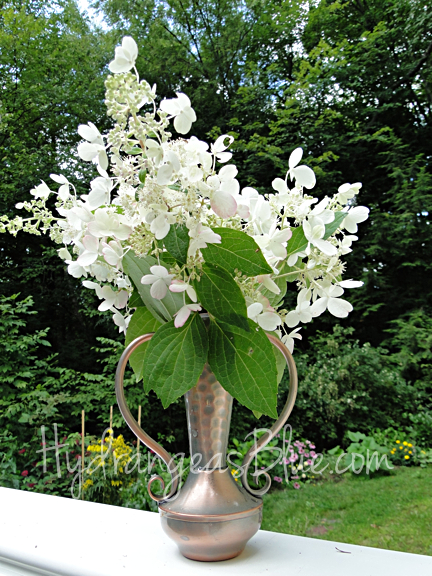
Here is one of my photos of a little Pinky Winky bouquet made up of cut flowers before they turned pink.  Please click this link to see the progression of the bloom growth and color change in the photos on a previous post.

pink hydrangea paniculata
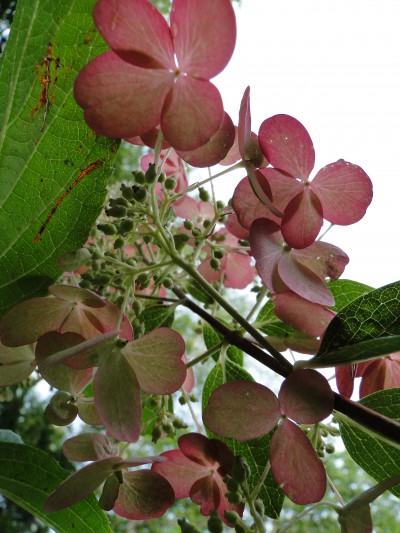
Most flowers are pink by late summer
white hydrangea pinky winky in vase
White Hydrangea, Pinky Winky Bouquet

There are many other types of paniculatas, and the Pee Gee is very lovely with white flowers. I bought one, but it was crushed and never had the chance to grow. I can’t give you a personal account of it, but the Pee Gee is loved by many hydrangea fans.  And there are many more.  Search for what will grow well in the climate where you live, and be sure to plant the paniculata hydrangea in a space that can accommodate it’s growth.

Freezing Parsley For Winter Use

I grow parsley in my summer garden (New Hampshire) every year.  It’s a healthy herb that can be added to so many dishes.  It can be planted earlier than most crops, as it tolerates cold weather, and it will grow until it’s covered with snow.  I’ve had deer in my yard poking through an early snowfall just to pull up parsley to eat (my photo here).

Because it’s easy to grow, and the little plants take up very little garden space. IMO everyone should grow their own parsley!  My backyard garden is not large, but I always have around 6-12 parsley plants growing among my other vegetable plants.

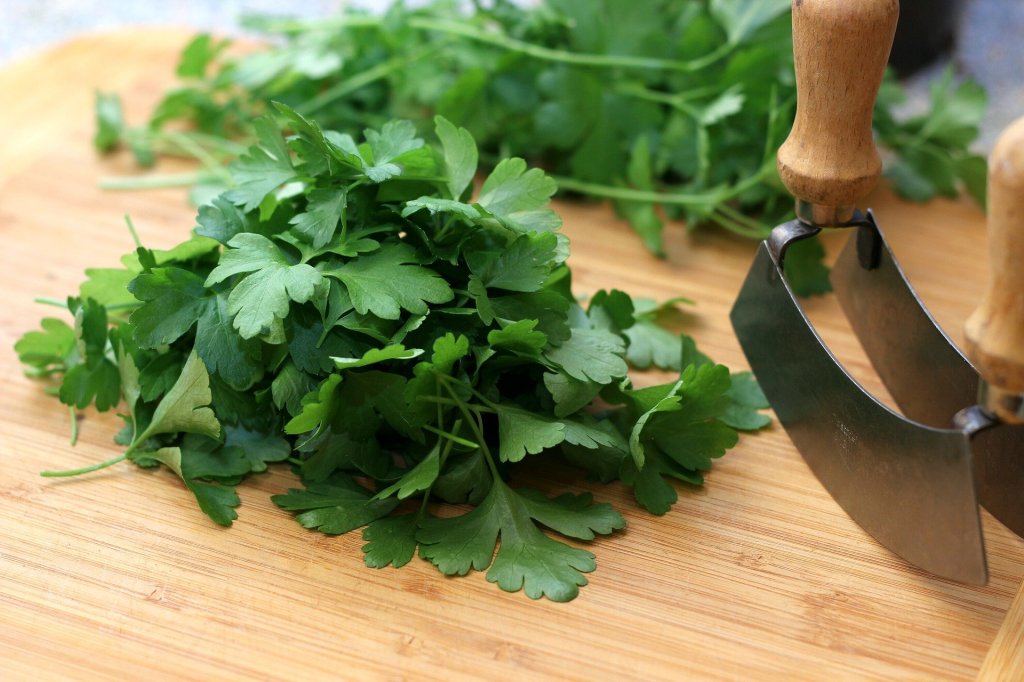
parsley fresh flat leaf
Pixabay image

Parsley is Healthy

Parsley is good for overall health and is especially good for the kidneys as it acts as a diuretic to flush waste out of the body.  That link will take you to a page I wrote about the general overall benefits of growing  and eating parsley.  I mention a few ways to preserve it as winter approaches, and I’ve tried a couple.

I briefly covered how to freeze parsley because I was not too familiar with doing it personally.  But last year I discovered how easy it was to not only preserve it by freezing, but how easy it was to use it later on.

This is how I freeze my fresh picked parsley.  Always pick parsley by the stem and use the largest outside stems first.  This will cause the plant to continue to send out new stems from the middle of the plant.  I pick just a few stems – 6 or 7- to preserve by the amount I plan to use each time.  I like to use a lot of parsley in my meals.

Preparing the Fresh Parsley

Wash the leaves by dunking them in a bowl of water.  Hold the stems and swish the leaves until all dirt and debris is removed.  Use a clean towel to remove most of the water.  I ‘slap’ the leaves on the towel a few times.  Put the parsley, still on the stems, into a jar or vase until the leaves dry completely.  That shouldn’t take long.

Once the parsley is dry, line a cutting board or the counter with saran wrap, or freezer wrap.  Pull off the leafy part of the plants and pile them up on the saran.  Gather all the leaves in a bunch and roll them up.  Just keep rolling and gathering the ones that escape, until you have a nice, fairly tight roll of greens.

Wrap the saran or freezer paper tightly around your roll, and add it to the freezer.  I wrap mine in saran, and then place all the little parsley rolls in one quart size freezer bag which I label with name and date.

This is the basis for freezing.  If you have a lot of parsley and want to freeze more together in a bigger roll, or want to freeze individual portions, that is up to you.  It can be unwrapped and sliced once frozen, so you don’t have to use the entire roll.

Drying Fresh Parsley to Preserve

I also dried a bunch of parsley last year using my dehydrator.  That was a much more time-consuming method, but it works as well.

Flowers Blooming in August in My New Hampshire Yard

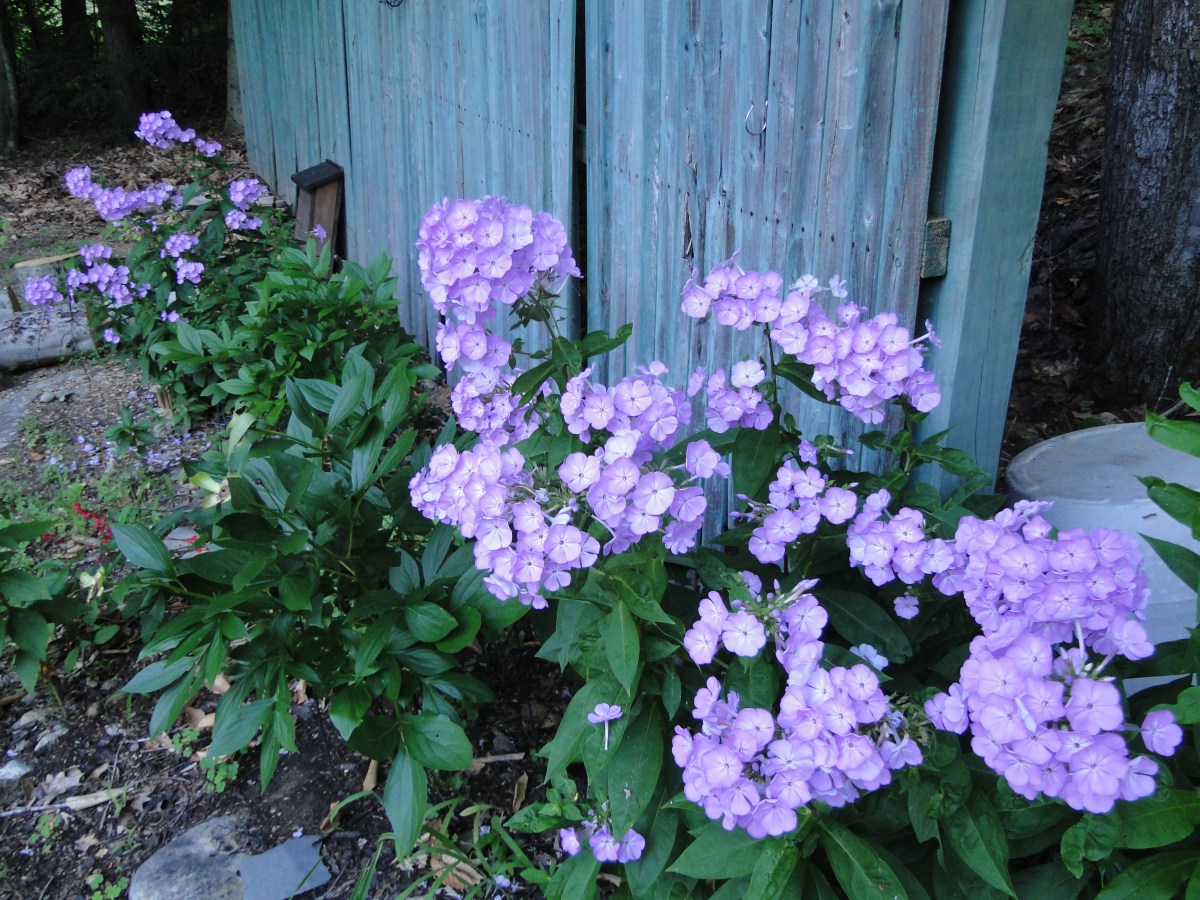
tall phlox in pink
Pink Phlox

As summer is winding down, I am taking stock of the flowers in my yard that are blooming in August.  In fall, here in New England the tall phlox are looking lovely.  In my yard, dark and light pink blossoms brighten the landscape. I also have creeping phlox which blooms in Spring.

As for perennials, the Hostas are also blooming, the few I have that are growing well.  Some of them died due to the cold winter.

Hydrangeas:  The Pinky Winky shrub is full of white flowers, which will be turning pink sometime in the future.  The white Blushing Bride in the backyard has three big, white blooms, with a small bud just beginning.  Out front, the blue Endless Summer has only two small flowers, and one little bud.  The blue flowers are fading to light purple.  Click the link above to see recent pictures of my hydrangea shrubs.

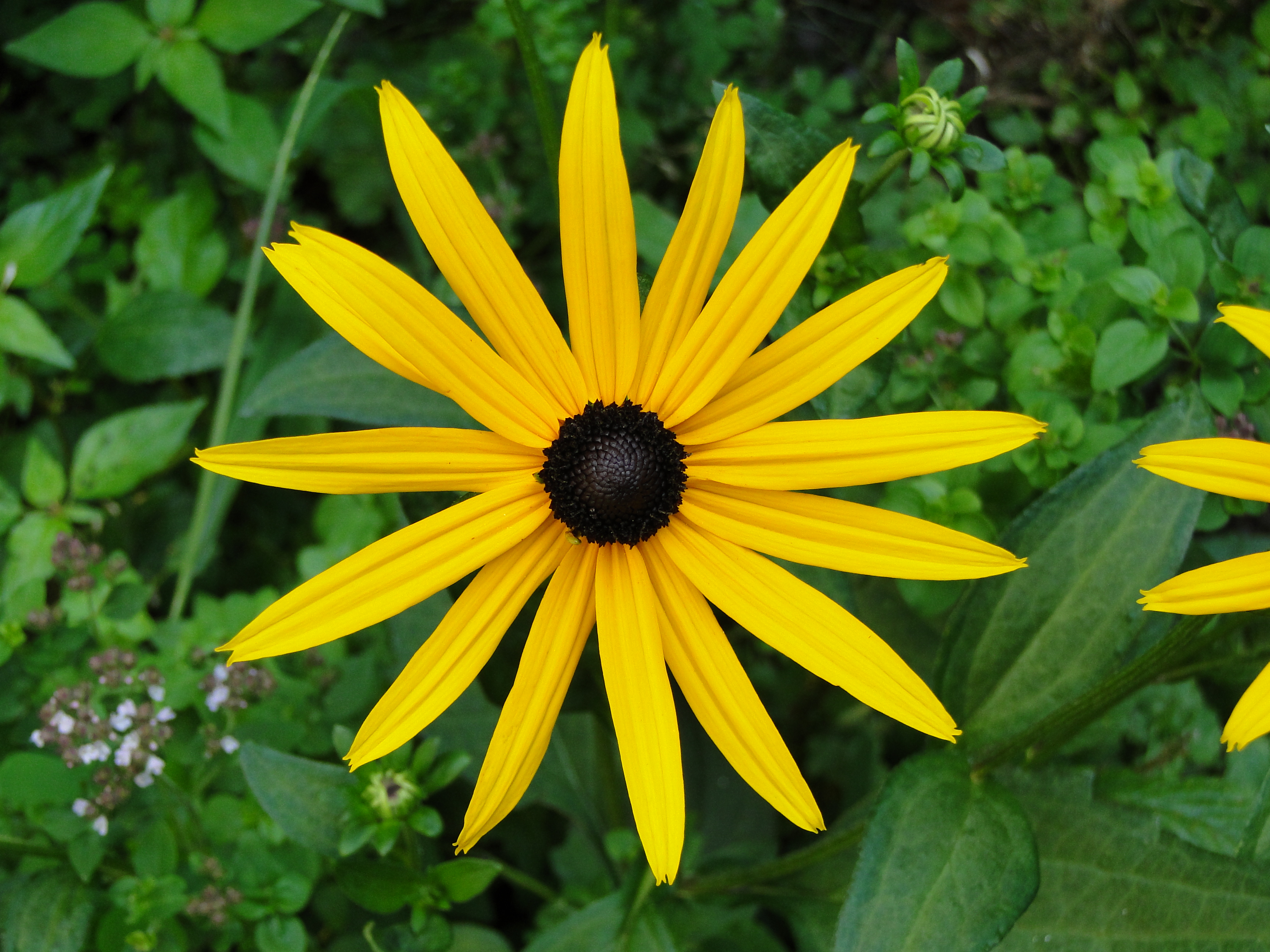
Black-Eyed Susans are blooming everywhere.  They seem to be the brightest yellow flowers in yards right now.  I have two small plants, which I tend to forget about until August.

black eyed susan flower
Black-eyed Susan

Day Lilies are also still flowering.  I have 8 or 10 plants with peach colored flowers along the front.  All those plants came from one, single pot of day lilies I bought three years ago.  I divided the stalks, planted them, and then divided them again.  Lilies should be divided every so often.  My yellow Stella d’oro lilies have gone by.

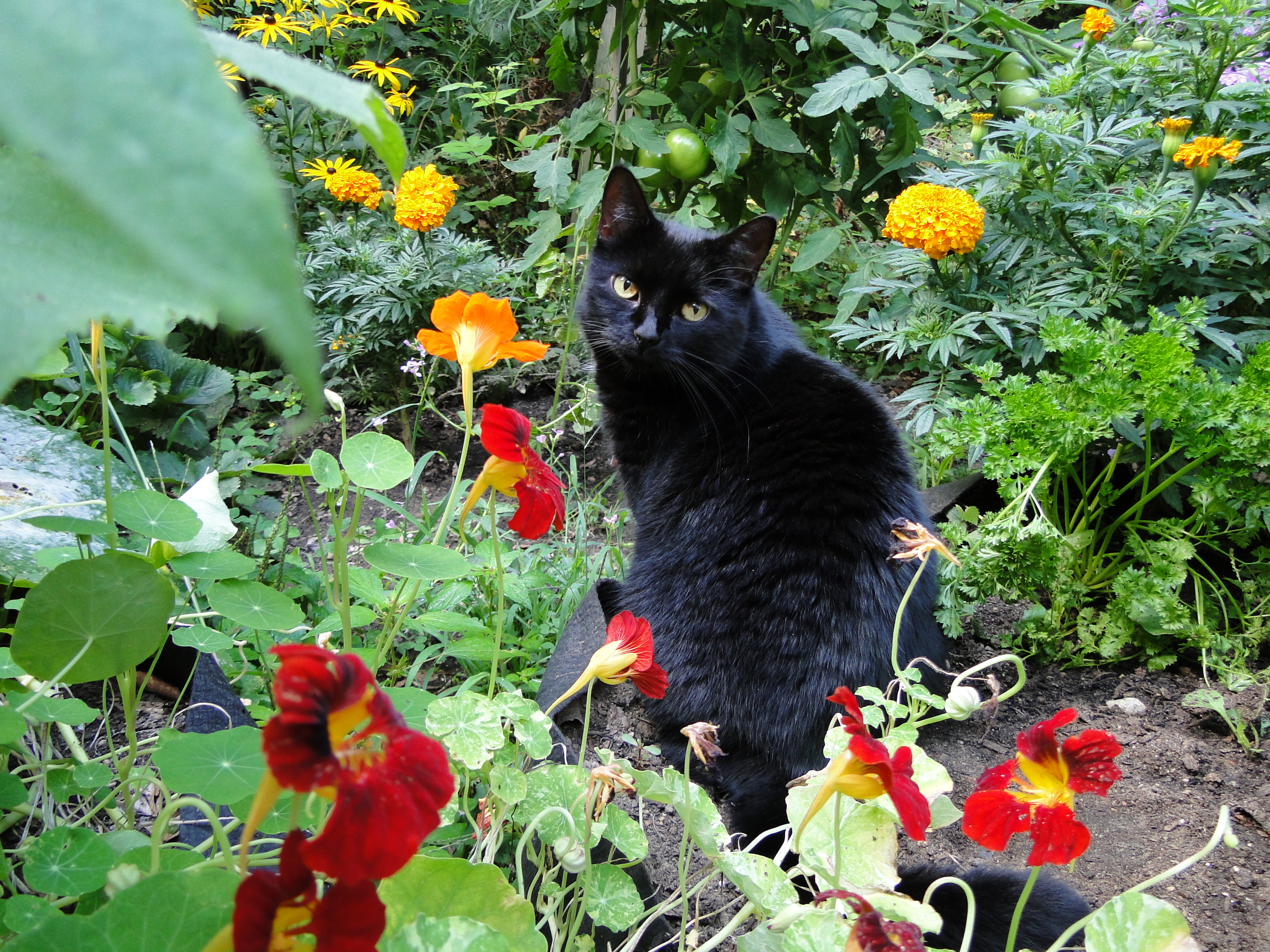
The annuals I plant each spring – Nasturtiums and Impatiens – are looking wonderful in August.  This year I planted the seeds from last year’s ‘Alaska’ nasturtium, and ended up with a beautiful and colorful border along the backyard.  All that color for free!  I love it.  Soon I’ll collect the seeds from these, and plant more next spring.

flowers of fall
Nasturtiums and Marigolds (and Skittle the Cat)

The marigolds are big and full, and still sending out new flowers.  Marigolds bloom more if they are dead-headed.

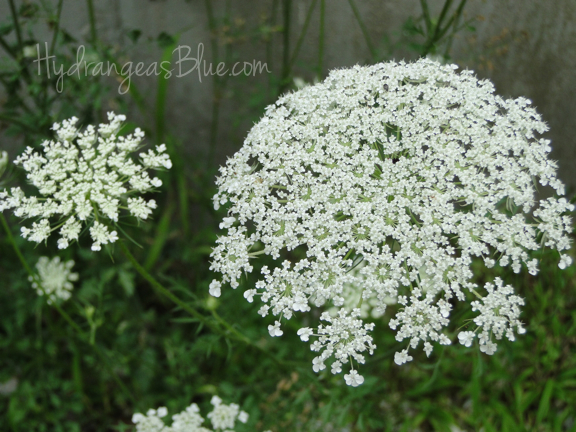
I have a volunteer Queen Annes Lace that is still blooming too.  I love these beautiful “weeds” with the big lacy flowers.  If they should happen to grow in your yard, I suggest you leave them alone and let them bloom where they grow.  Hopefully it will spread so I’ll have more of it next year.

Queen Annes Lace
Queen Annes Lace – A beautiful “weed”

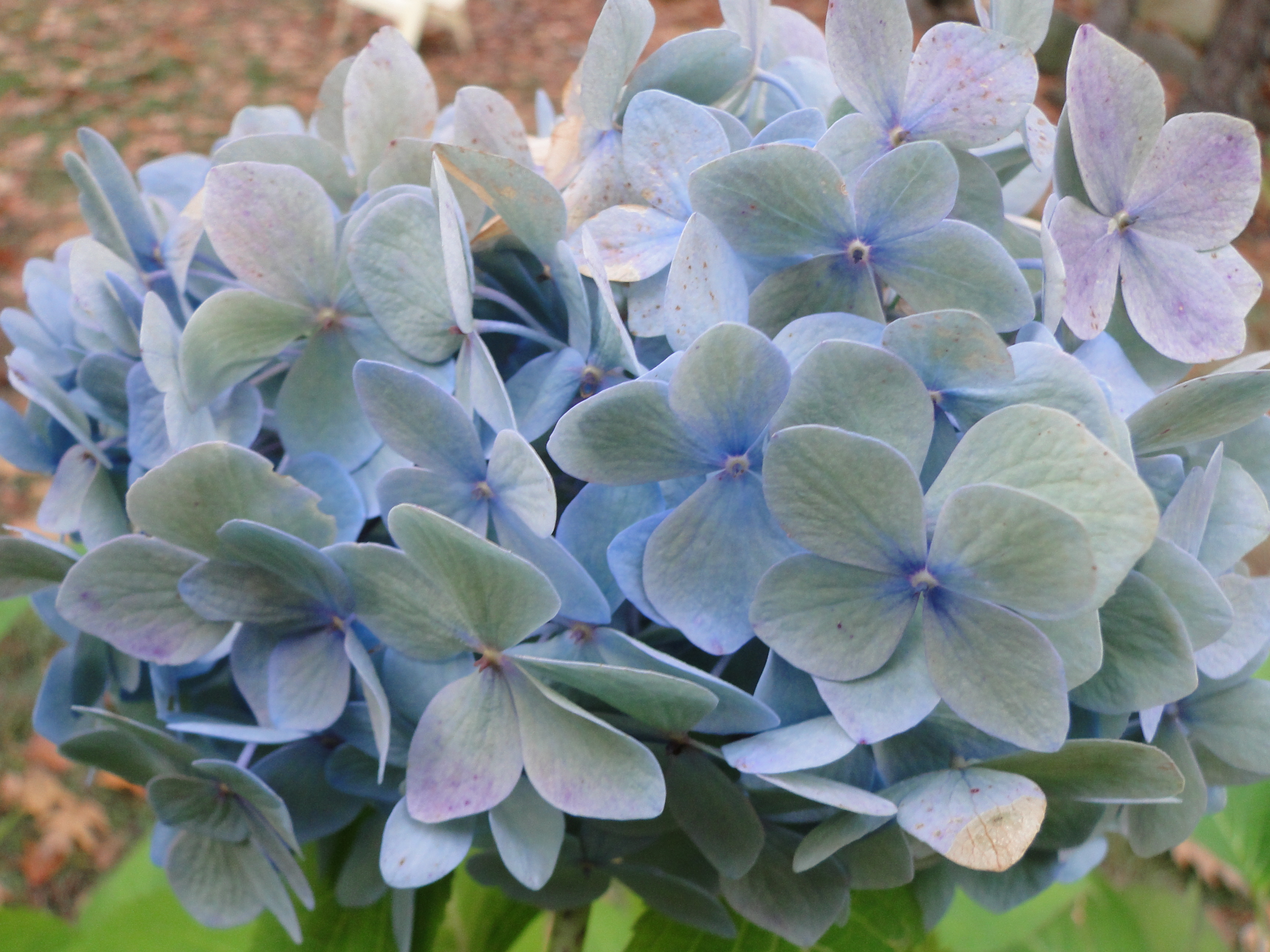
The blue hydrangeas are turning pretty colors as Fall approaches here in New Hampshire. The petals begin to take on a pink, purple, and sometimes green, tint. It’s always fun to see how the flowers will fade.

blue hydrangea in fall
Blue Hydrangea Changing Color in Fall