Some of My Blue Flower Pictures

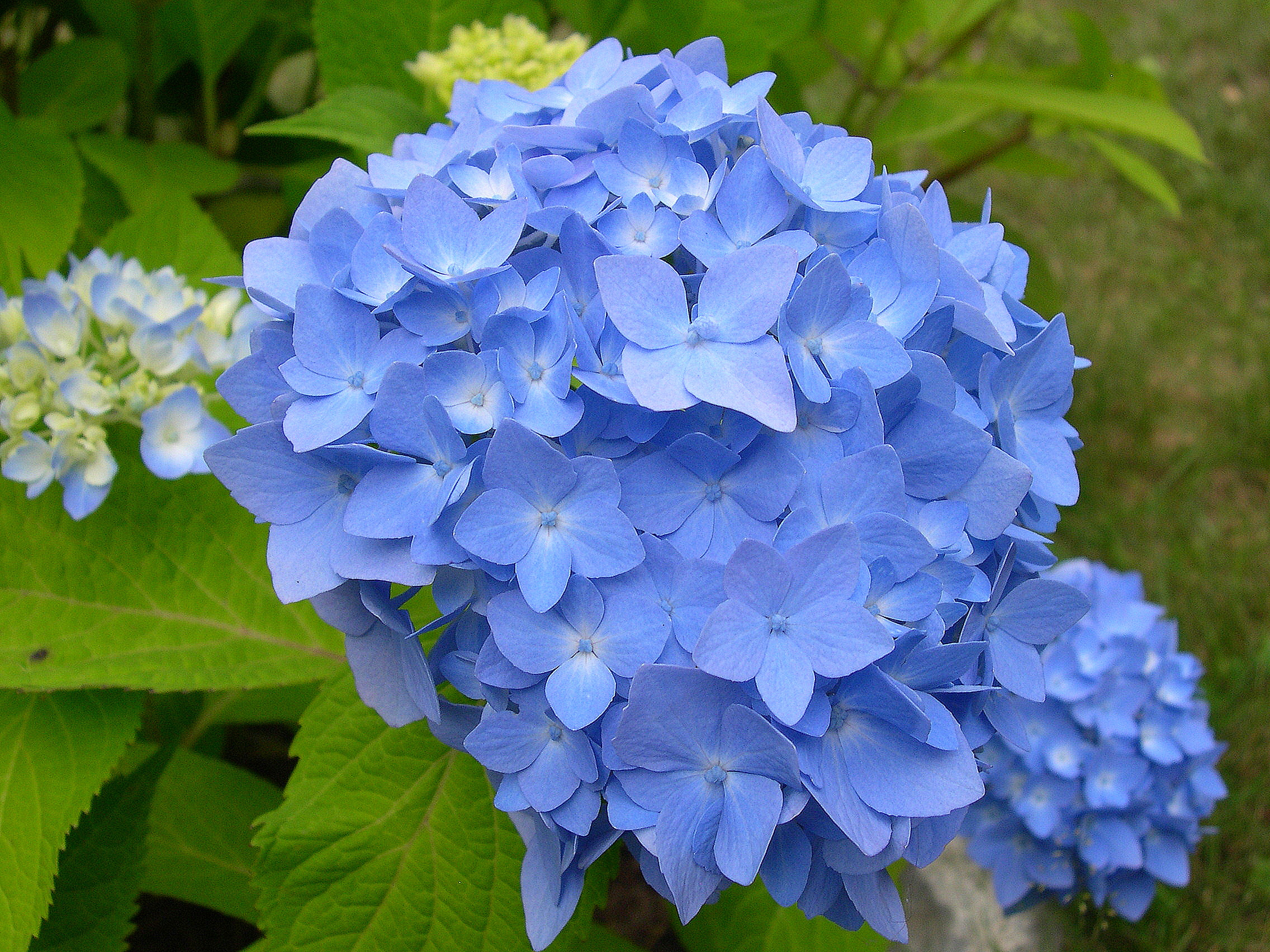
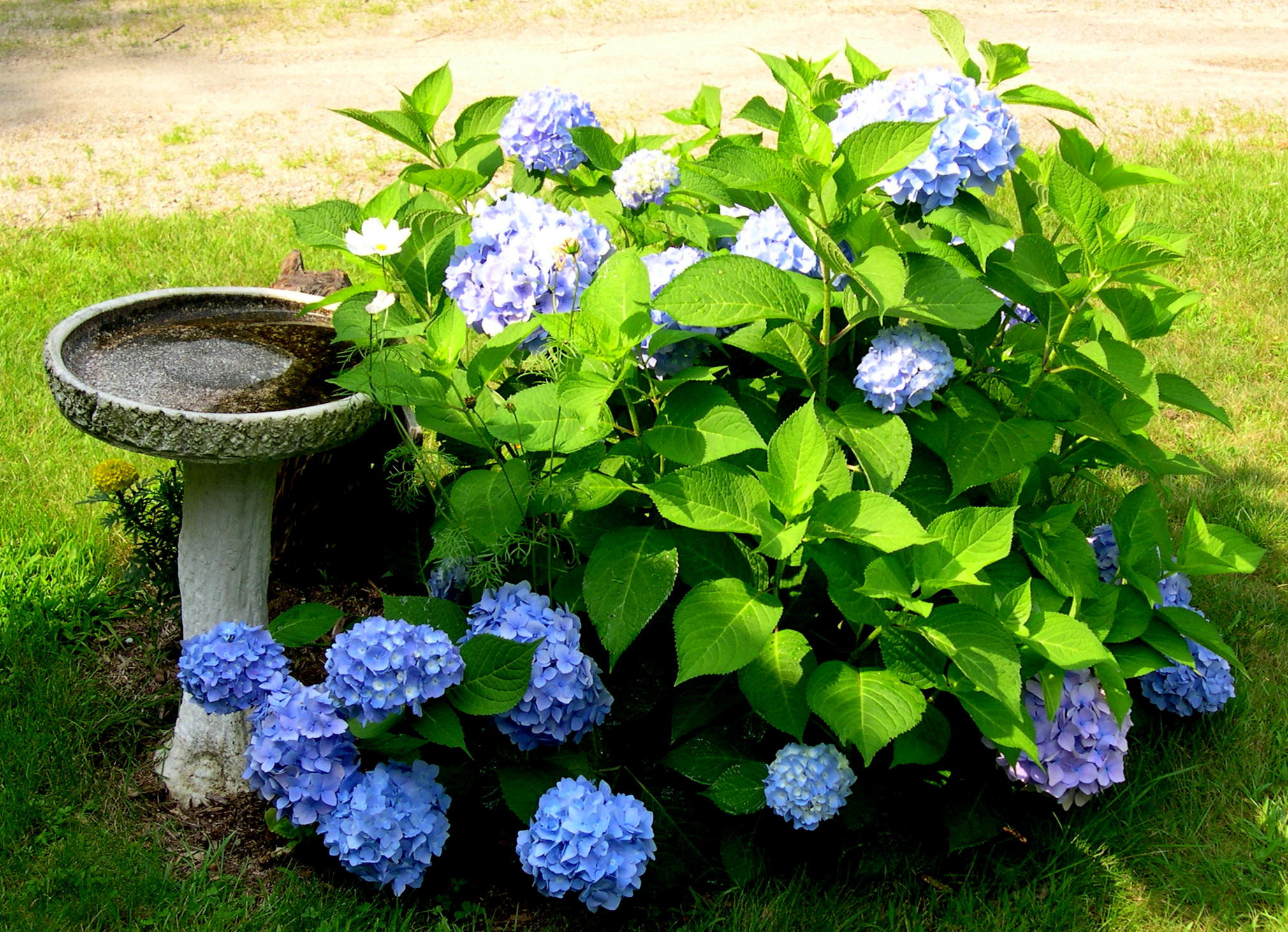
blue hydrangea flower
Blue Hydrangeas

If you are looking for blue flower pictures – I mean REAL blue flowers, today I am showing off some of mine.

How many times have you seen a purple flower listed as being blue. In the flower kingdom, this happens a lot and I think it is because there really aren’t that many true blue flowers.

It’s a popular color, especially for weddings – that “something blue” phrase can be taken care of with a blue bouquet or at least one blue flower in the mix.

Blue flowers are popular in the landscape too. The perennials that come in blue are certain types of hydrangea (pictured), such as the “Endless Summer” variety.  But soil must be acidic for flowers to be nice and blue.

I also love the forget-me-not, which sports tiny bright blue petals with yellow and white centers.

Forget Me Not Floral Photography Postage stampLots of gardeners include the blue delphinium that grows tall, and many like to have a morning glory vine grow along the deck railing or up the fencepost.  I have another page with more ♥ pictures of blue flowers you could grow in your garden.

Another flower I grow that is sometimes blue is the Columbine.  I love the variety of that plant and I’ve had light blue flowers, but the more common color is dark purple, as you can see in my photo below.  My images are not free to use, so please contact me if you want to use one, with a link back to my blog.

Blue Columbine Postcard postcard

Bone Meal For The Spring Flower Garden

Get the ground ready for planting by adding bone meal to the soil.

It sounds a bit gross to use crushed bones when fertilizing, but the fine, powdery substance works wonders for the plants.

Bone meal is a great source of phosphorus which helps establish good roots, and without good roots, plants don’t grow as well. This is why I add it to the ground when planting and later when plants are growing. They are always making new roots.

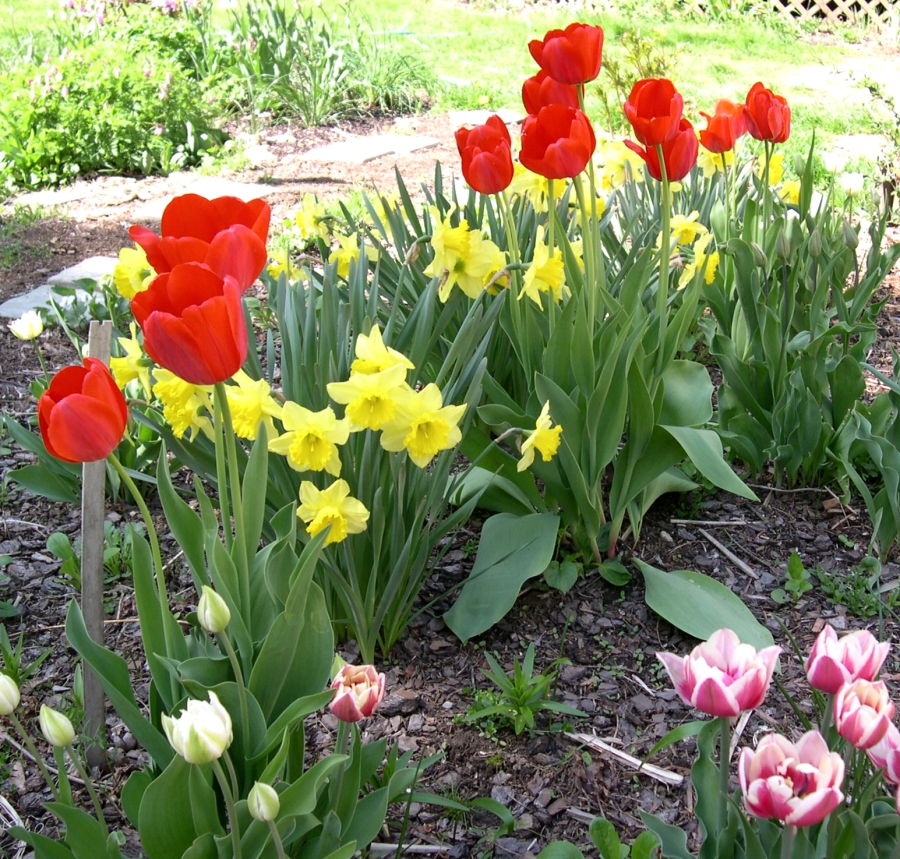
tulips and daffodils
Bone meal helps grow strong roots

Bulbs, like the ones in my photo here, will appreciate some bone meal mixed into the planting soil.  Your tulips and daffodils will produce more blooms, as will any flowers planted in spring.

Organic Bone Meal is the perfect addition to an organic garden. I add it to the bare garden soil in spring before it’s time to plant.  It helps make the soil better for everything you plan to grow, as long as you don’t overdo it.

dsc06743
Annuals and Perennials will grow better with bone meal.

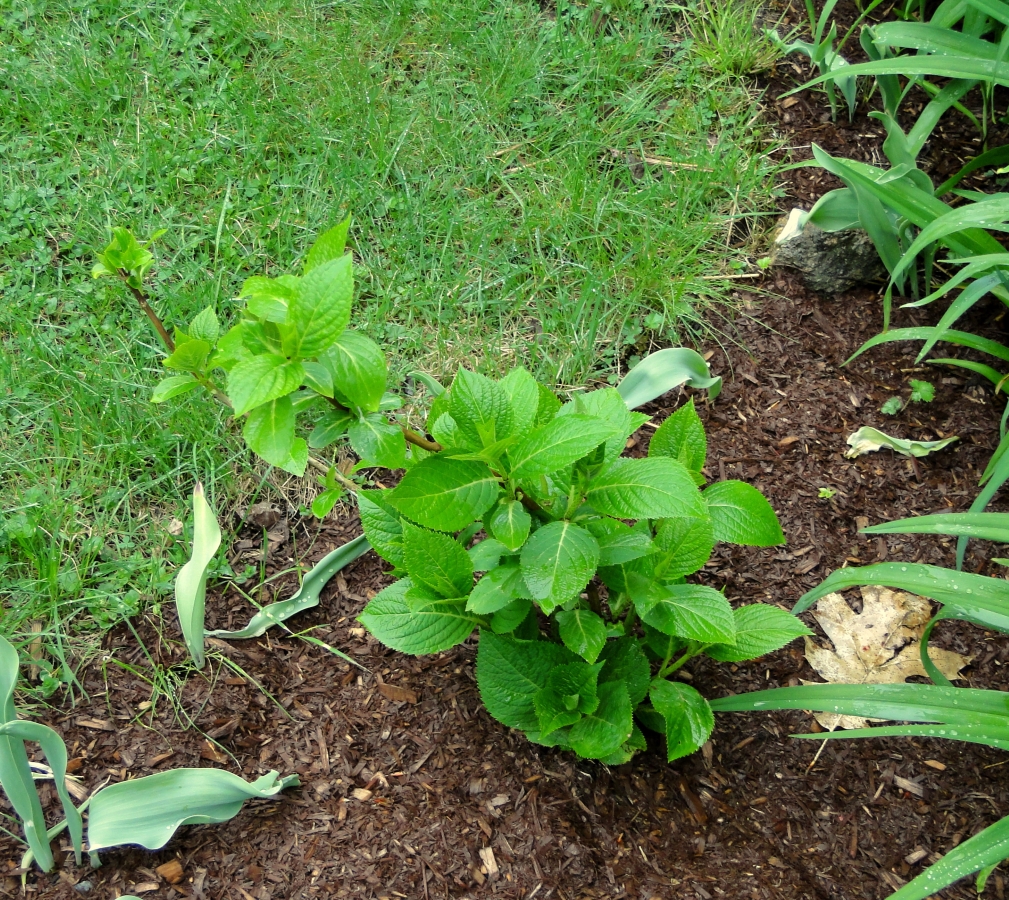
Use it as a soil amendment around perennials too. I sprinkle it around the hydrangea shrub and other perennials in the yard once the snow is gone. Rake it into the soil and be careful around the shallow roots. Bone meal replaces depleted phosphorus and will get the plants off to a good start for summer growth.

I buy mine in 4.5 lb. bags and directions say to use 1 teaspoon mixed into the dirt for bulbs. For shrubs, such as the hydrangea, apply 1 to 2 pounds (2.25 cups of bone meal equals 1 pound). Directions are on the bag, or box and it can even be used in pots.

Blood meal is a different product and can be used to supply the nitrogen your garden needs. Nitrogen keeps plants looking green. Use it if the leaves on your plants begin to turn yellow.

Be careful when using fertilizer, even organic fertilizer (and make sure it is truly organic!) like bone meal and blood meal, because it is still possible to use too much and damage the plants.

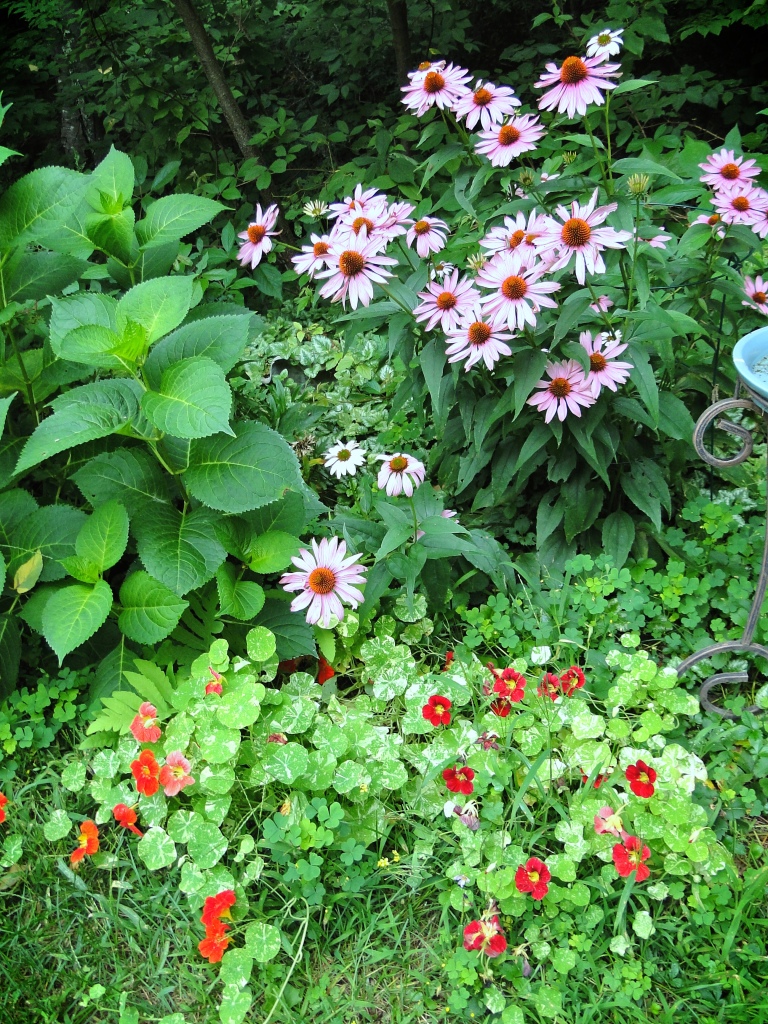
Above you can see the lush growth of my nasturtiums (annuals), and hydrangea (leaves) and coneflower (echinacea) which are perennials.

The Cold Hardy Panicle Hydrangea

Panicle hydrangea (H. paniculata)
Image via Wikipedia

Hydrangeas are pretty hardy but if you want a larger one that will thrive in zone 4, choose the Panicle Hydrangea. The flowers on this species is a bit of a different.  I am used to the round, puffy flowers that grow on my shrub, which is of the Mophead variety,  but the Panicle hydrangea has flowers that grow to a long pointed shape – or panicle.

As you can see in the picture I have added from Wikipedia, the Panicle hydrangea also grows to be quite large. In fact if can be 15 feet tall so consider it to be more like a small, flowering tree.  The flowers can be a foot long or more!   The Oakleaf hydrangea grows similar looking flowers that are very long.  You can tell the difference between these two by the leaves on the Oakleaf that are shaped like…. oak leaves!

The flowers can be white or pink, but no blue on these larger varieties (as far as I know), but beautiful just the same.  This species – the Panicle – will tolerate lots of sun.  As it grows, trim out the lower branches and create a little tree of blooms.

Know the Secret to Decorating With Cut Hydrangeas

Hydrangea and lily bouquet
A Bright Arrangement of Garden Flowers

I always wondered if there was a secret to keeping hydrangea flowers fresh once they’ve been cut from the bush.  It seemed that sometimes my flowers would last a few days, but usually they would wilt quickly once I added them to a vase.

Hydrangeas have a sticky substance in the stem and once they are cut the goo blocks the stem and it can’t suck up the water as needed.  To keep hydrangeas fresh and make them last, if you are cutting them yourself, you must have a vase or bucket of water handy to put them in instantly when making the cuttings. Once you have your cuttings, take them inside and move the flowers from the bucket / vase to another container of HOT water and leave them for 10 minutes. This clears the inside of all that sticky stuff so the water will be able to travel up to the bloom. I have done this successfully and my hydrangeas did then last for days afterward.

If you are planning to use hydrangeas to decorate tables or as a centerpiece for a special event, be sure to cut them, and use the hot water method described above, as close to the event time as possible. If you have room in the refrigerator, keep them cool (in water) until needed.

If the bouquet is for decorating your home, be sure to change the water each day to keep the bouquet fresh.

Recent Blog Posts

Hydrangeas Have Long Lasting Blooms

Blue flowers on a hydrangea shrub
Pretty Shades of Blue

One of the reasons I love hydrangeas, is the fact that the blooms last a long time.  Hydrangeas will grow in many areas of the country (U.S.) but they don’t like extreme heat and that is probably why I never saw a single hydrangea when I lived in Florida.  In fact I never knew much about them until I had beautiful bunches of bright blue flowers on the one growing in the front yard of my rental house.  That was when I knew that one day I would have one or ten bushes growing in my own yard some day.

If this was my own yard, I would have a yard journal full of notes from the previous year, but I don’t so I’ll have to say that the hydrangeas begin blooming as soon as they can. Usually in April enough of the snow has melted that I can at least see the bush, but so far this year all I see is small sections of two of the tallest stalks sticking up through the snow. But once the nice weather arrives, the plants waste no time in shooting forth leaves, new growth and buds.

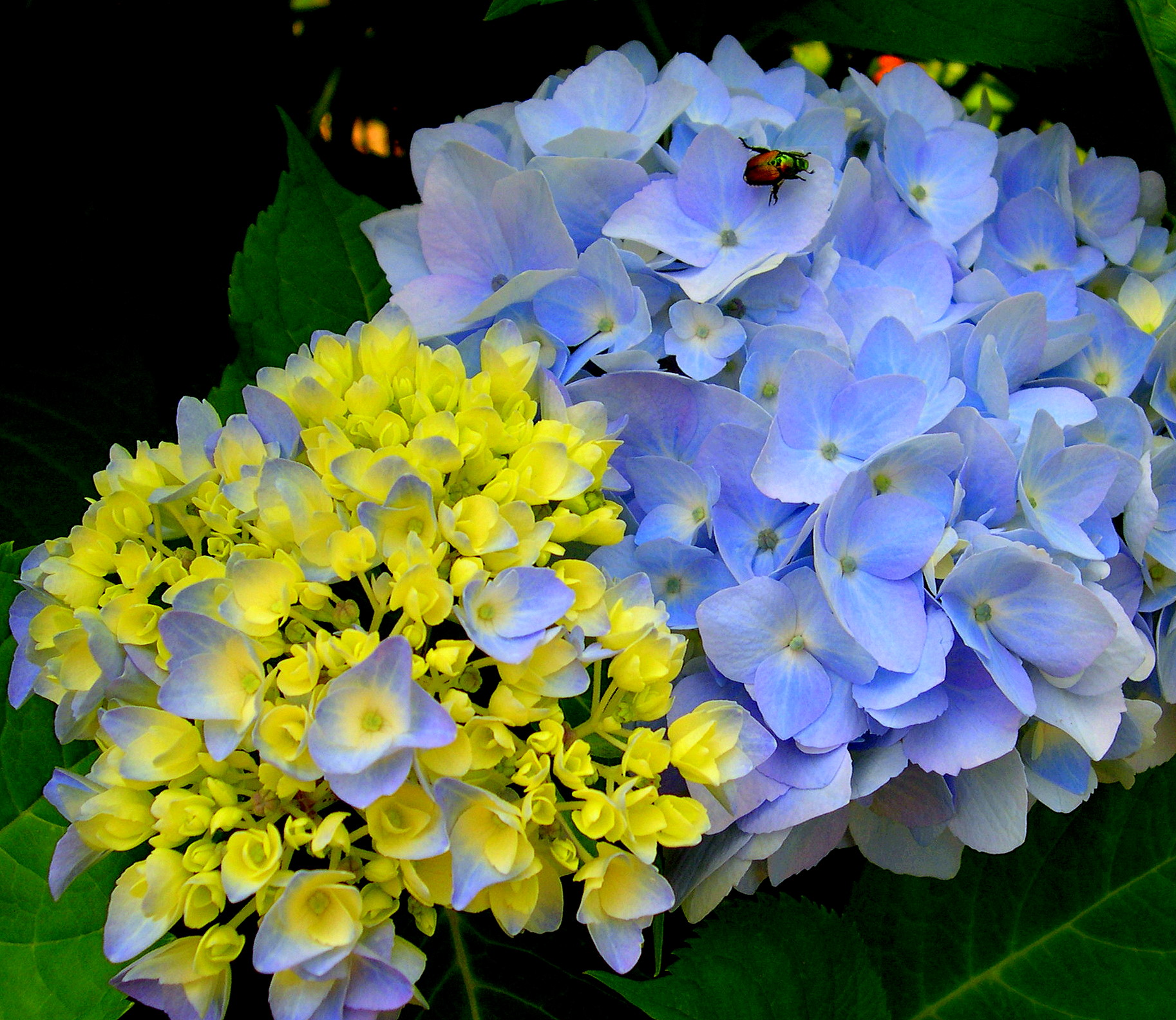
Blue hydrangea flower and bud
Photo taken mid-July

The buds are beautiful, the blooms are beautiful, and even as the blooms fade and change colors, they are beautiful. In my area of New England the buds have appeared and are opening by June and the big flowers are popping out color during July and August. The photo above was taken in mid-July of 2009 which was my first summer living here. That was the year that the flowers were a bright and beautiful blue color.

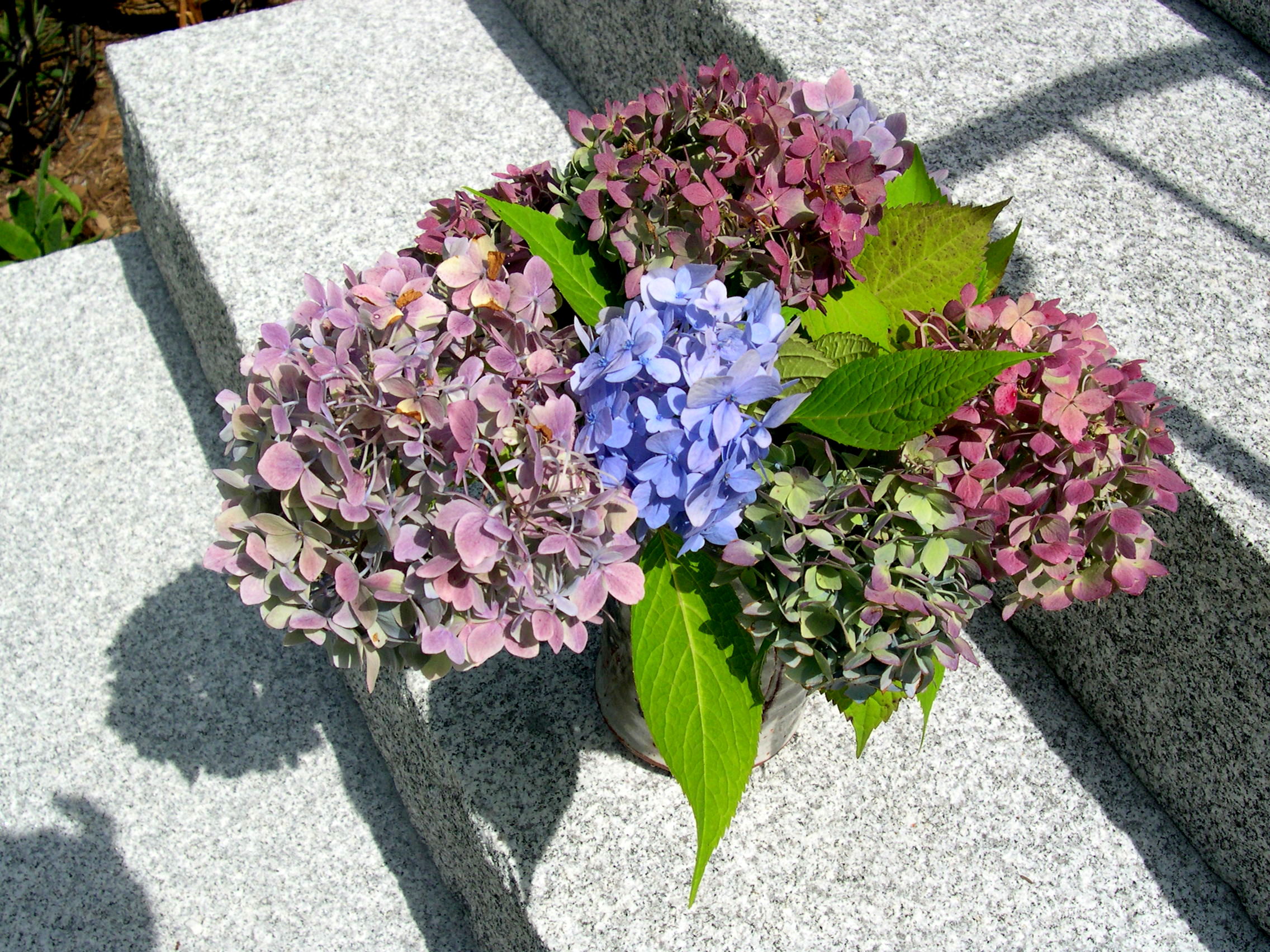
Cut flower bouquet of hydrangeas
Late summer bouquet

By mid-to-late August the flowers have changed color and make interesting cut flower arrangements. The photo below was taken the end of last summer (2010) and as you can see they contain a variety of blues and purples.

Top 5 Reasons To Grow Hydrangeas

Hydrangeas in front of the Office de Tourisme ...
Image via Wikipedia

If you are contemplating buying something new this year for the flower garden and thinking about a hydrangea, here are my top, five reasons for choosing to add a hydrangea (or 2 or 3) to the landscape.

  1. Easy to care for:  Plant them correctly and hydrangeas will thrive and grow into large plants loaded with blooms.  Add fertilizer occasionally and make sure they get enough water in the heat of summer, and that’s about it.
  2. Hardy:  Many types grow well in cold climates and withstand being buried under a pile of snow for months.
  3. Flower variety:  Flower color can be blue, pink or white and often many shades in between.  I love the light greenish color that appears on mine late in the summer.  One plant can have a variety of lovely color and they are…
  4. Long blooming:  The flowers of the hydrangea begin as pretty little buds and open to gorgeous round or elongated blooms made up of smaller petals which can last for months.  As the flowers age they can turn interesting colors or stay on the stem until they become…
  5. Beautiful dried flowers:  Some types of hydrangea will dry up beautifully right on the stems, or cut them and dry them yourself using a variety of methods.  I hang mine up-side down.