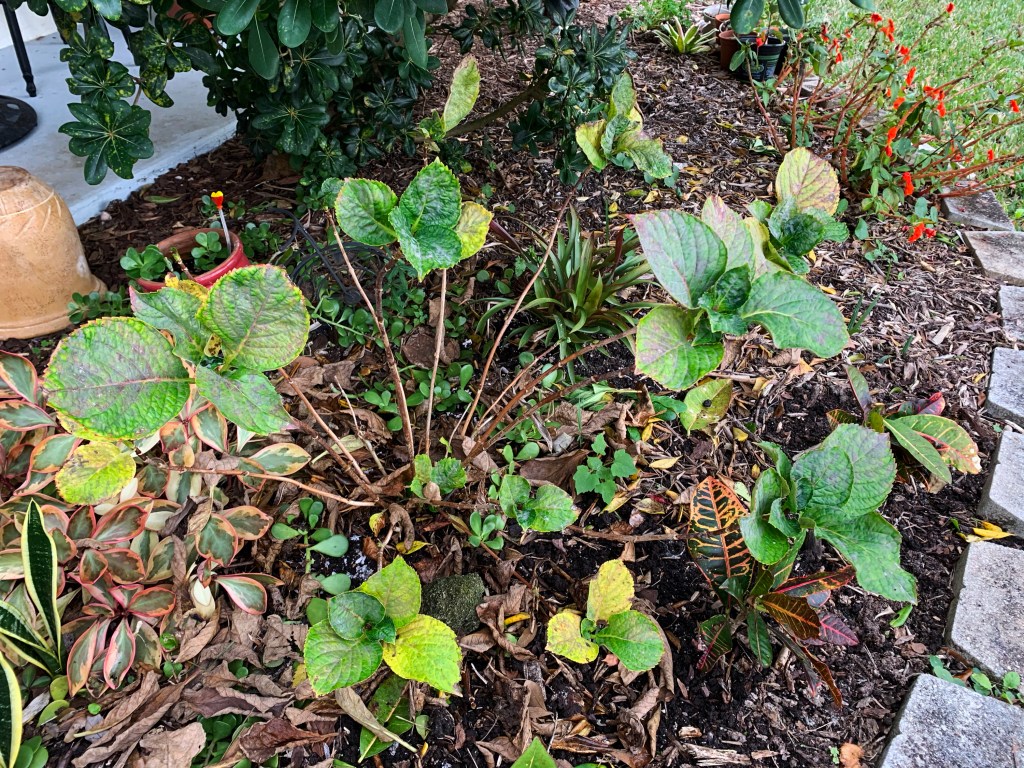
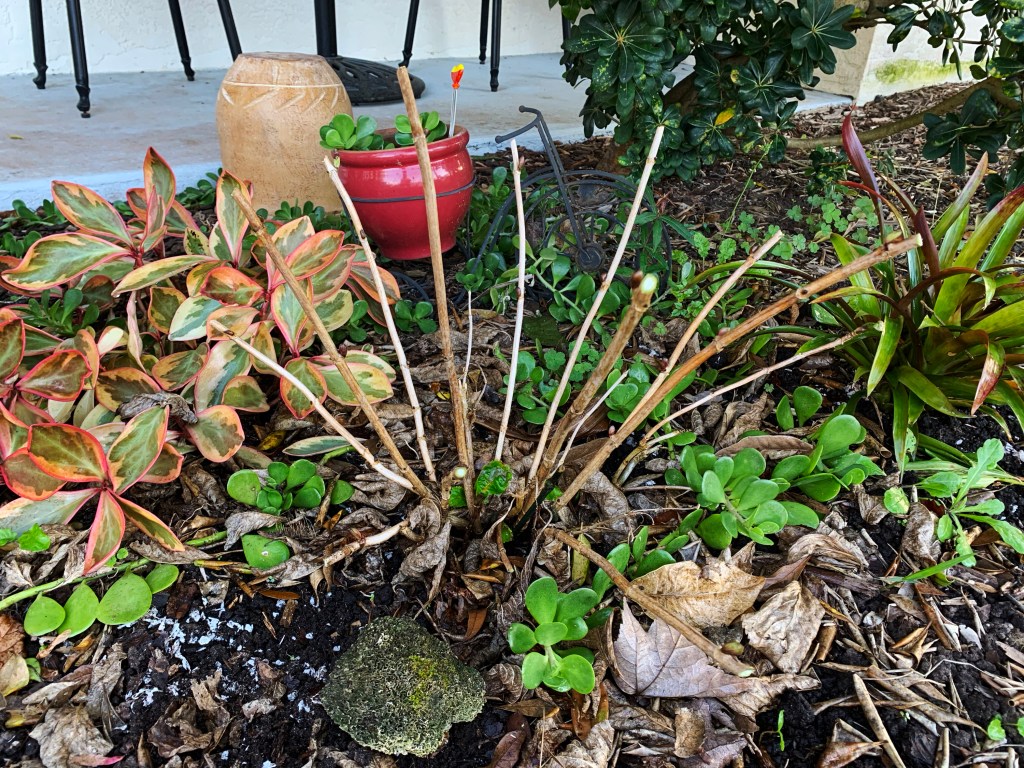
Over winter here in Florida my hydrangea shrub became a bunch of sticks. The stems lost nearly all their leaves.
January
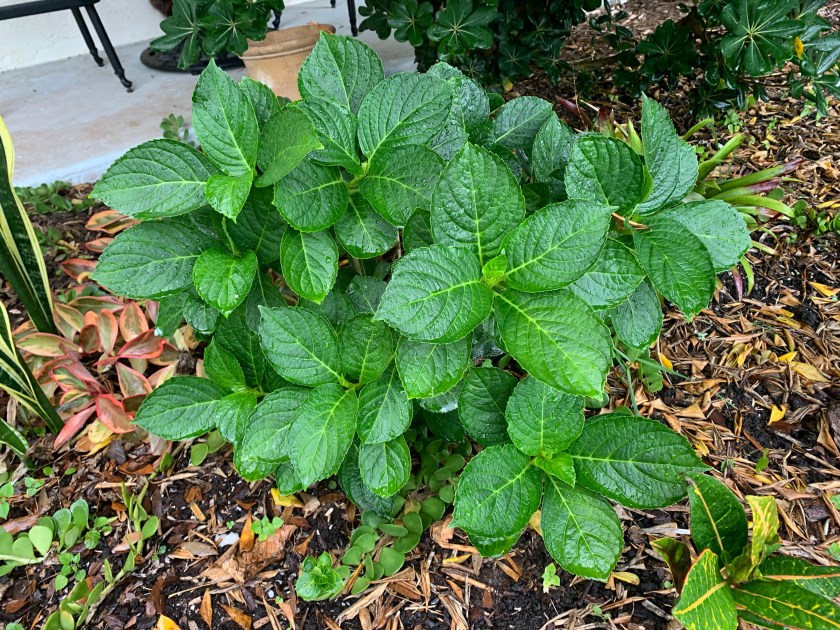
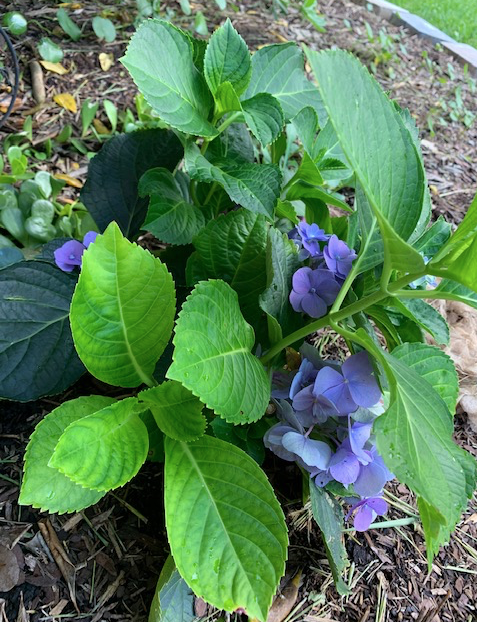
After all danger of frost – around the end of February – I cut the stems back removing the old leaves. There were new leaf bud growths already forming along the stems.
February, after cutting back
Attempting to Propagate a New Plant
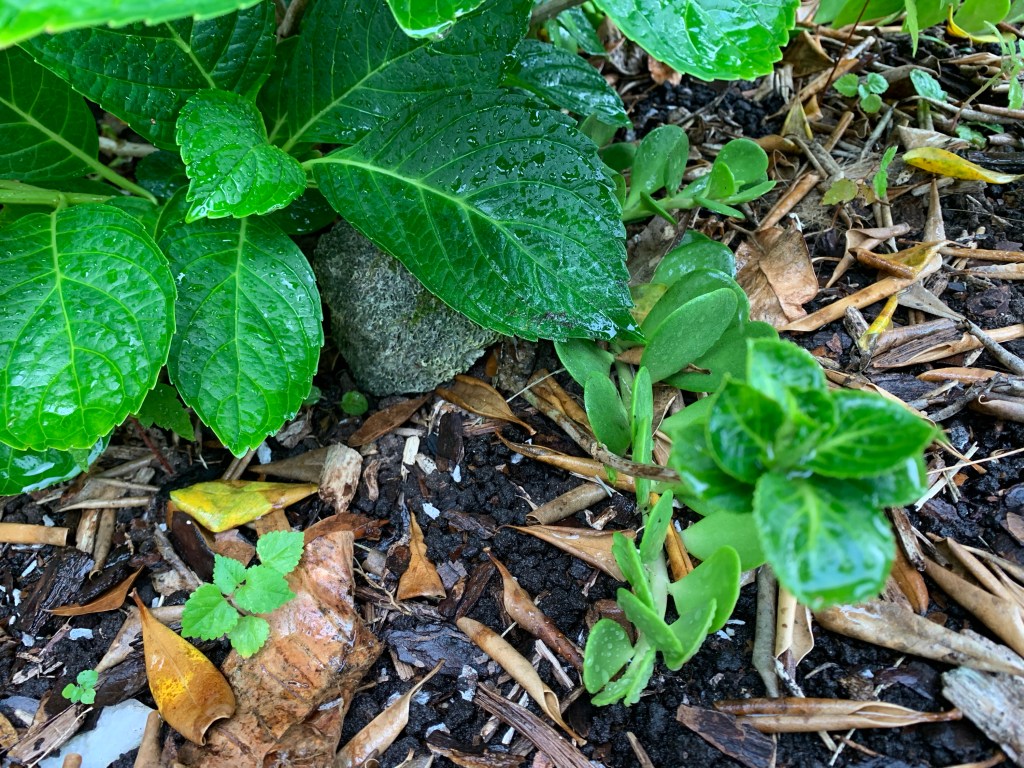
In the photos above and below I have placed a rock over a low hanging stem. I’m hoping that roots will form so I can cut this part off and plant it creating a new hydrangea plant!
Rooting a stem
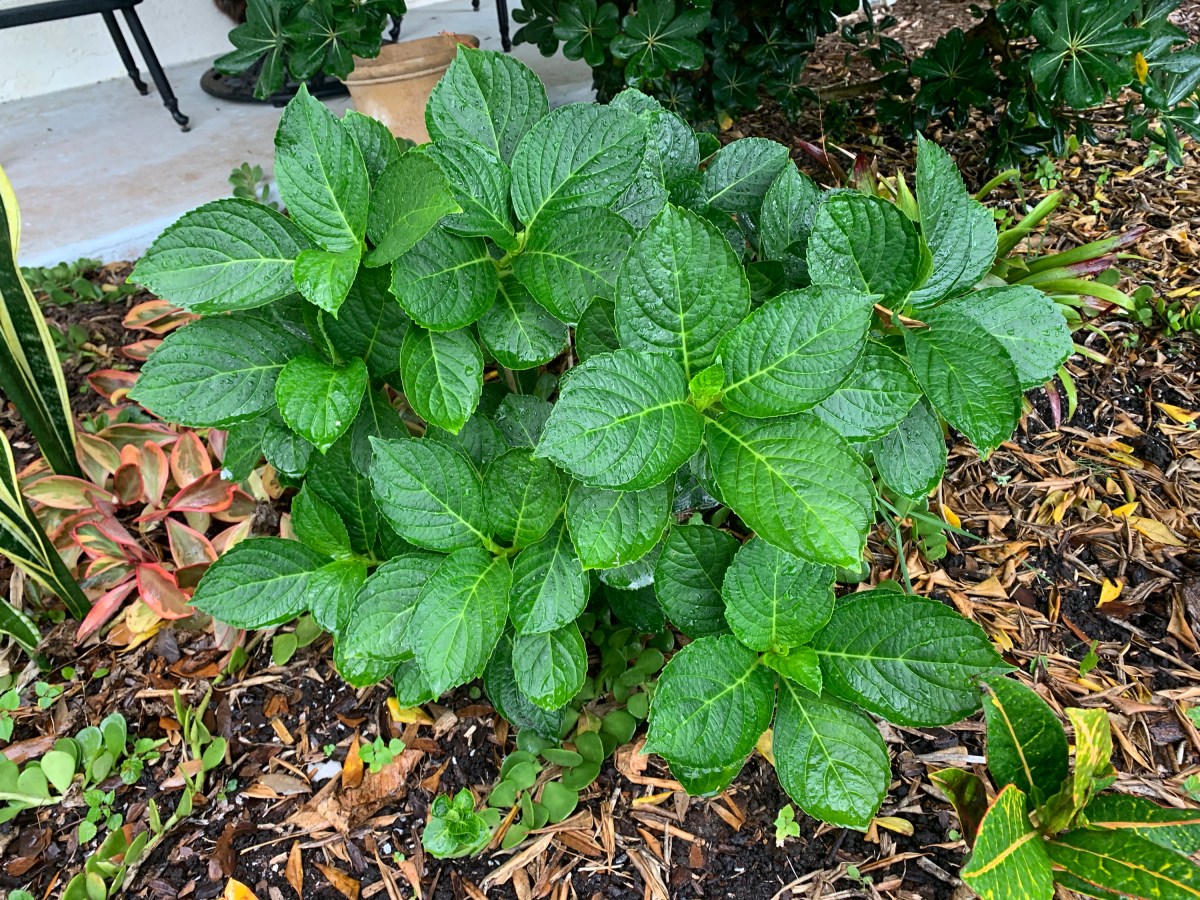
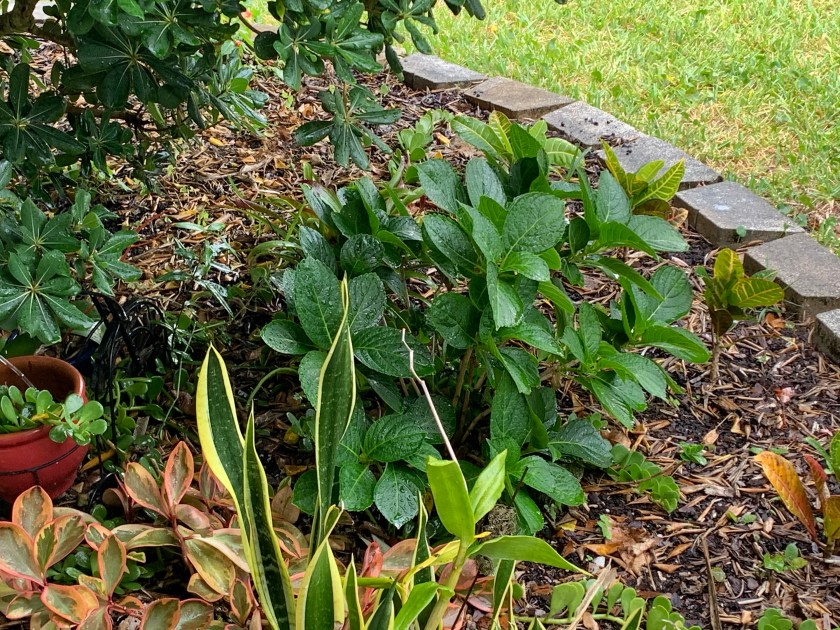
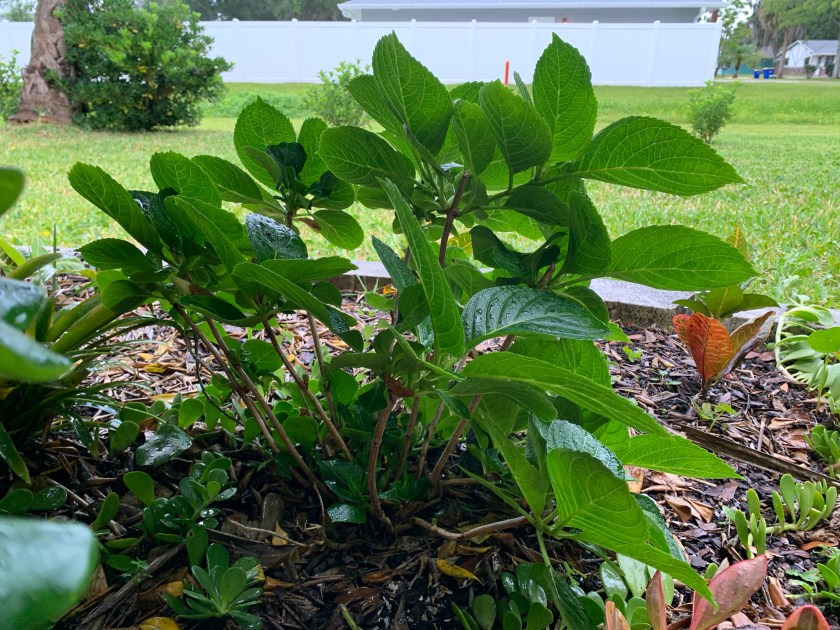
This hydrangea is growing in a nice shady location beneath a larger shrub. It seems to be happy and now I’ll just wait for the flowers.
All I’ve used for fertilizer is some bone meal and fish emulsion.
While I am hanging out at home (which I pretty much do all the time anyway) I have given the yard some attention. I thought I’d share photos of what is growing in my Florida yard.
Here in my area of Florida we’ve had a few very cool nights (ya..60’s), but I’ll take it. By May it’s usually hotter than this, but I am not compaining. I’ve still been taking walks early without sweating too badly and it’s been nice outdoors for puttering in the yard.
Tropical garden plants
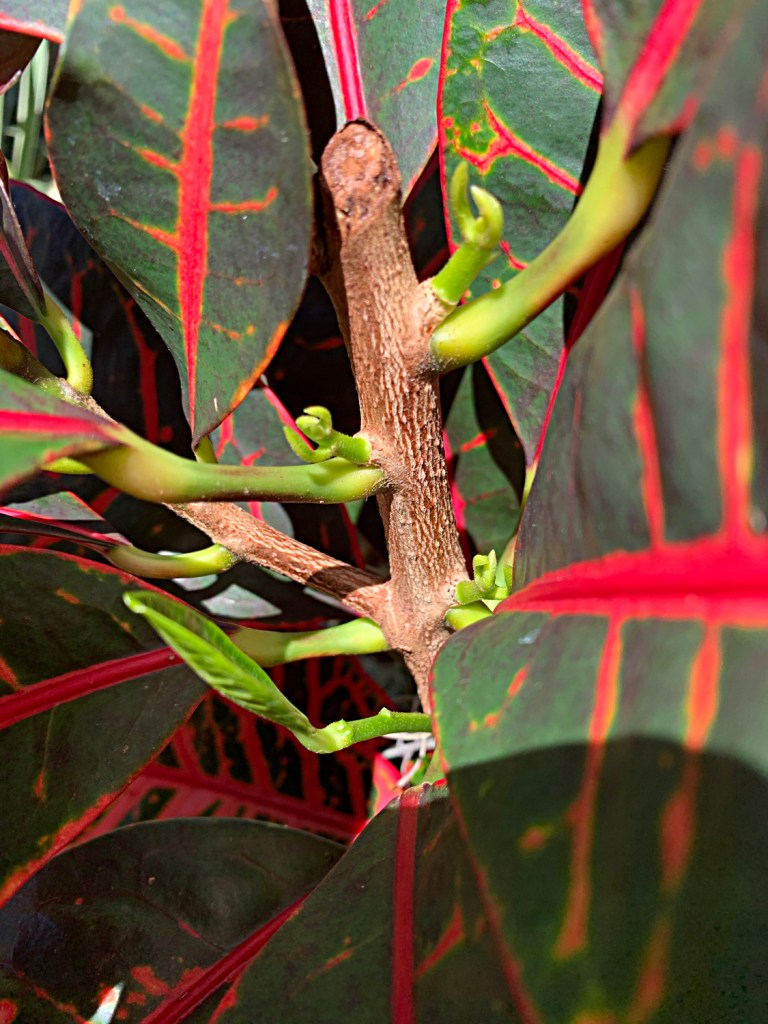
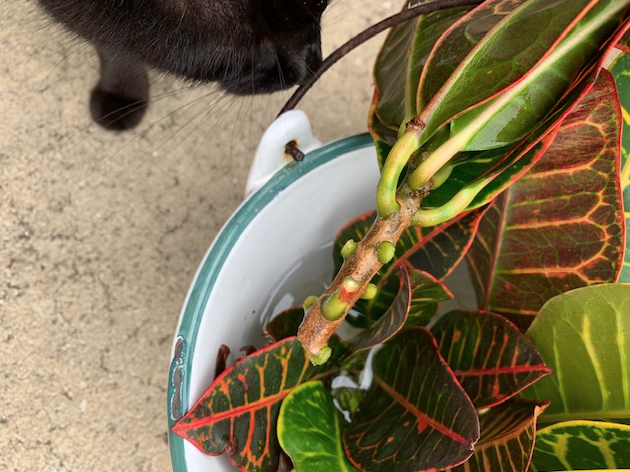
I took some croton cuttings the other day and they are sitting in a pail of water waiting for roots to grow. I’ve had success with propagating crotons, and Spring is a good time to get cuttings of new growth.
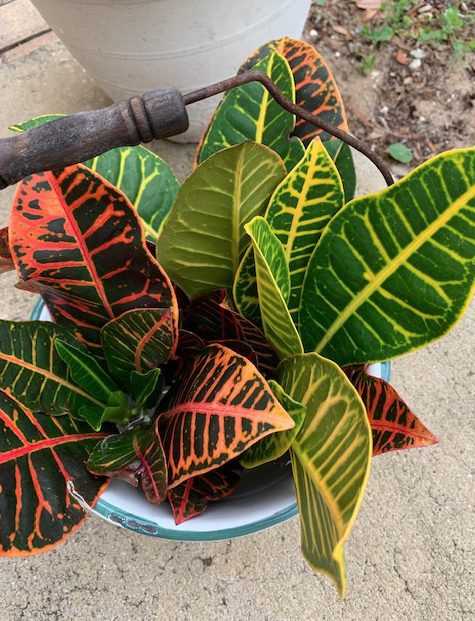
One of my previous croton cuttings, gave me a new cutting… and now that first plant is shooting off new growth. It’s a beautiful little plant with dark reddish orange veins. Because this croton grows beneath an oak tree, it does not get lots of direct sun and that keeps the leaf color darker. Now it will give me a new plant!
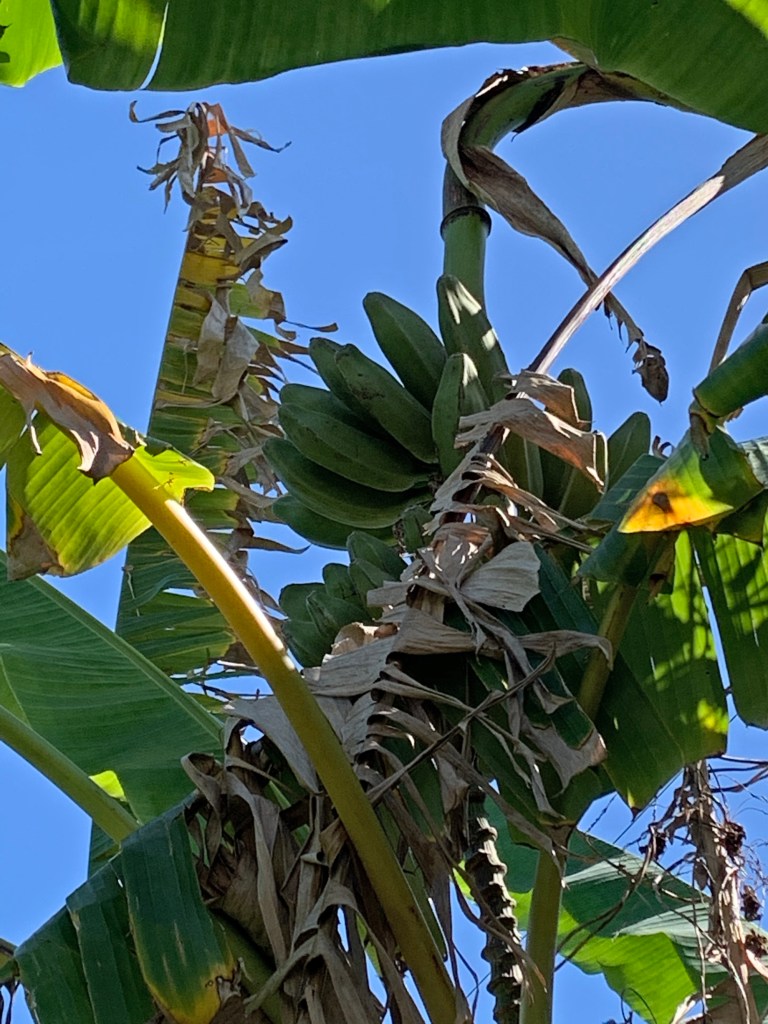
In the back corner of the yard are some banana trees. They have grown a bunch of bananas, but I can’t reach them. I zoomed in to get this photo because they are quite high. We could probably eat them if only they were closer. We did not plant these trees.
Bunch of bananas out of reach
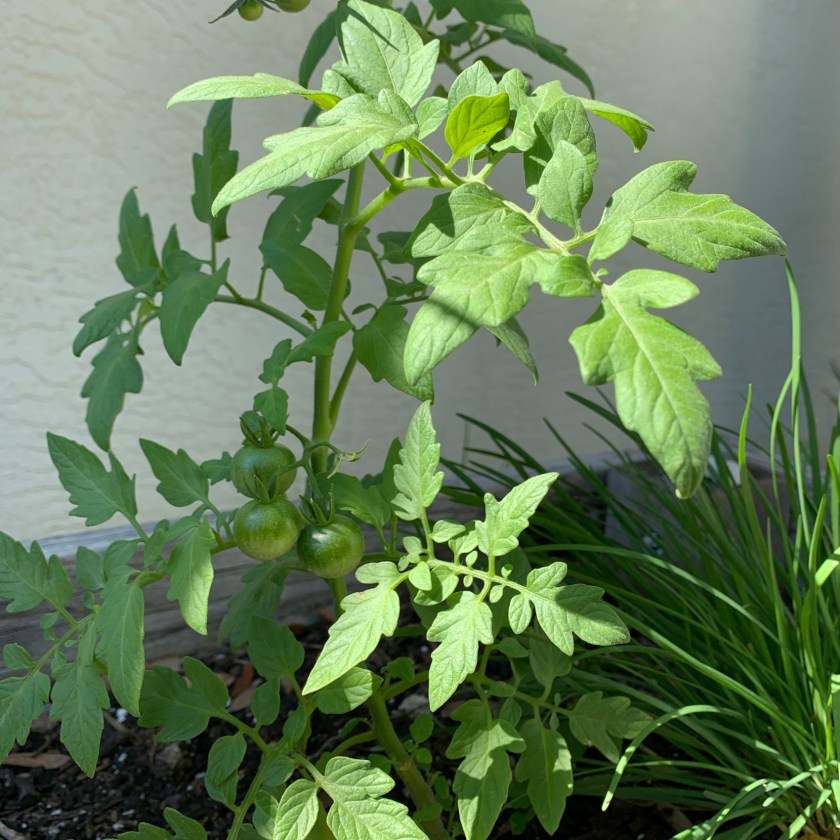
I don’t go out to the store, so I haven’t bought new dirt or seeds, so I’m working with what I have. A tomato plant began growing from seeds of a tomato I used as compost. I’ll cut up vegetables and just throw them in my garden. Now I’ve picked 2 semi-large tomatoes and have some cherry tomatoes growing also.
Some tiny cherry tomatoes
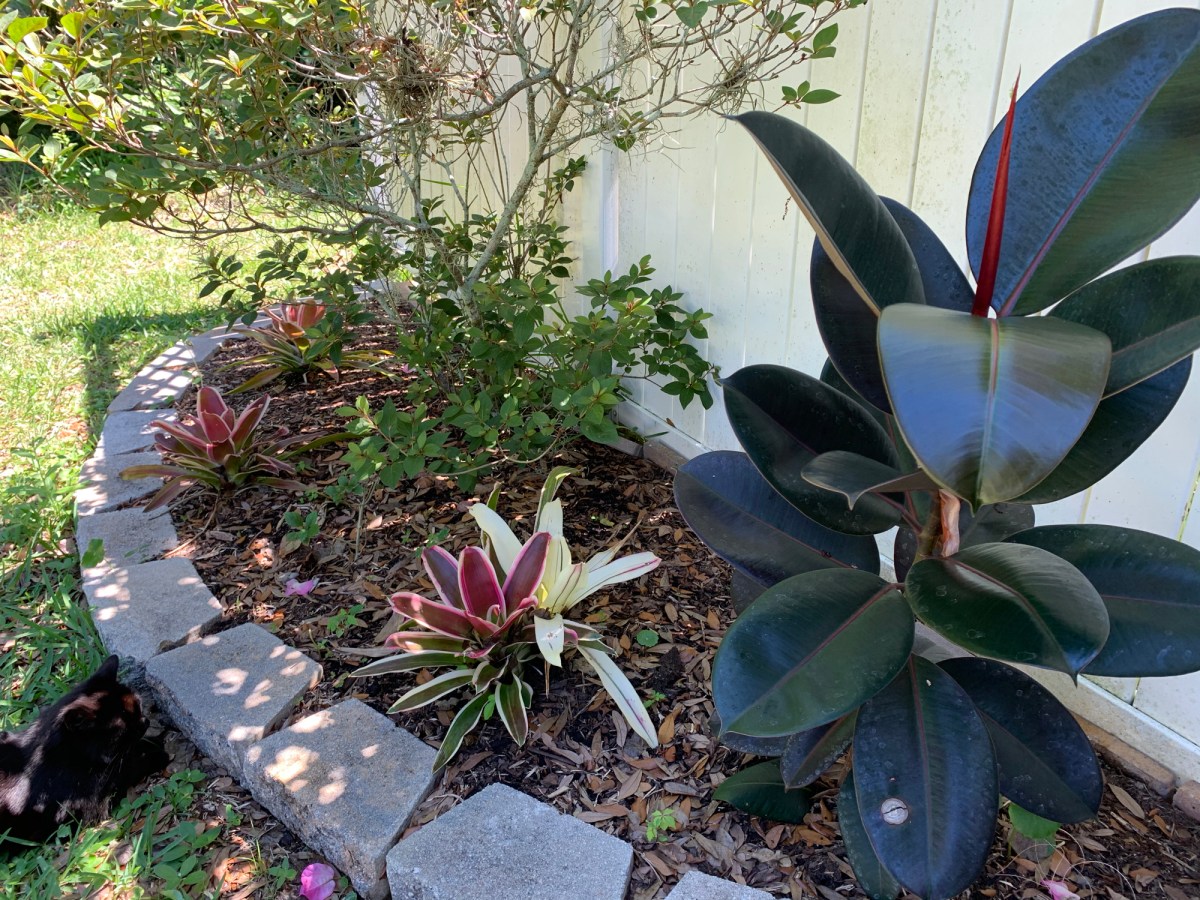
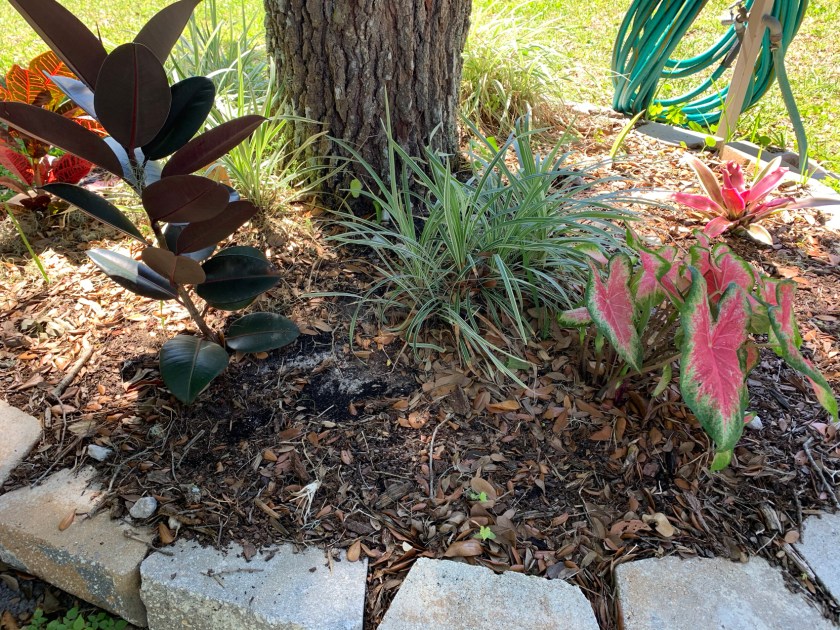
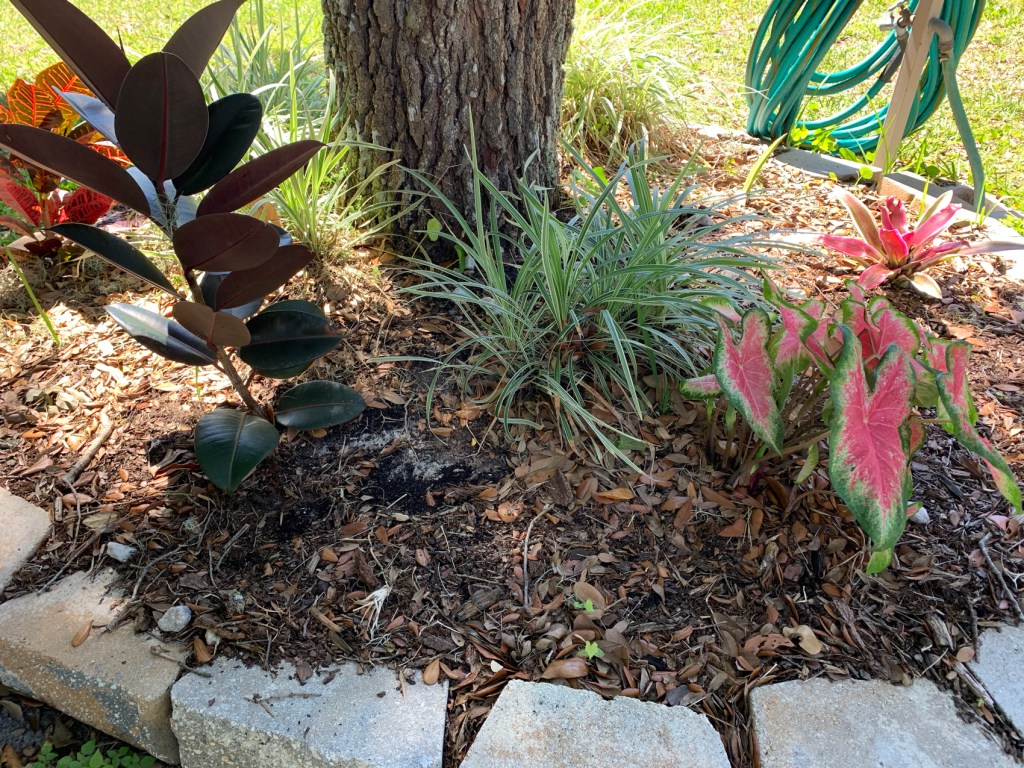
The front garden doesn’t get much attention from me. It’s where the croton is (see it upper left) and I planted a baby bromeliad – right. Front right is the pink caladium, which disappears underground for months and comes back in Spring. I also had a white caladium, but that has not grown back this year.
Tropical garden plantsSkittle watches as I photograph my little garden
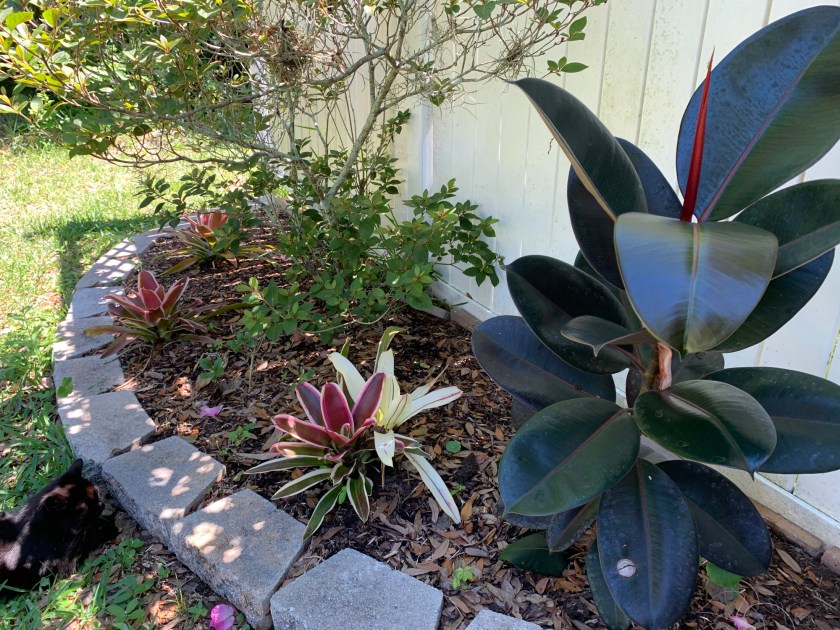
The Azalea is doing well with lots of green leaves. And the rubber tree – also taken from a cutting, is doing quite well. The Bromeliad double, which is white and pink, was the original plant I purchased. I’ve dug out babies and planted them around the yard.
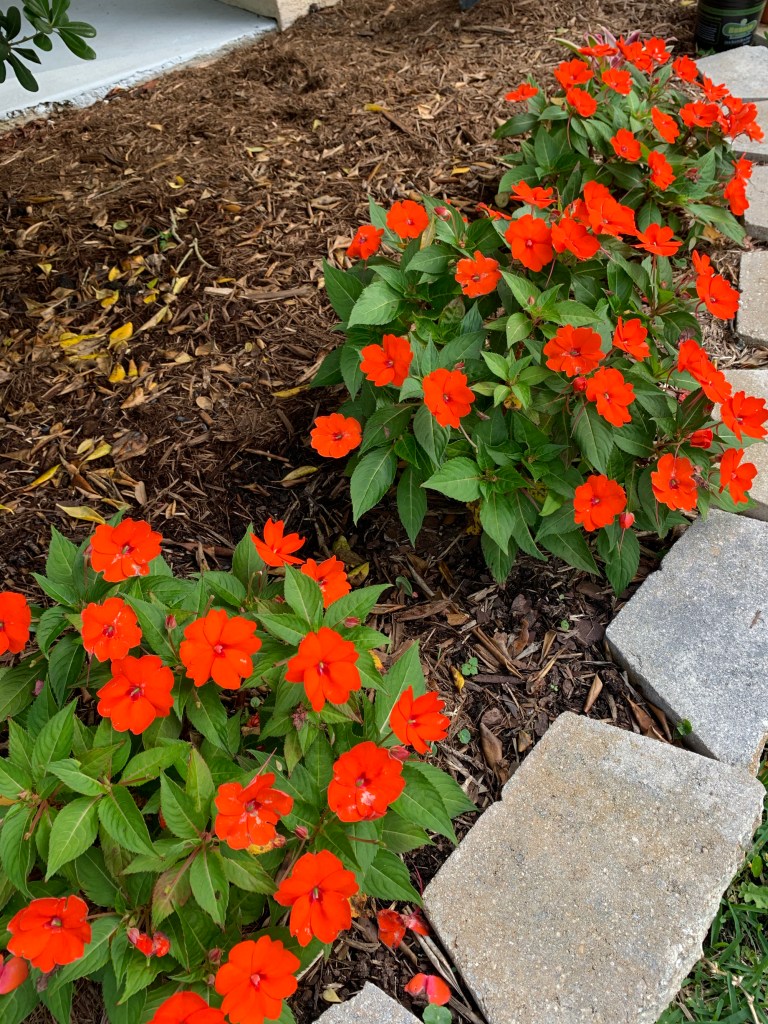
New Guinea impatiens do best with some shade. These will last a long time – sometimes over a year – with shade, water and care.
New Guinea impatiens
The green plants which make a low hedge across the front are filling in nicely. I had cut them back, added dirt and fertilizer and mulch. They looked very ugly and sparse, but no more. They will end up filled in and pretty. They just needed attention.
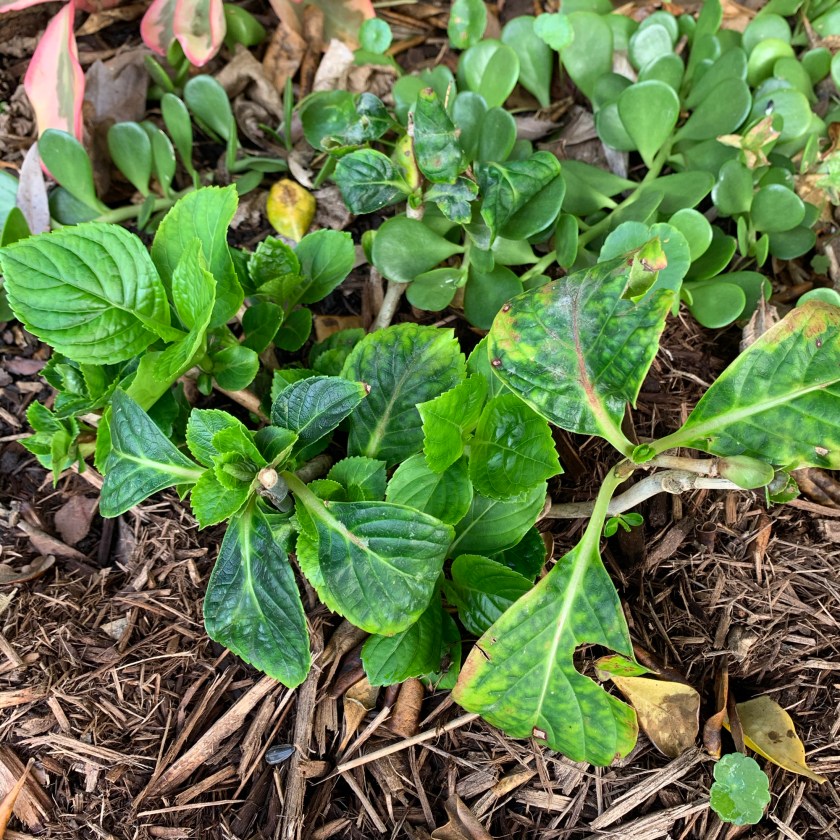
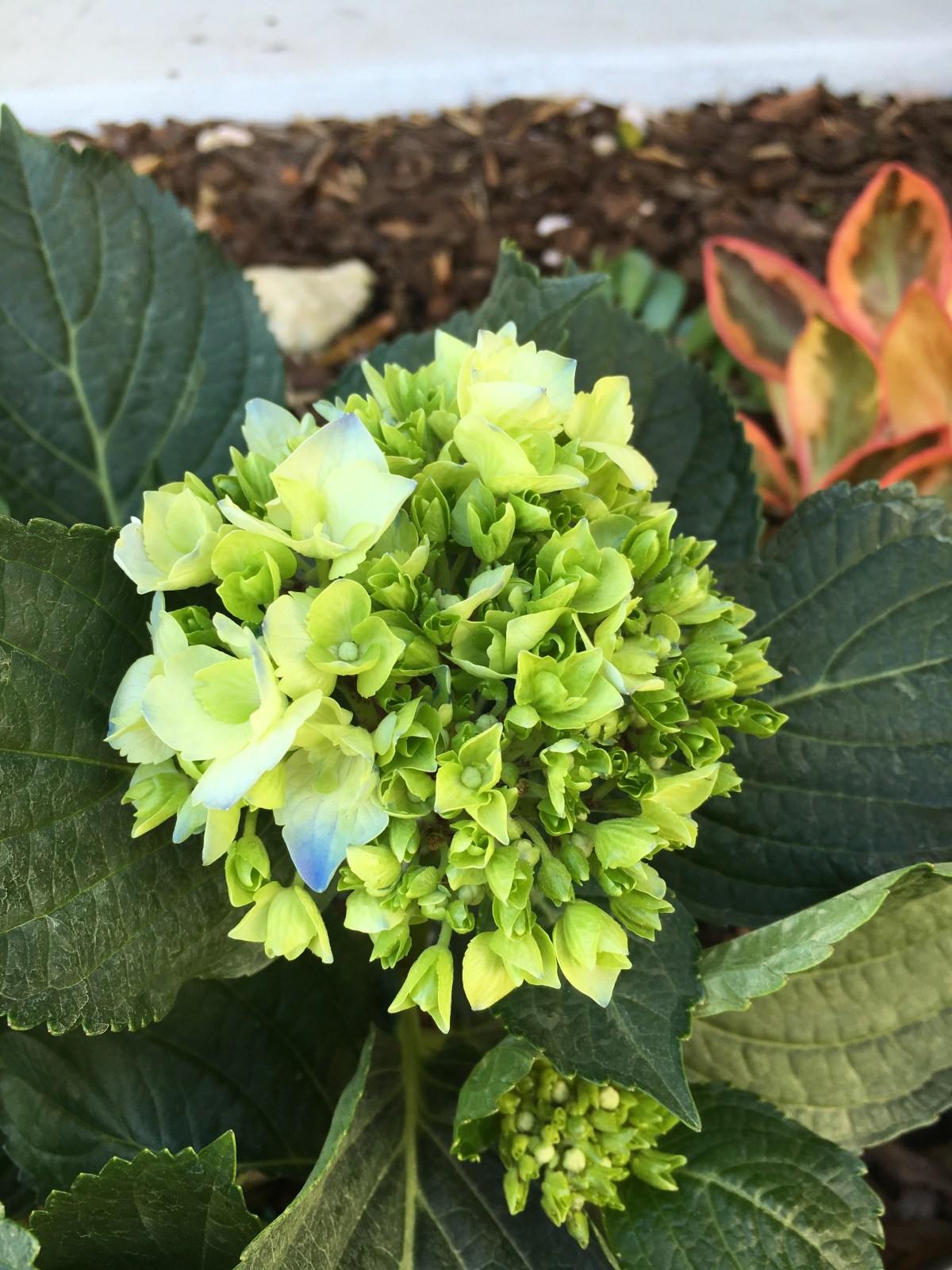
Last but not least is my hydrangea! It is alive, but very small at this point. It’s been fertilized, and watered, and I’ll watch to see what happens. It’s not at all like the hydrangeas I was used to in New England. Florida is like a completely different country.
In May – the Hydrangea
I hope you are keeping busy while all this Covid virus stuff persists. Maybe it’s almost time for gardening where you are. I hope so.
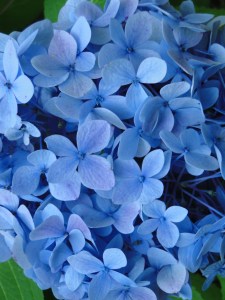
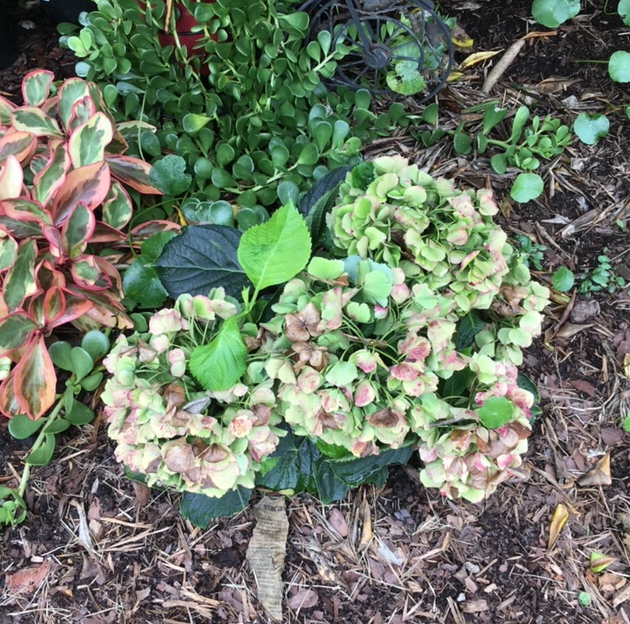
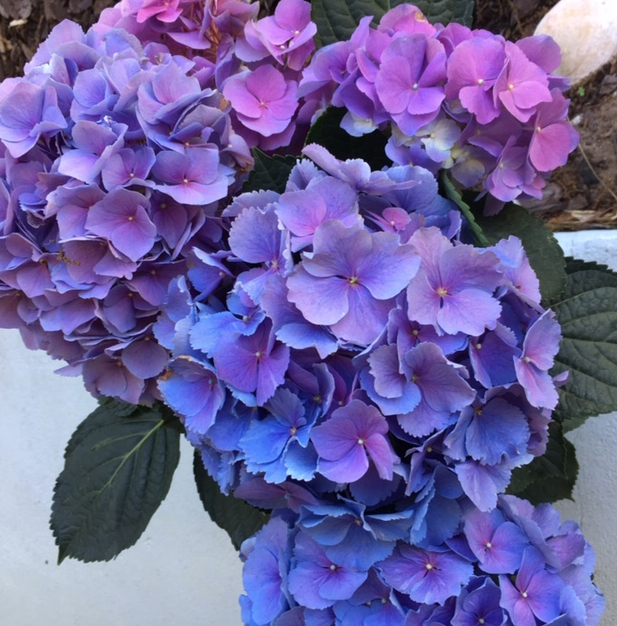
Some people love the uniqueness of green hydrangeas and some wonder why their bright blue blooms fade away to ugly green. Everyone is different. But if you wonder where green blooms come from – they are seldom found in nurseries – the answer is they come from blue blooms, and sometimes from late in the season white-flowering plants (Blushing Bride).
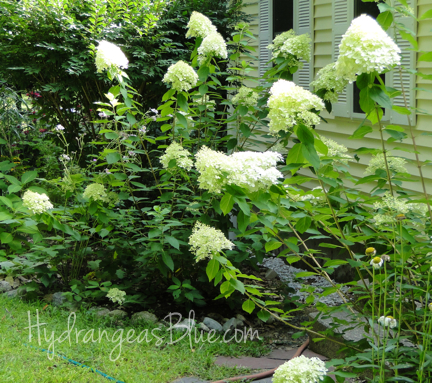
The Limelight hydrangea can also have green flowers, especially in early stages of growth. It’s flower is elongated in shape so it is different than the blue macrophylla, big leaf hydrangea, I’m writing about here.
Now my little hydrangea is in the ground and here is what I’ve learned. Deadheading Florida hydrangeas is a good idea. I found new growth and new flowers hidden beneath those huge, dying blooms.
Blooms turning green and dying
Until a few weeks ago I had not tried to grow a hydrangea in my Florida yard. I kept thinking there was no way it would do well in all this heat. So the fact that my little hydrangea plant is doing so well is a nice surprise. If it has been growing in a greenhouse it would adapt well to warmth, and it does seem to be thriving this summer.
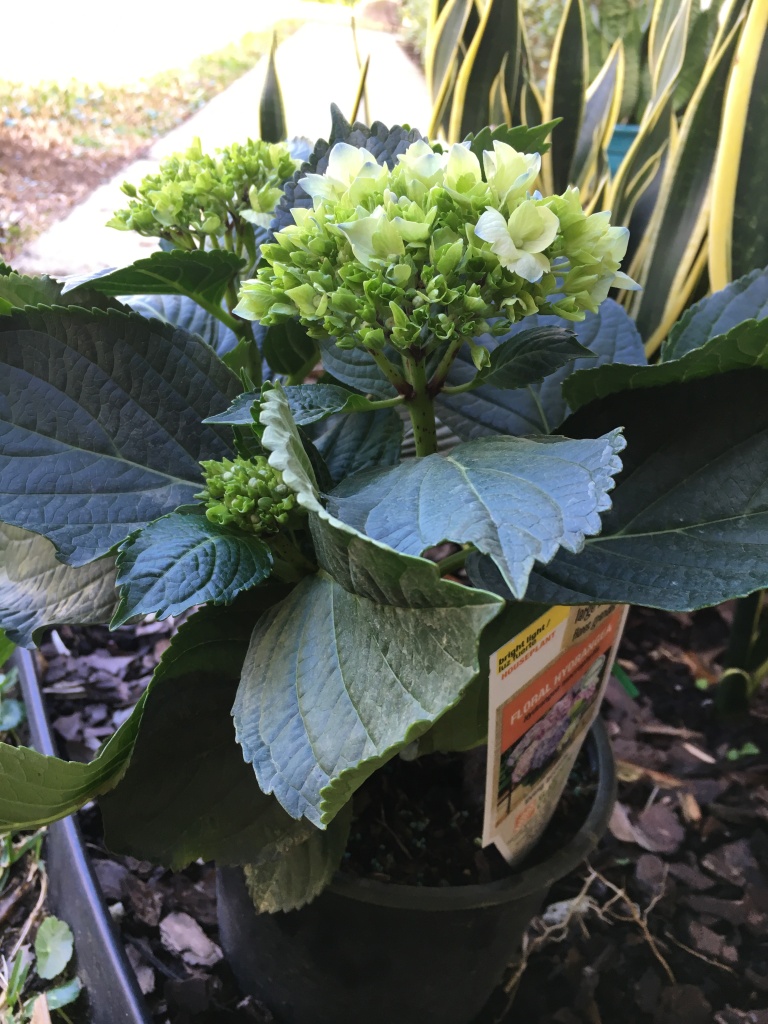
Walking through Home Depot the other day I came across a small display of potted hydrangeas. Because I have been wanting to see how hydrangeas do in this southern climate, I splurged and bought it. It cost around $12.00.
New hydrangea plant
Difference Between Indoor and Outdoor Hydrangeas
This potted plant is meant to stay in a pot and be grown indoors. It has probably been growing in a greenhouse and has been babied along with attention and fertilizer and whatever to make it bloom. This helps to get it sold. But once the plant is home and the blooms have gone by, then what? Well, I have no experience with growing potted hydrangeas.
In New England, where I learned first hand about growing beautiful hydrangea perennials in my yard, the plants I bought were large and flowerless. I bought them in Spring or early Fall and planted them in the ground. They were meant to grow and thrive outdoors. Each year the plants grew larger and would provide pretty blooms in summer. Each winter they went into hibernation and came back to life in Spring.
Limelight Hydrangea – August 20th, 2014
I don’t know what to expect from this new little plant, or how it will do in my Florida yard. I won’t be keeping it in the pot because potted plants demand a lot of care.
Read my update on how the flowers changed color and what is happening now that it is in the ground.
At Home Depot I spotted a table with small hydrangeas for sale. I call it a “greenhouse” hydrangea because I imagine that is where it came from. The price was around $12 as I recall, so I bought one. Now I know these are not like the hydrangea plants I purchased in New Hampshire to plant in my northern yard.
The tag on this one said it “likes cool nights” and it’s climate preference is 50-70 F. That’s what “cool” is in Florida. It’s also listed as a Houseplant. This plant obviously can’t take wintering in a dormant stage over several months. Growing hydrangeas this way is new to me.