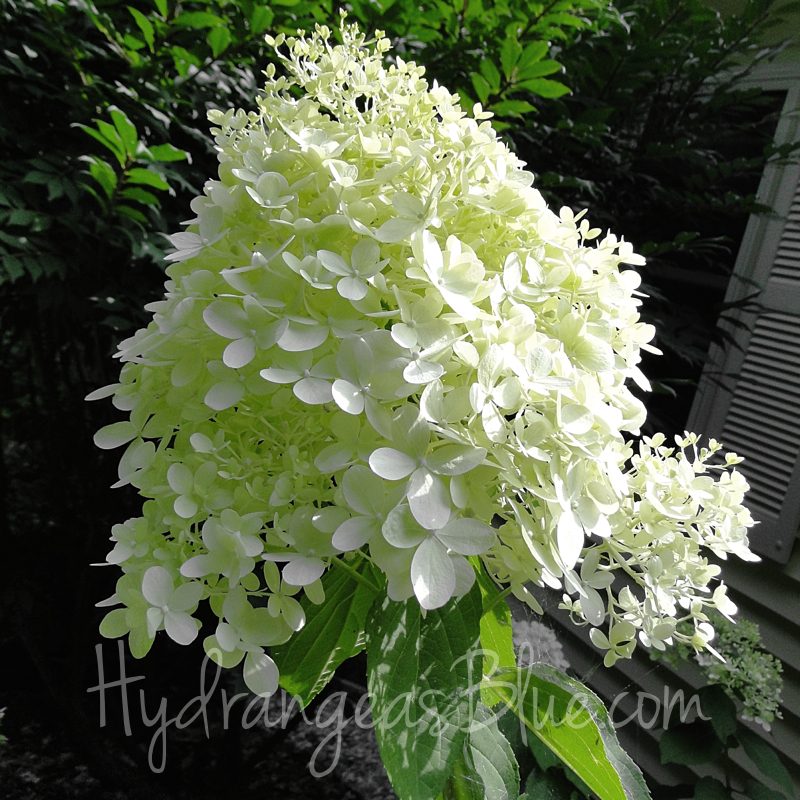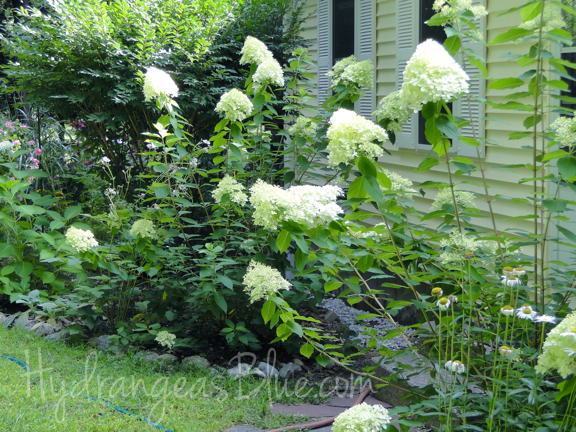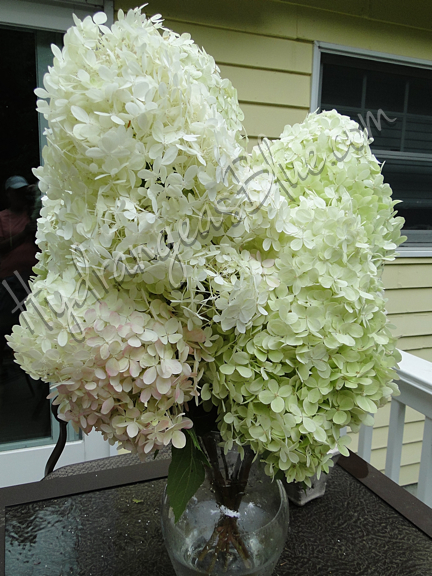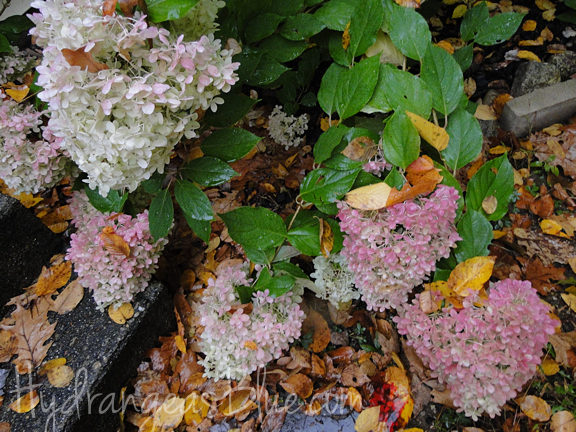
Pictures of My Hydrangea Plants 2015

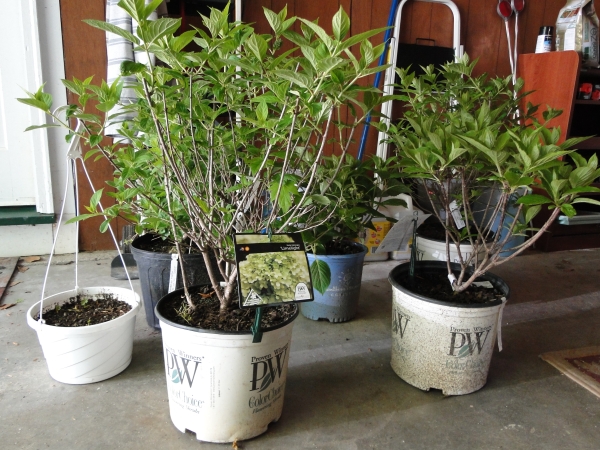
hydangeas in pots
Newly purchased hydrangeas in pots

In 2011 I bought a house and began to fill the yard with perennials.  I had a lot of cleaning up to do, as the gardens were pretty ugly – but not as ugly as the house!  In between fixing up the inside of my home, I spent time beautifying my new yard.

That first summer was spent clearing away old growth and garden edging, but in Spring 2012 I was ready to buy some perennials, and one of the first shrubs I wanted was the hydrangea.

It is now 2015, just three short years later, and I thought I’d share pictures of those plants, and their offspring (propagated plants). I also want to post an update to acknowledge my favorites, problems, etc. to share with readers.

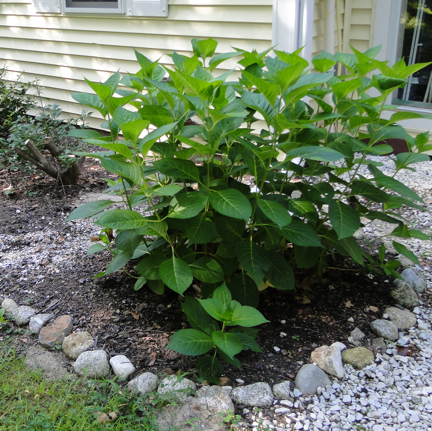
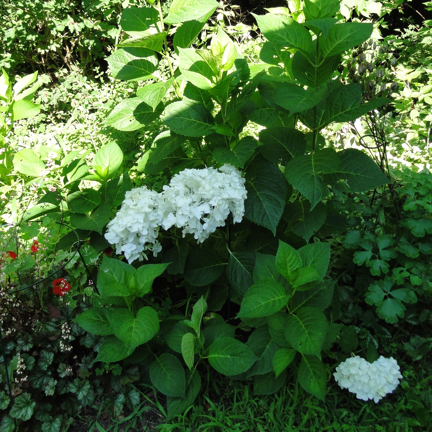
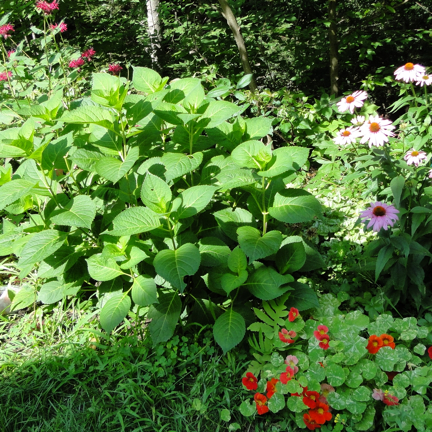
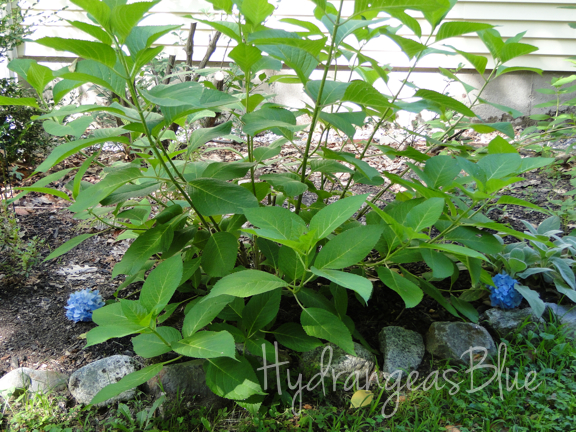
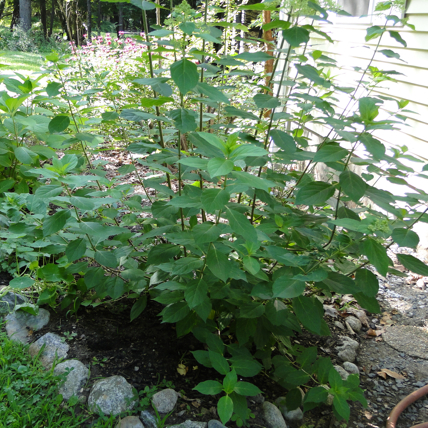
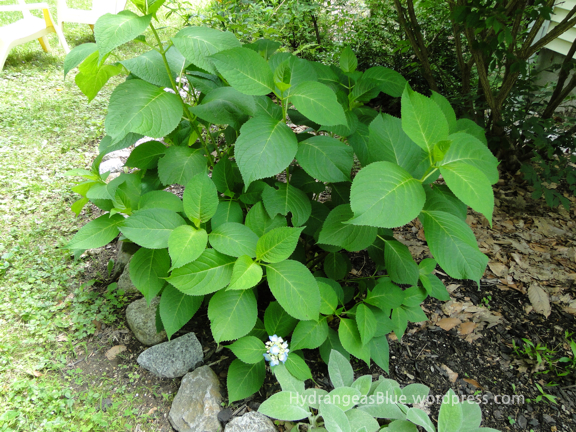
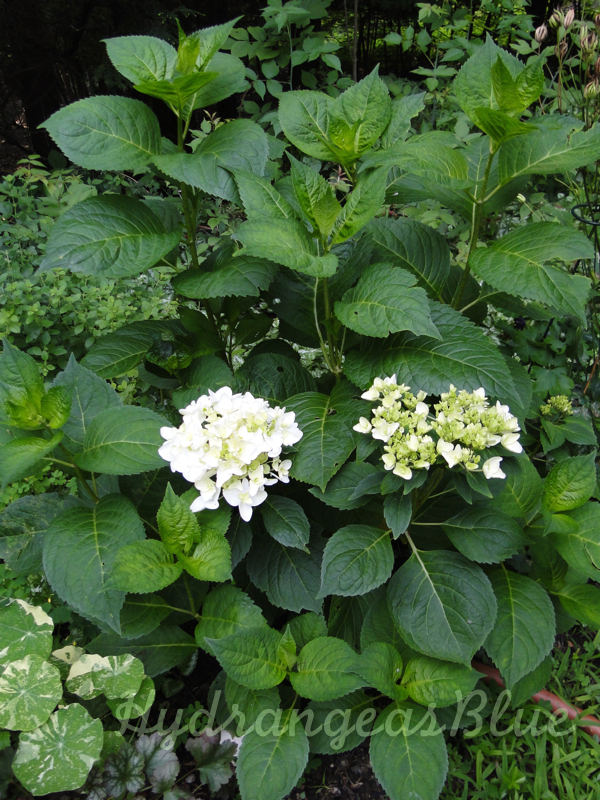
First, the Blushing Bride, hydrangea macrophylla. The pictures below were all taken in August, 2015. The first is the original shrub I bought from a local nursery. The next two are pictures of the two I propagated from the original. I planted them last year, and as you can see, they are almost as large as the original. In fact, one of the ‘babies’ is blooming, and the others are not.
These are beautiful shrubs, with large green leaves, and I highly recommend this perennial for the yard.

hydrangea perennial
Blushing Bride – original shrub
white flowering hydrangea
Blushing Bride propagated plant
hydrangea shrub
Blushing Bride baby #2 – no blooms this year

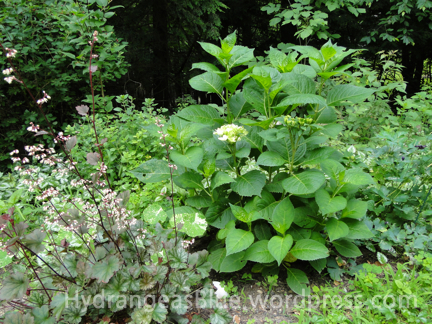
The blue-flowering hydrangea, ‘Endless Summer’ is pictured here. It’s not flowering much this year, but I blame the bad winter. There are two small flowers at the bottom. I think in time, as it ages, this will be a more beautiful shrub. I also cut down a larger bush that was preventing it from getting sun. That may help with blooms next year.

blue hydrangea shrub
Endless Summer

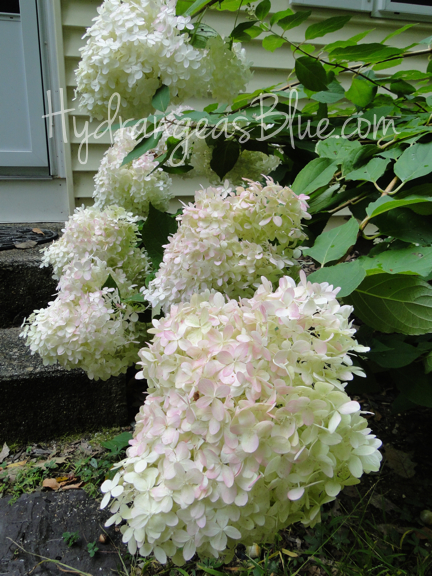
Please see my next post and read my review, with pictures, of two more hydrangeas, the paniculatas – the Pinky Winky and Limelight – which have elongated blooms.

Hydrangeas in My Yard: The Paniculatas

My last post was about the macrophylla varieties of hydrangeas growing in my yard. Those have big, rounded blooms and large leaves. This post contains pictures of my two types of paniculatas, which are hydrangeas with elongated type flowers.

In general I have found the paniculatas to be very easy to care for. They seldom droop in a drought, as the macrophyllas (Blushing Bride and Endless Summer) wilt quite easily in hot sun, and when they are dry.

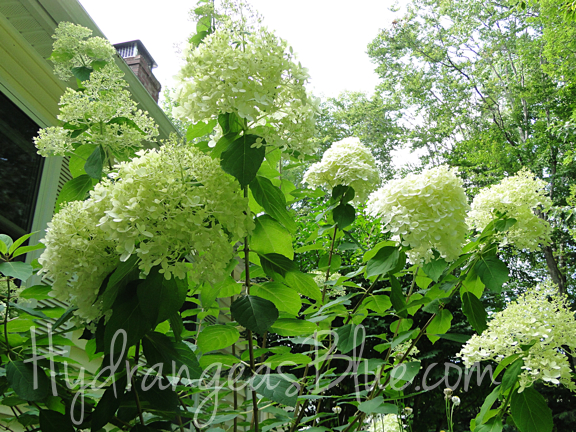
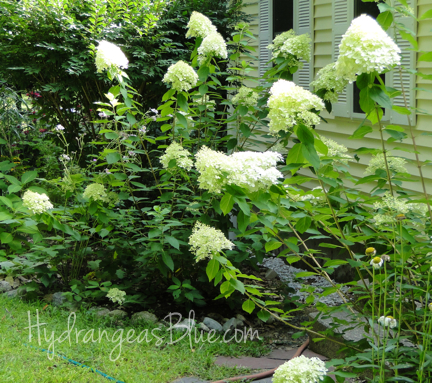
The first photo is of the Limelight hydrangea. It was taken in August 2015, and as you can see it is not flowering, but it does have buds. The second photo is from last year at approximately the same time.  As you can see, this year I will not get the blooms like last year.  Again, I blame this on our incredibly horrible winter.  The extreme cold and piles of snow have done a number on just about everything in my yard.   Some of my Hostas never grew back, and the perennials I thought had died, are still living, but they are way behind on growth, like the hydrangeas.

limelight hydrangea shrub
Limelight Hydrangea – Aug. 10th, 2015
flowering limelight hydrangea
Limelight Hydrangea – August 20th, 2014

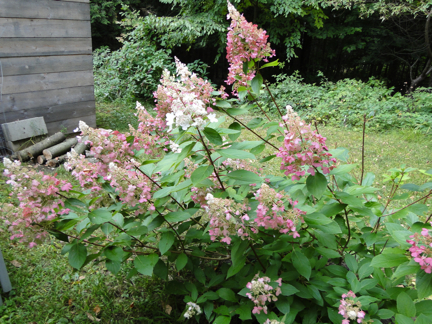
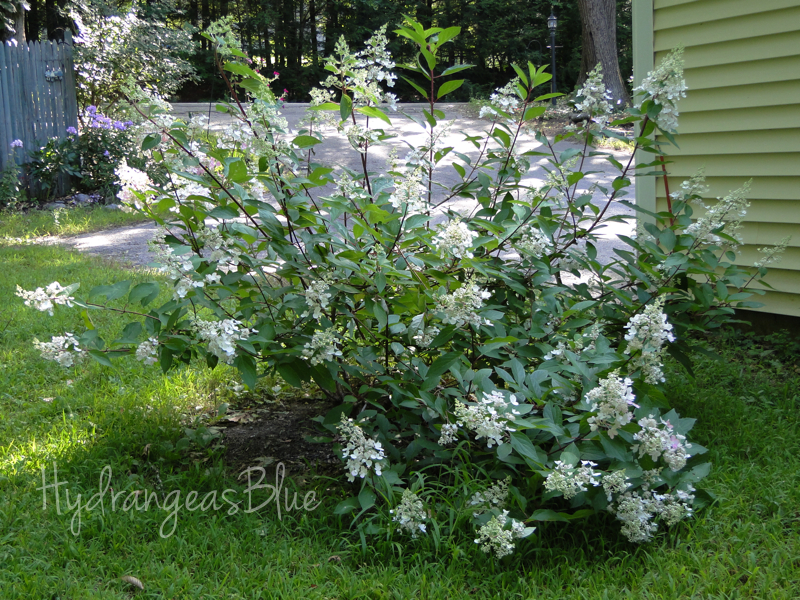
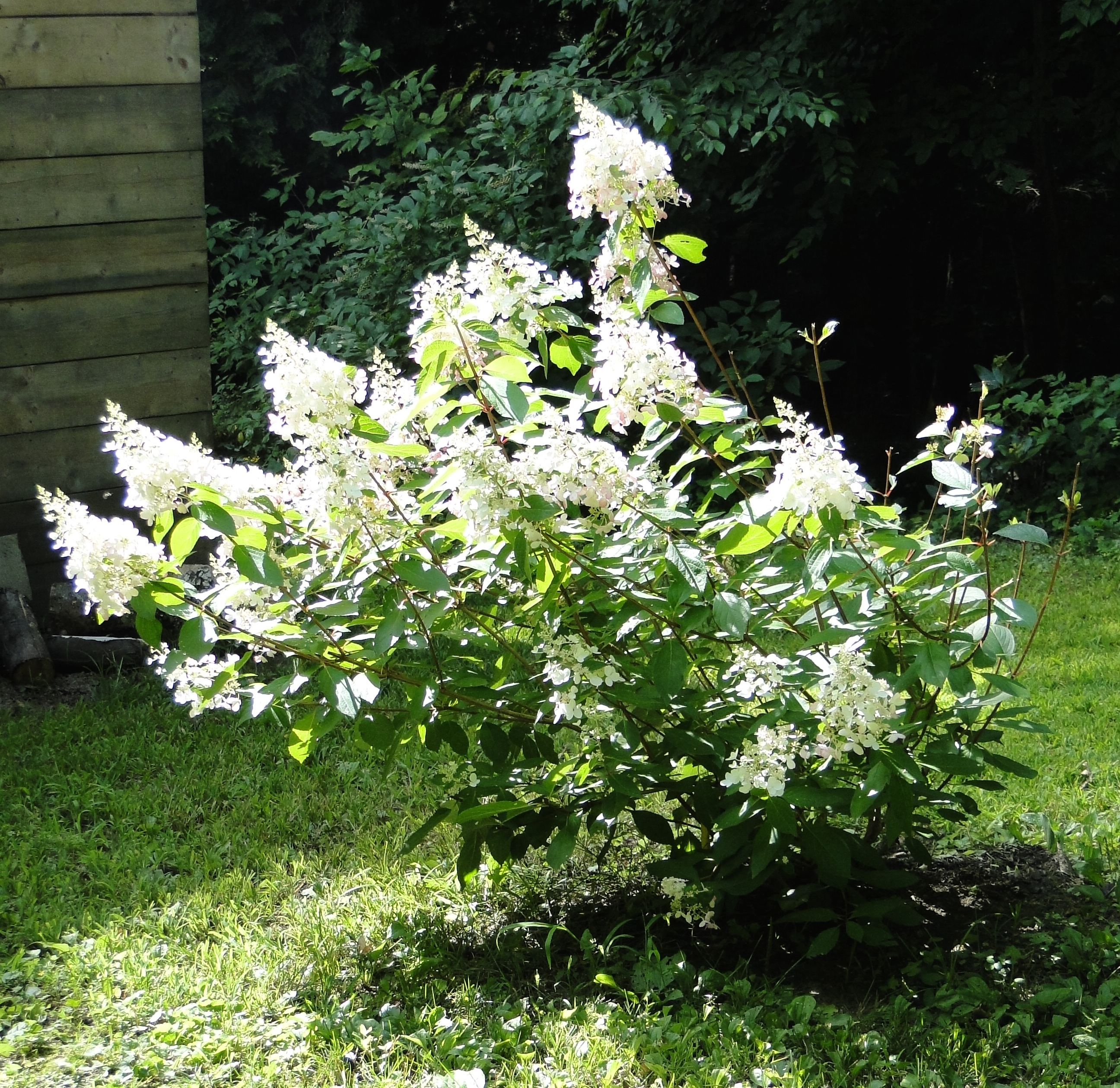
The last picture I have is of the Pinky Winky hydrangea. I have come to love this plant for it’s beautiful, long-lasting blooms. It is also a very easy plant to grow. Plant it and forget it.
pinky winky hydrangea
Unfortunately, I could have chosen a better spot for this one to grow. Without a lot of yard space, I thought it would have plenty of room to expand next to the garage. Then the snow came and my plow guy pushed loads of snow over the poor thing. It came back and grew fine.
This year I had to have a broken tree taken down, and as the tree-cutters brought the big beech down, the branches landed on my Pinky Winky. It was enough to break one of the main, low branches. I will have to cut it, as it’s split. I want to wait until the blooms go by.

Pinky Winky 8/20/14
One year ago – Pinky Winky, August 20th, 2014

The only problem I have with this one is that the deer eat it – see how lopsided it is in the photo above?  There is a big deer population around my house and they come up from the woods at the side of the house to check the yard for dinner.  After they munch on my rhododendron, they chew down the stalks of the hydrangea. It’s the only hydrangea they eat, and I think it’s placed just right (or wrong).
So between the broken branches and deer trimming, I may not get to see this perennial grow too large before I move, but it’s still beautiful.

This is the only hydrangea that doesn’t seem to have been bothered as much by the extremely cold winter.  I would love to have more Pinky Winky hydrangeas in my yard.

Summer Blue Flowers on the Hydrangea

This years Endless Summer blue flowers are not impressive.

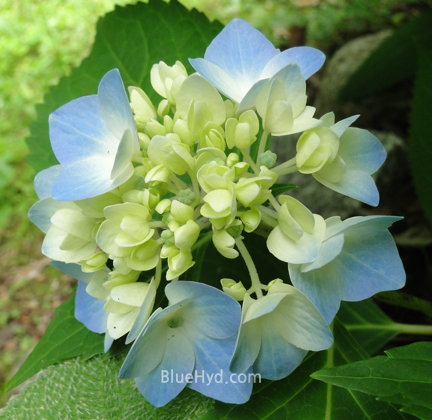
blue hydrangea flowerFinally I have a picture of my blue flowers on the Endless Summer hydrangea plant. It’s nothing too impressive I’m afraid. I don’t think my hydrangeas are getting enough sun to flower abundantly.

In fact, none of my hydrangeas in the front yard are producing many flowers. Usually by July I can see big flowers, as you can see in this post from July, 2013.

This summer – it’s July 12th now – I have two, very small, light blue flowers, one on each side of the plant, near the bottom.

blue flowering hydrangea plant
July 2015- Endless Summer Hydrangea

I believe that the problem is that I have two large burning bush trees in the front that shade my gardens. The Burning Bush is suppose to be a bush, but this house was neglected before I bought it, and the bushes were allowed to grow huge. Although I cut them back when I moved in, they have since gotten out of control once again. It’s difficult for me to contain the thick stems as they can’t be cut easily. I’m considering taking drastic measures and using the chainsaw to cut them down. The thing is, I don’t use a chainsaw.

The blue flowers are pretty, but small. Lack of blooms usually means there is not enough sun. We also had a bad winter which I think has affected my perennials adversely also.

On the other hand, my propagated transplants of the Blushing Bride hydrangea are looking beautiful. One has two flowers on it, and both have gotten really large.

My Blushing Bride White Hydrangea Transplant- One Year Later

Year 2 for the Blushing Bride hydrangea that was propagated in 2014.

baby hydrangea bush
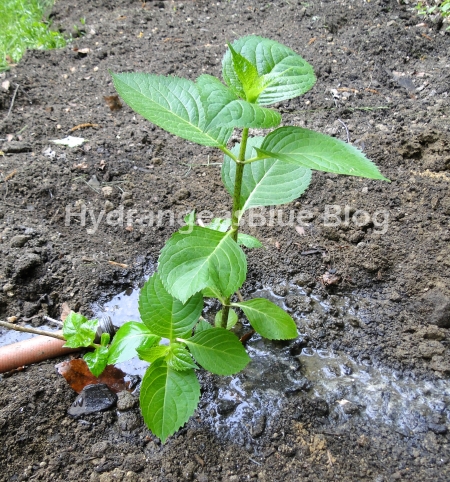
New plant #1

Last year I dug up two offshoots of my Blushing Bride hydrangea. The shrub was becoming large, and as the limbs hung down to the dirt, they became rooted. After letting them grow this way for a year, I cut them off from the main plant and dug them up.

I ended up with two nice size little hydrangea plants. Both were planted in my backyard last spring and they are looking good this year.

One in particular is doing very well and has two flowers. I had named it #1, and it was samller than the #2 plant, but it’s doing better. I think it gets more sun than the other one, which helps with flower production. That is it in the first image, taken last year after it was just planted in June.

Below is how it looks in July this year – just one year later!

blushing bride hydrangea
Year 2 – new Blushing Bride

white hydrangea shrub

I’d love to transplant some new blue hydrangea bushes, but I can’t seem to get mine to grow enough to give me new baby plants. I’m also running low on space to plant perennials.

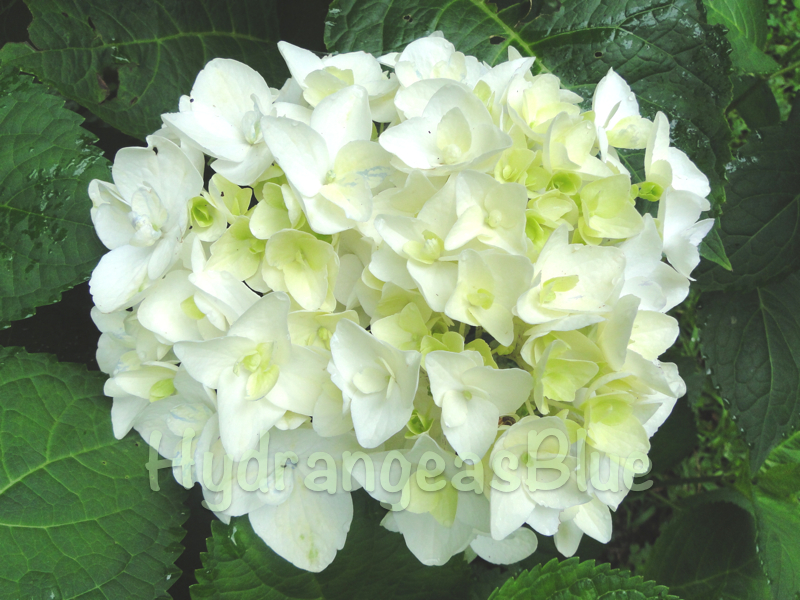
The blooms on my new plant are large and beautiful (picture below). In fact the original Blushing Bride plant has no blooms at all this year. The ‘baby’ looks better than it’s mom. It’s all in the location and sun exposure. Hydrangeas don’t need a lot of direct sunlight, but they do need a good measure to create flowers.

white hydrangea

My Perennial Shade Garden

Pictures of my shade garden perennials.

mouse ear hosta
Mouse Ear Hosta

My front yard has an upward sloping hill with tall hardwood trees. Once the leaves pop out in May most of my front yard is in constant shade. I love trees, and they are beautiful, but planting and growing anything beneath them is difficult.

I prefer to invest in perennials, since I am on a tight budget. Impatiens are the only annual I plant and they like the shade. Usually I can find cheap, multiple impatiens seedlings in tiny containers. It takes time to get them all planted, but once they are in the ground they grow nicely. My recent favorite is the variety with red and white striped flowers.

It took me one full summer to clear out beneath the trees. The following year I added astilbe, hosta, and bleeding heart perennials. Digging the ground where there are many tree roots is tough. I added some new loam at the base of the hill which helped with planting.

Honestly, the astilbe is my least favorite. It’s spindly and small, but I’ll see how it does this year. I don’t know much about it, but it’s not full and pretty like in the pictures I’ve seen. My guess is that the dirt is not suitable.

The Hosta plants always come back and fill out a bit more each summer.  I’m happy to find that they are all growing.  This past winter was a very bad one, and a few of my perennials seem to have died.  I had a big Pampas Grass plant that is totally gone.  Glad I got this picture last summer.

pampas grass
Pampas Grass Bloom

My favorite shade garden perennial is probably the bleeding heart. It seems so fragile. The bright green stems are soft and break easily. The little heart-shaped flowers dangle from thin branches and seem so delicate. Yet it survives the winter and is always one of the first plants to push up in spring.

Usually my lenton rose plants bloom first, but this year one of them took a long time to grow.  Like I mentioned, the winter was especially hard.

Identifying Perennials in Spring

Pictures of perennials as an identification guide to what’s growing in my yard this spring.

Once the perennials start pushing through the ground in spring, I sometimes can’t recall what is growing where.  I spent nearly 30 years living in Florida where plants don’t have to hibernate over winter.  Now that I live in New Hampshire, I’ve had to adjust to not seeing my yard and gardens for months at a time.

Even though I leave the tags near the plant when they are planted, the tags don’t always last.  Some of the larger perennials, like the hydrangeas and peonies are easy to identify.

Spring Plant Identification, New England

I’ve taken some recent photos of the perennials growing this Spring as a reminder..  It’s a plant identification guide for myself.  Maybe they will help you name some in your yard as well.

I took these photos May 3, 2015.  I lived in southern New Hampshire. The top photo, in each ID section, is mine and is as the plant will look early in Spring. The bottom photo (if I have one) is from the Pixabay site and shows a mature, flowering plant.

Bleeding Heart

The bleeding heart has little pink or white flowers that hang in rows along the stems. The Bleeding Heart likes a bit of shade.


Columbine

ID Columbine plant in spring

The Columbine is one of my favorite flowering perennials. It comes in such a wide variety of colors, like pink, red, purple, and yellow, usually in a combination of colors with a light center. The flowers can be ruffled in some varieties.

Pink and blue-purple columbine flowers

Coneflower

The Coneflower is an awesome perennial and the tough thistle type seeds draw in the finches in Fall.

ID Coneflower

Coral Bells

Coral bells are perennials that have stalks of tiny, coral pink colored flowers.

ID Coral Bells
Coral bells growing in front of peonies
Coral Bells with pink peonies behind

I have two types of Coral Bells and one has darker leaves. I can’t remember what the flowers look like.

ID coral bells2

Coreopsis

The Coreopsis is a mounded type plant (or at least mine is) that grows little yellow flowers.

ID Corepsis
Yellow flowering coreopsis
Blooming Coreopsis

Monk’s Hood

Monk’s Hood will have tall stems with blue-purple flowers. I couldn’t find a flowering photo to share.

ID Monk's Hood

Phlox

Phlox comes as a creeping variety or this tall variety. Flowers are usually shades of pink, purple, or white.

ID tall phlox
Pink purple tall phlox flower

Wild Bleeding Heart

ID wild bleeding heart