Planting and re-planting in Fall for a good vegetable harvest. Bugs, weather, and animals can make things difficult.
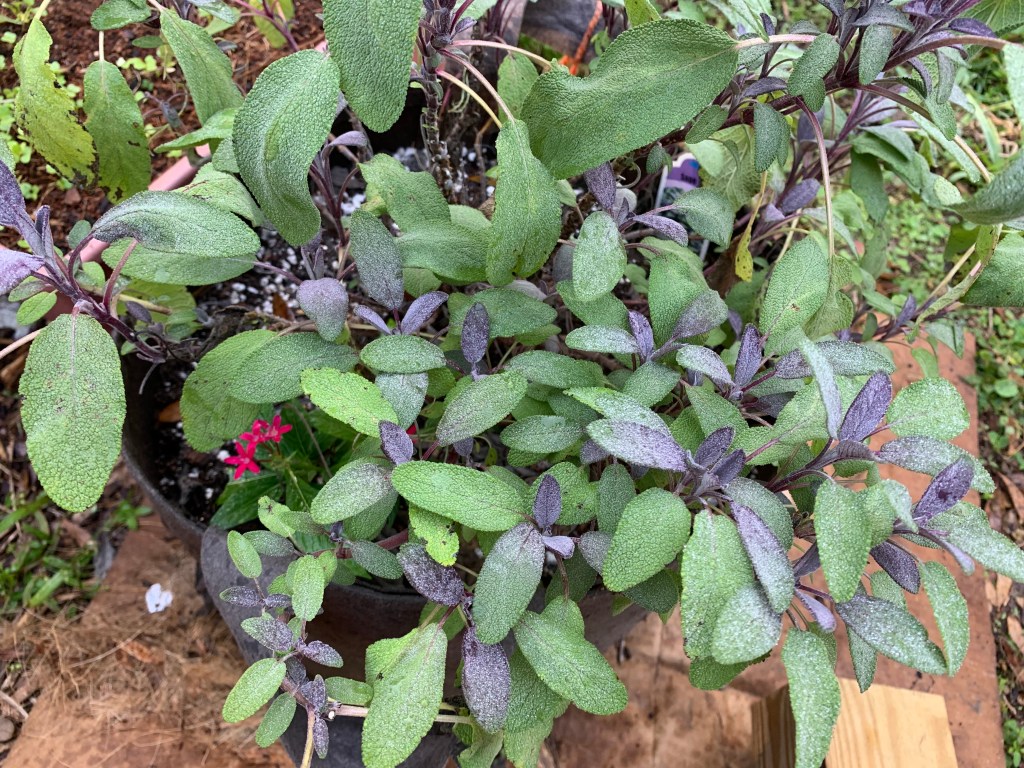
Planting seeds is an ongoing process in my yard. Thanks to raccoons, my cats, and the armadillos, a lot of seed replanting happens. In my photos here, the only thing grown from a purchased plant (and not seeds or a cutting) is the sage.
purple sagebell peppereggplantbroccolitomato after Hurricanepepper & carrotsFall garden 2024 – Firespike is permanently angled from Hurricane winds
Where Are The Good Bugs?
I am into year two of vegetable gardening and I’m still wondering where all the good bugs are. Occasionally I see a ladybug. I rarely see much of anything else. It has me wondering if this area simply can’t support good things.
I’m not a fan of Florida. In my opinion the state is a swampland and should have stayed that way. Now, everyone sprays their lawns to kill all the things they never want to see.
All my neighbors spray their yards. I can only imagine how many beneficials are killed along with the unwanted cinch bugs and roaches. Is the ecology in my area so bad that I will never have a self supporting garden full of beneficial insects?
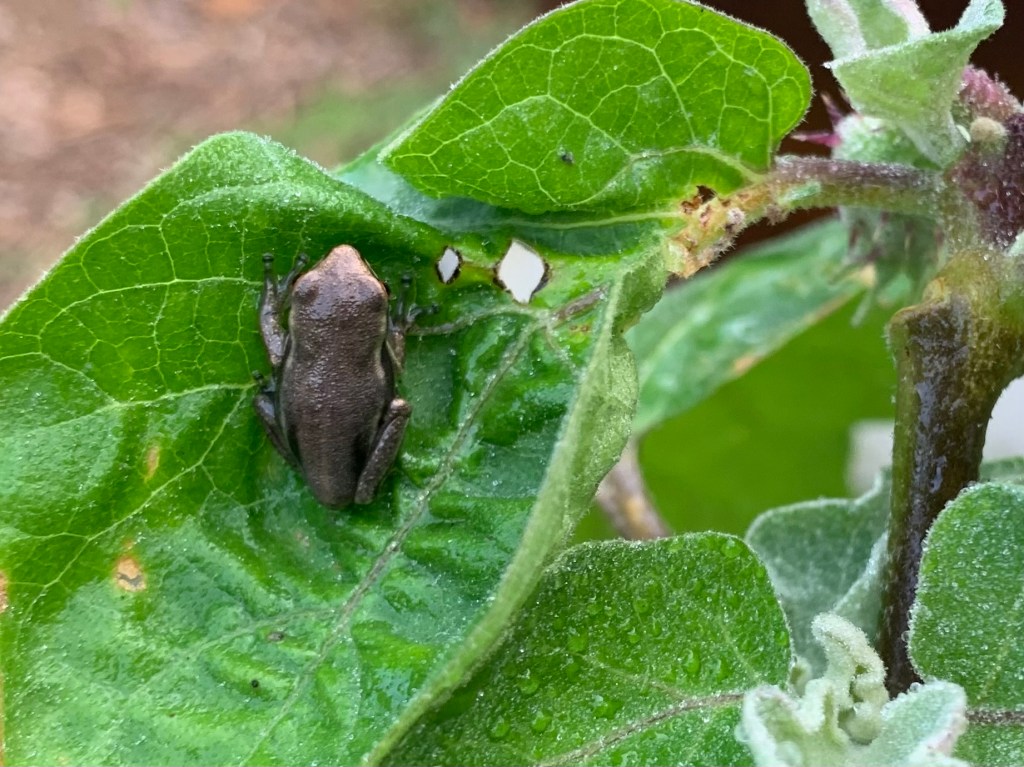
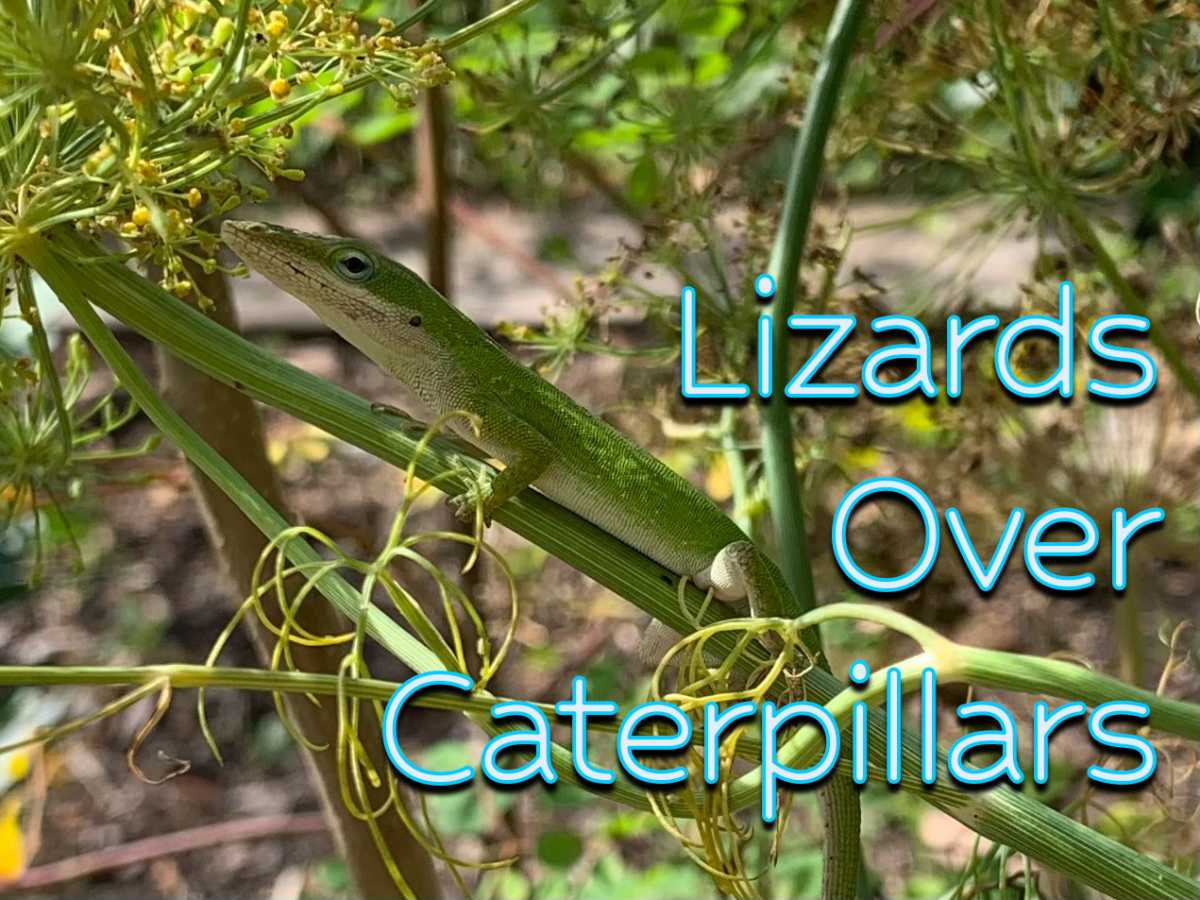
We have invasive frogs and lizards. Are they eating up all the good bugs that may show up? It really seems like everything is working against me here.
I Grow What Will Grow
Ideally, a backyard garden would supply food that is most loved and eaten often. What I would love to grow, and eat often, simply doesn’t grow for me. Onions, peppers, zucchini, tomatoes, lettuce, cucumbers, and carrots would be great. I’ve had no luck with peppers, zucchini (any squash), tomatoes, and cucumbers. Certain types of greens do well – Tatsoi is a favorite. And last year carrots and onions came up.
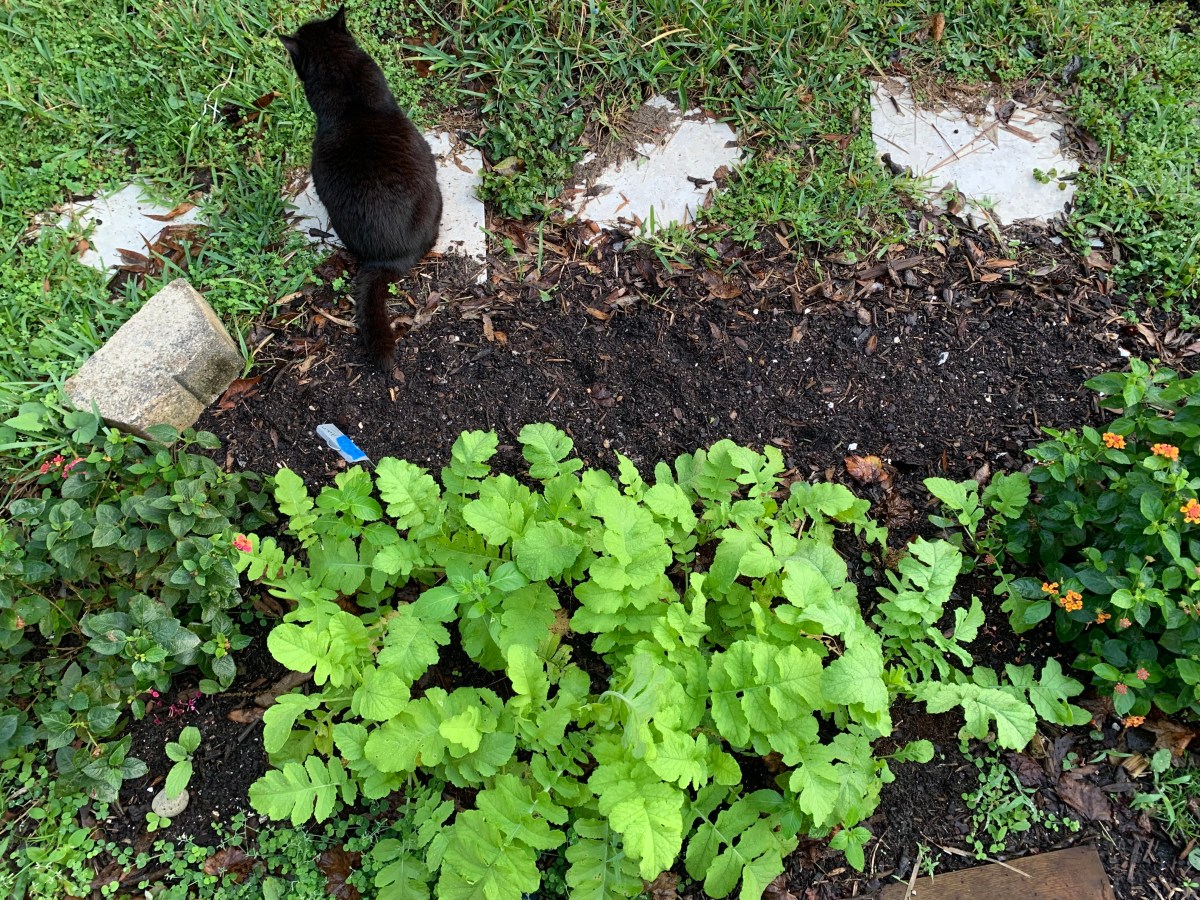
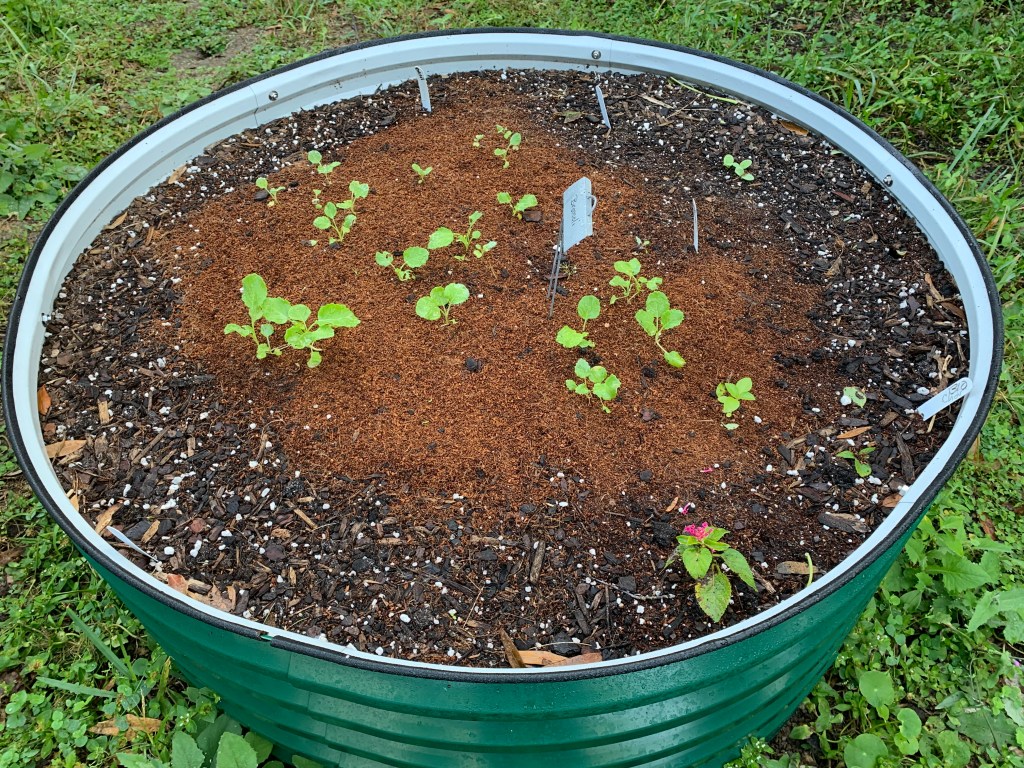
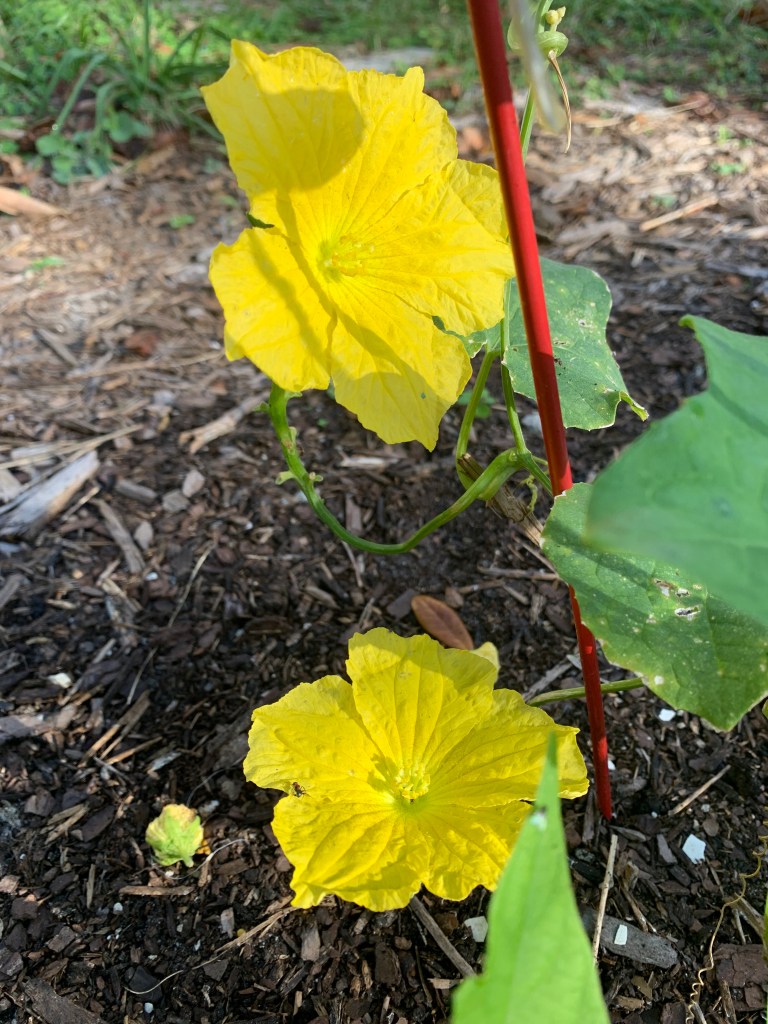
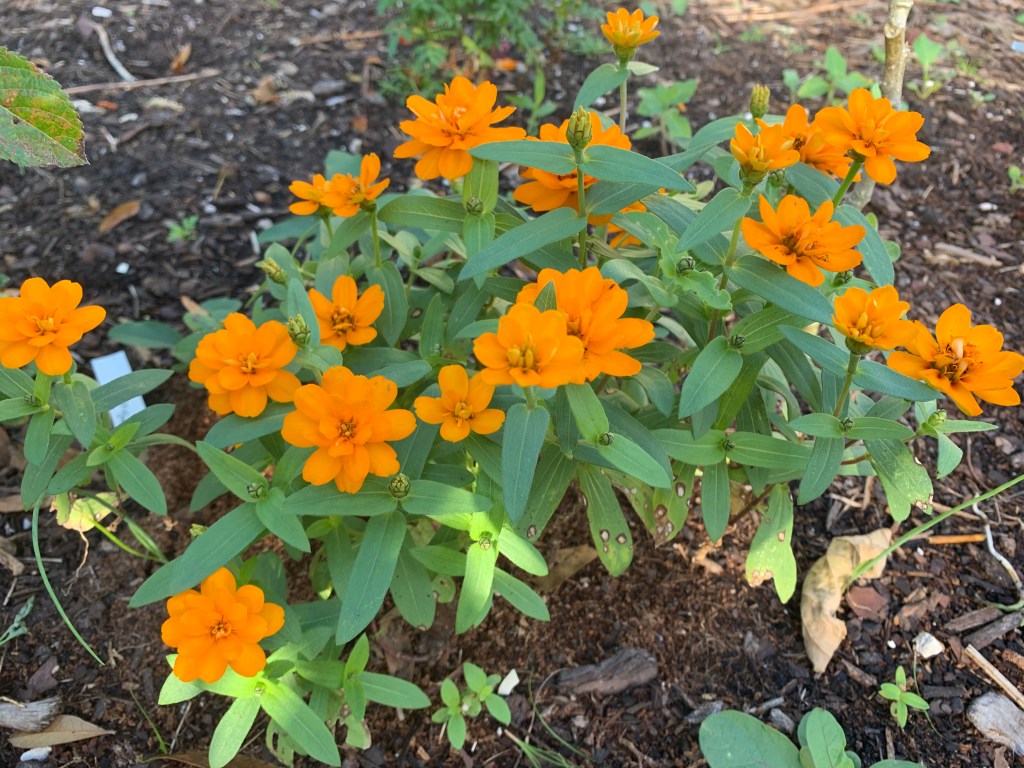
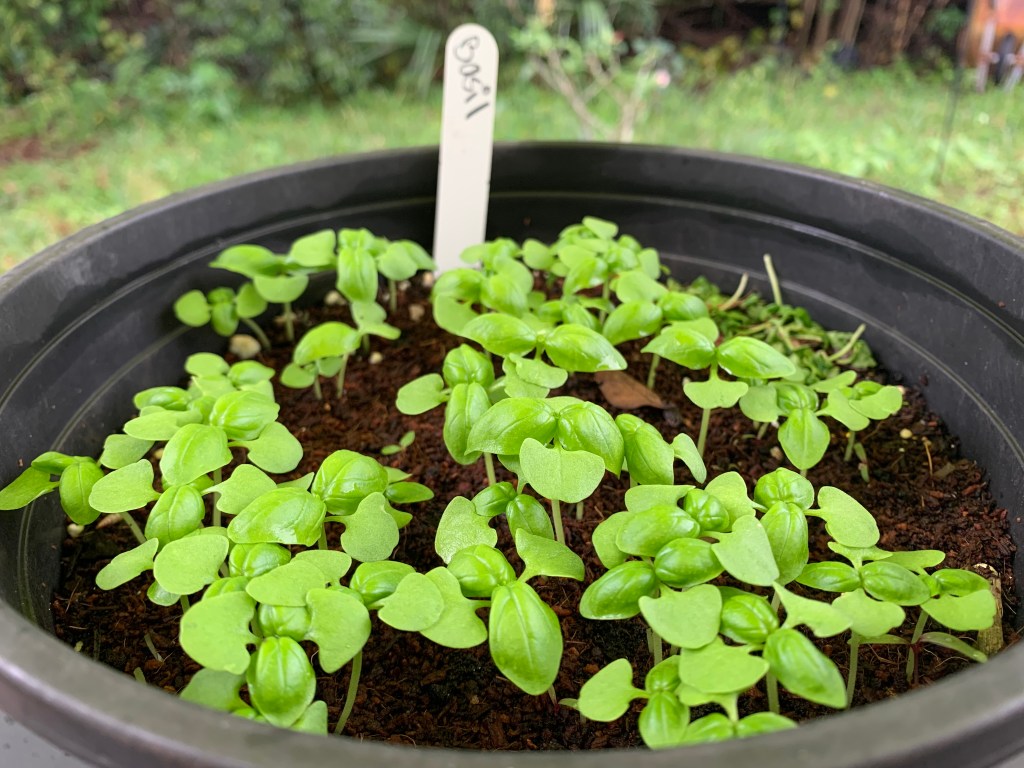
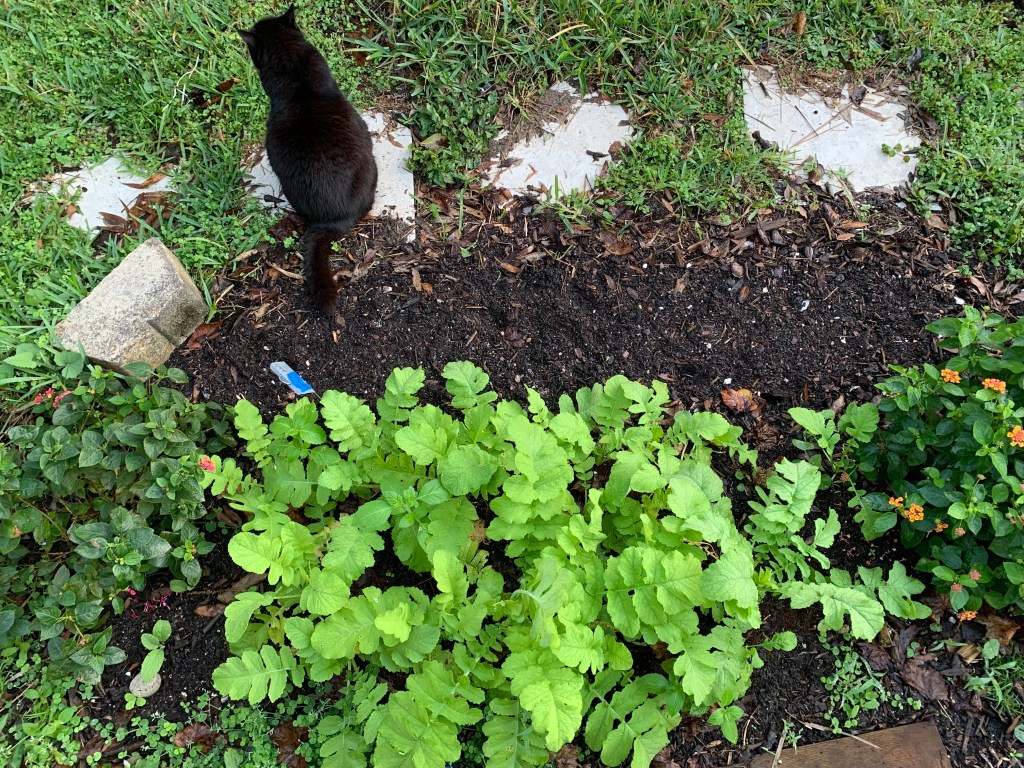
Luffa flowersZinniaBasil Daikon radish and new dirt section for planting
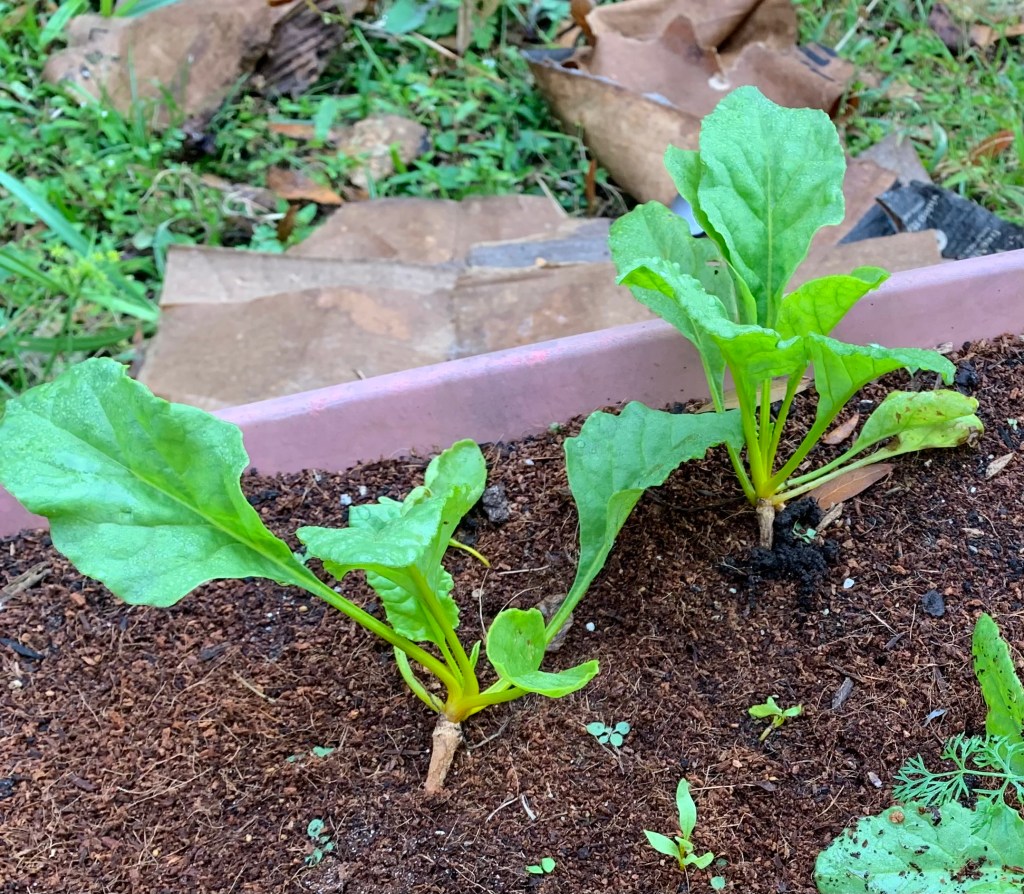
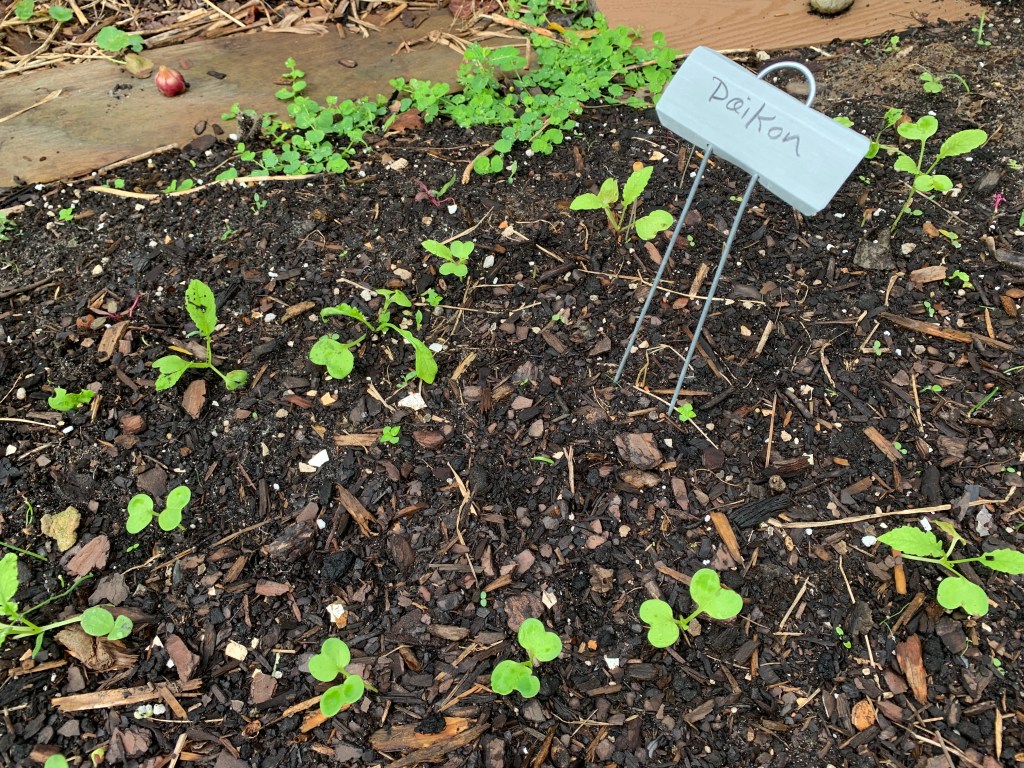
The Daikon radish is looking pretty good, but I’ve never eaten one. Can I make a meal out of a radish? The luffa looks sickly, a few beets look okay, the Egyptian spinach grows great – but I don’t eat it (yuk).
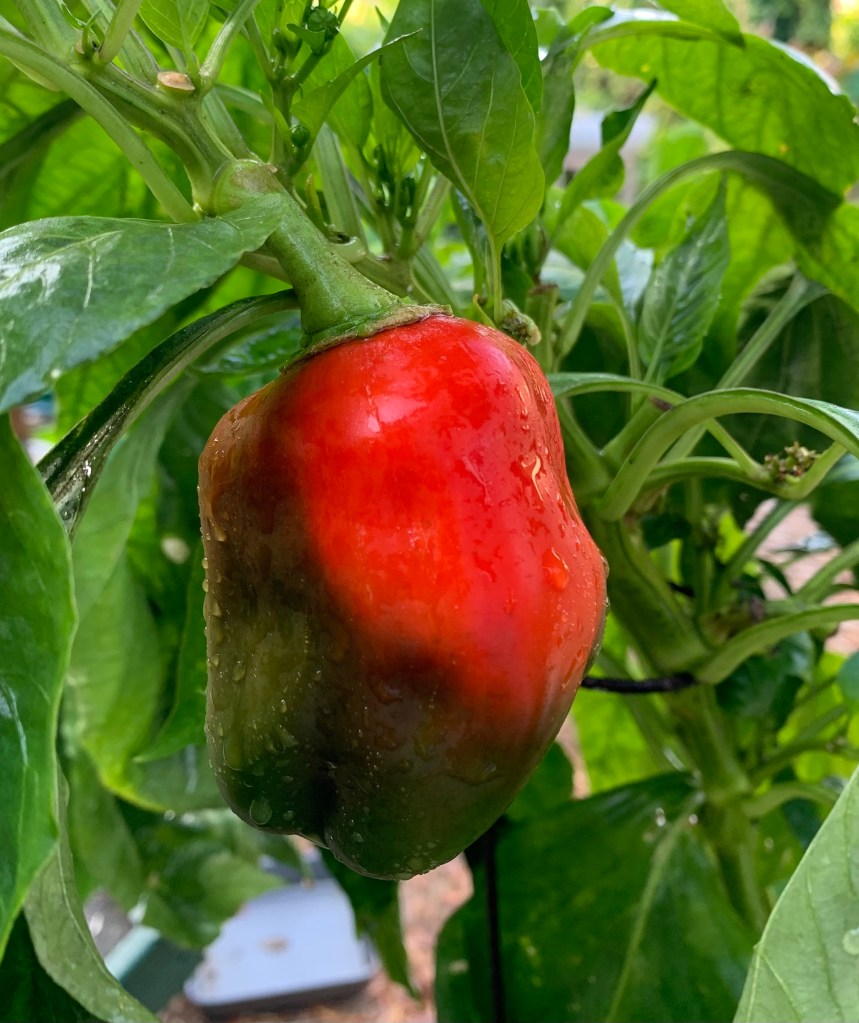
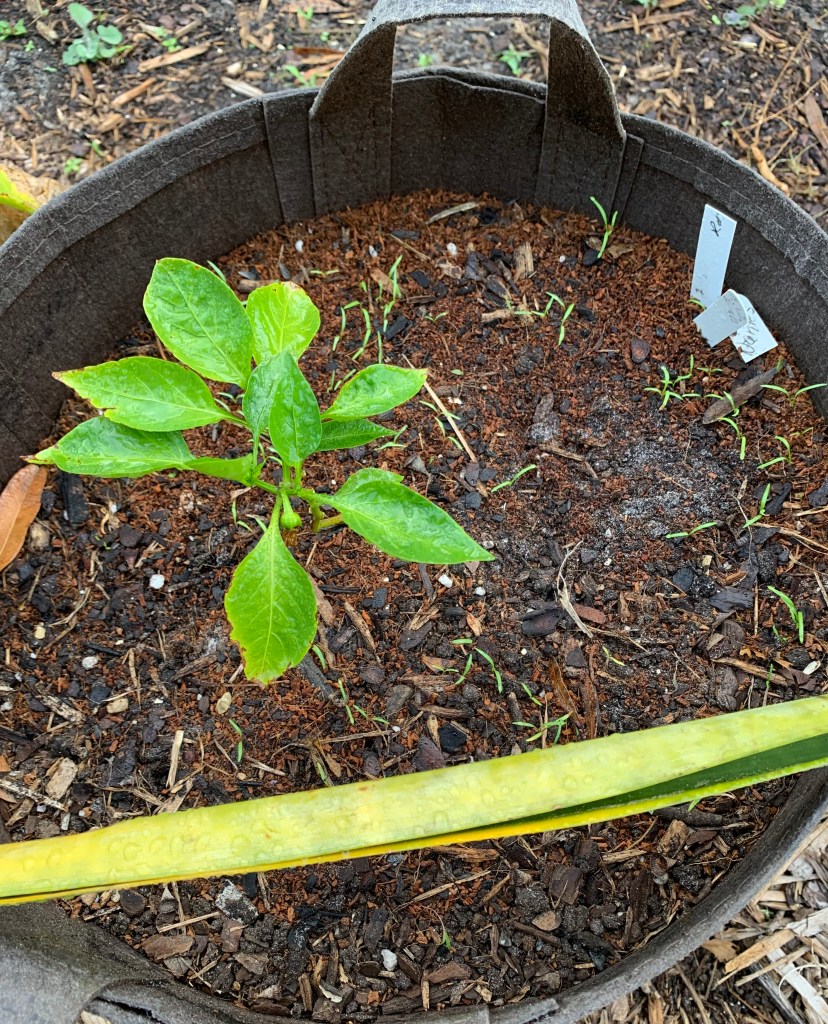
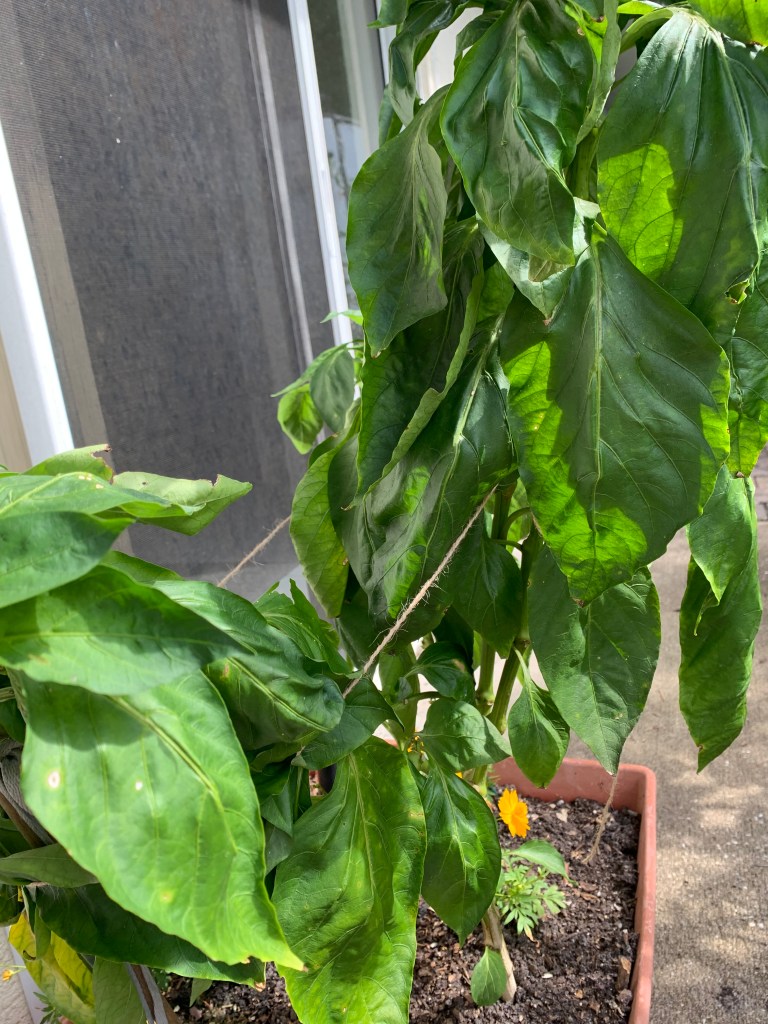
I’ve given up on peppers. The one bell pepper plant is covered in white flies or mites or whatever. I’ve tried to get rid of them, and gave up. I had quite a few nice pepper plants growing that simply died.
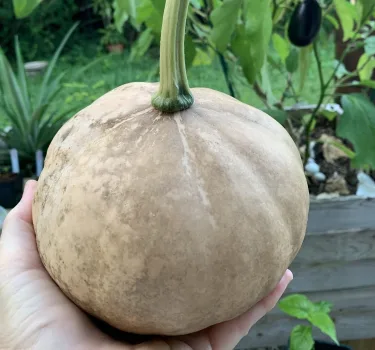
Squash and zucchini don’t grow. Last year I had a couple of Seminole pumpkins, which were delicious, but this year I have one that might be okay.
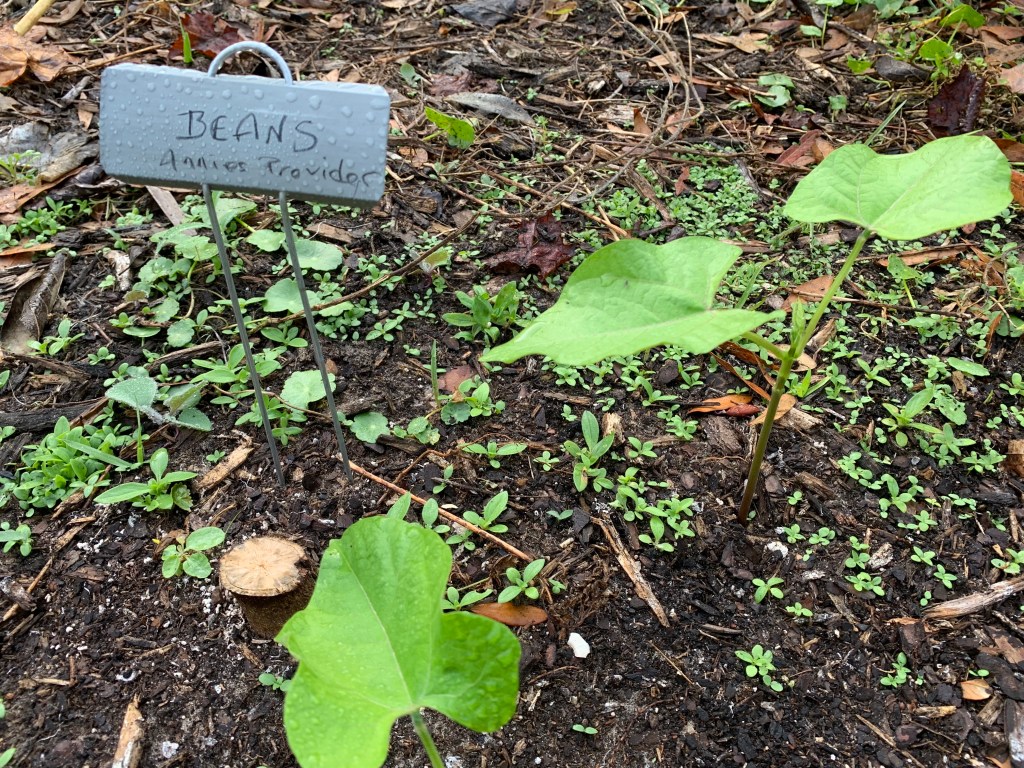
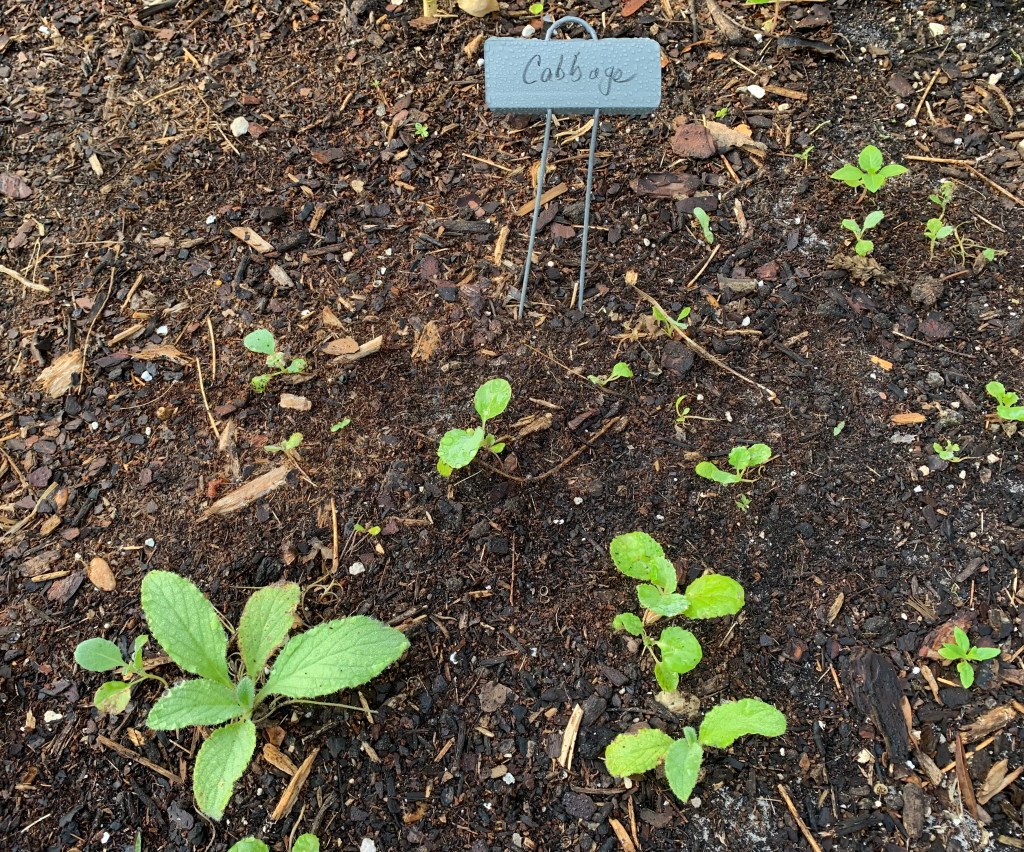
Beansborage & cabbageEgyptian spinachcarrotsbeets
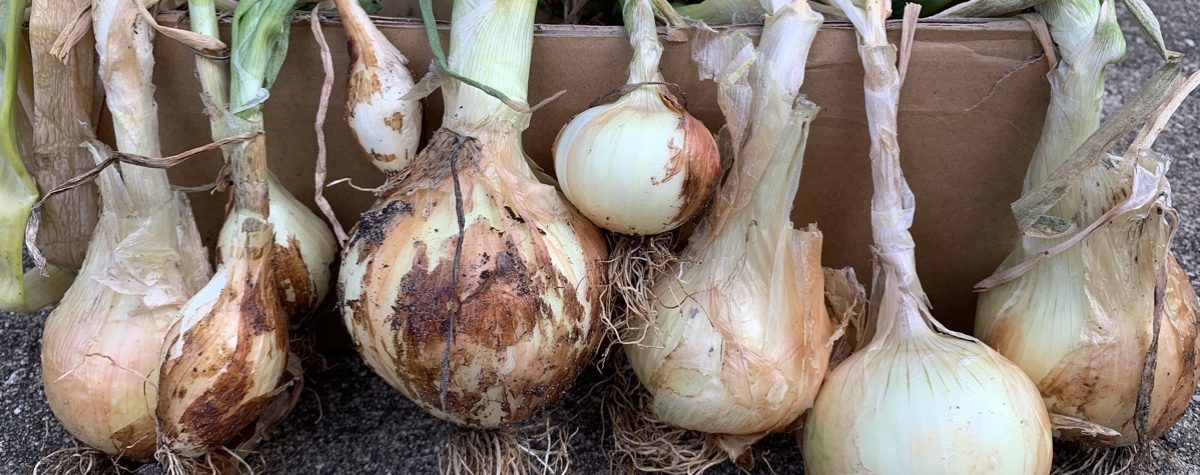
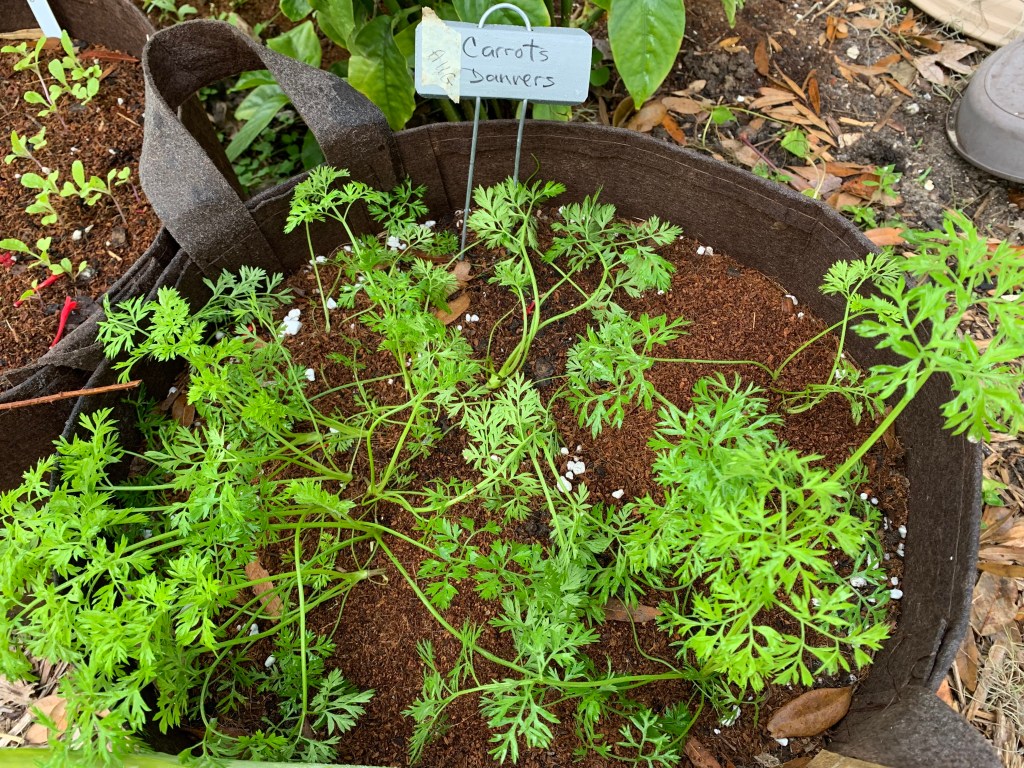
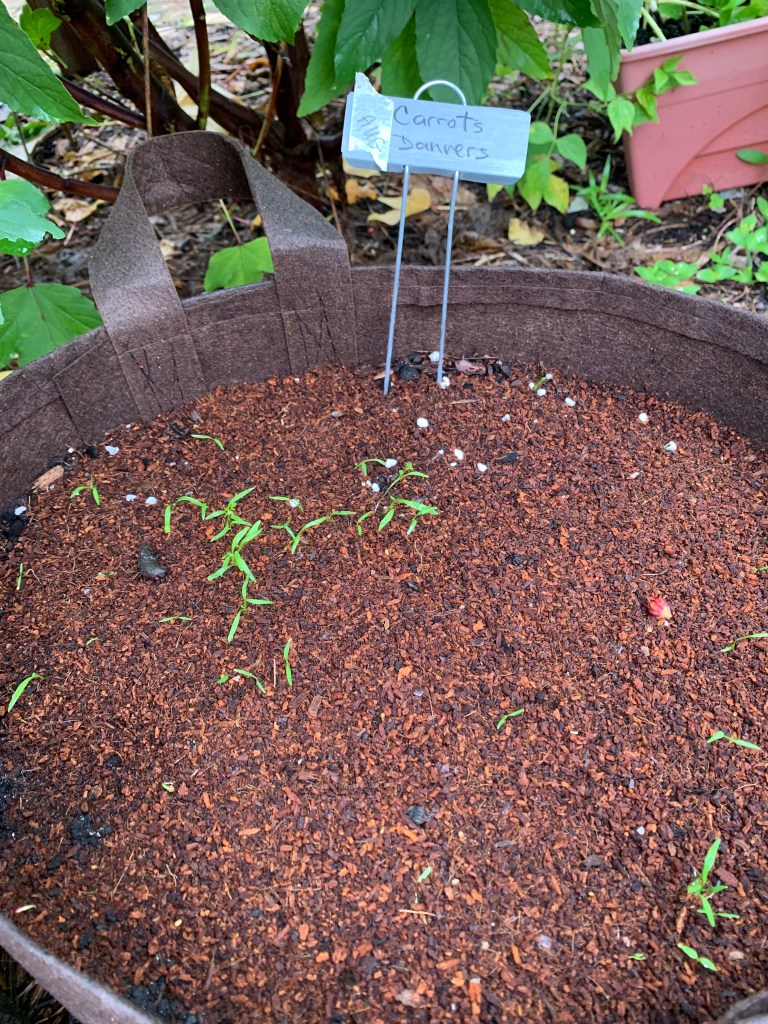
I will have some carrots in a few months, and hopefully onions as well. It hasn’t been easy to grow those either with the raccoons digging up my seeds each night.
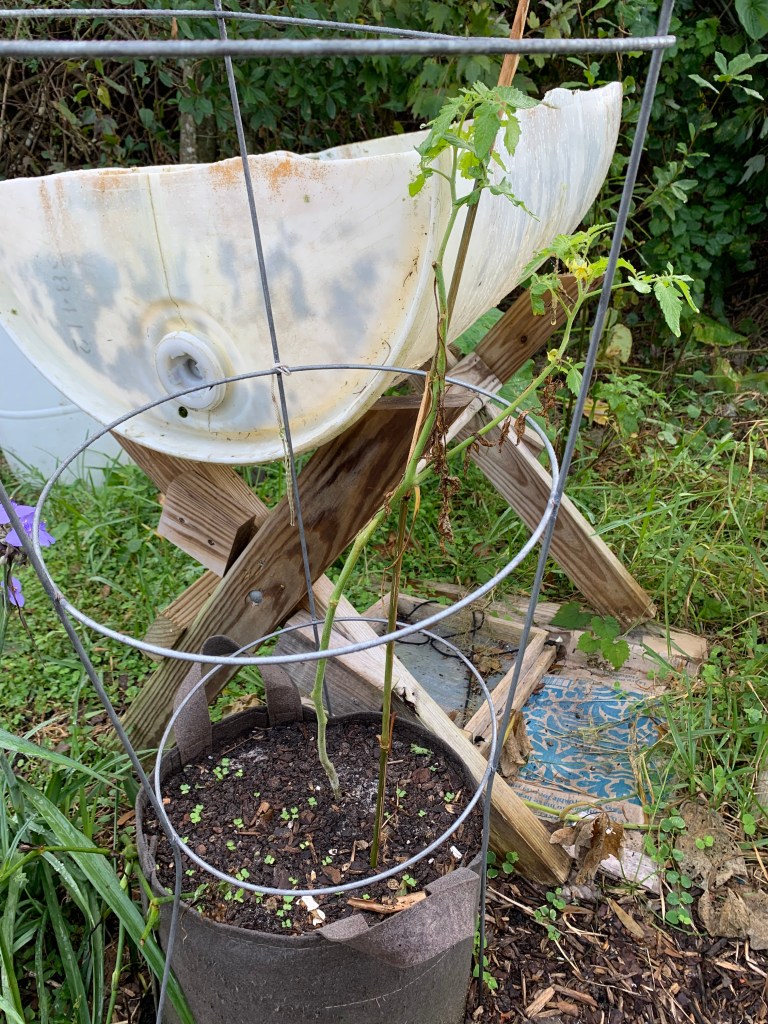
The one cherry tomato looked nice, until Hurricane Milton blew through. I’ve now propped up the eggplant that blew over too. Oh yes, eggplants last for years, but actually grow eggplants only occasionally. And they are not one of my favorite foods.
After success with carrots and onions last year, I was looking forward to Fall planting. I had whittled down my list to the things I had luck with. Broccoli, carrots and bulb onions are tops on my list. They are all growing very slowly.
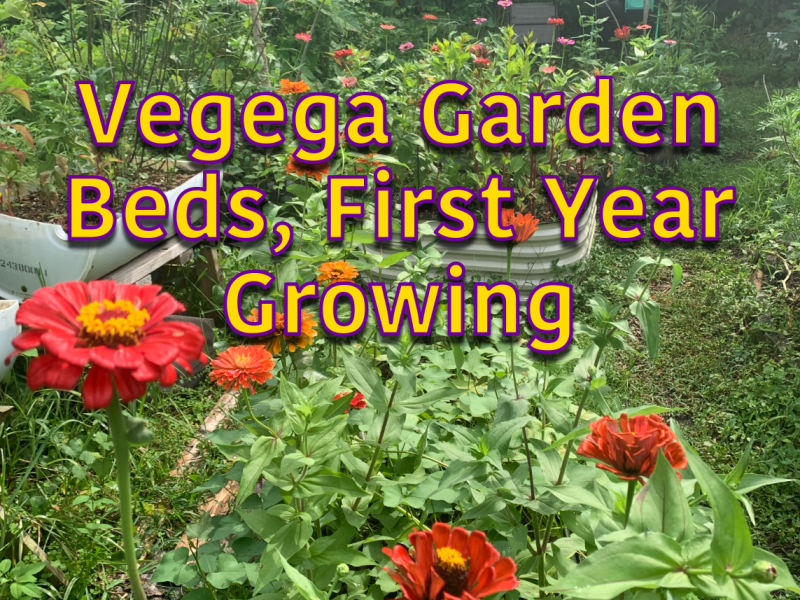
The last thing I am going to try is to plant in raised beds. I purchased two more Vegega beds but have not put them together.
Sweet potatoes are not difficult to grow where I live. In fact, once planted, they may be around forever.
I’ve dug my sweet potatoes, but little shoots keep on sprouting. I’m finding them in the garden, and in the walkways. Any parts of the original plant, that have been hidden underground (roots) continue to grow.
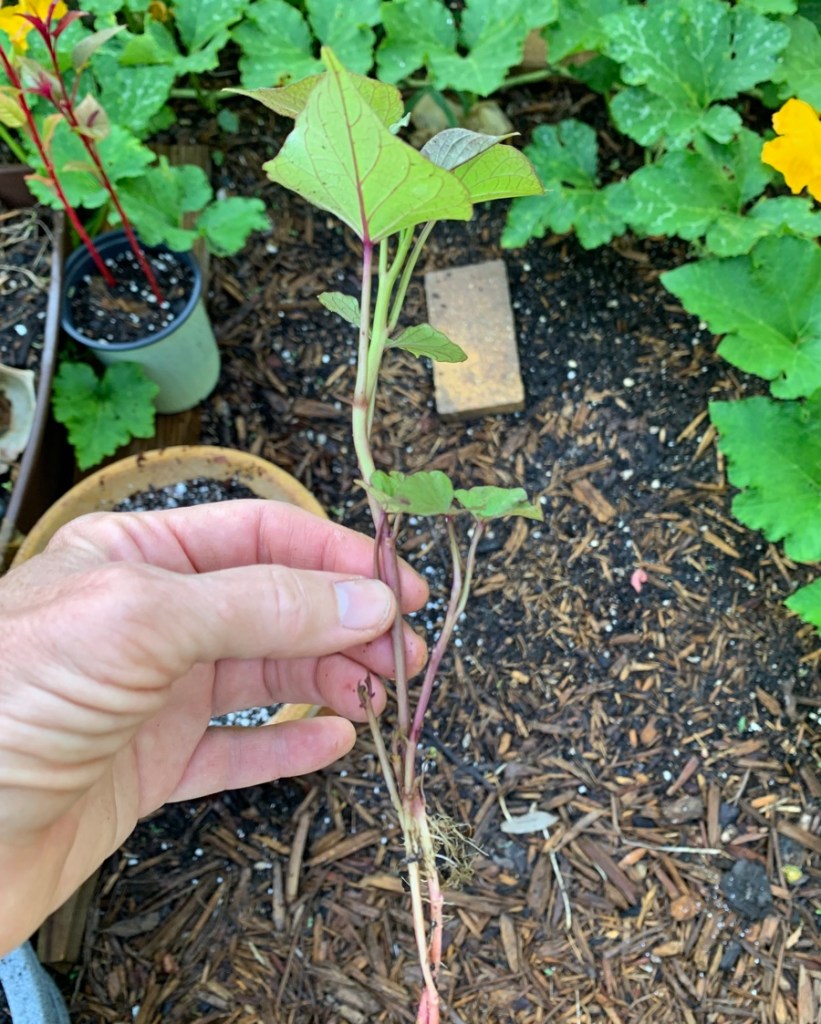
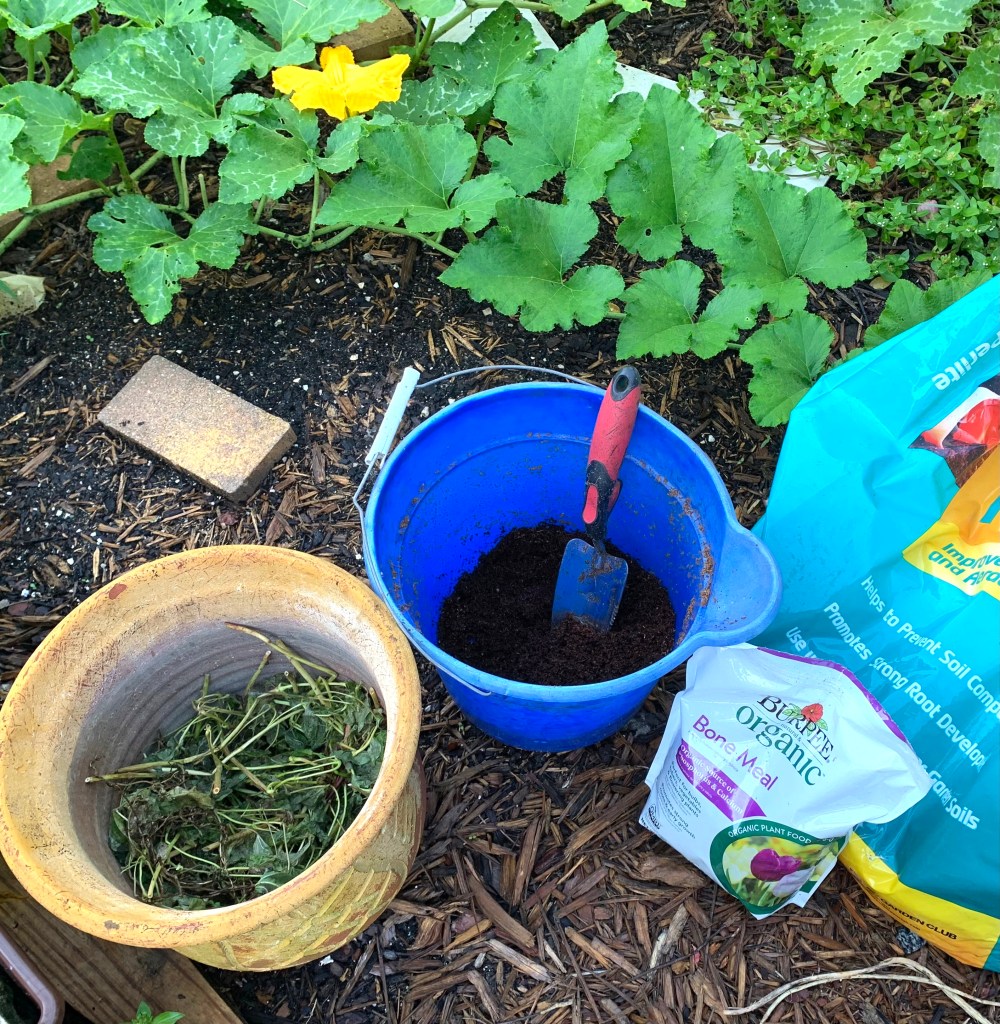
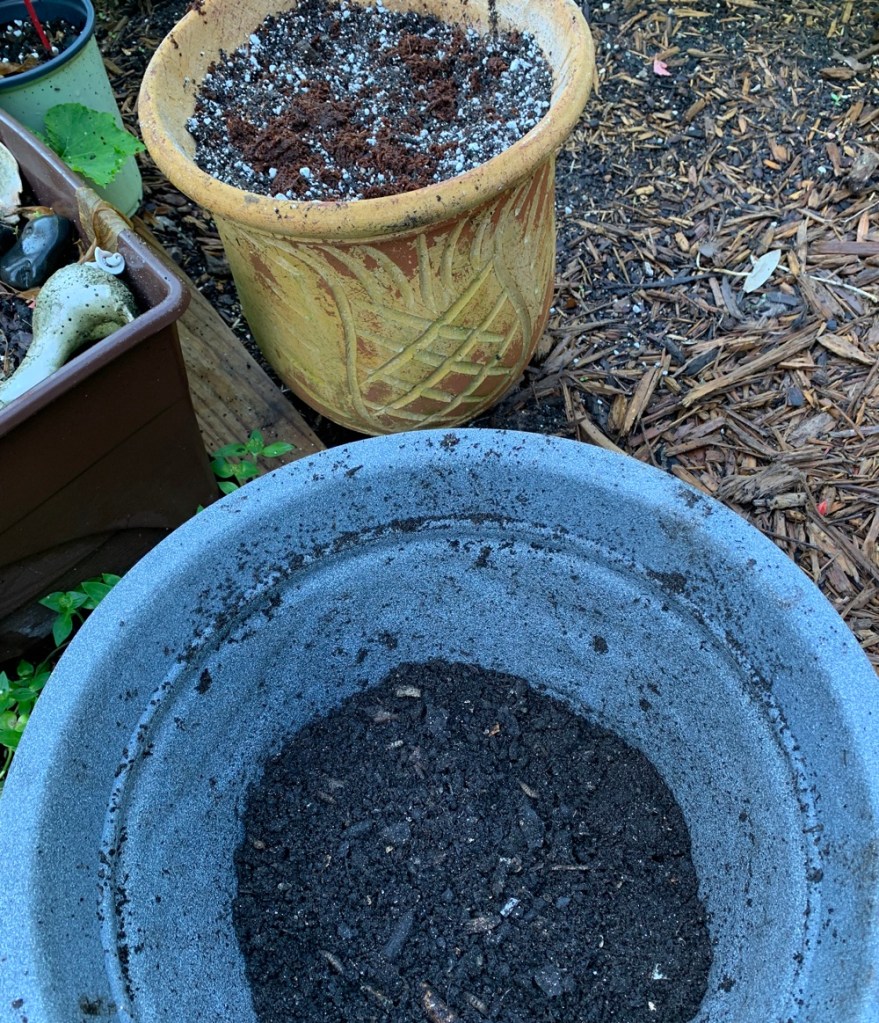
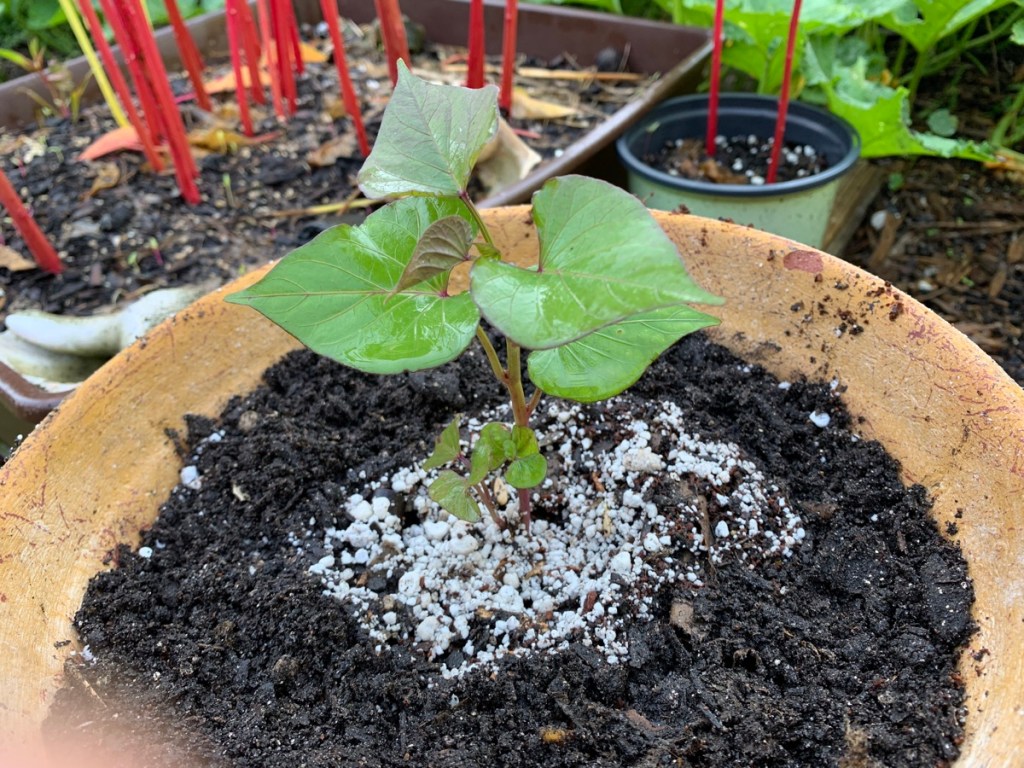
Sweet potato slipPotting mixCompostSlip is planted
Later…
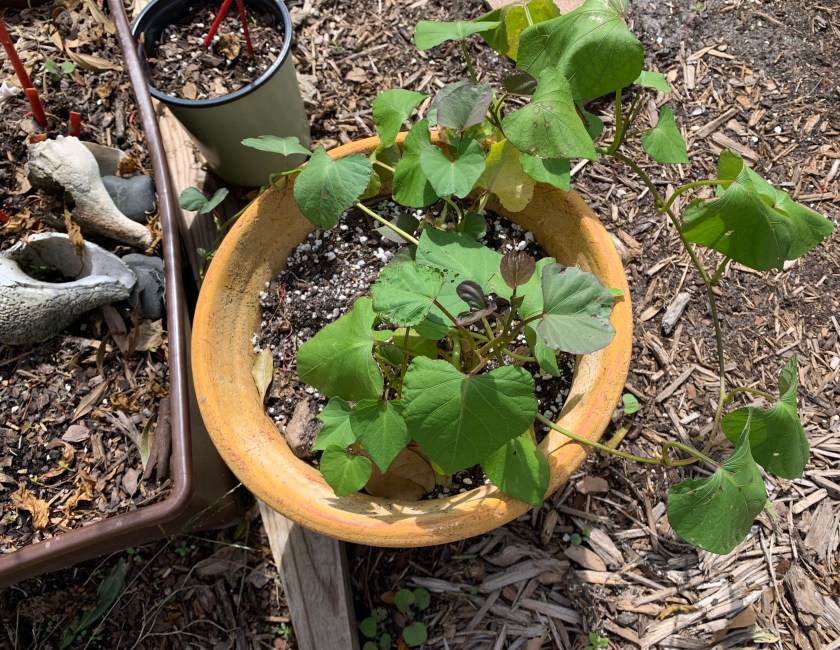
Potted sweet potato
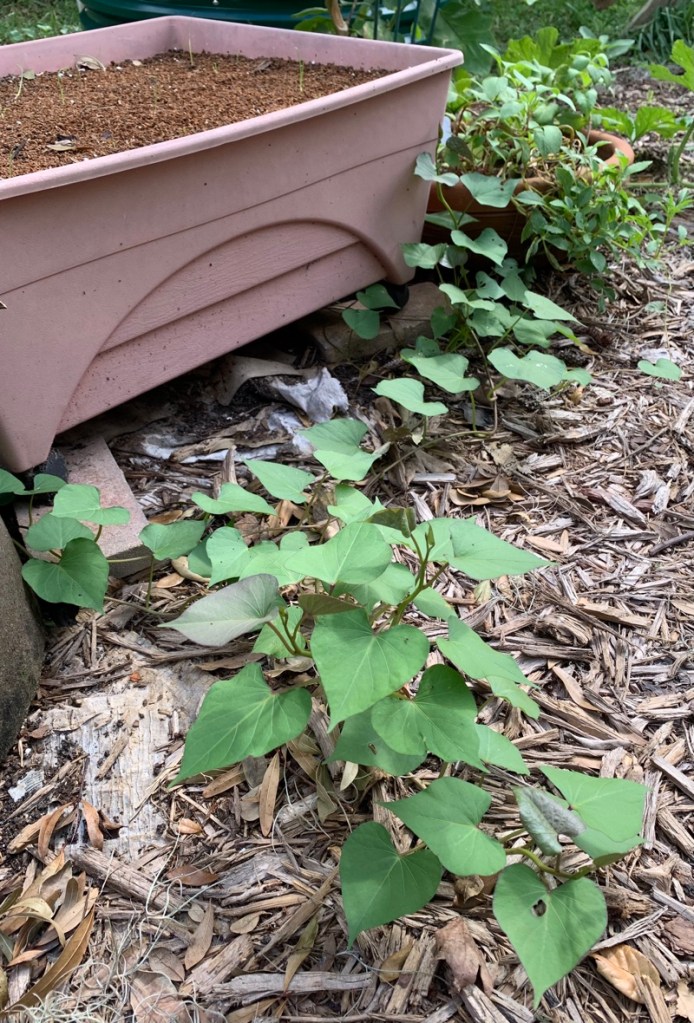
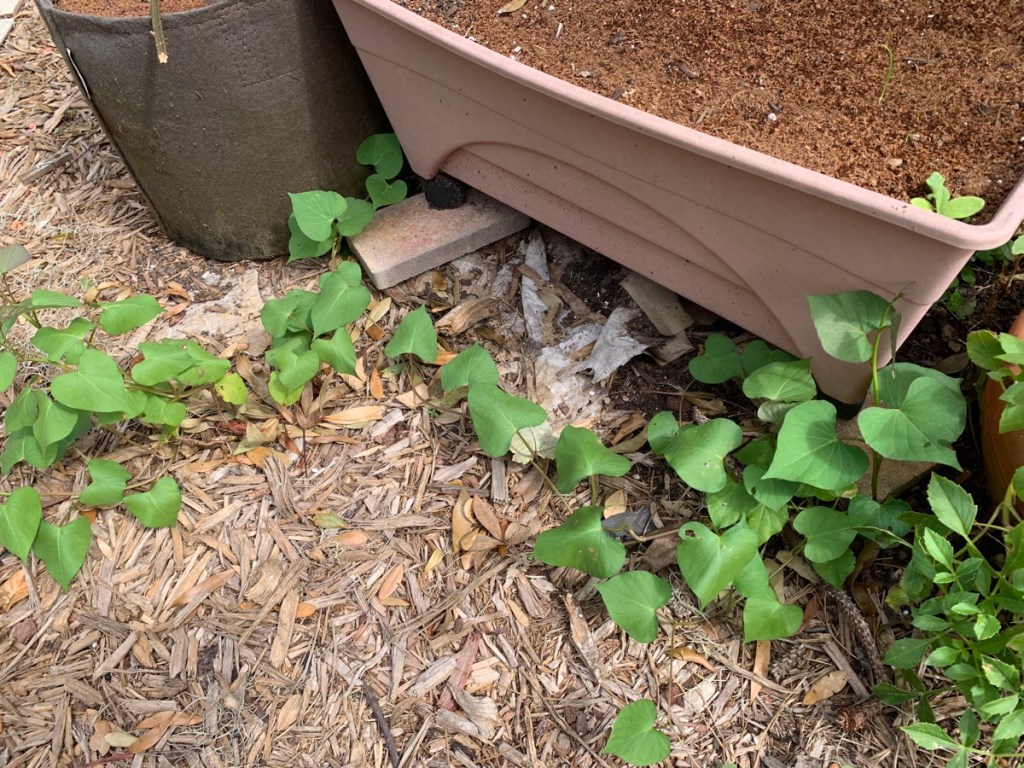
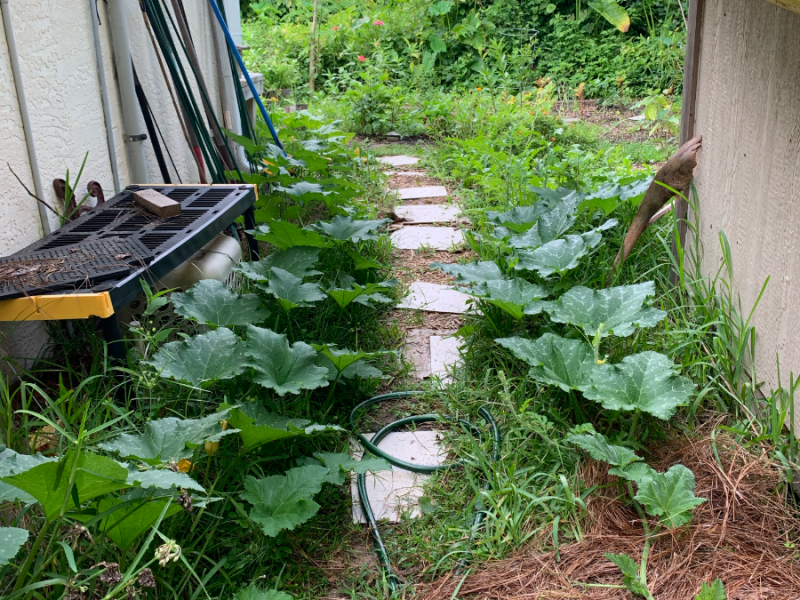
Sweet potato vines are popping up in my walkways. The roots are left from the sweet potatoes I grew in that box last year.
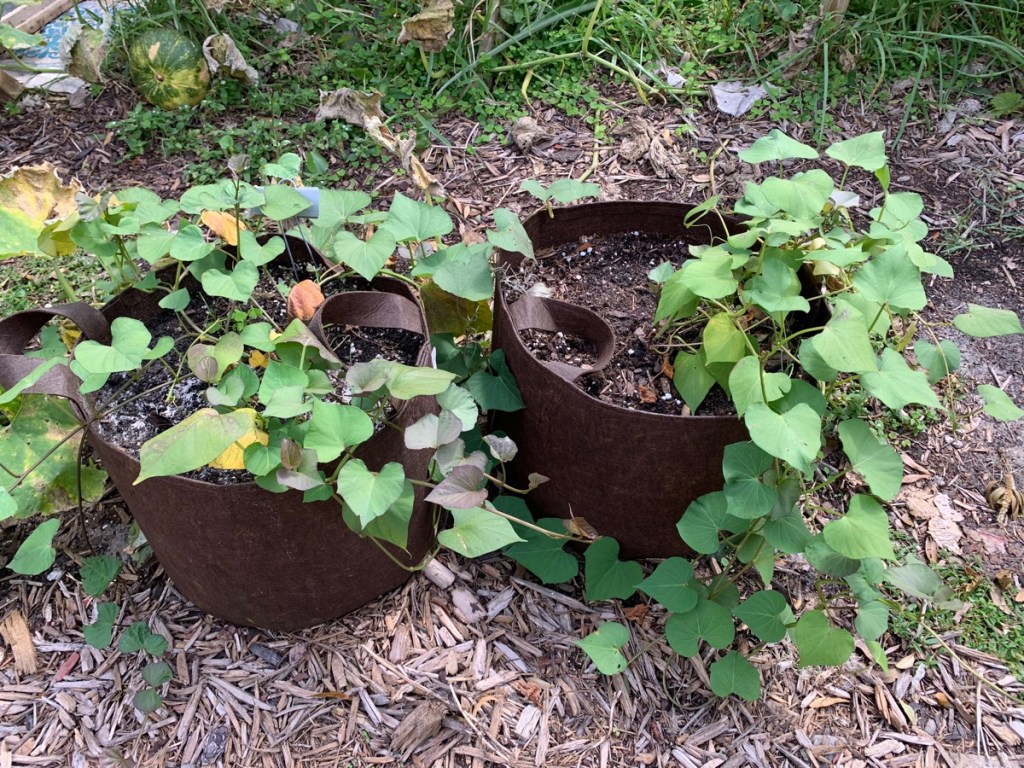
Sweet potato vinesSweet potato grow bags
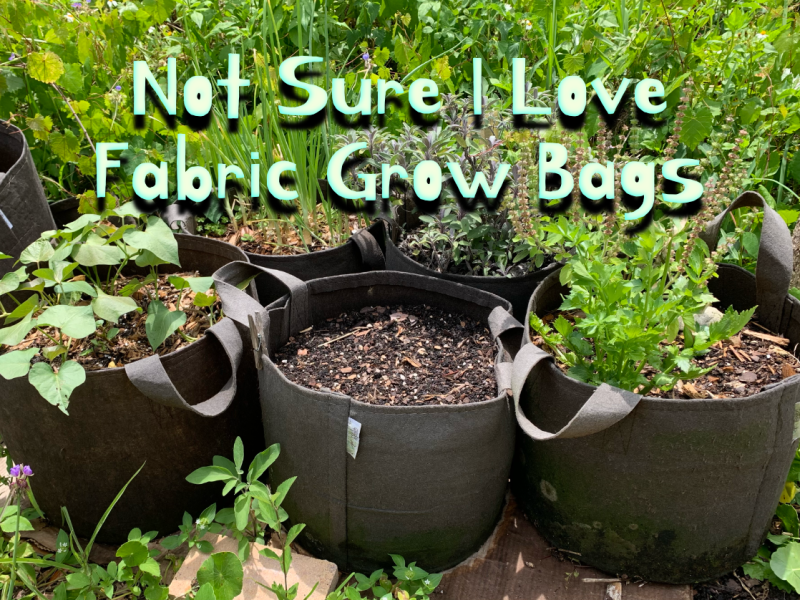
Some of the vines have been added to fabric bags and one went into a pot (above).
I don’t think sweet potatoes are meant to grow over the winter. Pre-orders for slips take place during winter and the slips are shipped in Spring. They are a Spring-Summer crop. I will let these grow and see what happens. The leaves are edible and I will use them while I wait for the potatoes to grow.
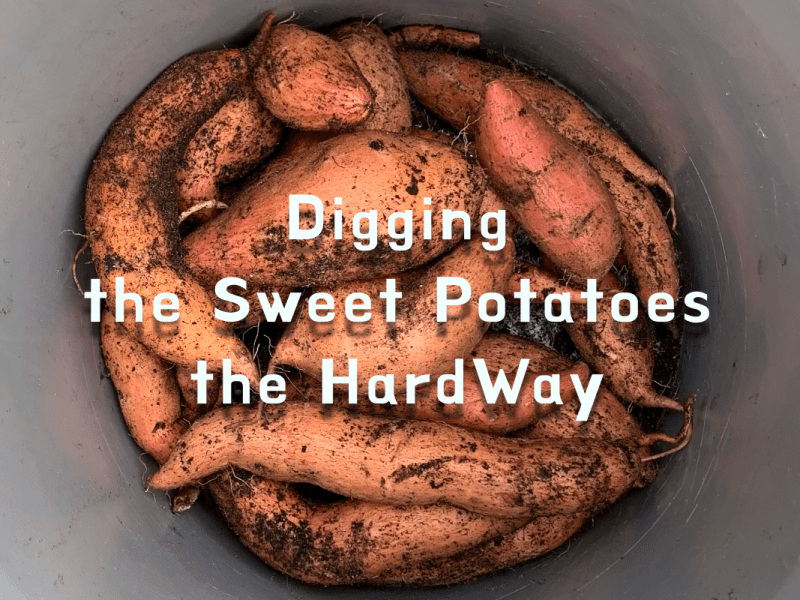
The sweet potatoes I dug this year were small but I still have a few left to eat. Most were funny looking and not anything like what you buy in the store. But they taste delicious. One day I hope to have a raised bed just for sweet potatoes.
It was a long, sleepless night – October 10th – spent listening to extraordinary wind. Hurricane Milton traveled across Florida from somewhere around Tampa on the Gulf, to the Space Center and offshore on the east coast. I live about 50 miles north of where the eye traveled, and we got some big wind.
Amazingly, we never lost power. It has to do with all the tree trimming the power company has been doing. And all the previous storms that help clear things out.
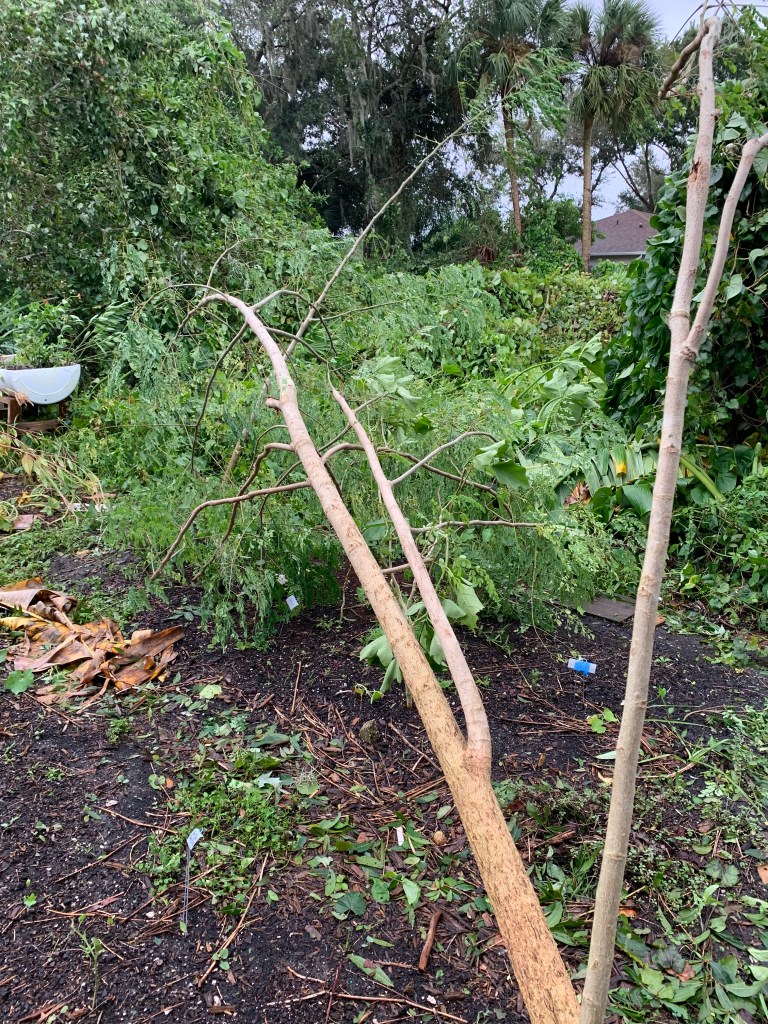
Now for clean upFloodingMoringa is down
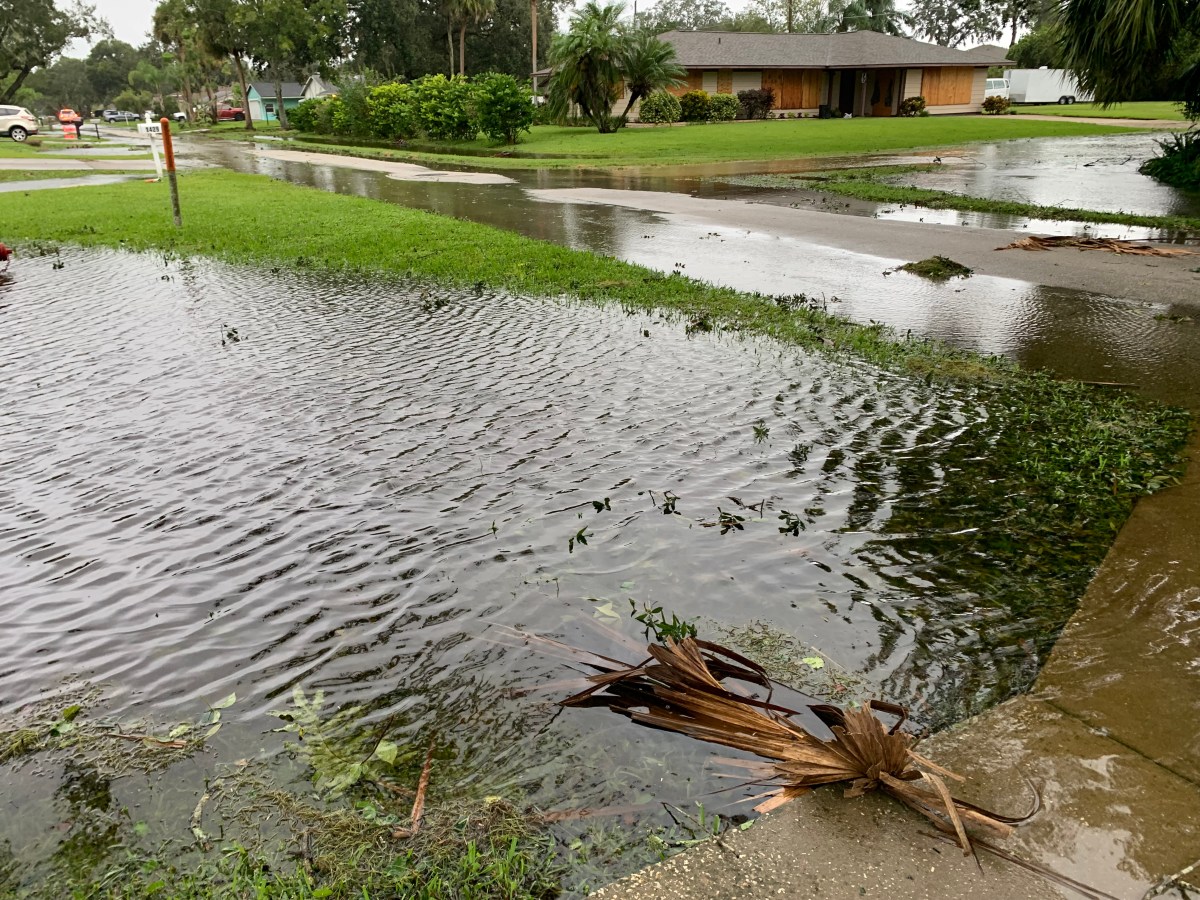
We got off lucky with minimal flooding and damage from the hurricane. A few large oak branches fell in the driveway and the rest is mostly small stuff. I was pleasantly surprised after hearing that nasty wind.
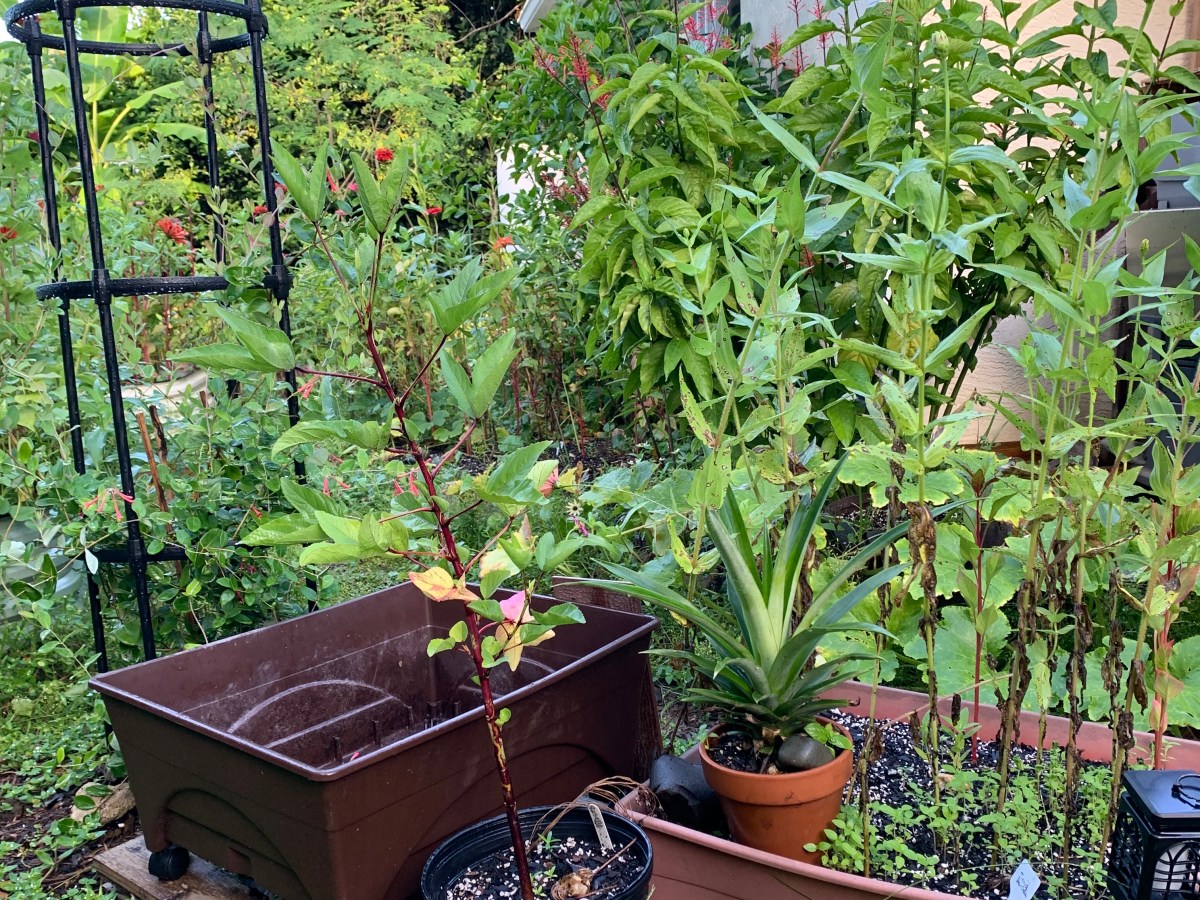
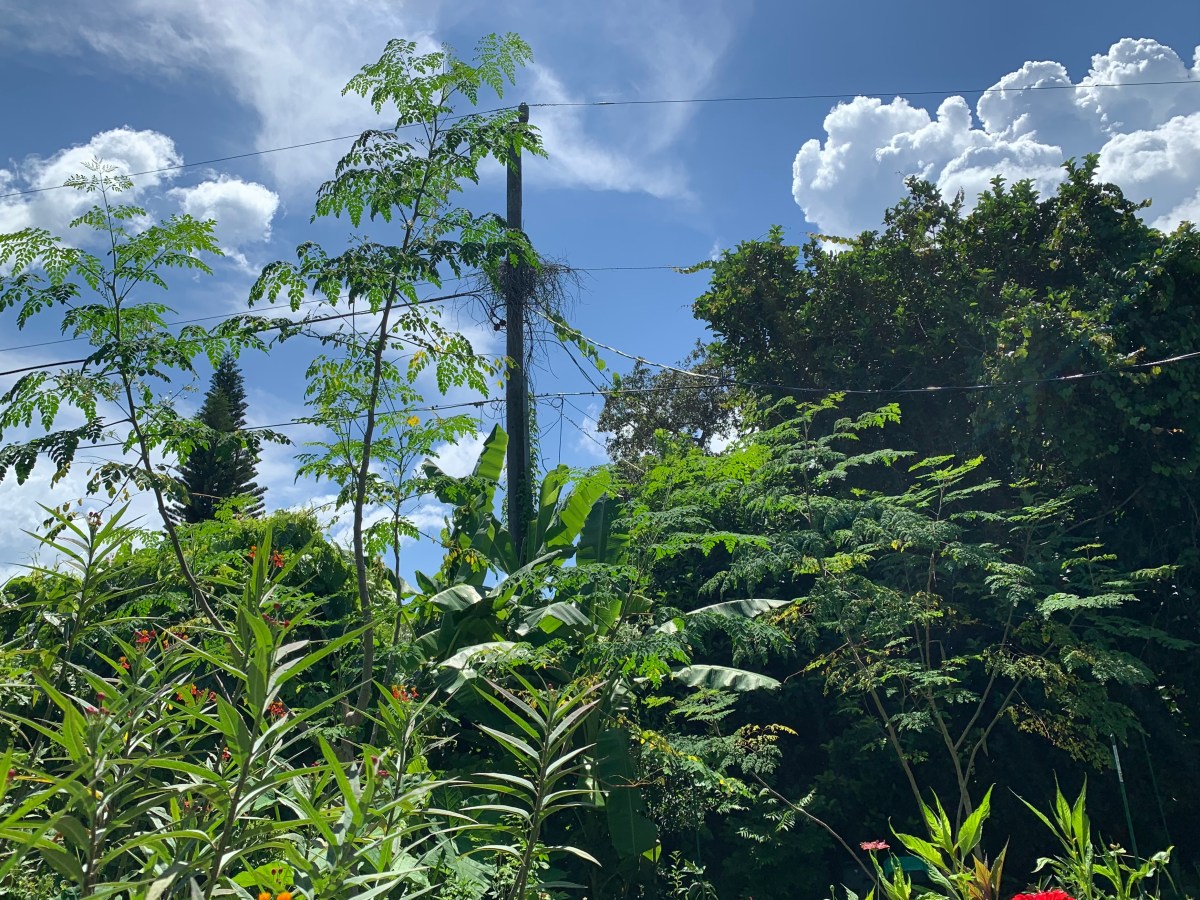
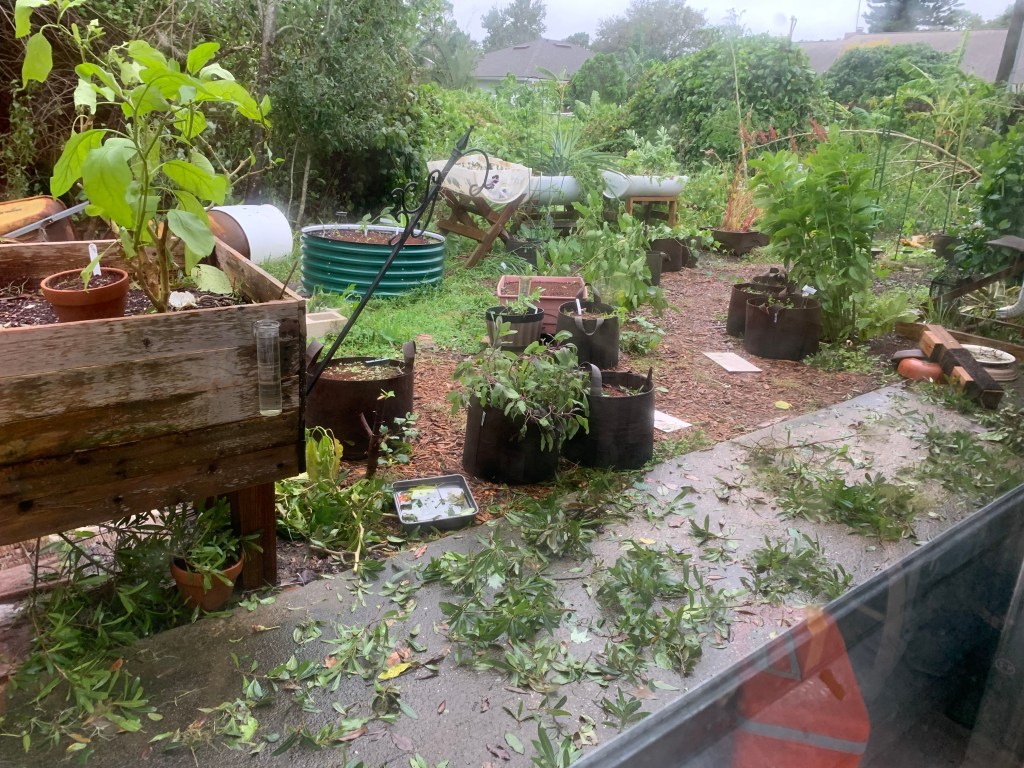
In my garden, the tomato plants are dead, the eggplant needed to be propped back up, and the Moringa tree is completely down. My beet seedlings look like they might not make it, as they were flattened.
I had been excited to get growing this Fall, but now I feel like giving up. I seem to have way more setbacks than successes when it comes to growing a productive vegetable garden.
We were lucky. I haven’t seen news about the Gulf coast, but the damage must be horrible. They were still cleaning up debris from Hurricane Helene. North Carolina is in shambles, and fortunately this hurricane did not head in that direction.
The metal hurricane shutters on the windows will stay there for now. Hurricane season doesn’t end for over a month.
Hurricane Helene is bearing down on the west coast of Florida. Although I live on the east coast, we get wind and rain as the hurricane passes through. The storm could also change directions, and not follow the forecasted path. We all have to be ready.
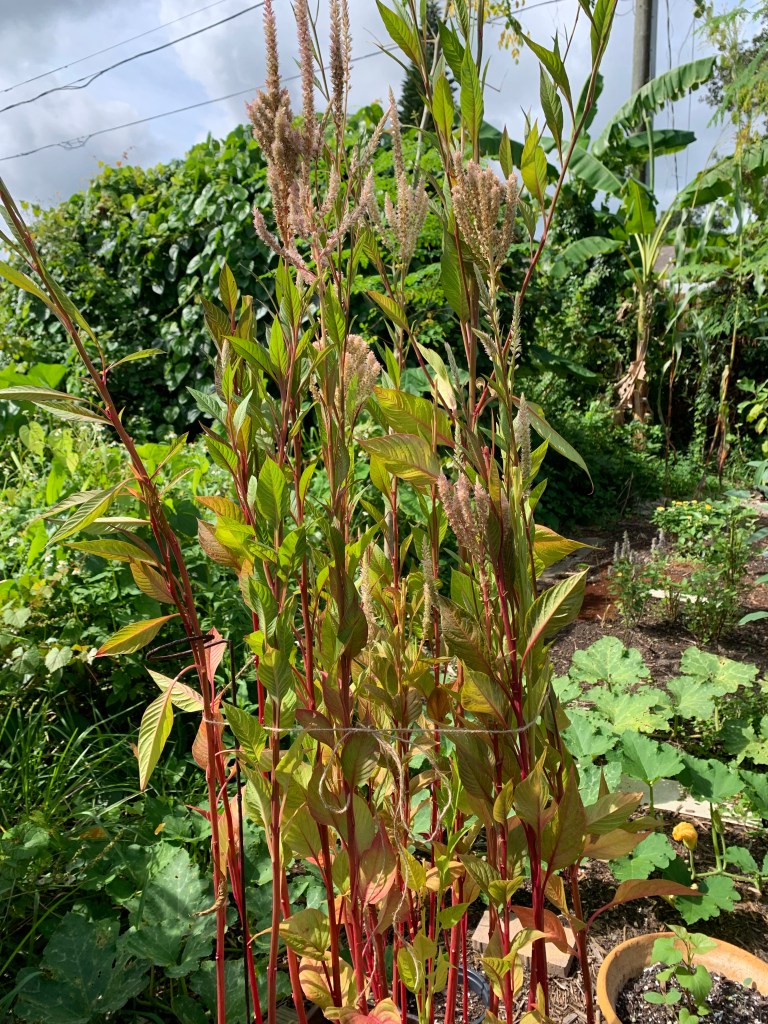
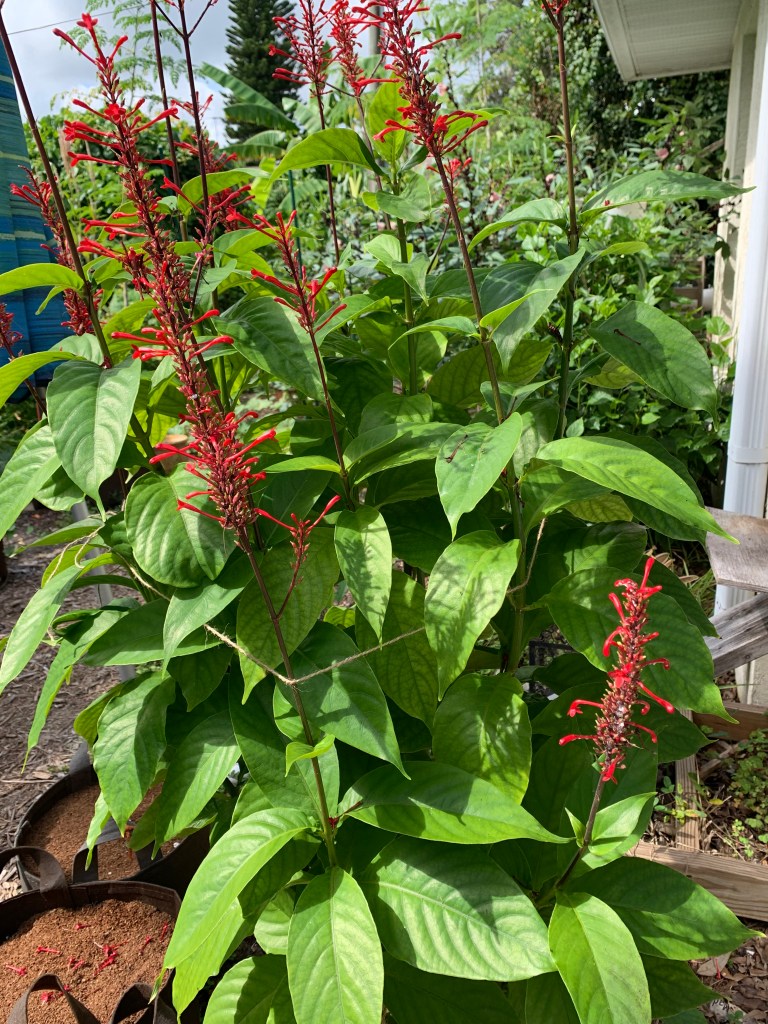
In the garden, all I’ve done is tie up some of the taller plants. This includes the Celosia and Firespike flowering plants. The bell pepper is lanky, so I tied a rope around it as well.
Bell pepper plant
Celosia
I’m not doing much else to prepare for the hurricane. Even when very bad ones are heading our way, they cross over land first (usually) which slows them. Where I live, the biggest problem is possible flooding.
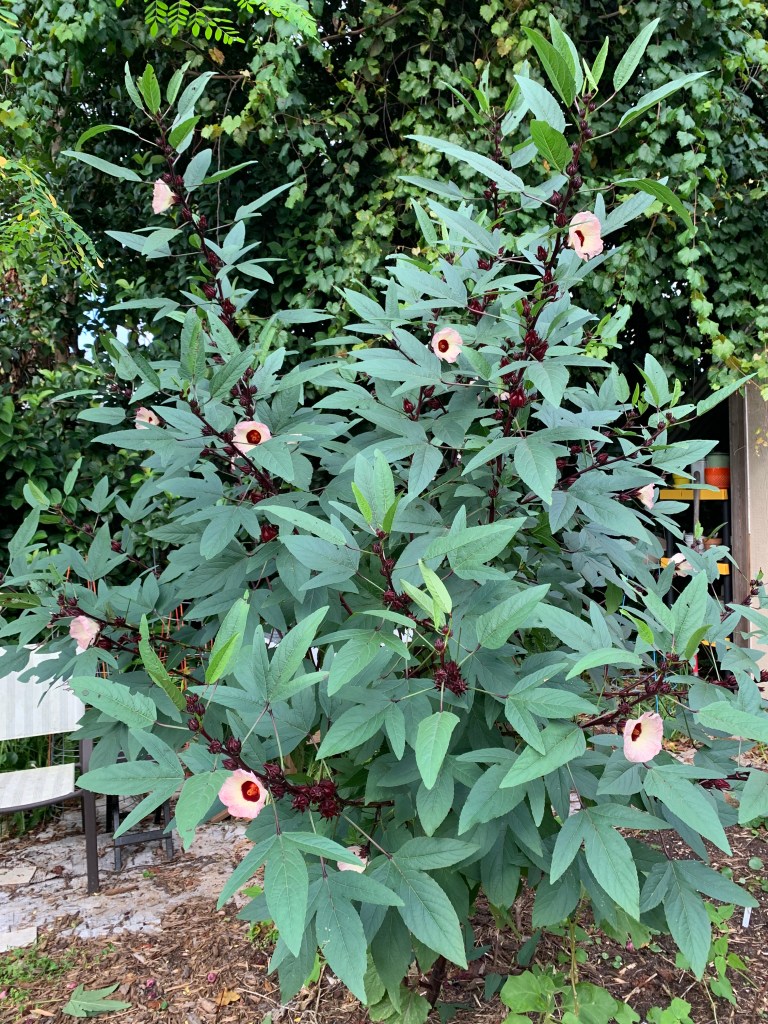
In the garden, I am more worried about the wind. I did some more trimming of the roselle bushes because they are susceptible to damage with branches breaking. I’ve already lost one during a windy storm a few months ago. Since then I have been trimming out the smaller branches.
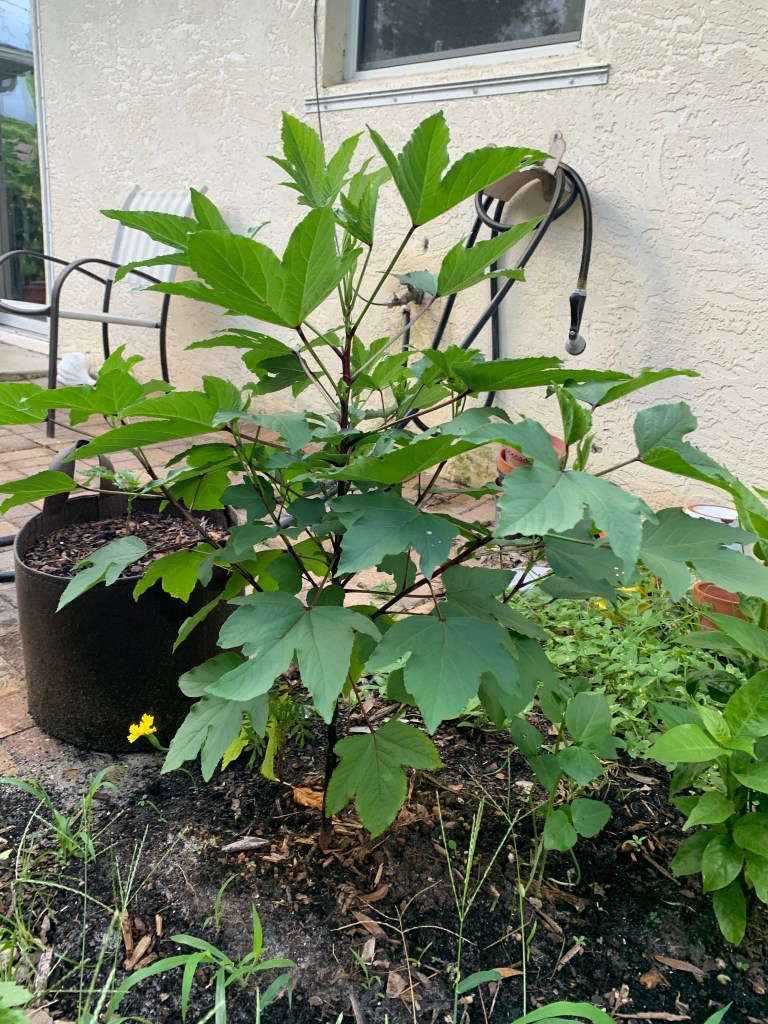
After my first year of growing Roselle hibiscus, I have learned a lot. The shrubs have grown fast and become too large for my small yard.
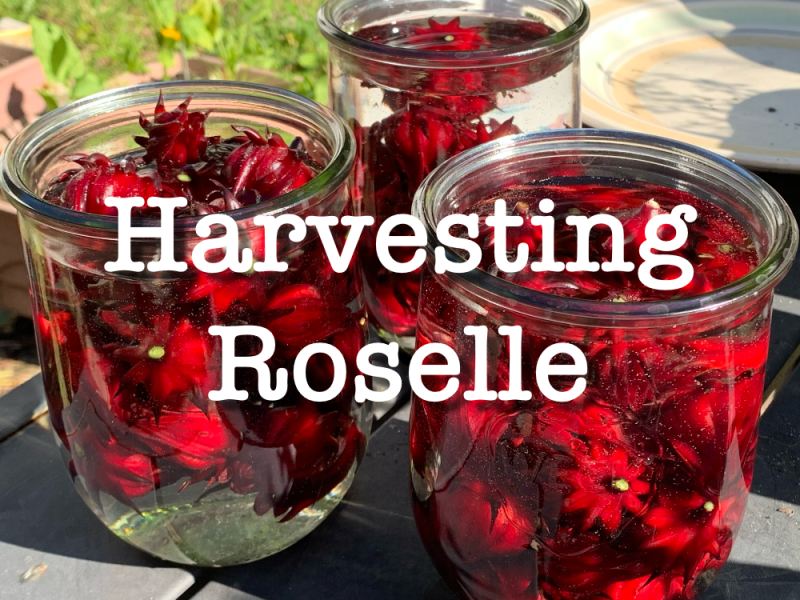
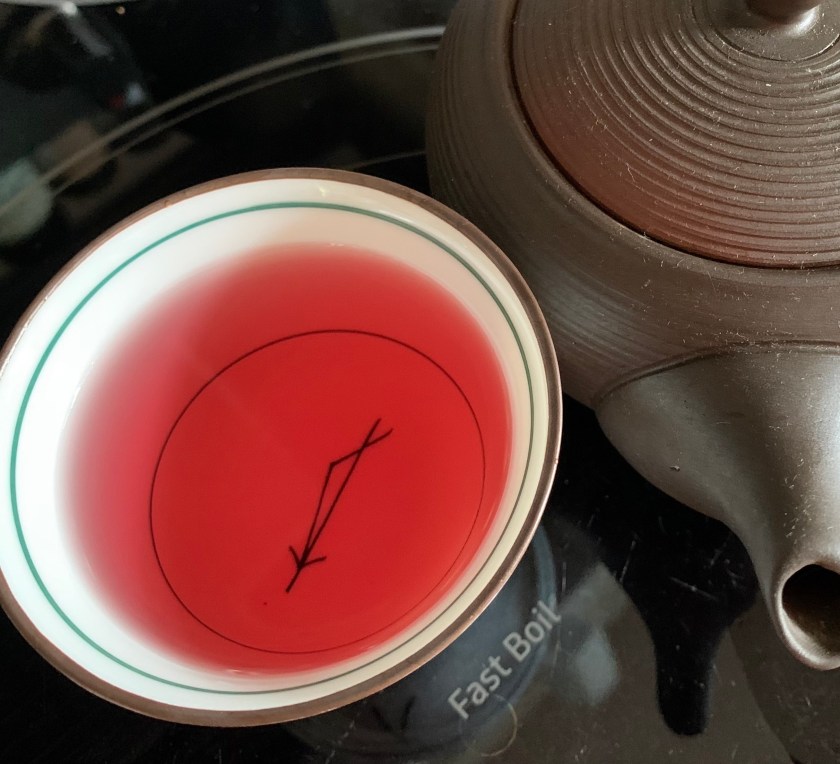
The Roselle hibiscus plant gives us the calyces that make beautiful, red colored tea. I’ve been drinking hibiscus tea for a while now, but never knew exactly what it was made from. Now, I am growing the plant that makes this tea!
Tea is made from the Roselle hibiscus which is NOT the same as the decorative, flowering hibiscus plant.
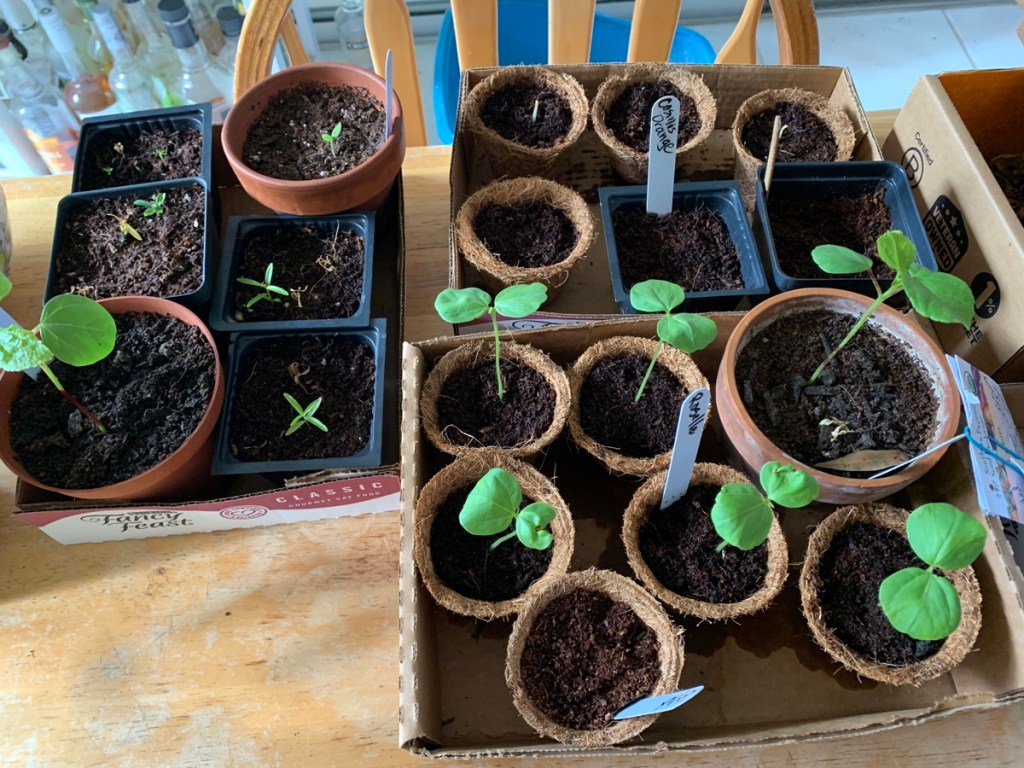
Over the winter months of 2023, I planted Roselle seeds in small pots and kept them indoors. The plants sprouted and some of them grew, but none of them thrived. As soon as the chance of frost overnight was gone, I transplanted the seedlings into the ground.
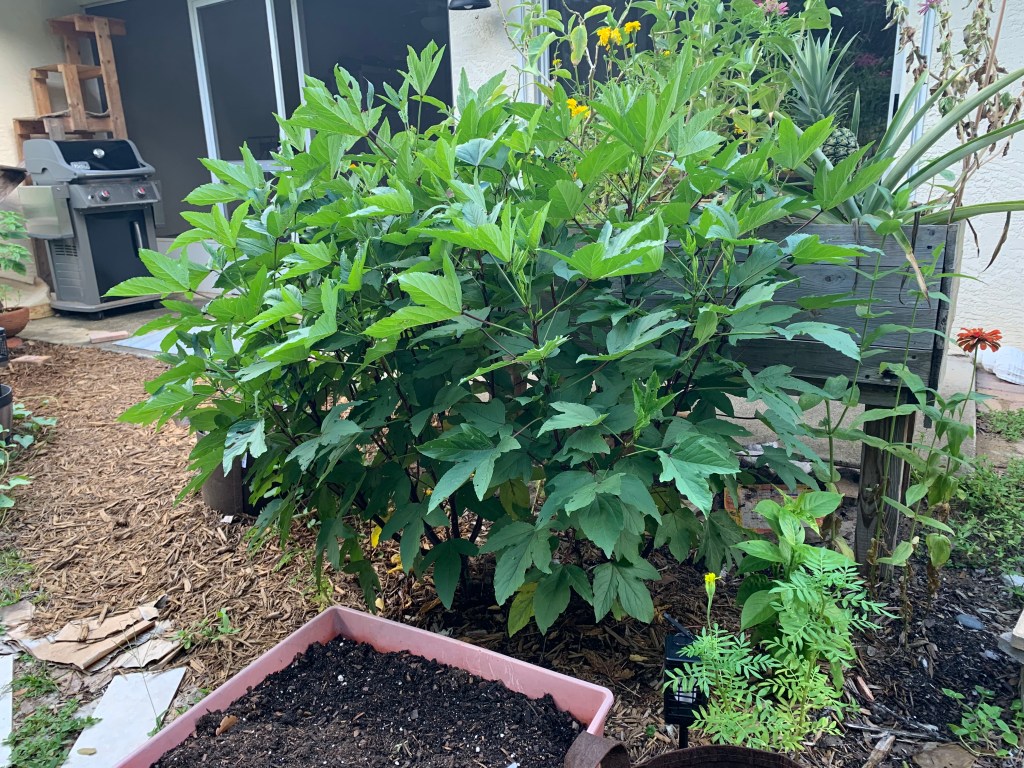
Now, it is summer of 2024, and I have big, bushy Hibiscus plants everywhere! Honestly, I have 9 plants, but the yard is small, and they are taking over.
Bushy roselle hibiscus – lost it to the wind in a storm
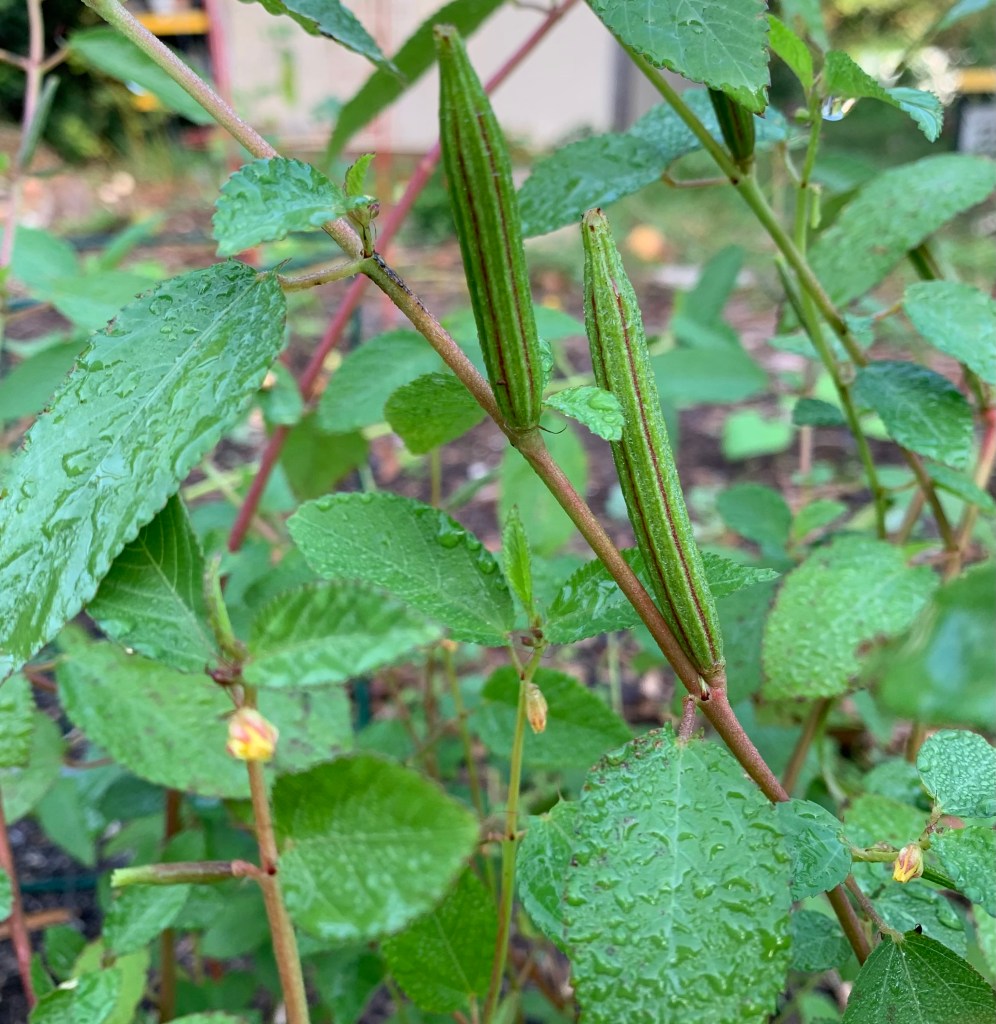
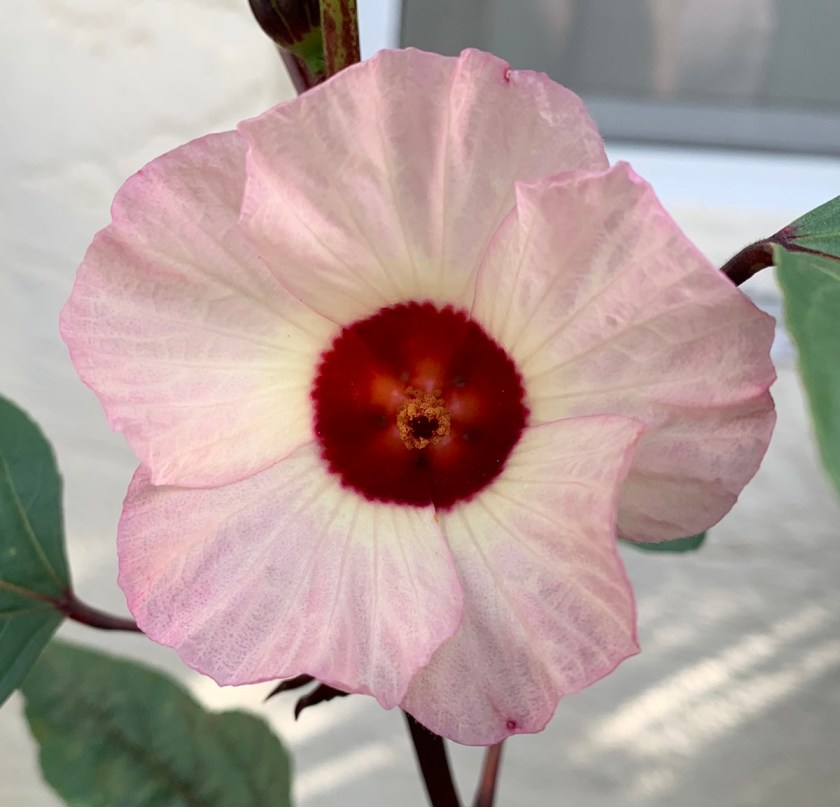
This type of hibiscus has open flowers (see below) that leave behind seed pods wrapped in red leaves, called calyces. The red leaves, when peeled off, can be boiled in water to make tea.
Roselle calycesRoselle hibiscus flower
When my Roselle began to grow, they gave me a few pods. After that, I had to wait until Fall to get more.
Starting Roselle From Seeds
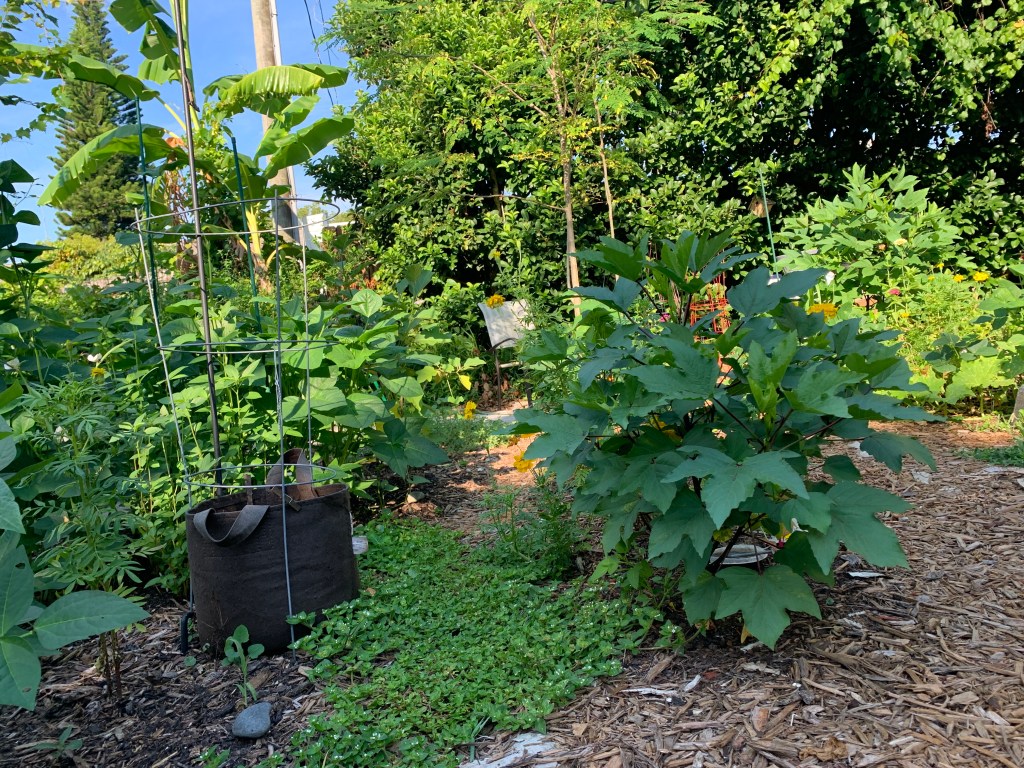
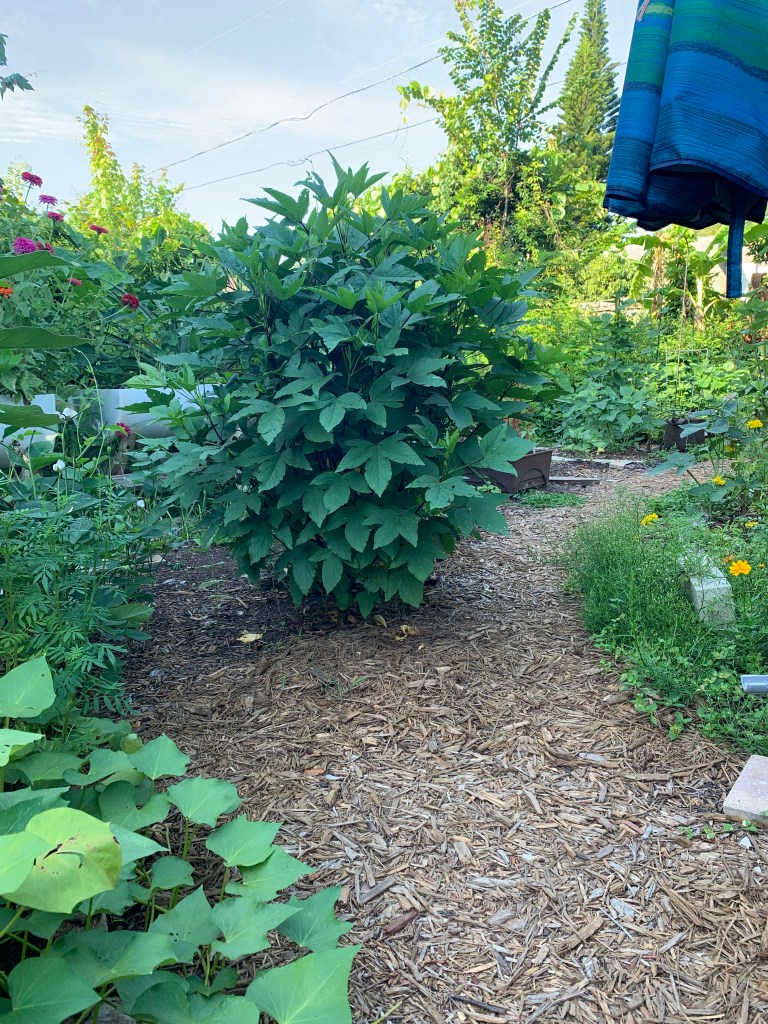
These Roselles began in pots, grown from seeds I bought at SESE (Southern Exposure Seed Exchange). The plants are about nine months old now and they al look very nice. Some are smaller than others but the one that is in the walkway is just beautiful! (That is the one that died from the storm.)
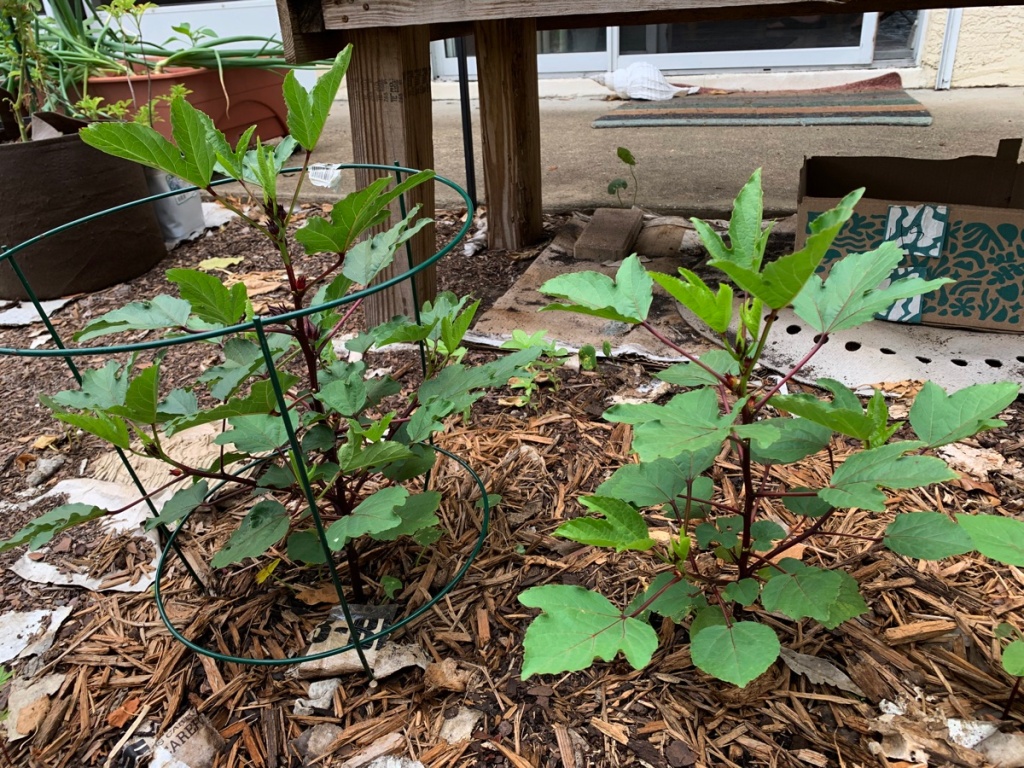
Roselle seedlingsRoselleRoselle growing
Growing Roselle is Easy
The plants will get large, both tall and wide. (I’m in Zone 9B) They are growing with and without lots of sun. The plants in the sun are bushier. They survive drought, are not bothered by the heat, and have no bug problems. After they bloom (September for me), collect the seed pods to make tea, or other things.
A warning: We had a windy storm during the summer and this (my bushiest) Roselle plant split right down to the ground. The tree died. I went ahead and trimmed all the remaining hibiscus to be sure wind could easily get through the stems.
Heading Into Fall
If you are looking for a little shrub that is easy to grow, and grows FAST, get yourself some Roselle seeds.
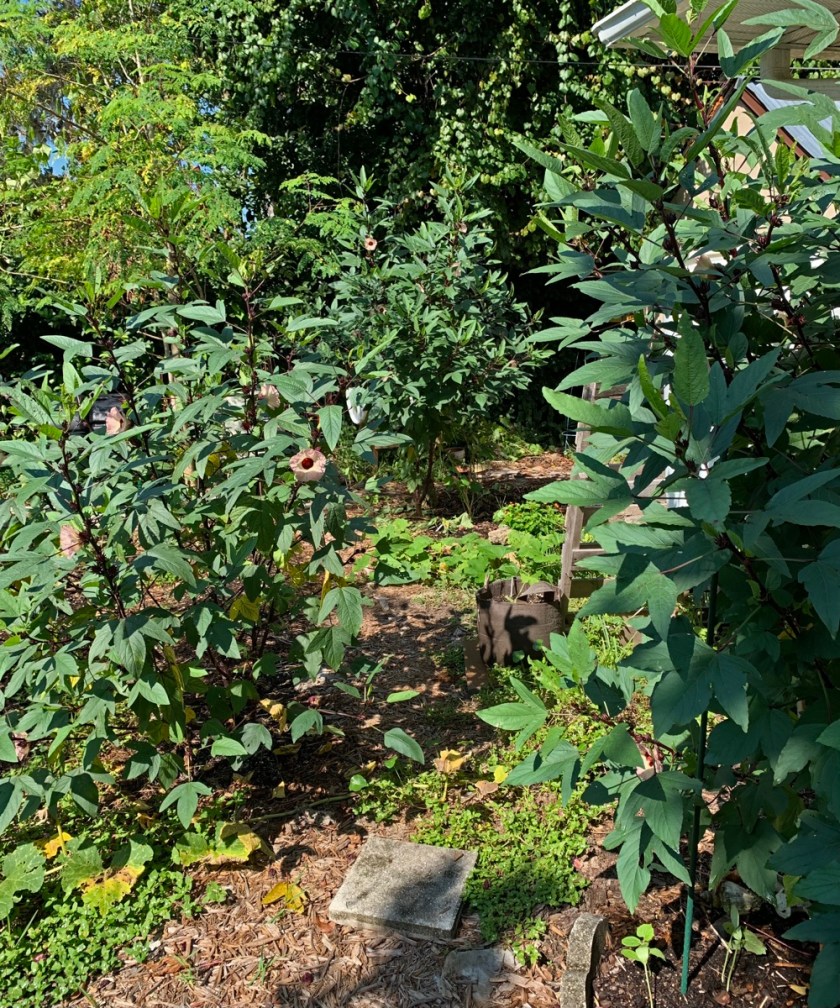
These shrubs have taken over my yard. I had NO idea what they would do when I planted them back in Spring. Now, many of the plants are taller than me – guessing 7 feet or so in height. It has been about 11 months since I began them from seeds indoors.By the way, don’t bother with that. Put the seeds in the ground. It was tough dealing with them in small pots.
The Roselle have become too large for my small backyard garden.
It is September and the Roselle’s are now blooming. I’ve gone through and trimmed out some of the smaller branches because they are blocking the sun from other plants. Once the flowers stop, and I collect the calyces, I will be cutting some of these plants down. I have a feeling they won’t do well through the winter anyway. I hate to cut down a good plant, but they are seriously in the way.
My yard is too small for these plants. Now, I know how easy it is to grow Roselle, and how big they become. I’ll be smarter about choosing the right spaces for them to grow.
Fall planting time is nearly here in my area and I’ve begun to sow seeds already. Although the weather is hot, I’m hoping the seeds will grow.
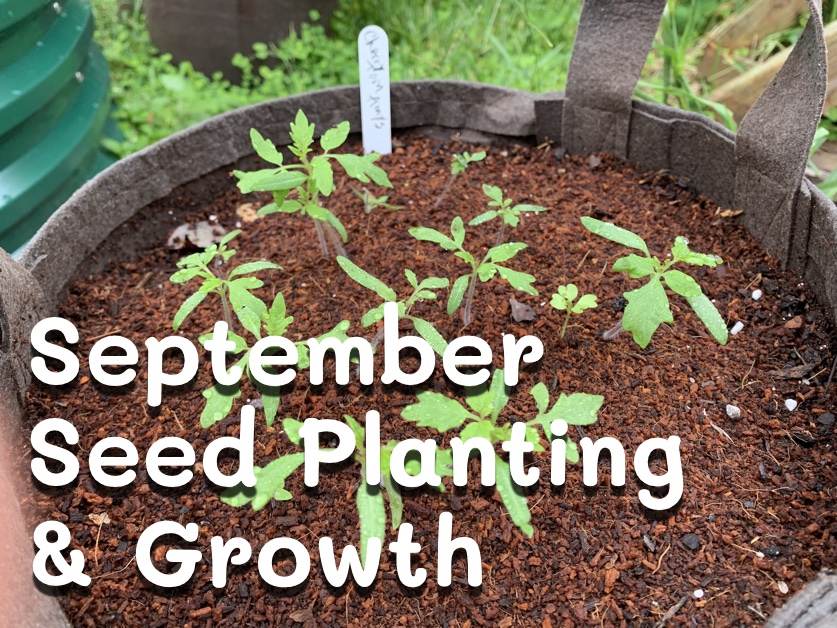
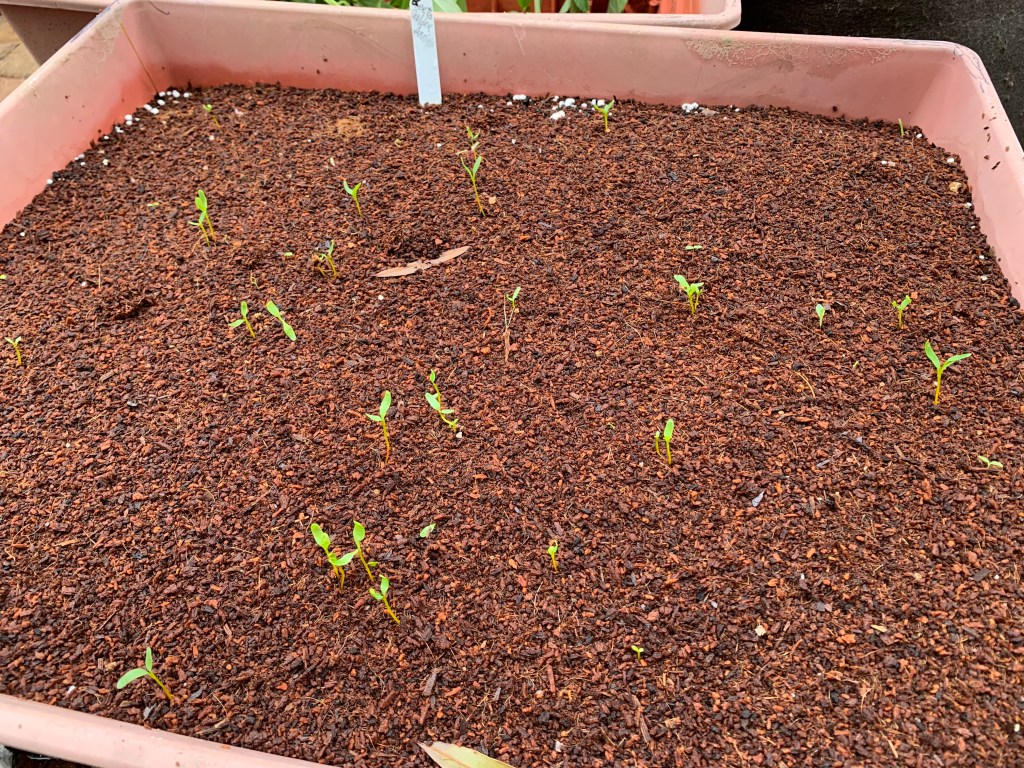
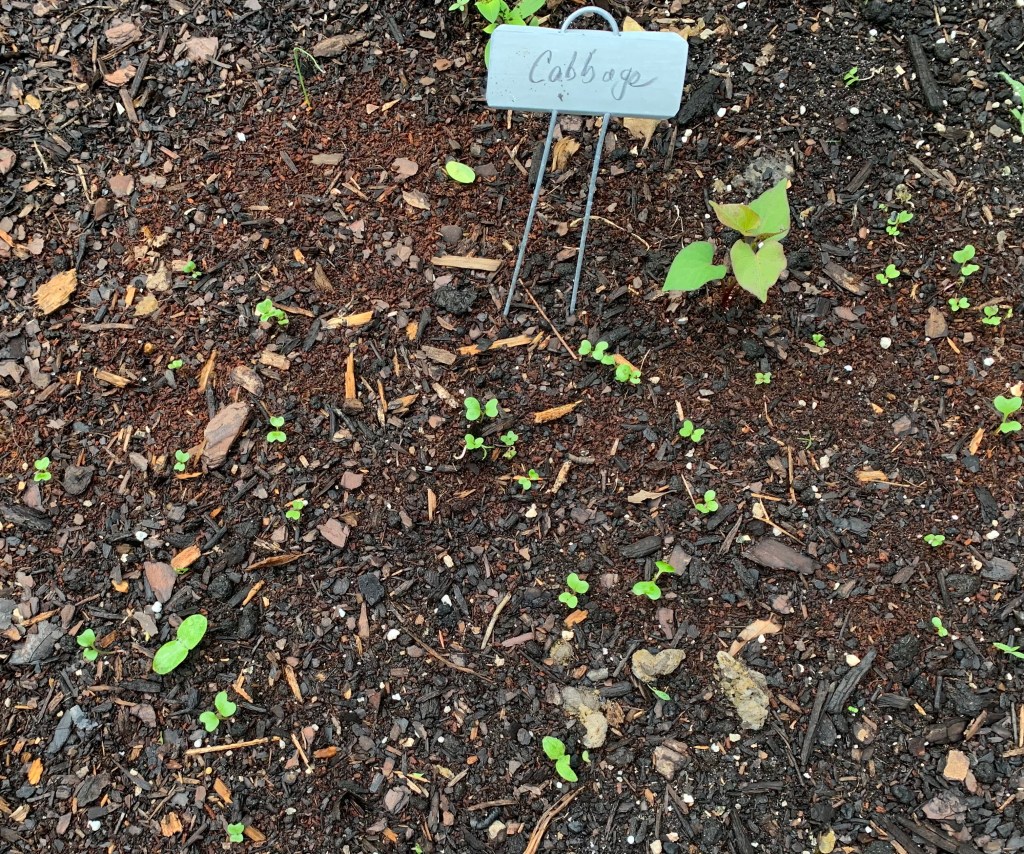
I live in east, Central Florida, which is growing zone 9b. It is September, and I have planted a few different vegetable seeds as a trial. I don’t know if the weather is too hot for them. Last year I waited until October. So far, I have seen some nice sprouting.
Here’s a list of the seeds I have planted, and where they were planted (in ground or pots). They are all growing, but some look better than others.
Daikon radish – these seeds were put into the ground.
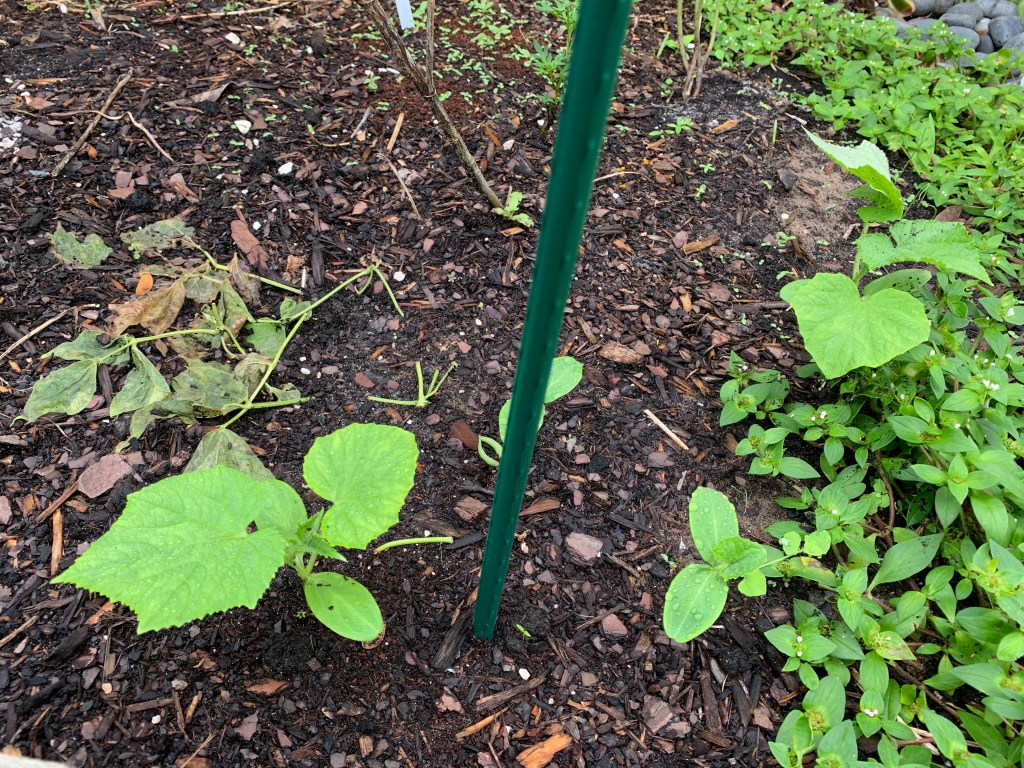
Cucumber – first set of seeds didn’t do much, so I’ve planted more from a newer packet. (in ground)
Carrots – in fabric bag
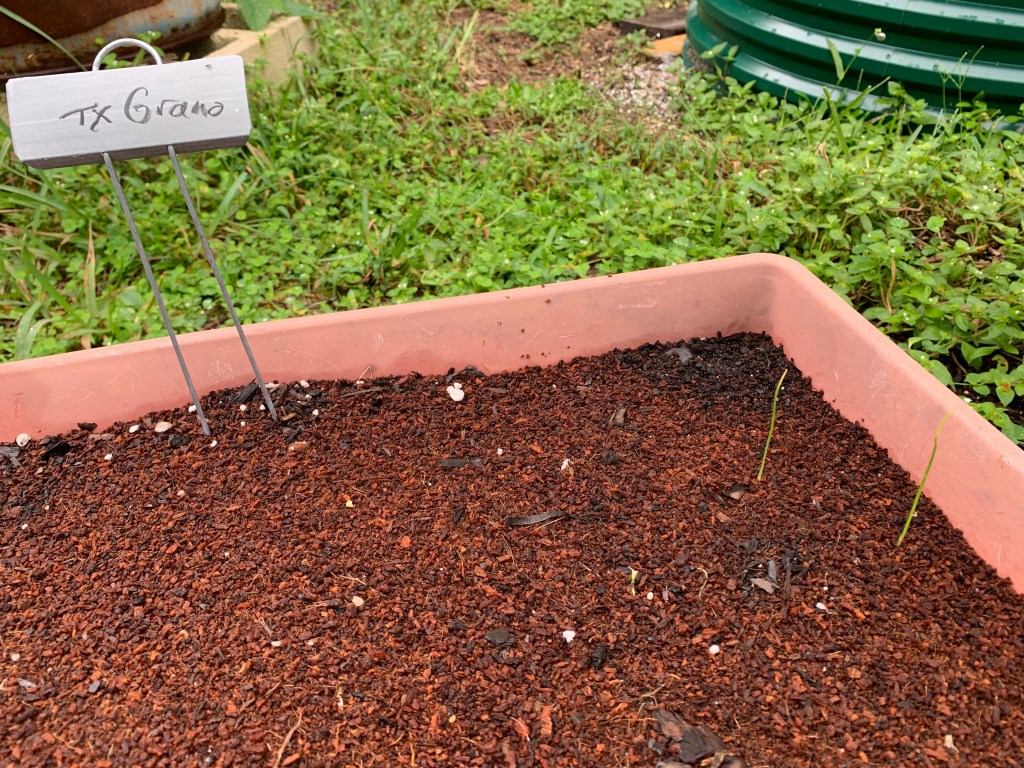
Texas Grano onions – will probably have to re-plant in October (grow box)
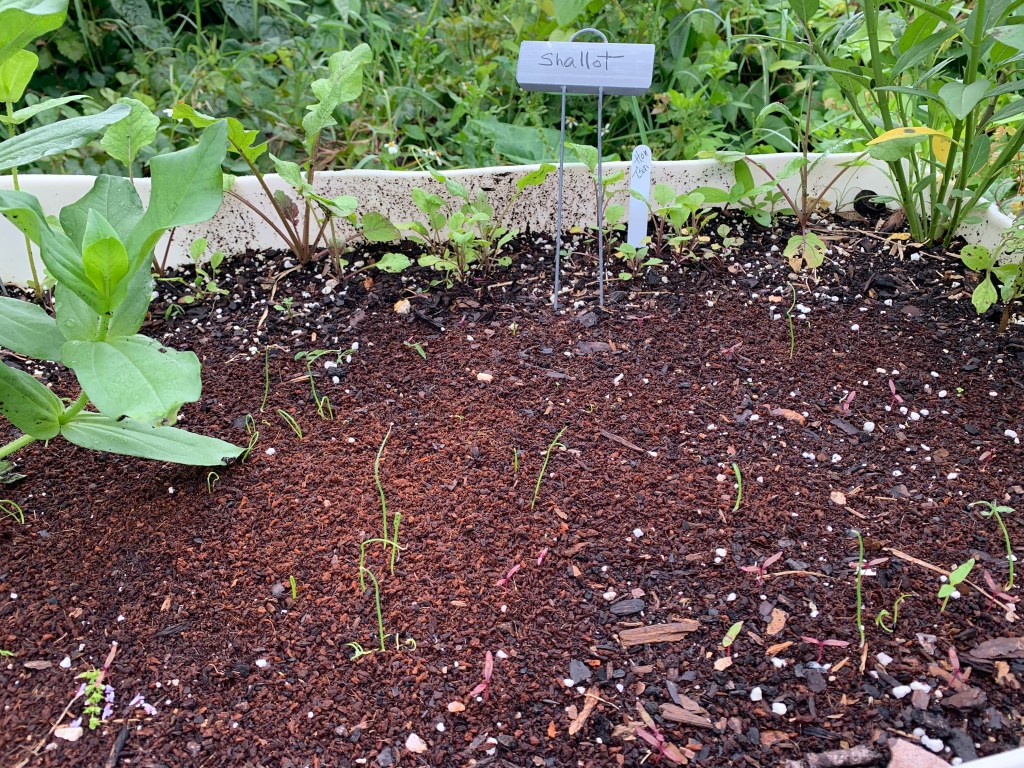
Shallots – barrel raised bed
Seminole pumpkin – edge of Vegega to hang over the side.
Golden beets (fingers crossed these do well) – in grow box.
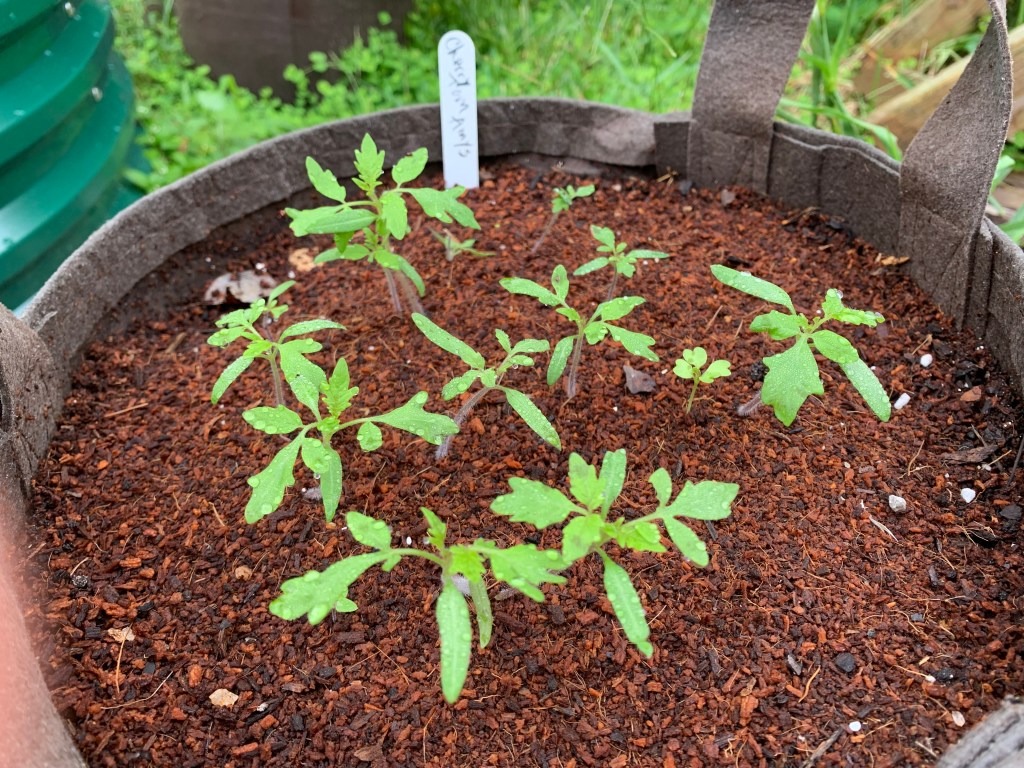
Tomatoes – cherry and Mortgage Lifter (normal size) – both in fabric pots
The summer months have been unusually dry. Now, we are getting lots of rain. I only hope it won’t be too much for my seedlings.
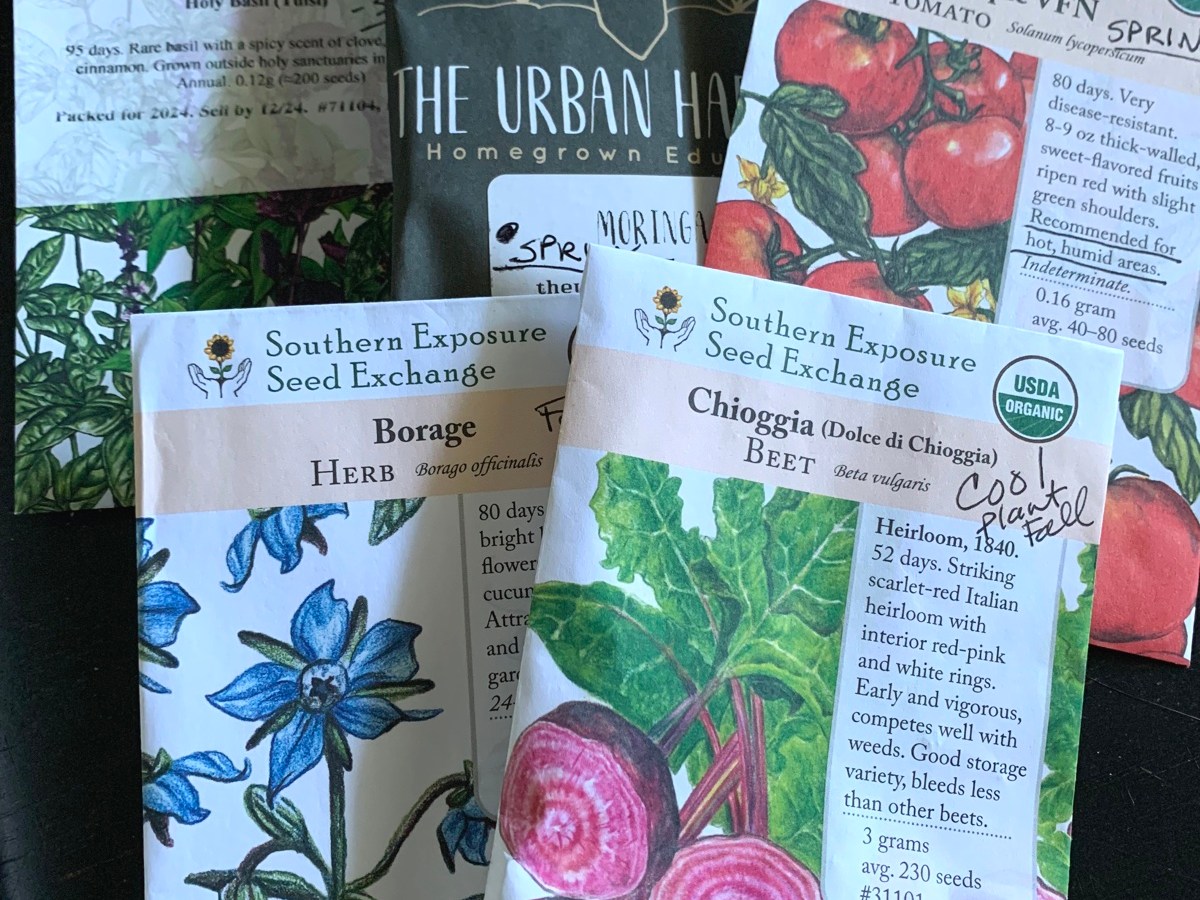
This time, I purchased multiple seed packets from my favorite online places. That way I can experiment and see if things will grow this early without really losing much. I have a lot more seeds, which I will plant in October.
The beds are not completely ready, even though I have tried to be organized. My usual problem is a lack of dirt and compost. I buy and buy, but it gets used up so quickly. I still have time, because some of the seeds I planted did not do well. The Tatsoi, arugula, and broccoli will need to be planted again in October.
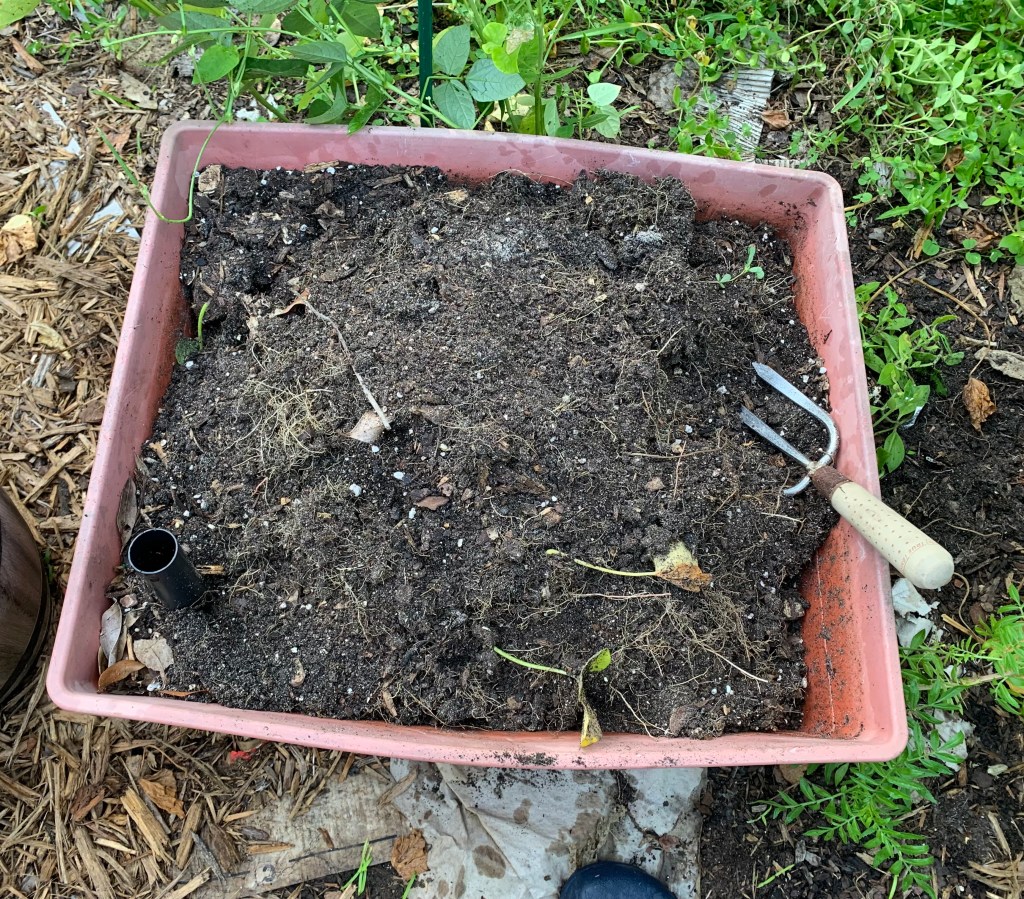
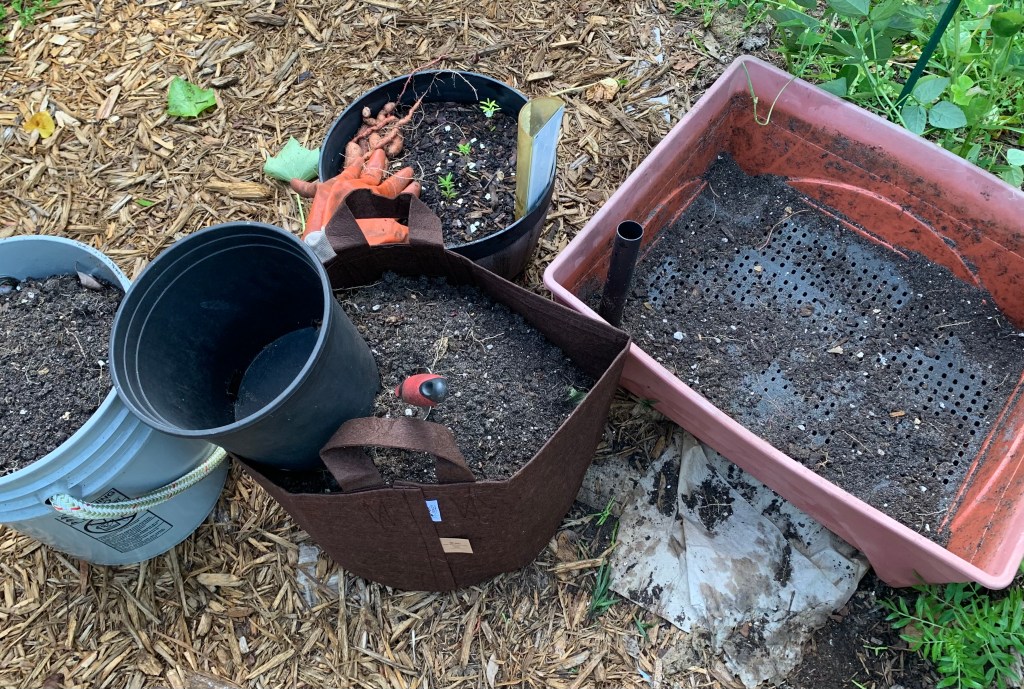
Each of my square grow boxes needs an overhaul. This means digging out all the dirt, drilling holes in the bottom and re-filling. I’ve done about half, but have three, or four boxes left.
Grow Box Refurbishing
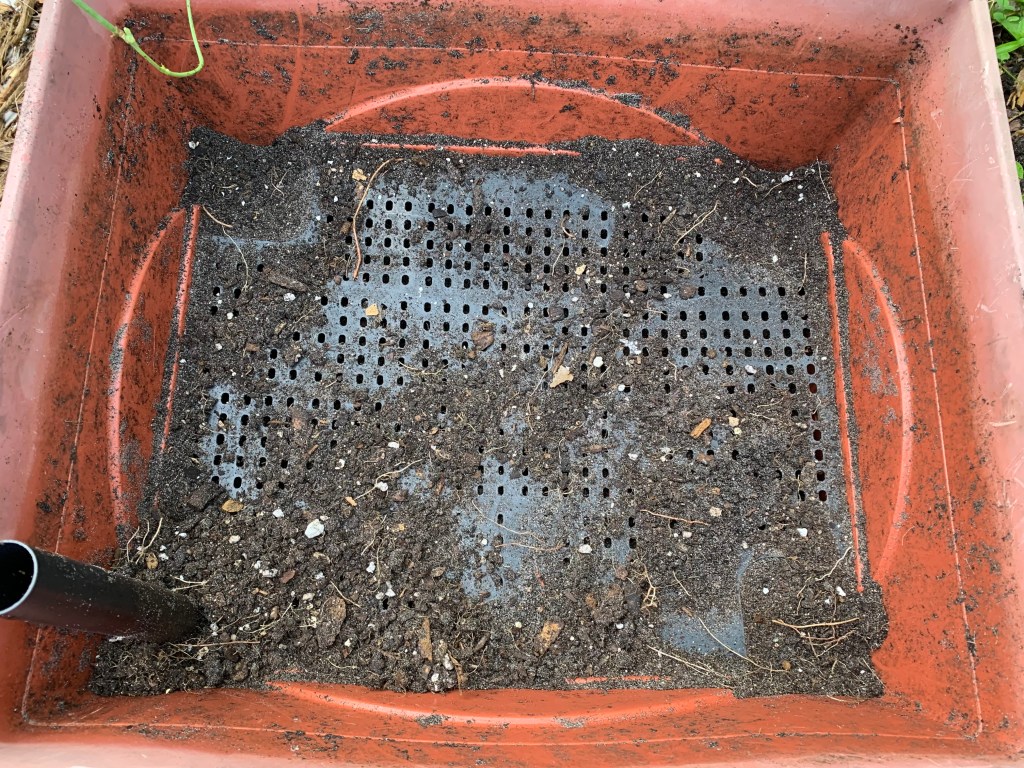
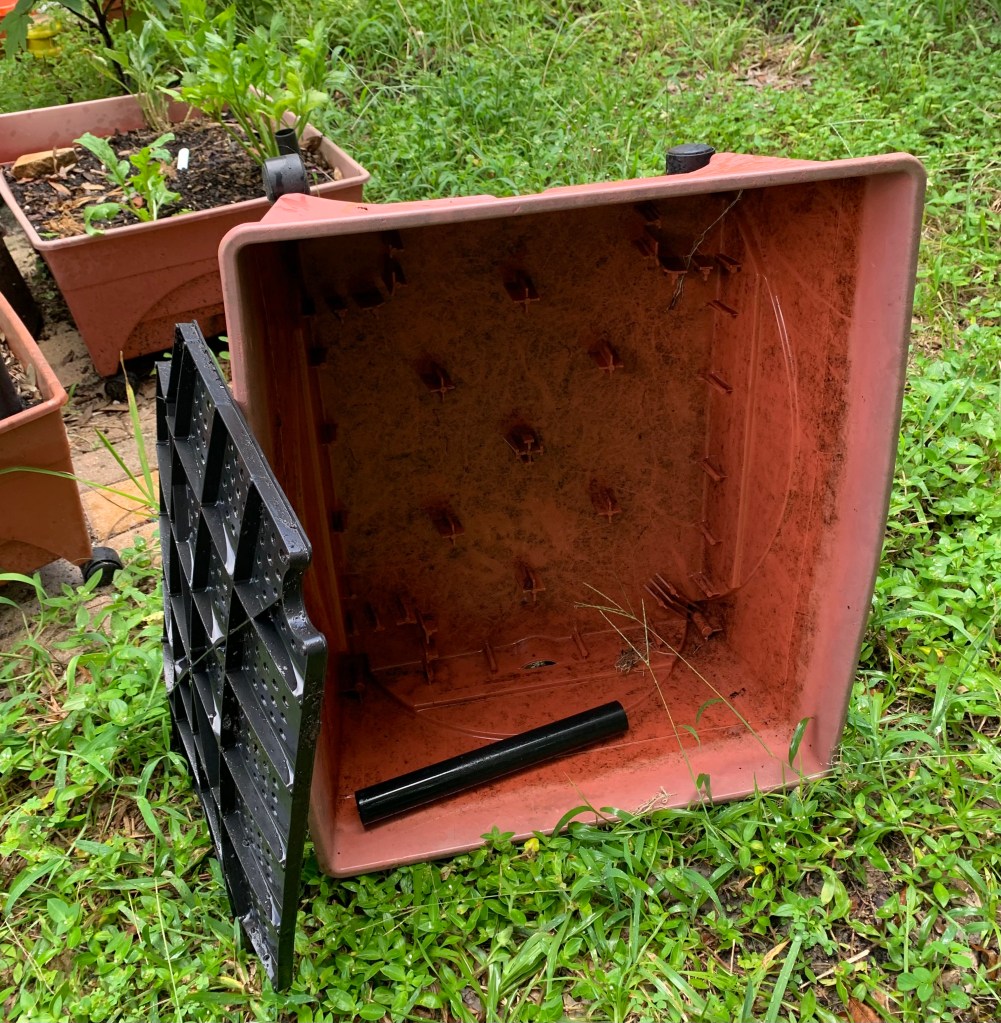
The grow boxes I purchased have a drainage panel near the bottom. They also have a tube that reaches up through the dirt where watering is supposed to happen. The idea is to fill the bottom with water so it can be pulled up by the roots of the growing plant. There are side vents for water overflow. (When you tip the box and no water comes out, it could be because the bottom is full of dirt.)
The idea is good, but flawed. Seeds need moisture and must be watered from the top in this big box. It is unavoidable that dirt will sift through those drain holes. If roots get long, they can clog the base also. Even if you keep the drain system in place, cleaning out the entire box is advised. (Raccoons actually pulled up one of my drain pipes, and it can’t be put back without emptying the box.)
The boxes are still very nice and sturdy. They come with wheels, which is really helpful if the box is on a deck or patio. I will continue to use them, but without the drain panel. Instead, I am drilling holes into the bottom of the box itself.
Last April, one sweet potato slip was planted into a grow box. It grew like mad and gave me some funny looking sweet potatoes. There was not enough depth, but I was desperate for space when I planted it. Once I began digging out the sweet potatoes, I realized that dirt had filled up the water reservoir – and I found a few small sweet potatoes down there as well!
Now I am going through all my grow boxes to empty the dirt, remove that screen, drill holes in the box, and re-filling for planting.
Filling the Grow Box
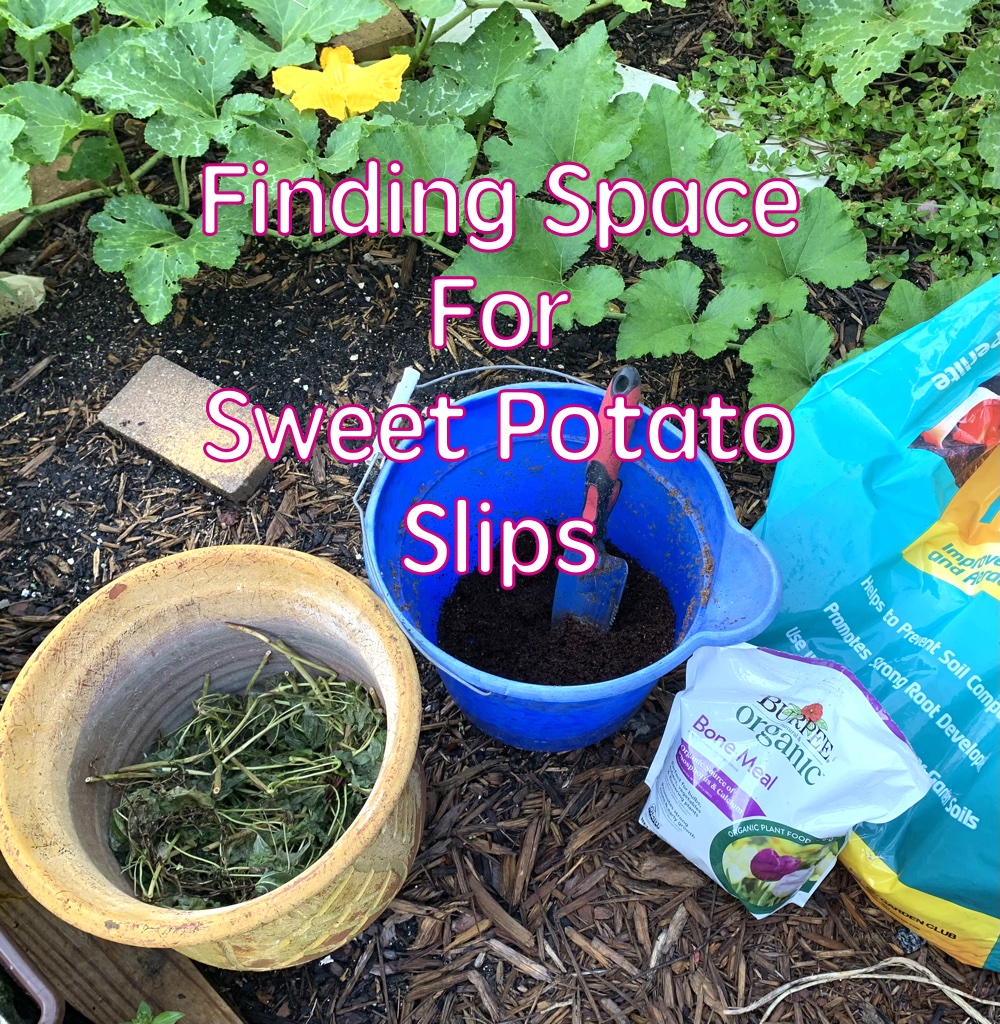
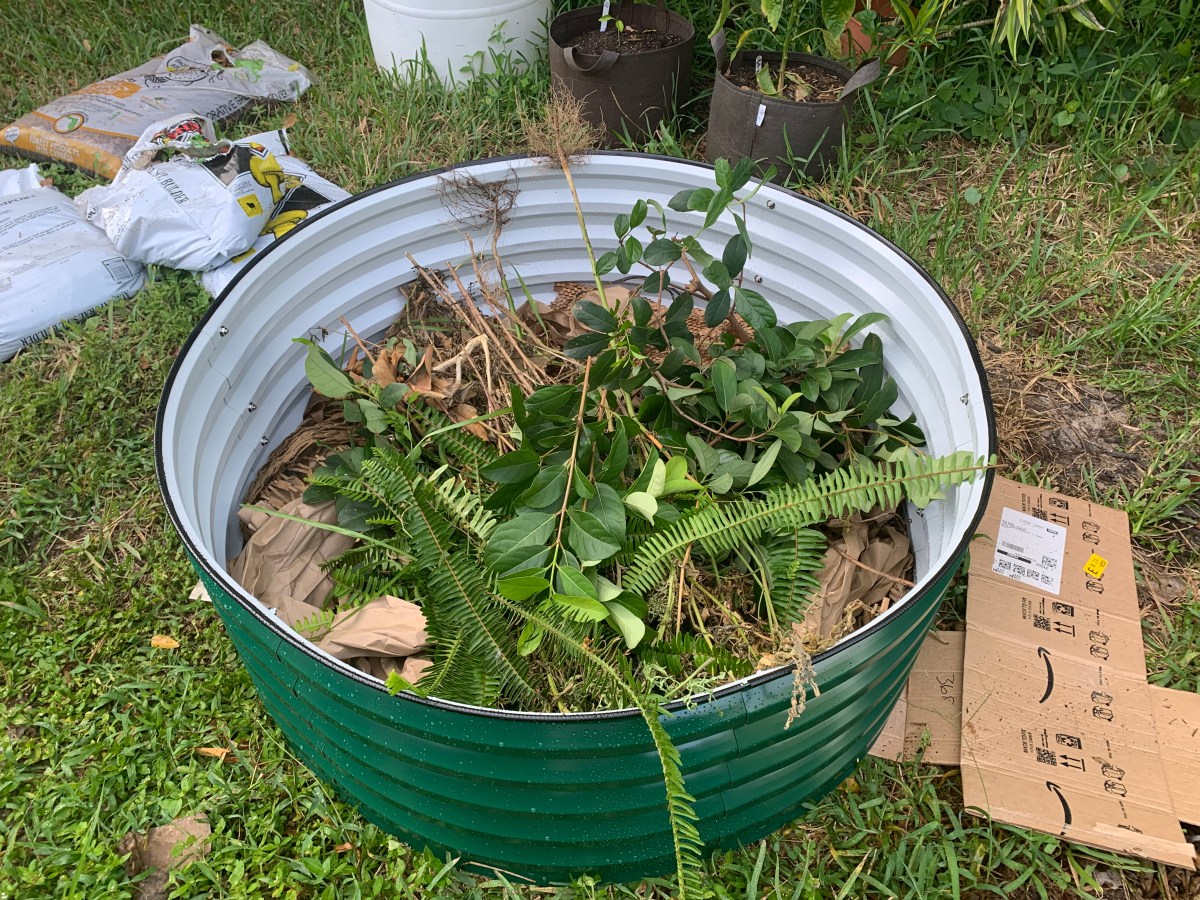
Any time a grow box or fabric pot needs filling, a combination of products is needed. First, drainage should be addressed. For the box, I used a thick layer of pine straw (literally long pine needles) in the bottom. Then, I added some granite stones. After that I mixed potting soil, compost, and perlite, along with some bone meal to create a good growing compound.
The new idea I had, was to put a layer of coconut coir on top of the dirt before I plant the seeds.
One last suggestion is to add earth worms! I have them in all my boxes, raised beds and fabric bags. I found them in the yard and gave them a new home. They tend to multiply and make the dirt loose and fabulous!
Problems Planting in the Ground
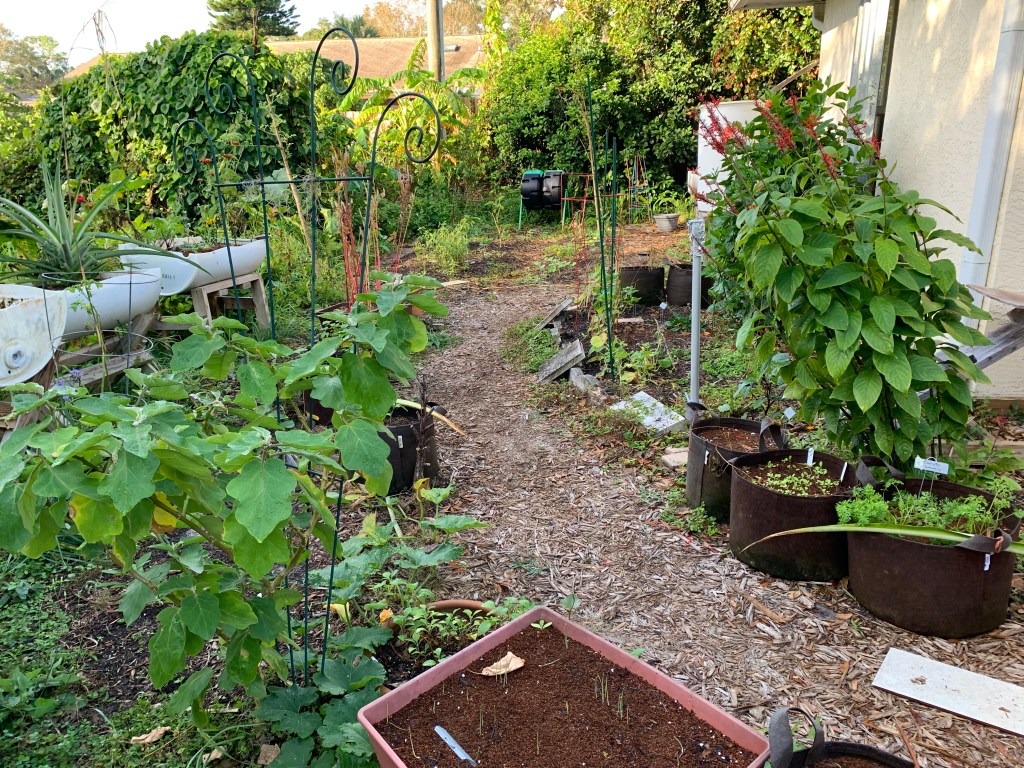
I’d love to have rows and rows of vegetables growing, but I don’t have the space. Also, I have overnight visitors (raccoons and armadillos) who continually dig up the ground. Each morning I check on things, and usually there are numerous holes randomly dug all over the garden.
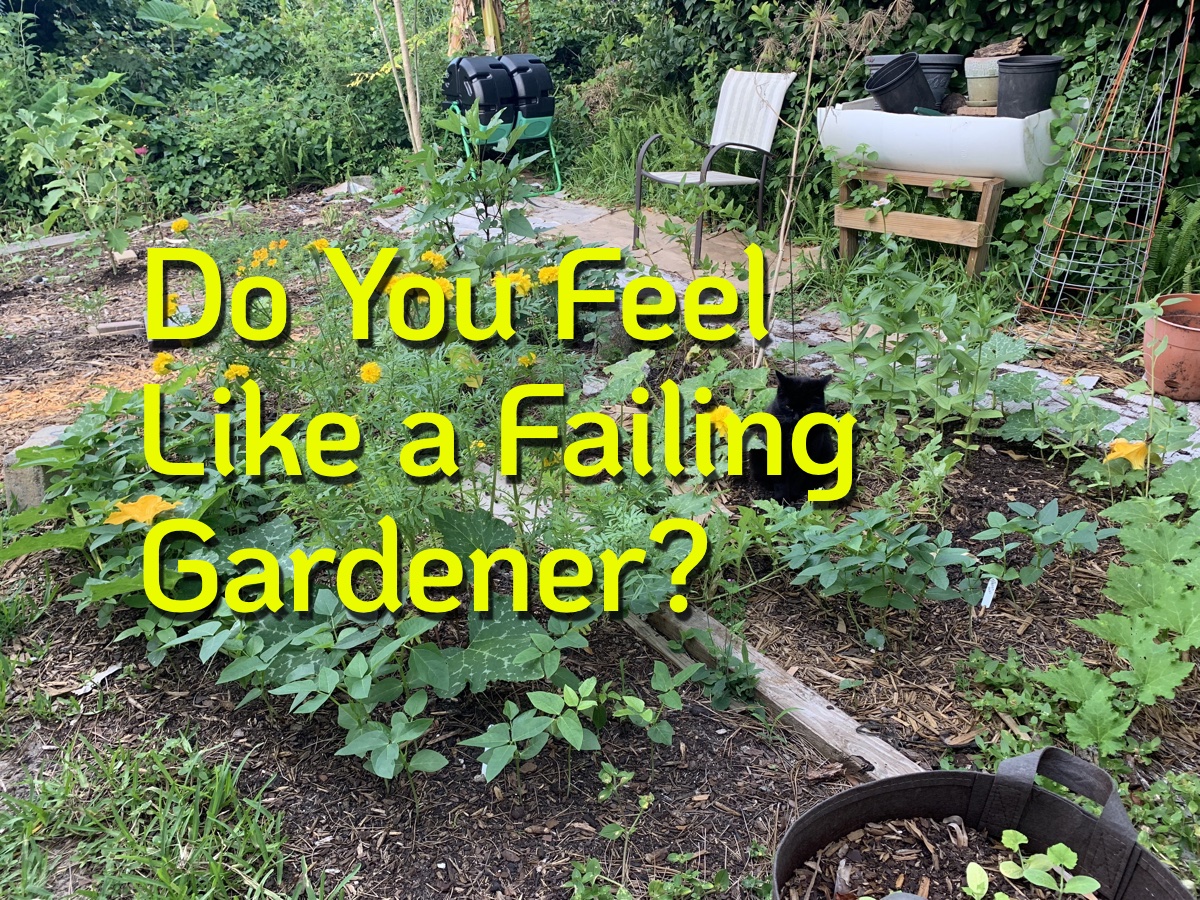
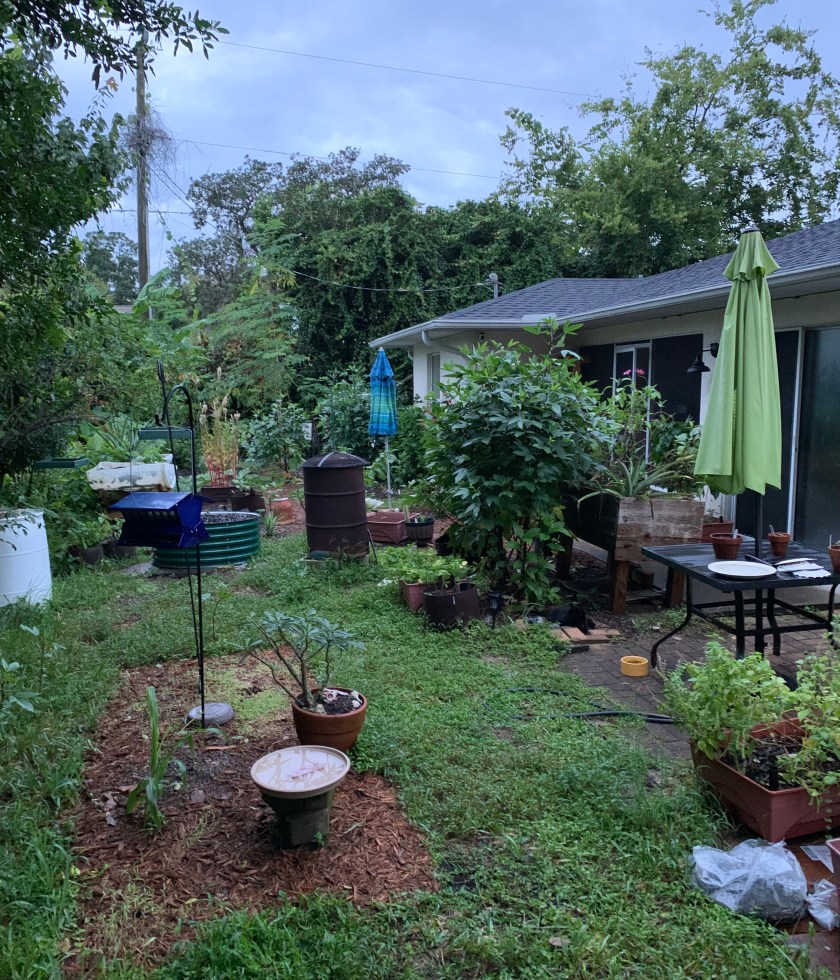
My backyard, September 2024
In order to resolve this problem, I will need to buy more raised beds. I’m hoping for a winter sale because they are expensive. It will be too late to use the beds for this year, but I can work on getting them ready for next fall. Filling those beds takes time.
Amazon Links to Some of the Products I Use
I am an Amazon affiliate, which means these links can provide a small income to me if someone clicks the link and makes a purchase. It does not affect the price of the item.
Grow boxes. If you have read this page you will see that I decided to not use that drain. It works well for a while, but the dirt eventually clogs up that space, and there is no drainage after that. Without proper drainage, plants will die.
Perlite, organic – loosens the soil, and is especially beneficial when beginning with new dirt. Once the dirt becomes really good – from compost, previous roots, and amendments – it should be naturally loose.
Bone meal, organic – helps growing plants create strong roots.
Coconut Coir, organic – good for water retention and starting seeds. It does not clump together, so used by itself, not good for transplanting seedlings. Mix with potting soil, or use on top of dirt to start seeds (see my photos above).
Garden plant tags – I have purchased two packs of these tags and they are great! The raccoons have not pulled them up. The writing stays. Just what I needed for seed planting.
Are you growing anything in September? Have you begun your Fall growing? It is the best time of year to grow in my area, but I may be starting a little too soon. What do you think?












 Hydrangeas Blue