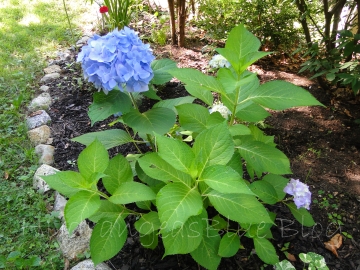
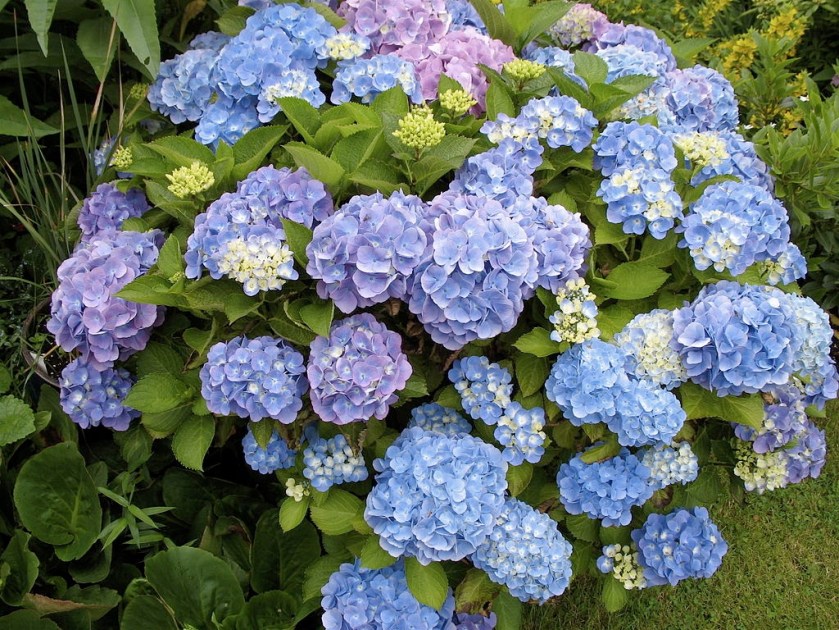
Last summer I planted this Endless Summer hydrangea variety in my front yard. This year it is larger and has bigger flowers. All flowers are blue except one which began as lavender and is now pink. You can see it in my photo here, on the right, lower side of the plant.
I guess my issue with this macrophylla type of plant is that the flowers are often hidden by the big leaves. It’s also called a “big leaf” hydrangea.
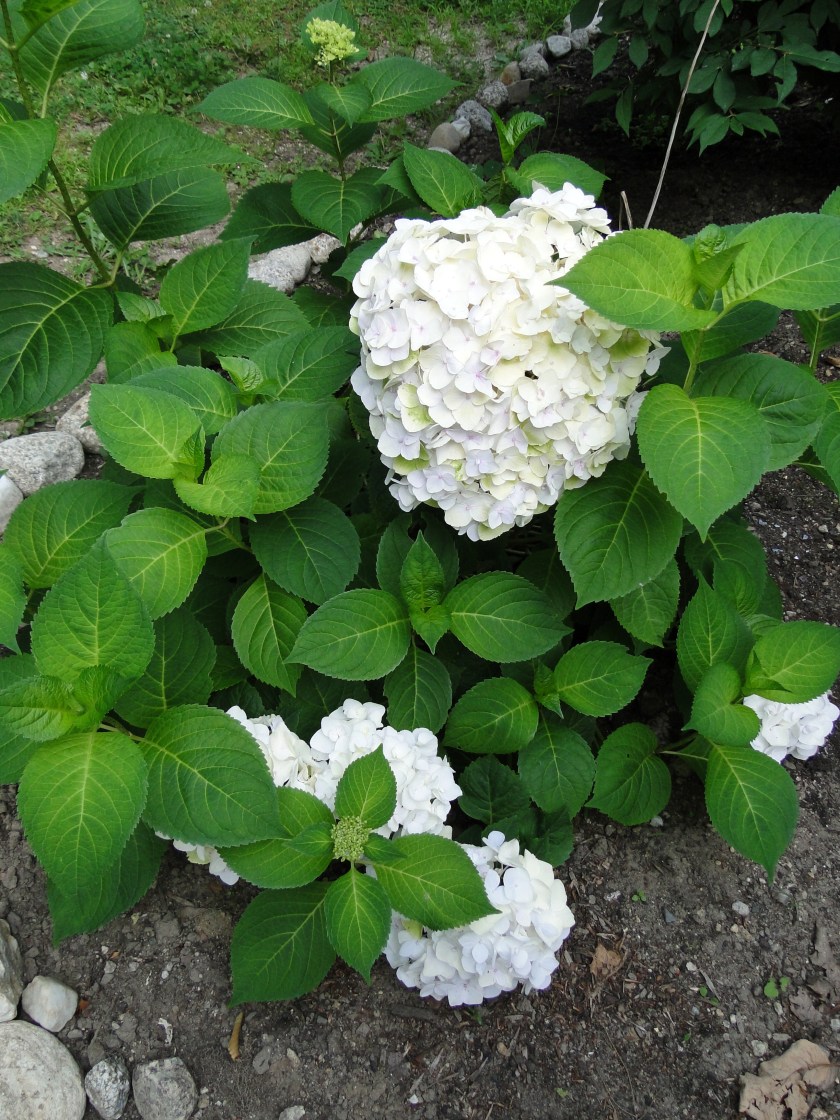
The one with big white flowers is also hiding the beautiful blooms. I hope that in time, as the plants age and get stronger stems, that the flowers will show up better.
The plants are nice and healthy looking so I expect improvement each summer. This type will only be around 4 feet across. They don’t get really huge, to my knowledge.
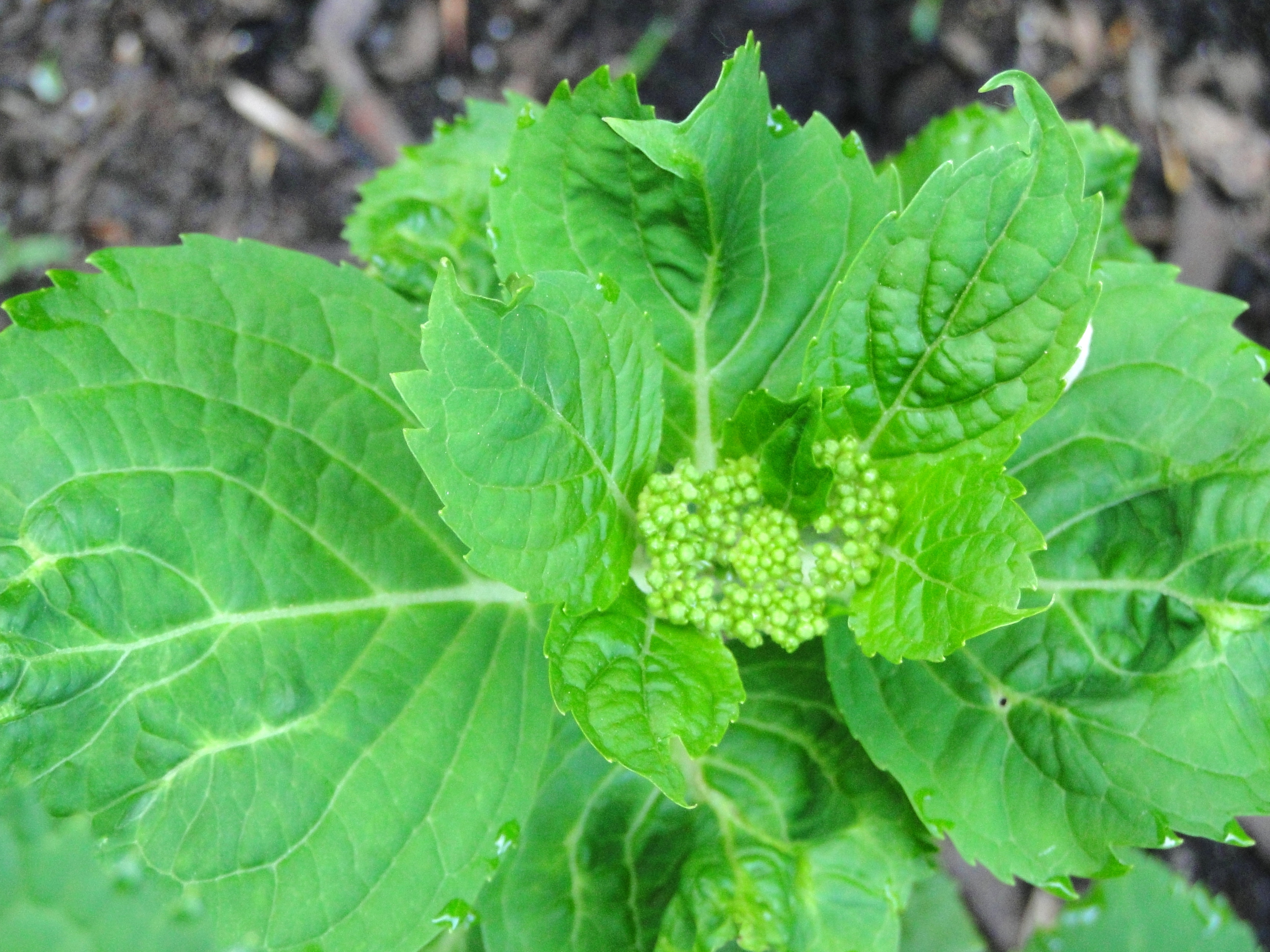
The macrophylla hydrangea variety is also known as “big leaf” and I’m adding a photo here of my Endless Summer to show you the size of the leaves. This blue flowering plant is doing quite well.
The other macrophylla I have is Blushing Bride and it’s also blooming, but in white. It is also full of big, green leaves like this one. I’m hoping that as the plants mature, the flowers will show up better in stead of being hidden among the greenery.
The blue one has one big bloom on top which is slowing fading to lavender. And it has a small flower on the side which began as light lavender and is now changing to pink.
Go here to read more posts about the macrophylla hydrangea.
It’s the beginning of June and the hydrangea buds are beginning to form on my mophead varieties. The paniculatas are full of leaves, but no buds yet. Last year this plant had very pretty, light blue flowers which I used to create some nice wedding stationery in the design set I named “Blue Heaven“. You can see the RSVP postcard below. I hope the flowers will be just as pretty this year, but the truth is, you never know for sure what color blooms the macrophyllas will have.
Last year the Blushing Bride began with white flowers that ended up turning green. I am wondering what color they will be this summer.
Brides tend to prefer either the blue flowers or the light green of the panicled (or elongated) flowers like the ones that grow on the Limelight bush.
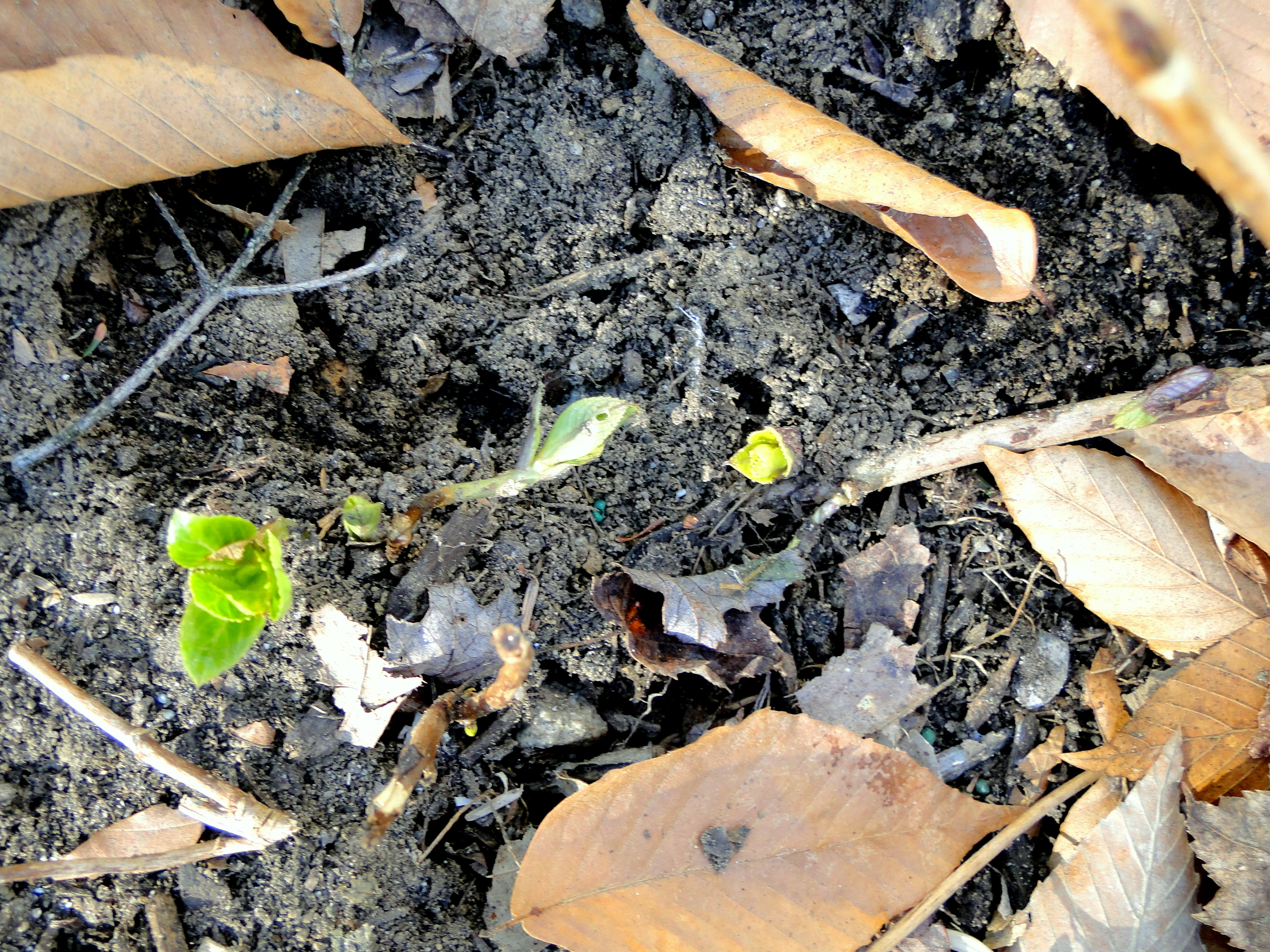
As I uncovered the leaves from the base of the Blushing Bride hydrangea, I found that a couple of the branches had formed roots which will be new plants! This form of ‘root layering’ or ‘ground layering’ is a great way to start a new shrub from an established one.
Rooted Hydrangea Branch
It’s bare and spindly looking stems are curving out from the center and then upward and at least two of them were touching the ground enough to form roots. Now, new growth is showing beyond the roots which means I will have a couple of new little baby hydrangea plants!
I have propagated hydrangeas this way before, back when I lived in my rental house. I had found a rooted stem with big leaves and a flower that was growing separate from the main bush, so I dug it up and planted it near the front steps. You can read about how I did it on my Propagating Hydrangeas page about root layering.
So for now I will let the babies grow – attached to the main plant – until they get larger. I’ll probably dig them up in the Fall and find them a place to grow on their own. I love to find free ways to landscape. Isn’t that exciting?
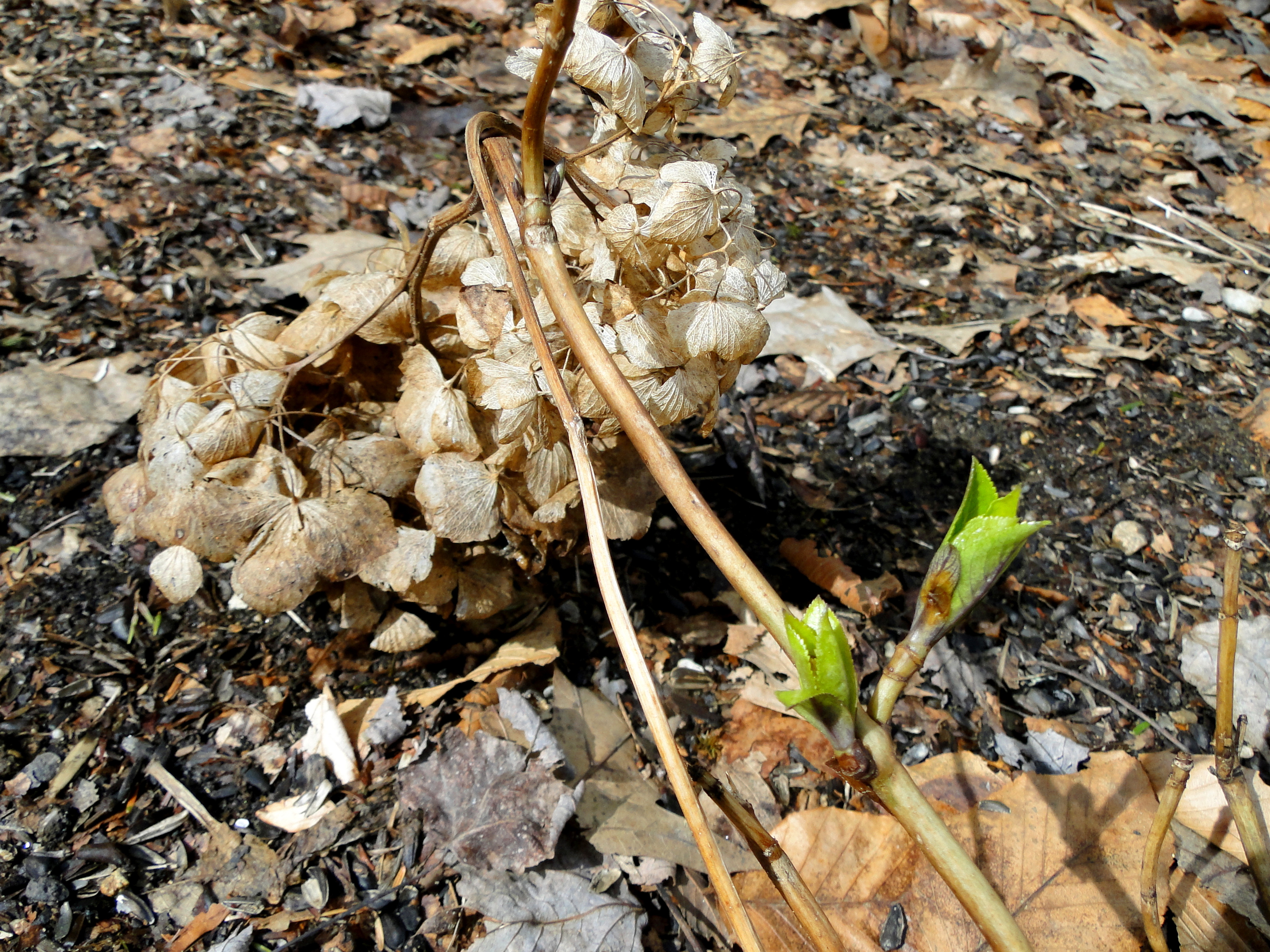
Now that the hydrangeas have sprung back from the weight of the snow, I realize I have some trimming and pruning to do. I leave the dead flowers on the stalks over winter, but now they need to be removed. Some branches are broken, but I know that they will fill in quickly with new growth.
Some hydrangeas bloom on new growth so you don’t want to trim those in Spring, or you may be cutting off the blooms. Some bloom on old wood – the stems that were there last year. And some will bloom on both.
This is my “Endless Summer”, a small shrub that I planted last Spring and it bloomed profusely even though it never grew very large. This year I expect it will grow larger and lots of blue flowers. The dead flowers are still showing at the end of the stalks and I will be cutting them off.
I’ve been looking for a new hydrangea to add to my yard and that means it will have to thrive in zone five. I live in the Monadnock Region of southern New Hampshire and that is Zone 5, or 5a, to be more specific. These are cold hardy hydrangeas, and luckily most varieties of hydrangea can take the extreme cold.
I can tell you (and show you) what I have presently growing in my yard, and these types are found frequently in my area of the country.
The Endless Summer Blue macrophylla (rounded flowers) variety is popular for it’s beautiful blue flowers. As you can see in the photo below, this type can grow flowers in shades of pink, purple and blue all on one shrub! Gorgeous.
More types of hydrangeas I’ve grown in my New Hampshire yard with much success include the “Blushing Bride” which is also an Endless Summer variety.
The Blushing Bride begins white and changes to pink and green
Also, Pinky Winky and Pee Gee (Paniculata grandiflora), and many others will grown in the north. In fact hydrangeas seem to enjoy cold more than heat. The Endless Summer types tend to wilt in the hot sun, even if they have plenty of water.
My best advice is to shop in local stores and nurseries in spring and see what they are selling. Most likely the types for sale will do well in your climate zone. Also, you can view a comprehensive list of Hydrangea types and their grow zones on Dave’s Garden site.
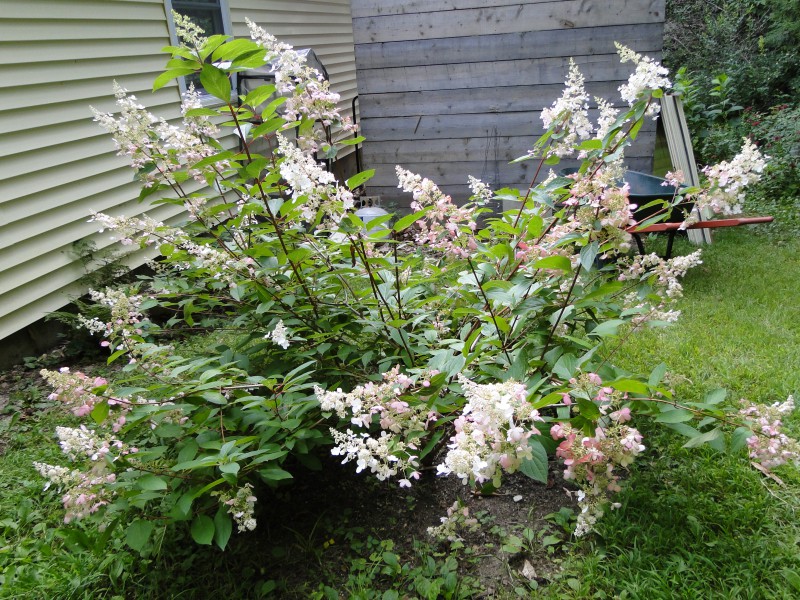
Pinky Winky, paniculata variety (3 year old plant)
One warning about planting the Pinky Winky (which is one of my favorites, and is featured at the top of this page, in pink) is that deer will eat it. One side of my shrub was always chewed down where the deer passed through my yard! It also attracts bees, so maybe keep it away from patios and outside sitting areas. But it is very easy to care for, and it produces gorgeous flowers. So please don’t let that stop you from including one in your landscape.








 Hydrangeas Blue