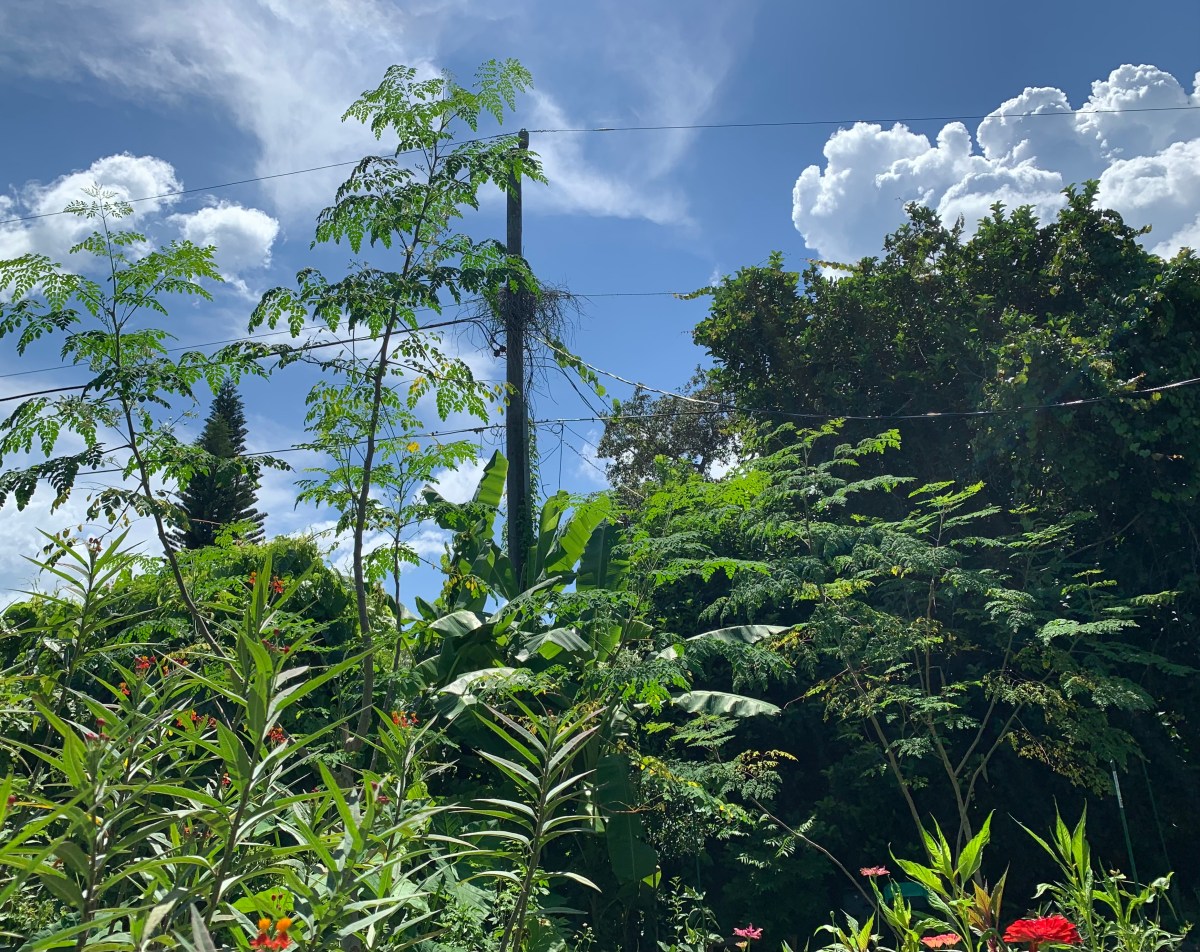
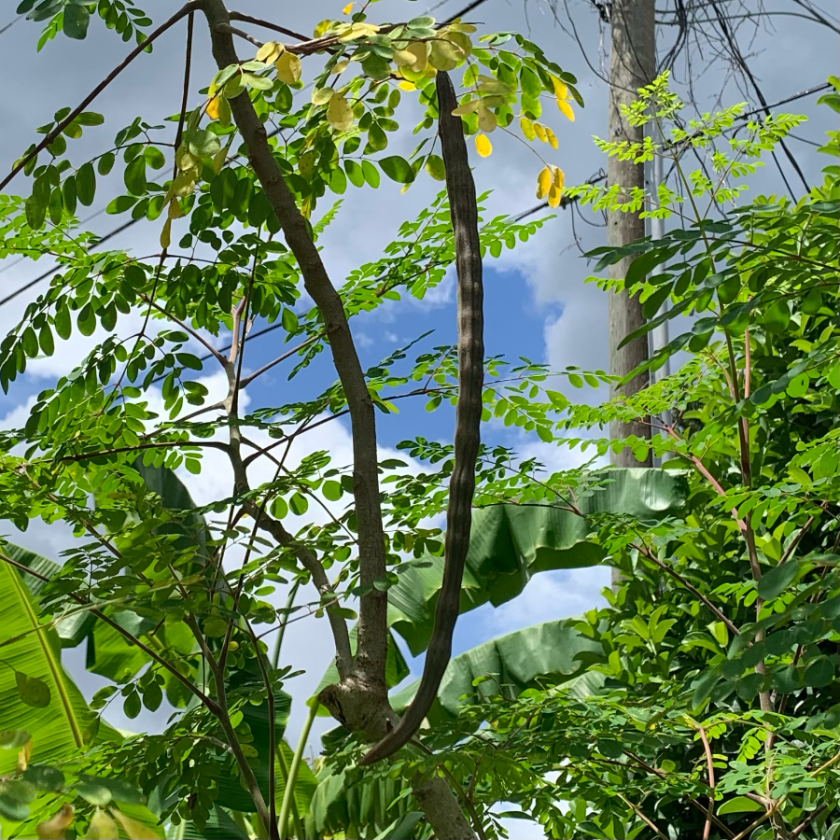
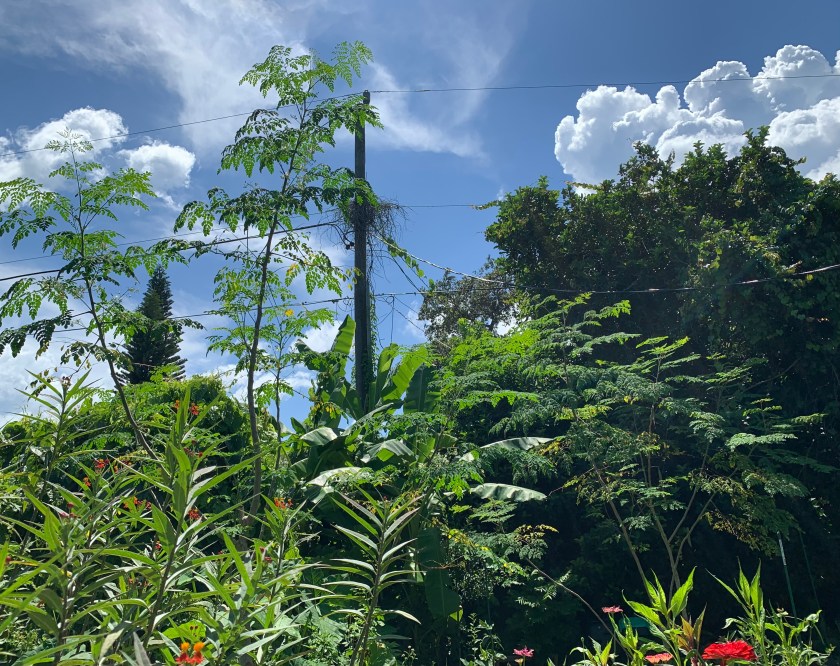
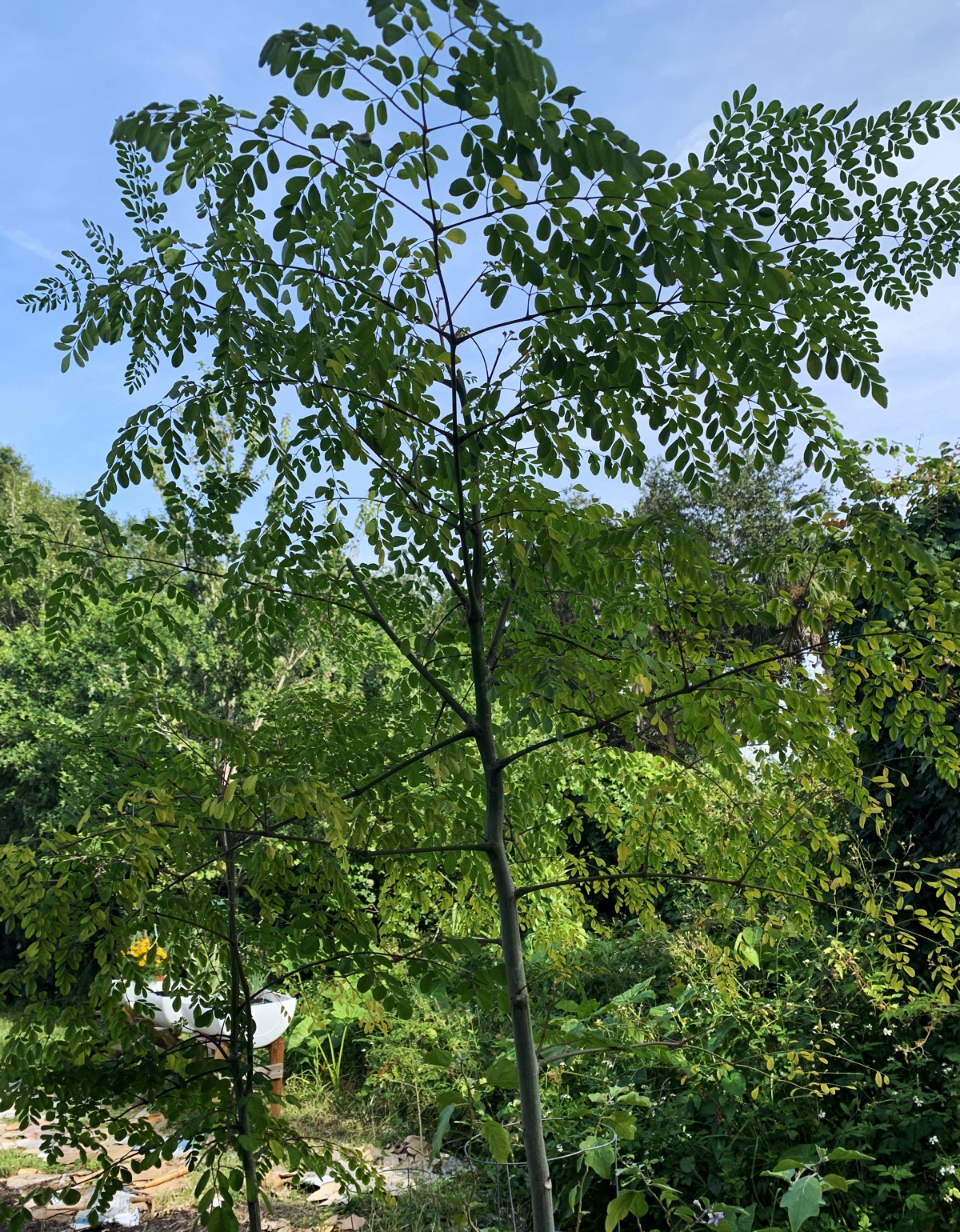
Two Moringa trees are growing in my backyard. I’m in Central Florida and the trees grow great all summer, but slow down the remainder of the year. Hurricanes, or strong wind, will knock these trees over. I had to cut mine last year because it fell over the garden. New stalks have grown and I just noticed my first “bean” or drumstick.
The Moringa is a special tree because it is a source of vitamins while providing food in the form of leaves and beans. Even the roots are edible – according to this article. I most often use only the leaves to make tea.
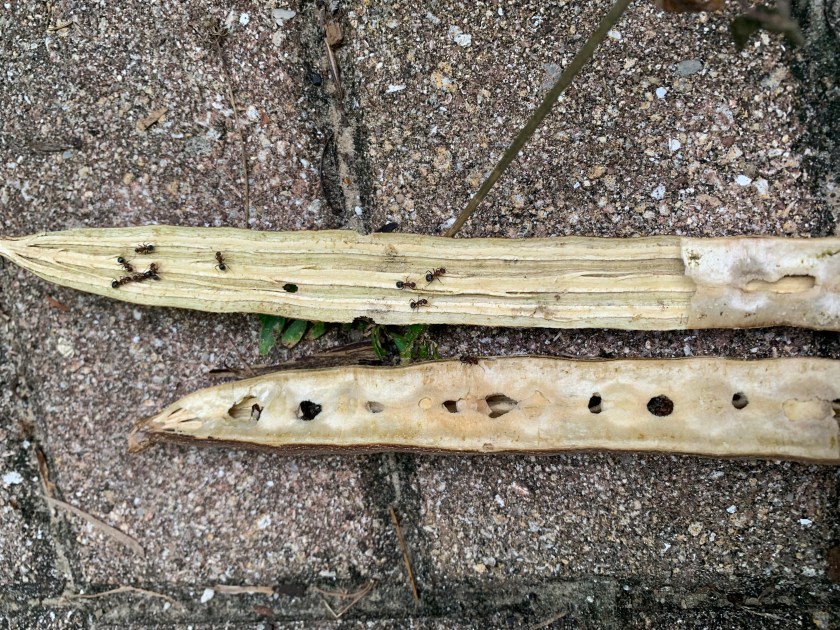
I let this “bean” grow and eventually when I touched it the thing pretty much fell off. It was full of seeds, and lots of ants! So, I tossed it into the yard.
Another bean is growing on the smaller Moringa tree. I do not plan to save seeds or anything. My yard is pretty full. Both Moringa trees are doing well. I love the lacy leaves that provide minimal shade. Bees, butterflies and birds have been seed at the white flowers. Even hummingbirds visit this awesome tree.
Thanks for reading. Please view some of my other garden stories in the links below.
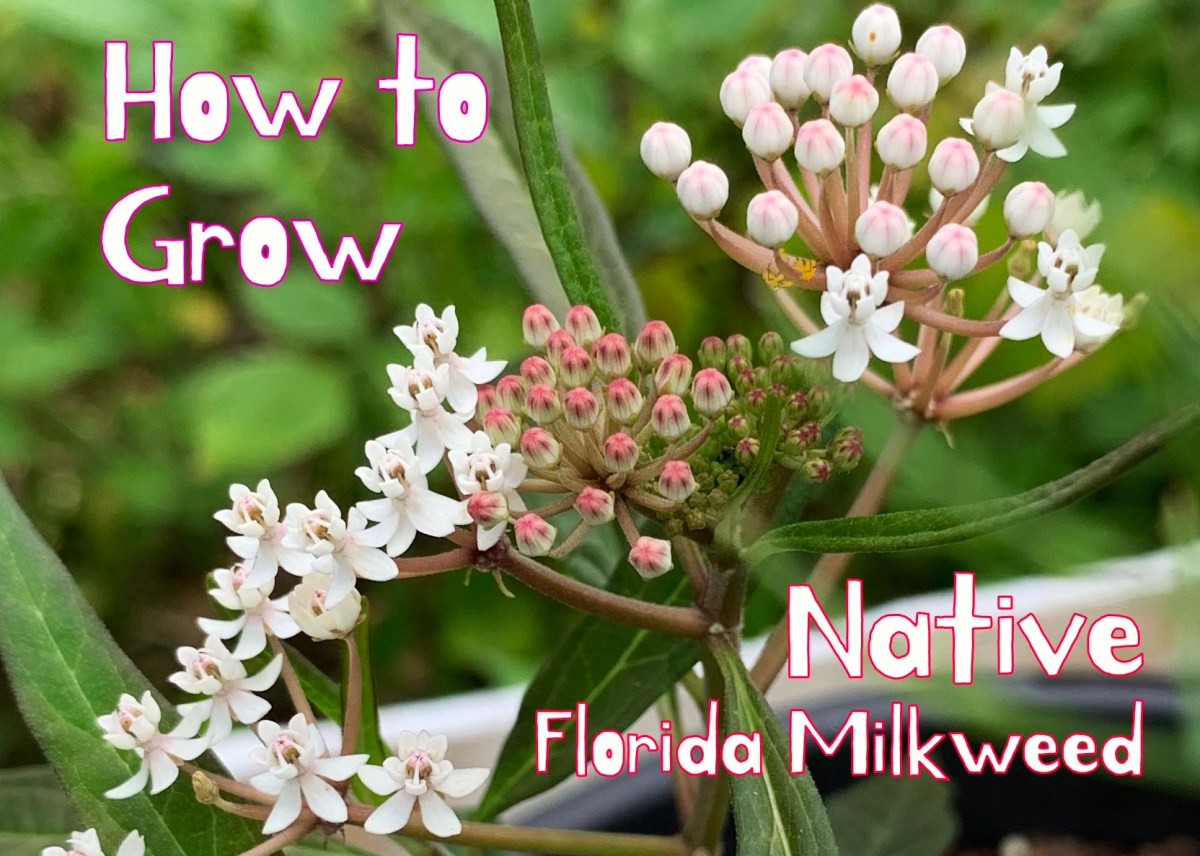
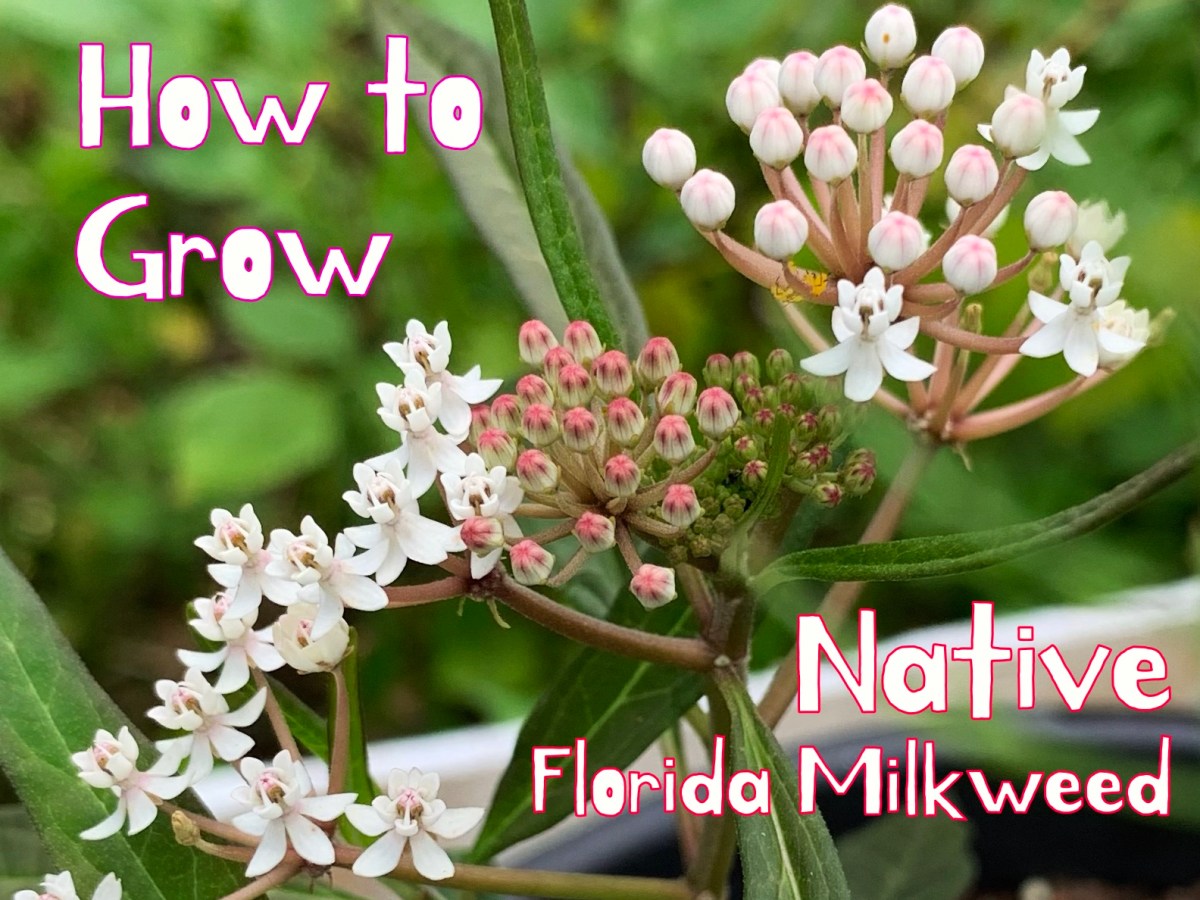
Native Florida milkweed plants can be hard to find. I am trying to grow some from seeds. Know how it grows, and what to do for seeds to flourish.
I’ve been trying to grow my own native Florida milkweed from seed. The trick is to learn as much as possible about milkweed plants. There are quite a few native Florida milkweed varieties. Some prefer dryer conditions, while others need to remain moist. Decide what will work best in the area you plan to put your milkweed plants.
In the wild, they will self seed alongside the parent plants, in a naturally perfect location. In my yard, I will need to mimic that for success.
This list includes milkweed I am attempting to grow from seed, or mail order. Milkweed likes sun, and most like it moist. I ordered these types to see what I could get to grow. I do not have a lot of space.
Asclepias perennis – swamp milkweed, with white flowers
Asclepias incarnata – swamp milkweed, with pink flowers
Asclepias verticillata – whorled milkweed, blooms later into fall. Needs space for tubers to spread. Not as good for small gardens.
Asclepias humistrata – pinewoods, or sandhill – grows in sand, likes it dry. Must be in well-drained sandy ground.
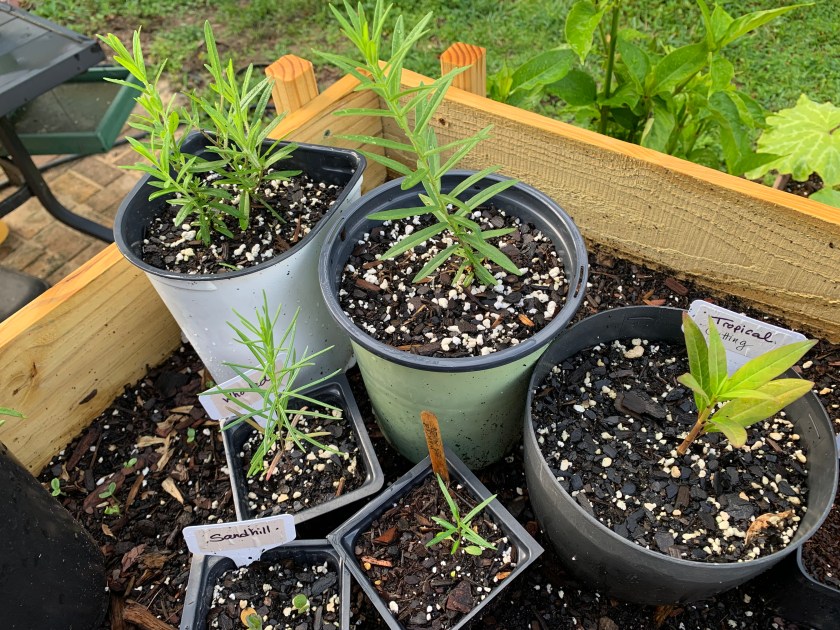
Tuberosa (orange butterfly weed), Whorled milkweed, Tropical and Sandhill.
Finding and Buying Milkweed Seeds and Plants
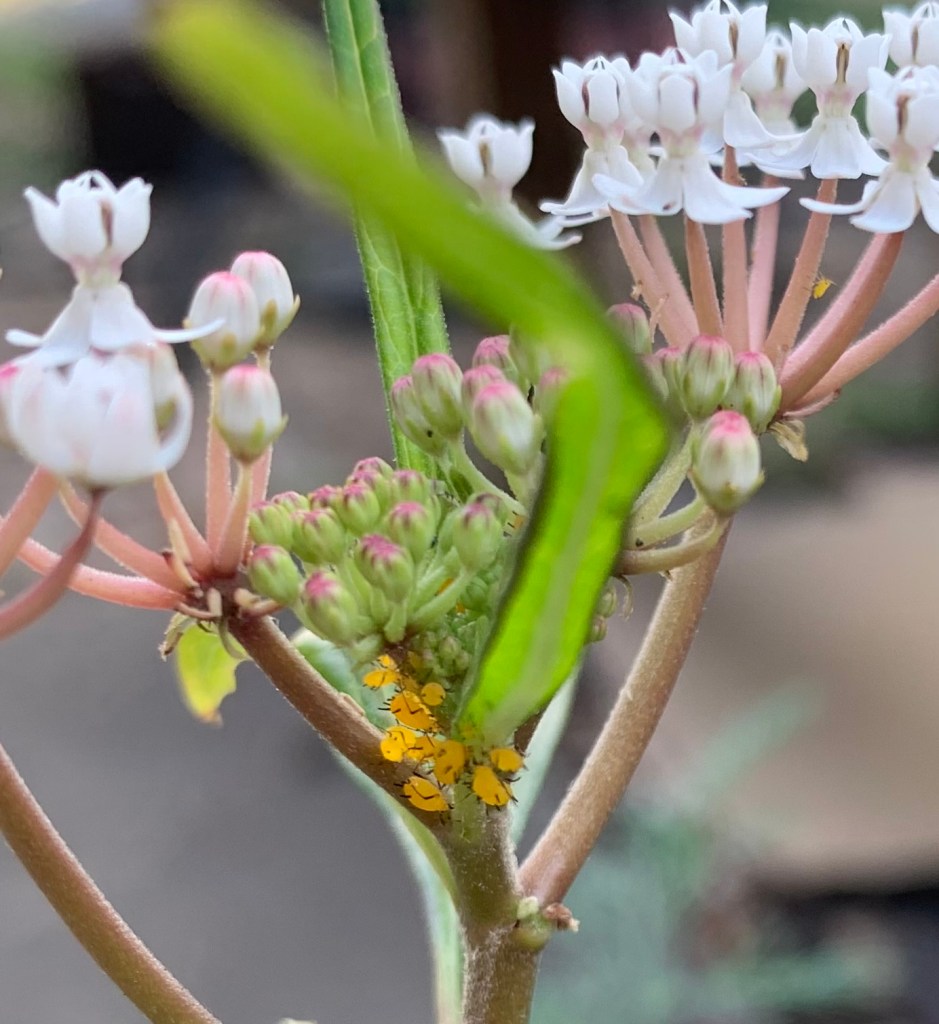
Where I live, it is nearly impossible to find native milkweed plants locally. And when I do find them, they are scraggly and not growing well. Often they are full of aphids.
For that reason I have turned to starting milkweed from seeds. Look for seeds from plants that are grown without the use of chemicals.
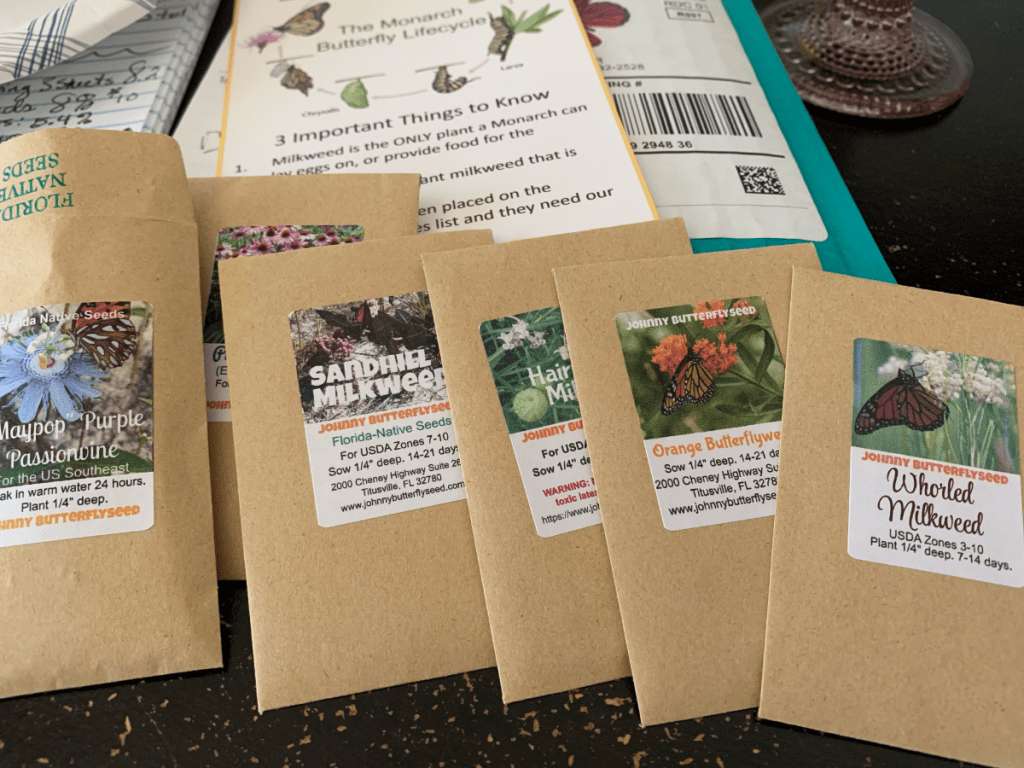
The seeds I bought have come from various sellers. When buying online, many reputable places have good information about growing each milkweed variety. Johnny Butterflyseed has a nice variety of seeds that come in little brown packets. I have a few pots of each variety planted.
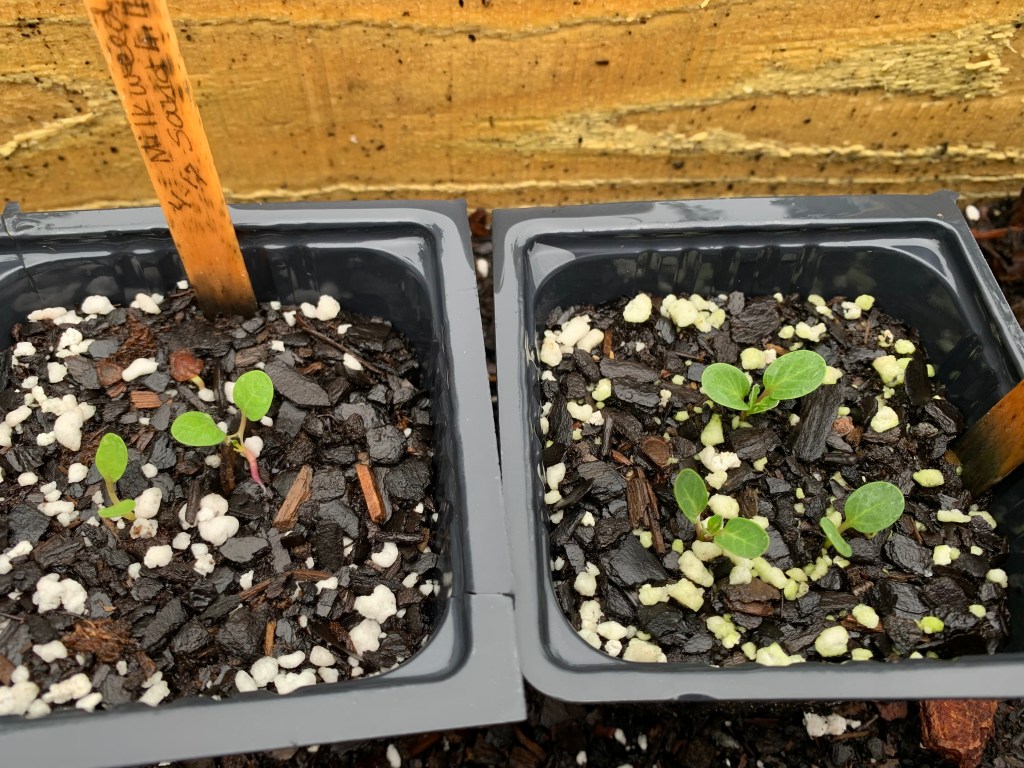
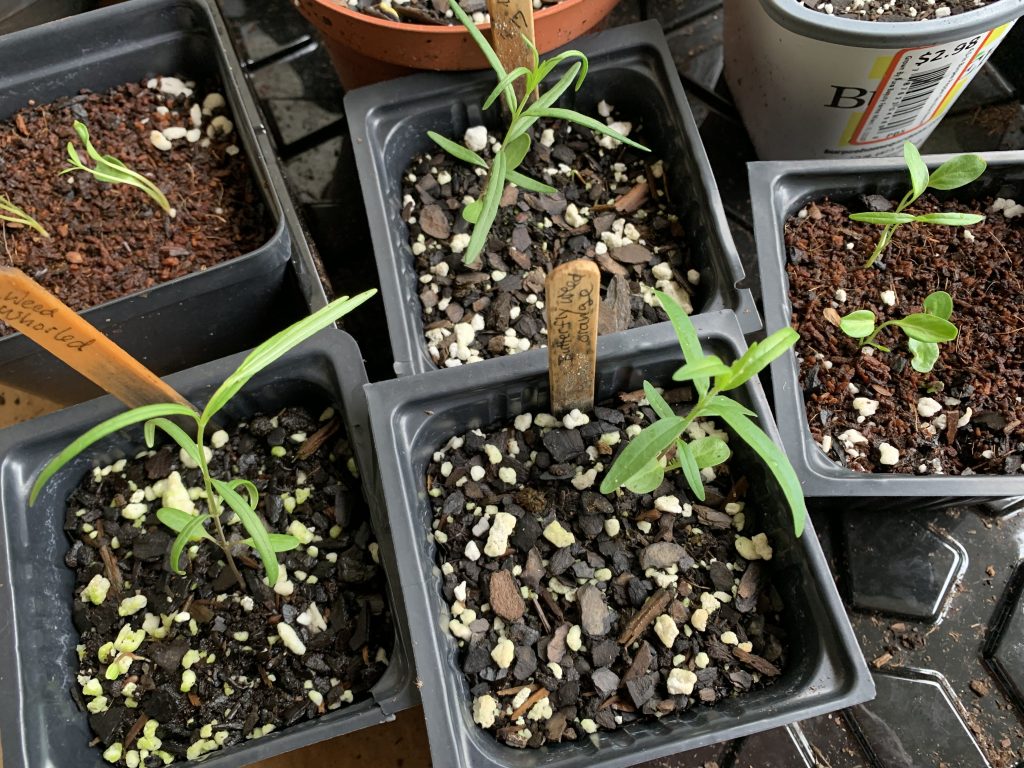
Johnny Butterfly seedSeeds are coming up
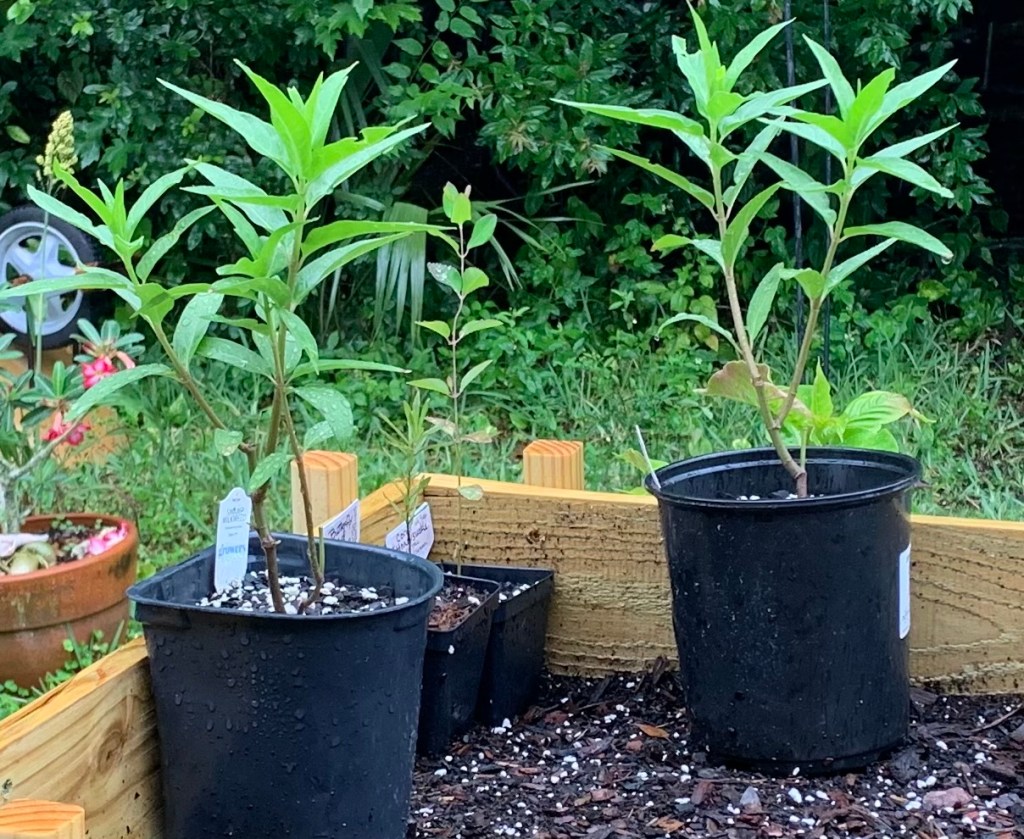
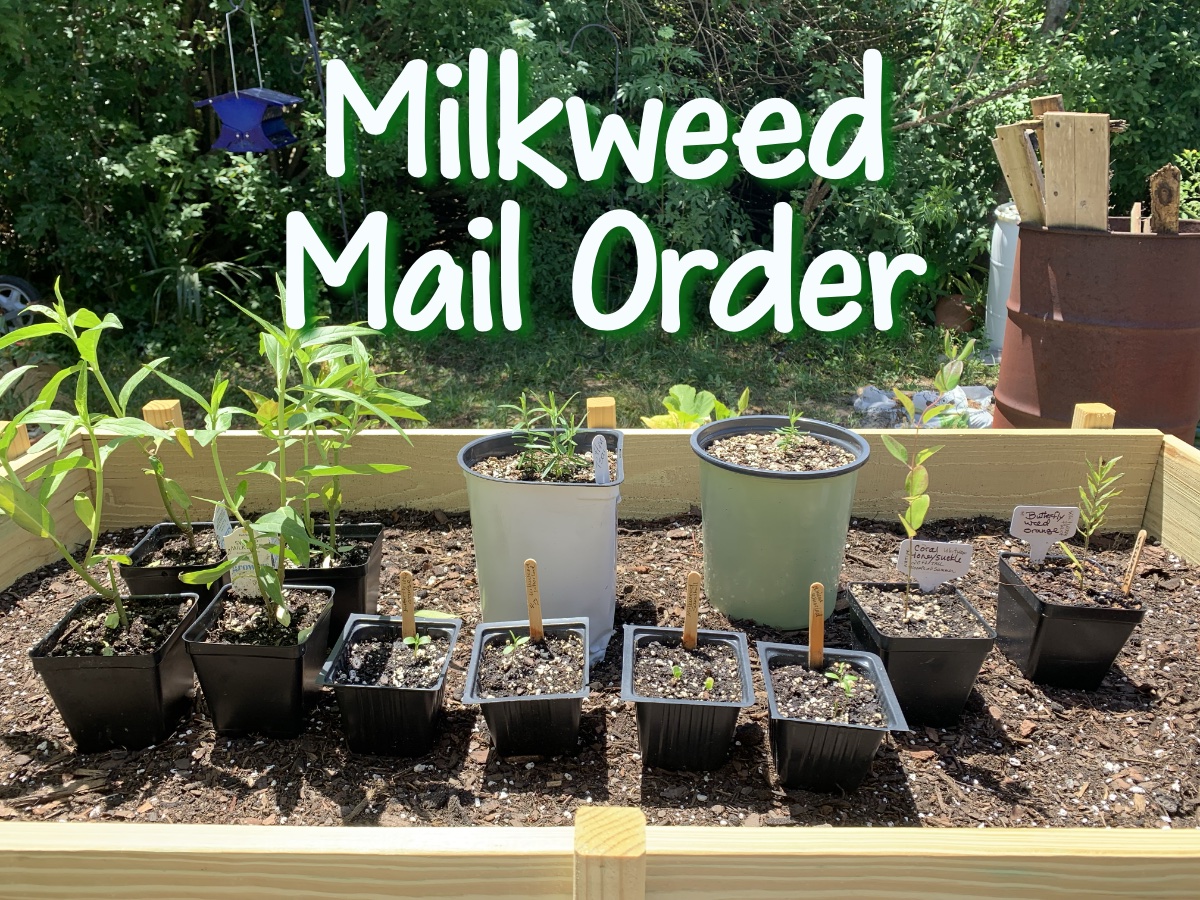
I ordered a few Swamp Milkweed seedlings online. Some of them look really nice, and two are already in the ground. Buying seedlings, or small plants online, can be expensive. There is no way to know what the plants condition will be when they arrive. Usually only a pot size is given, and not a plant size. Read about my experience with ordering live plants online here. I did find a place I would buy from again – The Grower’s Exchange. Look at the beautiful milkweed plants in the photos below that were mail order plants!
*UPdate, these four milkweed plants are now about 3 feet tall and doing very well.
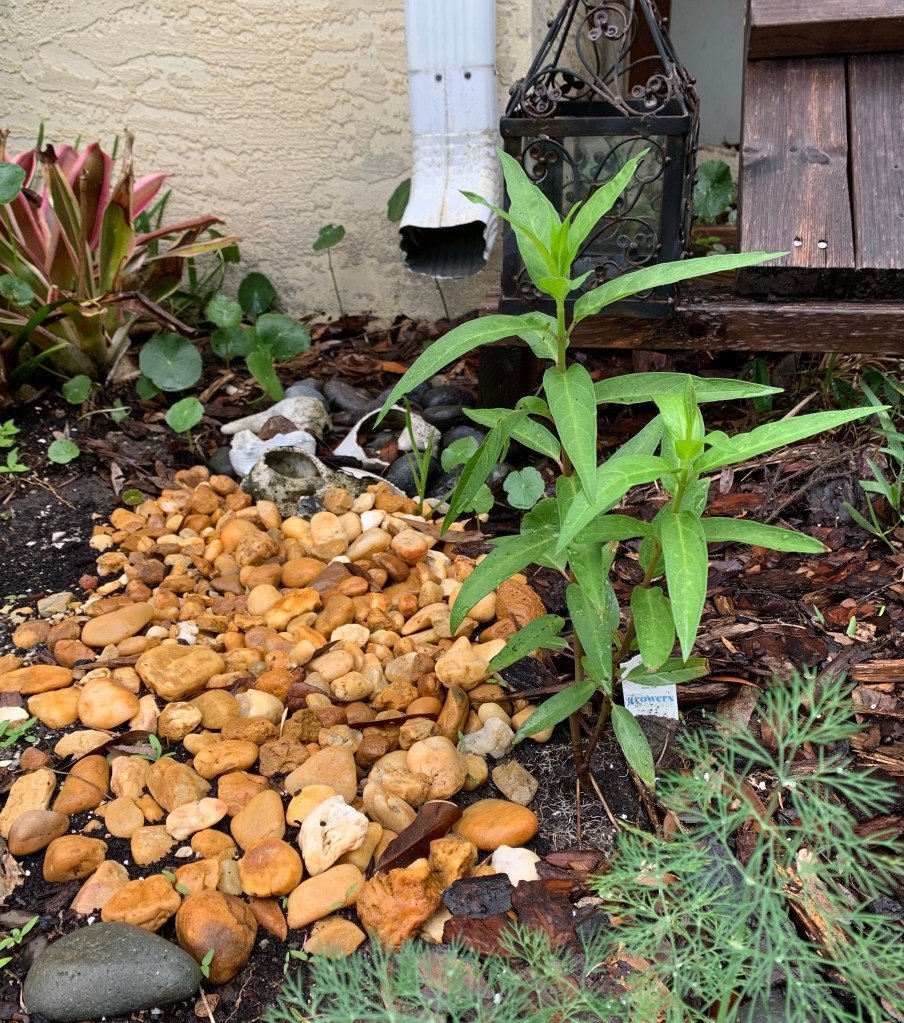
New mail order milkweed in black pots – transplanted from the small pots they arrived in.Swamp milkweed by downspoutLater – growing nicely!
Alternatively, see The Milkweed Man website for a list of Florida native plants, including milkweed. He does not ship, but if you live nearby (Spring Hill – directly west of Orlando near the coast), this looks like a great place to buy native plants.
How Milkweed Plants Grow
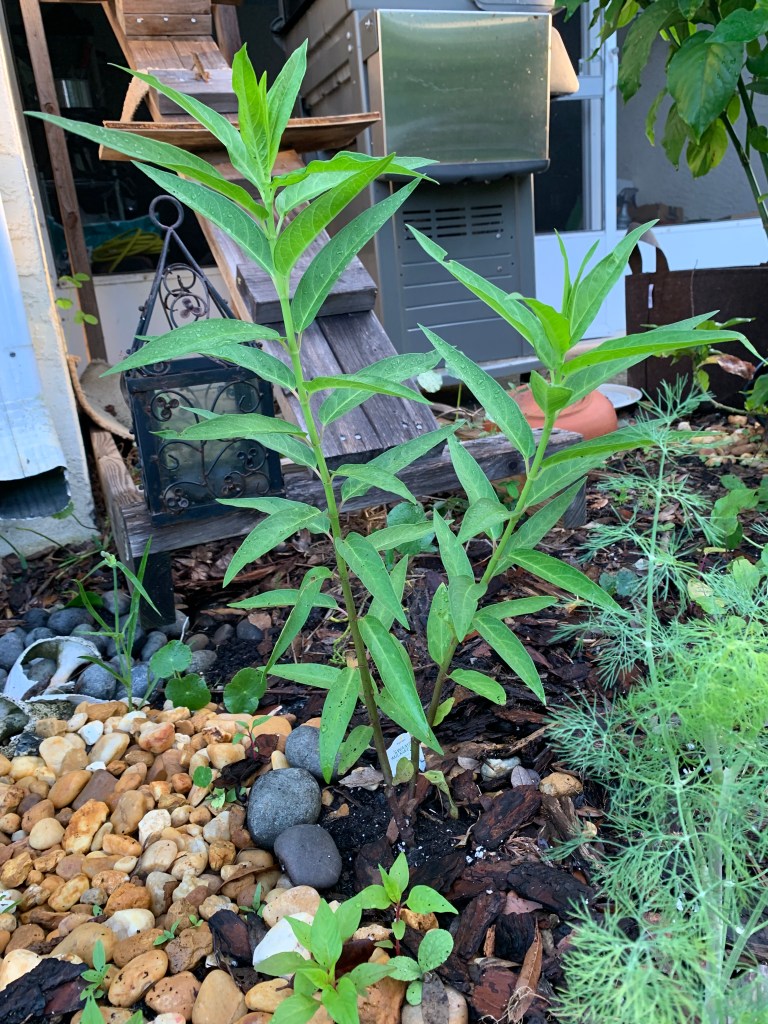
First of all, realize that native milkweed goes dormant in Fall / Winter, even in Florida. Tropical milkweed does not go dormant! Native varieties should be started from seed or purchased to plant, in spring and summer.
I learned this the hard way when I bought two plants late last year. They were basically sticks, covered in aphids. I thought they would be fine once planted, but they both seemed to die. They were actually going dormant for our Florida winter. Now, many months later, one of them is sprouting new growth! The other one didn’t make it. I should have waited and bought them in spring when they would be growing well.
So here’s a hint: Buy milkweed and get it planted early – like spring to early summer. Give it a chance to establish roots before the dormant time arrives.
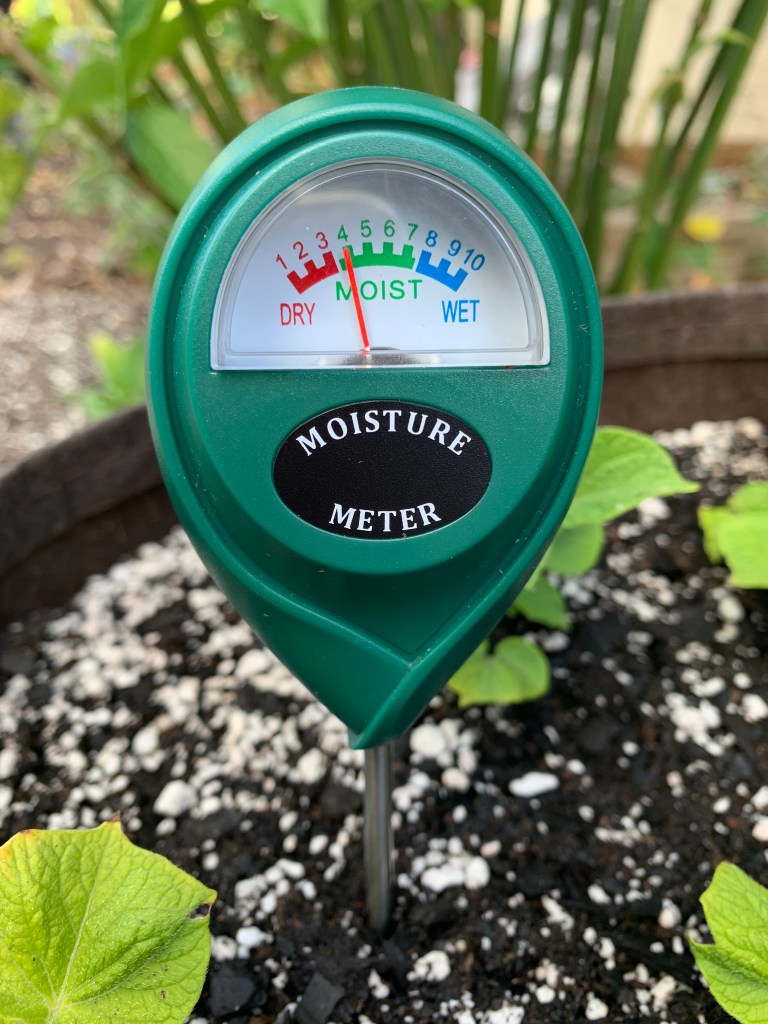
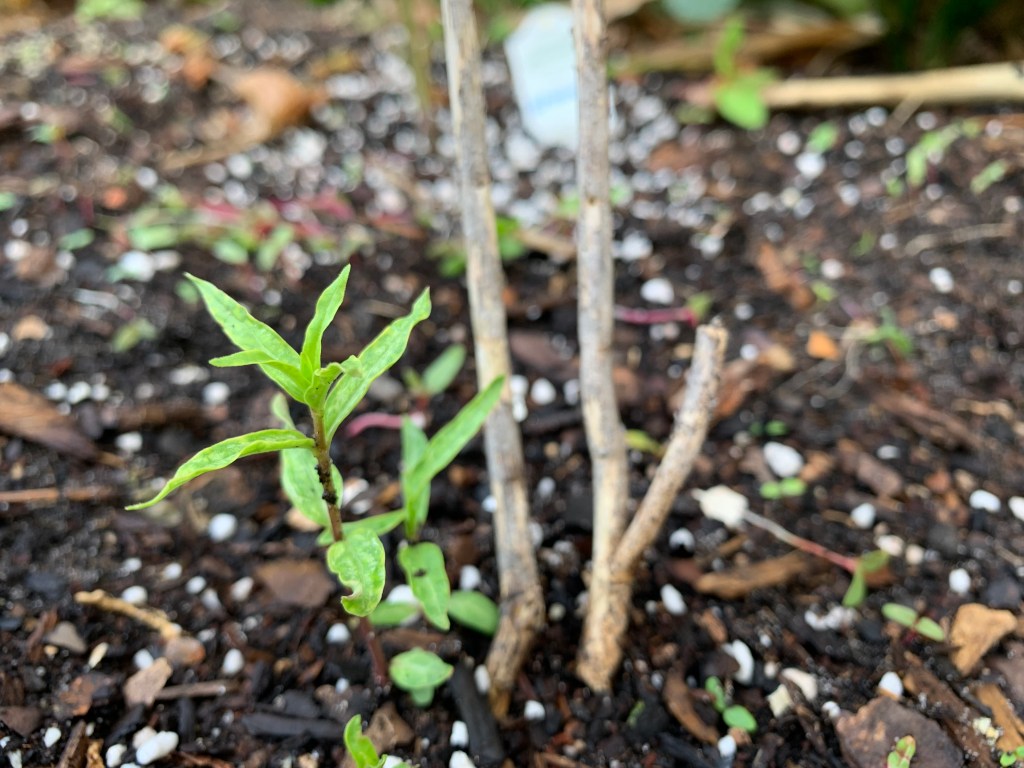
XLUX soil moisture meterSwamp milkweed coming up from overwintering dormant plant
Milkweeds need water when they are young. Seedlings and small plants need lots of water (exception may be the Sandhill variety). Get yourself a simple soil water meter (paid link – see my meter above) and make sure the soil stays moist. As the plant matures, it will grow a long taproot that will help keep it going in times of drought.
Pick up the pots and look for emerging roots at the bottom. If little white roots are coming out, it is time to plant into a bigger pot, or in the ground.
Be aware that milkweed spreads by underground rhizomes as well as by seeds that come out of the pods.
Feeding Hungry Caterpillars
The milkweed you are most likely to come across when shopping for plants is not a Florida native. Once thought to be not good for Monarchs, now “they” are not so sure. Is it better to have the wrong milkweed and grow caterpillars and butterflies? Or have nothing for the butterflies to use.
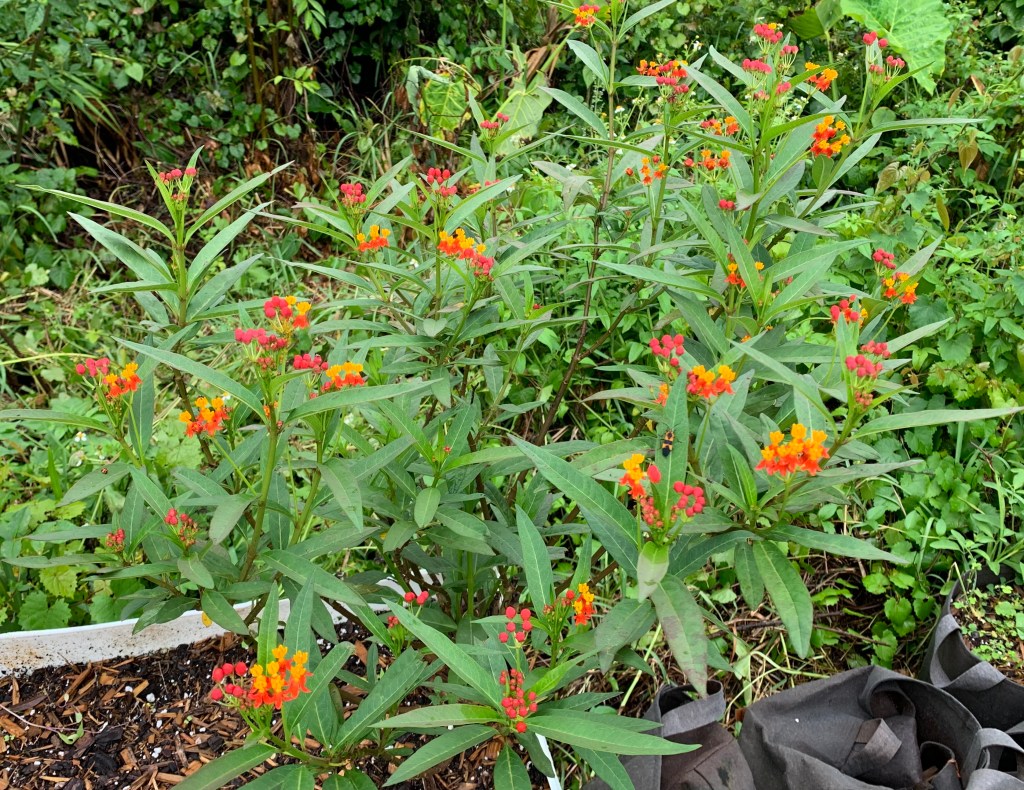
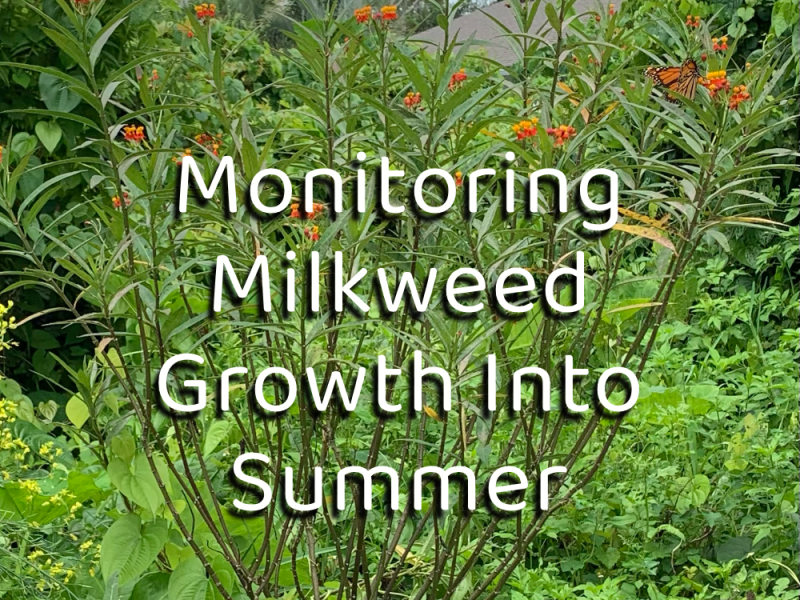
The tropical milkweed grows like mad. Consider growing one or two of this fast growing milkweed alongside the slower varieties. This is helpful when hungry Monarch caterpillars are munching away on the plant.
Let Tropical milkweed grow until winter – cut it back by December and always remove any seed pods before they blow away.
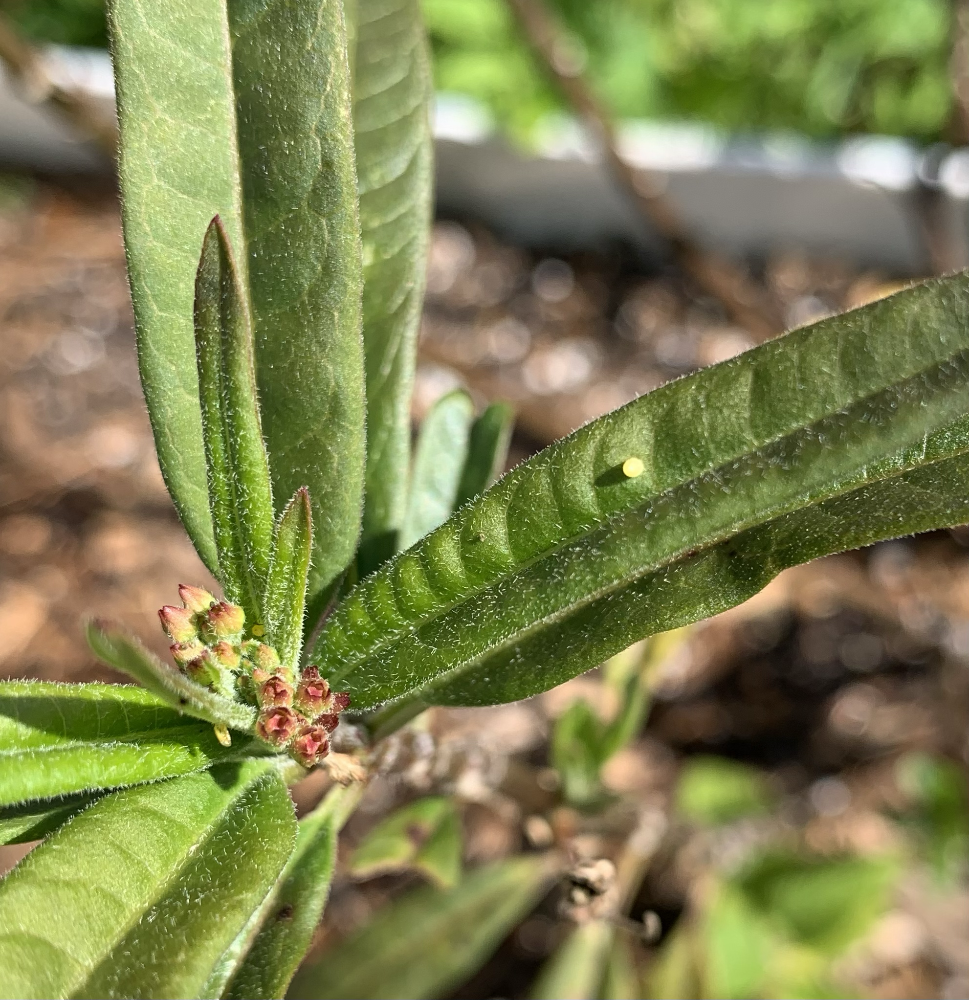
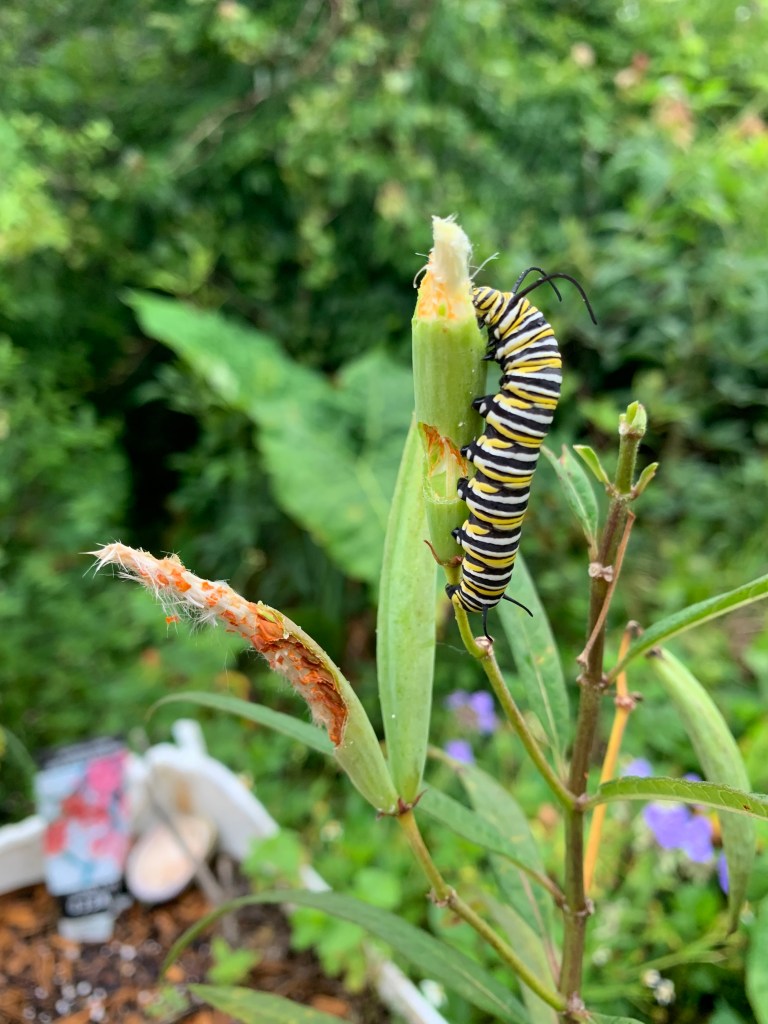
Monarch egg on milkweedCaterpillar eating seed pod
Monarchs and the Lizards – Just a Thought
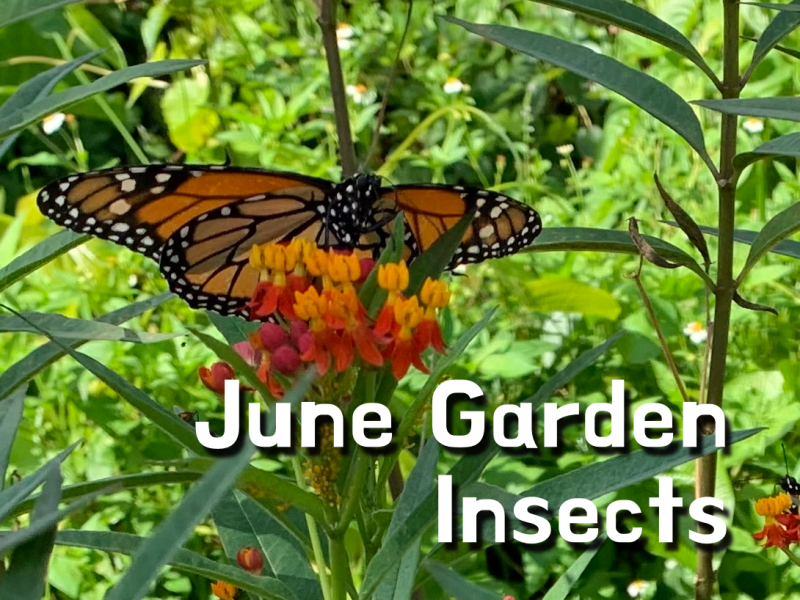
In March and April I had three Monarch butterflies appear in my yard. One I watched form a chrysalis, and saw him the day he hatched. Two more showed up in various locations, looking as if they were new to the world. Every day since then, I’ve had at least two Monarchs flying around every day. The highest number I saw all at once was four.
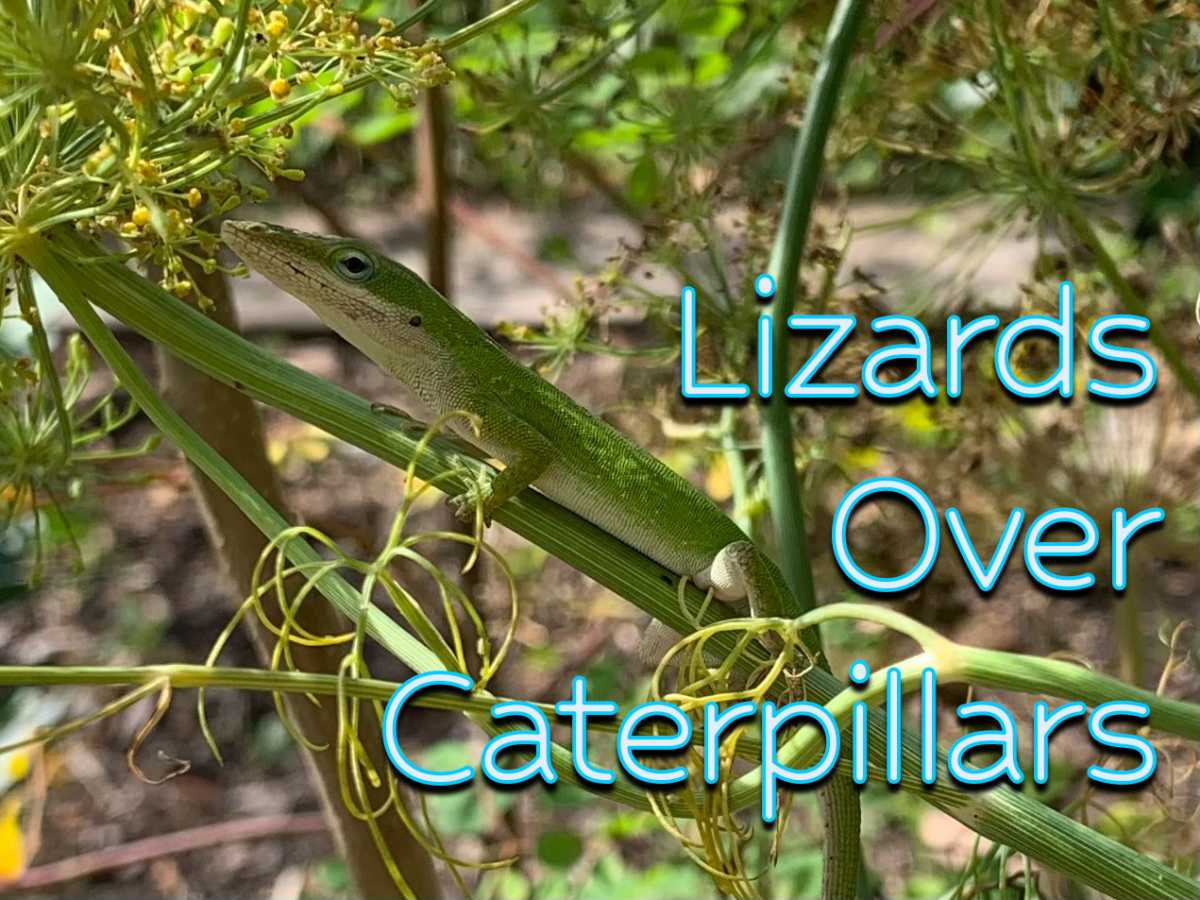
I’ve since had many more caterpillars, which suddenly disappear. Both native anoles and the invasive lizards will eat them! It could be that I saw the three Monarchs arrive only because there were fewer lizards to eat them in the colder months of March and April.
Milkweed is Meant to Grow Wild
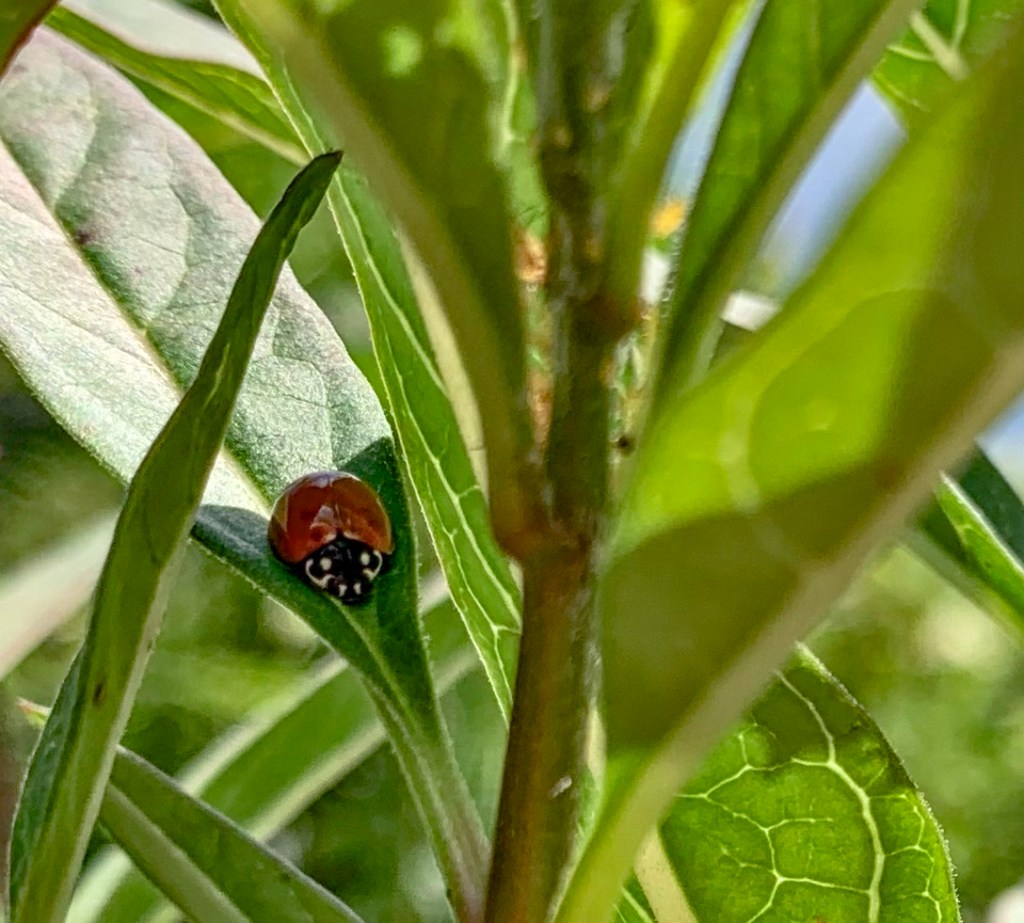
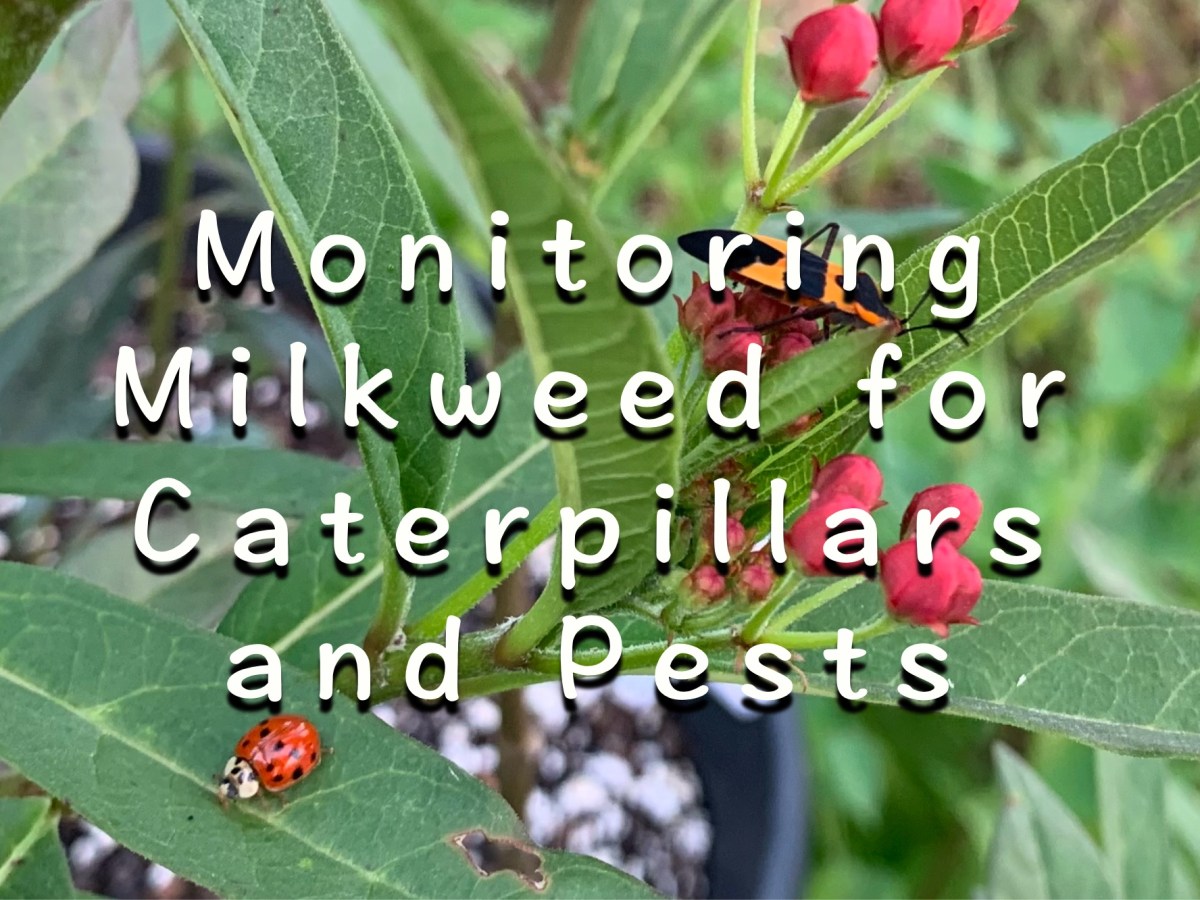
Milkweed attracts aphids, and ladybugs love to eat aphids. This works very well in the wild, I would imagine, where lawns are not sprayed and things work together as they should. Wild areas are disappearing. Now, we have to grow milkweed in our gardens, and that can bring ladybugs.
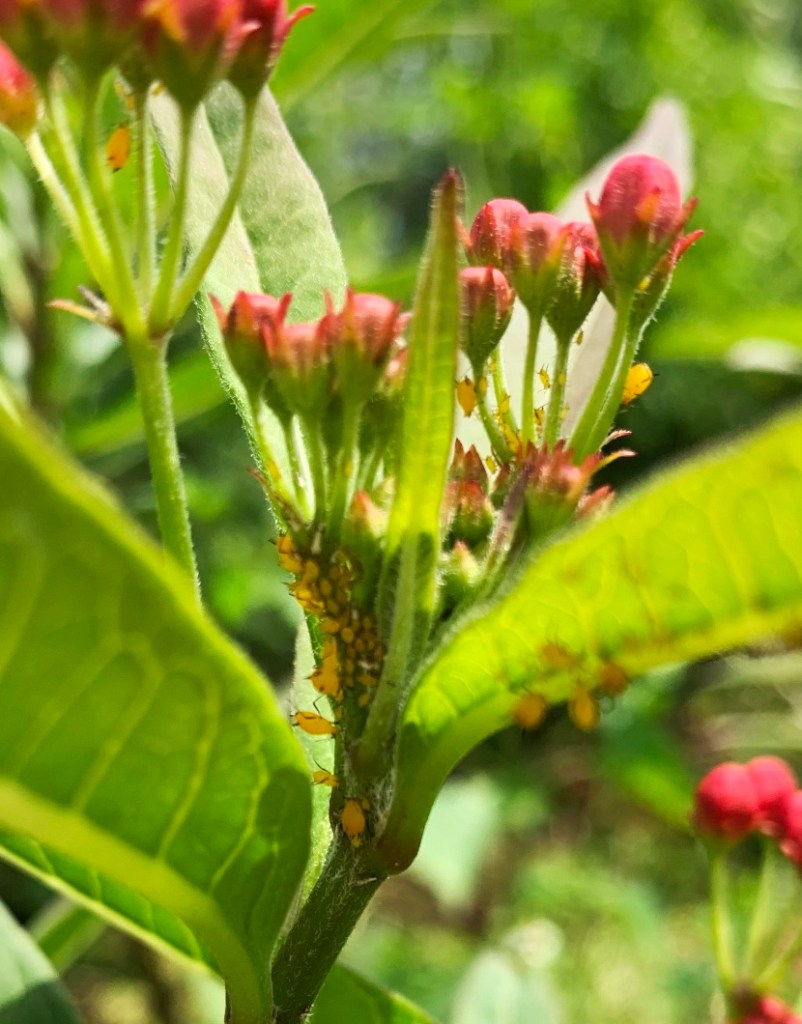
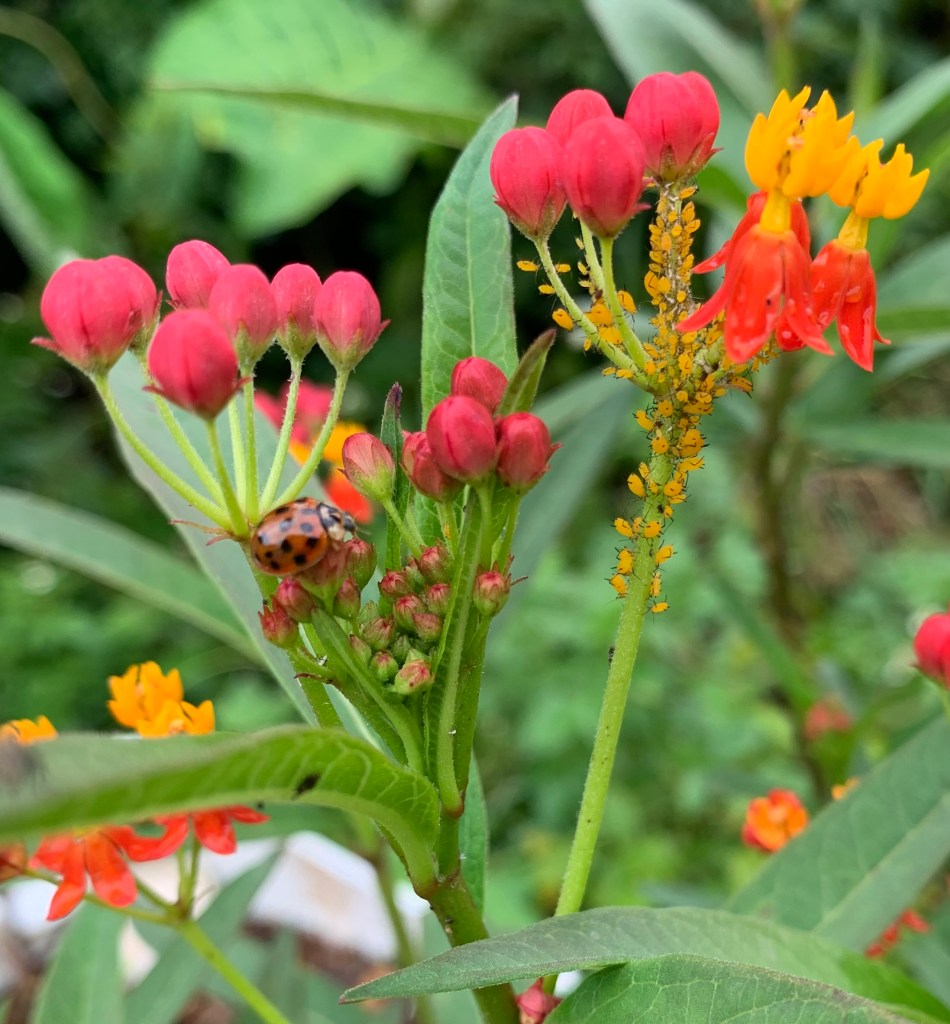
I’ve been checking all my milkweed plants, large and small, every day. Nearly all of them have aphids. Aphids can be removed by hand – run your fingers down the leaf. Or, use a spray bottle and spray them off. Leave them alone on larger plants and wait for ladybugs to arrive and eat them! I’ve chosen to wait and see what happens. Sure enough, the ladybugs have arrived.
Later in June, I noticed that all aphids were gone from this plant. So were the ladybugs. In my opinion, don’t worry about the aphids.
Yellow aphidsLadybug & aphidsAphids on white Swamp MilkweedTropical milkweed plant, has flowers of two colors
To get milkweed plants started, they might need a lot of attention. Even the types that prefer to grow in dryer locations will need water at first. Growing from seed can be tricky. I’ll let you know how mine do.
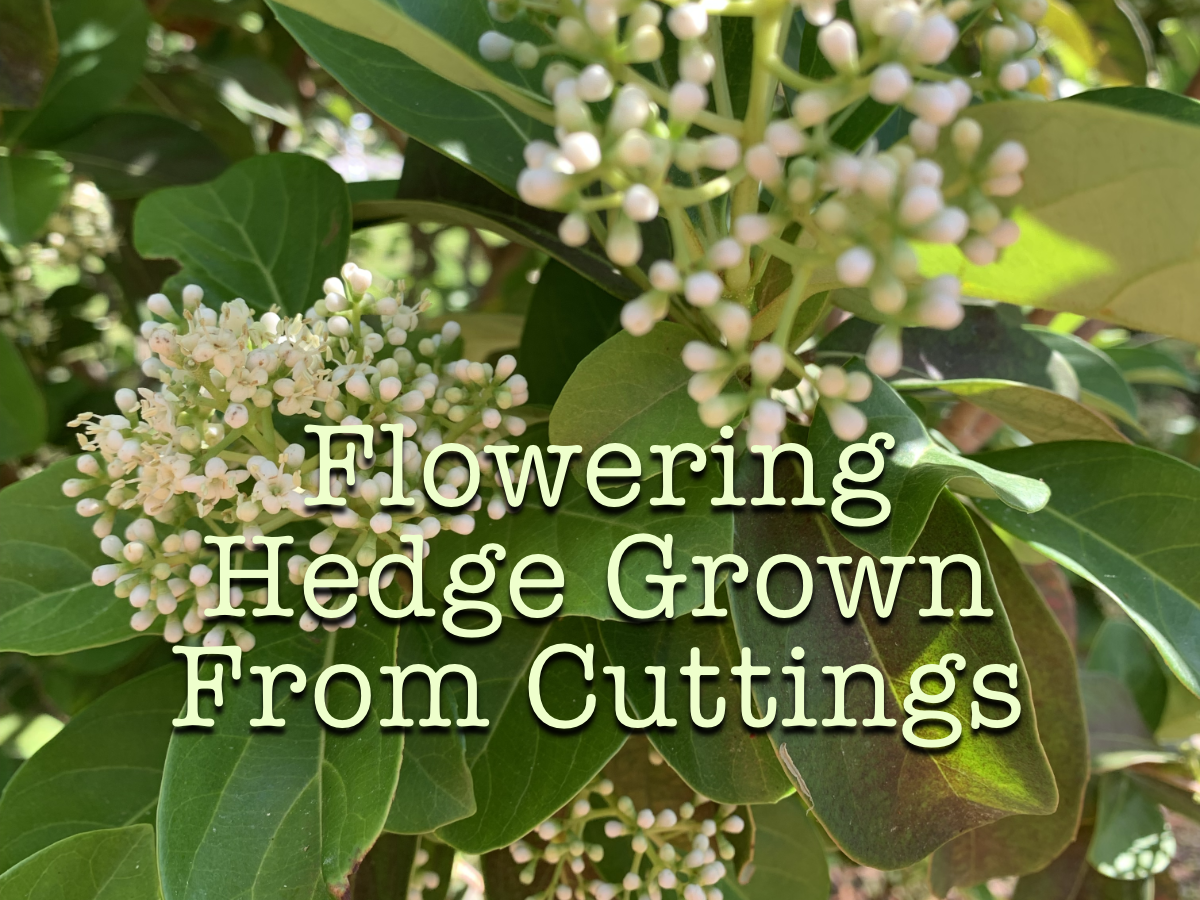
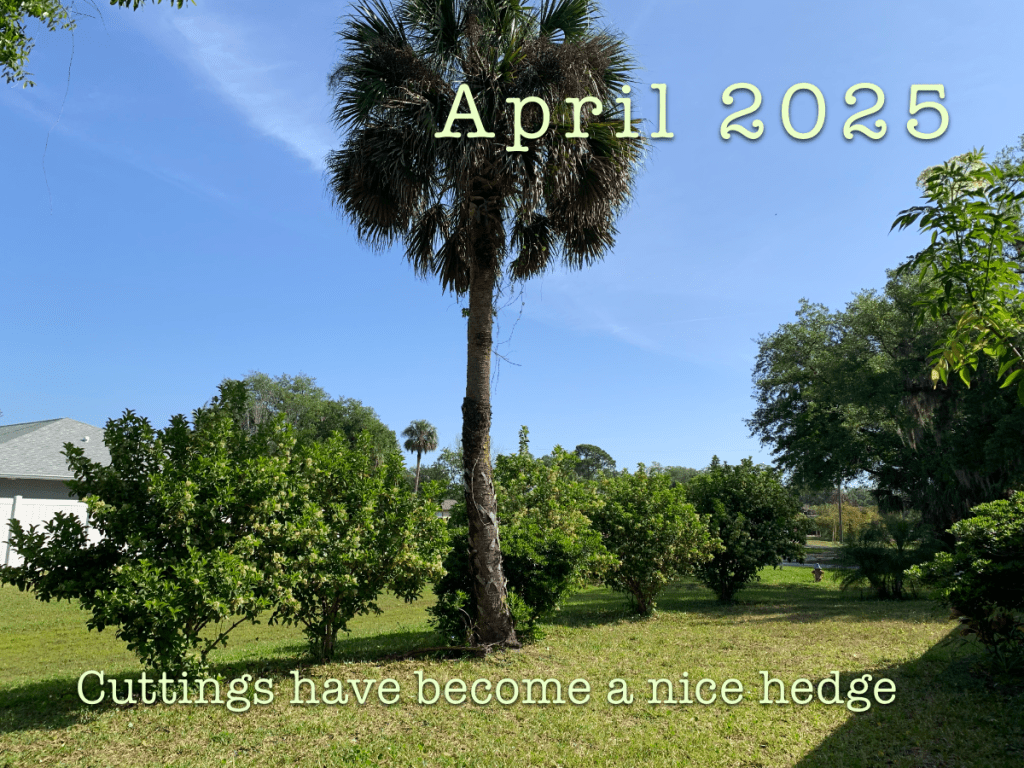
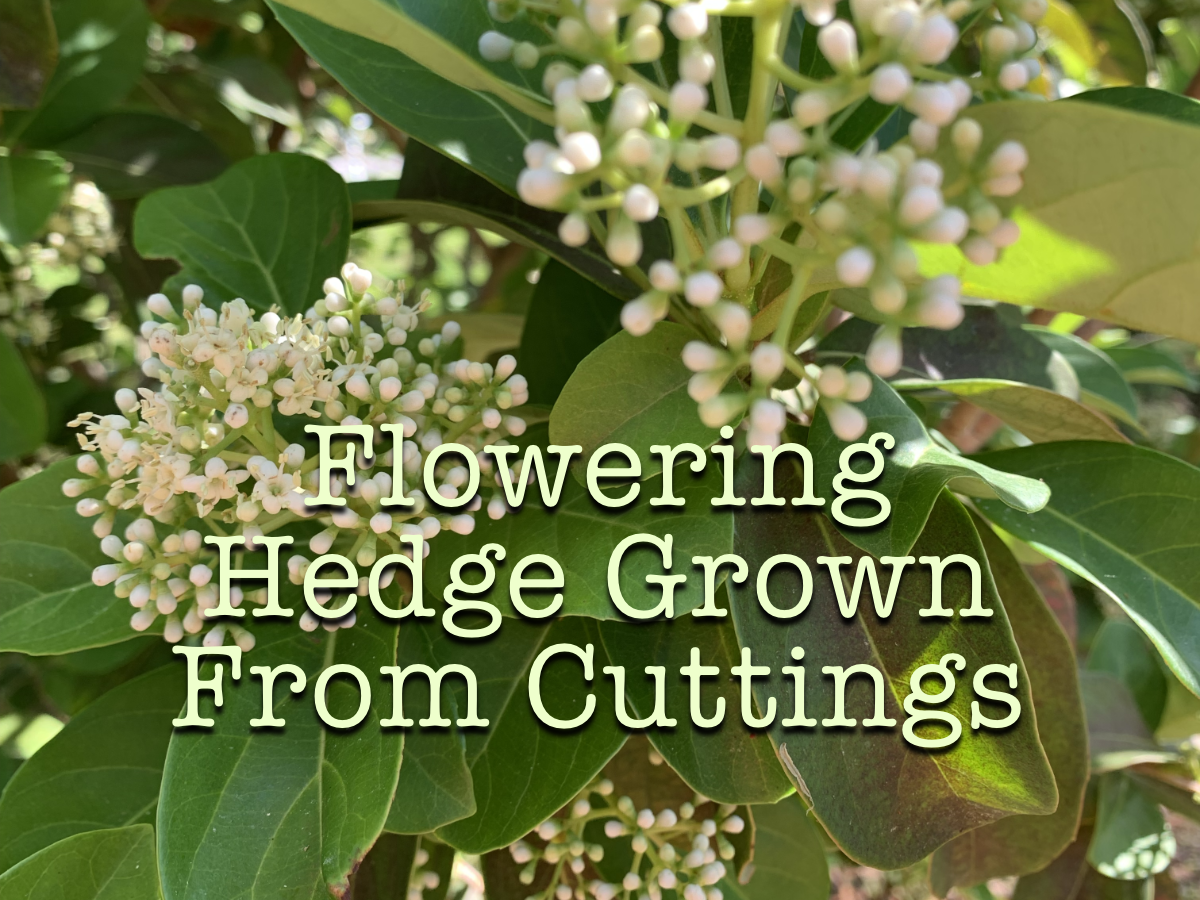
Propagated cuttings created this flowering hedge in my front yard.
Here is the simple way I grew a bushy hedge full of flowers. I did it in five years time.
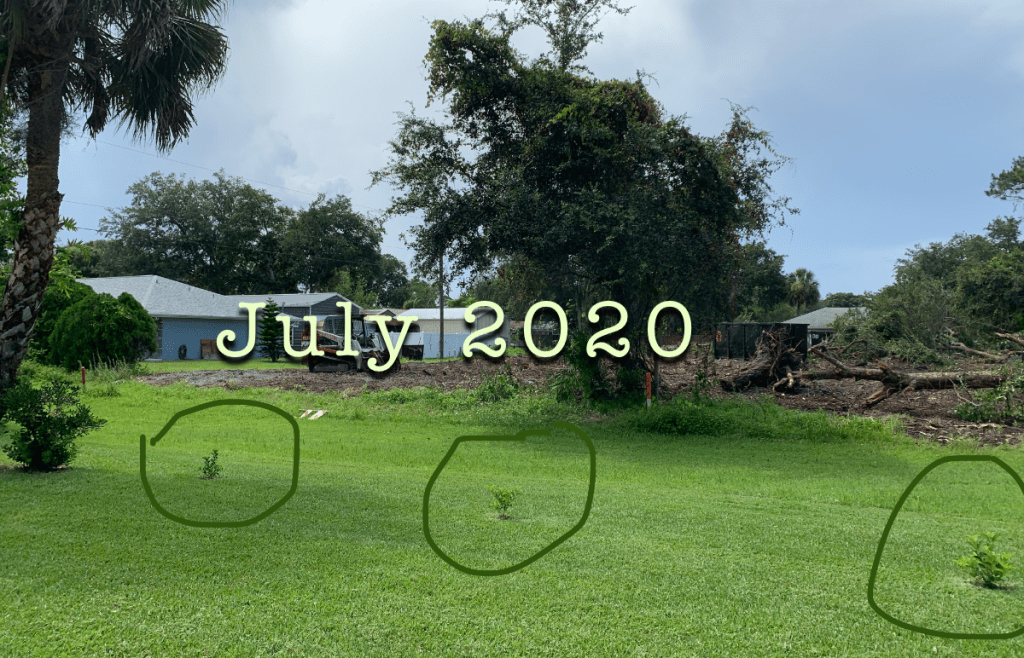
Actually, I did very little. I took cuttings from the tall shrubs in my backyard. When they rooted in water, I put them into pots. They kept growing. Once they were large enough, I planted them in the front lawn. I gave each shrub plenty of space.
I had considered putting a few bottlebrush trees between them, but it never happened.
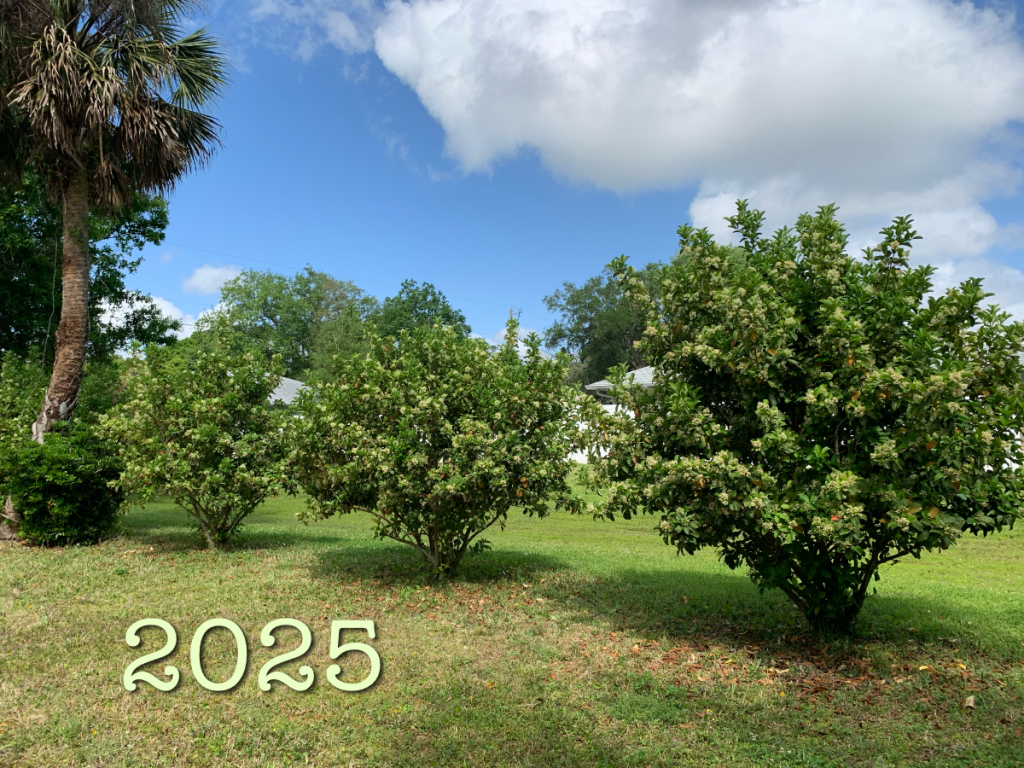
Seedlings plantedAfter five years
The Premna Serratifolia is Quite Awesome
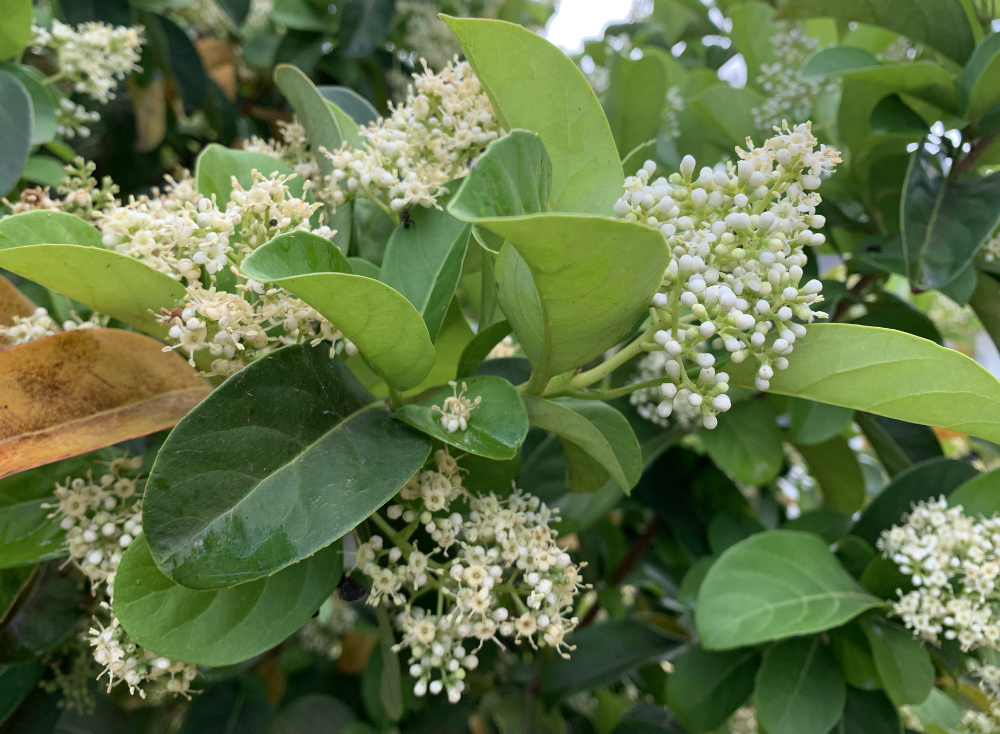
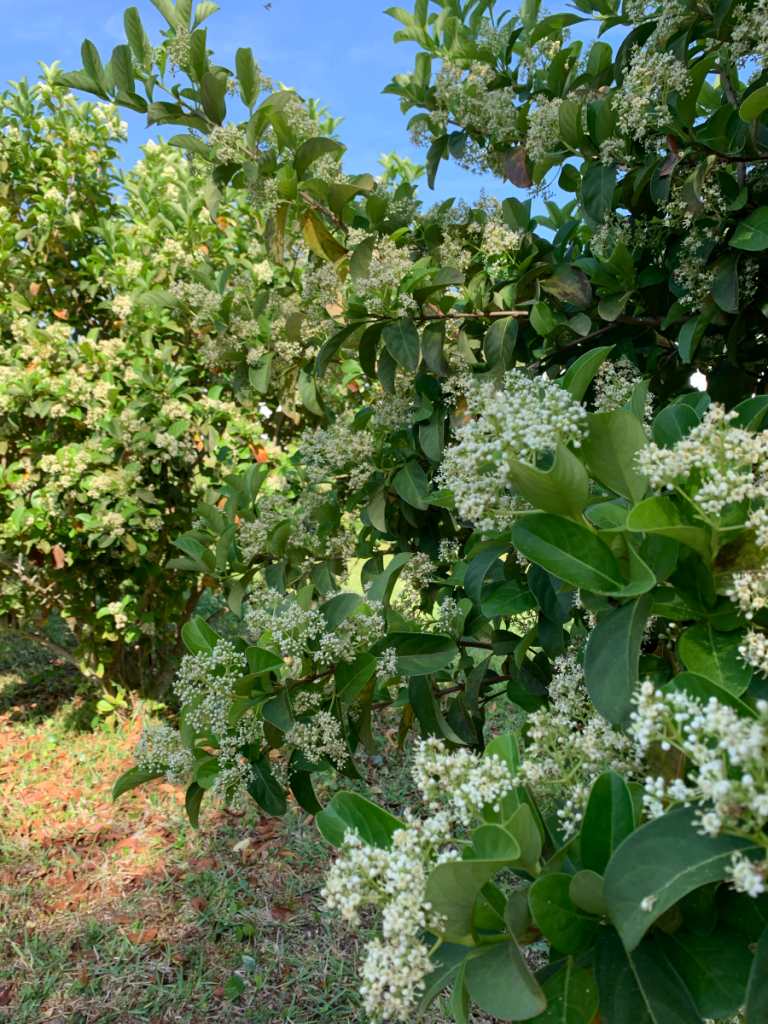
I had no idea what this shrub was until I researched it for this blog post. The Premna Serratifolia is fast growing and blooms profusely in March and April where I live, but only for a short time. The leaves supposedly have health benefits and are edible.
At the time I am writing this page (April 2), The blooms are already going by. The clusters of tiny white flowers smell wonderful, and attract all kinds of beneficials.
Flowers appear end of March
If I were a better photographer, I could show you the bee variety and even a few Monarch butterflies that were all around those flowers. This shrub is loved by the pollinators.
When we bought our house in 2016, the land across from us was wild. Once it went up for sale, I realized that we could have neighbors soon. That’s when I took cuttings from the shrubs in the back. I had no idea if I could root them.
It turned out that this plant is very easy to propagate. Every cutting grew roots in water and then grew nicely in a pot. After a few weeks I ended up with five new plants.
The big mistake many people make when planting crops and new trees and shrubs is that they put them too close together. I gave these little cuttings a lot of room. The roots would not have to compete for water and nutrients.
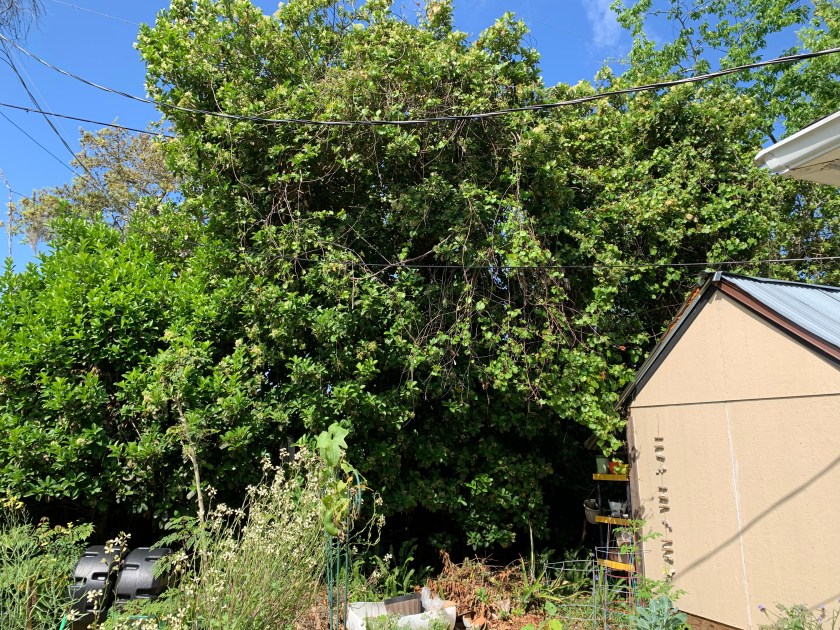
Below is a photo of the old plants behind our house. As you can see they are very tall. A lot of vines have taken over too. Typical of Florida.
The flowers are now falling like snow from the tall shrubs.
The “baby plants” are now taller than I am. I’m guessing they have reached 8-10 feet – in five years time. I think that is pretty fast growth.
The plants outback were probably planted when the house was built.
Growth in 5 years.
So now we have new neighbors where a Florida forest used to be. Three new houses went up, and every bit of vegetation was removed. Perfectly beautiful oak trees, pines and other things were torn up and removed. This is just one reason I dislike living here. Why not leave the trees that are not in the way of where the new house will go? Builders don’t care – just make it easy and remove everything.
My new, and free, hedgerow is growing up nicely and blocking the view. I also love that I’ve provided food and nectar for the insects. A living border also provides places for birds and other wildlife to hide.
I’m not sure if this shrub is available in local nurseries, but I think it makes a very nice addition to the yard. The Premna serratifolia is not a Florida native.
Be careful when buying sunshine mimosa as a ground cover. I made the mistake of growing the type that has thorns on the stems!
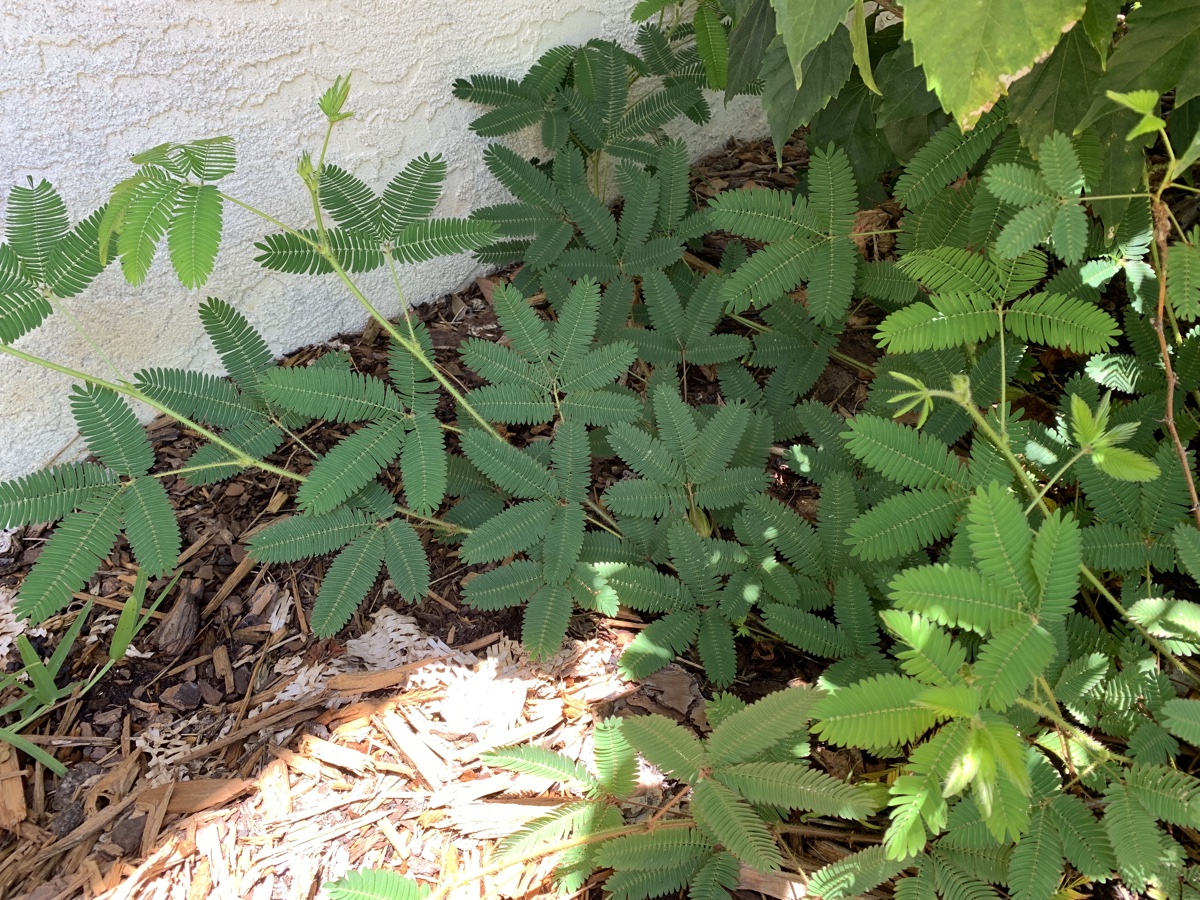
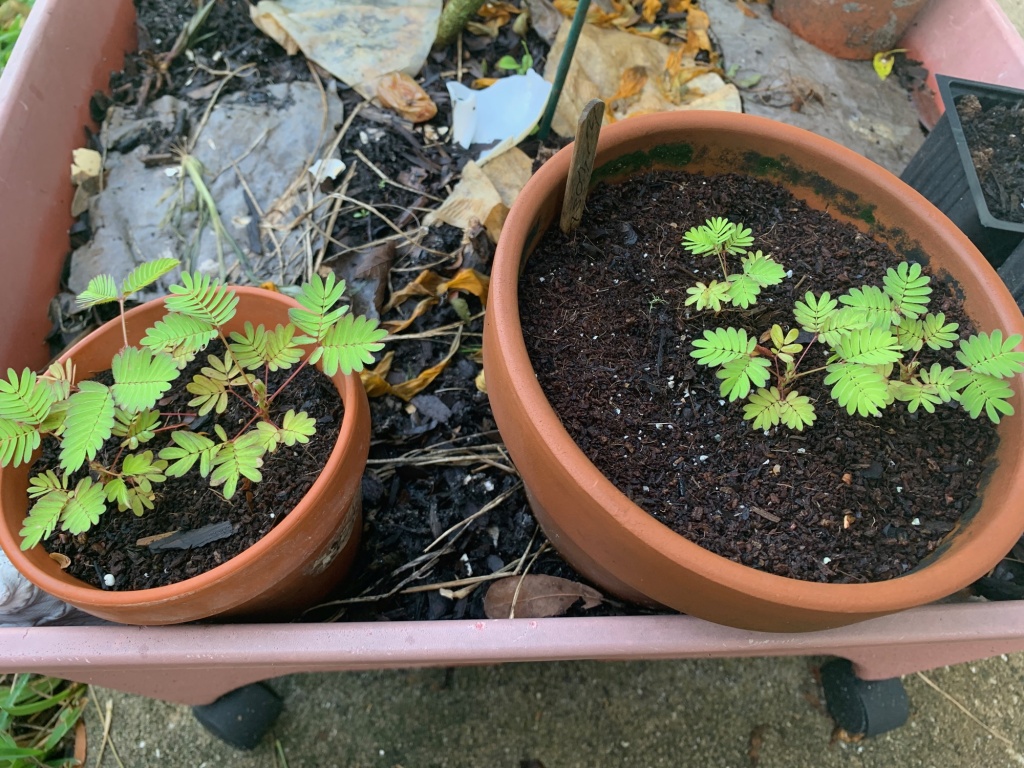
About a year ago I ordered Mimosa seeds. I did not realize there are different varieties of Mimosa and I got the “Sensitive Plant” or “Shameplant”. It is called Mimosa pudica.
What I wanted was the Sunshine Mimosa I had heard so much about. Plant it in the yard to replace grass and feed the insects. Brighten the landscape with pretty pink, puffy flowers. It does not have thorns.
I made a big mistake when I ordered the wrong seeds. The seeds I grew became plants with thorns on the stems.
Sunshine mimosa plantNot all mimosas are alike!
The One With Thorns
Once my mimosa seeds began to grow, I was so happy. Then, I noticed thorns on the stems. Because the Sunshine Mimosa is known as an excellent ground cover, I was baffled. No one would walk barefoot on this! Animals would hurt their feet as well. I thought I had been steered wrong.
I gave up on Mimosa.
Recently, I saw a post on Instagram by The Urban Harvest. The post was about alternative ground covers, including Sunshine Mimosa. I left a comment that it has thorns, and was quickly corrected. “Sunshine Mimosa does NOT have thorns”. Any they are correct!
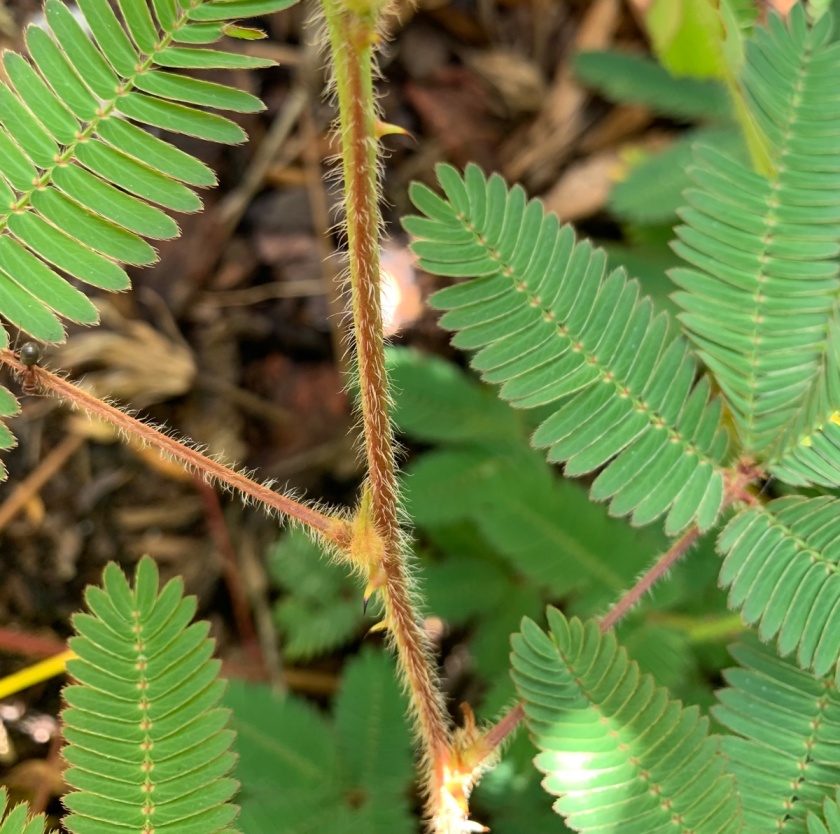
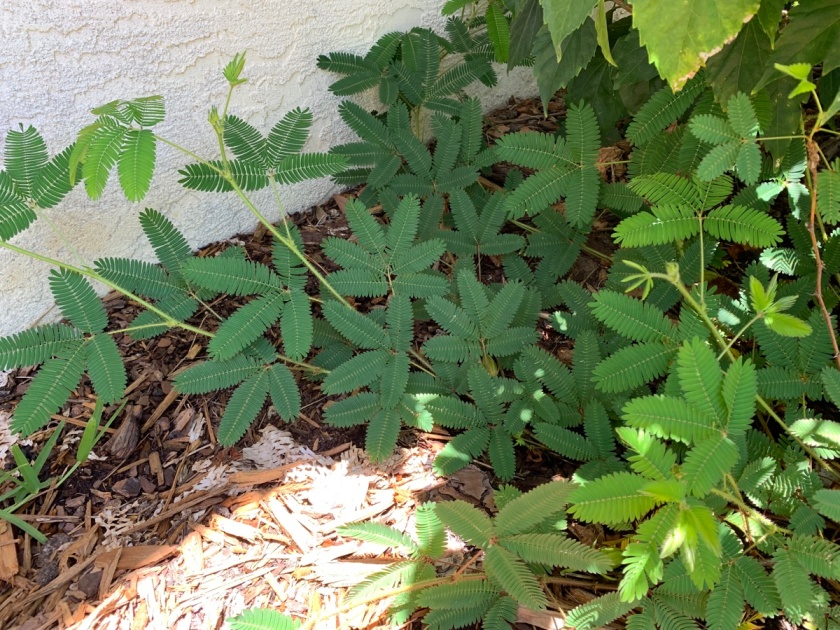
So what the heck did I have? I took this photo of the plant in my yard and discovered that it is a mimosa, but the wrong kind. See those thorns? I will probably rip this one out.
the Wrong Mimosa
The Sunshine Mimosa is Mimosa strigillosa, or “Powderpuff” and is thornless – and N O T Mimosa quadrivalvis, or pudica. Be sure to know which type you are getting.
Be careful, because the different varieties look very much alike. They both get pink, puffy flowers and have leaves that close up when touched. Both types sprawl, but the thorny one grows taller.
The huge difference is that one has thorns, and the other can be used to replace your grassy yard with a blooming, soft, ground cover.
Where Can I Get a Sunshine Mimosa?
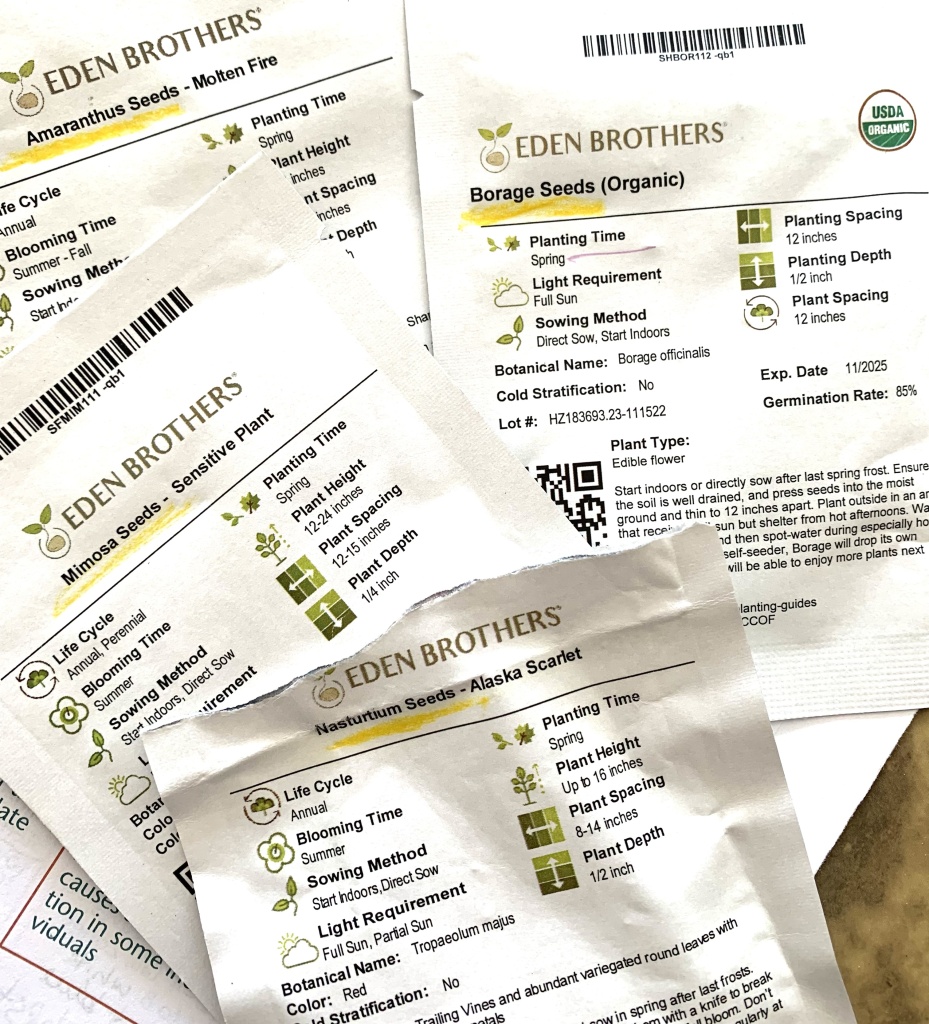
The trouble I had a year ago was that I wanted this ground cover for my yard. I looked for plants and seeds and found NONE. All I found was mimosa seeds from Eden Brothers and so I bought them, not realizing I’d ordered the incorrect type.
The info in the pink box comes from the Florida Wildflower Foundation website. And, YAY they have a link to a place to buy seeds…. but, guess what? No results.
All my favorite online places don’t have seeds. I get very frustrated when I live in Florida and yet have such trouble buying native plants.
I still can’t find Sunshine Mimosa seeds to buy.
I’ll be ripping up the one that has thorns. I don’t want my cats hurting their feet.
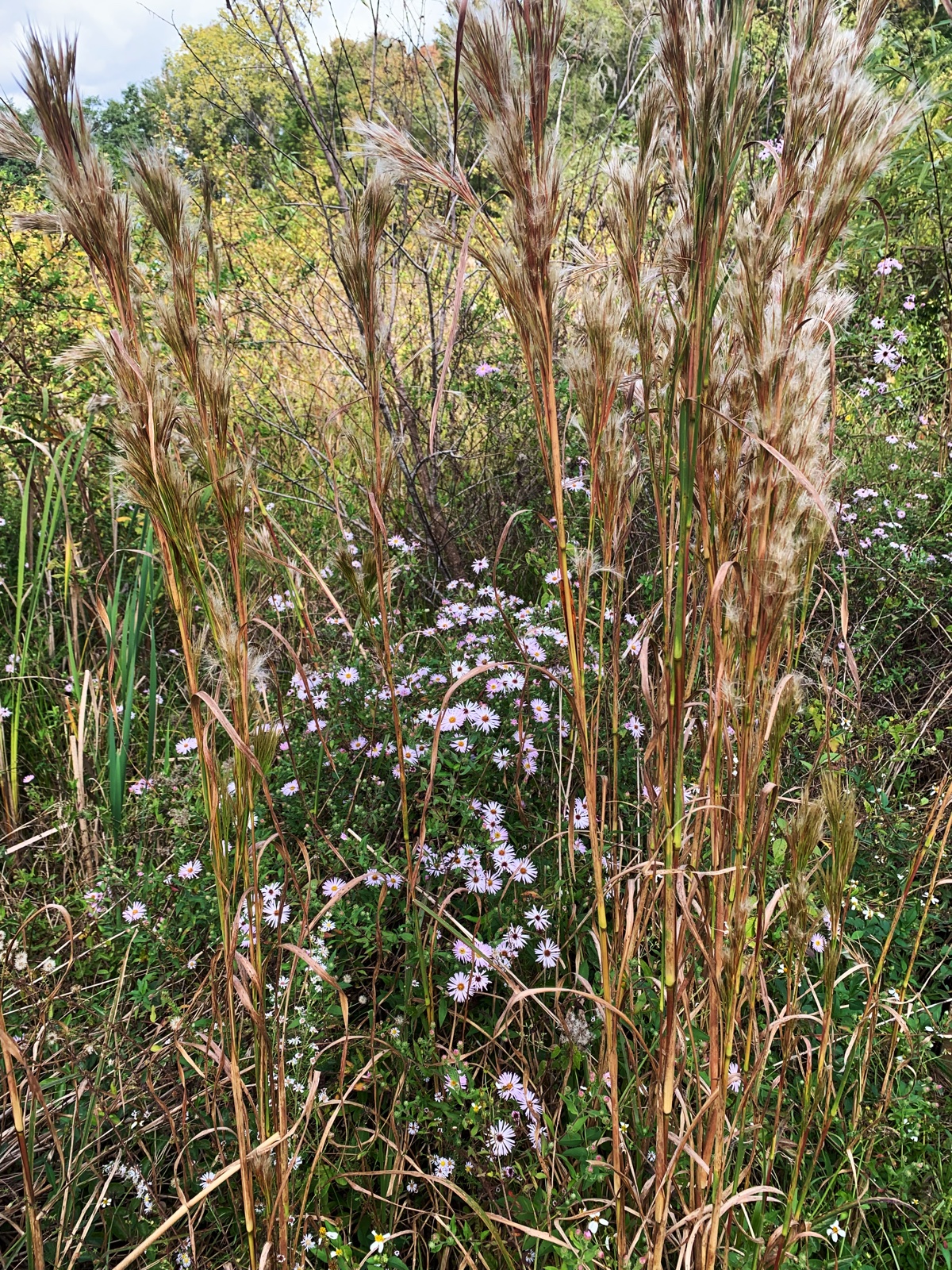
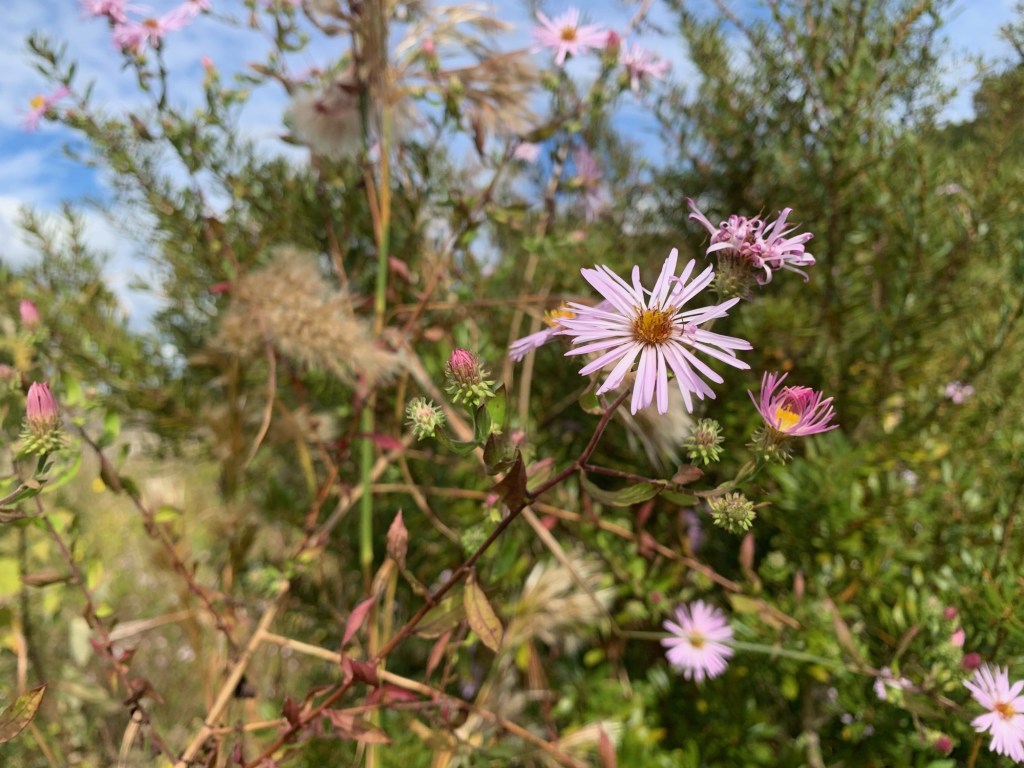
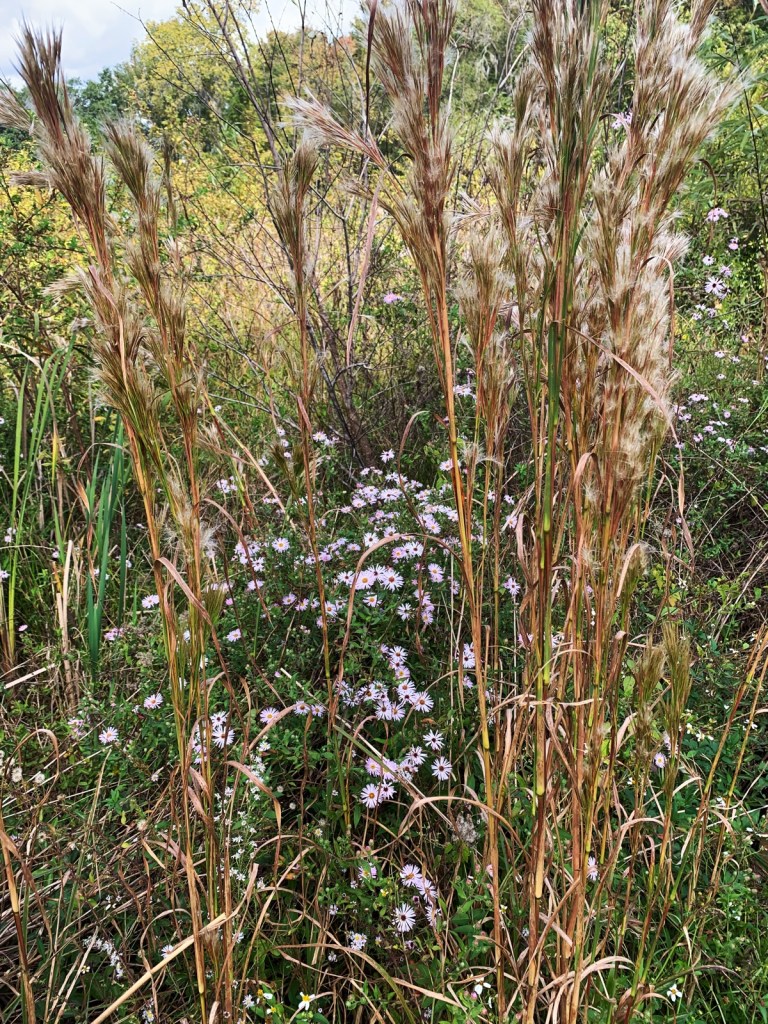
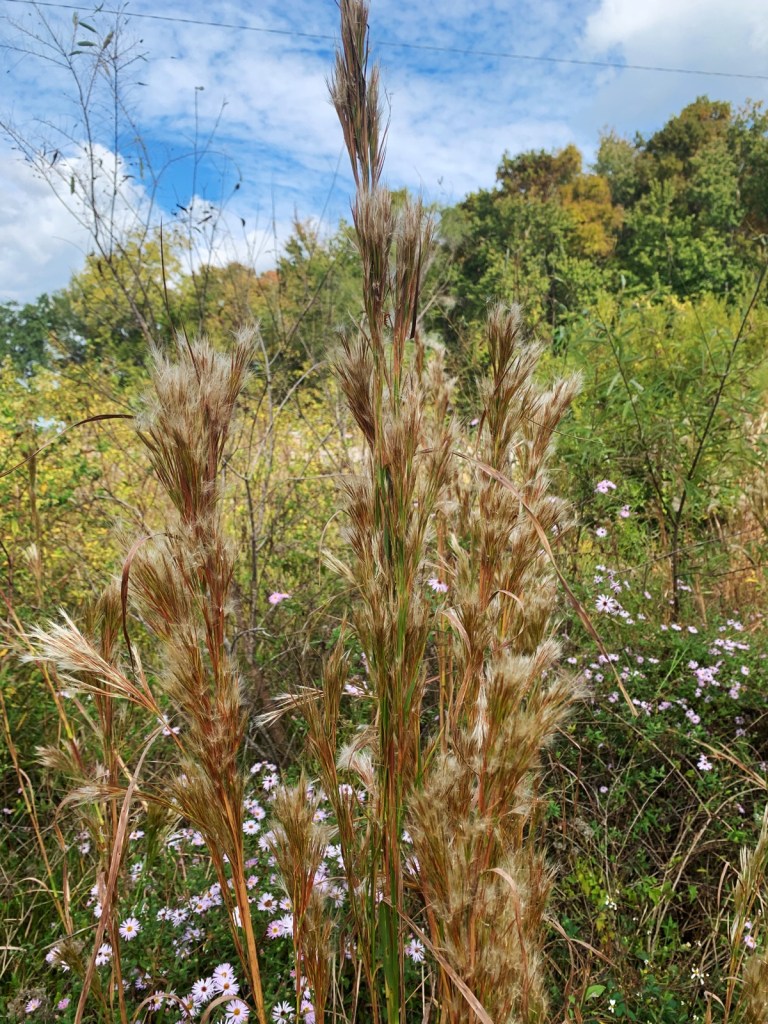
Pictures of native Florida tall grass and flowers.
While camping at Rodman Campground in Palatka, Florida, we drove to the local dam. A central garden, or natural area, by the boat ramp, contained some beautiful native flowers and tall grass.
Loads of bees were all over the flowers. Not sure exactly what the grass is, or an exact name for the flowers, but the area was beautiful.
Gathering some information about using the Moringa tree for tea and food.
The day I began this blog post I was sick. Probably that new strain of Covid got me, but here’s what I did. By the afternoon I felt well enough to pick some Moringa leaves and make tea.
When Googling “make tea from fresh Moringa leaves” everyone wants to tell you to dry the leaves and make powder. I picked some leaves, boiled water and let the leaves brew in my little teapot for ten minutes. It made a nice tasting (like boiled grass) hot drink. I hope that the goodness leached out into the water and went into my body!
So what else can I do with this tree?
The Moringa is growing well
Using the Moringa Beans, or Drumsticks
My trees are still quite small, but growing fast. One day they will produce long, hanging beans. This video shows how this family picks and processes the beans. I’m not sure that I will ever do this, but it’s nice to know about.
Seedlings and Flowers
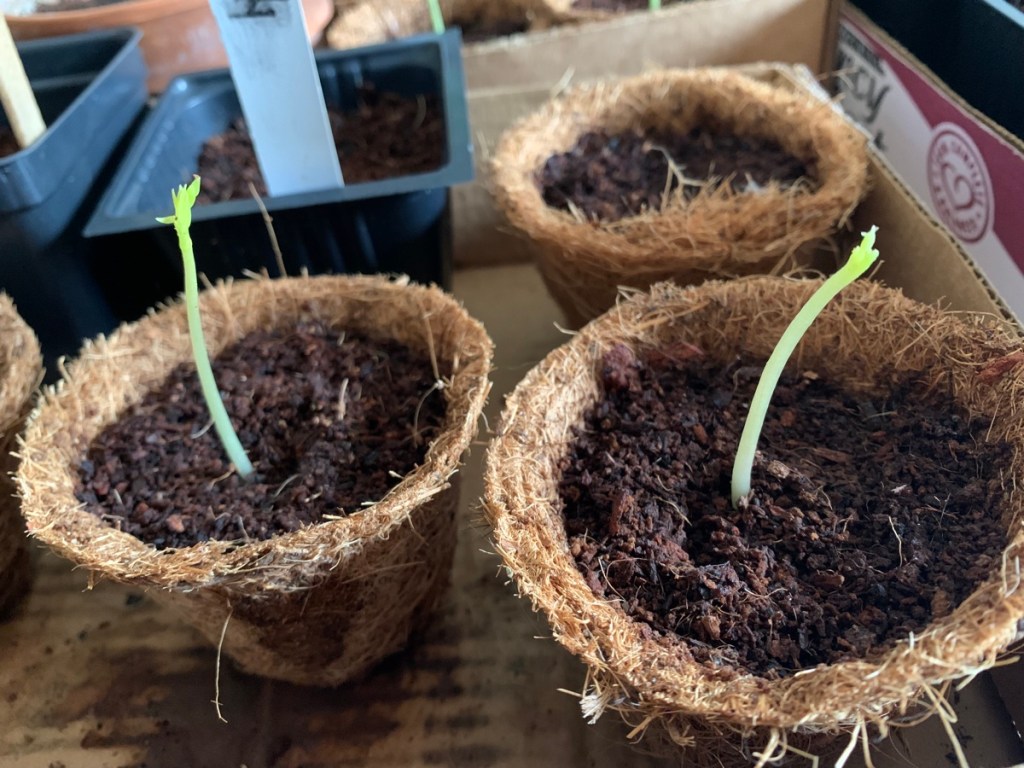
A note about the seedlings: They may look eaten but that is how the plant begins to grow. As this naked stem popped up from the dirt, I thought maybe the leaves had been eaten off, but they actually had not begun to grow.
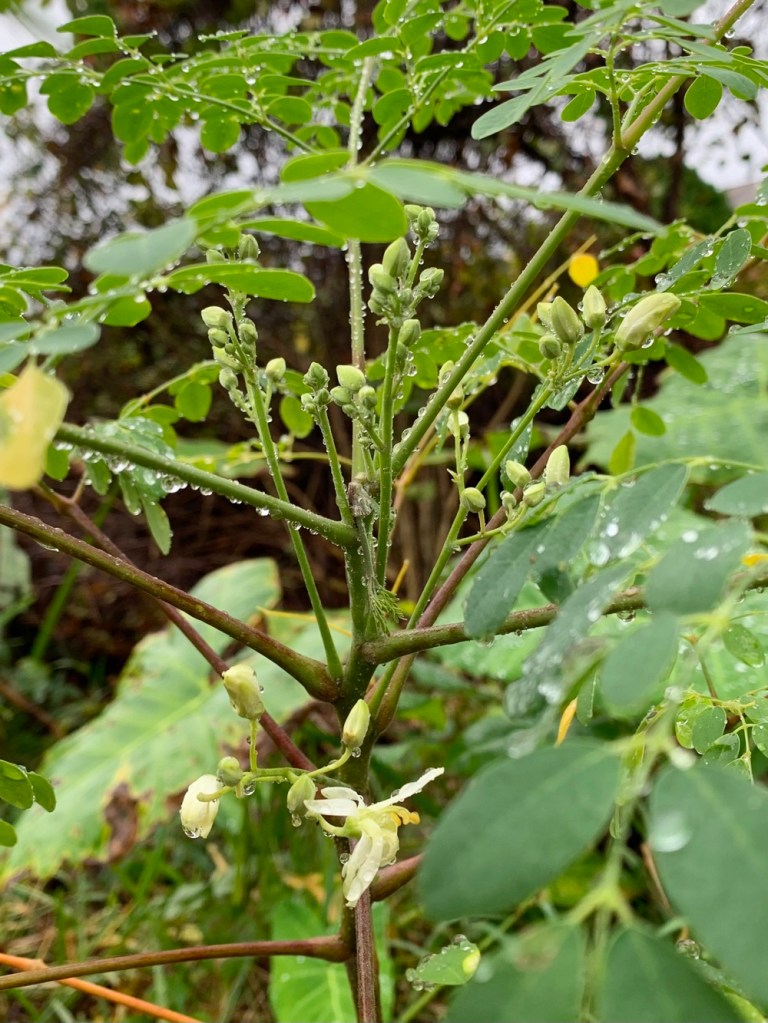
My smallest Moringa tree, which is only about 4 feet tall, has white buds and flowers. The bigger trees have never had flowers.
Moringa seedlingsFlowers and buds on small Moringa tree
Moringa Care
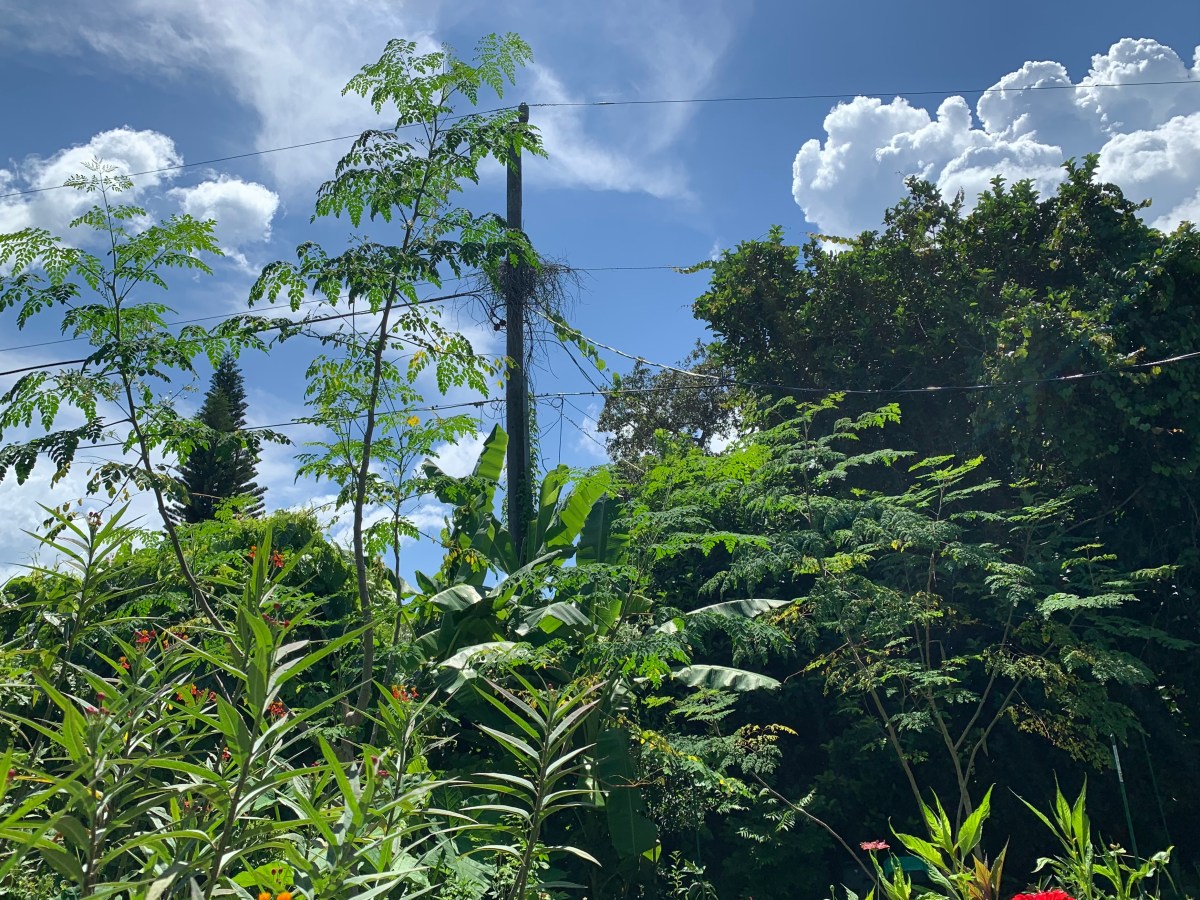
I really know nothing about the Moringa tree except what I’ve learned from watching a few videos. I’m not sure how to grow it. I planted two trees side by side in the back garden corner and completely forgot about the power lines going to my house. The tree, if not trimmed, will eventually hit the lines. So now I am trimming the trees from the top to help them bush out and not get tall. Also, in winter I noticed scratch marks and broken limbs where the raccoons have tried to climb this tree!
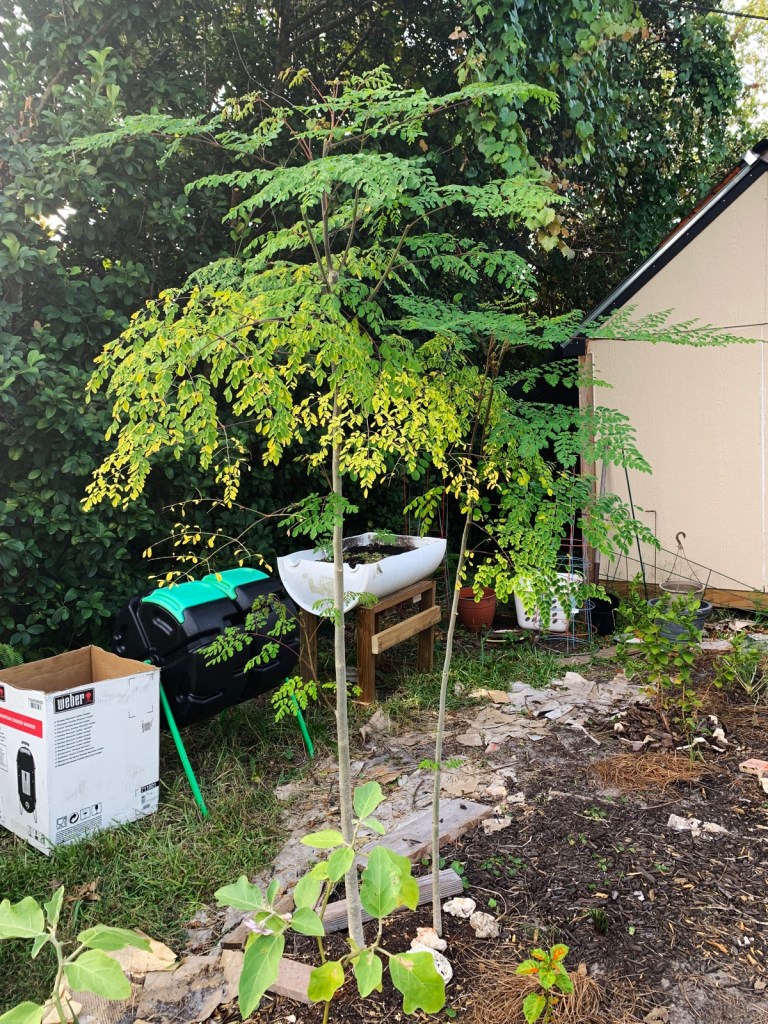
The bottom stems are turning yellow which many people mention. It seems to be a normal part of this tree’s growth pattern. Maybe to shed old leaves and make way for new.
Trimming
The new growth at the top is very easy to trim up. I either use the leaves for making tea, or put them into the compost areas.
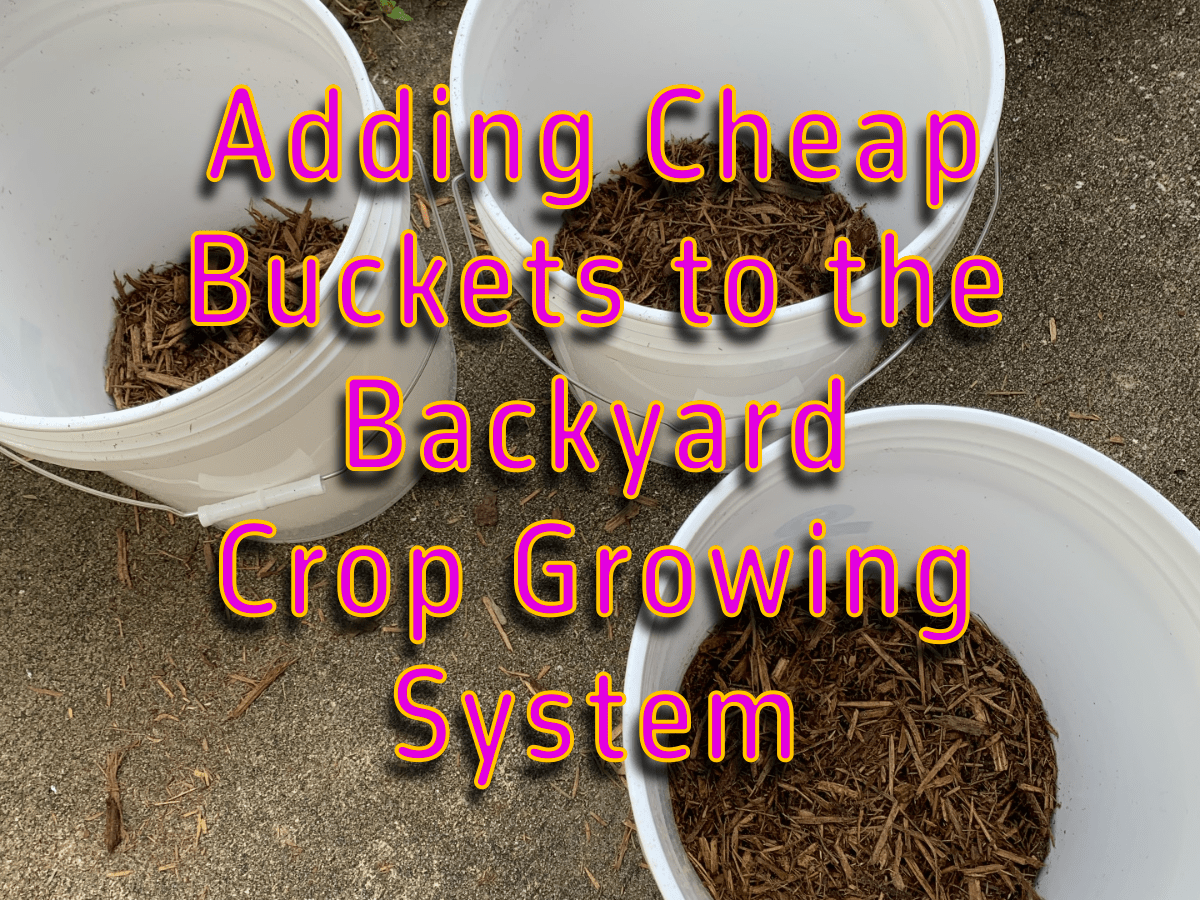
That Weber box is my newest compost bin. It’s a long story but basically every time I transplant something into the ground it gets dug up by raccoons and armadillos. So I had to use my white compost barrel to hold two of my tomato seedlings. It’s not ideal, but I would love to have some tomatoes!
That means I lost the old compost bin and needed a new one. I’m still filling up the Hot Frog, but composting is a very slow process.
I Need Space
One thing I don’t have, and can’t buy, is more space. The yard area where I can plant is pretty small. It is both good and bad. I would love to live among open fields, with views and places to roam. Instead, I live on a claustrophobic piece of land in a big neighborhood. I am probably like many people.
On the other hand, I can’t manage big gardens. I don’t have a man who will do the heavy lifting and work the tractors and machinery. More garden plots are in the works and I will really get going on organizing the yard once the heat subsides. It is mid October now and we still have the AC on in the house.
Dirt and compost are also what I need. Without a vehicle, I can’t get to the yard shop when I’d like. A delivery of dirt would mean using the wheelbarrow to move it all into the back yard. I am considering doing this. My old body may not be happy, but it’s exercise. If I do just a little at a time, it could work.














 Hydrangeas Blue