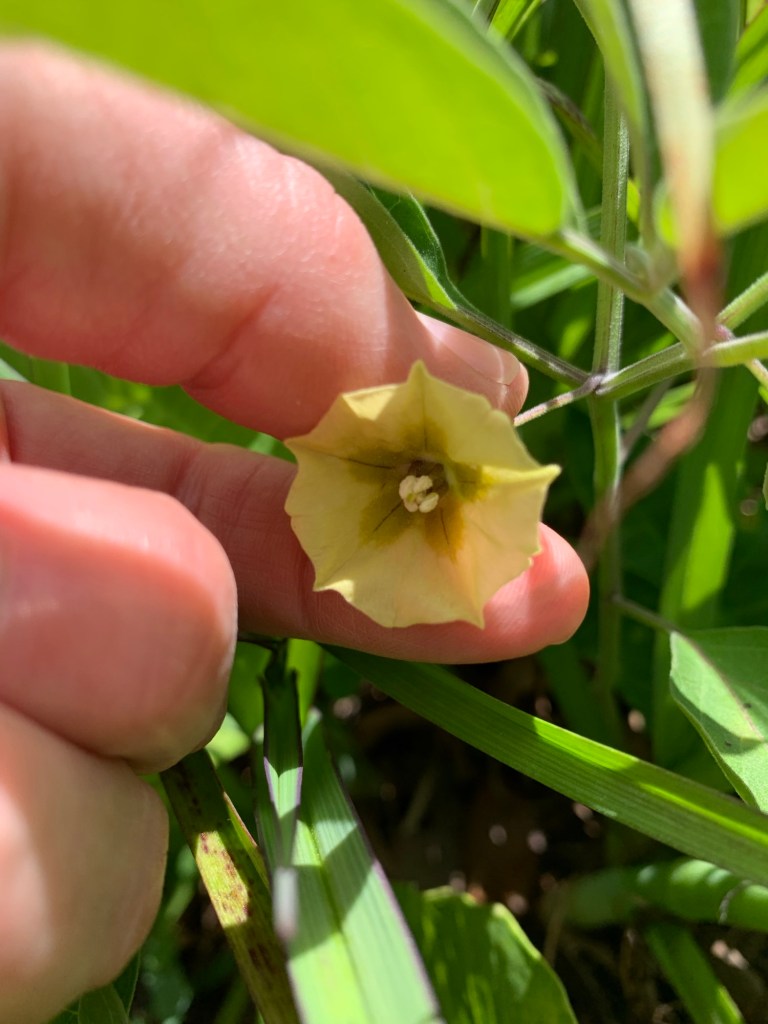
Putting a name to this yellow flowering weed in my landscape. Walter’s ground cherry is an interesting little plant.
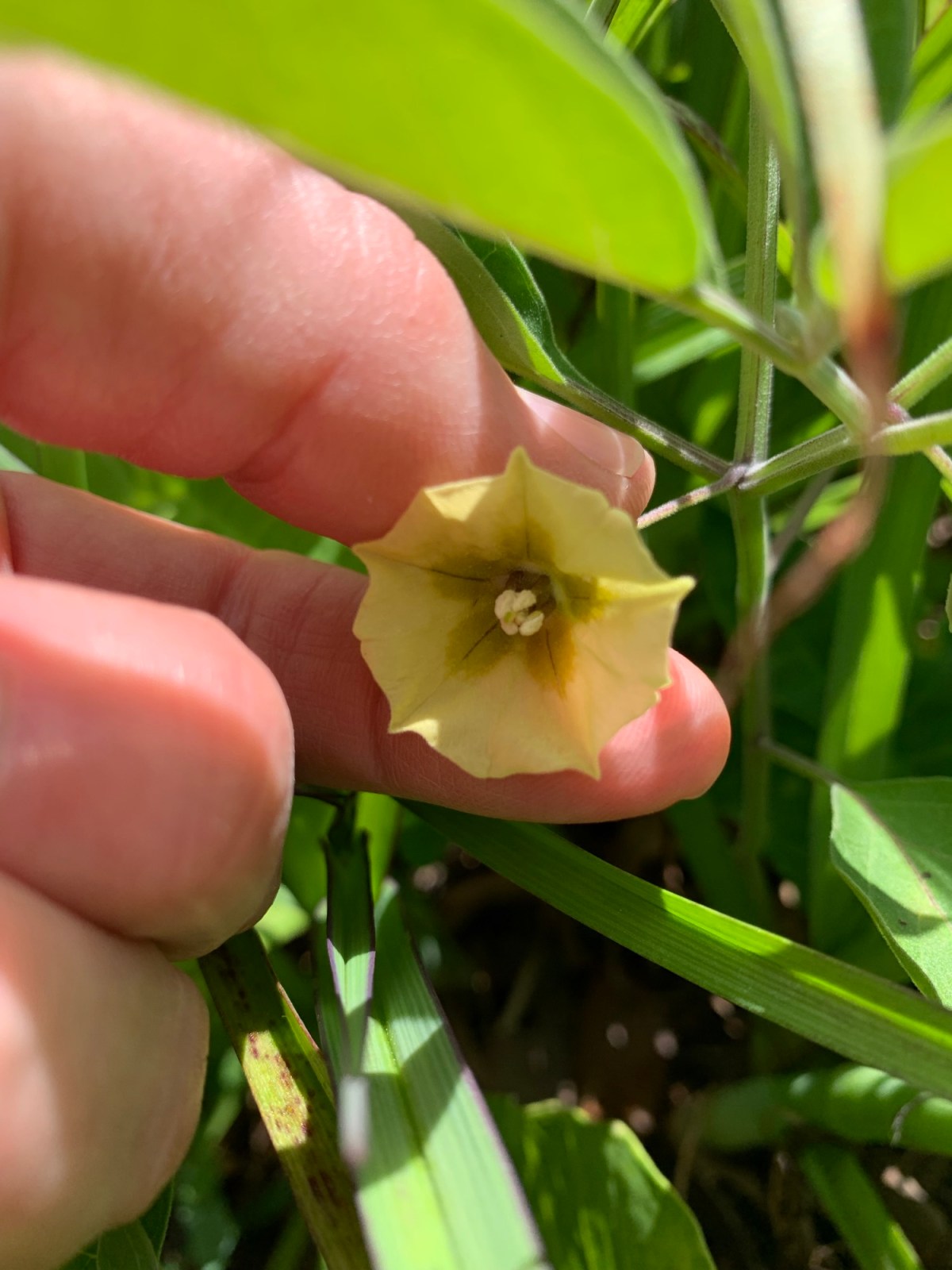
While clearing out some weeds that are encroaching into the backyard, I kept coming across this little plant with fuzzy leaves and yellow flowers.
I’ve identified it as Walter’s Groundcherry.
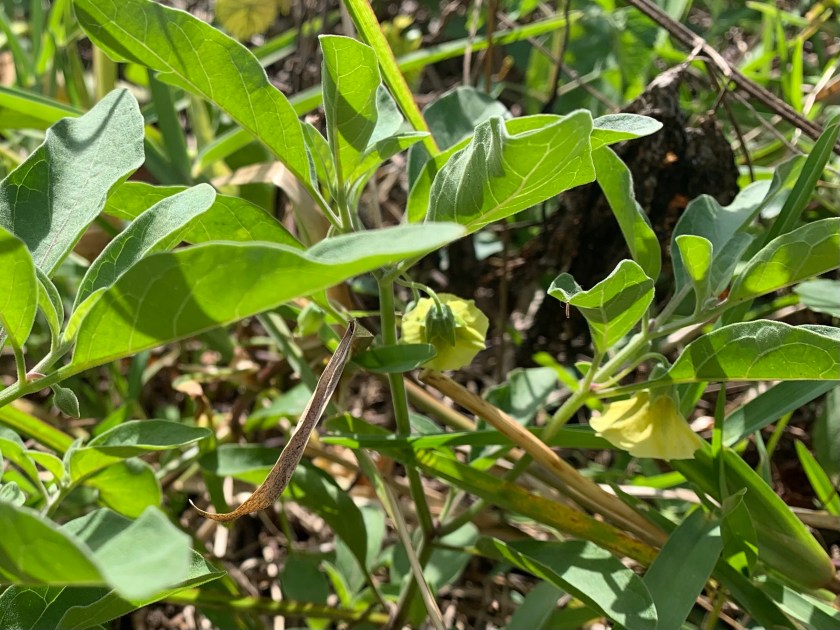
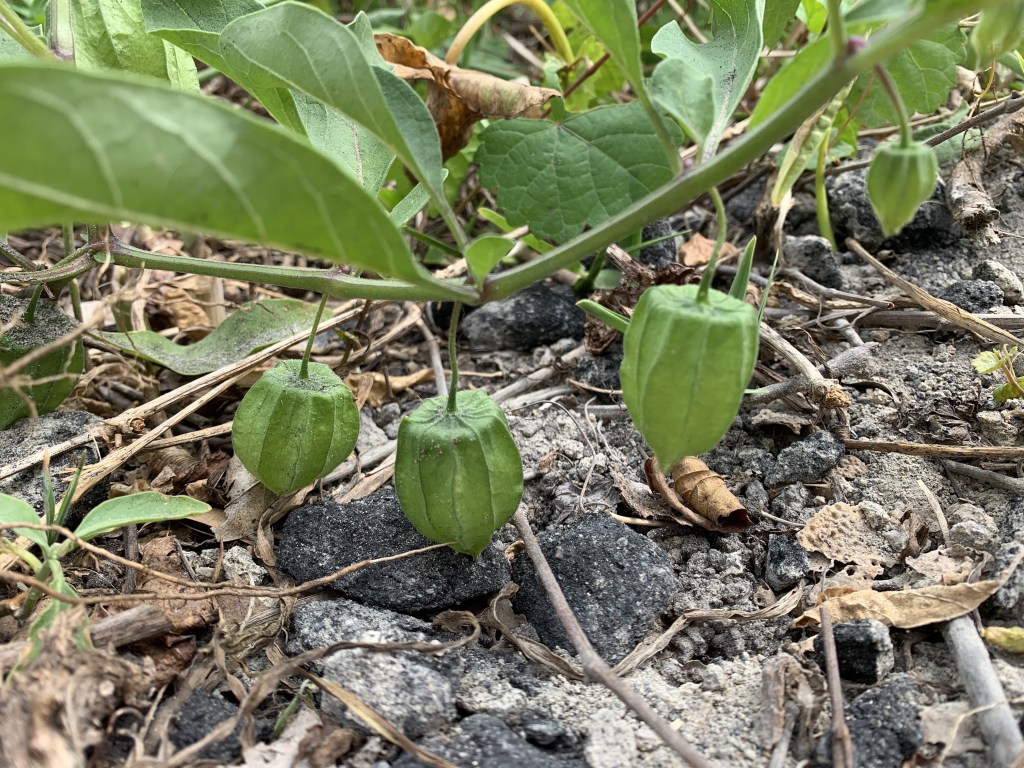
The little yellow flowers hang downward, as do the pods that form that will hold the fruit. I’m still learning about this plant that apparently has been growing next to the lawn since I moved in.
Recently, with the addition of more raised garden beds, I’ve been in the yard tending to the plants. Also we are tilling up a place for an in-ground garden. That will make the yard considerably smaller, which is fine. The yard is mostly weeds anyway.
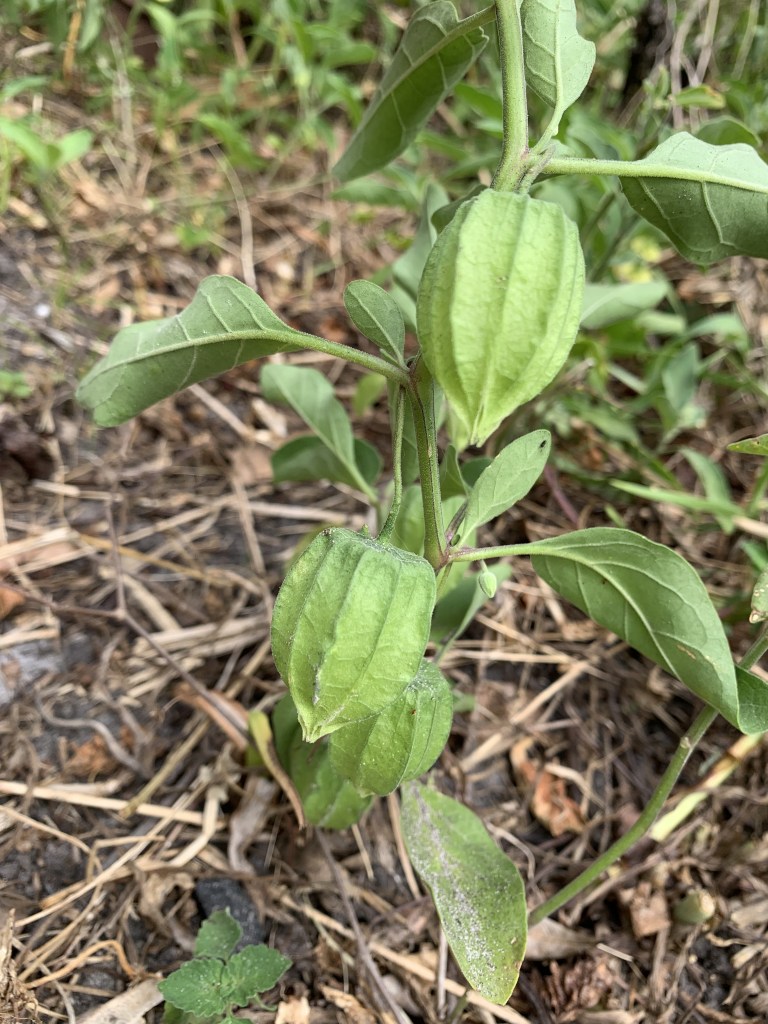
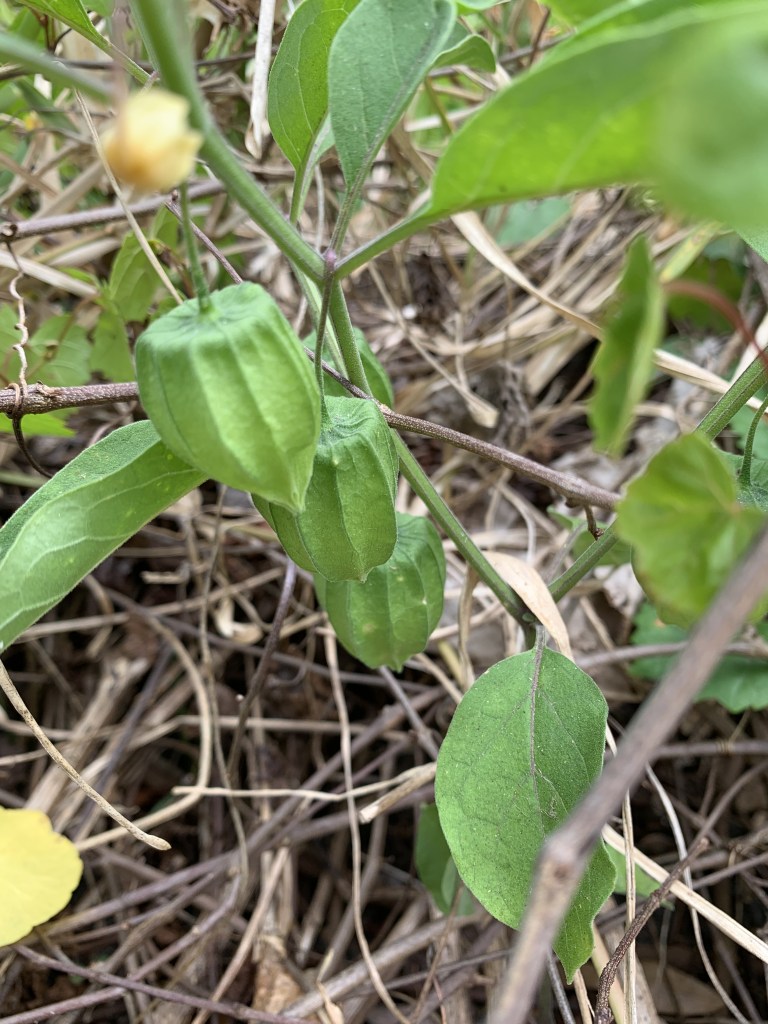
The photo below shows a couple of the little pods forming where the “cherry” will grow.
According to this article at Wild South Florida, The little ripe fruit is edible – the key is that it must be ripe. I’m not into eating wild things, but I always think it’s good to know, just in case.
Stages of the “cherry”
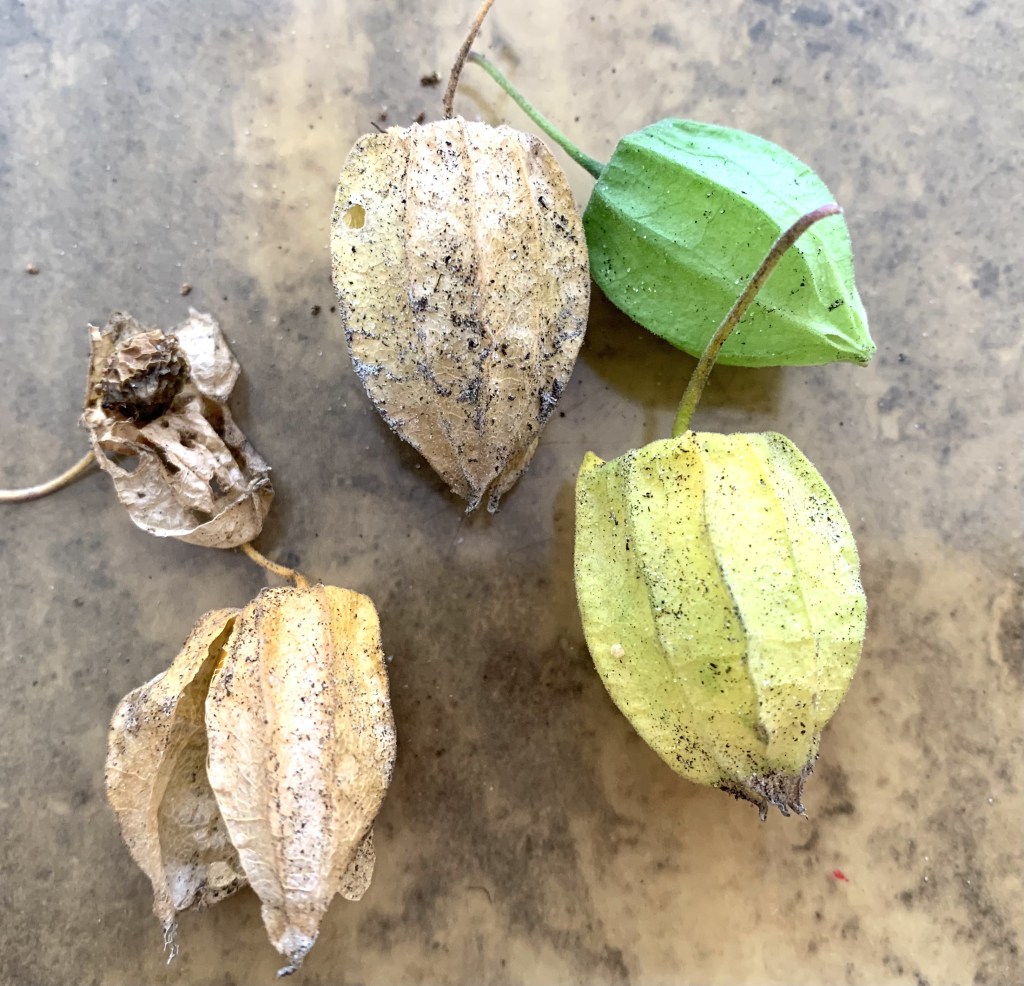
The little lanterns go from green to yellowish to dried up tan in color. I kept waiting to see the “cherry” but the husks remained closed.
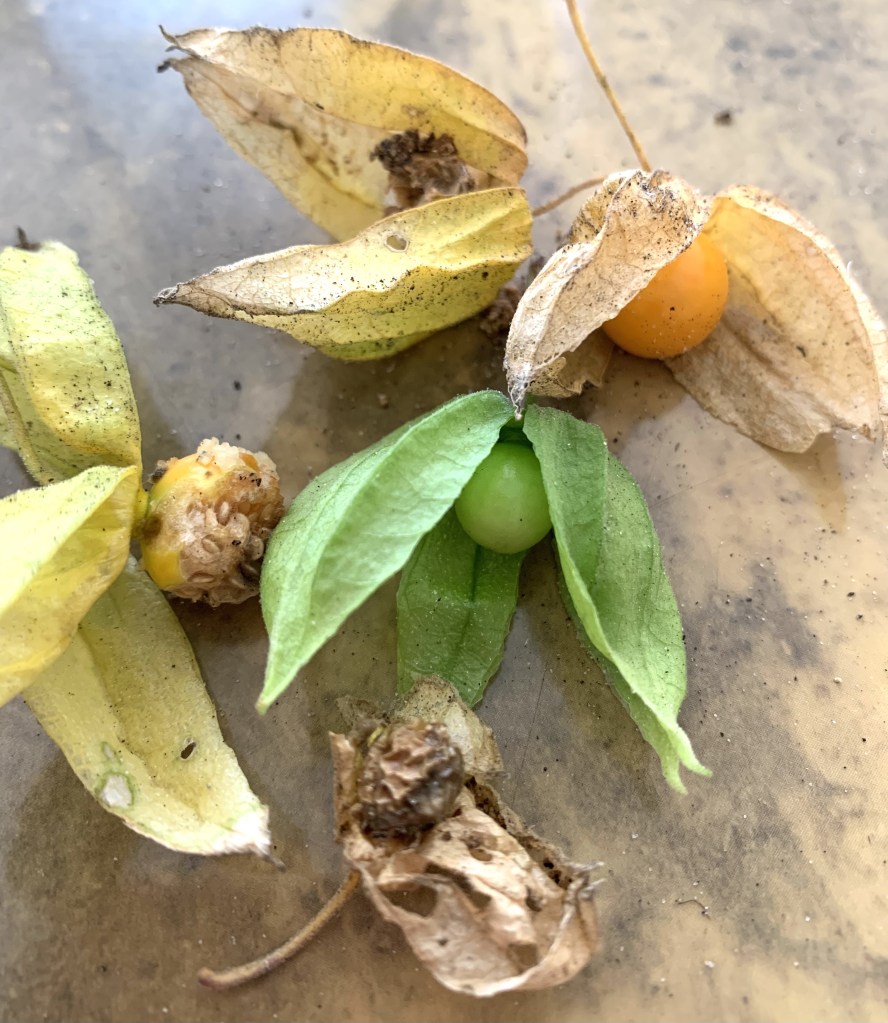
Today I picked four lanterns in various stages and opened them up. From what I’ve read – and I am not sure, and wouldn’t take the chance – the bright orange fruit is said to be edible. However, the green cherry and all the husks are toxic! I won’t go near anything that is toxic, so I’d never put this in my mouth. But I was curious about the inside.
The green cherry is unripe. The yellow / orange seems to be in the ripe stage. Then another orange berry is partially turning to seed. The last two are very dried and gone to seed.
I’ll continue to clear out the weeds, but will leave some of the ground-cherry. It’s good to know what is growing and what to pull out and what might be kept. This little plant is bothering no one. The flowers attract bees and some wildlife enjoys eating the cherries.
I’ve given it a lot of thought and I really don’t have time to continue writing on this blog. Or, maybe I should say I’m cutting way back. My efforts need to go into starting a new online…
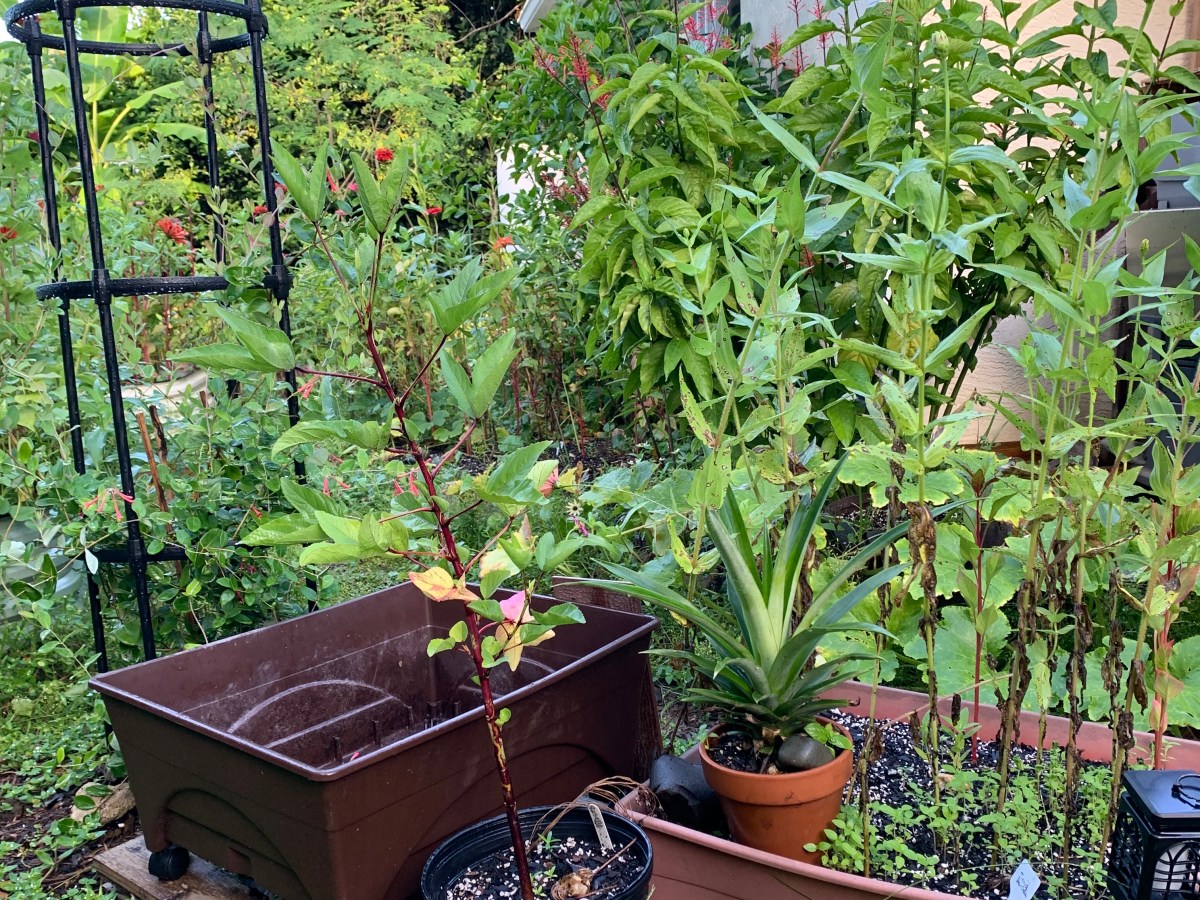
Here I have a photo of my Fall garden. It is hard to tell what is growing, and honestly not much in the way of food just yet. The seeds have all been planted except for Kale and…
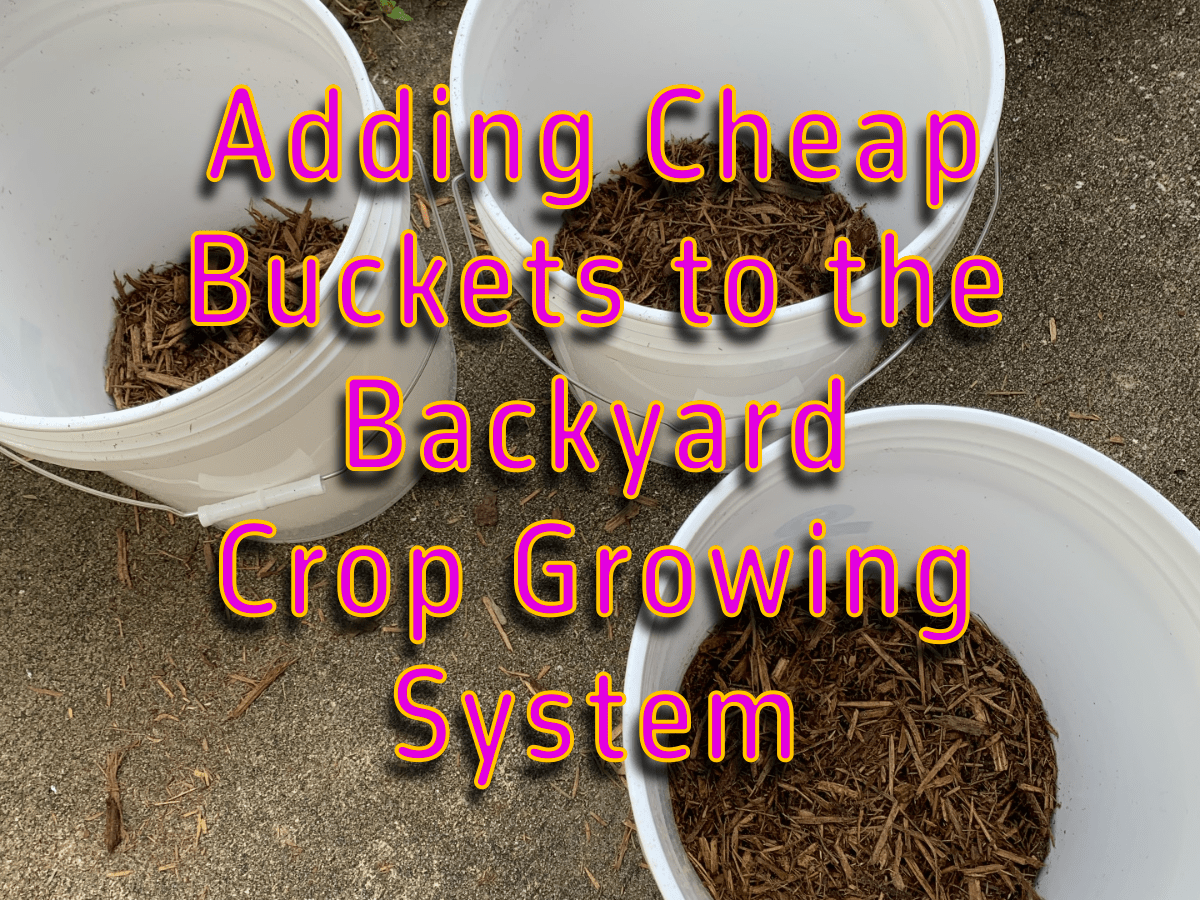
I’m trying a new way to grow larger individual vegetables in my small garden space. Tall buckets may serve well as pots for tomatoes, peppers and eggplant.
Flowering weeds can attract lots of beneficial bugs to the yard.
Florida homeowners are more likely than most to hire a lawn care service. The extreme heat is one of the main reasons, but the weeds and bugs are also at the top of the list, I’m sure.
Because we never get an actual winter here in the Sunshine State, things grow and grow. Some plants die back when the weather is colder than normal, but for the most part everything comes back quickly.
When I say “lawn care” I mean not only the brave souls who mow and weed-eat in this hot and humid climate, but the ones who spray insecticides to kill everything unwanted. Everyone needs to keep the growth down, but many homeowners also have their yards sprayed with chemicals to kill the bugs and weeds.
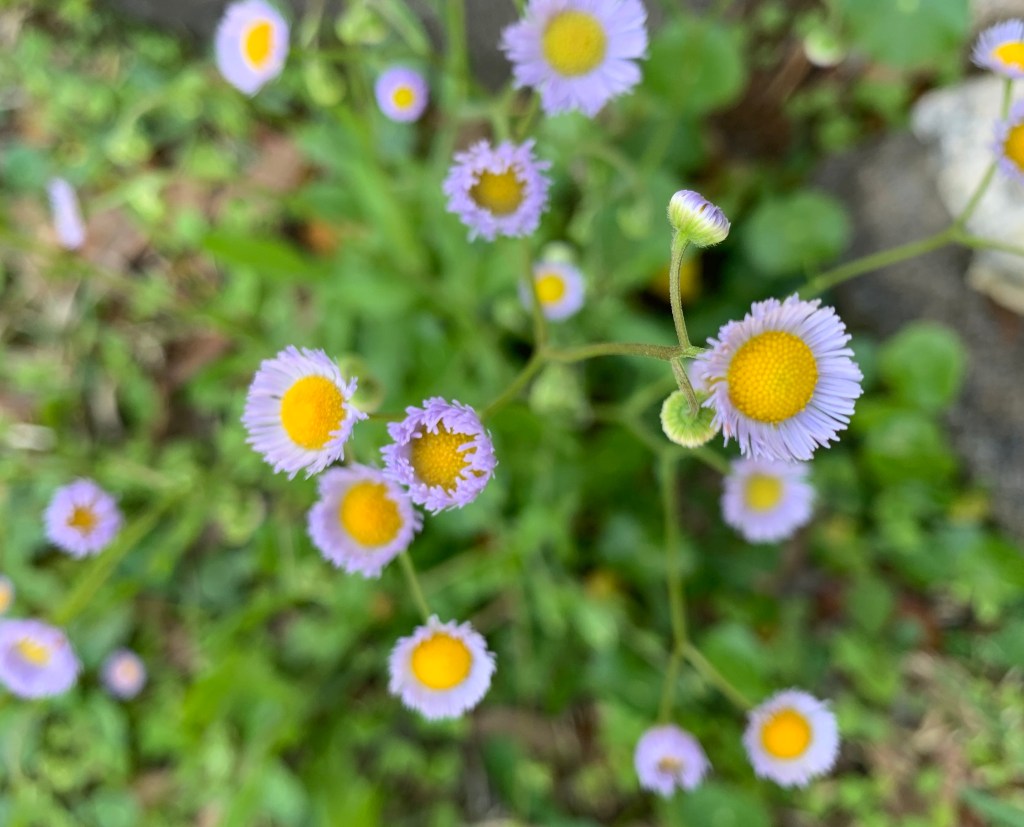
This tiny flower is growing in my lawn which hasn’t been cut in a while. I might dig it up and transplant it to the backyard garden.
Daisy Fleabane
Weeds For the Bees and Butterflies
Often weeds are something that have been around for a long time in the area where we live. They are native and should not be totally eradicated, in my opinion.
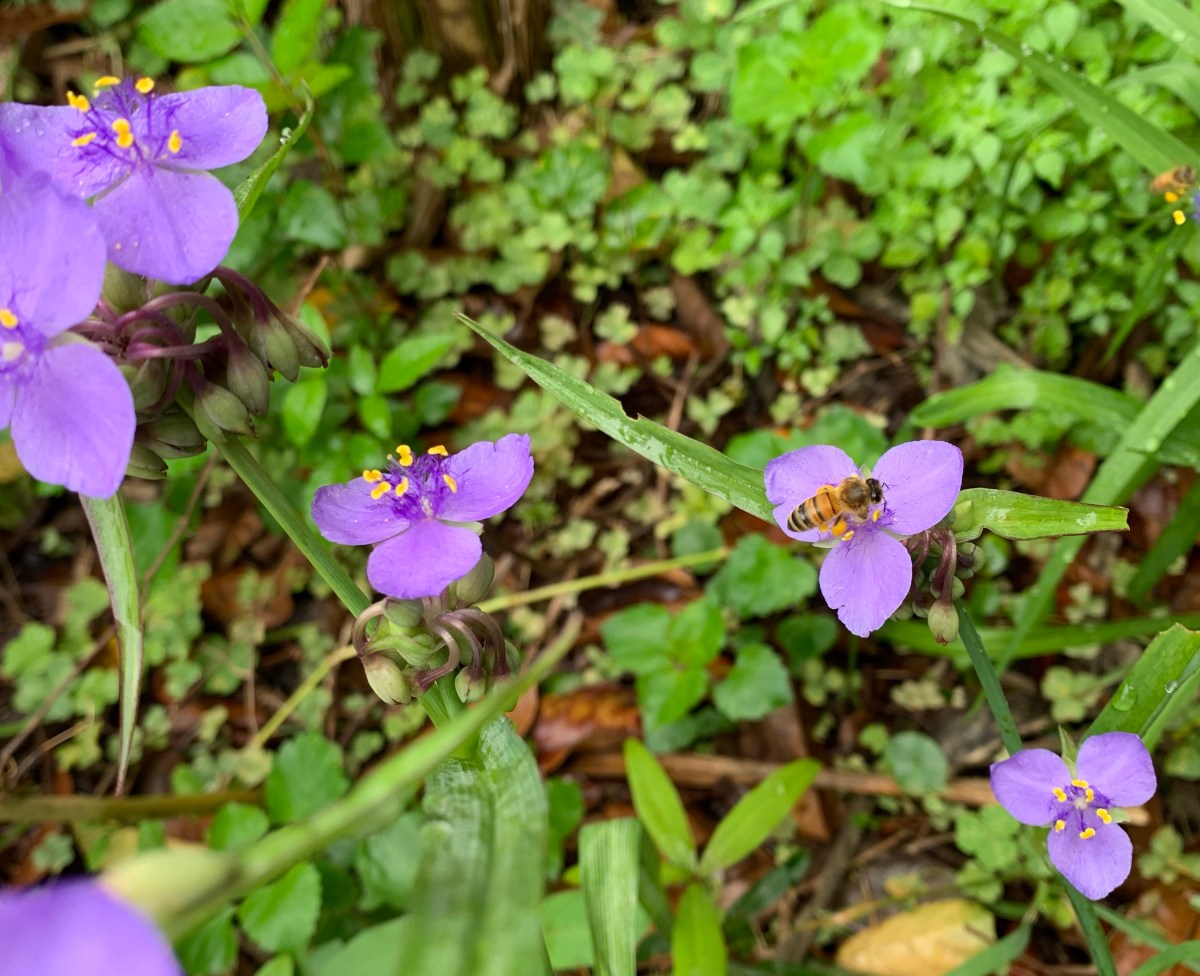
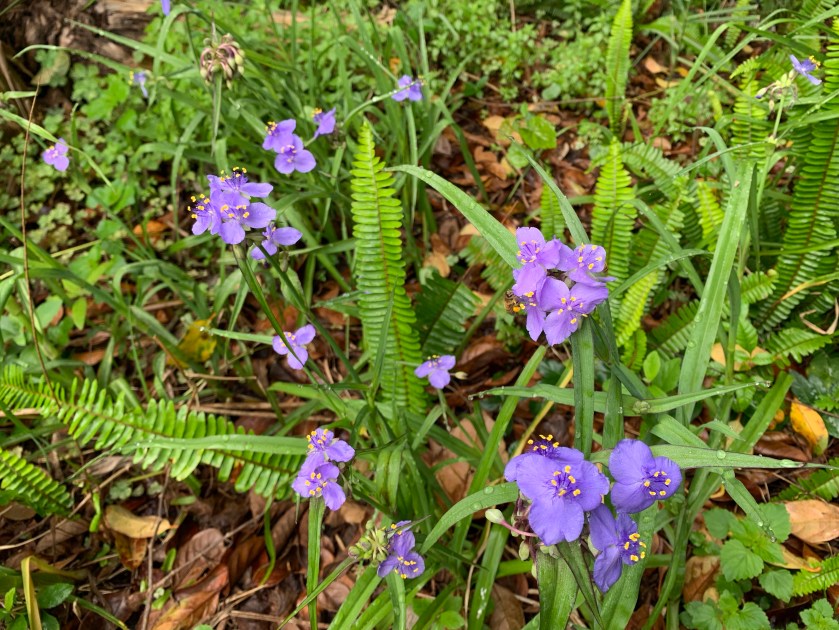
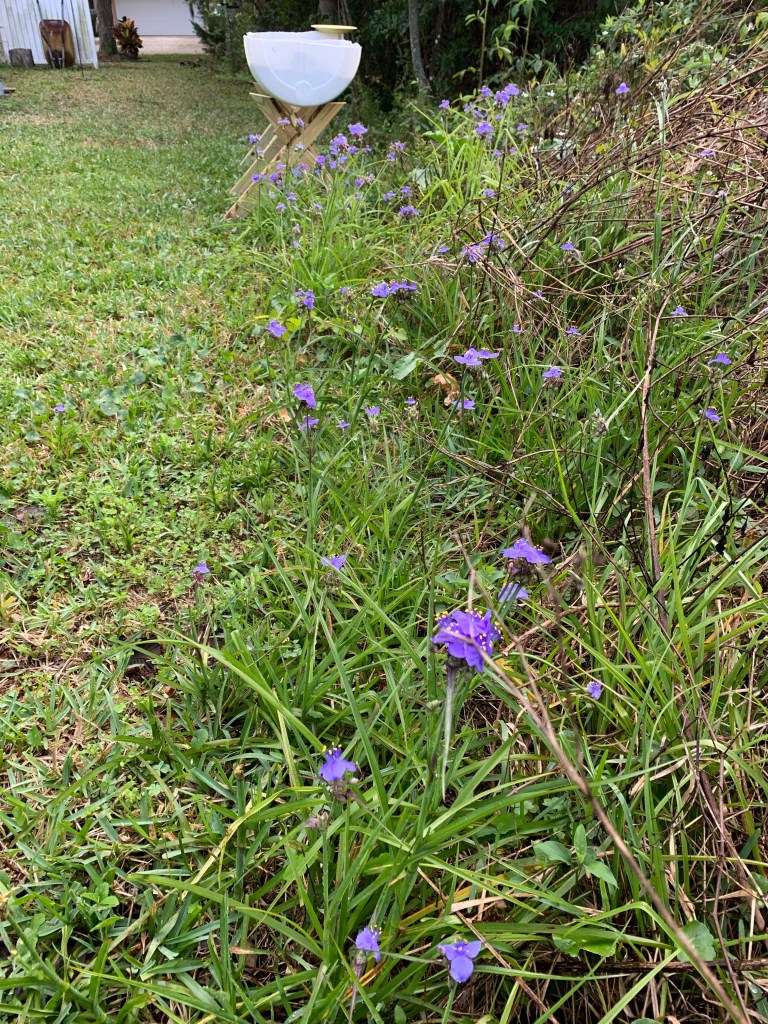
The purple flowering Spiderwort is considered a nuisance, and for good reason – it spreads like mad. It has pretty flowers, but grows in clumps that are nearly impossible to pull up from the lawn. It springs up all over, if the grass is not cut often. That means in the winter months when growth is slower gives this weed time to find places in the lawn to sprout. By March, the Spiderwort is blooming everywhere in the morning, but closes up as the day wears on. It attracts many honey bees.
Spiderwort
Spiderwort grows all along the edge of my yard. I do find it in the lawn as well and it is difficult to remove once it has rooted. If left to grow, it will become big clusters of flowers with long, grass-like leaves.
Although it is a nuisance to anyone trying to keep a pristine landscape, the flowers attract beneficial honeybees and other “good” bugs.
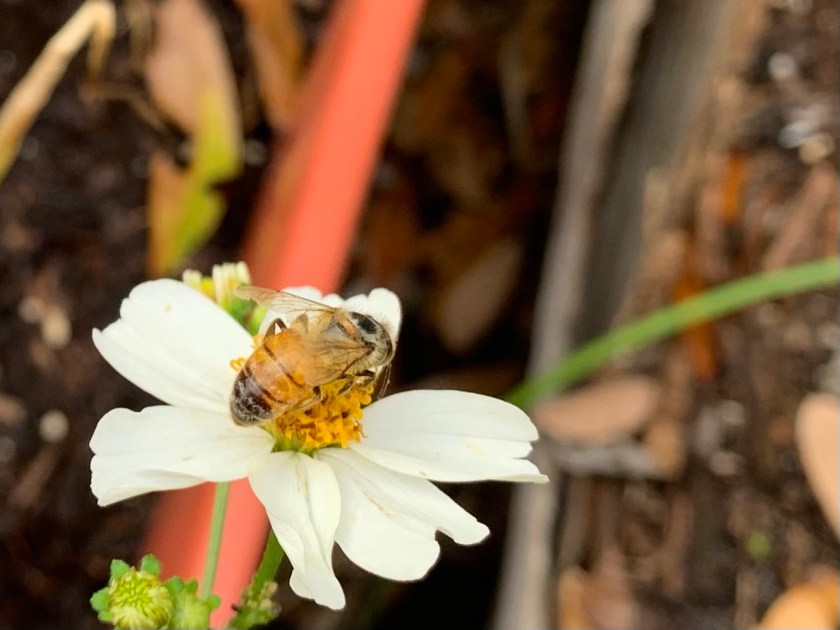
White Flowering Spanish Needle
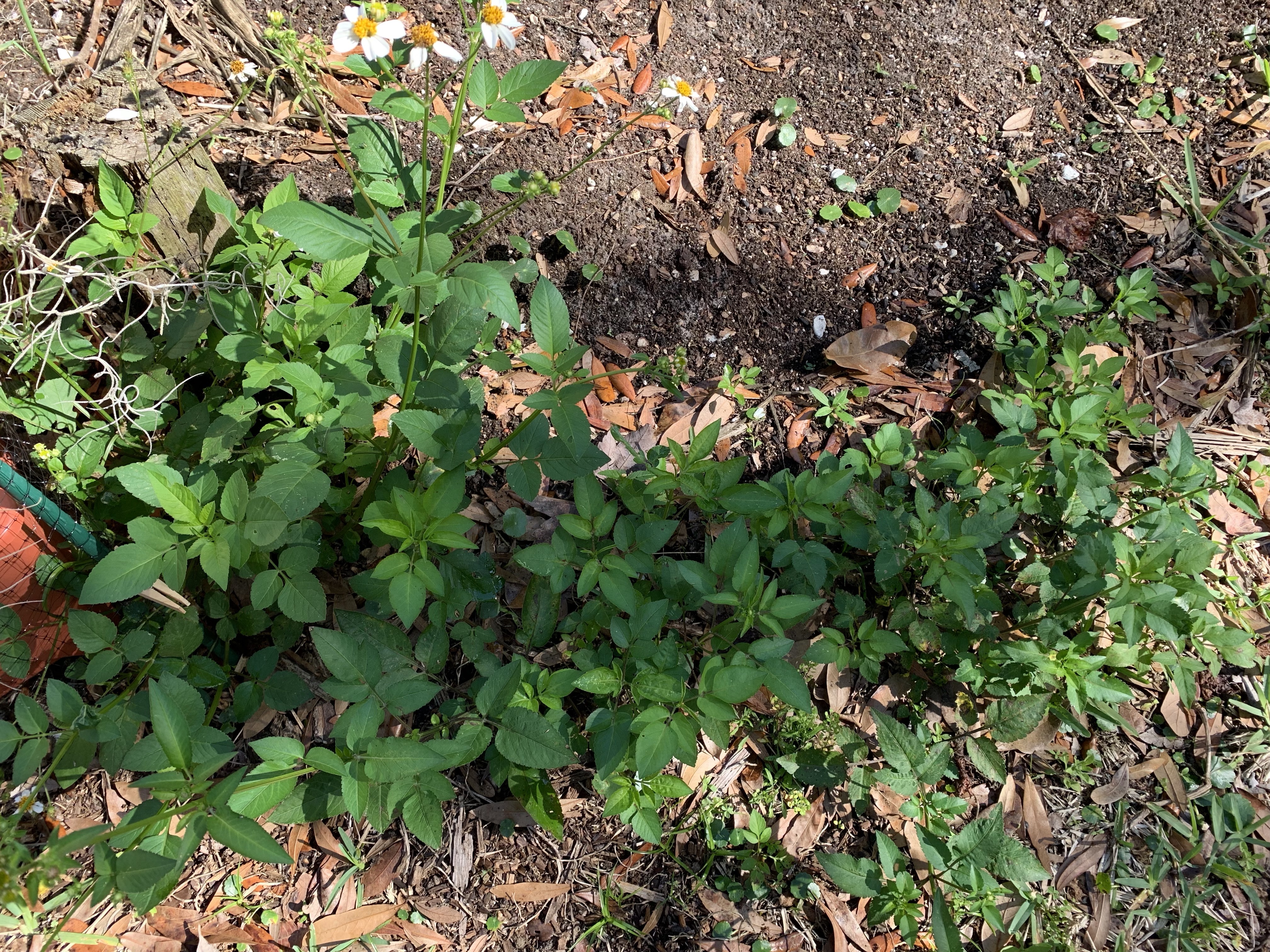
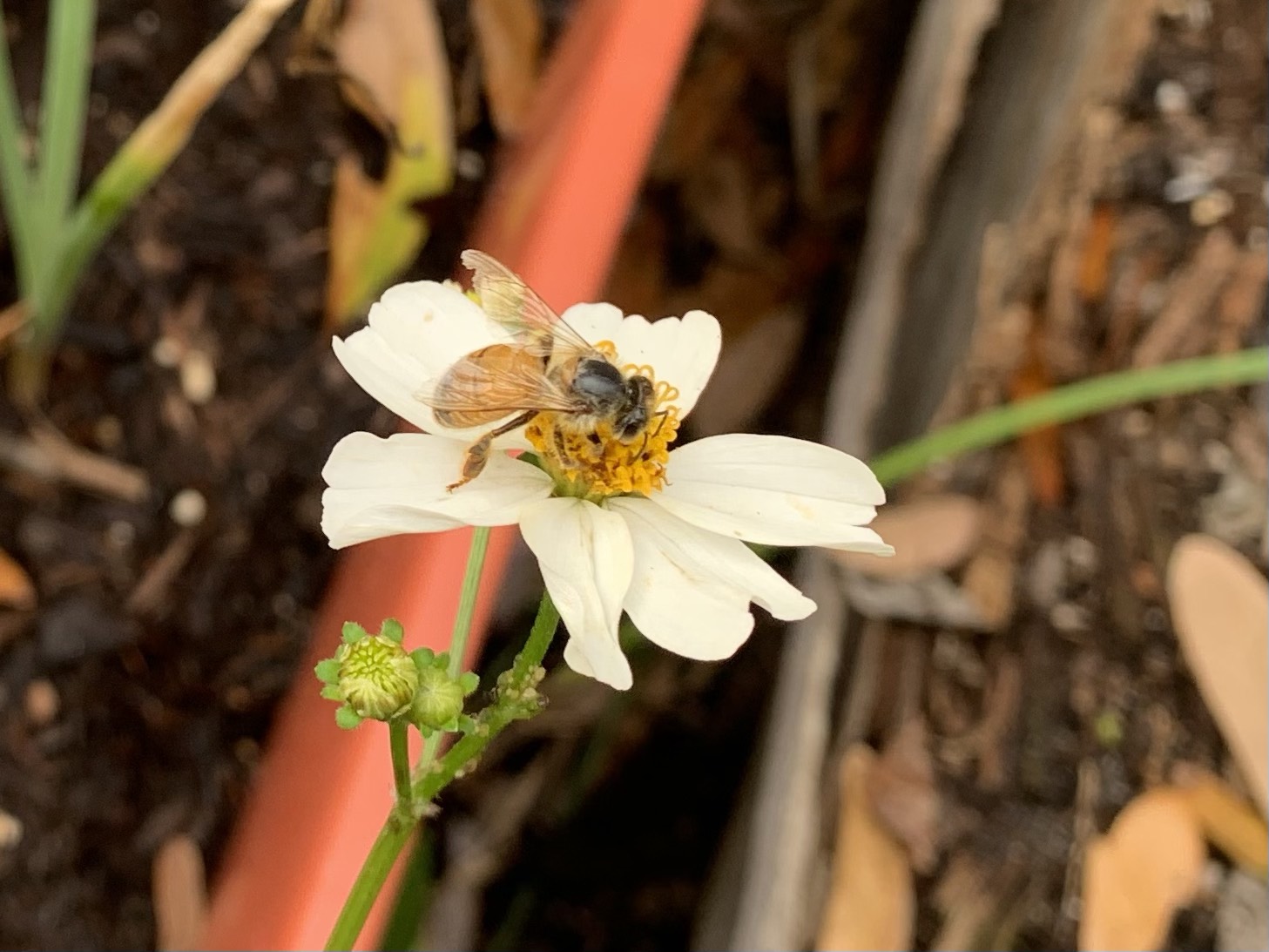
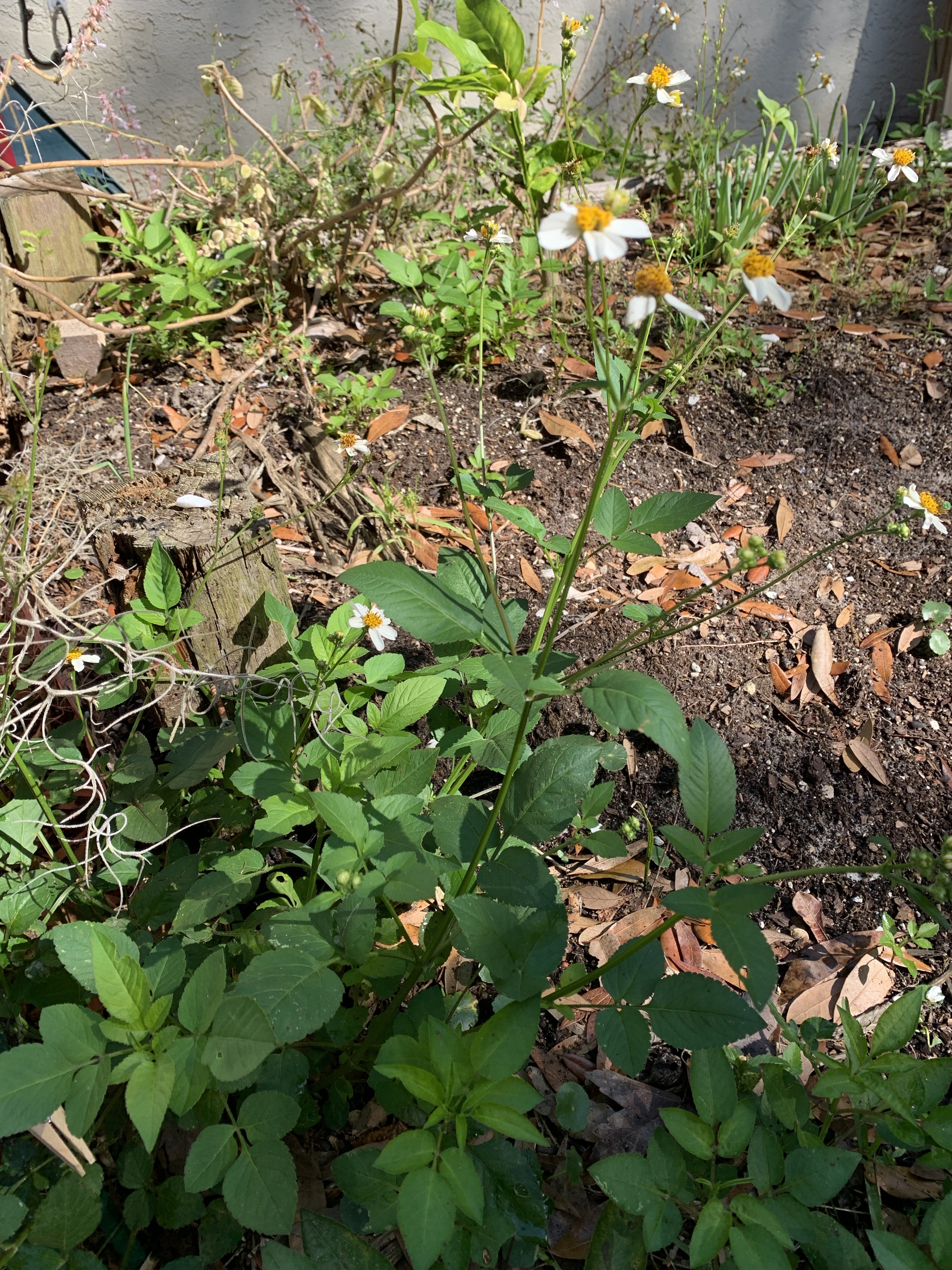
I never knew the name of this white flowering weed. It grew all along the property edge and began springing up in my old raised vegetable bed. I let it grow and it got large. When I decided to remove it, I had to dig it out.
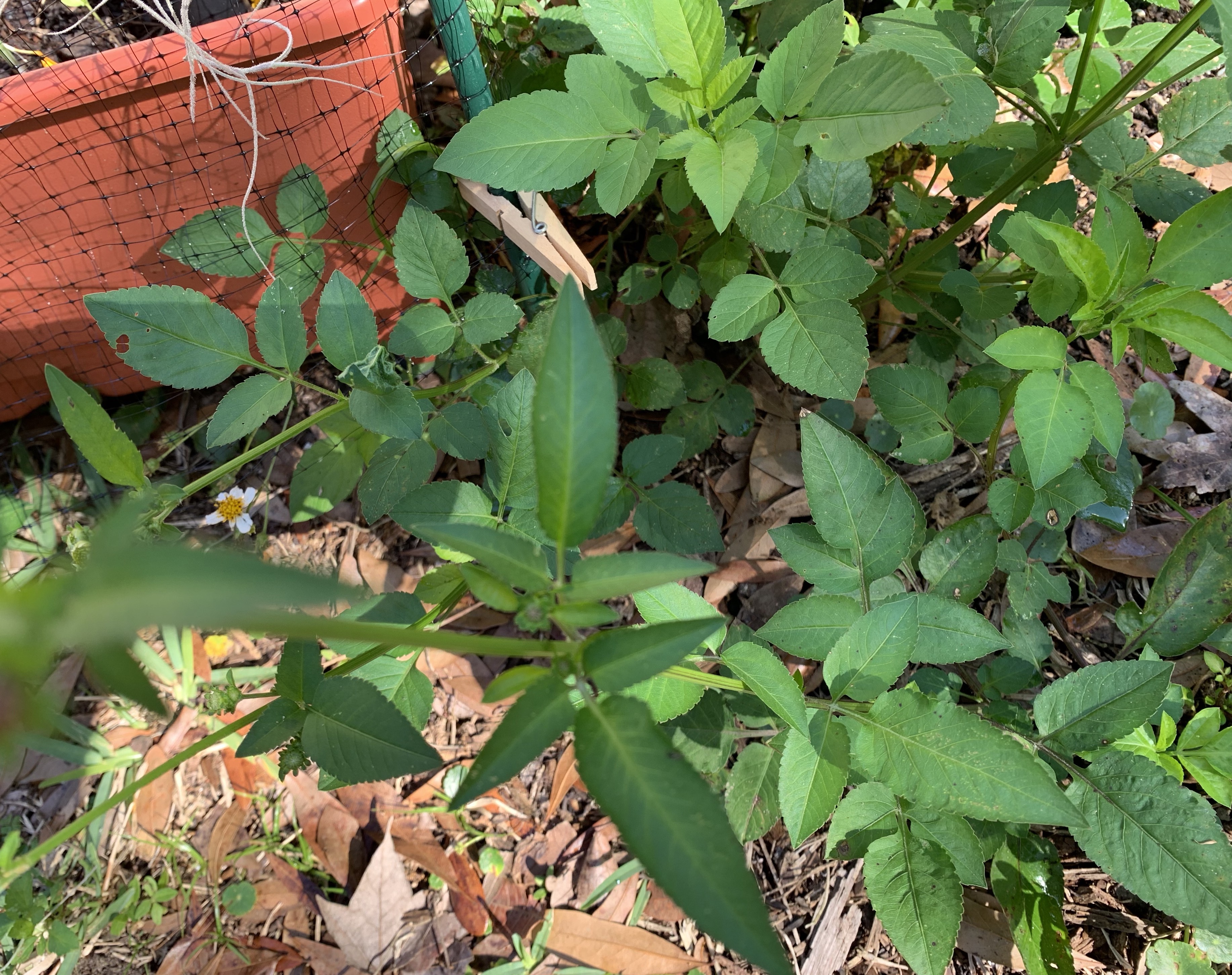
There were plenty more Spanish Needle plants and I have left a few around the garden edges. Now that I can recognize the leaves, I can pull the plant up when it is small. Otherwise, it will take a shovel to get the roots.
Spreadingleavesattracts beesA look at the Spanish Needle plant
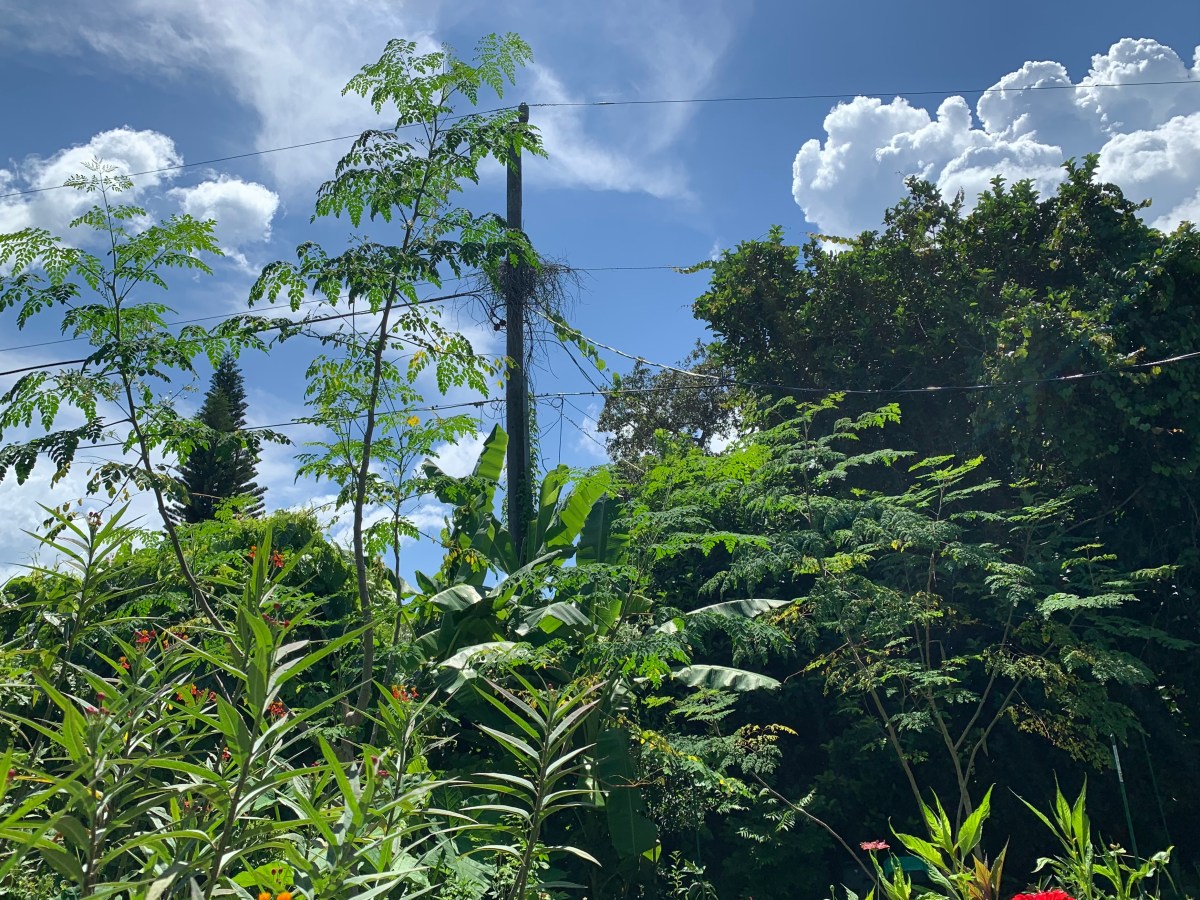
Yes, things are so boring around here I am taking photos of leaves. Really? Well, my life is pretty boring and low key. I do enjoy the green that surrounds my Florida home. On close inspection there are many types of things growing in the jungle. I am amazed by big leaves.
Inside the House
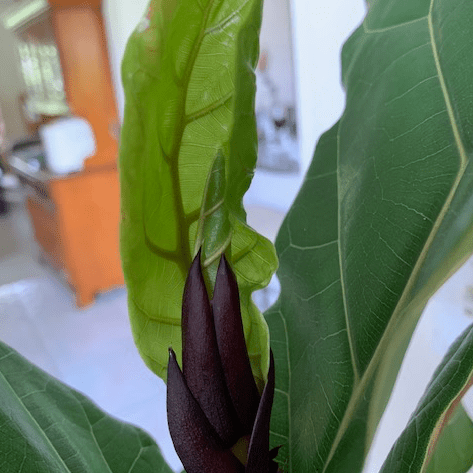
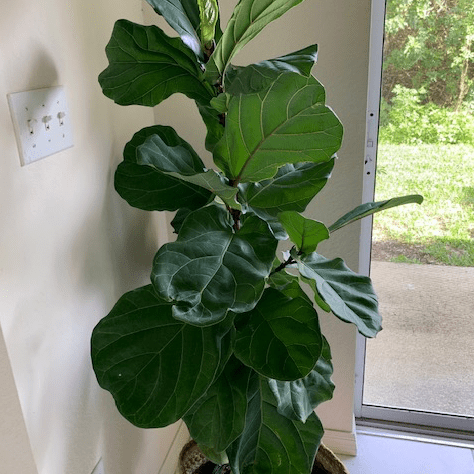
The Fiddleleaf Fig tree has added new leaves since I last purchased it last January (2019). I’d never grown a fig before, but had wanted one for ages. I will say that they are super easy to grow. I thought this new leaf emerging was quite interesting.
Around the Yard – Elephant Ears
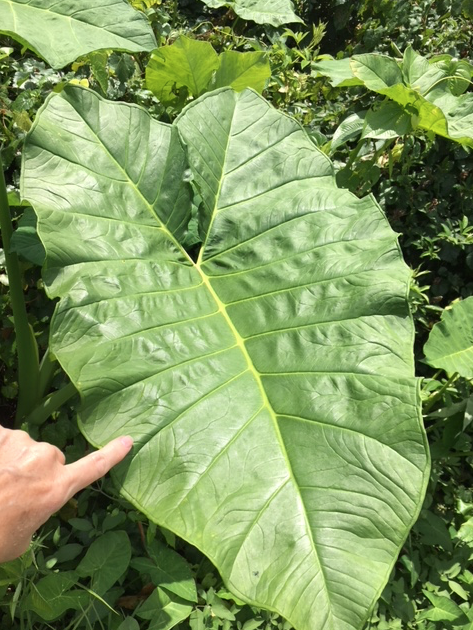
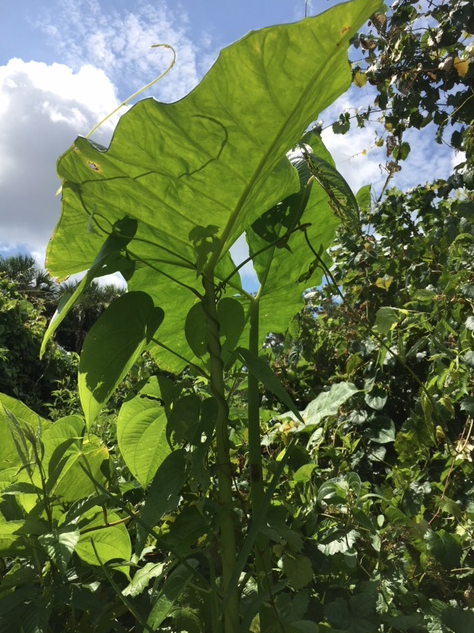
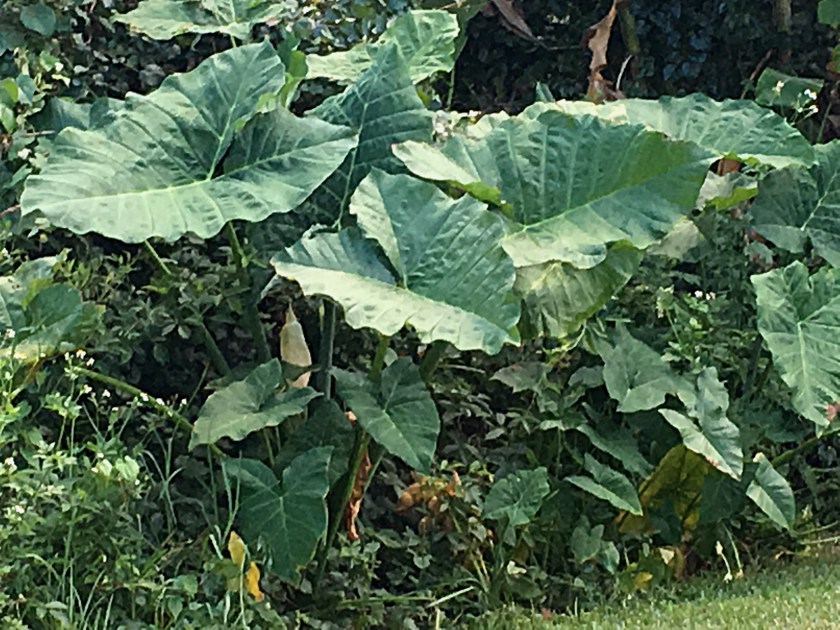
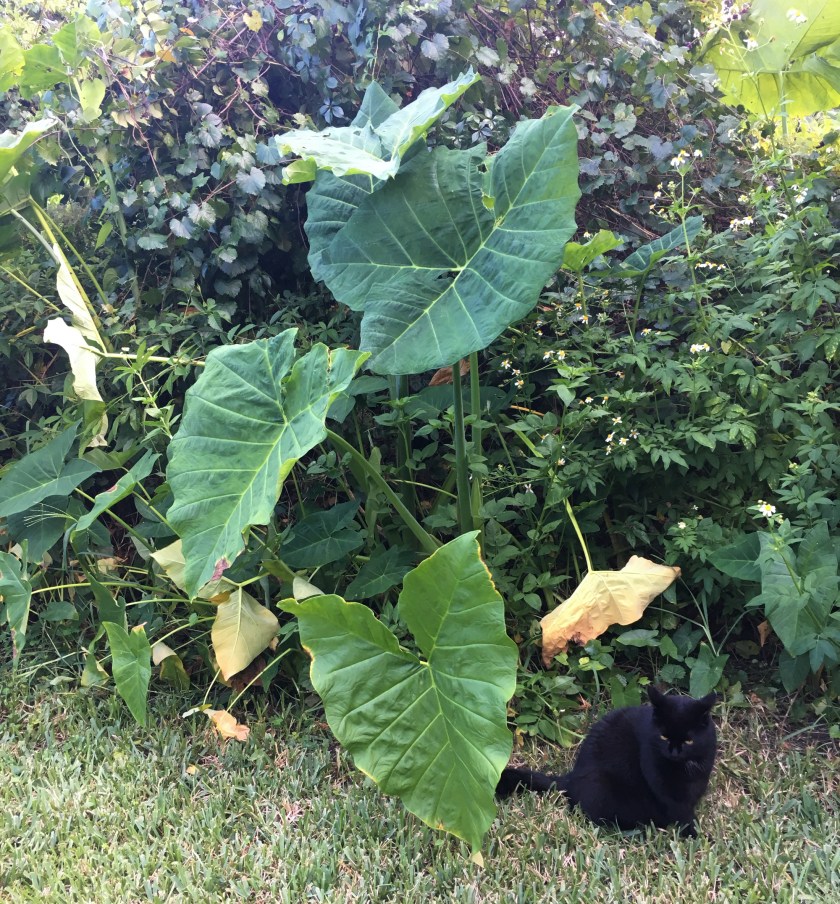
Elephant ears are some of the largest leaves you will find. They die back in winter months but come back strong in summer. I did not plant these, they are growing along the edge of the yard in a lot.
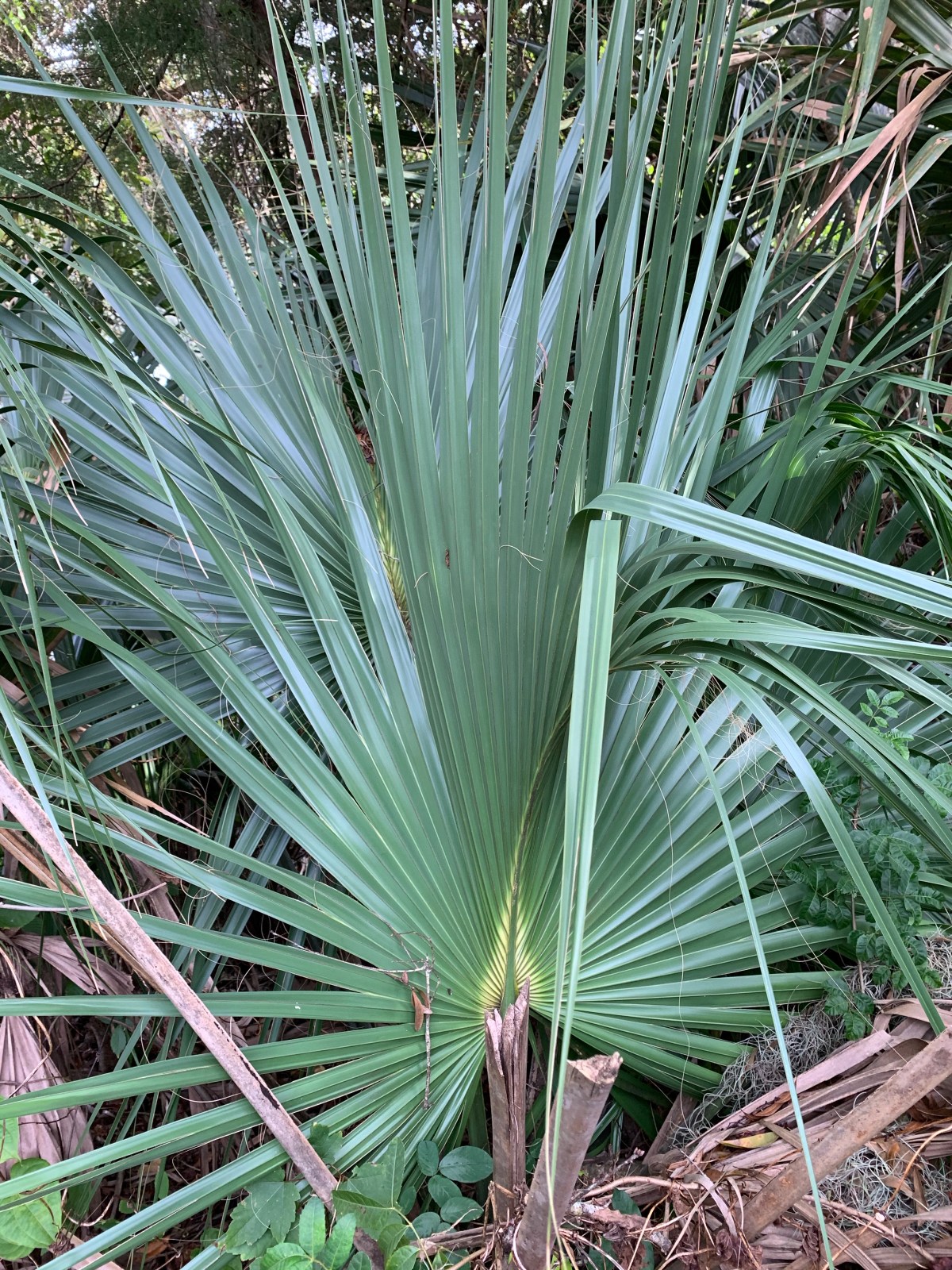
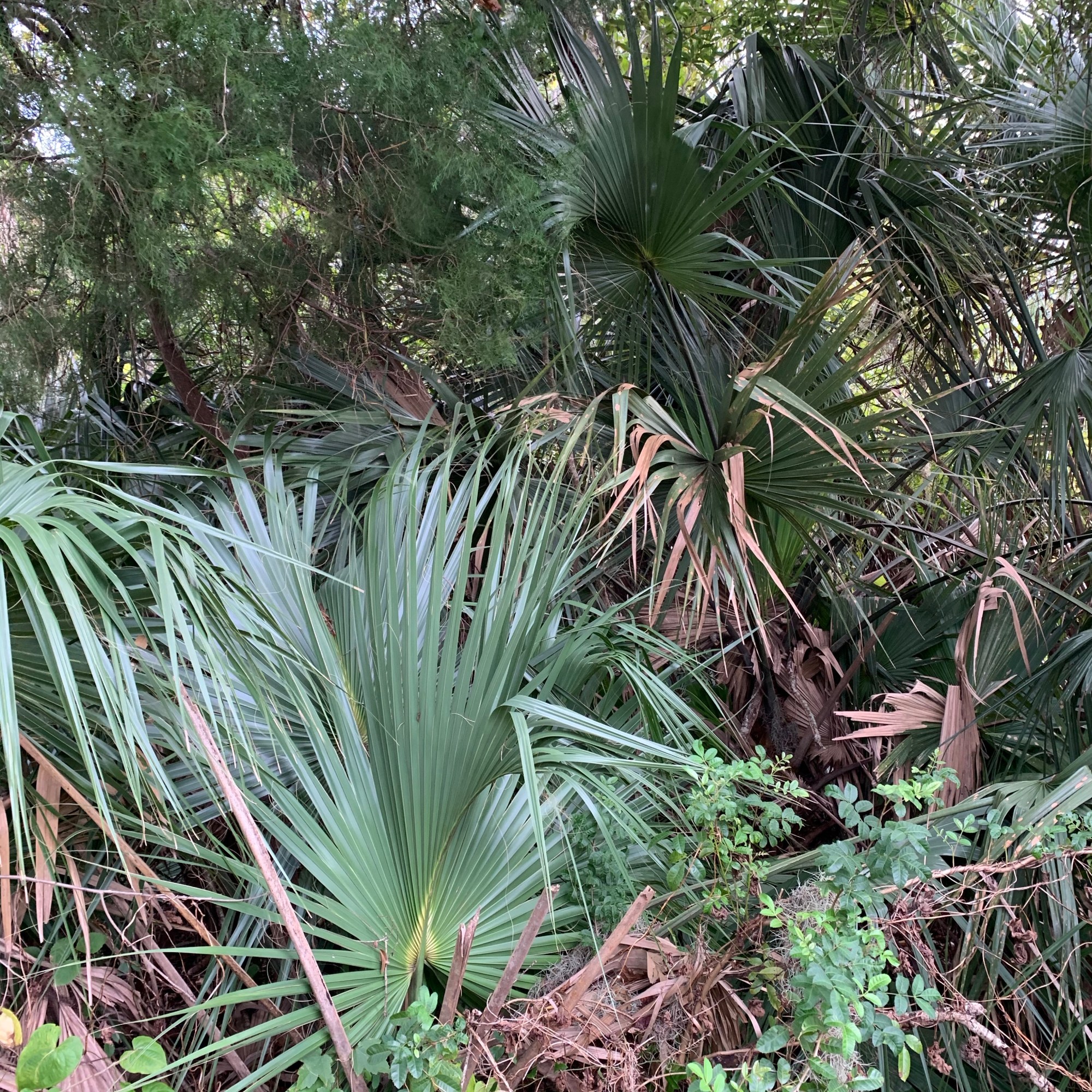
Palmetto Leaves
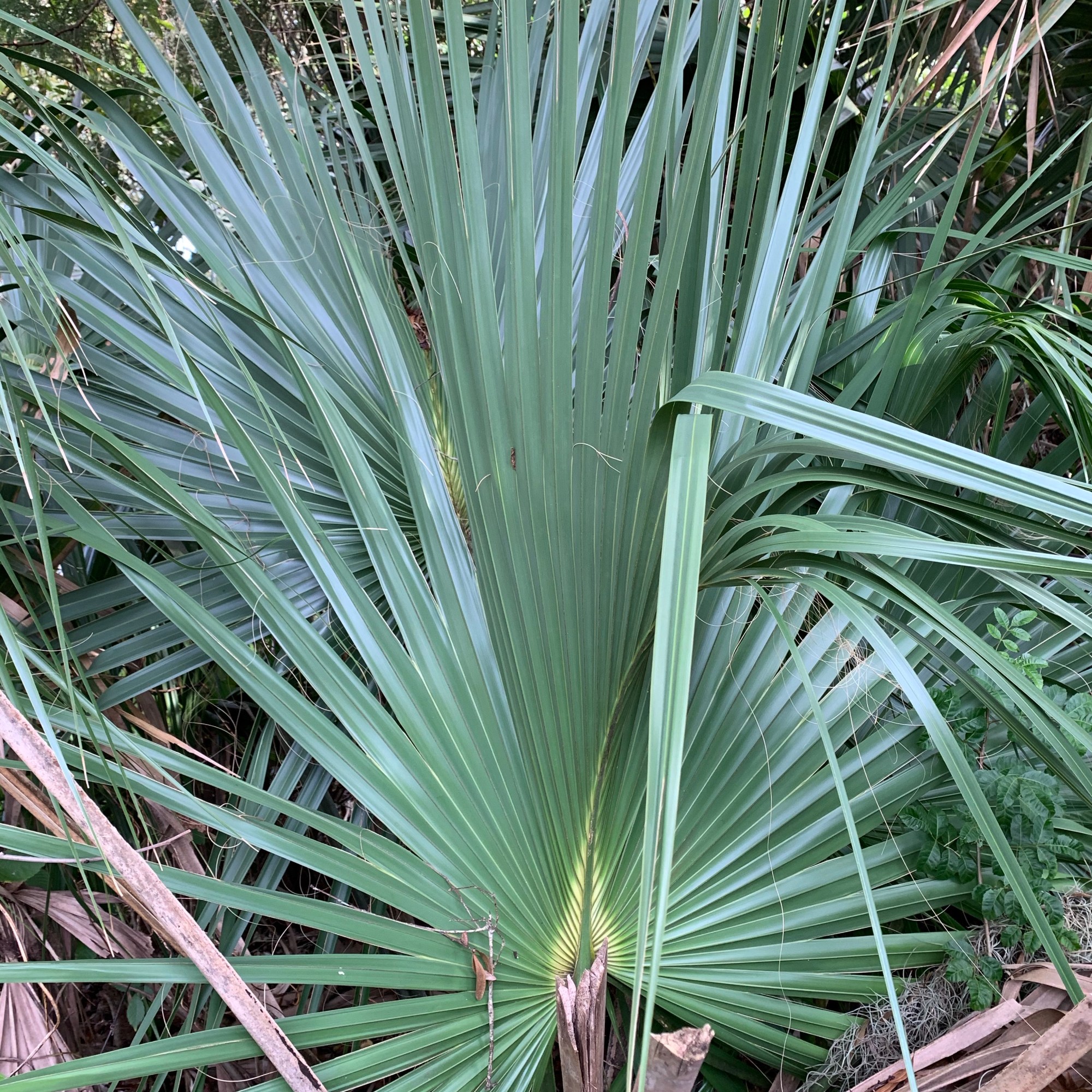
At one time the palmetto palm was everywhere. It doesn’t seem to be so common these days as this palm is apparently considered too ugly to keep in a landscape.
Builders come in and wipe out all traces of native vegetation, build a house, and plant new vegetation. The local plants don’t count here.
These photos came from the land next to my house lot. As of this writing, the land has not been bought and cleared for a home, but I expect it to happen. These big old palm trees will most likely be ripped out, along with everything else.
My Florida yard is very small but I have wild growth on two sides. A vacant lot behind the house is full of trees, brush, and vines and it’s where I set up my bird feeders for the Painted Buntings. I have identified some of the growth thanks to a good site I finally found.
Searching for photos online has proven difficult because often there is no image of the leaves. The whole tree or bush is not really helpful without some up close images.
I’m adding photos from my yard to this page to help me remember what is what. I have to know what to keep and what to destroy as I clean up.
Unknown Tree or Shrub – Laurel Fig?
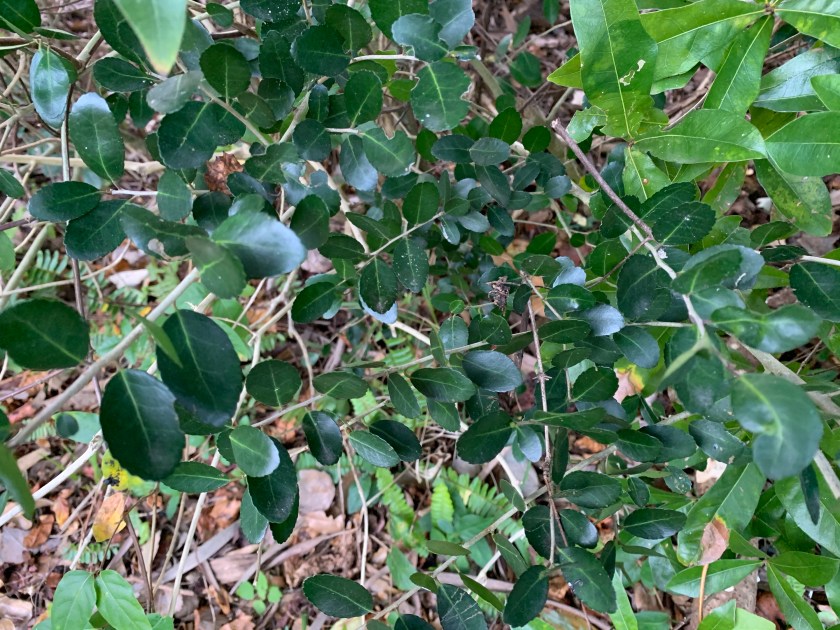
This plant was uncovered as I cleaned up for a small garden space in January. The leaves are widely spaced and are dark green and oval in shape. The bark is very light gray. Possibly the Laurel Fig and if so, it is an invasive tree. I was hoping this was a nice bush to save, but it seems that I may have to cut it out.
No name for this yet.
Read, and see amazing photos, on this interesting page on Strangler figs and how the roots cause havoc.
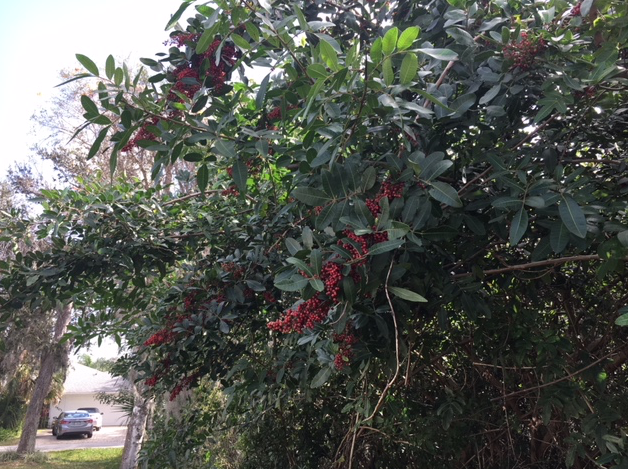
The Brazilian Pepper Tree is an Invasive Species – Non Native
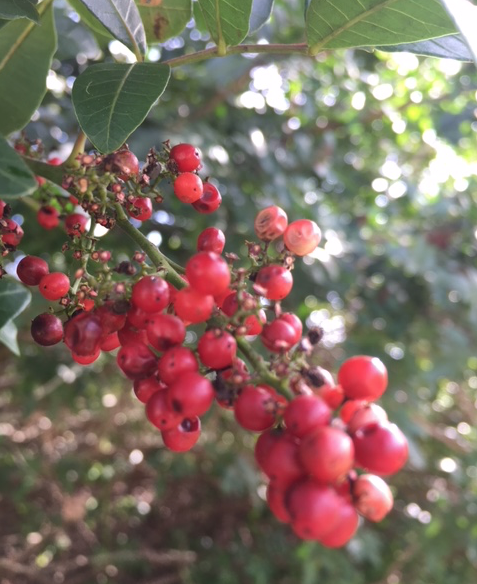
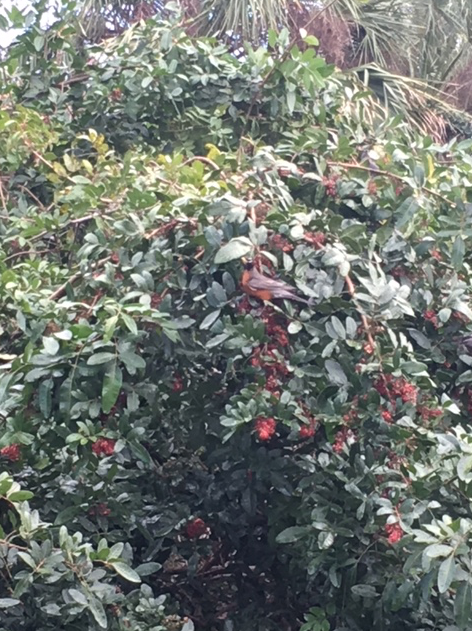
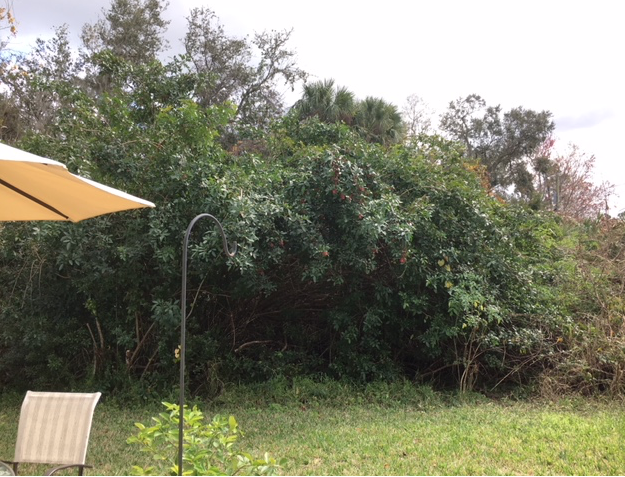
I have a group of Brazilian Pepper trees just over my lot line. During the winter months loads of red berries appear which bring robins and other birds to feed.
It is an attractive tree, but is an invasive species and not a Florida native. In fact, the trees should be destroyed when possible according to many articles I have read. This clump of trees is huge, with a large root system. It is also not on land I own but the branches arch over my yard.
Brazilian Pepper
Red berries
Robins eat the berries
This is an invasive species
A mass of roots of the Brazilian Pepper
Florida Maple Trees
The Florida maple trees lose their leaves during the cooler months. This photo was taken in February. Soon new leaves will form. I saved this little tree which is growing on the edge of my property when it was covered in potato vines (see below) and unable to grow. Now this maple tree is thriving and has tripled in size.
The Maple tree loses leaves in winter
The Elderberry Shrub – Florida Native
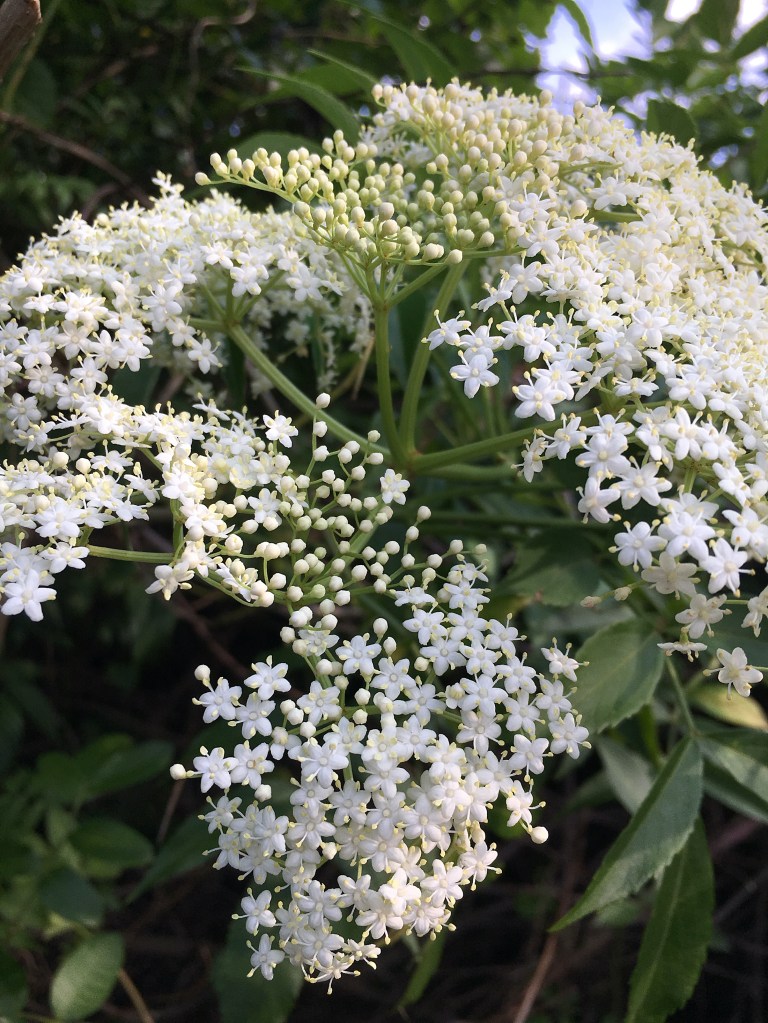
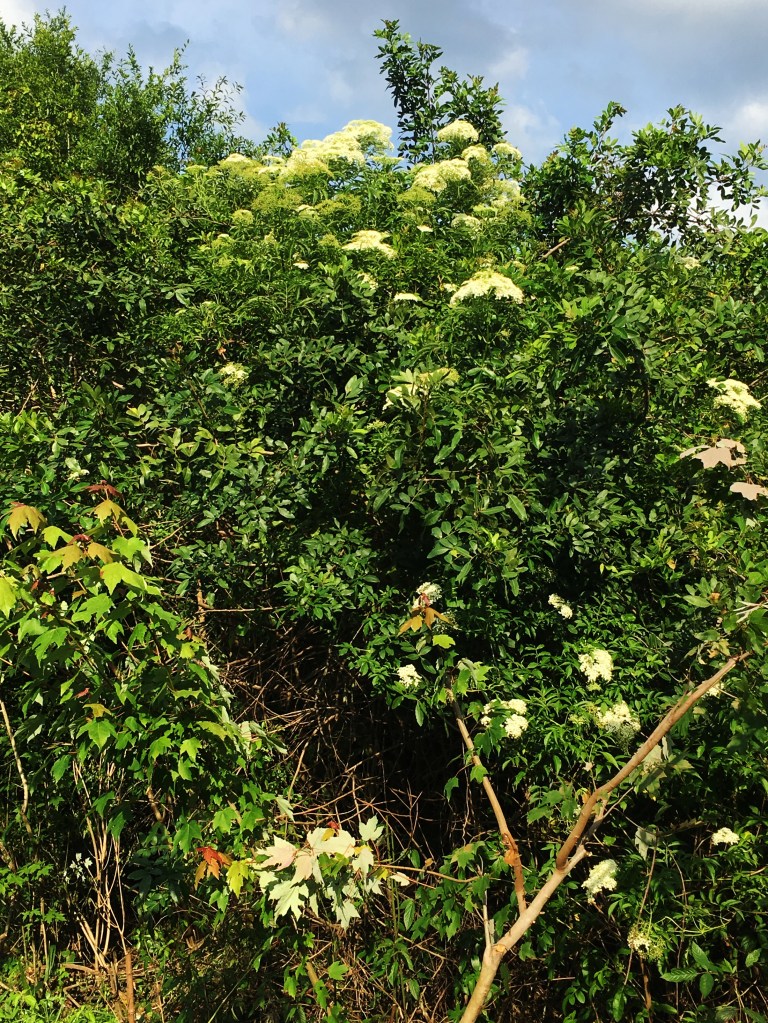
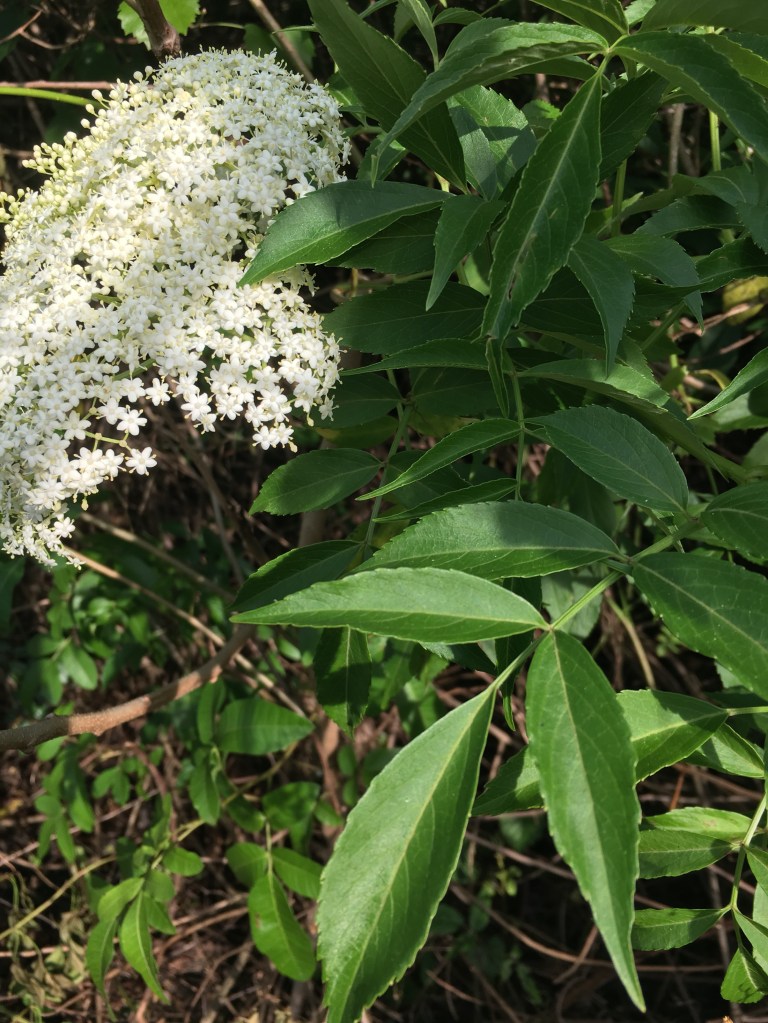
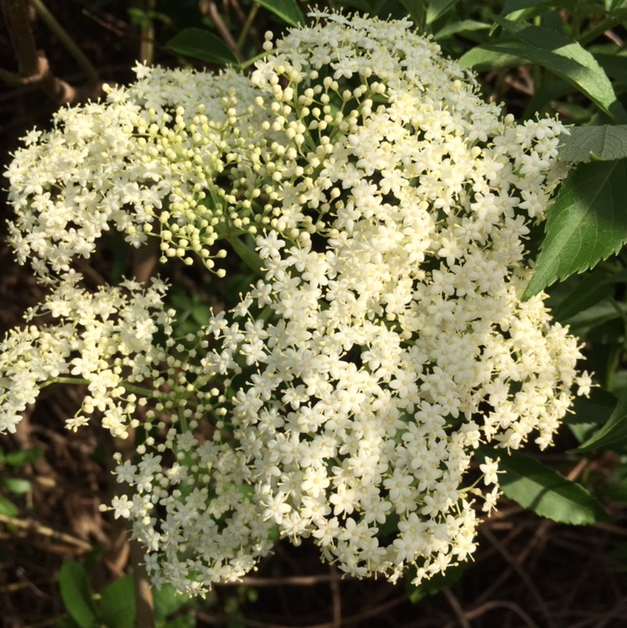
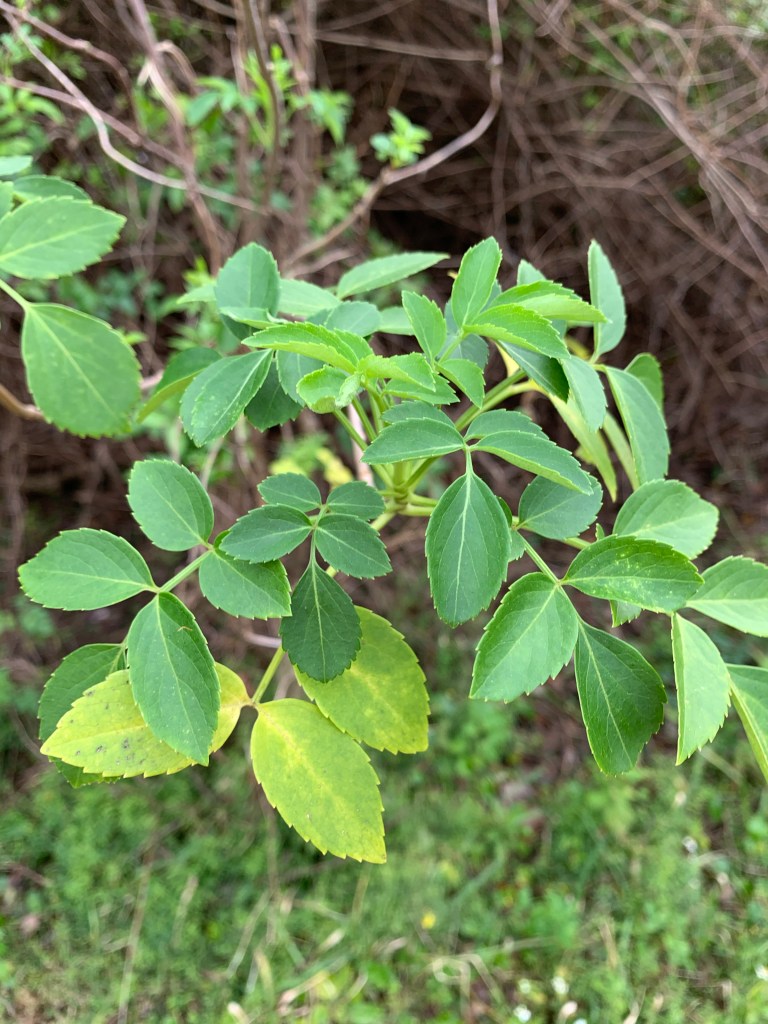
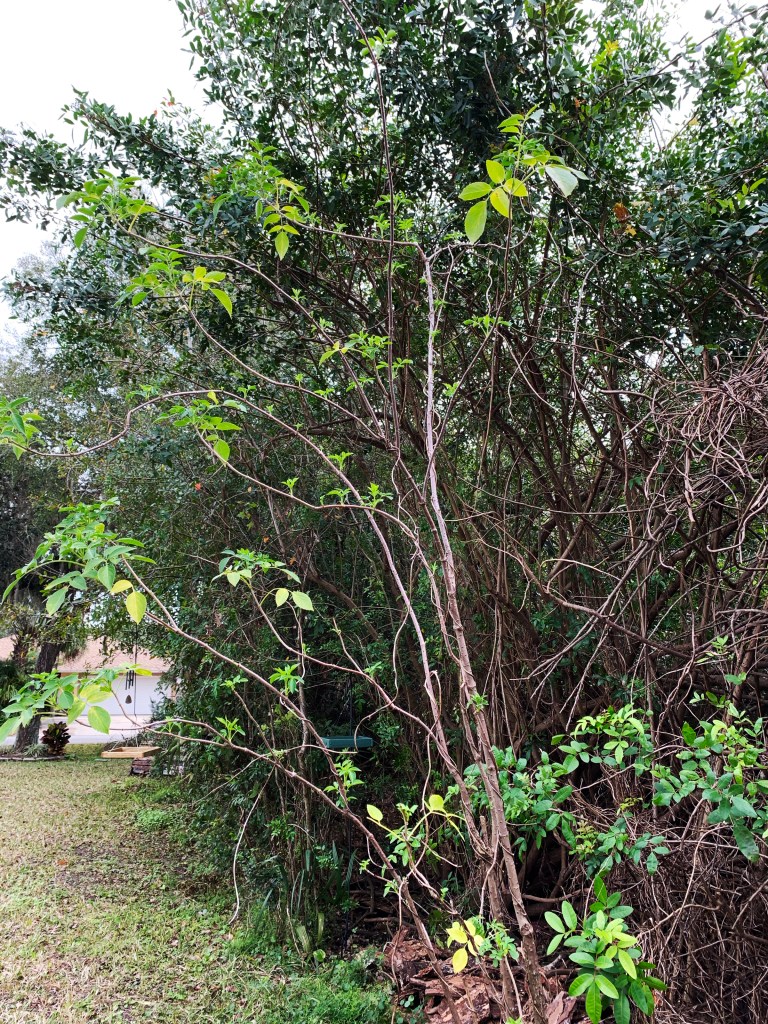
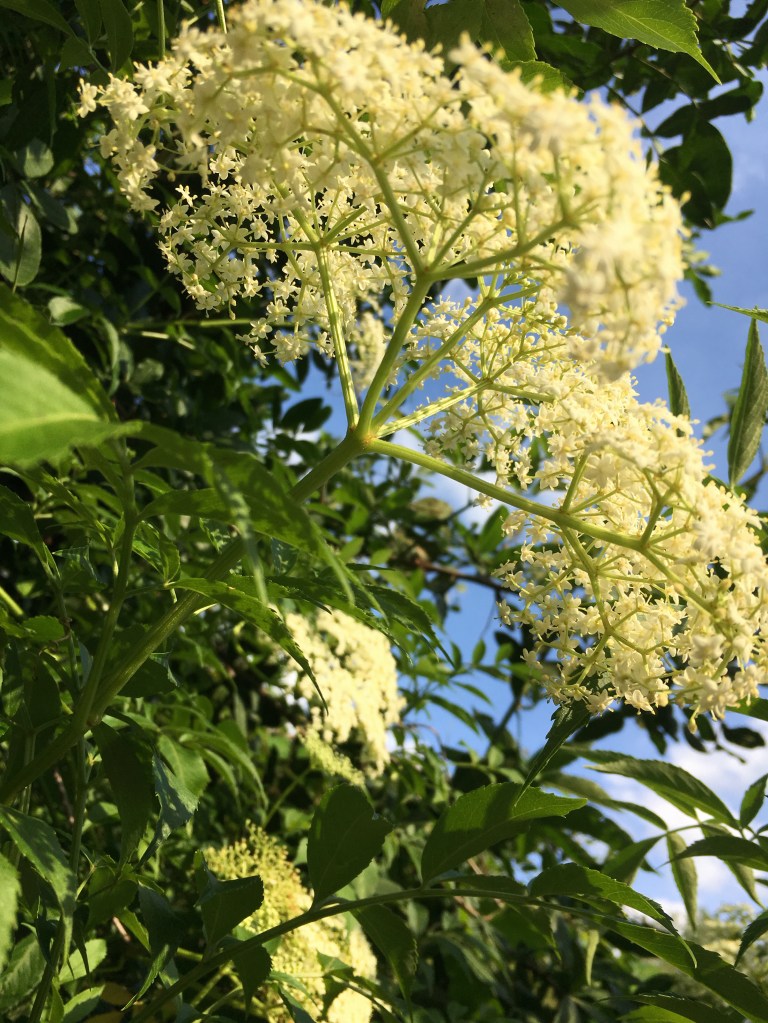
I’ve included a new volunteer Elderberry with a photo of the larger Elderberry in the woods. The tree has pretty white clumps of flowers and dark berries during the warmer months. The berries are toxic to humans when raw, but edible when cooked. Many animals and birds can eat the berries, but I think I will pass!
Elderberry flowers
Elderberry leaves and flower head
White Elderberry flowers
The Elderberry has berries and white flowers
A young Elderberry tree growing at the edge of my yard
Elderberry flowers
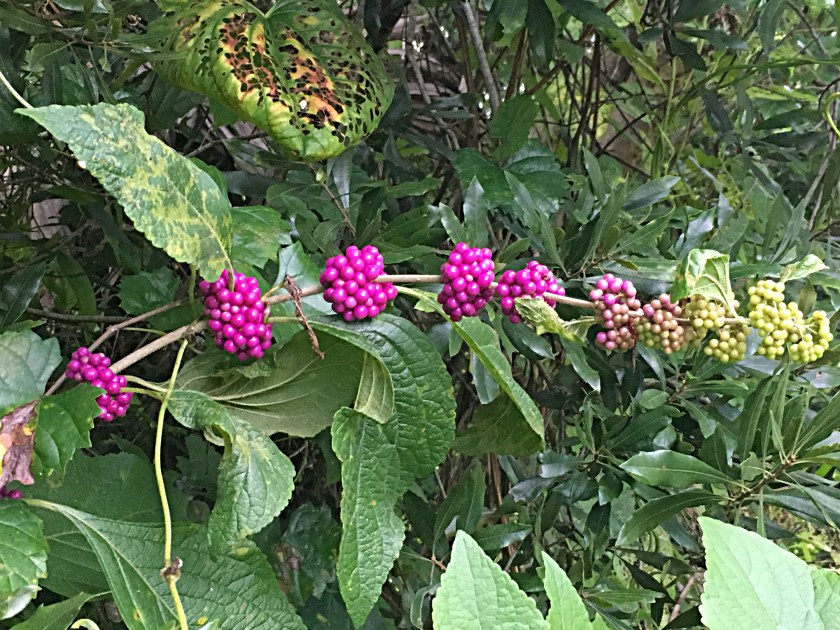
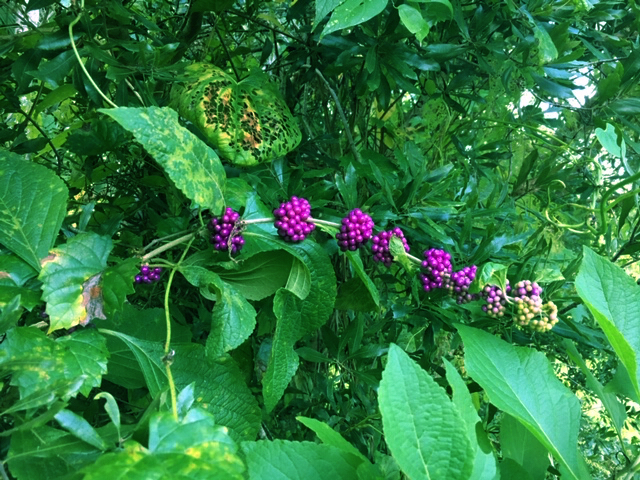
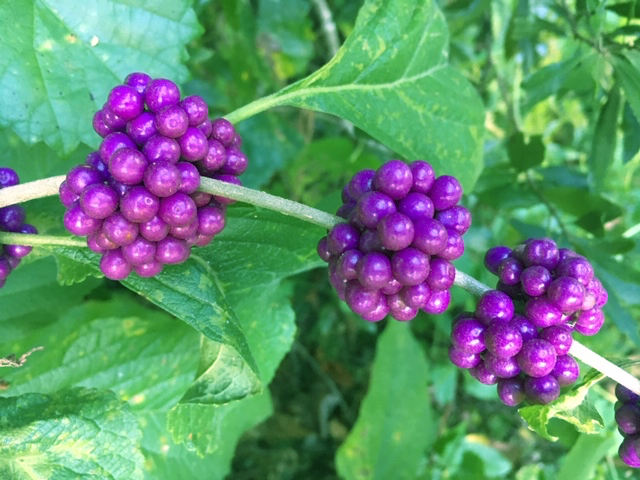
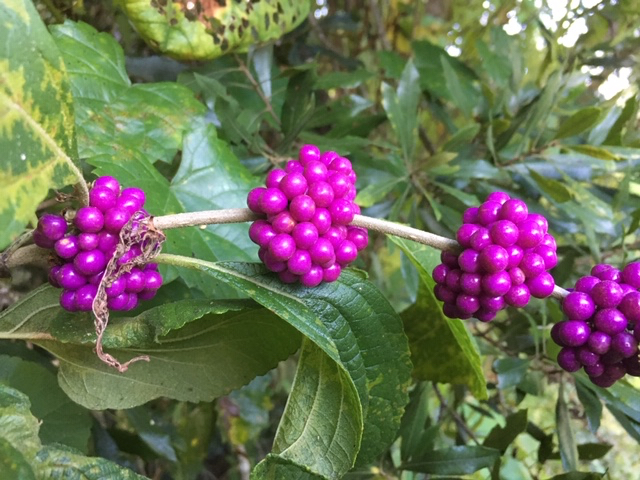
The Beautyberry – Florida Native
When I came across this stem of berry “bubbles” I took some photos not knowing what it was. The Beautyberry bush is a Florida native plant and this one is located in my backyard.
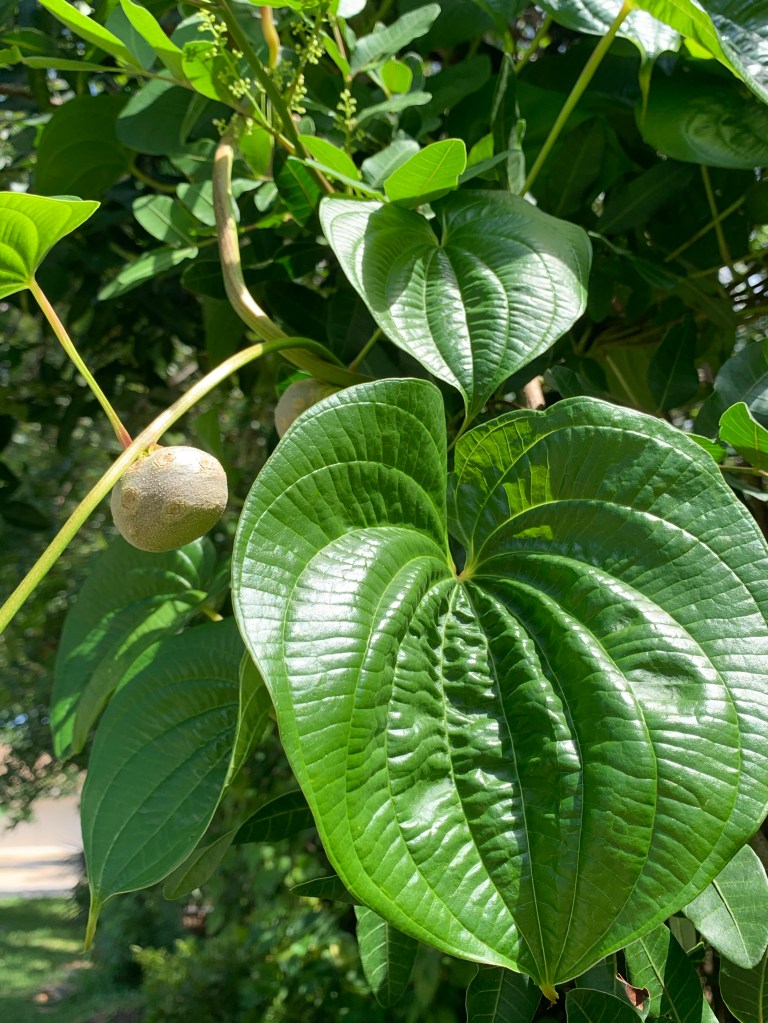
There are many obnoxious and non-native vines in Florida. Most were purposely brought here for some reason and then they grew out of control. The potato vine is one. See my photos below and more photos at the UF site.
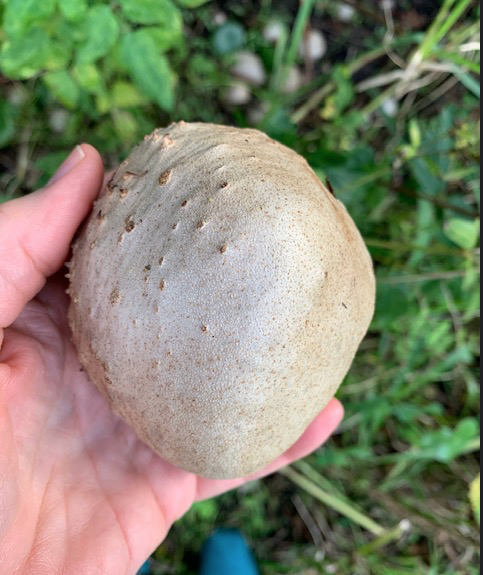
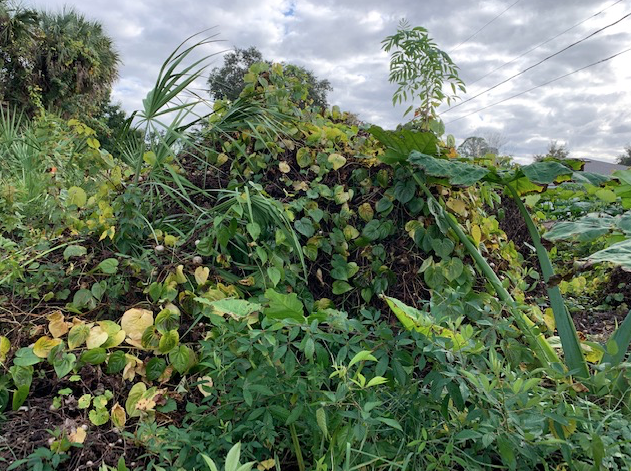
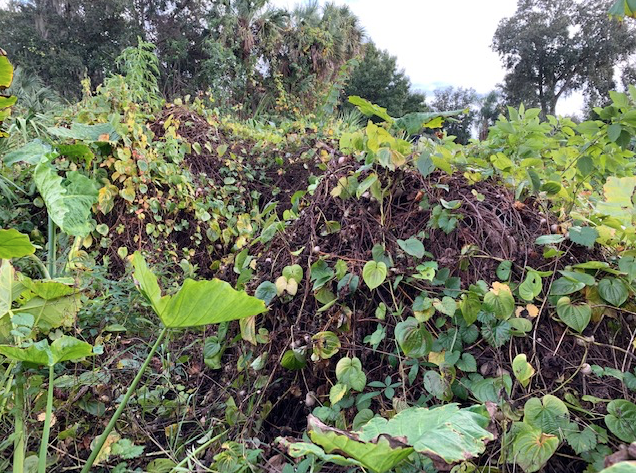
Because of the long months of agreeable weather for growing, vines can easily take over a landscape. The potato vine creates loads of potato-looking things of all sizes that become more vines. Native trees and shrubs can become smothered.
Leaves of the potato vine
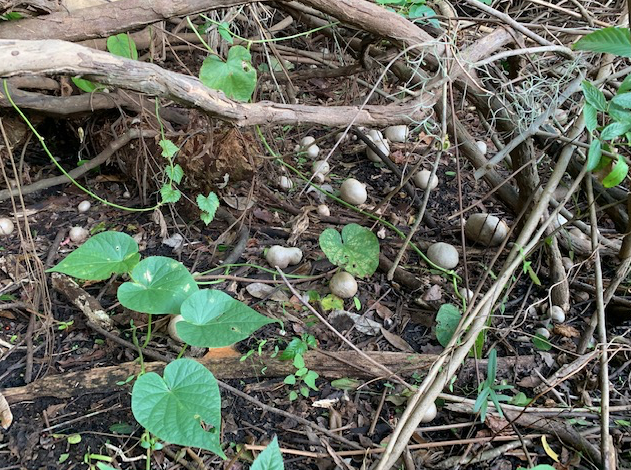
Air potato, large size
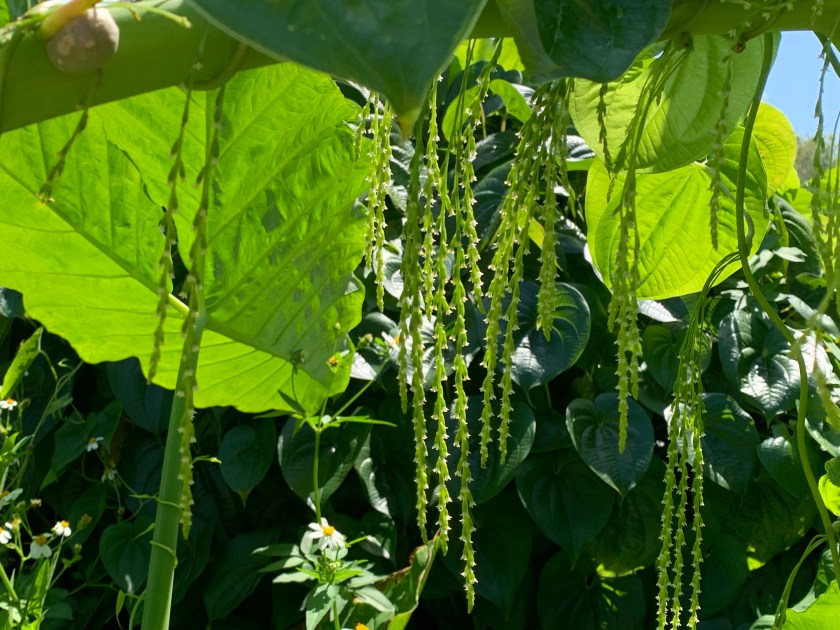
Hanging flowers on potato vines
The empty lot next to my yard has many potato vines crawling all over the vegetation
Potatoes at the edge of my yard
Potatoes and vine under roots of the Brazilian pepper tree
Vines growing over vegetation
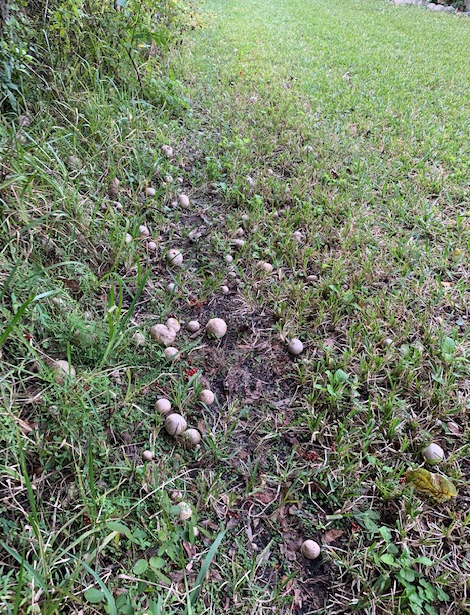
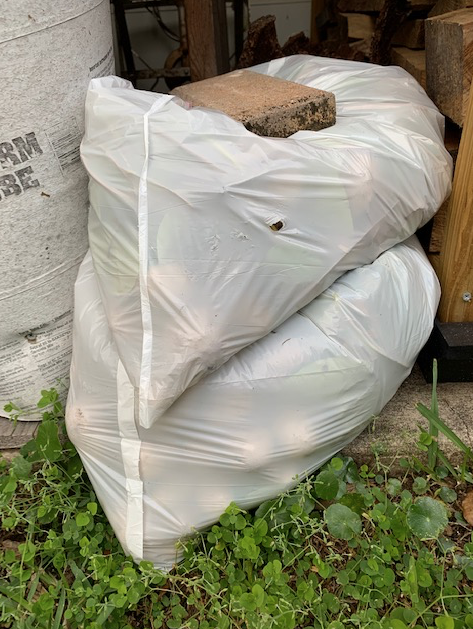
I filled these bags with potatoes to destroy them
Thorny vine – unknown
Unknown vine with thorns
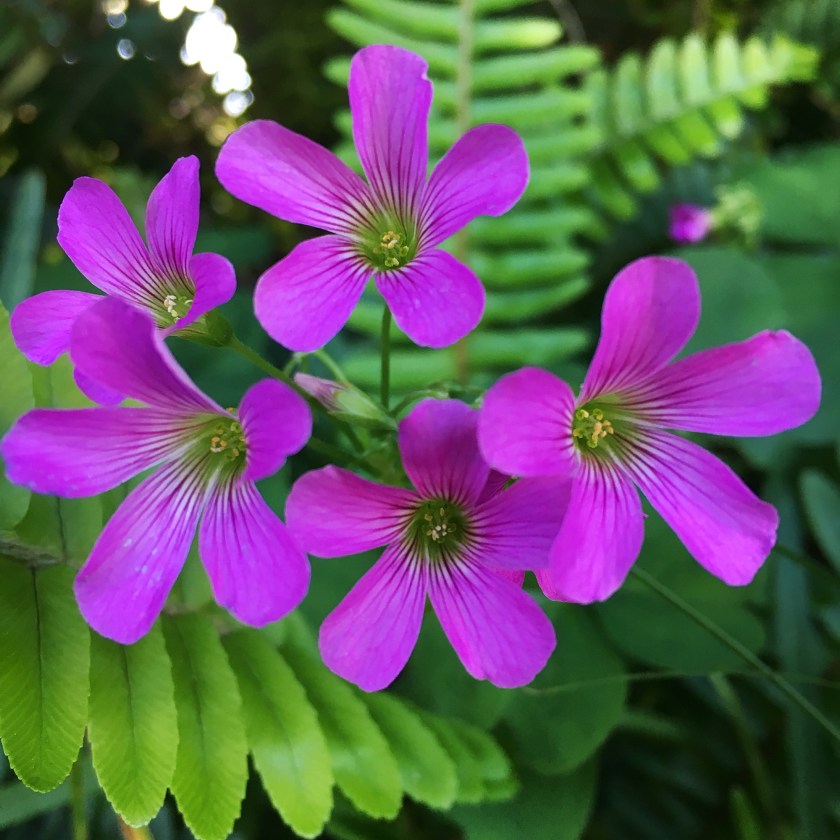
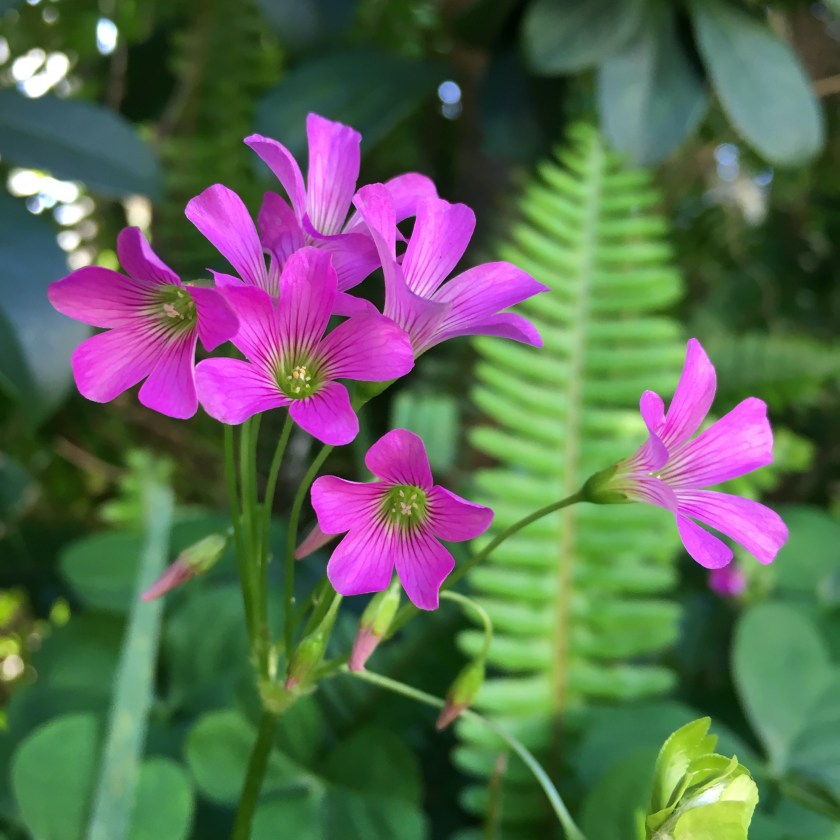
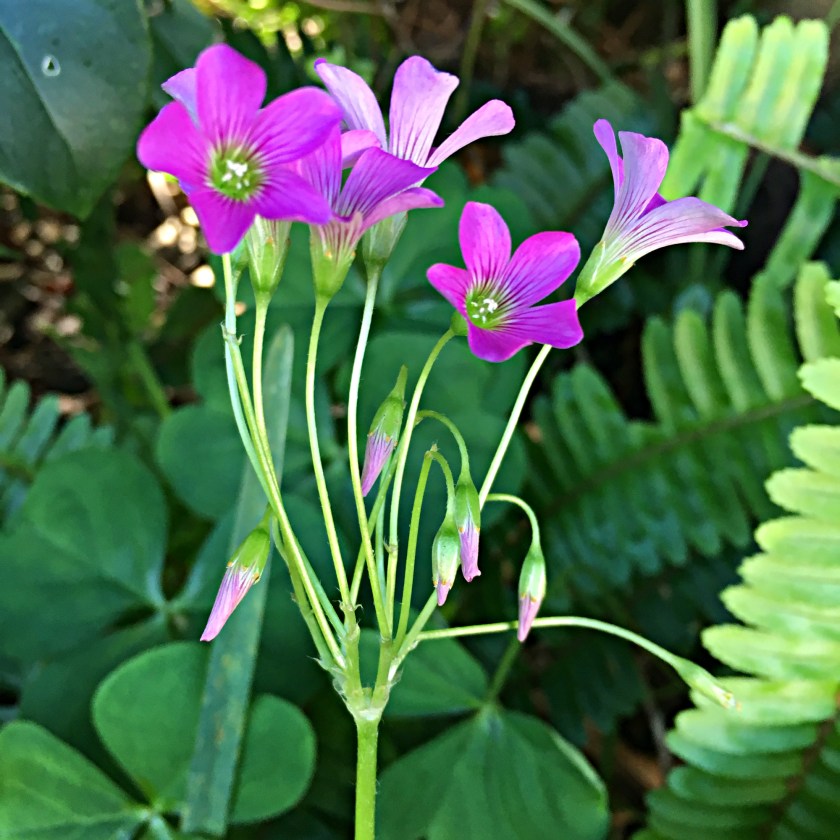
Pink Wood Sorrel – Clover
I call this pink wood sorrel plant a “clover” because of the leaves. I don’t know if it is a relative to clover, but it blooms with the prettiest little dark pink-purple flowers. I’ve had it pop up in my front garden bed all on it’s own, but this plant below I photographed along the shrub line out back.
It does die down and disappear, but comes back.
Clover flowers
Pink wood sorrel
Elephant Ear – Non-native / considered invasive
I was surprised to see that the Elephant Ear plant is not a Florida native. I always associated it with this tropical climate, but it came from South America. An interesting note: The tubers of this plant can be eaten.
Elephant Ear
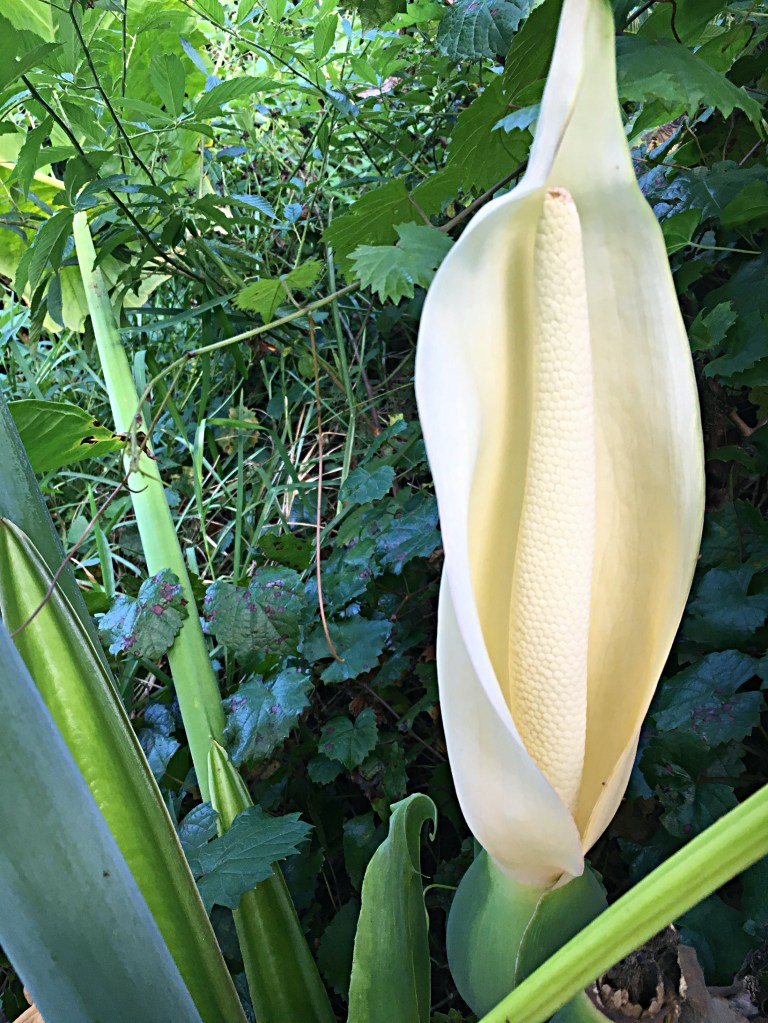
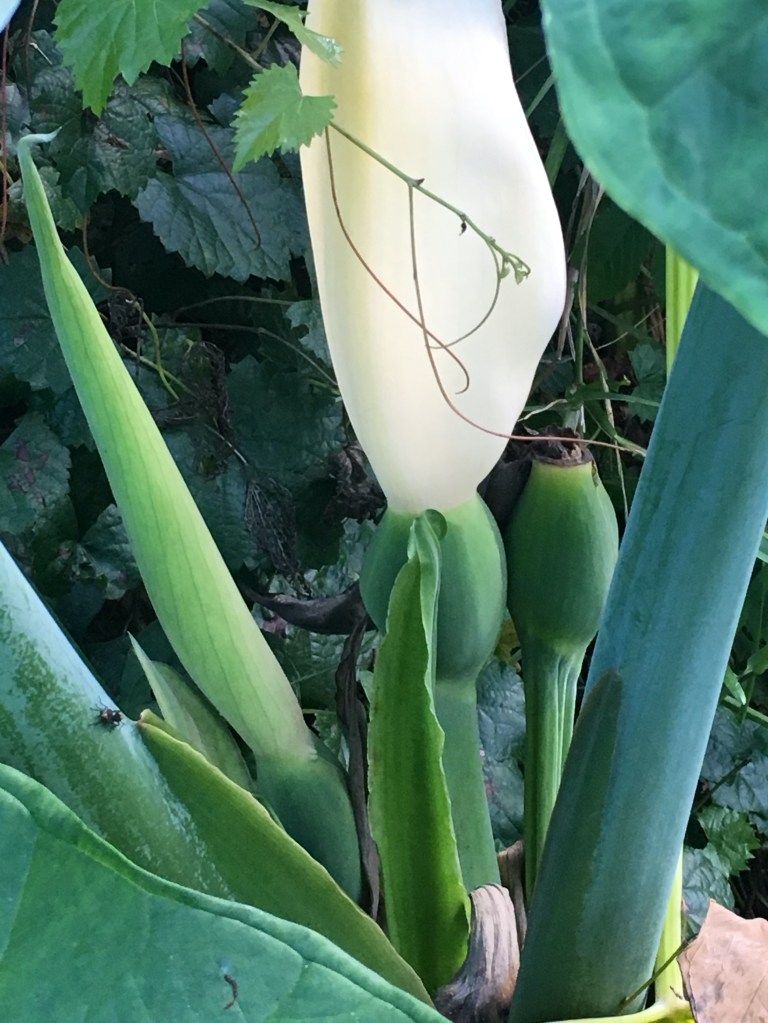
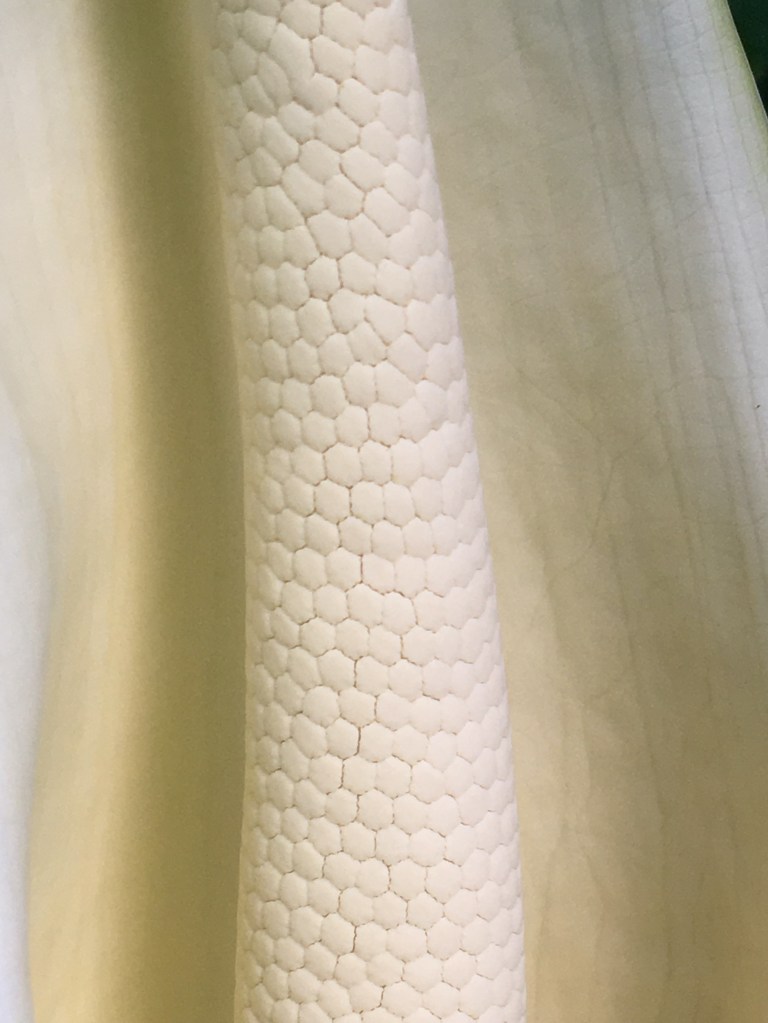
The elephant ear has quite a unique flower
Flower closeup
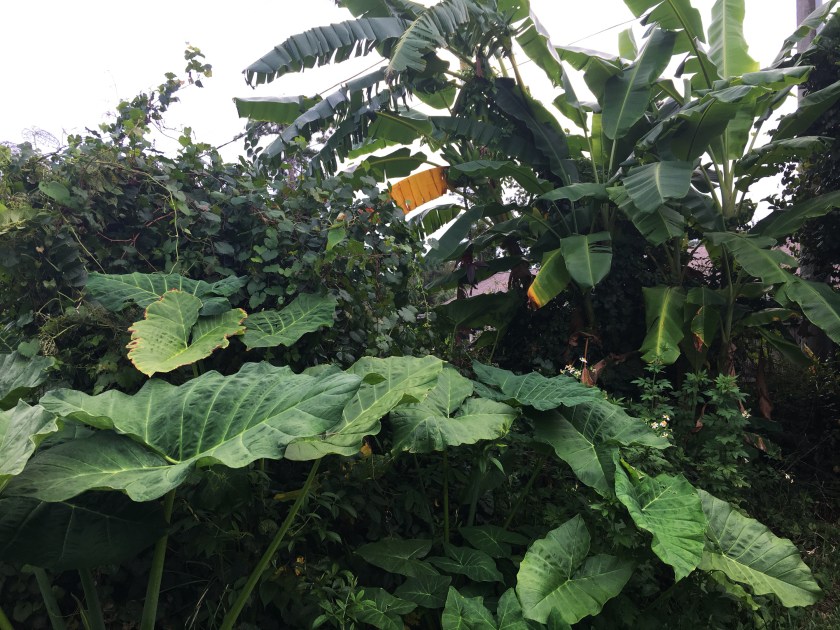
Florida jungle growth
Muscadine Grape Vine – Native (no photo)
The Muscadine Grape vine is not unwanted like the other vines mentioned here. It is a Florida native and grows all over the state.
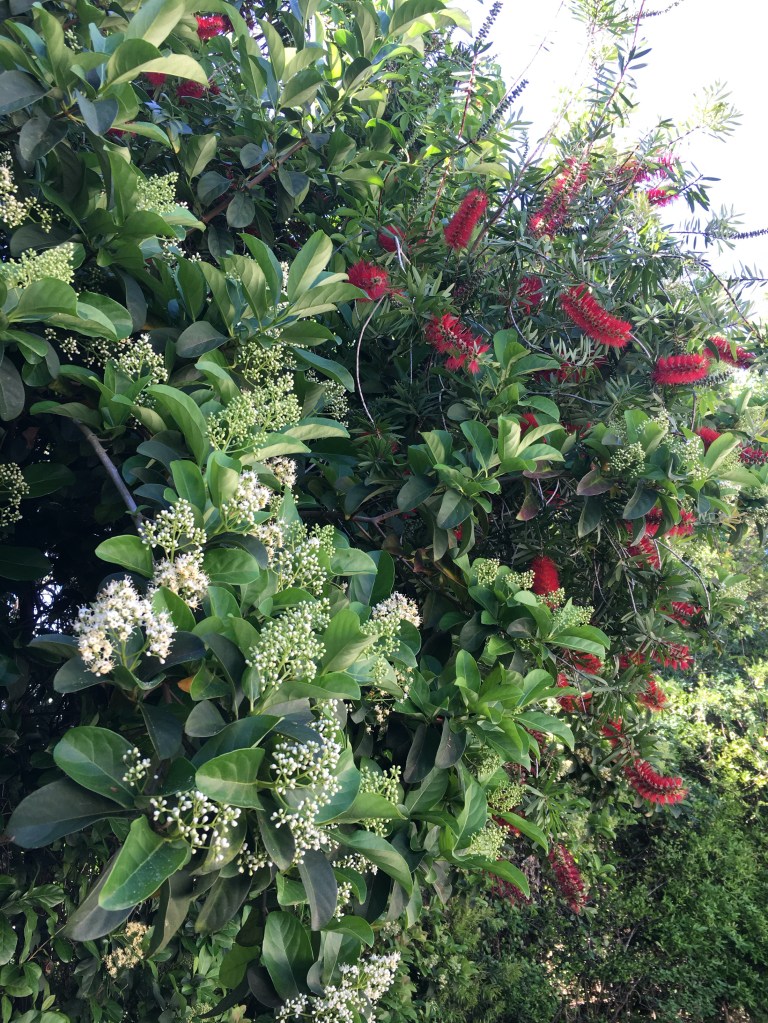
Bottlebrush
Along the back of my lot an overgrown shrub border contains a couple of bottlebrush trees.
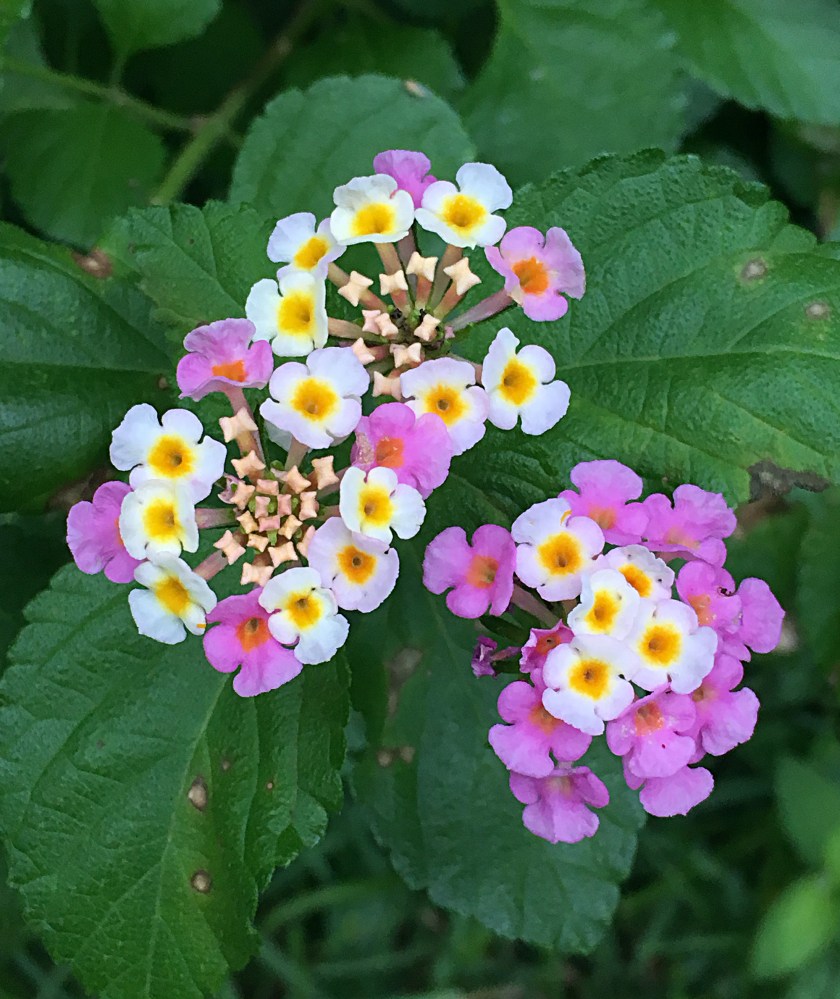
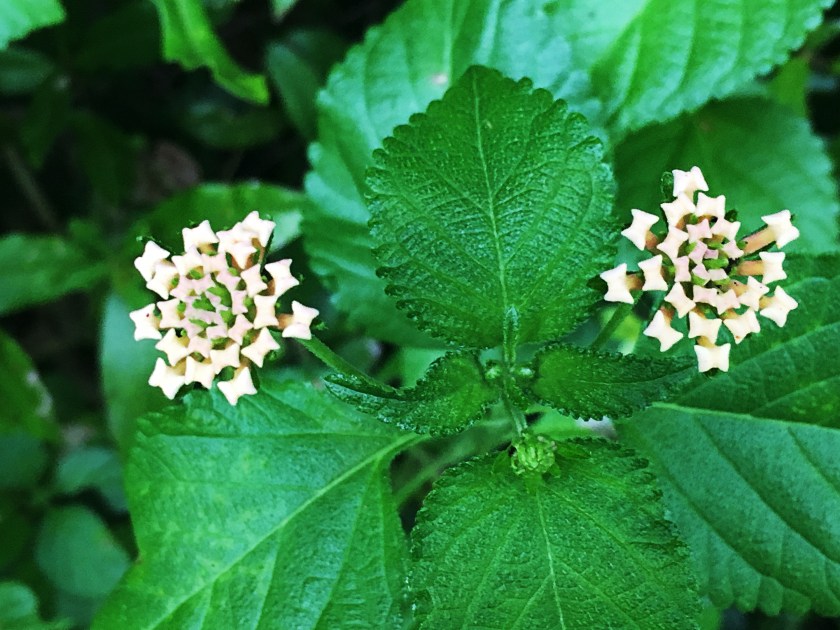
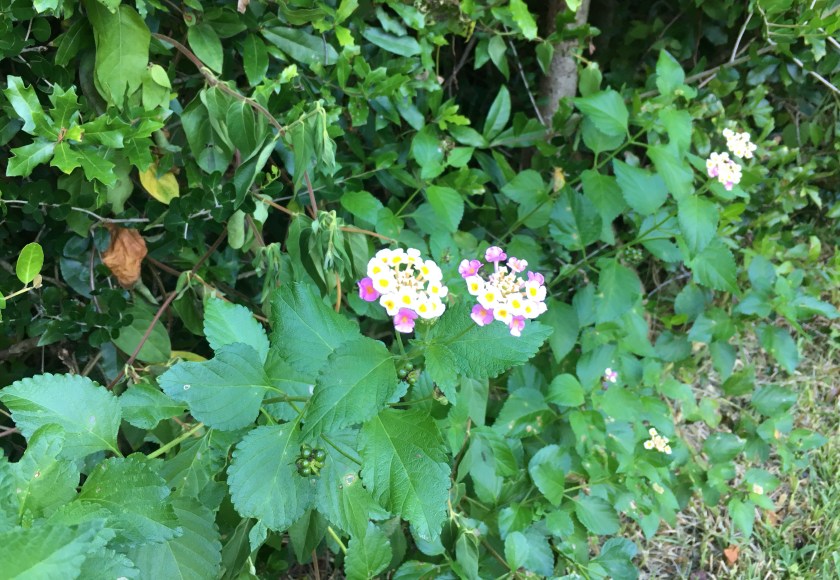
Lantana?
I photographed these little flowers without knowing what they were. Possibly they are Lantana, which is also an invasive plant here in Florida. It is listed as a non-native plant at the UF site.
Lantana
Lantana buds
Unknown Flowering Vine – Probably the Invasive Japanese Honeysuckle
I took this photo of what I think was a vine with white flowers resembling the honeysuckle. I’m not sure if it is the invasive Japanese Honeysuckle or not. I will look for it again in the side yard when plants begin to flower. Unless….
I have been pulling out long vines with leaves similar to this vine. The description is that it grows over everything blocking out light and killing smaller plants, and the vines are definitely long enough to do that. Some of the vines I pulled have black berries, which can be seen in a photo at the link above. I’ve been dealing with the vines while cleaning up a space for my new backyard garden.
So not be tempted to plant this as it is a real pain to remove. It is NOT a Florida native, so choose a vine that is.
Japanese Honeysuckle?
In Closing
Once I began to add photos and identify the growth around my yard, I have found that many of them are invasive and unwanted. Trees, shrubs and vines are labeled “invasive” when they block out native growth by taking over spots where native things should grow.
When shopping for yard plantings look for “native” plants. I will have to remove as best I can the plants that should not be allowed to grow. The new garden area I am creating already has a small Brazilian Pepper tree which is small enough to cut down.
Once I have cleaned out the vines, I’ll look for native plants to add to the landscape.
It’s January and now that the weather here in Florida is cooler, working in the yard has become a priority.
Yesterday I began to tear out vines from the back corner to see what type of trees and shrubs could be saved. The vines are everywhere and they grow up into the trees covering branches and bending small trees down.
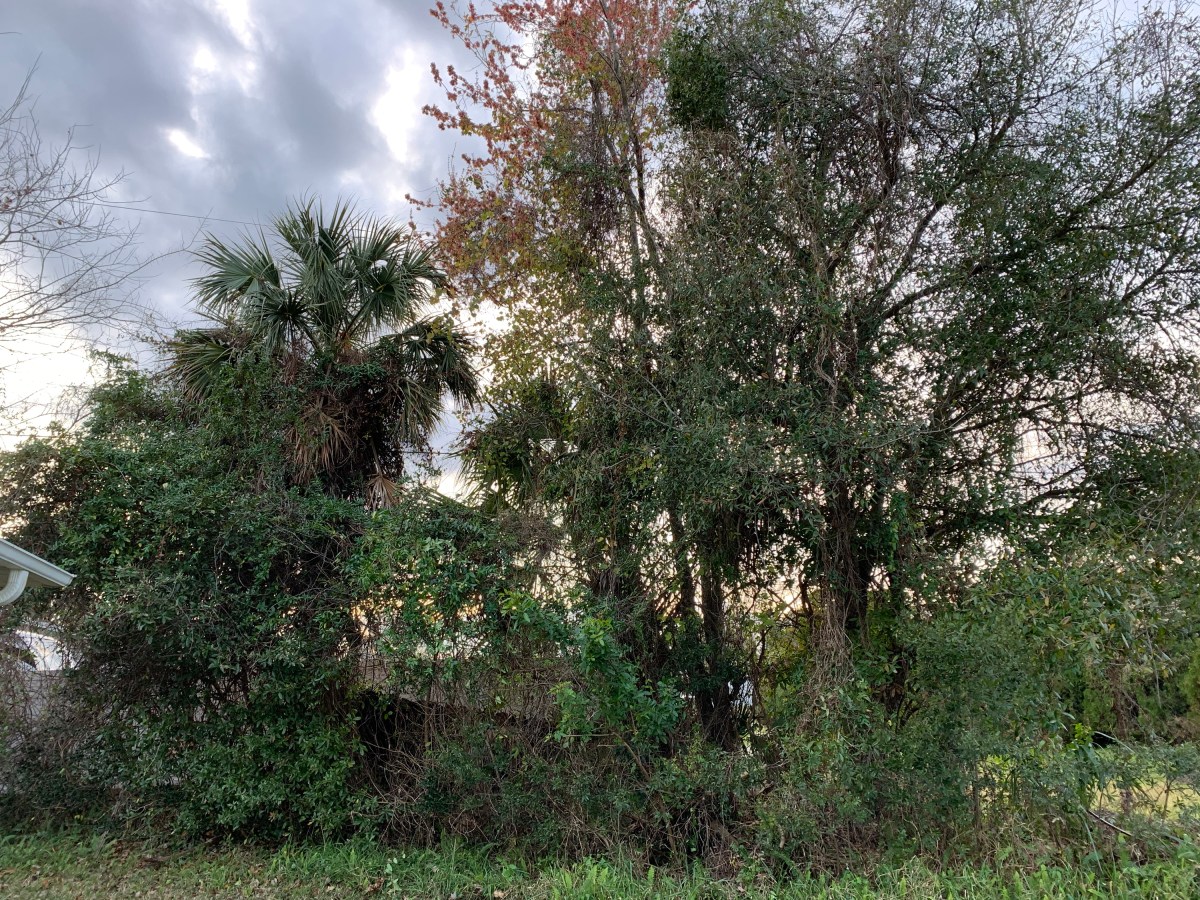
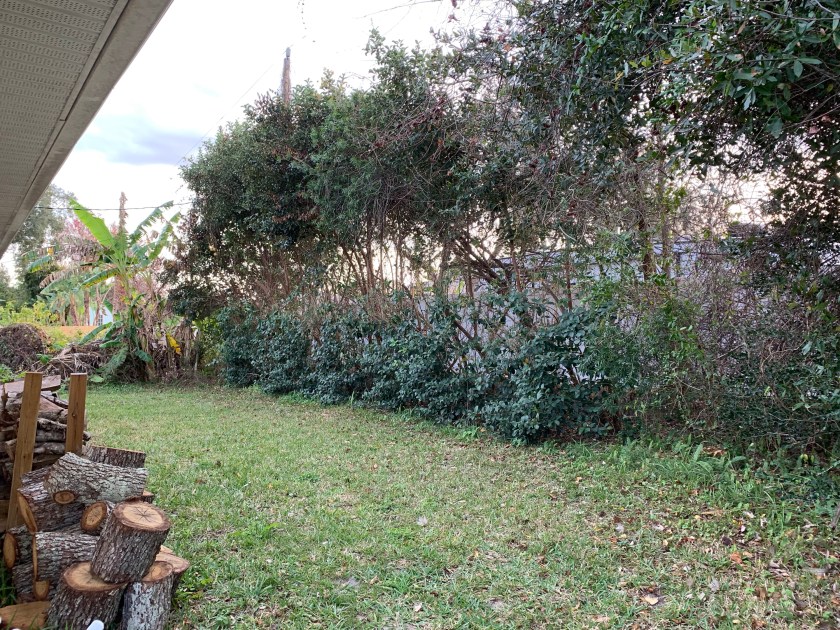
Overgrown and neglected area of the yard
This little area of our small yard has been used to toss palm fronds and yard debris ever since we moved in. I never really knew for sure where our actual lot line was. Piles of dead branches and palm leaves can become a haven for small animals so I’ll have to be careful when cleaning up.
Backyard lot line with neighbor’s white fence and travel trailer just beyond our hedges.
When the people behind us did some landscaping to move a big travel trailer behind their house, they tore out all the vegetation (on their side) which divides our properties. It opened up the view a lot, but they also put up a fence which required a survey and finding the lot lines.
Location of new garden area
Now that I can see the markers back here for our property line, I can better decide what to do with this area of the yard. First thing is to clean up the unwanted vines which are entwined all up in the trees.
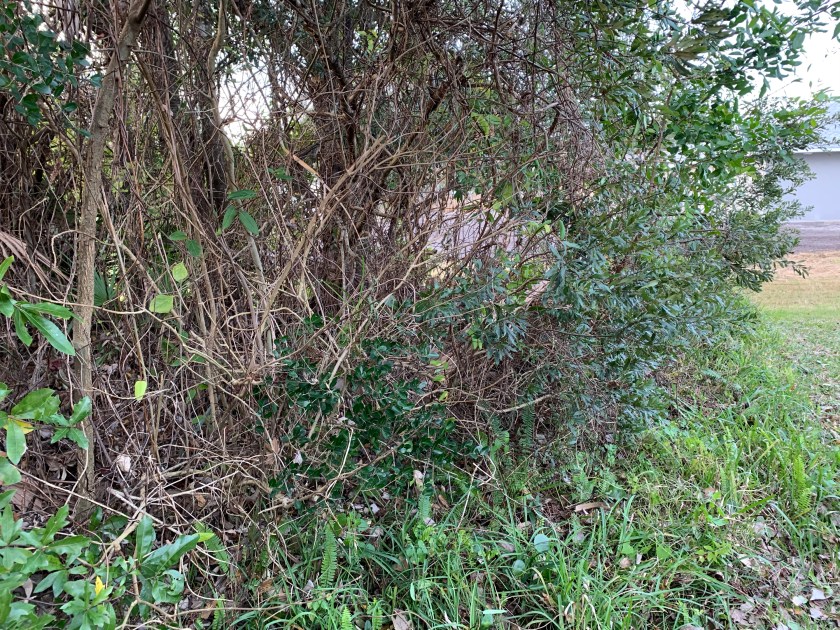
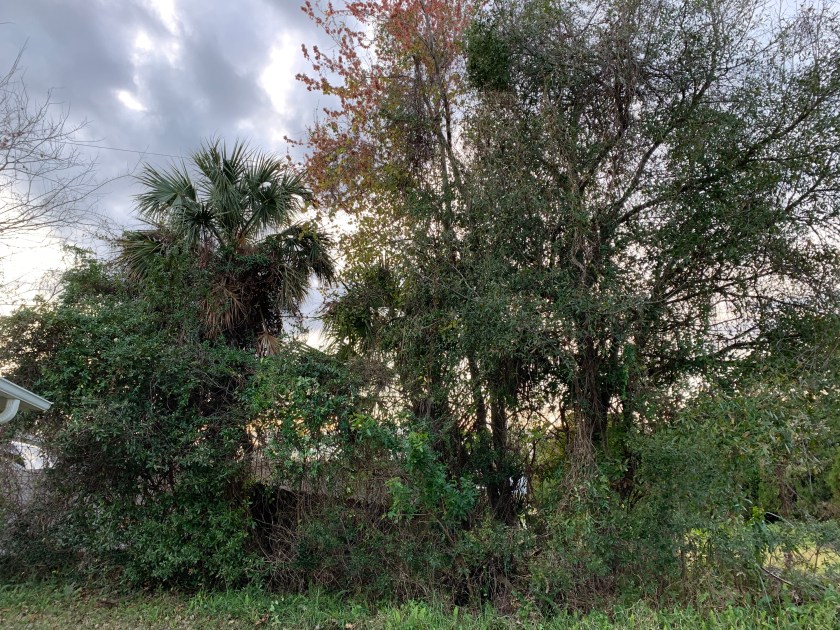
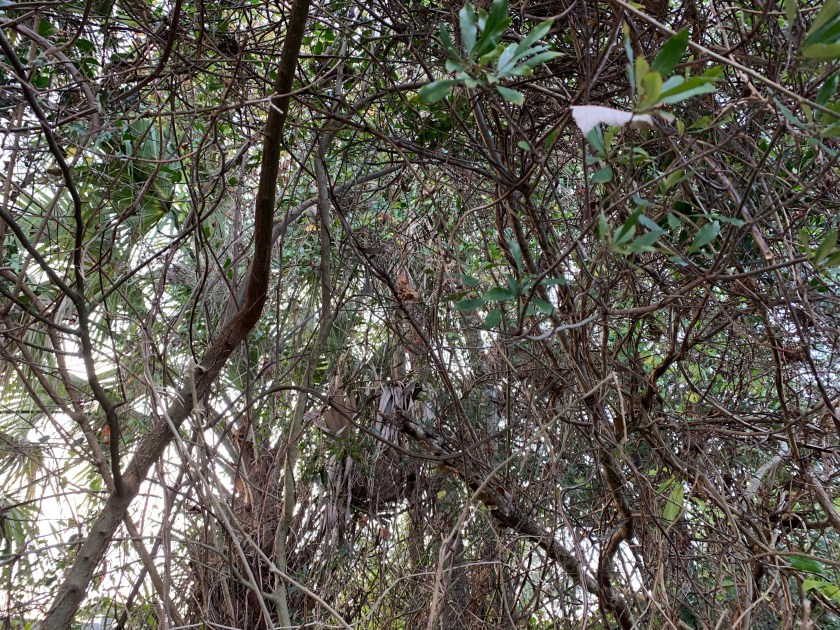
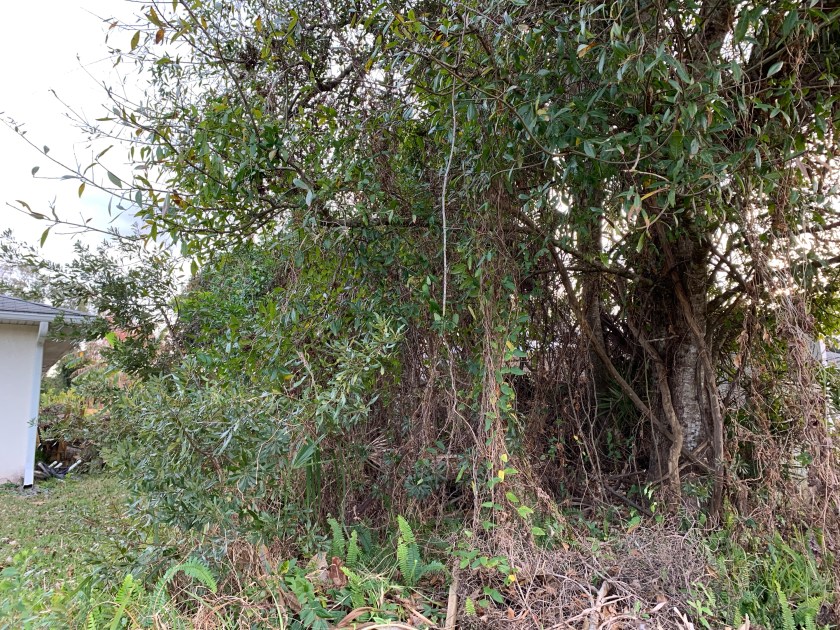
Vines strangle the trees
Within my property line there is a large oak, tall palmetto, and another tall tree I can’t identify – it is red now, in January so maybe a red maple??? There are also smaller trees growing beneath a ton of vines. Many ferns act as ground cover in the area. I want to leave it as natural as possible while making it neater.
Yard cleanup
Yesterday I began pulling out the vines and tall grasses to uncover some growth. I don’t really know my Florida trees, so I’ll have to do a bit of investigating to identify what’s back there. I’ve begun a page listing photos of the trees, vines and shrubs to identify.
The University of Florida site also has lists of shrubs, and other ways to enhance a Florida yard for wildlife. I want this new garden area to be bird, butterfly and bee friendly. I will plant Florida native plants that attract our native wildlife.
Unknown bush / tree – what i this???
I filled my two trash barrels with yard debris that won’t be picked up until Wednesday. Then, I will fill them again. I now have two additional piles of vines to drag down to the road.
I used to be very nervous working in my Florida yard – the yard from long ago. Back then, there were loads of snakes – some poisonous – but now most wild animals have lost their wilderness and I never see that type of thing these days. In the 4 plus years I’ve lived in this neighborhood I’ve seen three snakes. I rarely see a green lizard, and a turtle shows up now and then – not a gopher tortoise, but a water type turtle.
The worst thing I might encounter these days is fire ants hidden down in the tall grass.
I don’t like where I live, but I’ve decided to make the best of it. Cleaning up a little section of the yard will be a nice thing.
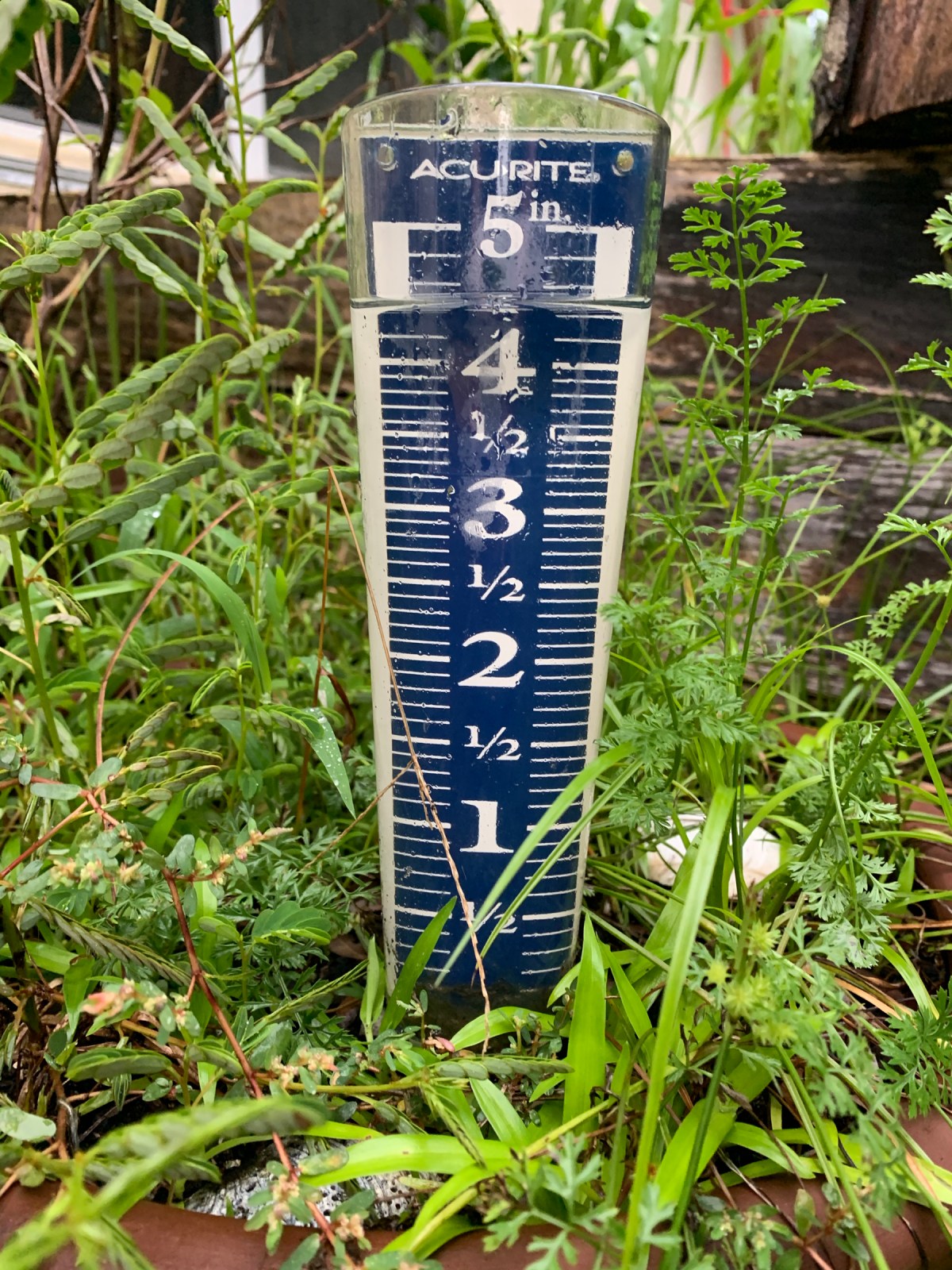
The other day we had a massive storm, with a tornado touchdown just west of where we live. It brought 4.5 inches of water, which filled the drainage ditches and low-lying areas. In Florida, rainwater seeps away into the ground fairly quick and we can handle that amount of rain.
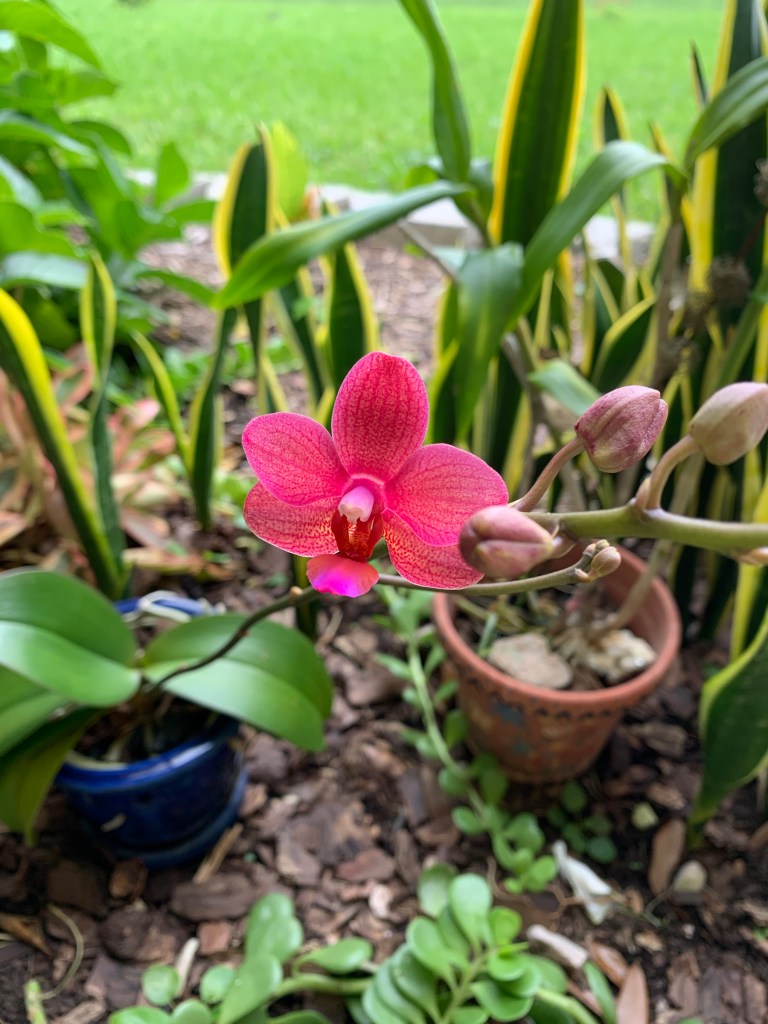
As I was picking up overturned plants and inspecting my gardens, I discovered that my old orchid plant had a stem full of buds! I have two orchid plants that sit outside in the shade of a bigger shrub. Orchids appreciate the humidity, but don’t like direct sunlight. That is the extent of my orchid knowledge, and I moved them outdoors where they can get what they need.
Finally – blooming again
This orchid was a gift from my daughter many years ago when she was a little girl. I’ve kept it, and traveled all over New Hampshire with it in all my moves. Now I (and it) are back in Florida, and the plant seems to be happier. I can’t remember when it bloomed last.
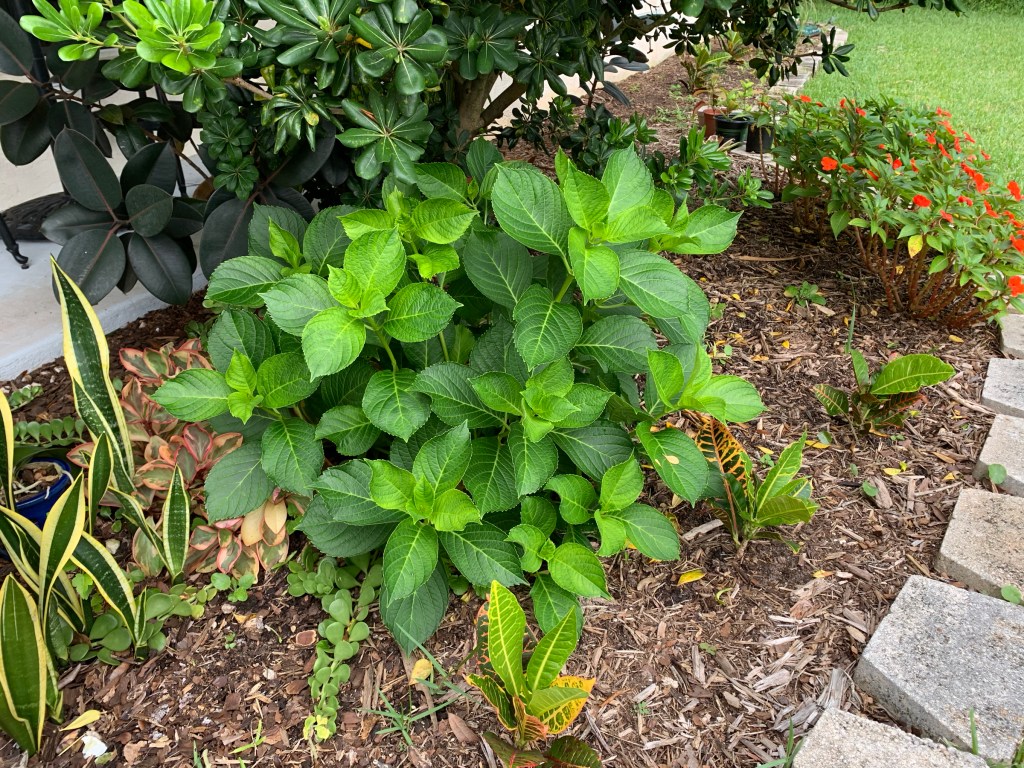
Just behind where the orchid sits in the garden is my hydrangea! It has really grown, but there are no flowers. See my first hydrangea photos here. It remained quite small for a while, but now it is taking off. Maybe the roots have taken hold, and the fertilizer has kicked in.
Florida outdoor hydrangea shrub
Did you notice my little croton starter plants in the photo above? I have four across the front of the garden (three in the photo). I rooted them from cuttings.
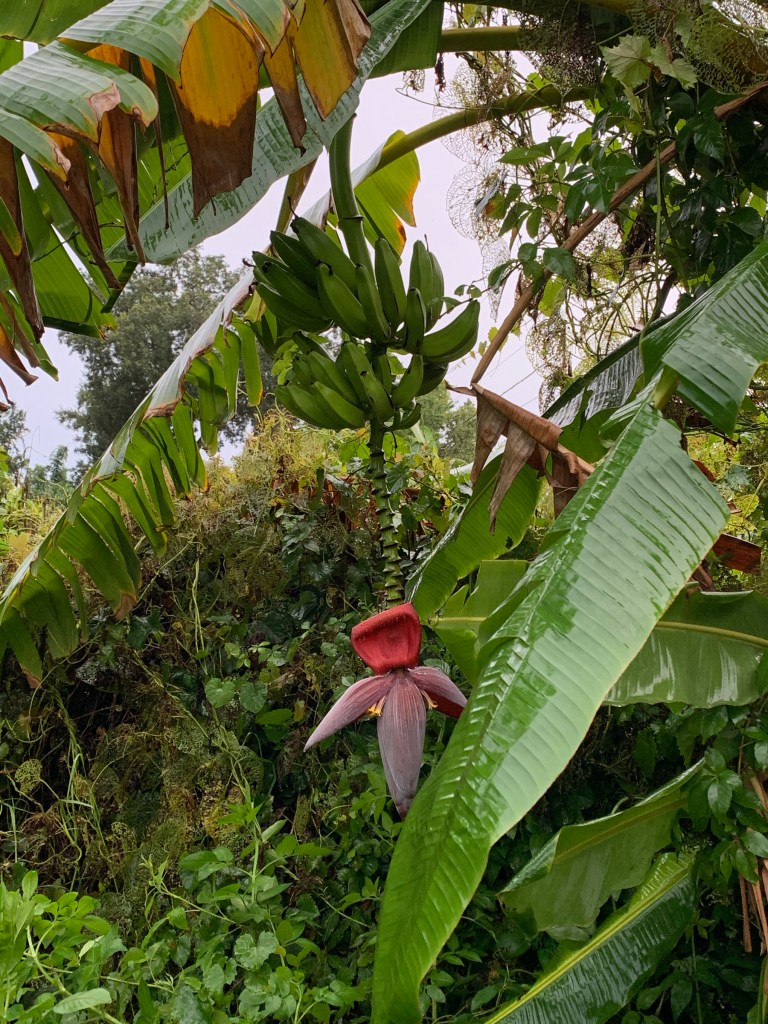
The wind blew the banana tree over a bit so now the bunch of bananas growing is reachable.














 Hydrangeas Blue