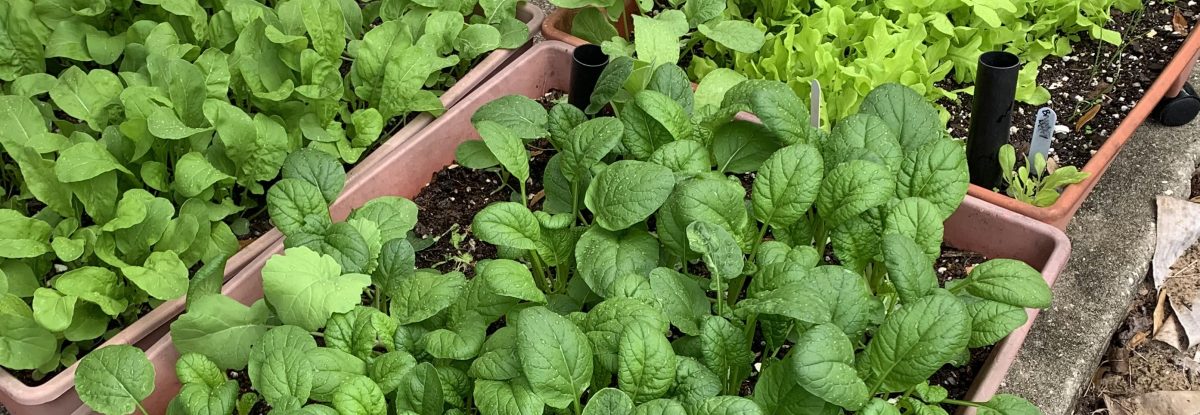
What’s Growing in My July Florida Garden

It is so hot down here in Florida in the month of July that I rarely go outside.  This morning I scurried around my yard and took some photos until I just couldn’t stand being out there.  I think I lasted less than 5 minutes. The heat index says it feels like 100 out there. Add in tons of humidity, and you have Yuk.

So lets begin with the flowers. The crotons and hibiscus are loving the heat. They were made to withstand summer heat in this disgusting climate. Thankfully we are getting lots of afternoon thunderstorms that keep me from having to go out and water.

red hibiscus
Red Hibiscus

My rose bush hasn’t had any blooms for a while, but I noticed a small rose and bud today. It probably needs more attention, and more fertilizer.

small carnival rose and bud
Small Rose and Bud

I bought some Impatiens when I first moved into the house, and unbelievably they are still looking pretty good! I also planted my mother-in-laws-tongue, or snake plant, in the ground and it is doing well. I’ve put a few of the big seashells I’ve collected into the garden as decoration. The older, worn shells look good displayed that way. I had to put them out front, away from the raccoons, so they wouldn’t drag them off!

seashells decorating garden bed
Seashells Decorate the Garden Bed

The Persian Lime tree is doing great. It’s still in a pot, and has lost a lot of the fruit it started with, but I still have some good size limes coming. I’ll have to figure out when to pick the fruit.

persian lime fruit on tree
Persian Lime Fruit

I have 2 eggplant plants, but neither one is growing any eggplants. They flower, and lose the flowers and keep growing tall.  They are a good spot for ladybugs to lay their eggs and eat aphid infestations, but that is about it.

Maybe there aren’t enough bugs to pollinate the flowers. I need more flowering plants in and around my garden.
But I tried. I bought a bunch of marigolds because I always grew marigolds in New Hampshire. They usually became beautiful rounded bushes with tons of flowers. But that is not happening to these marigolds.
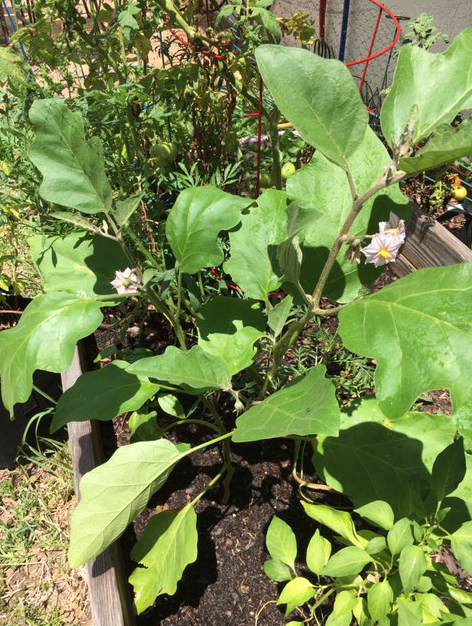
eggplant
Eggplant

The marigolds have been growing for months, and I only have about 3 flowers total. The stalks have grown very long and tall, without flowering. It’s very bizarre. Marigolds are good to grow near tomatoes and other vegetables because they will help keep certain unwanted bugs away.
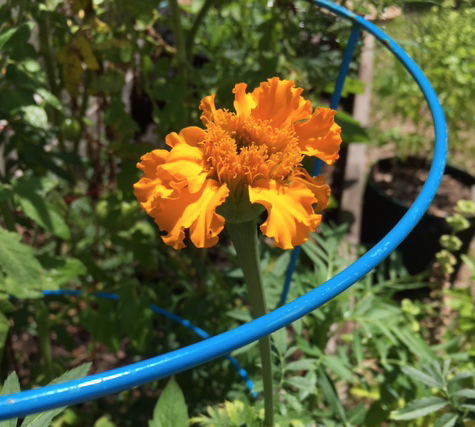
orange marigold
Orange Marigold

On to the tomatoes. I have 2 tomato plants still growing, but neither one looks exceptionally good. Both have some small green tomatoes, and I don’t know if I will get red ones to eat before the raccoons decide to help themselves.

Green tomatoes
Tomatoes

I tried covering the vegetable garden with netting, and I think that helped. But a papa cardinal somehow got inside the netting and was trapped in the garden! I went out and freed him, but I had to cut the netting off in the process. He was really freaking out, so I left the garden uncovered.
I’m not trying too hard to garden these days. It’s too hot, and I don’t think the vegetables like it either.
……. Happy 4th!

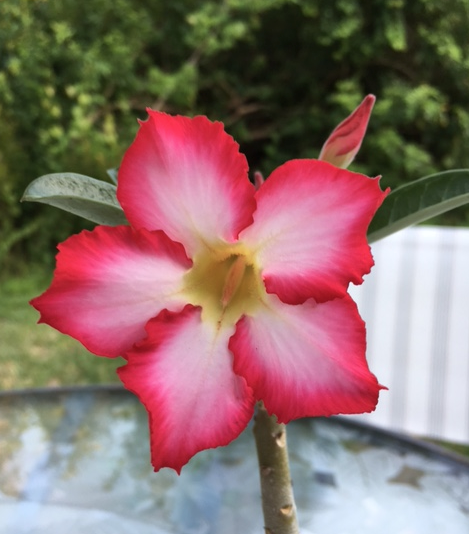
How to Care For a Desert Rose Plant

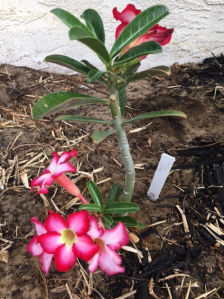
desert rose pink flowers
Desert Rose in Garden

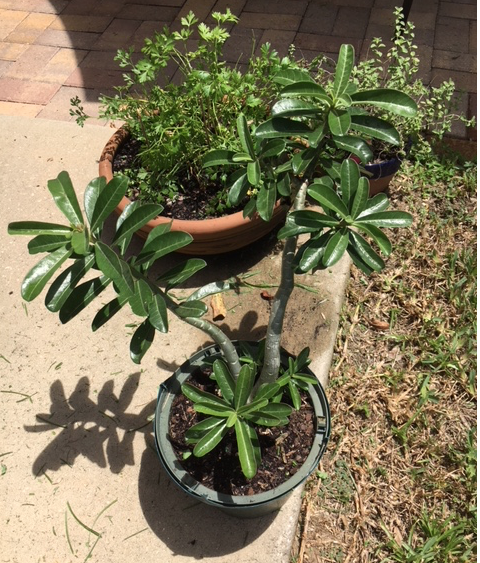
When I was given this flowering plant as a gift I was told it was a Plumeria. After seeing this same plant at the local Home Depot store, I discovered it was a Desert Rose. But before I knew what it was, I had taken it out of the original pot and put it into a sunny location in the backyard.

Sun is exactly what this flowering plant craves. But the word “desert” caused me to believe less water was better. The truth is that this plant did well with and without water.

Today I am watering it frequently, and it is thriving! So much for the “desert” title.

At the time I planted it, we were have a long dry spell here in Florida. The Desert Rose did well. I avoided watering it when I watered the hibiscus next to it, and the plant even sent out new buds, which you can see blooming at the bottom of the stalk.

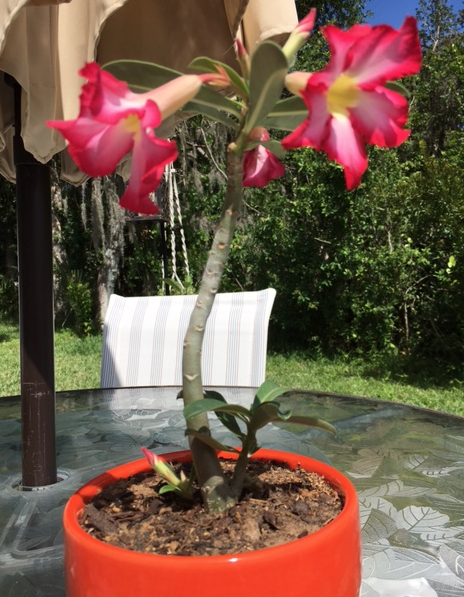
Florida is a tropical place, but some areas are more tropical than others.  I am in the central part of the state and it can get very cold (below freezing) here overnight in winter.  I was afraid the Rose would die, so I ended up digging it up and putting it into a (bright orange) pot.

pink desert rose in orange pot
Dug up and potted

The Secret to Growing a Desert Rose in Florida

Sunlight is most important, with plenty of heat. The plant can deal with lack of water (I’ve tried that), but it also loves a daily spray with the hose.

These plants develop a very thick “stem” or caudex (see them in the photo below).  This is the part that holds in the water to keep the plant thriving in drought conditions.  But apparently it does not need to grow in a desert to thrive.

Keep it in a pot so it can come inside when temperatures drop – some sites say below 60 degrees and others say 40. Just bring it inside when it gets cold to be safe.

Pictures of My Desert Rose and How It Has Grown

As I mentioned above, this plant was a gift to me shortly after I moved into my house in 2016. I’ve had the plant for nearly 2 years now.

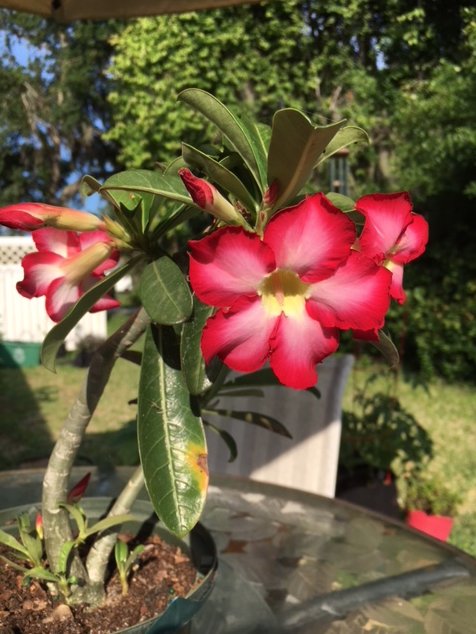
After a period of dormancy during the winter, suddenly lots of buds began to show up.  New little leaves began to grow from the base of the stem. This was about the time when aphids were appearing on all my plants outside. A daily check, and I would spray the buggers off with the hose. I let the lady bugs take care of most of the aphids in my garden, but the Rose is not near the vegetables.

desert rose
Blooming Desert Rose, after winter
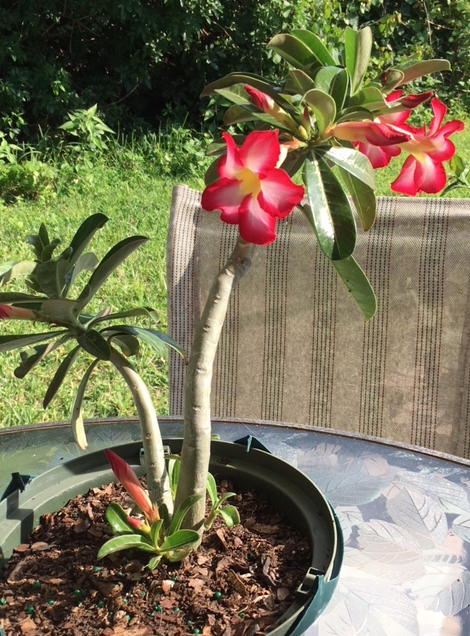
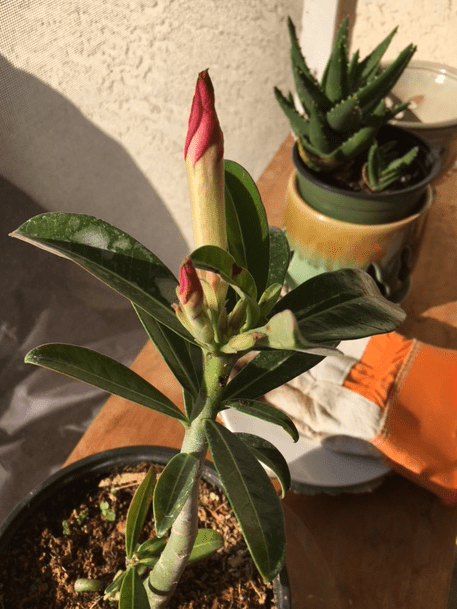
desert rose plant in pot
Give it sunshine!  It is slow growing.

In the photo below, lots of greenery is showing on the plant, which has stopped blooming for now.  It will take this time to put effort into growing stems and leaves before it begins to flower again.
Right now I am not sure when that will be.  This plant flowers more than once a year, so I expect to see buds forming soon.

green leaves on desert rose
August 2018, glossy green leaves on my desert rose.  I spray it with the hose every day.

More Information About The Desert Rose

The Desert Rose is similar in appearance to the plumeria / frangipani tree and Oleander.  The unique aspect is the thick stems. The Oleander does grow in Florida, but I have not seen Plumeria trees. Maybe they will grow in the southern part of the state.  For more information about growing the desert rose elsewhere, read my friend’s article: Desert Rose Adenium Plant for Gardening and Bonsai.

Like the Oleander plant, the Rose contains poisonous sap.   It may not be a good choice as a houseplant for families with young kids for this reason.

The South Florida Plant Guide site has more info.

Florida Yardscape Must Include At Least One Hibiscus

screen-shot-2017-03-02-at-9-27-26-am

Now that I live in Florida, my yard must contain the normal Florida perennials. Hibiscus is at the top of that list, and therefore I recently purchased a shrub and recently planted it along the side of the house.

I know that hibiscus will tolerate lots of sun and heat.  Although the tag on this one said it was protected from mites and aphids, I notice there are some on the buds.  I mixed up a solution of dish detergent and water to spray on the plant, and picked off the buds that were full of bugs.  I’ve had to do this for a few days not.  It’s irritating that I bought it with the bugs on it.  Should have checked closer.

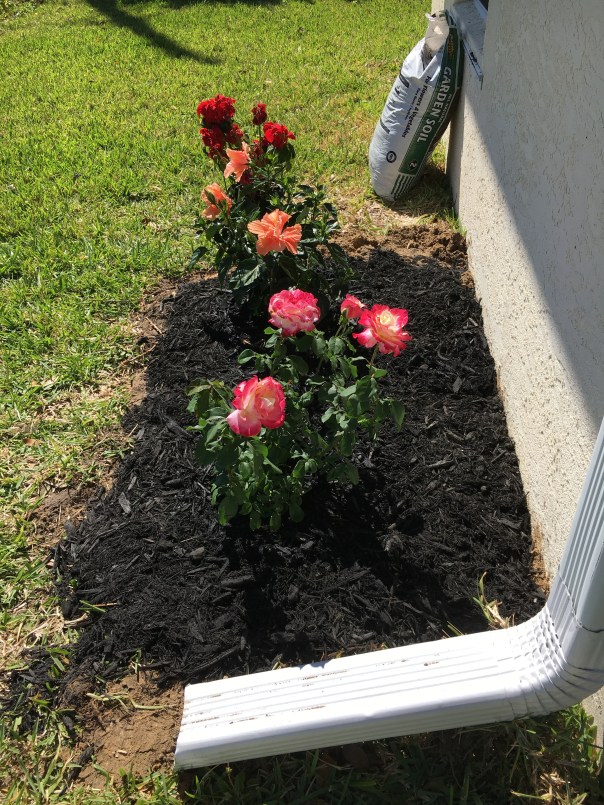
Next to it, I added a rose bush and on the other side a small Desert Rose.  In my photo below the plumeria hasn’t been planted yet, but you can see the red poinsettia I bought this past Christmas …  the flowers are still red!  That one also needs to go in the ground.

rose bush and hibiscus
New Little Florida Garden

I need to get these gardens planted before the weather becomes too hot. I can’t work outside like I used to, and I dislike working in the heat. Digging up this St. Augustine grass is a real chore, and then I must lug the dirt to mix into the dug hole.  The Florida “dirt” is mostly sand, so it must be amended with quality dirt and fertilizer.  After it was planted I added black mulch.

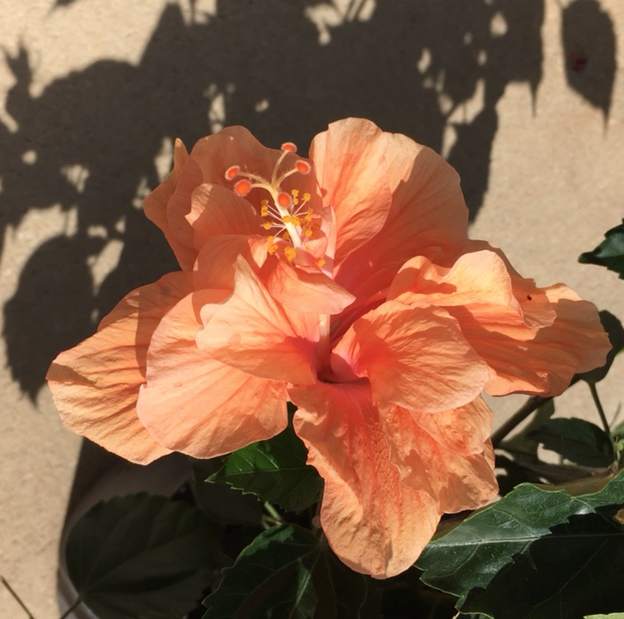
double orange hibiscus
This Hibiscus Has Ruffled Flowers

The Plumeria Plant Gift, Or Is It Something Else?

desert rose

Some friends stopped by the other day and they had been to the Farmer’s Market at the Volusia County Fairgrounds. They opened the trunk of the car to show us the wonderful plants they had purchased. They had boxes of little succulents, a bushy croton, tiny African violets, and bags of organic dirt. In the back I noticed three tall stalks in pots with one or two flowers at the top. When I asked what the plant was, our friend pulled one out and handed it to me. “It’s a Plumeria” she said, “Here take it, it’s for you”.

I tried to give it back, and said I was only curious, but she insisted I keep it. She said they were only $3.00 and she had more.  The guy who sold them to her told her they were Plumerias.

Now, I have never seen a plumeria plant. I am familiar with the beautiful flowers of the Hawaiian plumeria (frangipani), and know that they are often used to make Hawaiian leis in the islands. I use plumeria (or frangipani) images to create wedding and event stationery for my Sandpiper Wedding store. But I have never had a plant like this. And honestly the flower reminded me more of an Oleander, but the plant itself was like nothing I had seen.

I figured I’d call it a plumeria until I discovered differently. I had already looked up How to grow plumerias, but I’ve had my doubts as to what this plant really is. I’ve never seen plumerias growing in Florida, and I used to have all the favorite local plants planted in my yard when I lived here in the 80’s and 90’s. It doesn’t mean they don’t grow here, but they need a more tropical climate than what we have here in central Florida.

Plumerias need tropical conditions to grow well, and where I live it does get cold.

**** Then, I went shopping at the local Home Depot, and came across plants that look just like my “plumeria” but they were called “Desert Rose.  Aha, I did not have a plumeria.  But I had no idea what to do with a desert rose.

desert rose buds
My Desert Rose plant

I looked up how to care for it.

The Desert Rose is a flowering succulent, which means it won’t need a lot of water.  The stem can be very thick, and holds water to be used in times of drought.  It does not like cold temperatures, which means I should keep it indoors over the Florida winter.  I’ll have to dig it up.  It is slow growing, compared to plumerias, which grow fast and turn into small trees.

IMG_1459
The one flower that opened on my plant

Right now our temperatures are very warm with daytime readings in the 80’s and overnight in the 60’s and some 50’s. I regret planting it outdoors and will have to spend some money on a decent pot and bring it inside eventually. I’m not sure it will like all the summer rain we’ll be getting soon.  It’s meant to be an ornamental indoor plant, from what I gather.

Here are more pictures of the Desert Rose, found at the free images site, Pixabay.

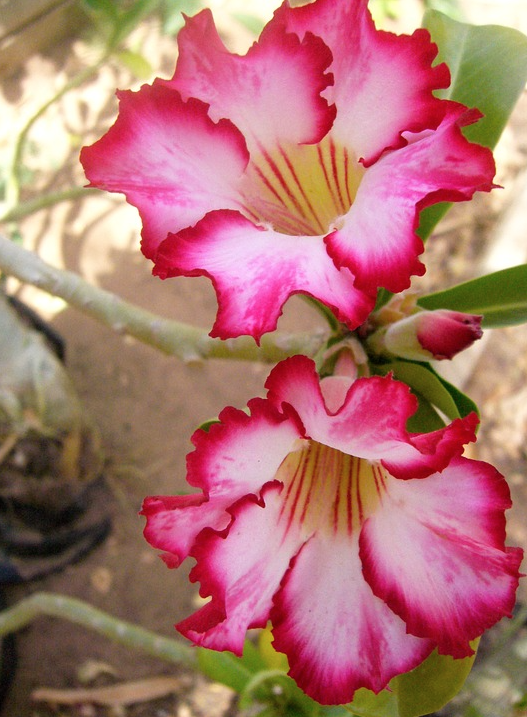
pink desert rose flowers
Beautiful Desert Rose Flowers (photo credit: Pixabay)
Screen Shot 2017-04-06 at 7.09.24 PM

A New Hibiscus Plant For the Yard

Living in Florida means growing at least one hibiscus in the yard.

One plant that every Florida yard should have is the fantastic hibiscus.

A hibiscus will bloom constantly for much of the year in Florida. It loves the sun and does extremely well in the hot and humid climate.

orange hibiscus shrub
Newly Planted Hibiscus Shrub

Hibiscus plants come in a wide variety of colors and types. Some can grow in northern climates, but the ones I refer to here are tropical. They will not die over the winter. It’s not really necessary to know your types (unless you are searching for something specific, or mail ordering) because local stores will sell the types that work in your area of the country, or world.

One problem I remember having is aphids that get on the flowers and plant, but this new hibiscus contained a tag that said it was protected from aphids, white flies, and some other bugs.  So we’ll see.

They are easy to plant.  Remove any grass in the area and dig a big wide hole.  Mix together some kind of fertilizer, bone meal, and or garden soil and add that back into the hole with some of the dirt that was removed.  Push the dirt down around the edge of the root ball and then water thoroughly… that means a lot.   If the plant still looks great the next day, then you did a good job.  Water again, and continue to water well until it gets established.

My new hibiscus has a double orange bloom, which looks like a ruffle compared to the flat types of flower. It was the prettiest flower I saw among the bunches of plants at the local Home Depot.  I planted it in a spot that should get a lot of sun year round.  Once I buy some mulch, I’ll put that all around the bottom to help keep the soil moist.  Then I can water it less often.

orange flowering hibiscus
Double Orange Hibiscus

Although I have mainly been shopping for plants at Home Depot, I prefer to support a privately owned nursery.  I am not very familiar with any around here.  I’ve already been to Lindleys, and wasn’t all that impressed.  One that I plan to visit is Garden Arts and is located on Flagler Ave. Generally I only go to the very touristy Flagler Ave. to eat at Breakers Restaurant. I will brave the crowds to eat a yummy fish sandwich while looking out at the ocean.

Some friends just told me about the Garden Arts nursery and suggested I visit.  I have a free parking pass for the beachside lot (yes, they charge to park now!), so I may do just that.  Then I will write a review about the place, and visit often … if I like it.

Now that I have a hibiscus growing in my yard, it’s a reminder that I’m settling into my new lifestyle which is a throwback to a very old life.  When I see my photos of the huge piles of snow, and remember suffering without power for days during ice storms, I really don’t miss dealing with those problems.  Walking out the door, without a coat on, day or night, is quite a sweet change of pace for me.

Plant Shrubs in Winter, Readying the Garden Beds

weed fabric
The black fabric beneath the mulch has to go!

Today I did something that I have waited a long time to do.  I began work on my flower garden beds.  I am finally in my new home!   The big move began way back in January, and has taken the whole year.    There is still more to move from storage, and all the boxes need to be unpacked, but having a chance to work in MY yard again is a wonderful feeling.

We have merged two households, and I went from a three story house (including the basement) to a single story, no basement and small attic. So finding space for everyone’s stuff is challenging. There is a GoodWill nearby which I will be visiting often in the months to come.

Last night we bought garden dirt – 4 bags – and this morning I added it to two gardens. These are gardens which already have plants in them and I plan to add flowering shrubs to brighten the landscape.  The raised vegetable gardens are coming soon (fingers crossed).

All three planting beds have black fabric in the bottom, which I hate, and have removed from two beds. I don’t mind pulling weeds, and if a garden is done correctly, the weeds shouldn’t be a huge problem. So first thing I did was pull up the plastic fabric that is used for weed control.

garden bed prep
Front Garden

The garden bed near the front door has one overgrown shrub – which I am pretty sure I used to know the name of – and it needs to be cut way back. If it wasn’t already so large, I would probably take it out completely.  The bushy perennial blocks the breeze from entering my front windows, not to mention it mostly blocks the view out the front!

Since I am still busy with the house, my focus will be on the gardens already in place. Amending the soil and adding nutrients was my focus this morning. I pulled the old mulch out of the way to put the bagged dirt down, then mixed in some blood meal.

azalea shrub
This Azalea needs some help.

I did the same thing to the little area containing a raggedy looking azalea bush. I may cut this thing back and see if it will fill in more.
My plan is to fill in these gardens as I find plants for them. I can’t dig through the black fabric, so it had to go. Since this yard is new to me, I have to watch it for sunny and shady spots and buy plants accordingly. The azalea needs light shade and usually does well under the trees. It also likes acidic soil, which also happens to create blue flowering hydrangeas! I may be able to add some blue-flowering hydrangeas to this garden area, which is an exciting prospect.
While reading my gardening book, I discovered this about Florida planting: *Plant SHRUBS in winter AND *Plant TREES and PALMS in summer. Now (almost November) is the time to begin planning my perennial gardens. After that, it’s on to building the raised vegetable garden beds.