Good News From the Garden, A New Butterfly is In the World!

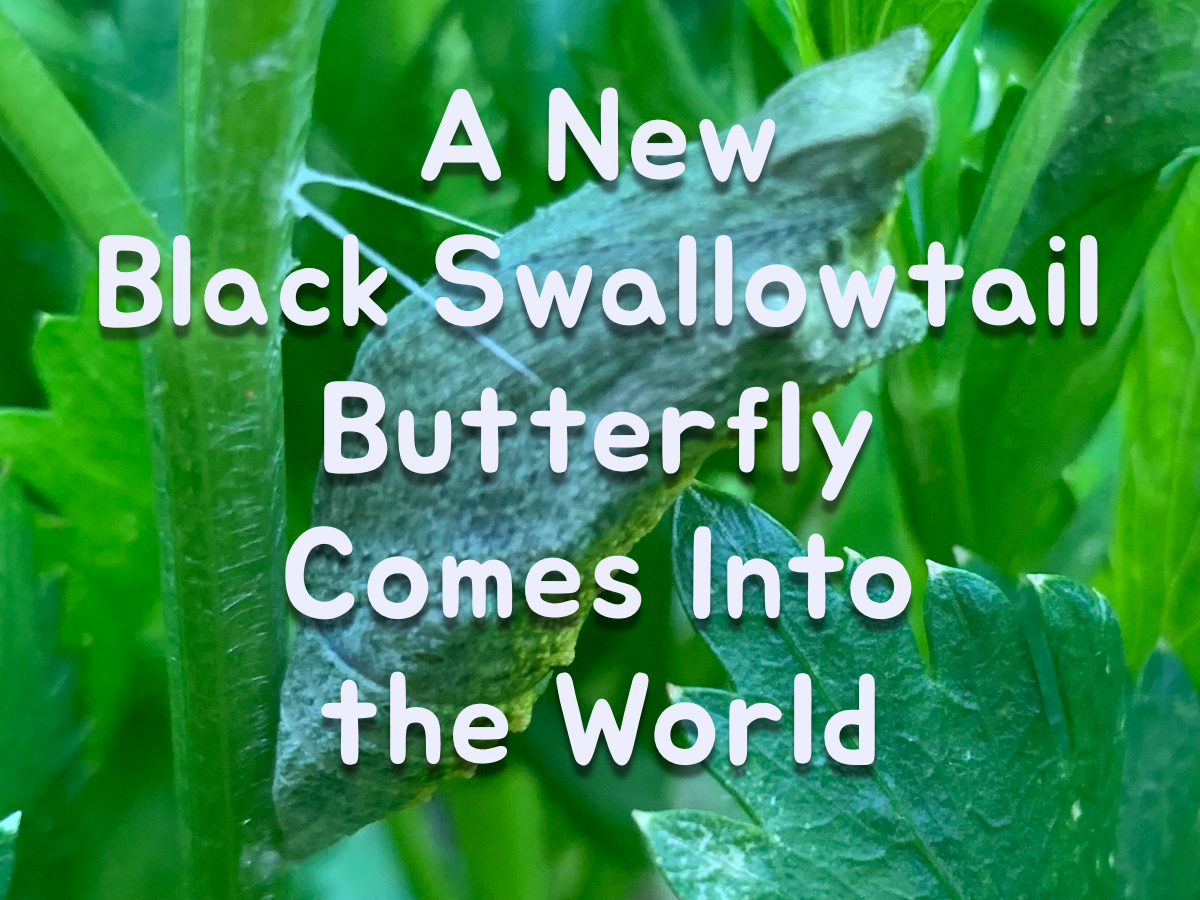
Finally, a caterpillar makes it into a chrysalis and then becomes a gorgeous Black Swallowtail butterfly.

Although I am not having much luck with caterpillars surviving in my yard (thanks to the numerous lizards), I do have one that made it. A new Black Swallowtail butterfly has survived to fly away! And he was sneaky about it.

My yard is not a friendly place for caterpillars, but it is for butterflies. All my Zinnias are much loved by lots of flying critters.

The Monarch butterfly is still flying around, and I’ve seen many Monarch caterpillars, but no new butterflies. Also, the Gulf Fritillary has put caterpillars onto my Passionflower vine.

Occasionally I would see the Black Swallowtail butterfly in the yard, but I have nothing growing for it, or so I thought.

The Black Swallowtail’s Favorite Plants

I know the Black Swallowtail will lay eggs on parsley, dill and fennel. Apparently also carrot and Queen Anne’s Lace (not in Florida). It’s not the season for carrots here. Only fennel will grow for me during summer. I have a few fennel plants in the front garden, but lizards eat every caterpillar that shows up. The dill has long been gone, and parsley is impossible to grow, even in winter. (For a list of host plants in Florida, see this page at askIFAS)

But I do have a big celery plant in one of my grow boxes. I started it from a store bought bunch of celery. This is where I found the Black Swallowtail caterpillar. What a surprise! He was already pretty big when I first saw him.
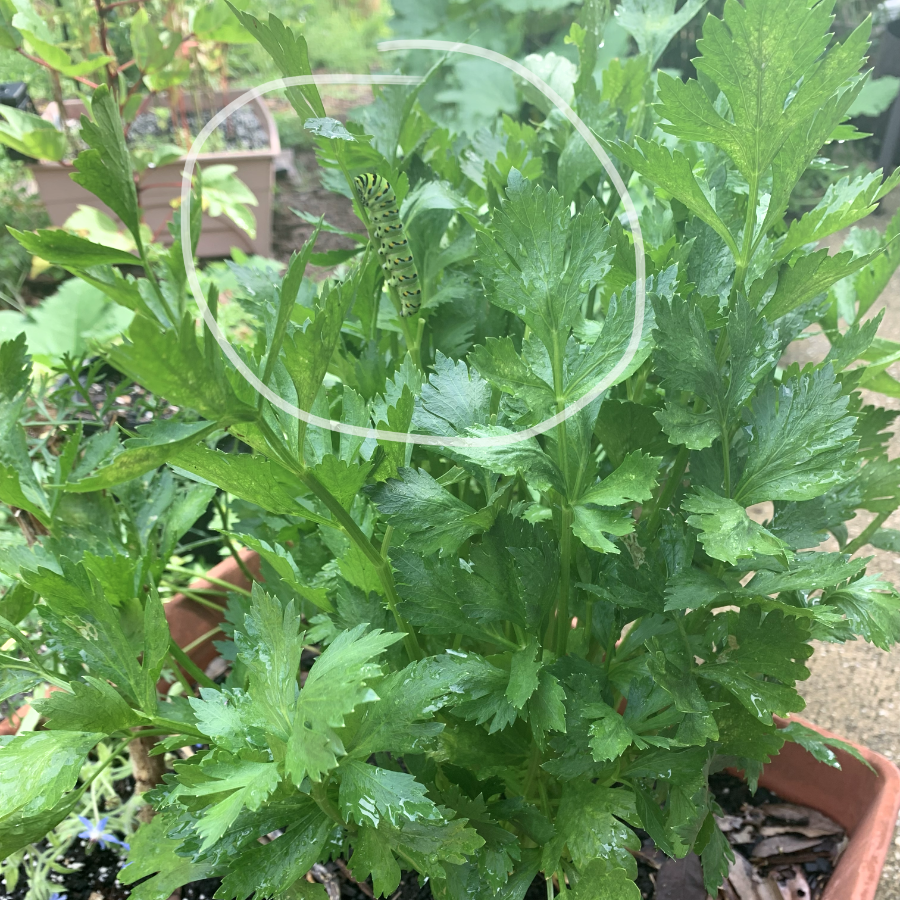
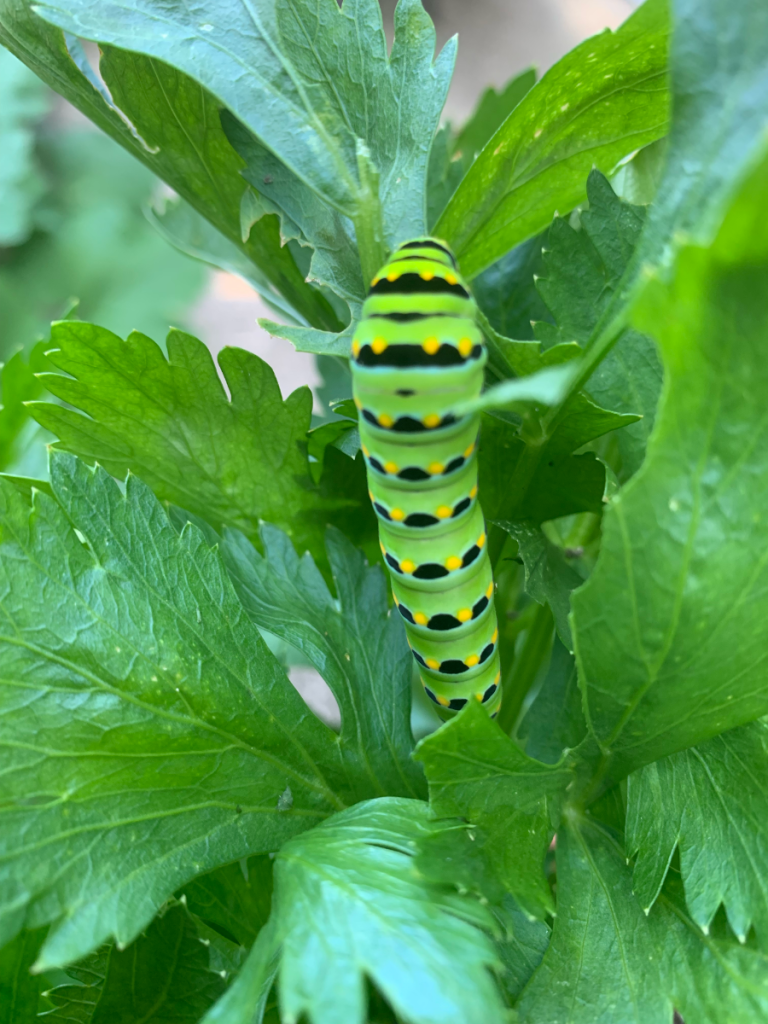
On July 21st I first saw the caterpillar. He was happily munching away down in the center of this bunch of celery.

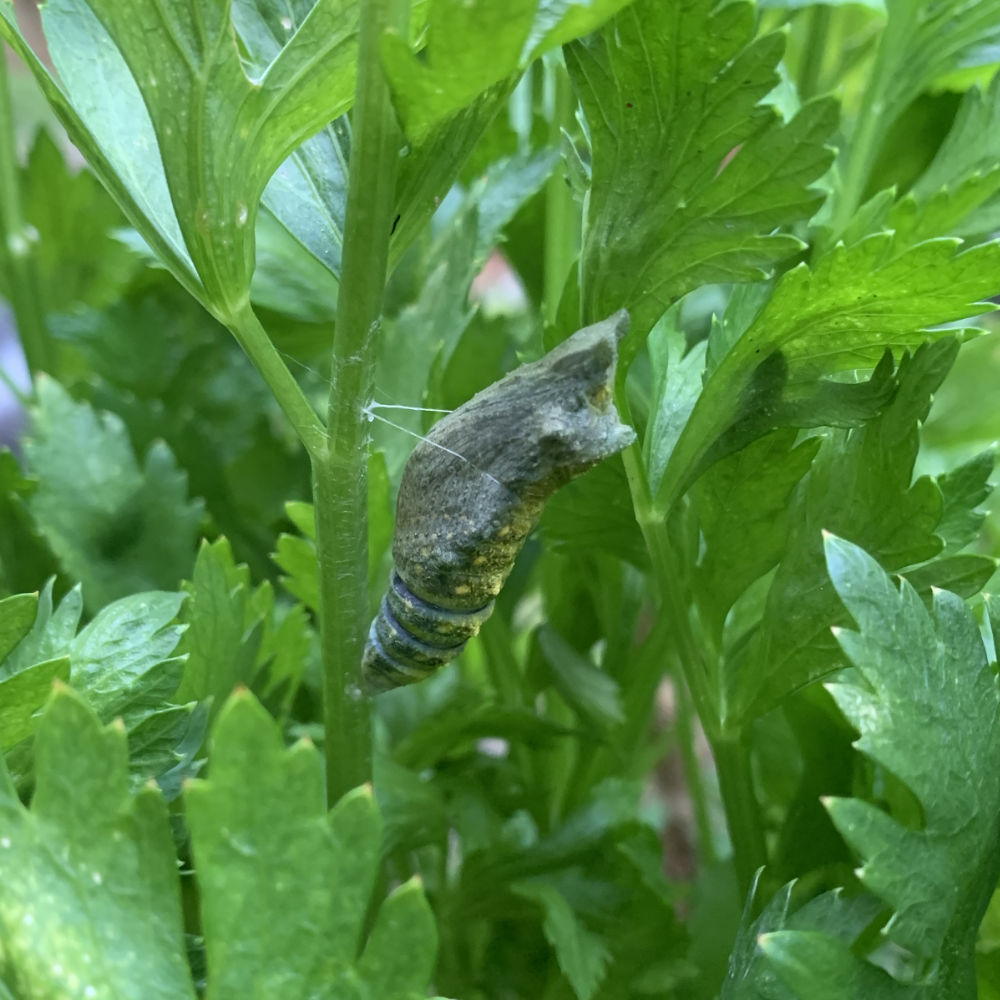
On the 23rd, I saw him curling up and attaching to one of the stalks. The next day, his chrysalis was made. Ten days later, he emerged into the world!
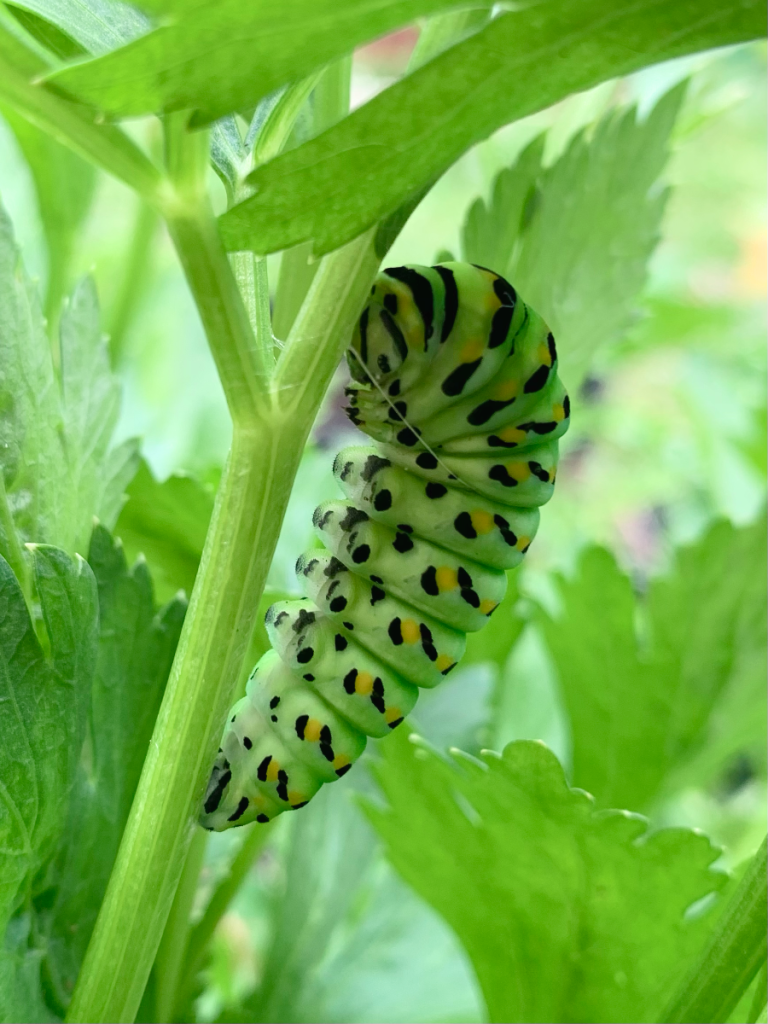
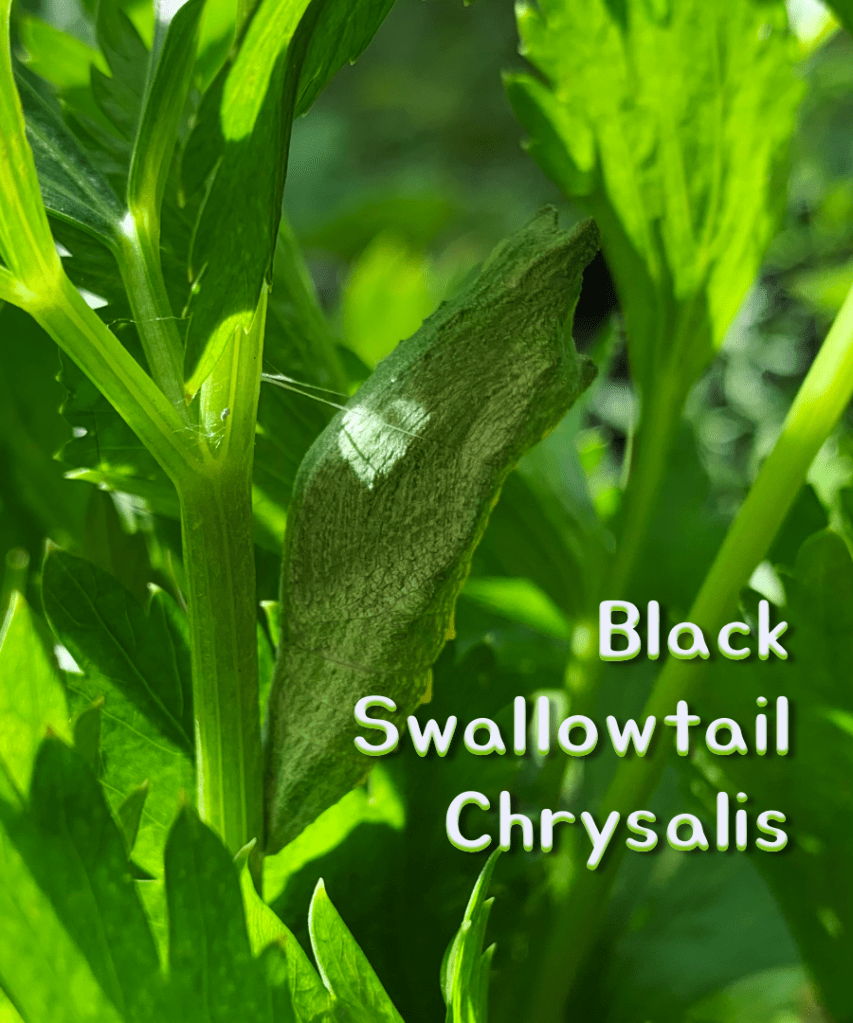
Caterpillar is done eating and in the position to pupate.
Cool huh?

Numbering the Days to Emergence

Back when I watched the chrysalis of the Monarch, it took many days before the butterfly emerged. I figured this one would take a while too, and it took 10 days before I saw the butterfly. On day nine, the chrysalis had darkened noticeably. I knew he / she was about to come into the world!

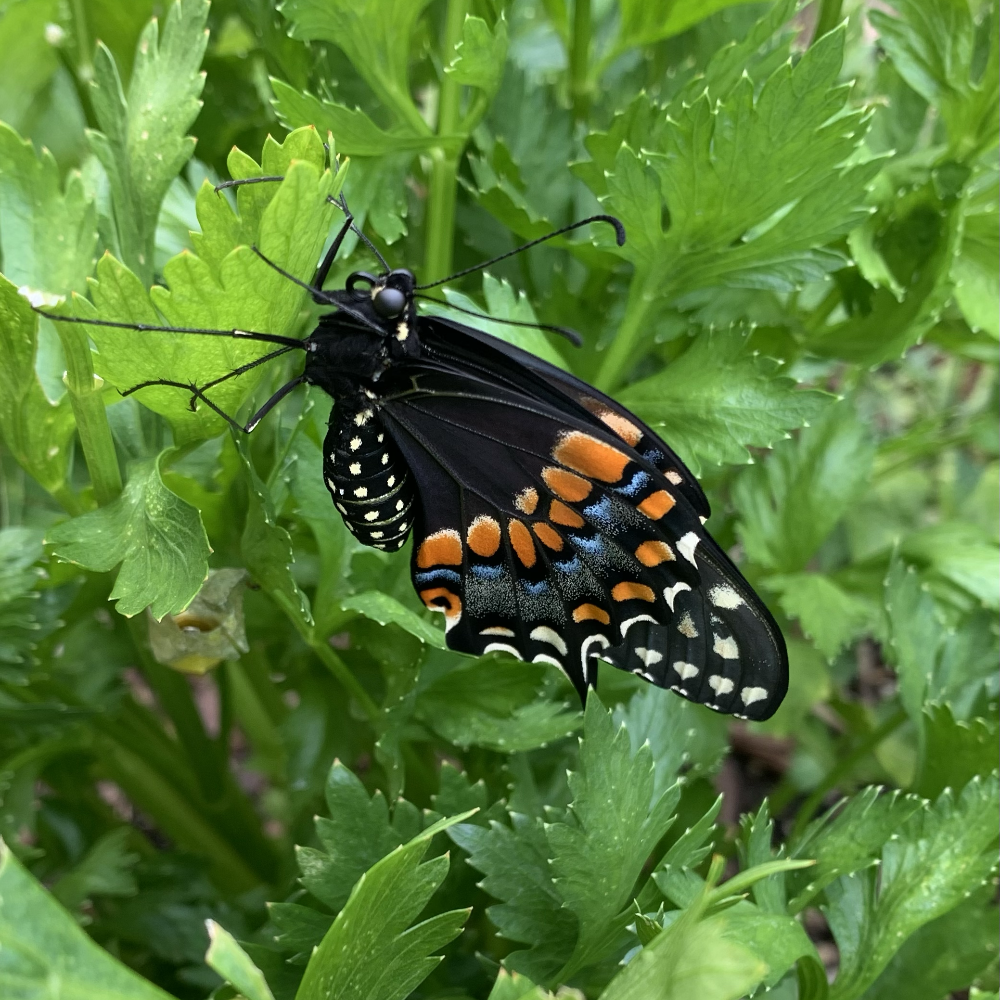
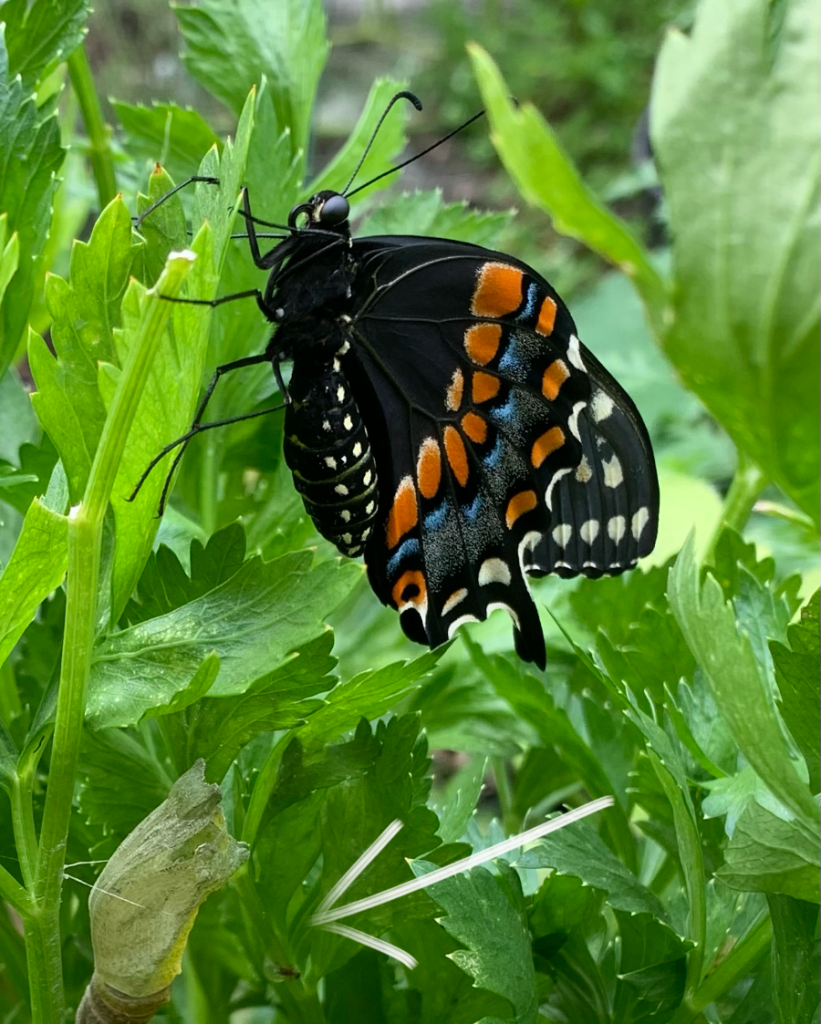
If the weather had been nice, I would have pulled up a chair and drank my coffee next to the celery plant that morning. But it’s way too hot for that. So, I did some inside stuff, and kept checking on it. Around 9:30am I went out and there he was! Sitting on a celery stalk in all his glory! Such a beauty.

I’m not sure if it is a male or female, maybe someone reading this will know. The colors were absolutely stunning!
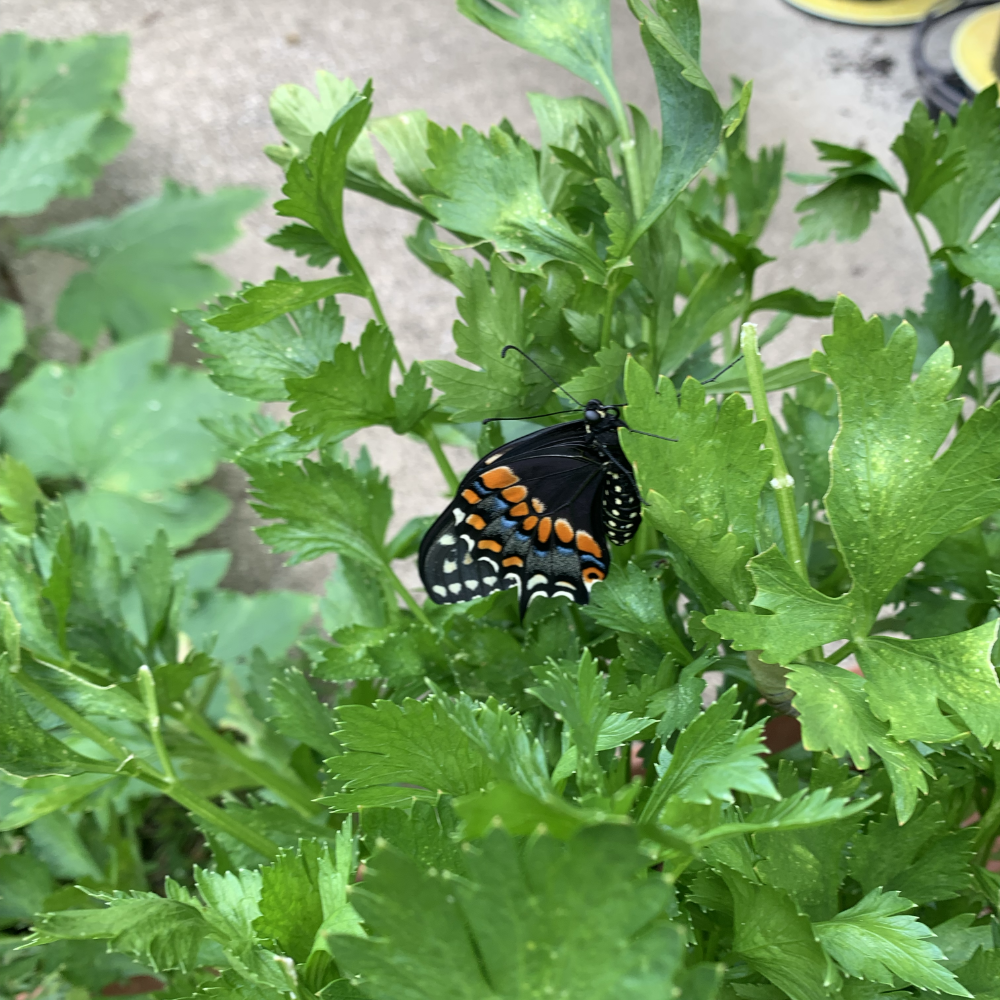
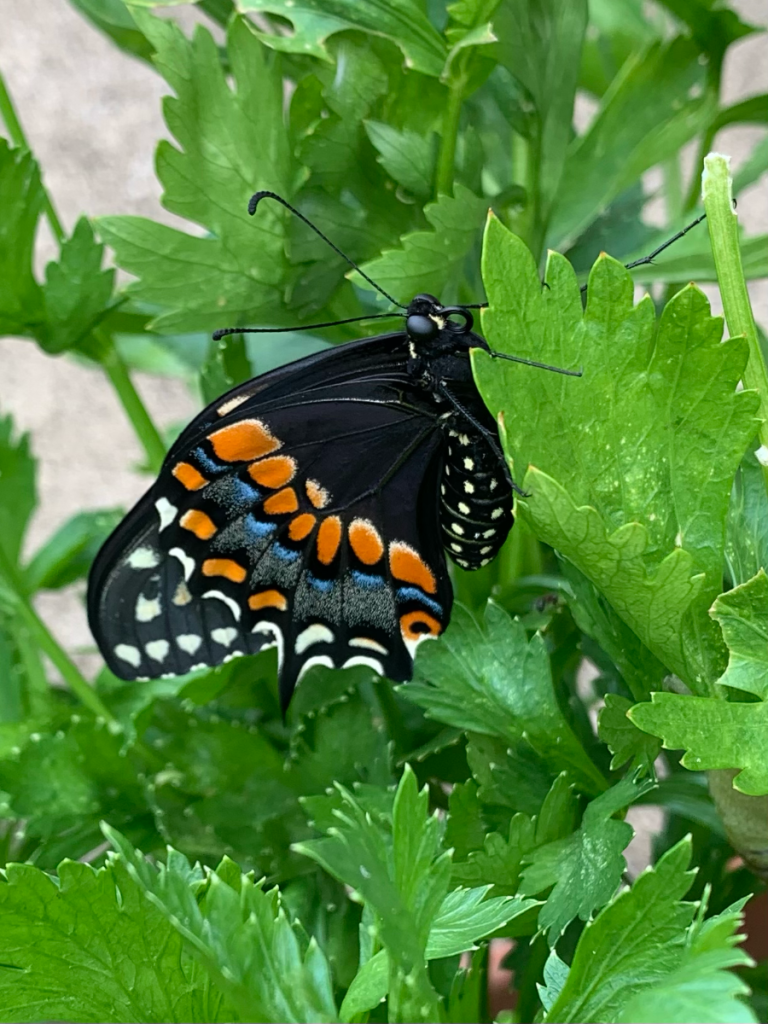
I thought he might hang around for a while after coming out. The Monarch butterfly had taken hours to fly away. But, I went on the porch to check on some plants and was only away for about 2 minutes. When I went back outside he was completely gone! I missed it!

I walked around the yard to see if he had landed someplace close by, but I never saw him anywhere.

A Black Swallowtail From the Top

Only the closed wings were available for me to view. I believe from the top this one would have looked something like the photo below, which is not my photo.

Find more good info about the Swallowtails at the University of Wisconsin site
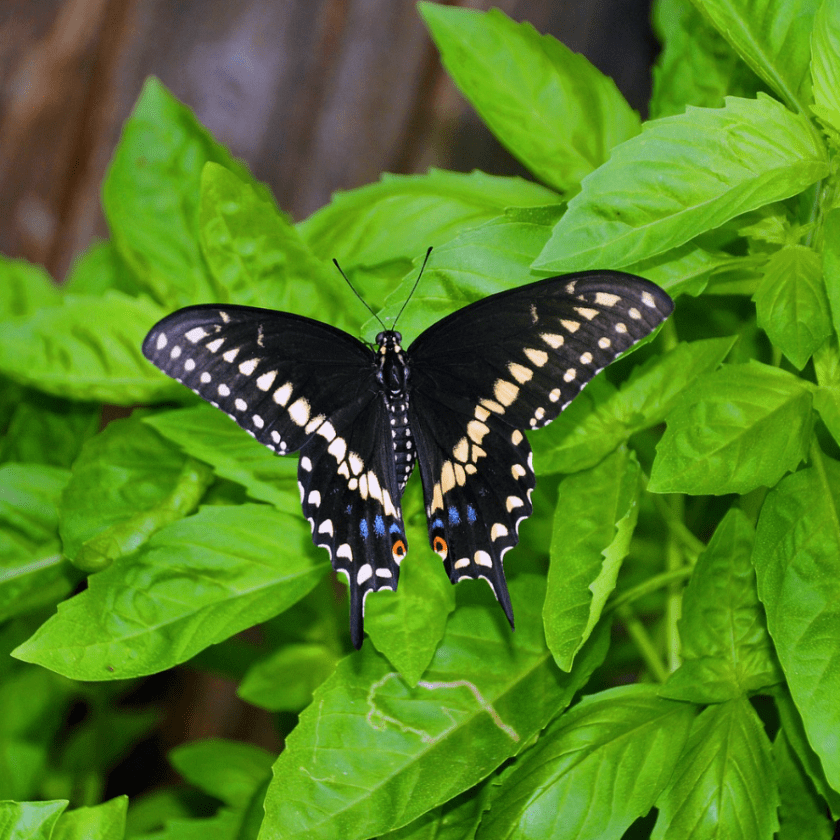
black swallowtail butterfly from the top
Photo courtesy of anselmo7511 at Pixabay.

Before this butterfly “hatched”, I had a black swallowtail laying eggs on the celery and a nearby carrot type plant. Those eggs seem to have disappeared. Or, maybe they are tiny caterpillars hiding down in the celery. I will continue to check.

The fact that my cat Skittle mostly hangs around this area might be why the lizards let this guy get to this stage. Whatever the reason, it made me happy!

Are you following caterpillars and butterflies in your summer yard? I’d love to hear about it.

butterfly divider flowers

More garden happenings

Something went wrong. Please refresh the page and/or try again.

Photos of My Summer Zinnias

Zinnias are some of the brightest flowers that can be added to the garden. Bees and butterflies use them for food, and even a place to sleep. The flowers are long lasting and the seeds are easy to save.

Last year (2023) I grew zinnias for the first time. I’m not sure why I never grew them before in Florida, but I’ll always grow them from now on.

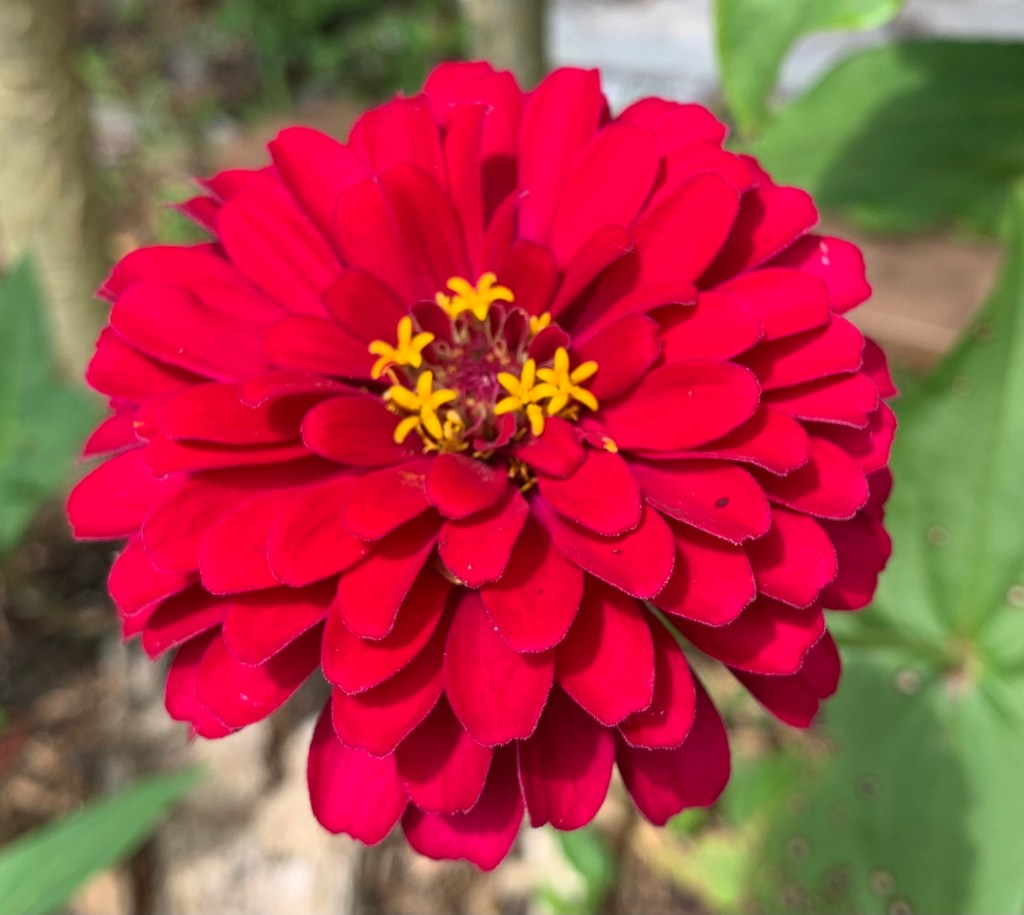
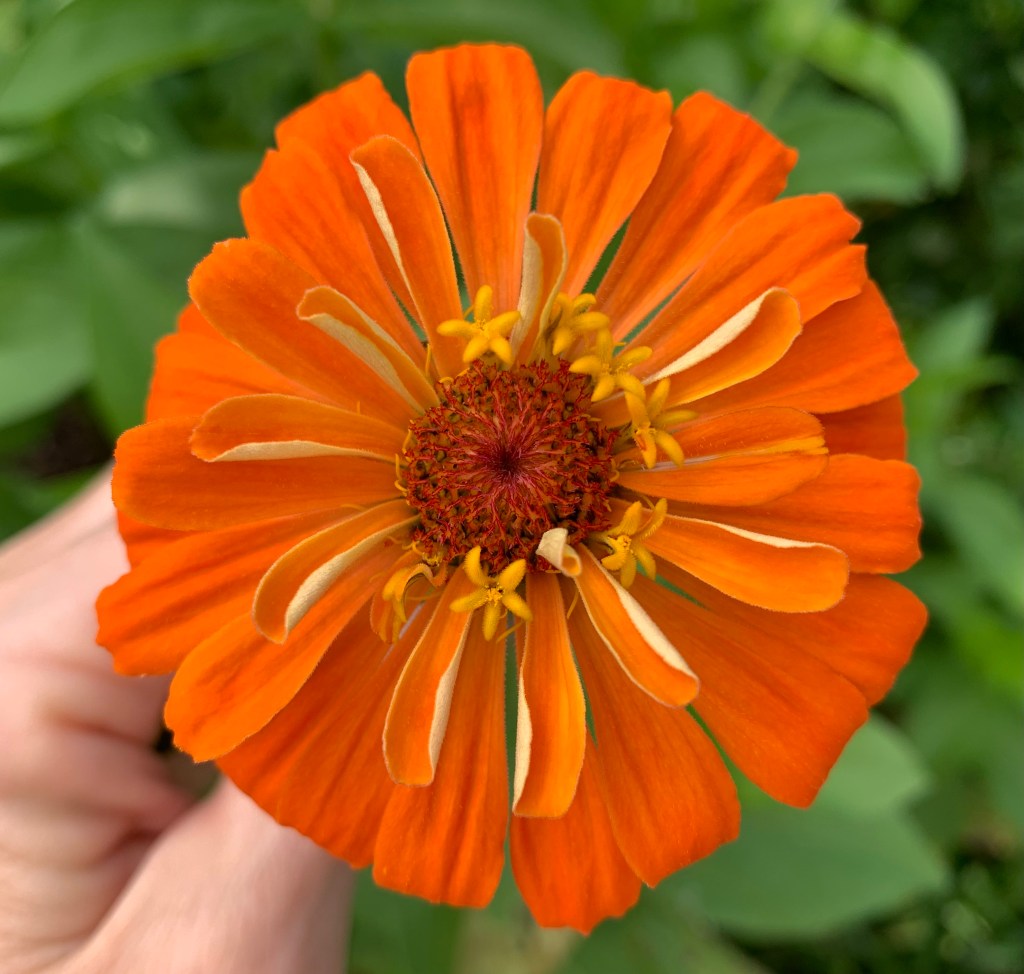
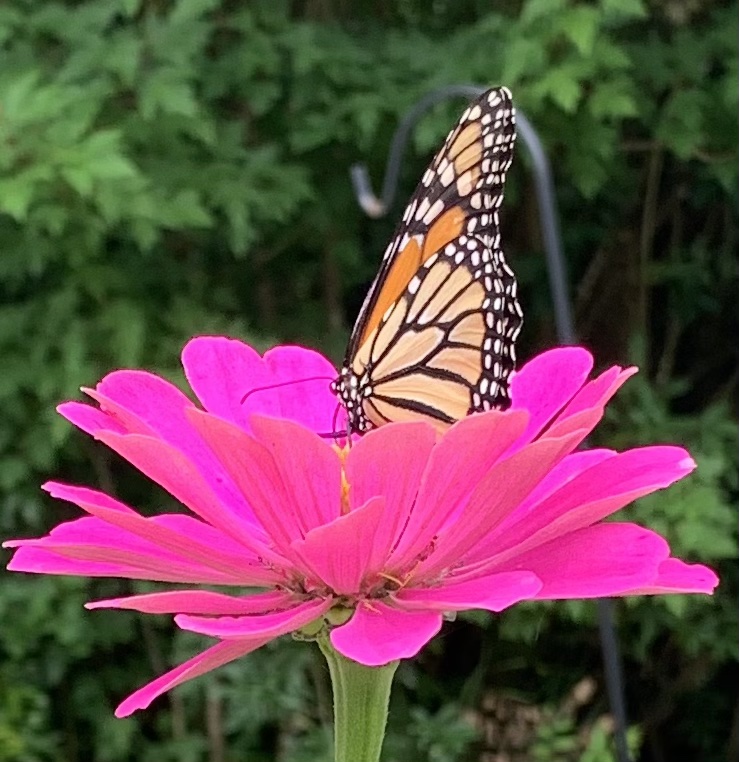
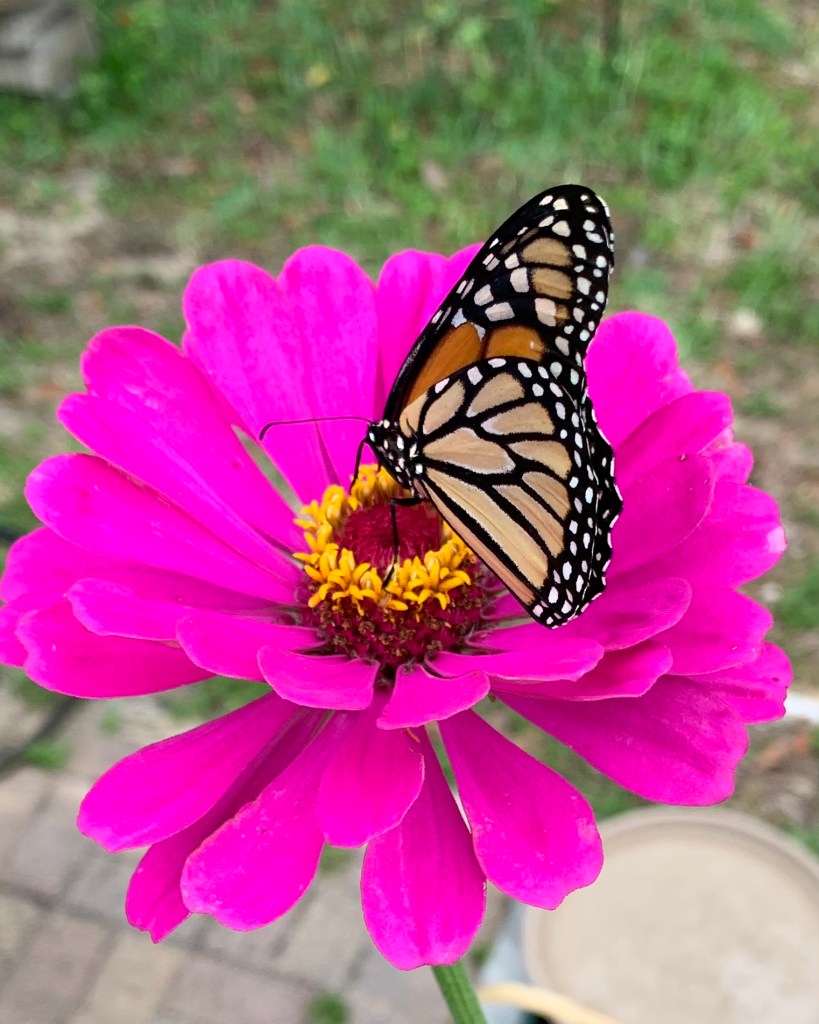
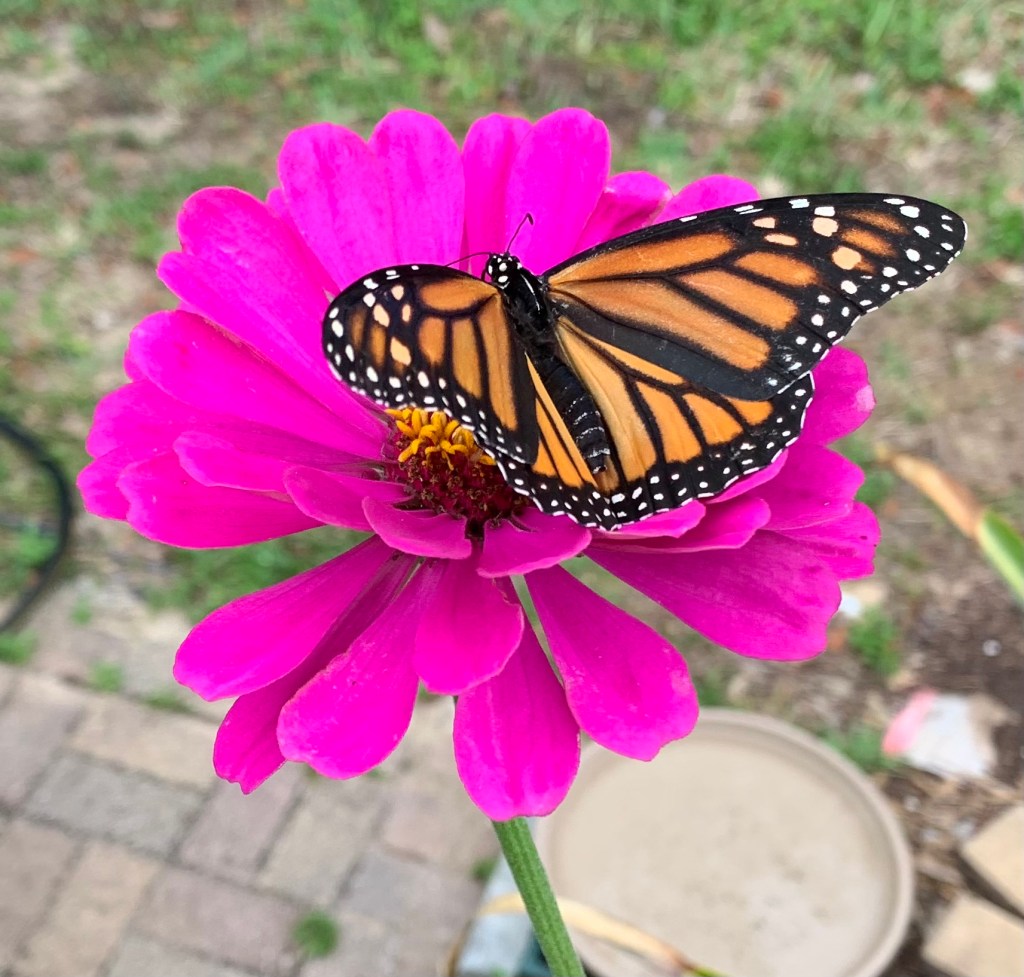
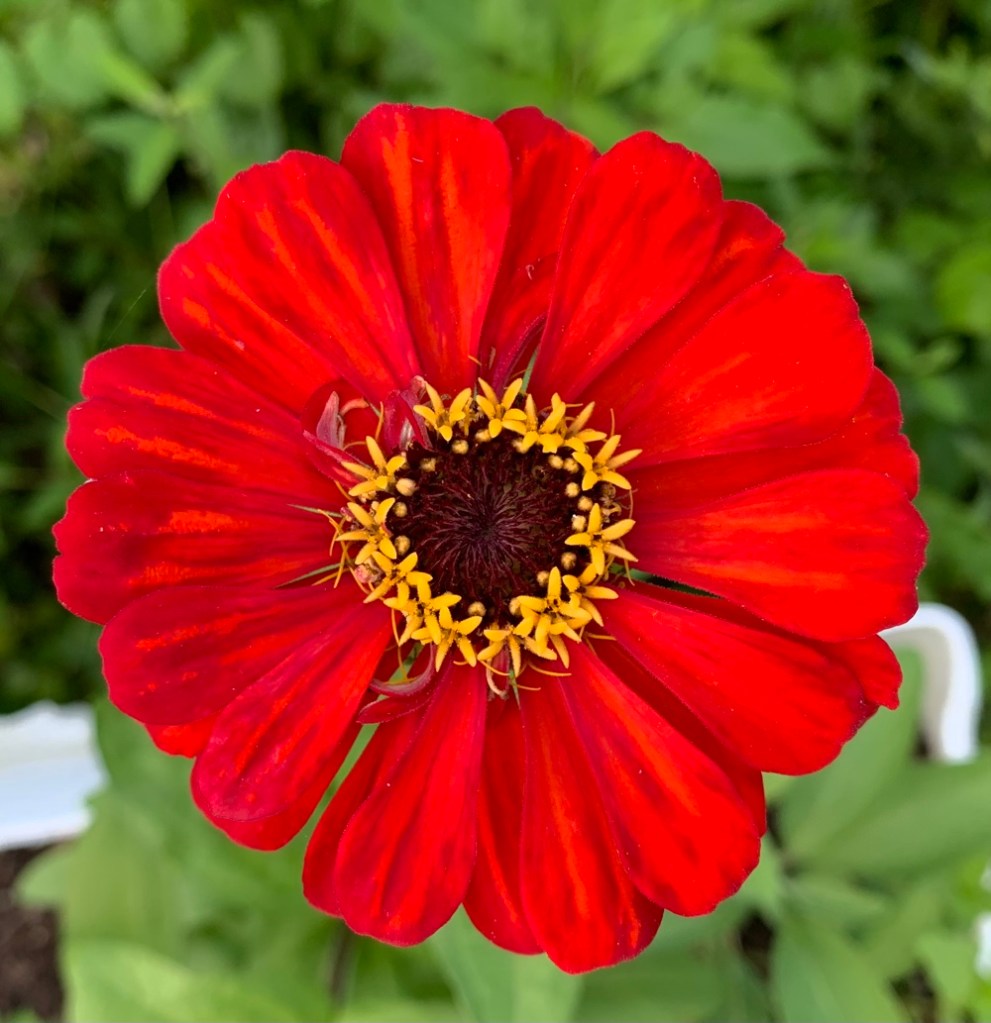
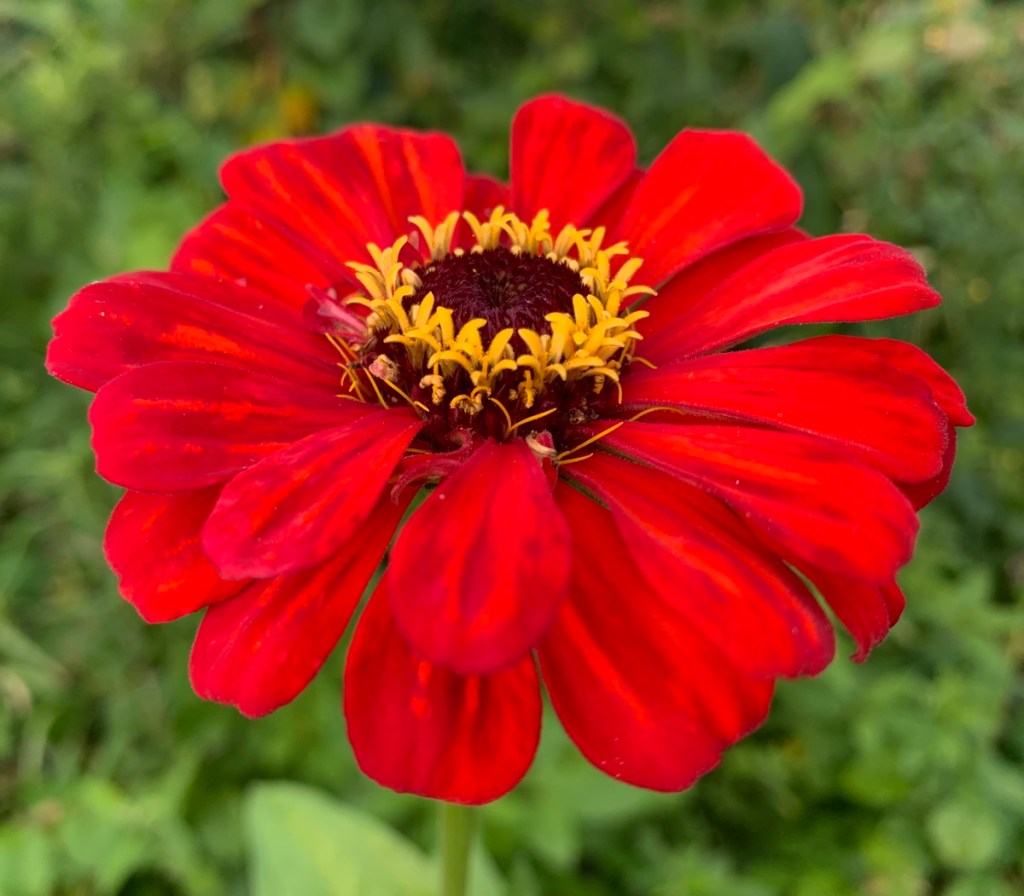
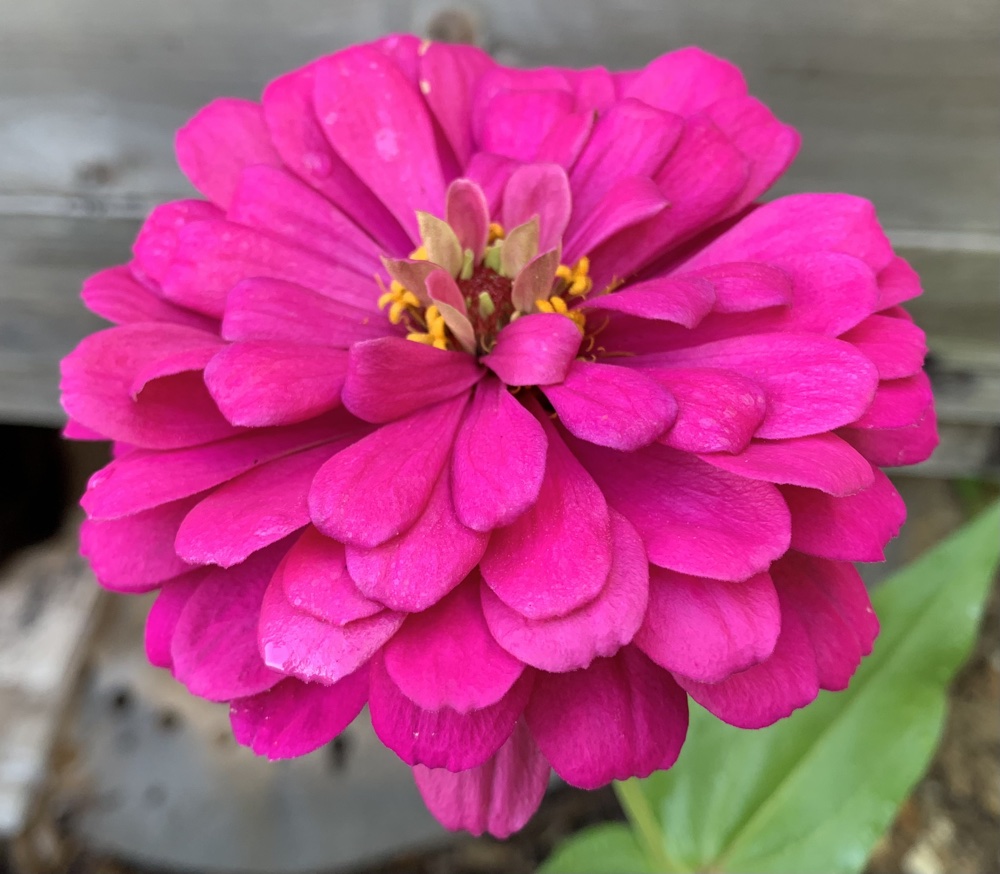
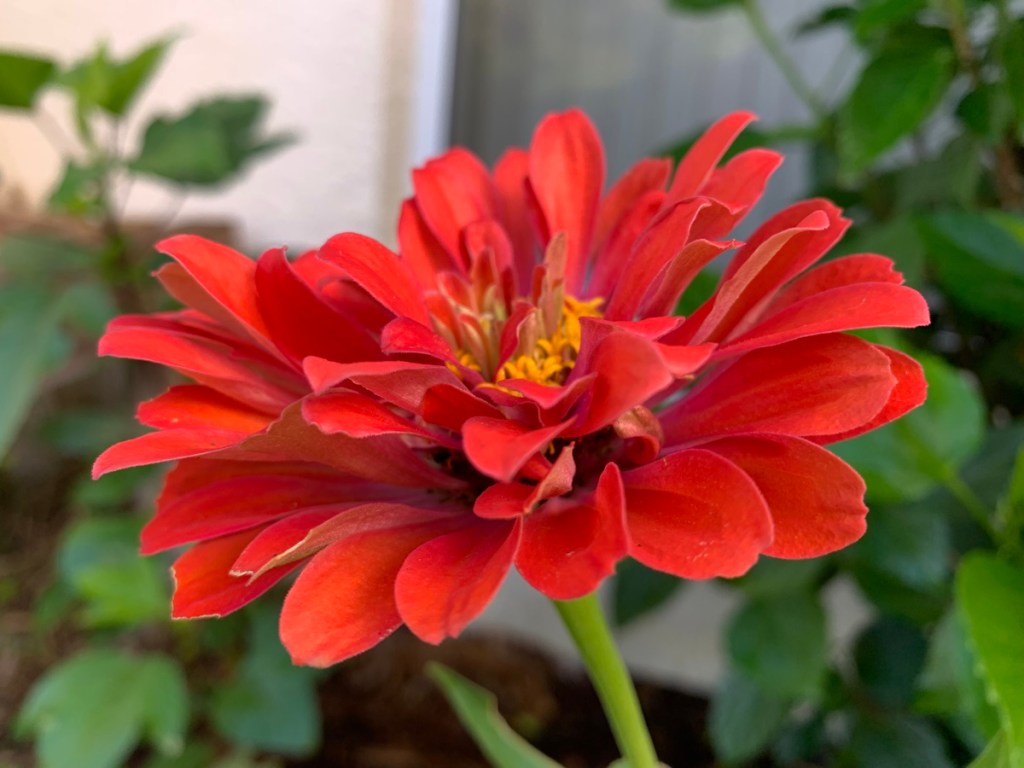
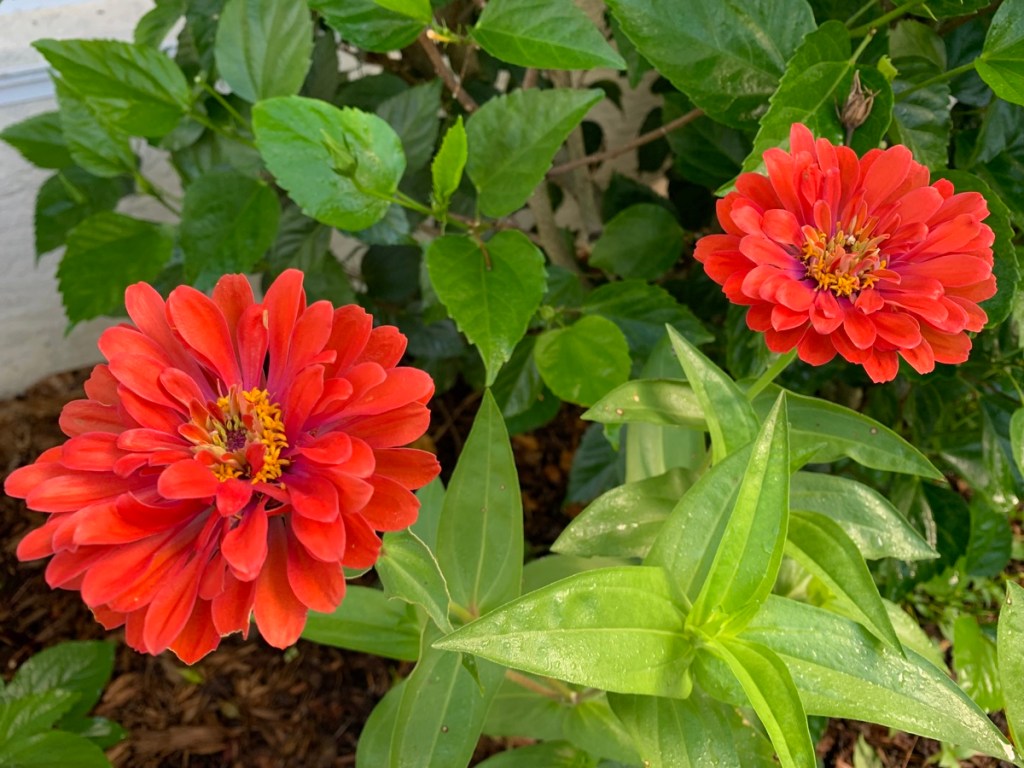
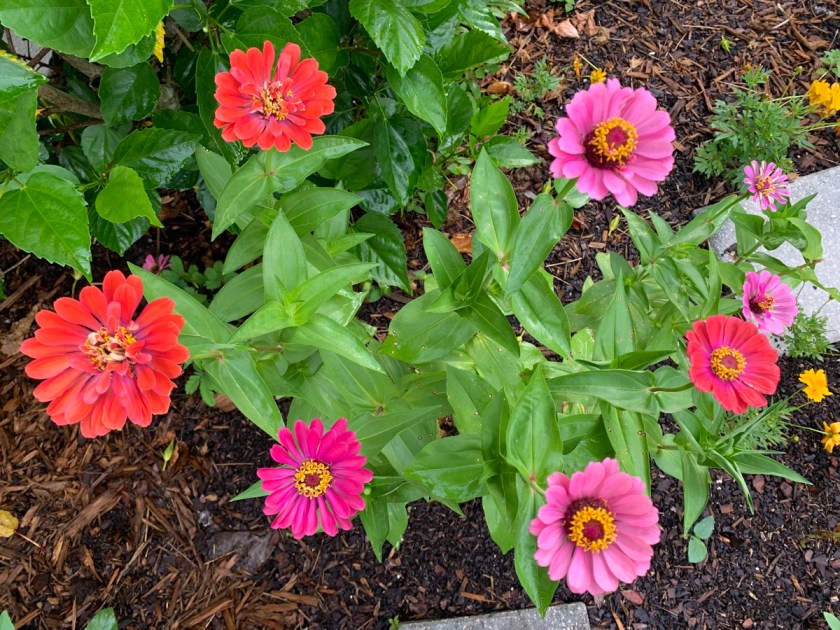
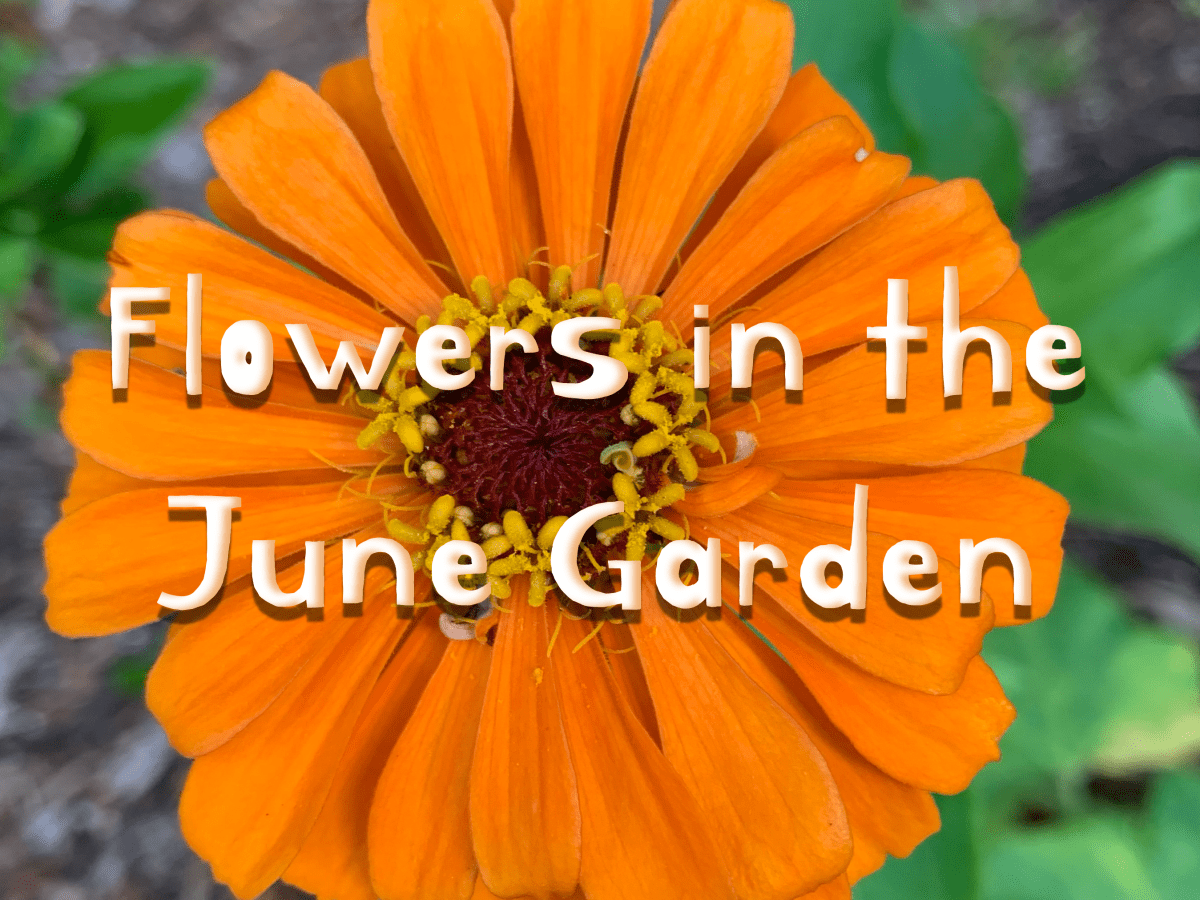
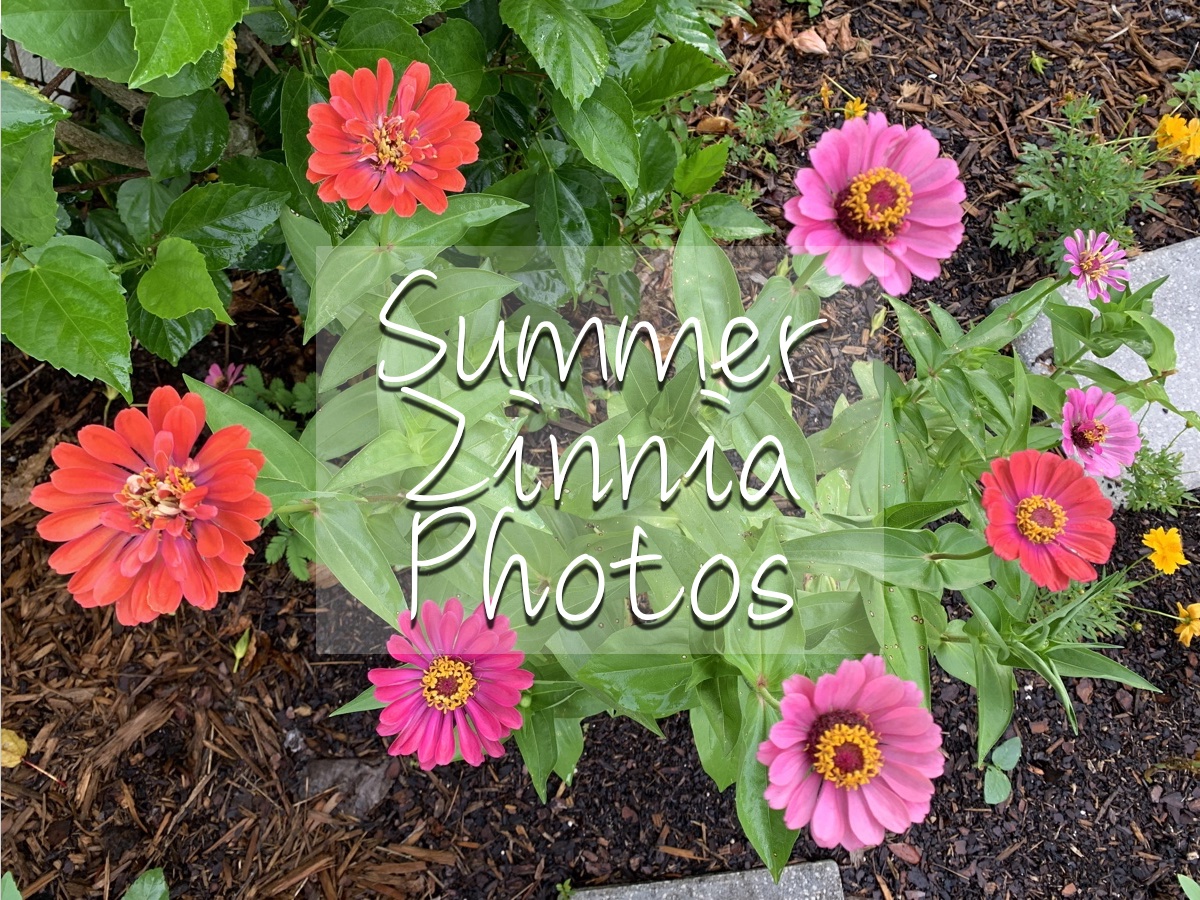
Look at the colors! The reds are so bright, and the orange is so true. The hot pinks are incredible, and the butterfly thinks so too! I think it is a Monarch.

The bees and butterflies especially love the Zinnias with those yellow centers. It’s where they eat and gather pollen.

A Zinnia flower will change day by day as the petals open and the center grows. They are quite long lasting also.

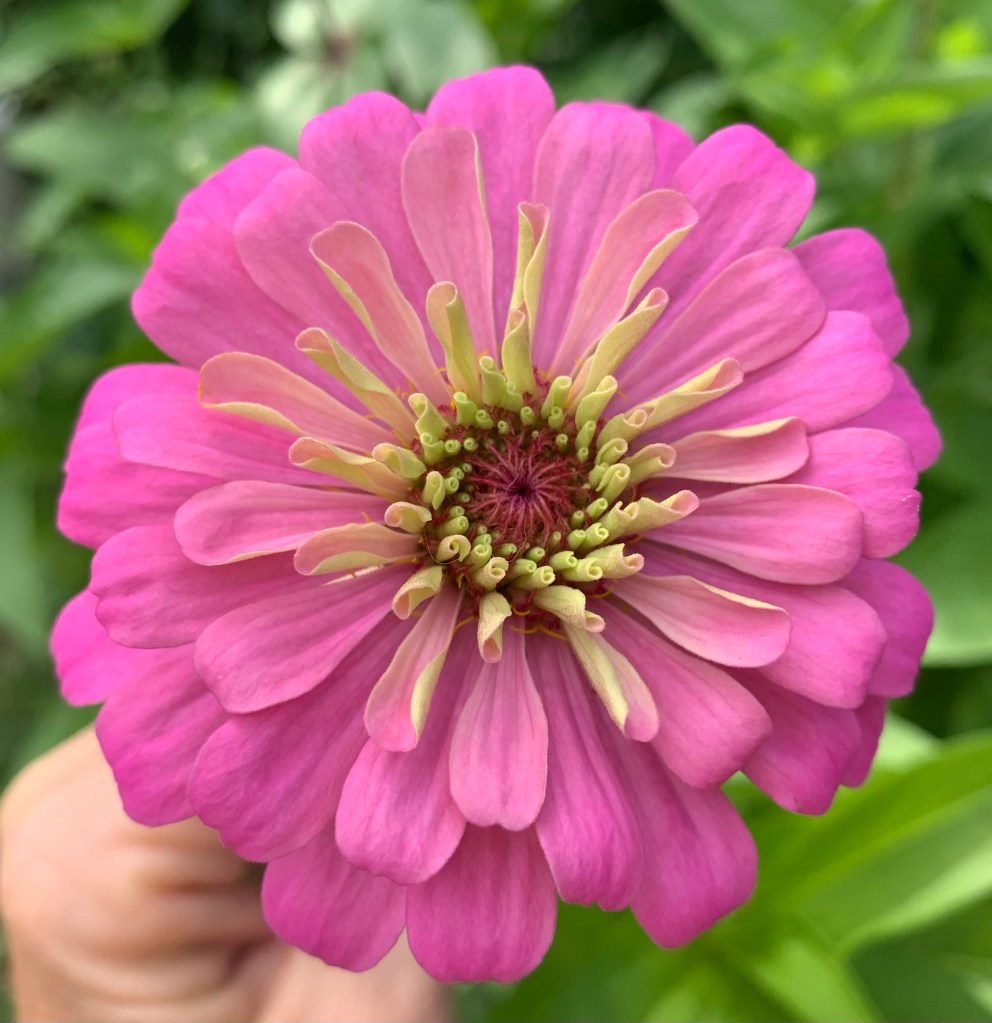
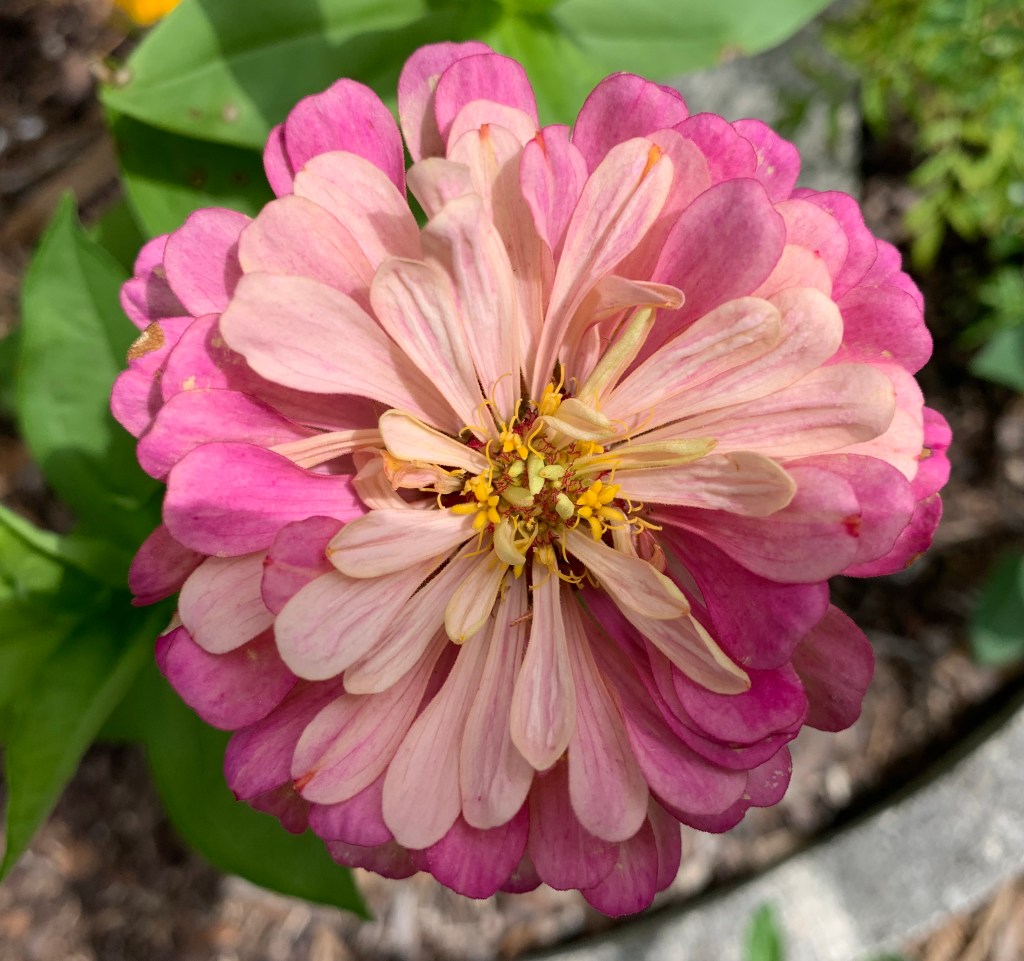
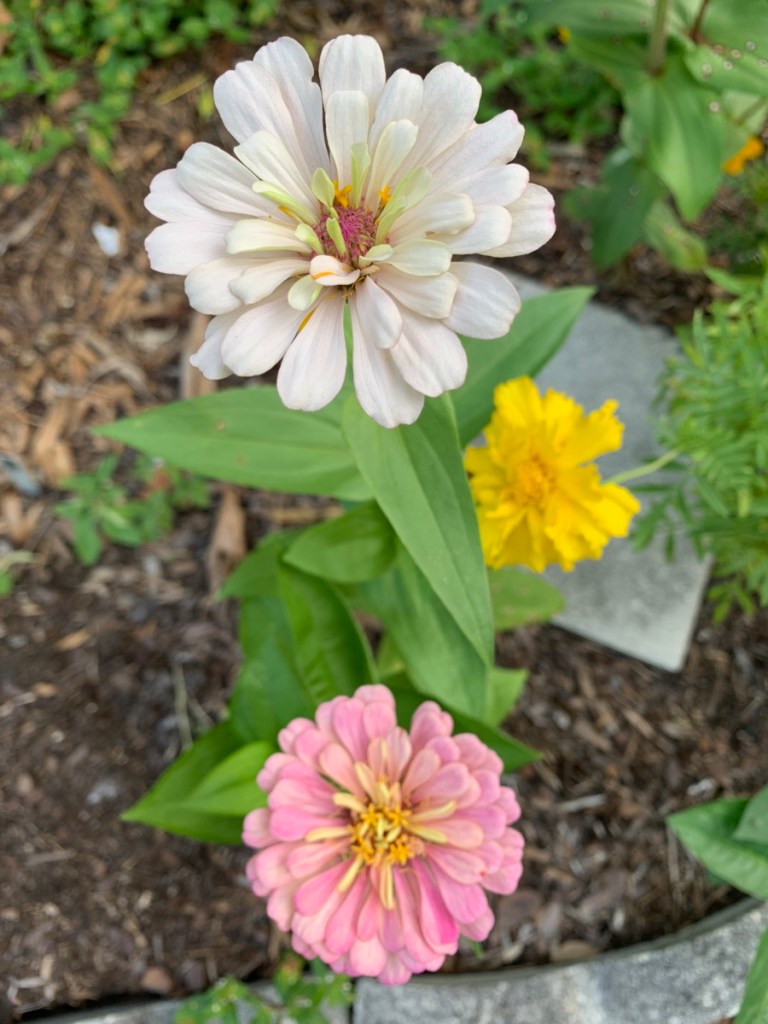
I’m partial to the flowers with lots of petals that create layers. Sometimes I find a bee nestled inside those petals. What a fun place to sleep.

Save the Seeds

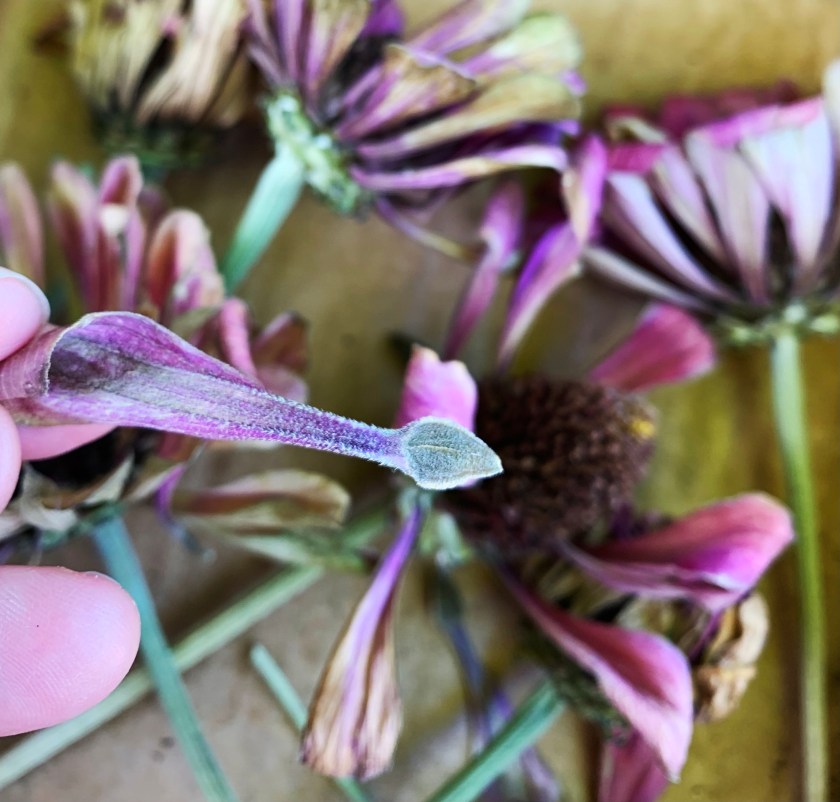
Zinnias are direct sow, so put the big seeds right into the dirt. Saving Zinnia seeds is also easy. Each petal has a seed at the end. I cut off the flower heads when they seem to be gone by and drying out, and place them into a box to dry further. I will be writing a separate post about saving the seeds, but that is pretty much it.

Zinnia seed and petal
Zinnia seed

I leave the flowers whole, but usually they become so dry that the petals fall out. Sometimes I can still see the color of the original flower. Every photo you see on this page (except the Florets) came from seeds I saved from last year’s flowers.

I also read at the UF/IFAS extension that the flowers with few rows of petals should be tossed! What? Why? I disagree.

Zinnia Disease

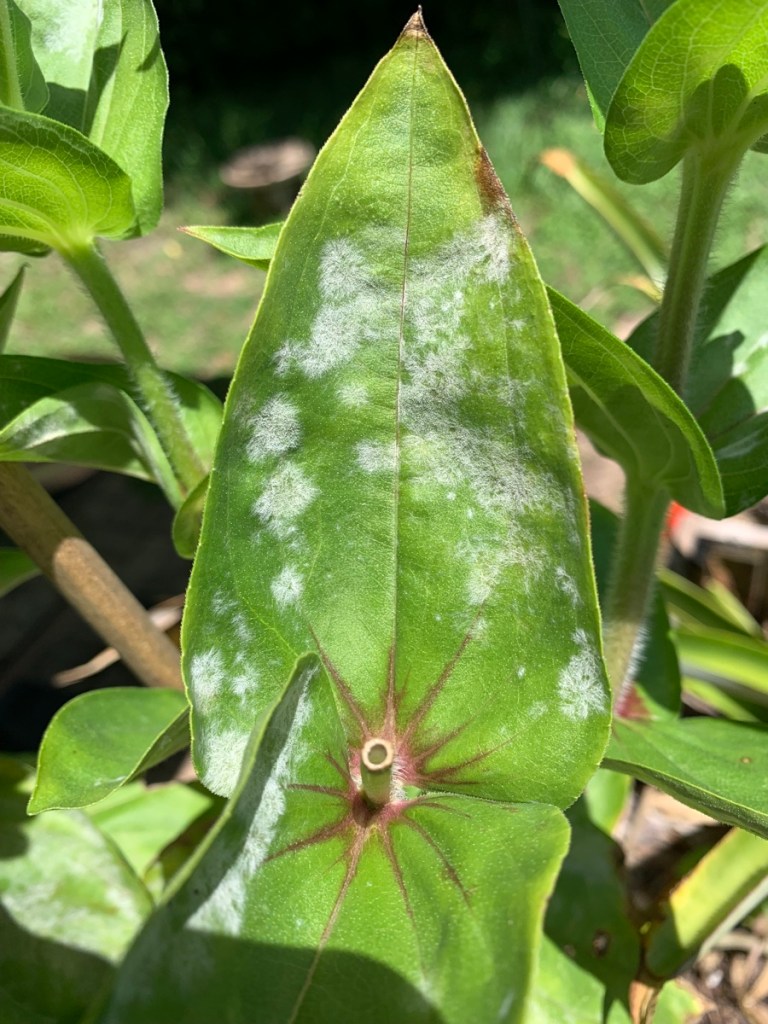
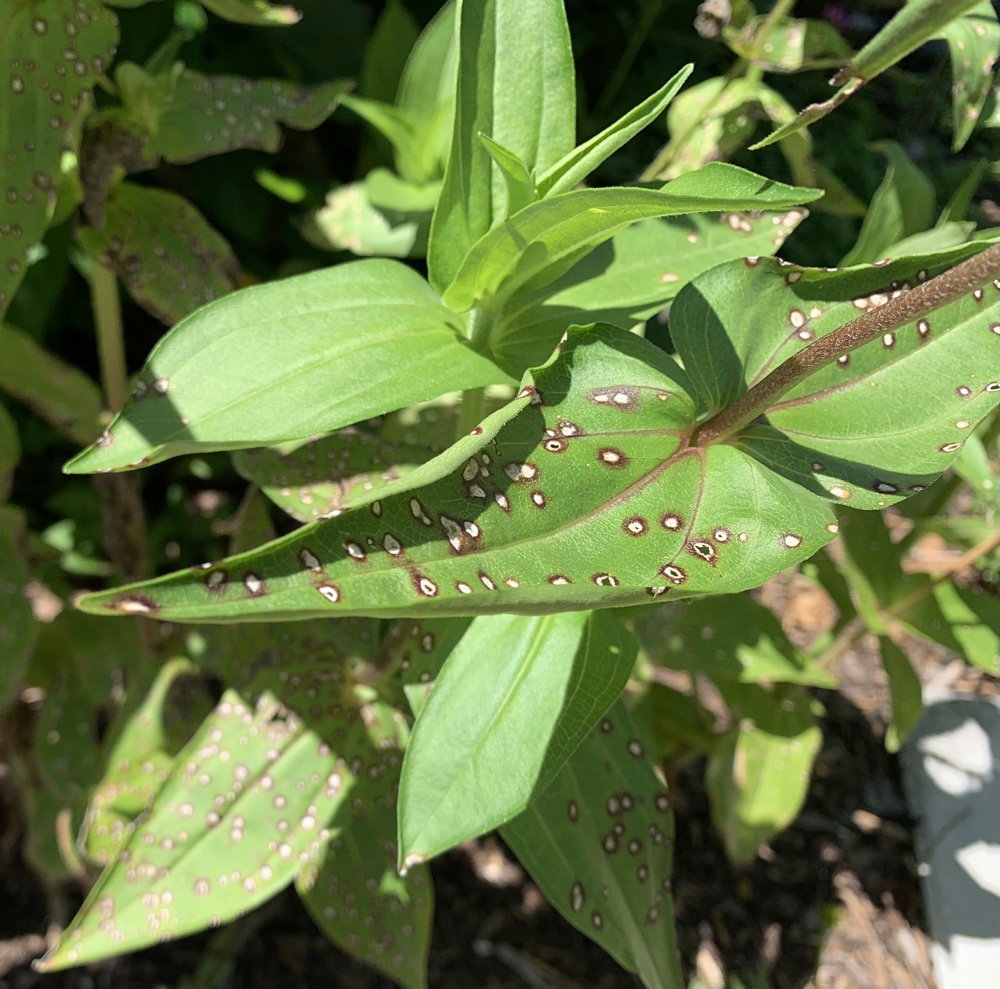
This year I learned that Zinnias can get a spotted leaf disease called bacterial leaf spot. And sure enough, most of mine had it. They can also get powdery mildew on the leaves. (Pegplant’s page lists some varieties that are mildew resistant.)

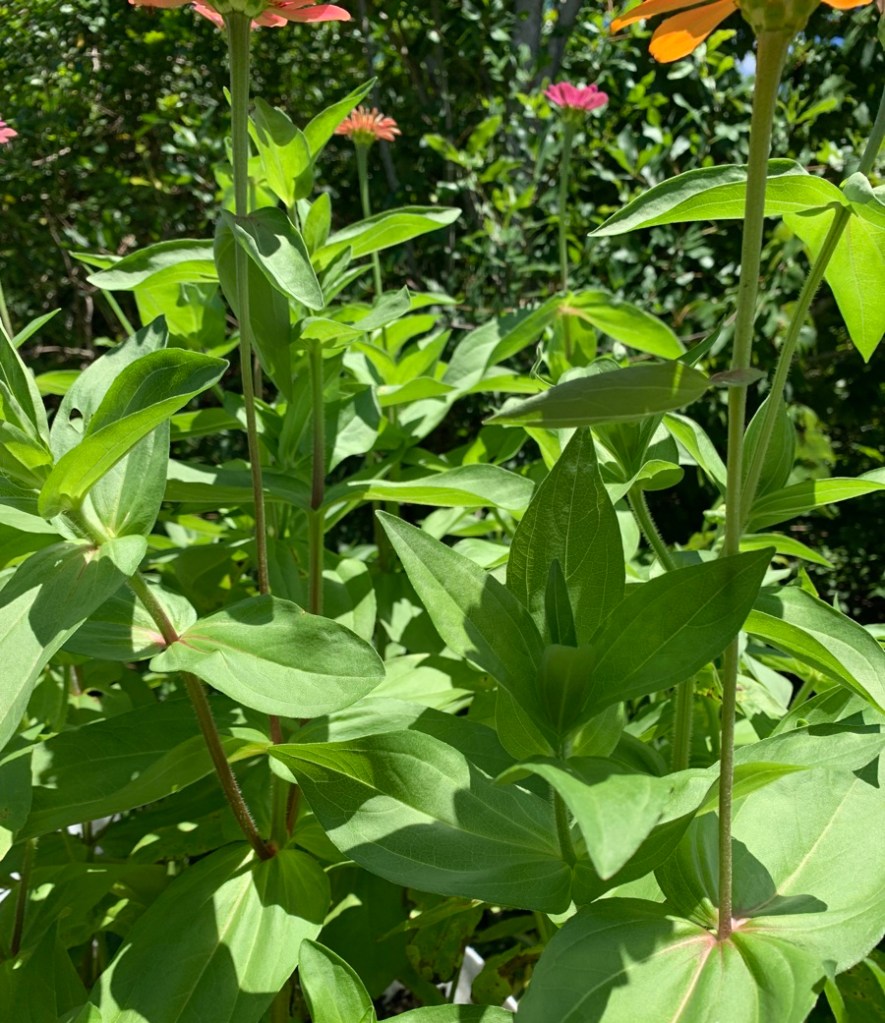
One way to help prevent both problems, is to give them space to grow. Air flow helps, but I live in a very humid place, so I’m not sure these things can be avoided. Overhead watering is a no-no for these flowers also.

Zinnia Varieties Less Susceptible to Disease

I can’t remember where I saw this information, but I wrote it down. This list is the varieties of Zinnia that supposedly are less susceptible to disease. The Southern Exposure Seed Exchange has the Marylandica variety (also called Zahara), but it’s currently out of stock. It has small, white, daisy-like flowers.

  • angustifolia
  • marylandica
  • crystal
  • star (bright?)
  • profusion

The varieties to avoid, for disease, are “elegans” and “heageana“, which seem to be the most likely available! I think all of mine are Zinnia elegans.

I found some Zinnia marylandica seeds at a shop on Etsy and will give them a try.

zinnia garden

I hope you are having a wonderful summer. If you love to grow Zinnias, I’d love to hear about them.

More stories from the backyard…

Something went wrong. Please refresh the page and/or try again.
Orange Gulf Fritillary Butterfly

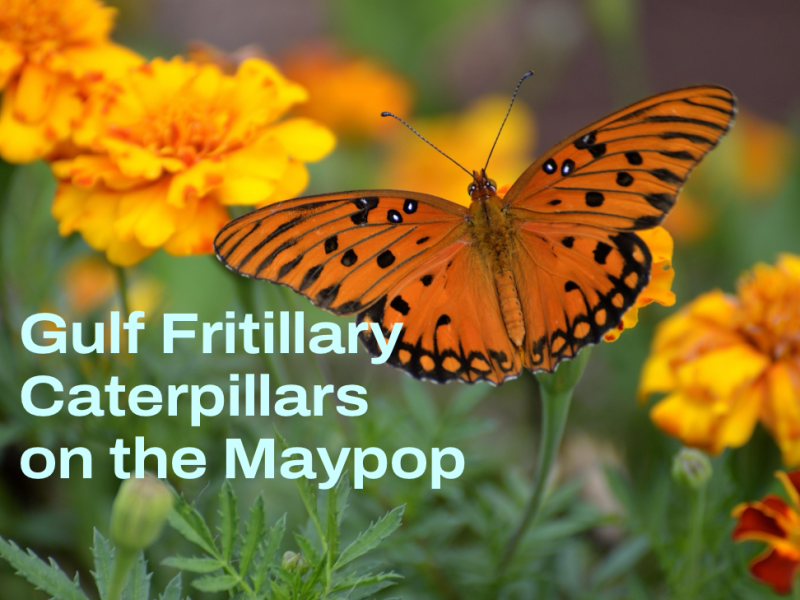
If you live in the southern US, that pretty, mostly orange butterfly in the yard may be the Gulf Fritillary.

I’ve seen pretty orange butterflies in the yard and never knew their names. It is the Gulf Fritillary butterfly and is seen in the southern US. My daughter in New Hampshire is getting into identifying her local butterflies so I took pictures of this one to show her.

orange Gulf Fritillary butterfly
Gulf Fritillary butterfly

Generally, trying to photograph moving creatures is something I don’t even attempt, but this beautiful butterfly was hanging around the flowers for so long that I figured I’d try.

When I sent the photo, my daughter did not recognize it – no surprise since she will probably never see one in New England. I had to search to identify its name. According to this page at the Butterfly Hobbyist they are abundant in Florida and Mexico.

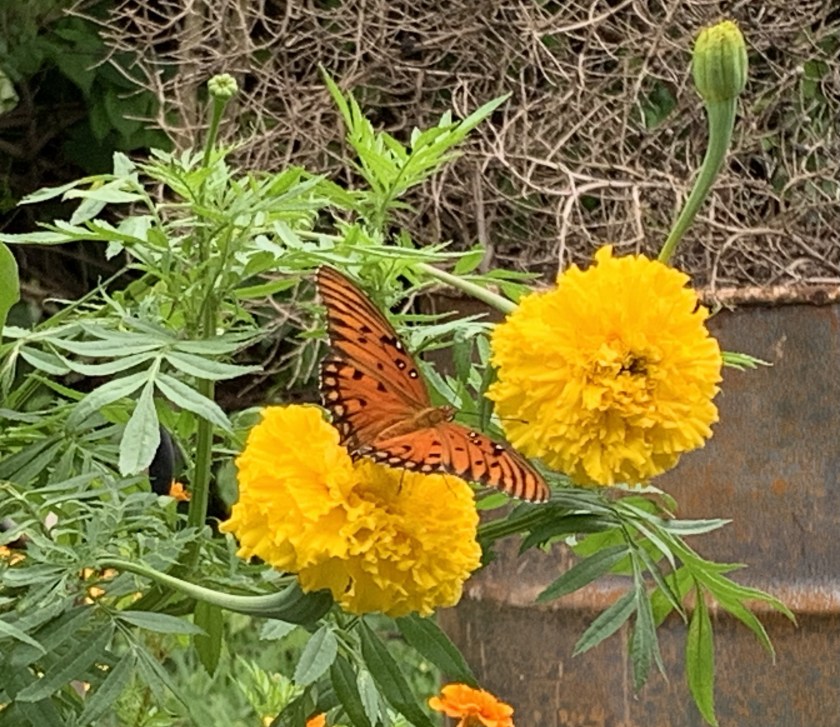
The Gulf Fritillary especially likes Passionflowers, or Passion vines, which is where they prefer to lay eggs. But in the butterfly stage they visit many types of flowers. This one seemed to enjoy the marigolds.

Gulf Fritillary butterfly
Gulf Fritillary butterfly on yellow marigolds

More stories from the garden

Growing Dill and Fennel in a Florida Garden

Growing dill and fennel in a Florida yard.

I’ve combined these two herbs in this post because one of them I can’t seem to grow. Because dill doesn’t like my yard, I’ve grown fennel in it’s place.

The two herbs are not interchangeable for cooking and seasoning, as they are both different, but as far as gardening goes, they are similar. They are both airy and lacy and have big yellow, open flowers that attract beneficials.

Dill

I first grew dill in my New Hampshire yard. I absolutely loved the flowers that came at the end of the season, which attracted good bugs. Here in Florida I have tried numerous times to grow it without success. This potted dill you see here was grown from seeds.

Aside from the fact that the raccoons dug around in the pot one night, it looks pretty good.

Dill plant

Fennel

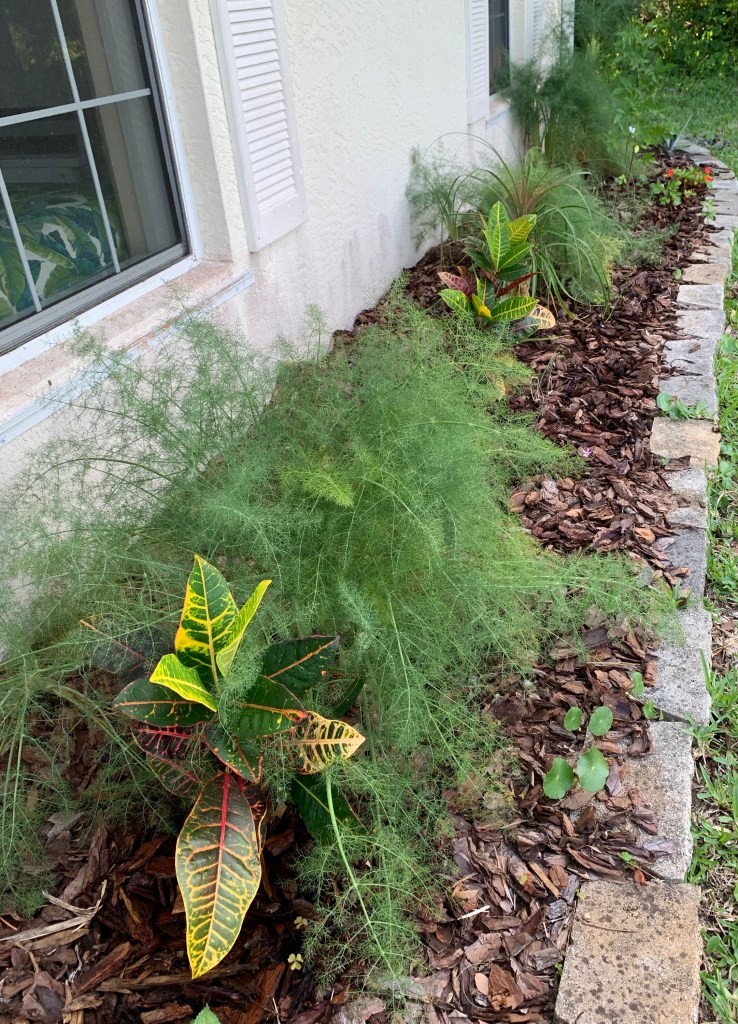
Fennel on the other hand grows all on it’s own. It is considered a perennial. It has successfully re-seeded itself in my front yard and I’ve seen caterpillars on it in past years. And often the stalks will last into the following year. Here in Florida that happens with many vegetables.

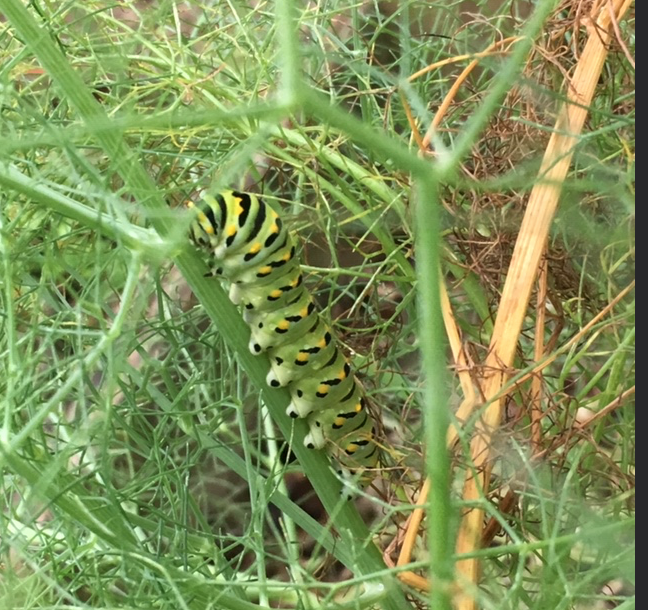
Unfortunately the brown lizards ate all the worms, so I didn’t see any turn into Swallowtail butterflies.

Swallowtail worm on fennel
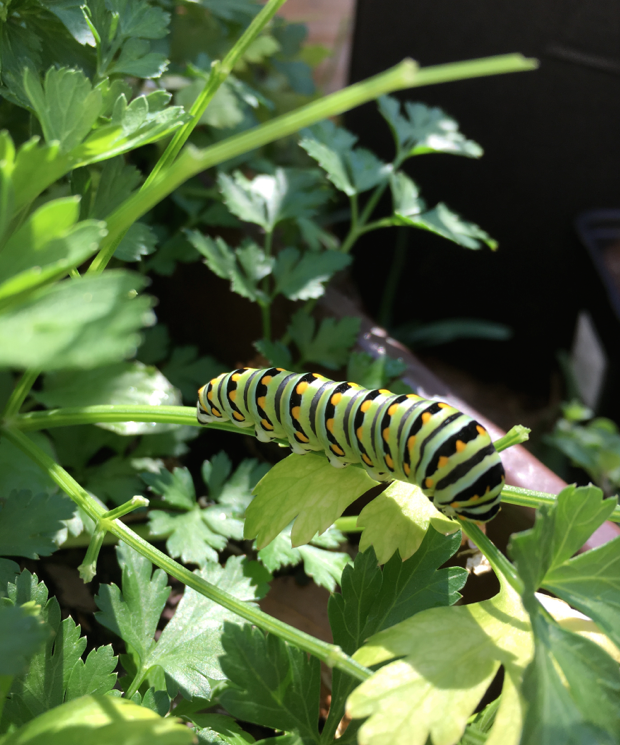
Parsley worm which will become a black swallowtail butterfly

Saving Seeds

Both dill and fennel have seeds that form on the flowers and are very easy to save. Because I don’t have luck with dill, I have photos of fennel seeds only.

fennel plant with seeds
Fennel flowers turning to seeds

Fennel easily grows from seeds. I have some plants that have sprung up along the front of the house. This year I saw no caterpillars on them, but I like to have them just in case a butterfly comes by to lay her eggs.

fennel plants

Parsley Worm and The Butterfly it Becomes

Screen Shot 2017-04-20 at 1.55.56 PMThis is a story about the parsley worms in my backyard. My garden is small, and a bit unique in that at the present time my vegetables are in pots and fabric bags.  I use fresh parsley often, and I have it growing in two locations.

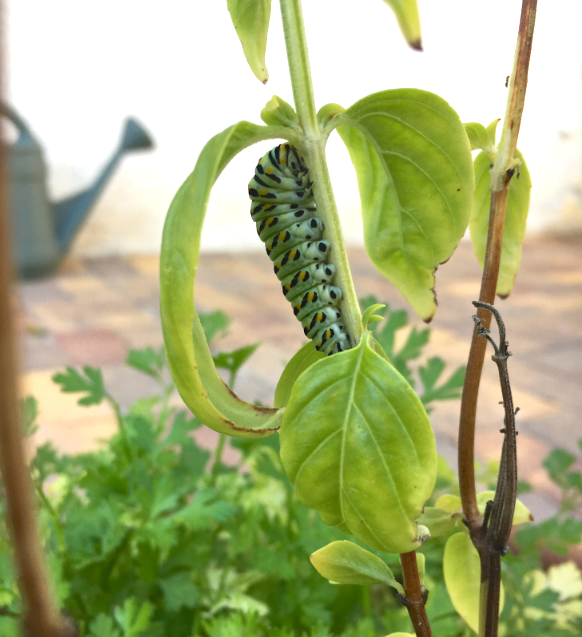
One day I found this colorful worm crawling along a parsley stem and munching away.  I could see that he had chewed off many of the surrounding leaves.  This striped guy is appropriately called a “parsley worm”.

I couldn’t remember what type of butterfly it would become, (had to look that up) but I knew it was getting ready to form a chrysalis.

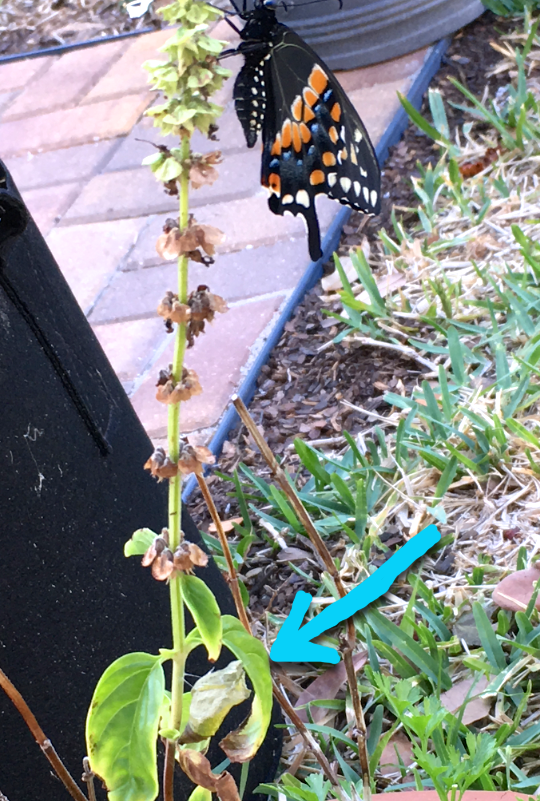
Turns out it’s a Swallowtail butterfly that emerged from the green chrysalis a few weeks later. The wrapped worm was attached to a stem of basil, which had gone to seed, but was in the same pot as the parsley the worm was eating.

But here’s what happened first.  I found the worm sitting in this position (below) and he was no longer eating.  In fact he was on the basil now, and not the parsley.  This is where he formed his chrysalis.  I checked it every day, and after a few weeks, there was something new to see.

Screen Shot 2017-04-20 at 1.58.07 PM
Worm beginning to form a chrysalis

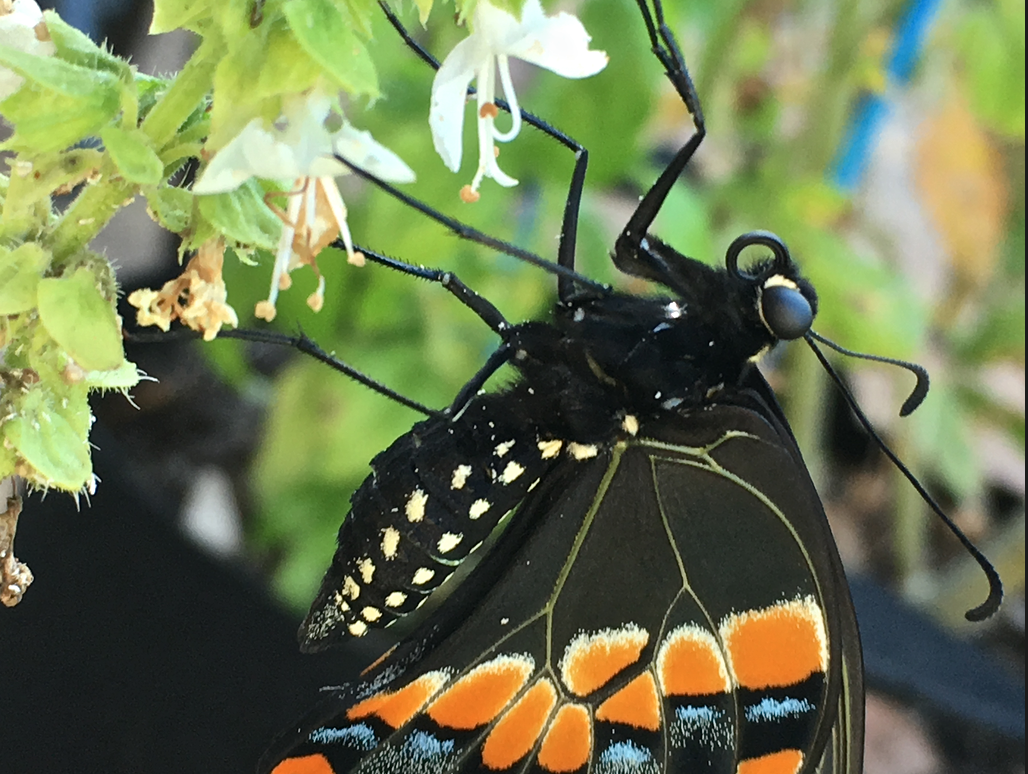
Once the butterfly “hatched” he crawled to the top of the basil stem to try out his new wings.  Maybe this is the perfect set up for encouraging butterfly production.  I hope it happens again.
Screen Shot 2017-04-20 at 2.34.44 PM
Arrow pointing to the empty chrysalis

A few days ago I happened to go outside and saw this beautiful black butterfly at the top of the basil stem, and I knew… the baby was born!  The wind was blowing, but he held on for hours.  I kept checking on it, and then suddenly he was no longer there.
I felt like a proud parent.  I had helped a new baby butterfly enter the world. Course, I had done nothing but plant the parsley… haha!!!  But I felt good. And I’m glad I was able to see the beautiful butterfly before it flew away.  I took lots of photos, like a proud parent does, and one video.


It turns out that there are many types of Swallowtail butterflies, and the worms can be different colors too.  I honestly don’t know much about all of this, but I love it!  Imagine going from being earth bound and crawling among bunches of green parsley, to having big beautiful wings that take you up into the sky!  I will keep an eye out for eggs on the parsley leaves, and bright green worms among the branches.