I am writing today to make you feel better. Yup, it’s a pretty depressing morning here, so I hope that will make you feel better about your bad start to the day. If you had a good start, yay for you. If you are having gardening troubles, you are not alone.
Here in the jungle, summer is the pits. It is too hot to be outside for long, and if I venture out, it’s either loaded with bug repellent, or covered in long sleeves and pants.
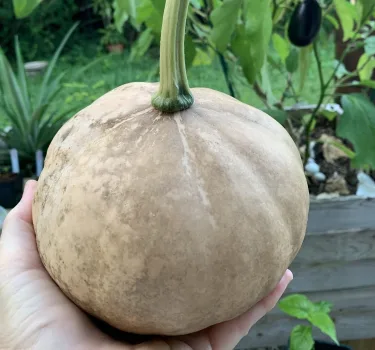
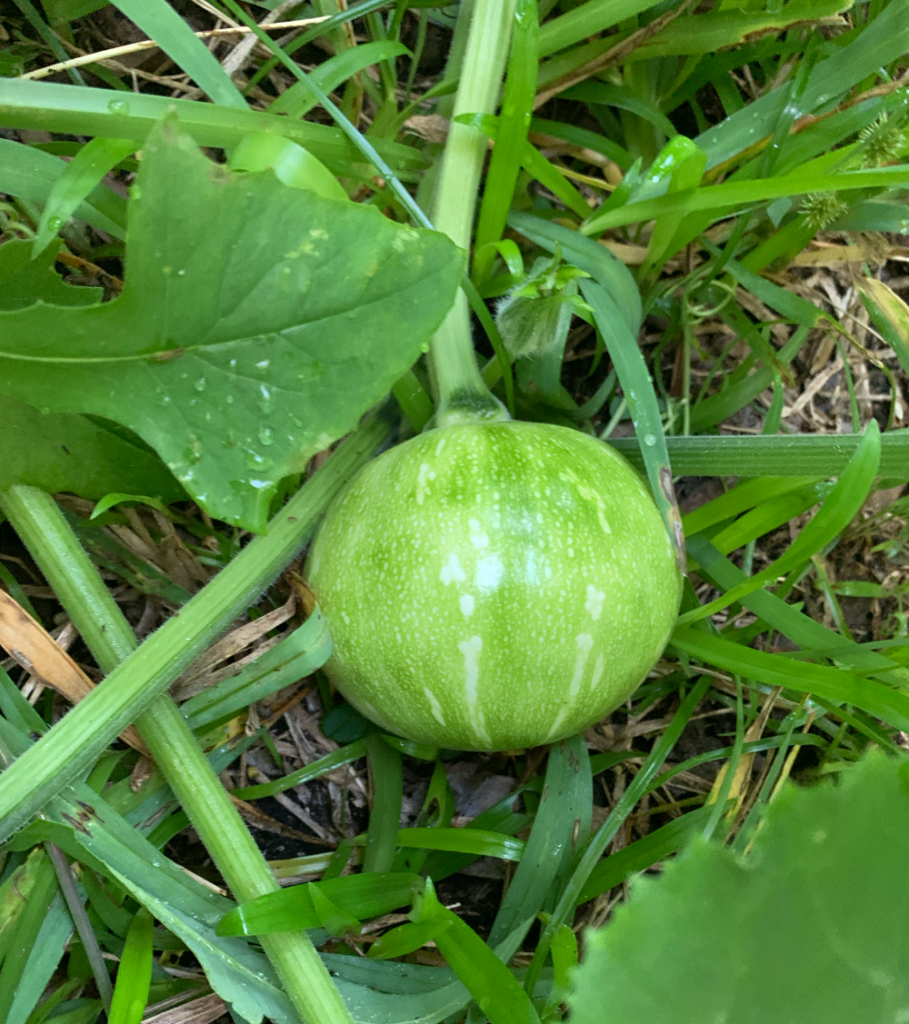
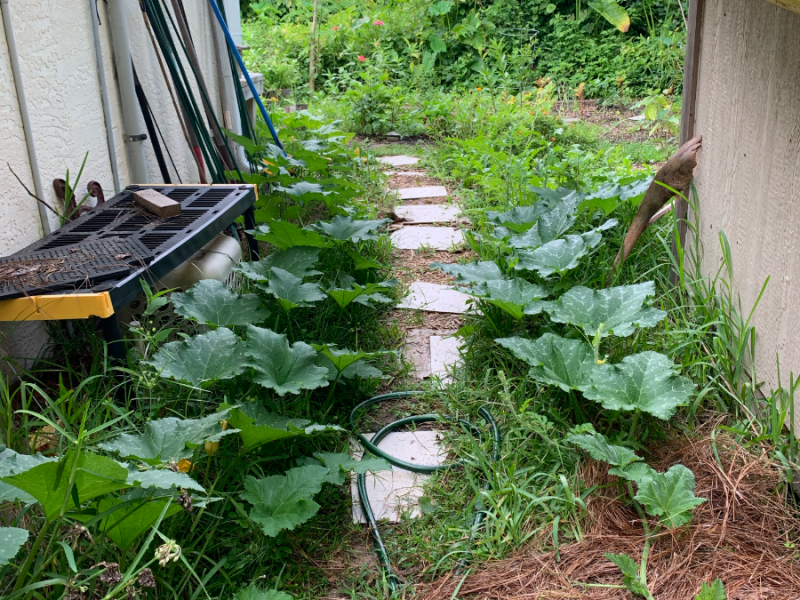
On top of that, there is very little in the way of food growing. All my Seminole pumpkins start to grow, then turn yellow and fall off the vine.
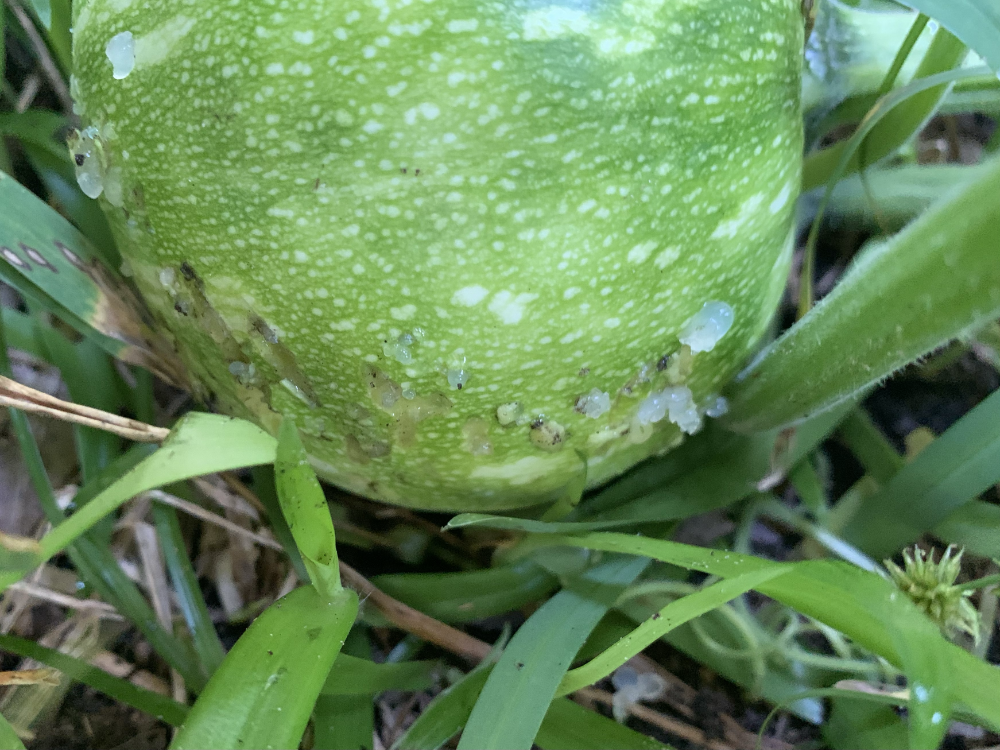
Finally, I have one that looks like it will continue to grow. And today I see that raccoons (my best guess) have scratched it all up!
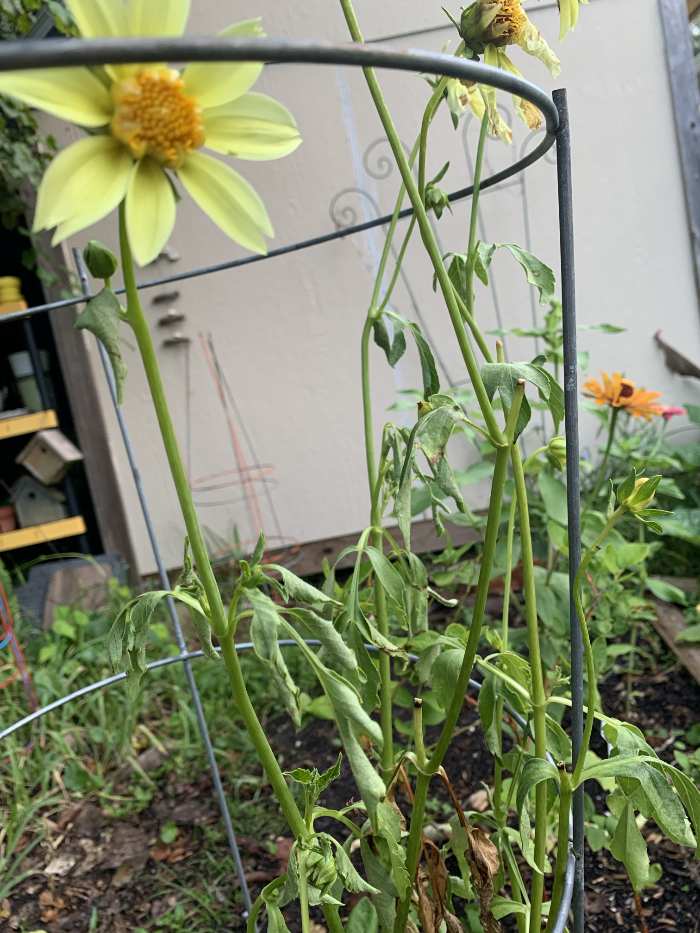
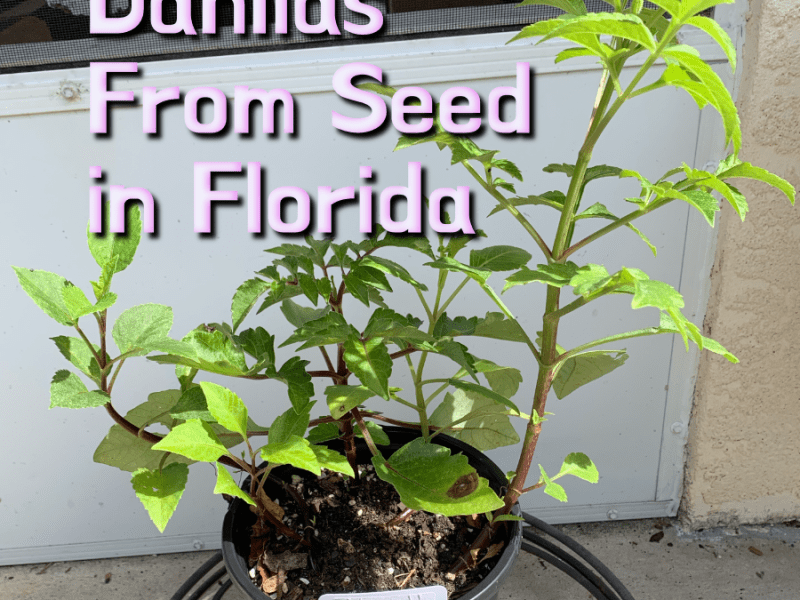
The Dahlia is wilting. We just had a little tropical system swirling over our area of the state and it dropped 4 inches of rain. We had minor flooding, which went away quickly. But maybe the dahlia did not like all that water. Maybe it doesn’t like July in Florida. I can’t blame it.
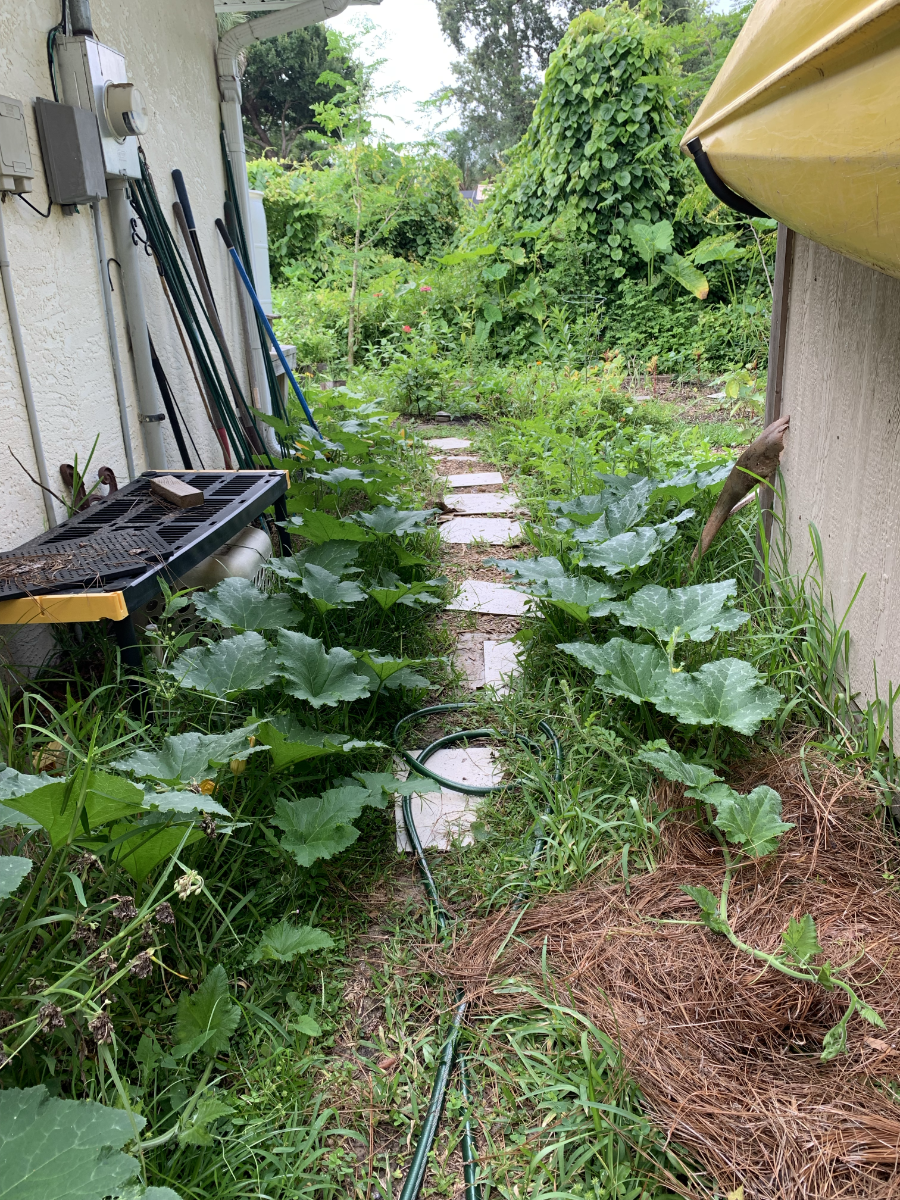
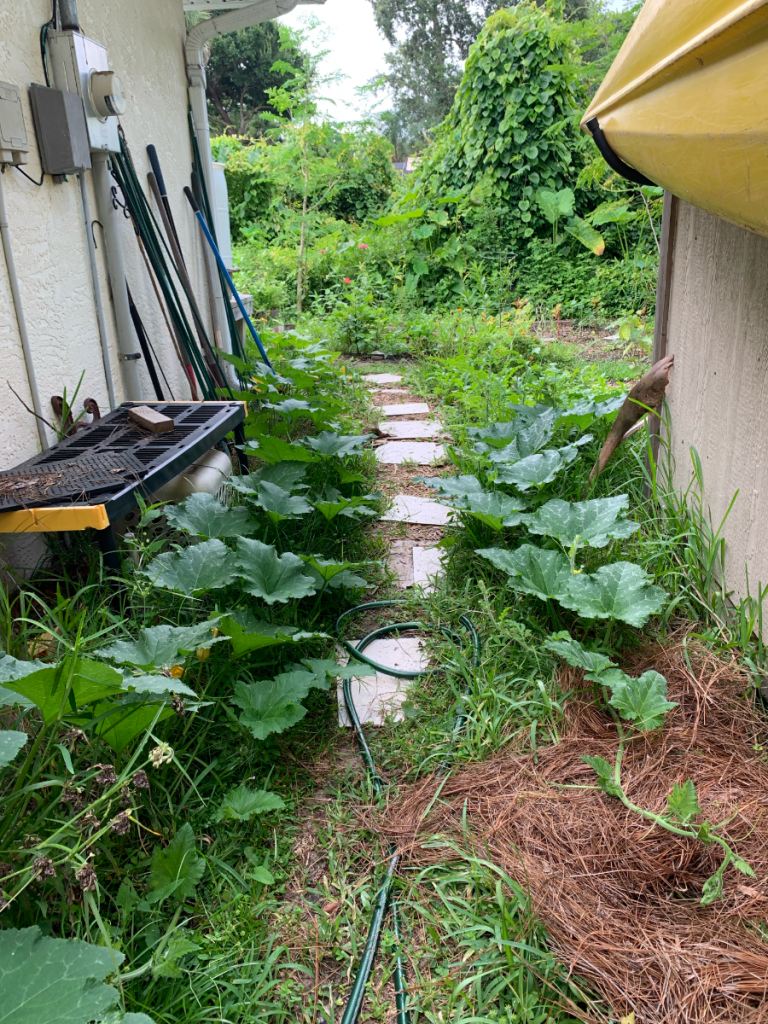
The weeds, or should I say, grass has gone nuts. This is all getting away from me because of all the vines that are sprawling all over the yard. The squash vine is done, and I should pull it up. But it’s too hot and buggy.
The watermelon vines have 1 watermelon. The pumpkin vines – well, I mentioned that above. Those vines have nearly made it from the back of the house to the front. They’ve dropped about 10 pumpkins at this point.
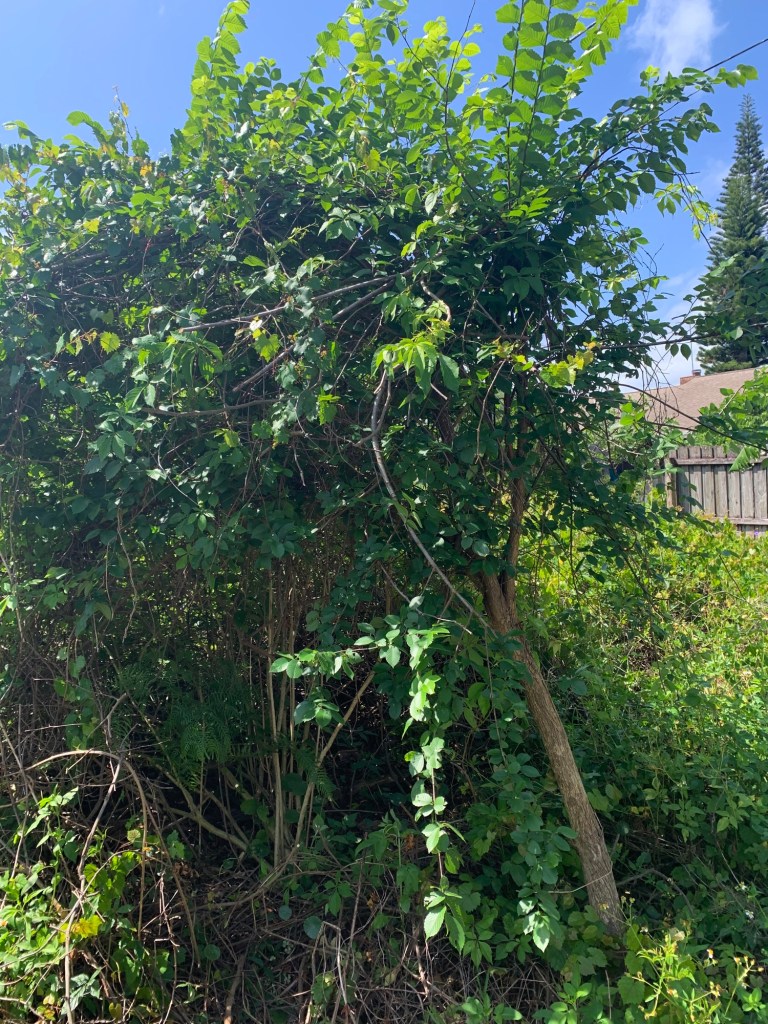
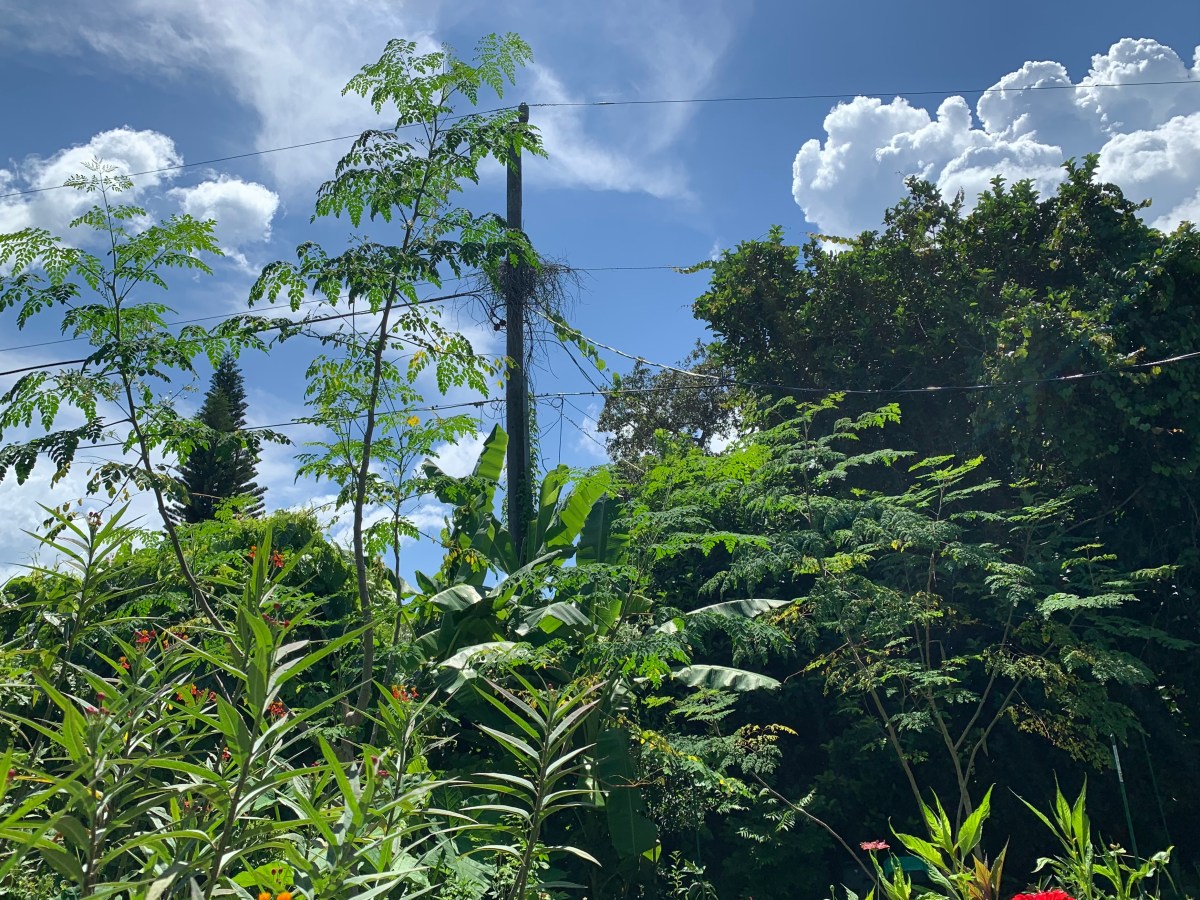
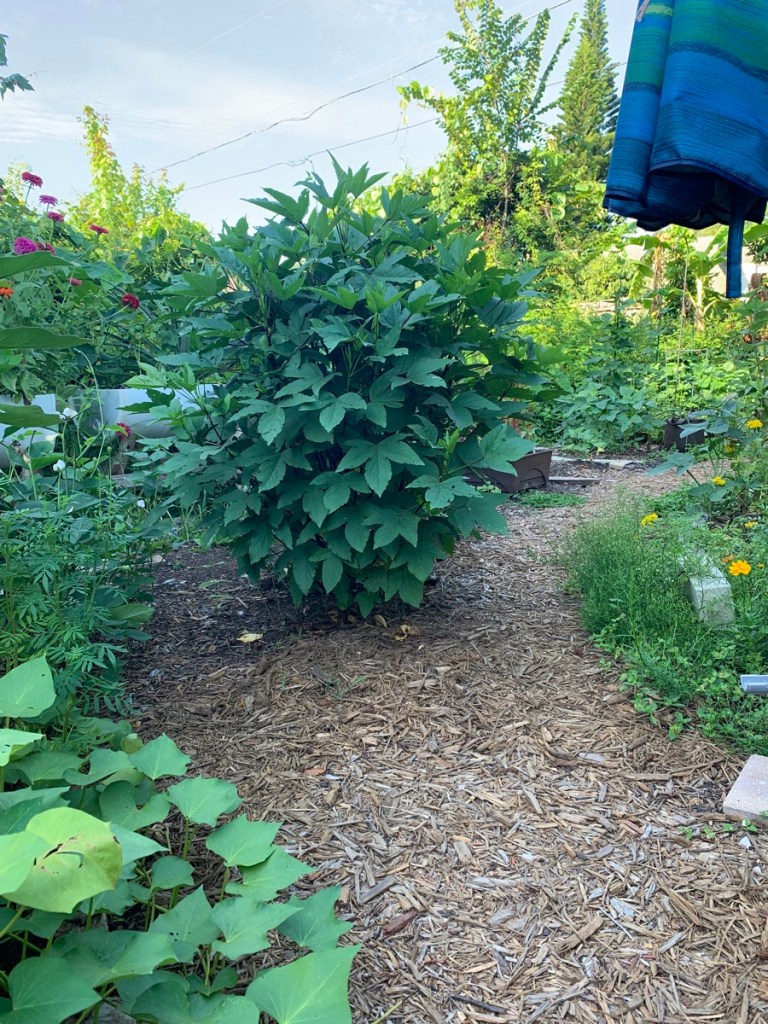
Speaking of vines. That mound in the distance in my photo above is an Elm tree next to a Beautyberry bush. Below is a photo of the two trees with most of the vines pulled off. I used to work at this, even though this is not part of my yard. I’d love to see both grow and do well. As you can see it’s a losing battle.
These are trying to grow under that mound of vines in the photo above.
A banana pepper plant has died, and the other peppers don’t look so good. So it’s a depressing start to the day for me. I think I’ll stay inside.
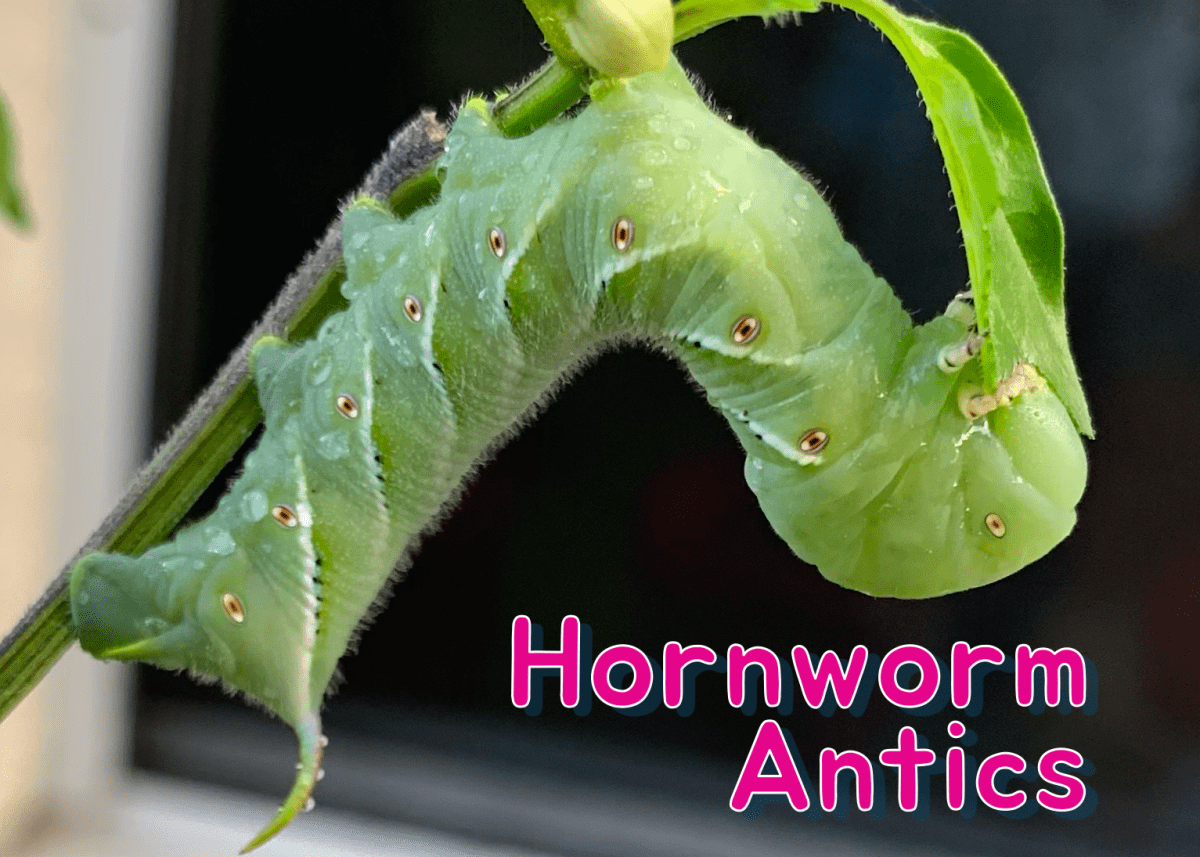
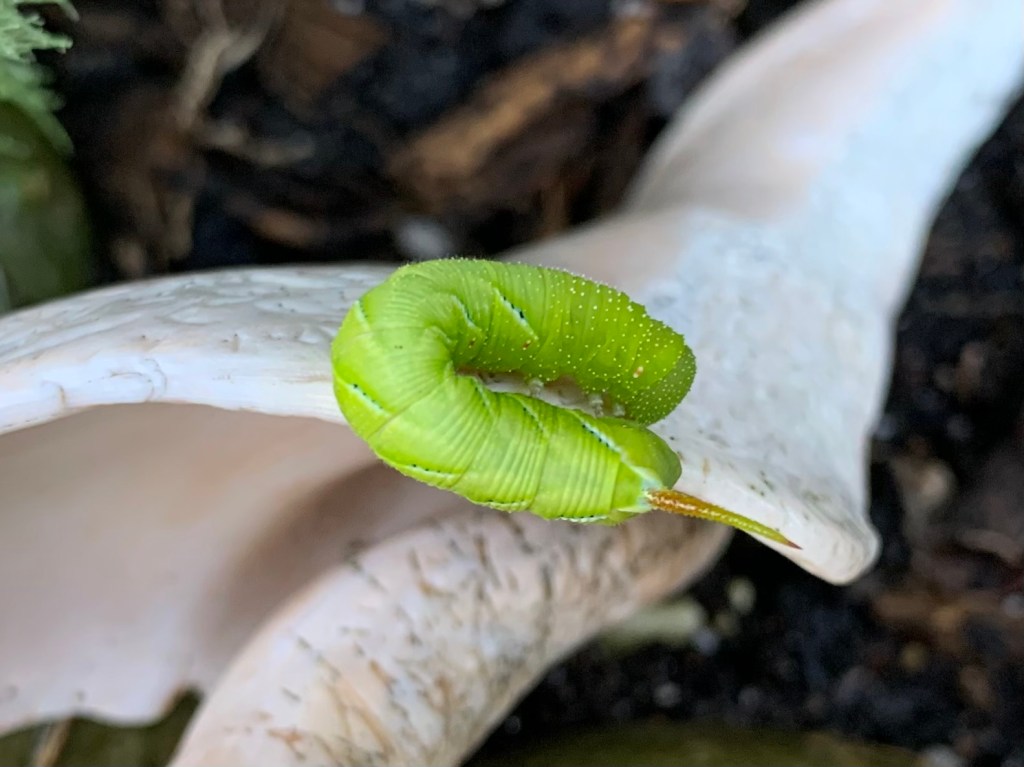
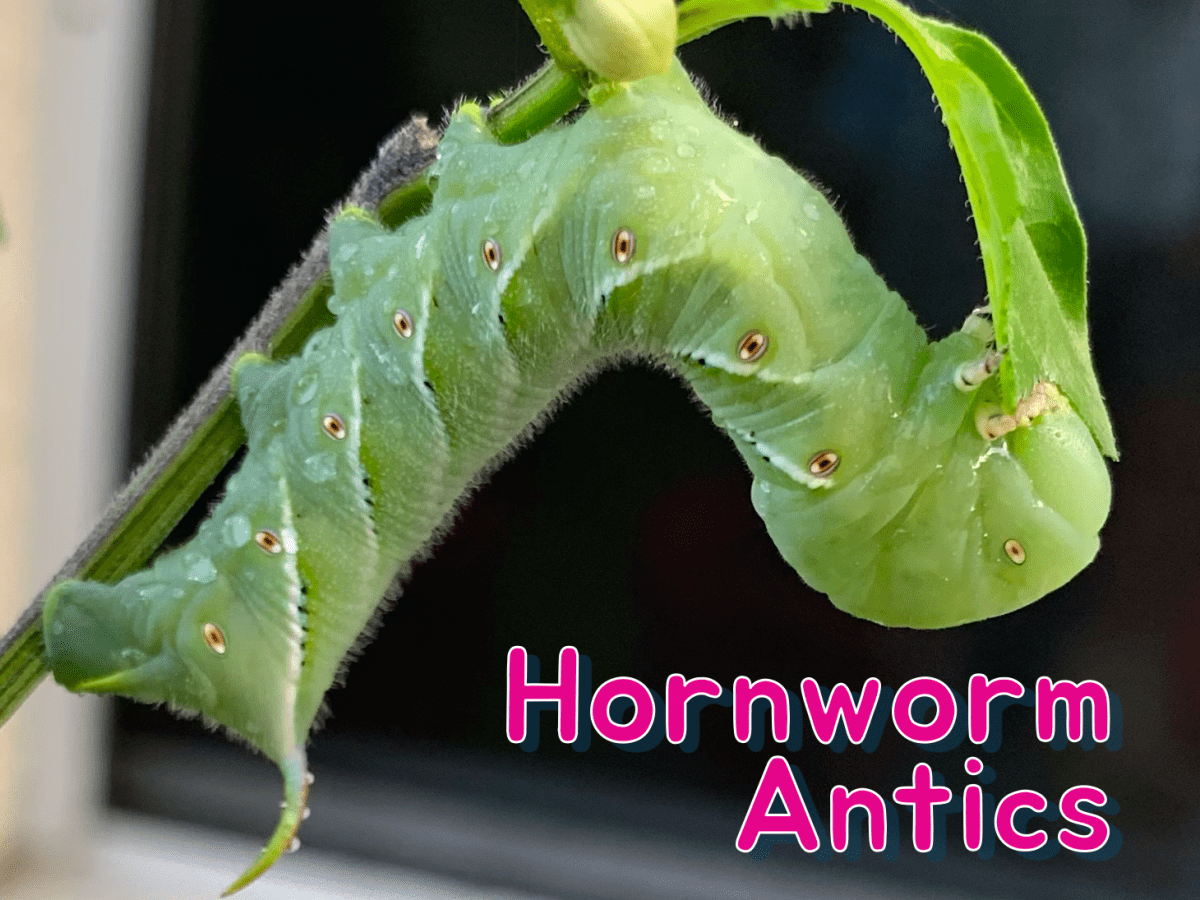
If you are growing peppers, check often for the tomato hornworm. These caterpillars can eat a lot if unchecked.
Because I am not so great at pepper growing, I have never had to worry about the hornworm eating my peppers. I have had them on my tomatoes and eggplant.
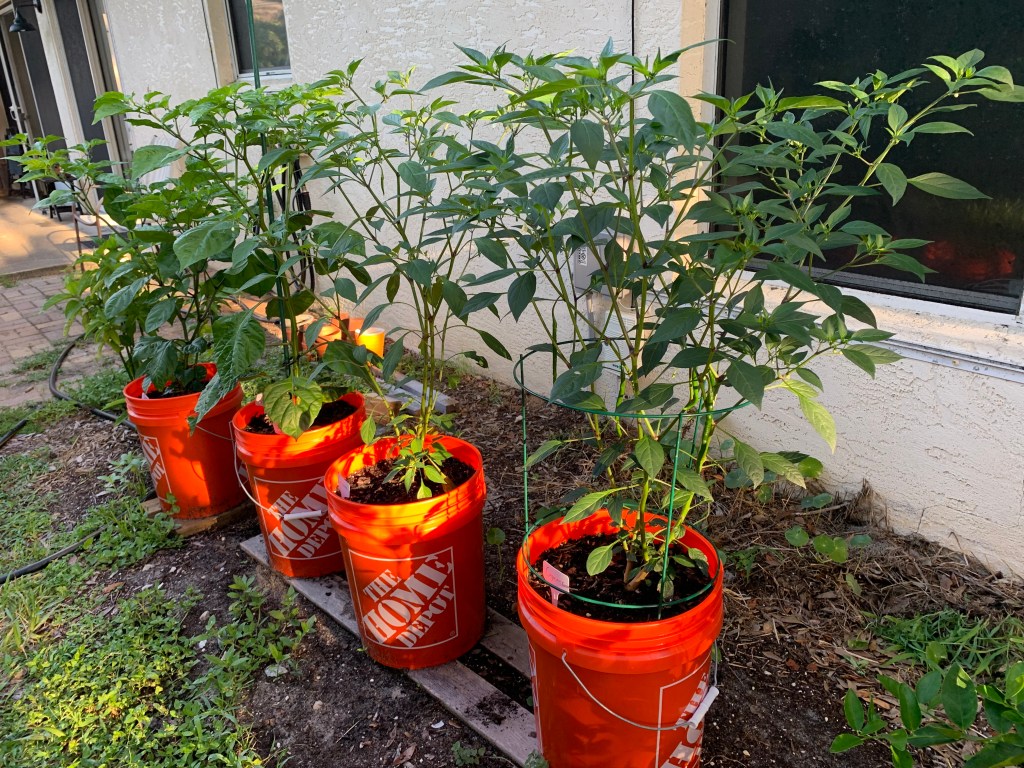
My son is growing some hot peppers in Home Depot buckets. This is where the hornworms are currently congregating. I’ve already picked off five of these squishy, green guys. And they really hang on!
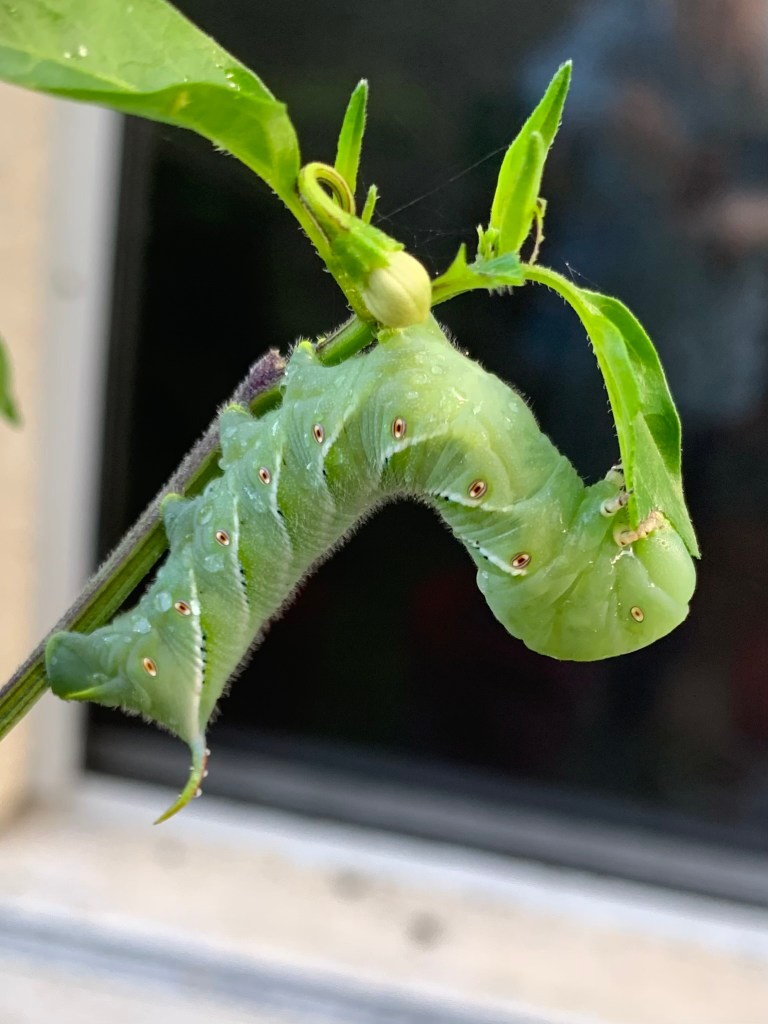
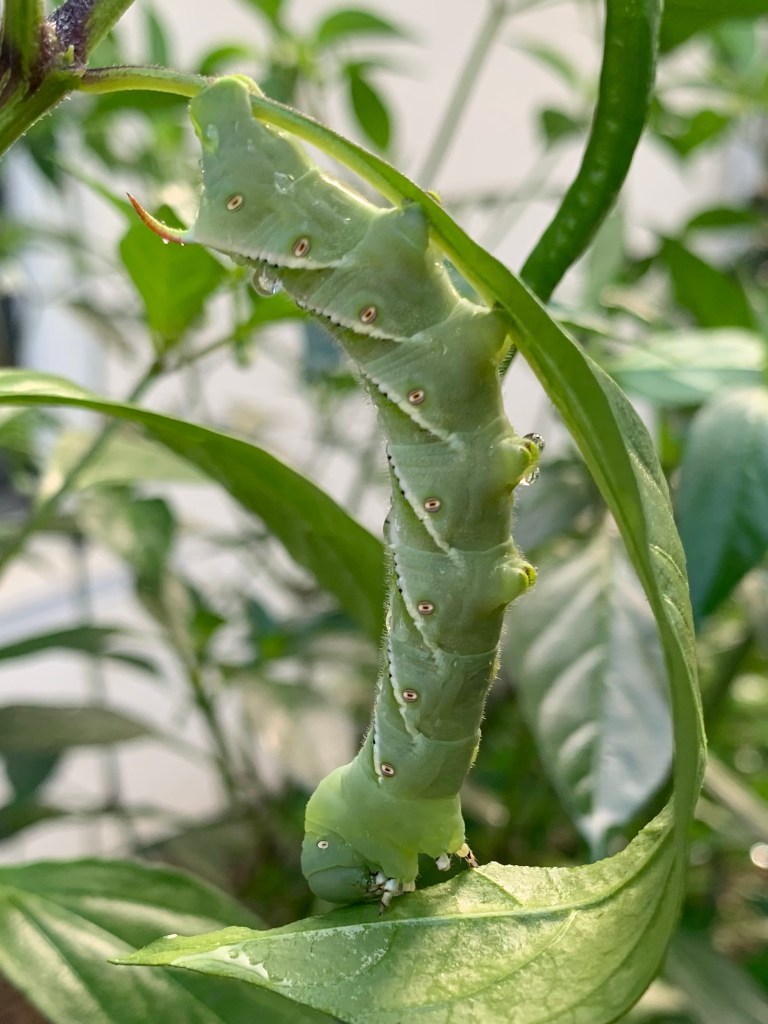
Personally, I think this is one of the coolest looking caterpillars. They can get very big, and they can eat a plant down to almost nothing.
HornwormHornworm #2
Apparently, hot pepper plants don’t bother these guys. Both caterpillars in my photos are eating Cayenne pepper leaves, but I’ve picked some worms from the super hot Carolina Reaper as well.
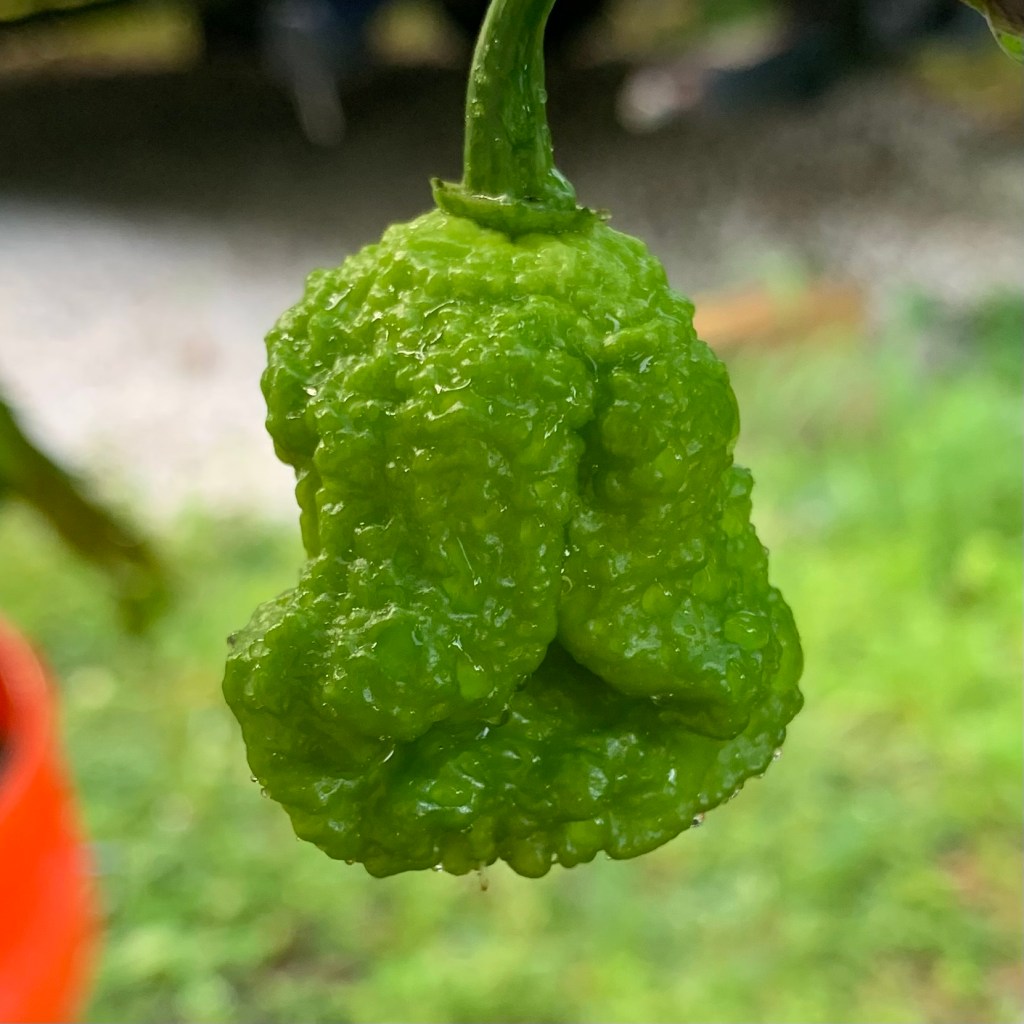
The Carolina Reaper is one of the hottest peppers out there. My son has one green pepper on the plant. It will be turning red before he will carefully pick it to make hot sauce. This pepper is sold by the PuckerButt Pepper Company and was created by Ed Currie. It registers between 1.6 – 2 million on the Scoville pepper heat scale. For example, a jalapeño is between 2,500 – 8,000.
Ed currently has one that is hotter called Pepper X.
We found these hot pepper plants for sale at the local Home Depot. My son is really into hot peppers, and the plants are all doing well. I look forward to using the cayenne peppers. With a Scoville rating of 30K – 50K, it’s about the hottest I can do.
Hot peppers in bucketsCarolina Reaper pepperHornworm
If leaves are disappearing from your tomato, pepper, or eggplant, look for the hornworm. He is sometimes easiest spotted above a little pile of brown poop on a leaf.
Once I pull the hornworm off the host plant, I deposit it into the yard. That way birds can have a treat. He won’t die for nothing.
I’ve found a good place to buy milkweed plants online. Ordering plants online can be expensive, so the plants that arrive should be in great shape. Read my review of Whitwam Organics and The Growers Exchange.
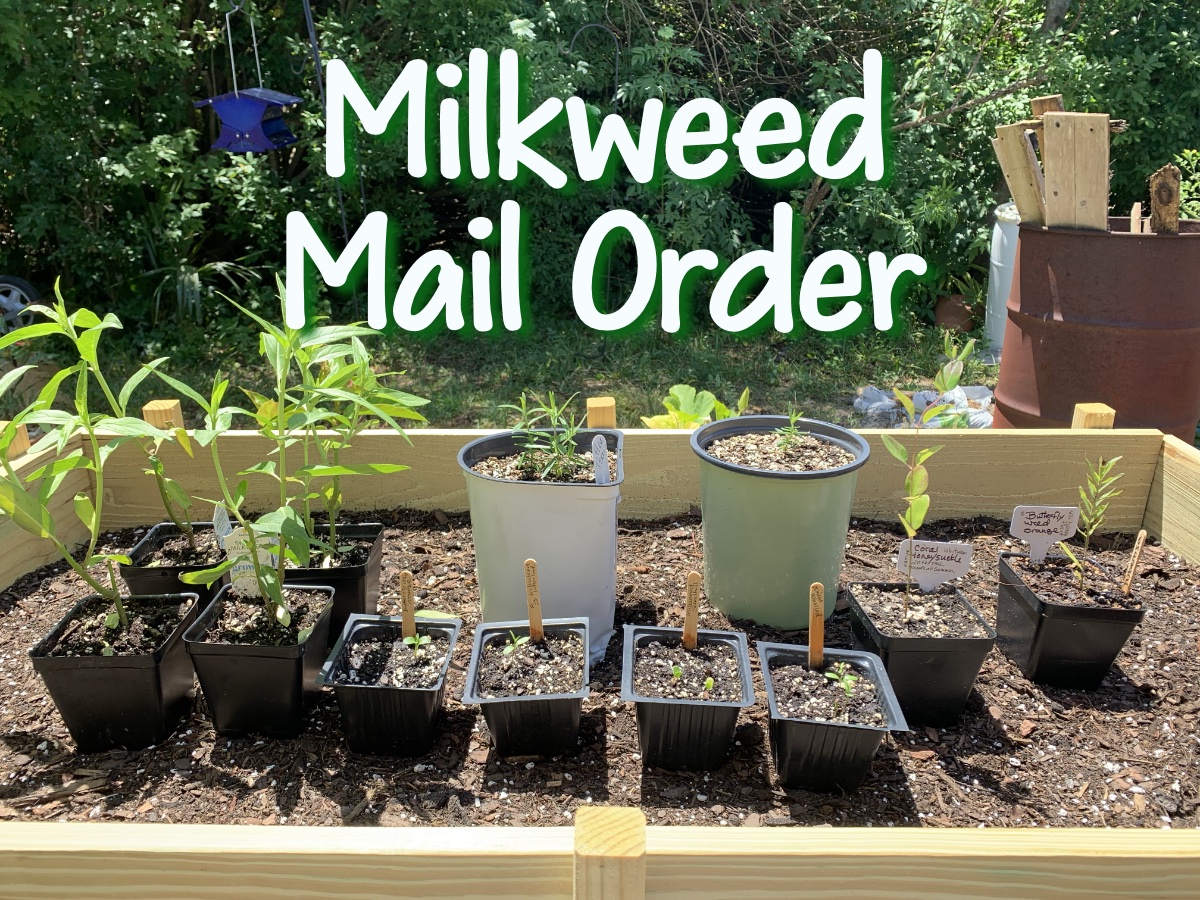
I need to get this recorded because I found a mail order company that sends nice plants. Here I am comparing the two companies that mailed me milkweed plants. The Growers Exchange and Whitwam Organics were the two I chose.
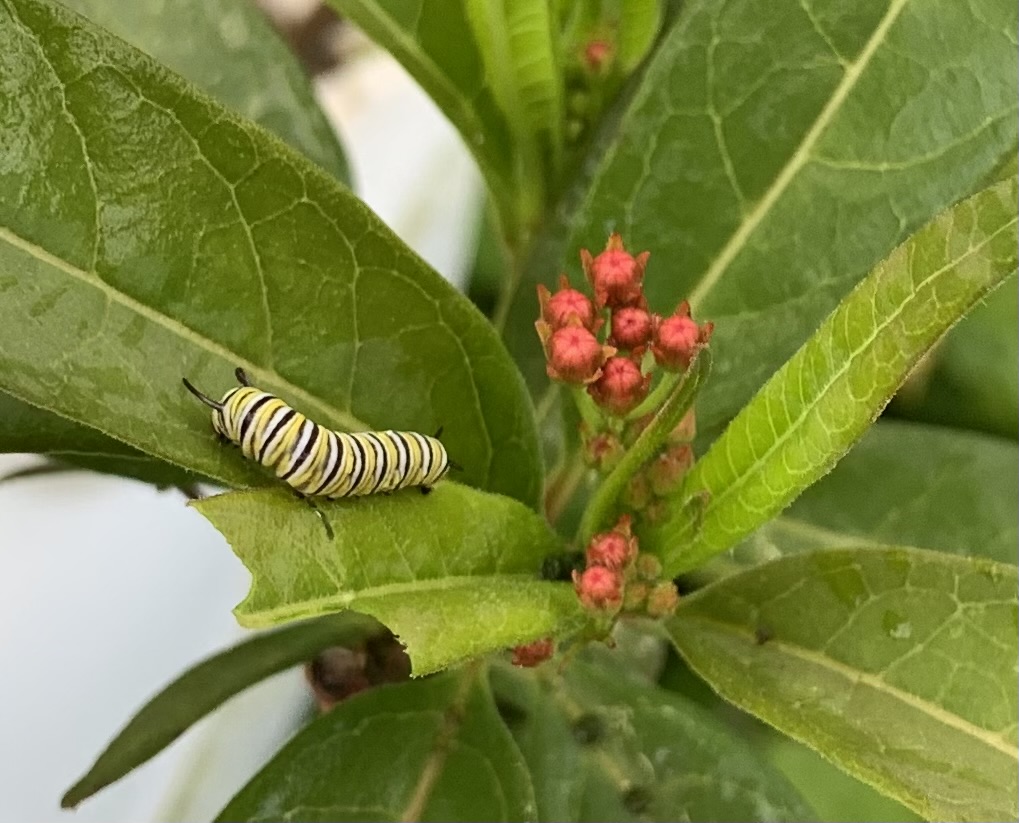
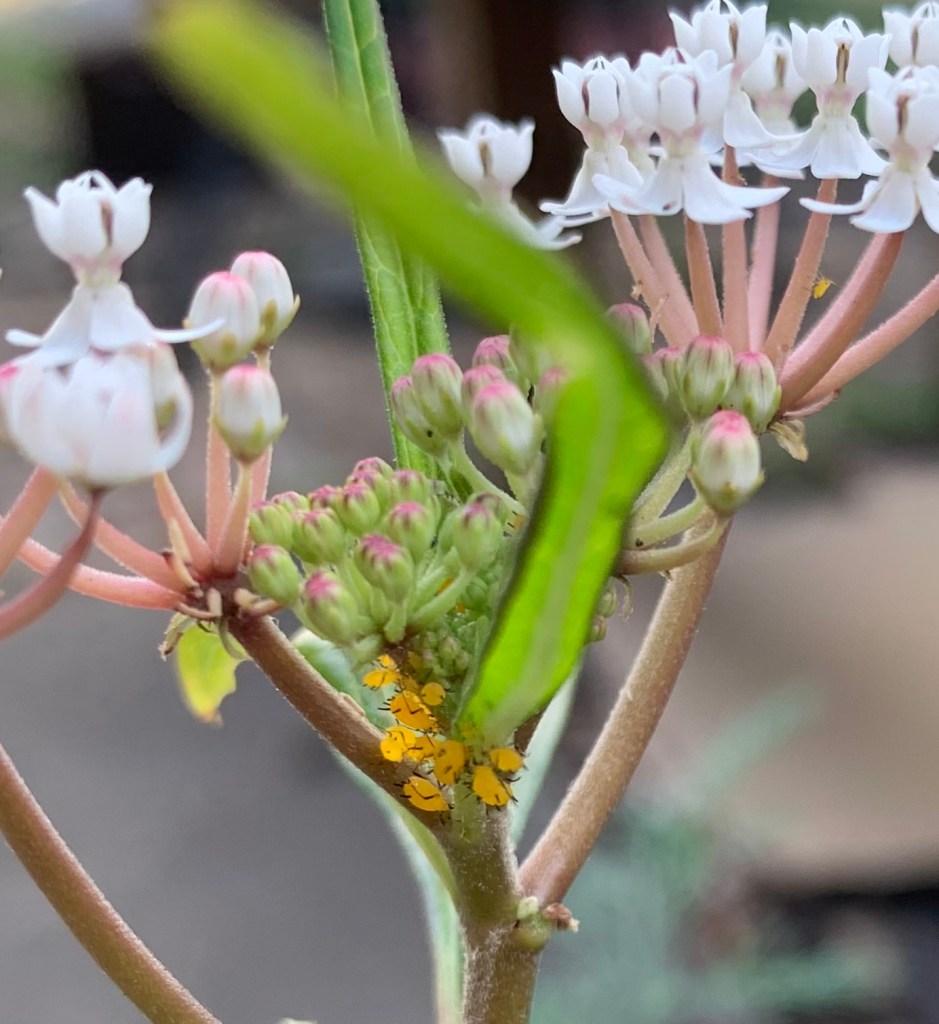
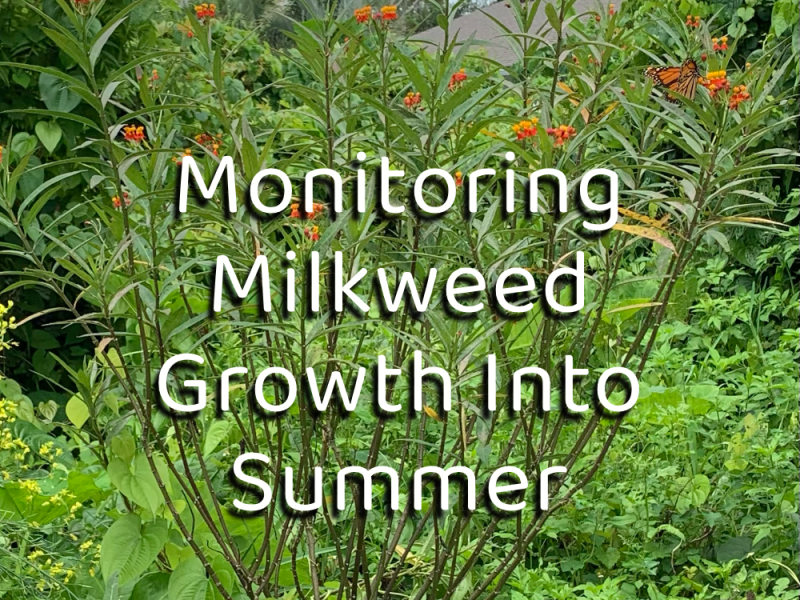
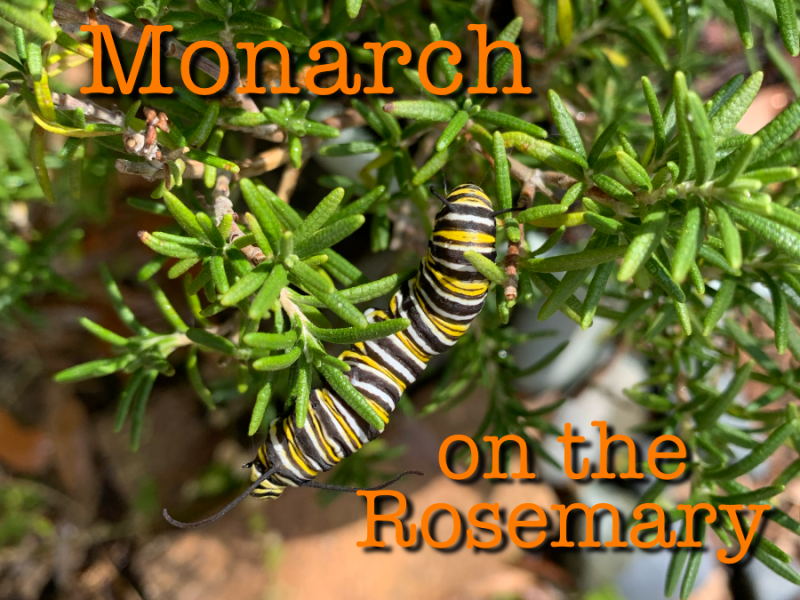
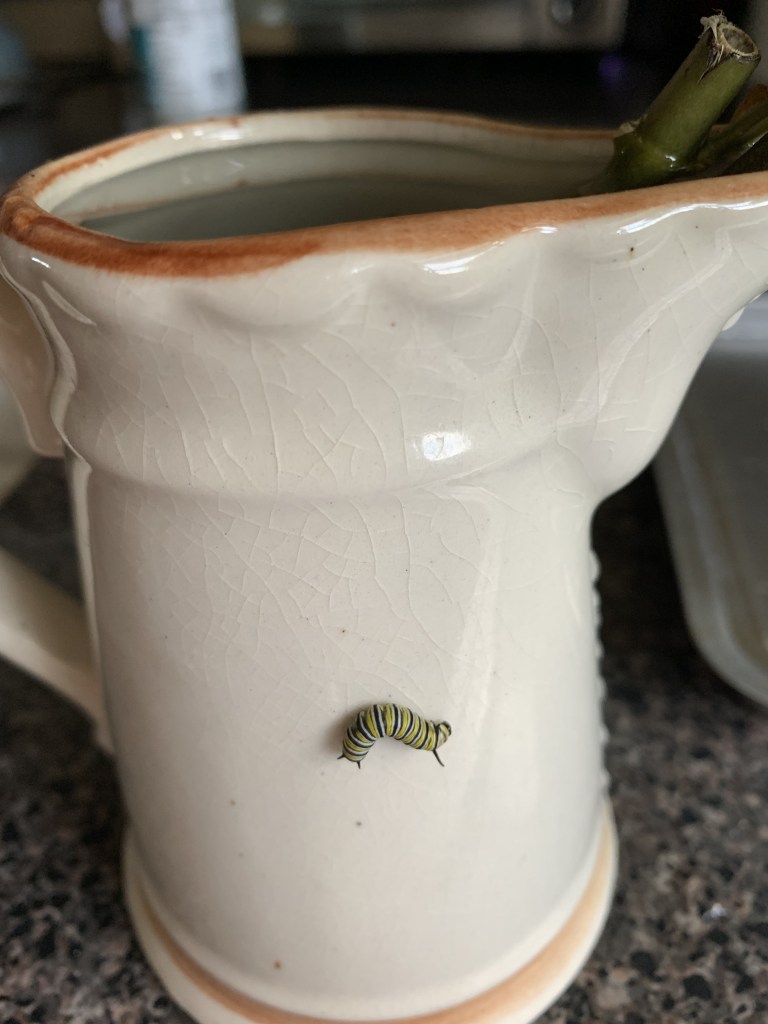
After my butterflies came out, I see all three of the Monarchs flying around the garden every day! The only milkweed currently available for them is the tropical type, and one small, blooming white Swamp Milkweed.
Tropical milkweed w Monarch caterpillarWhite Swamp Milkweed with aphidsWhite swamp flowers
The more milkweed in the yard, the better chance for caterpillars to have enough food. At one time I believed that the Tropical milkweed was bad, but that may not be altogether true. Read more at the link.
The Need for More Milkweed
I ordered some seeds from Johnny Butterfly Seed. Those are popping up in small pots and beginning to grow nicely. Growing from seed can take a while. I wanted plants.
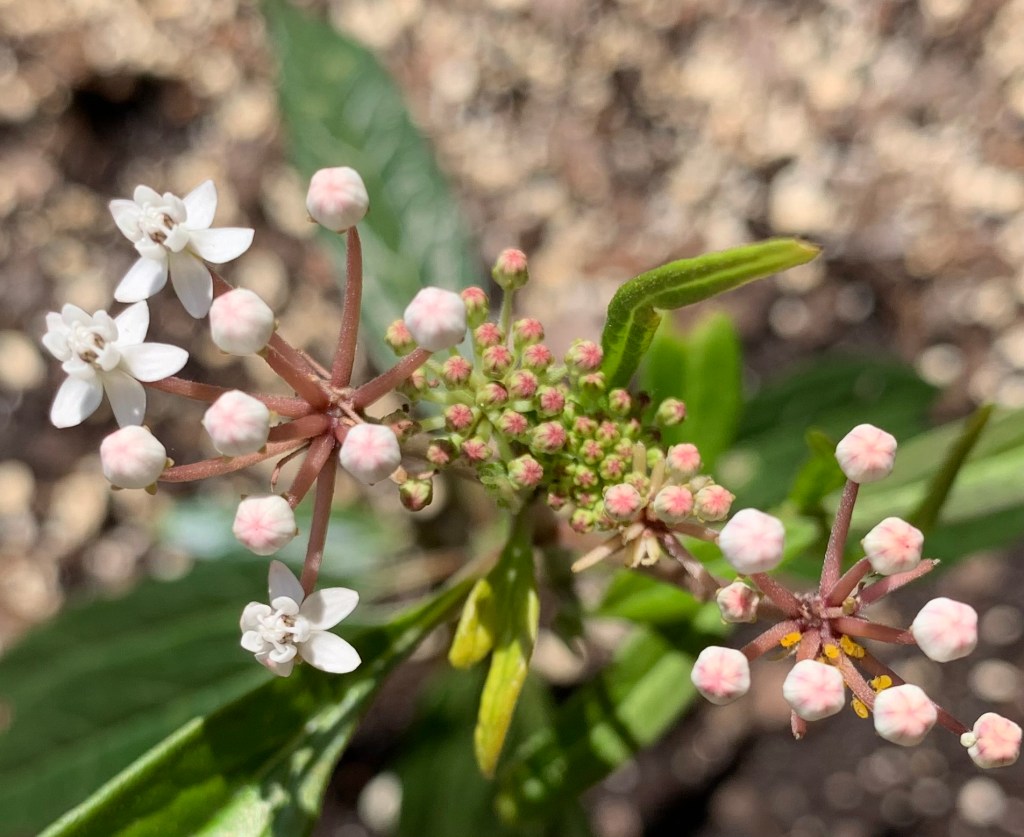
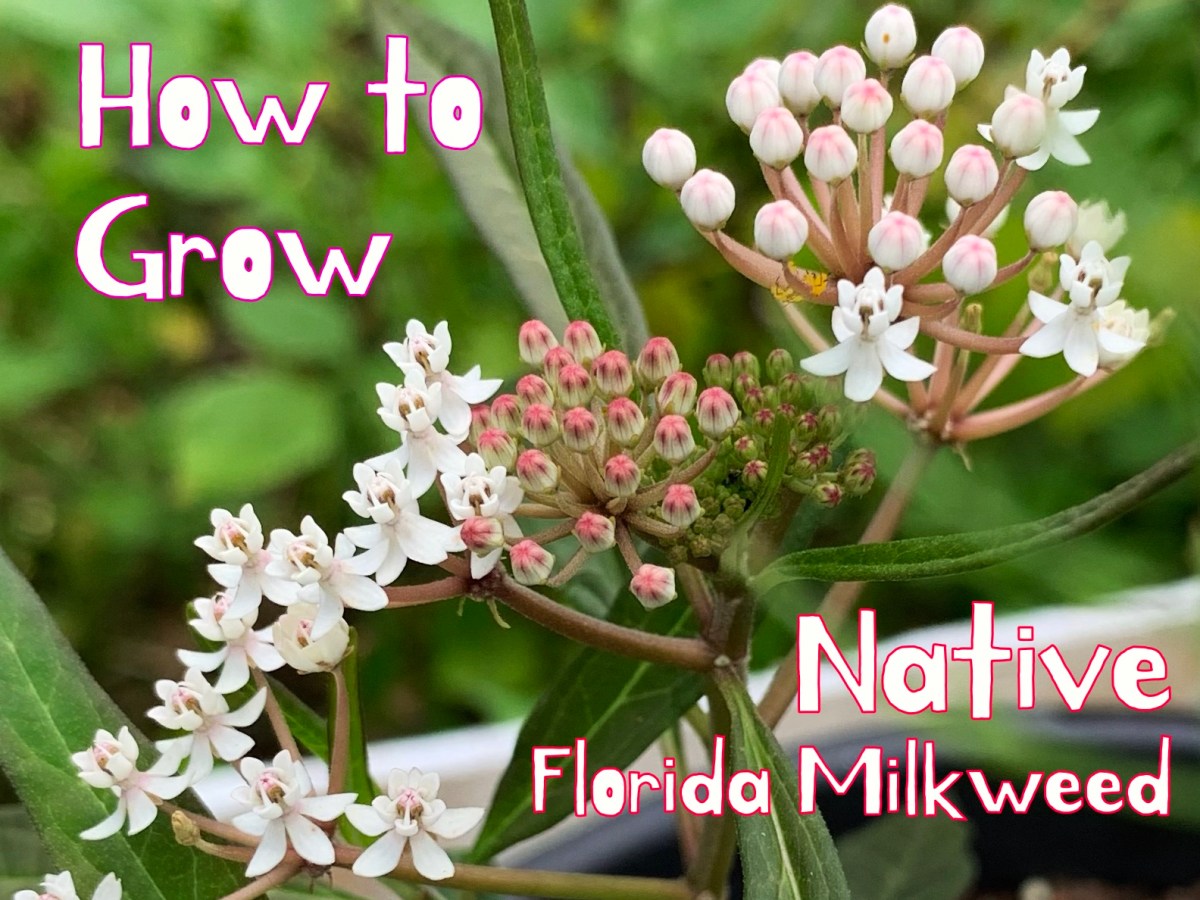
You may be wondering why I don’t buy local milkweed at a nursery. Well, for one it’s hard to find, and when I do see native varieties, the plants are not in good shape. The white flowering milkweed, in my first photos on this page, came from a local nursery. I bought the best looking milkweed plant and it was around $10. It’s looking good, but growing very slowly. I have no idea if it was grown organically, without chemicals. So, I began the online search for pesticide free plants.
Whitwam Organics
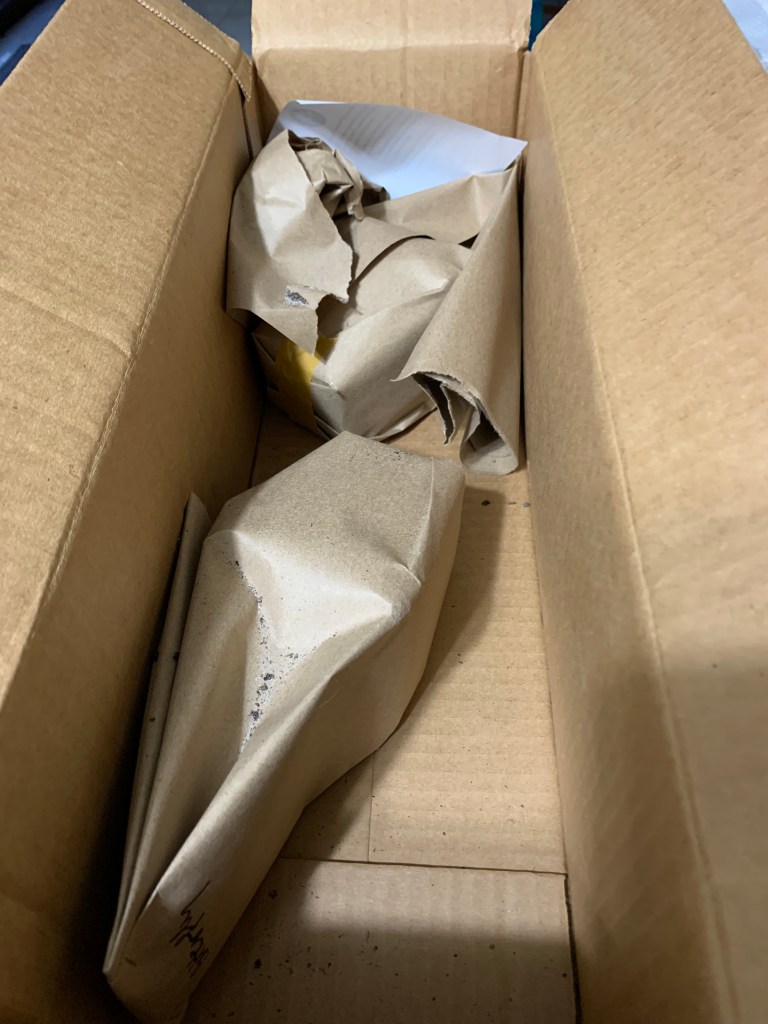
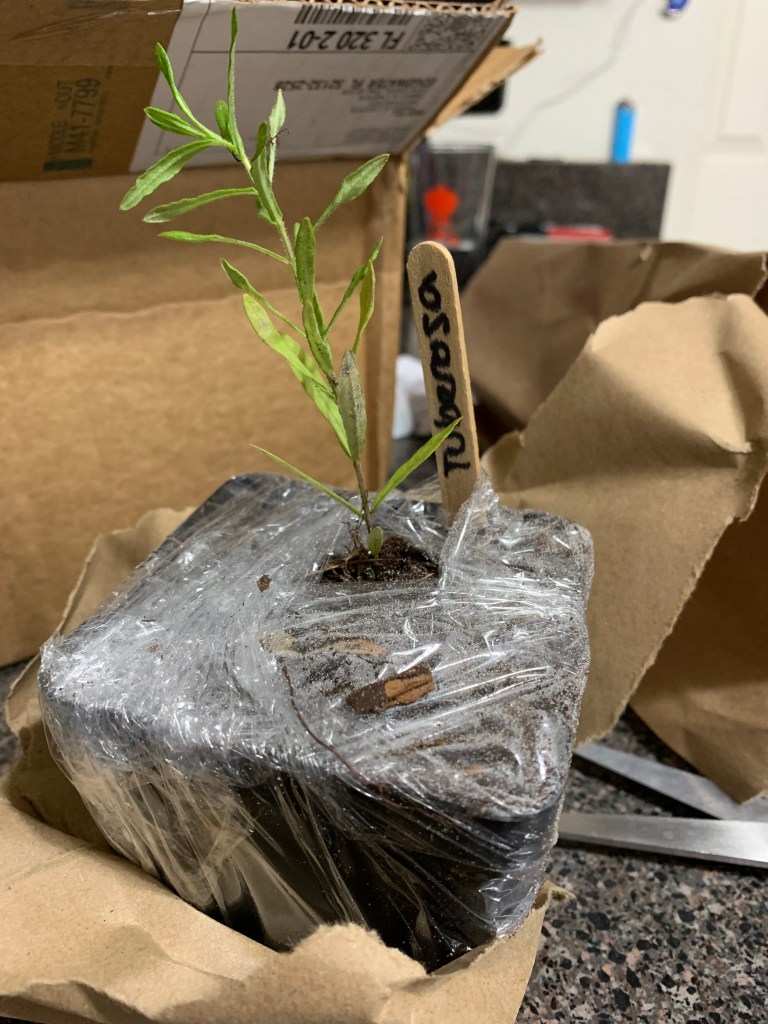
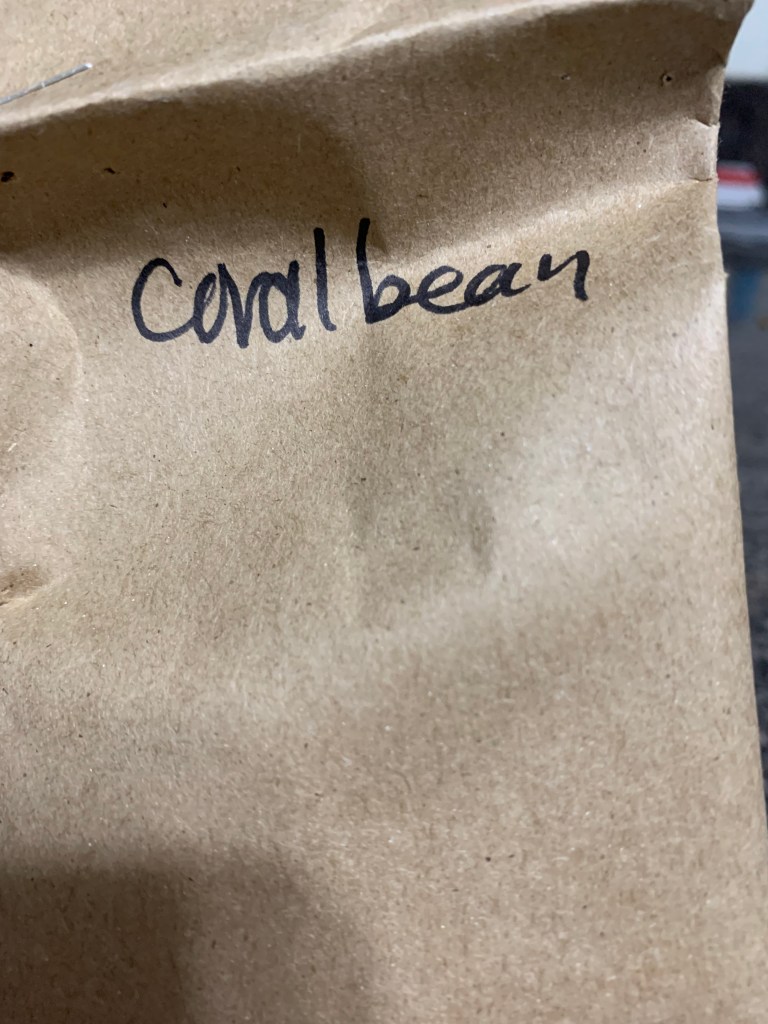
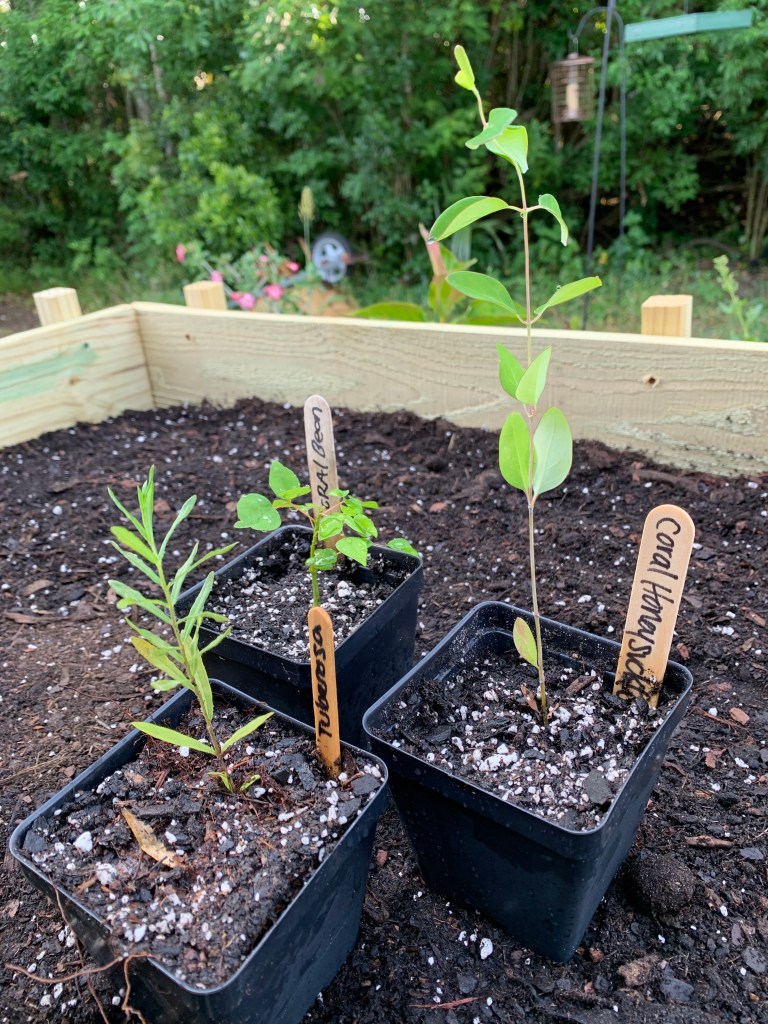
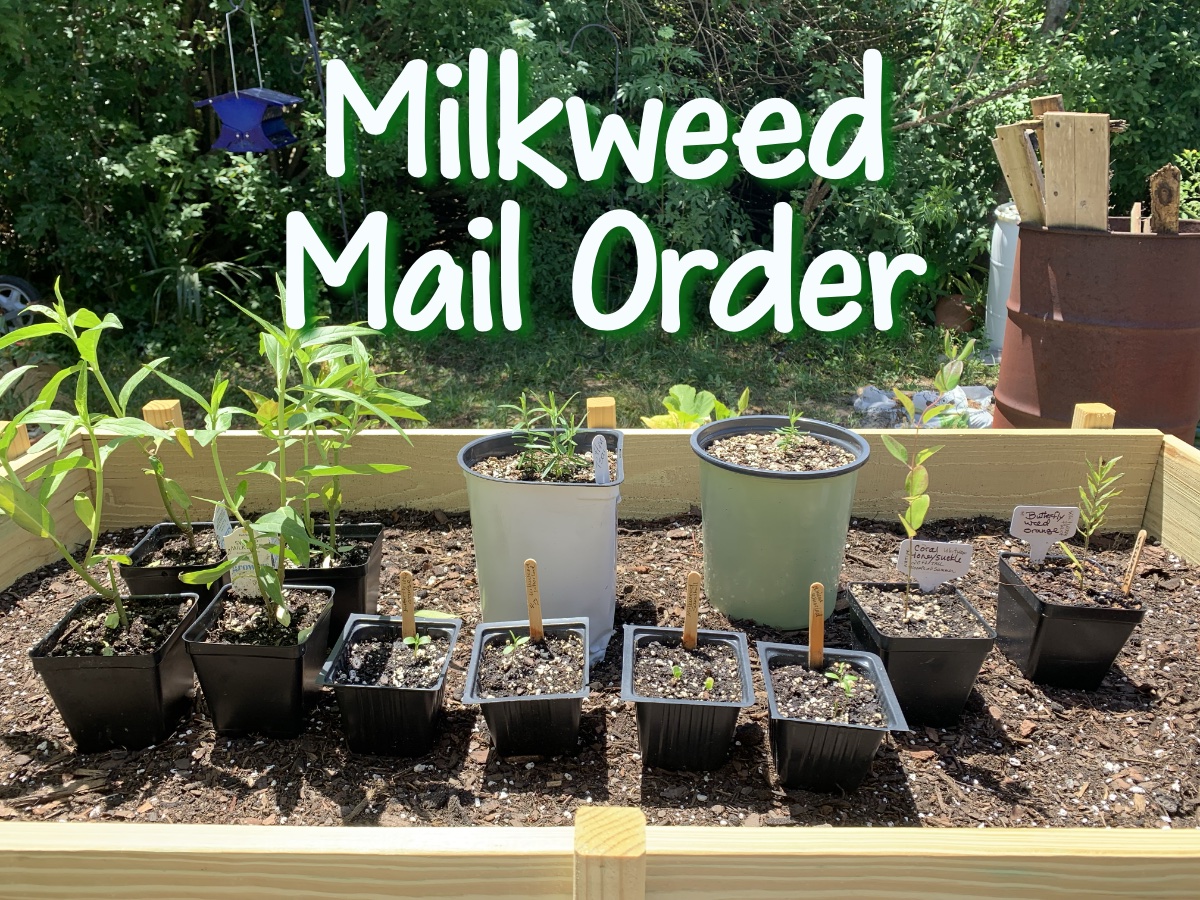
This post is about my order of live plants from two places. The first plants arrived from Whitwam Organics. They e-mailed a notice about delivery, and the plants ended up at my door at 8:00 at night! I suppose I can’t blame the company for the late delivery, but unboxing live plants at that hour really ticked me off. The plants are; a Coral Bean, Coral Honeysuckle, and Orange Butterflyweed (milkweed).
Whitwam packingWhitwam wrapped milkweedWhitwam plant in bagDaylight photo: Milkweed, coral bean, Coral honeysuckle from Whitwam Organics
The Whitwam plants were unboxed in the house, until sand began to come out all over. I took them outback to finish and set them inside on the porch for overnight.
The photo above was taken the next day. The packing was sufficient, but nothing special. Plastic wrap mostly kept the soil in the pots and then the entire plant was closed up in a paper bag. The soil is more like Florida sand than potting soil. The dirt you see in the big photo is after I filled in what was lost when the dry sand poured out. All three plants look okay, but they are small. The Milkweed has lost a few leaves.
Cost: $42.57 which includes shipping and tax. Not really worth it IMO as these plants are very small.
Growers Exchange Milkweed Seedling Order
I ordered four Pink Swamp Milkweed from The Growers Exchange. These were not labeled organic, but the site says they do not use any chemicals when growing. The site offers lots of herbs and medicinal herbs, but they also have a few varieties of milkweed.
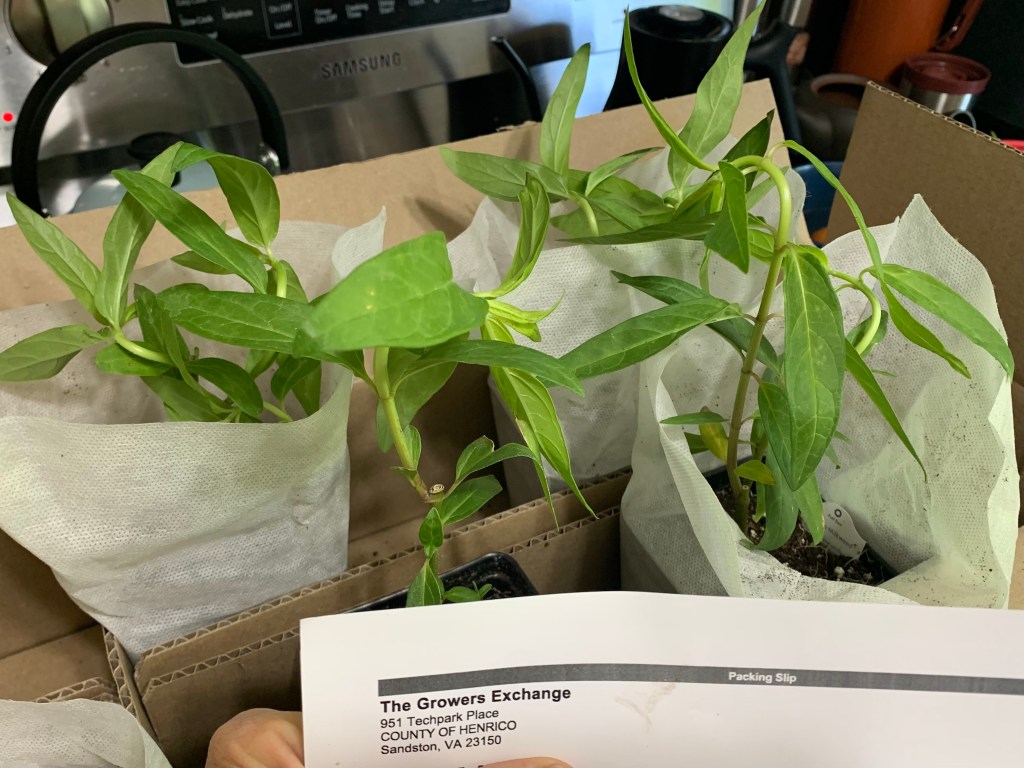
I was very impressed with the boxing and size of these milkweed. (This milkweed is a different variety than the one shown above from the other company.)
All four plants were wrapped around the pot to keep dirt in place. Each pot was tucked inside a cardboard divider which kept the pot in place during travel. The plants were so tall that the tops were bent over to fit. They straightened up completely within two days.
Unboxing nice big plantsStems have straightened
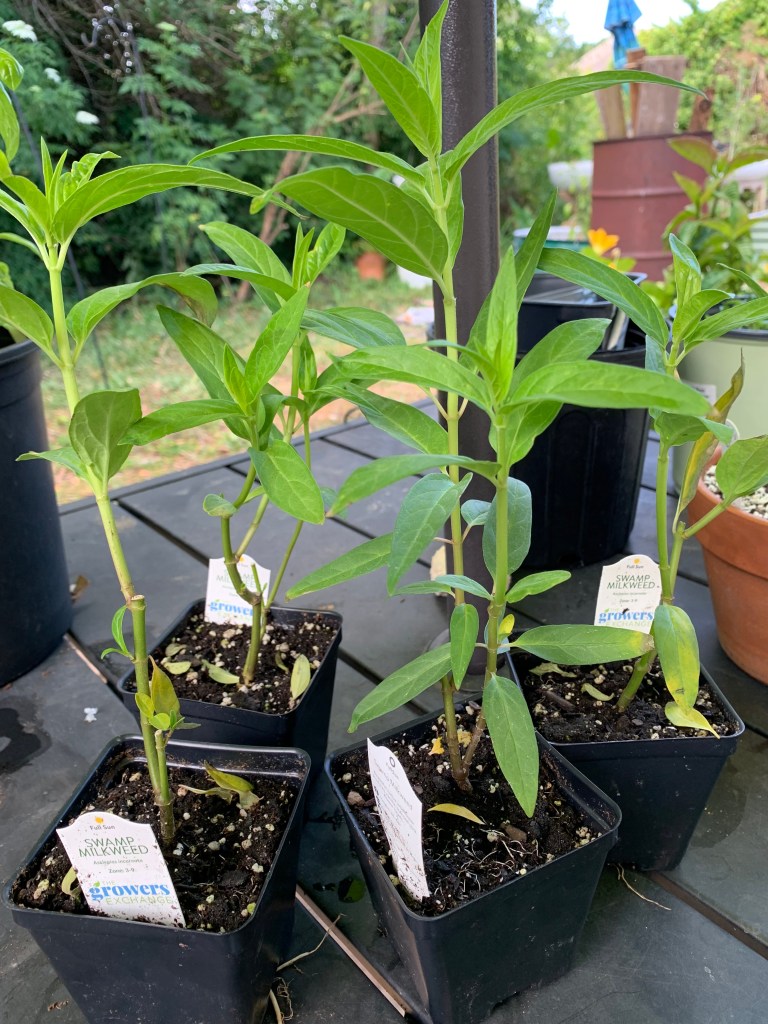
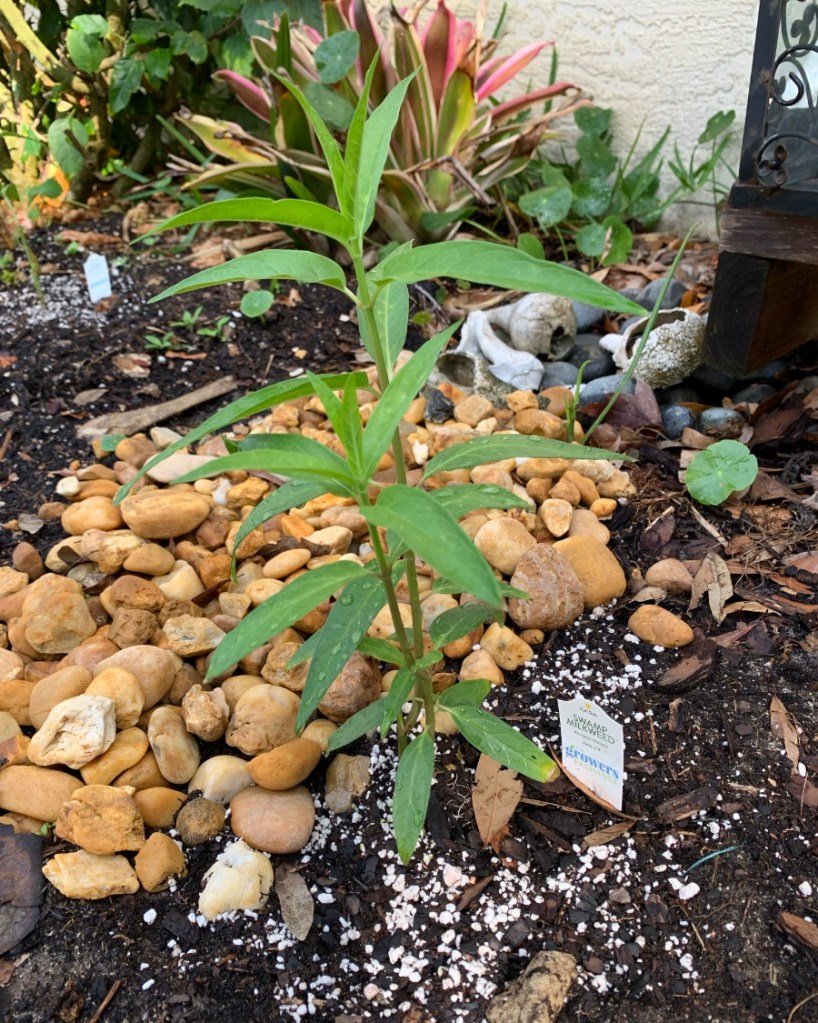
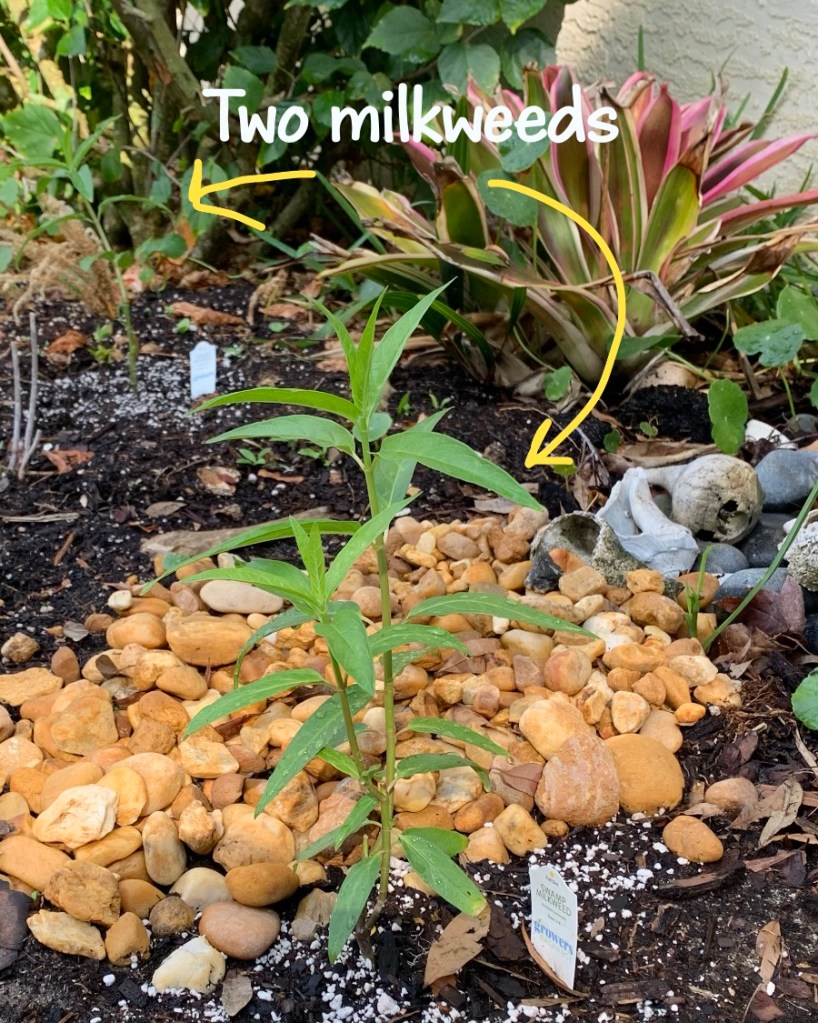
After unwrapping, I watered them, and set them on the porch, out of direct sun, for two days. After that they went outside for a couple of days. Now I have two in the ground, and two in larger pots.
Swamp milkweed likes it wet, which makes sense. Especially while it is setting roots, I want to keep it well watered. Our drought continues, which means I water every day.
Swamp milkweed in the groundTwo milkweed planted
I am absolutely impressed with this milkweed plant order. They offered a discount of 20% (I think it was), and the total for these four plants, with $15 shipping was $50.89. The plants are healthy and large and I am happy. I’ve already seen lady bugs and the Monarch on these!
I’m considering having a herb garden in the future. I need to learn more about when to plant which herbs. The Growers Exchange might be my go-to shop for those.
How to Care for Live Plants
Both companies mentioned here has fairly quick shipping. I’d say the plants arrived in about a week’s time. Shipping also depends on the growing zone, and time of year. Each company has it’s own information.
I’ve pretty much mentioned on this page how I cared for the plants when they arrived, but here’s a recap. Unbox immediately. Check the soil and re-fill if necessary. Water them well! Here in Florida, do not set them out in the sun right away. Due to the stress of being packed and traveling for days, give them an easy life in the beginning. Give them light, but no direct sun. Keep them watered and watch for signs of disease.
Have you purchased native, organic (or chemical free) local milkweed – or other plants – online? Please leave us a comment on how it went.
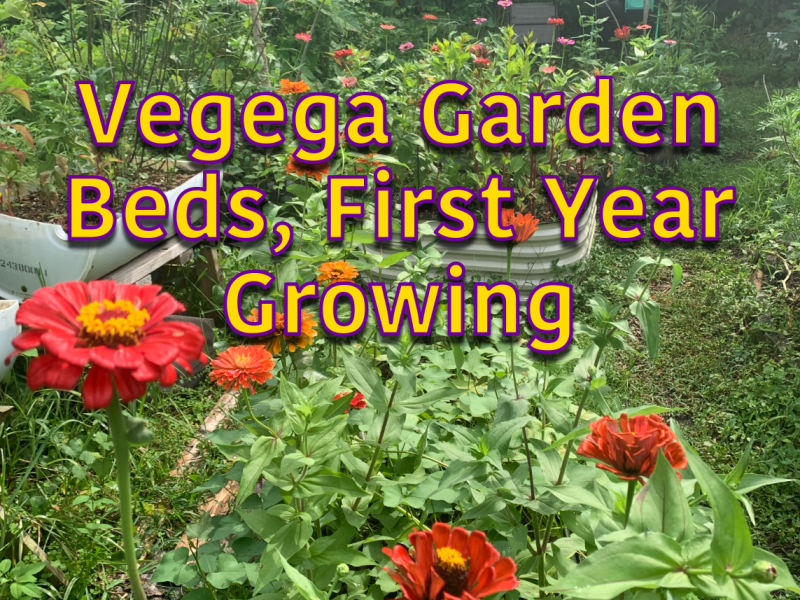
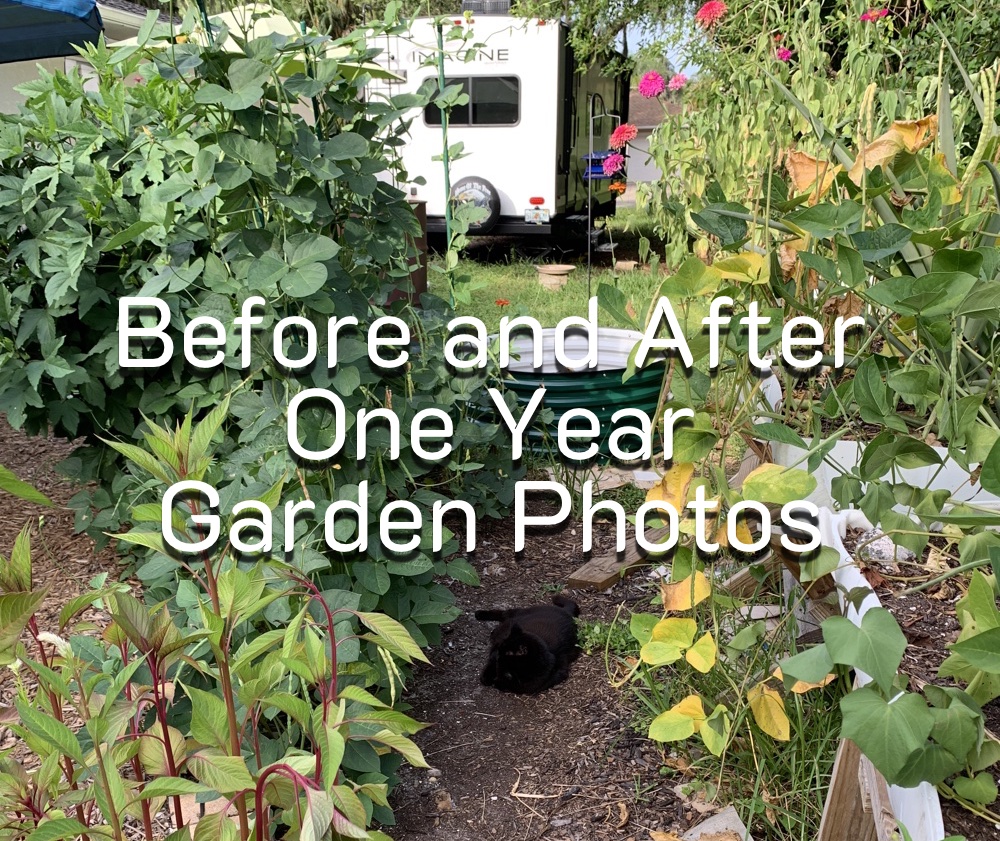
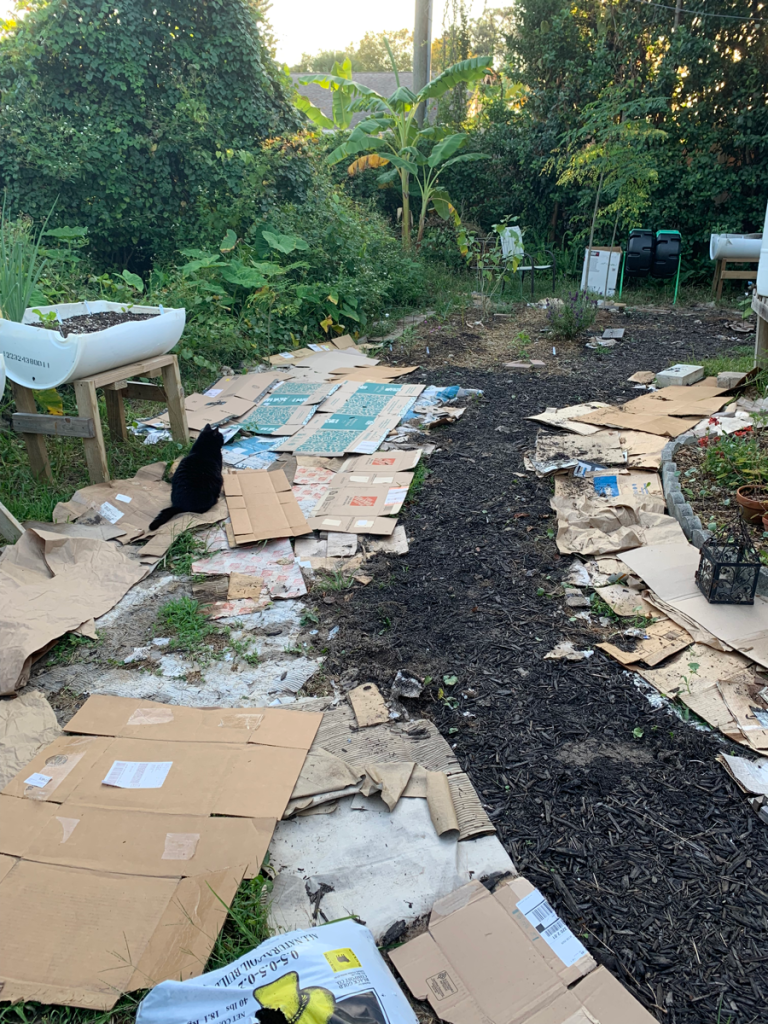
In the beginning of 2023 my plan was to create a small vegetable garden space in what little bit of yard I have. I’ve been blogging about some of my journey, and this page has photos of the before and after. A lot has been accomplished in a year.
When I came across these old photos from last year I thought it would be fun to show the difference.
Before…. and …..After
2023 Planning future vegetable gardens2024 Path to the back – Roselle bush
For much of the past year I have been working to create dirt spaces and pathways. Occasionally I have also grown some veggies! I can work outside year round, which is beneficial, although there is little rest.
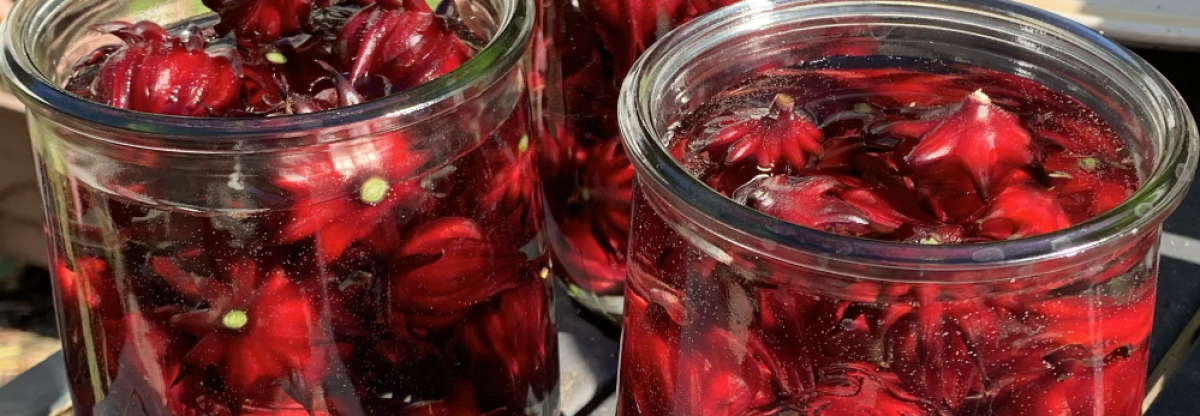
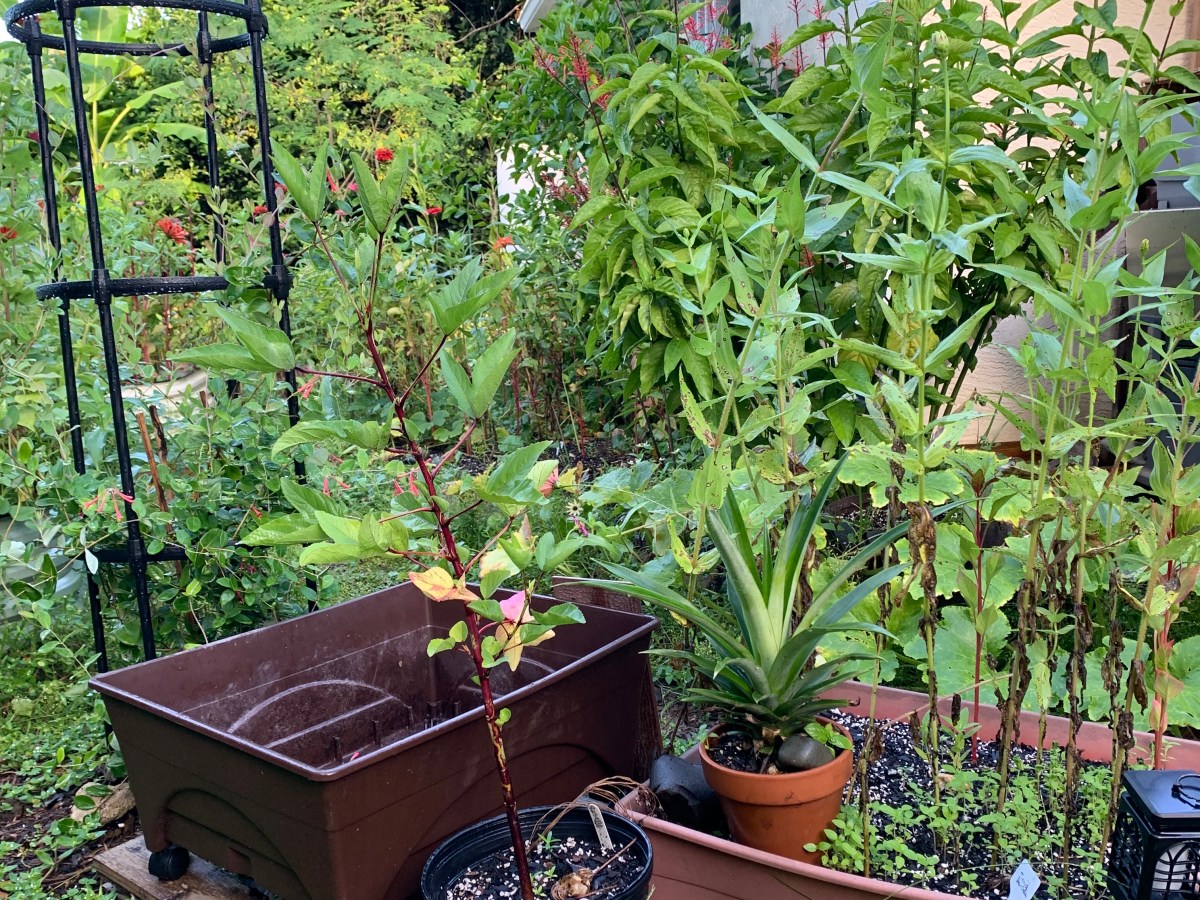
The Roselle hibiscus bushes have grown like crazy. They were grown from seeds planted in Fall. The Moringa tree has also grown after slowing down for the winter months.
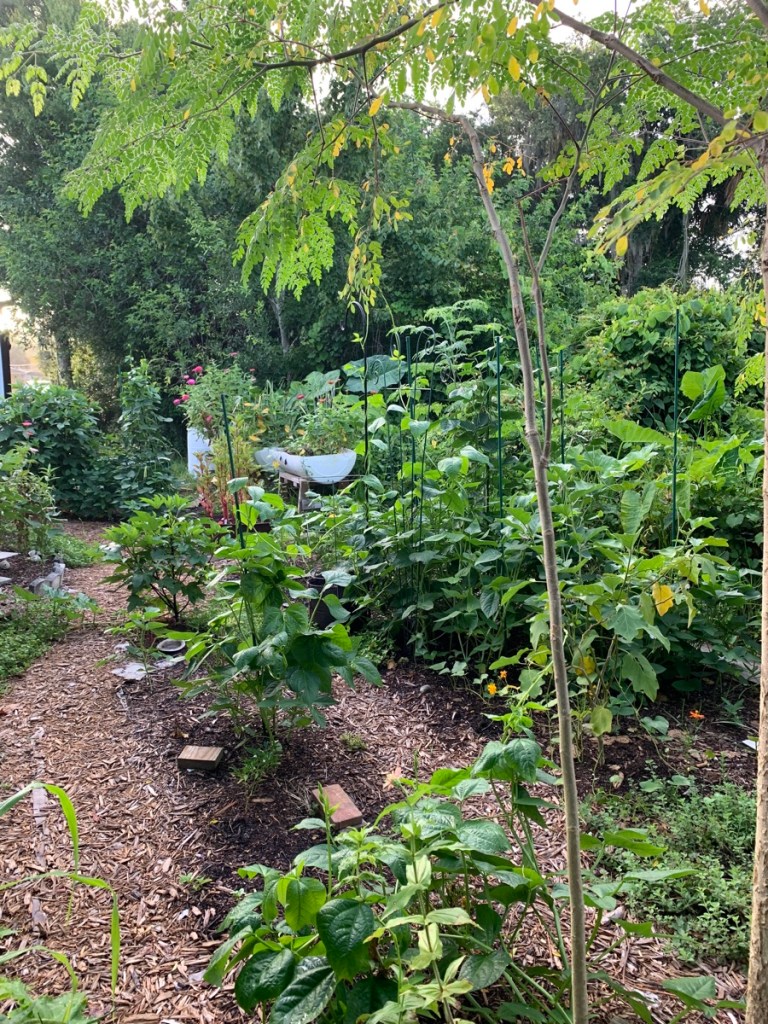
2023 Expanding gardens2024 Summer greenery
Before I had a chance to finish writing this page, the garden has filled in even more. Some plants really enjoy the extreme Florida heat and humidity.
It is now July, so this photo is after about 1.5 years of gardening.
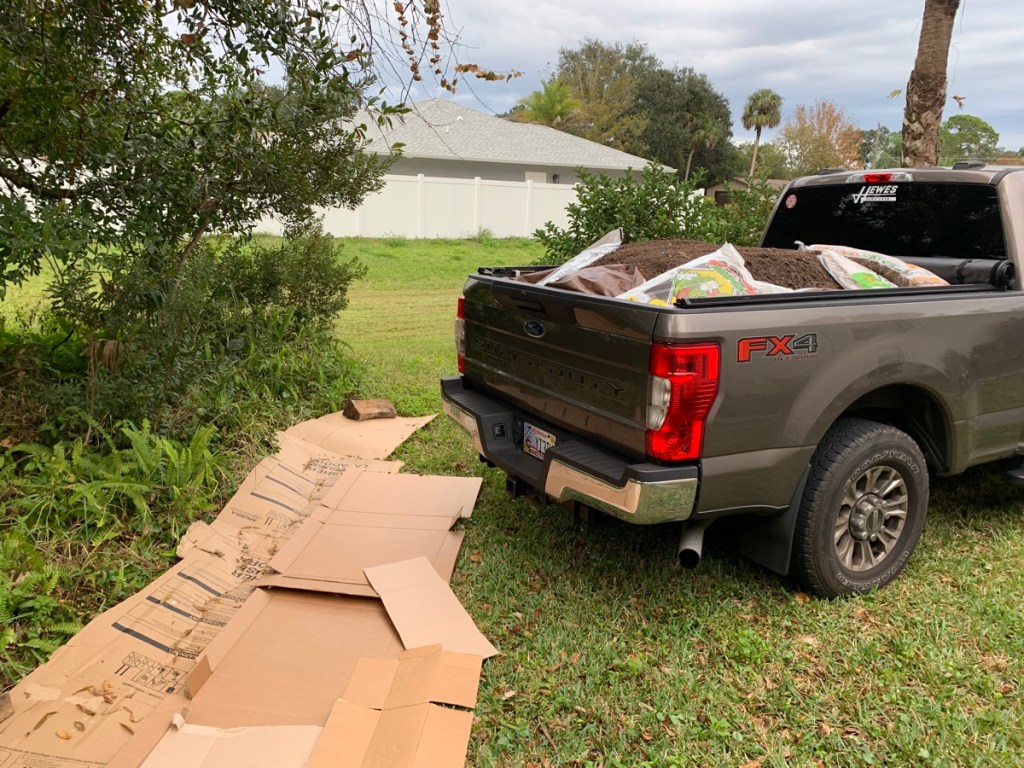
Changing my small backyard from all grass to a permaculture plot for growing food has been a challenge. It can also be expensive. Although I was dreading doing this, the best way to acquire my garden dirt was to fill the truck with purchased soil. We had to buy in bulk and do some shoveling.
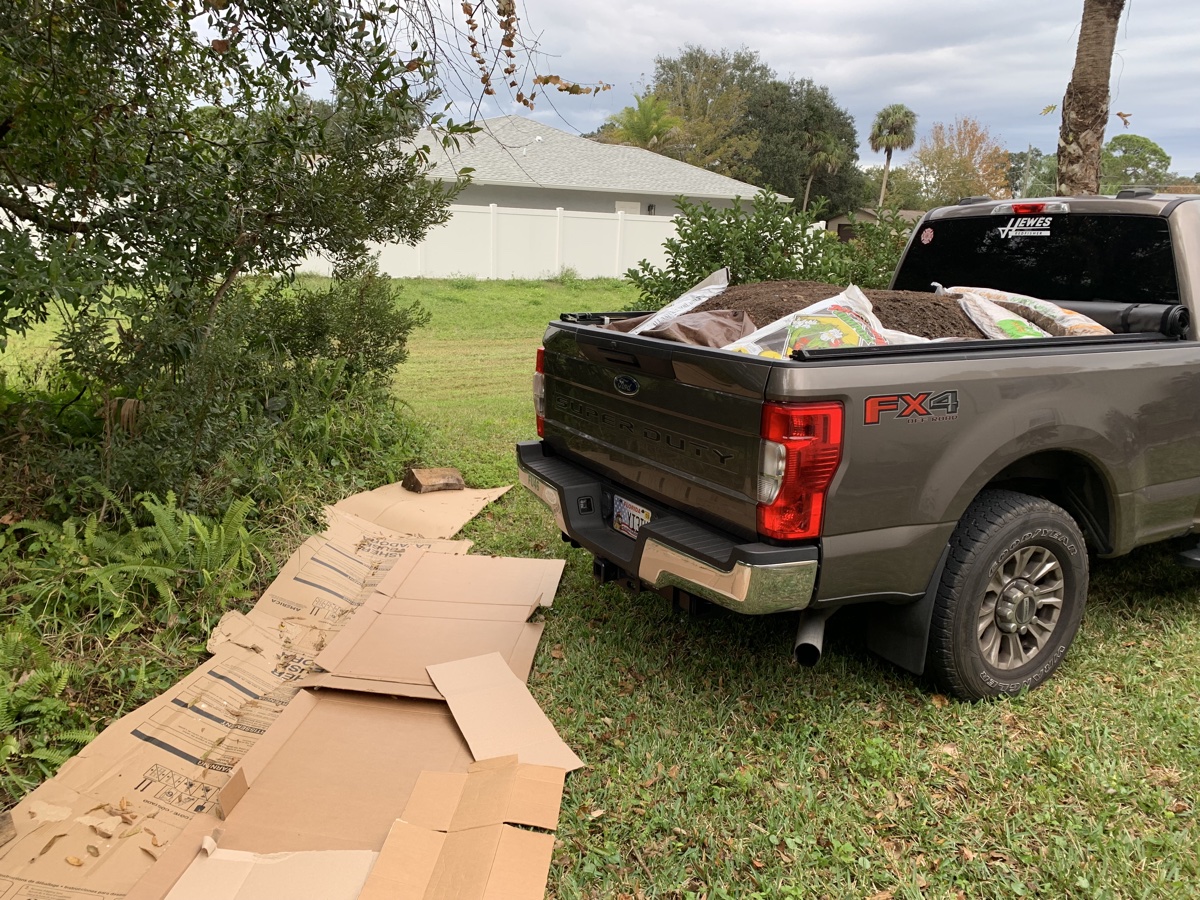
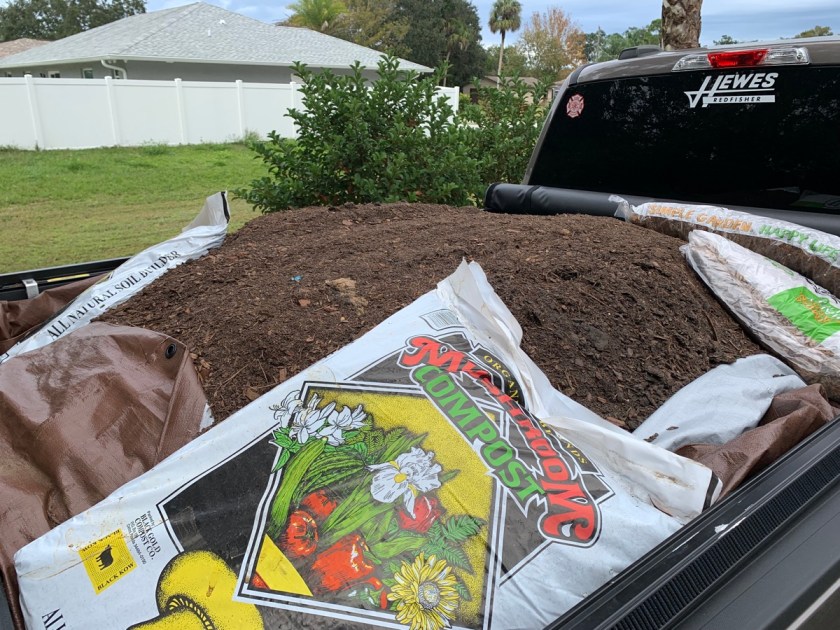
Not only would I have lots of dirt to work with, but buying dirt by the yard is cheaper. I bought two yards of soil which filled the back of the F250, along with two bags of mushroom compost and two bags of mulch.
Two yards of dirt fills the truck bed.
Winter is the Time to Do Yard Work
Now that a Florida winter is upon us, the desire to get outdoors and fix things up is high. After a long, very hot summer, the cooler weather feels great. And by cooler I mean near 80 degrees some days, but cooler in the morning and evening. In other words, it’s more like a normal “summer” elsewhere.
Finding a Place to Store the Dirt
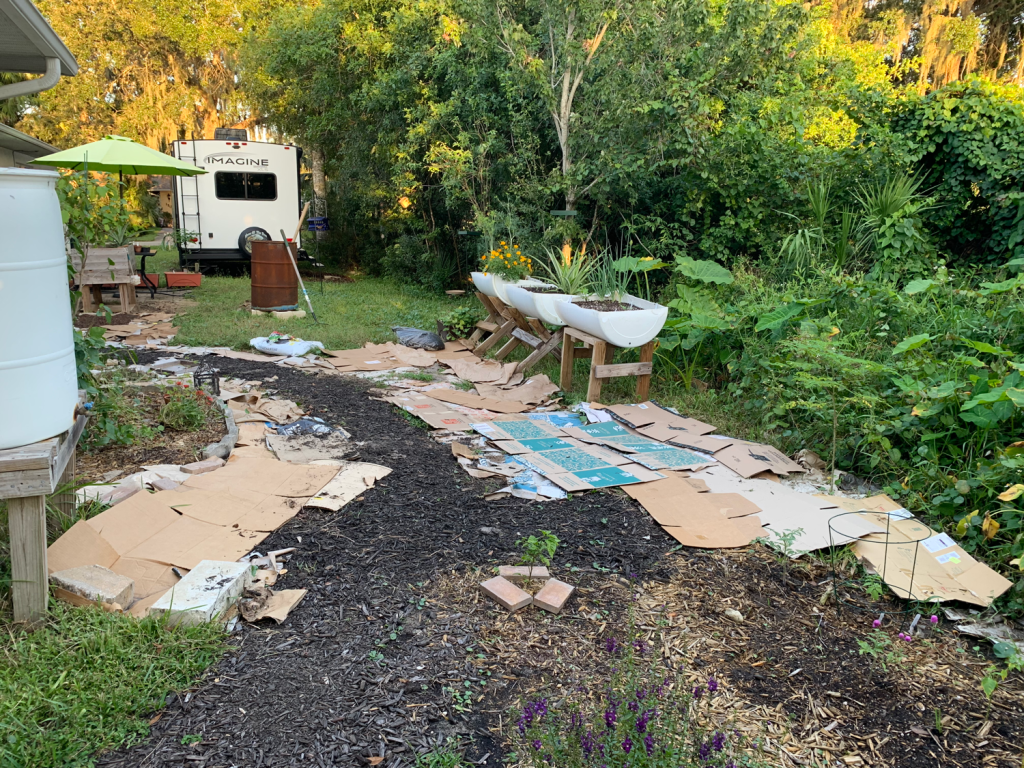
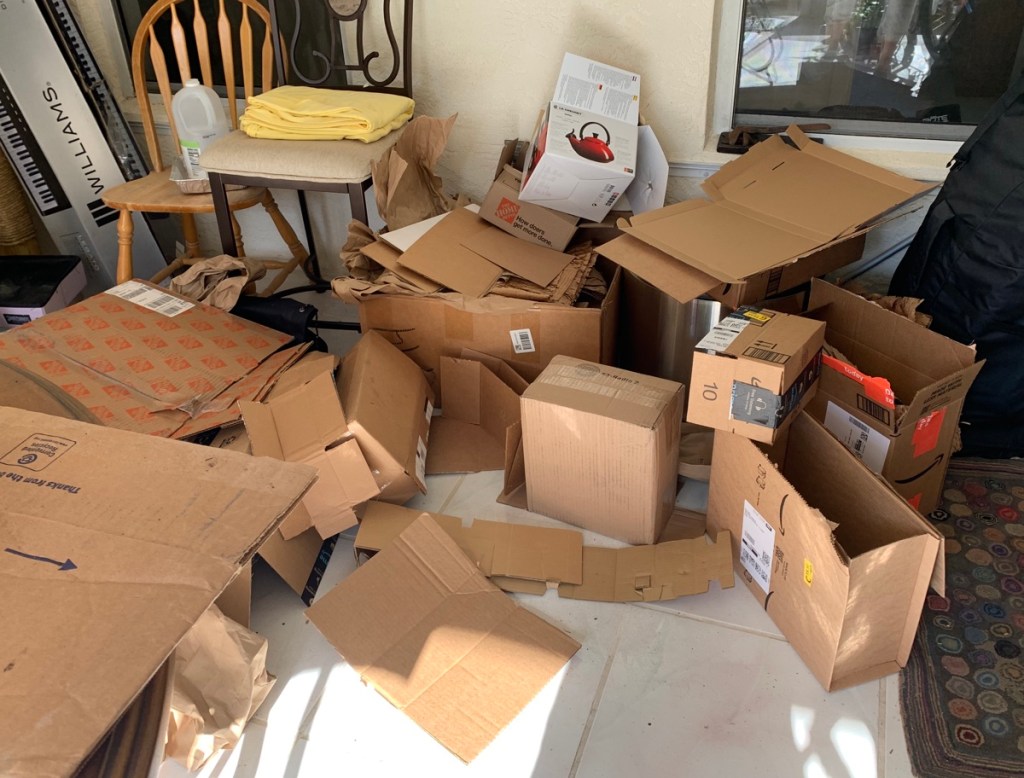
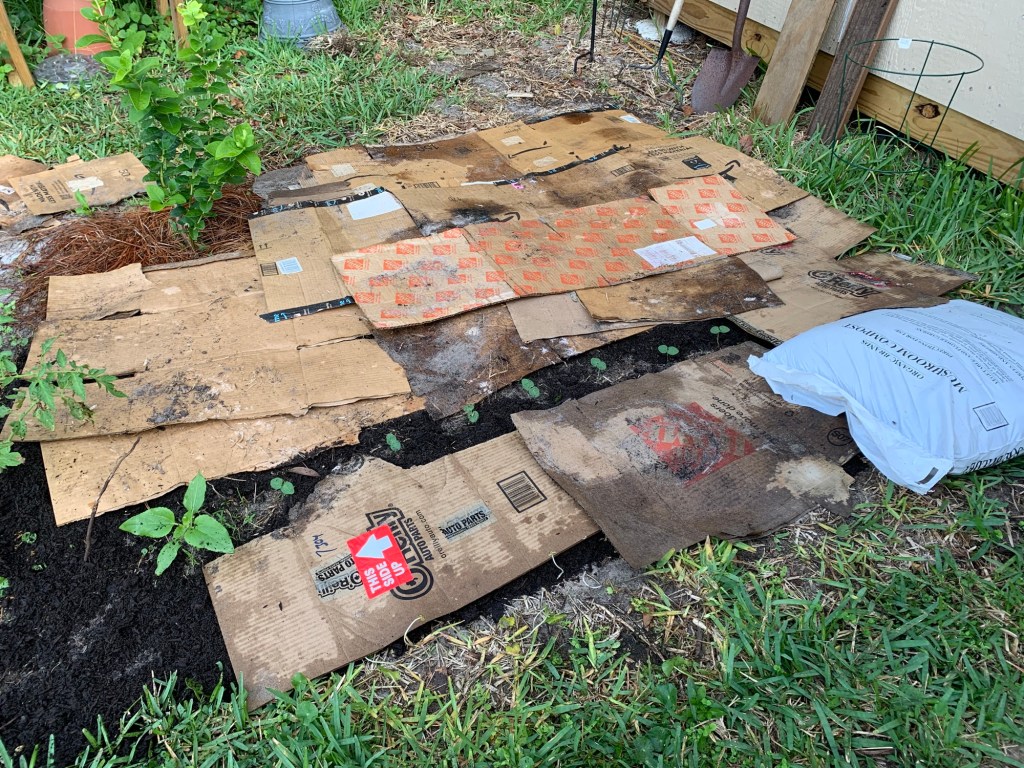
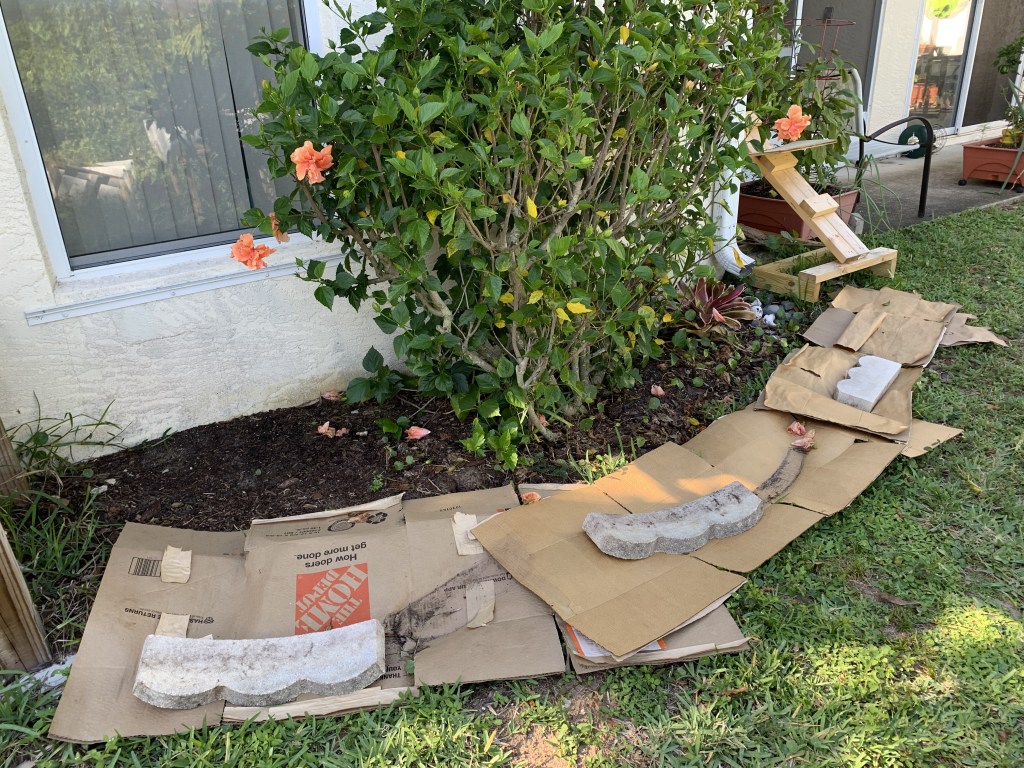
I need dirt. I’ve had the boxes piling up on my porch but can’t put that cardboard out on the grass without some dirt to help hold them in place. I’ve been buying bags of dirt, but that doesn’t go far. I considered ordering a load of dirt to be delivered, but there is no good place near the road for the shop to dump it.
Boxes piling upGetting the garden area ready last springBoxes down at the hibiscus garden
As my garden planning has progressed, I realize that I need more sunny spaces. I want to grow Roselle Hibiscus which will be large plants. They can’t grow where my vegetables area, so the plan is to begin a new garden in the front yard.
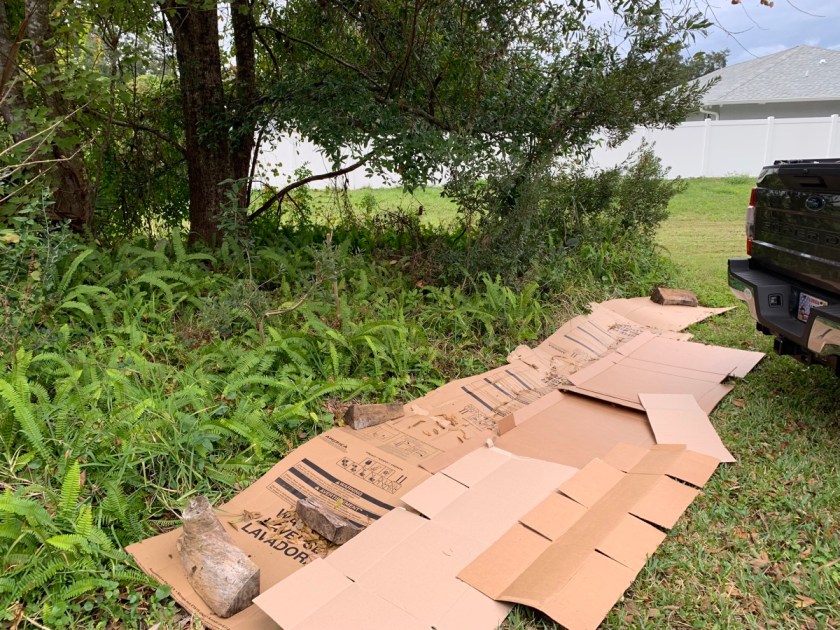
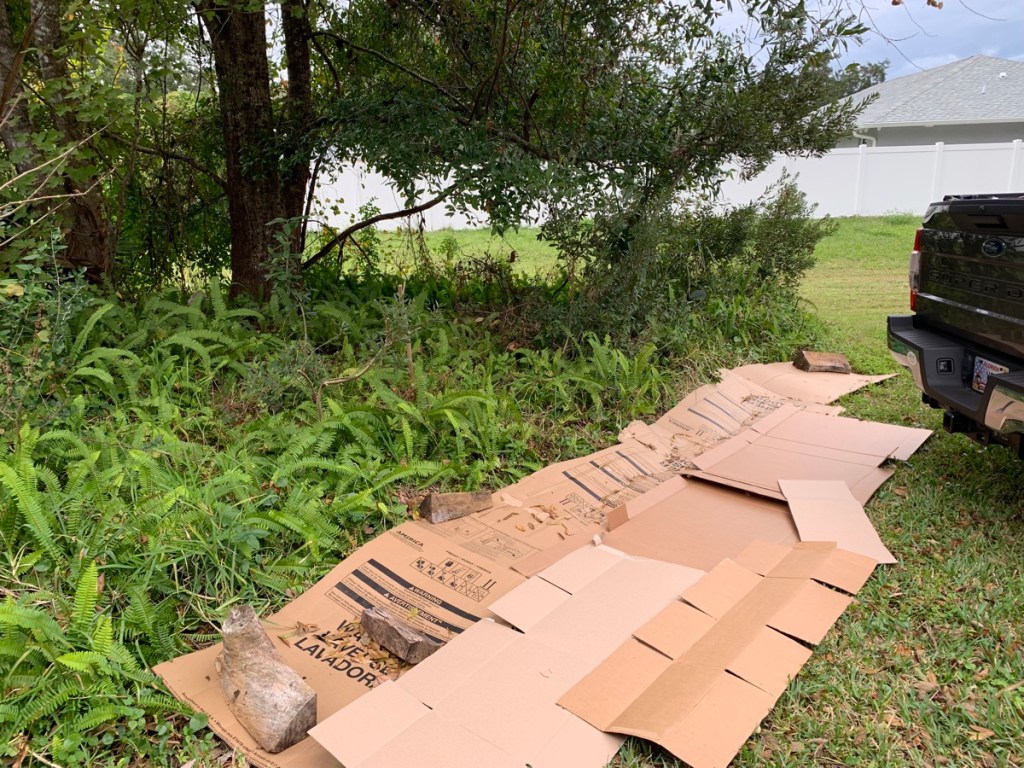
The area pictured below is where I believe there was once a flower garden. I’ve found a Beautyberry Bush and Firespike back in this overgrown location. Now it is also full of ferns, and little trees are growing. The only tree I have cut down is the invasive Brazilian Pepper. The front of this patch of ferns gets lots of sun all times of the year. If I can get the Roselle to grow, they will be planted here.
Broke down some big cardboard boxes for the new front garden
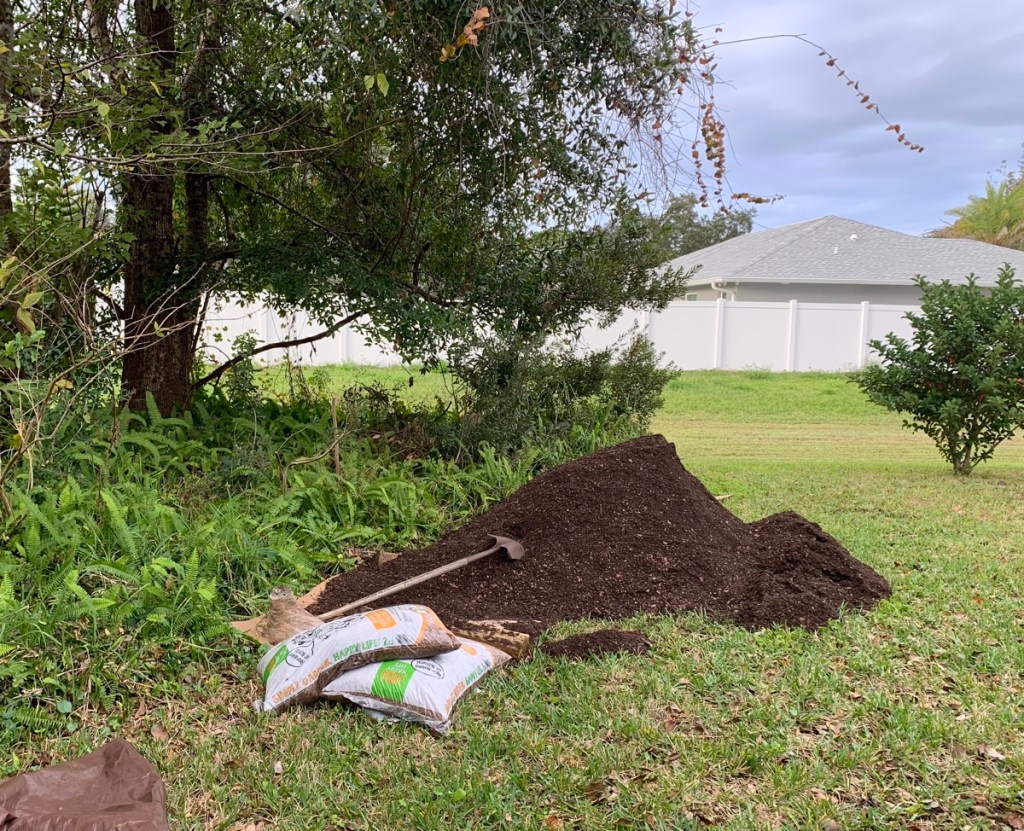
This was where the dirt pile would sit until I needed it. I put down big pieces of cardboard, (see my post about using cardboard in the yard) and we unloaded the dirt onto it from the bed of the truck.
In order to get to this spot, we had to back the truck across the front yard. It meant moving some of the Christmas lights and taking down part of the fire pit. Then, of course, we (my son and I) had to shovel all that dirt out of the truck! It was a chore, but worth it.
Broke down some big cardboard boxesReady to shovel!Dirt for gardening
From here, I can fill the wheelbarrow and move the dirt to the back gardens as I need it. And the cardboard underneath, will be the spot to plant new things once all that dirt is gone.
The cost for all of it was right around $100. If you live near The Yard Shop in Edgewater, I highly recommend them for dirt, mulch, compost and stones. The people are super nice and helpful.
Now the Garden Plans Can Move Ahead
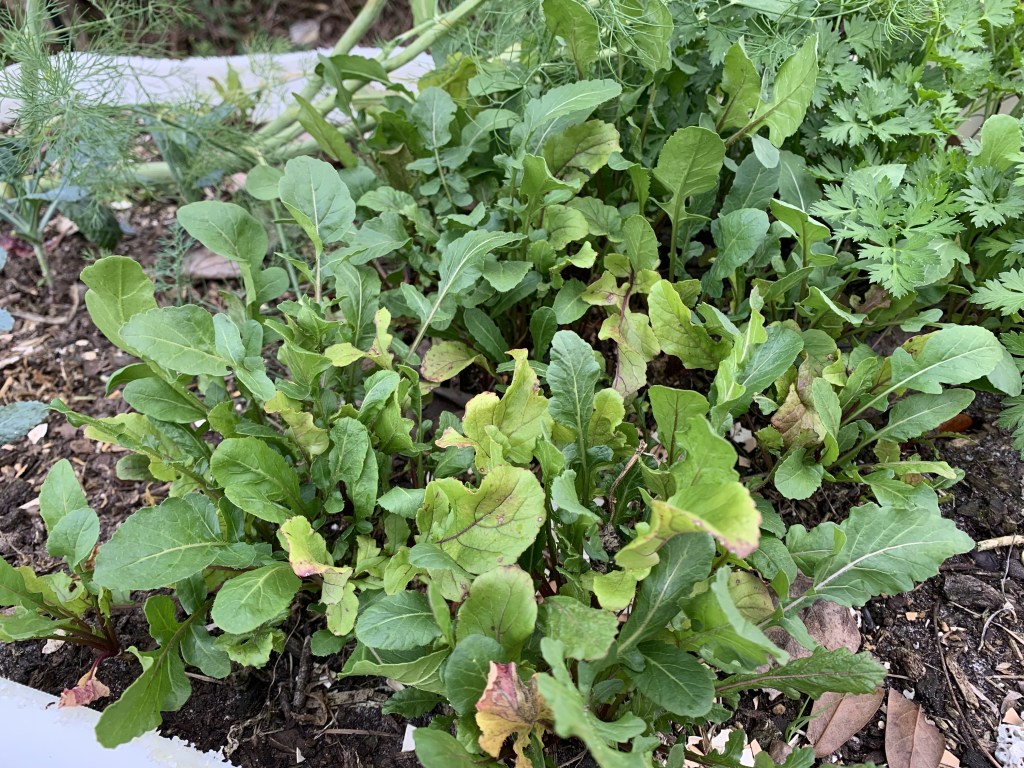
I have the dirt and I have the cardboard. My gardening plans continue to emerge with more space being made to plant. Over winter I am growing green beans, arugula and Chijimisai spinach, and a few other things.
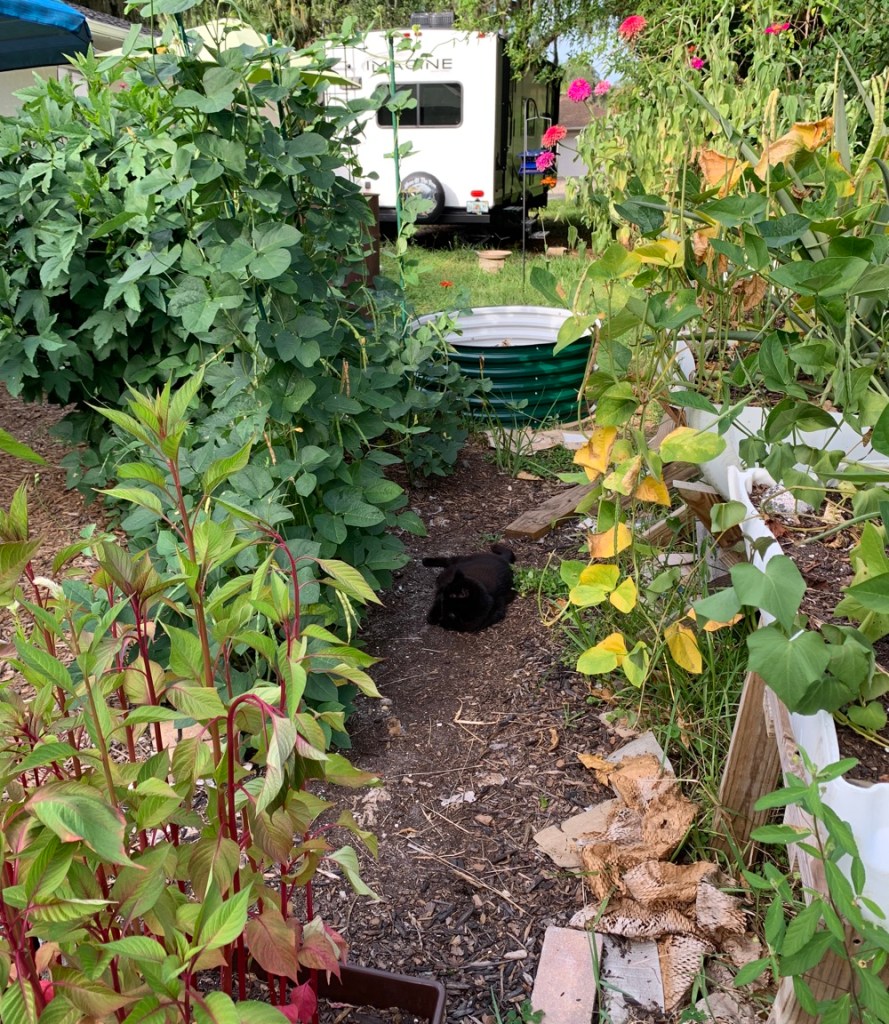
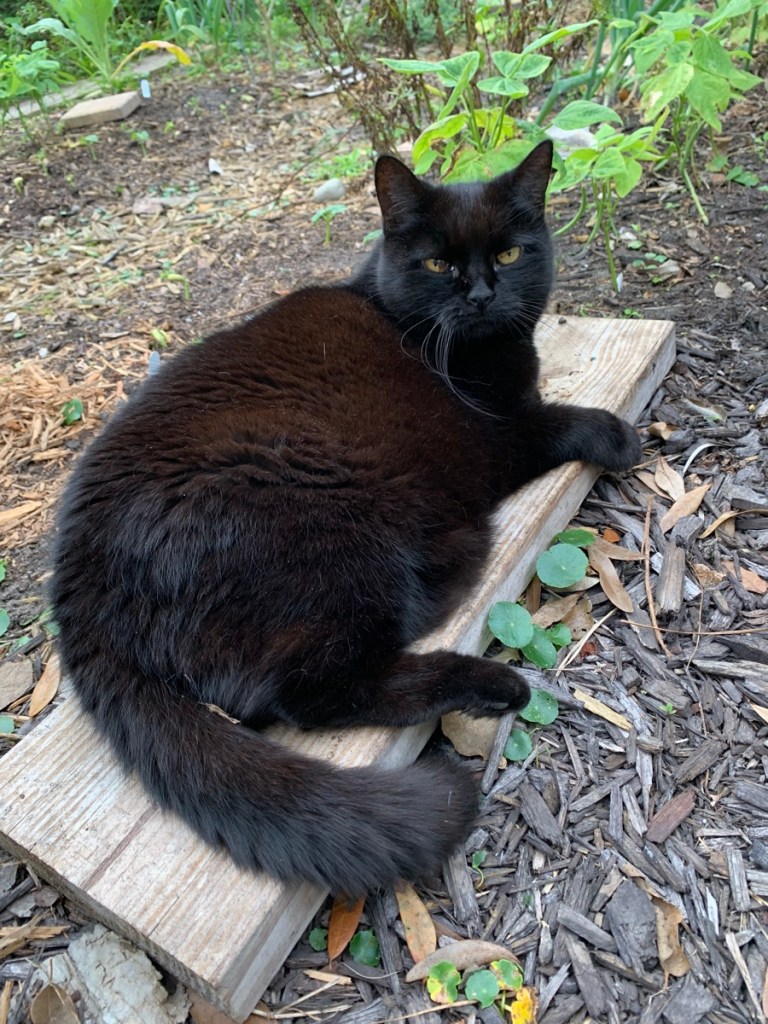
Skittle is overlooking my garden work, and I’m not sure if she approves or not!
Butterflies are dropping their eggs, and some of my vegetable plants are looking much better, now that February in Florida has arrived.
Spring comes early in Florida. February is a good time to check the garden for signs of butterfly eggs and newly hatched caterpillars.
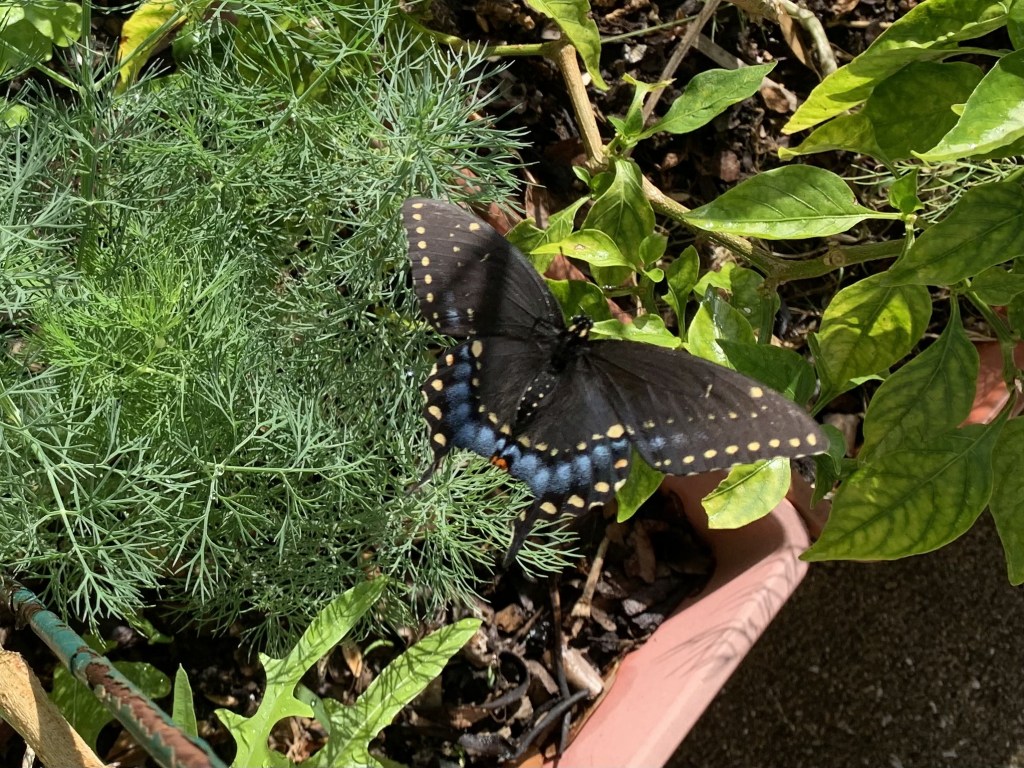
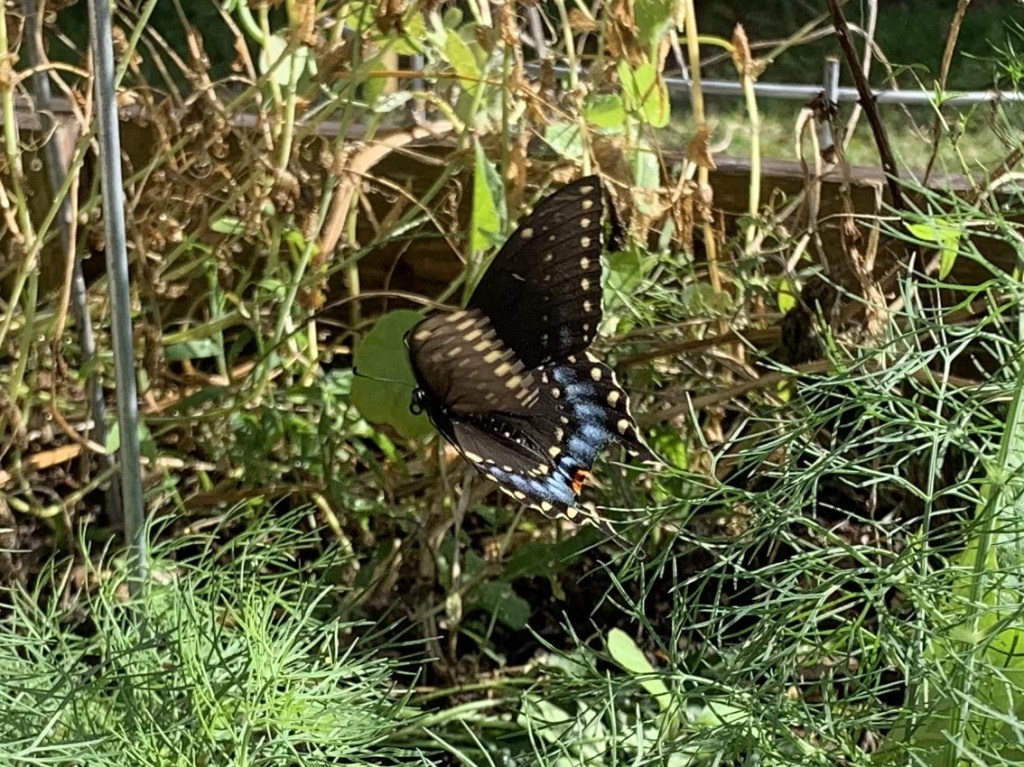
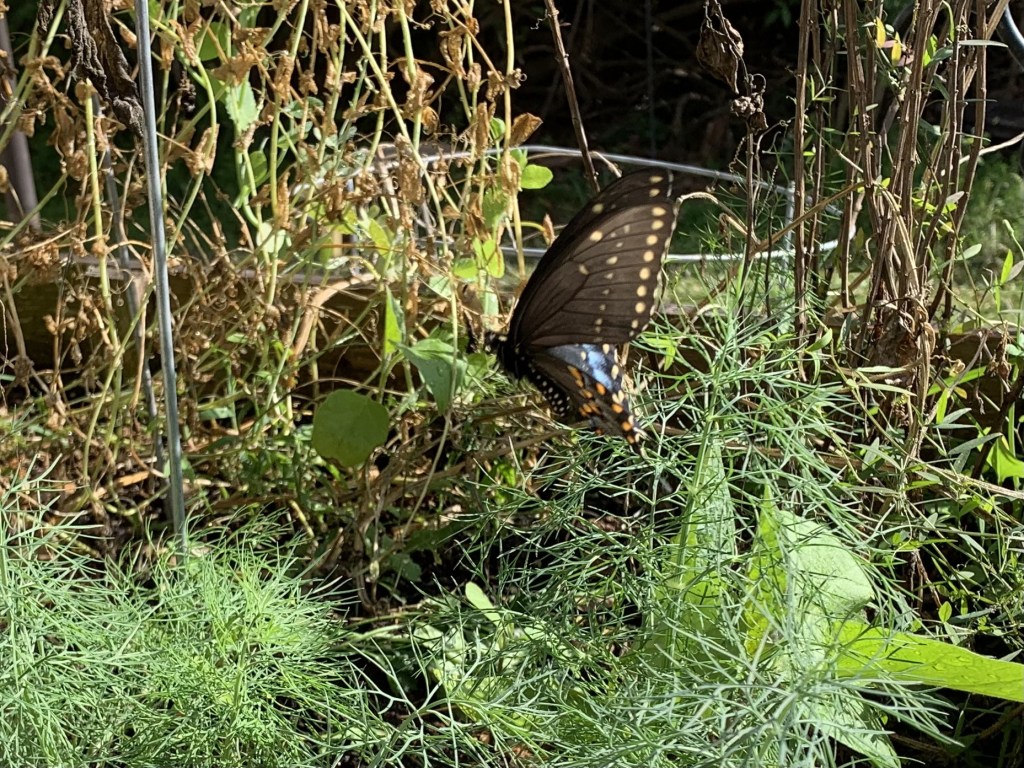
Swallowtails Laying Eggs
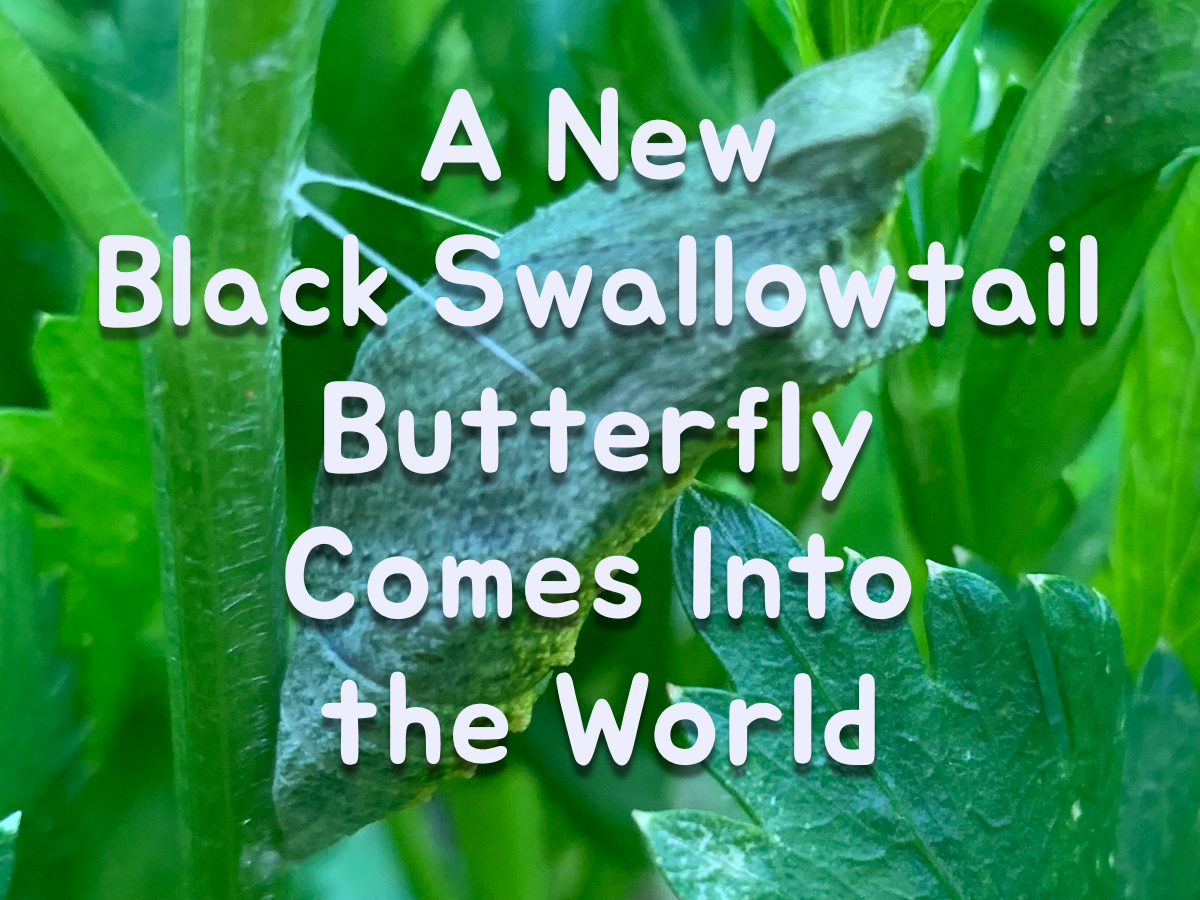
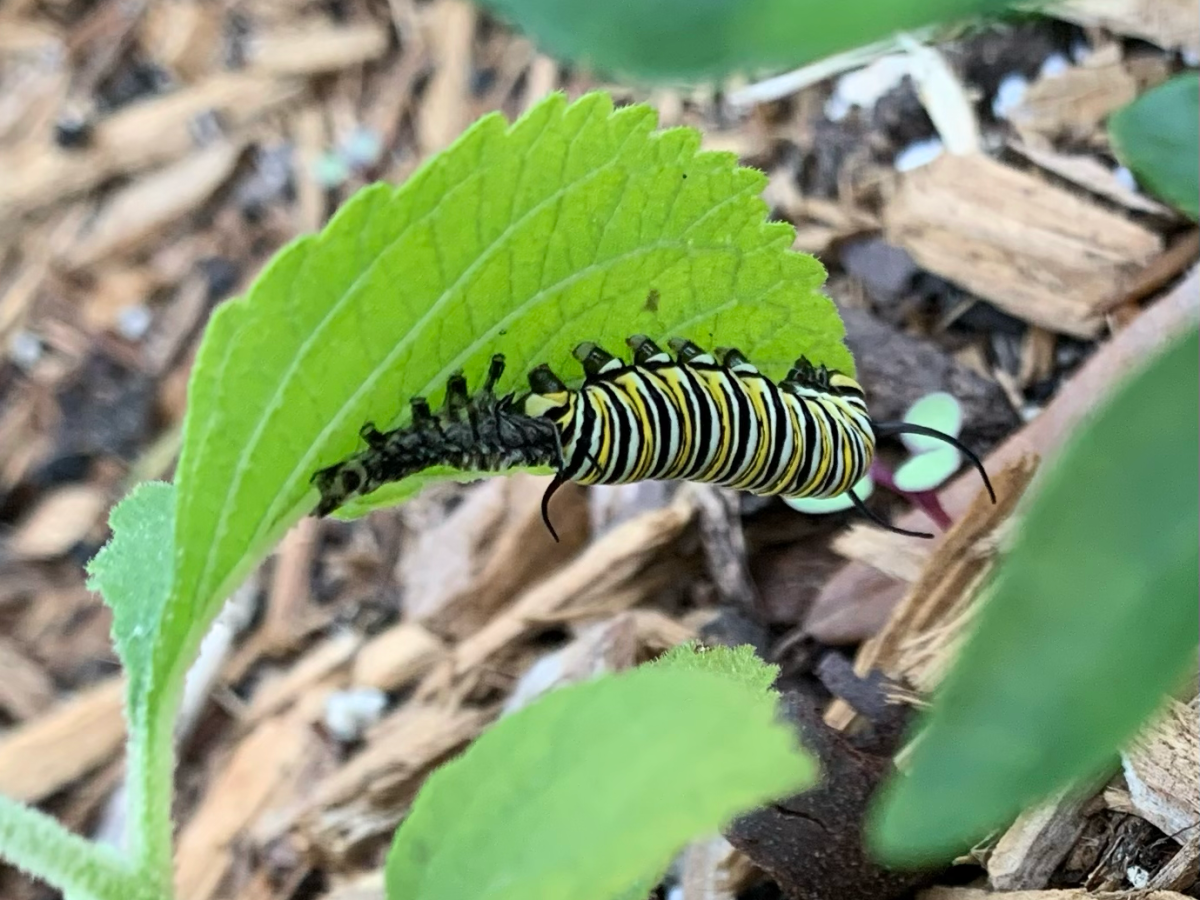
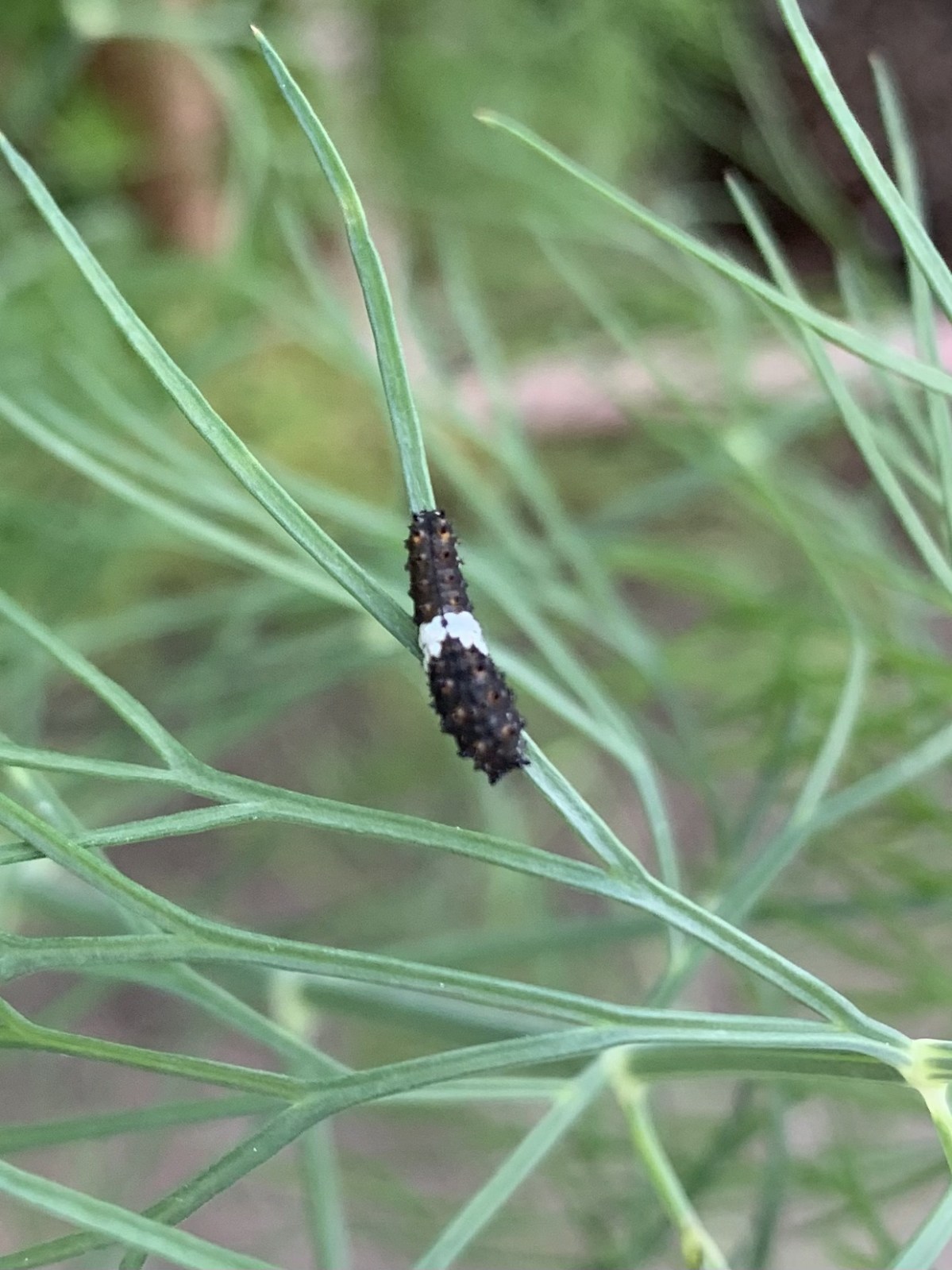
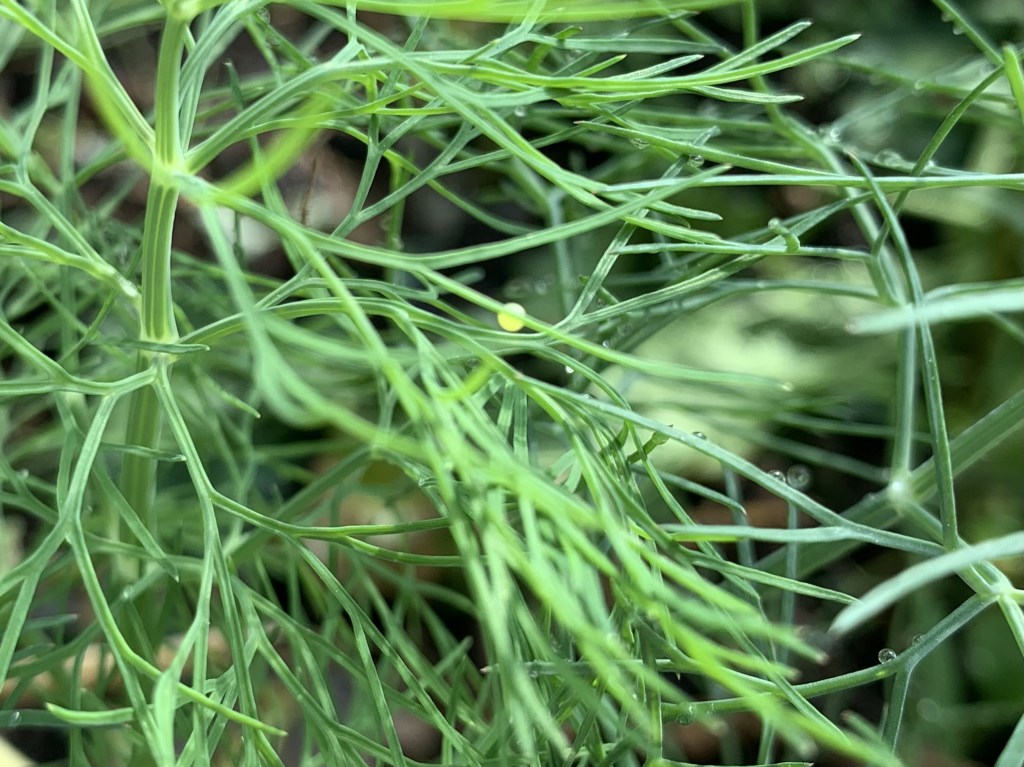
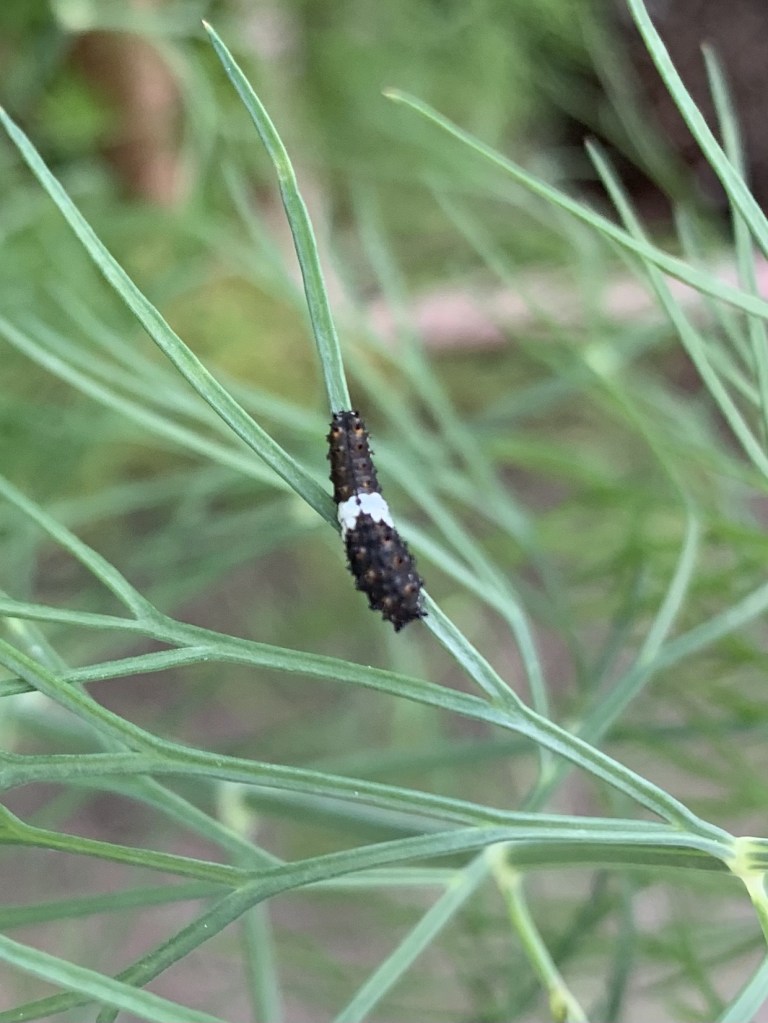
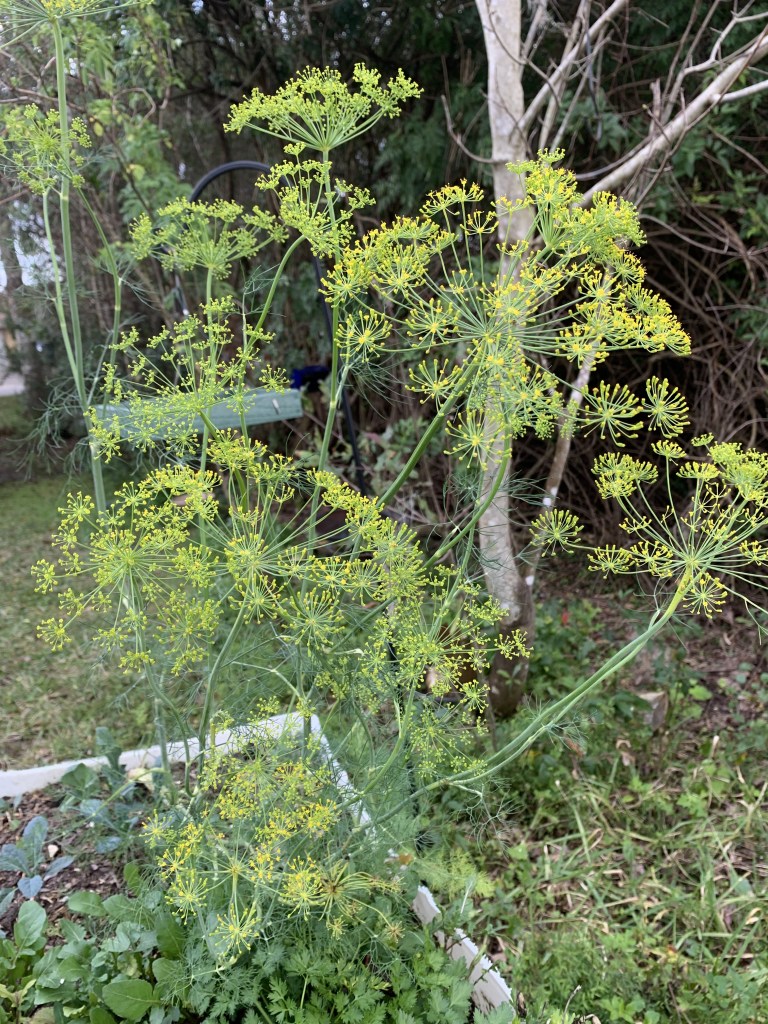
I noticed the black swallowtail butterfly laying her eggs all over my little dill plants. Now the black caterpillars are crawling around, eating and growing.
A tiny egg on dillThe swallowtail caterpillar
Every day I looked to make sure I could see all three.
Monarch Caterpillars
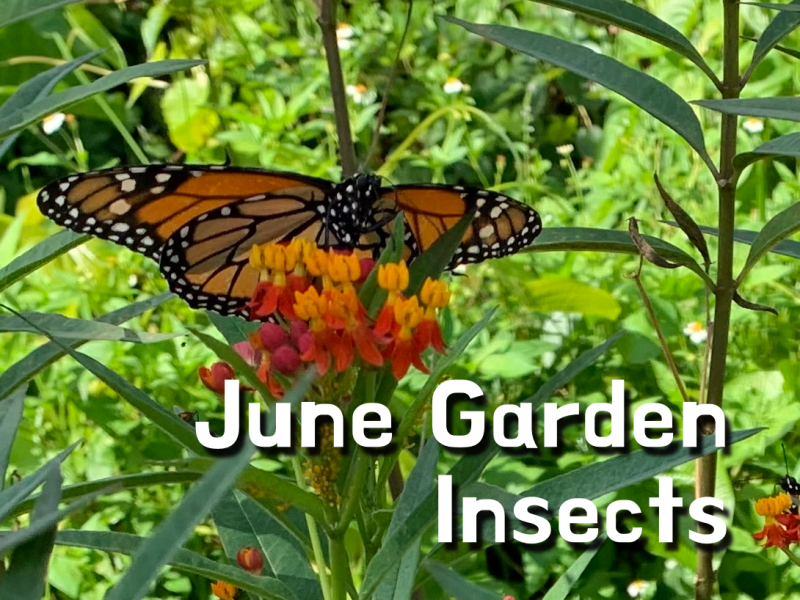
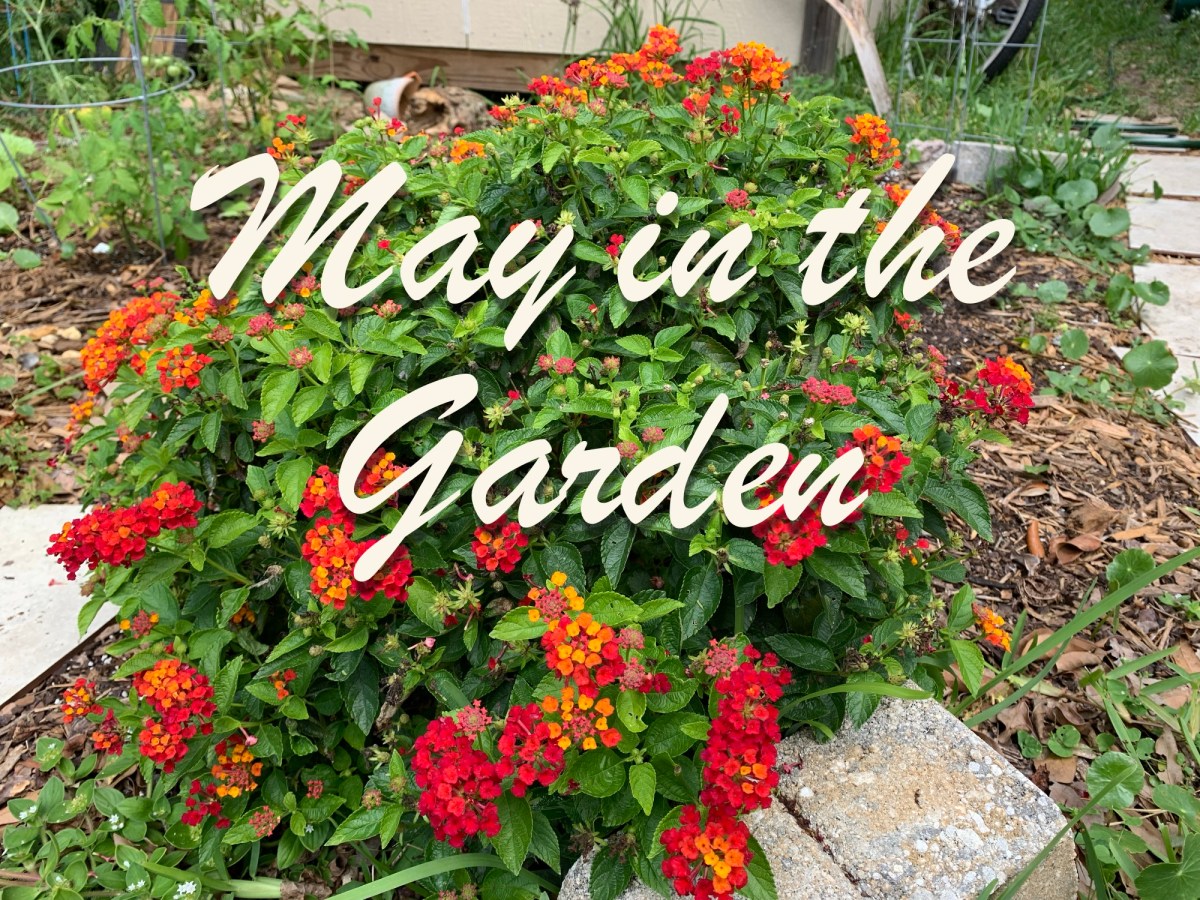
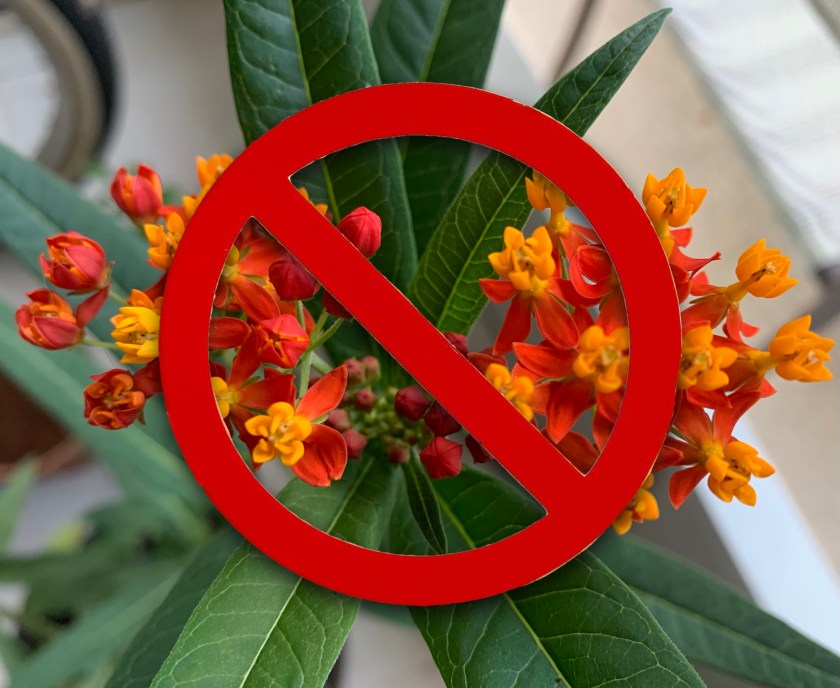
I’ve recently discovered how bad it is to have the wrong type of milkweed growing in the yard. I have removed all of my tropical milkweed. It looks like the photo below – with red and yellow-orange flowers – and please plant native milkweed instead.
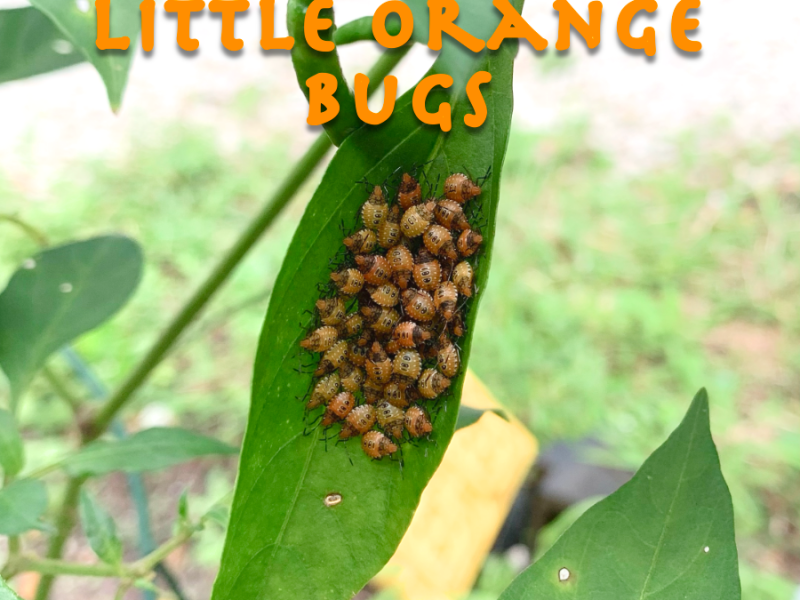
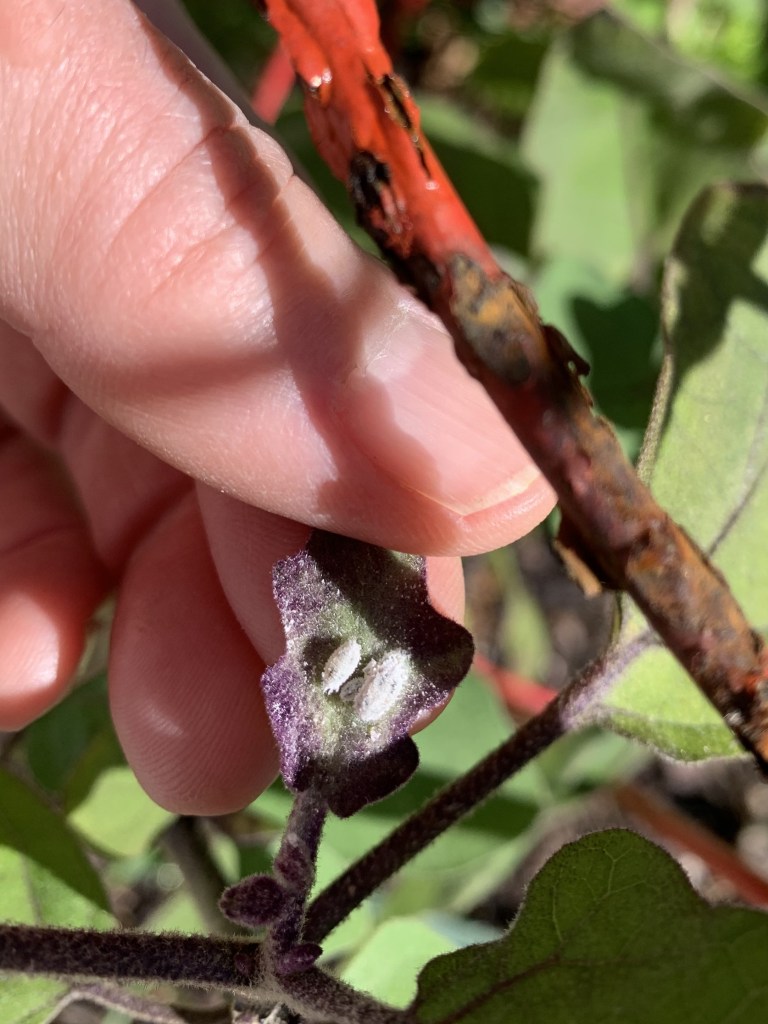
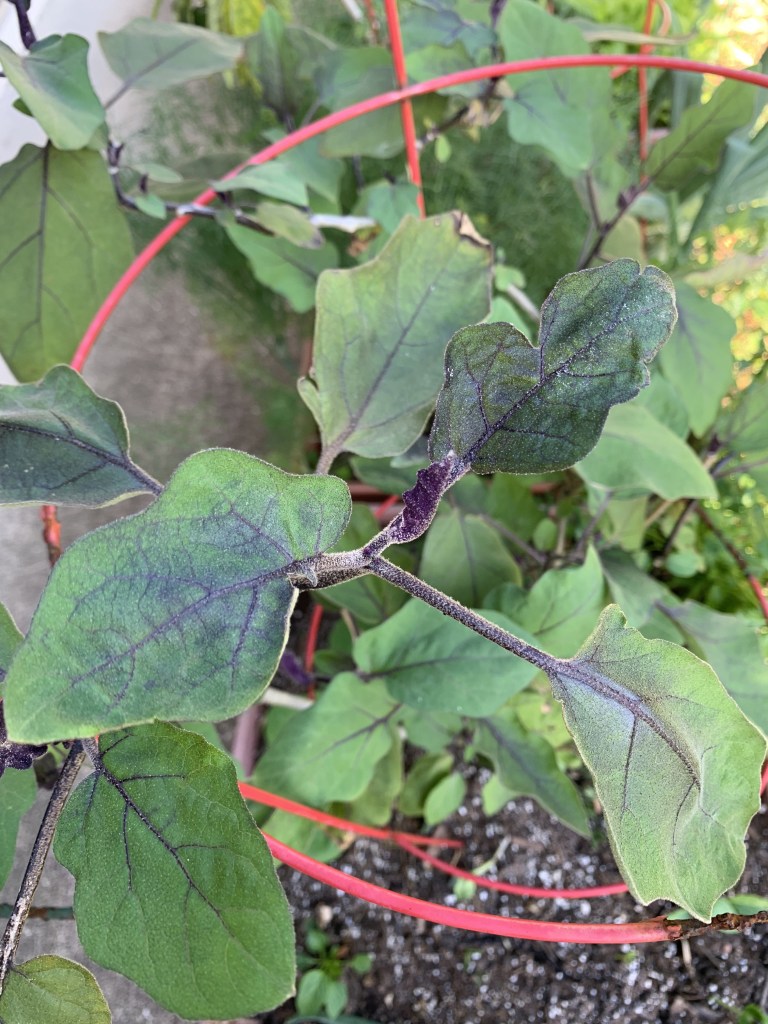
That’s about it for the creatures, except for the unwanted white bugs. I hand-picked / squashed a bunch of these that were hiding in the tiny new growth on my eggplant. I’m not sure what they are, but probably some kind of aphid.
Vegetables That Love February
Many of these vegetables were planted late last Fall. They survived the winter and are now beginning to love the warmer nights and not-too-hot days. I like February temperatures also. The humidity is lower and the days are sometimes hot, but bearable. A bit like a summer days in the north.
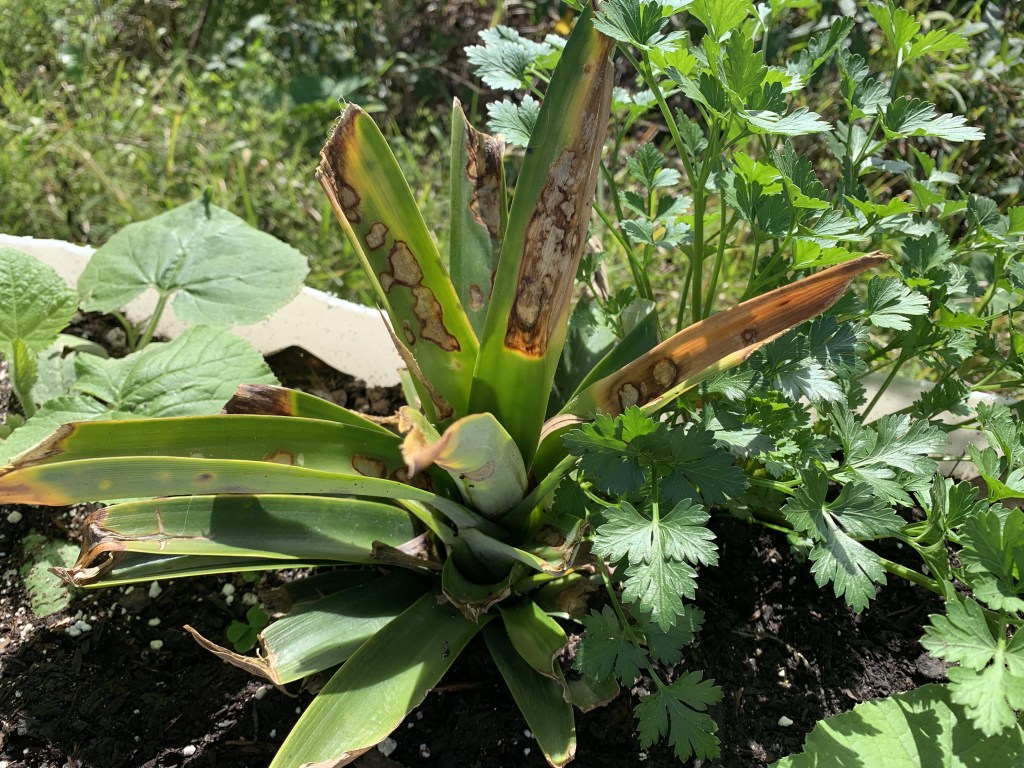
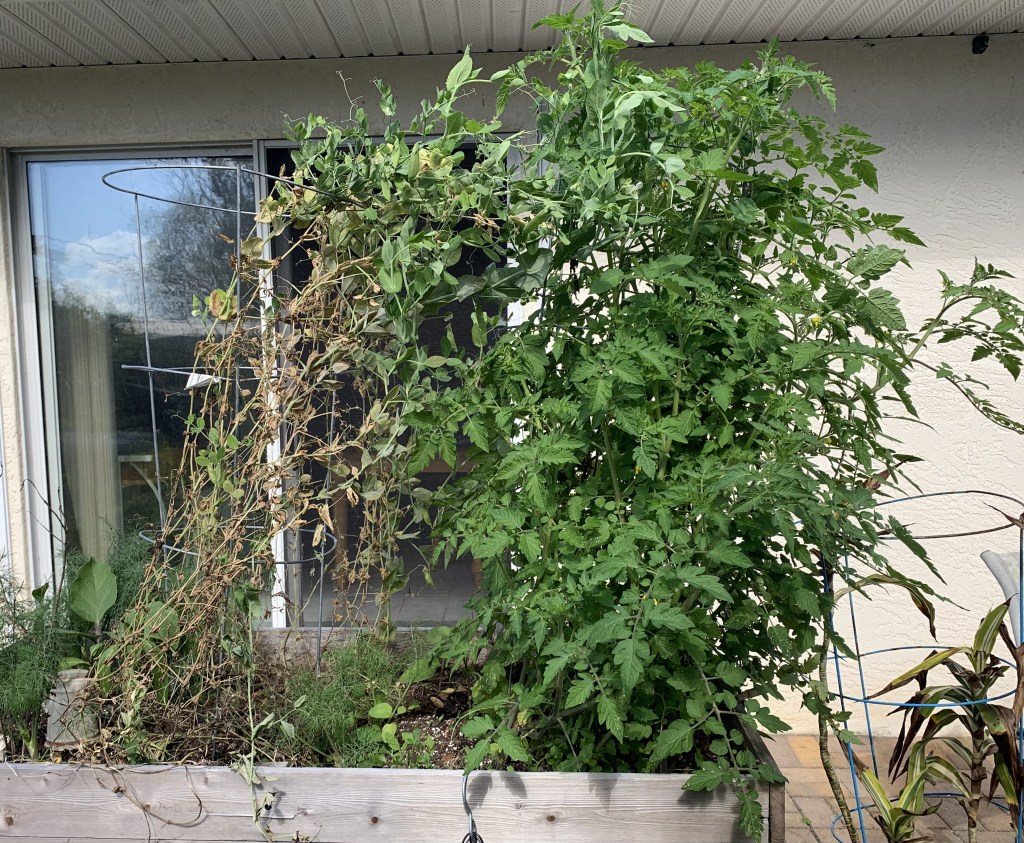
The pineapple had a lot of brown leaves. I had to cover some of these gardens when the temps dropped to near, or below, freezing.
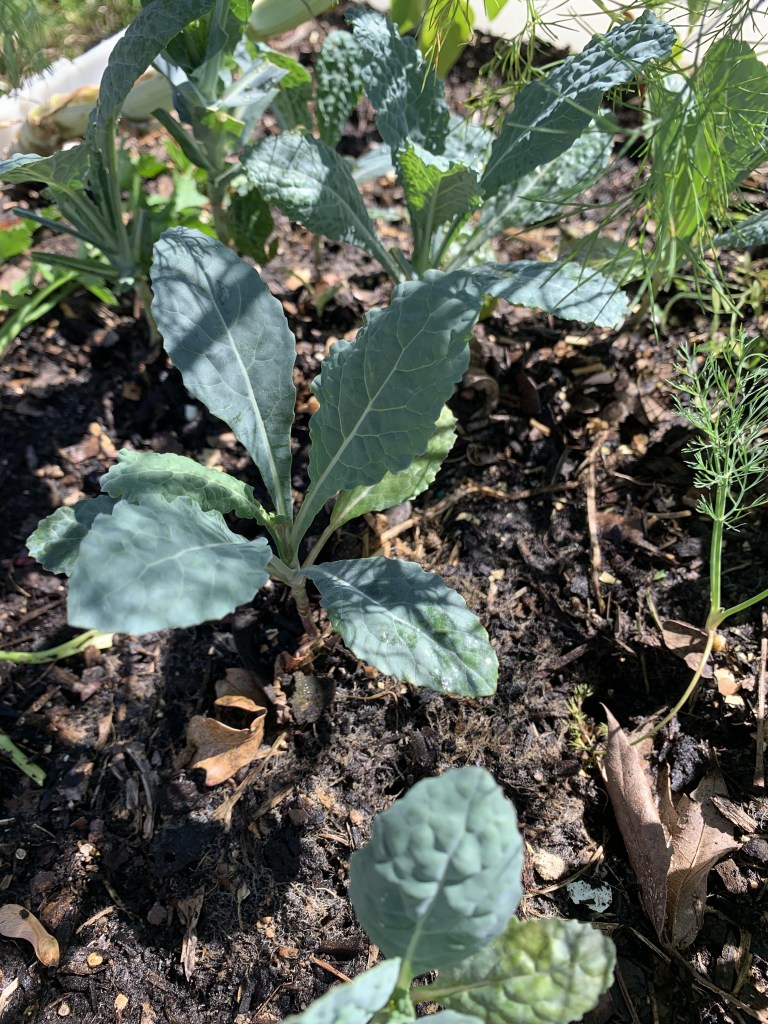
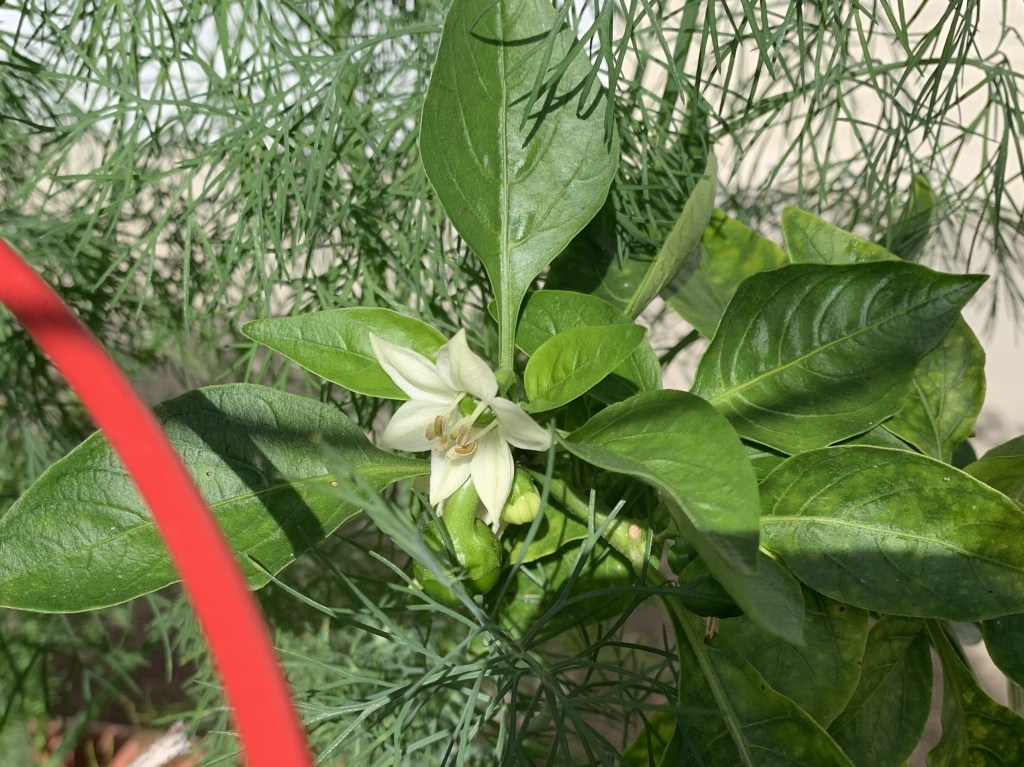
The plants themselves are looking much better, but I’m not getting to eat from them. I have picked a few cherry tomatoes, a hot pepper here and there, and had some kale chips, which I made from my kale. I use the parsley and dill to cook, but all my basil died.
It won’t be long before the weather is too hot for the gardens to do well. I’m letting my lettuce to go seed so I can plant more next Fall. I do expect to continue to get peppers and also some eggplant soon.
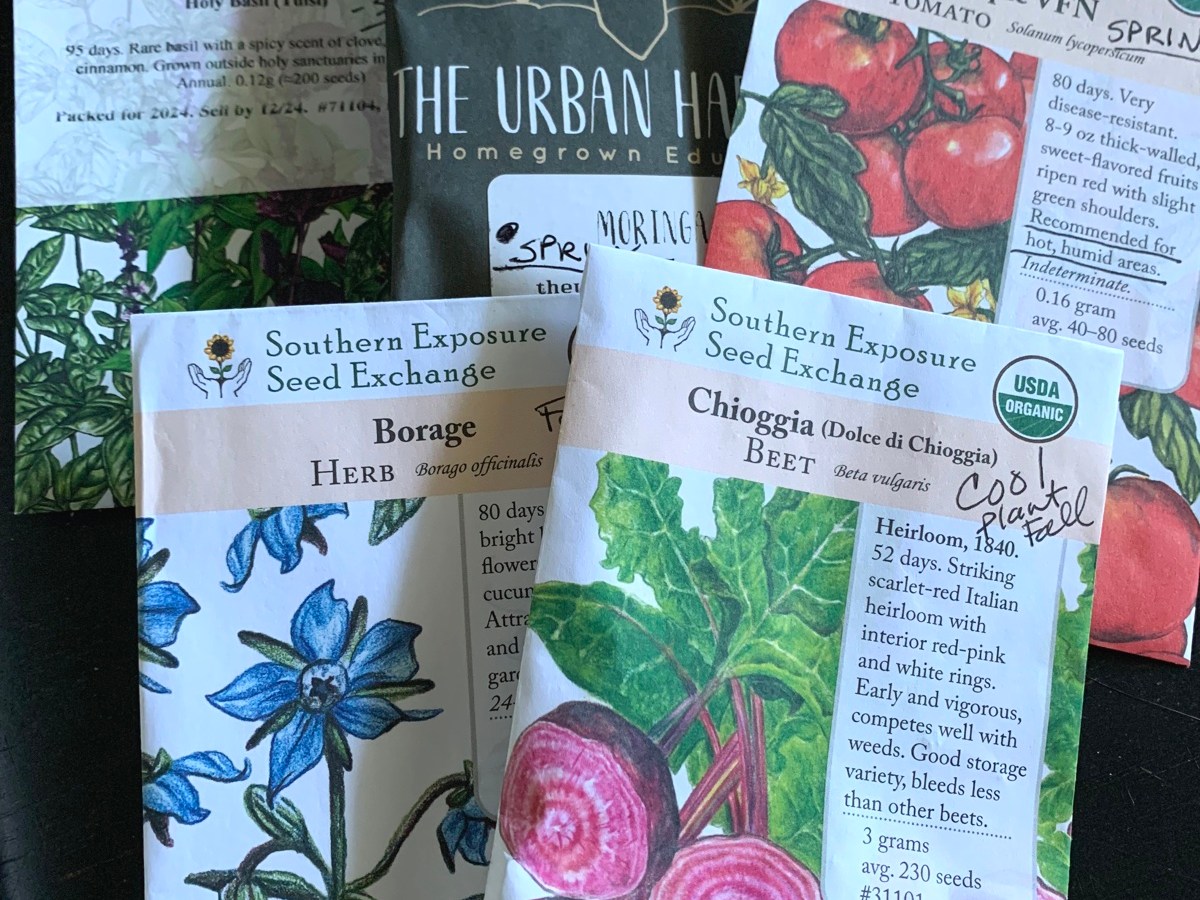
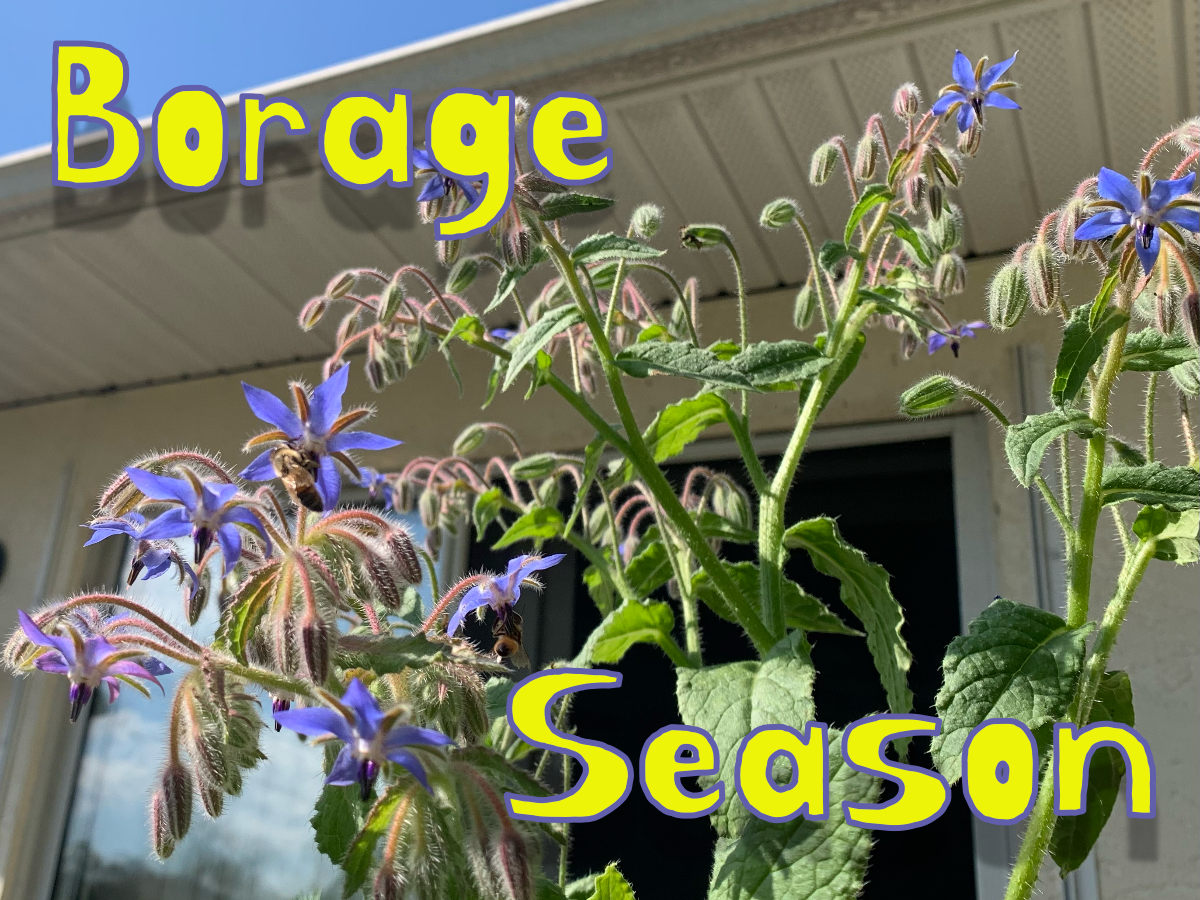
Florida gardeners can easily grow borage. The blue flowers add interest to any garden, and honey bees love them. The plant is short lived as it dislikes the heat.











 Hydrangeas Blue