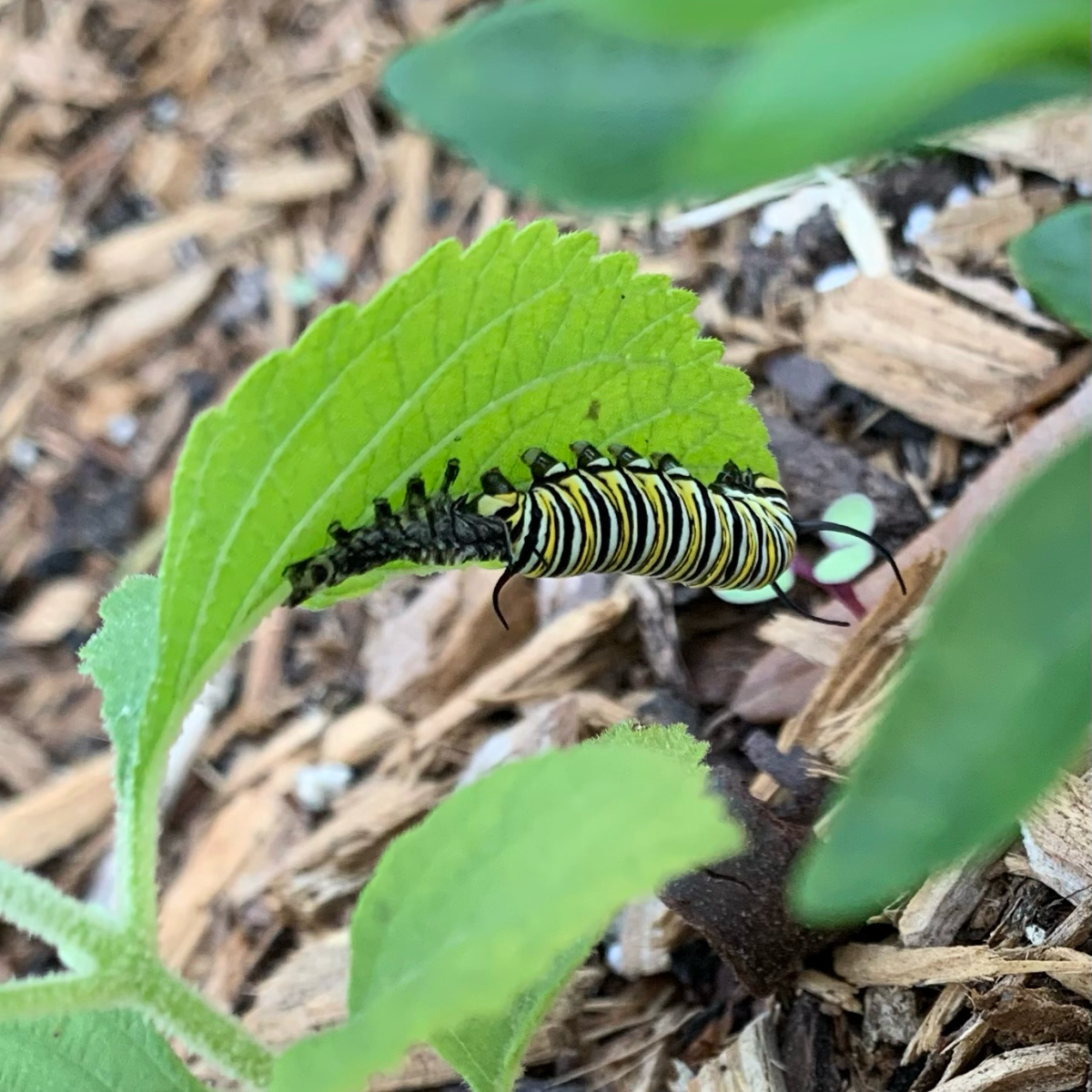
Monarch Caterpillar With Strange Black Thing

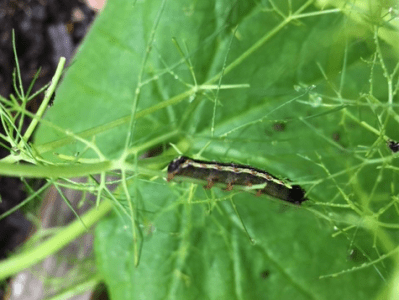
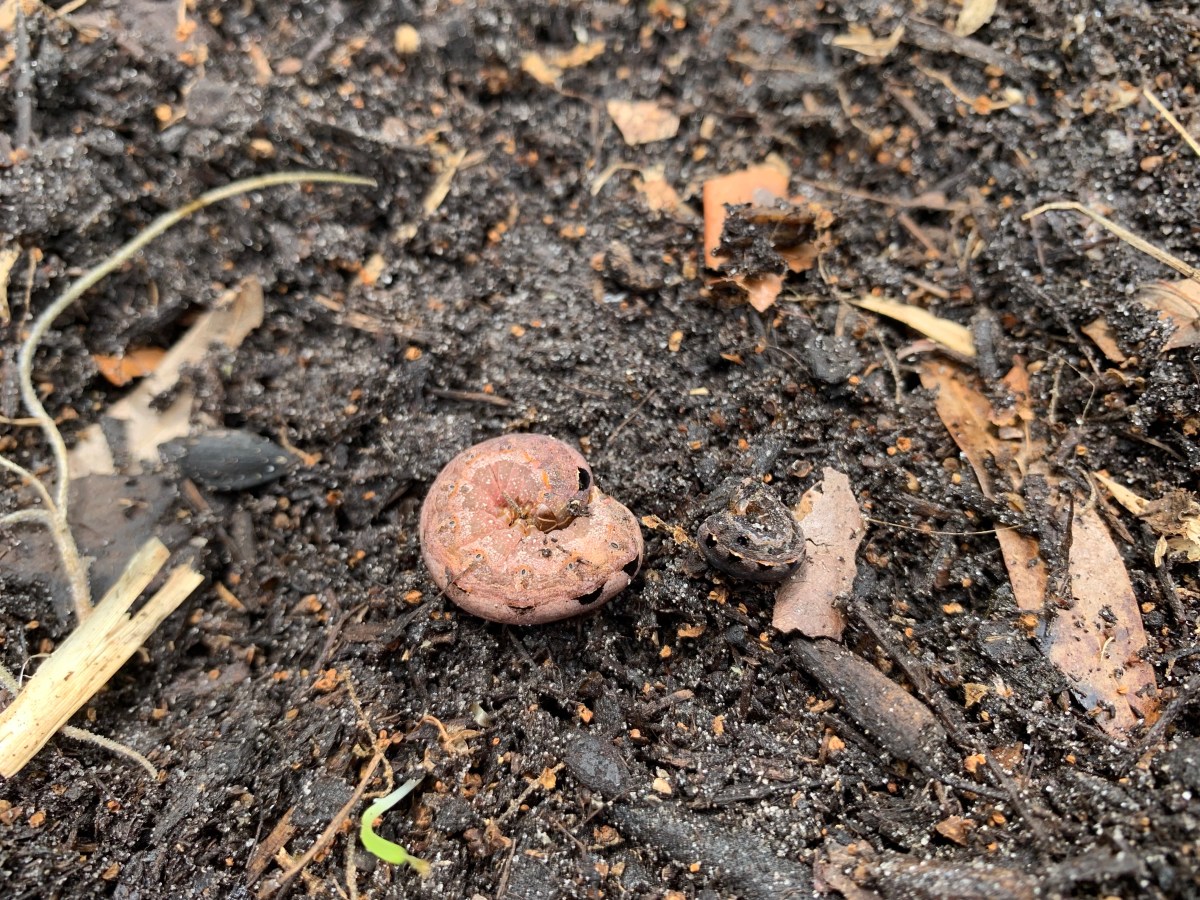
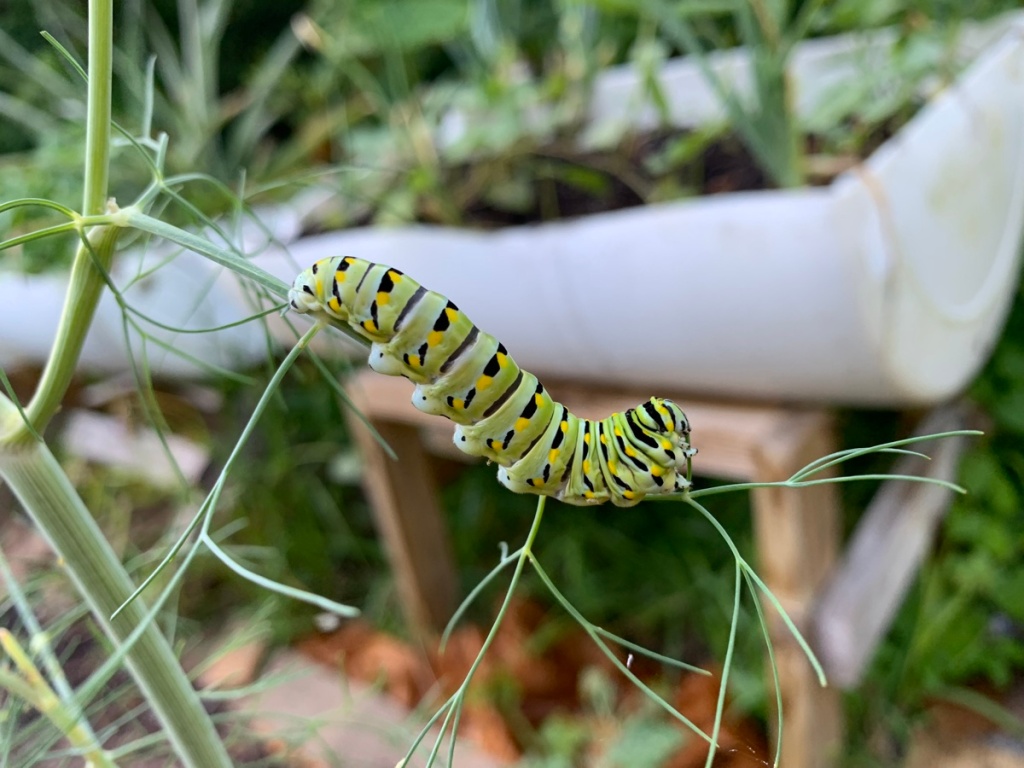
I found a strange black thing next to one of the Monarch caterpillars. I need help identifying this.

I don’t know how to describe this image. I found the Monarch caterpillar on the underside of a Beautyberry bush leaf. This little Beautyberry is a small plant that sprang up next to the milkweed.

As I was checking for caterpillars the other morning, I found this one with a strange black thing. It looks like a shell or skin and the caterpillar was crawling out of it! This caterpillar was fairly good size, and I’ve never seen anything like this on my milkweeds.

If you know what is going on here, I’d love to know. And thank you for your input!

So one of my faithful readers said to look into caterpillar molting. I found this page at Naturedigger where they explain. Monarch caterpillars shed their skin, and eat it, five times before they become a chrysalis. I’ve seen many Monarch caterpillars and have never seen them shed their exoskeletons!
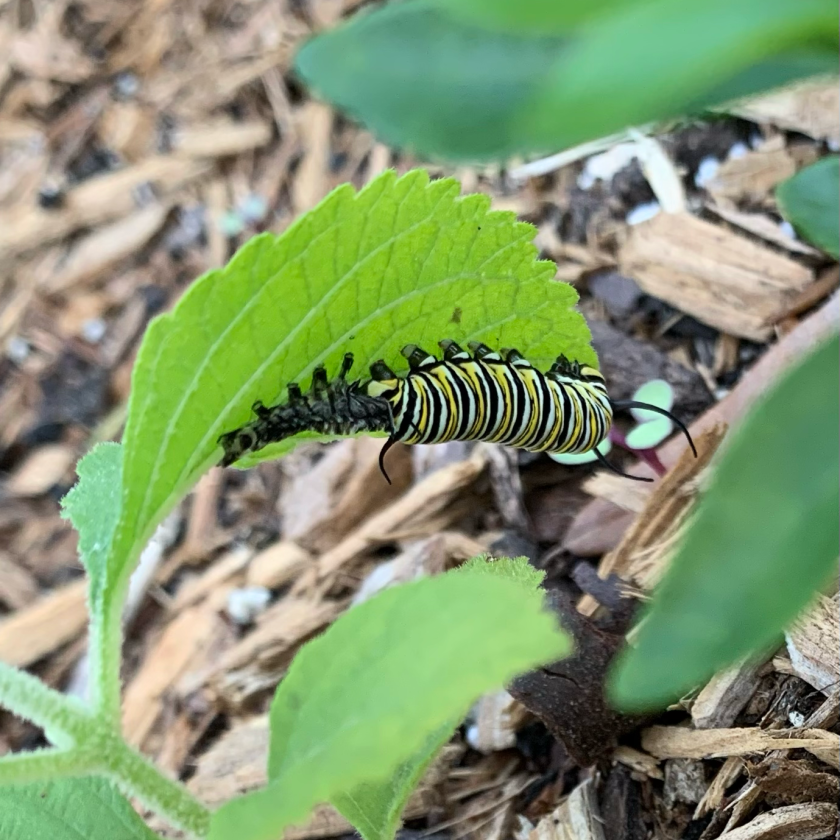
Monarch caterpillar on leaf with black thing

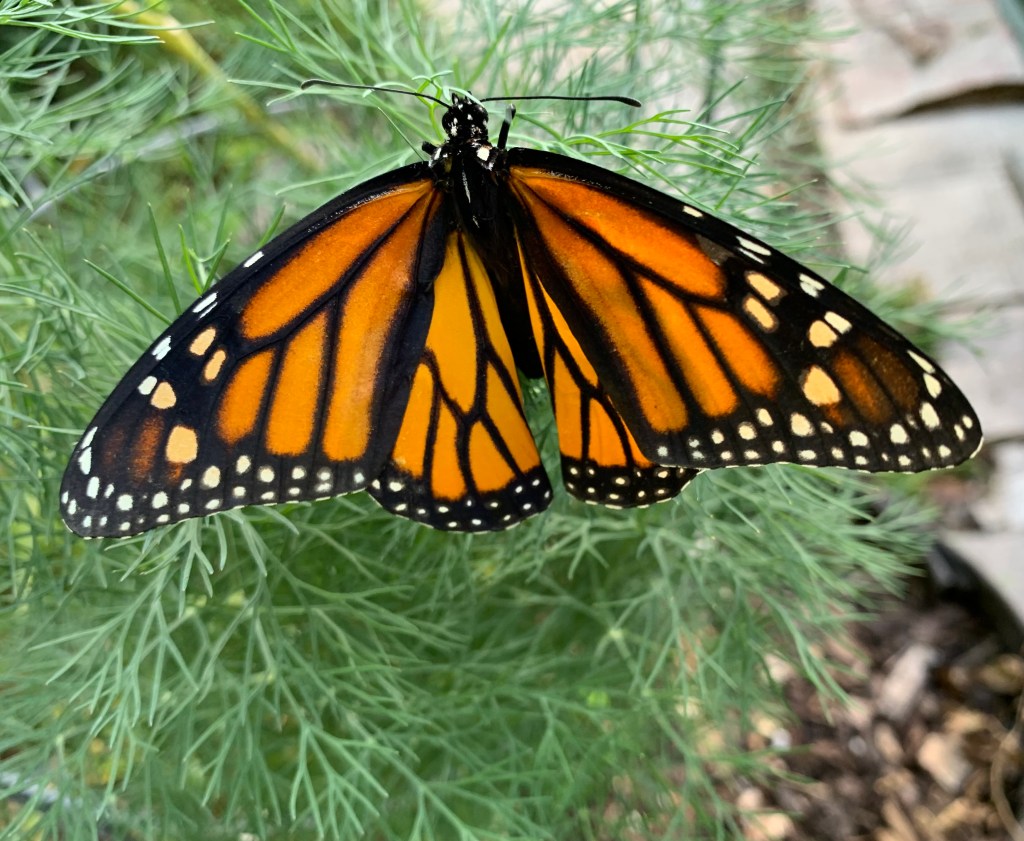
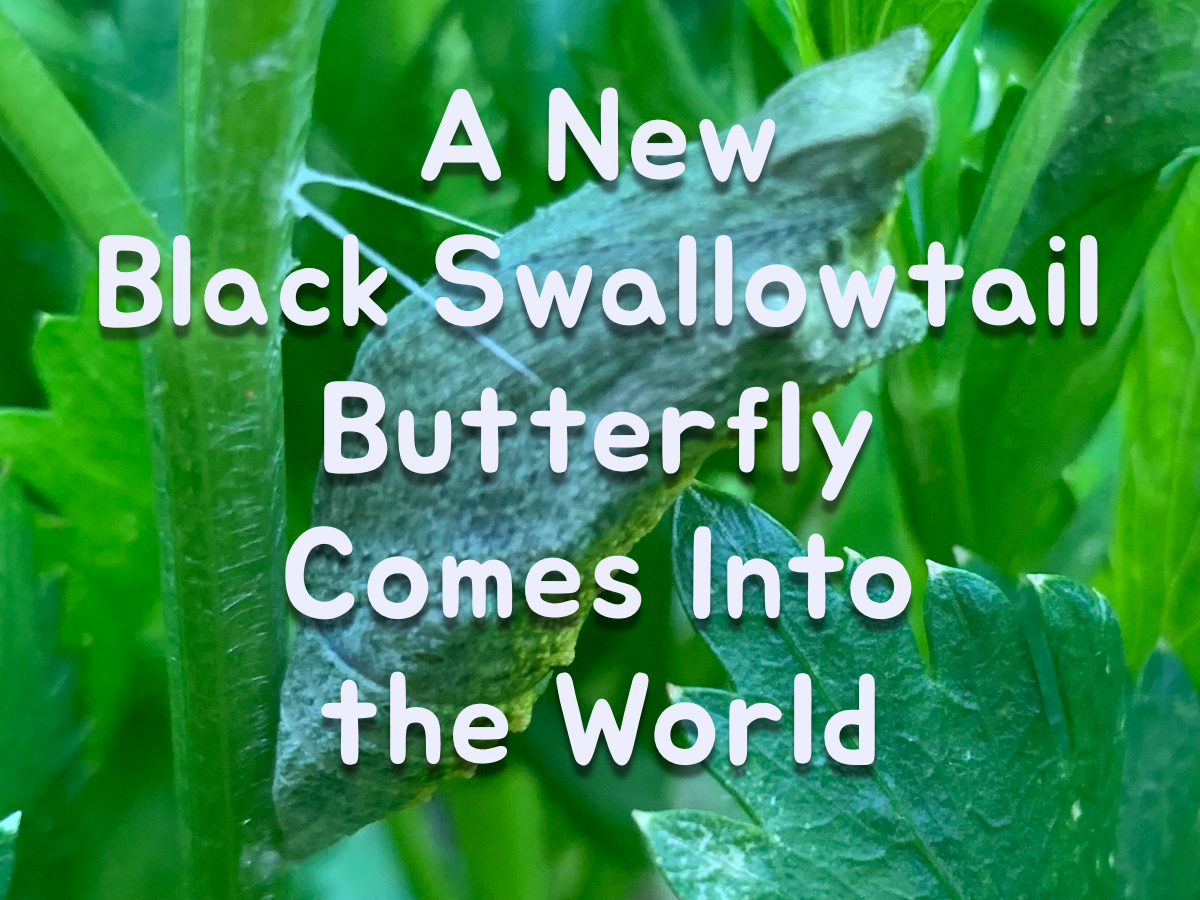
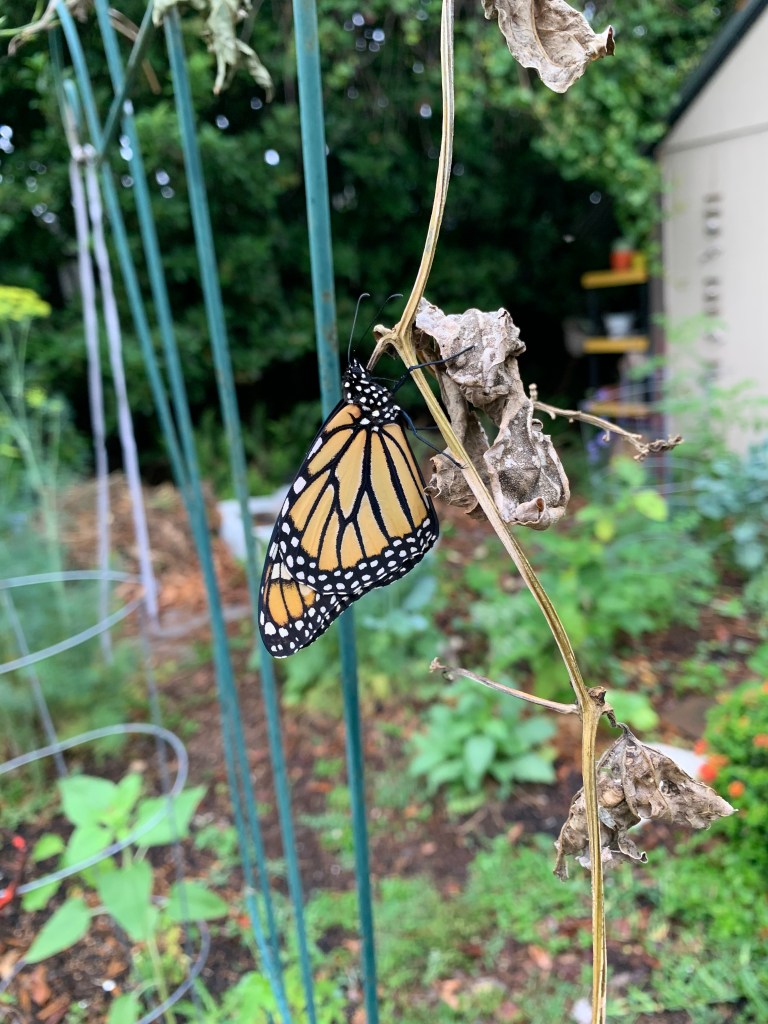
To date I have found three monarch butterflies, freshly hatched, in my yard. I can tell they are new when they don’t fly as I approach. A strong, healthy adult Monarch seems to never land, and will fly away if I approach. The only time I see them stop is when they lay eggs on the leaves.

Monarch #1 had a pretty chrysalis on my Rosemary. Butterfly #2 was seen one morning attached to an old Loofah plant vine. Monarch #3 was holding onto some dill.

When I sit outside and simply enjoy my garden, I see them flying over the yard. Sometimes two fly together, and once I saw three together. Was it these three? I like to think so.
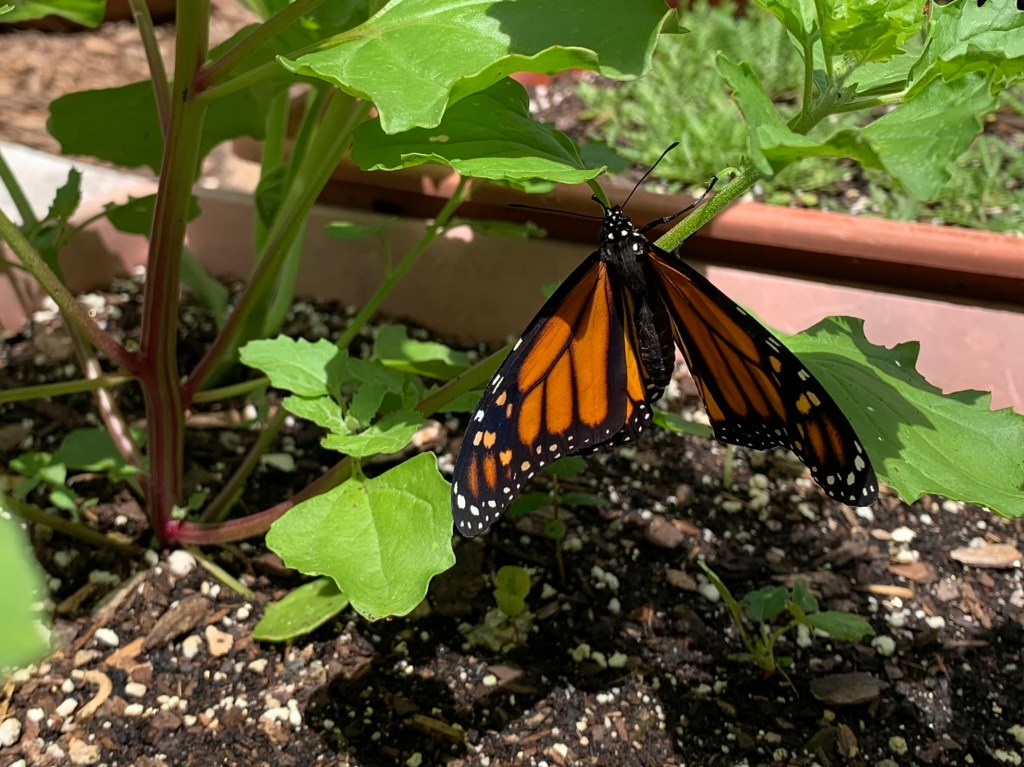
I recently learned that male Monarch butterflies have two black spots on their wings. They can be seen when the wings are wide open.

The photo below is not mine, but shows the spots a male would have.
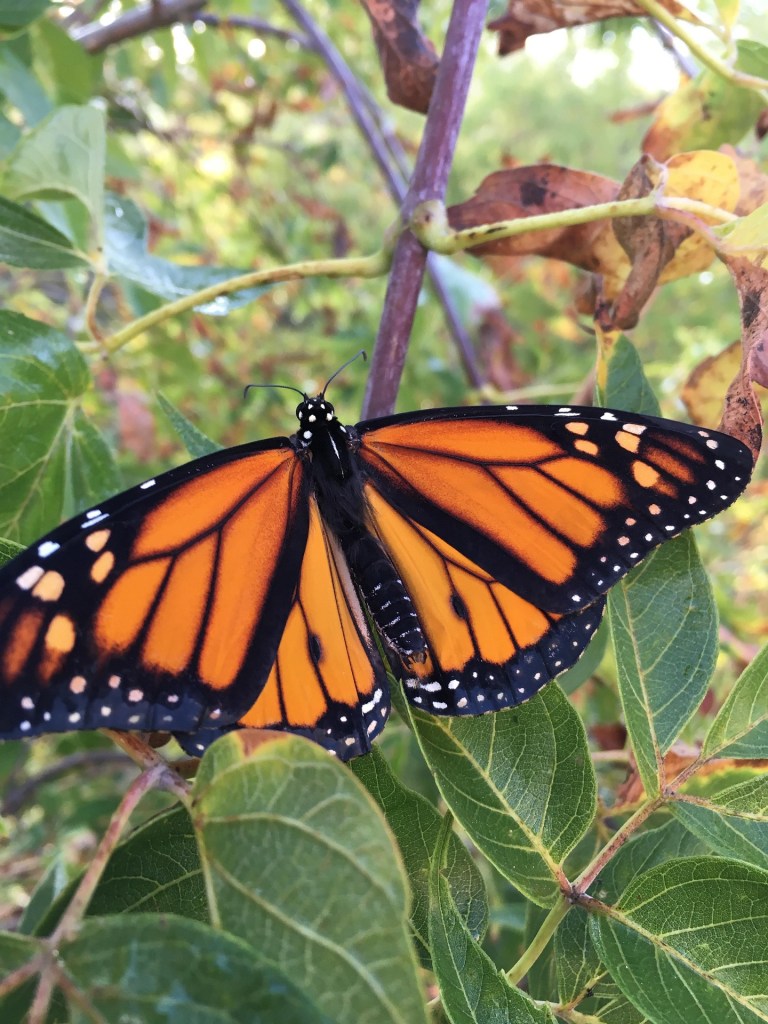
Male monarch Butterly
Image by Graham Gladstone from Pixabay

Taking Care of the Monarchs

I need some good flowering plants to feed these butterflies. Although the caterpillars are only found eating milkweed, butterflies get their food in other places as well.

A lot of information can be found about feeding the caterpillars. I guess people will raise them inside and feed them stalks of milkweed. What I am looking for is information about planting to feed the butterflies without relying on milkweed flowers. I’ll write a new page about that.

Please keep reading…

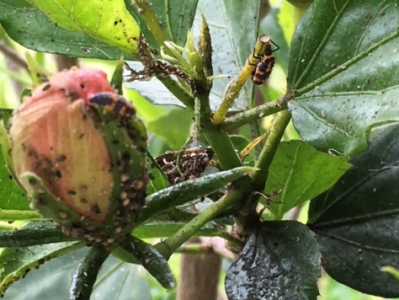
Need Help Identifying Mysterious Orange Garden Bugs

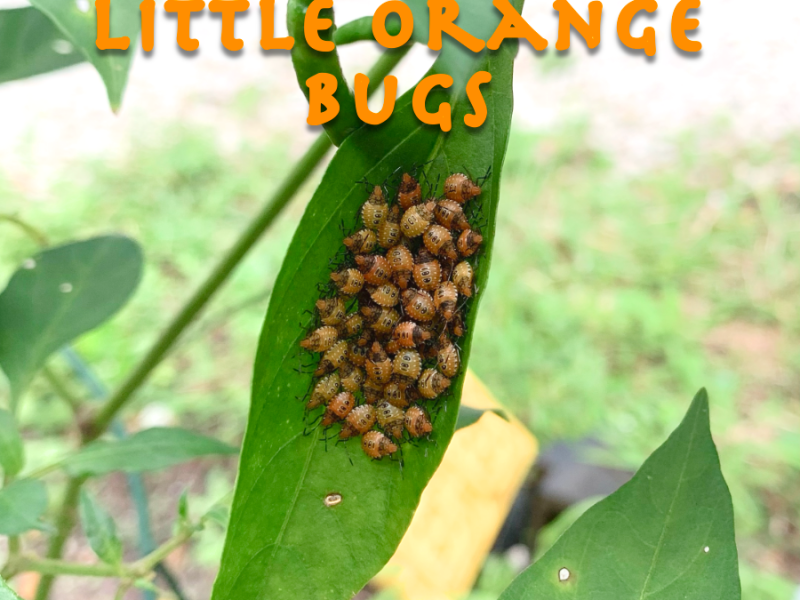
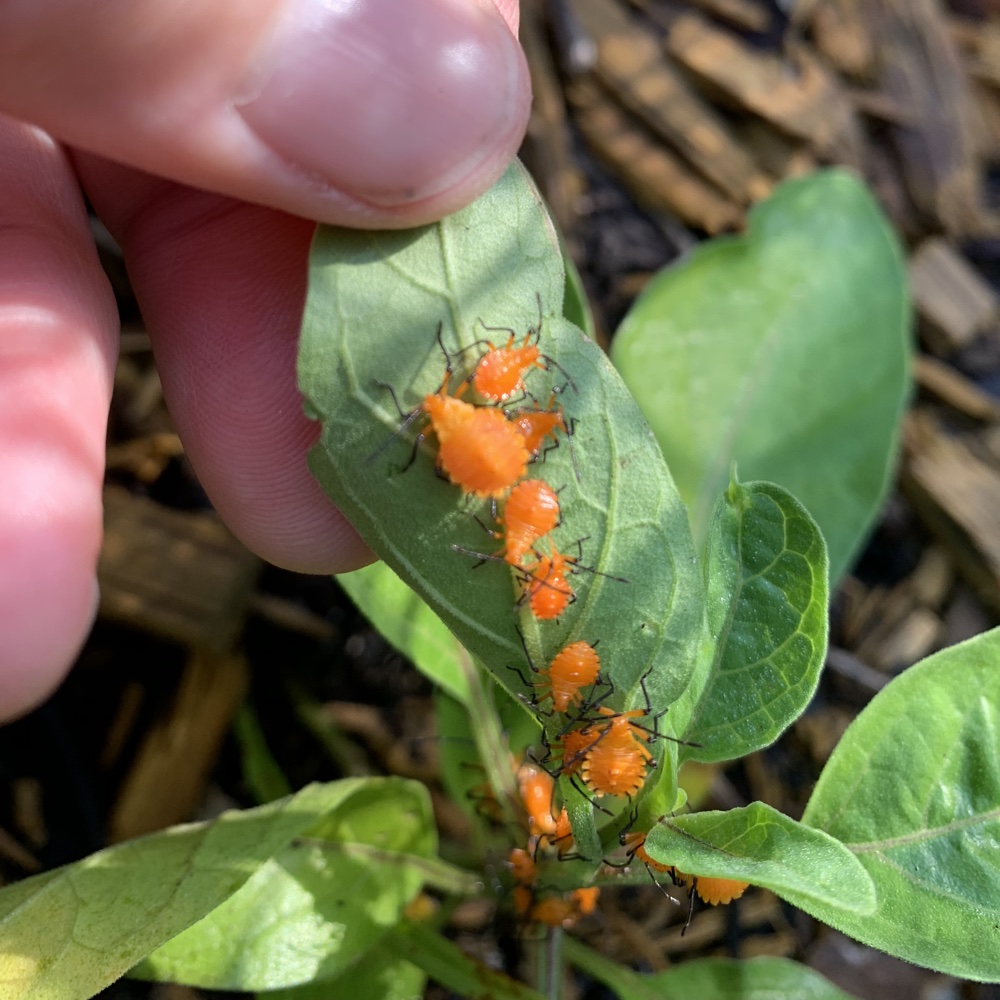
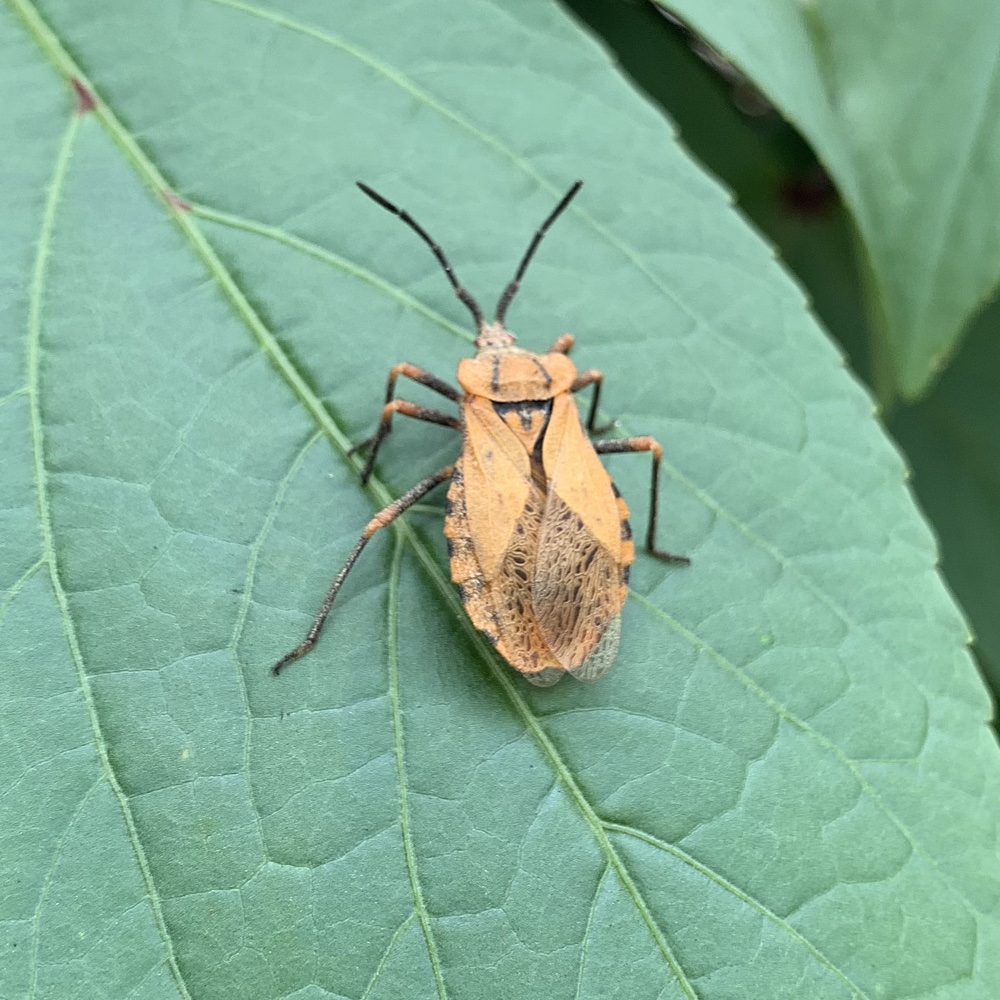
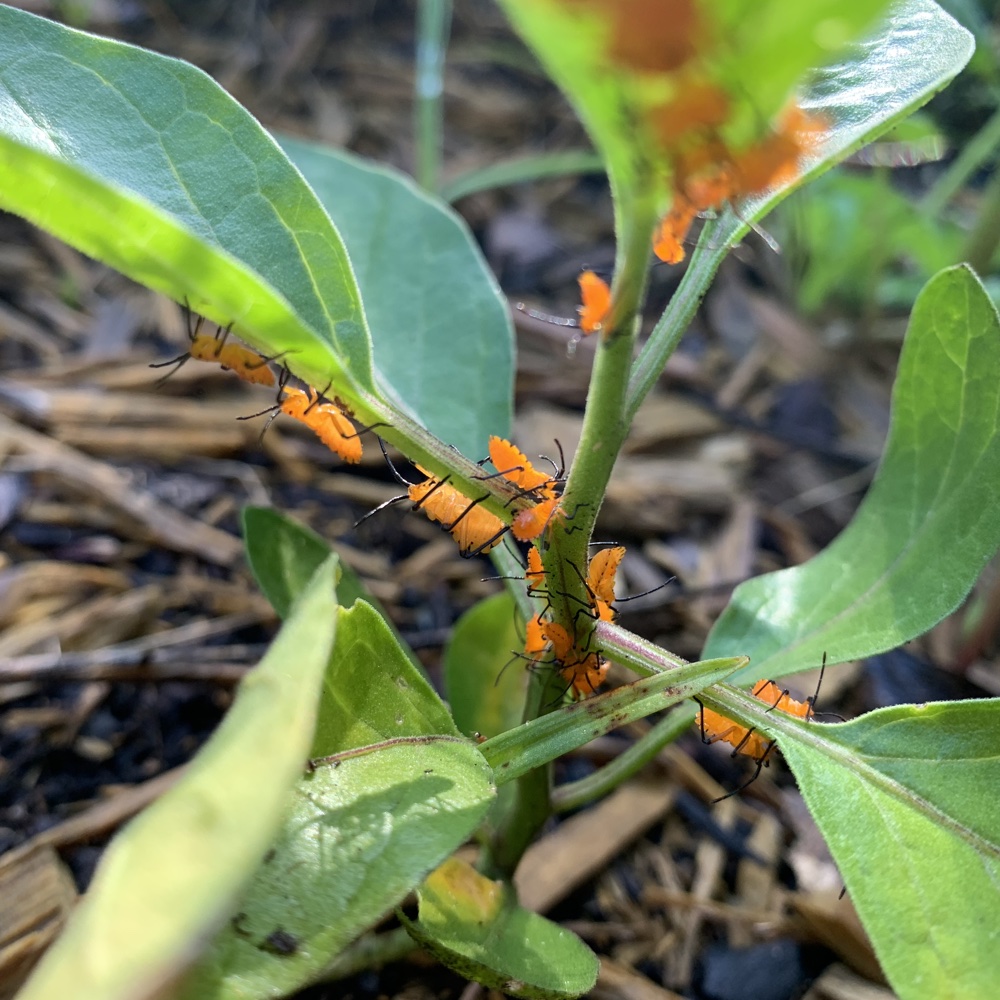
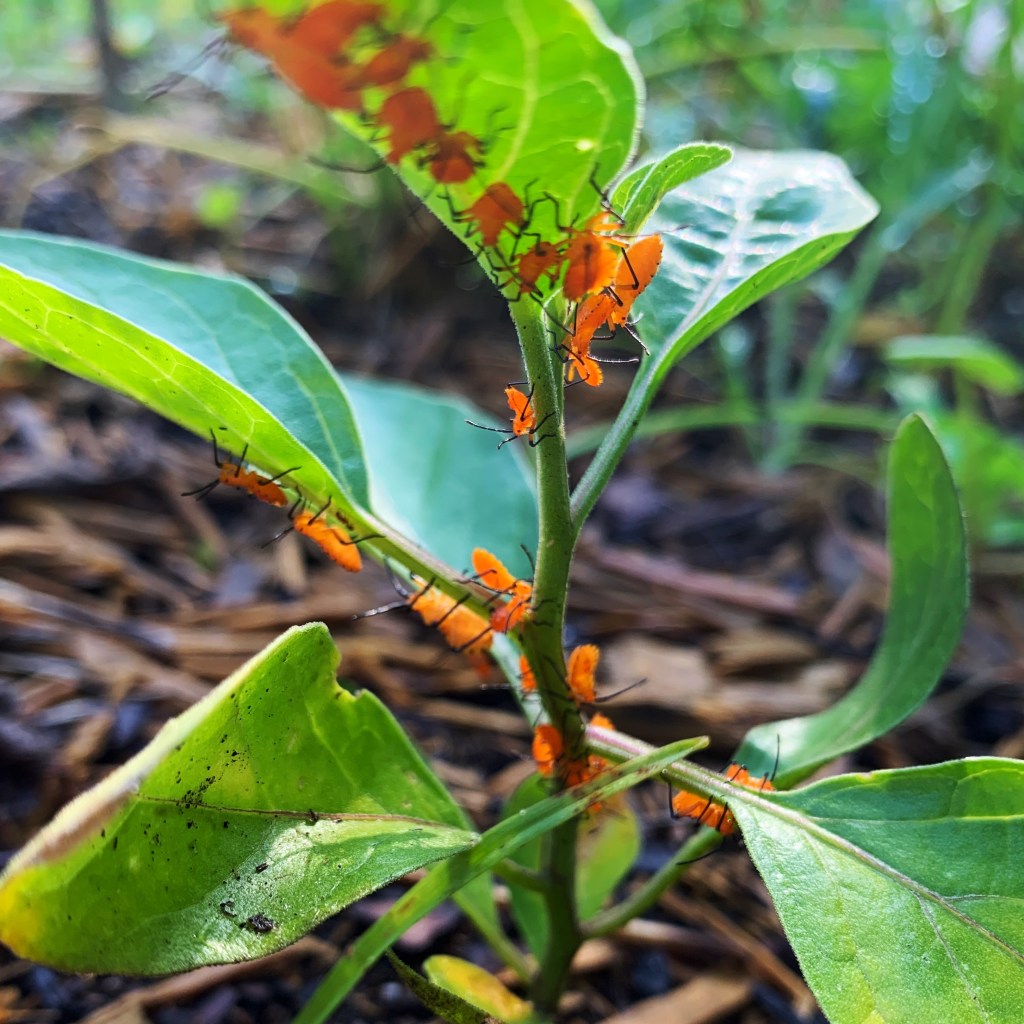
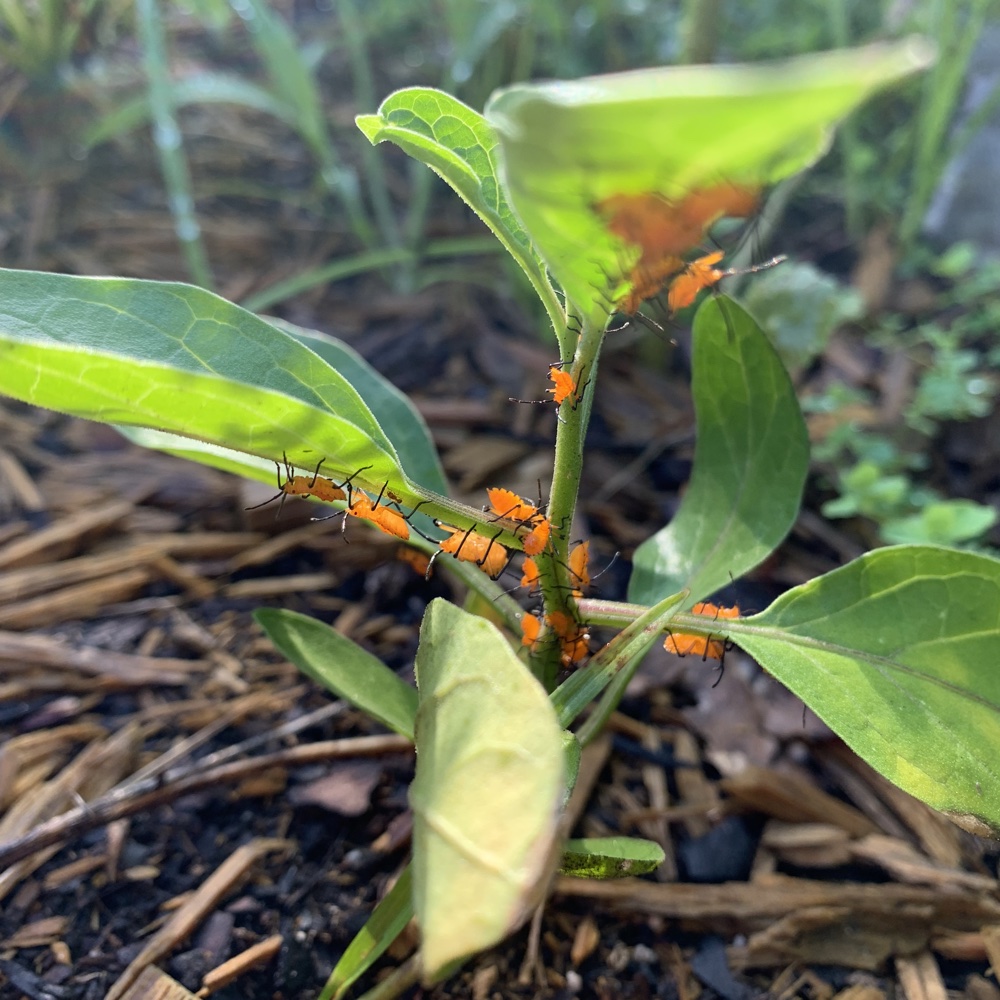
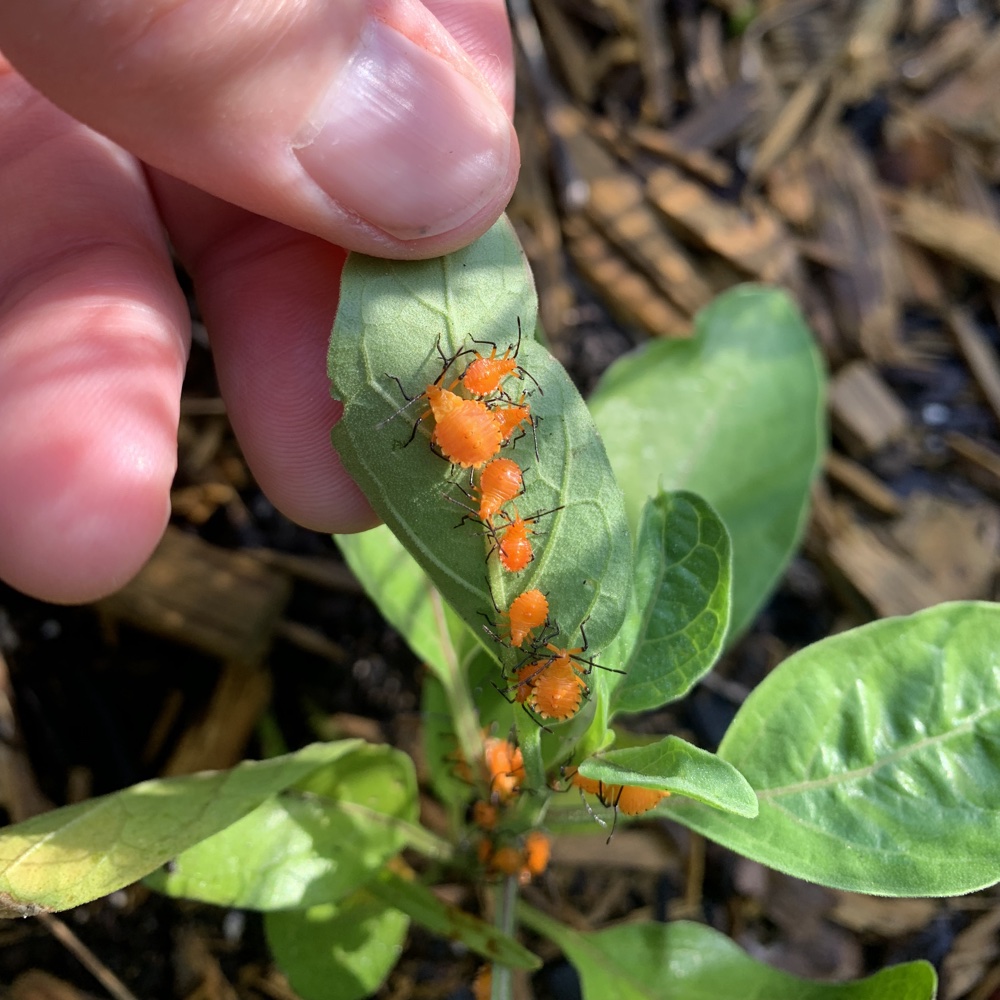
After beginning this post, I realized I was wrong about being able to identify this bug. It is not the leaf-footed bug, but I’m not sure what it is. The nymphs are bright orange and my best guess it is some type of stink bug.

Well, I thought I had identified this bug at last. Now, I don’t think so. I’ve found them occasionally on the ground near Walter’s ground cherry plants. At the time, the ground cherry was covered in tiny, bright orange nymphs.

The nymphs don’t seem to eat the ground cherry, but just gather all over it.

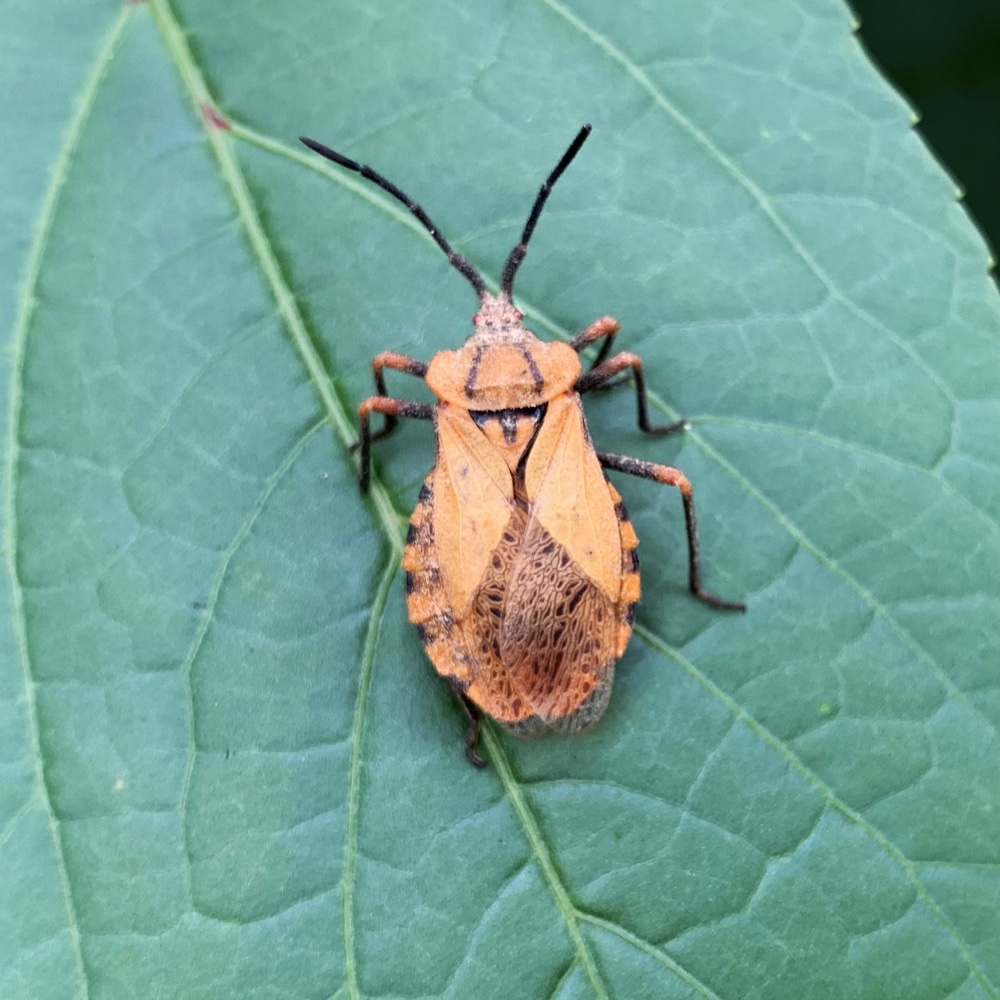
Here is an image of the Leaf-footed bug, which I thought it was at first. But the leaf-footed bug has wide “leaves” on its hind legs. The bug in my photos does not.

Is it some kind of stink bug? I’m still baffled. Other than seeing all those orange babies, I really never see this type of bug in the garden. The nymphs of the assassin bug are also orange, but have long legs. So, is this another type of assassin bug?

I’m quite sure the above photo is an adult and the bottom (nymphs) is the same bug. As you can see the little ones are very bright orange. The legs are orange at the top, and black the rest of the way. The back end is rounded and has tiny lines around the edge. This matches the lines seen around the body of the adult. It resembles the stink bug.

I’m still unable to find any photos online that look like these orange bugs. I’m tired of looking. Hopefully one of my readers will know and be kind enough to leave a comment. I’d love to know if it is a beneficial.

green divider leaves long

This is Why I Leave the Dill Alone

If you have an aphid infestation, check regularly for ladybug eggs, larvae and pupa on the plants.

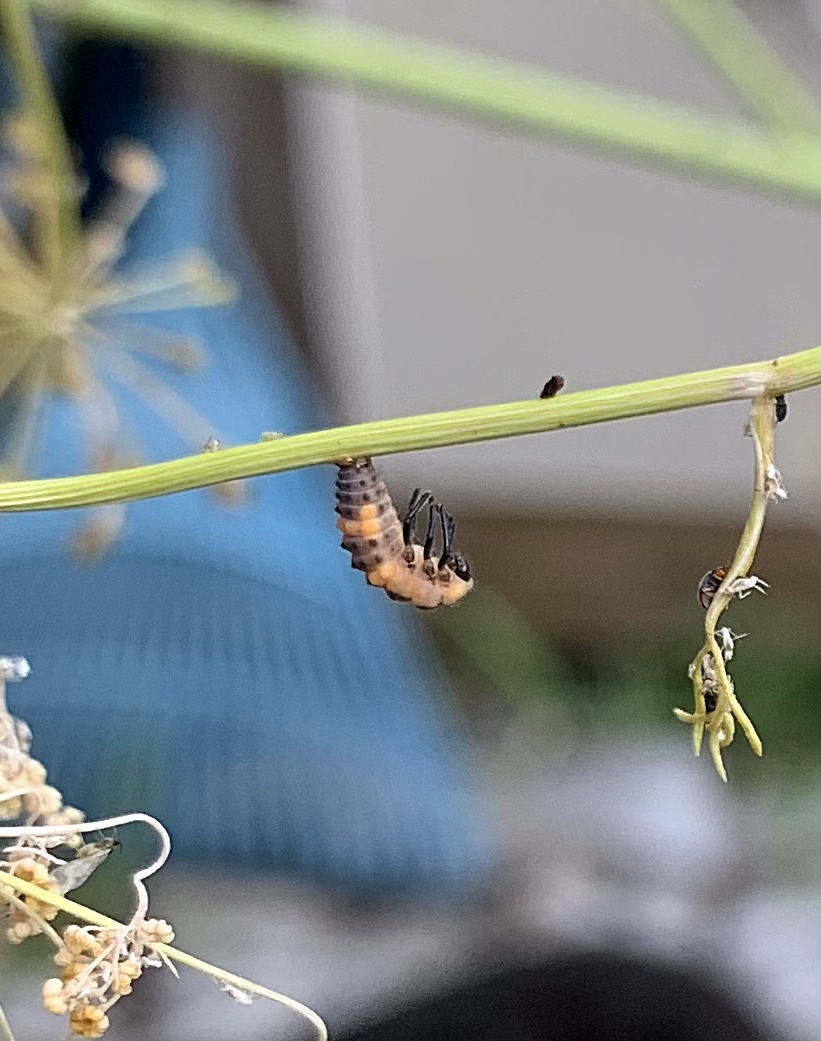
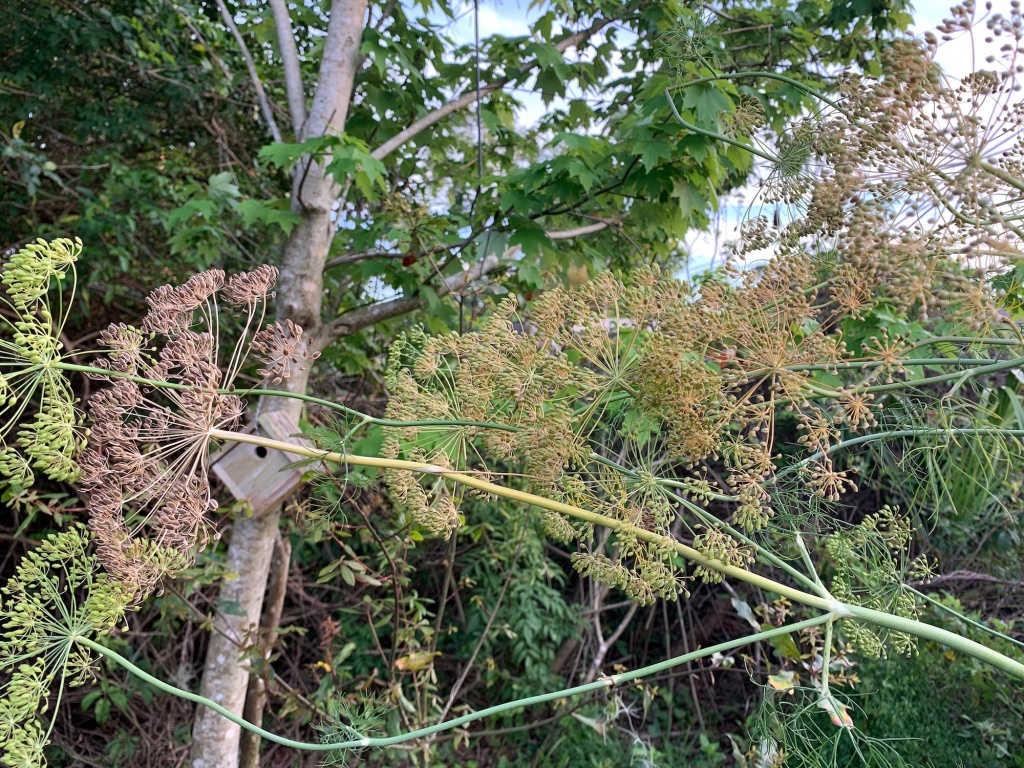
I believe in not being too quick to clean up the garden. It is June, and my old, aphid-filled dill plants are now full of ladybug larvae! This is why I leave plants up after they have grown, bloomed and begun to die.

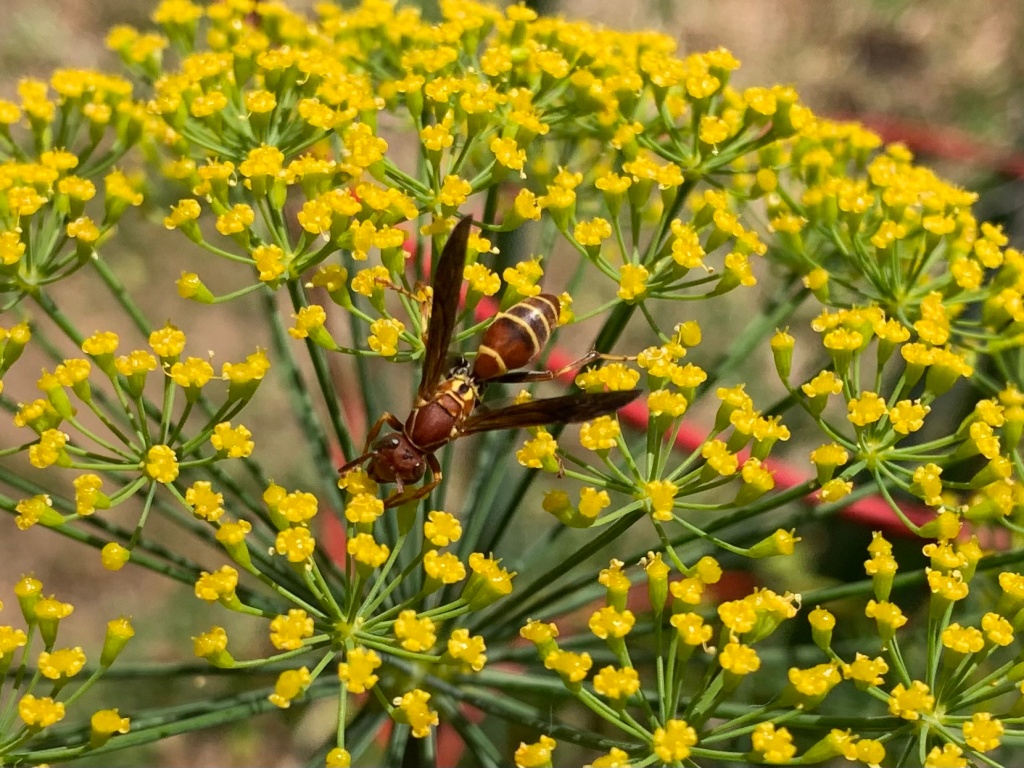
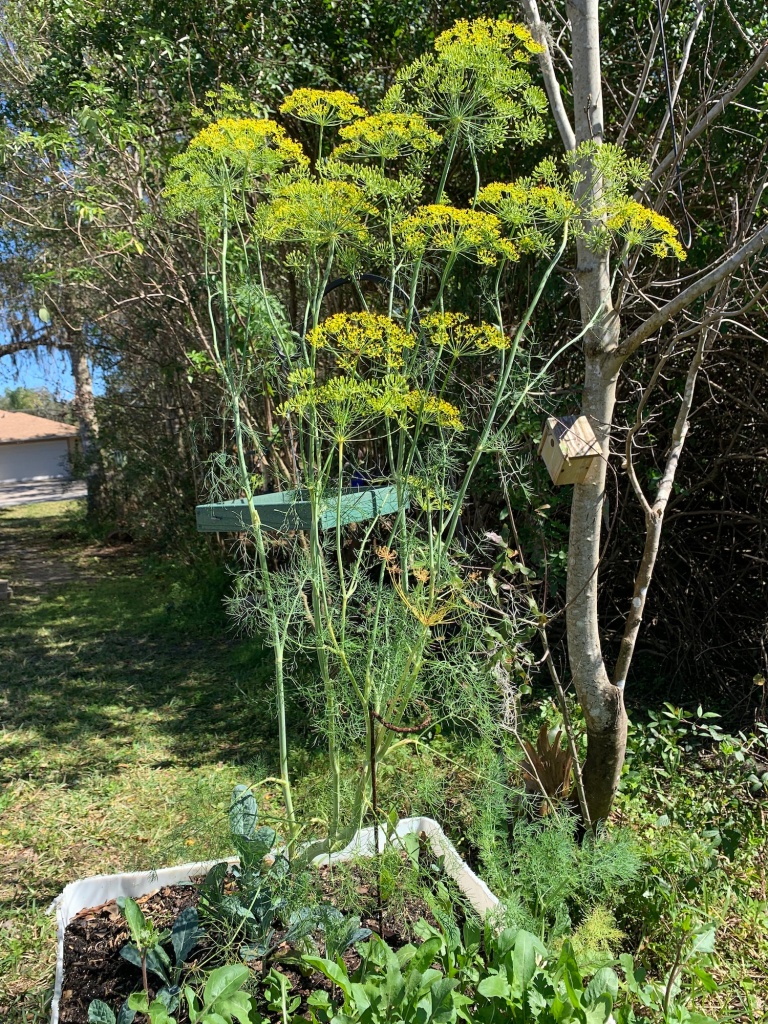
Dill is one of the great herbs to grow in the garden. Some of my plants have come up on their own. When I see them growing I just leave them. The flowers are gorgeous and feed bees and butterflies. The seeds are easy to gather and save, and black swallowtail butterflies lay eggs here.

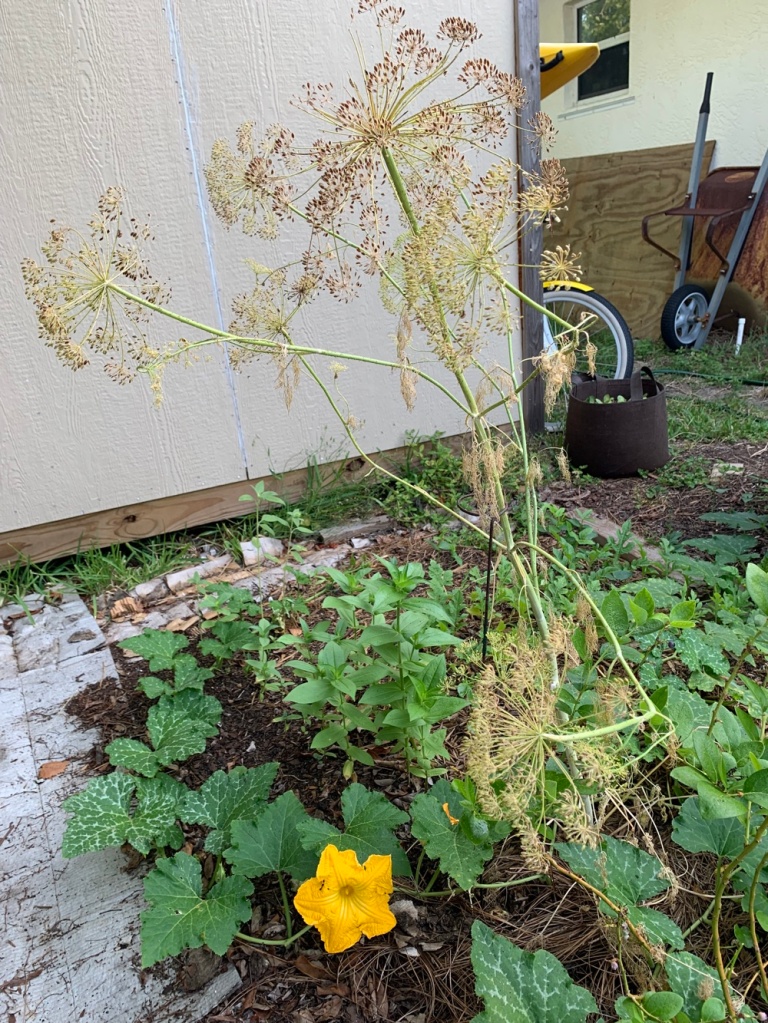
Dill does not like the extreme Florida summer heat and the plants are done flowering by June. The seeds have formed, and I did cut one big head off to save the seeds for next Spring. The rest, are still on the plants, which now look pretty awful.

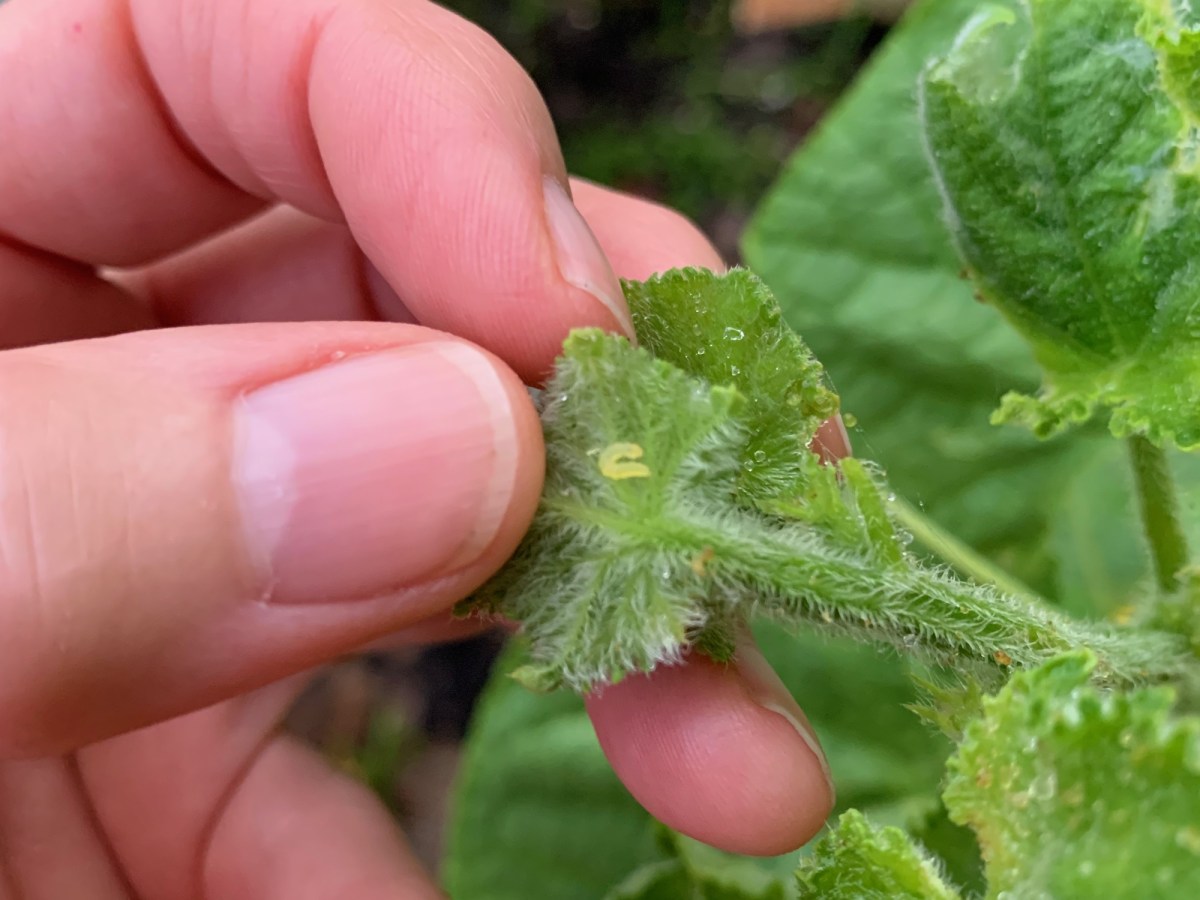
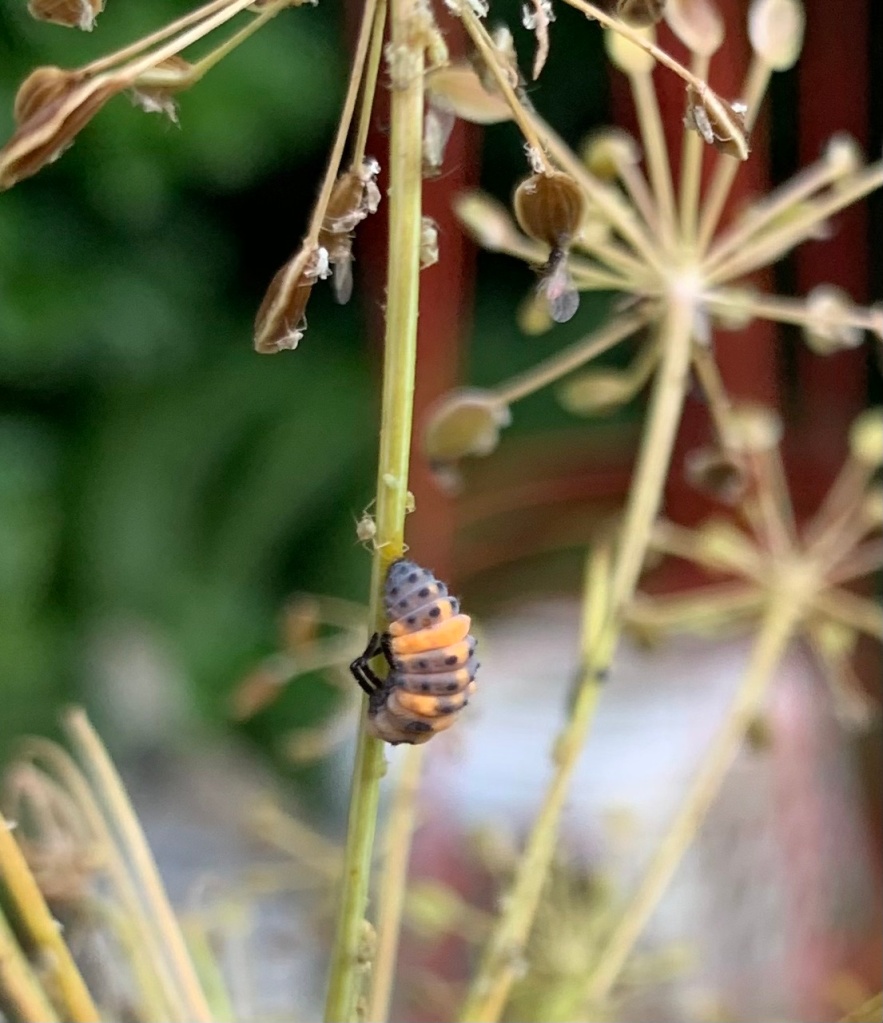
Aphids have found the old dill plant and it is covered in them! But there are also many ladybug larvae and even a ladybug or two.

The day I saw all this larvae, I counted 15 little guys crawling around. They are tiny, and hard to see in the mess of aphids, so there might be even more.

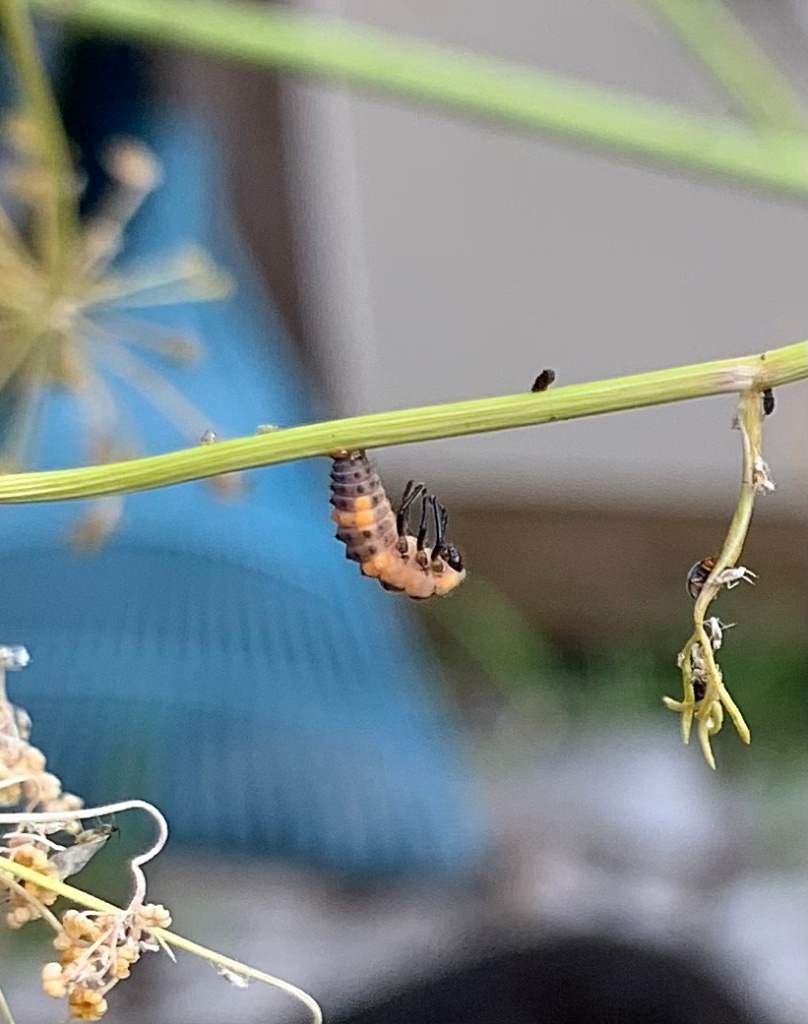
The next day I realized they were beginning to attach and hang – going into the pupa stage.

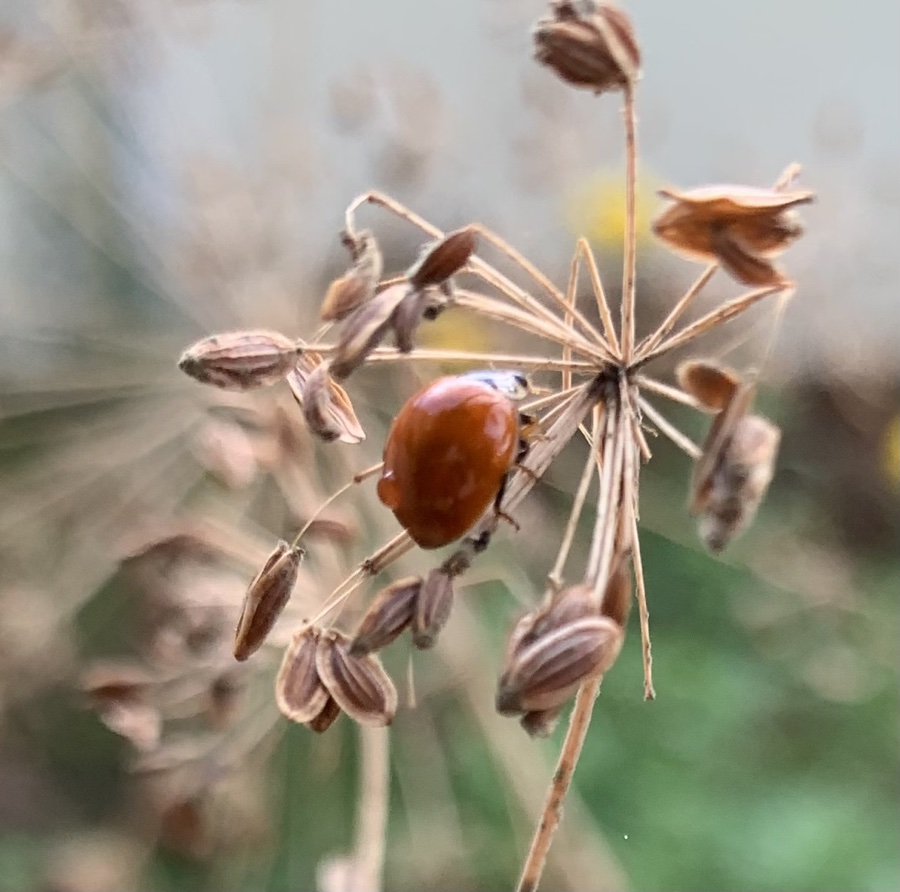
A few days later the new ladybugs were crawling all over the dried dill stalks.

Newly hatched ladybug exploring the dried dill seeds

Ladybugs on the Hon Tsai Flowering Broccoli

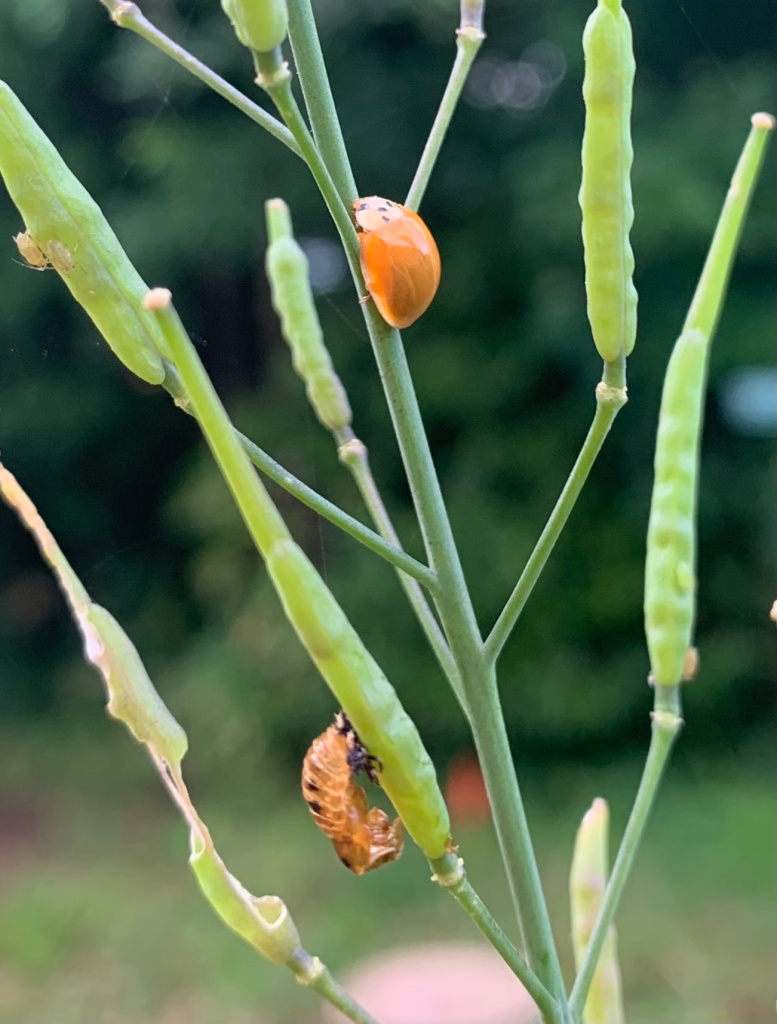
Just a few weeks before the dill ladybugs were noticed, I had watched ladybugs come out of their pupa stage on my Hon Tsai flowering broccoli plant. It was setting seeds, and had some aphids at the top. This was a random plant that grew late in the season.

Ladybugs feed on aphids, so they lay eggs where the “babies” aka larvae, will be able to get food.

Four ladybugs hatched from their “shells” which were attached to the seed stems of this plant. Three ladybugs were solid orange, and one had loads of black spots.

ladybug just hatched
Newly hatched ladybug!

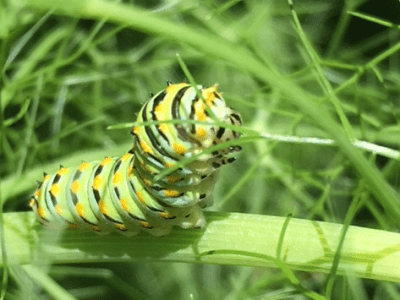
Dill is Feeding the Caterpillars

Even though the dill plants have mostly died and are drying up, I have found two caterpillars on one of them.

There is not much left for them to eat. I’m very surprised that the cardinals have not picked them off by now. I check on the beauties every day, but I have big doubts that they will reach pupa stage.

*Update: the next day one caterpillar was gone and the day after the other one was gone too. I suspect birds needed a meal.

This is a reminder to look closely at what is happening in the garden. Before you decide to rip out that old plant, consider what creatures might need it for shelter, eggs, or food.

Keep Reading

Organic Control of Grasshoppers in the Garden

I’m trying to control a grasshopper infestation in the garden.

grasshopper control
Grasshopper Pests

I have millions of grasshoppers in my garden.  They are chewing up the leaves on my parsley, sunflowers, oregano and pretty much everything.  Now they are eating the flower buds off the coreopsis which seems to be a favorite of theirs.

As I walk along the edge of my small garden area, they jump away from me in a wave of moving leaves.  There are a lot of them.

I am an organic gardener, so I’ve been searching for natural ways to get them to leave, or die.  The organic product (Semaspore Bait) that kills them, is best used when they are young, so I don’t know if mine are young enough.  Even a small container is quite expensive, and since I don’t know if it will work at this time, I’m hesitant.  I’ll look for it at Agway.

A post at Home Guides has given me some advice for keeping the pests off my leaves naturally.  I know that garlic spray works well for insect control, but I don’t want my herbs to taste like garlic.  I might use it on plant leaves I won’t be eating.

I am going to try the molasses in jars approach.  By mixing molasses with water, the sweet drink attracts grasshoppers.  I have lots of little canning jars which may work for this experiment.  The idea is to attract the grasshoppers to the liquid and then they drown.  I have to bury jars in the dirt and fill them halfway with the mixture.  I hope it doesn’t attract beneficial bugs as well.  I’ll keep an eye on it.

Since I have molasses, and lots of canning jars, I plan to get started on that right away.  I’ll let you know how it goes.  I might combine that with the garlic spray approach and between the two, I may have some success.  There is no way I can kill them all within the short span of summer.  I’d love to have more birds, toads, frogs and even snakes around to chow down on the little critters.  I’ve seen some toads, and even a frog.  But my cats tend to keep everything away.  I only feed hummingbirds in summer because of the bears in my area.  The smell of sunflower seeds can bring bears into the yard, and I’ve had them destroy my feeders when left out in summer.

grasshoppers eating rhubarb
Eating Rhubarb Leaves