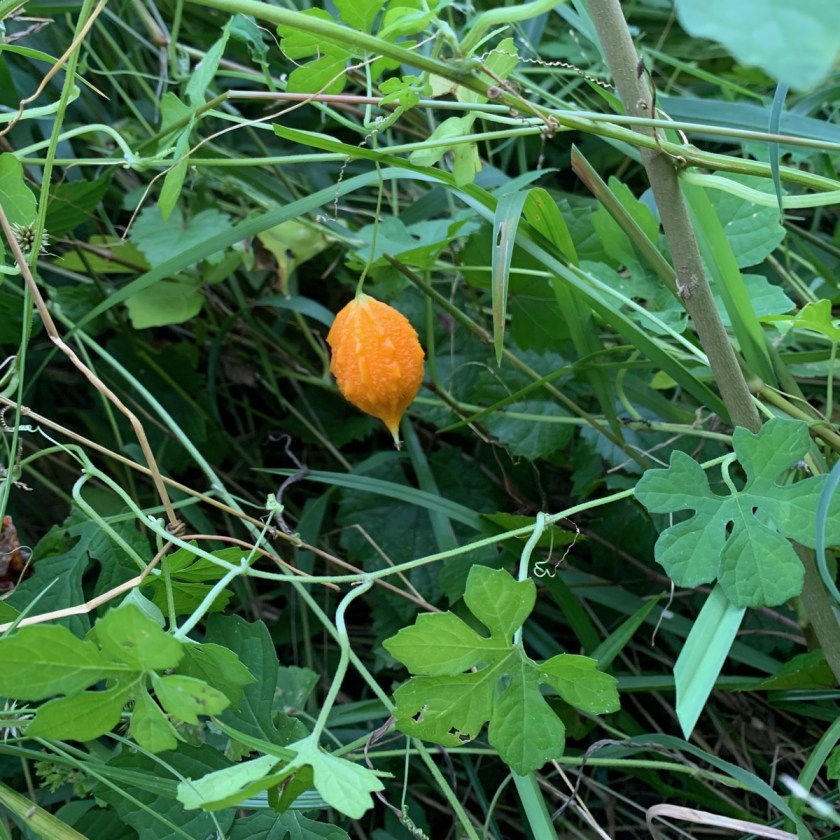
Found a new invasive plant called the Balsam pear.
Florida is full of invasive plant species and I’ve found yet another in my yard.
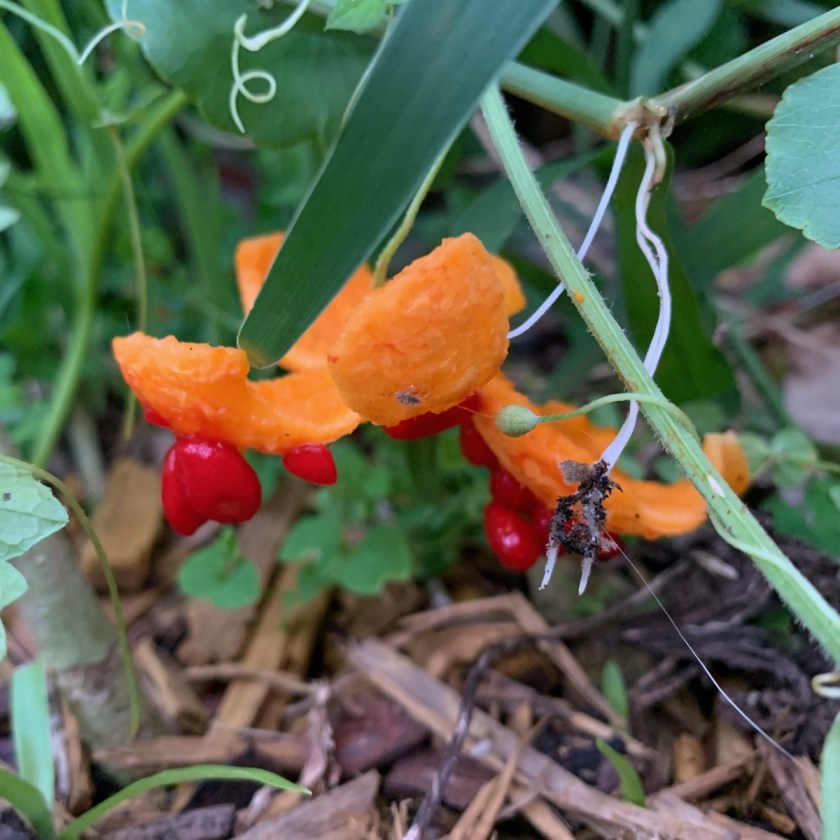
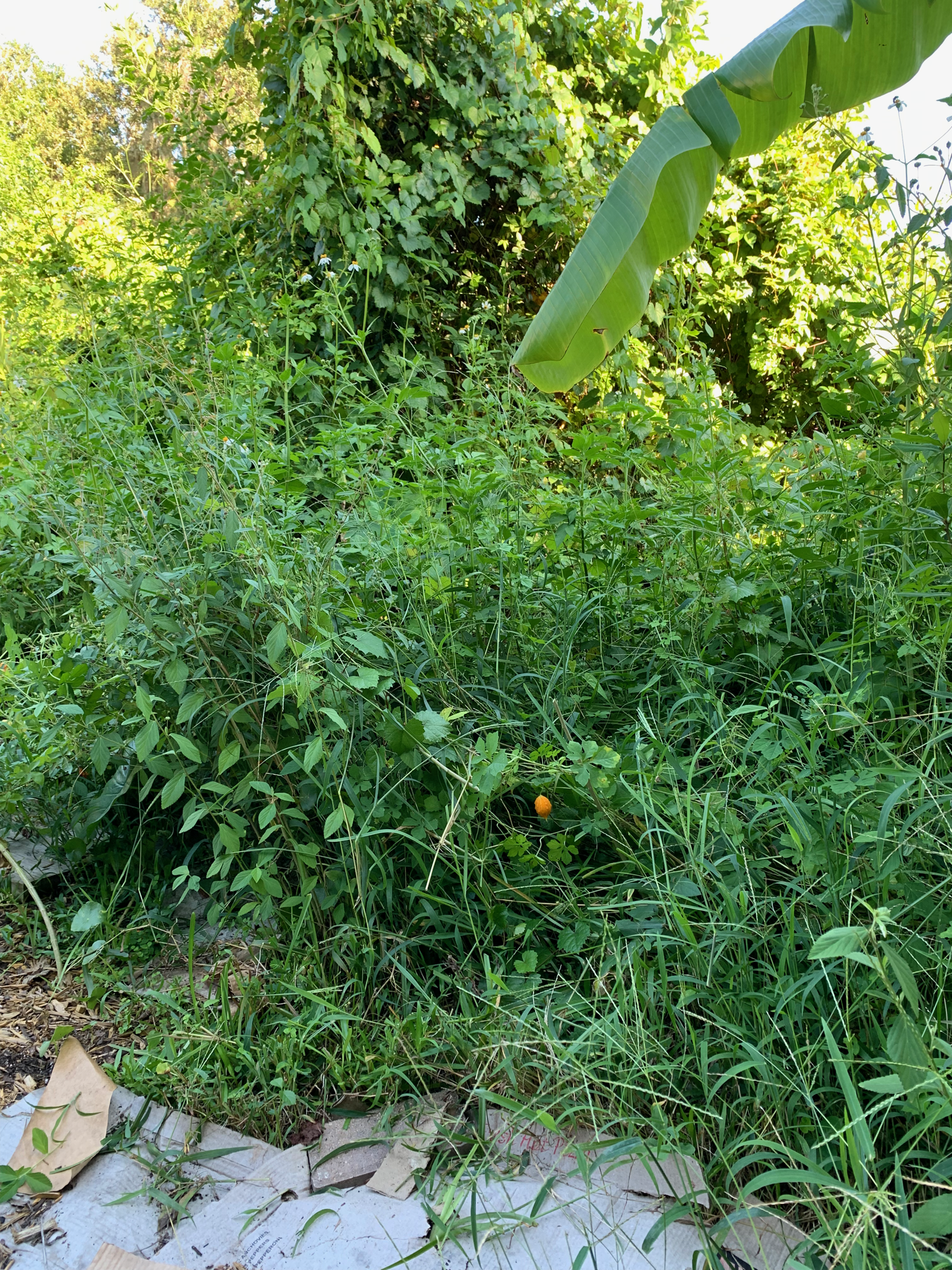
The green, leafy vine has tiny yellow flowers (which the bees love) and produces these globes that turn orange. After a couple of days the fruit opens and reveals big, red seeds.
Open to show red seeds
Balsam pear – invasive vine
After a long, very hot summer, the vines, grasses and and plants in the vacant lot next door, have taken over. I bought a machete to cut the growth back some, but what we need is a good cold spell to kill everything back.
It is September now and still very hot. I don’t do much in the yard, but soon I will have loads to do and that includes ripping up the many vines.
Read more about the Balsam pear at the UF/IFAS site.
I’ve given it a lot of thought and I really don’t have time to continue writing on this blog. Or, maybe I should say I’m cutting way back. My efforts need to go into starting a new online business. My knitting blog gets a lot of views and that is where I need to write.…
My Florida yard is very small but I have wild growth on two sides. A vacant lot behind the house is full of trees, brush, and vines and it’s where I set up my bird feeders for the Painted Buntings. I have identified some of the growth thanks to a good site I finally found.
Searching for photos online has proven difficult because often there is no image of the leaves. The whole tree or bush is not really helpful without some up close images.
I’m adding photos from my yard to this page to help me remember what is what. I have to know what to keep and what to destroy as I clean up.
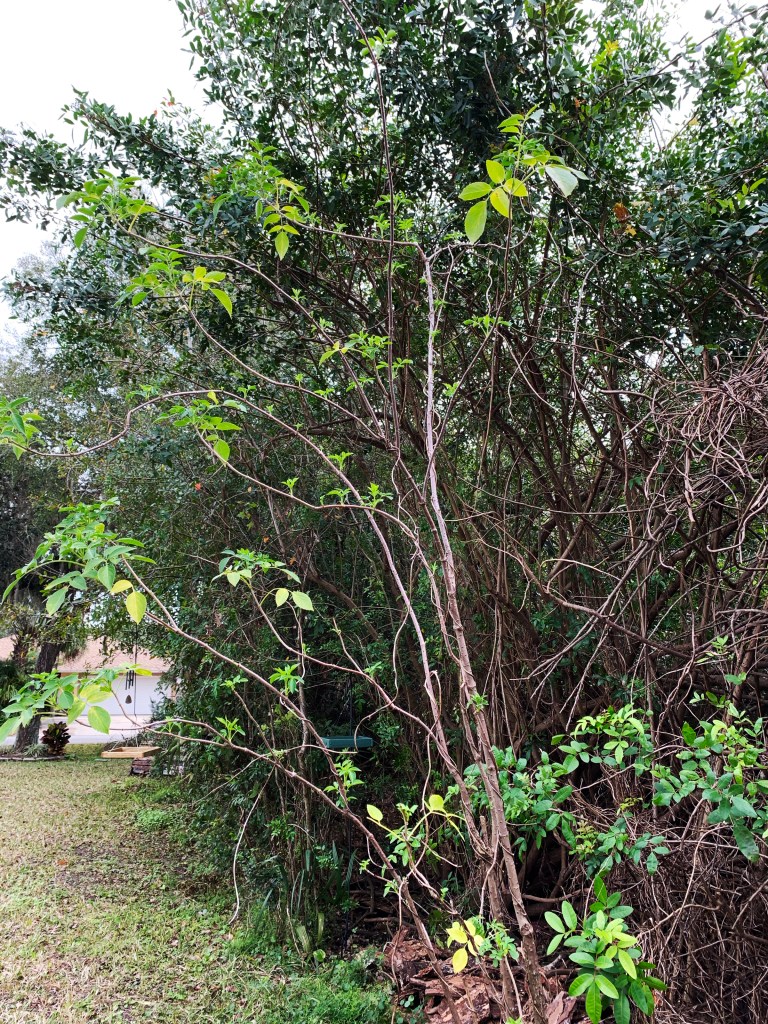
Unknown Tree or Shrub – Laurel Fig?
This plant was uncovered as I cleaned up for a small garden space in January. The leaves are widely spaced and are dark green and oval in shape. The bark is very light gray. Possibly the Laurel Fig and if so, it is an invasive tree. I was hoping this was a nice bush to save, but it seems that I may have to cut it out.
No name for this yet.
Read, and see amazing photos, on this interesting page on Strangler figs and how the roots cause havoc.
The Brazilian Pepper Tree is an Invasive Species – Non Native
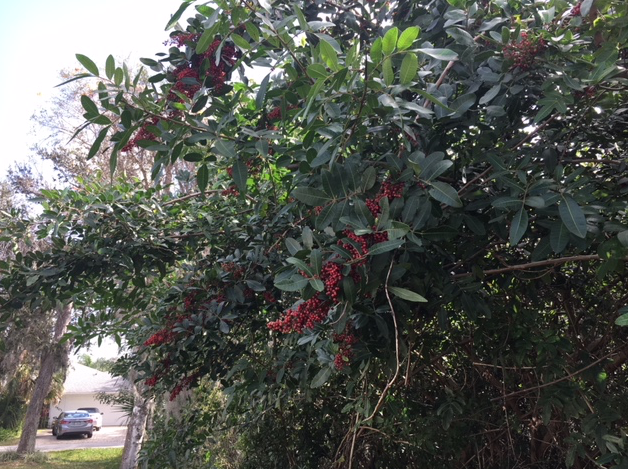
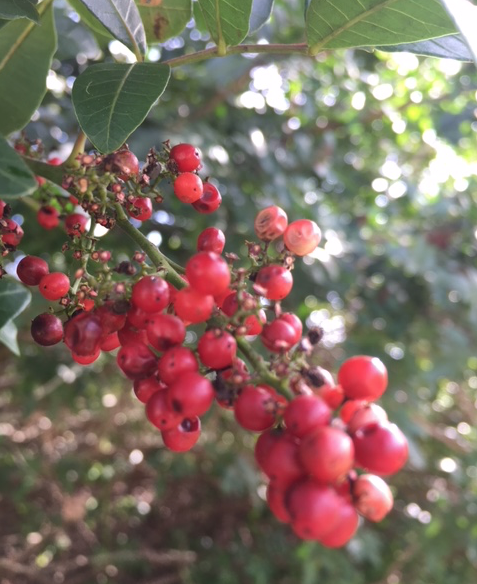
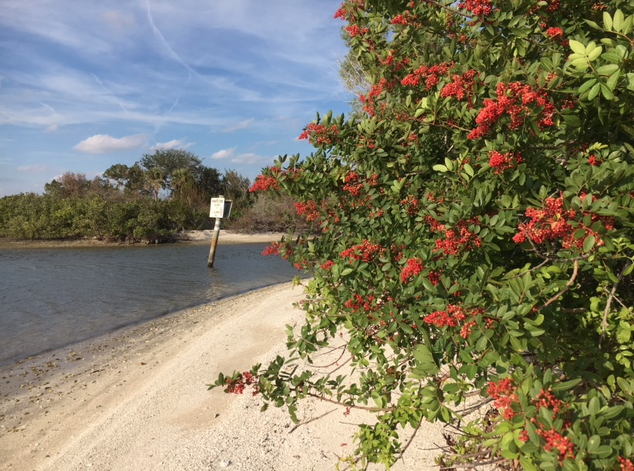
I have a group of Brazilian Pepper trees just over my lot line. During the winter months loads of red berries appear which bring robins and other birds to feed.
It is an attractive tree, but is an invasive species and not a Florida native. In fact, the trees should be destroyed when possible according to many articles I have read. This clump of trees is huge, with a large root system. It is also not on land I own but the branches arch over my yard.
Brazilian Pepper
Red berries
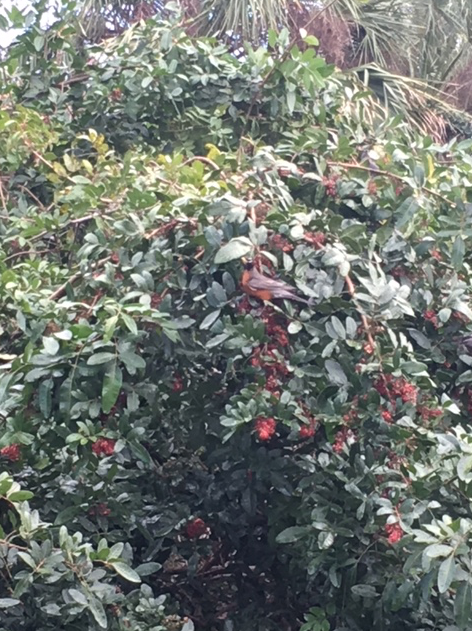
Robins eat the berries
This is an invasive species
A mass of roots of the Brazilian Pepper
Florida Maple Trees
The Florida maple trees lose their leaves during the cooler months. This photo was taken in February. Soon new leaves will form. I saved this little tree which is growing on the edge of my property when it was covered in potato vines (see below) and unable to grow. Now this maple tree is thriving and has tripled in size.
The Maple tree loses leaves in winter
The Elderberry Shrub – Florida Native
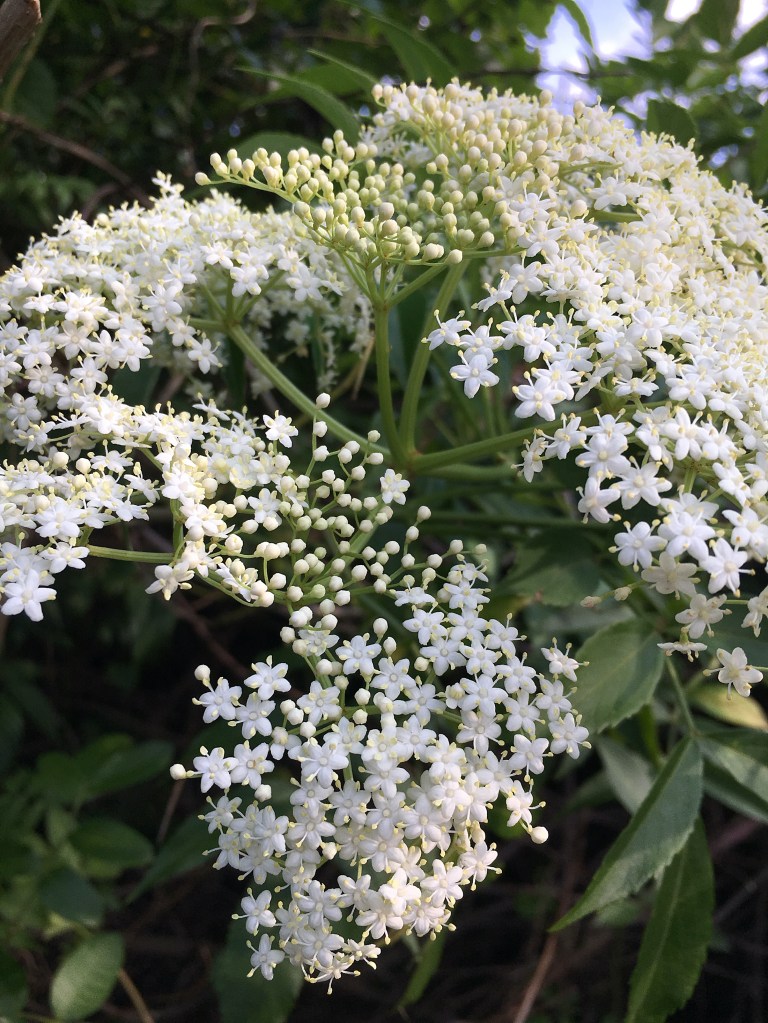
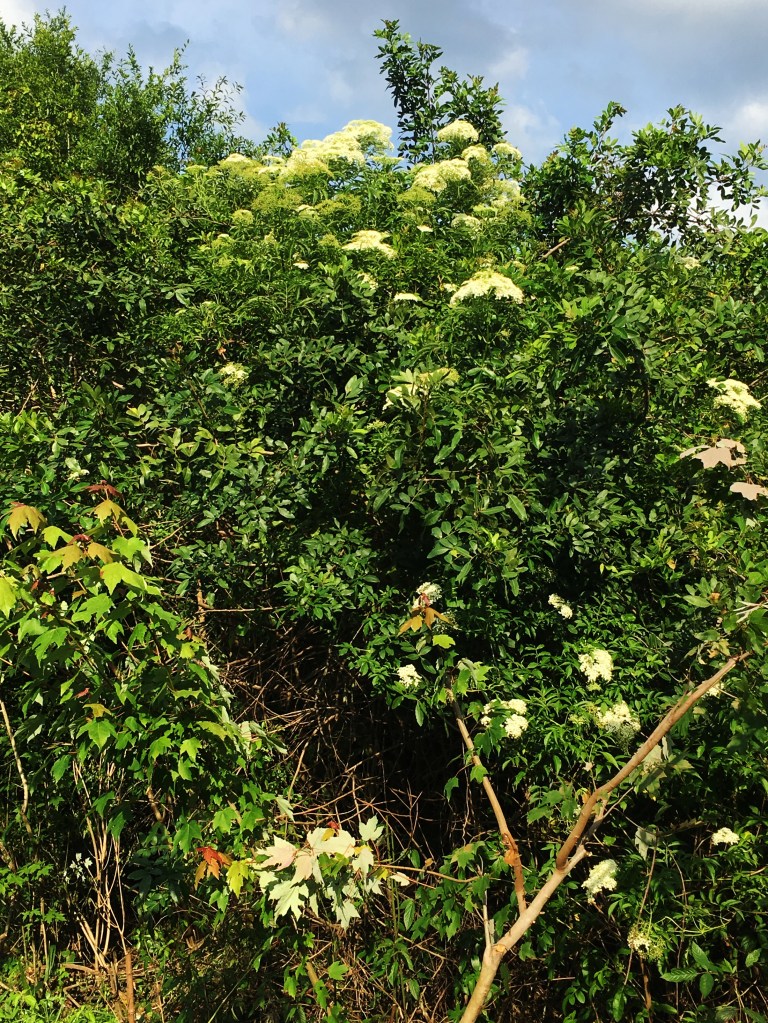
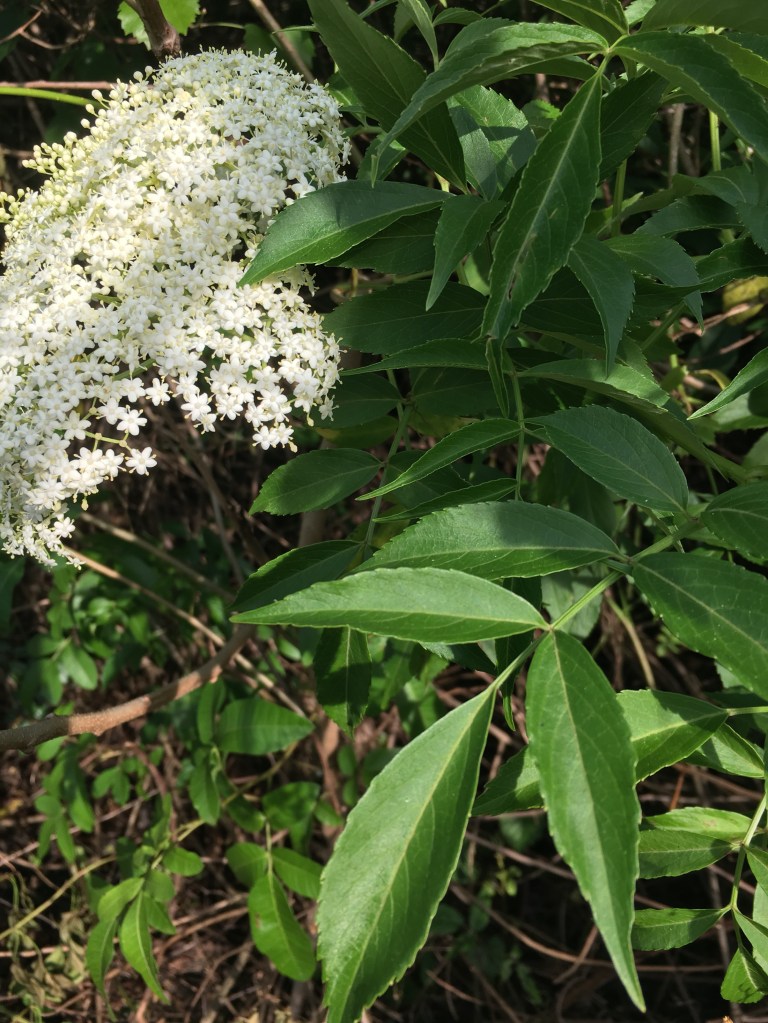
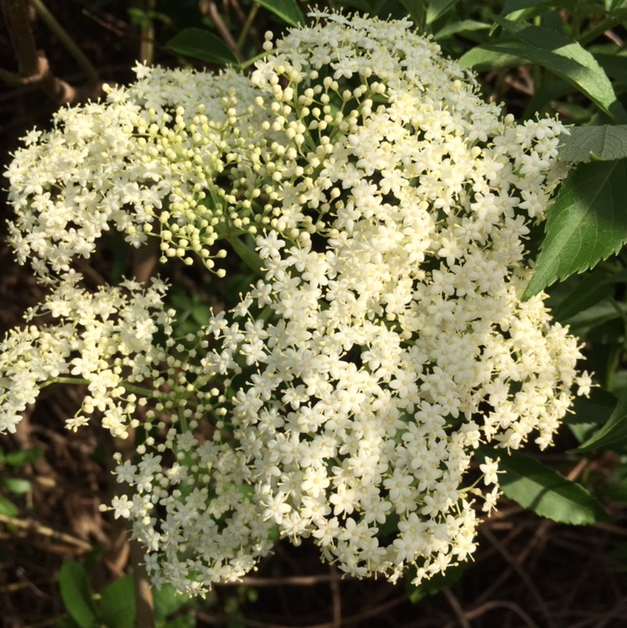
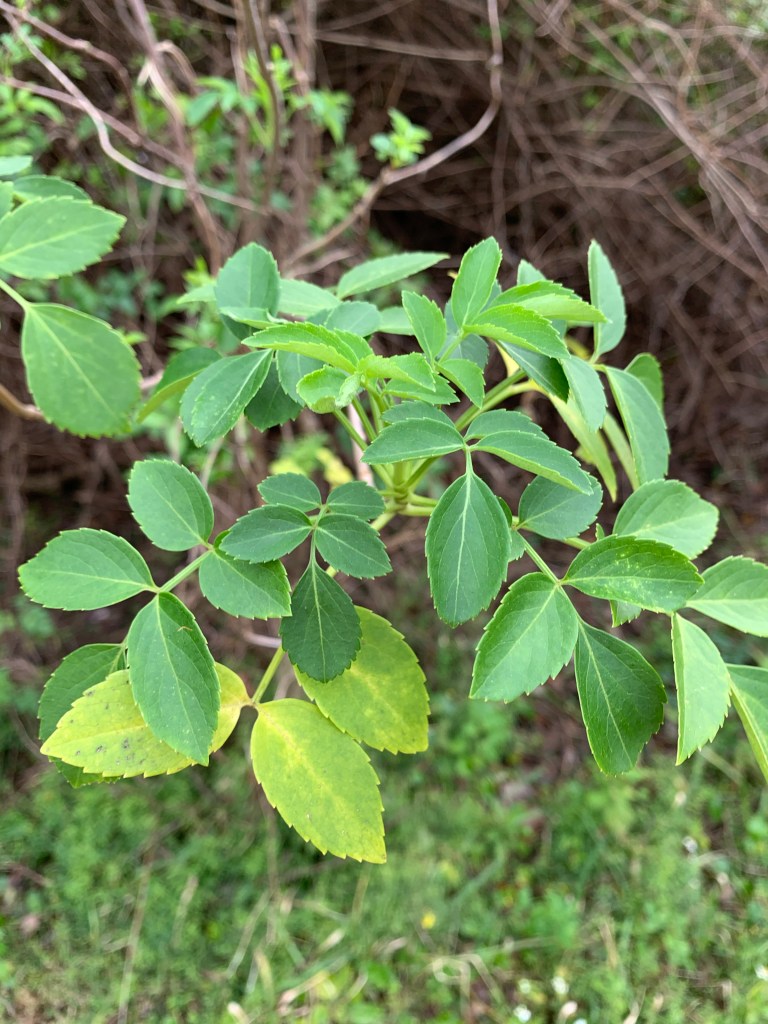
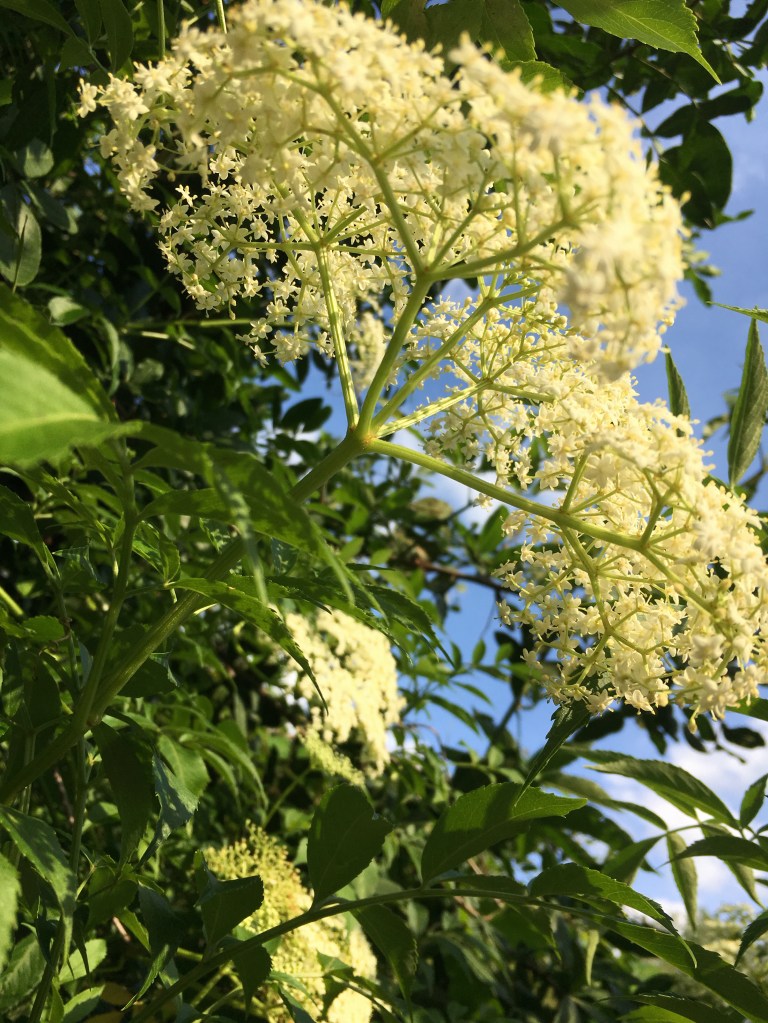
I’ve included a new volunteer Elderberry with a photo of the larger Elderberry in the woods. The tree has pretty white clumps of flowers and dark berries during the warmer months. The berries are toxic to humans when raw, but edible when cooked. Many animals and birds can eat the berries, but I think I will pass!
Elderberry flowers
Elderberry leaves and flower head
White Elderberry flowers
The Elderberry has berries and white flowers
A young Elderberry tree growing at the edge of my yard
Elderberry flowers
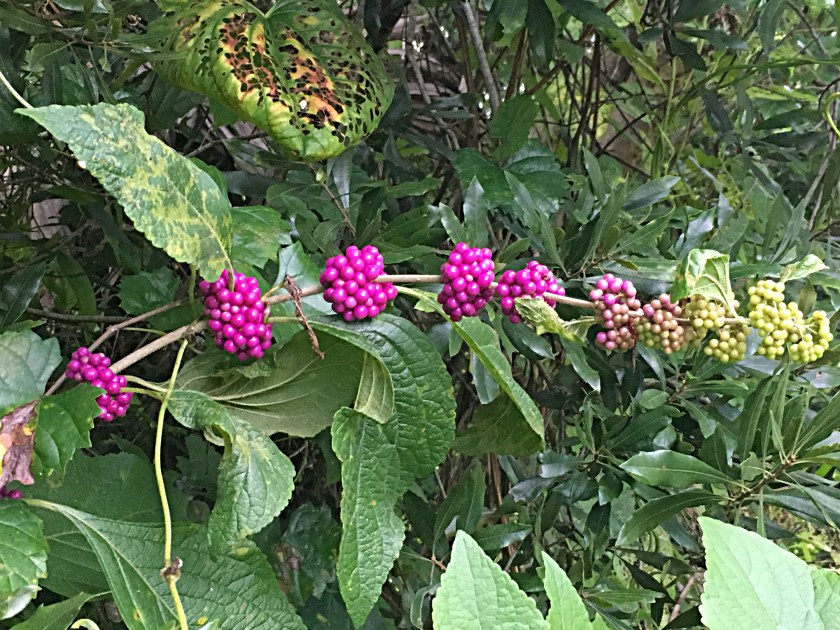
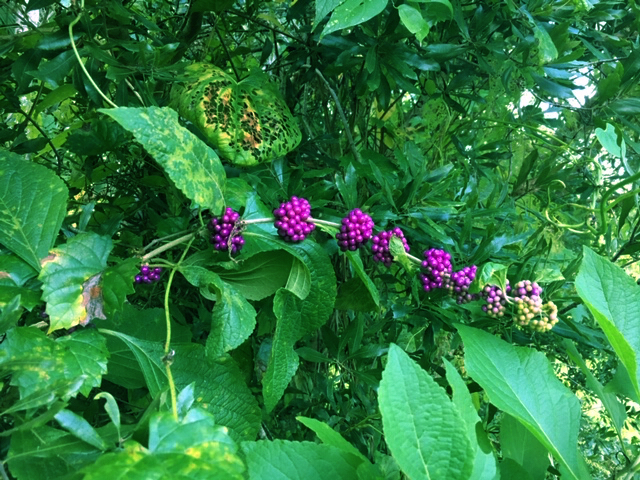
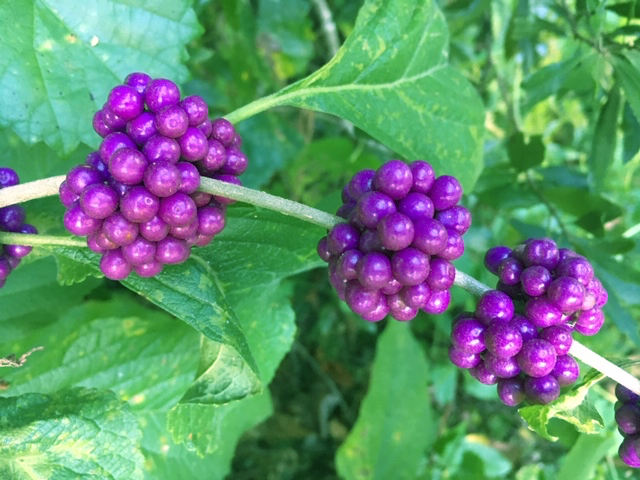
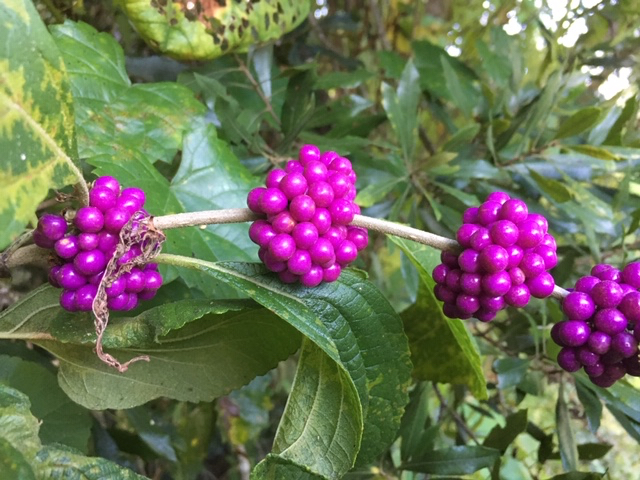
The Beautyberry – Florida Native
When I came across this stem of berry “bubbles” I took some photos not knowing what it was. The Beautyberry bush is a Florida native plant and this one is located in my backyard.
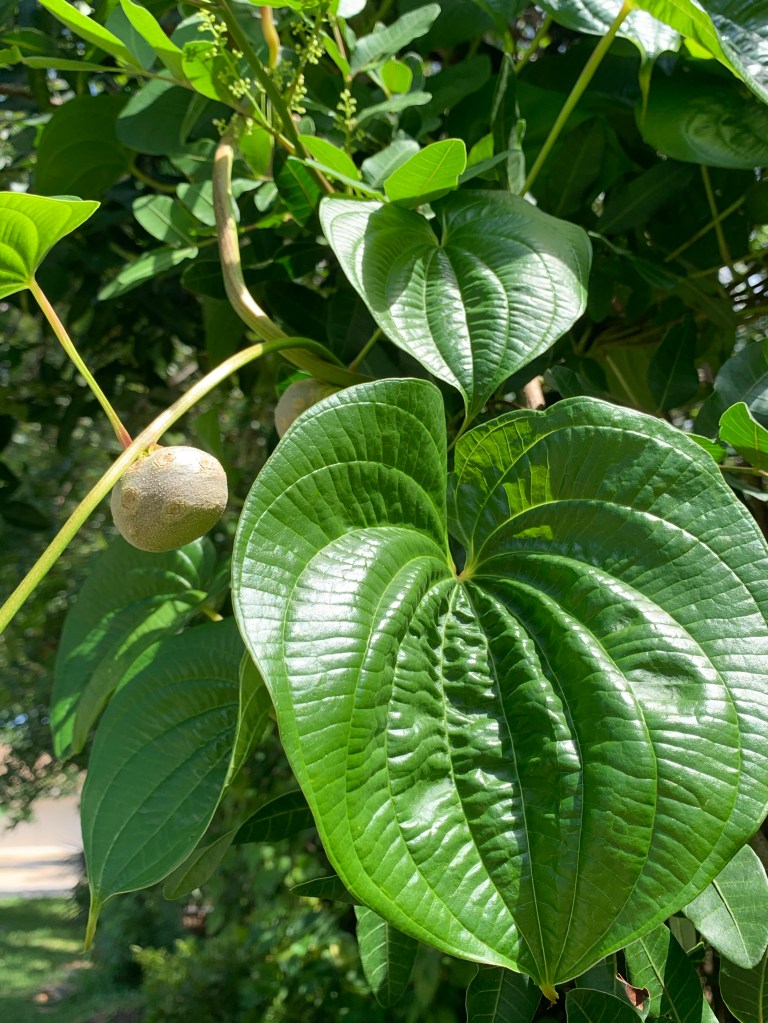
There are many obnoxious and non-native vines in Florida. Most were purposely brought here for some reason and then they grew out of control. The potato vine is one. See my photos below and more photos at the UF site.
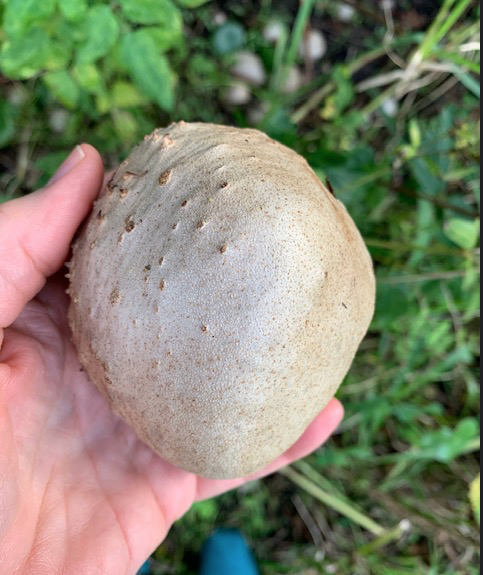
Because of the long months of agreeable weather for growing, vines can easily take over a landscape. The potato vine creates loads of potato-looking things of all sizes that become more vines. Native trees and shrubs can become smothered.
Leaves of the potato vine
Air potato, large size
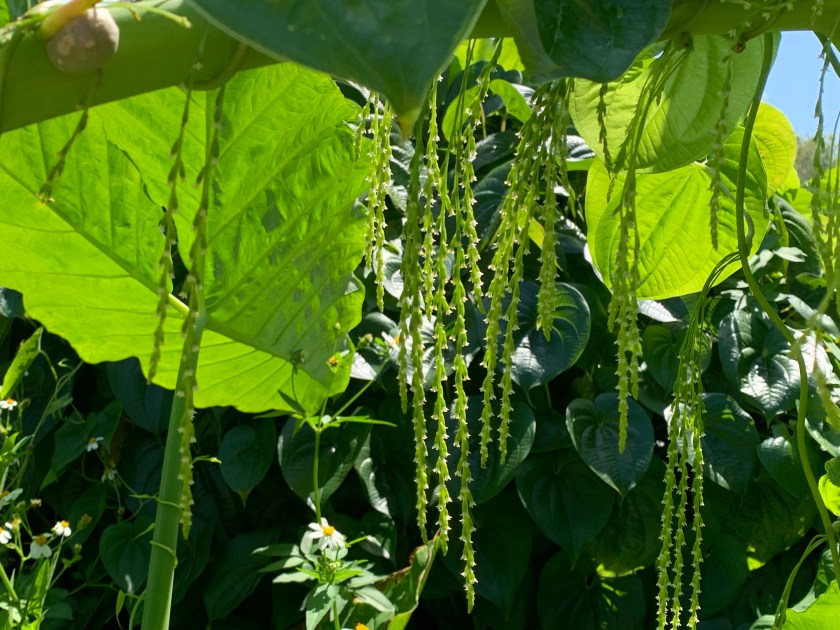
Hanging flowers on potato vines
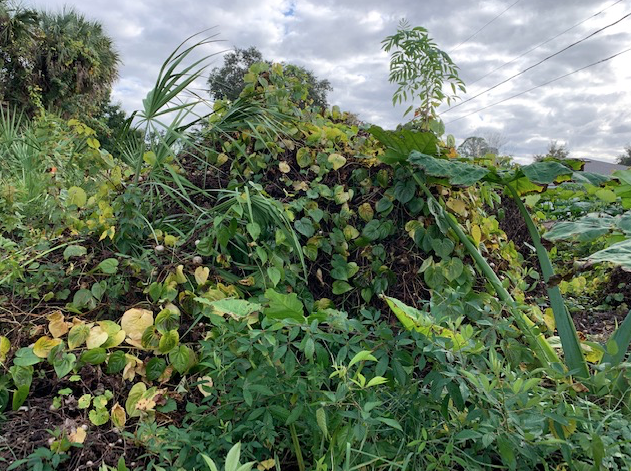
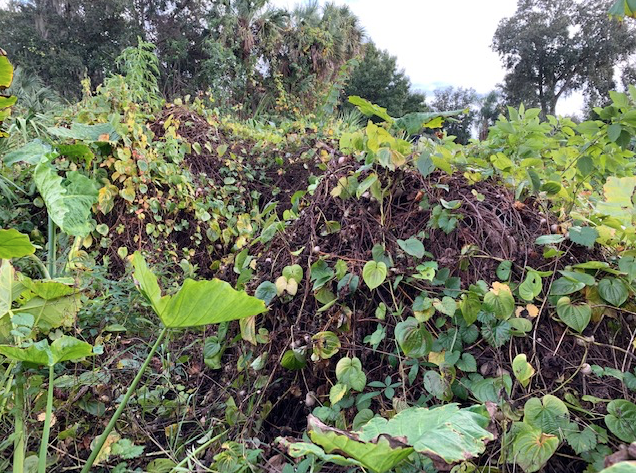
The empty lot next to my yard has many potato vines crawling all over the vegetation
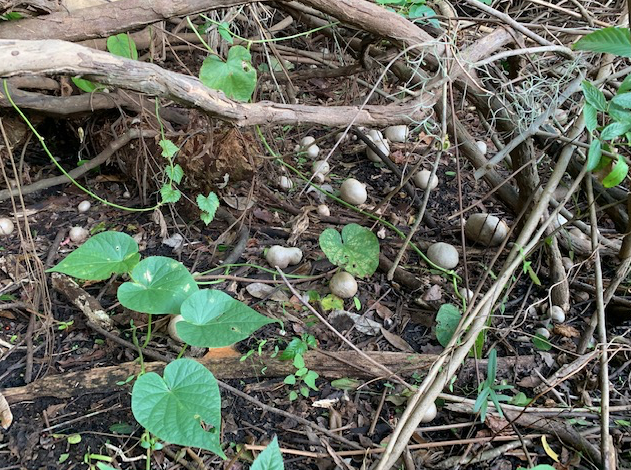
Potatoes at the edge of my yard
Potatoes and vine under roots of the Brazilian pepper tree
Vines growing over vegetation
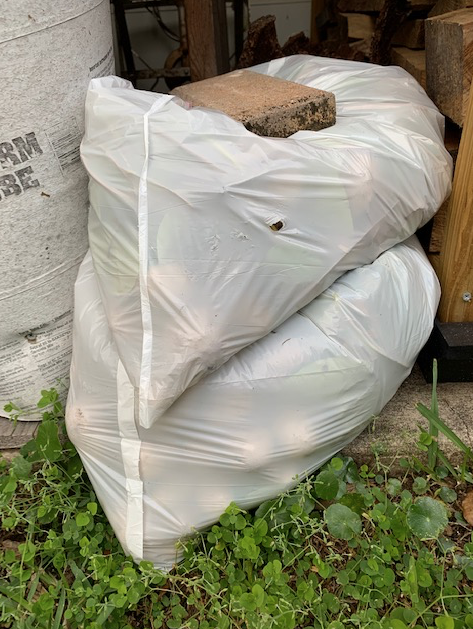
I filled these bags with potatoes to destroy them
Thorny vine – unknown
Unknown vine with thorns
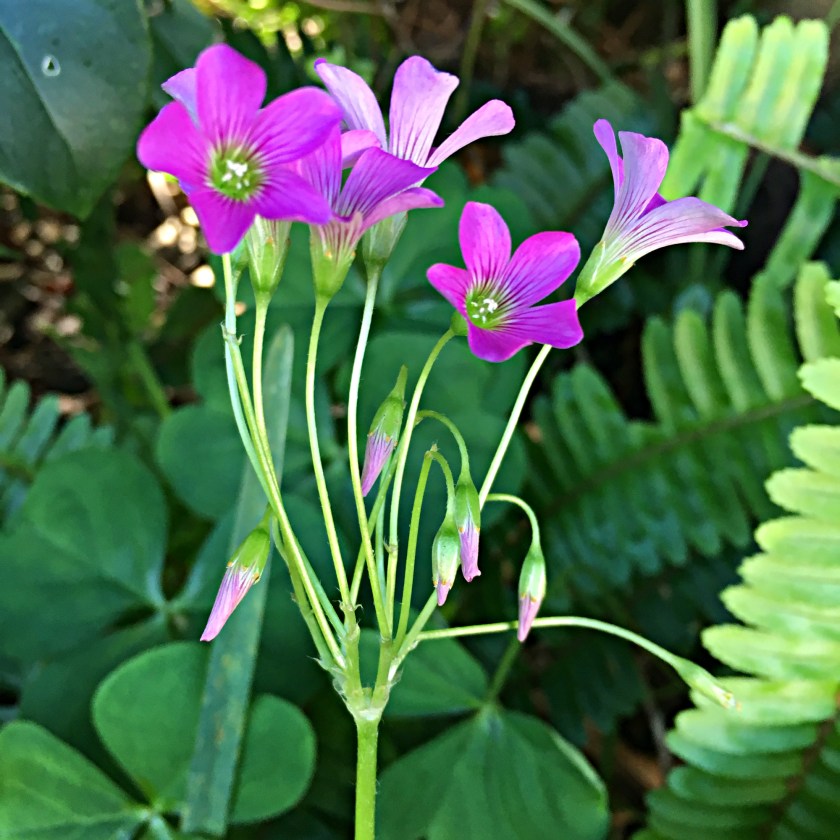
Pink Wood Sorrel – Clover
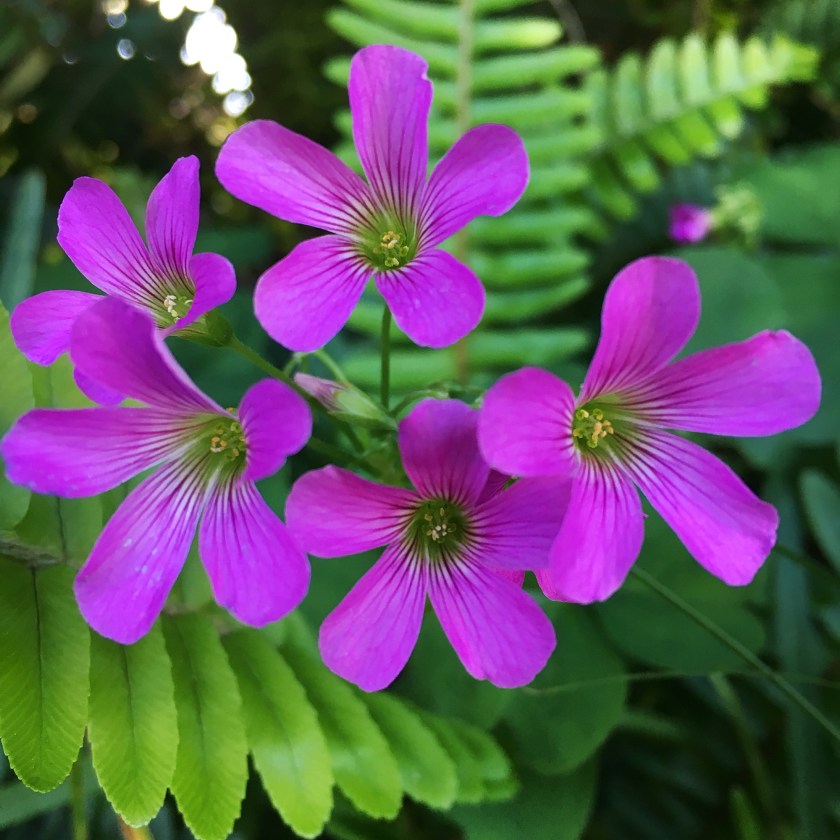
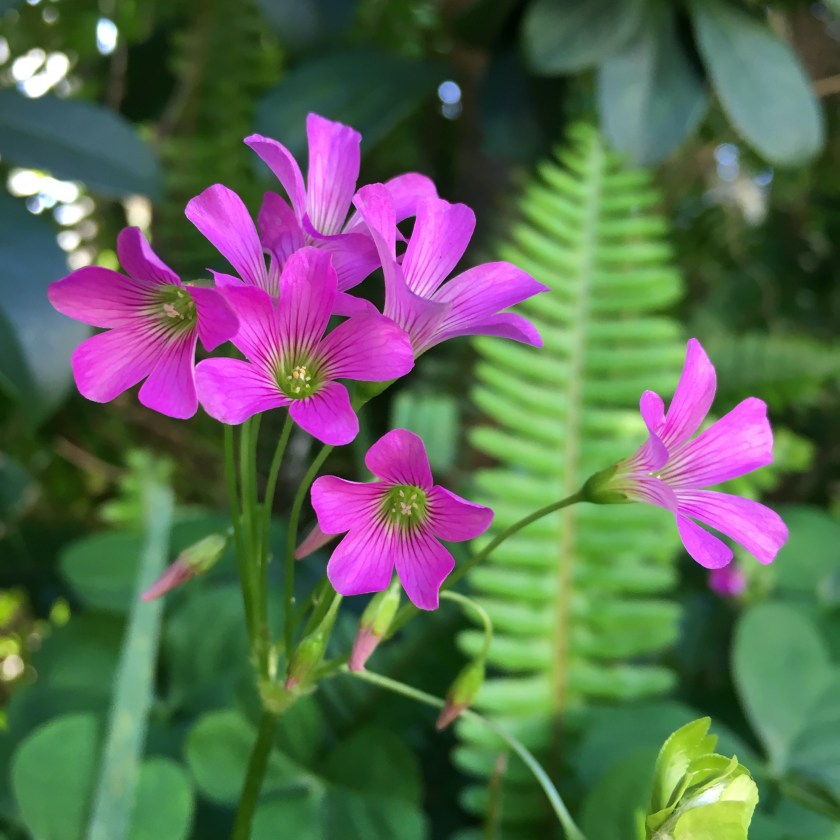
I call this pink wood sorrel plant a “clover” because of the leaves. I don’t know if it is a relative to clover, but it blooms with the prettiest little dark pink-purple flowers. I’ve had it pop up in my front garden bed all on it’s own, but this plant below I photographed along the shrub line out back.
It does die down and disappear, but comes back.
Clover flowers
Pink wood sorrel
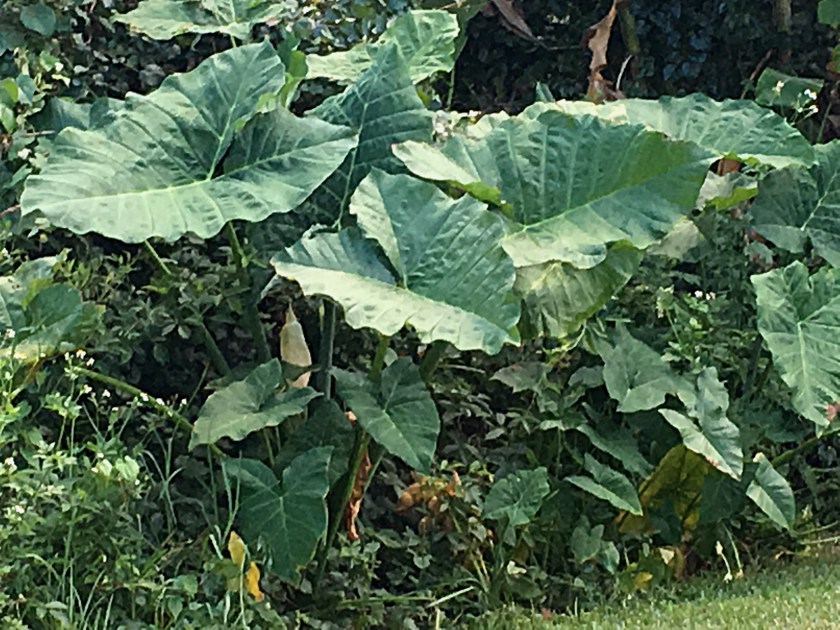
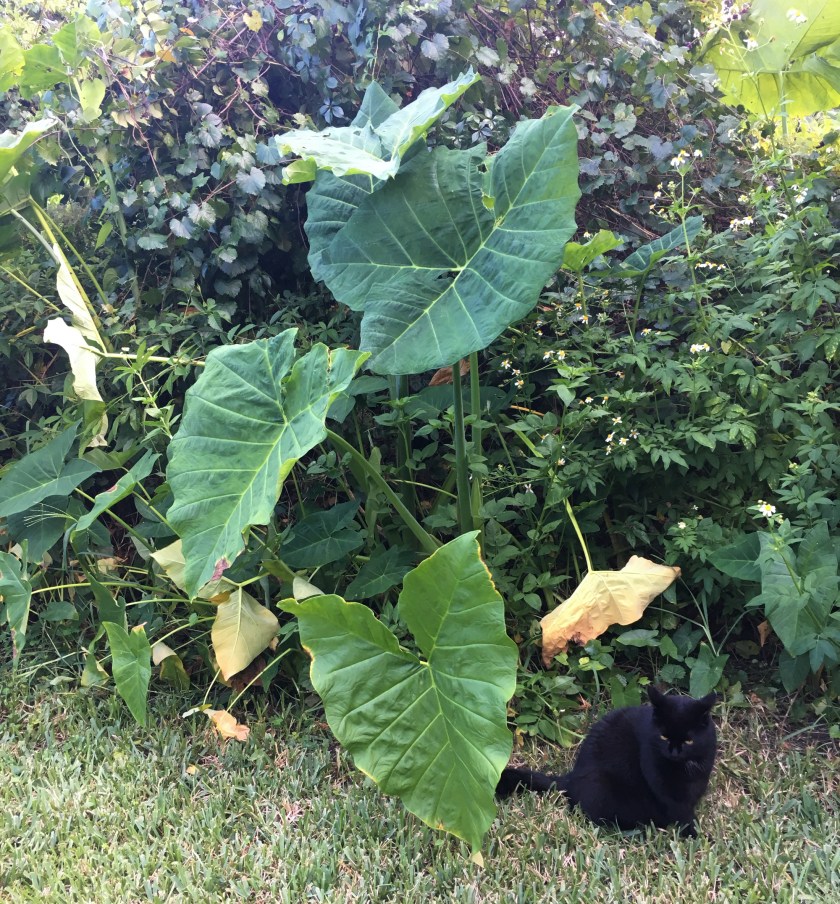
Elephant Ear – Non-native / considered invasive
I was surprised to see that the Elephant Ear plant is not a Florida native. I always associated it with this tropical climate, but it came from South America. An interesting note: The tubers of this plant can be eaten.
Elephant Ear
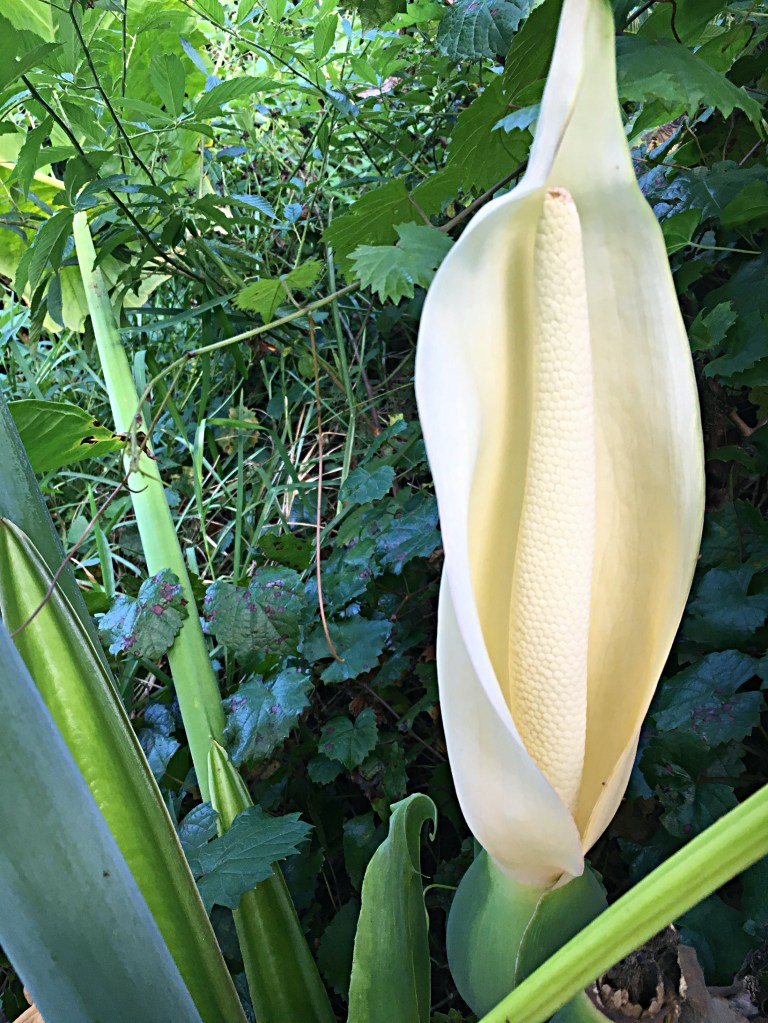
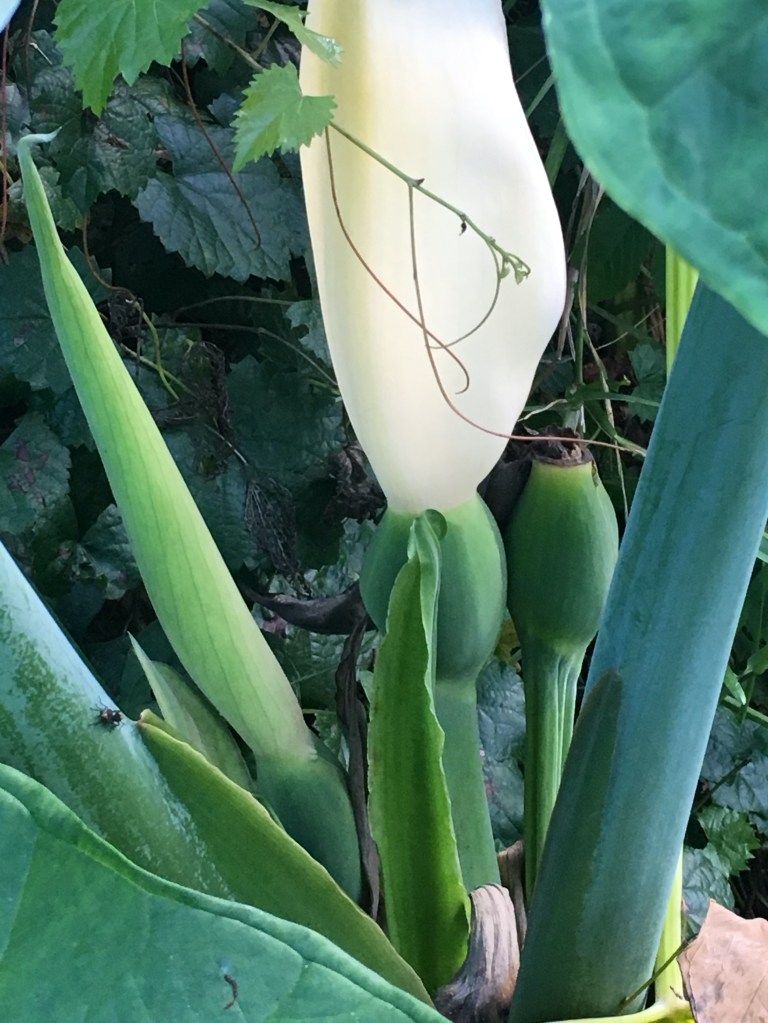
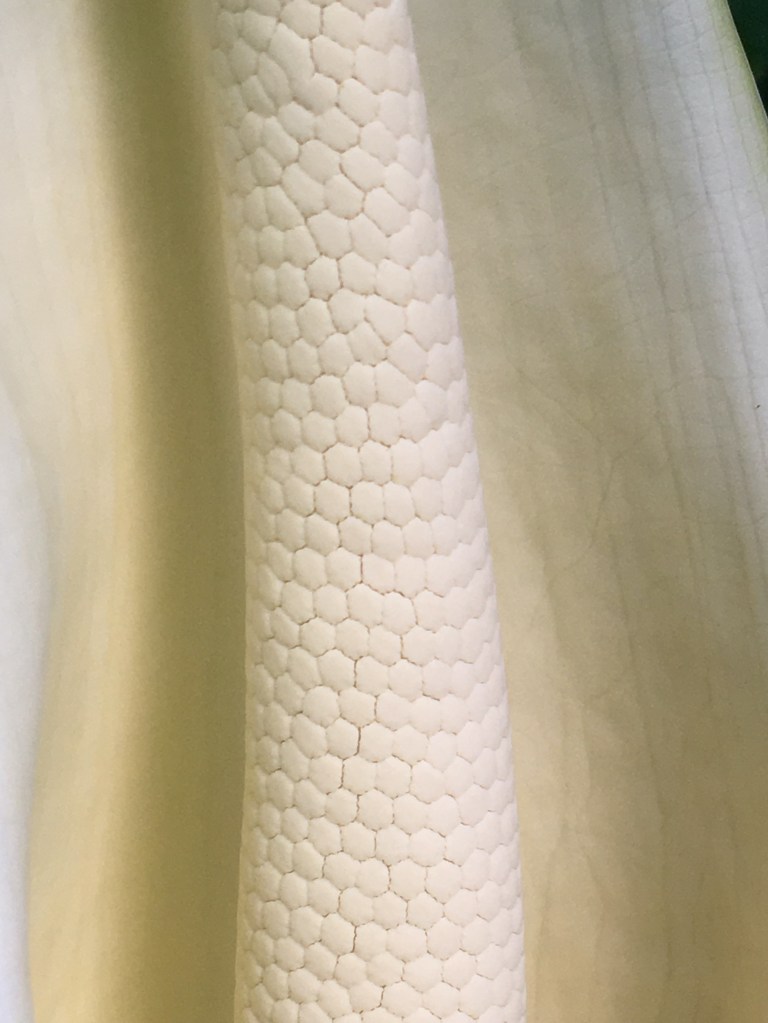
The elephant ear has quite a unique flower
Flower closeup
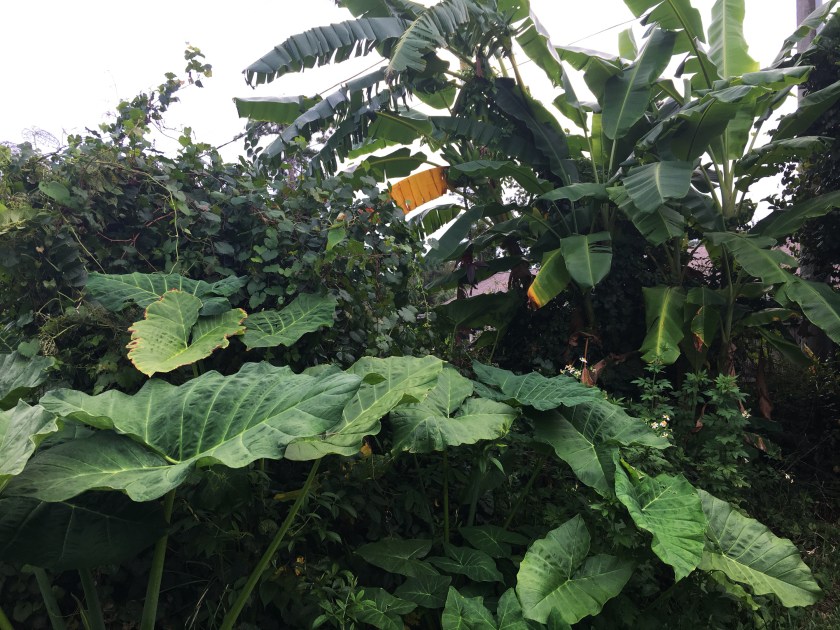
Florida jungle growth
Muscadine Grape Vine – Native (no photo)
The Muscadine Grape vine is not unwanted like the other vines mentioned here. It is a Florida native and grows all over the state.
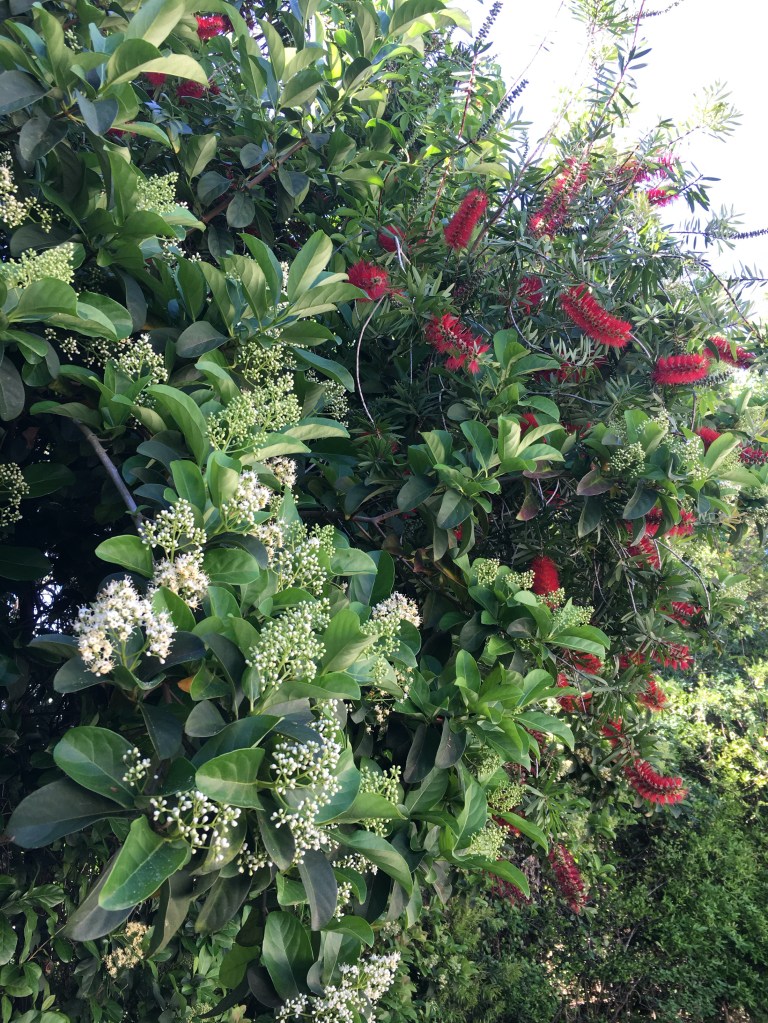
Bottlebrush
Along the back of my lot an overgrown shrub border contains a couple of bottlebrush trees.
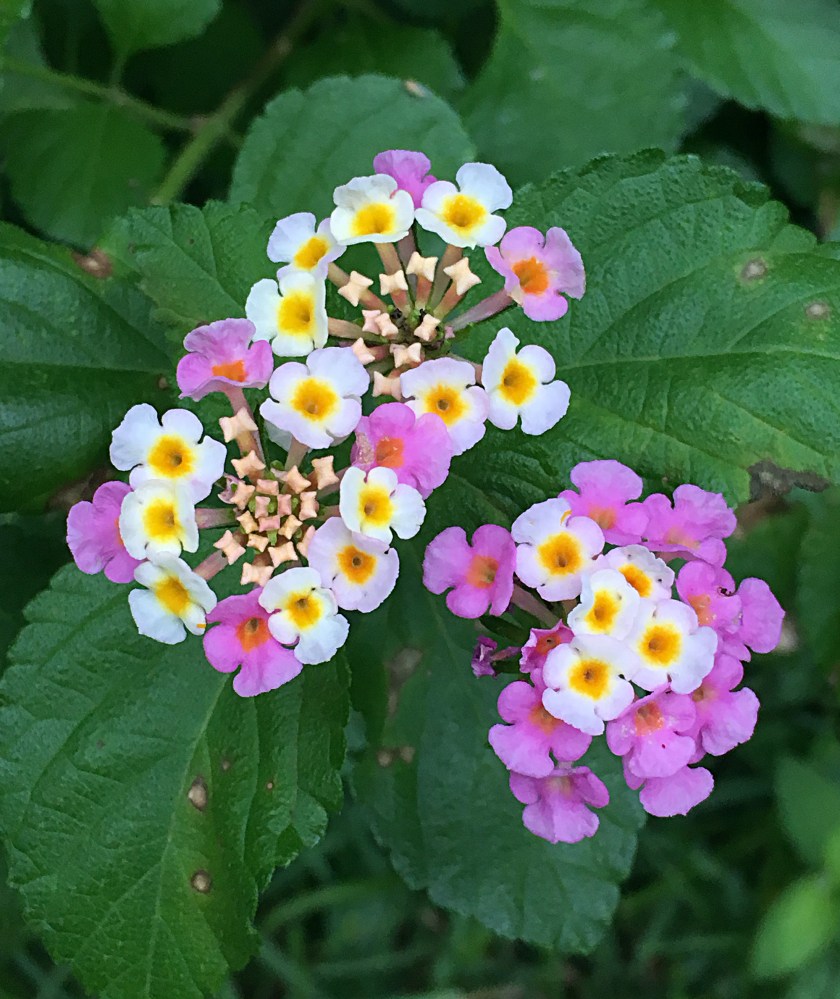
Lantana?
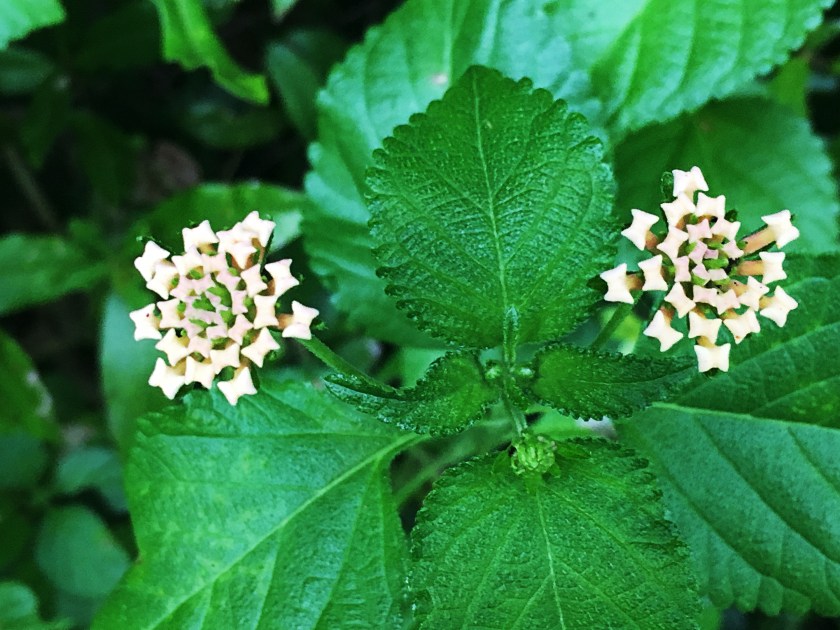
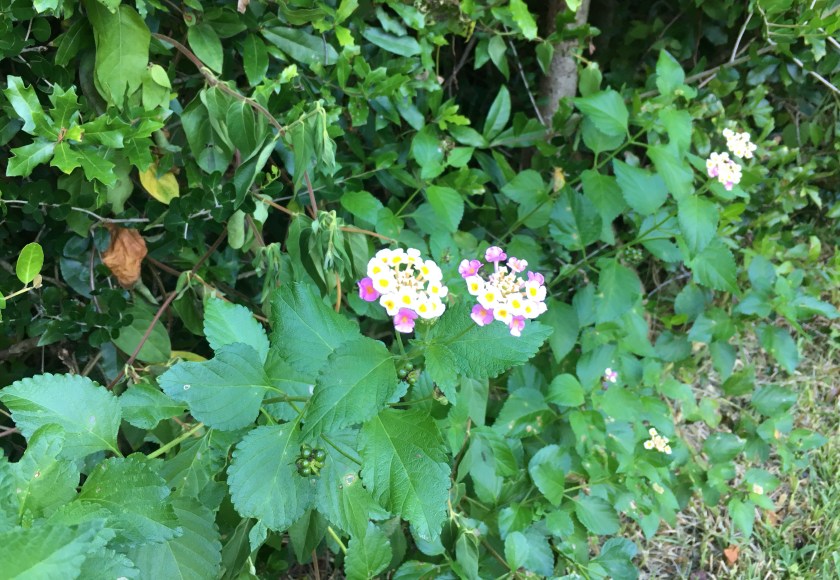
I photographed these little flowers without knowing what they were. Possibly they are Lantana, which is also an invasive plant here in Florida. It is listed as a non-native plant at the UF site.
Lantana
Lantana buds
Unknown Flowering Vine – Probably the Invasive Japanese Honeysuckle
I took this photo of what I think was a vine with white flowers resembling the honeysuckle. I’m not sure if it is the invasive Japanese Honeysuckle or not. I will look for it again in the side yard when plants begin to flower. Unless….
I have been pulling out long vines with leaves similar to this vine. The description is that it grows over everything blocking out light and killing smaller plants, and the vines are definitely long enough to do that. Some of the vines I pulled have black berries, which can be seen in a photo at the link above. I’ve been dealing with the vines while cleaning up a space for my new backyard garden.
So not be tempted to plant this as it is a real pain to remove. It is NOT a Florida native, so choose a vine that is.
Japanese Honeysuckle?
In Closing
Once I began to add photos and identify the growth around my yard, I have found that many of them are invasive and unwanted. Trees, shrubs and vines are labeled “invasive” when they block out native growth by taking over spots where native things should grow.
When shopping for yard plantings look for “native” plants. I will have to remove as best I can the plants that should not be allowed to grow. The new garden area I am creating already has a small Brazilian Pepper tree which is small enough to cut down.
Once I have cleaned out the vines, I’ll look for native plants to add to the landscape.
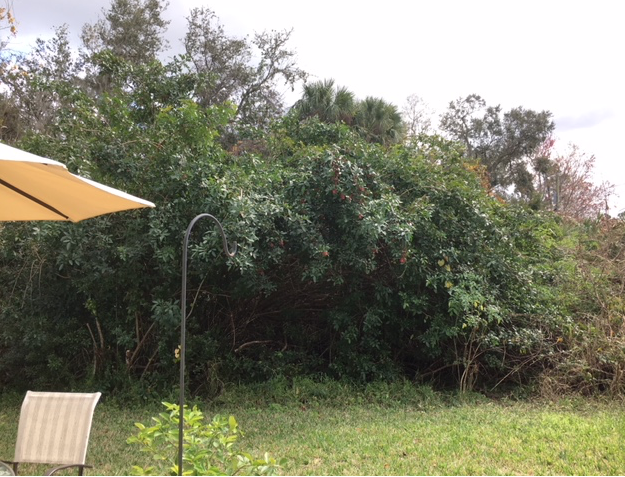
At the edge of my property a stand of trees, with winding branches and dark green leaves makes the perfect hideout for wildlife. I did think they were Dahoon Holly trees, but I was mistaken. They are invasive Brazilian pepper trees and have become a problem for Floridians.
Trees with red berries
This thick area of trees and shrubs is where the raccoons come from each night. It’s also where the zillions of stray cats walk as they pass through the yard.
I don’t know if the birds knew I wanted photos today, but they showed up in droves. Unfortunately I am not such a good wildlife photographer! I saw a bunch of grosbeaks gathered on a berry laden branch, and got this photo of a robin (center of picture) – not a good photo, I know. In fact, the many birds have nearly eaten all the berries!
Even as the berries give the birds food, it is also what helps to spread the growth of these trees. The birds spread the seeds.
So how to tell the difference between trees that have clumps of red berries? The Brazilian Pepper has 9 leaves and the leaves are dark green. The Dahoon Holly’s leaves are more true green and are fewer. At least, from photos I’ve seen, that looks like the difference. Also the pepper has that tangled mass of trunks, whereas the holly grows more like a regular tree.
Robin
The trunk can actually be split into many trunks, like in my photo below.
Mass of tree trunks
Red berries
Brazilian Pepper
The thick growth prevents other plants from growing.












 Hydrangeas Blue