Marigolds in the Florida Vegetable Garden

Marigolds are beautiful and easy flowers to grow in a Florida yard and vegetable garden. They may also have some great benefits.

While many flowers I grew in my northern garden can’t be grown here in Florida, the marigold certainly can. The scent of marigolds will repel mosquitoes, which are a bother all the time in my yard. I’m not sure if they work on no-see-ums, but maybe! As my garden space grows, so will my number of marigold plants. They are colorful and so easy to grow.
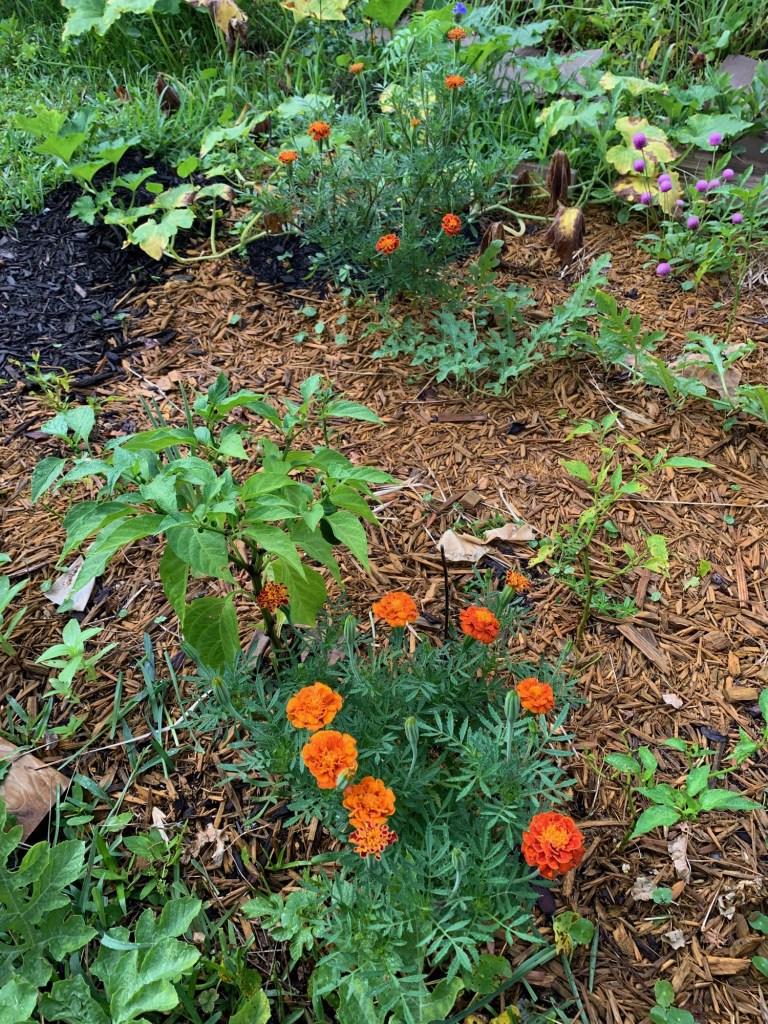
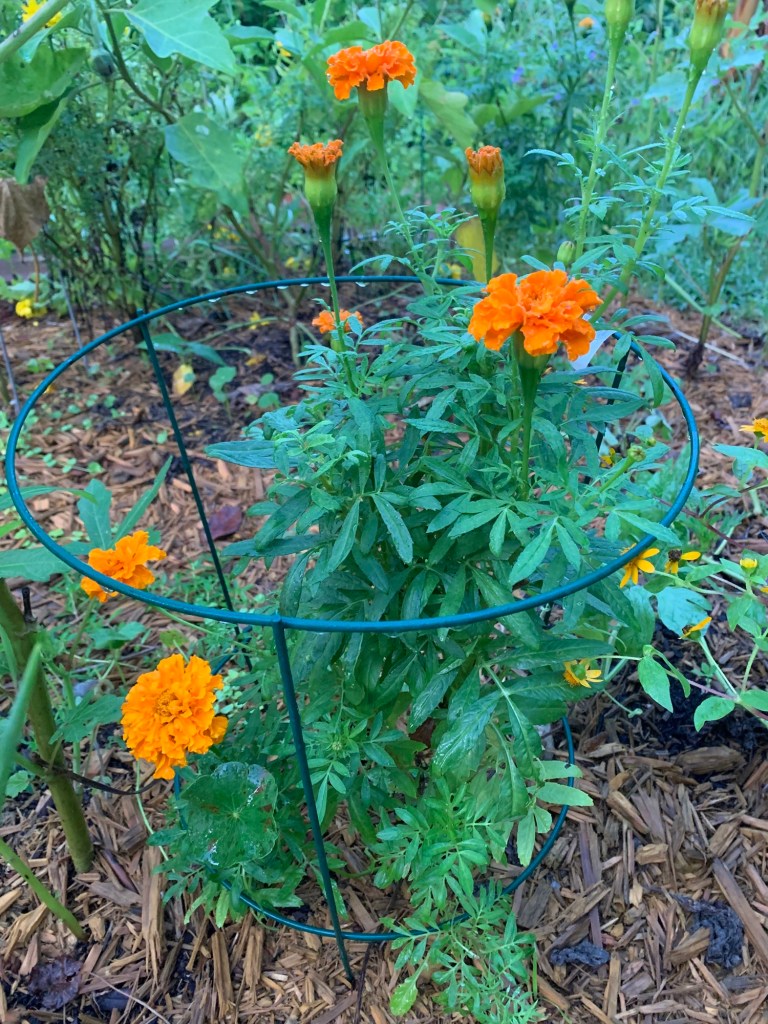
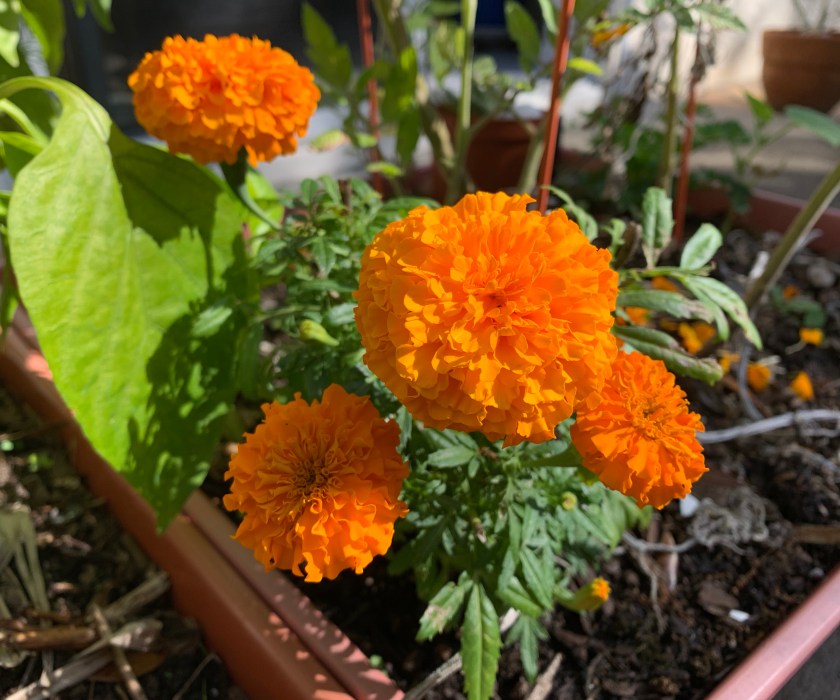
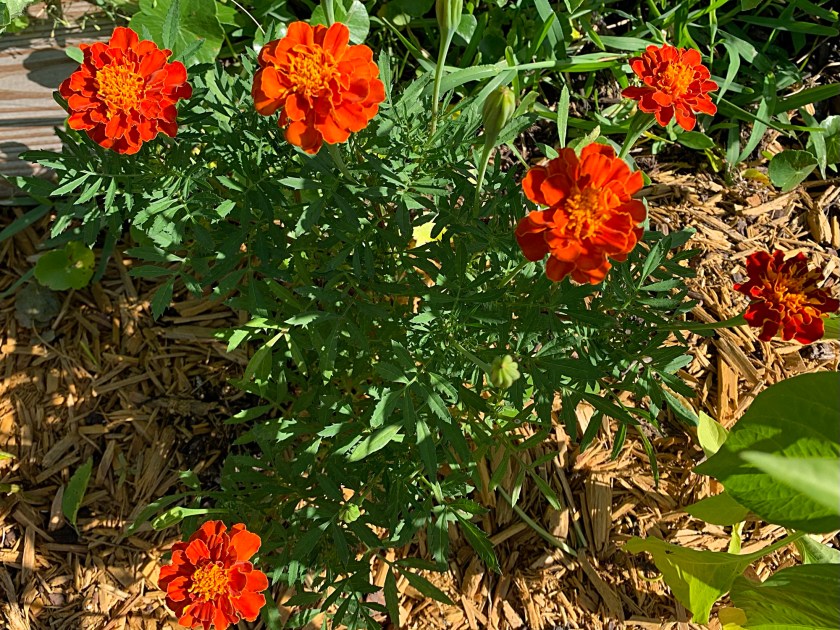
orange marigolds in garden
Marigolds grow among peppers, pumpkin, and watermelon

Marigolds and Nematodes

Marigolds may also help keep nematodes away (maybe not – read on). They do not hinder all types of nematodes, but do help with common root-knot nematodes. My Great Garden Companions book, by Sally Jean Cunningham (Amazon affiliate link), says to turn the entire marigold plant into the earth after the growing season is over.

To Till or Not To Till

My thoughts on cleaning out a garden is to cut off the plant and leave the roots for the earthworms. Disturbing the soil disrupts the ecology of the soil, or so I’ve read. BUT… if you have nematodes, doing this helps them survive! Maybe I just need to find out if I do have nematodes and go from there.

What is a nematode?

Once I began planting my garden I kept hearing about nematodes. I did not know what they were, only that they were damaging to crops. (Apparently there are also good nematodes.)

Nematode damage appears as yellowing and wilting of crops. The little buggers affect the roots in a way that removes the ability of the plant to take up nutrients and water from the soil. When nothing you do helps the plant, maybe it’s some kind of nematode (there are many types).

Don’t look for them with the naked eye because they are microscopic. (Think “monsters inside us”.) This page at the University of Florida gardening site has excellent nematode pictures to show the size of nematodes. It also explains them really well. So well, in fact, that you may be scared off gardening all together!

Reading all this info on nematodes is very disheartening. Florida can have all kinds of nematodes because nematodes love sandy soil.

The UF site says this: French Marigolds – particularly the yellow or gold “Petite French” Tagetes patula variety can help keep certain nematodes (the root-knot) away. (This info was found in Table 2 in the link above.)

And then… I read this, on the same UF site: Garden Myths: Volume 1 which talks about Marigolds and false beliefs that they can deter nematodes..!!

Holy cow. I guess marigolds can’t hurt, but we can’t see them as the one great answer to destroying nematodes either.

Marigolds and Beneficials

Not only do marigolds repel possible pests in the vegetable garden, and help deter nematodes (we hope), they constantly flower throughout summer – and more seasons here in Florida. That means butterflies and other bugs can enjoy the flowers as sources of food. They are not high on the list for nectar, but I’ve had bees and butterflies on my flowers.
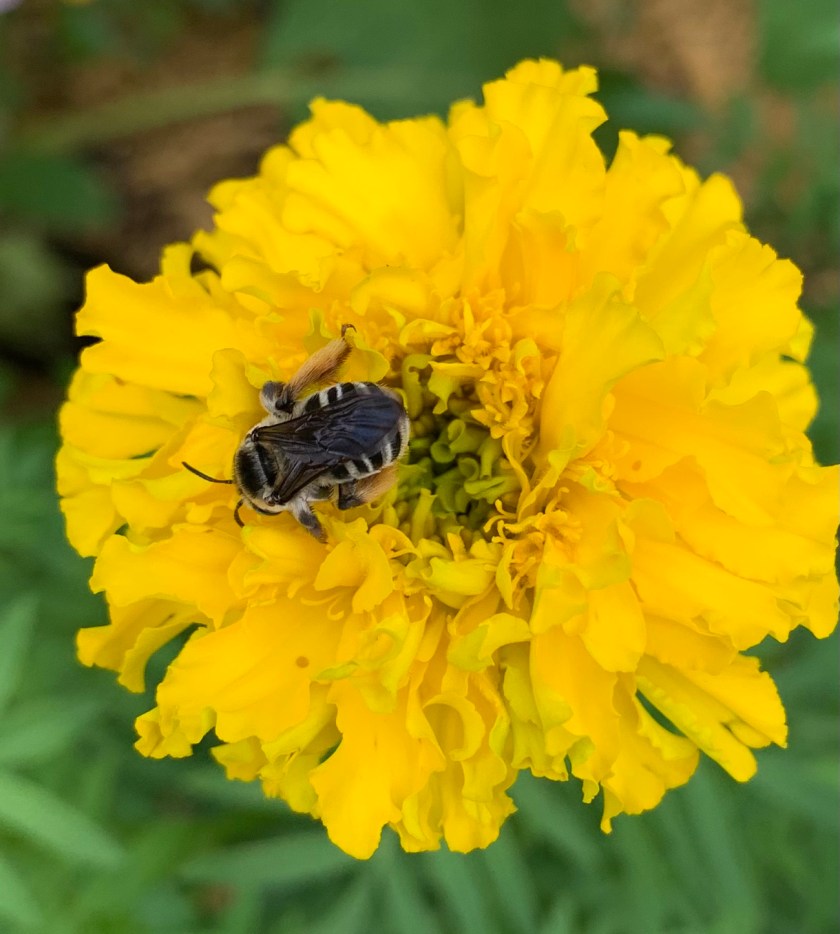
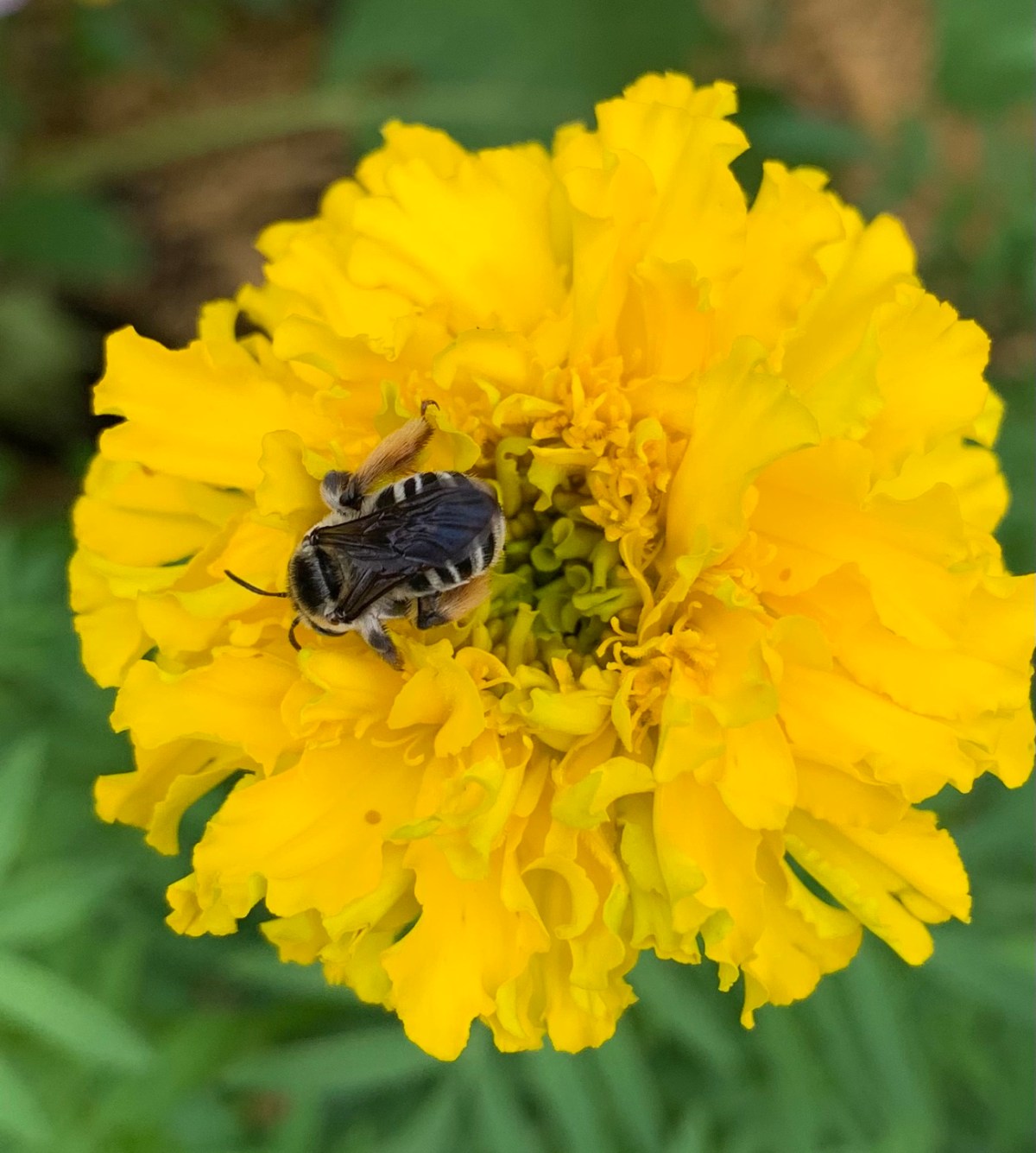
Bee on yellow marigold
Bee climbing through the marigold
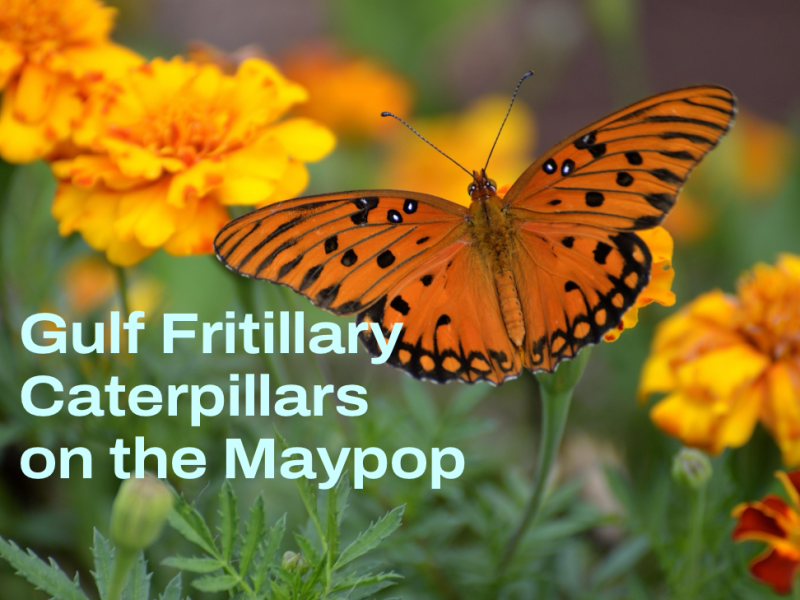
orange Gulf Fritillary butterfly
Gulf Fritillary butterfly

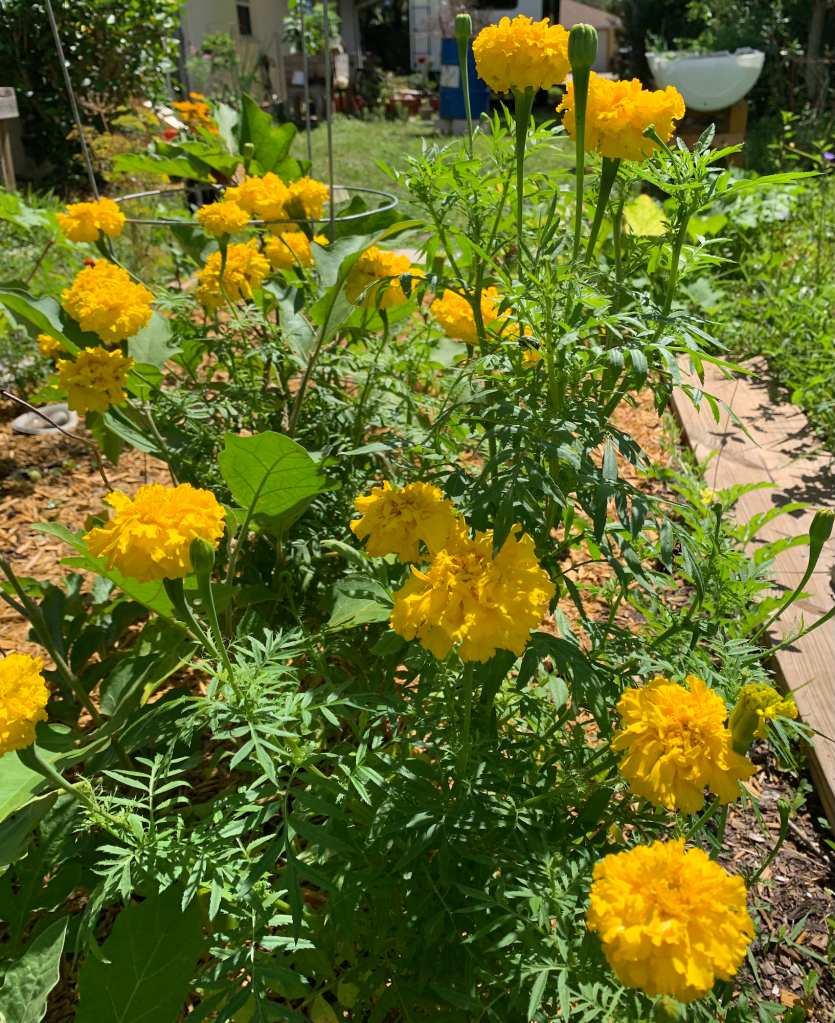
I have marigolds growing in some raised beds and among the ground garden veggies. The tall yellow flowers wind their way up through eggplant and help shade the oregano.

The fluffy orange flowering marigold is so pretty, I will save its seeds and plant many more. Saving marigold seeds is easy. I simply scatter the seeds around the gardens and see what grows. Or, they can be scattered in an empty grow pot and then the seedlings can be transplanted. They do very well when transplanted too.

Marigolds in the garden
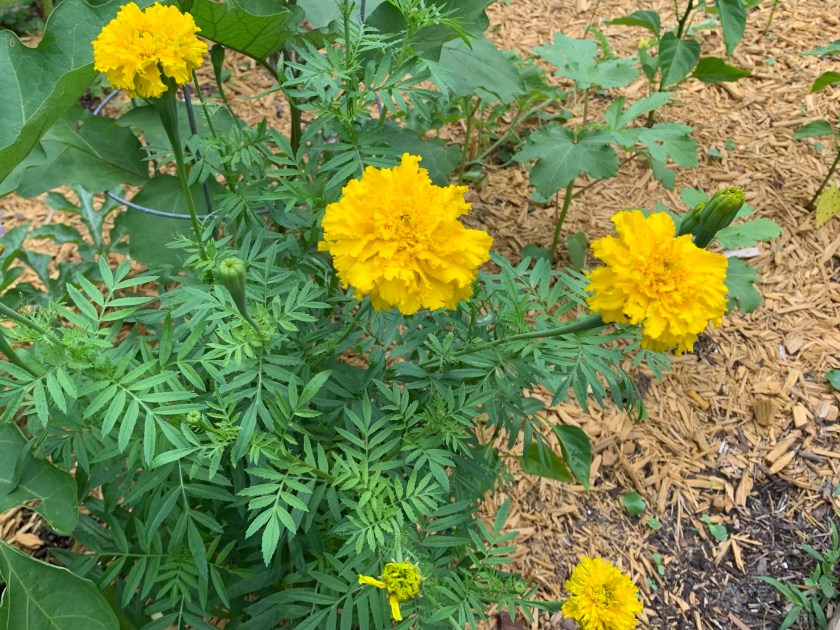
My orange and yellow marigolds
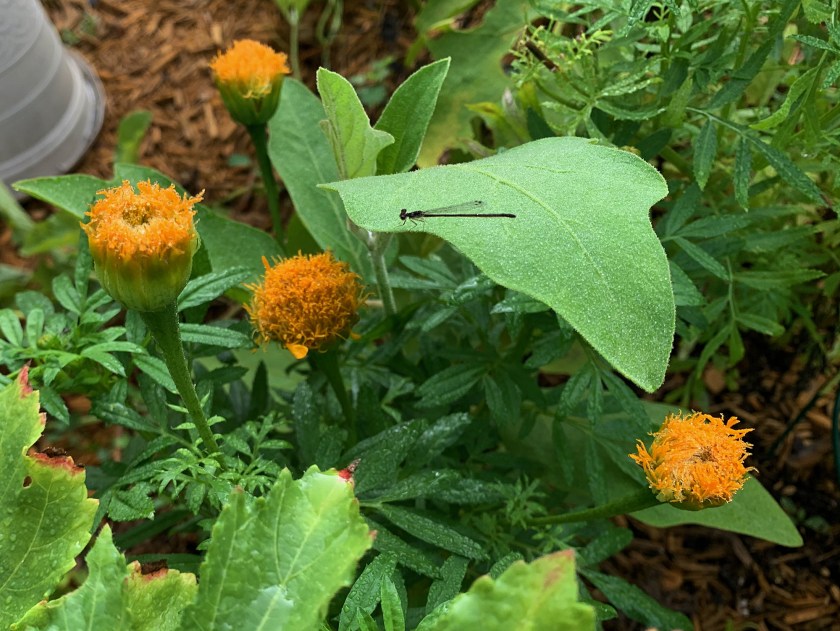
damselfly
Little damselfly

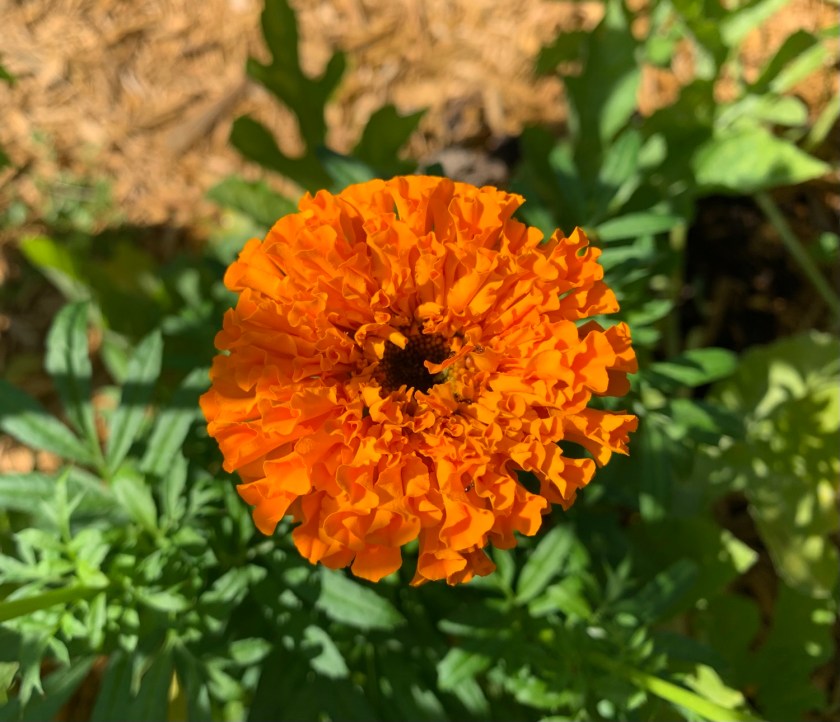
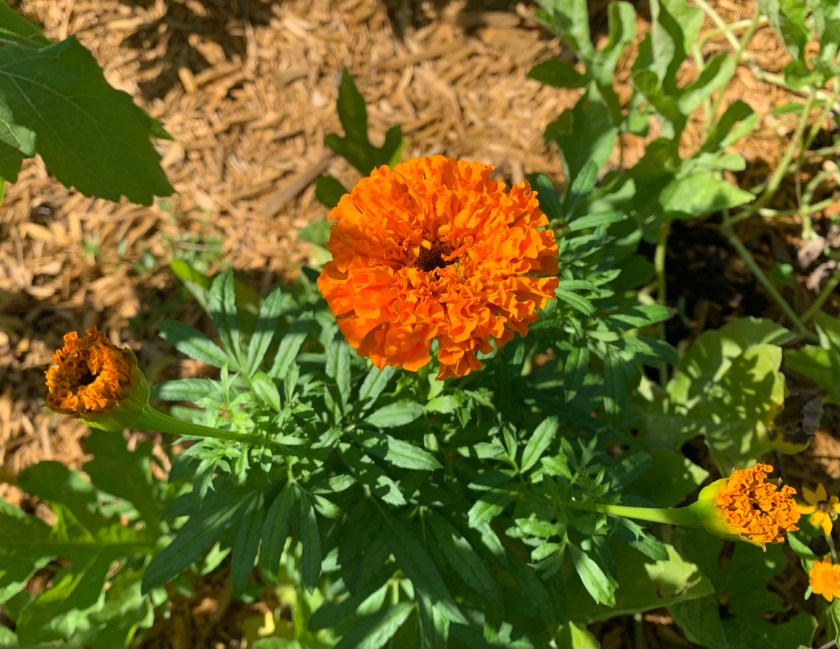
This frilly gold-orange marigold flower is interesting. I keep waiting for it to “open” but this is all it does. The older flower is now looking like it’s gone by. I hoped it would be more than this. It is different, and I’m not sure what type it is.

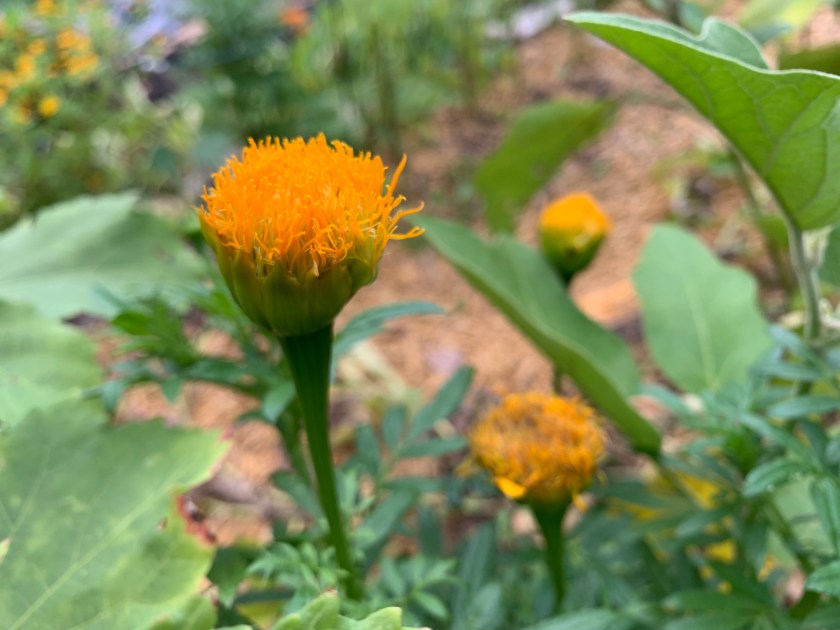
  • Golden orange marigold flower that is frilly

Marigolds Can Handle the Heat

Marigolds are wonderful choices for this humid and very hot location. I’ve never had them wilt or seem stressed by the baking sun. The big yellow flowers can get ants, but other than that, no pest problems.
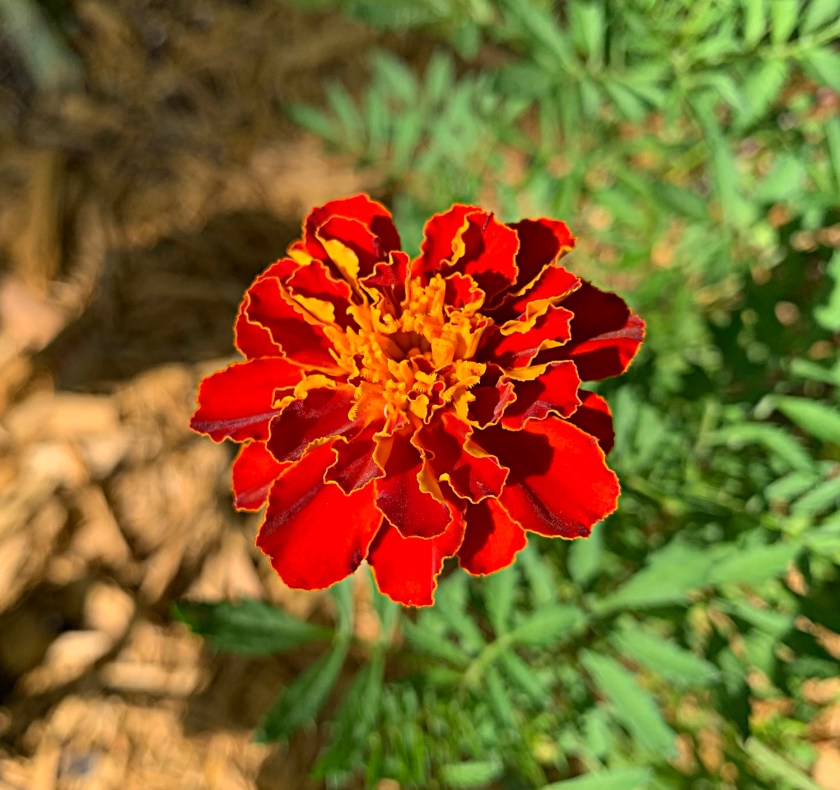
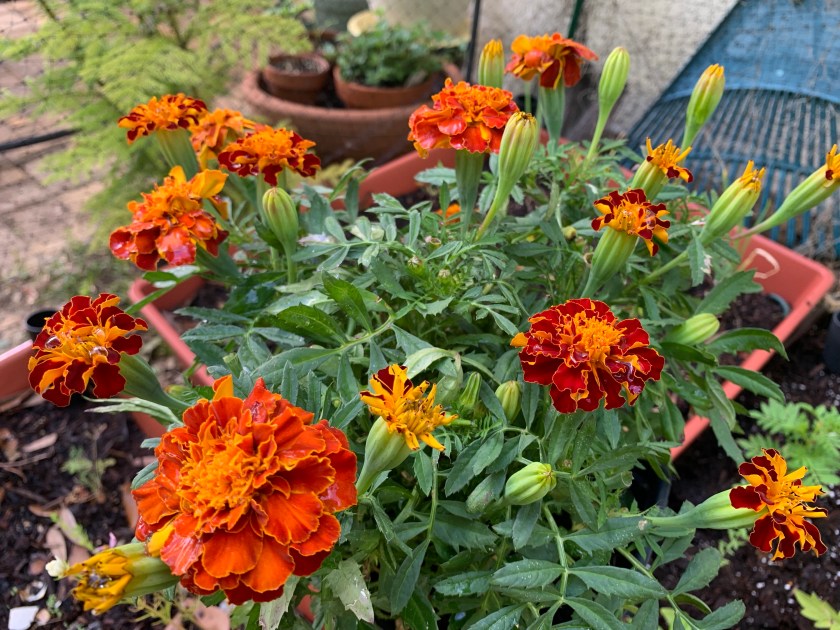
Red-orange marigold flower

Be Careful of the Rains

Once we began getting big afternoon storms (July), my marigolds fell over. Big sections of the plants just fell to the ground!

I’d already planned to put cages around the yellow marigolds because of their height, but it seems these orange ones need support as well.

The broken parts are going into the compost. Next year I will buy some short cages, sold near the tall tomato cages at Home Depot, and put them up for all the marigold plants.

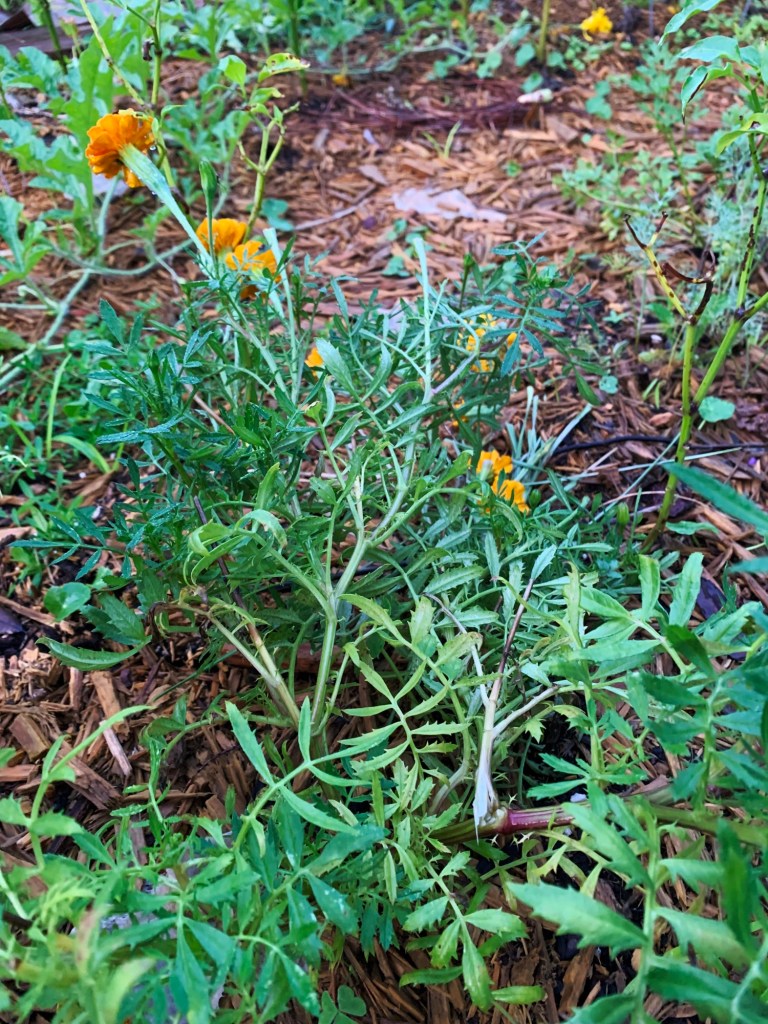
  • composting broken marigold
  • Short cage for flowering plants

Read more gardening stories…

Growing Marigolds From Saved Seeds

Easily save marigold flower heads and collect the seeds to sow later.

Growing marigolds from seeds is pretty easy to do here in Florida. With our long stretches of warmth, ruined only by the months that are unbearably hot, seeds readily sprout. The seeds are easy to save in any climate, but they should be stored to use the following year if the growing season is short.

I began growing marigolds from small plants and seed packets that were purchased. Marigolds are easy to grow and don’t need much attention once they are established. Deadhead the dying flowers, which hold those wonderful seeds.

Saving Seeds

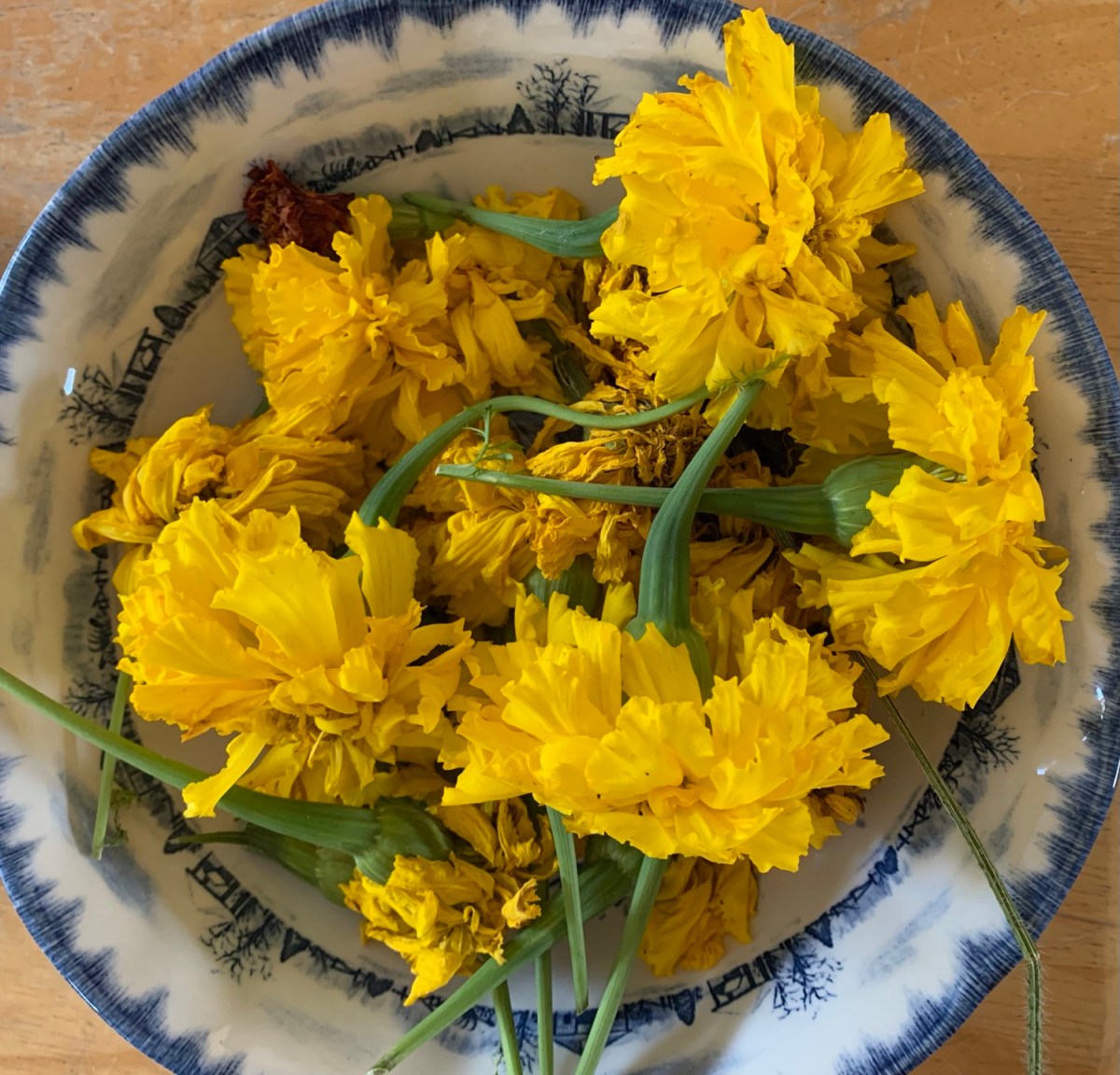
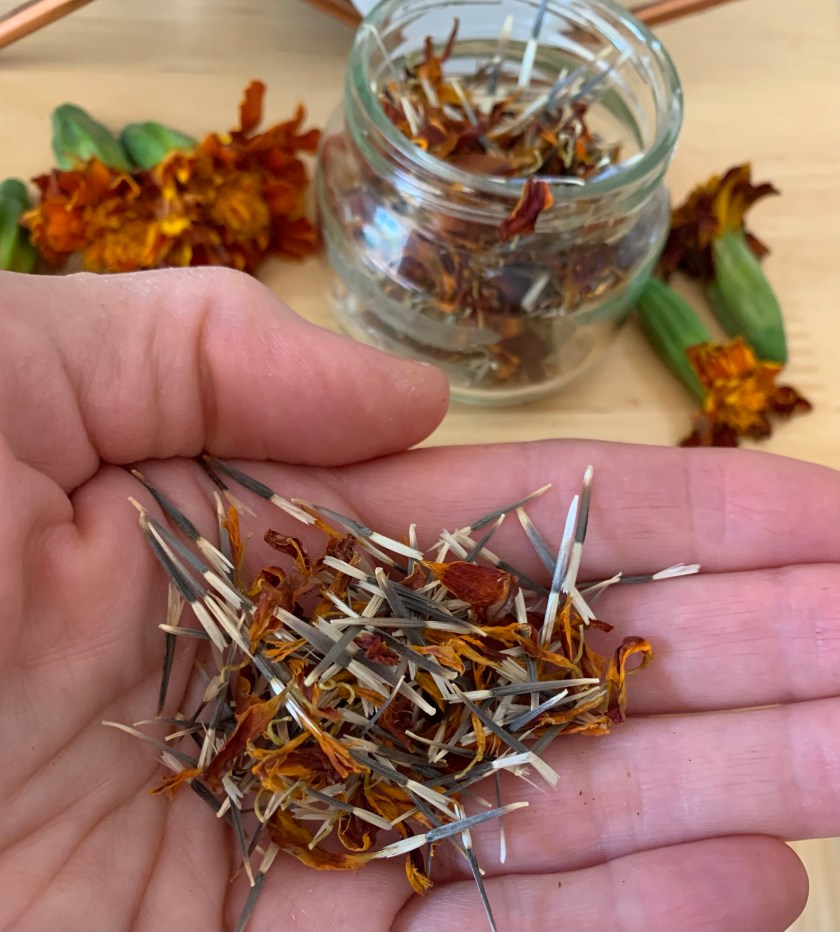
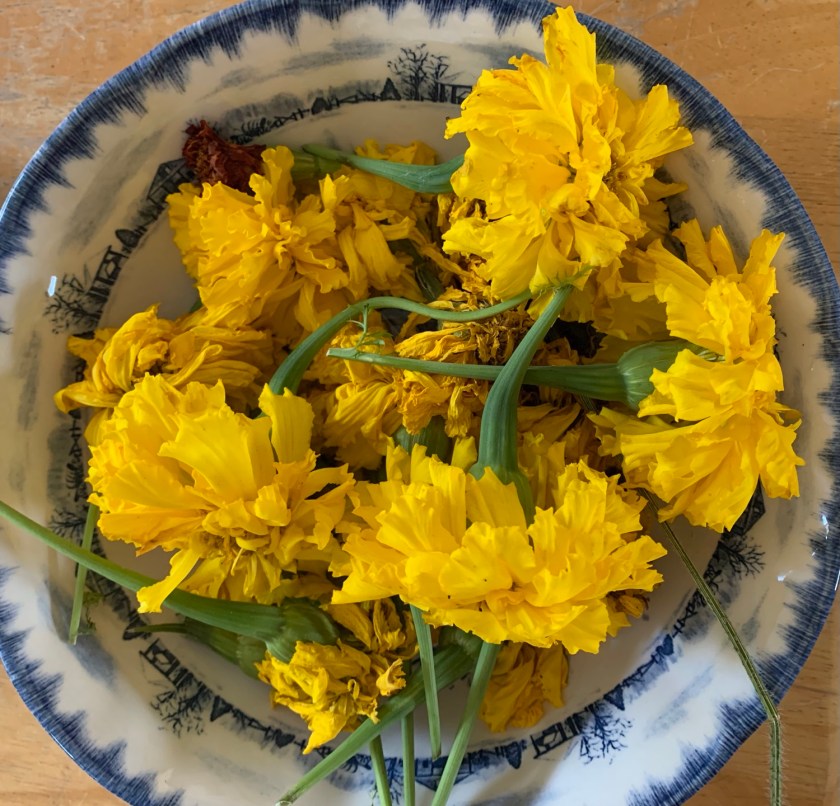
When the flower begins to die on the marigold plant, pop the head off and save it in an open container to dry out. Once the blossom has dried (or when you are ready to plant), peel it open and find the seeds.

You will end up with many seeds, but not all of them will grow. Overdo the sowing or thin the seedlings as needed. Each flower will give you a handful of seeds!

marigold seeds

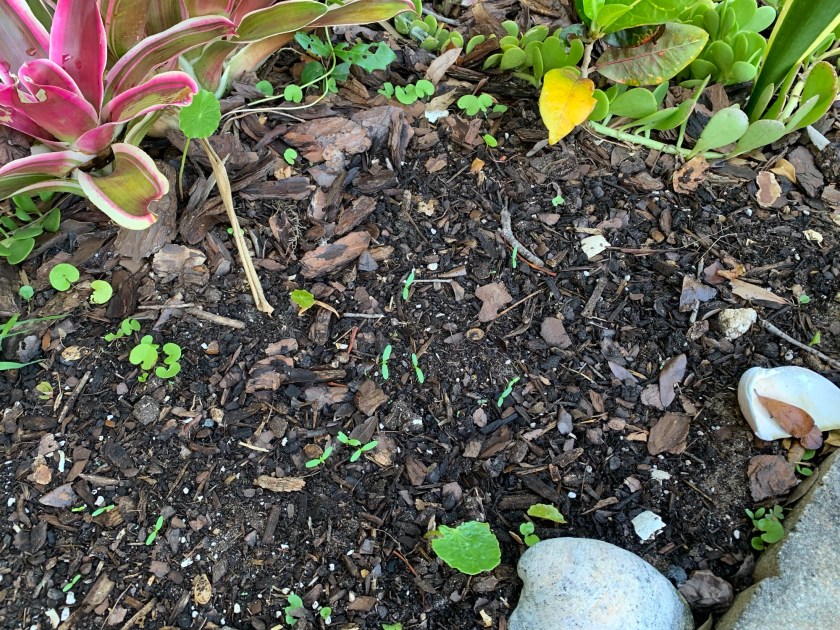
Find some dirt and spread the seeds, then cover with a bit of soil. Be sure to water often to get them started.

marigold seeds just sprouting
Marigold seeds in a little dirt space in the flower garden.

Last year I did not organize the marigold seeds and just planted them all over without really knowing which colors would end up where. The little petals will eventually dry up and fall off so if you want to keep the colors separate, put them in marked envelopes.

All Orange Marigolds

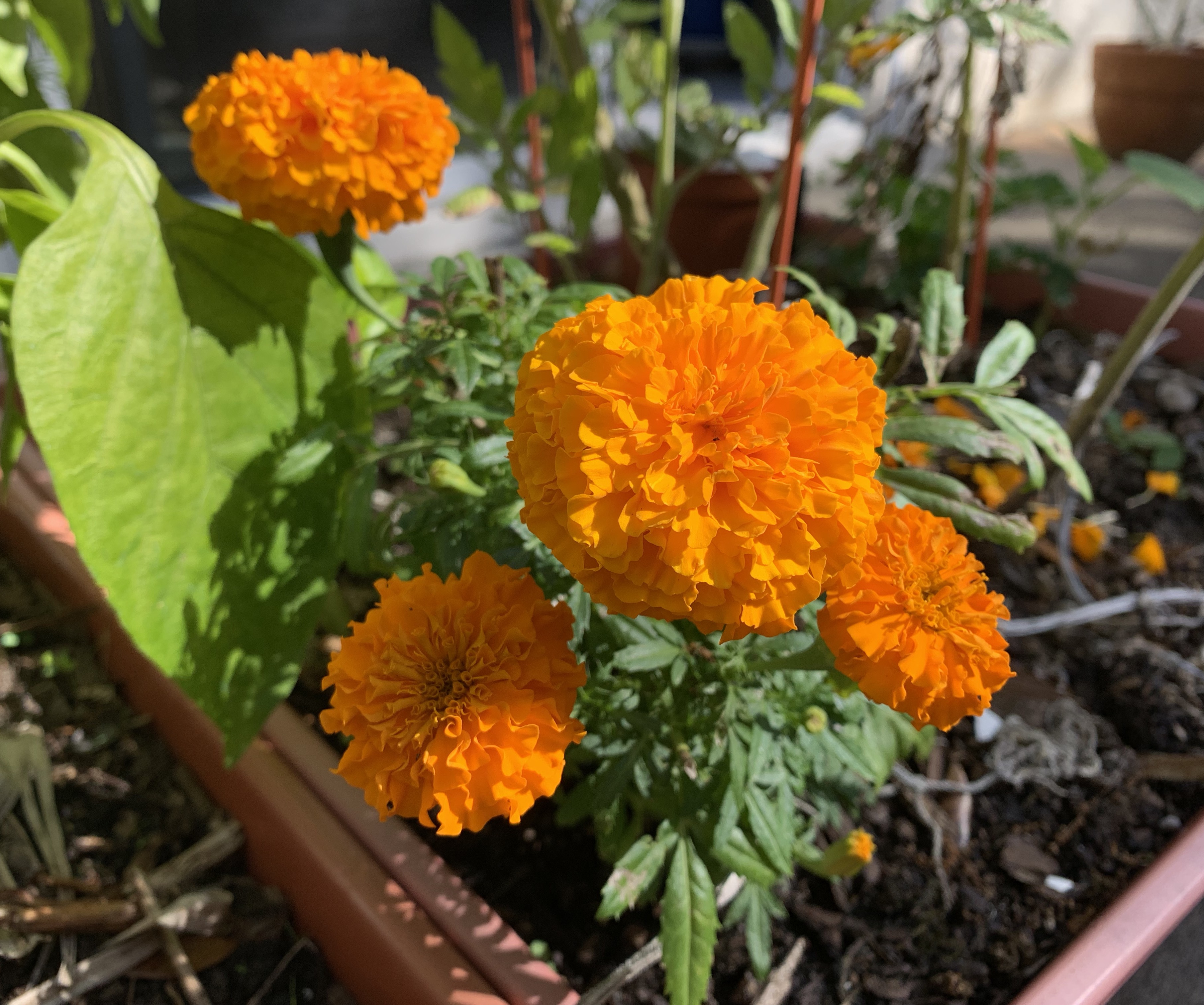
This orange “fluffy” flowering marigold began as a little plant from the store. It’s so pretty, I will definitely save all the seeds from it.

  • orange marigold
  • Fluffy orange marigold
  • orange marigold flowering plant

Red-orange Marigolds

This marigold has dark orange petals that can also look red. The center is more yellow. I have one plant growing in the garden from the seeds I saved.

  • French marigold
  • dark orange marigold plant
  • Red-orange marigold flower

Yellow Marigolds

The yellow marigolds have attracted bees and butterflies. Marigold are good for repelling non-beneficial bugs and I always like to have them in the yard. Plus, they are pretty and quite easy (and cheap if you save the seeds) to grow.

  • Bee on yellow marigold
  • yellow marigolds
  • Saving yellow marigold flowers for seeds

Marigolds are not the only flower seeds I save. This year I am growing Rudbeckia and Gaillardia and am looking into saving seeds from those plants too. Cosmos flowers also have seeds, which I save.

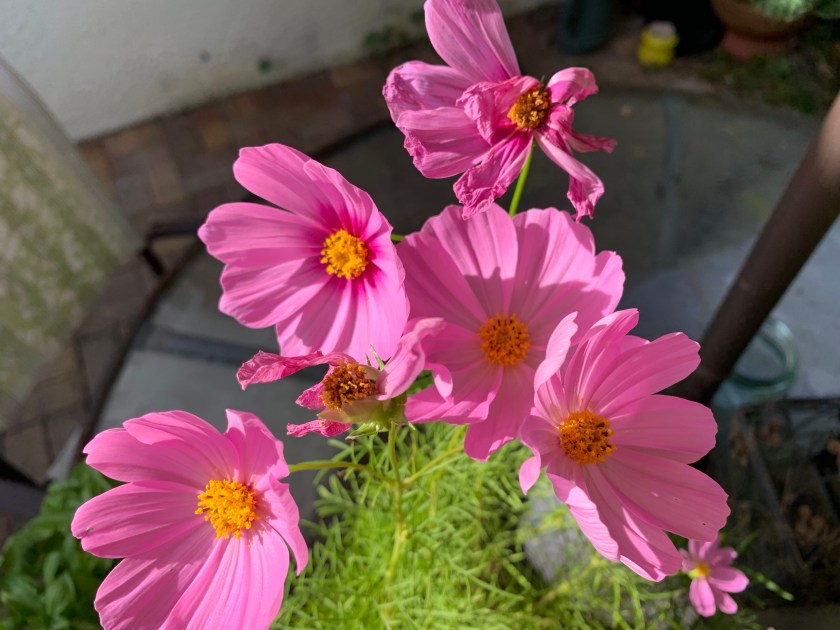
Pink cosmos have seeds in the center

Find more gardening stories here…

Plant Flowering Things and Bees Will Come

Planting things that flower to attract bees to the garden.

We all want to feed the bees by having bee-loving flowers in the yard. But another good reason to have the bees come to your plants is to entice them to pollinate the vegetables growing in your garden. I would not be eating eggplant, tomatoes or watermelon (soon!) from my garden without the bees coming to pollinate the flowers.

watermelon growing on the vine in my garden.

If you are wondering which flowers to plant to attract bees, I know the feeling. The general answer is to simply plant things that will flower, and that includes vegetables and herbs. I have an excellent link that goes to the UF site, at the bottom of this page, for Florida residents who want to start planting for pollinators.

Bees like open type flowers that contain pollen. They also have flower color preferences. Read on…

All photos on this page are my own of bees visiting plants in my yard

Herbs

Don’t overlook herbs, which are quite simple to grow, when it comes to having flowers in the yard.

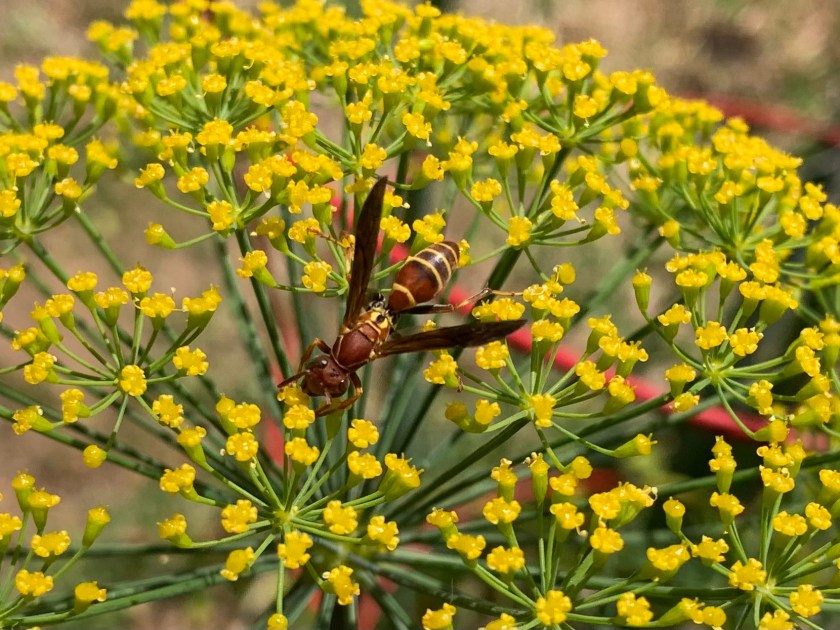
Dill is an excellent choice for the yard because it has big yellow flowers that do attract all kinds of things. Once the flowers are done, you will have a head full of seeds. Dill is easy to grow and needs very little attention. It also serves as a nursery for black swallowtail larvae. Fennel is very similar and just as good.

Naturally Growing “Weeds”

Spiderwort (the purple flower above) is everywhere near me, and it easily invades the yard. It is tough to remove because it grows in clumps, but the purple flowers are loved by insects. If you already have it, maybe let some grow around the vegetable garden.

We also have a lot of the white flowering weeds and many other things growing at the edge of the lawn. I’ve noticed how the naturally occurring growth is a big attractor. So why are we always removing it?

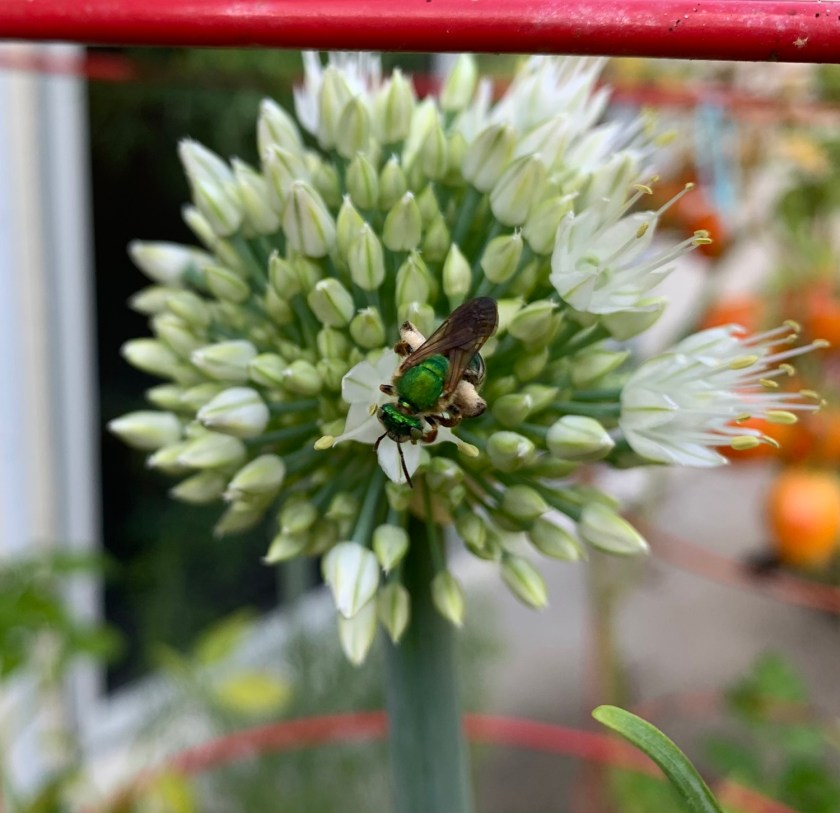
The green bee on the scallion flower (above) is probably the Sweat Bee, which is a common Florida green bee. I’m no bee expert and I am guessing. The striped bee on the dill is a paper wasp.

Rudbeckia For Garden Beauty and Bee Happiness

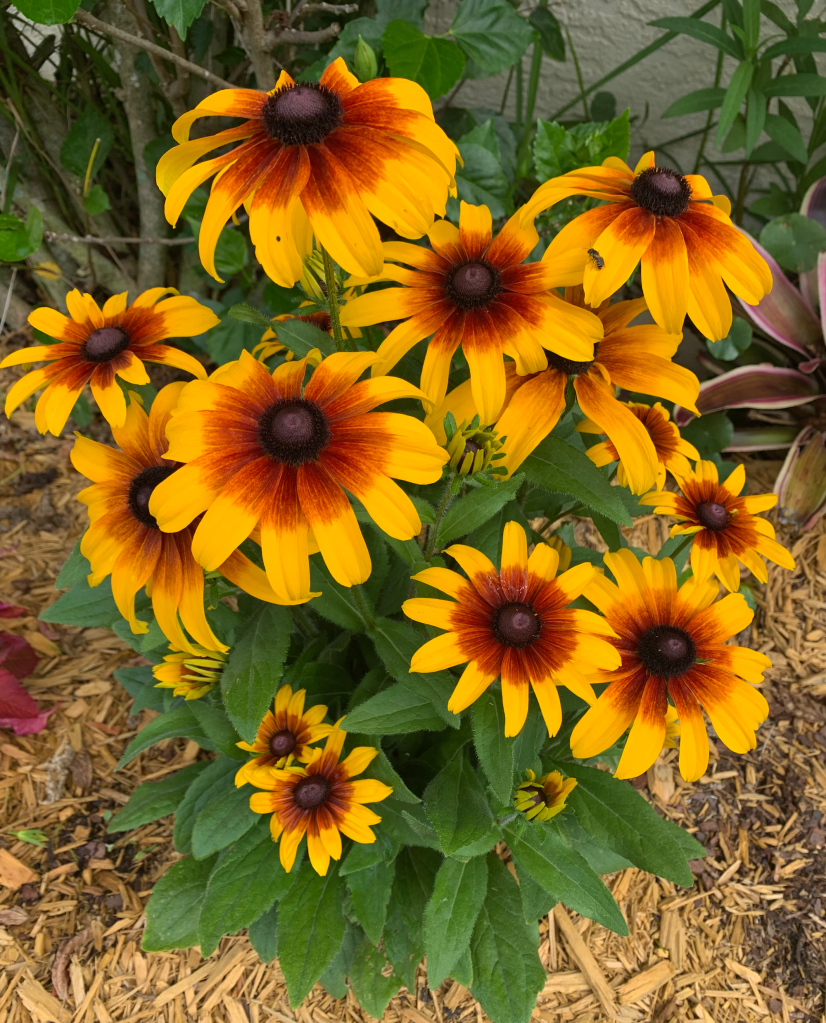
The “Rising Sun” Rudbeckia plant (aka black-eyed Susan) began small with only a few flowers and now it has twenty, with more buds opening! I love this plant. And the bees like it too. There is a little bee crawling on a yellow petal in the photo below. I also found one sleeping on one of the big petals. The flowers are long-lasting. I need to find out how to propagate this plant. This one came from Lindley’s Nursery in New Smyrna Beach.

Rudbeckia plant full of big yellow flowers that attract bees to the yard
Rudbeckia

While shopping at the plant nursery, I’m drawn to plants that already have bees all over them. It doesn’t mean that bees will immediately come to the same plant in my yard, but at least I know it’s possible. It can take a while for the bees to appear when the yard has been relatively bare of flowering things.

Last Spring I bought Marigold seeds and had quite a few flowers growing. I saved the seeds and planted them in my vegetable garden (and elsewhere) to have these beauties spring up. Marigolds are not big attractors, but I do see bees and butterflies on them. They are better known for their usefulness in keeping garden pests away – and that includes mosquitoes.

Yellow marigolds grown from saved seeds
Bee on yellow marigold
A bee on my yellow marigold

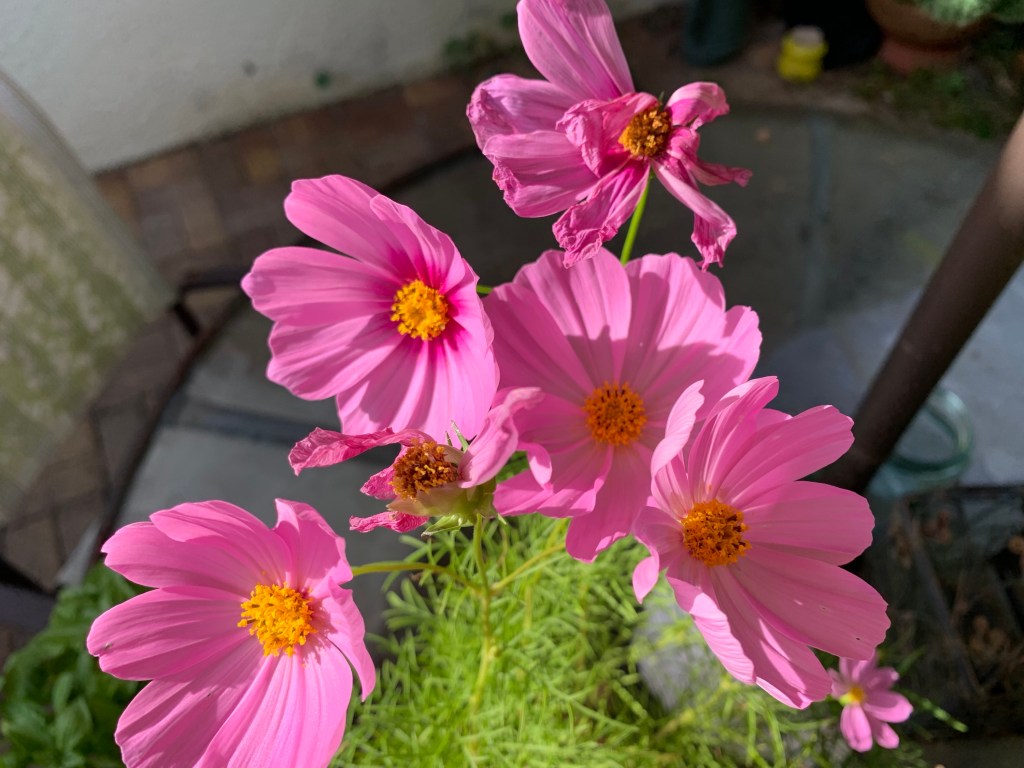
This pink flower is blooming on a Cosmos plant grown from seeds saved last season. I wish I had more of these growing in the landscape.

pink cosmos with bee

What Florida Bees Need

The University of Florida IFAS Gardening Solutions page “Gardening For Bees” has a wealth of information. Florida has a lot of bee species and some (29) that are only found here.

I learned that to keep bees happy year round, my yard should have at least three plants flowering at all times! This should not be difficult when trees, shrubs, weeds, and vegetable flowers are included. And of course we are talking about organic gardening where no pesticides are used.

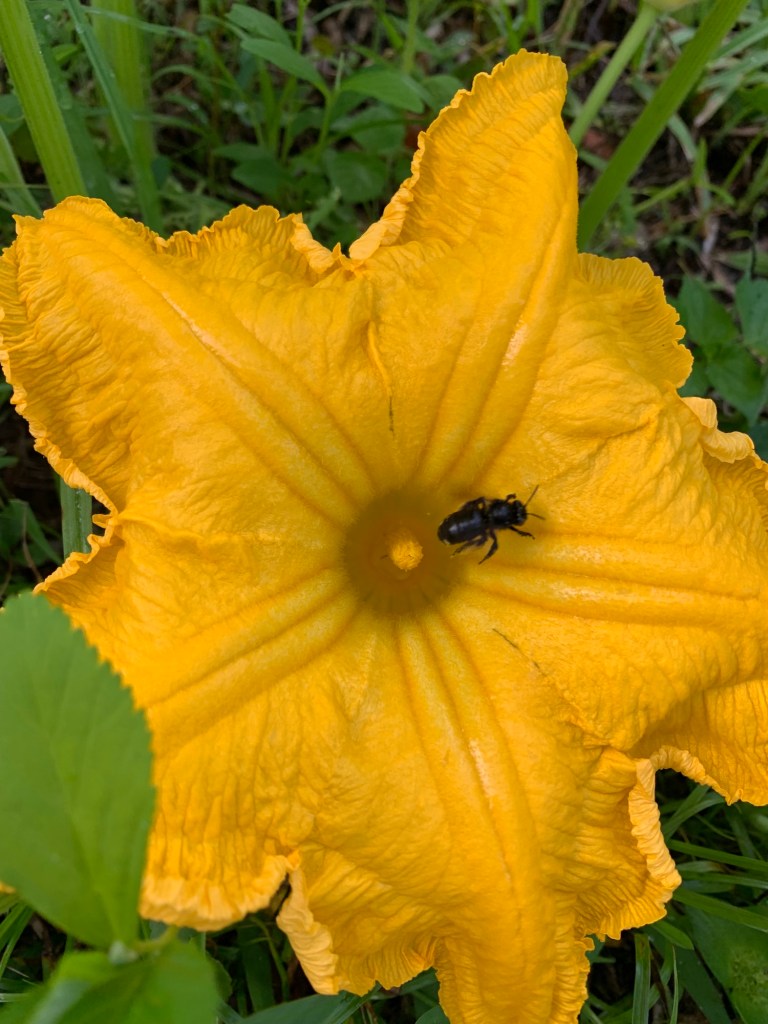
bee on pumpkin flower
Bee on the Seminole pumpkin flower

According to the section about choosing plants to attract bees, the Florida article notes that bees prefer specific flower colors. Yellow, white, blue and purple flowers are best for attracting bees. This makes sense when you think about vegetables – yellow flowers on tomatoes, watermelon and squash, with white flowers on peppers, blueberries, and onions. You will notice that most of my “bees on flowers” photos on this page are yellow!

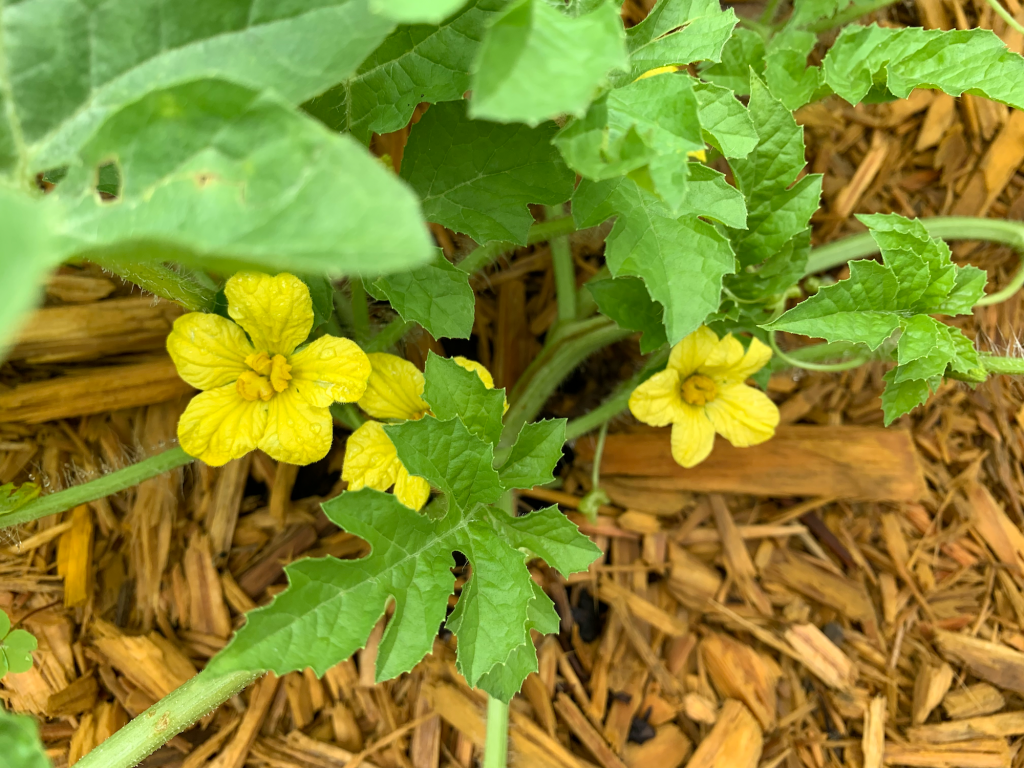
Each morning I can hear bees buzzing among the watermelon vines in search of the little yellow flowers. I do have a few watermelons growing on each of the vines, so the bees are doing their job. They are too quick and busy for me to get a photo!

Yellow flowers on watermelon vine

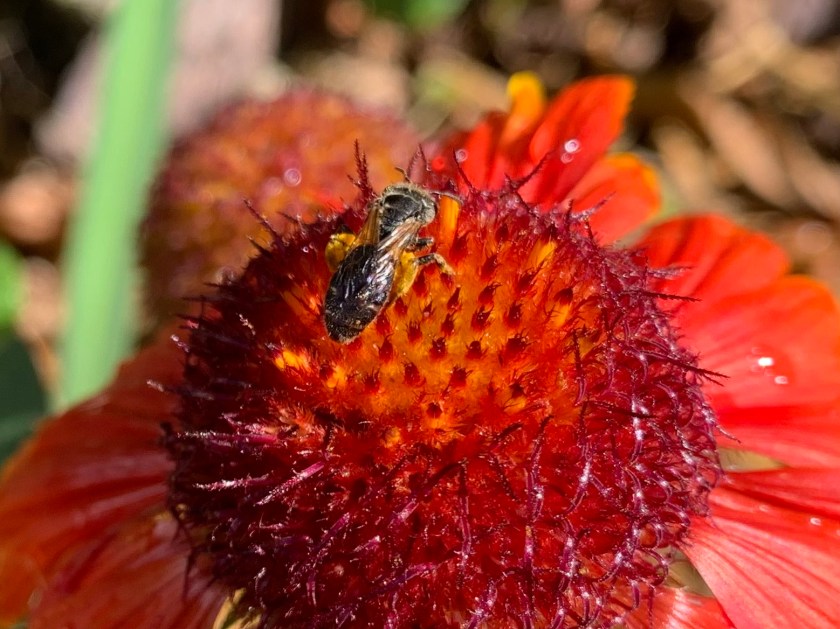
This little bee was having a rest on top of the puffy red-orange Gaillardia flower. He was not moving which helped me get this close up shot. According to the UF gardening site, bees can’t see red! What does this bright, puffy flower look like to the bee then?

Bee on red Gaillardia
Bee on the Gaillardia

I am only just beginning to fill my yard with pollinator plants. See the link below for more ideas.

I’m also learning about the plants and flowering weeds already growing nearby. My new philosophy is to let some of those weeds grow, like the prolific Richardia ground cover shown below.

Richardia Scabra ground cover
Richardia Scabra ground cover with little white flowers that bees love.

When I look at all these bee photos, which were taken over the past months in my yard, I’m amazed at the different varieties of bees. I need to begin paying closer attention as my flower offerings increase. There is always more to learn.

Perfect (Florida) Plants For Pollinators

Read more gardening stories here…

Starting Vegetable and Flower Seeds in Big Pots

With attention and lots of watering, the seeds I started in larger pots are doing well.

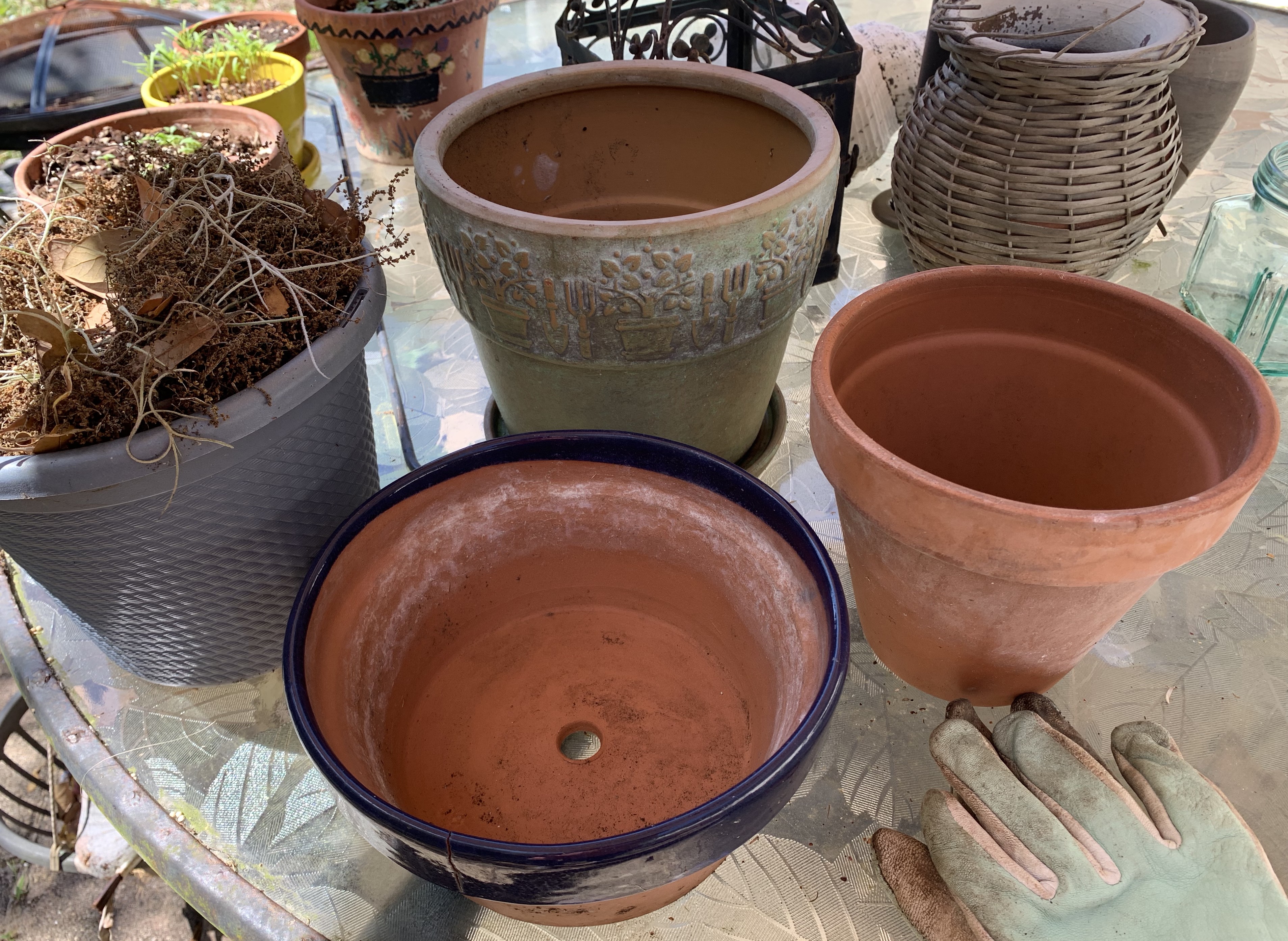
After caring for my seedlings in eggshell pots for weeks, I decided to start some seeds in big pots. They won’t dry out as quickly and are able to stay outside overnight.

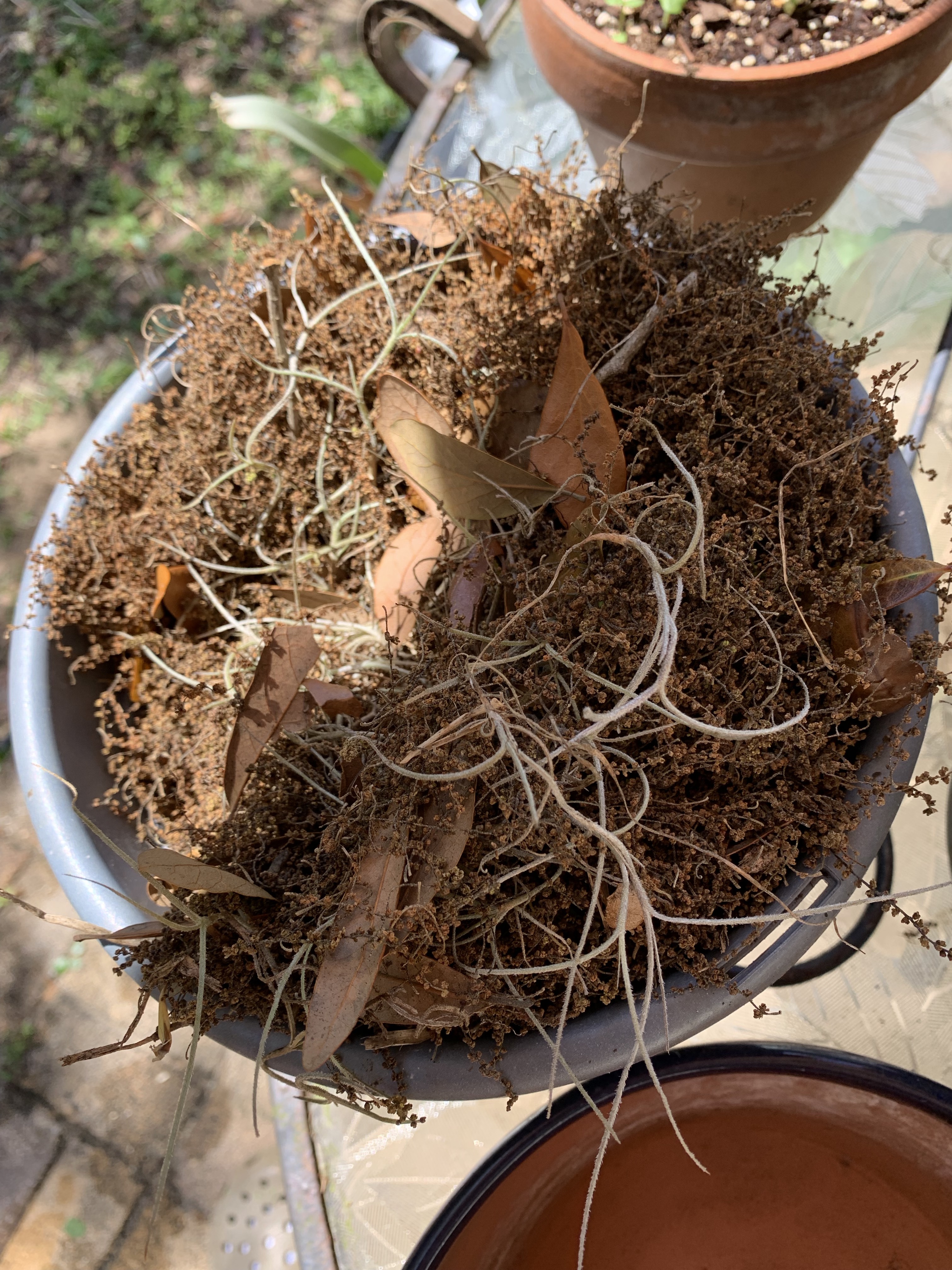
I gathered up pots of all sizes that had been lying around and cleaned them out. for drainage I used yard debris, which was a mix of oak leaves, catkins (those long brown things) and Spanish moss. That mixture was pushed into the bottom of each pot before adding dirt.

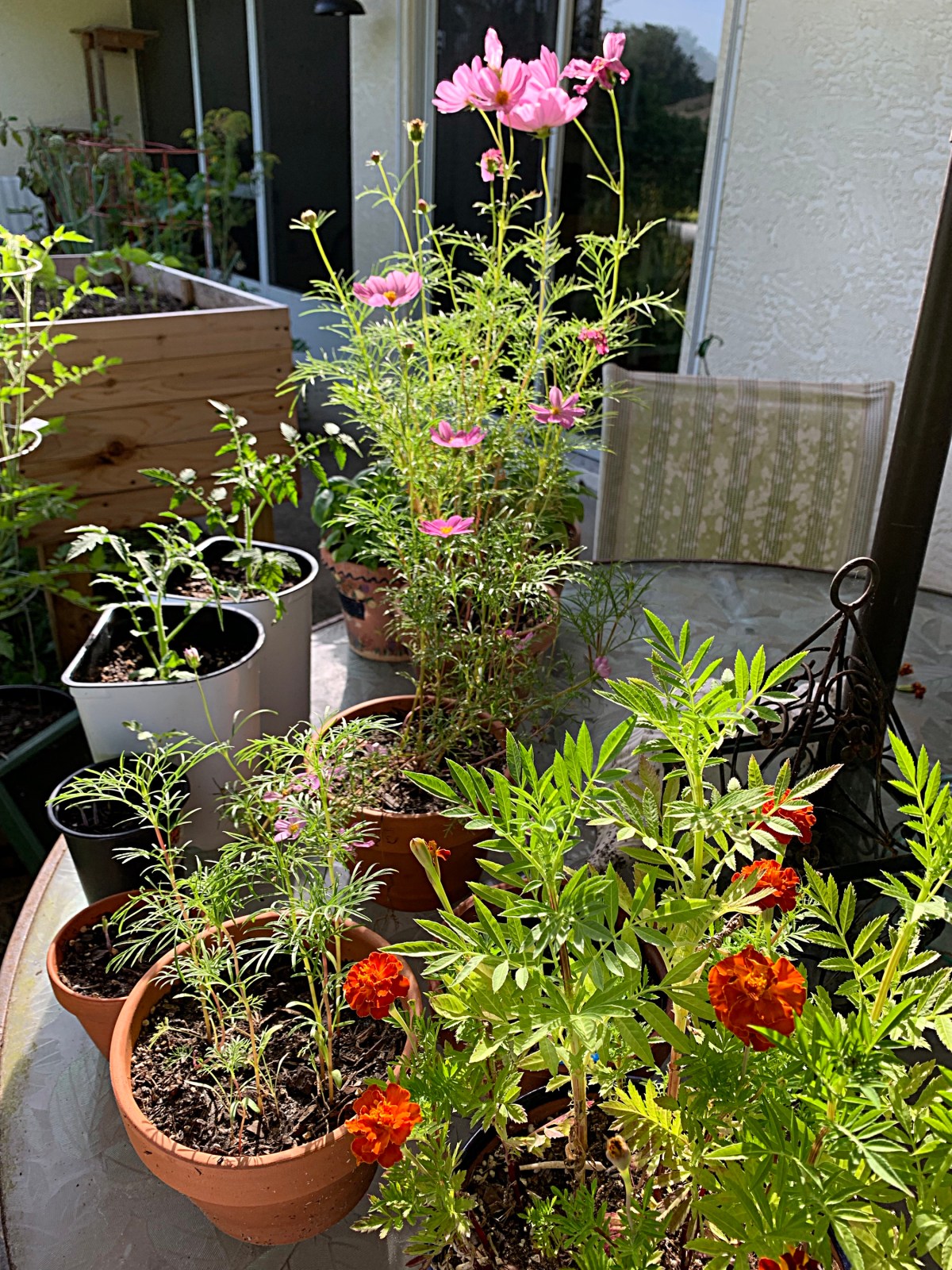
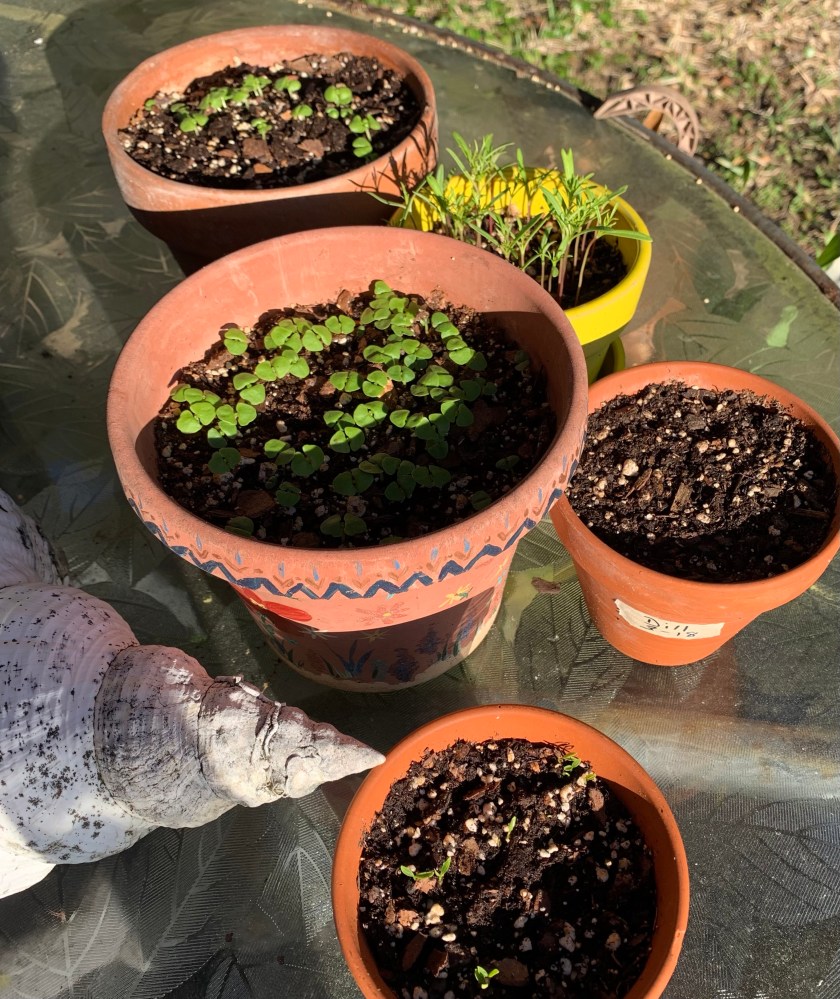
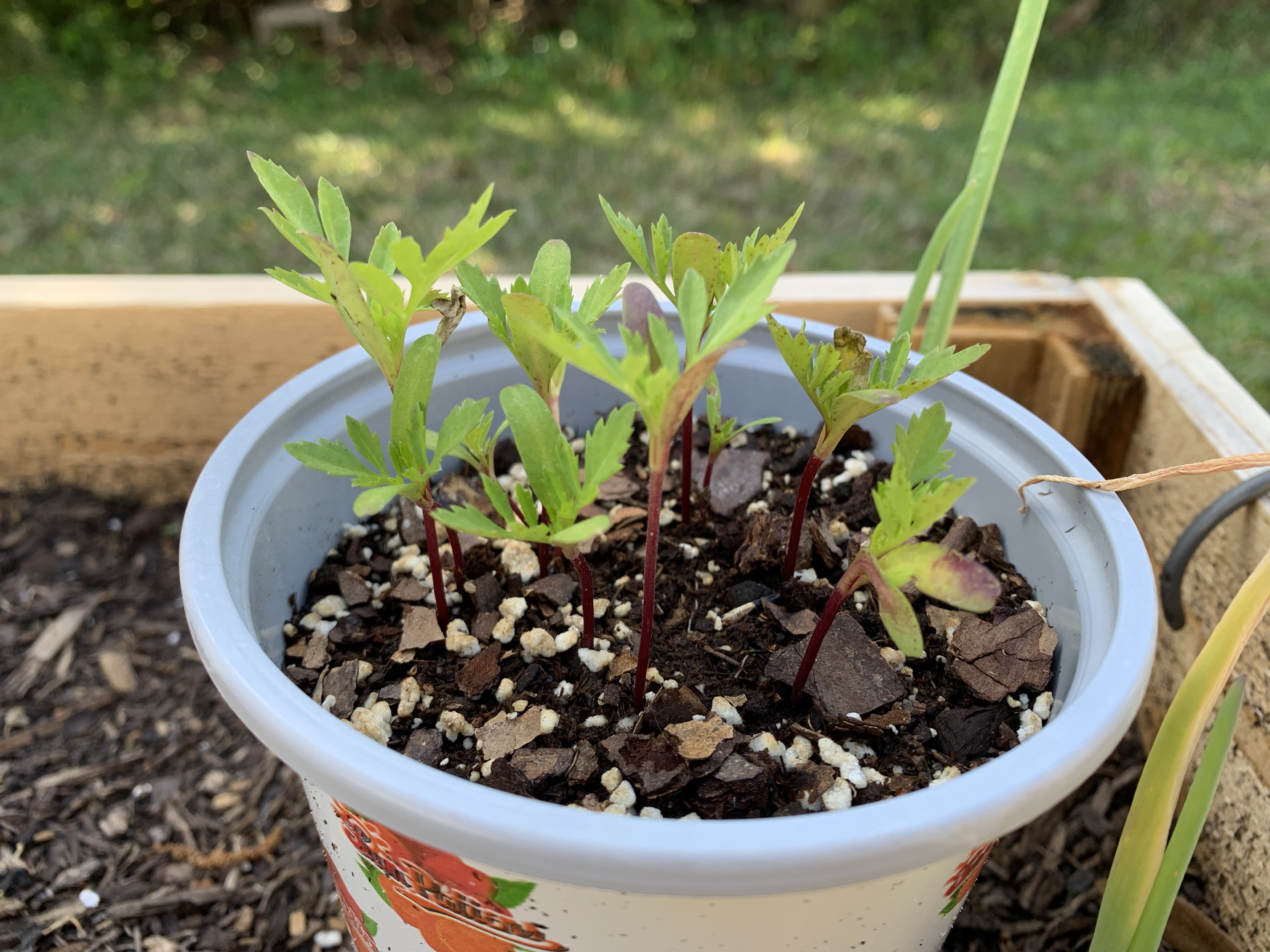
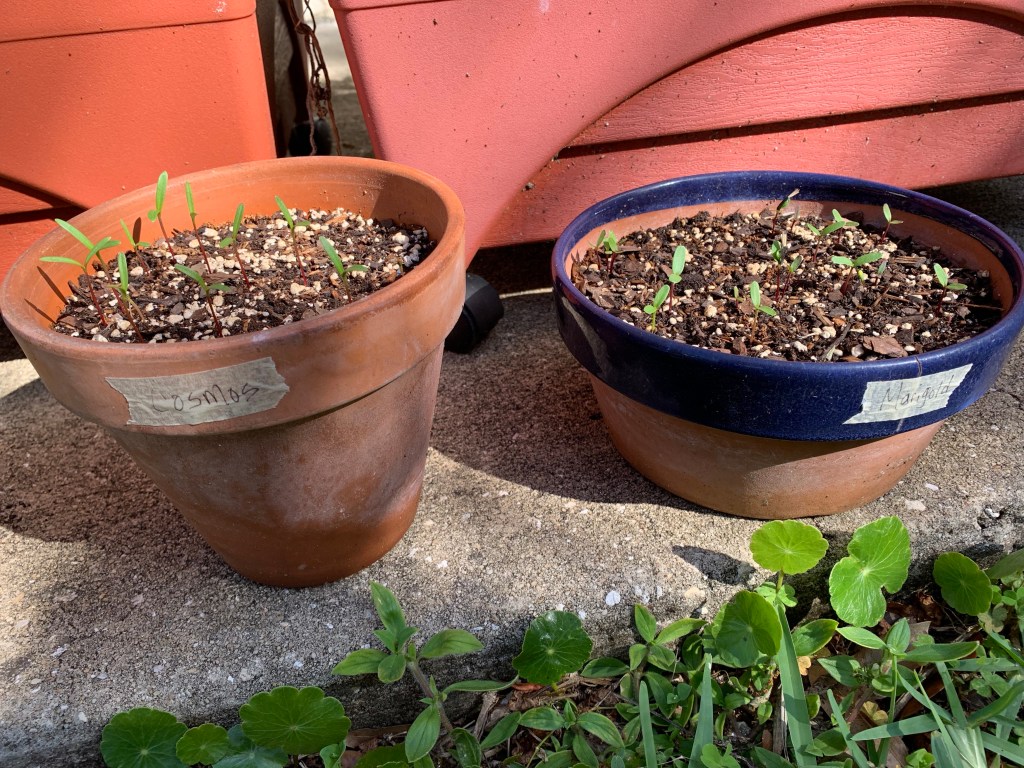
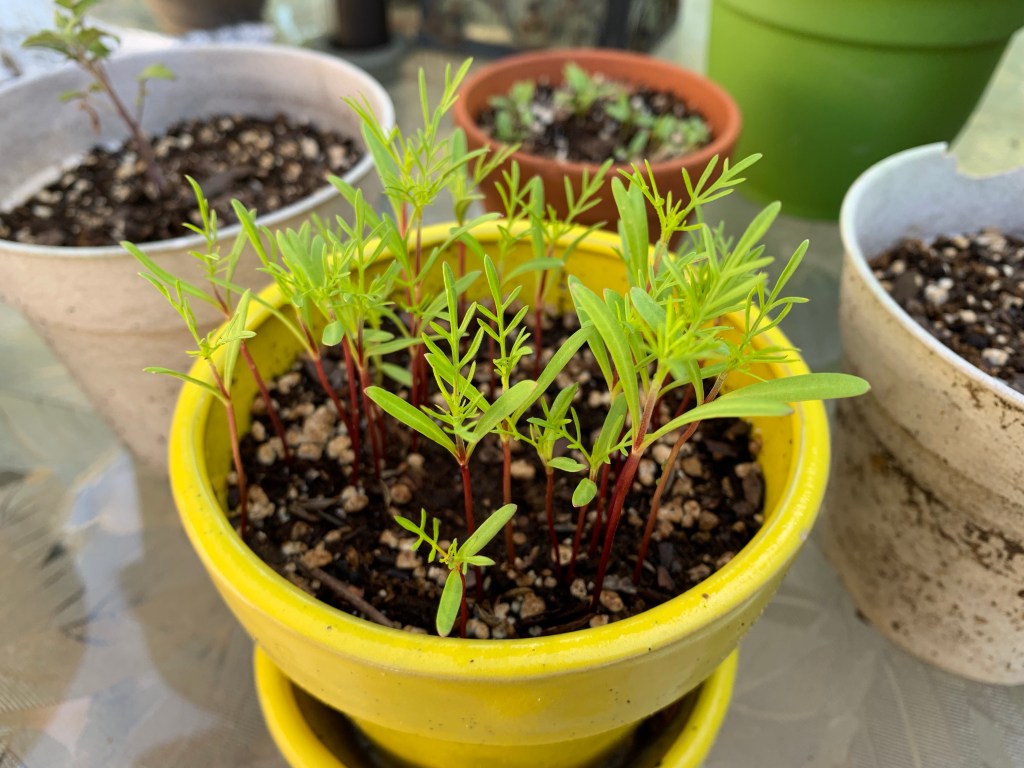
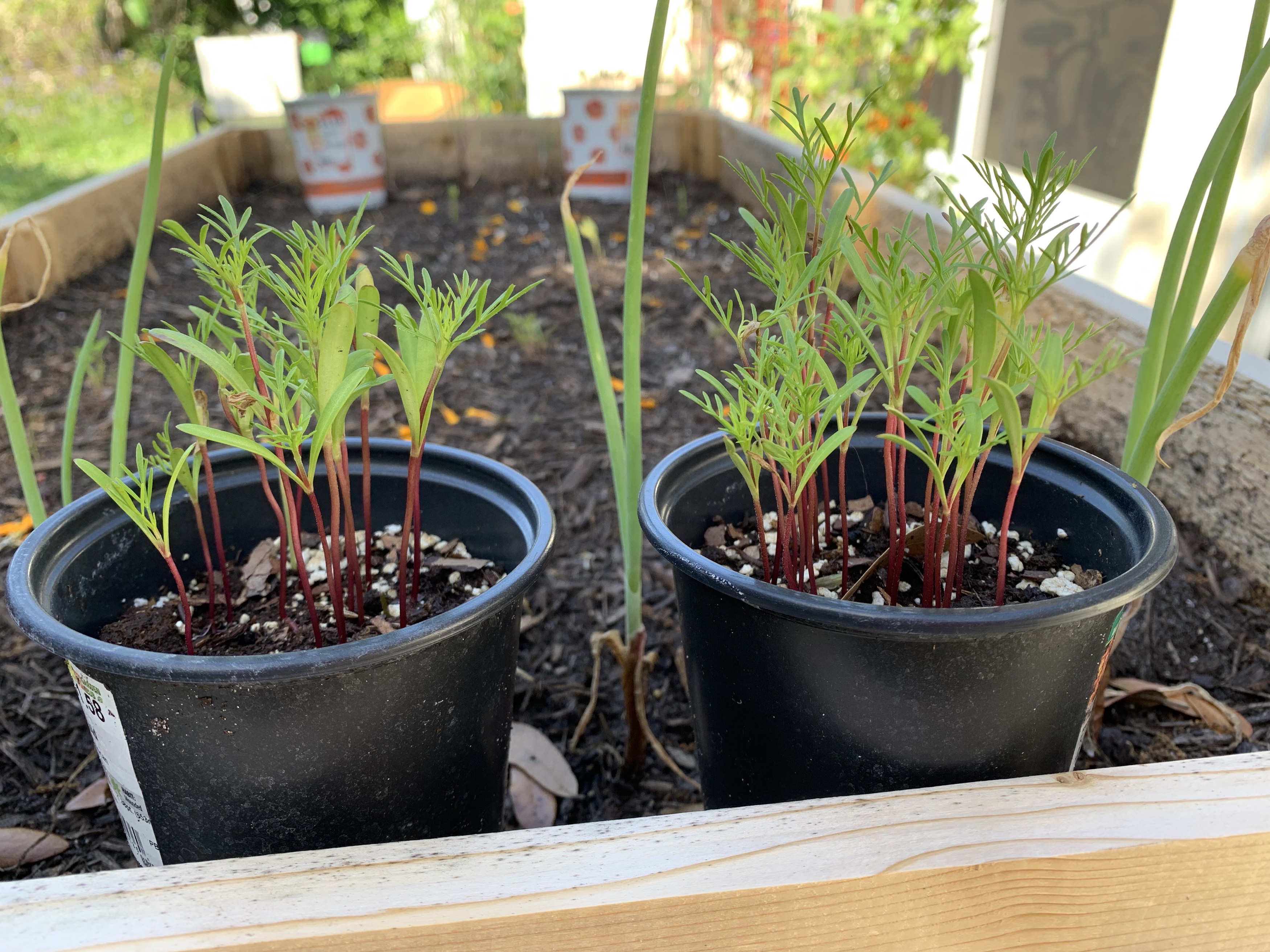
I’ve planted basil, dill, cherry tomatoes, marigolds and cosmos. I used freezer tape to label the pots with the date they were planted.

basil and other seedlings in pots

Growing Basil

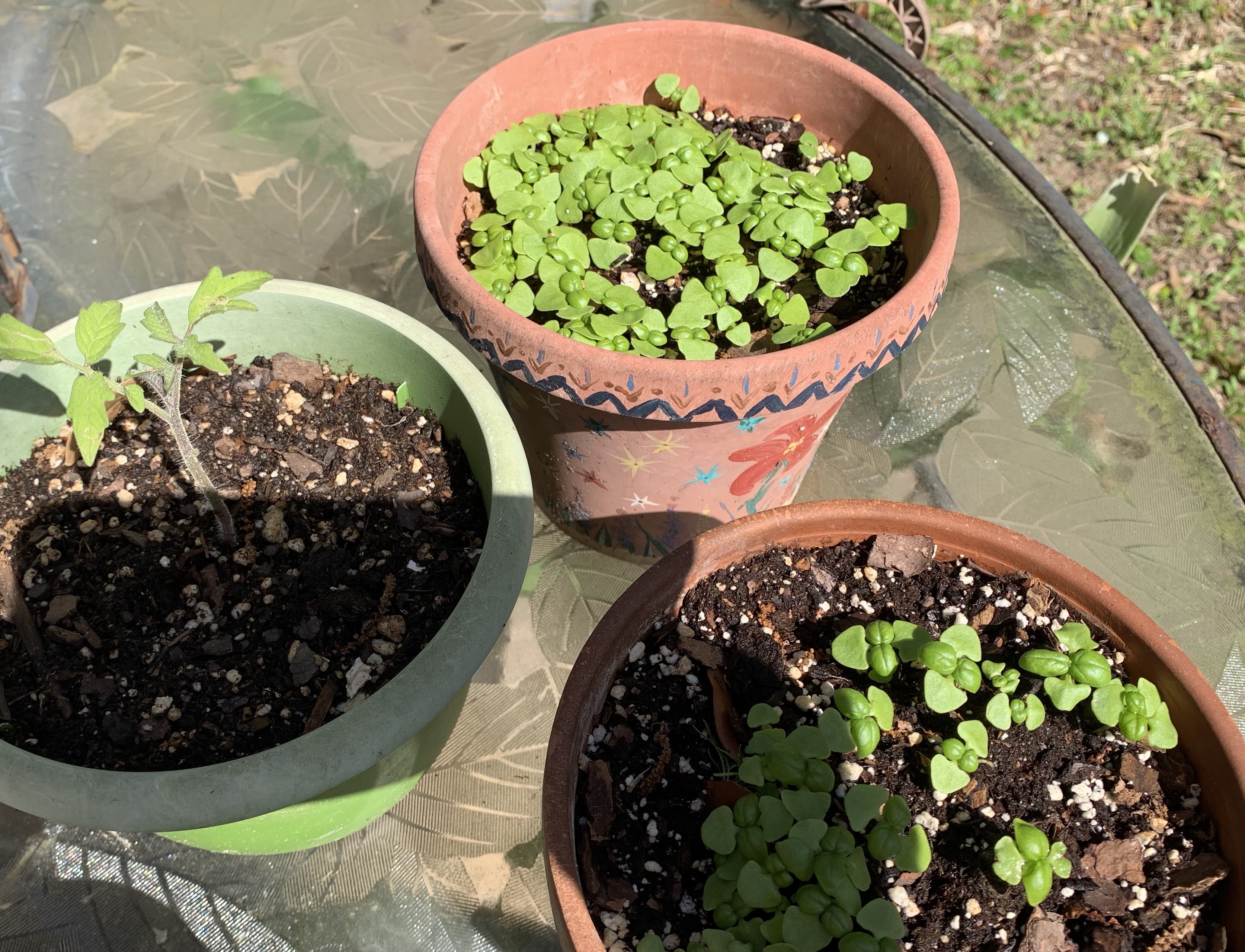
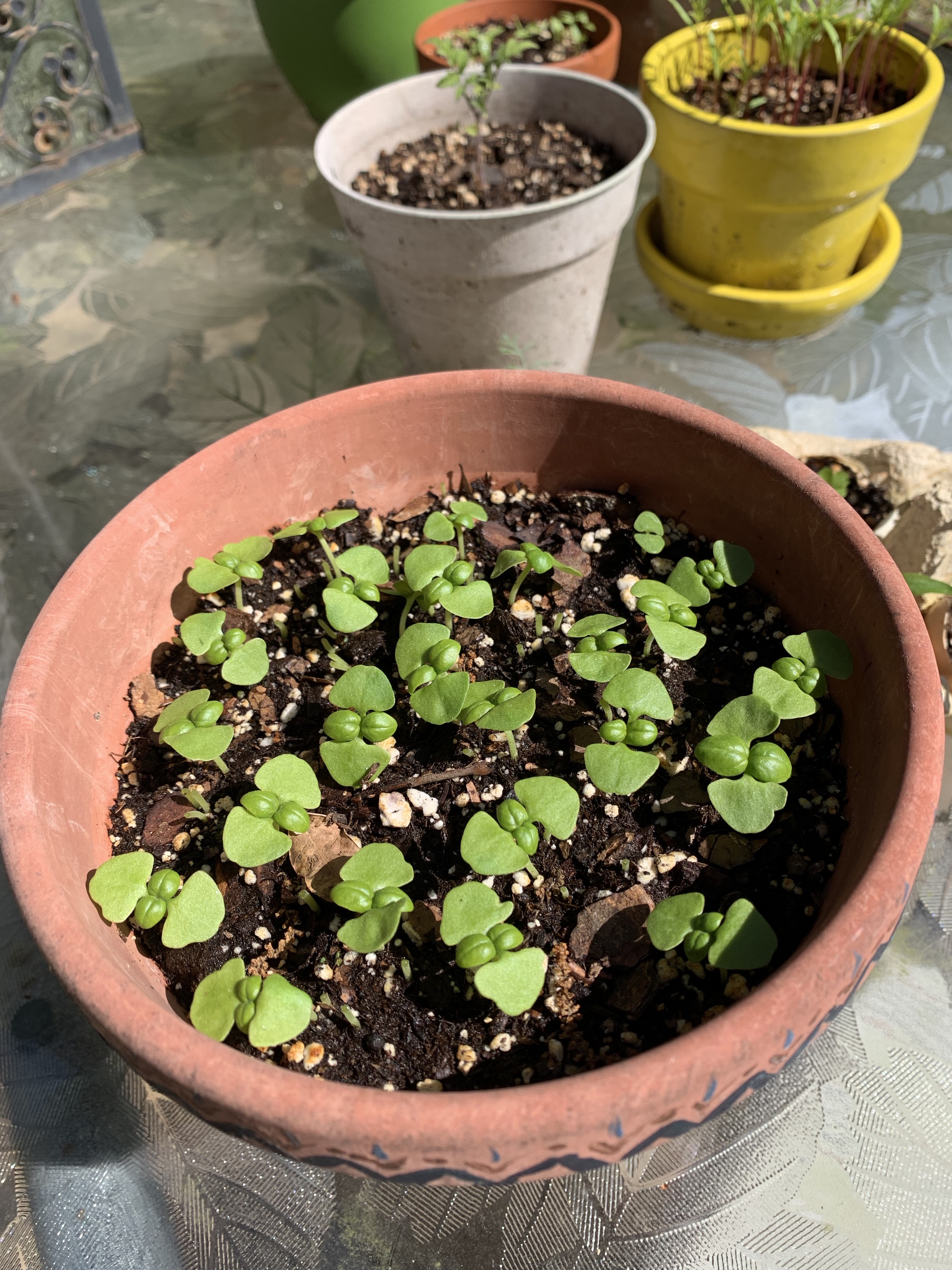
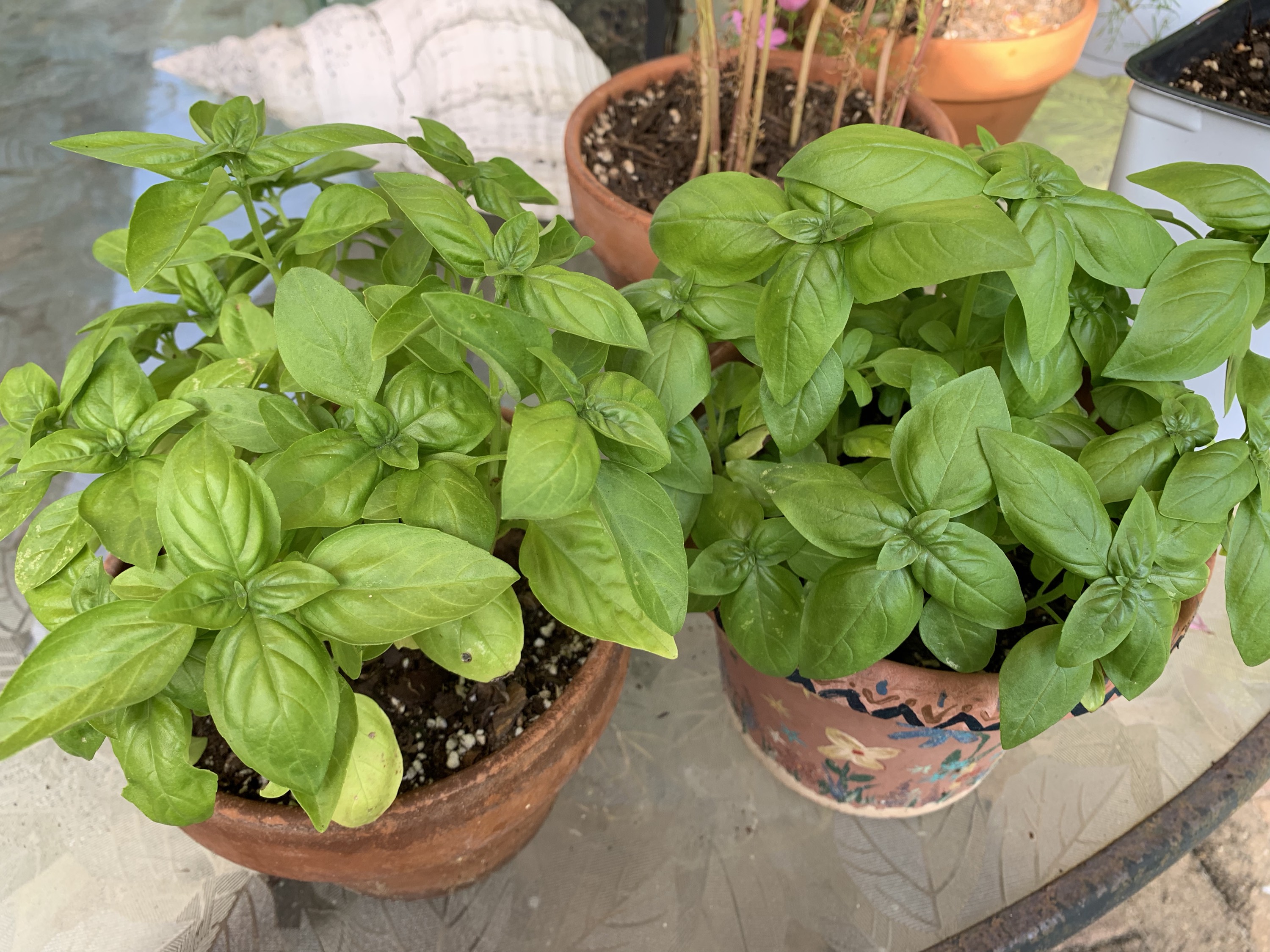
Basil can be difficult to grow in Florida, or so I’ve heard. I had some basil plants in the garden that lasted a couple of years, but then they died. Basil does self-sow if you let seeds form. I now have two pots of basil.

The basil seedlings became so crowded that I removed some of the plants by cutting them off. You should cut and not pull when thinning so as not to disturb the roots.

I kept the cuttings to use when cooking! So far, everything looks good and I hope to have nice big basil plants to pull from year round.

basil grown from seeds
Basil one month later – end of May

Cosmos and Marigolds

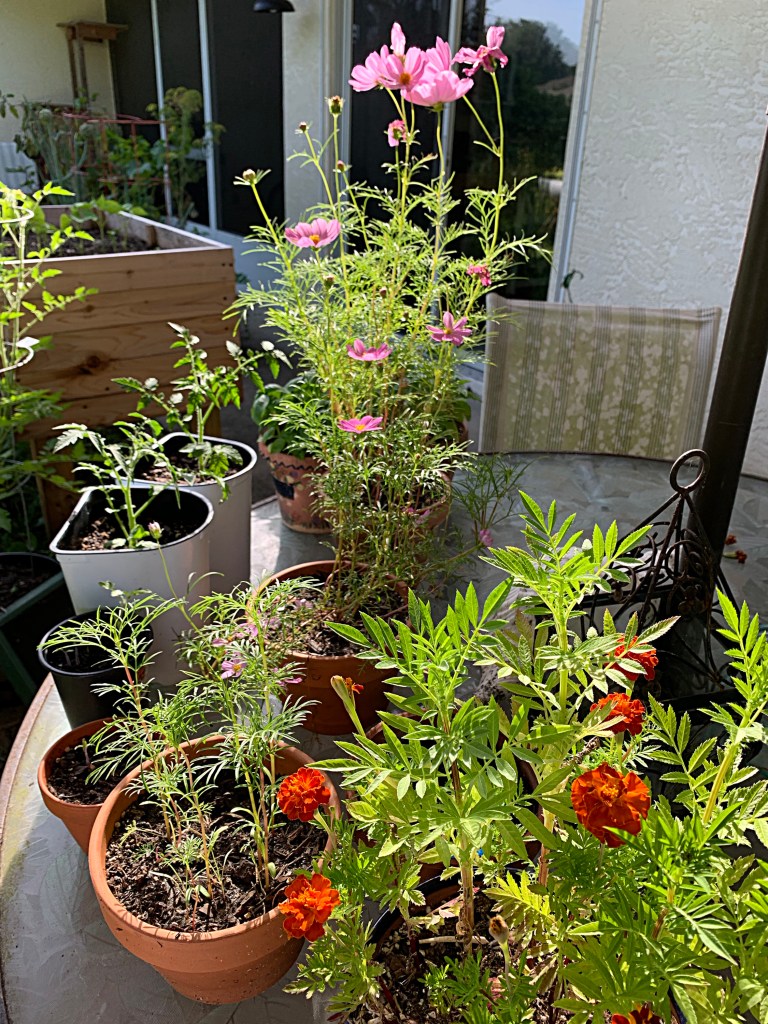
I chose two types of flower packets to grow from seeds. Marigolds are so wonderful for gardens, because they repel certain bugs that could be destructive. They should be dead-headed (pull off the old flowers) and I rip the flower head apart and scatter it among the vegetables. Every gardener probably includes marigolds when planting. I think certain varieties are better than others, but I didn’t have a lot to choose from at the store.

I bought two flowering marigold plants – see the orange one below – and will see what happens with the seeds.

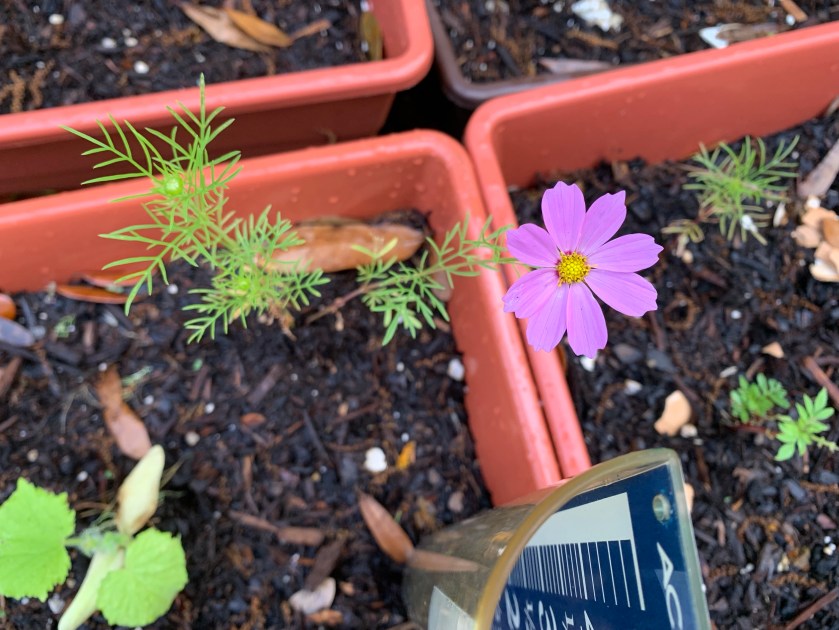
little cosmos flower blooming
Flowering cosmos in a grow box

The cosmos seedlings are looking pretty good. A little purple cosmos flower has bloomed in my grow box. That plant was begun in an eggshell pot.

This is certainly a different looking cosmos from what I am used to growing in New Hampshire. Or maybe the plant needs to mature to grow larger.

Actually, the secret is to plant seeds in real good dirt.

The cosmos in the larger pot is looking nice and blooming regularly

Growing Dill

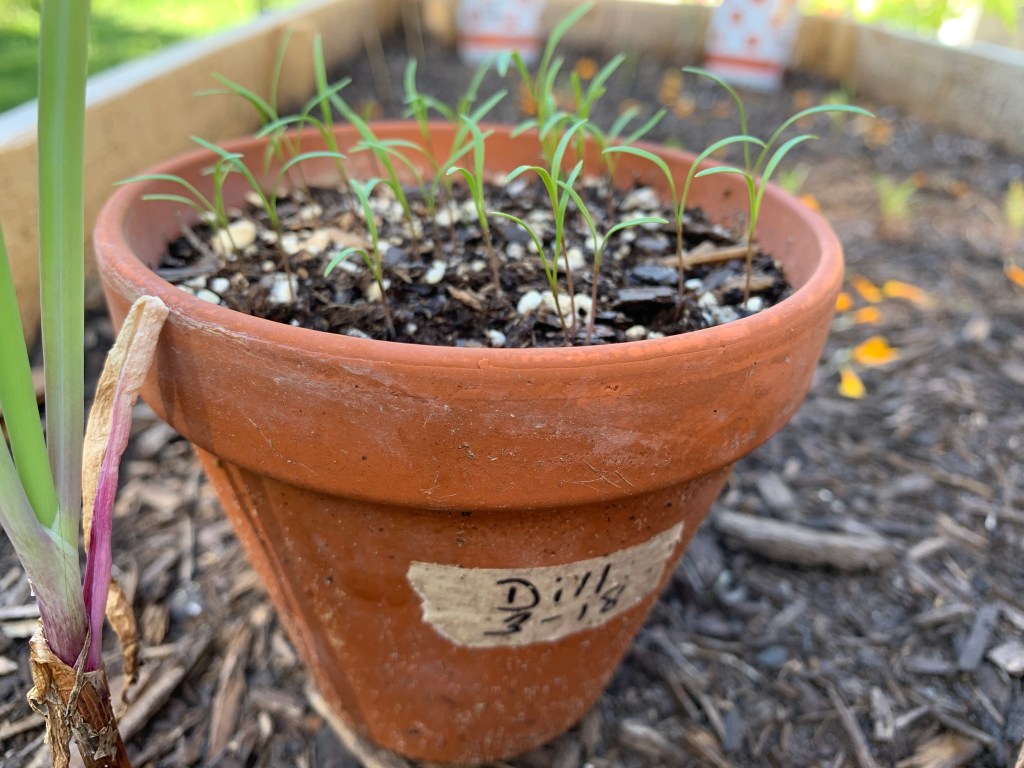
I always grew dill in my northern garden, but have not had luck growing it here in Florida. I do have a few small seedlings in the grow boxes, and now have dill sprouting in this terra cotta pot.

Because I don’t have much luck growing dill, I have chosen to grow fennel. It is similar in that it also grows tall and feathery and has flowers that attract beneficial bugs. Also the Swallowtail butterfly will leave her eggs on fennel, just like parsley and dill.

Dill seeds sprouting in a pot
Dill seedlings

I needed up putting the dill into the potato garden and planted more dill seeds in a large pot.

Dill plant

Cherry Tomatoes

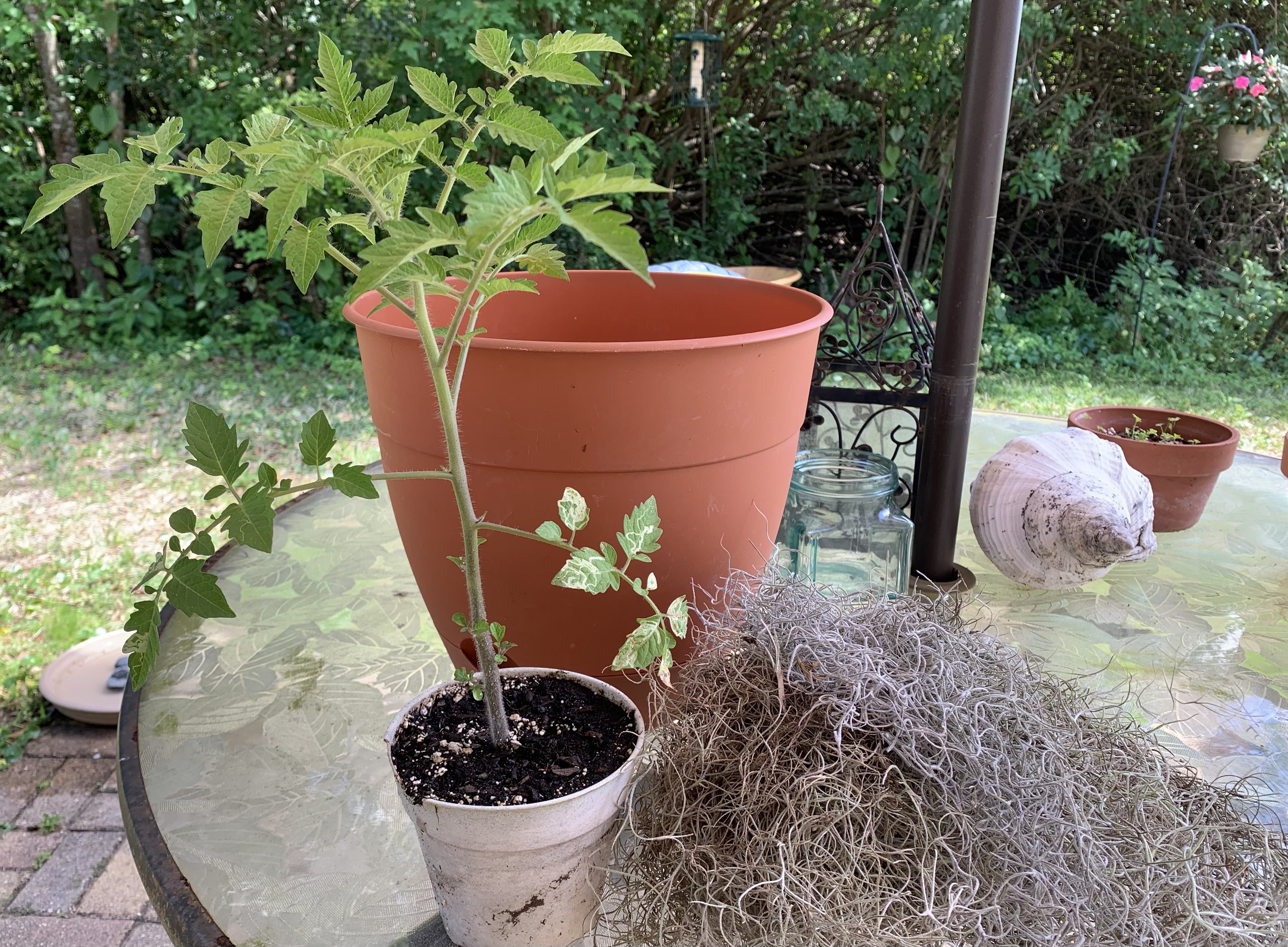
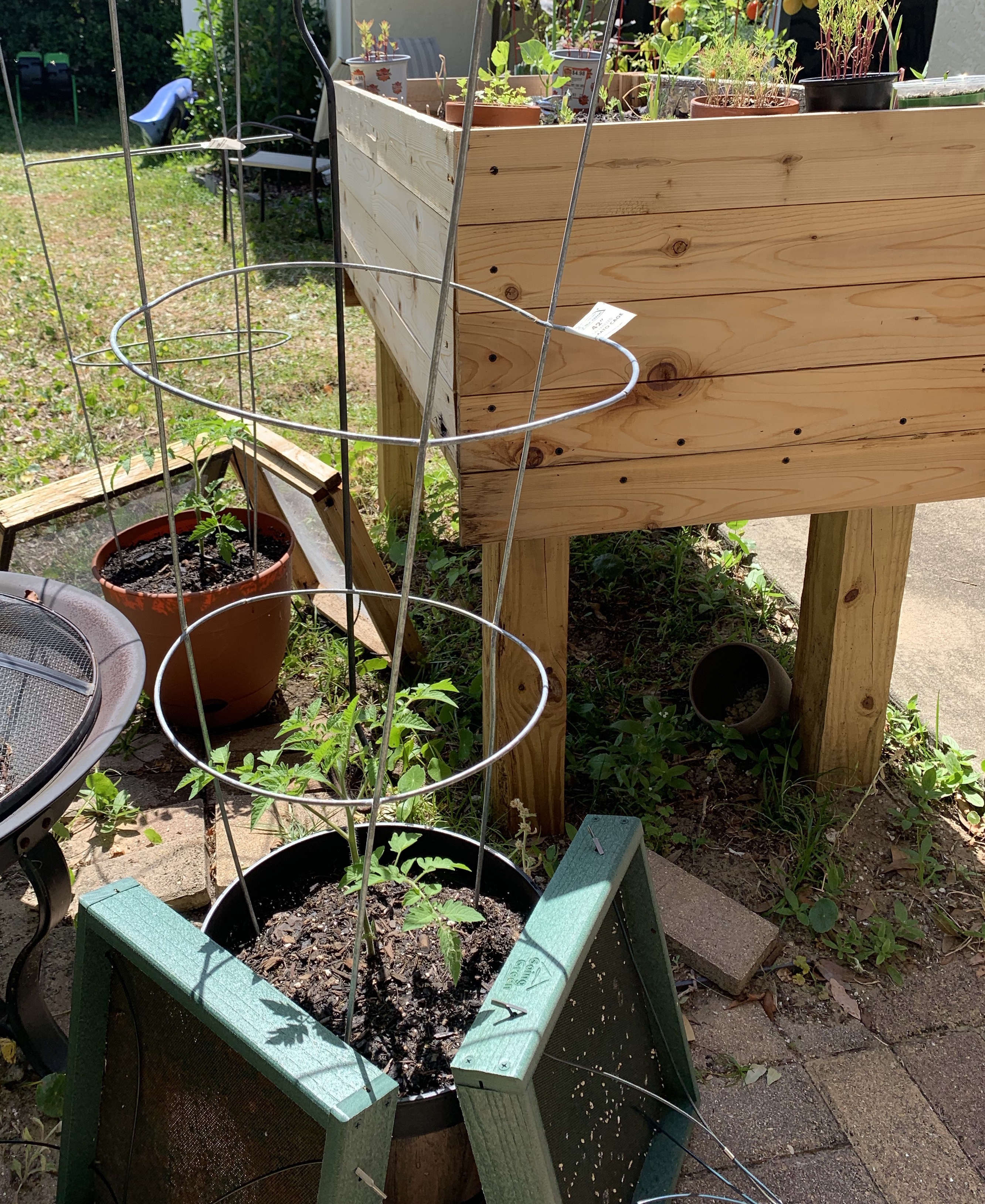
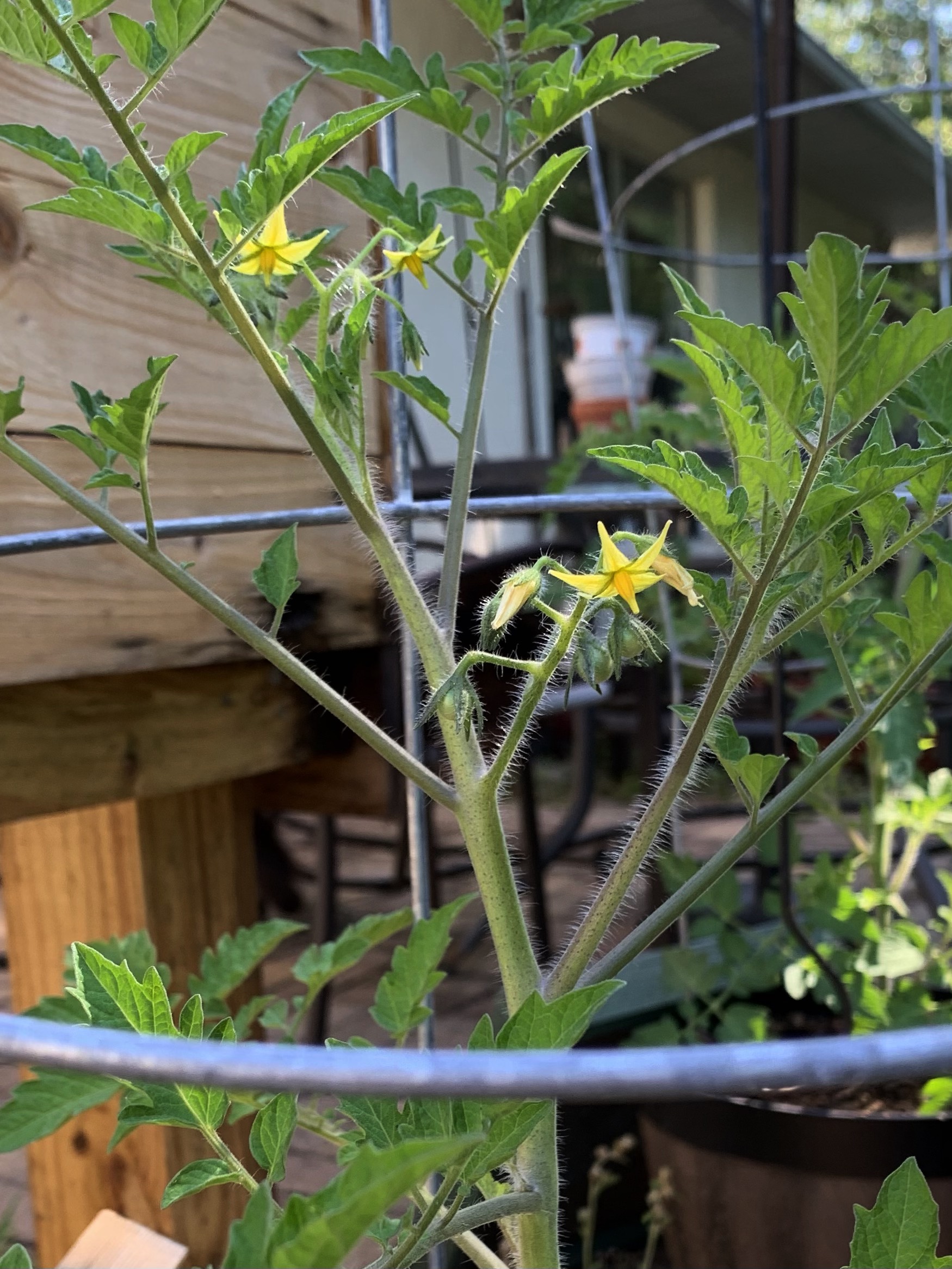
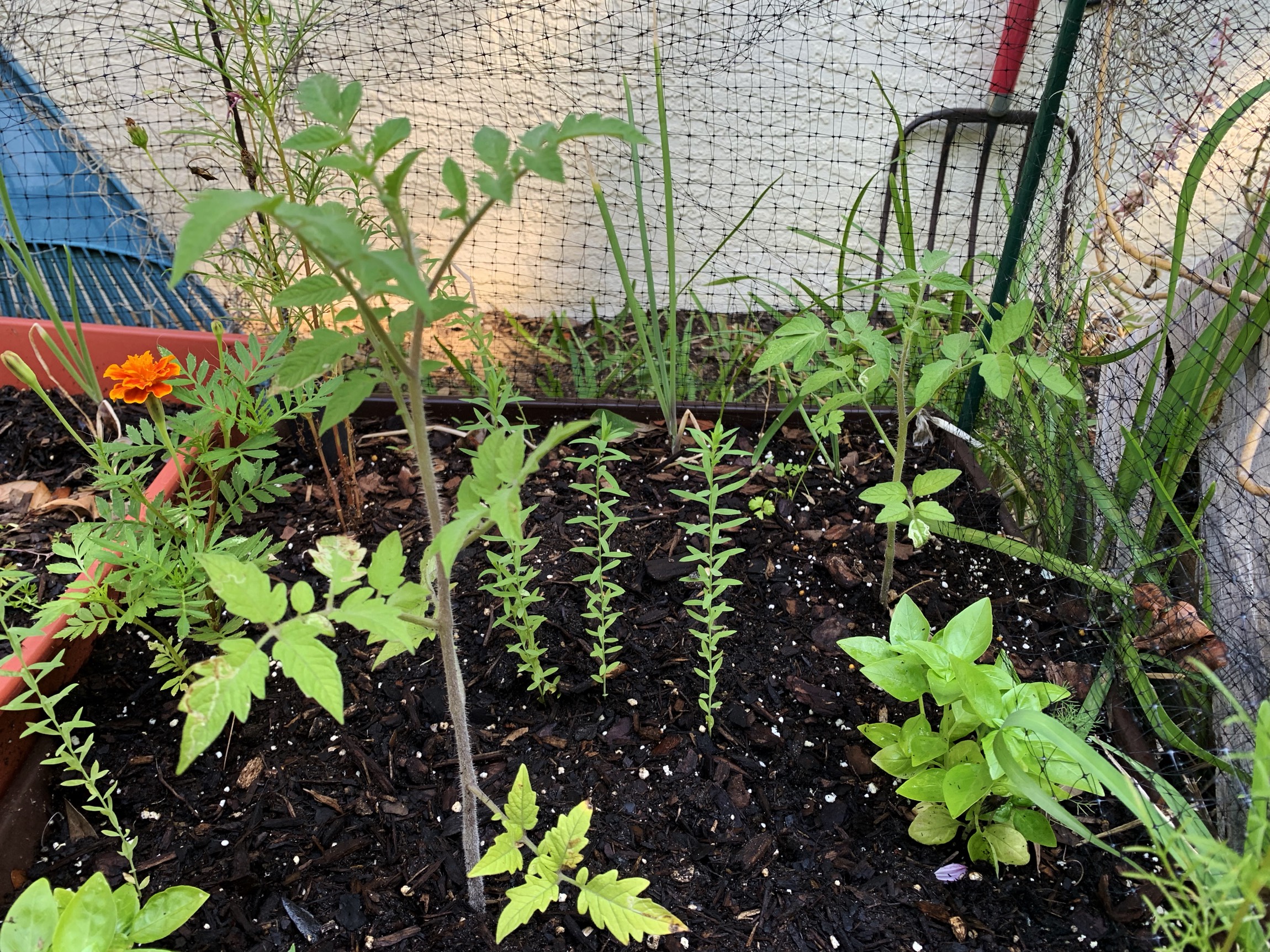
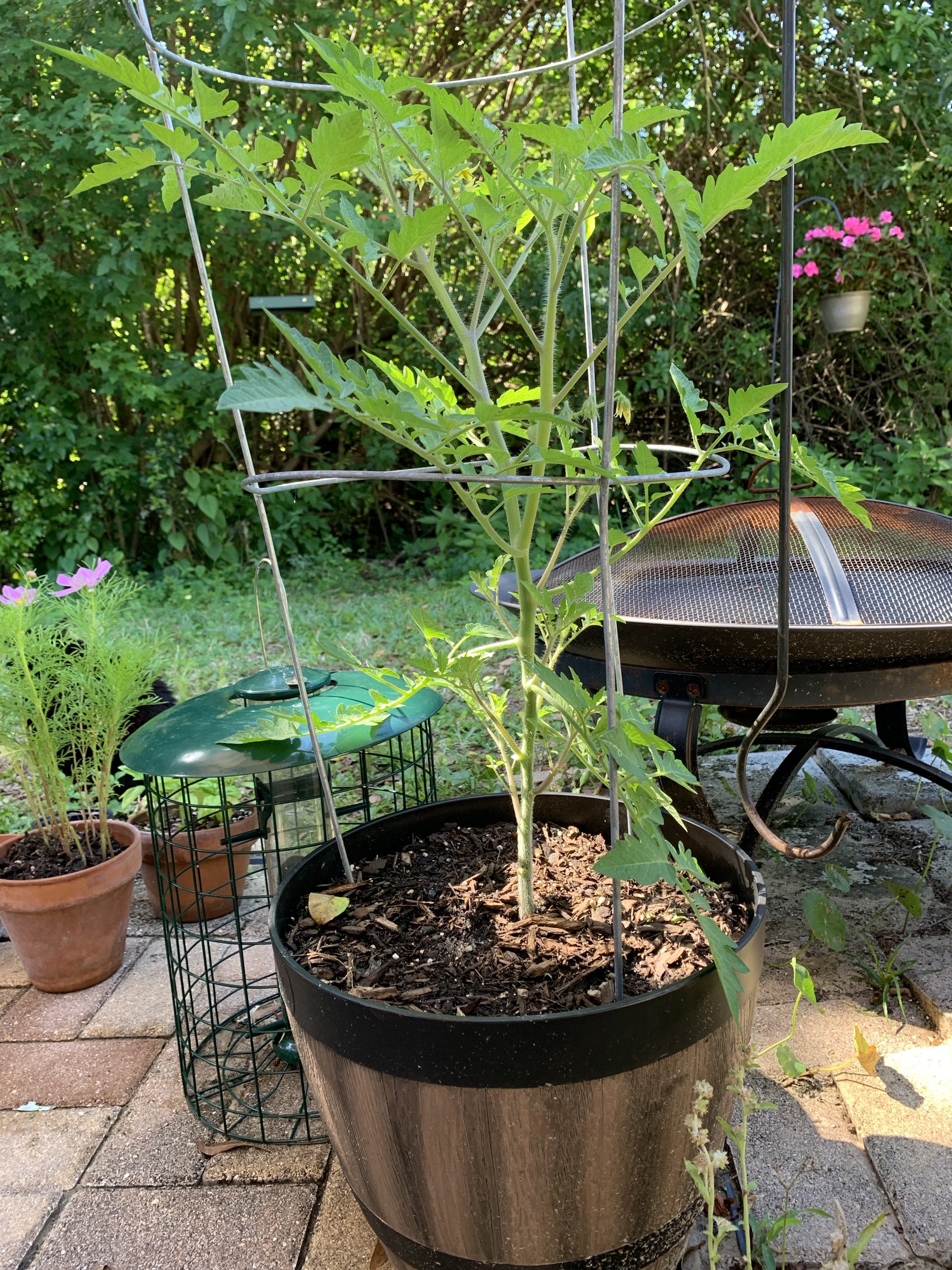
My cherry tomato seedlings were not doing much at first, but now in May they are large plants. I’ve transplanted them a few times and they have little tomatoes on the vine.
Plants by the end of May