Discovering a Monarch Chrysalis on Rosemary

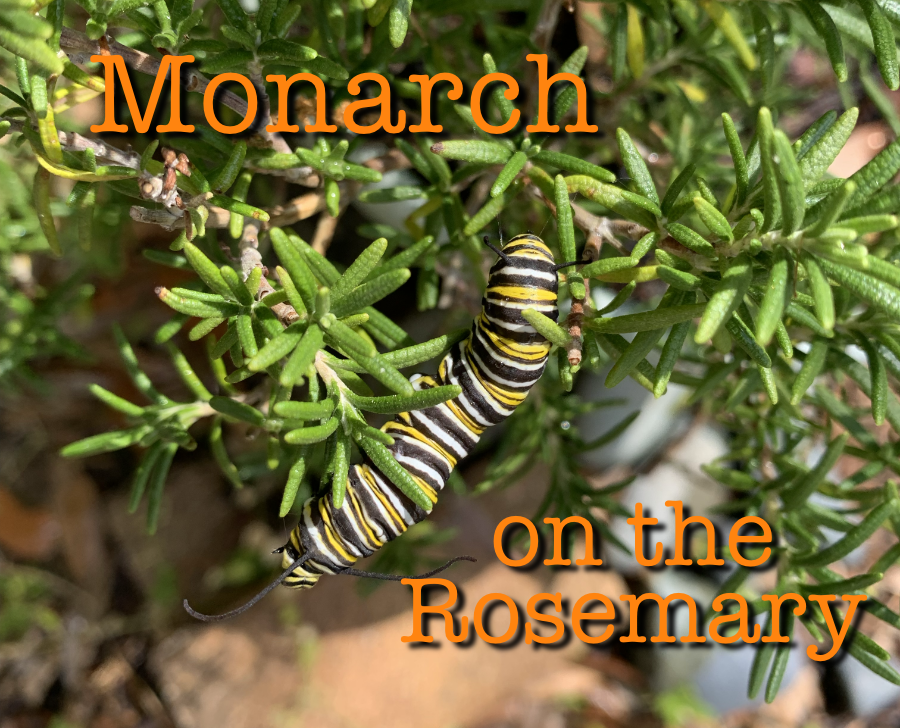
It is not usual to see a Monarch caterpillar on a Rosemary plant. Monarchs like Milkweed. But this one had a purpose, and had traveled quite a long way to be there.

I have one Rosemary plant in a pot on my back deck. On March 24th I noticed this caterpillar climbing all over it. I recognized it as a Monarch caterpillar and wondered what it was doing on the rosemary.

My first thought was, “You poor thing, you must be lost.” I know he needed milkweed to eat. But, I also know that some caterpillars crawl away from the host plant to create their pupa. I left him alone, and didn’t see him the next day. I figured the birds got him.
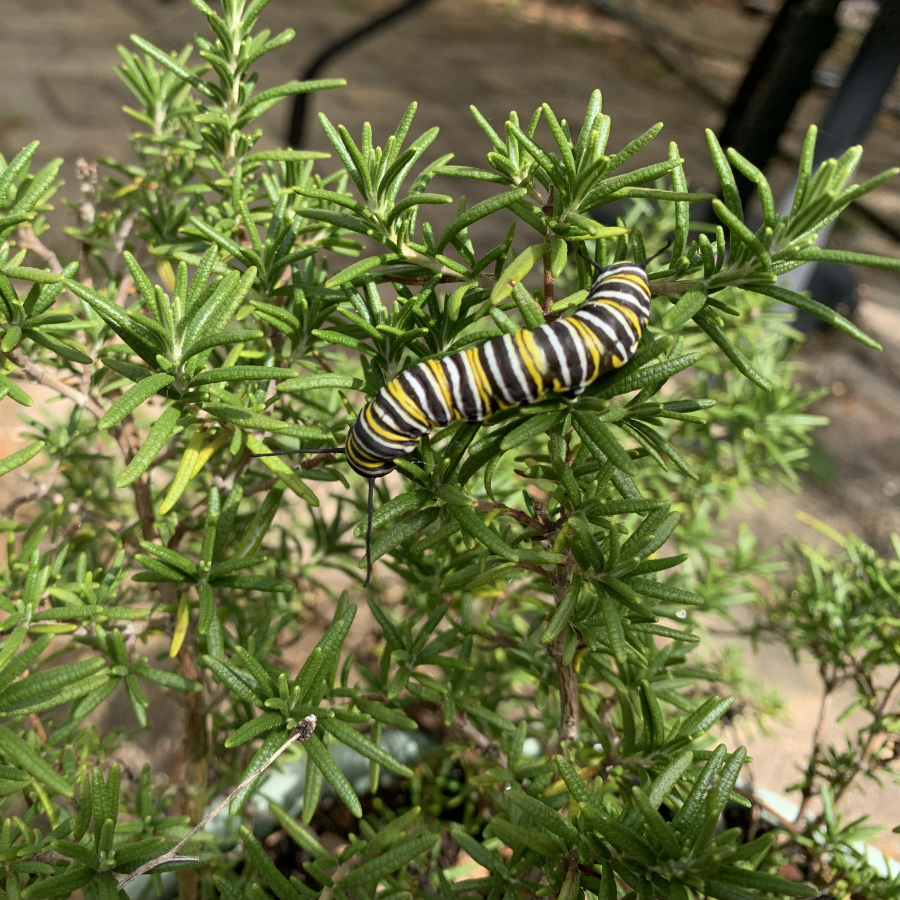
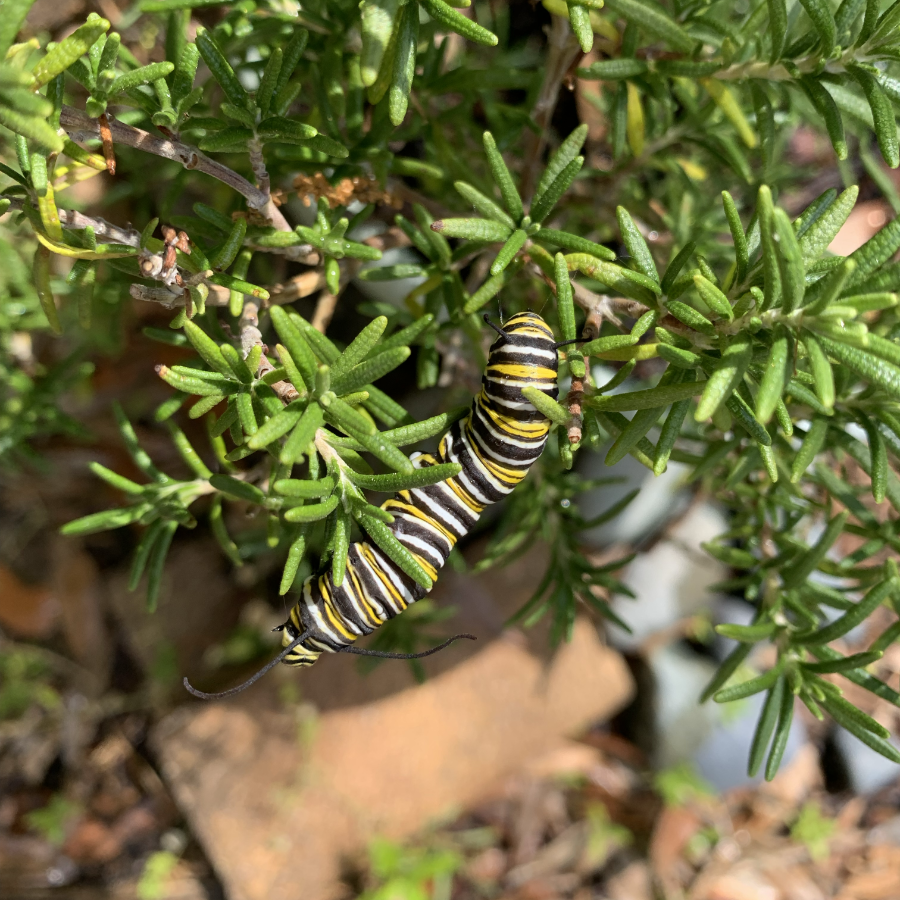
I worry about cardinals eating the caterpillars, but I guess birds don’t like the taste. I do see lots of caterpillars, and then they disappear. I always figure something ate them.

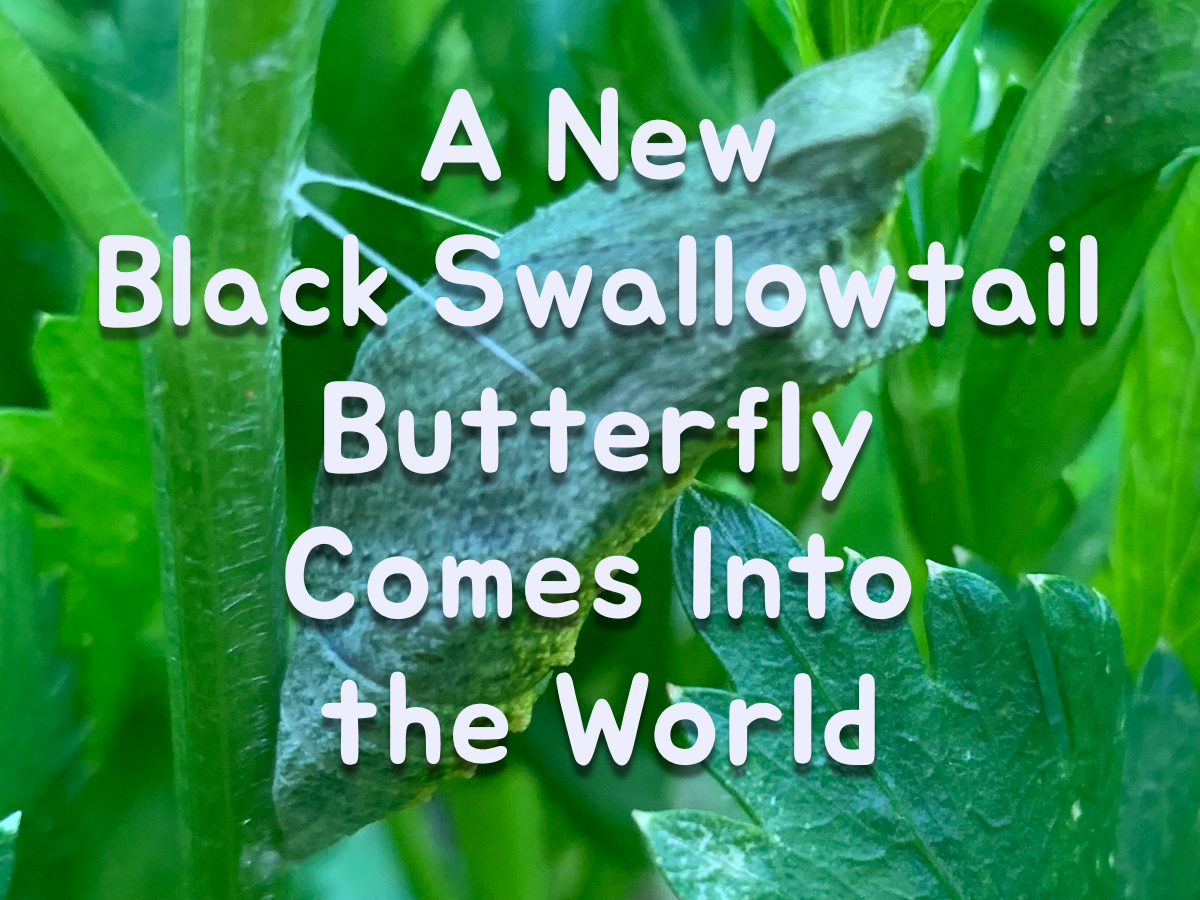
A day or two later I was at the Rosemary plant to cut a piece for my tea. And there it was. A beautiful green chrysalis! It had what looked like a gold band near the top and little gold specks. The caterpillar chose a spot down under a branch, which makes it difficult to see. The caterpillar had not disappeared. He, or she, had morphed and was no longer a caterpillar.

Although I do have some milkweed in my yard, it is pretty far away from the rosemary. It is a long way for a caterpillar to crawl!

I had to look this up. One notation mentioned they will crawl as far as 30 feet from the host milkweed! I don’t know how this little guy made it to the rosemary. My best guess is that it is 20 to 30 feet, from my milkweed.

The day after I found the chrysalis, we had a huge, windy rain storm. The wind blew hard, from all directions and I was a bit worried. The attachment was good and the chrysalis remained.
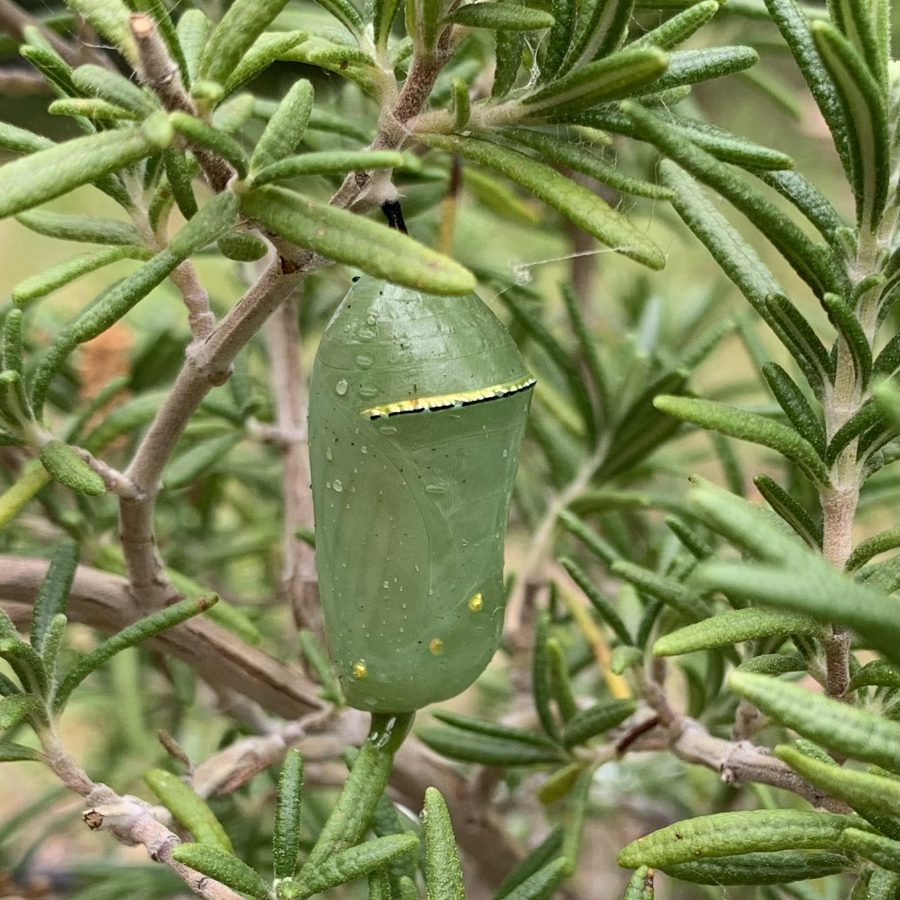
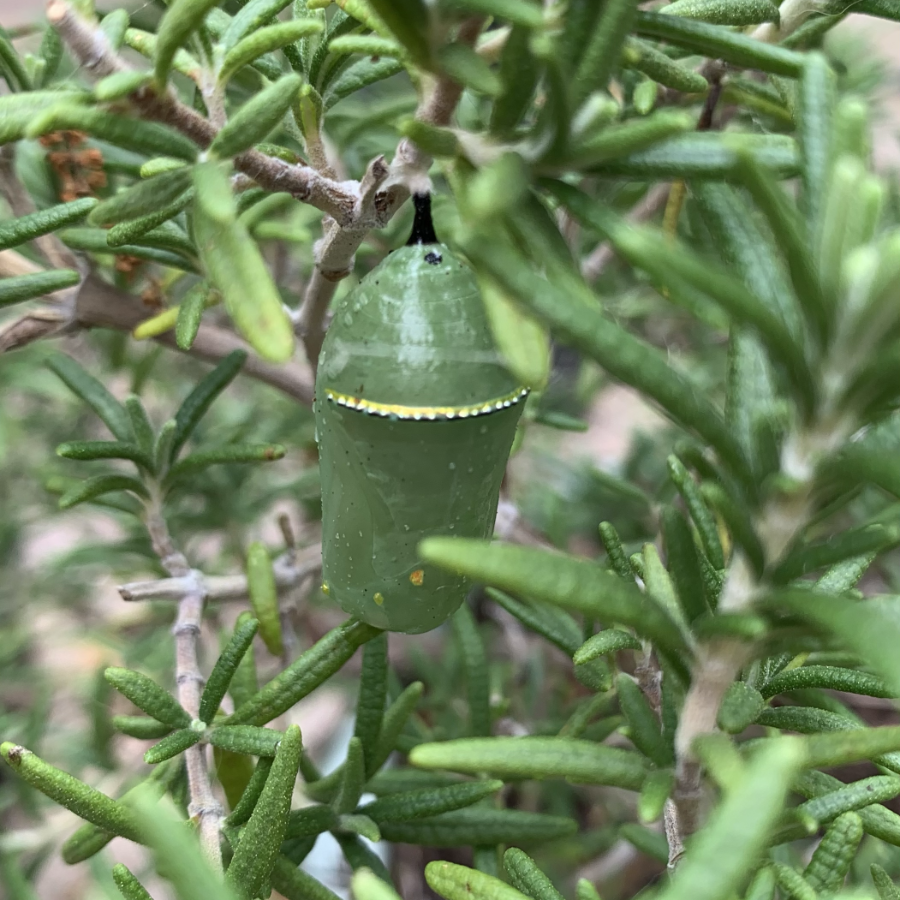
Today is April 5th and the chrysalis is darker in color (see photo below). I can see a wing inside! It has been 11 days since I saw the caterpillar. The Life Cycle, Monarch Joint Venture page says this stage can last 8-15 days.

I should expect to see a butterfly soon!
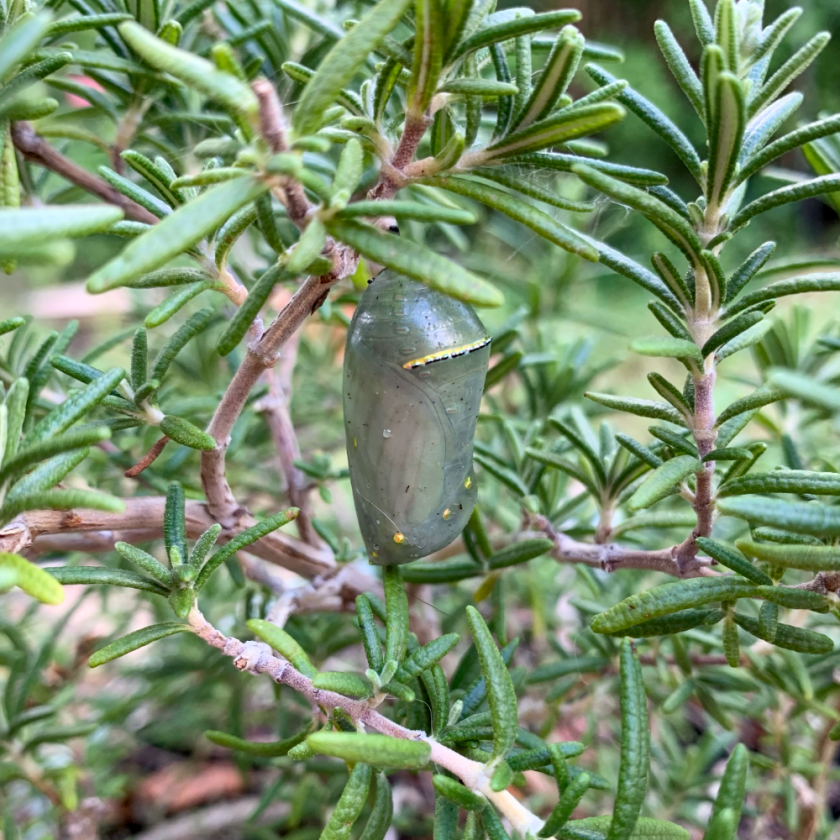
monarch chrysalis is getting darker
Can you see the wing?

Even if I miss the butterfly emerging, I’m happy to have had this chrysalis in my garden. I might get more rosemary and put it nearer the milkweed. The sturdy branches might be what drew him all this way. It makes me wonder if the caterpillar somehow knew the rosemary was here and purposefully headed to it.

I’ll be watching this one closely.

*Update – The next day…

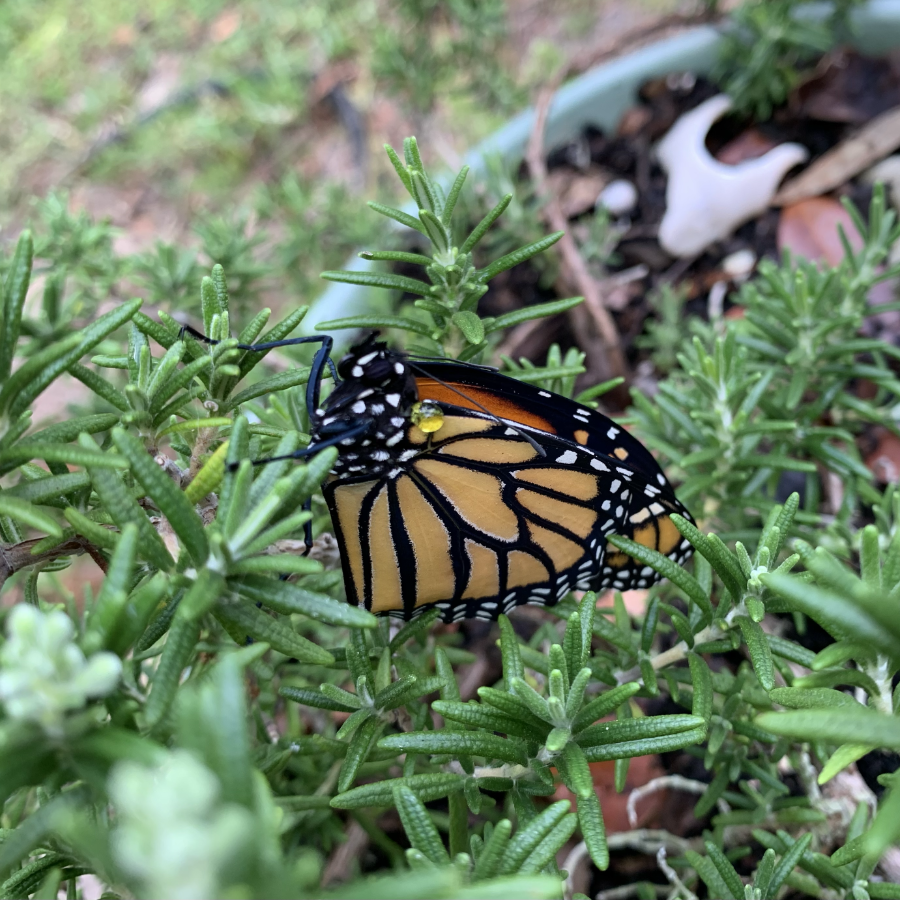
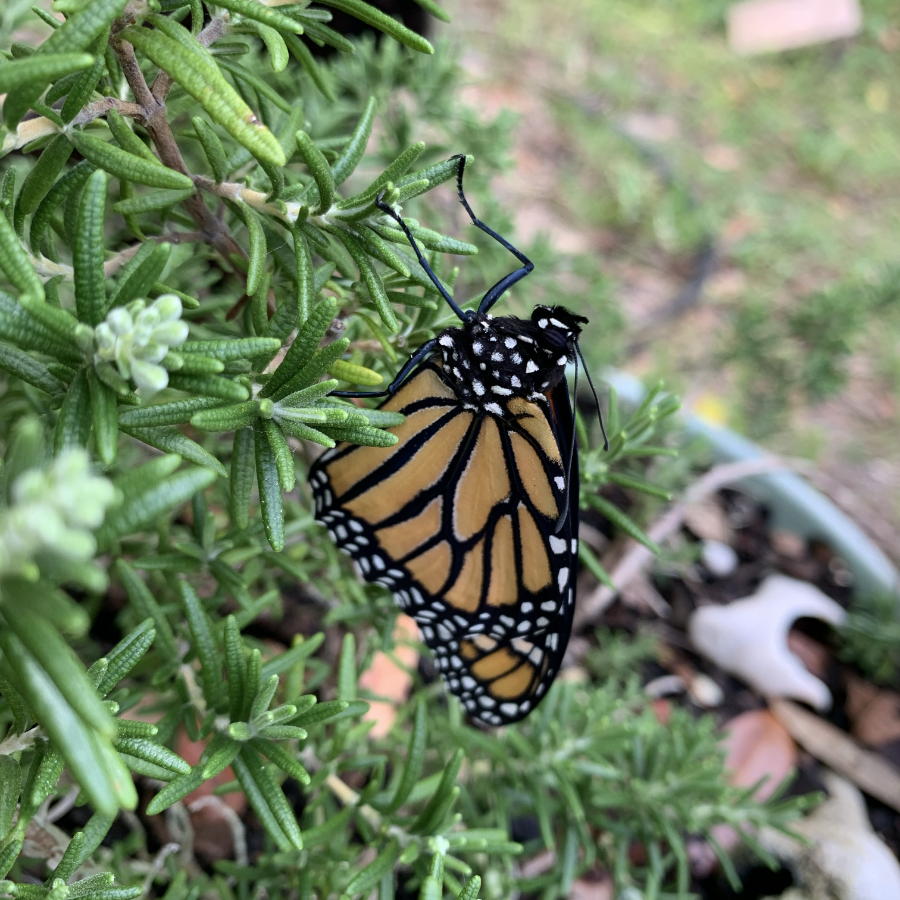
The chrysalis was very dark the next morning. I had some vegetable plant watering to do, but finally went to get my iPhone for a picture. I was too late! The butterfly was already out and on the Rosemary.

If you see a very dark colored chrysalis, sit and watch! It wasn’t long at all. I’m sorry I missed his emergence, but I got to see him before he flew away.

In fact he has been sitting on the plant for hours now.
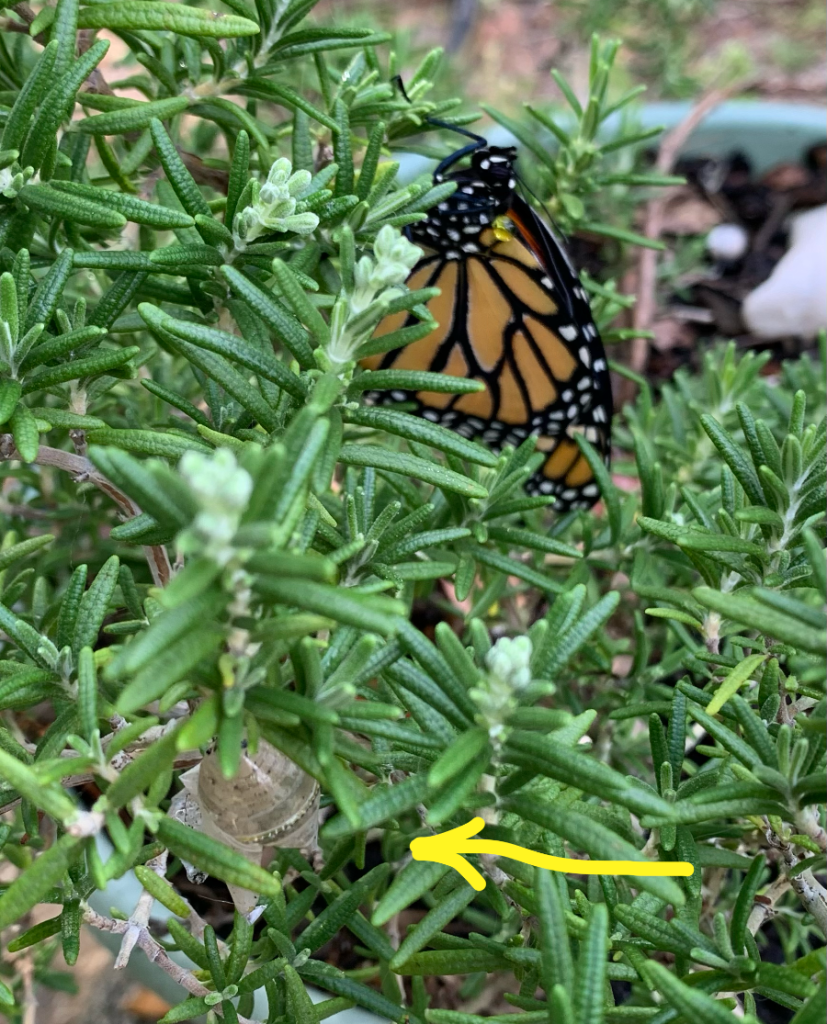
Freshly hatched, Monarch butterfly near open chrysalis.
butterfly divider flowers

Something went wrong. Please refresh the page and/or try again.

Photos of My Summer Zinnias

Zinnias are some of the brightest flowers that can be added to the garden. Bees and butterflies use them for food, and even a place to sleep. The flowers are long lasting and the seeds are easy to save.

Last year (2023) I grew zinnias for the first time. I’m not sure why I never grew them before in Florida, but I’ll always grow them from now on.

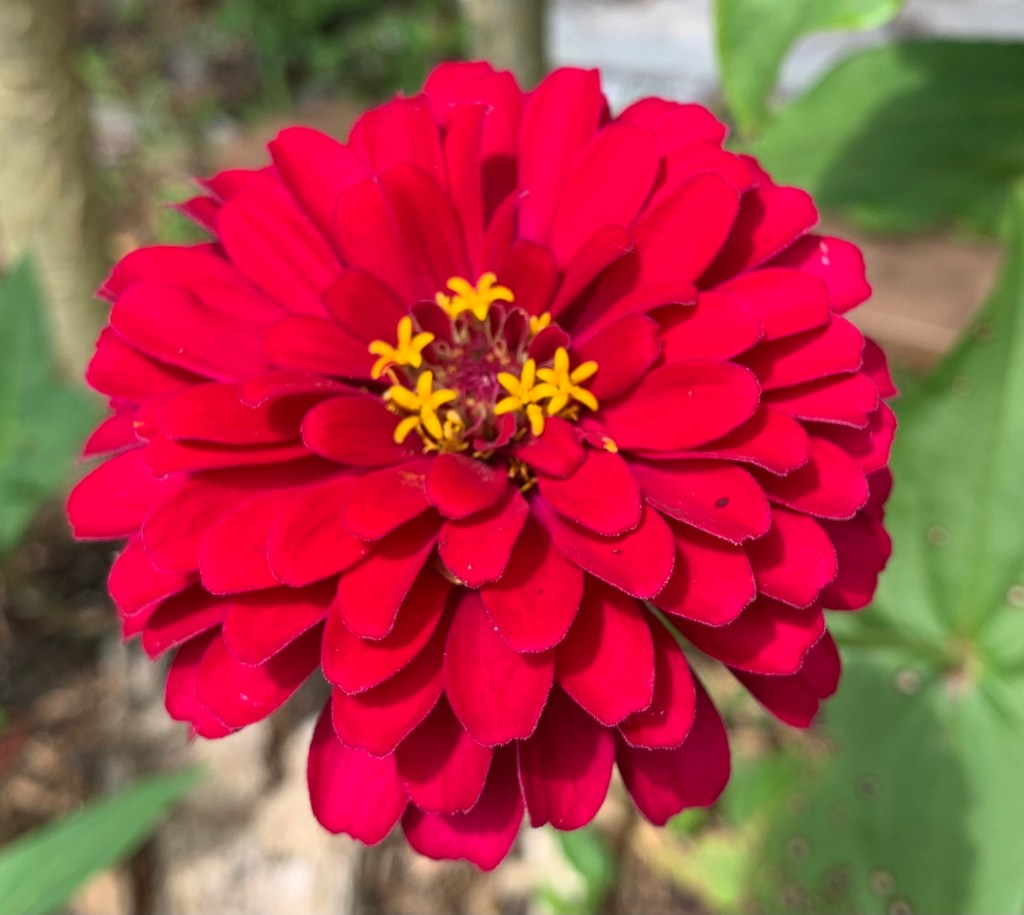
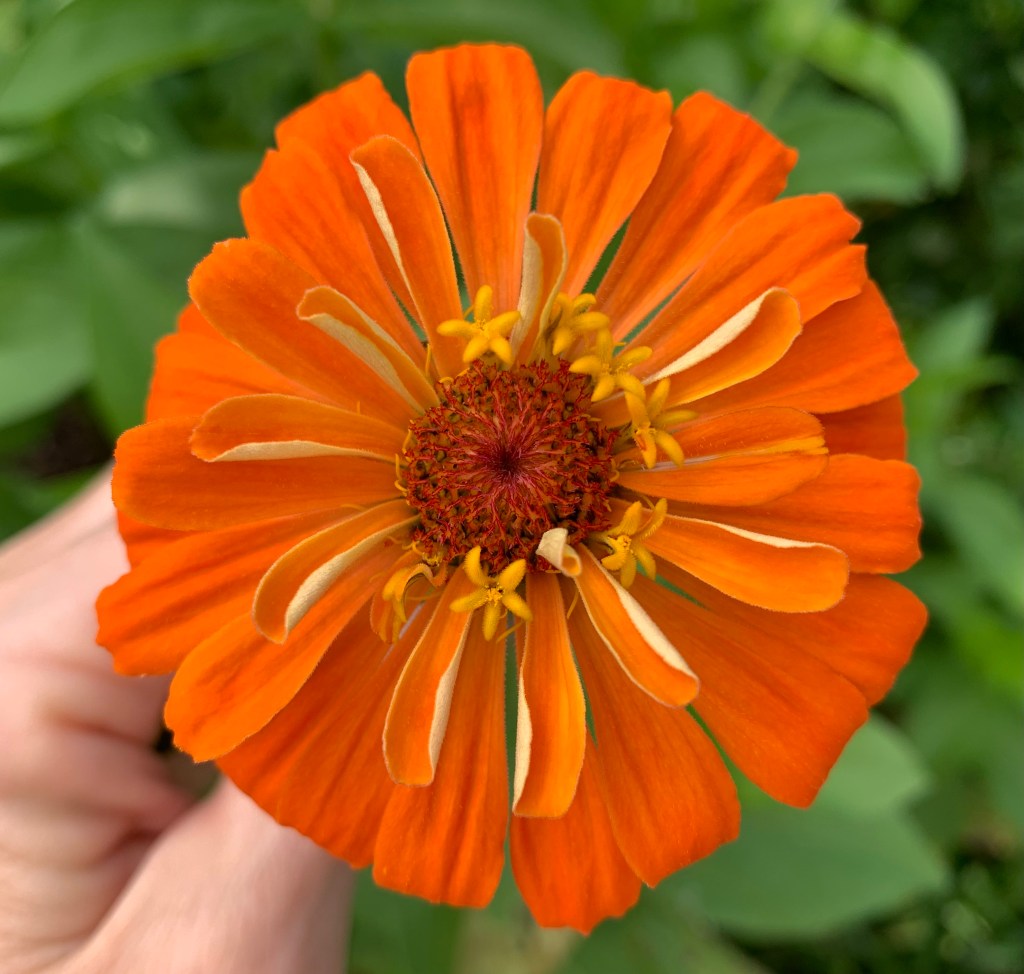
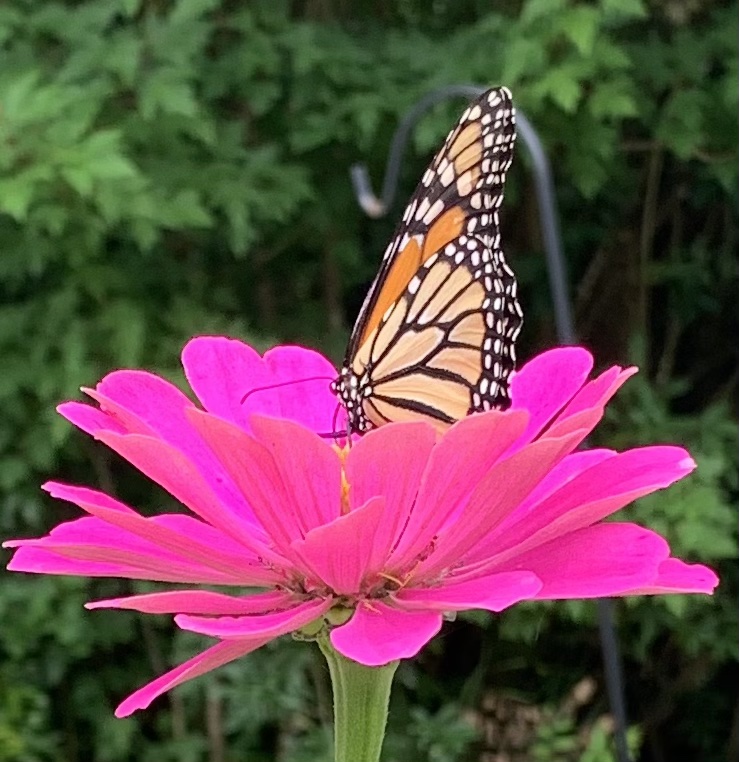
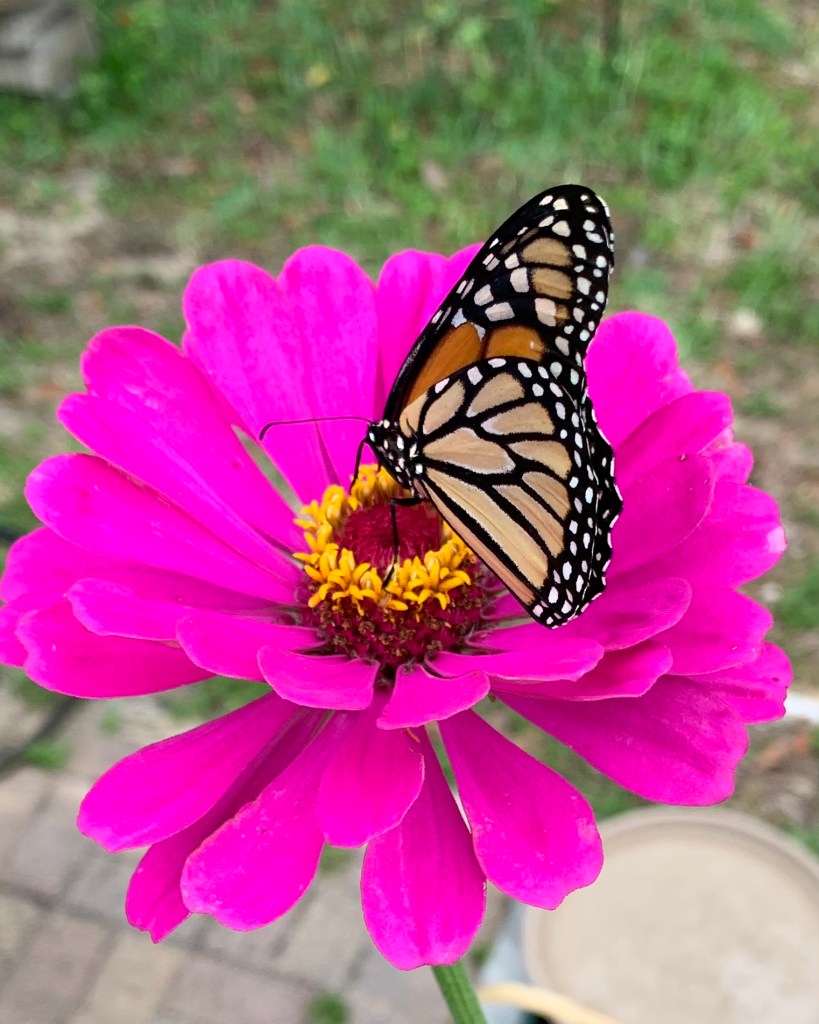
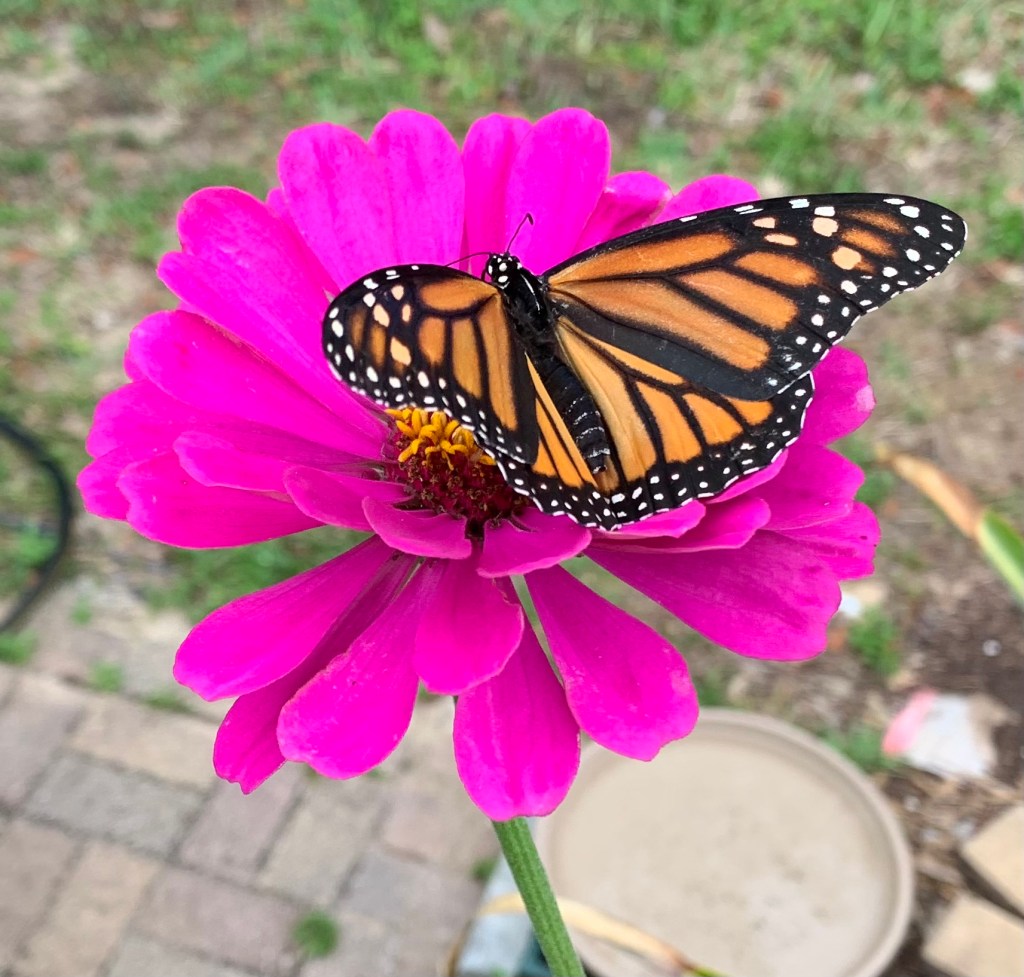
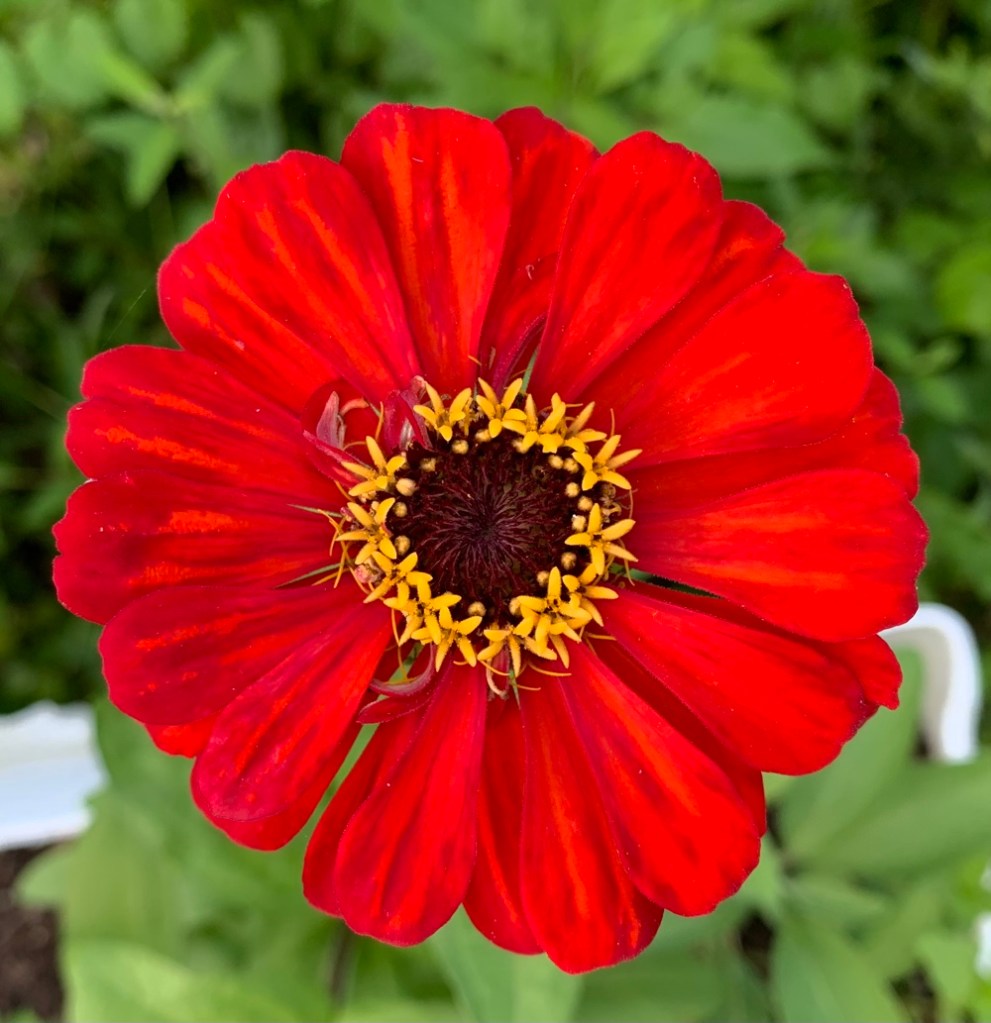
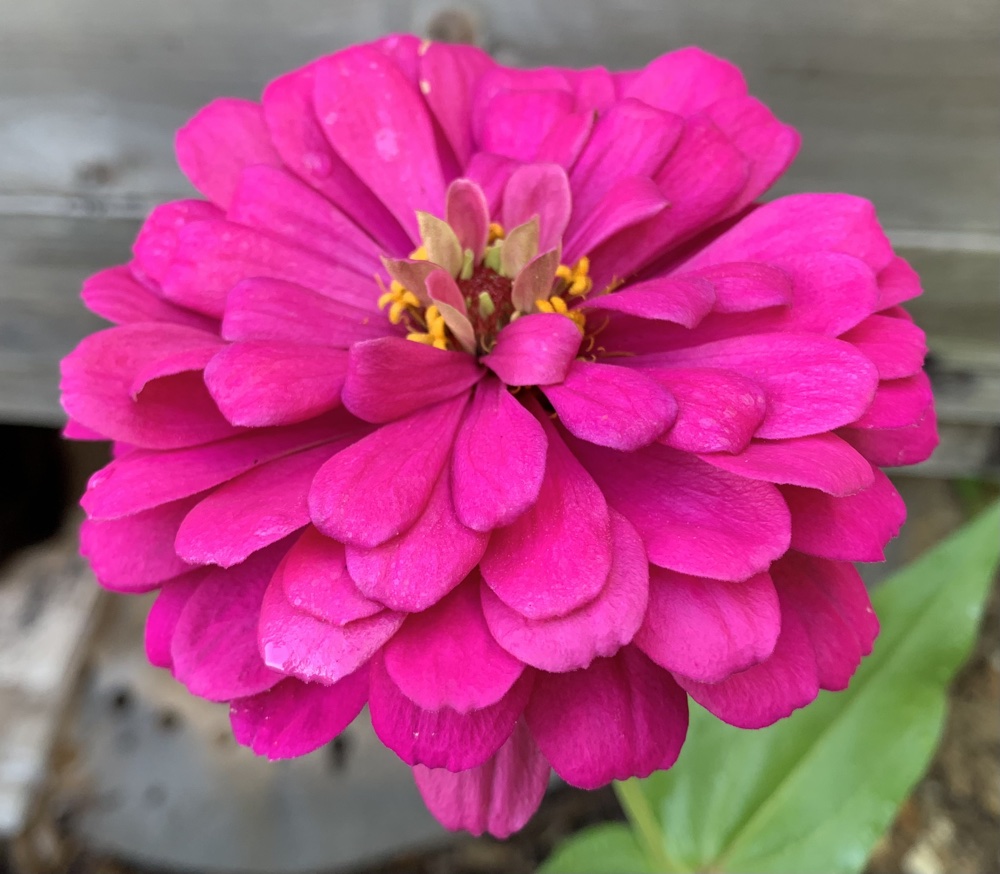
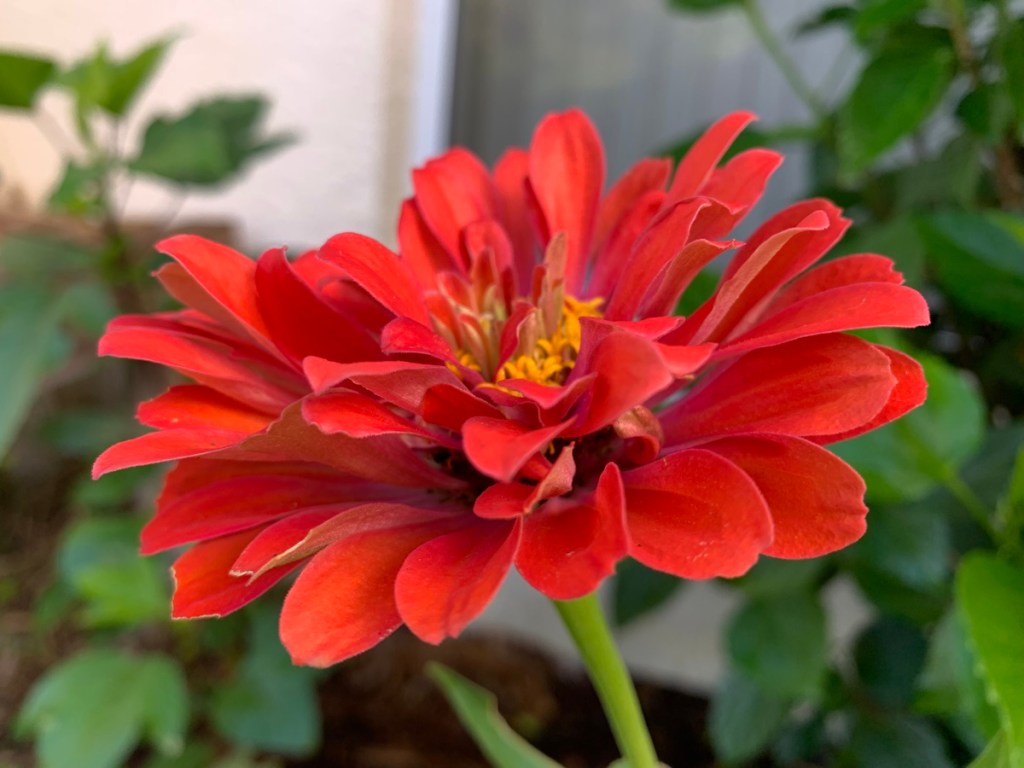
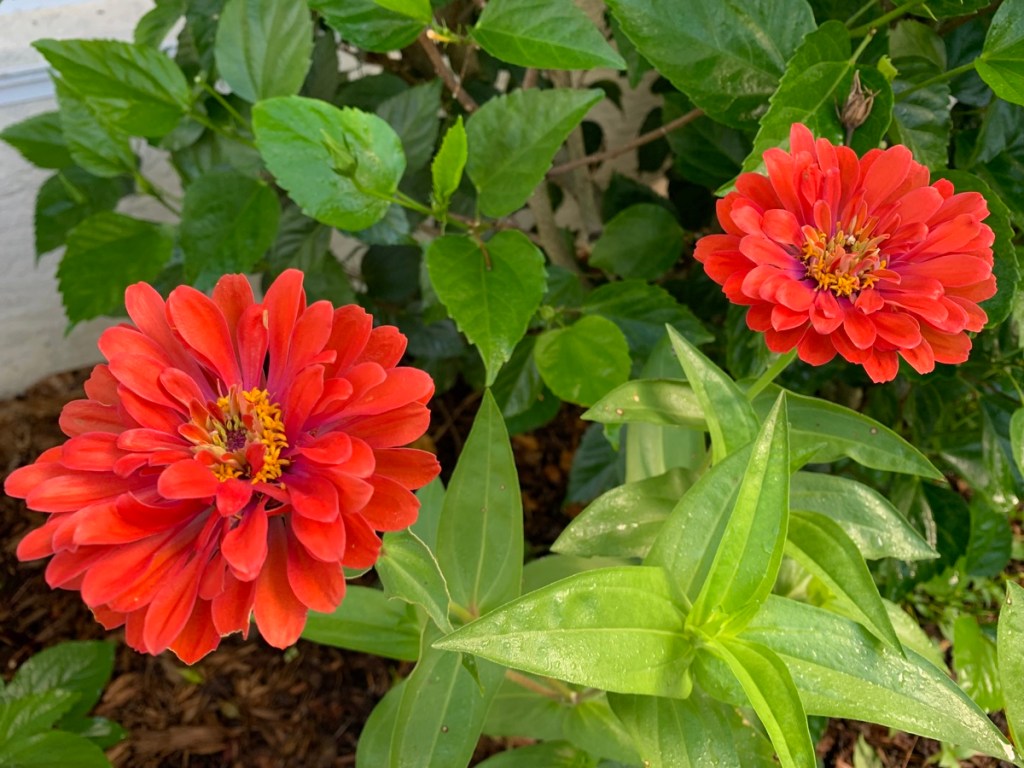
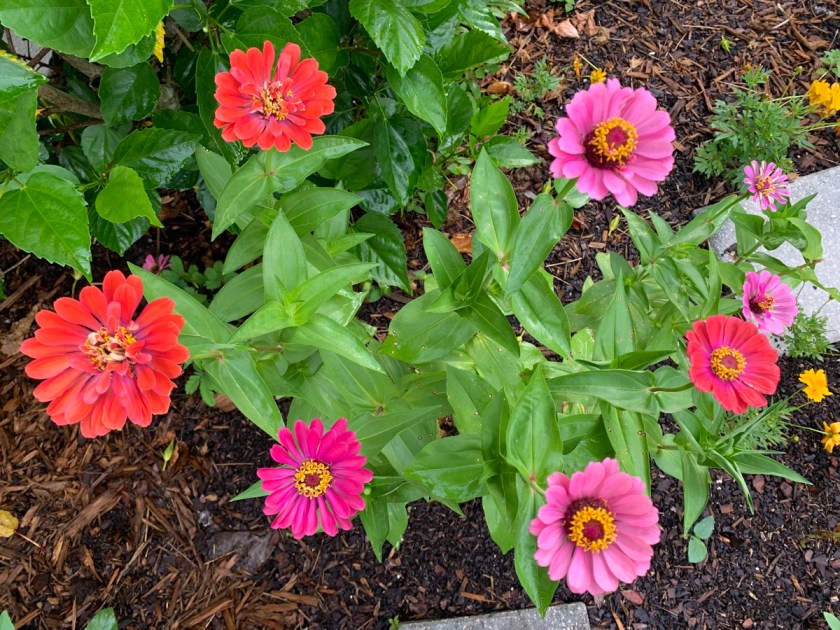
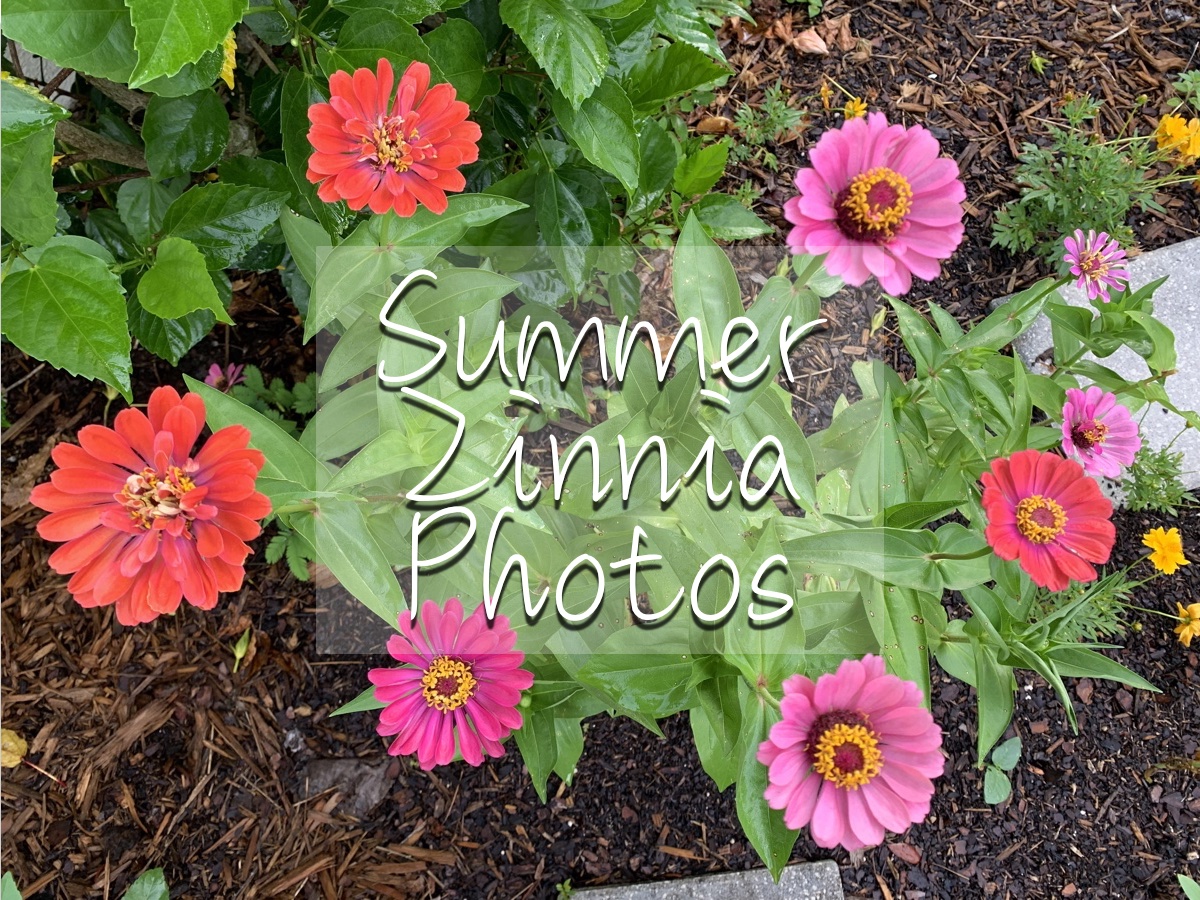
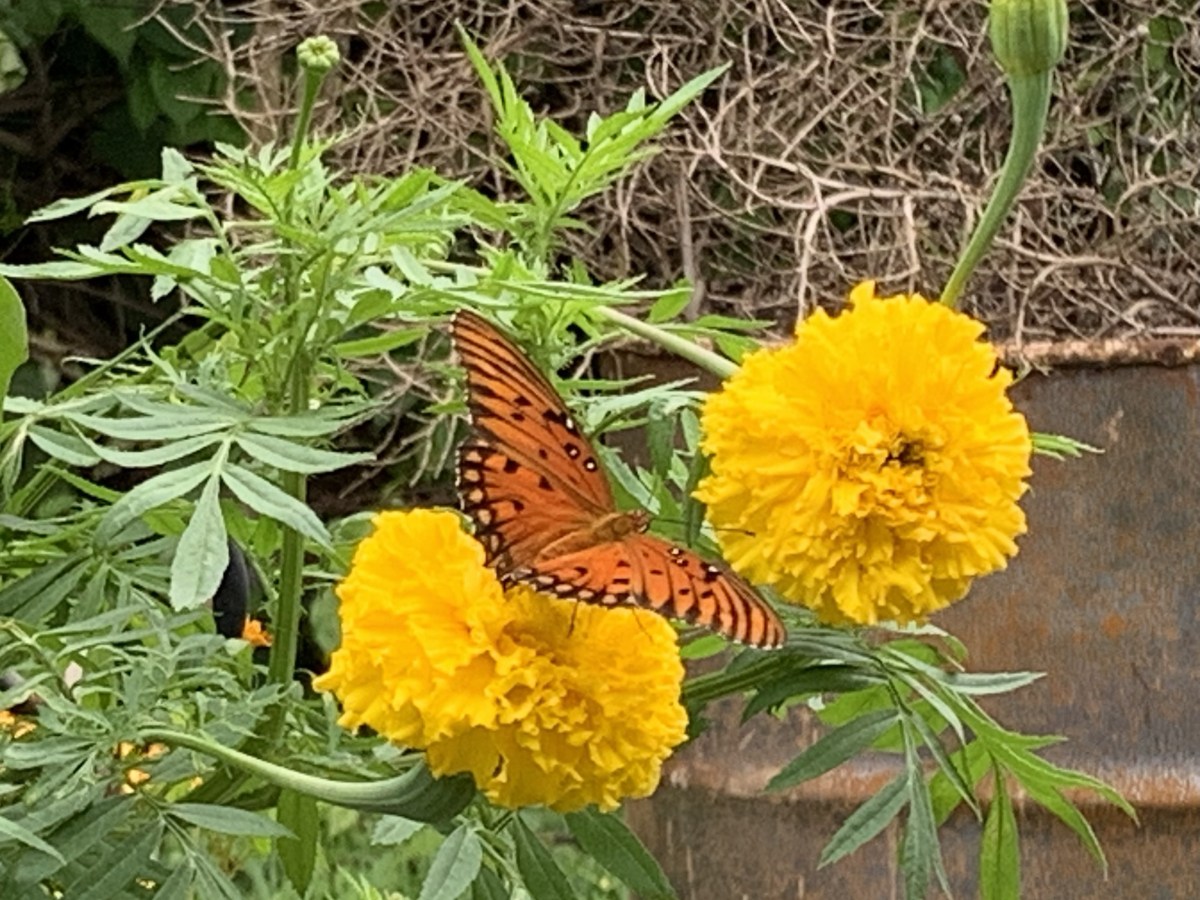
Look at the colors! The reds are so bright, and the orange is so true. The hot pinks are incredible, and the butterfly thinks so too! I think it is a Monarch.

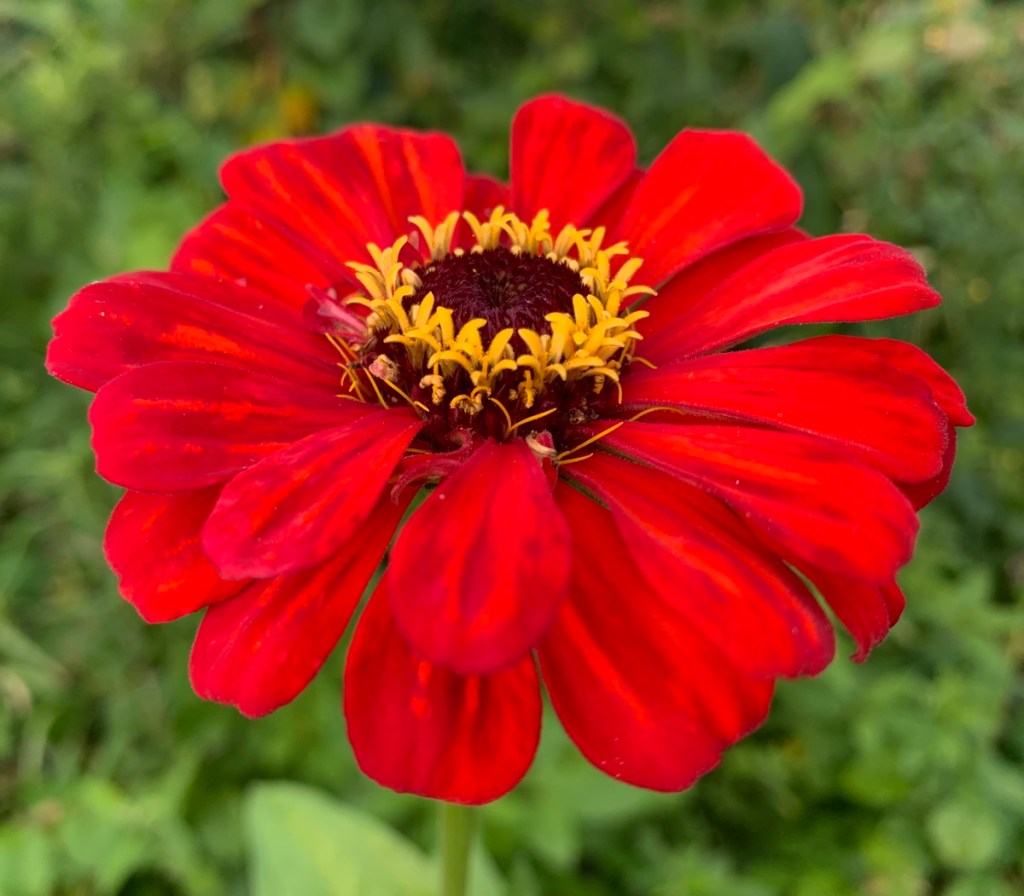
The bees and butterflies especially love the Zinnias with those yellow centers. It’s where they eat and gather pollen.

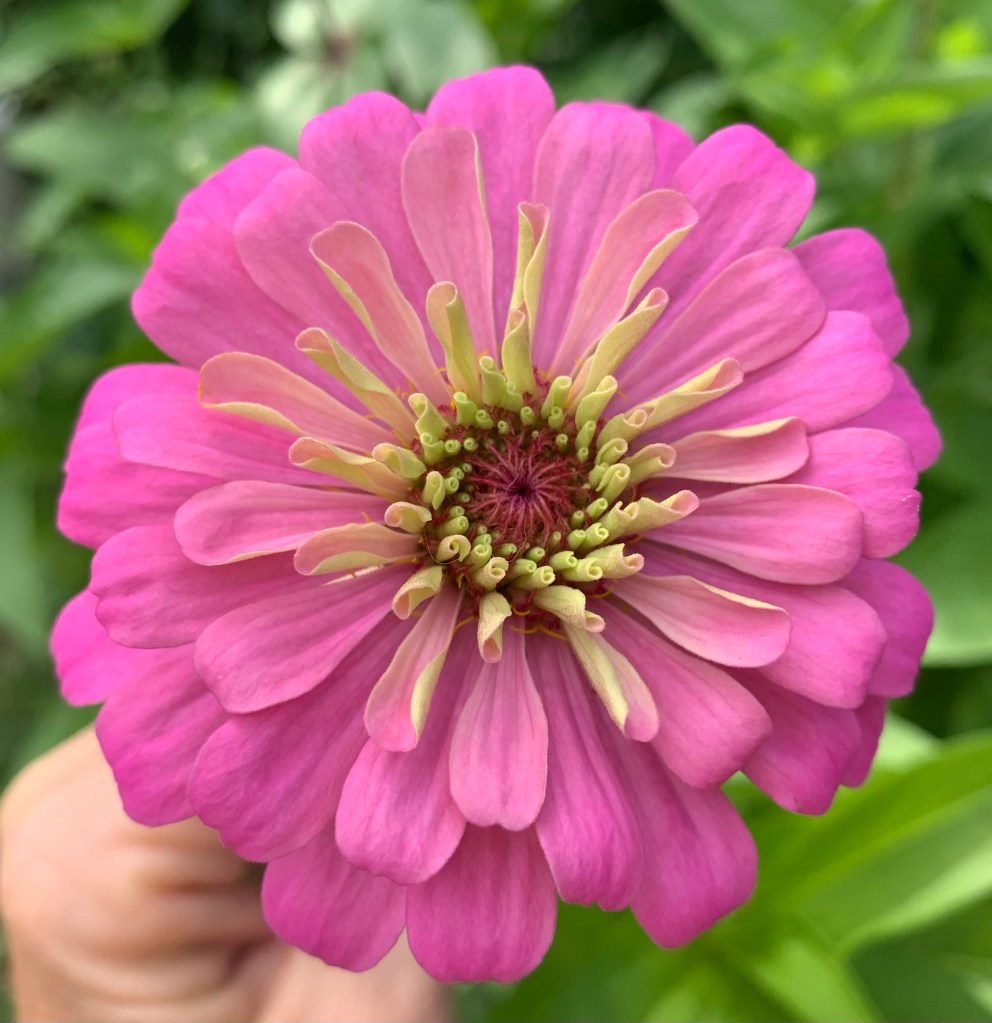
A Zinnia flower will change day by day as the petals open and the center grows. They are quite long lasting also.

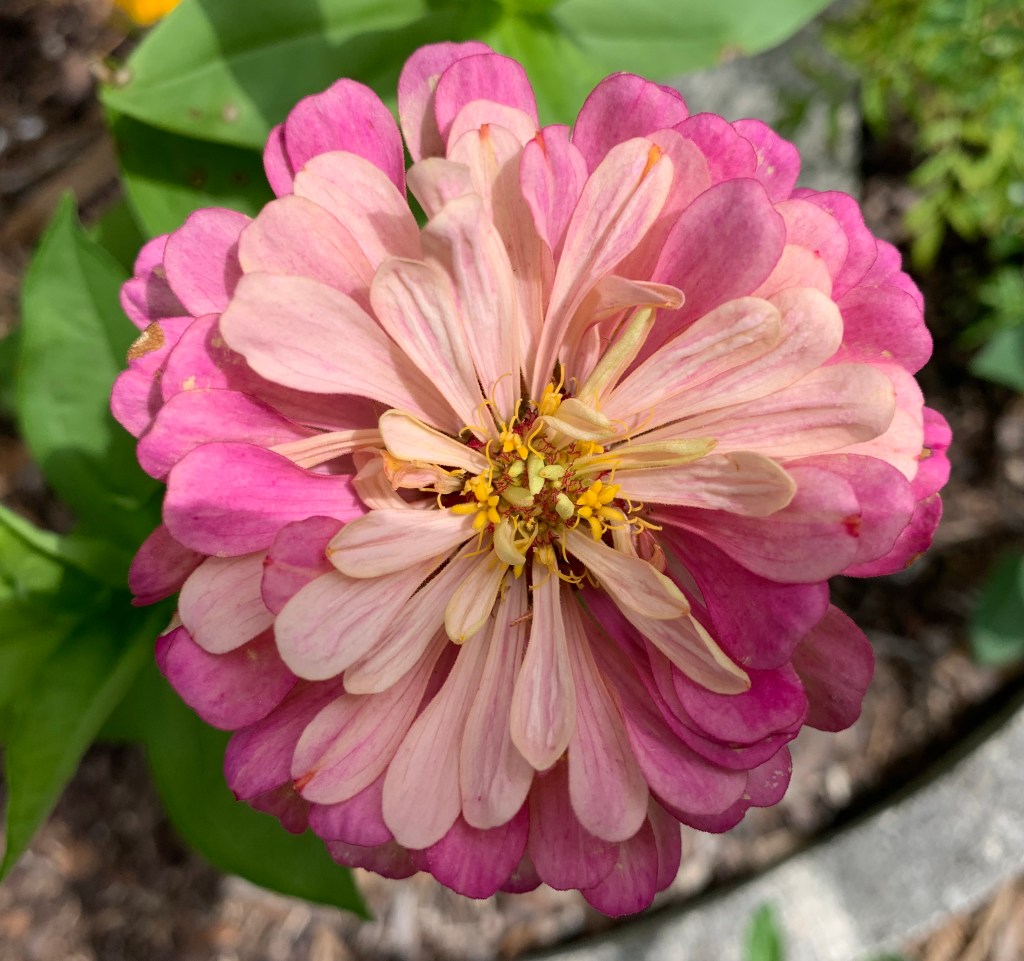
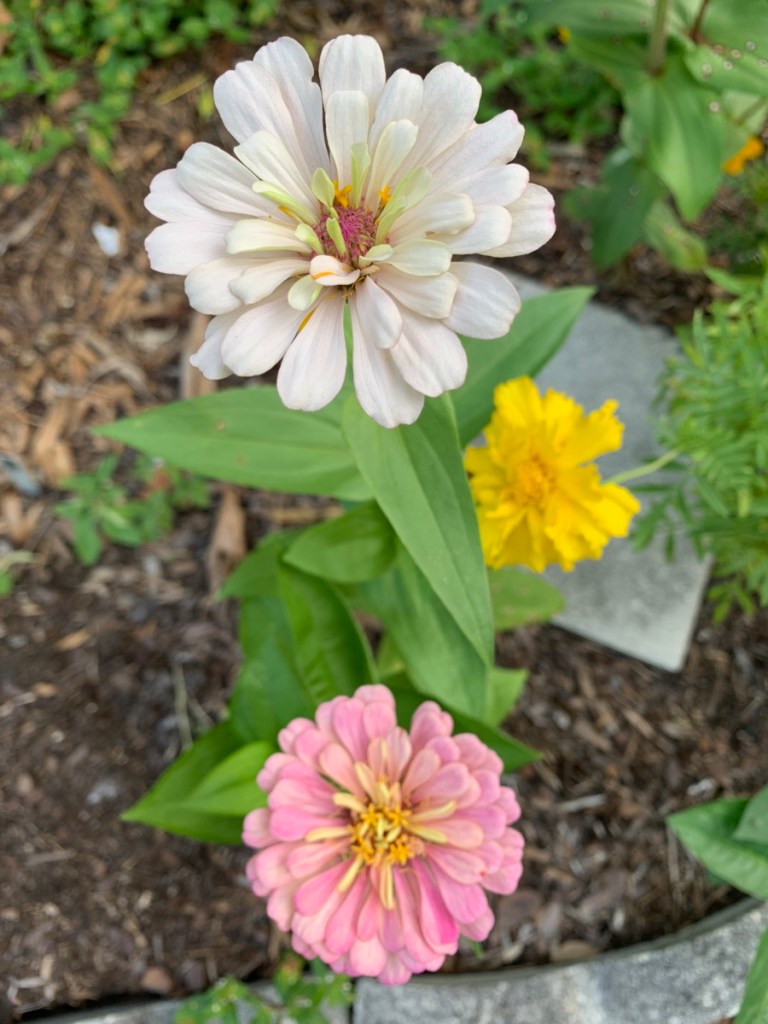
I’m partial to the flowers with lots of petals that create layers. Sometimes I find a bee nestled inside those petals. What a fun place to sleep.

Save the Seeds

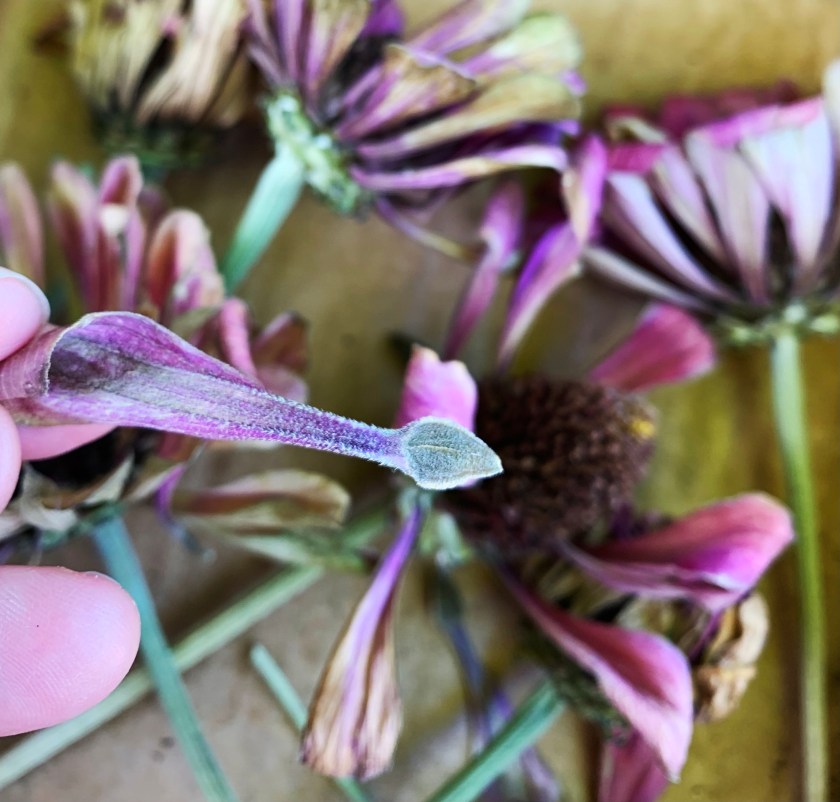
Zinnias are direct sow, so put the big seeds right into the dirt. Saving Zinnia seeds is also easy. Each petal has a seed at the end. I cut off the flower heads when they seem to be gone by and drying out, and place them into a box to dry further. I will be writing a separate post about saving the seeds, but that is pretty much it.

Zinnia seed and petal
Zinnia seed

I leave the flowers whole, but usually they become so dry that the petals fall out. Sometimes I can still see the color of the original flower. Every photo you see on this page (except the Florets) came from seeds I saved from last year’s flowers.

I also read at the UF/IFAS extension that the flowers with few rows of petals should be tossed! What? Why? I disagree.

Zinnia Disease

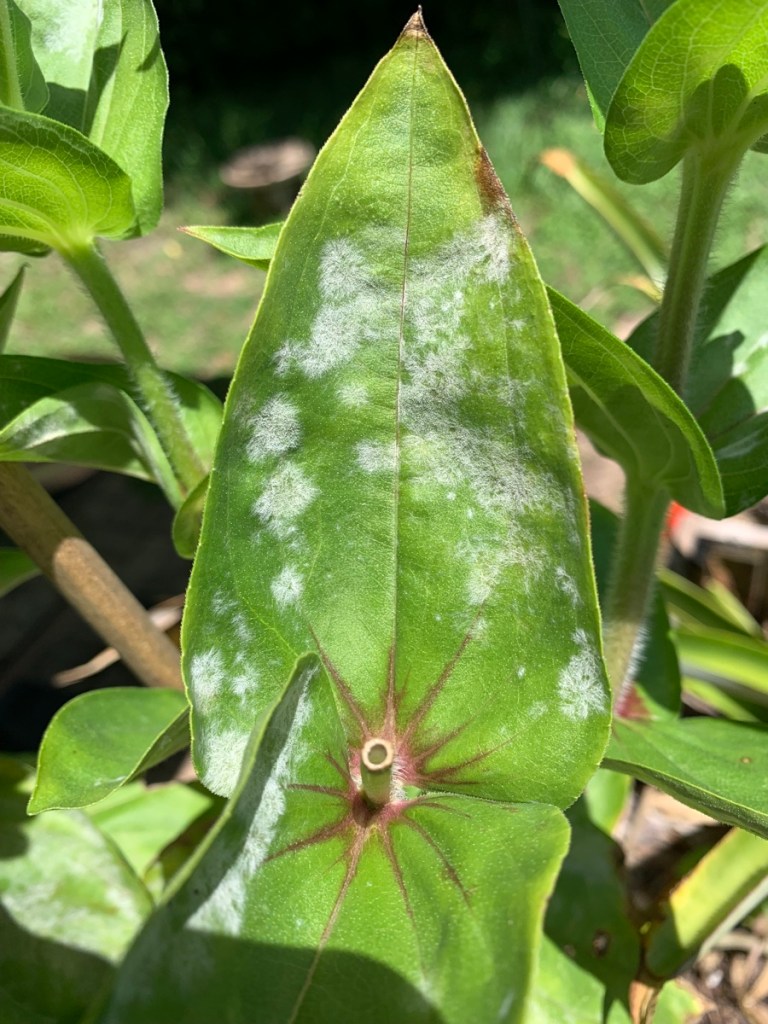
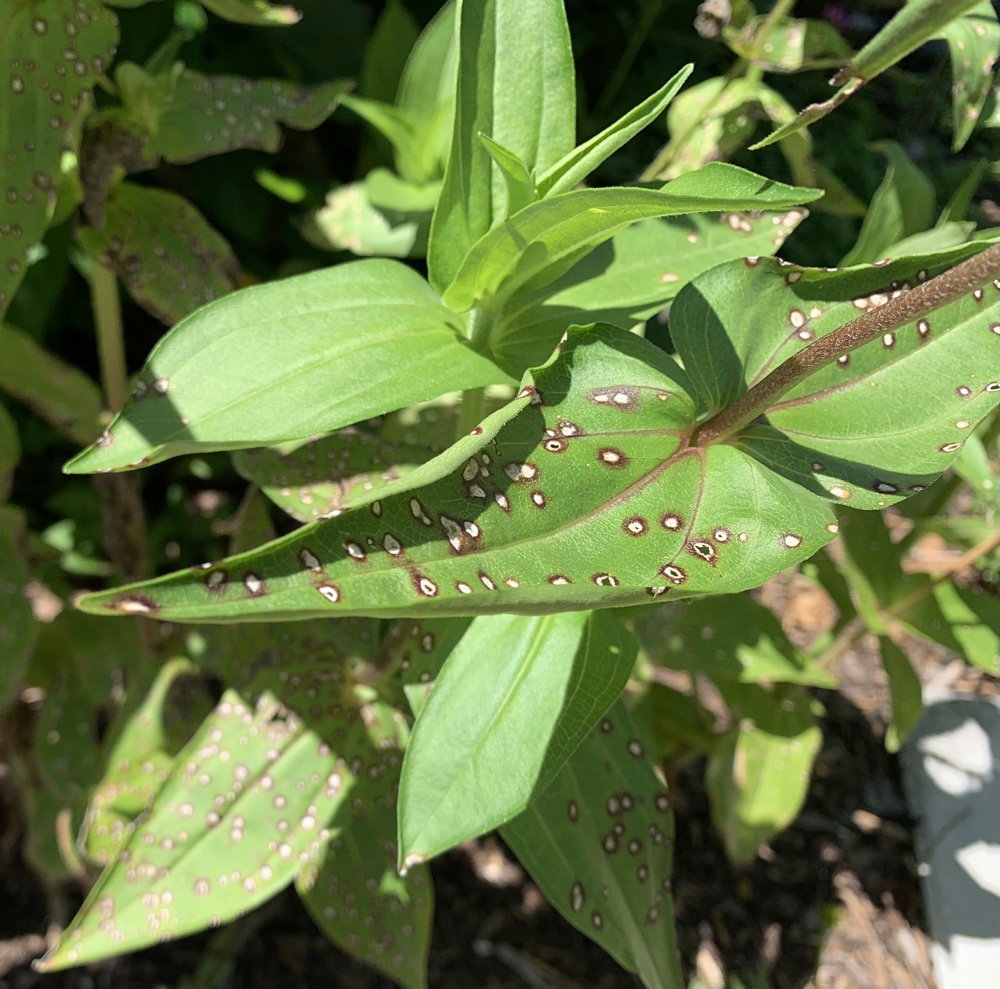
This year I learned that Zinnias can get a spotted leaf disease called bacterial leaf spot. And sure enough, most of mine had it. They can also get powdery mildew on the leaves. (Pegplant’s page lists some varieties that are mildew resistant.)

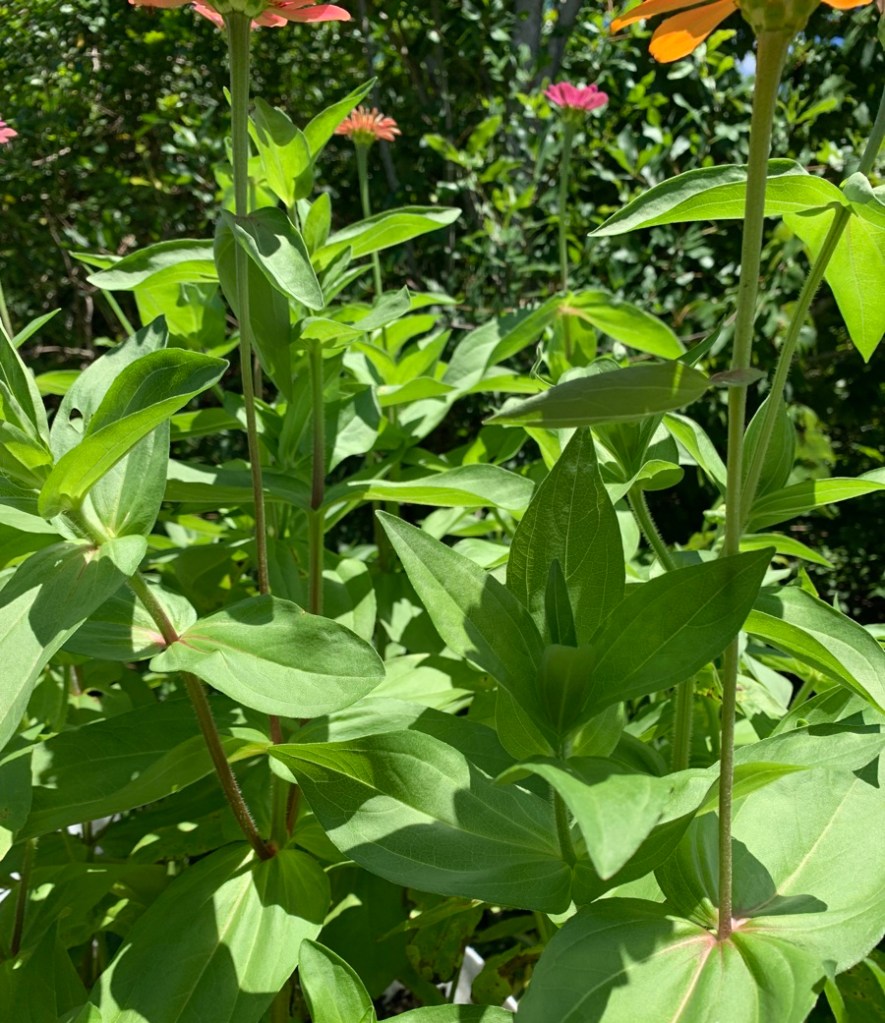
One way to help prevent both problems, is to give them space to grow. Air flow helps, but I live in a very humid place, so I’m not sure these things can be avoided. Overhead watering is a no-no for these flowers also.

Zinnia Varieties Less Susceptible to Disease

I can’t remember where I saw this information, but I wrote it down. This list is the varieties of Zinnia that supposedly are less susceptible to disease. The Southern Exposure Seed Exchange has the Marylandica variety (also called Zahara), but it’s currently out of stock. It has small, white, daisy-like flowers.

  • angustifolia
  • marylandica
  • crystal
  • star (bright?)
  • profusion

The varieties to avoid, for disease, are “elegans” and “heageana“, which seem to be the most likely available! I think all of mine are Zinnia elegans.

I found some Zinnia marylandica seeds at a shop on Etsy and will give them a try.

zinnia garden

I hope you are having a wonderful summer. If you love to grow Zinnias, I’d love to hear about them.

More stories from the backyard…

Something went wrong. Please refresh the page and/or try again.
Fill the Yard With Milkweed – The Right Kind!

Be sure to select a native milkweed for the yard, or you could be harming the Monarchs instead of helping. Don’t take store and seller’s word for it – be informed.

When I wrote this blog post, over two years ago, I had read an article about Tropical milkweed being horribly bad for Monarchs. It seems that is not completely true. As I’ve continued to learn about growing milkweed, I think the Tropical variety can be used as a good stand in if native milkweed is not available. But it must be cared for correctly.

Back then: On a trip to the Farmer’s Market, we found some plants for the yard. I was happy to find this plant at the market. It cost me $15.00 but I was very excited to find such a wonderful, big plant to help the monarchs. What I didn’t realize is that it is NOT native. I bought Tropical Milkweed which is becoming a problem in the south.

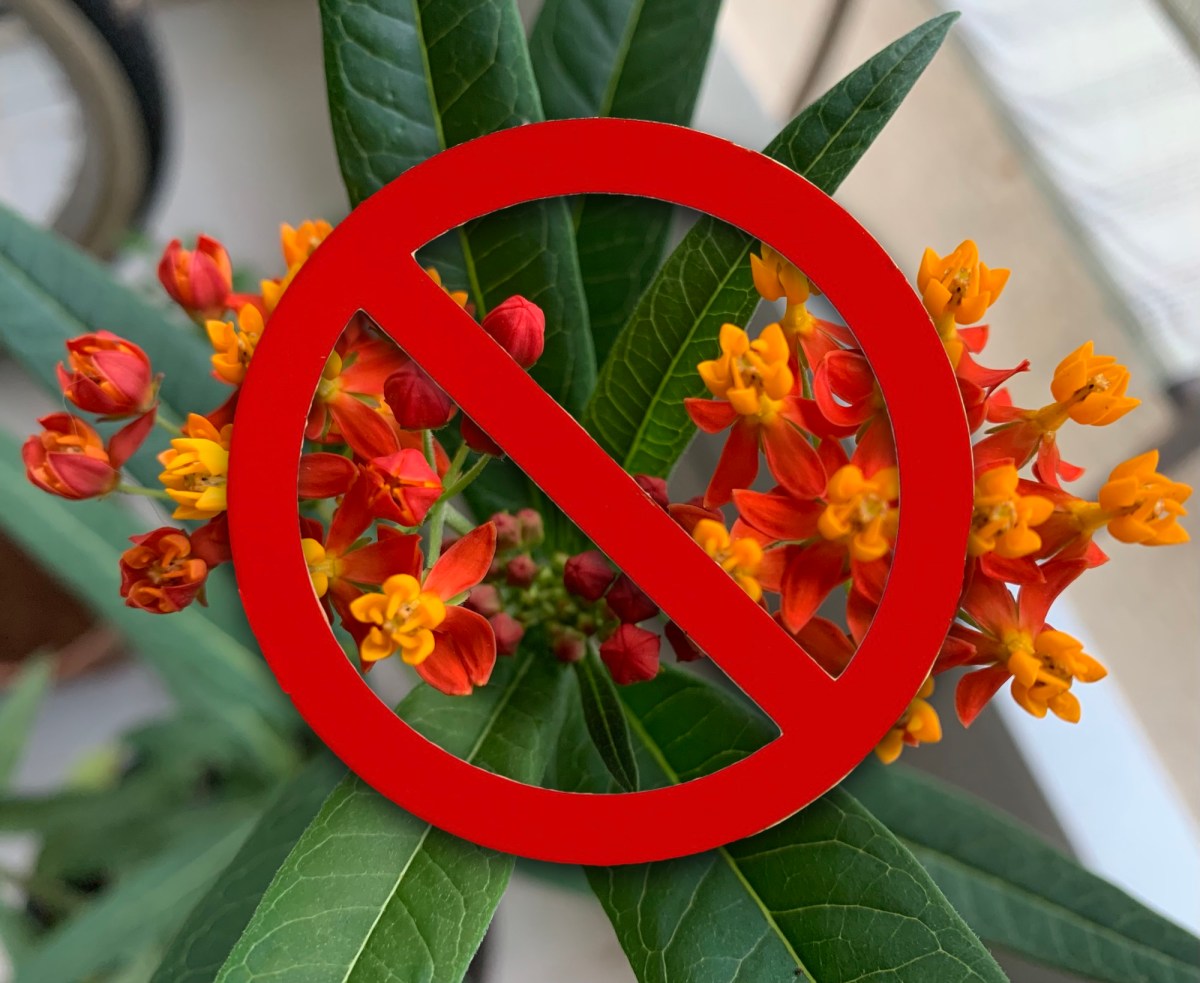
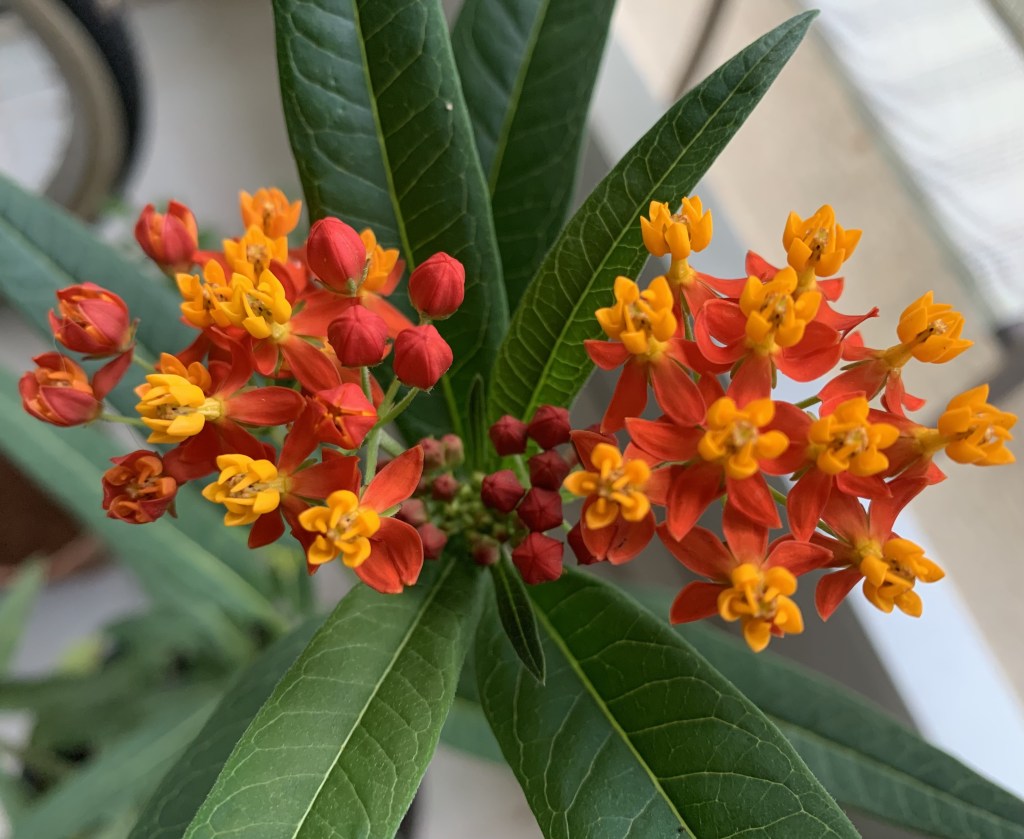
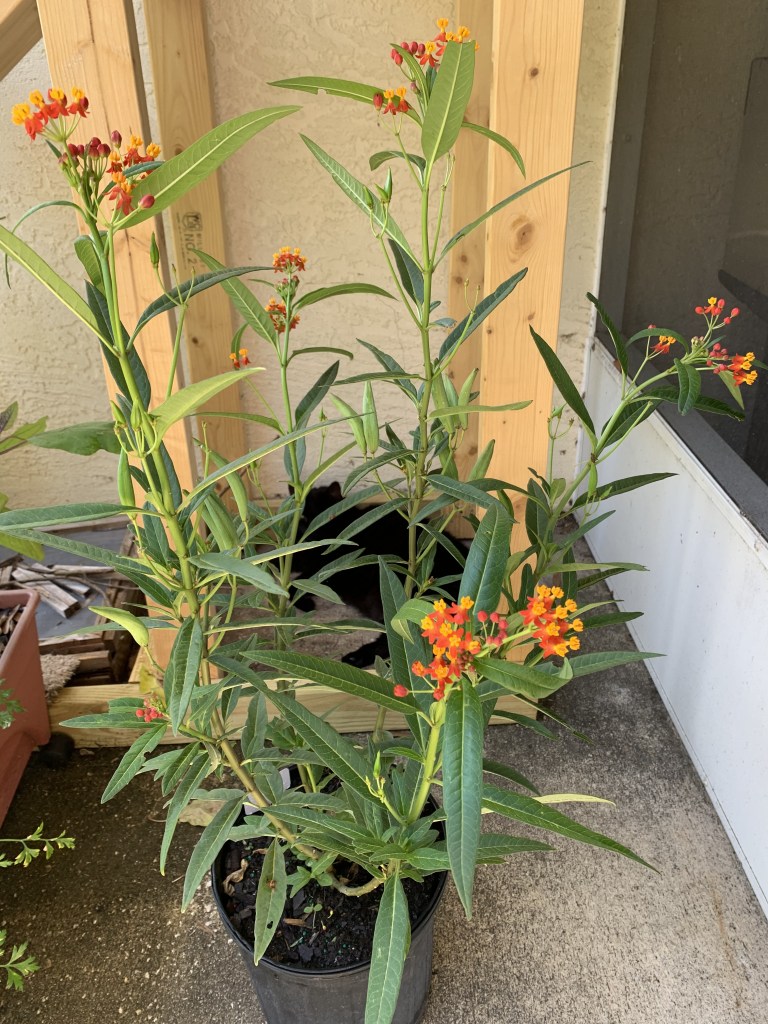
Two-colored flowers (red and orange/yellow) with pointed leaves – this is the non-native Tropical Milkweed. But, the only reason it seems to be a problem is that it does not die back in Fall / Winter.

Good Intentions

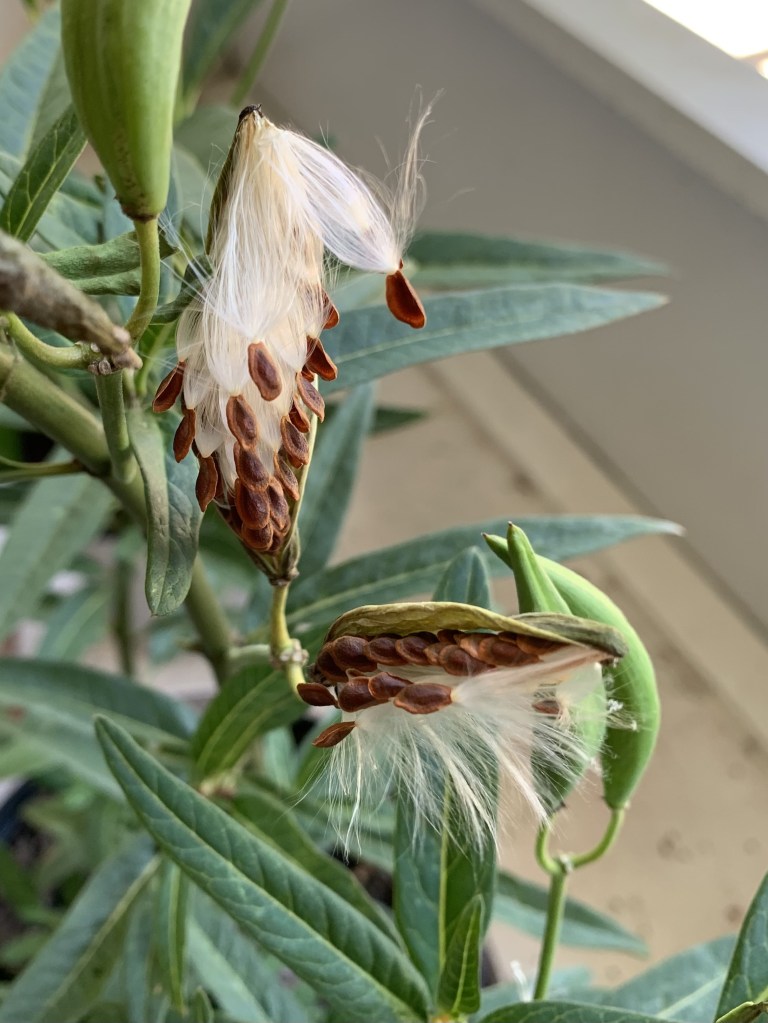
I want to fill my yard with food for the bees and butterflies (namely Monarchs)… BUT… this is not the right kind of milkweed for my area. When this milkweed plant began to drop its seeds, I looked for information about planting them. I’m so glad I searched for information. BUT, now there is more information.
I suggest removing the seed pods so the plant doesn’t spread into the wild where it can’t be cut back over winter.

This is when I realized that I have the wrong type of milkweed. Wrong meaning not native. It was time to learn more about milkweed.

Updated Info on Tropical Milkweed

Tropical Milkweed (Asclepias curassavica) is NOT a native Florida plant. It is native to Mexico. It’s always best to plant native. However, I have not easily been able to find nice, native milkweed plants at local nurseries and garden shops. Tropical milkweed is easy to grow, and it grows fast. No wonder plant sellers prefer this one.

If you have tropical milkweed, the most important thing is to cut it back by December. It won’t die back on its own in many locations. This keeps the Monarchs from migrating. If they stick around and continue to breed, the caterpillars can develop a lethal parasite (OE). Read the article about this at IFAS for more info.

I doubt that many sellers of the tropical milkweed even realize it is not native to Florida. And many probably don’t understand the need for cutting it down.

Non-native, flowers are bi-color red and yellow.

Tropical milkweed is not native to Florida and can cause problems for the Monarch butterflies.

When is it Okay to Plant Tropical Milkweed?

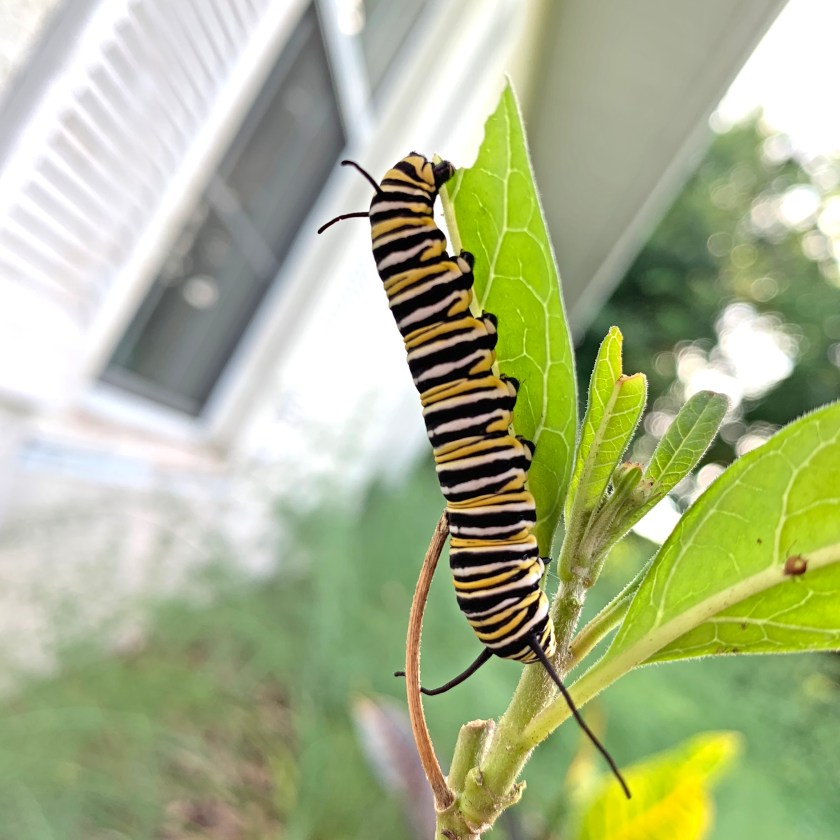
So what if you have this milkweed growing in your yard? After I removed my Tropical milkweed plants, two more plants grew – 2 years later. Right away I began to see caterpillars. I knew this was the wrong milkweed, but it was feeding those hungry caterpillars. So, is it better to help the Monarchs even if the milkweed is not native? I say yes.

monarch caterpillar

I now believe that having some tropical variety can be good to supplement the native types. Native milkweed is hard to find to buy. Certain types need sun and lots of moisture (swamp variety). Others need sun and dry conditions (Sandhill). Milkweed is meant to grow in Florida’s diverse ecosystem, which is vanishing. It should not be grown in a yard that is sprayed with chemicals.

All these things make native milkweed hard to find. With roadsides mowed, and lawns taking the place of fields, butterflies are now endangered. If we can help by providing some plants – native or not – I say let’s do it.

Right now I am trying to grow native milkweed for my yard. I have planted seeds, and purchased milkweed seedlings online. My goal is to have a variety, with many native plants (mainly) for the butterflies.

Florida Native Milkweed Links

  • Sandhill Milkweed – Big, dark leaves and pink flowers. Likes to grow in sand and doesn’t need lots of water.
  • Orange Butterfly weed – Not preferred by monarchs (so I’ve read) but great for butterflies and other insects.
  • Swamp Milkweed, white / pink – Moist, well-drained soil. Full sun to part shade.
  • Whorled Milkweed – blooms longer, into Fall, and can supplement if other native milkweed has died back.

Find Milkweed Seeds and Plants Online

You may find what you want, along with other Florida native plants, from this list of growers / nurseries on the Plant Real Florida site.

I have purchased seeds from Johnny Butterfly seed. They have sprouted at this stage, but are still tiny.

Keep reading the blog…