Mail Order Native Florida Milkweed Seedlings Review

I’ve found a good place to buy milkweed plants online. Ordering plants online can be expensive, so the plants that arrive should be in great shape. Read my review of Whitwam Organics and The Growers Exchange.

I need to get this recorded because I found a mail order company that sends nice plants. Here I am comparing the two companies that mailed me milkweed plants. The Growers Exchange and Whitwam Organics were the two I chose.

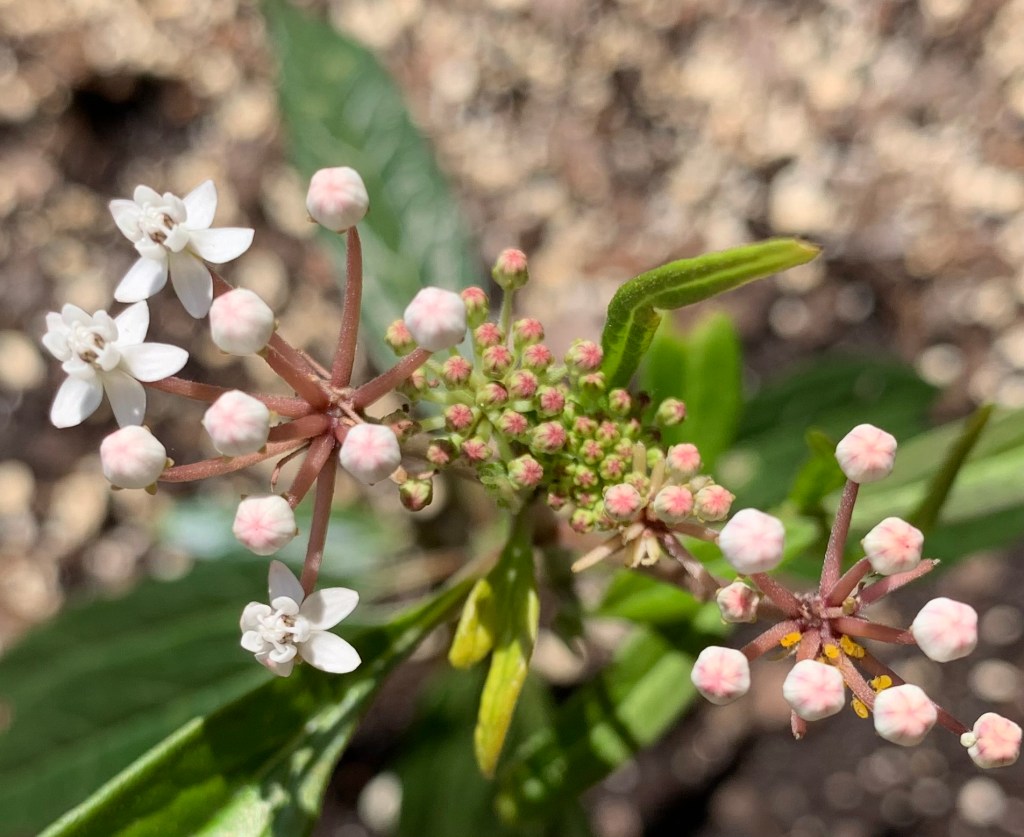
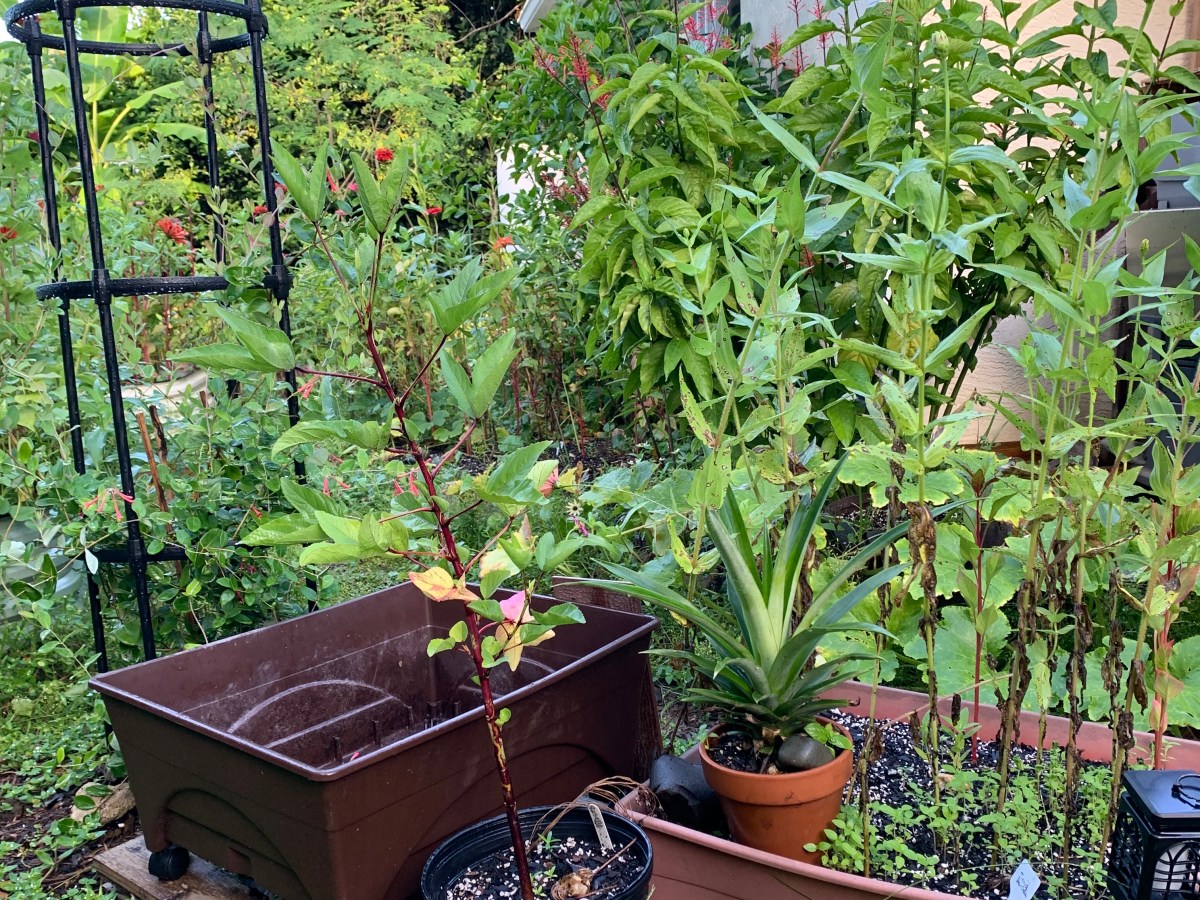
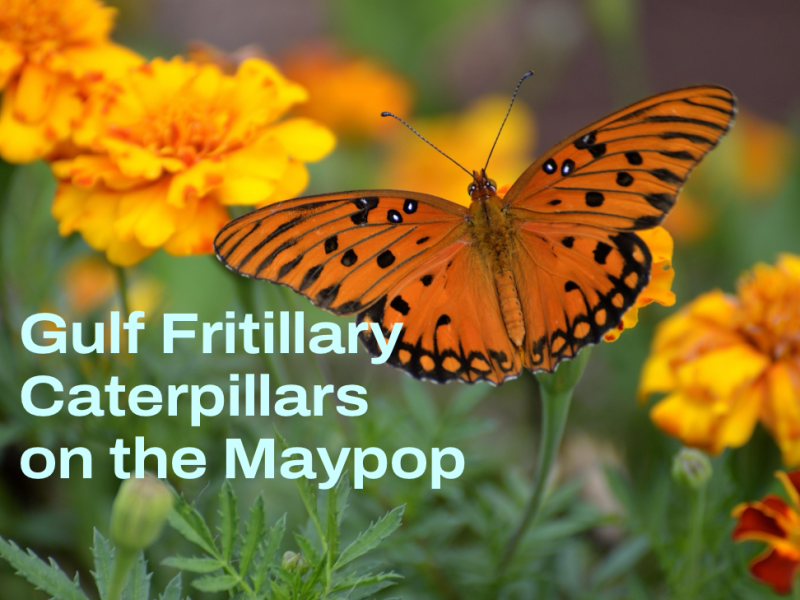
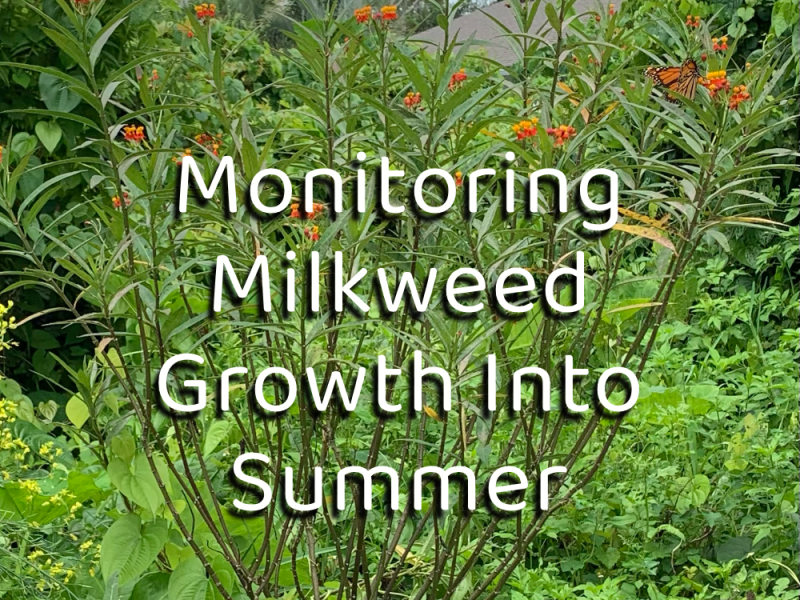
After my butterflies came out, I see all three of the Monarchs flying around the garden every day! The only milkweed currently available for them is the tropical type, and one small, blooming white Swamp Milkweed.
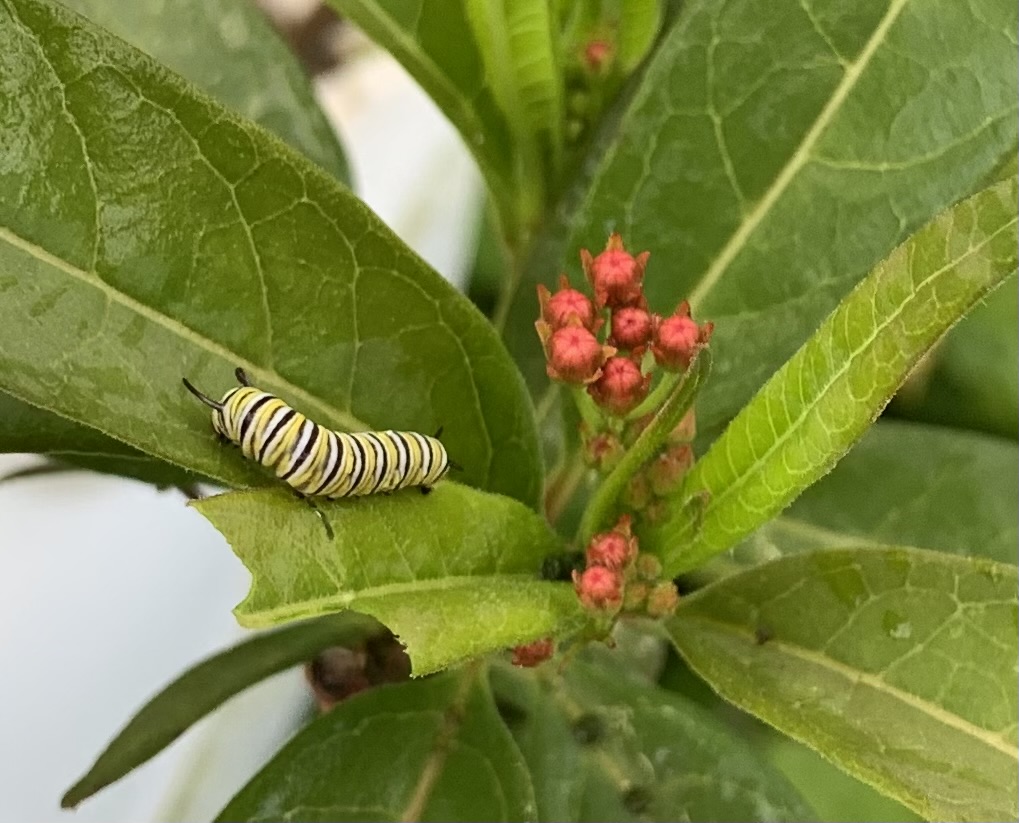
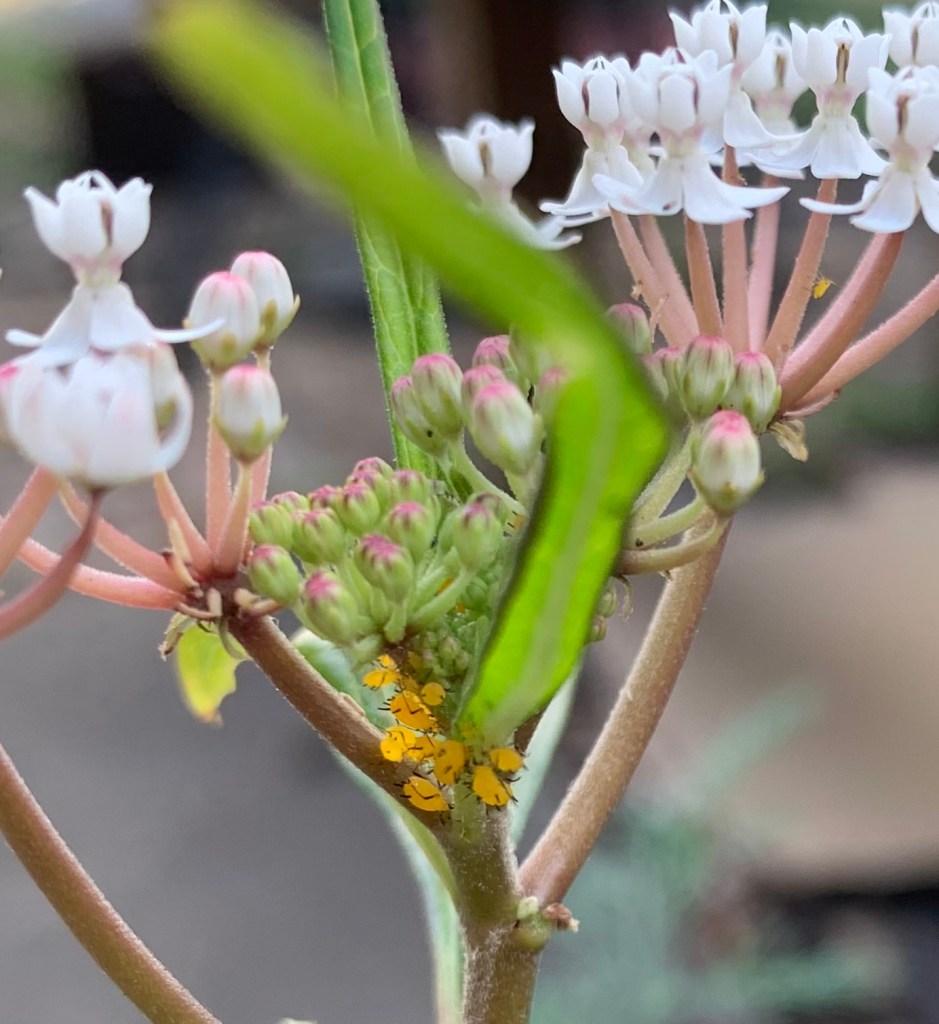
The more milkweed in the yard, the better chance for caterpillars to have enough food. At one time I believed that the Tropical milkweed was bad, but that may not be altogether true. Read more at the link.

The Need for More Milkweed

I ordered some seeds from Johnny Butterfly Seed. Those are popping up in small pots and beginning to grow nicely. Growing from seed can take a while. I wanted plants.

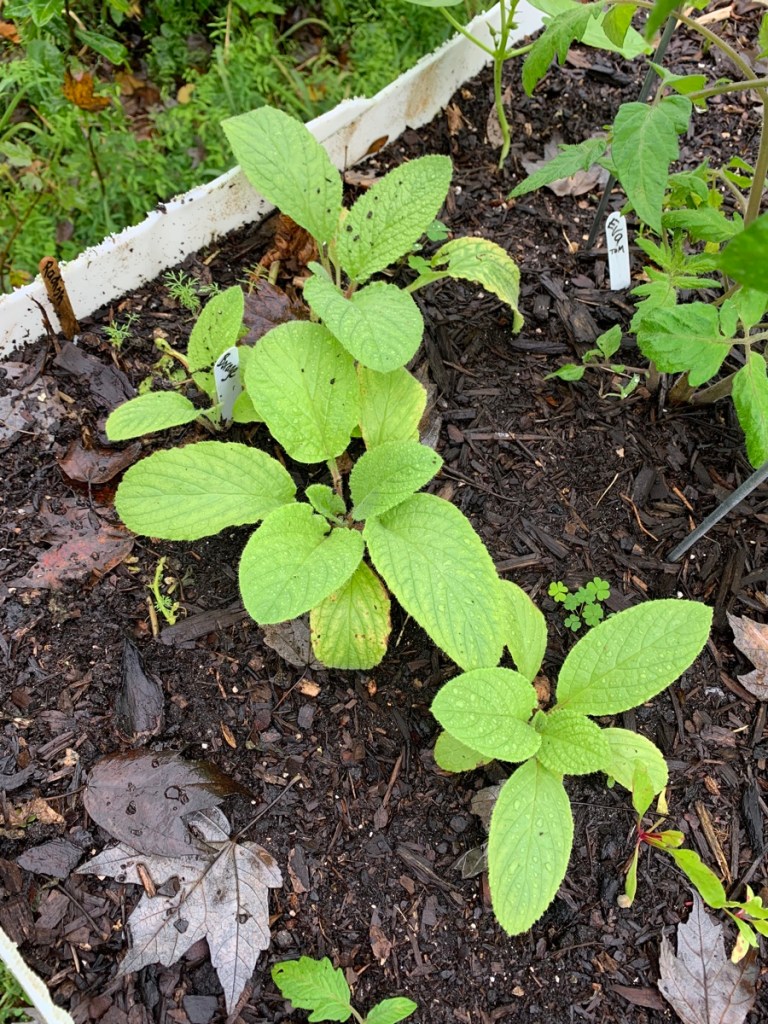
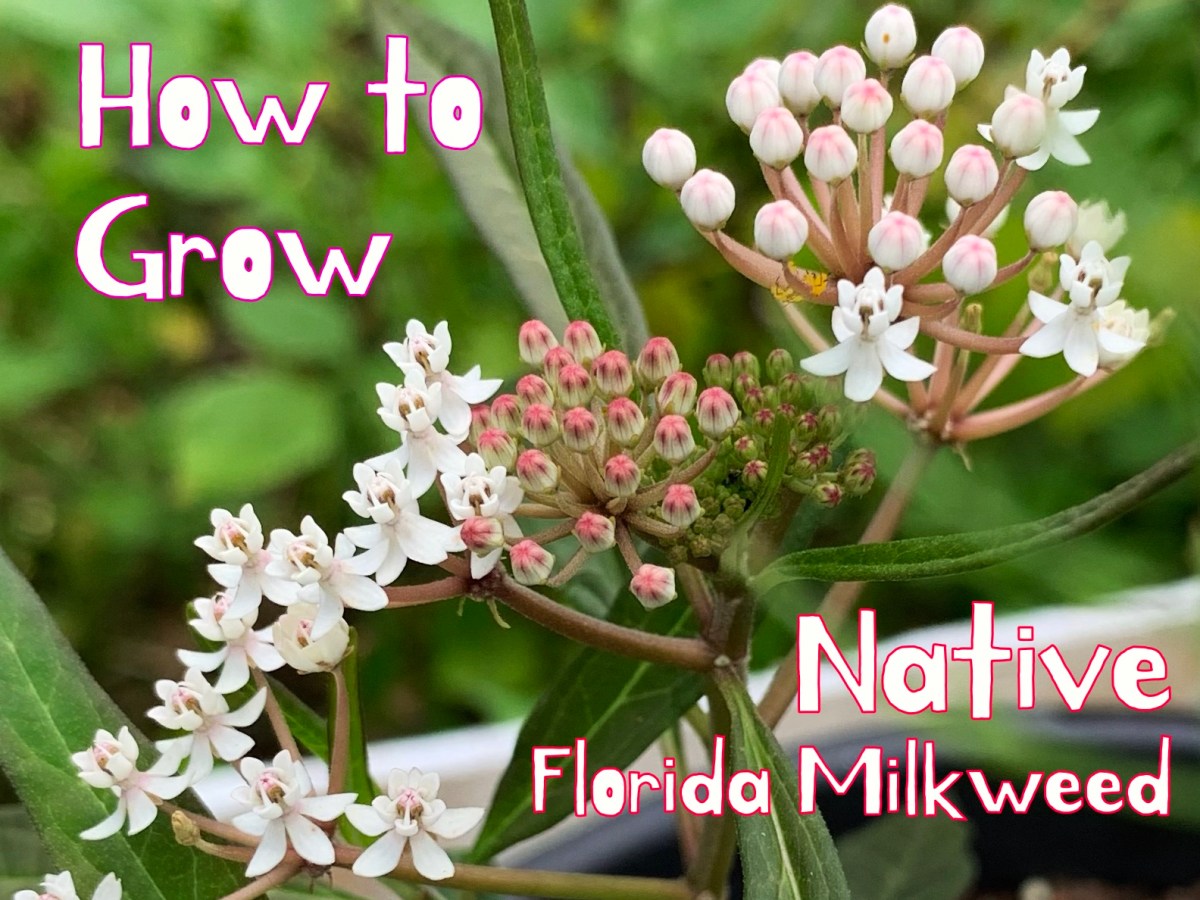
You may be wondering why I don’t buy local milkweed at a nursery. Well, for one it’s hard to find, and when I do see native varieties, the plants are not in good shape. The white flowering milkweed, in my first photos on this page, came from a local nursery. I bought the best looking milkweed plant and it was around $10. It’s looking good, but growing very slowly. I have no idea if it was grown organically, without chemicals. So, I began the online search for pesticide free plants.

Whitwam Organics

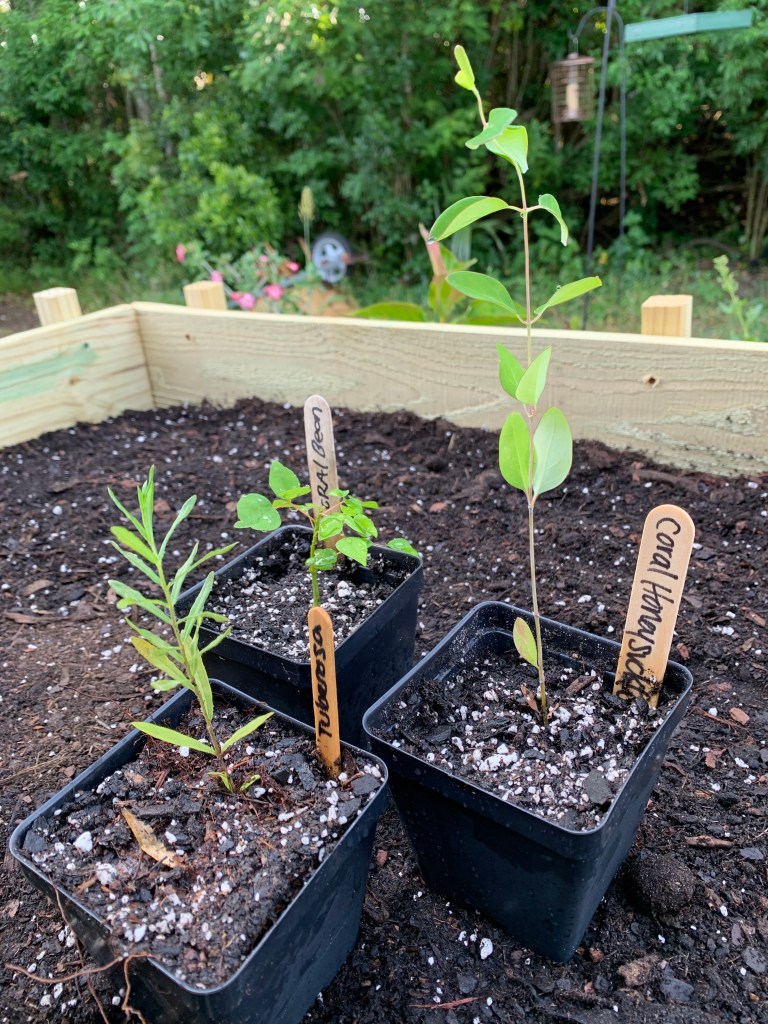
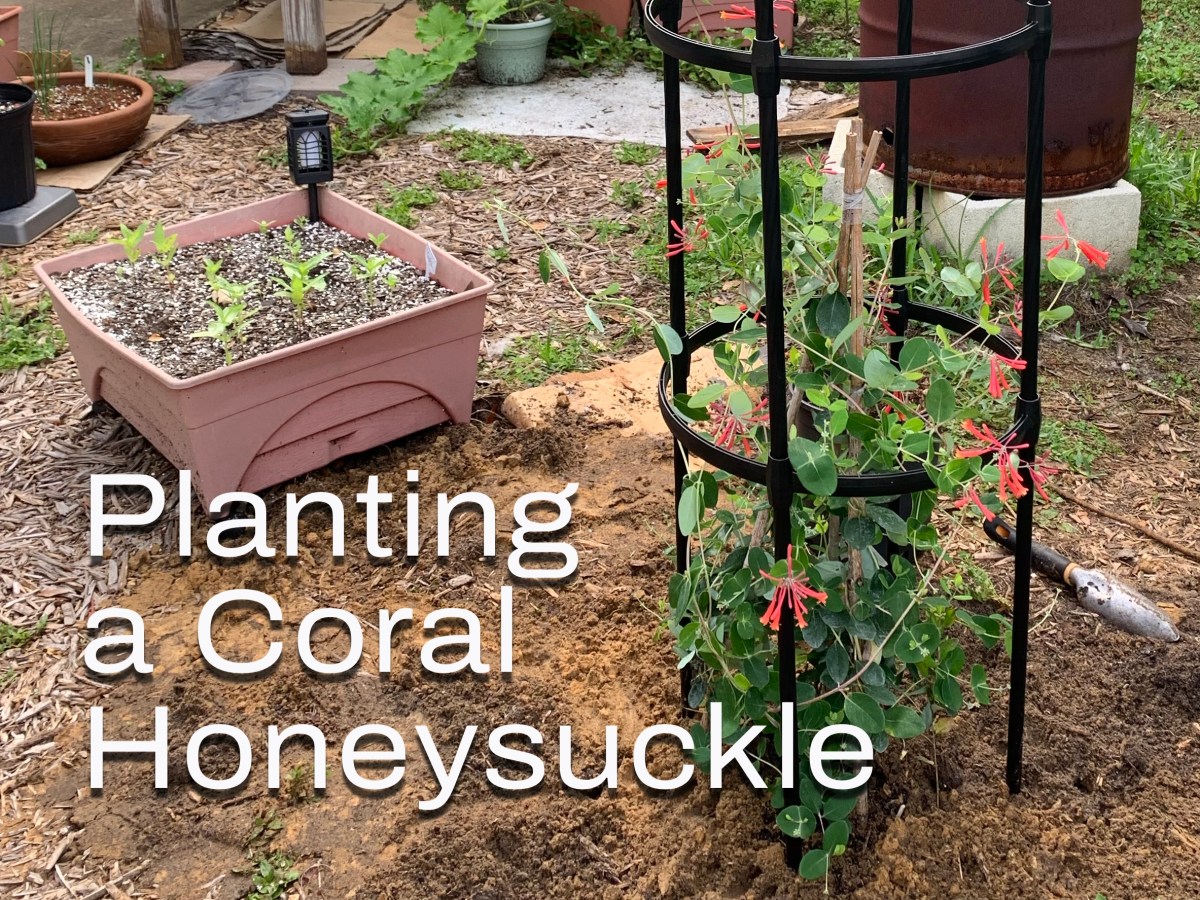
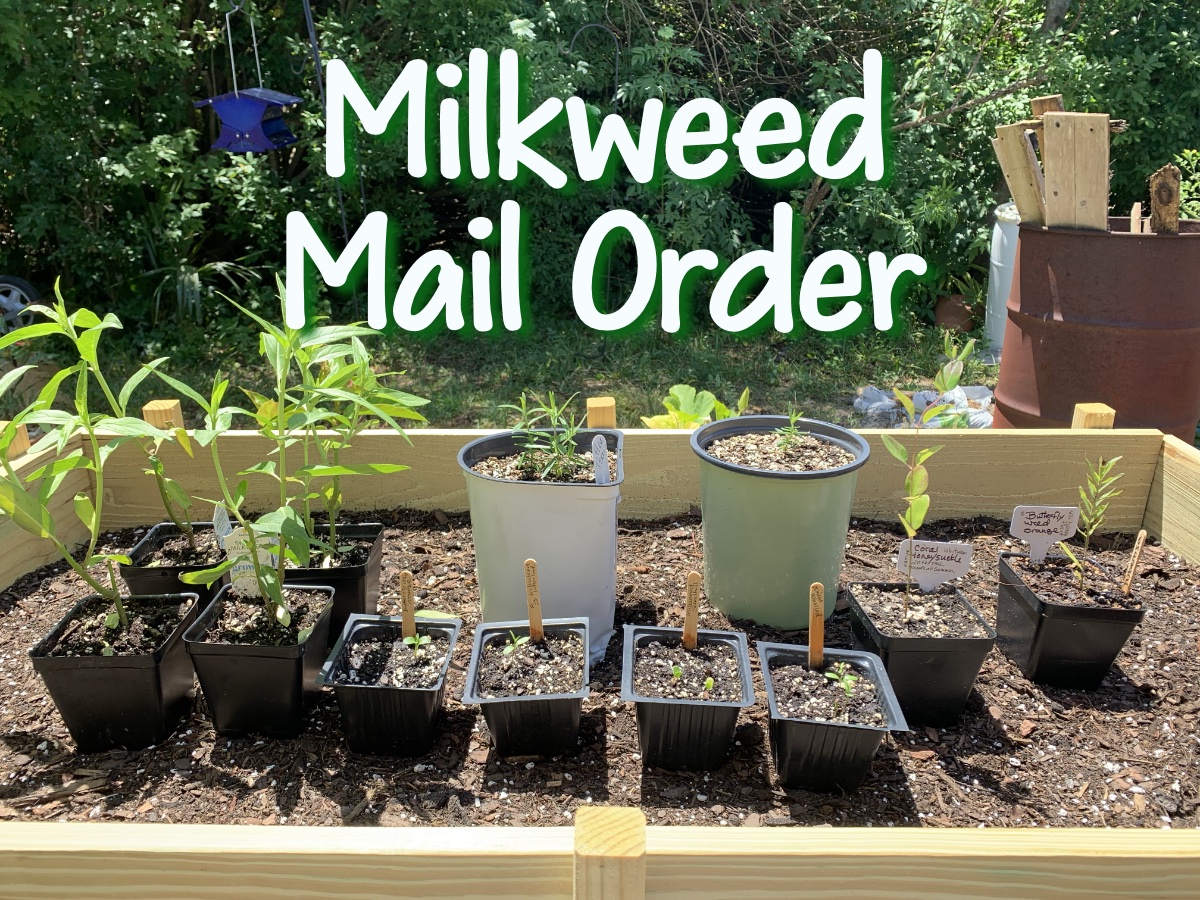
This post is about my order of live plants from two places. The first plants arrived from Whitwam Organics. They e-mailed a notice about delivery, and the plants ended up at my door at 8:00 at night! I suppose I can’t blame the company for the late delivery, but unboxing live plants at that hour really ticked me off. The plants are; a Coral Bean, Coral Honeysuckle, and Orange Butterflyweed (milkweed).
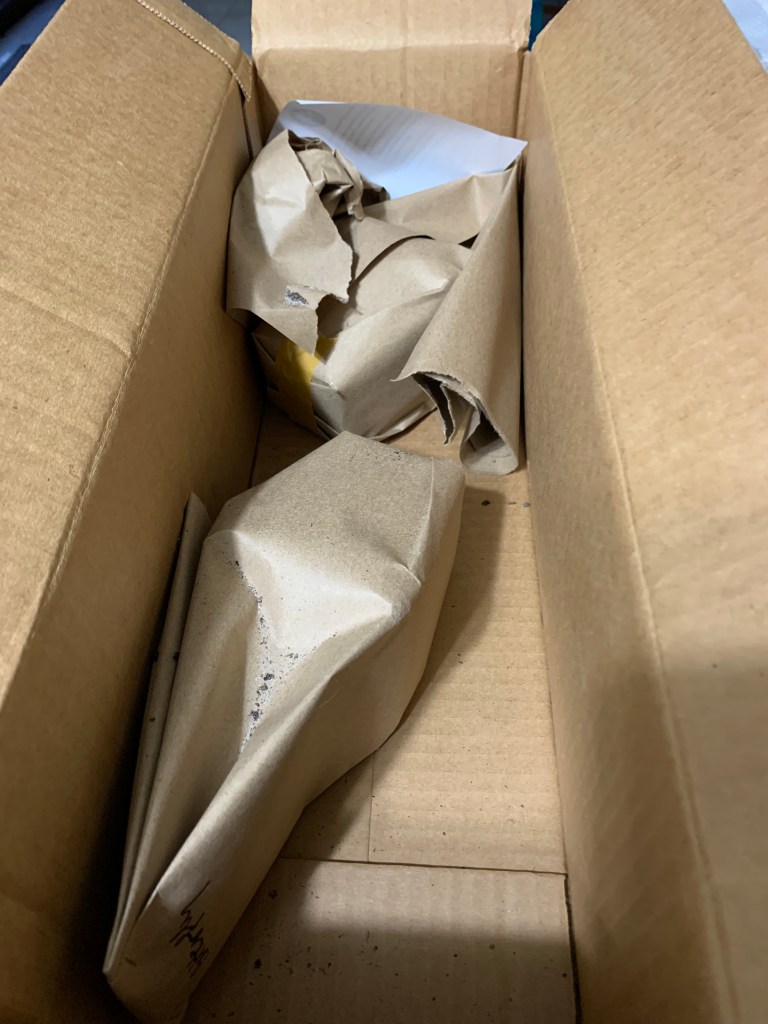
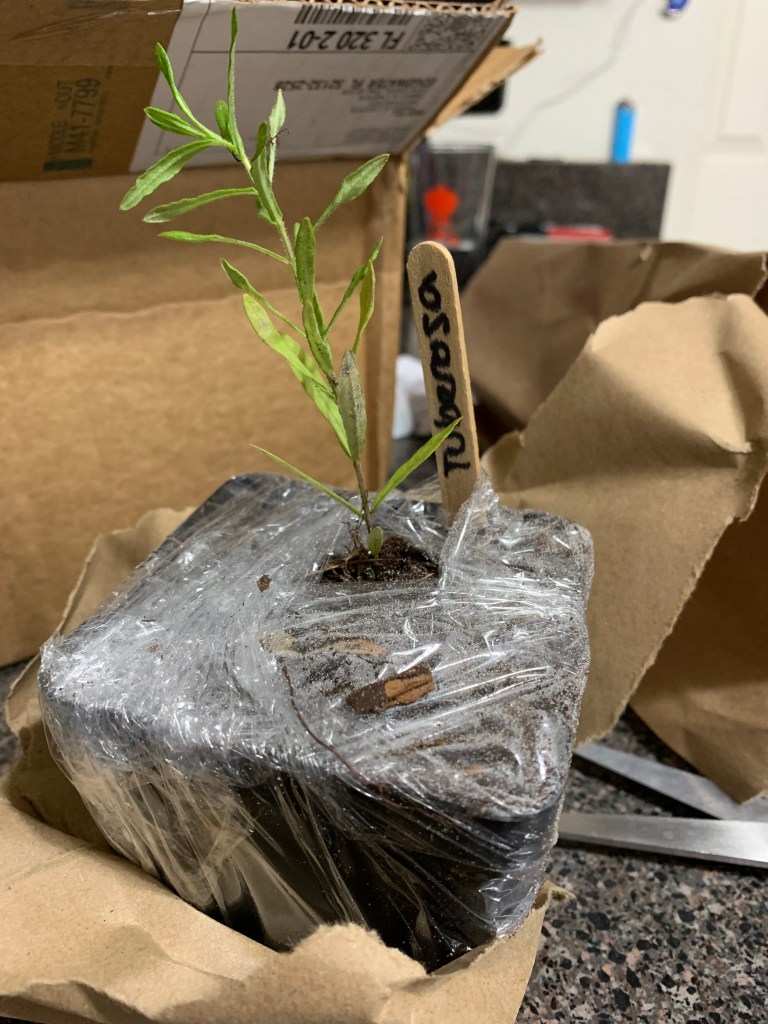
The Whitwam plants were unboxed in the house, until sand began to come out all over. I took them outback to finish and set them inside on the porch for overnight.

The photo above was taken the next day. The packing was sufficient, but nothing special. Plastic wrap mostly kept the soil in the pots and then the entire plant was closed up in a paper bag. The soil is more like Florida sand than potting soil. The dirt you see in the big photo is after I filled in what was lost when the dry sand poured out. All three plants look okay, but they are small. The Milkweed has lost a few leaves.

Cost: $42.57 which includes shipping and tax. Not really worth it IMO as these plants are very small.

green divider leaves long

Growers Exchange Milkweed Seedling Order

I ordered four Pink Swamp Milkweed from The Growers Exchange. These were not labeled organic, but the site says they do not use any chemicals when growing. The site offers lots of herbs and medicinal herbs, but they also have a few varieties of milkweed.

I was very impressed with the boxing and size of these milkweed. (This milkweed is a different variety than the one shown above from the other company.)

All four plants were wrapped around the pot to keep dirt in place. Each pot was tucked inside a cardboard divider which kept the pot in place during travel. The plants were so tall that the tops were bent over to fit. They straightened up completely within two days.
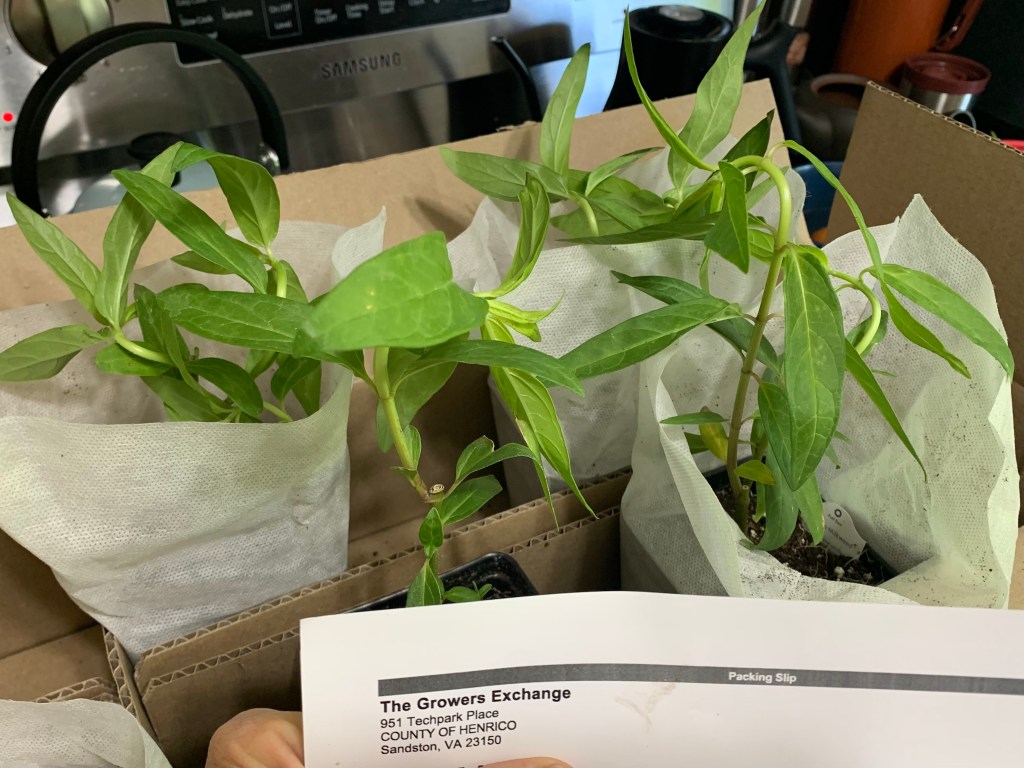
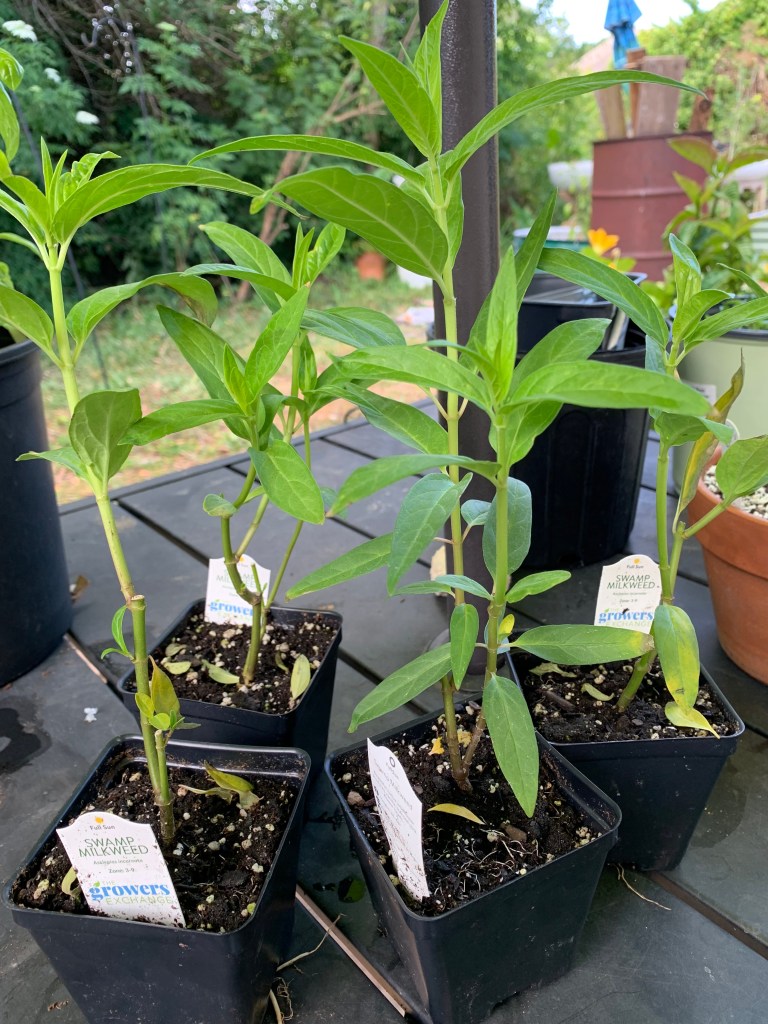
After unwrapping, I watered them, and set them on the porch, out of direct sun, for two days. After that they went outside for a couple of days. Now I have two in the ground, and two in larger pots.

Swamp milkweed likes it wet, which makes sense. Especially while it is setting roots, I want to keep it well watered. Our drought continues, which means I water every day.
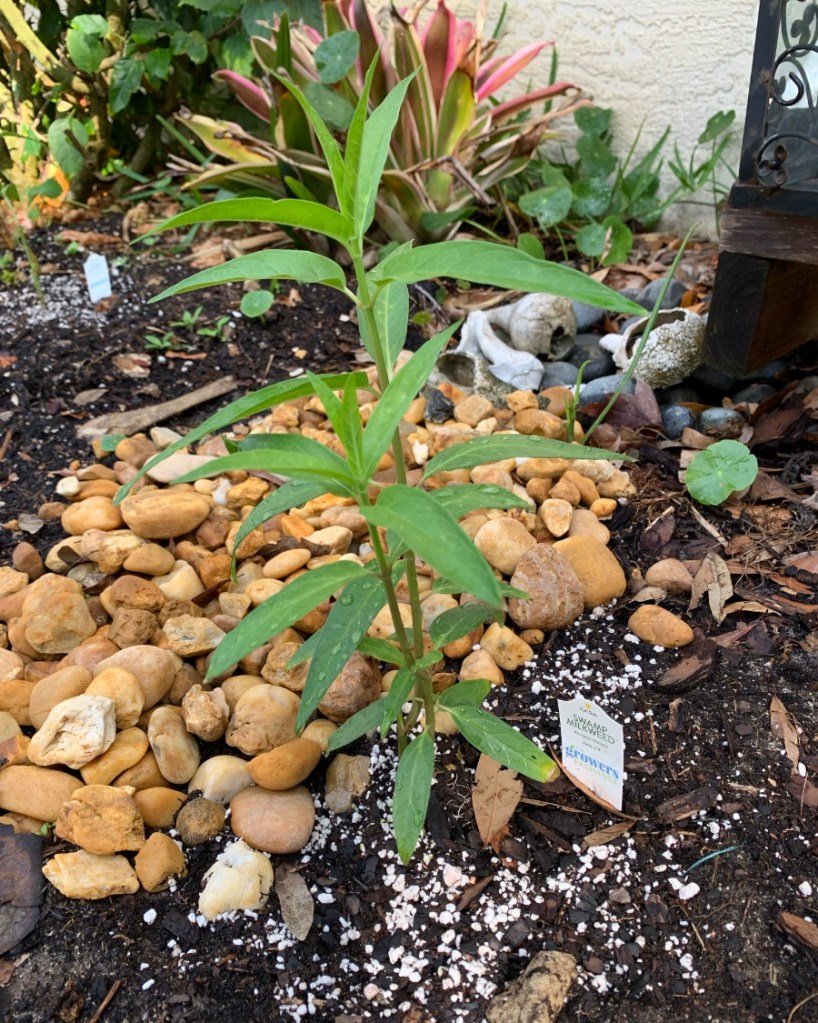
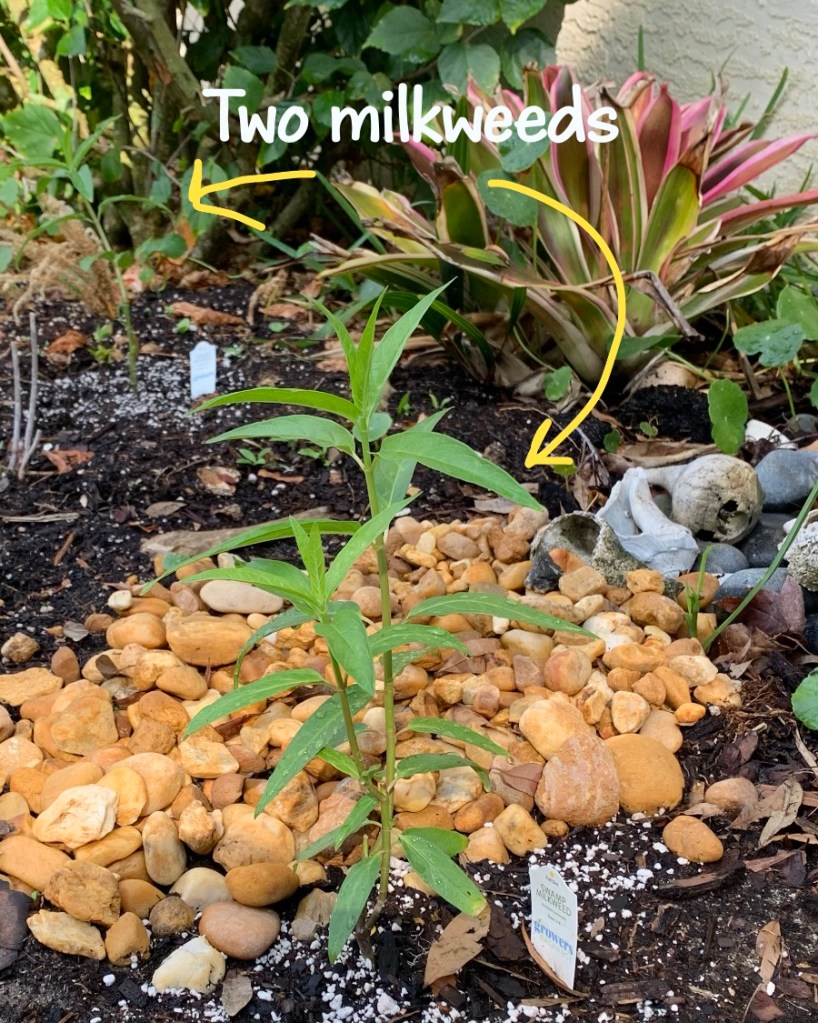
I am absolutely impressed with this milkweed plant order. They offered a discount of 20% (I think it was), and the total for these four plants, with $15 shipping was $50.89. The plants are healthy and large and I am happy. I’ve already seen lady bugs and the Monarch on these!

I’m considering having a herb garden in the future. I need to learn more about when to plant which herbs. The Growers Exchange might be my go-to shop for those.

How to Care for Live Plants

Both companies mentioned here has fairly quick shipping. I’d say the plants arrived in about a week’s time. Shipping also depends on the growing zone, and time of year. Each company has it’s own information.

I’ve pretty much mentioned on this page how I cared for the plants when they arrived, but here’s a recap. Unbox immediately. Check the soil and re-fill if necessary. Water them well! Here in Florida, do not set them out in the sun right away. Due to the stress of being packed and traveling for days, give them an easy life in the beginning. Give them light, but no direct sun. Keep them watered and watch for signs of disease.

Have you purchased native, organic (or chemical free) local milkweed – or other plants – online? Please leave us a comment on how it went.

butterfly divider flowers

Something went wrong. Please refresh the page and/or try again.

New Vegetable Added to My Winter Growing List

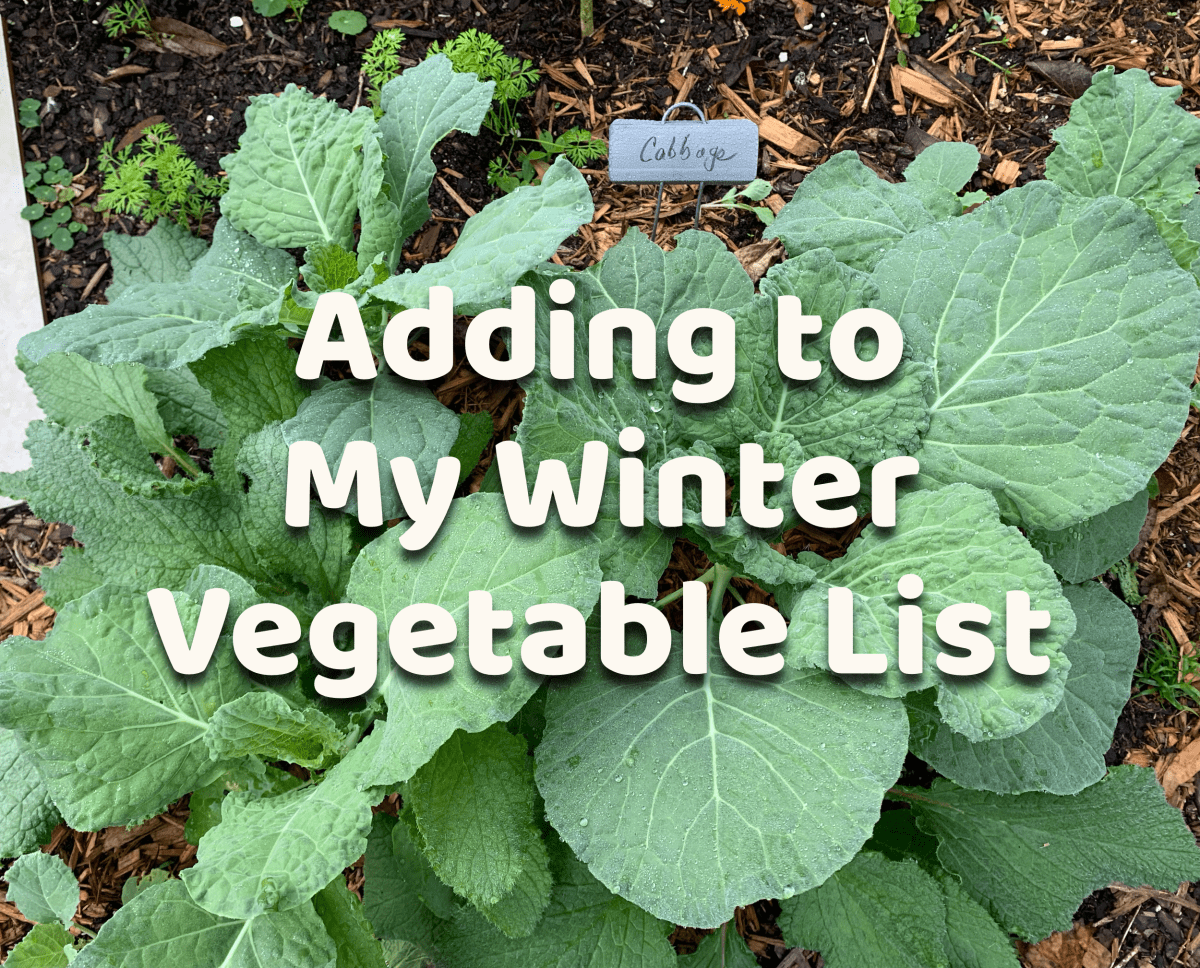
Winter vegetables in my Florida backyard garden are mostly doing well. I’ve found that cabbage will be something to add to my planting list.

After gardening for only a few years, I’m still learning what grows best when. We can grow year round, but winter is a good time to grow the things that are normal. Carrots, onions, beets, broccoli and herbs do best in cooler weather. I’ve had success with all of these.

Cabbage

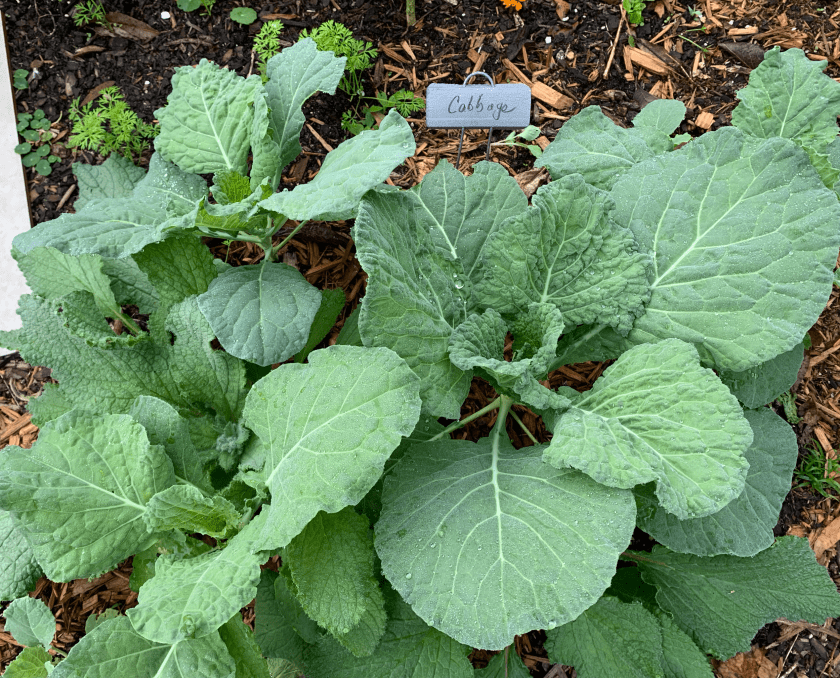
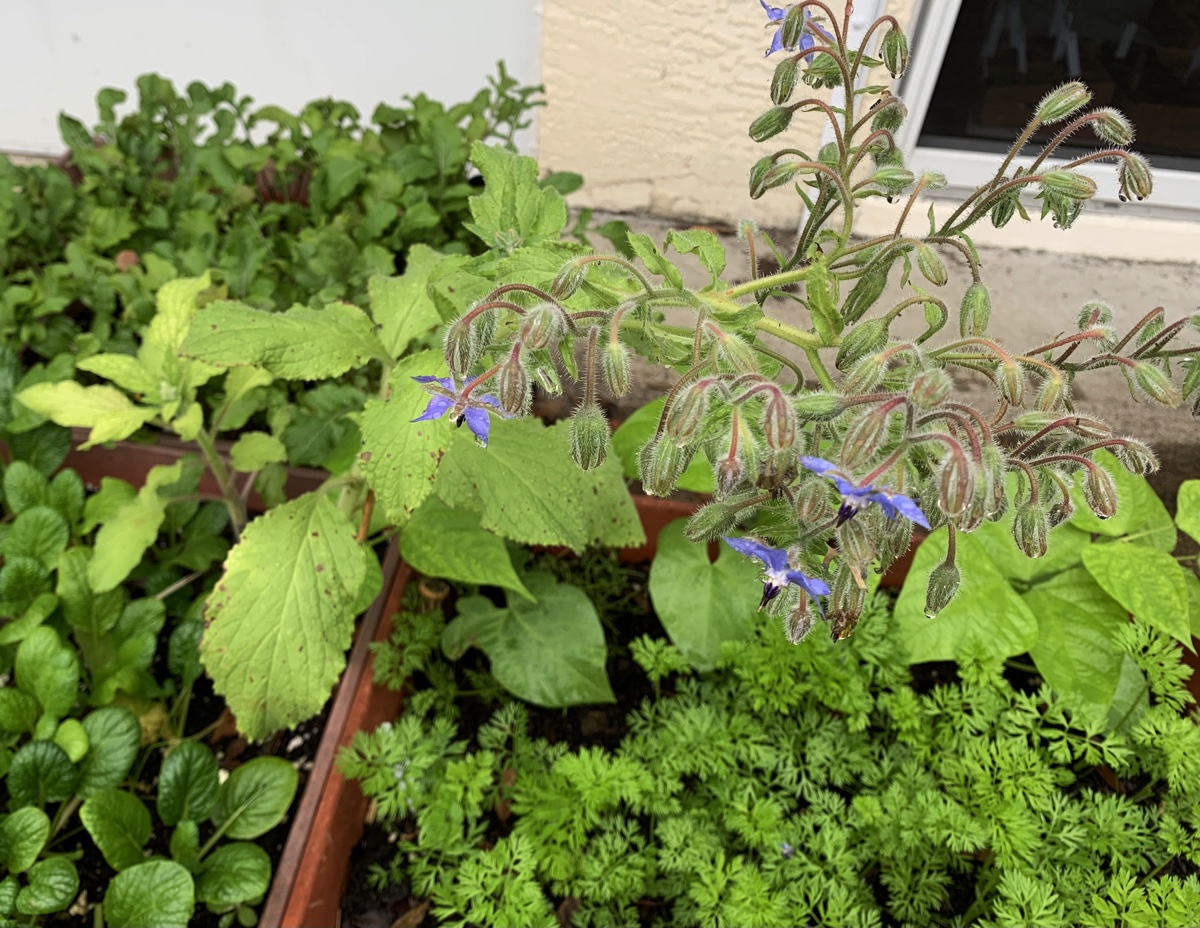
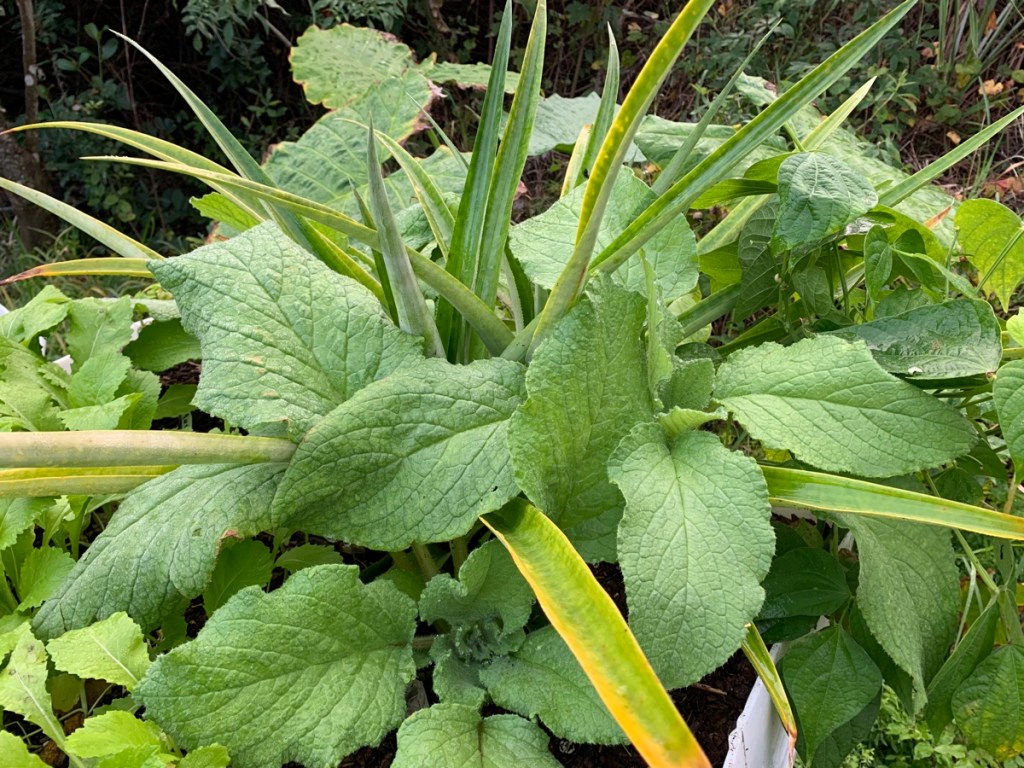
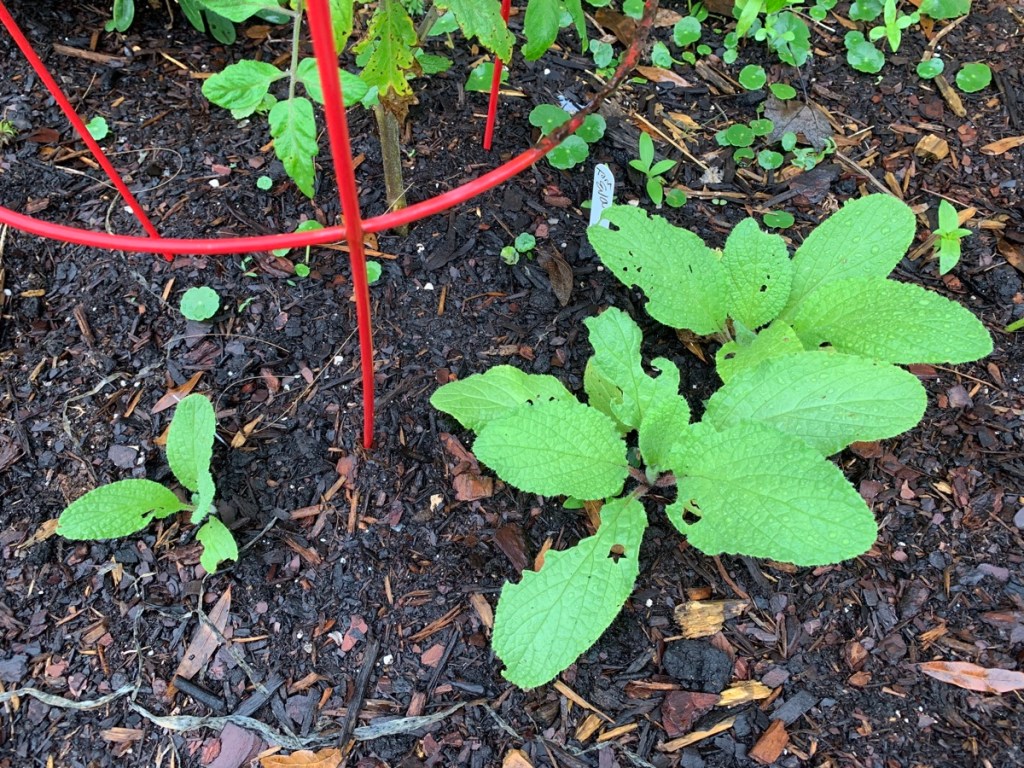
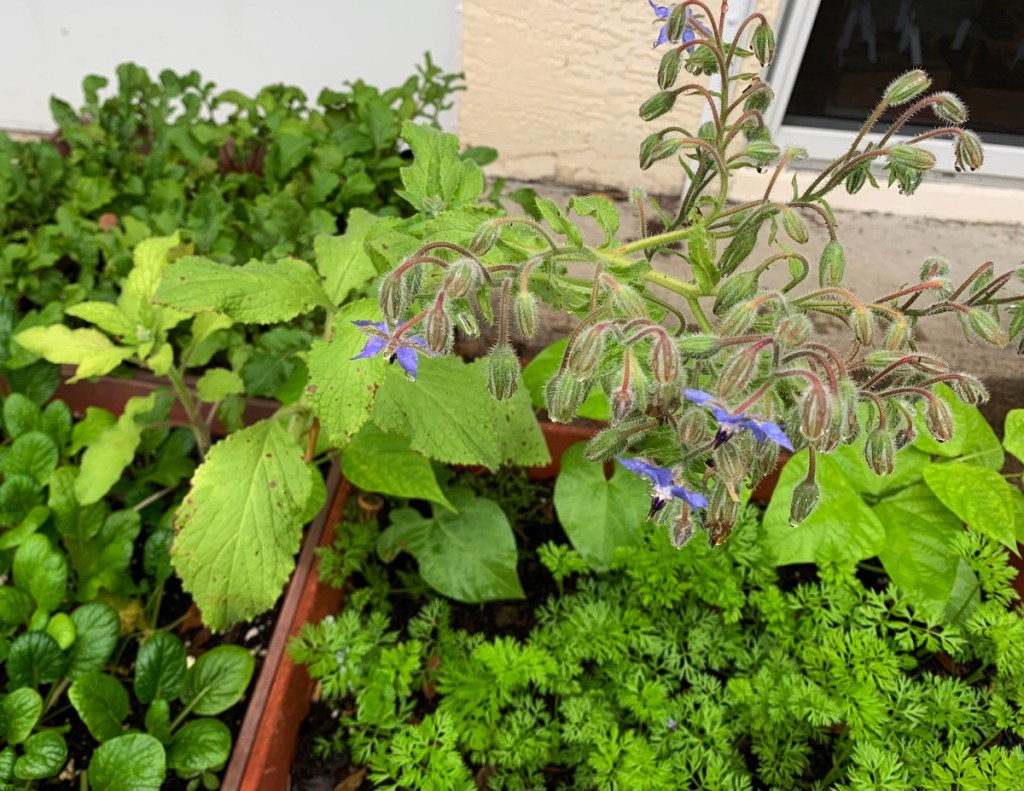
This year I planted a few cabbage seeds. I don’t have a lot of garden space, so I only grew a few. Now I am wishing I planted more! They took a long time to sprout. Once the cool air arrived, the big leaves began to show up. Now they are growing like mad. That is borage you may see amongst the cabbage leaves.

Next winter I will be adding more cabbage to my garden.

Cabbage and a few Borage leaves poking through

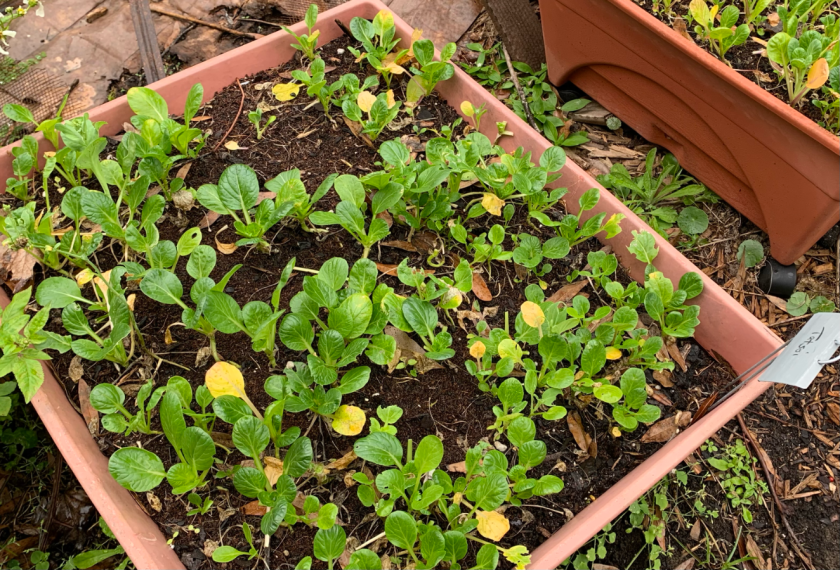
Although I had loads of Tatsoi and arugula last year, I’m struggling to grow it this year (photo below). I have been looking forward to having fresh greens, but I only have tiny little plants.

The Urban Harvest sells Tatsoi seeds and I didn’t get mine from them this year. I think they were sold out.

Small Tatsoi in grow box
Tatsoi greens

The Rest of It

Cherry Tomatoes

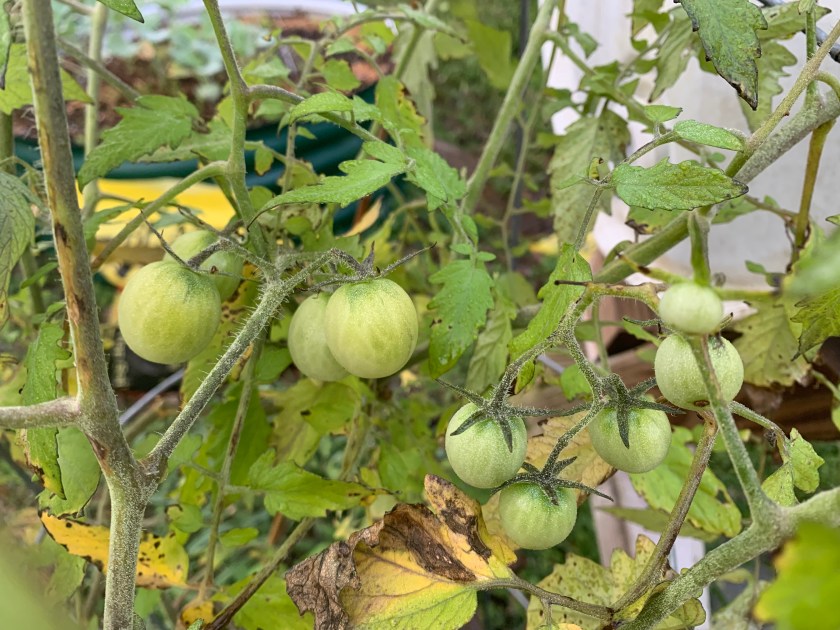
The Apricot cherry tomato plant is giving me a few tomatoes. I struggle to grow tomatoes so I’ll take what I can get. They are yellow, not red, but yummy.

Tomato plants may grow in summer here, but no tomatoes will form. This plant was begun in late summer from seed. It kept growing, in a fabric bag, and is now full of little tomatoes. I have one more cherry tomato plant I will put into the ground in February.

cherry tomatoes
Apricot cherry tomatoes

Squash and Zucchini

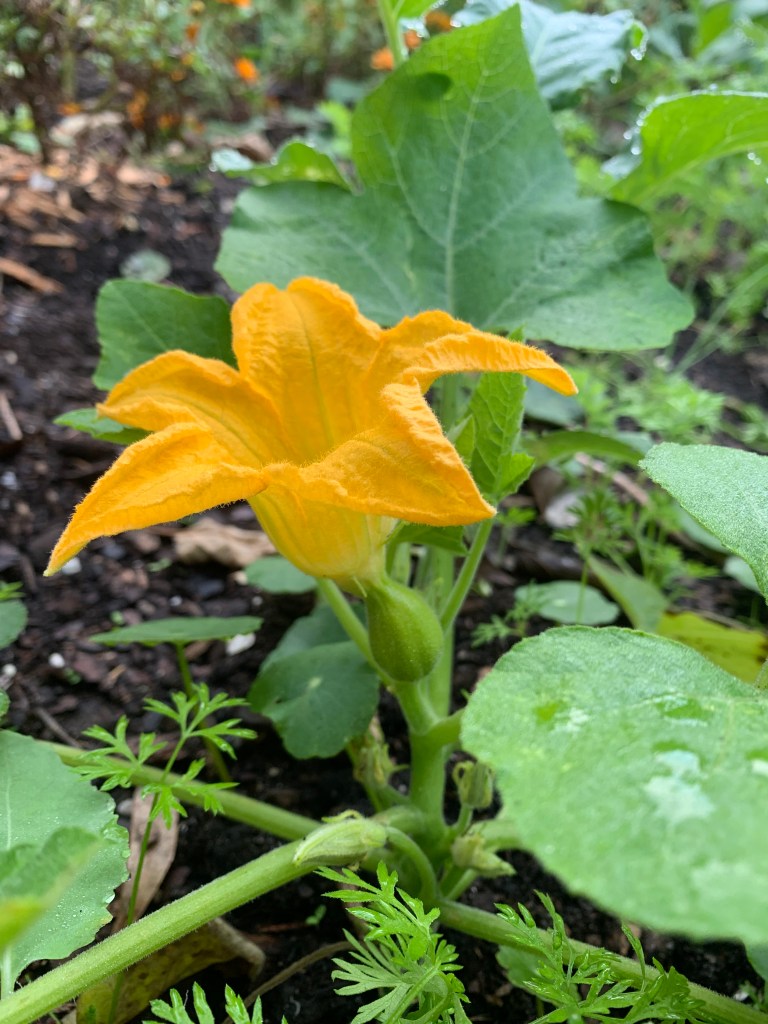
I am not fooled by this tiny squash and flower. Squash (of all kinds) and zucchini don’t amount to anything in my garden … ever. I won’t grow them any more. I threw some leftover seeds in just for fun. That little squash has since died.

flowering squash plant

Seminole Pumpkin Replaces Squash

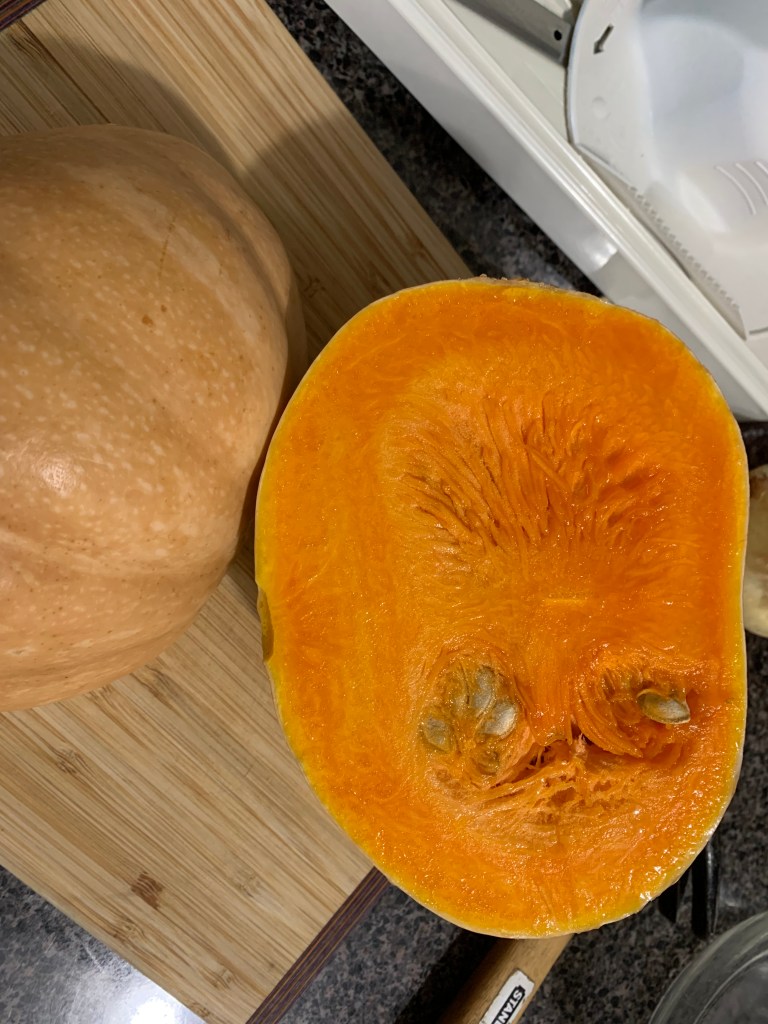
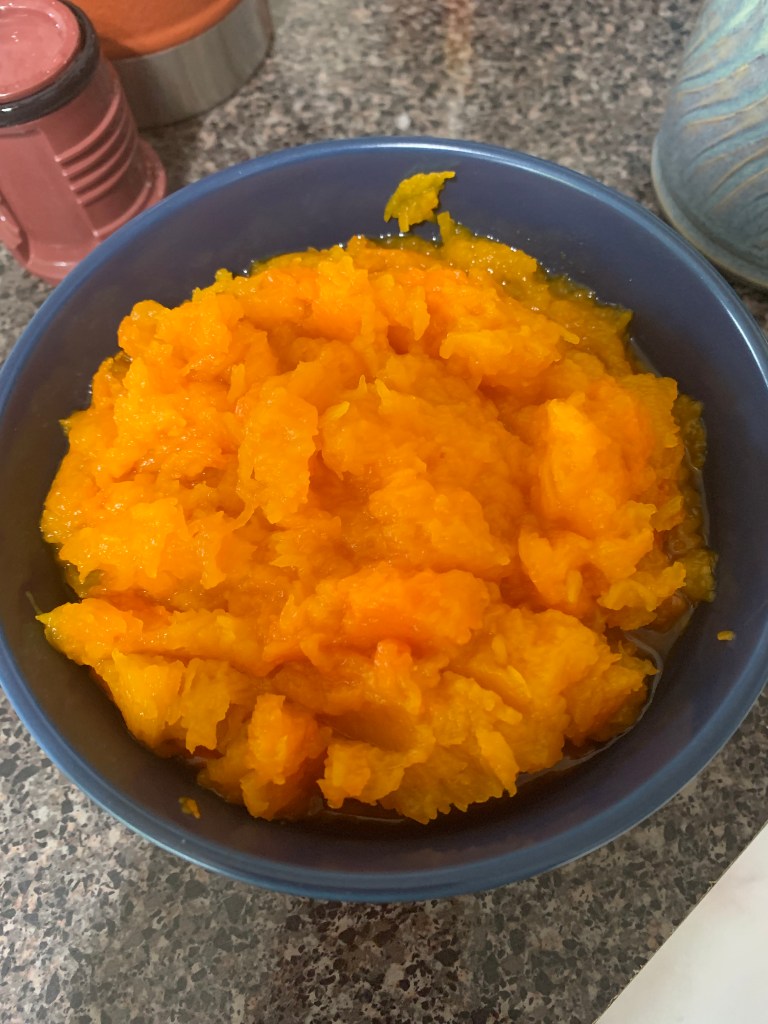
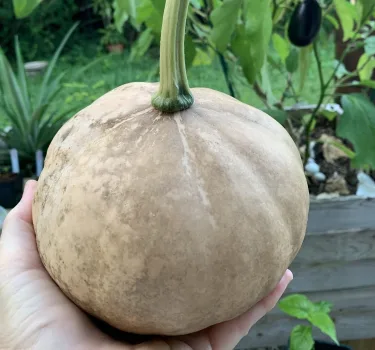
In my sub-tropical garden, the Seminole pumpkin replaces squash. I love orange vegetables and need them to help my old eyes. The Seminole pumpkin tastes a lot like a butternut squash.

Alas, I had only one to eat this year. That doesn’t mean I will give up. The vines are long, and they trail all over the yard but I don’t get many squash. I will definitely try for more of these this summer.

Loofah or Luffa

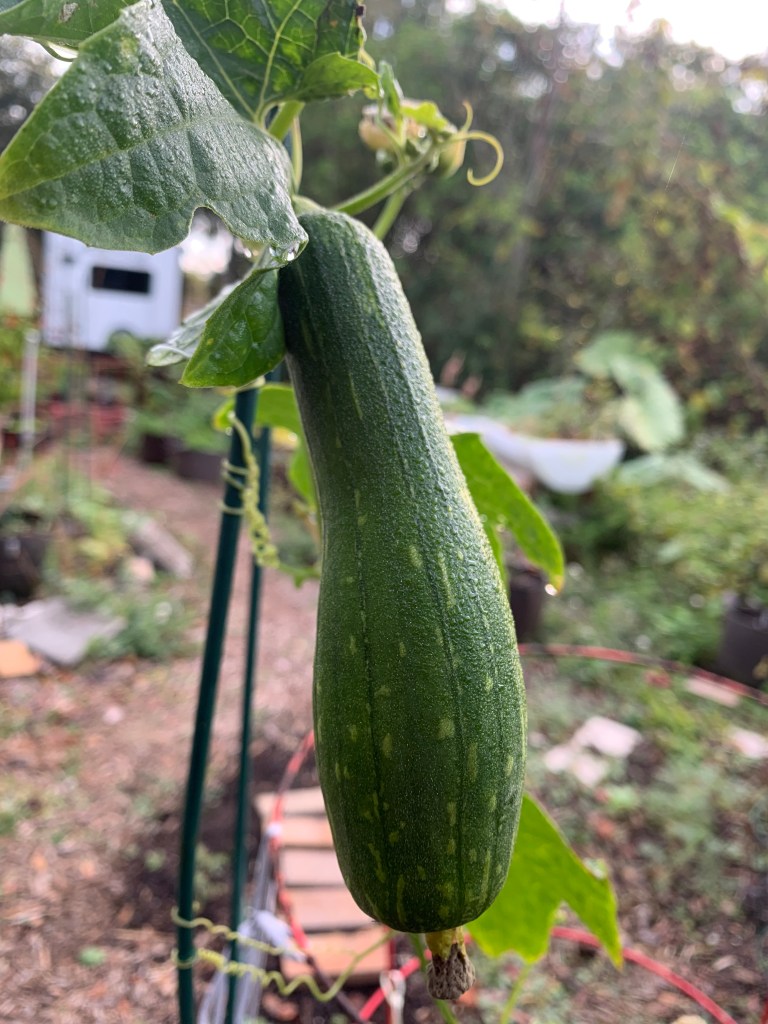
Loofah is a crop that is grown in summer here, I think. I planted seeds in summer and they did nothing. So, I took a chance and planted some seeds this Fall. One plant grew and I have one loofah on it. Supposedly, you can eat the young gourds as a replacement for zucchini. It doesn’t sound appealing.

The bees love the big, yellow flowers and it would be fun to have some dried loofah to use. See how to use homegrown loofah in this video. With any luck, I will have seeds from this one. I need a good trellis if I plant more.

Loofah gourd on the vine
Loofah

Healthy Beets, Even If I Only Get Greens

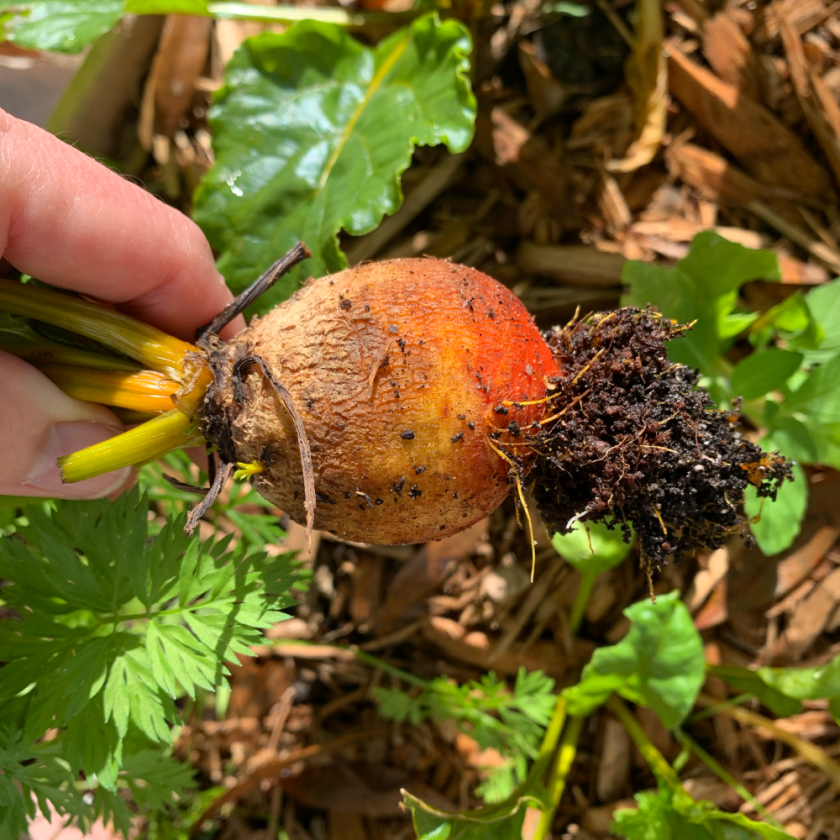
Beets grow very slowly but are worth the effort. They never get very big in my garden, or maybe I am too impatient. I love that I can use the greens as well as the root, so I will keep growing these. They are perfect for planting in a shallow grow box.

golden beets pulled up in garden
Golden beet

Looking Forward to Spring Planting

January has been a pretty cool, gloomy and windy month. We went camping for a few days in the beginning of the month and after that the weather went downhill.

We haven’t had any freezing temps yet, but it’s been dry. While the rest of the country is getting deep freezing temperatures and ice and snow, we are safe with temps in the 40’s for lows here. So far.

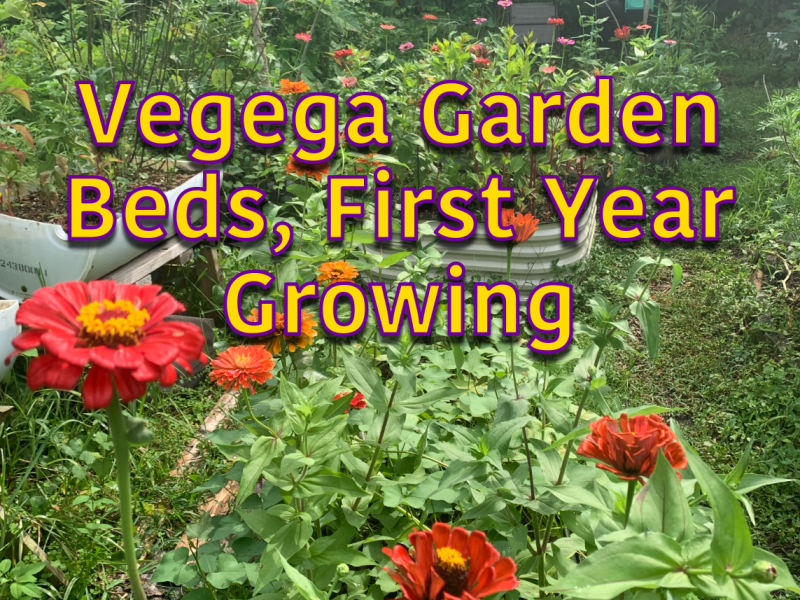
As most gardeners do, I am looking into the future and planning my Spring and summer planting. I have two Vegega metal raised beds to assemble. Then they need to be filled. I’ll have to get this done soon so I can plant seeds and seedlings. There is a lot of clean up and planting planning to do.

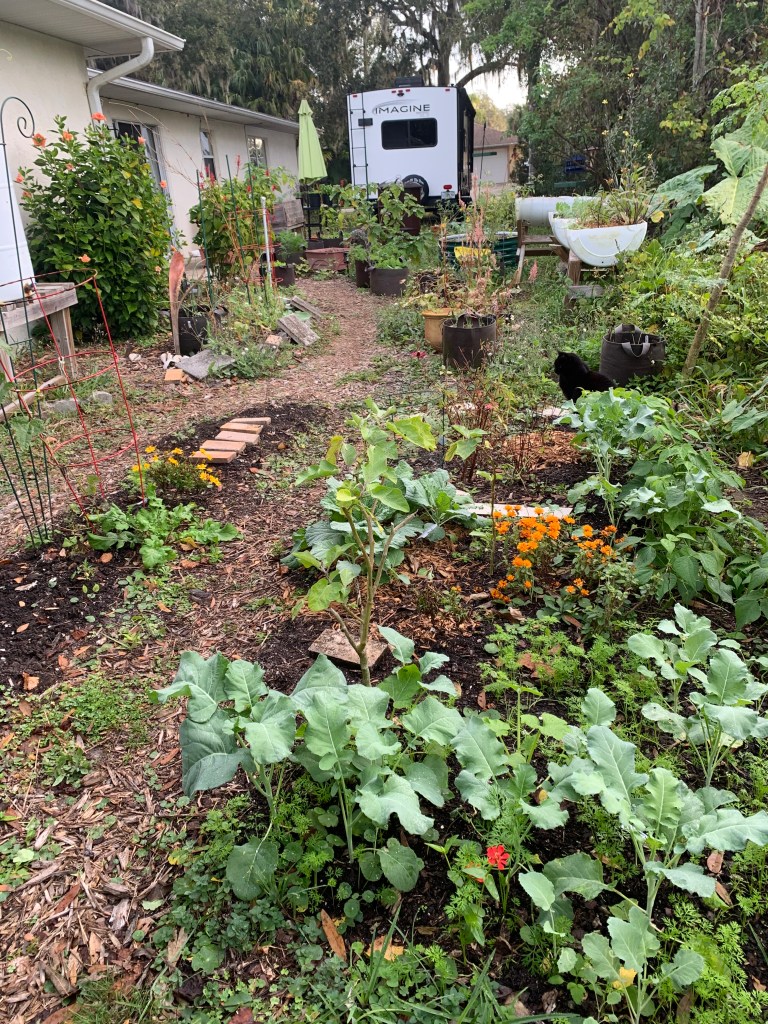
Florida backyard winter garden view
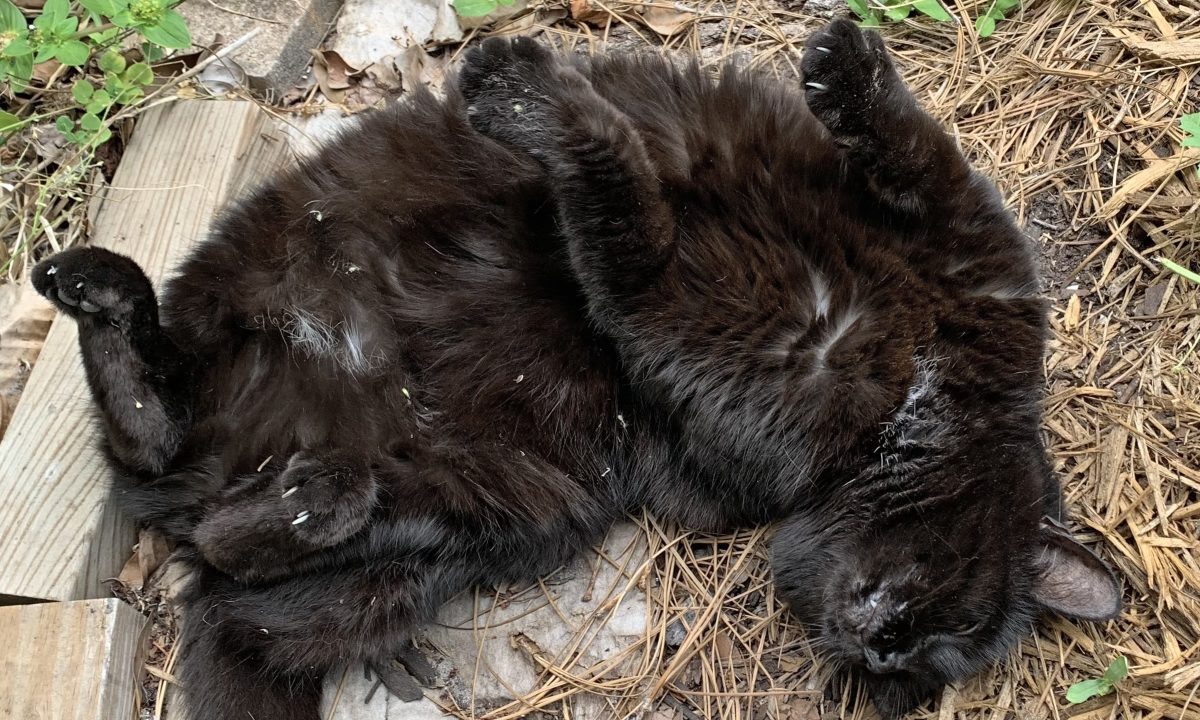
Winter garden & Skittle the Cat

Meanwhile the seeds I started a few months ago are growing – mostly. I’ll have a few things to put into the beds. First I need to harvest that broccoli.

green divider leaves long

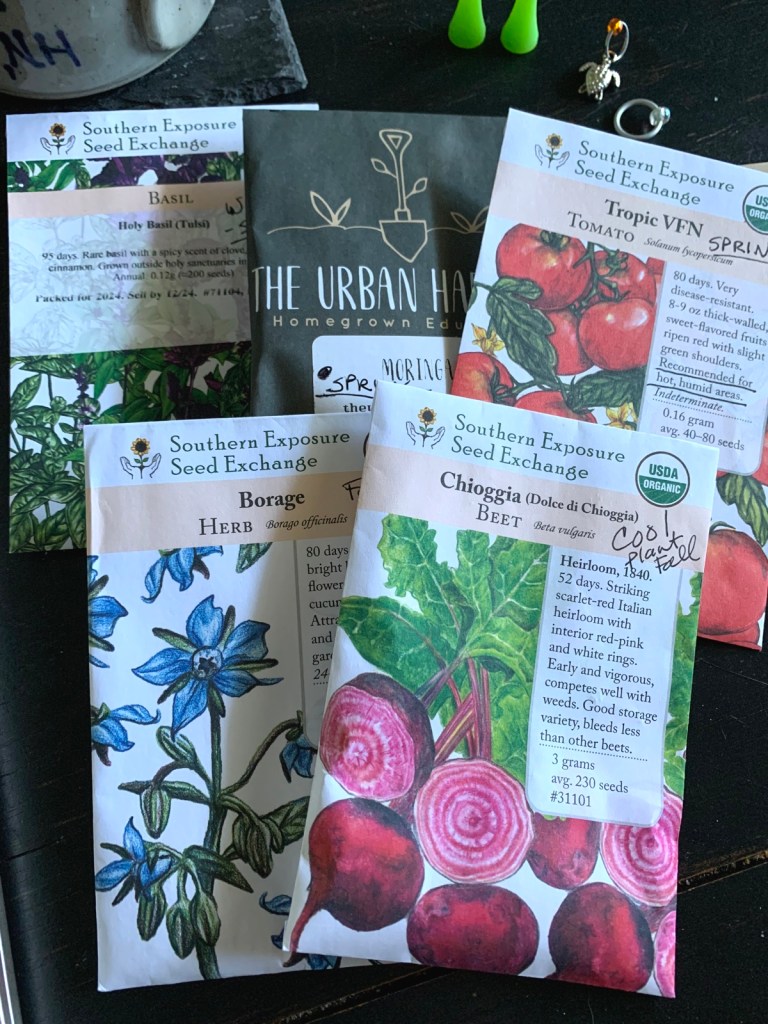
Can Borage Grow in Florida?

This winter I have been experimenting with growing various herbs and vegetables.

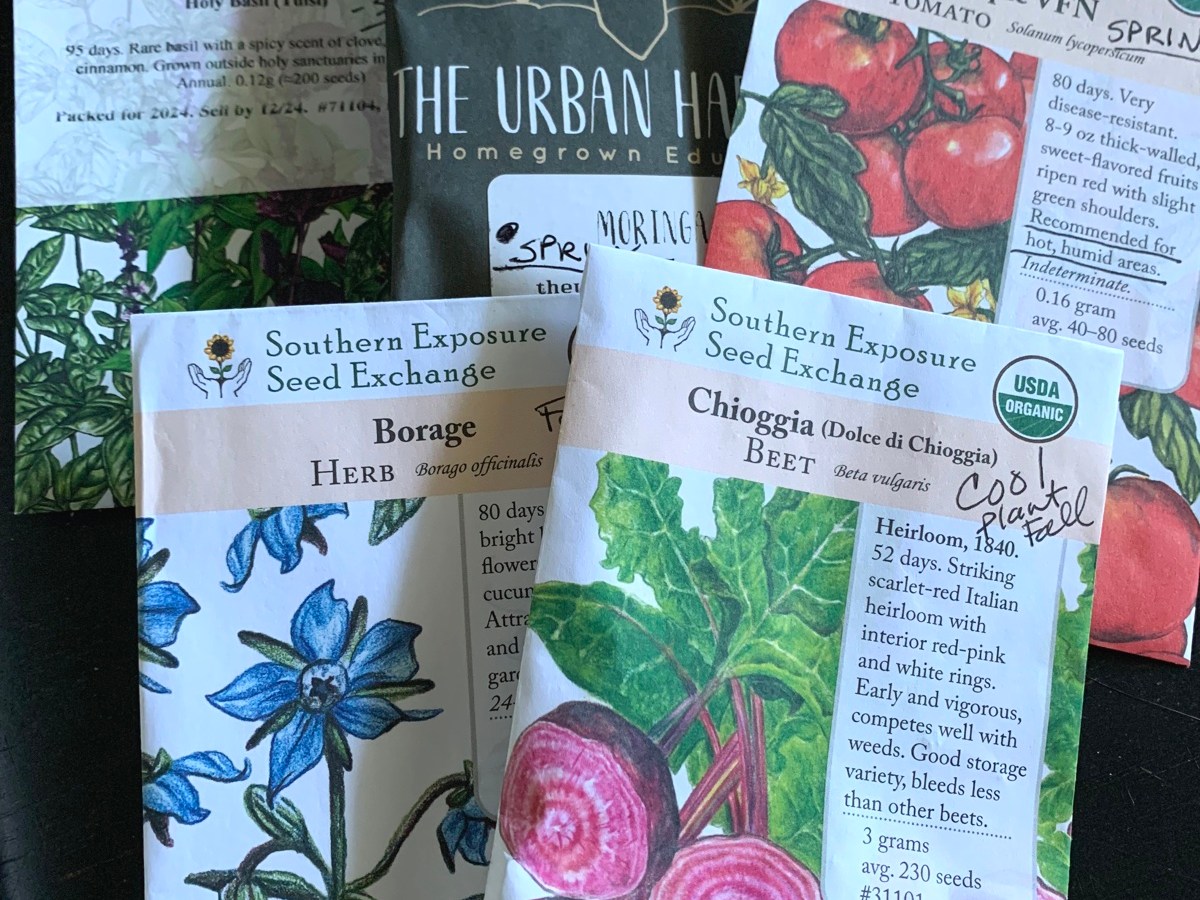
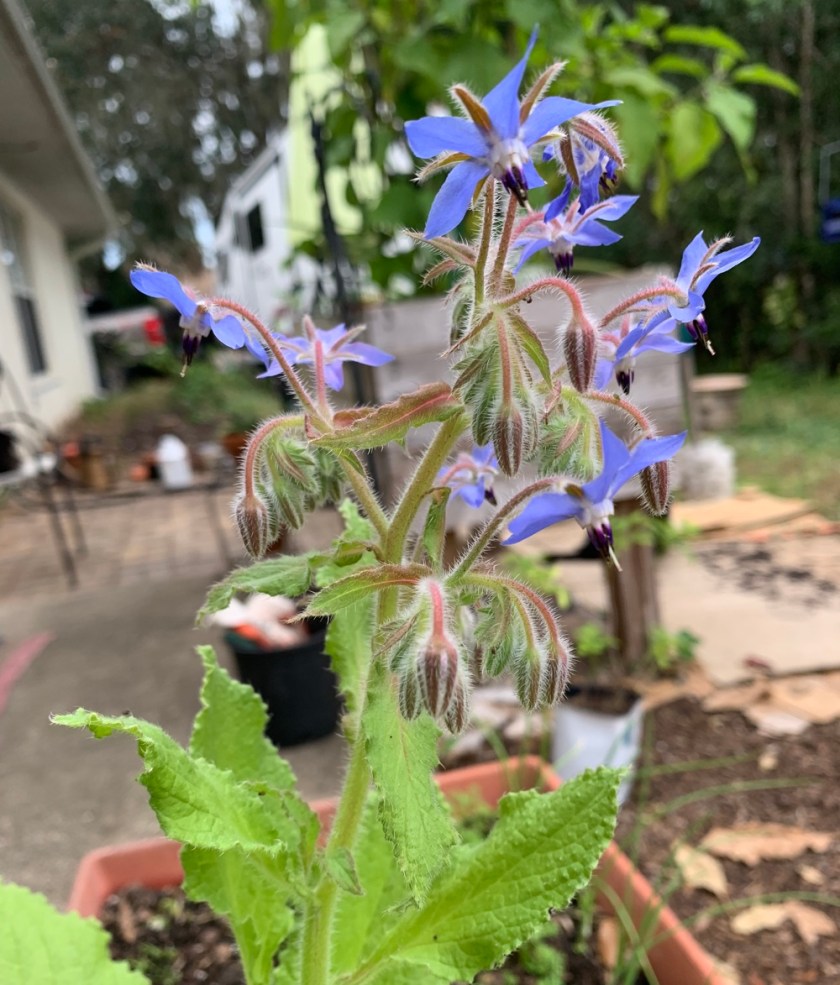
Borage is something I always loved in New Hampshire, but can borage grow in Florida? Well, yes and no. What I’ve found is that it will grow when the weather is nice and cool. 

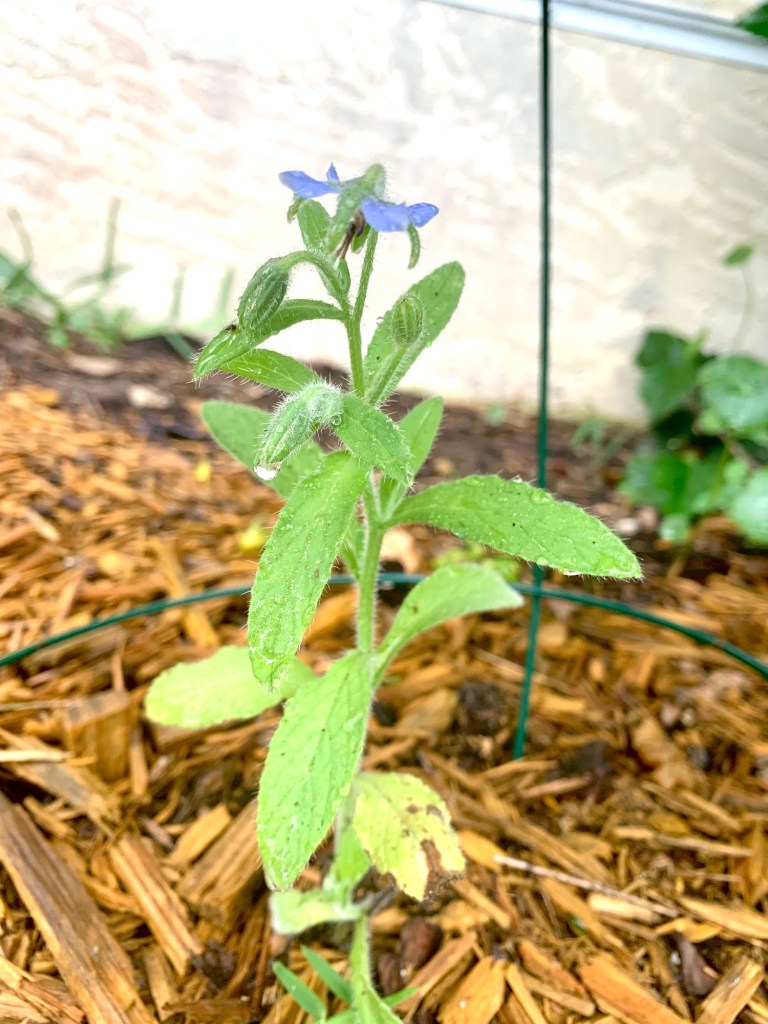
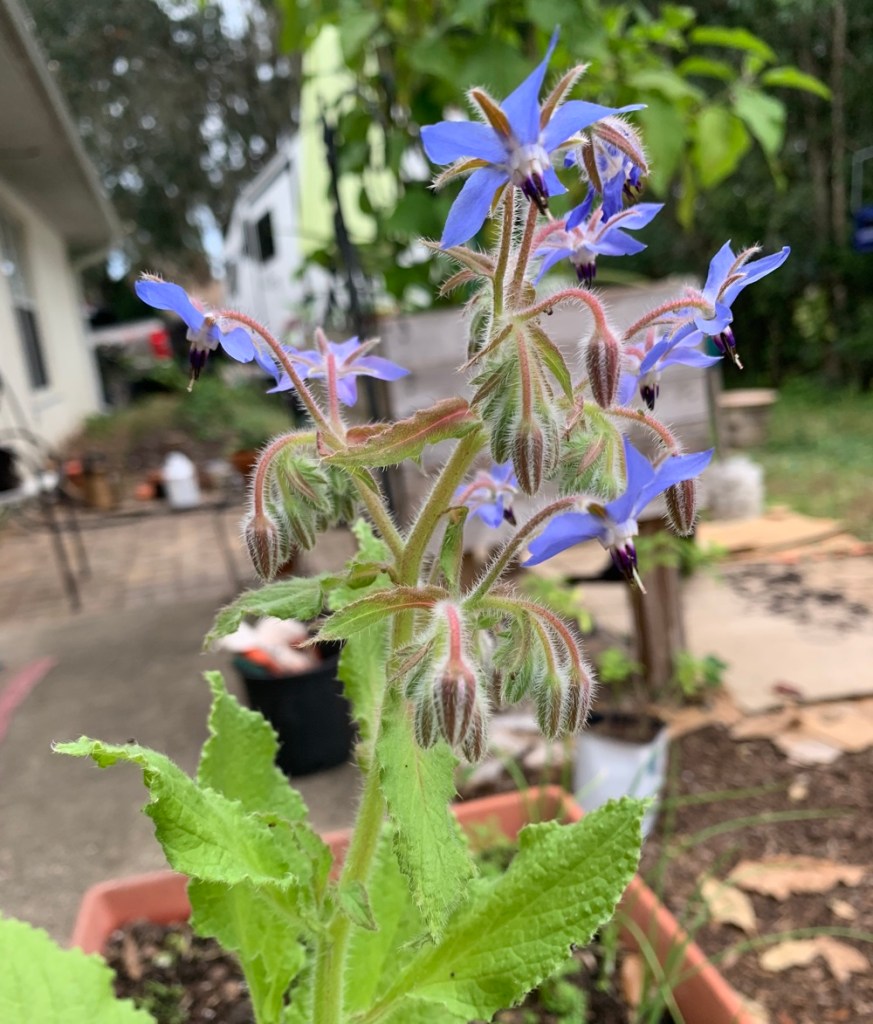
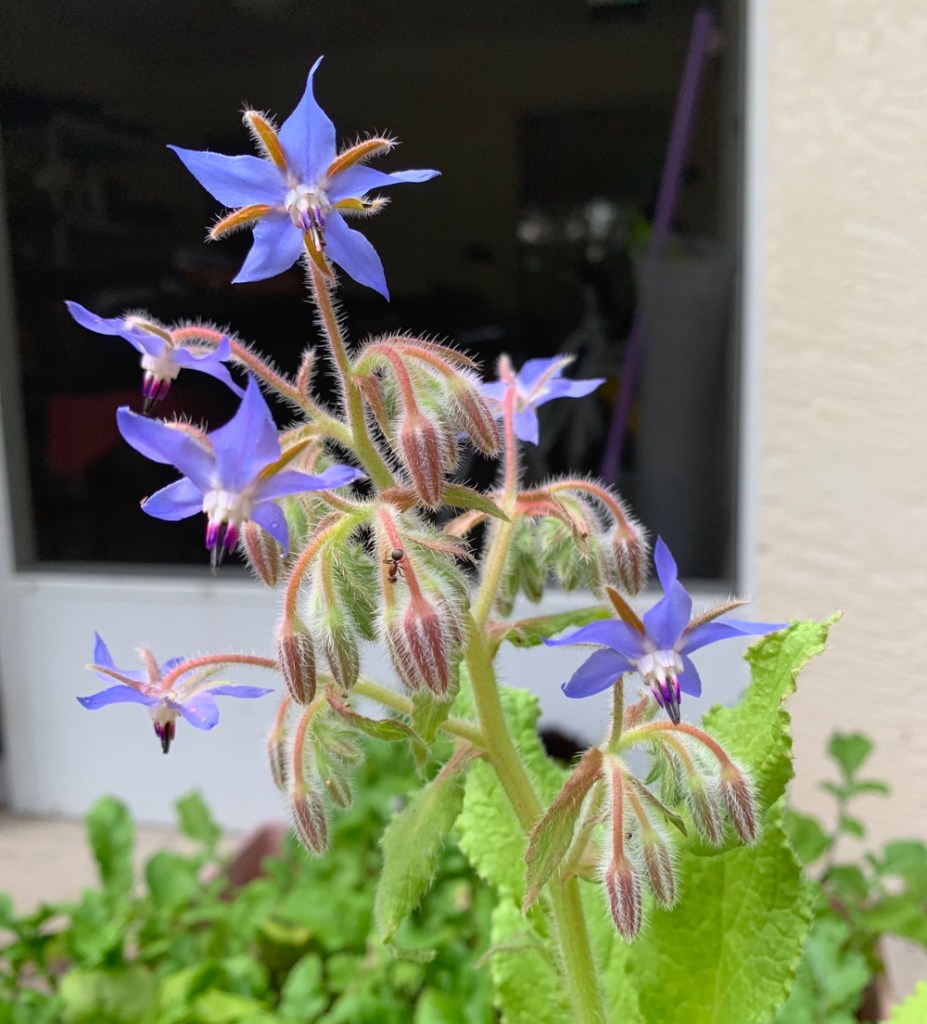
My borage seeds were planted in late October and by the end of November I had one flowering borage plant.

The borage seeds were planted all over my yard. Some were put into grow boxes and some went directly into the ground. I even put a few into a hanging basket.

We’ve had horrible weather, but on nice days you may see bees at the flowers. I’m always happy when anything flowers in my yard.

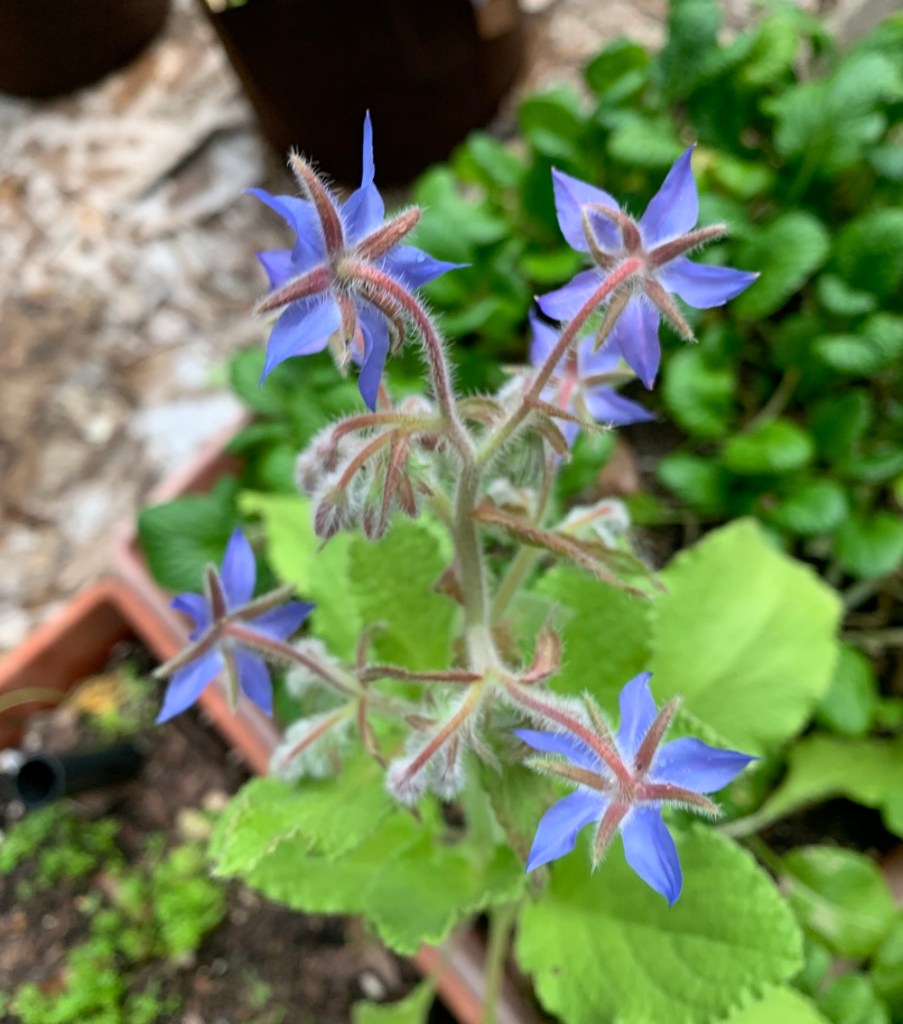
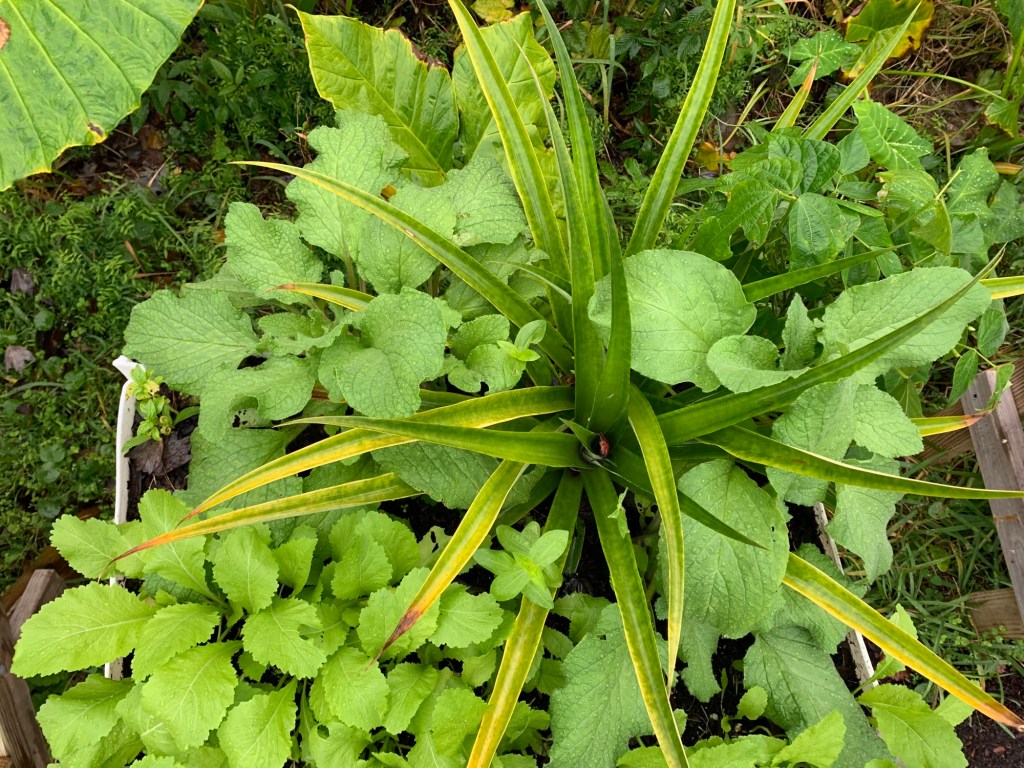
Two borage plants came up side by side in one of the grow boxes. This one has a bunch of flowers. It is growing among the Chijimisai spinach.

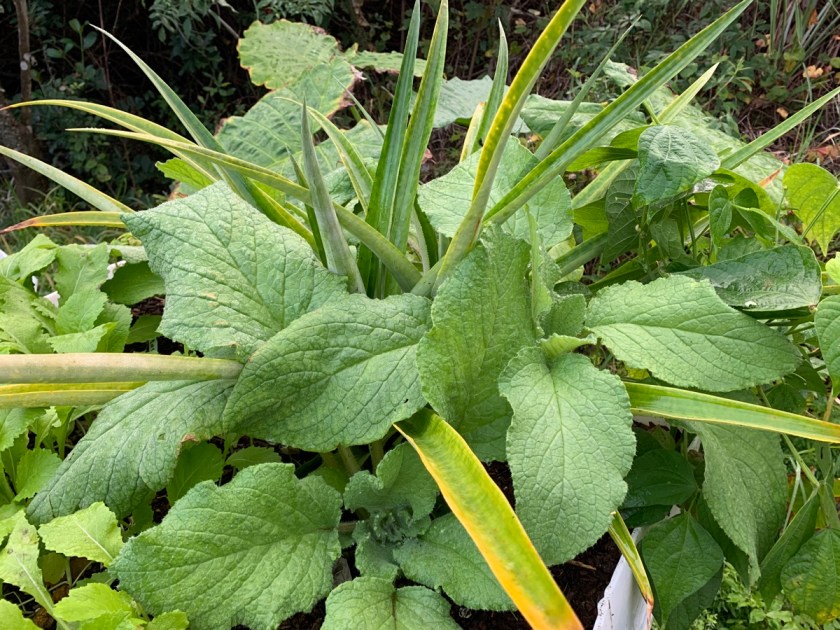
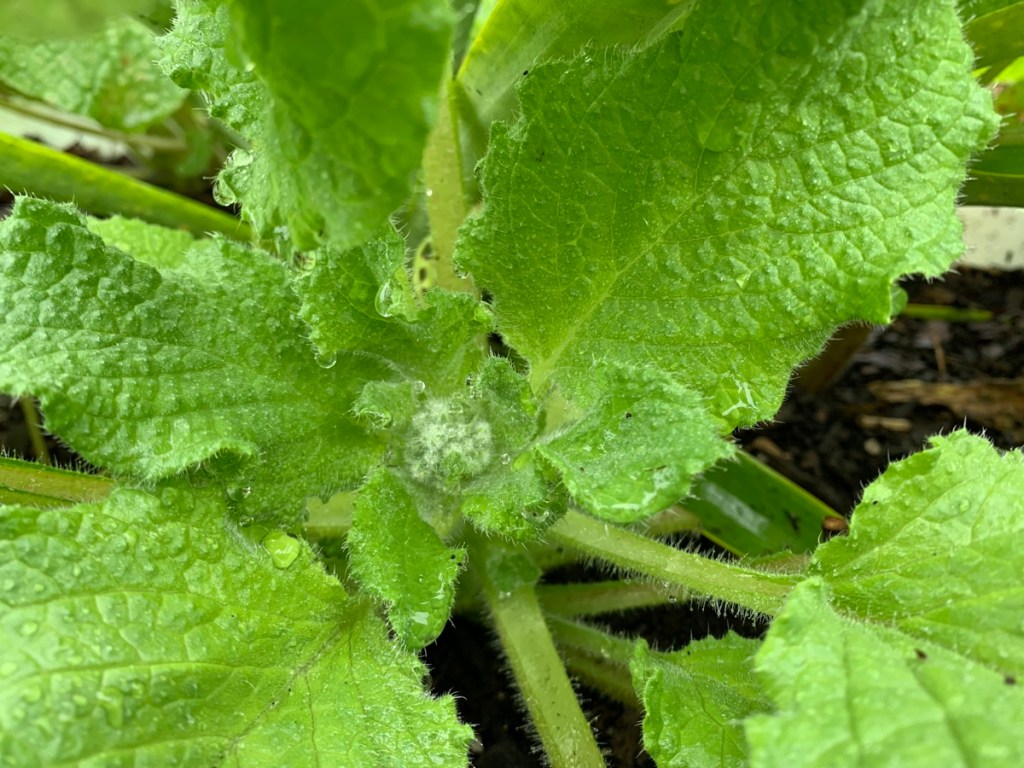
I didn’t have high hopes for the borage to grow, so I scattered some seeds beneath on of my pineapple plants (this pineapple ended up being a double) in a white barrel raised bed. The leaves are now huge, and at least one of the plants has flower buds. So of course, it would grow nicely when you don’t plan on it! Next year I will do better.

borage leaves pineapple
Borage and pineapple

None of the borage seeds I planted into the ground are doing much. They are all still very small. The hanging basket plants are very tiny also.

All plants are getting about the same amount of sun. They are all outdoors and getting the same rainfall and water. All I can figure is that the soil is better in the boxes which is causing the borage to grow larger.

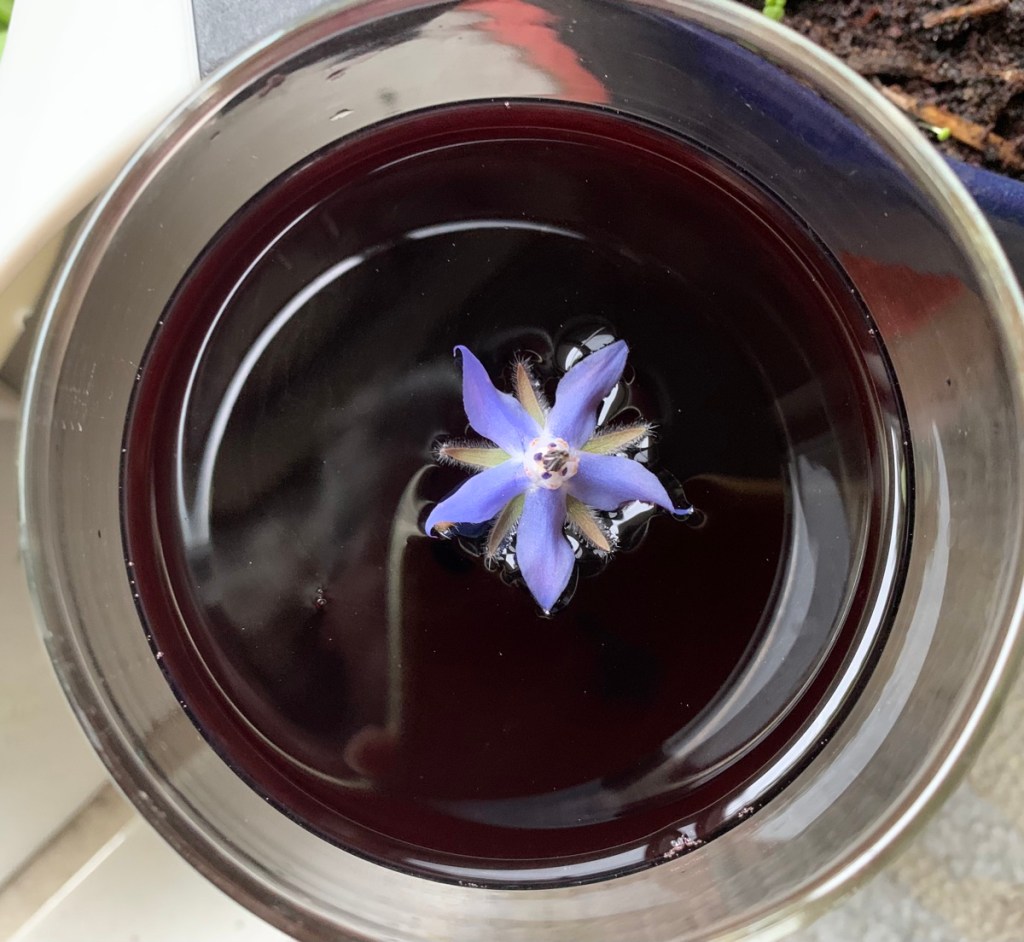
Borage For Tea

Borage in my December Garden

The growth of borage from seeds is random in the yard. The cooler the weather becomes, the better it looks. Don’t waste your time trying to grow this plant in a Florida summer! 

Yes, Borage Grows in Florida

I live in east, Central Florida and yes, I have grown borage. Choose cool months for planting and direct sow the seeds. Be patient because they may not grow quickly.

The seeds form up inside the hanging flower pod. If they ever dry in this weather, I will collect the seeds to plant next Fall.  It will be something to look forward to – enjoying tea and the beautiful, blue flowers once again.
Florida borage flowering
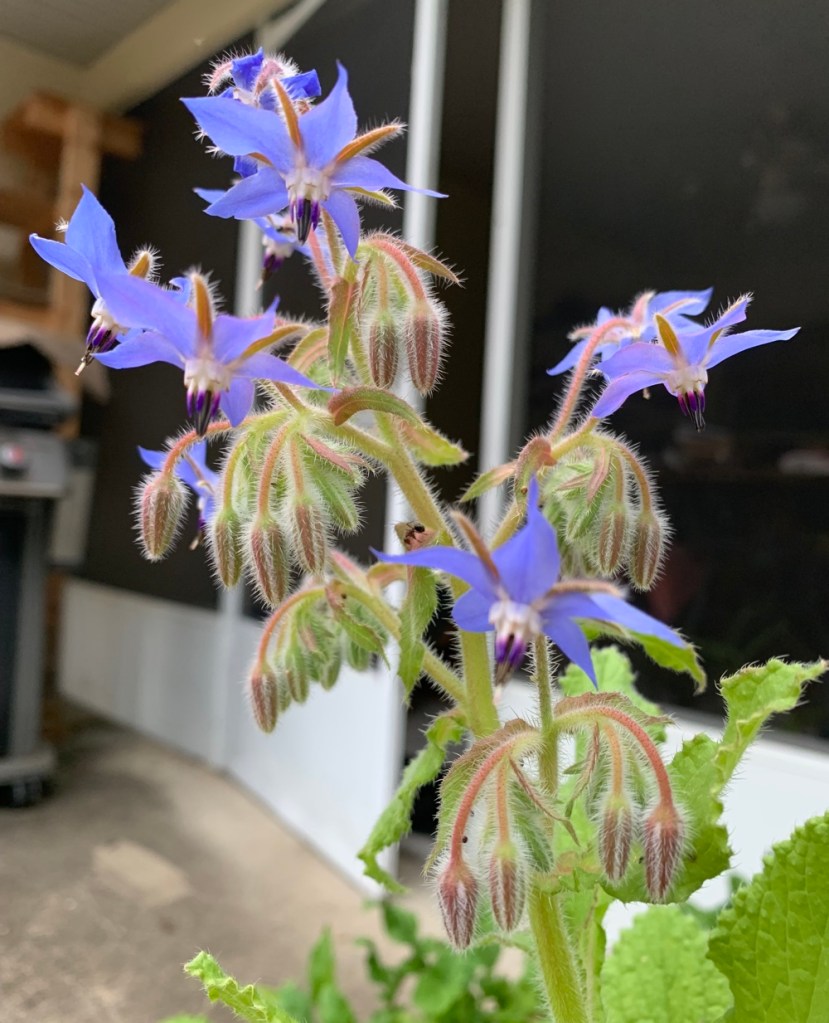
November Borage flowers

Keep reading:

Identifying Florida Trees and Shrubs in My Backyard

My Florida yard is very small but I have wild growth on two sides. A vacant lot behind the house is full of trees, brush, and vines and it’s where I set up my bird feeders for the Painted Buntings. I have identified some of the growth thanks to a good site I finally found.

Searching for photos online has proven difficult because often there is no image of the leaves. The whole tree or bush is not really helpful without some up close images.

I’m adding photos from my yard to this page to help me remember what is what. I have to know what to keep and what to destroy as I clean up.

Unknown Tree or Shrub – Laurel Fig?

This plant was uncovered as I cleaned up for a small garden space in January. The leaves are widely spaced and are dark green and oval in shape. The bark is very light gray. Possibly the Laurel Fig and if so, it is an invasive tree. I was hoping this was a nice bush to save, but it seems that I may have to cut it out.

Dark green small leaves tree type?
No name for this yet.

Read, and see amazing photos, on this interesting page on Strangler figs and how the roots cause havoc.

The Brazilian Pepper Tree is an Invasive Species – Non Native

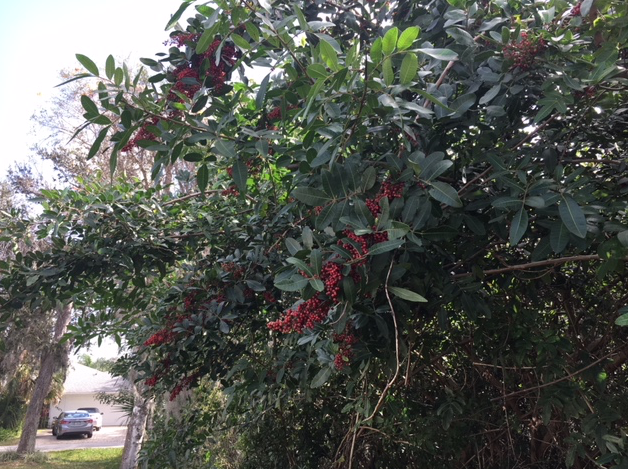
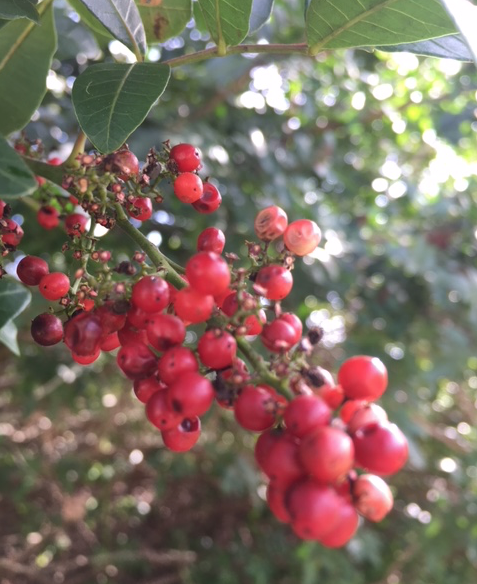
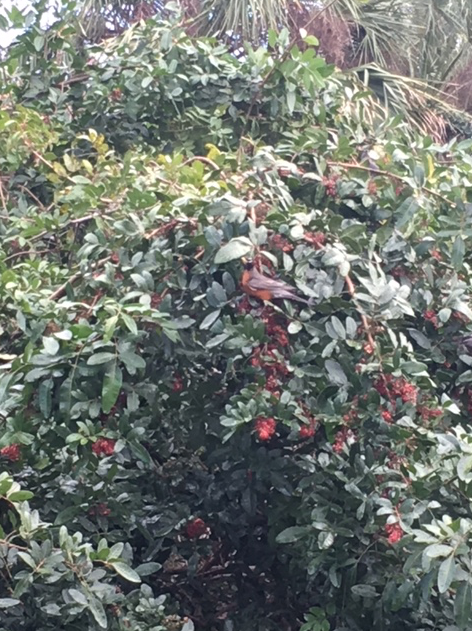
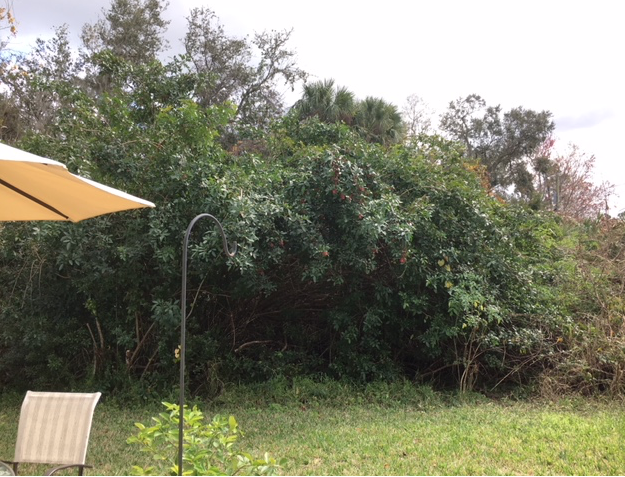
I have a group of Brazilian Pepper trees just over my lot line. During the winter months loads of red berries appear which bring robins and other birds to feed.

It is an attractive tree, but is an invasive species and not a Florida native. In fact, the trees should be destroyed when possible according to many articles I have read. This clump of trees is huge, with a large root system. It is also not on land I own but the branches arch over my yard.

  • Dahoon holly tree with red berries
  • red berries dahoon holly
  • Robin on branch of a Dahoon holly tree
  • backyard
  • Multi-trunks of the Brazilian Pepper tree

Florida Maple Trees

The Florida maple trees lose their leaves during the cooler months. This photo was taken in February. Soon new leaves will form. I saved this little tree which is growing on the edge of my property when it was covered in potato vines (see below) and unable to grow. Now this maple tree is thriving and has tripled in size.

Leafless maple tree in winter
The Maple tree loses leaves in winter

The Elderberry Shrub – Florida Native

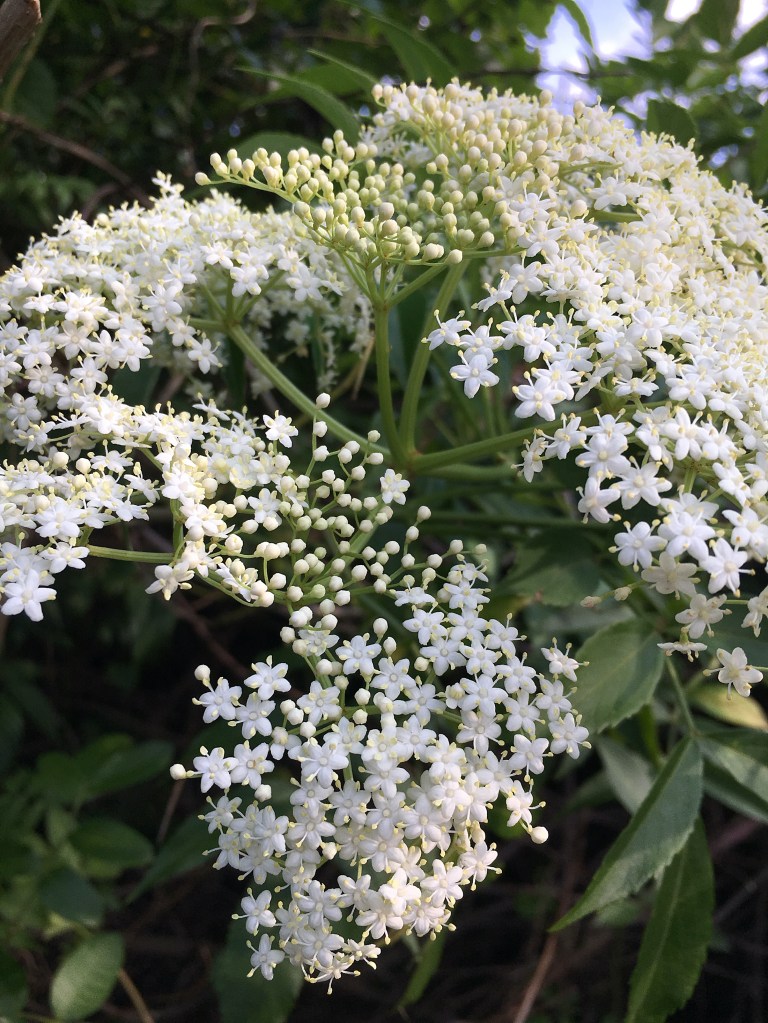
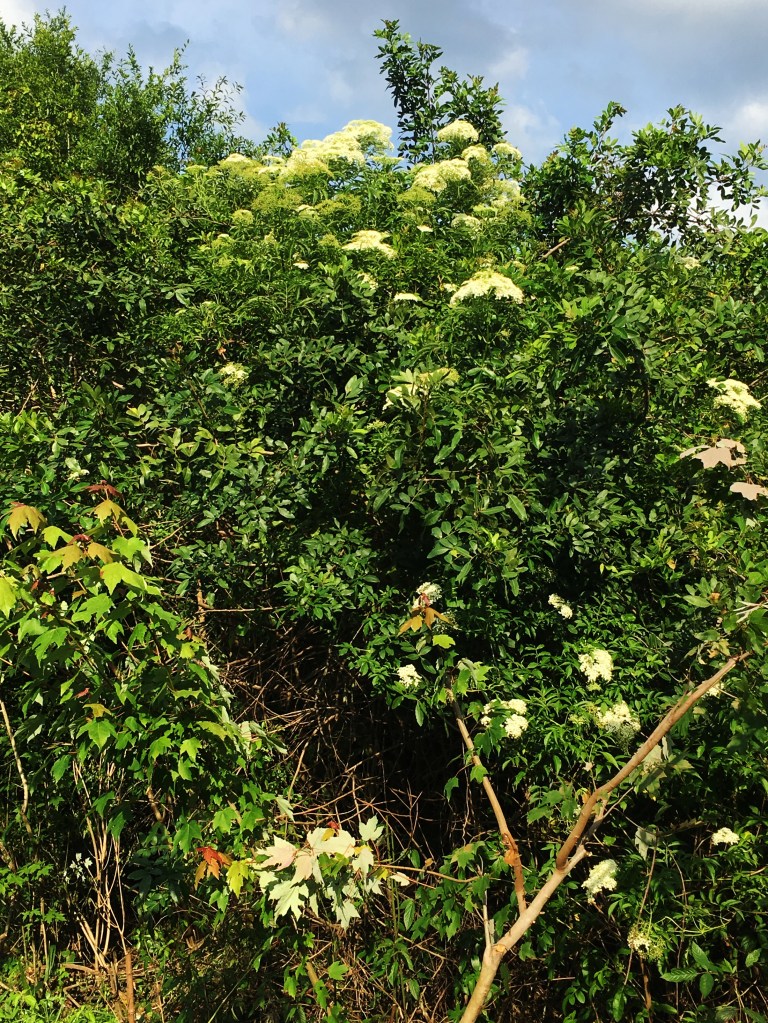
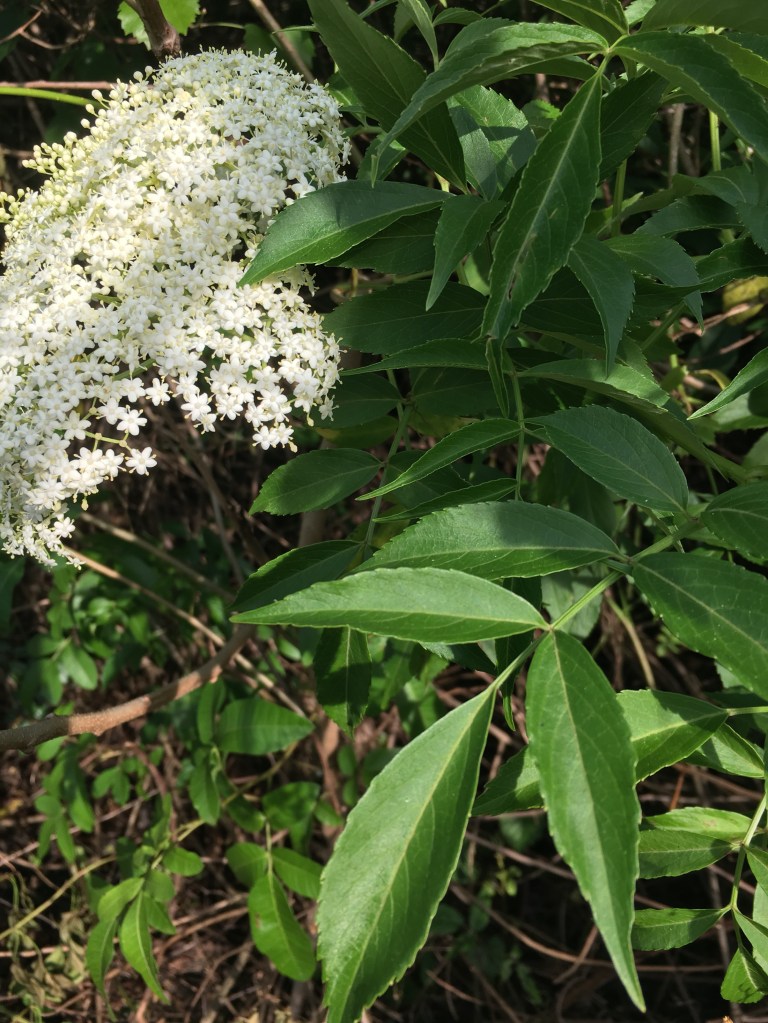
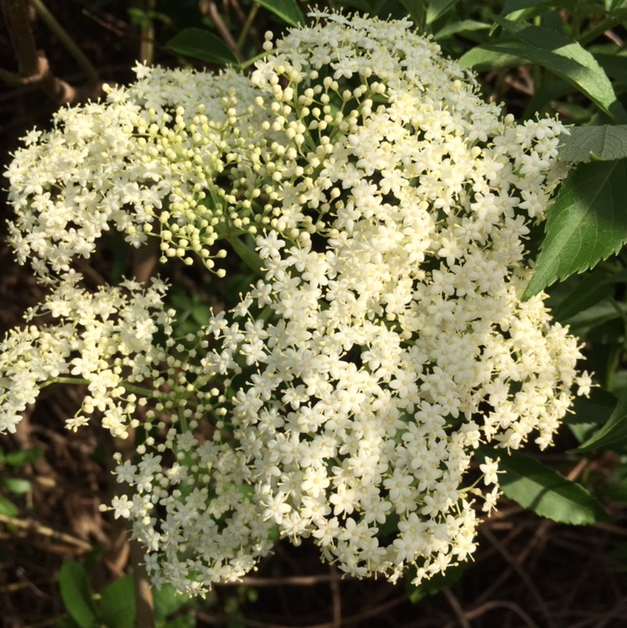
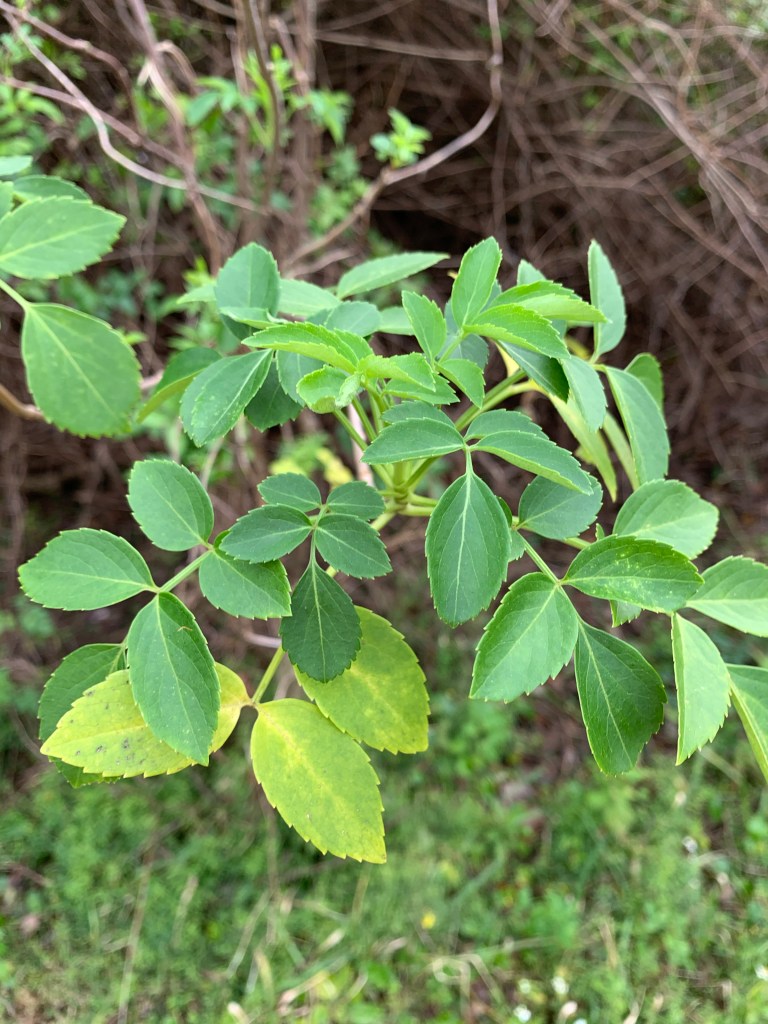
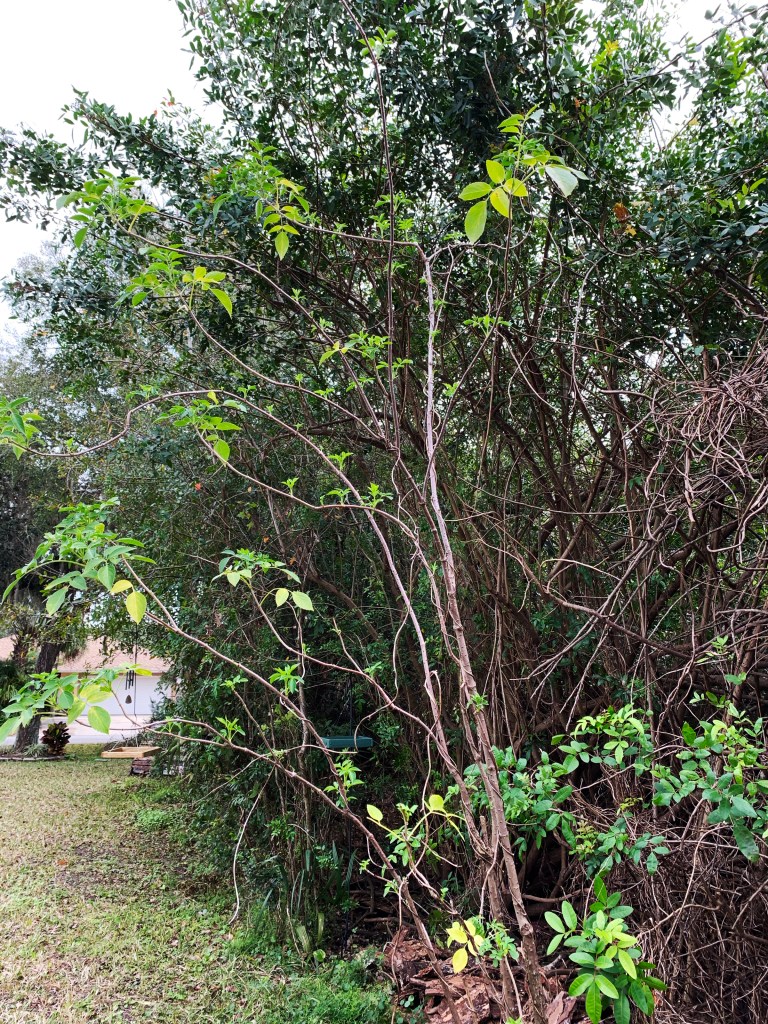
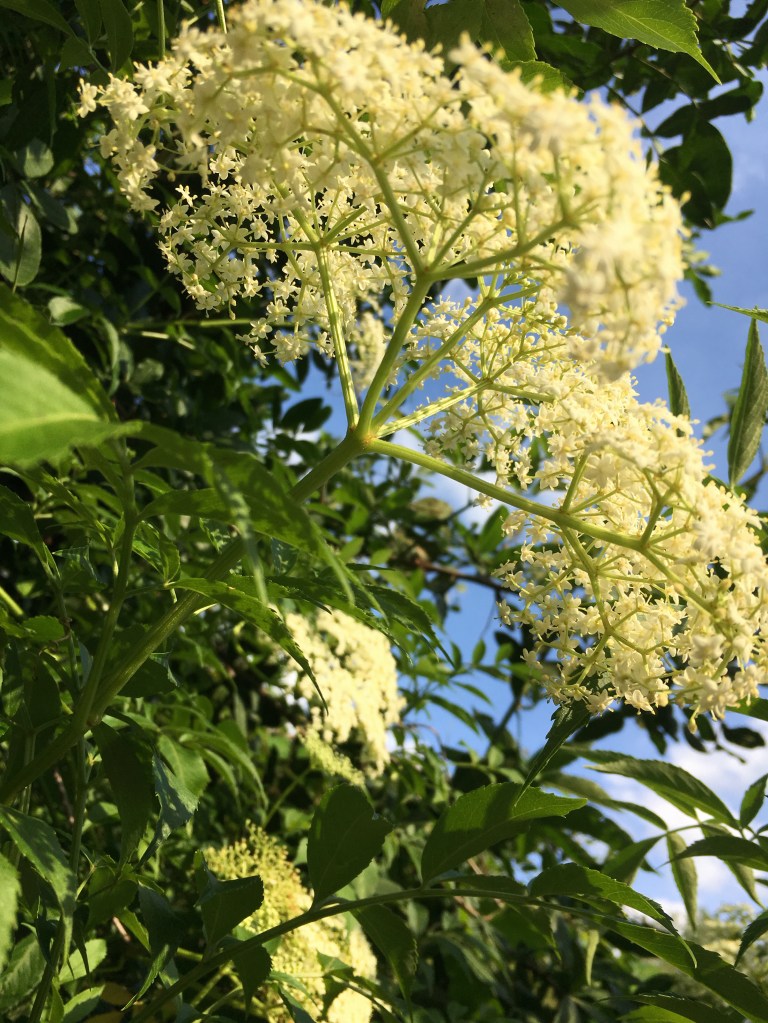
I’ve included a new volunteer Elderberry with a photo of the larger Elderberry in the woods. The tree has pretty white clumps of flowers and dark berries during the warmer months. The berries are toxic to humans when raw, but edible when cooked. Many animals and birds can eat the berries, but I think I will pass!

  • White flowers of the Florida Elderberry
  • flowering Elderberry in woods
  • Elderberry leaves and flower head
  • Elderberry flowers
  • Florida Elderberry
  • Elderberry white flowering tree
  • Elderberry flowers

The Beautyberry – Florida Native

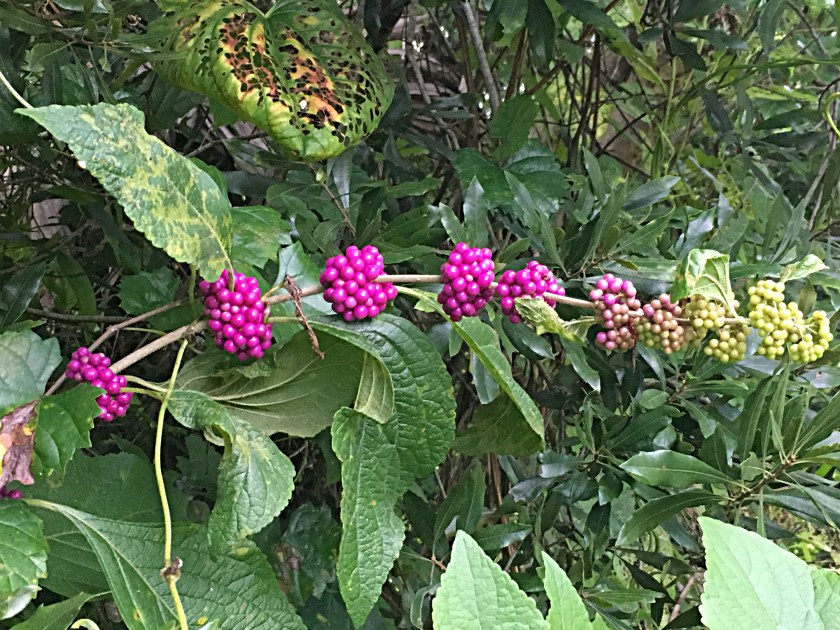
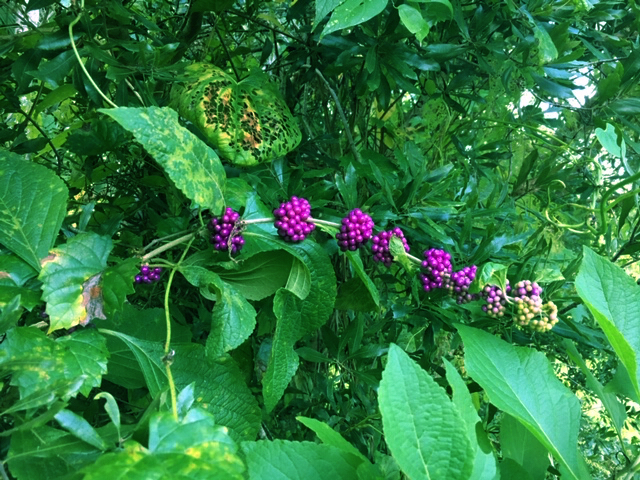
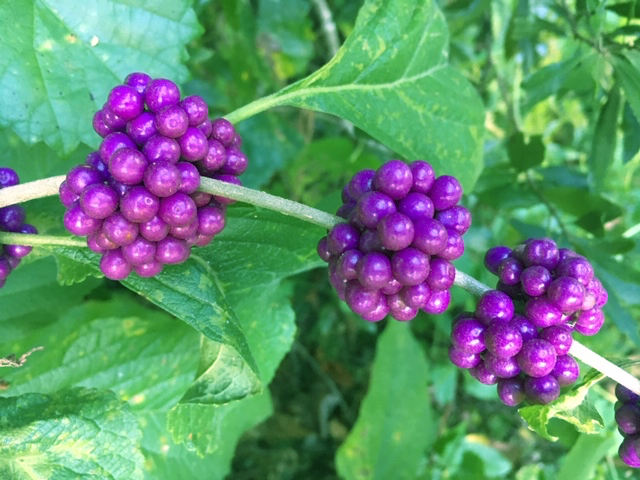
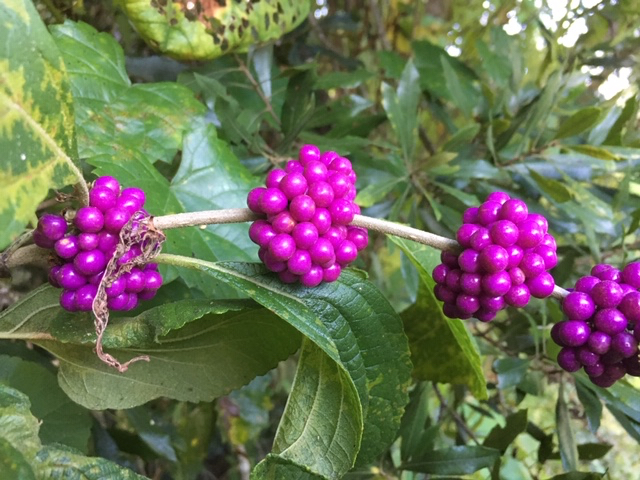
When I came across this stem of berry “bubbles” I took some photos not knowing what it was. The Beautyberry bush is a Florida native plant and this one is located in my backyard.

  • Long beauty berry stem with purple berry clusters
  • purple berries
  • purple beauty berry
  • purple berries

FYI: UF Plant Directory Page for Native and Non-native plants, with photos

The Annoying Potato Vine / Air Potato

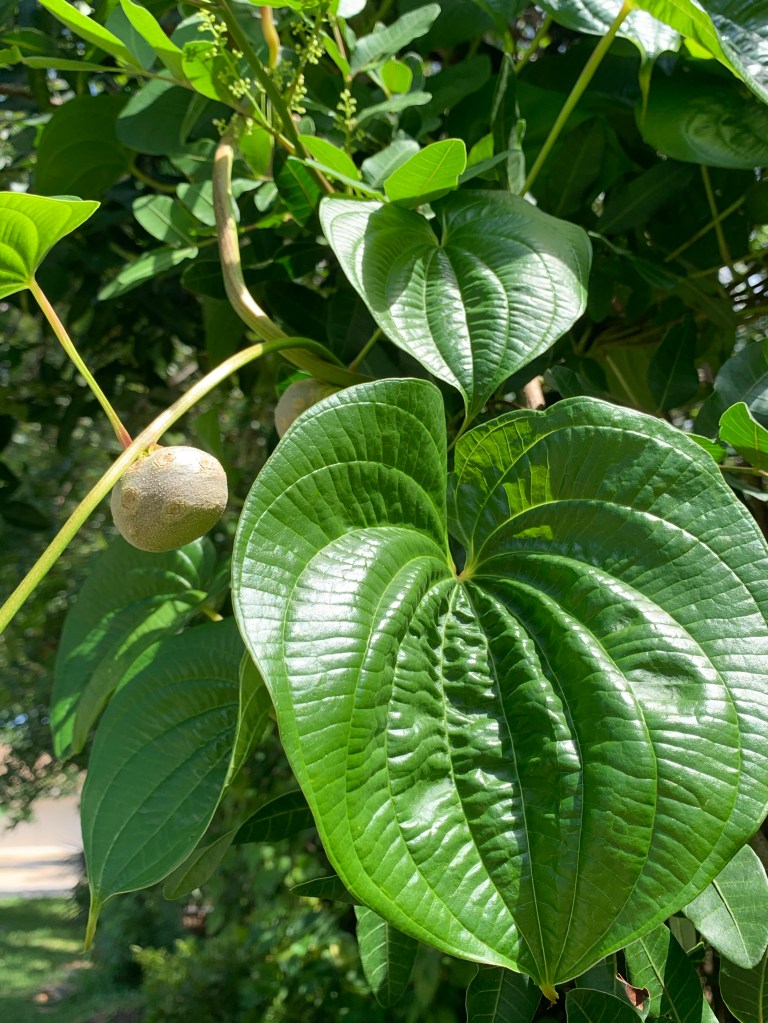
There are many obnoxious and non-native vines in Florida. Most were purposely brought here for some reason and then they grew out of control. The potato vine is one. See my photos below and more photos at the UF site.

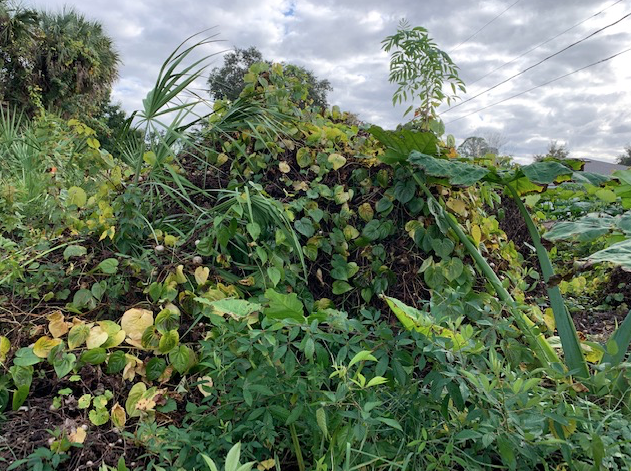
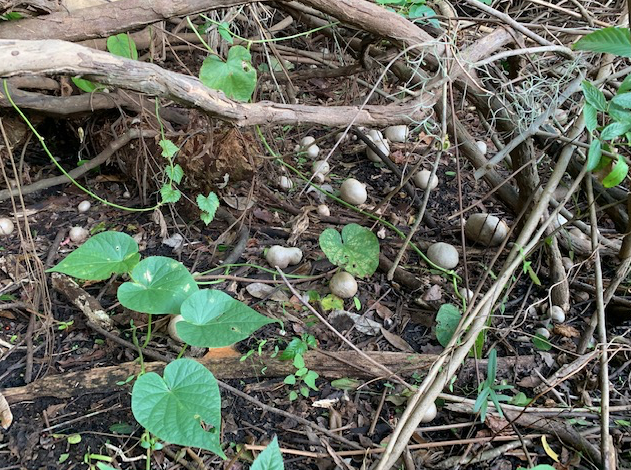
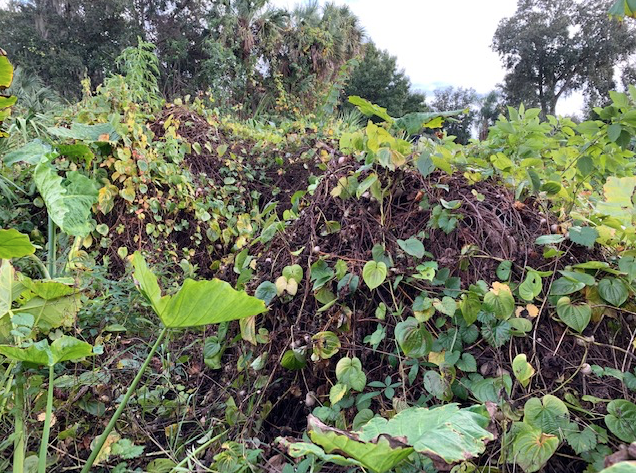
Because of the long months of agreeable weather for growing, vines can easily take over a landscape. The potato vine creates loads of potato-looking things of all sizes that become more vines. Native trees and shrubs can become smothered.

  • air potato vine leaves
  • large air potato in Florida
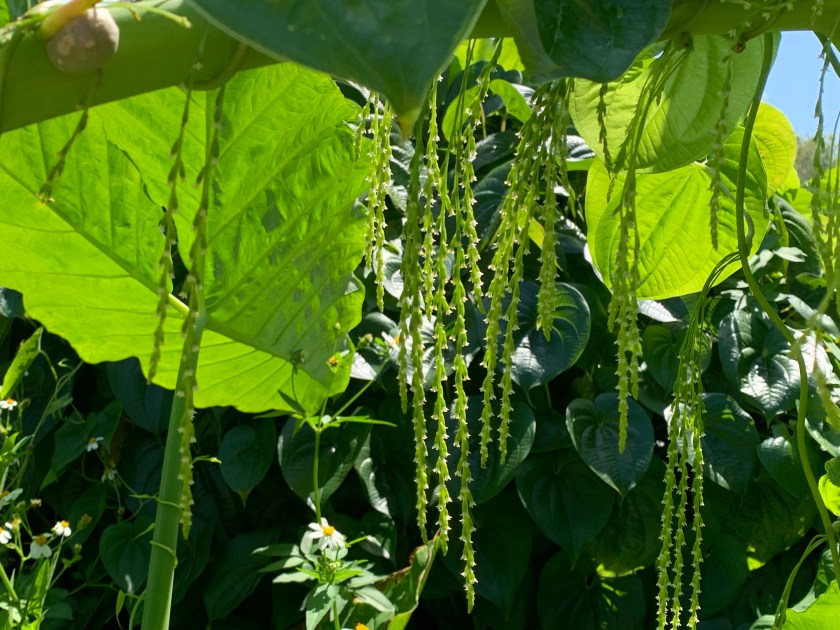
  • Hanging flowers on air potato vines
  • Potato vines smothering vegetation
  • Potatoes dropped along the edge of my yard
  • Florida air potatoes
  • potato vines
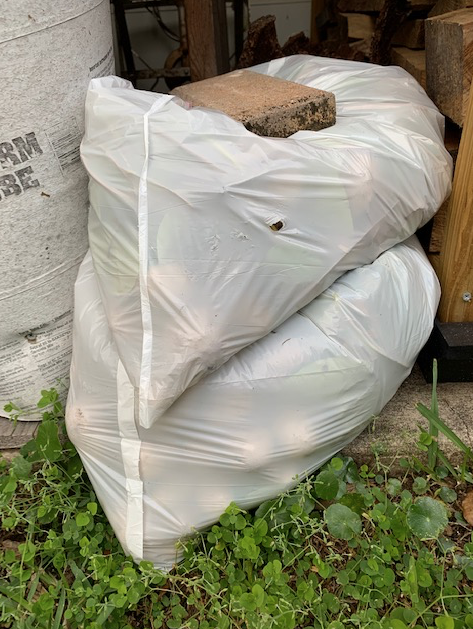
  • bags of air potatoes

Thorny vine – unknown

Leaves and thorny vines
Unknown vine with thorns

Pink Wood Sorrel – Clover

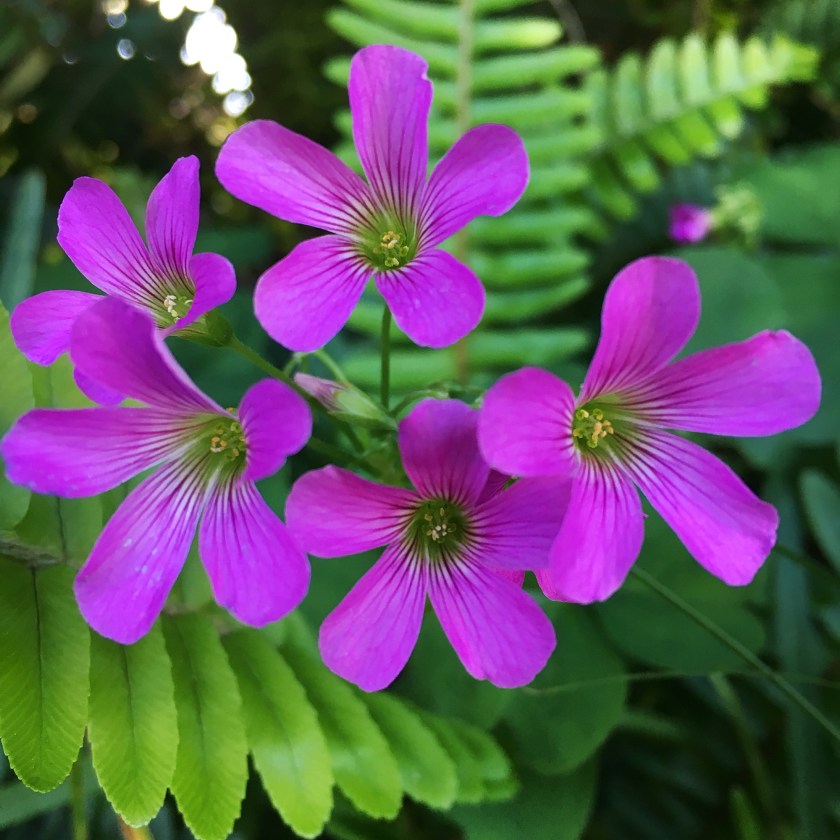
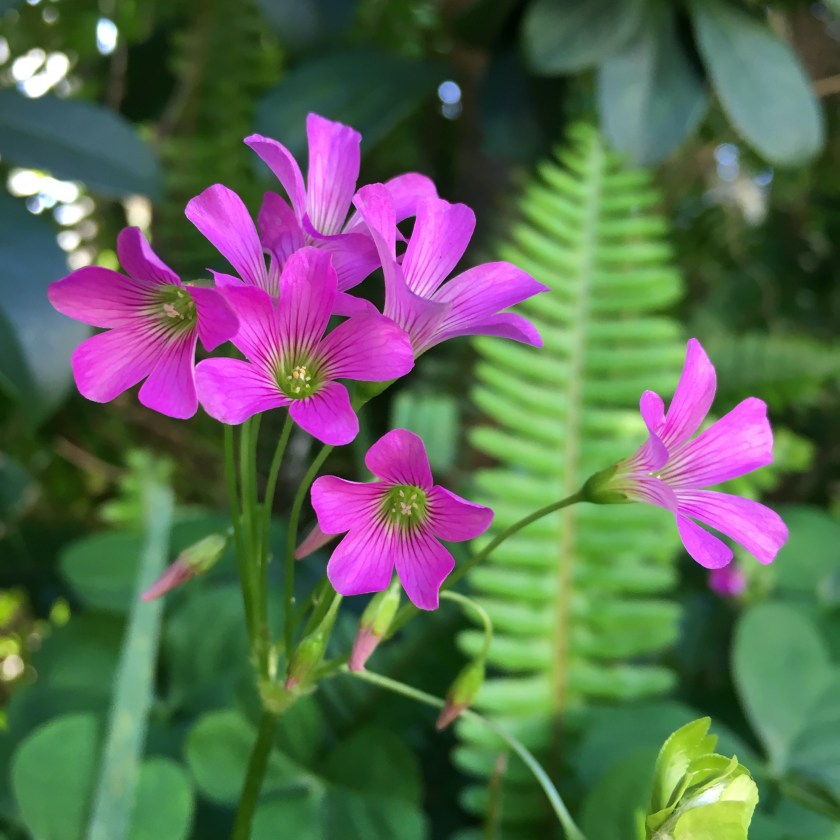
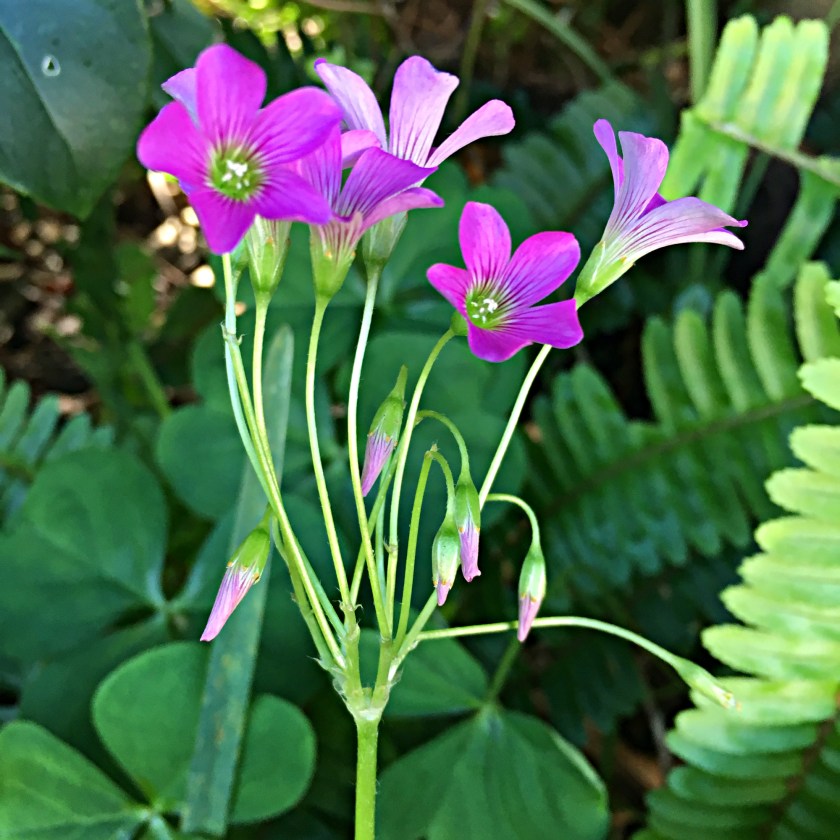
I call this pink wood sorrel plant a “clover” because of the leaves. I don’t know if it is a relative to clover, but it blooms with the prettiest little dark pink-purple flowers. I’ve had it pop up in my front garden bed all on it’s own, but this plant below I photographed along the shrub line out back.

It does die down and disappear, but comes back.

  • clover flowers pink wood sorrel
  • dark pink clover flowers pink sorrel
  • Flower cluster of pink wood sorrel

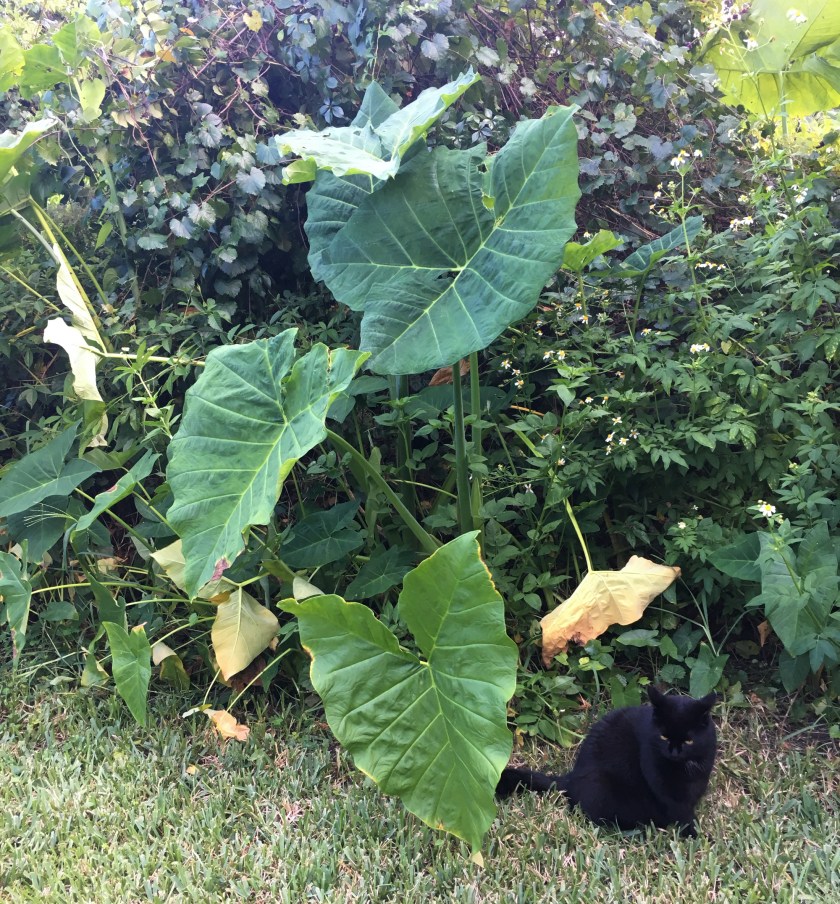
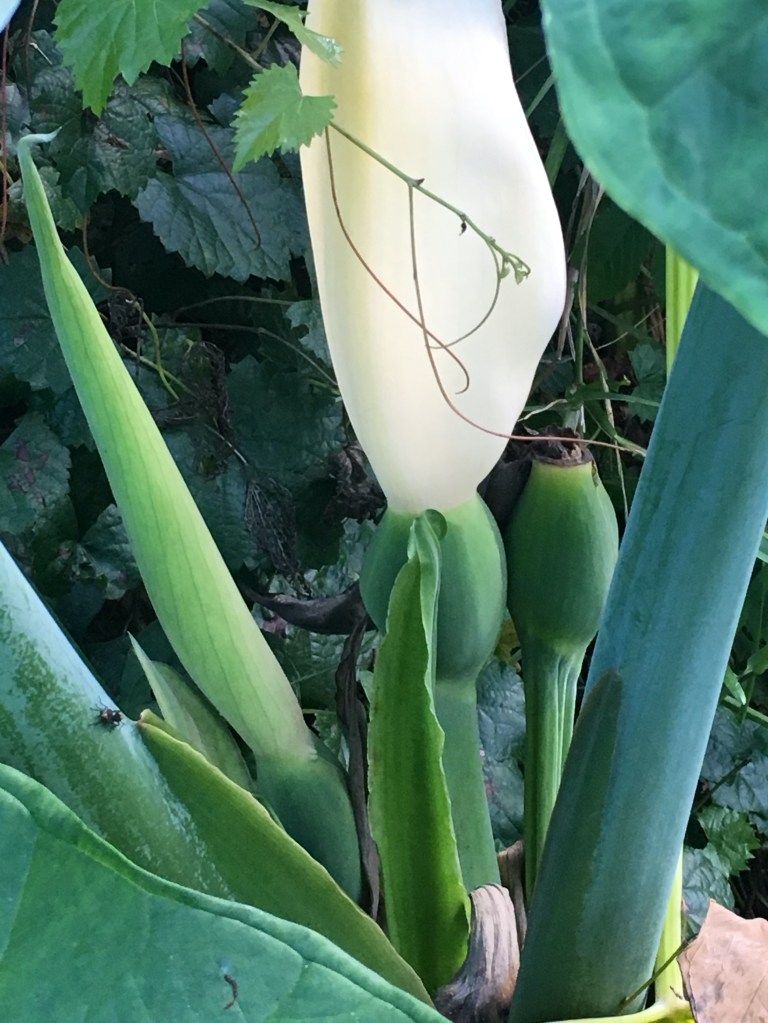
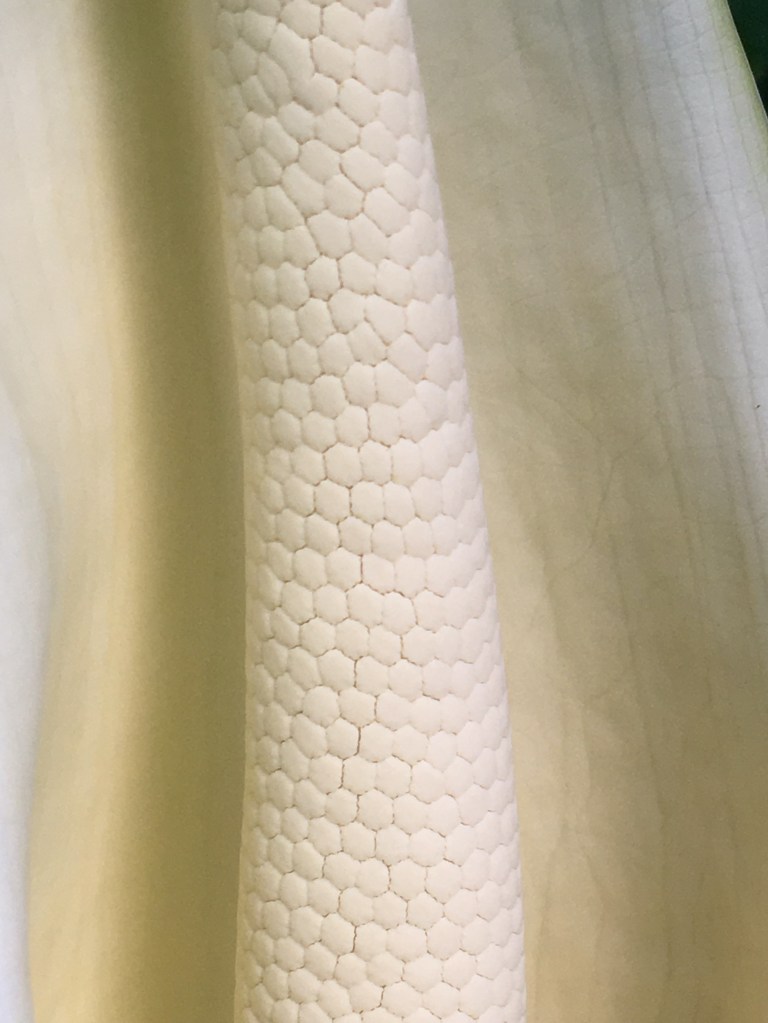
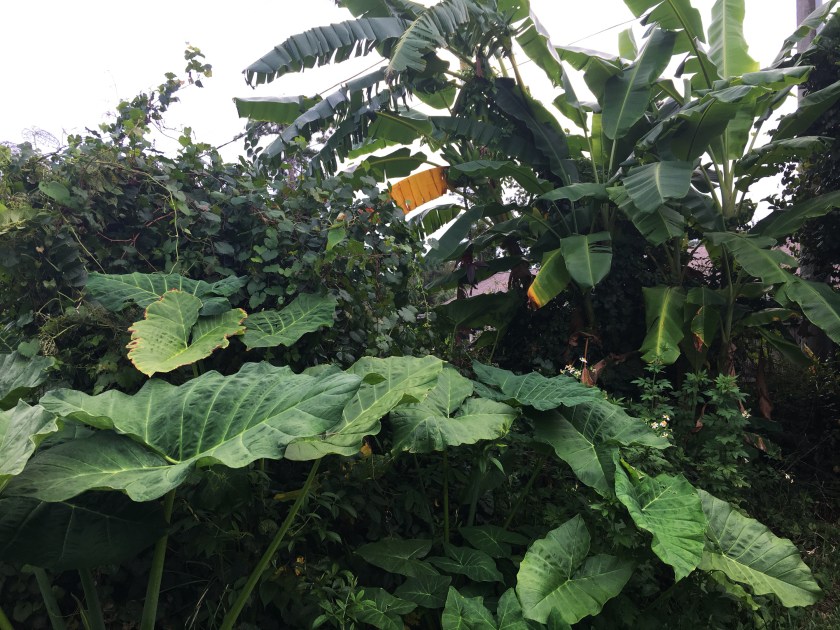
Elephant Ear – Non-native / considered invasive

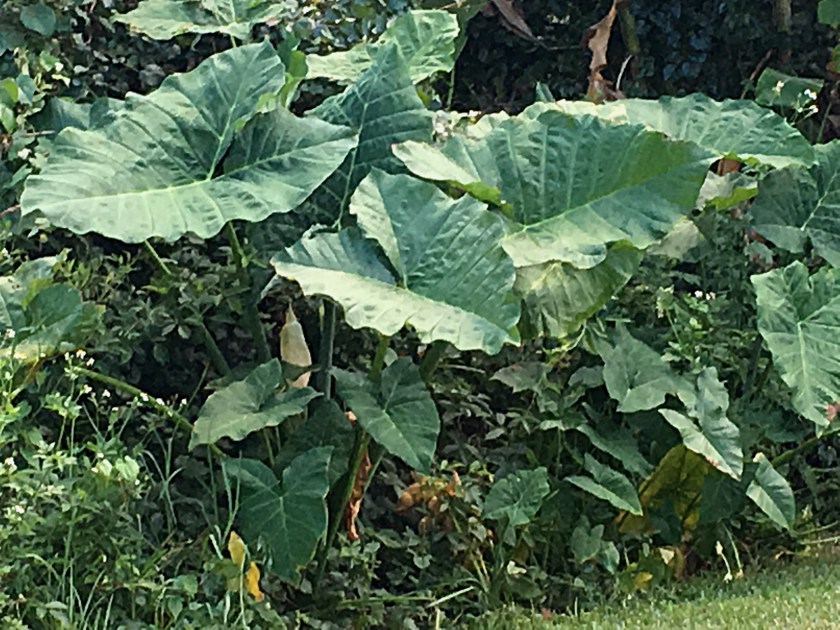
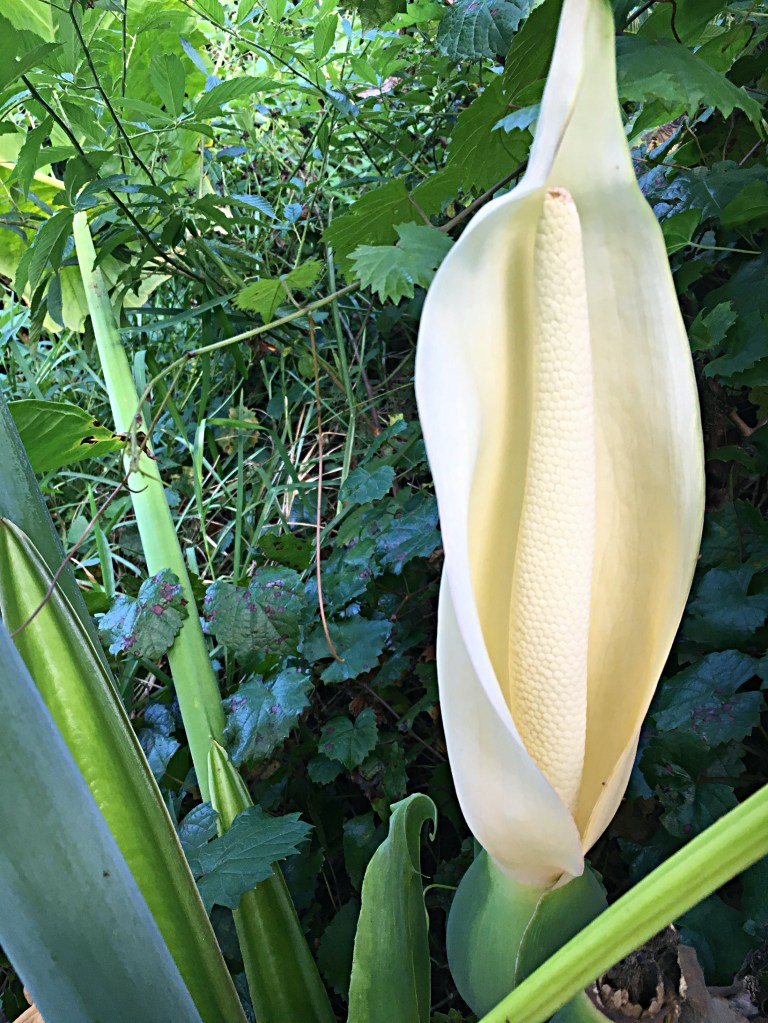
I was surprised to see that the Elephant Ear plant is not a Florida native. I always associated it with this tropical climate, but it came from South America. An interesting note: The tubers of this plant can be eaten.
  • flower of the elephant ear plant
  • banana trees and elephant ears

Muscadine Grape Vine – Native (no photo)

The Muscadine Grape vine is not unwanted like the other vines mentioned here. It is a Florida native and grows all over the state.
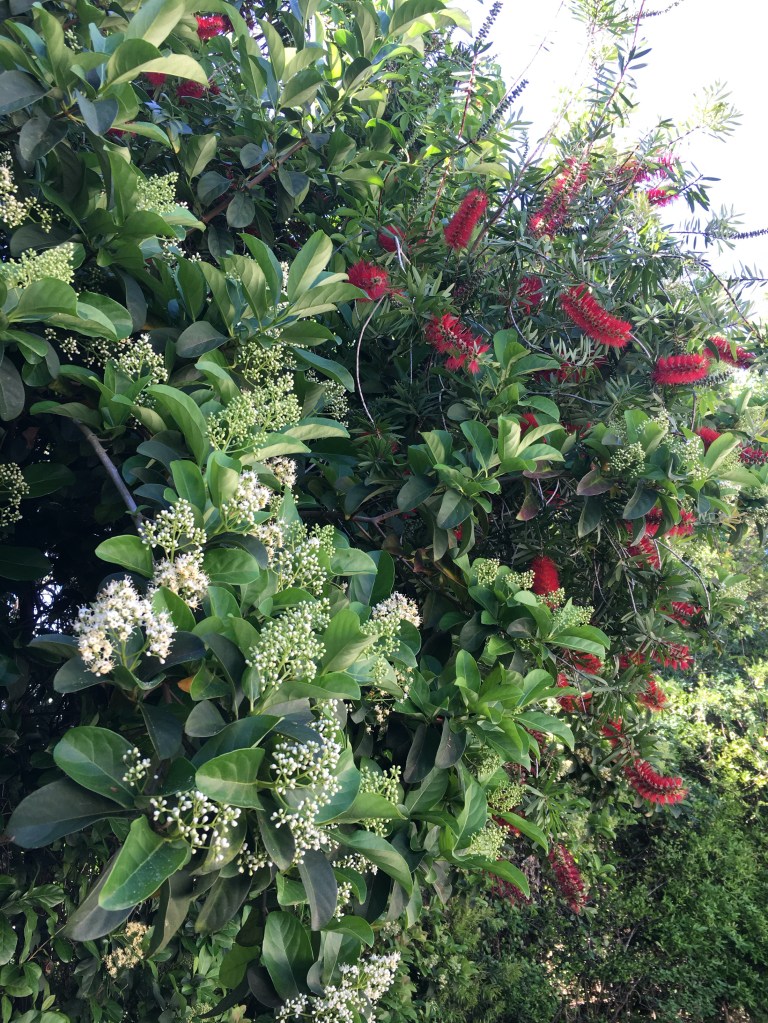
Bottlebrush

Along the back of my lot an overgrown shrub border contains a couple of bottlebrush trees.

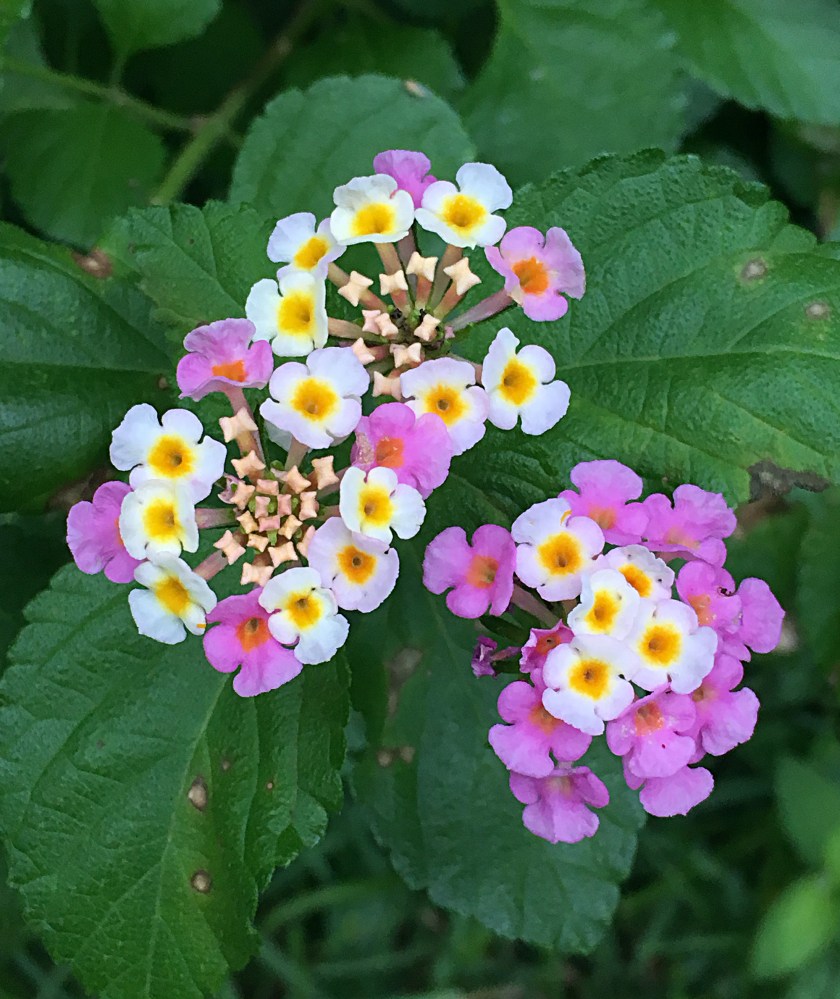
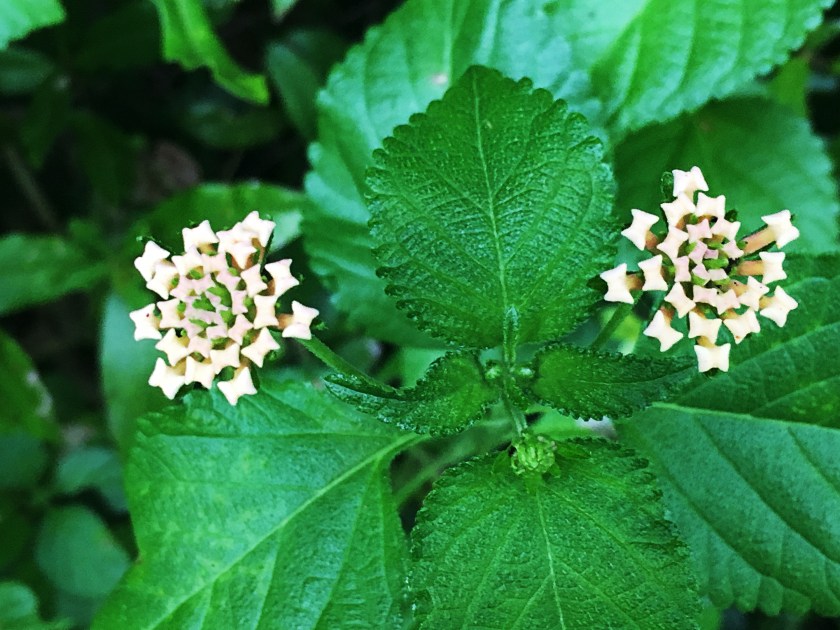
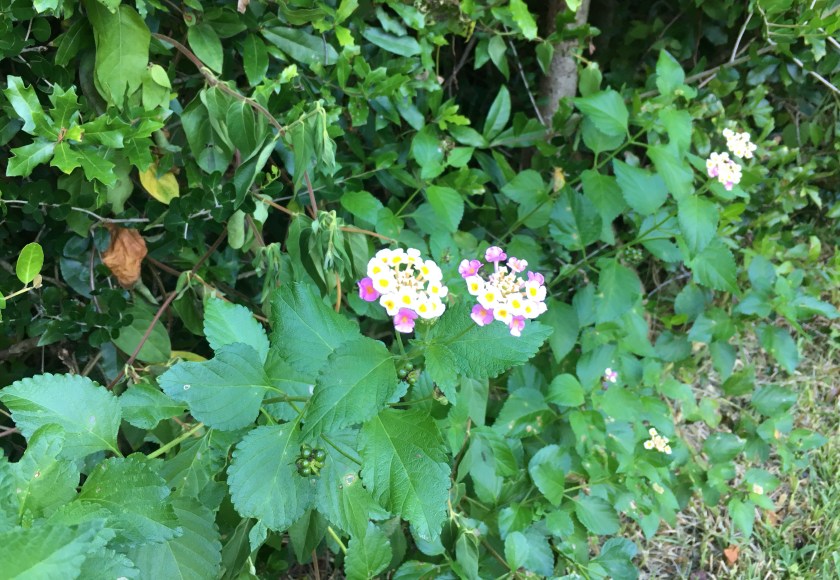
Lantana?

I photographed these little flowers without knowing what they were. Possibly they are Lantana, which is also an invasive plant here in Florida. It is listed as a non-native plant at the UF site.

  • pink flowers
  • Lantana

Unknown Flowering Vine – Probably the Invasive Japanese Honeysuckle

I took this photo of what I think was a vine with white flowers resembling the honeysuckle. I’m not sure if it is the invasive Japanese Honeysuckle or not. I will look for it again in the side yard when plants begin to flower. Unless….

I have been pulling out long vines with leaves similar to this vine. The description is that it grows over everything blocking out light and killing smaller plants, and the vines are definitely long enough to do that. Some of the vines I pulled have black berries, which can be seen in a photo at the link above. I’ve been dealing with the vines while cleaning up a space for my new backyard garden.
So not be tempted to plant this as it is a real pain to remove. It is NOT a Florida native, so choose a vine that is.

Florida invasive species Japanese Honeysuckle
Japanese Honeysuckle?

In Closing

Once I began to add photos and identify the growth around my yard, I have found that many of them are invasive and unwanted. Trees, shrubs and vines are labeled “invasive” when they block out native growth by taking over spots where native things should grow.

When shopping for yard plantings look for “native” plants. I will have to remove as best I can the plants that should not be allowed to grow. The new garden area I am creating already has a small Brazilian Pepper tree which is small enough to cut down.

Once I have cleaned out the vines, I’ll look for native plants to add to the landscape.

End of Year Yard Happenings, Orchids, Hibiscus and More

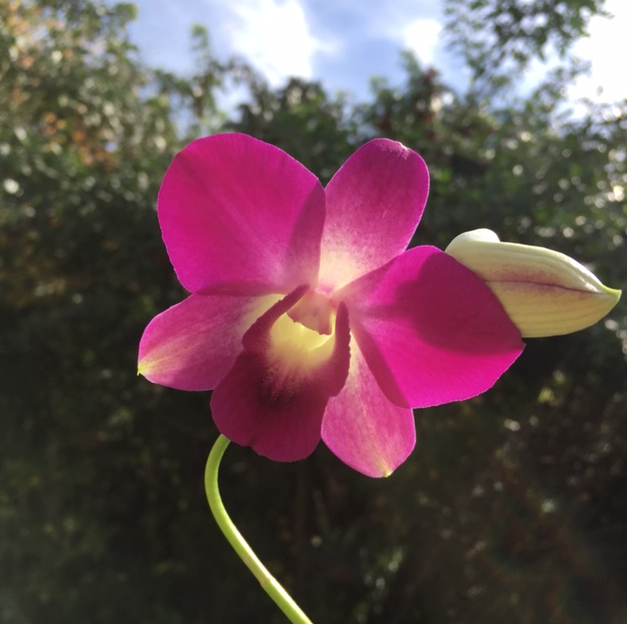
It’s the end of 2018 and I have decided to share some recent yard happenings. One of my orchids is blooming. My orchids don’t look too good, so I was surprised to see two blooms on one of my plants.

blooming pink orchid
My orchid is blooming!

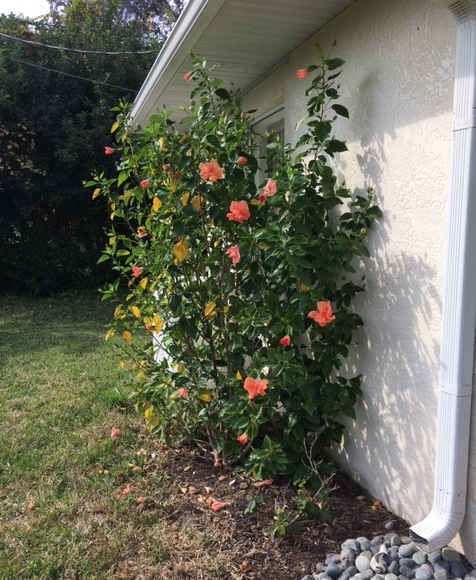
The orange hibiscus plant is growing like mad! I have neglected this plant and am frankly amazed it is doing so well. I’m planning a new garden along the front of the house and another hibiscus is in the plans.

Orange hibiscus
The hibiscus is huge now!

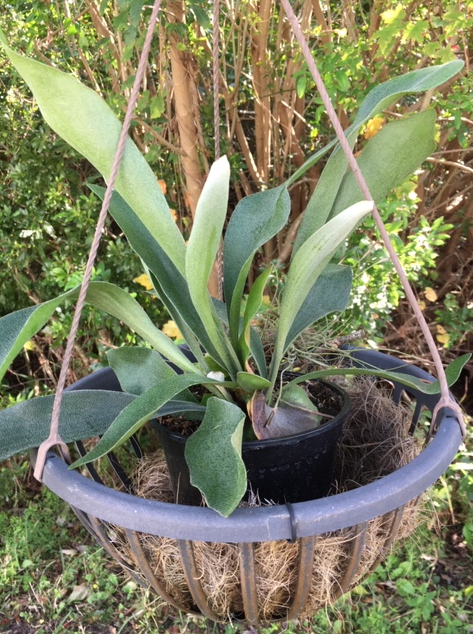
One of the plants you must have if you are a true Floridian is a Staghorn fern! And now I have one hanging from the trees out back. I had a Staghorn fern which I gave to my best friend before I left Florida and she still has it hanging in her yard. She offered to give it back, but her yard is much nicer, and if the plant is happy there then I’m happy to leave it with her.  This new one is in a pot but I will re-pot it into that hanging basket eventually.

Staghorn fern
My new little stag horn fern

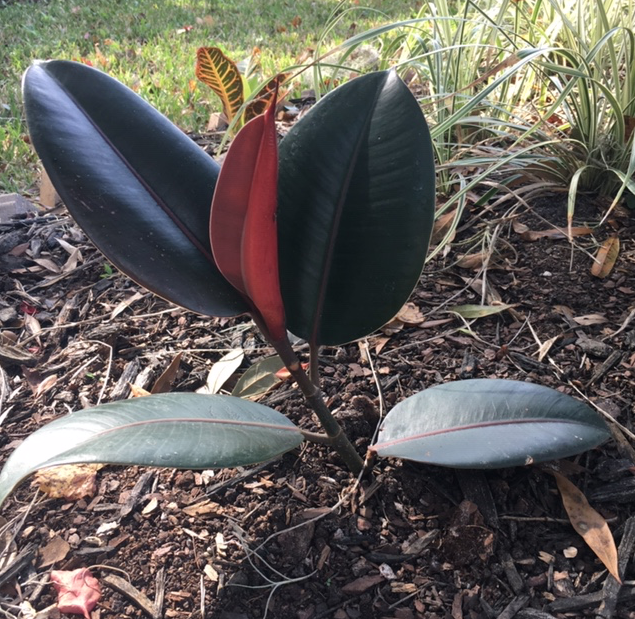
The rubber plant I propagated  is still growing nicely out front under the oak. If I can keep it from freezing over winter it may grow and live to be tall and beautiful.

rubber plant
New little rubber plant in the yard

Hope you have fond memories of 2018 and the new year brings all good things!

How To Propagate Hydrangeas

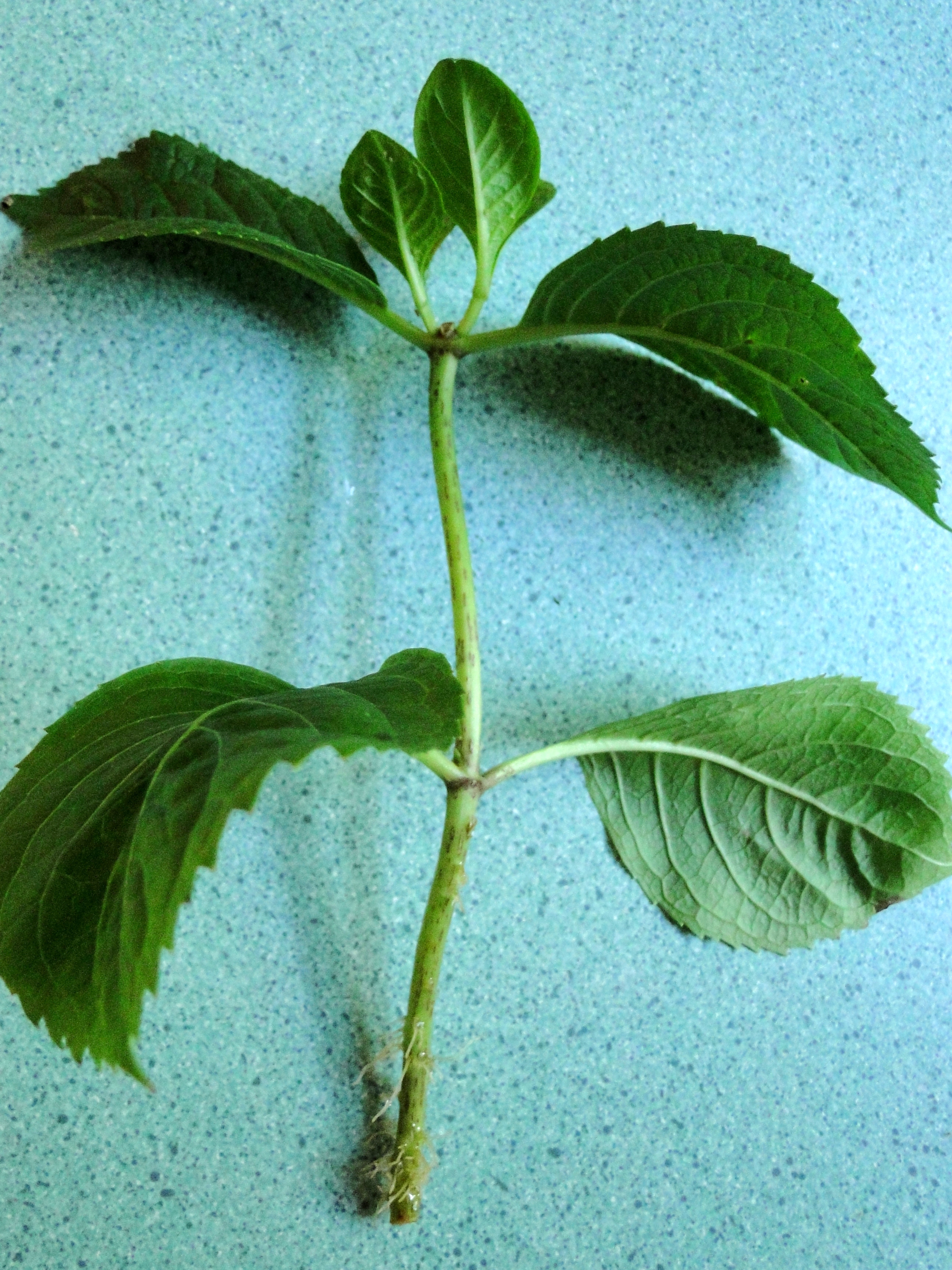
stem cutting
Hydrangea cutting with roots and new leaves.

Propagating means starting a new shrub from an existing one. There are a couple of ways you can do this with hydrangea plants.  Hydrangeas grow quite fast, and within a couple of years you will have a nice size addition to your landscape.

Taking stem cuttings, using new growth, sometimes works.  I have not used this method much yet, but while I was planting my new shrubs, a few of the stems broke so I stuck them into a vase of water to see what would happen.  After a few weeks, one of the cuttings has begun to sprout new little leaves and is growing roots – right in the water.  So I plan to get that into a pot and baby it along until Fall when I’ll add it to the yard. (Pictures to come!)

I’ve had success with root layering, and hydrangeas, with their low hanging branches, are perfect for doing this.  In fact if you check around the base of your plants that droop to the ground, you may find that a branch or two is already rooting itself into the soil.  The mophead variety tends to have the low to the ground stems.

I started a new plant by digging up the rooted stem and planting it in another area of the yard one Spring.  I was renting the house, so I don’t know how it’s doing today, but by the time I moved, a beautiful new hydrangea shrub was gracing the front yard at no cost to the homeowner.

Read how I did it, with pictures along the way, at my Wizzley page about Propagating Hydrangeas.