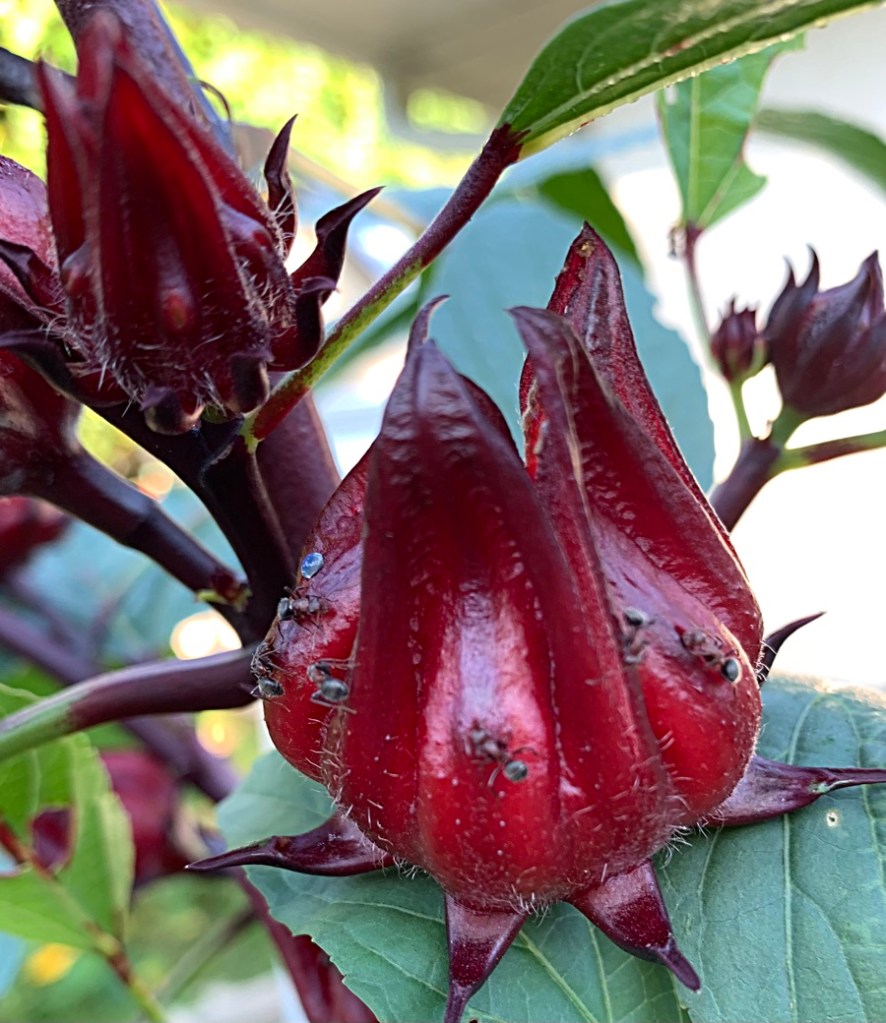
This year I grew a few Roselle Hibiscus bushes to collect the pods and make tea. Ants are always a problem, but I found an easy solution.
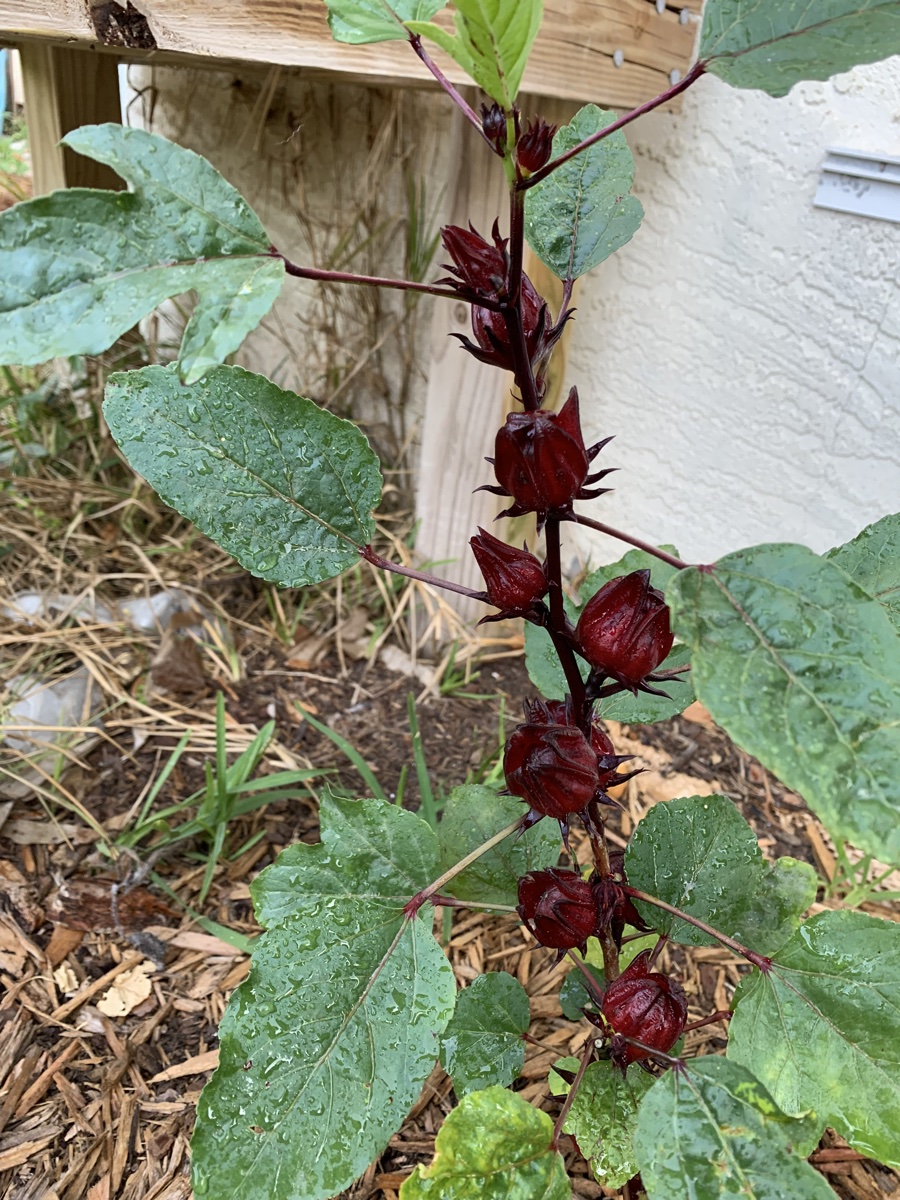
Last week I began cutting off the larger roselle hibiscus pods. Once they flower, the pod, or calyx, gets big with the seed pod inside. The red outer petals are ready to use.
This year only two large Roselle hibiscus plants were growing in the ground. I learned my lesson after the first year when I had way too many big, bushy roselle plants.
One plant would be plenty for me, but I guess I planted two to be on the safe side. I like to have the petals to make tea.
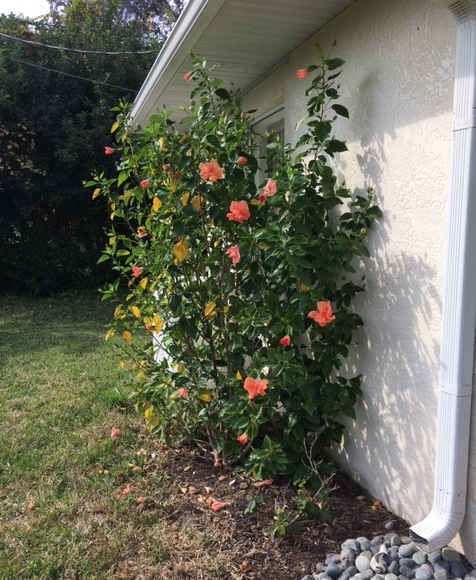
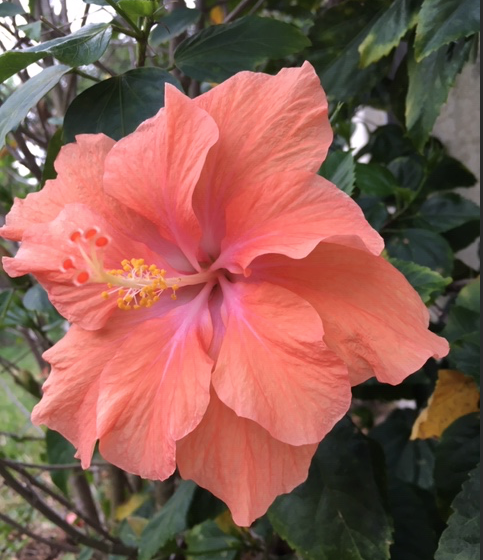
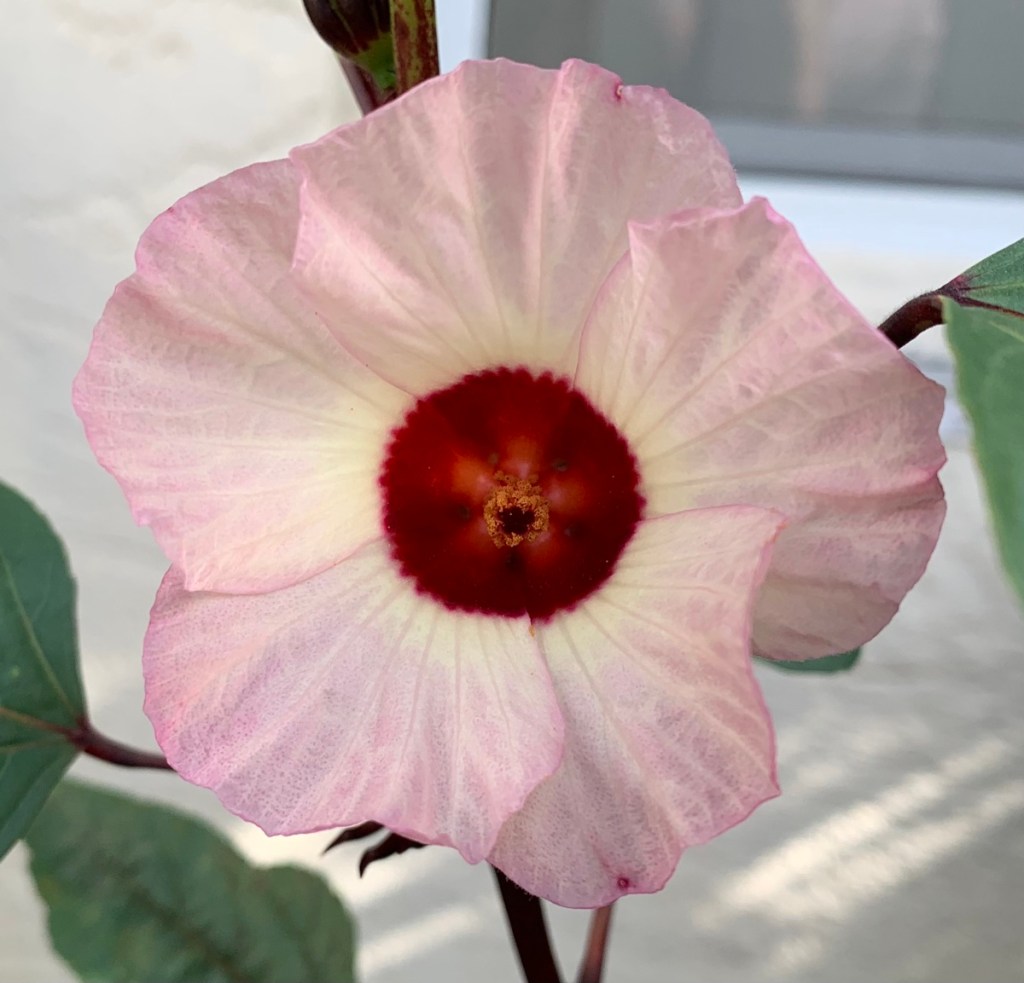
This hibiscus variety is not the same as the hibiscus that flowers and becomes a big bush here in Florida. The Roselle has flowers, that last about a day, but the pods that come after are what we want.
Decorative hibiscus (not edible)Hibiscus flower – no pods form on this one
Dealing With the Ants – No Sprays Needed
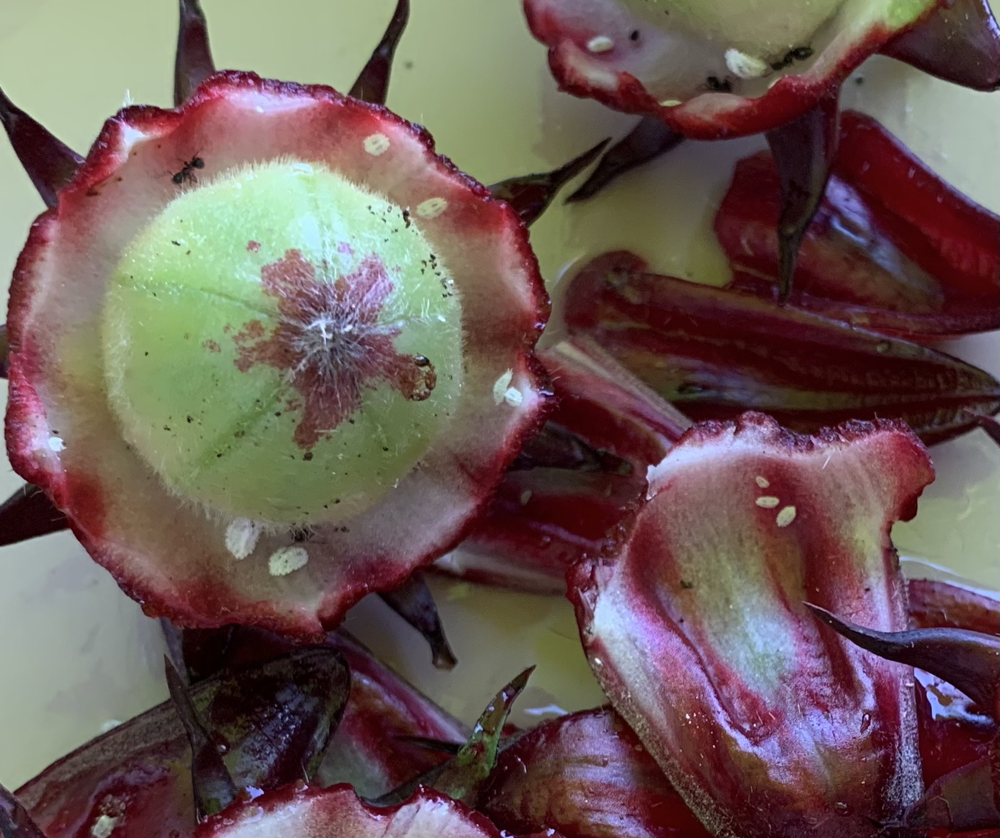
Ants are drawn to the pods. If I wait too long there will also be white mealybugs inside the petals also. This year I harvested the largest calyxes (or pods, as I call them) in early October. Many large pods had already formed, but lots of smaller ones were still coming.
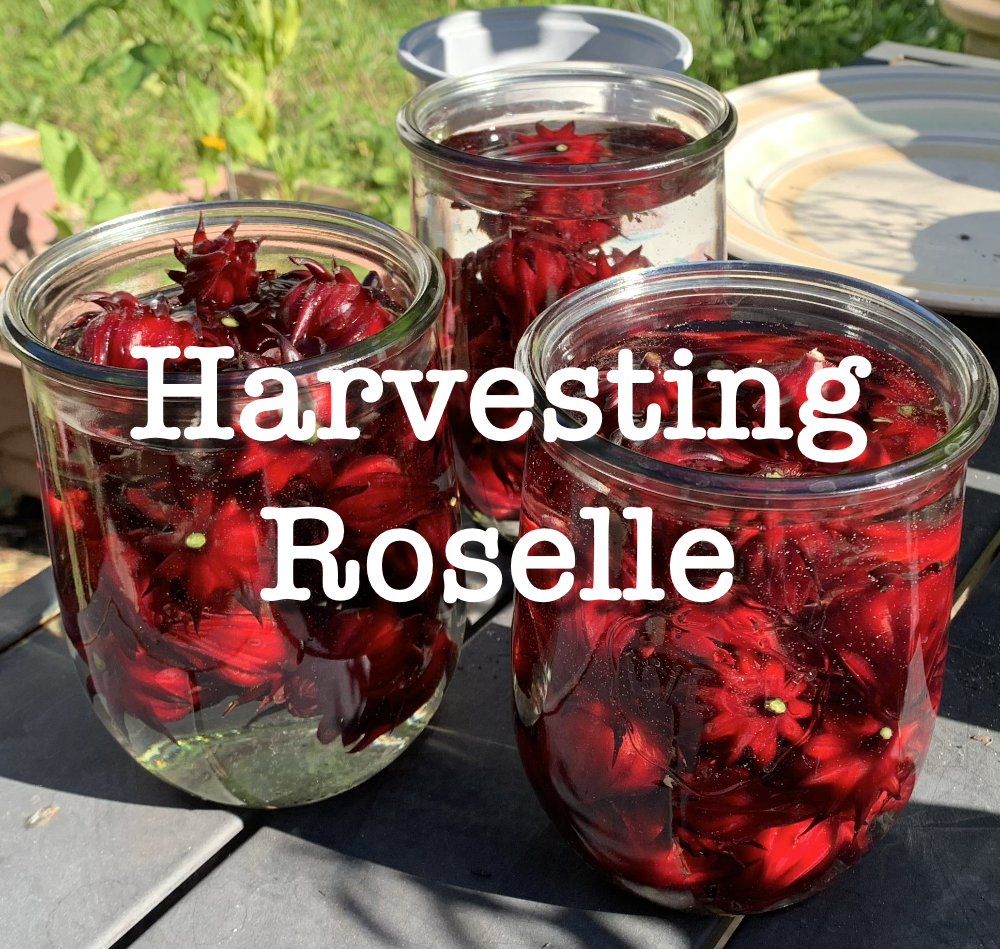
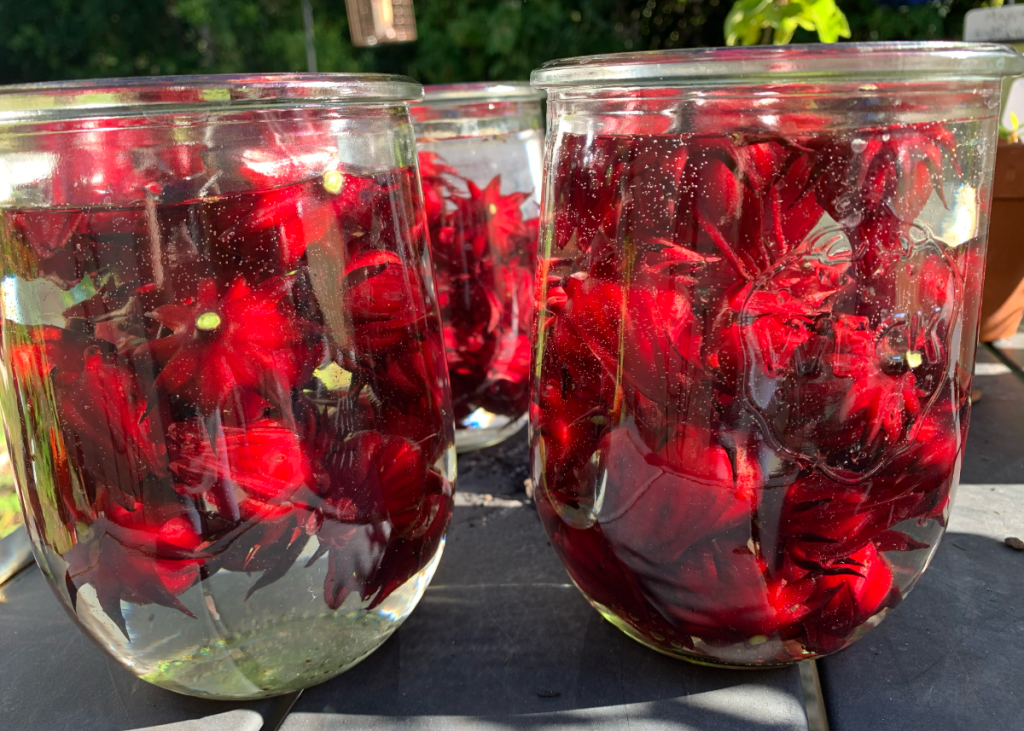
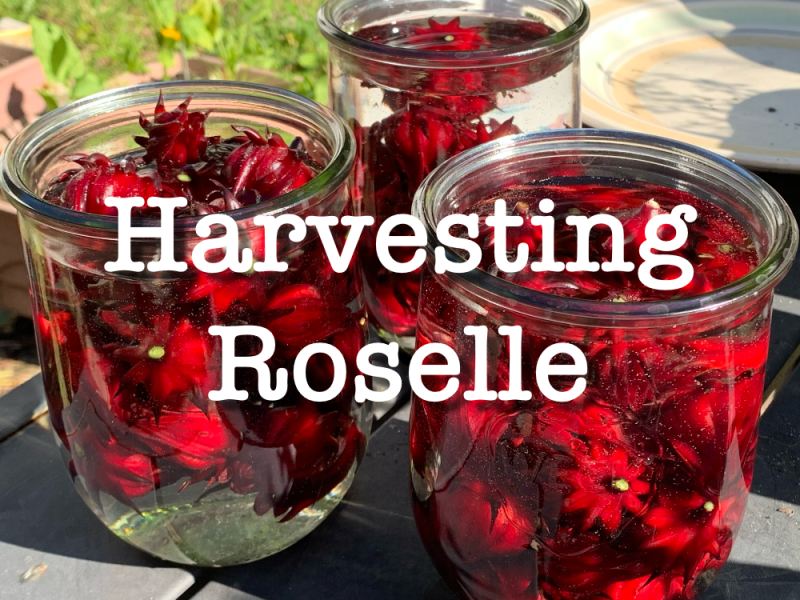
I soaked all the harvested pods in jars of water outdoors. This either killed the ants, or caused them to crawl out and leave the pods. By the way, these were not biting ants.
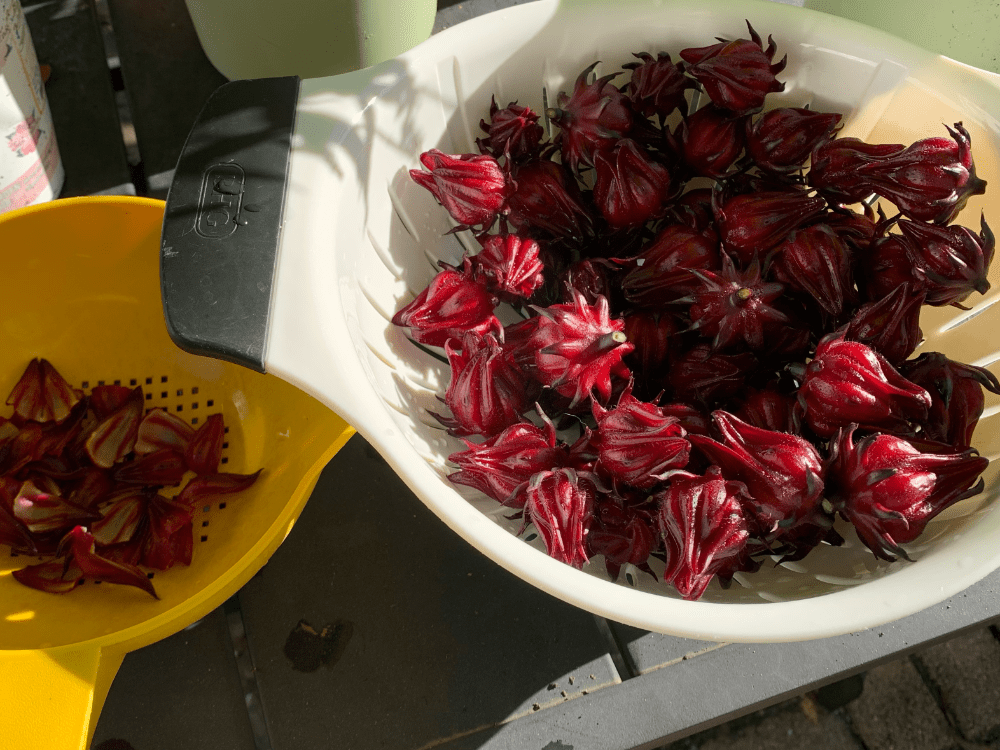
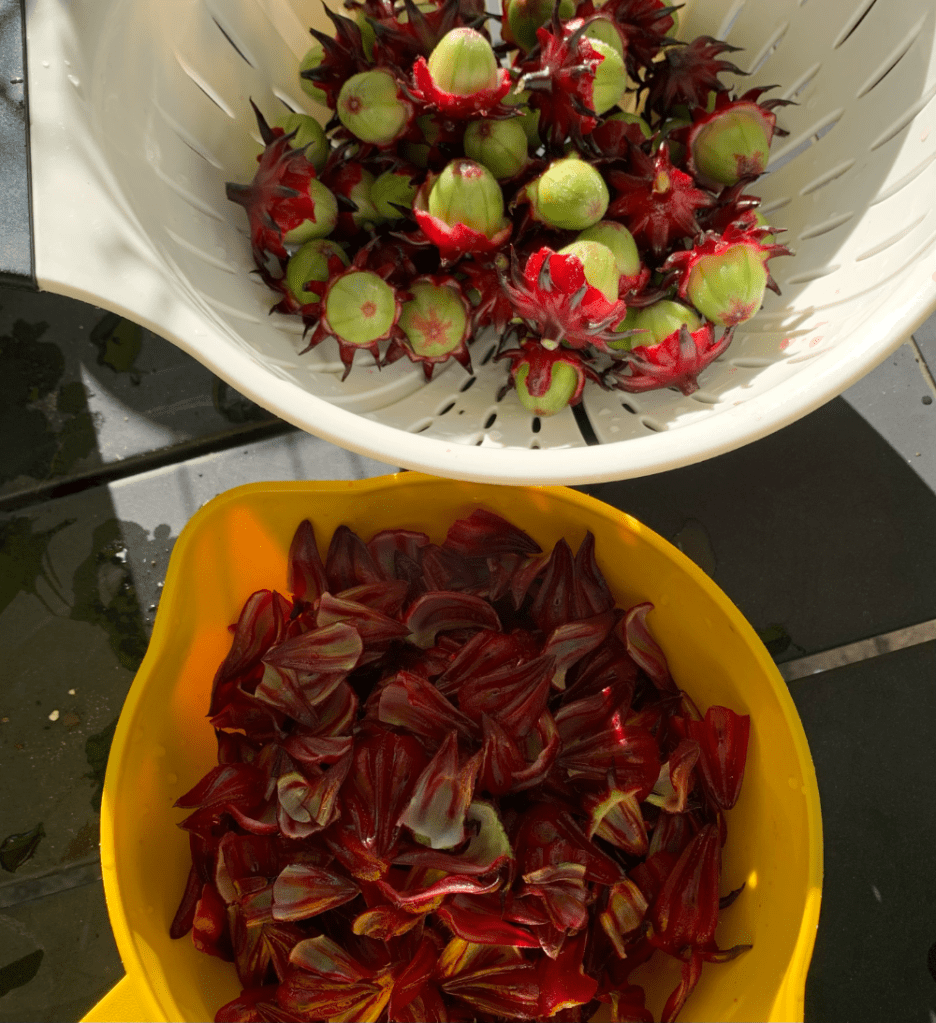
After a bit of a wait, I drained the pods and began to peel off the red petals. All the ants were gone. I found only one mealybug, so I think harvesting early helps with that.
Ant removalDrained and ready to peelPeeling
Once the petals were all removed, the remaining green pods went into the compost. I rinsed and dried the red petals and stored them in the freezer. I’ll take them out to use when making tea.
Simple Tea
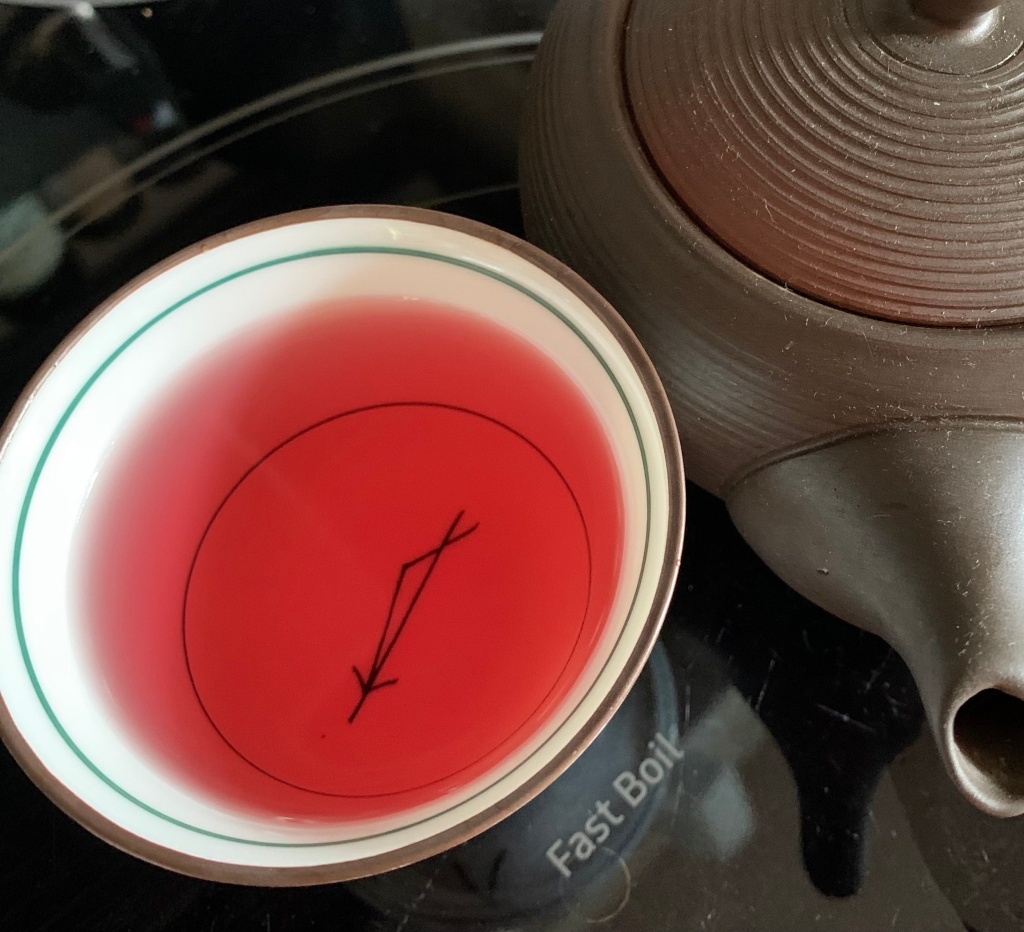
All I do is boil water and let the petals soak in it for 10-15 minutes. Sometimes I make an herbal tea and simmer the roselle along with Moringa leaves, Maypop, rosemary and basil. Or, I use whatever is growing in the garden.
Roselle teaRoselle hibiscus flower
After the harvest of the biggest pods, I cut down the plants, leaving only a couple of tall stems. I’ll collect a few of the pods when they are dried and save the seeds inside. This hibiscus likes the heat and does not continue to grow over the winter in my yard.
The seeds will be planted next year to grow one, or two, new roselle bushes. No more than that!
Here are five crops that can be planted in a Florida garden over summer. They will grow without much attention, and that keeps you out of the heat.
Gardening in Florida is different to say the least. Summer is hell here. It is simply unbearable to be outdoors. If I get outside before the sun hits the little patch of yard that is my garden, I can bear it for a very short time. The humidity is killer.
However, I love to grow things. I’ve come to realize that there are a few crops that can grow during a Florida summer and they need no attention. That means you can stay indoors during dry spells. Watering every morning won’t be necessary.
Sweet Potatoes
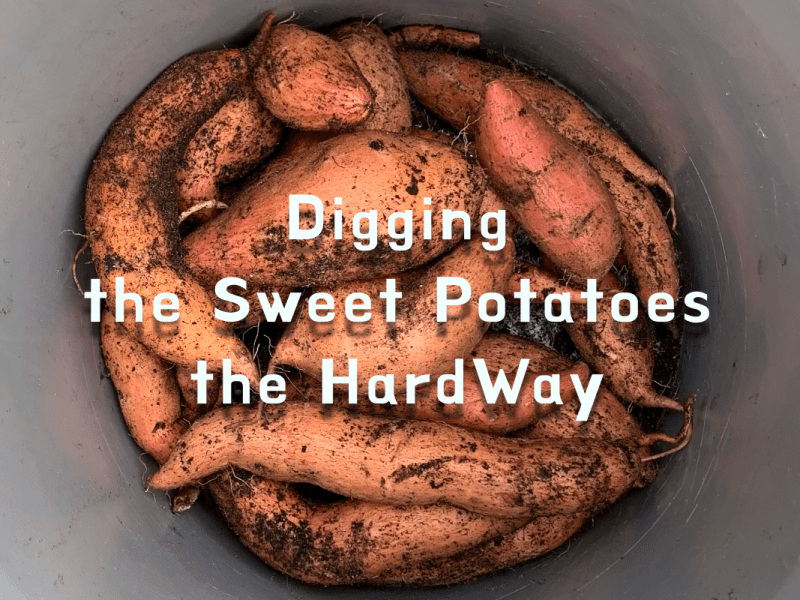
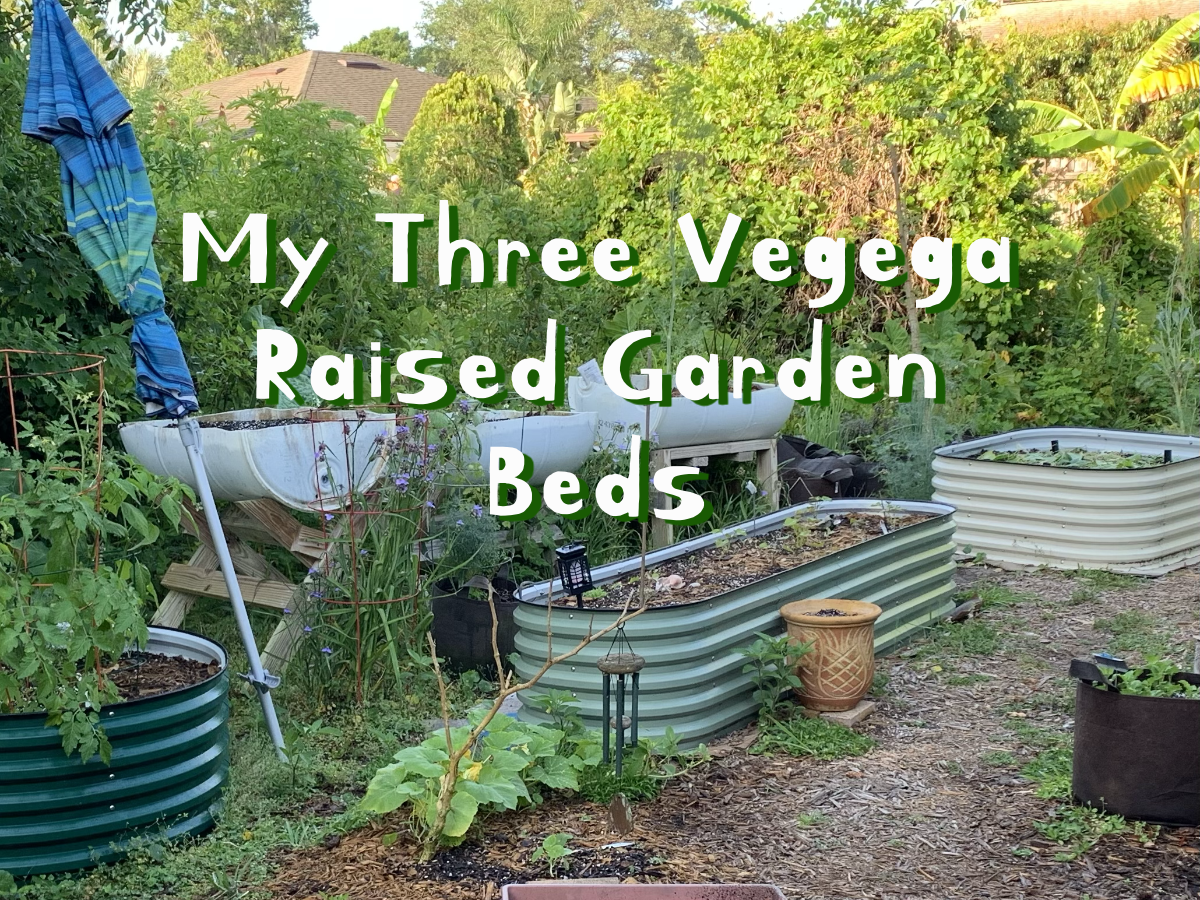
Find a good place in the yard, that can be dug up easily, and plant sweet potato slips. This coming Spring I will be ordering purple sweet potato slips. I plan to plant them in one of my Vegega raised beds once again. I found that digging them up was tough, but I don’t really have any other place to grow them.
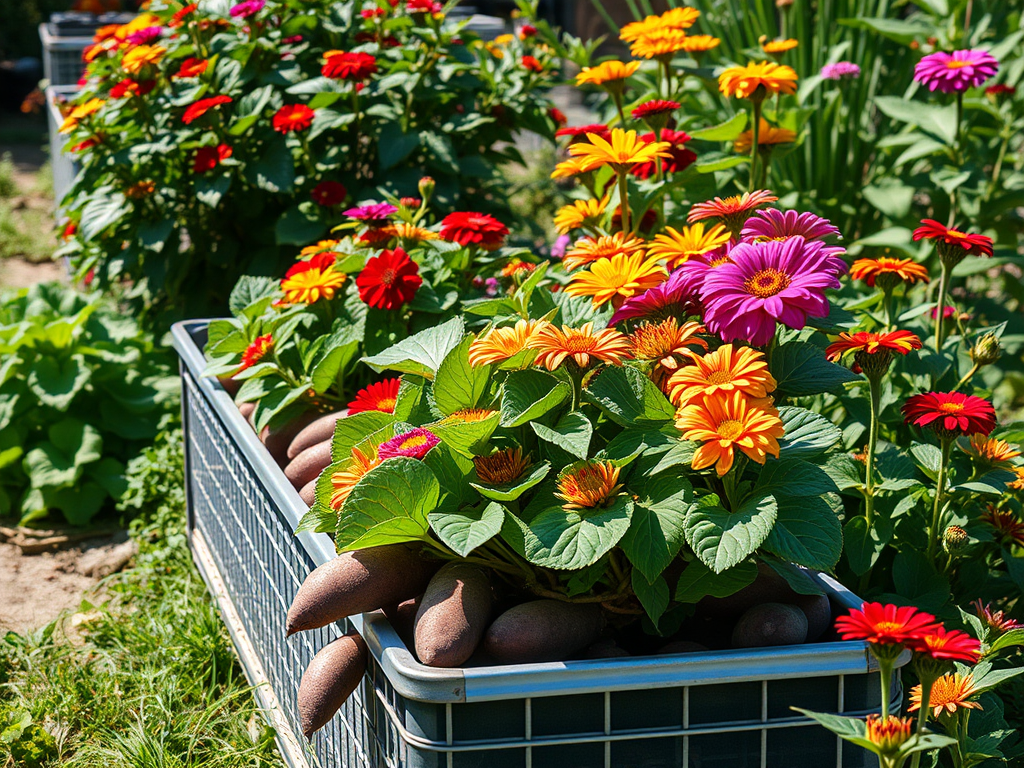
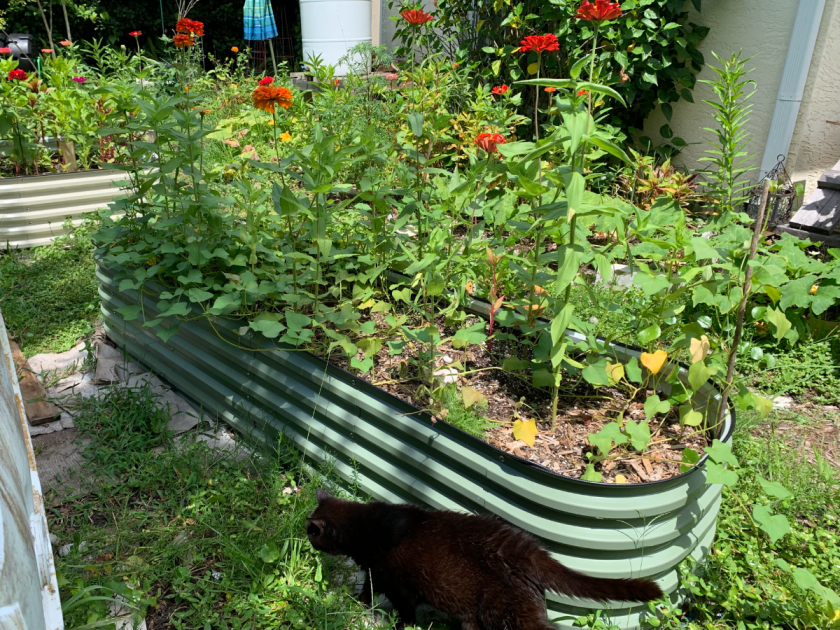
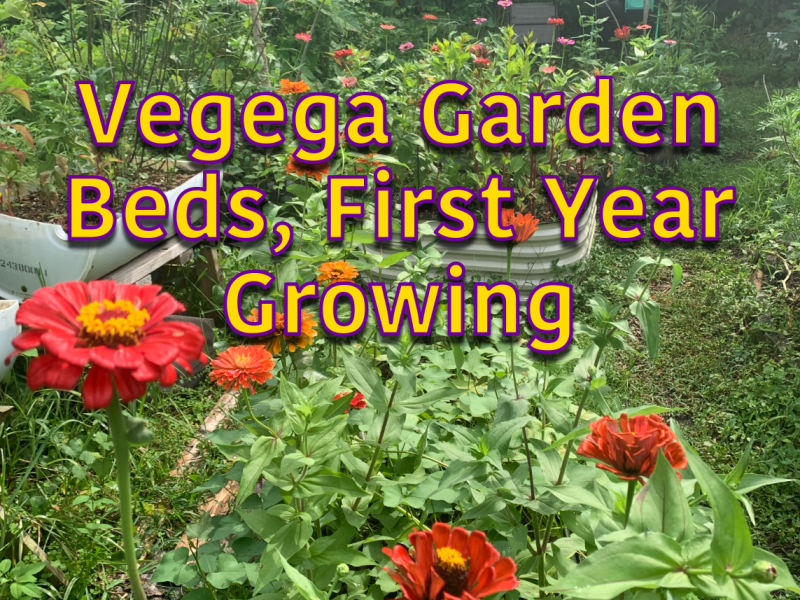
This past summer I filled the long bed with sweet potatoes and zinnias. The vines got all tangled in the flowers, so I won’t do that again! The potatoes won’t be dug until the end of summer, or beginning of Fall, but the leaves can be used in salads all summer long.
My long oval raised garden bed made of metal, with sweet potatoes and zinnias growing.
Roselle
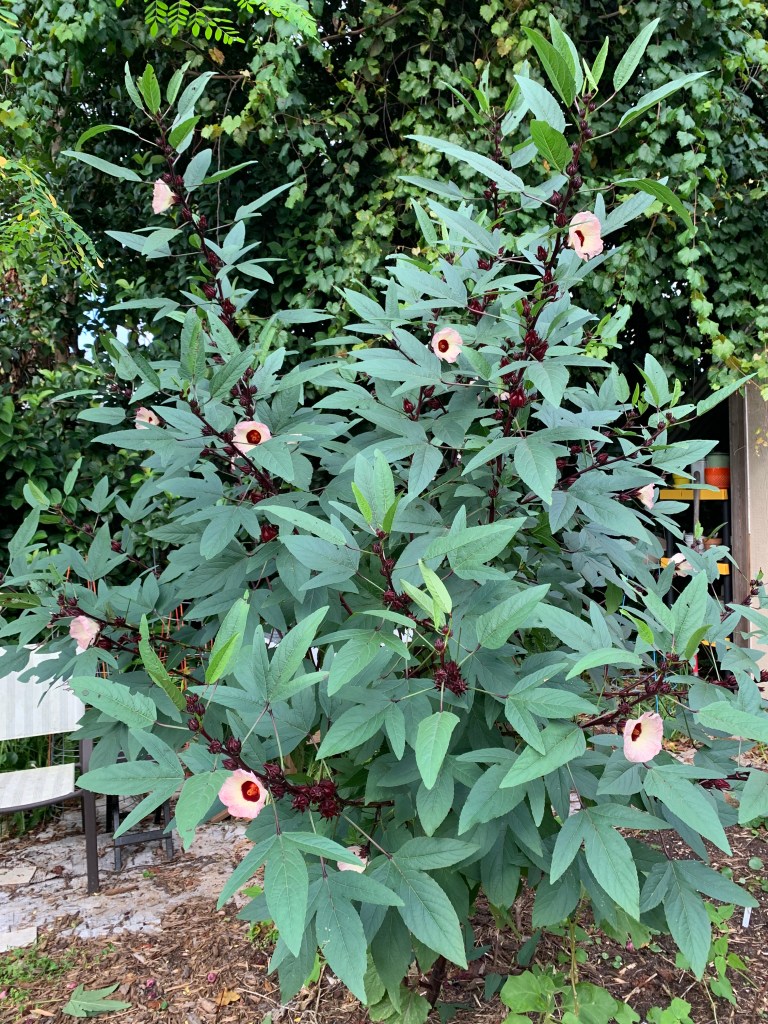
Roselle plants create calyxes (sp?) that can be used to make tea. The plants will grow from seed, and take off by mid-summer. Each plant grows into a wide bush, so make sure you have space for them. One or two plants will give you a lot of little red tea leaves to save by Fall.
Be aware that these shrubs are not strong. We had a storm come through and it broke the Roselle you see in the photo below.
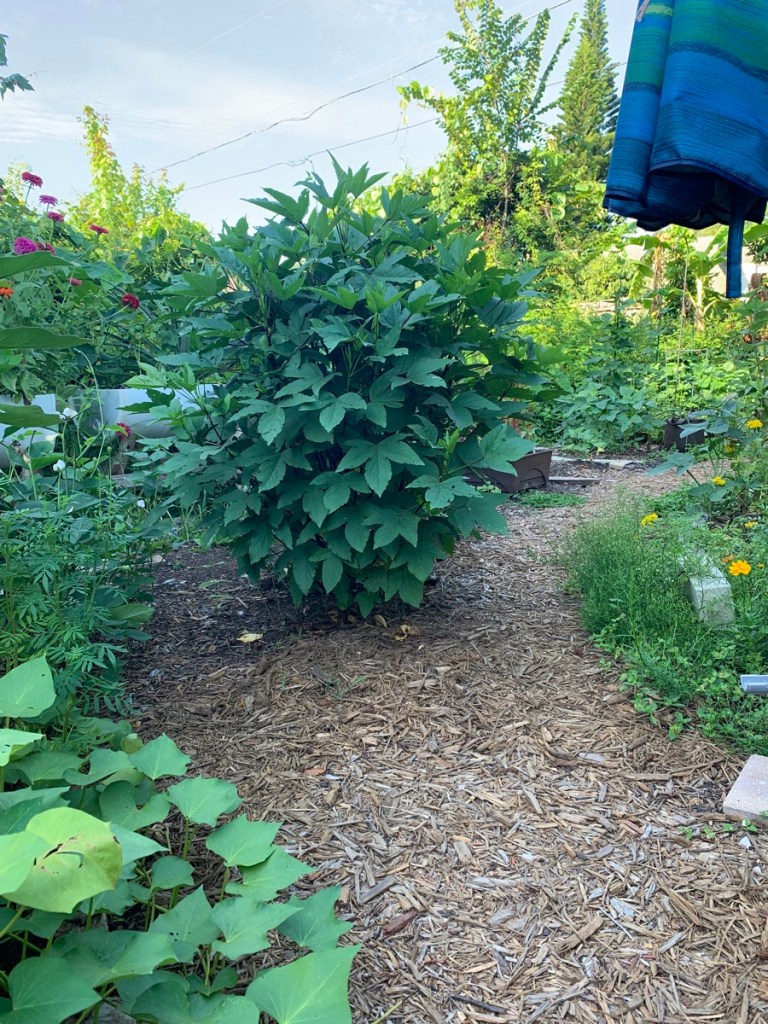
Roselle bush in 2024
Okra (Yuk.. but…)
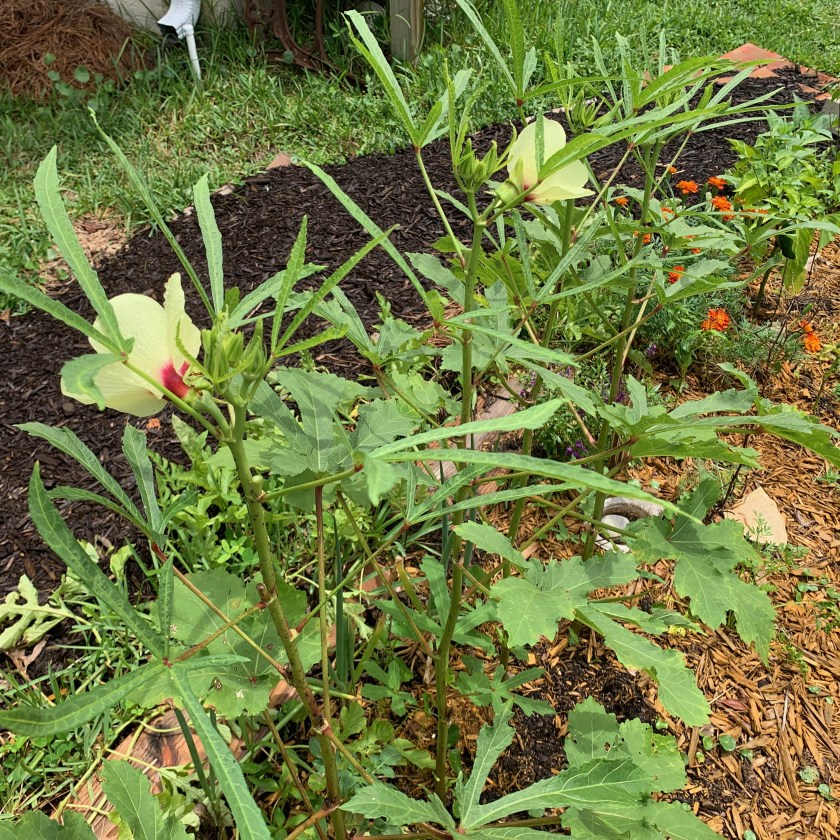
I grew okra the first year I had a garden. I’d never grown or eaten okra so I wanted to try it. And what a pretty plant! The good news is that it grows like mad. The bad news (for me) is that it is simply disgusting to eat. If you like this vegetable, and live in the south, grow it.
I’ve recently been getting into fermenting vegetables. Supposedly fermenting okra, for at least 4 months, will remove the slimy texture. I may try it.
Okra plants have such pretty flowers
Basil – Specifically Tulsi, or Holy Basil
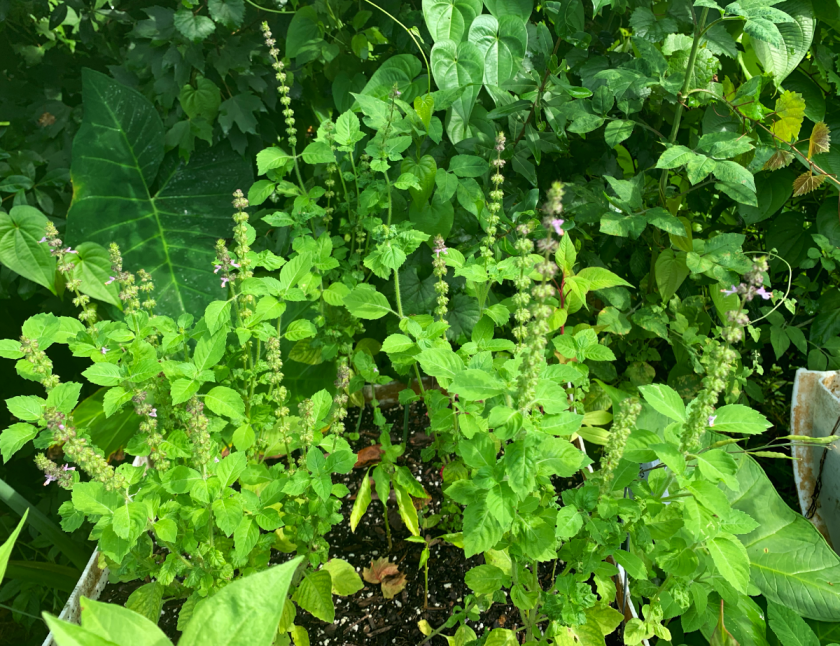
Basil is tough to grow here in Florida. But once I began to grow Tulsi, or Holy Basil, it simply grew. I didn’t have to work at it, and now it is popping up all over the yard. The only trouble I have is that in Fall the little bugs (aphids?) hit the new growth and I have to remove it. But this basil can take the heat – especially in a shady location. I use it a lot, in cooking, salads, and tea brewing.
Holy basil in my yard
Cowpeas
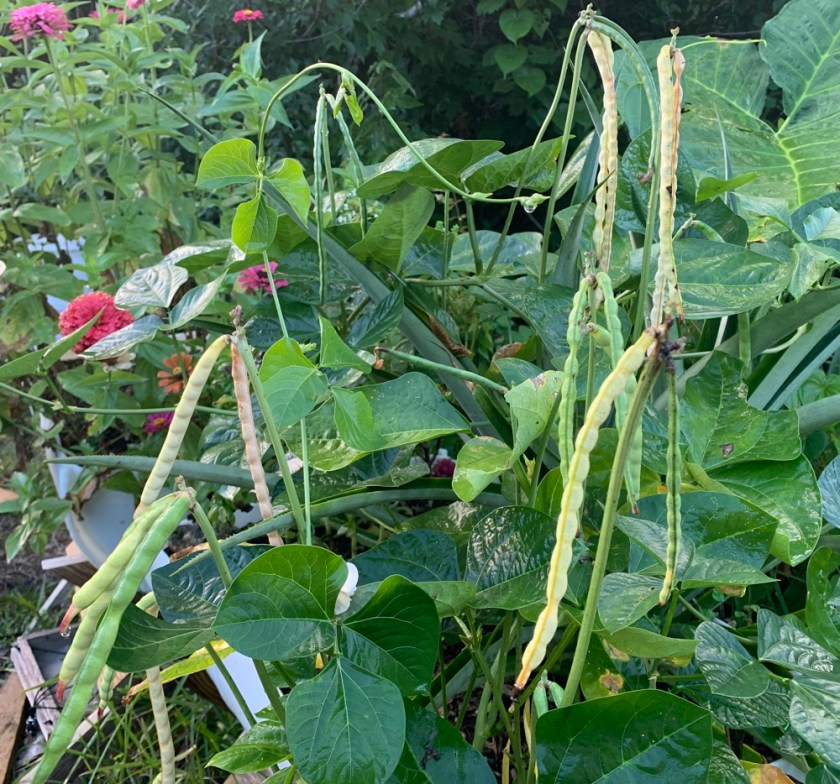
These are dried beans and they come in many varieties. I grow them as a cover crop and not to eat. For this reason I plant them and forget it. Cover crops keep the soil good by shading it and putting nitrogen back in (like green beans). I look at it as a way to feed the empty areas in the garden.
The first year my cowpeas grew so tall that I put stakes up for them to wrap around. I saved some of the dried pods for planting the beans (they are like beans, not peas) but have never eaten any. If you want to save the seeds, bring the brown pods inside to dry before they get moldy from the humidity.
This past summer I only grew a few cowpeas and they stayed fairly small. The flowers attract bees, but the bean pods attract ants. Watering is unnecessary. When the stalks are ready to be cut down, they make a great addition to the compost pile.
Plan and Buy Seeds in Advance
Everything I grow is started from seeds. The sweet potatoes are an exception as they grow from slips, or little cuttings. I like to plant directly in the ground, or raised beds, or buckets, because I detest little tiny pots! Seeds are cheap. Yes, it takes longer to grow from seed, but we have a long season here in Florida.
Just remember that all you plant and grow in summer must be cut down and removed for the Fall planting. Some things, like herbs (the basil), can be left to grow where it is. The basil will re-seed itself, so watch for little plants popping up nearby.
It’s not like you will have plates of delicious food to eat from these crops, but it’s always fun to watch things grow. Meanwhile you will be feeding insects that enjoy the flowers.
After growing Roselle Hibiscus for a year, I have decided that one plant is enough for me.
This was my first year growing Roselle hibiscus. I was very happy to have bushy, big plants that would give me lots of tea to drink. But there are problems with this plant.
Growing Roselle was an experiment. I didn’t know much about it, but the tea is good for the heart, blood pressure and other things. It is grown for the red pods, called calyces that form after flowering. They are peeled, and the red petals are used for tea. The tea is delicious and healthy. The center of the pod is where the seeds form. Where I live, the bush is very easy to grow. I had no idea how much Roselle would love my yard. It took over.
Pros
Roselle is one of the easiest things I have ever grown. Plant seeds, or simply cut a small branch from an existing plant and stick it into the ground. It will grow! The plants are beautiful, with big dark green leaves. The flowers don’t last long, but new ones bloom every day – in the Fall. Then it’s time for saving the calyces to have tea in the months to come. I simply peel and freeze mine – if I can pick them before the ants come.
Cons
The beautiful bushes are not very strong. Strong wind catches the leaves and the whole bush will split down to the ground. Or, branches will break off. I lost one of my biggest bushes over the summer during a storm. Then Hurricane Helene damaged the others.
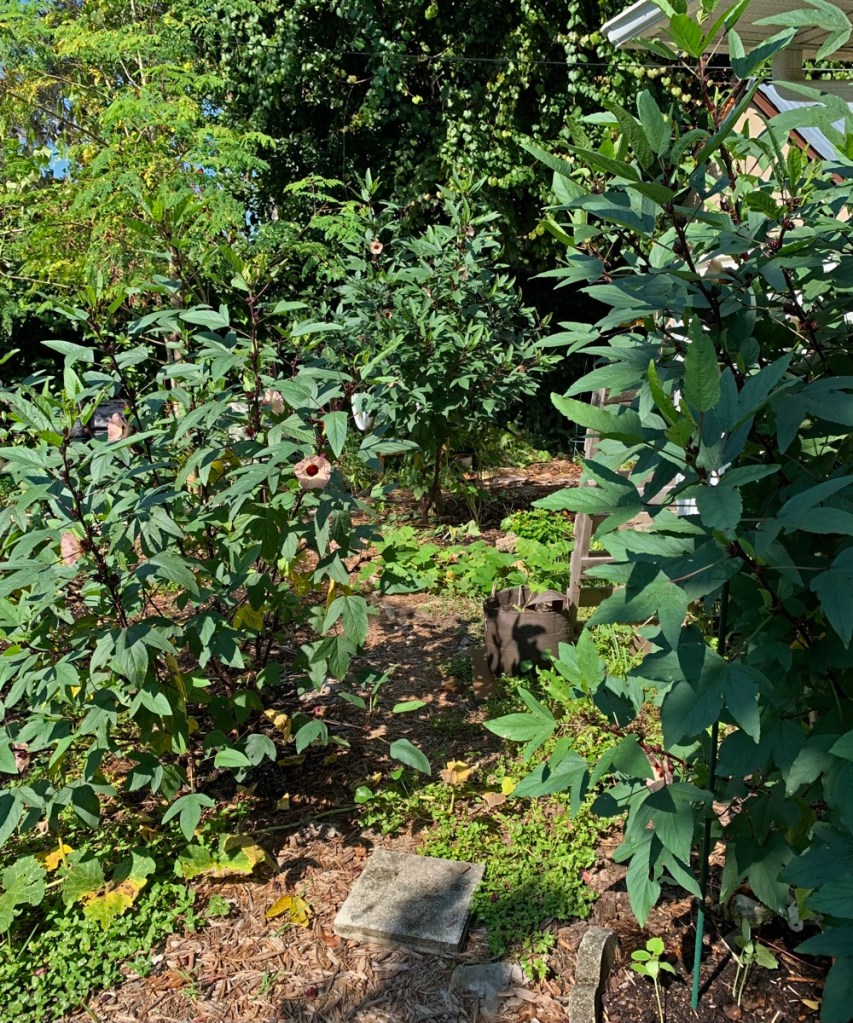
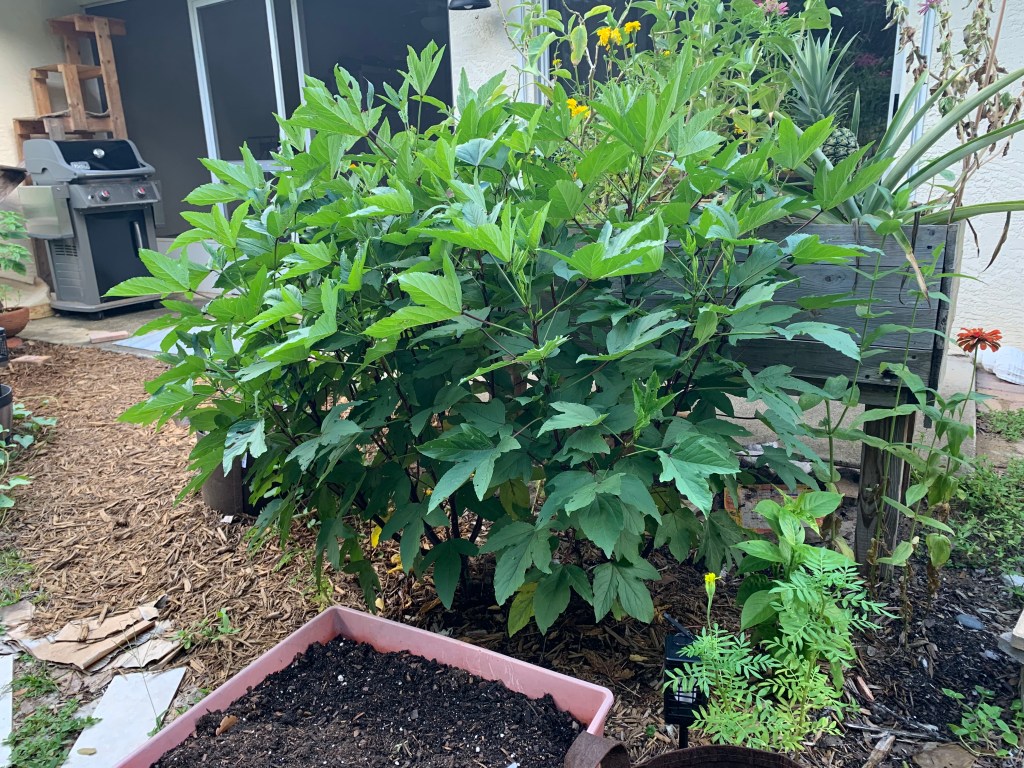
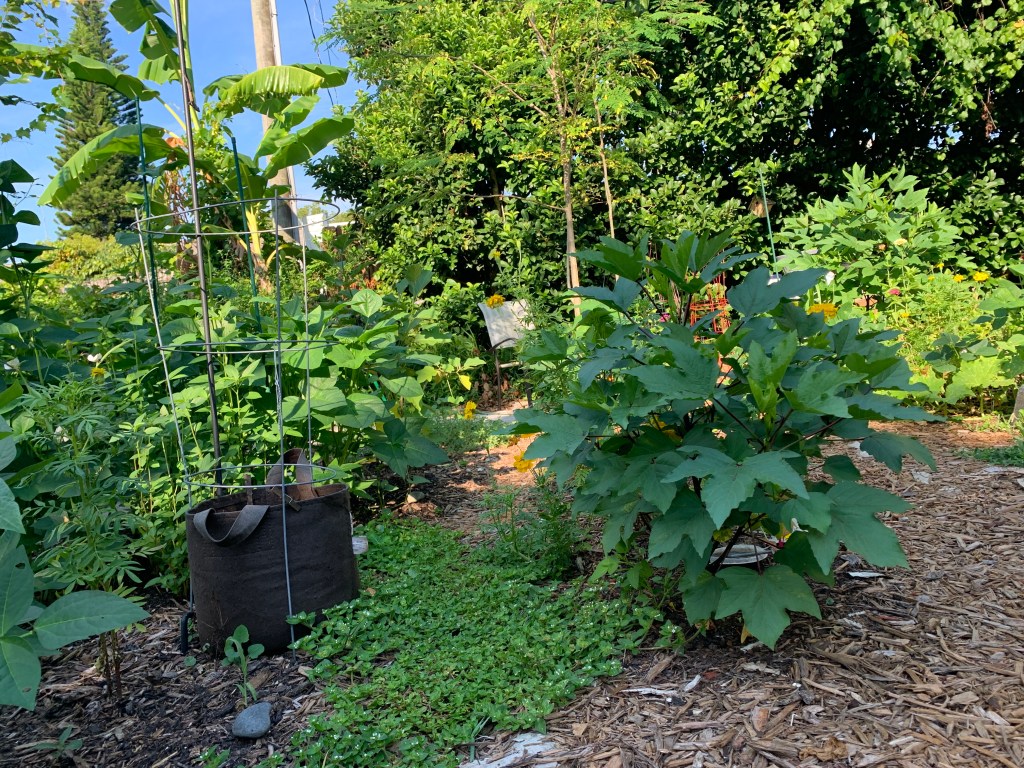
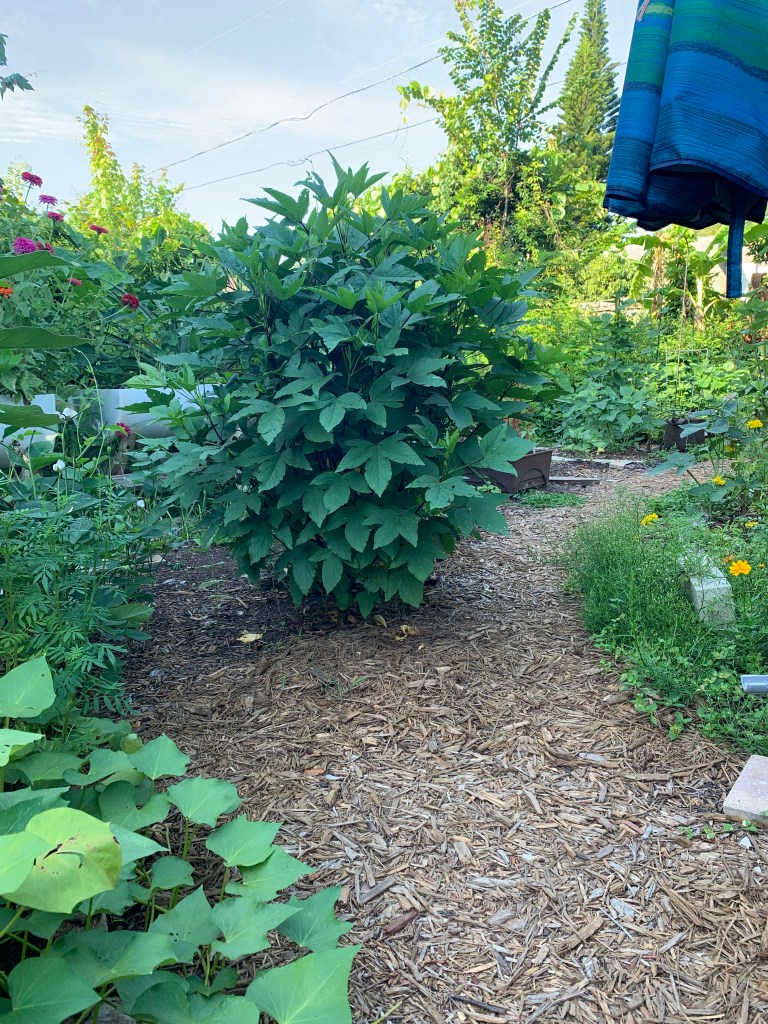
Pathway blocked by shrubsBeautiful shrub!
Roselle shrubs are huge. In a year they grew taller than me. They took over, blocked sun to parts of the gardens, and made navigating my yard more difficult. I didn’t know, and now I do.
These problems are manageable, and it’s all part of gardening. What I really don’t like about the Roselle is the ants. Once the red calyces began forming, ants were all over them. Maybe I have an excessive amount of ants in my yard, or maybe this is normal, I don’t know. No one warned me of this.
Also, inside each calyx are mealybugs – little white things. It just wasn’t worth the trouble to save these pods.
Covered in antsMealybugs inside
I have rinsed, set outside in the sun, rinsed again. The ants were everywhere. It was so bad, in this last batch of roselle I picked, that I gave up and threw them into the woods. It is possible the mealybugs cause the ants to come. I know ants show up when aphids appear too.
I did get an early set of pods, which had many fewer ants. I managed to clean and freeze those without much problem.
Another thing that is annoying is the flowers that drop become mushy and stick to my shoes. They make a mess. I’m certainly not a neat freak, but it feels like dog poop stuck to my crocs.
If I had lots of land, I would grow Roselle in a big area away from the house. They could expand and do their thing without getting in the way. Dropped flowers would be wiped from my shoes before I got back to the house. But this is not the situation I have.
One Roselle Hibiscus plant is enough for me. I’m going to cut them all down except one. Many broke and fell due to Hurricane Helene, so I’m already in the process of removing them. It is possible they will die over the winter anyway.
Solution
It is possible that my yard is not yet balanced with beneficial bugs to clean up this mess. I rarely see ladybugs. Even though I’ve had aphids on a number of plants, the ladybugs don’t stick around.
I read somewhere that it might take a few years to bring the beneficials to a garden, so I’m hopeful things will improve over time.
After my first year of growing Roselle hibiscus, I have learned a lot. The shrubs have grown fast and become too large for my small yard.
The Roselle hibiscus plant gives us the calyces that make beautiful, red colored tea. I’ve been drinking hibiscus tea for a while now, but never knew exactly what it was made from. Now, I am growing the plant that makes this tea!
Tea is made from the Roselle hibiscus which is NOT the same as the decorative, flowering hibiscus plant.
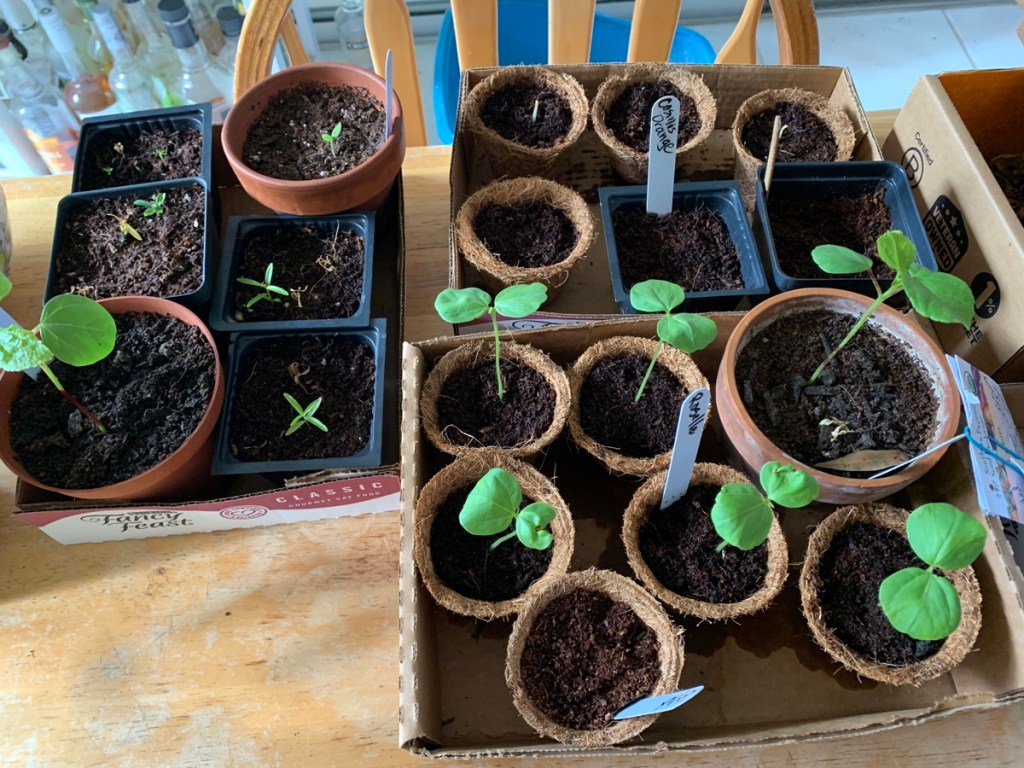
Over the winter months of 2023, I planted Roselle seeds in small pots and kept them indoors. The plants sprouted and some of them grew, but none of them thrived. As soon as the chance of frost overnight was gone, I transplanted the seedlings into the ground.
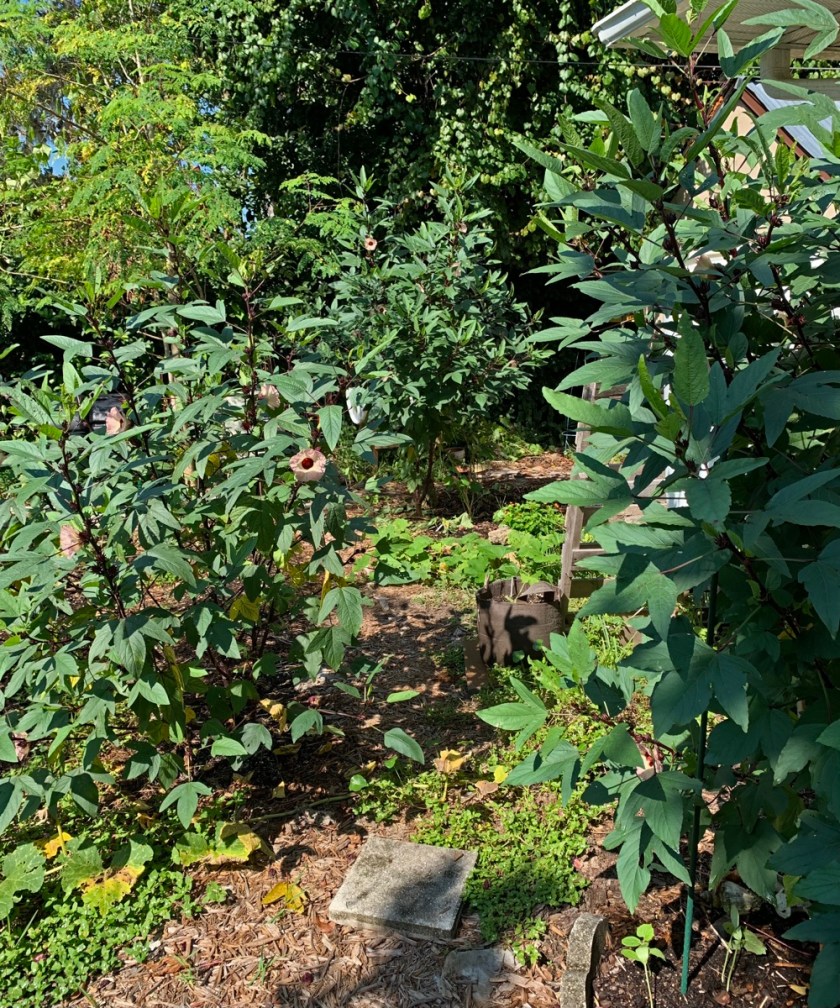
Now, it is summer of 2024, and I have big, bushy Hibiscus plants everywhere! Honestly, I have 9 plants, but the yard is small, and they are taking over.
Bushy roselle hibiscus – lost it to the wind in a storm
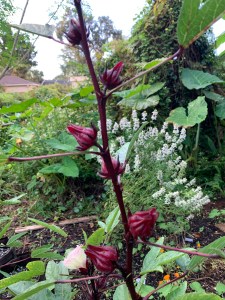
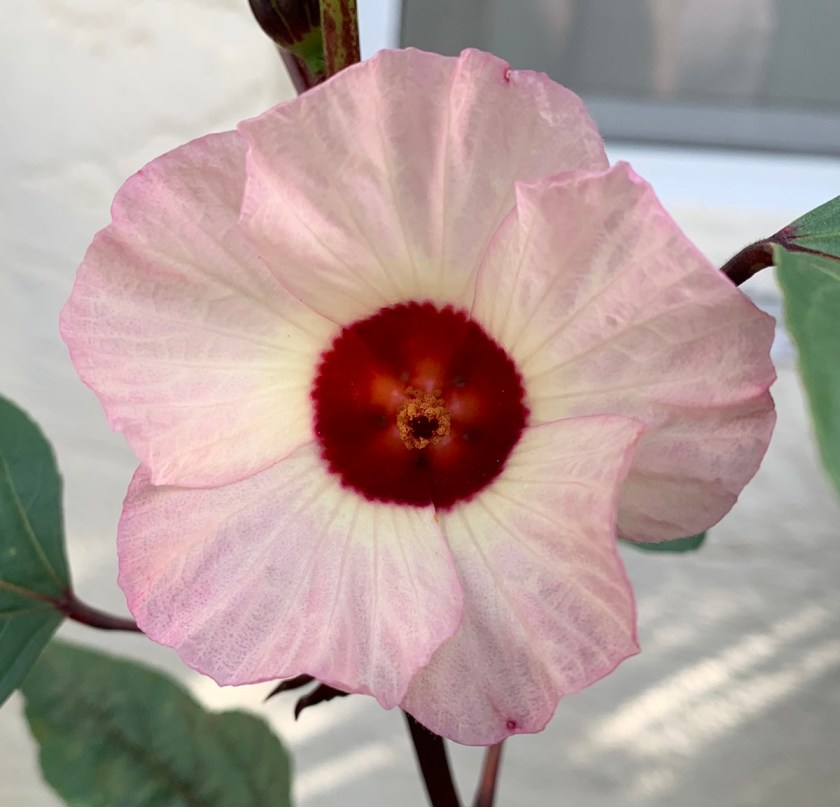
This type of hibiscus has open flowers (see below) that leave behind seed pods wrapped in red leaves, called calyces. The red leaves, when peeled off, can be boiled in water to make tea.
Roselle calycesRoselle hibiscus flower
When my Roselle began to grow, they gave me a few pods. After that, I had to wait until Fall to get more.
Starting Roselle From Seeds
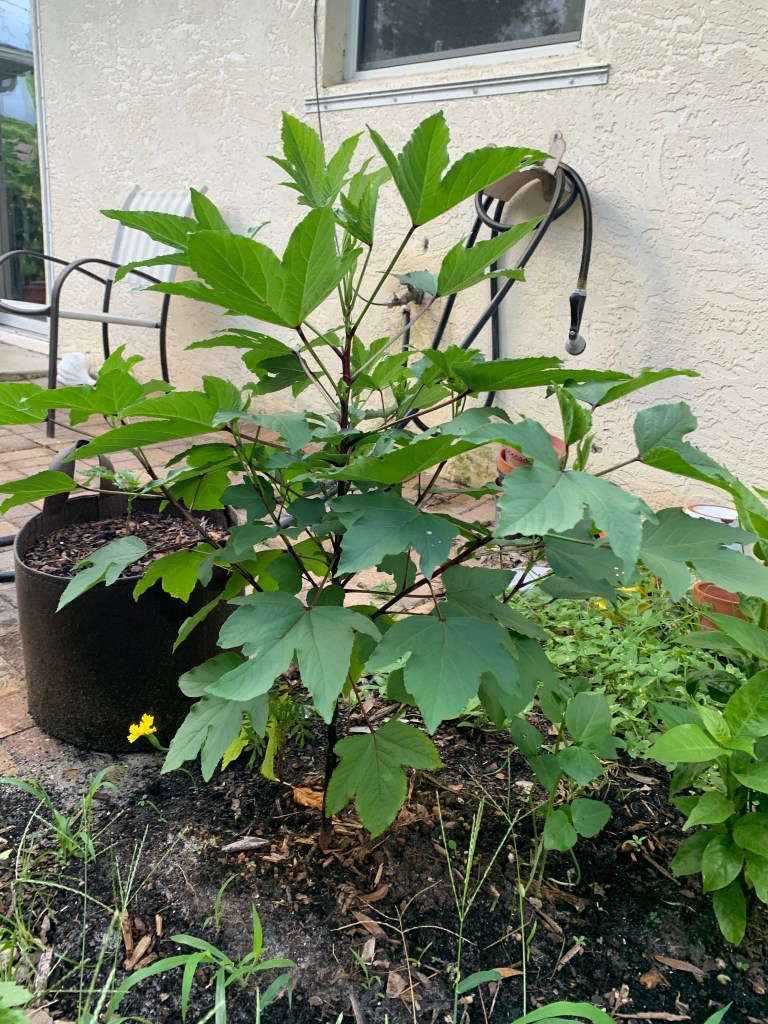
These Roselles began in pots, grown from seeds I bought at SESE (Southern Exposure Seed Exchange). The plants are about nine months old now and they al look very nice. Some are smaller than others but the one that is in the walkway is just beautiful! (That is the one that died from the storm.)
Roselle seedlingsRoselleRoselle growing
Growing Roselle is Easy
The plants will get large, both tall and wide. (I’m in Zone 9B) They are growing with and without lots of sun. The plants in the sun are bushier. They survive drought, are not bothered by the heat, and have no bug problems. After they bloom (September for me), collect the seed pods to make tea, or other things.
A warning: We had a windy storm during the summer and this (my bushiest) Roselle plant split right down to the ground. The tree died. I went ahead and trimmed all the remaining hibiscus to be sure wind could easily get through the stems.
Heading Into Fall
If you are looking for a little shrub that is easy to grow, and grows FAST, get yourself some Roselle seeds.
These shrubs have taken over my yard. I had NO idea what they would do when I planted them back in Spring. Now, many of the plants are taller than me – guessing 7 feet or so in height. It has been about 11 months since I began them from seeds indoors.By the way, don’t bother with that. Put the seeds in the ground. It was tough dealing with them in small pots.
The Roselle have become too large for my small backyard garden.
It is September and the Roselle’s are now blooming. I’ve gone through and trimmed out some of the smaller branches because they are blocking the sun from other plants. Once the flowers stop, and I collect the calyces, I will be cutting some of these plants down. I have a feeling they won’t do well through the winter anyway. I hate to cut down a good plant, but they are seriously in the way.
My yard is too small for these plants. Now, I know how easy it is to grow Roselle, and how big they become. I’ll be smarter about choosing the right spaces for them to grow.
This spring I have added Roselle Hibiscus to my backyard garden. A plant that loves the heat is always welcome to the yard, and this one is also full of health benefits.
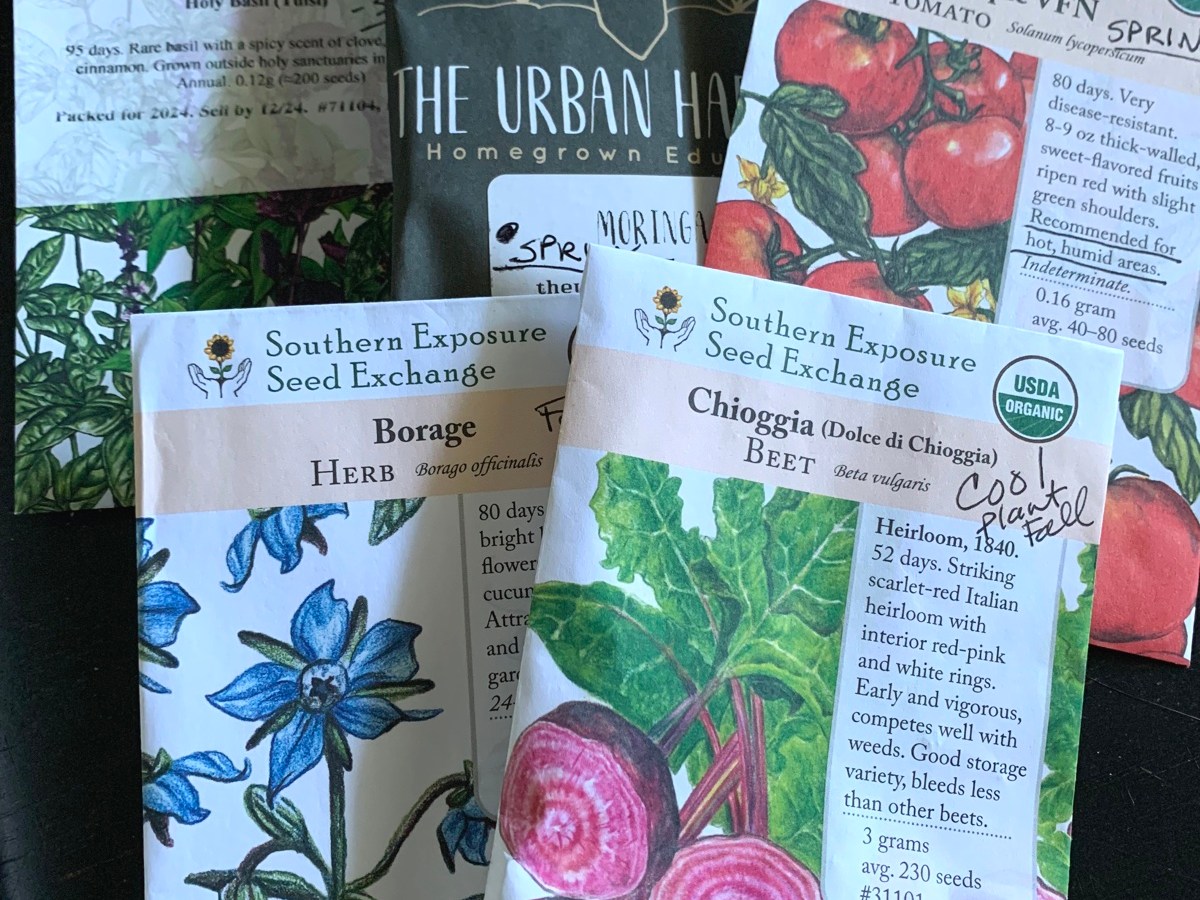
Roselle is a name I’ve heard some southern gardeners mention, but I had no idea what it was. Southern Exposure Seed Exchange sells seeds, so I ordered a packet along with my recent seed purchases.
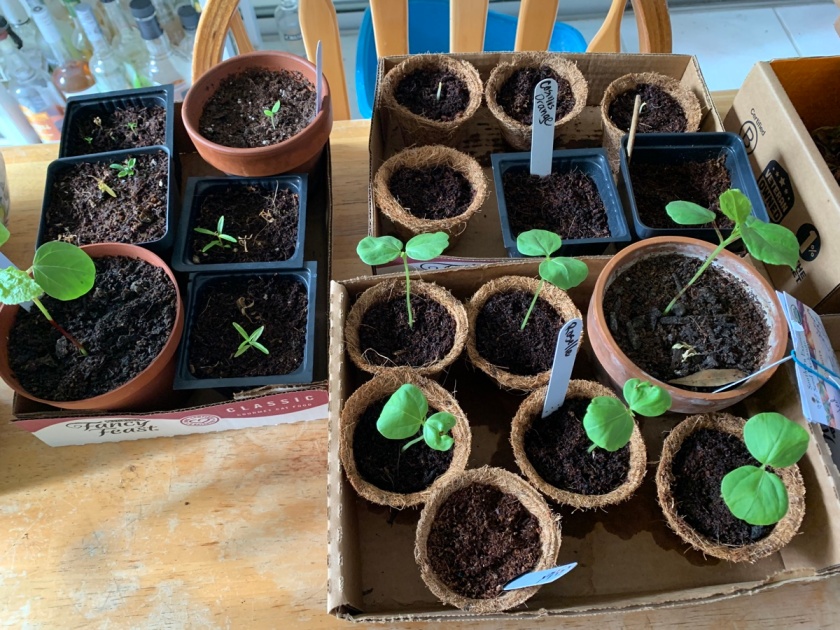
In late fall I planted the seeds in little pots. The Roselle seedlings looked good to begin with, but they eventually got bugs on the leaves. Growing things from seed throughout the winter months is not optimal. A few of these plants did survive, and they now reside in my yard. They are doing great!
Roselle hibiscus seedlings
Unfortunately for me, I have discovered that roselle is a large plant. My yard is fairly small, so I planted the seedlings in various spots. Roselle hibiscus likes heat, humidity and sunlight. It should do very well, but I may have to dig and re-plant for space.
After planting the seedlings this Spring, the Roselles are flowering and making the red bulbs now, in May! I have cut them off. I must find out what to do with them. I’m adding that info here, for anyone else who is new to growing it.
MayMay plantRoselle calyces
Video About Growing Roselle Hibiscus Plants
This video is wonderful. I think this woman lives in Arizona. I like the idea of growing anything that is heat-loving!
Learning About the Roselle Calyces
I’ve purchased hibiscus tea, which is red, and comes from this plant – I assume. It is different from a normal hibiscus, which you do not consume.
As soon as I saw my first Roselle flower, I thought of the okra I grew last year. The biggest difference is that roselle is pink and okra is off-white. Otherwise, the flowers are very similar. This year I have one Roselle planted next to a row of okra (which is growing from my saved seeds).
Roselle and okra plants
From everything I’ve seen, the red calyces are supposed to show up in Fall. Mine have begun to show up in April and May. Even Elyse, of The Urban Harvest, says that the flowers won’t show up until Fall… and she mentions drying the petals (?) to store and use the remainder of the year. The advice is part of this wonderful, and informative new video from The Urban Harvest and includes more veggies that can be planted in May here in Florida.
How to Use the Roselle Hibiscus For Food
I had no idea what to do with this collection of red pods. After watching a few videos, I came across this video that depicts three ways of using the calyces. (I’m still not exactly sure of the correct spelling – is it with a c or an x?)
Watch the video, which shows how to peel off the petals, rinse and preserve the edible parts. They can be frozen, dried, or cooked. I plan to eventually try all of these suggestions. But first, I used the petals (about 5 pieces) to make some tea!
I’ve had very good luck growing the Roselle hibiscus. My seedlings were having issues, so maybe just plant the seeds right in the ground to begin with, or start them later in the season in pots.
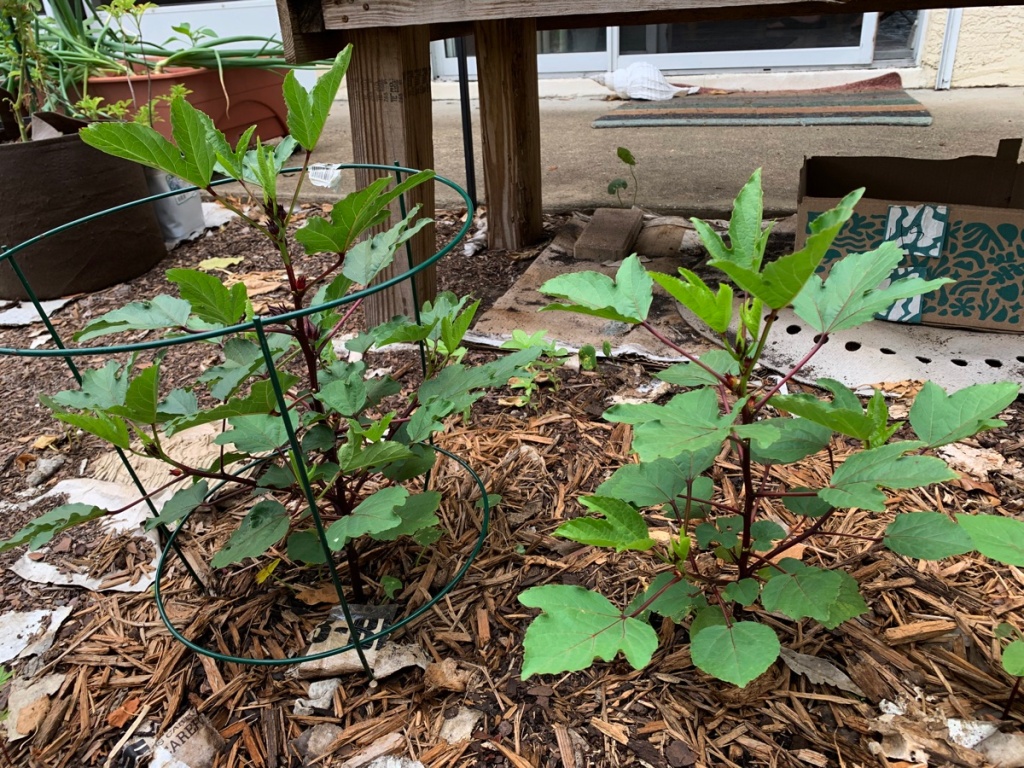
Once the seedlings were in the ground, they took off. Shortly afterward, they began to flower. I’d never grown them before, but the flowering means the red pods are coming next.
It is not necessary to prune the plants to make them bush out. Mine are doing that on their own. I think the two shown below will need more space and I might have to re-plant.
Roselle growingMay
If you live in Florida, look into growing this plant. It loves the heat and you can make tea from the flower pods (at the very least). Look up the health benefits of drinking hibiscus tea, or using this plant for health. I have found lots of pages online with information.
This is a quick post about what is growing in the garden in March. Realistically, I can’t keep up with my blogs, photos, work, and gardening. In summer I should have more time because I won’t be going outside.
At this time of year, I am out in the yard most mornings. There has been planting to be done and I still have a few potted plants that need to find a home in the dirt.
Pineapple
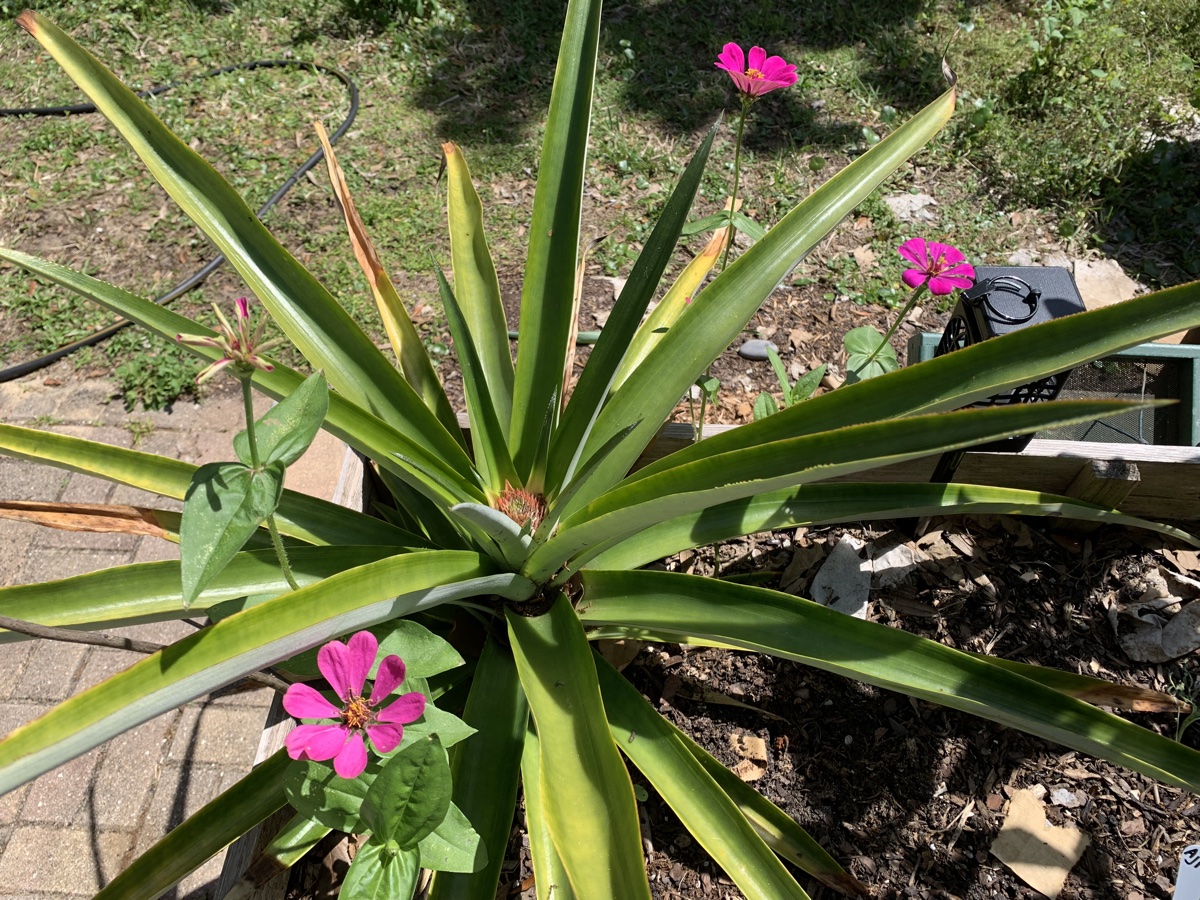
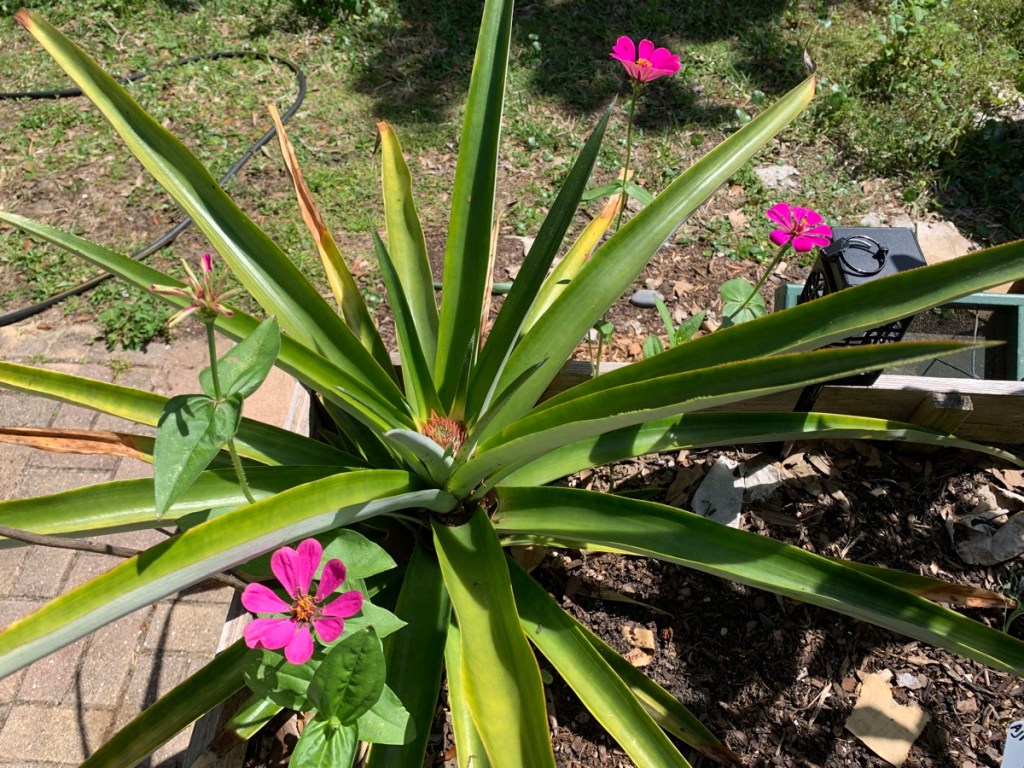
Pineapples are easy to grow here, but they take years to create a new pineapple. I had forgotten how much space they take up while growing, and planted them in a couple of my raised beds! Now there is no room for other crops.
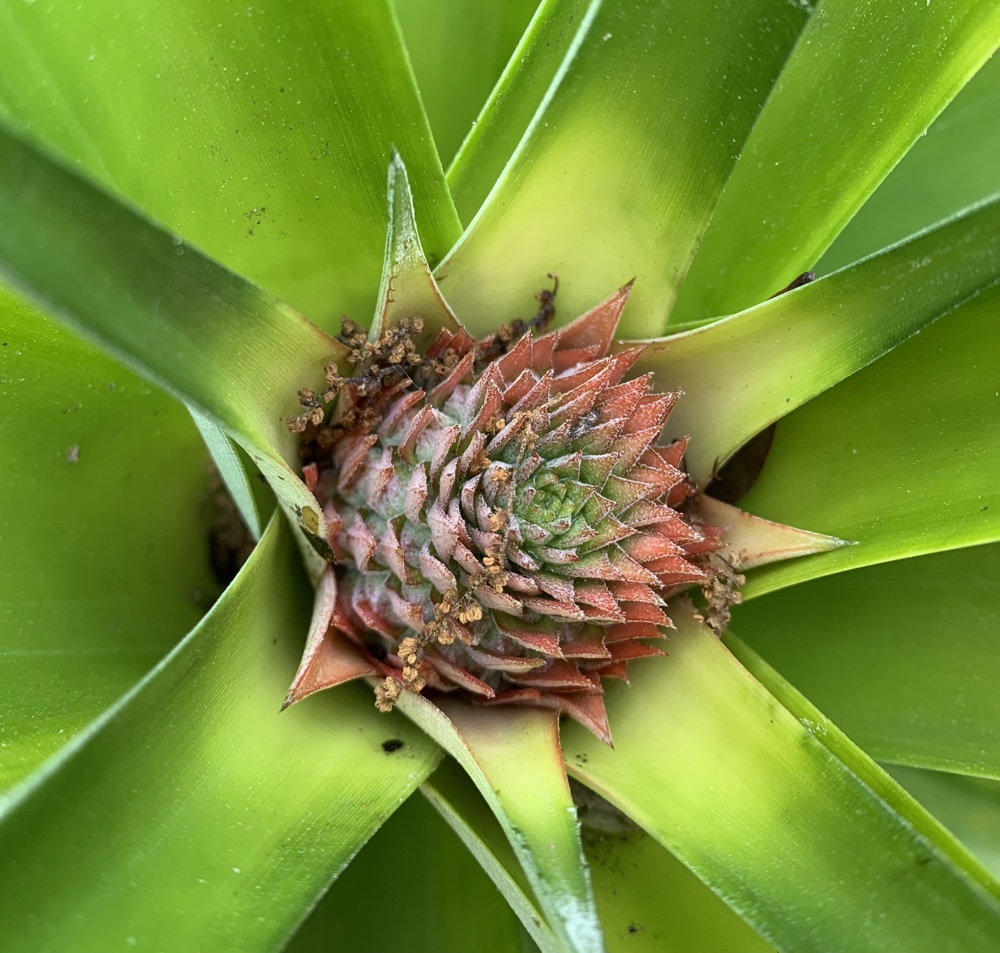
This pineapple is finally having a baby! It will grow up out of the center and become a tiny pineapple. After – not sure how long – It can be harvested.
Baby pineapple growing!
Blueberries
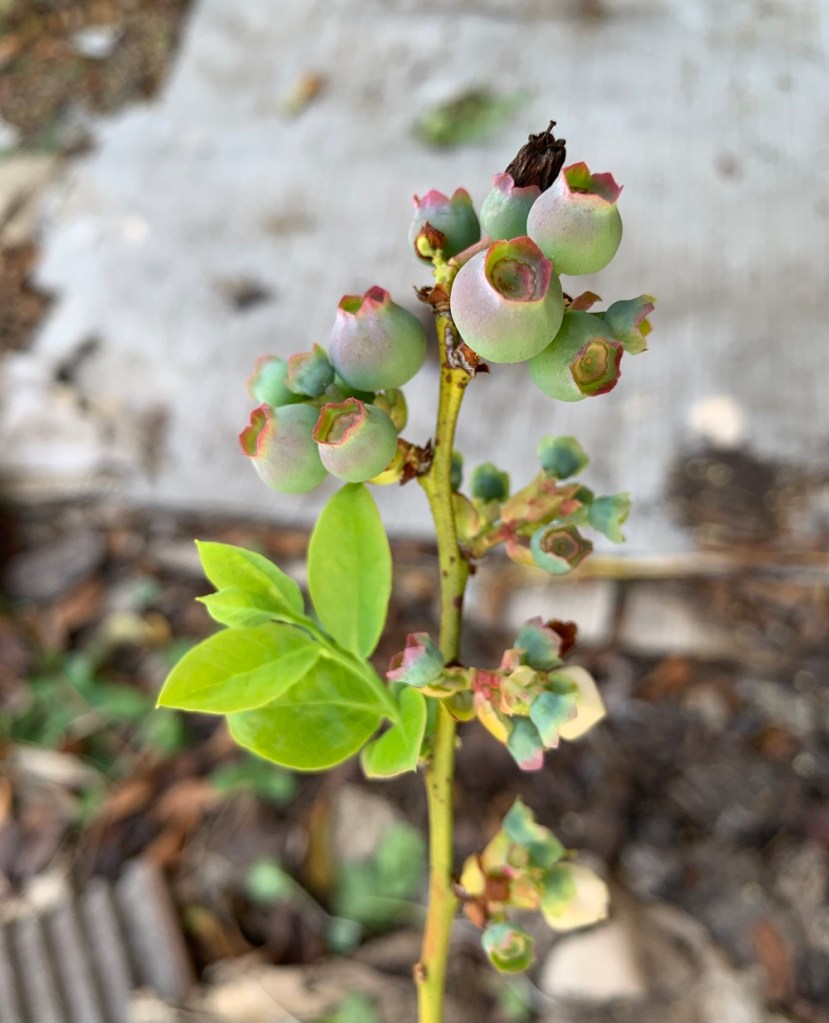
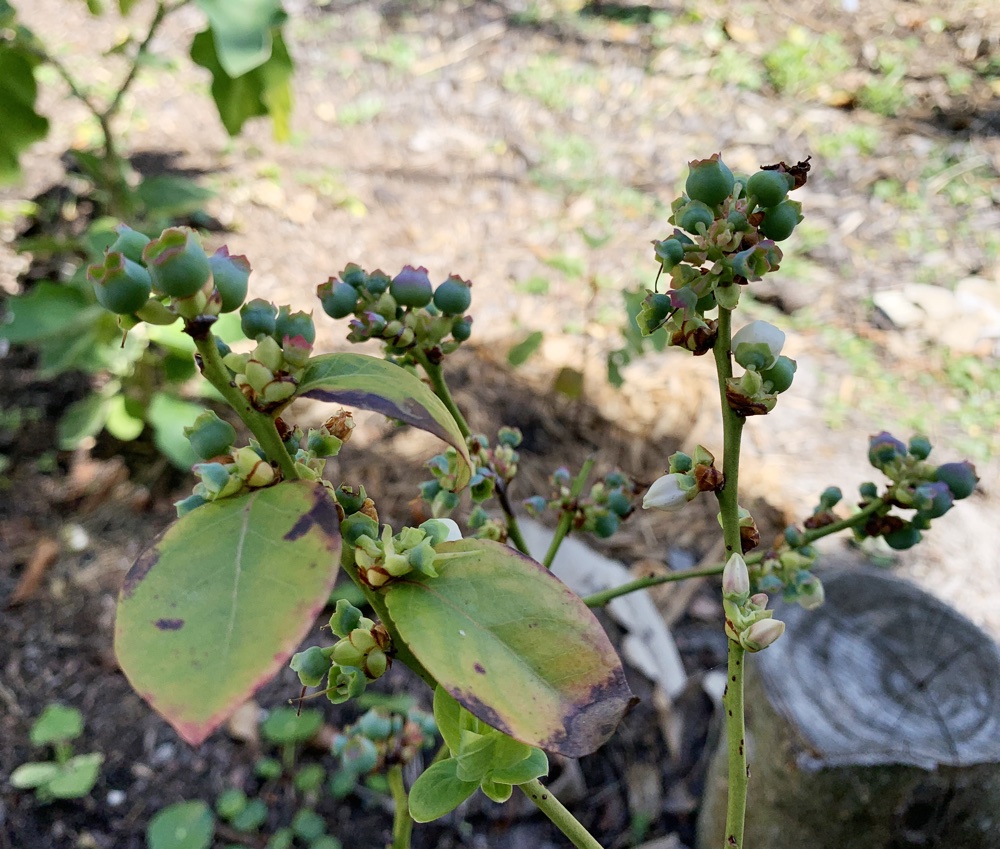
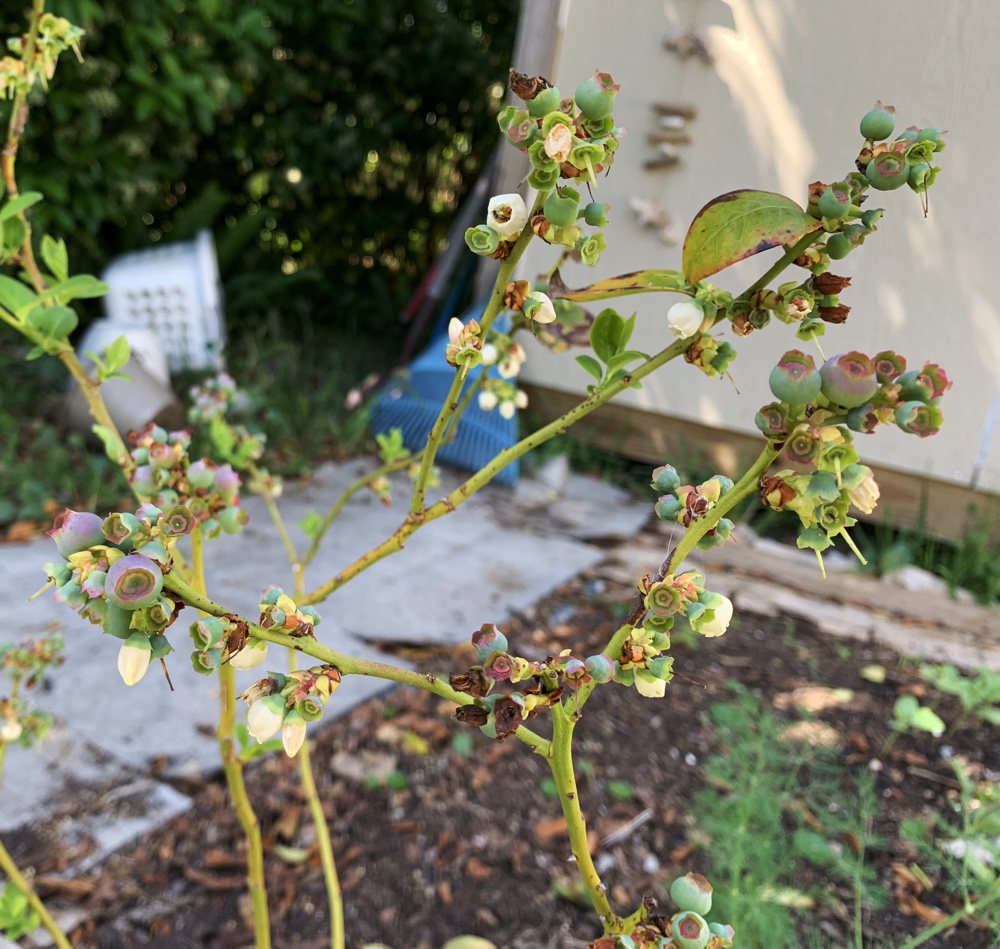
I purchased this blueberry plant on a whim… without any idea about growing it, or where I would put it in my small yard. Blueberries are acid loving plants and I’ve been trying to keep it happy. About a month ago it began to get loads of white flowers and now I have tons of little blueberries – still green.
Either the raccoons will get them, or I might have a tiny crop for myself! (I’m hoping the raccoons won’t realize it’s something edible.)
Blueberries!
Gone to Seed
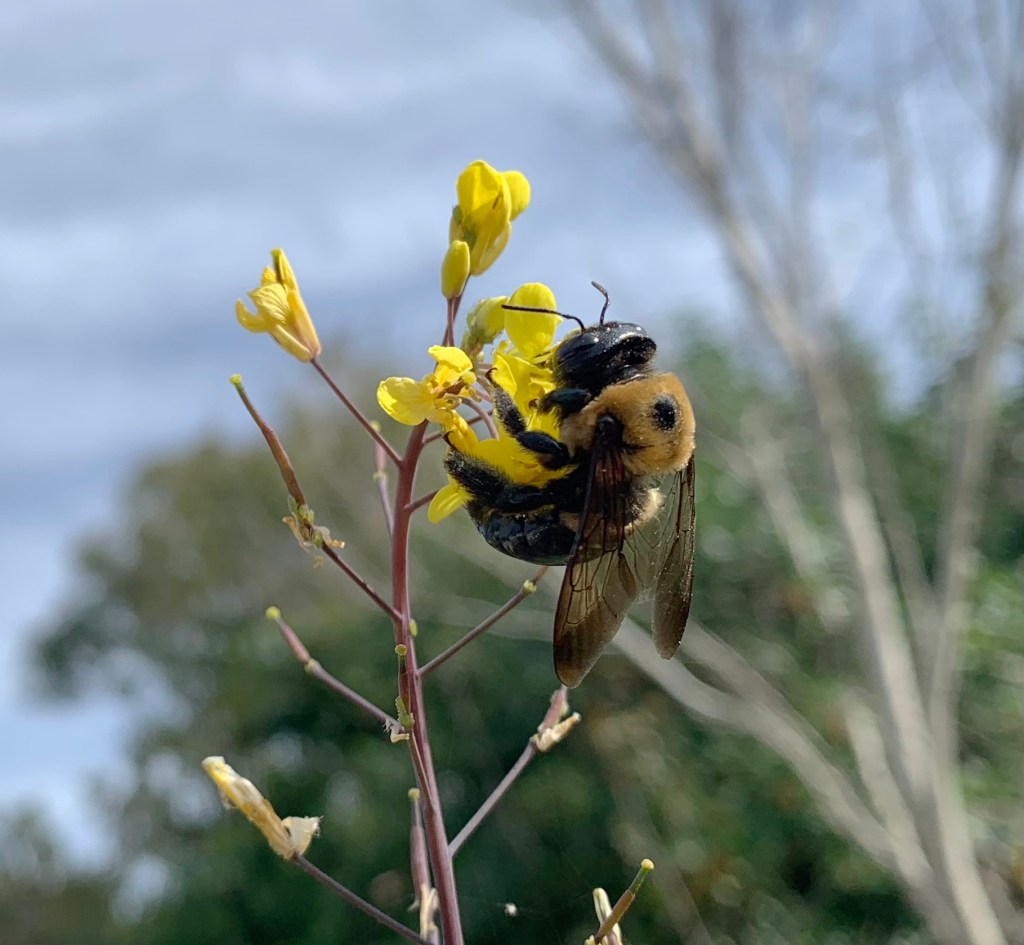
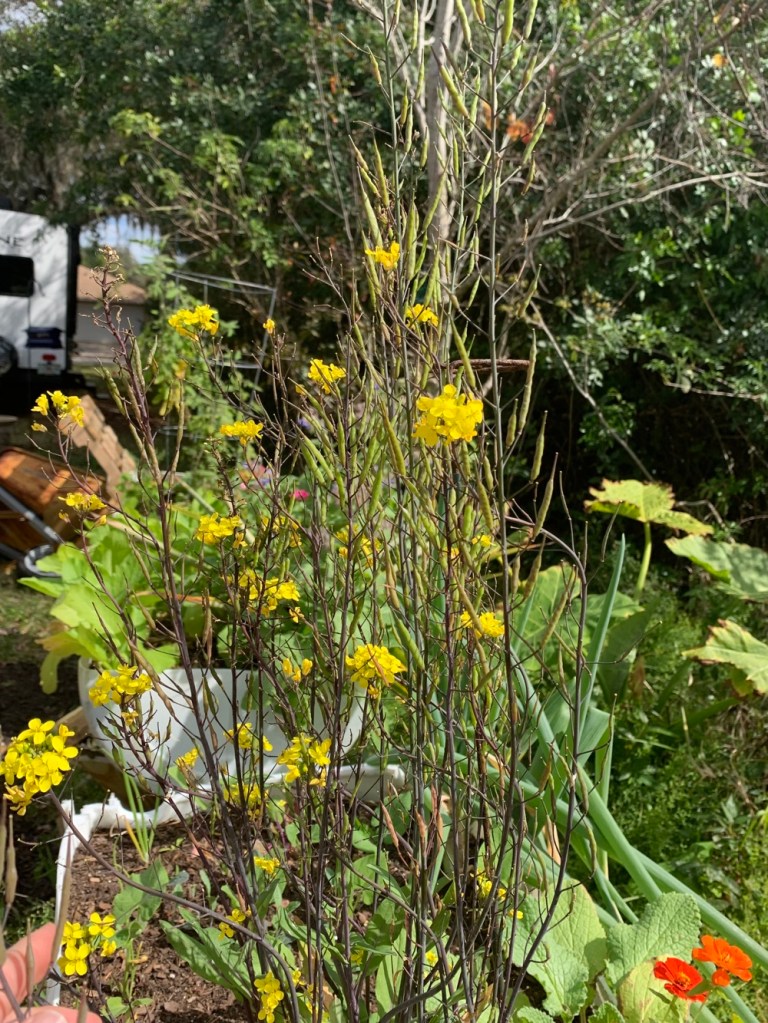
I like to let some of the produce go to seed. This is mainly for the bees. For instance, the Hon Tsai flowering broccoli and the regular broccoli have pretty stalks of yellow flowers.
For a while, every morning a big black bee would come to the broccoli flowers. Other bees, like the one below, were also regulars.
I plan to grow the Hon Tsai variety next winter, just for the flowers.
Broccoli flowersHon Tsai
Roselle, Squash, Carrots and Okra
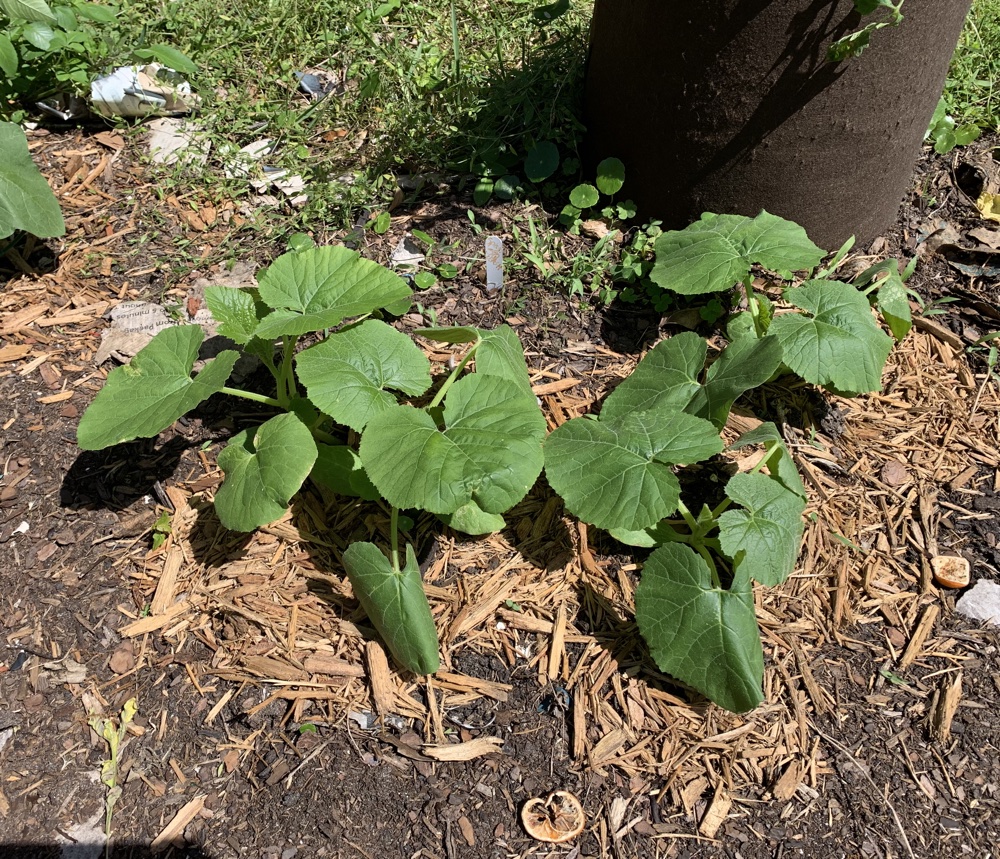
The spaghetti squash is a new crop for me to try. The seeds have come up nicely and the plants are taking off. Fingers crossed I will have my own squash supply.
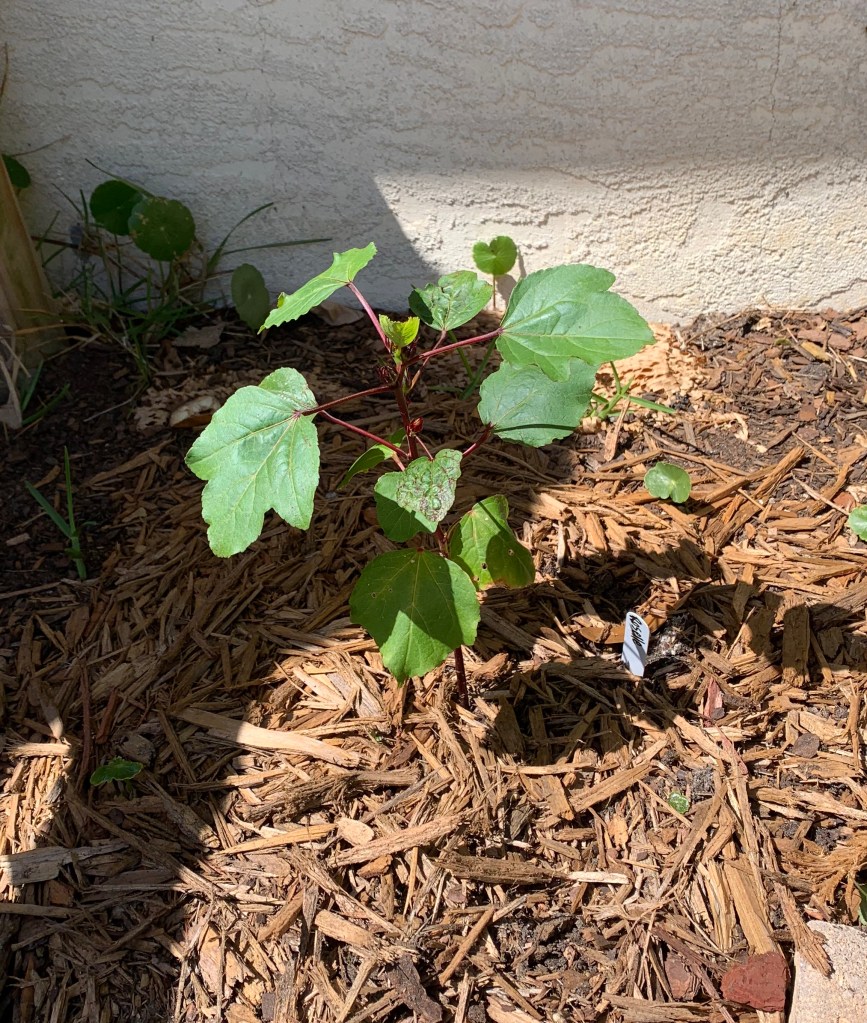
The Roselle plants were begun with seeds over the winter. They got bugs and a few seedlings died. The ones that kept growing have now all been planted in the yard. If you are wondering what Roselle is, check it out here: IFAS / UF Gardening Solutions: Roselle.
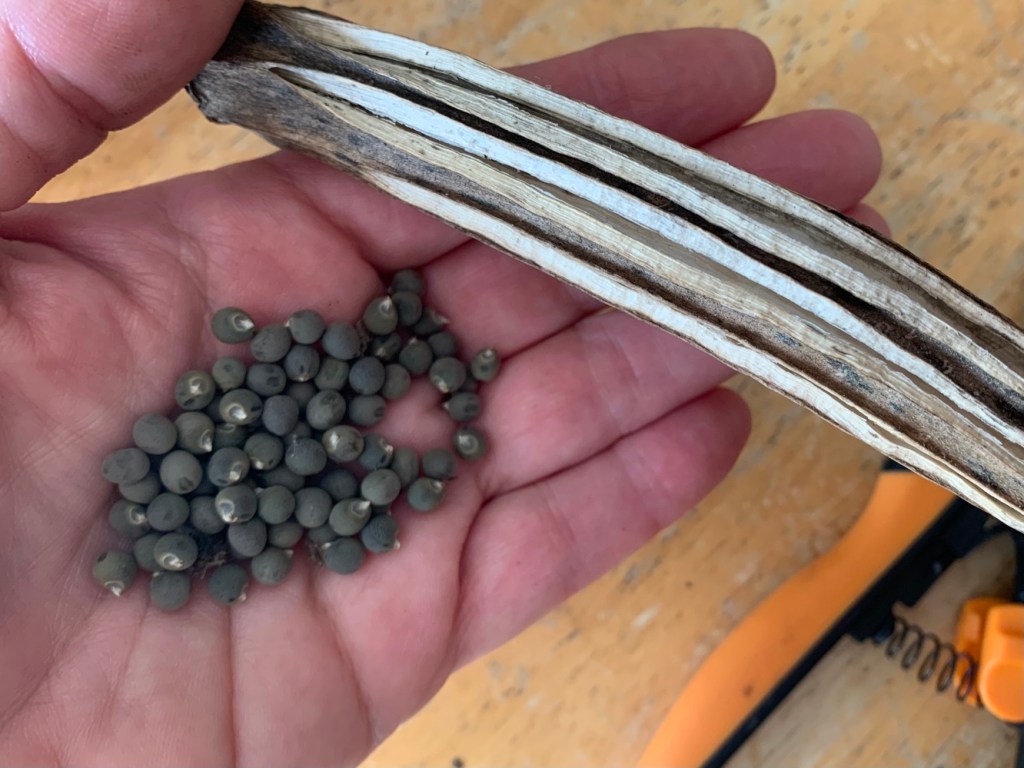
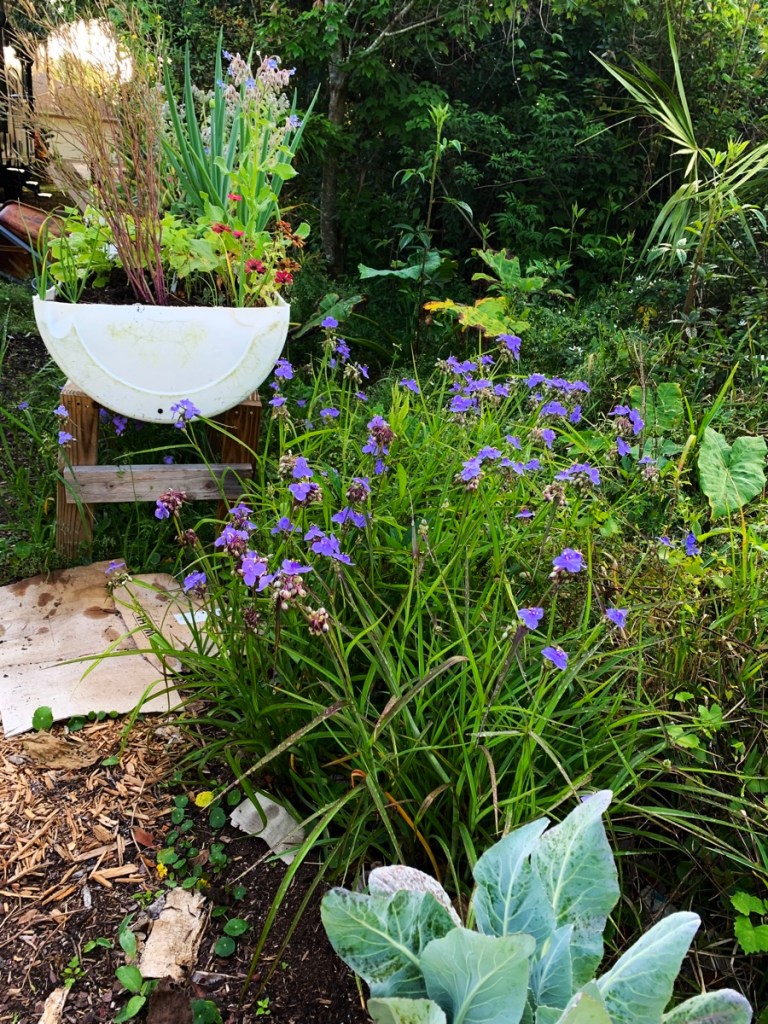
Spaghetti squash Roselle plantSaved Okra pod and seedsSpiderwortDanvers
Last year I grew okra and had a hard time eating it. Bleh… yuk. I did save a pod and have now planted some of the seeds. I won’t have a lot, but I love the plants and flowers – just not the actual okra!
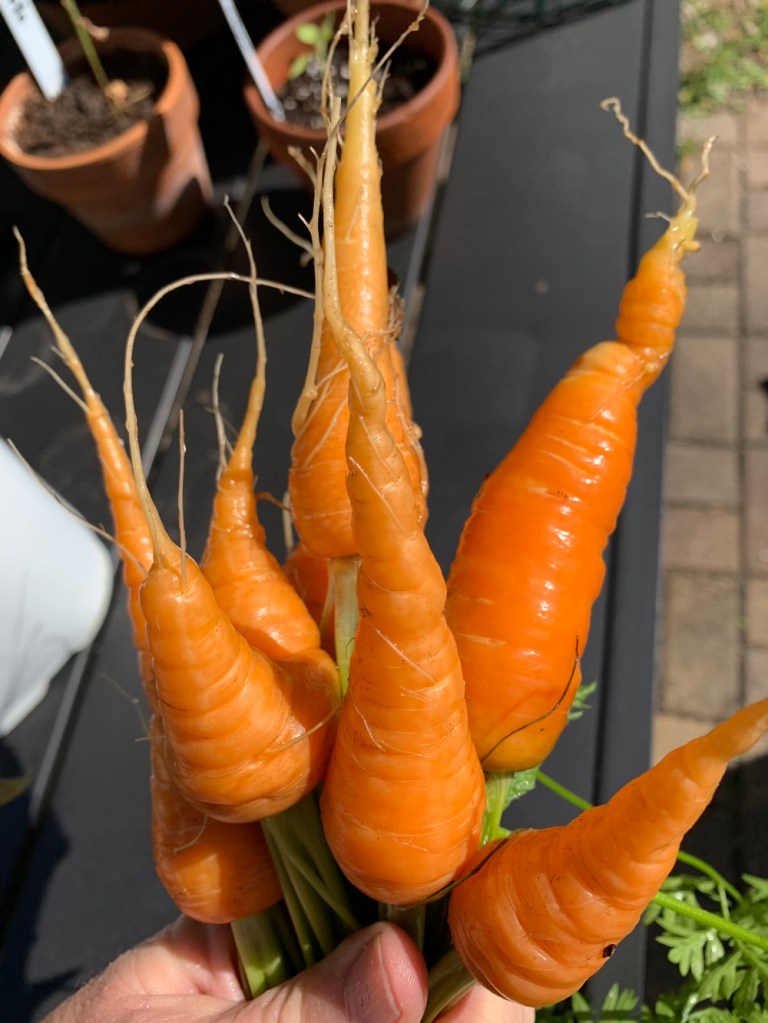
I’m eating carrots now… finally. They took FOREVER to grow. Scarlett Nantes and Danvers did the best for me.
Spiderwort and Other Weeds
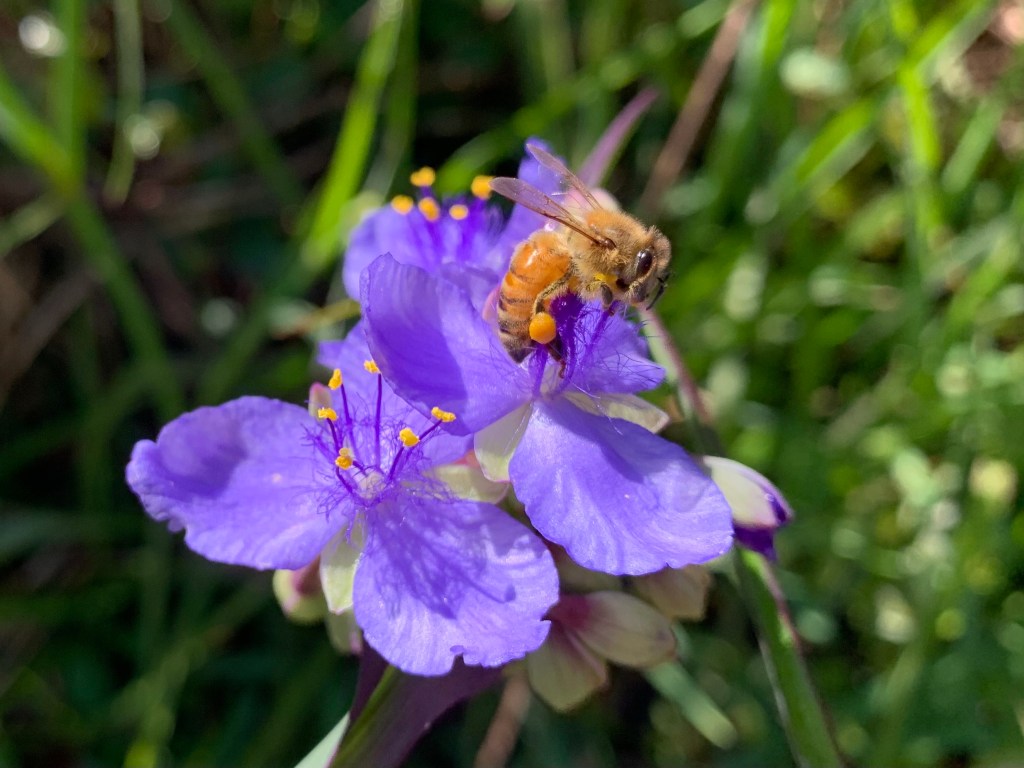
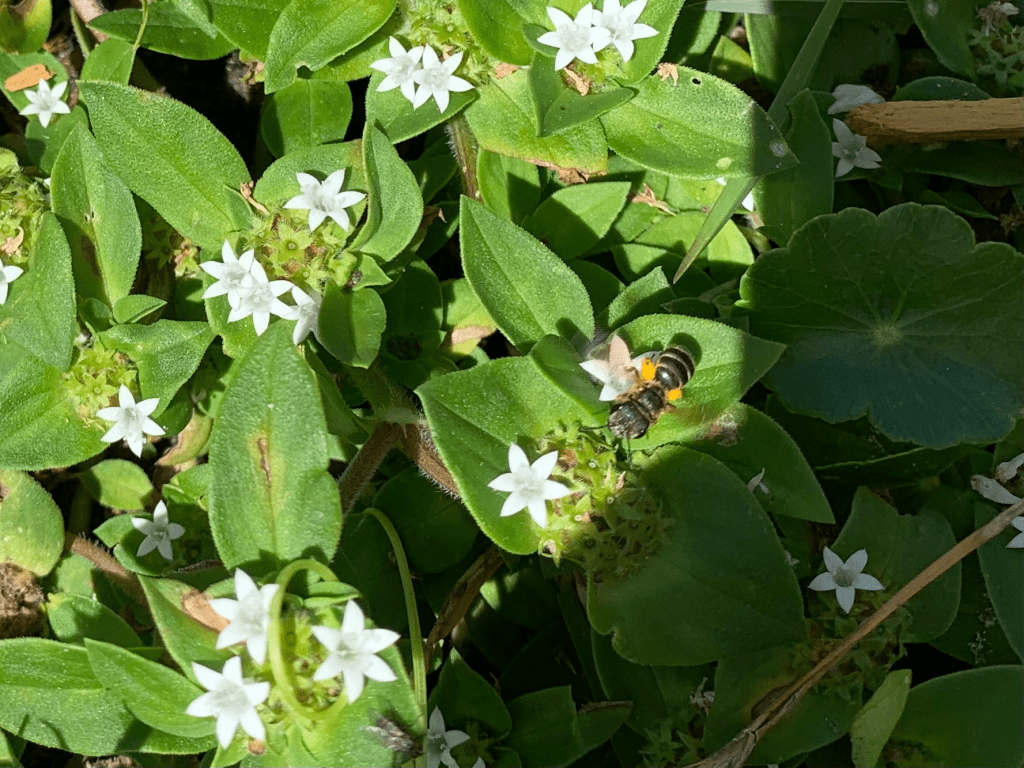
I’ve decided to let some Spiderwort and other flowering weeds grow in the yard. The area is small, and I plan to keep it all in check. Bees really love the flowers of these “weeds” and I want to bring bees to the garden.
I’ll let them grow where they pop up as long as it’s an okay place.
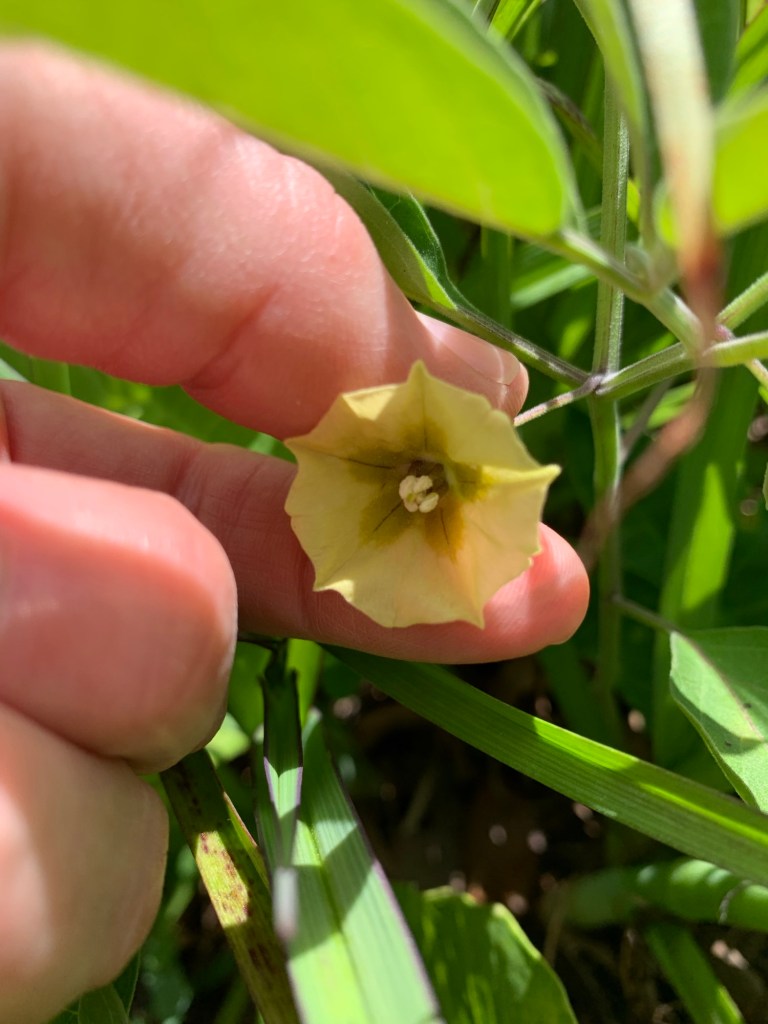
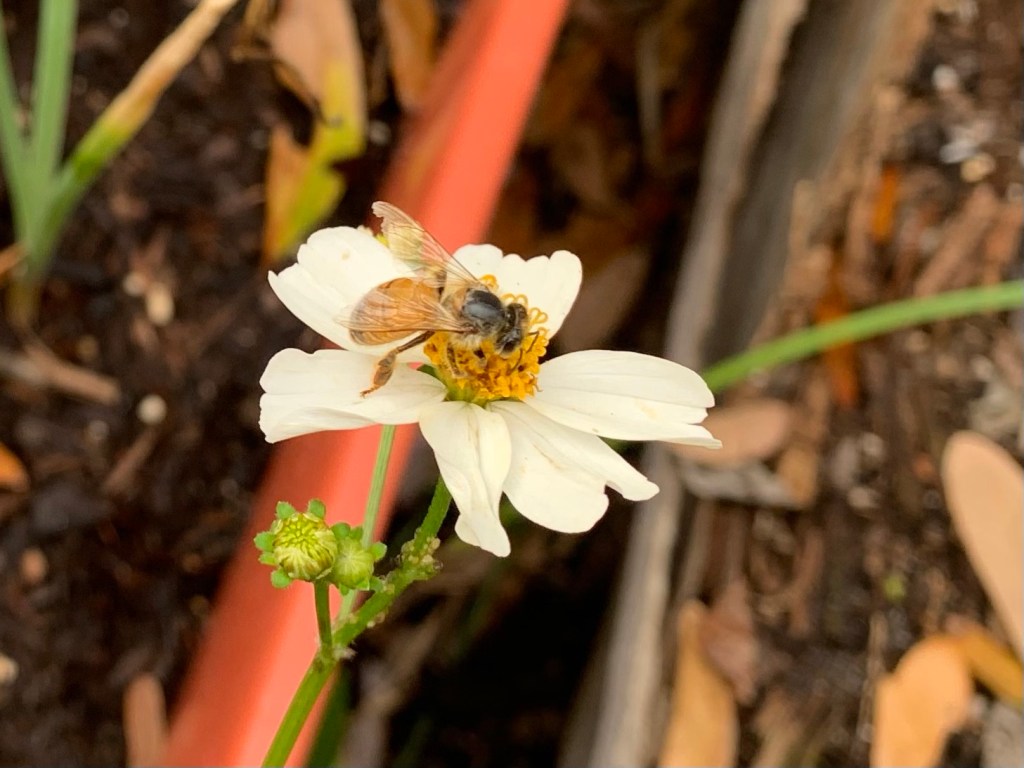
Spiderwort with beeRichardia Scabra ground cover with little white flowers that bees love.Ground cherryBidens alba
This white flowering “Bidens alba” is a particular nuisance when the seeds form. They stick to everything… my clothes, my cats, and are hard to remove. I plan to cut them down before the seeds form!
Watermelon, Cucumber and Seminole Pumpkin
Three types of watermelon have been planted, along with my much loved Seminole Pumpkin. The cucumbers are also in the ground and I am hoping to beat the moths this year.
So much more is happening in the yard, but for now that is all I have to share. There is still much work to be done, with mulching and walkways, compost and watering. It is fun work.
Anyway… I hope you are planting, or planning an upcoming garden, and I’d love to hear all about it. Happy Spring!
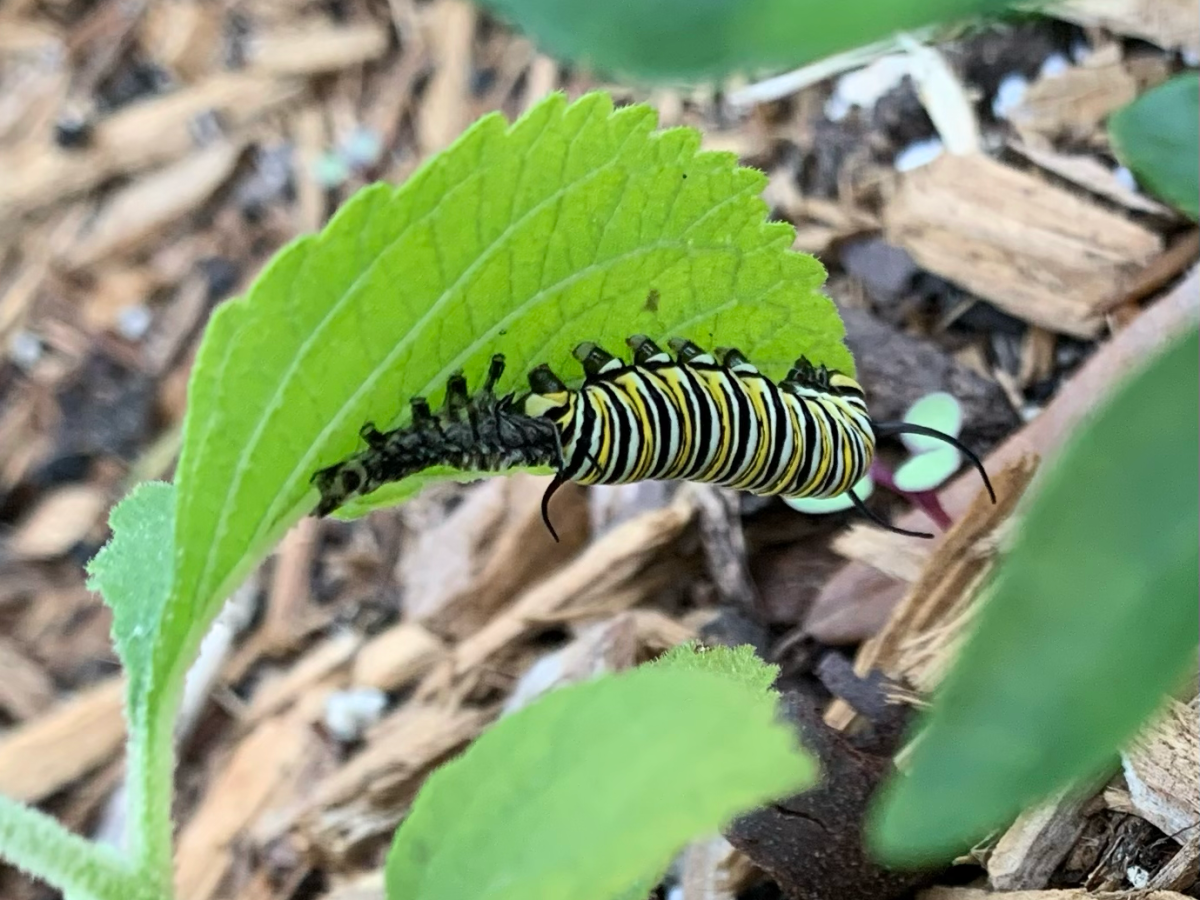
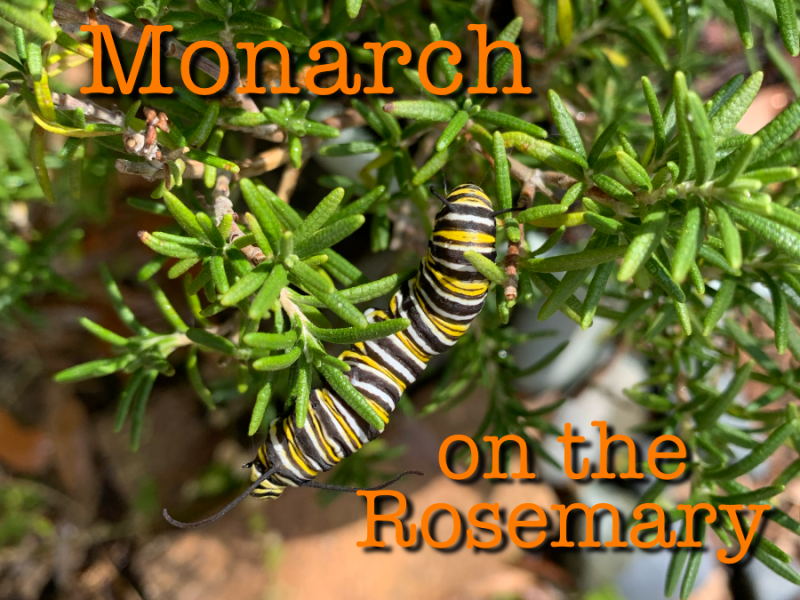
It is not usual to see a Monarch caterpillar on a Rosemary plant. Monarchs like Milkweed. But this one had a purpose, and had traveled quite a long way to be there.
















 Hydrangeas Blue