Easily save marigold flower heads and collect the seeds to sow later.
Growing marigolds from seeds is pretty easy to do here in Florida. With our long stretches of warmth, ruined only by the months that are unbearably hot, seeds readily sprout. The seeds are easy to save in any climate, but they should be stored to use the following year if the growing season is short.
I began growing marigolds from small plants and seed packets that were purchased. Marigolds are easy to grow and don’t need much attention once they are established. Deadhead the dying flowers, which hold those wonderful seeds.
Saving Seeds
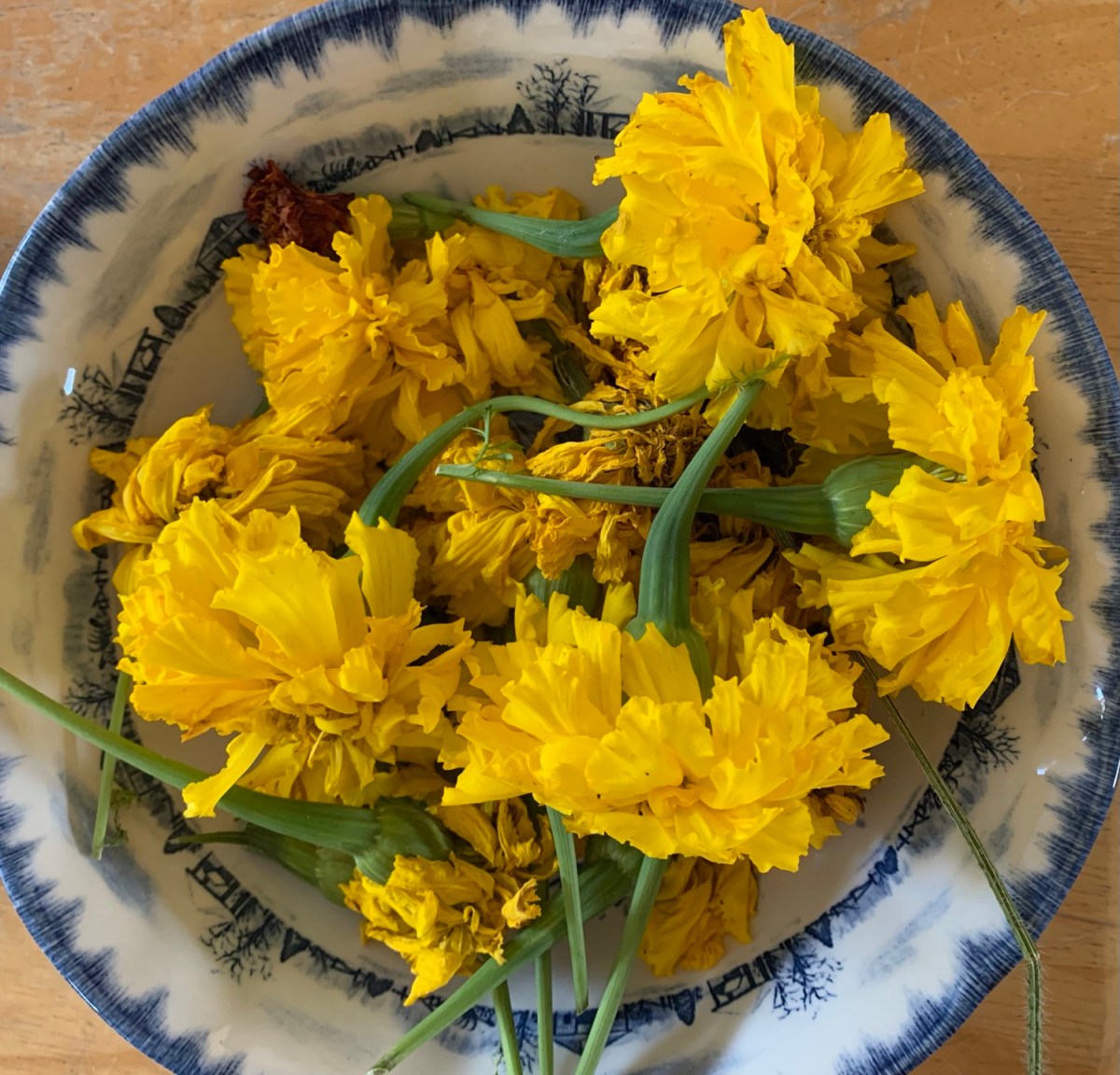
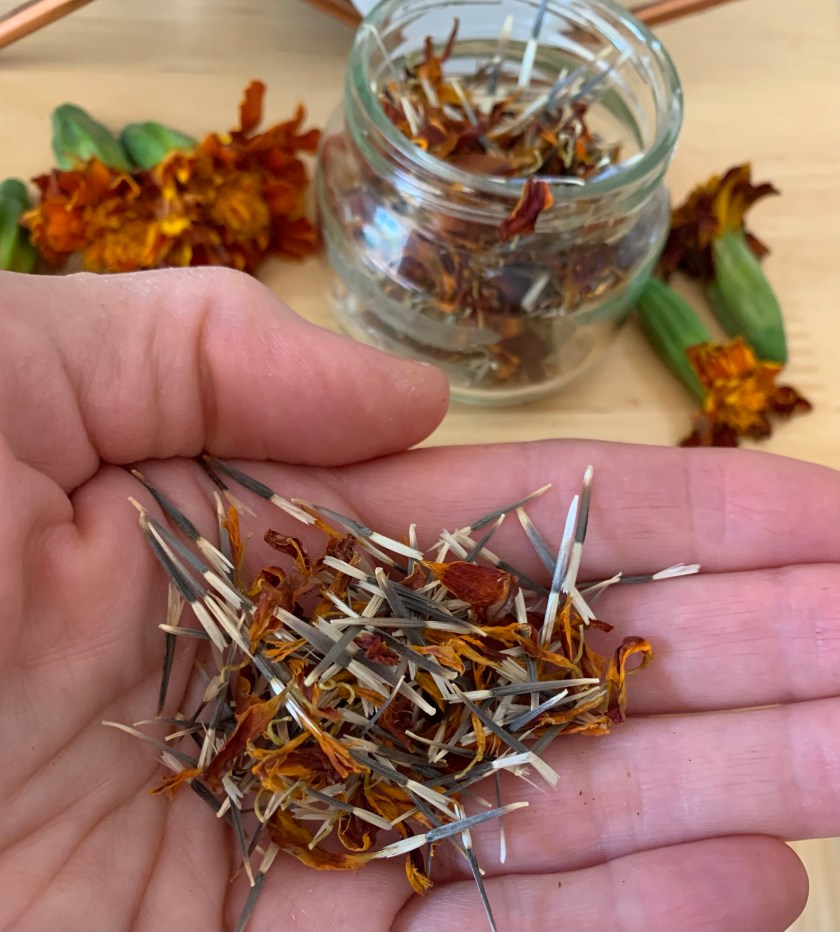
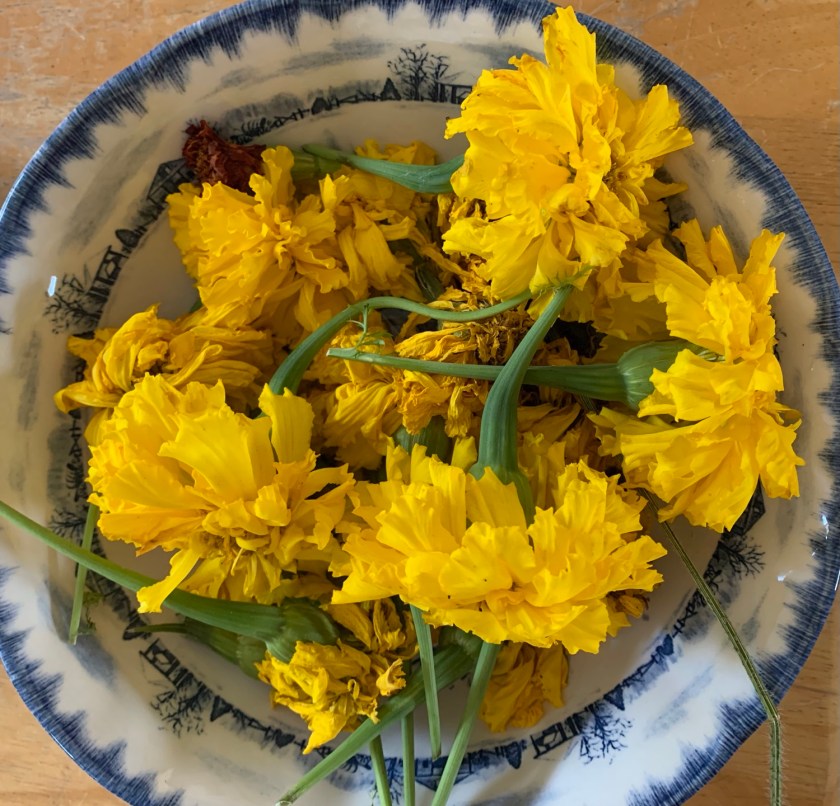
When the flower begins to die on the marigold plant, pop the head off and save it in an open container to dry out. Once the blossom has dried (or when you are ready to plant), peel it open and find the seeds.
You will end up with many seeds, but not all of them will grow. Overdo the sowing or thin the seedlings as needed. Each flower will give you a handful of seeds!
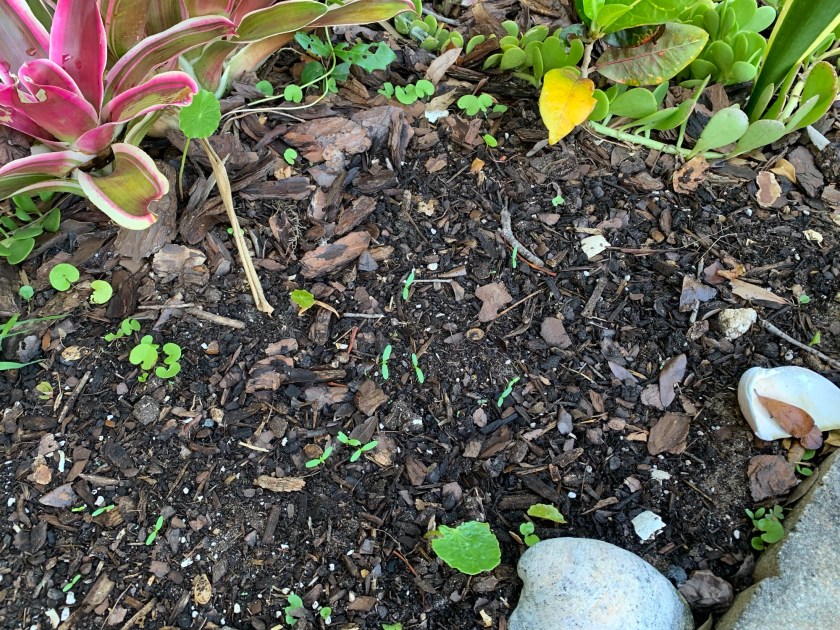
Find some dirt and spread the seeds, then cover with a bit of soil. Be sure to water often to get them started.
Marigold seeds in a little dirt space in the flower garden.
Last year I did not organize the marigold seeds and just planted them all over without really knowing which colors would end up where. The little petals will eventually dry up and fall off so if you want to keep the colors separate, put them in marked envelopes.
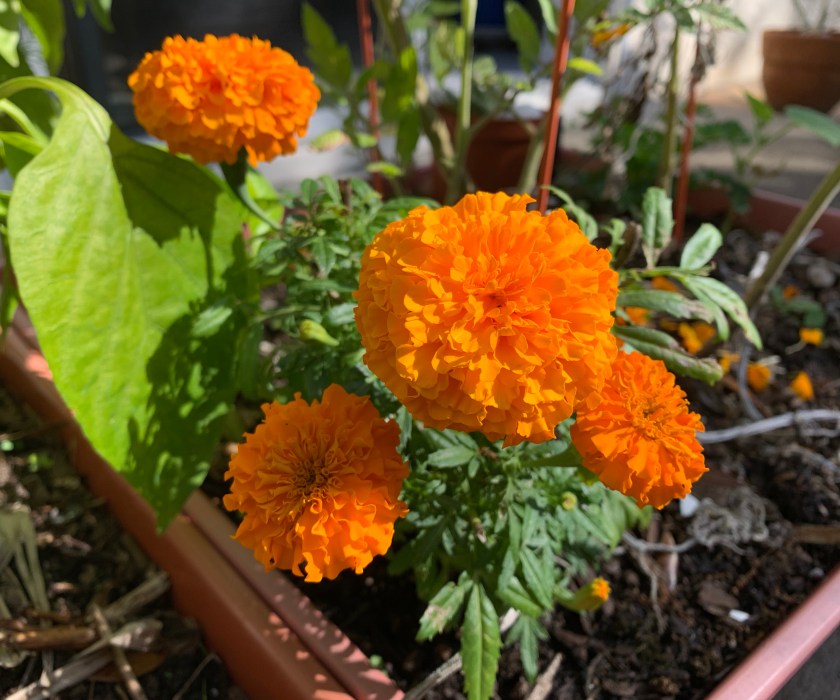
All Orange Marigolds
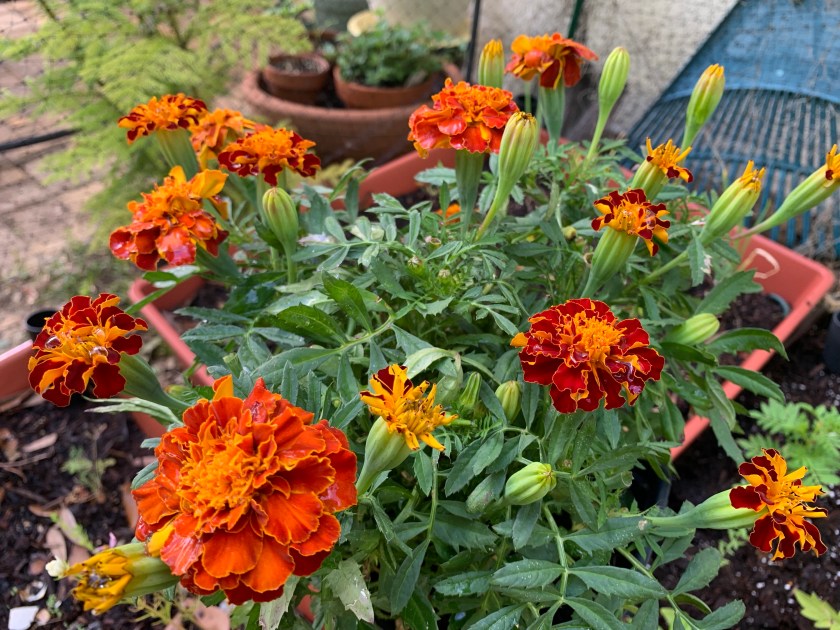
This orange “fluffy” flowering marigold began as a little plant from the store. It’s so pretty, I will definitely save all the seeds from it.
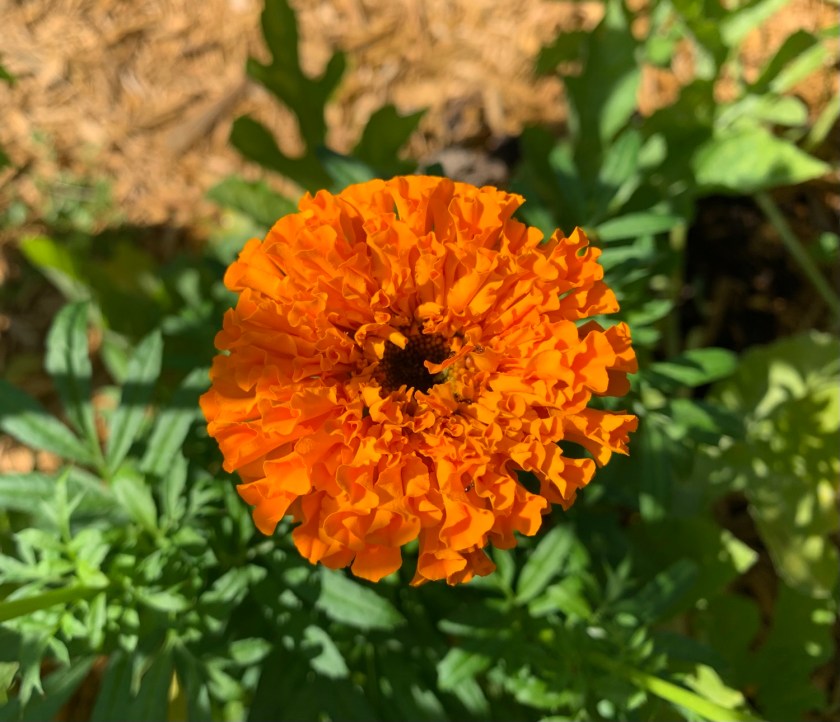
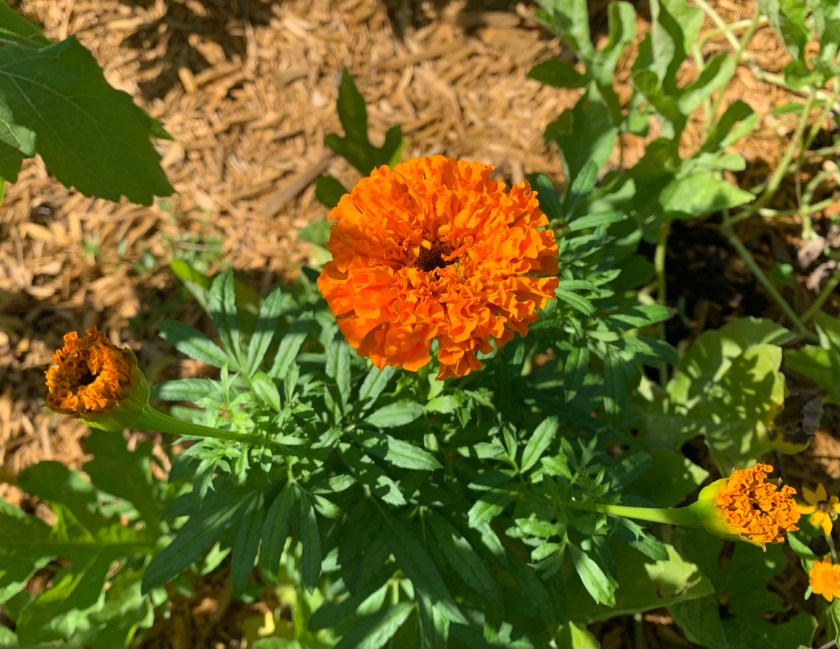
Red-orange Marigolds
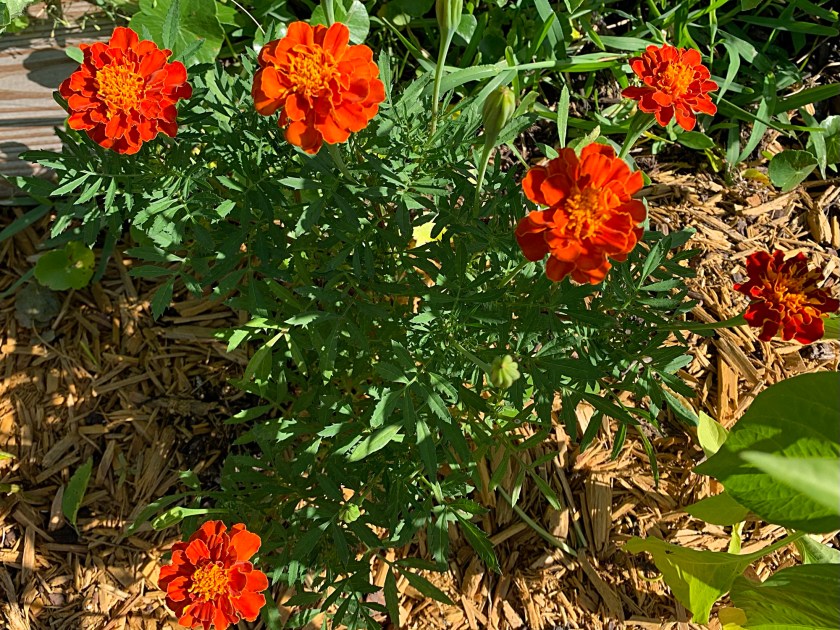
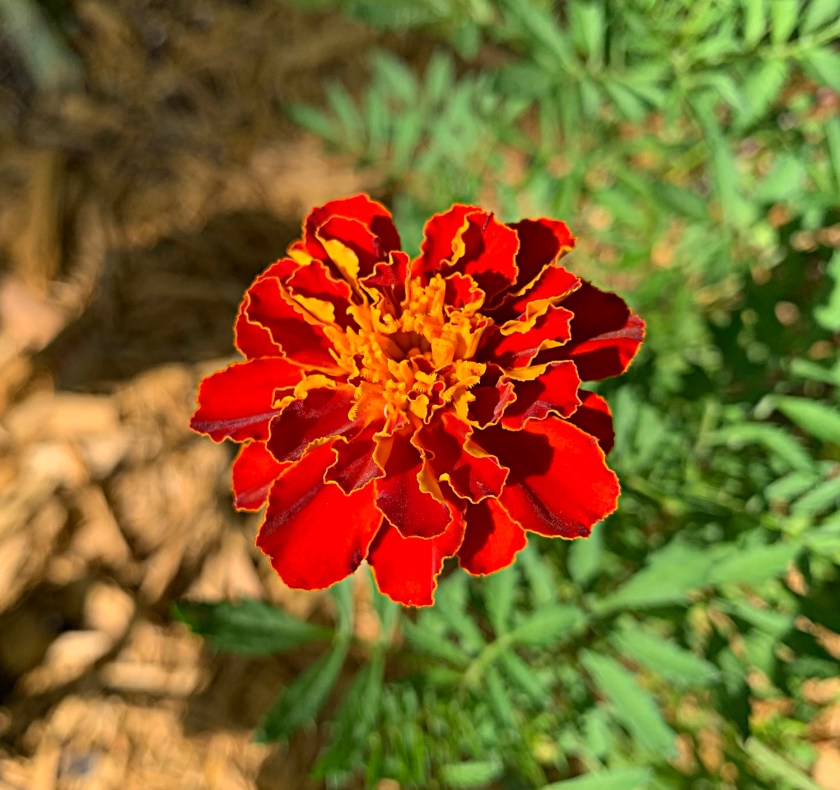
This marigold has dark orange petals that can also look red. The center is more yellow. I have one plant growing in the garden from the seeds I saved.
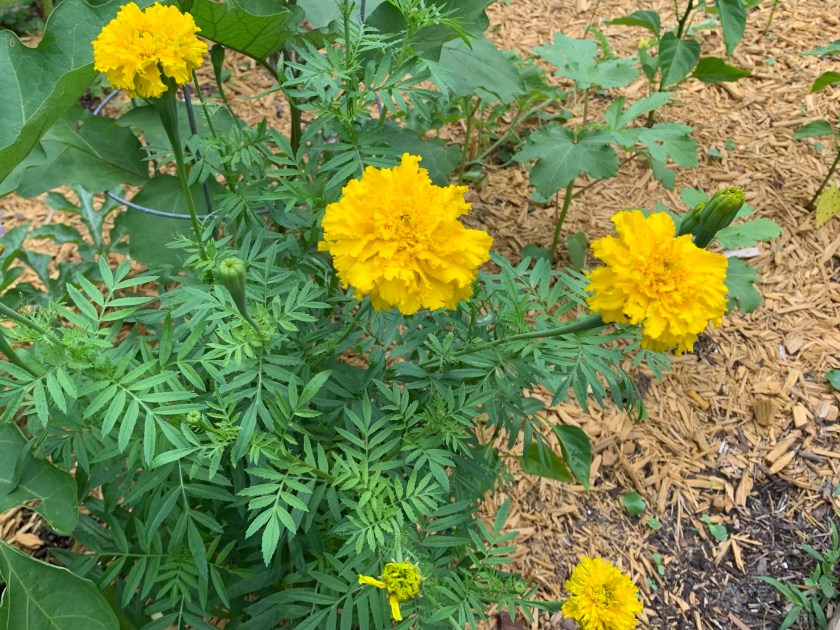
Yellow Marigolds
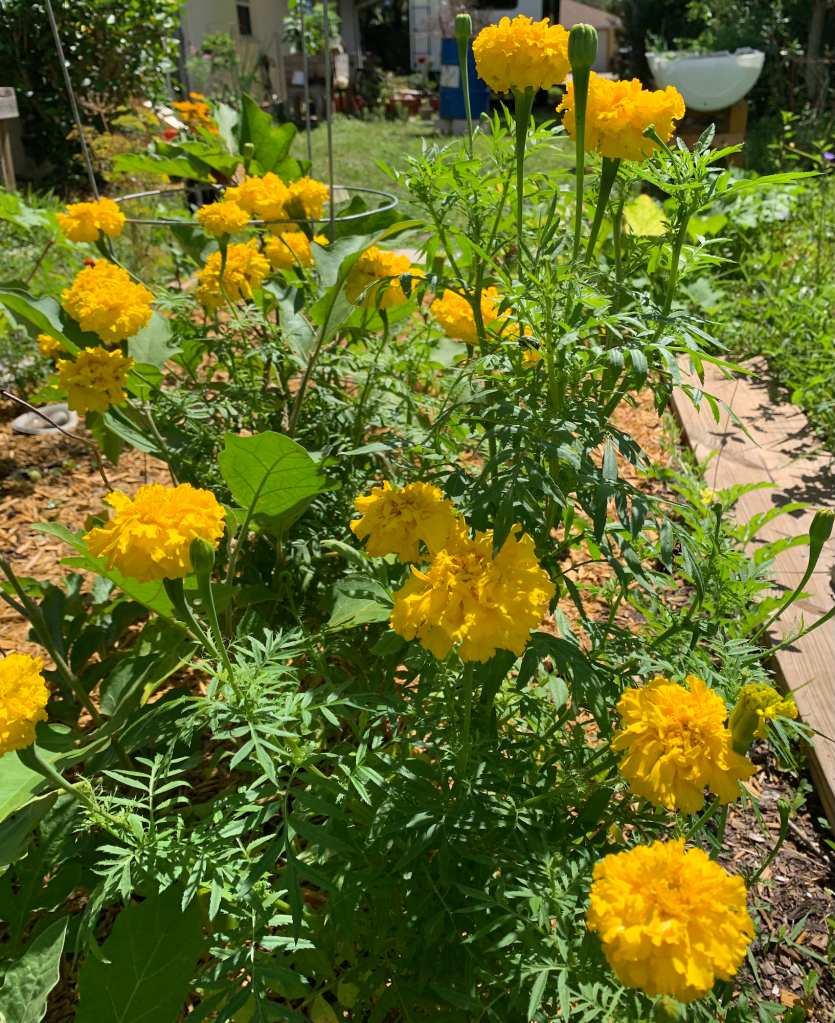
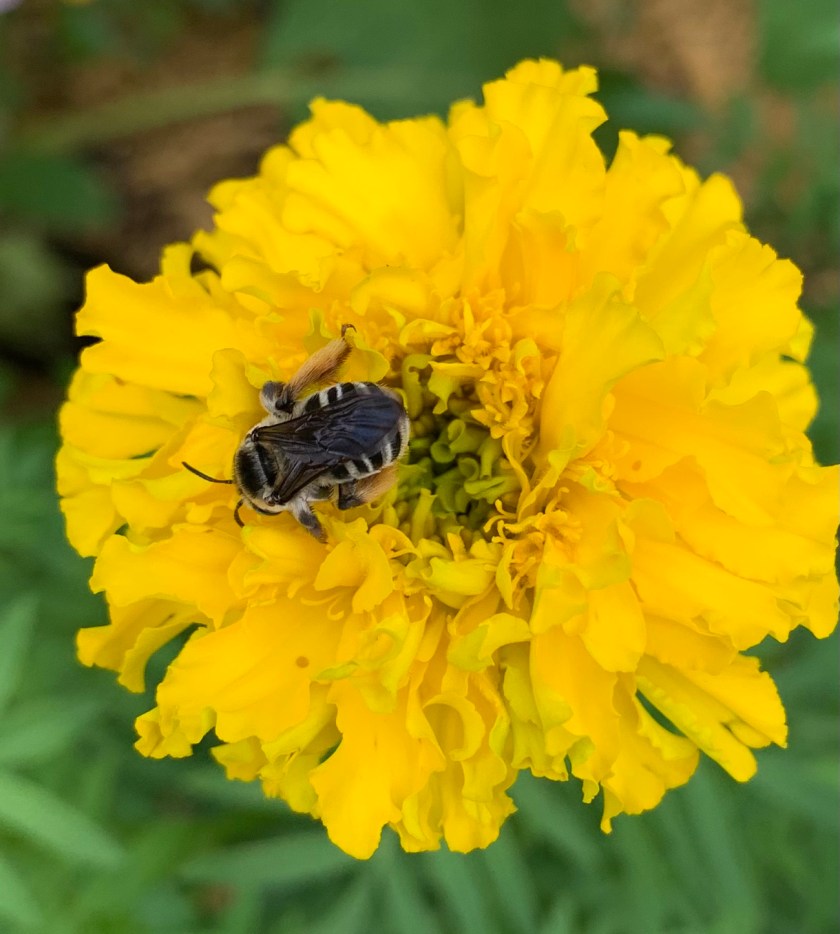
The yellow marigolds have attracted bees and butterflies. Marigold are good for repelling non-beneficial bugs and I always like to have them in the yard. Plus, they are pretty and quite easy (and cheap if you save the seeds) to grow.
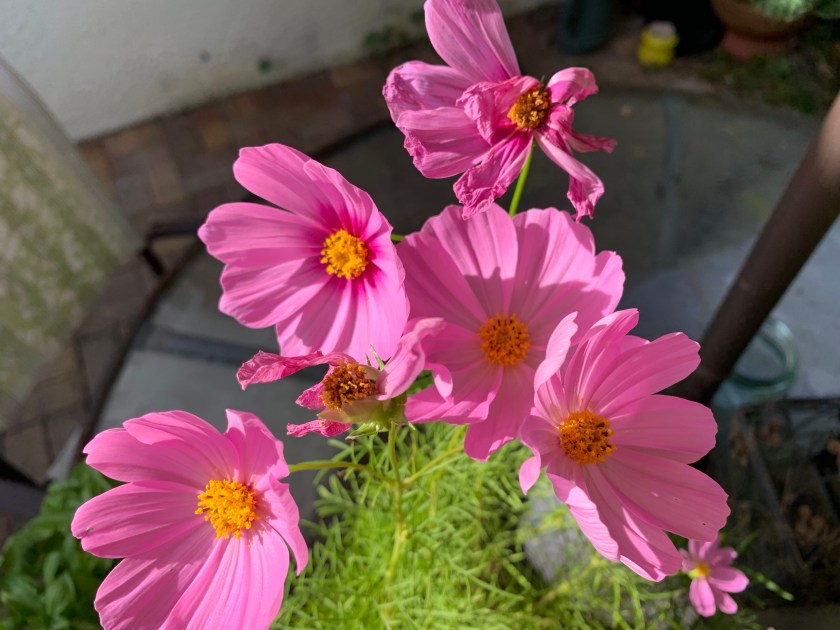
Marigolds are not the only flower seeds I save. This year I am growing Rudbeckia and Gaillardia and am looking into saving seeds from those plants too. Cosmos flowers also have seeds, which I save.
How to go about saving seeds from lettuce and arugula plants.
Gardening in Florida is still a new thing for me. Even though I have lived here in Florida for many years, I never had a vegetable garden until recently. Typical tropical plants and flowers I understand, but I never had time to try to grow crops like lettuce and arugula.
Finally, I think I am beginning to get the hang of it. I realize I can’t grow what I used to grow in New Hampshire’s short summers. I’ve tried to grow cucumbers and squash without luck. Maybe the seeds were bad, I don’t know. This is such a different climate. Everything is backwards as far as planting seasons.
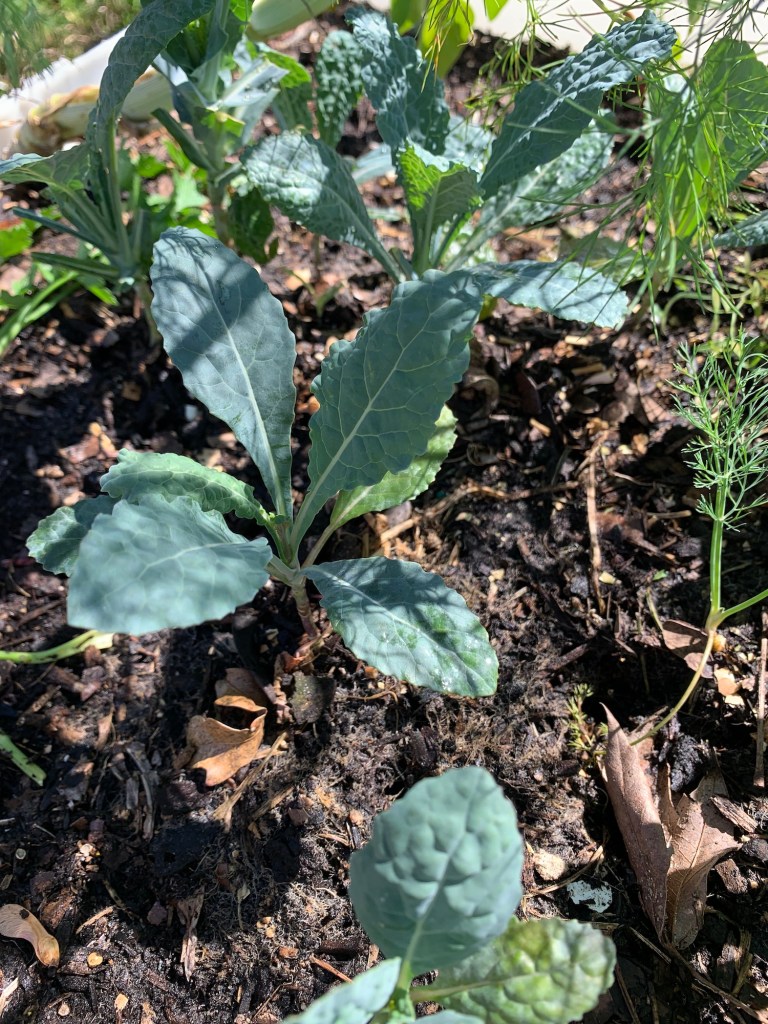
Lettuce and arugula (and kale) like cooler temps. I planted those seeds in Fall. They have done well over the winter months, even with Christmas temperatures in the 20’s.
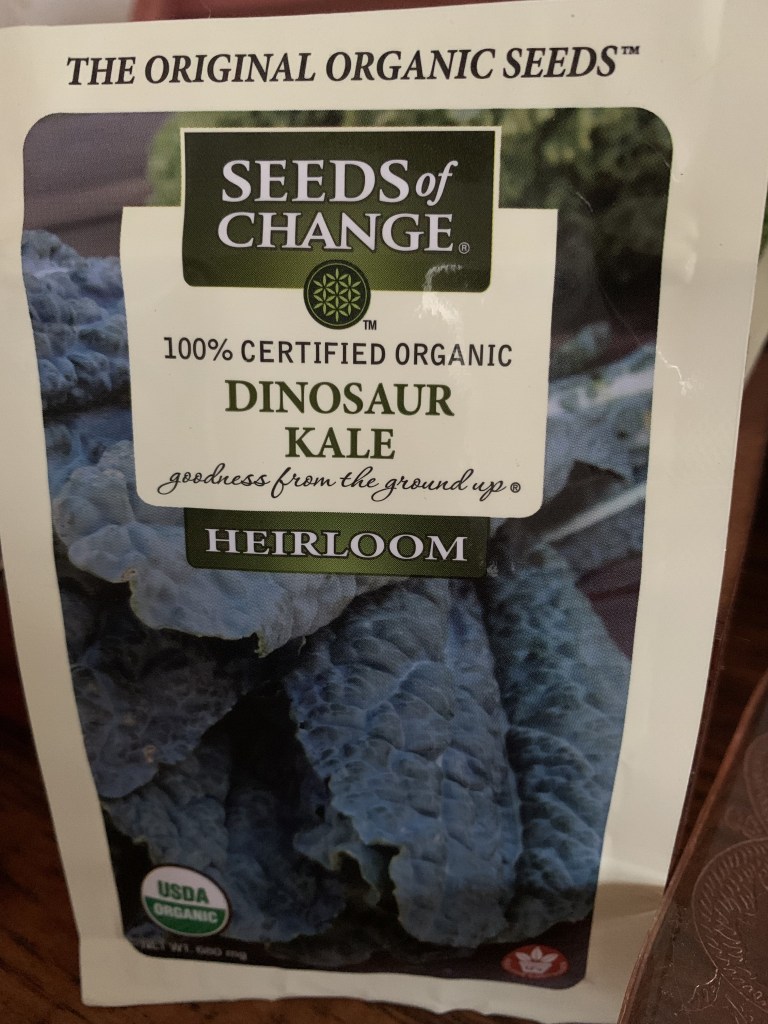
Now it’s time to save the seeds. My plants began from a company called Seeds of Change. I bought the seeds at my local Home Depot. The seeds are certified organic, and nearly everything I planted has done very well. I absolutely recommend this brand of seeds.
Collecting Seeds From Lettuce
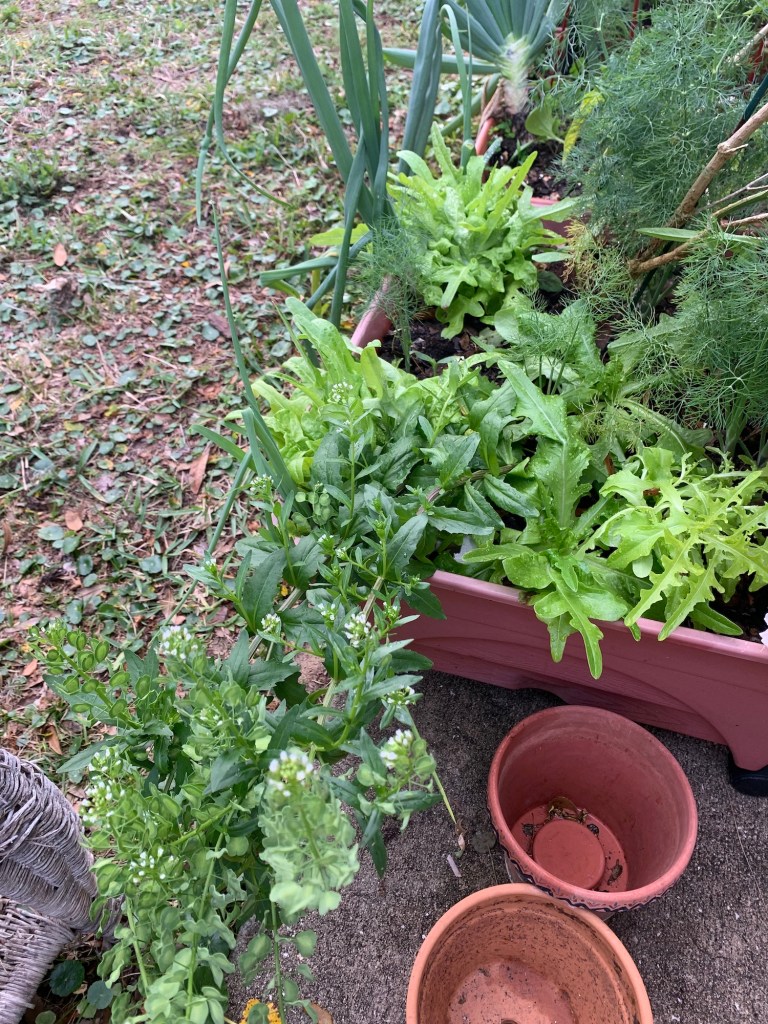
The lettuce was planted in with some peppers so I didn’t have much space. I wasn’t too hopeful for it to do well. But it did! I never ate any because it was bitter, but I have collected the seeds to try again next season. I’ll have to save space for a lettuce garden.
Lettuce seedsDillKaleArugula
Now that it is March, the hot weather is on the way, so I want to let my greens go to seed so I can collect those seeds. I’ll save them inside the house to plant in the Fall.
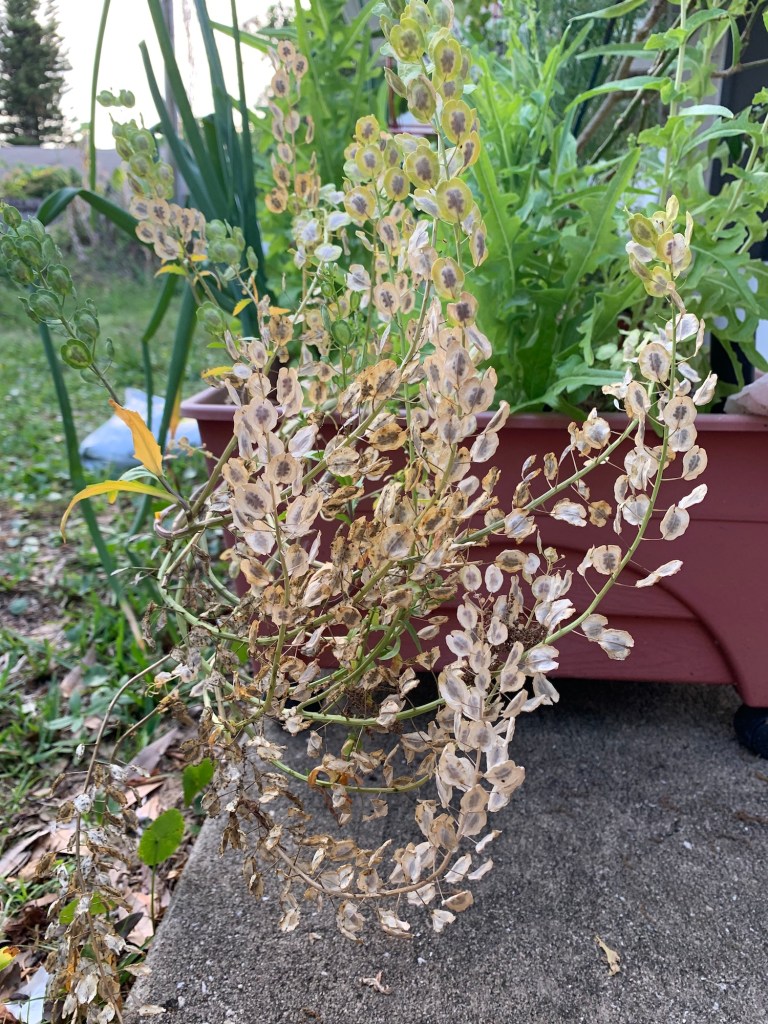
I’ve never had luck growing lettuce so this was a complete surprise. My lettuce was a mix, so I am not sure which types these were. But one of the plants sent off this long shoot which ended up hanging over the side of the garden bed.
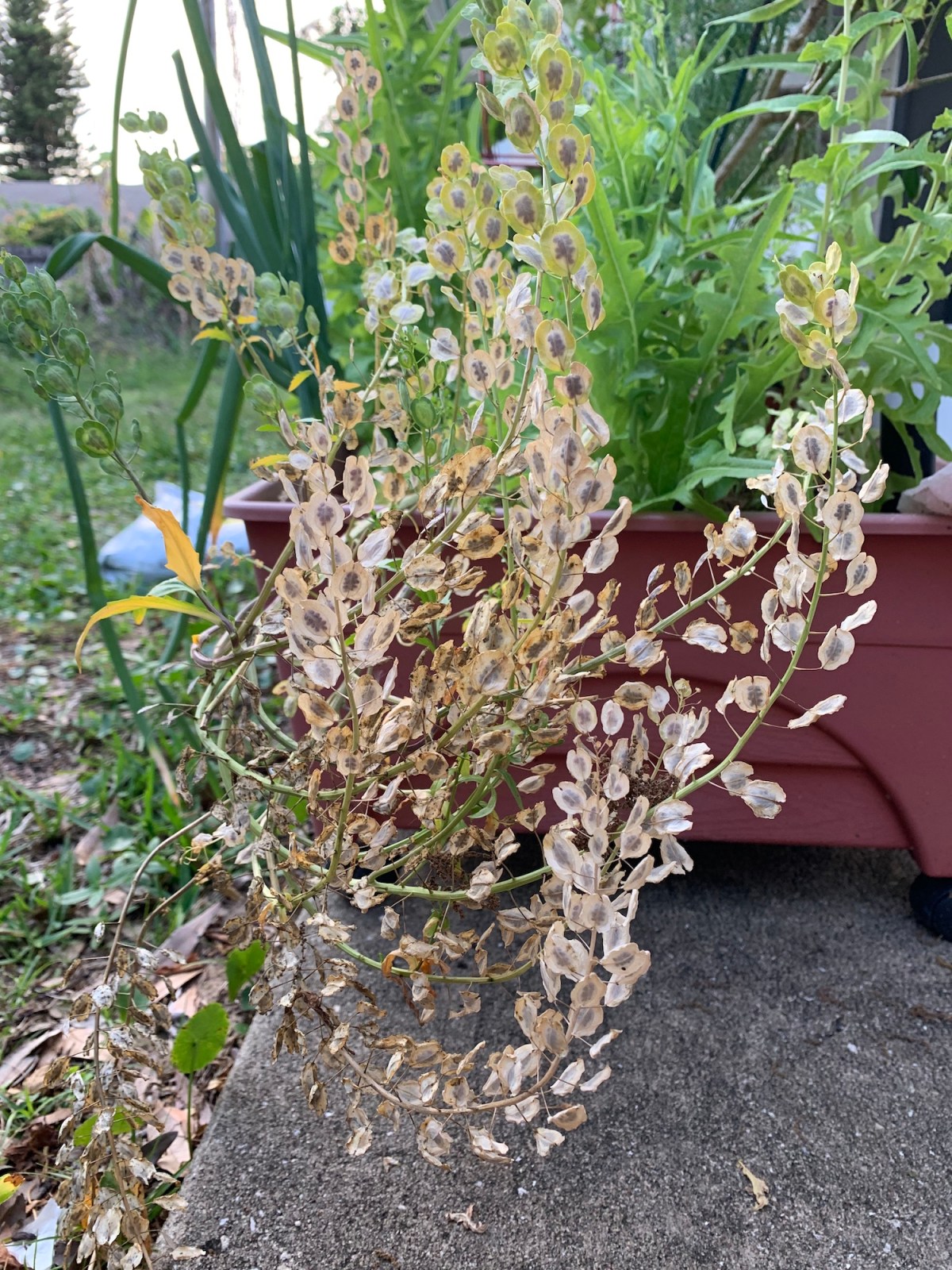
The green leaves ended up dying back and the stems became full of seed pods!
The spiky, thin stems each held dried pods holding little black seeds! I have collected a bunch of them.
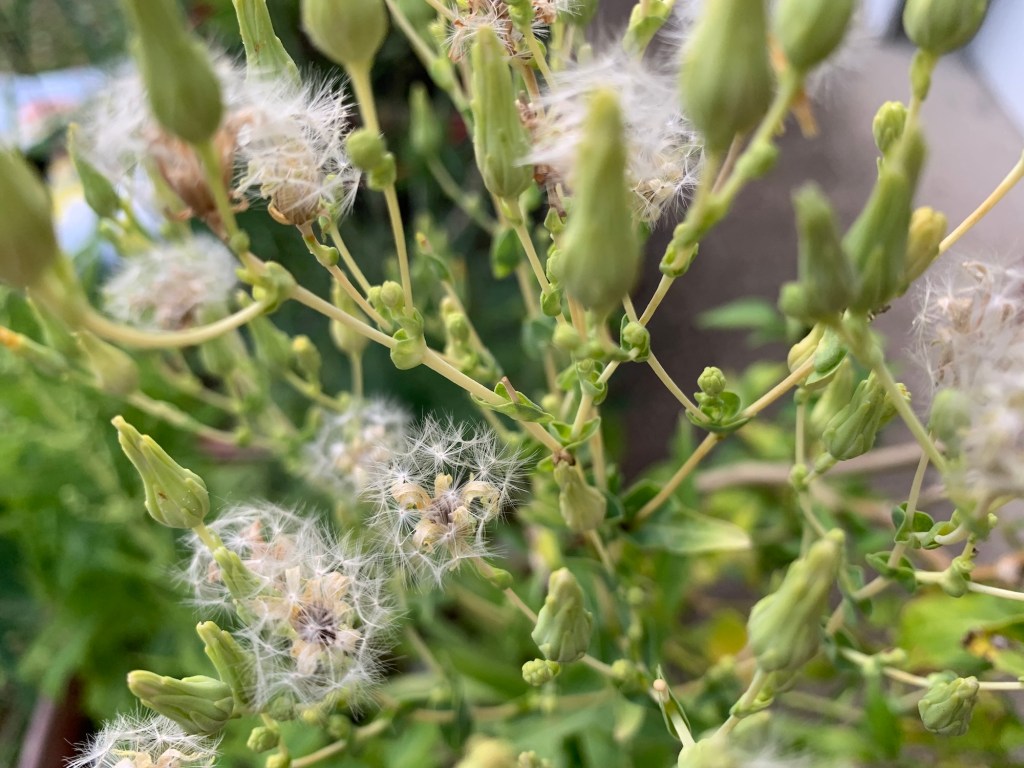
I’ve also collected seeds from a flowering lettuce stem that produced dandelion type heads. Once the weather gets cool again, I will plant them and see what happens.
Lettuce growing – with offshoot that will become seed podsCrazy spiky stems that hold lettuce seeds.
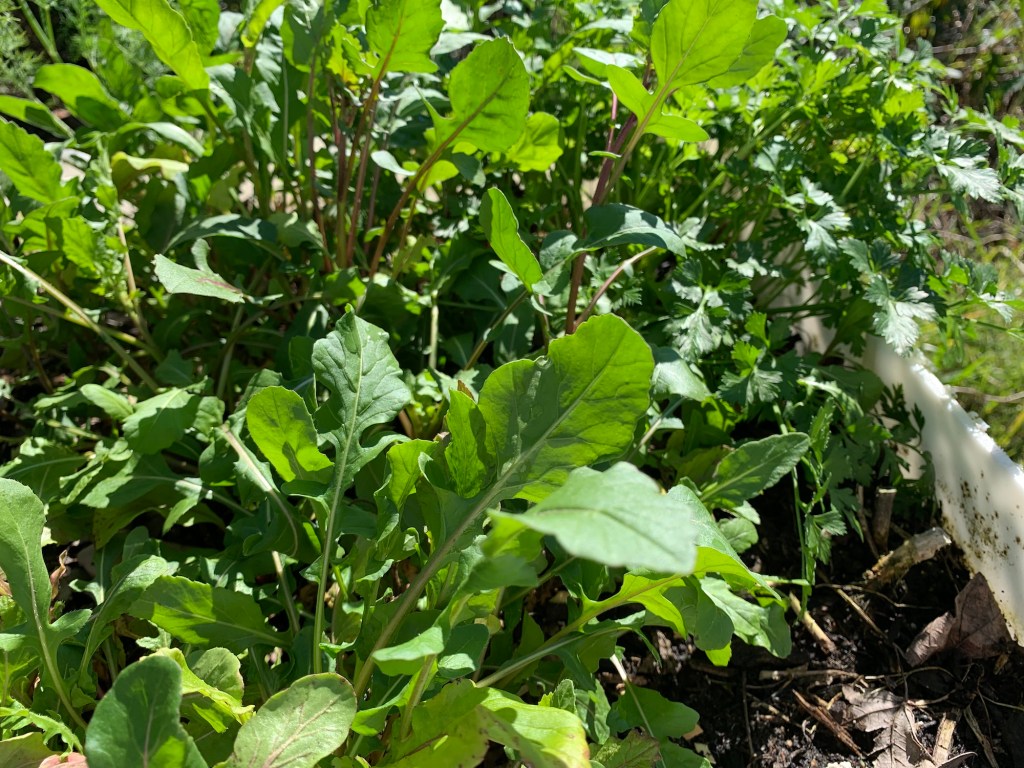
Collecting Arugula Seeds
I’m sorry to say that I am unfamiliar with arugula. I tried some of the leaves, which are peppery and really good, but without something to mix them with, I rarely ate them.
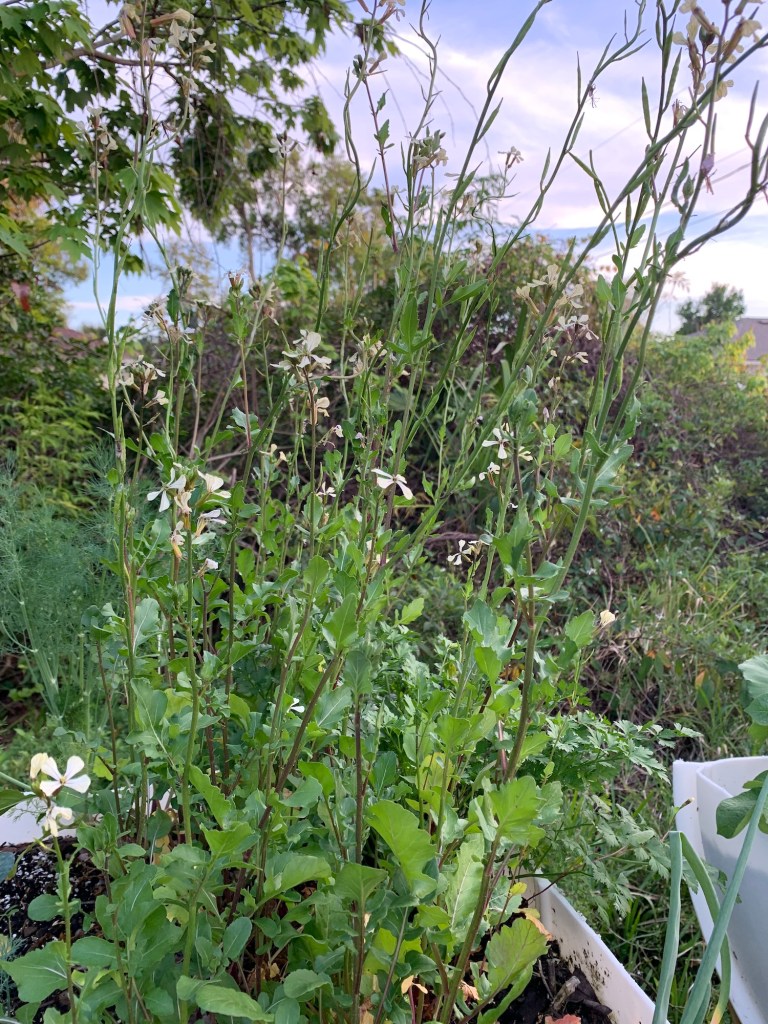
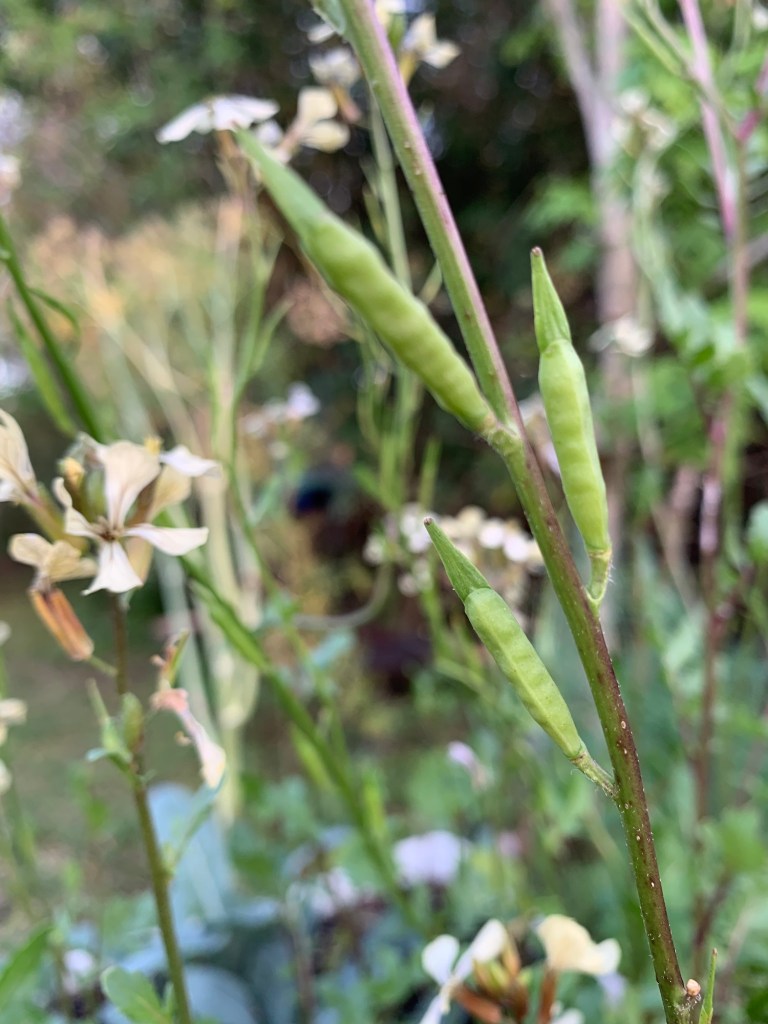
Now I am letting the flowers grow to get the seeds. I didn’t realize that the stems hold the pods that will dry out and give me seeds, until I noticed them!
Arugula setting seed podsArugula flowers and tall stems with seed pods
I’ve seen honey bees and many other insects on the arugula flowers. Even if you don’t use your greens or other herbs and vegetables, let them grow and create flowers to help the insects. Also, the stalks dry out to become useful sticks. I used those to direct my watermelon vines where I wanted them to go!
How to Save Seeds
In general, plants will “go to seed” once the growing season is done. Also called “bolting” it means the energy of the plant goes into making seeds to continue the vegetable / herb. Lots of flowers have seeds in the dead flower head and can be saved that way.
Marigold seeds
Left alone, the seeds will dry, fall to the ground, and self-seed next time. But we can let the seeds dry and then collect them to plant.
The only trouble is, that plants may create seeds in different ways. Some seeds come from the “fruit”, like tomatoes, cucumbers and squash. Others “go to seed” and create seeds from flowers or pods.
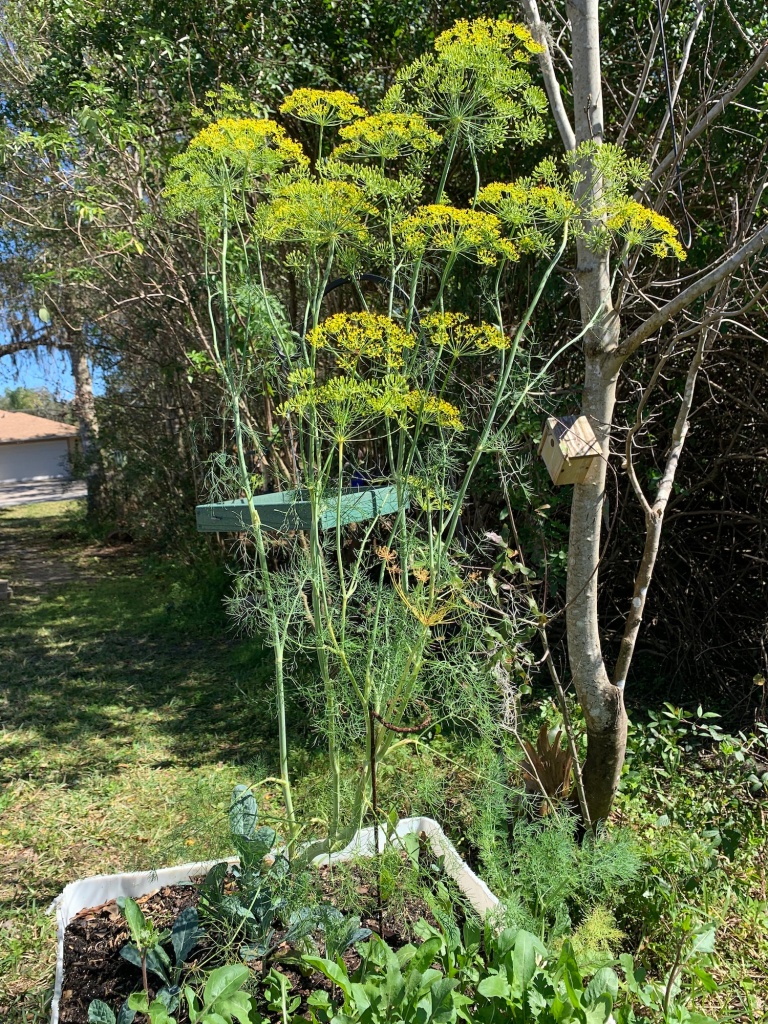
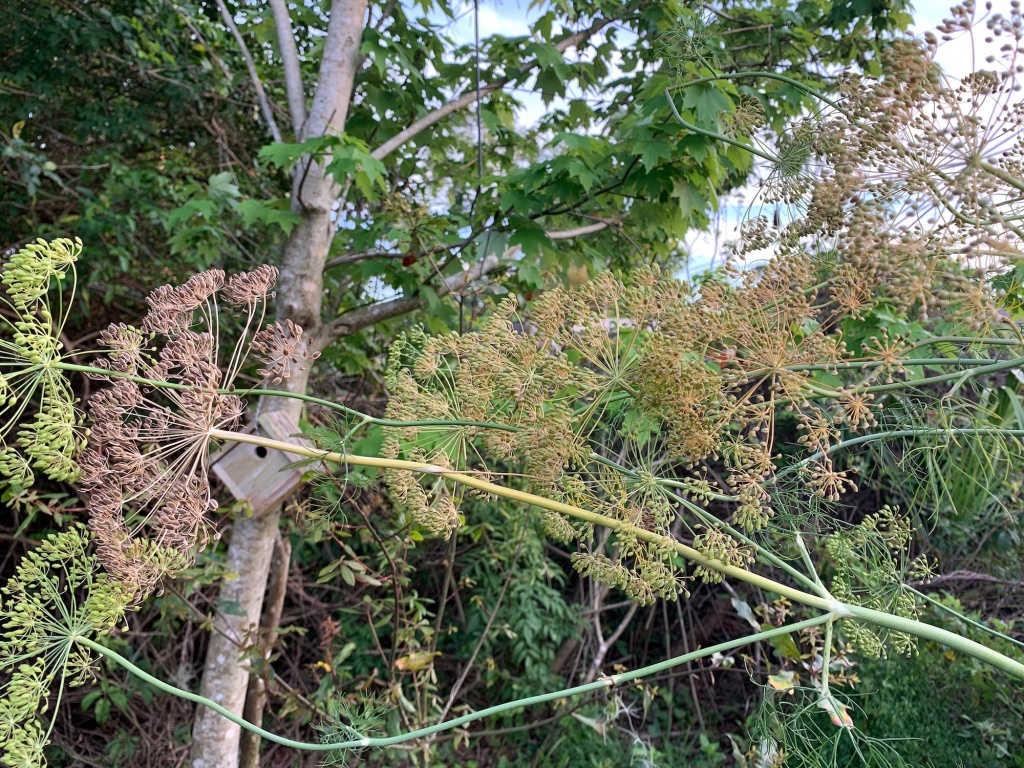
Here is a photo of the dill plant that produced beautiful flowers that turned into hundreds of seeds.
Dill flower heads turned to seeds
I ended up with too many dill plants. I dug them up and put them all around the edge of the yard. They are very hardy and don’t need much attention. I love dill and fennel (they are very similar looking) because their flowers attract beneficial insects. I do collect the leafy parts to chop and use when cooking.
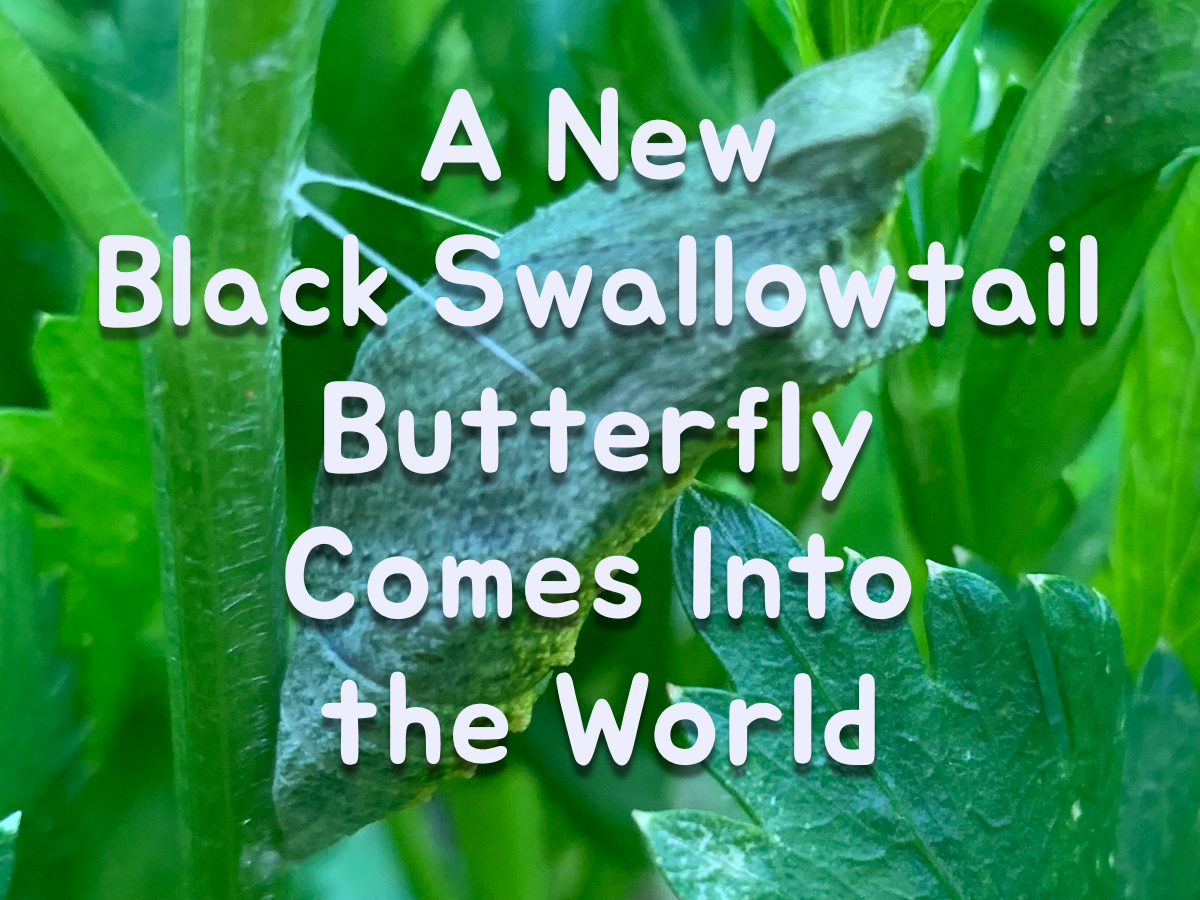
Dill and fennel are also host to swallowtail butterfly larvae. The caterpillars feed on the plant and are then eaten by cardinals – in my yard. If you are lucky, some will create cocoons and a new butterfly. Either way, the caterpillars are useful.




 Hydrangeas Blue