After my first year of growing Roselle hibiscus, I have learned a lot. The shrubs have grown fast and become too large for my small yard.
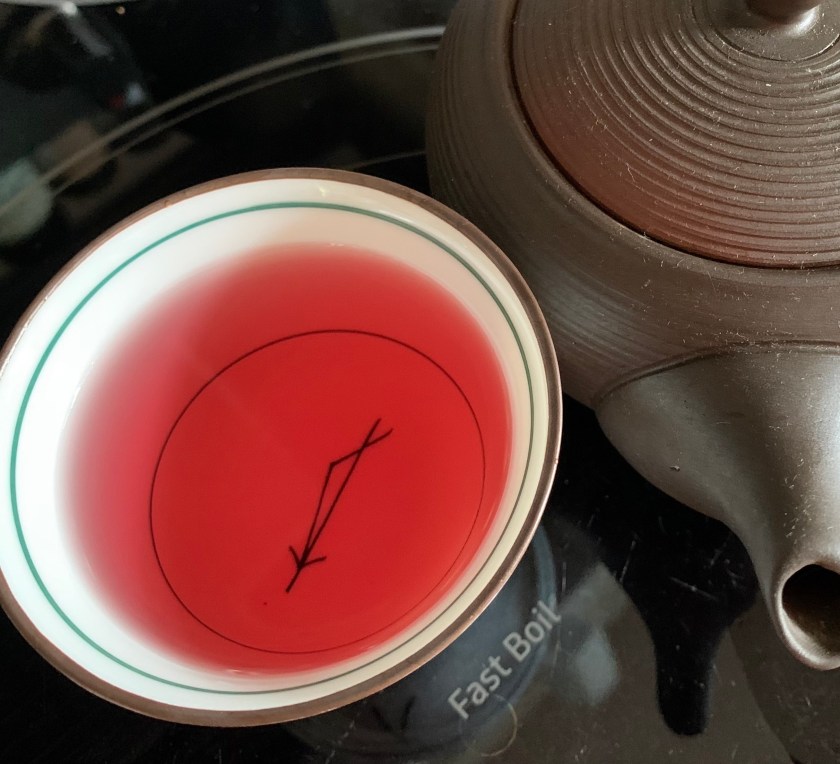
The Roselle hibiscus plant gives us the calyces that make beautiful, red colored tea. I’ve been drinking hibiscus tea for a while now, but never knew exactly what it was made from. Now, I am growing the plant that makes this tea!
Tea is made from the Roselle hibiscus which is NOT the same as the decorative, flowering hibiscus plant.
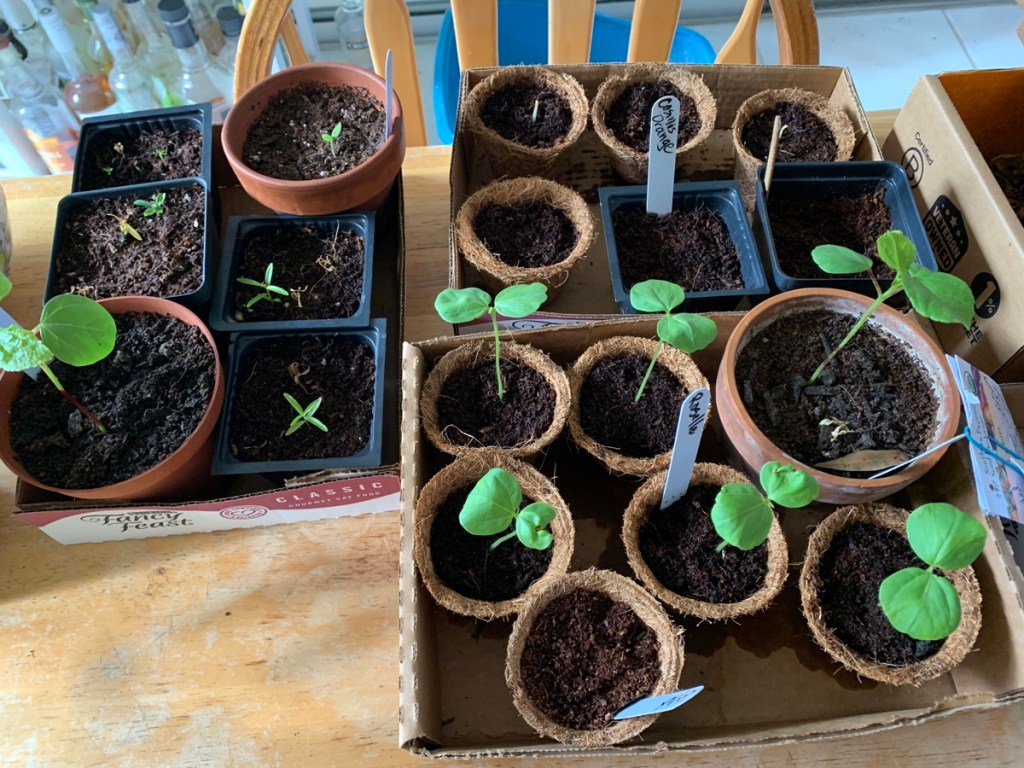
Over the winter months of 2023, I planted Roselle seeds in small pots and kept them indoors. The plants sprouted and some of them grew, but none of them thrived. As soon as the chance of frost overnight was gone, I transplanted the seedlings into the ground.
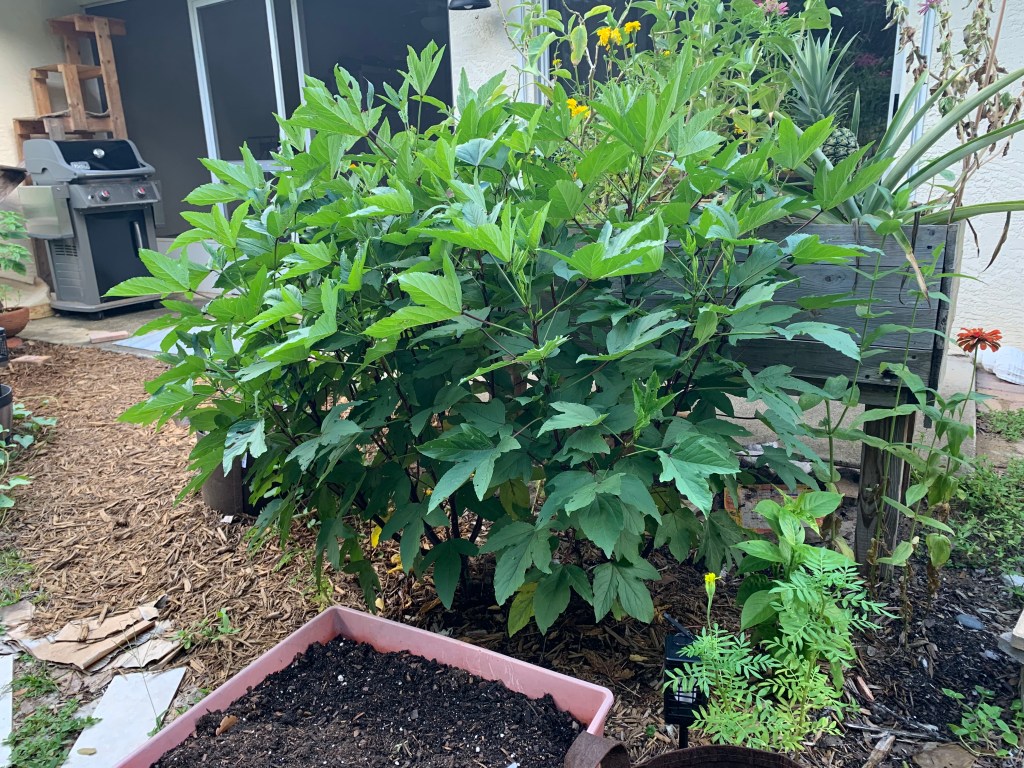
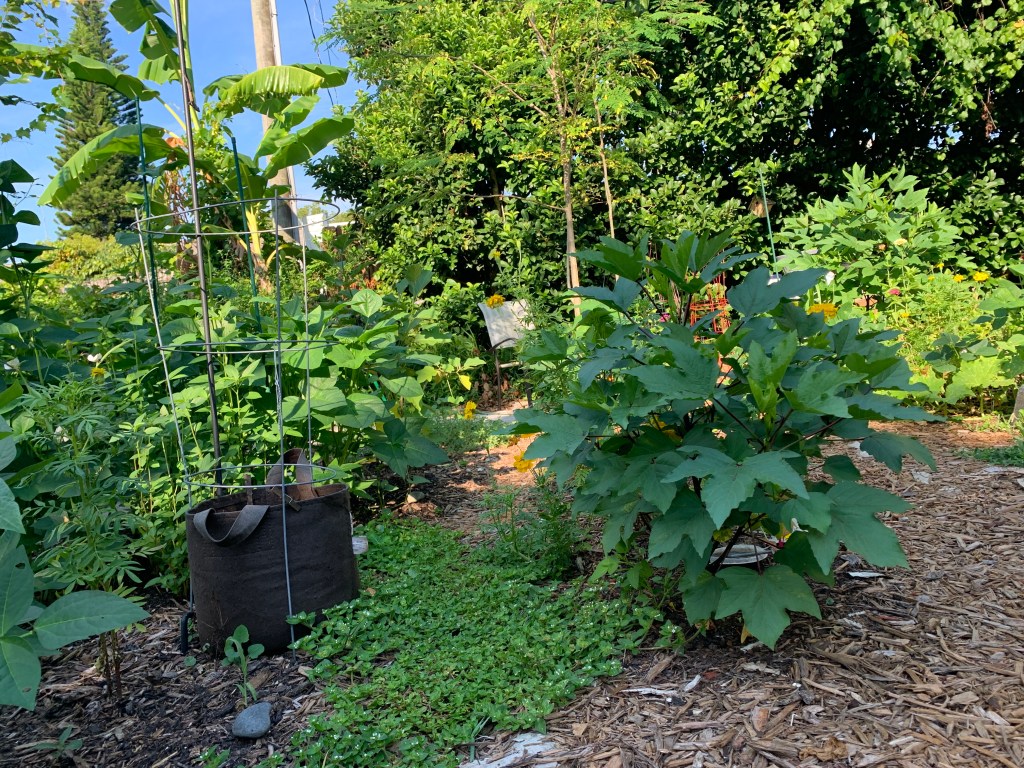
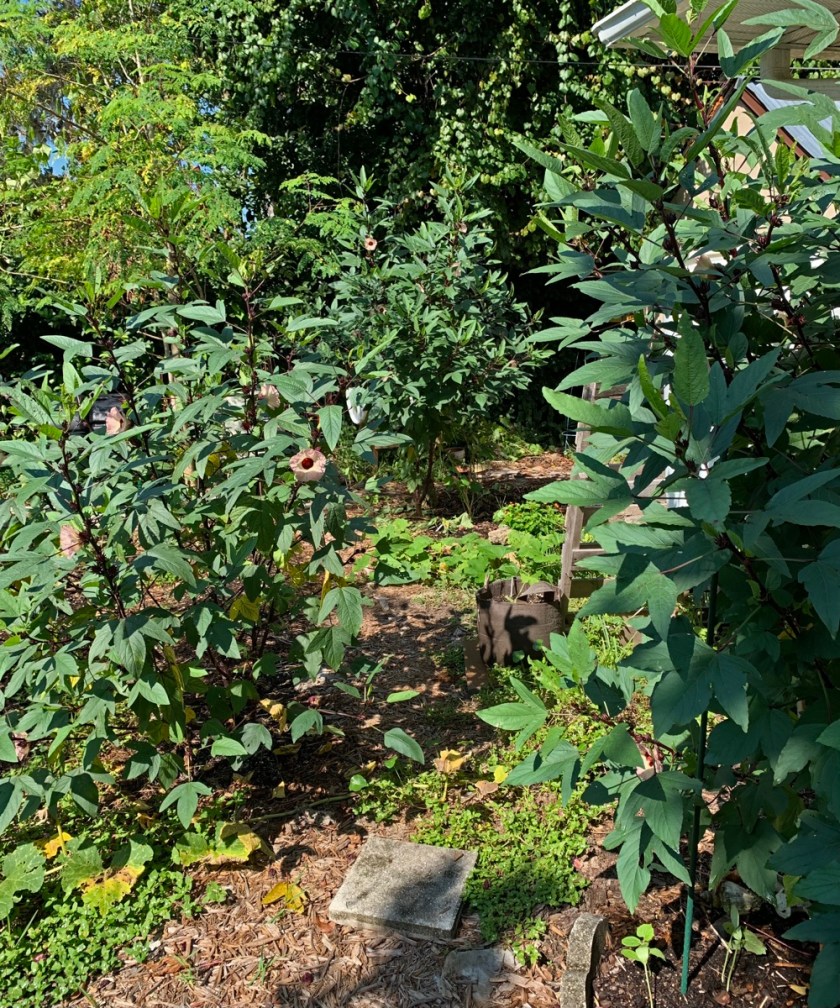
Now, it is summer of 2024, and I have big, bushy Hibiscus plants everywhere! Honestly, I have 9 plants, but the yard is small, and they are taking over.
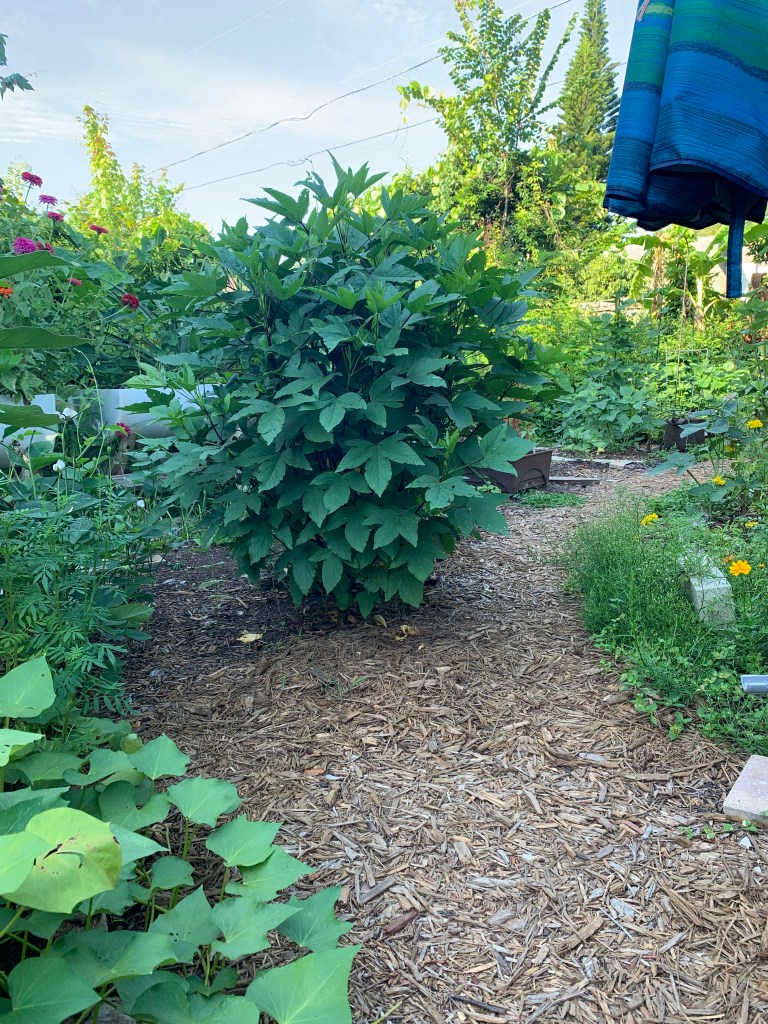
Bushy roselle hibiscus – lost it to the wind in a storm
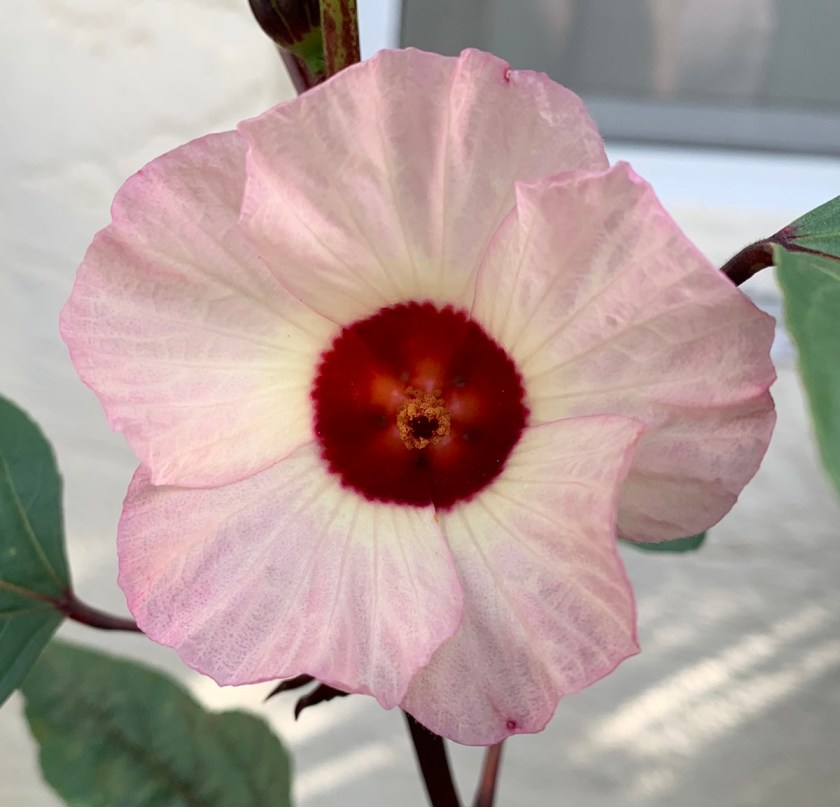
This type of hibiscus has open flowers (see below) that leave behind seed pods wrapped in red leaves, called calyces. The red leaves, when peeled off, can be boiled in water to make tea.
Roselle calycesRoselle hibiscus flower
When my Roselle began to grow, they gave me a few pods. After that, I had to wait until Fall to get more.
Starting Roselle From Seeds
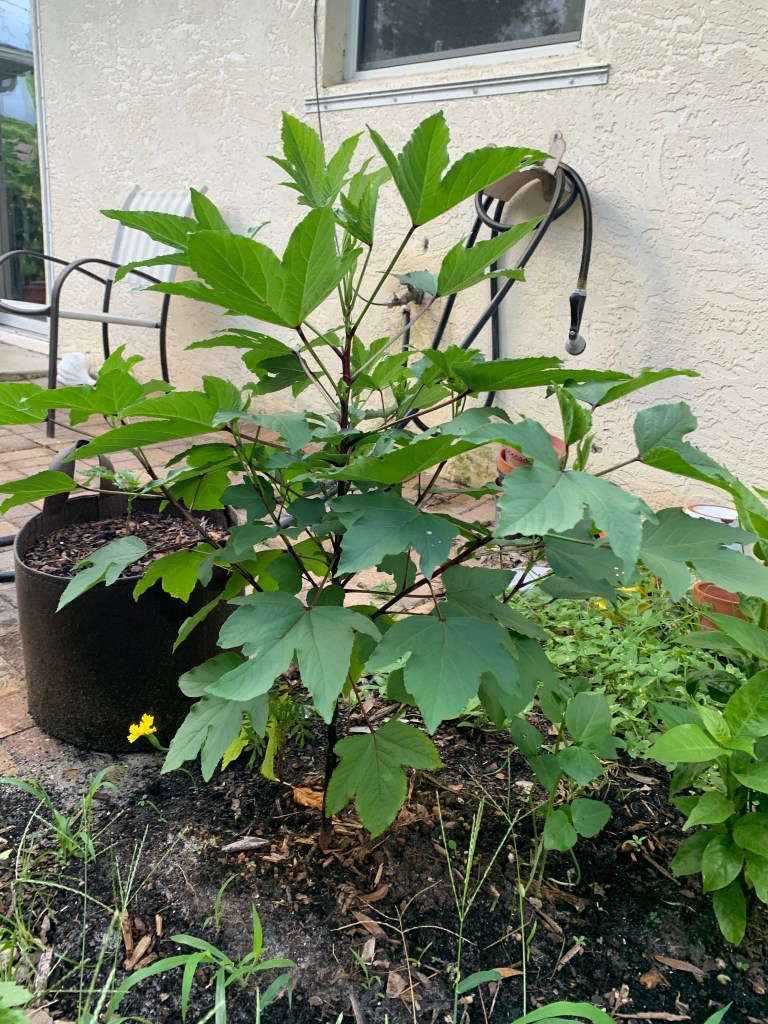
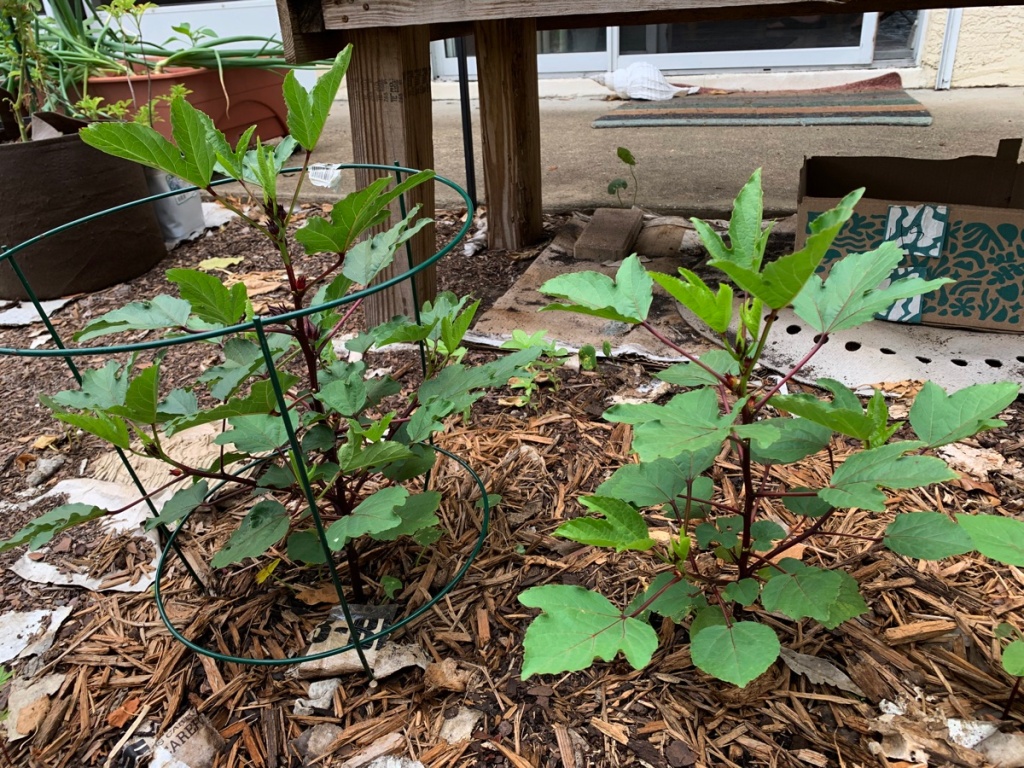
These Roselles began in pots, grown from seeds I bought at SESE (Southern Exposure Seed Exchange). The plants are about nine months old now and they al look very nice. Some are smaller than others but the one that is in the walkway is just beautiful! (That is the one that died from the storm.)
Roselle seedlingsRoselleRoselle growing
Growing Roselle is Easy
The plants will get large, both tall and wide. (I’m in Zone 9B) They are growing with and without lots of sun. The plants in the sun are bushier. They survive drought, are not bothered by the heat, and have no bug problems. After they bloom (September for me), collect the seed pods to make tea, or other things.
A warning: We had a windy storm during the summer and this (my bushiest) Roselle plant split right down to the ground. The tree died. I went ahead and trimmed all the remaining hibiscus to be sure wind could easily get through the stems.
Heading Into Fall
If you are looking for a little shrub that is easy to grow, and grows FAST, get yourself some Roselle seeds.
These shrubs have taken over my yard. I had NO idea what they would do when I planted them back in Spring. Now, many of the plants are taller than me – guessing 7 feet or so in height. It has been about 11 months since I began them from seeds indoors.By the way, don’t bother with that. Put the seeds in the ground. It was tough dealing with them in small pots.
The Roselle have become too large for my small backyard garden.
It is September and the Roselle’s are now blooming. I’ve gone through and trimmed out some of the smaller branches because they are blocking the sun from other plants. Once the flowers stop, and I collect the calyces, I will be cutting some of these plants down. I have a feeling they won’t do well through the winter anyway. I hate to cut down a good plant, but they are seriously in the way.
My yard is too small for these plants. Now, I know how easy it is to grow Roselle, and how big they become. I’ll be smarter about choosing the right spaces for them to grow.
My Florida yard is very small but I have wild growth on two sides. A vacant lot behind the house is full of trees, brush, and vines and it’s where I set up my bird feeders for the Painted Buntings. I have identified some of the growth thanks to a good site I finally found.
Searching for photos online has proven difficult because often there is no image of the leaves. The whole tree or bush is not really helpful without some up close images.
I’m adding photos from my yard to this page to help me remember what is what. I have to know what to keep and what to destroy as I clean up.
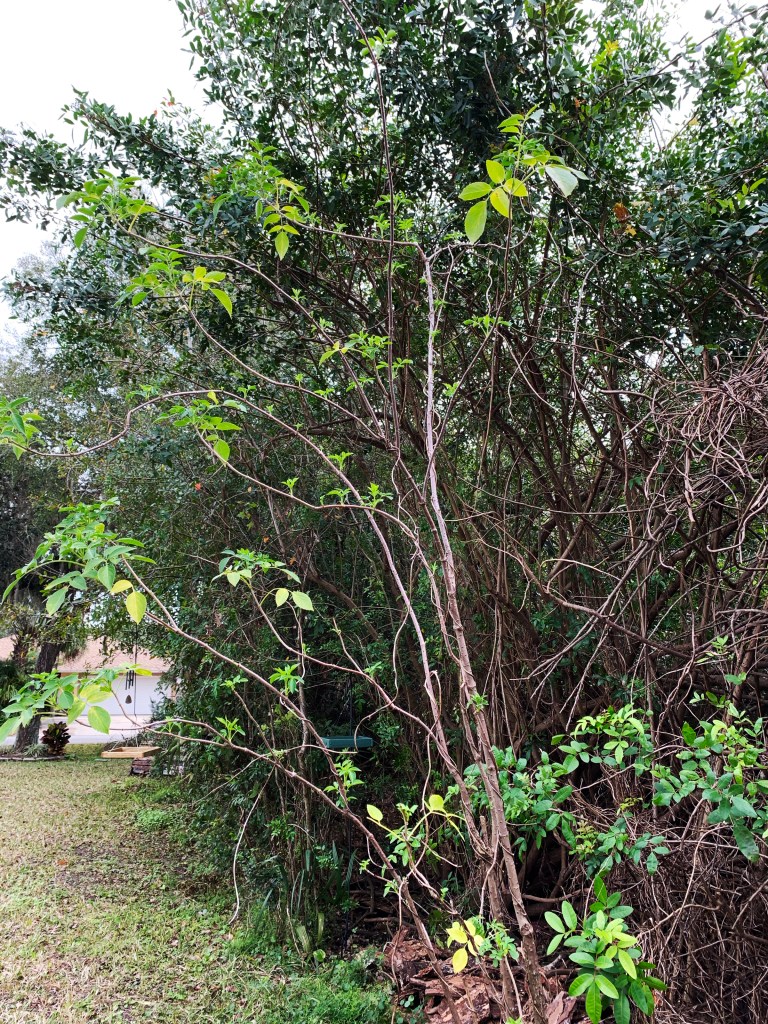
Unknown Tree or Shrub – Laurel Fig?
This plant was uncovered as I cleaned up for a small garden space in January. The leaves are widely spaced and are dark green and oval in shape. The bark is very light gray. Possibly the Laurel Fig and if so, it is an invasive tree. I was hoping this was a nice bush to save, but it seems that I may have to cut it out.
No name for this yet.
Read, and see amazing photos, on this interesting page on Strangler figs and how the roots cause havoc.
The Brazilian Pepper Tree is an Invasive Species – Non Native
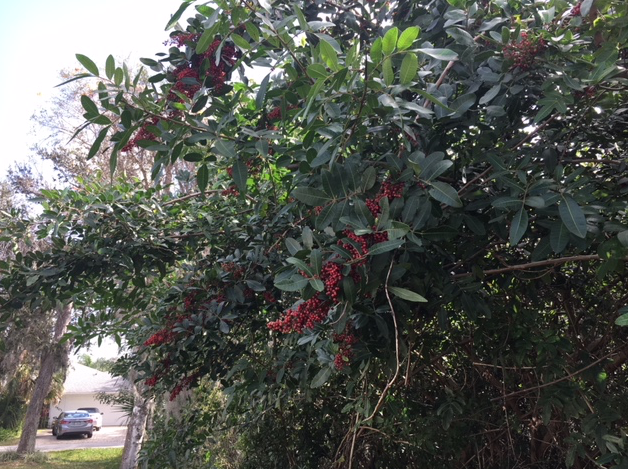
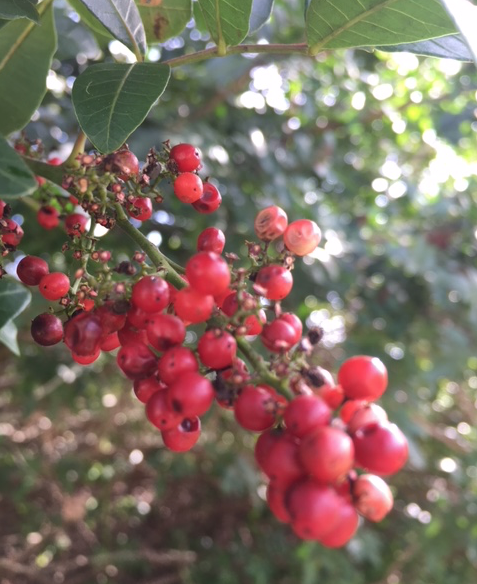
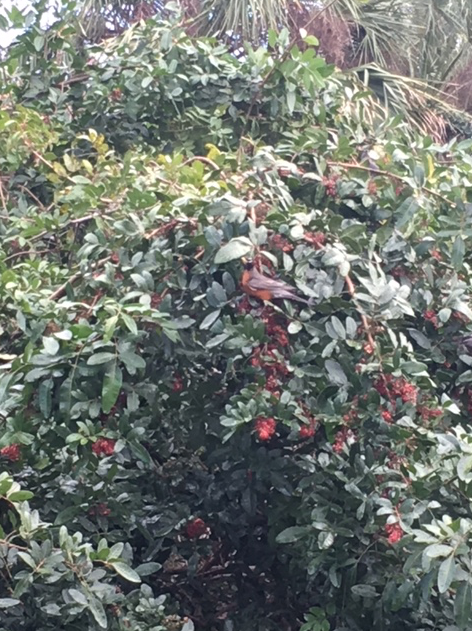
I have a group of Brazilian Pepper trees just over my lot line. During the winter months loads of red berries appear which bring robins and other birds to feed.
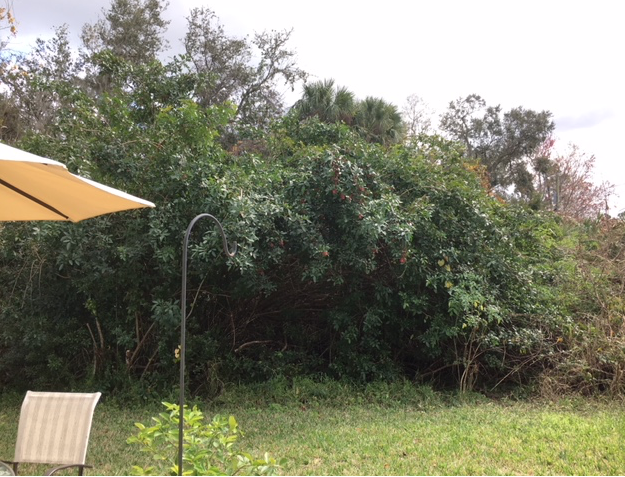
It is an attractive tree, but is an invasive species and not a Florida native. In fact, the trees should be destroyed when possible according to many articles I have read. This clump of trees is huge, with a large root system. It is also not on land I own but the branches arch over my yard.
Brazilian Pepper
Red berries
Robins eat the berries
This is an invasive species
A mass of roots of the Brazilian Pepper
Florida Maple Trees
The Florida maple trees lose their leaves during the cooler months. This photo was taken in February. Soon new leaves will form. I saved this little tree which is growing on the edge of my property when it was covered in potato vines (see below) and unable to grow. Now this maple tree is thriving and has tripled in size.
The Maple tree loses leaves in winter
The Elderberry Shrub – Florida Native
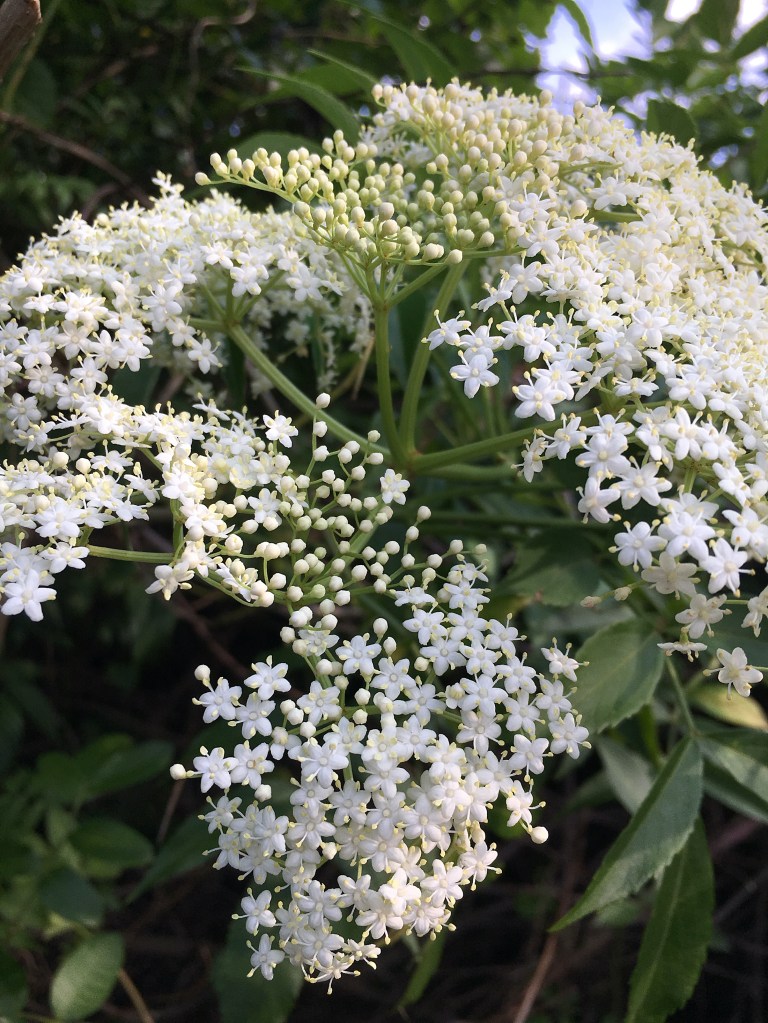
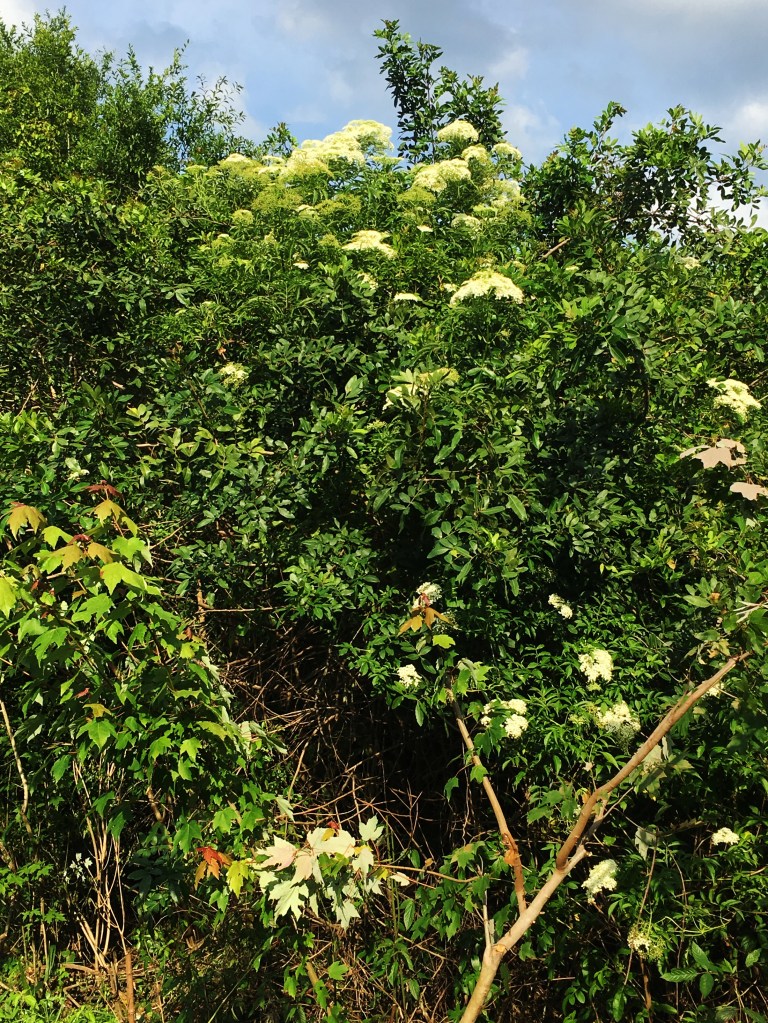
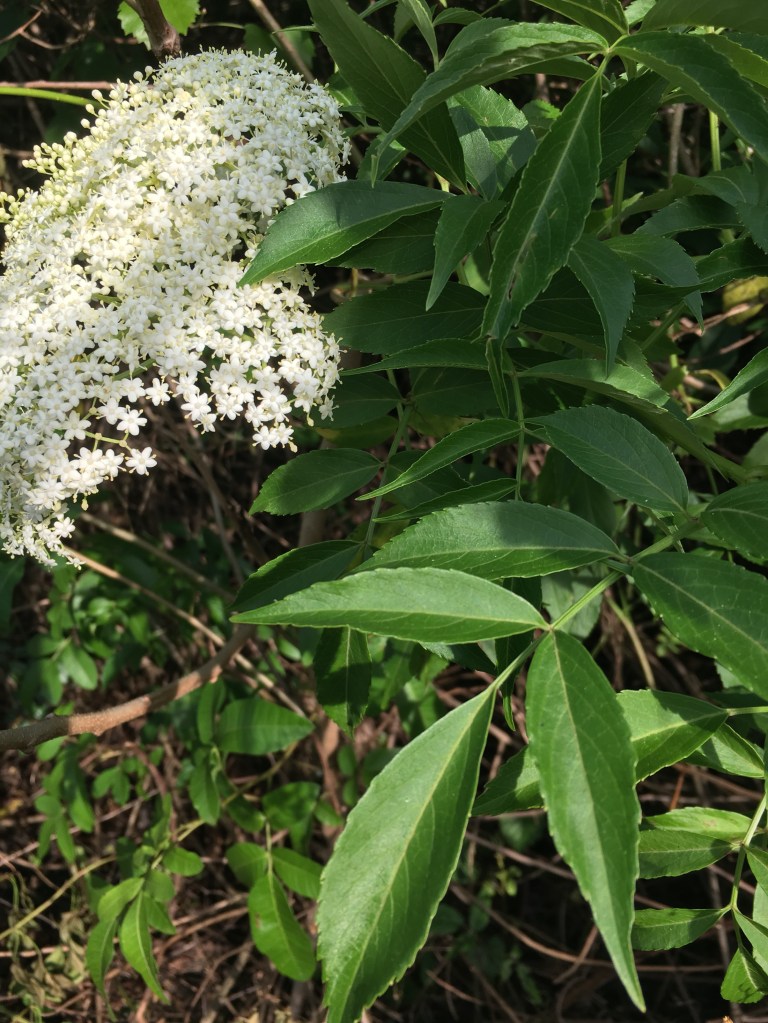
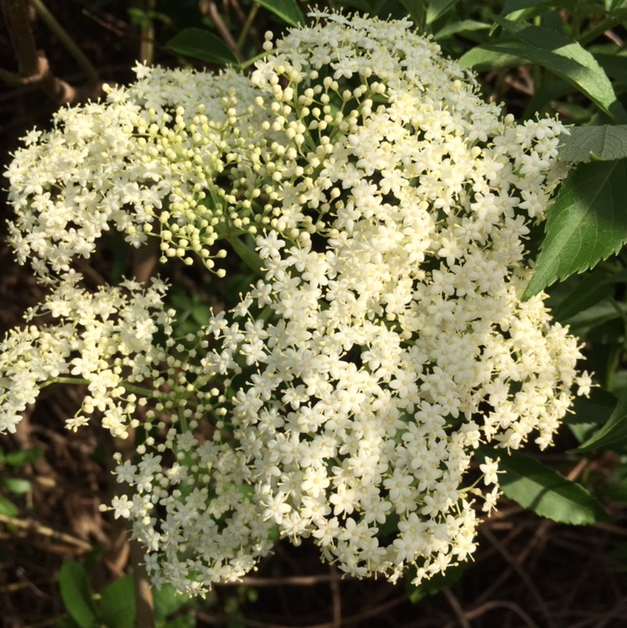
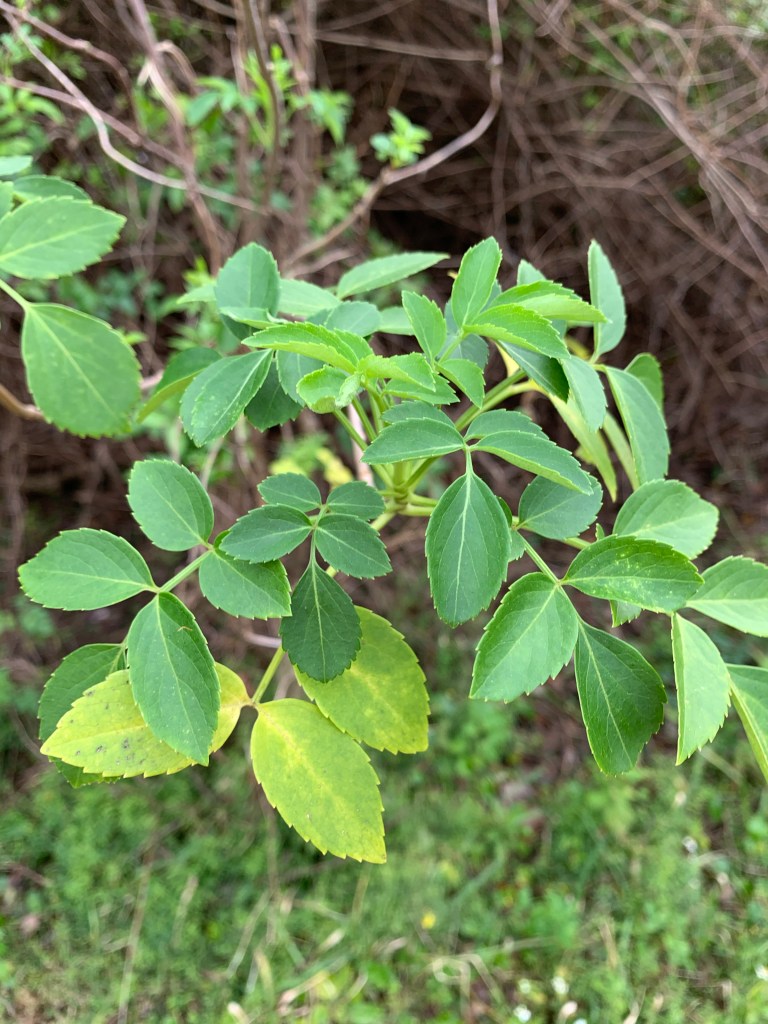
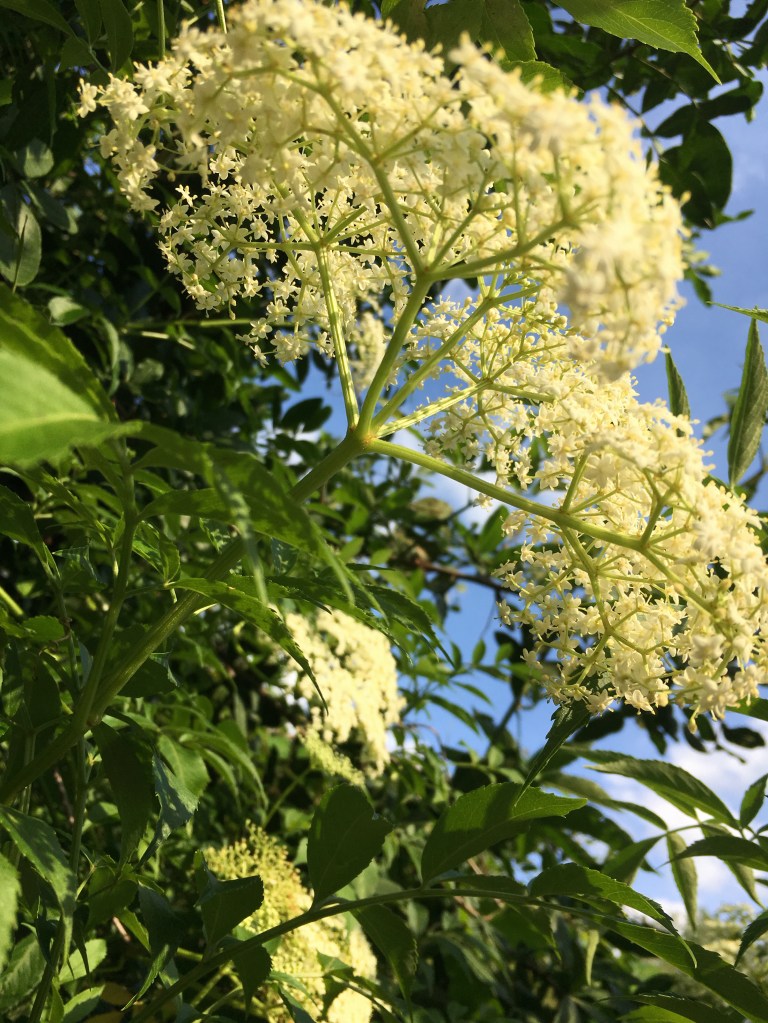
I’ve included a new volunteer Elderberry with a photo of the larger Elderberry in the woods. The tree has pretty white clumps of flowers and dark berries during the warmer months. The berries are toxic to humans when raw, but edible when cooked. Many animals and birds can eat the berries, but I think I will pass!
Elderberry flowers
Elderberry leaves and flower head
White Elderberry flowers
The Elderberry has berries and white flowers
A young Elderberry tree growing at the edge of my yard
Elderberry flowers
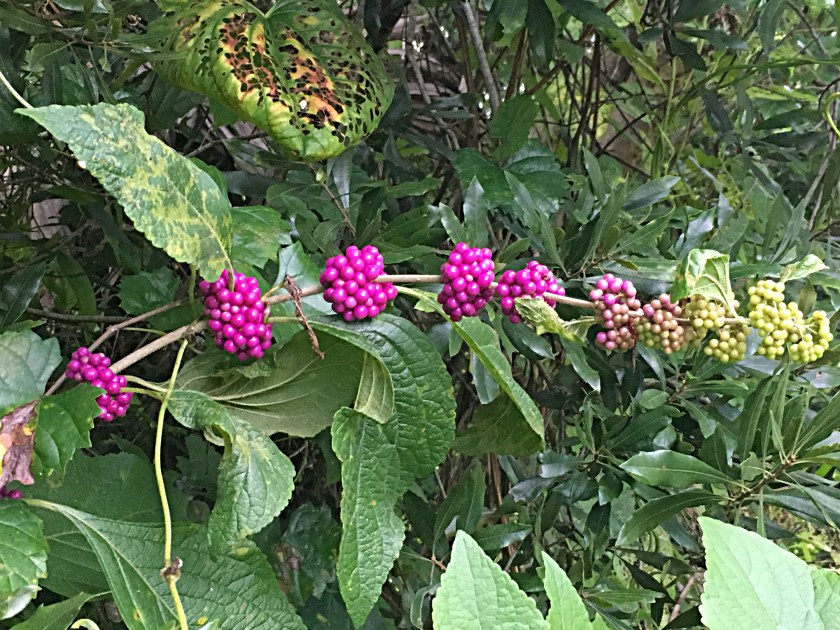
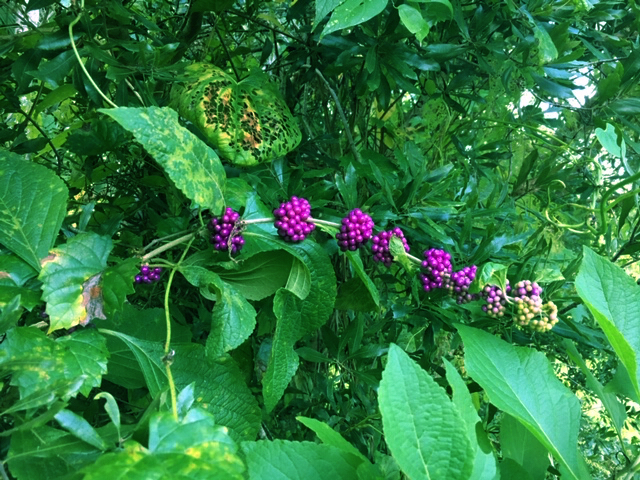
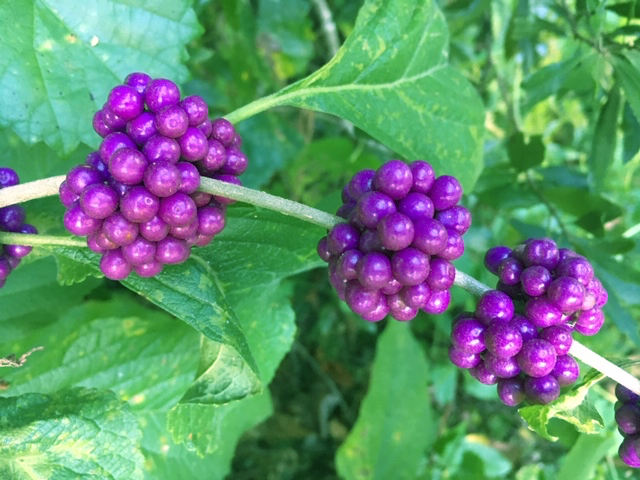
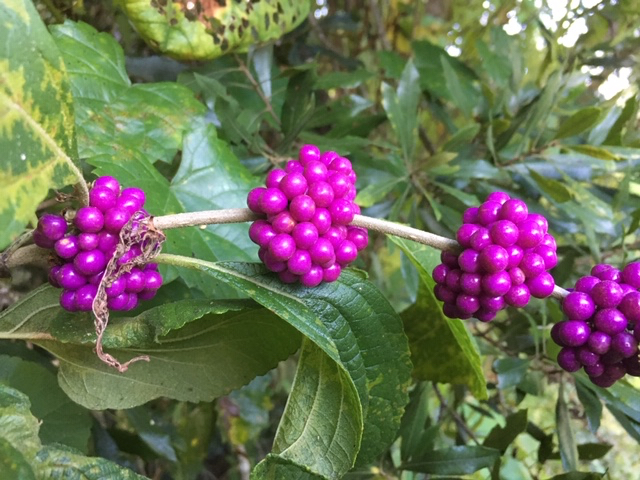
The Beautyberry – Florida Native
When I came across this stem of berry “bubbles” I took some photos not knowing what it was. The Beautyberry bush is a Florida native plant and this one is located in my backyard.
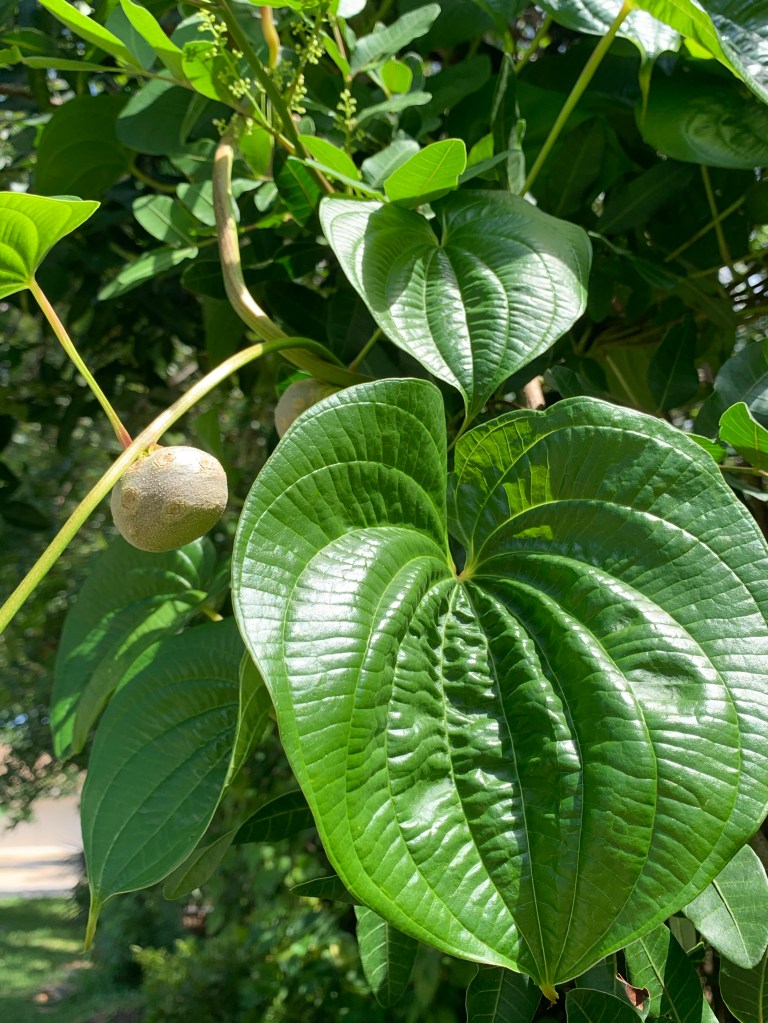
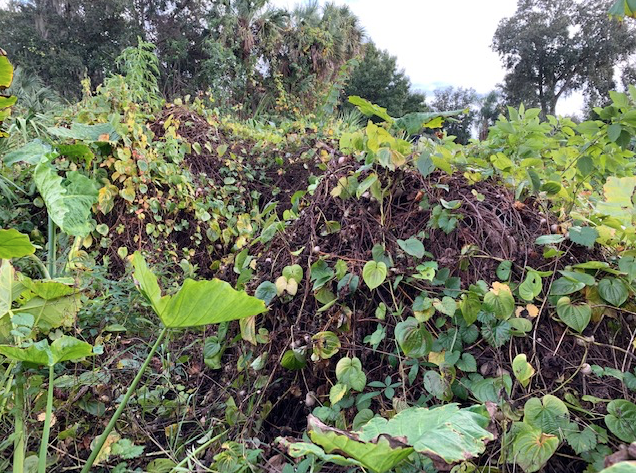
There are many obnoxious and non-native vines in Florida. Most were purposely brought here for some reason and then they grew out of control. The potato vine is one. See my photos below and more photos at the UF site.
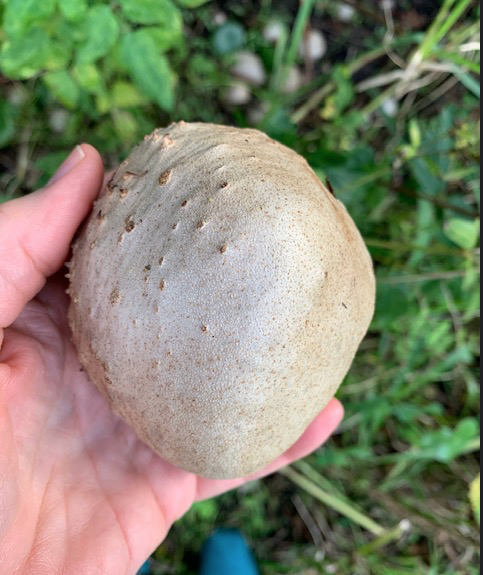
Because of the long months of agreeable weather for growing, vines can easily take over a landscape. The potato vine creates loads of potato-looking things of all sizes that become more vines. Native trees and shrubs can become smothered.
Leaves of the potato vine
Air potato, large size
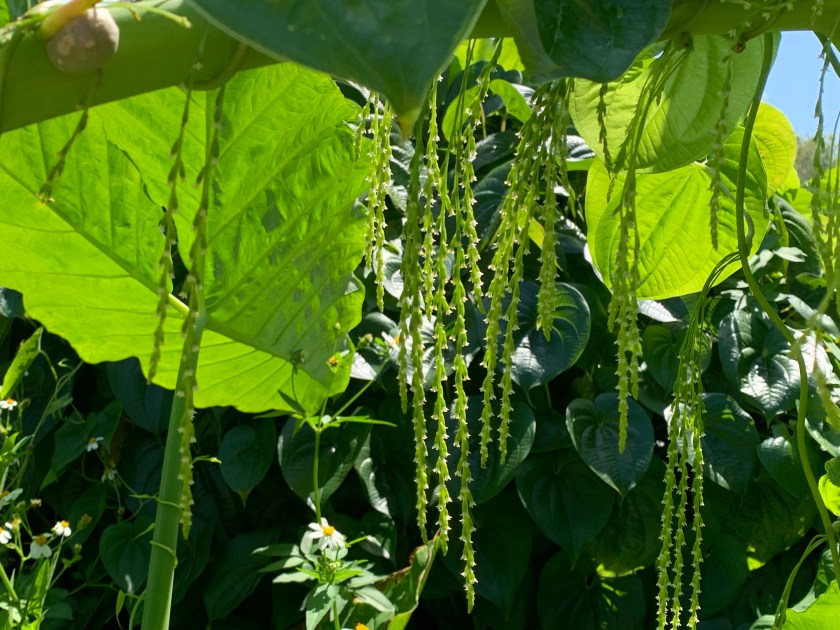
Hanging flowers on potato vines
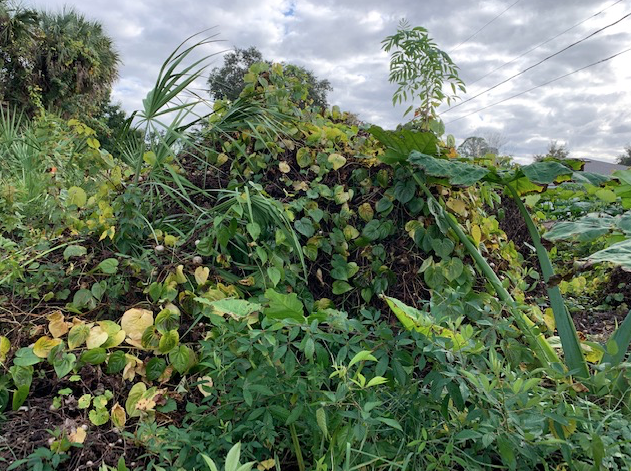
The empty lot next to my yard has many potato vines crawling all over the vegetation
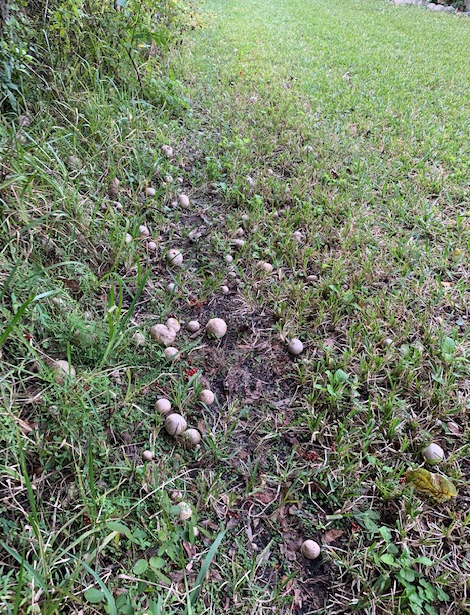
Potatoes at the edge of my yard
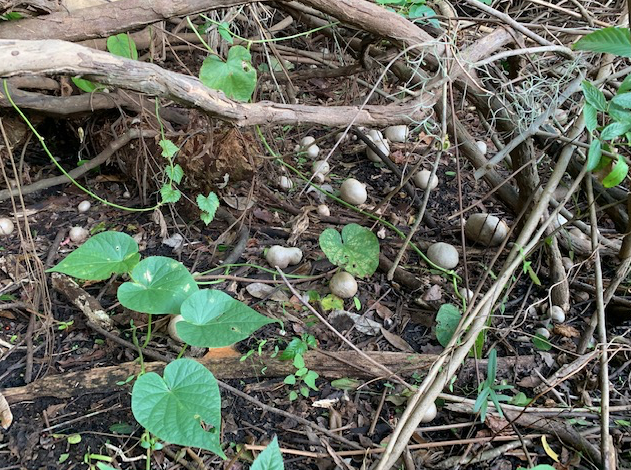
Potatoes and vine under roots of the Brazilian pepper tree
Vines growing over vegetation
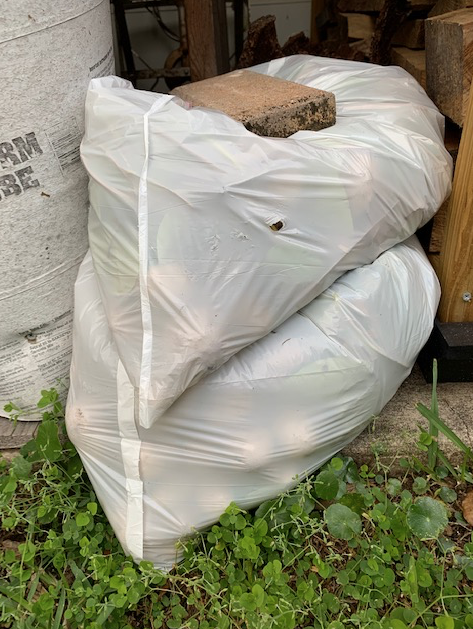
I filled these bags with potatoes to destroy them
Thorny vine – unknown
Unknown vine with thorns
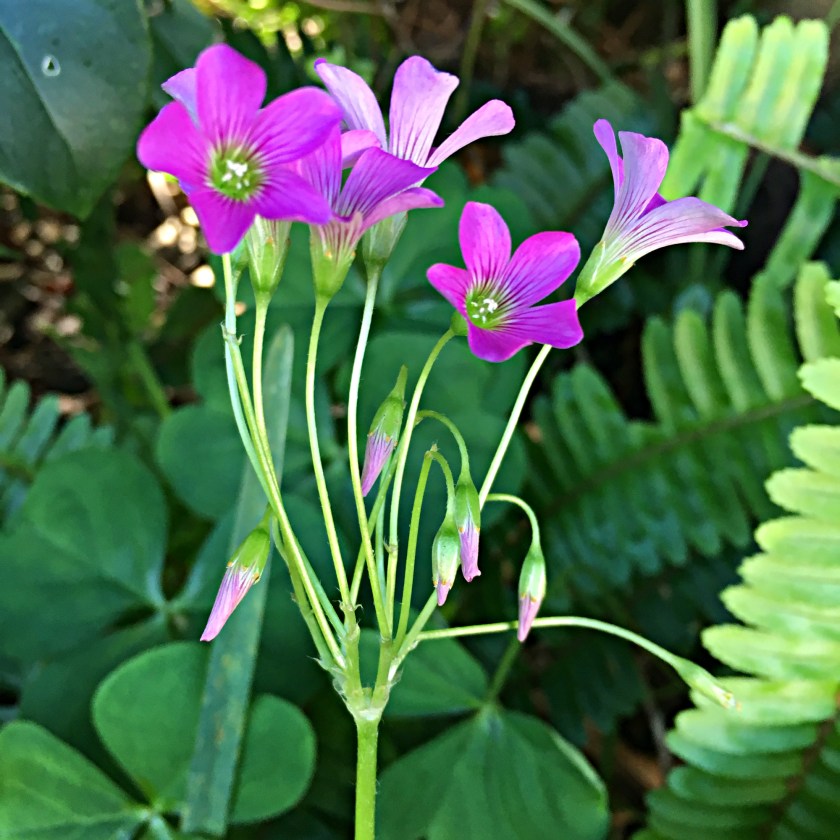
Pink Wood Sorrel – Clover
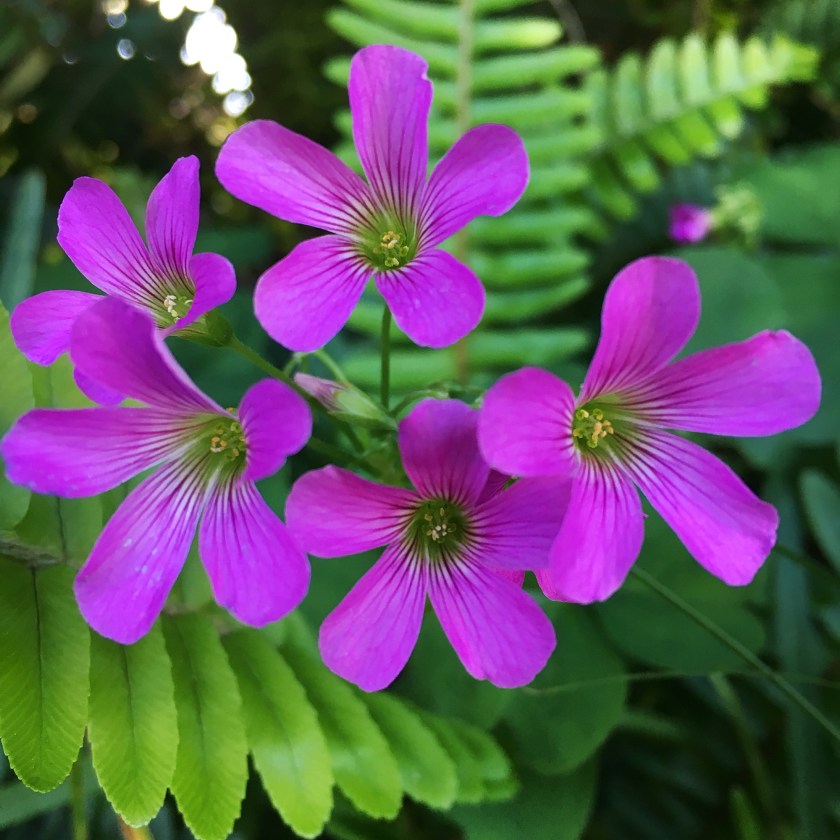
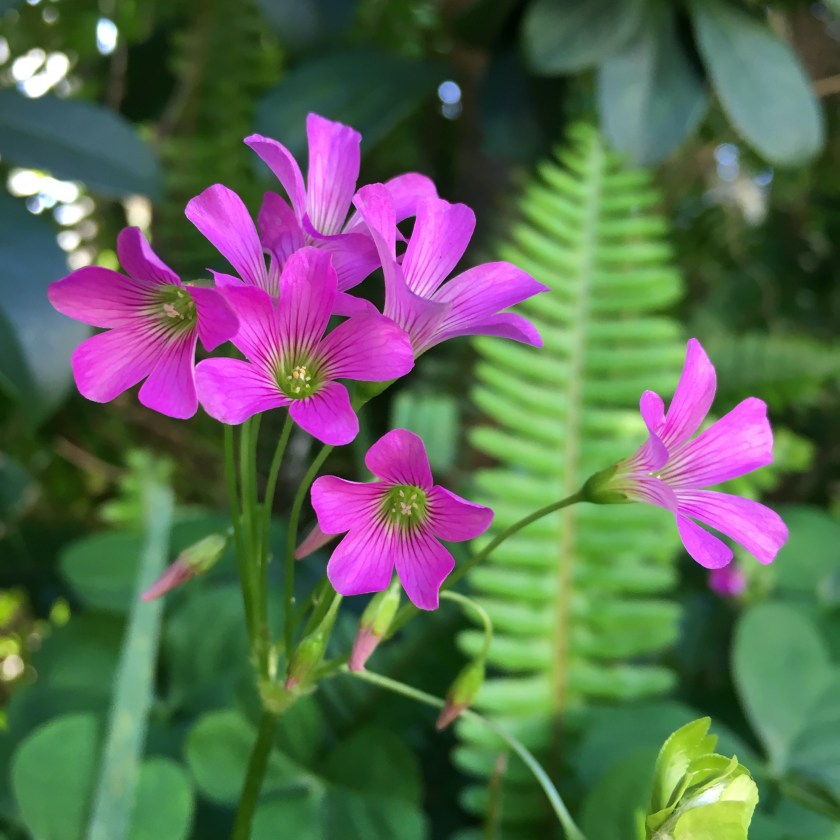
I call this pink wood sorrel plant a “clover” because of the leaves. I don’t know if it is a relative to clover, but it blooms with the prettiest little dark pink-purple flowers. I’ve had it pop up in my front garden bed all on it’s own, but this plant below I photographed along the shrub line out back.
It does die down and disappear, but comes back.
Clover flowers
Pink wood sorrel
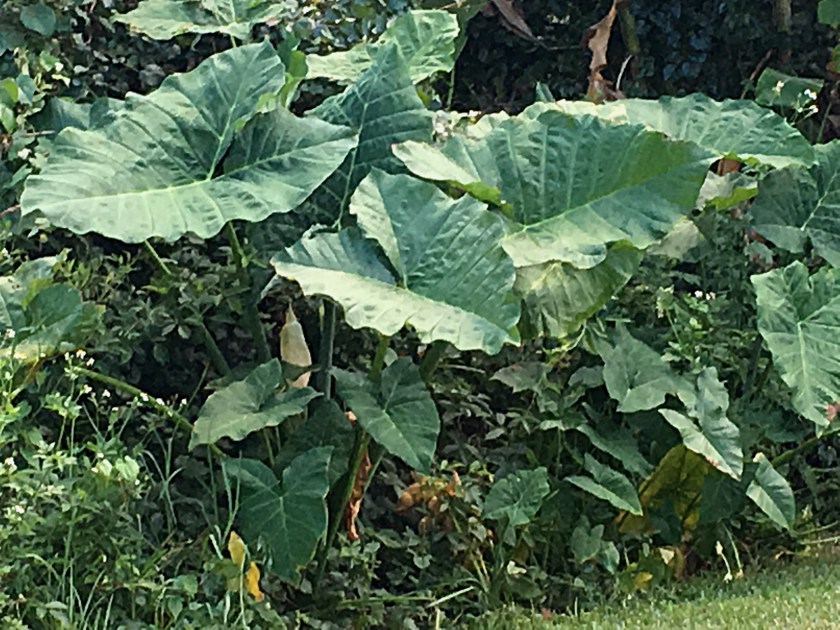
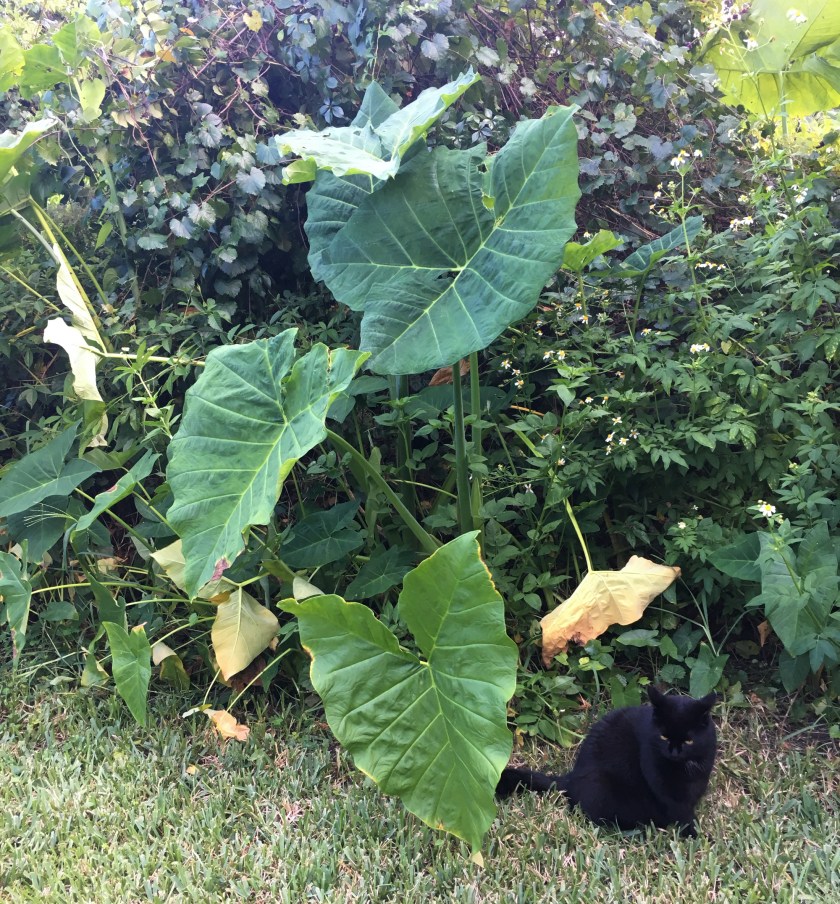
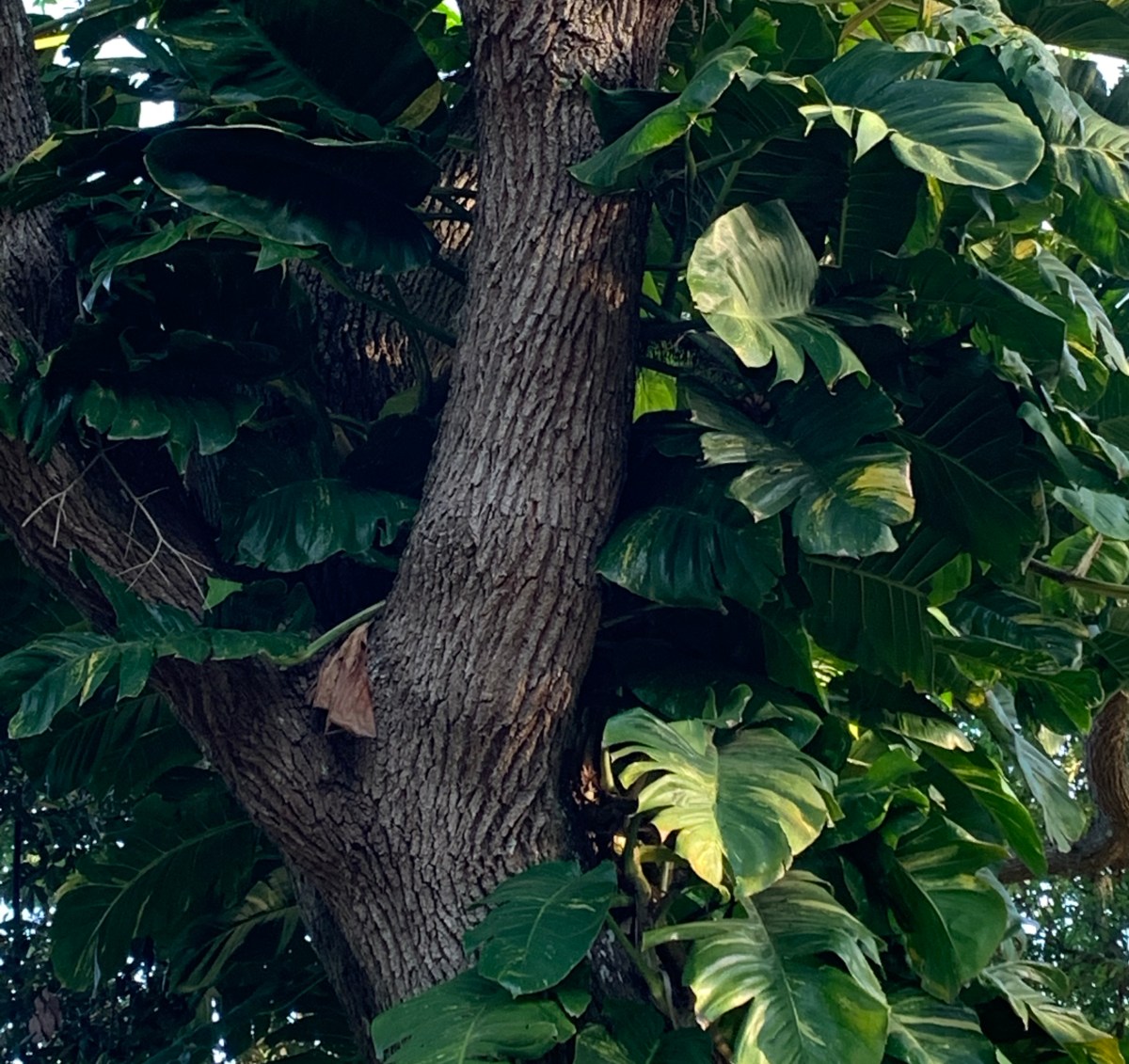
Elephant Ear – Non-native / considered invasive
I was surprised to see that the Elephant Ear plant is not a Florida native. I always associated it with this tropical climate, but it came from South America. An interesting note: The tubers of this plant can be eaten.
Elephant Ear
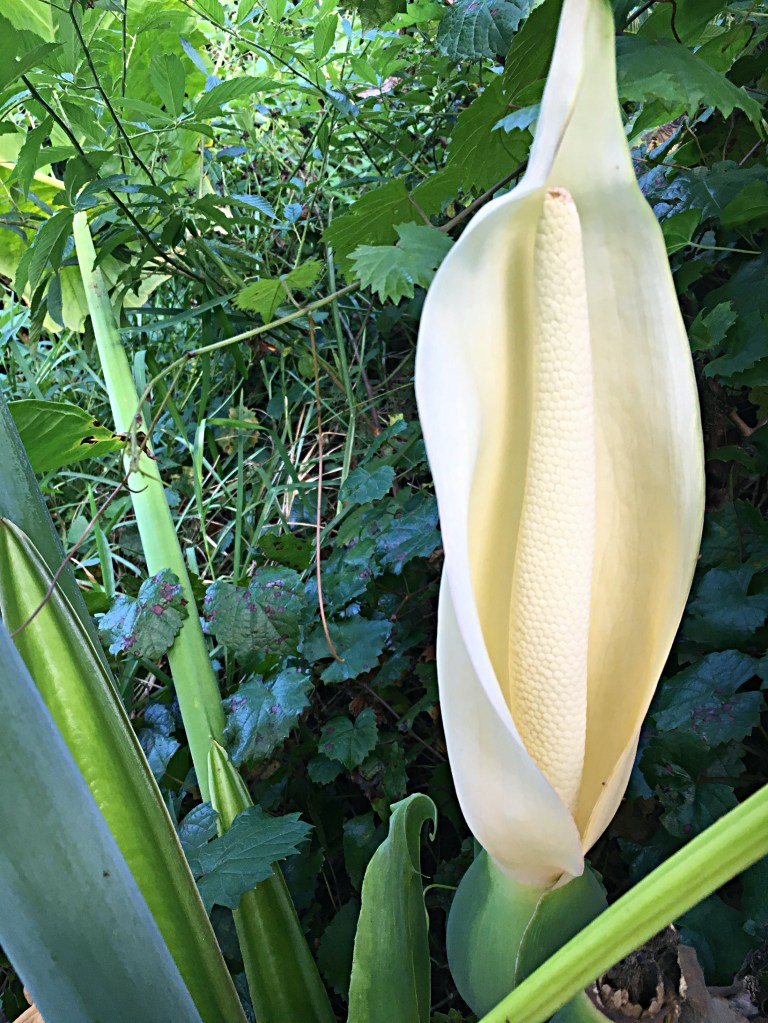
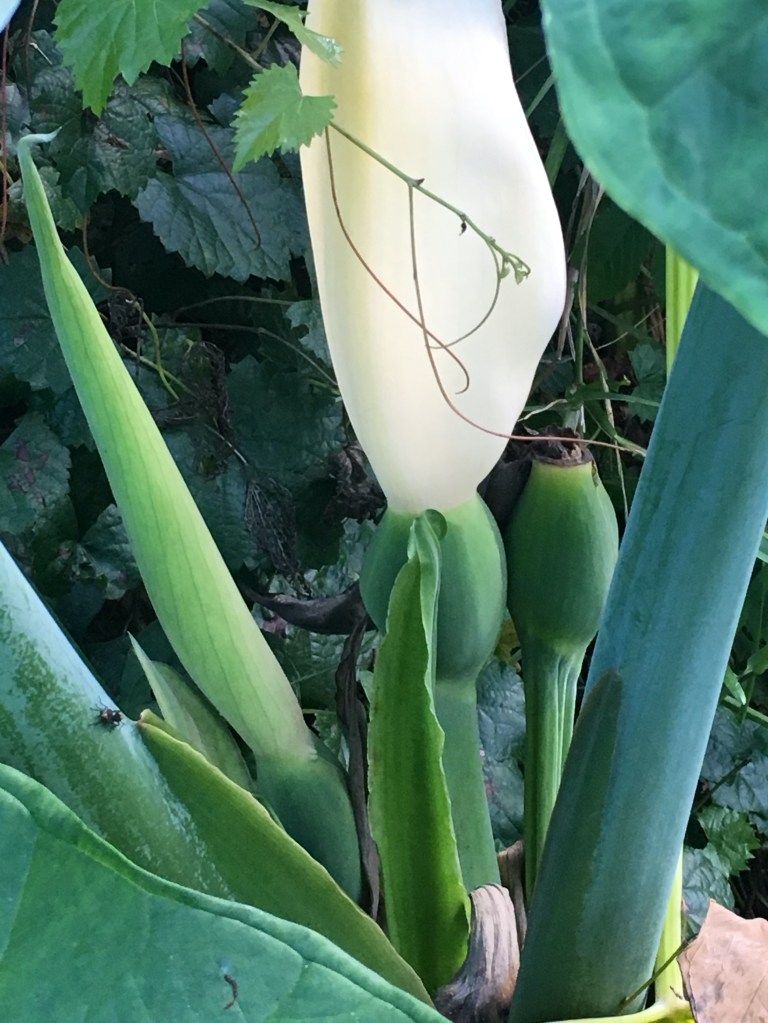
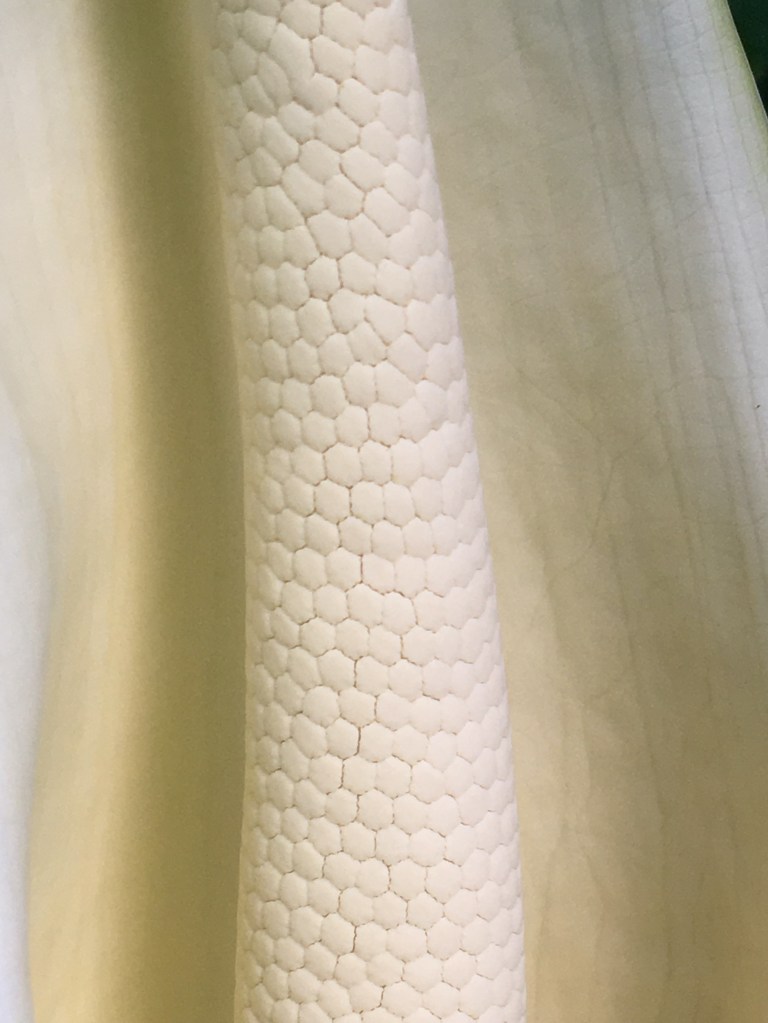
The elephant ear has quite a unique flower
Flower closeup
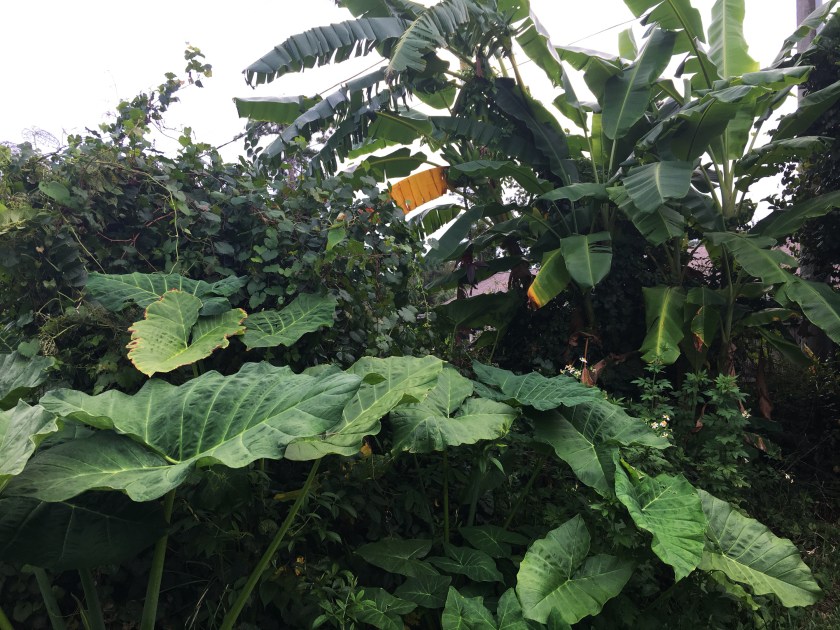
Florida jungle growth
Muscadine Grape Vine – Native (no photo)
The Muscadine Grape vine is not unwanted like the other vines mentioned here. It is a Florida native and grows all over the state.
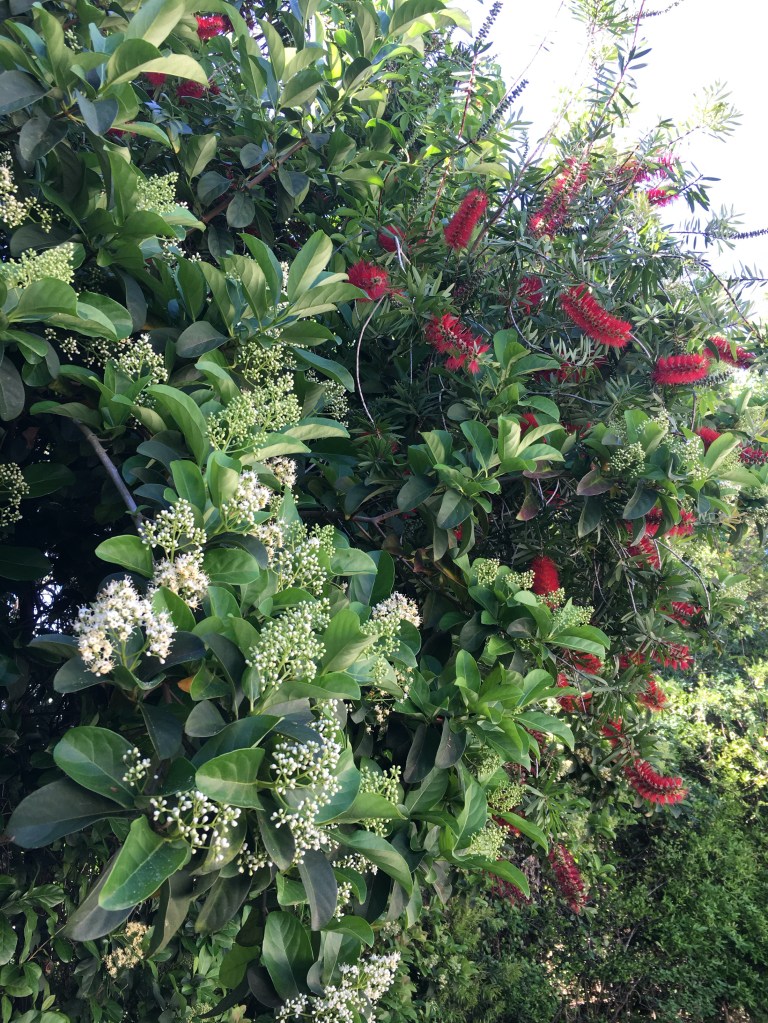
Bottlebrush
Along the back of my lot an overgrown shrub border contains a couple of bottlebrush trees.
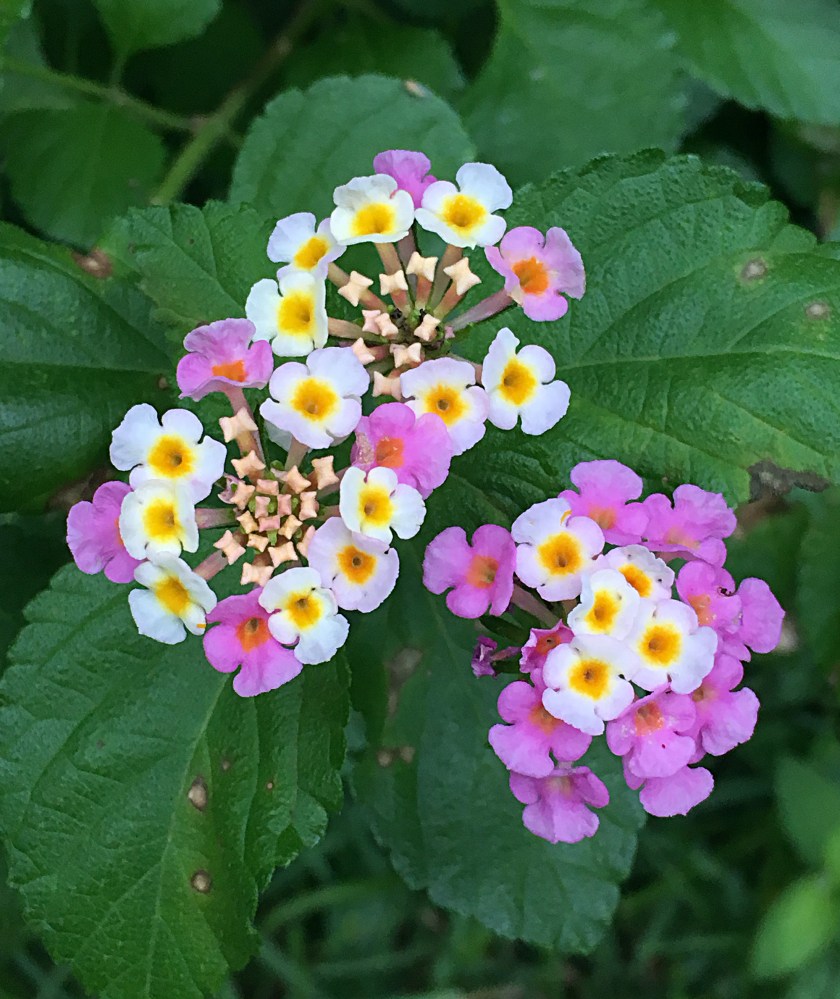
Lantana?
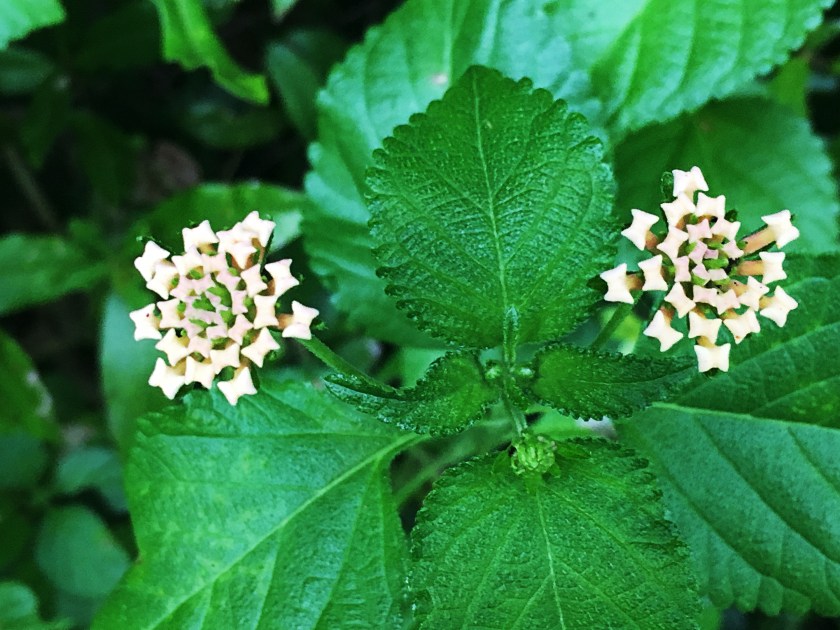
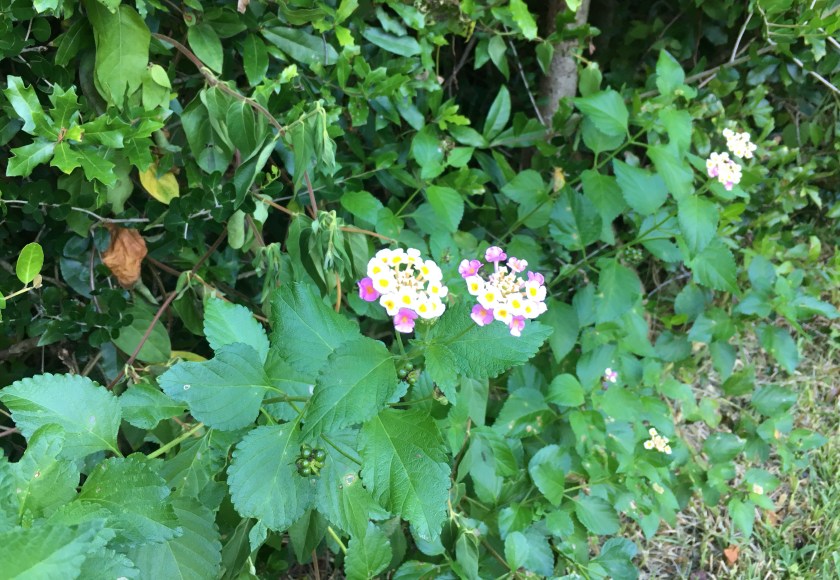
I photographed these little flowers without knowing what they were. Possibly they are Lantana, which is also an invasive plant here in Florida. It is listed as a non-native plant at the UF site.
Lantana
Lantana buds
Unknown Flowering Vine – Probably the Invasive Japanese Honeysuckle
I took this photo of what I think was a vine with white flowers resembling the honeysuckle. I’m not sure if it is the invasive Japanese Honeysuckle or not. I will look for it again in the side yard when plants begin to flower. Unless….
I have been pulling out long vines with leaves similar to this vine. The description is that it grows over everything blocking out light and killing smaller plants, and the vines are definitely long enough to do that. Some of the vines I pulled have black berries, which can be seen in a photo at the link above. I’ve been dealing with the vines while cleaning up a space for my new backyard garden.
So not be tempted to plant this as it is a real pain to remove. It is NOT a Florida native, so choose a vine that is.
Japanese Honeysuckle?
In Closing
Once I began to add photos and identify the growth around my yard, I have found that many of them are invasive and unwanted. Trees, shrubs and vines are labeled “invasive” when they block out native growth by taking over spots where native things should grow.
When shopping for yard plantings look for “native” plants. I will have to remove as best I can the plants that should not be allowed to grow. The new garden area I am creating already has a small Brazilian Pepper tree which is small enough to cut down.
Once I have cleaned out the vines, I’ll look for native plants to add to the landscape.
Some people will say that Florida is one big season that just gets hotter at times. But Florida does have a Spring. It’s when the leaves fall off the trees and pollen collects as a yellow film on everything day after day. Yes, Spring is like Fall / Autumn here, in a way. It’s a duller, more annoying, version of Fall.
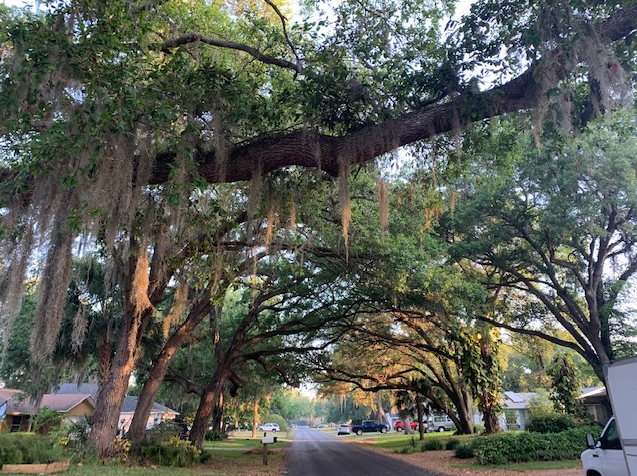
Live Oaks – Spring
There are no colorful leaves, or crisp air to breathe, like in a real Autumn. The trees turn a brighter green with the new growth and the oaks drop those long brown things all over the cars (that don’t fit inside garages because that is where everything is stored because there are no basements). Oak leaves are small here and not like the oak leaves where I come from.
That’s about it. Other than that, new growth will appear when bushes are trimmed, but that can happen at any time of year. No use looking for tulips, forsythia, daffodils, or anything that signals Spring in many places, because those flowers don’t grow here in the jungle.
Spring Trimming of The Shrubs
A seasoned Floridian knows when to trim the shrubs. Don’t trim in winter as it will promote new growth that will freeze if the temperatures drop, which they sometimes do. Don’t trim azaleas until after they bloom in March or April. Plant new perennials well before the summer heat arrives. (Not this year. The nurseries are all closed.)
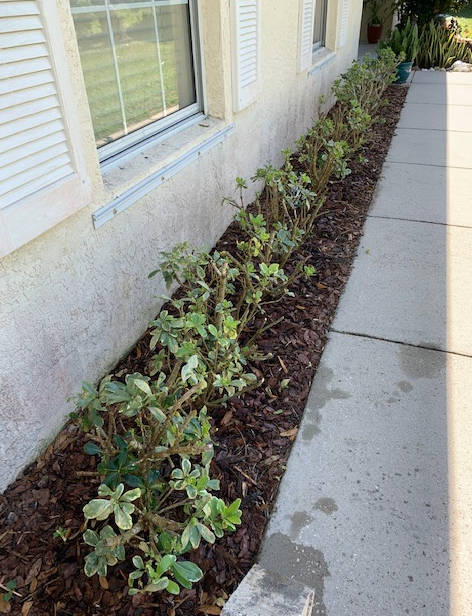
Trimmed hedge of little ficus?
I have decided this year to try and fix up the shrubs along the front by the garage. These are hardy little things that are slow growing, so they are perfect for this area. I’m not sure of what they are, maybe some sort of ficus. I imagine they were planted when the house was built. Unfortunately, the sprinkler system didn’t reach them, and they’ve been ignored since I moved in over three years ago. I’m so sorry, but you did well enough without my help.
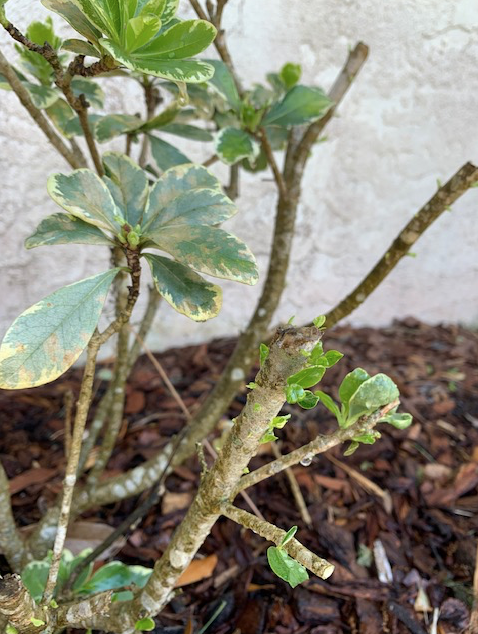
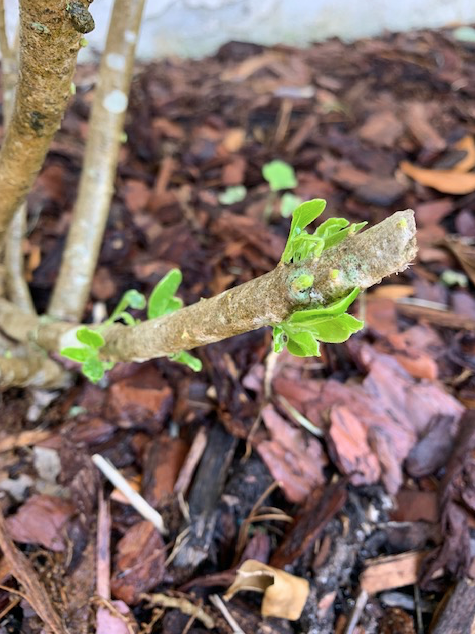
New growth
Now it’s time I paid attention and helped them out. I just recently cut them back a lot. The leaves were looking bad, as you can see I’m my photo. The stems had become spindly and leafless. I’m hoping that this trim will help them to fill out.
Already there is lots of new growth on the stems. I’ve added topsoil, fertilizer and mulch to this section of garden. My son bought, and installed, a little sprinkler head that sprays this garden specifically. It shouldn’t be long before this hedge is looking thick and lush.
Propagating means starting a new shrub from an existing one. There are a couple of ways you can do this with hydrangea plants. Hydrangeas grow quite fast, and within a couple of years you will have a nice size addition to your landscape.
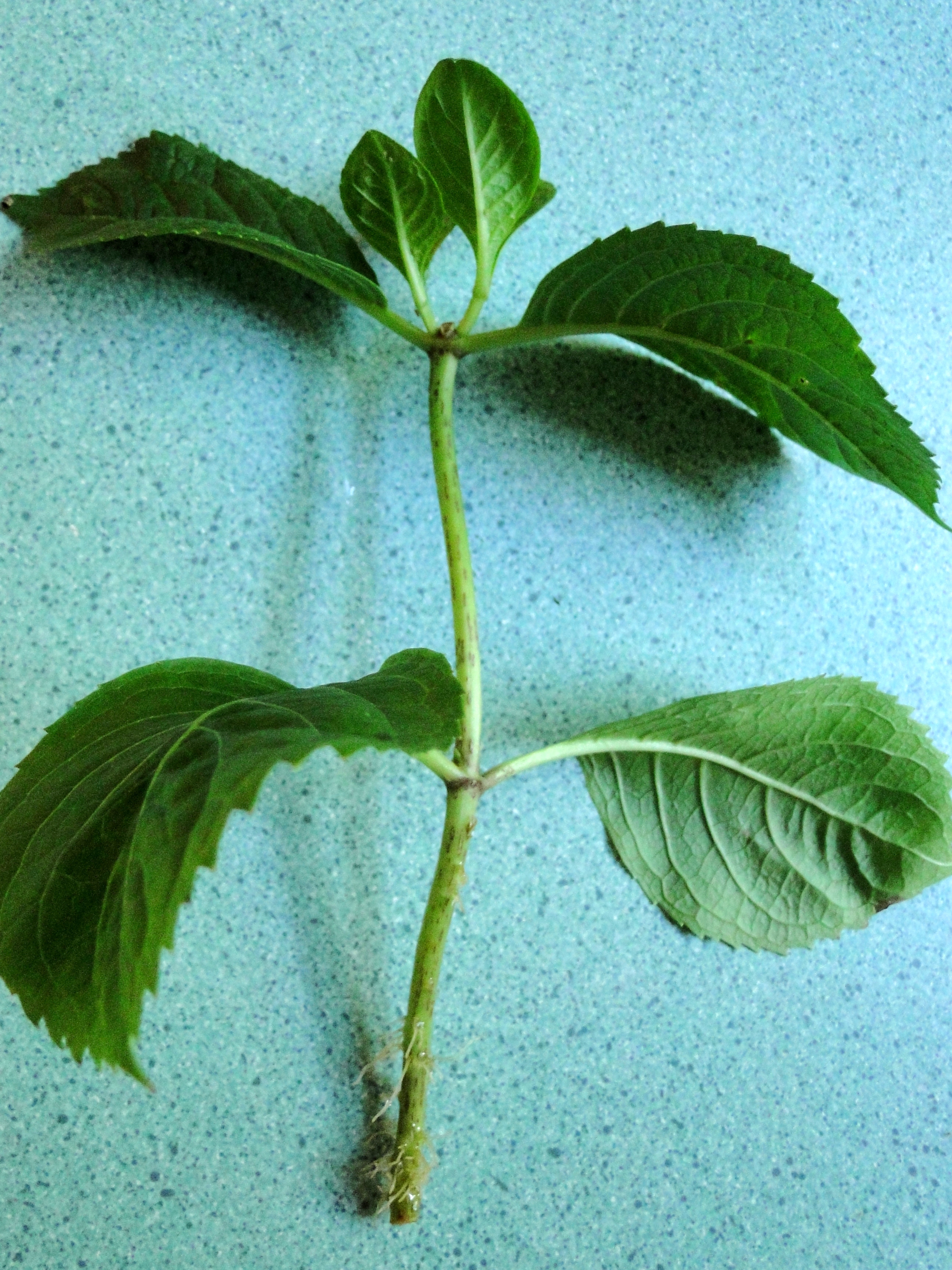
Taking stem cuttings, using new growth, sometimes works. I have not used this method much yet, but while I was planting my new shrubs, a few of the stems broke so I stuck them into a vase of water to see what would happen. After a few weeks, one of the cuttings has begun to sprout new little leaves and is growing roots – right in the water. So I plan to get that into a pot and baby it along until Fall when I’ll add it to the yard. (Pictures to come!)
I’ve had success with root layering, and hydrangeas, with their low hanging branches, are perfect for doing this. In fact if you check around the base of your plants that droop to the ground, you may find that a branch or two is already rooting itself into the soil. The mophead variety tends to have the low to the ground stems.
I started a new plant by digging up the rooted stem and planting it in another area of the yard one Spring. I was renting the house, so I don’t know how it’s doing today, but by the time I moved, a beautiful new hydrangea shrub was gracing the front yard at no cost to the homeowner.
Read how I did it, with pictures along the way, at my Wizzley page about Propagating Hydrangeas.
Going to the nursery and buying new plants for the yard is such fun. I love to imagine them each growing large and gloriously enhancing my landscape. But once I’m home and the work of digging and getting them into the ground begins, I’m not having as much fun.
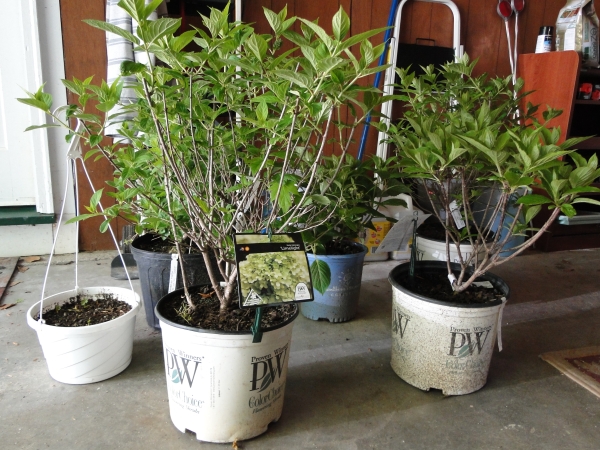
Finding the right spot for them is the first obstacle to overcome. Some of them, in fact most of them, like sun with some shade. The blue “Endless Summer”, white “Blushing Bride“, the “Limelight” (I bought two), and the “Pinky Winky” all need to get some sun, but the “Pee Gee” wants shade.
Also, the full grown size of these plants needs to be considered. Hydrangeas don’t really need to be trimmed, so I want to give them all the space they need to look natural in their settings.
While I am considering all these things and watching my yard for the sunny spots, the plants sit in their pots. Each day they must be watered. Plants in pots dry out very fast. Then a freeze was predicted and I brought them all inside the garage for the night. I wouldn’t have worried had they been planted in the ground, but being in pots makes them more fragile.
I know they want out! And they will do some nice growing once they are in the ground. This weekend the weather in my part of New England will be fabulous, so I plan to get the planting underway. After all, adding perennials to the yard is a wonderful and lasting gift you can give yourself.
I am very excited to now have my own hydrangeas to plant and grow! It is not only necessary for beautifying my dull and boring landscape, but I need to get photos of the flowers for my business. I’ve had to work with older photos that were taken when I rented a house with hydrangeas in the yard, but now it will be so nice to walk outdoors and snap as many photos as I need.
One of the best features of hydrangeas is that the flowers last and last. They also bloom profusely so older flowers and new buds can be on the bush for a long time. If I can get them planted correctly and make them happy I should see some blue, white, pink and green flowers either later this year or next.
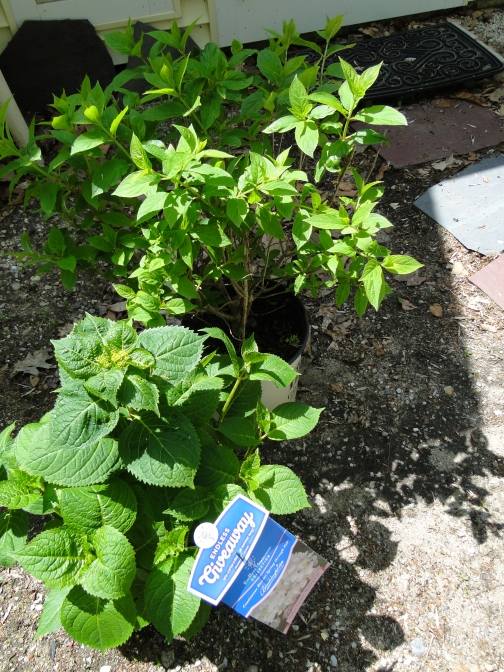
My Endless Summer plant looks like it may bloom this year and so does the white one (have to get the name), but the Limelight and Pinky Winky may not. Although the Endless Summer tag shows a blue flower, I know that it may not bloom blue unless the soil is right for that. This year I will wait and see what it does.














 Hydrangeas Blue