
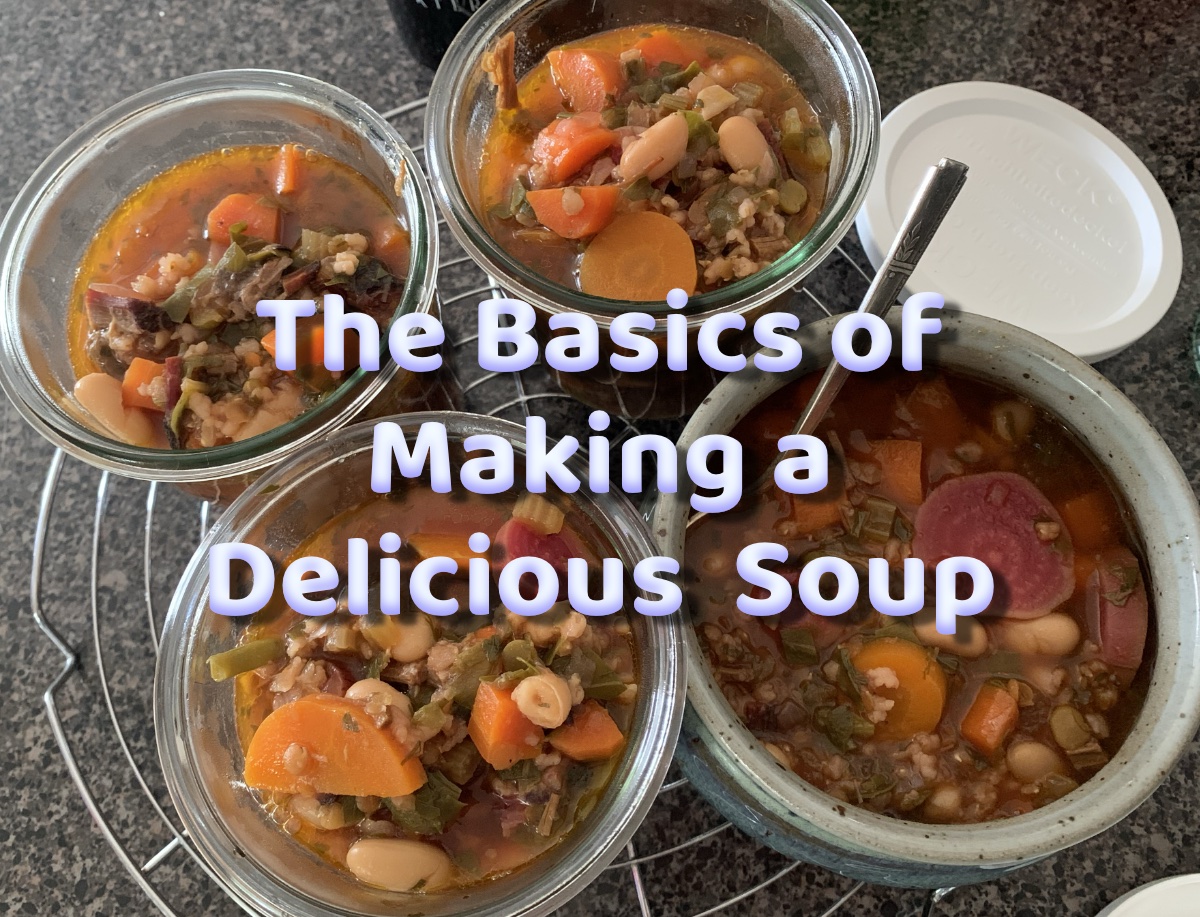
When the weather finally gets cool, or downright cold, here in Central Florida, I want a hearty soup. I rarely follow a recipe to the letter. Recipe tips combine with my own ingredients and knowledge to create a delicious soup.
I have cooked for many years. I have found some good ways to make sure my soups and stews are loaded with flavor and goodness. I’m sharing my ideas on this page.
Soup With Flavor Plus Good Consistency
Often the troubles that come when cooking soup have to do with blah flavor and / or watery consistency. There are simple ways to deal with these things. Easily make delicious soup every time. And, you don’t have to stir in flour or a thickener.
Flavor It
1. The best way to start a soup is to use a good broth or stock. I like to make my own and freeze it for things like this. Many places sell lovely broth as well. Read the ingredients and make sure it is good stuff. I also like organic.
One of the easiest, homemade vegetable broths is created from the water used to boil, or steam, vegetables. This is very easy to do. It’s perfect for vegans or vegetarians. Don’t pour that good nutrition down the drain. If you don’t want to save it, take it outside and pour it onto the plants!
I use Weck jars (paid link) with plastic lids, and add to them each time I have vegetable water leftover. *Be aware that only certain types of Weck jars are made for the freezer. and they must have the right type of lid that is plastic – not glass. The link goes to Amazon, but I buy mine from Weck.com.
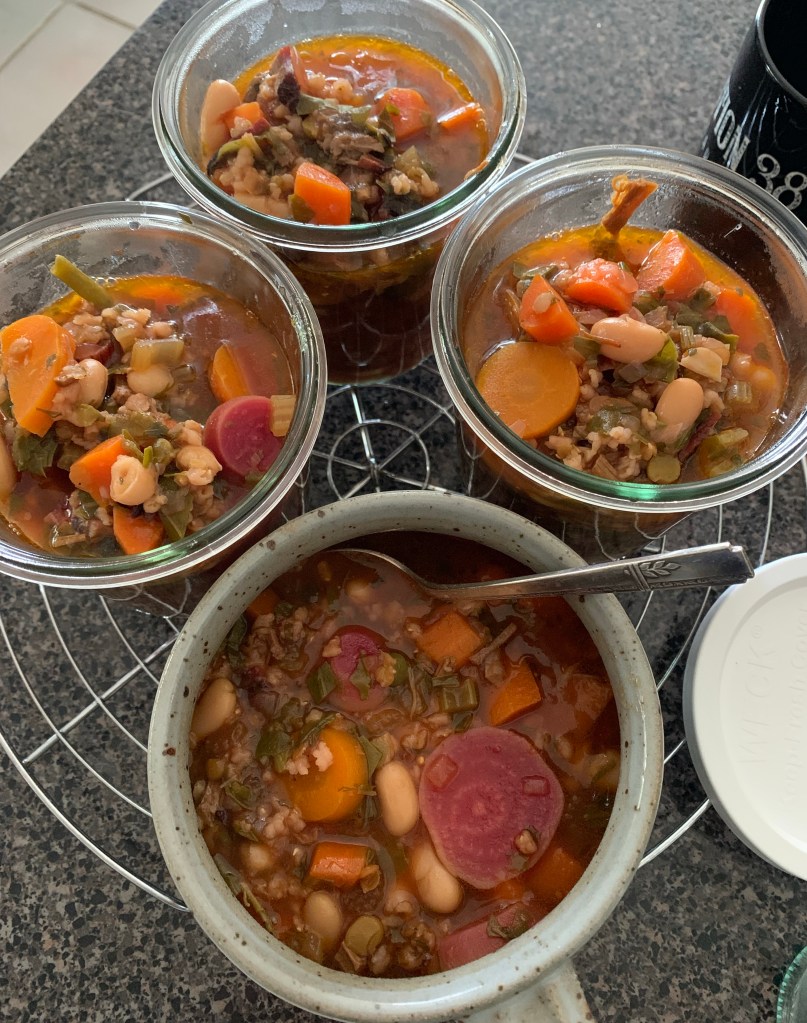
Beef bone broth, as well as turkey and chicken broth, are popular too. It is very easy to make a stock, or broth. Use the crock pot, or an Instant pot to cook the bones on a low temperature for many hours. I always use my saved broth when cooking rice.
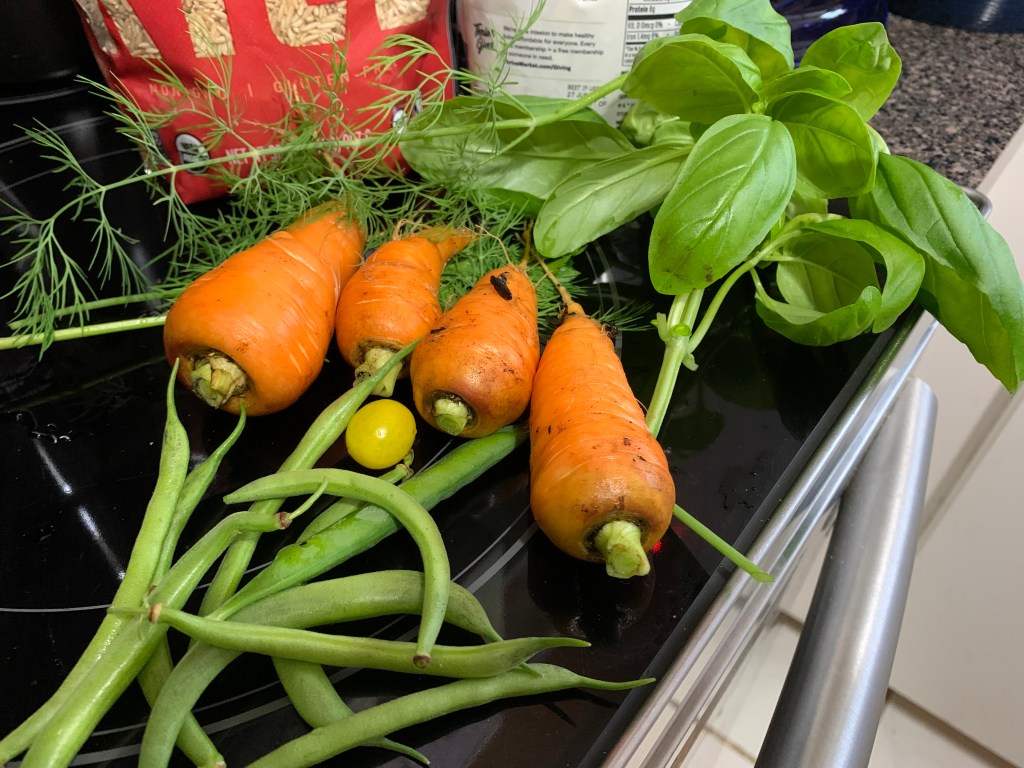
2. Herbs are a must. Herbs not only add flavor, they add goodness in the form of healthy nutrients. Get to know your herbs and how they taste. I’ve come to love Rosemary and grow it in a pot out back. I had never added it to soup until recently. Parsley, dill and basil are regular additions to my food. I grow them all so they are readily available at various times of the year. Dried, organic herbs are just as good and I use them too.
3. Cut and chop fresh vegetables. Fresh is key for a good tasting soup. If you are a grower, check the yard for anything that can be added. If they come from the store, find the freshest looking.
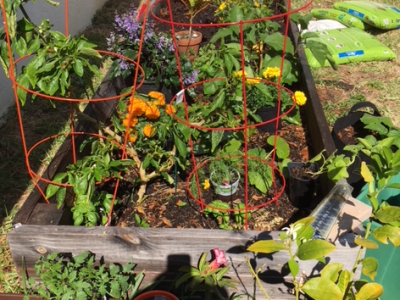
I had one pea pod – yes, only one – when I checked my garden the day I made my soup. I included about 10 little peas in my Garden Soup. Even though I may never even taste those peas, it’s the nutrition value from a backyard food that was added.
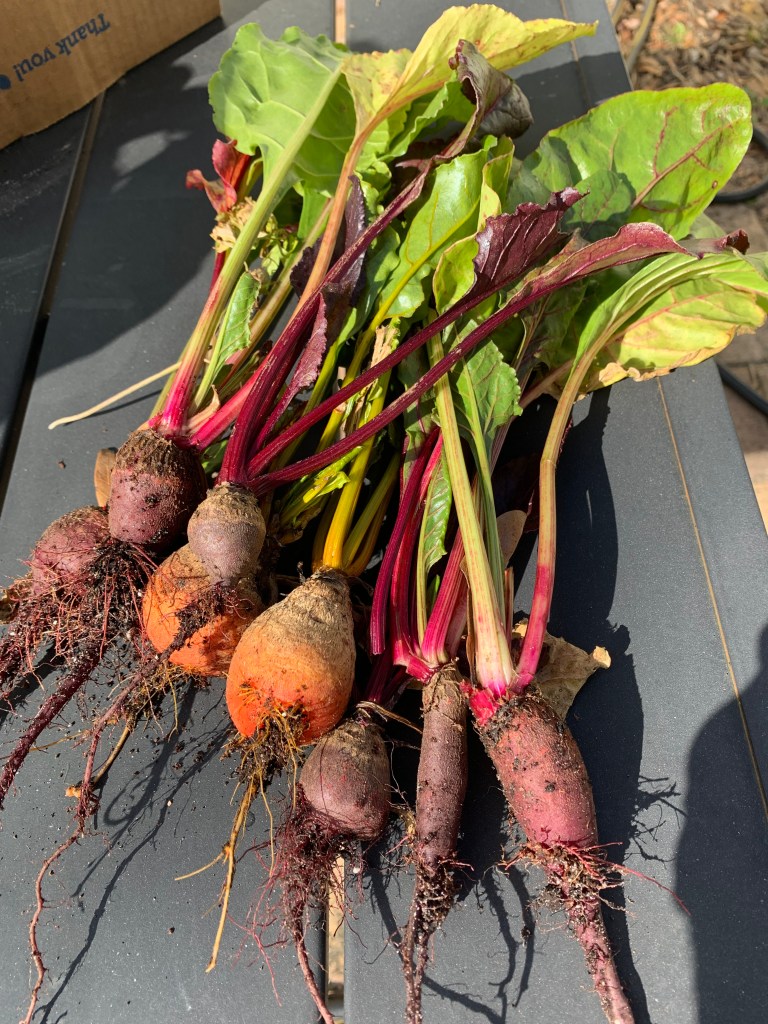
I also pulled some beets (and the chopped greens) and carrots. It all went into the soup. You can probably see why my soup comes out a little different every time I make it!
Thickening Without Flour
There are a couple of ways I like to thicken my soups and stews. They are all easy, and don’t involve flour or cornstarch.
- A favorite method is to blend some of the soup, without meat pieces, and include some liquid. Make sure to cool it first. Pour the blended soup back into the pot. About a cup full of soup will work.
- Add some type of white liquid like coconut cream or milk. It doesn’t really thicken it much, but looks better!
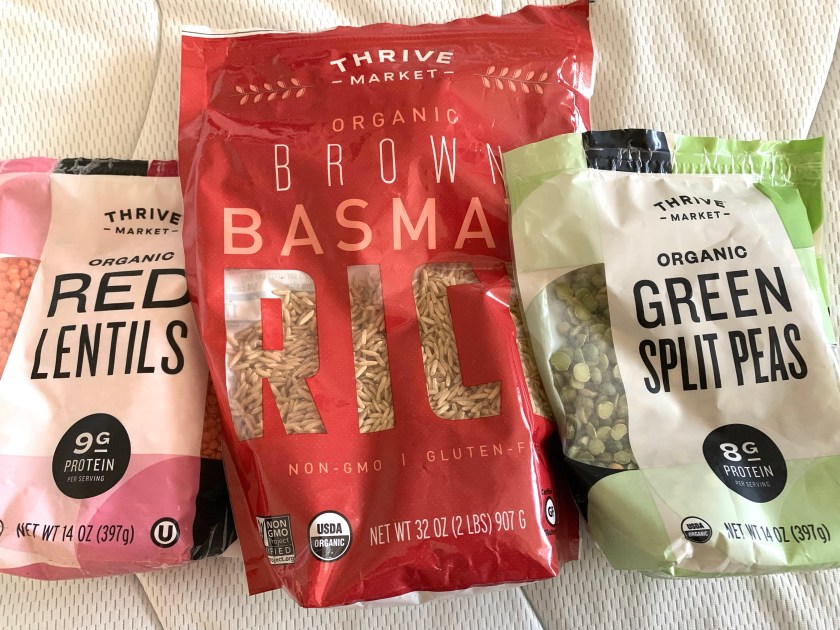
- Include dried things like rice, split peas, and / or lentils. They will soak up some of the liquid. (I added a little of all of them to my Garden Soup!)
Savor It and Save It
Once the soup is made it can be saved in the freezer. When I cook soup, I end up being the only one who eats it. The frozen jars of deliciousness often go camping with me. Or pull it out on a cool day when soup is appealing. Vegetable soup is a good side to other food also. Enjoy!


 Hydrangeas Blue