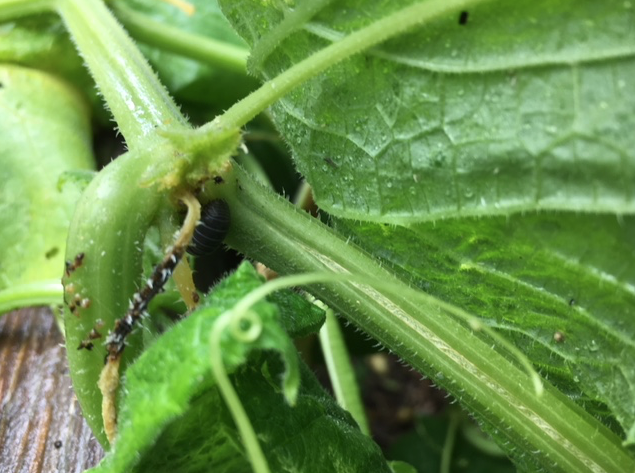
Dealing With Worms on the Cucumbers

Wish I’d known more about growing cucumbers in summer here in Florida BEFORE I decided to try to grow them during summer.

Apparently the pickleworm moth moves northward from South Florida and shows up around June / July – here in Central Florida. The moths lay eggs during the night, and worms hatch that eat the heck out of cucumbers and other veggies. (See this extensive article about the pickleworm.)

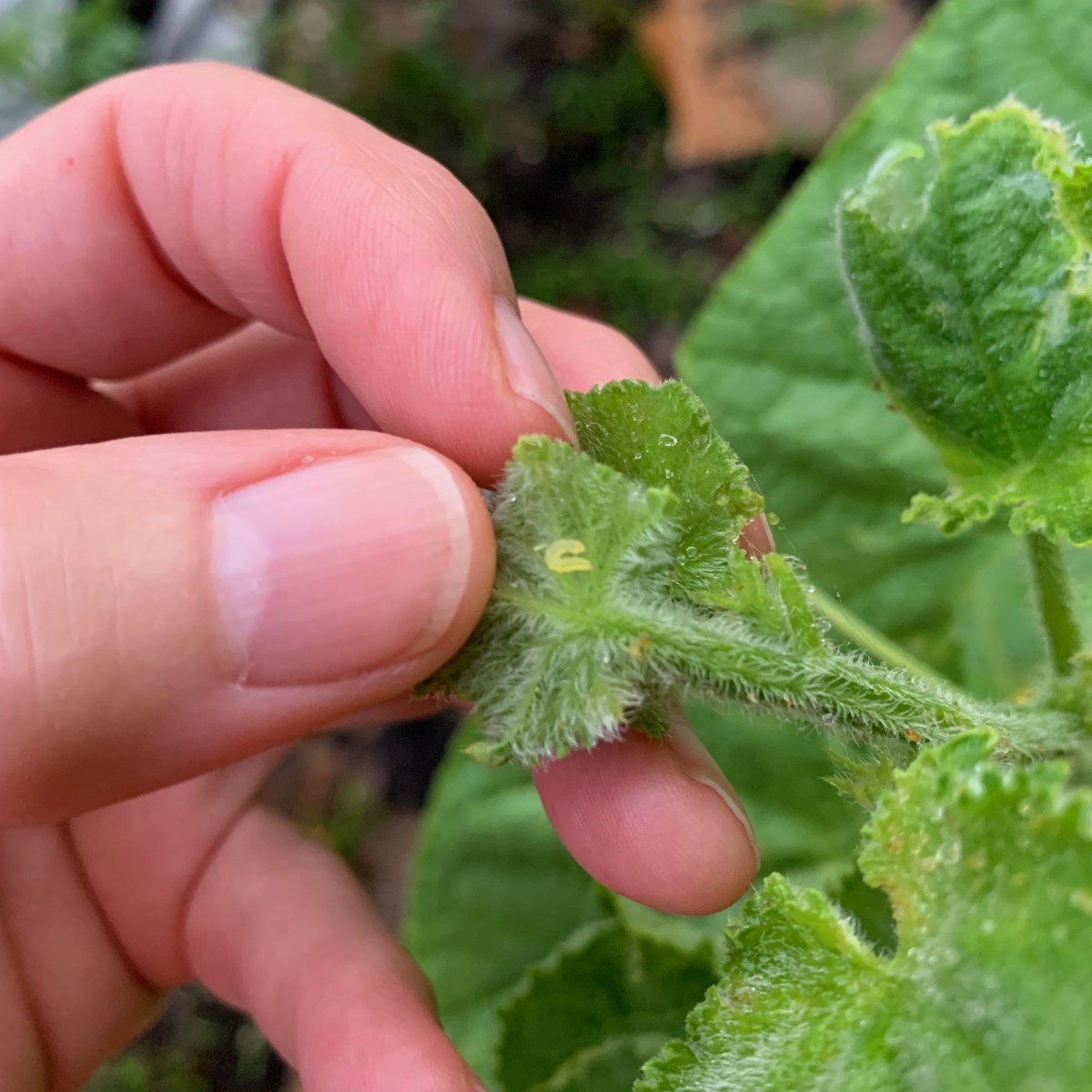
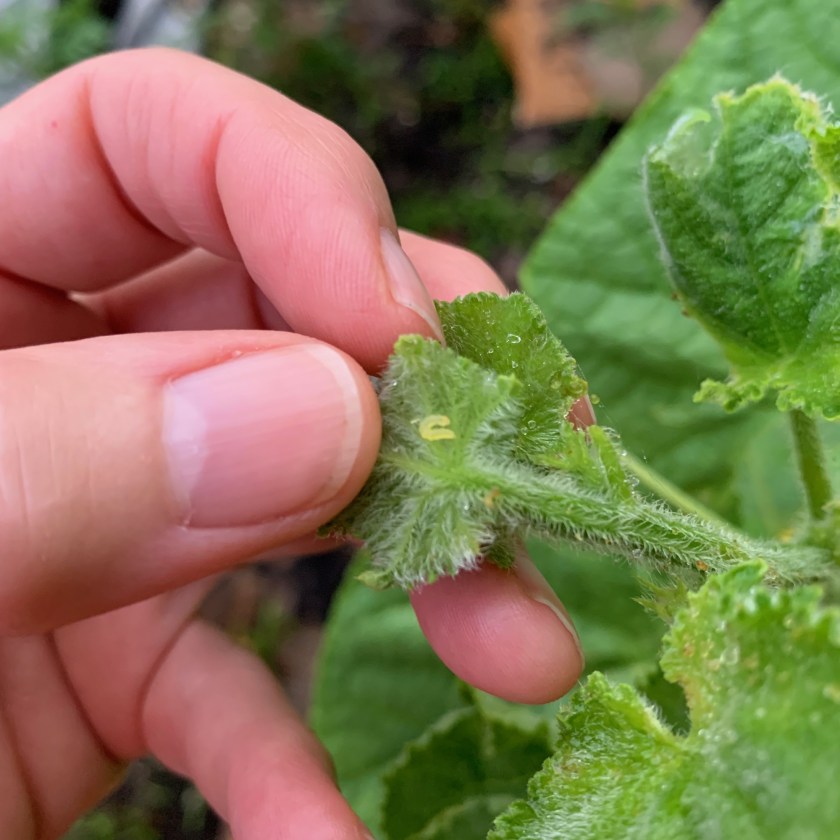
green worms on cucumber plant

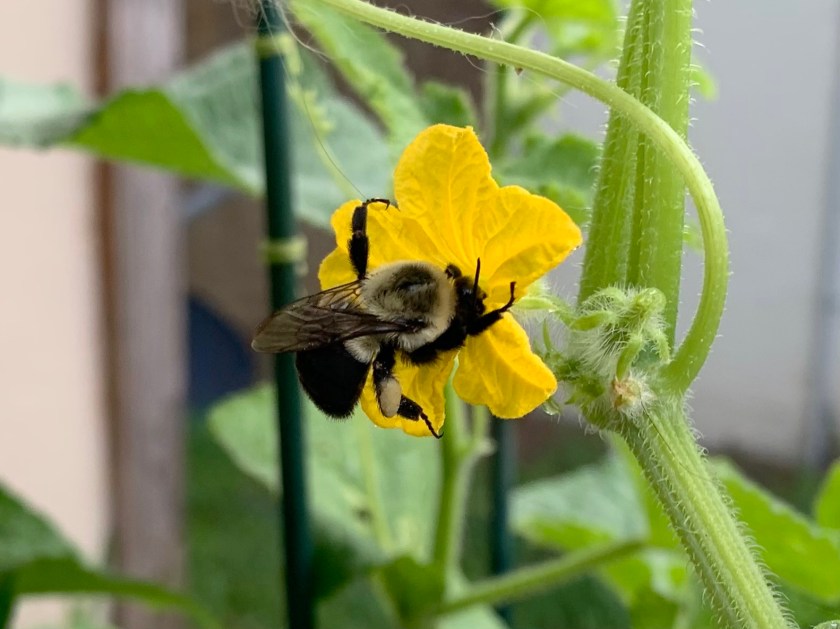
Bumblebee Morning Visitor

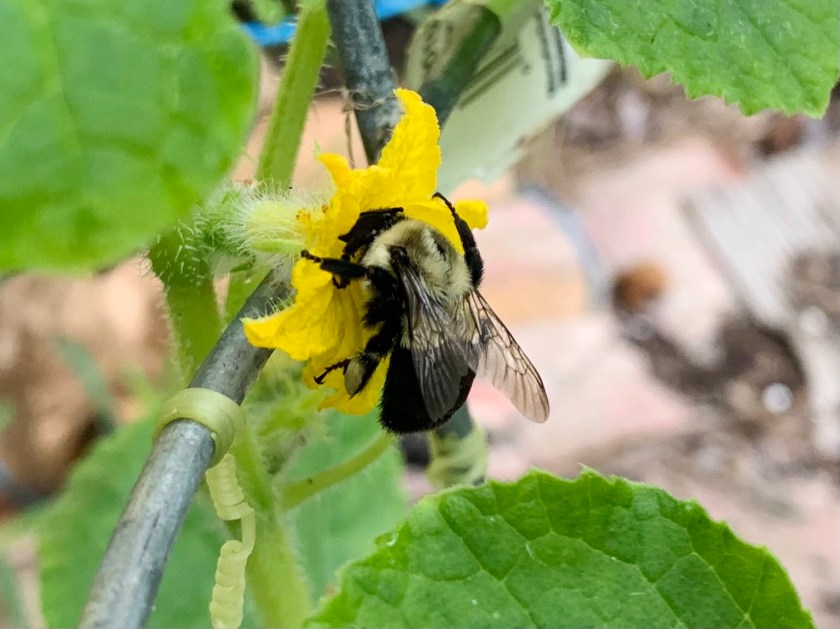
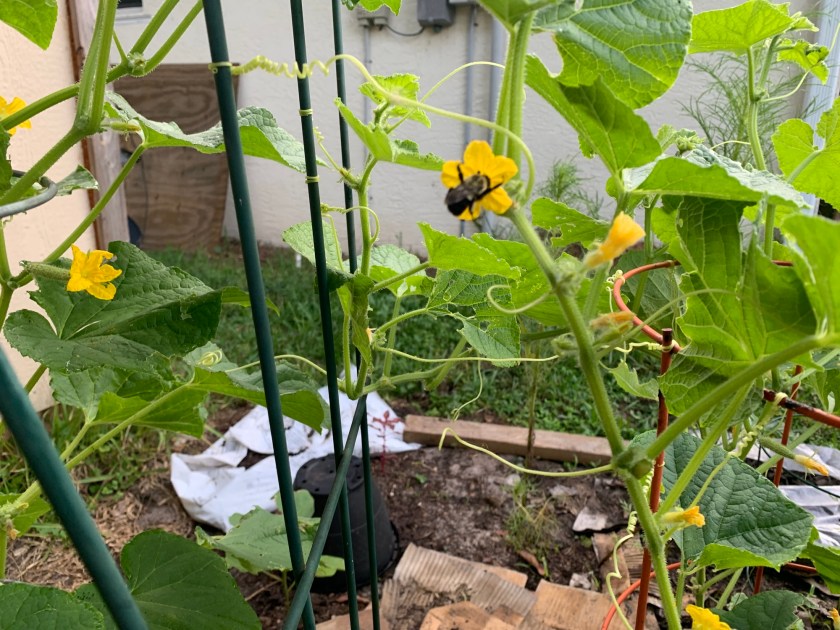
So I’m covering my plants. Each morning I get out to the garden early to uncover the cucumber plants. I know that the bumblebee will be along shortly to visit the flowers. Within a few minutes after the plant is uncovered, this little bee shows up.

  • bumblebee on cucumber flower
  • bumblebee on cucumber flower
  • suyo long cucumber plants

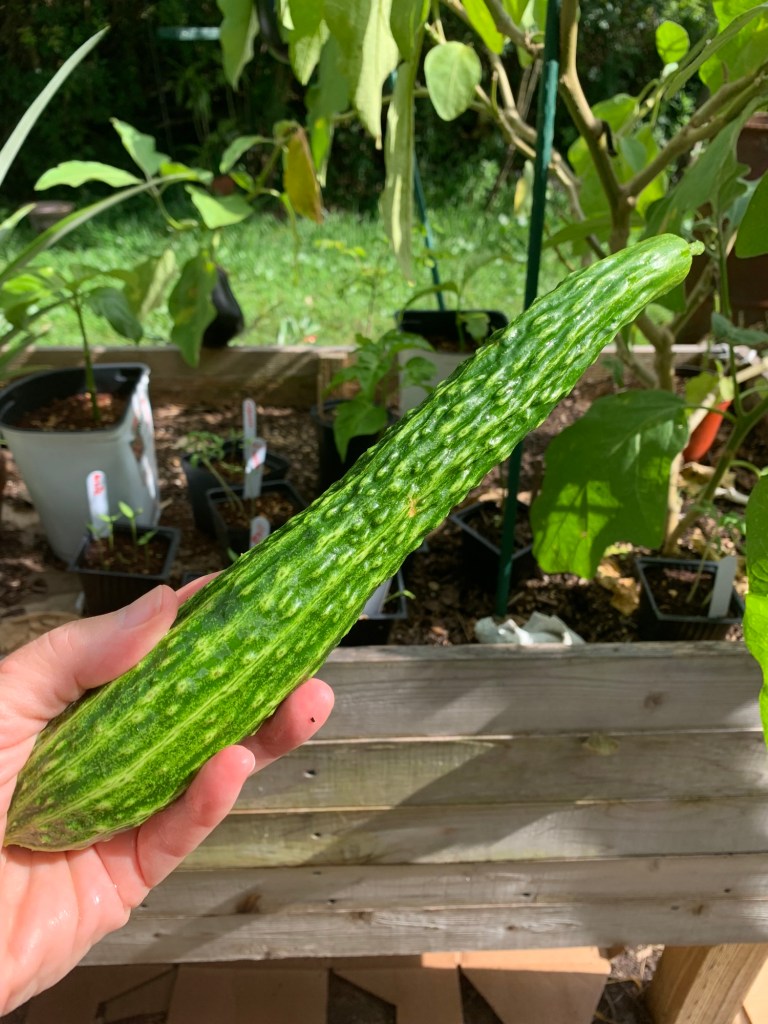
Now, it’s Fall and I have ripped out my cucumber plants (all three of them) as they only gave me a couple of edible cukes. I was spending too much time, for too little yield, for growing them to be worthwhile.

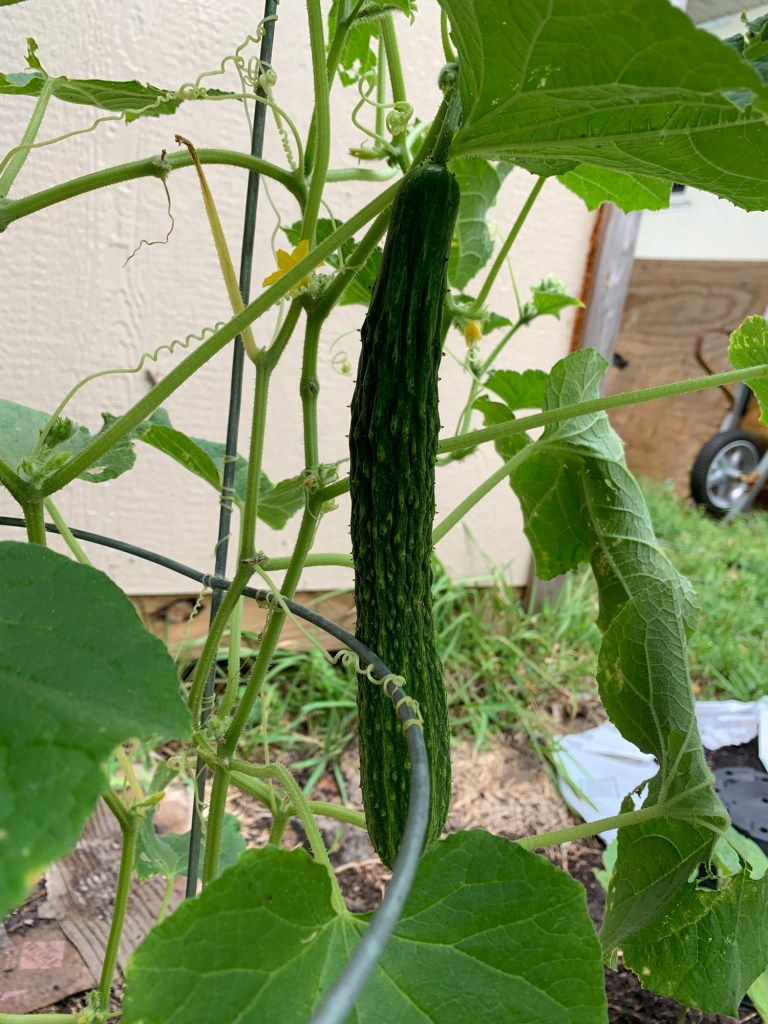
  • Suyo Long cucumber on the vine

I hand picked the little worms and threw them onto the mulch walkway for the lizards. The cucumbers didn’t grow very well either so I’ll be planting in early spring next time.

Planting and Growing Stories

Mid-summer is The Time For Bug Pests

Mid-summer is the time for pesky pests to show up in the vegetable garden. It’s also the time to search for beneficial bugs that will hopefully take care of some of the problems.

In July I noticed that there were a lot more unwanted bugs on flowers and veggies in the garden.

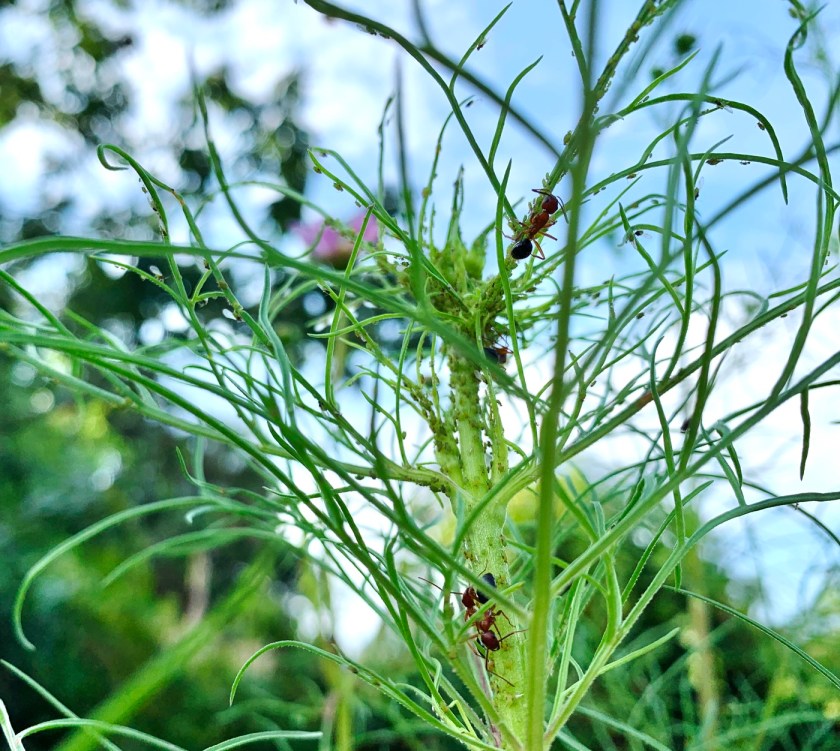
The seashell cosmos are full of aphids. I saw one ladybug on the cosmos, but she didn’t seem interested in removing the aphids. Or maybe there were just too many. Yup, ants and aphids actually help each other out… Read this article at Gardening Know How.

I have since sprayed water on the ants and most of the aphids to get them off these flowers. Some stems were cut back to remove the infestation.

Cosmos stems covered in aphids and ants.
Ants and aphids

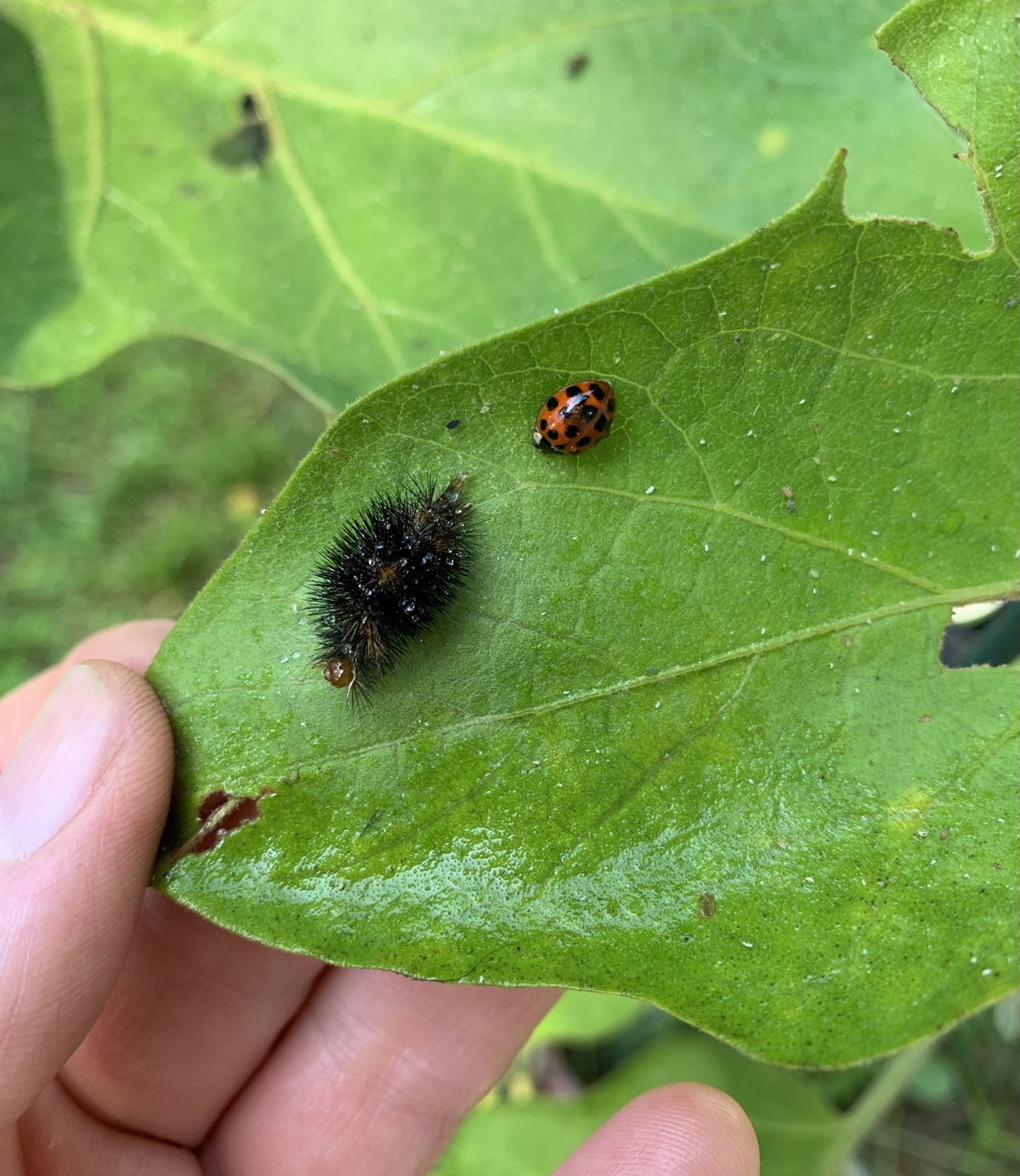
Cosmos and eggplant are covered in ants also. And a black, fuzzy caterpillar showed up to eat the eggplant leaves.

fuzzy black caterpillar
Giant Leopard moth caterpillar

The black caterpillar turns into the Giant Leopard moth, from what I’ve discovered. I had three of these caterpillars on my eggplants, but now they are all gone. I was really hoping to see them become moths.

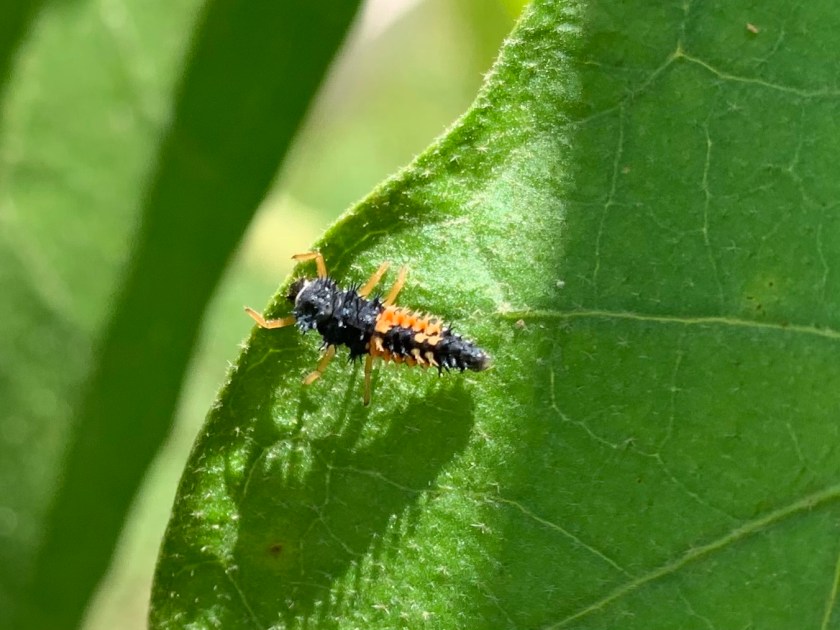
Along with weird and unwanted things, I was happy to find some ladybug larvae on one of my largest eggplant plants. Lizards were also crawling all over the place, so these may disappear. I hope not.

macro ladybug larvae
Ladybug larvae

Get Rid of Fire Ants Naturally, Will This Work?

As for one of the worst Florida pests ever, the fire ant, I’ve been looking for a good way to rid the garden of them.

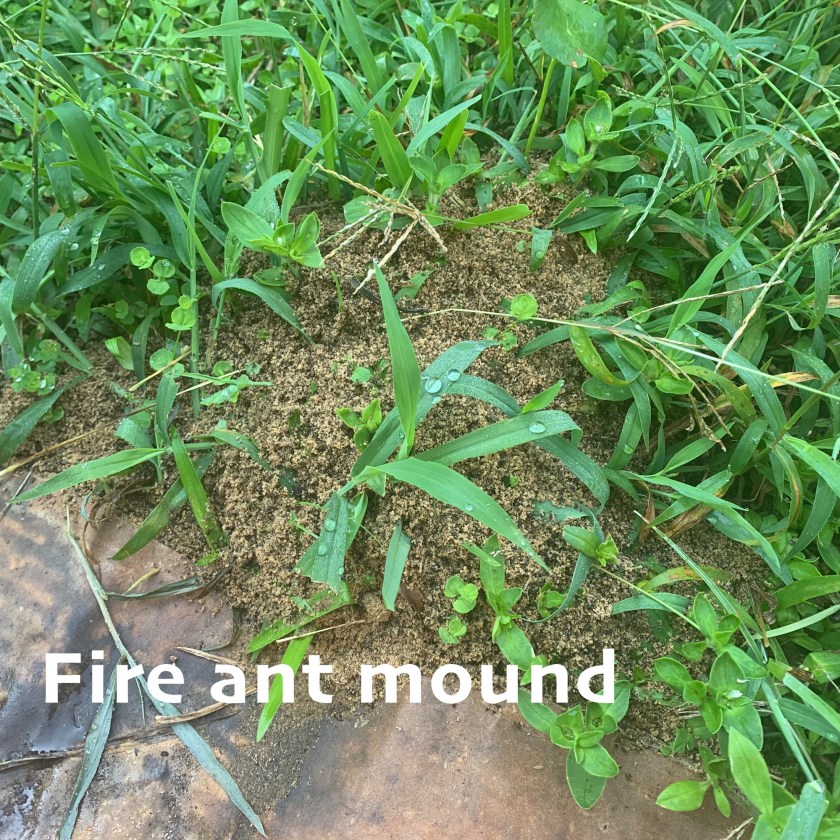
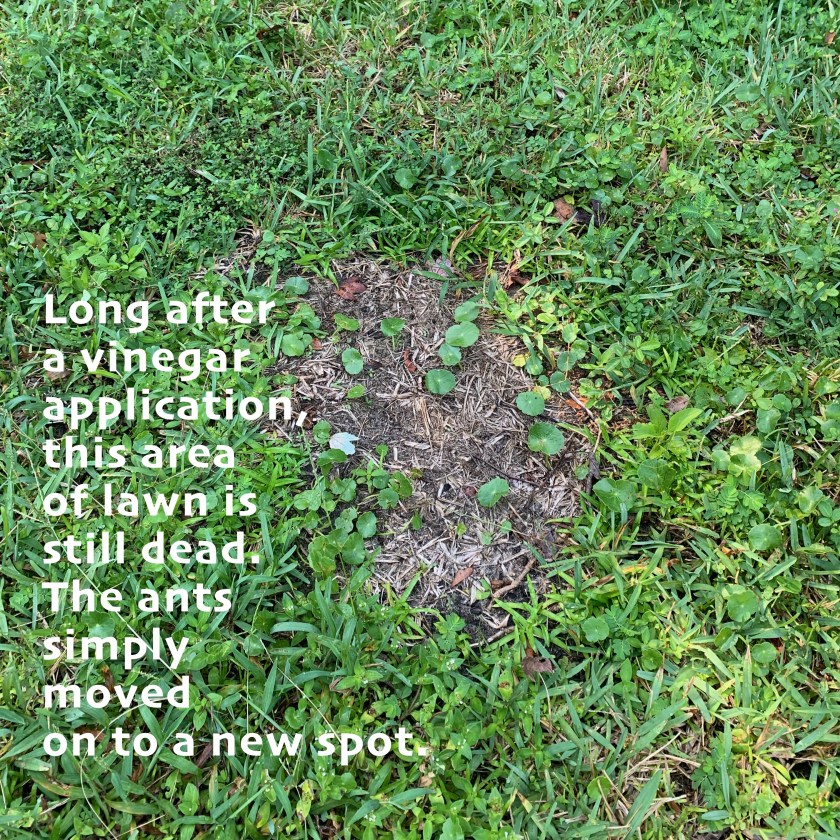
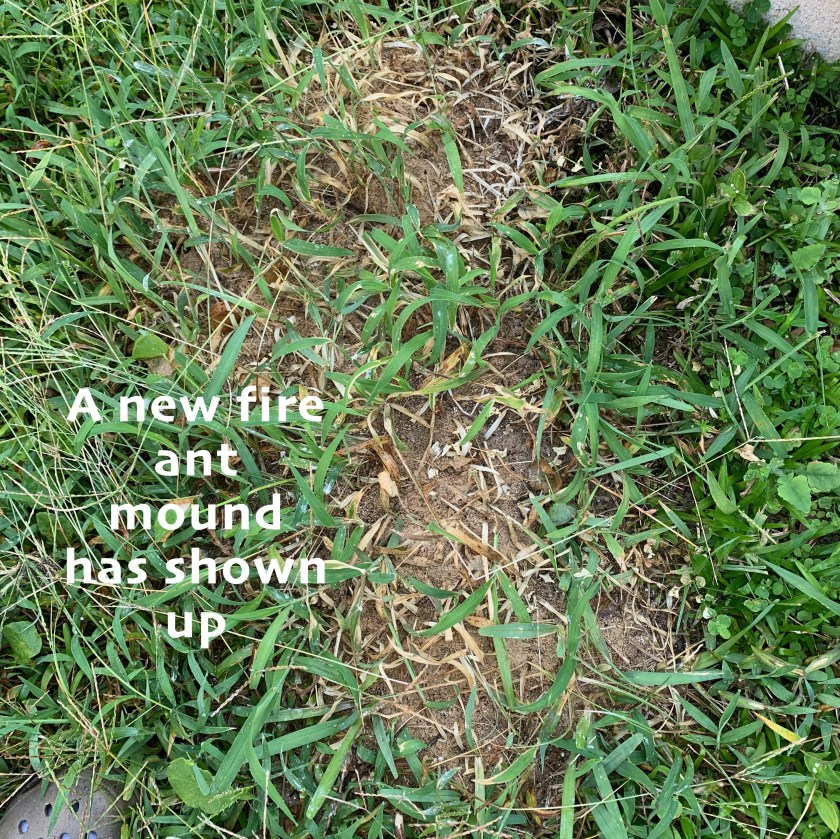
I’ve tried pouring vinegar on the mound. It kills all the grass, but the fire ants just move. I’ve sprinkled Diatomaceous Earth all over the hill, and it seems to do nothing. I was going to set Terro traps but I was afraid the raccoons would try to eat the stuff.

  • Natural fire ant control

Now, I’ve come across a video by Elise Pickett from The Urban Harvest with advice on naturally killing fire ants. The mixture to try contains orange oil, dawn detergent and water. Watch the video here for more info.

I absolutely plan to try this as soon as the ingredients arrive.


Beetles and Worms

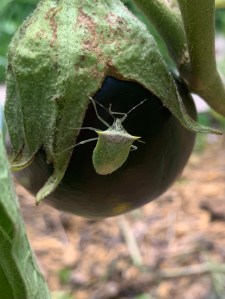
I don’t know what this little green beetle is, but he was happily crawling on the eggplant. Looks like a stink bug, except green. Maybe he is a juvenile.

green beetle on eggplant

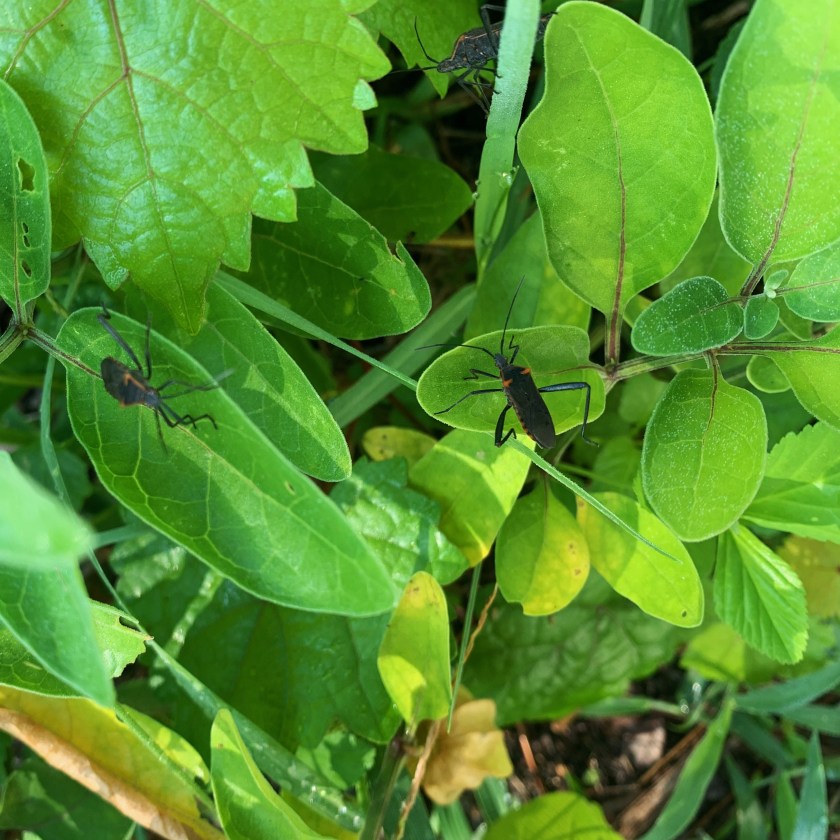
These little black bugs were found on the Ground Cherry plants, which grow wild along the edge of the yard. Are they good bugs? They seemed harmless, and sure enough, they are soldier beetles which are BENEFICIAL and important for pollination.

stinkbugs on ground cherry

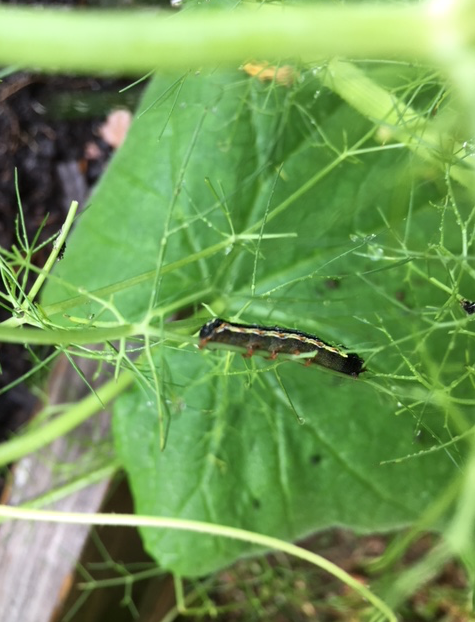
Each morning I am picking little green worms off the tops of my Suyo Long cucumber plants. Most likely the Pickleworm. I will continue to hand-pick the worms and hopefully rid the plants of them.

After reading this article by IFAS, it seems that the best practice for avoiding this worm problem is to plant cucumbers early in the season to beat the invasion. I will look into this further.

green worms on cucumber plant

More stories from the blog…

How To Increase Worms For Gardens

Worms will multiply if they are supplied with good things to eat in the dirt. Create a worm box to get started.

One thing about worms is that they are particular about where they live. If you can create an area that appeals to them, they will multiply readily. I’ve watched it happen.

I’m not into growing worms artificially indoors in a bin, and it’s not necessary. Keep them outside in their element, but also keep them enclosed so they can be found. Once you have bunches, move them elsewhere to improve another area of soil.

Grow Box Worm House

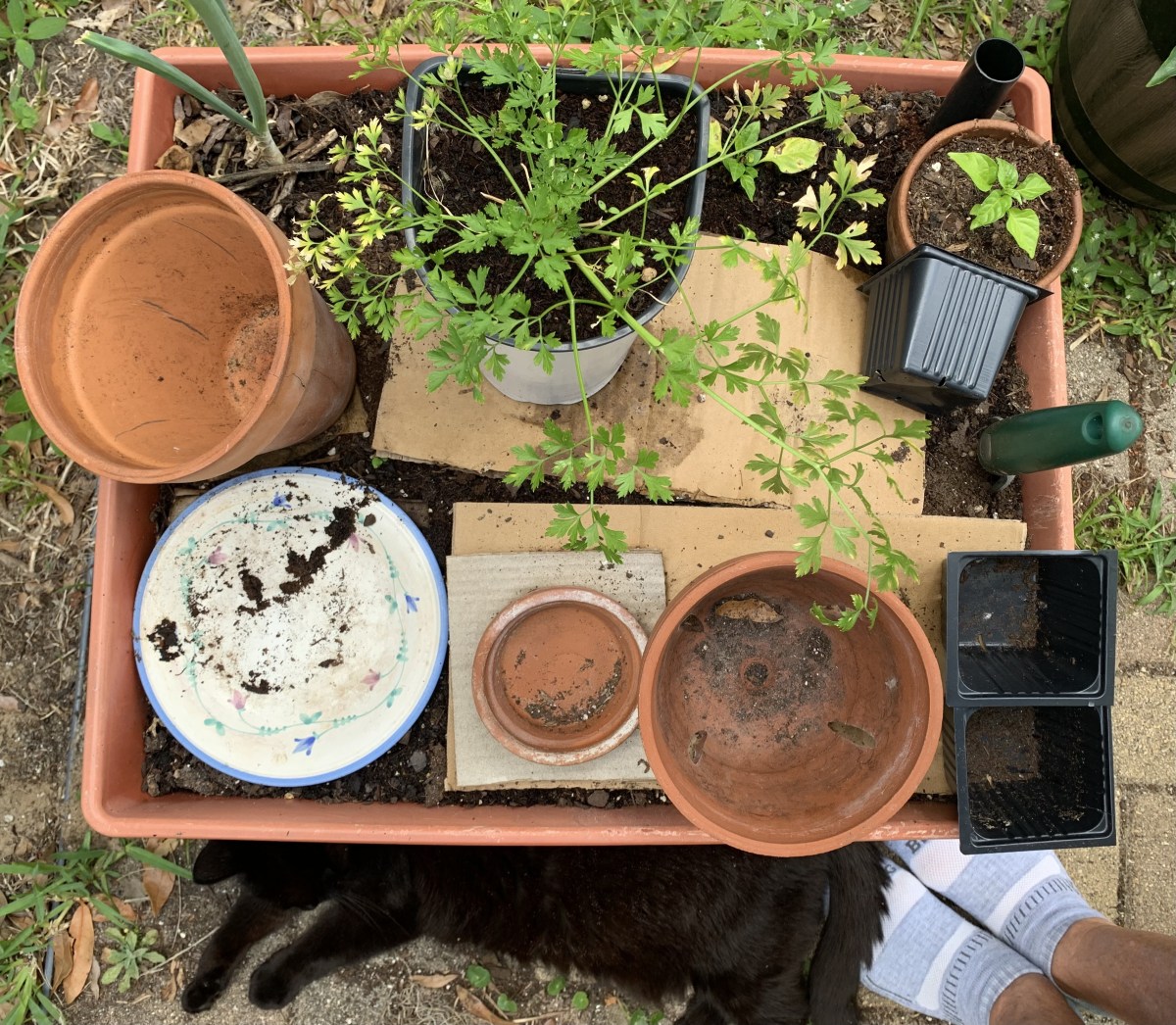
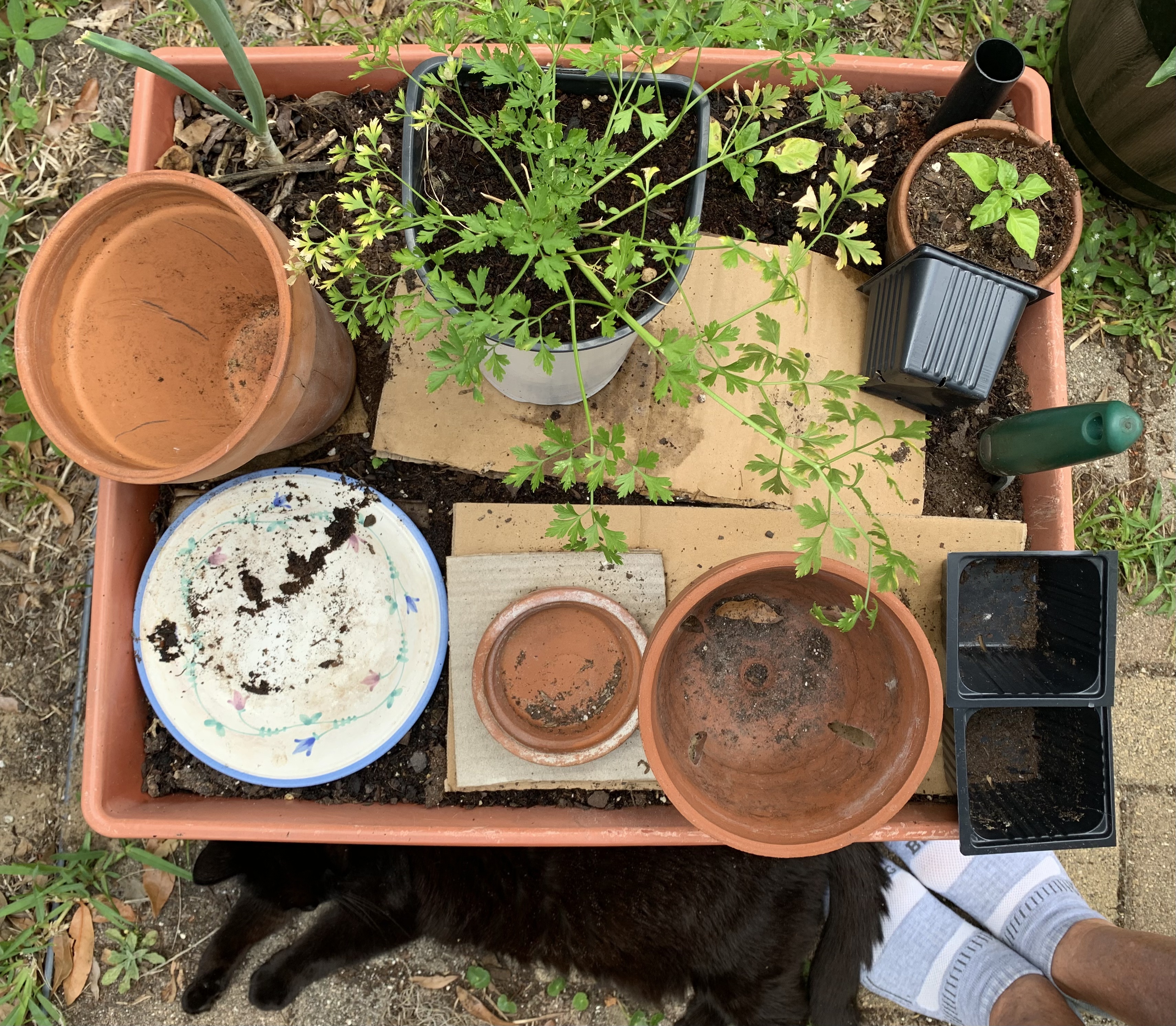
Now that I have a few grow boxes set up in the yard (similar to the Earth Boxes on this Amazon pagethis is an affiliate link), I don’t use them all for planting. This one is currently my worm house. It’s also where I mix soil for small pots when I plant seeds.

Important to know…

This type of box has wheels, which allows it to sit up off the ground. You need some way to keep pots and boxes elevated so fire ants won’t set up house in your bed! I had a large pot – shown to the right in the photo below – which became filled with ants because they came up from underground directly into the pot. Now my pots always sit on a saucer, cardboard, bricks, or something so the ants are deterred.

Small grow box with good dirt for a worm farm.

To get started with any grow box or raised bed, you need dirt. We bought bags of dirt from Home Depot to begin, but now buy our dirt, compost and mulch from The Yard Shop in Edgewater.

Direct Composting

The dirt needs good stuff added so plants will grow, but this also feeds worms. It can take a while to make your dirt worm ready. Worms eat organic matter and each morning I would put my coffee grounds into my gardens. Eggshells were saved and crushed, and banana peels or old bananas were added to the dirt in my grow boxes. I did not have a compost area at the time so anything leftover from fruit and veggies went into my grow boxes. (Not onions – worms don’t like them.)

Plants were also added, along with organic fertilizer. Worms like roots. This is one reason you should cut off old plants and not pull them out, removing their roots. Have you ever dug up a patch of grass and discovered worms among the grass roots?

Adding Worms From the Surroundings

Adding worms to the dirt means going out and finding worms. It’s not that easy here because there are few worms to be found in a Florida lawn. I dug at the edge of the yard where natural growth and unbothered, wild plantings were growing. I found a few worms near an old tree stump that was decaying and moved them to the boxes.

Truthfully, I only found a few worms. Each time I came across an earthworm, I collected it for the boxes. I had no idea if they would live.

grow boxes planted with tomato,, eggplant, peppers, dill and squash.

Oh Ya… We Have Worms!

When I finally had more grow boxes and other homemade boxes for my plants, I began to transplant.

While my plants were growing, apparently the worms were too! It was impossible to tell because until then, I had not dug in the grow box dirt.

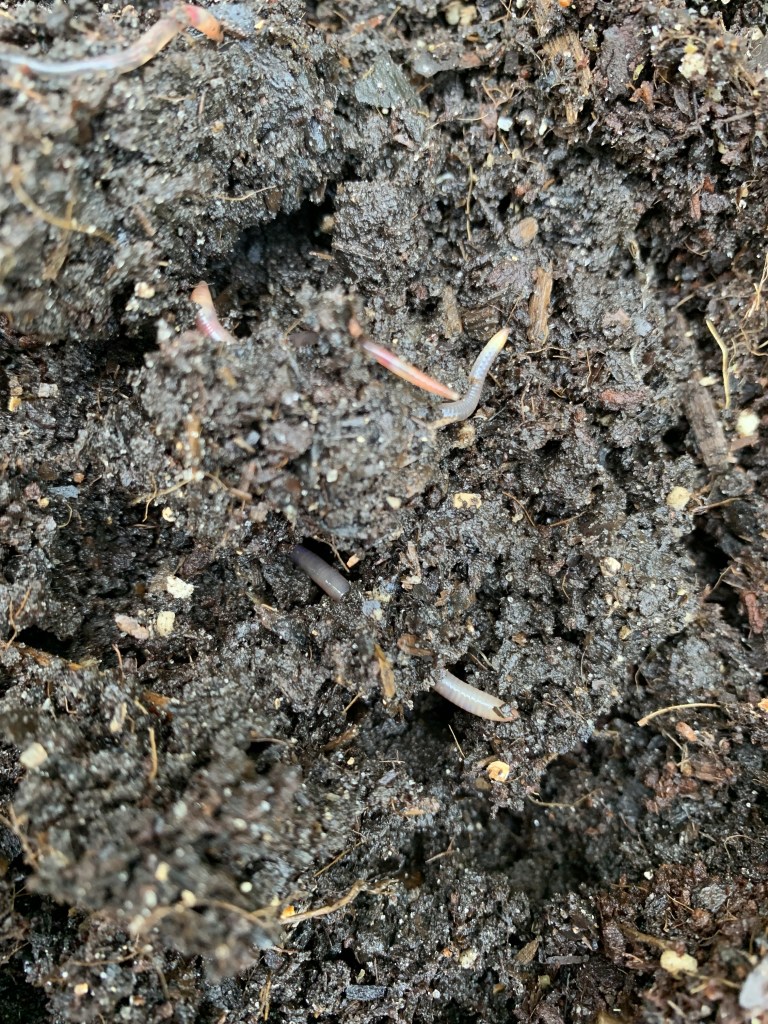
Happily I saw loads of worms of all sizes. This box is stuffed full of wonderful earthworms. I’ve been moving them to other places for fresh, yummy dirt to enjoy.

earthworms multiplying in good soil

Keep the Dirt Covered

I noticed that if I set a pot or saucer on top of the dirt, when I lifted it there would be worms ducking back down into the soil. The covering makes the soil cooler, which is important.

A grow box that holds good garden soil full of earthworms of all sizes.

Creating Good Soil

It takes a while to have good garden soil. You may buy dirt, compost and organic things to mix together for dirt, but only nature can create the best, real soil. Eventually our diligent attempts can create good dirt, but it does take time. Manmade is never the same, or as good, as what Mother Nature has created over time. If we are careful, we can come close enough to grow some food to eat while providing a healthy environment where all kinds of life can flourish.

More stories from the blog…
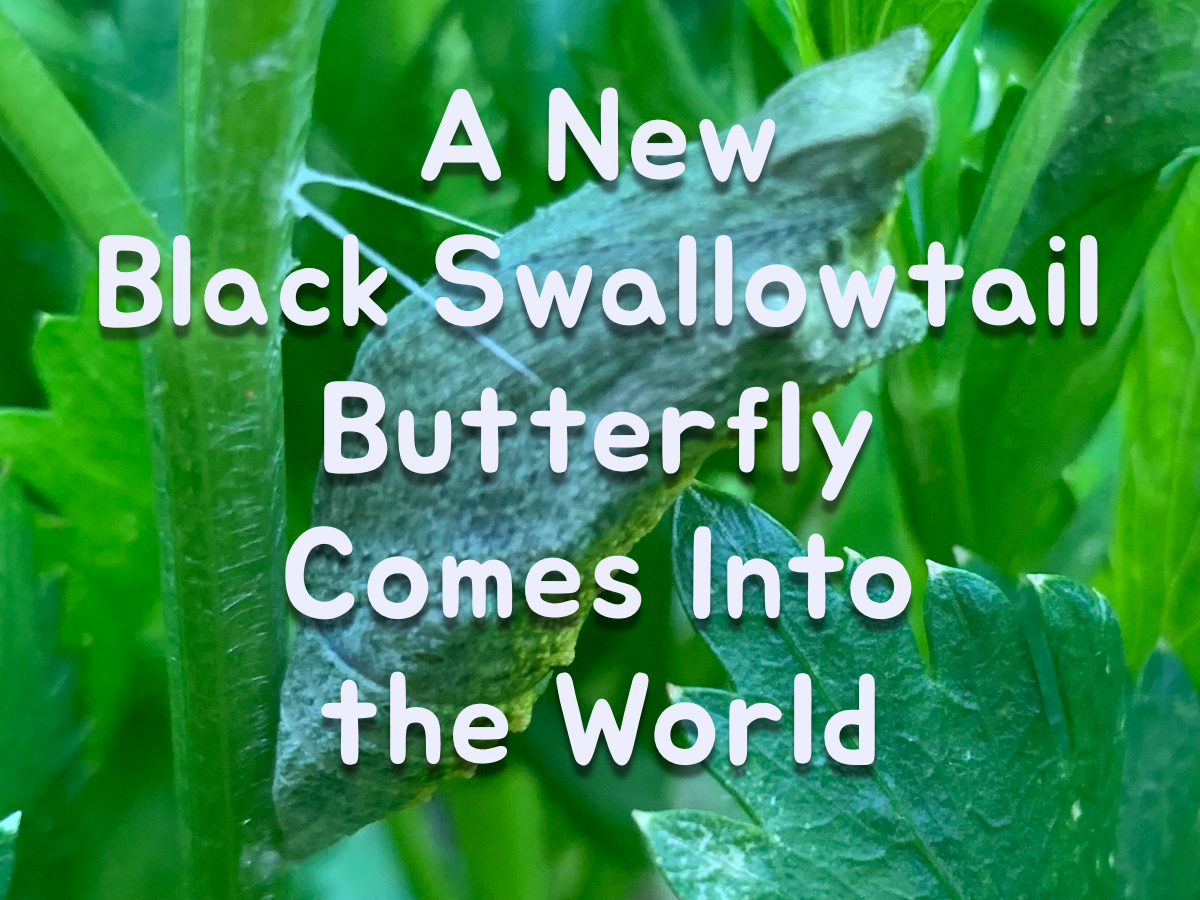
Black Swallowtail Butterfly Eggs, Larvae and Worms

Finding the Swallowtail butterfly in it’s life stages in my garden

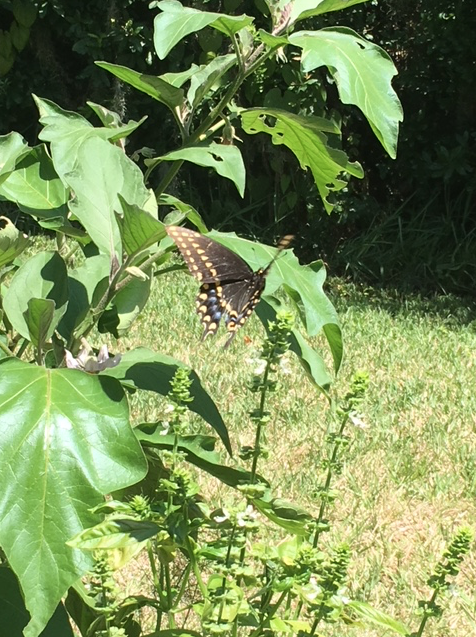
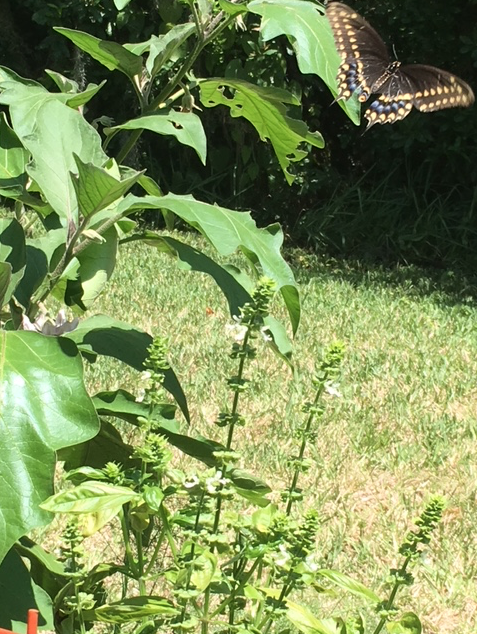
I’ve been watching as the Black Swallowtail butterfly flits around my vegetable garden laying eggs on the parsley and fennel. I took the camera out and got these photos. Everything looked good until the bees showed up!

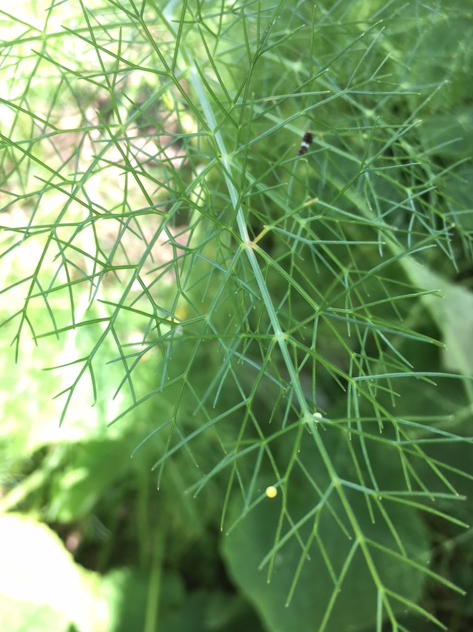
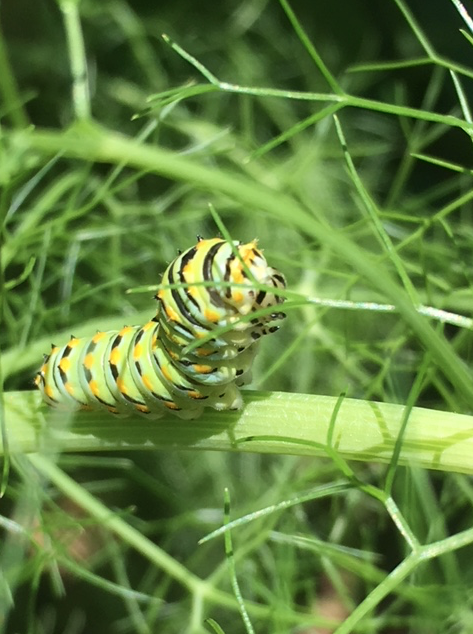
In the first photo here you can see two eggs and one tiny black caterpillar.  In the second photo see a more mature caterpillar.  All these are currently found in my garden – all the stages.  Right now I don’t think there is a pupa or chrysalis. Earlier this year a green one formed on the lower stalk of the fennel. They seem to prefer fennel over the parsley, although they are also known as parsley worms.

swallowtail butterfly eggs and larvae
Swallowtail butterfly eggs and larvae in fennel leaf

Grow some fennel if you want to encourage the Swallowtail to visit your garden.  The worms will eat down the vegetables, so plant extra to allow them to feed.  Check for eggs and worms before picking herbs!


Screen Shot 2018-06-16 at 4.02.39 PM
Worm on the fennel

Screen Shot 2017-04-20 at 1.55.56 PM
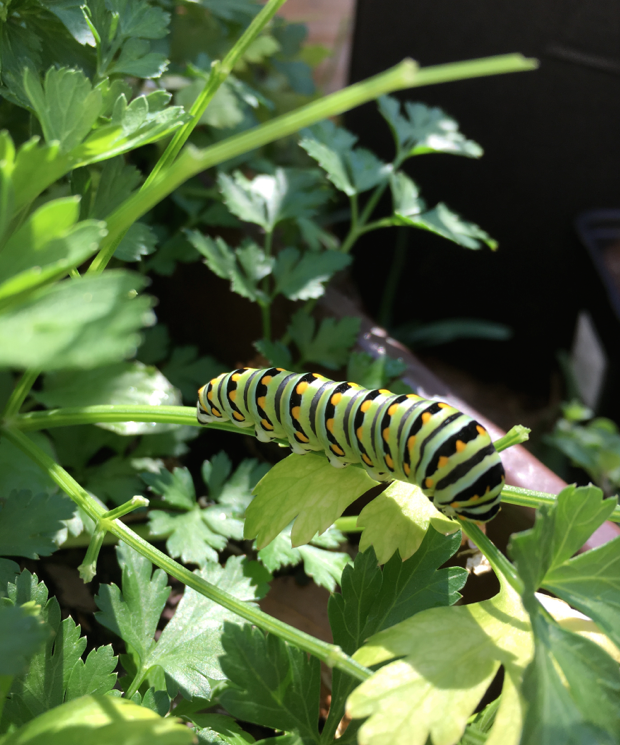
Worm on parsley

The “parsley worm” is so pretty, and fun to watch. They will twist and reach for those strands of fennel. In fact I was watching one the other day, and decided to go inside and get my iPhone. By the time I got back out to the fennel, a wasp was eating the caterpillar! I took the video below as one wasp, or hornet or whatever it was, got kicked off the meal and another took over.
I was tempted to pull off my shoe and kill those bees, but it’s nature, so I controlled myself.

Between the hornets and the birds, it is quite amazing that any caterpillars get the chance to turn into a butterfly.

Screen Shot 2017-04-20 at 2.02.19 PM
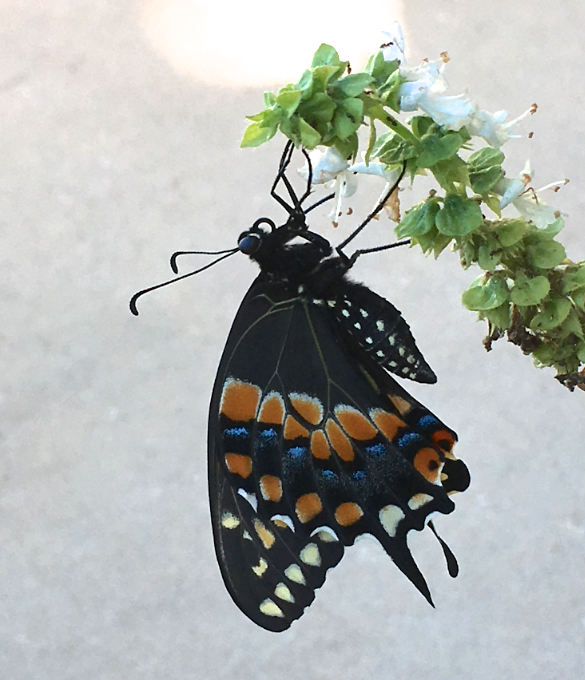
Newly hatched black Swallowtail on basil flowers

Screen Shot 2018-06-16 at 4.03.00 PM
The Swallowtail butterfly hovers over my garden

And here she is, back at the garden laying eggs on the fennel and parsley. There you have it, the full cycle of the life of the Swallowtail, found in my backyard.
Screen Shot 2018-06-16 at 4.02.49 PM

For more great photos with life stages of the Swallowtail check out the post on Our Habitat Garden.

Cut Worms, Pill Bugs and Squash Vine Borers Invade My Space

My little garden has been growing like mad, but now the cut worms and other creatures are making a mess of it.

Cut Worms

I’ve seen black worms eating leaves, and they are not picky which plant they attack. These are the cutworms – pictures below. Cutworms can also nip a new seedling at the base and kill the entire plant, but these are concentrating on the leaves.

Cutworm eating fennel

Screen Shot 2018-06-01 at 2.30.39 PM
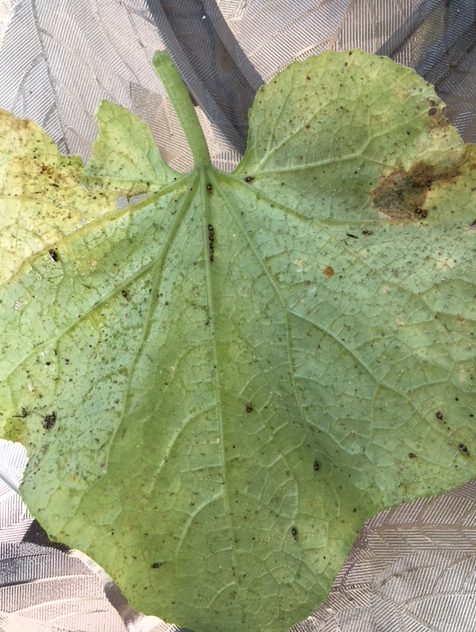
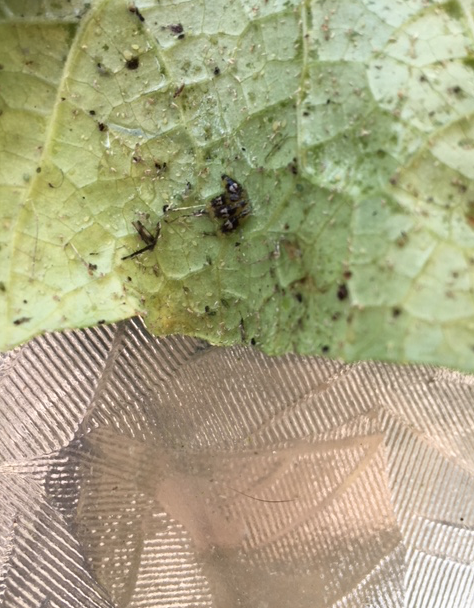
Black spots are tiny worms

Screen Shot 2018-06-01 at 2.30.23 PM
Small worms huddled together

Screen Shot 2018-06-01 at 2.30.32 PM
Tiny cutworms living underneath a cucumber leaf

It turns out getting rid of the cutworm is easier than getting rid of the other pest, the pill bug. I can pick the worms off the plants. The large ones are fairly easy to spot, and my garden is small. I plopped them into my tray bird feeder and the cardinals came and had a meal!

Pill Bugs

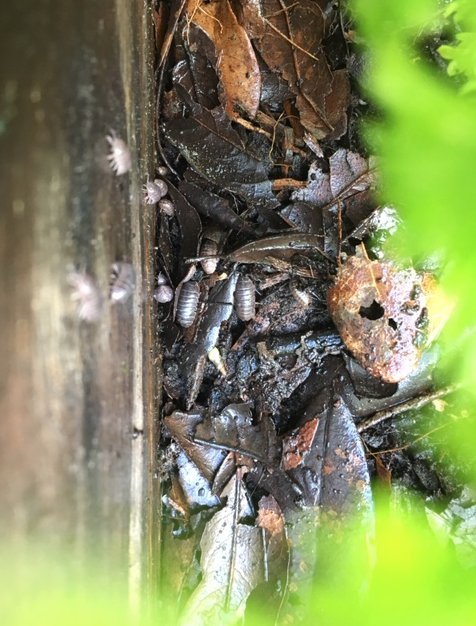
My other problem is all the tiny bugs, which I believe are Pill Bugs. They are everywhere from huddled along the wooden sides of the raised bed, to deep down under the soil. And I’ve found them munching on my cucumbers too.

At first I thought these were a form of the cutworm. These bugs range from tiny to fingernail size. I thought they were harmless, but have found them eating the vegetables, so they need to go.

Screen Shot 2018-06-01 at 2.51.52 PM
Along the inside edge of the raised bed

As I was inspecting the garden, I found colonies of the pill bug along the edges of the garden. Too many to pick off. And as I dig, I find more underground!

Screen Shot 2018-06-01 at 2.52.37 PM
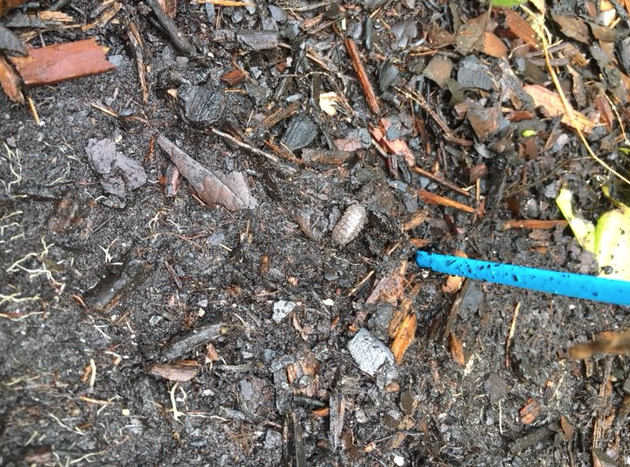
Single pill bug

I’m always looking for organic, natural ways to deter destructive bugs because I don’t use harmful sprays in my yard.

I read that the cutworm will eat corn meal and that will kill it. I’m hesitant to use cornmeal because of the raccoons that visit my yard each night.  I don’t want them digging through my garden because they smell corn!

One site suggested using Food Grade Diatomaceous Earth. I just happened to have some of that!  It’s made of crushed fossils which cut open bug that crawl across it which causes them to die.  I sprinkled it over the dirt in my garden paying attention to the edges.

Screen Shot 2018-06-01 at 2.52.28 PM
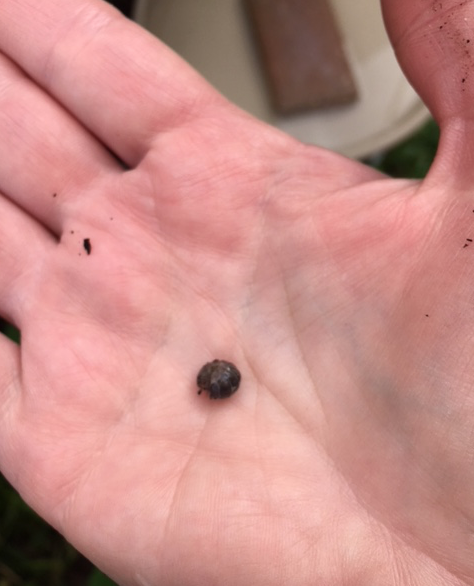
Pill bugs roll into a ball when disturbed

Screen Shot 2018-06-01 at 2.52.53 PM
Bug on the cuke – hard to see, but he’s there a little left of center.

Besides these two destructive pests, I’ve got worms boring into my cucumbers and summer squash. While I was outside dealing with these bugs, an orange wasp (it’s really a moth, but looks like a big bee) was buzzing around my garden. Come to find out it is a squash vine borer moth looking to lay it’s eggs in my garden!  The link has a photo of what those eggs look like.

The link above will give you lots of info about how to prevent the borer moth from laying it’s eggs all over the vegetables.

One idea is to use a Floating row cover.  If the moth can’t get to the crops, it can’t lay the eggs.

Another suggestion which I found to be a simple try is to place a yellow bowl of water in the garden to attract the moth and drown it.