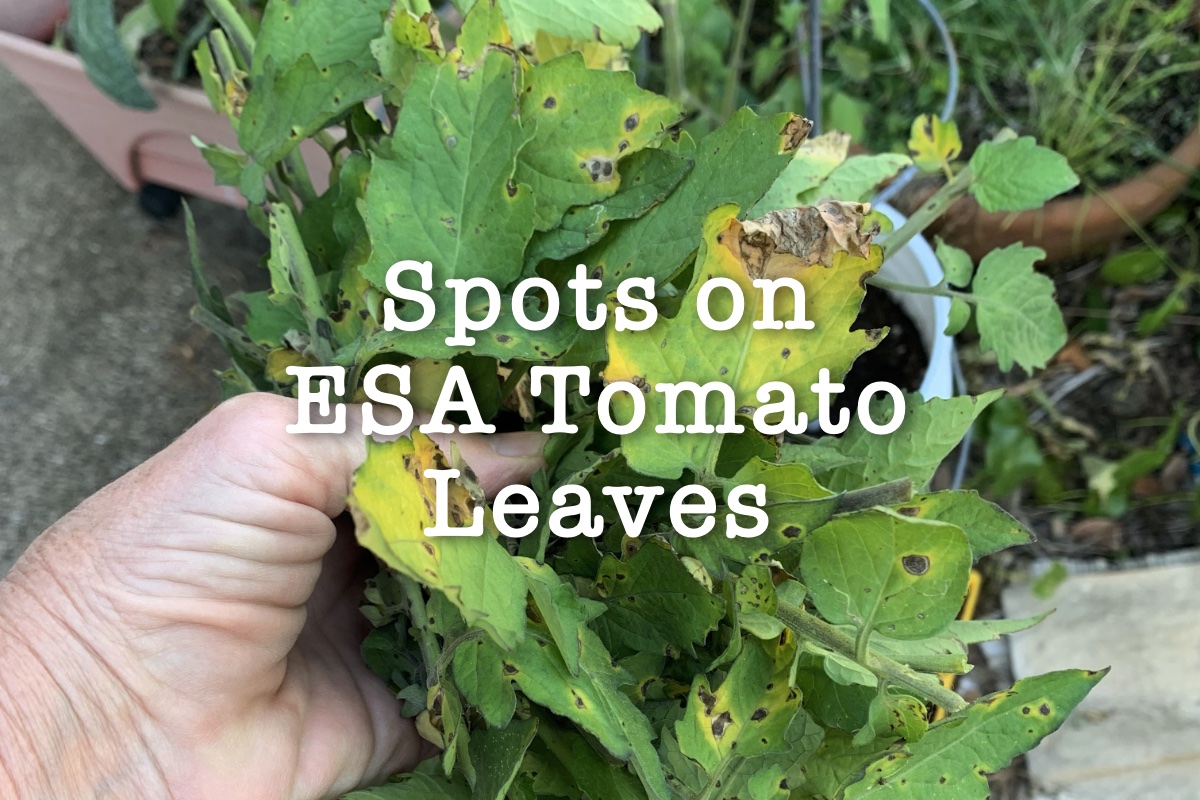
The spots on my tomato leaves are early blight. The spots are obvious, and look correct for blight, but there is also a disease called Septoria Leaf spot that is similar. I’m going to assume I have early blight. Treatment seems nearly the same for both.
After taking a trip to New England, and leaving my Fall garden in the hands of someone else, I was pleased to see that most vegetables did well. Tomatoes are tricky. After a few days back, I did notice that I had spots on one of my ESA cherry tomato leaves.
Yellowing and spots on leaves are certainly a sign of a problem. I never consider that I have overwatered because I don’t think it is possible here in Florida. When it doesn’t rain for days and weeks, that baking sun can dry out tomatoes planted in buckets daily. And my tomatoes are all growing in buckets.
This year I decided to use tall, food-grade buckets to grow my tomatoes and peppers. I also have one eggplant growing in a bucket. (Check out Home Depot, which is where I buy my buckets and pay only $5+ for each bucket with free, same day delivery!)
Spots on plant leaves mean something is going on and when I searched, the most likely culprit in my case is early blight. The description of brown spots that are circled in yellow, were exactly what I had.
Early blight comes from the soil and travels up onto the leaves and then advances upward on the plant. This plant did have a lot of lower leaves that should have been trimmed off – had I been home.
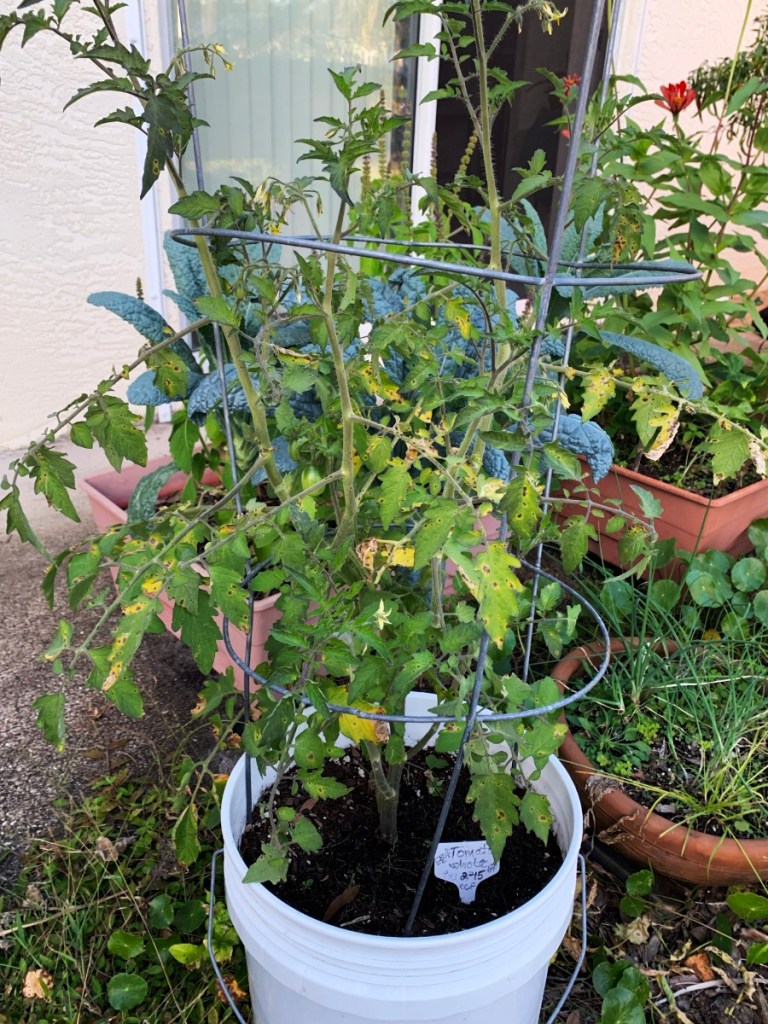
To prevent early blight, water near the base of the plant and not over it. Add something around the base to keep spores from splashing onto the leaves. I added coco coir (paid link) to all four of my tomato plants.
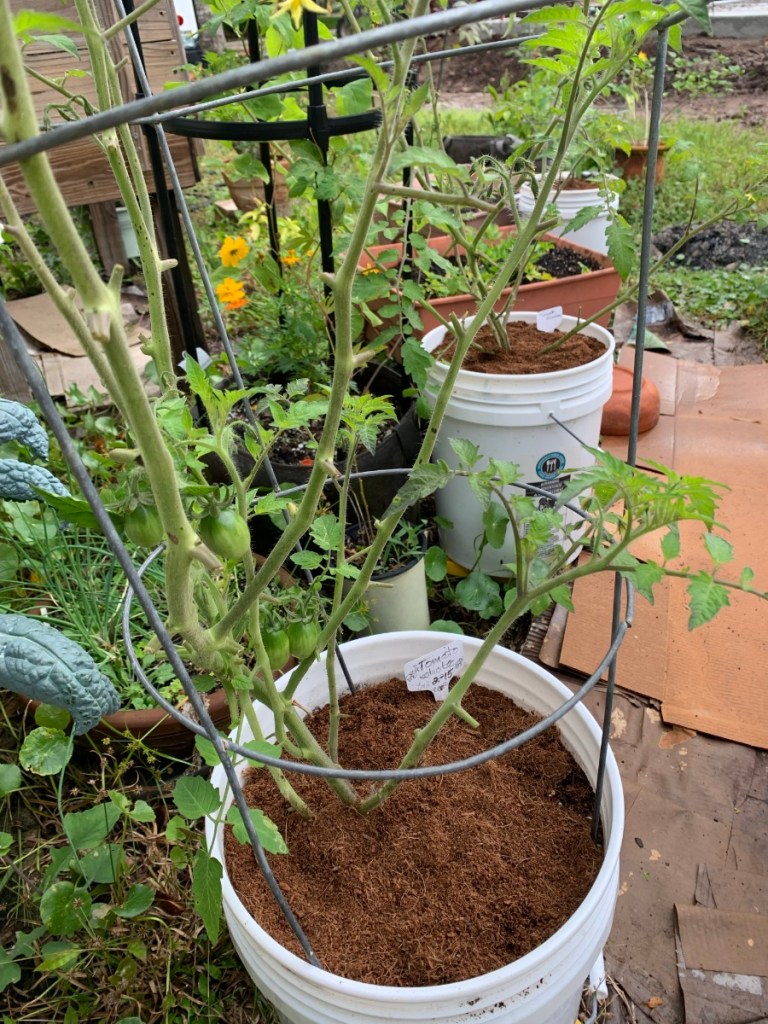
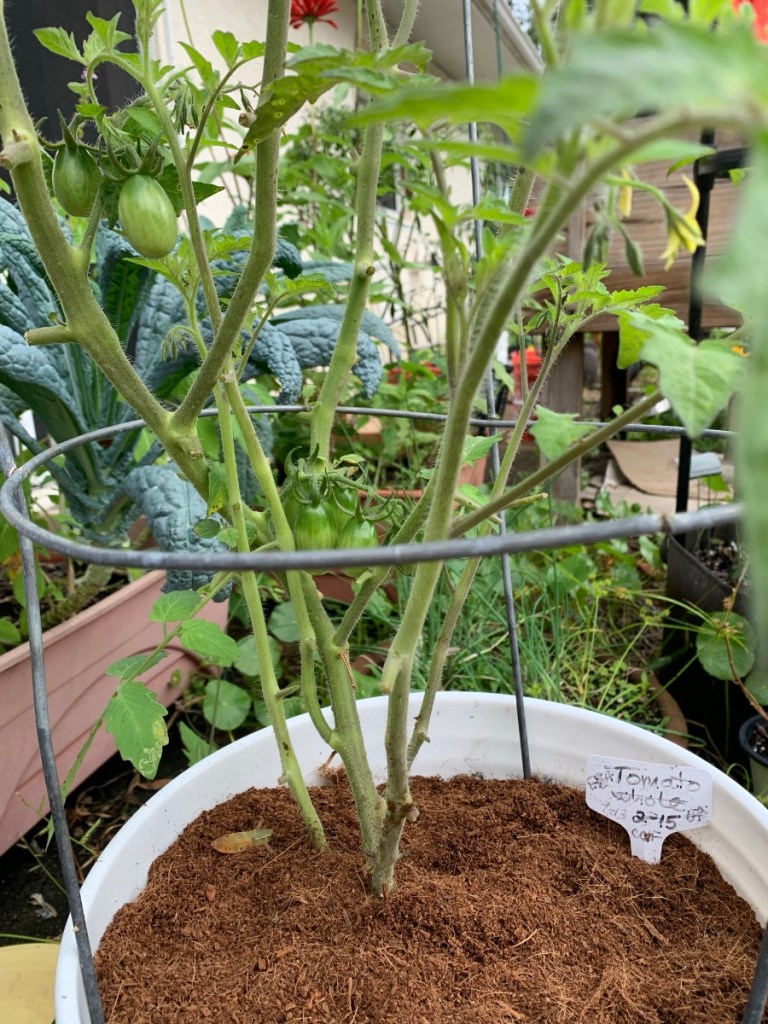
Early Blight vs. Late Blight
Early blight is different (and more manageable than) late blight.
Early blight thrives in humid conditions – I’m in Florida, so it is not surprising. The leaves get spots that are brown with yellow around them (see my photo below). The spots appear on leaves near the bottom of the plant and move upward. That is what was happening on my plant.
It is a good idea to trim leaves that bend down and touch the soil. I usually do this, but as I mentioned, I was not home.
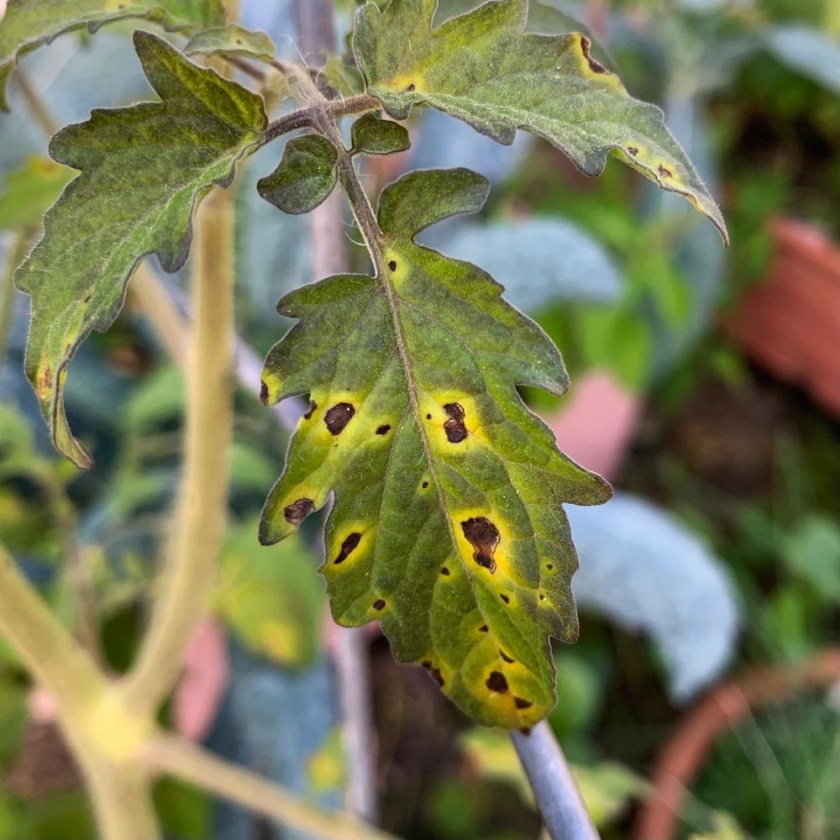
Advice on treating early blight is to remove the spotted leaves. Early blight is not a death sentence for the plant. I gave this ESA cherry tomato plant a good trim to remove many of the spotted leaves. I’ll closely monitor how the plant does now.
I have fertilized it, and it still has many leaves that look pretty good. Some little tomatoes are growing too! The weather has been nicer, with some cooler mornings and the tomatoes seem to be liking it.
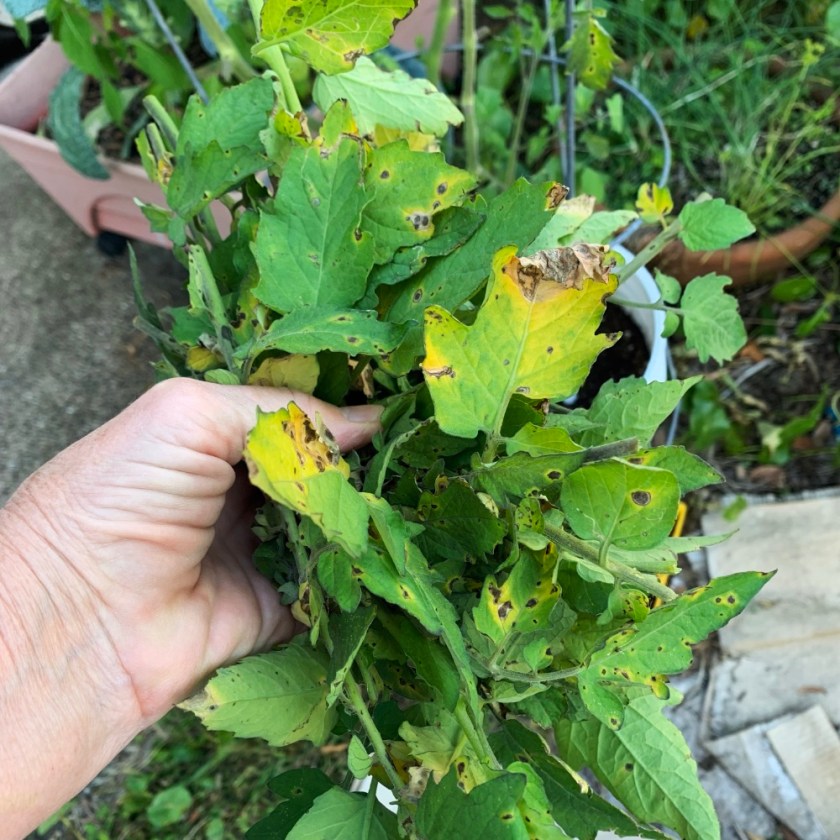
I never put any tomato plants, leaves or roots into my compost. Tomatoes never look great and they can tend to have problems, so I toss the old plants into a pile in the backyard. Advice is to never add tomatoes with blight to compost. And late blight plants should be bagged up carefully so the spores won’t remain anywhere in the yard. Late blight is really awful.
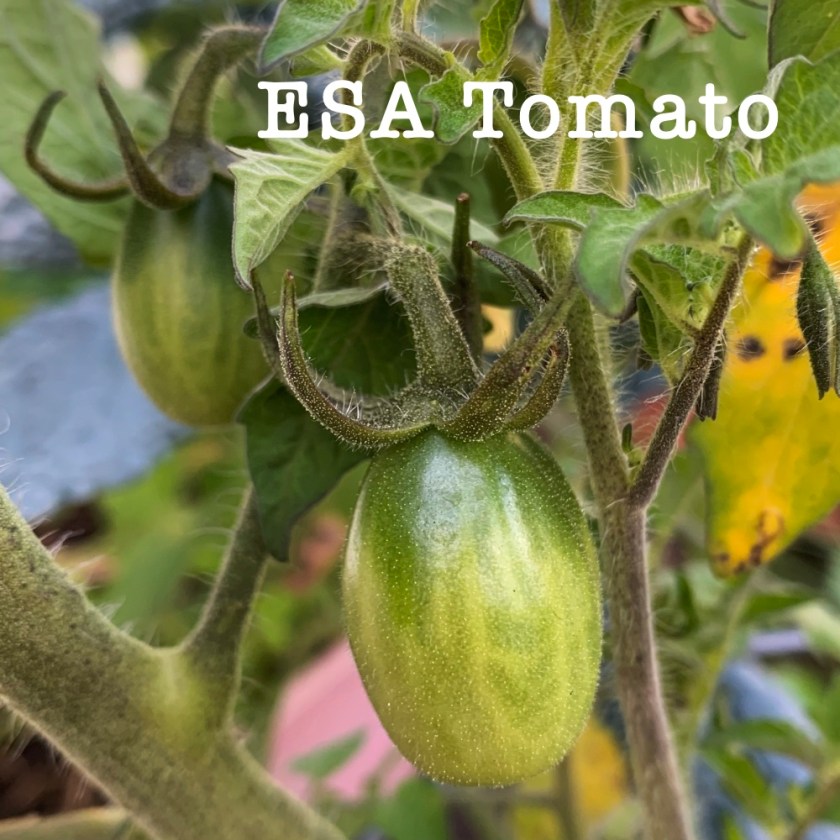
This plant with early blight is the ESA yellow cherry tomato. It is a new variety I am growing from seeds purchased from Cody Cove Farm here in Florida. I have a few growing in my yard and they all look pretty good – only this one has blight. I’ll be keeping an eye on the others.
Late Blight is Different and Very Bad, I Know!
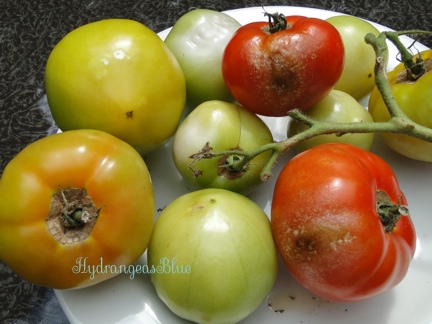
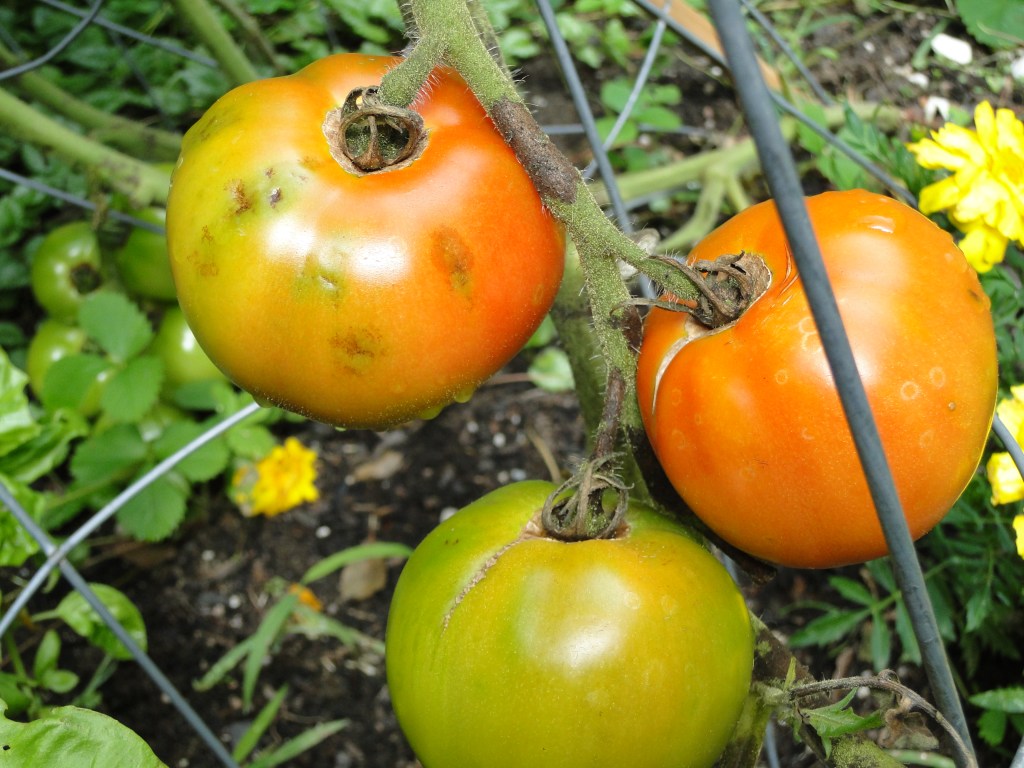
I’ve dealt with late blight before. I’ve never forgotten how I lost a huge, wonderful crop of tomatoes in my New Hampshire garden. It was so devastating! I waited all winter to plant tomatoes (you know how long winters in the north are) and lost just about all 0f them.
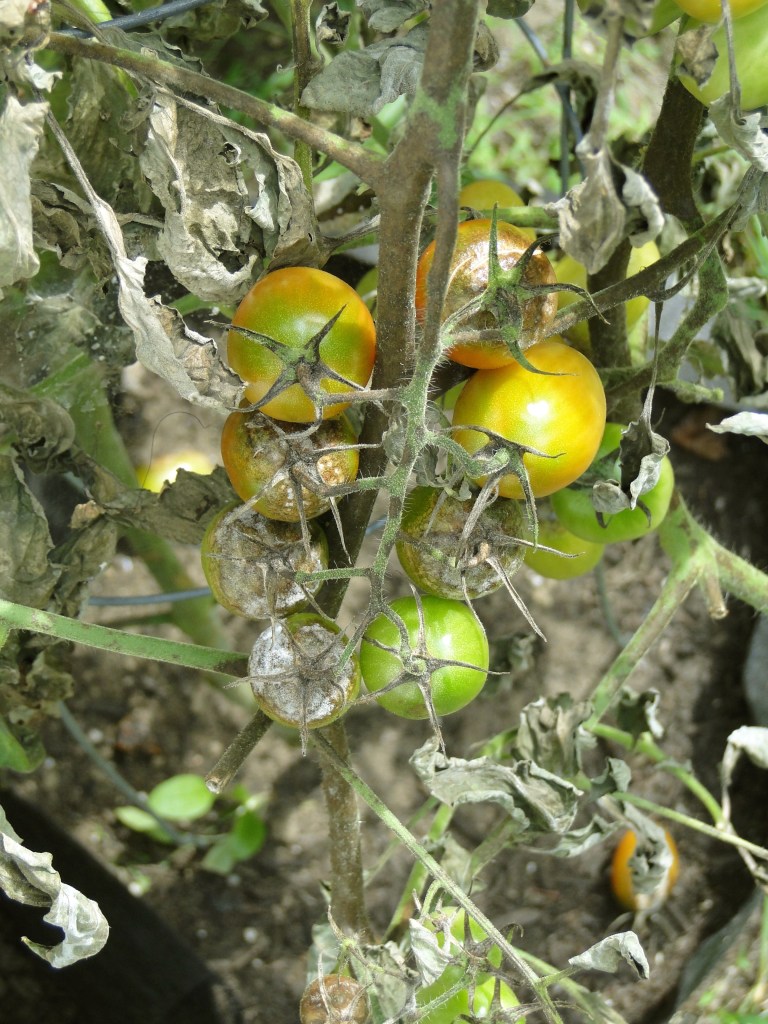
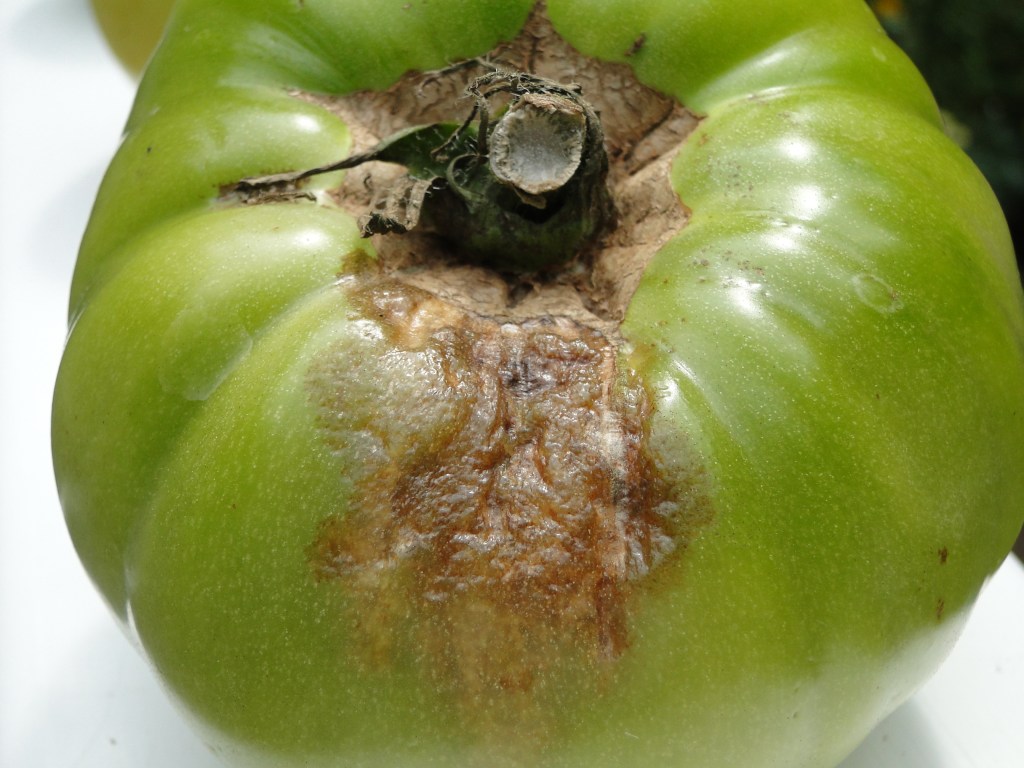
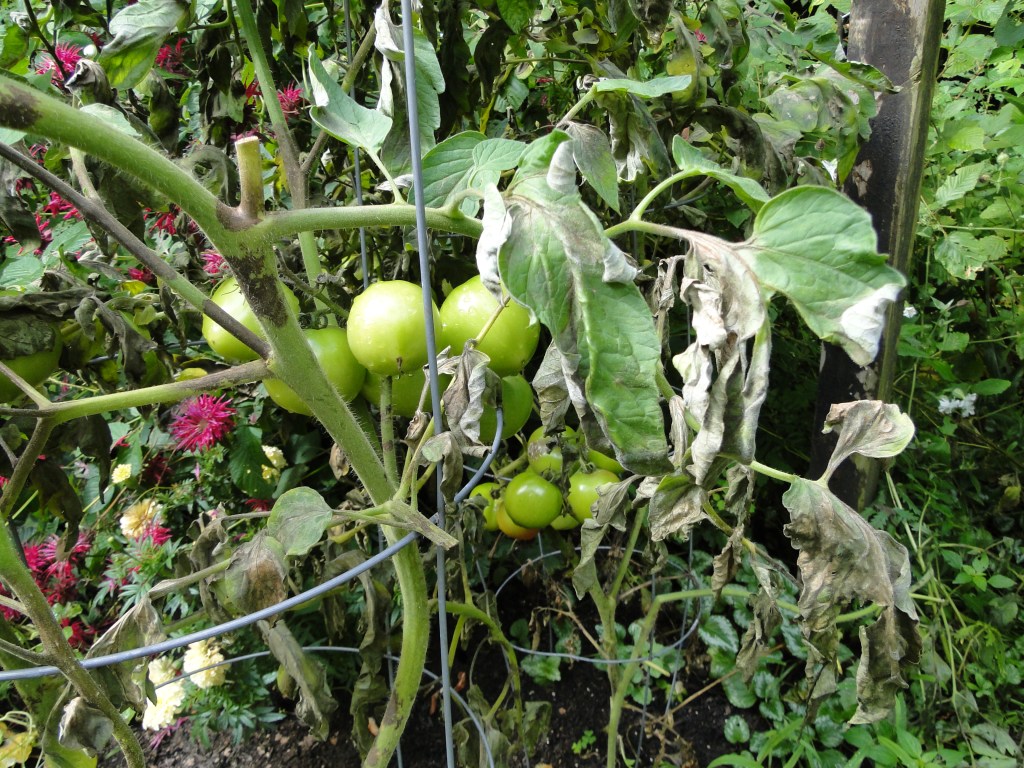
These are my photos of the New Hampshire tomato plants that got late blight. It creates an awful mess and ruins the tomatoes as well as everything else. I was so depressed to lose my entire, big crop.
You can see the difference whereas the leaves below are not spotted. Read more about recognizing late and early blight and late blight on Florida tomatoes.
Other Problems With Tomato Crops
Although growing tomatoes seems to be what most gardeners want to do, tomato plants can have a slew of issues. I guess we love the idea of eating fresh tomatoes – because is there anything better? That makes it worthwhile even if we have to deal with problems.
Splitting fruit is a common problem, and consistent watering can take care of that. If you live in Florida, be sure to water, water, and water some more.
And also fertilize often – probably more often than recommended. Remember, most advice about both watering and fertilizing tomatoes is geared toward northern climate growers. Almost nothing is written specifically for Florida’s sub-tropical climate. If you do follow advice, make sure it is advice from a Florida based grower. Others simply don’t understand our climate.
When suddenly leaves are disappearing and turning into stems, look for the tomato hornworm. Those little guys can eat a lot and fast! Pick the caterpillar off and put it out in the grass or on an open bird feeder. Birds will eat them.
There are many other things that can go wrong with tomatoes so if you see something questionable search for an answer. Sometimes tackling it early can save the plant.
I’ll have an update on this little tomato plant as I see if it recovers from early blight.
Are you a Florida Tomato Grower?
Have you dealt with blight on your Florida tomatoes? I’m always trying to learn more about growing in this climate.
More gardening stories on the blog.
Thank you for sharing!


