What I’ve Learned From Growing a Lime Tree

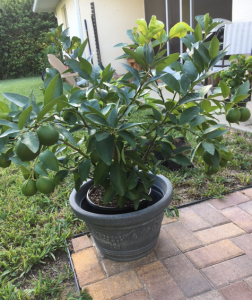
lime tree growing in a pot
My Persian Lime Tree – August 2017

Gardening and growing things here in Florida is an ongoing learning process for me. Last November I bought a Persian lime tree and a Meyer lemon tree to put in my yard. I knew nothing about growing either type of tree but I hoped to pick fresh fruit one day.

That day has arrived! So here’s what I have learned from growing a lime tree. And it’s good news for anyone considering growing a lime tree in a pot. (The lemon tree isn’t doing so well, but I’ll get to that later.)

Flowers to Fruit Timeline

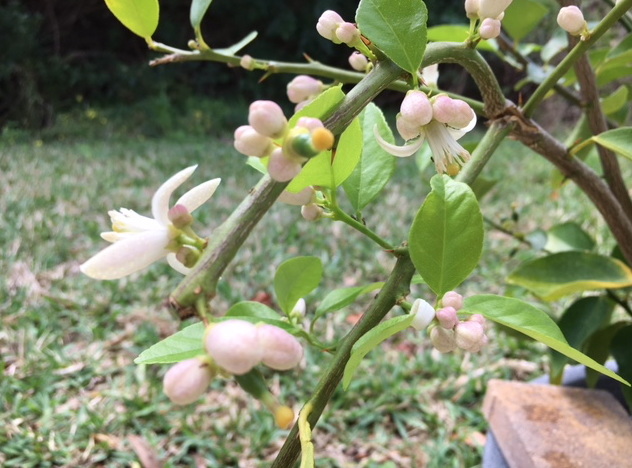
Buds and flowers begin showing up in December and continue to flower and set fruit into February.
lime tree flowers
Buds and flowers on the Lime tree in February


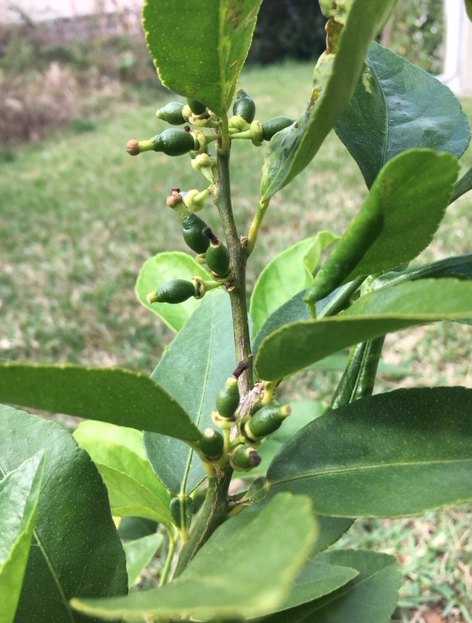
There are buds, flowers and little limes on the tree at the same time. I even have one lone big lime still hanging on from the previous Fall.
little limes
Setting fruit – little limes on the tree in February

By October the limes should be ready to eat. They will last for a couple of months, and I pick them as needed so they are nice and fresh – and delicious!

Once the fruit is gone, the buds begin again. So the tree is always doing something.
sliced lime
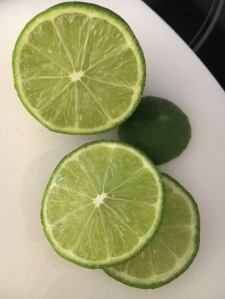
My first lime!

A few days ago I picked my first lime! I sliced it and put it into my glass of water… and boy was it good! I love limes… what awesome flavor. I had really been hoping for lemons, but I think I like limes more. It reminded me of the Mojitos I’ve had – but without the booze. The lime I picked was small, but juicy. I won’t go nuts picking all the fruit, but I will definitely be using the larger limes.

I had wondered when to pick my limes and I simply waited for them to be the size of the ones I see at the grocery store.  The time from flowering to picking was about 6 months.  It is so worth the wait!

Benefits of Growing Limes in a Pot

I kept the lime tree in it’s pot and set it on the corner of the patio in my backyard. I have read that these smaller citrus trees can be grown in pots. In fact they can be purchased through Amazon. This is something I never knew, and the buyers leave very good reviews. They won’t ship to some areas – like the places that can grow and sell their own trees, it seems. Florida is one.

One of the big advantages of growing in pots is the ability to move the plant / tree. Over winter it did get very cold one or two nights and I brought the tree inside. The Persian Lime tree is hardy to zone 10 and I am in zone 9b – a little too far north. When the temps get at, or below, freezing it needs to be covered or moved inside.

Besides the fact that a lime tree can do well and bear fruit while still in it’s original pot, I’ve learned that being in a pot means the fruit-laden branches won’t hit the ground.

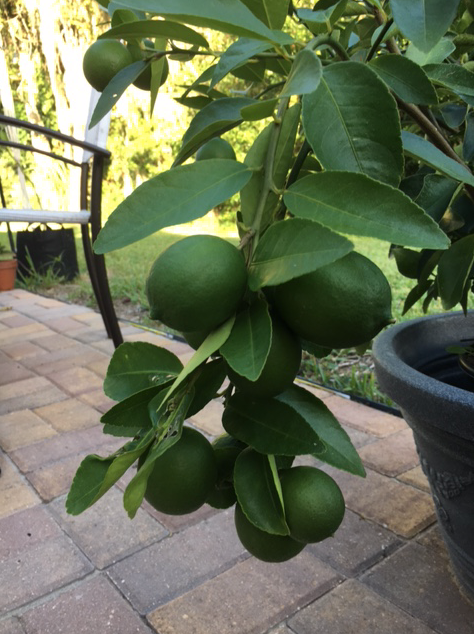
This is the trouble I am having with the lemon tree. Once the heavy fruit began to grow, the branches drooped considerably. As you can see in my photo, many limes are growing in a cluster at the end of this branch which weighs it down.

If this tree was in the ground, this branch would be rubbing along the dirt – and in danger of being hit by the mower or weed-eater.
limes on the branch
Cluster of Limes

The Lemon Tree is Not Very Pretty

Shortly after I planted the lemon tree in the ground, I realized that my dream of having a row of citrus trees along the front of the house was unrealistic. The north wind blows from that direction and it can get very windy some days. I’m not saying it’s cold, I am in Florida, but the constant wind on the Lemon tree has been detrimental to it’s growth.  Between that and being hit by my son’s weed-eating job, the poor lemon tree is having a hard time.  I also think something may be eating the branches.  I may not have any edible lemons.

*Update, I recently dug up the lemon tree and it’s now growing in a pot out back near the lime.

How to Care for Citrus Trees

Both trees receive citrus fertilizer every few months, except in winter. Fertilizing stops in November and begins again in March. This is according to the pamphlet I got at the plant nursery.

Here in Florida, if it doesn’t rain, everything needs to be watered daily in summer. I usually water the Lime tree twice a day. Being in a pot, out in the sun, means it will dry out faster. This changes in winter, when it needs less water. The leaves began to turn yellow and fall off because I watered it too much. Watering every few days in winter (Florida) is fine.

I did have to set the potted tree inside a larger plastic pot and weigh it down with leftover bricks from building our patio. I had to do this because once the fruit began to grow the tree was top heavy and would blow over whenever the soil dried out.

In a Nutshell

I bought my Persian Lime tree in November 2016 from a local nursery for $12.99. It immediately began to grow longer stems and more leaves.   Maybe it was the direct sunlight compared to the nursery conditions, but the tree doubled in size!

A few months later it began to flower profusely and set many limes. Lots of those fell off, leaving the larger ones to continue to grow. Don’t worry if lots of the small limes fall from the tree. The tree seems to know just how many limes it can handle! Many will stay and continue to grow.

I picked one lime, and there are 28 limes left on the branches (I just went out and counted them). I see a few very tiny limes growing also, but they may fall off. Not a bad first harvest!

fresh limes in water
Refreshing…. Fresh lime water.

Non-Producing Vegetable Plants Can Still Serve a Purpose

In the heat of the Florida summer months, I have done little gardening. But the plants I began growing in Spring, are continuing to grow. Even though I am not getting much, if any, produce from them, they serve a purpose. They can be food for worms; give bugs a place to crawl, which in turn feeds the birds, (mostly, I have cardinals); and provide a playground for the lizards.

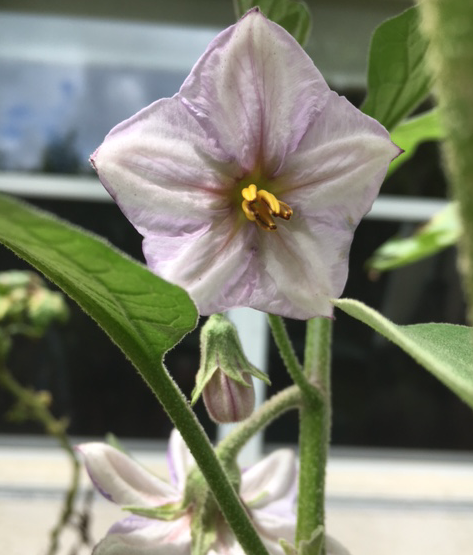
The two eggplant plants I have in the garden have grown tall. They have continued to produce pretty purple flowers, but have never given me a single eggplant!  It’s either the poor soil, or the heat, or both.

Eggplant flower
Purple Flower of the Eggplant

The plants themselves are interesting with their big leaves. I have trouble tearing up and throwing out a perfectly healthy plant, even if it’s not giving me the food I’d hoped for.

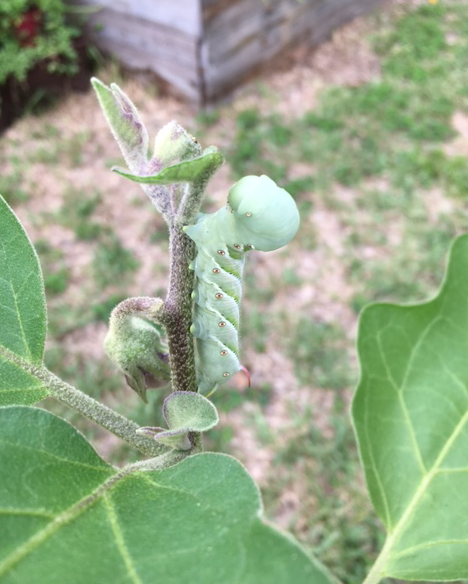
I’m glad I left the eggplants growing, and continued to give them water, just because I couldn’t NOT do so.   I noticed missing leaves and found a big, juicy, tomato hornworm chowing down on the leaves. The hornworm can eat a tremendous amount, and it’s apparent they have arrived when you notice entire leaves missing on the tomato plants!  Stalks can become completely bare in a matter of a days time.

tomato hornworm eating eggplant
Tomato Hornworm on Eggplant

One summer I was visiting my sister in Massachusetts, and she said that something was eating her tomato leaves. Sure enough, there it was – a big green worm. So I pointed it out to her!  She was astonished, but hadn’t looked close enough to see the worm.

Tomato hornworms often show up near the end of summer – at least in the north, that was how it happened in my garden. The one eating my eggplant here in Florida was lucky. I did not care that he was destroying the plant, it was useless to me anyway.  He ate and ate and grew bigger over the course of about 2 days.

I find these pretty green worms quite interesting.  Often, a wasp of some kind lays it’s eggs on the worm, which kills it.  There were no eggs on this guy.  He was doing quite well for himself.

Then he was gone… eaten by a bird maybe? I don’t know. Most of the eggplant’s leaves had been eaten by then, and I felt like I had given him a meal at the very least.  If the worm lives, it becomes the Sphinx Moth.

Most gardeners don’t allow the hornworm to live… it is too detrimental to vegetable plants, like the tomato, eggplant, pepper, and potato plants, as you can see in my photo below!

Bare eggplant after tomato worm ate leaves
Bare eggplant after tomato worm ate the leaves

On to the parsley worms.

In the North, I always grew parsley, and it lasted well into the winter months. But eventually, it did die.  Deer used to come into my backyard and nose through the snow looking for greens to eat, and sure enough, they would find the parsley still going strong at the beginning of winter.

Since I’ve been in Florida – over a year now – the parsley I planted last summer is still growing fine! I use it daily in my omelets, salads, and other home-cooked food.

The parsley is planted in two separate containers, and I’ve noticed that both areas have parsley worms munching on the leaves.  They will turn into Black Swallowtail Butterflies. One has already made a cocoon.

So the plants that are simply growing for … what, fun? in my garden have served a useful purpose to help nature continue.  Whether the worms change into butterflies or are food for the birds, it’s all nature doing it’s thing.

parsley worms
Parsley Worms Become Black Swallowtail Butterflies

Read my page, with my photos, about the Swallowtail Butterflies that come from these worms.

So Long For Now

I’ve given it a lot of thought and I really don’t have time to continue writing on this blog. Or, maybe I should say I’m cutting way back. My efforts need to go into starting a new online business. My knitting blog gets a lot of views and that is where I need to write.…

A Trip to Pell’s Plant Nursery For Honey and Fruit

A few weeks ago I had to take my car to the dealership which was quite a drive. On the way home, I realized I would be passing near one of my old-time favorite spots in Florida: Pell’s Plant Nursery.

These photos were an afterthought, but I wanted to share the few I took.

If you are ever in the Osteen area check out this place. It is a Florida icon. The Pell family has been growing citrus for over 75 years.  (Their website: http://www.pellcitrus.com has Florida citrus shipping information.)

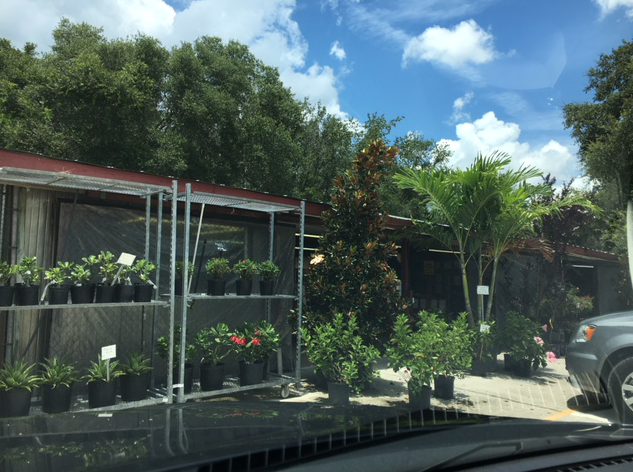
Pell's nursery
Pell’s Plant Nursery

For many years I lived very close to Pell’s, and now I don’t. It’s where I always bought my ornamental shrubs, flowers and trees, not to mention their fabulous and fresh Florida fruit. My landscape was full of plants purchased from this nursery.   My kids used to enjoy getting the free little cup of orange juice, which meant they would actually drink the jugs of fresh-squeezed juice I bought there!  You can’t find fresher juice, and boy is it good.

These knowledgable growers hand out good advice for growing anything tropical.   This is where I came to buy the new lemon tree and lime tree to put in my yard.

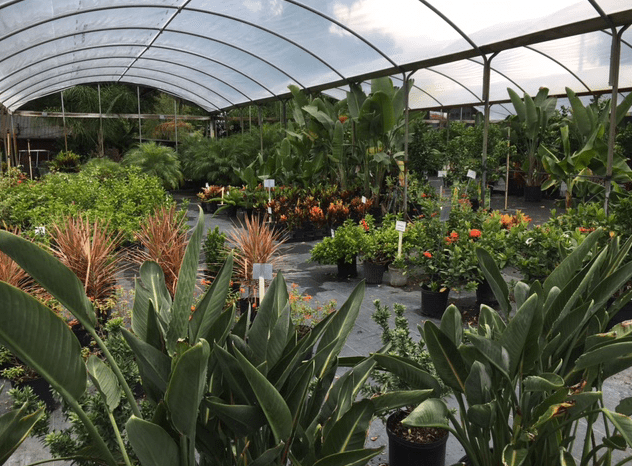
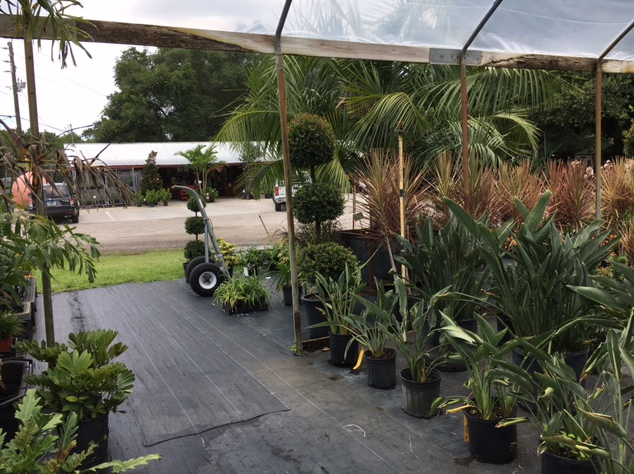
Pell's trees and tropical plants
Under cover with tropical plants at Pell’s

On this day, I was only looking – window shopping for plants to buy in the future – its been too hot to think about planting.  I bought some of their produce instead, but enjoyed my stroll around the greenhouse.

Each time I visit I also buy some Mosquito Lagoon honey. My honey used to come from the Jurss homestead, when I could pull up at the side of the road, drop money into a box and grab a jar.   That was in the old days.  People probably can’t be trusted to do that here now.

greenhouse Florida
Pell’s Greenhouse

I looked around and got some ideas about what I’d like to add to the yard once Fall arrives.  The crepe myrtle is something I have always loved, and it will probably be the first tree I buy.
Pell’s nursery is one of the few places I like to visit in Florida.  In fact, when I lived in New Hampshire I would accidentally call my favorite farm stand “Pell’s”.  (Actually it was Tenney’s.)

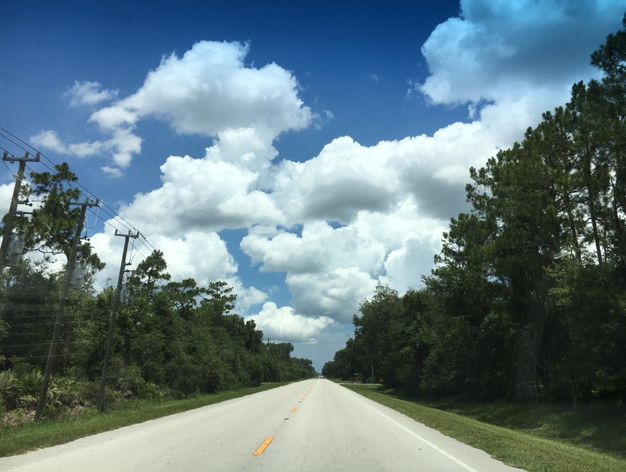
Then I drove home on those long, straight, monotonous Florida roadways.  I was so bored that I took a few photos with my phone.

straight road and blue sky
Heading home

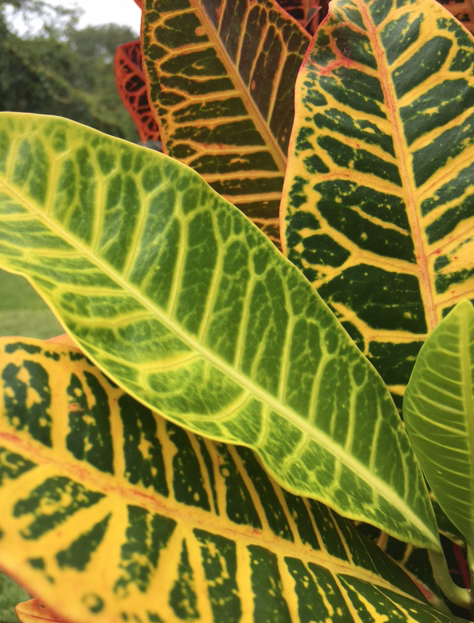
Pictures of Croton Leaves

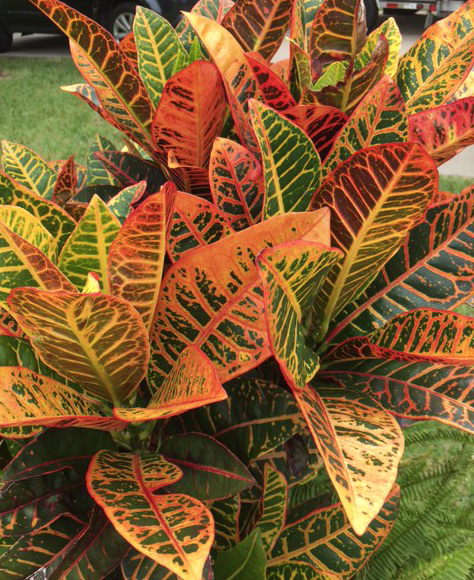
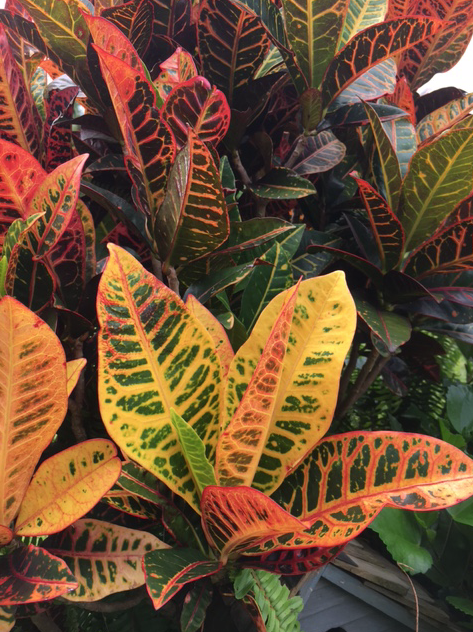
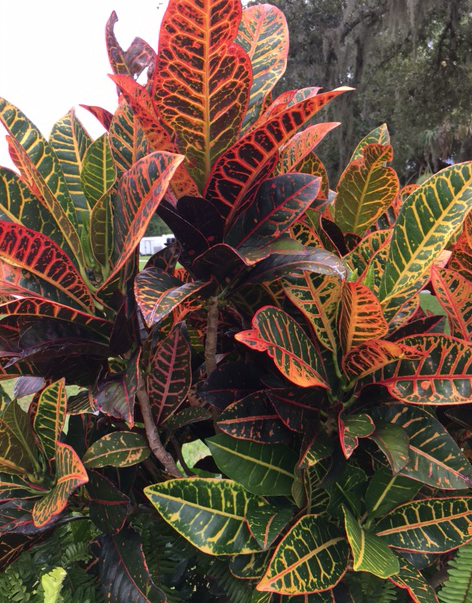
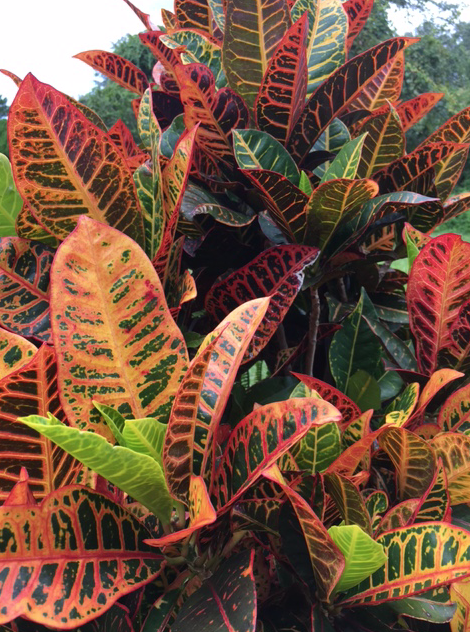
The leaves of the croton are really stunning.  They are as pretty as any flower, and come in such an array of colors, that they can brighten any landscape, as long as it’s subtropical.

Crotons don’t handle cold well, with established, older plants handling it best.  I live in climate zone 9 and have this big croton plant in my yard.  I have no idea how long it’s been there, but I did not cover it at all last winter.

Then again, last winter in Florida was not all that cold.

colorful croton leaves
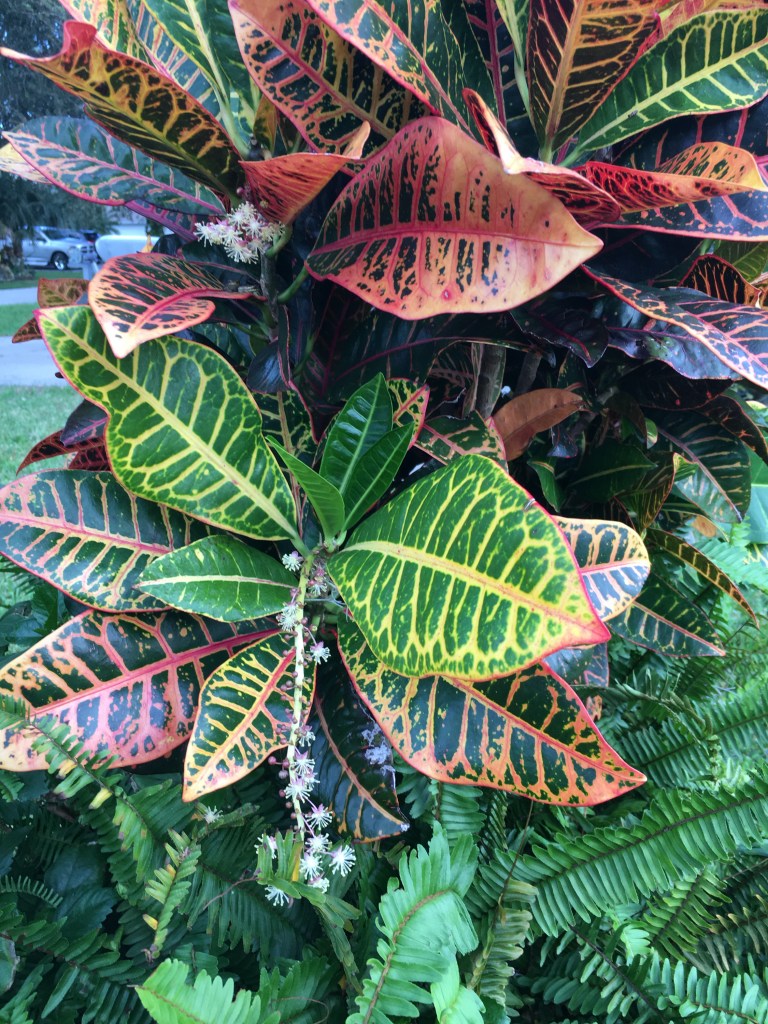
My croton is in a big pot with ferns and a red hibiscus bush… also a birdhouse is stuck within the branches.

Recently I went out in my yard and took some photos of the croton leaves and wanted to share them with you.

The croton is also easy to propagate.

colorful croton leaves
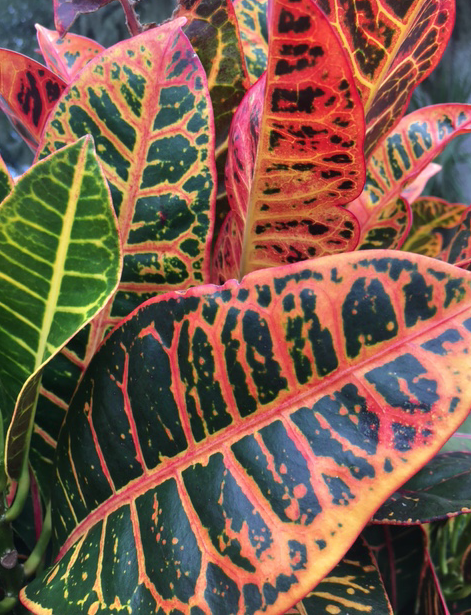
The color combinations are so beautiful
colorful croton leaves
Pink leaves… where else can you see this?

If you are looking for brightly colored plants for your Florida, or tropical, landscape, check out the Cordyline plant and Caladium.

colorful croton leaves
The bright reds can become dark purple as the leaves age
colorful croton leaves
This croton has been growing for years, I imagine
colorful croton leaves
Even the yellow and green leaves are outstanding

For those of you who do not live in a warm climate, the croton can grow indoors. I’ve never done that, but you can search the internet for helpful advice on doing so.

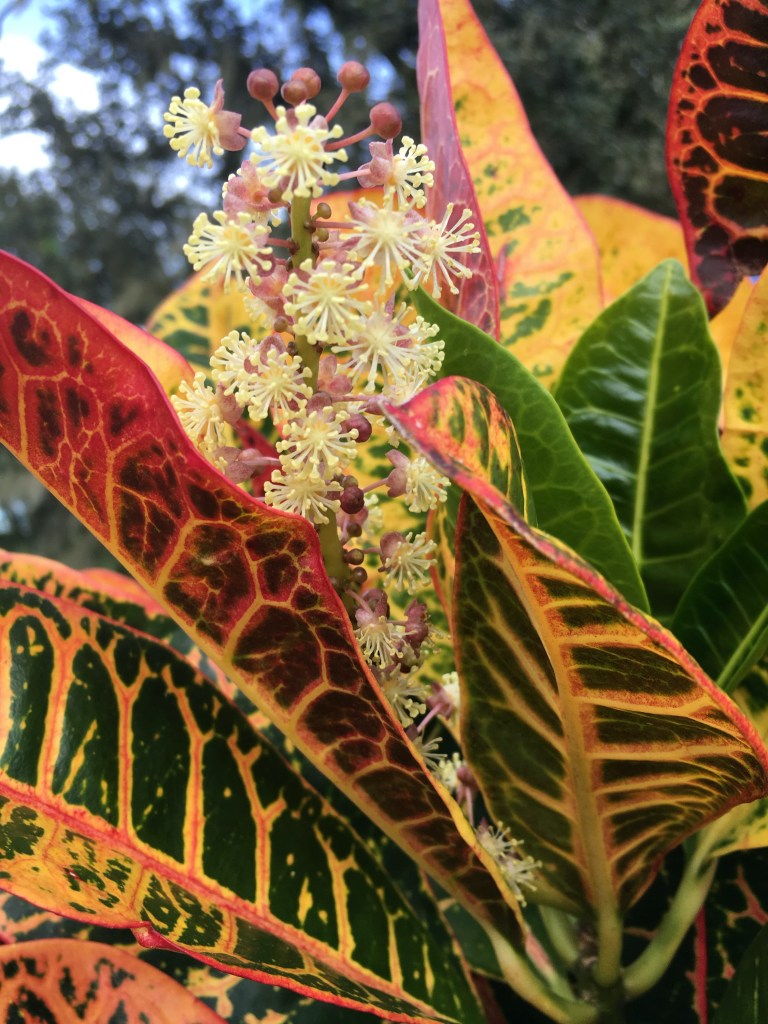
Colorful croton plant with flowers
Croton with stems of flowers
Flowering croton plant

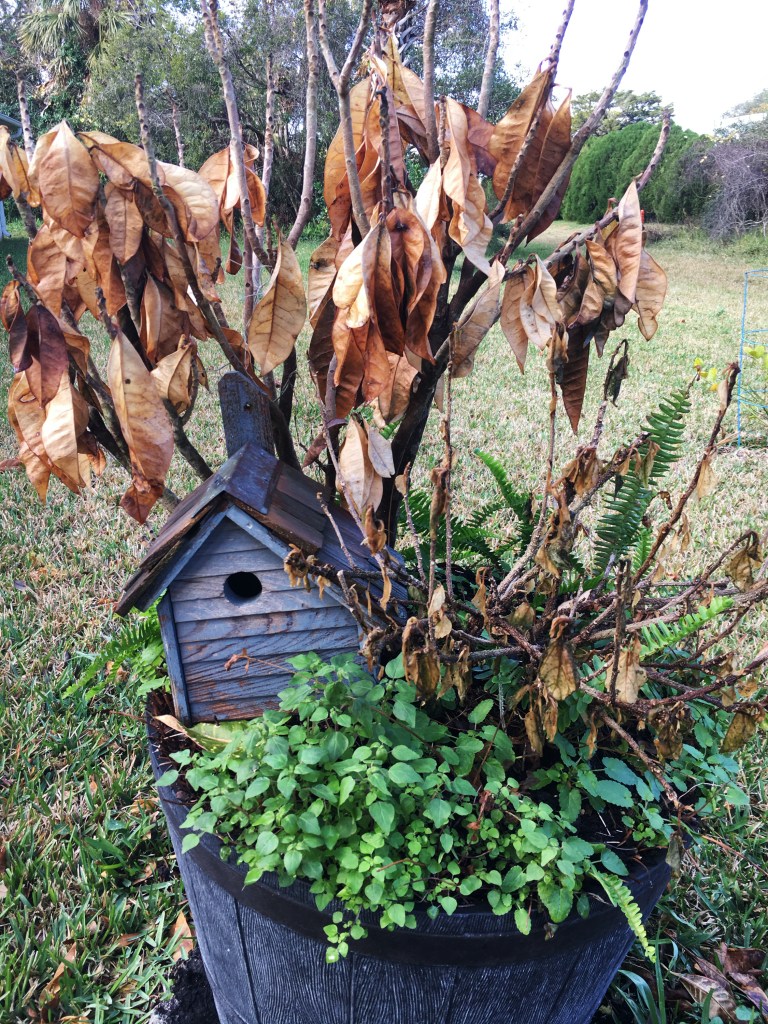
My big beautiful croton died over winter when we had exceptionally cold weather. But… I had taken cuttings and begun new plants so it lives on through it’s “babies”.

dead croton from winter freeze
Croton dead from winter freeze

Building Good Soil in a Raised Garden Bed

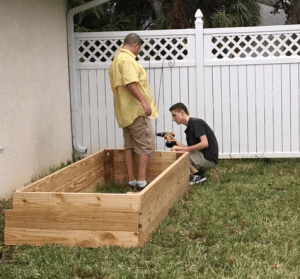
pine wood raised bed
Raised Garden Bed

I was thrilled to see the raised garden bed my son had made. He wanted something to do, so he researched the “how to’s”, went and bought the wood and put the thing together. With his brother’s help, they carried it to the backyard and finished tightening the screws.

Step one on the road to Florida vegetable gardening was complete.
Now I just needed some dirt! But buying dirt doesn’t mean you will have the good soil needed to grown super veggies.

Most gardeners know that soil makes or breaks the growth of the plantings. Planting directly in the ground means there is at least something there to begin with, but starting with an empty box means building the good soil from scratch.

The Basics For Building Good Soil

Over the years this is what I use to create good, worm-loving dirt that gives a good yield of crops.  I’m no expert, so feel free to leave a comment with your recommendations.

1. Loam / soil / organic dirt
2. Compost – store bought and / or homemade
3. Organic Fertilizer
4. Bone Meal (for crop root development)

The location of this raised bed presented a problem when it came to filling it. My son has a truck and was happy to go pick up a load of loam / dirt, but getting it to the wooden box was not going to be easy.

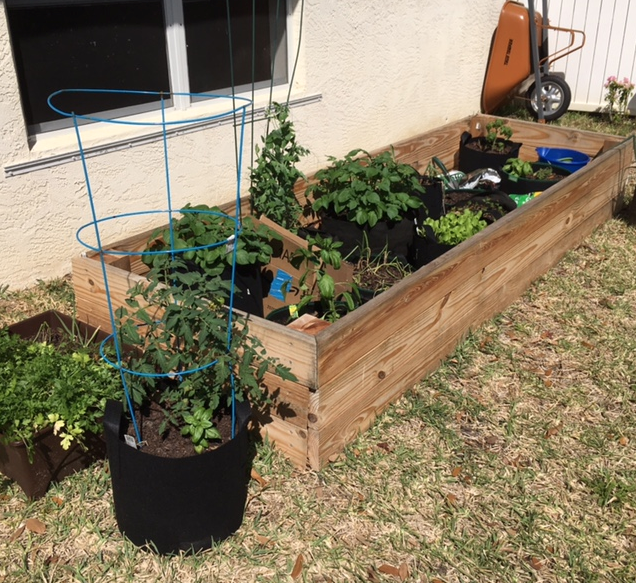
First we filled the bottom of the box with leaves and grass collected in the lawn mower bag. Then I put my black fabric garden bags inside the bottomless box.  I also left a few pieces of cardboard in the bottom to help keep the weeds / grass from growing.

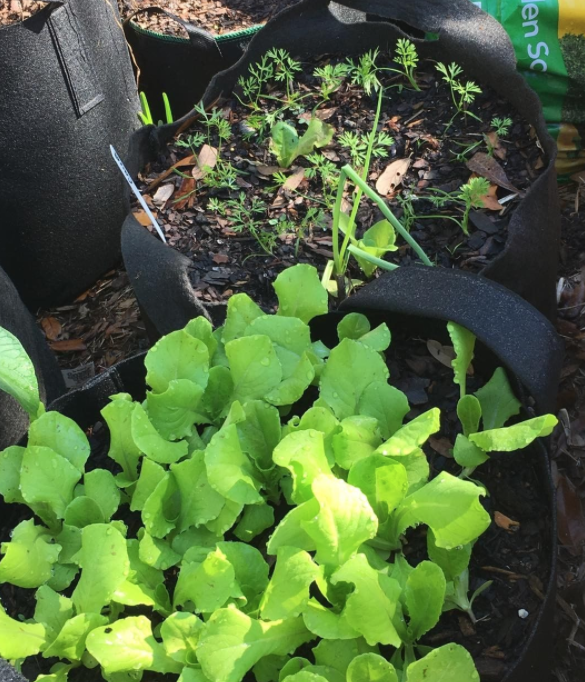
growing carrots and lettuce
Bags with carrots and lettuce

For now, I planted vegetables separately in each of the bags, and I ended up buying some new bags, so I could grow more.

Two bags had potatoes – the red ones gave me lots of little red potatoes, with tomatoes, peppers, lettuce, and peas in the others.  When the plants had gone by and were no longer producing, I dumped them into the bed, plants and all.

screen-shot-2017-03-02-at-9-27-07-am
My Garden March 2nd

Between using the dirt in the black pots, and adding compost (store bought and home made), I can eventually fill the box with relatively good soil.

Creating good garden dirt is an ongoing process.   Banana peels, egg shells, and chopped vegetable scraps can be added directly to the dirt in the box.  Soil amendments must be continuously used to replenish the soil.

Hopefully, that will bring earthworms.  Soil can’t be called good, unless there is an abundance of worms!  This all takes time.  The ingredients have to break down over time.

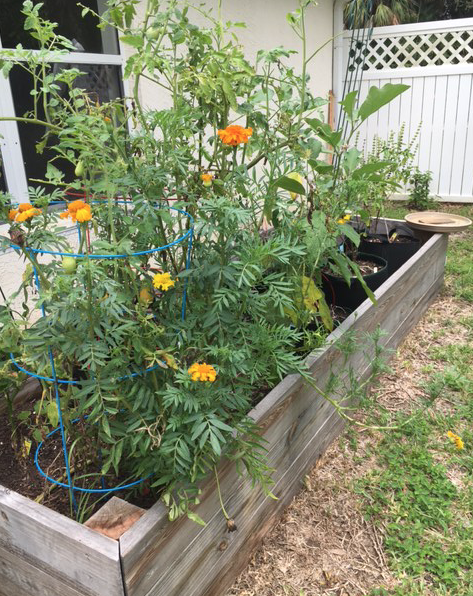
It’s been 6 months since I began to fill my raised bed, and haven’t done much this summer except let the tomatoes, basil, eggplants, and peppers grow wild. The heat keeps me inside, but I do pick a small tomato or pepper every now and then.

The wood has faded to a weathered appearance, and slowly I will be raising the soil level as I empty more of my fabric bags.

summer garden raised bed
The Summer Garden Grows Wild

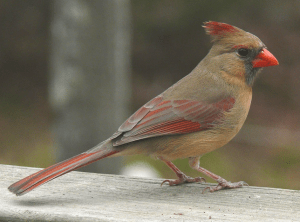
female cardinal
Female Cardinal, photo credit: Skeeze @ Pixabay

Cardinals come to the garden looking for bugs to eat, and they drink and bathe in my makeshift bird bath sitting on the corner. (I can’t get a good photo, so I used this one from Pixabay.)

Little lizards run along the edges and I see the occasional ladybug and butterfly on the plants.  Parsley worms have been found on the parsley.

raised garden bed building the soil
Once the weather cools off enough to work outside, I will dump all my fabric bags out into the box. I will add more grass clippings, along with organic fertilizer, bone meal, and cornmeal (supposedly it brings worms). In other words, I will work on building up the dirt to get it ready for winter planting.

I’ve found that the big wooden box is a good place to store my unused bags and pots for now.

A Little About My Gardens, Past and Present

great-grandfather
My son and his great-grampa, 1978

I recently read a blog post where the writer explained about her backyard garden.  She included photos and her plans for each area of the outdoor space.  You can read it at the Hairytoegardener’s blog.

Growing up in Massachusetts, I lived on a hill overlooking my grandfather’s huge vegetable and flower garden.  I remember him always there, working in the garden (except in winter of course).  I can still picture him jiggling along with that old rototiller digging up the earth.  I wish I had run down and helped him do what he did, because I could have learned first hand how to be a successful grower of fabulous fresh vegetables.

I think he liked the solitude of gardening, so I would have been an unwanted pest maybe.  But as I recall, my grandfather was always kind and enjoyed us kids being around.  I think he could have taught me a thing or two about gardening.

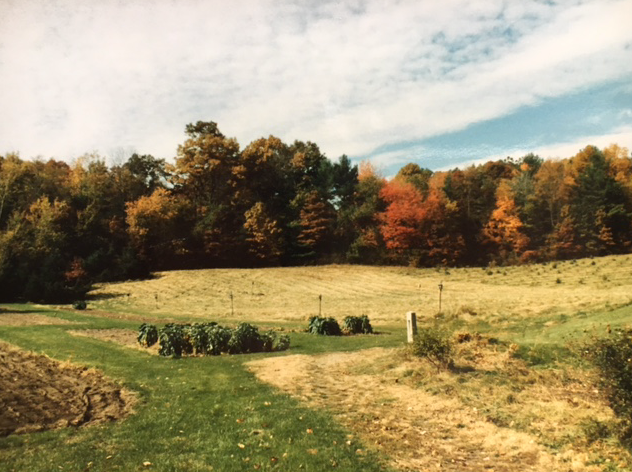
Grampa's garden
The Field and Garden – after Grandfather was gone

Anyway, I never really got into gardening mainly because I had children who took up all my time. I presently have a 40 year old son, a 19 year old son, and two more in between. The most gardening I have done over the years were in my big Florida yard, where I planted everything tropical I could get my hands on, and in New England where I truly enjoyed digging in the ground.

I’ve lived at 16 different addresses. Some of those for only a very short time. In fact, one address was merely wishful thinking. I never actually had the chance to move in, but my items were there for a few weeks. The condo I was about to rent flooded from a burst pipe, and it was necessary to find an alternate place to live – temporarily.

I’ve spent many of my later years in survival mode, and that means I didn’t get to even think about such frivolous things as gardening.

But, when I had the chance to allow my mind to dream of a backyard full of flowers and blooming trees, and an herb garden, and picking ripe tomatoes, I worked relentlessly to make it happen. A lack of land restrained me somewhat, but in the first home, which was all my own, in New Hampshire, I planted in every available sunny spot I could find.  I did it all by myself, and I had a beautiful spot to enjoy.

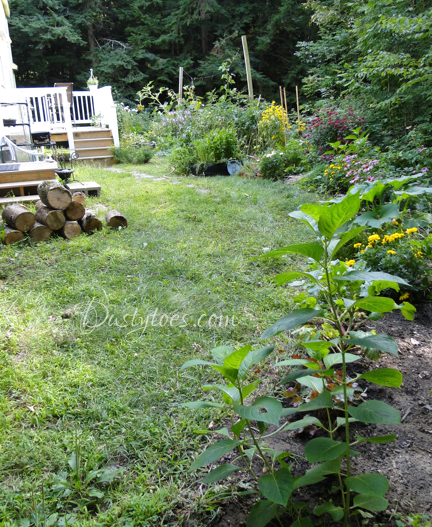
backyard garden
My New Hampshire Backyard & Gardens

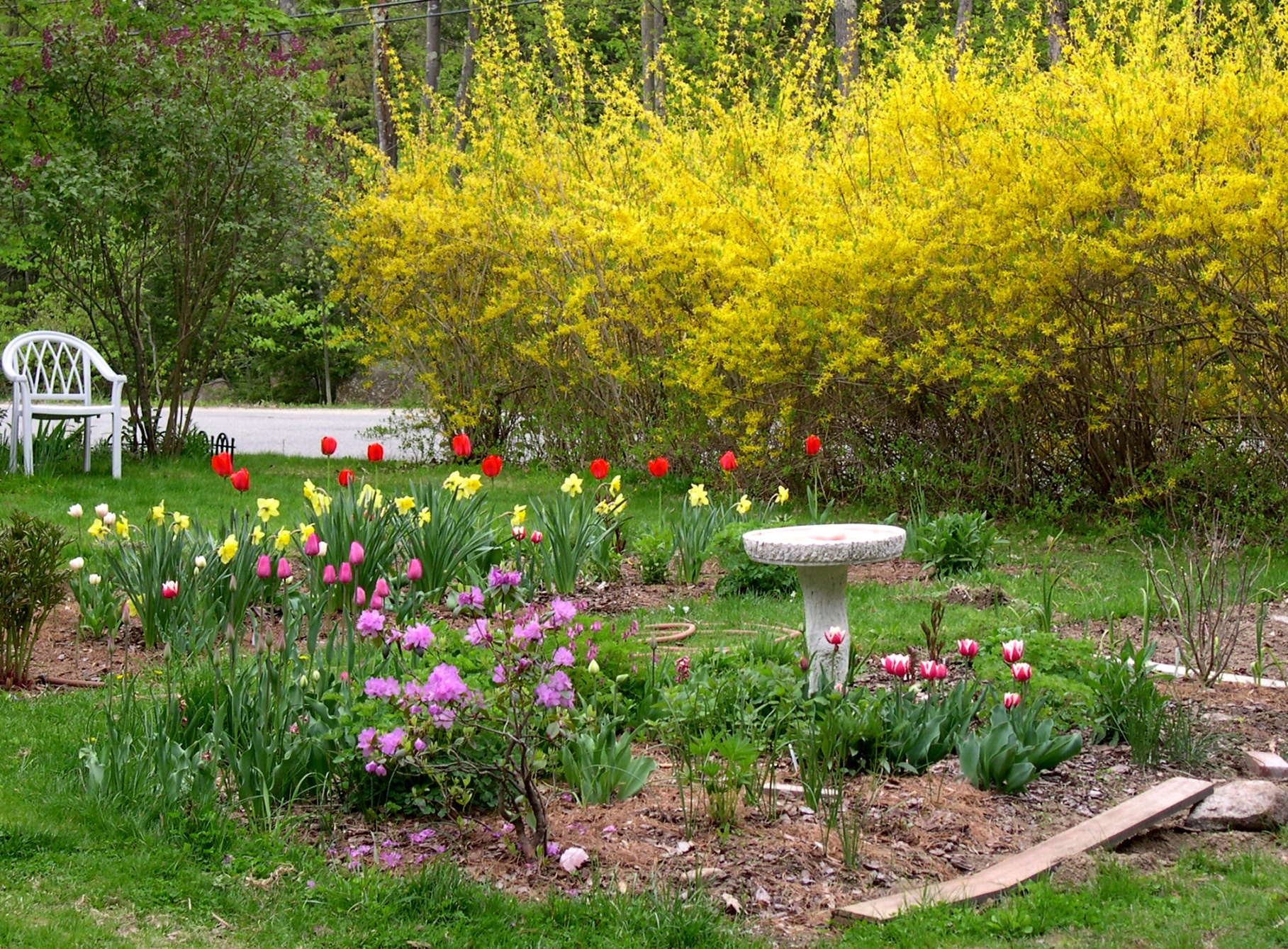
However, before that home, I had another New Hampshire home. It was the last place I lived.  Really, those were the last days of my life.  At that time, I lived more like most of the population. I was a normal person. And my husband (now ex) and I bought a house with land..!!!!… that had a wonderful array of gardens and ornamental trees, with a gorgeous forsythia hedge by the road.   In spring, I saw the tulips and daffodils pop out of the earth… imagine!  There is none of that in Florida.

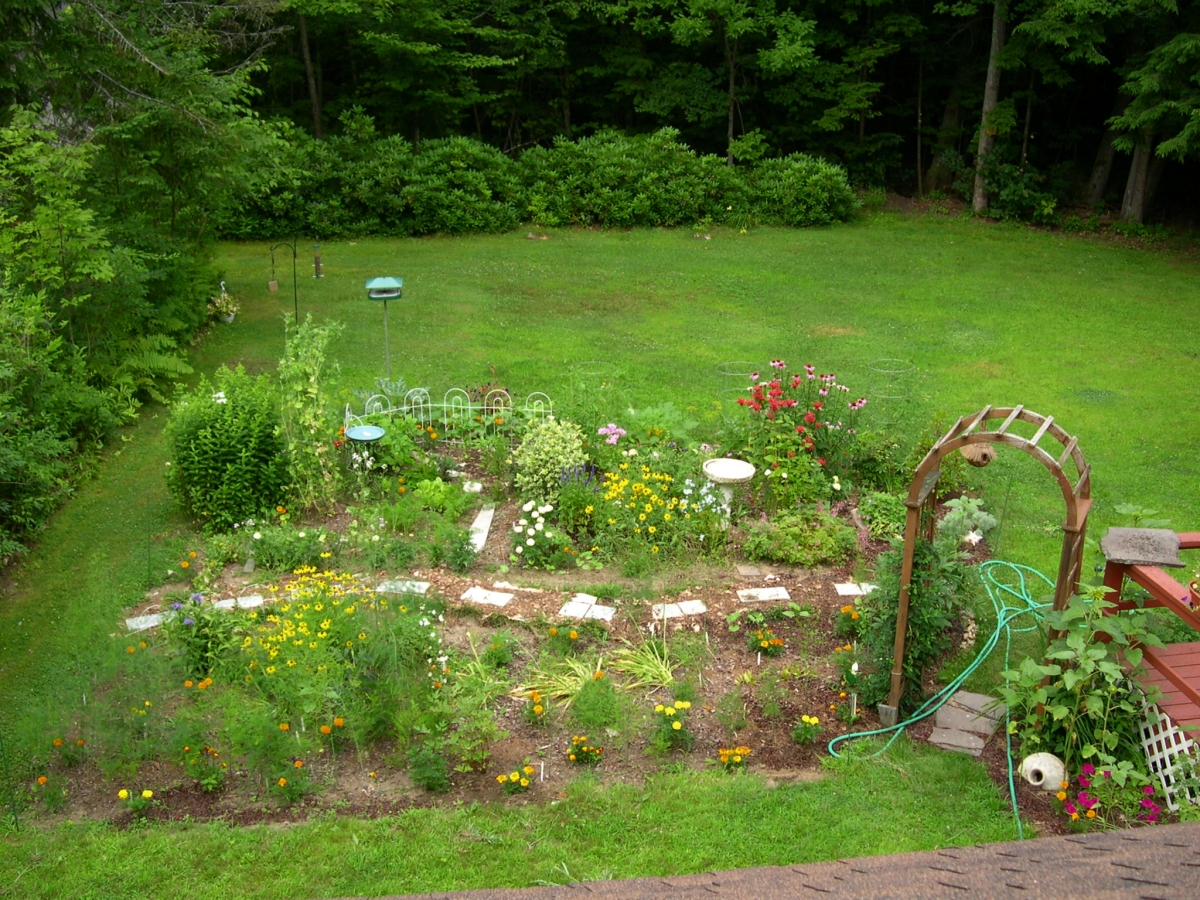
Immediately I began to study the New England plant varieties and saw my yard becoming even more stunning as I planned to include more and more new shrubs and trees over the years.   In the two summers I lived here, I expanded the garden, adding a block pathway, bird feeders and bird baths.  There was an asparagus garden – I’d never had that before – and we saw black bear, turkeys and deer in the yard.  There was even a wisteria growing over a backyard arbor (not in the photos).  Yes, I could have lived here for the rest of my life, but two years later we were gone.

tulips and forsythia
Forsythia and Tulips, Spring at my first NH home

backyard garden
New Hampshire 1st backyard – photo taken from a skylight on the 2nd floor

When I write about my first NH house, it’s like I am talking about another person’s life. It was only 12 years ago that I lived here, but it seems like 100.

Today my yard is small and my house is surrounded by St. Augustine grass which grows like thick vines intertwining with itself.   This makes it incredibly difficult to remove – if I wanted to plant a garden.  Instead I have chosen a raised bed to grow vegetables (hopefully).   The plantings in the yard are simple and easy to care for as this was a home owned by some wealthy people who rented it out over the 12 years they owned it.  There is even a sprinkler system.  It’s a self-sufficient house.

So I have begun yet again to try to establish a beautiful yard. Except now I am older, and struggle with a disease that saps my energy. The gardening bug, once installed in our DNA, is impossible to ignore. My mind says “it’s too hot here, give up and just be at peace with the yard as it is”.

But my heart calls me to don those gloves and go out and dig!  Collect seeds, experiment with new plantings, take clippings and see if they will root and become new plants on their own.

The old dreams of a beautiful garden in my backyard are gone, but I feel good about the fact that when I had the chance, however fleeting the opportunity, I made the best of it.  I’ve left some great gardens behind.  I guess it was my tiny contribution to the planet.

Still, I can’t stop.