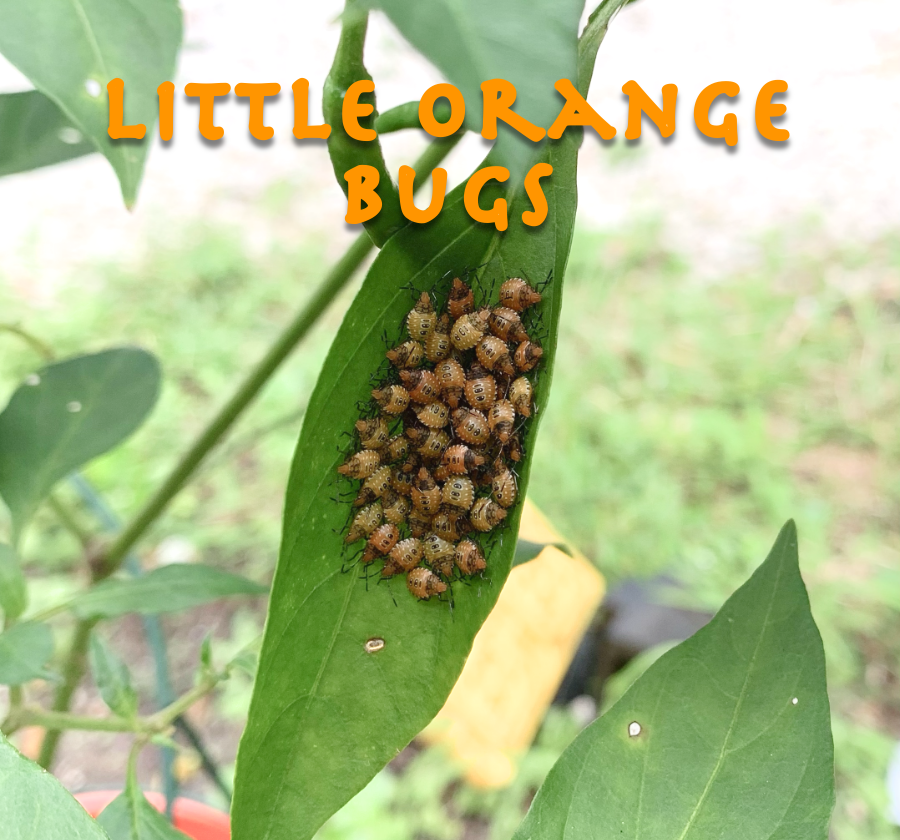
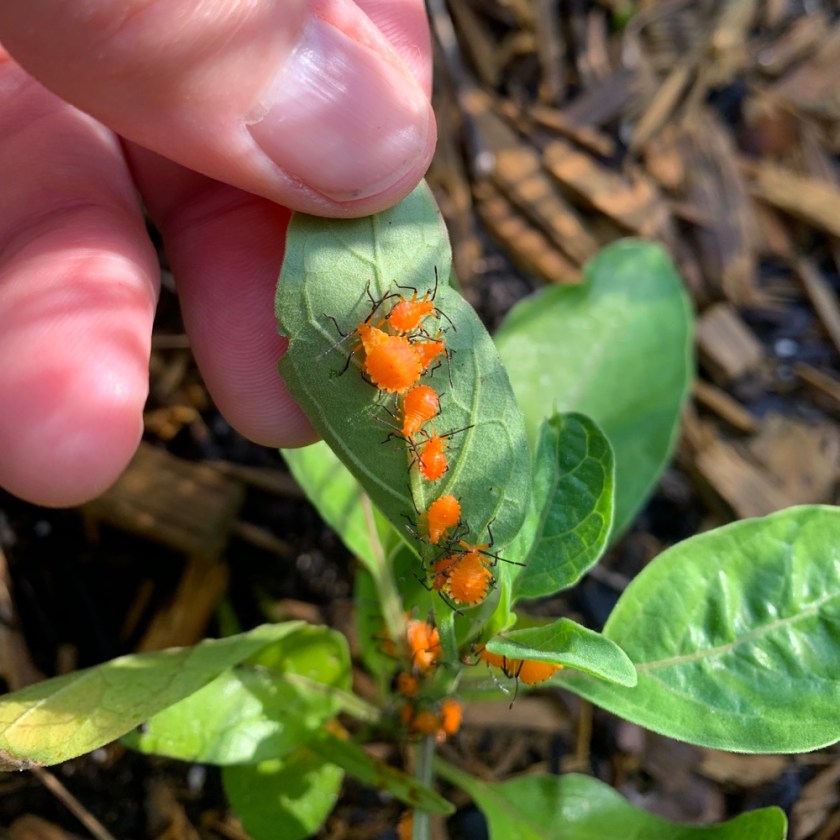
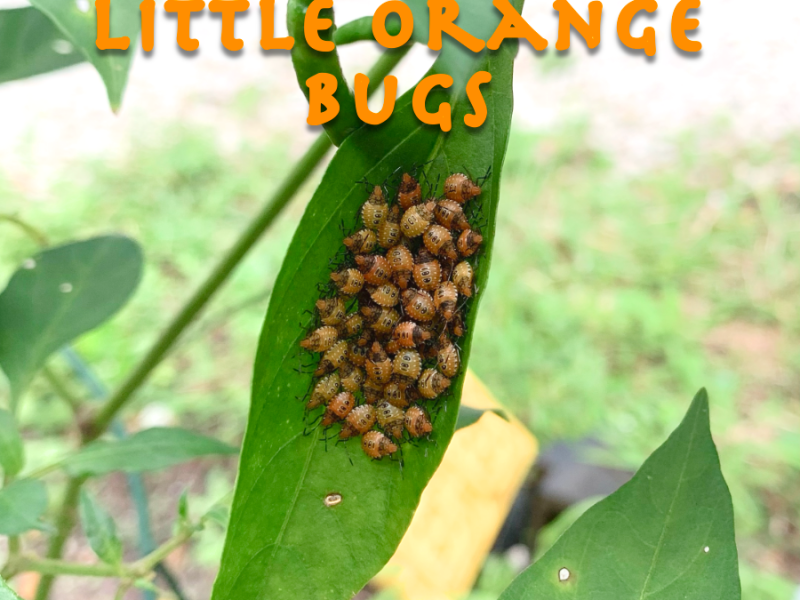
I need help identifying this cluster of little orange bugs. They are on a Cayenne pepper leaf.
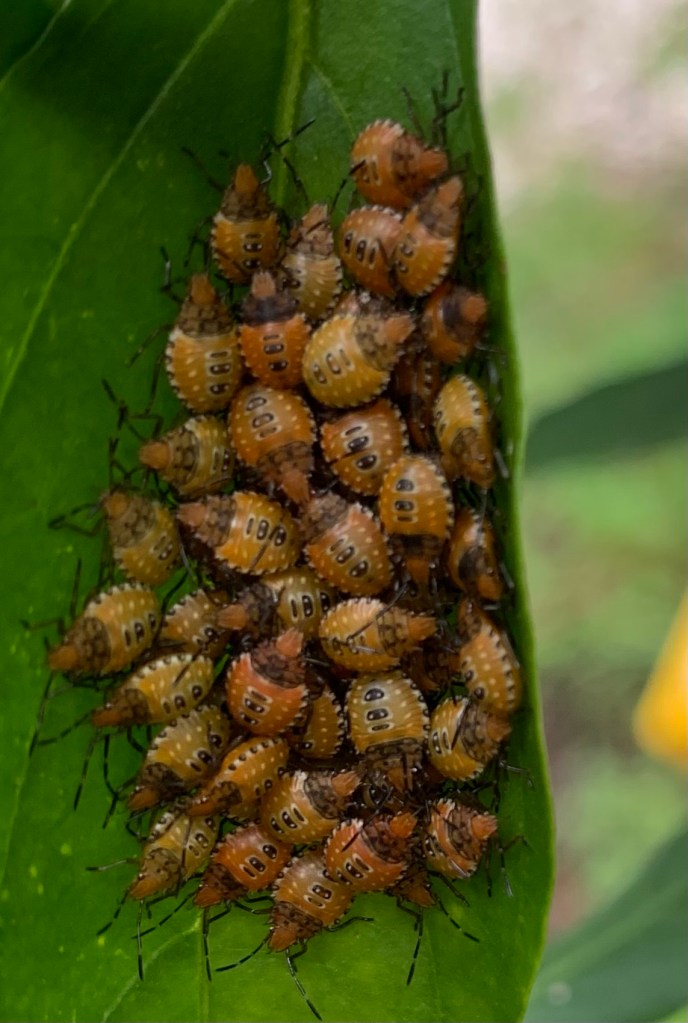
I noticed this cluster of something on a pepper leaf outside my window. At first glance, I thought it looked like a bunch of little snails. I do have bad eyes. Once I got a photo and zoomed in, I could see it was many little orange bugs.
The cluster of little guys is located on a Cayenne pepper leaf. They are not ladybugs, but that is all I knew.
When searching for orange bugs with black spots, I get Assassin bugs and Milkweed bugs. Neither one looks like this, but I know these are young. Assassin bug nymphs are not shaped like this, and if they are Milkweed bugs, why are they on the pepper plant? I do have milkweed plants in the yard.
A reader once told me that if they are in clusters, they are bad. Can anyone help identify these little guys?
Hey, thanks so much. Now I know that these are stinkbugs. I removed them from the peppers and we are all good now!
Others
I’ve had little orange bugs before. They are the nymph stage of the Leaf-footed bug. These were all over the wild, ground cherries.
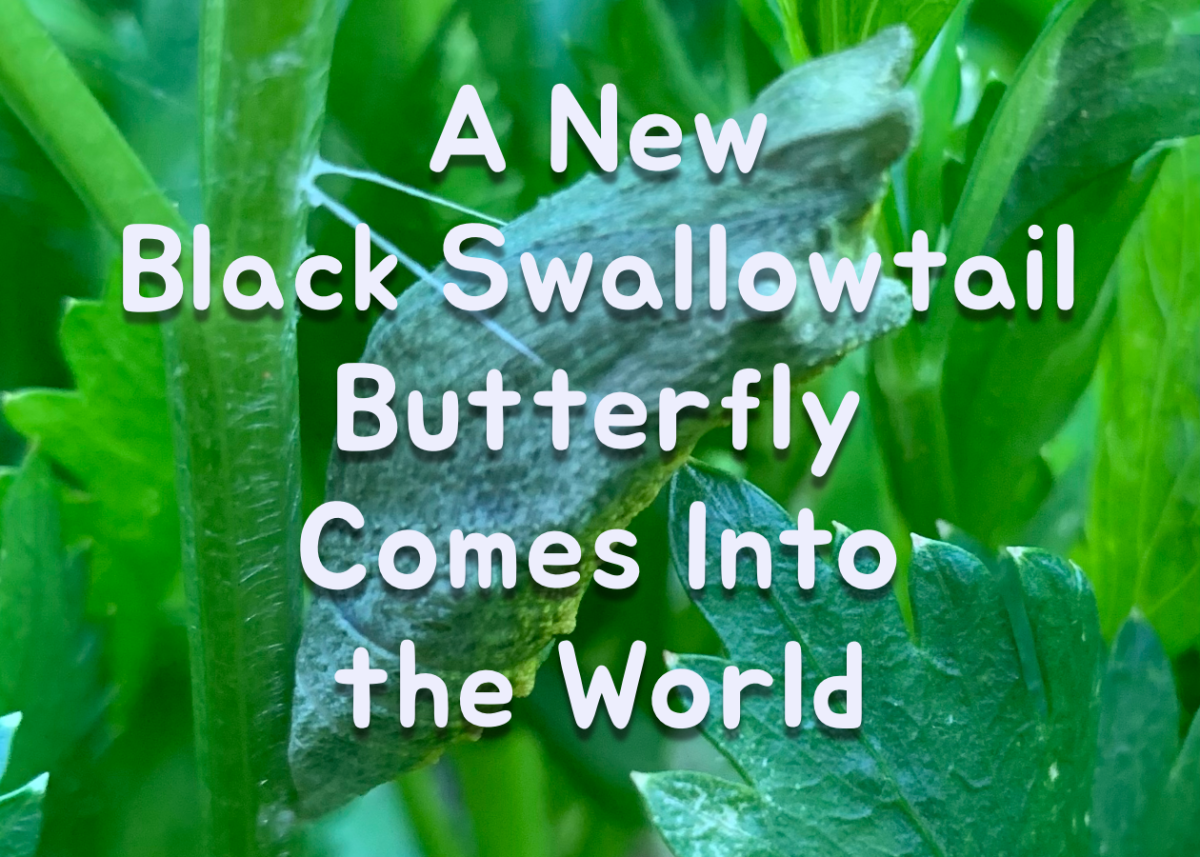
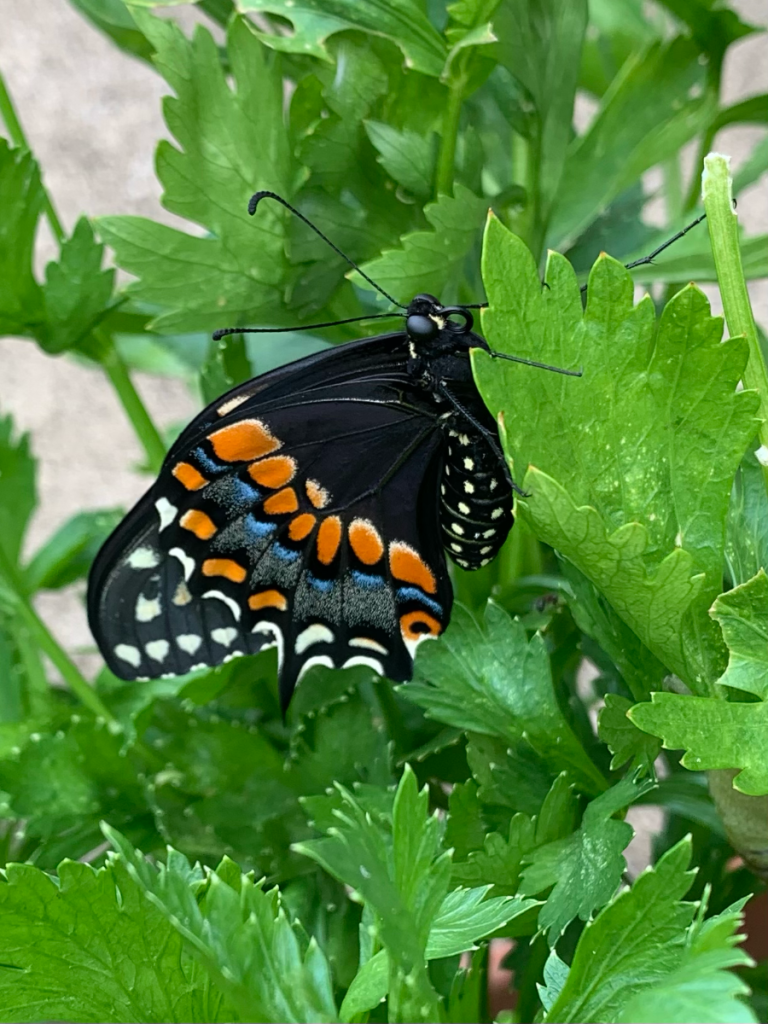
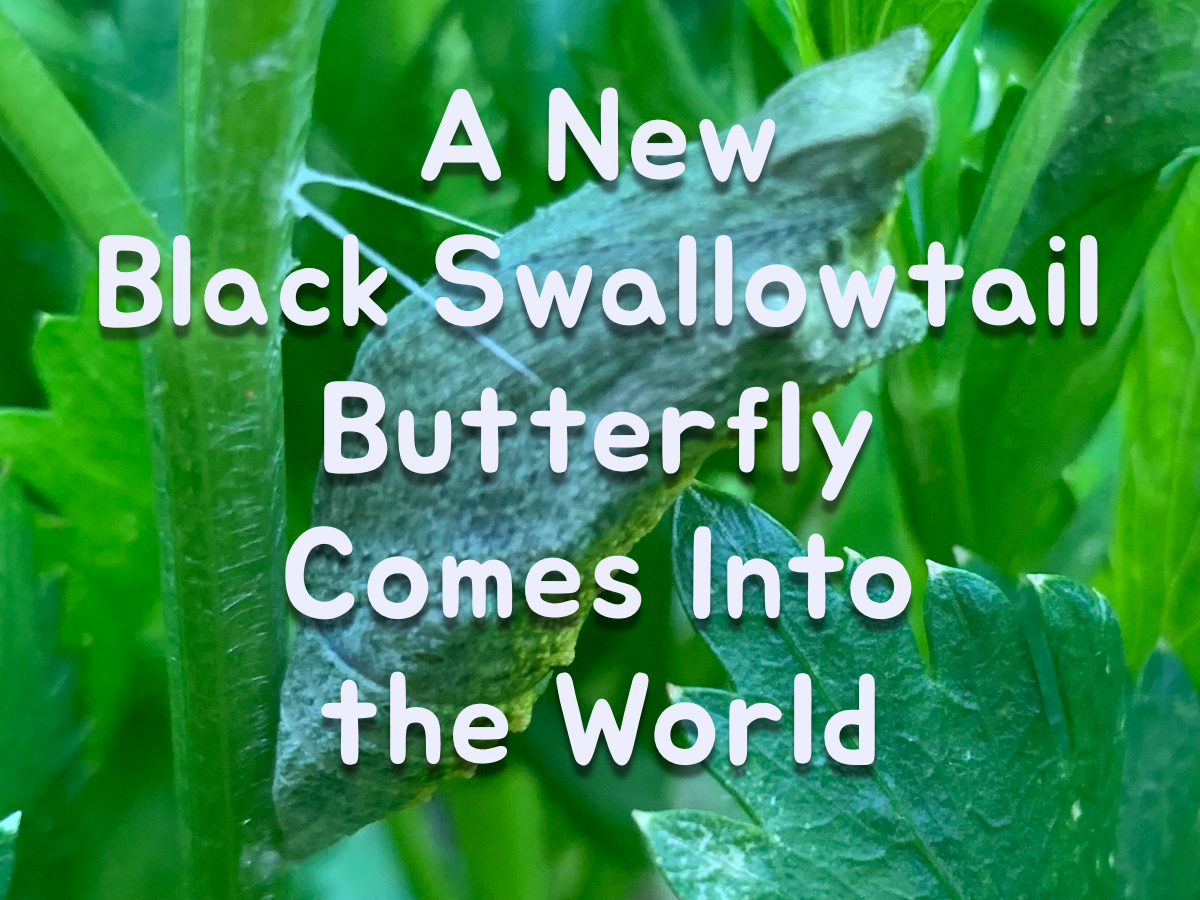
Finally, a caterpillar makes it into a chrysalis and then becomes a gorgeous Black Swallowtail butterfly.
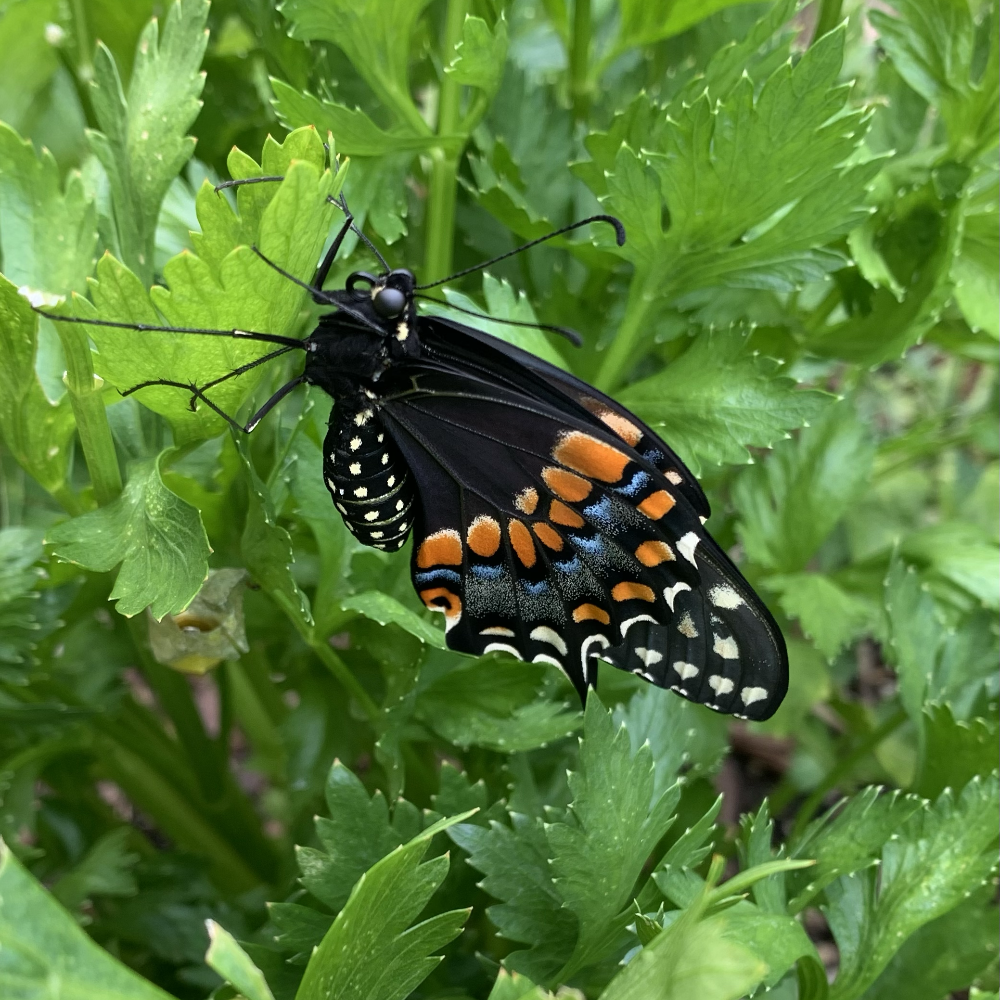
Although I am not having much luck with caterpillars surviving in my yard (thanks to the numerous lizards), I do have one that made it. A new Black Swallowtail butterfly has survived to fly away! And he was sneaky about it.
My yard is not a friendly place for caterpillars, but it is for butterflies. All my Zinnias are much loved by lots of flying critters.
The Monarch butterfly is still flying around, and I’ve seen many Monarch caterpillars, but no new butterflies. Also, the Gulf Fritillary has put caterpillars onto my Passionflower vine.
Occasionally I would see the Black Swallowtail butterfly in the yard, but I have nothing growing for it, or so I thought.
Did you know? Celery is a host plant for Black Swallowtails.
The Black Swallowtail’s Favorite Plants
I know the Black Swallowtail will lay eggs on parsley, dill and fennel. Apparently also carrot and Queen Anne’s Lace (not in Florida). It’s not the season for carrots here. Only fennel will grow for me during summer. I have a few fennel plants in the front garden, but lizards eat every caterpillar that shows up. The dill has long been gone, and parsley is impossible to grow, even in winter. (For a list of host plants in Florida, see this page at askIFAS)
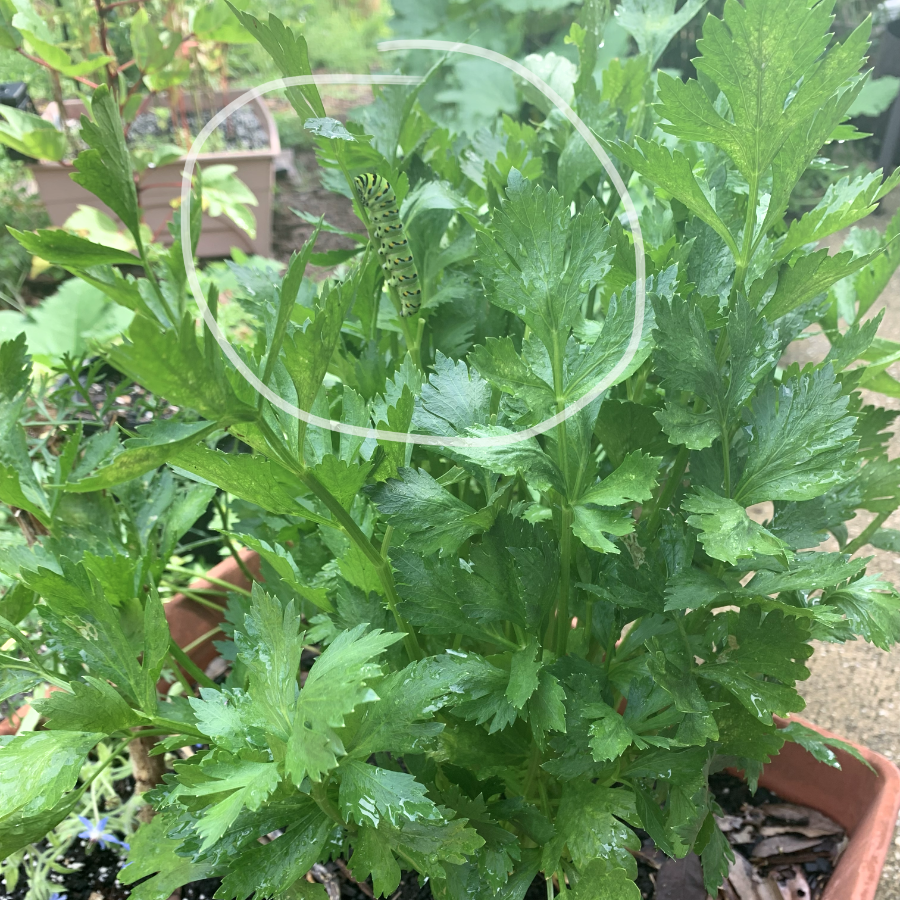
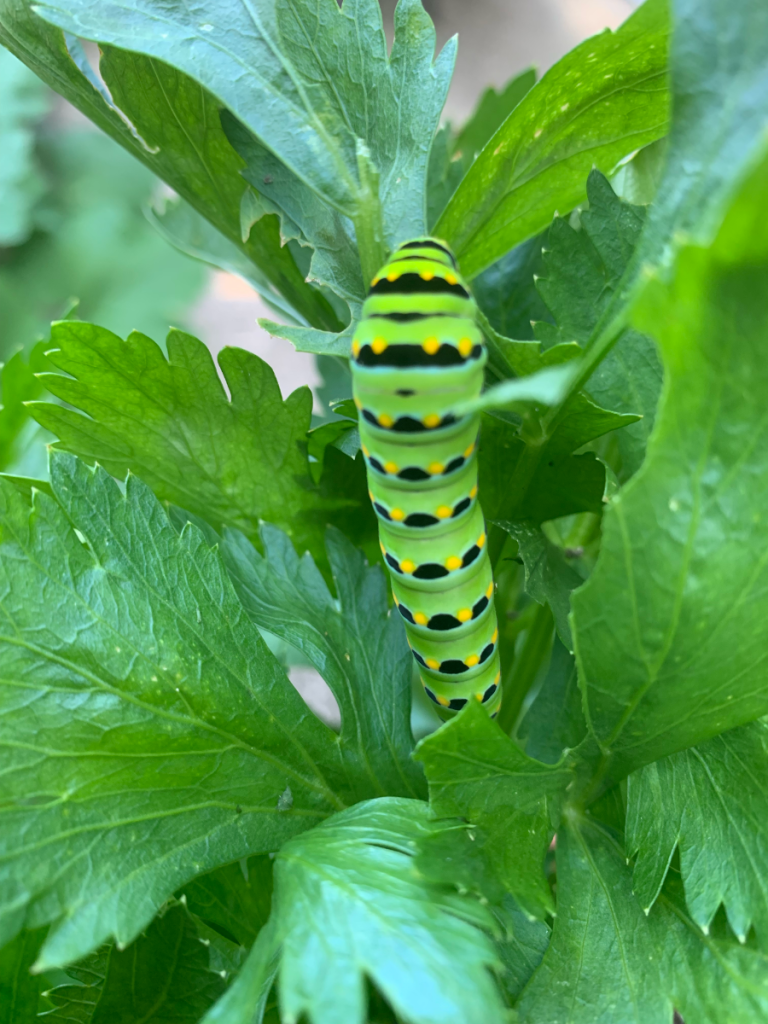
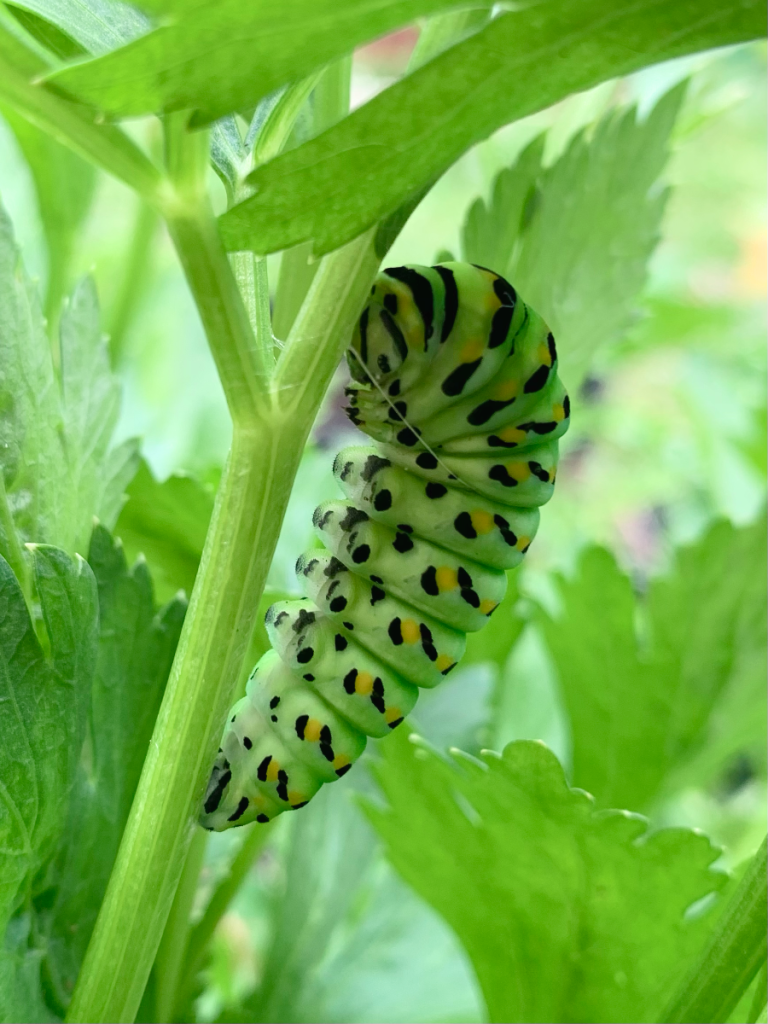
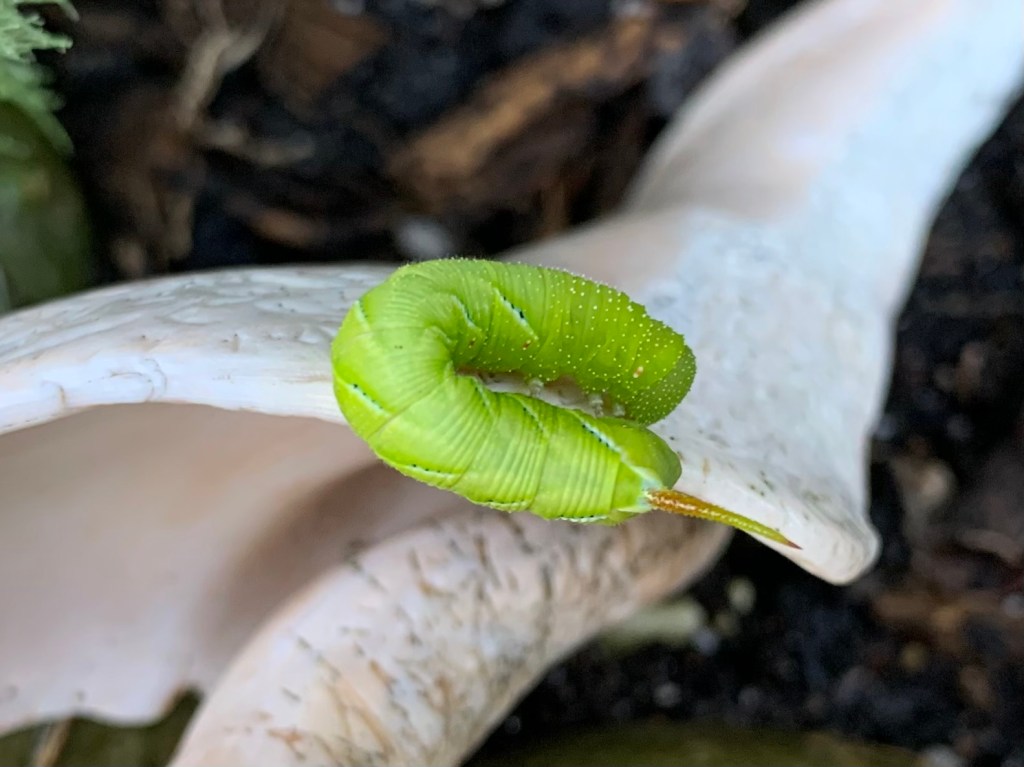
But I do have a big celery plant in one of my grow boxes. I started it from a store bought bunch of celery. This is where I found the Black Swallowtail caterpillar. What a surprise! He was already pretty big when I first saw him.
What? You like celery?Sorry for the blurriness
On July 21st I first saw the caterpillar. He was happily munching away down in the center of this bunch of celery.
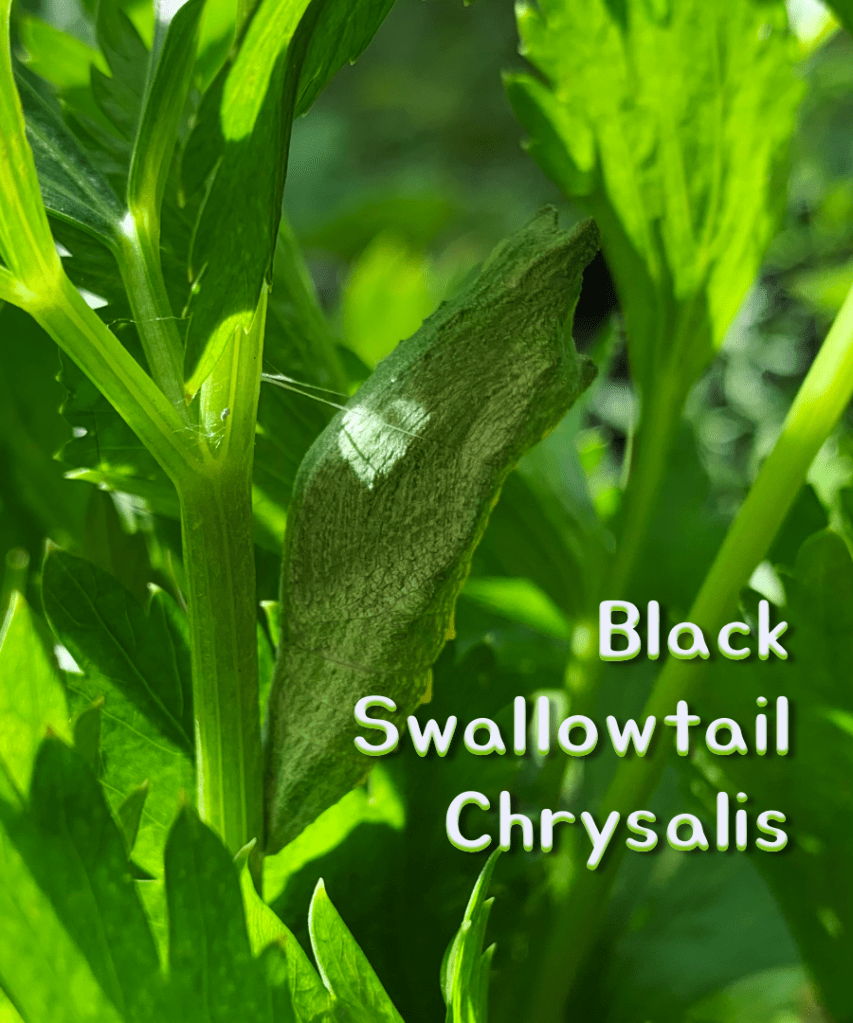
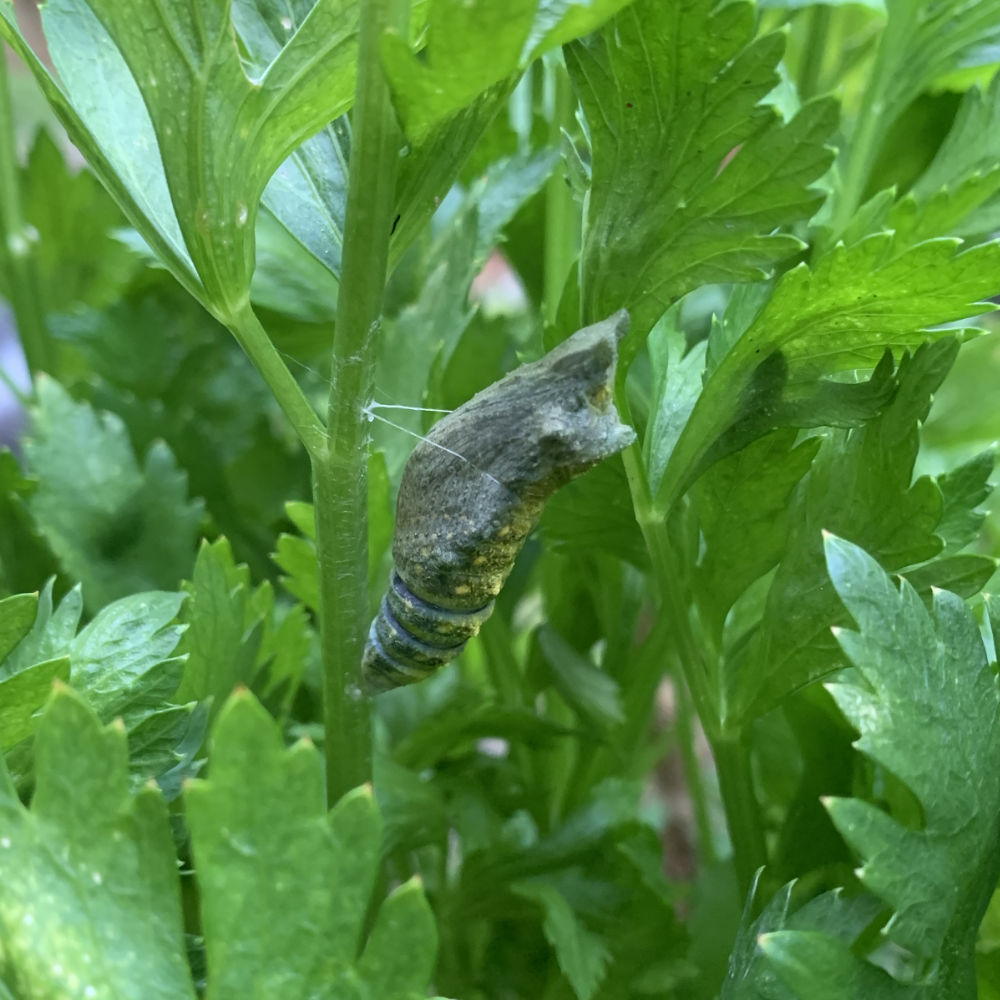
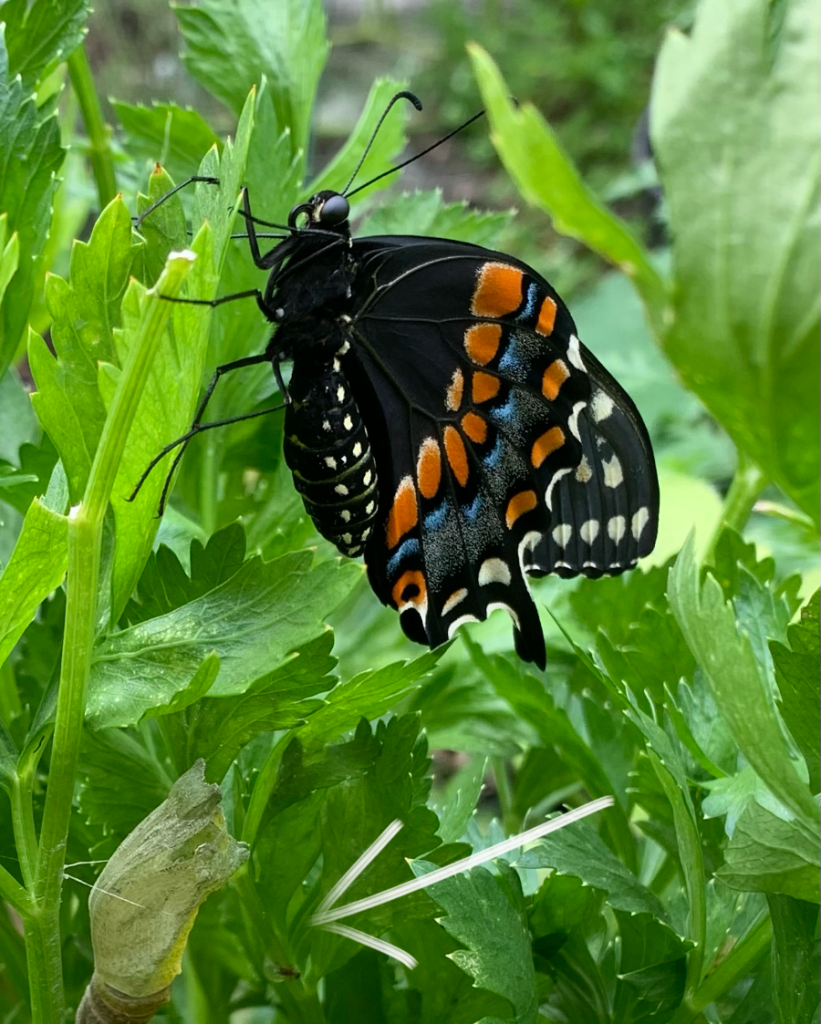
On the 23rd, I saw him curling up and attaching to one of the stalks. The next day, his chrysalis was made. Ten days later, he emerged into the world!
Cool huh?Darkening, means nearly time for a butterfly!
Numbering the Days to Emergence
Back when I watched the chrysalis of the Monarch, it took many days before the butterfly emerged. I figured this one would take a while too, and it took 10 days before I saw the butterfly. On day nine, the chrysalis had darkened noticeably. I knew he / she was about to come into the world!
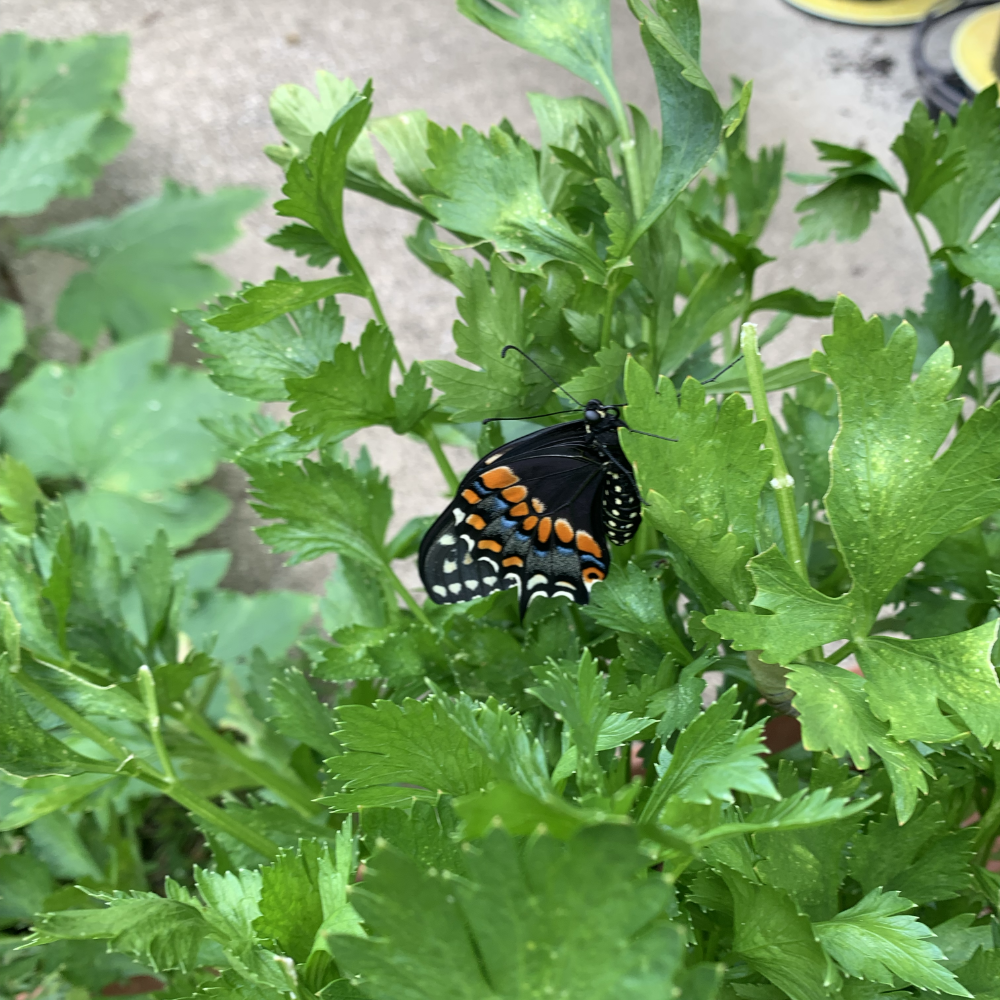
If the weather had been nice, I would have pulled up a chair and drank my coffee next to the celery plant that morning. But it’s way too hot for that. So, I did some inside stuff, and kept checking on it. Around 9:30am I went out and there he was! Sitting on a celery stalk in all his glory! Such a beauty.
I’m not sure if it is a male or female, maybe someone reading this will know. The colors were absolutely stunning!
I thought he might hang around for a while after coming out. The Monarch butterfly had taken hours to fly away. But, I went on the porch to check on some plants and was only away for about 2 minutes. When I went back outside he was completely gone! I missed it!
I walked around the yard to see if he had landed someplace close by, but I never saw him anywhere.
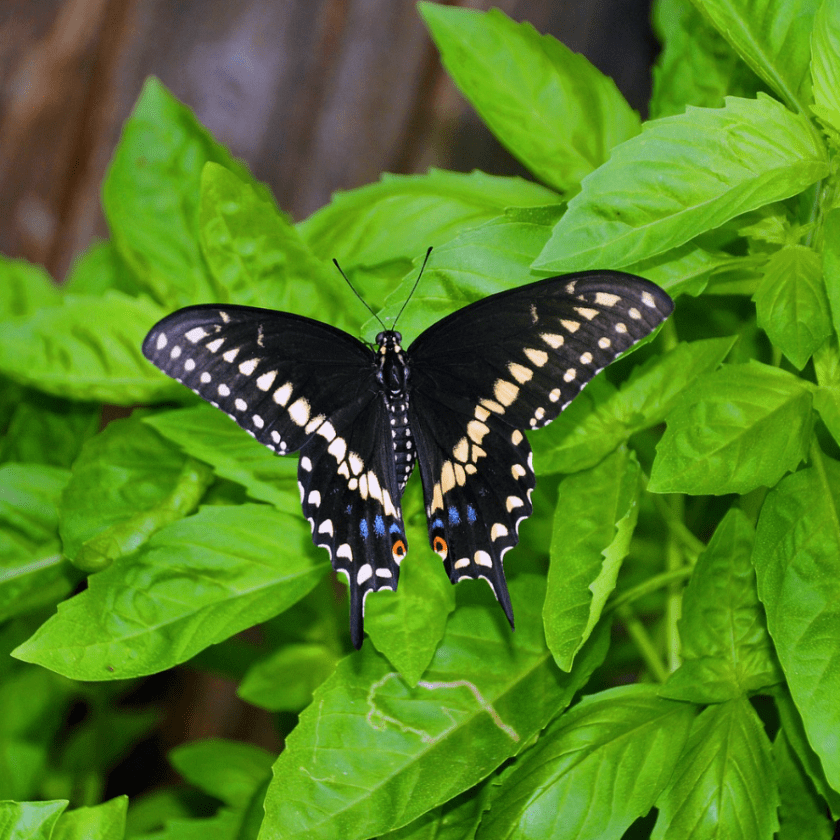
A Black Swallowtail From the Top
Only the closed wings were available for me to view. I believe from the top this one would have looked something like the photo below, which is not my photo.
Before this butterfly “hatched”, I had a black swallowtail laying eggs on the celery and a nearby carrot type plant. Those eggs seem to have disappeared. Or, maybe they are tiny caterpillars hiding down in the celery. I will continue to check.
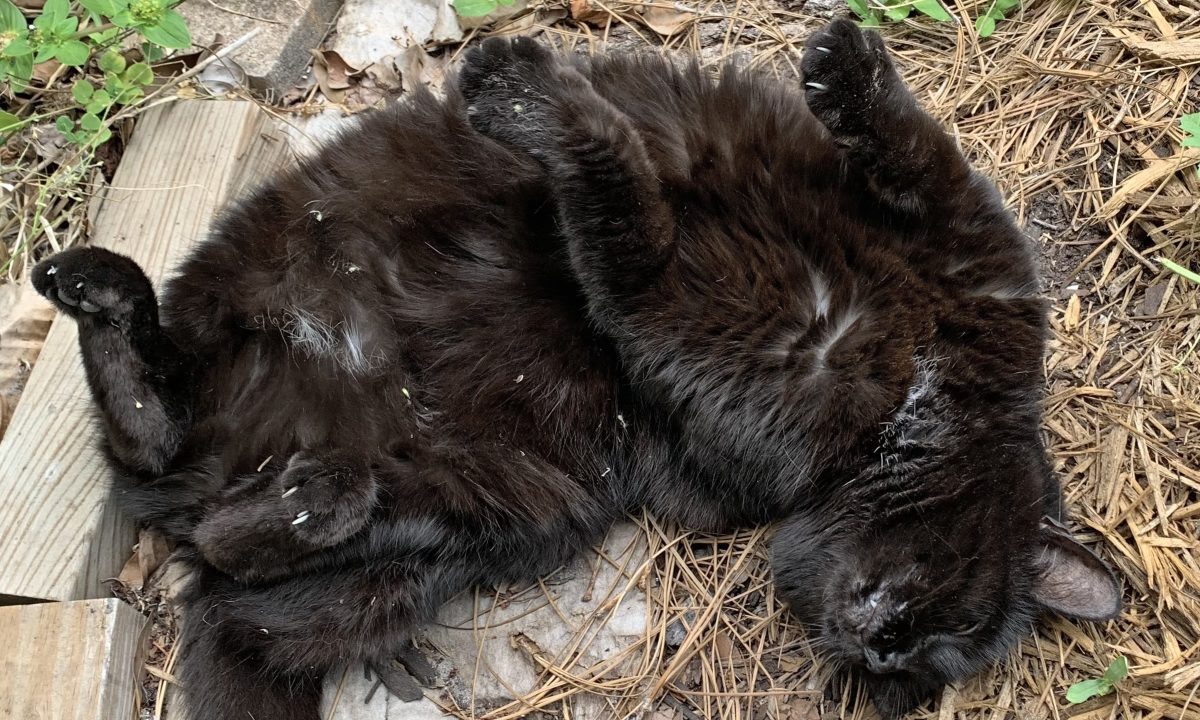
The fact that my cat Skittle mostly hangs around this area might be why the lizards let this guy get to this stage. Whatever the reason, it made me happy!
Are you following caterpillars and butterflies in your summer yard? I’d love to hear about it.
Caterpillars seen on the Maypop plants. These are from the orange, Gulf Fritillary.
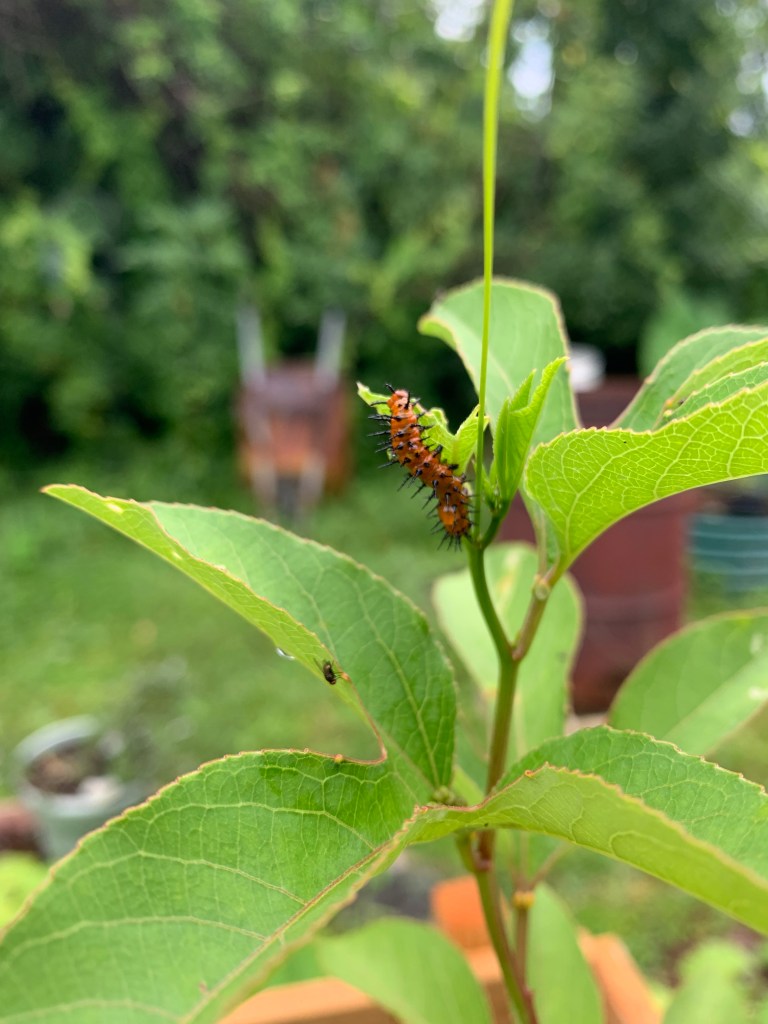
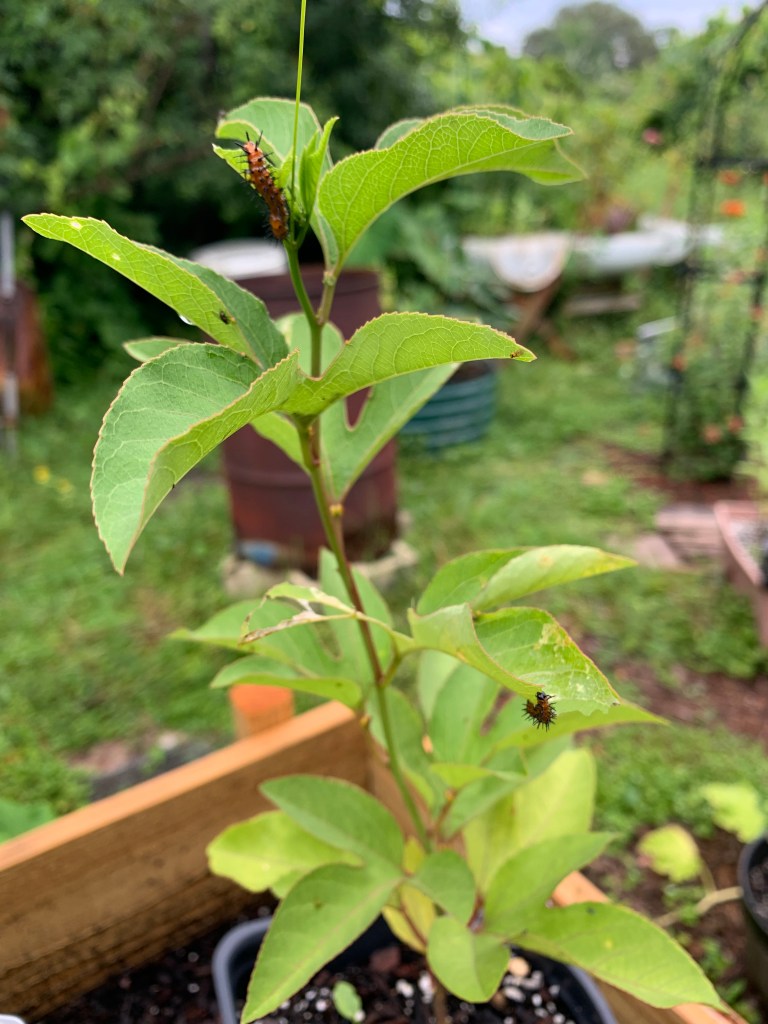
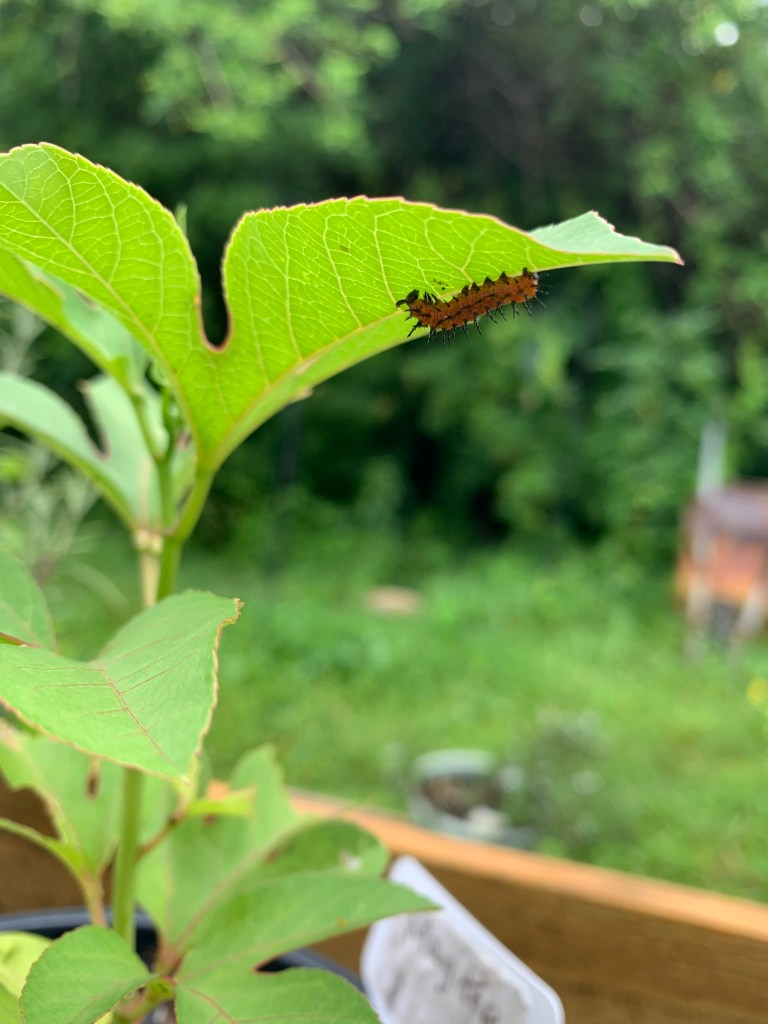
This morning, while making my rounds in the garden, I noticed three caterpillars on the Maypop (Passionvine, or Passionflower).
I started these plants from seeds purchased from Johnny Butterfly Seed. The plants are still small and have been growing for only a few months. It’s the first time I’ve seen caterpillars on them.
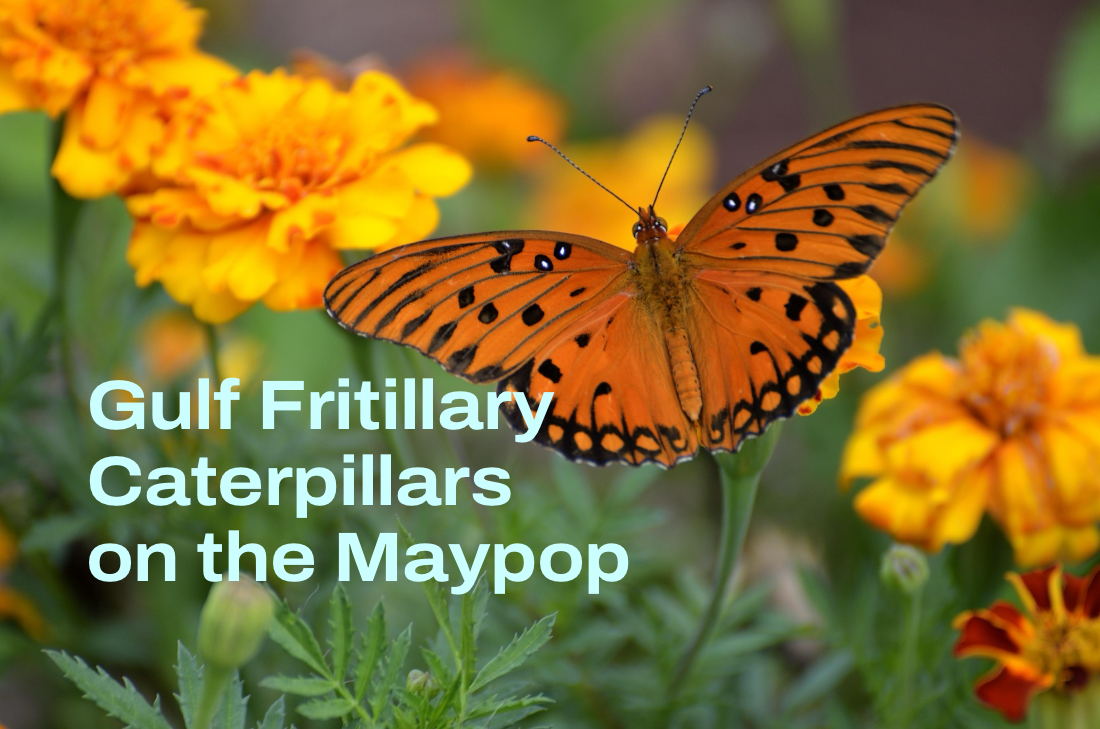
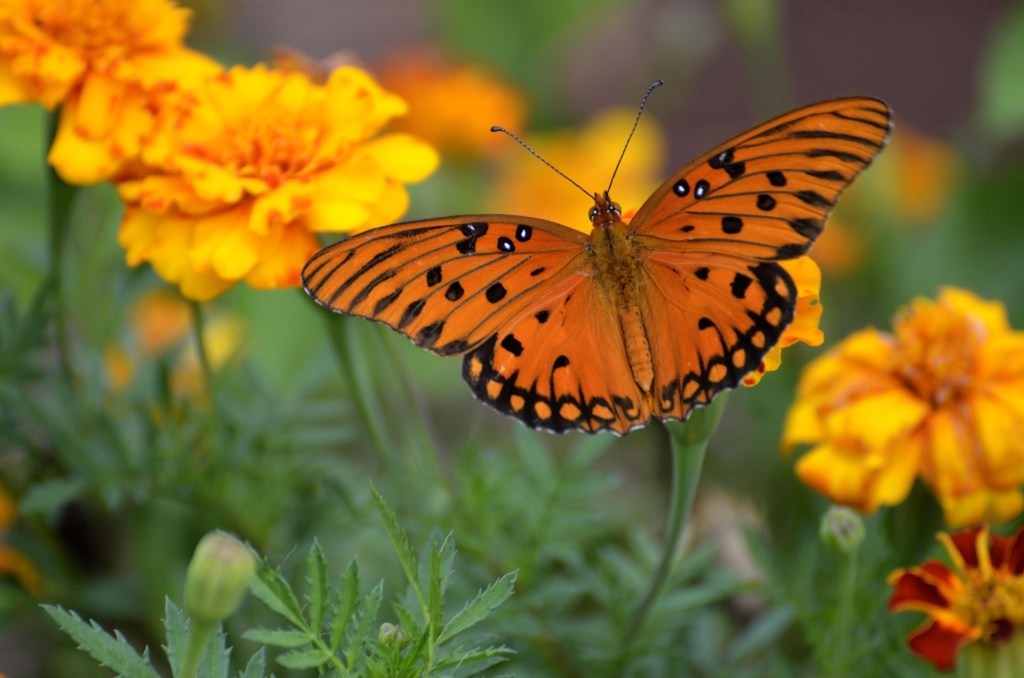
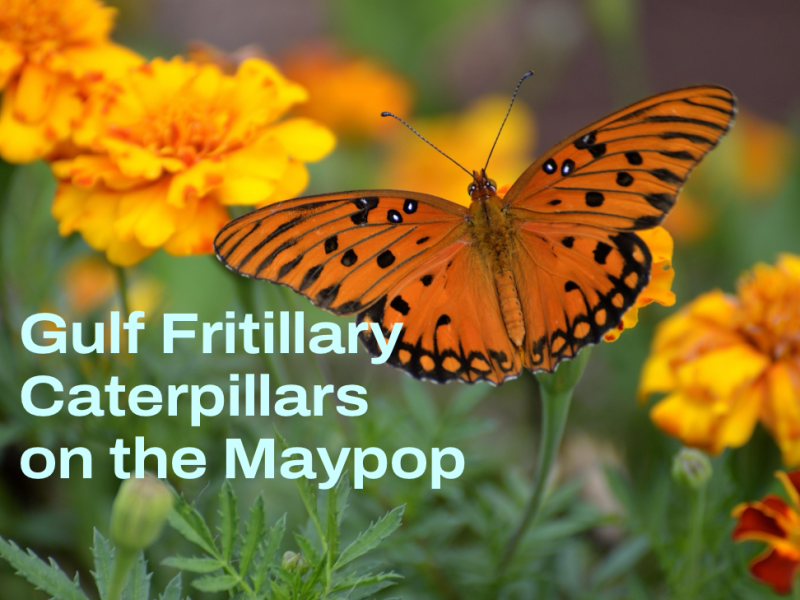
The orange caterpillars with black hairs are from the Gulf Fritillary butterfly. The caterpillars of the Variegated Fritillary look very similar. I’m guessing they are from the Gulf variety. I’ve recently seen the orange butterflies in my yard.
Below is an excellent photo of the Gulf Fritillary butterfly. Image source is linked beneath the photo. I rarely get a good photo of butterflies, but this is exactly what they look like.
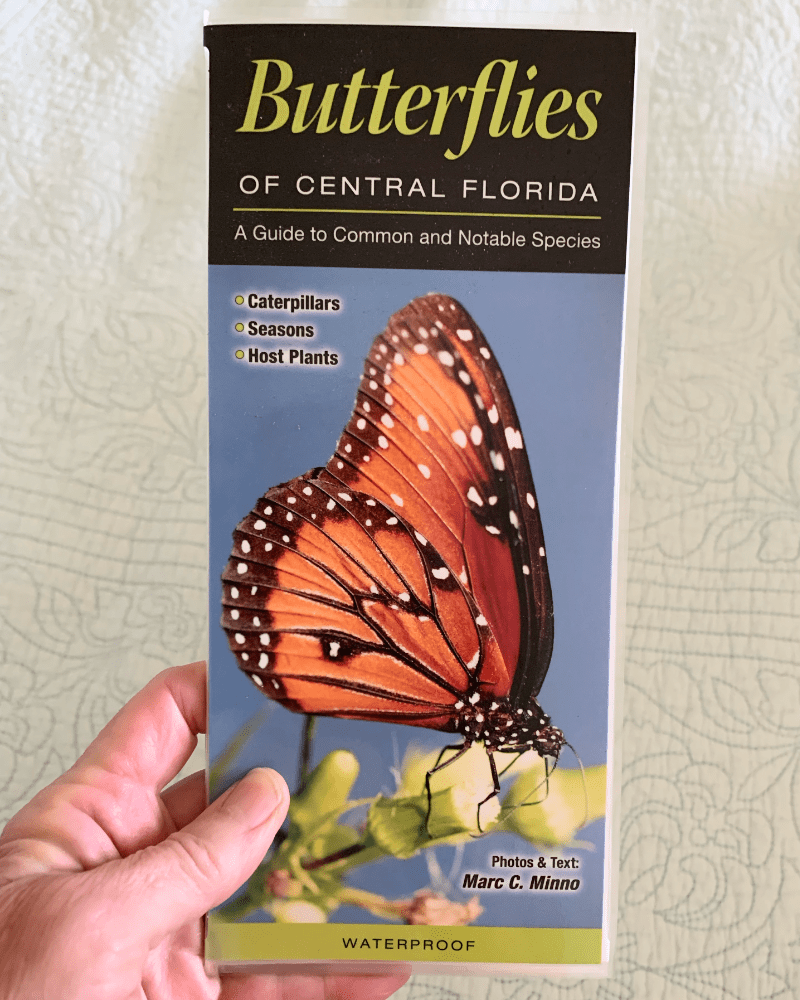
Whenever I see a butterfly in my yard, I run to grab my Butterflies of Central Florida pamphlet to identify it. I already know the Monarch, Gulf Fritillary, Zebra wing, Black Swallowtail, and Giant Swallowtail. All the others send me searching for their names.
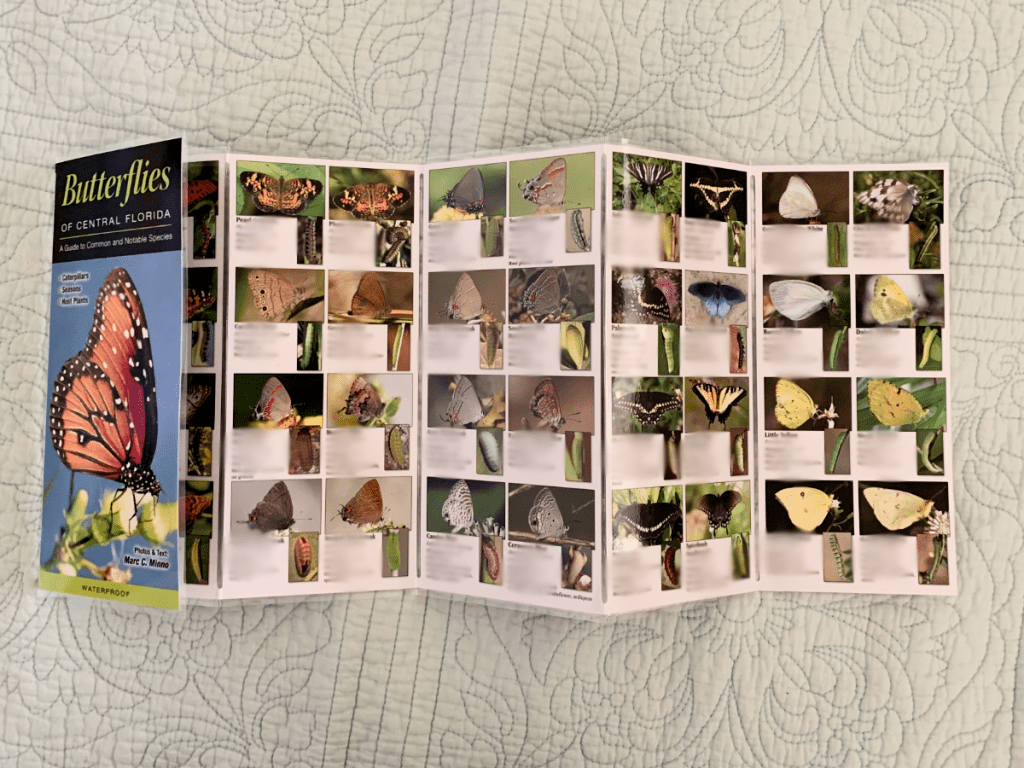
Butterfly pamphletInside the pamphlet
The Butterflies of Central Florida pamphlet (paid link to Amazon) has 11 pages of photos with information. I bought mine at the local nursery.
This little waterproof, laminated pamphlet contains photos of the butterfly and its caterpillar or larvae, with its name. It also has their size (wingspan), time of year when they fly, and their preferred host plant / plants. I had thought that some of the images were moths, but I think they are all butterflies.
I like that the host plant is listed. That way, if you want more butterflies, simply plant the host plant they need.
As far as these caterpillars go, I’m wondering if they will disappear like all the Monarchs seem to. If not, I wonder how much of these plants they will consume!
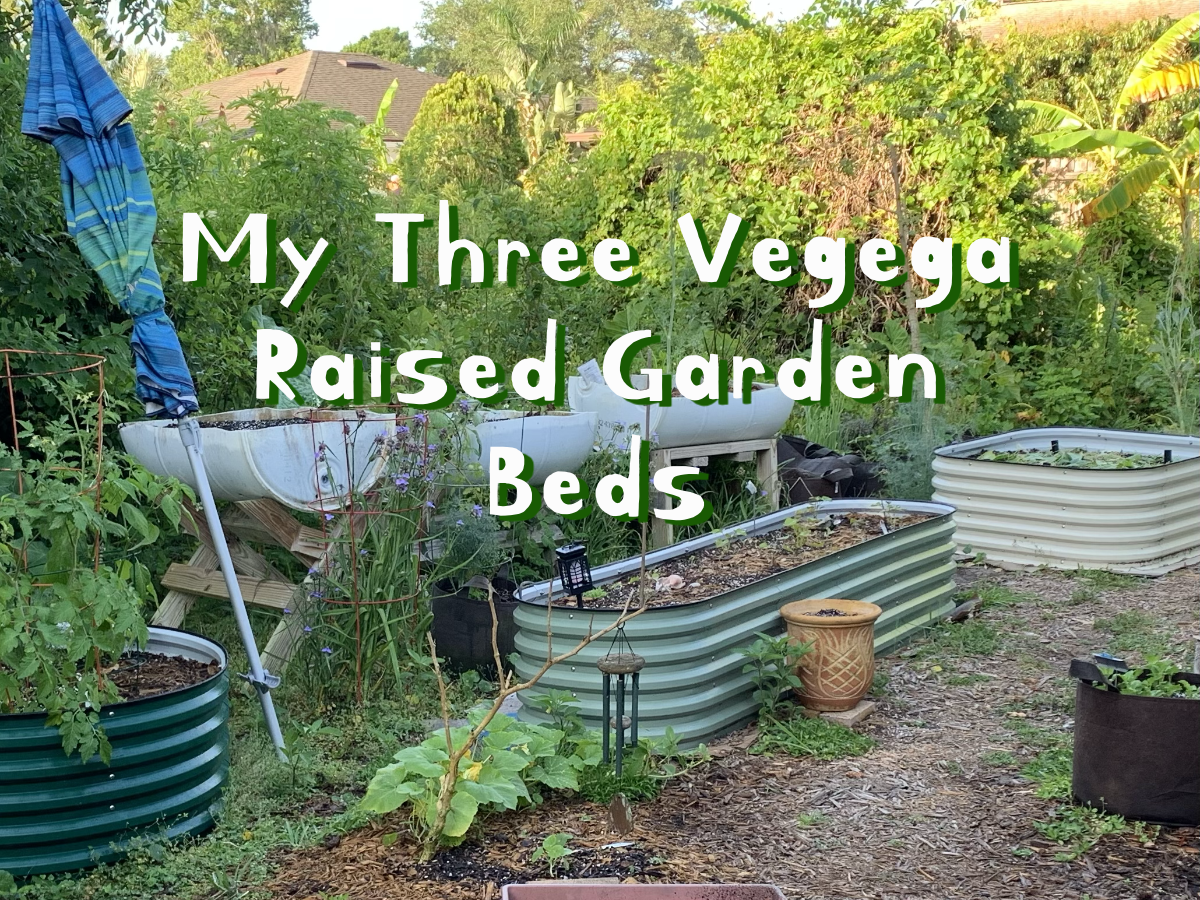
It’s mid-summer and here in my Florida backyard I have mostly flowers growing. I’ve used my three Vegega raised beds to hold some things and some are doing better than others. More amendments for Fall will be needed.
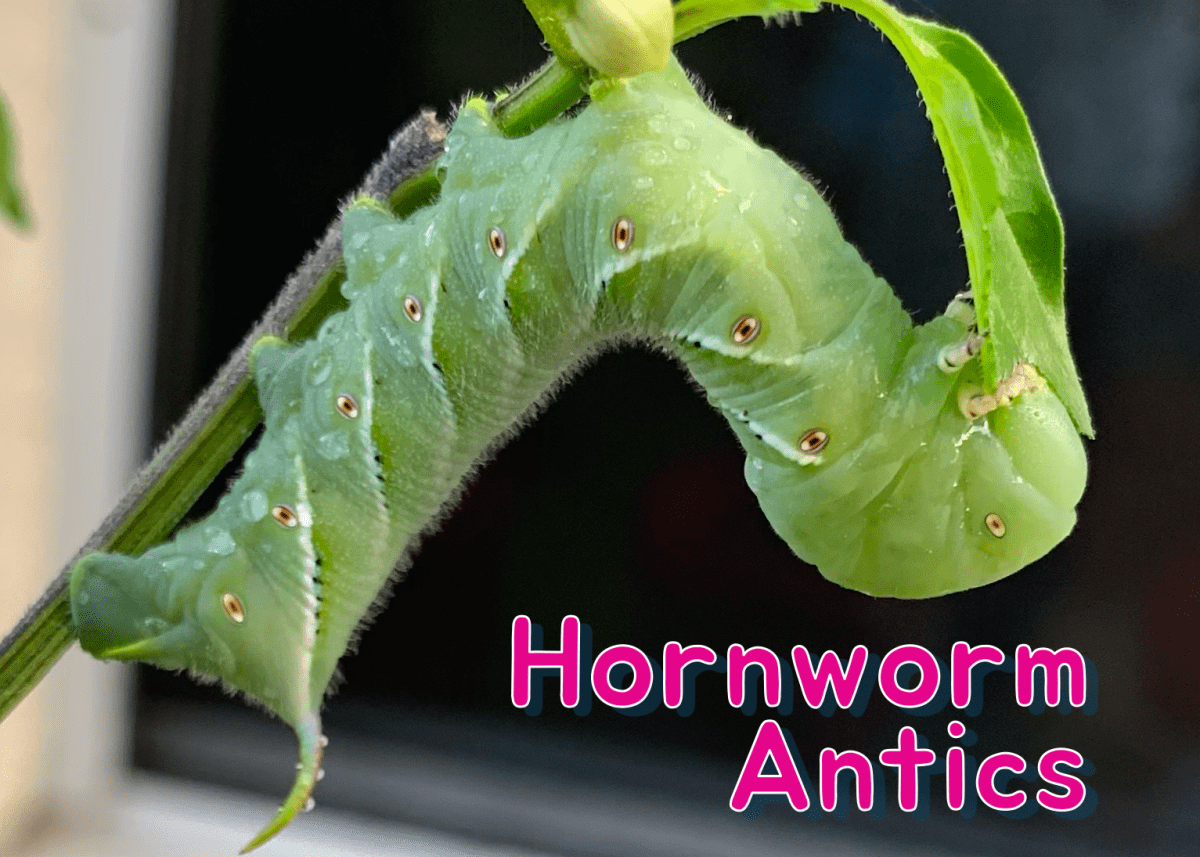
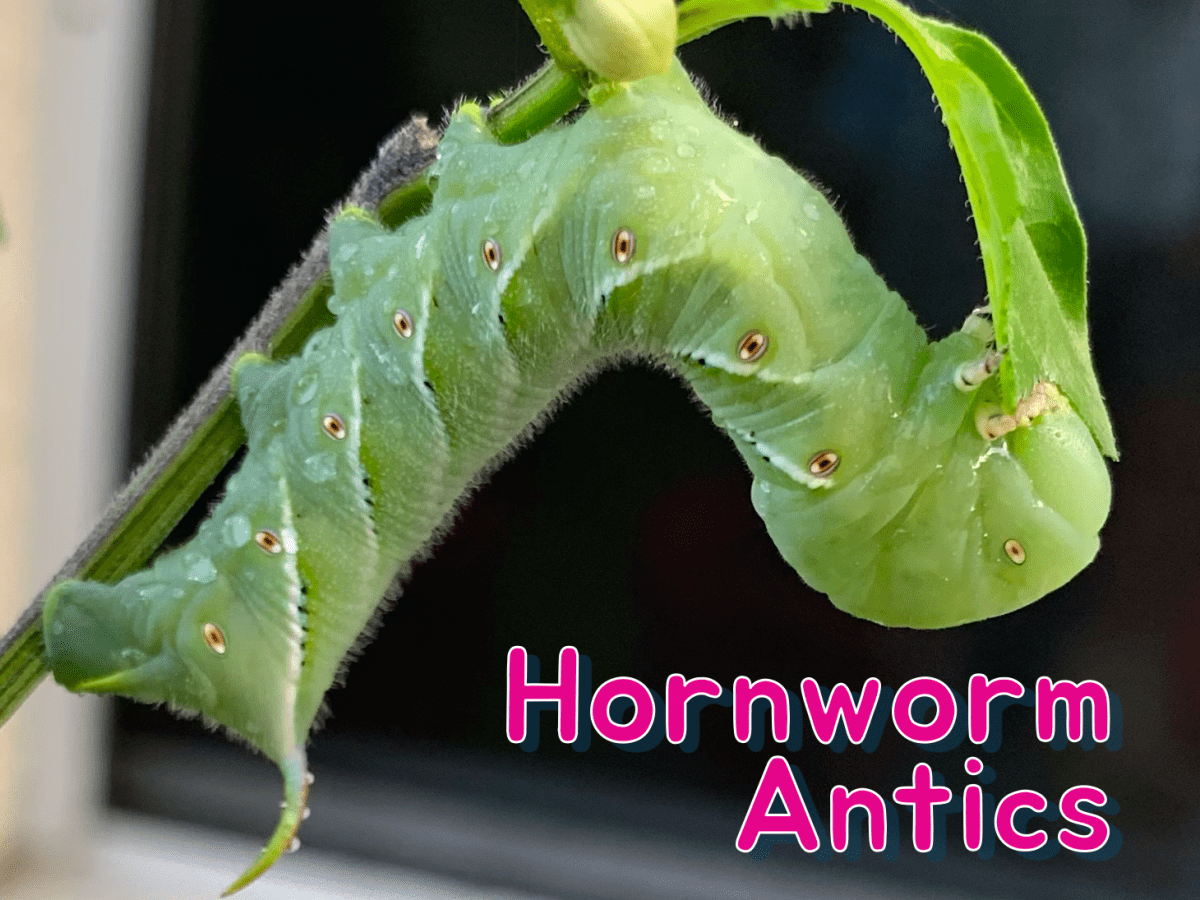
If you are growing peppers, check often for the tomato hornworm. These caterpillars can eat a lot if unchecked.
Because I am not so great at pepper growing, I have never had to worry about the hornworm eating my peppers. I have had them on my tomatoes and eggplant.
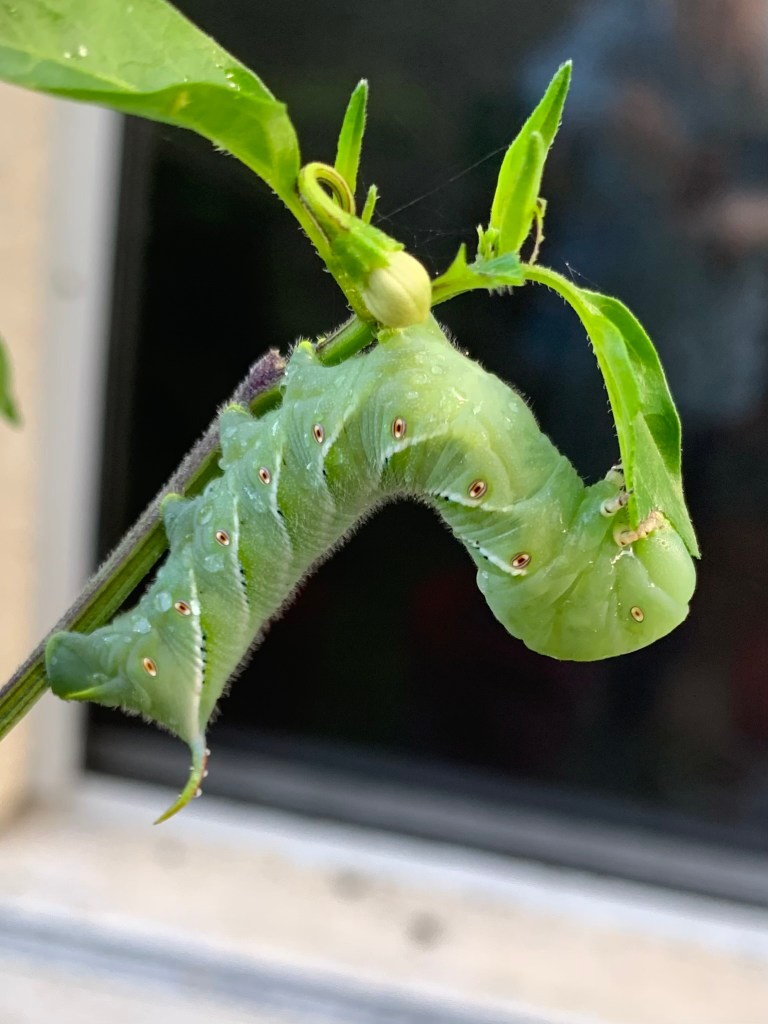
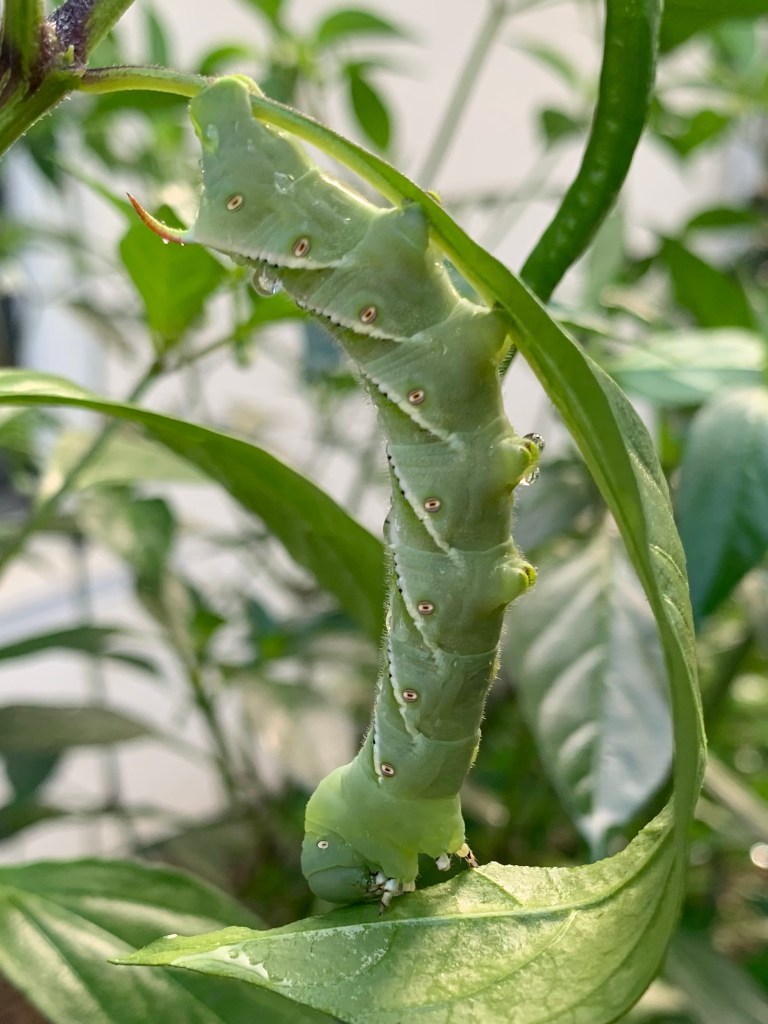
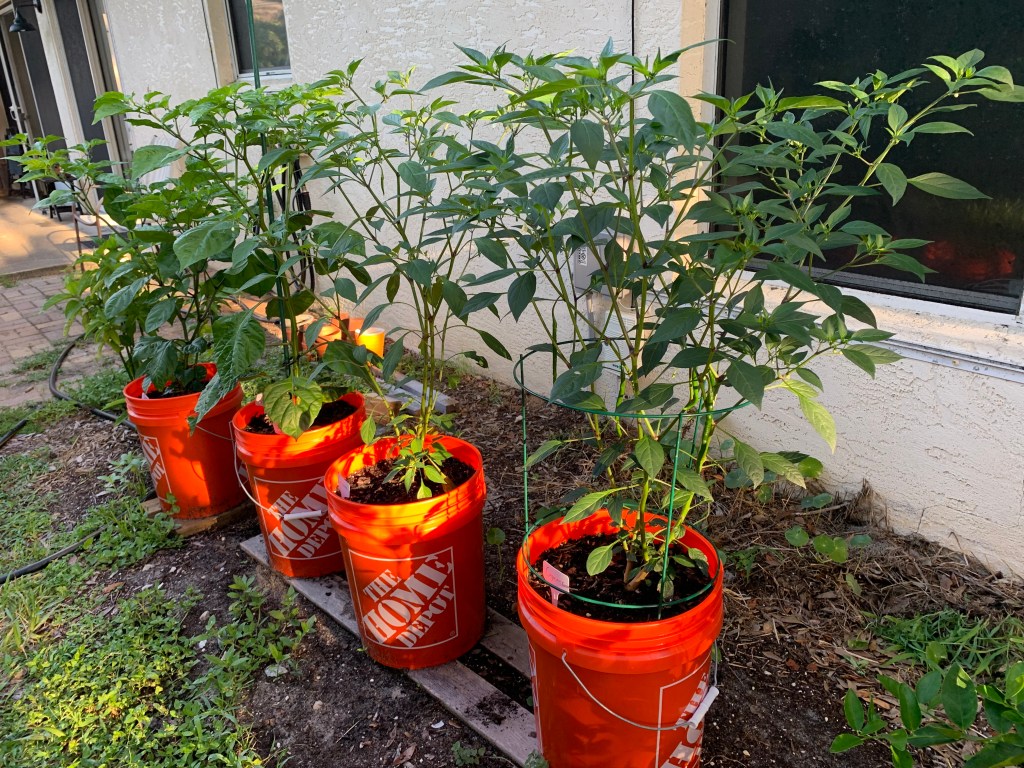
My son is growing some hot peppers in Home Depot buckets. This is where the hornworms are currently congregating. I’ve already picked off five of these squishy, green guys. And they really hang on!
Personally, I think this is one of the coolest looking caterpillars. They can get very big, and they can eat a plant down to almost nothing.
HornwormHornworm #2
Apparently, hot pepper plants don’t bother these guys. Both caterpillars in my photos are eating Cayenne pepper leaves, but I’ve picked some worms from the super hot Carolina Reaper as well.
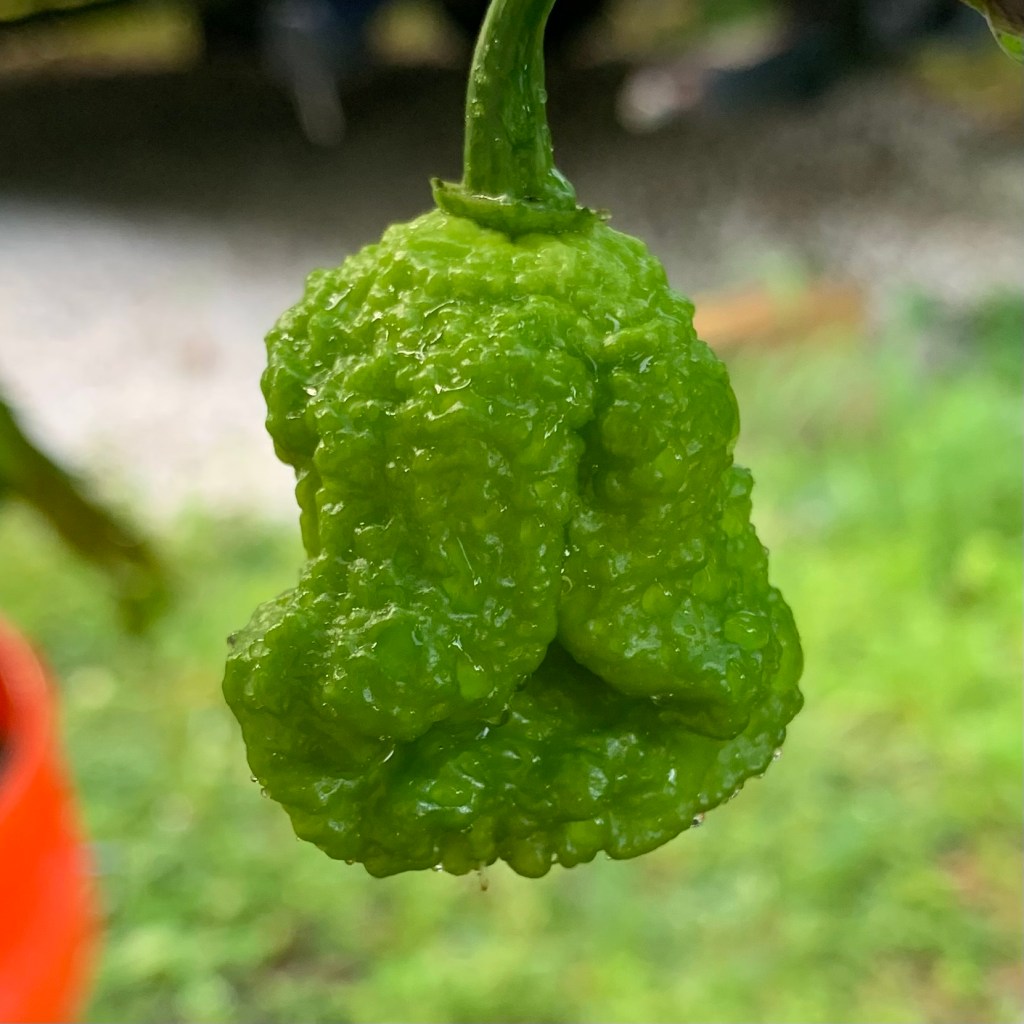
The Carolina Reaper is one of the hottest peppers out there. My son has one green pepper on the plant. It will be turning red before he will carefully pick it to make hot sauce. This pepper is sold by the PuckerButt Pepper Company and was created by Ed Currie. It registers between 1.6 – 2 million on the Scoville pepper heat scale. For example, a jalapeño is between 2,500 – 8,000.
Ed currently has one that is hotter called Pepper X.
We found these hot pepper plants for sale at the local Home Depot. My son is really into hot peppers, and the plants are all doing well. I look forward to using the cayenne peppers. With a Scoville rating of 30K – 50K, it’s about the hottest I can do.
Hot peppers in bucketsCarolina Reaper pepperHornworm
If leaves are disappearing from your tomato, pepper, or eggplant, look for the hornworm. He is sometimes easiest spotted above a little pile of brown poop on a leaf.
Once I pull the hornworm off the host plant, I deposit it into the yard. That way birds can have a treat. He won’t die for nothing.
With all the various types of lizards here in Florida, do Monarch caterpillars stand a much of a chance of becoming butterflies?
All I know is what I am seeing in my own little yard, but it’s not hopeful. I’ve seen many caterpillars form and munch on milkweed. They are not around for long, and I blame the abundance of lizards in my yard.
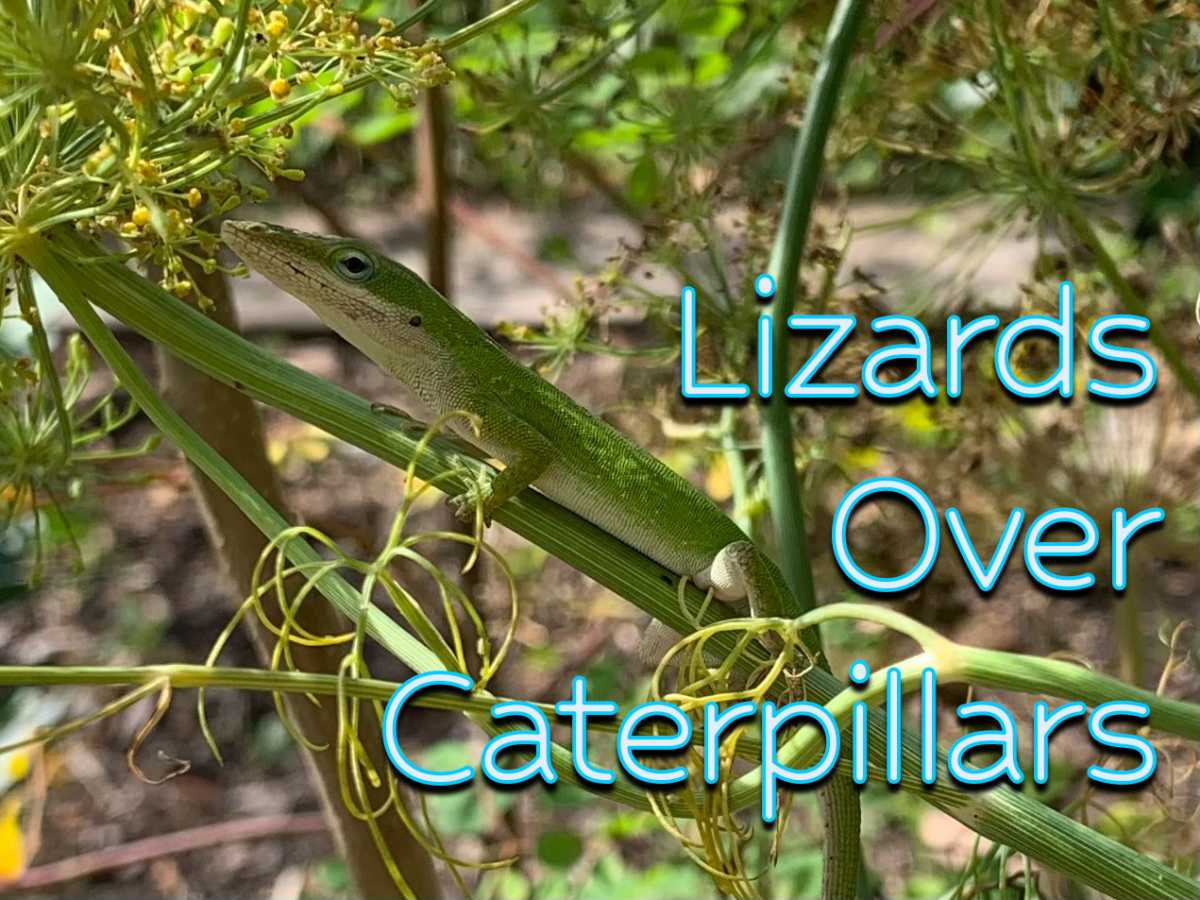
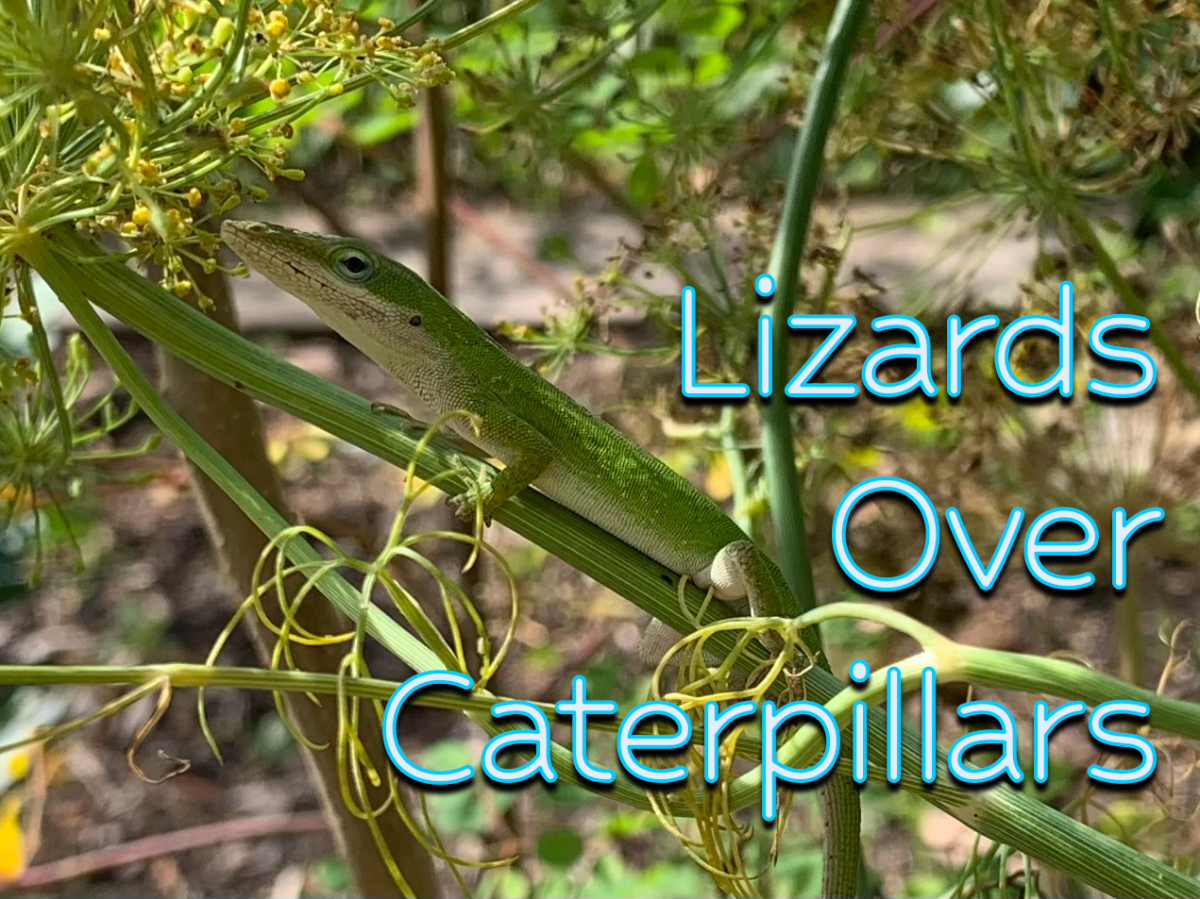
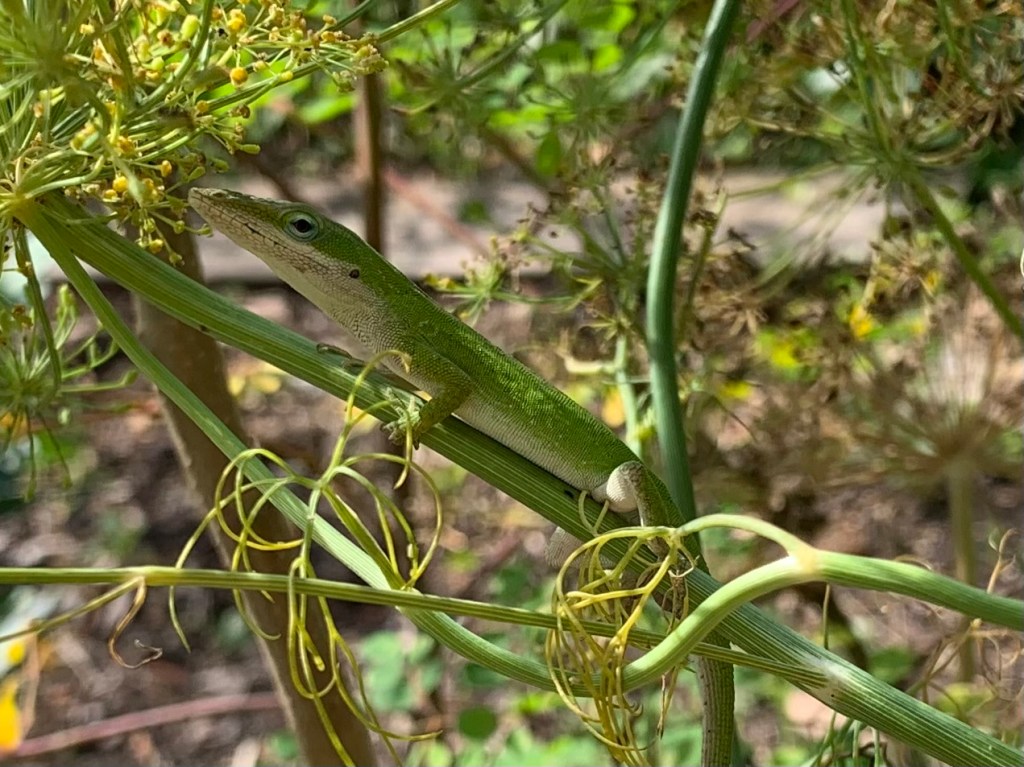
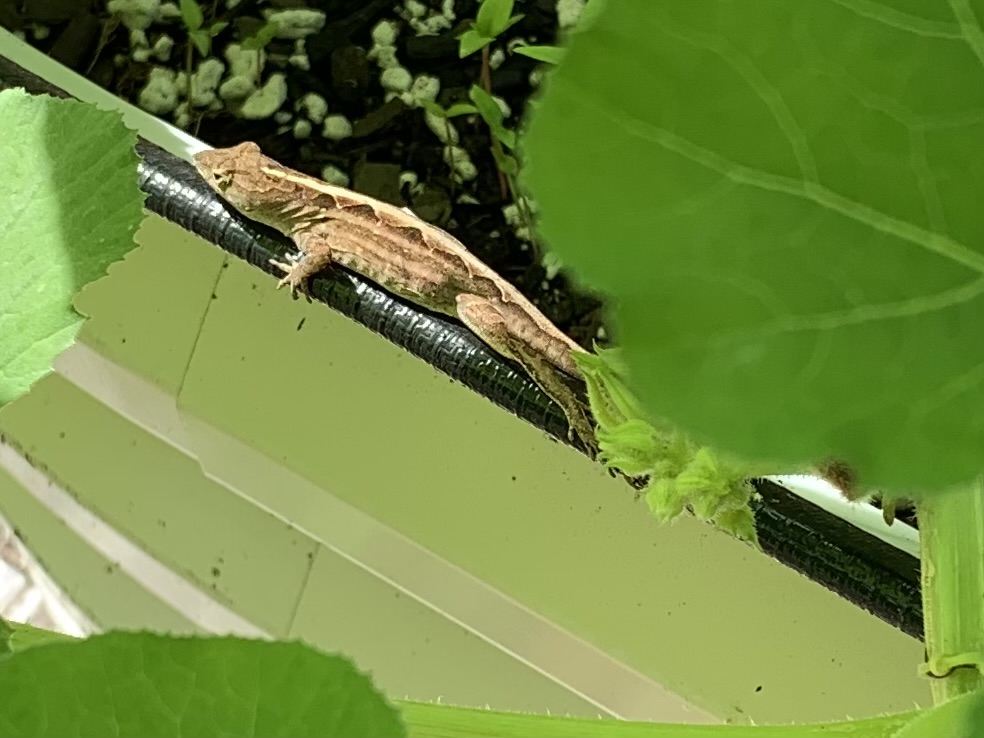
Nature is trying to adjust to all the invasive species, and honestly I think it is losing. Now, there are brown lizards which are invasive. Between those and the normal green anoles, the caterpillars don’t seem to stand a chance.
I’ve been growing and planting milkweed to feed the Monarchs but all I seem to be doing is providing food for lizards.
Green anoleBrown lizard
I’ve watched caterpillars crawl on the Milkweed. They get to various sizes and then they are simply gone.
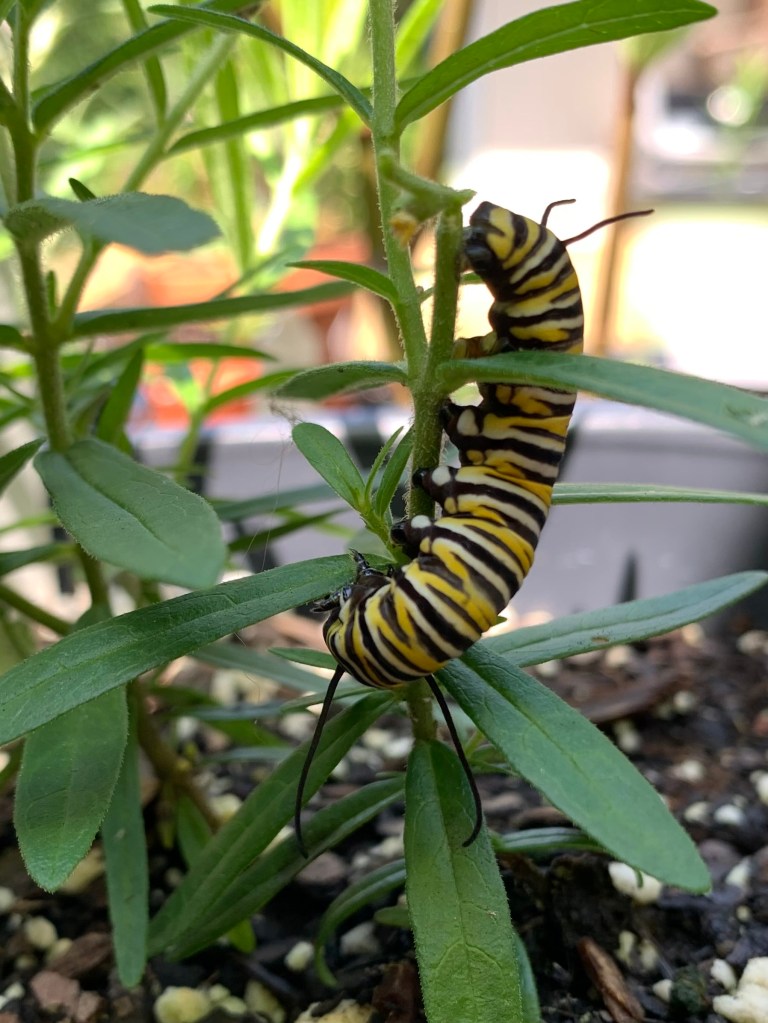
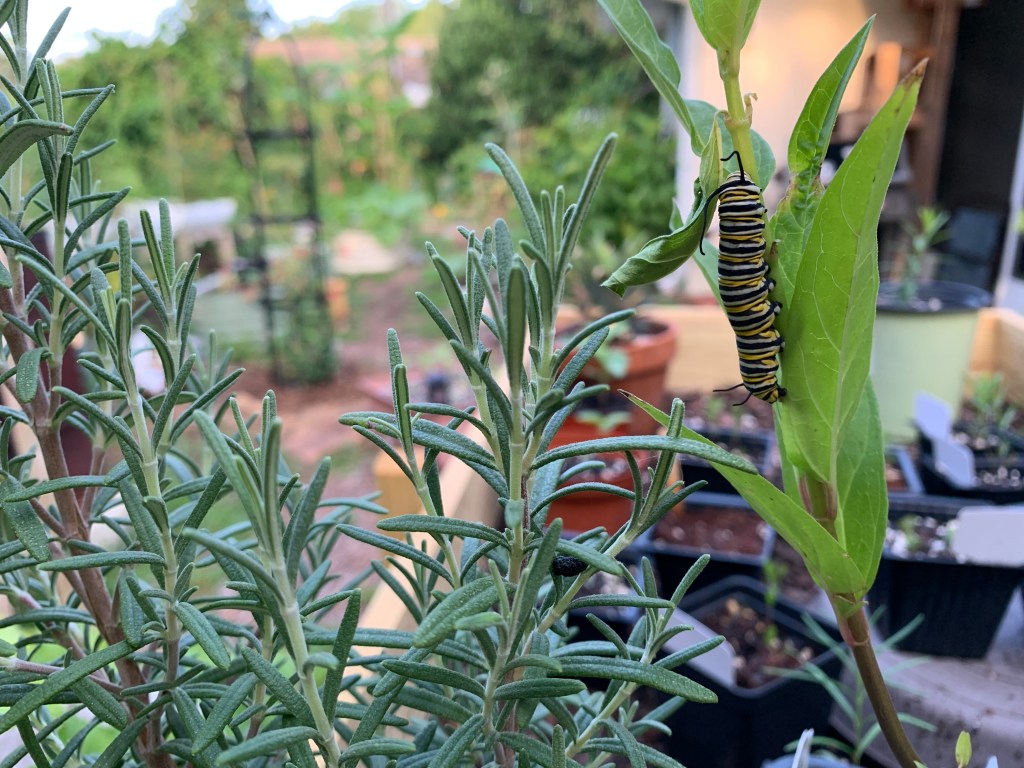
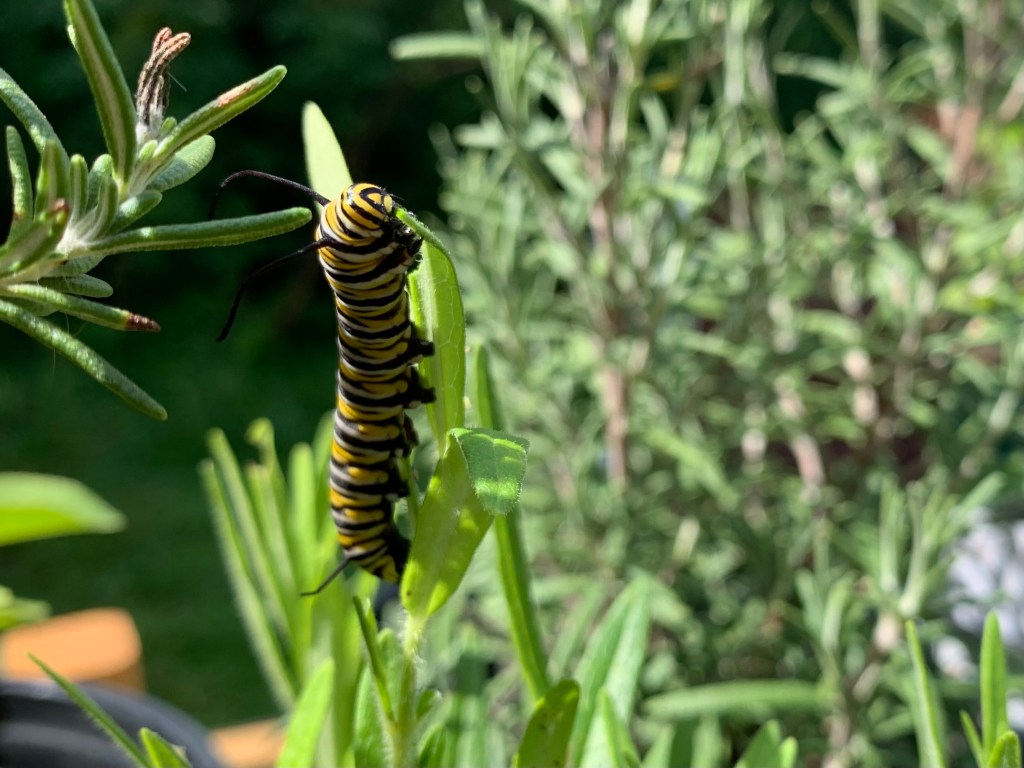
Monarch caterpillar on milkweedRosemary and Milkweed
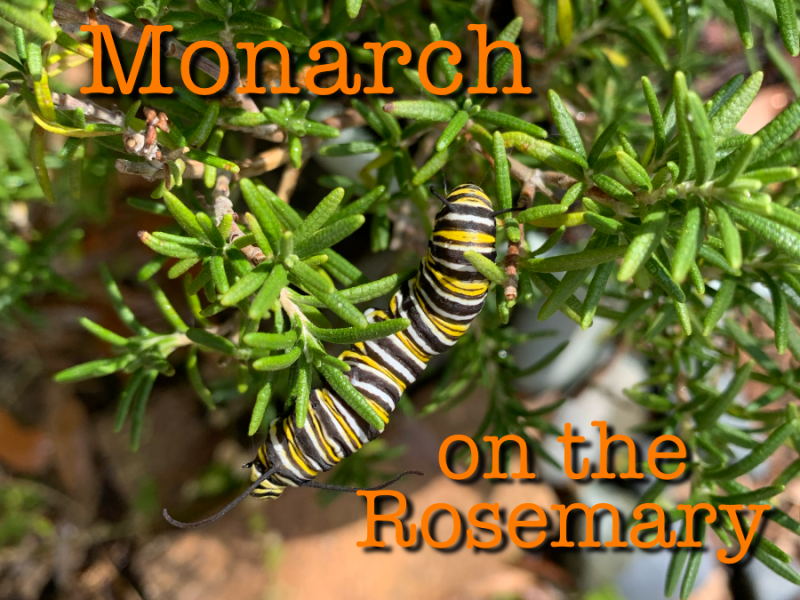
The whole time I watched this caterpillar grow he went from milkweed to the rosemary and back again. They seem to like hiding out in the rosemary. Back in April a caterpillar crossed my yard to build a chrysalis on the rosemary plant.
I was beginning to think that maybe this guy was big enough to survive. Finally, a yellow wasp came down and stung him and knocked him off the milkweed! He was happily chowing down on a leaf and I saw the wasp come in and pop him. He ended up crawling down the side of the pot. He was down there for a while, but the next time I looked, he was nowhere to be found.
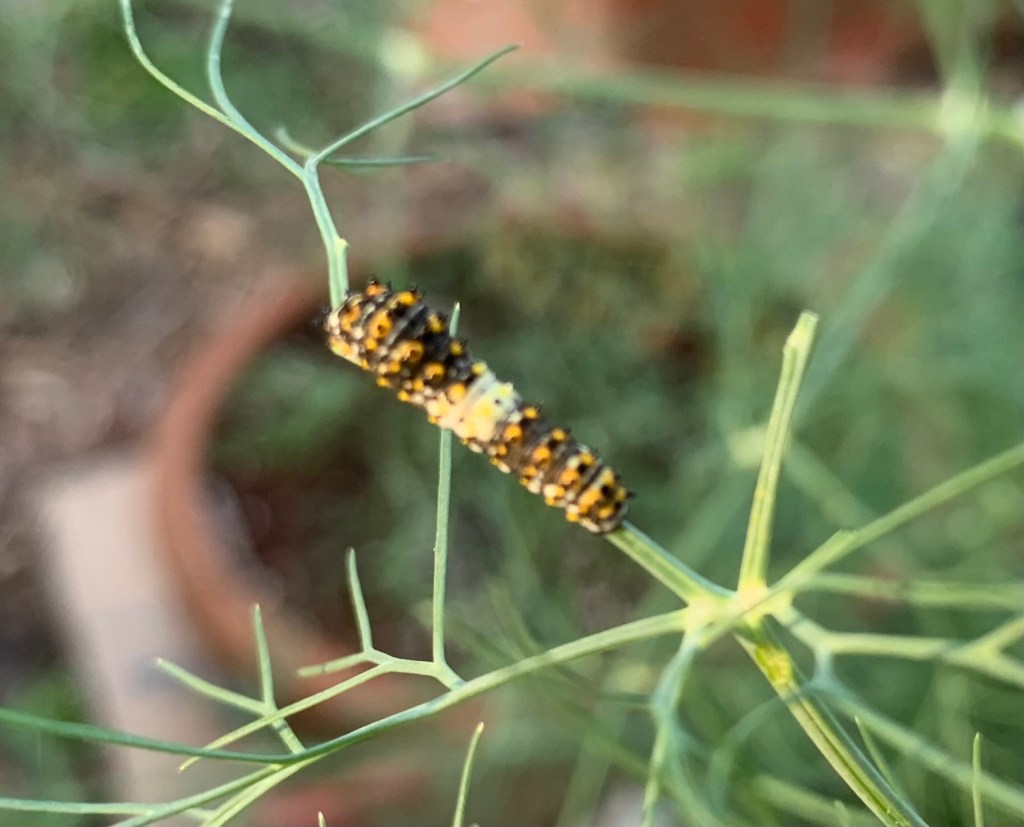
Black Swallowtail Caterpillars
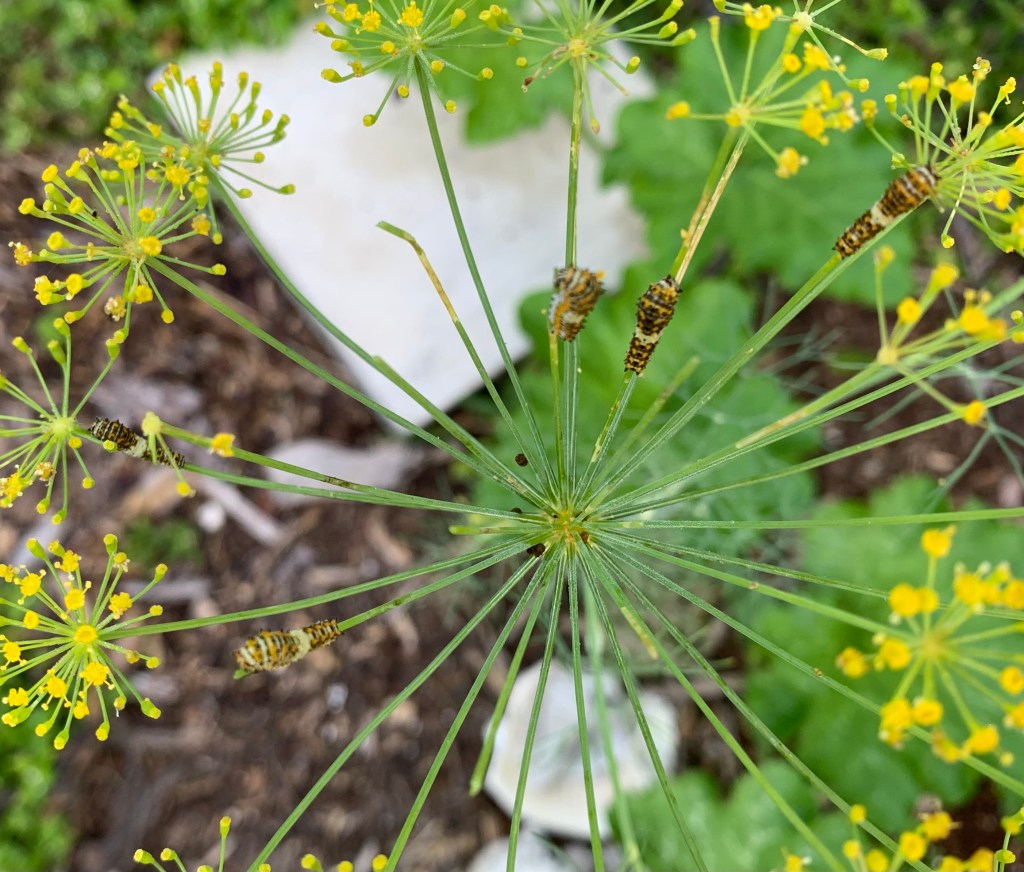
Little black swallowtail caterpillars were all over my dill plants. I snapped these photos one day in May. The next morning when I looked for them, the caterpillars were all gone.
Although I think it’s unfair that no butterflies get a chance to form, it is not something I can change. Some people raise monarchs inside, but I am not about to do that. Many years ago I saw a black swallowtail butterfly emerge from a chrysalis. I had some parsley growing at the time. It is the only swallowtail I’ve seen make a chrysalis.
I can’t see everything, so maybe a lot of them do pupate. The Monarch caterpillars do tend to crawl to other plants and things. I’m only viewing them for a short time each day.
I do want to fill my yard with plants that accommodate butterflies and caterpillars. I can’t help what happens during their transformation. These plants also feed other critters. And the caterpillars are food for lizards and wasp babies I suppose. Who am I to say how it should go?
Happy June, and here are some photos of the wonderful insects visiting my small Central Florida garden.
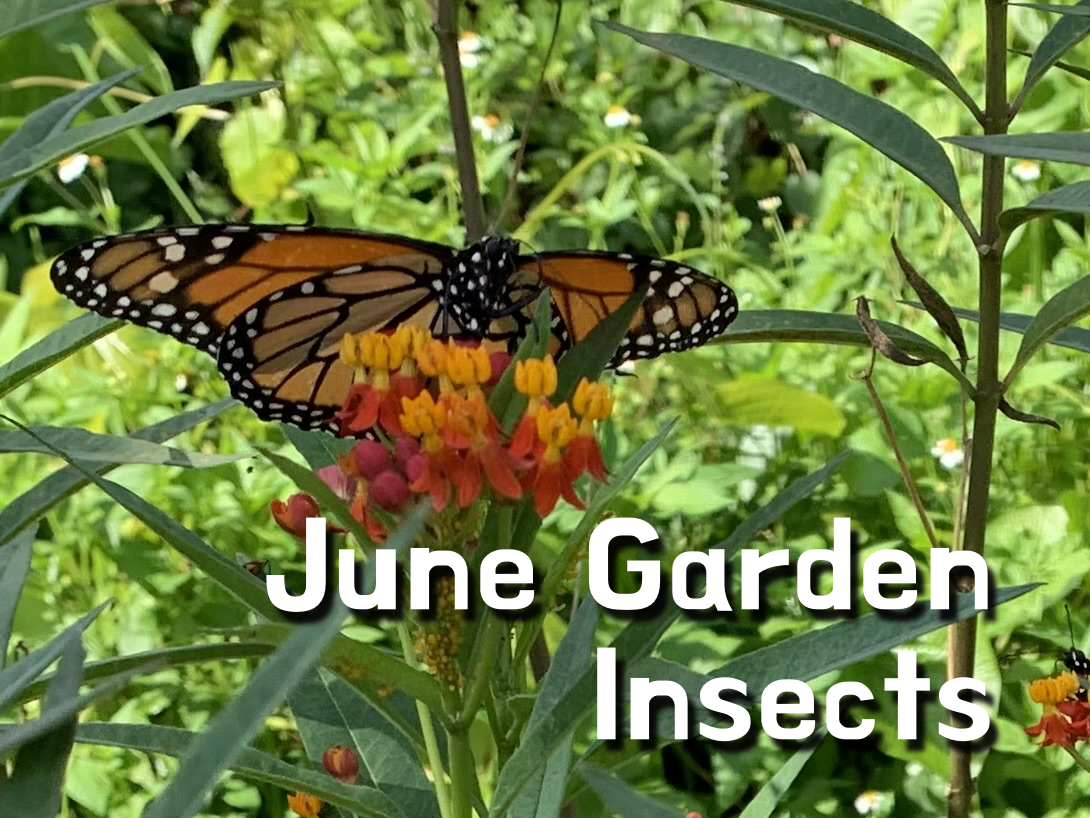
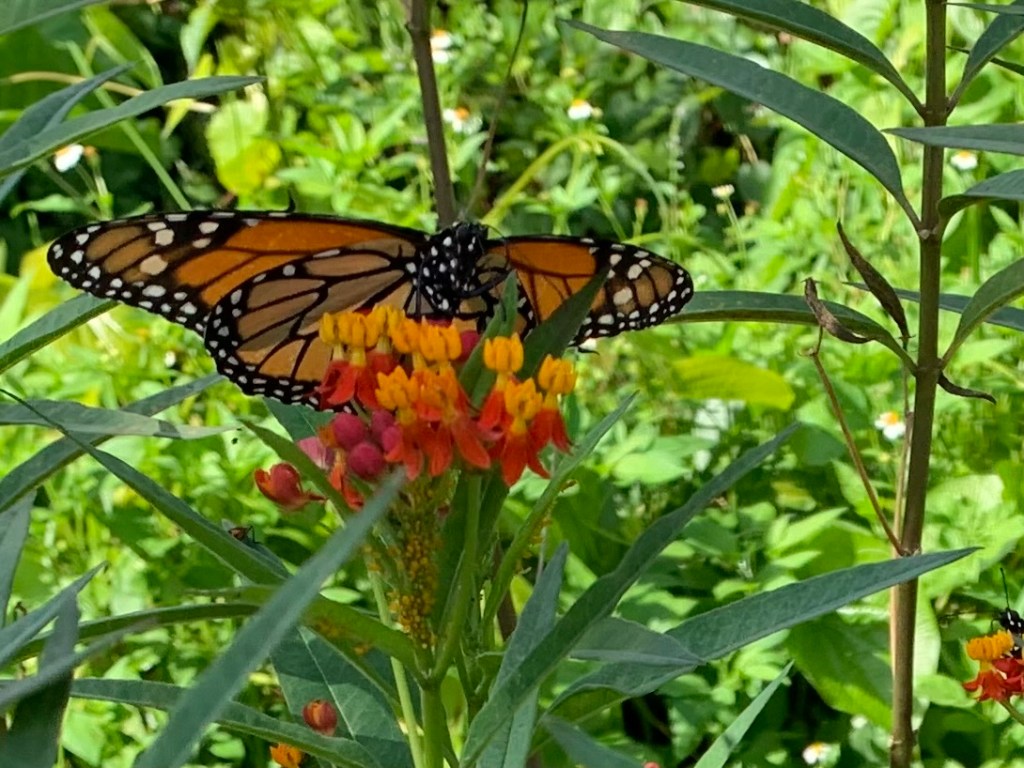
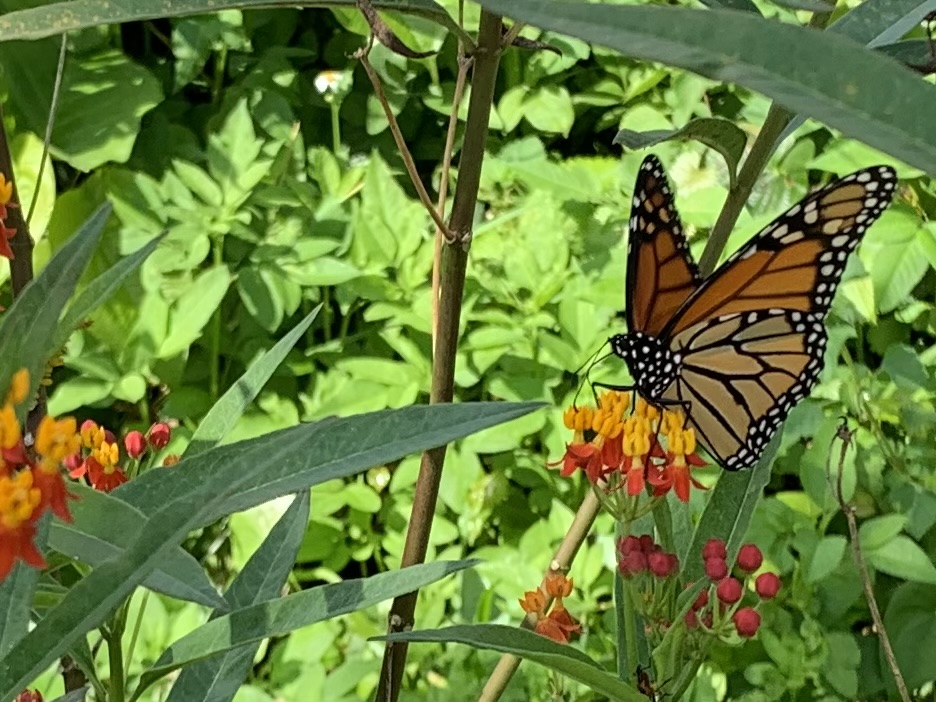
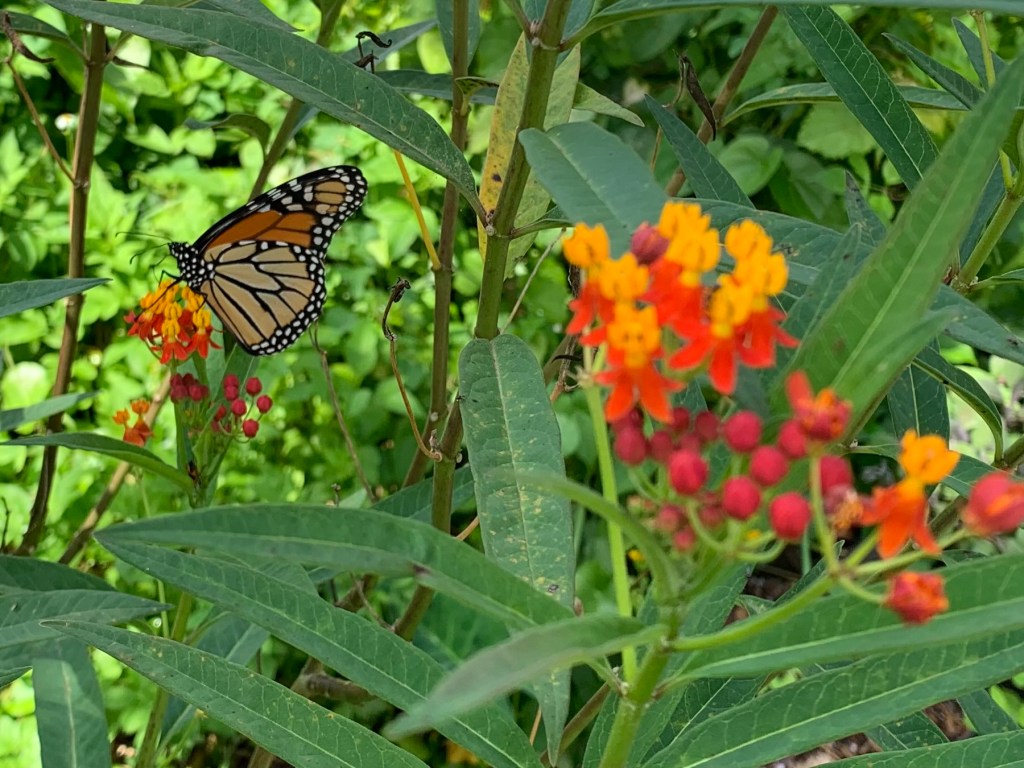
First I want to update readers on my Monarch butterflies. Yes, mine. I watched a couple of them hatch so I feel like their mom. I had three flying around the yard for quite a while, then one was found dead on the ground. After that I had two. After a while another showed up, and now there are four!
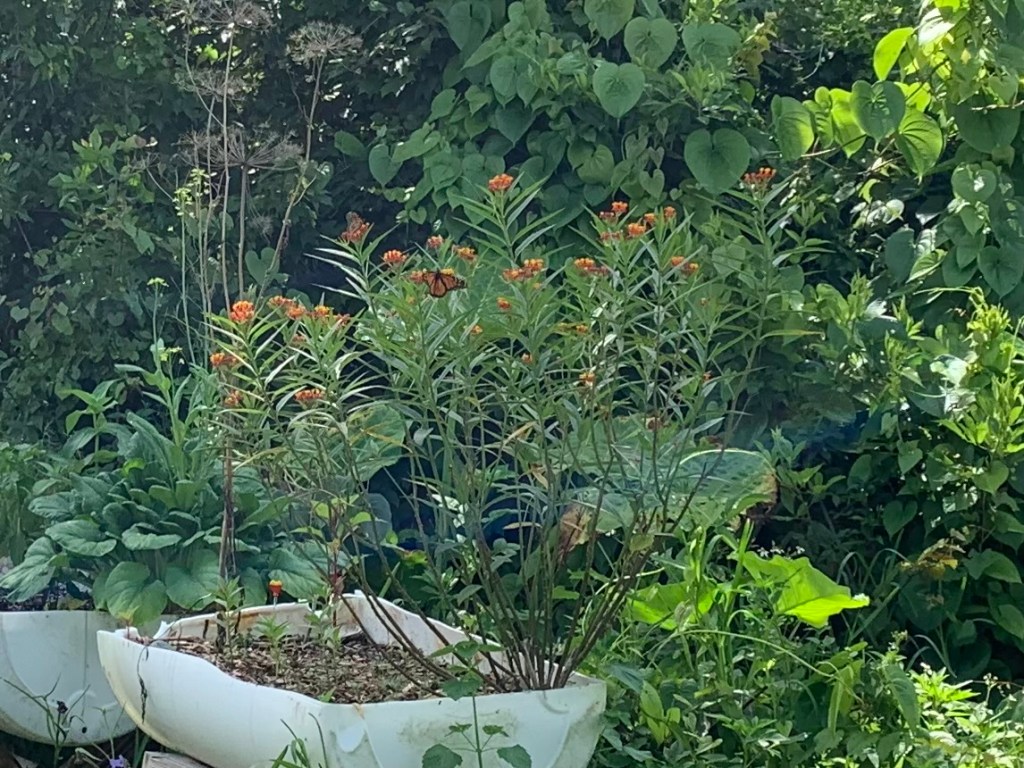
Each day, around 9AM they begin to fly. They circle the garden, fly over the lot next door, over the roof, and back. I think they’ve become used to seeing me, and fly right over my head. At least I like to think that. They are certainly enjoying the milkweed.
Monarchs
Monarch caterpillarcaterpillar camouflage Big milkweed plant
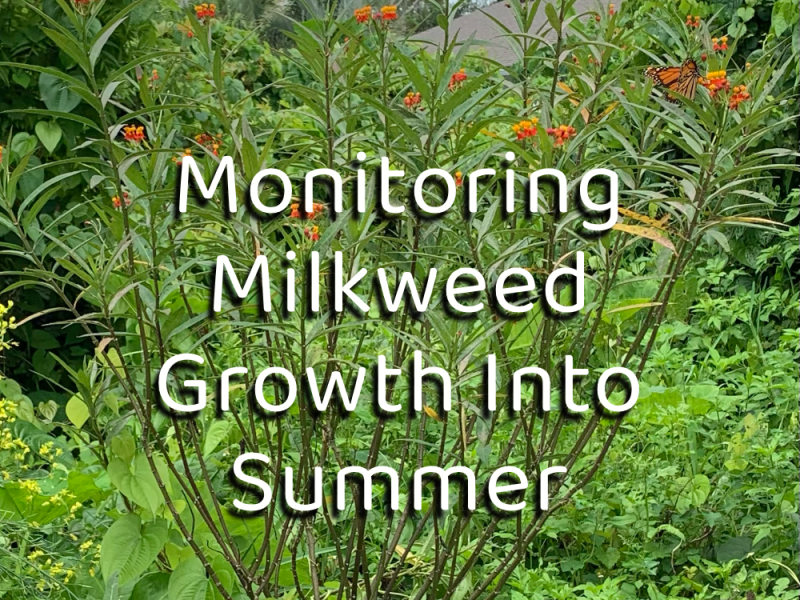
This morning I got a few photos of my monarchs on the tropical milkweed. This plant will not die back in fall, so I will need to cut it. For now, it’s one of the only flowering milkweeds in the yard. I need it for the butterflies because they love it.
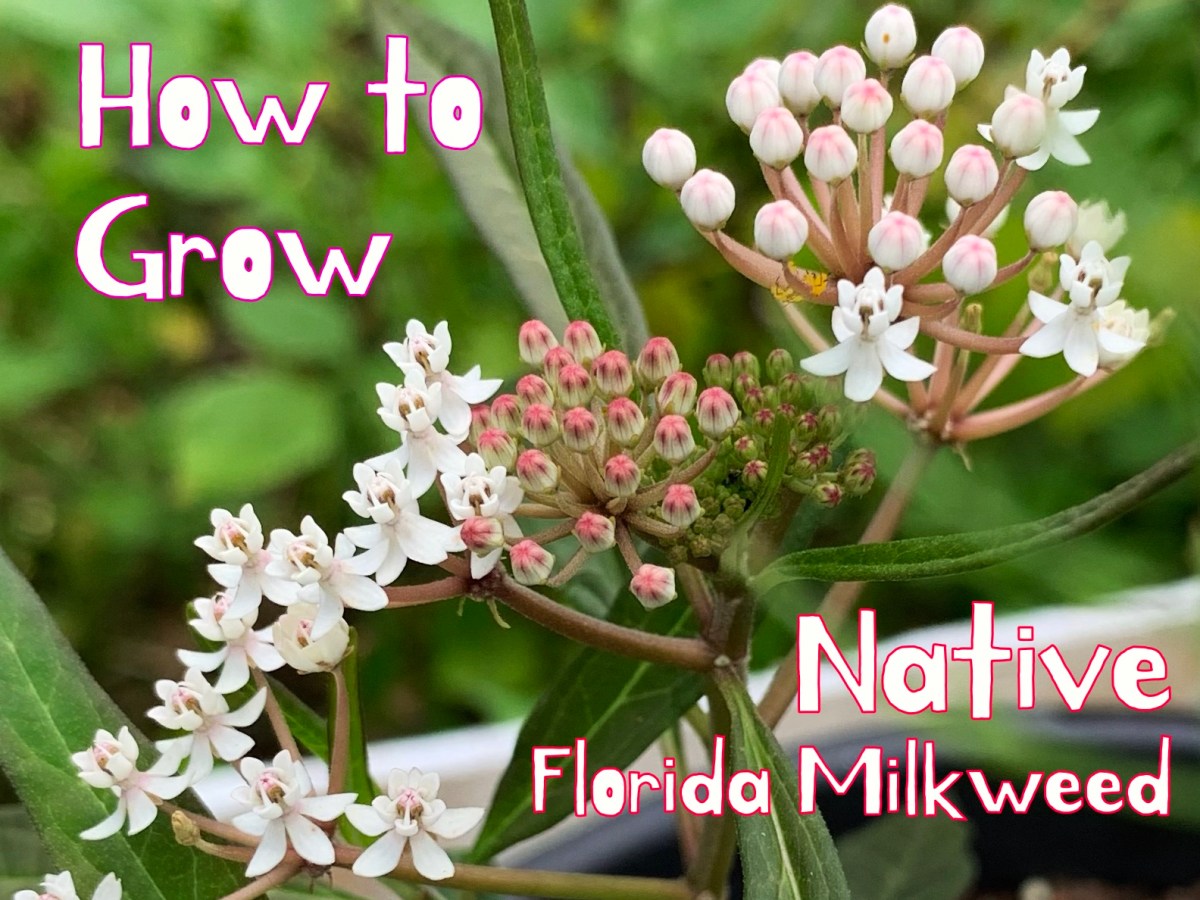
Tropical milkweed is not a Florida native. Read more about it on this page. I have also been growing new milkweeds, that are all native to the state. My plan to fill the yard with good types of milkweed (for the Monarchs, who only lay eggs on milkweed) is coming to pass.
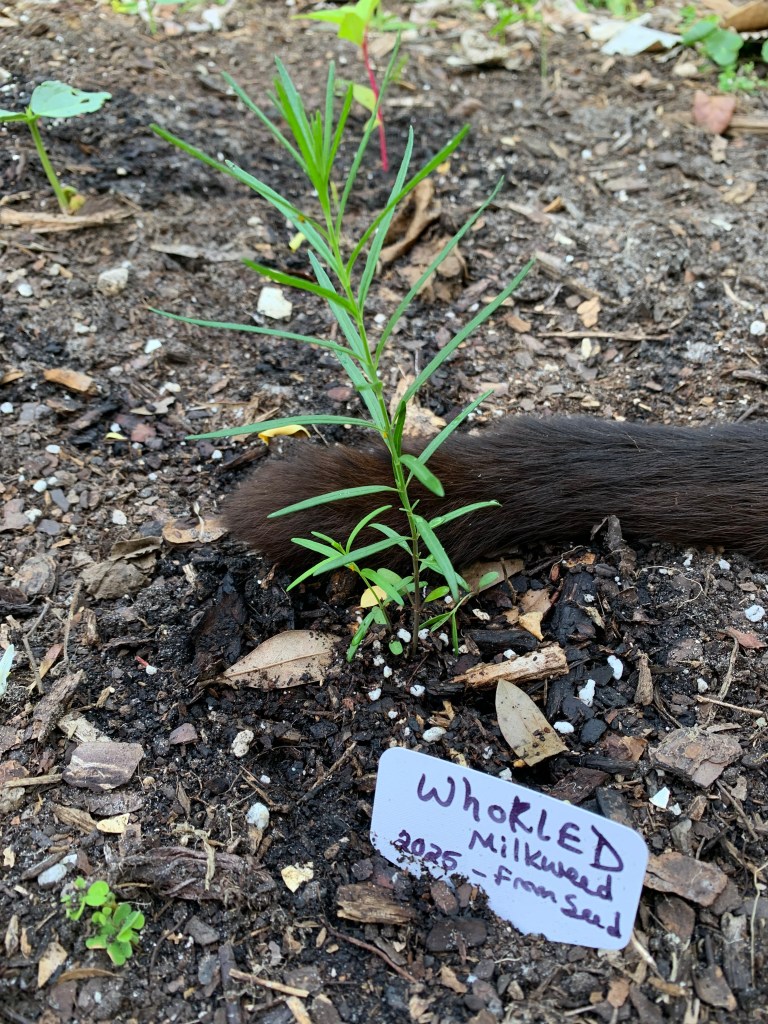
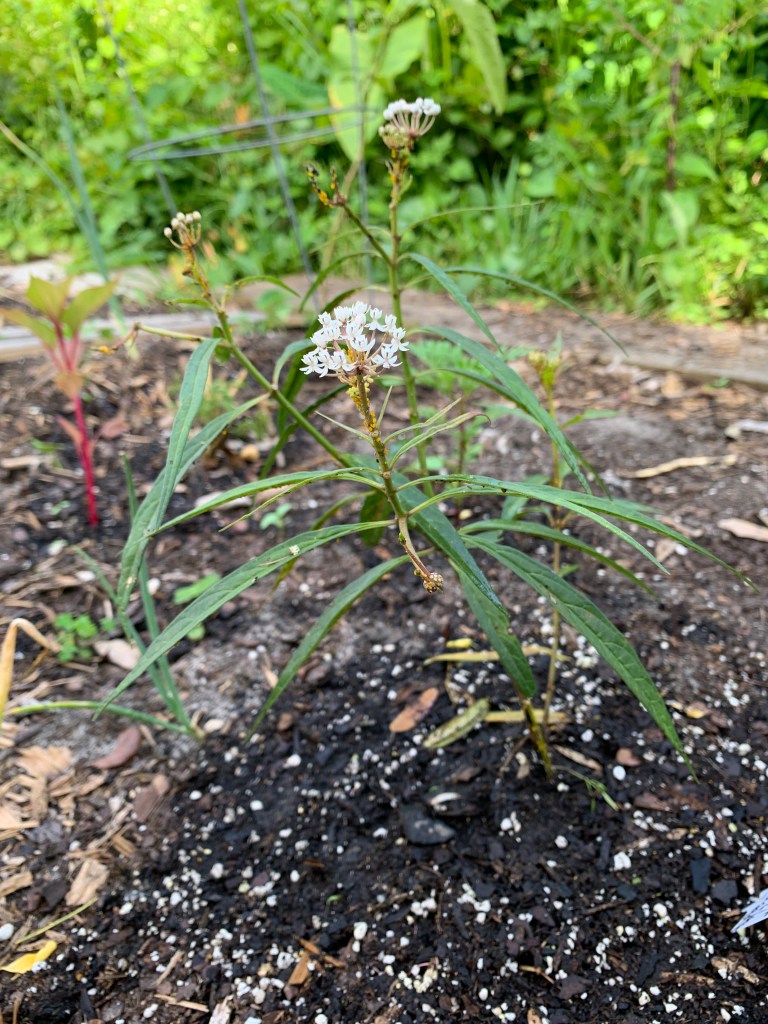
Whorled milkweedWhite swamp milkweed
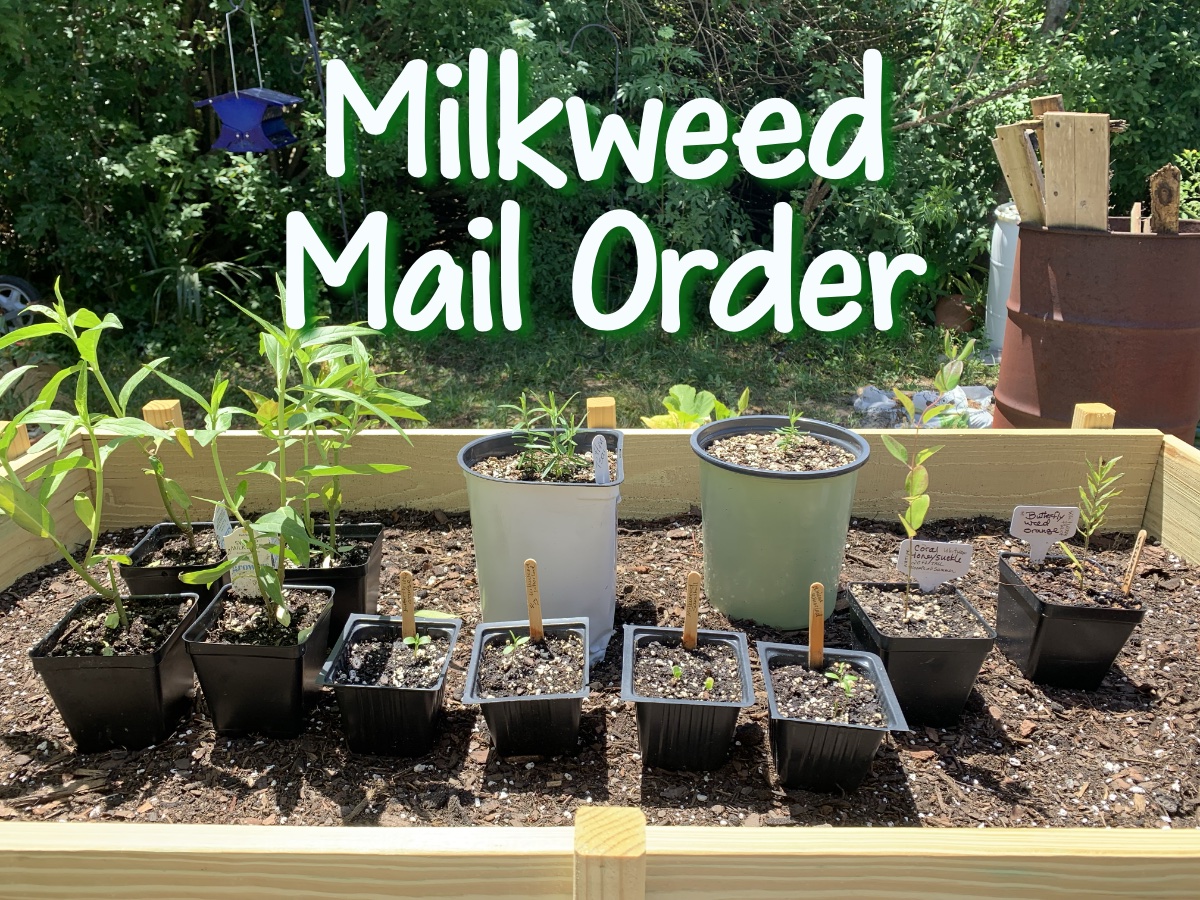
I’m slowly getting some of my milkweed seedlings into the ground. The rain has quit here, or goes around us, so I’m constantly watering once again. One of my Whorled milkweed seedings is in the ground along with the White swamp variety.
A Tiny Drawback
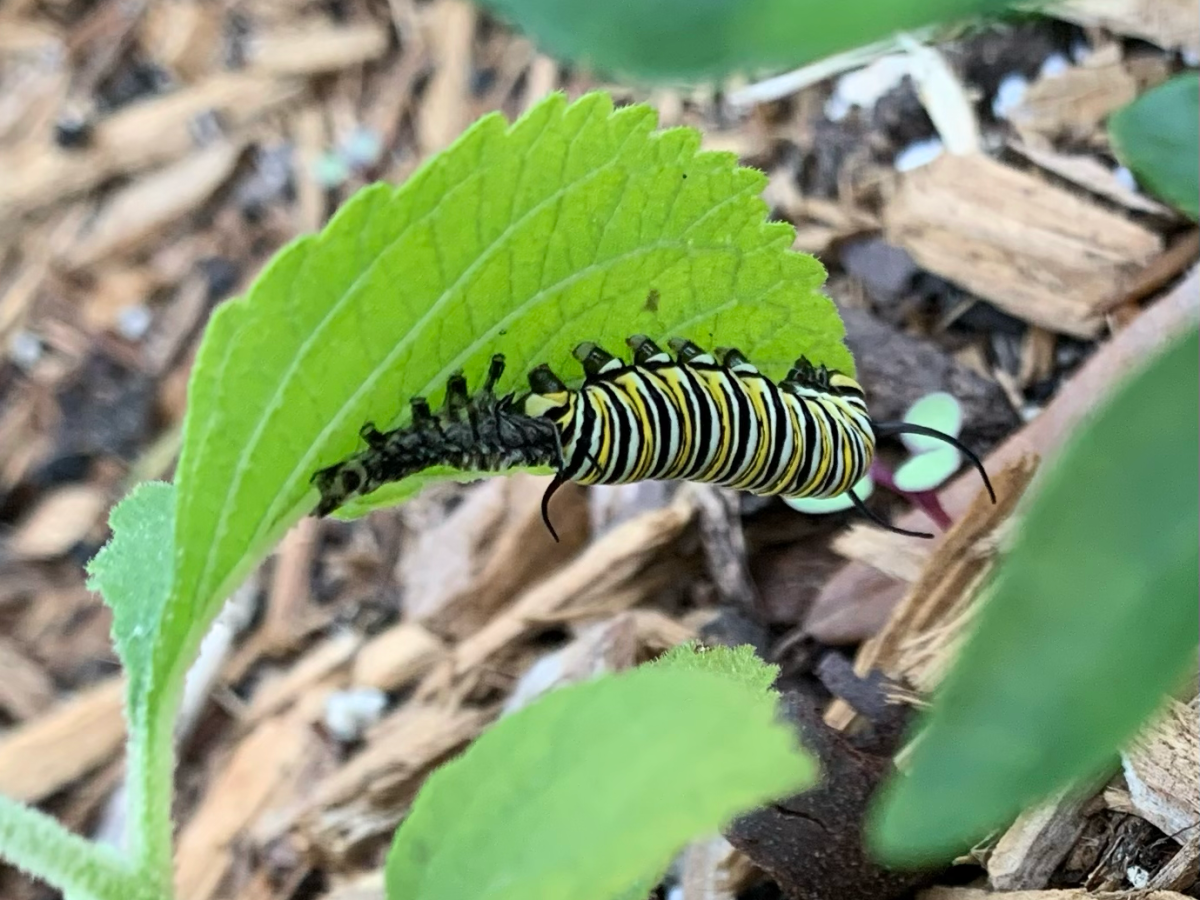
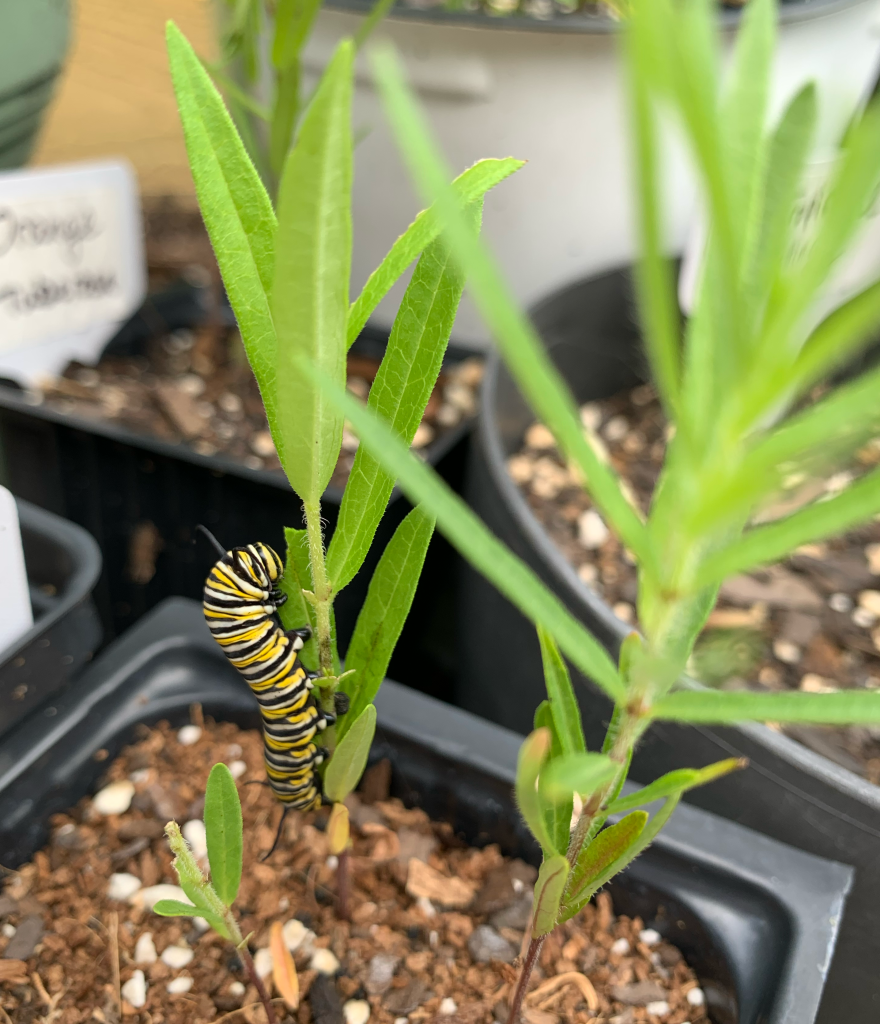
Caterpillars keep showing up on the smallest of milkweed plants. And they move from one to another. Maybe they like munching on those tender little leaves, but the plants are being destroyed! Of course, it’s why I’m growing them in the first place – to feed the Monarch caterpillars.
These caterpillars are sneaky. They show up out of nowhere and then they disappear. I found one on the side of a pot. Then, they come back from wherever and begin eating again.
Chow timeA few minutes ago this stem had leavescaterpillar camouflage
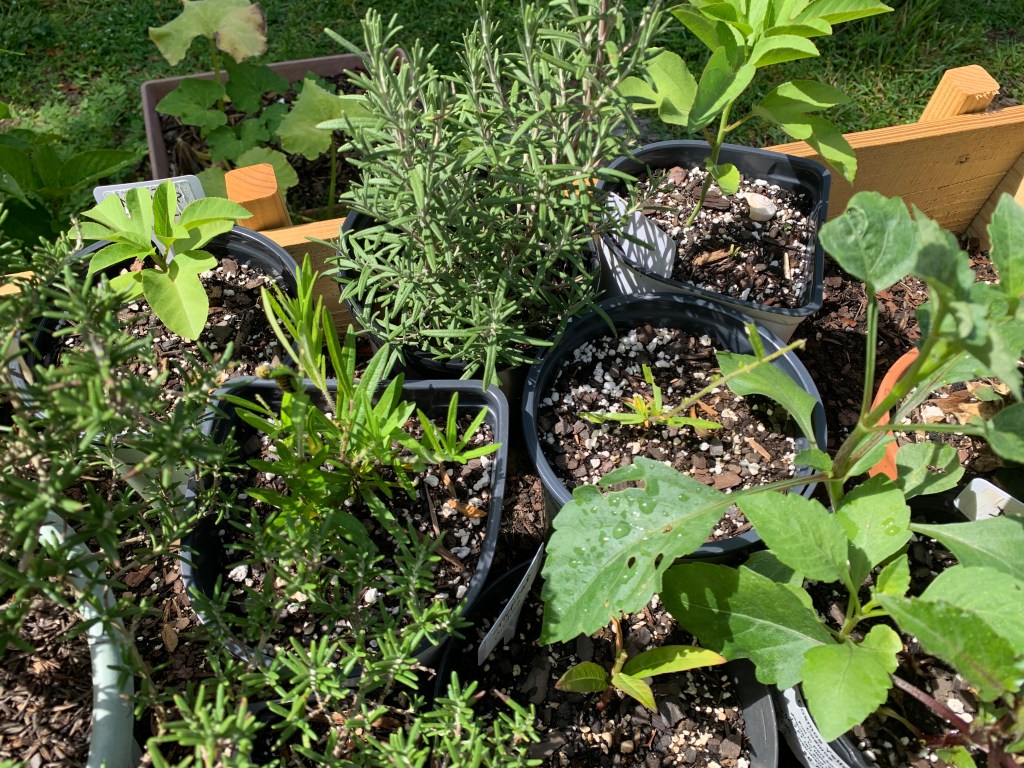
I have surrounded these little milkweed plants with rosemary, dahlias and other things to hopefully keep things from eating the caterpillars. Between the lizards, wasps and birds, most caterpillars don’t make it. They eat all the leaves off the plants and then become food for something. I guess that’s the way it goes. Everything has to eat.
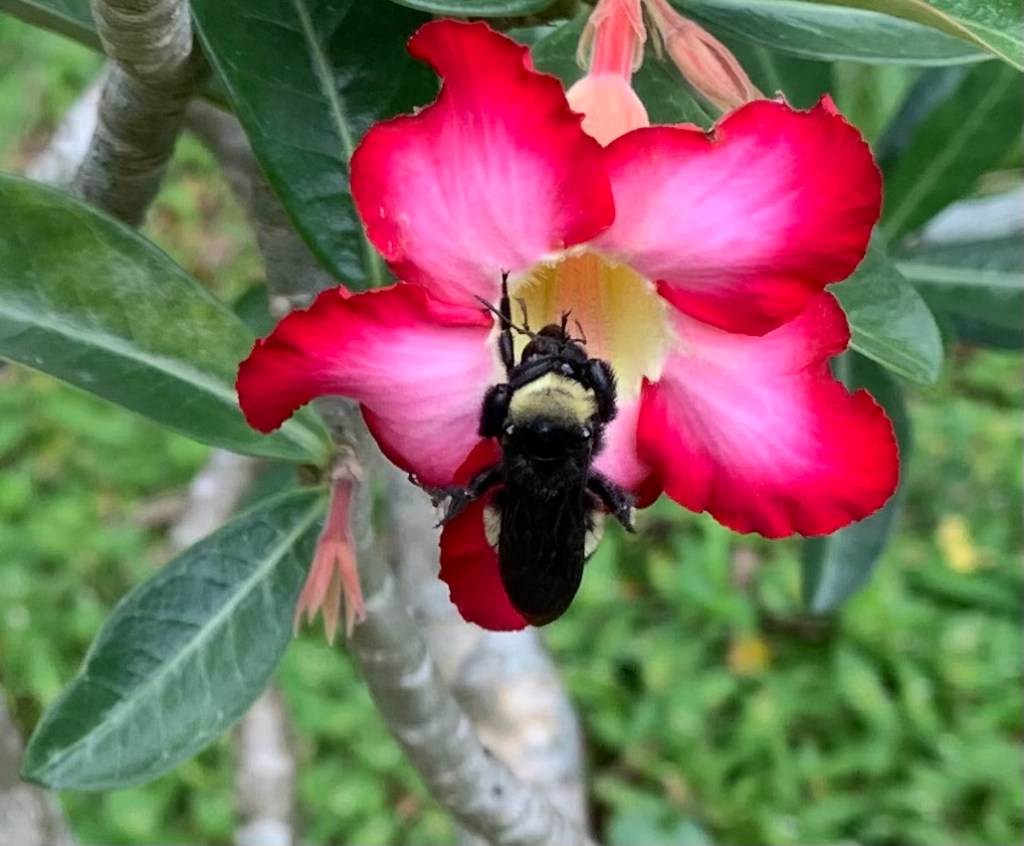
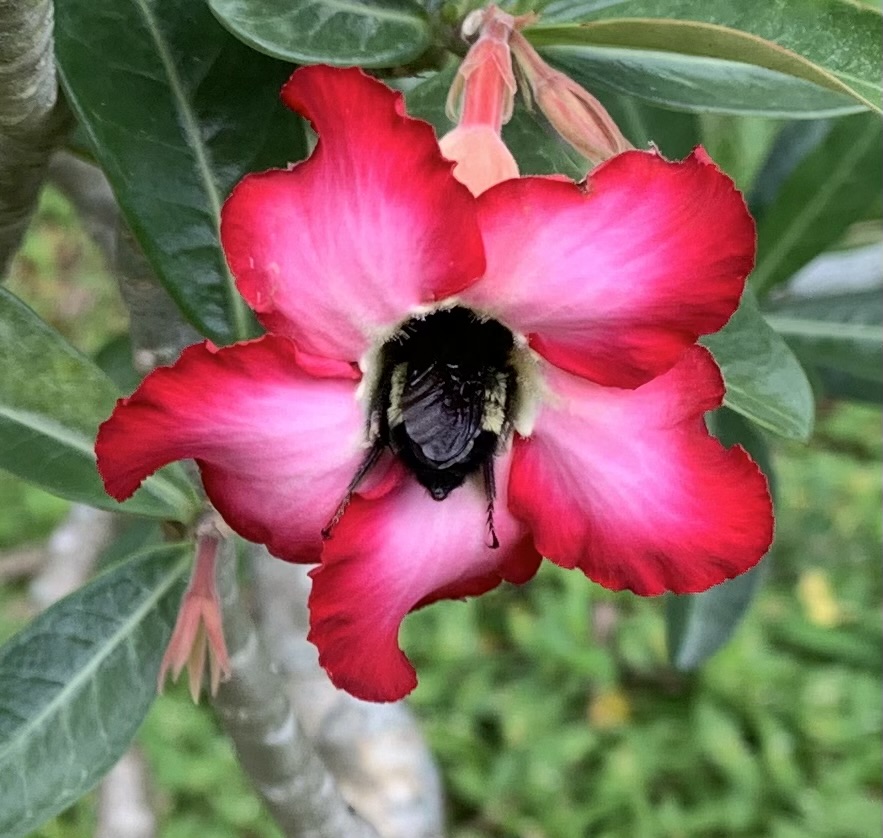
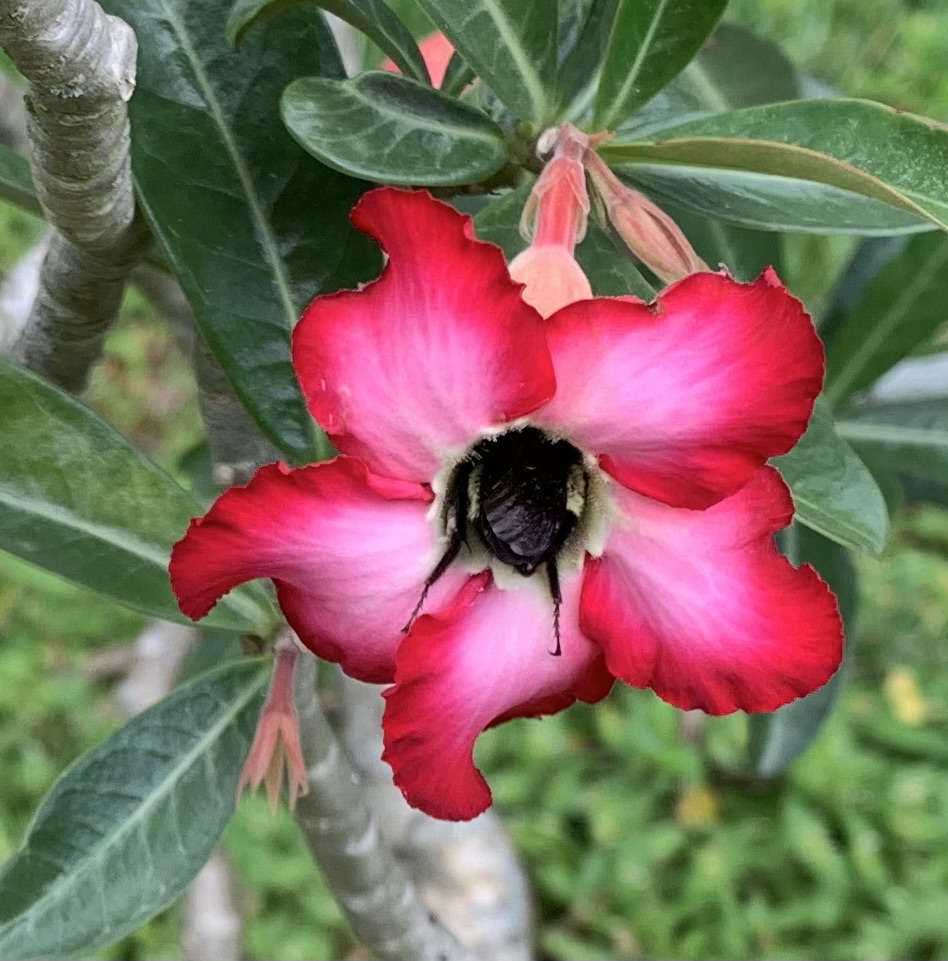
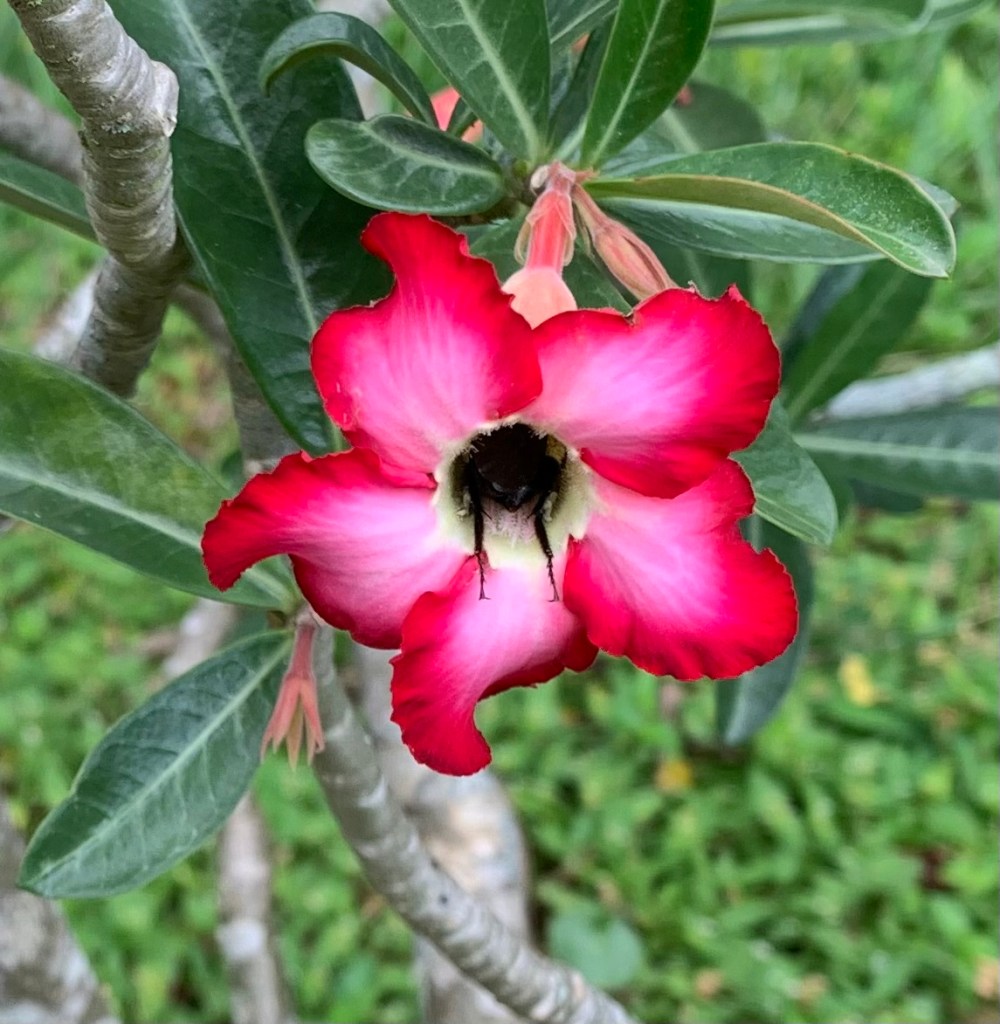
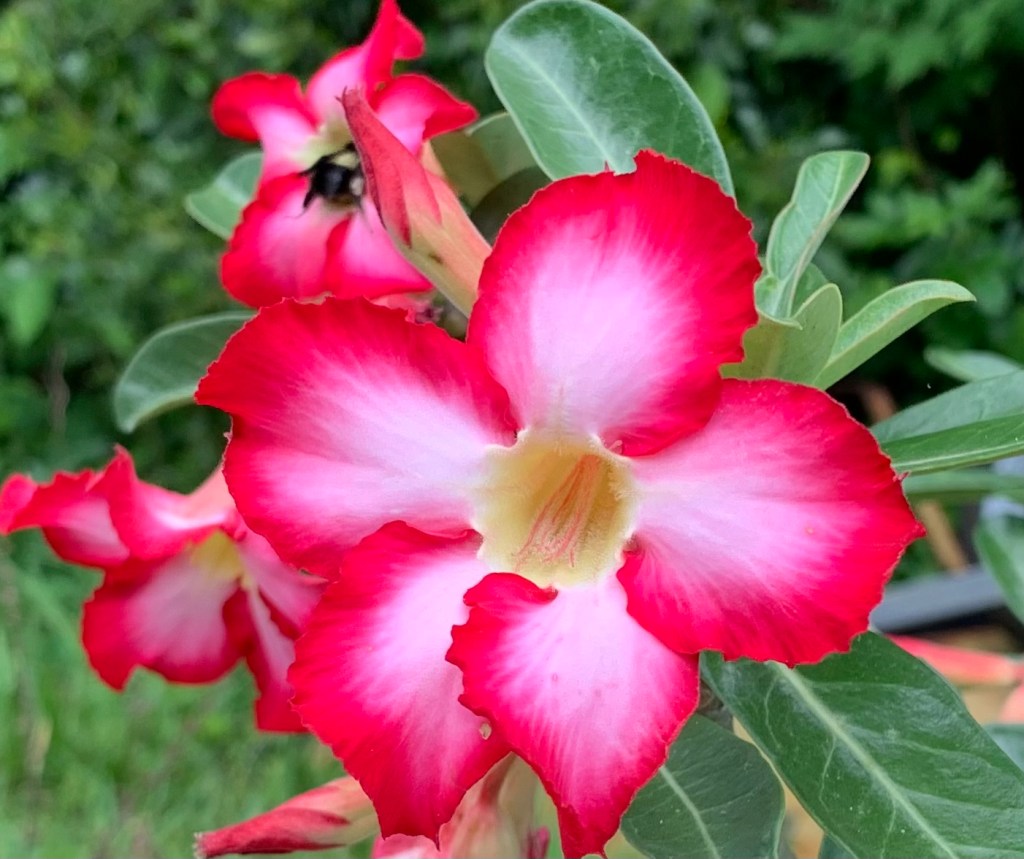
Desert Rose Bee Diving
A beautiful bee showed up the other morning. I watched him crawl way down inside each trumpet-shaped, Desert Rose flower. I don’t think he missed a single bloom!
Although this plant has a “desert” name, it grows great here in Central Florida. I’ve had it in this pot for years. It requires very little maintenance and has the brightest pink flowers.
Giant Swallowtails
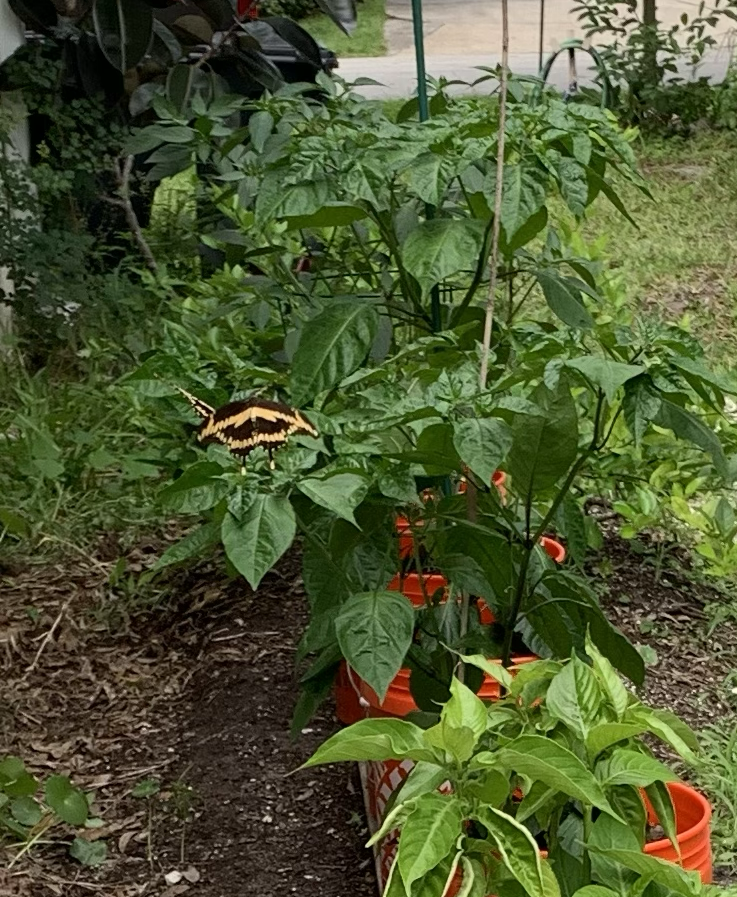
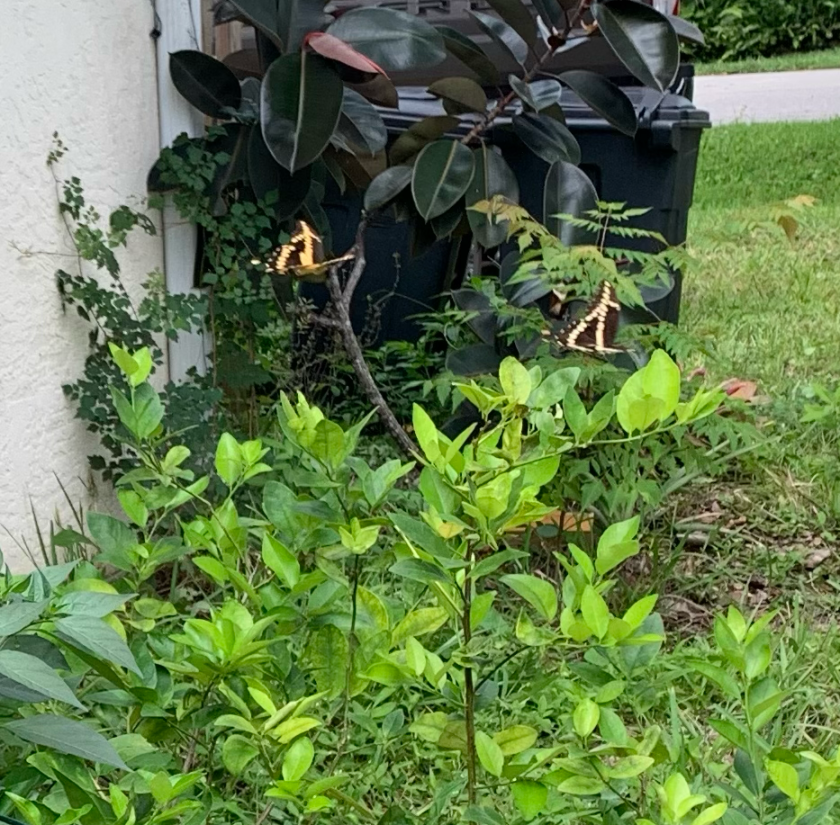
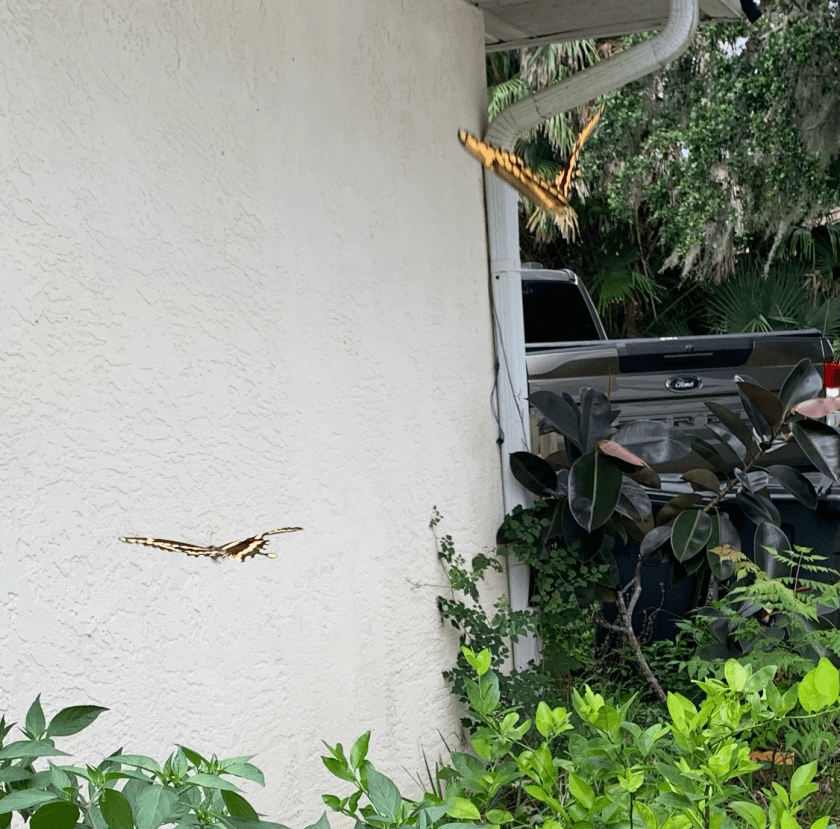
As I was writing this article, I happened to see two Eastern Giant Swallowtail butterflies outside my window! The photos are not good, but I am sharing them to prove they were here – haha. The two of them flew together around the orange tree and then off into the yard. I am not good when it comes to photographing moving targets, but wanted to share these photos anyway. To see this butterfly better view the Wikipedia page and iNaturalist.
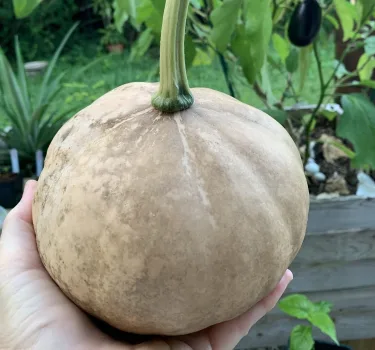
That’s it for now. Soon, I’ll be sharing about my success at growing a spaghetti squash. It was so tasty! Also, the Seminole pumpkin vines are getting long, and I’ve found one little pumpkin beginning to grow. That is exciting!















 Hydrangeas Blue