Lots of Growth on The New Hydrangea Shrub

hydrangea shrub
The New Shrub is Thriving

I’m so happy to add this picture of the new hydrangea shrub. It’s growing like mad and has buds all over it! One of the great things about hydrangea plants is that they are hardy and fill out quickly. If you look back at my other posts you will see just how quickly this one grew. Last year it consisted of two stalks of leaves with no flowers, and although it didn’t look like it was doing much, I’ll bet that underground the root system was expanding and strengthening to support the wealth of growth for the following year – which is now!

That is why you will sometimes hear to not let certain plants bloom the first year. Blooming takes a lot of energy which takes away from the plants ability to become strong. And a good, sturdy plant is needed to produce great flowers. Hydrangeas seem to be “smart enough” to do this on their own. At least that is how it seems to me.

Hydrangeas and The Rainy, Cold Summer

Hydrangea bud
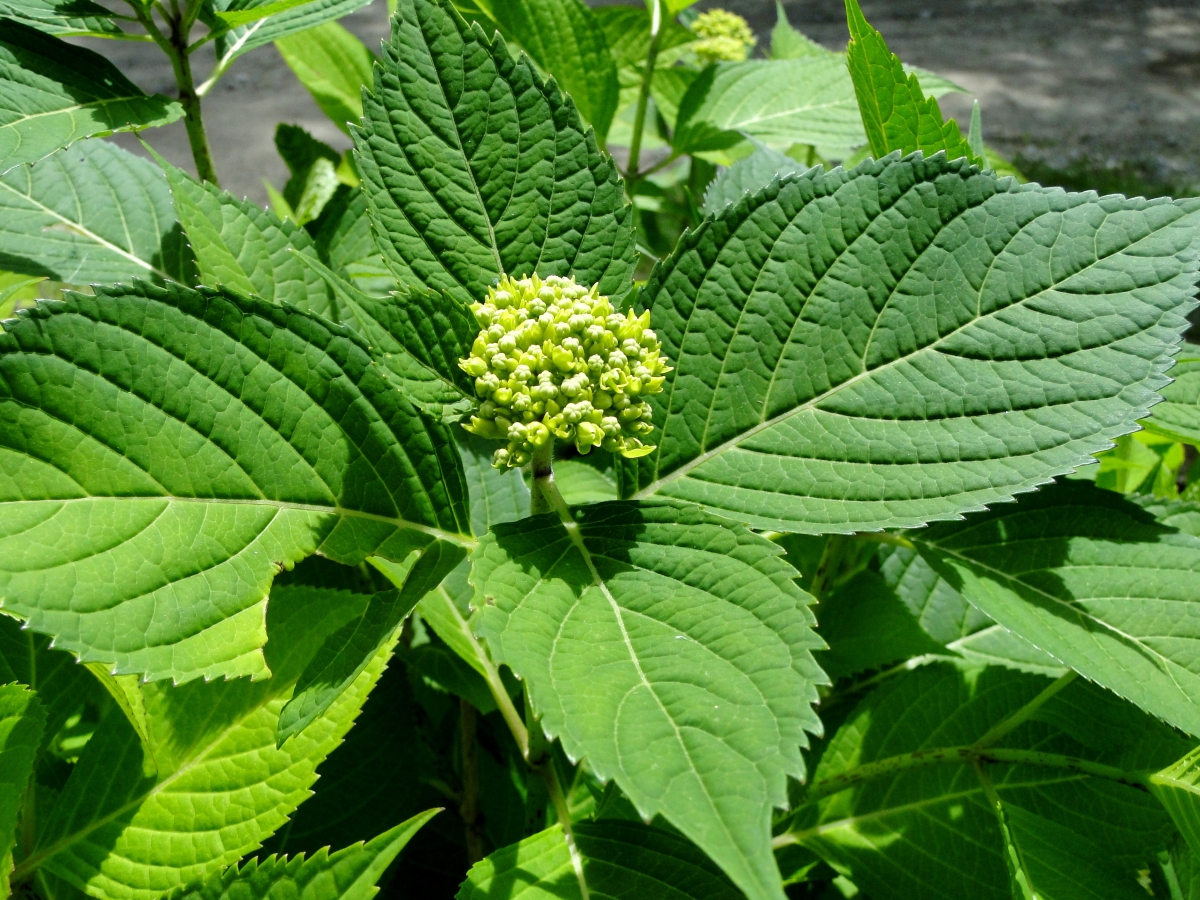
End of June Hydrangea Bud

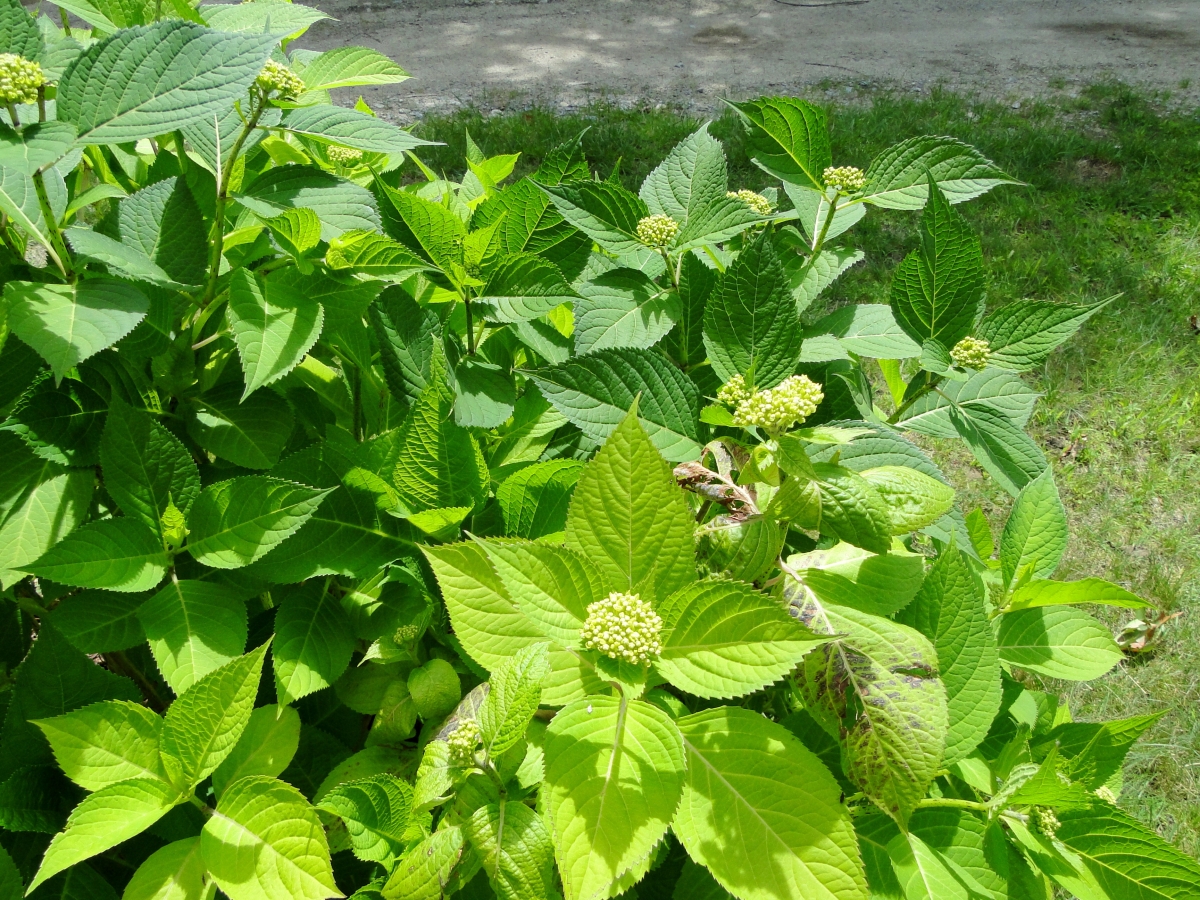
It’s the end of June and in southwestern New Hampshire the hydrangea in my yard is full of buds. The bush is very full this year since I didn’t do any cutting back, but the overall color is not the dark green of the leaves you see in this photo. In fact the bush seems to be divided with part of the stems showing off dark greenery and the rest showing a lighter, less healthy looking green.

The disadvantage I have where I live is that this yard is not mine. I live in a duplex and the owner lives next to me. She goes out and fertilizes with something – seaweed I think – and so I have to be careful of what I add to the plant. I usually just keep it watered and see what happens. Last year the blooms were not as nicely colored as the year before and the flowers were also smaller.

This year is also the first time I have seen browning of the leaves. You can see it in my photo below. So I had to check on diseases of hydrangeas and found that they can get spots on the leaves.  However, that site didn’t say why or what to do about them. The leaves in some places, look like something is eating them.

As I have said, it’s not my yard and not my plant, so I’m not worrying too much about it. My landlady is not much of a gardener so I doubt that she even notices or cares. I’ll keep an eye on it and see what happens, but it might have something to do with the fact that we are having a rainy and cold spring and summer season this year. In fact, I have hardly been outside!

I’m looking out for the flowers. I hope they open before I move in July.

hydrangea shrub with light and dark leaves
Dark and Light Leaves and Brown Spots

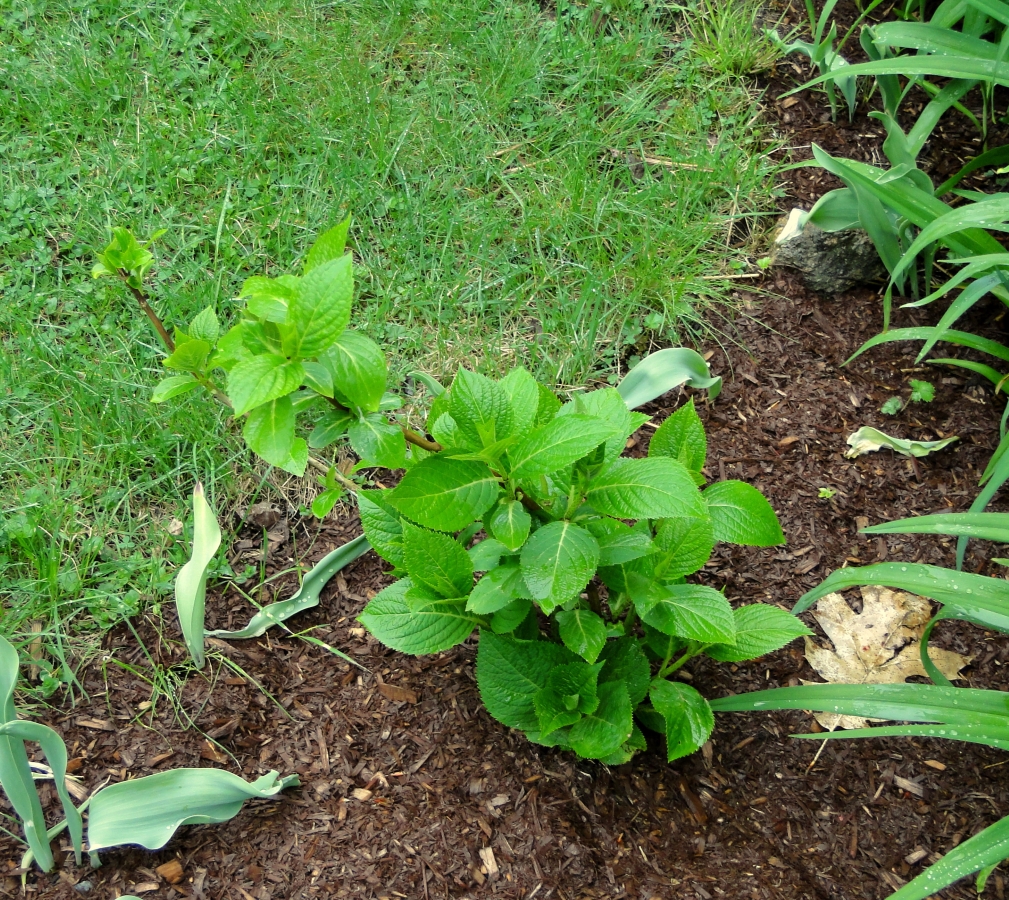
Baby Hydrangea In Second Year After Propagation

Hydrangea planting
New Plant - Second Year

Want to see my baby?  This little hydrangea bush was propagated from a large one.

Sometime in the summer of 2009 I noticed that the big, blue hydrangea plant in my front yard had a “baby” growing next to it. It didn’t have a bloom, so I dug it up and put it by the front steps.

**Note: I’ve since read that before digging up a new plant, first chop it from the “mother” plant and then leave it where it is for a while to let it get accustomed to growing on it’s own. After a month or so it’s safe to dig it up and it will be more ready for life out on it’s own!

Anyway, it is thriving and even has little buds showing this year. Last year, summer of 2010, it grew two long stalks, but no flowers. I was worried about it this winter with all the snow we had, but the brown stalks were still there once the snow was gone and leaves began to grown from it quickly. Besides new growth on the stalks, it is filling in with more stems and I look forward to seeing the flowers of course and am a bit curious what color they will be. I am thinking blue.

Some of My Blue Flower Pictures

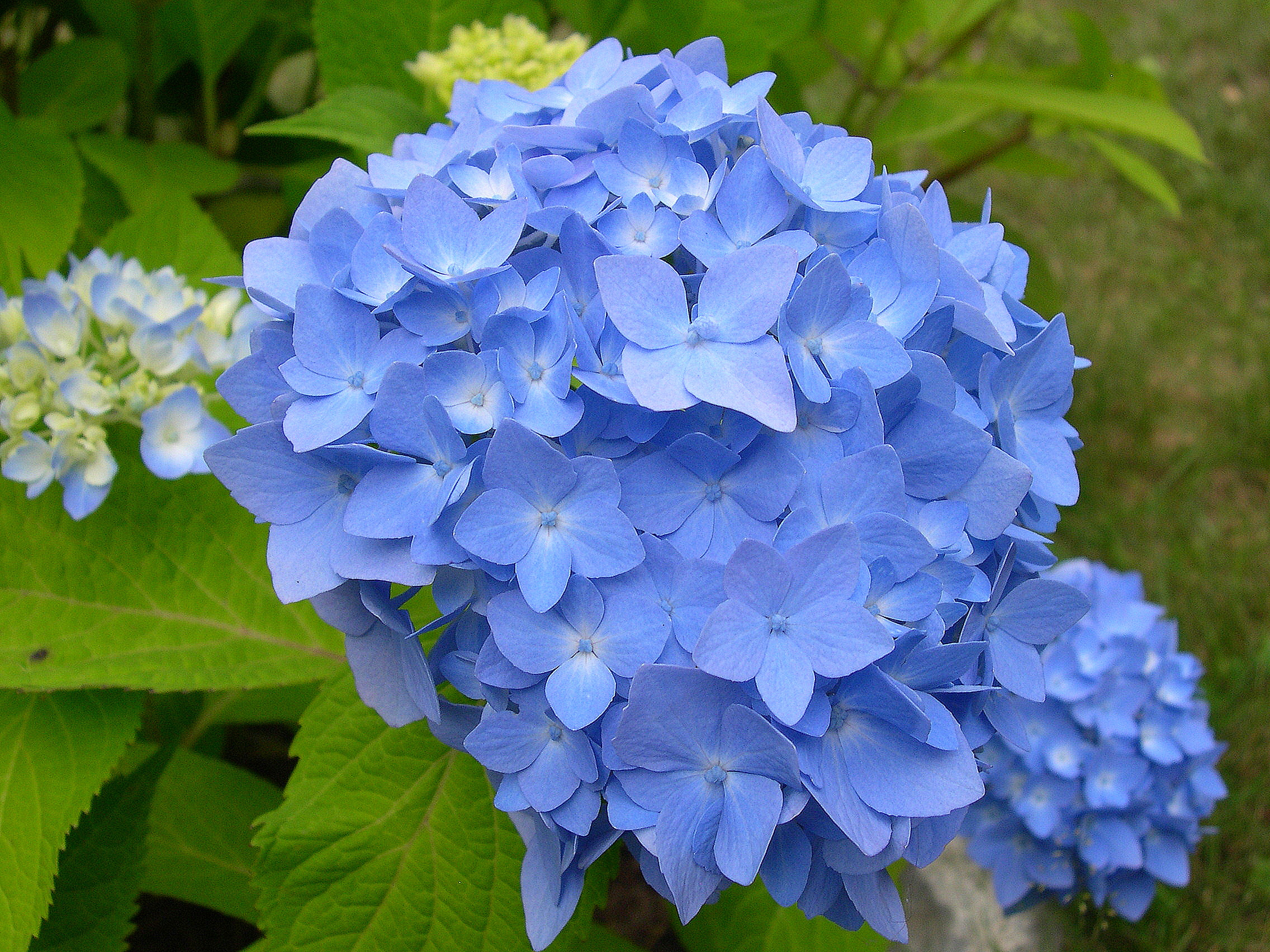
blue hydrangea flower
Blue Hydrangeas

If you are looking for blue flower pictures – I mean REAL blue flowers, today I am showing off some of mine.

How many times have you seen a purple flower listed as being blue. In the flower kingdom, this happens a lot and I think it is because there really aren’t that many true blue flowers.

It’s a popular color, especially for weddings – that “something blue” phrase can be taken care of with a blue bouquet or at least one blue flower in the mix.

Blue flowers are popular in the landscape too. The perennials that come in blue are certain types of hydrangea (pictured), such as the “Endless Summer” variety.  But soil must be acidic for flowers to be nice and blue.

I also love the forget-me-not, which sports tiny bright blue petals with yellow and white centers.

Forget Me Not Floral Photography Postage stampLots of gardeners include the blue delphinium that grows tall, and many like to have a morning glory vine grow along the deck railing or up the fencepost.  I have another page with more ♥ pictures of blue flowers you could grow in your garden.

Another flower I grow that is sometimes blue is the Columbine.  I love the variety of that plant and I’ve had light blue flowers, but the more common color is dark purple, as you can see in my photo below.  My images are not free to use, so please contact me if you want to use one, with a link back to my blog.

Blue Columbine Postcard postcard

Bone Meal For The Spring Flower Garden

Get the ground ready for planting by adding bone meal to the soil.

It sounds a bit gross to use crushed bones when fertilizing, but the fine, powdery substance works wonders for the plants.

Bone meal is a great source of phosphorus which helps establish good roots, and without good roots, plants don’t grow as well. This is why I add it to the ground when planting and later when plants are growing. They are always making new roots.

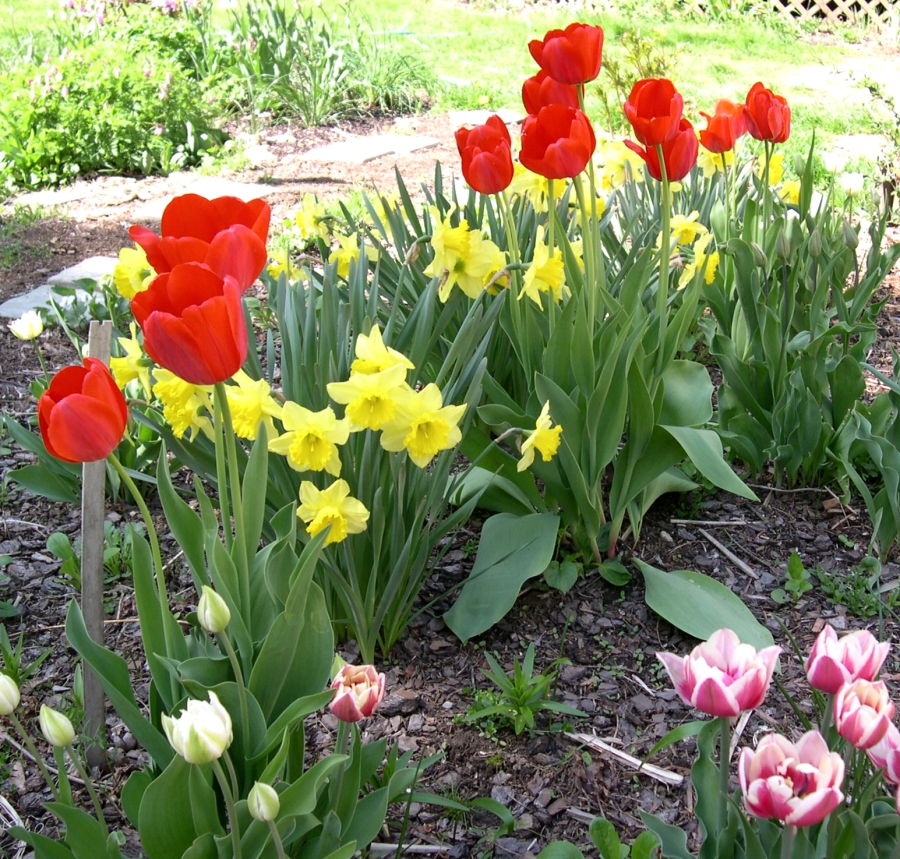
tulips and daffodils
Bone meal helps grow strong roots

Bulbs, like the ones in my photo here, will appreciate some bone meal mixed into the planting soil.  Your tulips and daffodils will produce more blooms, as will any flowers planted in spring.

Organic Bone Meal is the perfect addition to an organic garden. I add it to the bare garden soil in spring before it’s time to plant.  It helps make the soil better for everything you plan to grow, as long as you don’t overdo it.

dsc06743
Annuals and Perennials will grow better with bone meal.

Use it as a soil amendment around perennials too. I sprinkle it around the hydrangea shrub and other perennials in the yard once the snow is gone. Rake it into the soil and be careful around the shallow roots. Bone meal replaces depleted phosphorus and will get the plants off to a good start for summer growth.

I buy mine in 4.5 lb. bags and directions say to use 1 teaspoon mixed into the dirt for bulbs. For shrubs, such as the hydrangea, apply 1 to 2 pounds (2.25 cups of bone meal equals 1 pound). Directions are on the bag, or box and it can even be used in pots.

Blood meal is a different product and can be used to supply the nitrogen your garden needs. Nitrogen keeps plants looking green. Use it if the leaves on your plants begin to turn yellow.

Be careful when using fertilizer, even organic fertilizer (and make sure it is truly organic!) like bone meal and blood meal, because it is still possible to use too much and damage the plants.

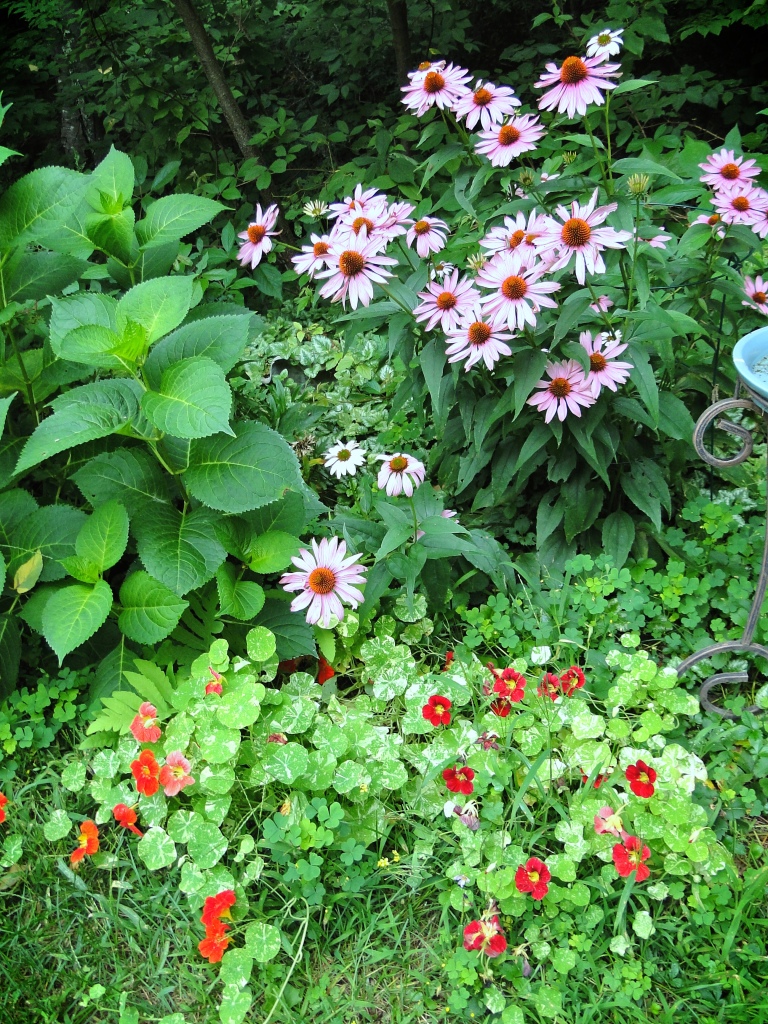
Above you can see the lush growth of my nasturtiums (annuals), and hydrangea (leaves) and coneflower (echinacea) which are perennials.

The Cold Hardy Panicle Hydrangea

Panicle hydrangea (H. paniculata)
Image via Wikipedia

Hydrangeas are pretty hardy but if you want a larger one that will thrive in zone 4, choose the Panicle Hydrangea. The flowers on this species is a bit of a different.  I am used to the round, puffy flowers that grow on my shrub, which is of the Mophead variety,  but the Panicle hydrangea has flowers that grow to a long pointed shape – or panicle.

As you can see in the picture I have added from Wikipedia, the Panicle hydrangea also grows to be quite large. In fact if can be 15 feet tall so consider it to be more like a small, flowering tree.  The flowers can be a foot long or more!   The Oakleaf hydrangea grows similar looking flowers that are very long.  You can tell the difference between these two by the leaves on the Oakleaf that are shaped like…. oak leaves!

The flowers can be white or pink, but no blue on these larger varieties (as far as I know), but beautiful just the same.  This species – the Panicle – will tolerate lots of sun.  As it grows, trim out the lower branches and create a little tree of blooms.