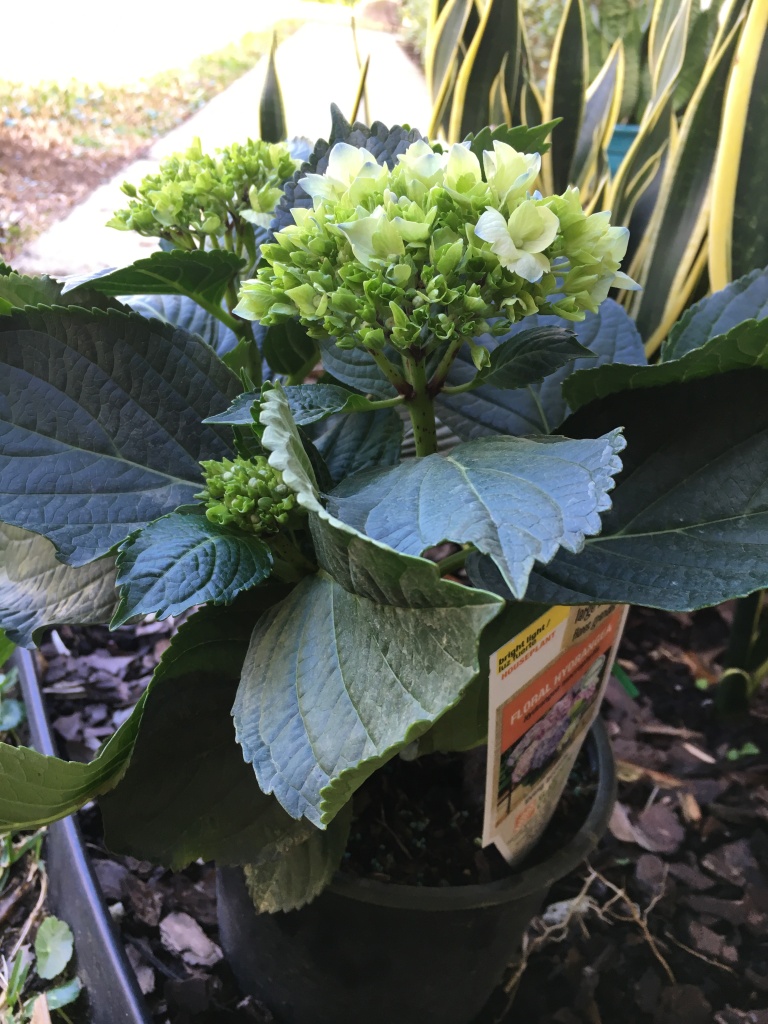
At Home Depot I spotted a table with small hydrangeas for sale. I call it a “greenhouse” hydrangea because I imagine that is where it came from. The price was around $12 as I recall, so I bought one. Now I know these are not like the hydrangea plants I purchased in New Hampshire to plant in my northern yard.
The tag on this one said it “likes cool nights” and it’s climate preference is 50-70 F. That’s what “cool” is in Florida. It’s also listed as a Houseplant. This plant obviously can’t take wintering in a dormant stage over several months. Growing hydrangeas this way is new to me.
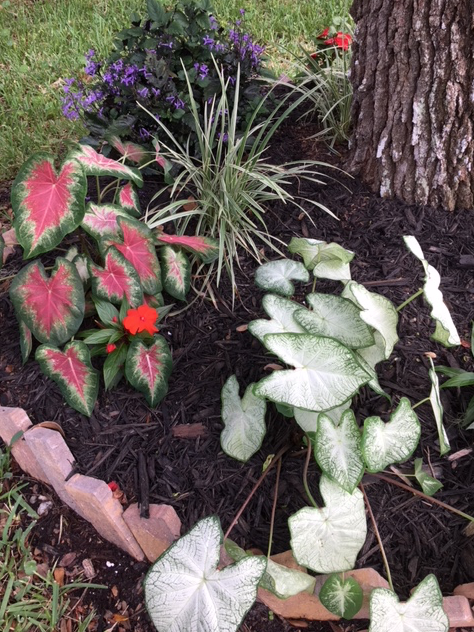
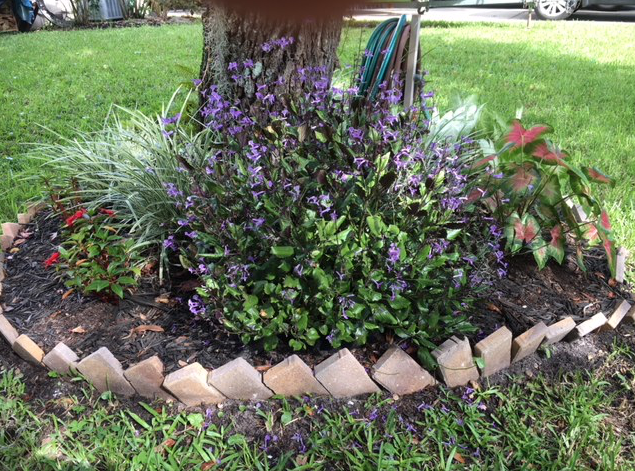
When I bought my house nearly 2 years ago, there was a little flower garden under the trees out front. I neglected it and it became overgrown very quickly. I’m not inclined to work outside in the heat, but the other day I decided a quick fix was in order. The garden is small, so the work would be minimal. We had brick pavers leftover from the building of the patio, so I used them to create a new border to hold the additional dirt needed.
I’m not yet very good with my Florida plant names, but the ones with the colorful, pointed leaves are Caladium. The link to Eden Brothers calls them “bulbs”. Mine came out of a pot so didn’t look like bulbs to me.
The white leaves are called “Florida Moonlight”. I don’t know the name of the pink-leafed one, but they add lots of interest in the yard. They love heat and humidity, which explains why they do so well here.
Flower garden under the trees
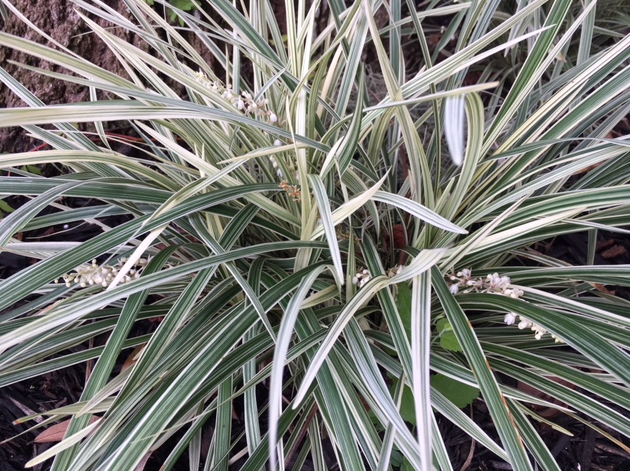
Also in the background around the tree are the thin leaves of the Variegated Flax Lily. I spent a lot of time removing lots of dead leaves from them. Even without attention they continued to grow, so I would say they are very hardy plants. Now that I have given them some attention, the lily is blooming. Each plant has tiny white flowers on stalks among the leaves.
Little stalks of white flowers on the Varigated Lily
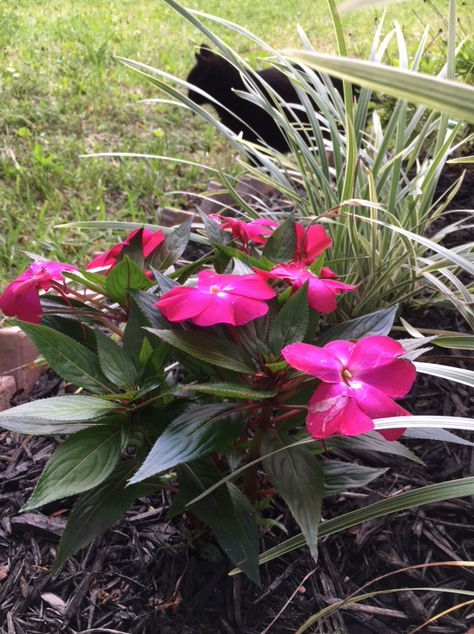
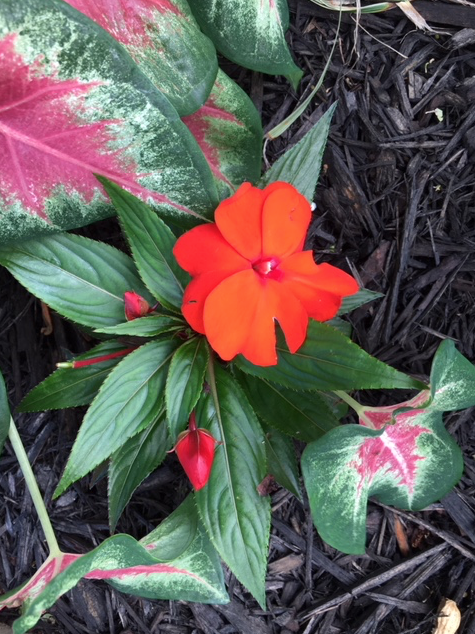
When I first moved in here I bought a bunch of New Guinea Impatiens and put them in the garden by the front door. The brightly colored flowers add continuous color to the landscape. It turned out those annuals lasted nearly a year. The very cold nights in January finally froze most of them. Because they did so well, I bought a few more to put under the tree.
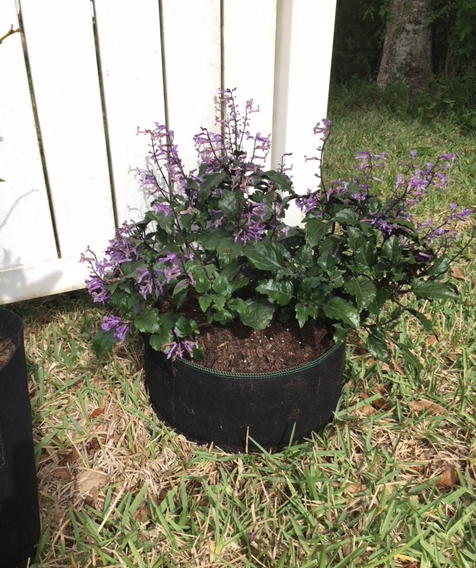
The purple flowering plant which is now under the tree is still in the short fabric pot. It is a Mona Lavender Plectranthus. I bought it because it was pretty, and I especially love the deep green of the leaves.
Now that I am researching this plant, I have discovered it needs some shade and is a perennial in warm climates. It seems that I have chosen a good spot for it to grow under the tree. I moved the fabric pot and did not dig up this plant. The potted Mona Lavender is now part of the shade garden and no one can tell it’s in a pot!
Plectranthus, Mona Lavender
Because planting around the base of a tree can be difficult because of roots, fabric gardening pots can be super helpful.
The purple flowering plant is in a fabric pot.
All my new plants were purchased at the Home Depot. I also bought more organic garden dirt, and added blood meal and black mulch.
In my part of central Florida, plants can be killed in winter. When freezing temperatures are coming overnight I will have to cover all these plants to keep them from dying.
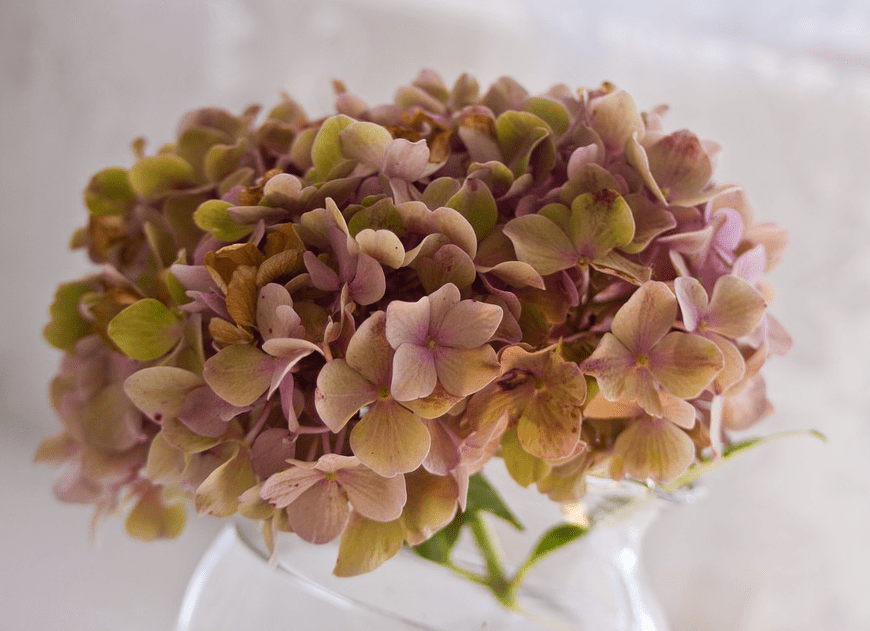
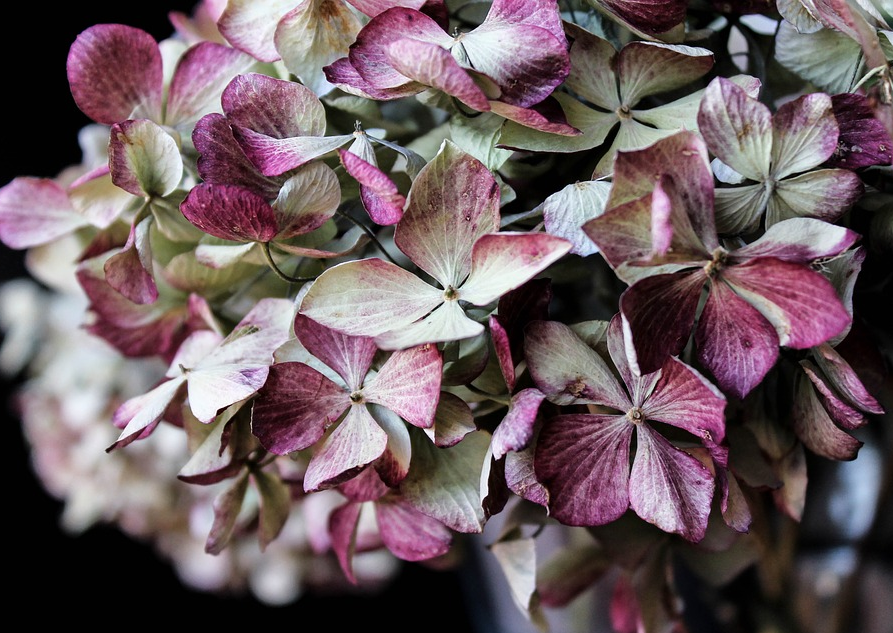
When I grew hydrangeas in my New England yard, my favorite time of year was end of summer. The blooms would begin to fade and change color. Sometimes they didn’t look all that great, and at other times the Fall colors could be even more beautiful.
Fading pink bloom
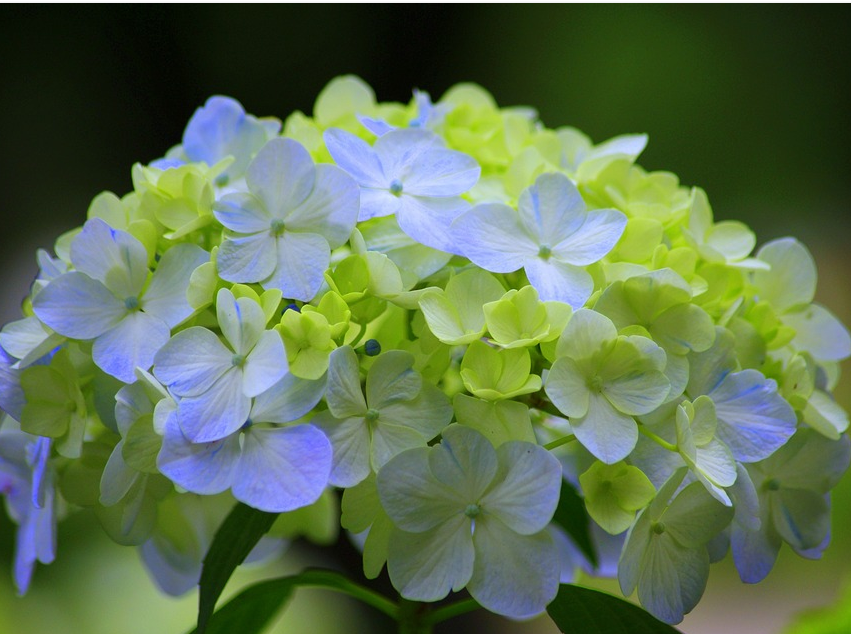
I didn’t have pink flowering hydrangeas. Mine bloomed white (Blushing Bride) or blue (Endless Summer). Usually the blue flowers would turn an amazing green color, like the picture below.
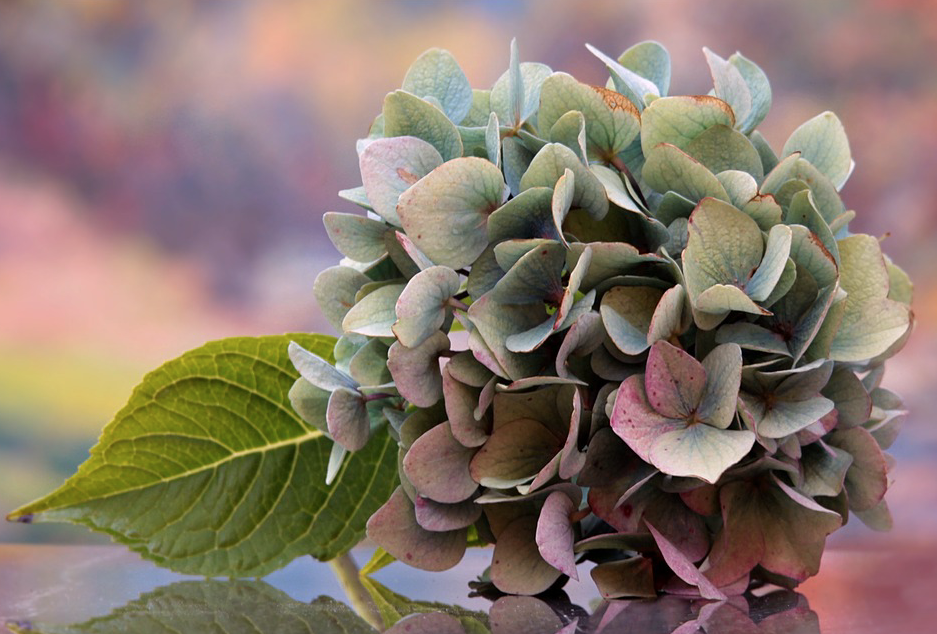
Blue hydrangea bloom fading to green and pink
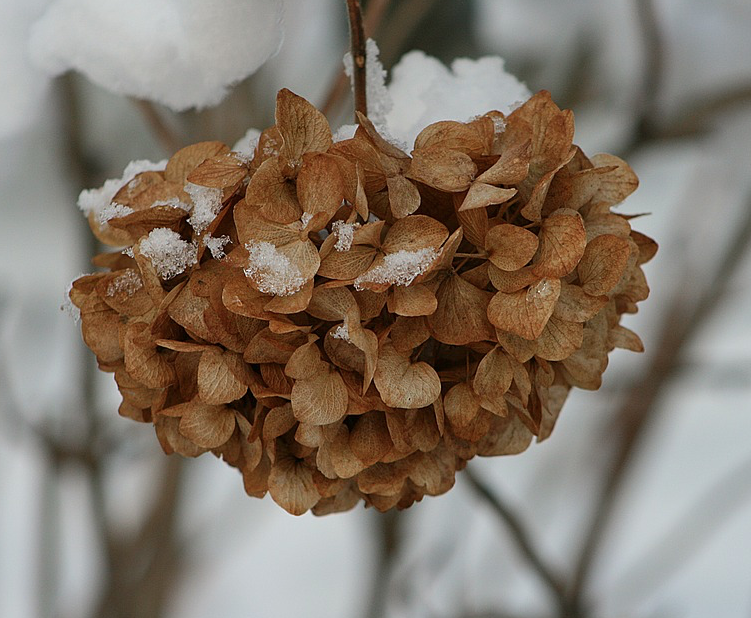
Even the dried flowers left on stems add beauty to a winter landscape.
Dried hydrangea bloom still on the stem as snow falls.
Fading Pink Hydrangea Bloom
Fall is an awesome time to look forward to. Summer heat is gone, and changes in the yard bring new colors to enjoy. Don’t be sad. Spring and summer will come again and offer a whole new set of flowers to enjoy.
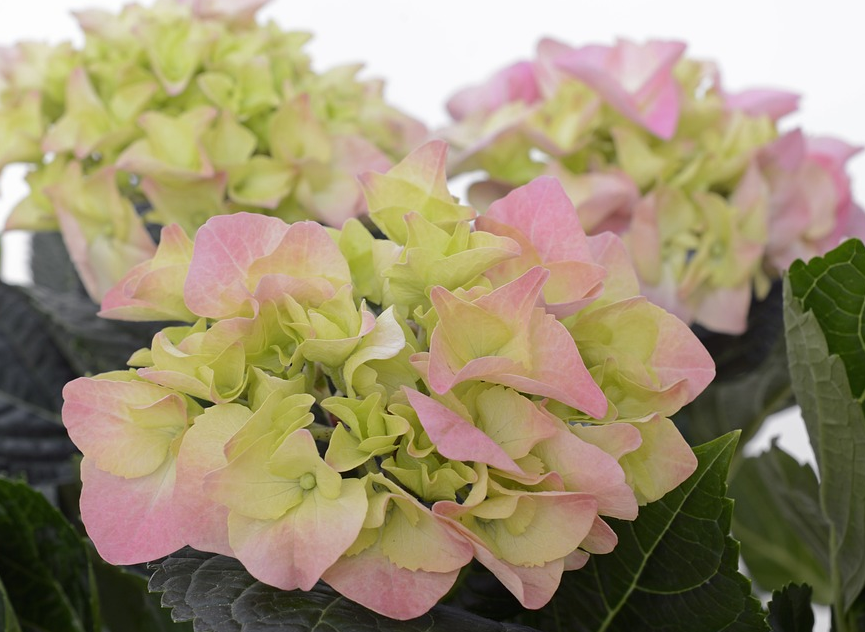
Pale green and pink hydrangea flower
All flower photos on this page came from the free, public domain site Pixabay.
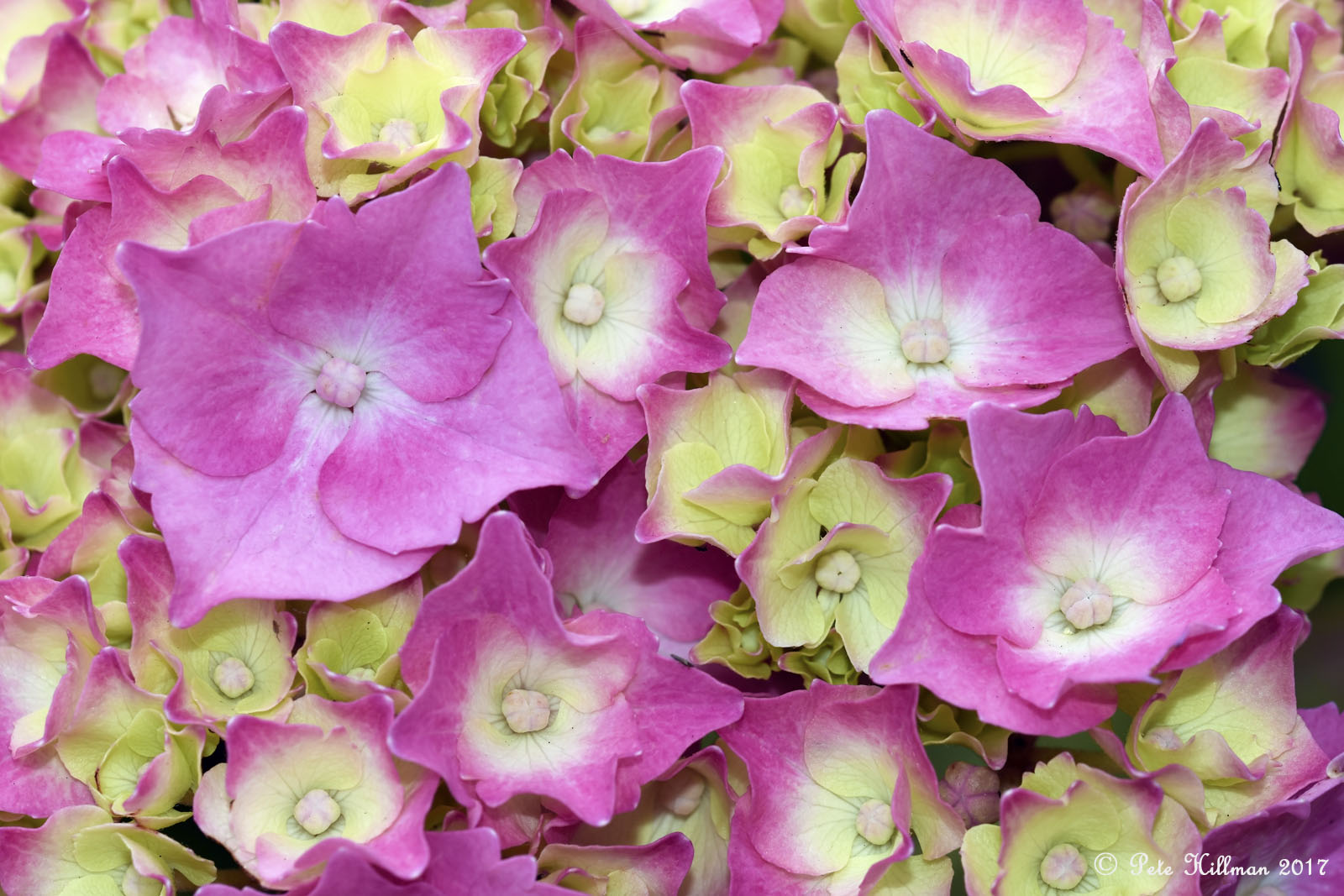
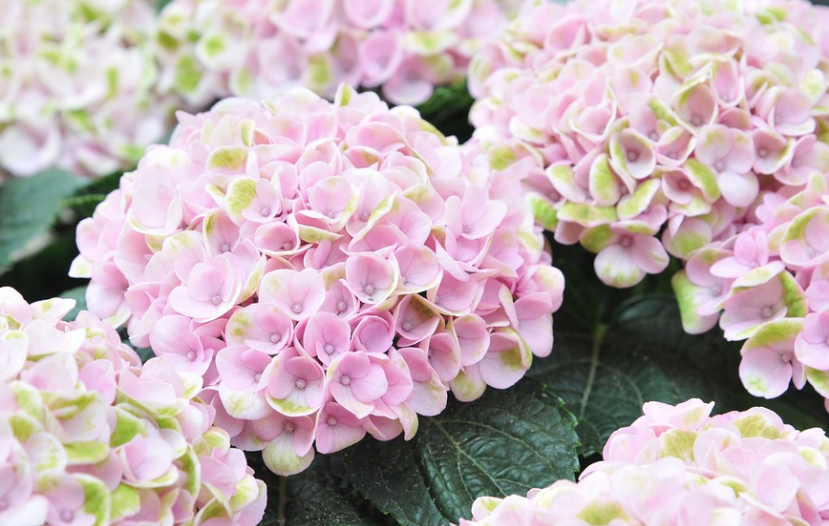
Found this hydrangea photo and good information on one of my favorite photographer’s site. I never grew pink hydrangeas like this one. It has fun little pointy petals. Pete kindly allowed me to re-blog here, so enjoy! And go see his photos… they are stunning!
I have always loved Hydrangeas. My Nan and Grandad grew them at the front of their house, and so did my Mom and Dad. It’s amazing how when you see a certain flower they bring back such wonderful, precious memories. Because of my love for the abundance of showy blossoms this popular shrub produces, and because of the fond memories, I have grown Hydrangeas in my garden for some years. Although, for the first time ever, I made the most silly mistake of pruning then at the wrong time so I did not get a single blossom last year. But this year, they are back again, and in splendour.
Here are a few facts about this colourful flowering shrub, some I already knew, and some I didn’t.
Hydrangeas go back a long way, and were here before we were. The oldest fossil finds discovered in America go back 40 to…
I am not familiar with all types of hydrangeas, but I do know that almost all blooms change color at some point. These multi-color hydrangea blooms show how pretty the hydrangea flower can become along the timeline of it’s life.
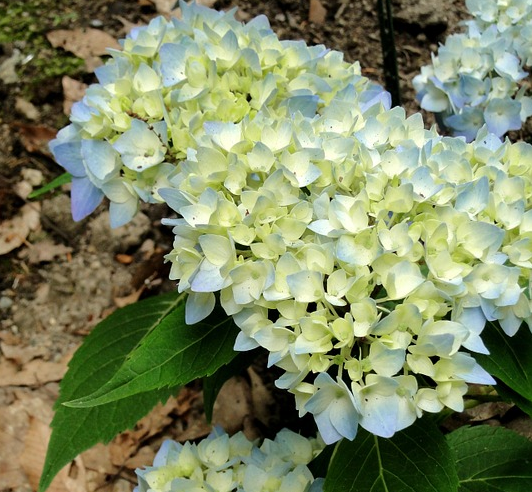
This first picture is mine. The blue buds of Endless Summer hydrangeas come out as cream color then eventually turn bright blue, if the soil is acidic enough. As summer ends, the flowers may turn other colors, like green or pinkish purple. Eventually they will dry on the stem.
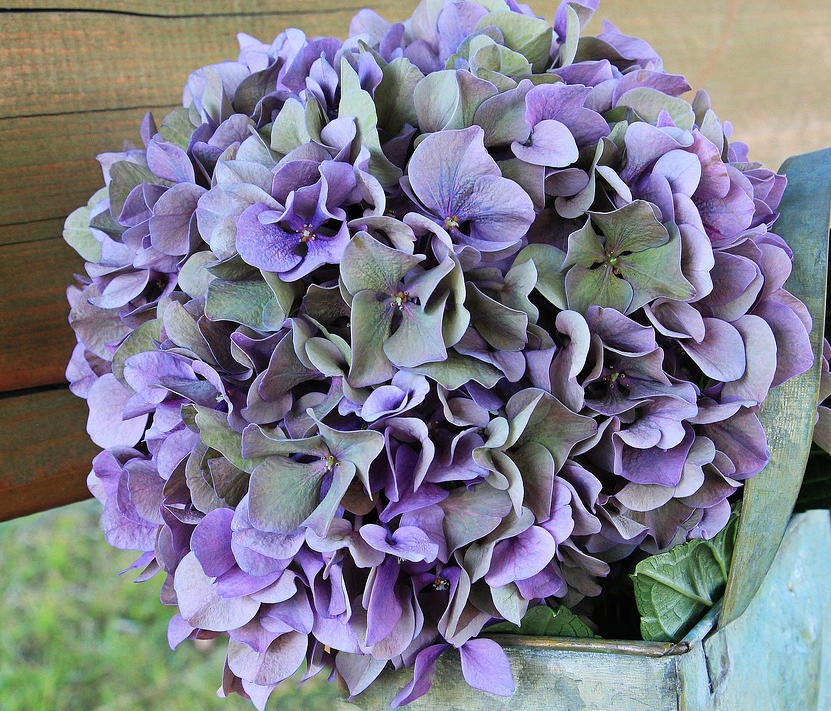
As a flower fades, or goes by, it can become most beautiful. The blue petals can turn purple and green. I am not sure if this is what happened in the picture below, but I’ve seen my own blue hydrangeas fade to the most stunning and unique colors. Late summer hydrangeas that have turned green are my favorite.
Late in the growing season – into fall – hydrangeas can dry right on the stem. Dried flowers can be just about as lovely as the fresh blooms.
All of the flowers pictured here are of the macrophylla variety, with big, round blooms.
If your soil is more alkaline, mophead hydrangeas can be pink instead of blue.
The long life of the hydrangea flower makes it a popular choice as a perennial for the landscape. Once it begins to flower, you can enjoy those huge blooms for months.
Thanks to Pixabay for most of these pretty floral images.
With the extreme heat and sun of Florida, it may be best to grow hydrangeas as potted plants indoors.
Since I moved to Florida last summer, I’ve kept a lookout for my favorite hydrangea shrubs in local garden centers. At least they are not in the “garden” area. I’ve seen hydrangeas in pots inside the Home Depot meant to give as gifts or use as indoor plants. And I think that in this hot and humid climate they may grow best inside.
Pretty Pink Potted Hydrangea
From what I’ve read, the Oakleaf hydrangea will survive outside in zone 9, so that is one option. It’s not exactly like any of the other types of hydrangea I’ve grown, so it will be experimental if I decide to buy it. Also it seems very leafy, without those big gorgeous flowers like the mopheads have. The Oakleaf seems suited to areas beneath trees where it would get filtered sunlight. And it doesn’t seem to be grown for it’s gorgeous flowers.
I miss my blue hydrangea (photo is mine)
What I do know is that a hydrangea will grow best getting some morning sun and then shade for the rest of the day. In Florida, during dry times, it will require a lot of watering also. I picture any hydrangea growing in the ground here needing a lot of water.
I’ve read in gardening forums that some people buy the potted hydrangeas that are sold around holiday time, and then keep them inside out of the direct sun.
I’ve never had a pink flowering hydrangea and this one is lovely.
The trouble with having hydrangeas in the yard down here is that most tropical plants remain lush and green year round. Hydrangeas are deciduous, which means their leaves will fall off for the winter months. For that reason, they will look out of place in a Florida landscape. In the north, everything goes dormant for the winter, so leafless hydrangea plants don’t stick out like a sore thumb. Or will they keep their leaves because of the southern climate?
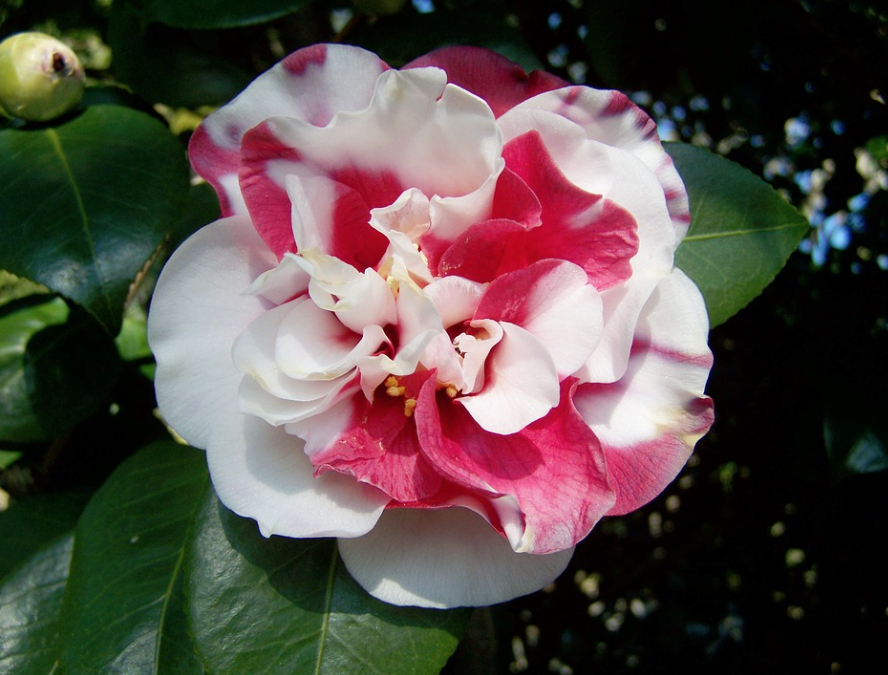
Someone suggested growing camellias instead of hydrangeas. I’ve grown camellias before and they are lovely plants with a variety of flowers to choose from.
Camellia
Easter and Mother’s Day are both coming up and I suspect the local stores will be offering some hydrangeas for both of those holidays. It could be the best time to find new hydrangeas to grow in my southern home.
In the north, the blue hydrangeas and Pinky Winky were my favorites, but it might be a nice change to have a true pink potted hydrangea.
(Photo credits: Pixabay.com)
I Purchased a Potted Hydrangea in Blue
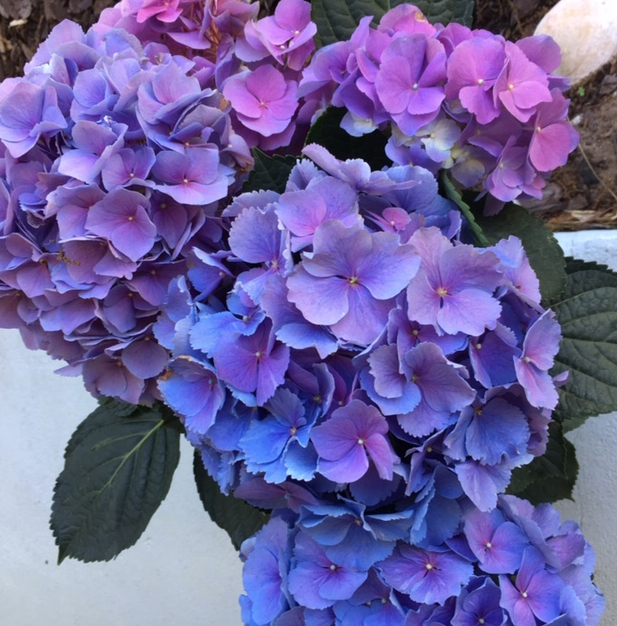
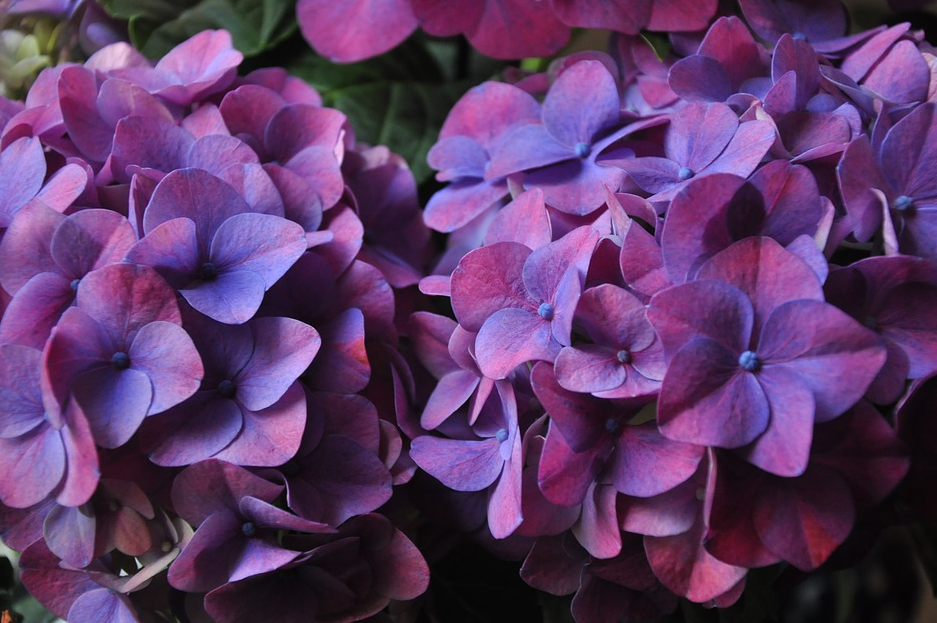
Now I own a potted blue hydrangea. The local Home Depot had them for sale and they were small enough to not cost me a fortune, so I decided, why not?













 Hydrangeas Blue