End of Summer Garden Clean Up

It is the beginning of September and my end of summer garden clean up is underway.

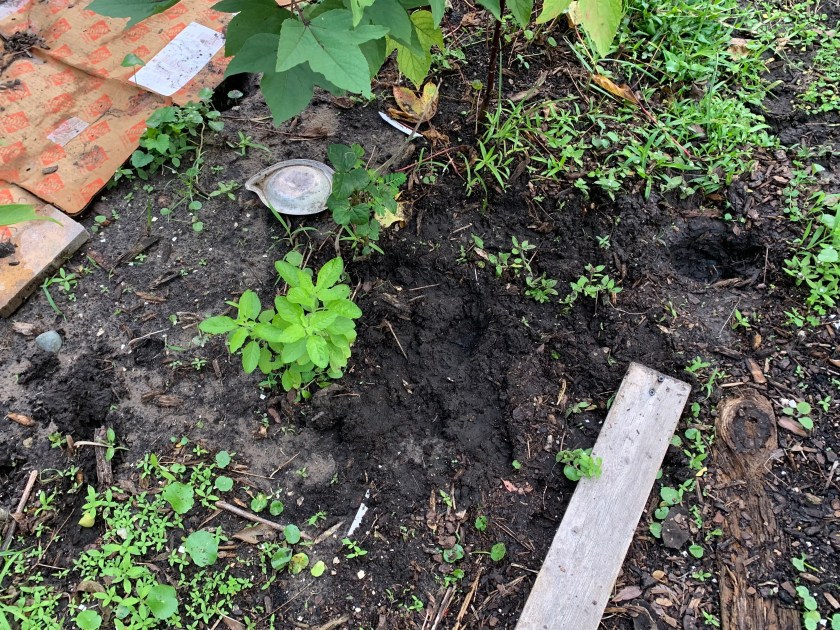
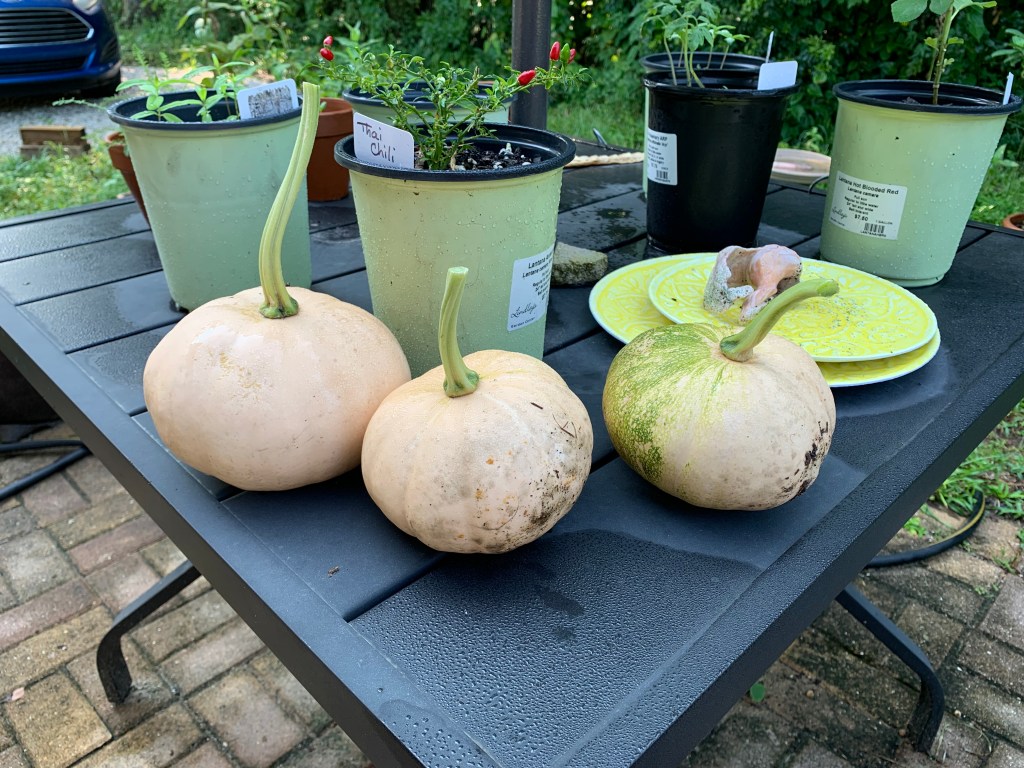
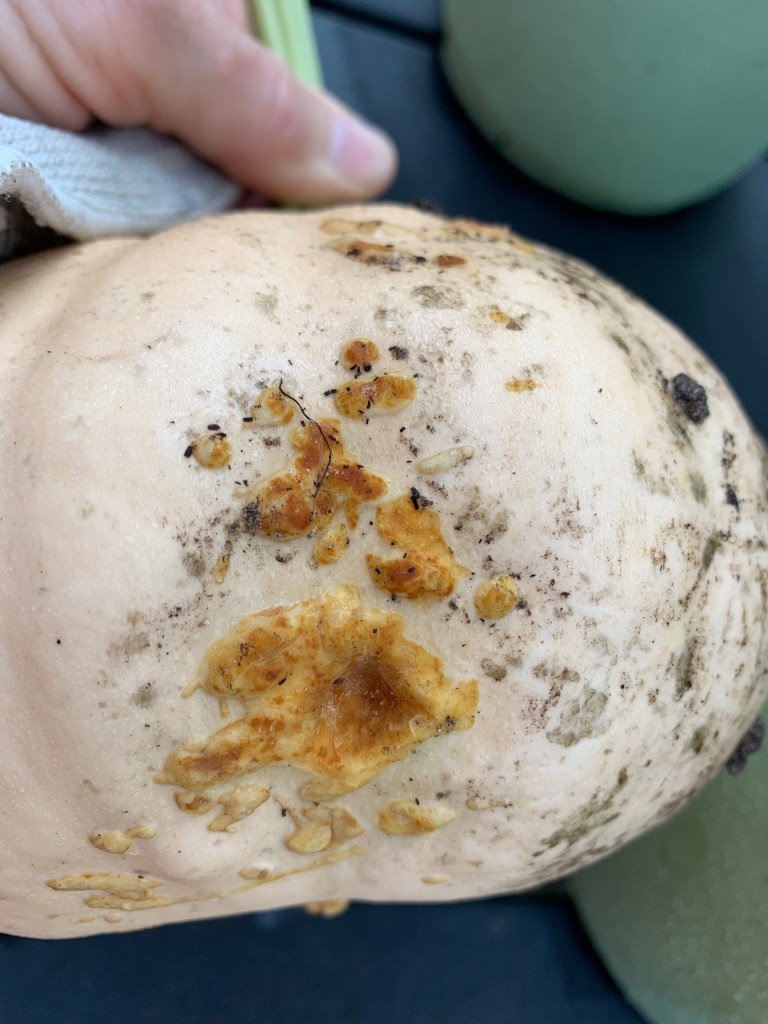
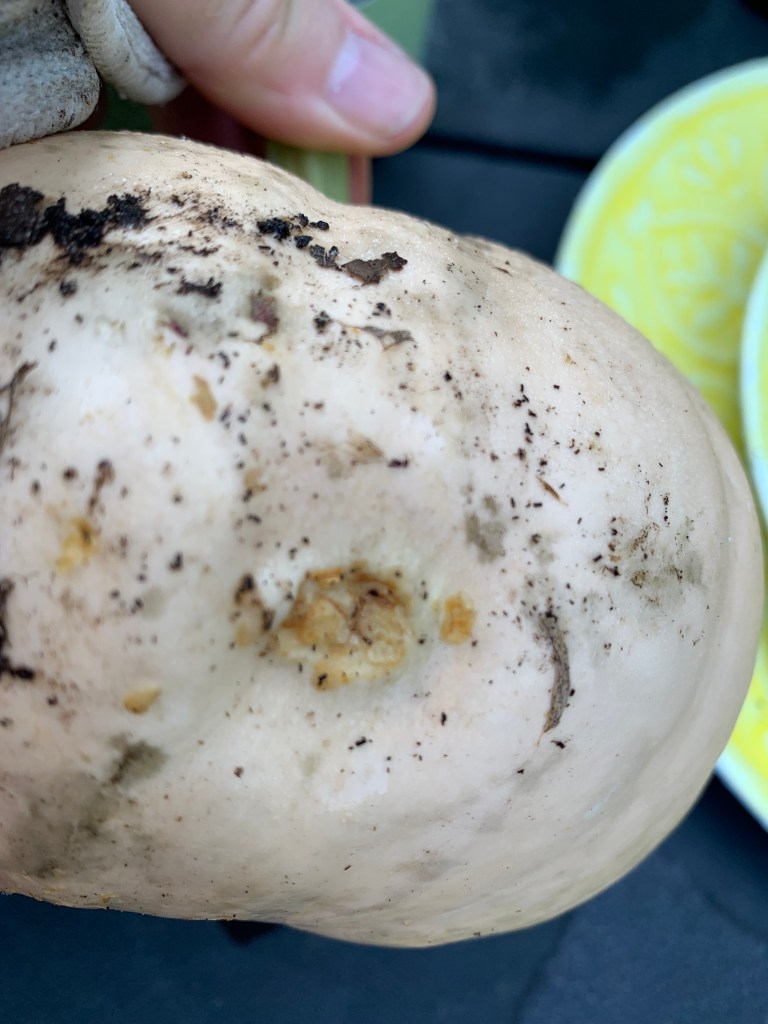
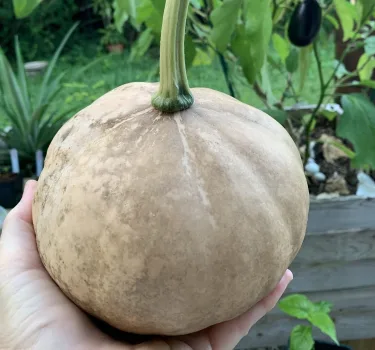
I happily pulled up all the Seminole pumpkin vines. I managed to haul in my huge harvest (not) of three little pumpkins. Two of them have holes from something trying to bore in.

I’m so over the vines that right now, I am planning to grow nothing next year that vines!

General Summer Grow Box Cleanup

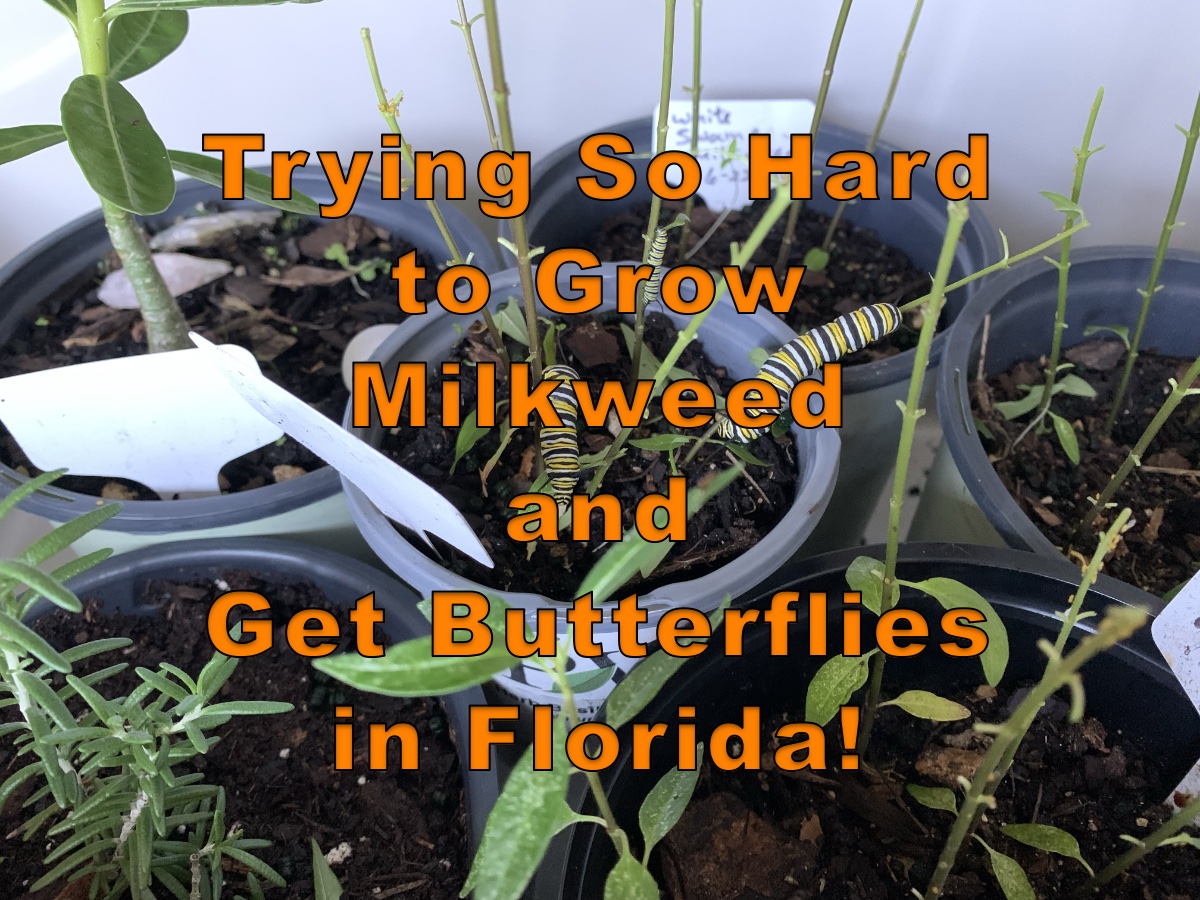
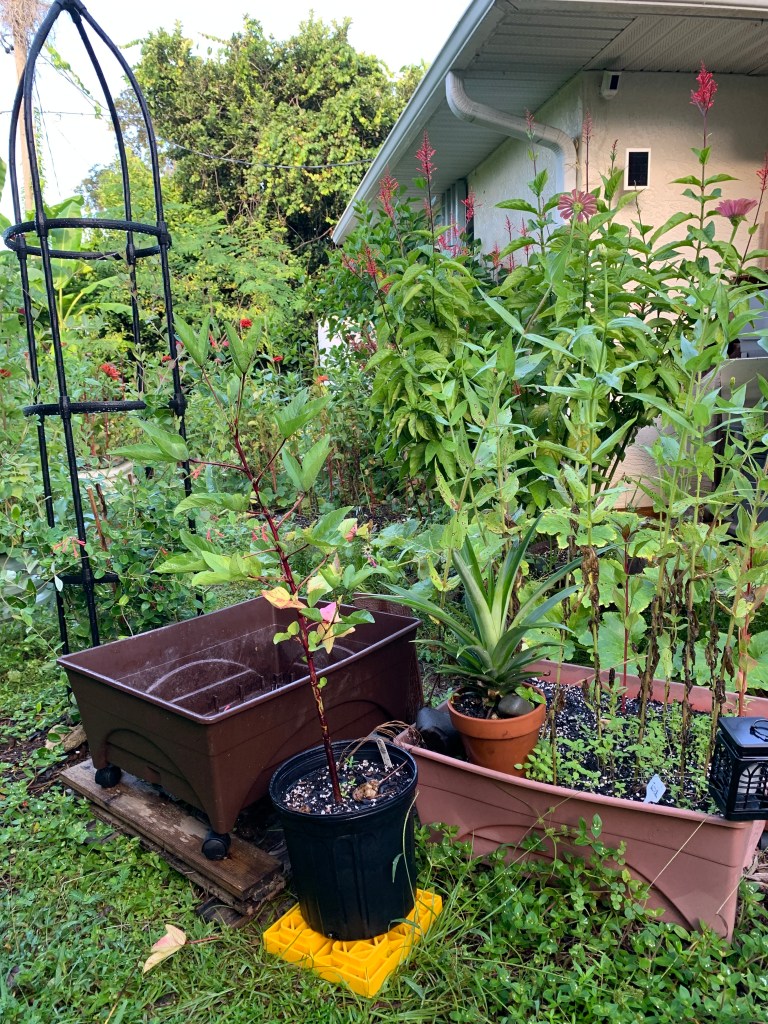
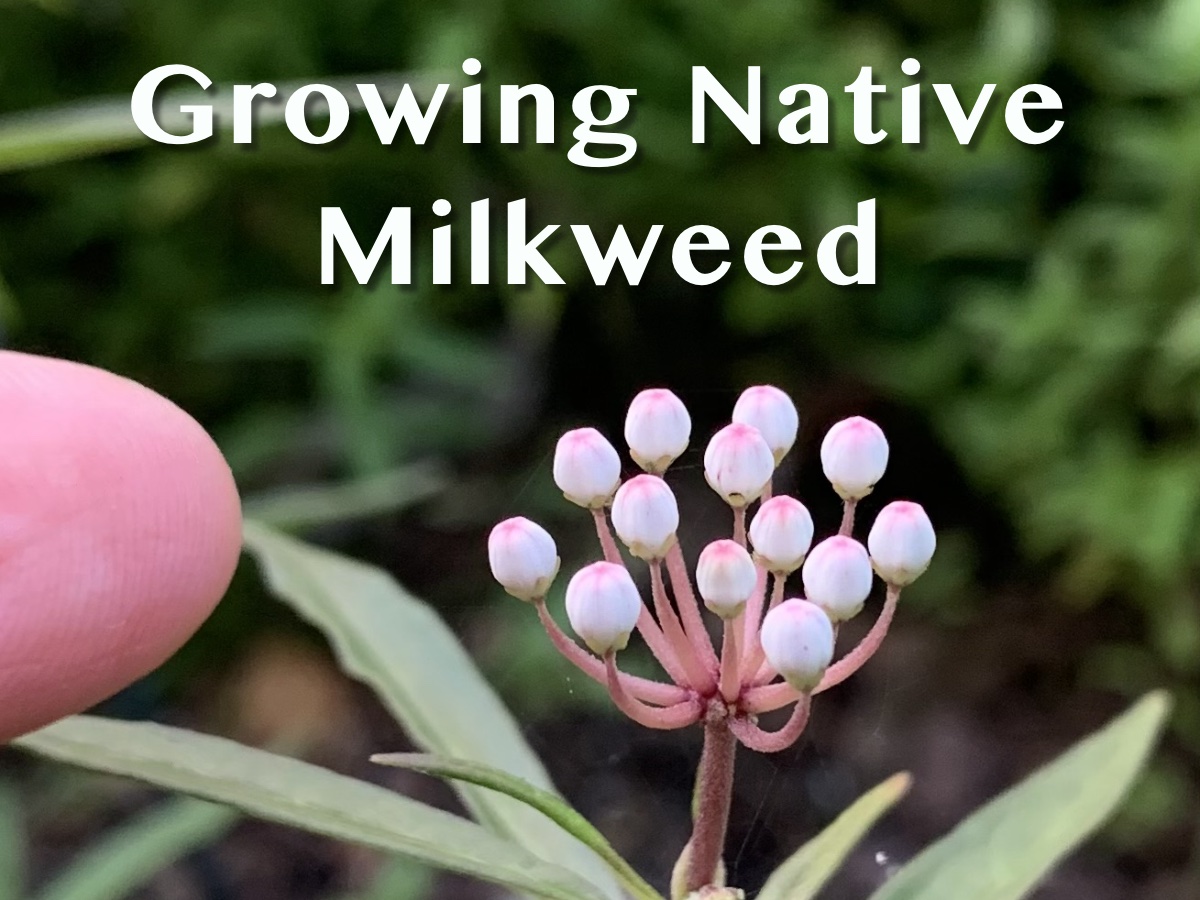
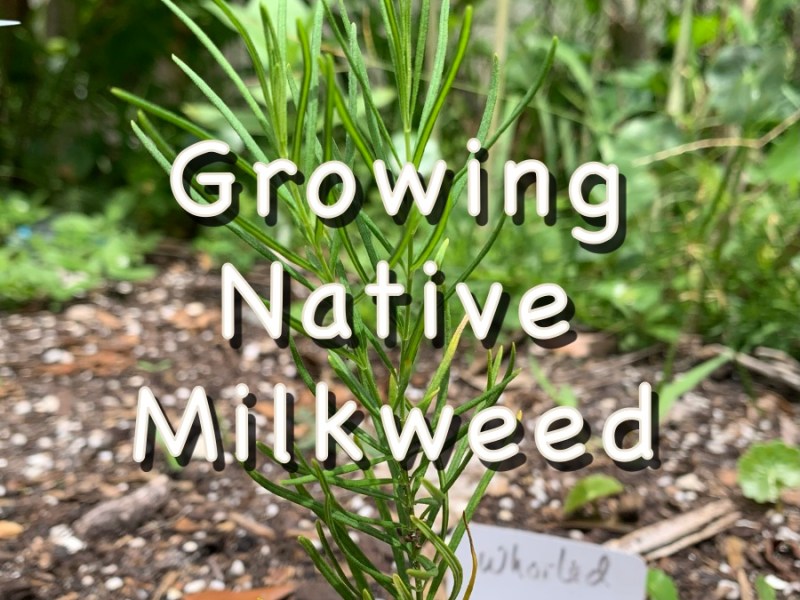
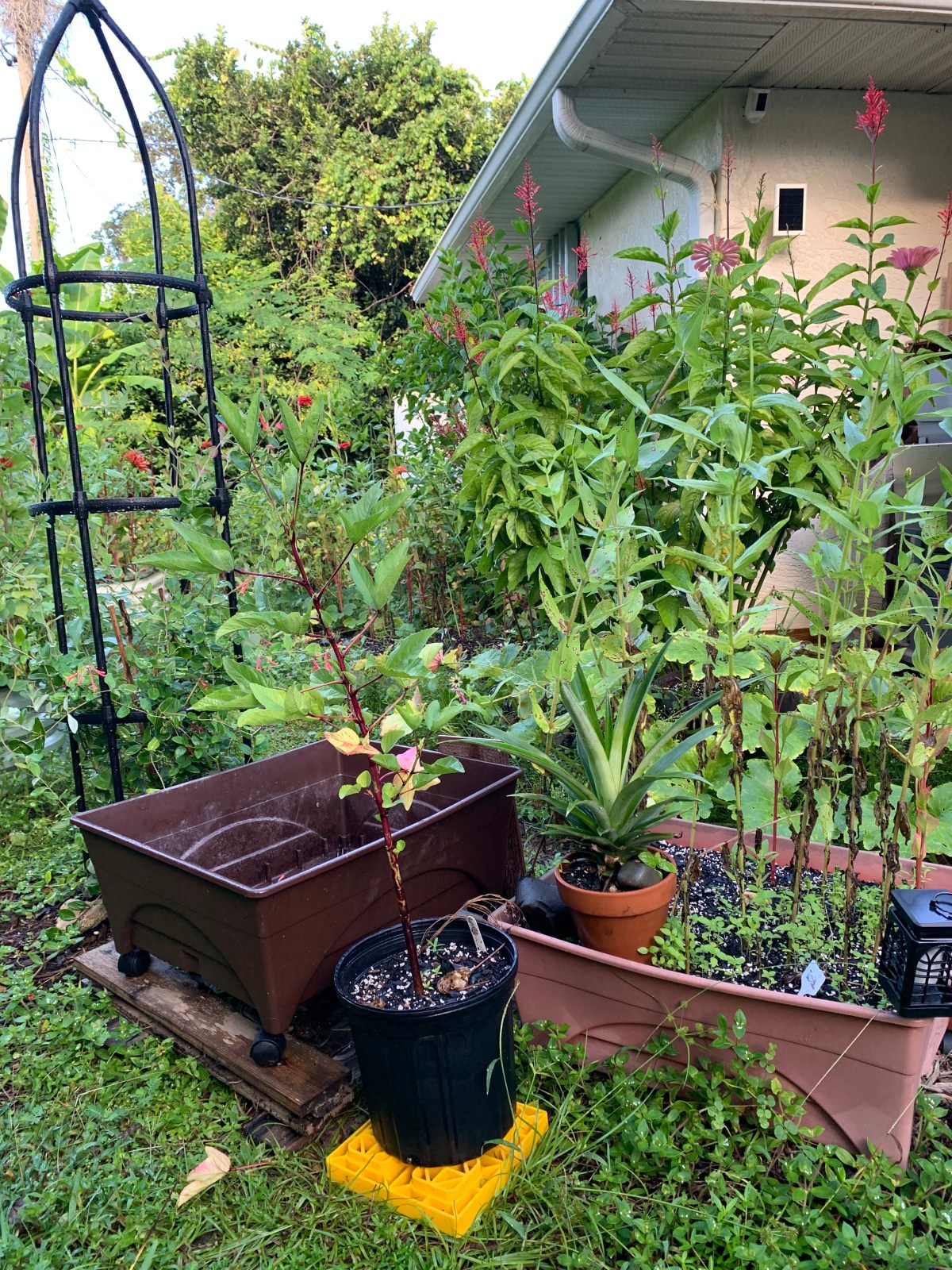
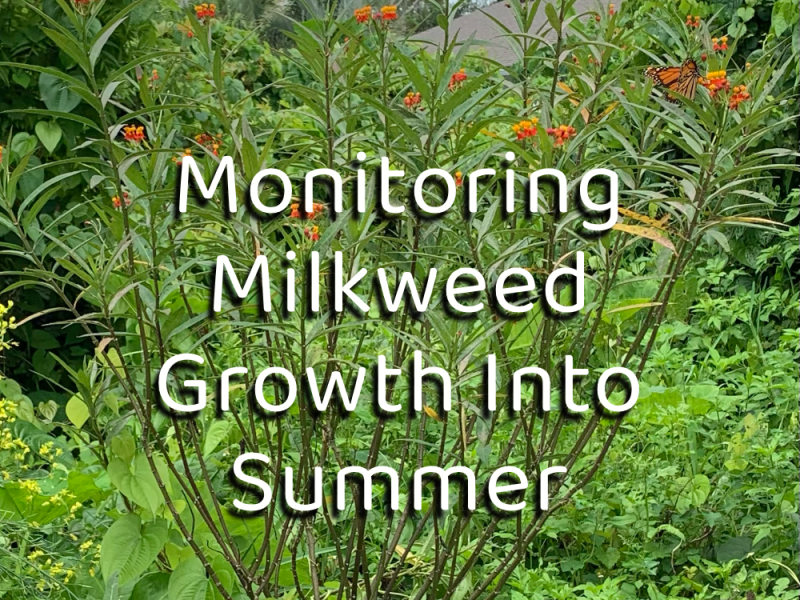
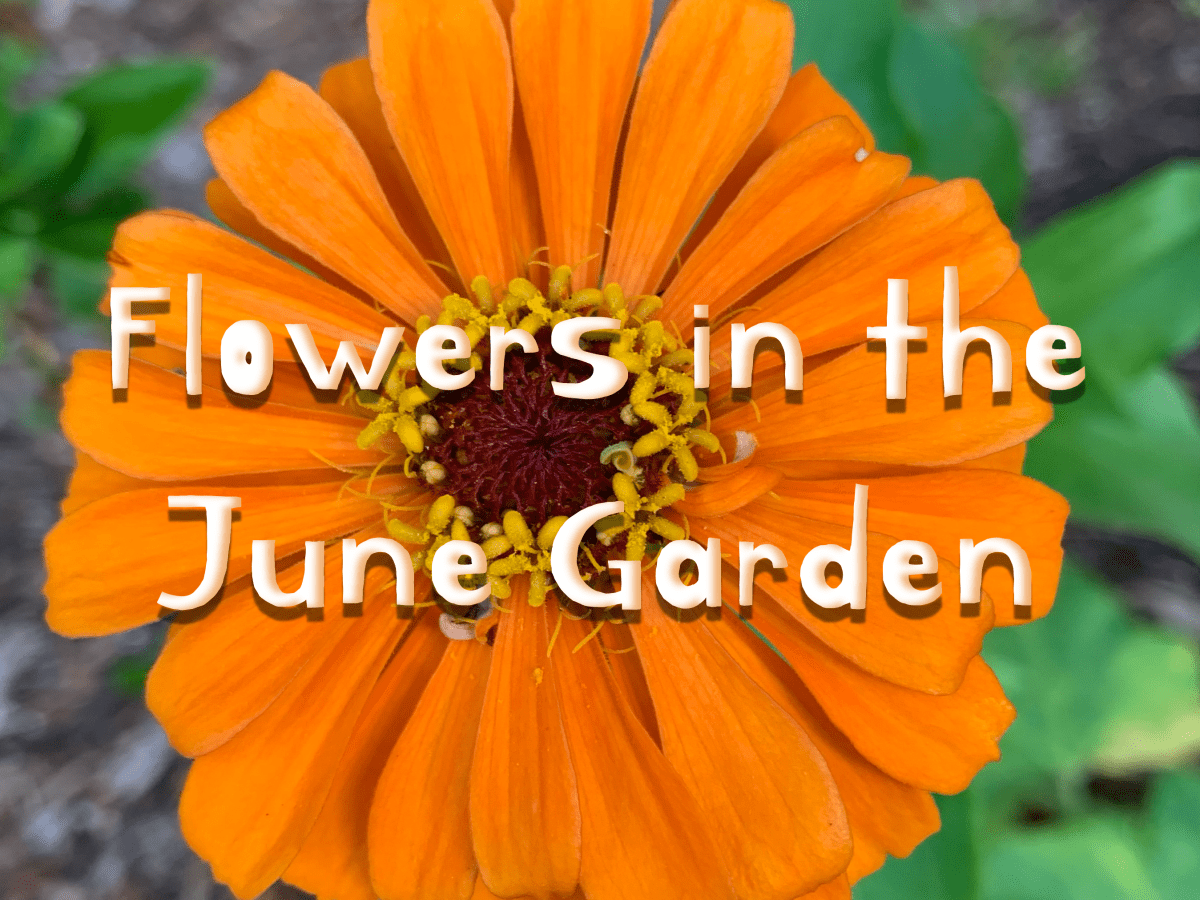
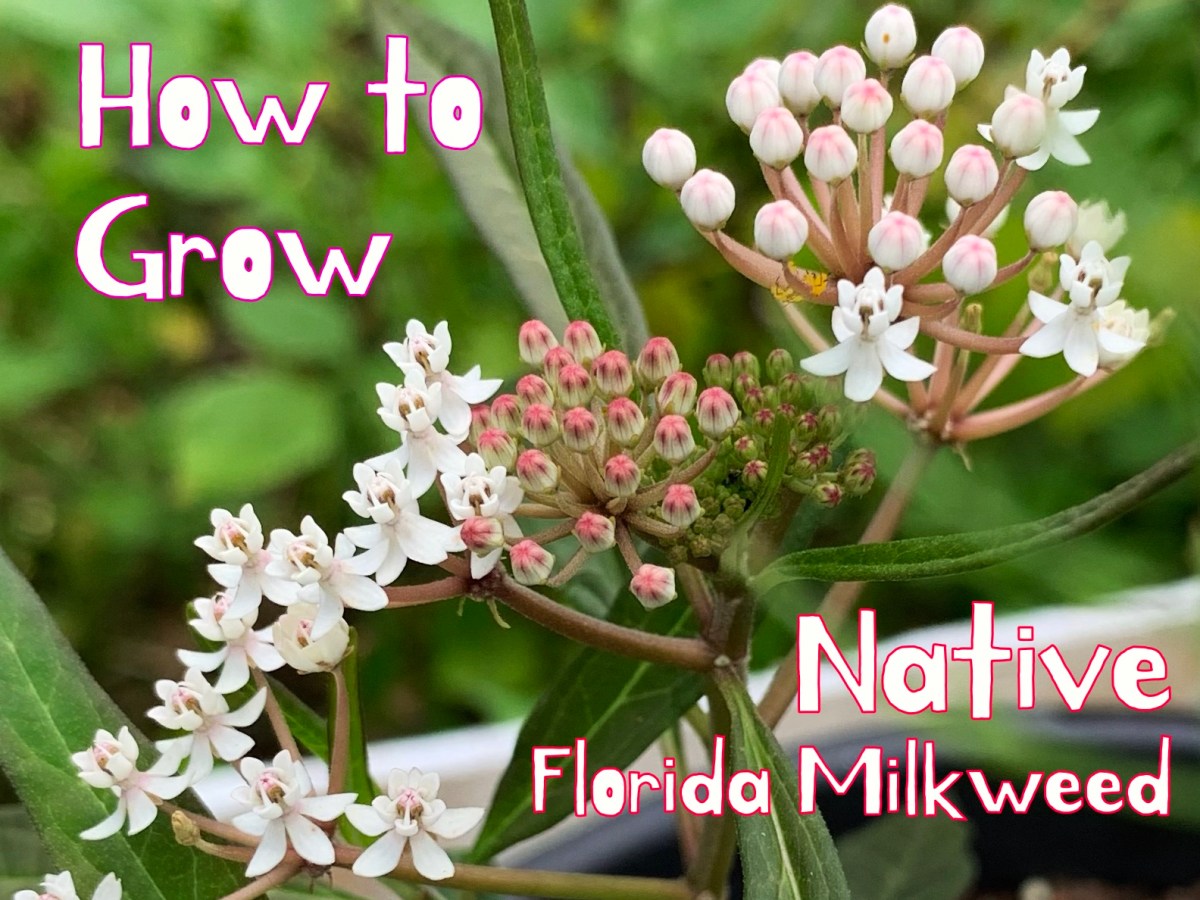
In general my cleanup activities include cutting down old flowers (Zinnias) and cutting back any tropical milkweed. This year I have four native swamp milkweed plants for the butterflies. And the butterflies (Monarchs) are still here.

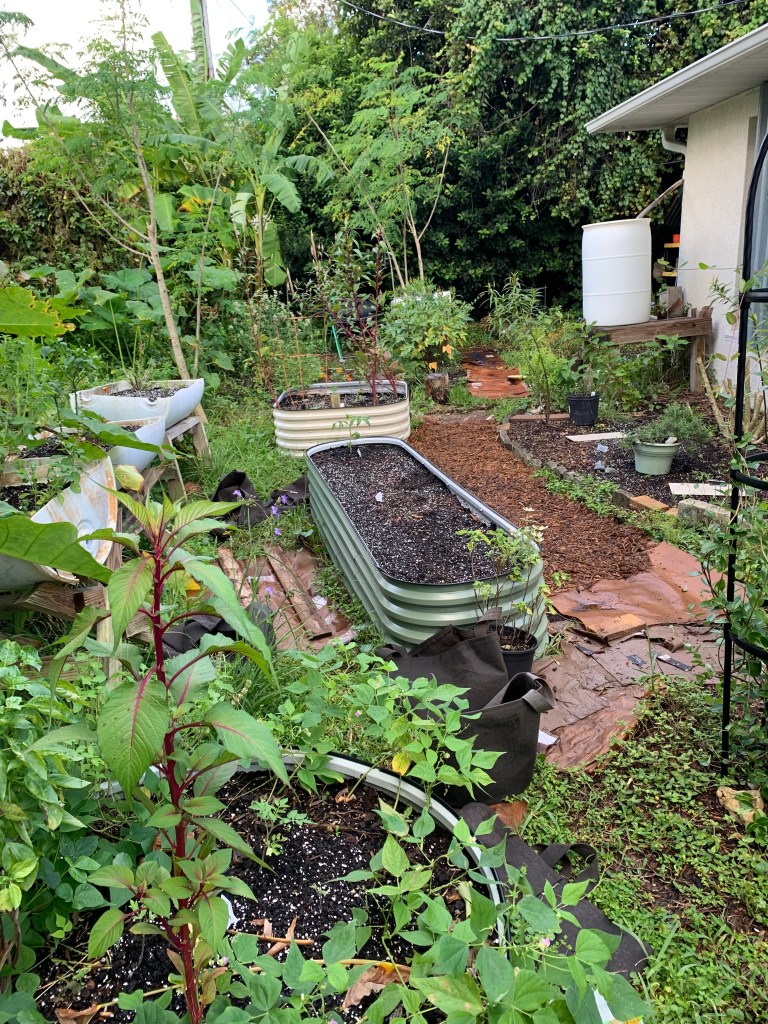
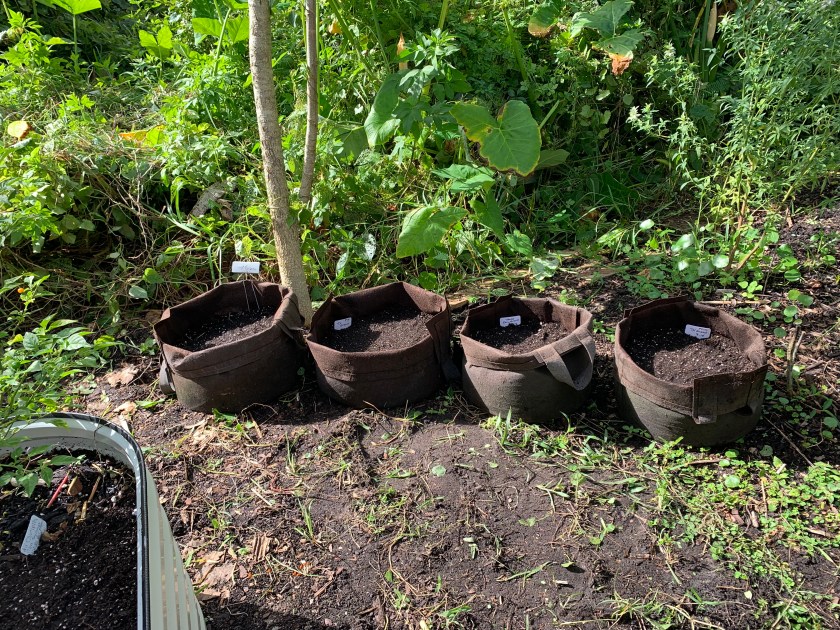
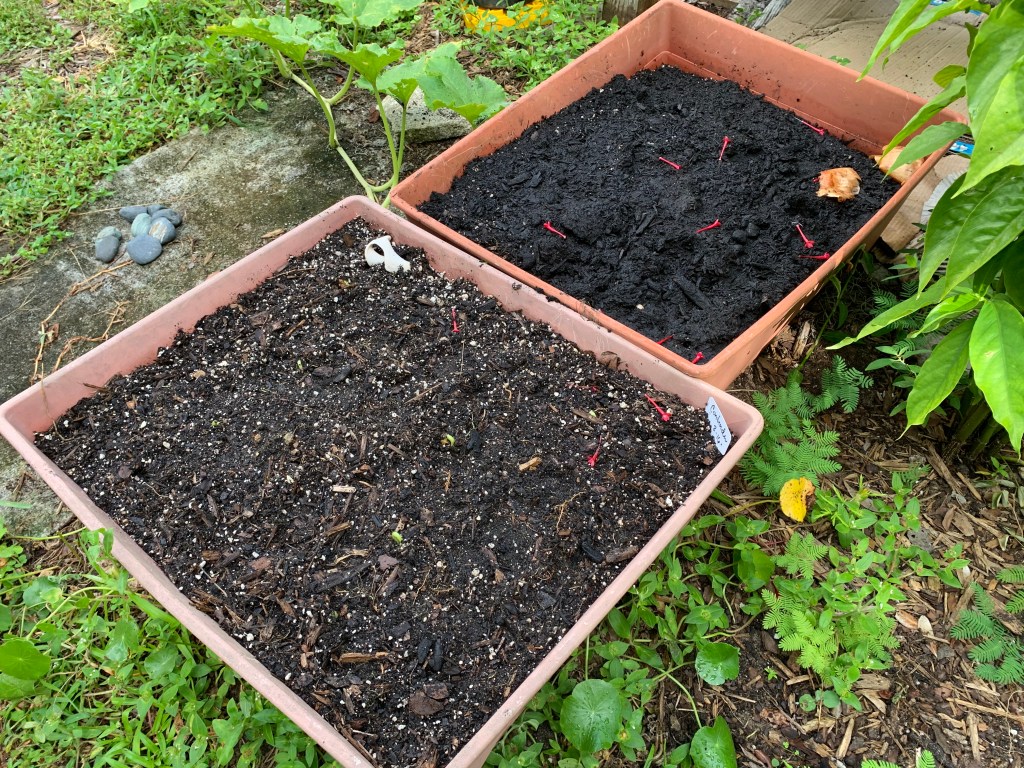
The grow boxes are being readied for planting. I will use them mostly for growing greens. I can’t wait for fresh greens!

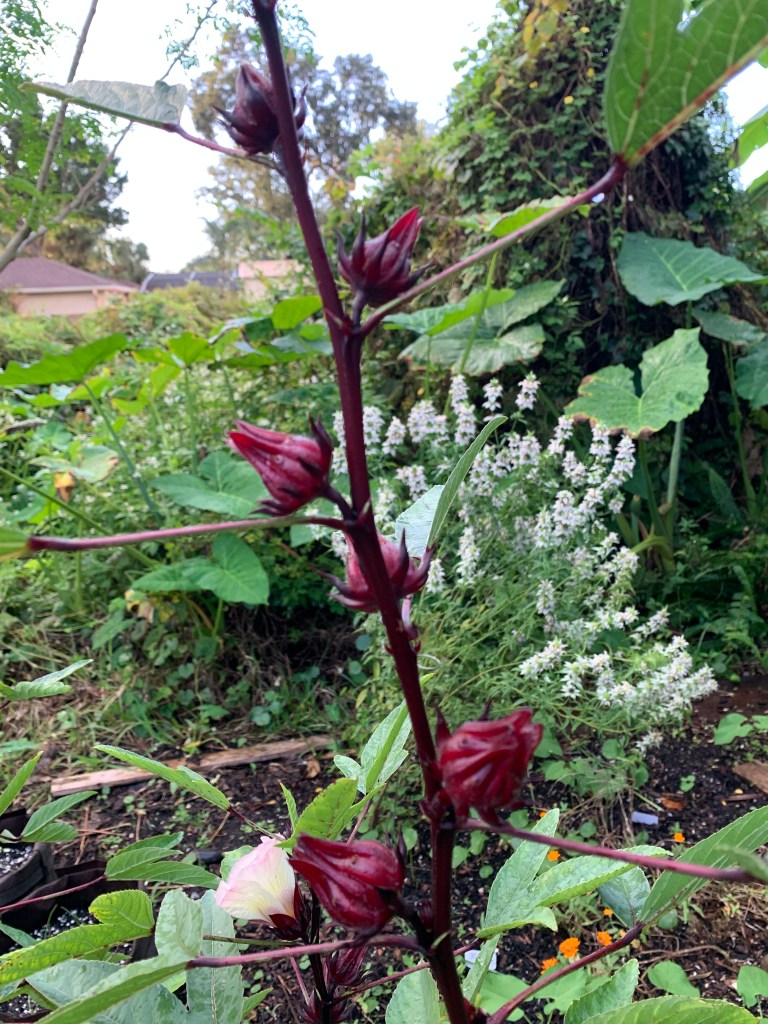
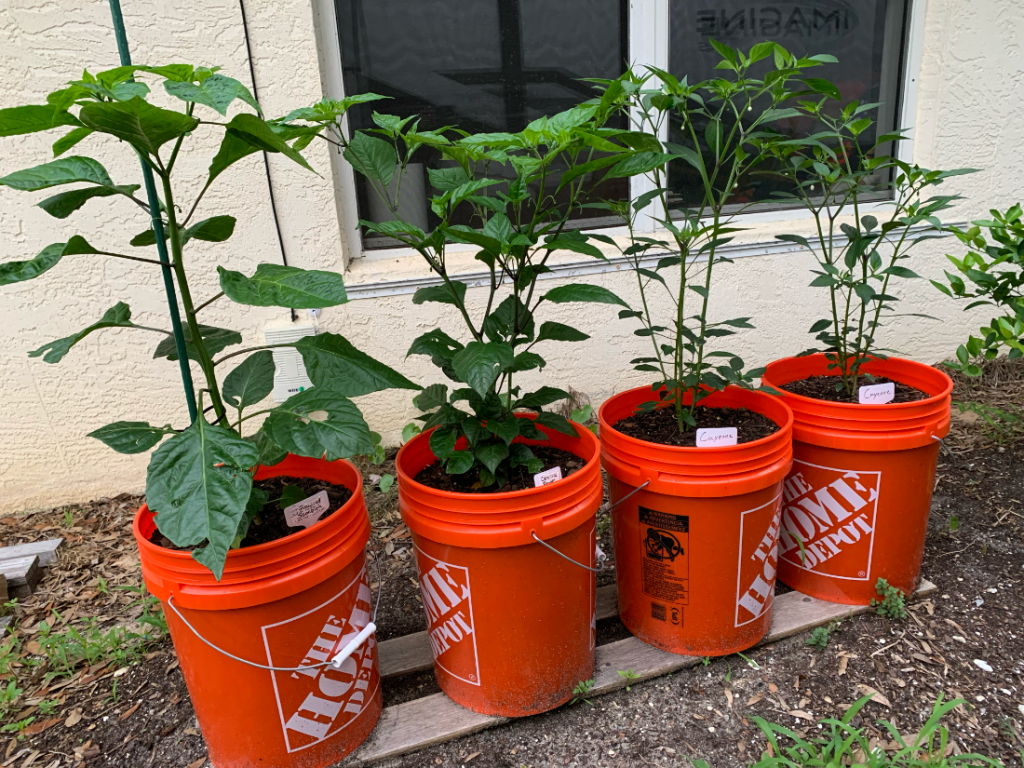
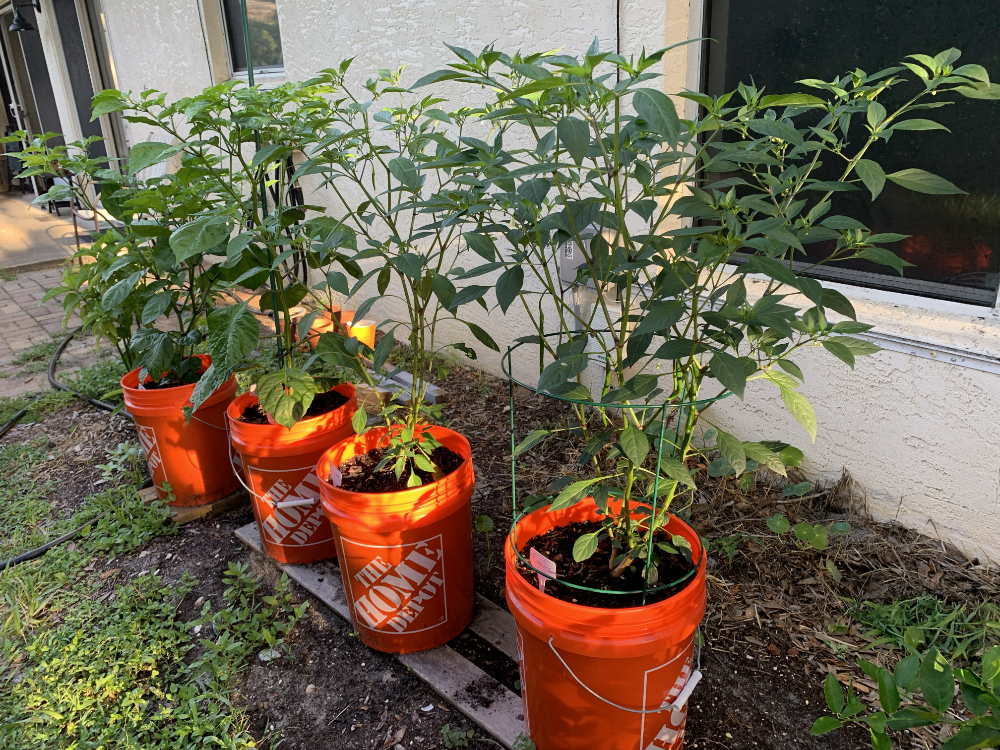
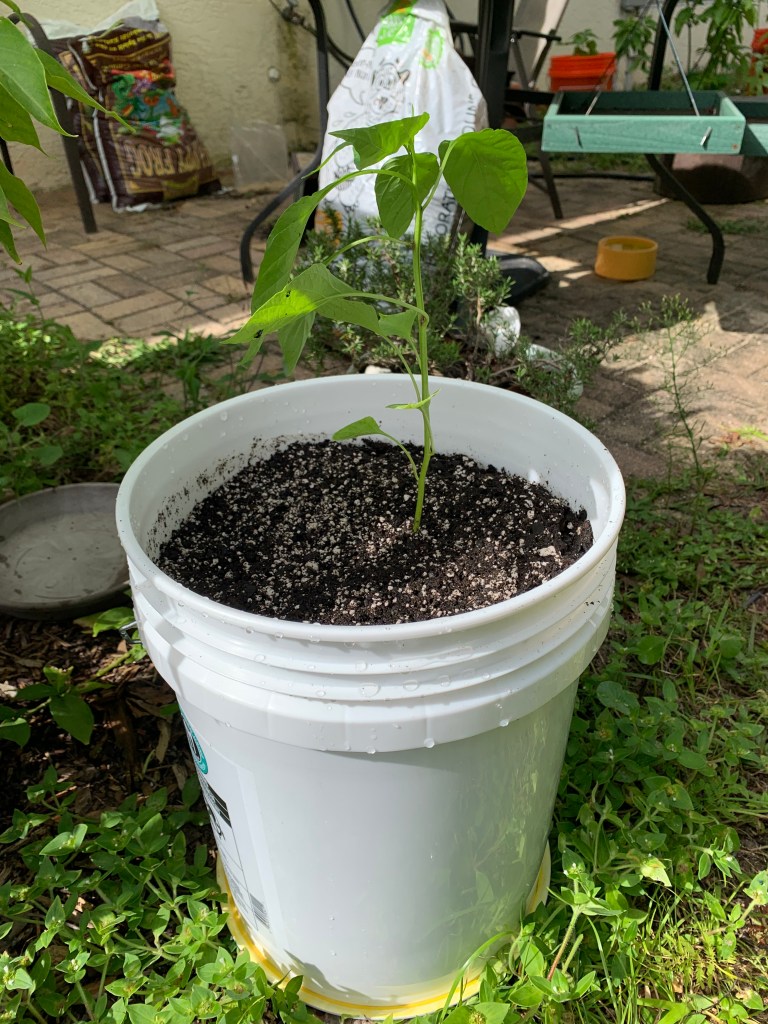
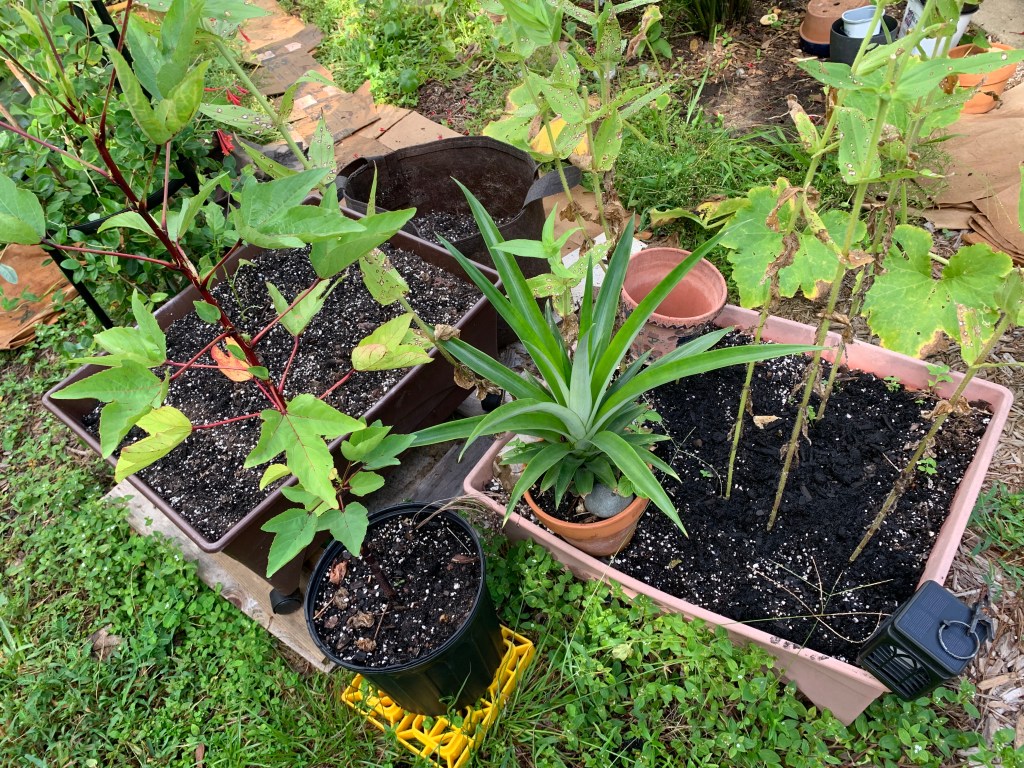
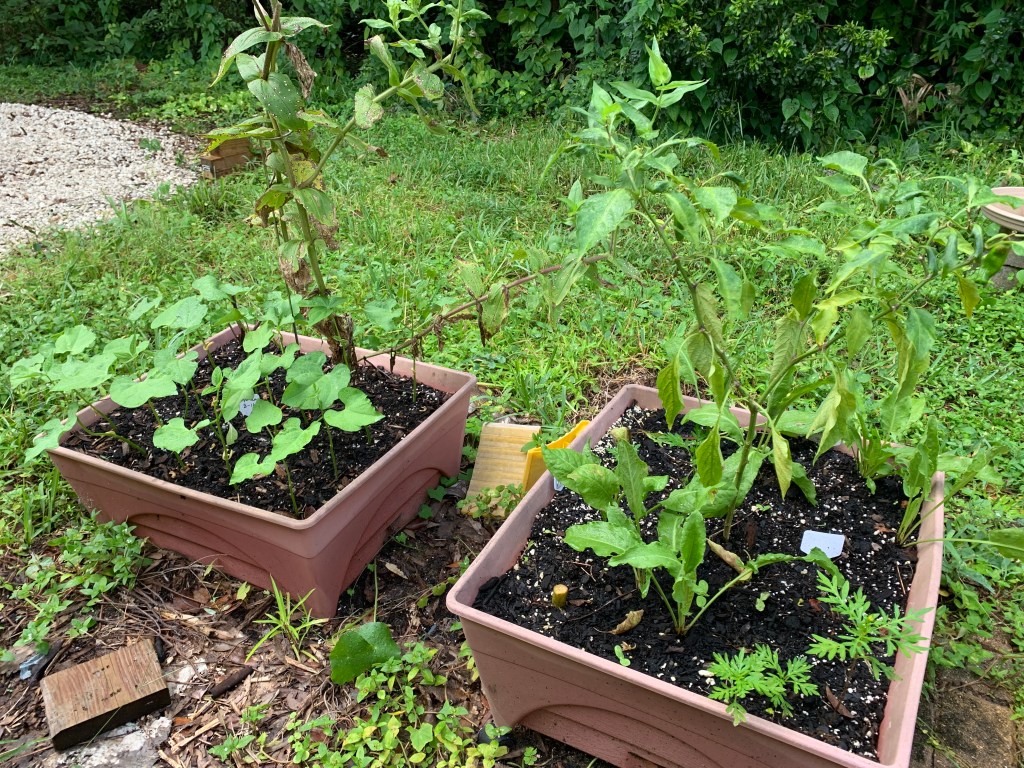
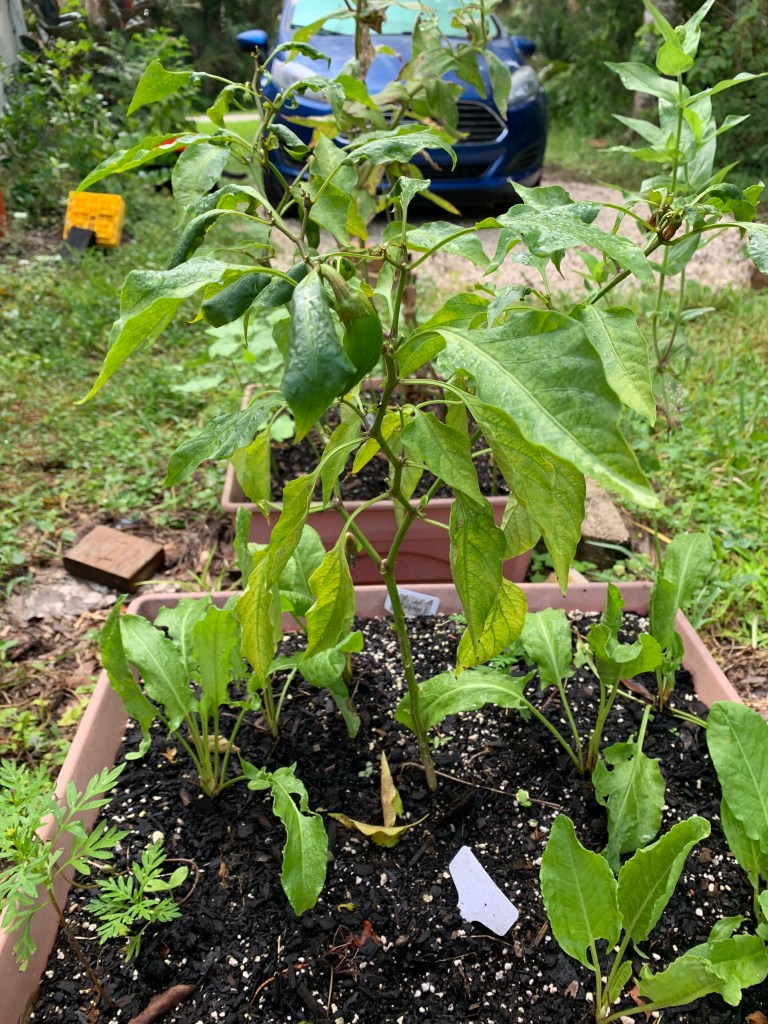
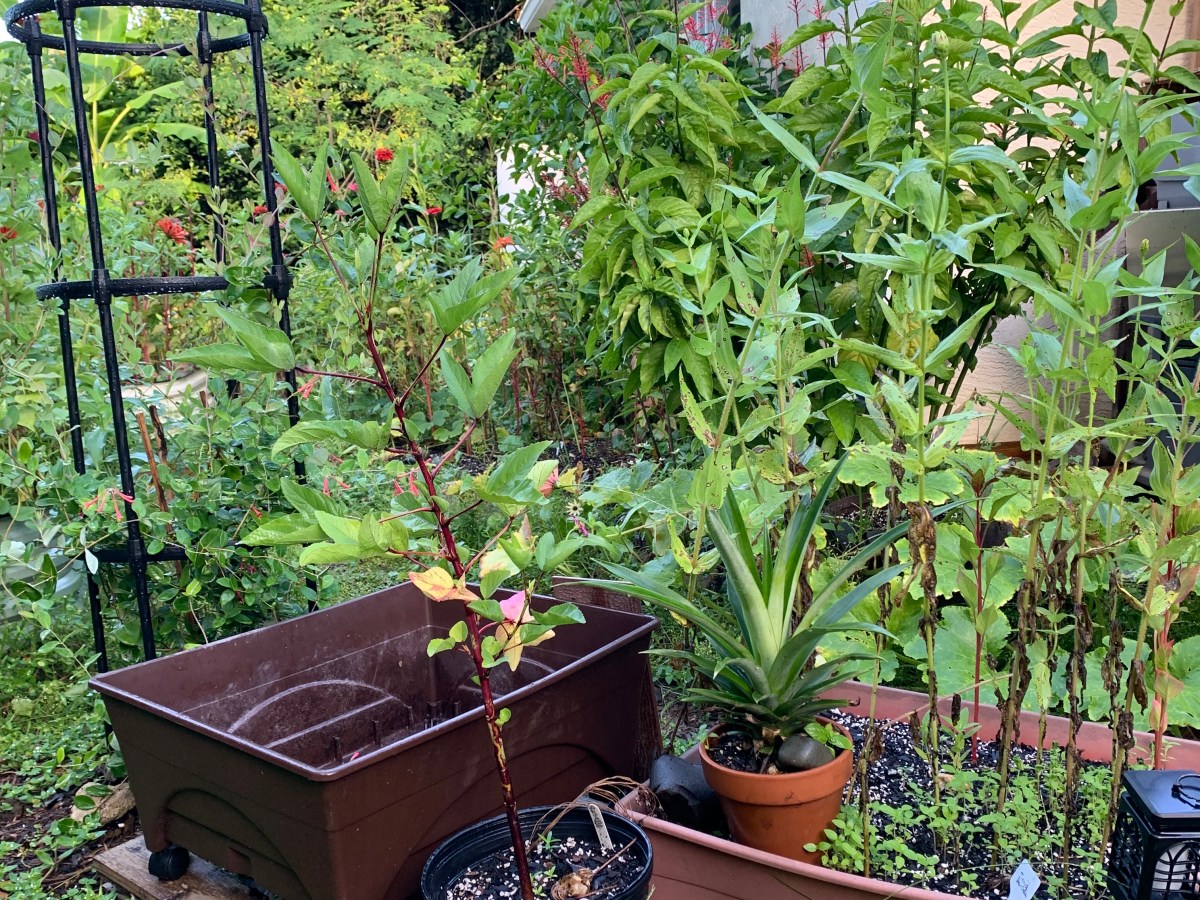
A couple of boxes are holding plants that will remain. Sorrel is growing around this Big Jim (not really very big) pepper plant. I don’t have luck growing peppers, so I expect this one will die sometime soon.

Sorrel is a perennial here and I planted these last year some time. It is a great addition to a salad, but is a bit too tangy to eat alone.

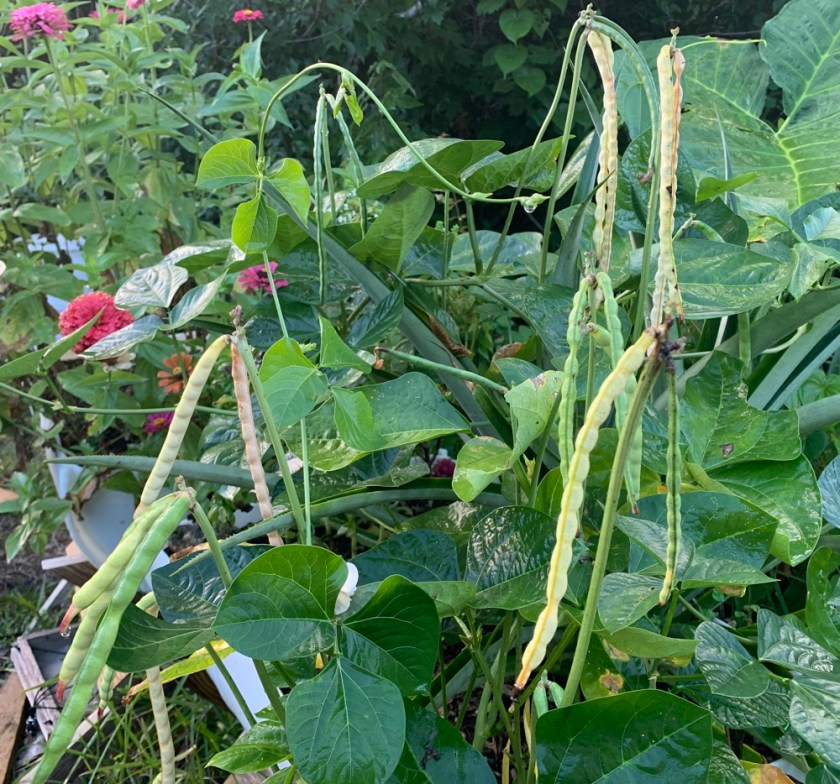
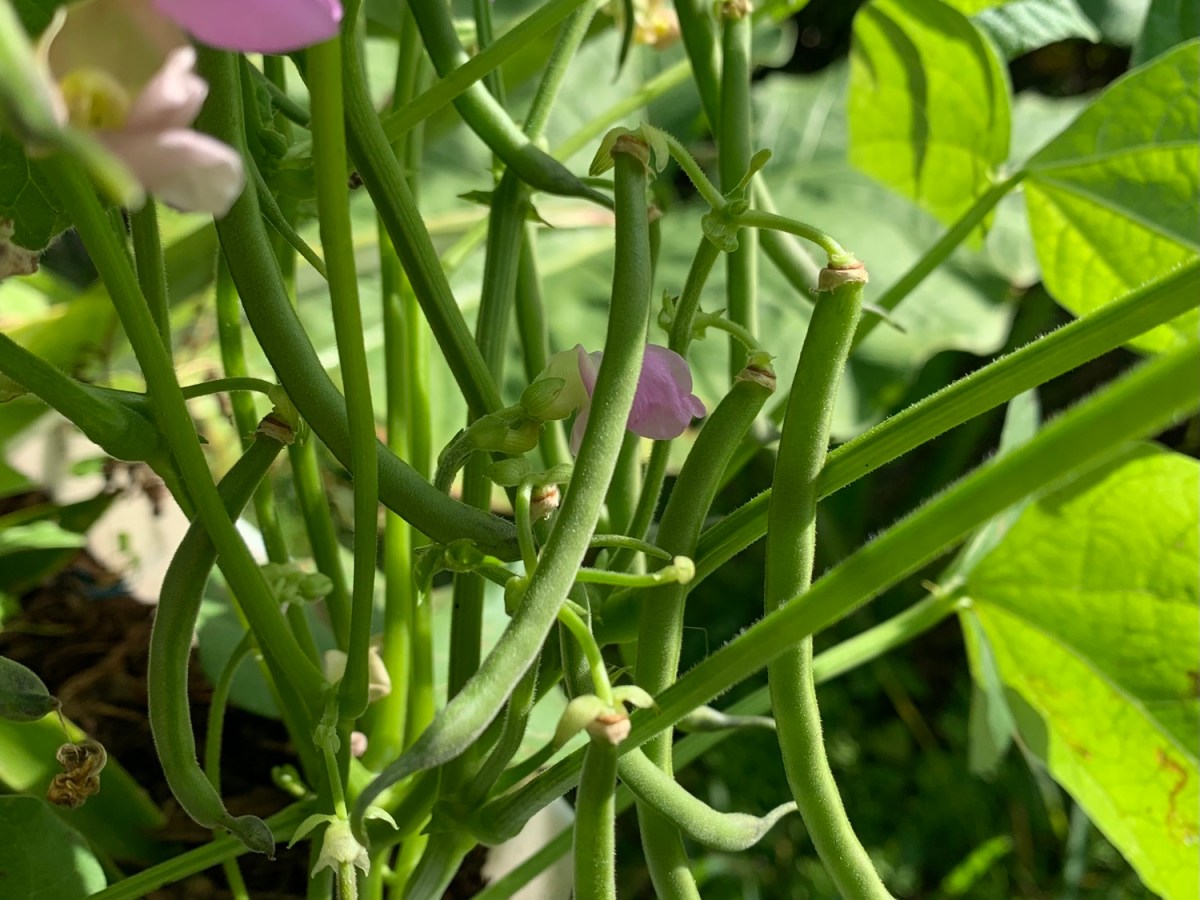
Green beans have been planted and are growing like mad. It’s early for them, but I had a packet from last year, so I figured, why not? Even if they don’t give me beans, they will enrich the soil with nitrogen.

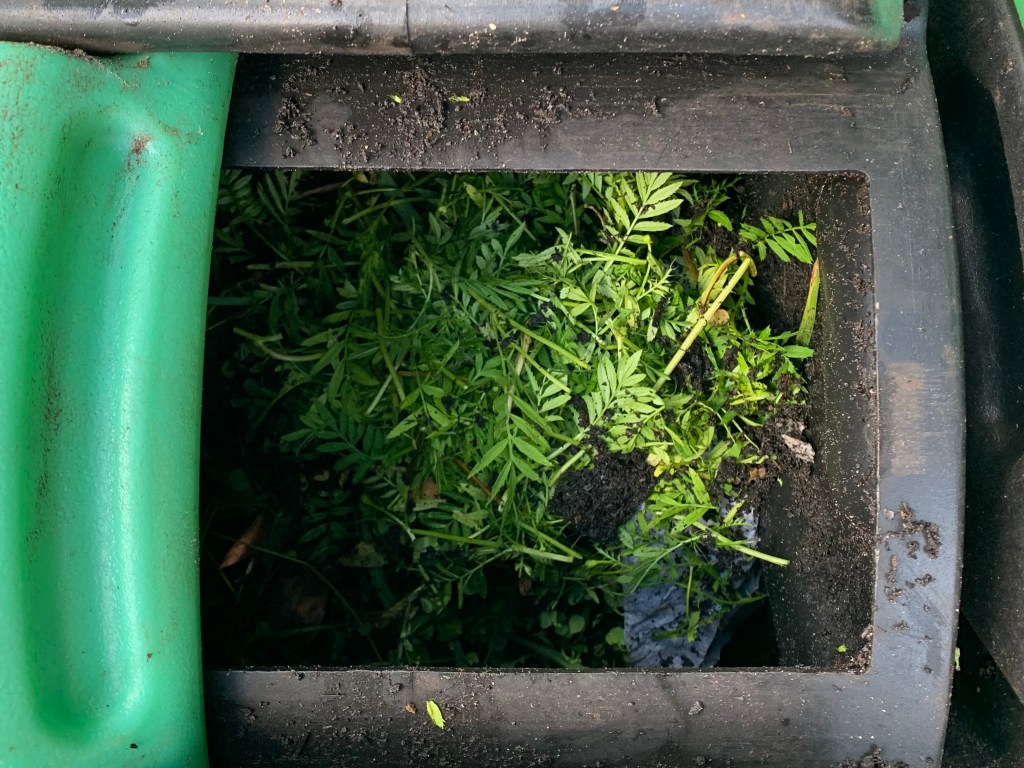
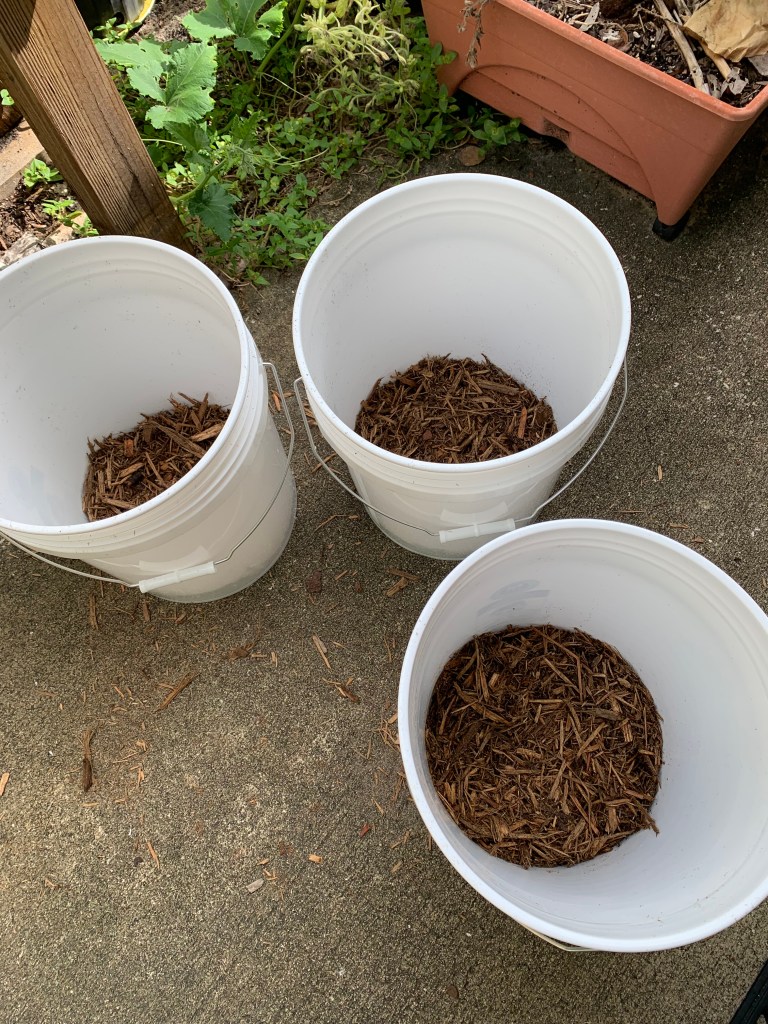
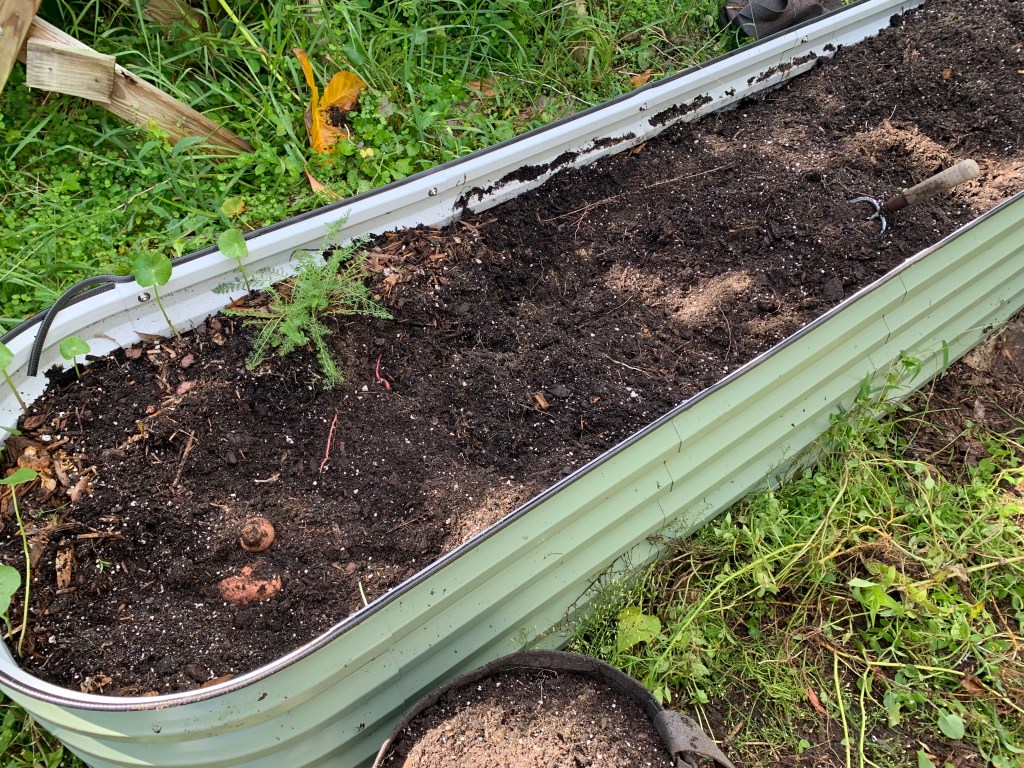
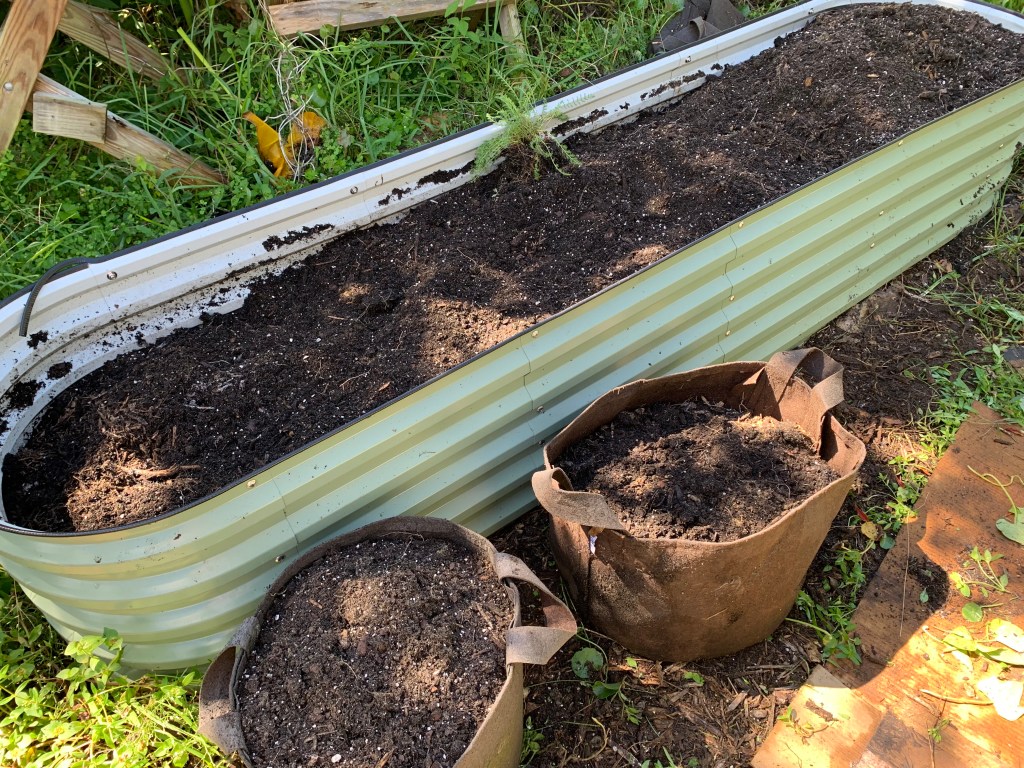
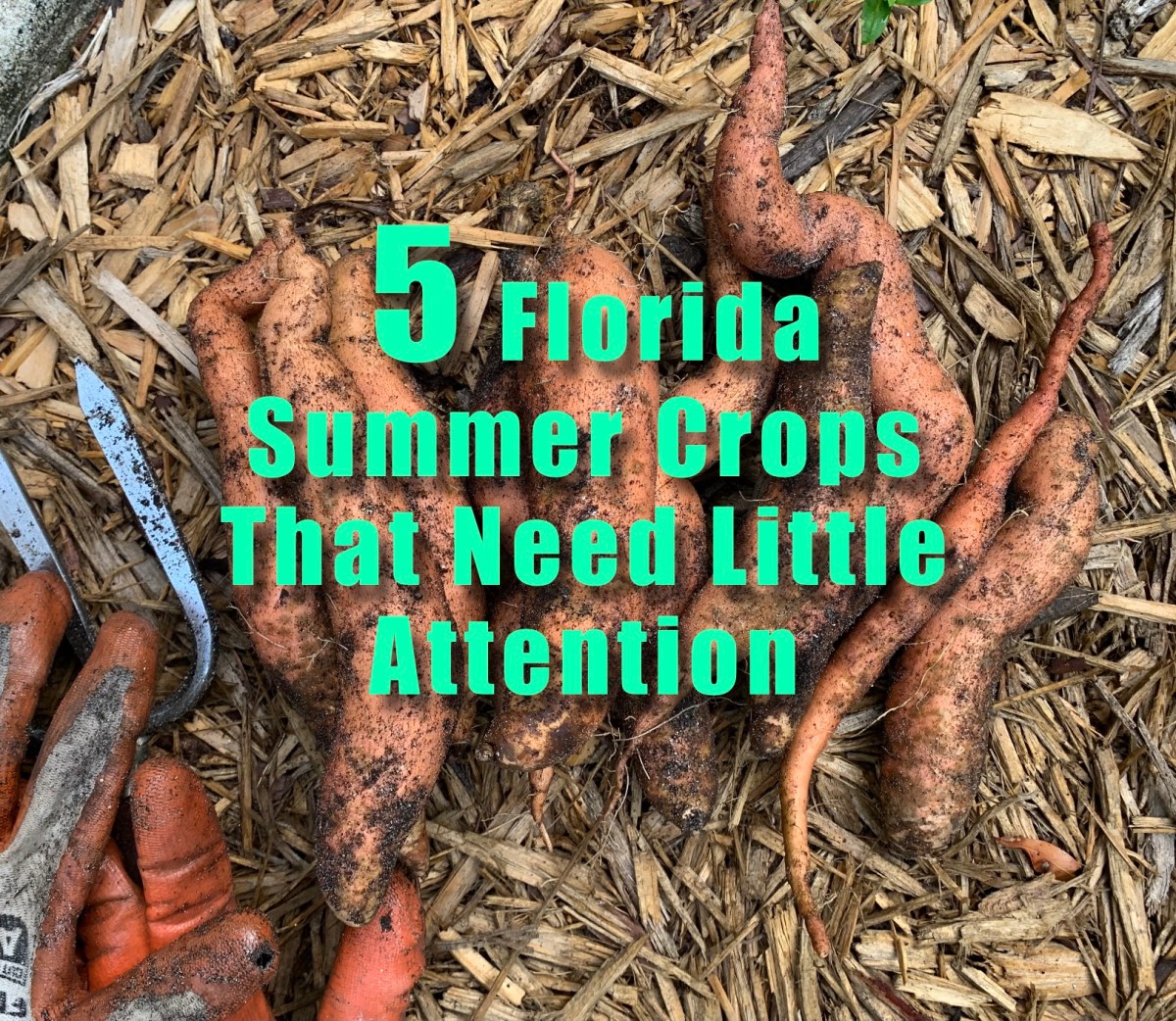
The compost has been cooking and I will have some to add to the new beds. After I pulled the sweet potatoes, I did mix in some of my compost containing earthworms.

Clean up for me means making space for new seeds to be sown. It is still very hot here, so I can’t spend a lot of time working in the yard. Mainly, I need my boxes ready for seeds. And I am planting some things earlier this year to see what happens.

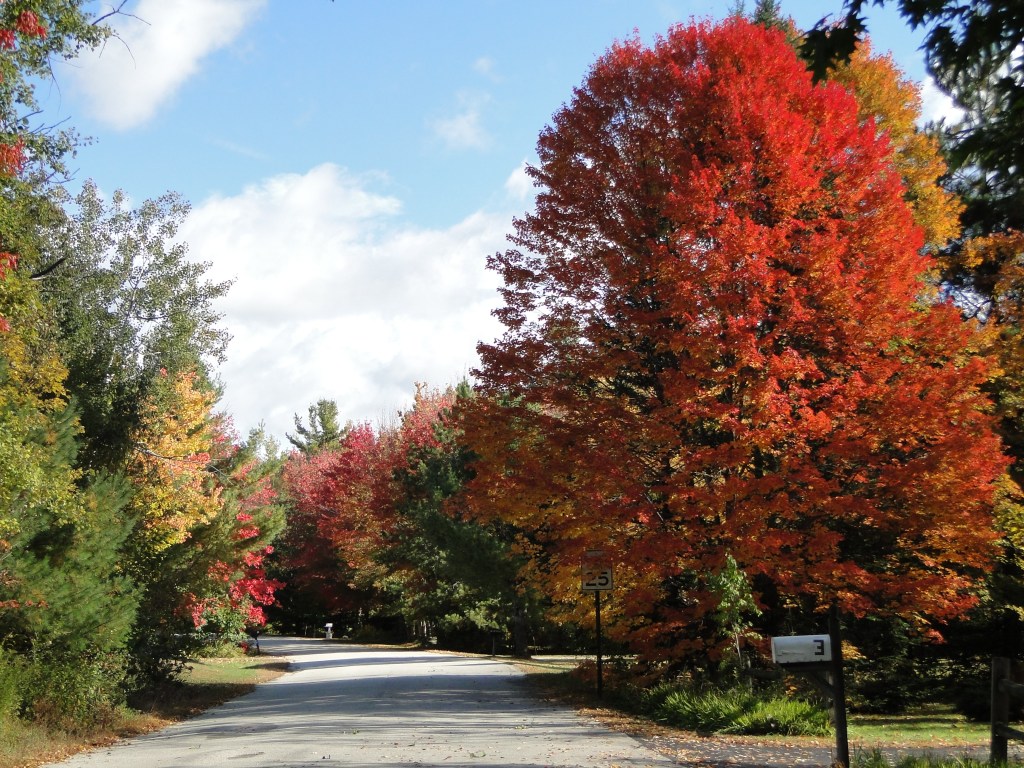
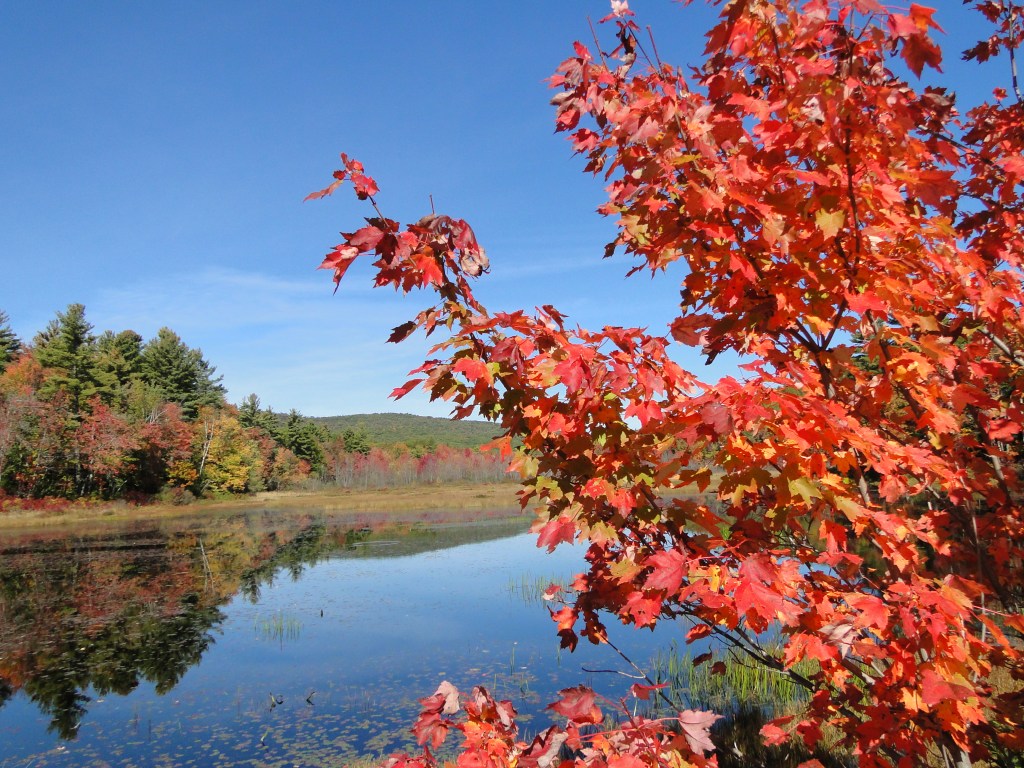
Happy Fall everyone! Wish I was in New England where Fall is wonderful.

Photos from where I lived

green divider leaves long

Digging the Sweet Potatoes and Learning a Lesson

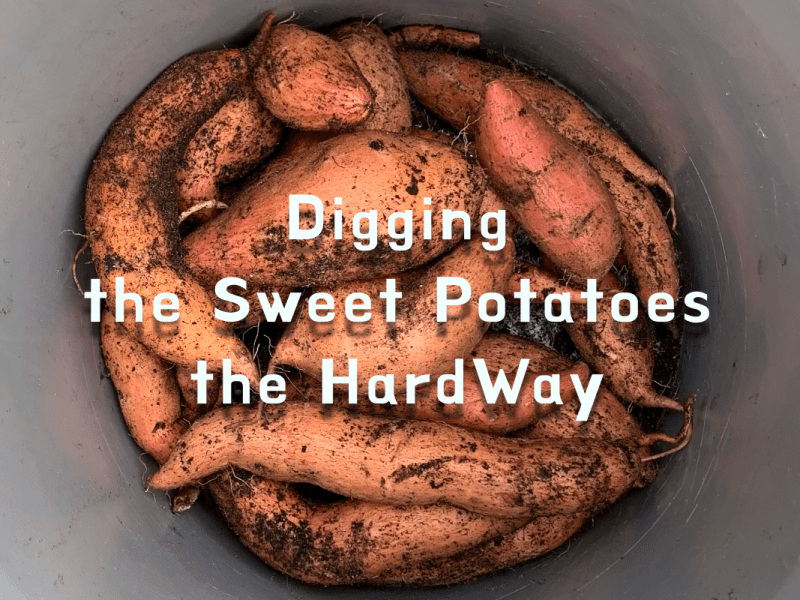
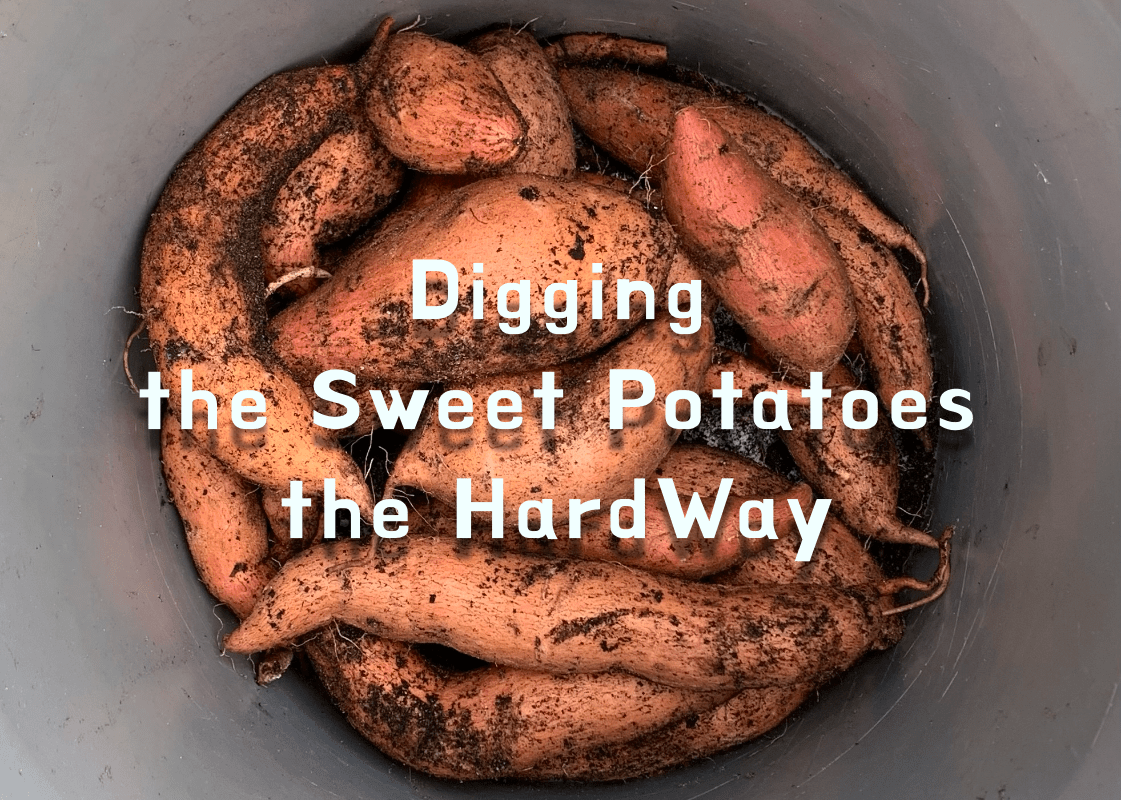
It’s the end of August and time to dig my sweet potatoes. I will not grow them in a raised be again, and here’s why.

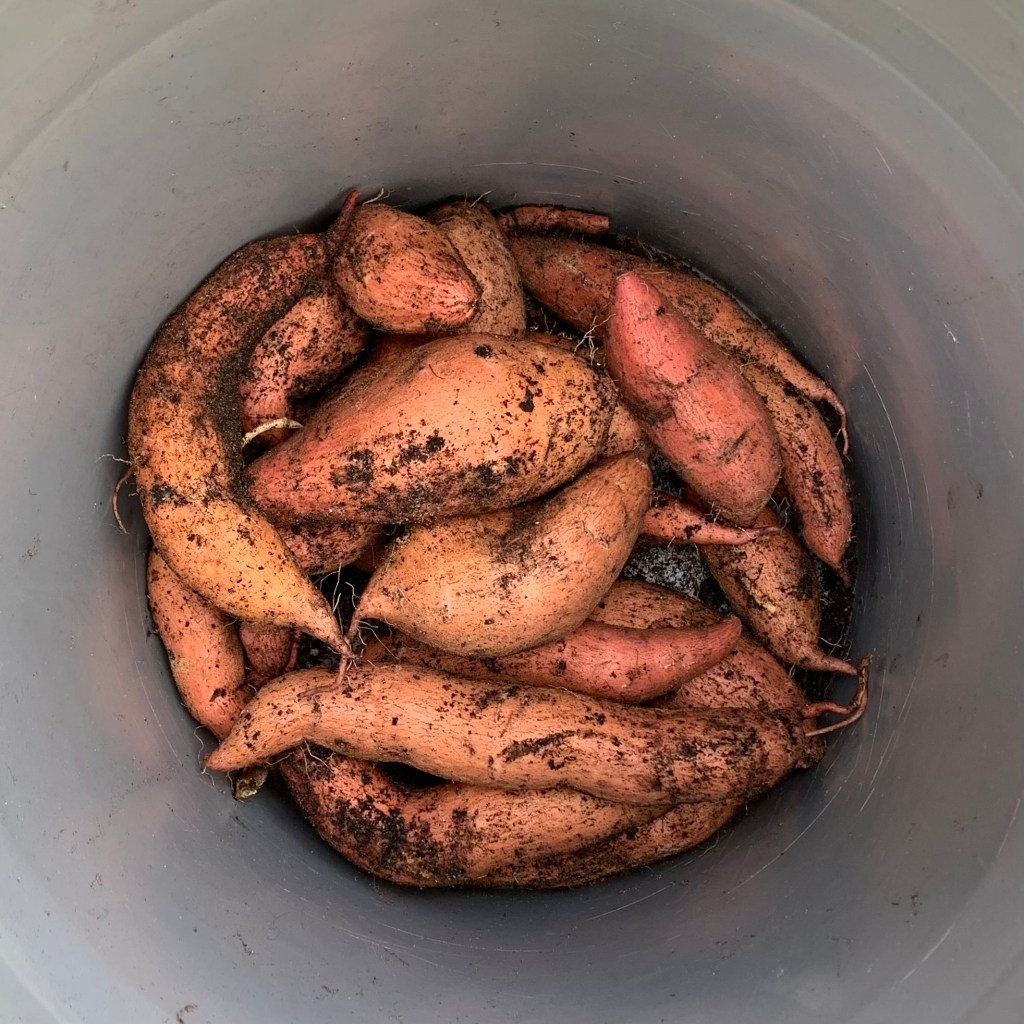
The other day I spent quite a bit of time digging up my sweet potatoes. My bright idea was to use my new, long Vegega garden bed to grow them. I had just filled it with lots of stuff, along with dirt, and it really wasn’t good for growing much. So, I figured why not use it for sweet potatoes?

That was not a bad idea, because I don’t really have ground space for them. But when it came time to dig them, I had to kneel and dig by hand. A pitchfork is generally used to dig potatoes, but in the bed I couldn’t do that. It was a job.

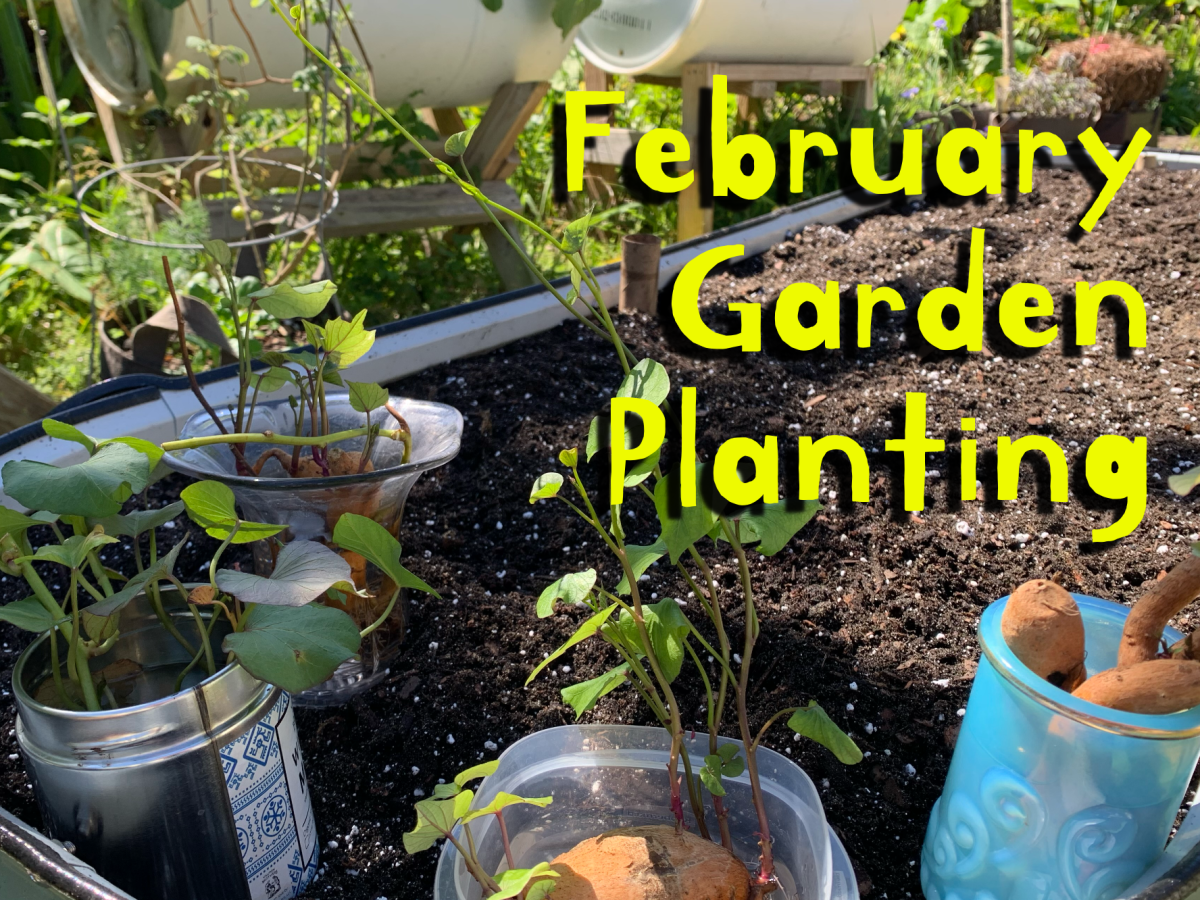
I planted the potatoes back in February. They’ve been growing for 6 months.

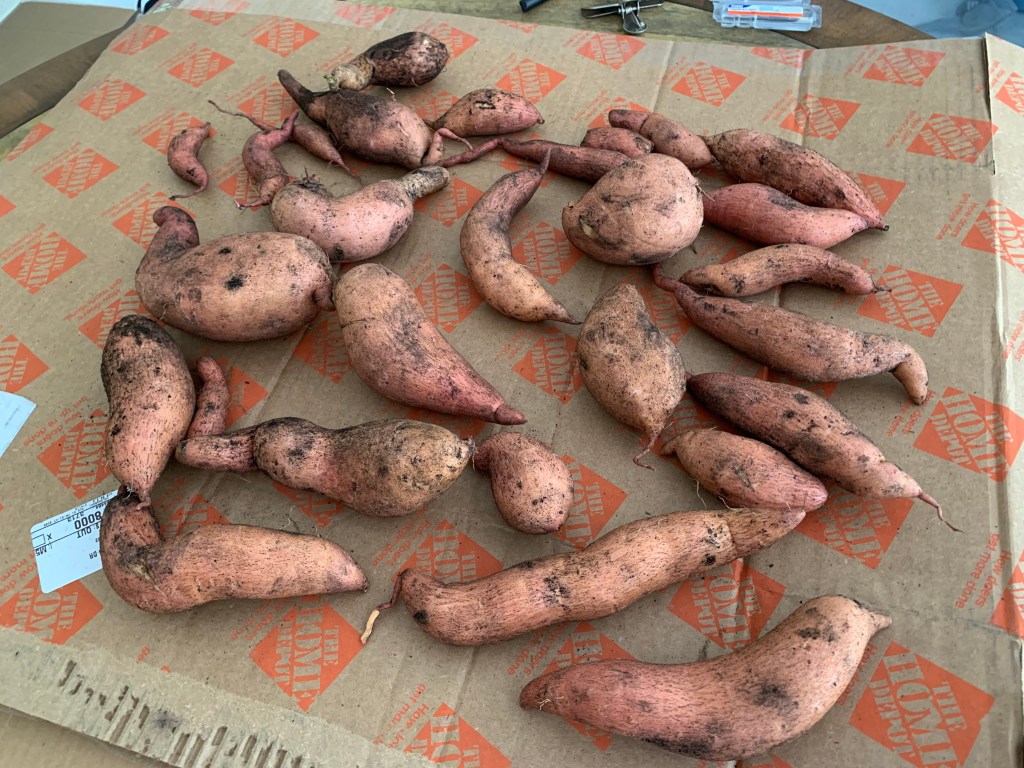
I’m hoping that I got all of them and it’s a nice little haul. Plenty of sweet potatoes for me. Now they have to dry in a humid location – no problem there – for about 10 days. This toughens the skin for storage, and sweetens the potatoes.

The other problem with sweet potatoes is that they last forever. I mean the ones left behind in the dirt. Even roots will continue to grow and I bet I will see sweet potato vines in this bed for years to come!

divider seedlings plants

Thank you for reading. Here hare more garden stories for you.

Ordering Seeds For Florida Fall Planting

Fall is coming soon. The time to order seeds for planting in Florida’s cooler months has come.

It’s easy to forget to order seeds for Fall planting because we only do that here in the south. When the rest of the country is winding down, cleaning up gardens, and raking leaves, our best planting time just arriving.

It is July, and suddenly I realized that Fall will be here in no time. I got busy ordering seeds from my favorite online places.

My Fall Planting List

This list contains the vegetables I will be growing from seed. Most will be planted sometime in October. After lots of trial and error, this my favorites list. I love to eat this food. Some things take forever to grow, but they are worth the wait.

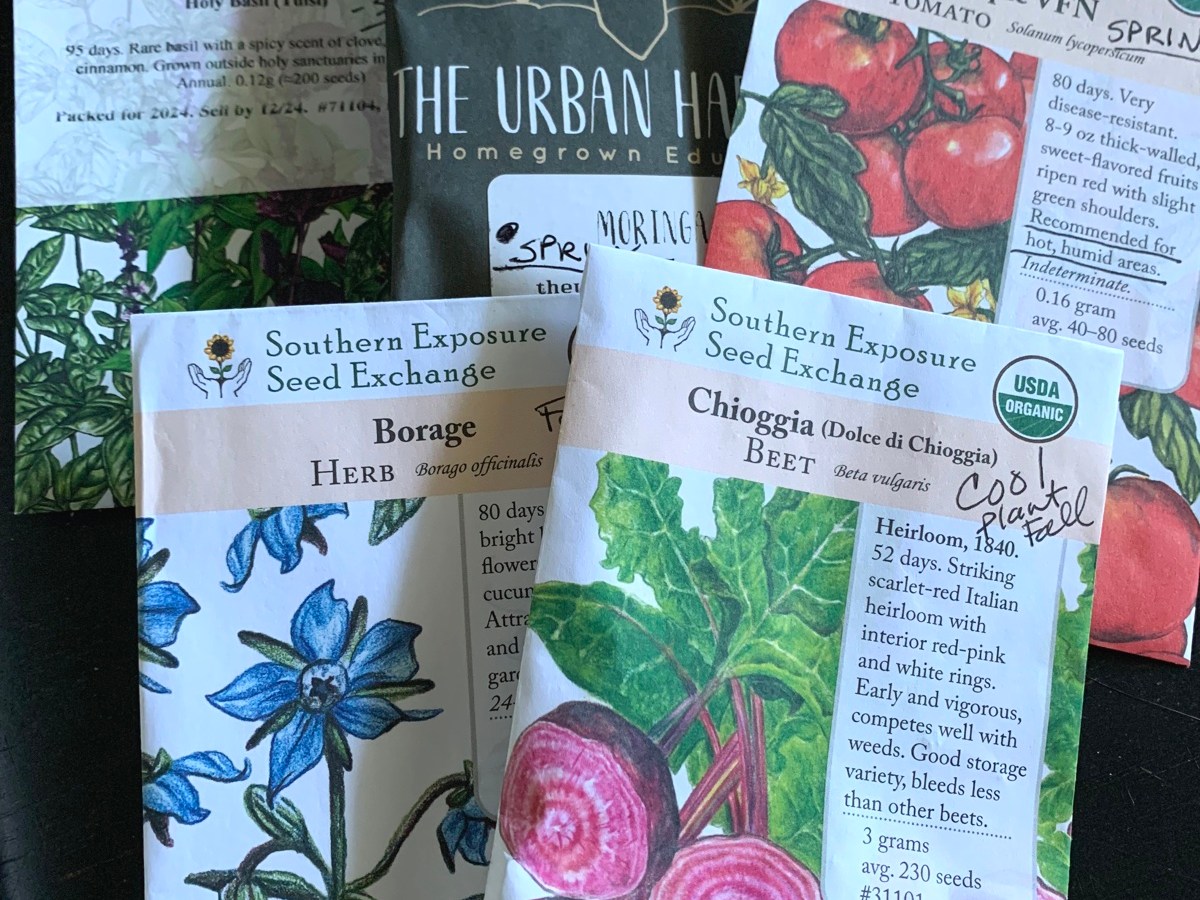
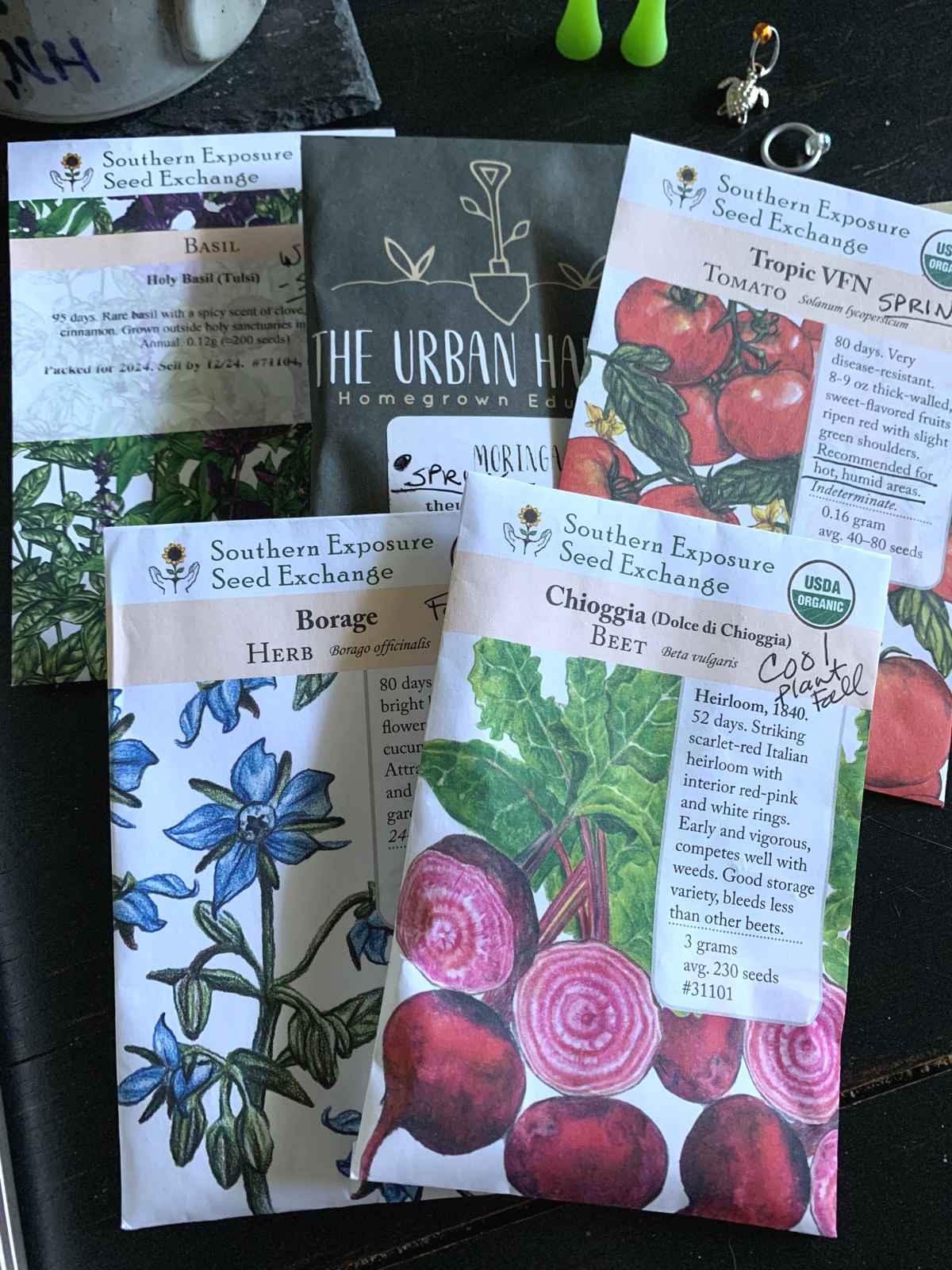
Here is what I’ve ordered, with the company name.

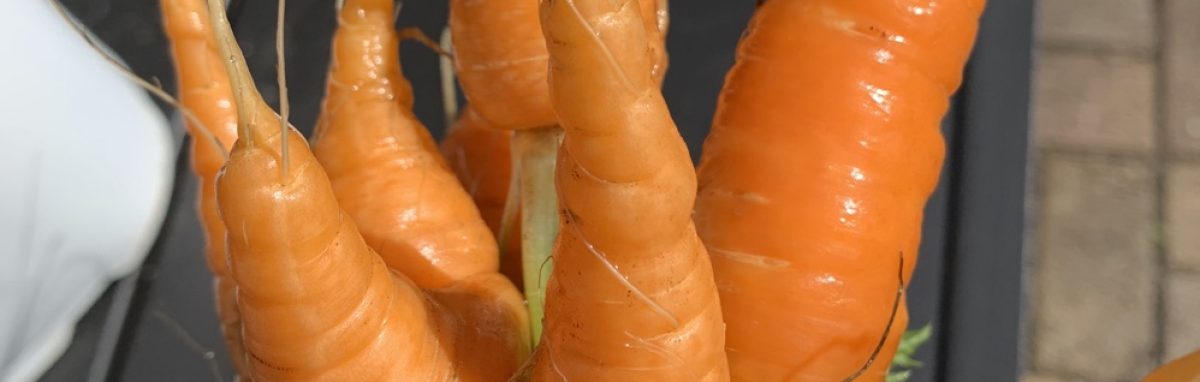
  • Carrots – (SESE) – take 4-5 months to grow
  • Bulb Onions – (SESE & Baker Creek) – take 4-5 months to grow
  • Contender Green Beans – (SESE & The Urban Harvest) – Fast growing bush type. Succession plant all winter. Good for soil too. Have tried others, but love Contender.
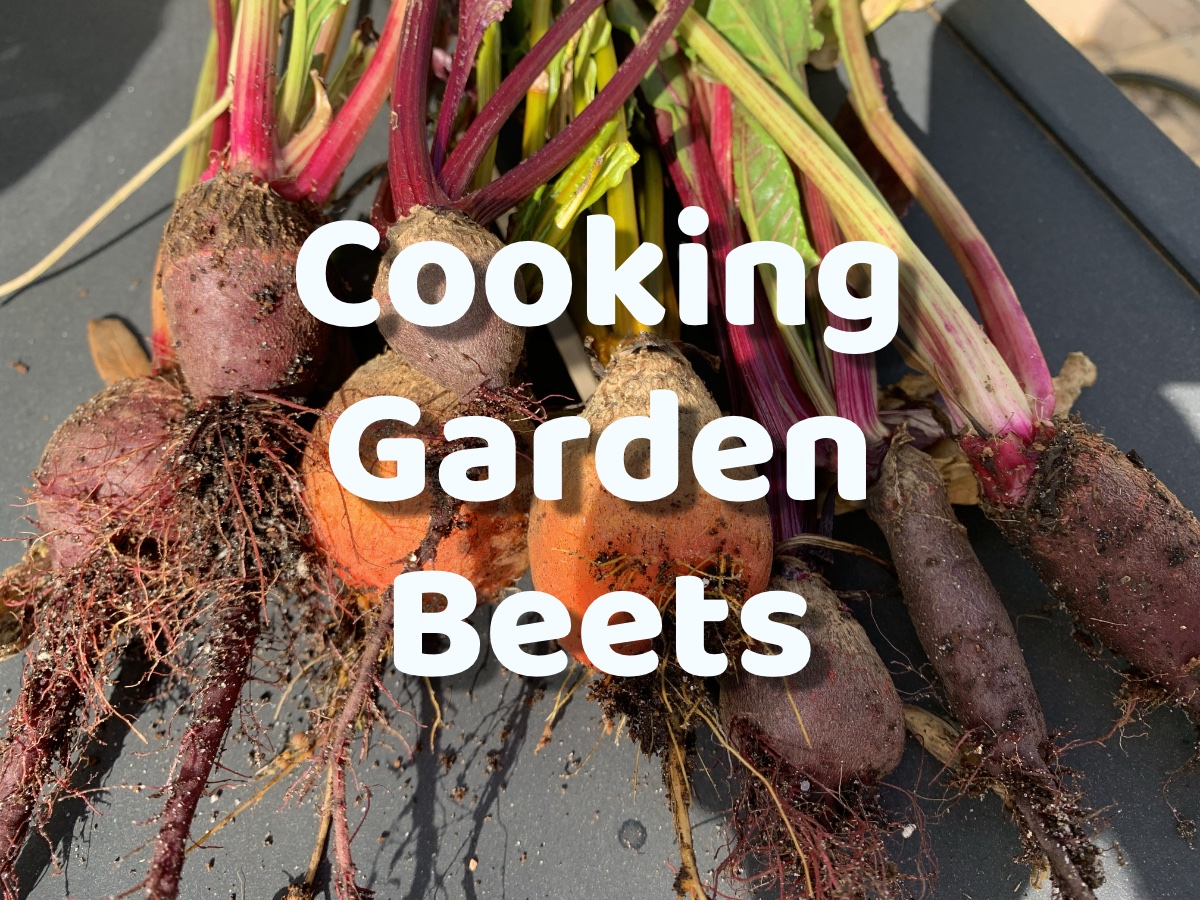
  • Beets – (Baker Creek, golden, & SESE) – Usually stay small, and take a lot of time. But I love beets.
  • Chijimisai – (The Urban Harvest) – fast growing green with roundish leaves. A favorite winter green.
  • Arugula – (Baker Creek) – Grew it 2 years ago.
  • Kale – (SESE) – Not much luck before, but will try again.

Maybe I waited too long, but I had to order from a few places to get the seeds I wanted. I try to buy organic seeds, but I don’t think Baker Creek’s seeds are organic. Their seeds are heirloom and non-GMO. A lot of my currently growing Zinnias came from Baker Creek.

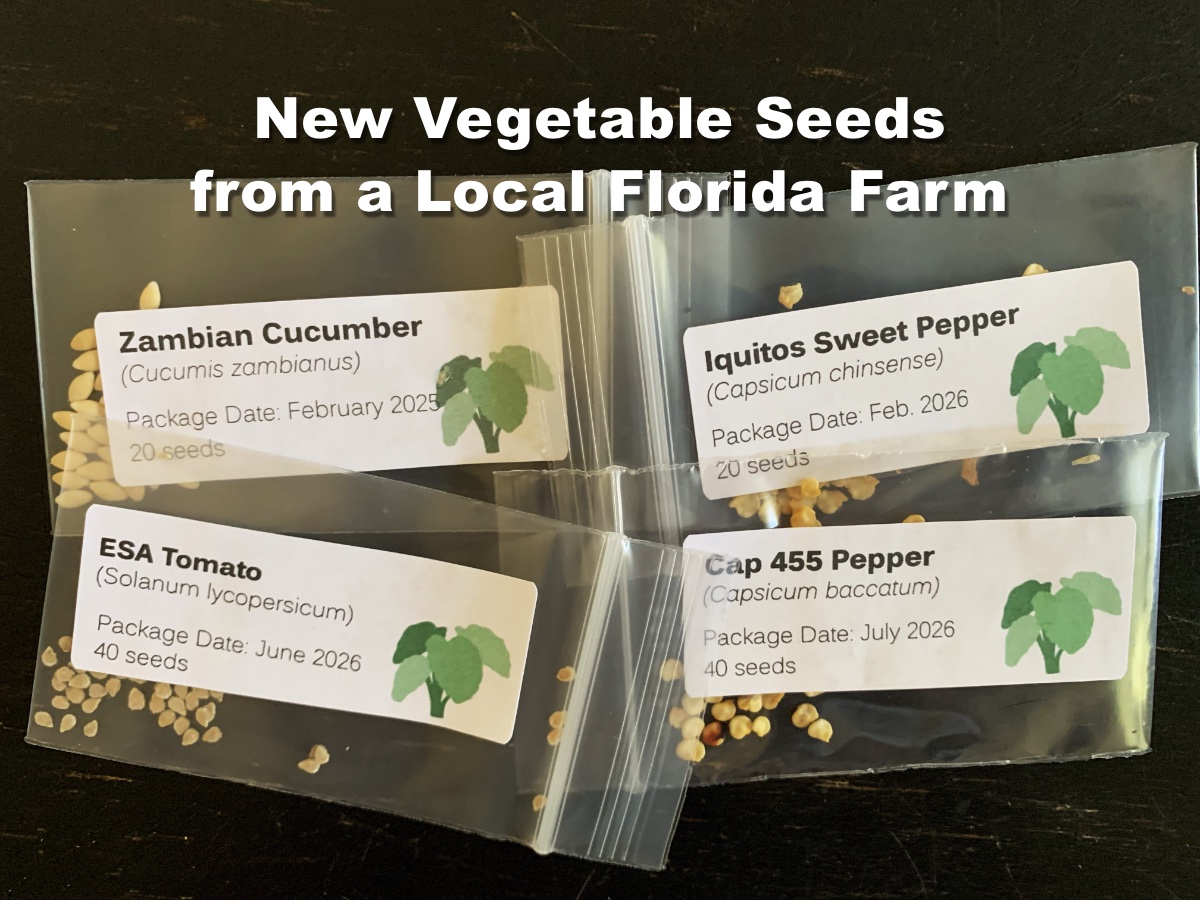
I have some old seeds, which are dated 2024. I’ll plant the new seeds first and if there is space left anywhere, I will throw in some older stuff.

Seeds Saved For Fall Planting

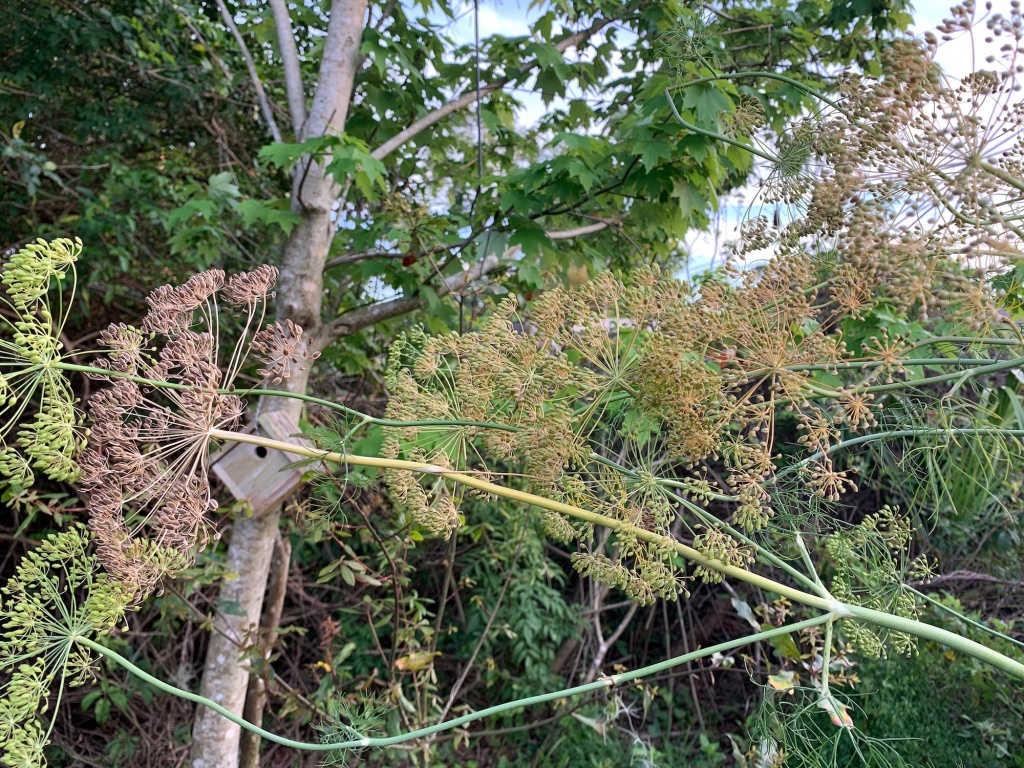
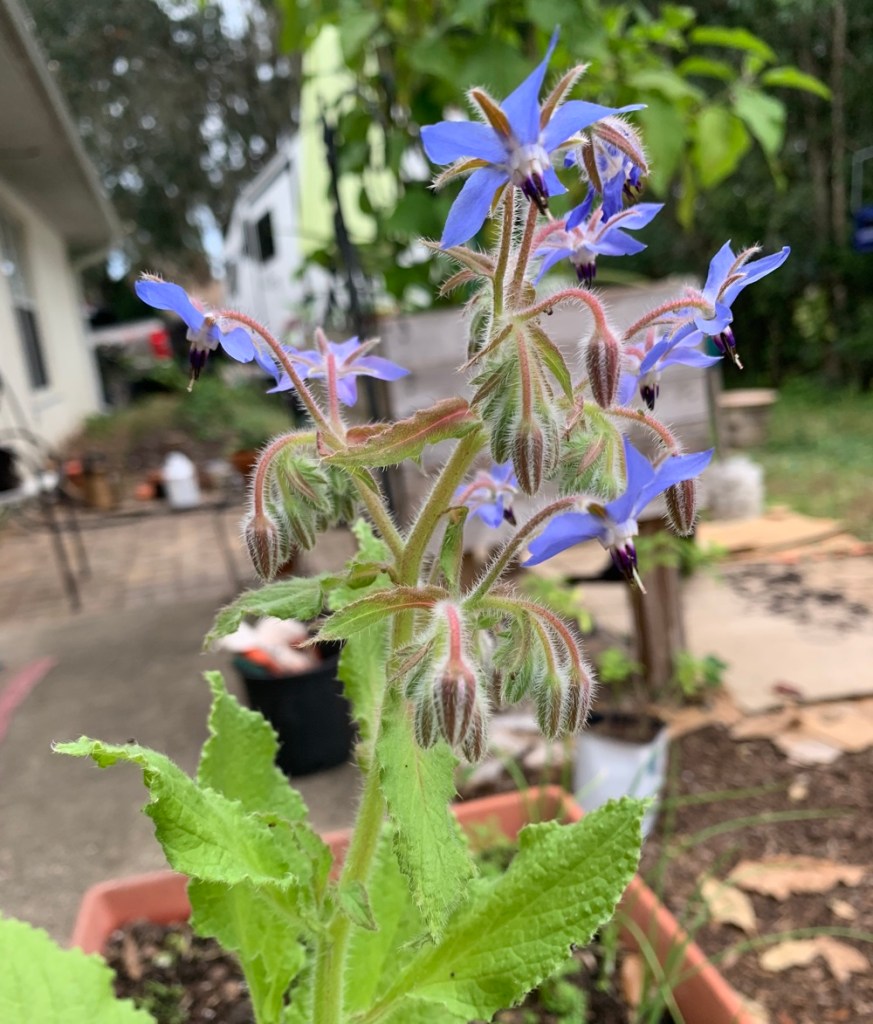
I’ve cut way down on saving seeds, but some I do save. Dill and borage like cooler weather and saving dill seeds is so easy to do. Borage is a bit trickier. I have to catch the pod before it opens and drops the black seeds out. But, this means I will have borage popping up all over – finger’s crossed.

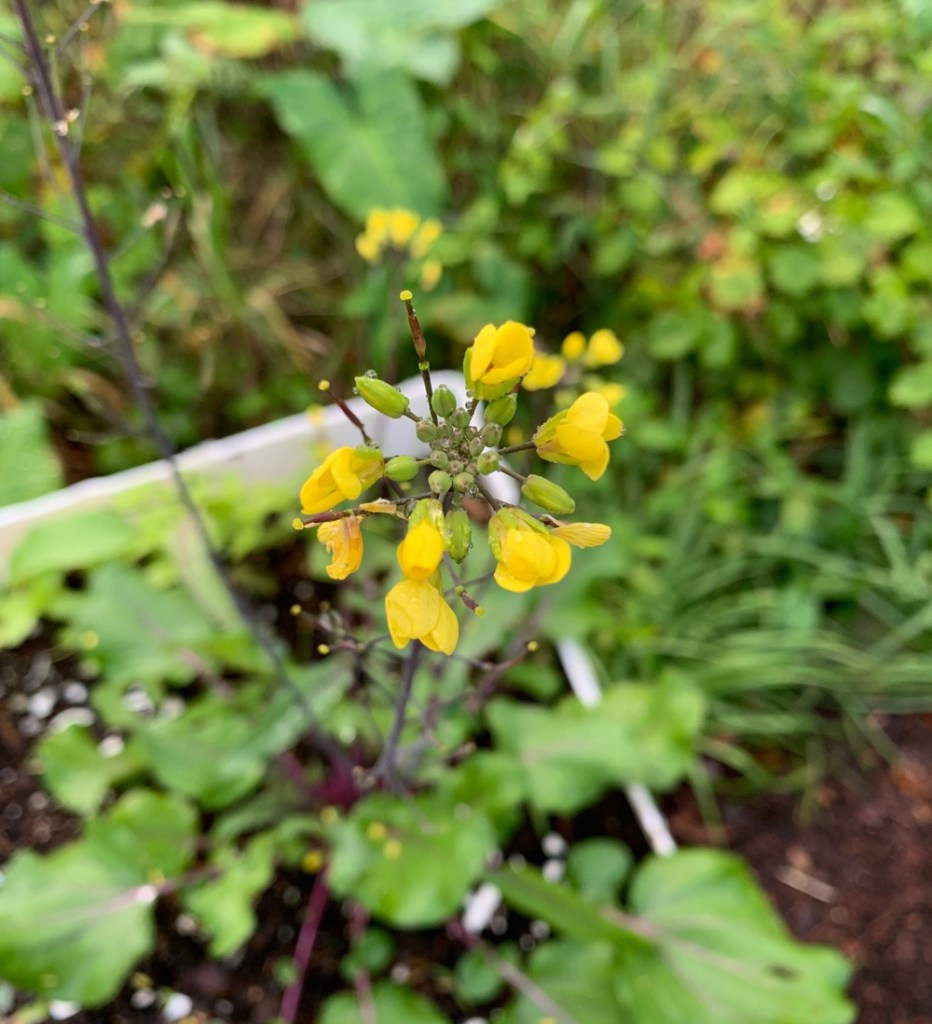
Hont sai flowering broccoli is another one with easy to save seeds. I like to grow it for the yellow flowers that bugs love. I’m not too particular when planting and pretty much scatter the seeds around.

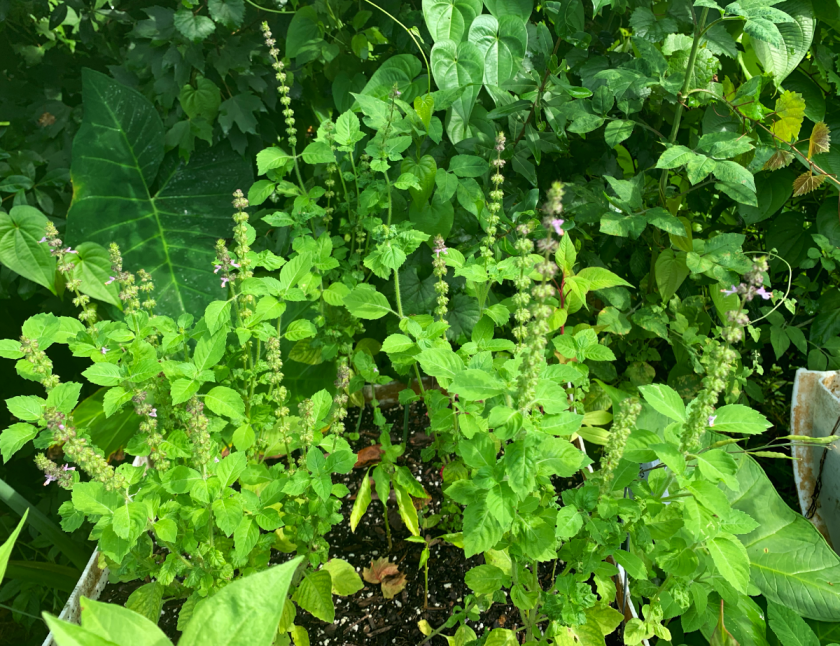
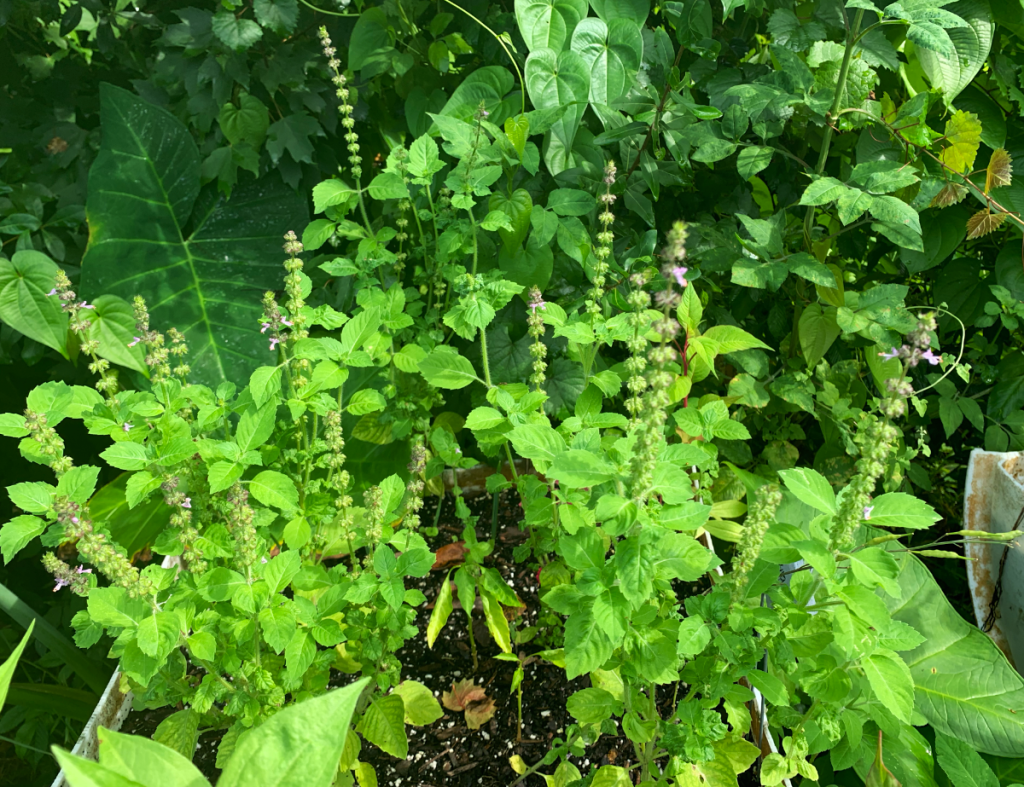
Holy basil is a recent favorite to grow, and it grows year round. I think it does better in cooler weather.

Marigolds From Seed, and Deterring Nematodes

I did order some new Zinnia seeds and French Marigolds from Southern Exposure Seed Exchange. The Golden Guardian marigold variety is supposed to be very good at repelling nematodes.

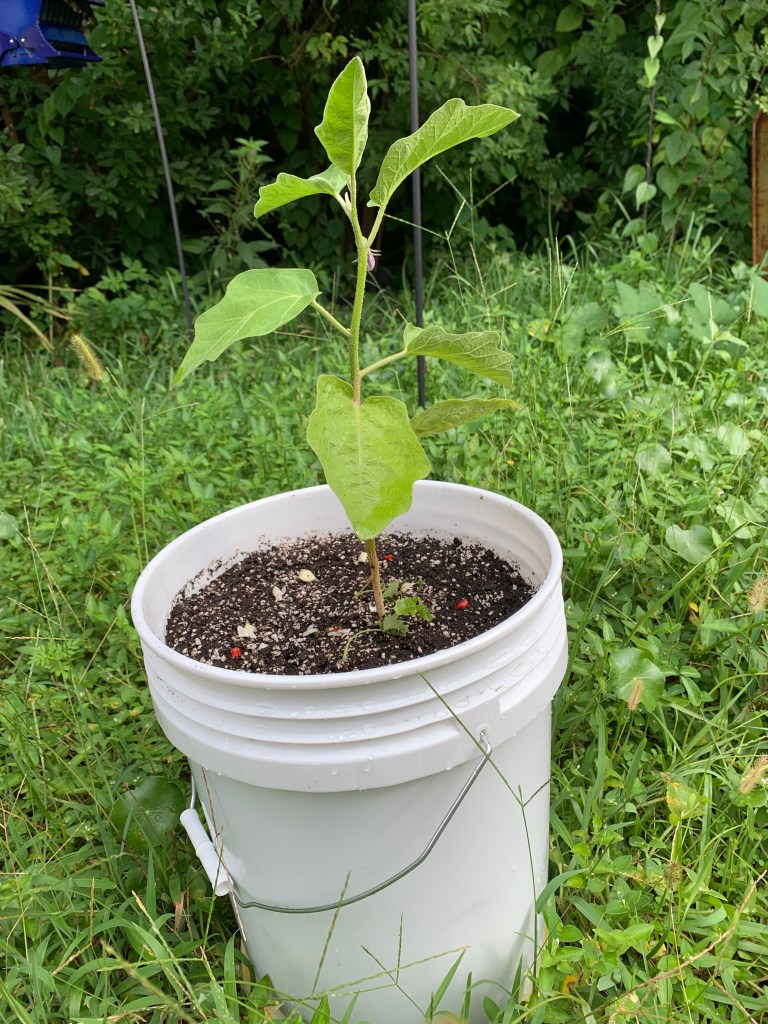
Here in the south, we tend to have to deal with nematodes. They like warm weather. I have been unsuccessful at growing peppers in my yard. My eggplants that are in the ground also look pretty bad. It’s possible I have some kind of nematodes. I need to work on that by planting marigolds – maybe throughout the year. Possibly as long as they have sun they will be happy.

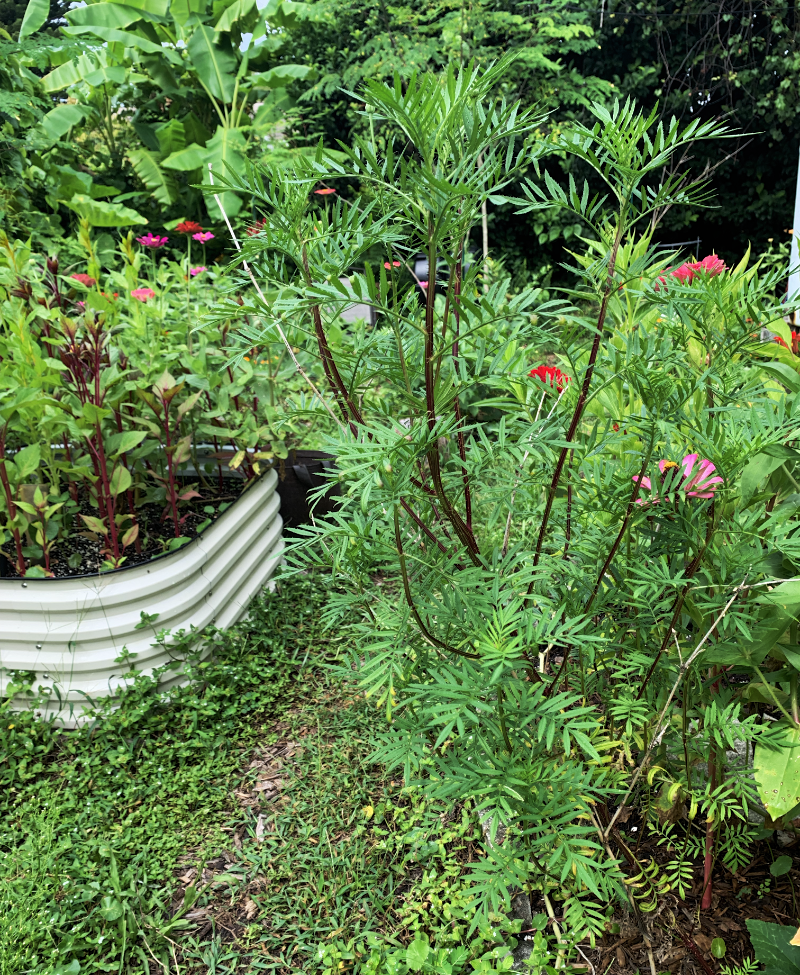
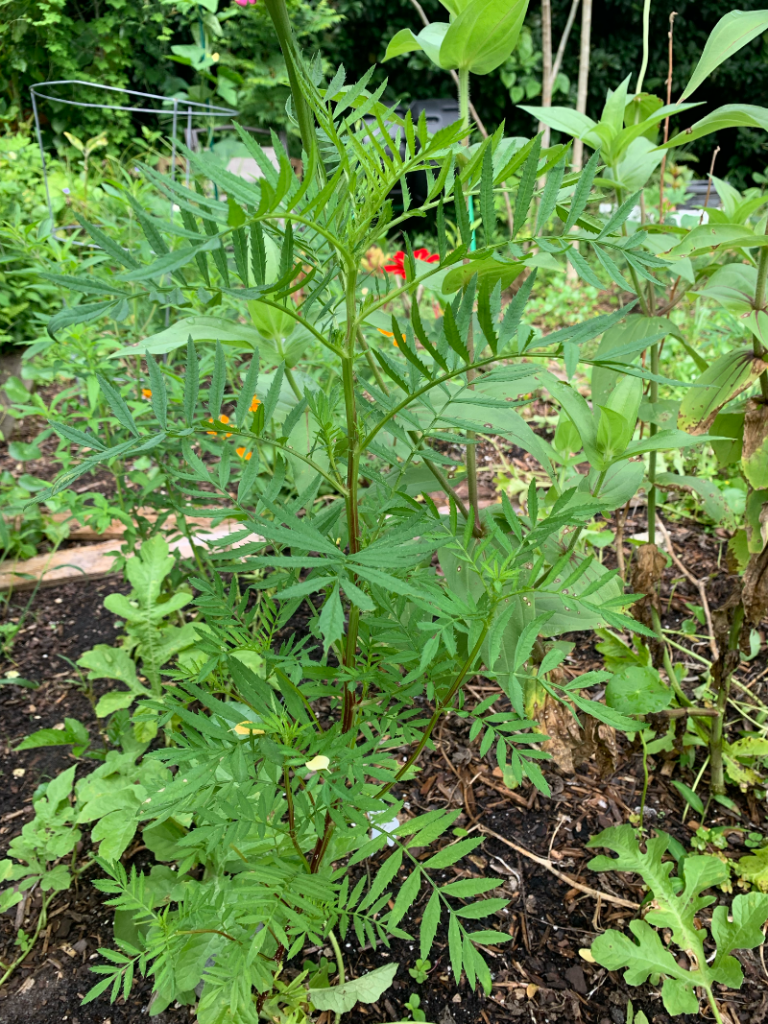
The Marigolds I have growing now are mostly flower-less. They are very tall. When they quit growing, I will cut them up and mix them into the compost.

Florida’s gardening site has this to say about planting marigolds. Also, on this page entitled, Garden Myths, Volume 1. I still say it’s worth a try. I’ll be sure to write about trying to grow Marigolds during our Florida winter season.

green divider leaves long
Read on…

February Garden Planting

It is the end of February and here in Florida I am getting some seedlings and sweet potato slips into the raised beds.

Something went wrong. Please refresh the page and/or try again.

Good Morning, or Is It?

Garden troubles.

I am writing today to make you feel better. Yup, it’s a pretty depressing morning here, so I hope that will make you feel better about your bad start to the day. If you had a good start, yay for you. If you are having gardening troubles, you are not alone.

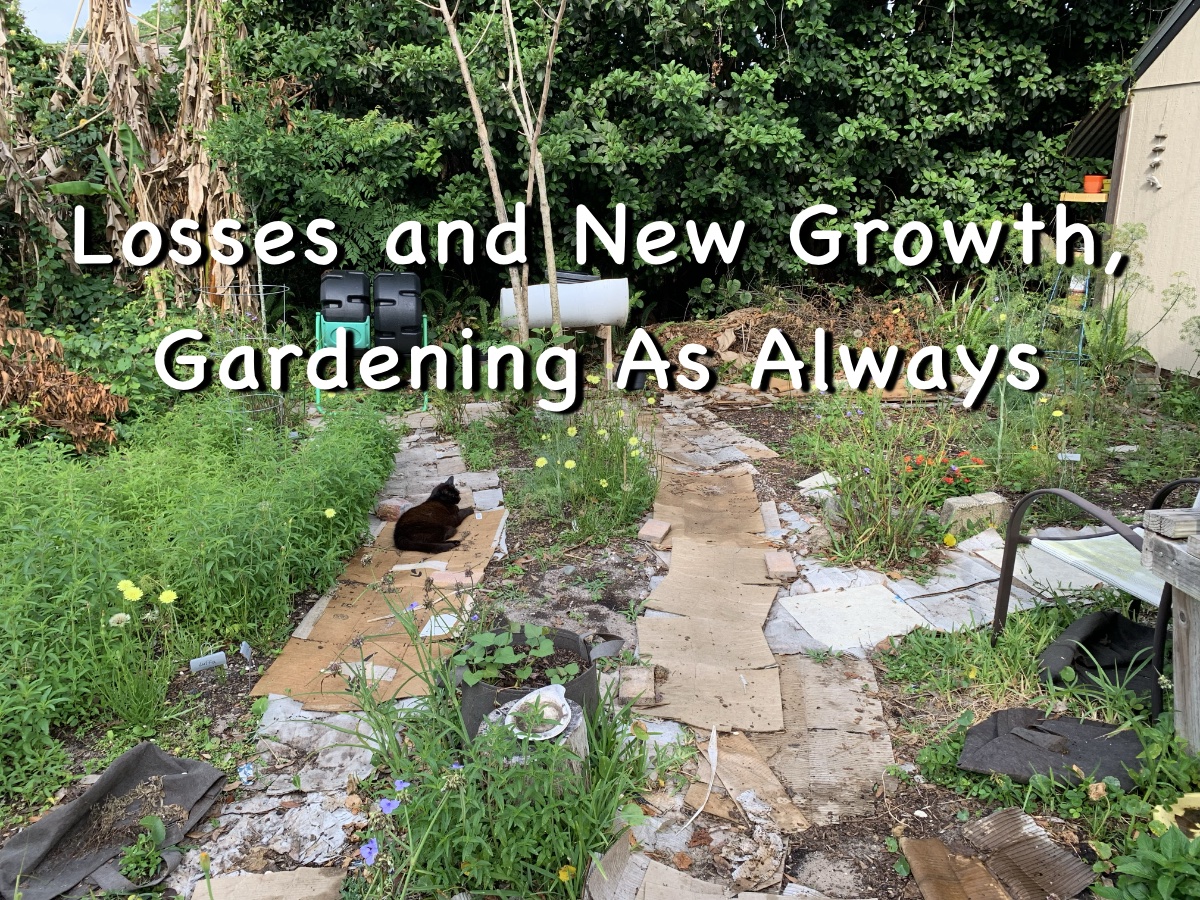
Here in the jungle, summer is the pits. It is too hot to be outside for long, and if I venture out, it’s either loaded with bug repellent, or covered in long sleeves and pants.

On top of that, there is very little in the way of food growing. All my Seminole pumpkins start to grow, then turn yellow and fall off the vine.

Finally, I have one that looks like it will continue to grow. And today I see that raccoons (my best guess) have scratched it all up!

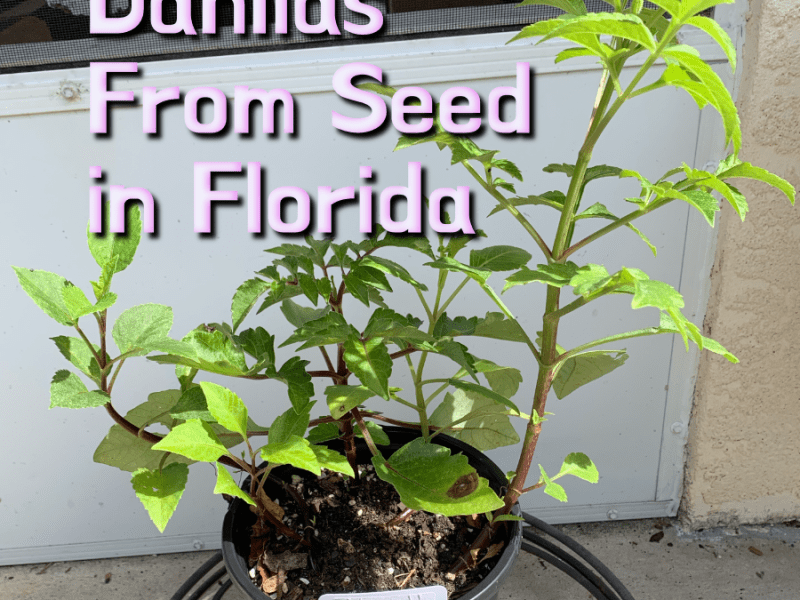
The Dahlia is wilting. We just had a little tropical system swirling over our area of the state and it dropped 4 inches of rain. We had minor flooding, which went away quickly. But maybe the dahlia did not like all that water. Maybe it doesn’t like July in Florida. I can’t blame it.

Dahlia wilting

The weeds, or should I say, grass has gone nuts. This is all getting away from me because of all the vines that are sprawling all over the yard. The squash vine is done, and I should pull it up. But it’s too hot and buggy.

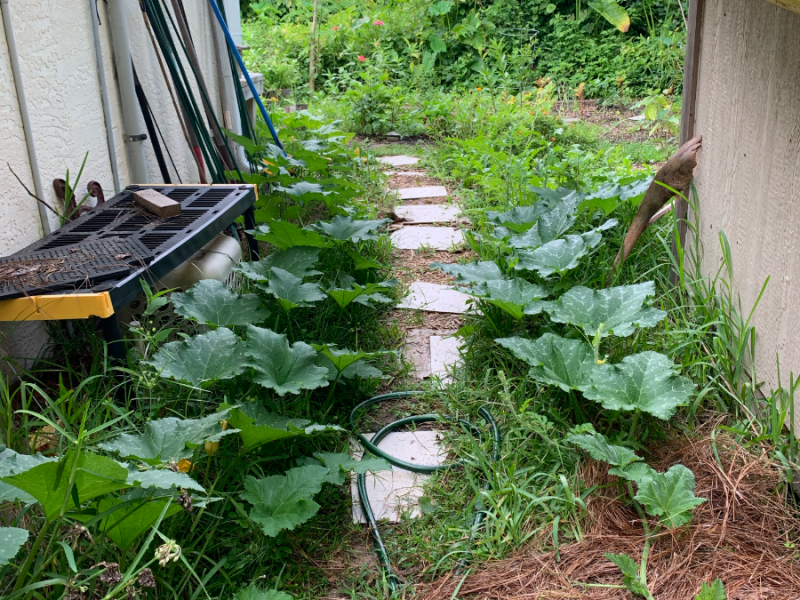
The watermelon vines have 1 watermelon. The pumpkin vines – well, I mentioned that above. Those vines have nearly made it from the back of the house to the front. They’ve dropped about 10 pumpkins at this point.

pumpkin vines along the pathway

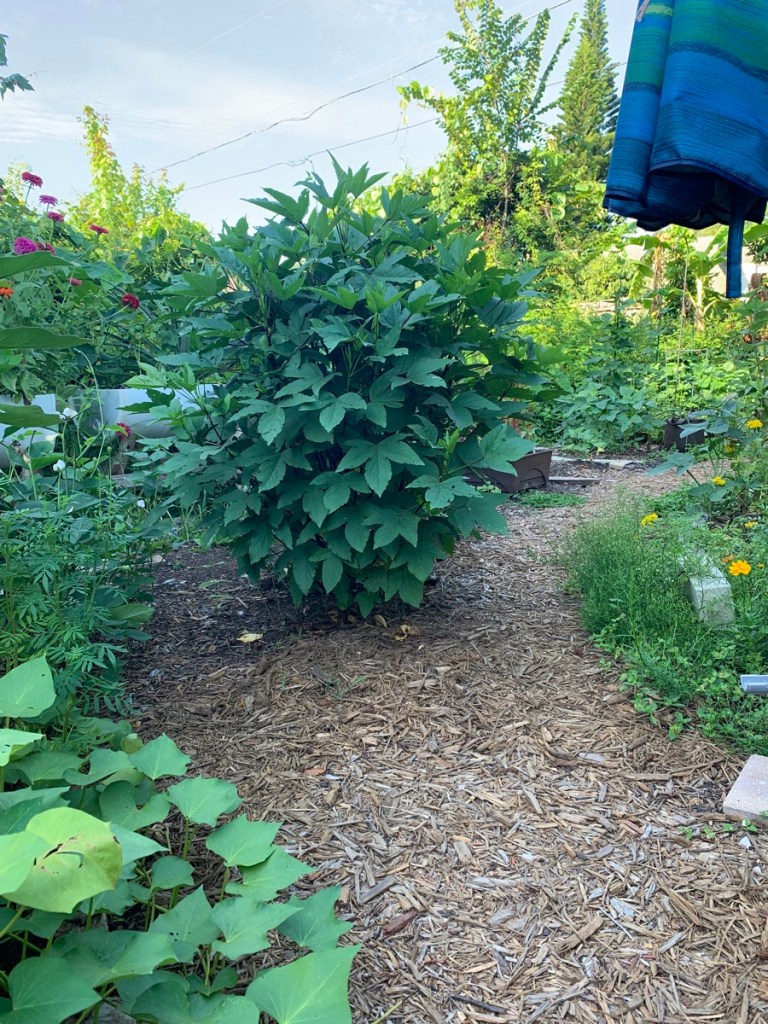
Speaking of vines. That mound in the distance in my photo above is an Elm tree next to a Beautyberry bush. Below is a photo of the two trees with most of the vines pulled off. I used to work at this, even though this is not part of my yard. I’d love to see both grow and do well. As you can see it’s a losing battle.

These are trying to grow under that mound of vines in the photo above.

Vines covering tree

A banana pepper plant has died, and the other peppers don’t look so good. So it’s a depressing start to the day for me. I think I’ll stay inside.

May Garden Photos With Plant Updates

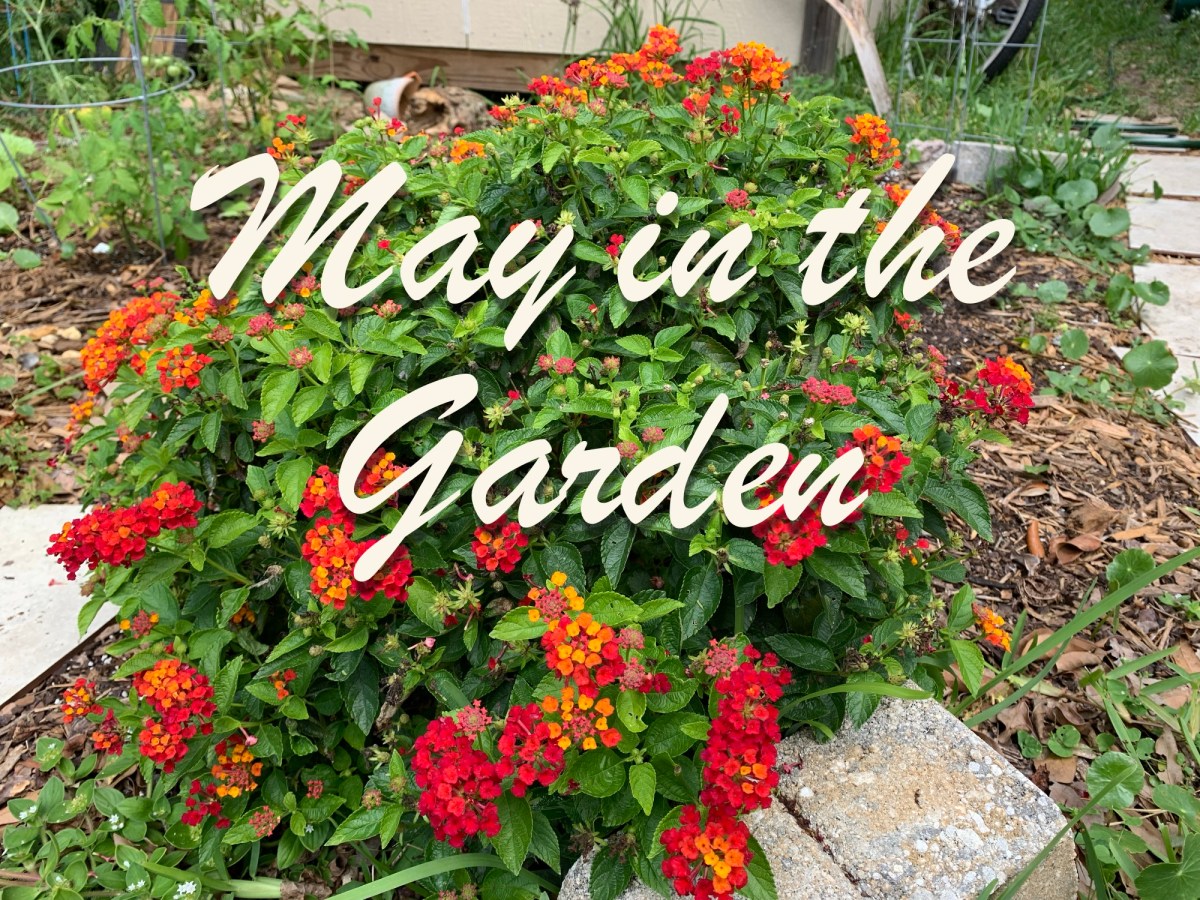
May in the garden is mostly about finalizing the switch from winter crops to summer. This quick post shows photos of some of what I have growing at this time.

Now that May is here, the super hot weather is not far behind. Hopefully it will also begin to rain occasionally! My garden beds are mostly planted.

I’ve been on a milkweed growing kick, so I have lots of little pots going. I do not love having to monitor tiny pots, and the smallest seedlings will stay on the porch. More about my milkweed later.

For now, the Seminole pumpkins are growing vines. I have a random (spaghetti?) squash that came up. However, the vine doesn’t look great. My winter basil is still growing, with Tulsi Holy basil seeds sprouting for summer.

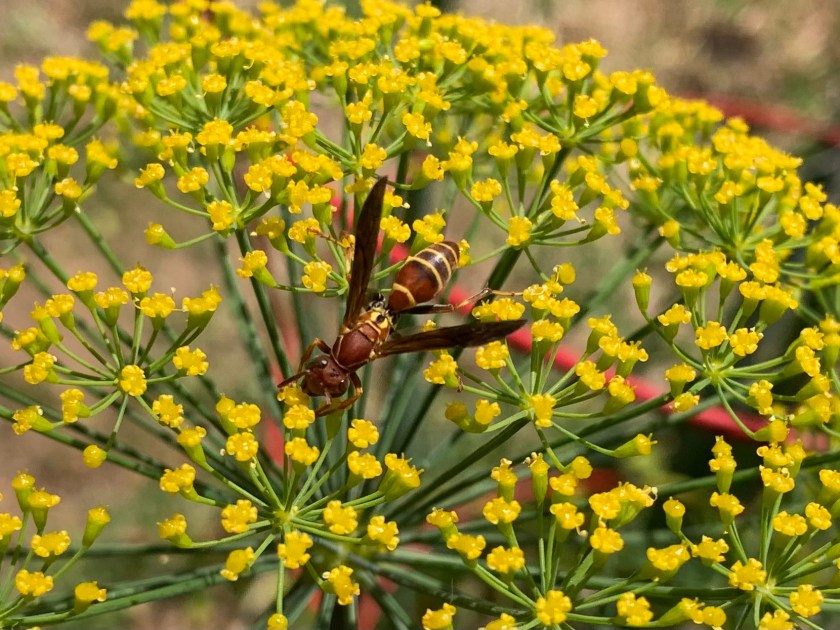
The Desert Rose has come back from the dead (dormant really), to give a pretty display of bright pink flowers. The dill plants are everywhere, and most are flowering, but some have already gone to seed. I’m hoping for black swallowtail butterflies to show up soon.
I ate three blueberries on May first! And more blueberries are on the one and only plant. I’m eating a few banana peppers, and waiting for the Ubatuba pepper to turn red. The cherry tomatoes are ready randomly, so I get a few here and there. I was finally able to grow an Everglades cherry tomato plant from seed.

No water is falling from the sky, so every morning I am out keeping the plants alive. The sun is very hot during the day and things dry out fast.

My cat had to have a growth removed from her back and now she is in recovery mode. Nothing stops her from wanting to be outside. The photo above shows her in one of her happiest places. In the garden path, with her nose in the oregano.

If you are in Florida, I hope your garden is in full summer mode. If you are just coming out of a long winter in the north, you will be planting soon.

My Three Vegega Metal Raised Beds Are Ready!

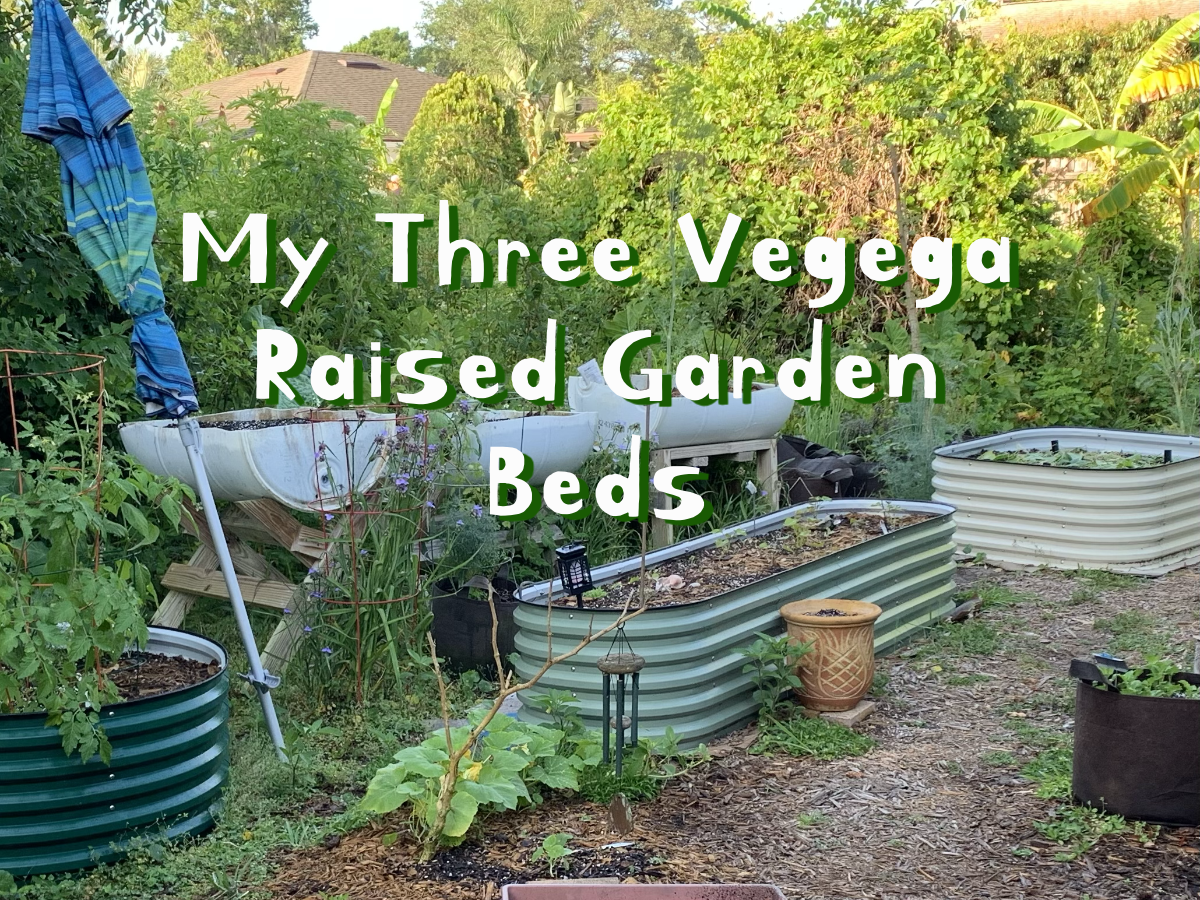
My three Vegega metal raised garden beds are now set up. They are all mostly filled, but only two are planted.

I have three Vegega raised metal beds. It has taken me months to set them up (only a day or two) and then get them filled (this is the hard part). Now, two of them are filled with plants and the third one is nearly ready.

The first bed was round, and easy to manage. The second, larger bed was not so easy, but I got it done. It was a long bed, called a 9-in-1, and it had so many pieces! I put all of them together by myself, and I’m not so young! If you have a partner to help, or if your husband does all the work, then it would be a breeze! LOL…

I was able to put my third Vegega metal raised garden bed together inside the house. Thankfully, it was a smaller one.

I’m sharing photos, and information, of all three of my Vegega beds on this page. I’m very happy with them, and so far, my plants are too!

metal raised garden bed
17″ tall, 3.5 ft. square Vegega bed with rounded corners.
I just signed up to become a Vegega affiliate because, why not? It’s super easy to sign up, and I am giving an honest review of a product I’m using, and that other gardeners may be interested in. If anyone clicks through and buys something, I could get a small royalty percentage. (Thank you if you do that, but I am not writing this page to make money.) I will mention it is a “paid link” whenever the link could earn for me.

Vegega Metal Beds, #1, #2, and #3

These beds are not cheap, and I really hope they do last many years (20 supposedly). It is work to peel the covering off each of the metal section. Then they are screwed together, placed in the yard and leveled. But the longest job is filling them.

Buy and begin the assembly and filling way before you think about planting. Especially if you are a one woman (older) gardener. My goal was to have the beds ready in March. I’m only a few weeks off.

So far, I am happy with the outcome. I have vegetables happily growing in two of the beds.

Bed #1

My first bed, or the first one I purchased and set up, is dark green and round shape. I have banana pepper plants, and an Everglades cherry tomato plant currently growing in this bed. Some holy basil, onions, and borage are growing around the edge.

Read more about the Vegega round raised beds (paid link) at their site. I like the 17 inch depth, and all three of mine are that height. It gives long roots plenty of space. This one was pretty easy to assemble and fill.

Round Vegega metal raised bed in dark green
42″ round, 17″ high Green Vegega bed

Bed #2

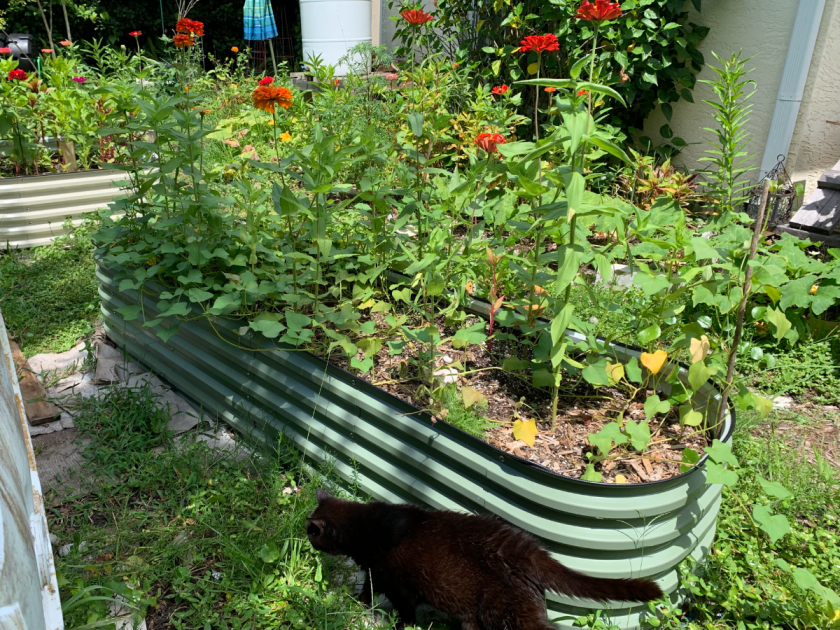
The second bed I bought is long and narrow. It is a light green color, and I’m not sure of the official color name. It is planted right now with sweet potatoes. I also have Zinnia seeds popping up along one side. There is space for other flowers or small herbs at the ends.

Long Vegega garden bed
Size 8 x 2 foot Vegega bed, 17″ tall, in light green. View this bed size at Vegega. (paid link)

This long bed was the most difficult for me to set up. It took longer to assemble and fill. This bed has two bars down under the dirt which help to keep the sides in place.

The metal is safe for growing food, and will hold up much longer than a plain, wooden bed. This is especially true in Florida where wood rots in no time. Some people complain that metal is not environmentally a good choice. Wood comes from trees, so how environmentally friendly is that? These metal beds are supposed to last for 20 years or more. Read more about Metal vs. Wood Raised Garden Beds here (paid link).

Bed #3

The third bed (featured on this page) is 3.5 feet square, with rounded corners. The color is Oyster White. Volunteer (squash or pumpkin) seeds have begun to grow, but nothing has been officially planted here yet.
Metal raised garden bed by Vegega in off-white color
3.5′ square metal raised bed. Volunteer squash or pumpkins are growing.

Although this Vegega bed has been sitting in my yard for weeks, it is not completely full. I have been cleaning up old vegetable plants and chopping the stems into this bed. The green beans are gone, and most of the broccoli. Because summer is coming, I’m not sure what I would plant in this bed, so I’m in no hurry. (I’m in Florida and summer is a tough time for gardening.)

To fill this bed, I have used the following;

  • Cardboard (in bottom – helps to level the bed) & random packing paper
  • Pine straw – also on the bottom over the cardboard. I chose this because they had it at my local yard shop. Straw would be a good choice.
  • Vegetation – old broccoli plants, stems, carrot tops, old vegetables for compost, and cuttings from the yard.
  • Purchased potting soil, my own compost, and Perlite.

Florida Vegetables For a Raised Bed

Summer is not a great time for gardening in Florida. It is our “winter” where we need to be inside where the AC keeps us cool. But gardeners know that the weeds never stop, so early morning garden checks are necessary.

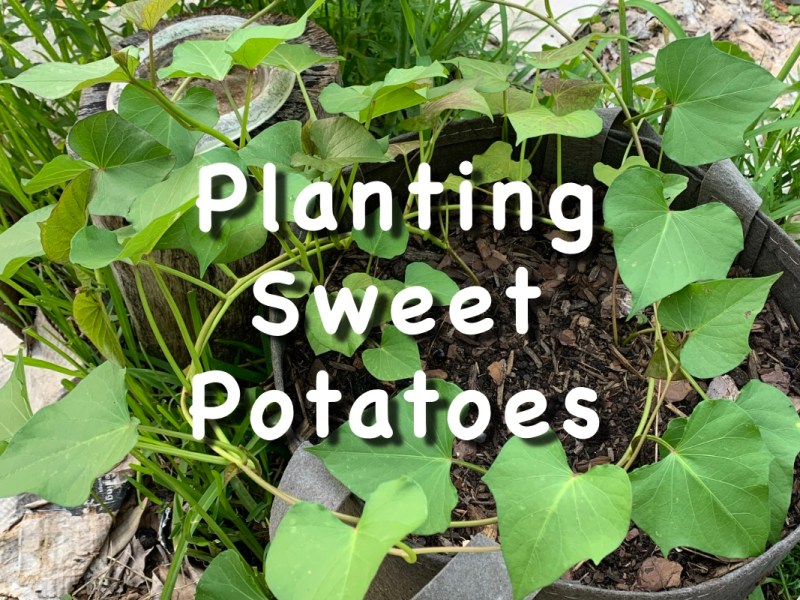
Crops growing in summer should be hardy, drought tolerant, and love the heat. Sweet potatoes fit that category. My entire long bed is planted with sweet potatoes. They don’t need much attention. I have found old sweet potato vines in my yard, from years ago!
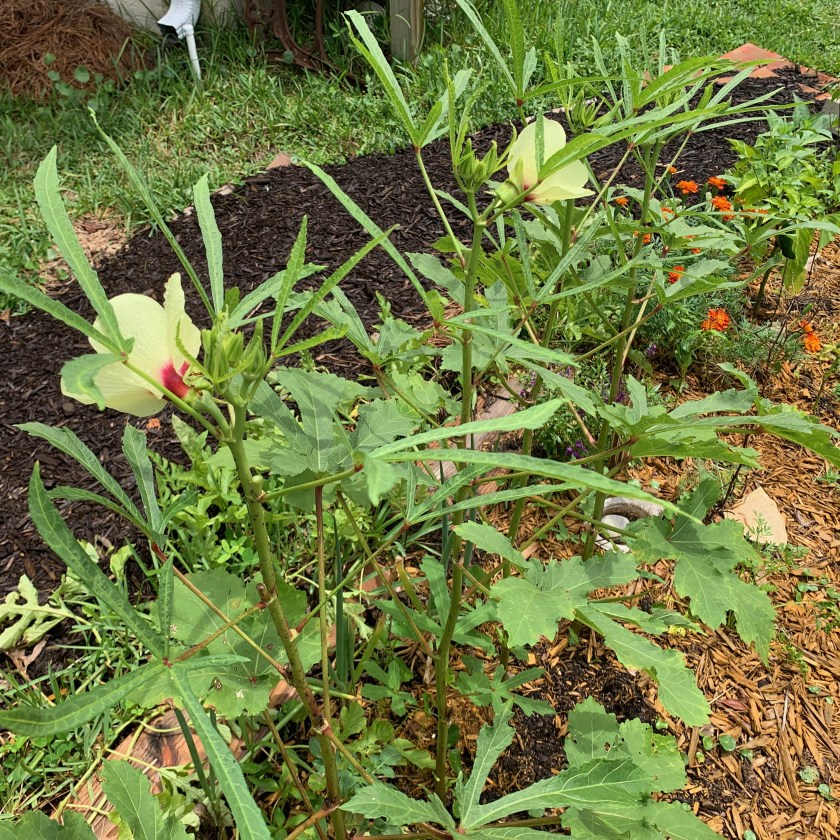
Okra, if you like it, is easy to grow and would probably love a raised bed.

Seminole pumpkins might work if the vines can travel over the edge to the ground without a problem. These pumpkins like some shade too, and root along the vine.

Even crops that like it warm may need some shade during a Florida summer day. My pepper plants are in the round bed which gets a lot of morning shade. I have an umbrella that can be opened to give them more shade as we heat up.

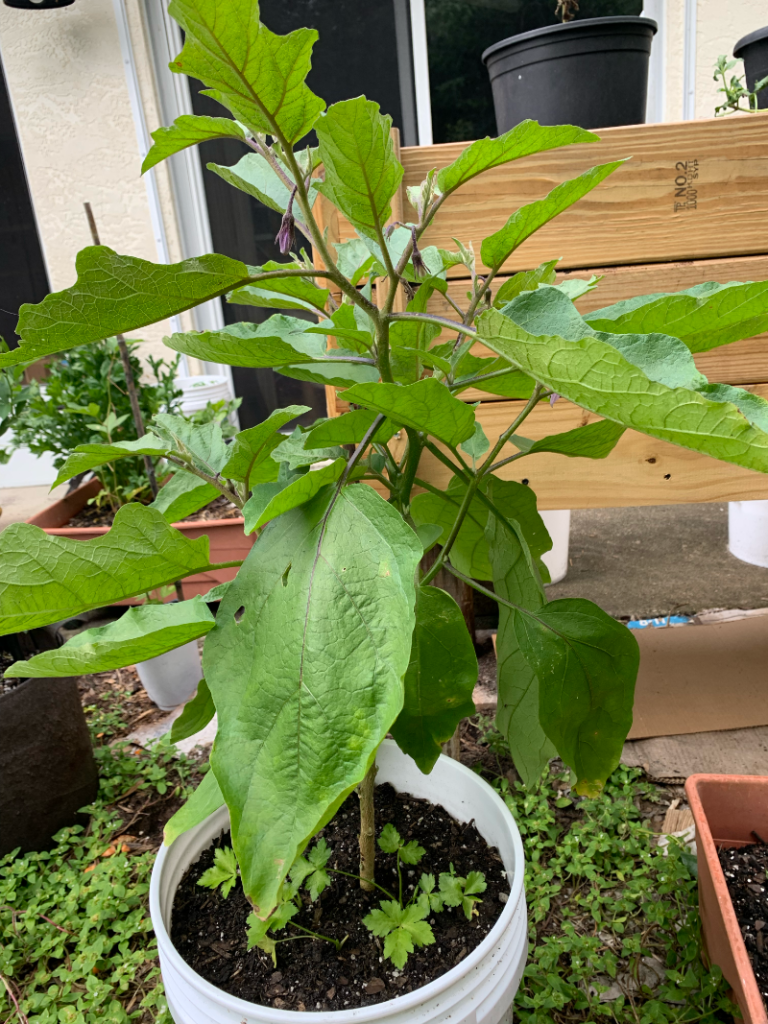
Eggplant will last for years here. An eggplant in the center of a round bed, or at the end of a long bed, would be a good idea. In fact, if you need the shade, put the eggplant at the end that blocks the sun. Eggplants attract ladybugs too, which is a plus.

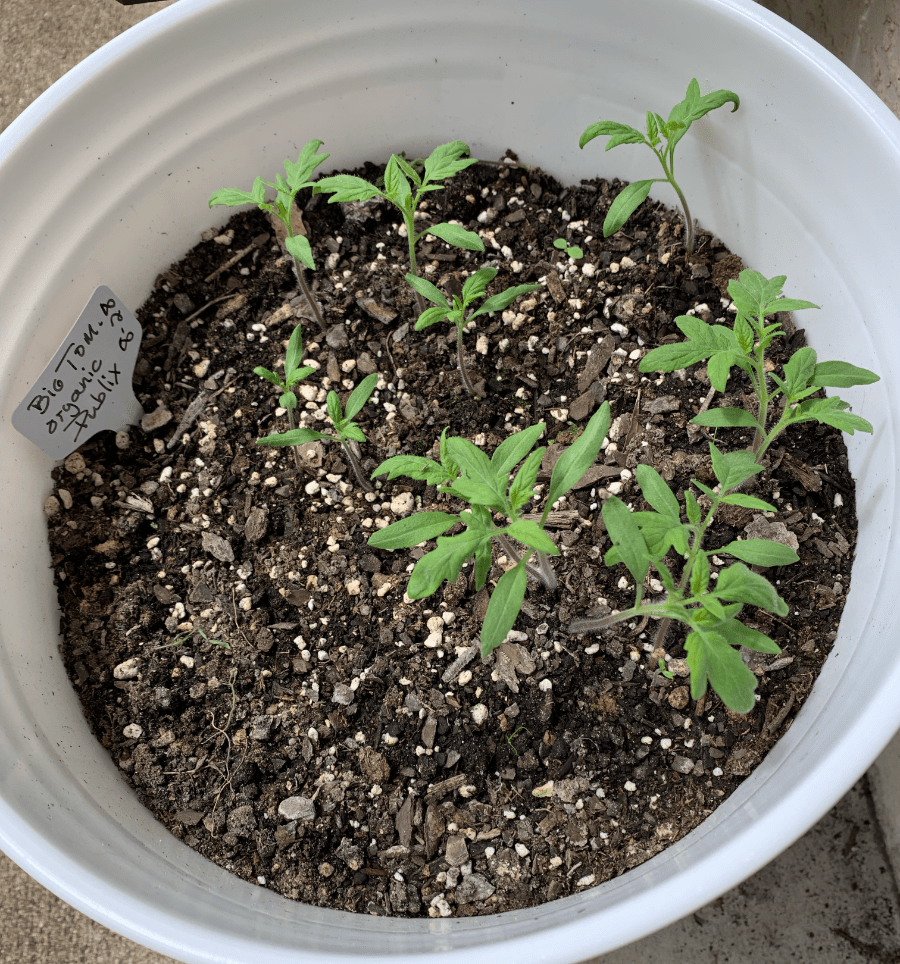
In Fall, I will be using these beds to grow lots of crops. I have success with bulb onions, carrots, broccoli, beets, arugula, Tatsoi spinach, dill, parsley and basil. Radishes take up little space and could go around the perimeter. Tomatoes can go into the beds in early spring.

I plan to include flower seeds around the edges of all the beds, and seasonal herbs. Holy basil grows nicely in summer, but most others like cool weather.

I’m excited to get growing in my Vegega beds! I’ll keep you posted.

Get a 10% off code here (paid link).

bees