Mid-summer Update on the Vegega Raised Beds

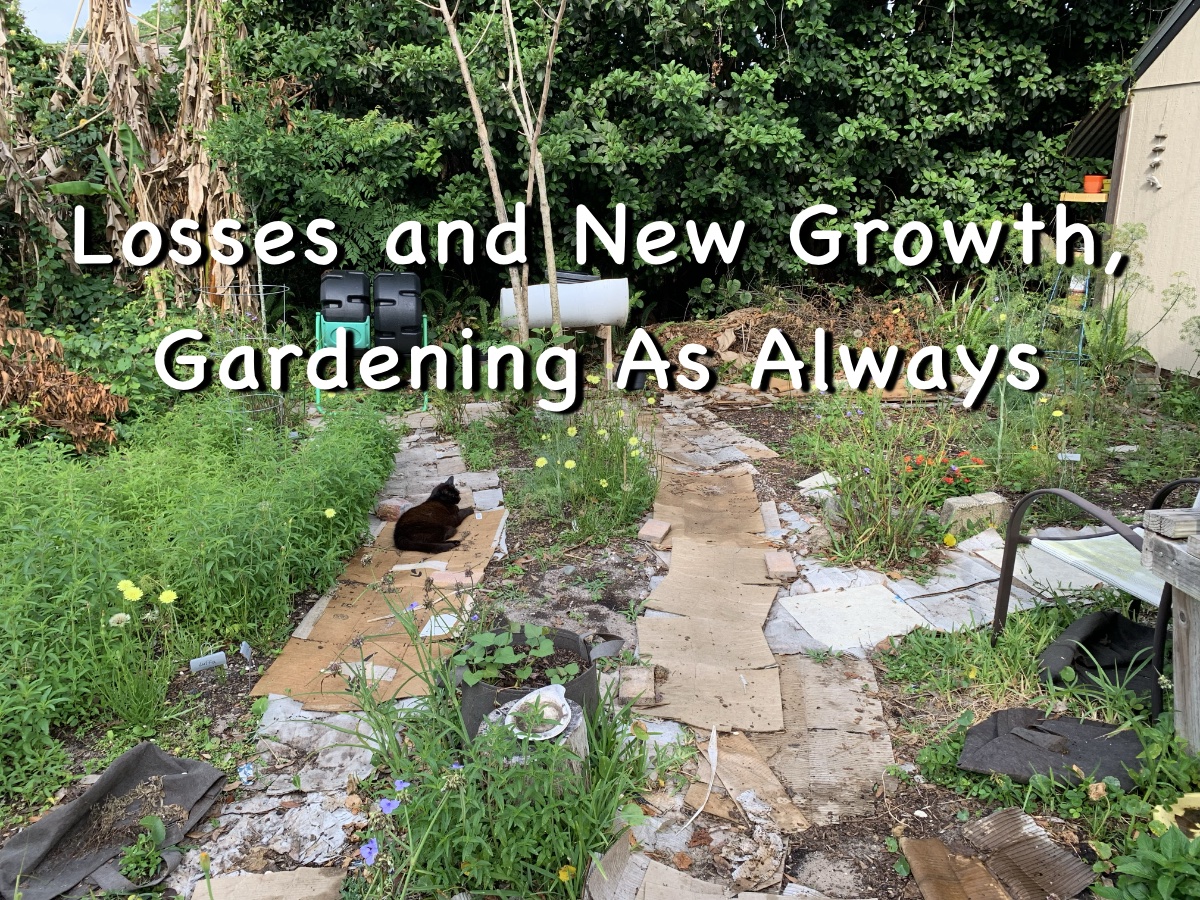
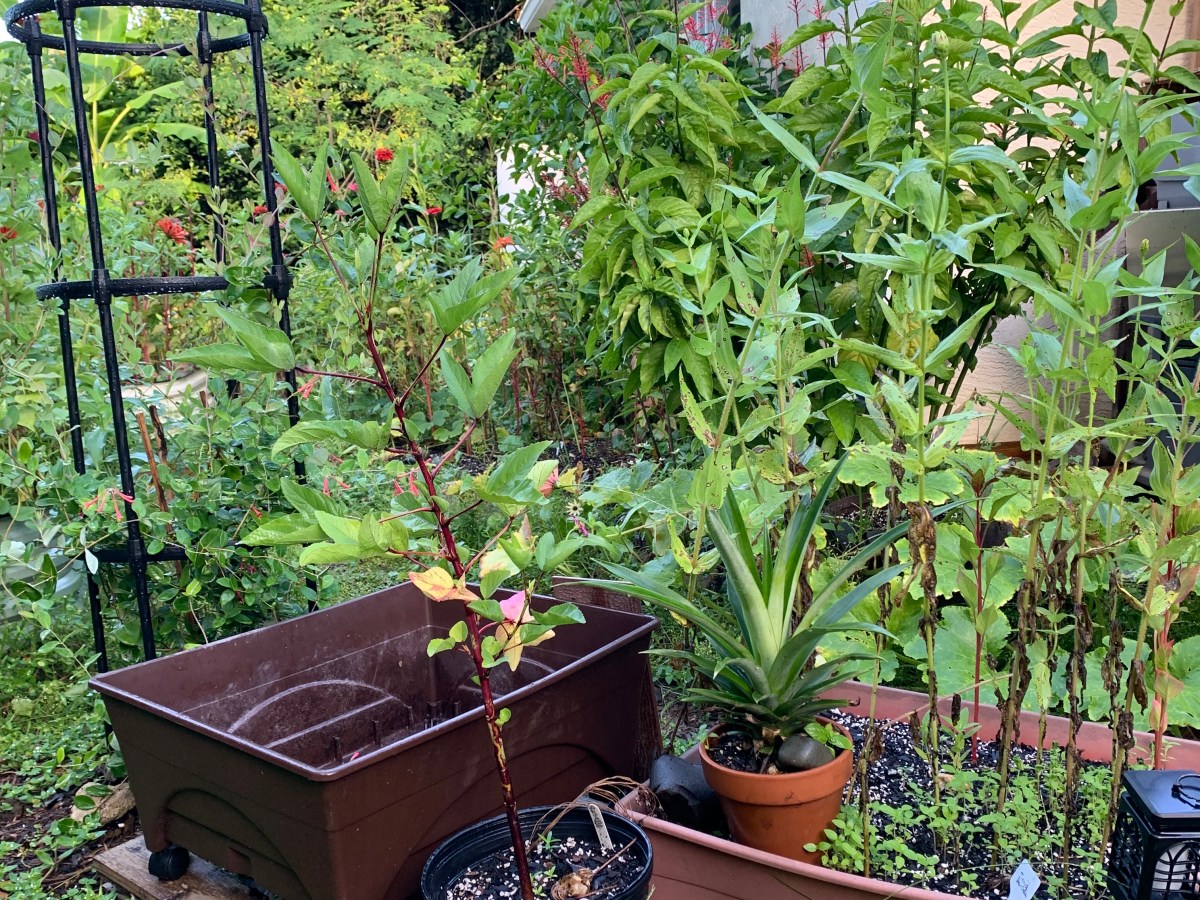
It’s mid-summer and here in my Florida backyard I have mostly flowers growing. I’ve used my three Vegega raised beds to hold some things and some are doing better than others. More amendments for Fall will be needed.

Over the past winter and spring, I set up some new raised beds. I bought the metal beds from Vegega after watching a YouTube video. Another Floridian had purchased from this company and she had lots of good things to say.

I garden on my own, and it took a bit of time to assemble, fill and plant the beds. You can read my post here. I knew that they would need time to “cook” me up some great soil. Branches, leaves and old growth were tossed in along with compost, dirt, mulch and earthworms. I knew the soil would settle and slowly compost. Still, I planted all three beds with some flowers and vegetables to see what happened.

The Round Vegega Raised Bed

This is my oldest bed. It gets more shade than the others also. I had some lovely Ubatuba pepper plants growing in here, and a cherry tomato. All of them eventually died. I believe it was a lack of good soil and drainage. I plan to add more good soil and amendments as Fall approaches.

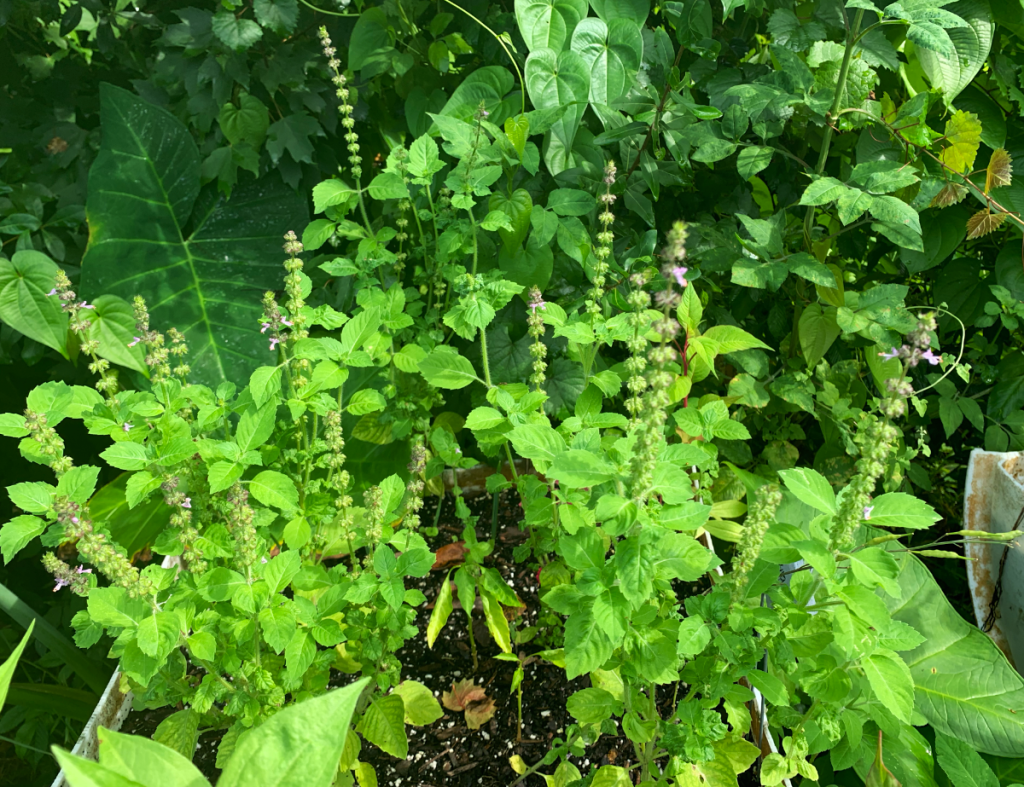
Now it is mid-summer and a Tulsi basil is planted along with a few cowpeas (cover crop beans). One Celosia, one marigold, and a small pepper plant are struggling.

An empty, or partially empty raised bed is a good place to set potted plants.
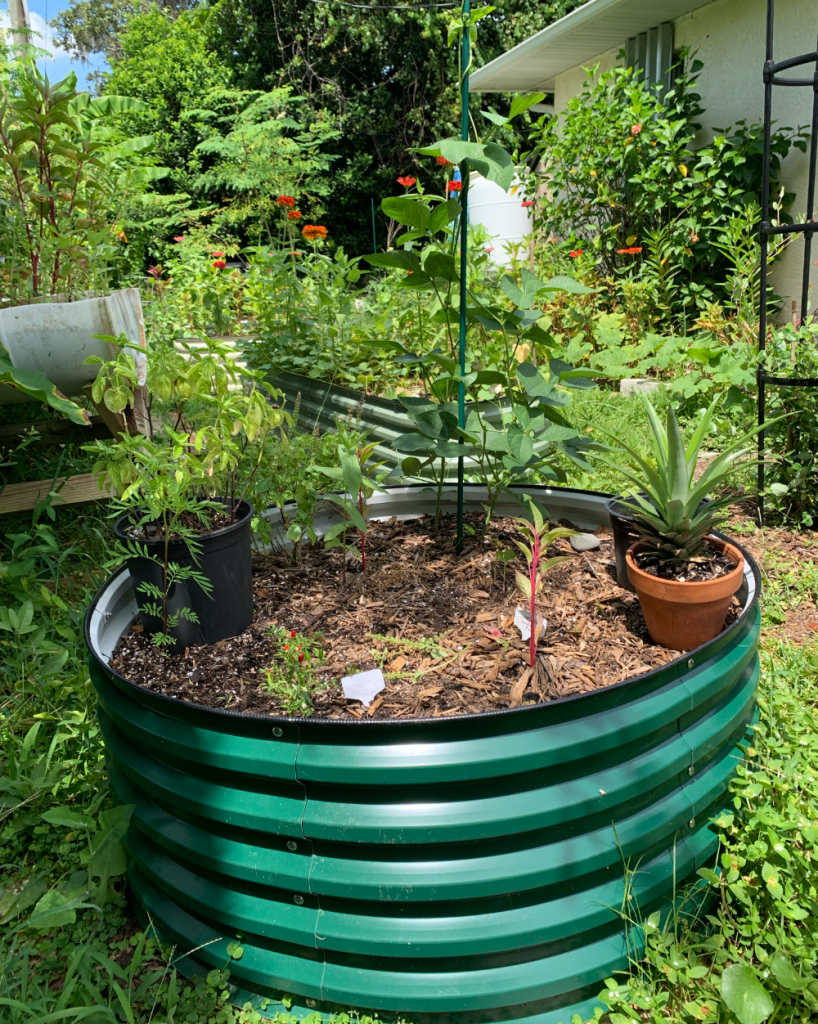
Round Vegega raised garden bed in dark green

The Long Vegega Raised Bed

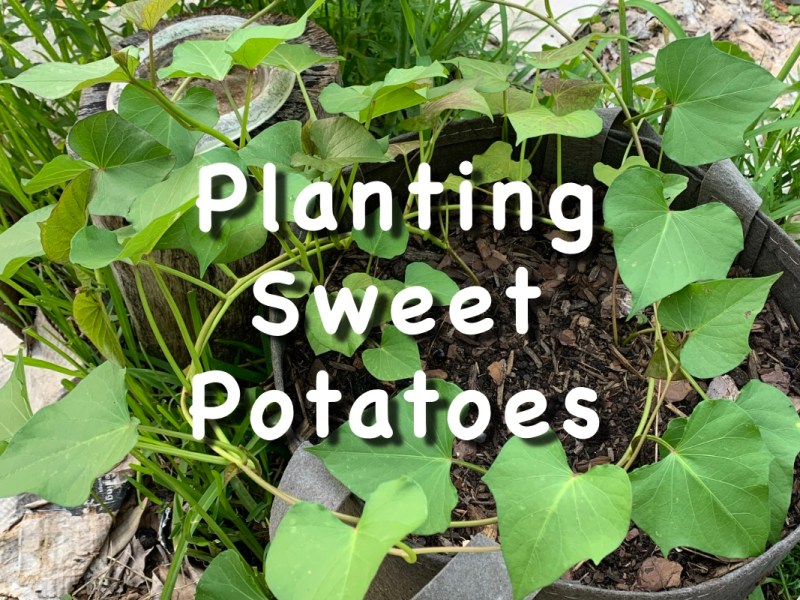
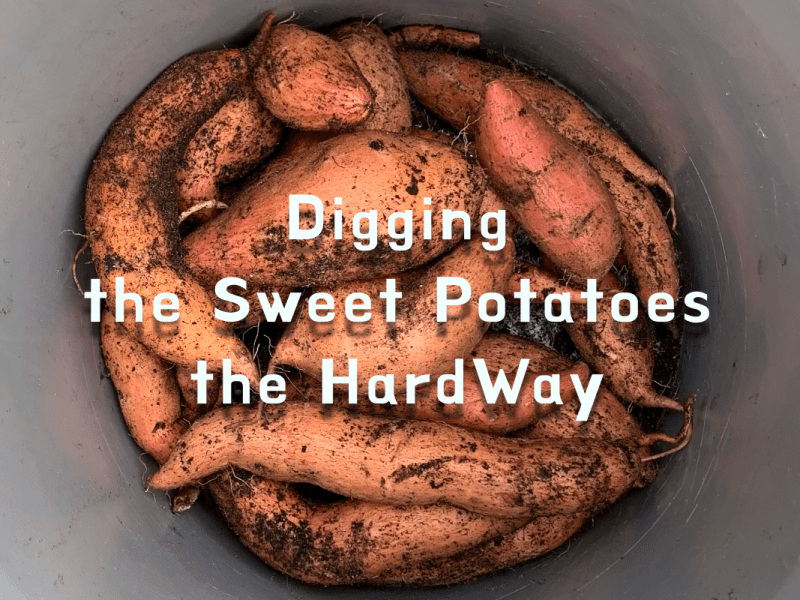
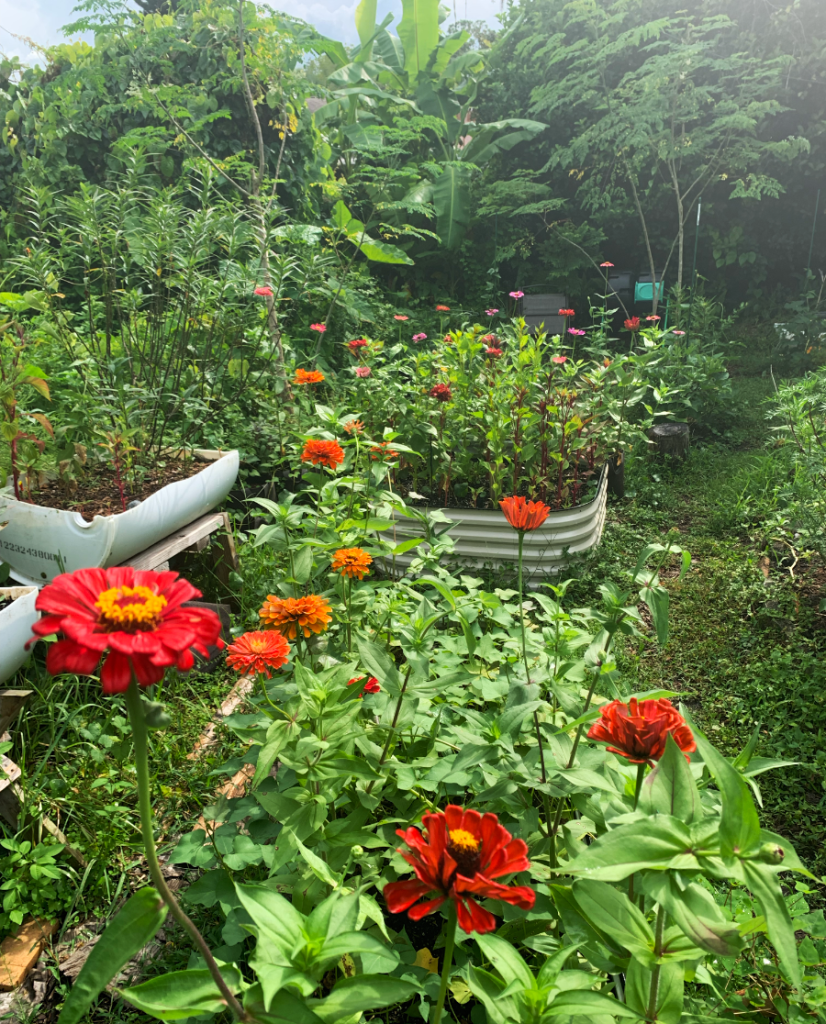
My long, oval bed was the most difficult to set up. I love the shape though. It is full of sweet potatoes (I hope – I see lots of vines) with Zinnias around the edge.

This plant mixing was not a great idea. The sweet potato vines keep trying to wrap around the flowers. By September I will be digging up this bed and getting it ready for Fall planting.
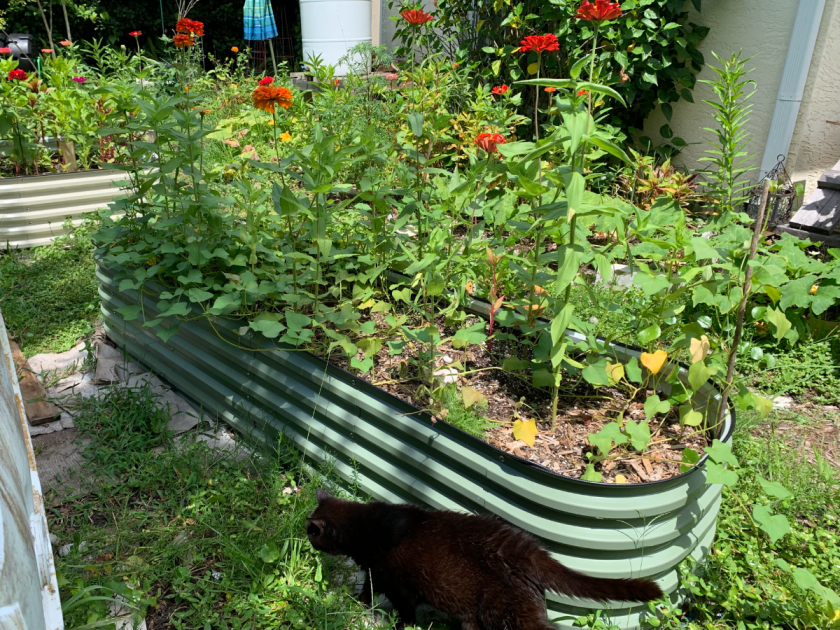
Vegega metal raised bed, oblong shape
My long oval raised garden bed made of metal, with sweet potatoes and zinnias growing.

The Square Vegega Raised Bed

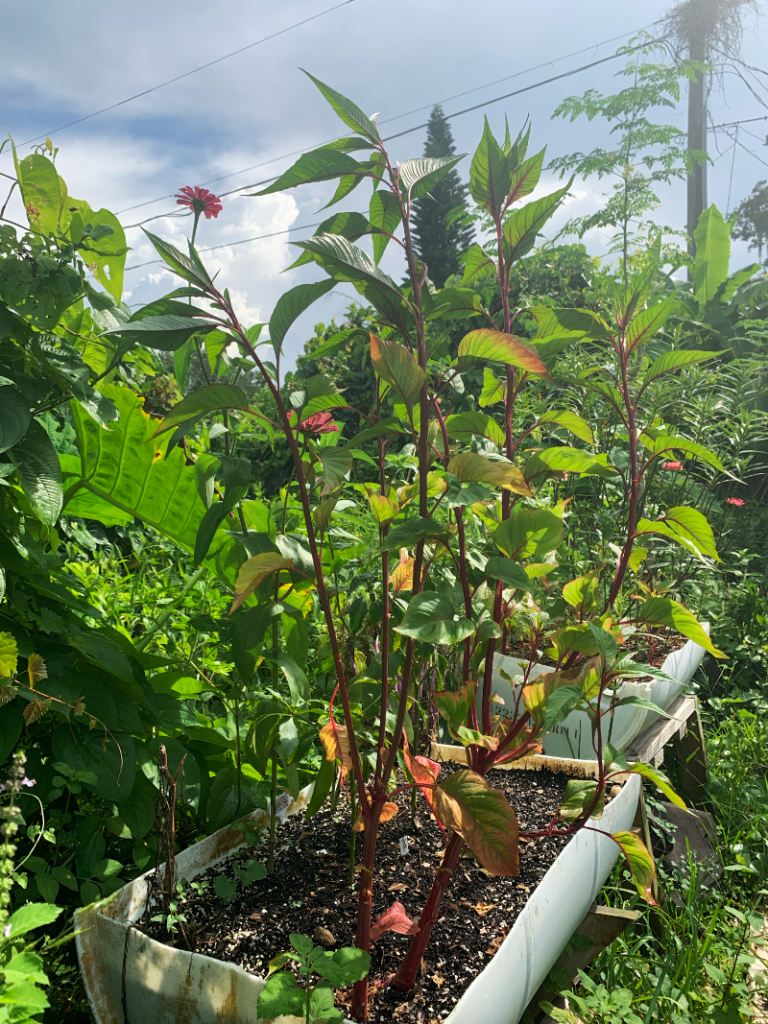
The dirt in my square raised bed has sunken quite a lot. Aside from one hot pepper plant, the bed holds flowers. Many Celosia and a few Zinnias are growing nicely. Like all the other beds, I will add compost and more dirt when Fall approaches.
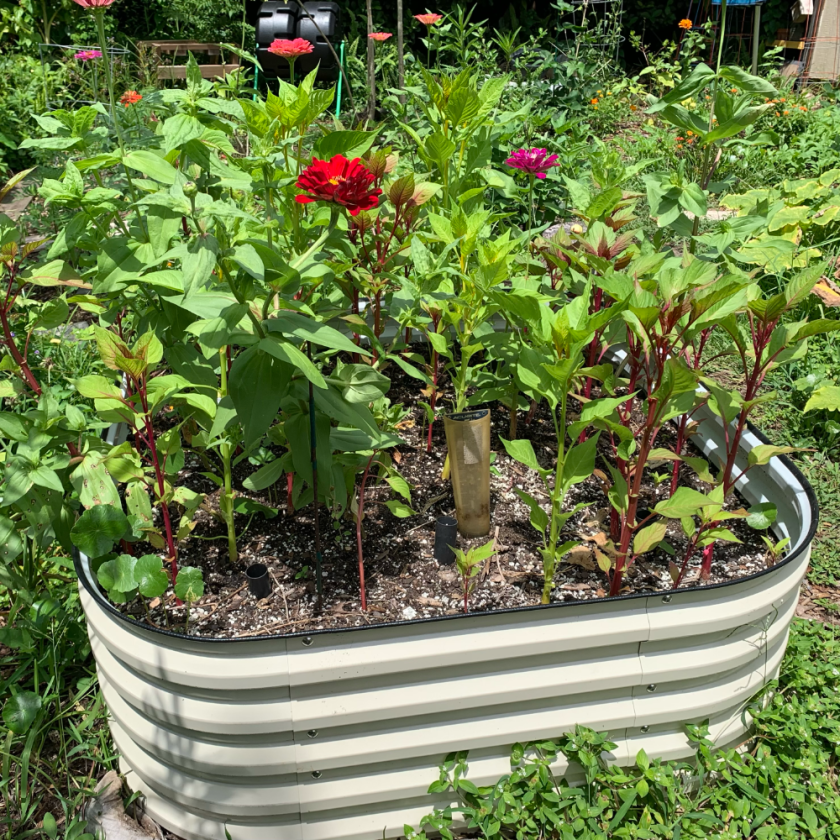
Square Vegega raised bed in the backyard

Plans for Fall Growing

While summer is fine for growing flowers, in Fall I want to grow food! Each of these beds will hold fall crops. Between the big beds, the white barrels, and all my smaller grow boxes, I should have plenty of space for vegetables.

First I have to add more compost. My homemade compost is “cooking” and has been all summer. I’ll use it to amend the gardens, but I’ll also have to buy some. I definitely don’t grow my own food to save money! In fact it costs quite a bit, at least to get started. The point is to have very fresh, organic food to eat. You can’t get fresher than stepping out your backdoor and picking a salad for supper!

Thanks for reading!
garden scene

Ordering Seeds For Florida Fall Planting

Fall is coming soon. The time to order seeds for planting in Florida’s cooler months has come.

It’s easy to forget to order seeds for Fall planting because we only do that here in the south. When the rest of the country is winding down, cleaning up gardens, and raking leaves, our best planting time just arriving.

It is July, and suddenly I realized that Fall will be here in no time. I got busy ordering seeds from my favorite online places.

My Fall Planting List

This list contains the vegetables I will be growing from seed. Most will be planted sometime in October. After lots of trial and error, this my favorites list. I love to eat this food. Some things take forever to grow, but they are worth the wait.

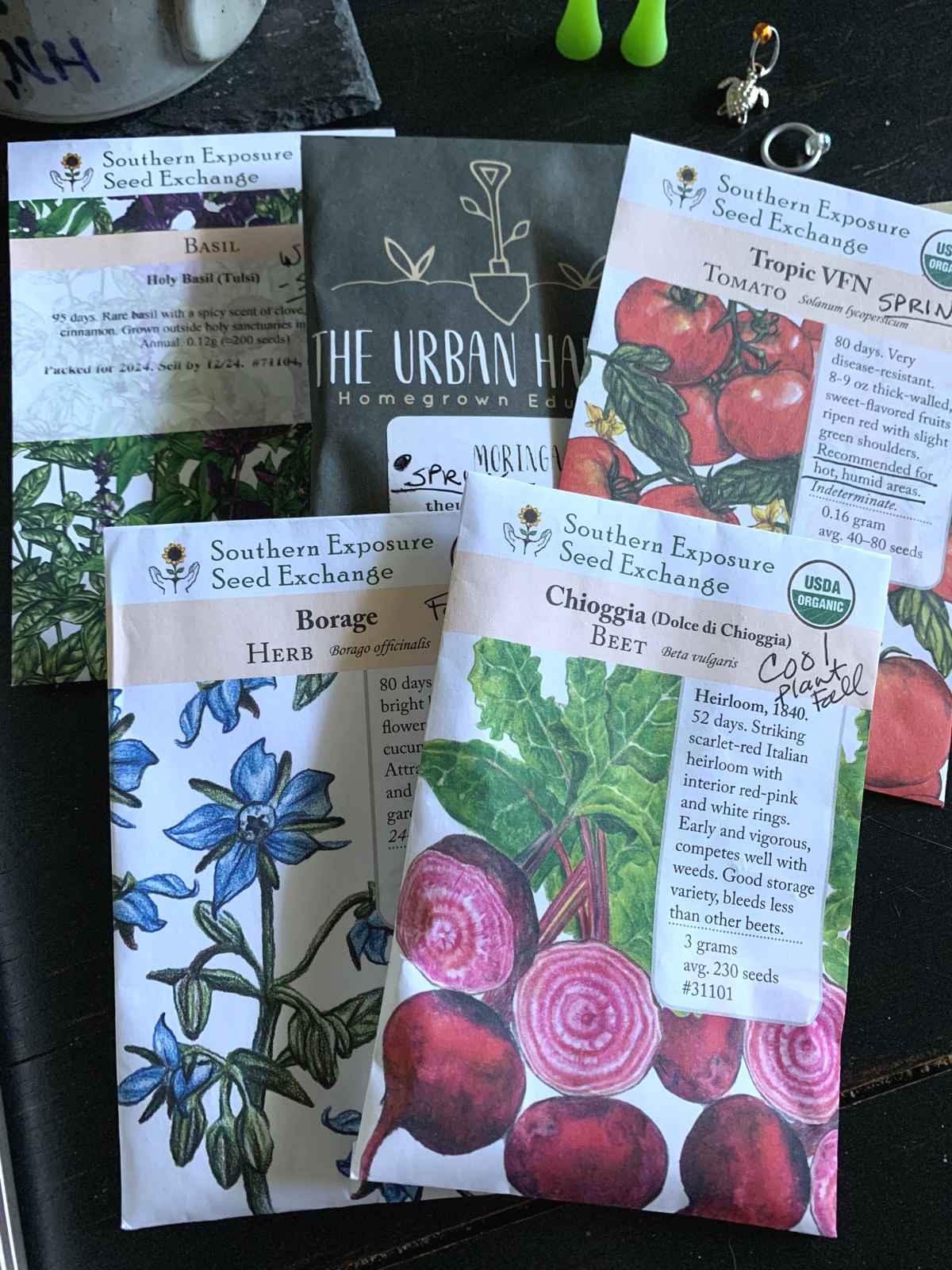
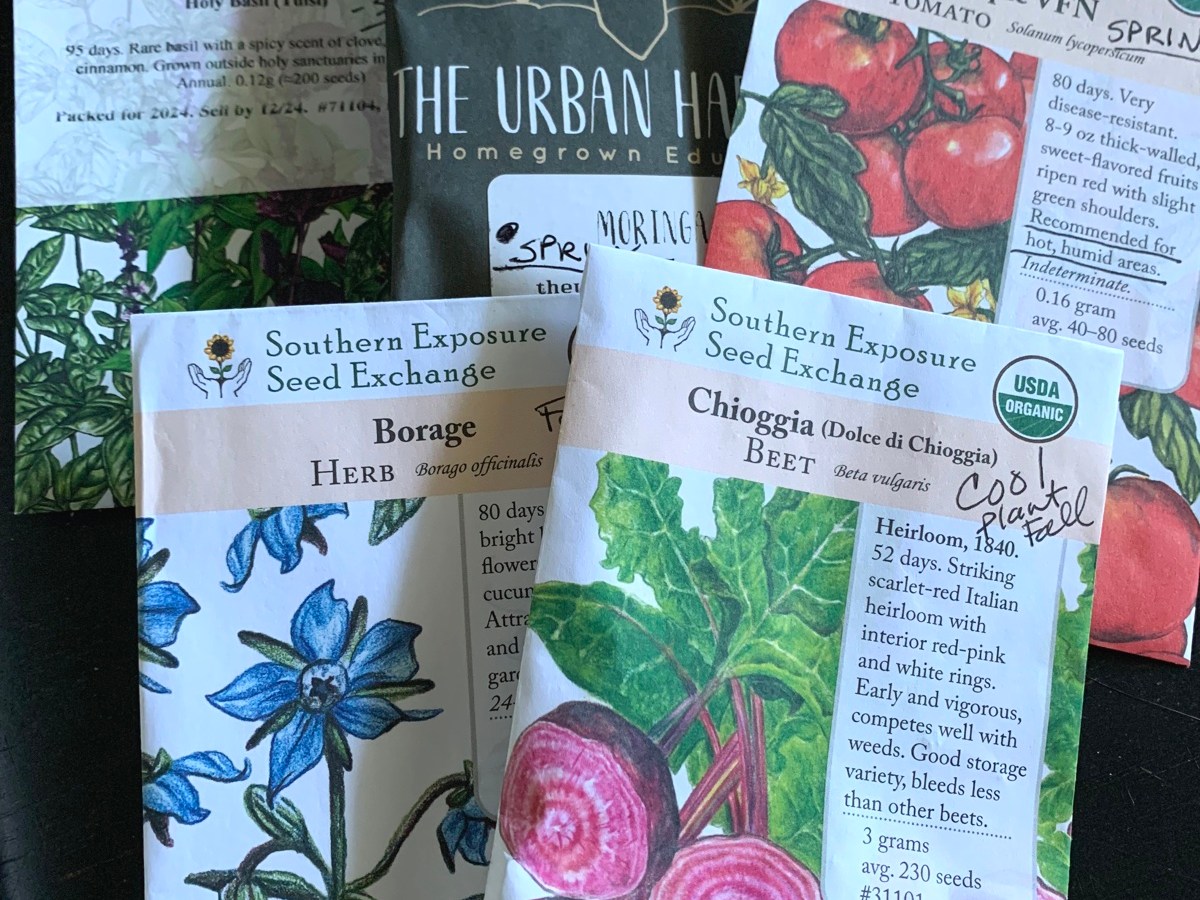
Here is what I’ve ordered, with the company name.

  • Carrots – (SESE) – take 4-5 months to grow
  • Bulb Onions – (SESE & Baker Creek) – take 4-5 months to grow
  • Contender Green Beans – (SESE & The Urban Harvest) – Fast growing bush type. Succession plant all winter. Good for soil too. Have tried others, but love Contender.
  • Beets – (Baker Creek, golden, & SESE) – Usually stay small, and take a lot of time. But I love beets.
  • Chijimisai – (The Urban Harvest) – fast growing green with roundish leaves. A favorite winter green.
  • Arugula – (Baker Creek) – Grew it 2 years ago.
  • Kale – (SESE) – Not much luck before, but will try again.

Maybe I waited too long, but I had to order from a few places to get the seeds I wanted. I try to buy organic seeds, but I don’t think Baker Creek’s seeds are organic. Their seeds are heirloom and non-GMO. A lot of my currently growing Zinnias came from Baker Creek.

I have some old seeds, which are dated 2024. I’ll plant the new seeds first and if there is space left anywhere, I will throw in some older stuff.

Seeds Saved For Fall Planting

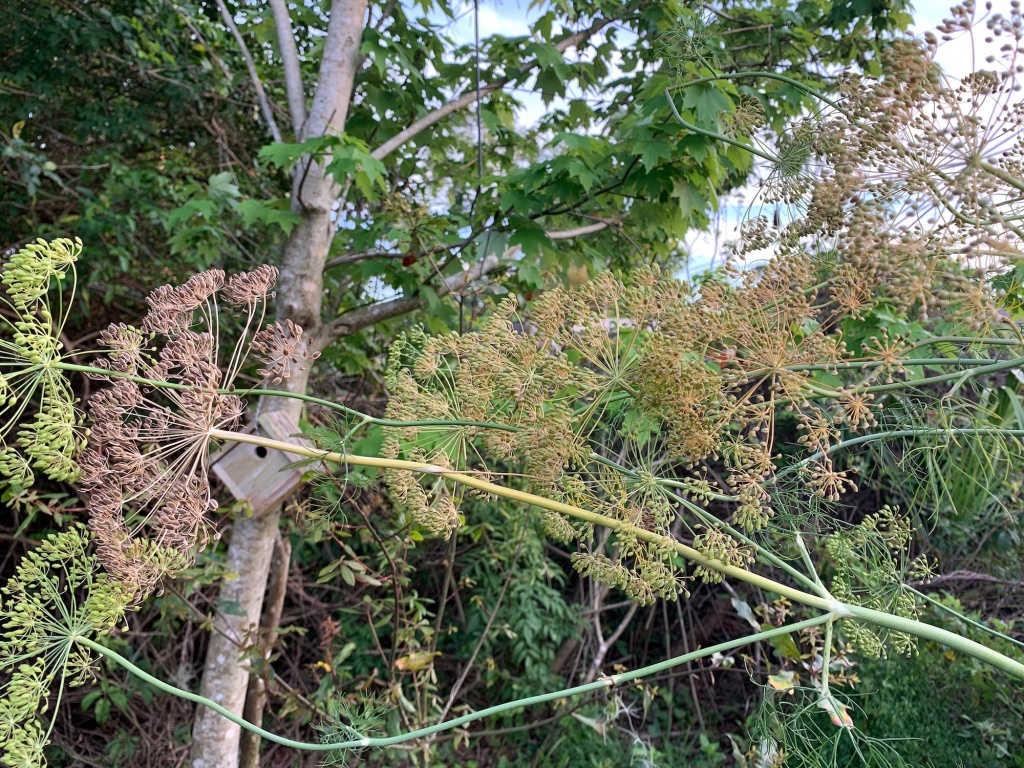
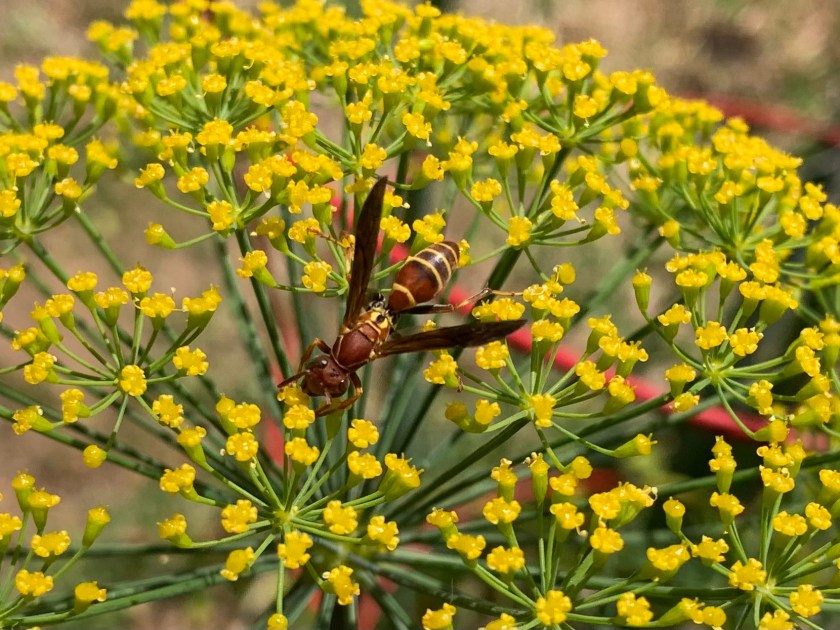
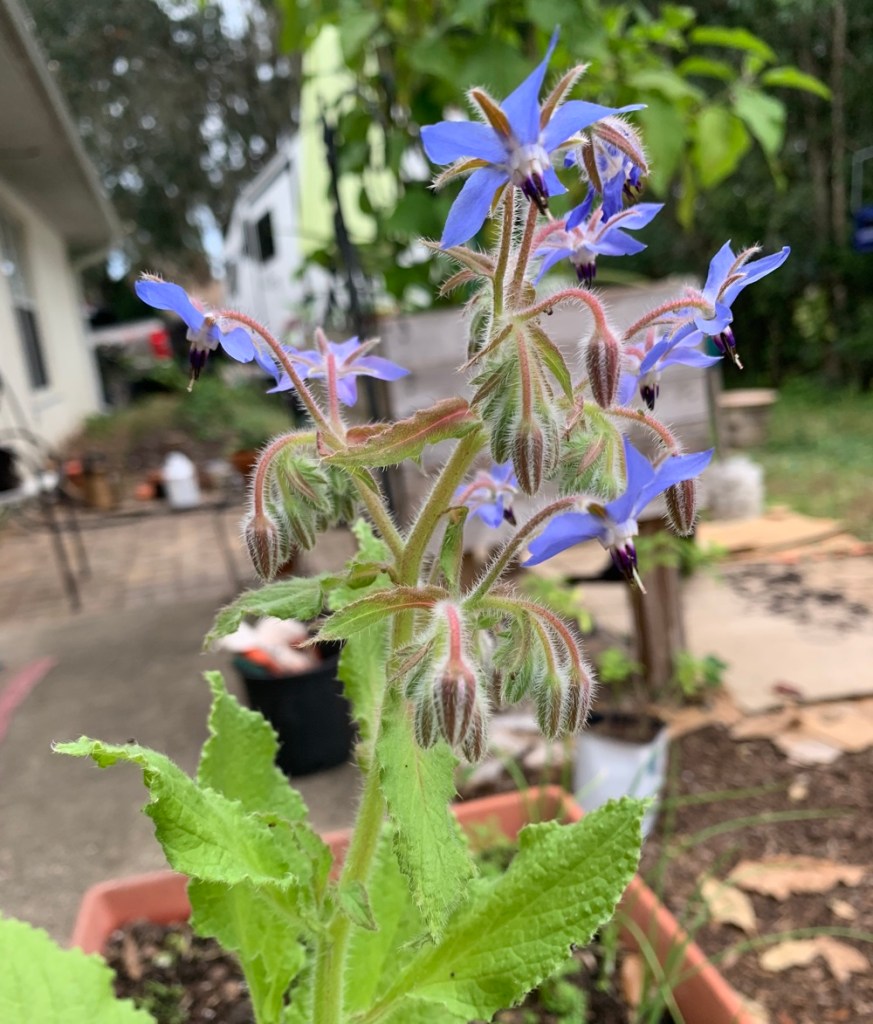
I’ve cut way down on saving seeds, but some I do save. Dill and borage like cooler weather and saving dill seeds is so easy to do. Borage is a bit trickier. I have to catch the pod before it opens and drops the black seeds out. But, this means I will have borage popping up all over – finger’s crossed.

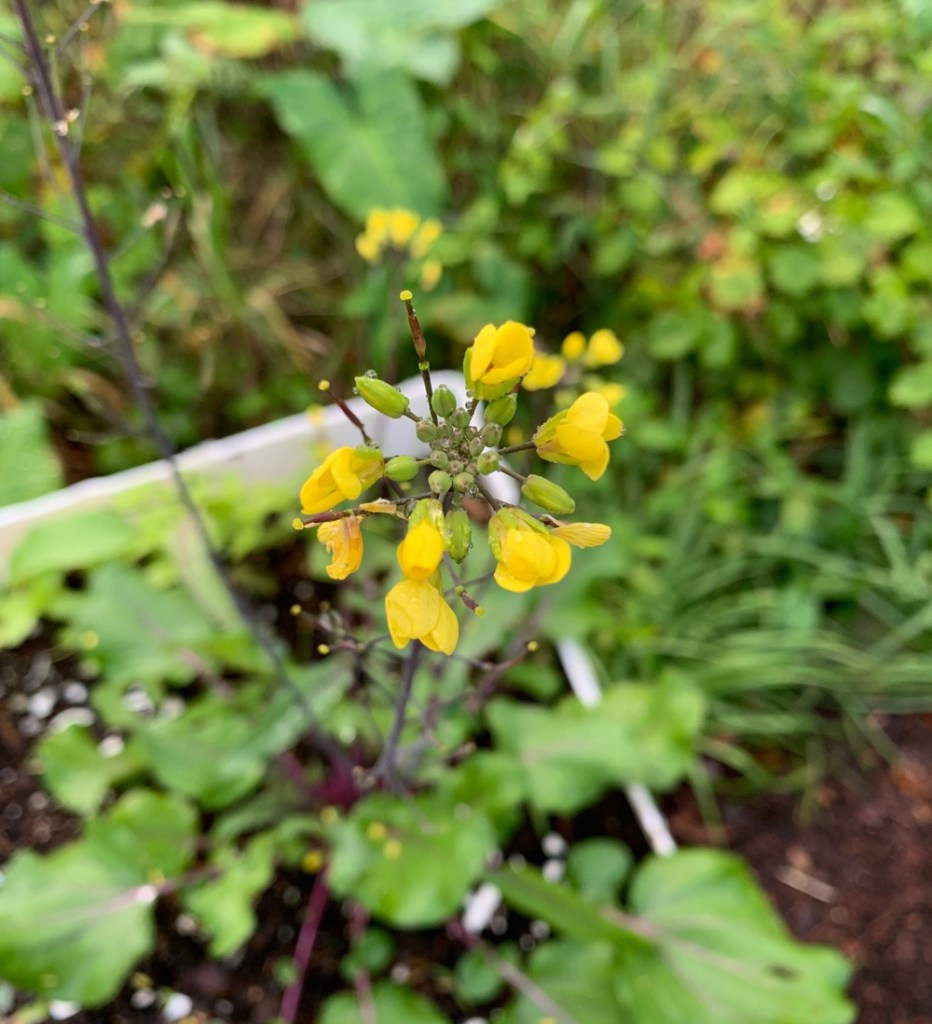
Hont sai flowering broccoli is another one with easy to save seeds. I like to grow it for the yellow flowers that bugs love. I’m not too particular when planting and pretty much scatter the seeds around.

Holy basil is a recent favorite to grow, and it grows year round. I think it does better in cooler weather.

Marigolds From Seed, and Deterring Nematodes

I did order some new Zinnia seeds and French Marigolds from Southern Exposure Seed Exchange. The Golden Guardian marigold variety is supposed to be very good at repelling nematodes.

Here in the south, we tend to have to deal with nematodes. They like warm weather. I have been unsuccessful at growing peppers in my yard. My eggplants that are in the ground also look pretty bad. It’s possible I have some kind of nematodes. I need to work on that by planting marigolds – maybe throughout the year. Possibly as long as they have sun they will be happy.

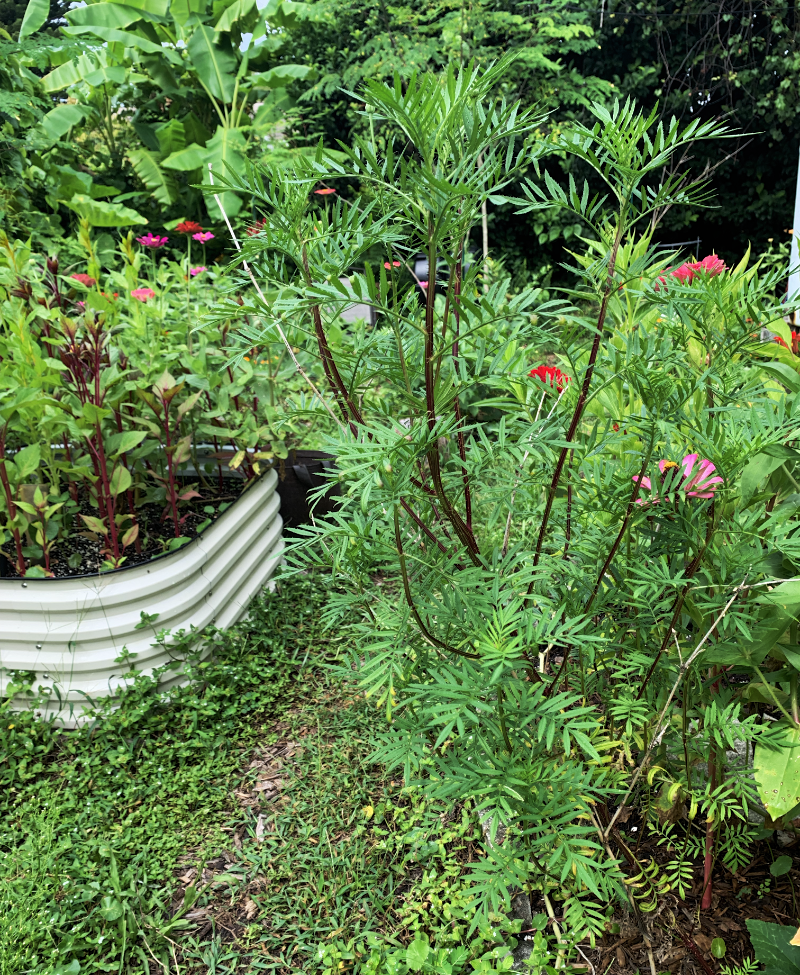
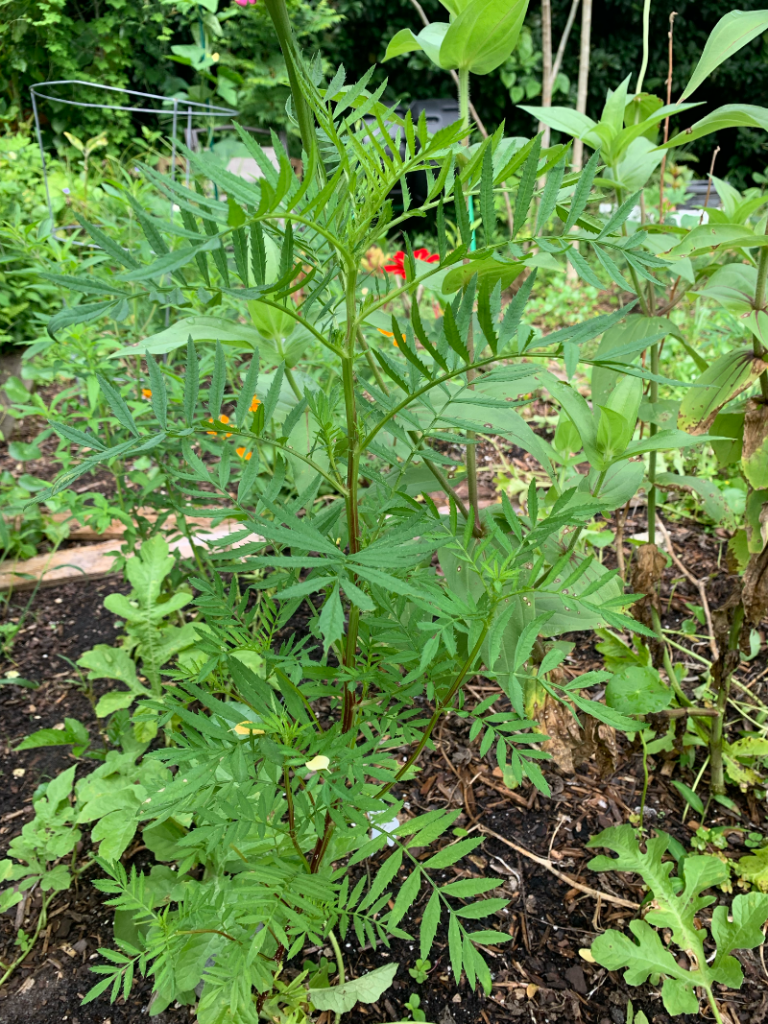
The Marigolds I have growing now are mostly flower-less. They are very tall. When they quit growing, I will cut them up and mix them into the compost.

Florida’s gardening site has this to say about planting marigolds. Also, on this page entitled, Garden Myths, Volume 1. I still say it’s worth a try. I’ll be sure to write about trying to grow Marigolds during our Florida winter season.

green divider leaves long
Read on…

Fall Gardening is Underway

Here I have a photo of my Fall garden. It is hard to tell what is growing, and honestly not much in the…

End of Summer Garden Clean Up

It is the beginning of September and my end of summer garden clean up is underway. I happily pulled up all the Seminole…

Something went wrong. Please refresh the page and/or try again.

One Summer Morning

July is nearing an end and the garden is teeming with living things.

July is nearly over. Hard to believe, but I’m glad. It’s not a fun month here in Central Florida. Not that what’s coming is any better. The Hurricane months are the worst. Soon we’ll be watching those storms that build off the African coast and wonder where they will go.

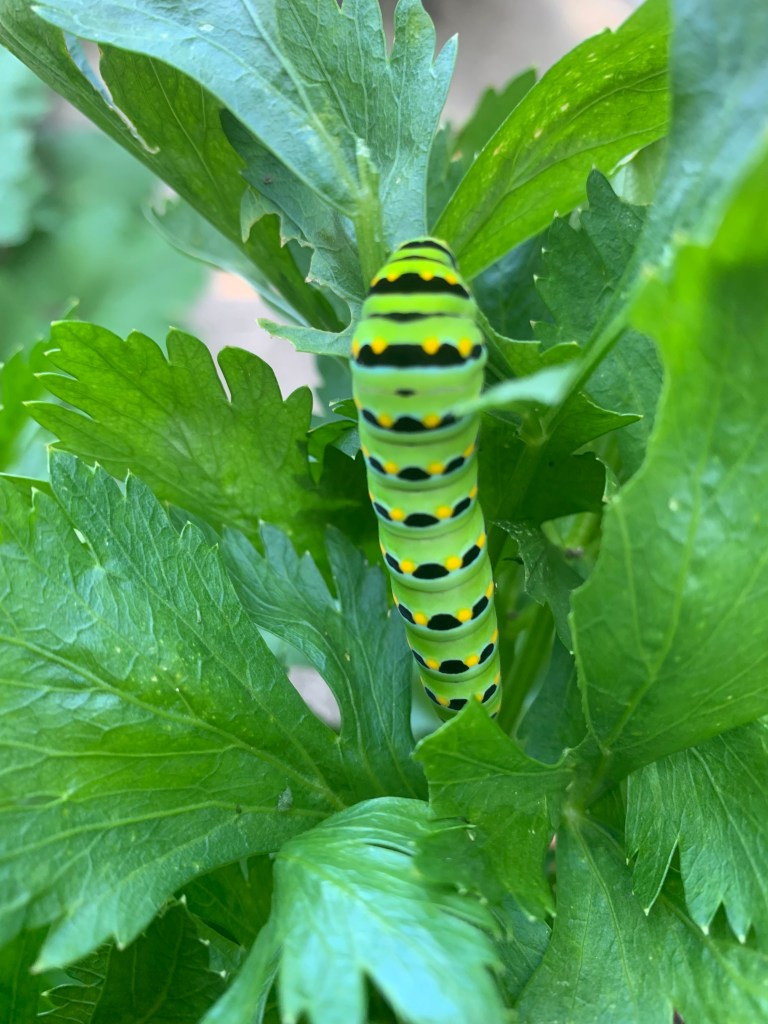
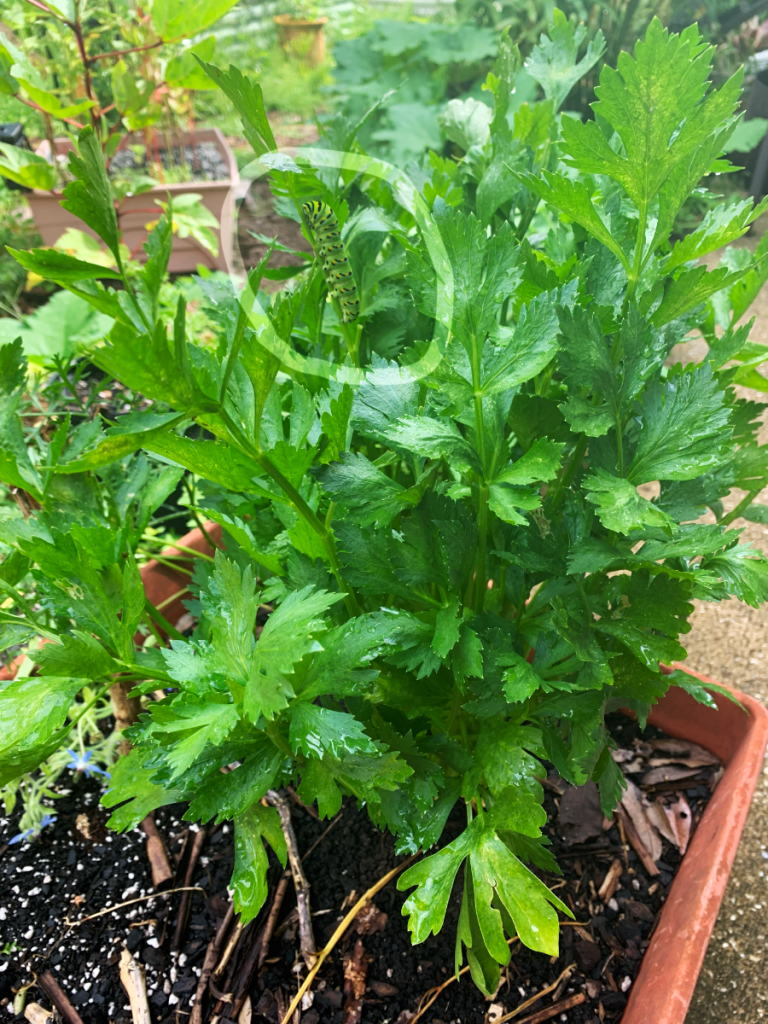
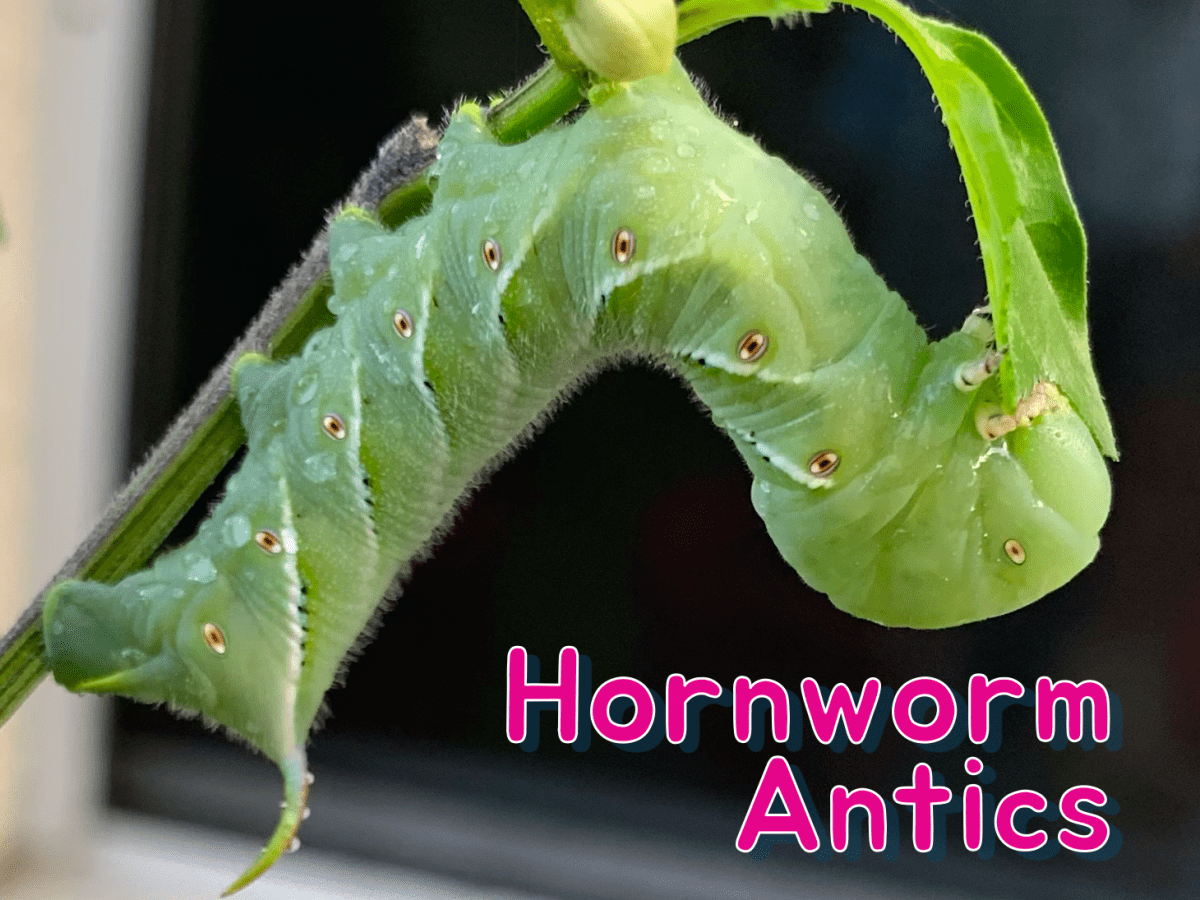
But, that fun is for the future. Today I discovered a big Swallowtail caterpillar on my celery plant! Swallowtails need dill, fennel, parsley and apparently celery for their caterpillars. The dill was gone back in May, and I can’t seem to grow parsley – especially not in summer. I have some fennel out front, and checked for caterpillars, and found none. I didn’t realize my celery would attract swallowtails.

This big guy was just there! I had not seen him while he chewed and grew, down in the center of the stalks. All day I went outside to check on him. I’m certain he will disappear.

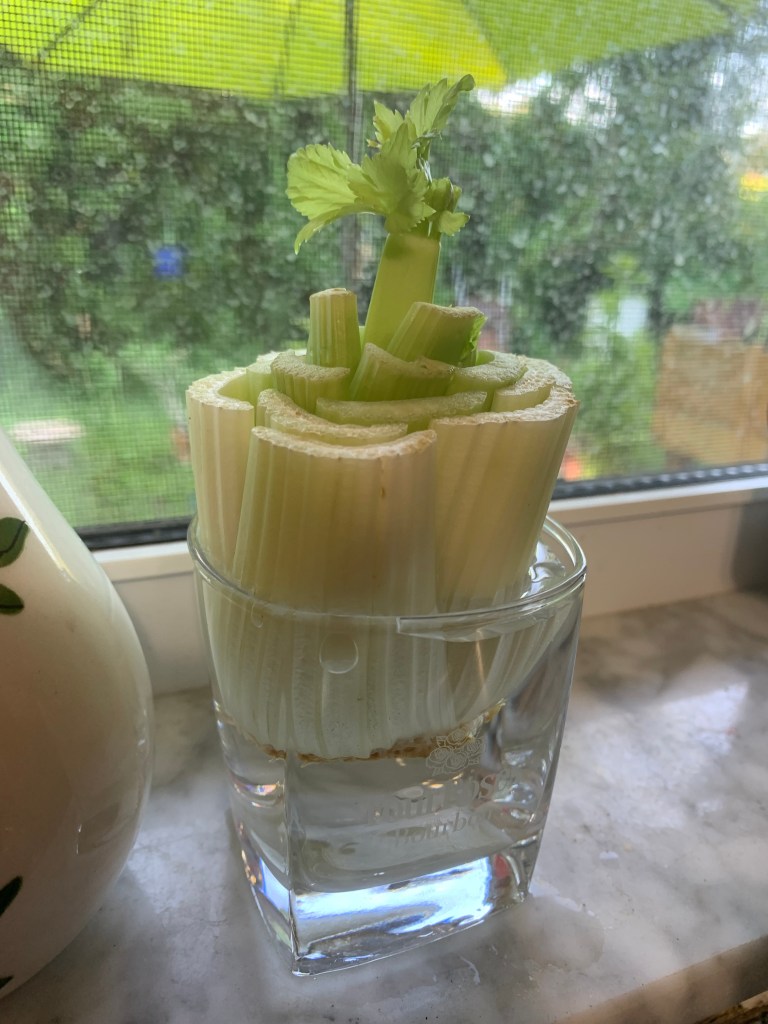
The celery grew from a stalk that came from the grocery store. Today, I am starting another celery plant in a glass on my windowsill. It is very easy to grow.

Watermelon

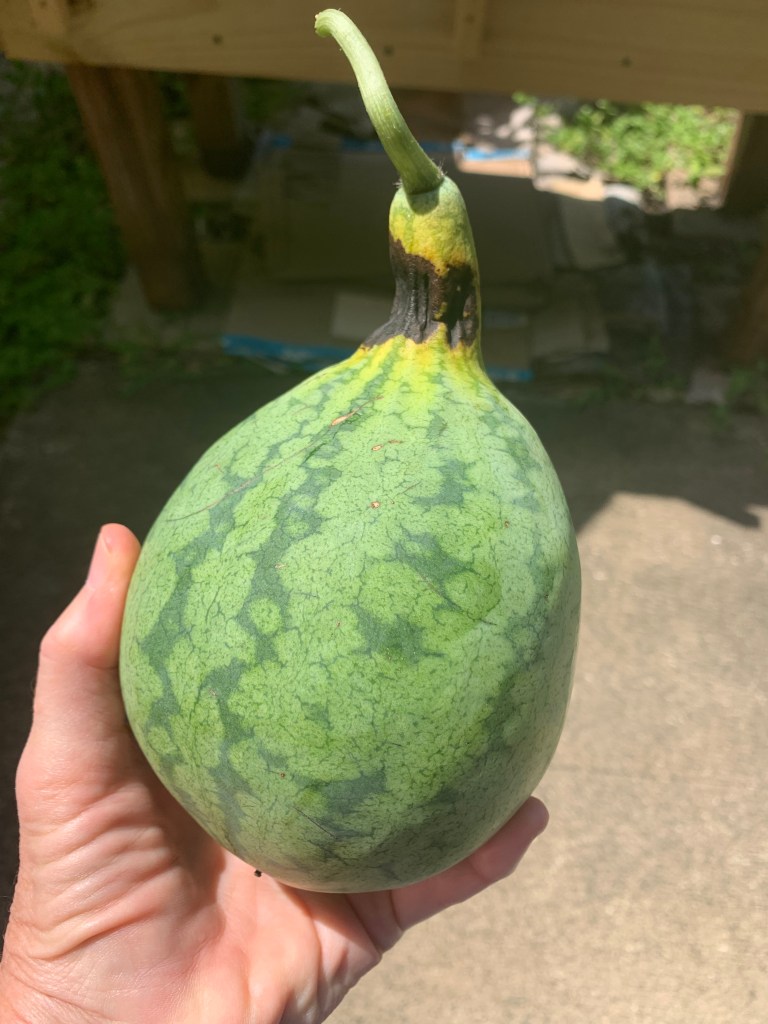
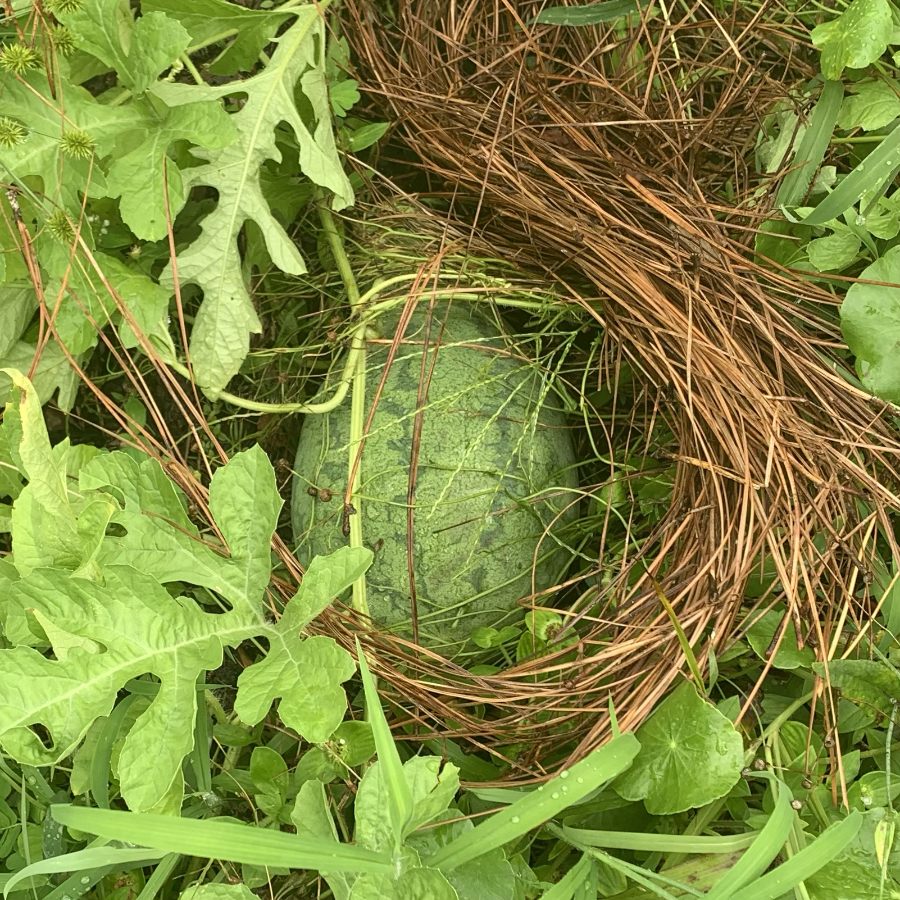
I had to pick my watermelon because the stem area was beginning to rot, for some reason. But, I also discovered watermelon #2 hidden under the vines. I covered it with pine needles to try to keep the raccoons away. I like to kid myself that I can outsmart them.

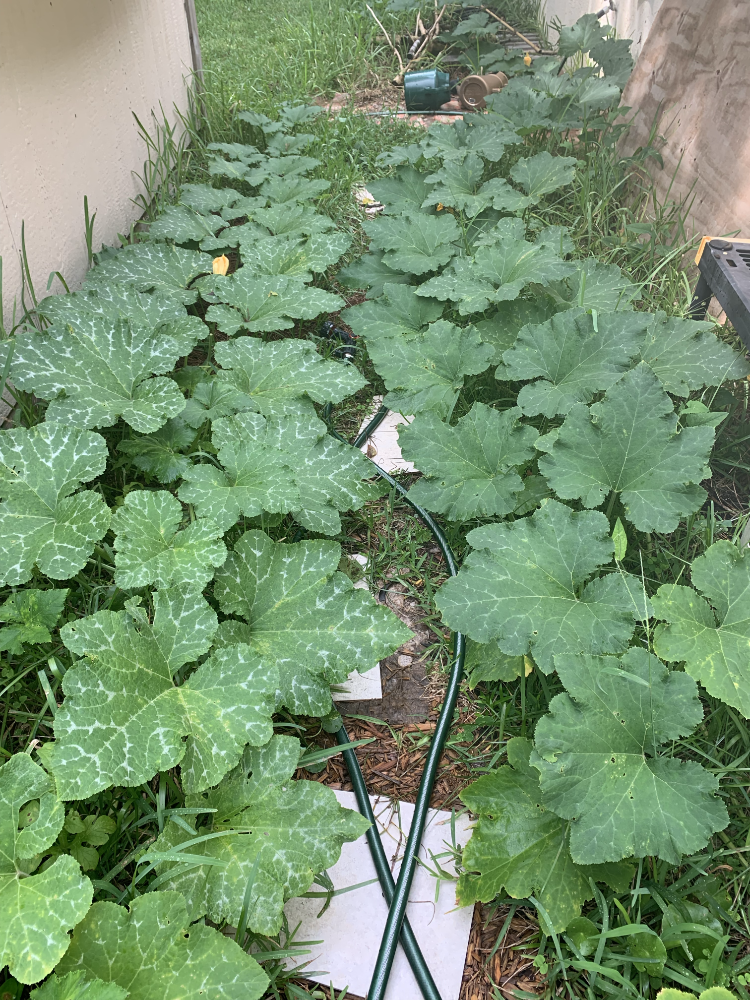
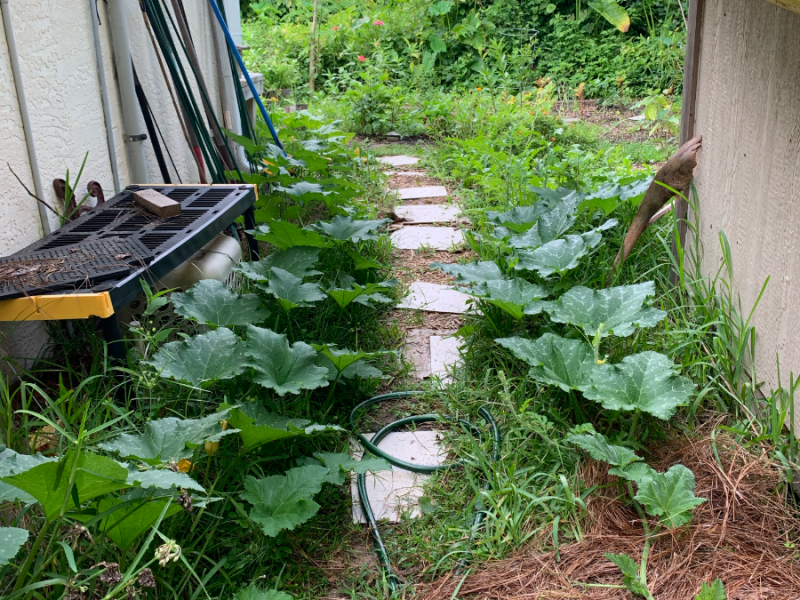
The pumpkin vines (first year) have nearly covered my walkway. I can’t easily move the hose so have to leave it in the middle.

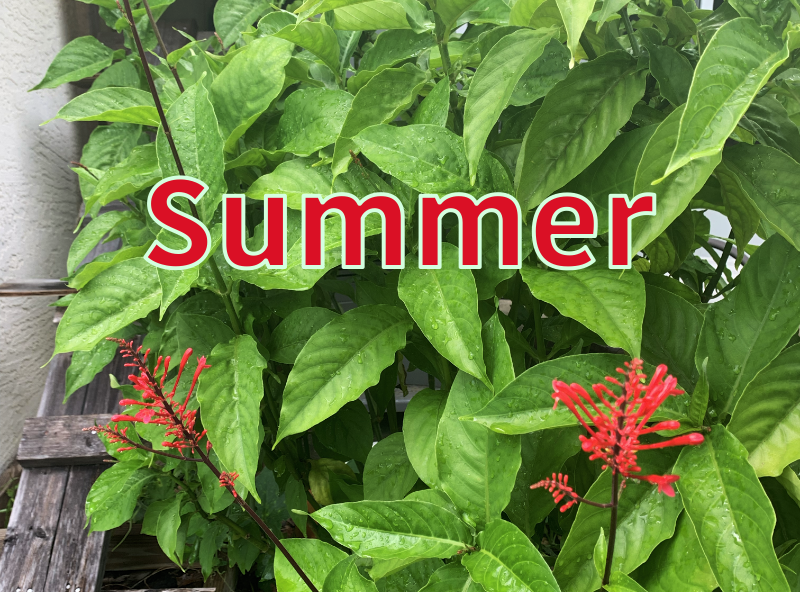
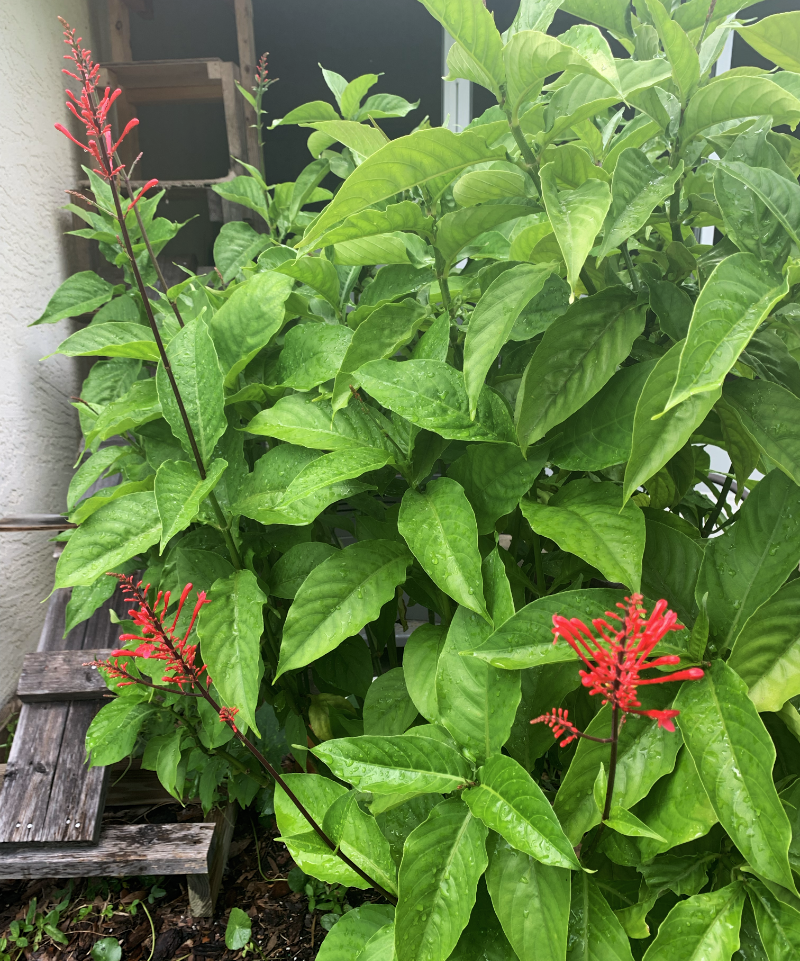
The Holy basil is growing and I’m using it regularly. Firespike flowers are coming out and that will keep the hummingbird happy. The celosia plants are getting tall and should be flowering soon.

Oh The Zinnias!

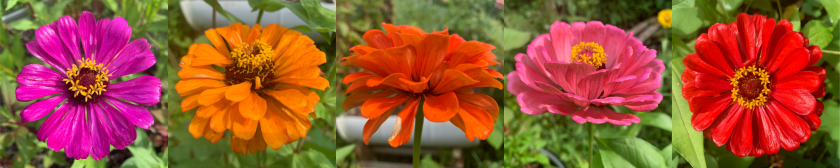
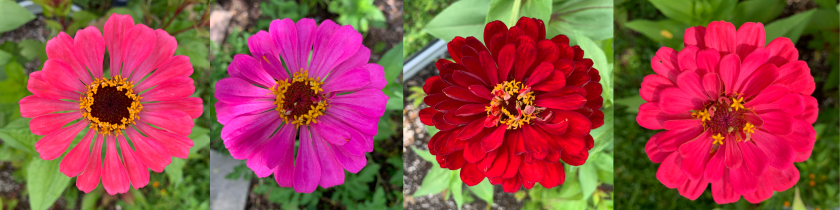
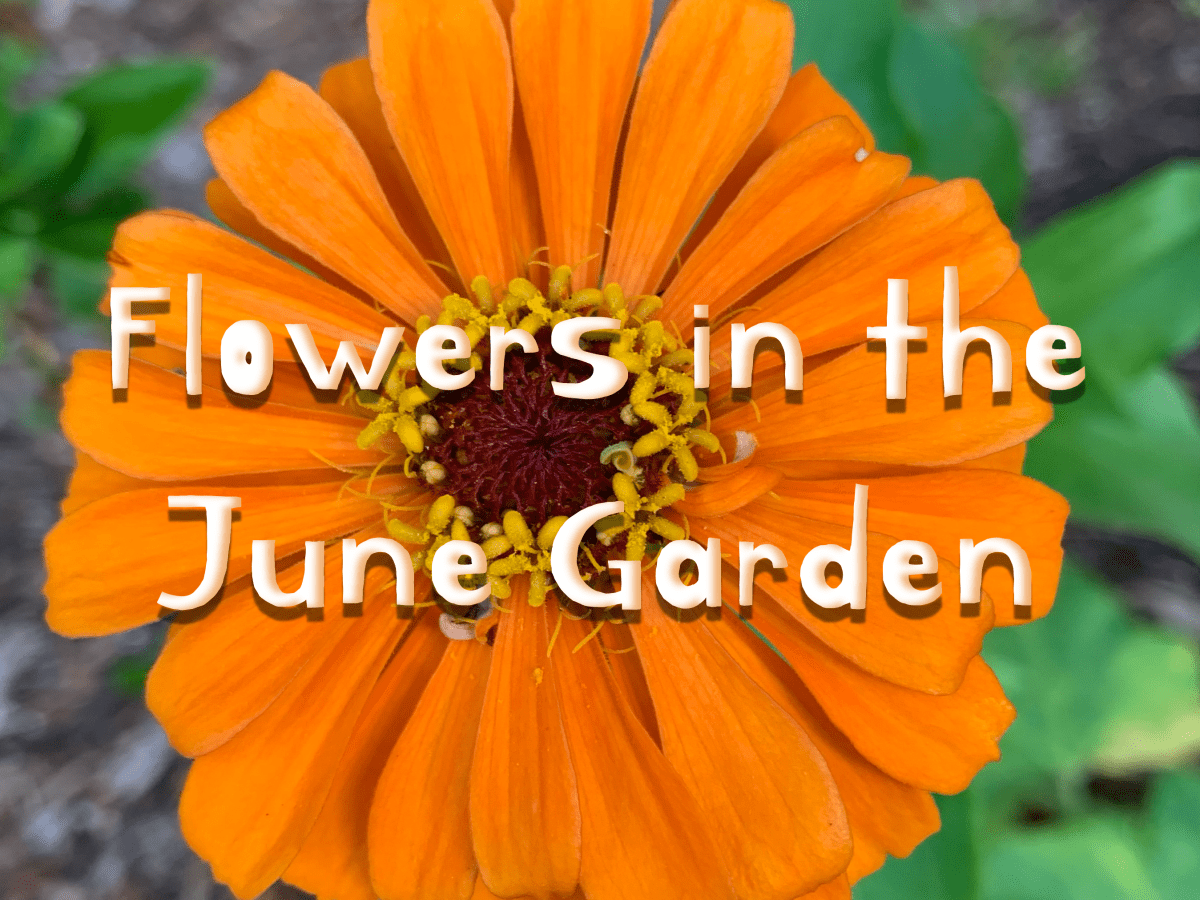
My garden is full of beautiful Zinnias. I look at each one when I inspect things. I can’t stop photographing them. I only began growing zinnias a couple of years ago, but they have become a favorite. I’ve decided to make dividers for this blog using all my zinnia photos.

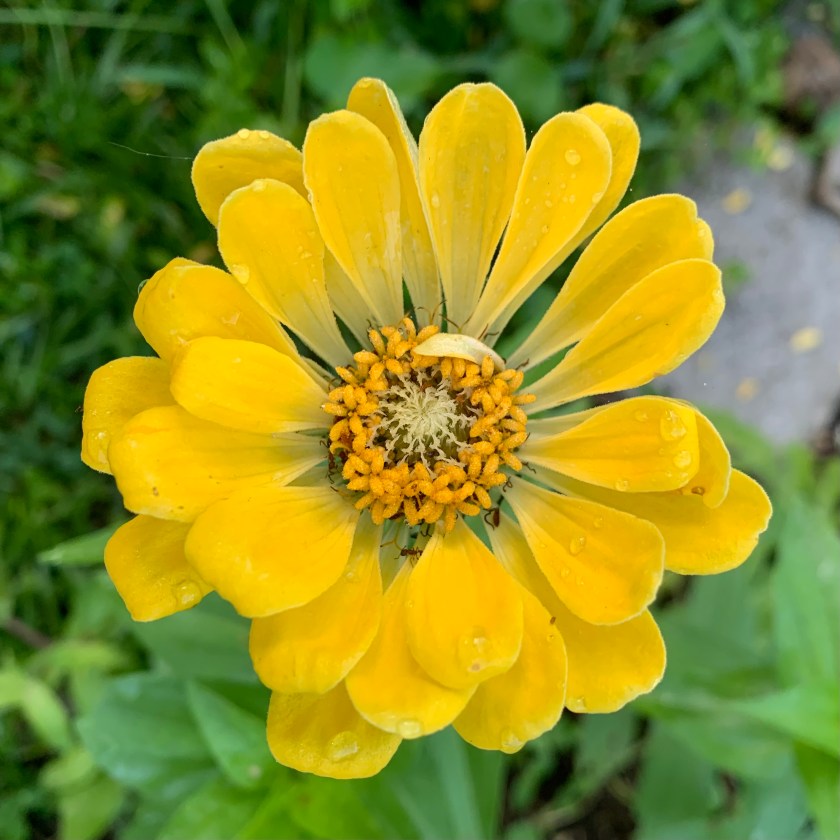
This year I have lots of reds, pinks, and gorgeous orange. I have only one yellow, so I’ll be sure to save it. Honestly, I am saving many Zinnia flower heads. Some have grown from saved seeds, but many I planted from newly purchased seeds.

yellow zinnia
Only one plant is yellow.

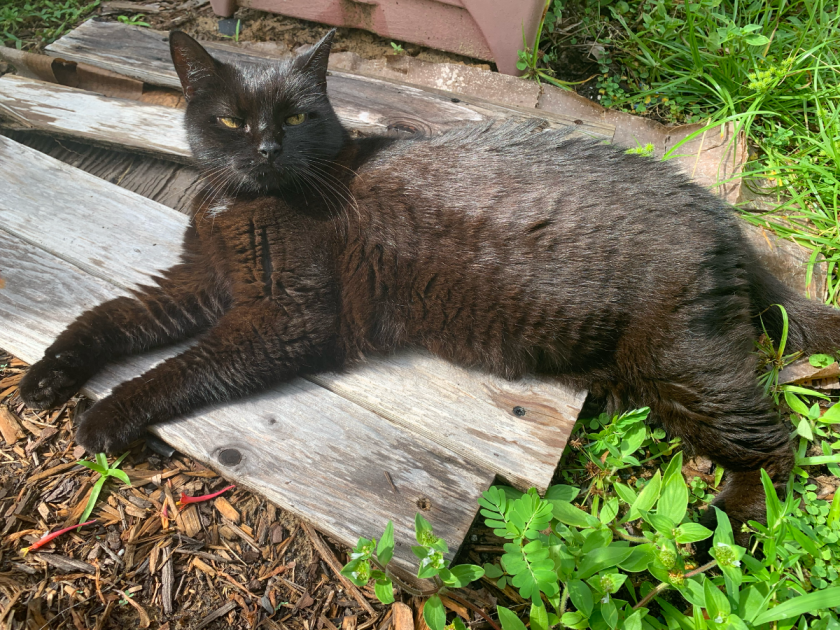
Skittle

Skittle the cat has always been my shadow in the garden. She very much enjoys it when I inspect things. I can’t spend much time out there with her now because of the horrendous heat. She seems to love it. As long as she can find an uncomfortable looking place to sleep, she is happy.

Skittle

I’m mostly quite happy as I look through the garden. Occasionally I get depressed at the lack of food, but there is always the grocery store. Good thing.

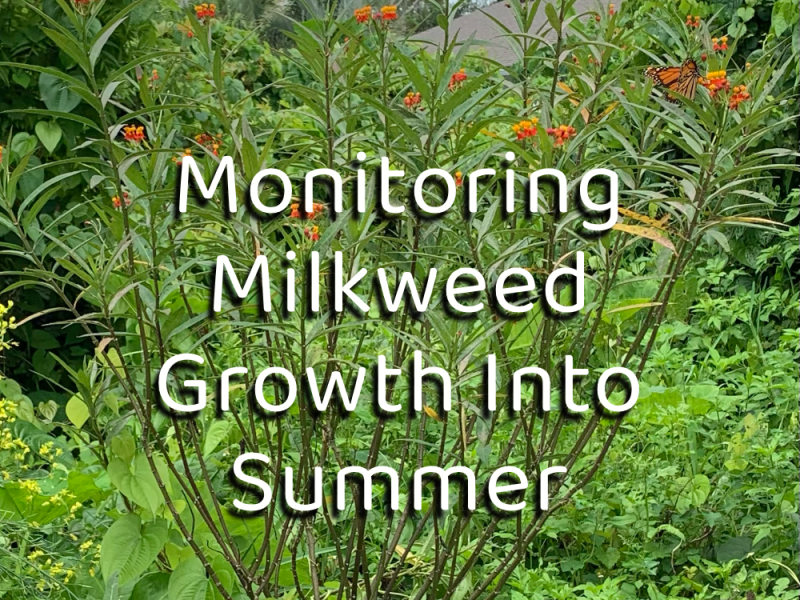
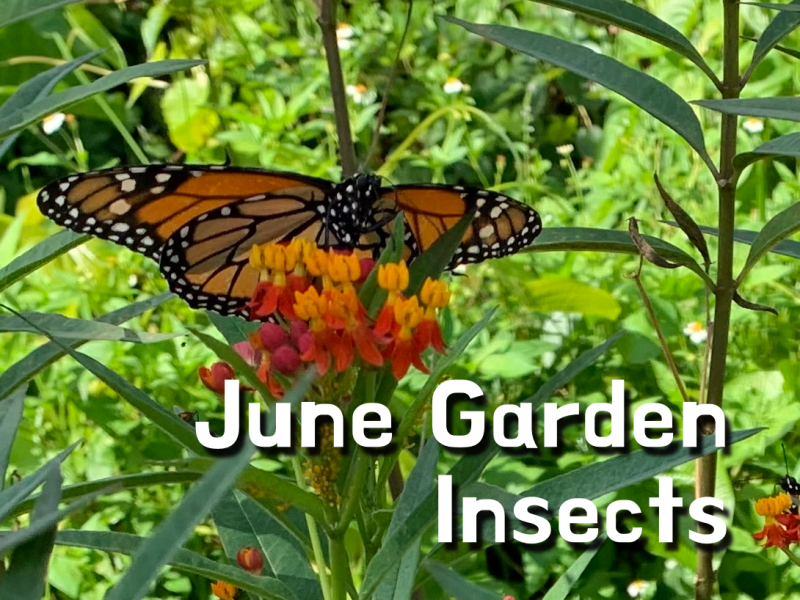
The Monarch butterflies are still fluttering each day. They usually show up around 9:00am. They land on the zinnias frequently. Their tropical milkweed is not flowering now, but soon the swamp milkweed will be.

zinnias divider

Thank you for reading.

Good Morning, or Is It?

Garden troubles.

I am writing today to make you feel better. Yup, it’s a pretty depressing morning here, so I hope that will make you feel better about your bad start to the day. If you had a good start, yay for you. If you are having gardening troubles, you are not alone.

Here in the jungle, summer is the pits. It is too hot to be outside for long, and if I venture out, it’s either loaded with bug repellent, or covered in long sleeves and pants.

On top of that, there is very little in the way of food growing. All my Seminole pumpkins start to grow, then turn yellow and fall off the vine.

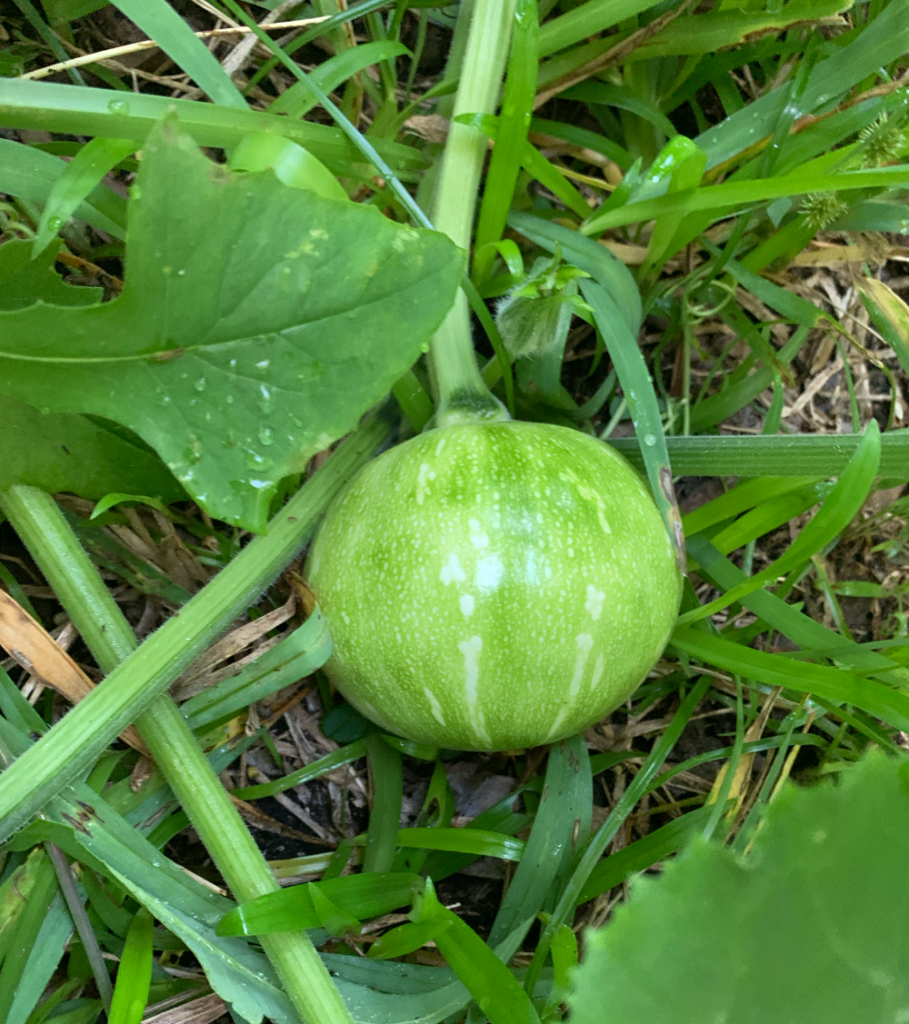
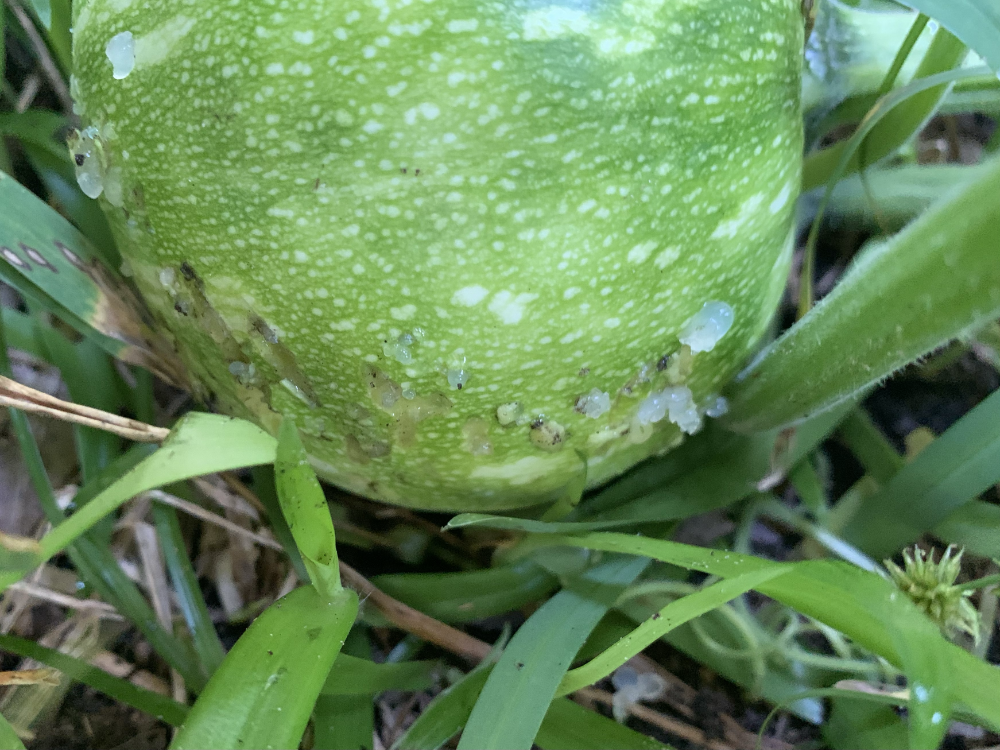
Finally, I have one that looks like it will continue to grow. And today I see that raccoons (my best guess) have scratched it all up!

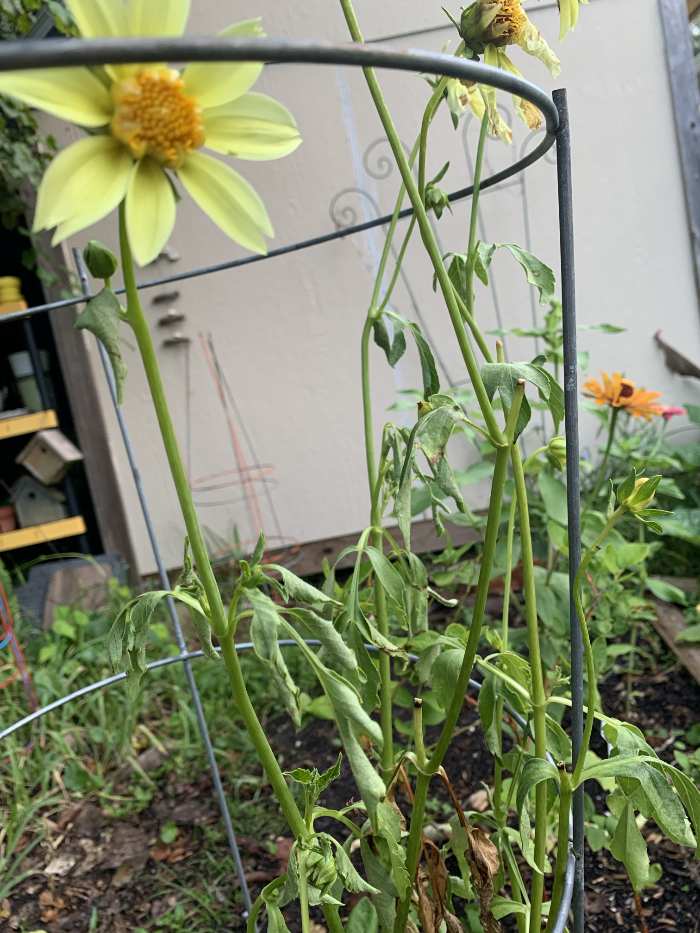
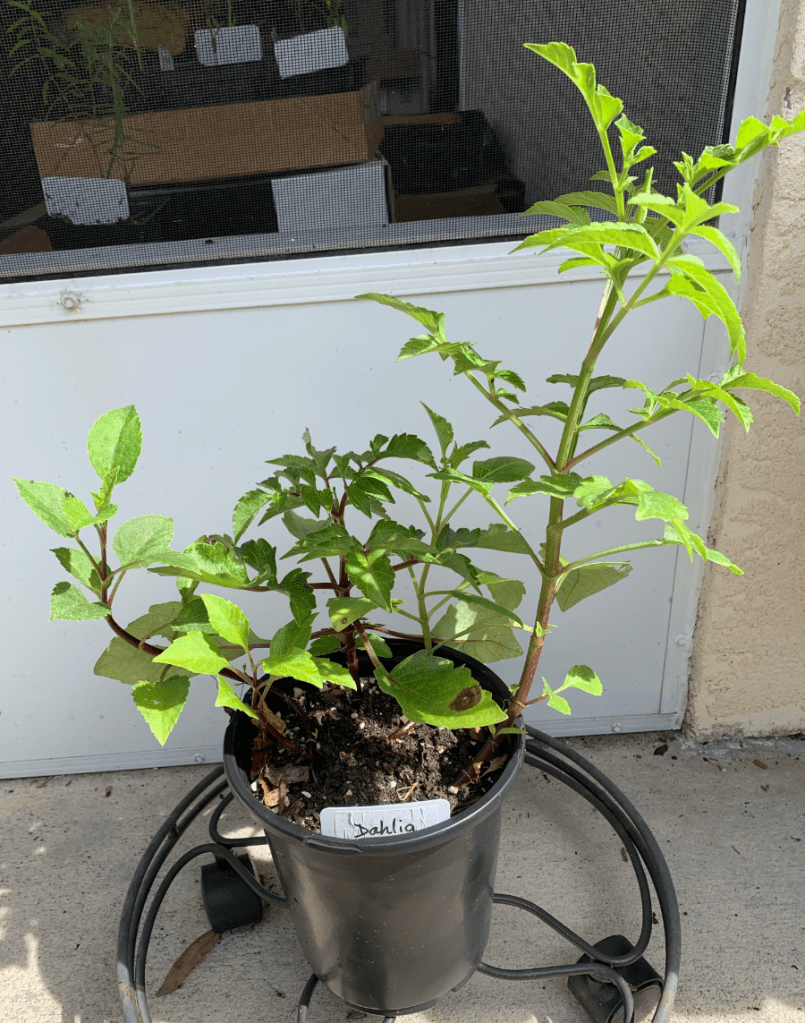
The Dahlia is wilting. We just had a little tropical system swirling over our area of the state and it dropped 4 inches of rain. We had minor flooding, which went away quickly. But maybe the dahlia did not like all that water. Maybe it doesn’t like July in Florida. I can’t blame it.
Dahlia wilting

The weeds, or should I say, grass has gone nuts. This is all getting away from me because of all the vines that are sprawling all over the yard. The squash vine is done, and I should pull it up. But it’s too hot and buggy.

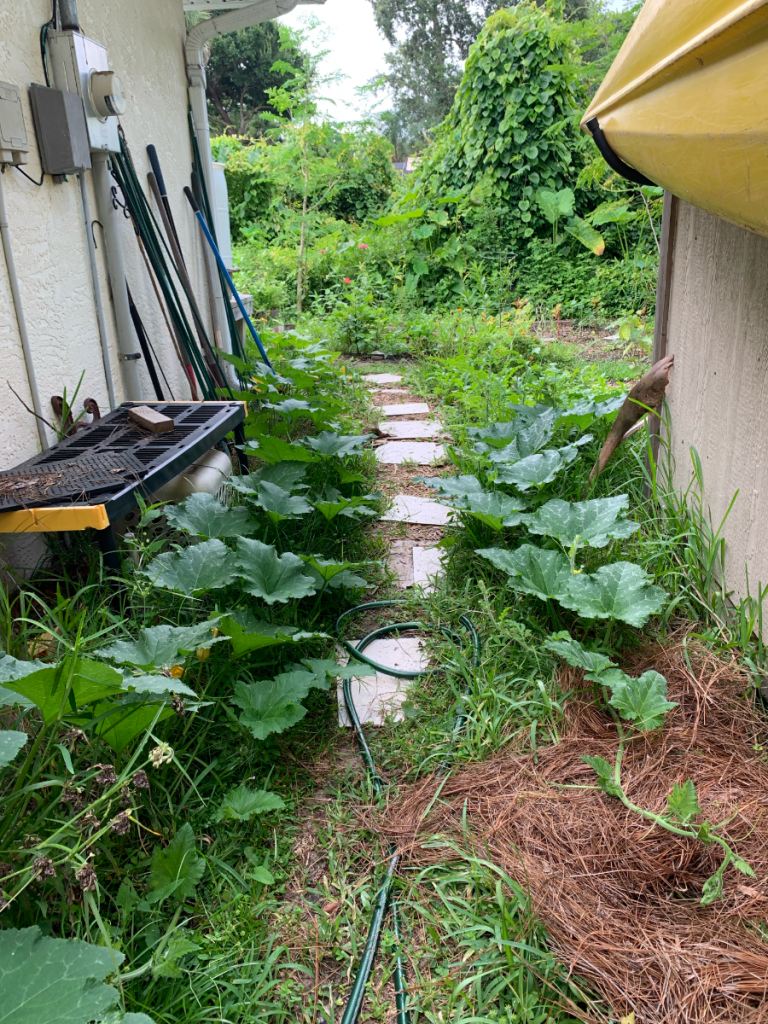
The watermelon vines have 1 watermelon. The pumpkin vines – well, I mentioned that above. Those vines have nearly made it from the back of the house to the front. They’ve dropped about 10 pumpkins at this point.
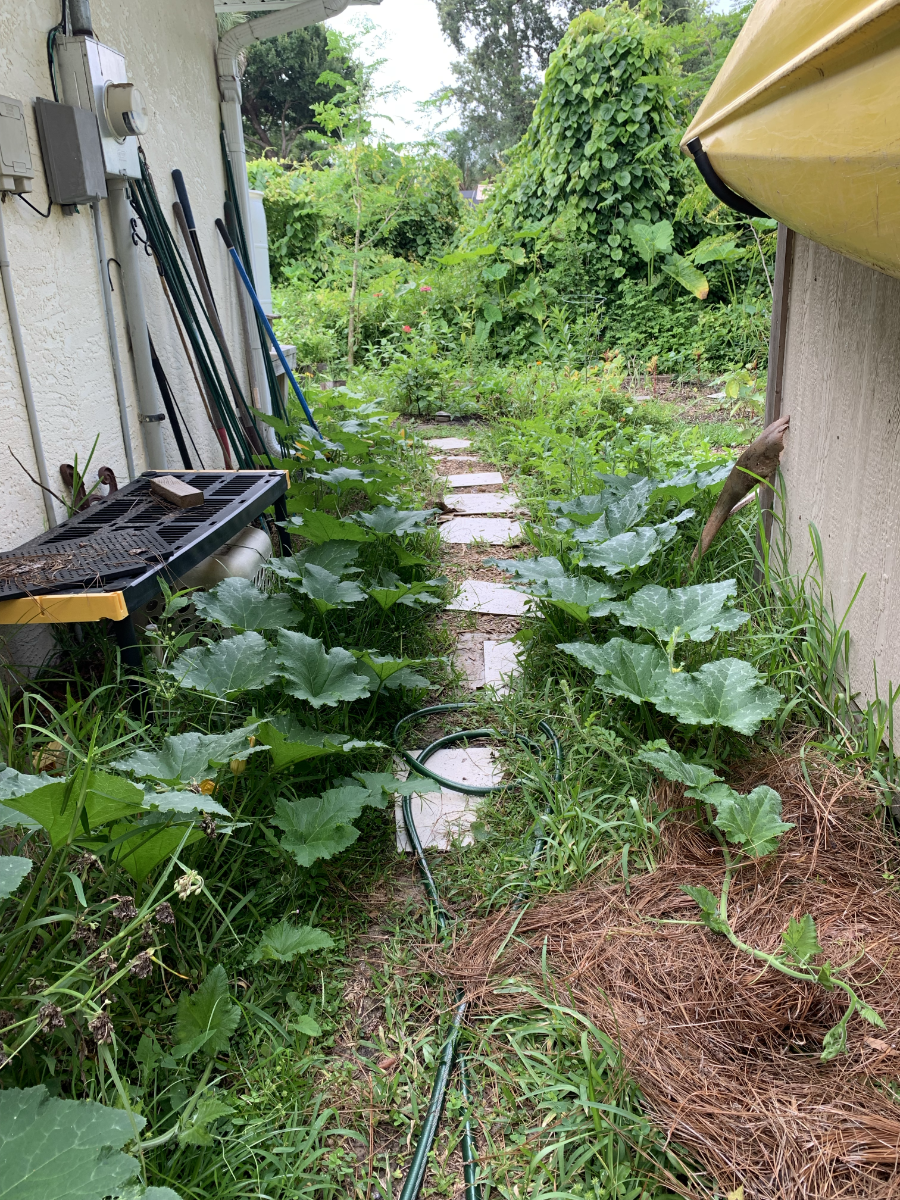
pumpkin vines along the pathway

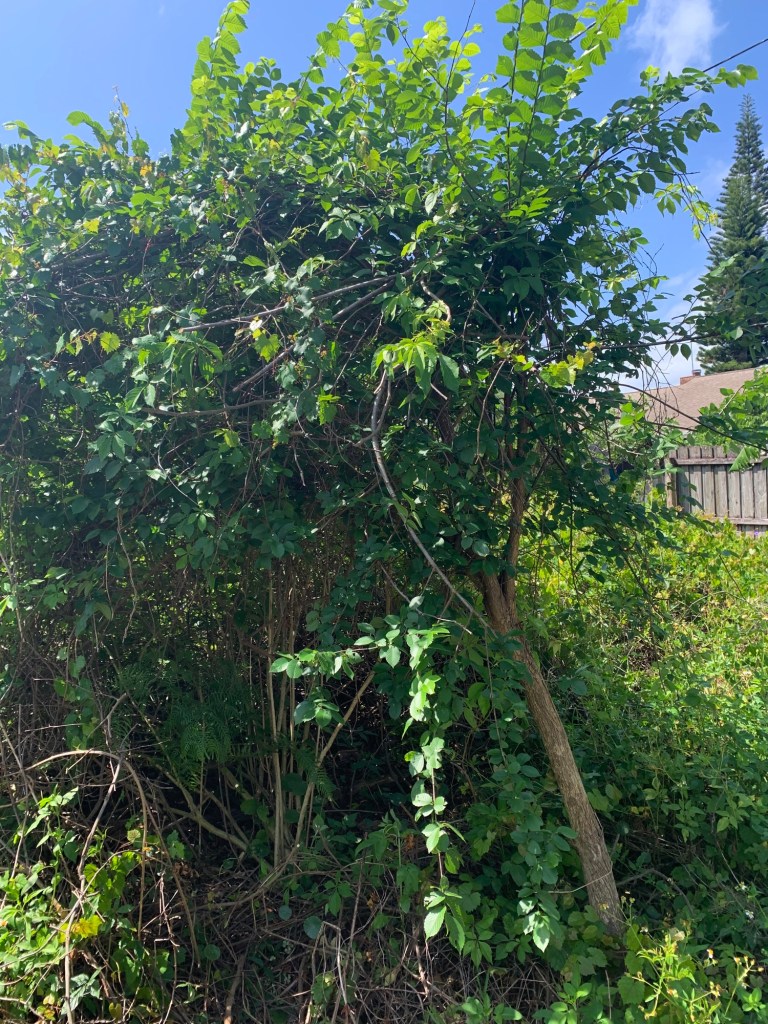
Speaking of vines. That mound in the distance in my photo above is an Elm tree next to a Beautyberry bush. Below is a photo of the two trees with most of the vines pulled off. I used to work at this, even though this is not part of my yard. I’d love to see both grow and do well. As you can see it’s a losing battle.

These are trying to grow under that mound of vines in the photo above.

Vines covering tree

A banana pepper plant has died, and the other peppers don’t look so good. So it’s a depressing start to the day for me. I think I’ll stay inside.

The Maypop Plants Have Caterpillars

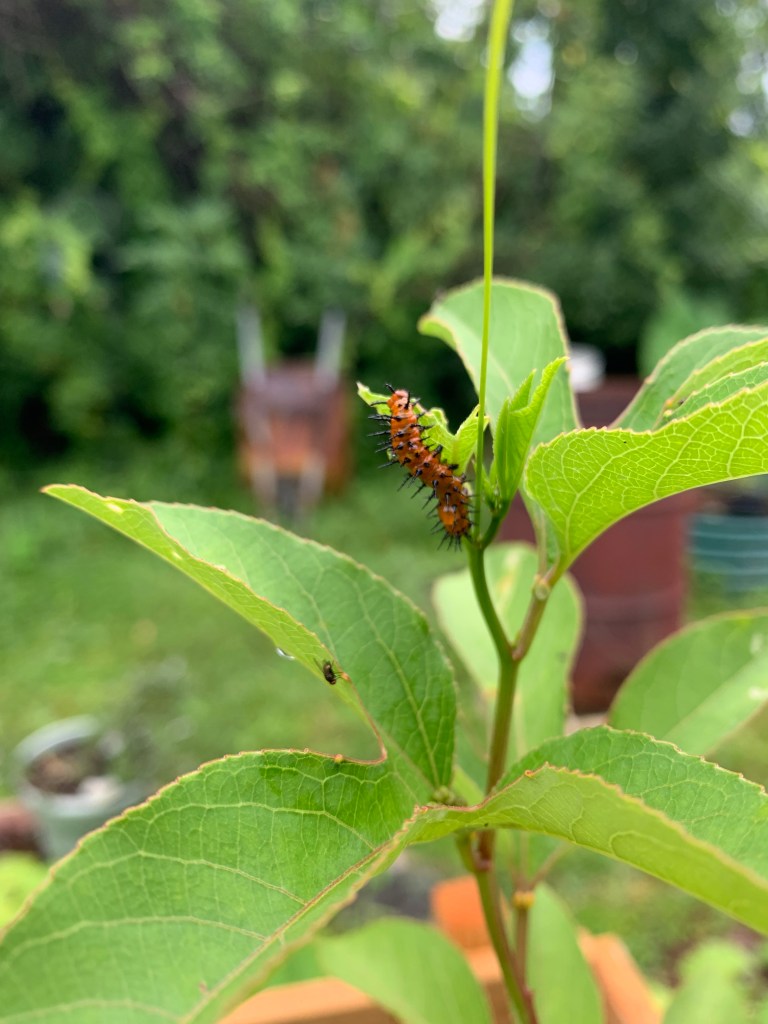
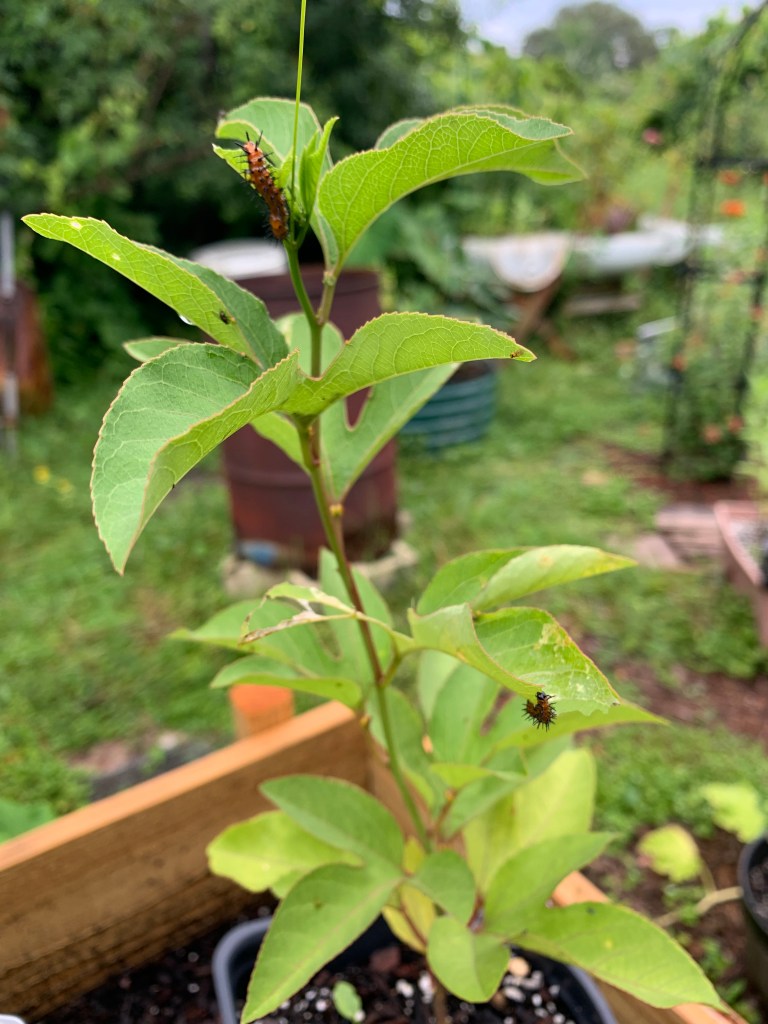
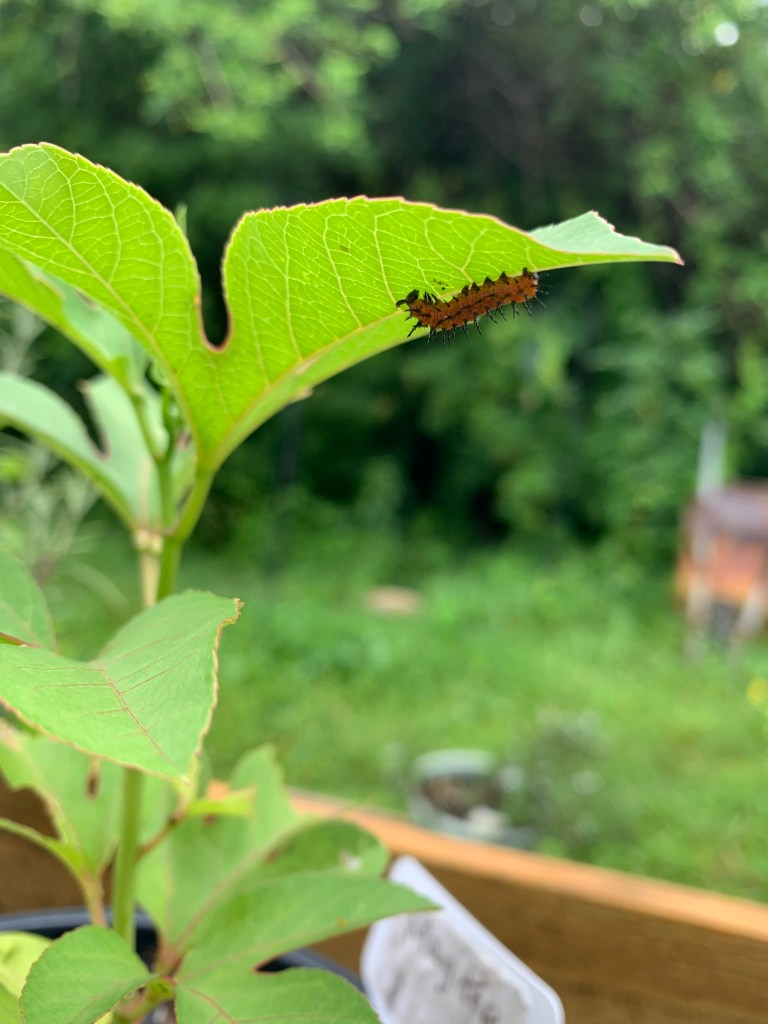
Caterpillars seen on the Maypop plants. These are from the orange, Gulf Fritillary.

This morning, while making my rounds in the garden, I noticed three caterpillars on the Maypop (Passionvine, or Passionflower).

I started these plants from seeds purchased from Johnny Butterfly Seed. The plants are still small and have been growing for only a few months. It’s the first time I’ve seen caterpillars on them.

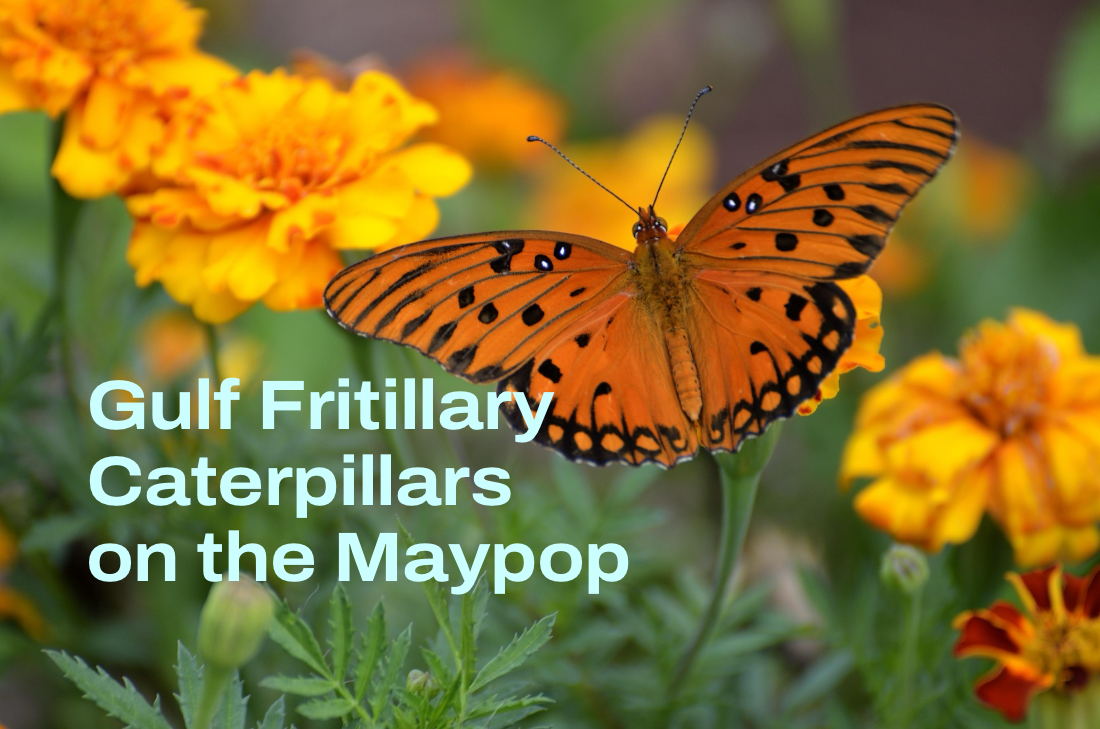
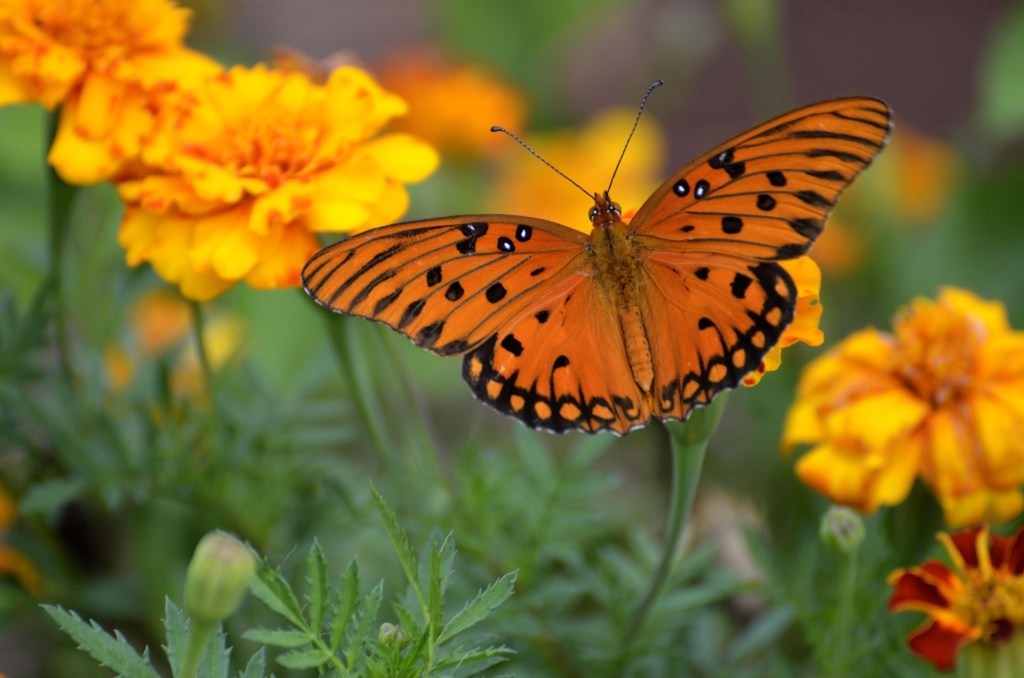
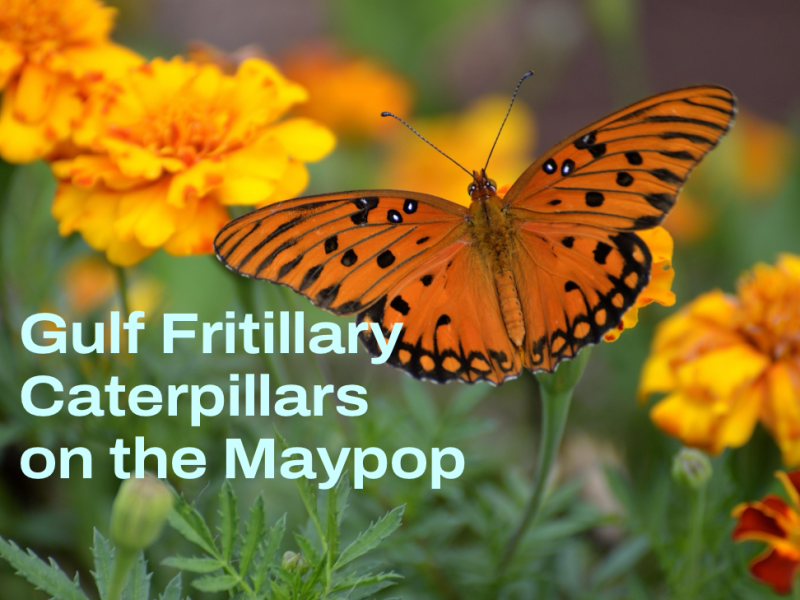
The orange caterpillars with black hairs are from the Gulf Fritillary butterfly. The caterpillars of the Variegated Fritillary look very similar. I’m guessing they are from the Gulf variety. I’ve recently seen the orange butterflies in my yard.

Below is an excellent photo of the Gulf Fritillary butterfly. Image source is linked beneath the photo. I rarely get a good photo of butterflies, but this is exactly what they look like.

Image by Paul Brennan from Pixabay

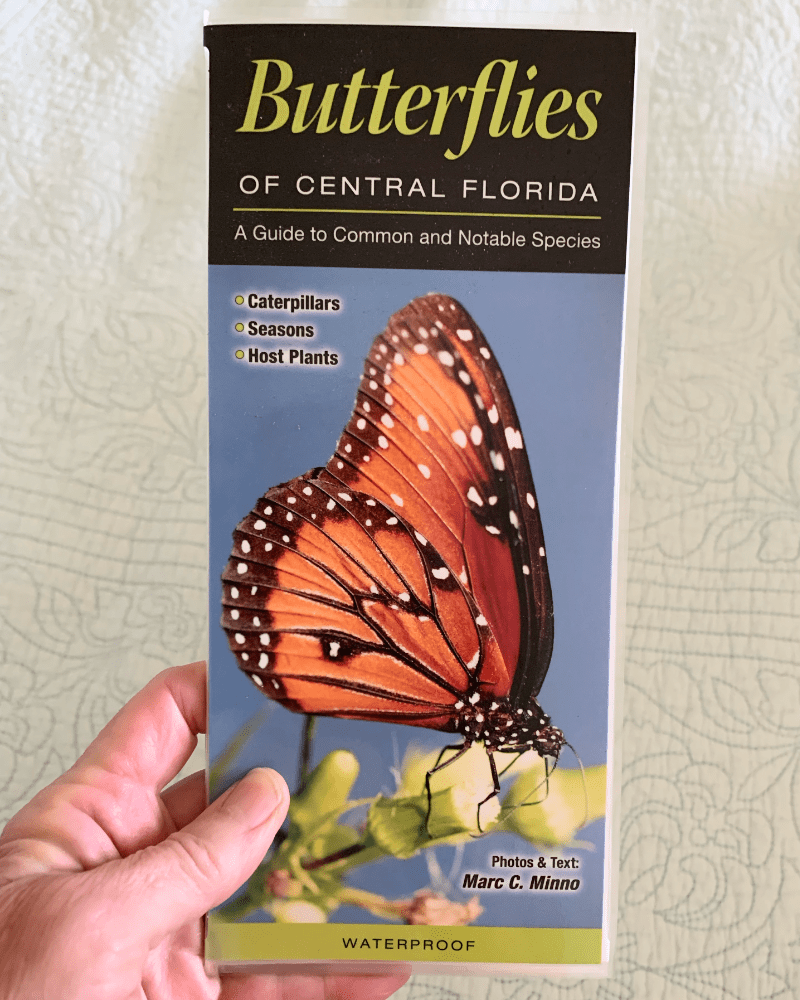
Whenever I see a butterfly in my yard, I run to grab my Butterflies of Central Florida pamphlet to identify it. I already know the Monarch, Gulf Fritillary, Zebra wing, Black Swallowtail, and Giant Swallowtail. All the others send me searching for their names.

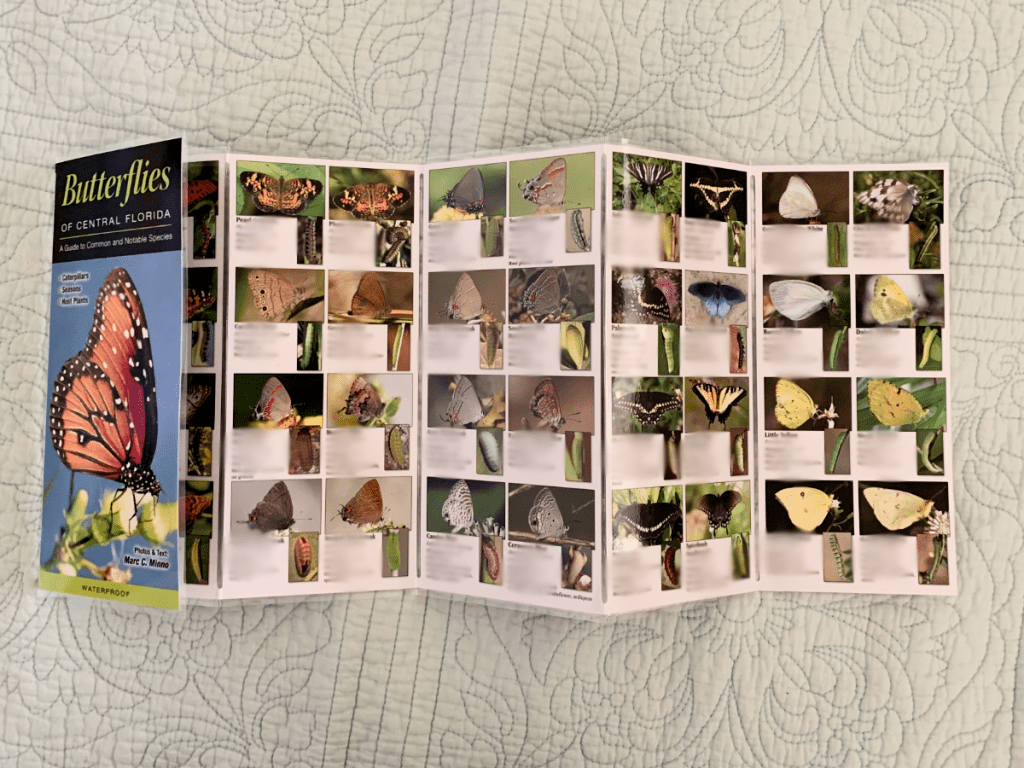
The Butterflies of Central Florida pamphlet (paid link to Amazon) has 11 pages of photos with information. I bought mine at the local nursery.

This little waterproof, laminated pamphlet contains photos of the butterfly and its caterpillar or larvae, with its name. It also has their size (wingspan), time of year when they fly, and their preferred host plant / plants. I had thought that some of the images were moths, but I think they are all butterflies.

I like that the host plant is listed. That way, if you want more butterflies, simply plant the host plant they need.

As far as these caterpillars go, I’m wondering if they will disappear like all the Monarchs seem to. If not, I wonder how much of these plants they will consume!

Surprising Success: Growing Dahlias from Seeds in Florida

When my daughter gifted me a packet of Dahlia seeds, I had little hope that the plants would grow. I often feel that way about “normal” things trying to grow in this jungle. I live in zone 9b. My daughter was a little bit obsessed with the Floret flower farm. It was (is?) a show…

Surprising Success: Growing Dahlias from Seeds in Florida

When my daughter gifted me a packet of Dahlia seeds, I had little hope that the plants would grow. I often feel that way about “normal” things trying to grow in this jungle. I live in zone 9b.

My daughter was a little bit obsessed with the Floret flower farm. It was (is?) a show on one of the networks, and focused on a young couple who began a huge flower farm in Washington state.

Their farm is impressive, and they have turned it into a thriving flower business. From what I can tell, the husband is behind the scenes doing all the heavy lifting, while his wife, Erin, does the social stuff, writing of books, and poses for photos. Photography of her holding humongous bouquets appears to be their trademark.

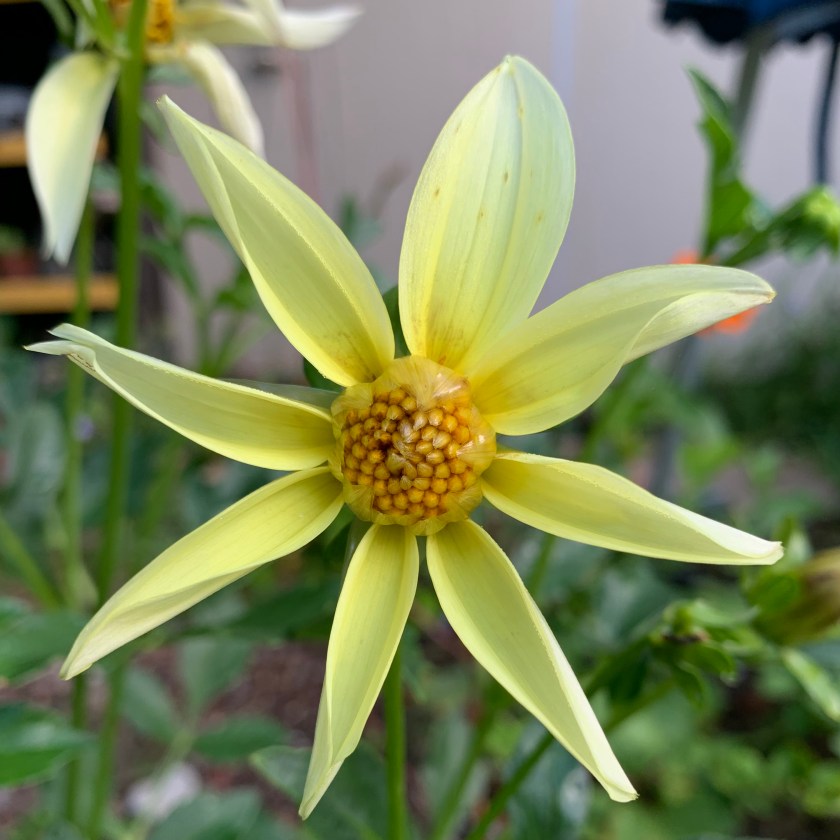
pale yellow dahlia flower like a star
My Dahlia has pale yellow flowers

Growing From Dahlia Seeds, Year One

I put the dahlia seeds into a shallow clay pot. I’d never grown dahlias, and had no idea how to do it. I’d always heard that dahlias were tough to grow. Between that and the fact that the seeds came from Washington, I honestly did not think anything would happen.

When I lived in New Hampshire a local farm sold them out of the greenhouse. Greenhouse plants generally mean they like it warm. But I bought a dahlia plant and put it in my yard. It died. This added to my doubts.

The Floret seeds came with a little booklet full of information about growing Dahlias, Zinnias, and Celosia. These three were the seed types my daughter sent. Floret also has a whole page online about How to Grow Dahlias From Seed.

So the first year my seeds became small, scraggly dahlia plants. They grew about 4-5 inches tall in the shallow pot. When the season was over I pulled them up. They had some tubers at the bottom. Surprise, surprise!

In the booklet that came with the seeds, Erin (the writer) said that she stores her tubers in a cool place in ziplock bags. I was not going to bother with that. All I had was possibly the fridge for storage. So I yanked out the little plants with their tubers and tossed them into the compost barrel. I know, I am awful.

Unexpected Dahlia Plants, Year Two

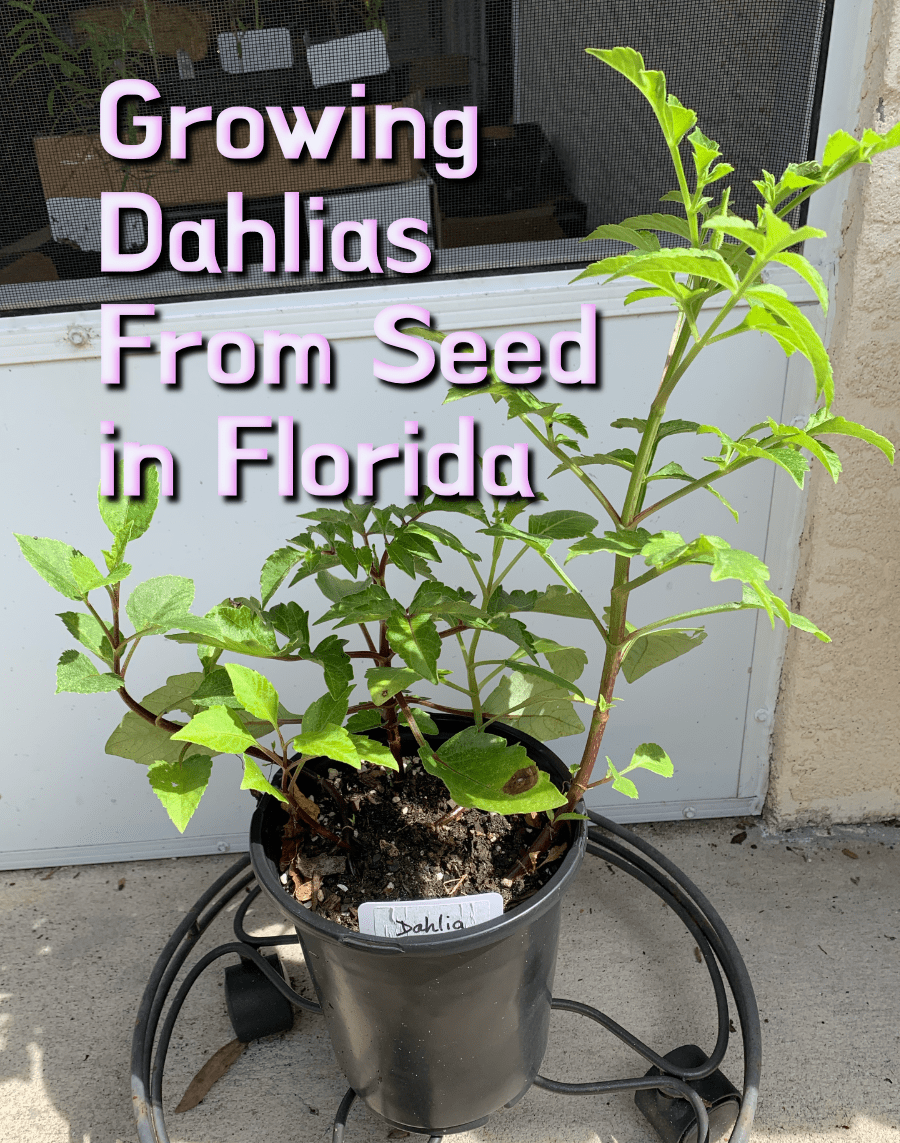
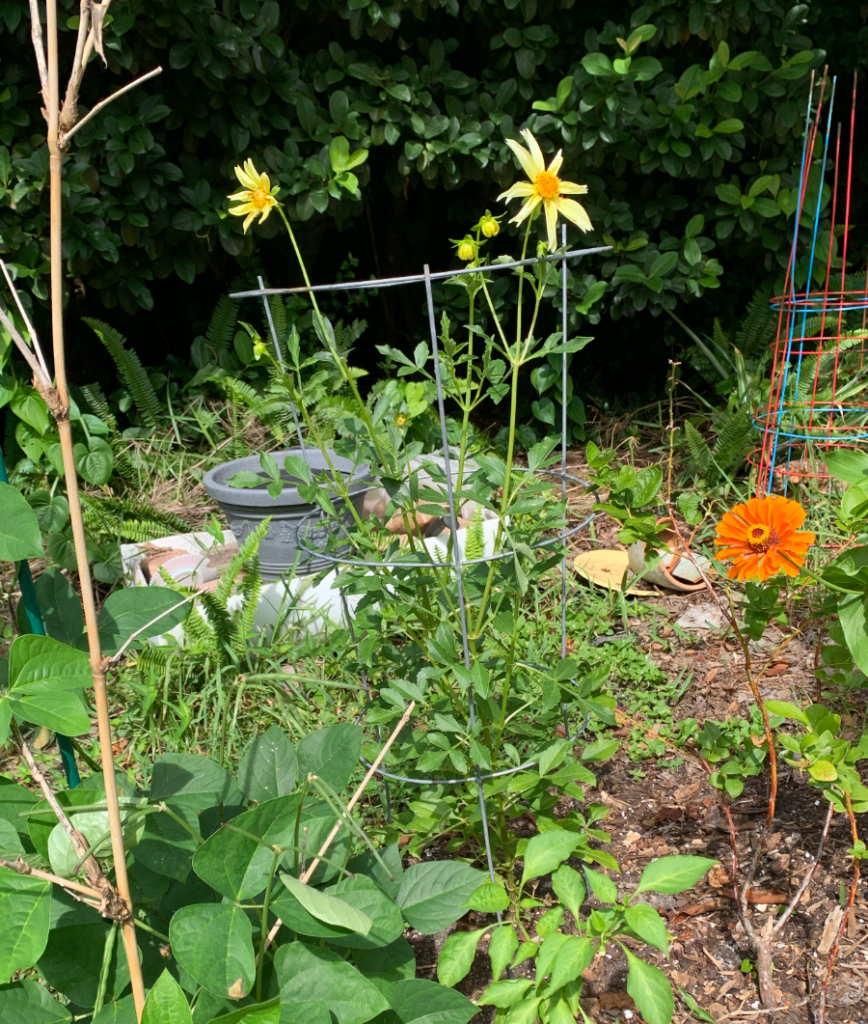
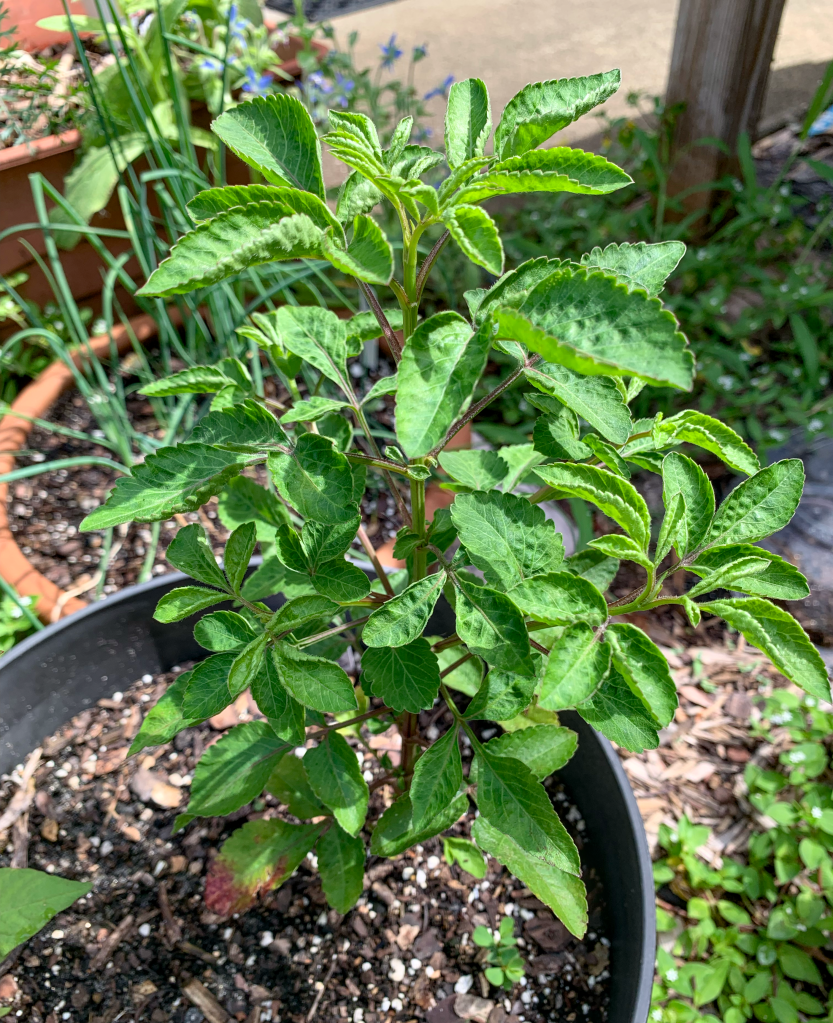
After months went by and I grew my “winter” crops here in Florida, it was time to ready the gardens for Spring growing. As I dug through the dirt in my compost bin, I found the dahlia tubers just laying at the side! They still looked okay, and I figured I’d just put them into the ground for the heck of it. And they grew. I never even marked where they were planted and now I am only guessing about some of them. Like the photo in the center below. I’m pretty sure it’s a Dahlia.

I now have some pretty nice dahlia plants growing! One is tall, and flowering with pale yellow flowers. I had expected the fluffy type bloom, but got this star shaped flower.

Year two, growing the tubers, is working out much better. I plan to leave the plants growing in the ground and see what happens over winter. If they go dormant and need temperatures that are not freezing, the plants should be okay. The ones in pots might just need transplanting to larger pots until next year. It is very hot to be gardening in July.

Flower Books From Floret

Amazon sells books all about the Floret flower farm (paid link). If nothing else, they are full of beautiful photos. Her books will show you how to grow, harvest, save seeds, and make arrangements from the flowers you grow. I do not have any of her books, and personally, I am not interested. I do not cut my measly little selection of flowers to make floral arrangements. I leave the flowers for the bees and butterflies.

Remember that the books are written by a woman who has a huge area of space, with greenhouses, and lots of help. Also, she lives in Washington, which is about as far (in the US) from Florida as it gets.

My Other Floret Flower Seeds

Along with the Dahlia seeds, I also received Zinnia and Celosia seeds. I grew the Zinnias and they were unimpressive. The colors were a pale blush pink. Zinnias, in my opinion, should be bold in color. I love my deep reds, bright oranges, and stunning pinks. I did not save any Floret zinnia seeds. This year I planted from my own saved seeds, and bought a few others.

four zinnia flowers border divider image
Zinnias in my 2025 garden

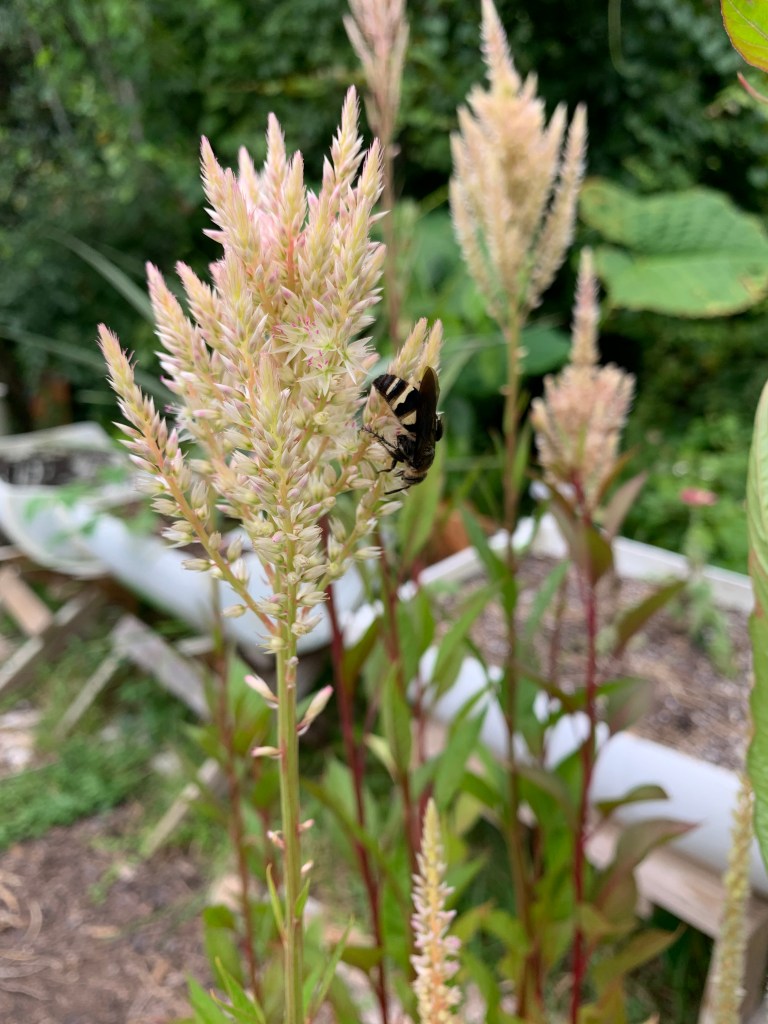
However, the Celosia were another story! Holy cow, these things are prolific. Celosia is another plant I was totally unfamiliar with, and let me tell you, they are beasts! Apparently they love the Florida climate and the bees LOVE the fluffy flowers. I will be writing a page about them soon.

In Conclusion

The secret to successfully growing things is this: Toss seeds somewhere, ignore them, treat them badly, expect nothing, and see spectacular results. (I am only partly kidding.)

Thanks for reading. Feel free to leave a story about your growing adventures in the comments.