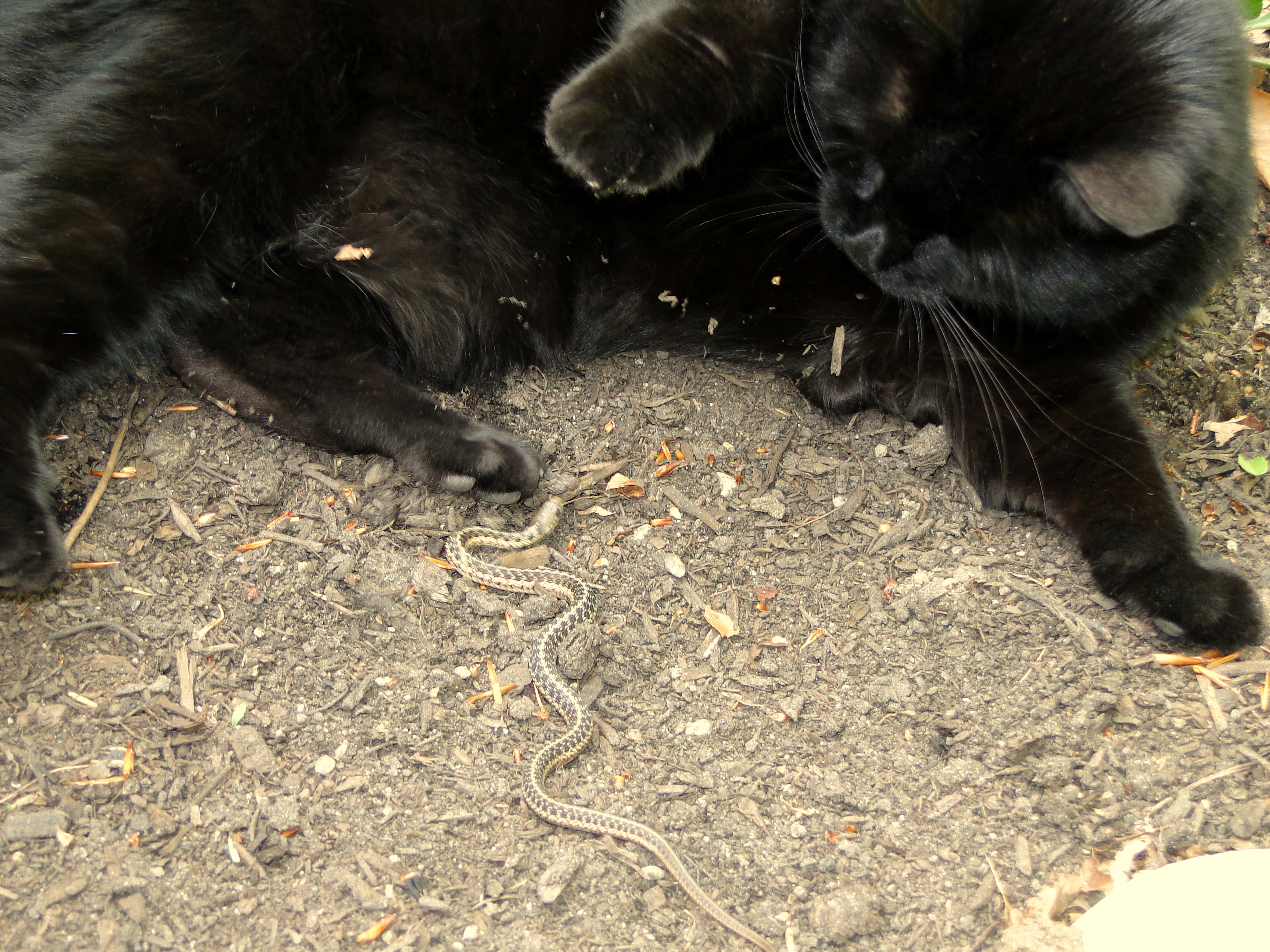
Skittle was happy to have a little, squirmy playmate the other afternoon. I guess this is a baby garter snake. I don’t know my northern snakes very well, except that they are not poisonous.
If this was Florida, that little snake would most likely be a pygmy rattler and my cat would now be dead.
I wonder if cats can tell bad (deadly) snakes from good?
She didn’t harm it. We saw the snake later out in the grass.
I shop for annuals once a year, usually at the end of May or beginning of June – like most other people who live in New England. If we shop too early, the plants have to wait somewhere until all chance of frost has passed. OR, they can go into the cold ground and take their chances. All plants cost too much to risk dying in a freeze, and I can’t be bothered to go out and cover my plants. I just wait and try to get them into the ground at the correct time. And slowly but surely I am learning how to garden in the north.
Home From a Trip to The Nursery
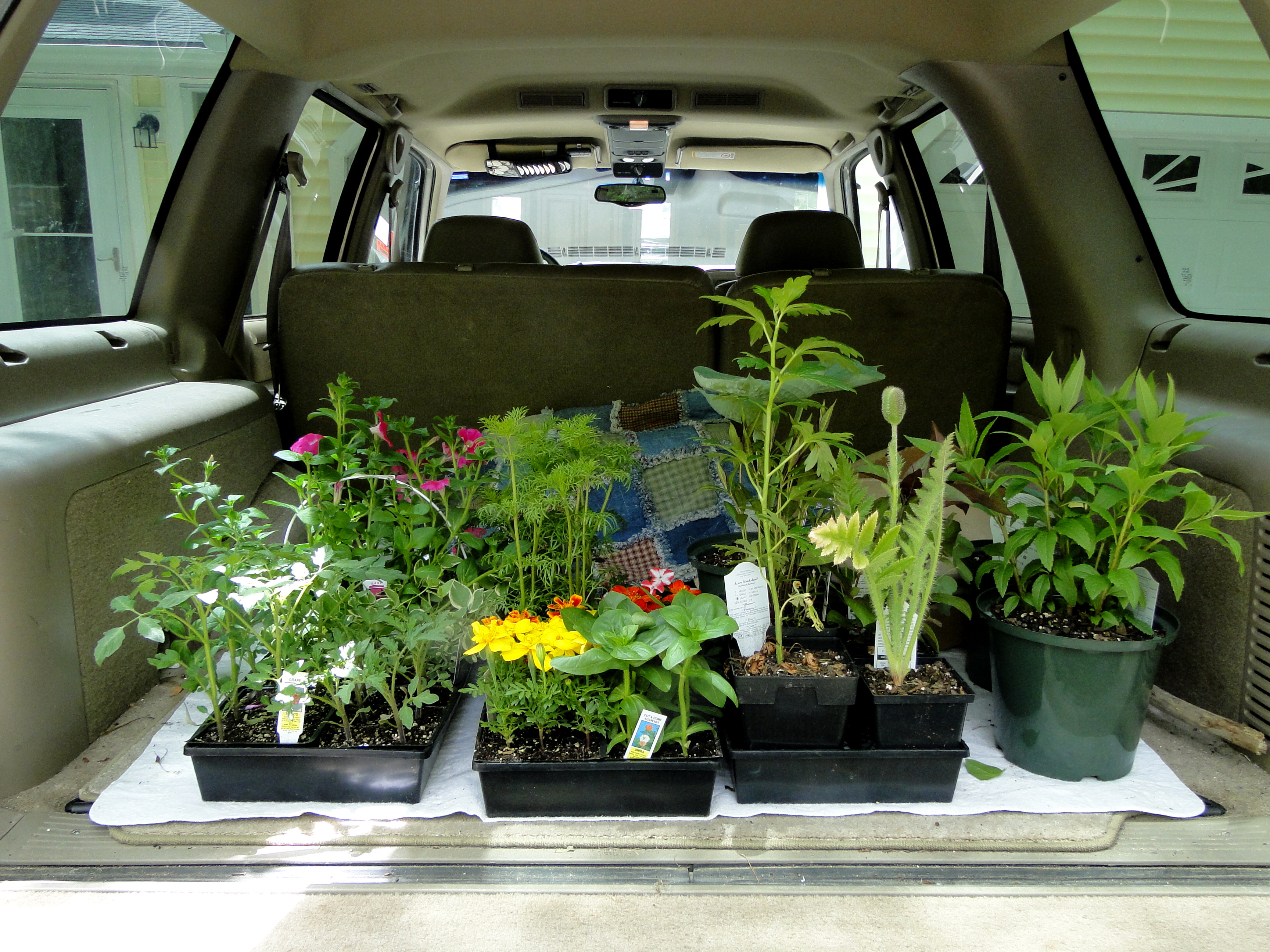
So on my recent trip to “House by the Side of the Road”, this is what I came home with (my hanging fuchsia was on the front seat):
Tray on the left: Celebrity tomatoes: These grew the best in last years vegetable garden. I grew 5 varieties and these and the grape tomatoes were wonderful. (I also bought grape tomatoes). Pink Wave petunias- I guess these are a specialty because they were quite pricey – but I will use them in my hanging baskets. I got six and will divide them between at least 3 baskets. (These are plastic basket hangers I have kept from previous years).
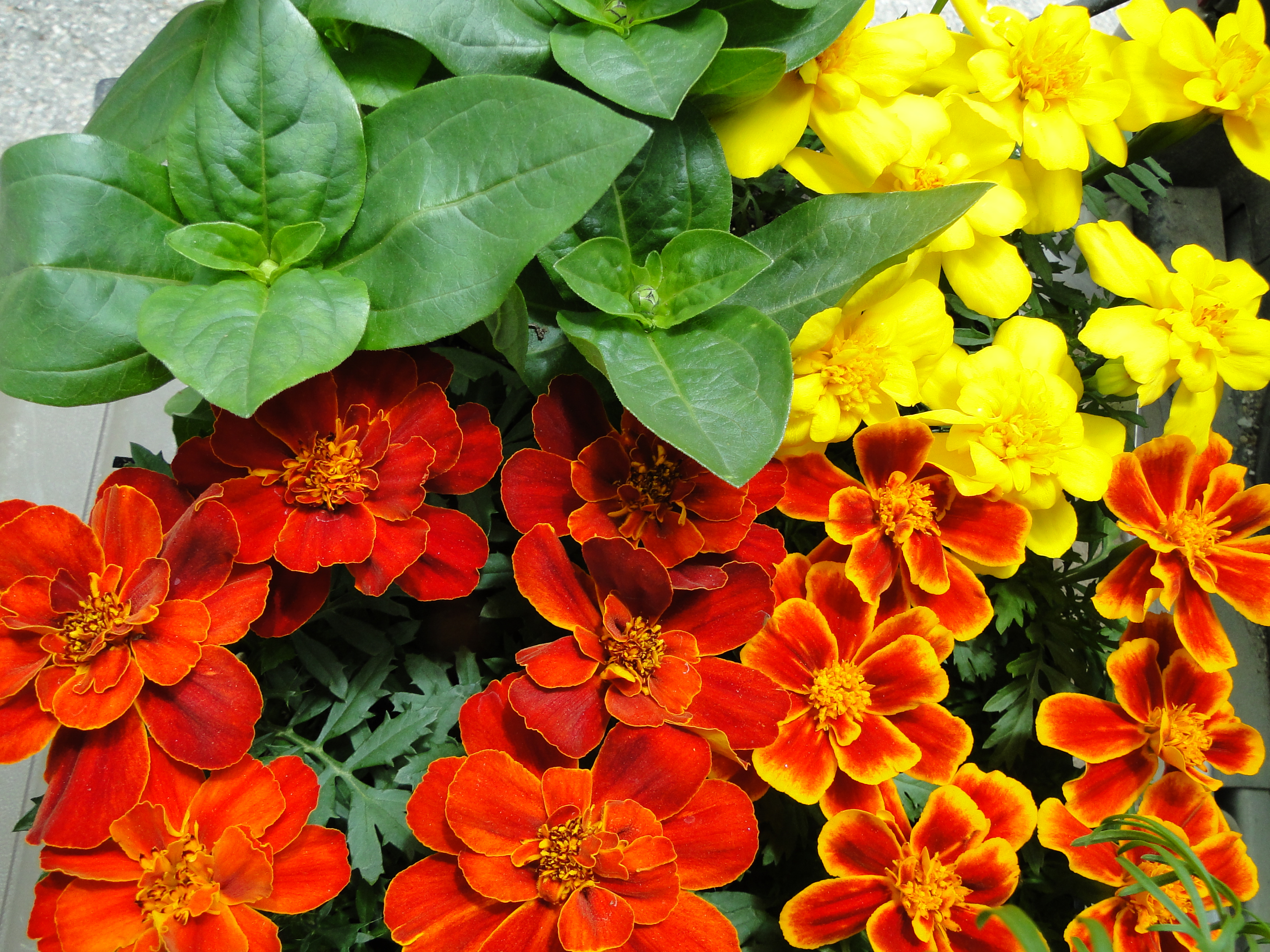
Tray with flowers: Zinnias, 3 packs of Marigolds (always have in my veggie garden), Cosmos (faves of mine) and Red Star impatiens – reddish pink and white stripes.
On the right are the perennials: Right in front, with that big bud, is the Oriental Poppy. To the left is the Monk’s Hood, and to the right is the Joe Pye Weed. In the back are two hostas.
I plan to buy more perennials this Fall when the prices come down. I especially want more Peonies to go around my deck, or maybe some new varieties of hydrangeas.
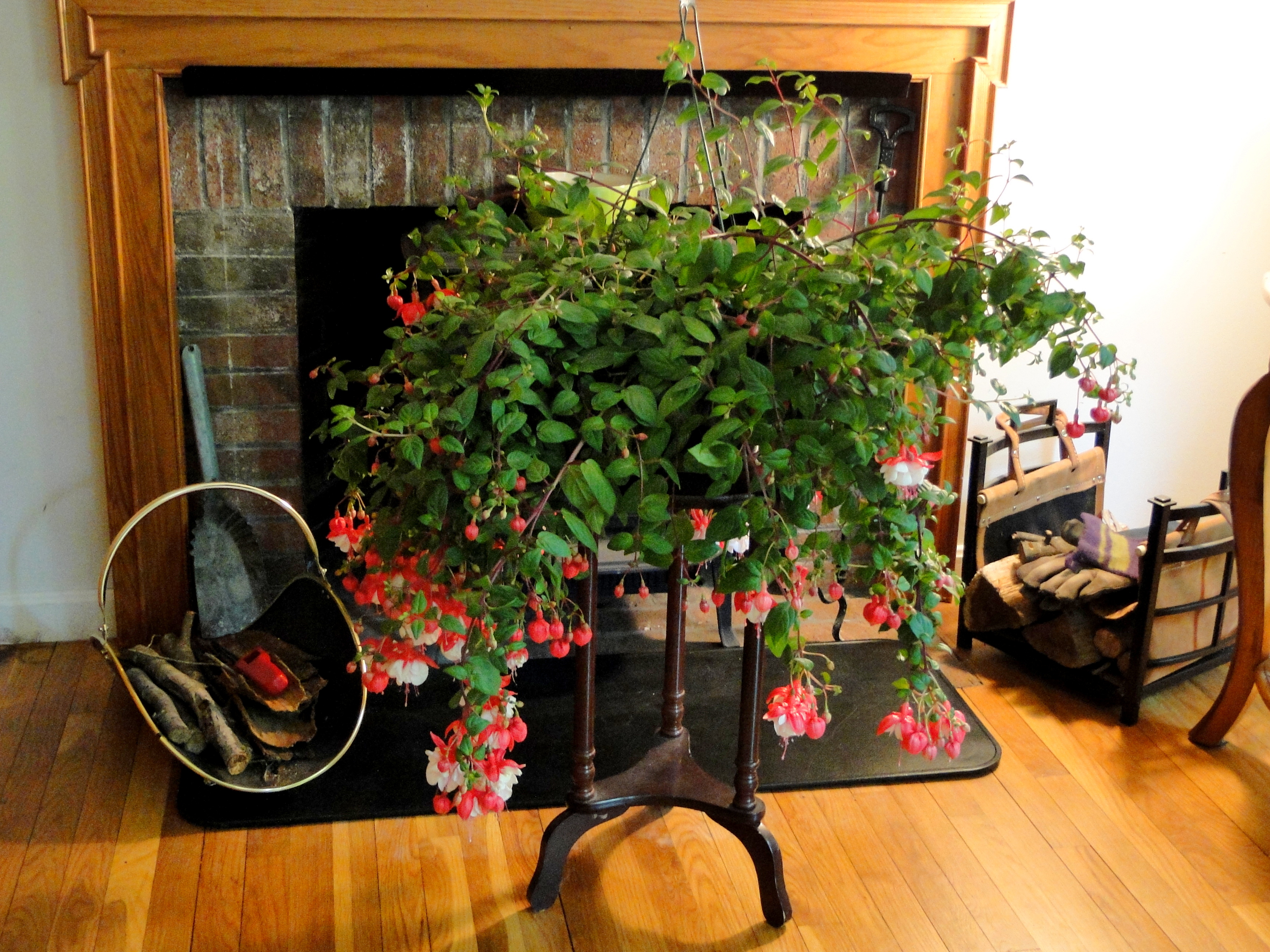
Even though I bought this fuchsia plant myself, my kids are going to chip in and pay for it as a belated Mother’s Day gift. As each holiday comes around my kids ask what I want and I can’t ever say I want anything. “Take me out to eat” is what I usually say. Not cooking is the best gift I can think of.
My New Fuchsia Plant
But I recently splurged on this new hanging basket. I saw it on my gardening expedition to Wilton where the nursery had tons of them to choose from. Some had purple and pink flowers (love those too) and one type had long, white pointy flowers – very different. But I chose this huge, pink and white one.
The only problem is that it’s too cold outside to hang it so it’s inside on a little table. It will have a permanent home out front under the beech trees once we get some warm weather. May began with warmth, but suddenly we’ve had two nights of 30 degrees. In New England we can’t plan on warm weather until about June.
I also bought some small petunia and vinca plants to make my own hanging baskets, which I’ll be doing soon.
I headed over to House by The Side of The Road in Wilton, New Hampshire yesterday to look for hydrangeas and other flowering shrubs for my yard. I had never been in early spring to see what they had for vegetable plants, but thought I’d check it out.
This place is huge. They place big wagon-type carts all over the greenhouse area for customers to grab and fill up. I filled one with annuals – the marigolds, you see in the picture, and other things – then got another cart and headed outside to the perennial area. Continue reading “Early Shopping For the Vegetable Garden”
Certain plants need a low pH, or acidic soil to grow and thrive. The hydrangea will do well in any pH – acidic or alkaline – but the soil type will effect the flower color. If you don’t care what color your flowers are, then you will accept the fact that your alkaline soil will give you pink blooms, but many people want hydrangeas for their bright blue color. The pH scale goes from 0-14, with 7 being neither acidic nor alkaline – it is neutral. If your soil is naturally alkaline, or has a pH above 7, you can try adding an organic amendment to bring down the pH which may change your hydrangea flowers to blue.
I live in an area that has acidic soil naturally. We can easily grow acid soil loving blueberries, rhododendrons, azaleas and other plants – including blue hydrangeas – without adding any amendments. I have never used any products to create an acidic soil, but I’ve read about it and this is what I’ve learned. If you buy a blue hydrangea and want it to grow blue flowers in your yard, check your soil’s pH – in the place you plan to plant them. Any soil that is high in lime can cause pink blooms, and that means plants near the cement walls of a house could be growing in a more alkaline soil.
There are various ways to bring the pH down to the right levels. Making an acidic soil mix for a pot is relatively easy, but changing the pH out in an area of your yard is much more difficult, and it will need constant monitoring. It is not a permanent fix and could take weeks to achieve. In general, organic type matter will help lower a pH. When starting a garden add organic compost, composted manure, and / or pine needles which all help lower the pH. Also, you may want to buy a bag of garden sulfur and follow the directions for application on the bag.
If your soil is naturally alkaline, you will be fighting the elements to get those blue flowers. It may work better to grow them in a pot, or learn to love hydrangeas that are pink.
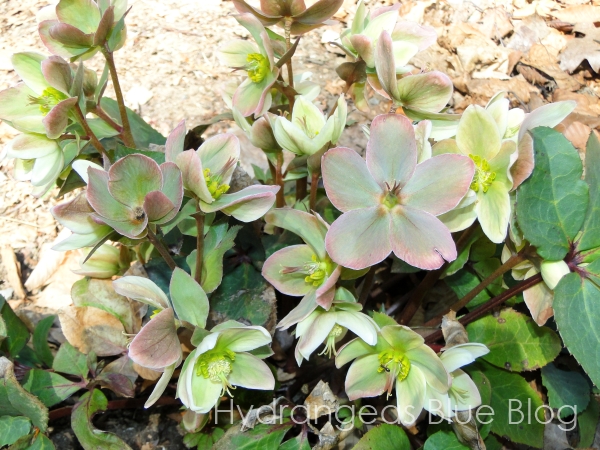
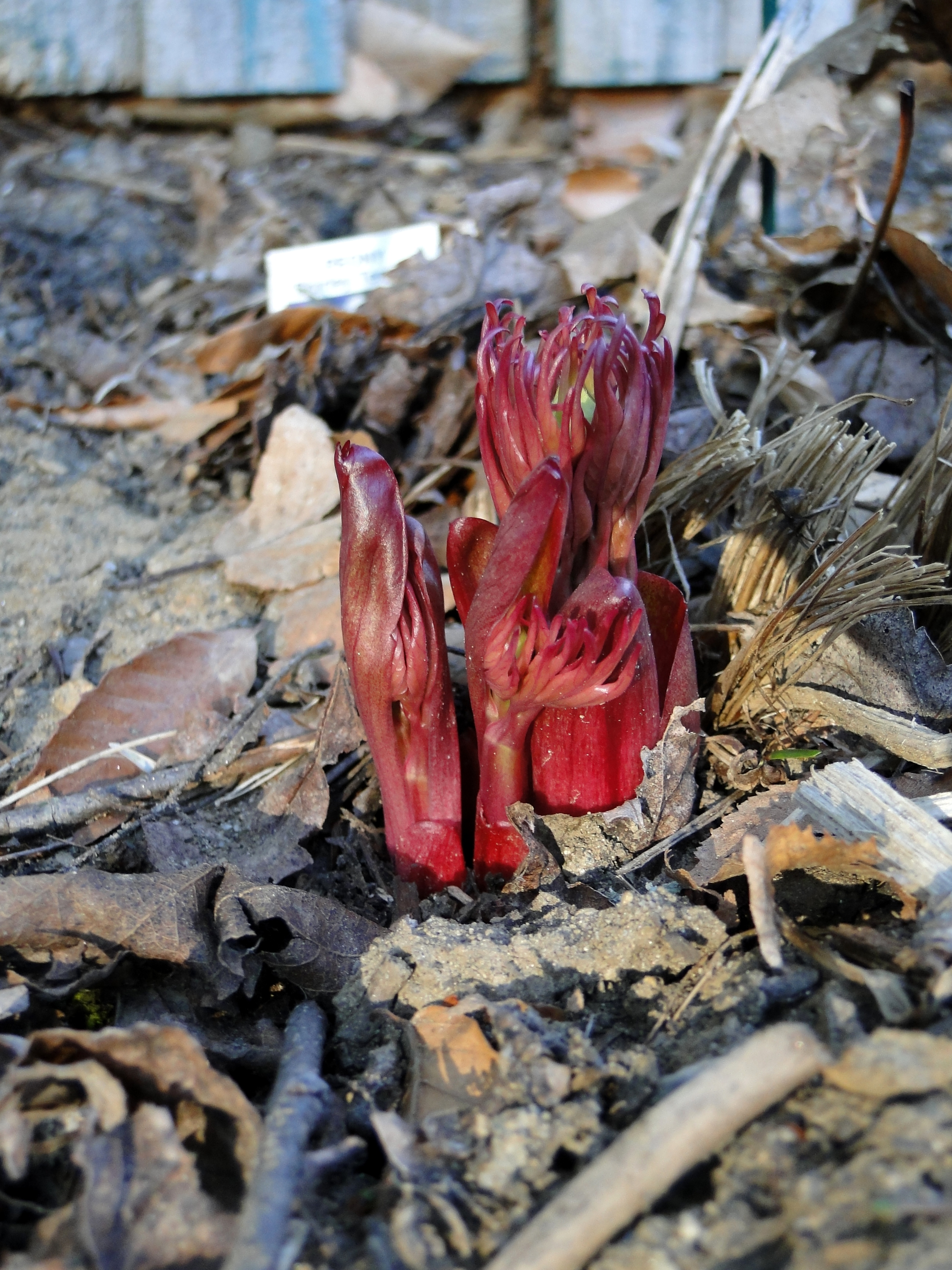
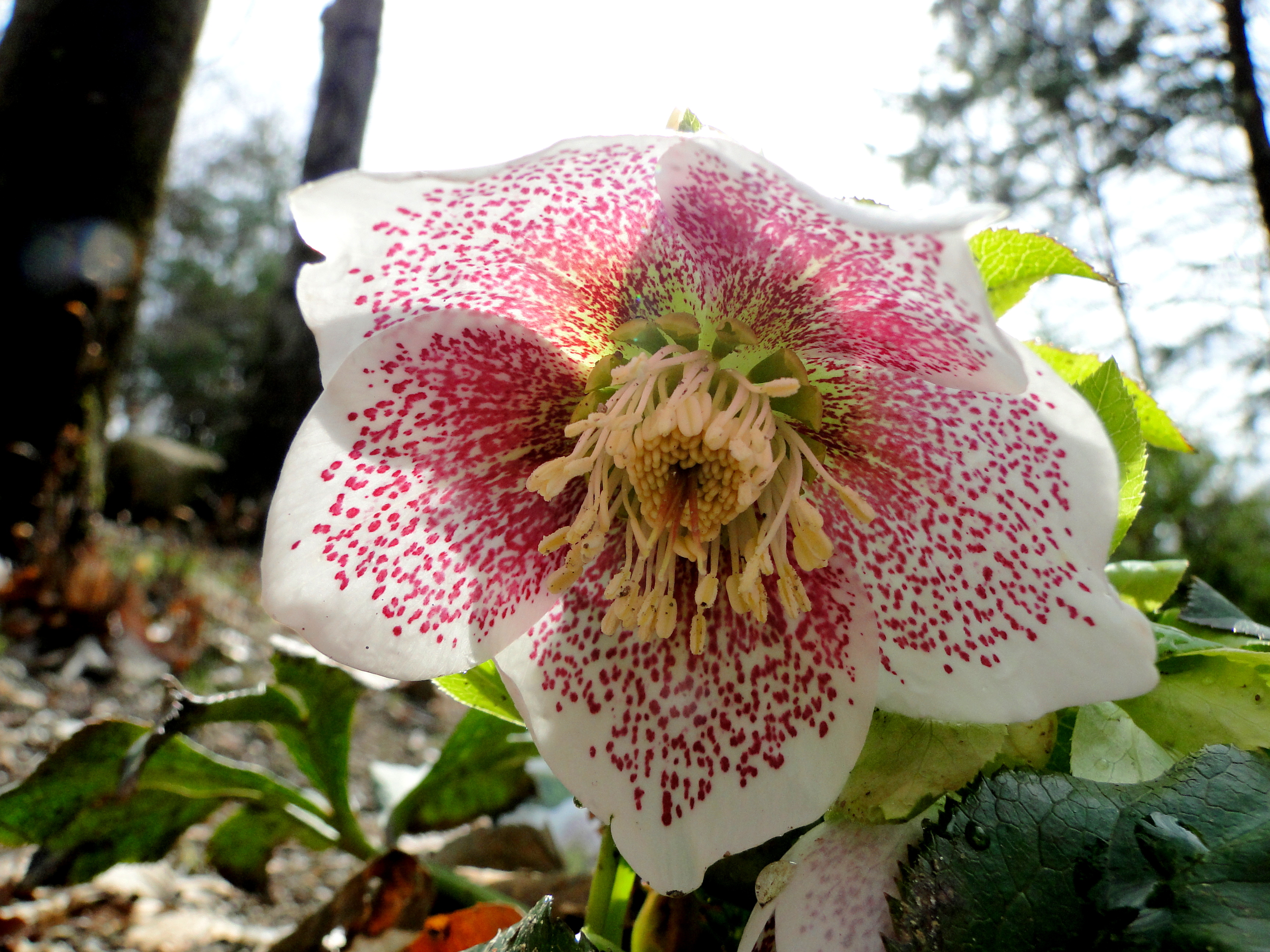
Here are some pictures of what is growing in my New England garden this time of year. April is early Spring and planting anything outdoors that is susceptible to frost, in this area, is not advised until at least late May. These are the perennials that are blooming or just beginning to grow.
Did you know that chives will come back each year? I’ve already used some in my cooking, and the clump is looking good already. I need to get parsley soon. That has become one of my favorites for the garden, and it can take the cold.
The peonies and bleeding hearts are sending up shoots and the hostas are just pushing through the ground. The Coral Bells kept many of it’s leaves and new ones are growing from the center.
Not much is happening with my hydrangeas yet, but the macrophyllas seem to be starting with leaves and growth more so than the paniculatas.
I had wanted this to be a slide show, but as usual, I can’t figure out how to make that happen. It seems that even though I use WordPress for most all my blogs, each theme works differently and I can’t see a slide show option for this one.
So enjoy the big photos instead.









 Hydrangeas Blue