Once I chose to go into the backyard, and begin seriously growing vegetables, I realized I had a lot to learn. I also needed a lot more space.
Summer 2021
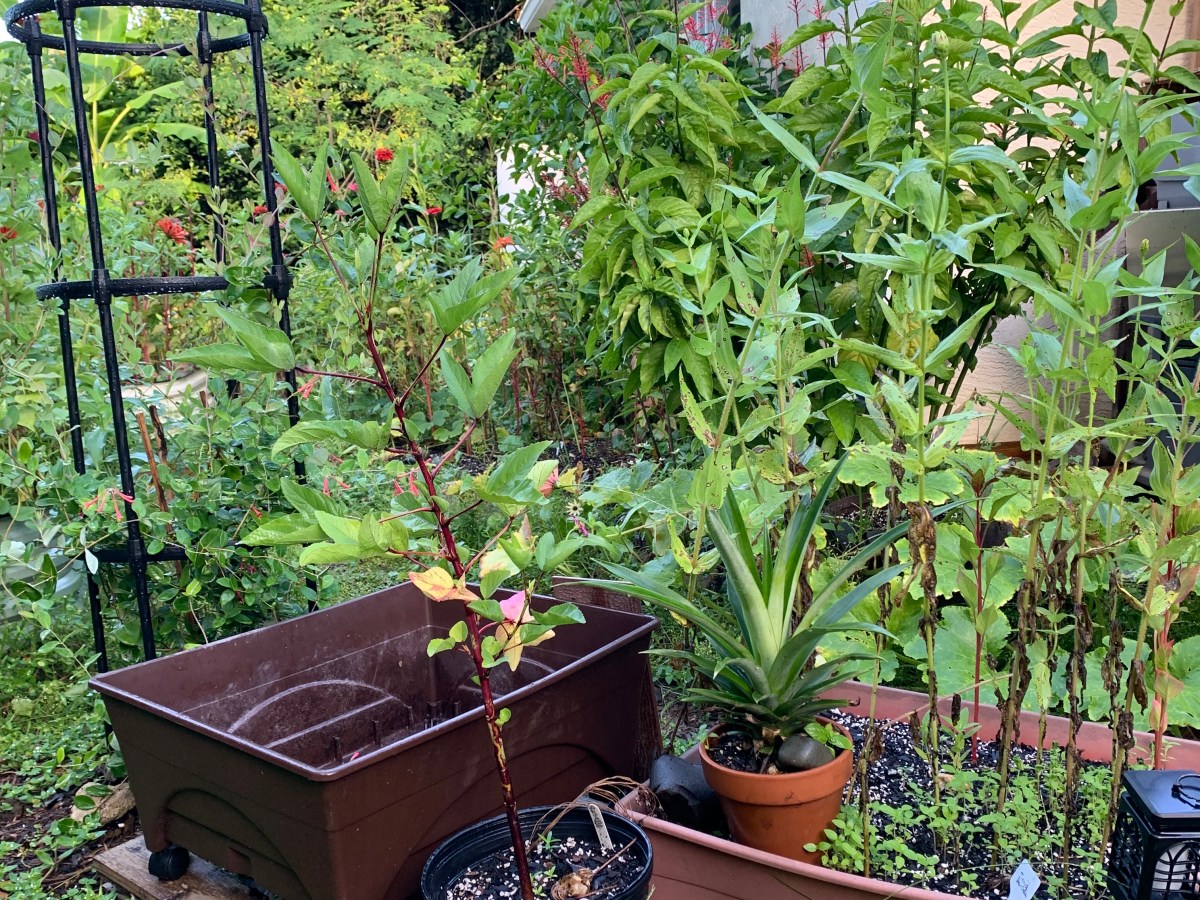
I learned to garden in New England. When I moved back to Florida I hoped to be able to grow some vegetables at least. In the summer of 2021 I purchased three, red-orange grow boxes and put them on the back patio.
These boxes have a tube in the corner and watering is supposed to be done through the tube. The idea is to pour water into the tube and water the roots. I also water from the top.
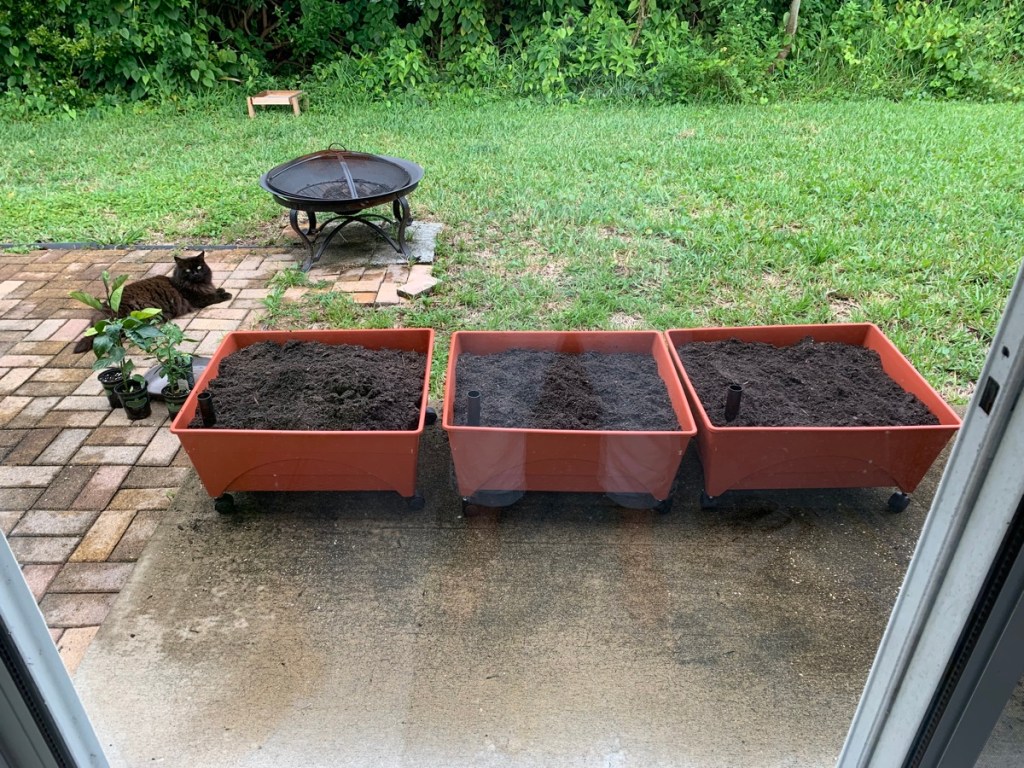
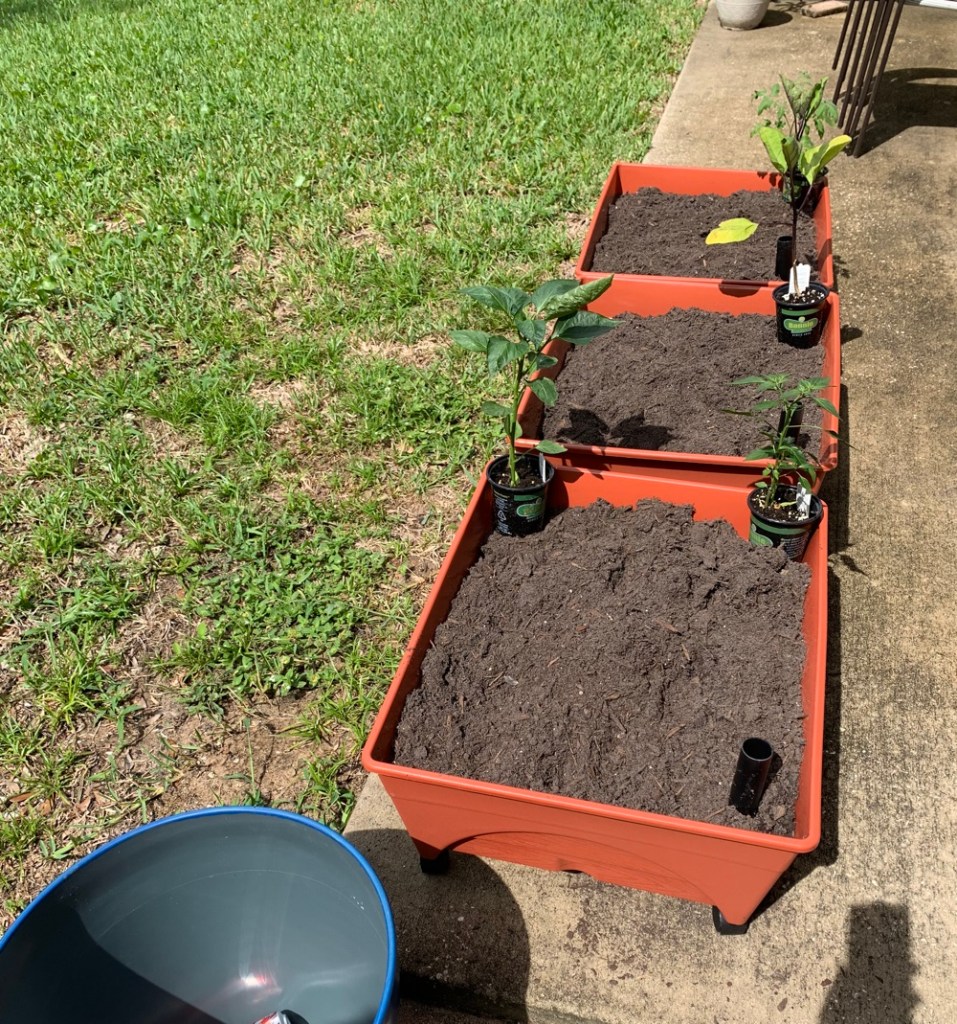
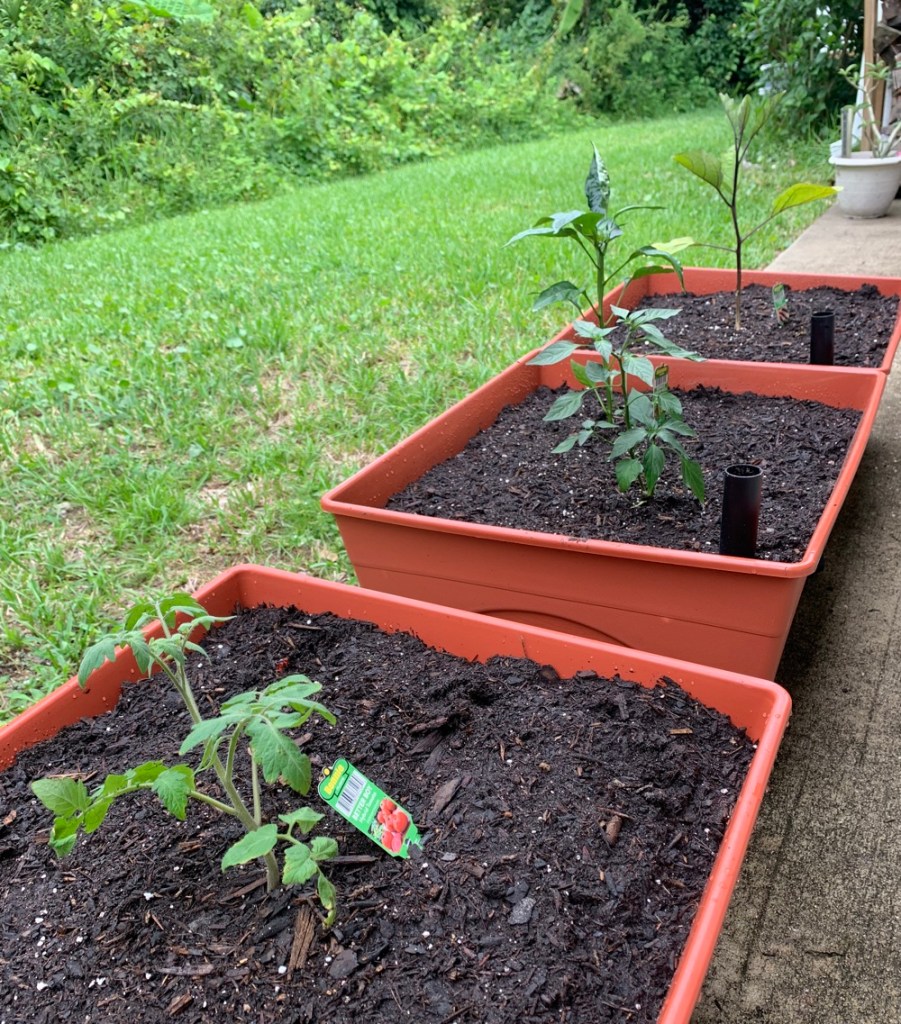
I bought my boxes at Home Depot and they are similar to this style available at Amazon: Emsco Group Bountiful Harvest Raised Grow Box (paid link). They have rolling castors so moving the box on a patio is pretty easy.
Grow Box as Seed Nursery
One issue I have with these grow boxes is that they are not very deep. The lower area of the pot is reserved for water to accumulate, so they are more shallow than they appear. These pots are perfect for starting seeds. Once the seedlings are big enough, they can be transplanted to bigger pots, or into the ground.
These grow boxes work well, but they do have a flaw. Because there are holes, dirt can be washed down into the bottom area which should be for water only. Once that fills up, and the box can’t drain, roots become soggy and plants die. This happened to my NuMex pepper plant.
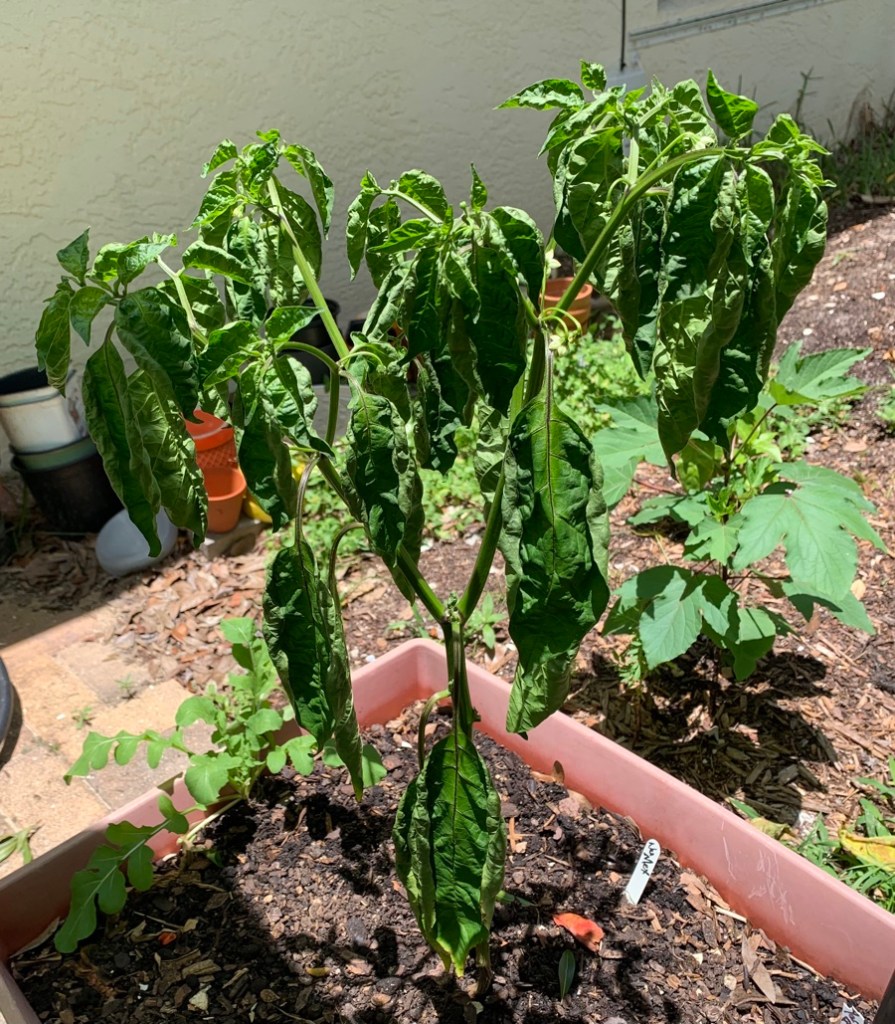
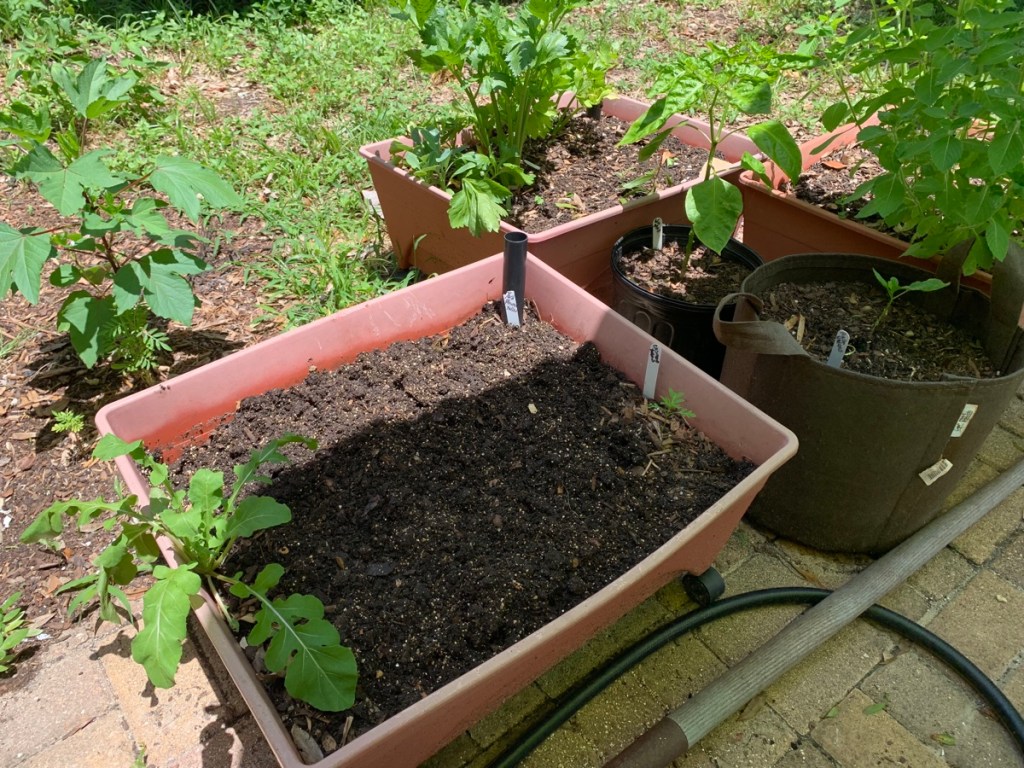
To avoid the problem of dirt sifting down into the bottom, I clean all dirt out of the box, remove the panel with the holes, and drill holes in the box bottom. A layer of mulch and stones will work for drainage. Now the box is more like a big plastic pot.
Spring 2022
I actually grew a few peppers in 2021. I was so stunned to find that peppers (and other things, like eggplant) would continue to live for years here! Eventually they don’t do very well, but I knew this climate was going to be a challenge.
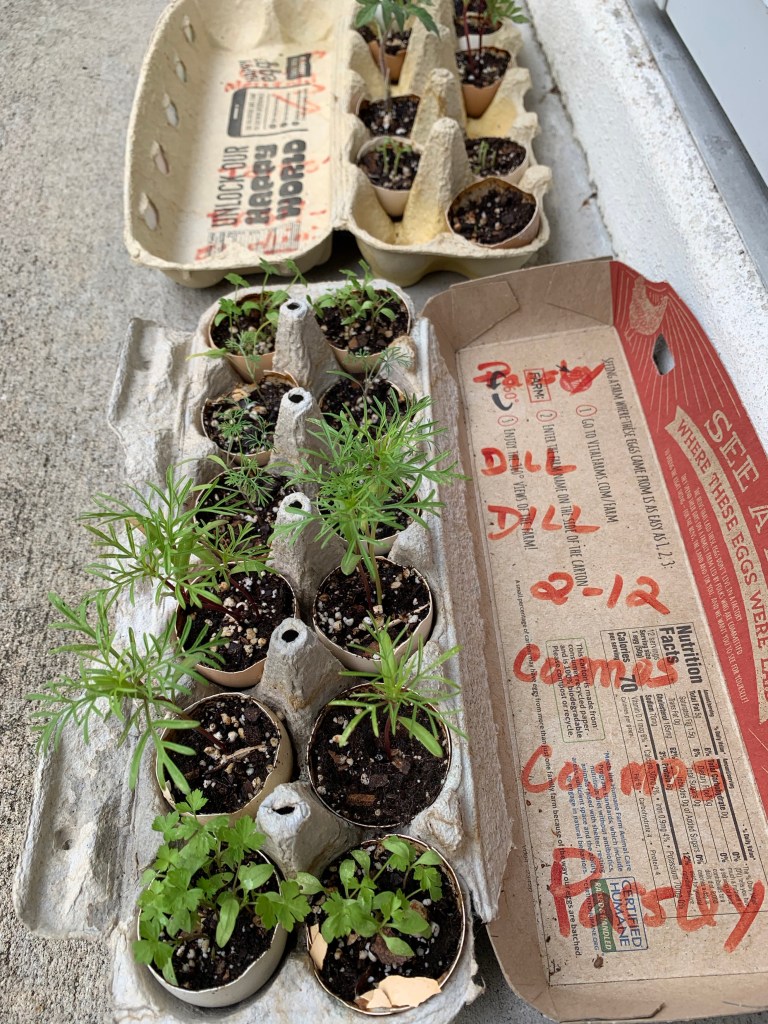
In 2022 I tried starting seeds in egg shells. It was a fail. Not worth the effort. In fact, starting seeds in small pots is not easy, and frankly, a waste of time.
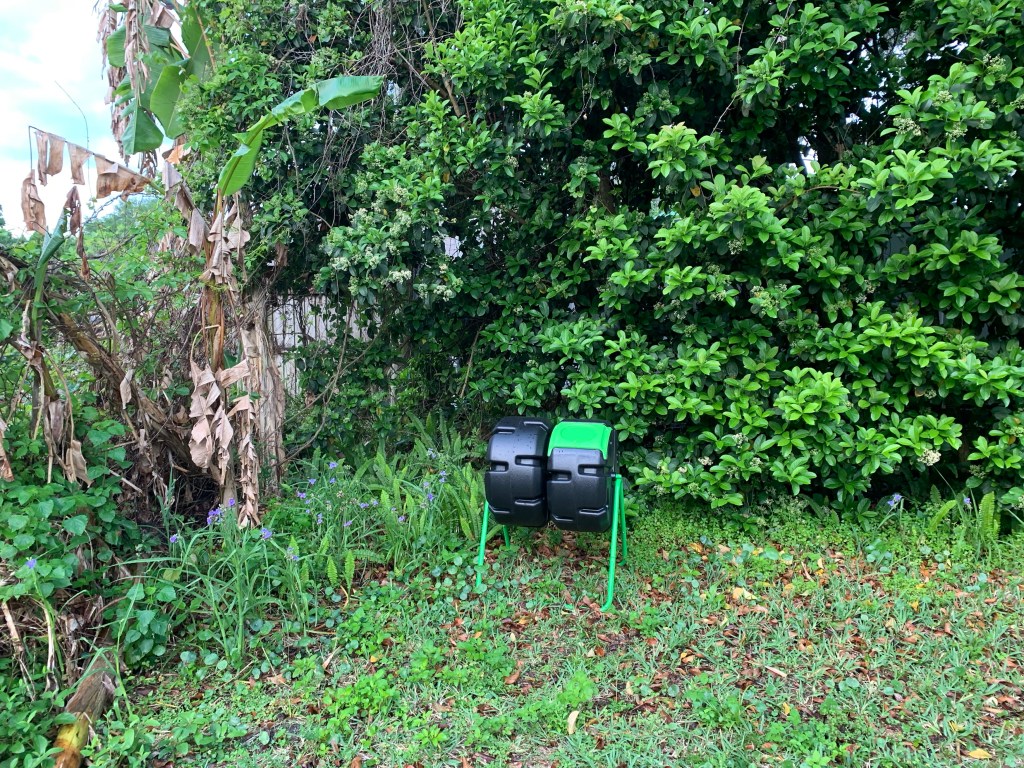
This was the year I began to compost. I bought the Hot Frog composter (which I am still using).
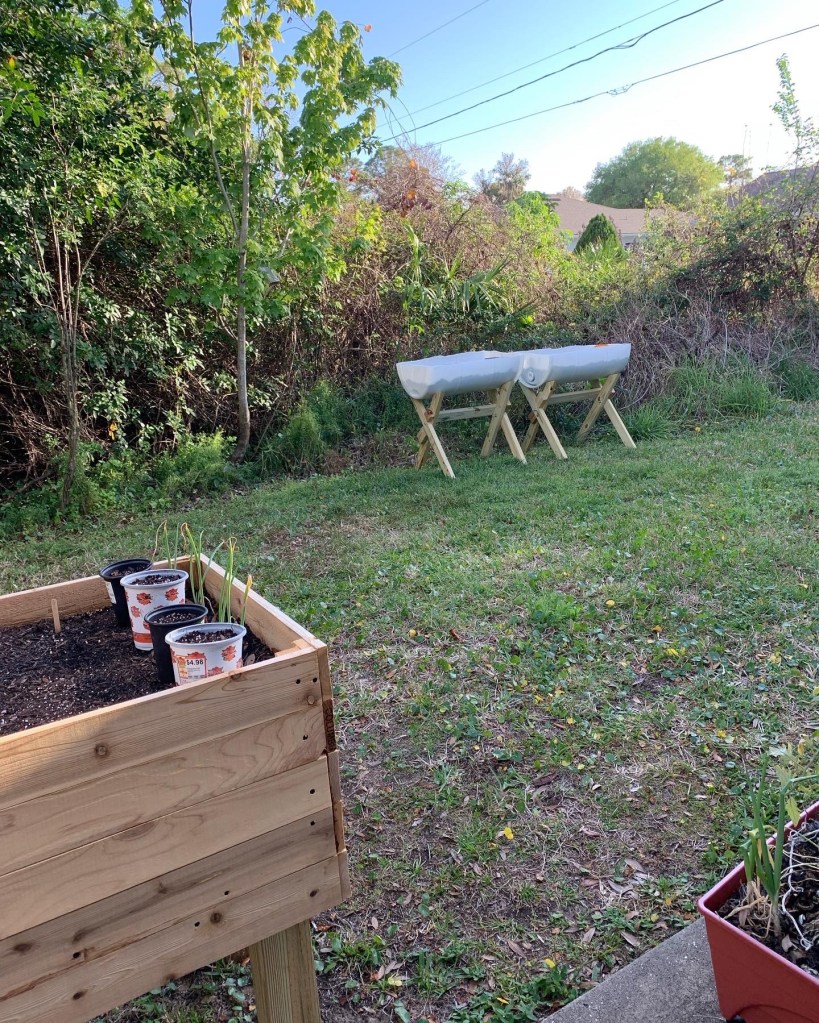
My son built a few raised beds from wood and white barrels he got from work. I still had nothing growing in the ground.
First in-ground Garden Area, 2023
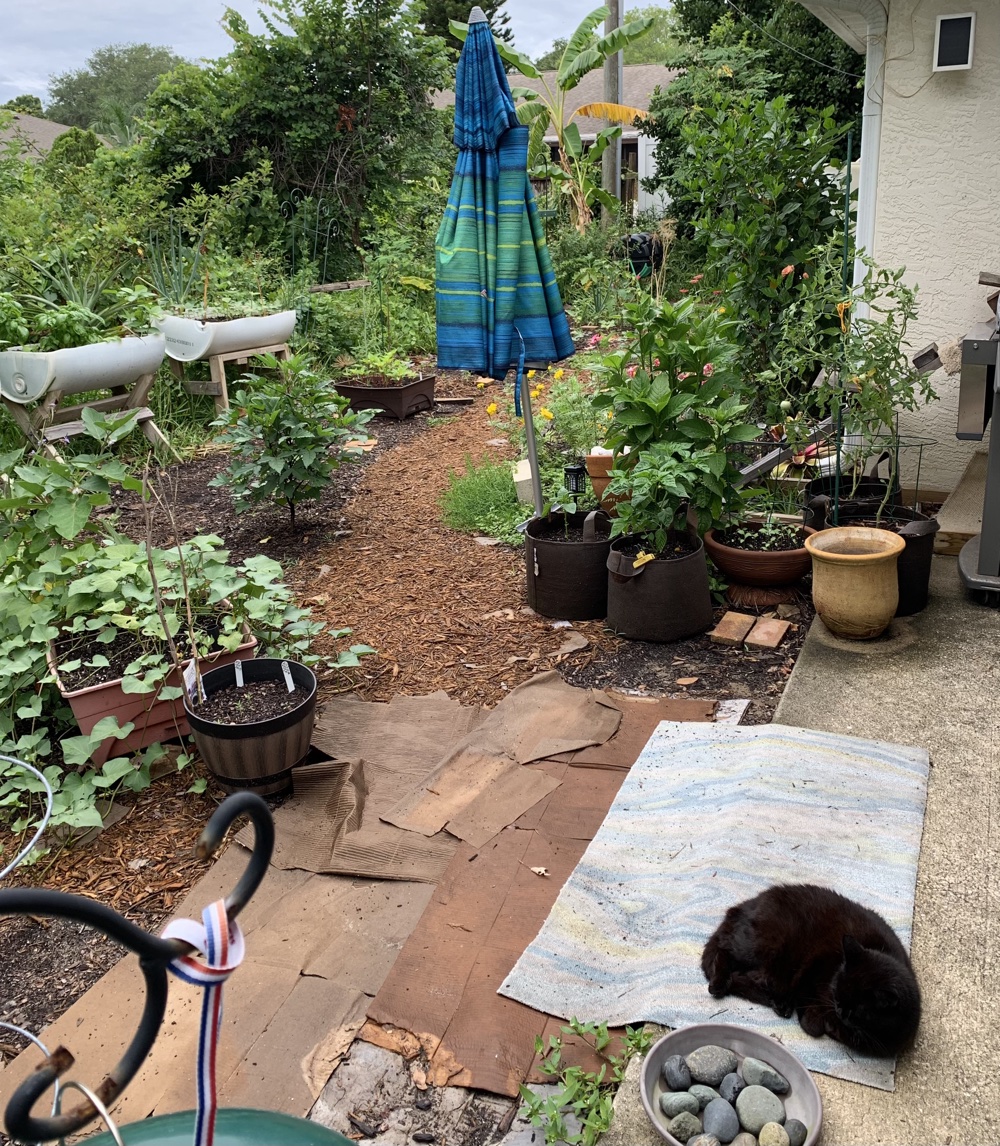
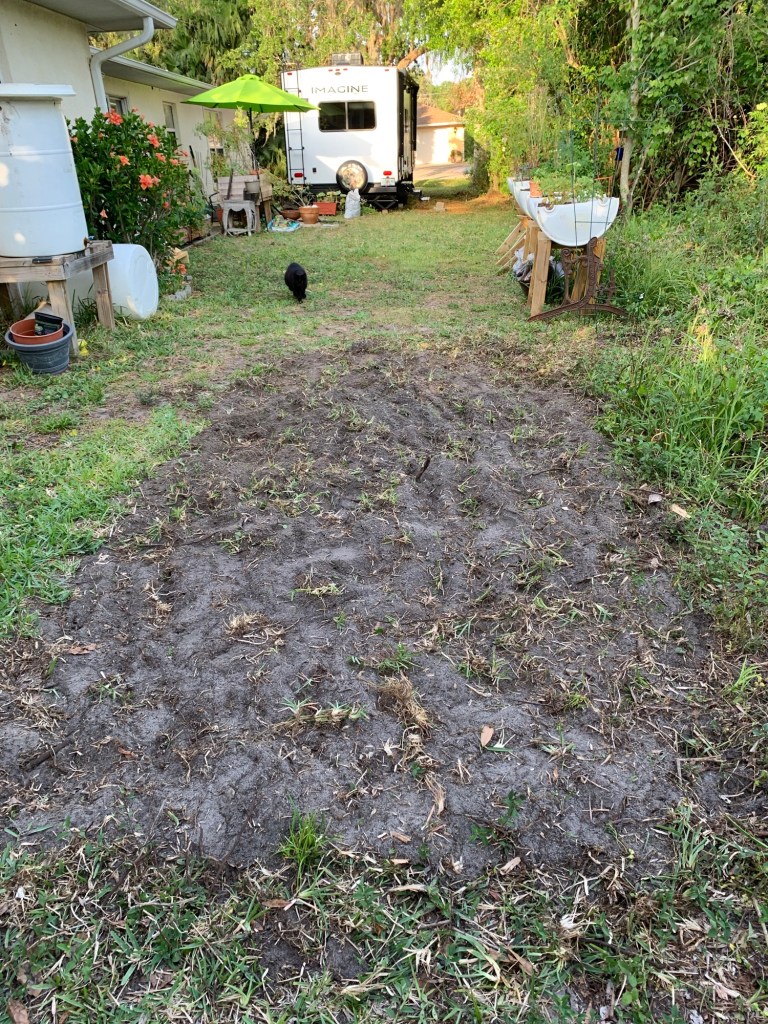
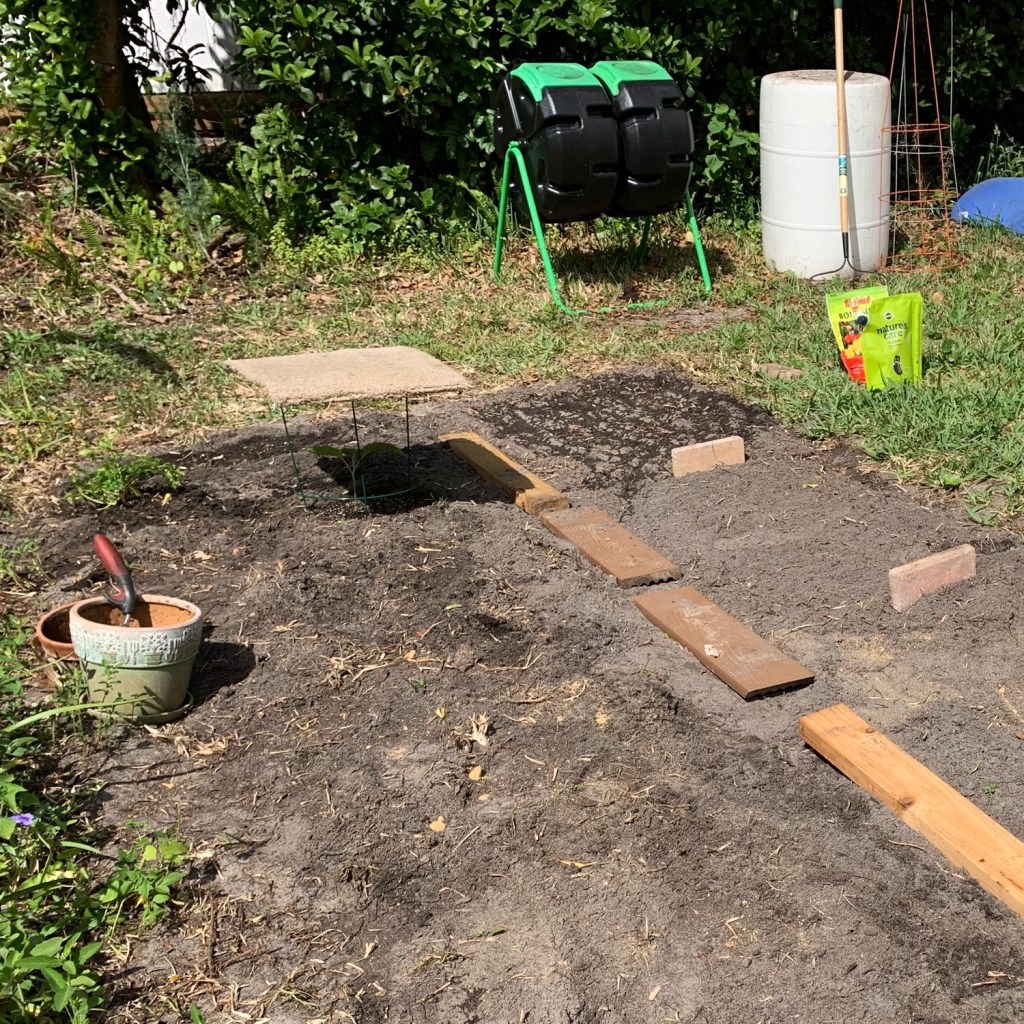
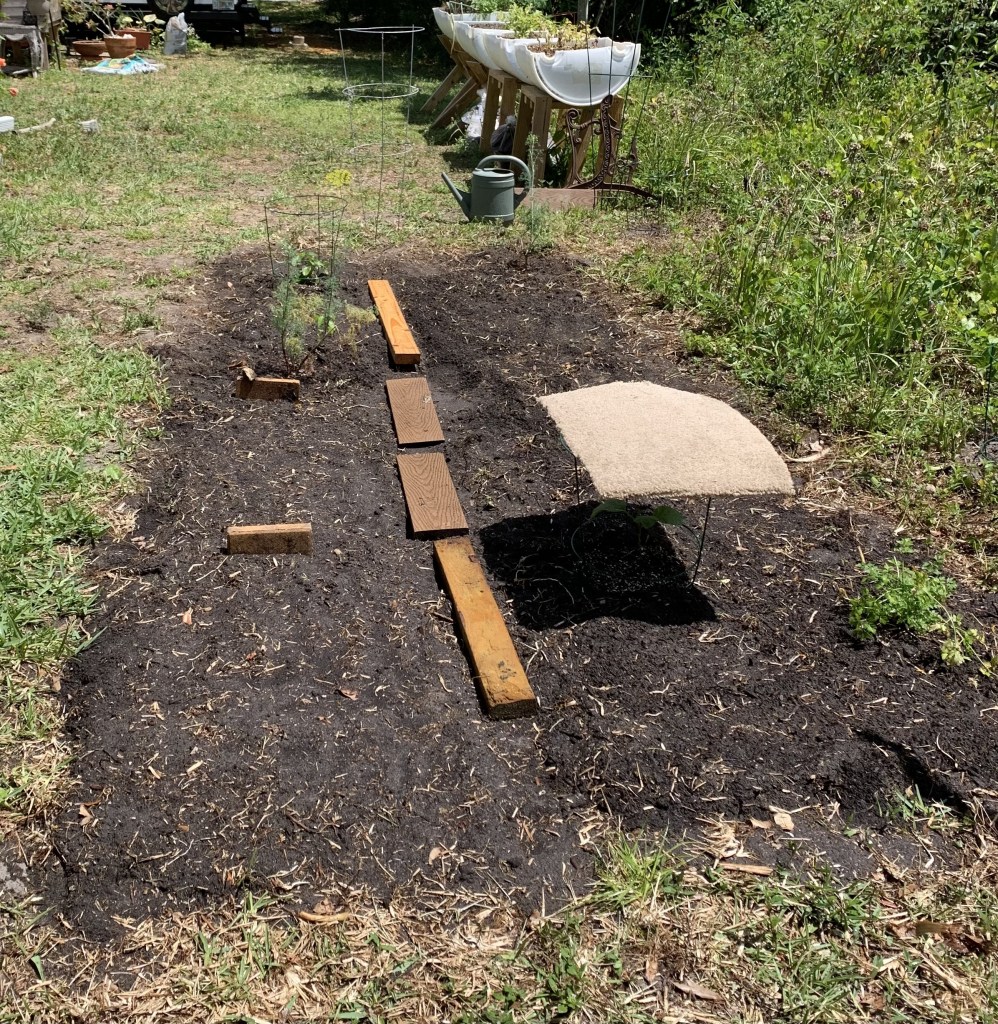
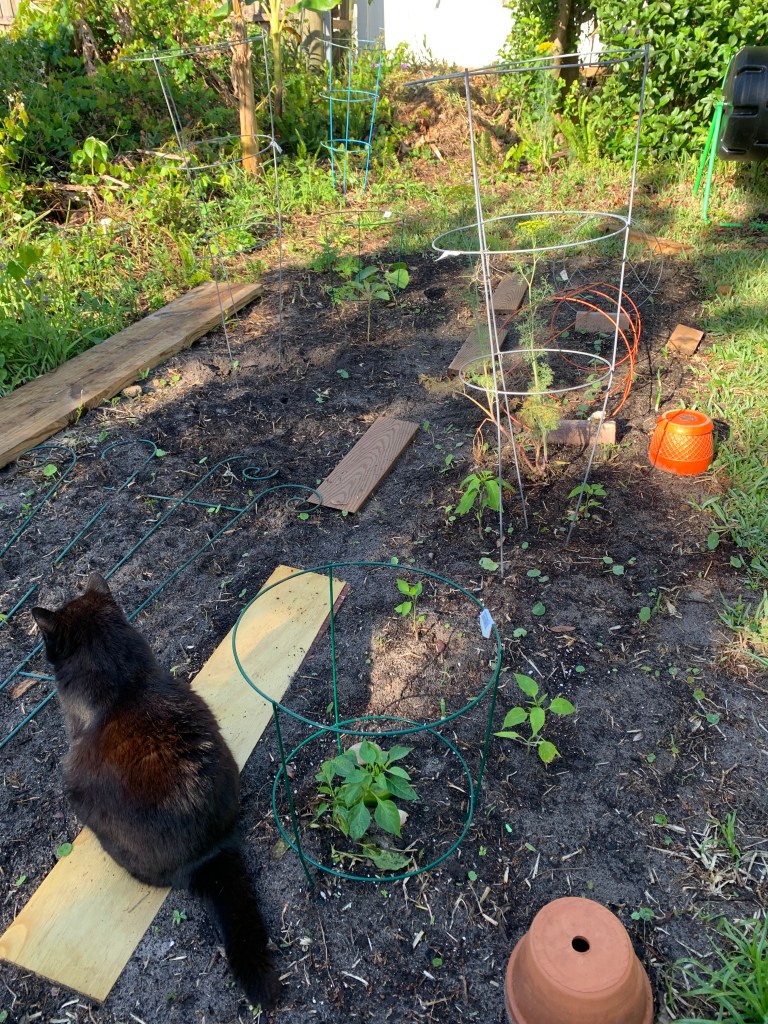
March of 2023 was when I decided to till the lawn and create some in-ground gardens for vegetables. I bought a rototiller and made a little area of dirt. After that, I began to use cardboard to kill the grass and create more gardens.
Cardboard takes longer, but it keeps all the good grass and topsoil undisturbed. It simply dies from being covered and becomes part of the soil.
To plant over cardboard that is not completely decomposed, use a hand fork and chop the cardboard and earth. Add amendments, and plant.
Summer 2024
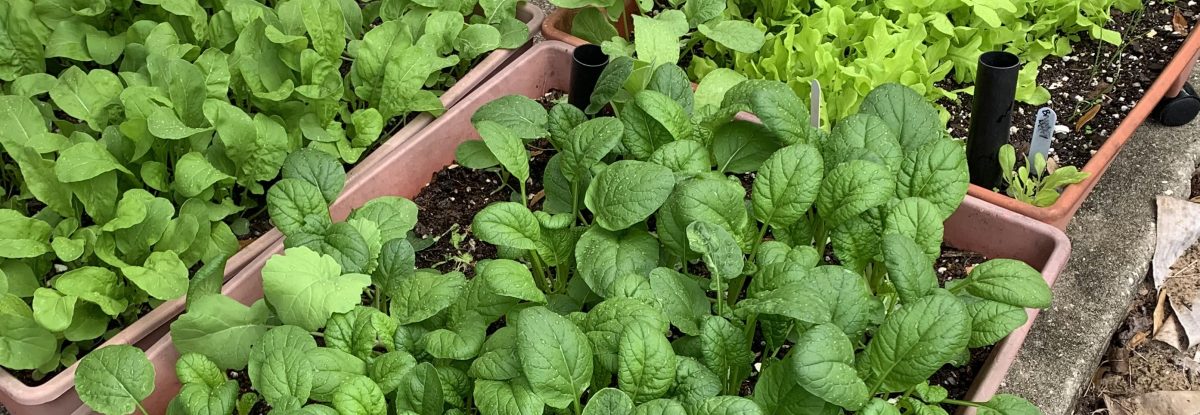
I still use the red grow boxes, although they have faded to pink over the years. These grow boxes are best for growing vegetables that have shallow roots. I now have seven boxes. They are perfect for growing onions, half-long carrots, and greens. I use them as seed starters too.
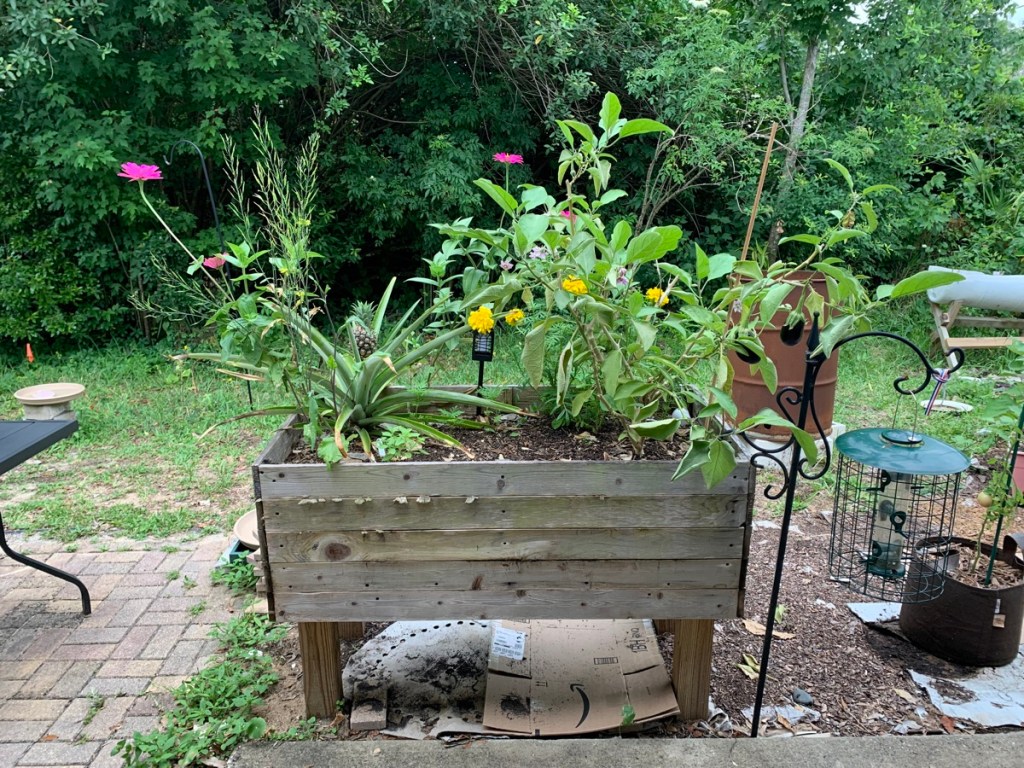
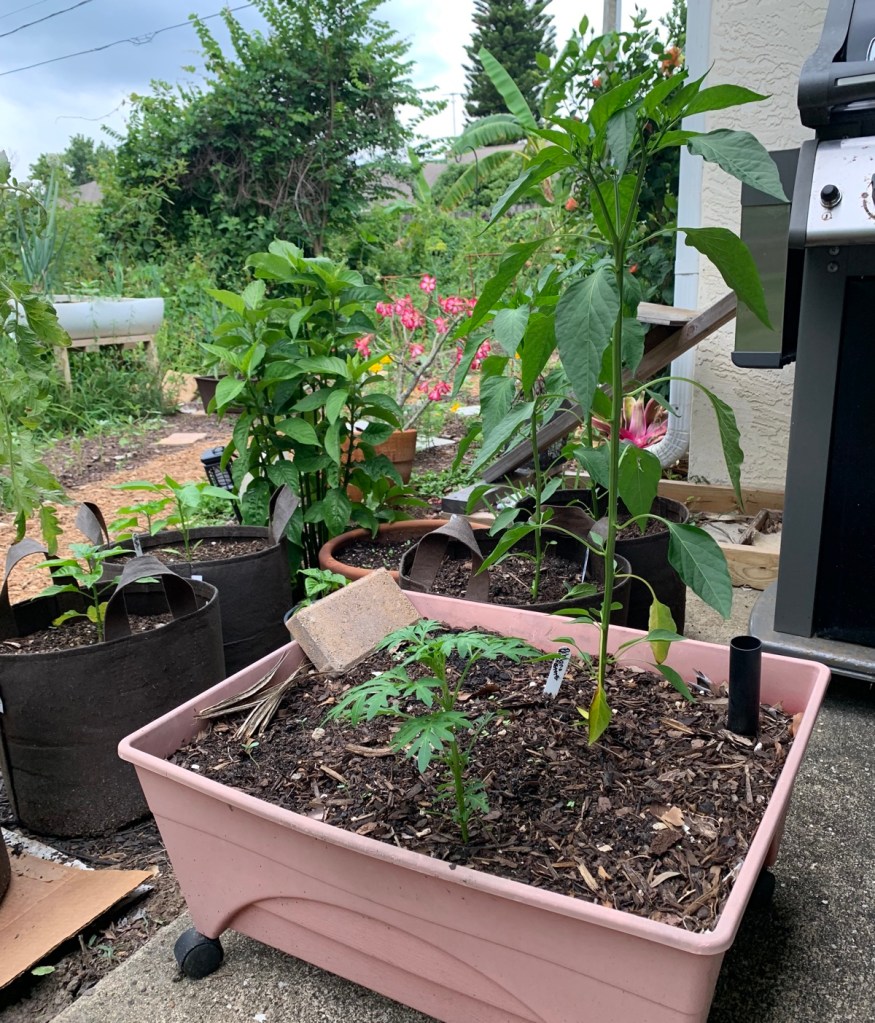
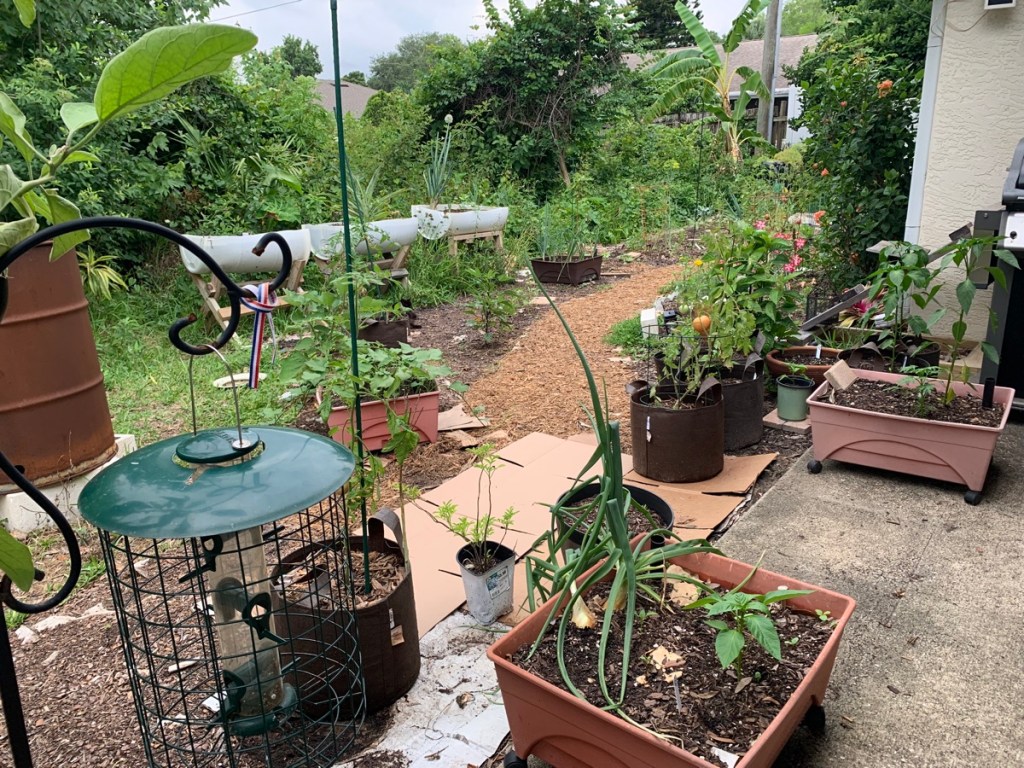
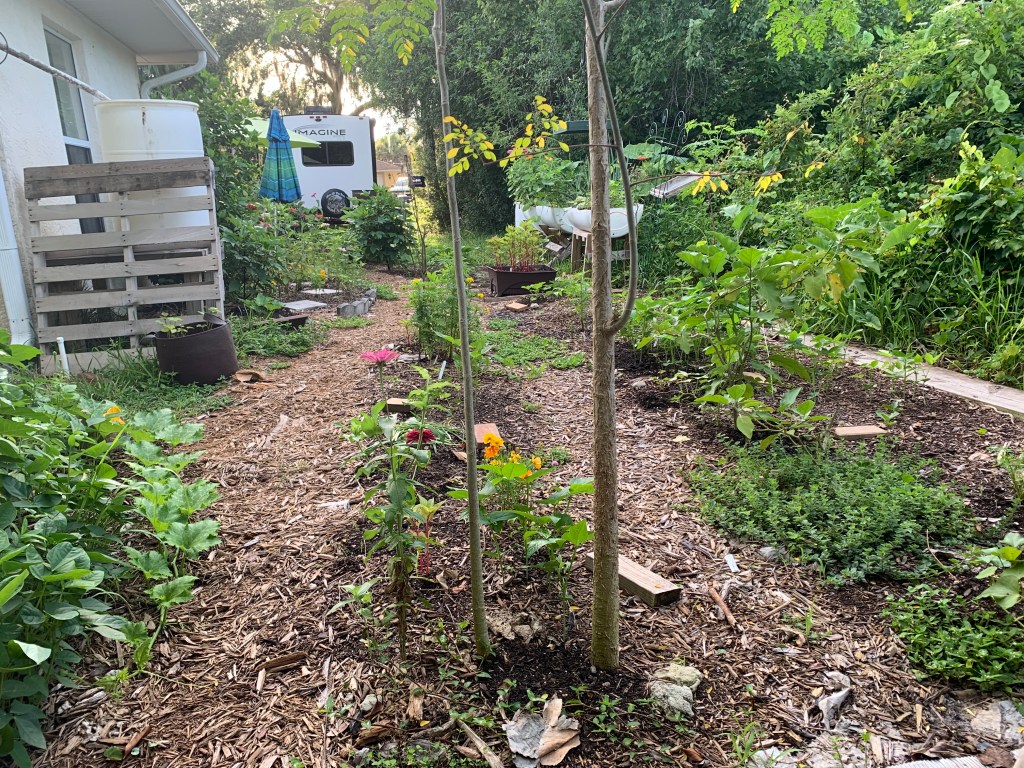
Now, I am beginning to feel pretty confident about which crops to grow. I’m still in the experimental stage with some things. Gardening is an ongoing learning adventure!





 Hydrangeas Blue