It is the beginning of September and my end of summer garden clean up is underway.
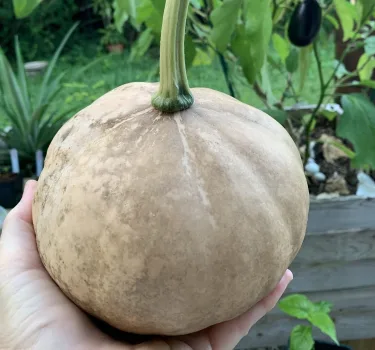
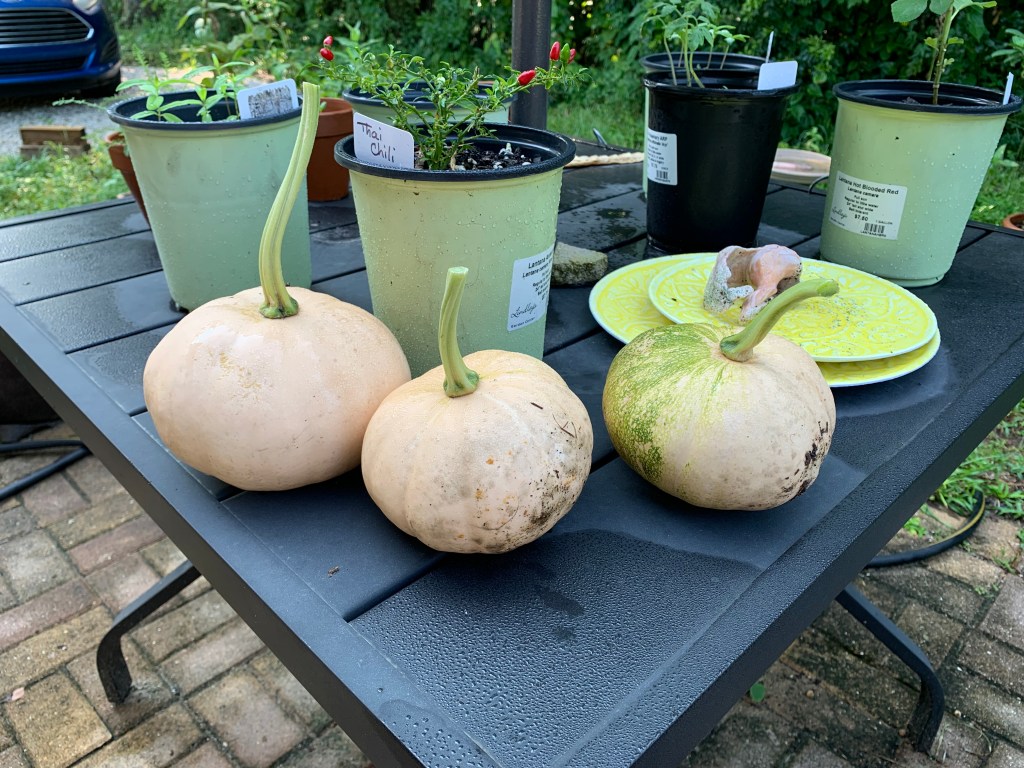
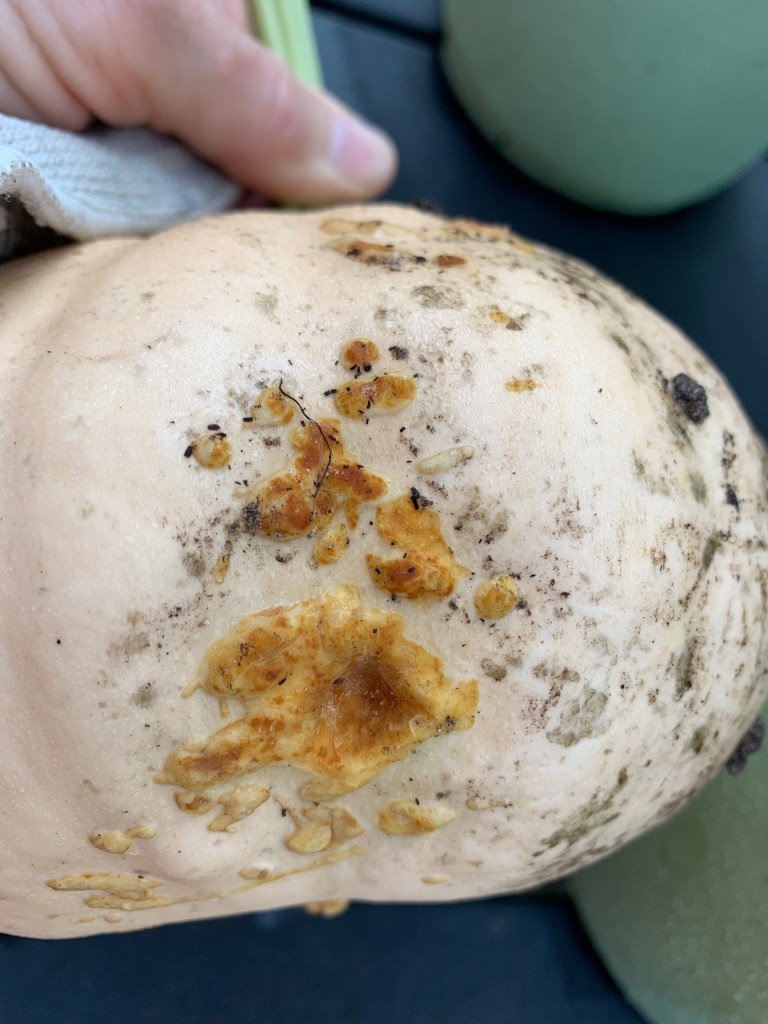
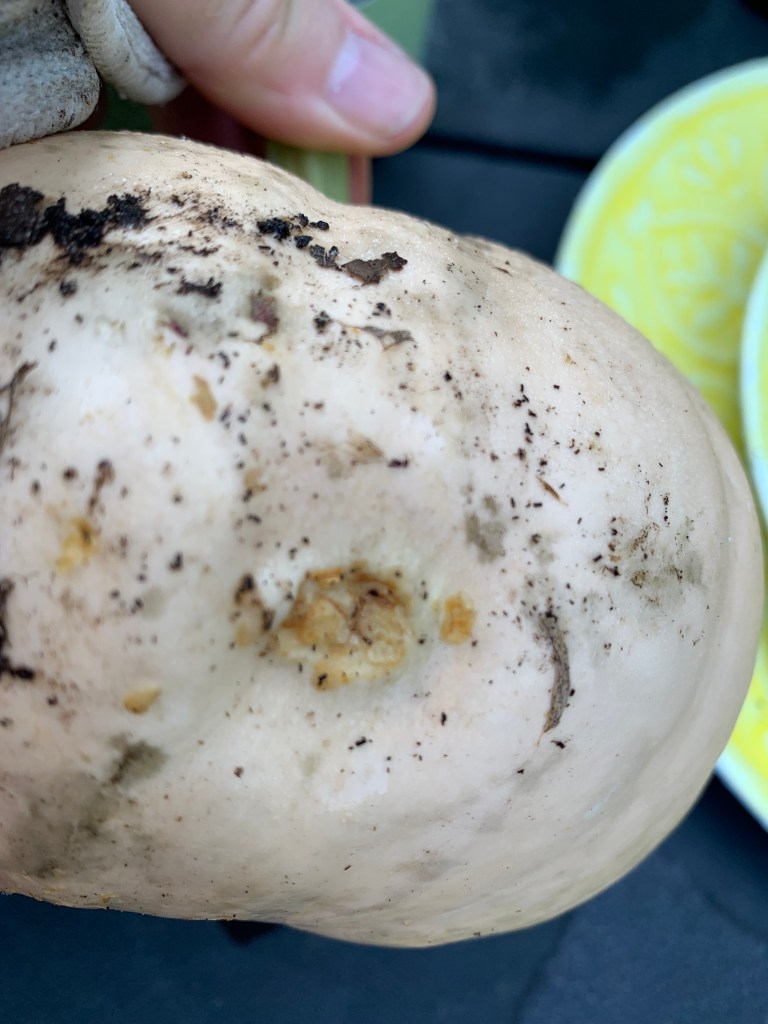
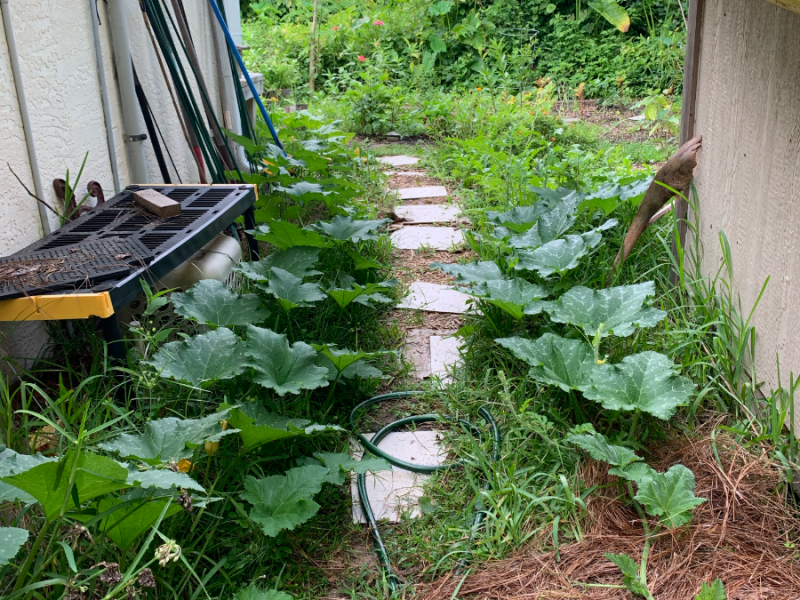
I happily pulled up all the Seminole pumpkin vines. I managed to haul in my huge harvest (not) of three little pumpkins. Two of them have holes from something trying to bore in.
Seminole pumpkins
I’m so over the vines that right now, I am planning to grow nothing next year that vines!
General Summer Grow Box Cleanup
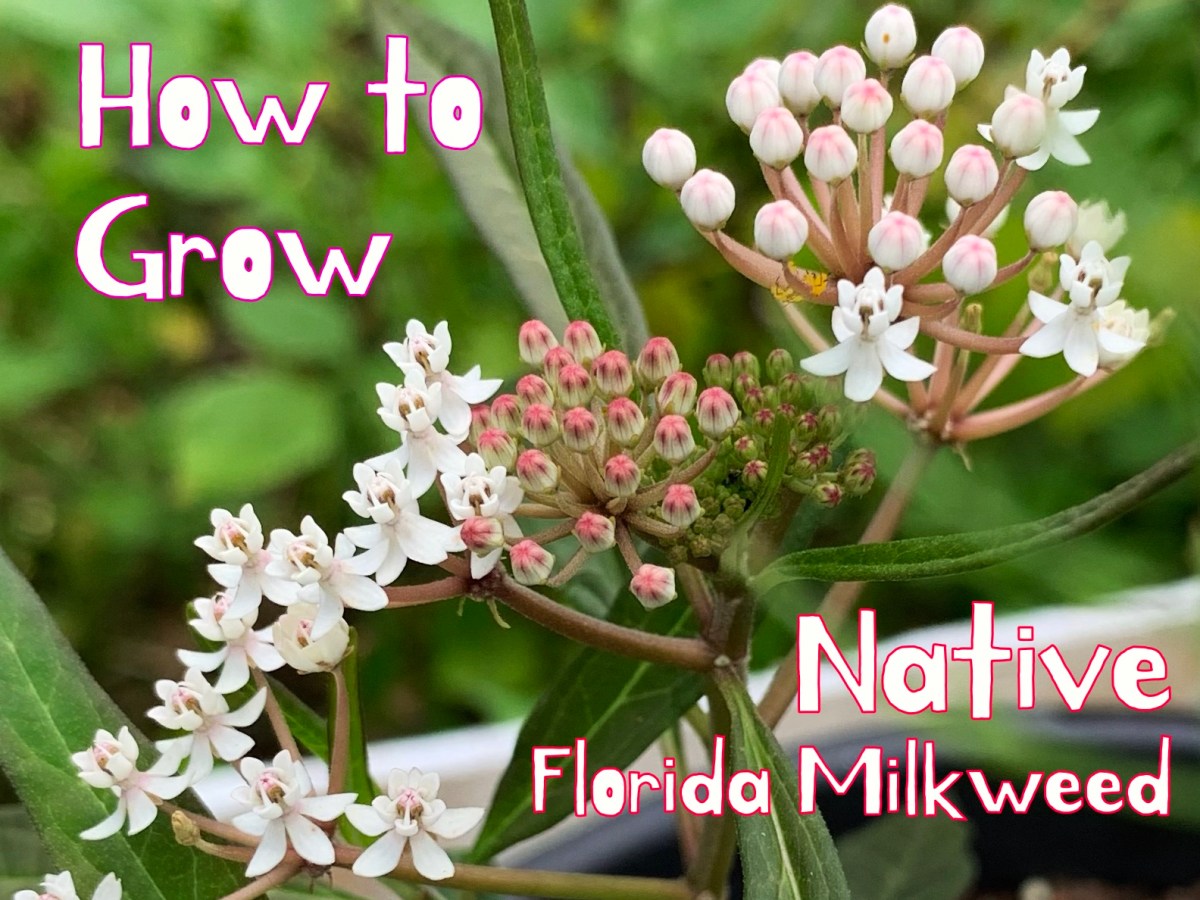
In general my cleanup activities include cutting down old flowers (Zinnias) and cutting back any tropical milkweed. This year I have four native swamp milkweed plants for the butterflies. And the butterflies (Monarchs) are still here.
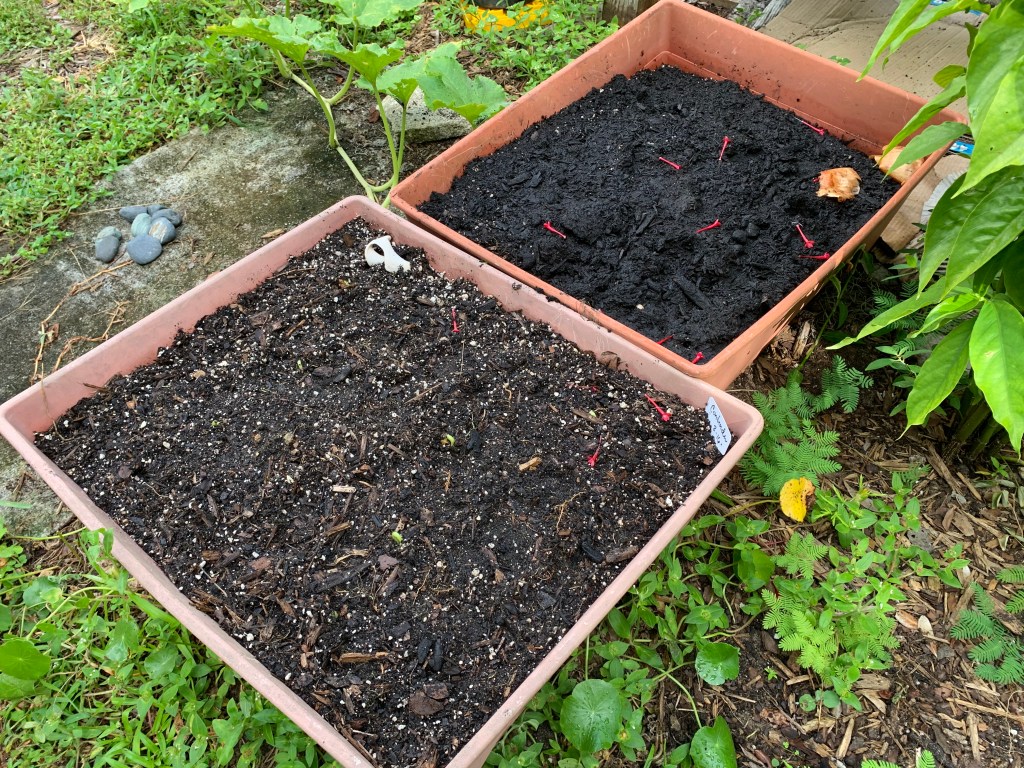
The grow boxes are being readied for planting. I will use them mostly for growing greens. I can’t wait for fresh greens!
Adding compost
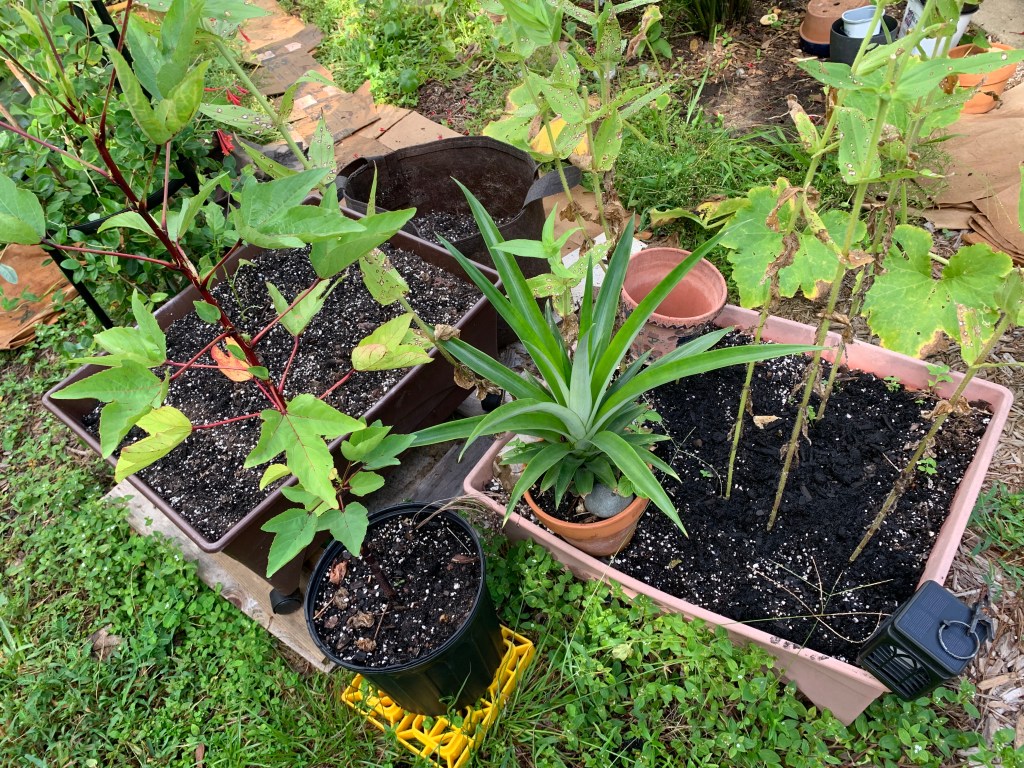
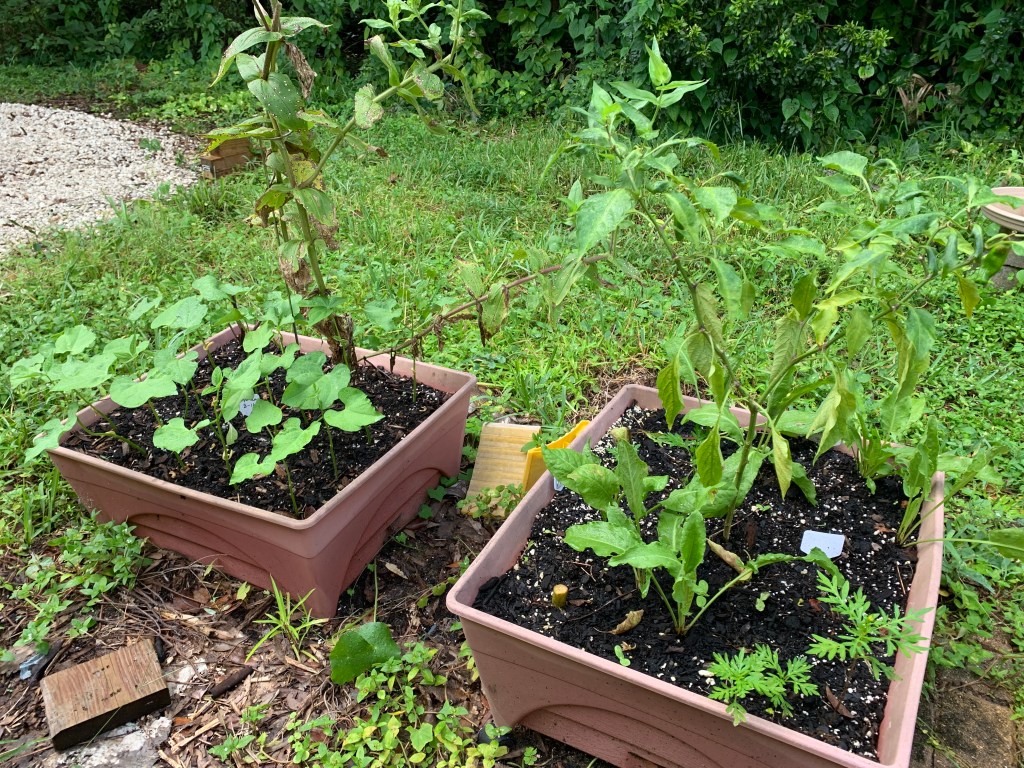
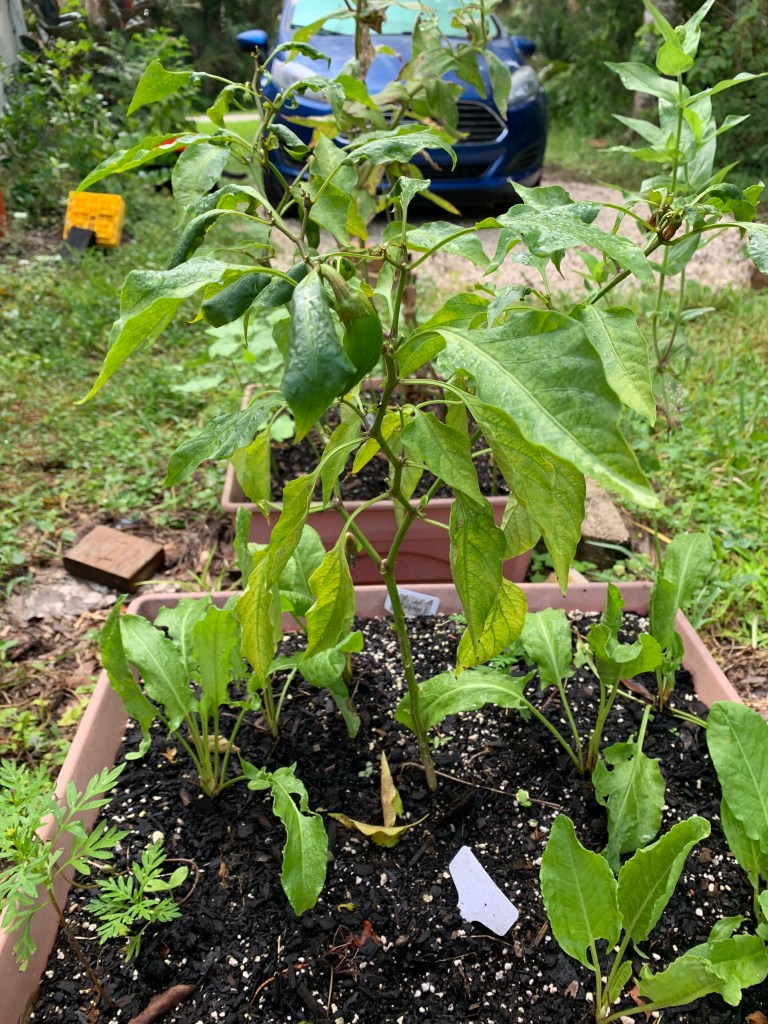
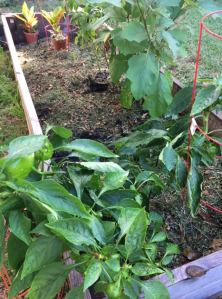
A couple of boxes are holding plants that will remain. Sorrel is growing around this Big Jim (not really very big) pepper plant. I don’t have luck growing peppers, so I expect this one will die sometime soon.
Sorrel is a perennial here and I planted these last year some time. It is a great addition to a salad, but is a bit too tangy to eat alone.
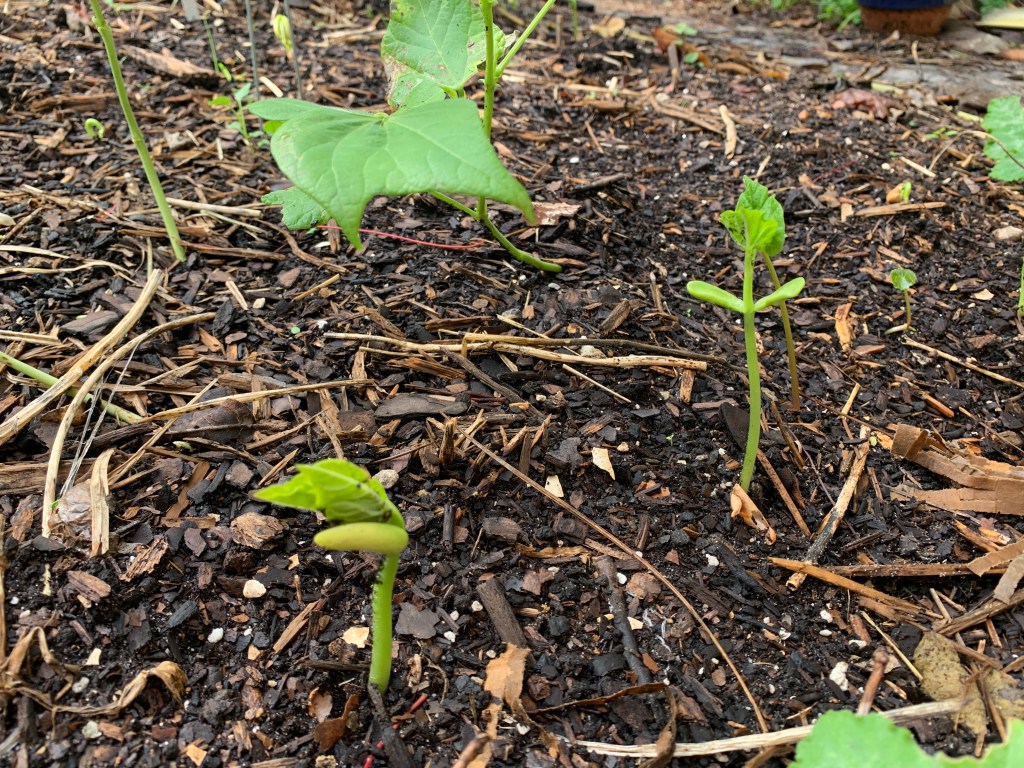
Green beans have been planted and are growing like mad. It’s early for them, but I had a packet from last year, so I figured, why not? Even if they don’t give me beans, they will enrich the soil with nitrogen.
Left box, green beansSorrel and pepper
The compost has been cooking and I will have some to add to the new beds. After I pulled the sweet potatoes, I did mix in some of my compost containing earthworms.
Clean up for me means making space for new seeds to be sown. It is still very hot here, so I can’t spend a lot of time working in the yard. Mainly, I need my boxes ready for seeds. And I am planting some things earlier this year to see what happens.
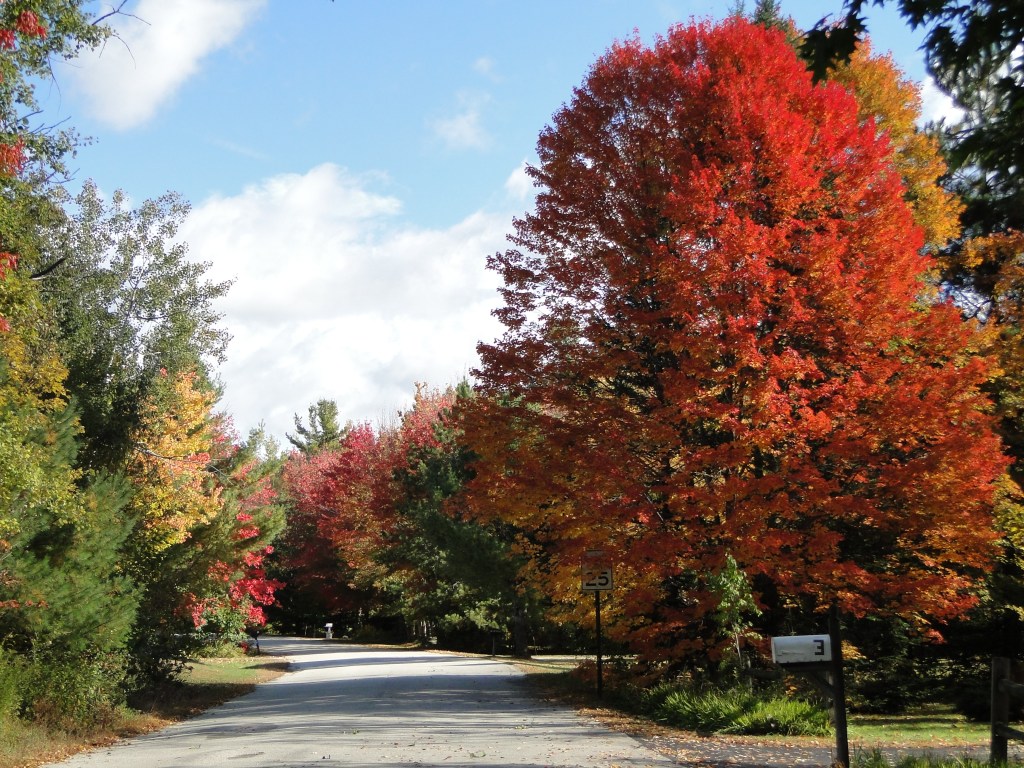
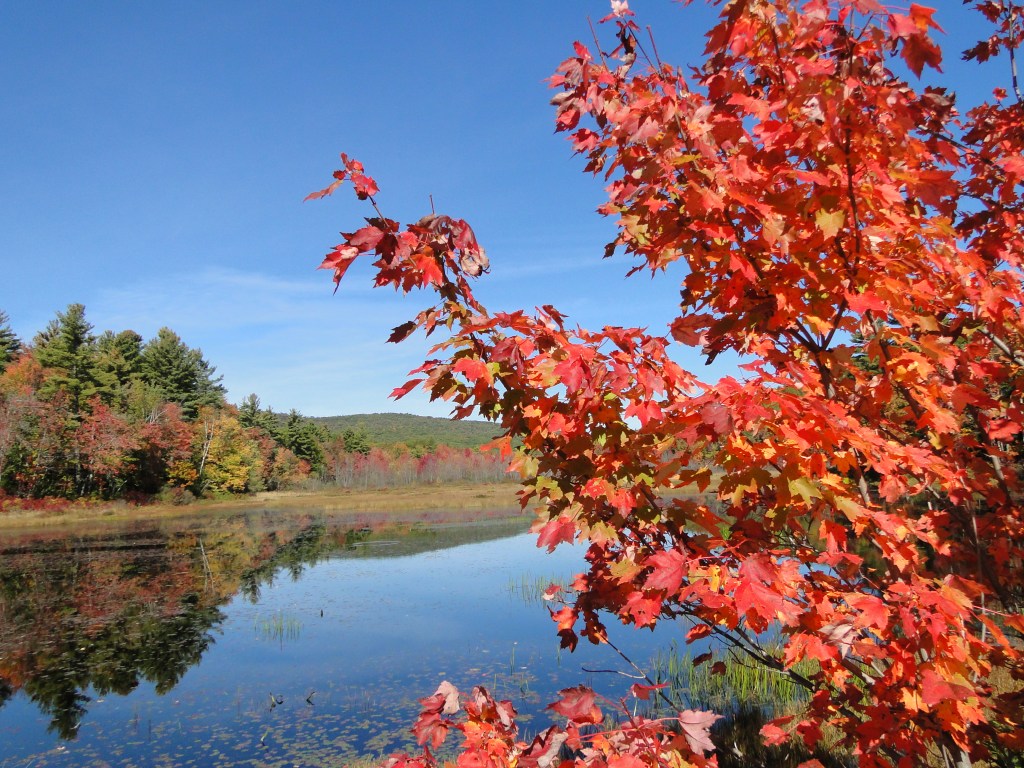
Happy Fall everyone! Wish I was in New England where Fall is wonderful.
Fall is coming soon. The time to order seeds for planting in Florida’s cooler months has come.
It’s easy to forget to order seeds for Fall planting because we only do that here in the south. When the rest of the country is winding down, cleaning up gardens, and raking leaves, our best planting time just arriving.
It is July, and suddenly I realized that Fall will be here in no time. I got busy ordering seeds from my favorite online places.
My Fall Planting List
This list contains the vegetables I will be growing from seed. Most will be planted sometime in October. After lots of trial and error, this my favorites list. I love to eat this food. Some things take forever to grow, but they are worth the wait.
Here is what I’ve ordered, with the company name.
Carrots – (SESE) – take 4-5 months to grow
Bulb Onions – (SESE & Baker Creek) – take 4-5 months to grow
Contender Green Beans – (SESE & The Urban Harvest) – Fast growing bush type. Succession plant all winter. Good for soil too. Have tried others, but love Contender.
Beets – (Baker Creek, golden, & SESE) – Usually stay small, and take a lot of time. But I love beets.
Chijimisai – (The Urban Harvest) – fast growing green with roundish leaves. A favorite winter green.
Arugula – (Baker Creek) – Grew it 2 years ago.
Kale – (SESE) – Not much luck before, but will try again.
Maybe I waited too long, but I had to order from a few places to get the seeds I wanted. I try to buy organic seeds, but I don’t think Baker Creek’s seeds are organic. Their seeds are heirloom and non-GMO. A lot of my currently growing Zinnias came from Baker Creek.
I have some old seeds, which are dated 2024. I’ll plant the new seeds first and if there is space left anywhere, I will throw in some older stuff.
Seeds Saved For Fall Planting
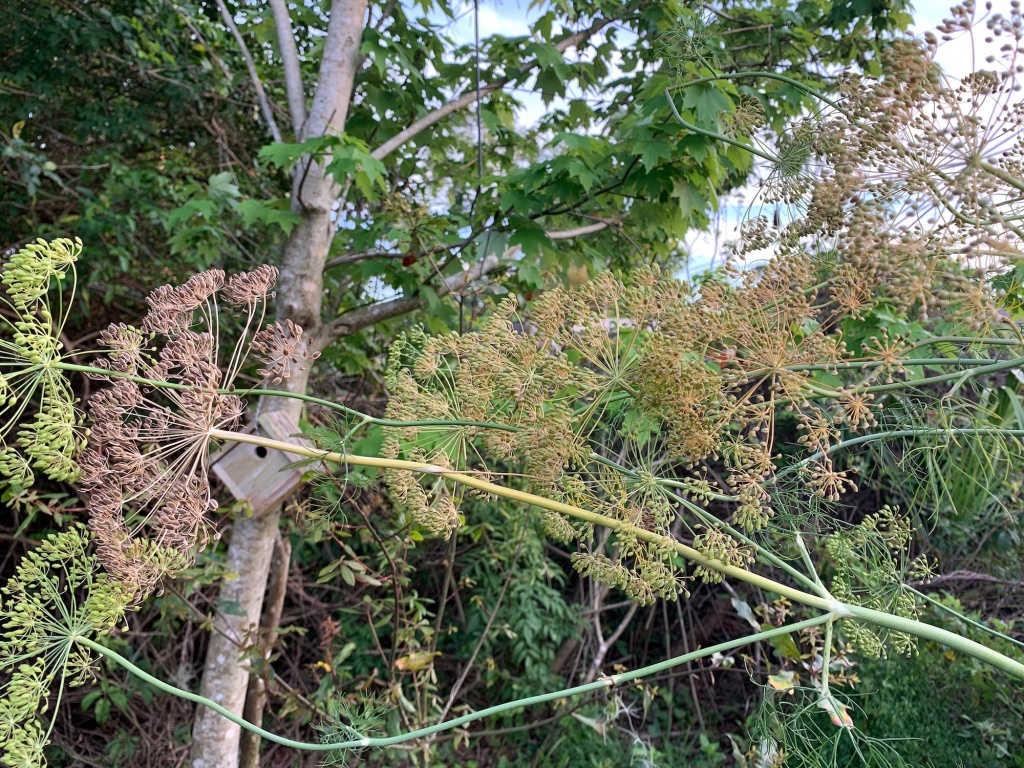
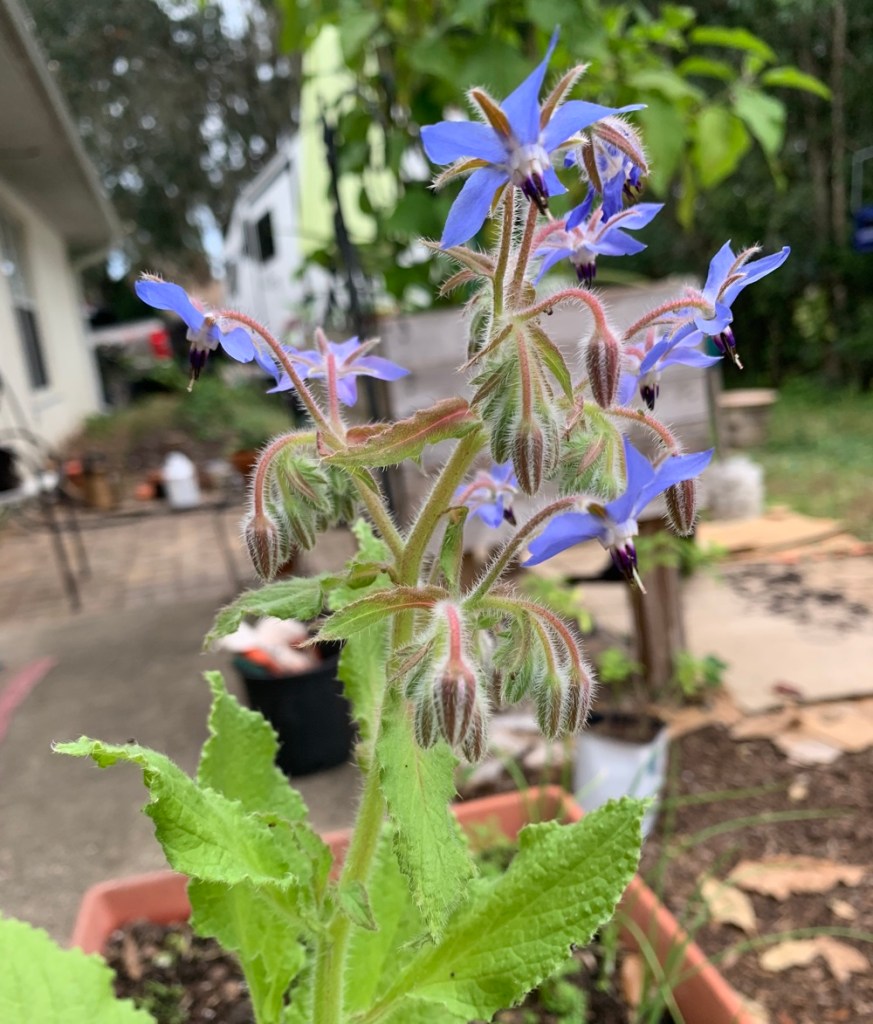
I’ve cut way down on saving seeds, but some I do save. Dill and borage like cooler weather and saving dill seeds is so easy to do. Borage is a bit trickier. I have to catch the pod before it opens and drops the black seeds out. But, this means I will have borage popping up all over – finger’s crossed.
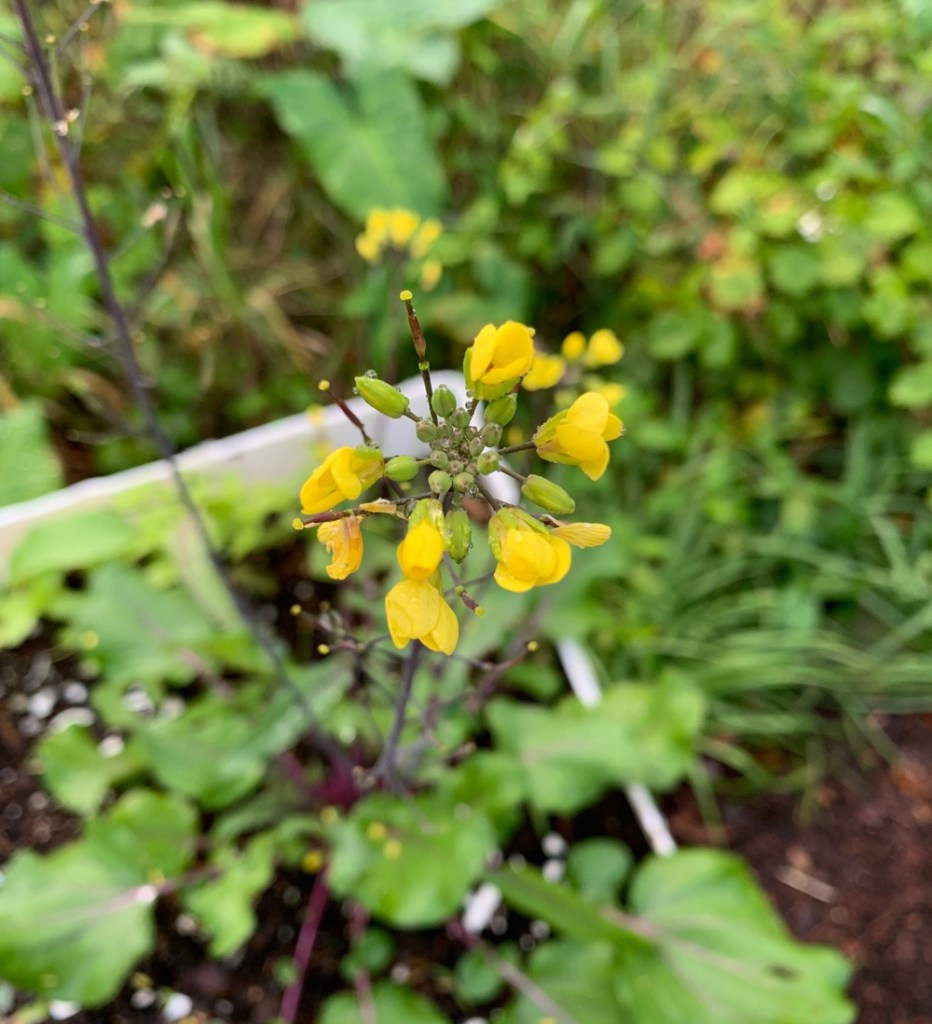
Hont sai flowering broccoli is another one with easy to save seeds. I like to grow it for the yellow flowers that bugs love. I’m not too particular when planting and pretty much scatter the seeds around.
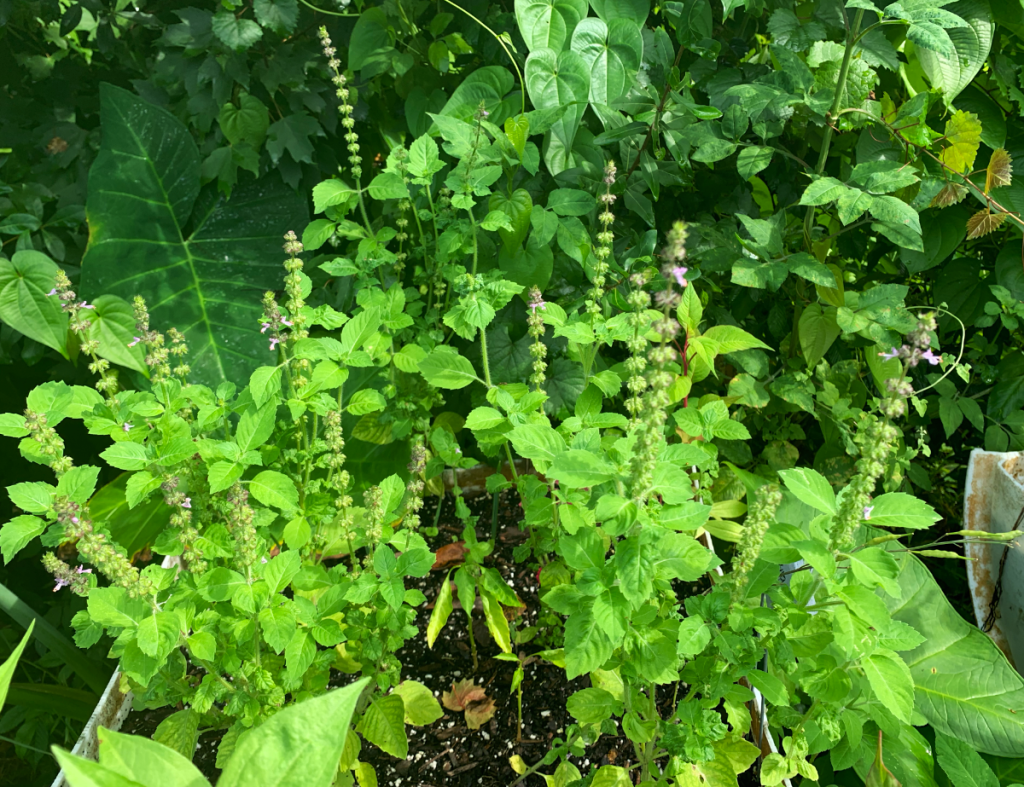
Holy basil is a recent favorite to grow, and it grows year round. I think it does better in cooler weather.
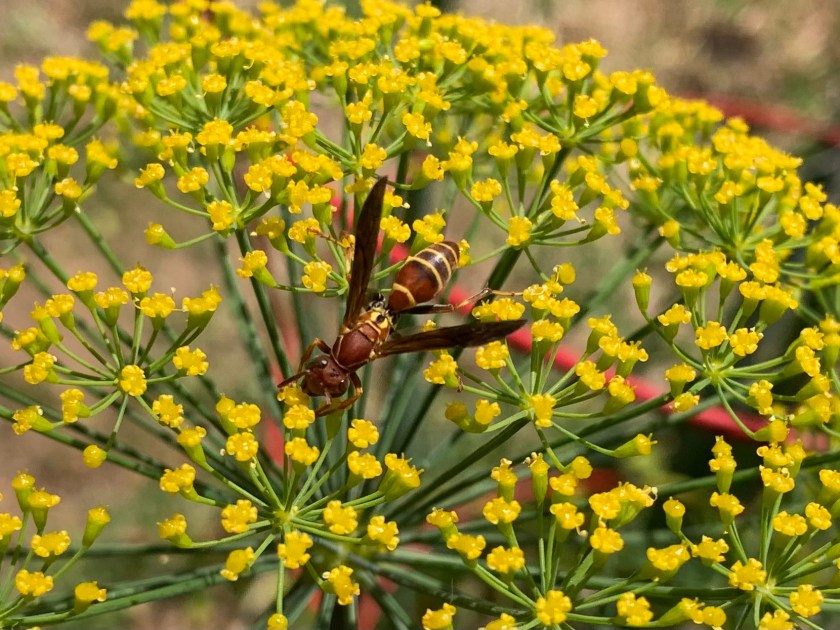
Flowering Hon Tsai BroccoliDill going to seedDill flowerNovember flowers on borage.Holy basil
Marigolds From Seed, and Deterring Nematodes
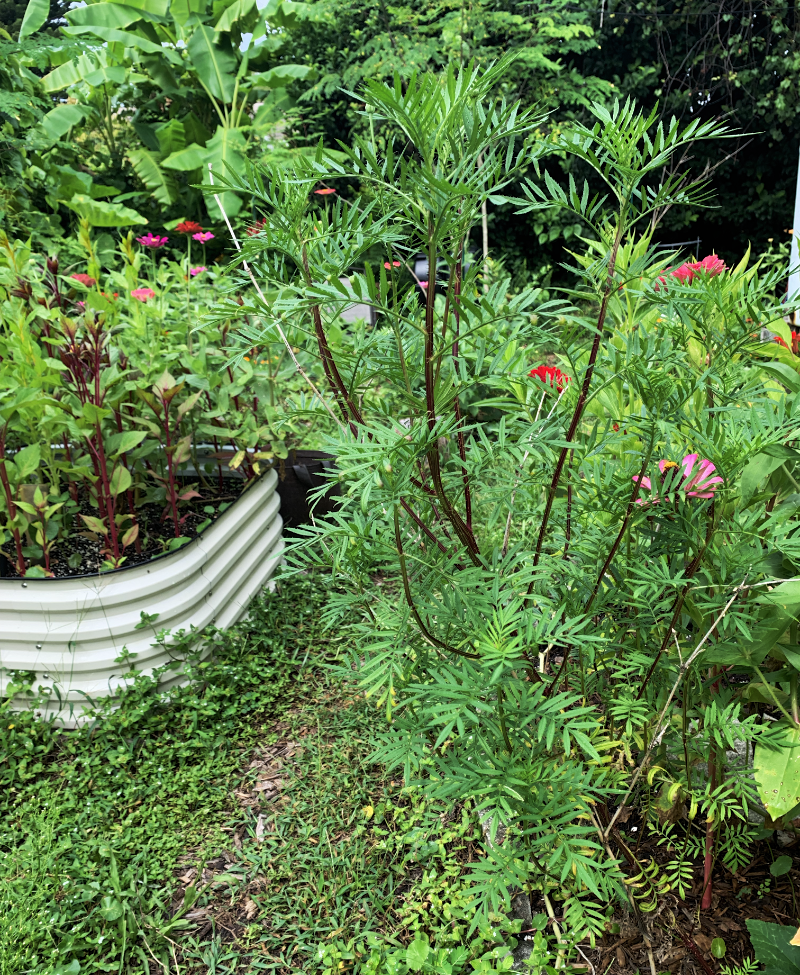
I did order some new Zinnia seeds and French Marigolds from Southern Exposure Seed Exchange. The Golden Guardian marigold variety is supposed to be very good at repelling nematodes.
Here in the south, we tend to have to deal with nematodes. They like warm weather. I have been unsuccessful at growing peppers in my yard. My eggplants that are in the ground also look pretty bad. It’s possible I have some kind of nematodes. I need to work on that by planting marigolds – maybe throughout the year. Possibly as long as they have sun they will be happy.
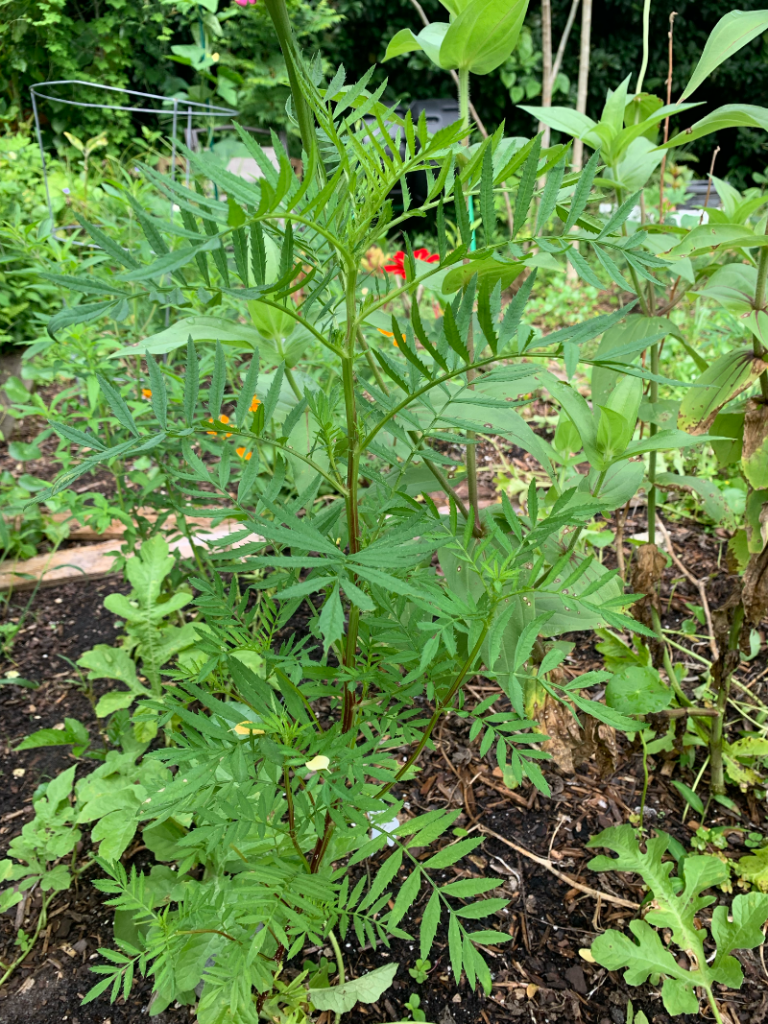
marigold
The Marigolds I have growing now are mostly flower-less. They are very tall. When they quit growing, I will cut them up and mix them into the compost.
Florida’s gardening site has this to say about planting marigolds. Also, on this page entitled, Garden Myths, Volume 1. I still say it’s worth a try. I’ll be sure to write about trying to grow Marigolds during our Florida winter season.
Fall planting time is nearly here in my area and I’ve begun to sow seeds already. Although the weather is hot, I’m hoping the seeds will grow.
I live in east, Central Florida, which is growing zone 9b. It is September, and I have planted a few different vegetable seeds as a trial. I don’t know if the weather is too hot for them. Last year I waited until October. So far, I have seen some nice sprouting.
Here’s a list of the seeds I have planted, and where they were planted (in ground or pots). They are all growing, but some look better than others.
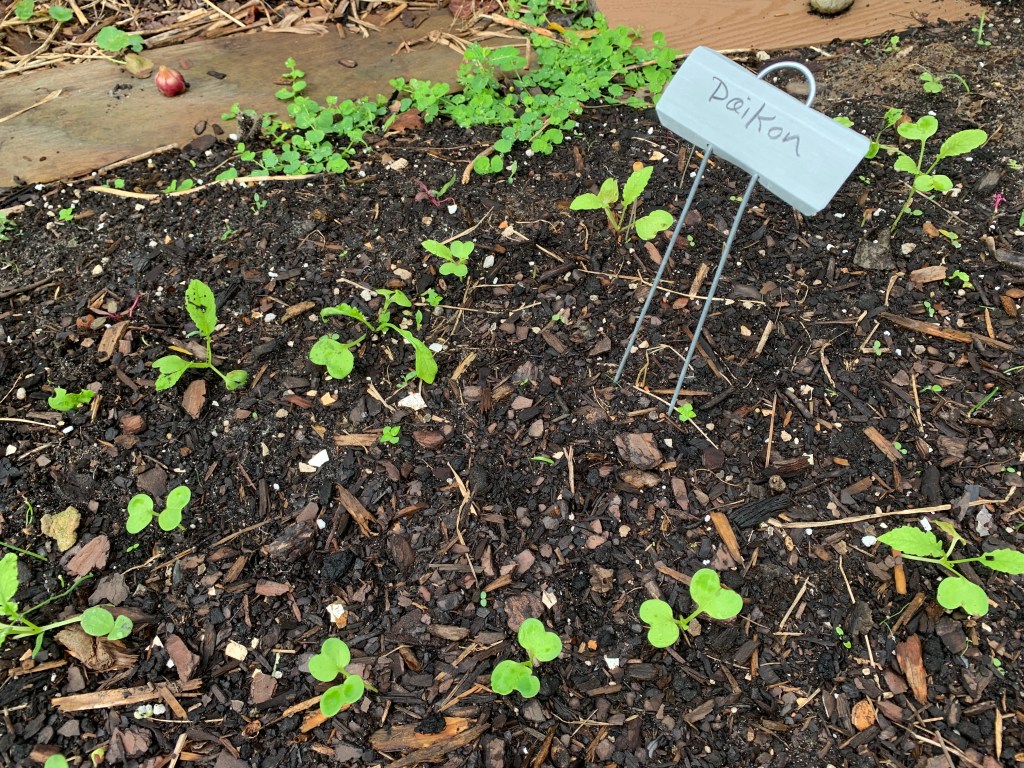
Daikon radish – these seeds were put into the ground.
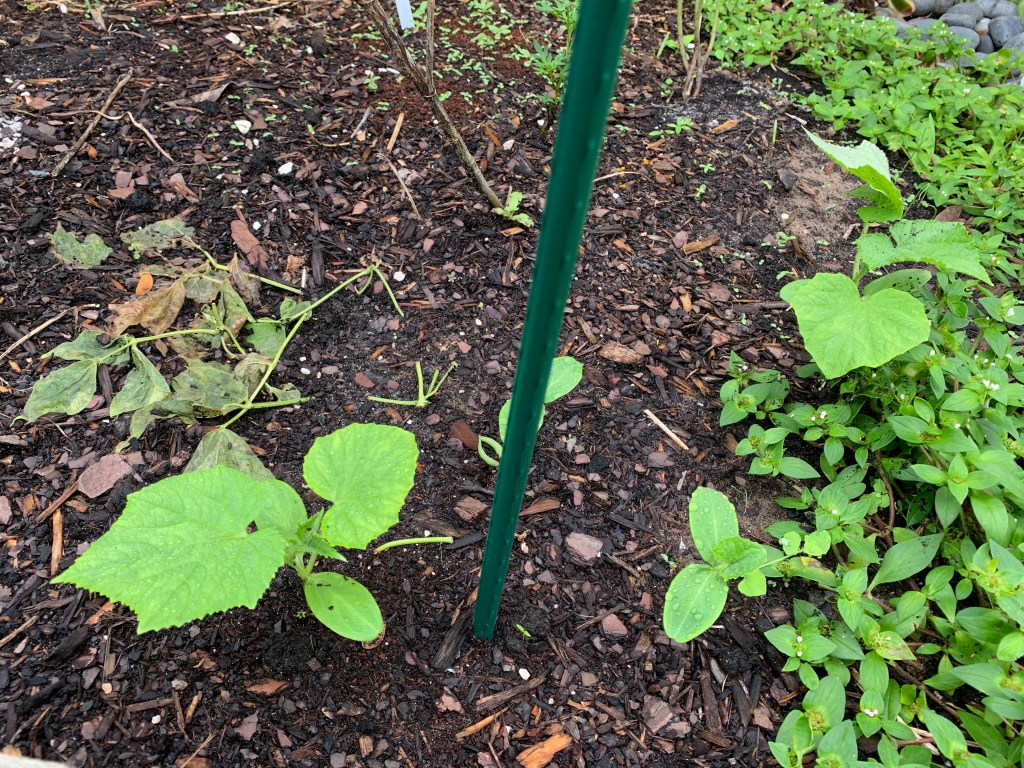
Cucumber – first set of seeds didn’t do much, so I’ve planted more from a newer packet. (in ground)
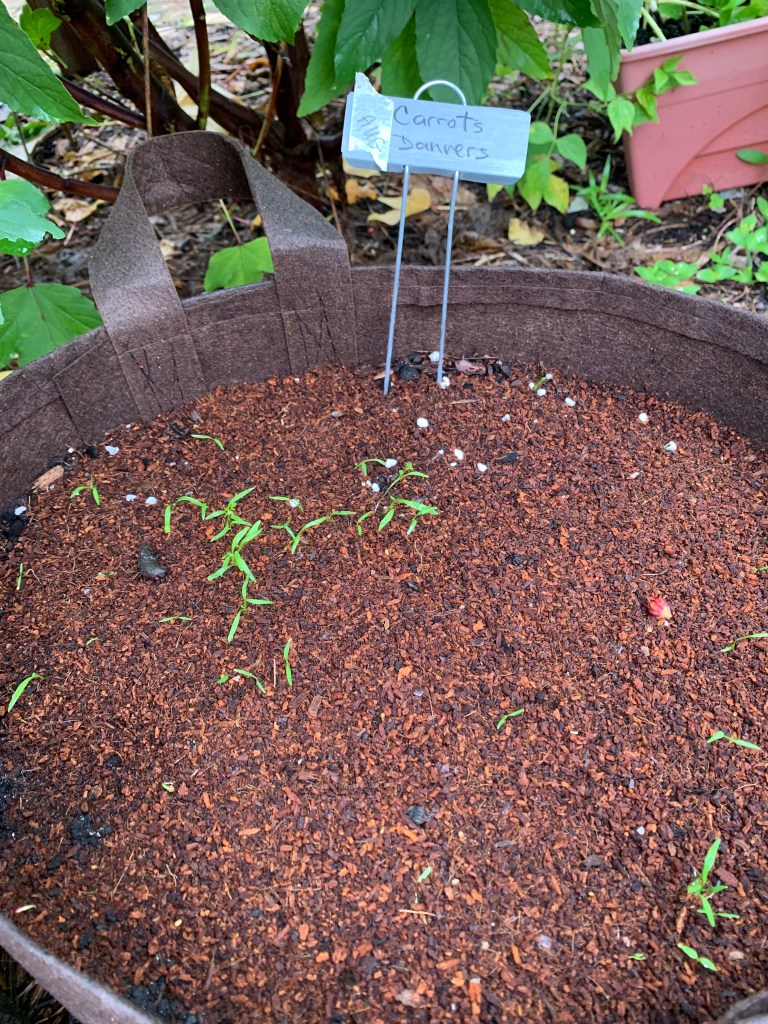
Carrots – in fabric bag
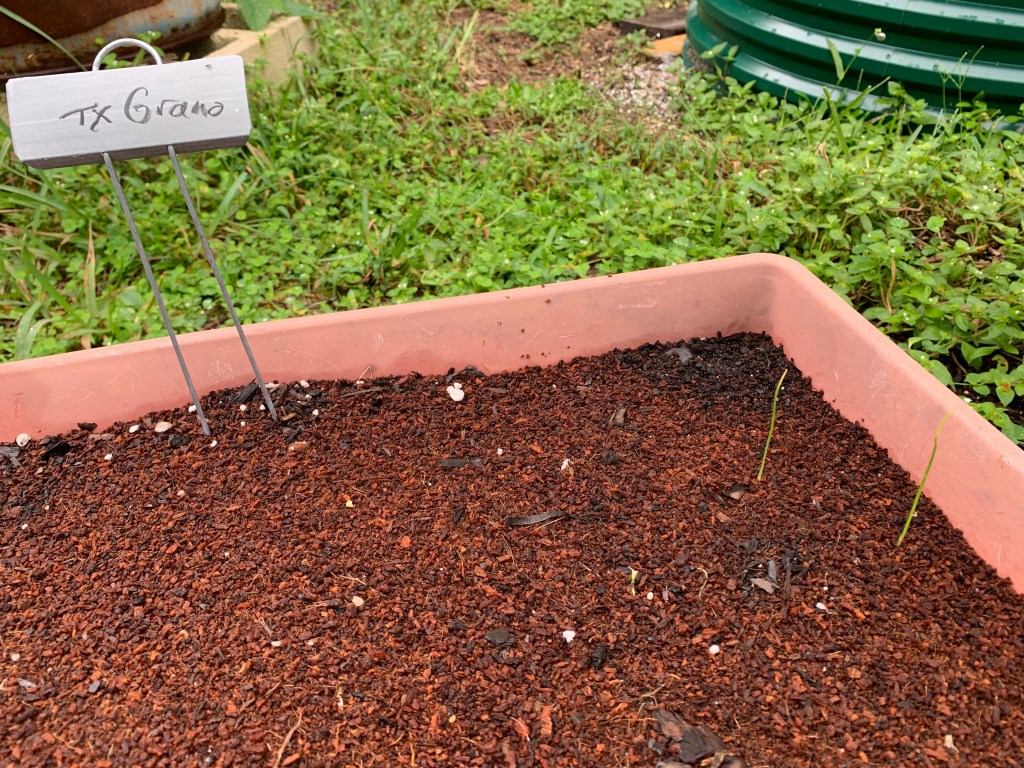
Texas Grano onions – will probably have to re-plant in October (grow box)
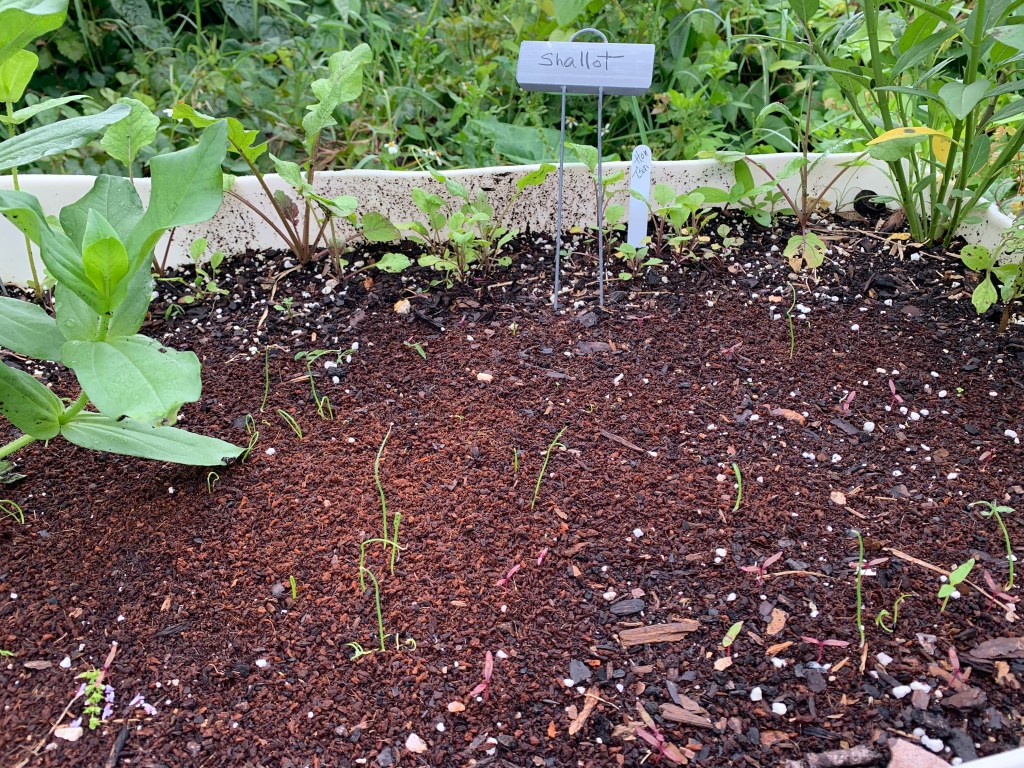
Shallots – barrel raised bed
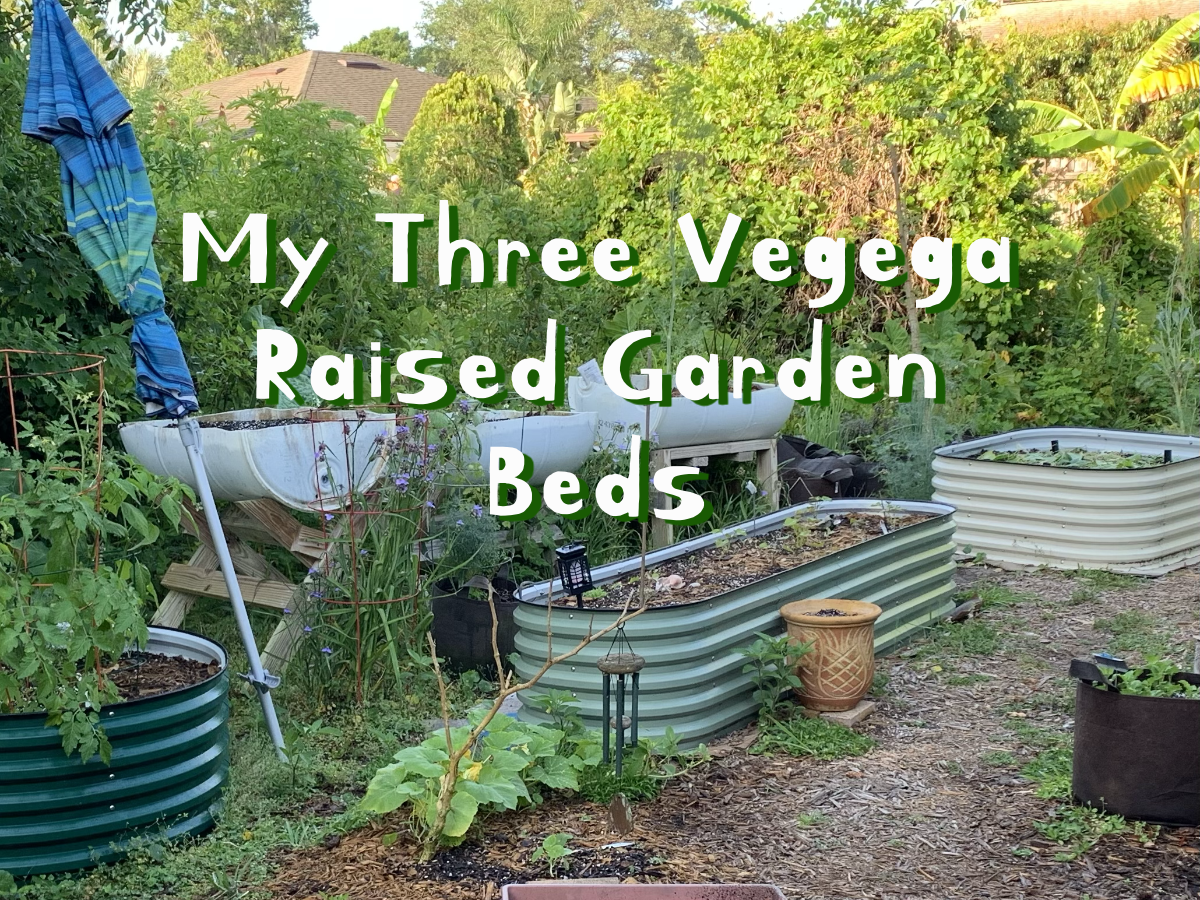
Seminole pumpkin – edge of Vegega to hang over the side.
Golden beets (fingers crossed these do well) – in grow box.
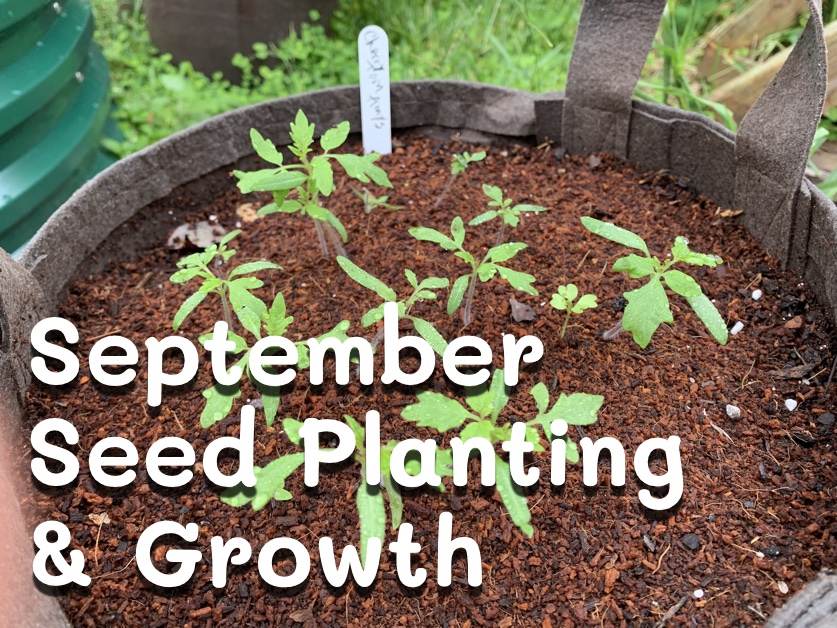
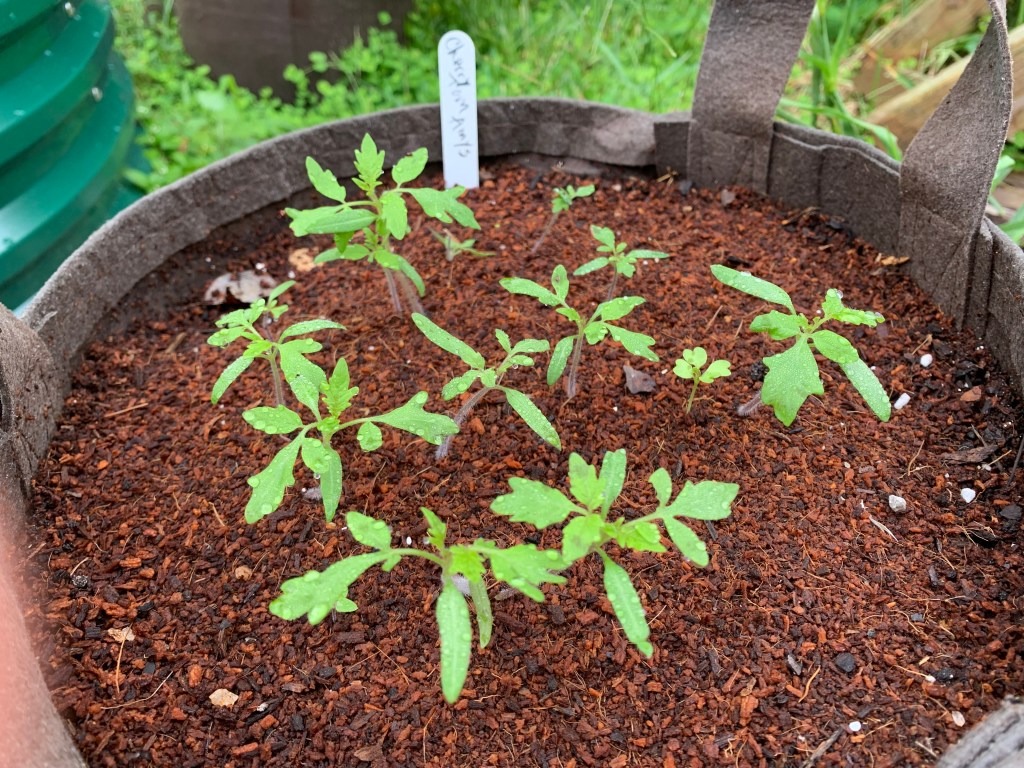
Tomatoes – cherry and Mortgage Lifter (normal size) – both in fabric pots
The summer months have been unusually dry. Now, we are getting lots of rain. I only hope it won’t be too much for my seedlings.
This time, I purchased multiple seed packets from my favorite online places. That way I can experiment and see if things will grow this early without really losing much. I have a lot more seeds, which I will plant in October.
The beds are not completely ready, even though I have tried to be organized. My usual problem is a lack of dirt and compost. I buy and buy, but it gets used up so quickly. I still have time, because some of the seeds I planted did not do well. The Tatsoi, arugula, and broccoli will need to be planted again in October.
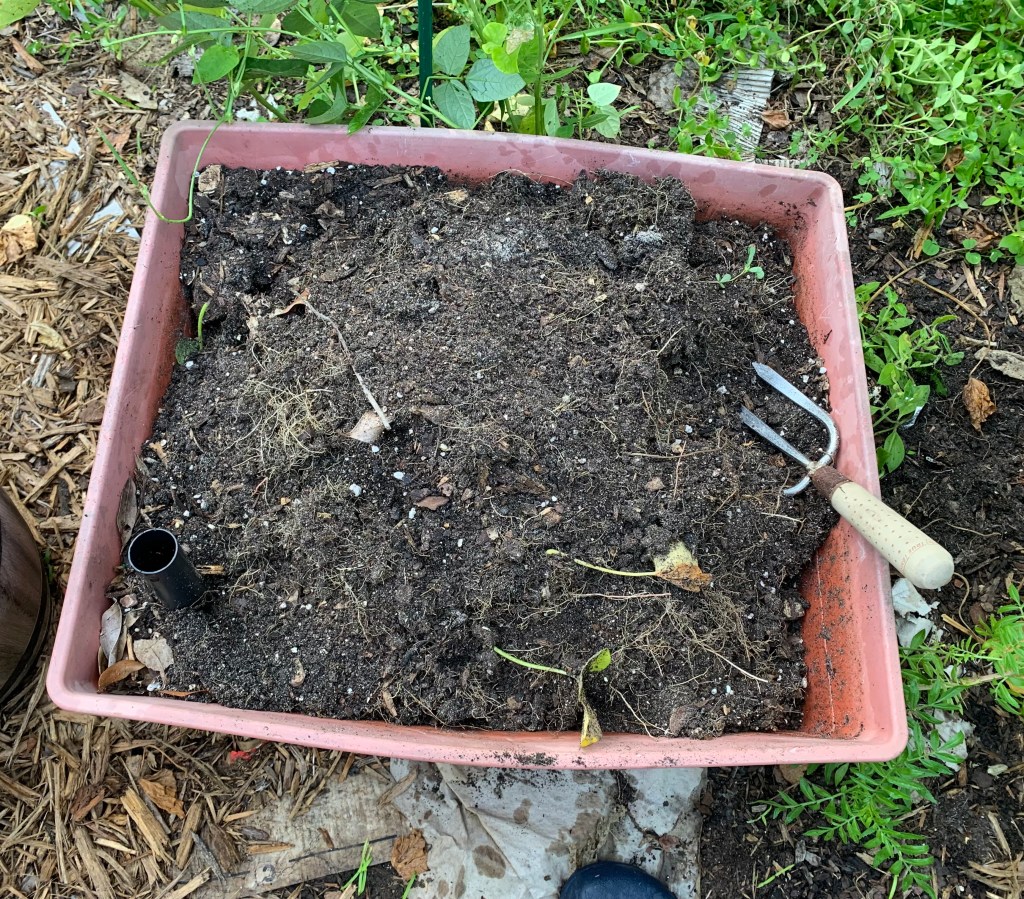
Each of my square grow boxes needs an overhaul. This means digging out all the dirt, drilling holes in the bottom and re-filling. I’ve done about half, but have three, or four boxes left.
Grow Box Refurbishing
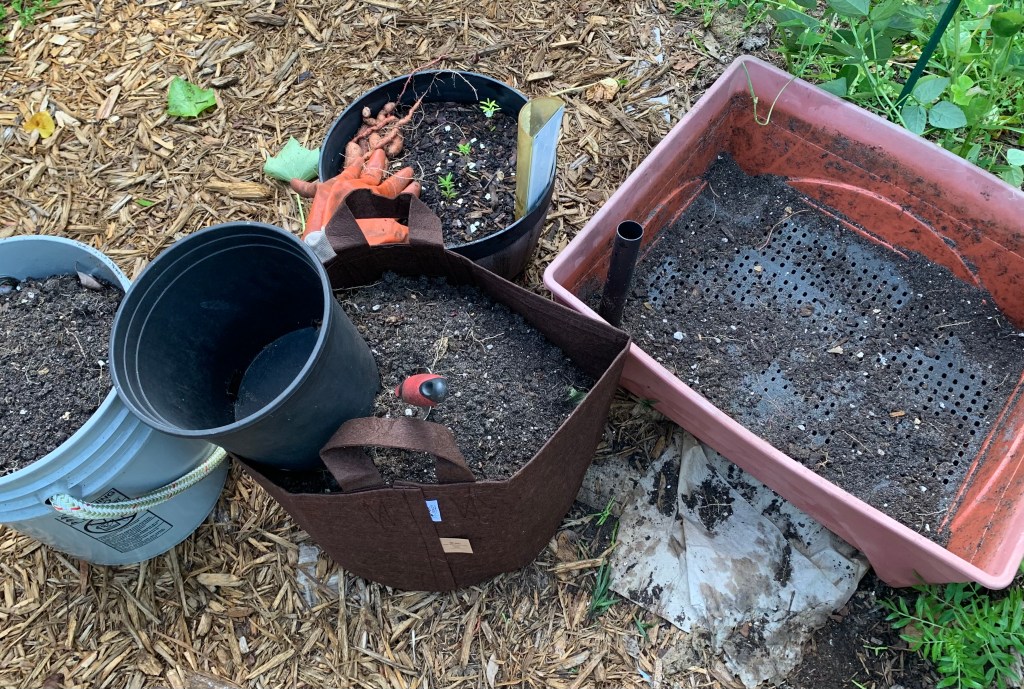
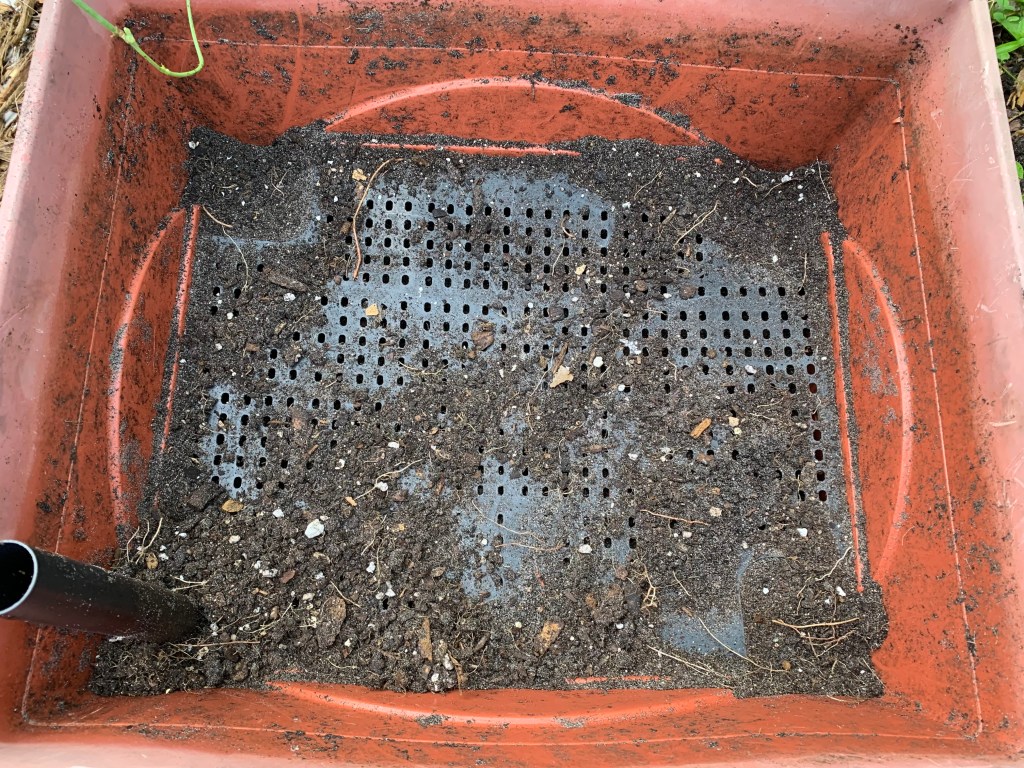
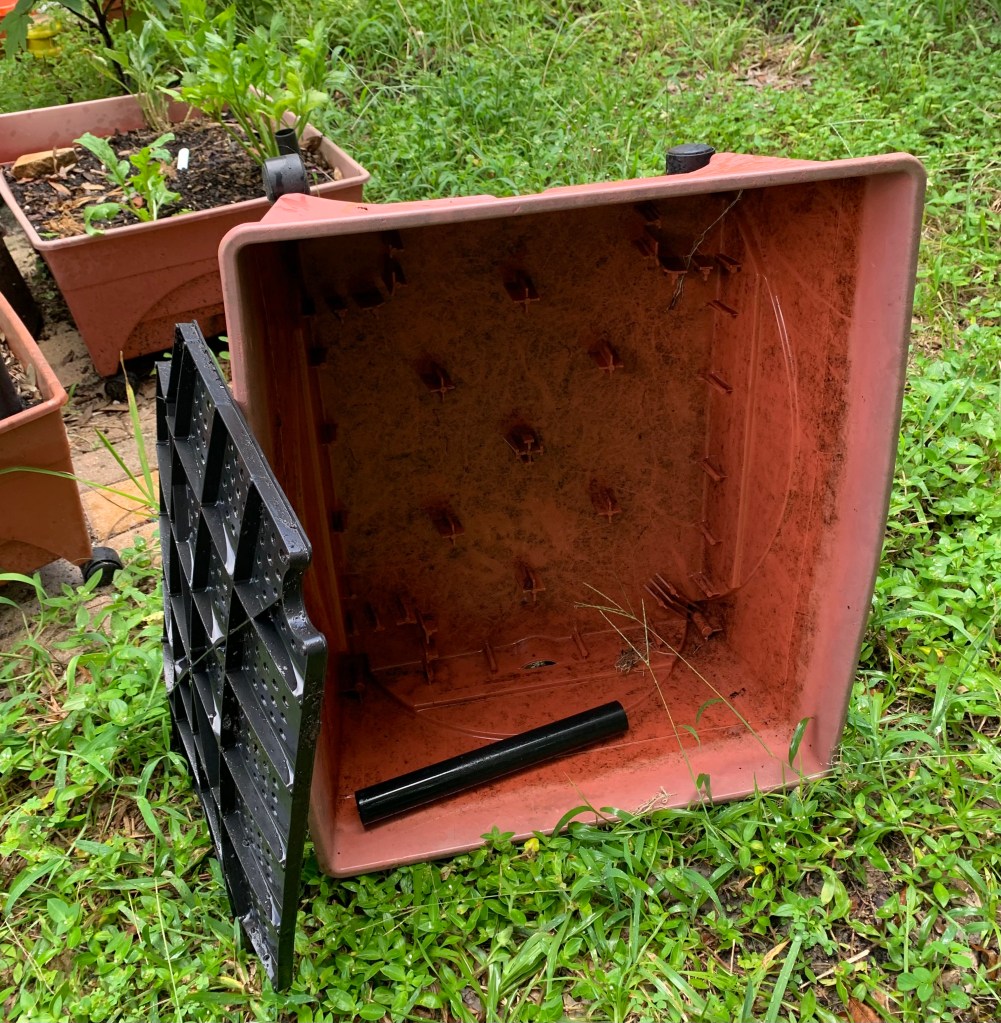
The grow boxes I purchased have a drainage panel near the bottom. They also have a tube that reaches up through the dirt where watering is supposed to happen. The idea is to fill the bottom with water so it can be pulled up by the roots of the growing plant. There are side vents for water overflow. (When you tip the box and no water comes out, it could be because the bottom is full of dirt.)
The idea is good, but flawed. Seeds need moisture and must be watered from the top in this big box. It is unavoidable that dirt will sift through those drain holes. If roots get long, they can clog the base also. Even if you keep the drain system in place, cleaning out the entire box is advised. (Raccoons actually pulled up one of my drain pipes, and it can’t be put back without emptying the box.)
The boxes are still very nice and sturdy. They come with wheels, which is really helpful if the box is on a deck or patio. I will continue to use them, but without the drain panel. Instead, I am drilling holes into the bottom of the box itself.
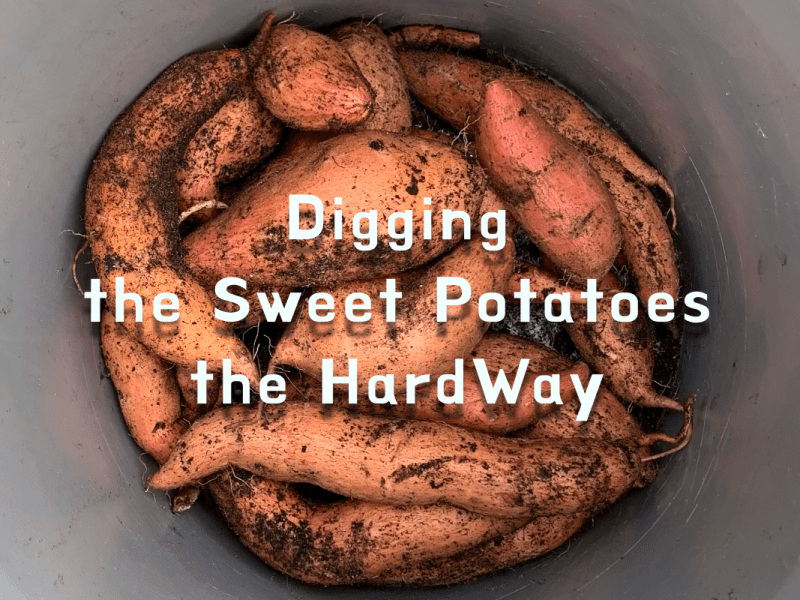
Last April, one sweet potato slip was planted into a grow box. It grew like mad and gave me some funny looking sweet potatoes. There was not enough depth, but I was desperate for space when I planted it. Once I began digging out the sweet potatoes, I realized that dirt had filled up the water reservoir – and I found a few small sweet potatoes down there as well!
Now I am going through all my grow boxes to empty the dirt, remove that screen, drill holes in the box, and re-filling for planting.
Filling the Grow Box
Any time a grow box or fabric pot needs filling, a combination of products is needed. First, drainage should be addressed. For the box, I used a thick layer of pine straw (literally long pine needles) in the bottom. Then, I added some granite stones. After that I mixed potting soil, compost, and perlite, along with some bone meal to create a good growing compound.
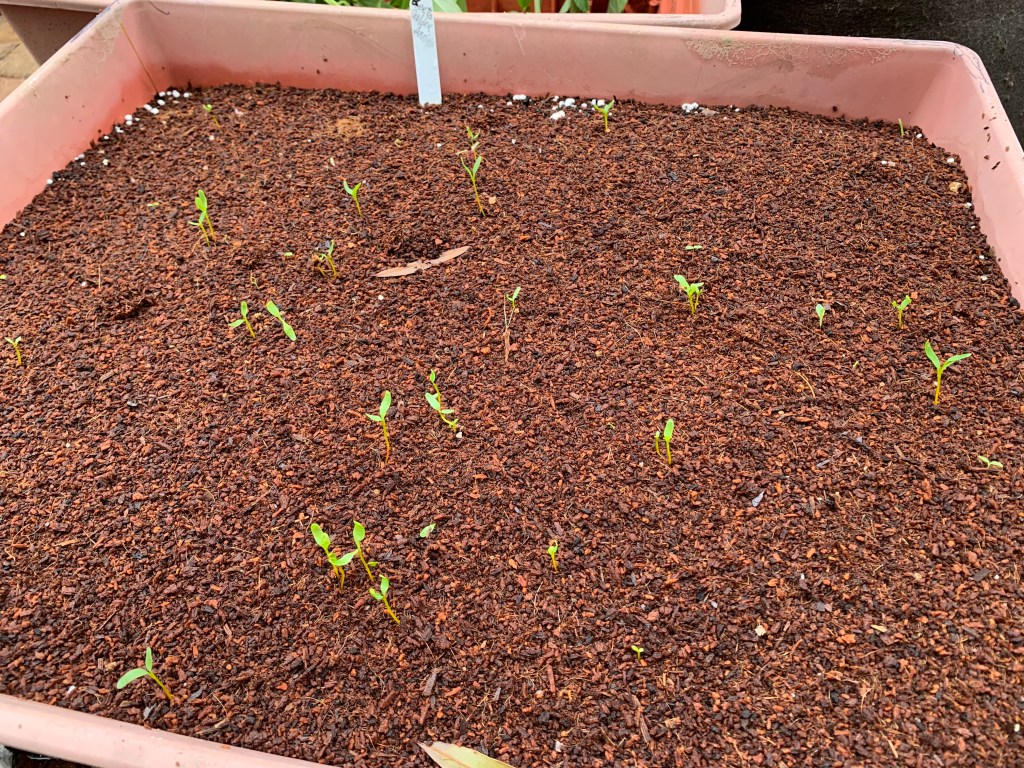
The new idea I had, was to put a layer of coconut coir on top of the dirt before I plant the seeds.
One last suggestion is to add earth worms! I have them in all my boxes, raised beds and fabric bags. I found them in the yard and gave them a new home. They tend to multiply and make the dirt loose and fabulous!
Problems Planting in the Ground
I’d love to have rows and rows of vegetables growing, but I don’t have the space. Also, I have overnight visitors (raccoons and armadillos) who continually dig up the ground. Each morning I check on things, and usually there are numerous holes randomly dug all over the garden.
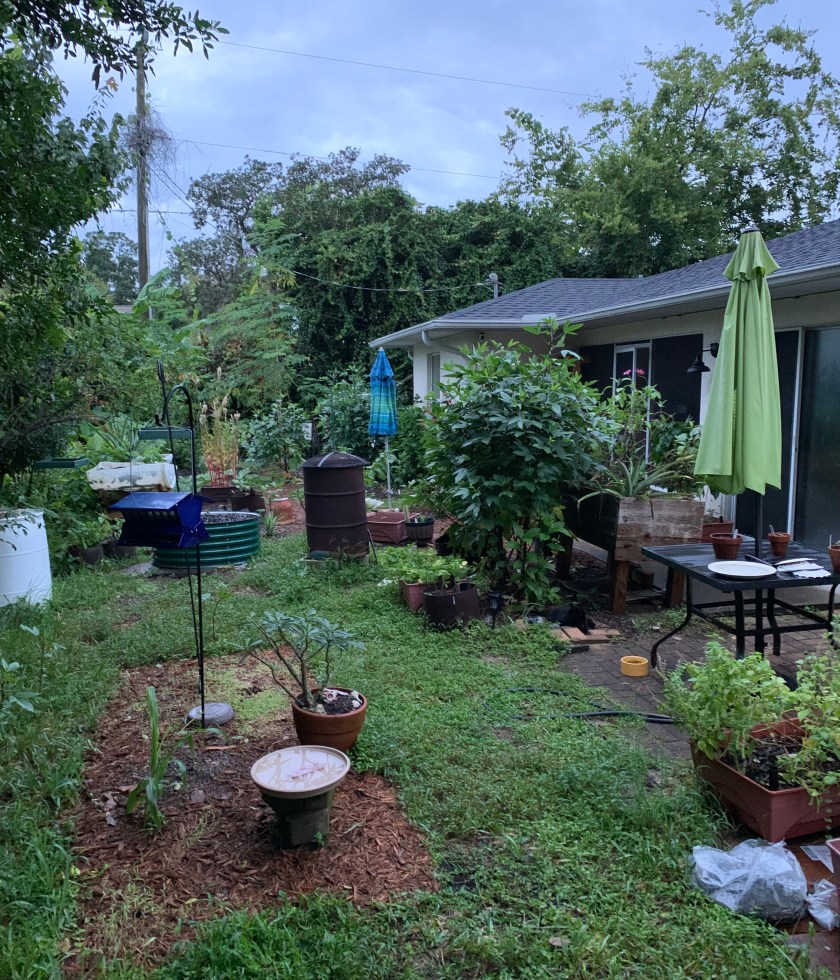
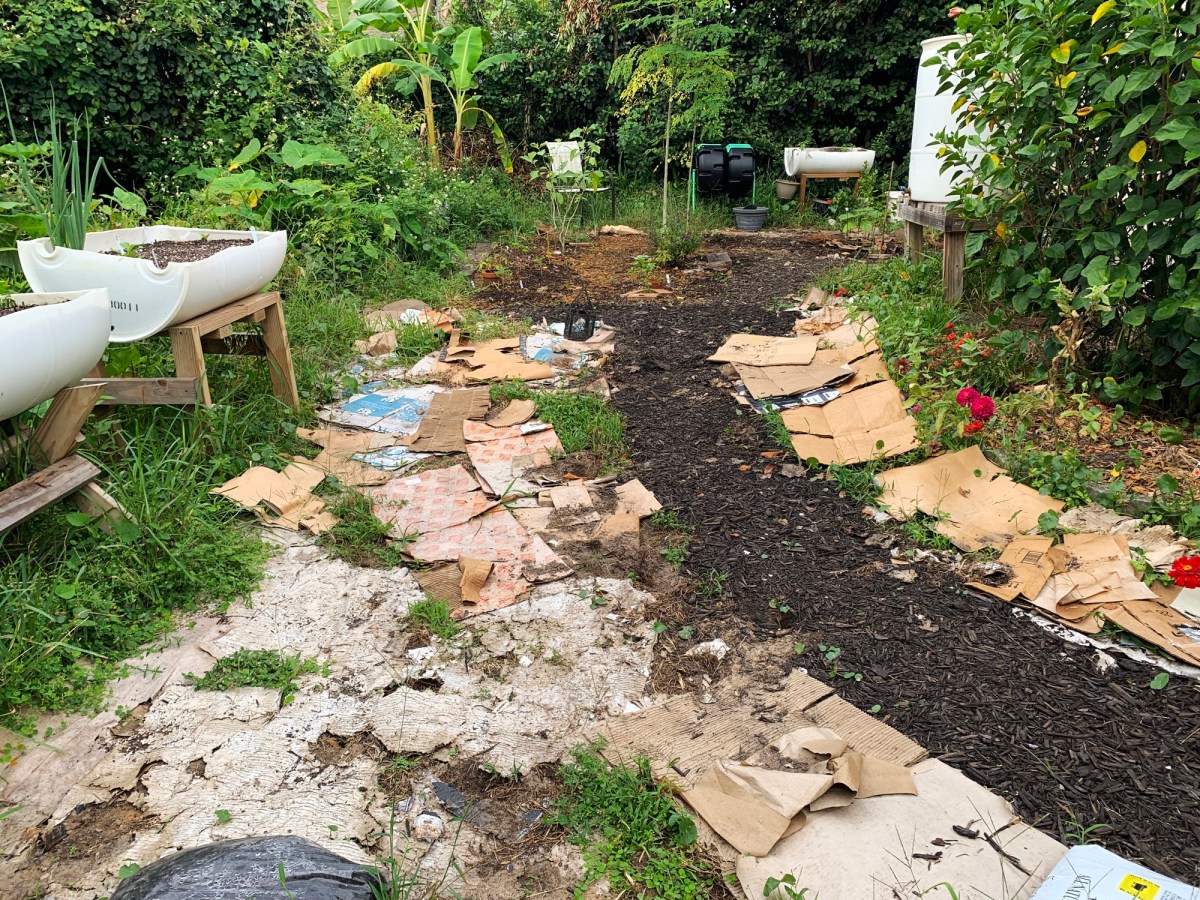
My backyard, September 2024
In order to resolve this problem, I will need to buy more raised beds. I’m hoping for a winter sale because they are expensive. It will be too late to use the beds for this year, but I can work on getting them ready for next fall. Filling those beds takes time.
Amazon Links to Some of the Products I Use
I am an Amazon affiliate, which means these links can provide a small income to me if someone clicks the link and makes a purchase. It does not affect the price of the item.
Grow boxes. If you have read this page you will see that I decided to not use that drain. It works well for a while, but the dirt eventually clogs up that space, and there is no drainage after that. Without proper drainage, plants will die.
Perlite, organic – loosens the soil, and is especially beneficial when beginning with new dirt. Once the dirt becomes really good – from compost, previous roots, and amendments – it should be naturally loose.
Bone meal, organic – helps growing plants create strong roots.
Coconut Coir, organic – good for water retention and starting seeds. It does not clump together, so used by itself, not good for transplanting seedlings. Mix with potting soil, or use on top of dirt to start seeds (see my photos above).
Garden plant tags – I have purchased two packs of these tags and they are great! The raccoons have not pulled them up. The writing stays. Just what I needed for seed planting.
Are you growing anything in September? Have you begun your Fall growing? It is the best time of year to grow in my area, but I may be starting a little too soon. What do you think?
Three cheers – it’s October! I’ve been waiting, and not so patiently. The extreme heat is mostly gone and temperatures have gone down to the 80’s. Then, today it was 67 when I went outside at 7:00am and I put on a flannel shirt! Yes, it is finally time to tackle that long list of outdoor chores that has been building over the long, hot summer.
Planning
Now is the time to get planting for the cooler season. Our Fall is more like a normal, northern summer so the plants will be happy.
I’ve been planning where to plant the seeds and seedlings. We must have a garden plan – and I did.
My garden planning area
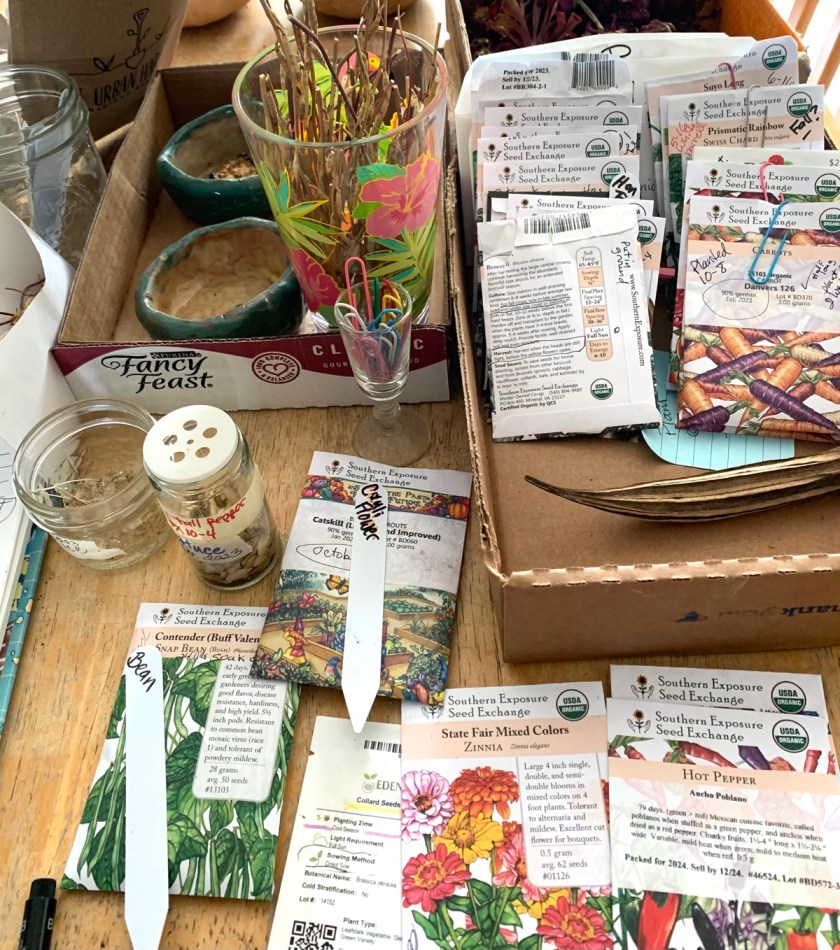
The grow boxes were dug and amended with some good stuff, like bone meal and compost, in September. Seed packets laid out to take stock, notebook scribbles about what I did, plant names written on markers, and everything ready to go.
Water Problems and Compacted Soil
At the end of September a little pocket of moisture hovered over my area of Florida. We got days and days of rain. I measured 9 inches in two days alone, and it rained for about a week. Florida can handle lots of rain, but my grow boxes were super soggy. They do have drainage, but I realized that I needed to add something to aerate the soil. It had become very compacted.
I bought Vermiculite (link to the organic brand I purchased at Amazon) and Perlite. I liked the Vermiculite better, and bought some more. Once again, I went through the grow boxes and added bunches of vermiculite for drainage.
Animal Pests
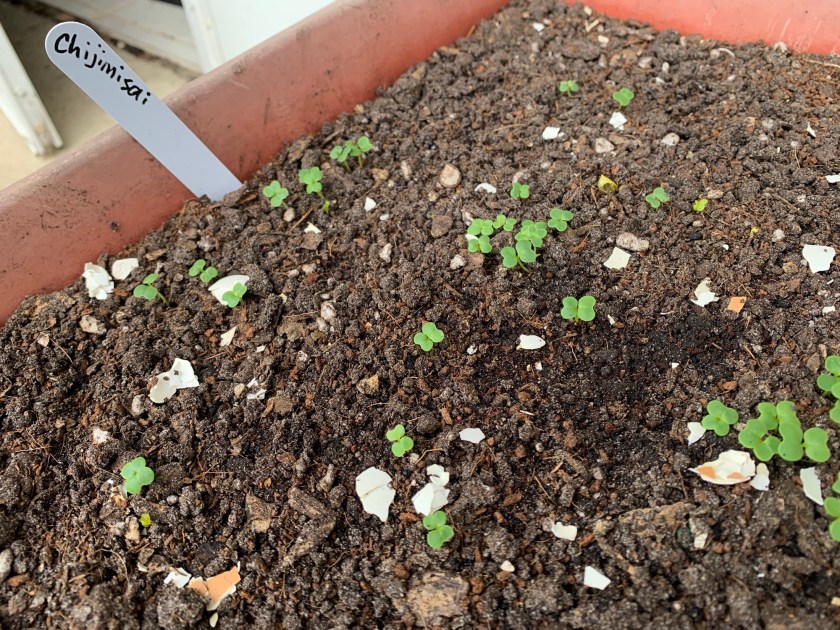
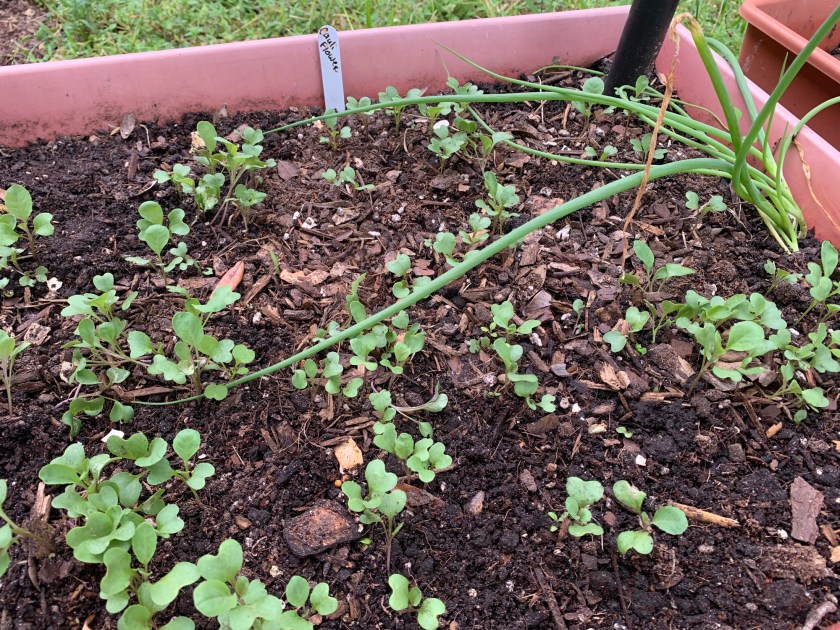
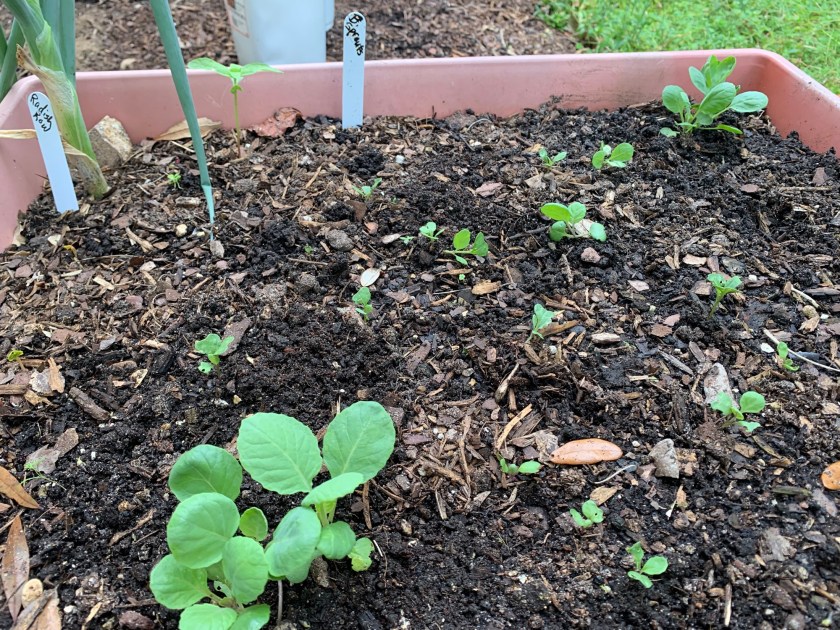
Finally I was able to put seeds into the boxes. Once the lettuce, arugula, chijimisai, Brussel sprouts, and cauliflower were in the boxes I had another problem to deal with. Raccoons are walking through my low grow boxes, and sometimes digging.
Chijimisai seedlings
Cauliflower and onions
Brussel sprouts
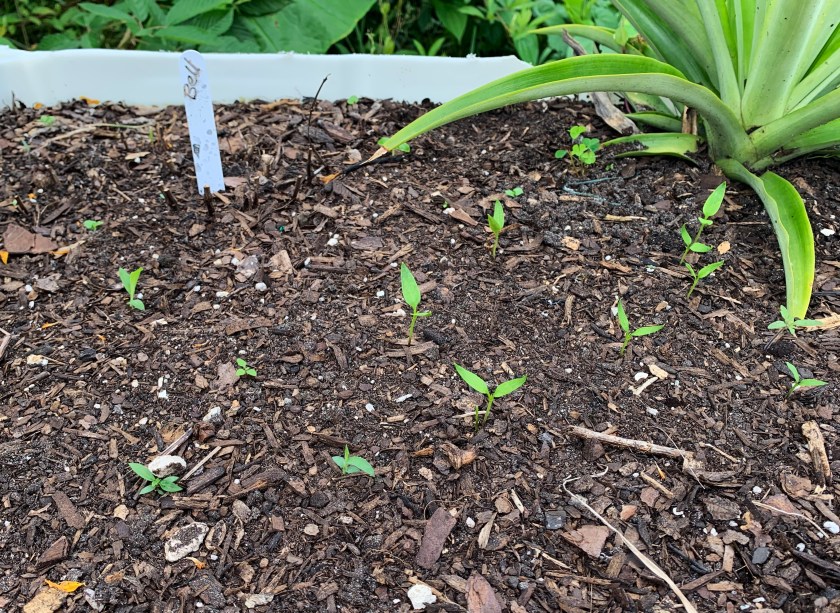
Bell peppers
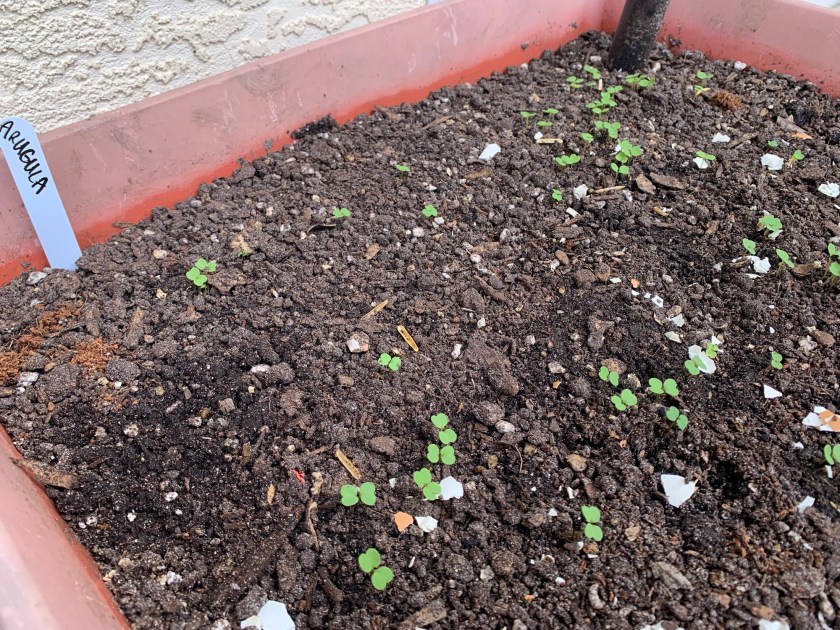
Arugula from saved seeds
Raccoons and armadillos are always around, and especially pesky raccoons. Each morning when I check the (in the ground) garden, there are big holes and some plants pulled up. I’ve lost some pepper and tomato plants, which has made me change my plans a bit.
Instead of having my tomatoes all in the ground, I have to put a few up in the larger, white barrels that are off the ground. This means that I don’t have all the space I had hoped to have for planting.
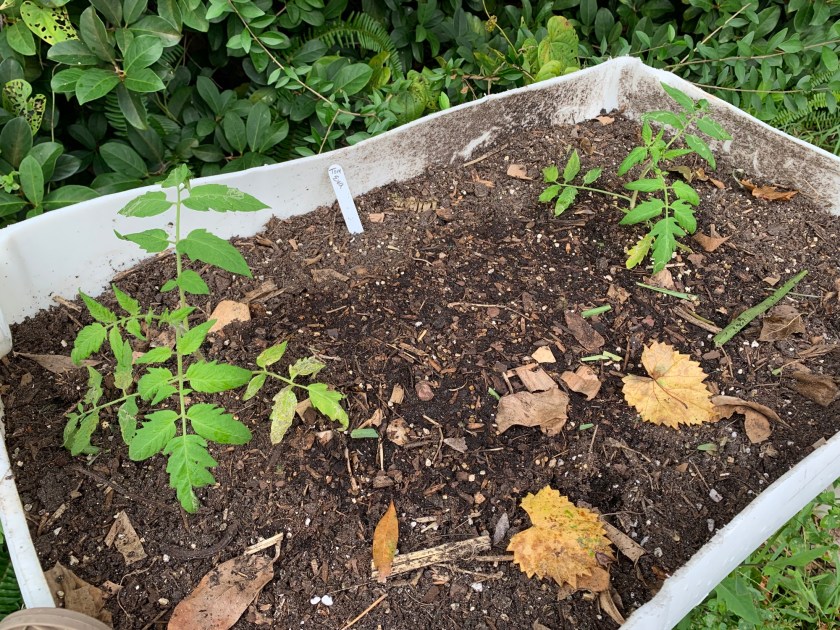
This white barrel, where I planted the Eva tomato seedlings, was being used as a composting area. So I’ve lost the compost space, but the tomatoes should grow great!
Eva tomato plants
Worm Problems on Rosita Eggplant
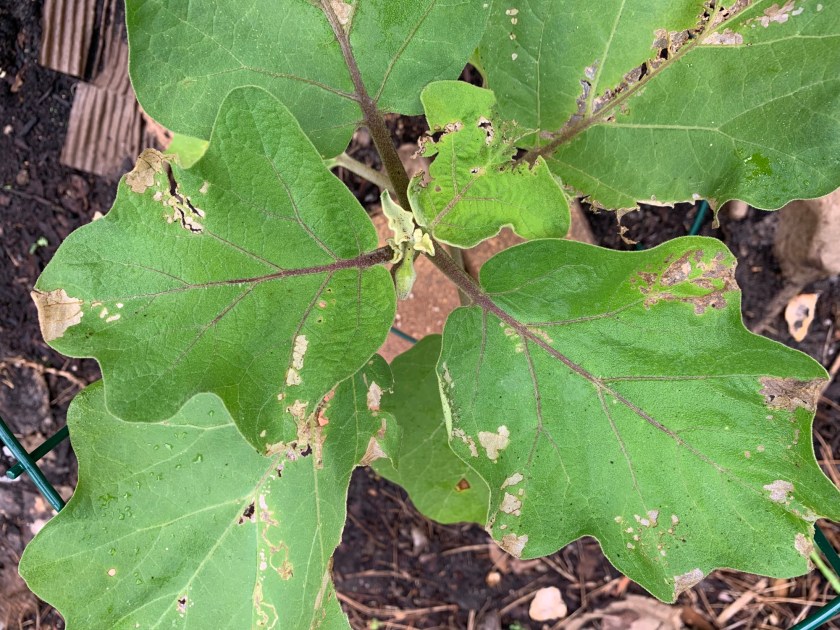
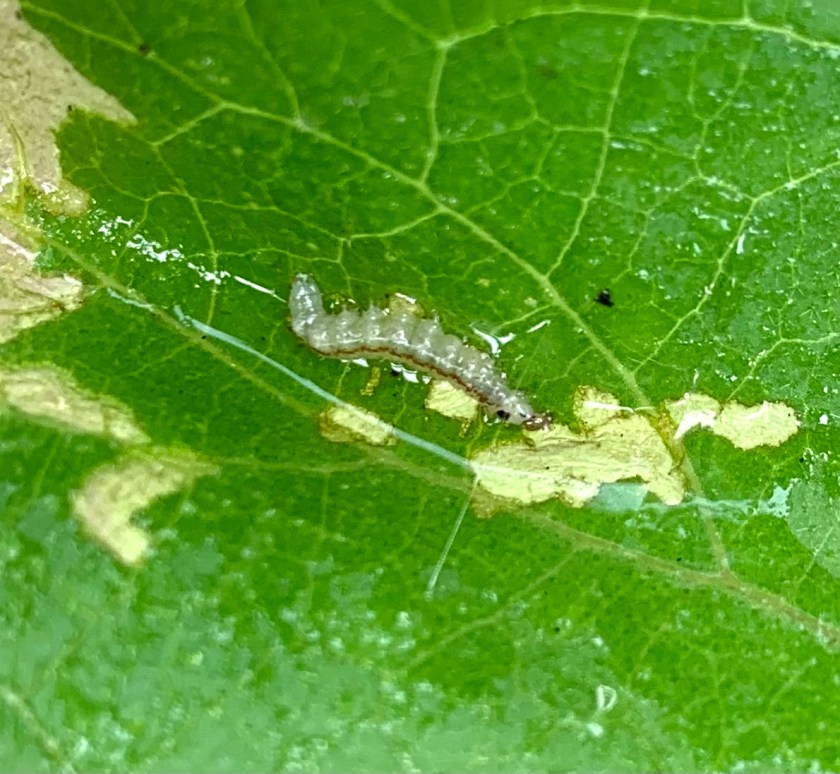
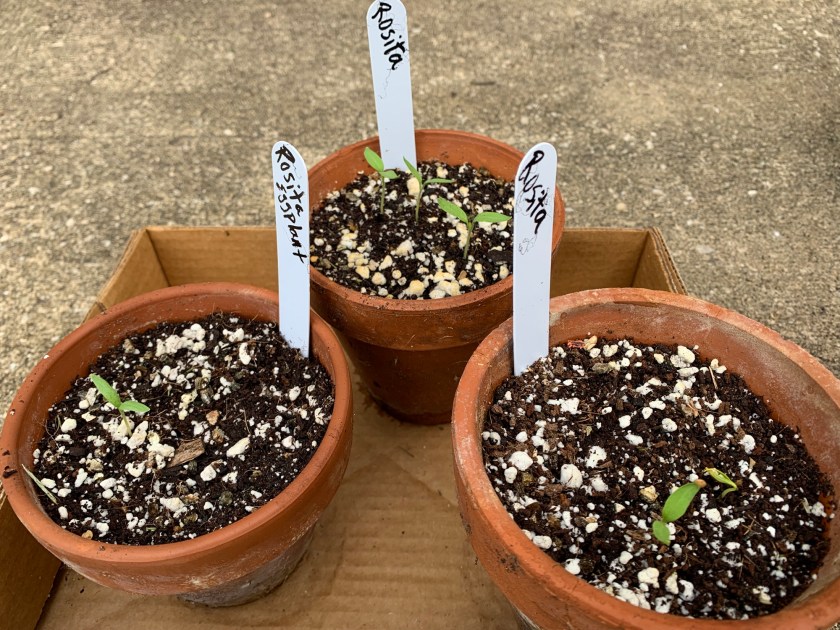
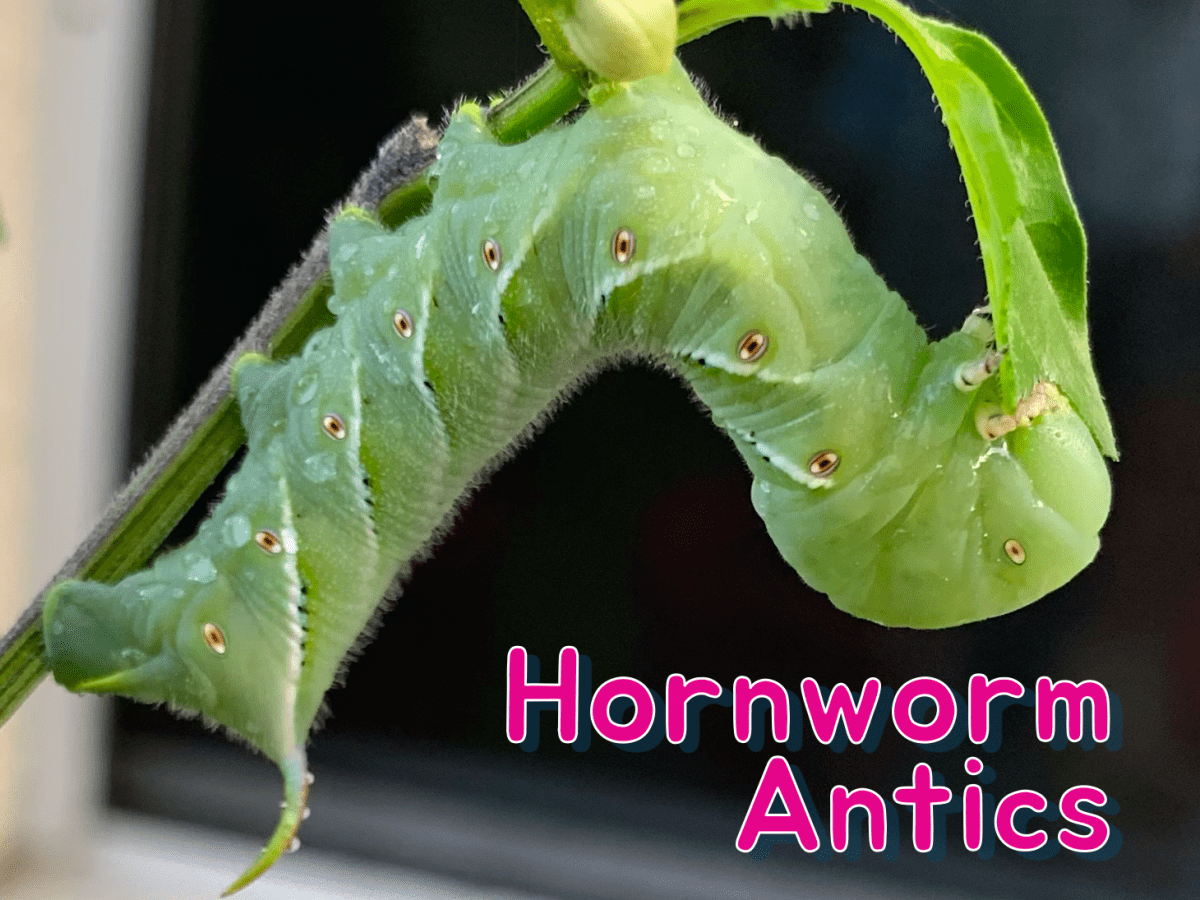
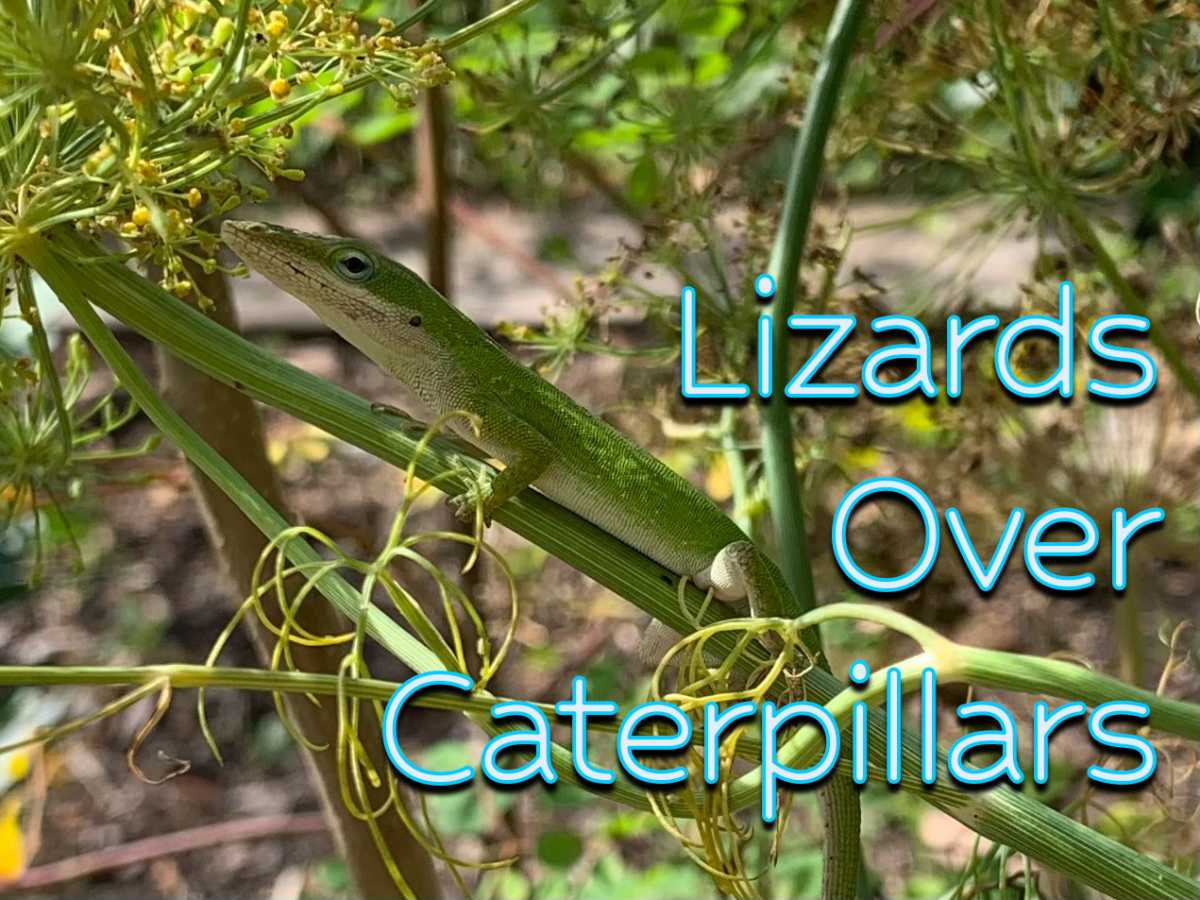
The two Rosita eggplants growing in my backyard were begun from seed. They were planted on August 4th and have had worms on the leaves off and on since they were planted. I have only 2 plants, so it’s easy to pull the worms off and throw them onto the ground for the lizards.
I don’t have this worm problem on my other type of eggplant. I do have some more Rosita seedlings growing in clay pots, but if this type of eggplant is prone to worms, I will not continue to grow them.
Worm problem on the eggplant
Worm on eggplant leaf.
Rosita eggplant seedlings
Bell Pepper
Another plant that I had hoped to have in the ground is the Bell Pepper. The seedlings I put into the garden were pulled up by animals. So, I planted more seeds in one of the tall grow beds. This bed will now be the nursery for pepper plants, which means I can’t use it for something else. (I have a pineapple growing in the corner.)
Bell pepper seedlings in raised barrel bed
Keep Gardening Notes
I have a small notebook where I write things down. These notes keep track of what I buy and when. I keep dates for when seeds are planted in pots and / or in the garden. I also make entries about the weather, bug infestations, and information about certain types of vegetables. That is very important because I am beginning to grow things I have never grown before. Some of these things – the Chijimisai, for instance – are very new to me.
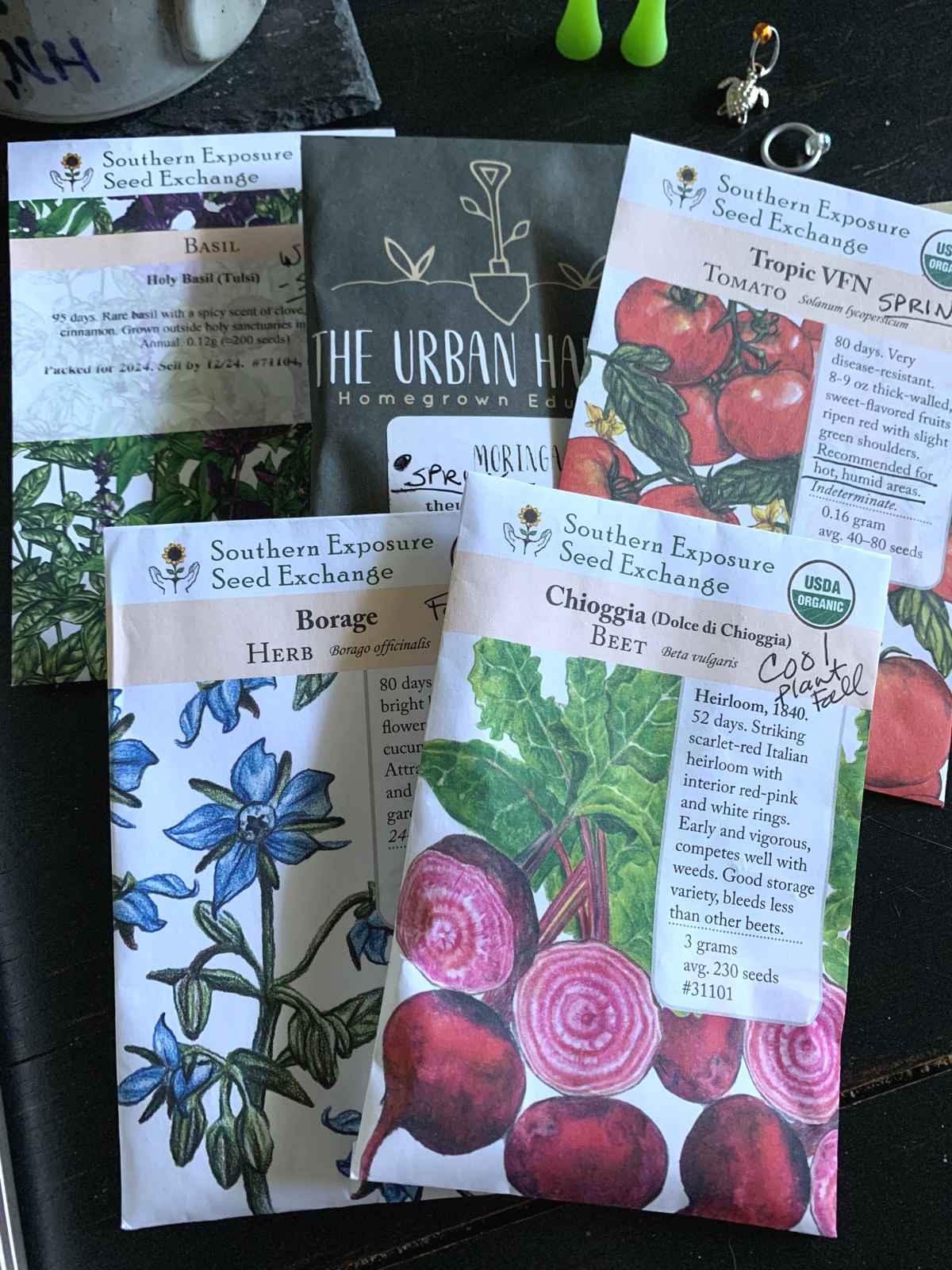
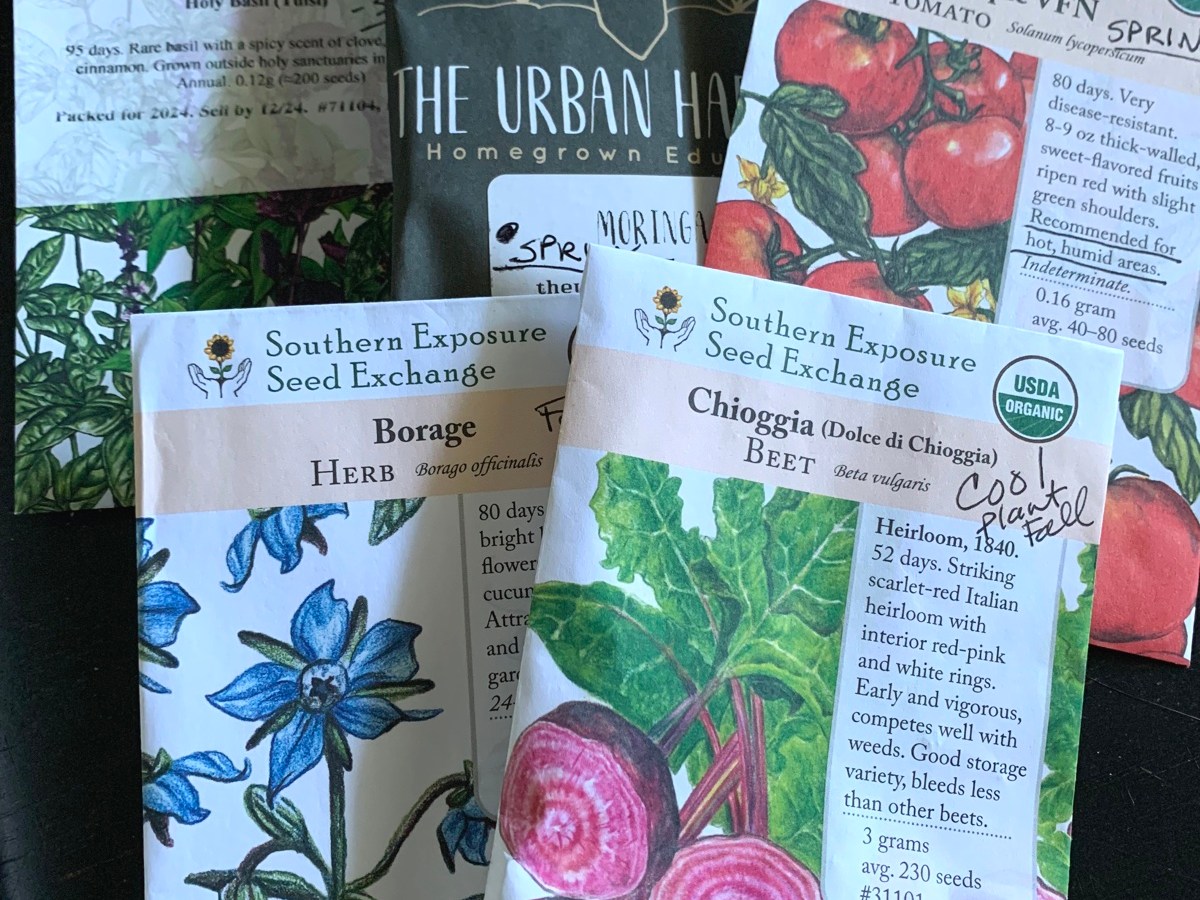
I also keep all the seed packets, and make notes on them. They have good information about when to harvest (pumpkin and watermelon) and contain the date packaged. Seeds only last about a year, so they need to be used up before they get old. I rarely use all seeds at once because my garden areas are so small.
Hoping to Grow
This fall I am hoping to grow lots of greens. Kale, lettuce, arugula, and parsley, to name a few, like cool weather. All I have had over the summer is some sweet potato leaves.
I am hoping the tomatoes will grow and produce. Peppers like the heat, but they are so slow growing that I don’t expect peppers until Spring. I might have to do something to keep them warm enough through winter.
Carrots have been planted in the deep raised bed, and I have yet to find a place for the kale and snap beans. Today I planted the remaining Borage seeds and will soon find a pot for the Nasturtiums. They did not like the heat, so I’ve been waiting for cooler days.
I’ve never done much vegetable growing in Florida and this is the first time I am planting in Fall. I feel like my research has prepared me, and I could be successful. The gardens are not as big and ready as I’d like, but it’s a process.
Now that the weather is cooling off here in central Florida, gardening is on my mind. I can comfortably step outside and work in the yard. October was a little hot, but November has been nice.
My Gardening in Florida book says that October is the time to think about growing cool-season crops. Now it’s November and I still don’t have enough dirt for planting. But if I did, this is what I would have planted.
Also, further down the page, see what is still growing and beginning to produce vegetables!
What to Plant in Fall
Suggested planting includes carrots, beets (I seldom eat) and turnips (I never eat), which can be started as seeds. No need to buy seedlings. Last spring I planted carrots in a fabric pot and they did pretty well.
My book has a section about building strawberry pyramids – so I assume I should plant strawberries this time of year. I don’t really have the space for them, so maybe I need a pyramid? There is probably no time or money for that this year, but it’s something to keep in mind.
What I really need is a fence. It will give me some place where I can add containers and keep the raccoons out at the same time. There is no money for that right now.
I must deal with reality, so here is my list of vegetables I could have planted in October. My garden is 10 feet long by 3 feet wide. So not a lot of space, but I do have fabric pots to use as well. If only I had a garden full of good dirt.
Lettuce Kale Onions – plant around the edges, take up little space Peas – Will need a trellis
Some Plants Are Still Growing Well After Summer
I all but gave up completely on growing anything over the summer. I had planted tomatoes, eggplant, squash and peppers in Spring. I did get some small tomatoes but the raccoons helped themselves. The squash plant got bugs and died before it gave me any squash. The Eggplant and Peppers are still going strong. In fact they are now doing well.
My neighbor, who does no gardening in summer, said that when it’s too hot the plants won’t produce. She covers the ground with plastic to kill the nematodes. However, I wonder if she realizes that burning out the bad also affects the good. I’m not sure it is wise to do that. And because my plants survived the summer and are now looking good, I plan to keep the garden going all summer long next year.
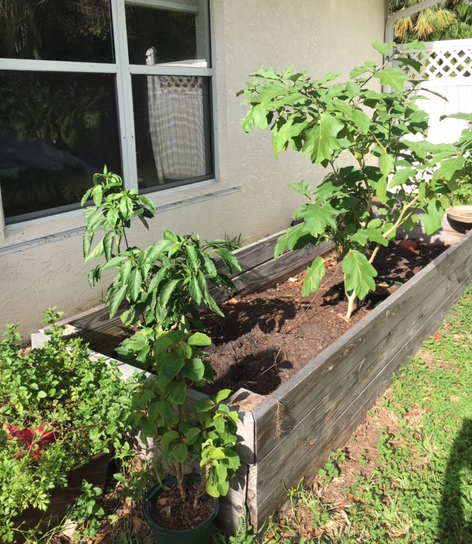
My Eggplant “Tree” and green pepper plant in the raised bed
I honestly thought everything would eventually die in the summer heat. I kept watering, just in case. My eggplant grew into a small tree! It was pretty, and has plenty of purple flowers, but never gave me an eggplant to eat. Finally I cut it back hoping the excess energy put into growing would be used to possibly give me some eggplants.
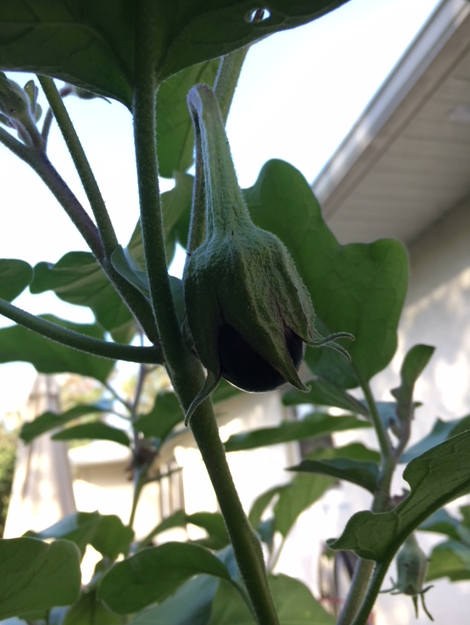
And then…. today (maybe 2 weeks after trimming it) I was watering in the morning, as I do every day, and I found a small Eggplant beginning to grow! Yay… more please.
November 15th – Finally, a Little Eggplant is Growing!
The only other vegetable producing plants that have survived are the peppers. The hot pepper plant gives me a pepper here and there.
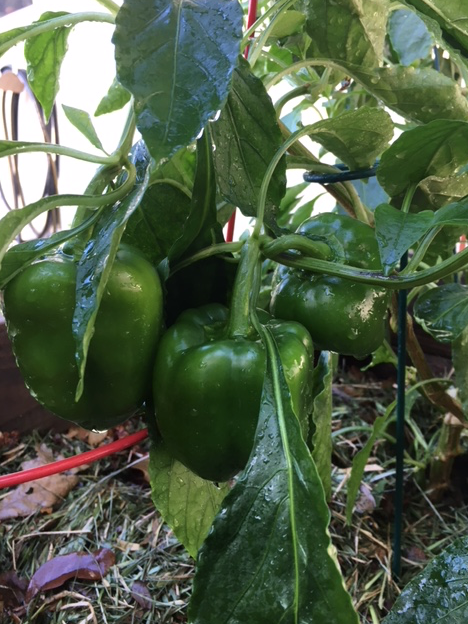
I have 2 bell pepper plants. One is in a fabric pot and it has produced a couple of peppers over summer. Now that the weather is cooler, the other pepper plant is producing like mad! I’ve never been able to grow peppers but maybe the secret is to plant in Spring and wait until Fall to eat them.
So, what I’ve learned so far is that planting in Spring gives me vegetables in Fall. The plants seem to go dormant over summer and then produce when the weather gets nice.
I’m continuously amending my soil and will continue to do so. I think poor soil was inhibiting growth.
I’ve been browsing my new Florida Gardening book and finally came upon a page that really tells me all I need to know for now. It is entitled “Cool Season Vegetables” with planting times – specifically for north, south or central Florida regions.
I will live on the edge of zone 9a and 9b of the cold hardiness zone map. What that means is that my area often gets frosts and sometimes freezes during December, January and February. Temperatures can get down into the 20’s. When that happens I will have to protect my crops. I can remember covering my outdoor shrubs and plants that were sensitive to cold when I lived in Florida before. I saved up old sheets and blankets and would cover them over night. Usually temperatures climb nicely during the day, but overnight it can be downright cold!
Anyway, the cool season vegetable planting list contains a lot of vegetables I love to grow.
Growing vegetables in Florida is new to me. I’m used to having everything pulled up from my gardens by the beginning of October, with the exception of some herbs, parsley and kale. It’s not a time for beginning to plant anything in New England. The fall season in the northeast is a time to enjoy the foliage and try not to think about what is coming.
I am delighted to find that many of my favorite veggies can be grown in the upcoming months. On the planting list for October onward, I see that I can plant carrots, celery, kale, lettuce, onions, parsley, peas and potatoes, to name a few. A couple of surprises on the list include strawberries and rhubarb! The rhubarb can be planted at any time of year, but I didn’t even know I would be able to grow it in the south! And I always thought strawberries were summer fruit.
Also most herbs can be planted this time of year. Of course I searched for parsley first thing and was astounded when it wasn’t listed in the “herb” section. After freaking out a bit, I found it listed under cool-season vegetables. I always thought parsley was a herb, so I researched it and found that it is considered a herb, a spice and a vegetable. Wow, I didn’t know that.
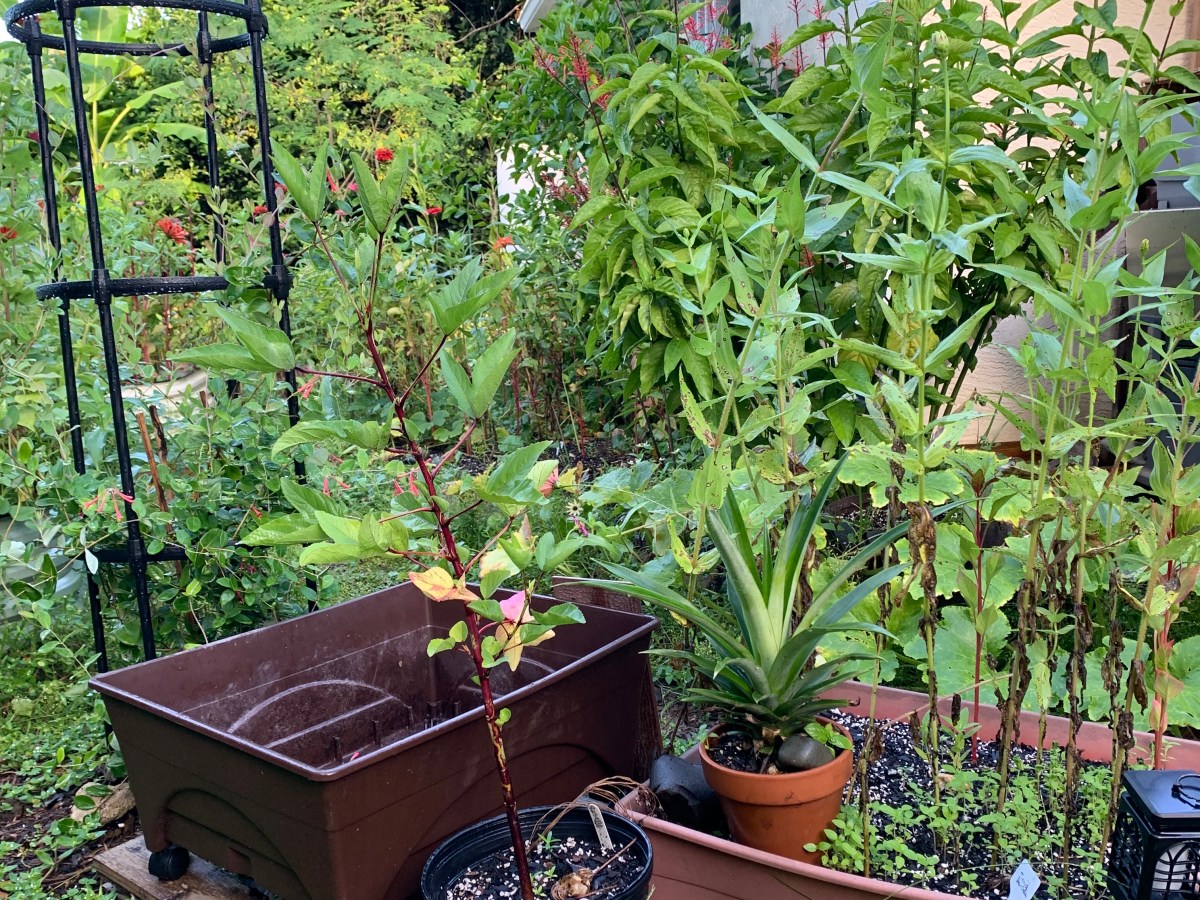
My current “garden”
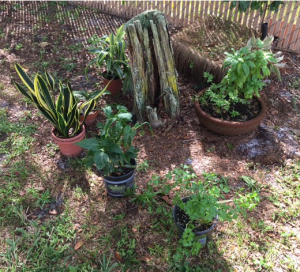
When I first moved down to Florida in June, I went out and bought two green pepper plants. They grew one funny-looking pepper and then began to die. I still have one of the plants and it’s beginning to grow new peppers. (See it in the black pot in my photo.) I am hoping it may still produce a pepper or two for me.
Now that I see the lists of all these vegetables, I am wishing I had a bigger yard. I haven’t moved into my new home yet, but the lot is normal size. I’ll have to figure out how to best utilize the space for my gardens. (Update: I plant in a raised bed.) This gardening research will give me a good idea of what to do once the garden beds are ready.
Maybe I will continue to do some container gardening in the meantime.












 Hydrangeas Blue