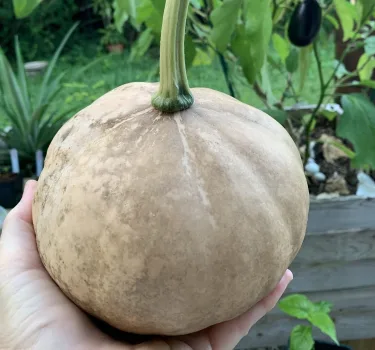
The Plumeria Plant Gift, Or Is It Something Else?

desert rose

Some friends stopped by the other day and they had been to the Farmer’s Market at the Volusia County Fairgrounds. They opened the trunk of the car to show us the wonderful plants they had purchased. They had boxes of little succulents, a bushy croton, tiny African violets, and bags of organic dirt. In the back I noticed three tall stalks in pots with one or two flowers at the top. When I asked what the plant was, our friend pulled one out and handed it to me. “It’s a Plumeria” she said, “Here take it, it’s for you”.

I tried to give it back, and said I was only curious, but she insisted I keep it. She said they were only $3.00 and she had more.  The guy who sold them to her told her they were Plumerias.

Now, I have never seen a plumeria plant. I am familiar with the beautiful flowers of the Hawaiian plumeria (frangipani), and know that they are often used to make Hawaiian leis in the islands. I use plumeria (or frangipani) images to create wedding and event stationery for my Sandpiper Wedding store. But I have never had a plant like this. And honestly the flower reminded me more of an Oleander, but the plant itself was like nothing I had seen.

I figured I’d call it a plumeria until I discovered differently. I had already looked up How to grow plumerias, but I’ve had my doubts as to what this plant really is. I’ve never seen plumerias growing in Florida, and I used to have all the favorite local plants planted in my yard when I lived here in the 80’s and 90’s. It doesn’t mean they don’t grow here, but they need a more tropical climate than what we have here in central Florida.

Plumerias need tropical conditions to grow well, and where I live it does get cold.

**** Then, I went shopping at the local Home Depot, and came across plants that look just like my “plumeria” but they were called “Desert Rose.  Aha, I did not have a plumeria.  But I had no idea what to do with a desert rose.

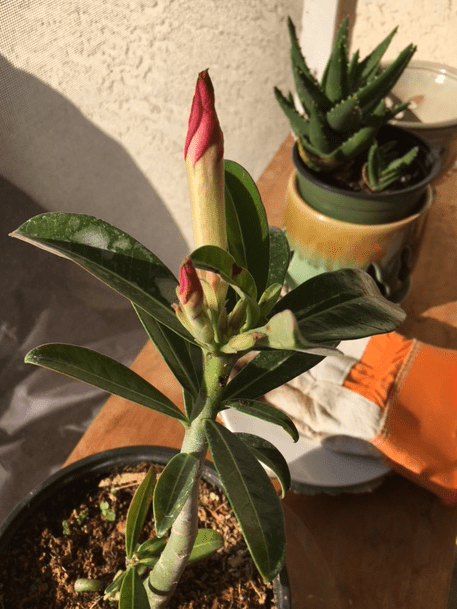
desert rose buds
My Desert Rose plant

I looked up how to care for it.

The Desert Rose is a flowering succulent, which means it won’t need a lot of water.  The stem can be very thick, and holds water to be used in times of drought.  It does not like cold temperatures, which means I should keep it indoors over the Florida winter.  I’ll have to dig it up.  It is slow growing, compared to plumerias, which grow fast and turn into small trees.

IMG_1459
The one flower that opened on my plant

Right now our temperatures are very warm with daytime readings in the 80’s and overnight in the 60’s and some 50’s. I regret planting it outdoors and will have to spend some money on a decent pot and bring it inside eventually. I’m not sure it will like all the summer rain we’ll be getting soon.  It’s meant to be an ornamental indoor plant, from what I gather.

Here are more pictures of the Desert Rose, found at the free images site, Pixabay.
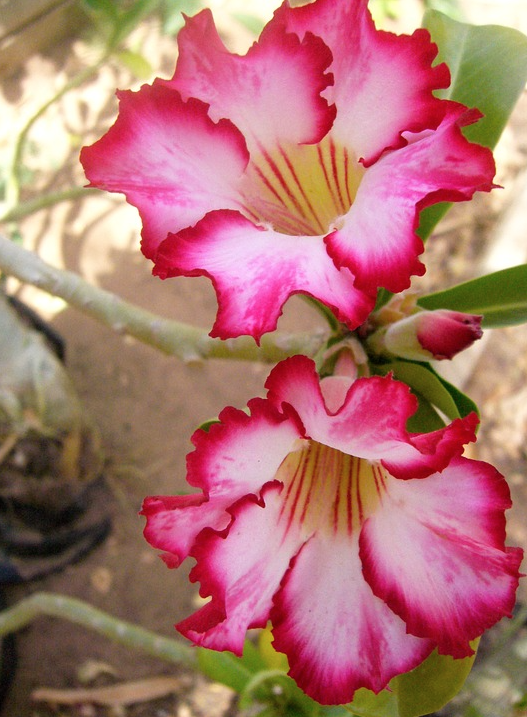
pink desert rose flowers
Beautiful Desert Rose Flowers (photo credit: Pixabay)
Screen Shot 2017-04-06 at 7.09.24 PM

The Garden in March, One Month Later

screen-shot-2017-03-02-at-9-27-07-am
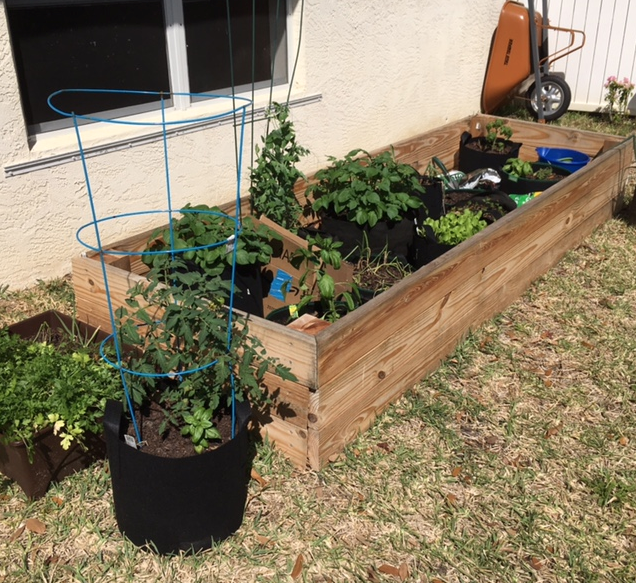
My Garden, March 2nd

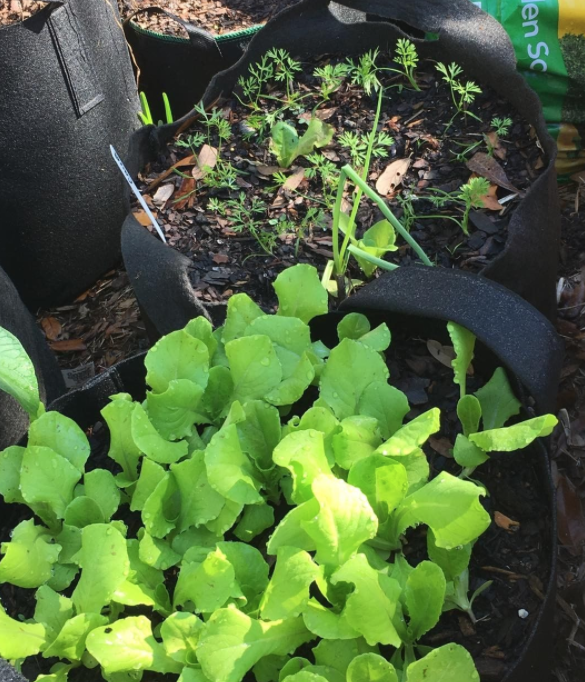
Last month I began to plant my little garden in my Florida backyard. Because the raised bed was not filled with dirt, I used black fabric pots.

I began with crops that were more suited to cooler weather, like peas and lettuce.

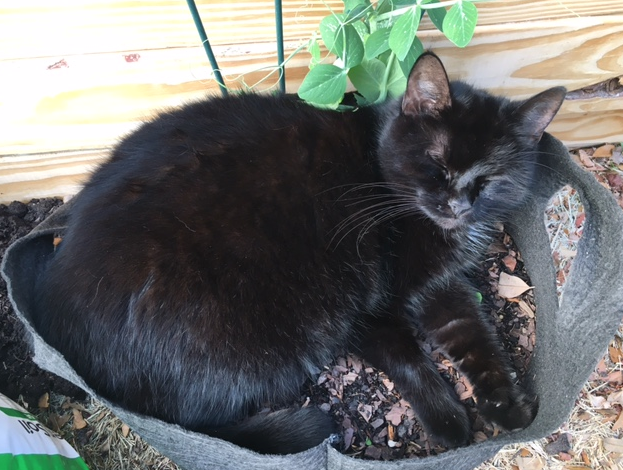
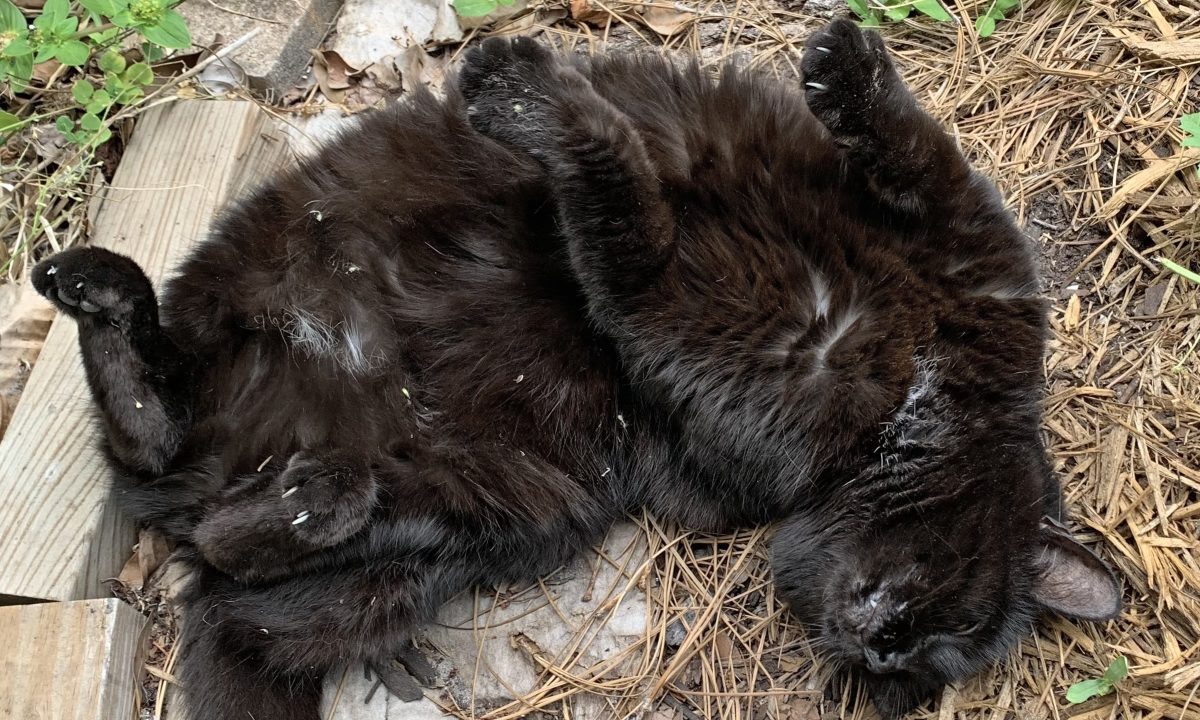
Well, Skittle the cat decided to sleep in the bed of peas, so now only one stalk is growing as the others were a bit crushed. It was just the right spot for a nap in the sun. No worries Skittle, I’ll eat 2 peas and be happy.

screen-shot-2017-03-02-at-9-32-17-am
Skittle in the Peas

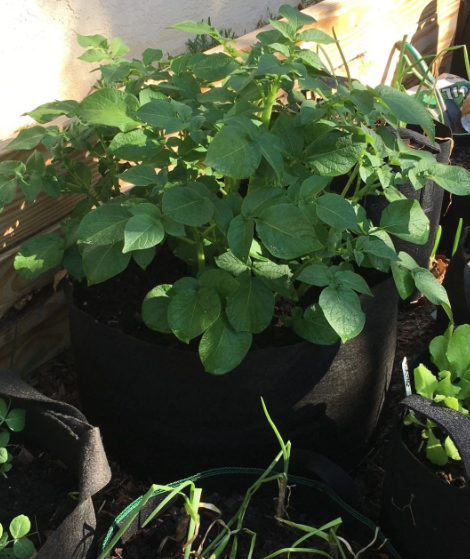
I also planted potatoes and they are growing like mad. I followed the directions from a blog I read and began by only filling the bags part way. Then I have added dirt as the tops grew. And boy did they grow! Course I’ll have to wait and see what’s happening down inside the bags, but hopefully I’ll have some little red potatoes to eat one day.

screen-shot-2017-03-02-at-12-02-59-pm
Growing potatoes

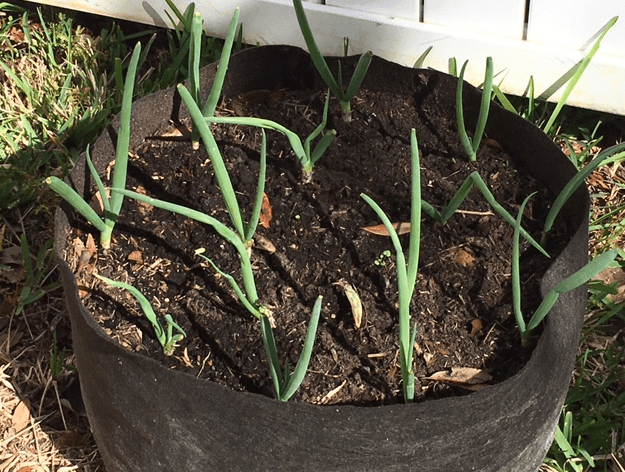
I also just planted cucumber seeds and I see today that they are popping through the soil.  It only took 2 days for that to happen!

My two pepper plants are doing well, and one is blooming like mad.  This may be the year I am able to grow peppers.  They like heat, and yesterday it was 88 degrees, so there ya go.

I have more cardboard to put down in the bottom of the wood enclosure to keep the grass from growing up through.  Newspaper would work for that too.  Eventually I will empty the dirt out of my pots and fill the enclosure.  But first…. I may try to dig up the grass beneath the enclosure.

I always thought I would just set up the wooden bed and fill it with dirt and I’m ready to plant.  Now I have read at EarthEasy that I should dig down a ways to loosen the ground so roots can go down into the dirt beneath the bed.  This makes sense, as some vegetables do have long roots, but I didn’t think they needed that much space.

It got me wondering what the roots of vegetables look like, and which ones need the most depth to grow well.

screen-shot-2017-03-02-at-12-01-09-pm
Bib lettuce and carrots

The Bib lettuce needed to be thinned and the carrots were planted using paper strips.  I had never used carrot seed tape before, and I bought it by accident.  The old method of mixing seeds with sand when sowing small seeds works fine.  I still had to thin the seedlings, even when I used the tape.

screen-shot-2017-03-02-at-12-01-31-pm
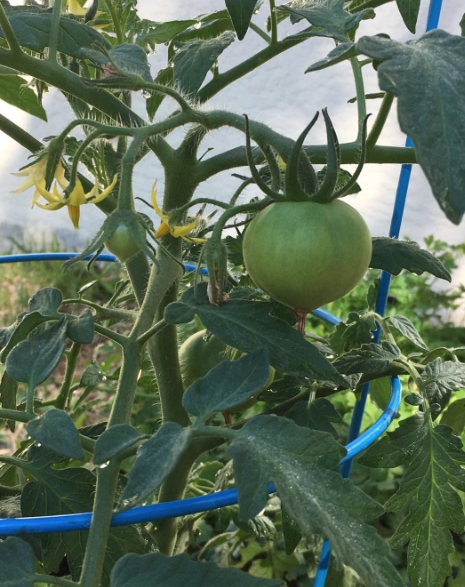
March Tomatoes!

I can honestly say I have never had tomatoes growing in my yard in March!   In fact compared to gardening in New Hampshire, growth here seems to be accelerated.

Every time I visit the garden section I keep an eye out for hydrangeas.  I haven’t seen any for sale.

Growing a Meyer Lemon Tree

meyer lemon tree flowers
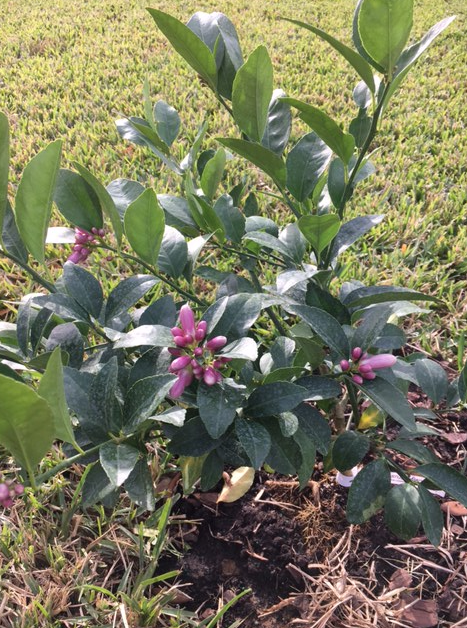
Buds on Meyer Lemon tree

Although my new yard is fairly small, there is a lot of sunny space out front.  I planned to plant a row of Florida citrus trees out there, but now I have some questions about growing citrus trees.

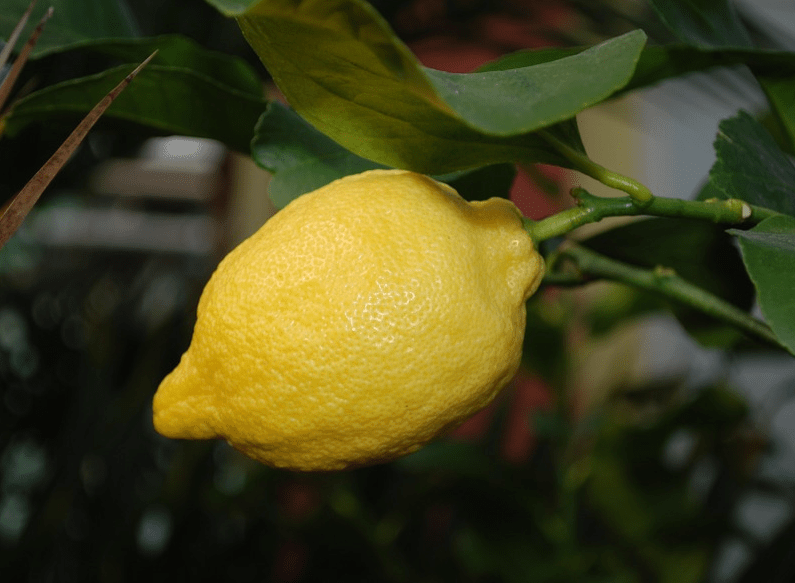
I bought a Meyer Lemon tree and a Lime Tree from Pells a few weeks ago.  The lemon is planted in the ground out front, and the lime is in a pot on the patio out back.

The lemon tree has pretty, purple buds on it, but it’s December – almost January – and I don’t think this is the time of year it should be getting flowers… but I don’t know.

I did find a Meyer Lemon tree growing article at the Fast Growing Trees site.  Between the information in the article about watering, fertilizer, pollination, and light needs, the comments from people trying to grow these trees also adds good info.

screen-shot-2016-12-31-at-8-57-26-am
In the ground 3 weeks

My question is “Can I plant other citrus near my lemon tree?”  What if I put a lime next to a lemon?  Will the fruit end up tasting like a combination of the two?

I also wonder if it’s too early in the season for flowers to be forming on the tree.  We could have frosts and freezes in the months coming.  I thought that citrus began to bloom in Spring.

UPDATE: The staff at the “Fast Growing Trees” site have answered my questions.  Trees that have been growing in containers may take time to acclimate to being in the ground.  He said it is early for the tree to be blooming, but the tree will eventually figure it out.  

Also… it’s fine to plant citrus trees near each other.  It will help with pollination!  Thank you!  I can’t seem to figure out how I signed into that site so I can say thanks.

I’m new at this, but I live in a location where it should be easy to grow all kinds of fruit.  I know that I can cut the top off pineapples and stick them into the ground to grow.  It takes a couple of years before a little pineapple begins to grow out of the top, but it can be done.  I used to grow them when I lived here before.

pineapple welcome sign
Welcome address custom tile with pineapples and tropical flowers.

So I have posted my question with the above-mentioned site.  I’m always up for learning new things, and gardening of all kinds in Florida is something I must now learn.

Making the Raised Garden Bed

I’ve been in my new house for a couple of months now.  We’ve made headway, but after spending money for a new HVAC system and a new dishwasher, money is getting tight.

I’ve been keeping an eye on the yard, and the position of the sun, to figure out the best spots for my raised garden beds.  Because Florida soil is mostly sand, dumping good, organic soil into a box may be the best way to begin a garden.

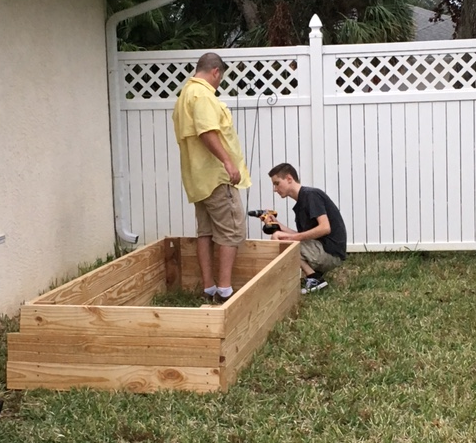
The other day, spur of the moment, my son went out and bought some pine wood and made this raised garden bed! He read some “how to’s” online and then bought everything and put it together (with the help of his younger brother). I think it’s great! It’s made of pine boards and is about 18 inches high.  (See this raised bed, full of dirt and plants, in May 2018)

pine wood raised bed
Raised Garden Bed

Getting dirt into the bed may be a challenge. We have a sprinkler system and a drainage area around the front of the house. It’s a bit like a dry moat which won’t allow for a vehicle to drive over. My son can fill his truck with garden dirt but it will have to be shoveled into a wheelbarrow and dumped into the raised bed. (Read my solution to this problem on this post.)

My parsley and lettuce in the small box is doing well. If I had a bigger garden this time of year (December) I would be planting peas, onions, spinach and kale. Hopefully by next year this garden bed will be ready.

parsley and lettuce
Cool weather crops in a small garden box

I use my beautiful parsley daily by adding it to my omelets, homemade salsa, soups, stews, pizza, spaghetti sauce and meatloaf – to name a few.  It adds such fabulous flavor and is good for the kidneys, in moderation.

It was one of my favorite things to grow in New Hampshire, as it lasted right into the first snowfall. I used to have deer come into my yard and nose through the snow to find it!!  Beautiful…..!  I didn’t mind sharing.

deer in winter
This little deer is searching for leftover parsley, and anything green and good, in my former backyard in New Hampshire.

At the end of the growing season I would store parsley by drying or freezingRead how I do it.

I have noticed, since I moved back to Florida, that there are no seeds, and few decent vegetable seedlings, to be found in the stores.  I managed to save this parsley from a neglected Home Depot shelf in August.  It looked pathetic, but I know how resilient parsley is, and sure enough it grew in nicely.  There is plenty, even though I pick many branches every day!

The lettuce was a recent purchase and it didn’t look too good either, but it seems to be doing well in this recent cool weather we’ve had.  I’ve even used a few leaves to add to a sandwich.  I prefer buttercrunch or the variety lettuce, but I’ll look for seeds next year.

Apparently this is not the time of year to buy seedlings and seeds.  In early spring I will most likely have more luck. For now, I will fill my fabric pots, which I used with much success up north, and grow a few things in there. I found a nearby garden center which I must visit soon.

Black Mangrove Honey Made by Bees in a Remote Area

honey
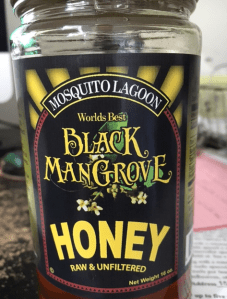
Honey from Mosquito Lagoon – My photo

On a recent visit to Pells Nursery in Osteen, we came across some unique honey called “Black Mangrove” that comes from bees in the Mosquito Lagoon!  The Lagoon is widely known for it’s fishing, but I’ve never heard of honey coming from there. We had to buy it.

The Black Mangrove honey is darker in color and not as thick as other types I’ve had, but it’s delicious.  It’s made by Sun Splash Nursery of New Smyrna Beach.   They are an organic farm and the place is not too far from where I live now.  Their Farmer’s Market is open 8am till 3:30pm Monday thru Friday.  I must go there soon and see what they are selling for produce.  (Update – this place does not seem to exist!  We drove over and found nothing there.  Site must be old.)

Back to the honey.  Raw honey is far superior to store bought generic brands and I love to find new types to try.   This one also has an interesting story behind it.  The company has the right to access the islands filled with black mangrove trees in the Mosquito Lagoon.   All during the Florida summer they collect honey while the mangroves bloom.

We have fished out on the Intracoastal, and have heard bees buzzing on the islands. Now I will be able to picture them working away to make us their fabulous honey!  Below in my photo from another blog of mine (Seashells by Millhill), you can see what those mangrove covered islands look like.

mangroves
There are many, many islands like this out on the Intracoastal Waterway, which includes Mosquito Lagoon.

What a great idea to collect honey from that area! The Sun Splash company will ship their honey to customers, so click the link I provided above if you are interested in trying some for yourself.

Read an article by the Daytona Beach News Journal, written September 2016 about the owner and how he came to help out the bees (and himself) by putting beehives out on the remote Intracoastal islands.

As a side note, I noticed that the Sun Splash Nursery website also has a page containing gardening advice, which will be helpful as I plan my vegetable gardens.  I look forward to visiting their nursery soon.

Plant Shrubs in Winter, Readying the Garden Beds

weed fabric
The black fabric beneath the mulch has to go!

Today I did something that I have waited a long time to do.  I began work on my flower garden beds.  I am finally in my new home!   The big move began way back in January, and has taken the whole year.    There is still more to move from storage, and all the boxes need to be unpacked, but having a chance to work in MY yard again is a wonderful feeling.

We have merged two households, and I went from a three story house (including the basement) to a single story, no basement and small attic. So finding space for everyone’s stuff is challenging. There is a GoodWill nearby which I will be visiting often in the months to come.

Last night we bought garden dirt – 4 bags – and this morning I added it to two gardens. These are gardens which already have plants in them and I plan to add flowering shrubs to brighten the landscape.  The raised vegetable gardens are coming soon (fingers crossed).

All three planting beds have black fabric in the bottom, which I hate, and have removed from two beds. I don’t mind pulling weeds, and if a garden is done correctly, the weeds shouldn’t be a huge problem. So first thing I did was pull up the plastic fabric that is used for weed control.

garden bed prep
Front Garden

The garden bed near the front door has one overgrown shrub – which I am pretty sure I used to know the name of – and it needs to be cut way back. If it wasn’t already so large, I would probably take it out completely.  The bushy perennial blocks the breeze from entering my front windows, not to mention it mostly blocks the view out the front!

Since I am still busy with the house, my focus will be on the gardens already in place. Amending the soil and adding nutrients was my focus this morning. I pulled the old mulch out of the way to put the bagged dirt down, then mixed in some blood meal.

azalea shrub
This Azalea needs some help.

I did the same thing to the little area containing a raggedy looking azalea bush. I may cut this thing back and see if it will fill in more.
My plan is to fill in these gardens as I find plants for them. I can’t dig through the black fabric, so it had to go. Since this yard is new to me, I have to watch it for sunny and shady spots and buy plants accordingly. The azalea needs light shade and usually does well under the trees. It also likes acidic soil, which also happens to create blue flowering hydrangeas! I may be able to add some blue-flowering hydrangeas to this garden area, which is an exciting prospect.
While reading my gardening book, I discovered this about Florida planting: *Plant SHRUBS in winter AND *Plant TREES and PALMS in summer. Now (almost November) is the time to begin planning my perennial gardens. After that, it’s on to building the raised vegetable garden beds.