Lizards Over Caterpillars Cause a Lack of Florida Butterflies

With all the various types of lizards here in Florida, do Monarch caterpillars stand a much of a chance of becoming butterflies?

All I know is what I am seeing in my own little yard, but it’s not hopeful. I’ve seen many caterpillars form and munch on milkweed. They are not around for long, and I blame the abundance of lizards in my yard.

Nature is trying to adjust to all the invasive species, and honestly I think it is losing. Now, there are brown lizards which are invasive. Between those and the normal green anoles, the caterpillars don’t seem to stand a chance.

I’ve been growing and planting milkweed to feed the Monarchs but all I seem to be doing is providing food for lizards.
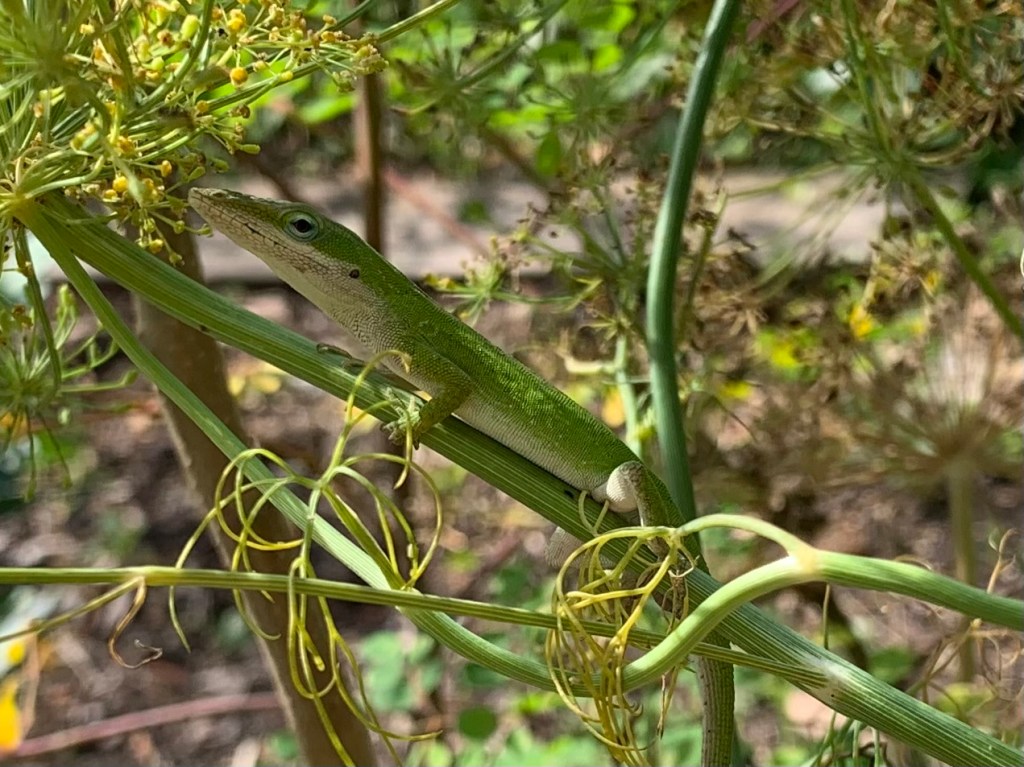
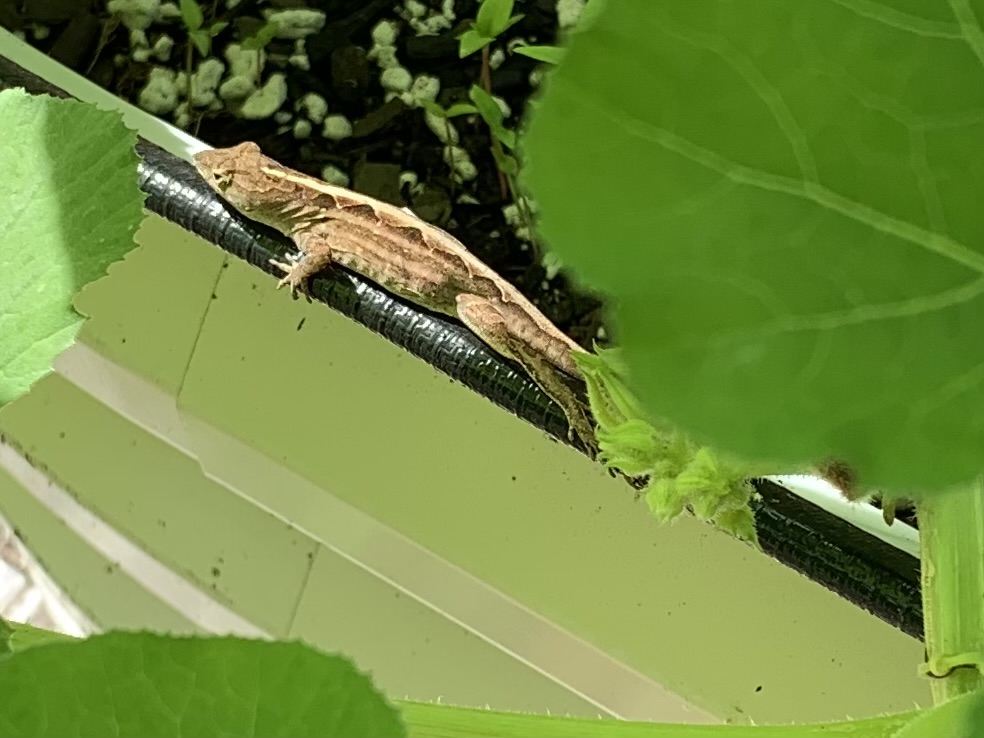
I’ve watched caterpillars crawl on the Milkweed. They get to various sizes and then they are simply gone.
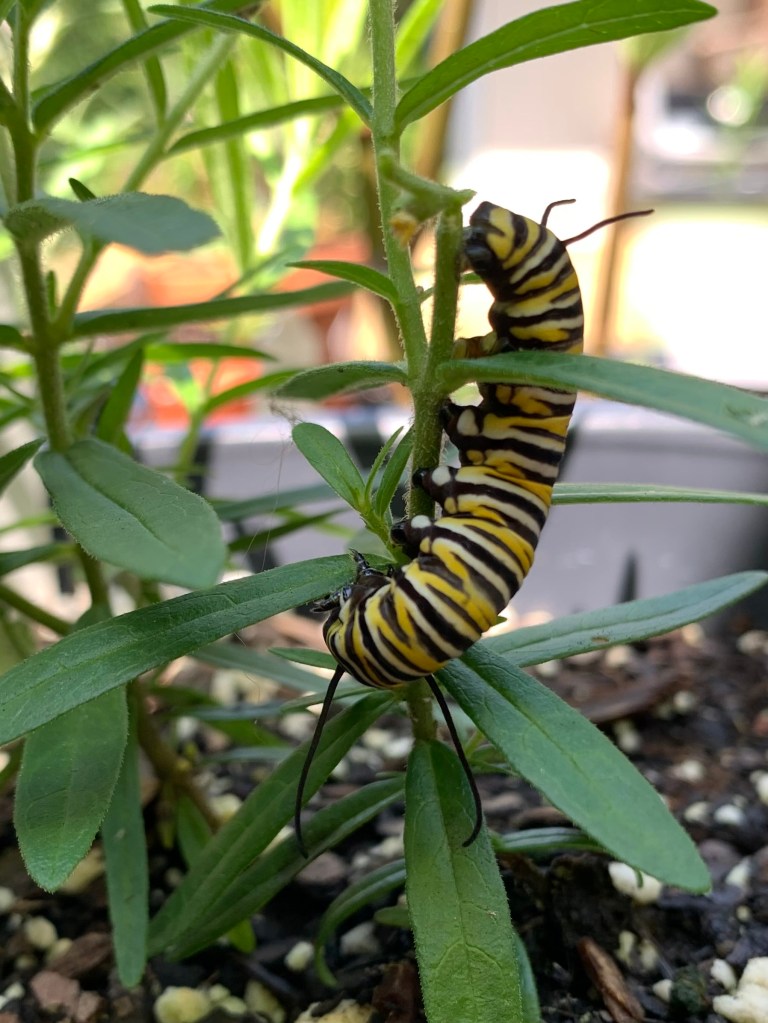
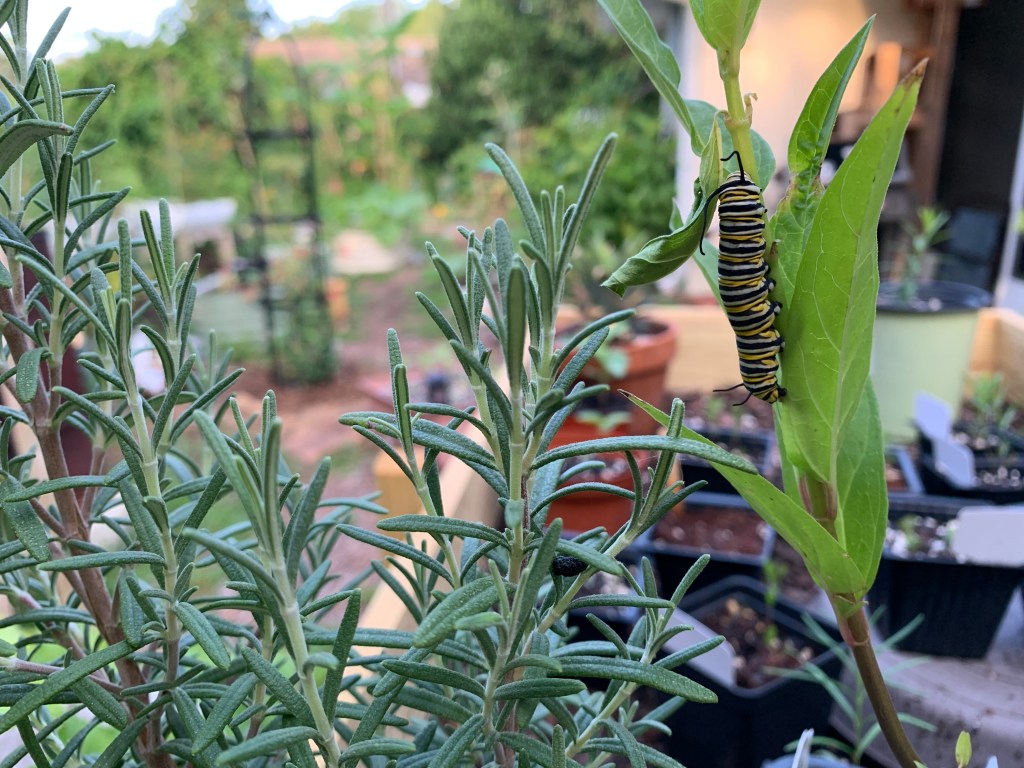
The whole time I watched this caterpillar grow he went from milkweed to the rosemary and back again. They seem to like hiding out in the rosemary. Back in April a caterpillar crossed my yard to build a chrysalis on the rosemary plant.

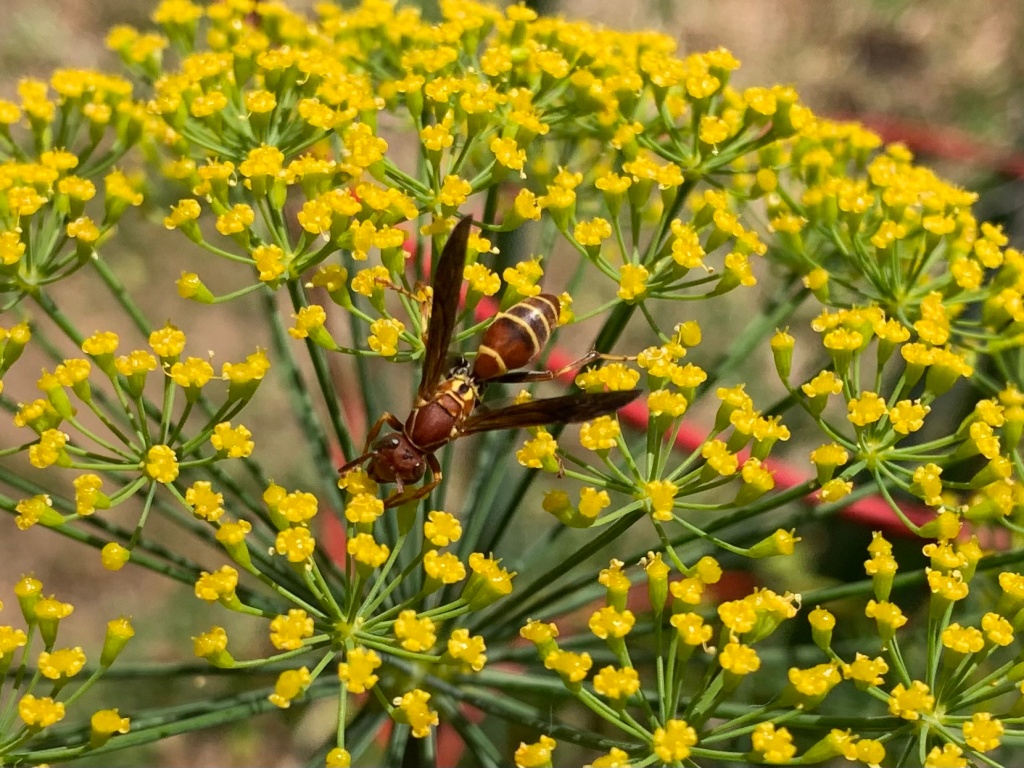
I was beginning to think that maybe this guy was big enough to survive. Finally, a yellow wasp came down and stung him and knocked him off the milkweed! He was happily chowing down on a leaf and I saw the wasp come in and pop him. He ended up crawling down the side of the pot. He was down there for a while, but the next time I looked, he was nowhere to be found.

Black Swallowtail Caterpillars

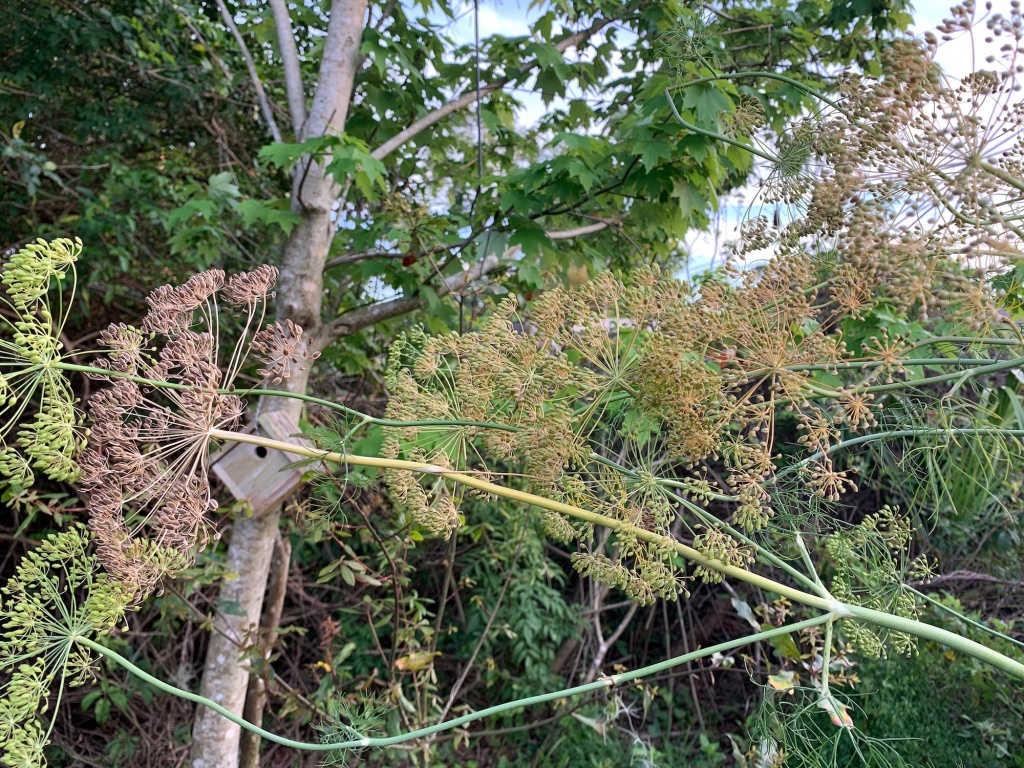
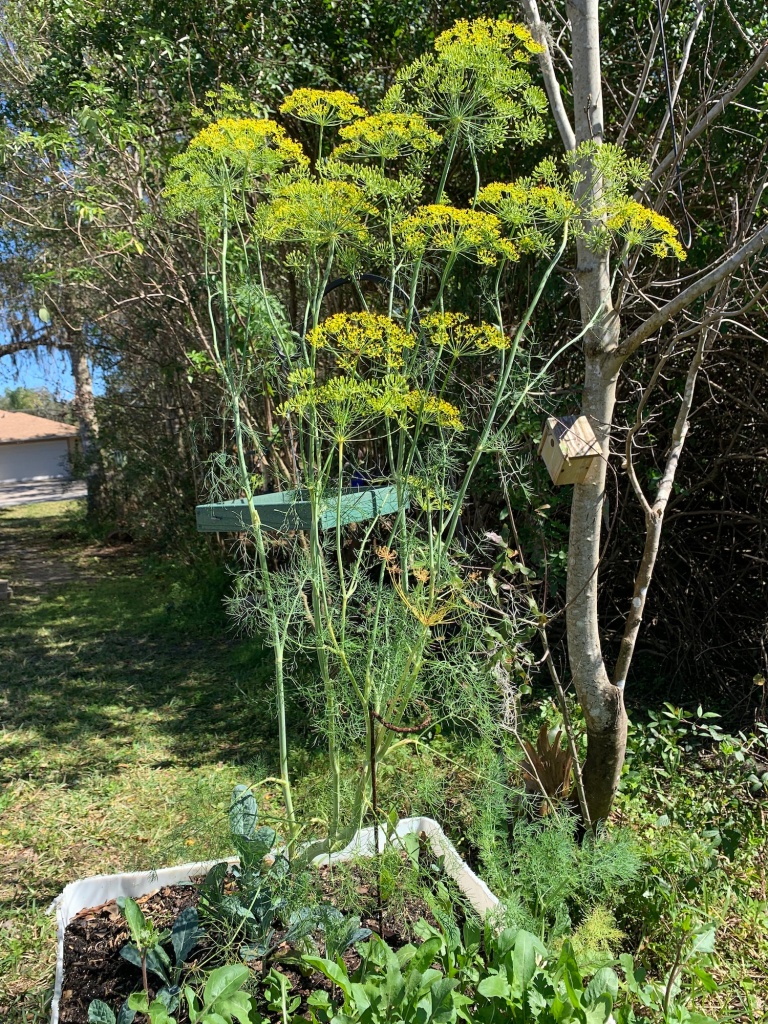
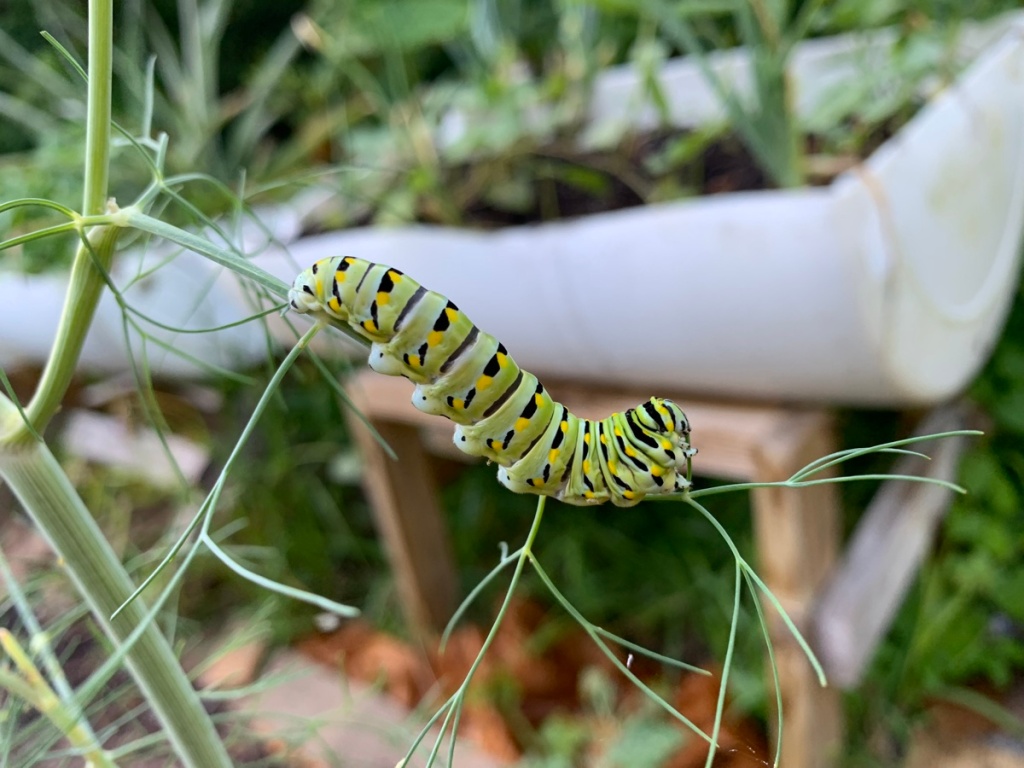
Little black swallowtail caterpillars were all over my dill plants. I snapped these photos one day in May. The next morning when I looked for them, the caterpillars were all gone.
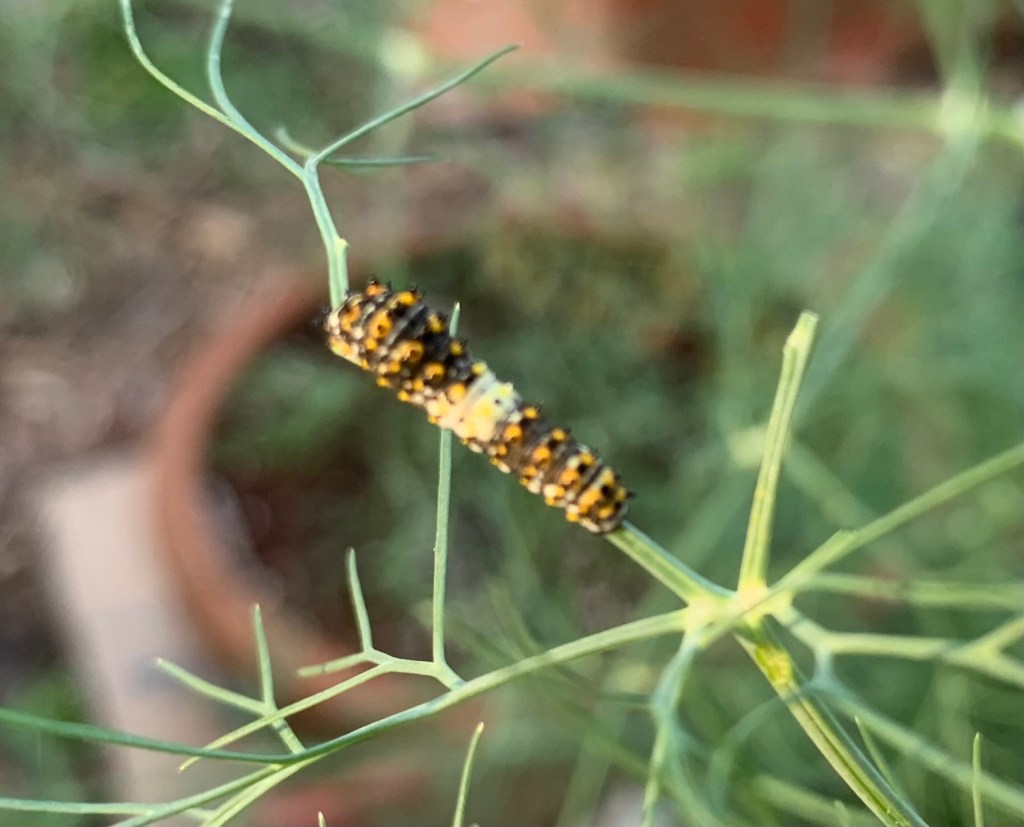
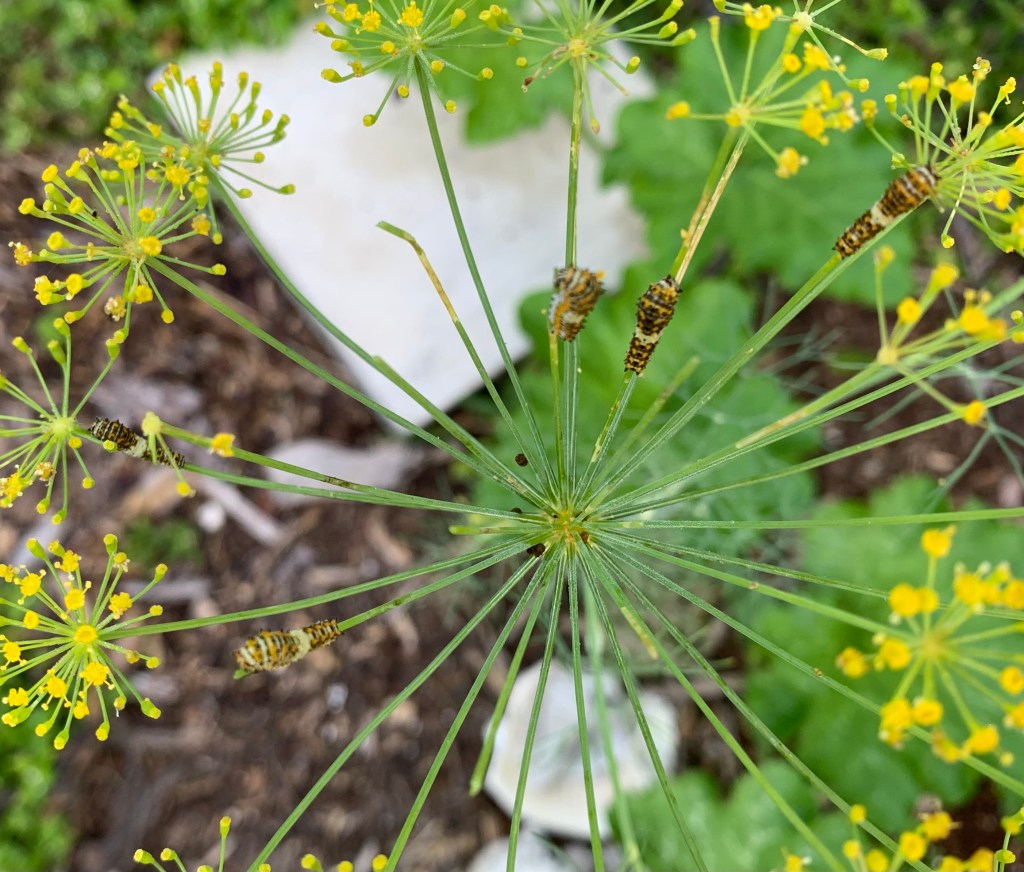
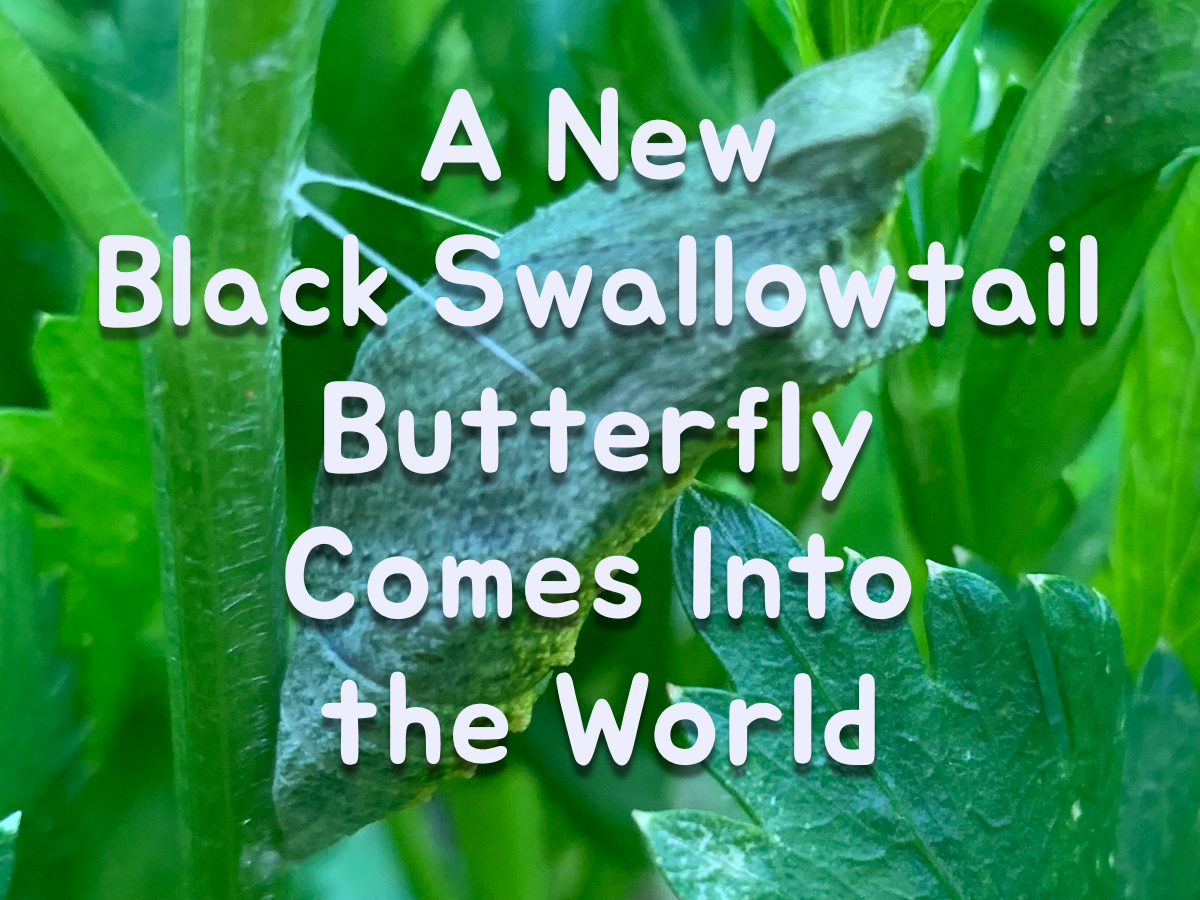
Although I think it’s unfair that no butterflies get a chance to form, it is not something I can change. Some people raise monarchs inside, but I am not about to do that. Many years ago I saw a black swallowtail butterfly emerge from a chrysalis. I had some parsley growing at the time. It is the only swallowtail I’ve seen make a chrysalis.

I can’t see everything, so maybe a lot of them do pupate. The Monarch caterpillars do tend to crawl to other plants and things. I’m only viewing them for a short time each day.

I do want to fill my yard with plants that accommodate butterflies and caterpillars. I can’t help what happens during their transformation. These plants also feed other critters. And the caterpillars are food for lizards and wasp babies I suppose. Who am I to say how it should go?

Thank you for reading.

This is Why I Leave the Dill Alone

If you have an aphid infestation, check regularly for ladybug eggs, larvae and pupa on the plants.

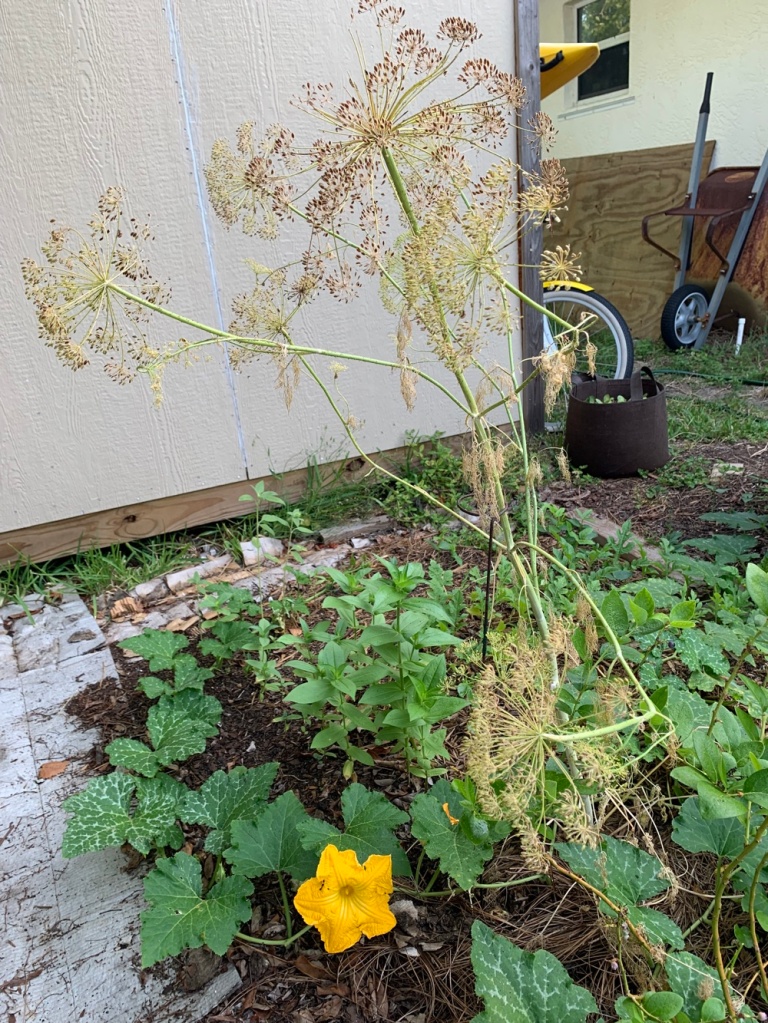
I believe in not being too quick to clean up the garden. It is June, and my old, aphid-filled dill plants are now full of ladybug larvae! This is why I leave plants up after they have grown, bloomed and begun to die.

Dill is one of the great herbs to grow in the garden. Some of my plants have come up on their own. When I see them growing I just leave them. The flowers are gorgeous and feed bees and butterflies. The seeds are easy to gather and save, and black swallowtail butterflies lay eggs here.

Dill does not like the extreme Florida summer heat and the plants are done flowering by June. The seeds have formed, and I did cut one big head off to save the seeds for next Spring. The rest, are still on the plants, which now look pretty awful.

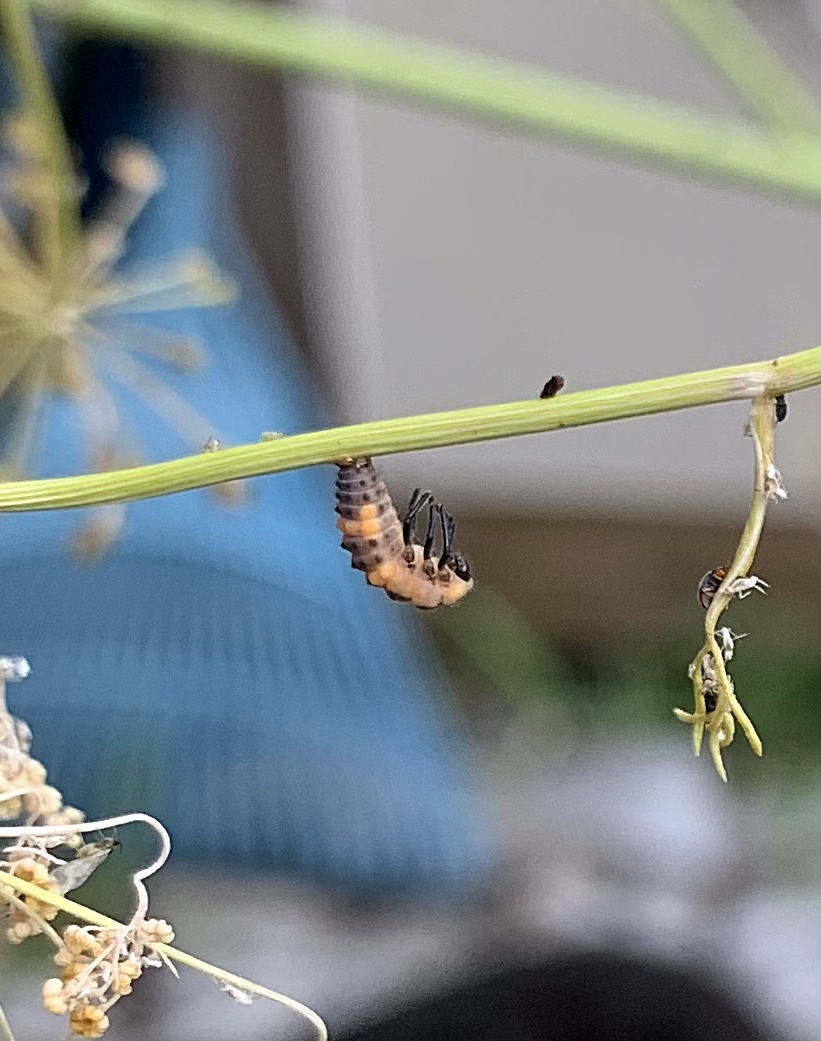
Aphids have found the old dill plant and it is covered in them! But there are also many ladybug larvae and even a ladybug or two.

The day I saw all this larvae, I counted 15 little guys crawling around. They are tiny, and hard to see in the mess of aphids, so there might be even more.

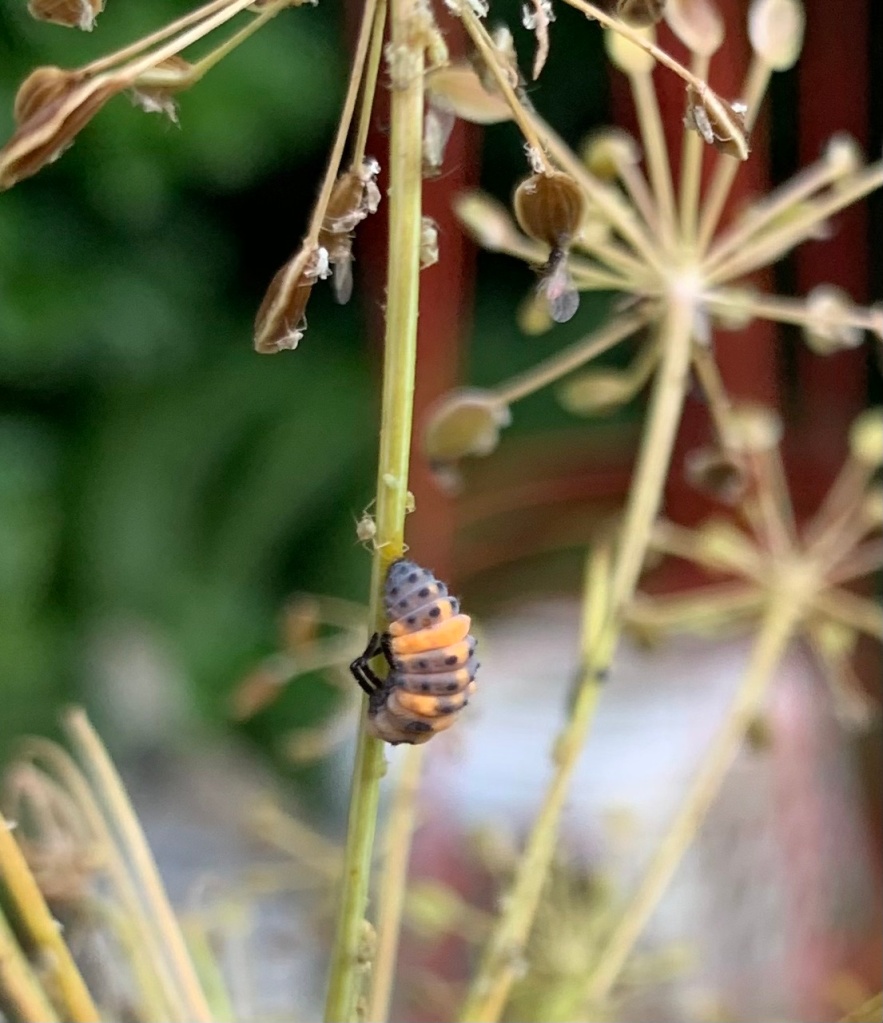
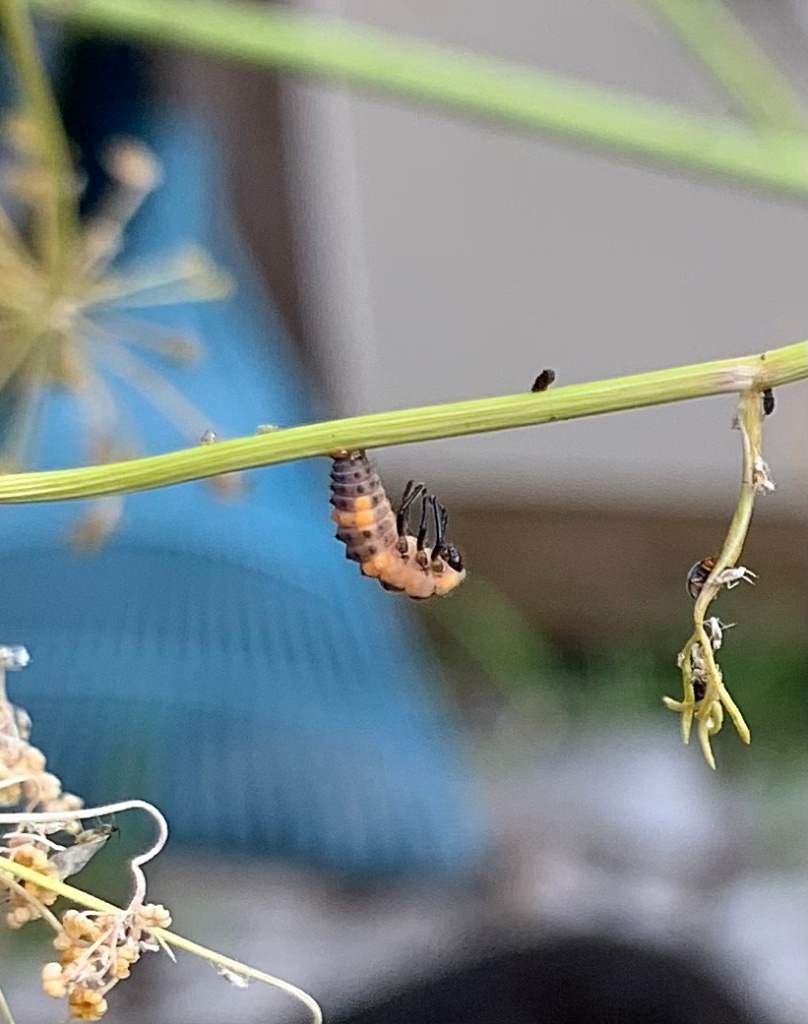
The next day I realized they were beginning to attach and hang – going into the pupa stage.

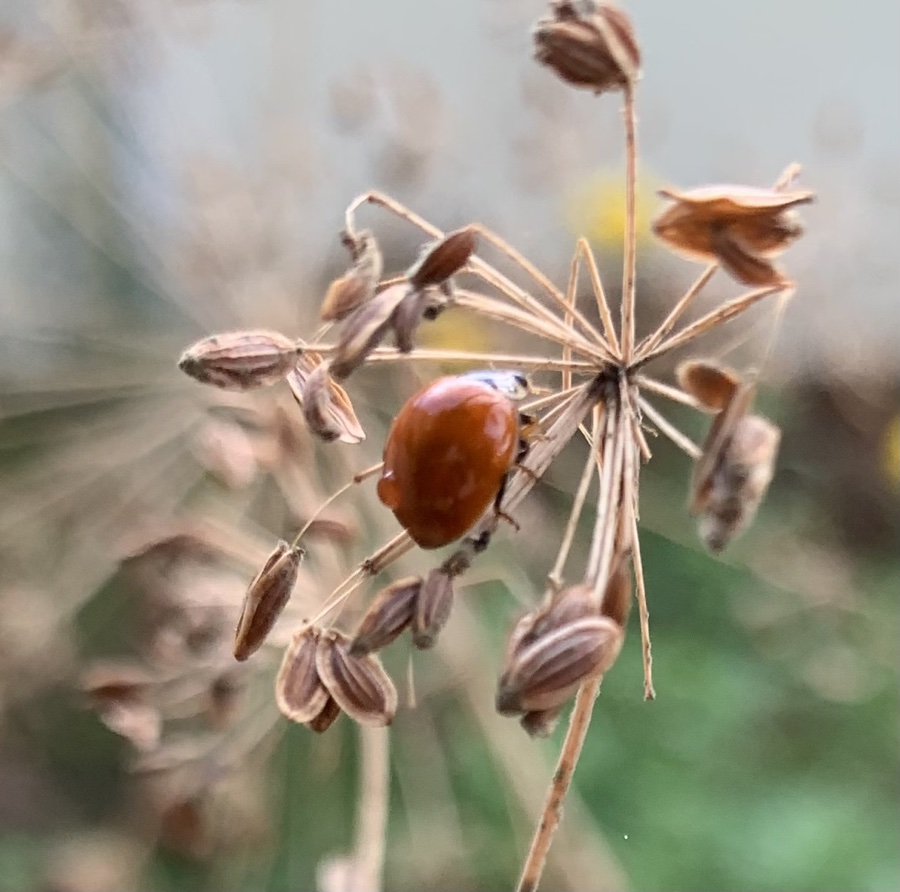
A few days later the new ladybugs were crawling all over the dried dill stalks.

Newly hatched ladybug exploring the dried dill seeds

Ladybugs on the Hon Tsai Flowering Broccoli

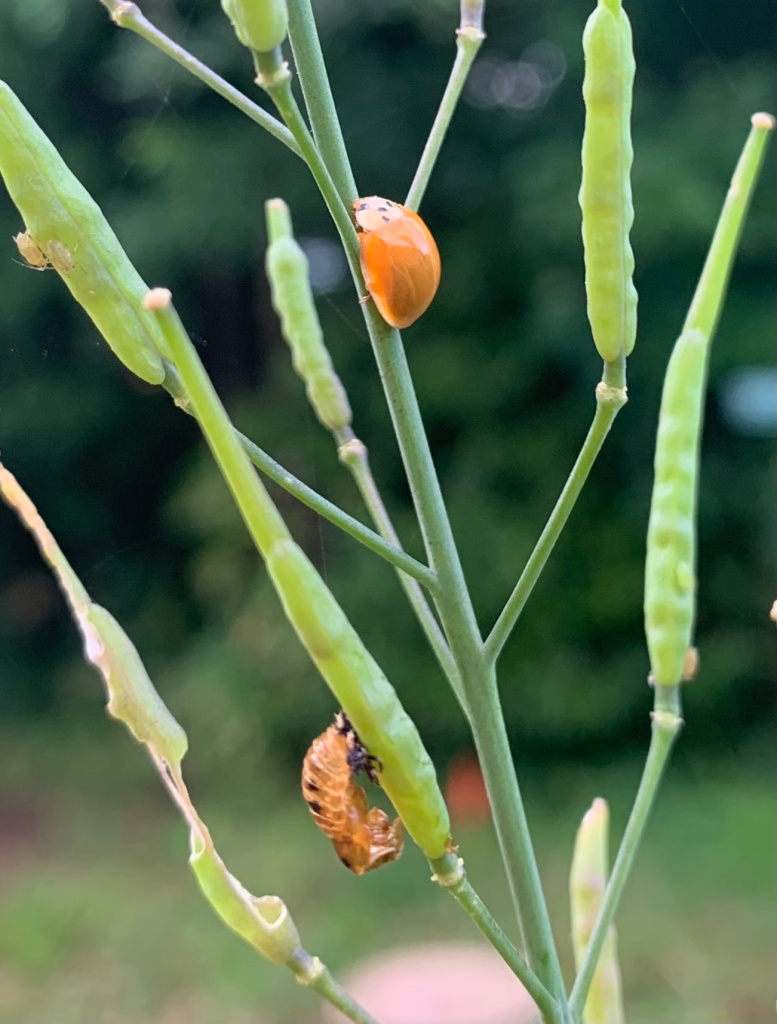
Just a few weeks before the dill ladybugs were noticed, I had watched ladybugs come out of their pupa stage on my Hon Tsai flowering broccoli plant. It was setting seeds, and had some aphids at the top. This was a random plant that grew late in the season.

Ladybugs feed on aphids, so they lay eggs where the “babies” aka larvae, will be able to get food.

Four ladybugs hatched from their “shells” which were attached to the seed stems of this plant. Three ladybugs were solid orange, and one had loads of black spots.

ladybug just hatched
Newly hatched ladybug!

Dill is Feeding the Caterpillars

Even though the dill plants have mostly died and are drying up, I have found two caterpillars on one of them.

There is not much left for them to eat. I’m very surprised that the cardinals have not picked them off by now. I check on the beauties every day, but I have big doubts that they will reach pupa stage.

*Update: the next day one caterpillar was gone and the day after the other one was gone too. I suspect birds needed a meal.

This is a reminder to look closely at what is happening in the garden. Before you decide to rip out that old plant, consider what creatures might need it for shelter, eggs, or food.

Keep Reading

Life Stages of the Ladybug With Photos

Ladybugs will eat aphids, but ladybugs appear in various forms. Know the larvae stage and let it live to eat those aphids.

Not only are ladybugs cute, but they are beneficial to gardeners.   Often gardeners wonder how to bring ladybugs to the yard?  The simple answer is to hope for garden problems in the form of pests that feel ladybugs.
Ladybugs, or lady beetles as they are sometimes called, are helpful in vegetable and flower gardens mainly because they love to eat aphids and other garden pests. Aphids are one of the worst pests gardeners deal with. When aphids begin to show up on leaves, flowers and buds, they ring the dinner bell for ladybugs.

Unfortunately as gardeners, we have to have unwanted bugs in order to get these beneficials to the yard. It makes sense. Ladybugs (and other beneficial insects) go where the food is.

Continue reading “Life Stages of the Ladybug With Photos”