Monitoring Milkweed for Caterpillars and Pest Activity

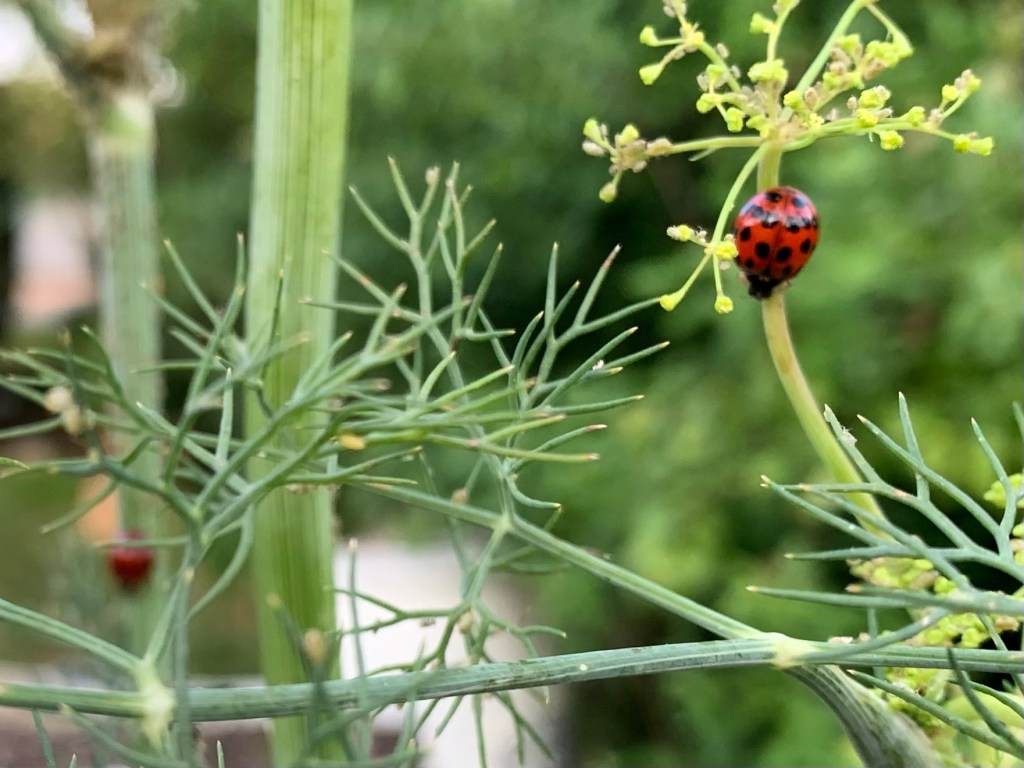
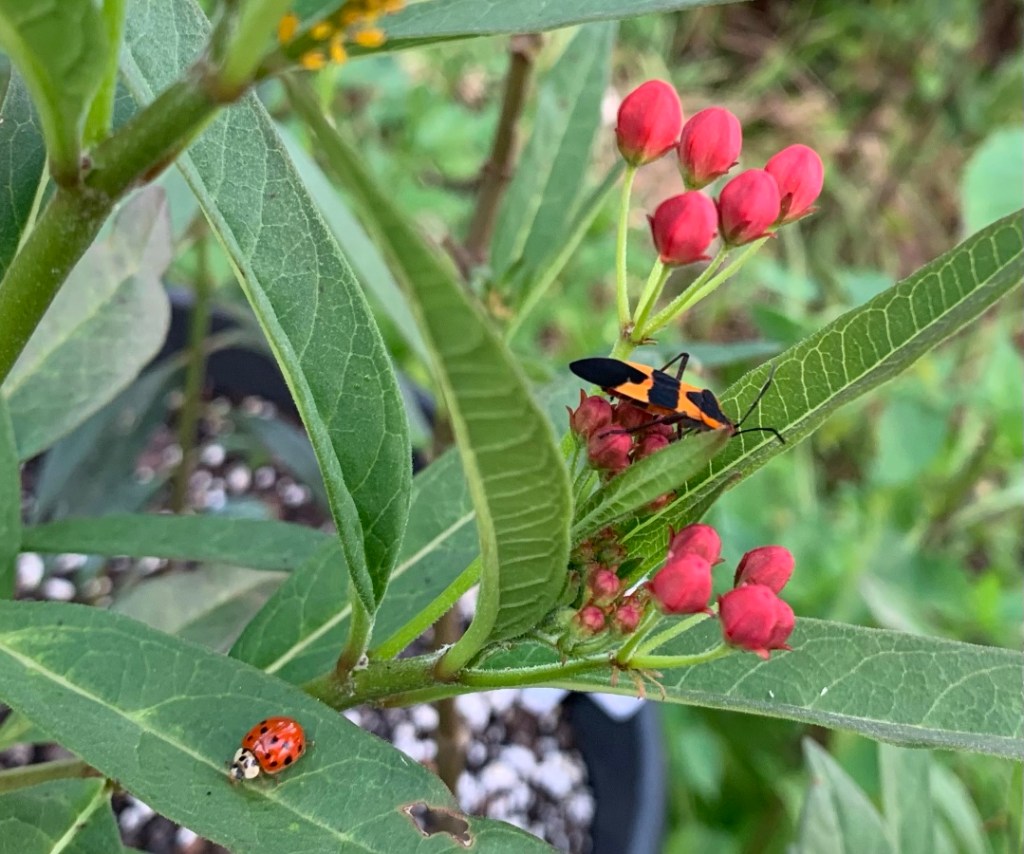
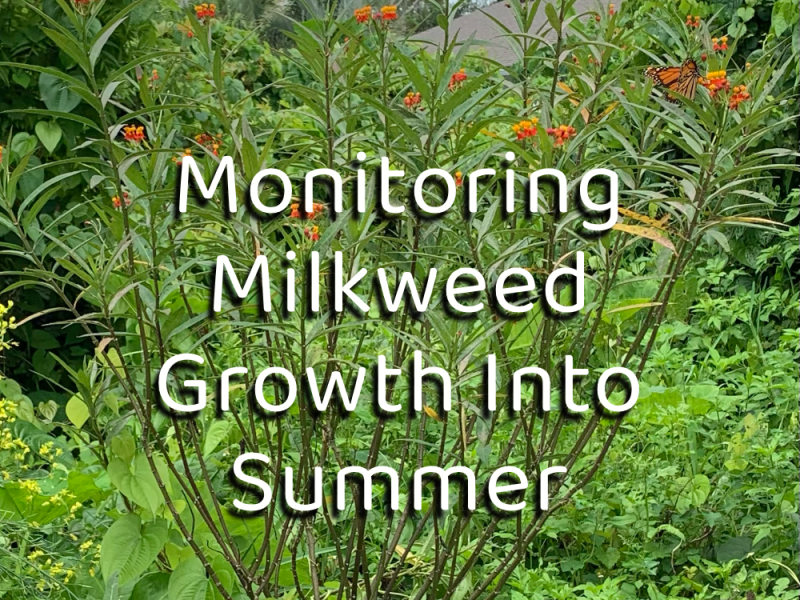
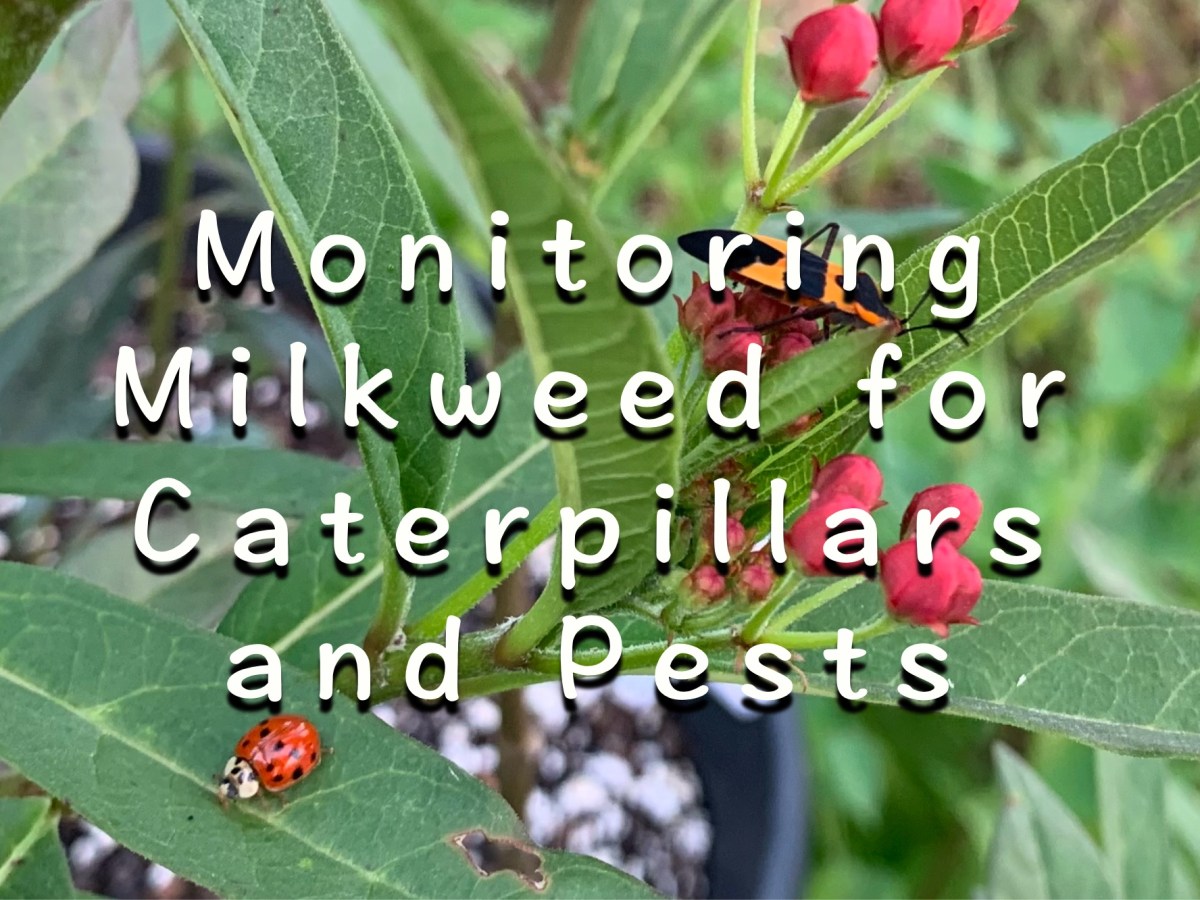
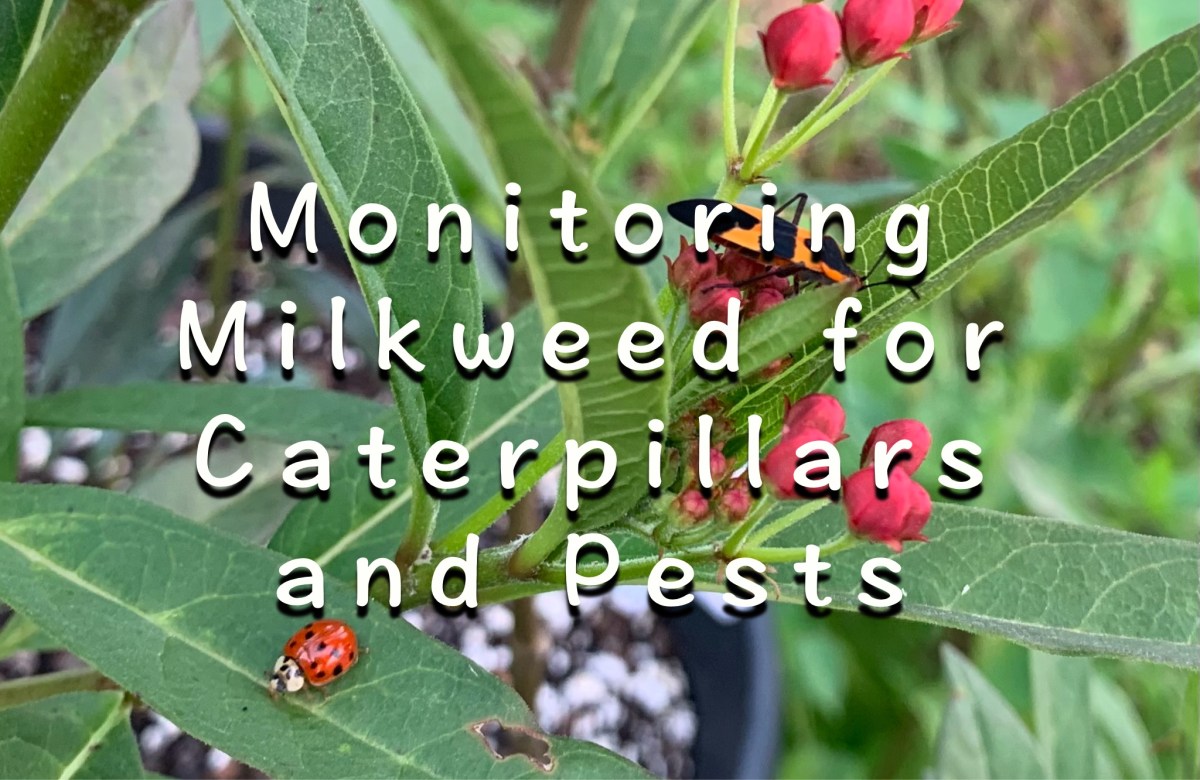
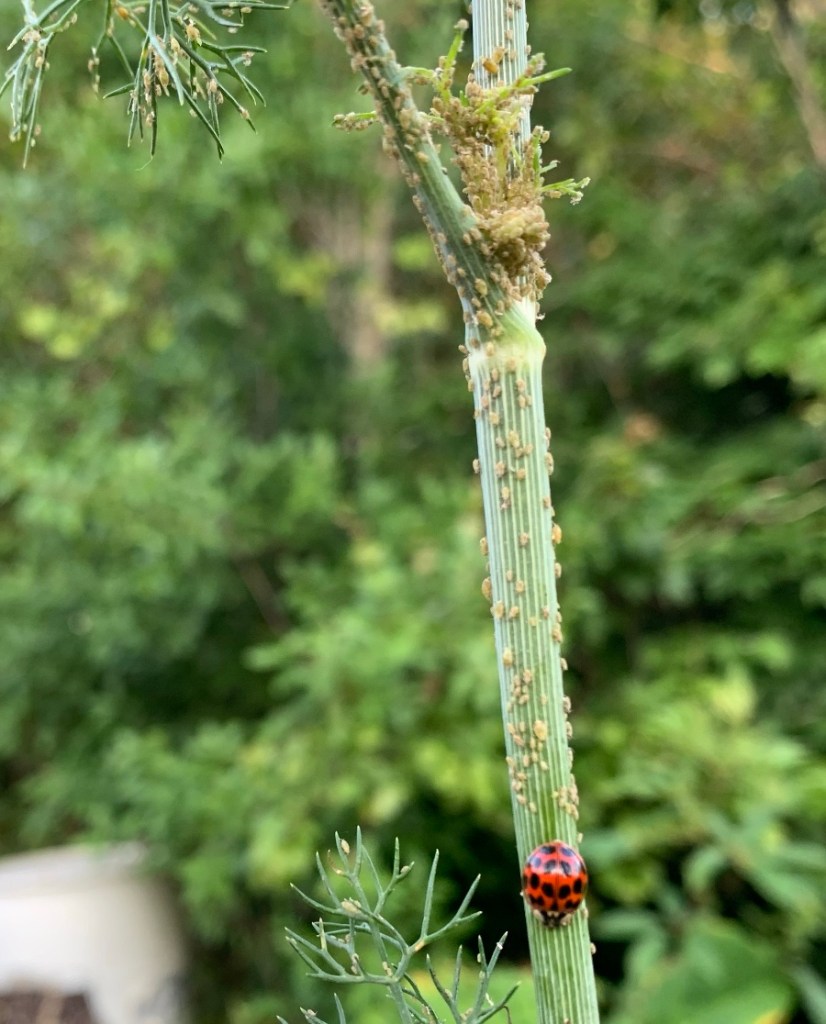
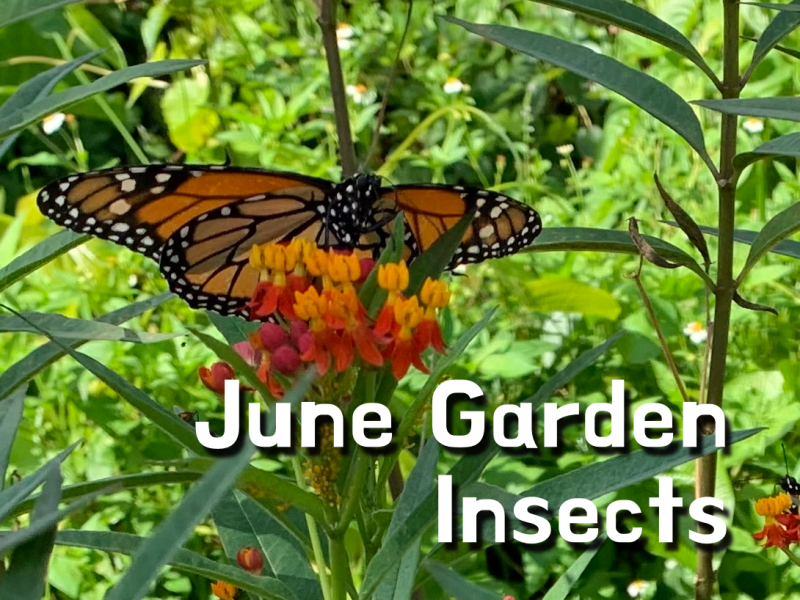
A daily check on the milkweed revealed interesting bug activity. It appears that the aphids are bringing the ladybugs.

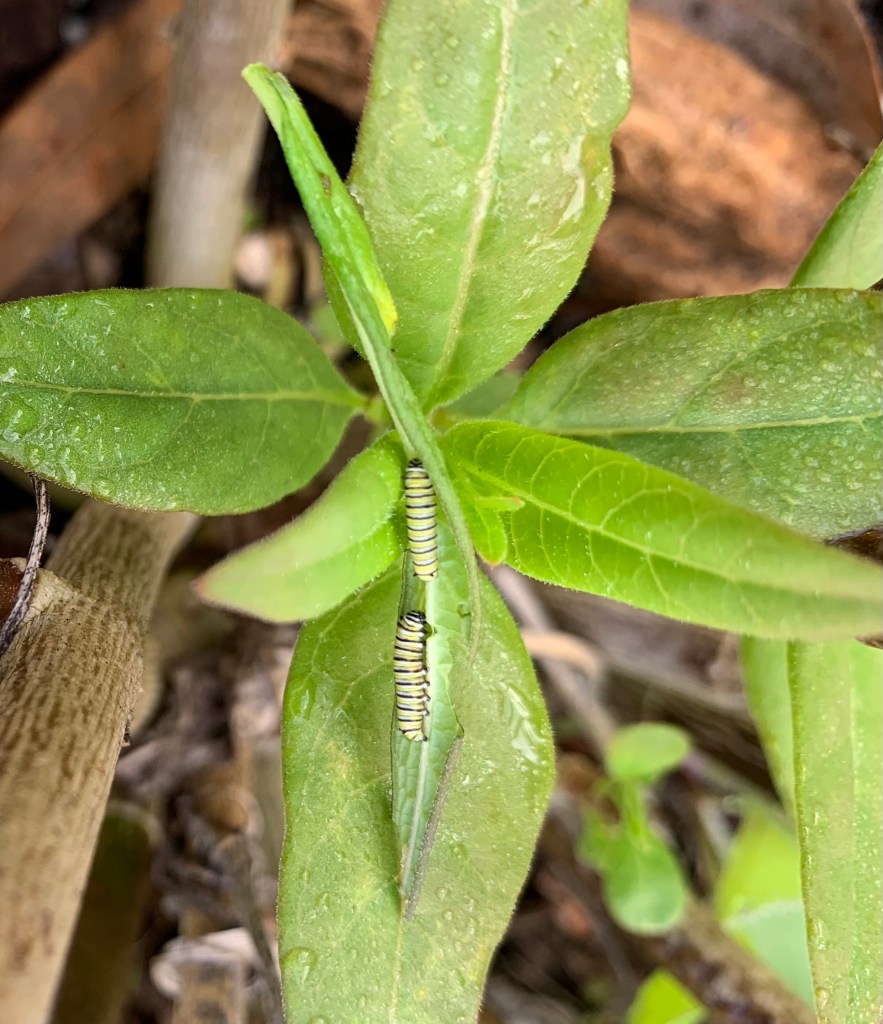
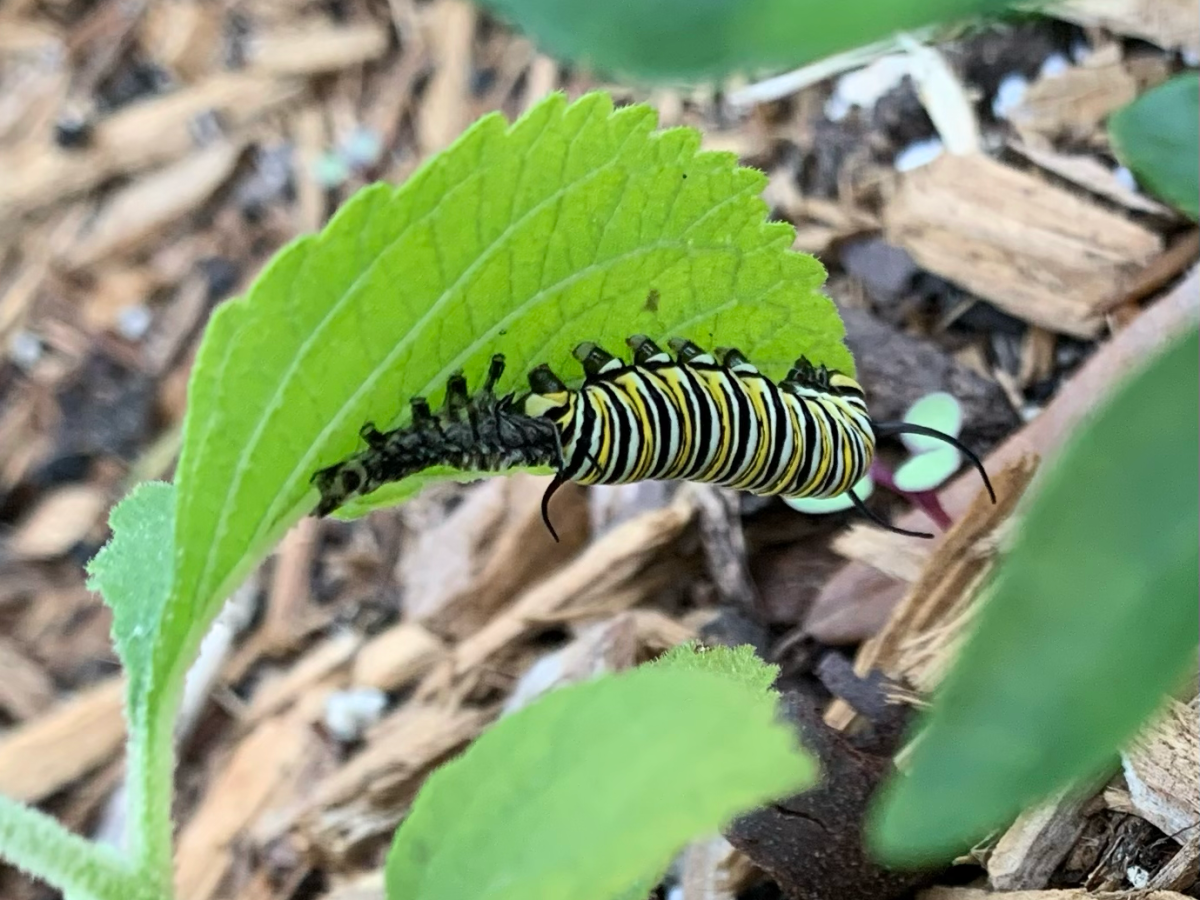
Each day I check the milkweed for caterpillars. Although there have been some spotted, I’m seeing other bug activity.

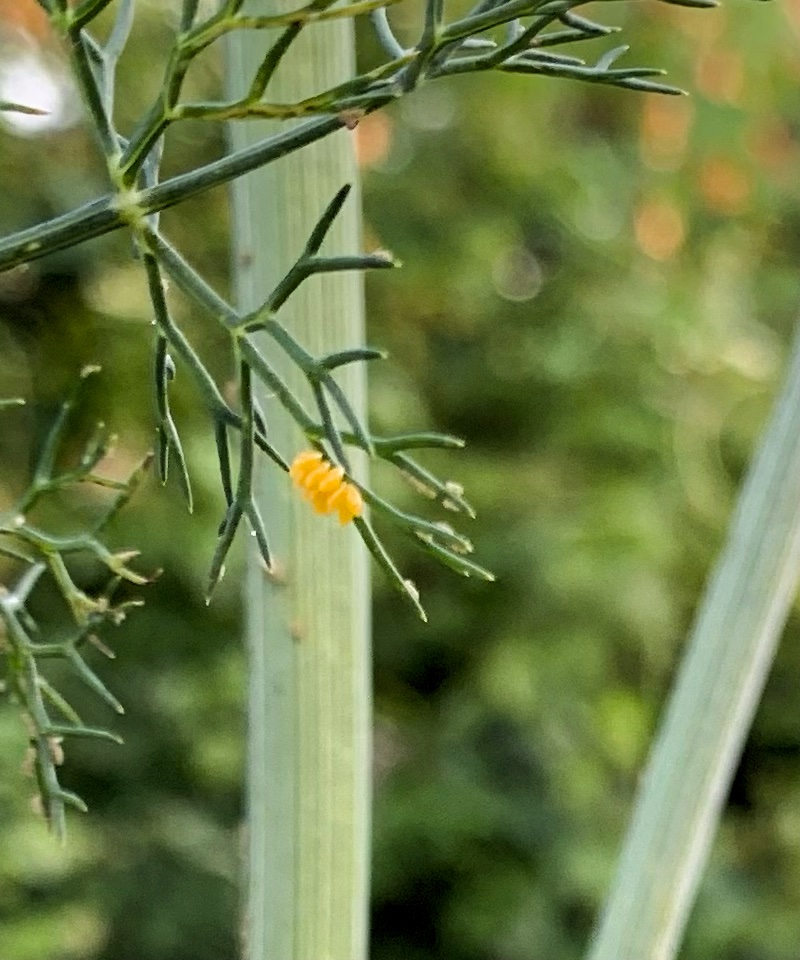
One, tall dill plant is growing next to the milkweed and it is covered in tiny pests. I only just realized how bad it is. These little critters look like aphids. The milkweed has a few yellow aphids also. Last night I counted four ladybugs in the area, with some little yellow ladybug eggs on a dill leaf.

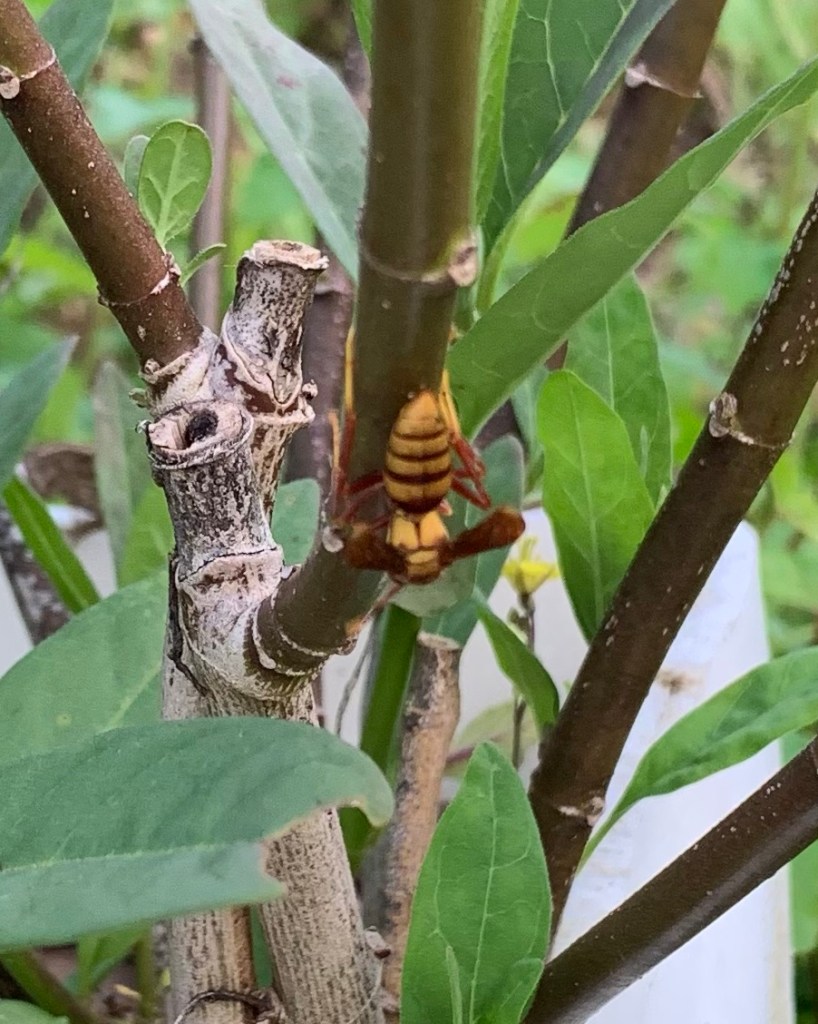
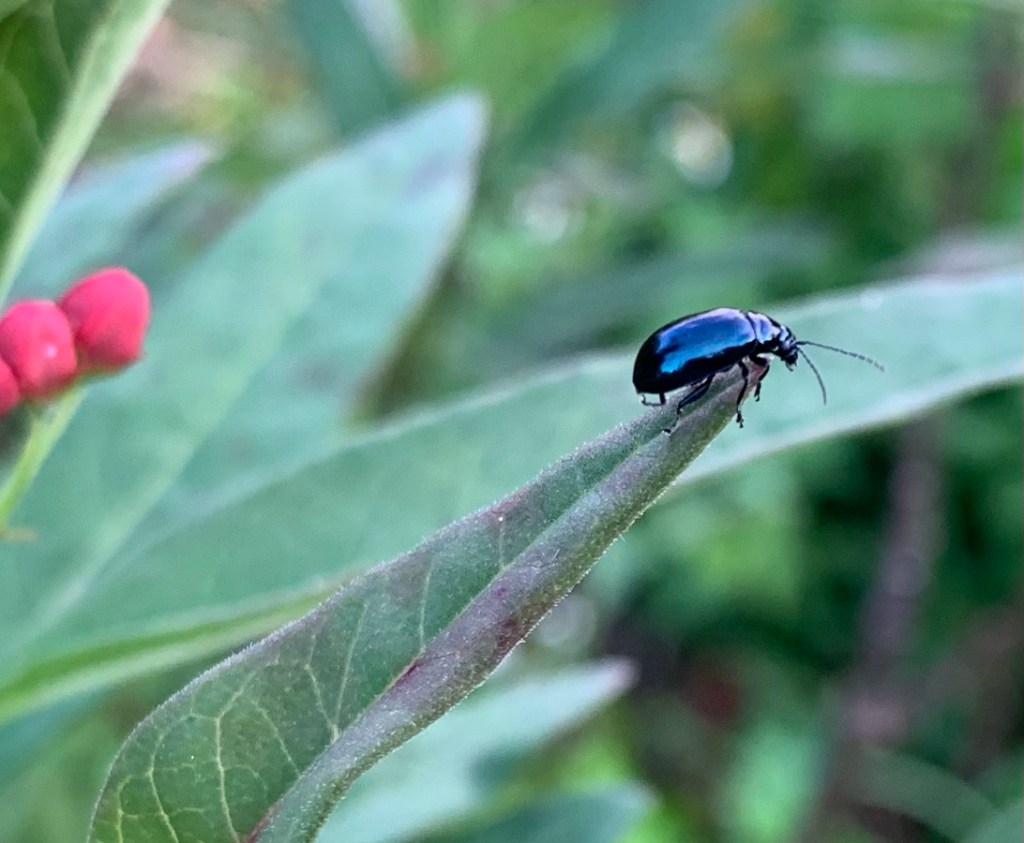
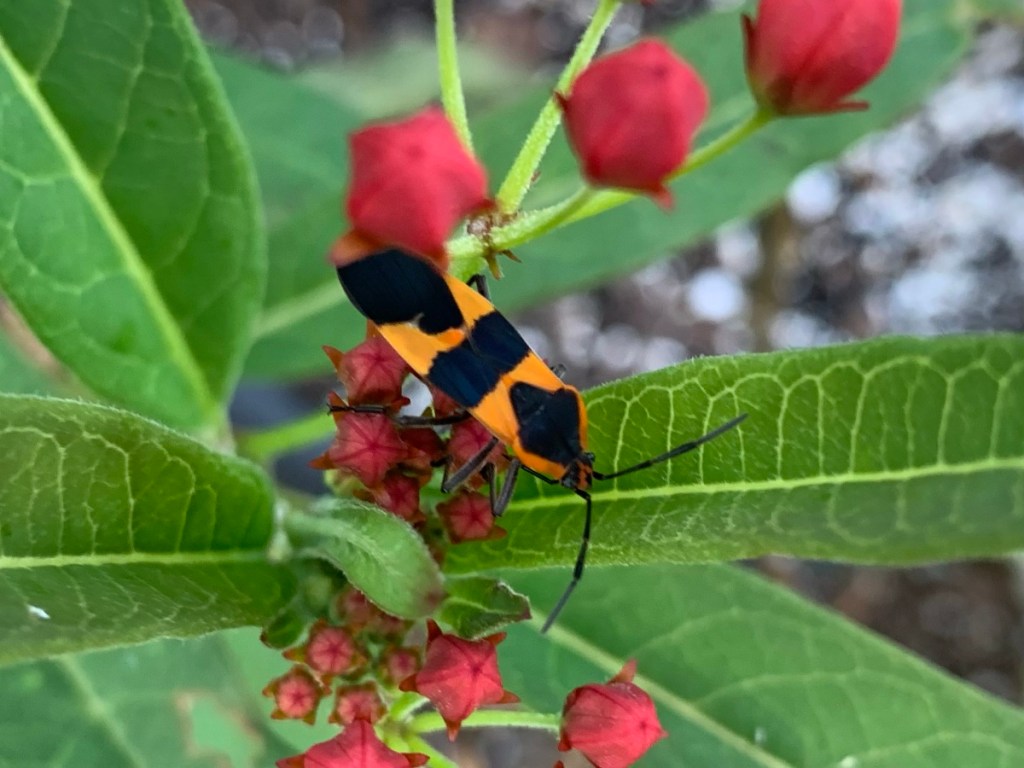
Also, in the same area, I spotted a milkweed bug and shiny blue leaf beetle on the tropical milkweed plant. A yellow paper wasp was also spotted, and I need to check for a nest in the vicinity. With an increase in stinging bugs, I’ll have my Apis Mel (paid link) handy.
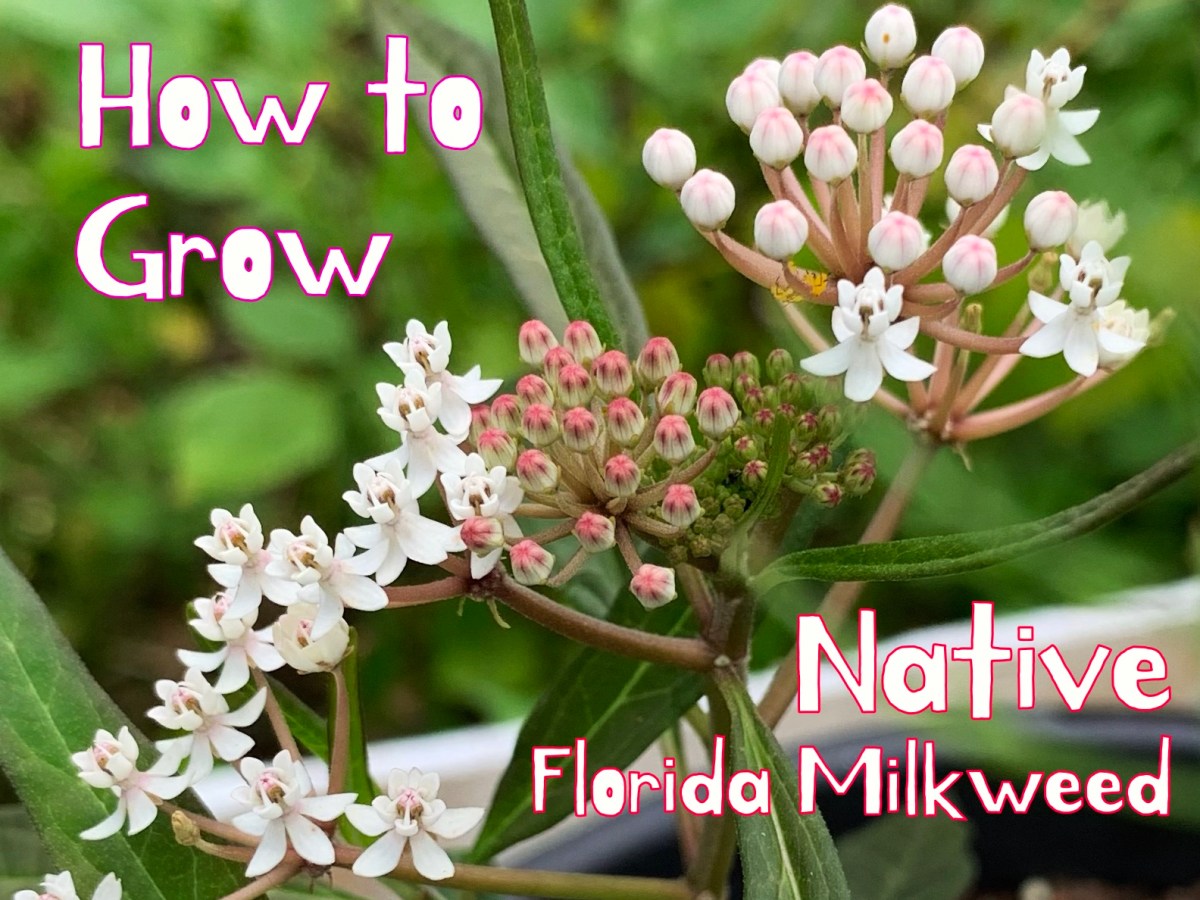
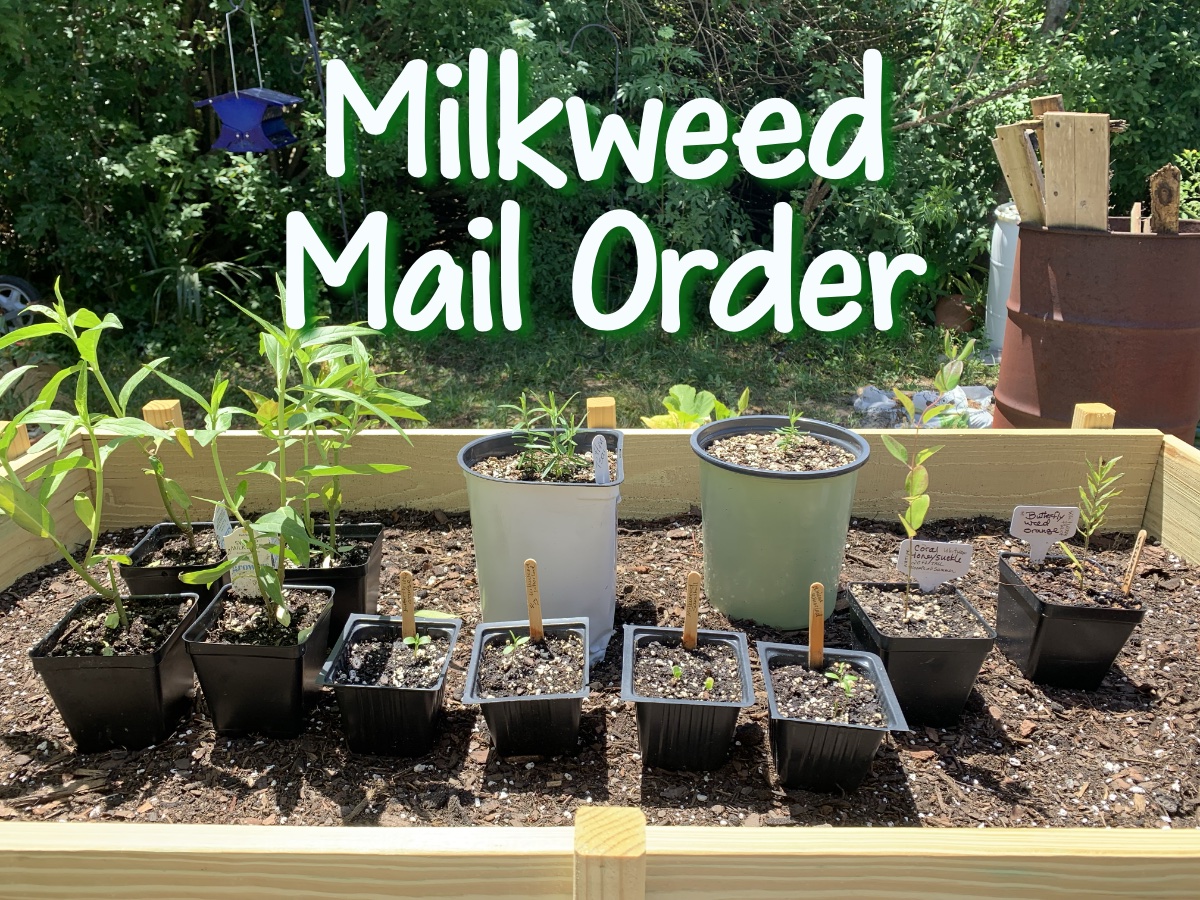
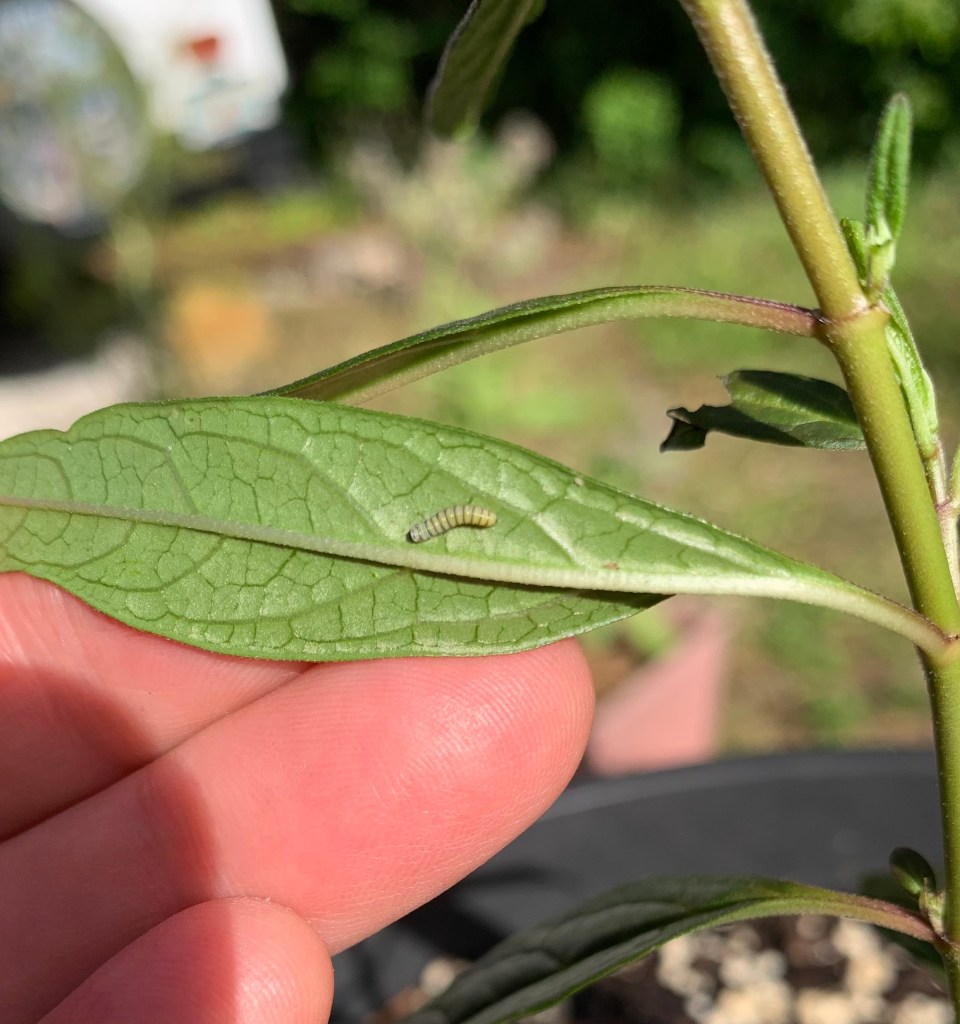
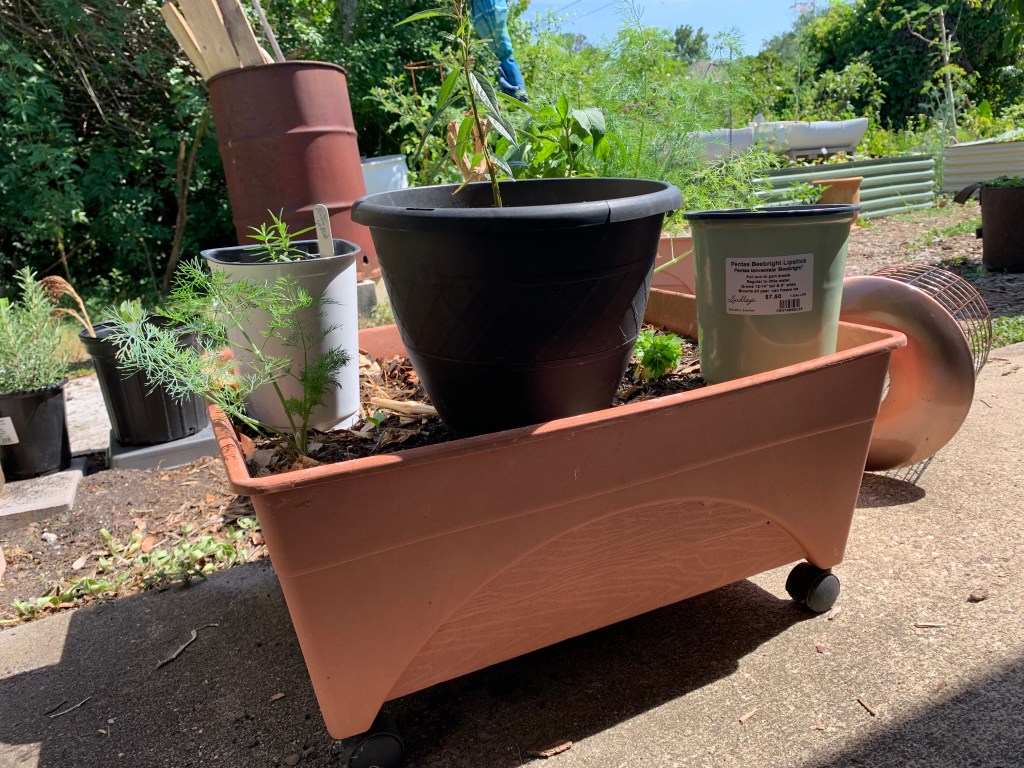
When tiny caterpillars were on my new white Swamp milkweed plant, I transferred them to the tropical milkweed. I don’t like to mess with nature, but the original plant was too small to accommodate any caterpillars. I think the eggs may have been there when I bought the plant.

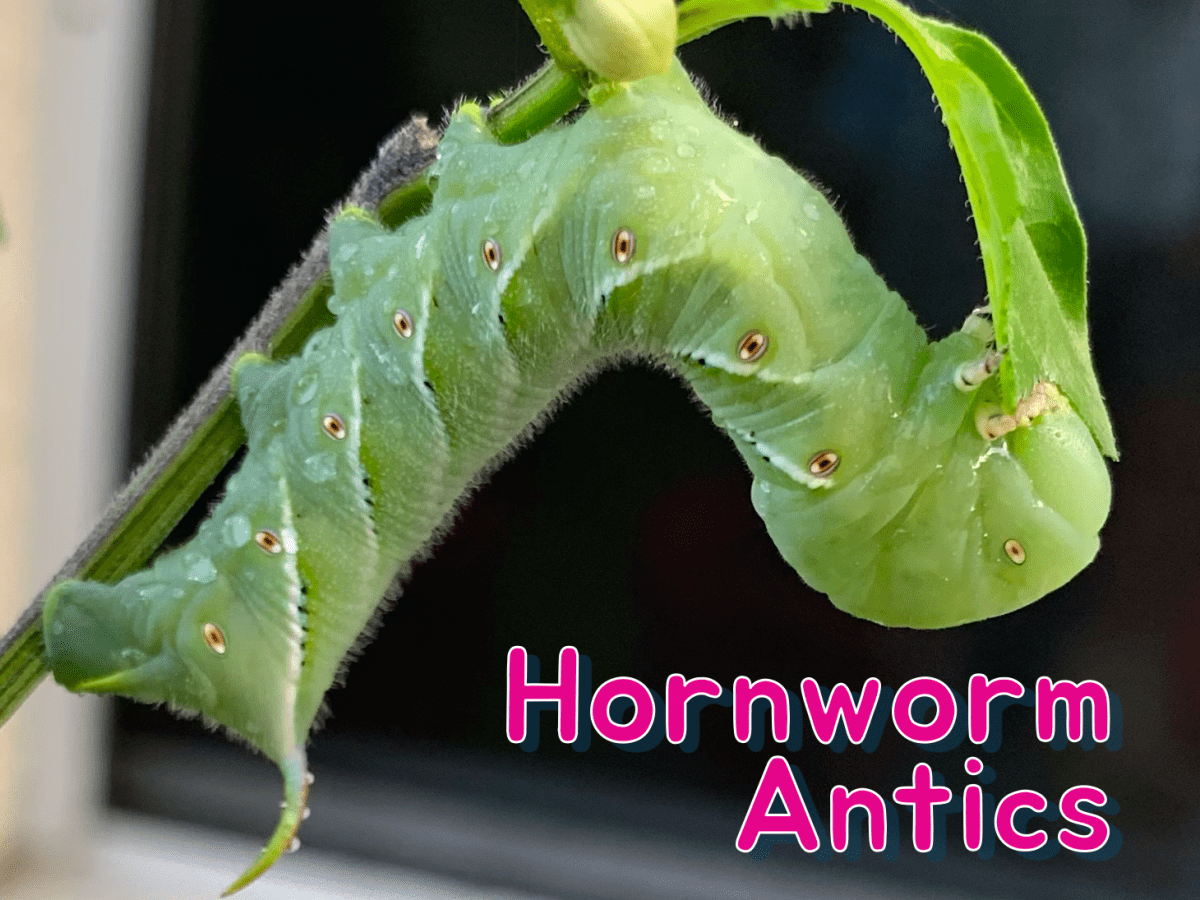
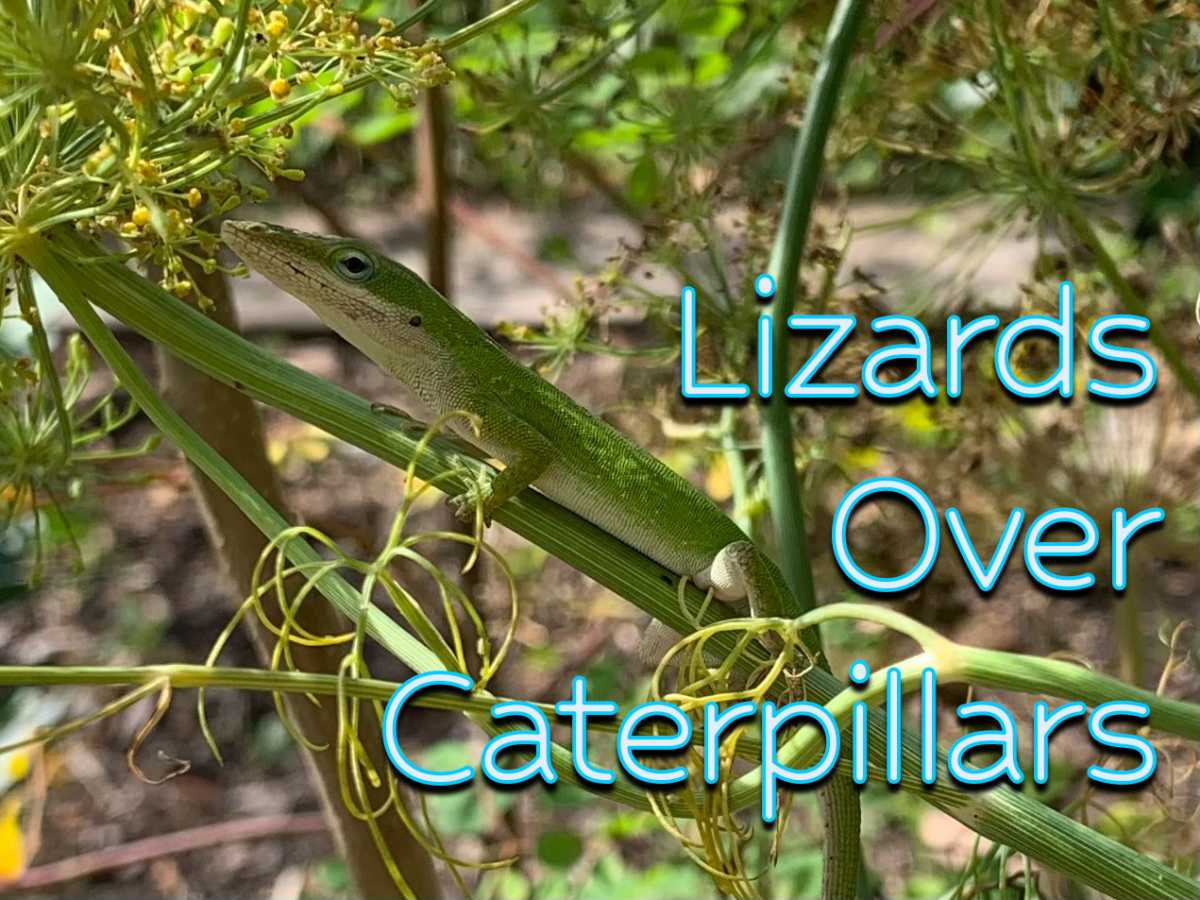
I ended up putting three tiny caterpillars onto the bigger milkweed plant. I’ve seen only one caterpillar that had grown larger, and now that one seems to have disappeared. I think the lizards are eating them.
Sure enough, I searched for info and found that lizards – both invasive (brown) and the green anoles – will eat the caterpillars and butterflies. So now I have a new problem. I want to feed the Monarchs, but my yard is full of lizards.

Are These Bugs Good or Bad?

I’m no bug expert, but I do know ladybugs are good guys. They eat aphids and when the eggs hatch, the ladybug larvae will also eat the aphids. I’ve seen red ladybugs with lots of black spots and also orange ladybugs with no spots.
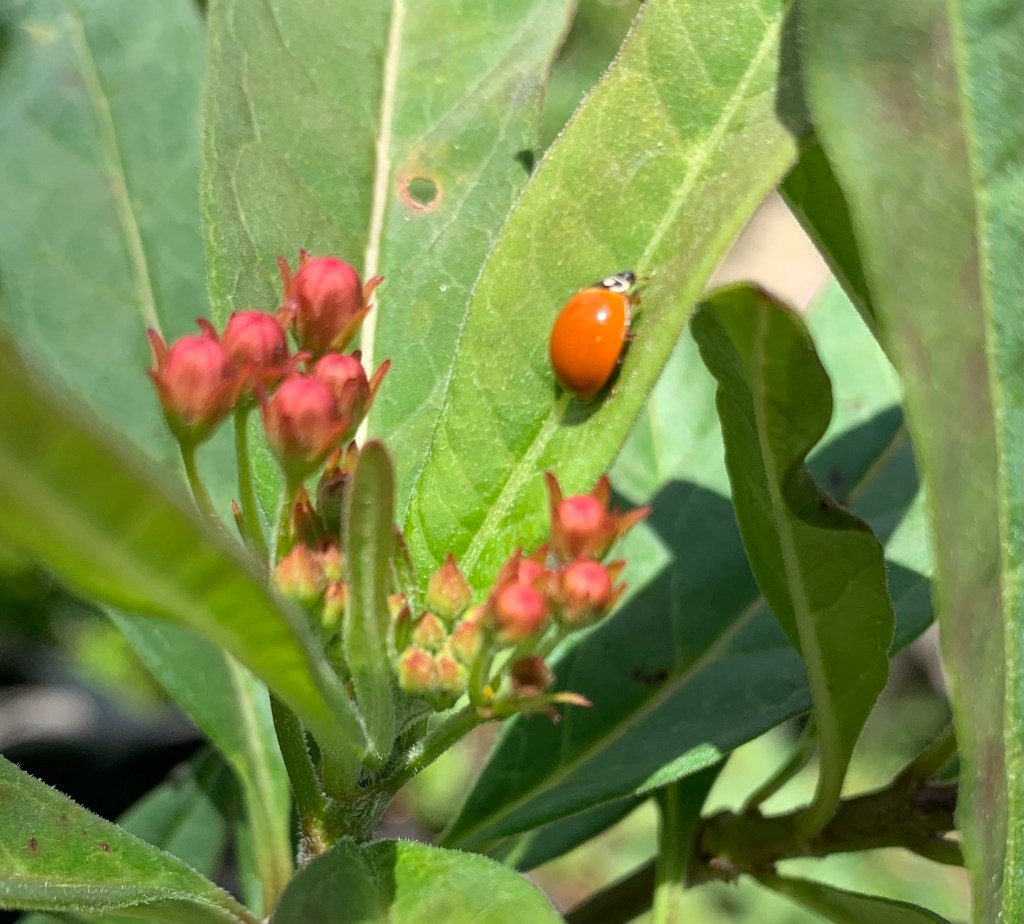
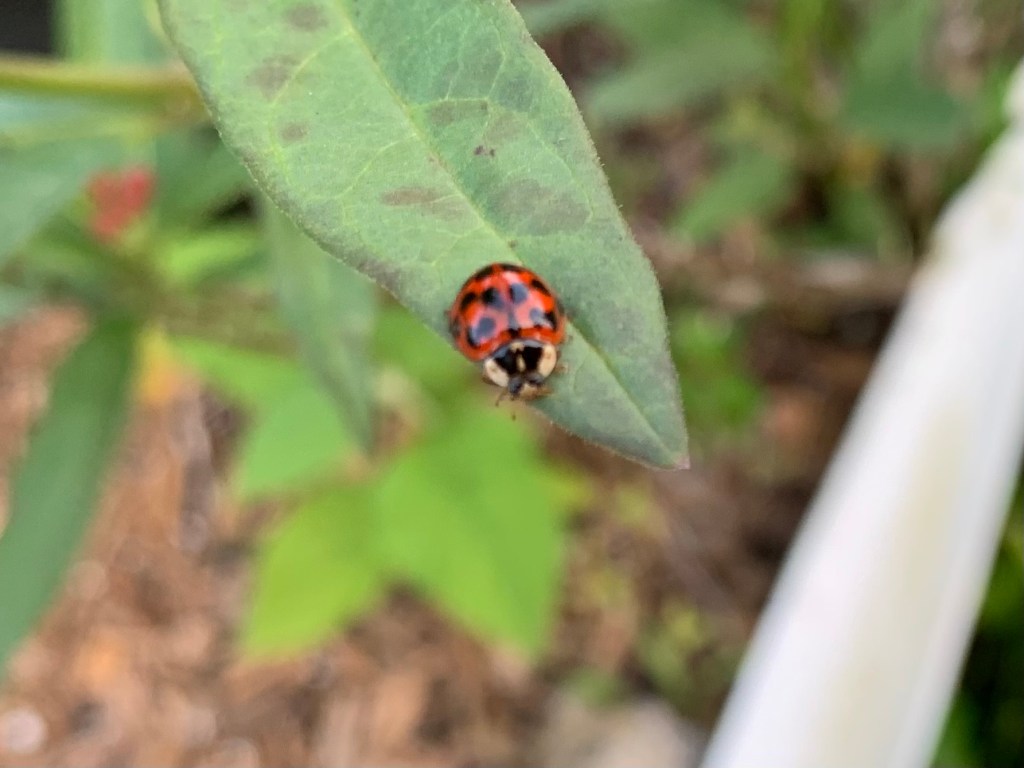
The milkweed bug feeds on flowers and seeds of the milkweed plant. The milkweed assassin bug looks similar, and is a beneficial that will not feed on the plant, but kills unwanted pests. I haven’t seen one of those yet. As far as that pretty blue beetle, I have no information.

The dill plant is one of many that I have all over the garden. Dill is very easy to grow where I live, and I always save seeds each year. As summer closes in, the dill flowers turn to seed and often the plants get infested with aphids. Each year I hope for ladybugs, but never seem to have enough to deal with all the pests.

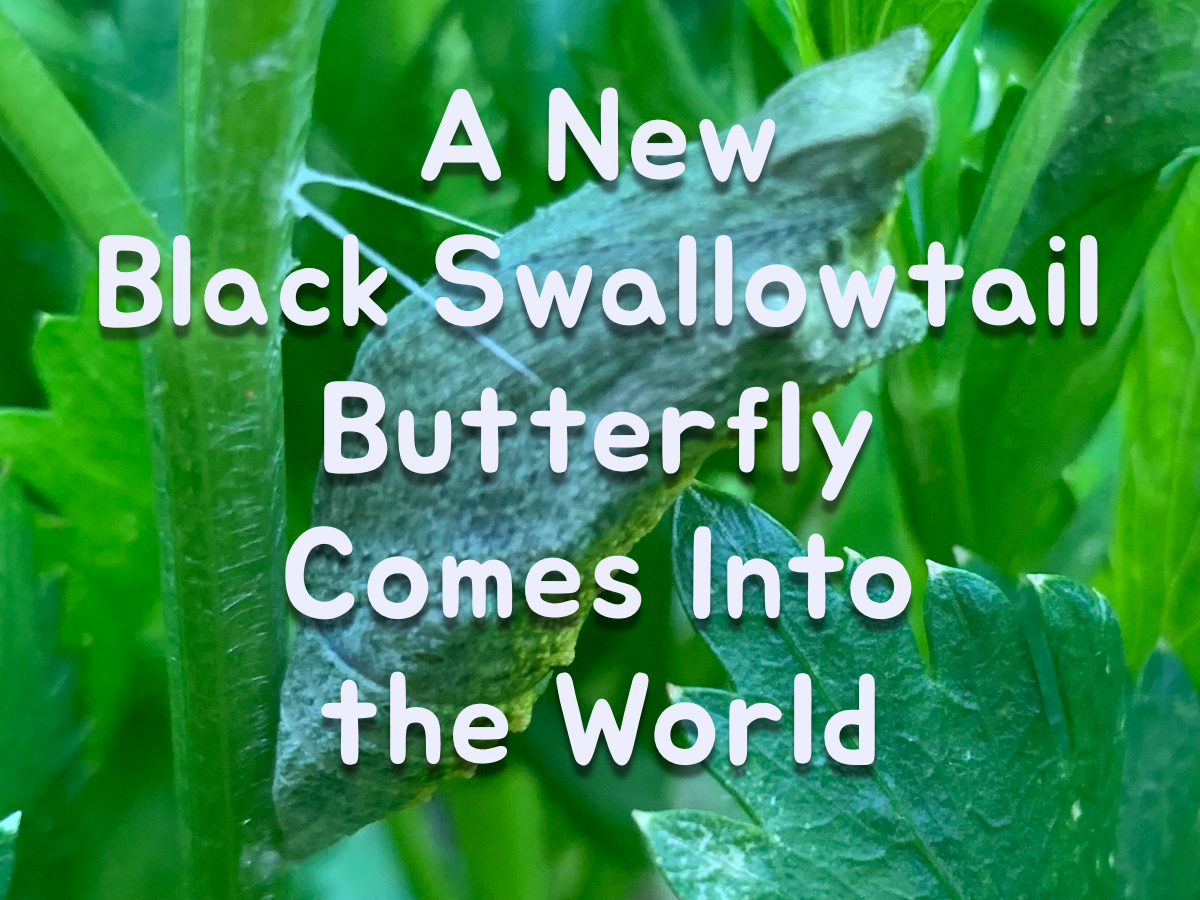
The dill plants are also good for attracting black swallowtails. Fennel is another plant where I’ve found lots of caterpillars in the past. I rarely get a butterfly as the lizards eat Swallowtail caterpillars too.
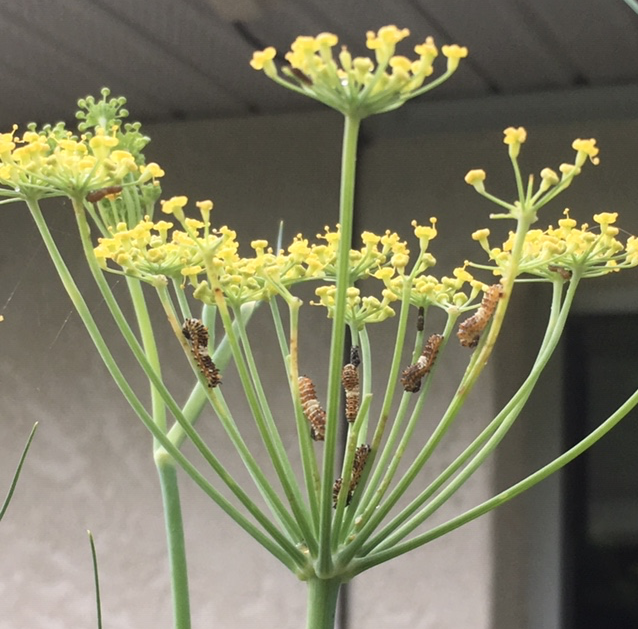
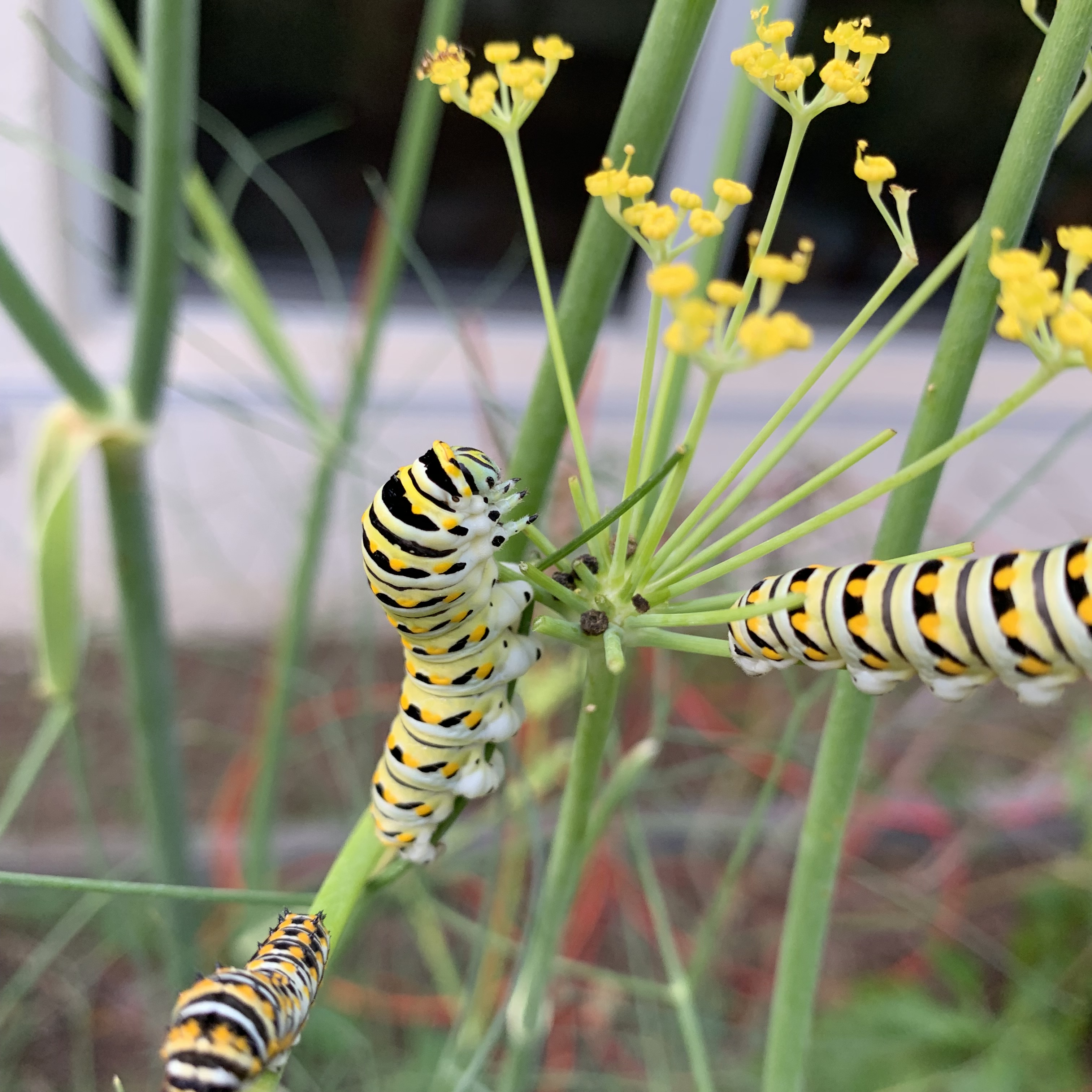
For now, I am simply observing the happenings. Without caterpillars, the tropical milkweed is growing like mad. The Monarch butterflies are still around and laying eggs, so we’ll see what happens.

Welcome fellow gardeners…

Pros and Cons of Roselle Hibiscus Gardening

After growing Roselle Hibiscus for a year, I have decided that one plant is enough for me.

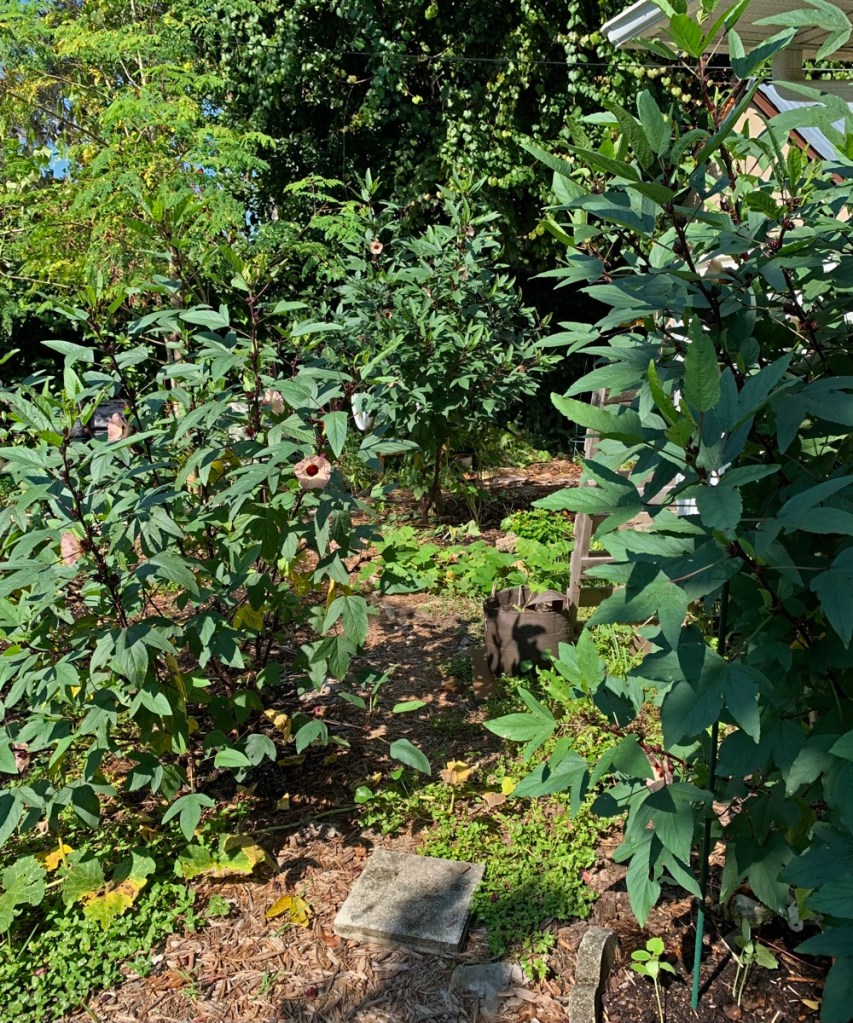
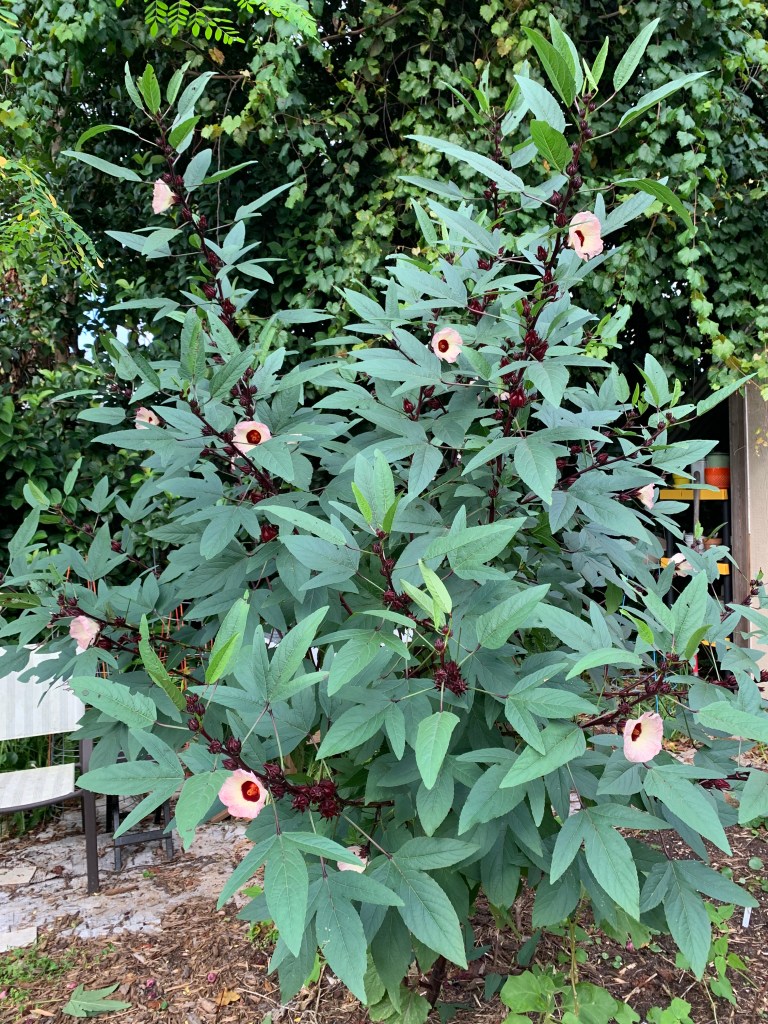
This was my first year growing Roselle hibiscus. I was very happy to have bushy, big plants that would give me lots of tea to drink. But there are problems with this plant.
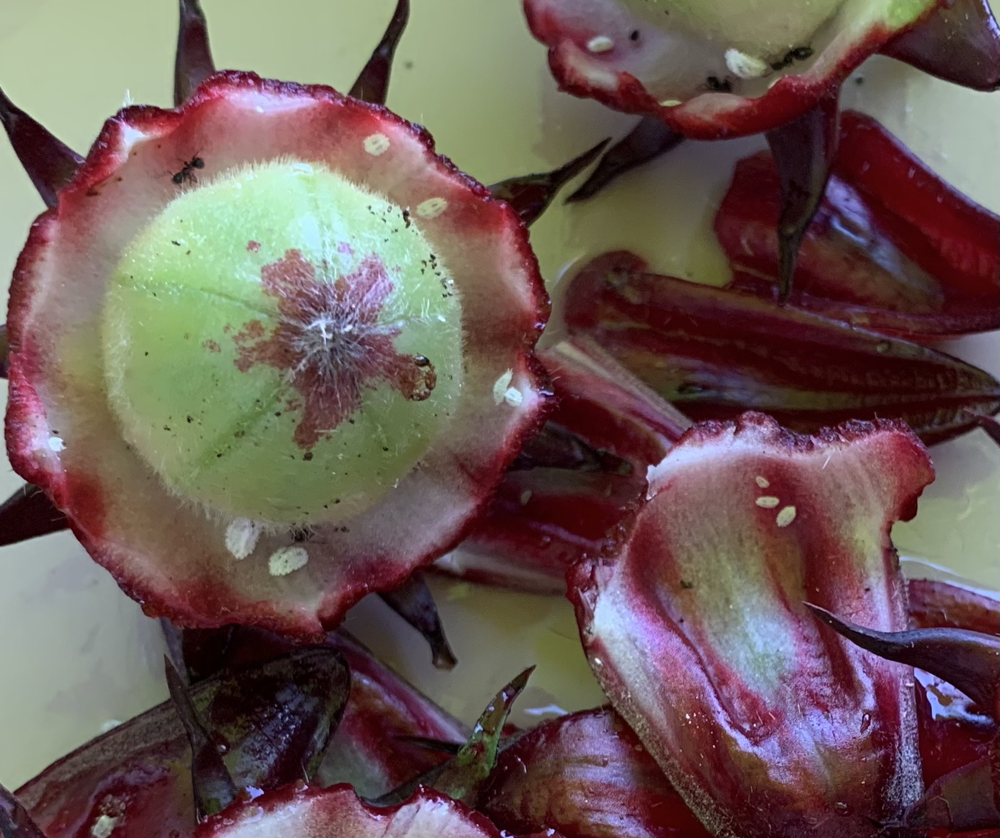
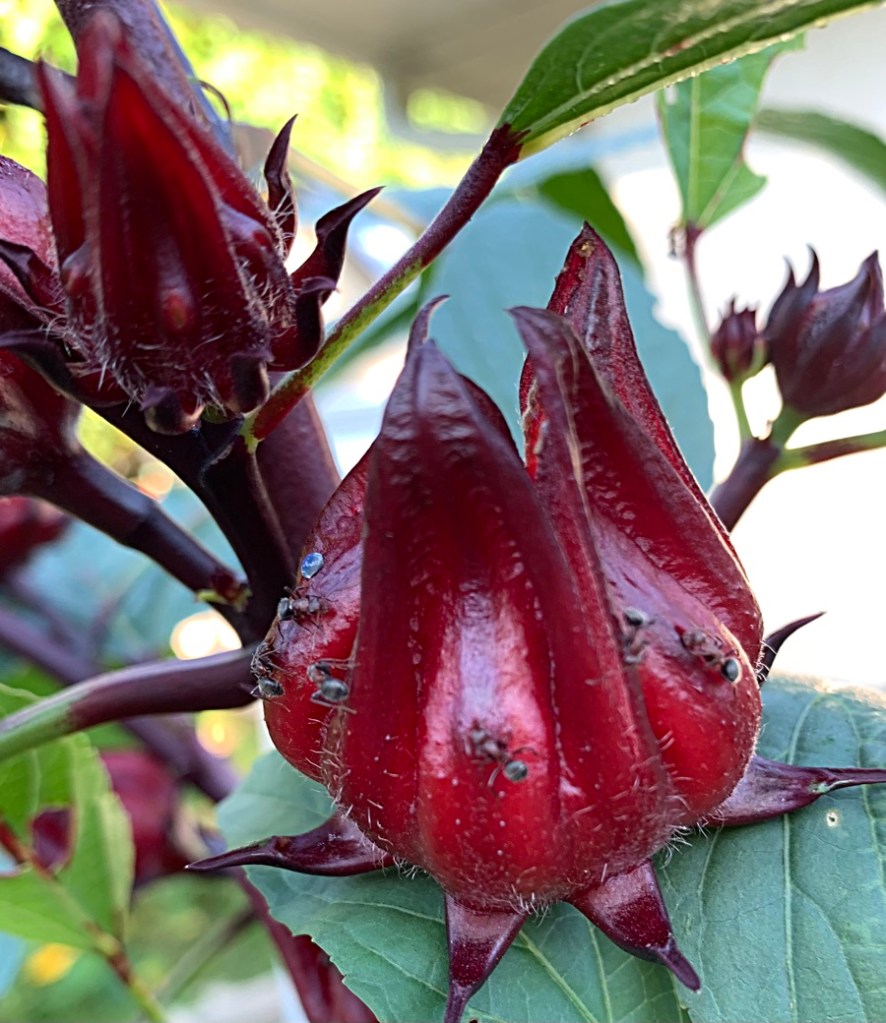
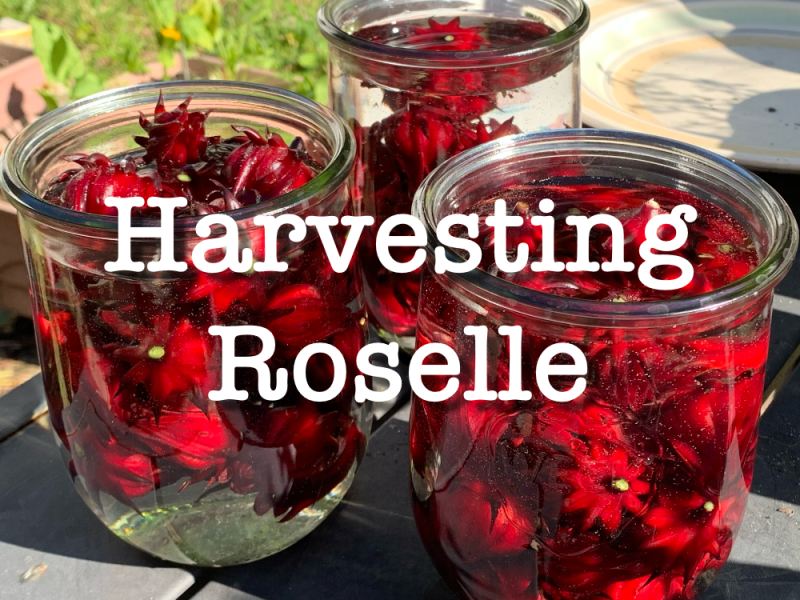
Growing Roselle was an experiment. I didn’t know much about it, but the tea is good for the heart, blood pressure and other things. It is grown for the red pods, called calyces that form after flowering. They are peeled, and the red petals are used for tea. The tea is delicious and healthy. The center of the pod is where the seeds form. Where I live, the bush is very easy to grow. I had no idea how much Roselle would love my yard. It took over.

Pros

Roselle is one of the easiest things I have ever grown. Plant seeds, or simply cut a small branch from an existing plant and stick it into the ground. It will grow! The plants are beautiful, with big dark green leaves. The flowers don’t last long, but new ones bloom every day – in the Fall. Then it’s time for saving the calyces to have tea in the months to come. I simply peel and freeze mine – if I can pick them before the ants come.

Cons

The beautiful bushes are not very strong. Strong wind catches the leaves and the whole bush will split down to the ground. Or, branches will break off. I lost one of my biggest bushes over the summer during a storm. Then Hurricane Helene damaged the others.

Roselle shrubs are huge. In a year they grew taller than me. They took over, blocked sun to parts of the gardens, and made navigating my yard more difficult. I didn’t know, and now I do.

These problems are manageable, and it’s all part of gardening. What I really don’t like about the Roselle is the ants. Once the red calyces began forming, ants were all over them. Maybe I have an excessive amount of ants in my yard, or maybe this is normal, I don’t know. No one warned me of this.

Also, inside each calyx are mealybugs – little white things. It just wasn’t worth the trouble to save these pods.

I have rinsed, set outside in the sun, rinsed again. The ants were everywhere. It was so bad, in this last batch of roselle I picked, that I gave up and threw them into the woods. It is possible the mealybugs cause the ants to come. I know ants show up when aphids appear too.

I did get an early set of pods, which had many fewer ants. I managed to clean and freeze those without much problem.

Another thing that is annoying is the flowers that drop become mushy and stick to my shoes. They make a mess. I’m certainly not a neat freak, but it feels like dog poop stuck to my crocs.

If I had lots of land, I would grow Roselle in a big area away from the house. They could expand and do their thing without getting in the way. Dropped flowers would be wiped from my shoes before I got back to the house. But this is not the situation I have.

One Roselle Hibiscus plant is enough for me. I’m going to cut them all down except one. Many broke and fell due to Hurricane Helene, so I’m already in the process of removing them. It is possible they will die over the winter anyway.

Solution

It is possible that my yard is not yet balanced with beneficial bugs to clean up this mess. I rarely see ladybugs. Even though I’ve had aphids on a number of plants, the ladybugs don’t stick around.

I read somewhere that it might take a few years to bring the beneficials to a garden, so I’m hopeful things will improve over time.

Read the blog…

Dealing With Worms on the Cucumbers

Wish I’d known more about growing cucumbers in summer here in Florida BEFORE I decided to try to grow them during summer.

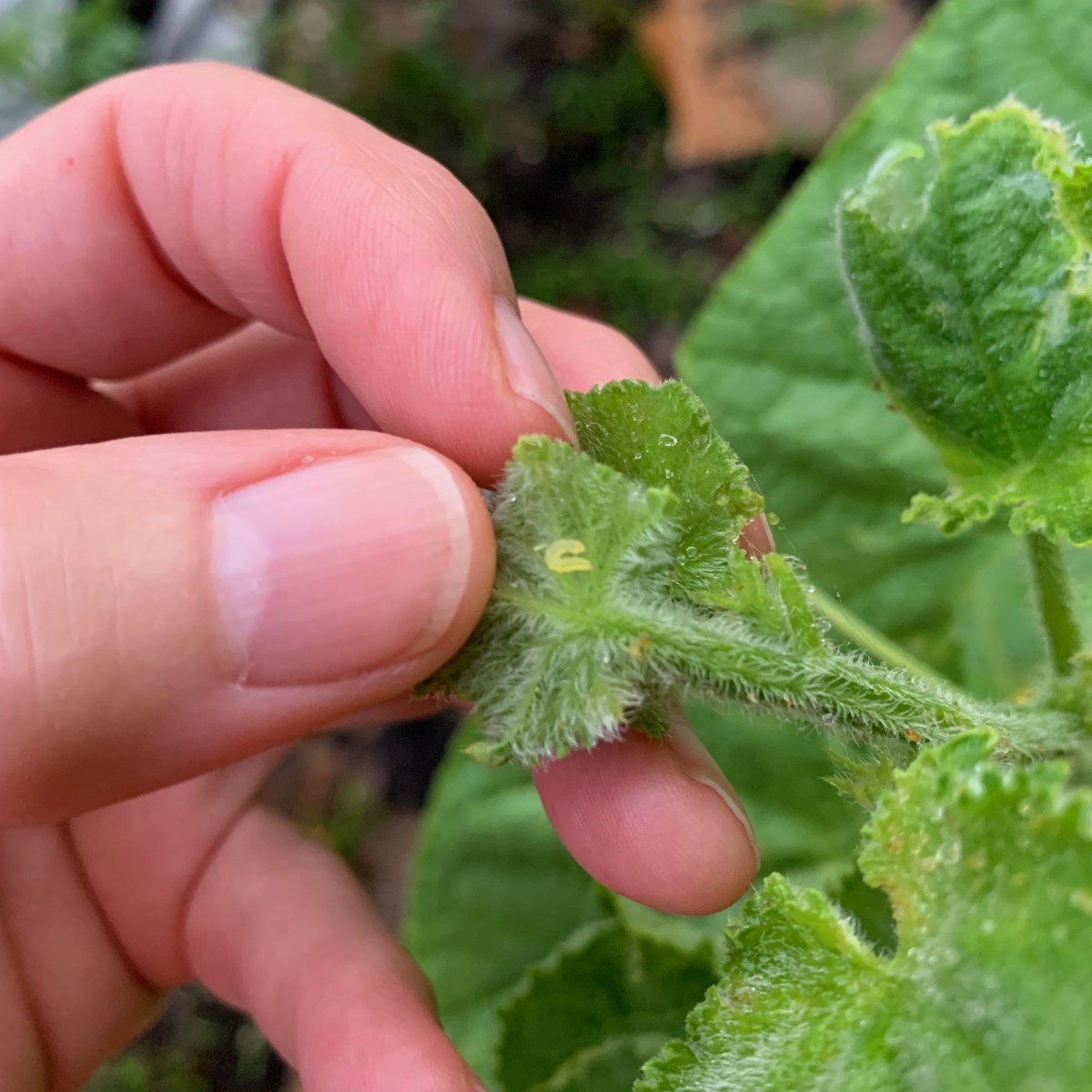
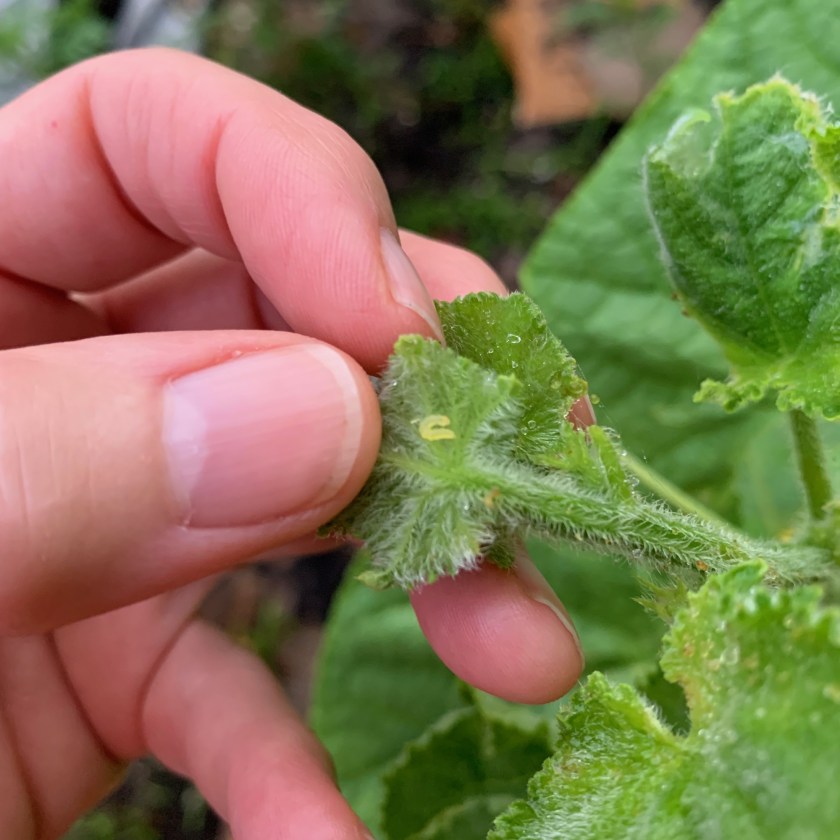
Apparently the pickleworm moth moves northward from South Florida and shows up around June / July – here in Central Florida. The moths lay eggs during the night, and worms hatch that eat the heck out of cucumbers and other veggies. (See this extensive article about the pickleworm.)

green worms on cucumber plant

Bumblebee Morning Visitor

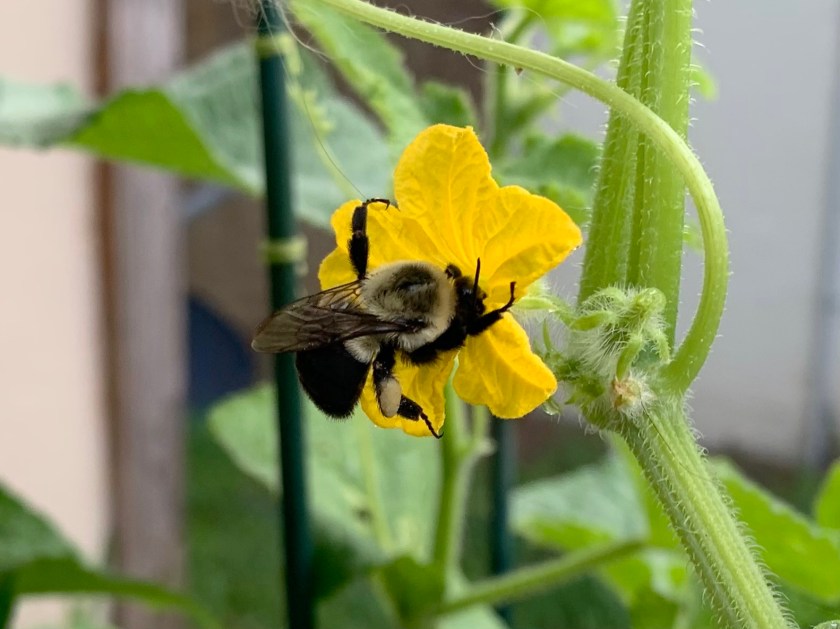
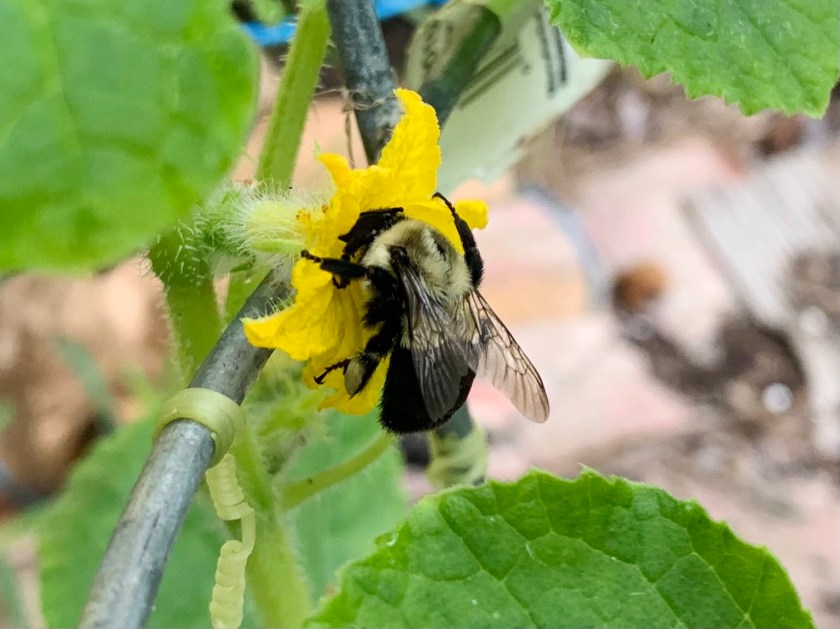
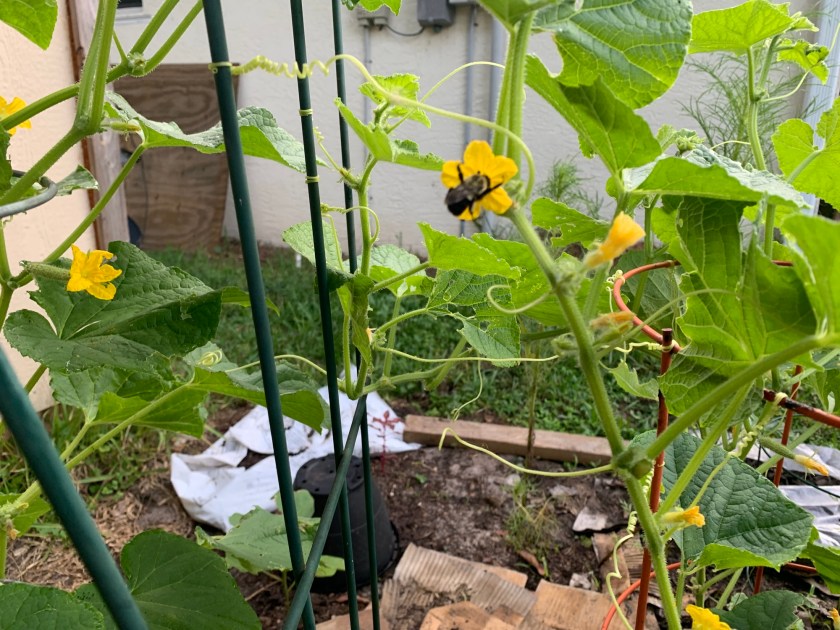
So I’m covering my plants. Each morning I get out to the garden early to uncover the cucumber plants. I know that the bumblebee will be along shortly to visit the flowers. Within a few minutes after the plant is uncovered, this little bee shows up.

  • bumblebee on cucumber flower
  • bumblebee on cucumber flower
  • suyo long cucumber plants

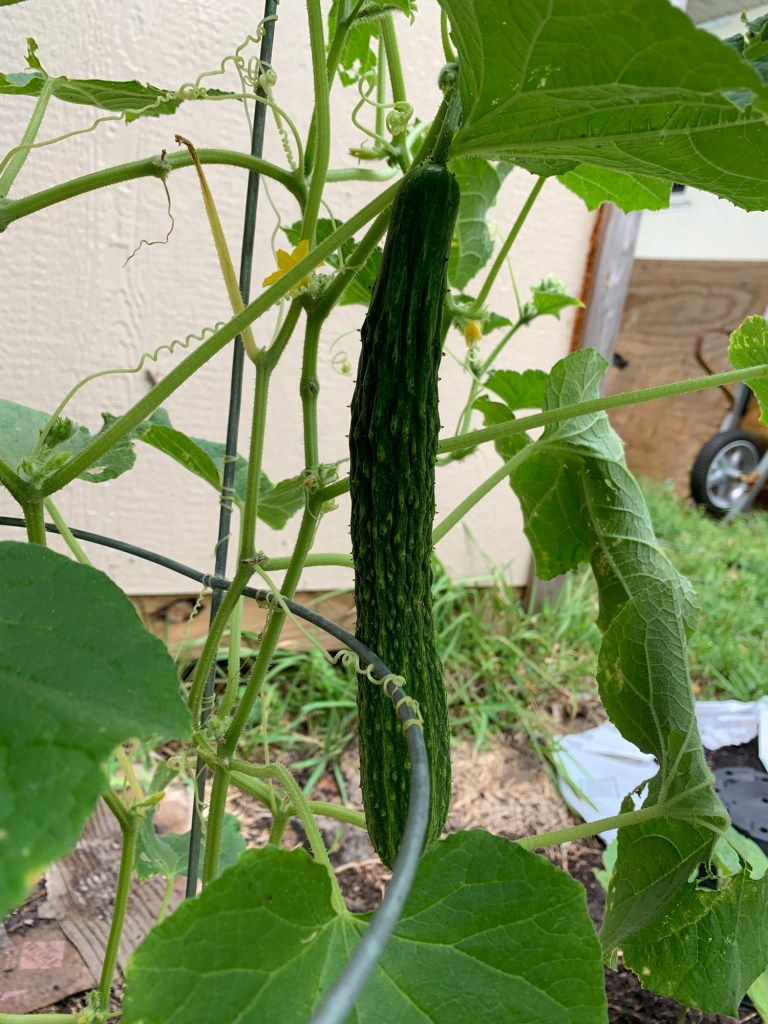
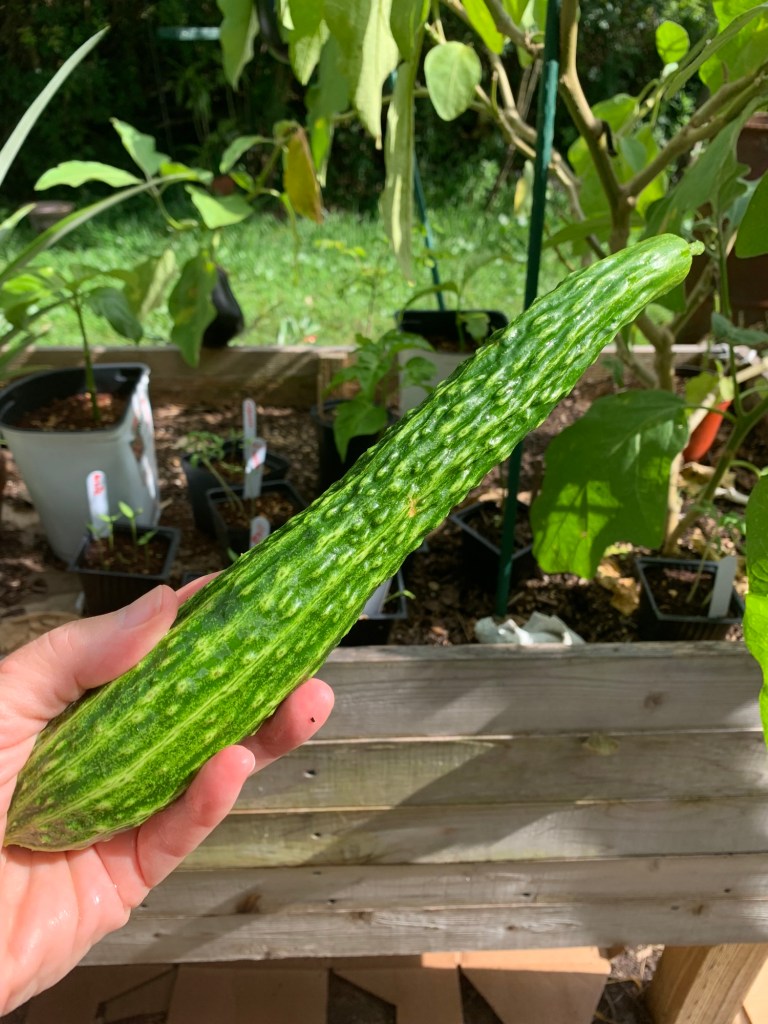
Now, it’s Fall and I have ripped out my cucumber plants (all three of them) as they only gave me a couple of edible cukes. I was spending too much time, for too little yield, for growing them to be worthwhile.

  • Suyo Long cucumber on the vine

I hand picked the little worms and threw them onto the mulch walkway for the lizards. The cucumbers didn’t grow very well either so I’ll be planting in early spring next time.

Planting and Growing Stories

Mid-summer is The Time For Bug Pests

Mid-summer is the time for pesky pests to show up in the vegetable garden. It’s also the time to search for beneficial bugs that will hopefully take care of some of the problems.

In July I noticed that there were a lot more unwanted bugs on flowers and veggies in the garden.

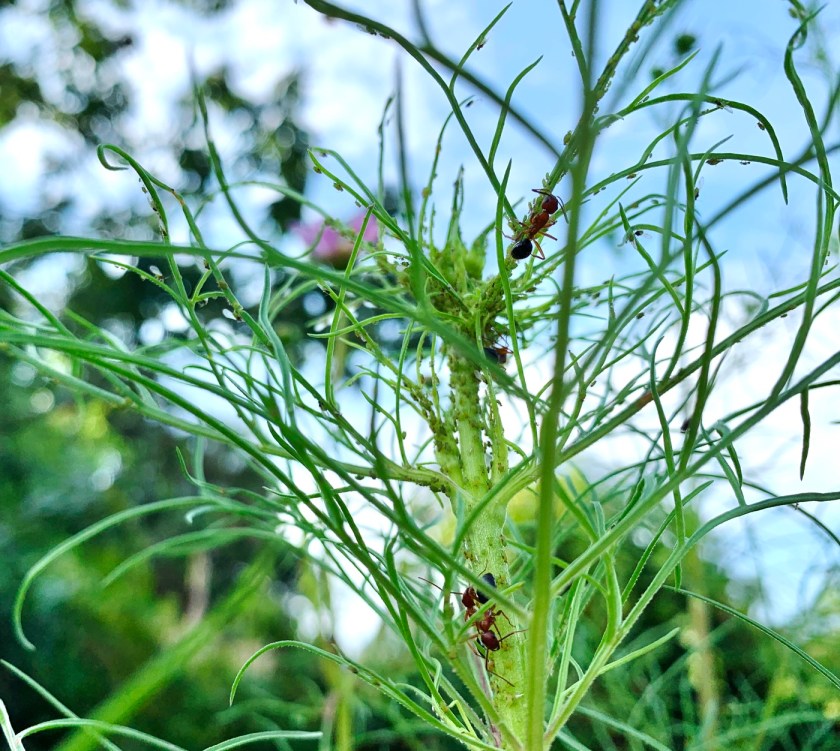
The seashell cosmos are full of aphids. I saw one ladybug on the cosmos, but she didn’t seem interested in removing the aphids. Or maybe there were just too many. Yup, ants and aphids actually help each other out… Read this article at Gardening Know How.

I have since sprayed water on the ants and most of the aphids to get them off these flowers. Some stems were cut back to remove the infestation.

Cosmos stems covered in aphids and ants.
Ants and aphids

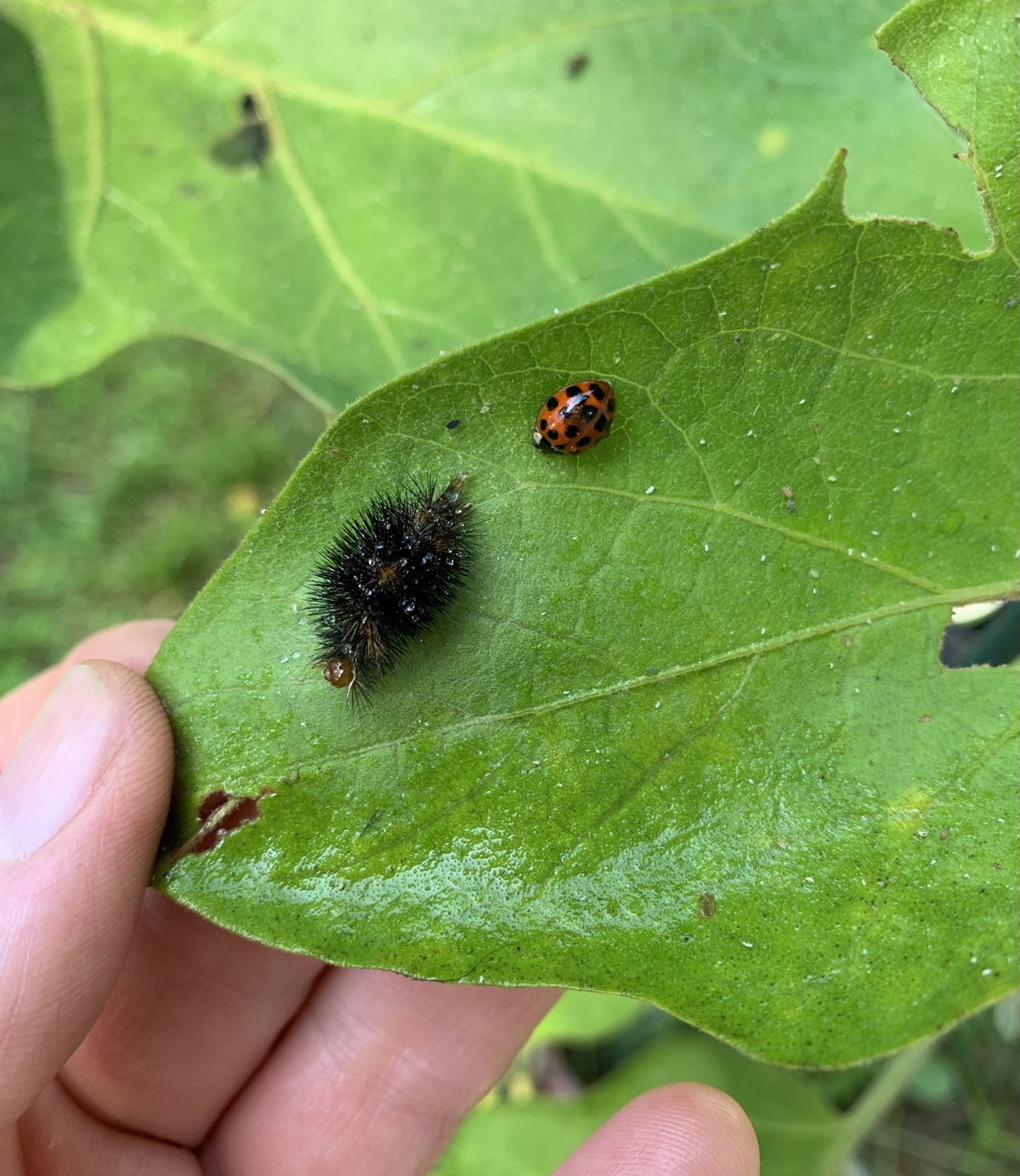
Cosmos and eggplant are covered in ants also. And a black, fuzzy caterpillar showed up to eat the eggplant leaves.

fuzzy black caterpillar
Giant Leopard moth caterpillar

The black caterpillar turns into the Giant Leopard moth, from what I’ve discovered. I had three of these caterpillars on my eggplants, but now they are all gone. I was really hoping to see them become moths.

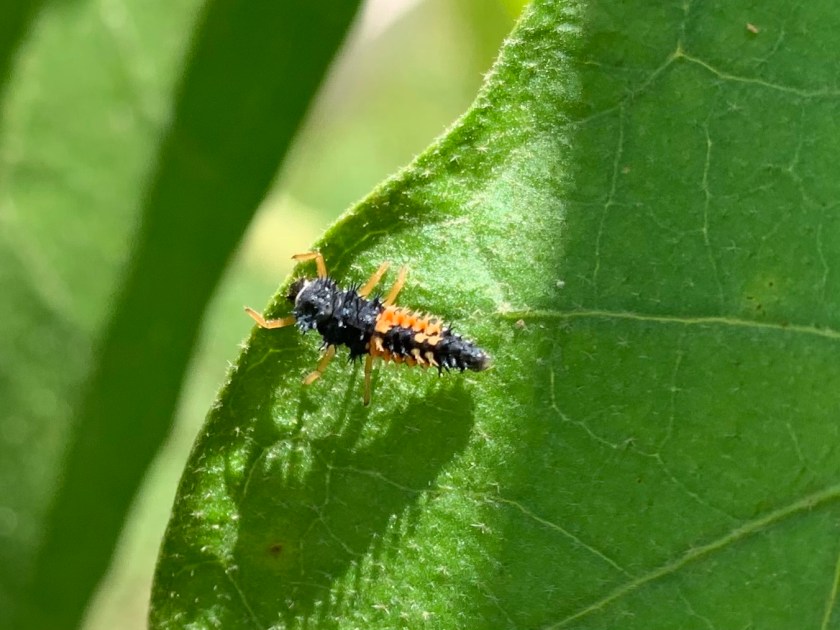
Along with weird and unwanted things, I was happy to find some ladybug larvae on one of my largest eggplant plants. Lizards were also crawling all over the place, so these may disappear. I hope not.

macro ladybug larvae
Ladybug larvae

Get Rid of Fire Ants Naturally, Will This Work?

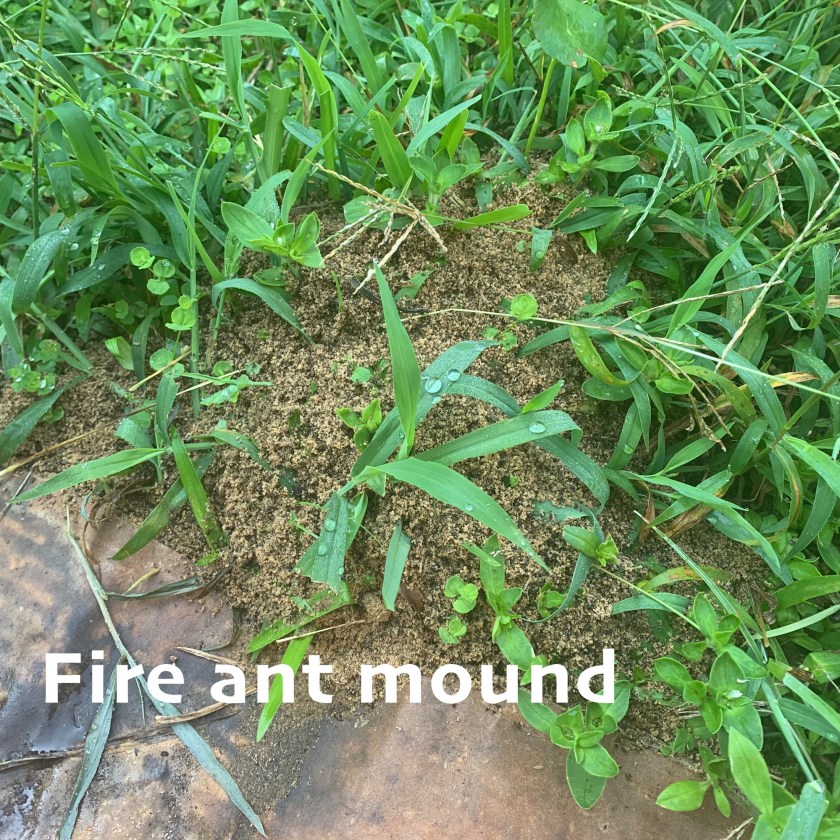
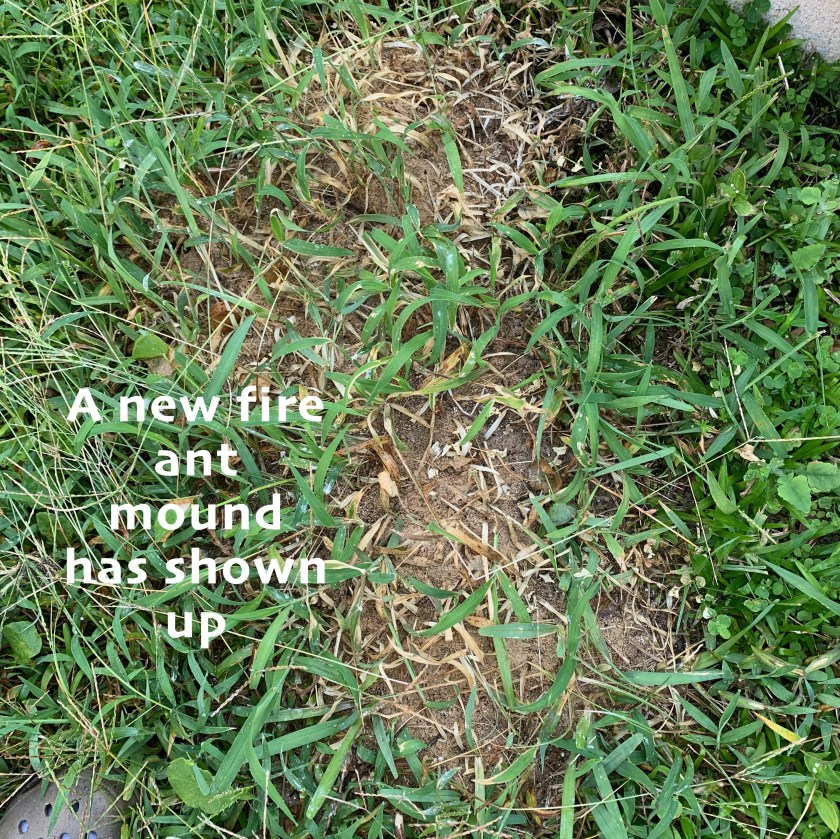
As for one of the worst Florida pests ever, the fire ant, I’ve been looking for a good way to rid the garden of them.

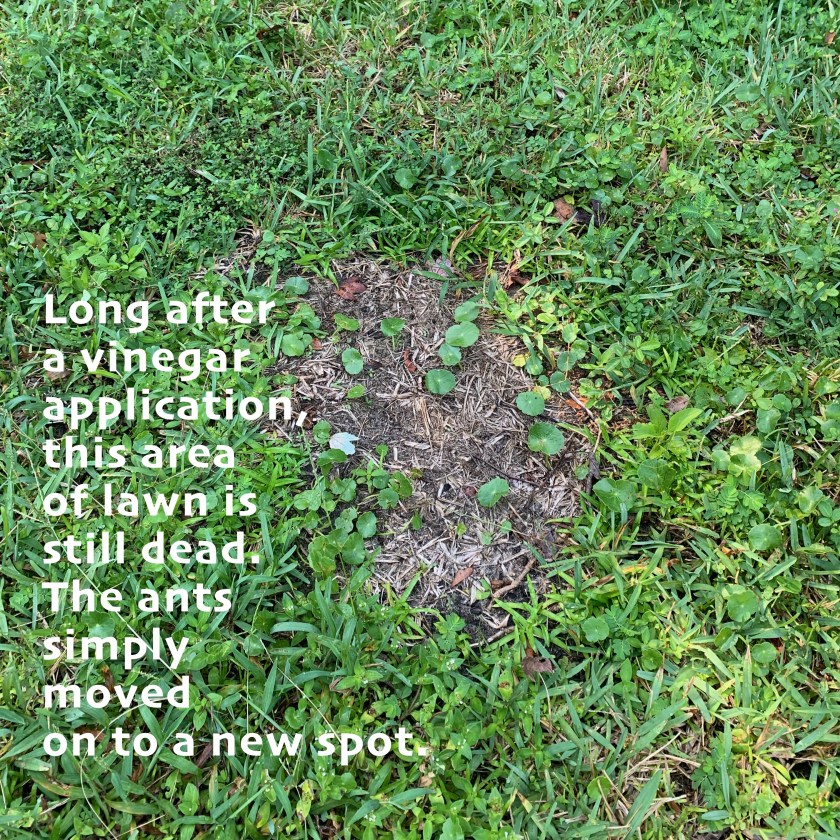
I’ve tried pouring vinegar on the mound. It kills all the grass, but the fire ants just move. I’ve sprinkled Diatomaceous Earth all over the hill, and it seems to do nothing. I was going to set Terro traps but I was afraid the raccoons would try to eat the stuff.

  • Natural fire ant control

Now, I’ve come across a video by Elise Pickett from The Urban Harvest with advice on naturally killing fire ants. The mixture to try contains orange oil, dawn detergent and water. Watch the video here for more info.

I absolutely plan to try this as soon as the ingredients arrive.


Beetles and Worms

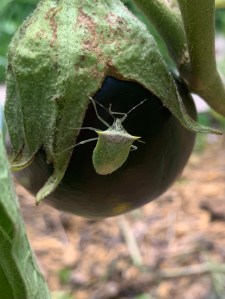
I don’t know what this little green beetle is, but he was happily crawling on the eggplant. Looks like a stink bug, except green. Maybe he is a juvenile.

green beetle on eggplant

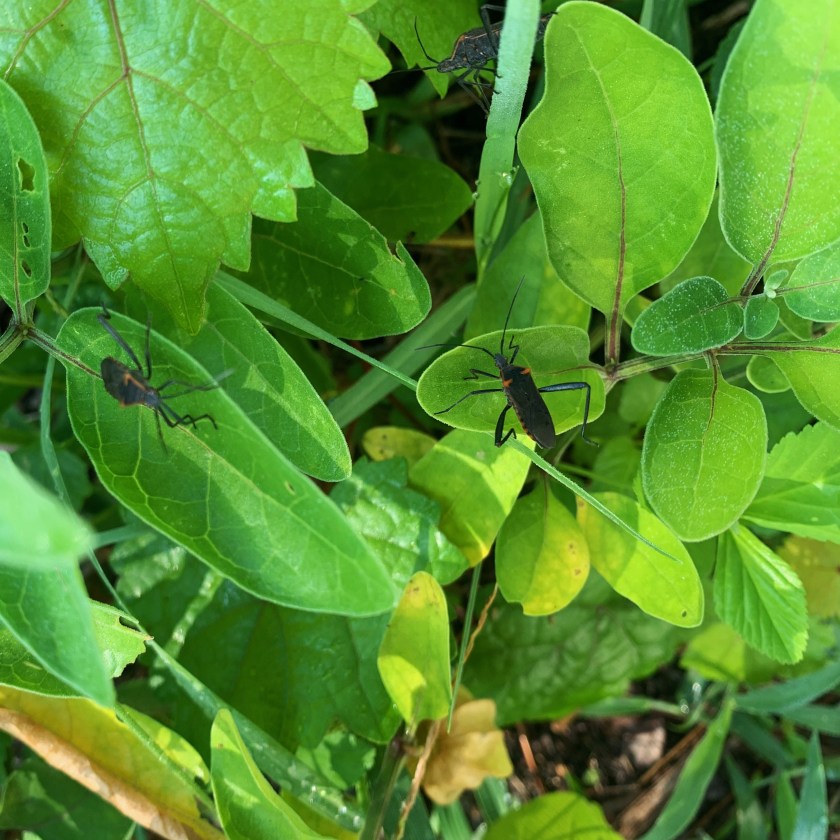
These little black bugs were found on the Ground Cherry plants, which grow wild along the edge of the yard. Are they good bugs? They seemed harmless, and sure enough, they are soldier beetles which are BENEFICIAL and important for pollination.

stinkbugs on ground cherry

Each morning I am picking little green worms off the tops of my Suyo Long cucumber plants. Most likely the Pickleworm. I will continue to hand-pick the worms and hopefully rid the plants of them.

After reading this article by IFAS, it seems that the best practice for avoiding this worm problem is to plant cucumbers early in the season to beat the invasion. I will look into this further.

green worms on cucumber plant

More stories from the blog…

Something went wrong. Please refresh the page and/or try again.

Giant Whiteflies Leave Long White Fur on Hibiscus Leaves

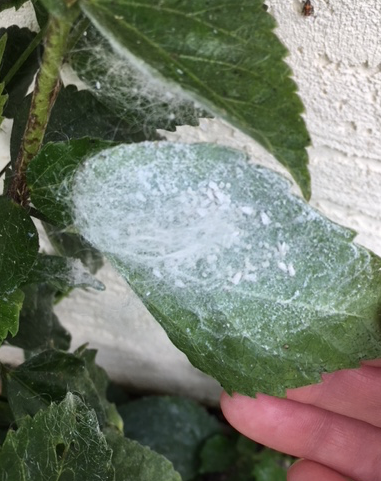
Found fuzzy white infestation of aphids and white flies on my hibiscus plant.

After writing a recent post about finding aphids on my pepper plant, I realized that I need to be vigilant about accidentally removing ladybug larvae and eggs.  One plant that is sure to have aphids in the hibiscus.  It is not unusual to find them all over the buds and new growth.

I haven’t paid much attention to my orange hibiscus plant over the winter, and imagine my surprise (and disgust) to find not only aphids, but long, white fur on the leaves! I don’t know what else to call it, but fur. It’s long enough to blow in the breeze and is attached to the underside of some of the leaves.

Beneath all that “fur” is a colony whitefly eggs and nymphs. How do I know this? I finally found a super helpful page at Hidden Valley Hibiscus, which talks about this exact type of manifestation, which comes from a southern whitefly called the “Giant Whitefly“. Here is how they describe the fur, “After hatching, the nymphs produce long, hairlike filaments of wax up to 2 inches long that give a bearded appearance to affected leaves.” Exactly, little white beards attached to sticky leaves.

It was not easy to get these photos. Any time I touched a leaf with white, little moths or something flew off. Also the leaves were very sticky. It was pretty gross.

This will never happen to your hibiscus if you are vigilant about checking for unwanted bugs. Whiteflies can be sprayed off with water, just like aphids.

The majority of the white fur was on the stems at the back of the plant.  A secluded, less windy spot seems to be the preference for this type of infestation.

Screen Shot 2018-03-26 at 12.49.25 PM

I plan to cut off the nasty stems from the back of the plant, and maybe spray off the rest. But I will keep an eye on all that ladybug larvae because I don’t want to disturb them.

Ladybugs are wonderful to have, but they need something to feed on. Somehow they know when to show up to kill an invasion of the bad guys.


The underside of the leaves have white spiraling lines, which is from the adult whiteflies.

Screen Shot 2018-03-26 at 12.02.22 PM


I found lady bug larvae on the same leaf as the white fuzz. I had to trim up the hibiscus plant and spray it a few times with the hose to reduce the white fly population. I’m still seeing lots of ladybugs (in many forms) on the plant.

Fuzzy white aphids and lady bug larvae

Hibiscus plants are very hardy. They can be cut way back, trimmed and left without water and still grow fine. I made the mistake of planting this little shrub too close to the house. The stems in back don’t get enough air circulation and hence the problem.

Okay, I Hate These Raccoons

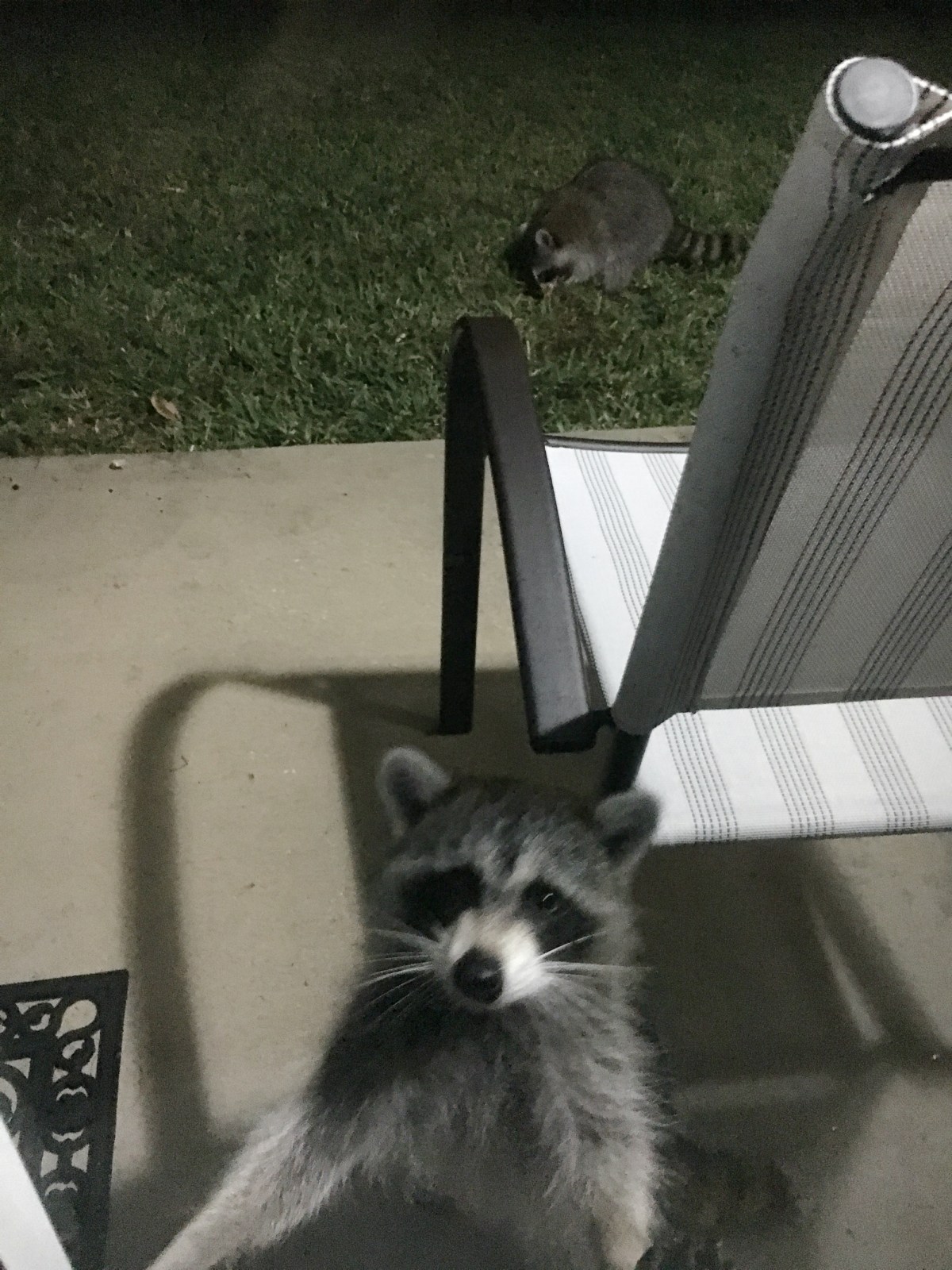
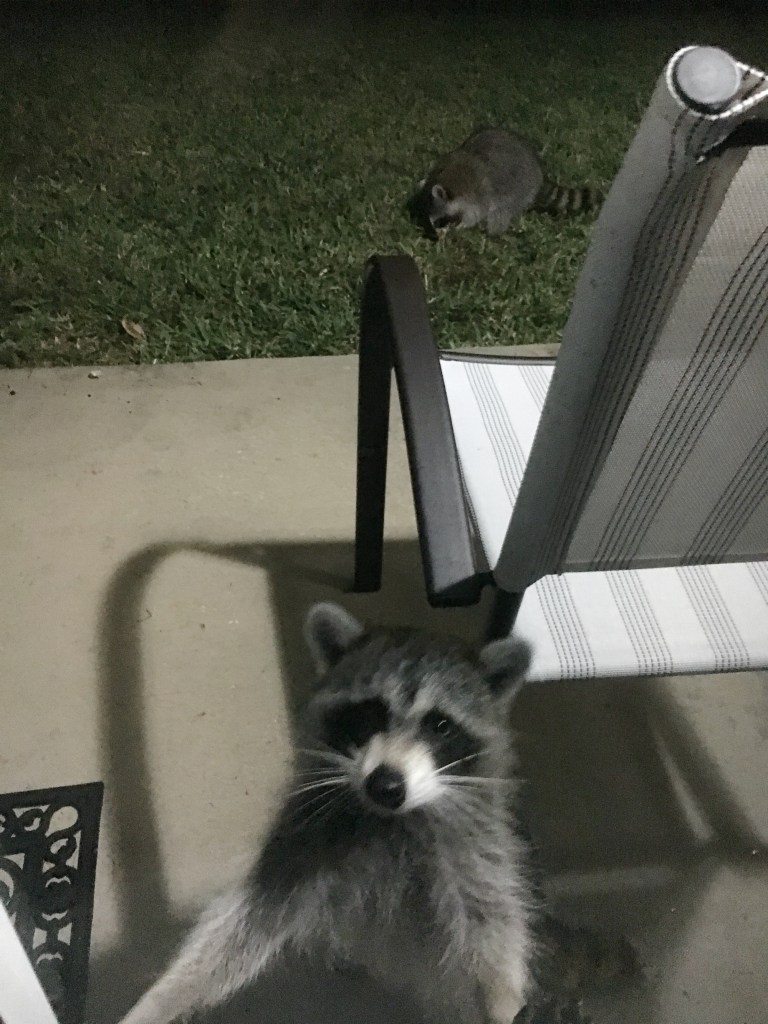
After we moved into our new house in Florida, we noticed every night that raccoons would come out of the woods next door and explore our yard.  They came right up to the back door, with the outside light on.

Raccoons at my back door

Oh, they were so cute. One time we looked out back to see three little raccoon faces peering out of the woods at us. .  It was adorable, and if I were any kind of photographer I would have had the camera handy and captured that image.

However, I know that raccoons are not the sweet, adorable creatures they appear to be.  And these days I abhor seeing their cute faces. They are thieves, that even wear masks as a warning!  They have no regard for the hard work farmers and gardeners put into growing their crops.

Raccoons have sharp claws and teeth. They can be vicious if need be, and the ones that visit my yard are mostly unafraid of humans and my cats. They mostly do their damage at night, but we’ve been sitting at the outside table, in full daylight,  and had one come out of the woods a mere 10 feet from us. Once he noticed we were there, he left. Rabies is common among them, but this one did not act in an unusual manner. I think he just wanted to see what we were up to.

I usually leave water outside for the cats during the day because of the heat. If I don’t empty the bucket, the raccoons always get into the water overnight and leave a muddy mess.  Occasionally they dump the bucket.

One evening after we had been out on our boat, I rinsed my expensive water shoes and left them to dry on the back patio. The next morning one of my shoes was missing! Luckily I found the shoe at the edge of the woods where apparently the raccoon decided it would be of no use to him.

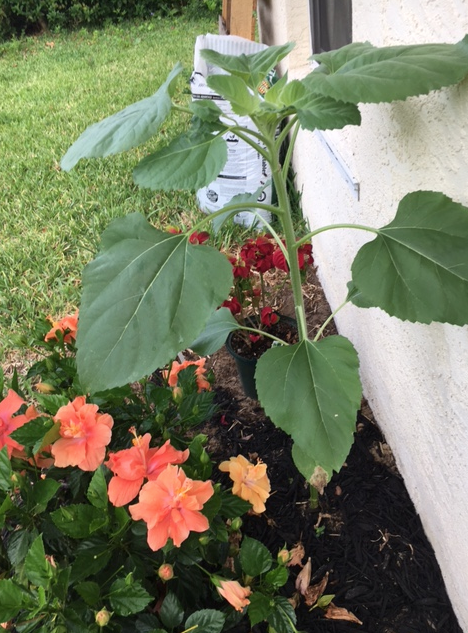
sunflower stalk
My sunflower was much taller than this when the raccoons tore it down.

That same morning I discovered my tall sunflower stalk broken and dragged across the grass. It was the only sunflower seed that grew for me, and I really had hoped to see the flower bloom.

But worst of all is the stealing of my tomatoes. I just picked two ripe tomatoes and left about 4 more green ones on the vine. Today I saw that all the green tomatoes were gone! Last week they stole 2 nice red ones just before I had a chance to pick them.

They will drag pots and my fabric potting bags around.  It seems they have a grand old time during the darkness of night.  When the weather is nice, and my windows are open, I can hear them outside my window at night scampering around and occasionally “screaming” at each other.  Yes, they make noise, and it’s creepy.

raccoon and chain link fence
Raccoon image from Pixabay

I’m thinking it’s time for a fence. However, I am not sure that will keep them away. I’ve read that they can climb fences, and we’ve watched them climb down from way up in a neighboring tree. The fence may have to be made of slick material, like metal or plastic, that they cannot climb.  I’m saving my money, as we had planned to fence the yard anyway.  These creatures just give me more incentive to do so.

I can only hope that with a wall between them and my yard the little robbers, or bandits as they are rightfully called, will forget about my garden and go someplace else to scavenge.

(