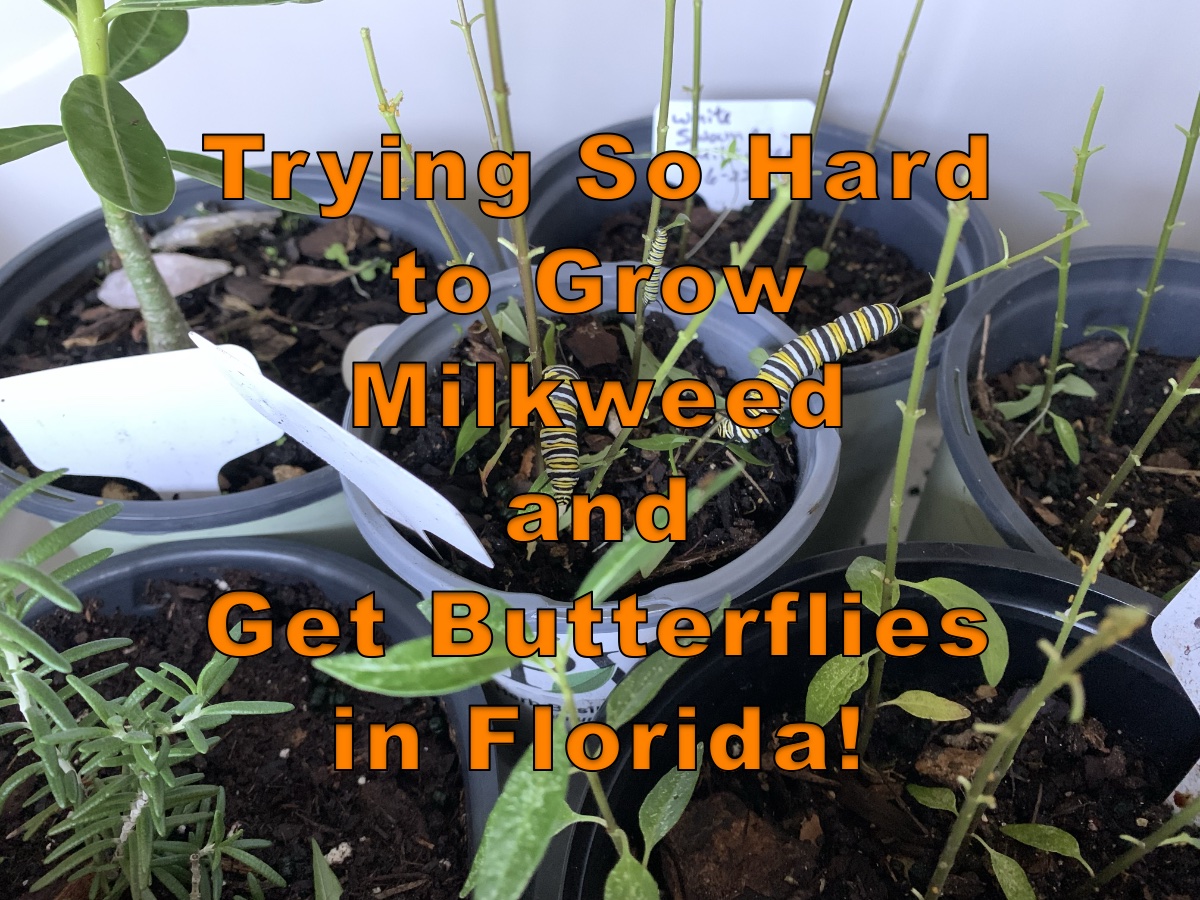
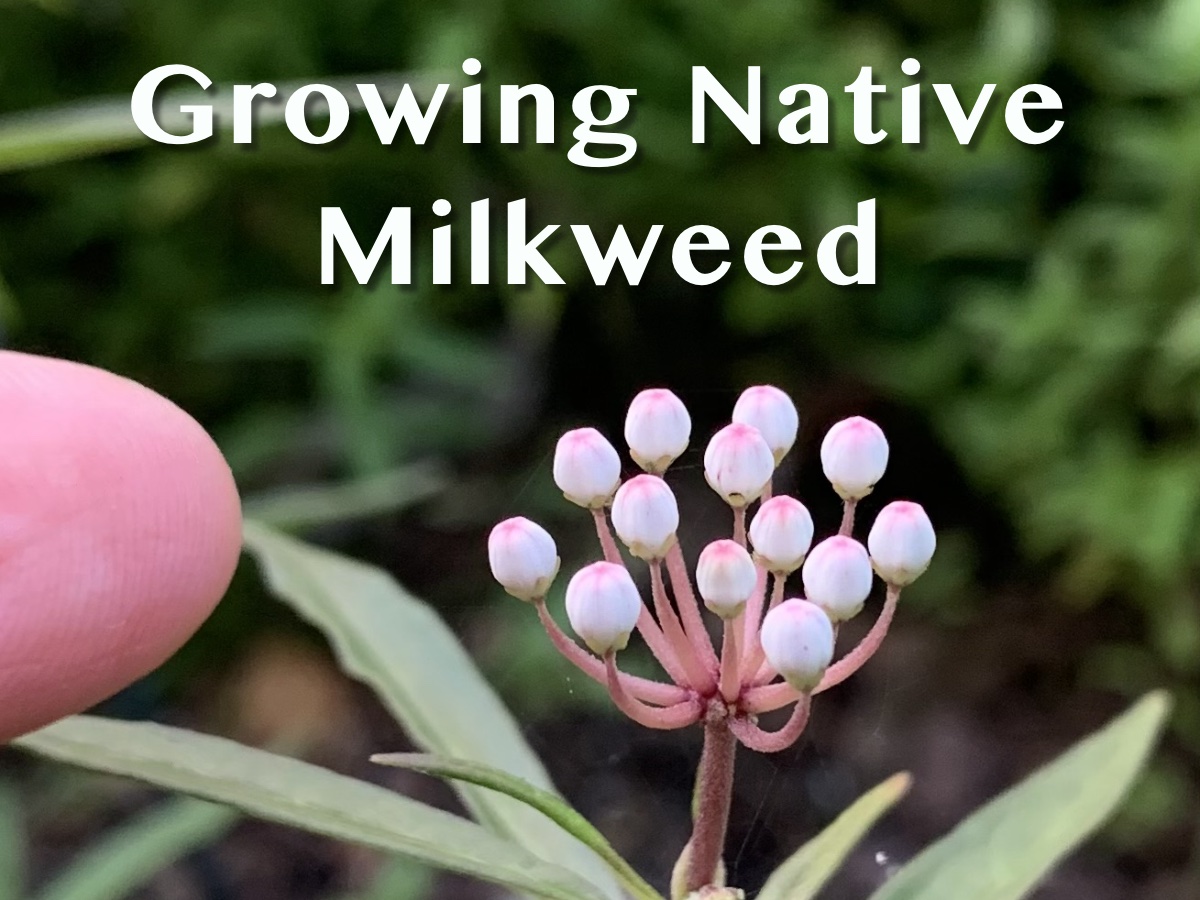
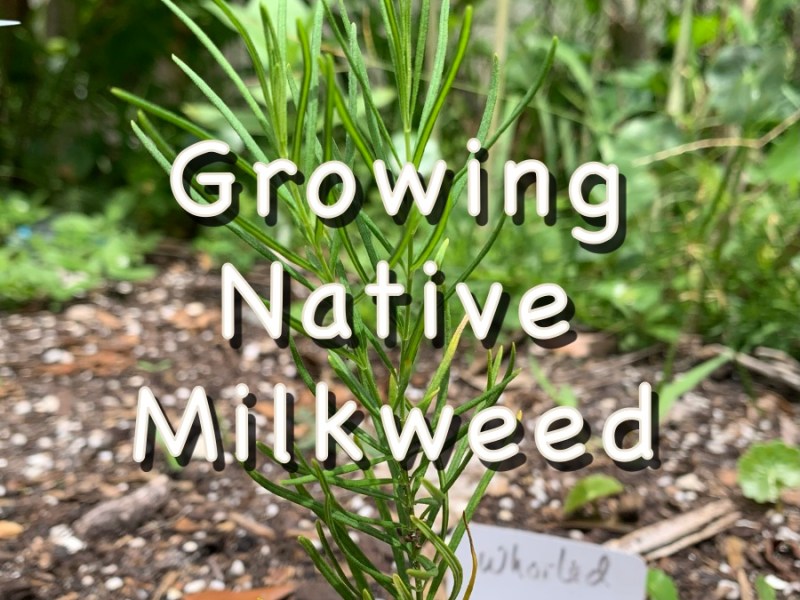
A few months ago my little, white-flowering milkweed plant had some seed pods. I’ve been trying so hard to get milkweed to grow to feed the Monarch butterflies. Milkweed in Florida is difficult.
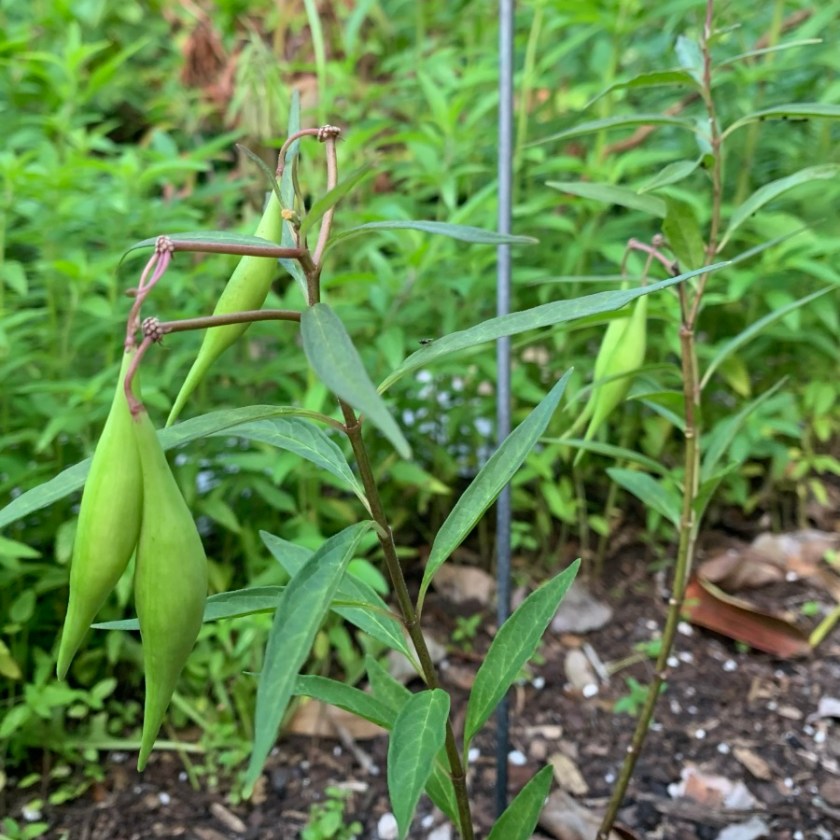
Unlike the big milkweed plants of the north, our southern milkweed grows slowly and makes small, thin leaves. There is never enough food for a caterpillar, it seems.
That doesn’t really matter anyway because the caterpillars are gobbled up by the numerous lizards before they have a chance to morph into a butterfly.
A few years ago I wrote a post entitled, Filling My Yard With Milkweed. It was a nice dream, but easier said than done!
Starting Milkweed From Seed
Each little milkweed pod contains lots of seeds. I gathered the pods to save before all the milkweed blew away. I let one pod do its thing to hopefully sprout plants, but I haven’t seen any growing.
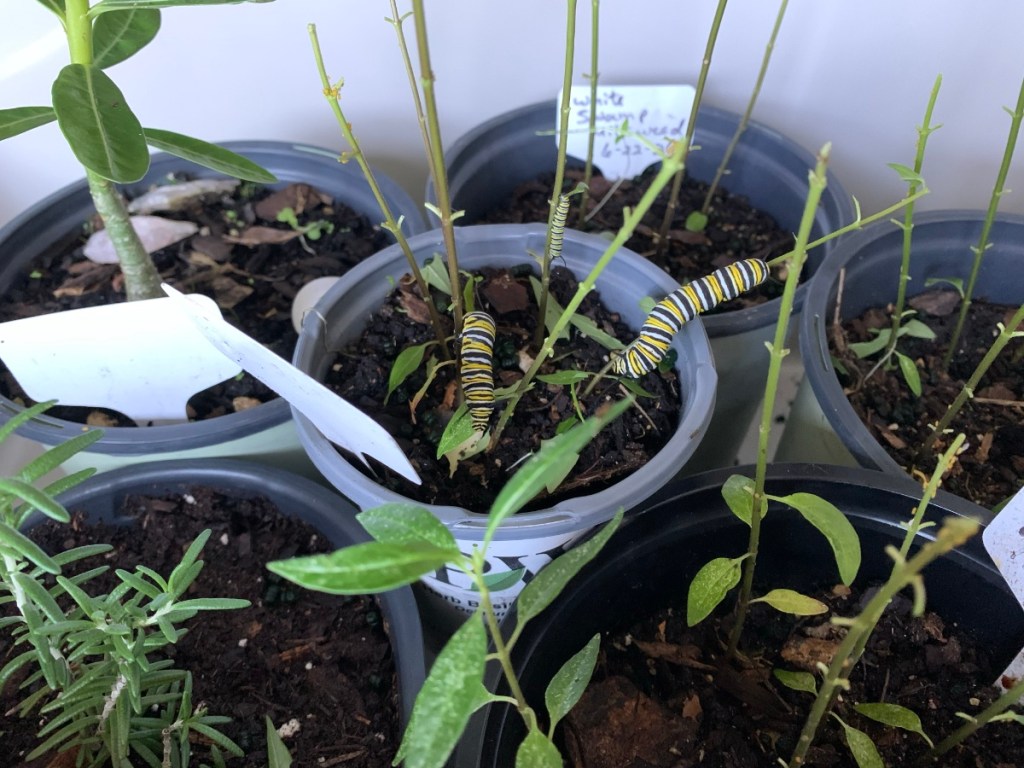
I ended up with a few pots with tallish milkweed stems growing and then the caterpillars arrived.
All potted, white swamp milkweed went onto the porch while I traveled. When I returned home, the caterpillars were big and the milkweed was nearly eaten. After another day, I had to place the caterpillars outside near the milkweed in the ground. And sure enough, the caterpillars all disappeared.
Resorting Back to Buying Milkweed
This time I bought milkweed seeds and not plants. All but two plants died over the winter, so I went the cheapest way.
My new milkweed seeds came from Baker Creek (rareseeds.com) where they do not charge for shipping! I bought zinnia seeds and butterfly weed seeds (orange flowers), along with red, swamp milkweed seeds.
Hopefully the plants will grow nicely in the pots until next spring, when I will plant them in the ground.
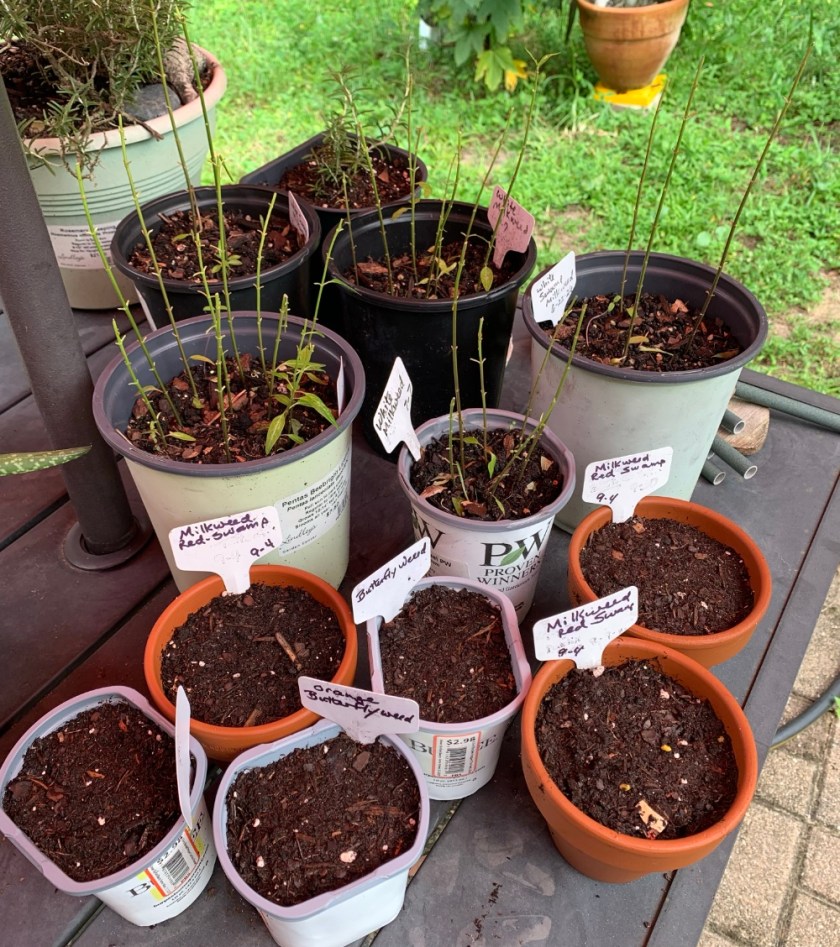
Here are my eleven pots with milkweed. The small pots contain recently planted seeds. The bigger pots have the stalks (after being chewed) from plants begun from seed in July.



 Hydrangeas Blue