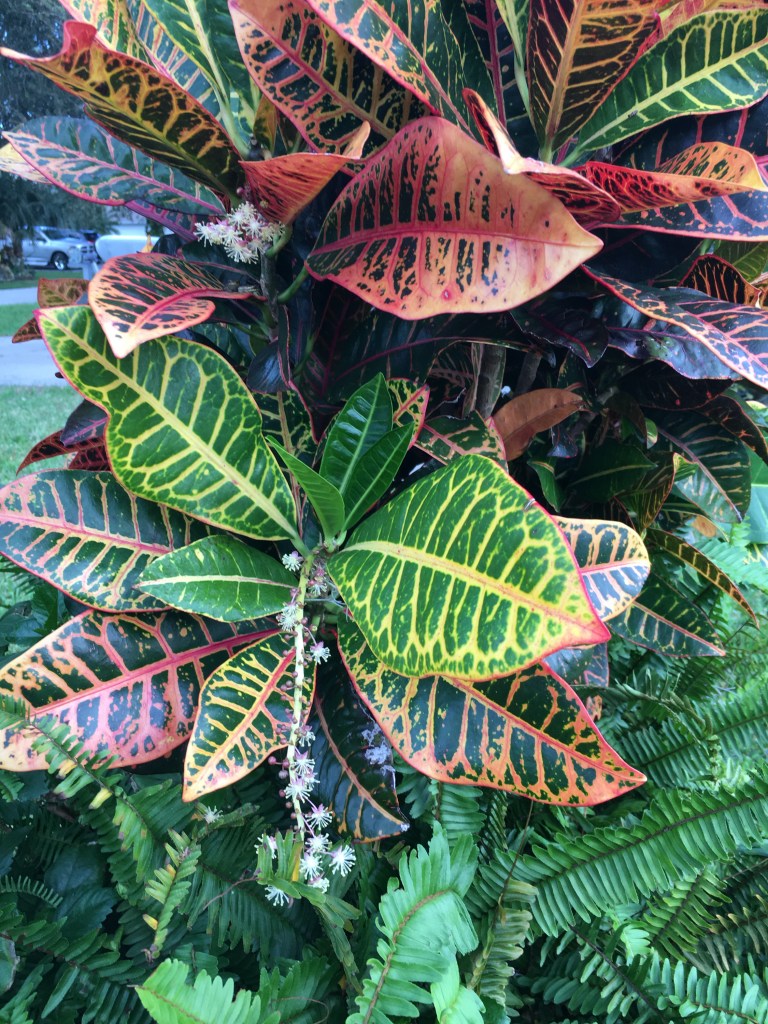
The leaves of the croton are really stunning. They are as pretty as any flower, and come in such an array of colors, that they can brighten any landscape, as long as it’s subtropical.
Crotons don’t handle cold well, with established, older plants handling it best. I live in climate zone 9 and have this big croton plant in my yard. I have no idea how long it’s been there, but I did not cover it at all last winter.
Then again, last winter in Florida was not all that cold.
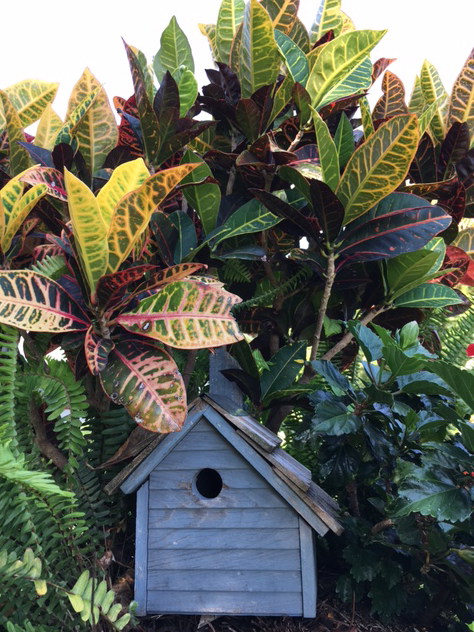
My croton is in a big pot with ferns and a red hibiscus bush… also a birdhouse is stuck within the branches.
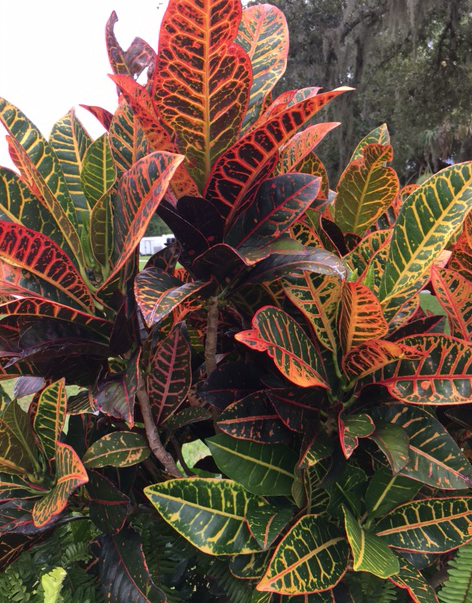
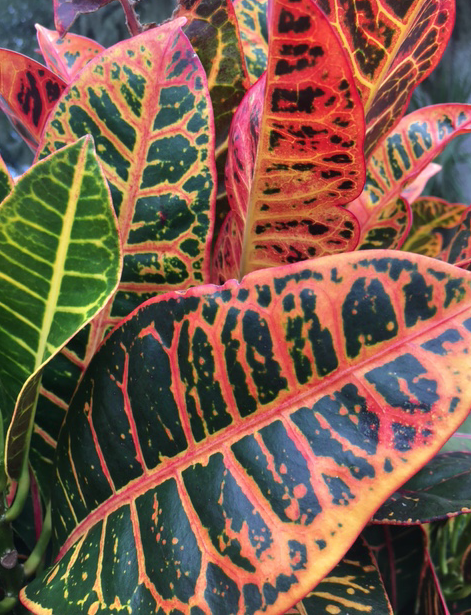
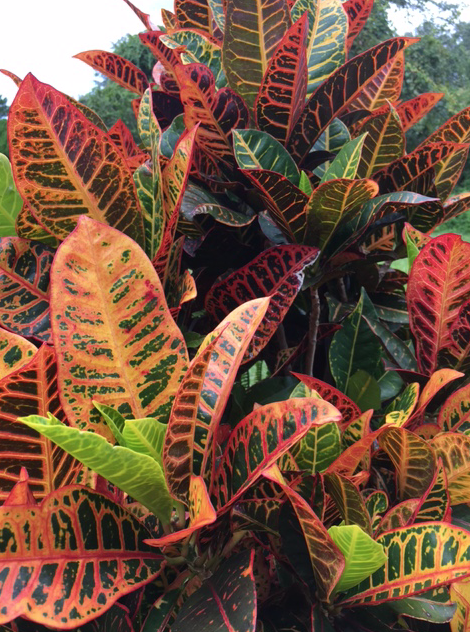
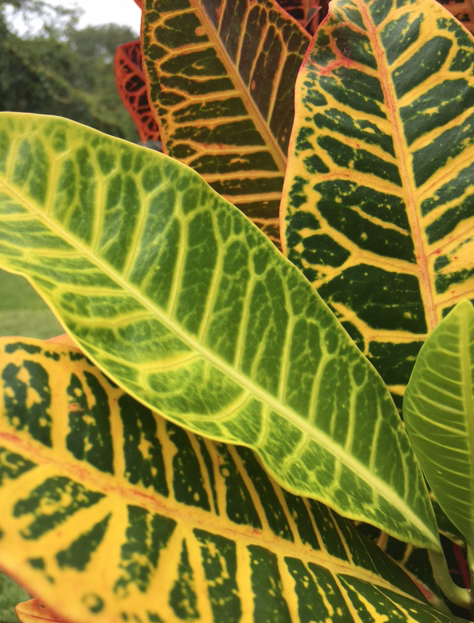
Recently I went out in my yard and took some photos of the croton leaves and wanted to share them with you.
If you are looking for brightly colored plants for your Florida, or tropical, landscape, check out the Cordyline plant and Caladium.
The bright reds can become dark purple as the leaves age
This croton has been growing for years, I imagine
Even the yellow and green leaves are outstanding
For those of you who do not live in a warm climate, the croton can grow indoors. I’ve never done that, but you can search the internet for helpful advice on doing so.
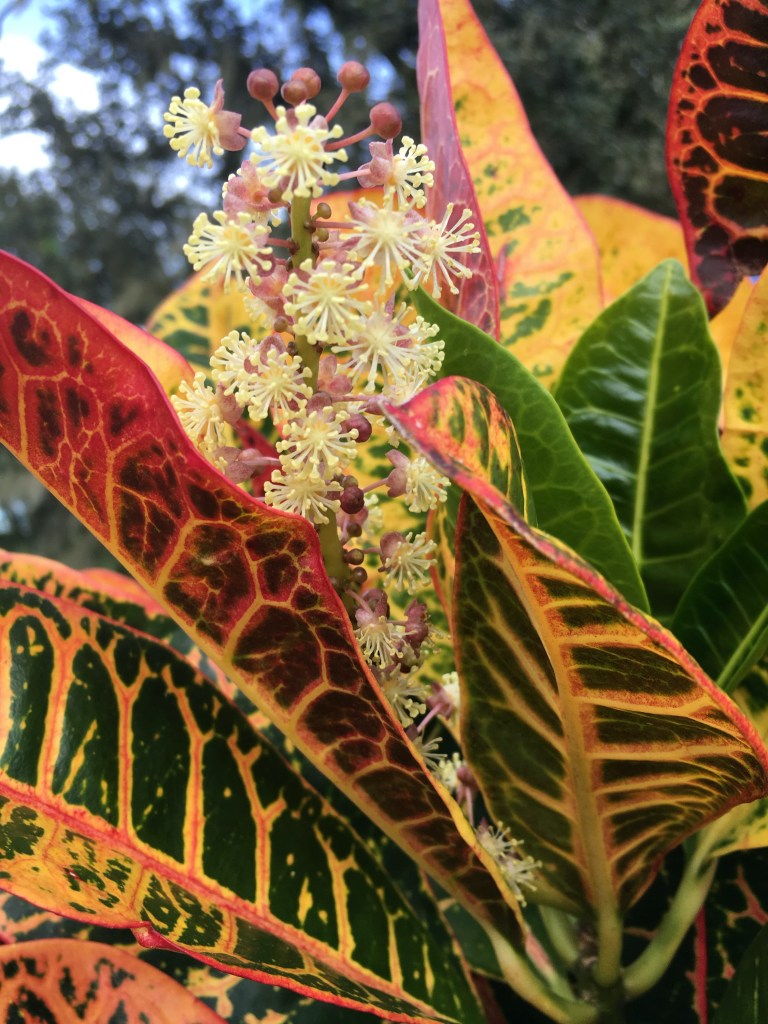
Croton with stems of flowers
Flowering croton plant
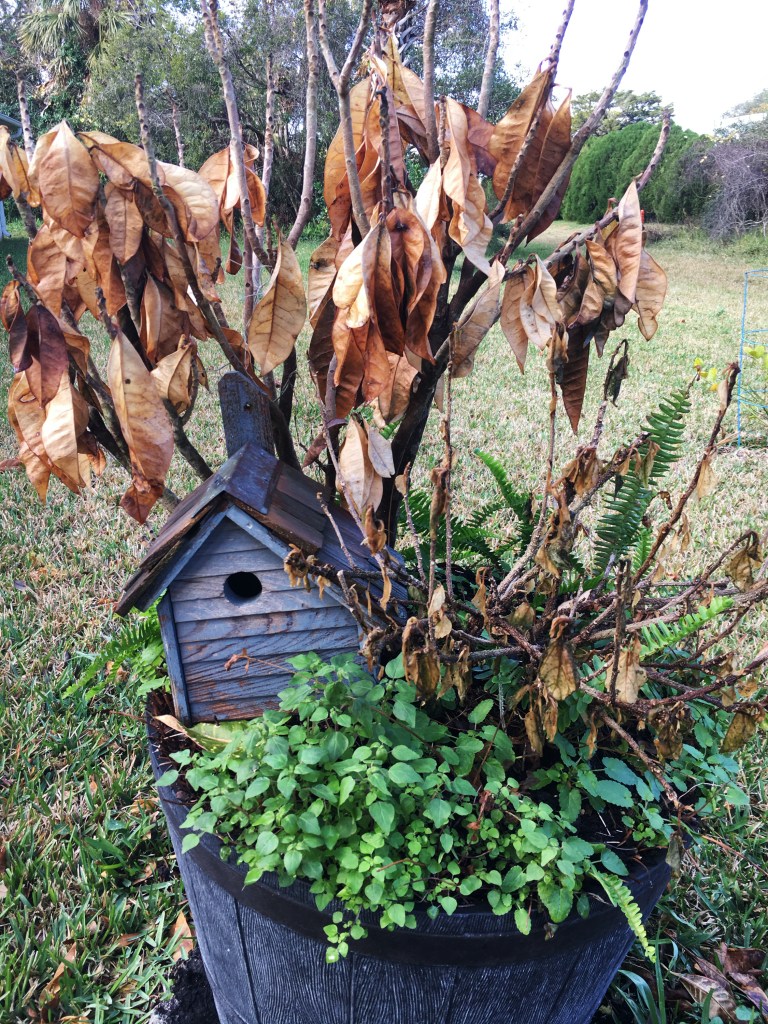
My big beautiful croton died over winter when we had exceptionally cold weather. But… I had taken cuttings and begun new plants so it lives on through it’s “babies”.
It’s easy to start new croton plants from cuttings.
Finding plants that will propagate easily has always been a goal of mine. Starting new crotons from old plants is easy. In fact it’s easier than propagating most things I’ve tried. Cut the stem, put cuttings in water and wait a few weeks. More detailed explanation below.
It is possible to propagate hydrangeas, but that takes time. It’s worth it, because in the end you have a new, lovely hydrangea bush. In fact my baby hydrangeas grew quite large before I had to move.
But back to the crotons. These plants love sun and heat and can live through a draught. The wilted leaves come back after getting some water. Crotons like well-drained soil, and the sandy soil of Florida helps this plant to love it outdoors. It can even survive the cold nights we sometimes get here in Central Florida.
This first photo below was taken over the winter months, when the leaves are duller in color with more green and dark purple colors. Or maybe this one just needed better care.
Winter Croton
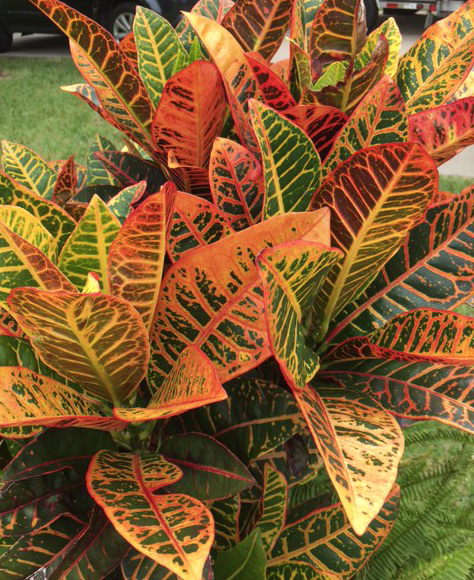
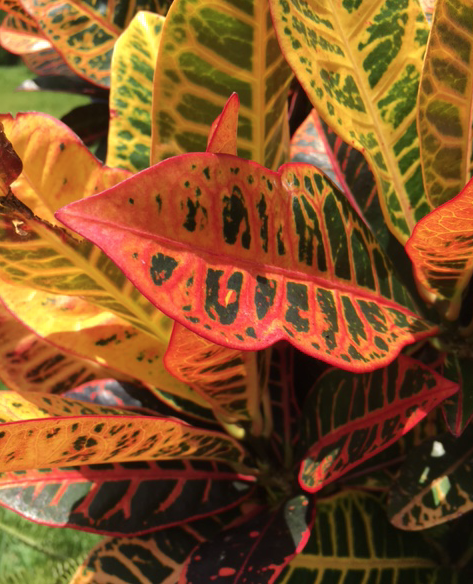
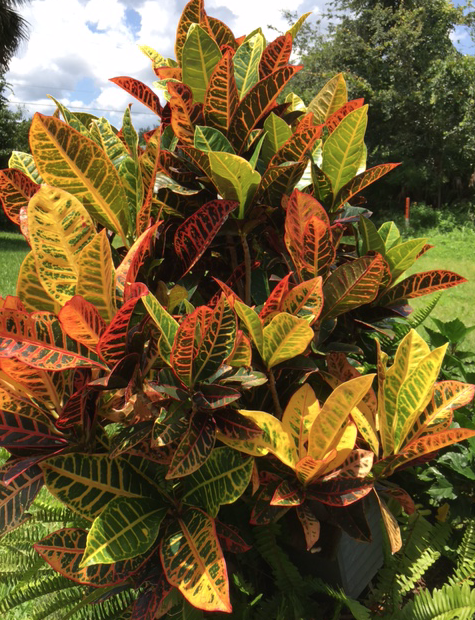
In this second photo, you can see that this plant’s leaves have turned stunning red, orange, yellow and pink from the bright Florida summer sun. I’ve also given it fertilizer and cleaned out the pot a bit. It was full of ferns.
Summer Croton
So, to propagate this croton, I waited until Spring when it began to grow some new leaves. Then I cut off the top of a longer stem, also making the stem long enough to drink from a vase of water. Remove the lower leaves of that cutting, and put it in water.
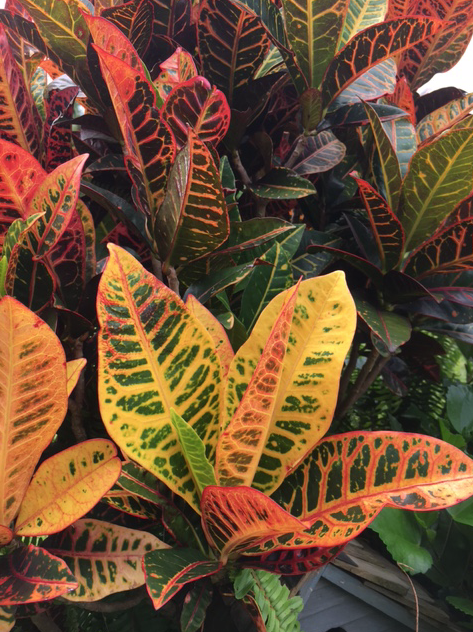
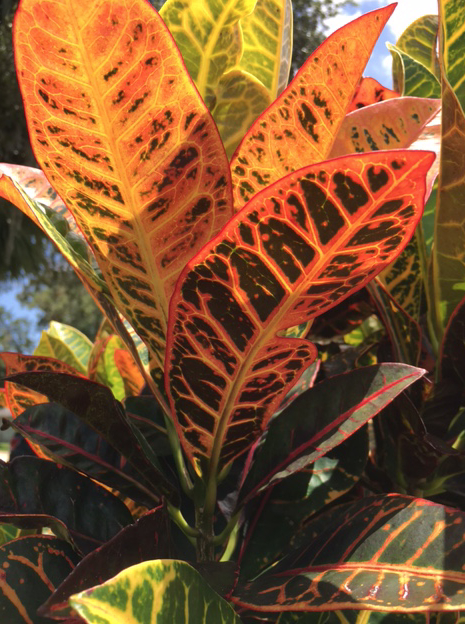
Bright Orange Leaves of the Croton
You will want the stem to not be touching the bottom of the vase, so find one that leaves it hanging. The new roots will grow out of the bottom of the cut stem. Wait a few weeks and the roots will emerge. Be sure to change the water in the vase daily! Once you see roots, it won’t be long before they are long enough and you can plant the new croton in a pot or the ground. Don’t plant until the roots are at least an inch long.
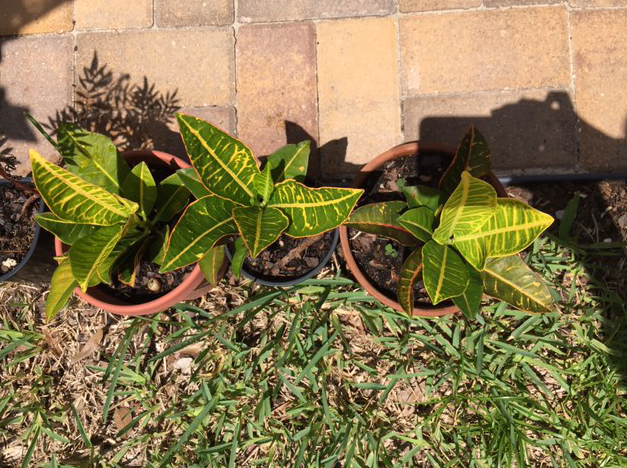
Three New Croton Plants
These are my three new croton plants. Their leaves are not as bright because I took the cuttings before the mother plant’s leaves turned so pretty. But once these new plants are in the ground, in a sunny location, they will turn just as bright.
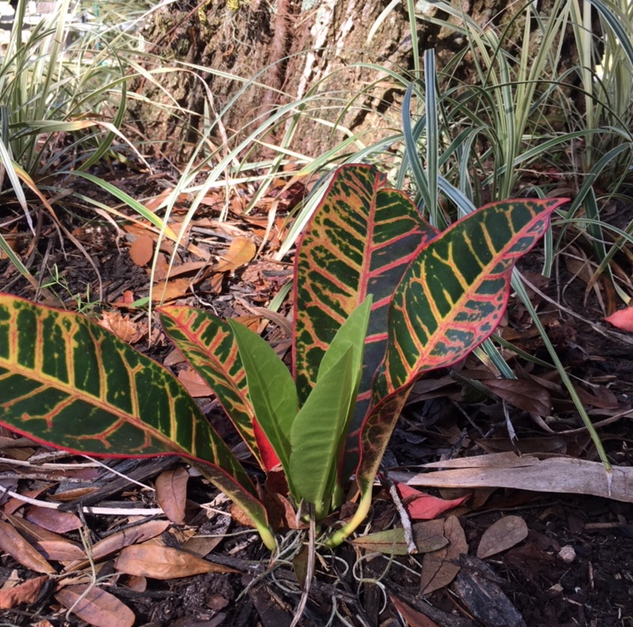
As you can see below, the baby croton is turning color. I need to fertilize these plants for better result, but even without much attention, crotons will grow beautifully.


 Hydrangeas Blue