New England native, Florida resident. Blogging about boating, beach-combing, gardening, camping, and knitting. Work for Zazzle as a designer since 2008.
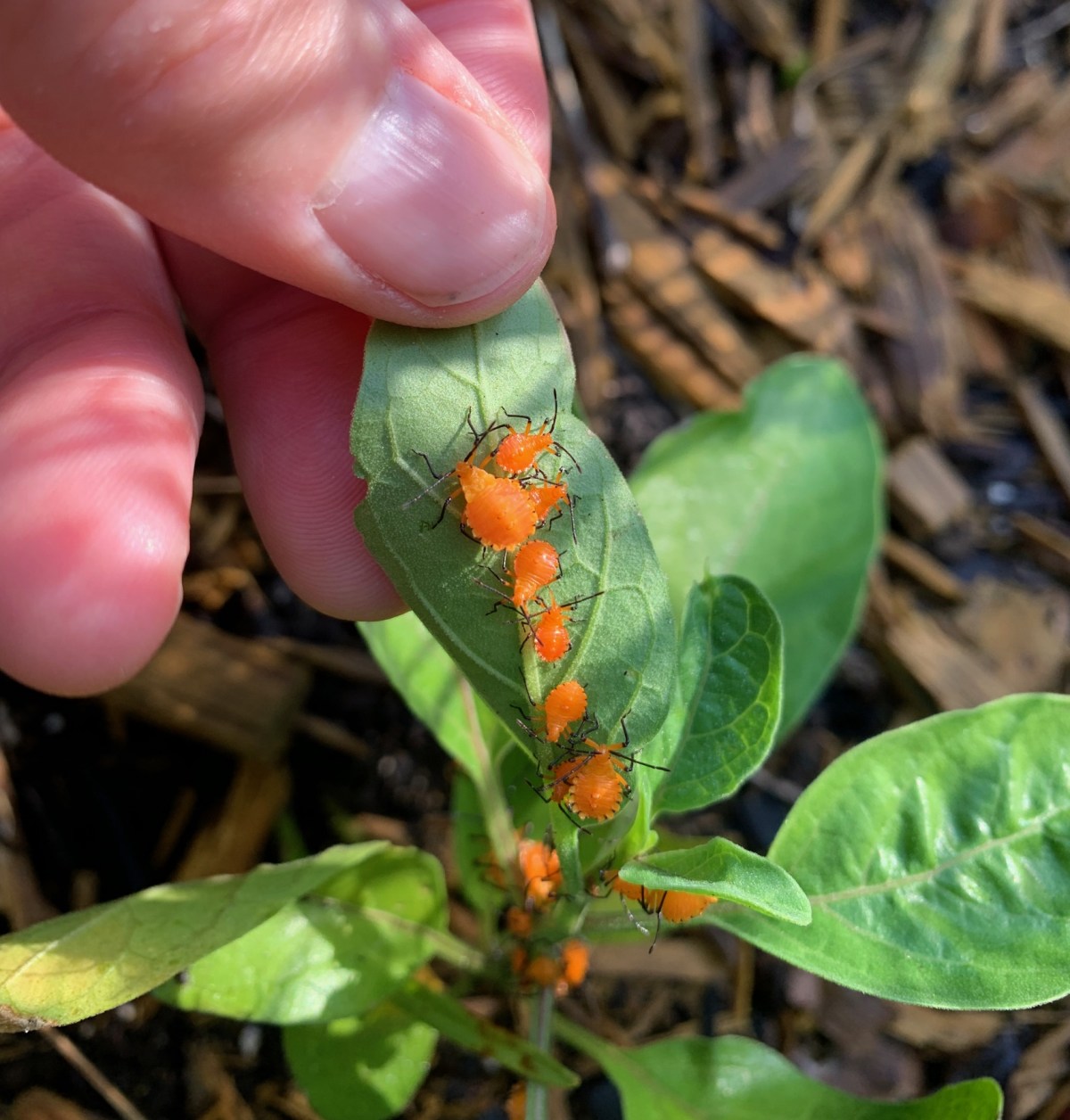
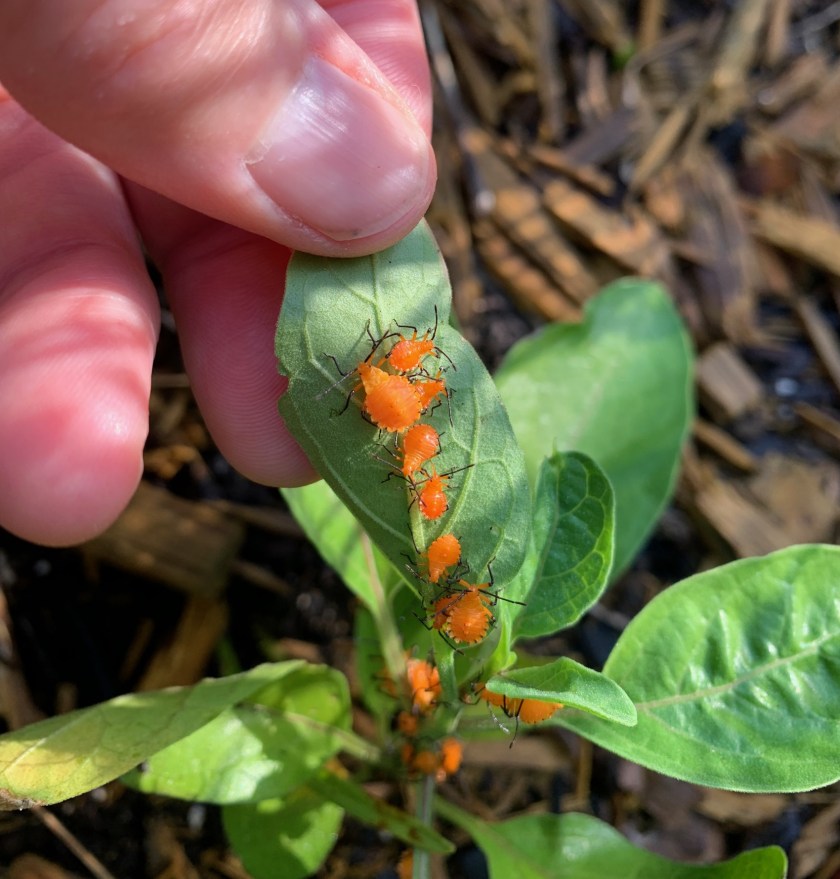
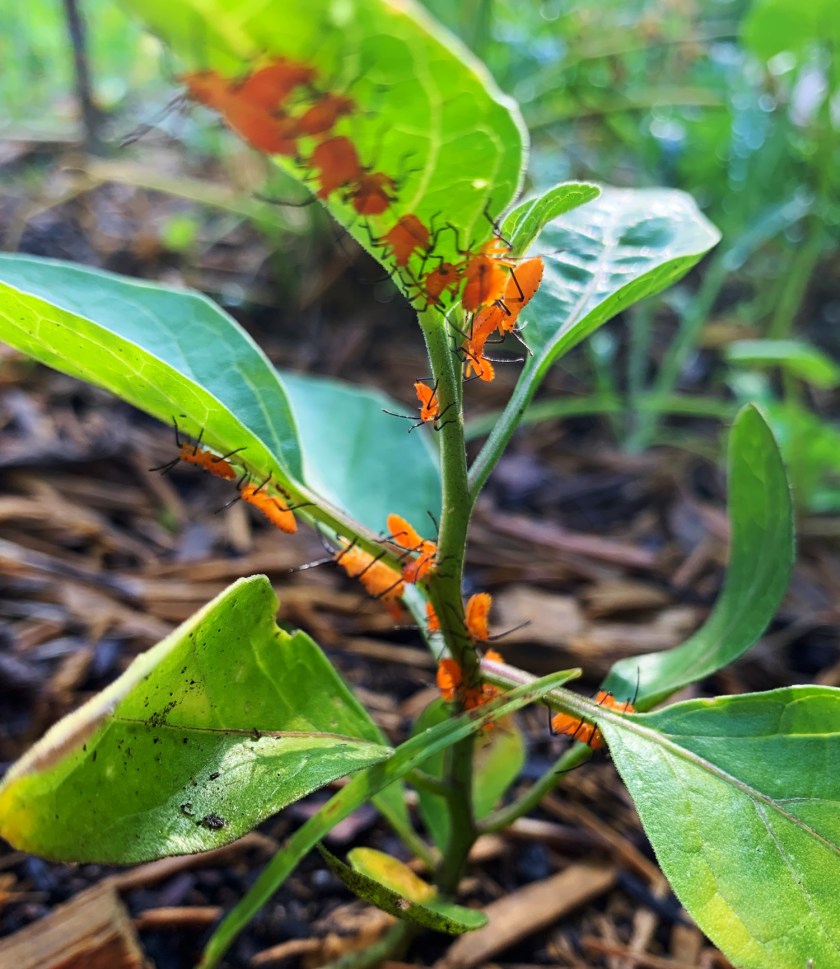
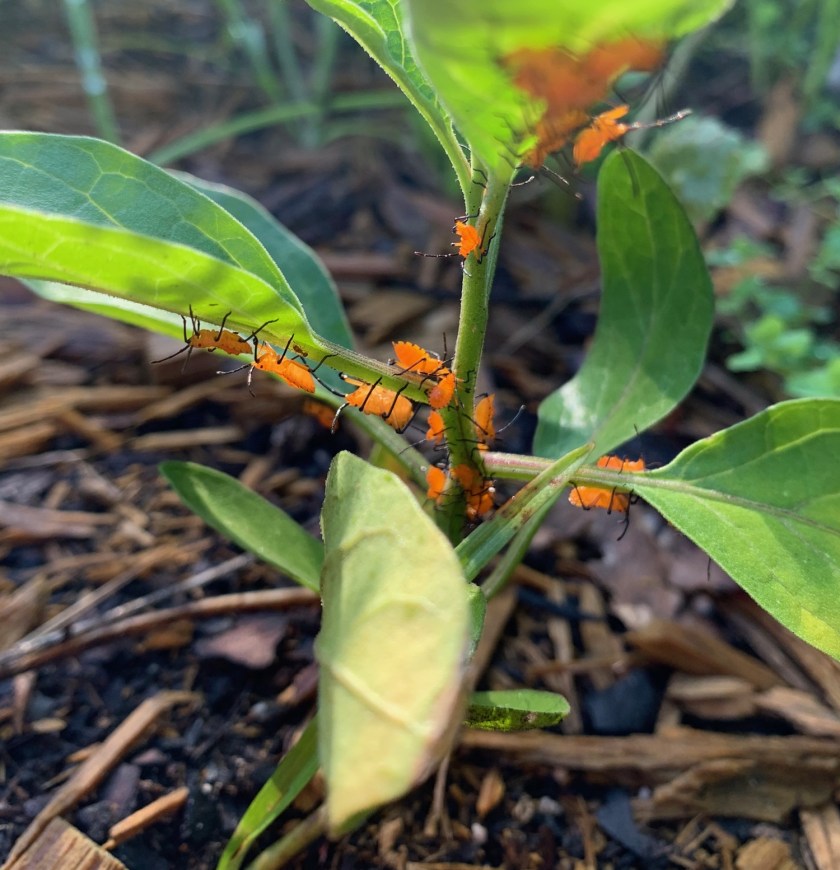
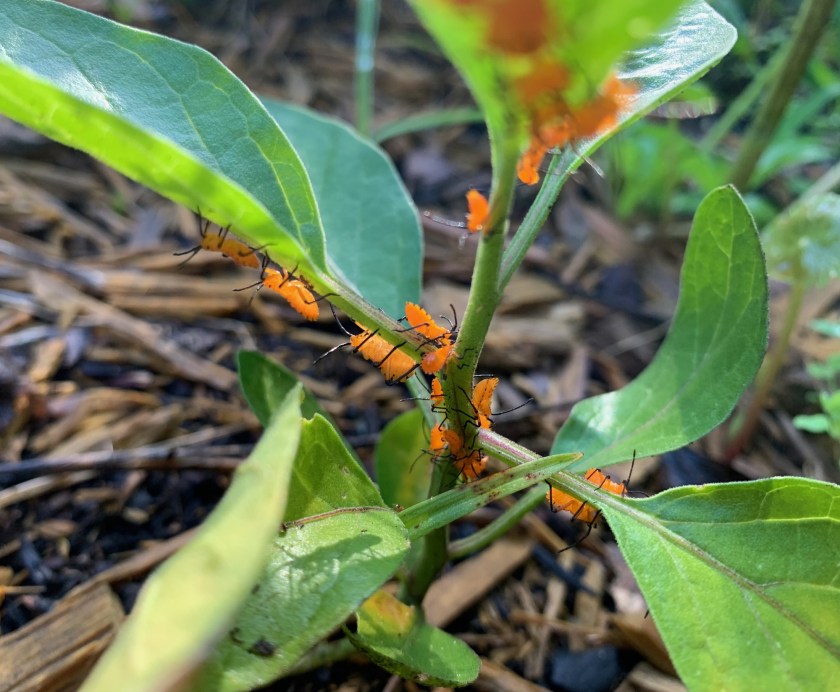
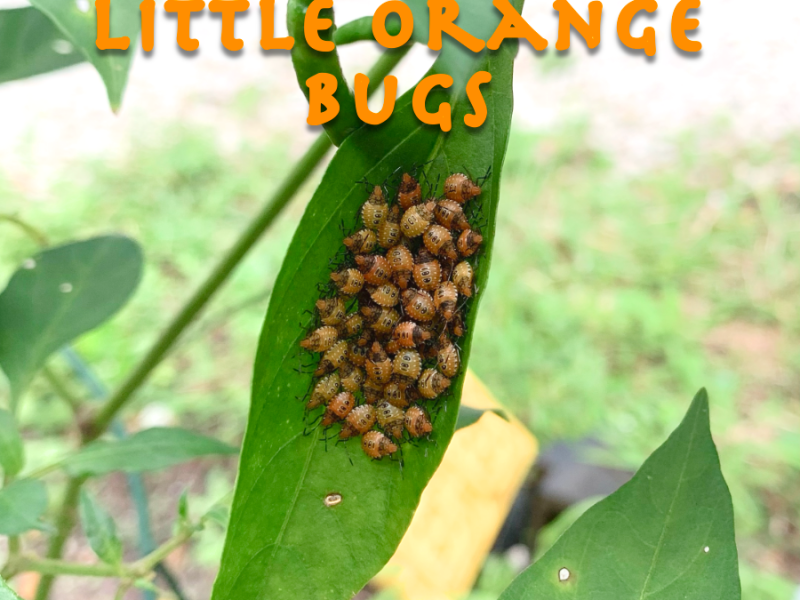
Trying to identify little orange bugs found in the garden all over the Groundcherry plants.
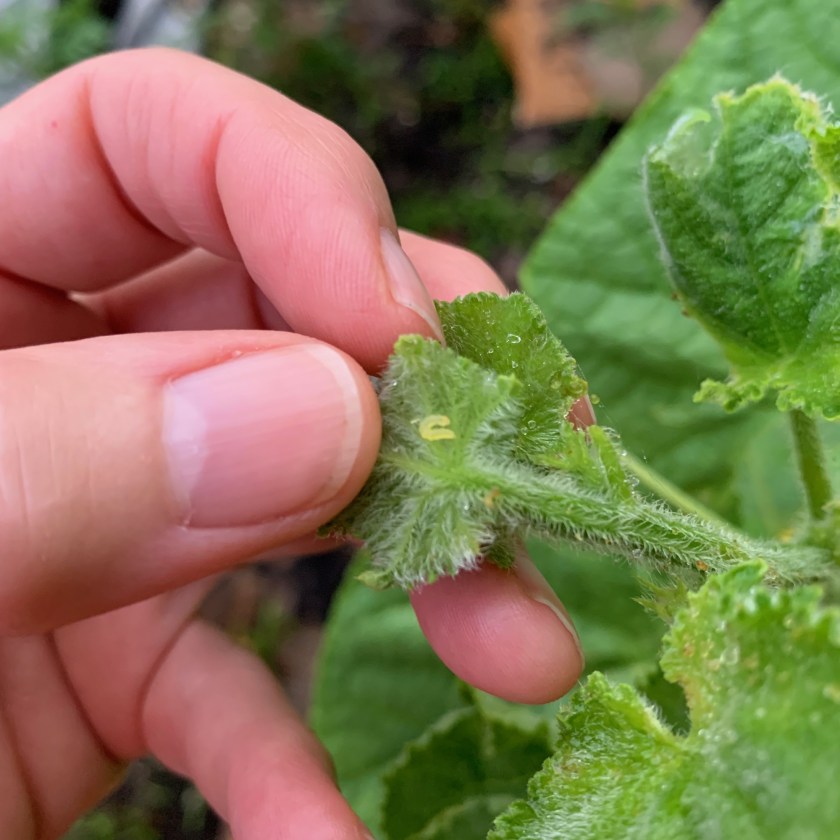
I don’t know what these little bugs are but they are all over the Walter’s Groundcherry plants. They are tiny and orange with black legs. I’m pretty sure they are not aphids. I’m thinking they are young / juvenile somethings.
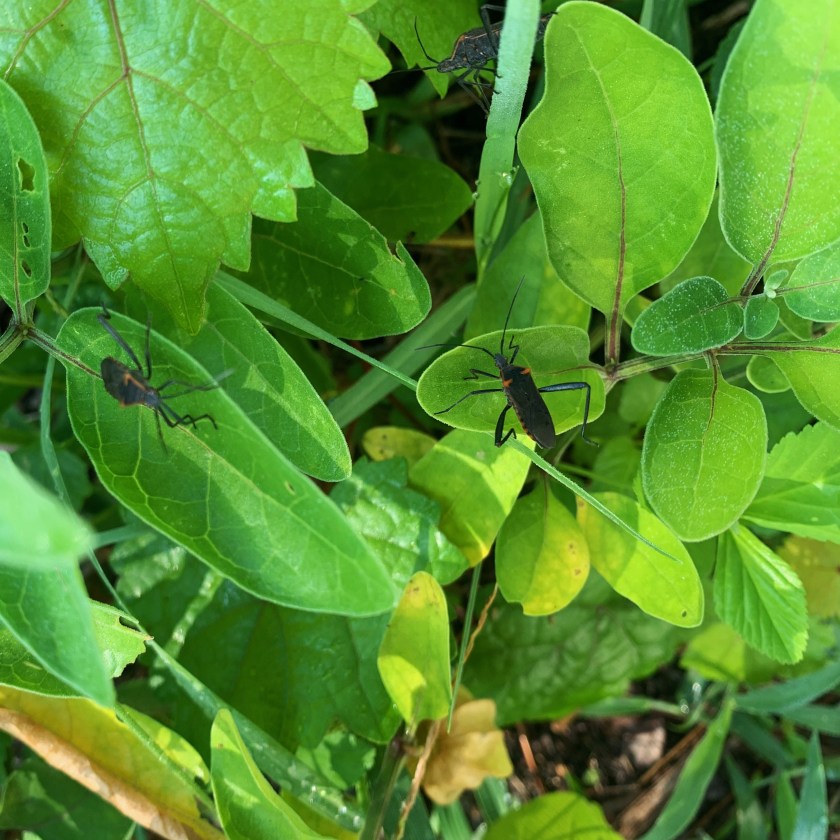
A while ago I found a couple of soldier beetles on these same ground-cherries. So are the orange beetles just young soldier beetles? I can’t find any pictures that look like the orange bugs.
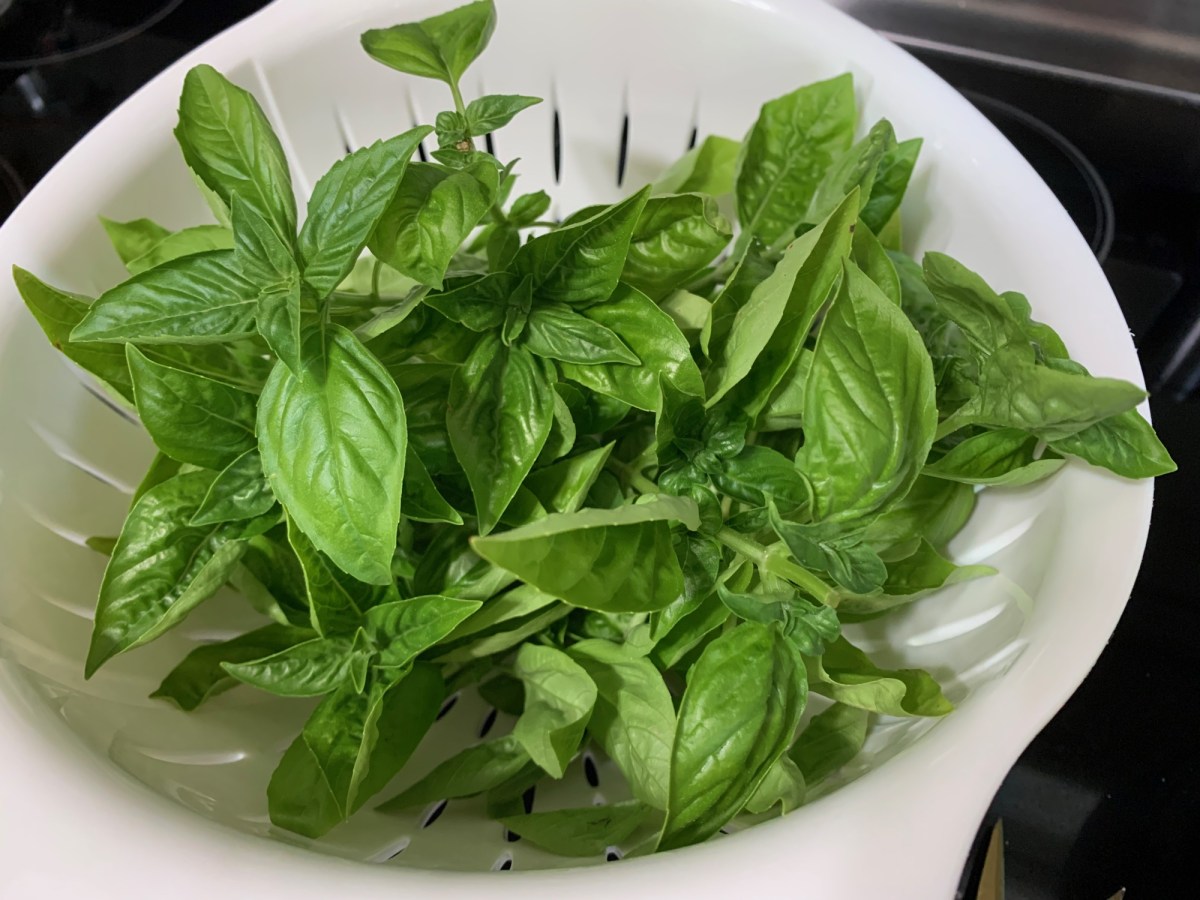
How to save fresh garden basil, by freezing the leaves, to use later.
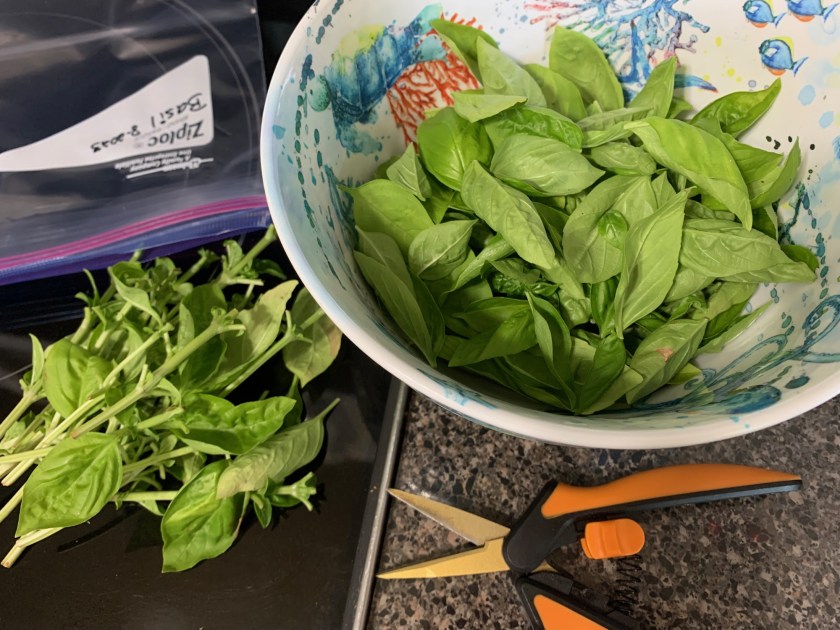
I should have picked my fresh basil for freezing a few weeks ago. It does not look as good now, but I found a great video (link below) about how to freeze fresh basil, so I went into the garden and picked some.
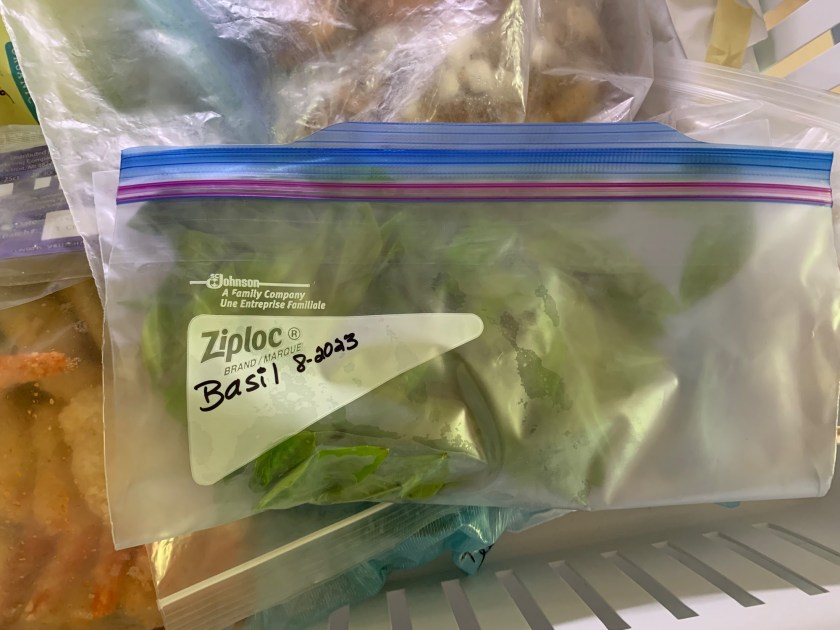
I didn’t have as much basil to freeze as the woman in the video, and I put it into a gallon size freezer bag, instead of quart. But, now I can add more to the bag as I pick it.
The leftover stems went into my compost bin.
I love to have frozen veggies to add to my beef and chicken broth when I make it.
Mid-summer is the time for pesky pests to show up in the vegetable garden. It’s also the time to search for beneficial bugs that will hopefully take care of some of the problems.
In July I noticed that there were a lot more unwanted bugs on flowers and veggies in the garden.
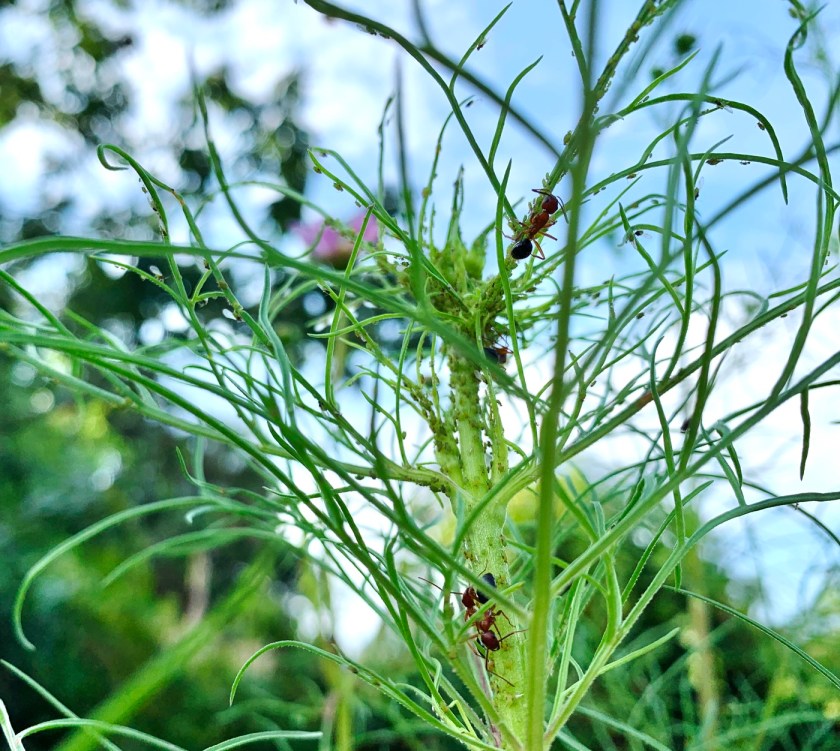
The seashell cosmos are full of aphids. I saw one ladybug on the cosmos, but she didn’t seem interested in removing the aphids. Or maybe there were just too many. Yup, ants and aphids actually help each other out… Read this article at Gardening Know How.
I have since sprayed water on the ants and most of the aphids to get them off these flowers. Some stems were cut back to remove the infestation.
Ants and aphids
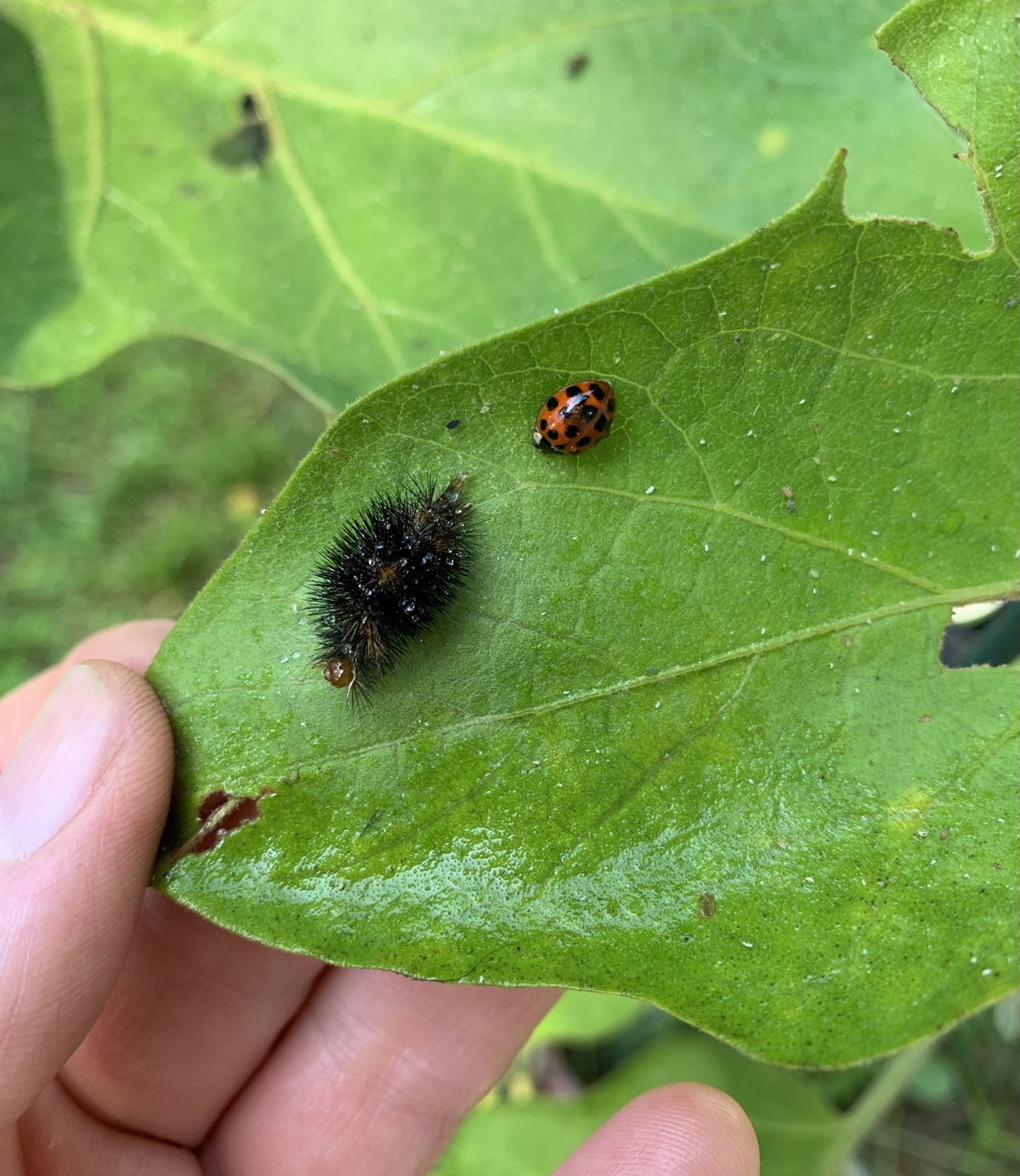
Cosmos and eggplant are covered in ants also. And a black, fuzzy caterpillar showed up to eat the eggplant leaves.
Giant Leopard moth caterpillar
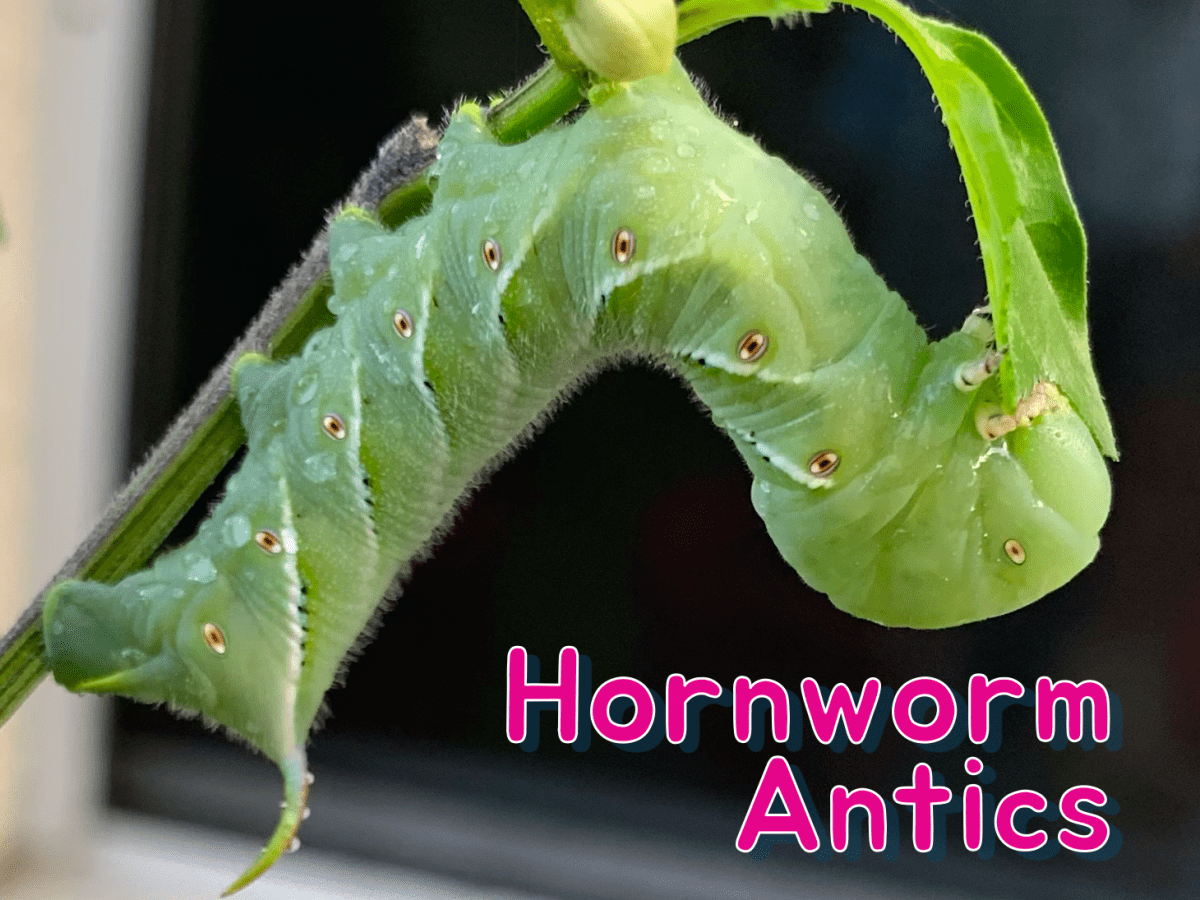
The black caterpillar turns into the Giant Leopard moth, from what I’ve discovered. I had three of these caterpillars on my eggplants, but now they are all gone. I was really hoping to see them become moths.
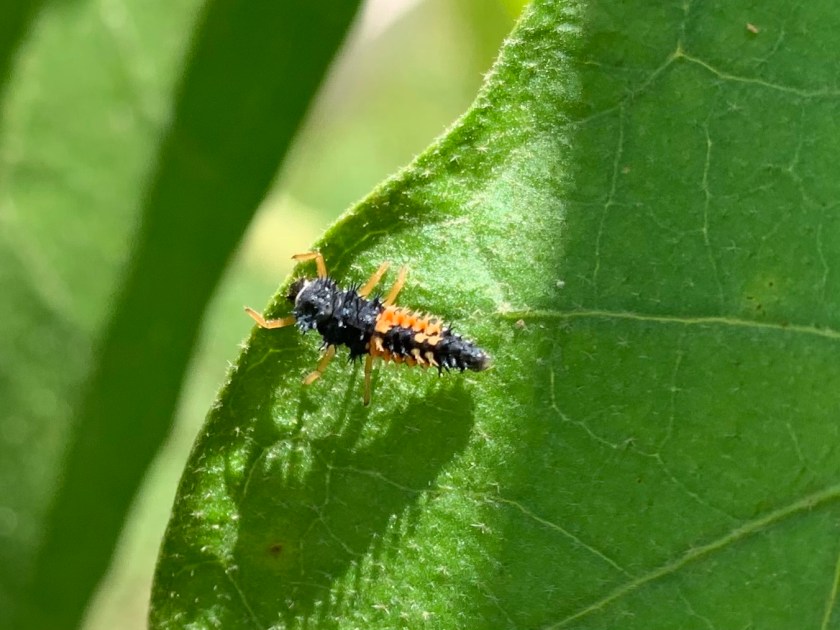
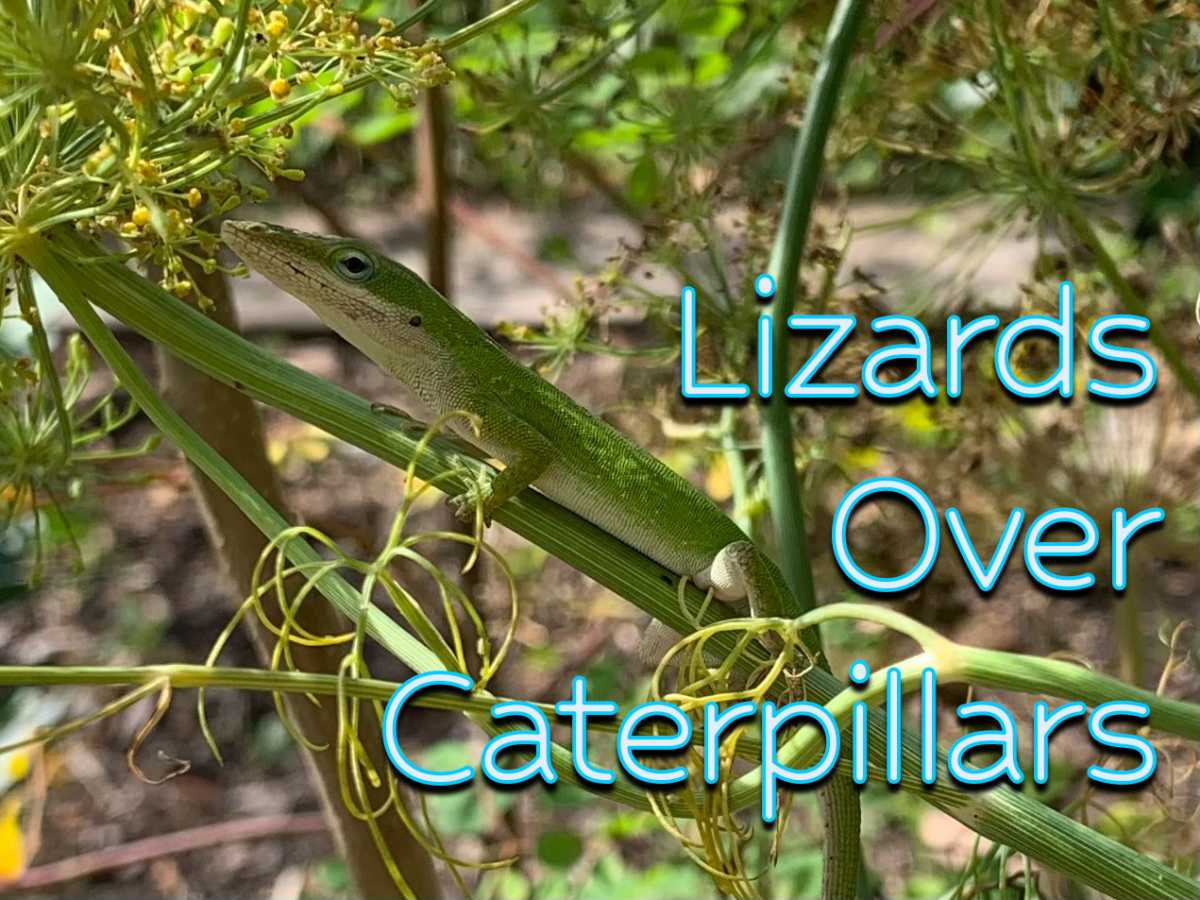
Along with weird and unwanted things, I was happy to find some ladybug larvae on one of my largest eggplant plants. Lizards were also crawling all over the place, so these may disappear. I hope not.
Ladybug larvae
Get Rid of Fire Ants Naturally, Will This Work?
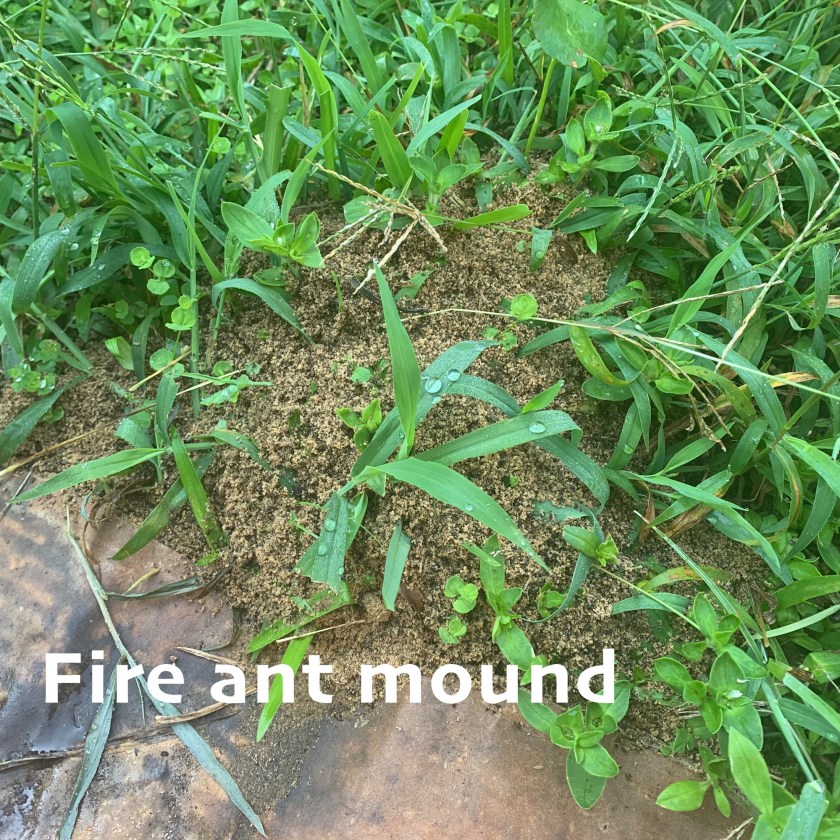
As for one of the worst Florida pests ever, the fire ant, I’ve been looking for a good way to rid the garden of them.
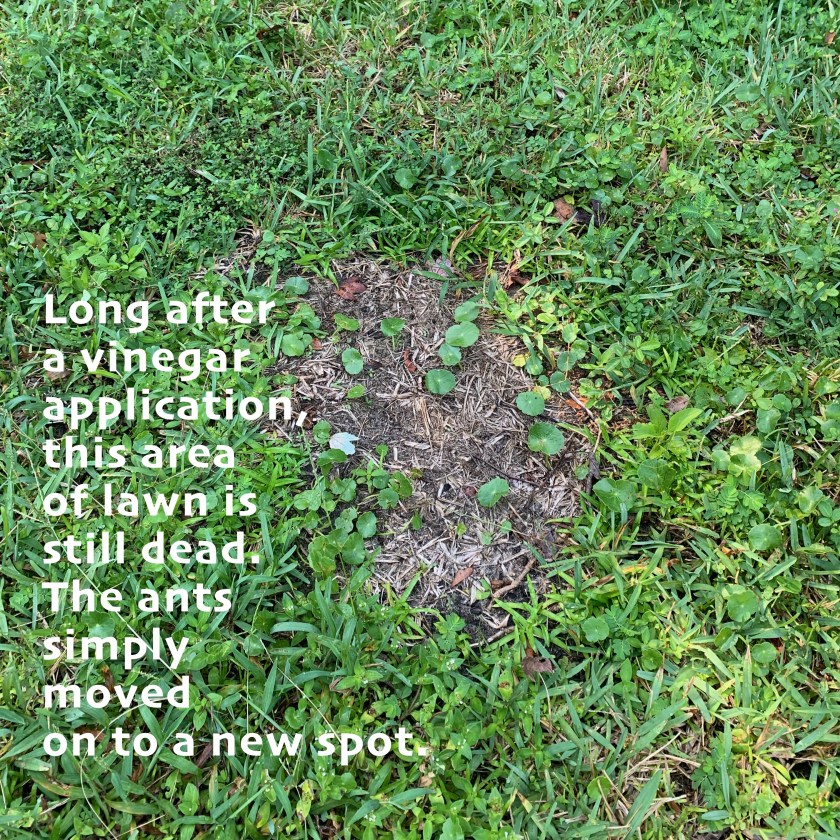
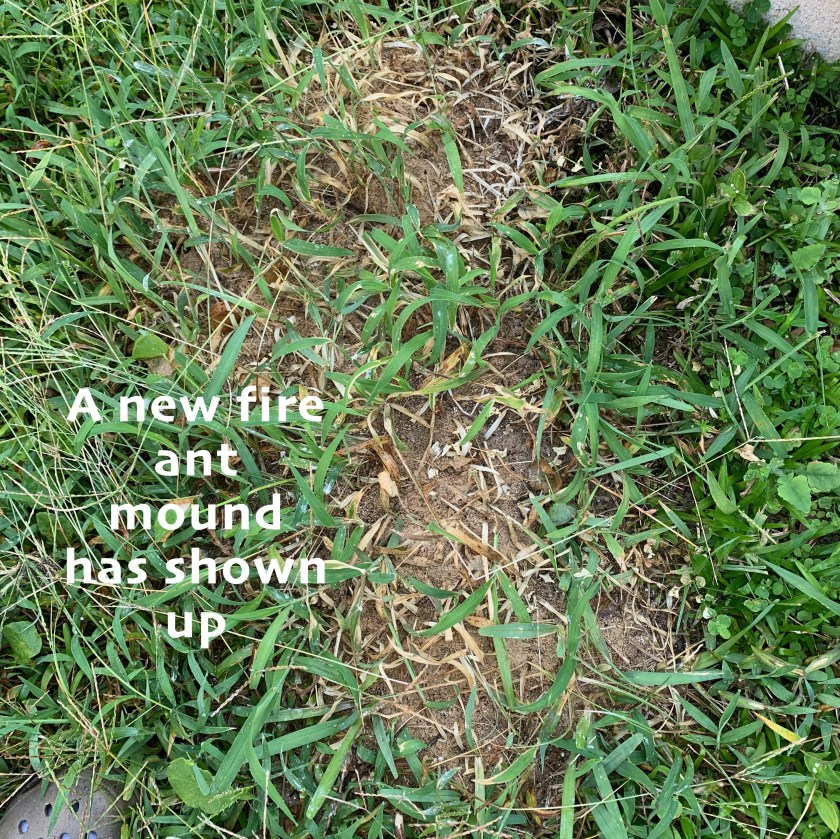
I’ve tried pouring vinegar on the mound. It kills all the grass, but the fire ants just move. I’ve sprinkled Diatomaceous Earth all over the hill, and it seems to do nothing. I was going to set Terro traps but I was afraid the raccoons would try to eat the stuff.
Now, I’ve come across a video by Elise Pickett from The Urban Harvest with advice on naturally killing fire ants. The mixture to try contains orange oil, dawn detergent and water. Watch the video here for more info.
I absolutely plan to try this as soon as the ingredients arrive.
Beetles and Worms
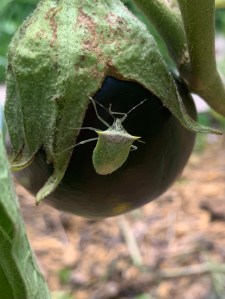
I don’t know what this little green beetle is, but he was happily crawling on the eggplant. Looks like a stink bug, except green. Maybe he is a juvenile.
These little black bugs were found on the Ground Cherry plants, which grow wild along the edge of the yard. Are they good bugs? They seemed harmless, and sure enough, they are soldier beetles which are BENEFICIAL and important for pollination.
Each morning I am picking little green worms off the tops of my Suyo Long cucumber plants. Most likely the Pickleworm. I will continue to hand-pick the worms and hopefully rid the plants of them.
After reading this article by IFAS, it seems that the best practice for avoiding this worm problem is to plant cucumbers early in the season to beat the invasion. I will look into this further.
The Seminole pumpkin is perfect for us Florida gardeners as they are native. This is my first year growing them.
I had high hopes for growing the Seminole pumpkin. After all, it’s a Florida native. I had watched videos where people told of their bounty of pumpkins. The vines filled their yards and pumpkins were everywhere. For me, this was not the case.
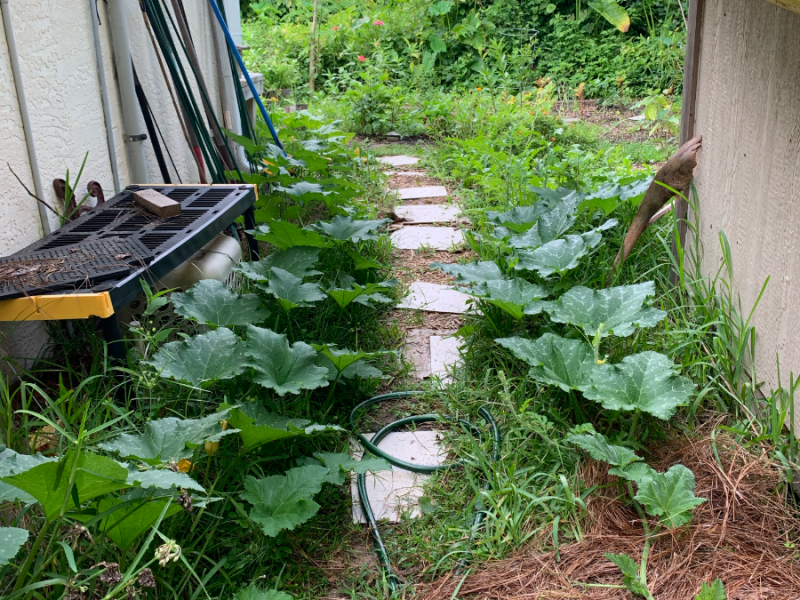
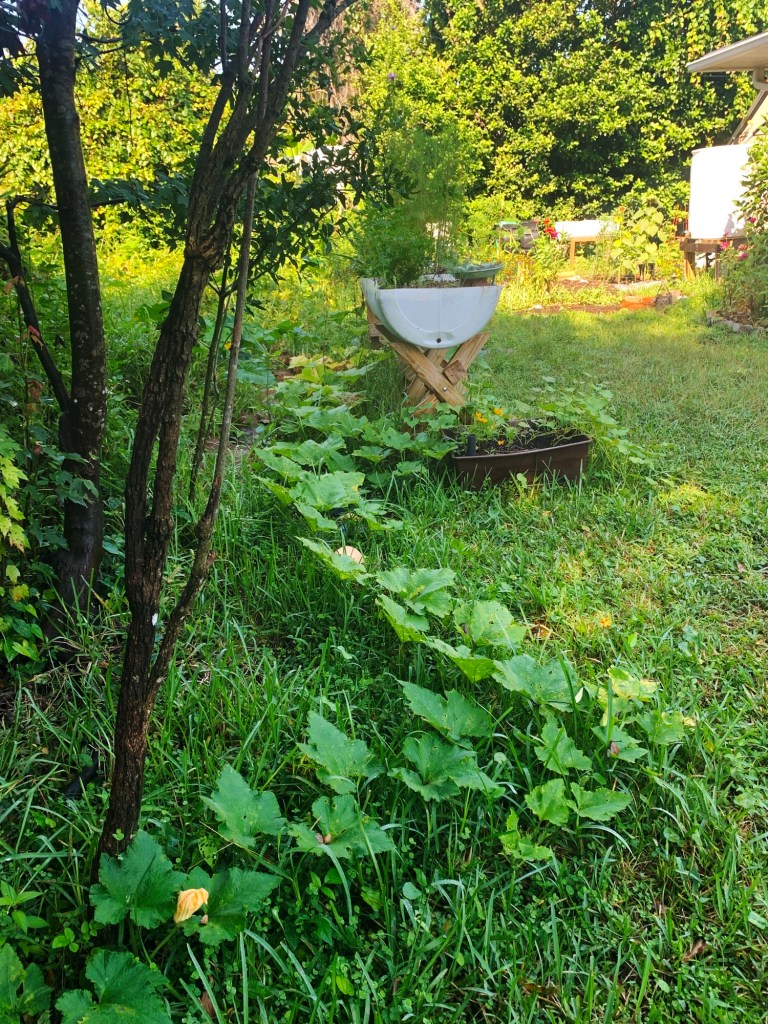
My yard is small and the garden area is even smaller so I planted the seeds in one little section near the side of an empty, overgrown lot.
I had pumpkin vines trailing down the entire side of my yard, but only one pumpkin growing. Others began, but then dropped off the vine. It was disappointing. Maybe I planted too late in the season.
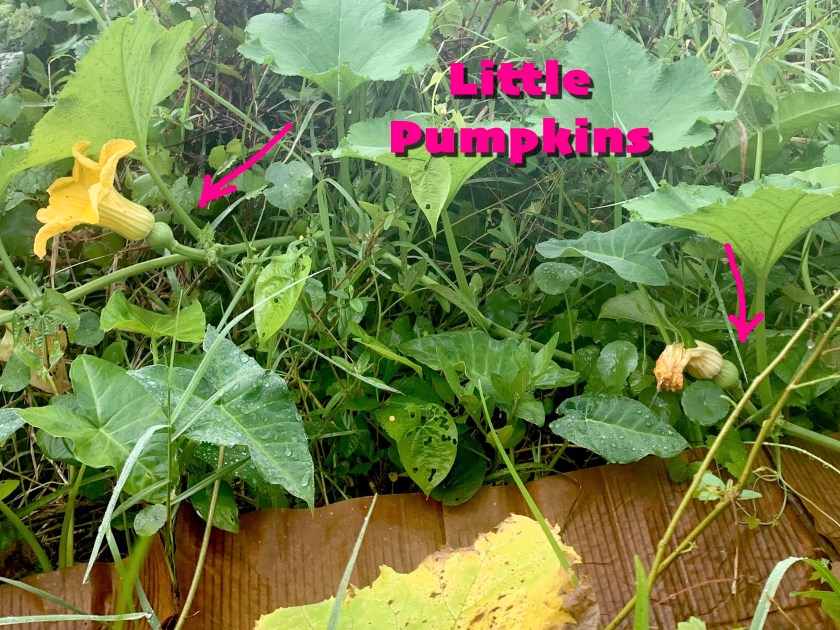
This new vine was headed off into the wilderness and it had two little pumpkins growing. Sadly, one of them did not make it. The other one is doing well.
New baby pumpkins
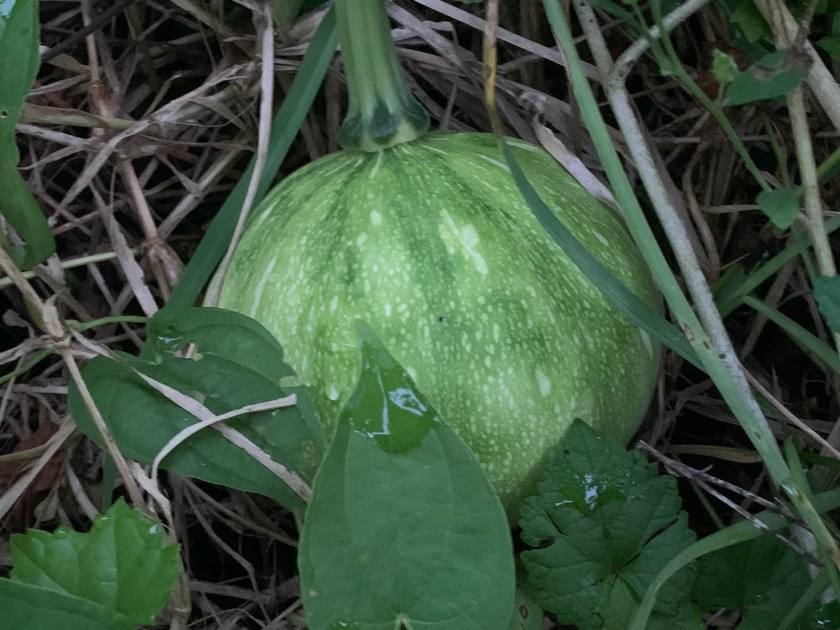
Of the two pumpkins shown above, only the one on the left continued to grow. So now I will have two pumpkins total by the end of summer.
New little Seminole pumpkin
Planting and Growing
I planted my pumpkin seeds – purchased from The Urban Harvest – in pots, then transplanted two plants to the garden. I could have planted sooner, but my garden was not ready.
Later I transplanted Seminole pumpkin plants, started from seeds in pots, into the ground, and they did not grow well. So, next time I’ll put seeds directly into the ground.
From my limited experience I have noticed: All the leaves near the place the seeds came up have turned yellow and dropped off.
The vines are easy to direct. I have all my vines coming down the edge of the yard. The vines will root into the ground along the way!
Seminole Pumpkin on the vine
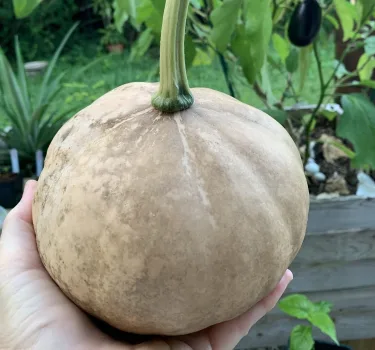
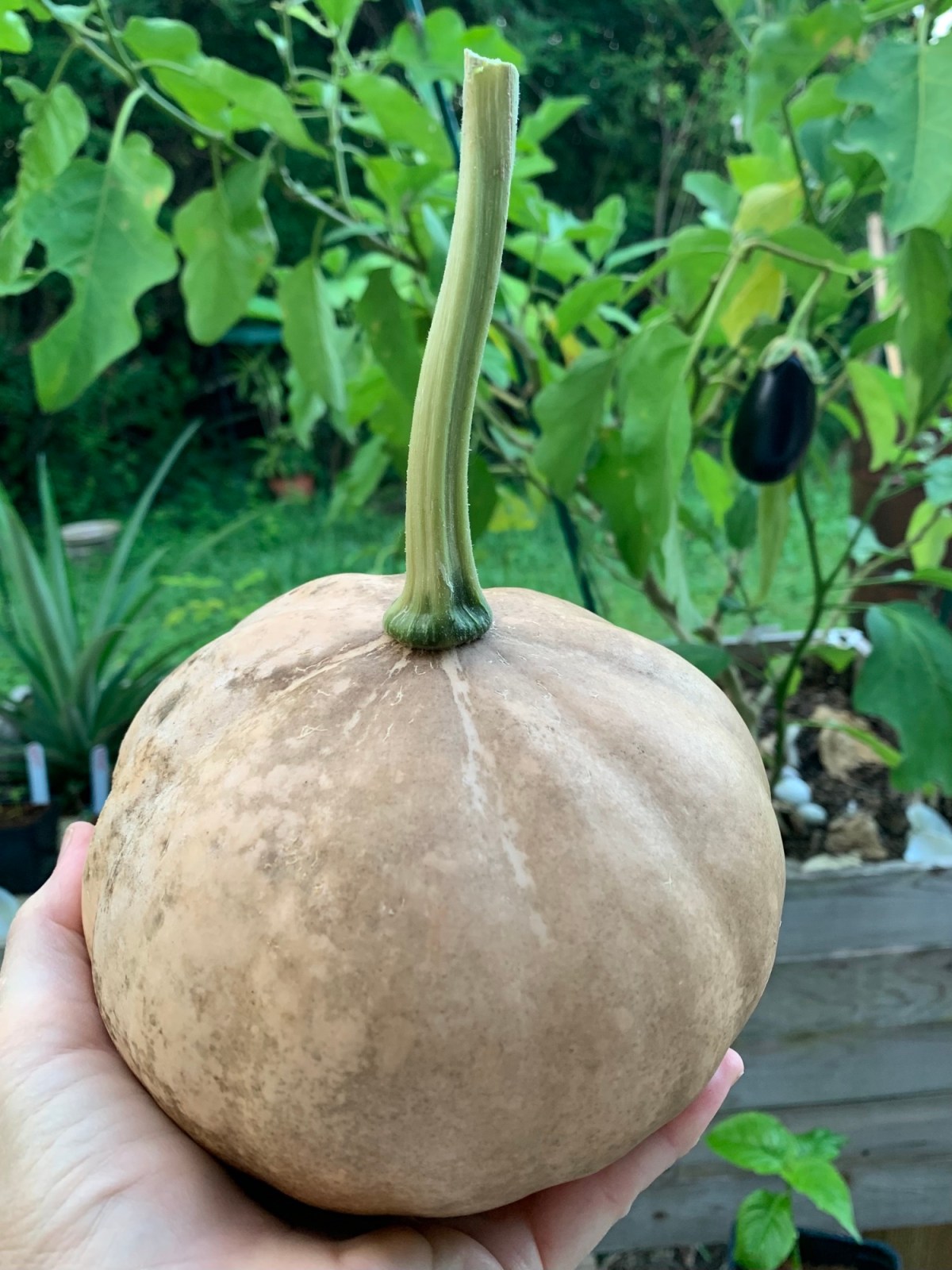
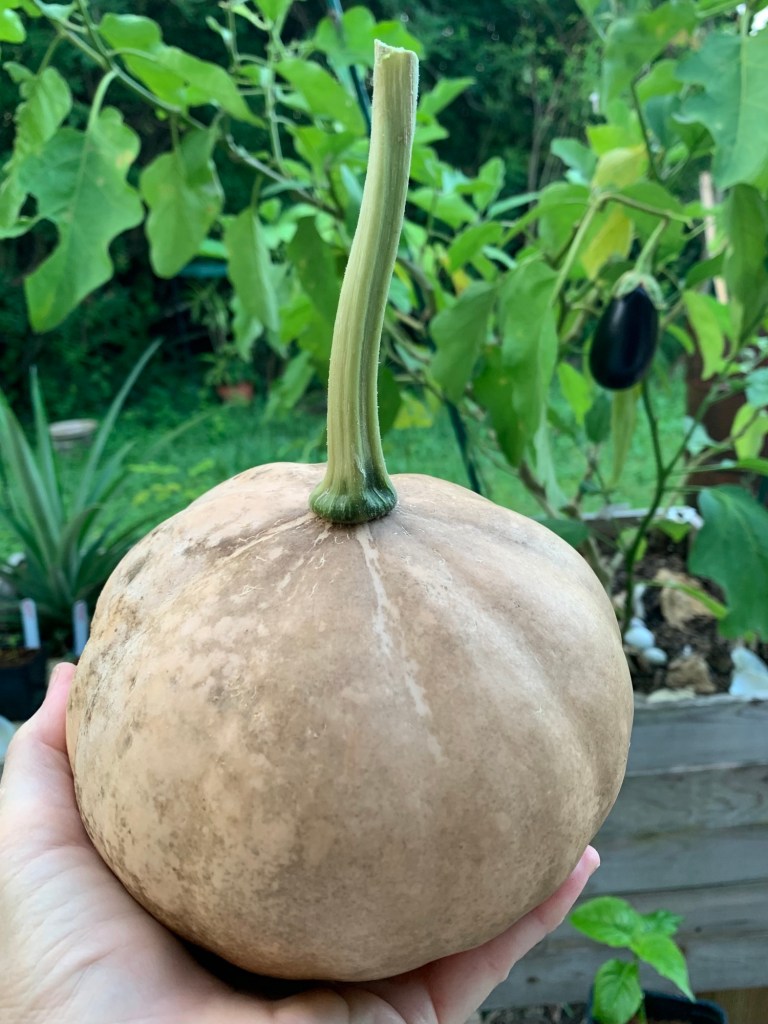
I’m watching this pumpkin grow and was wondering when I should cut it off the vine. Apparently the stem will turn brown and begin to die, then cut the pumpkin leaving a long stem (see more info in the link below). This type of pumpkin can be stored for months – even up to a year – if conditions are right.
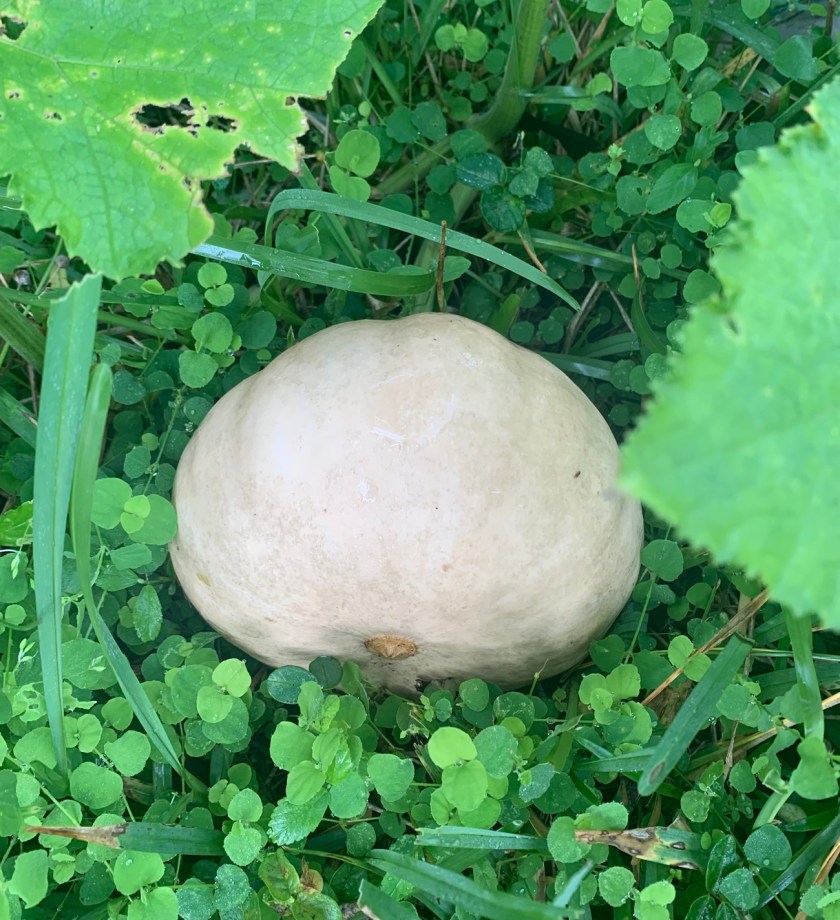
On August 25th I cut the pumpkin from the vine. It has been growing for months and I figured it must be ready. I left a nice long stem, as was suggested by someone doing a video.
Picked the pumpkin
I was hoping to have numerous pumpkins from these two plants, but it looks like I will have only two.
If you have a small yard, like I do, maybe consider planting near the edge of the property and direct the vines along the perimeter. I’ll definitely plant more Seminole Pumpkins in Spring.
From a barren yard to gardens being dug, I’m learning to be a successful Florida gardener.
In 2016 my son and I bought a house in Florida near the east coast. It is a modest home with a small yard. At the time, on both sides we had natural habitats in uncleared lots.
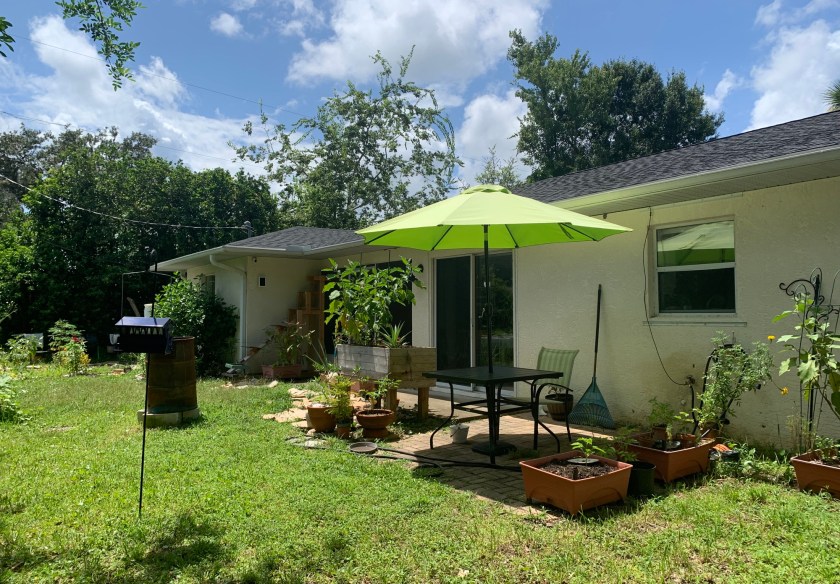
Here’s a photo of the backyard that was posted on the listing, and then nearly 7 years later.
House backyard in 2016
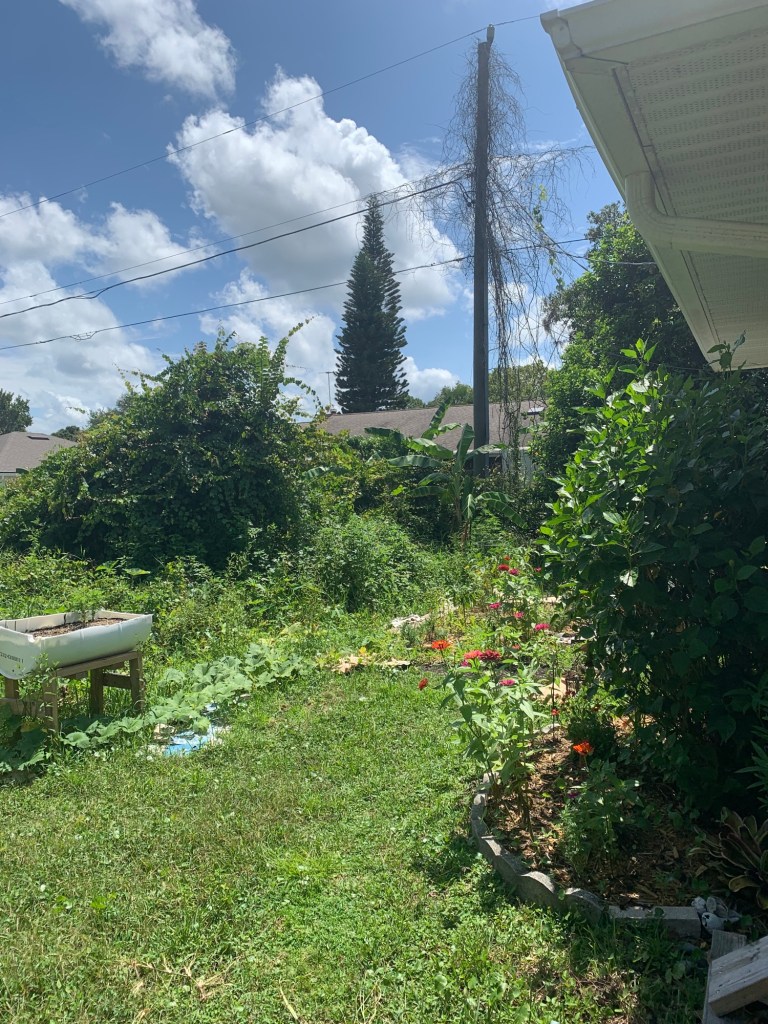
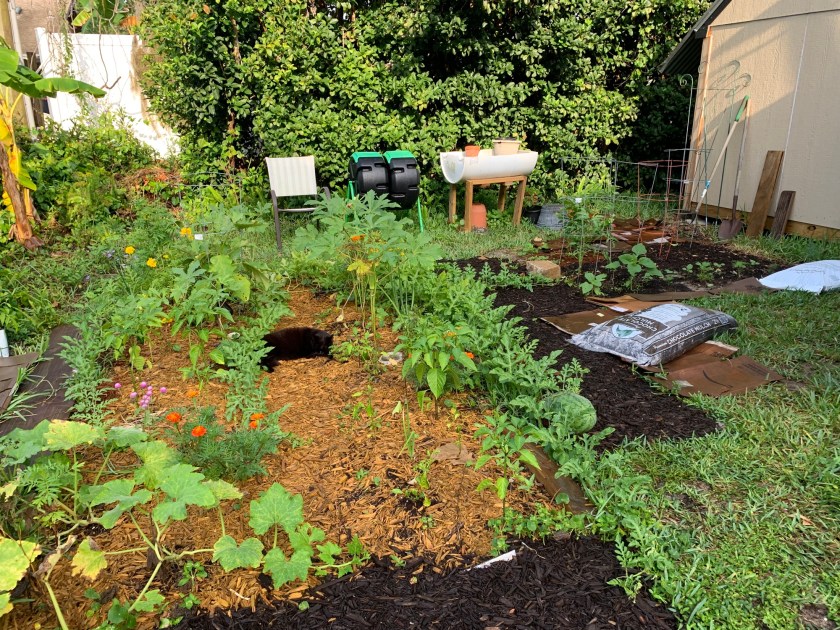
Our backyard, August 2023
Our house sits lengthwise with the garage at the front, so this “backyard” area in the photos is really on the southern side of the house.
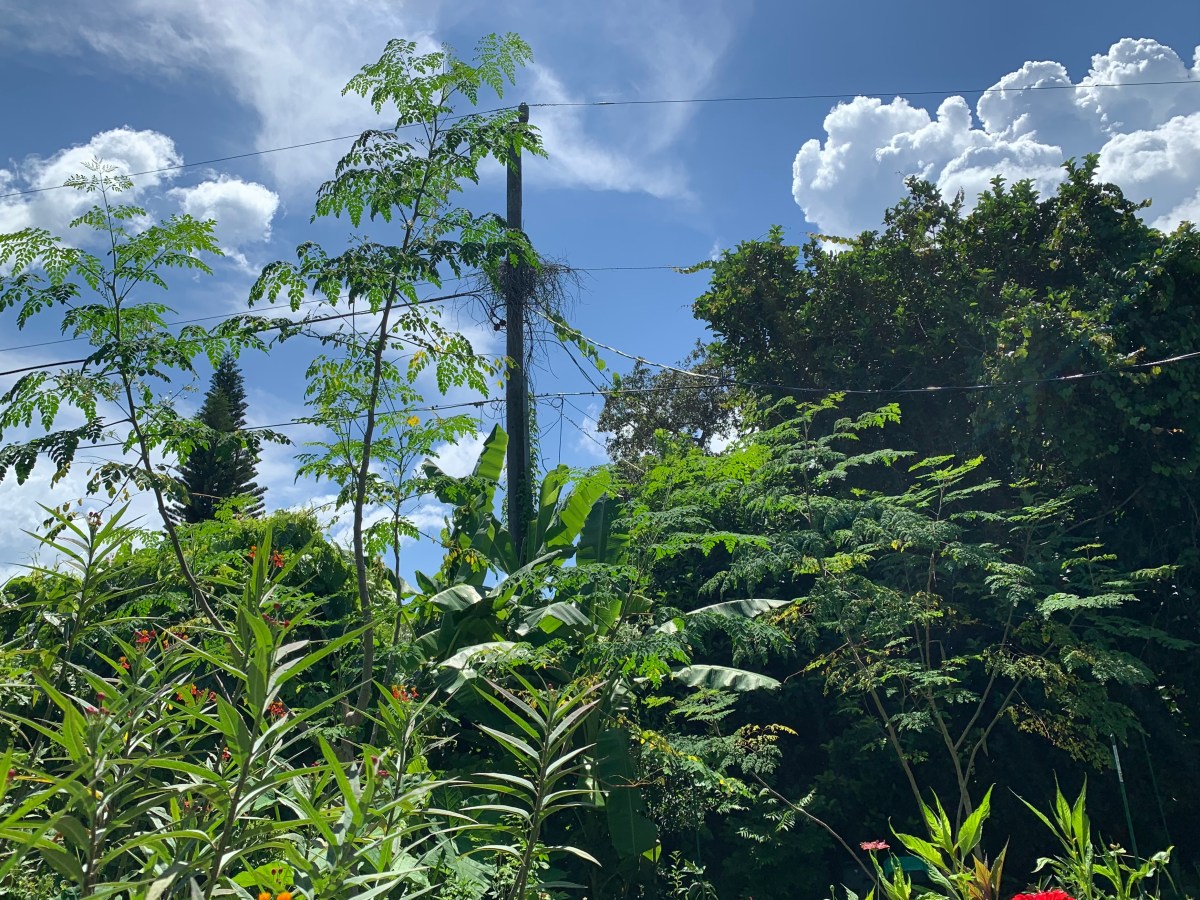
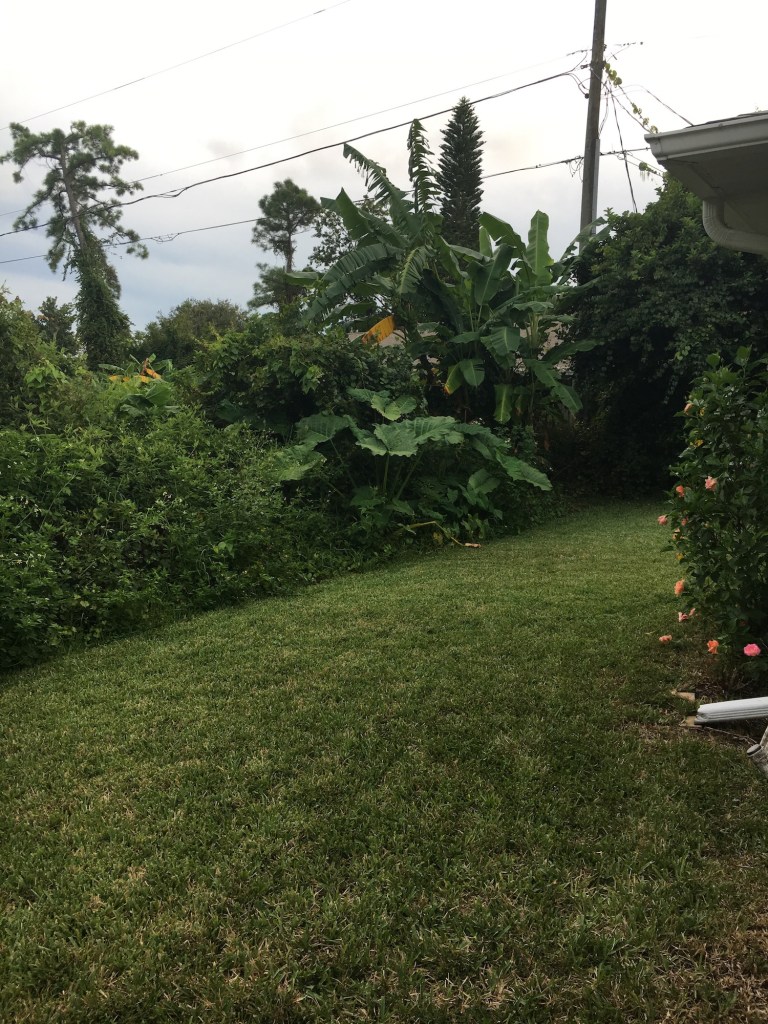
This photo from 2018 shows the big banana trees and elephant ear plants in the back corner. Also the yard is mostly grass and not weeds. You can see the hibiscus planted near the house.
Our back corner of the yard looks a bit more open thanks to the numerous hurricanes that have come through since we moved in. The tall pine was taken down when a new house was built.
Yard 2018Yard 2023
In 2023 I decided to create some gardens and began digging up the grass. I’d been container gardening, but I’ve always believed that plants do better in the ground.
I bought a rototiller and had my son till up a patch of ground. I removed the grass and some pieces of cement that were buried and began to get the dirt ready for growing vegetables.
I have a Hot Frog tumbling composter which I’d been using for about a year to make compost.
2023 -Changing from grass to garden area
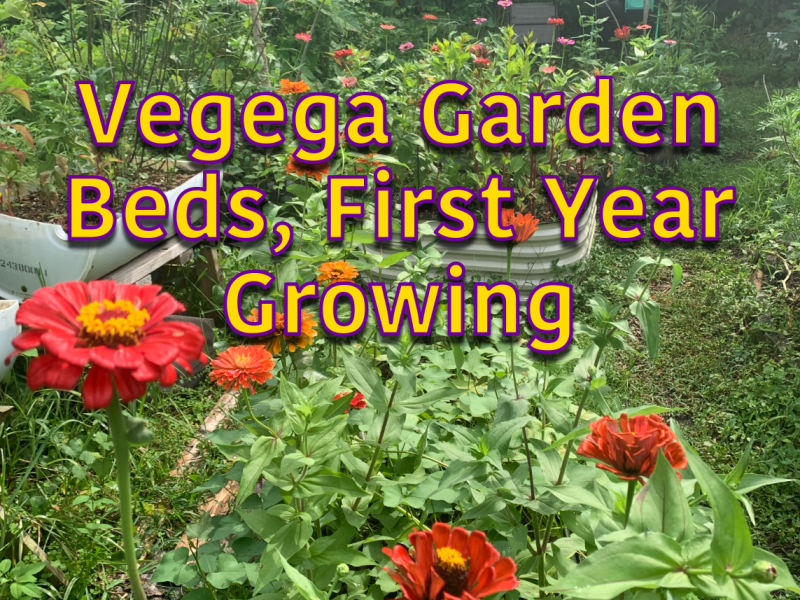
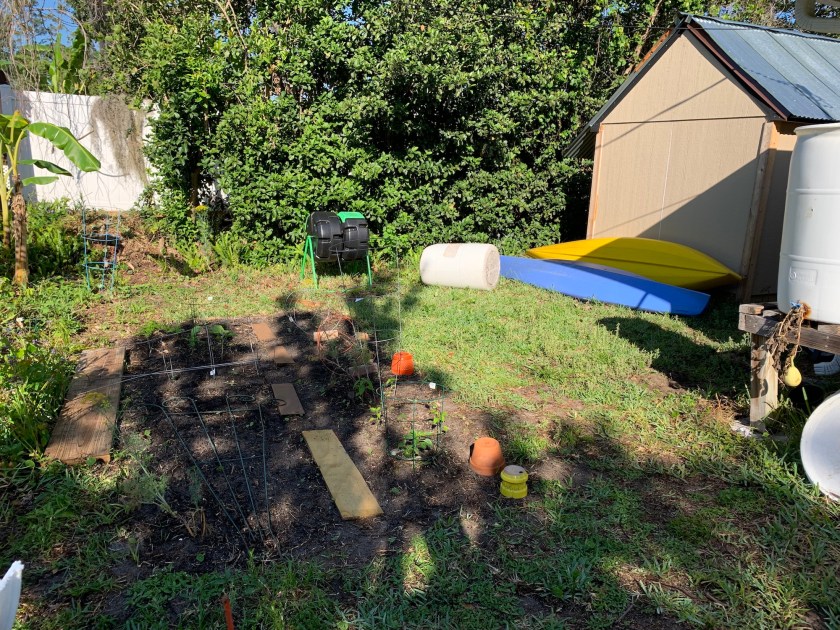
When my watermelon, peppers, okra, pumpkin, and eggplant began growing so well, I expanded to another smaller garden next to the shed. Because it was June, and summer is tough for growing vegetables in Florida, I planted cucumbers (Suyo Long), one tomato plant, and more okra (the rest of the seeds from the packet).
This is also where I planted the blueberry bush I bought at the Farmer’s Market on a whim.
June garden extension
Gardening is an ongoing experiment. There is always something to do and / or see while walking through the garden. Each morning I pull weeds until the mosquitoes find me.
I’m keeping track of what grows well in this summer heat, and am already thinking about Fall planting.
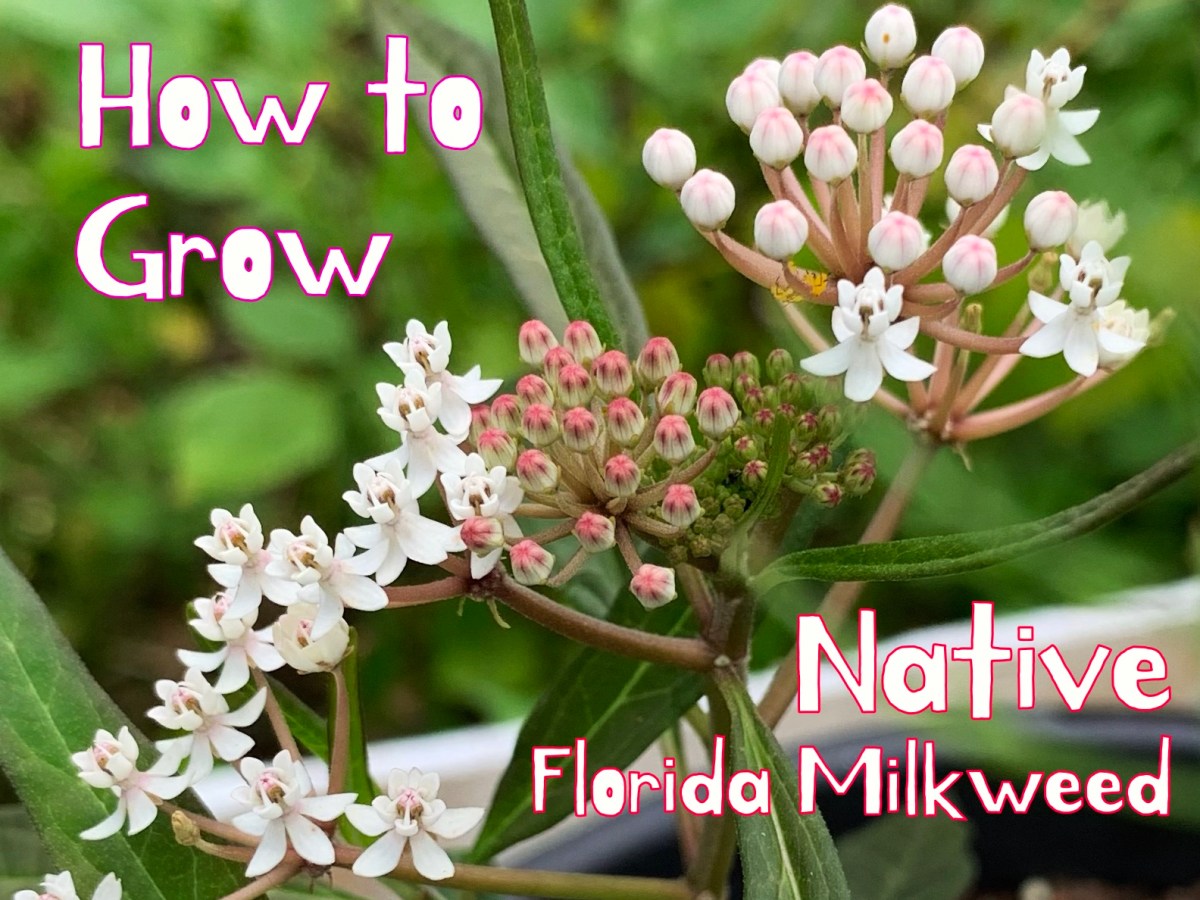
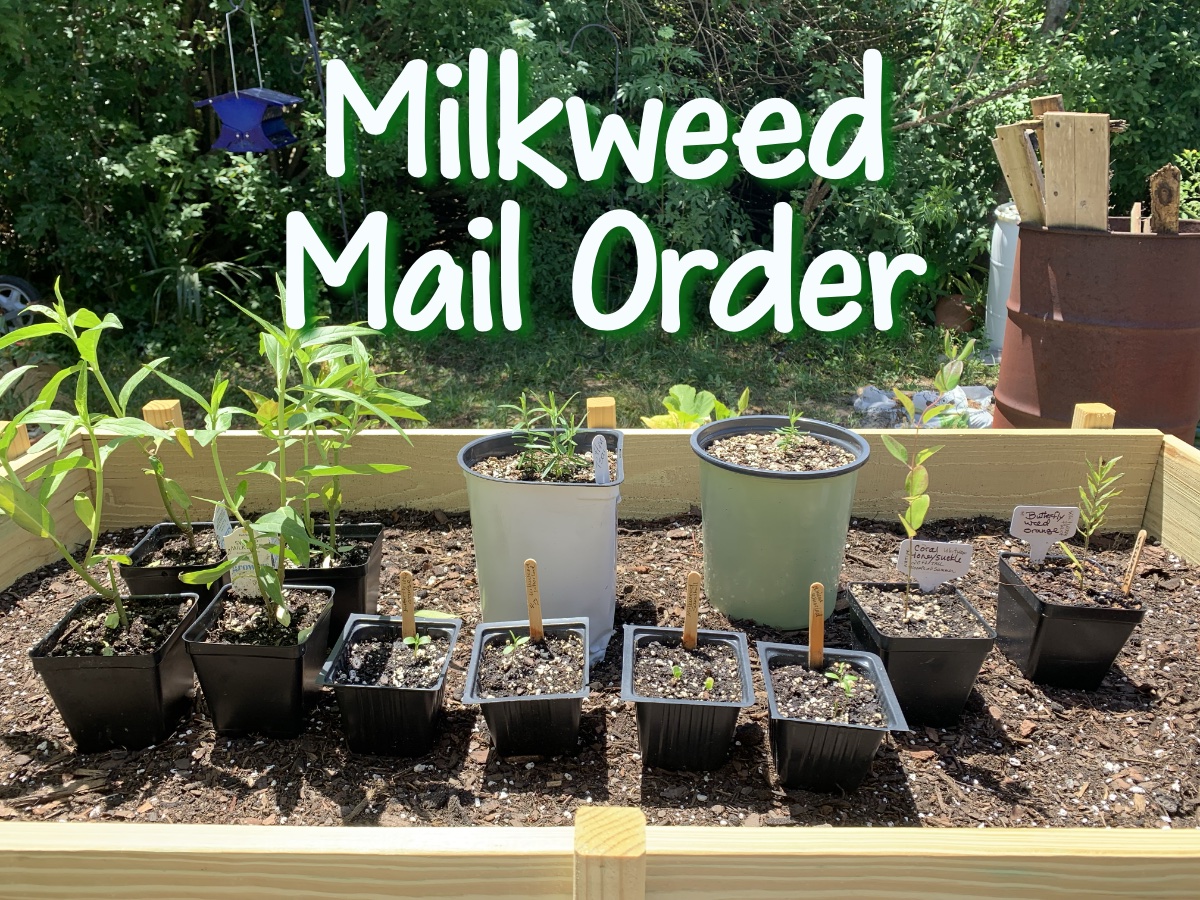
I’ve found a good place to buy milkweed plants online. Ordering plants online can be expensive, so the plants that arrive should be in great shape. Read my review of Whitwam Organics and The Growers Exchange.
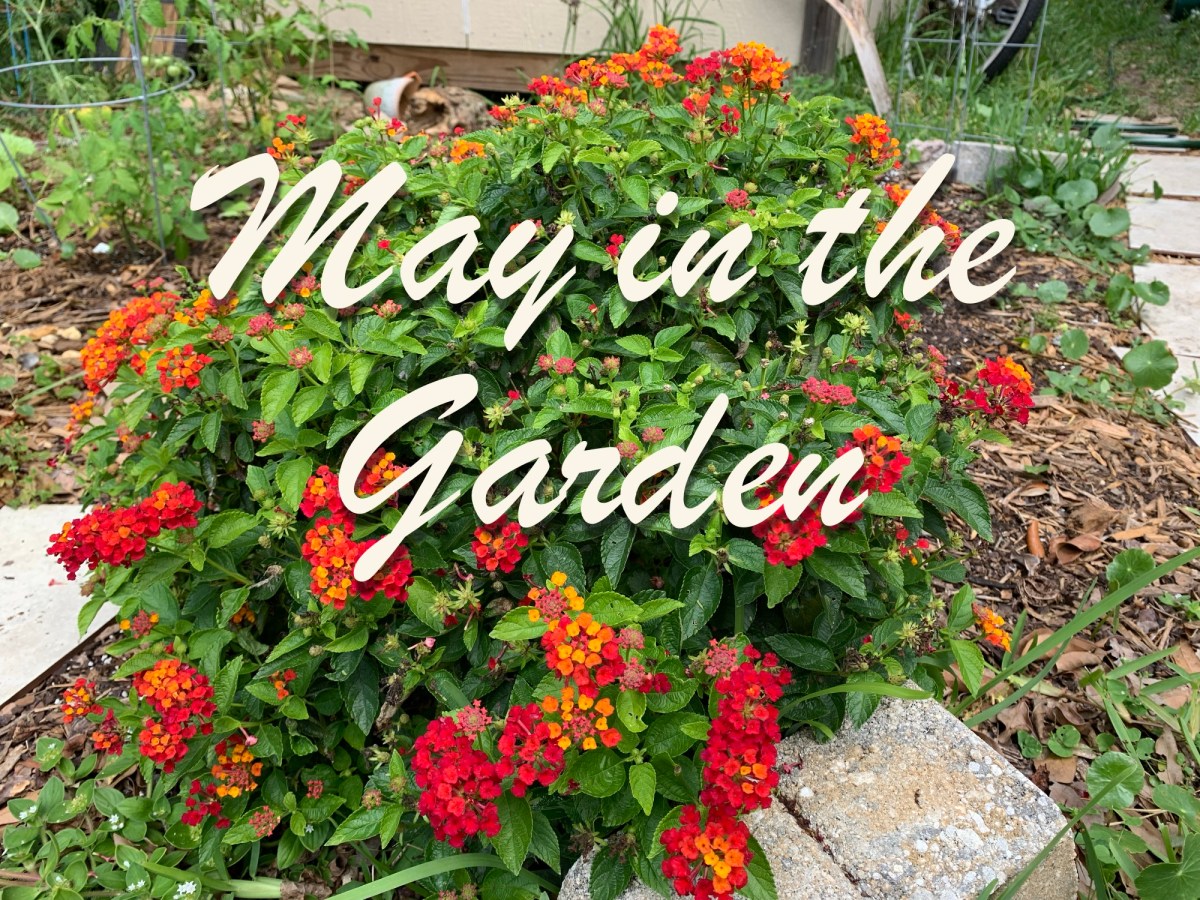
May in the garden is mostly about finalizing the switch from winter crops to summer. This quick post shows photos of some of what I have growing at this time.
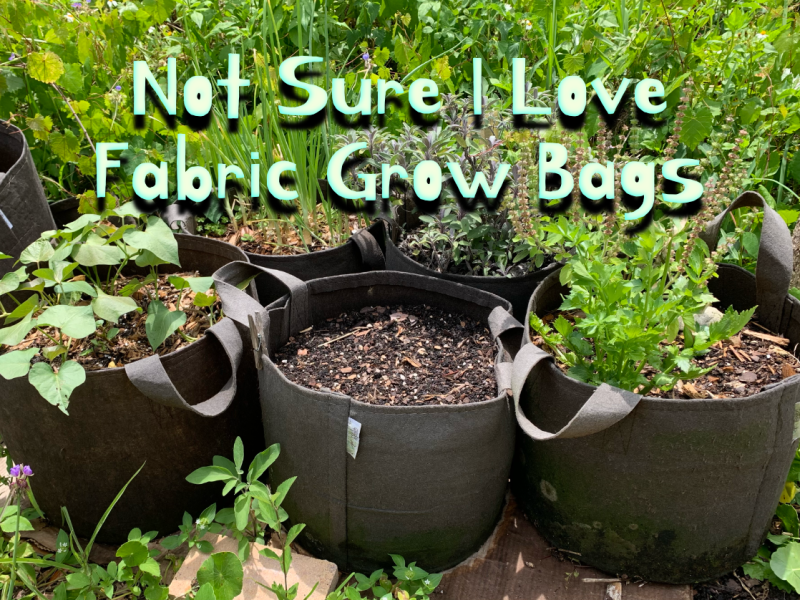
Rethinking my use of fabric grow bags. The Florida climate dries out the plants too fast. Certain shallow root vegetables, grown during winter, might be the answer.
Here’s how to bring along vegetable packets for grilling on a camping trip.
Each time we get read to go camping in our trailer, I create vegetable foil packets to take along.
My son like to grill, so he takes care of bringing the meat. I’m not a big meat-eater, but I always have a small amount. My main dish consists of vegetables.
Creating the Packets
Close to the camping dates, I shop for fresh vegetables like broccoli, cauliflower, asparagus, carrots, potatoes, and onions. I don’t buy all of these, just what looks freshest and is affordable. (I skipped the asparagus as the price was ridiculous!)
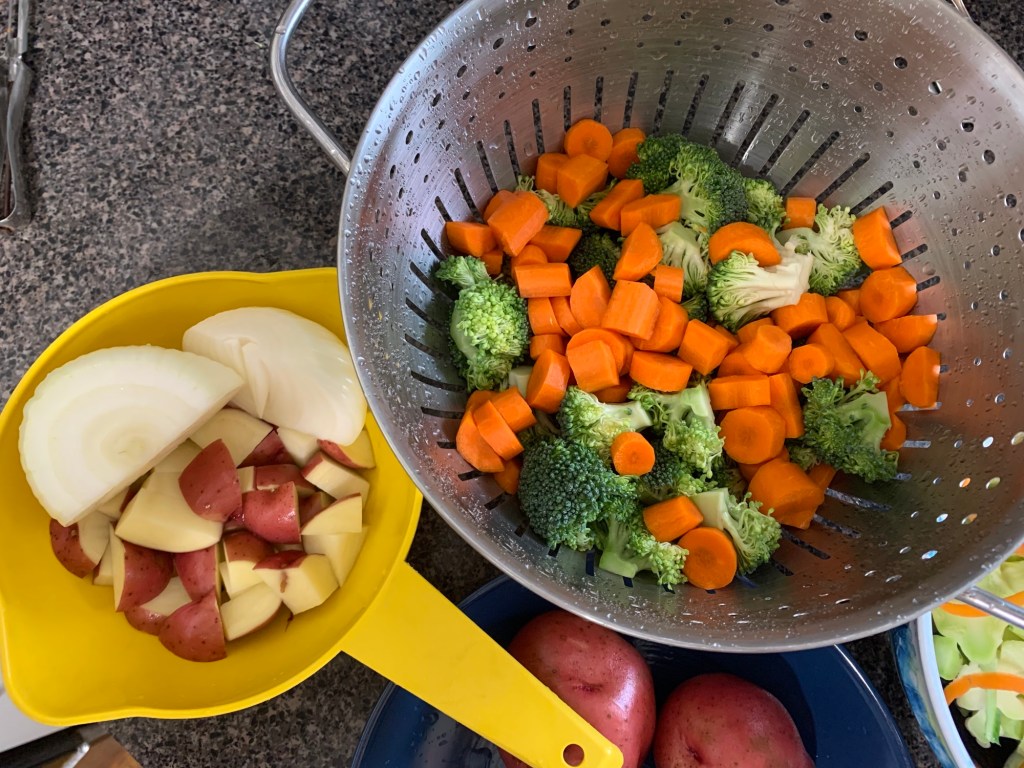
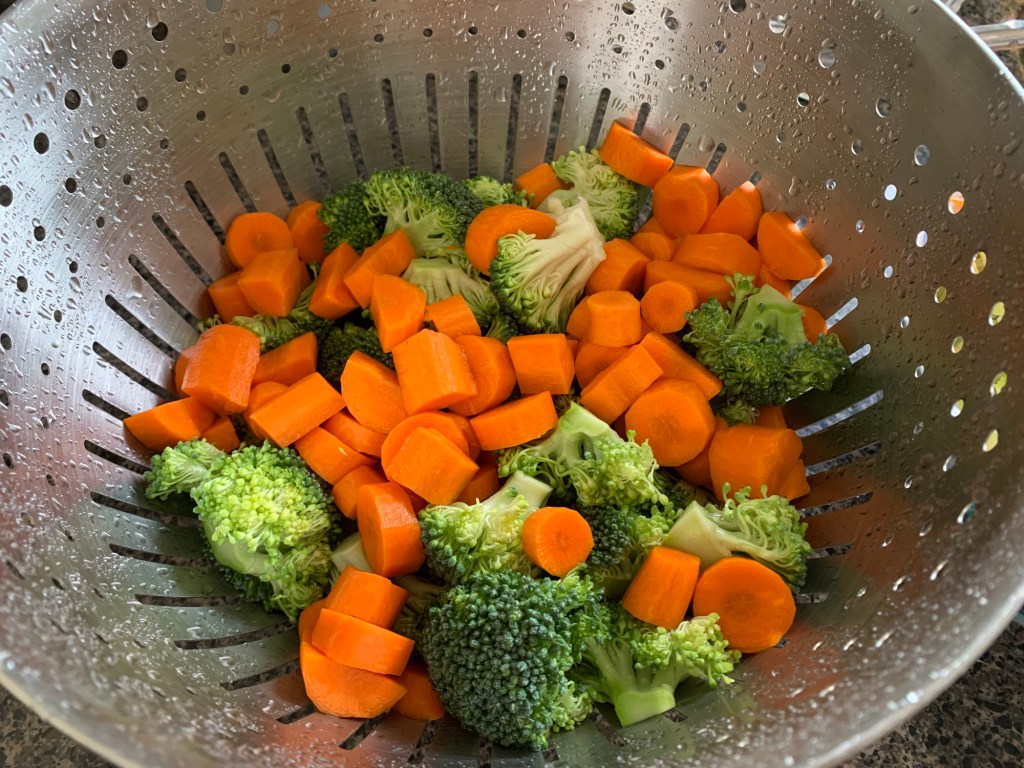
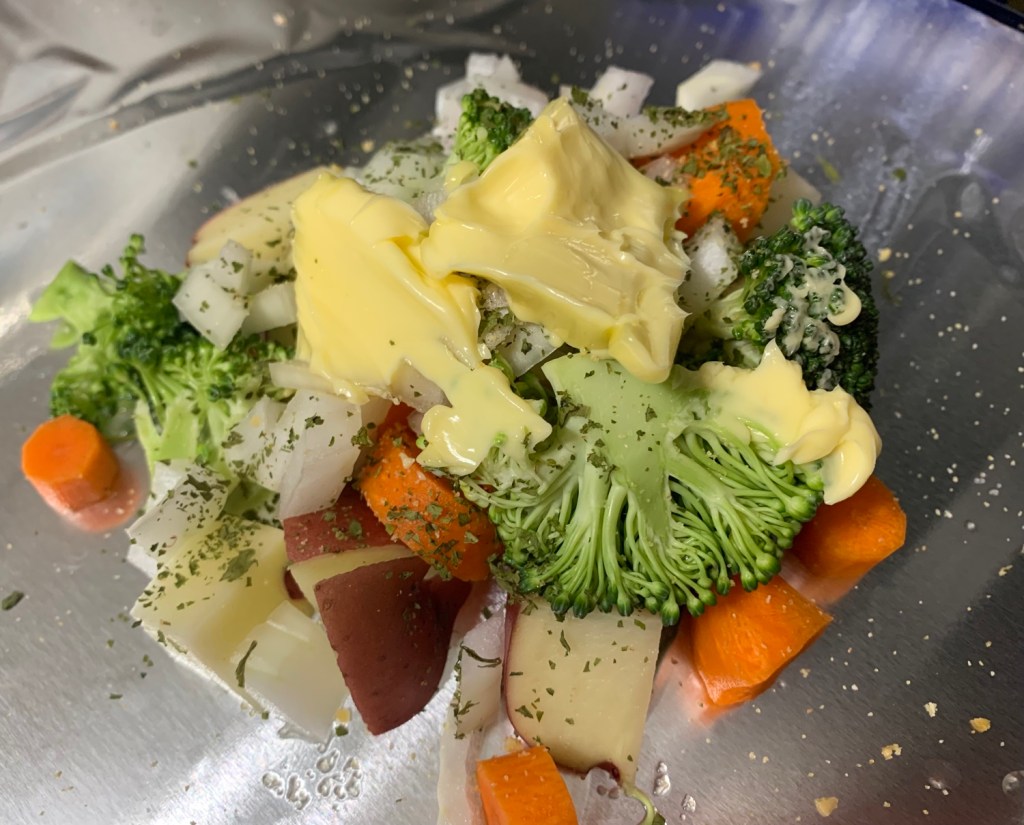
The day before we leave the vegetables are rinsed, chopped and wrapped. Potatoes and carrots will take the longest to cook and need to be cut very small. I add butter and seasoning, like dried parsley and garlic powder. We add our own salt, if needed, after cooking.
Chopping vegetables
Use heavy duty foil, and place a mix of vegetables in the center of a large piece of foil. About a big handful size. Or, separate out the vegetables according to who likes what.
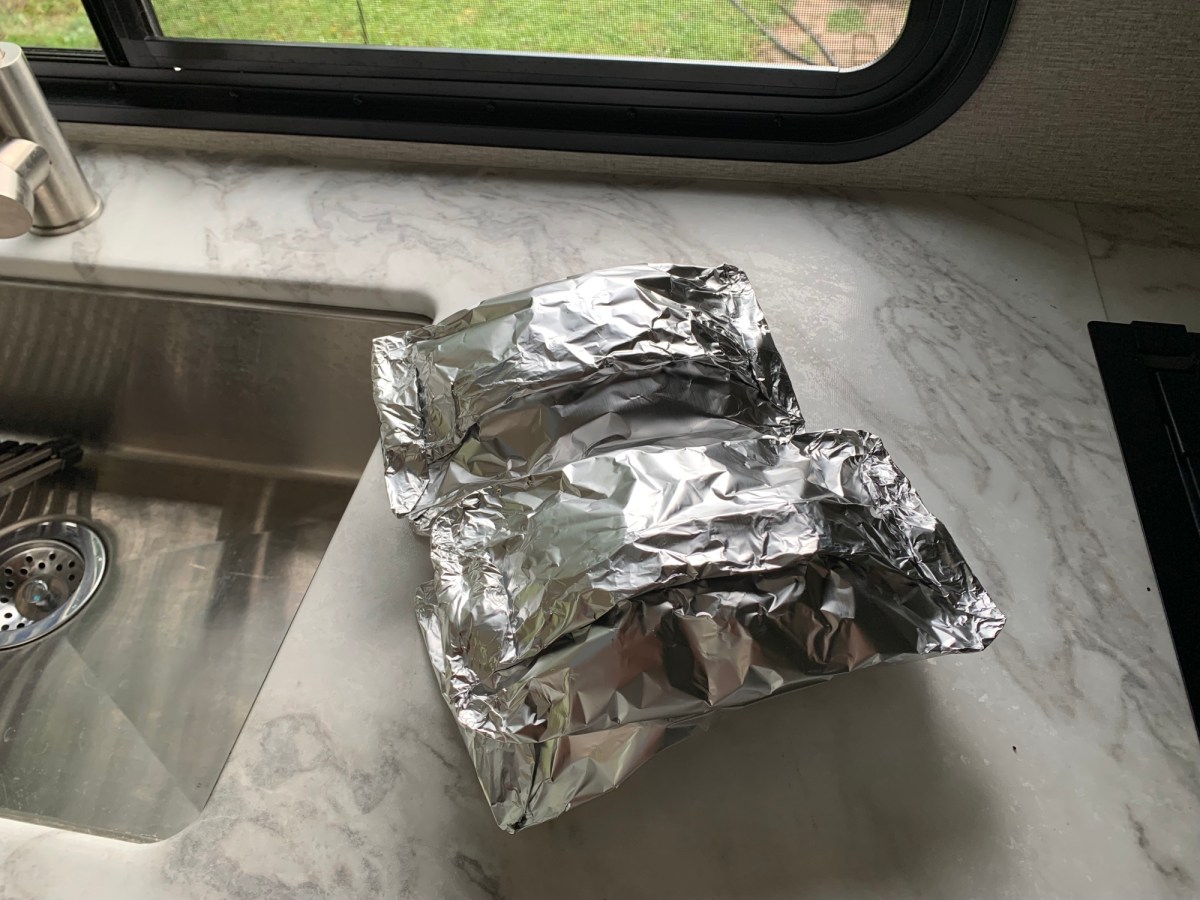
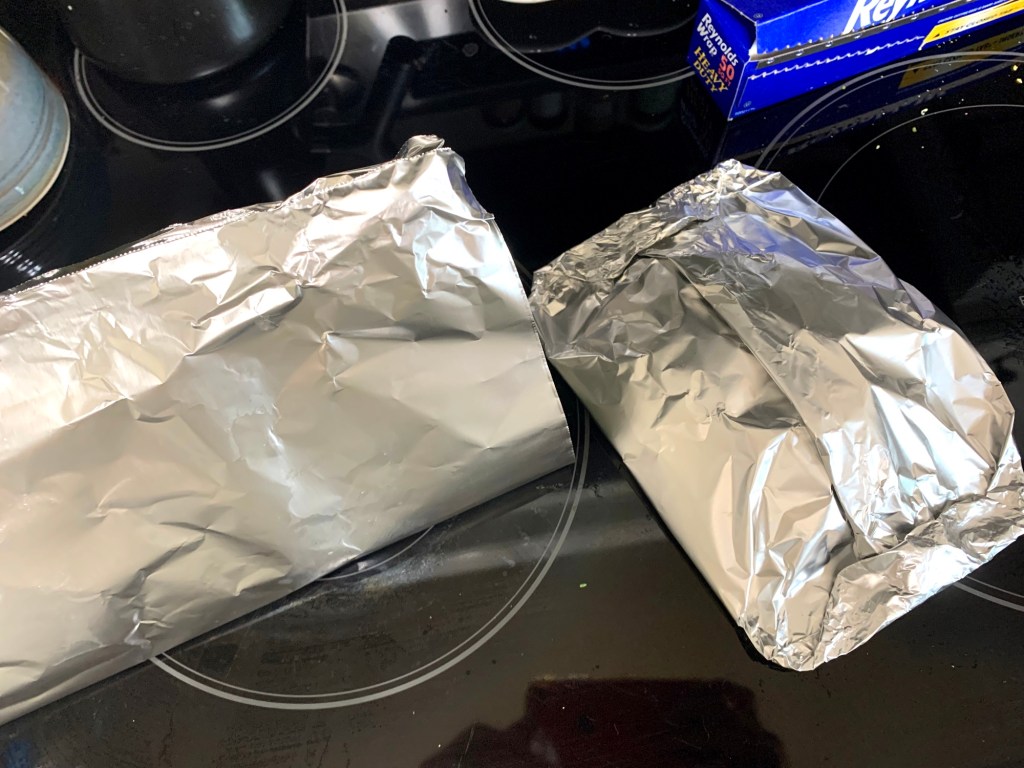
Top with butter, sprinkle with seasonings you like. Wrap the top first by placing the long ends together and folding over and over to the food. Fold each end in like wrapping a gift.
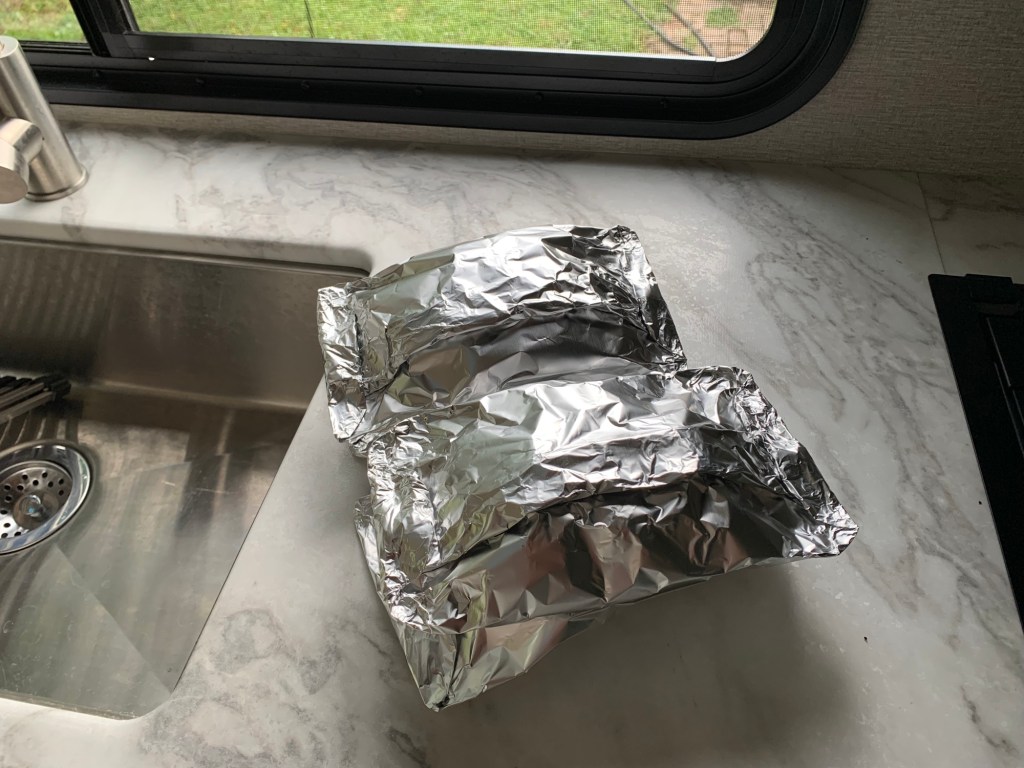
Tightly wrappedVegetable foil packets going into the camper.Camper fridge
I bought a head of cauliflower, four red potatoes, one onion, and about 5 carrots to make 8 packets to take with us.
We grill the foil food for about 30 minutes.
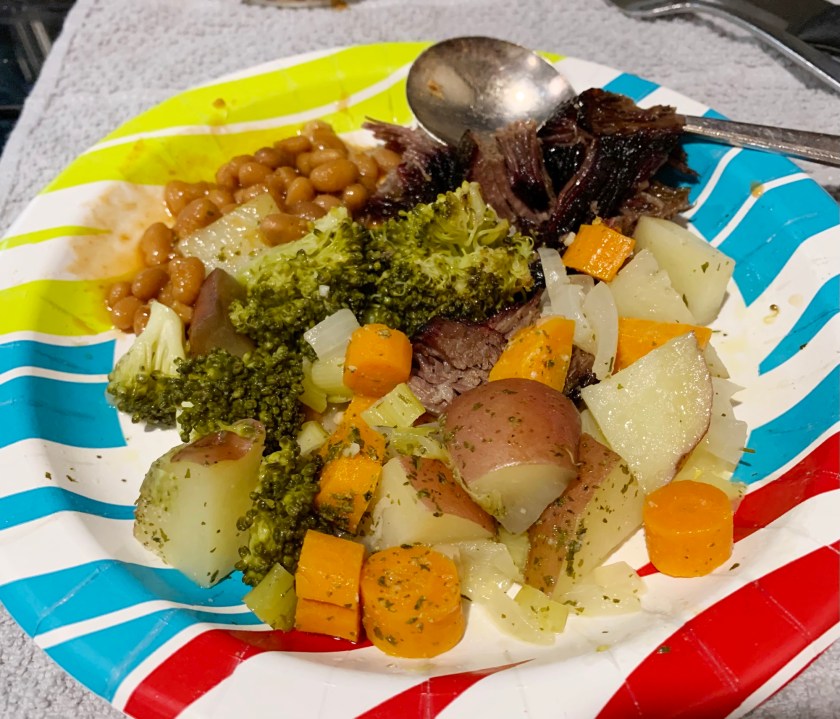
We ate four packets our first night when my son grilled chicken. We cooked the other four packets the second night, and ended up bringing two back home the next day. So, we had plenty.
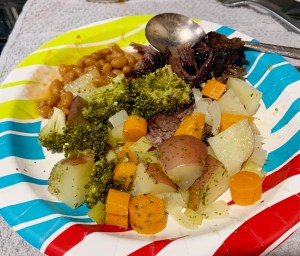
I almost forgot to get a photo of the meal! It’s not ready for a food magazine, but you get the idea.
This is a simple way to continue eating healthy away from home. Camping food doesn’t have to be all bread and cheese and pancakes! I don’t eat like that at home, and I won’t while away.













 Hydrangeas Blue