Sea Plane at the Lake, Fall Photography

I took this photo of a little yellow sea plane one day as I walked along the road where I lived. The water was so flat and smooth and the plane was surrounded by color. I couldn’t resist taking this photo many years ago.

The plane was usually docked at a lake house until winter when it was taken someplace else.  The owner would taxi down the short tributary which led to a small lake.   He used the lake to take off and land.  Occasionally the kids and I would be at the beach on the lake when he came in for a landing.

sea plane fall foliage lake
Sea Plane in Autumn

When I began to work at Zazzle, I used this photo to make a postcard to sell.  Recently it sold to someone in France. It always amazes me to know that something I made, or a photo I took, or drawing I did, could be purchased by anyone in the world.

The sale caused me to revisit this item, which I had pretty much forgotten about. Then I had the idea to share it here.

So, I thought, why not share more Autumn photography? Just because I live in boring Florida doesn’t mean I can’t go back to a time when I had these views for a month, or more, every year.

A Trip Down Memory Lane

This big tree stood in front of a house at the entrance to my small neighborhood.  Each day in Fall I’d watch it turn more and more red.  It was stunning.

fall leaves
Red Tree in the Neighborhood

New Hampshire has a lot of pristine lakes. Some are large – Lake Sunapee is a favorite –  and many others are small. Leaf color usually begins alongside water. I was lucky to live just up the road from a small lake and I walked to it on every nice day. Fall at the lake offers wonderful scenes with brightly colored foliage as the main focus.

orange maple leaves at edge of lake
Brightly colored maple tree at the edge of a New Hampshire lake

All seasons offer their own opportunities for photographers in New England. In Spring I photographed the early blooming flowers, like the Lenton Rose.

Summer gave me the opportunity to photograph my vegetable garden and flowers growing everywhere.

red tree in fall
One tree is bright red and the other hasn’t changed color yet

Fall, of course, is a great time to get awesome photos. I didn’t have to travel far to get lots of great shots.  With different types of deciduous trees changing color at varying times,  the leaf color lasts from mid-September thru the middle of October.

Even the hydrangeas turn color in fall.   Look at the stunning array of blues and greens in this once bright blue hydrangea flower, which is drying on the stem.
View more Hydrangeas in Fall.

blue hydrangea flower in fall
Pretty colors of a fall blue hydrangea flower

And there were two big Burning Bush trees in front of the house, which become bright red in late Autumn.

burning bush
Burning Bush in Fall

Winter can also be a wonderful time to take pictures. My favorite times to get out with the camera were right after (and sometimes during) a snowstorm, when the snow was still stuck to the branches of the trees.   It’s a winter wonderland.  Once the sun begins to warm the snow, and the wind picks up, the snow comes off the trees and the opportunity for shots like this are gone.

snow covered trees right after a snowstorm
Snowstorm Loveliness

The northeastern US has been having some unusually hot weather for the end of September, but hopefully the leaves will be turning soon. I am taking a trip up there and really hope to see some nice color.

My daughter likes to go paddle-boarding so it means we will probably visit some nearby lakes.  Hopefully I will get more foliage shots to add to my collection.

Scallions On The Windowsill and a Hurricane Irma Lesson Learned

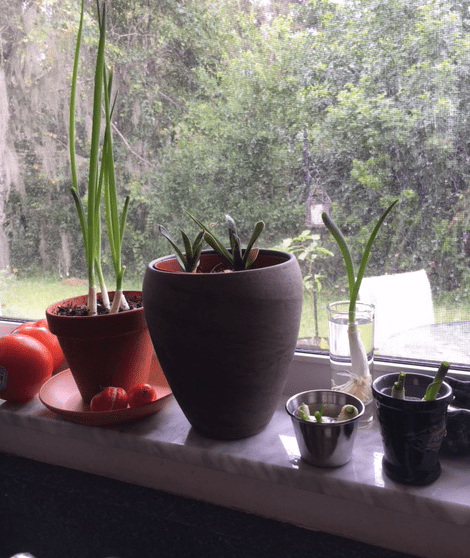
scallions
Scallions in the window

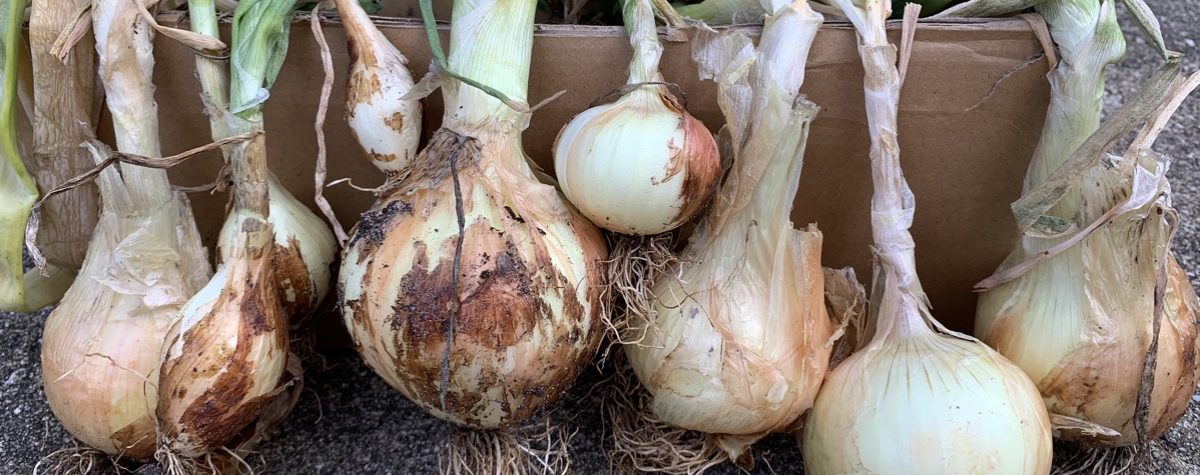
It’s funny how a hurricane can change your way of thinking. I was excited about growing these scallions from the little roots I cut off the ends while cooking. Just put them in dirt, or water, and they shoot up green stalks.

I grew some last year outside and they got huge. I always thought it would be nice to add flavor to food by reaching for herbs growing right in the kitchen.

Over the past months, since I got a new chest freezer, and a new refrigerator with a double freezer in the bottom, I have been freezing little containers of homemade meals. I was excited about having scallions ready to add to my cooking.

Soup is something I enjoy creating because I can add only what I like to eat. That usually means no meat. My homemade soup has no recipe and always ends up a little different, but it’s always packed with fresh, organic vegetables. I never finish it all and usually save at least 2 containers to freeze for later on. I have the freezer space, so that makes sense.
Or so I thought. Hurricane Irma taught me a lesson.
Our power was out for six days. I lost hundreds of dollars worth of food, frozen and refrigerated, including all my extra soup and stew meals that I labored to create from scratch.

We hadn’t had time to even consider adding a generator to our new place. We haven’t even lived here a full year. Money was spent on a new AC system and other necessities. The dishwasher was old, as was the side-by-side fridge. When we moved in here we didn’t even have a couch to sit on – we used lawn chairs!

When we saw that Irma was going to hit us, we figured it wouldn’t be that bad – and it wasn’t – but for some reason my little section of the neighborhood never got power back for many days. Across the street they had it on day two. We had to wait six.  After day three, I knew the food wasn’t going to make it.

We were always searching for ice which was a rare commodity in this heat. We weren’t the only ones without power. (Thankfully my son is a firefighter and could bring ice from work). For days I dug through coolers searching for food. It’s not easy to find anything in a big cooler.

I stayed soaked in sweat day and night from the humidity. Without a generator we couldn’t run anything – fans would have been so helpful. I had a tiny battery operated fan that I set on my bed next to my head at night.

Finally on day 5 we found one generator (Yes, there was only one) at the local Home Depot. We hooked it up, started up the fridge, and ran fans at night. The next day, a little after noon, the power came on, but it was too late to save the food, or my sanity.

Now that the garbage disposal worked, I could dump all my delicious soups down the drain. All that work and money. Shopping, chopping, cooking, packing… for what? I am a changed person.

Some lessons are hard to learn, but I do learn. Even though we now have a generator and that should mean we will not lose food again, I don’t know if I will ever believe it.  I will do things differently from here on out.

What I’ve Learned From Growing a Lime Tree

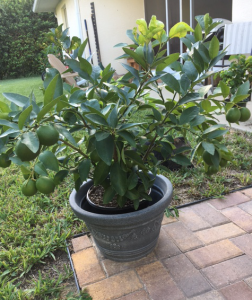
lime tree growing in a pot
My Persian Lime Tree – August 2017

Gardening and growing things here in Florida is an ongoing learning process for me. Last November I bought a Persian lime tree and a Meyer lemon tree to put in my yard. I knew nothing about growing either type of tree but I hoped to pick fresh fruit one day.

That day has arrived! So here’s what I have learned from growing a lime tree. And it’s good news for anyone considering growing a lime tree in a pot. (The lemon tree isn’t doing so well, but I’ll get to that later.)

Flowers to Fruit Timeline

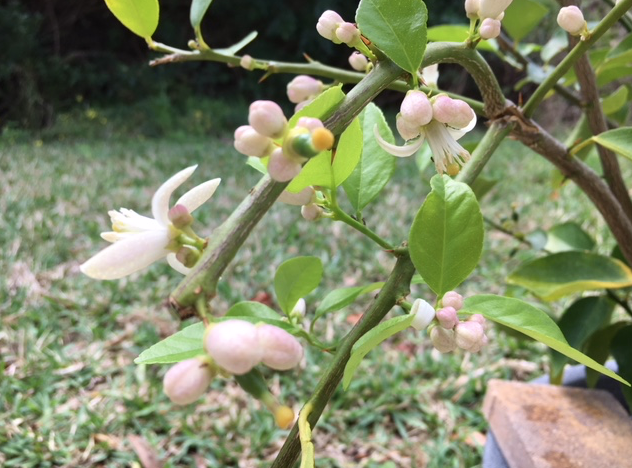
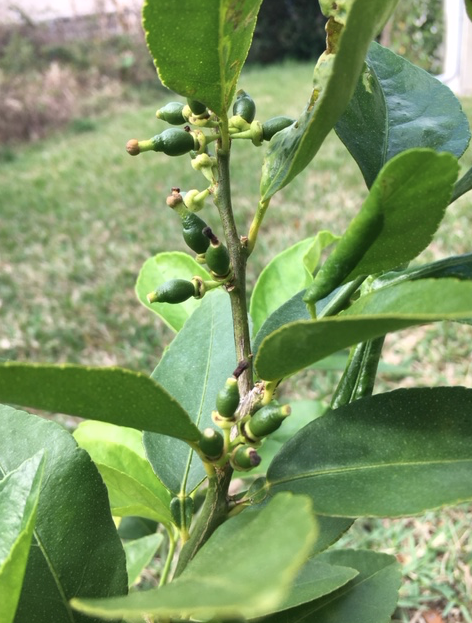
Buds and flowers begin showing up in December and continue to flower and set fruit into February.

lime tree flowers
Buds and flowers on the Lime tree in February


There are buds, flowers and little limes on the tree at the same time. I even have one lone big lime still hanging on from the previous Fall.

little limes
Setting fruit – little limes on the tree in February

By October the limes should be ready to eat. They will last for a couple of months, and I pick them as needed so they are nice and fresh – and delicious!

Once the fruit is gone, the buds begin again. So the tree is always doing something.

sliced lime
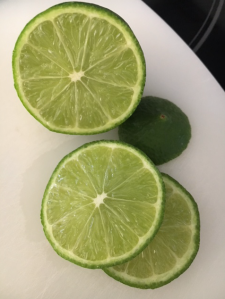
My first lime!

A few days ago I picked my first lime! I sliced it and put it into my glass of water… and boy was it good! I love limes… what awesome flavor. I had really been hoping for lemons, but I think I like limes more. It reminded me of the Mojitos I’ve had – but without the booze. The lime I picked was small, but juicy. I won’t go nuts picking all the fruit, but I will definitely be using the larger limes.

I had wondered when to pick my limes and I simply waited for them to be the size of the ones I see at the grocery store.  The time from flowering to picking was about 6 months.  It is so worth the wait!

Benefits of Growing Limes in a Pot

I kept the lime tree in it’s pot and set it on the corner of the patio in my backyard. I have read that these smaller citrus trees can be grown in pots. In fact they can be purchased through Amazon. This is something I never knew, and the buyers leave very good reviews. They won’t ship to some areas – like the places that can grow and sell their own trees, it seems. Florida is one.

One of the big advantages of growing in pots is the ability to move the plant / tree. Over winter it did get very cold one or two nights and I brought the tree inside. The Persian Lime tree is hardy to zone 10 and I am in zone 9b – a little too far north. When the temps get at, or below, freezing it needs to be covered or moved inside.

Besides the fact that a lime tree can do well and bear fruit while still in it’s original pot, I’ve learned that being in a pot means the fruit-laden branches won’t hit the ground.

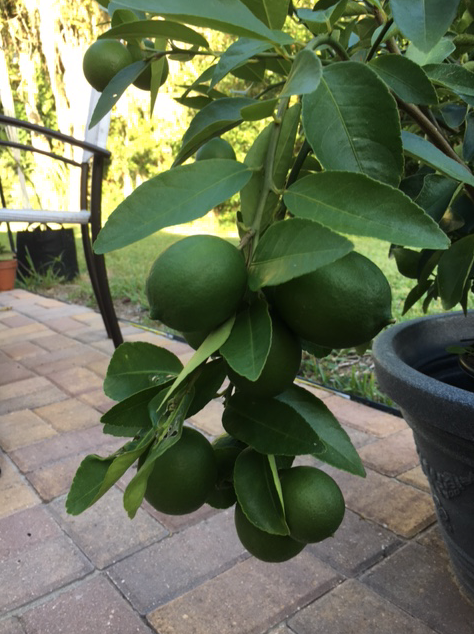
This is the trouble I am having with the lemon tree. Once the heavy fruit began to grow, the branches drooped considerably. As you can see in my photo, many limes are growing in a cluster at the end of this branch which weighs it down.

If this tree was in the ground, this branch would be rubbing along the dirt – and in danger of being hit by the mower or weed-eater.

limes on the branch
Cluster of Limes

The Lemon Tree is Not Very Pretty

Shortly after I planted the lemon tree in the ground, I realized that my dream of having a row of citrus trees along the front of the house was unrealistic. The north wind blows from that direction and it can get very windy some days. I’m not saying it’s cold, I am in Florida, but the constant wind on the Lemon tree has been detrimental to it’s growth.  Between that and being hit by my son’s weed-eating job, the poor lemon tree is having a hard time.  I also think something may be eating the branches.  I may not have any edible lemons.

*Update, I recently dug up the lemon tree and it’s now growing in a pot out back near the lime.

How to Care for Citrus Trees

Both trees receive citrus fertilizer every few months, except in winter. Fertilizing stops in November and begins again in March. This is according to the pamphlet I got at the plant nursery.

Here in Florida, if it doesn’t rain, everything needs to be watered daily in summer. I usually water the Lime tree twice a day. Being in a pot, out in the sun, means it will dry out faster. This changes in winter, when it needs less water. The leaves began to turn yellow and fall off because I watered it too much. Watering every few days in winter (Florida) is fine.

I did have to set the potted tree inside a larger plastic pot and weigh it down with leftover bricks from building our patio. I had to do this because once the fruit began to grow the tree was top heavy and would blow over whenever the soil dried out.

In a Nutshell

I bought my Persian Lime tree in November 2016 from a local nursery for $12.99. It immediately began to grow longer stems and more leaves.   Maybe it was the direct sunlight compared to the nursery conditions, but the tree doubled in size!

A few months later it began to flower profusely and set many limes. Lots of those fell off, leaving the larger ones to continue to grow. Don’t worry if lots of the small limes fall from the tree. The tree seems to know just how many limes it can handle! Many will stay and continue to grow.

I picked one lime, and there are 28 limes left on the branches (I just went out and counted them). I see a few very tiny limes growing also, but they may fall off. Not a bad first harvest!

fresh limes in water
Refreshing…. Fresh lime water.

Non-Producing Vegetable Plants Can Still Serve a Purpose

In the heat of the Florida summer months, I have done little gardening. But the plants I began growing in Spring, are continuing to grow. Even though I am not getting much, if any, produce from them, they serve a purpose. They can be food for worms; give bugs a place to crawl, which in turn feeds the birds, (mostly, I have cardinals); and provide a playground for the lizards.

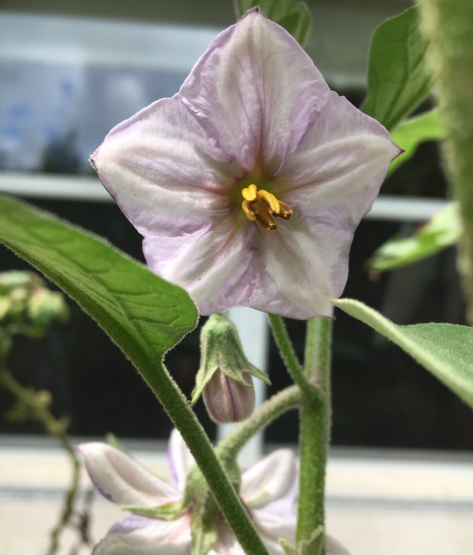
The two eggplant plants I have in the garden have grown tall. They have continued to produce pretty purple flowers, but have never given me a single eggplant!  It’s either the poor soil, or the heat, or both.

Eggplant flower
Purple Flower of the Eggplant

The plants themselves are interesting with their big leaves. I have trouble tearing up and throwing out a perfectly healthy plant, even if it’s not giving me the food I’d hoped for.

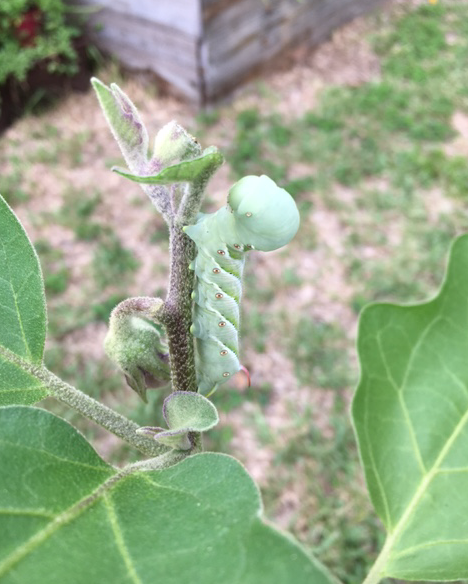
I’m glad I left the eggplants growing, and continued to give them water, just because I couldn’t NOT do so.   I noticed missing leaves and found a big, juicy, tomato hornworm chowing down on the leaves. The hornworm can eat a tremendous amount, and it’s apparent they have arrived when you notice entire leaves missing on the tomato plants!  Stalks can become completely bare in a matter of a days time.

tomato hornworm eating eggplant
Tomato Hornworm on Eggplant

One summer I was visiting my sister in Massachusetts, and she said that something was eating her tomato leaves. Sure enough, there it was – a big green worm. So I pointed it out to her!  She was astonished, but hadn’t looked close enough to see the worm.

Tomato hornworms often show up near the end of summer – at least in the north, that was how it happened in my garden. The one eating my eggplant here in Florida was lucky. I did not care that he was destroying the plant, it was useless to me anyway.  He ate and ate and grew bigger over the course of about 2 days.

I find these pretty green worms quite interesting.  Often, a wasp of some kind lays it’s eggs on the worm, which kills it.  There were no eggs on this guy.  He was doing quite well for himself.

Then he was gone… eaten by a bird maybe? I don’t know. Most of the eggplant’s leaves had been eaten by then, and I felt like I had given him a meal at the very least.  If the worm lives, it becomes the Sphinx Moth.

Most gardeners don’t allow the hornworm to live… it is too detrimental to vegetable plants, like the tomato, eggplant, pepper, and potato plants, as you can see in my photo below!

Bare eggplant after tomato worm ate leaves
Bare eggplant after tomato worm ate the leaves

On to the parsley worms.

In the North, I always grew parsley, and it lasted well into the winter months. But eventually, it did die.  Deer used to come into my backyard and nose through the snow looking for greens to eat, and sure enough, they would find the parsley still going strong at the beginning of winter.

Since I’ve been in Florida – over a year now – the parsley I planted last summer is still growing fine! I use it daily in my omelets, salads, and other home-cooked food.

The parsley is planted in two separate containers, and I’ve noticed that both areas have parsley worms munching on the leaves.  They will turn into Black Swallowtail Butterflies. One has already made a cocoon.

So the plants that are simply growing for … what, fun? in my garden have served a useful purpose to help nature continue.  Whether the worms change into butterflies or are food for the birds, it’s all nature doing it’s thing.

parsley worms
Parsley Worms Become Black Swallowtail Butterflies

Read my page, with my photos, about the Swallowtail Butterflies that come from these worms.

A Trip to Pell’s Plant Nursery For Honey and Fruit

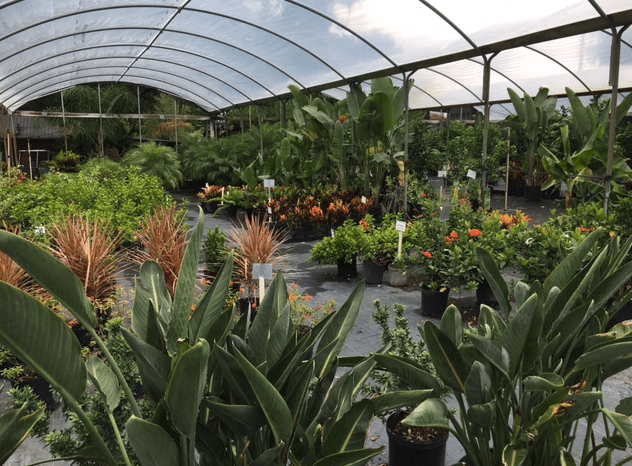
A few weeks ago I had to take my car to the dealership which was quite a drive. On the way home, I realized I would be passing near one of my old-time favorite spots in Florida: Pell’s Plant Nursery.

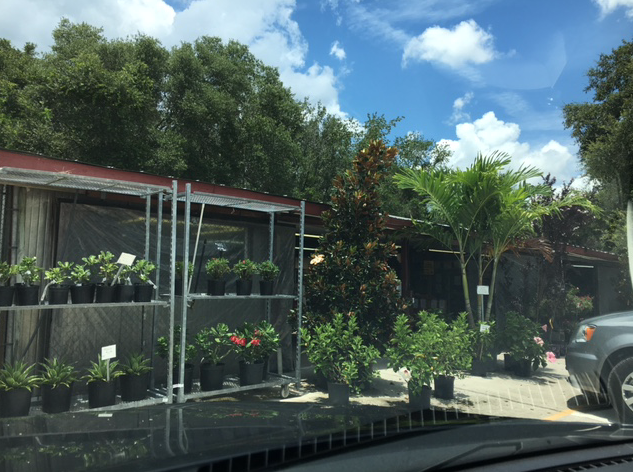
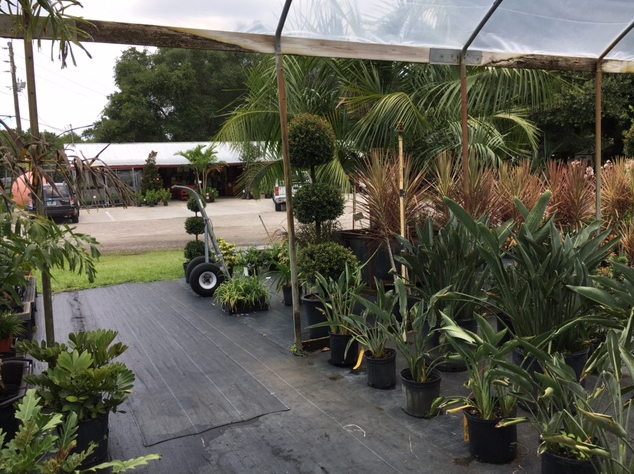
These photos were an afterthought, but I wanted to share the few I took.

If you are ever in the Osteen area check out this place. It is a Florida icon. The Pell family has been growing citrus for over 75 years.  (Their website: http://www.pellcitrus.com has Florida citrus shipping information.)

Pell's nursery
Pell’s Plant Nursery

For many years I lived very close to Pell’s, and now I don’t. It’s where I always bought my ornamental shrubs, flowers and trees, not to mention their fabulous and fresh Florida fruit. My landscape was full of plants purchased from this nursery.   My kids used to enjoy getting the free little cup of orange juice, which meant they would actually drink the jugs of fresh-squeezed juice I bought there!  You can’t find fresher juice, and boy is it good.

These knowledgable growers hand out good advice for growing anything tropical.   This is where I came to buy the new lemon tree and lime tree to put in my yard.

Pell's trees and tropical plants
Under cover with tropical plants at Pell’s

On this day, I was only looking – window shopping for plants to buy in the future – its been too hot to think about planting.  I bought some of their produce instead, but enjoyed my stroll around the greenhouse.

Each time I visit I also buy some Mosquito Lagoon honey. My honey used to come from the Jurss homestead, when I could pull up at the side of the road, drop money into a box and grab a jar.   That was in the old days.  People probably can’t be trusted to do that here now.

greenhouse Florida
Pell’s Greenhouse

I looked around and got some ideas about what I’d like to add to the yard once Fall arrives.  The crepe myrtle is something I have always loved, and it will probably be the first tree I buy.
Pell’s nursery is one of the few places I like to visit in Florida.  In fact, when I lived in New Hampshire I would accidentally call my favorite farm stand “Pell’s”.  (Actually it was Tenney’s.)

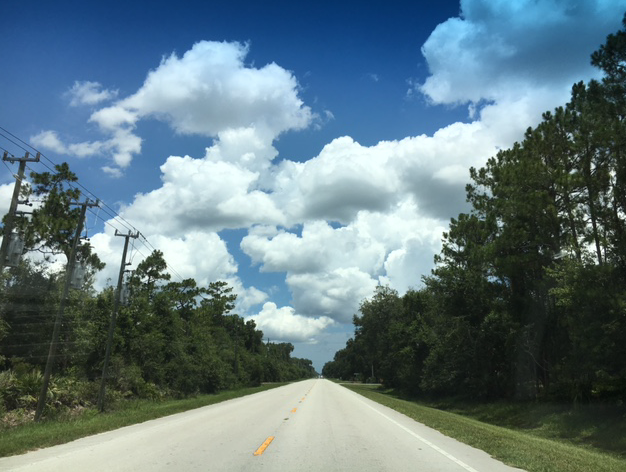
Then I drove home on those long, straight, monotonous Florida roadways.  I was so bored that I took a few photos with my phone.

straight road and blue sky
Heading home

Pictures of Croton Leaves

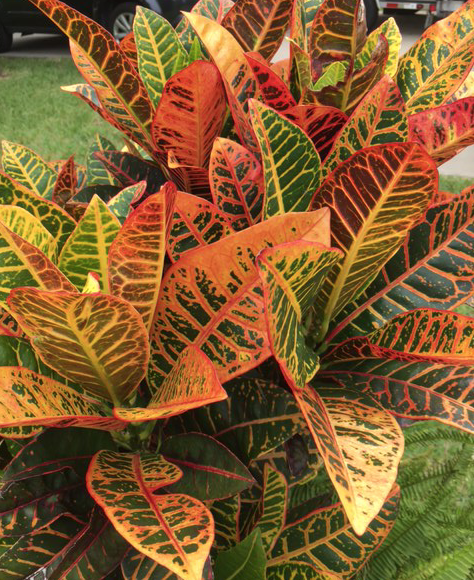
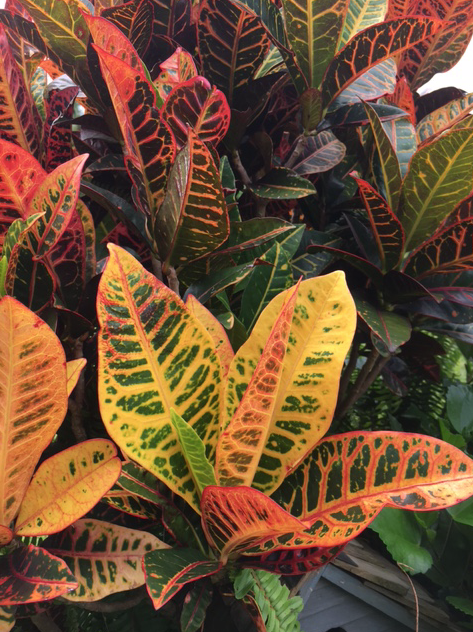
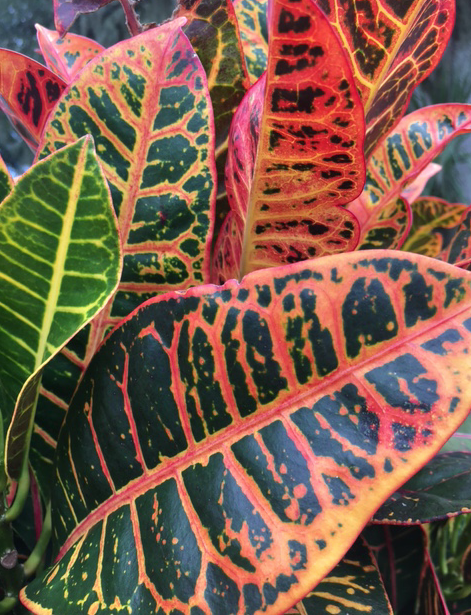
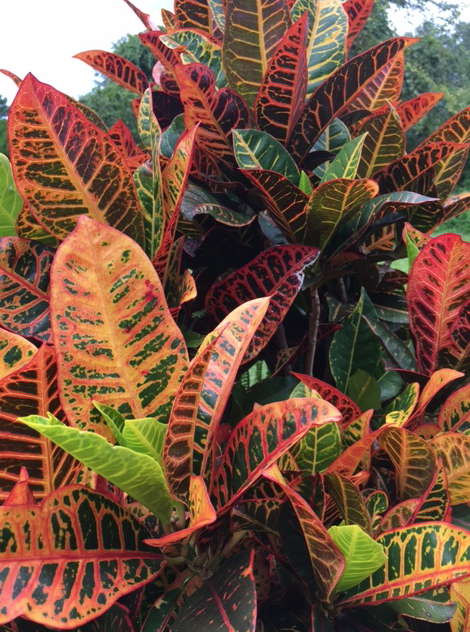
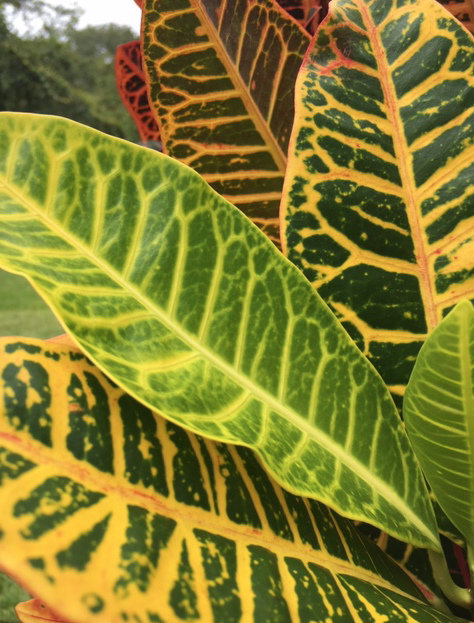
The leaves of the croton are really stunning.  They are as pretty as any flower, and come in such an array of colors, that they can brighten any landscape, as long as it’s subtropical.

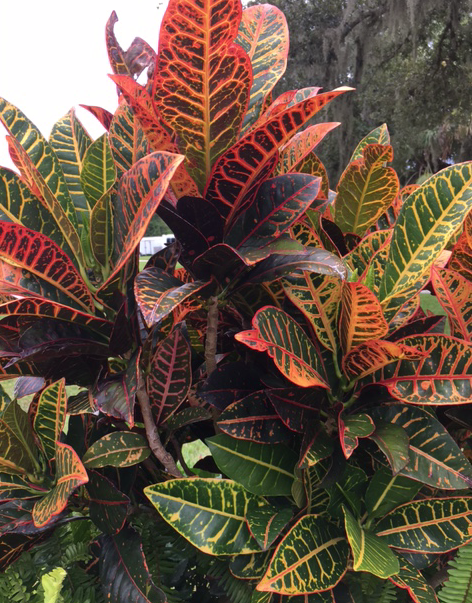
Crotons don’t handle cold well, with established, older plants handling it best.  I live in climate zone 9 and have this big croton plant in my yard.  I have no idea how long it’s been there, but I did not cover it at all last winter.

Then again, last winter in Florida was not all that cold.

colorful croton leaves
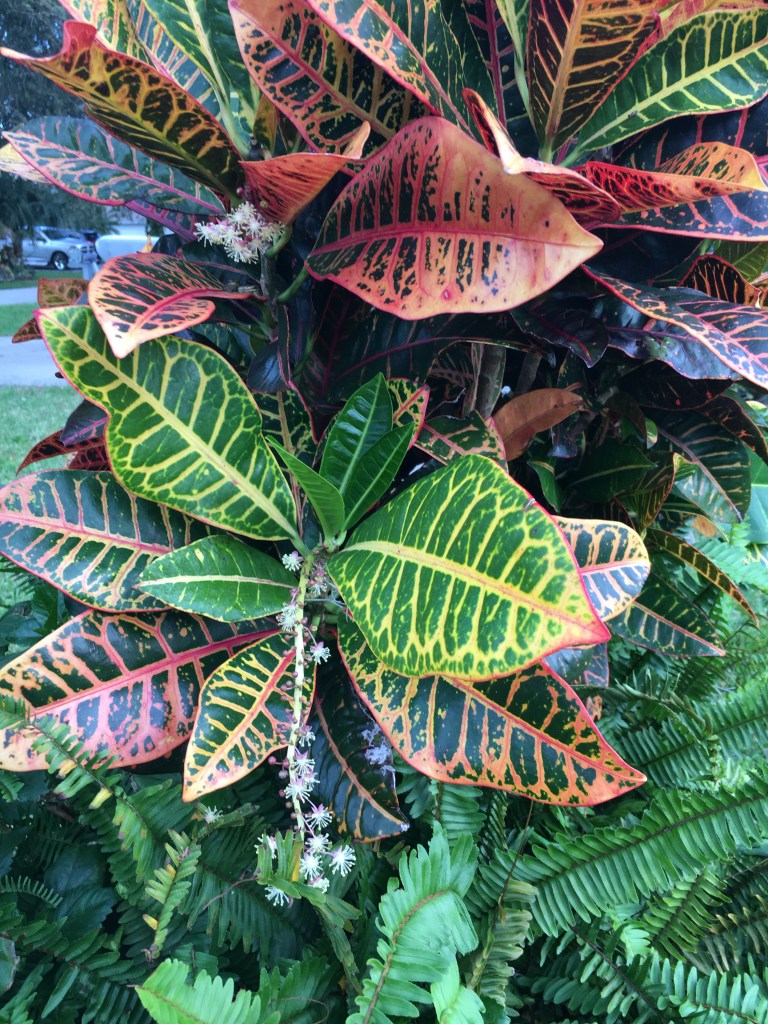
My croton is in a big pot with ferns and a red hibiscus bush… also a birdhouse is stuck within the branches.

Recently I went out in my yard and took some photos of the croton leaves and wanted to share them with you.

The croton is also easy to propagate.

colorful croton leaves
The color combinations are so beautiful
colorful croton leaves
Pink leaves… where else can you see this?

If you are looking for brightly colored plants for your Florida, or tropical, landscape, check out the Cordyline plant and Caladium.

colorful croton leaves
The bright reds can become dark purple as the leaves age
colorful croton leaves
This croton has been growing for years, I imagine
colorful croton leaves
Even the yellow and green leaves are outstanding

For those of you who do not live in a warm climate, the croton can grow indoors. I’ve never done that, but you can search the internet for helpful advice on doing so.

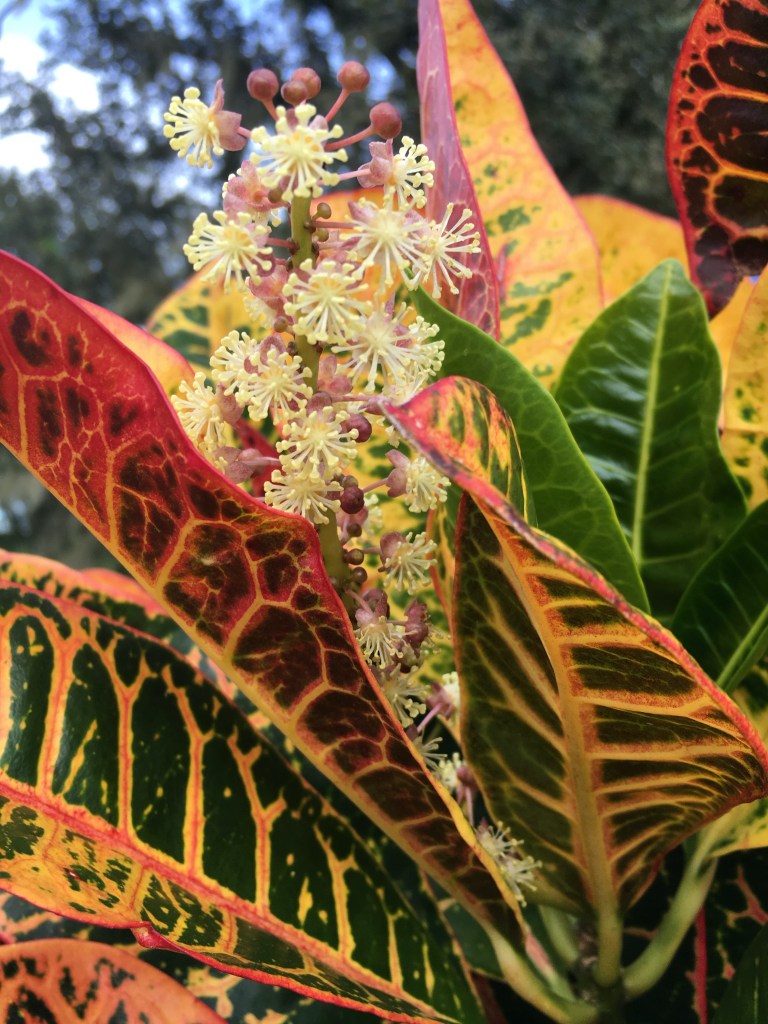
Colorful croton plant with flowers
Croton with stems of flowers
Flowering croton plant

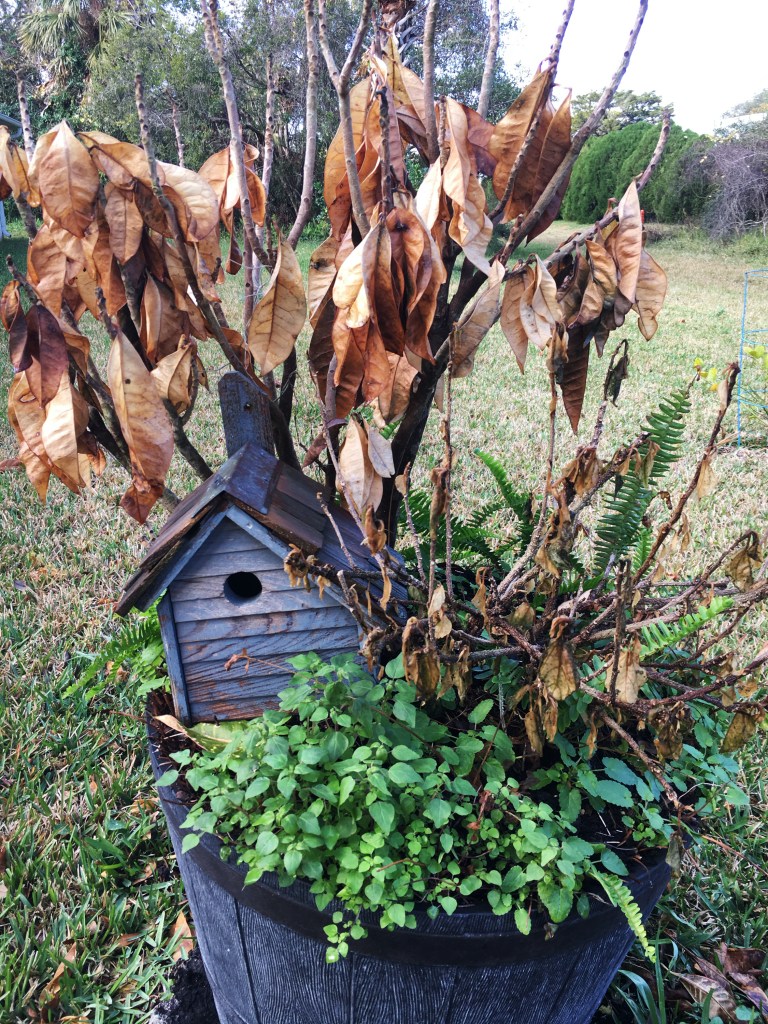
My big beautiful croton died over winter when we had exceptionally cold weather. But… I had taken cuttings and begun new plants so it lives on through it’s “babies”.

dead croton from winter freeze
Croton dead from winter freeze