Expect to Pay A Bundle For Large (Older) Hydrangea Plants

I’ve found that online shipping services will ship small shrubs at a relatively cheap price.   But if you want a big plant, head to the bank because you will pay lots for larger hydrangea plants.

If you’ve never ordered perennials online, you might be very surprised at what arrives on the truck. Because of the stress on the plants during shipping, the plants will be mostly dormant and without flowers – some may be just roots and not potted. In fact they could look pretty dead to you, but don’t worry, if you follow the instructions included, they will perk up once they are in the ground where they should be happy.

I’ve ordered plants other than hydrangeas, so this will be my first try. I ordered an “All Summer Beauty” hydrangea from American Meadows who says that shipping will be the week of September 19th for my area. It’s costing me $9.98 and will come in a 4 inch pot. They say I will get an e-mail telling me when to expect it.

If you are looking for the chance to choose from a huge variety of hydrangeas to purchase, check out Hydrangeas Plus.  You can search by planting zone, size (age), container flowers, biggest blooms and other.  I’ve never bought anything from them, but it looks like a promising site.

They sell hydrangea plants as “1 Year” “2 Year” and “3 Year”. Their one year, All Summer Beauty was out of stock, so I couldn’t check the price, but some of their two year blues were “$18.95. the three year old plants in blue (that were available) were priced around $39.95. In their FAQ section they explain what the age difference means and what to expect from each. (Check out the timeline photos of mine below.)

April 2010 Photo

Here are the photos from 2010 and 2011 of a new little hydrangea that I propagated from a large shrub in the yard at my old rental place.
I don’t have a picture of when it was first planted in 2009, but I cut it from a large plant where it had rooted itself from a branch hanging near the ground.
These pictures show it’s growth in the first Spring (2010) up to this summer (2011) just before I moved out.

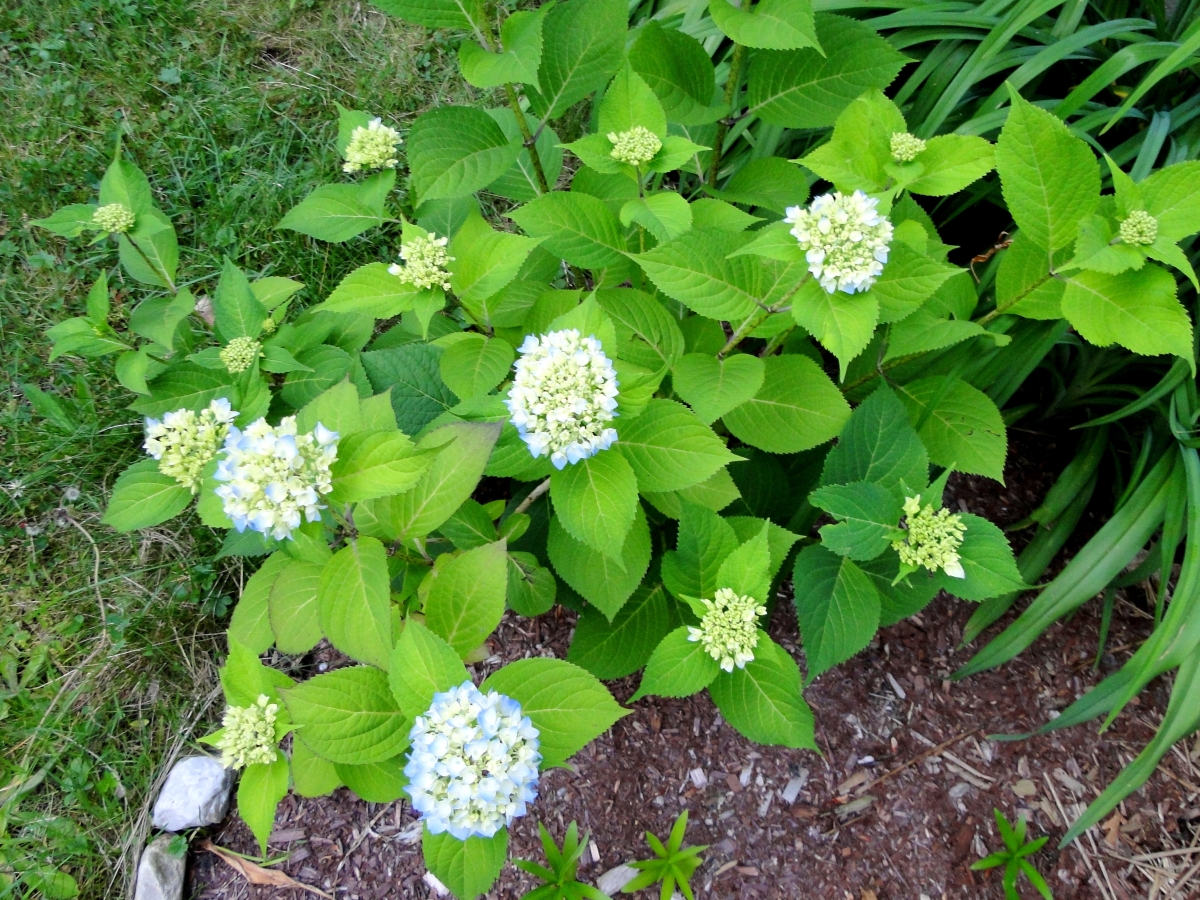
small hydrangea plant
Summer 2010 Photo

There were no blooms during it’s first year in the new spot near the steps. Only two long stalks developed and I suspect that the roots were getting established.

hydrangea shrub with blue flowers
July 2011 Photo

Then, this summer, lots of growth appeared and bunches of small, light blue flowers.

Read more about the new “baby” hydrangea that I grew at my old rental house.

More Pictures of Blue Hydrangeas

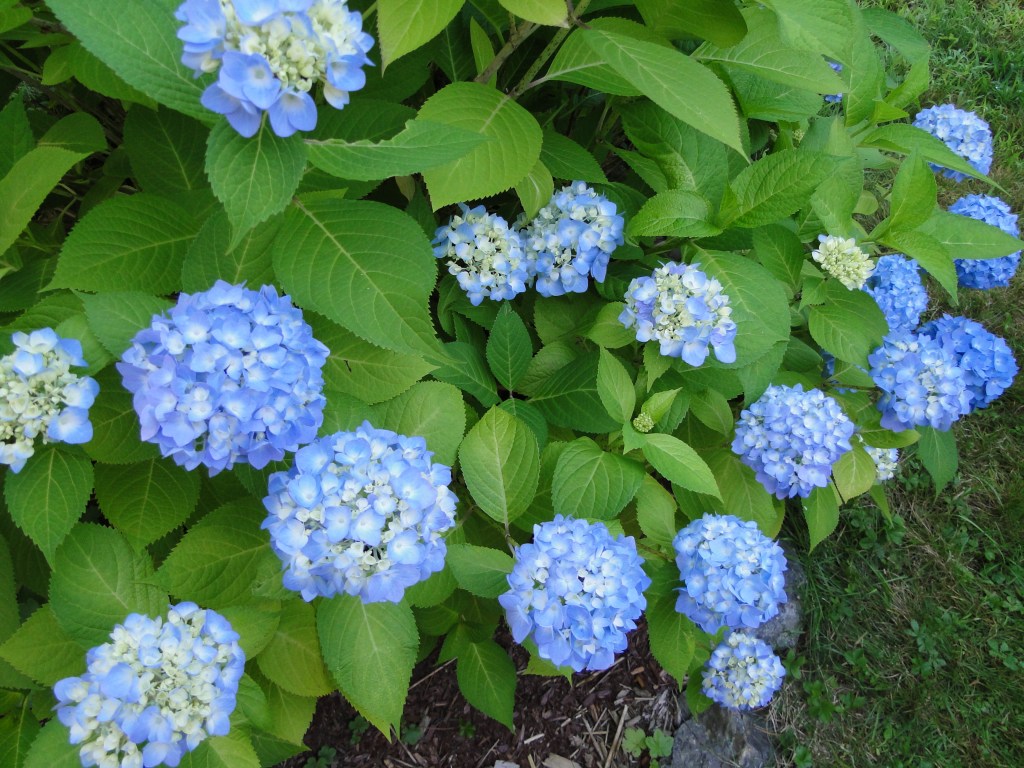
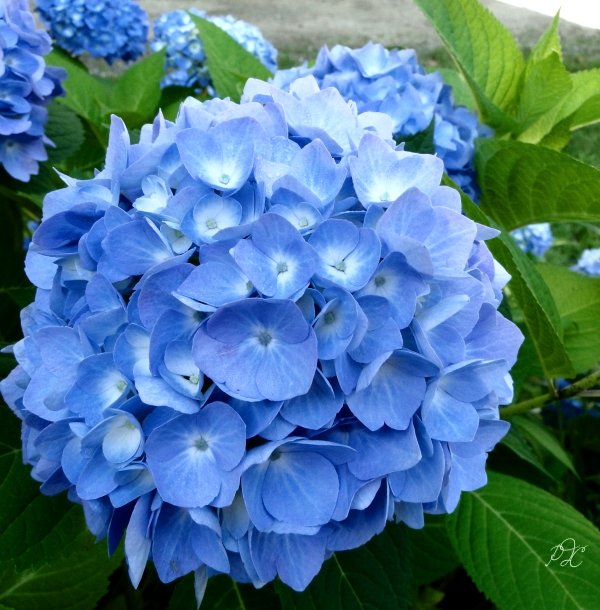
Photography of pretty blue hydrangea flowers growing on the shrub.

I am looking forward to growing my own hydrangeas, now that I have my own home. My only experience has been in the yard at my rental house, where I was less than enthusiastic about gardening.  However, that is where I discovered my love for the hydrangea shrub and the beautiful blue flowers it produces.
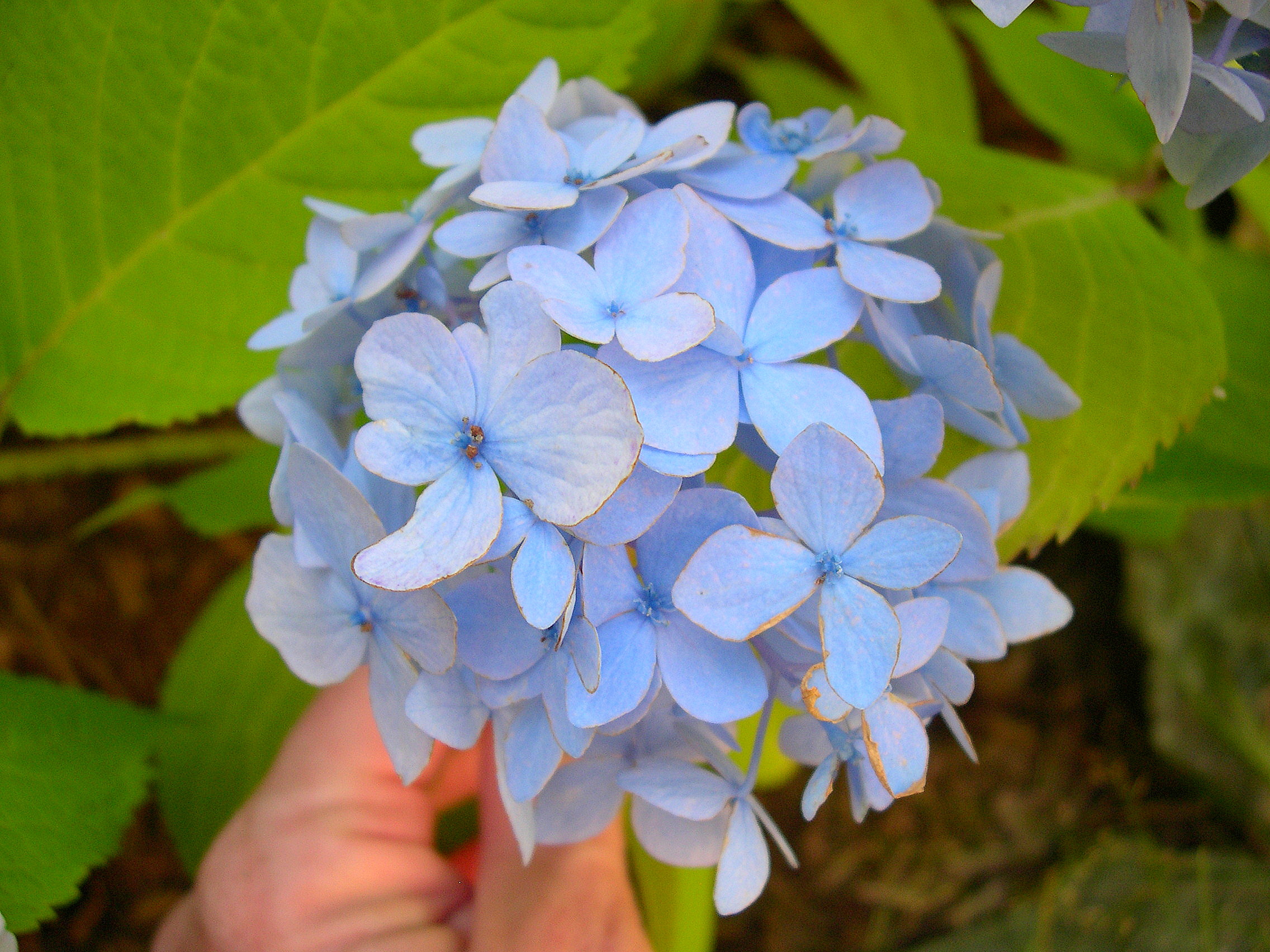
blue hydrangea flower
A small, blue hydrangea flower. I like this picture (above) because the edges of the petals are brownish which give the flower a look of being outlined. I don’t know why they are like that, but I thought it was unusual.

Blue hydrangea shrub
Blue Hydrangea shrub in bloom

This photo was taken just before I moved out of my rental. As you can see, the shrub has lots of flowers, but they are fairly small and more of a light blue than a deep blue.

dsc06727
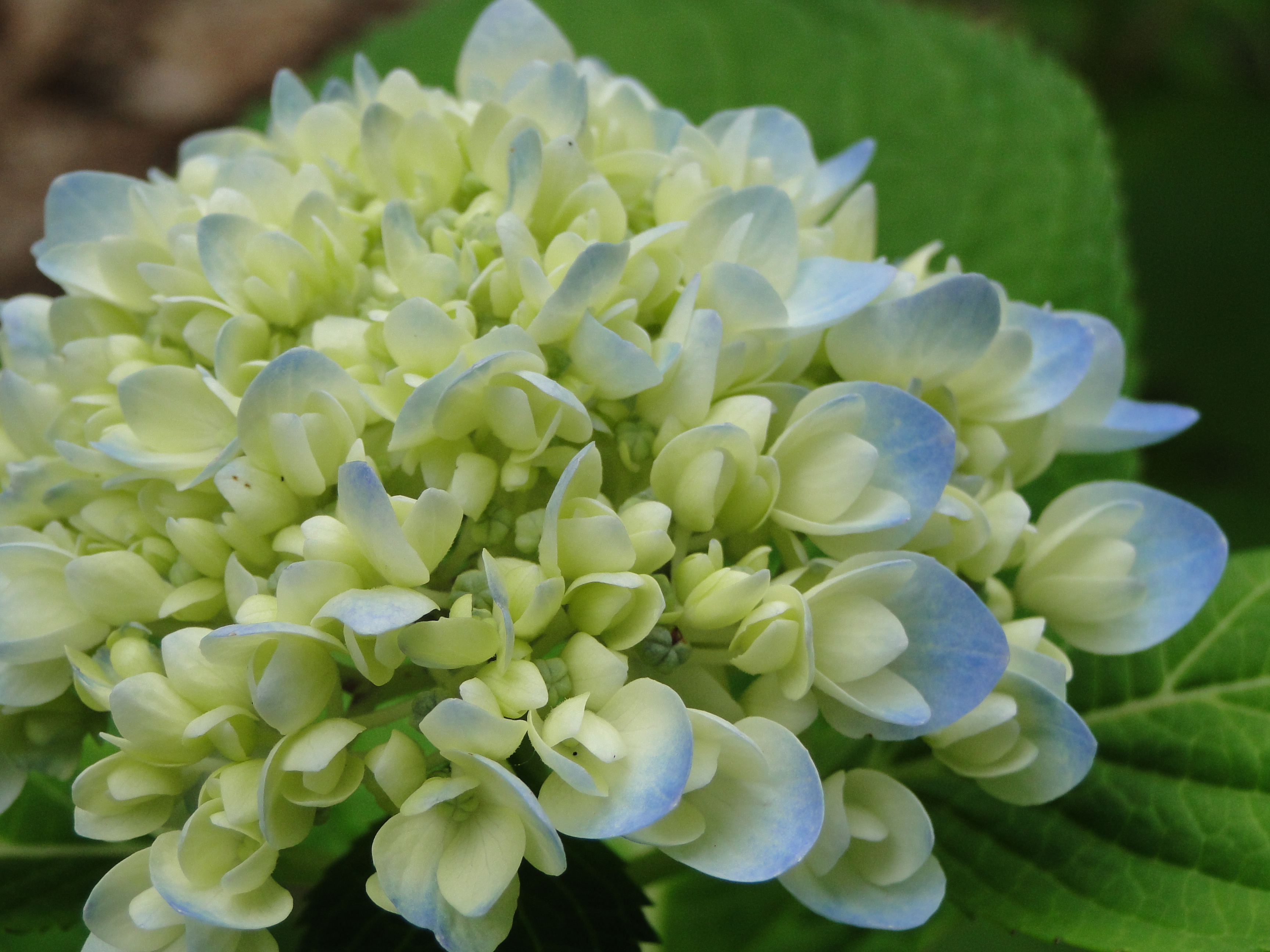
A bud is as pretty as the full bloom

I lived at the rental house in New Hampshire for three years, so I was able to photograph these flowers in various stages of growth and color.  It seemed that each year they did something different!

That is the fun part of watching a hydrangea bush bloom, especially this variety which can give you blooms that are large or small, bright or light in color.  And they will change color as Fall approaches.  In fact, watching what happens to theses plants in Fall is exciting, and has given me some wonderful photos of unique flower colors.
(All photography on this page is mine and is NOT free to use.)

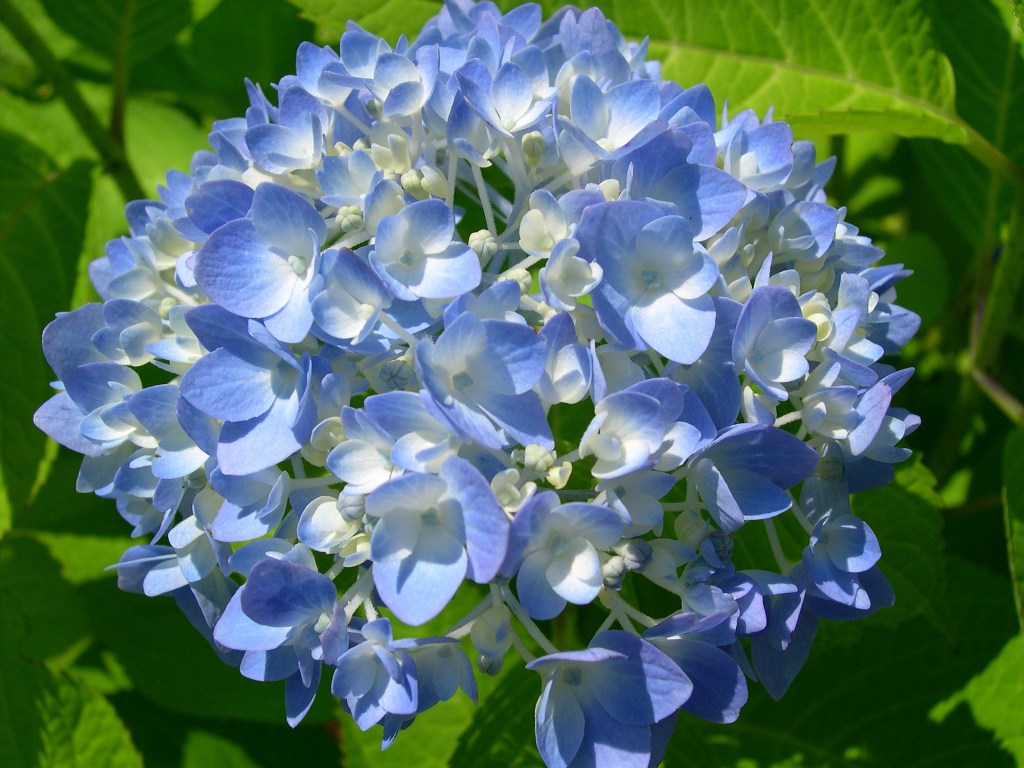
blue flower in the sun
Bright blue hydrangea in full sun

Endless Summer Hydrangeas For Northern Gardens

Hydrangea macrophylla
Image via Wikipedia

If you live in a very cold climate as I do, one hydrangea that should flourish in your yard would be the Endless Summer (Hydrangea macrophylla) variety. It is loved for it’s profuse blue flowers, but acidic soil is needed for the blue color.

The tricky part is knowing whether the flowers will bloom as pink or blue.  That will depend on the acidity of your soil. If your soil has a low ph level (5.2-5.5) your flowers will be blue, but any higher and you may get a pink and blue combination or all pink blooms. The soil where I live in New Hampshire is naturally acidic, so my Endless Summer hydrangeas bloom blue.

Not every type of hydrangea shrub will like the cold winters of New England, so be sure to do your research before buying and make sure you are investing in a plant that will not die over it’s first winter in a northern garden.

The Endless Summer shrub will bloom from new growth (as well as old) in the Spring, so while the shrub sits buried under 2 feet of snow for months you won’t have to worry if the stems break. It will come back. They thrive in planting zones 4-9 so they can take the heat too!

blue hydrangea 100
My Endless Summer Hydrangea bush

The Petiolaris is a Climbing Hydrangea

Hydrangea petiolaris photo by Bruger:Sten
Image via Wikipedia

I am unfamiliar with the climbing form of hydrangea, or at least I was before I researched it for this blog post.  I will be moving soon into a house of my own where I plan to do lots of gardening so I need to know what is available for my area of the country.  I live in growing zone 5 so my plants have to be able to withstand cold and lots of snow cover.  Always check before you buy plants online to make sure they are suitable for your area.

The petiolaris, or climbing hydrangea plant, can be used as a ground cover as well as a climber.  The blooms are white and lacey looking and show up around the month of June and the leaves are heart-shaped and green.  If you want this flowering vine to climb, then plant it near a sturdy structure that will be able to bear the weight of the full grown bush which can be up to 50 feet in height… yikes!  That is big, so think long term when planting this one.  It likes shade or semi-shaded areas which is good to know since my new yard will be surrounded by trees and I’m assuming will be quite shady most of the day.

I like the idea of planting it to cover an unsightly tree stump (I have a tall one in my new yard) or some other part of the yard that isn’t very nice looking.  According to what I’ve read, it takes a year or two to get established and then it takes off and grows like crazy.

Scroll down this page at Dave’s Garden site and read what people who are growing this plant have to say.

Check with local nurseries to purchase.

This Year We Get The Flowers

blue hydrangea flower
The Propagated Shrub is Showing New Blooms

Recently our weather in the northeast has improved greatly. After a very rainy and quite cold June, July is off to a much better start and the hydrangeas love it.

Here are my latest photos of the hydrangea plant I propagated in 2009. It’s doing great and I’ve been waiting for the buds to pop open so I can see what color they will be. Sometimes the soil difference will cause the flowers to change color, but in this case the blooms are blue, just like the parent plant it came from.

If you have a favorite hydrangea shrub, or know of someone who has some beauties growing in their yard, try your hand at propagating (starting one plant from another) yourself. I’ve only done the root layering method and actually it had already rooted for me on it’s own, but taking leaf cuttings is another way to do this and the Nantucket Hydrangea site has a useful section on how to start plants from leaf cuttings.

Below is another photo of this same bush in growing year #2.

hydrangea shrub with blooms
New Shrub - Full of Flowers

Hydrangea Bouquets

hydrangea bouquet
End of Season Colors

Hydrangea bouquets are stunning. July and August are the peak time for seeing loads of blooms in my area of the country and as the summer fades the blooms begin to change color. Unlike most every other flower, when the hydrangea flowers begin to die they can become even more lovely. Their blue colors can change to lavender and green (as in my bouquet here) and the white flowers can be pinkish or tan. If left on the bush, they can still decorate the landscape as dried specimens for months.

With such beautiful, big flowers, you don’t have to be a floral designer to make a very pretty cut flower bouquet.  Be sure to treat them correctly to keep the bloom from dying quickly.  Add some other flowers from the yard or even the woods. You could add greenery too. Experiment with what you have and you might be surprised how nice your little arrangement looks.  And a single flower in a vase would look just fine.

If I buy flowers from the local grocery store, I usually go for the Alstroemerias, or Peruvian Lily, which are sold in bouquets and will last a very long time if they are fresh.

Check your local yard sales and swap shop (we have one at the transfer station – a fancy name for the dump) for little vases to hold your flowers. The vase in my picture was purchased from an artisan at a local fair. I prefer a few small arrangements scattered around my house to a large, overwhelming one. Even a few hydrangea blooms can make a big bouquet and as Fall approaches (we don’t want to think about that yet) the blooms will change color and make an even bigger impact.