I’ve given it a lot of thought and I really don’t have time to continue writing on this blog. Or, maybe I should say I’m cutting way back. My efforts need to go into starting a new online business.
My knitting blog gets a lot of views and that is where I need to write. Not many people grow vegetables in Florida, and the lack of interest just does not make it worth my while.
It is not the first time this blog has gone dormant. I’ll probably just give it up, but right now I am giving up on too much, so this must wait.
Also it is the end of the year, which seems appropriate to close up shop.
To all who have visited, commented, and read my little stories, I thank you.
(Skittle in my New Hampshire garden. It’s one of my all time faves.)
Here are five crops that can be planted in a Florida garden over summer. They will grow without much attention, and that keeps you out of the heat.
Gardening in Florida is different to say the least. Summer is hell here. It is simply unbearable to be outdoors. If I get outside before the sun hits the little patch of yard that is my garden, I can bear it for a very short time. The humidity is killer.
However, I love to grow things. I’ve come to realize that there are a few crops that can grow during a Florida summer and they need no attention. That means you can stay indoors during dry spells. Watering every morning won’t be necessary.
Sweet Potatoes
Find a good place in the yard, that can be dug up easily, and plant sweet potato slips. This coming Spring I will be ordering purple sweet potato slips. I plan to plant them in one of my Vegega raised beds once again. I found that digging them up was tough, but I don’t really have any other place to grow them.
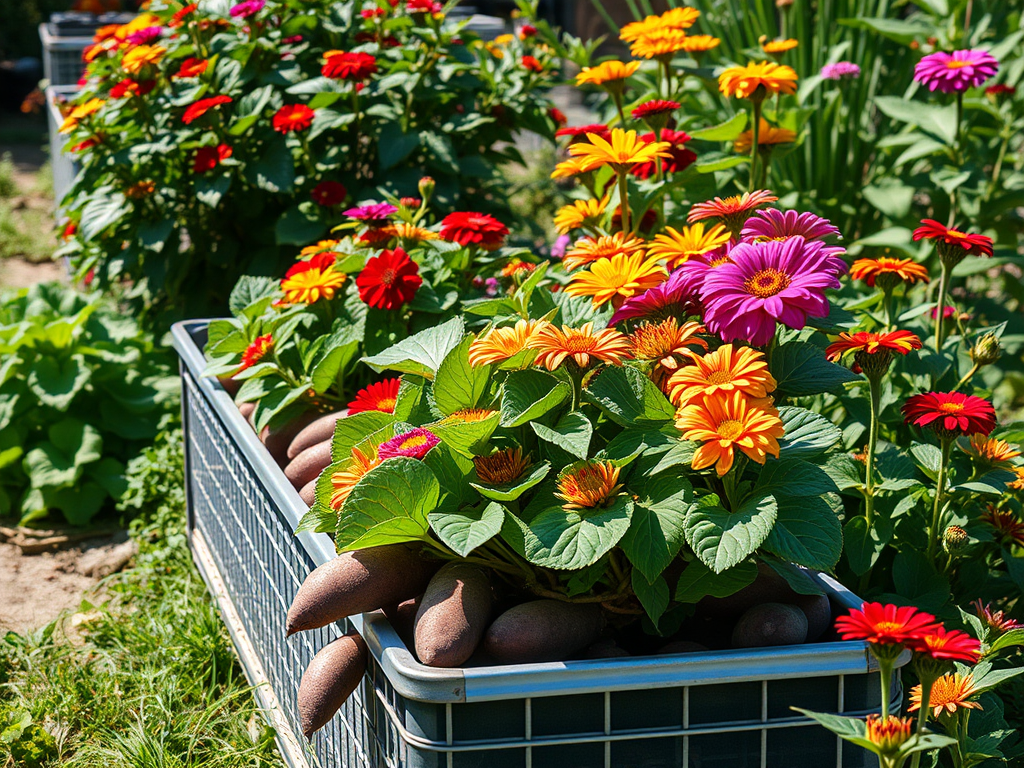
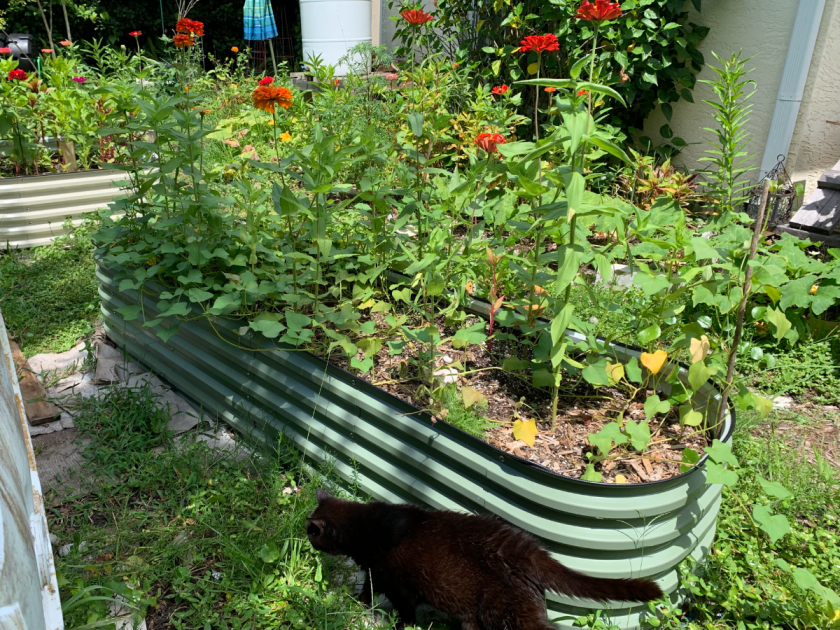
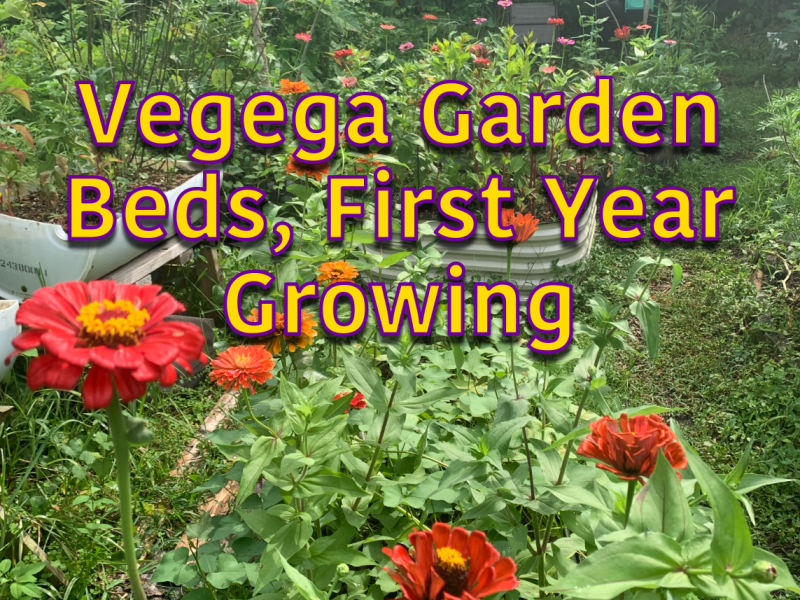
This past summer I filled the long bed with sweet potatoes and zinnias. The vines got all tangled in the flowers, so I won’t do that again! The potatoes won’t be dug until the end of summer, or beginning of Fall, but the leaves can be used in salads all summer long.
My long oval raised garden bed made of metal, with sweet potatoes and zinnias growing.
Roselle
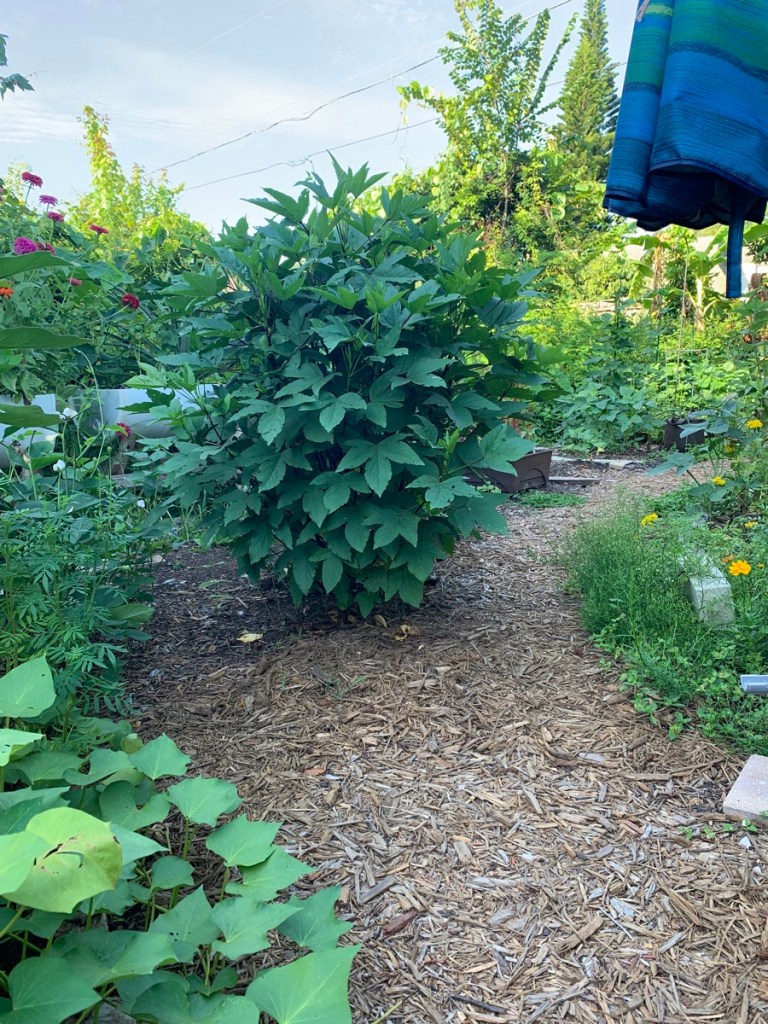
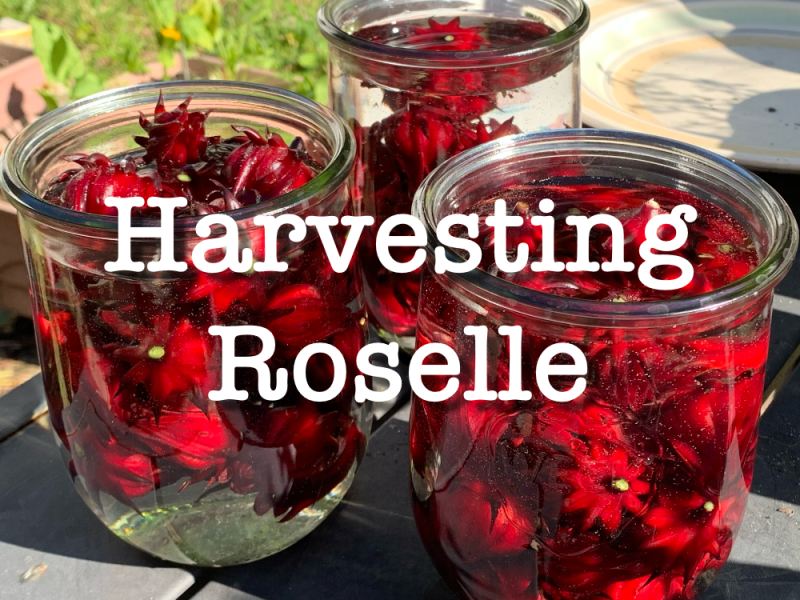
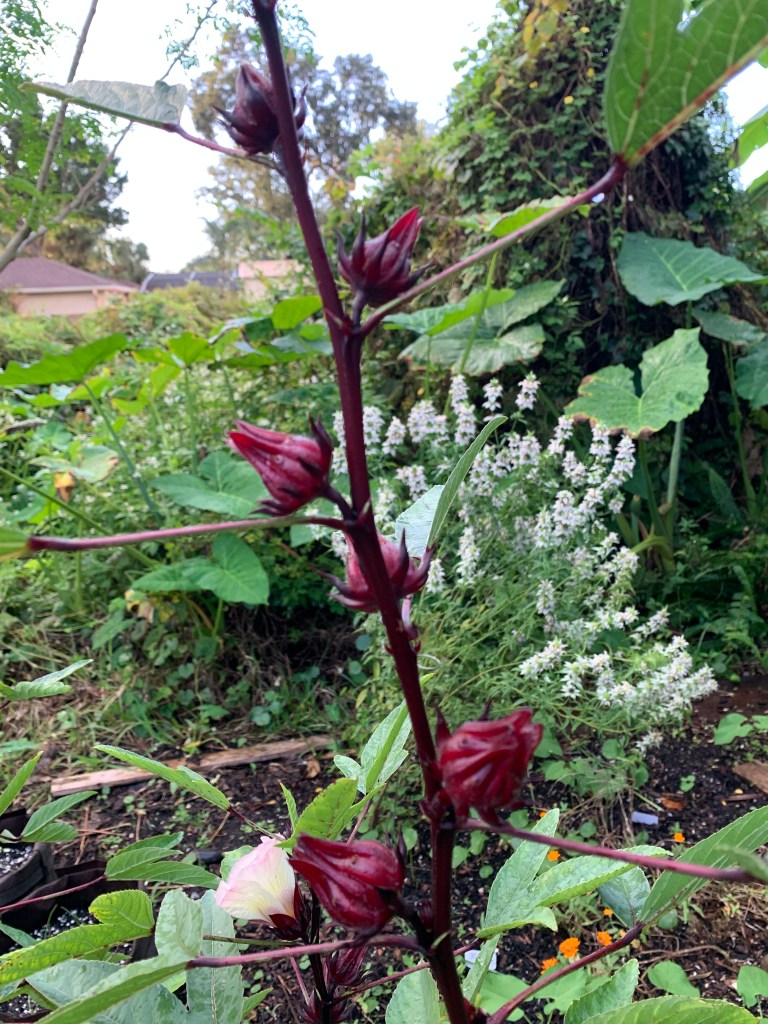
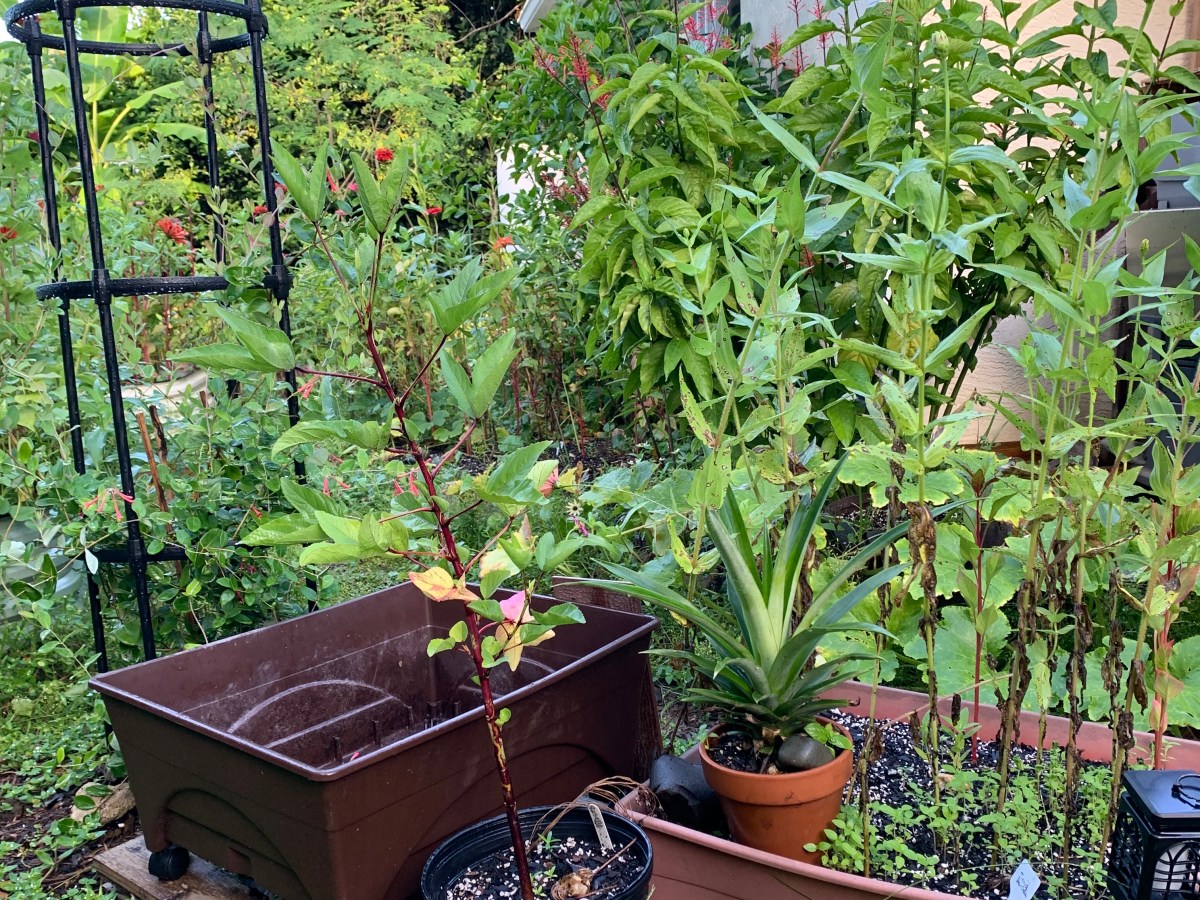
Roselle plants create calyxes (sp?) that can be used to make tea. The plants will grow from seed, and take off by mid-summer. Each plant grows into a wide bush, so make sure you have space for them. One or two plants will give you a lot of little red tea leaves to save by Fall.
Be aware that these shrubs are not strong. We had a storm come through and it broke the Roselle you see in the photo below.
Roselle bush in 2024
Okra (Yuk.. but…)
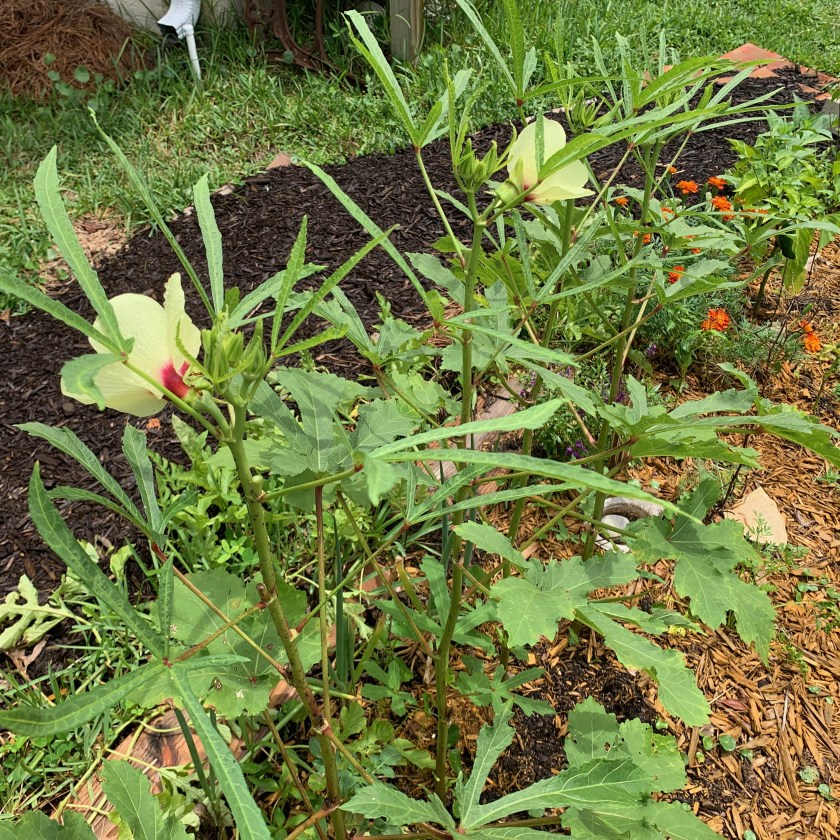
I grew okra the first year I had a garden. I’d never grown or eaten okra so I wanted to try it. And what a pretty plant! The good news is that it grows like mad. The bad news (for me) is that it is simply disgusting to eat. If you like this vegetable, and live in the south, grow it.
I’ve recently been getting into fermenting vegetables. Supposedly fermenting okra, for at least 4 months, will remove the slimy texture. I may try it.
Okra plants have such pretty flowers
Basil – Specifically Tulsi, or Holy Basil
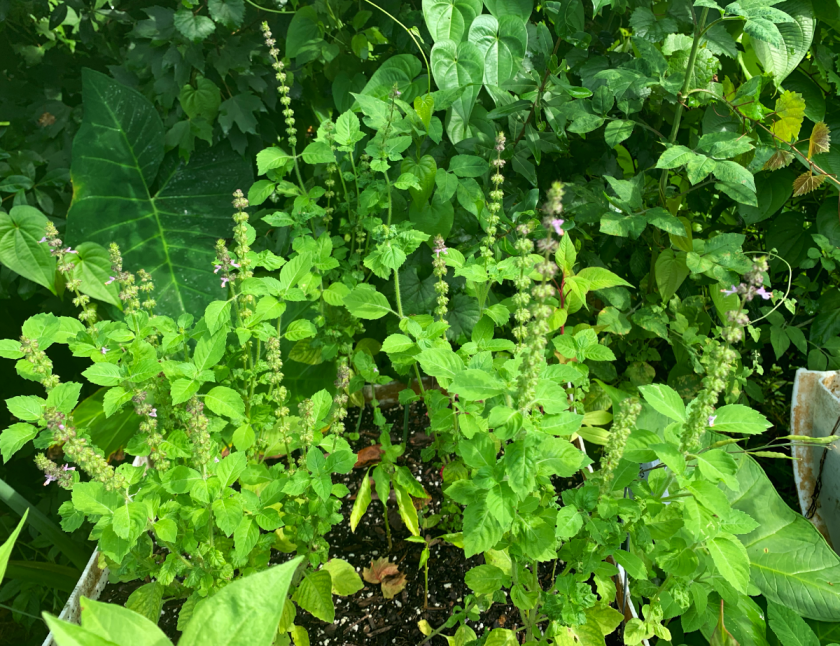
Basil is tough to grow here in Florida. But once I began to grow Tulsi, or Holy Basil, it simply grew. I didn’t have to work at it, and now it is popping up all over the yard. The only trouble I have is that in Fall the little bugs (aphids?) hit the new growth and I have to remove it. But this basil can take the heat – especially in a shady location. I use it a lot, in cooking, salads, and tea brewing.
Holy basil in my yard
Cowpeas
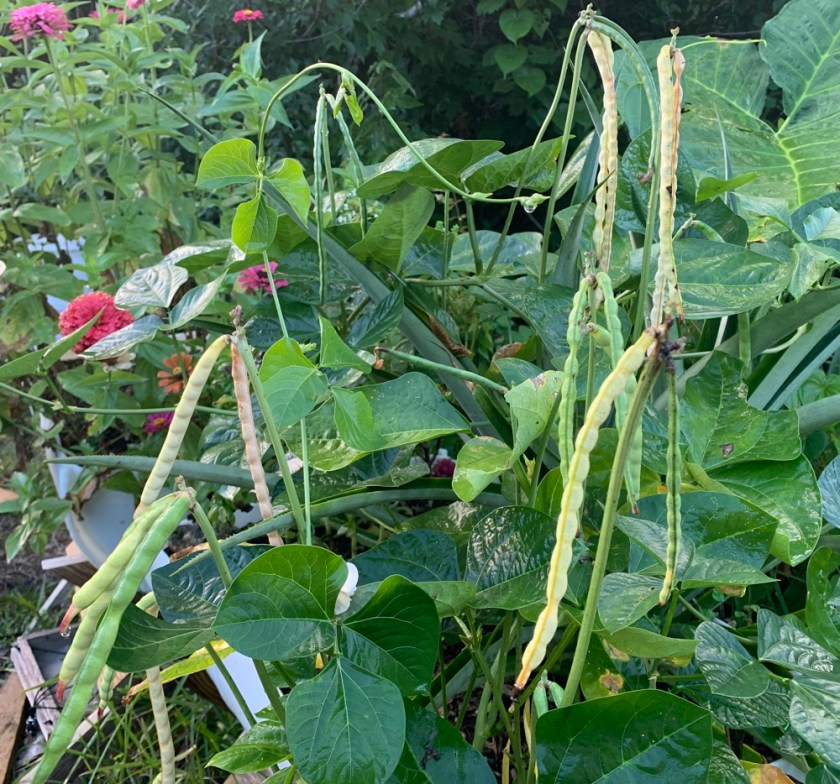
These are dried beans and they come in many varieties. I grow them as a cover crop and not to eat. For this reason I plant them and forget it. Cover crops keep the soil good by shading it and putting nitrogen back in (like green beans). I look at it as a way to feed the empty areas in the garden.
The first year my cowpeas grew so tall that I put stakes up for them to wrap around. I saved some of the dried pods for planting the beans (they are like beans, not peas) but have never eaten any. If you want to save the seeds, bring the brown pods inside to dry before they get moldy from the humidity.
This past summer I only grew a few cowpeas and they stayed fairly small. The flowers attract bees, but the bean pods attract ants. Watering is unnecessary. When the stalks are ready to be cut down, they make a great addition to the compost pile.
Plan and Buy Seeds in Advance
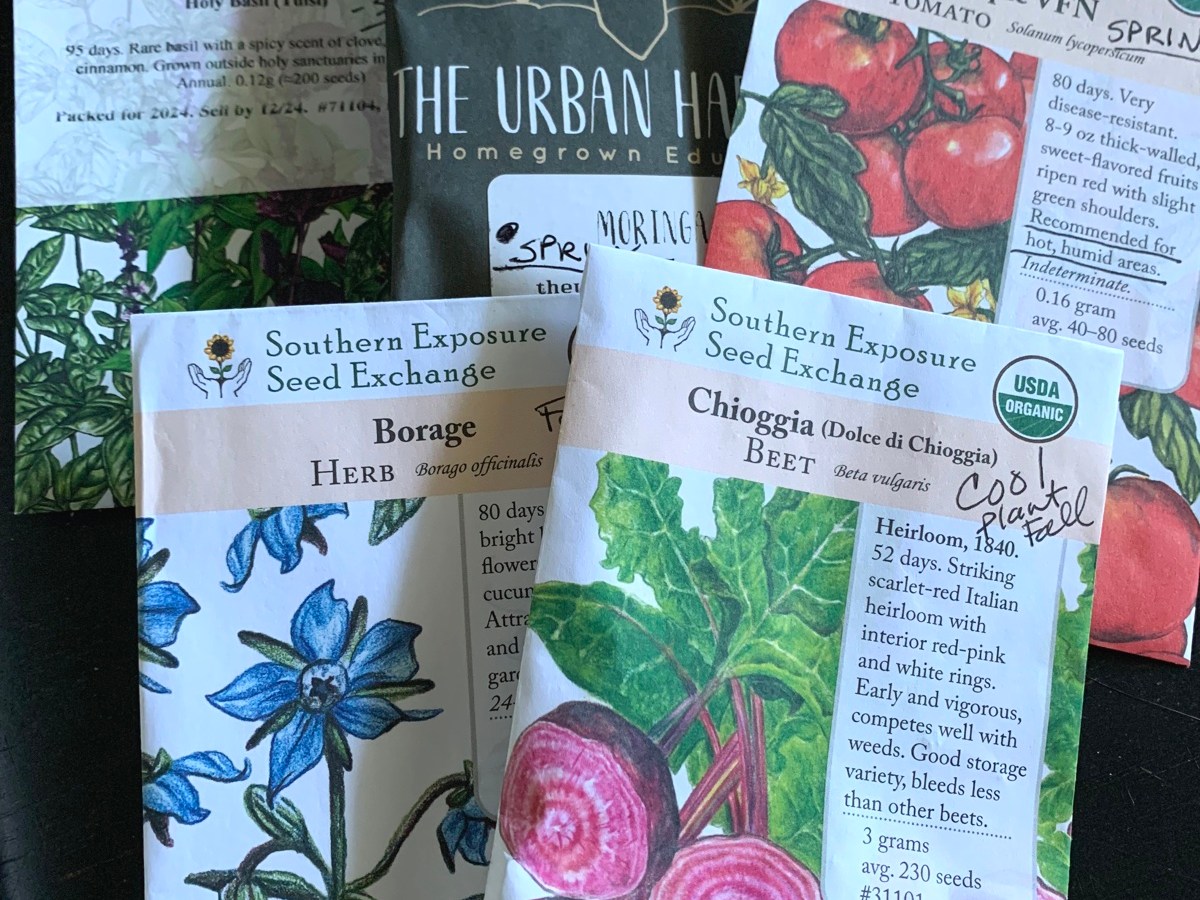
Everything I grow is started from seeds. The sweet potatoes are an exception as they grow from slips, or little cuttings. I like to plant directly in the ground, or raised beds, or buckets, because I detest little tiny pots! Seeds are cheap. Yes, it takes longer to grow from seed, but we have a long season here in Florida.
Just remember that all you plant and grow in summer must be cut down and removed for the Fall planting. Some things, like herbs (the basil), can be left to grow where it is. The basil will re-seed itself, so watch for little plants popping up nearby.
It’s not like you will have plates of delicious food to eat from these crops, but it’s always fun to watch things grow. Meanwhile you will be feeding insects that enjoy the flowers.
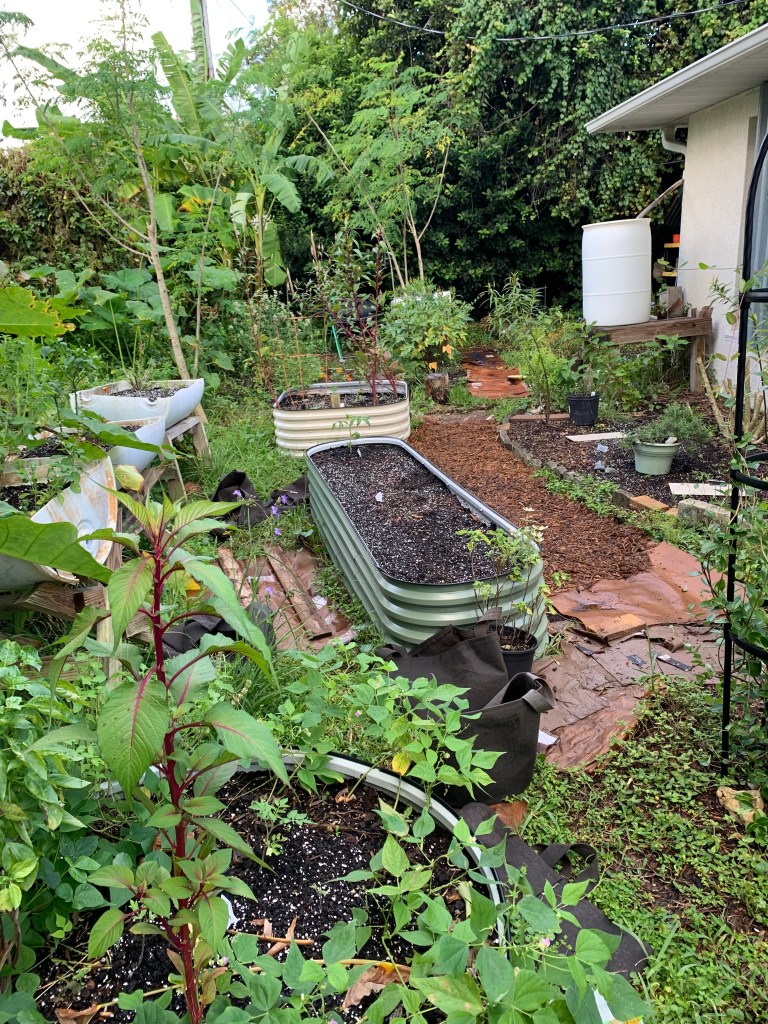
Here I have a photo of my Fall garden. It is hard to tell what is growing, and honestly not much in the way of food just yet. The seeds have all been planted except for Kale and dill. I will also grow more green beans along the way when I find space. (I’m already eating a few!)
I need more mulch. More grass needs to be pulled. Gardening is constant, but I am making headway.
The Roselle plants are looking awesome and I should have some red pods for tea soon. (Yup, I’m beginning to pick the pods.)
I’m growing Daikon radishes once again, even though last year I had so many. I was using them in salads last year, but this year I plan to ferment them!
Homemade compost is being added to all areas of the garden. More compost is brewing in the bins.
Composting
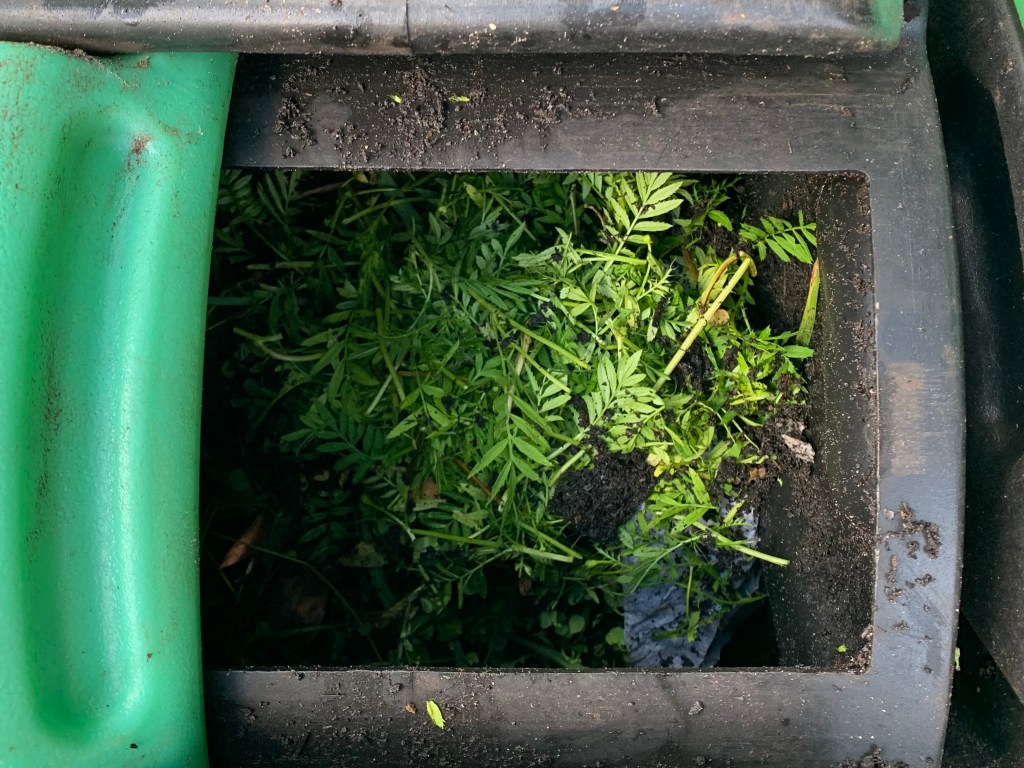
Chopping up the Marigolds and adding to the composter -My Hot Frog.
Onion bags
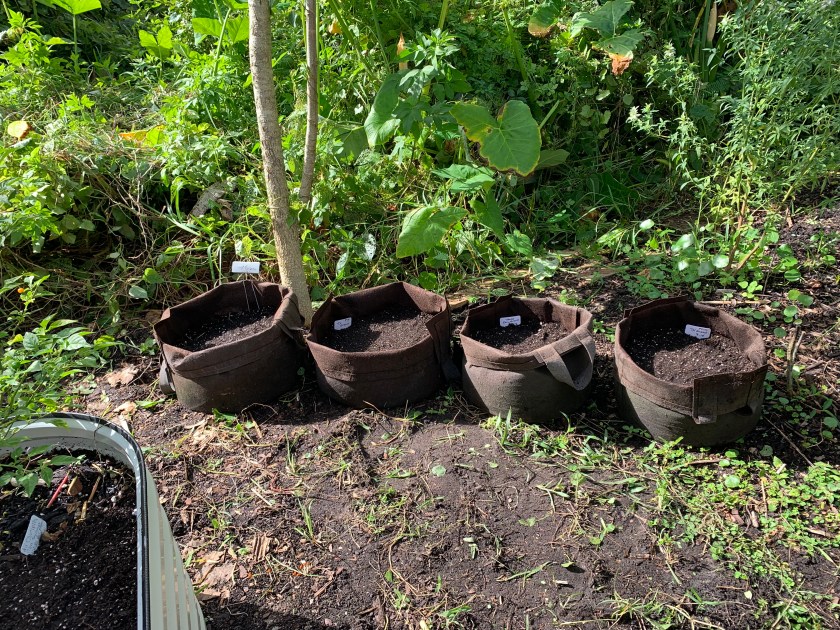
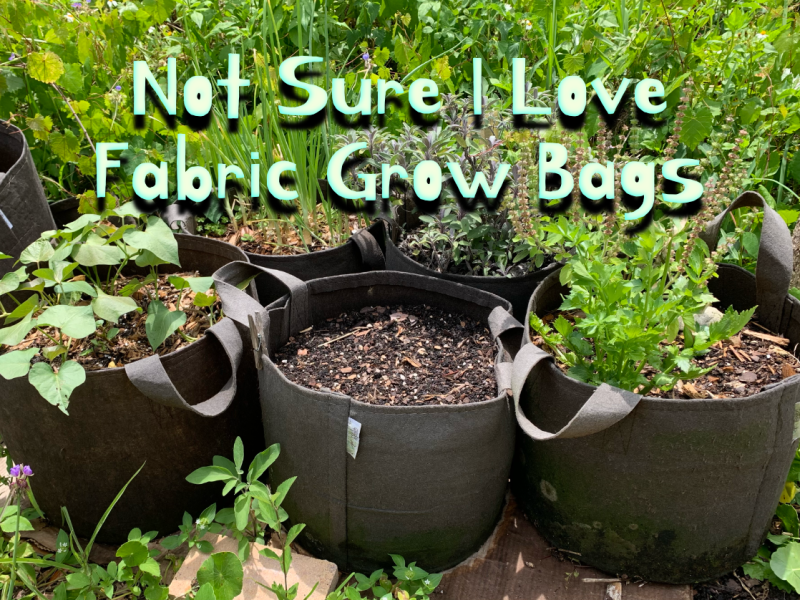
Fabric bags have been filled half full and onion seeds have been planted. Onions don’t have such long roots. I’m filling all my bags part way and rolling down the sides. They are planted with Texas Grano bulb onions.
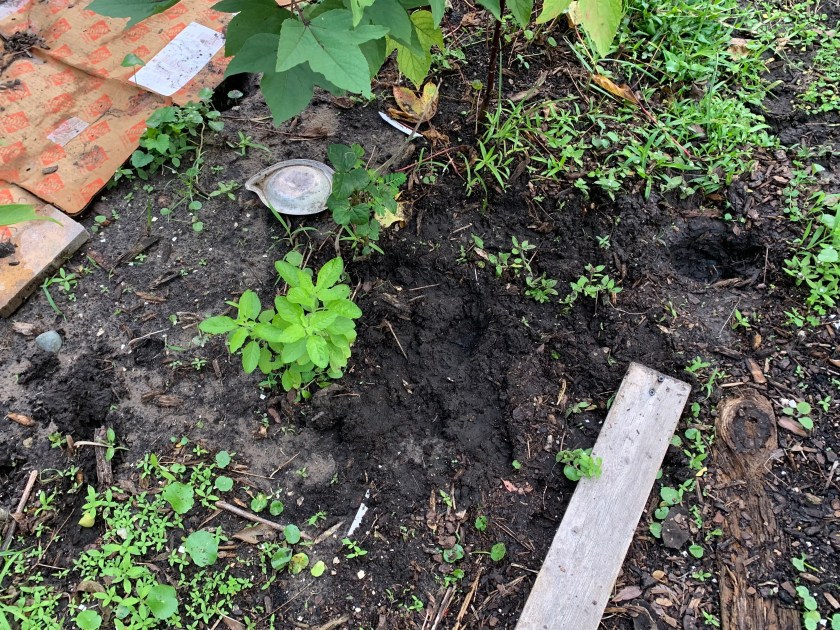
Each day new holes are dug – by armadillos I presume – and old holes are getting deeper. This area will mostly hold flowering plants and dill. That way if things get dug up it’s not such a big loss.
I’m trying a new way to grow larger individual vegetables in my small garden space. Tall buckets may serve well as pots for tomatoes, peppers and eggplant.
Trying to grow food in a Florida backyard has proved to be challenging. Luckily, I have all year long to figure things out! Or, maybe that is not such a good thing. All I know is that vegetable gardening in my little Florida space has not been easy. Now, I am trying buckets to grow my larger plants with deep roots.
The grow boxes are great, and I’ve grown eggplant, peppers, and tomatoes in them. They are not really deep enough to accommodate the roots of those larger plants. Directly in the ground planting should take care of that problem, right? I don’t have a lot of luck growing things in the ground. The garden dirt is not great yet. Raccoons and armadillos dig things up.
I had four eggplants, which were started from seed, all growing in the ground. Three have died, and one has been growing for 2 or 3 years and never given me a single eggplant!
I cannot keep doing the same thing and hoping it will get better. The soil is constantly being amended, all over my yard. But my thought is to maybe have a flower garden out back, and keep the veggies in the raised beds – or in deep buckets.
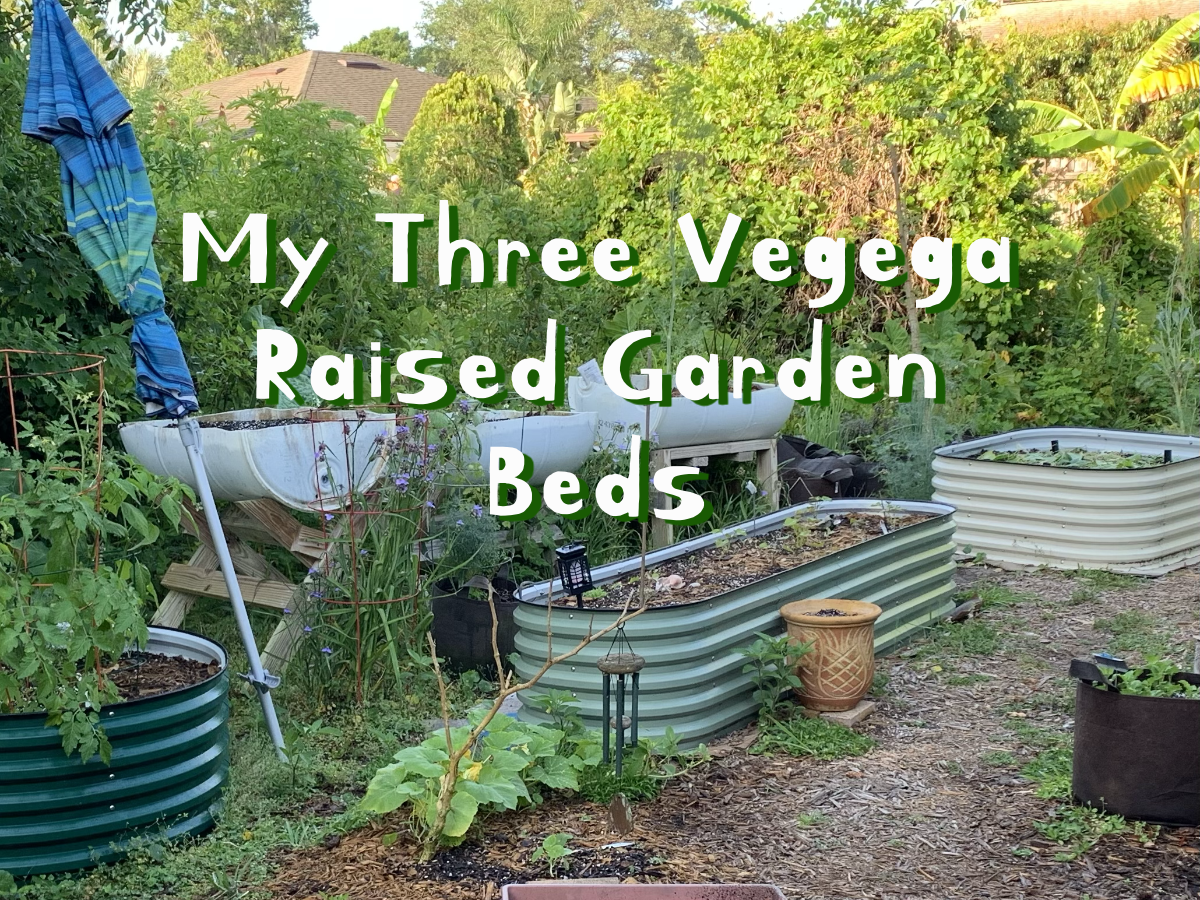
I have three raised beds (Vegega metal beds) that are pretty good size. Everything else is either barrels on stands, or grow boxes. I had to take the grow boxes apart last year and drill holes in the bottom to fix the drainage issues. Now they are ready for Fall veggies. But long rooted vegetables need something else.
Buckets as Growing Areas
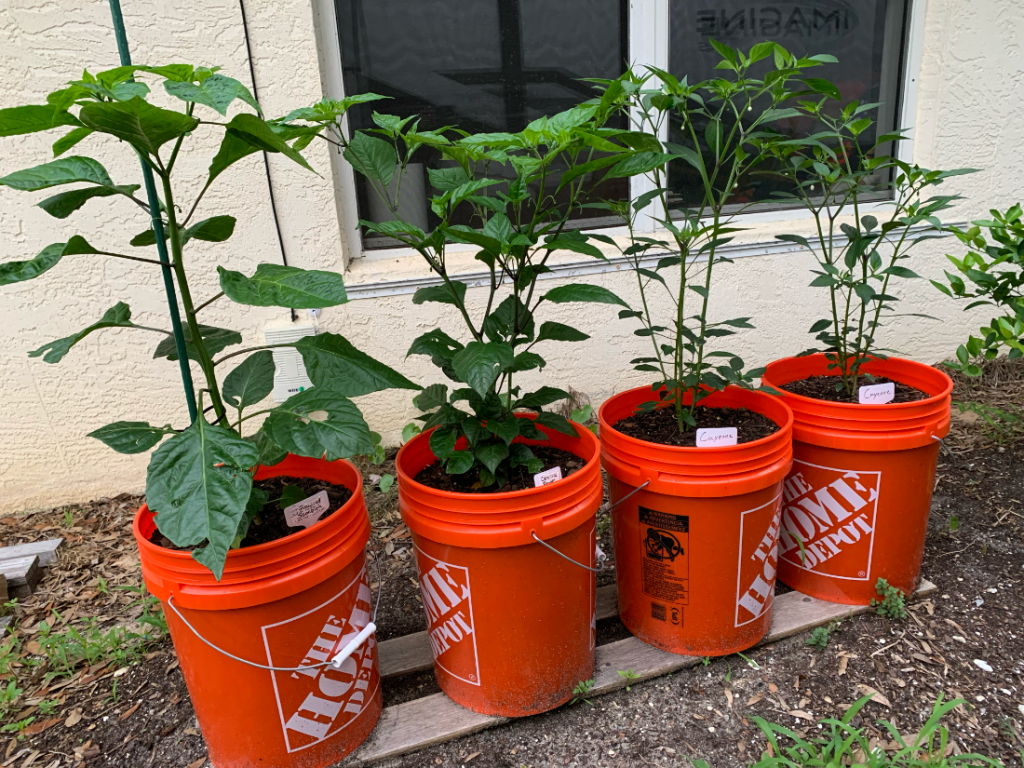
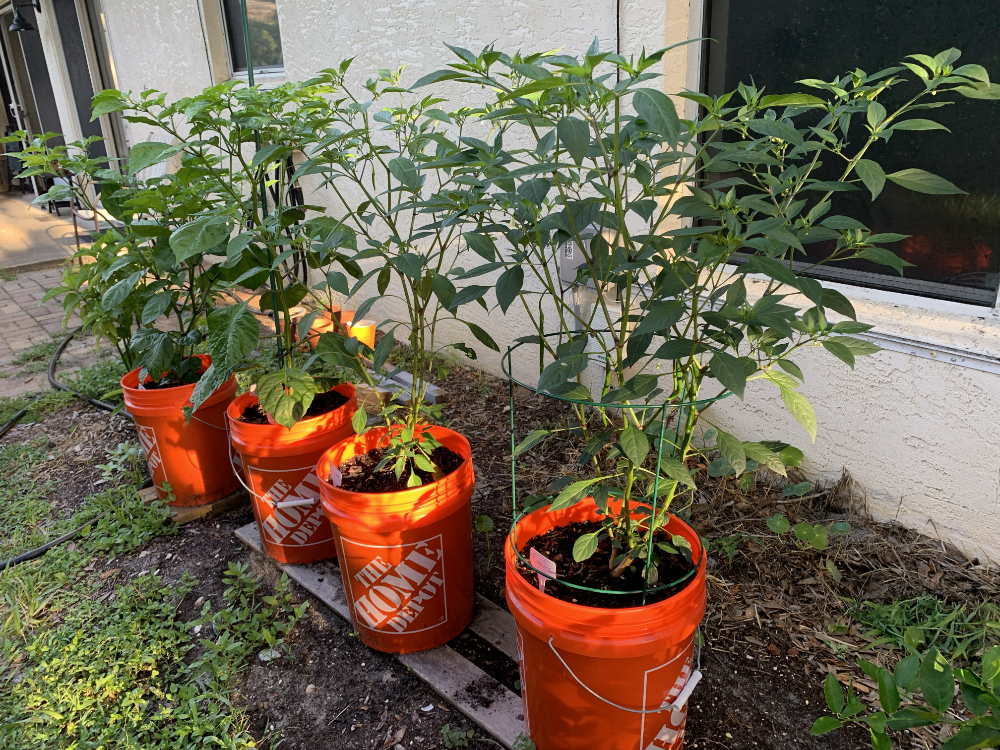
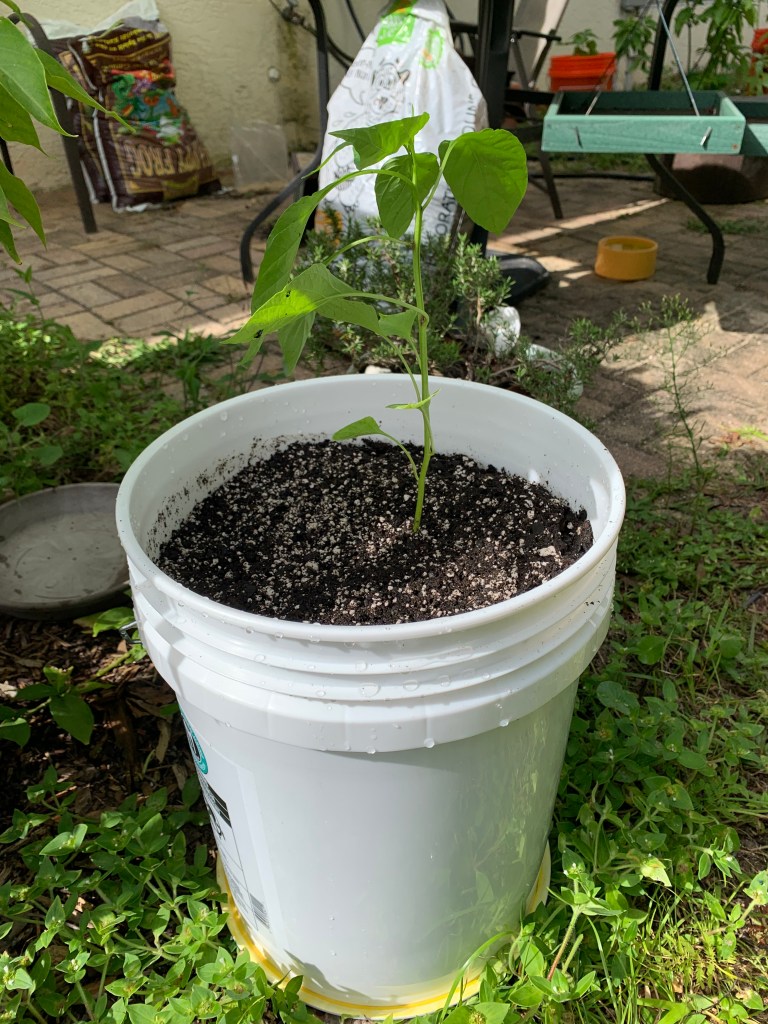
My son began growing some hot peppers this year and he used Home Depot buckets to do so. Each pepper was started in a small pot, most were started from seed. They are thriving in the buckets!
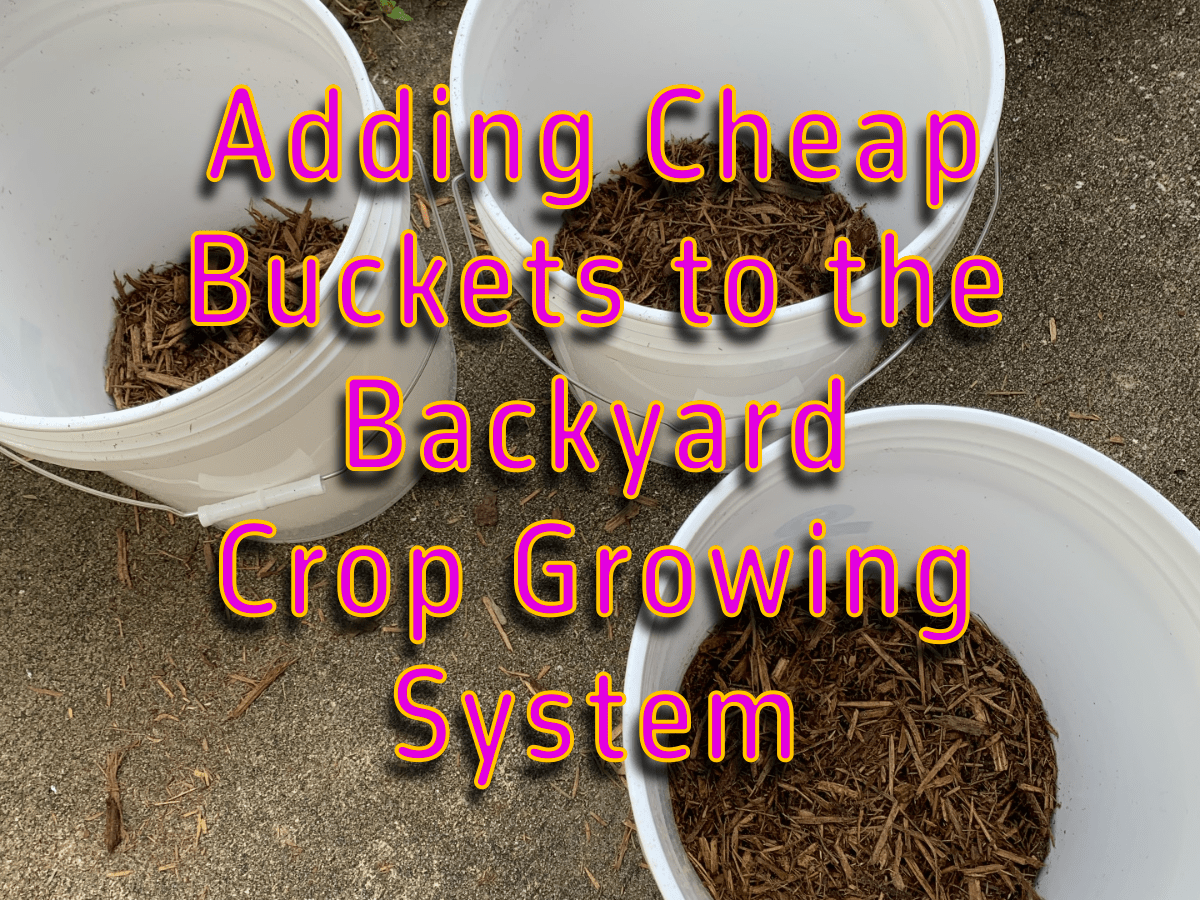
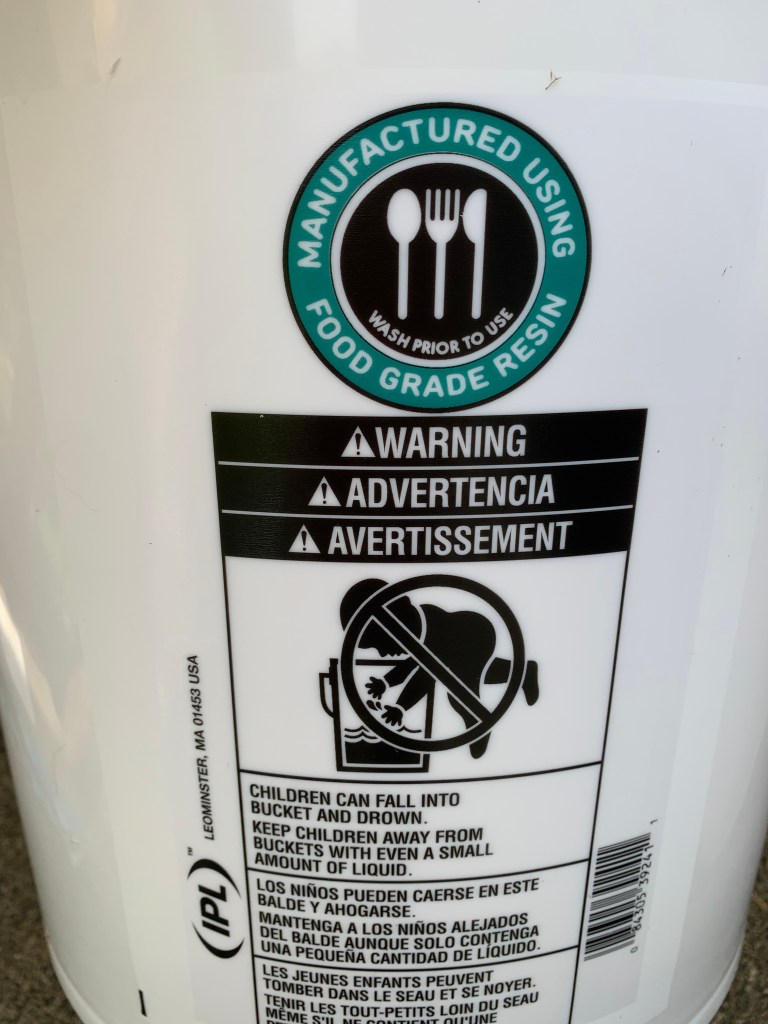
I’m not sure how well that plastic works for growing food crops, so I bought some “food grade resin” white buckets.(Amazon paid link) They cost me around $6 each. My son drilled some holes in the bottom.
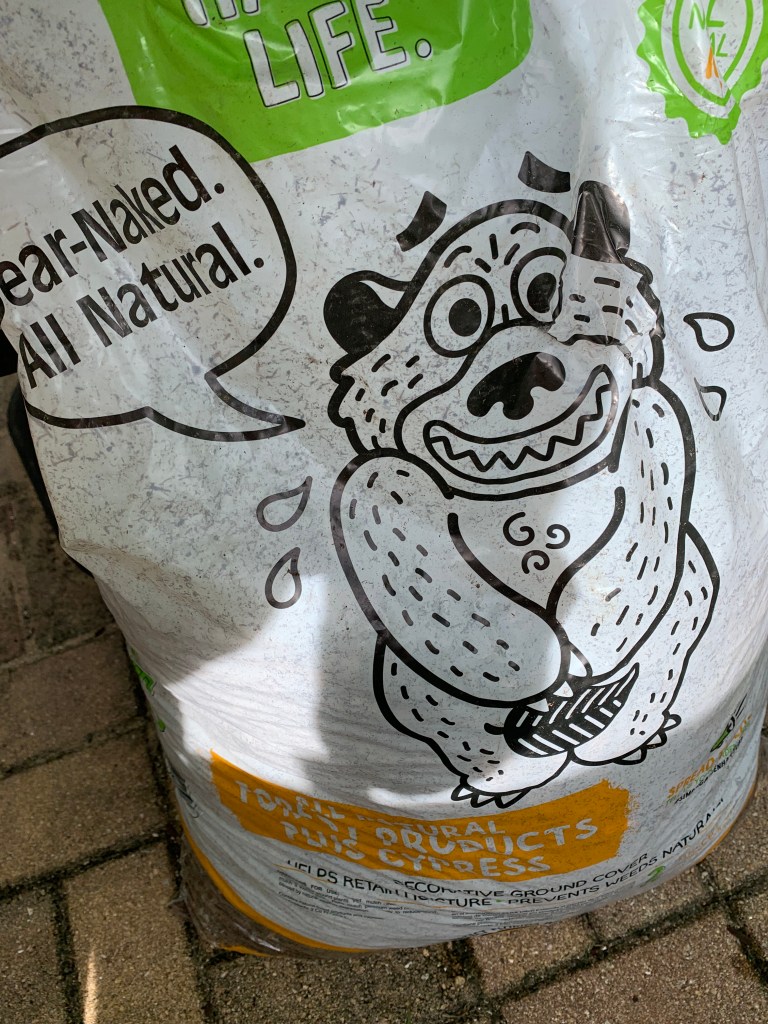
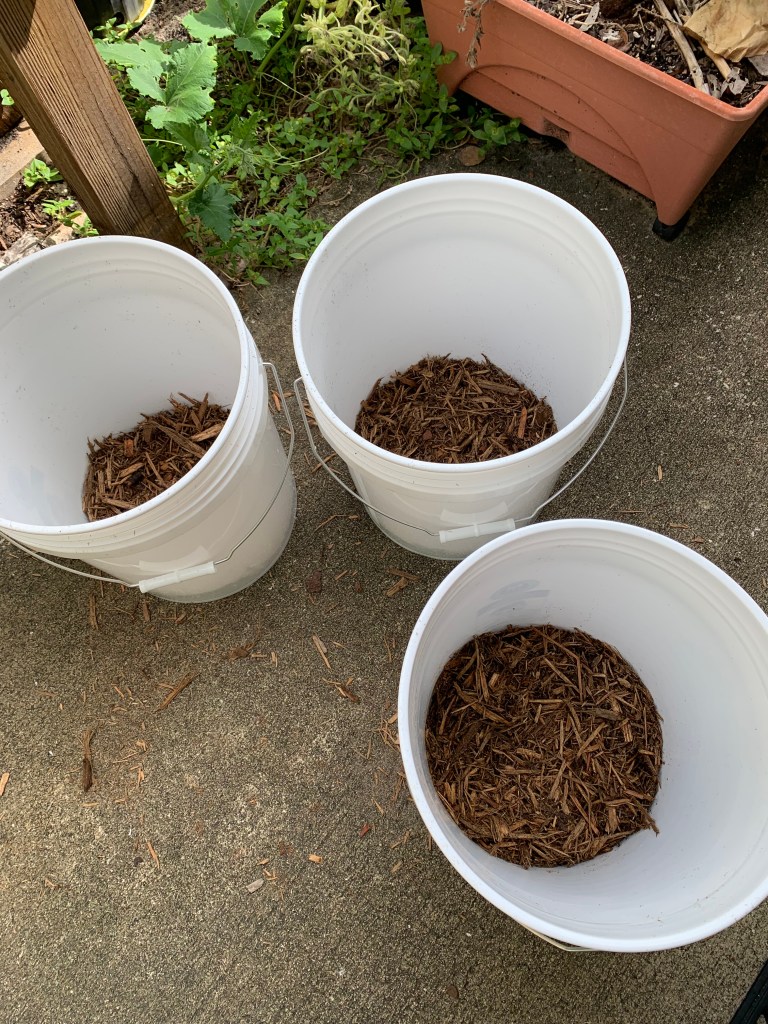
Bear Naked mulch is going into the bottom of each bucket for drainage. Happy Frog potting soil (paid link), mixed with fish bone meal (paid link), as the filler.
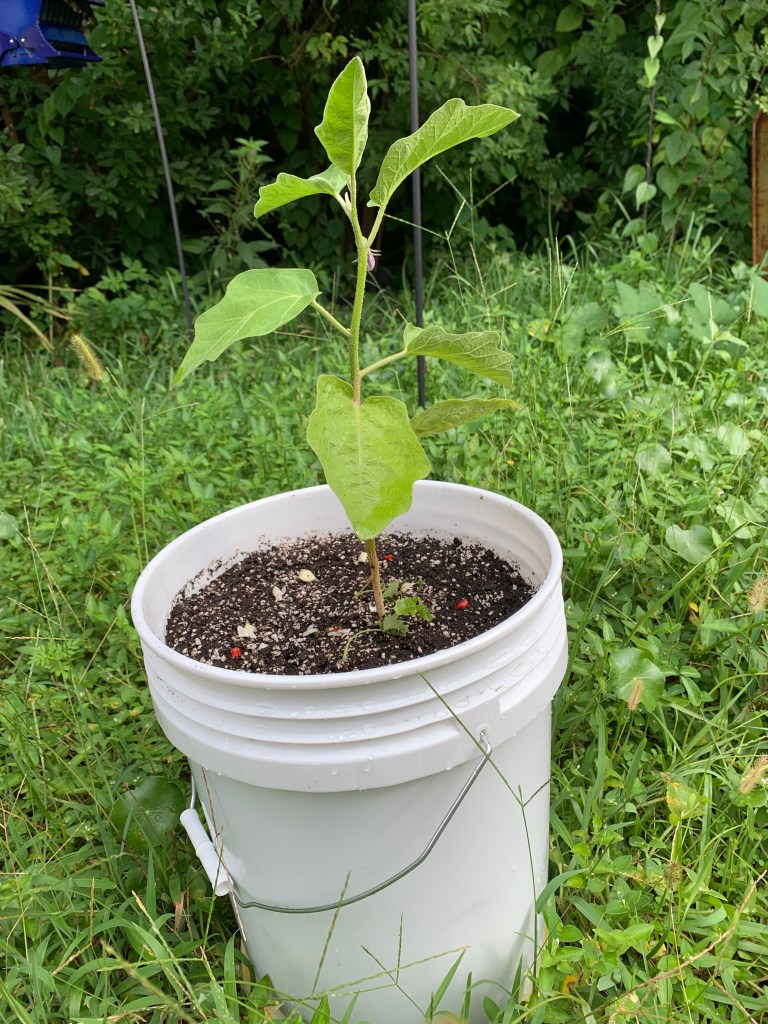
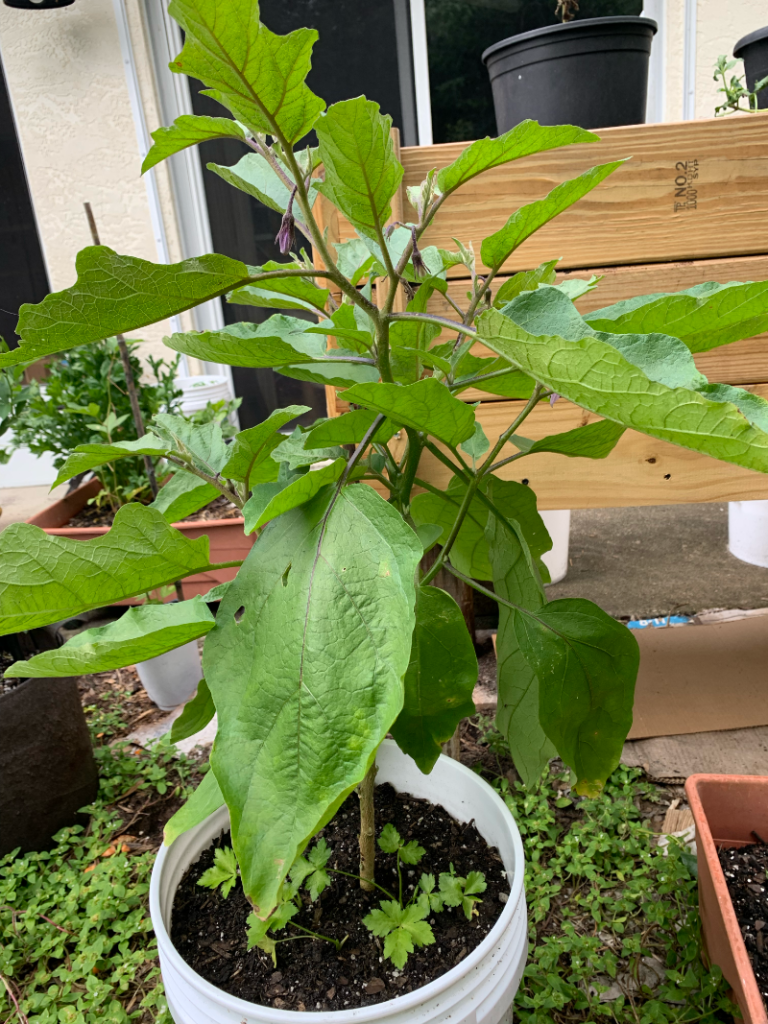
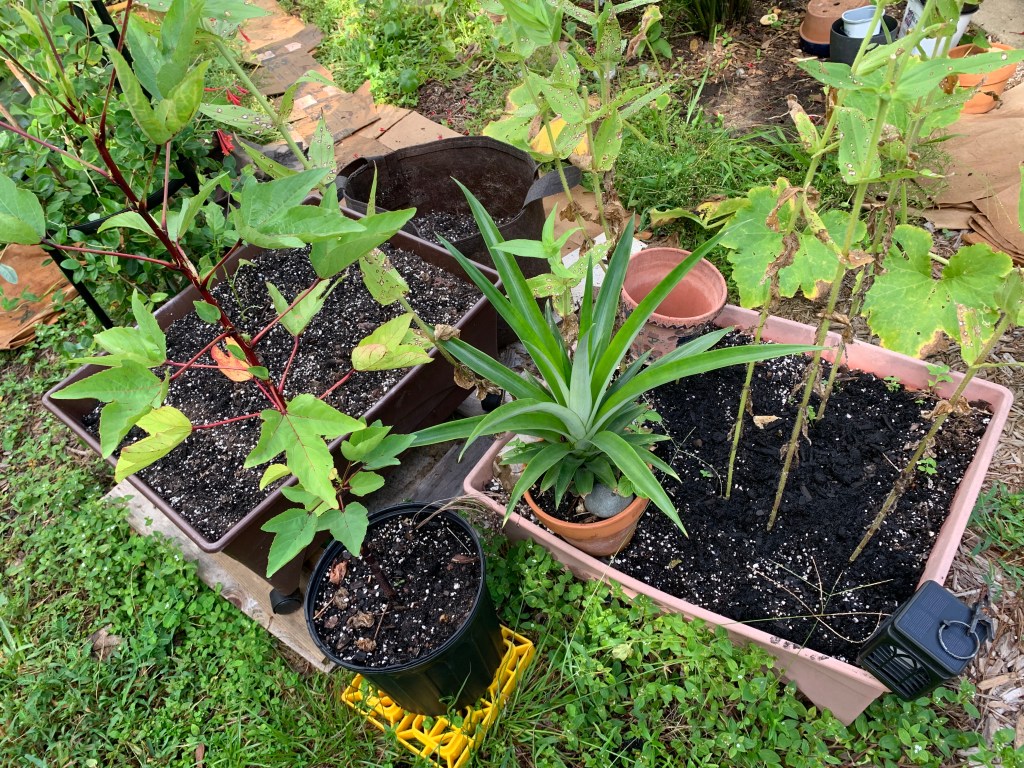
An eggplant and banana pepper plant have been transplanted. I’ll need to find a way to keep the buckets from being directly on the ground. This is to help keep ants from using the pot to make a nest. For now, I am using some plastic dinner plates underneath. But then…..
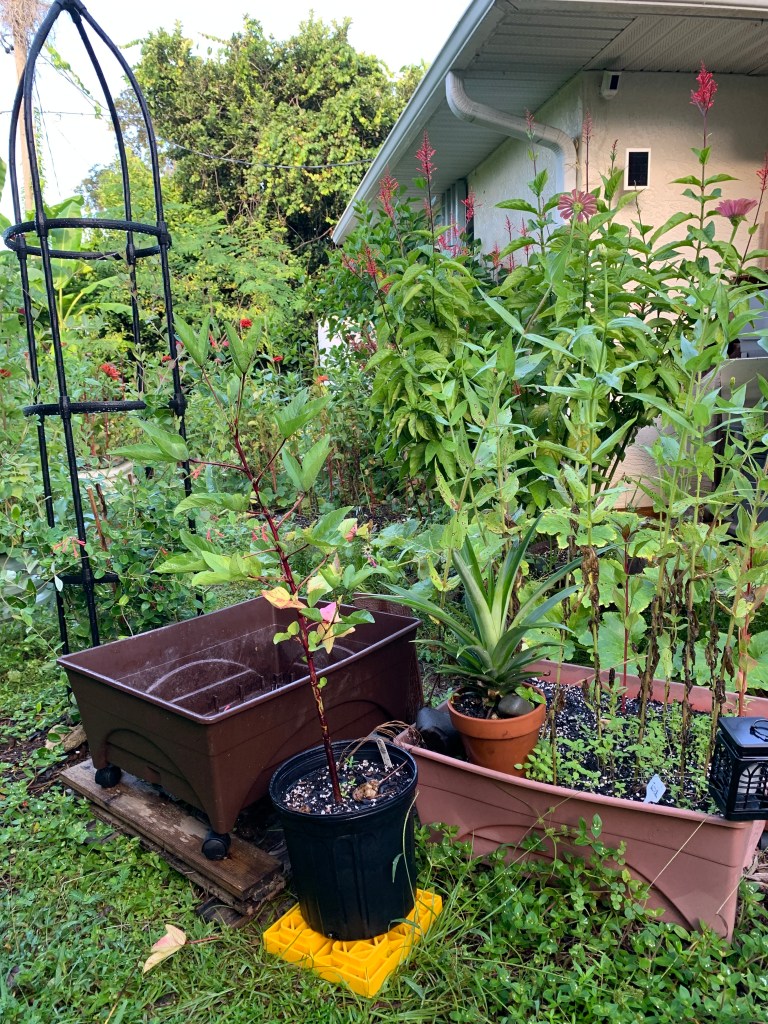
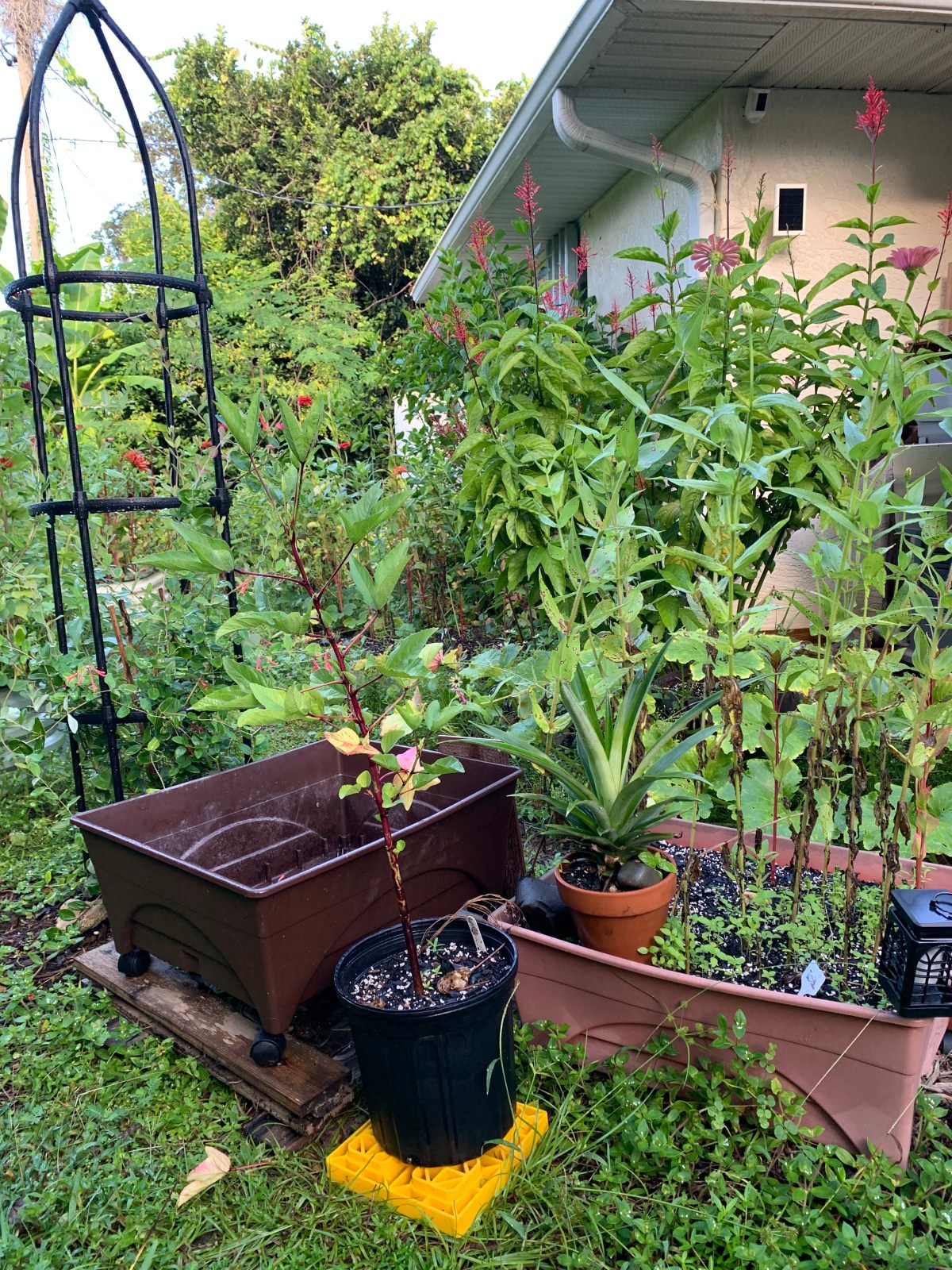
I decided to buy new RV levelers (paid link) and use the old ones to keep buckets off the ground! We use these to level our camper at campgrounds, and in the yard. Campers need to be level to use the slide, awning, and keep the water tanks reading correctly. They are heavy duty plastic with an open grid pattern for water and dirt to pass through. They seem perfect for raising pots off the ground!
Yellow leveler under the Roselle Eggplant, first plantedBanana pepper
When pots sit on the ground around here, ants tend to set up house. Fire ants will completely fill a pot unless I am diligent. I hope the leveler idea will work, but I will still have to check for ants.
Eggplant after a couple weeks
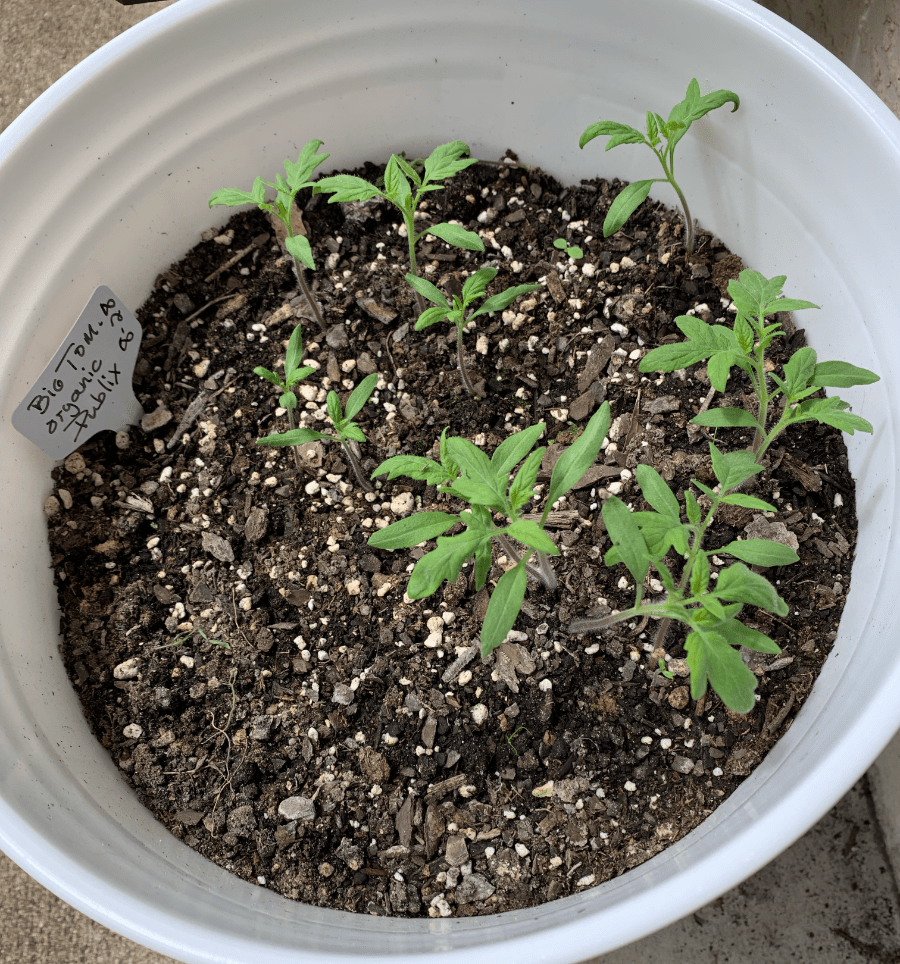
The eggplant is thriving, and I have some small tomatoes coming along in a bucket. Another bucket holds little pepper plants. I’ll be thinning them so that only one – the best, healthiest – plant remains.
Tomatoes
Vegetables Can Be Perennials Here
Growing in central Florida means that some vegetables can become perennials. Eggplant, tomatoes, peppers, and probably others, will grow for years. They will have down times, but the plant will be in that space year after year.
What that means is, the area won’t be empty to use for other crops. Whenever a large plant, such as an eggplant, grew in one of my grow boxes, it took over the whole thing! Each plant really needs its own space. A bucket for each plant seems like a good idea.
It is the beginning of September and my end of summer garden clean up is underway.
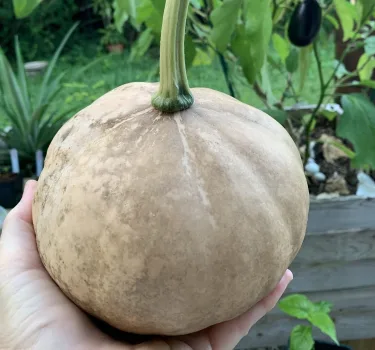
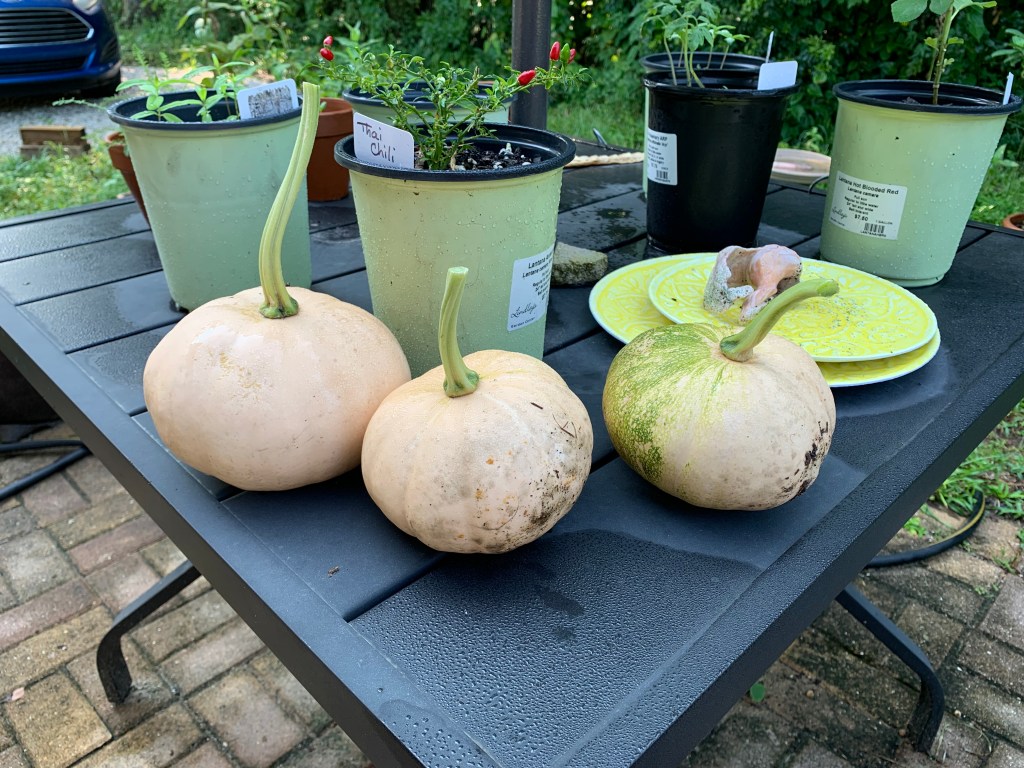
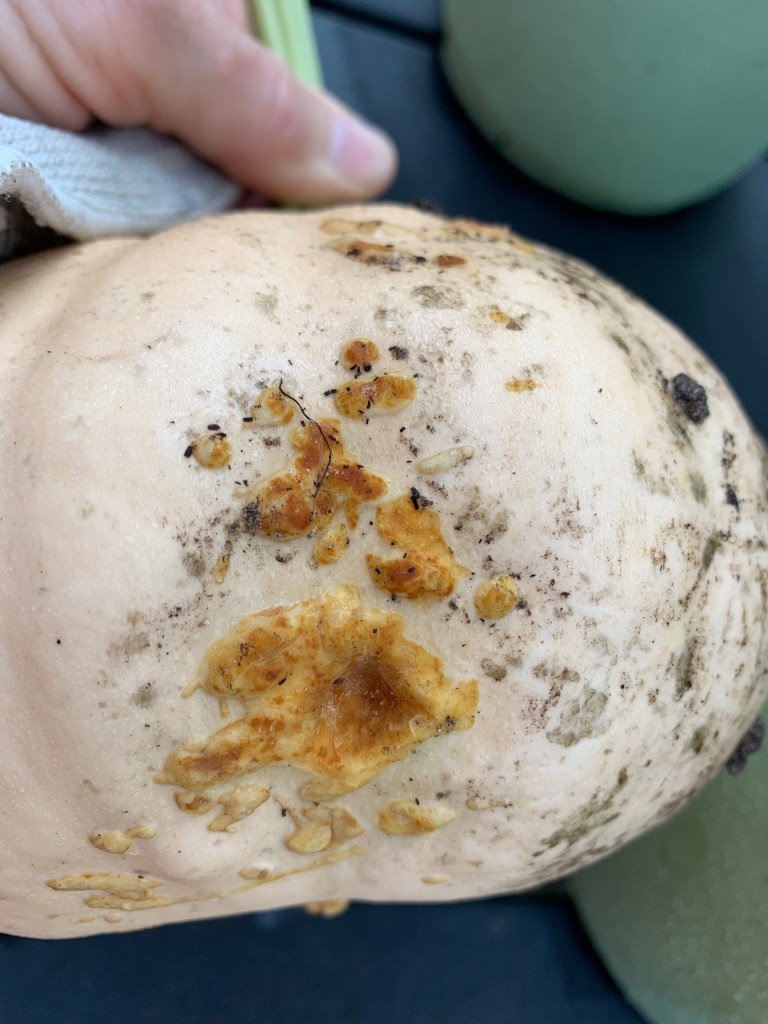
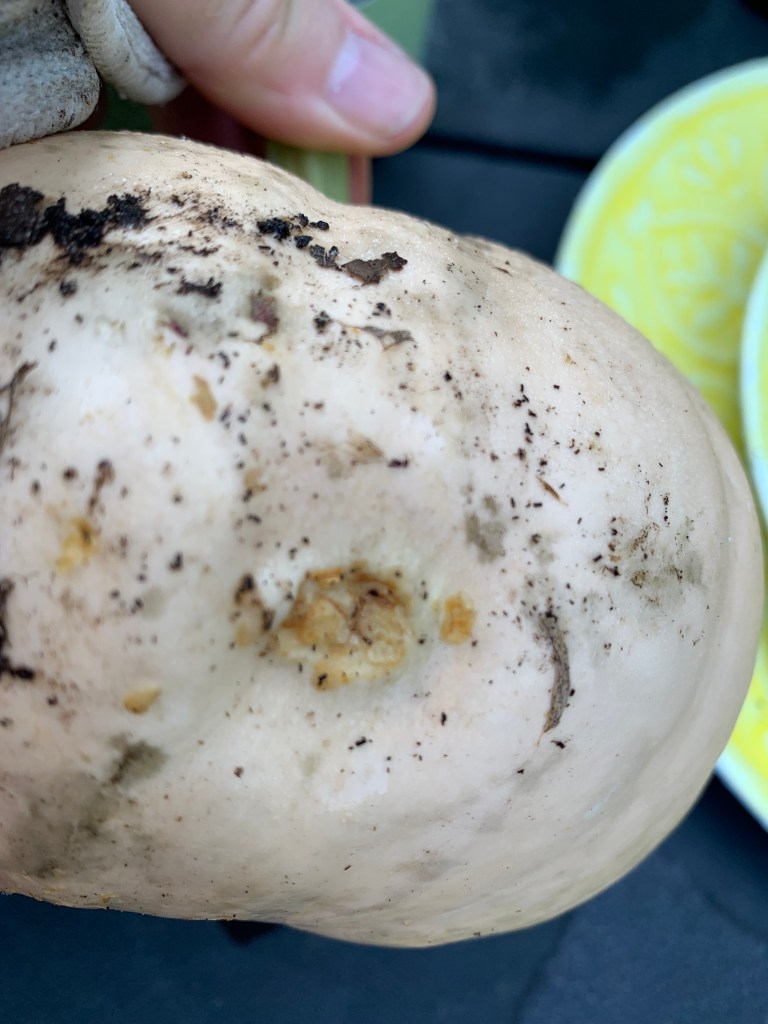
I happily pulled up all the Seminole pumpkin vines. I managed to haul in my huge harvest (not) of three little pumpkins. Two of them have holes from something trying to bore in.
Seminole pumpkins
I’m so over the vines that right now, I am planning to grow nothing next year that vines!
General Summer Grow Box Cleanup
In general my cleanup activities include cutting down old flowers (Zinnias) and cutting back any tropical milkweed. This year I have four native swamp milkweed plants for the butterflies. And the butterflies (Monarchs) are still here.
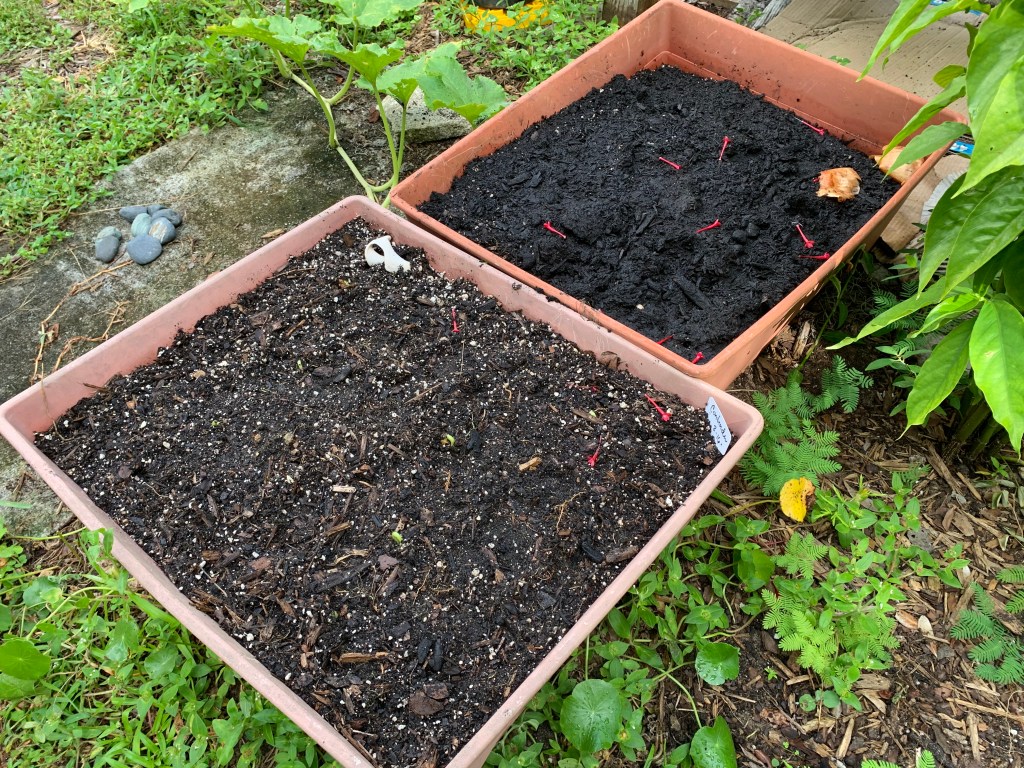
The grow boxes are being readied for planting. I will use them mostly for growing greens. I can’t wait for fresh greens!
Adding compost
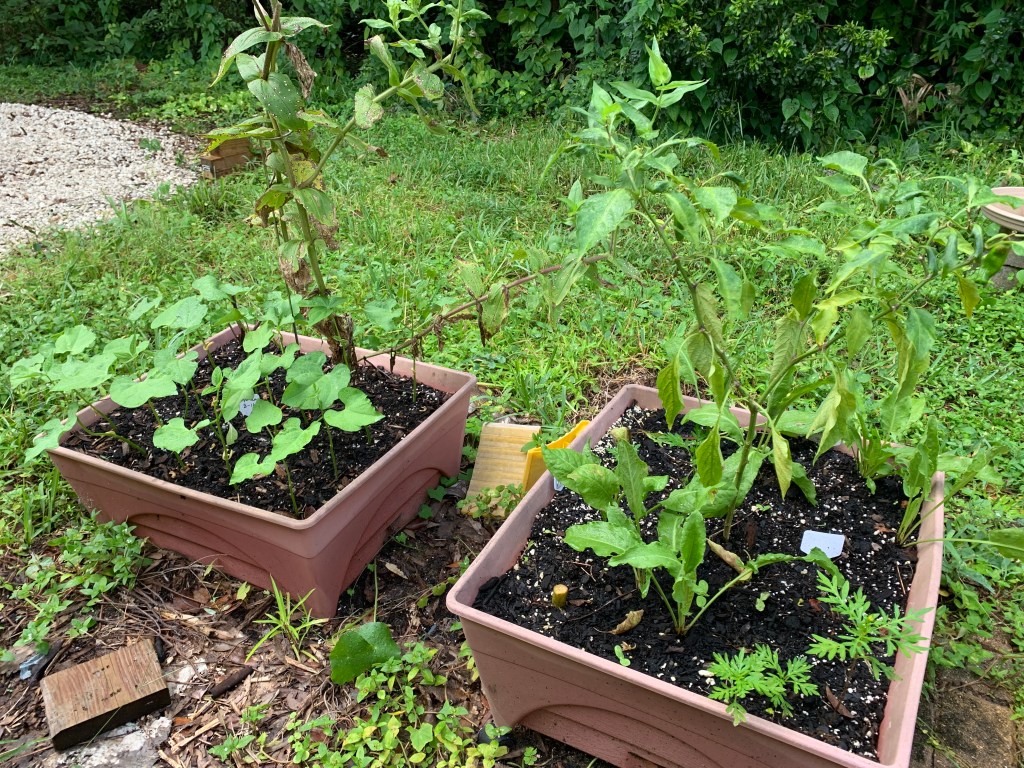
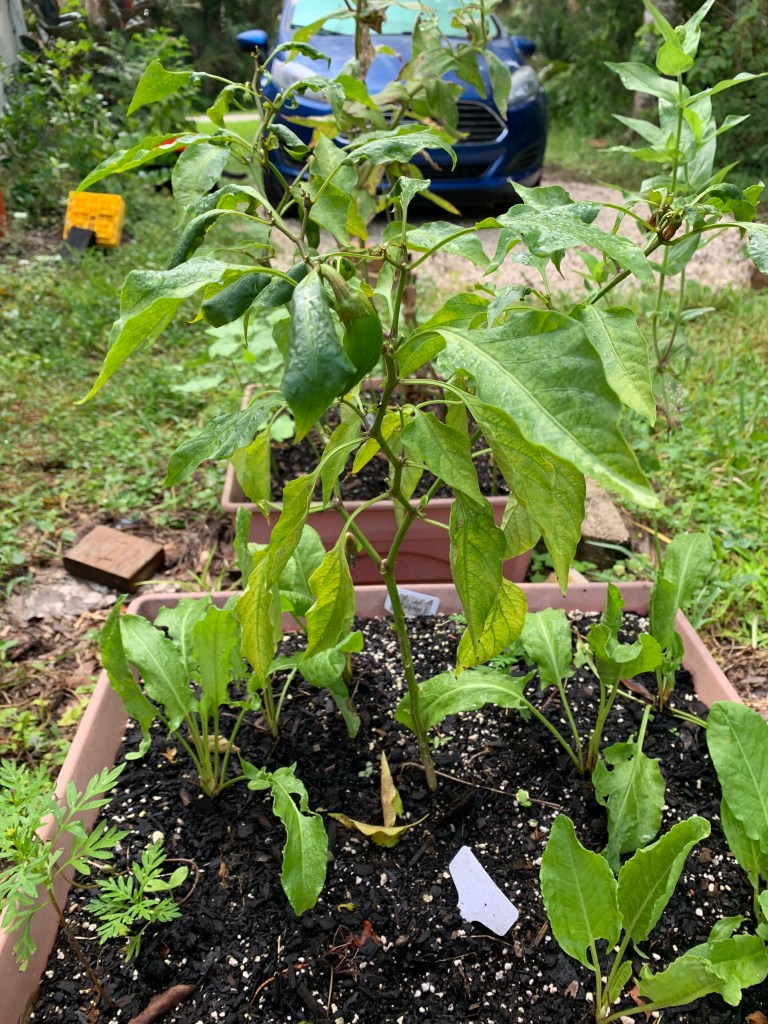
A couple of boxes are holding plants that will remain. Sorrel is growing around this Big Jim (not really very big) pepper plant. I don’t have luck growing peppers, so I expect this one will die sometime soon.
Sorrel is a perennial here and I planted these last year some time. It is a great addition to a salad, but is a bit too tangy to eat alone.
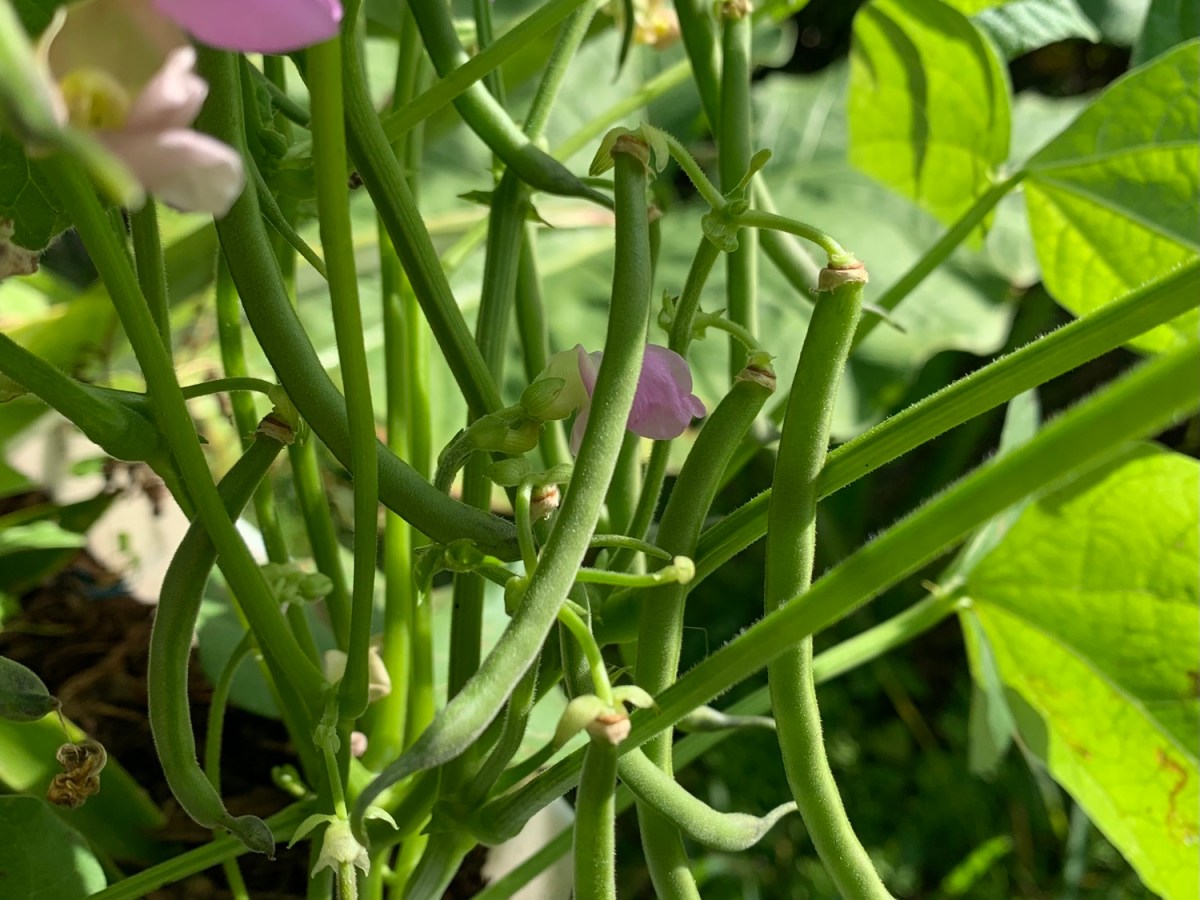
Green beans have been planted and are growing like mad. It’s early for them, but I had a packet from last year, so I figured, why not? Even if they don’t give me beans, they will enrich the soil with nitrogen.
Left box, green beansSorrel and pepper
The compost has been cooking and I will have some to add to the new beds. After I pulled the sweet potatoes, I did mix in some of my compost containing earthworms.
Clean up for me means making space for new seeds to be sown. It is still very hot here, so I can’t spend a lot of time working in the yard. Mainly, I need my boxes ready for seeds. And I am planting some things earlier this year to see what happens.
Happy Fall everyone! Wish I was in New England where Fall is wonderful.
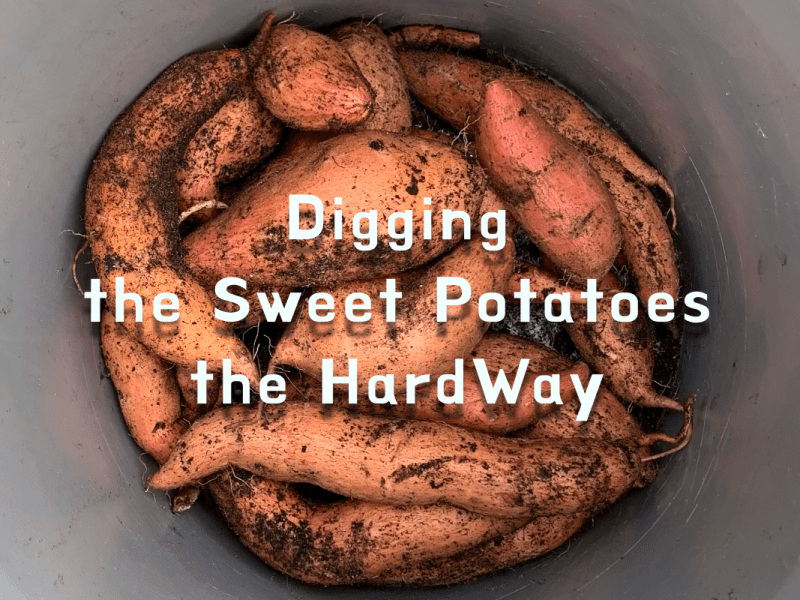
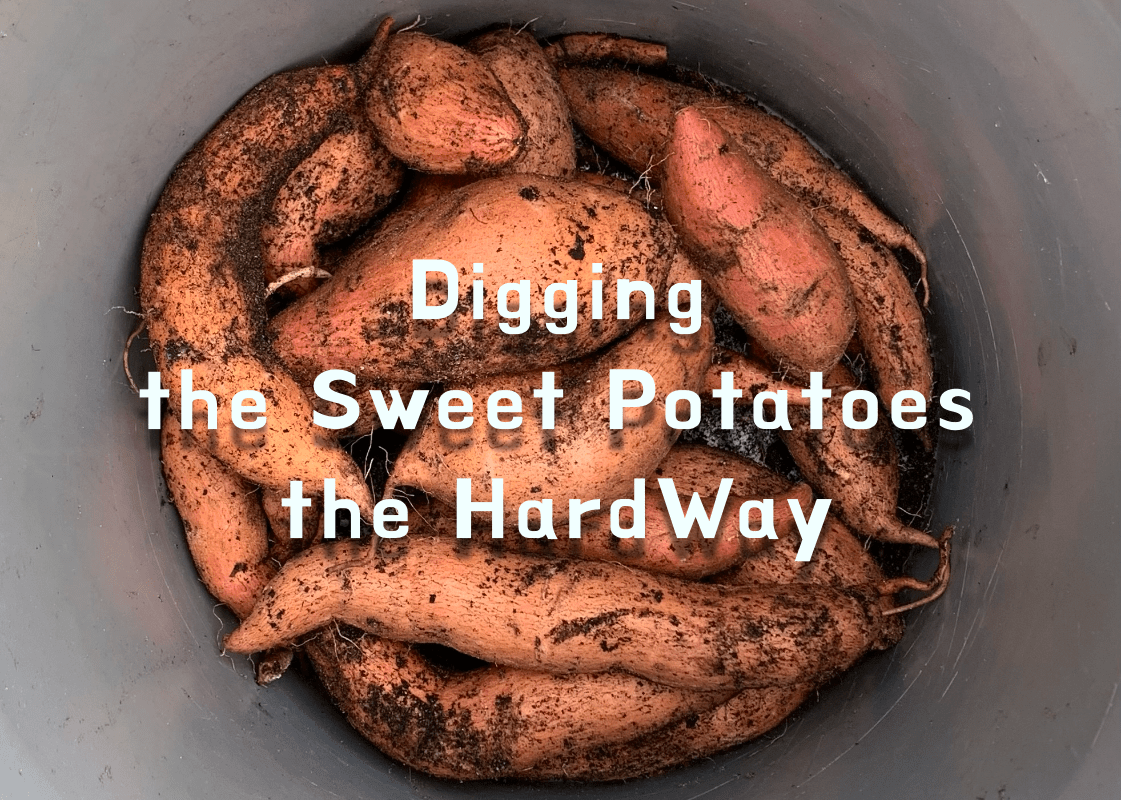
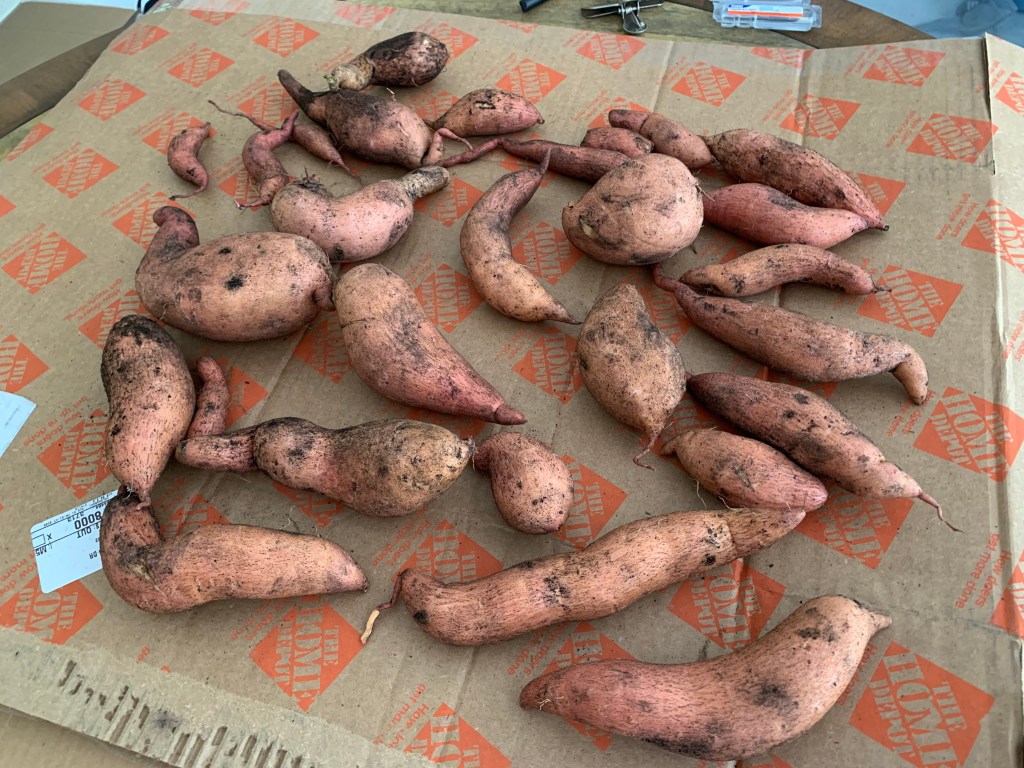
It’s the end of August and time to dig my sweet potatoes. I will not grow them in a raised be again, and here’s why.
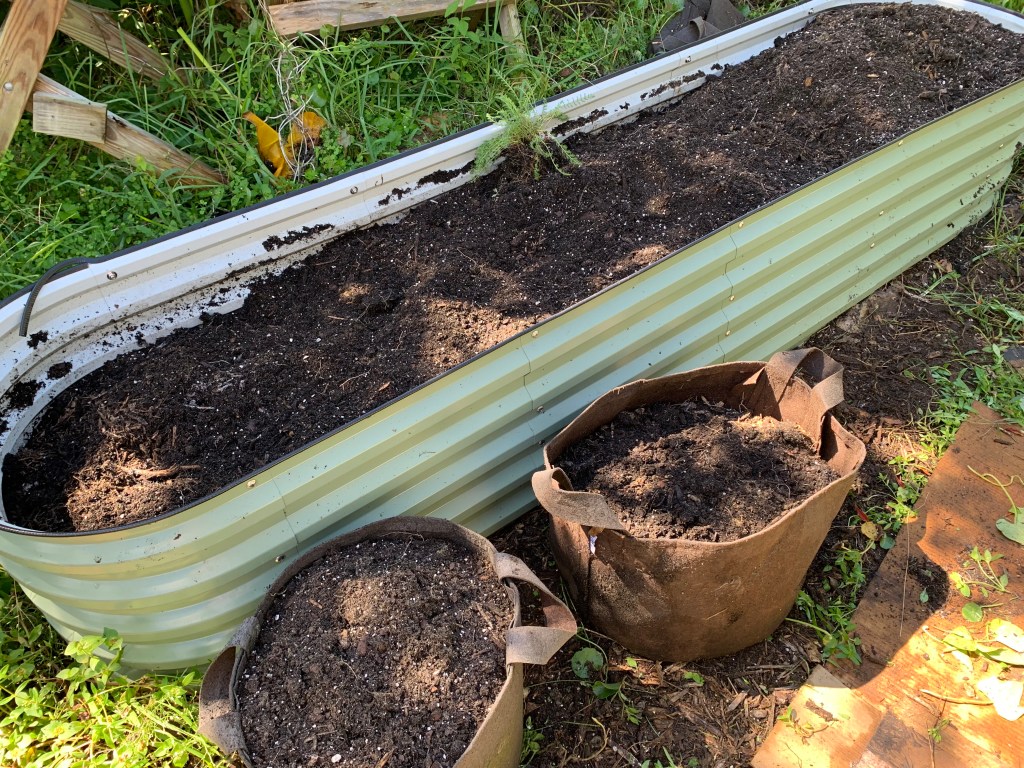
The other day I spent quite a bit of time digging up my sweet potatoes. My bright idea was to use my new, long Vegega garden bed to grow them. I had just filled it with lots of stuff, along with dirt, and it really wasn’t good for growing much. So, I figured why not use it for sweet potatoes?
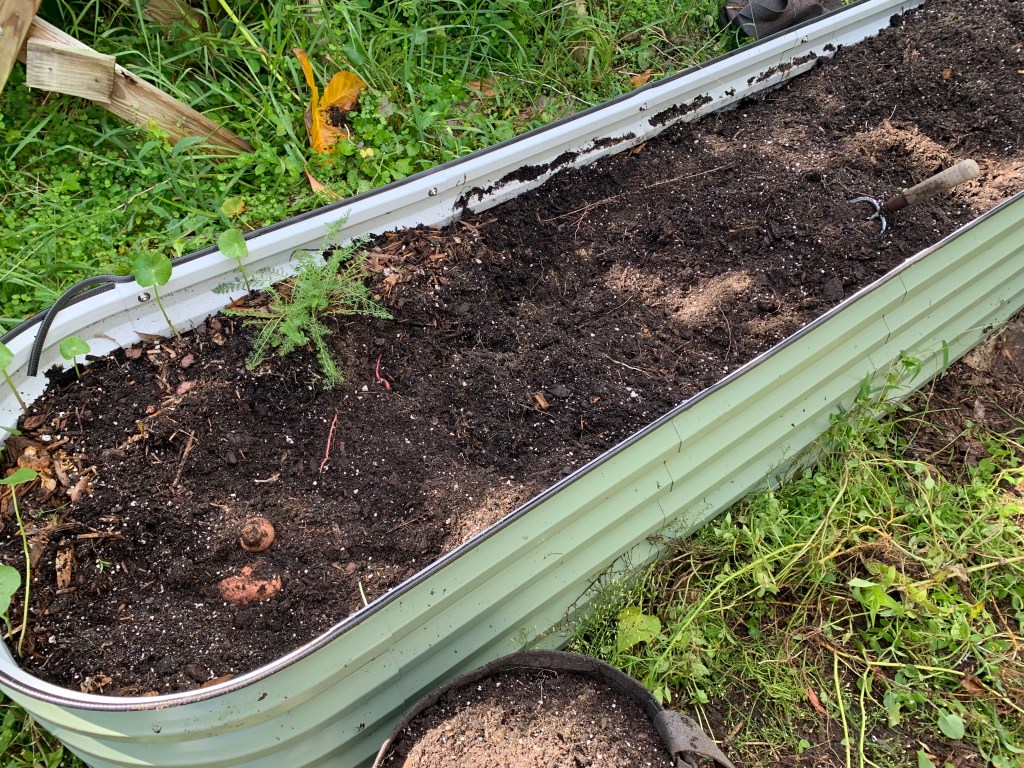
That was not a bad idea, because I don’t really have ground space for them. But when it came time to dig them, I had to kneel and dig by hand. A pitchfork is generally used to dig potatoes, but in the bed I couldn’t do that. It was a job.
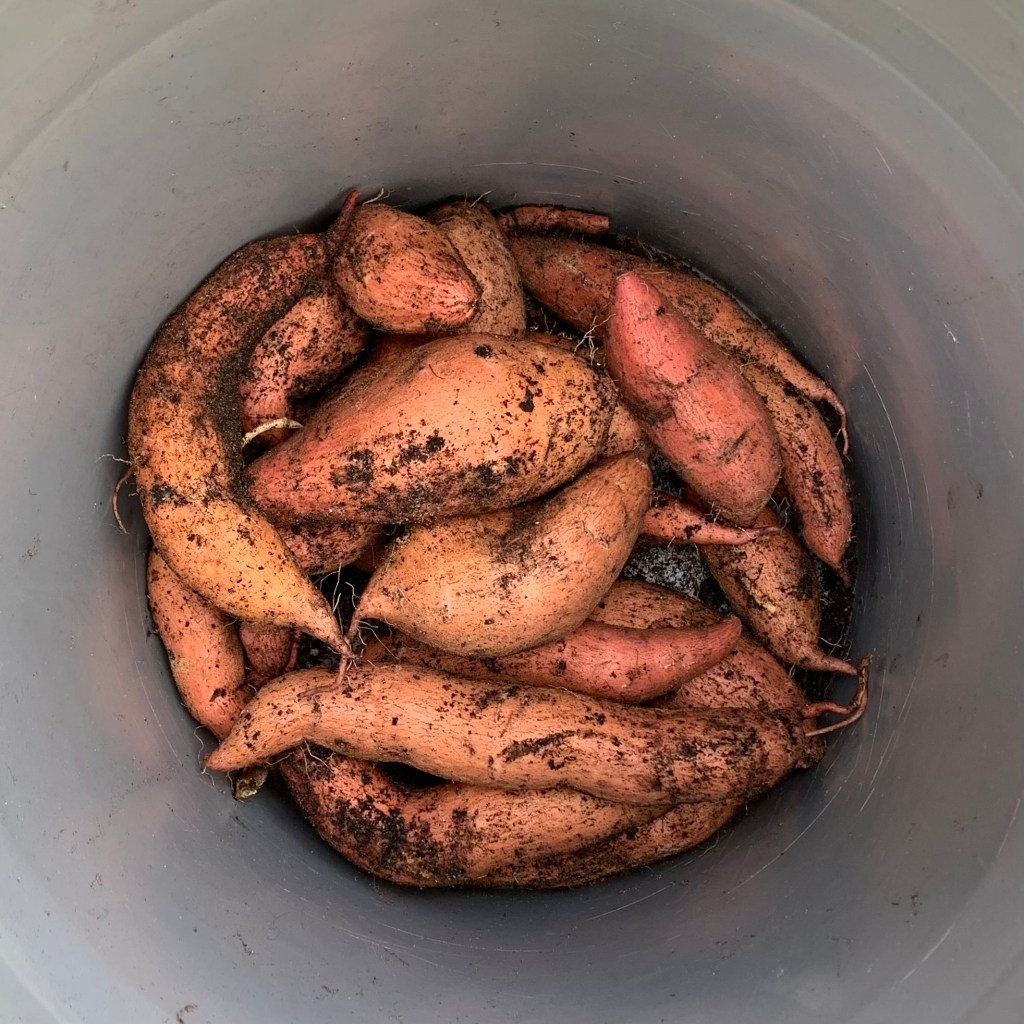
Time to dig (by hand)bucket of potatoesDrying on the porch
I planted the potatoes back in February. They’ve been growing for 6 months.
I’m hoping that I got all of them and it’s a nice little haul. Plenty of sweet potatoes for me. Now they have to dry in a humid location – no problem there – for about 10 days. This toughens the skin for storage, and sweetens the potatoes.
The other problem with sweet potatoes is that they last forever. I mean the ones left behind in the dirt. Even roots will continue to grow and I bet I will see sweet potato vines in this bed for years to come!
Thank you for reading. Here hare more garden stories for you.










 Hydrangeas Blue