Scallions On The Windowsill and a Hurricane Irma Lesson Learned

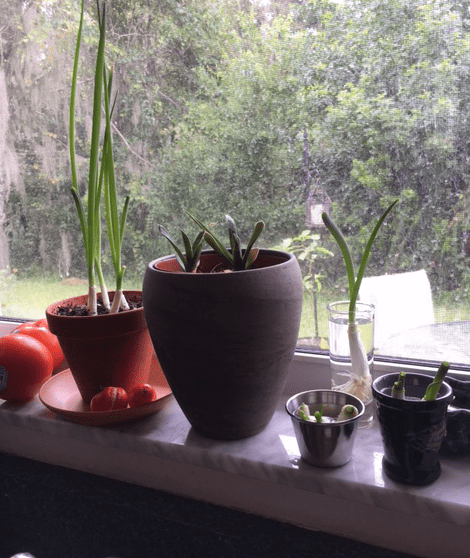
scallions
Scallions in the window

It’s funny how a hurricane can change your way of thinking. I was excited about growing these scallions from the little roots I cut off the ends while cooking. Just put them in dirt, or water, and they shoot up green stalks.

I grew some last year outside and they got huge. I always thought it would be nice to add flavor to food by reaching for herbs growing right in the kitchen.

Over the past months, since I got a new chest freezer, and a new refrigerator with a double freezer in the bottom, I have been freezing little containers of homemade meals. I was excited about having scallions ready to add to my cooking.

Soup is something I enjoy creating because I can add only what I like to eat. That usually means no meat. My homemade soup has no recipe and always ends up a little different, but it’s always packed with fresh, organic vegetables. I never finish it all and usually save at least 2 containers to freeze for later on. I have the freezer space, so that makes sense.

Or so I thought. Hurricane Irma taught me a lesson.

Our power was out for six days. I lost hundreds of dollars worth of food, frozen and refrigerated, including all my extra soup and stew meals that I labored to create from scratch.

We hadn’t had time to even consider adding a generator to our new place. We haven’t even lived here a full year. Money was spent on a new AC system and other necessities. The dishwasher was old, as was the side-by-side fridge. When we moved in here we didn’t even have a couch to sit on – we used lawn chairs!

When we saw that Irma was going to hit us, we figured it wouldn’t be that bad – and it wasn’t – but for some reason my little section of the neighborhood never got power back for many days. Across the street they had it on day two. We had to wait six.  After day three, I knew the food wasn’t going to make it.

We were always searching for ice which was a rare commodity in this heat. We weren’t the only ones without power. (Thankfully my son is a firefighter and could bring ice from work). For days I dug through coolers searching for food. It’s not easy to find anything in a big cooler.

I stayed soaked in sweat day and night from the humidity. Without a generator we couldn’t run anything – fans would have been so helpful. I had a tiny battery operated fan that I set on my bed next to my head at night.

Finally on day 5 we found one generator (Yes, there was only one) at the local Home Depot. We hooked it up, started up the fridge, and ran fans at night. The next day, a little after noon, the power came on, but it was too late to save the food, or my sanity.

Now that the garbage disposal worked, I could dump all my delicious soups down the drain. All that work and money. Shopping, chopping, cooking, packing… for what? I am a changed person.

Some lessons are hard to learn, but I do learn. Even though we now have a generator and that should mean we will not lose food again, I don’t know if I will ever believe it.  I will do things differently from here on out.

Non-Producing Vegetable Plants Can Still Serve a Purpose

In the heat of the Florida summer months, I have done little gardening. But the plants I began growing in Spring, are continuing to grow. Even though I am not getting much, if any, produce from them, they serve a purpose. They can be food for worms; give bugs a place to crawl, which in turn feeds the birds, (mostly, I have cardinals); and provide a playground for the lizards.

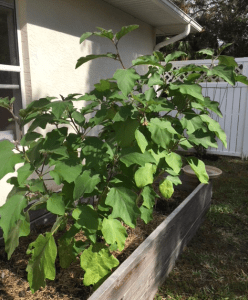
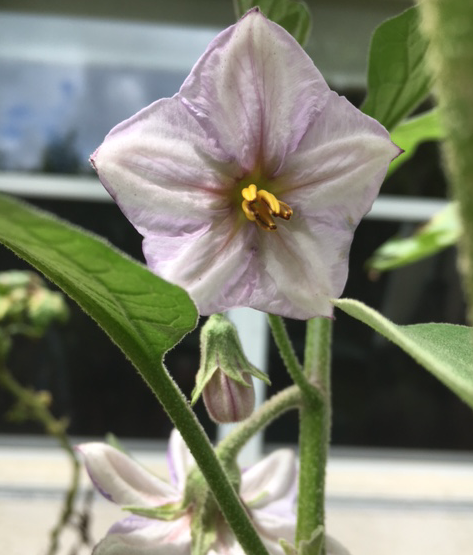
The two eggplant plants I have in the garden have grown tall. They have continued to produce pretty purple flowers, but have never given me a single eggplant!  It’s either the poor soil, or the heat, or both.

Eggplant flower
Purple Flower of the Eggplant

The plants themselves are interesting with their big leaves. I have trouble tearing up and throwing out a perfectly healthy plant, even if it’s not giving me the food I’d hoped for.

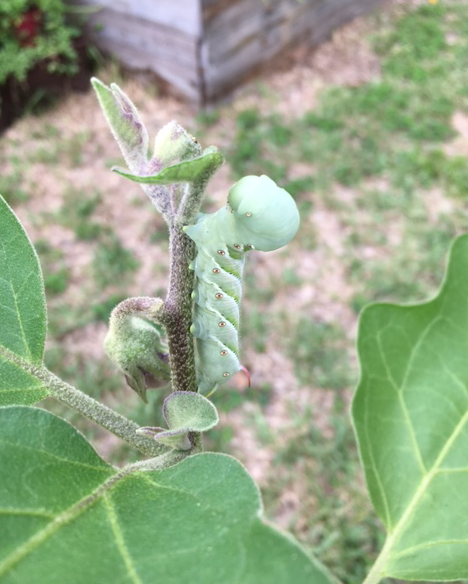
I’m glad I left the eggplants growing, and continued to give them water, just because I couldn’t NOT do so.   I noticed missing leaves and found a big, juicy, tomato hornworm chowing down on the leaves. The hornworm can eat a tremendous amount, and it’s apparent they have arrived when you notice entire leaves missing on the tomato plants!  Stalks can become completely bare in a matter of a days time.

tomato hornworm eating eggplant
Tomato Hornworm on Eggplant

One summer I was visiting my sister in Massachusetts, and she said that something was eating her tomato leaves. Sure enough, there it was – a big green worm. So I pointed it out to her!  She was astonished, but hadn’t looked close enough to see the worm.

Tomato hornworms often show up near the end of summer – at least in the north, that was how it happened in my garden. The one eating my eggplant here in Florida was lucky. I did not care that he was destroying the plant, it was useless to me anyway.  He ate and ate and grew bigger over the course of about 2 days.

I find these pretty green worms quite interesting.  Often, a wasp of some kind lays it’s eggs on the worm, which kills it.  There were no eggs on this guy.  He was doing quite well for himself.

Then he was gone… eaten by a bird maybe? I don’t know. Most of the eggplant’s leaves had been eaten by then, and I felt like I had given him a meal at the very least.  If the worm lives, it becomes the Sphinx Moth.

Most gardeners don’t allow the hornworm to live… it is too detrimental to vegetable plants, like the tomato, eggplant, pepper, and potato plants, as you can see in my photo below!

Bare eggplant after tomato worm ate leaves
Bare eggplant after tomato worm ate the leaves

On to the parsley worms.

In the North, I always grew parsley, and it lasted well into the winter months. But eventually, it did die.  Deer used to come into my backyard and nose through the snow looking for greens to eat, and sure enough, they would find the parsley still going strong at the beginning of winter.

Since I’ve been in Florida – over a year now – the parsley I planted last summer is still growing fine! I use it daily in my omelets, salads, and other home-cooked food.

The parsley is planted in two separate containers, and I’ve noticed that both areas have parsley worms munching on the leaves.  They will turn into Black Swallowtail Butterflies. One has already made a cocoon.

So the plants that are simply growing for … what, fun? in my garden have served a useful purpose to help nature continue.  Whether the worms change into butterflies or are food for the birds, it’s all nature doing it’s thing.

parsley worms
Parsley Worms Become Black Swallowtail Butterflies

Read my page, with my photos, about the Swallowtail Butterflies that come from these worms.

Native Milkweed That Survived the Freeze

I’m still trying to fill my yard with native milkweed. After the cold spell over winter froze most things back, and killed many things, I have fewer milkweed plants. All the tropical milkweed is gone. Tropical milkweed is not native, and therefore not a great loss. Three of the four swamp milkweed seedlings I purchased…

Sparse Vegetable Garden This Year

zucchini in the garden
Growing Zucchini

It seems to be the consensus here in my part of New England, the gardens are not growing all that well.  Not that I know that many people, but almost everyone I do know has a small backyard, or patio garden.

Just last night, one of my neighbors walked by and we chatted for a few minutes.  I know she has beautiful raised garden beds behind her house, so I asked how the garden was growing.  She said it’s not producing well.

My sister grows all her vegetables on a big, sunny deck in front of her house.  It’s convenient to care for, as she works long hours each day.  But this year she doesn’t even have zucchini growing.  If we lived closer I would have some extra to give her.  My zucchini started off slowly, but now I’m picking one or two from the two plants I have.

The cucumber is really slow.  I’ve only had 2 cukes so far.  And the hot pepper plant is also not producing the many peppers I remember having last year.  The only thing that is doing better this year than last is my garlic.  Even the parsley, one of my favorite things, is not all that big. Continue reading “Sparse Vegetable Garden This Year”

What I’ve Learned About Planting, Harvesting and Drying Garlic

Information on how to plant, harvest, dry and store your own garlic.

hardneck garlic bulb cloves
Planting, Harvesting and Drying Hardneck Garlic

I live in southwestern New Hampshire and each year I attempt to grow my own garlic.  After much trial and error and reading articles and books, this is what I’ve learned about planting, harvesting and drying garlic in my area of the country.

The first couple of years I had little luck, but I didn’t know what I was doing.  I wasn’t sure exactly when to plant it, and it never grew very large when I did manage to grow a few bulbs. As time went on, I read more, and realized that it needs to be weeded well. Weeds will compete for nutrients and keep the bulbs small. Also a little fertilizer when the stalks begin to grow can help. Continue reading “What I’ve Learned About Planting, Harvesting and Drying Garlic”

Picking Zucchini Every Day Now!

Freeze zucchini to preserve it for later, when there is too much to use fresh.

zucchini in the garden
Growing Zucchini

Anyone who grows their own zucchini knows that once those suckers begin to appear, it’s zucchini picking every day.

When I begin my vegetable garden in June, I include two squash plants, and one is always a zucchini. Usually I have yellow squash too, but this year both plants are zucchini. Within the past few days I’ve picked two zucchini each day. My neighbor gets some, but she lives alone and won’t need all that many.

Most people know to pick their squash when it’s medium size. Any zucchini that gets overlooked, and it’s easy to do, may end up the size of a small baseball bat. I found the one pictured below, stuck under the stems of the plant last year. It was a monster!
big overgrown zucchini

Usually I just slice and boil the veggies, as it’s the easiest way to eat them. Fried zucchini is really good also. And of course there is everyone’s favorite – zucchini bread. In fact, if you search online, you’ll find a numerous variety of recipes that use the green squash as an ingredient.

Unfortunately the zucchini comes in at the time when summer gets hot. It’s the time of year when I do not want to heat up the kitchen by baking bread.

With all that squash ready to use, the only other way to keep it fresh to use for a later time, is to freeze it. This is the first time I’ve frozen my excess zucchini, but I don’t know why I haven’t done it before.

It’s so wonderful to pick fresh ingredients from the backyard, but if they are picked and then sit around for days, the vitamins deteriorate, and you might as well have bought them from the store. Preserving them fresh is most important, so pick, shred, package and freeze the zucchini as soon as you pick them.

Pick, shred, put in freezer bags (with date and label – it will keep for 8 months from what I’ve read), and store to use at a later time. Bake that bread on a cool day, or add to a batch of homemade soup. How simple is that?

Cold Weather Crops: Lettuce

Planting lettuce while I wait for the weather to warm up.

lettuce growing garden
Growing Lettuce
Some of the best cold weather crops include lettuce. I sprinkle the seeds into my raised bed where I don’t have to worry about disturbing the ground unintentionally. Tomorrow is Saturday and I’ll be outdoors cleaning up the yard a bit. There is a lot to do. I live downhill from the road, and my front yard is right on the road. What this means is that all the sand and salt from the winter plowing and snow-blowing is covering some of my gardens and lawn. There is always a lot of raking to do to remove the old leaves, and the sand along with them. The wheelbarrow has been buried, but I think it’s reachable by now.

I’ll check at Job Lots and see if they have seed packs. Lettuce is easiest to grow from seed. I had good luck with the mixed lettuce seeds last year. I grew some in Spring and Fall, cutting off the small leaves as they grew.