Time to Say Good-Bye to My Hydrangeas

hydrangea last summer
Blue Hydrangea Summer 2015

Before they even flower this year, I will have to say good-bye to my hydrangeas. I may be lucky enough to see the buds form, but I will be gone by July when the flowers open.

As is so predictable with my nomadic lifestyle, I am moving on after living in my house for five years. It’s a record really. Since I moved north in 2005, it’s the longest I’ve lived in of any of the places I’ve tentatively called “home”.

I’ve added a number of hydrangea plants to the small yard over the years, and they are all doing pretty well. Little green shoots are just beginning to appear, but once the weather warms up the plants will grow quickly. Not quickly enough for me to enjoy the big white-to-green flowers of the Limelight variety, or to see the Pinky Winky’s white blooms change to pink. And I wonder if the Endless Summer blue variety will have more flowers this year than last.

After the winter months of 2015, my perennials seemed to suffer. Some plants never came back, and the ones that did, seemed to be less wonderful than usual. But this winter was so mild, I am thinking that the hydrangeas will have lots of blooms. I especially hope that the blue flowers will be prolific.   Last year I had a few small flowers at the base of the bush (see the photo).  Of course, I will never know. I’ll be far away in the deep south, beginning a new garden in a new place.

I feel like Johnny Appleseed, except my name would be something else related to planting and moving on. I can’t think of a good name. Pam the traveling gardener, or maybe Root-less, is more appropriate.
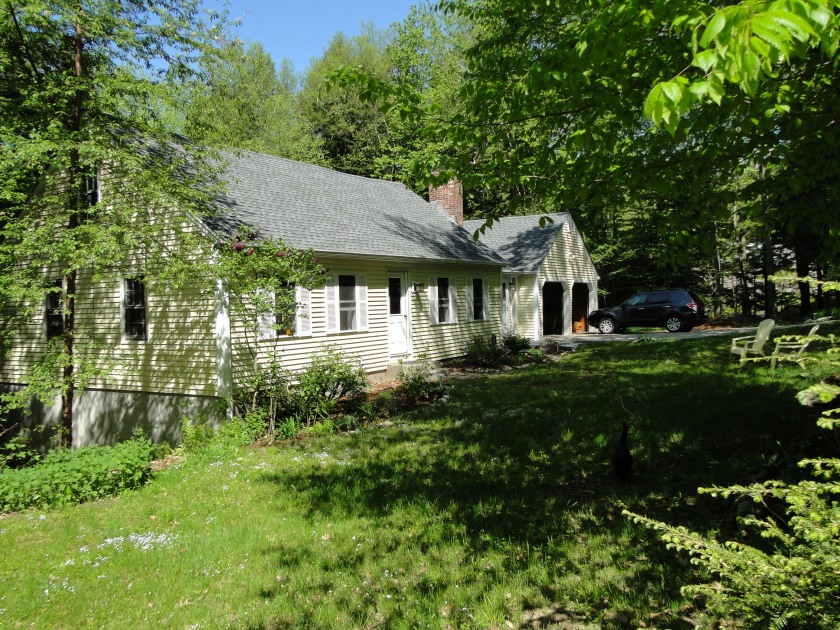
dsc07551So the yard I’ve worked to make into a beautiful place will now be passed on to new home-owners.  I have no idea if they are gardeners, or if they will walk around enjoying the flowers that bloom in their new yard.  I hope so.

I doubt they will realize the work it took to create the beauty they will see, but I do hope they will enjoy it.  The peace and quiet I knew of sitting in the shade of the big oak out front, watching the clouds drift past the rooftop, while my cats explore in the grass nearby, is something I will miss greatly.

I’ve known some of the most peaceful times of my life just sitting alone in this yard, drinking a glass of wine, and appreciating what I have.  I always knew it wouldn’t last, because that is how it is.  Because I know that, I appreciate it all the more.

Soon this blog will be filled with the gardening adventures of my southern life.  I never grew many vegetables when I lived in Florida before, but this time I plan to figure it out.  And I am familiar with growing many tropical plants.  I can’t wait to have camellias, hibiscus, crepe myrtle and jasmine growing in my new place.  I may even try to grow hydrangeas!

So stay tuned.  Once the move is done…… I’ll be back.

SaveSave

Getting Ready to Grow It

"Grow It" Gardening Postage Stamps
“Grow It” Gardening Postage Stamps

After the super mild winter (thank you God!) we are already seeing signs of Spring here in the northeastern US. That mean getting ready to grow our veggies. Many people will be starting their seedlings soon, if they haven’t already. I believe most people wait until April since our last frost date is June 1st. Of course after having temperatures of 60 and even 70 in early March, gardeners will be chomping at the bit to get the ground planted.

It’s going to be tough to wait if this fabulous weather sticks around for long. Already I see my tulips poking up from the ground. Last week I noticed that the Lenton Rose has lots pink buds down among the leaves!

Usually the ground is still covered in snow at this time of year. But the ground was barely ever totally covered in snow.   That is very unusual.  So the plants are most likely ahead of themselves with the soil soft and moist instead of frozen solid.

I will not be able to do much gardening this year because I am selling my house. I can’t move until at least June, so that will give me time to see most of the perennials bloom (Peonies!) before I have to say good-bye to the yard I have worked on for the past five years. And there are never guarantees that a house will sell quickly, but I am hoping the good price I am asking will mean a quick sale.

I’ll miss my northern yard, but I’ll have pictures to remind me of the fun I’ve had watching my hydrangeas bloom each year.  And I will still blog about gardening, but it will be from the south, where gardening is a bit different.

But I will still be thinking of gardening, and creating garden related products for my DustyFarmPaper store at Zazzle. The garden peppers postage stamp up top is one of the new products. And have you heard that the price of postage will actually drop soon? I don’t’ know about you, but I still use snail mail quite a bit. I will be making more vegetable themed stamps and other products too. In fact I have begun a collection just for gardeners.

Once I get settled into a new place in Florida, I will be writing more, but until then I have the fun job of packing to keep me busy.  Thanks for reading!

Freezing Parsley For Winter Use

I grow parsley in my summer garden (New Hampshire) every year.  It’s a healthy herb that can be added to so many dishes.  It can be planted earlier than most crops, as it tolerates cold weather, and it will grow until it’s covered with snow.  I’ve had deer in my yard poking through an early snowfall just to pull up parsley to eat (my photo here).

Because it’s easy to grow, and the little plants take up very little garden space. IMO everyone should grow their own parsley!  My backyard garden is not large, but I always have around 6-12 parsley plants growing among my other vegetable plants.

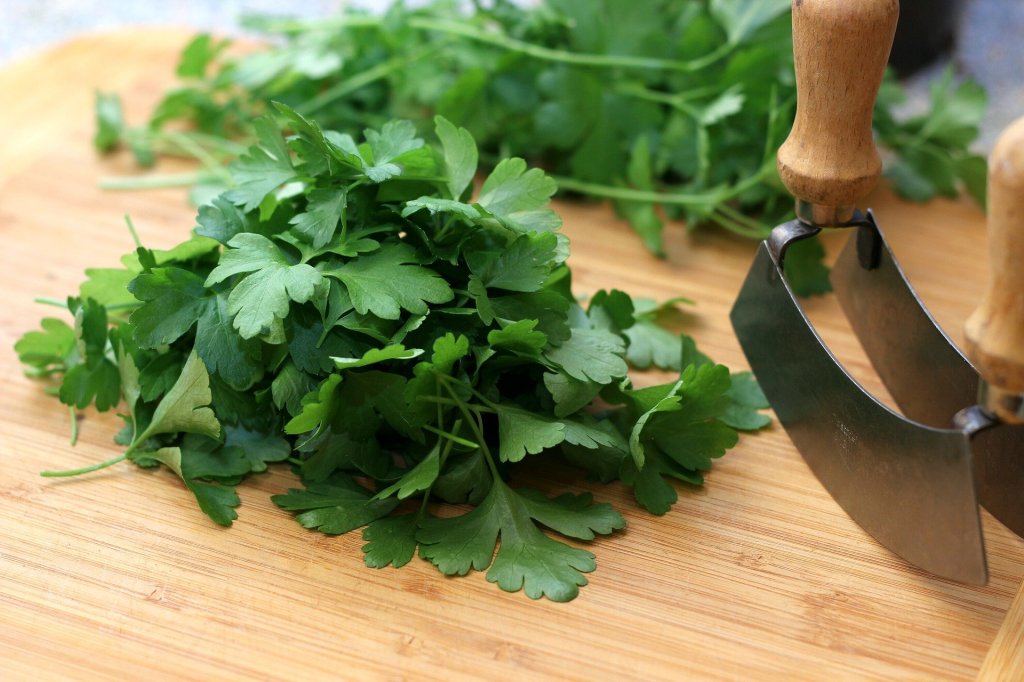
parsley fresh flat leaf
Pixabay image

Parsley is Healthy

Parsley is good for overall health and is especially good for the kidneys as it acts as a diuretic to flush waste out of the body.  That link will take you to a page I wrote about the general overall benefits of growing  and eating parsley.  I mention a few ways to preserve it as winter approaches, and I’ve tried a couple.

I briefly covered how to freeze parsley because I was not too familiar with doing it personally.  But last year I discovered how easy it was to not only preserve it by freezing, but how easy it was to use it later on.

This is how I freeze my fresh picked parsley.  Always pick parsley by the stem and use the largest outside stems first.  This will cause the plant to continue to send out new stems from the middle of the plant.  I pick just a few stems – 6 or 7- to preserve by the amount I plan to use each time.  I like to use a lot of parsley in my meals.

Preparing the Fresh Parsley

Wash the leaves by dunking them in a bowl of water.  Hold the stems and swish the leaves until all dirt and debris is removed.  Use a clean towel to remove most of the water.  I ‘slap’ the leaves on the towel a few times.  Put the parsley, still on the stems, into a jar or vase until the leaves dry completely.  That shouldn’t take long.

Once the parsley is dry, line a cutting board or the counter with saran wrap, or freezer wrap.  Pull off the leafy part of the plants and pile them up on the saran.  Gather all the leaves in a bunch and roll them up.  Just keep rolling and gathering the ones that escape, until you have a nice, fairly tight roll of greens.

Wrap the saran or freezer paper tightly around your roll, and add it to the freezer.  I wrap mine in saran, and then place all the little parsley rolls in one quart size freezer bag which I label with name and date.

This is the basis for freezing.  If you have a lot of parsley and want to freeze more together in a bigger roll, or want to freeze individual portions, that is up to you.  It can be unwrapped and sliced once frozen, so you don’t have to use the entire roll.

Drying Fresh Parsley to Preserve

I also dried a bunch of parsley last year using my dehydrator.  That was a much more time-consuming method, but it works as well.

Dilemma: Bugs, Birds, Bears, and Cats

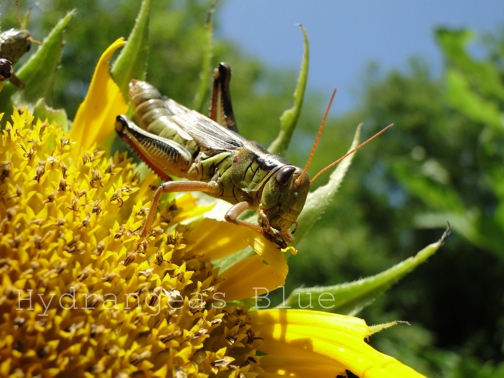
grasshopper eating a sunflowerThis is my garden dilemma:  I have a grasshopper infestation.  I need a natural way to get rid of the bugs, as I am an organic gardener.

Attract birds that will eat them, is my first thought, but I have cats that go outside.  If I feed birds in summer it’s only the hummingbirds.  My cats would never be able to catch one of them.  In fact, neither of my cats are big hunters, but I imagine that birds get nervous when they look down and see cats in the yard, so they move on.

If the birds do end up eating the grasshoppers, they will be down near ground level.   The grasshoppers are feasting on the leaves of many of my garden plants.  If I put out feeders, I feel like I am inviting birds to their death, because of the cats.

Summer bird-feeding can also attract black bears in my area.   Continue reading “Dilemma: Bugs, Birds, Bears, and Cats”

When to Cut Garlic Scapes

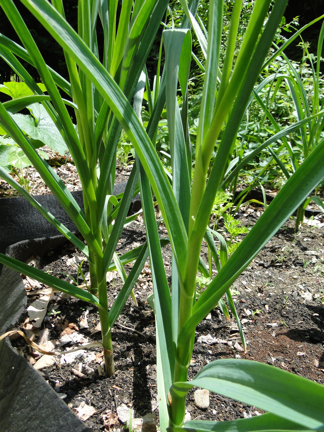
garlic plants
My Garlic Plants

When do I cut the garlic scapes? Obviously I am not a seasoned (successful?) gardener, or I would know the answer. I haven’t had much luck growing garlic, which seems so simple. So I had to look it up.

This year my garlic plants are growing so well. I am very pleased. I planted them back in October of 2014, and once the snow finally melted, they began to push through the soil. They are growing in a fabric, raised bed. It’s the first time I’ve planted them in a place other than the ground. I guess I won’t know for another month or so if the bulbs will be big, but I am hopeful.

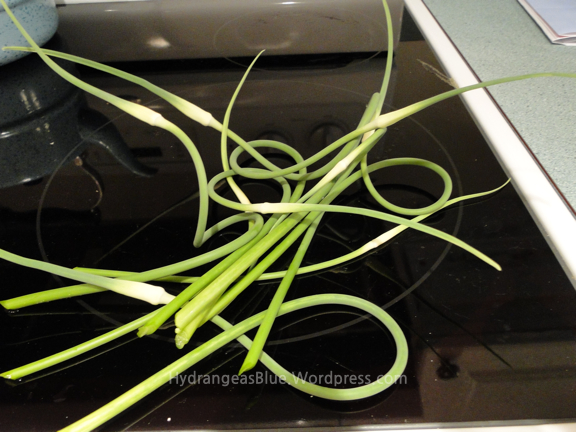
Now, at the end of June, I just noticed that some of the plants are producing scapes, which is the curly flower stalk.  I check on my garden every day, but suddenly there they were, green swirling stalks with white, pointy tips.
garlic scapes

I had to look it up, but Cedar Circle Farm said to cut them the end of June so production would go toward the bulb and not the flower. If you let it flower, seeds will form.  Do the seeds create more garlic plants the following year?  I think so, since I have continuous small garlic plants growing in bunches where I planted bulbs 2 years ago.

The same farm site has advice for what to do with those garlic scapes. Use them like garlic, and add to any dish you would add garlic to.  I only have a few, but I plan to use them in many ways in the upcoming days. Once fresh produce comes into the house I don’t like to let it sit around and lose nutrients.

I guess I’ll have to wait another month or more to dig up the garlic bulbs and then let them dry.  I use my little patio greenhouse to dry garlic.  I know they are supposed to dry in the sun, and they get sun, but in an enclosed area.  Once my greenhouse has done it’s job of holding my spring plants, I set it aside (off my tiny deck) to use for drying garlic.

Pictures of My Small Backyard Garden

Pictures of my small, backyard garden space.

Although I have almost an acre of land, most of it is low-lying forest and wetlands.   My backyard is a narrow strip, with the sun hitting part of it only 6-7 hours a day.  I do my best, trying to plant crops in the space that gets the most sun.  It’s a challenge when I have to rotate plantings each year.  The photo below was taken last summer (2014).  That is pretty much my entire backyard. I plant flowers and vegetables along the edge of a slope, which drops off to woods beyond.  Only the part near my deck gets enough sun for good vegetable growth.  I concentrate my plantings there.

backyard garden
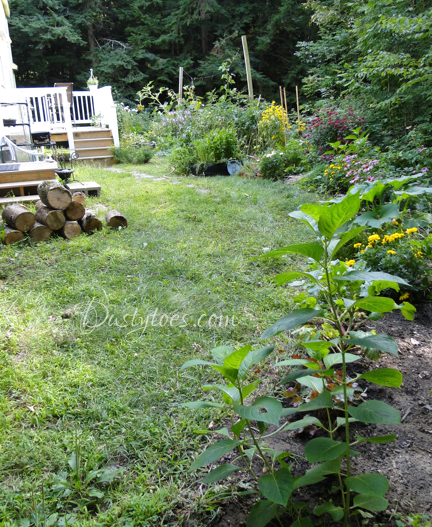
My Narrow Backyard

Photo Above: See my new propagated hydrangea there in the front?
I’ve added raised fabric beds to the area, which has been a great help.  Last fall I planted my garlic bulbs, and they are doing very well – better than any garlic I’ve ever attempted to grow.  I hope the bulbs will end up being nice and big.

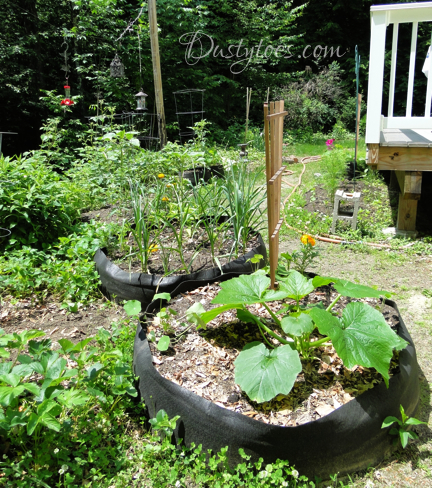
summer garden zucchini
Zucchini and Garlic Growing in Fabric Pots

What begins as lots of space, quickly fills in when the plants grow and expand. The tomatoes grew great last year (picture below) right up until they all died of late blight! It was depressing.

tomato bushes
Full Tomato Bushes

blackberries
Blackberry ? or Black Raspberry Bushes

It’s a constant battle with the black raspberry plants (or are they blackberries?) that threaten to overrun the yard. They grow upwards from the slope, where I think they were purposely planted to hold the earth in place.  It’s one of the few berries I dislike.  It figures that I have tons of them!  They are eaten by the chipmunks and birds, when my cats are not around.

Raspberries grow at the side on my house, and I can find many wild strawberries in the yard.  The strawberries I planted have become overrun by weeds, and I didn’t have enough space for a proper strawberry field.  Occasionally I find a few nice ripe berries to munch while I survey my garden.  The sunflowers are volunteers that sprout wherever they choose.  The seeds self-plant from when I feed the birds in winter.

I sometimes wish I had acres of land to roam and plant, but I’m content with what I have. It takes a lot of time to garden, and especially when you do it all alone.

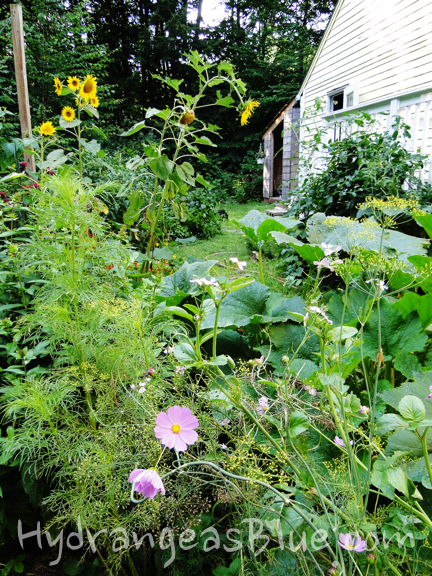
Lush Garden Foliage
Lush Garden Foliage